A Child’s Name Is More Than the First Writing WordNew!!
A child’s name carries identity, pride, belonging, and motivation. That is why it is such a powerful first step in handwriting instruction.
Why I Teach Print Before CursiveNew!!
The case for teaching print first is practical, not nostalgic: children are reading print, forming simpler strokes, and building control for later fluency.
Letter Reversals at Seven Can Still Be Part of the StoryNew!!
Some children still reverse letters around age seven. Here is when that fits normal development, what helps, and what patterns deserve attention.
How One Sight-Word List Becomes Twenty-Five Different Writing LessonsNew!!
A classroom-tested system for giving children individualized handwriting practice from the same word list without creating chaos for the teacher.
The Handwriting Worries Many Parents Can Safely Put DownNew!!
Not every awkward pencil grip or slow start needs intervention. A teacher separates normal variation from concerns worth discussing with an occupational therapist.
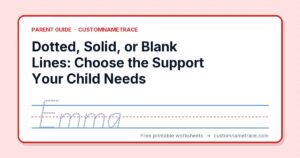
Dotted, Solid, or Blank Lines: Choose the Support Your Child NeedsNew!!
Tracing style should match a child’s current skill: full guidance, copying support, faded prompts, or independent blank-line practice.
Most Children Are Not “Behind.” They Are Somewhere in the Range.New!!
Handwriting milestones are guideposts, not finish lines. A teacher explains normal age ranges and how parents can use them without panic.

Teach an Address and Phone Number Without Turning It Into a DrillNew!!
Children remember safety information best when it is practiced in context, spoken naturally, and revisited often without fear or pressure.