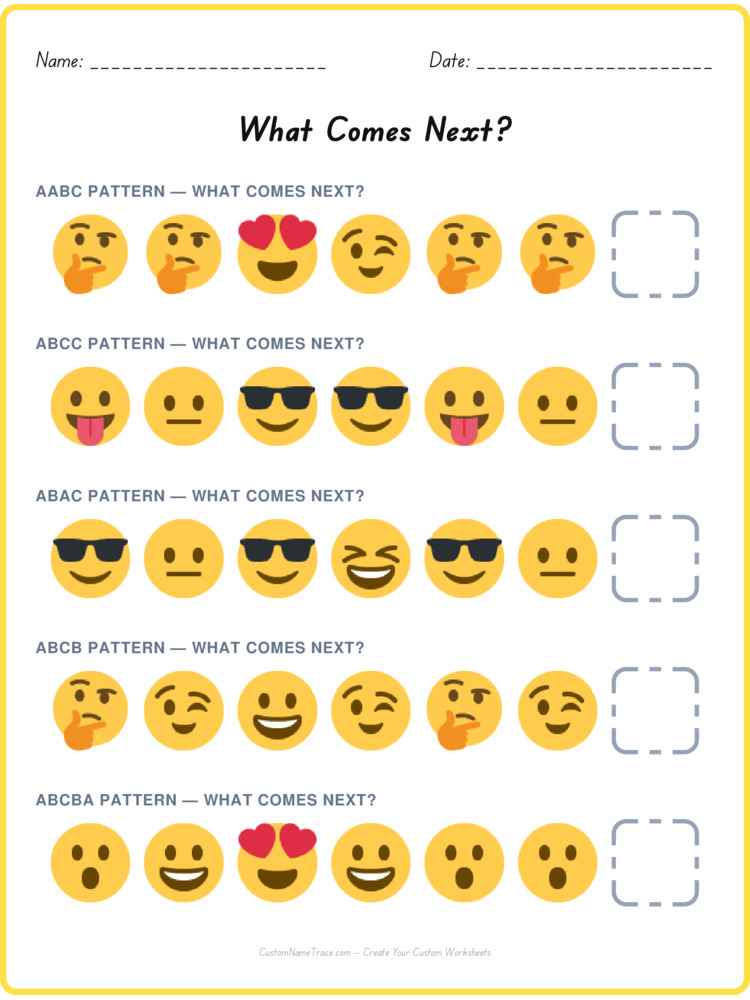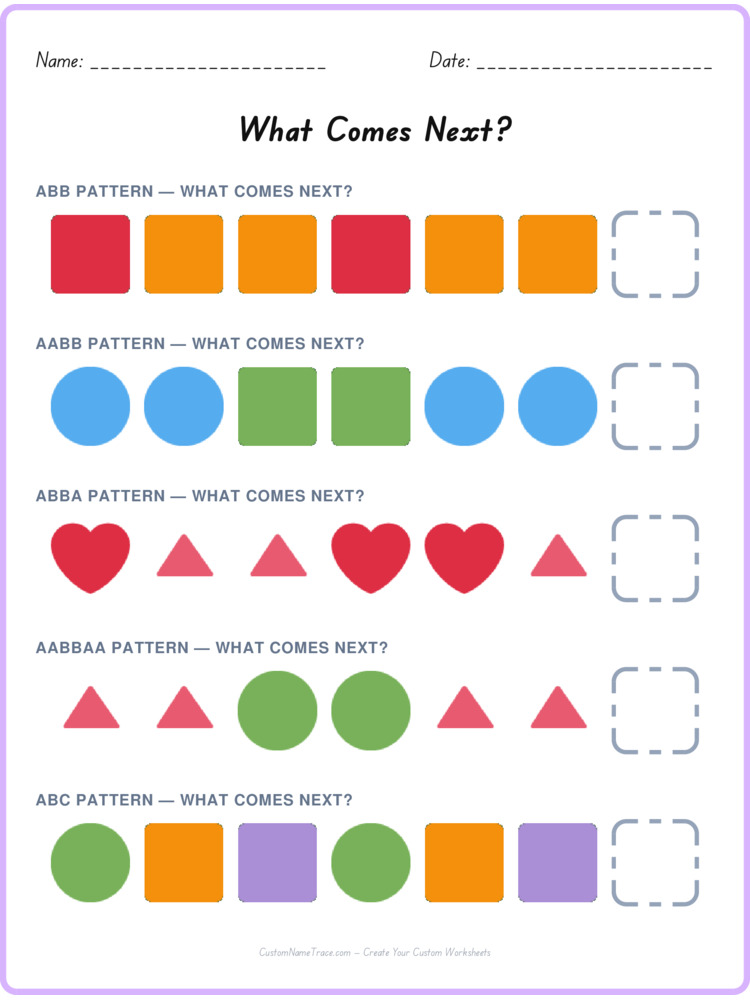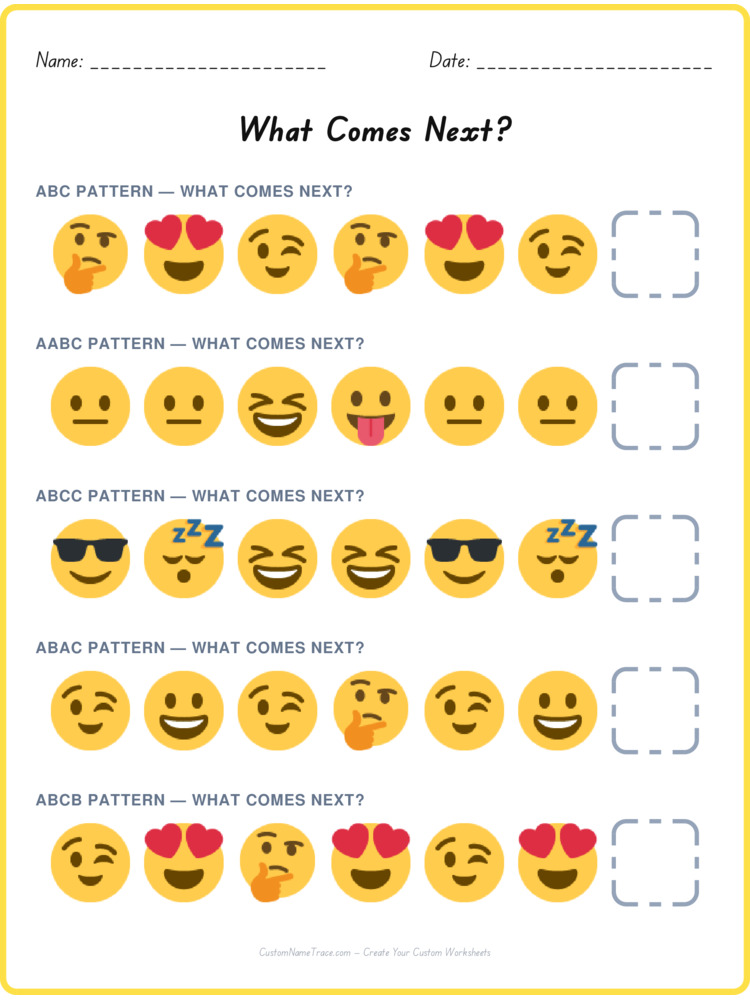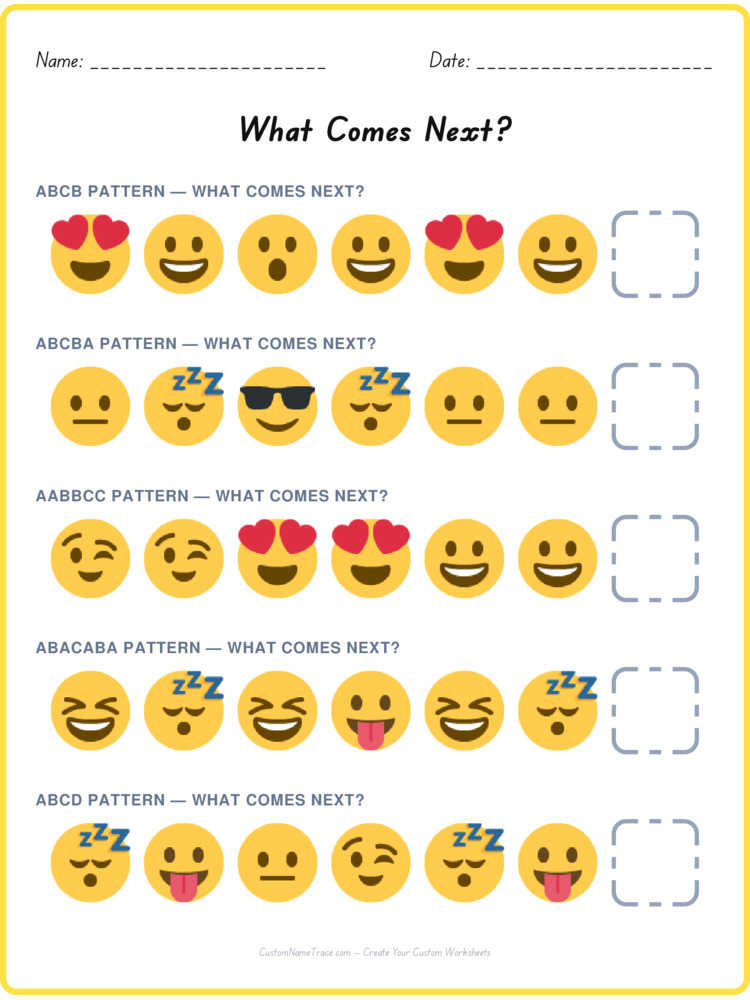
What this worksheet is actually asking a child to do
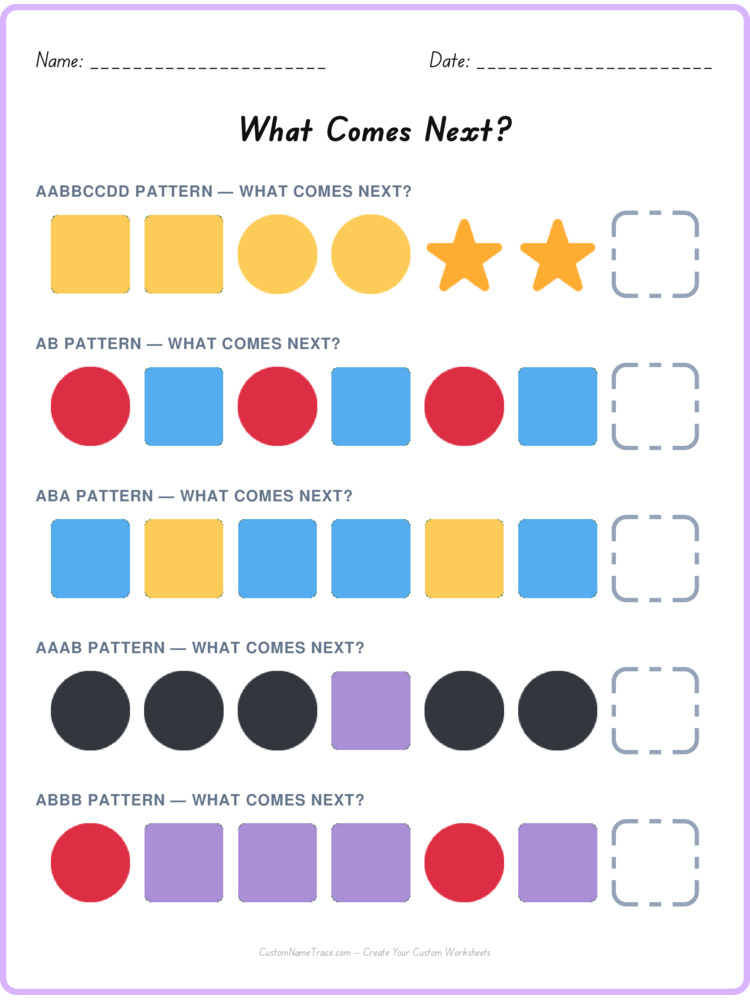
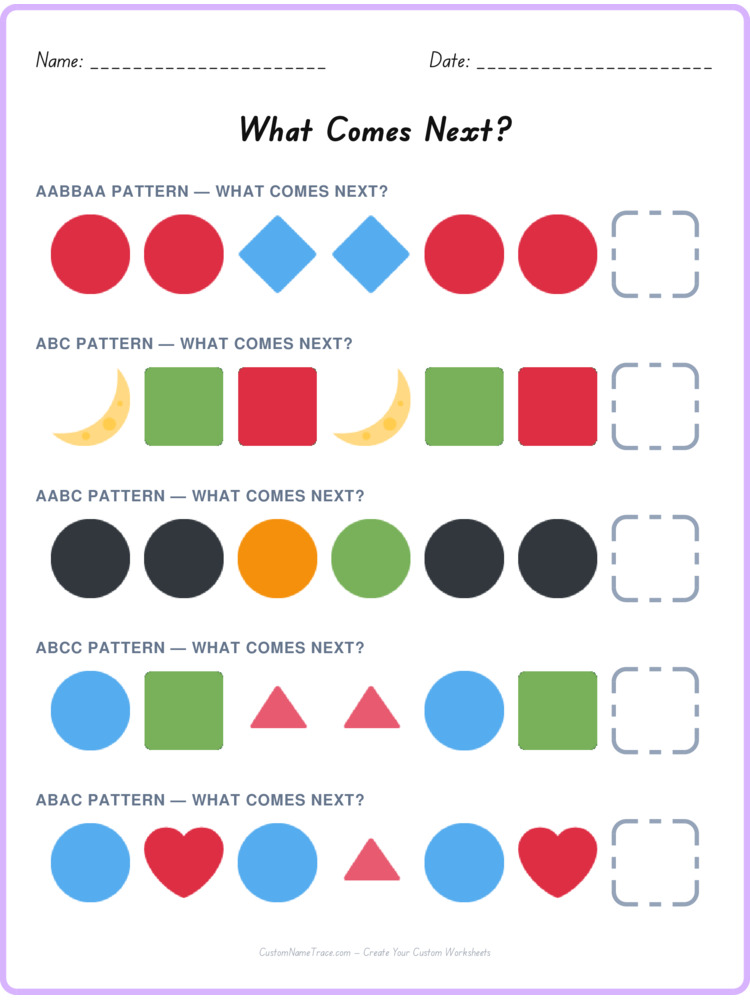
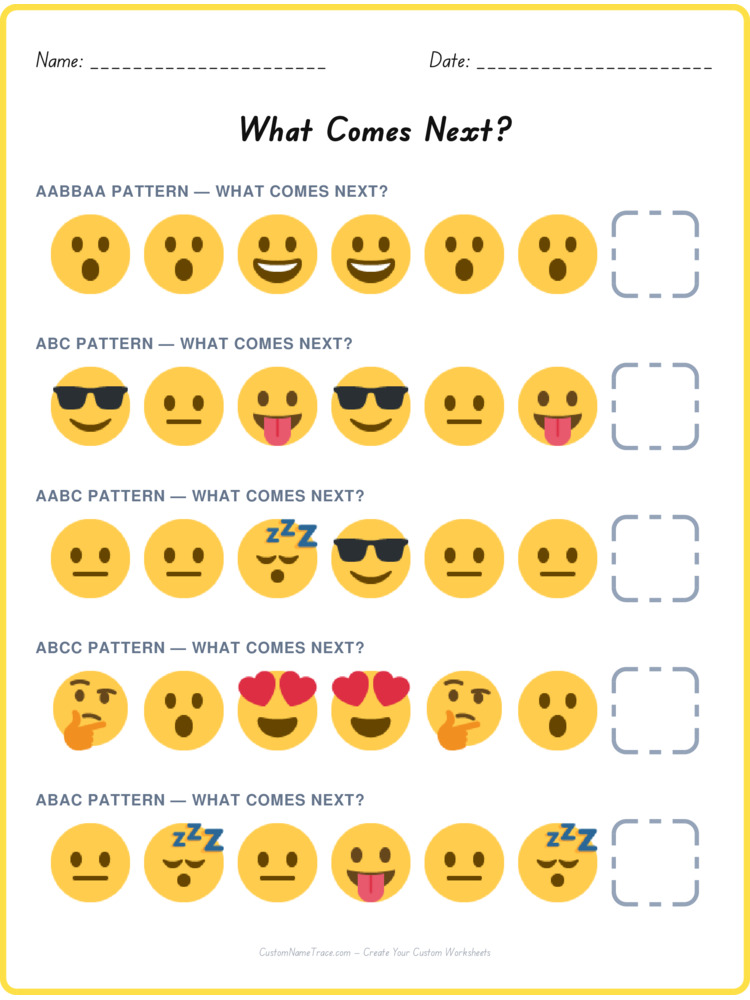
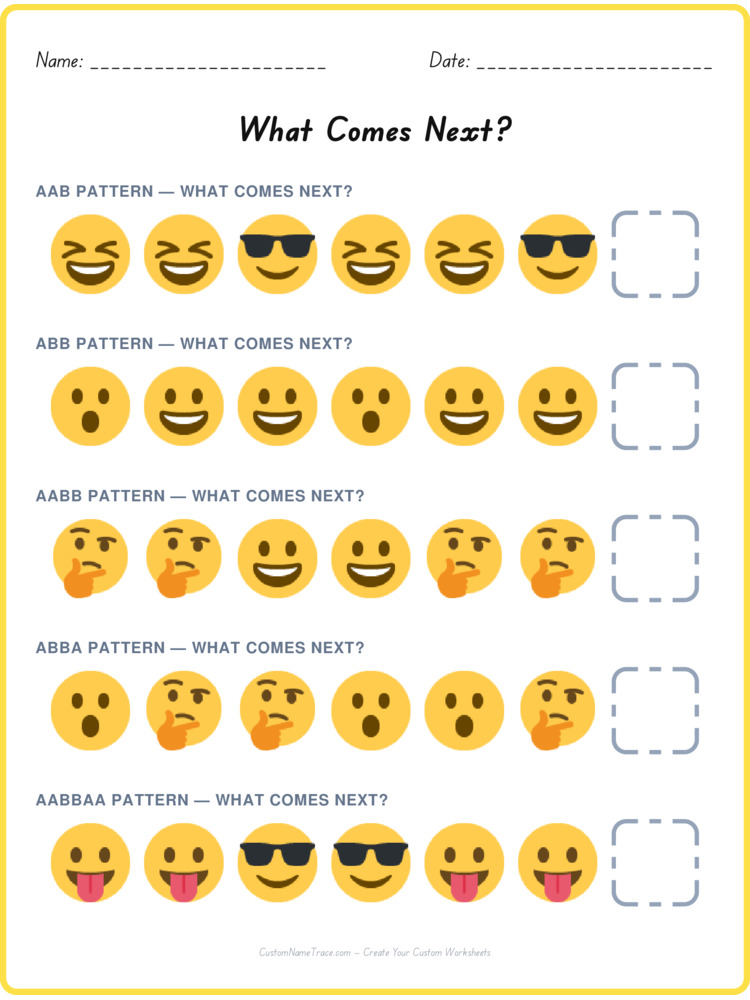
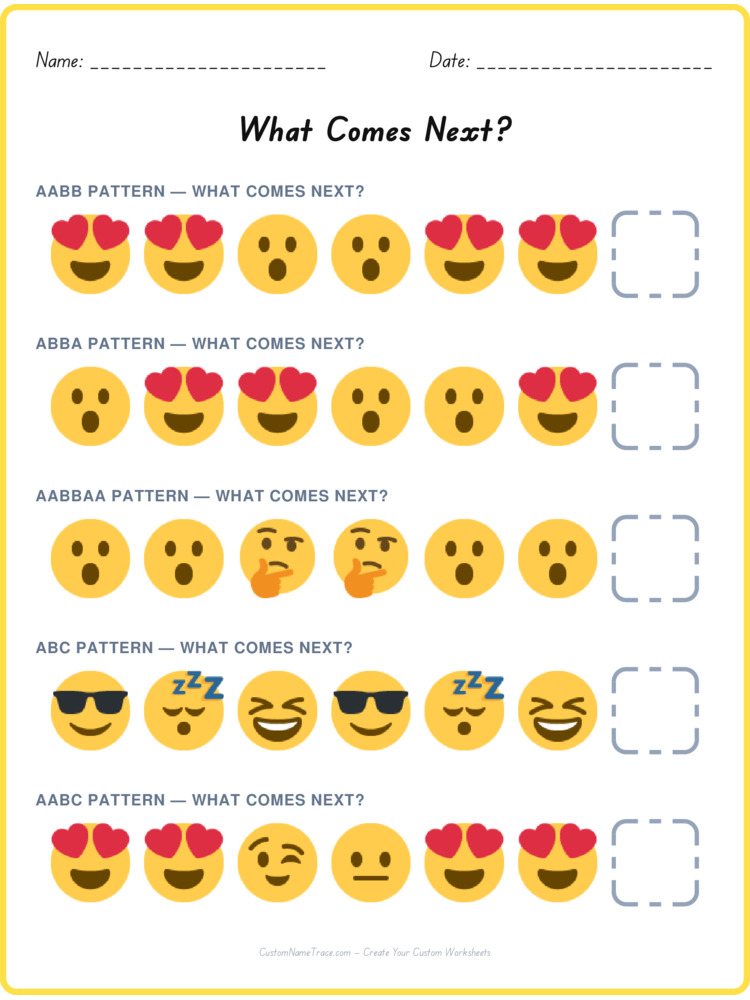
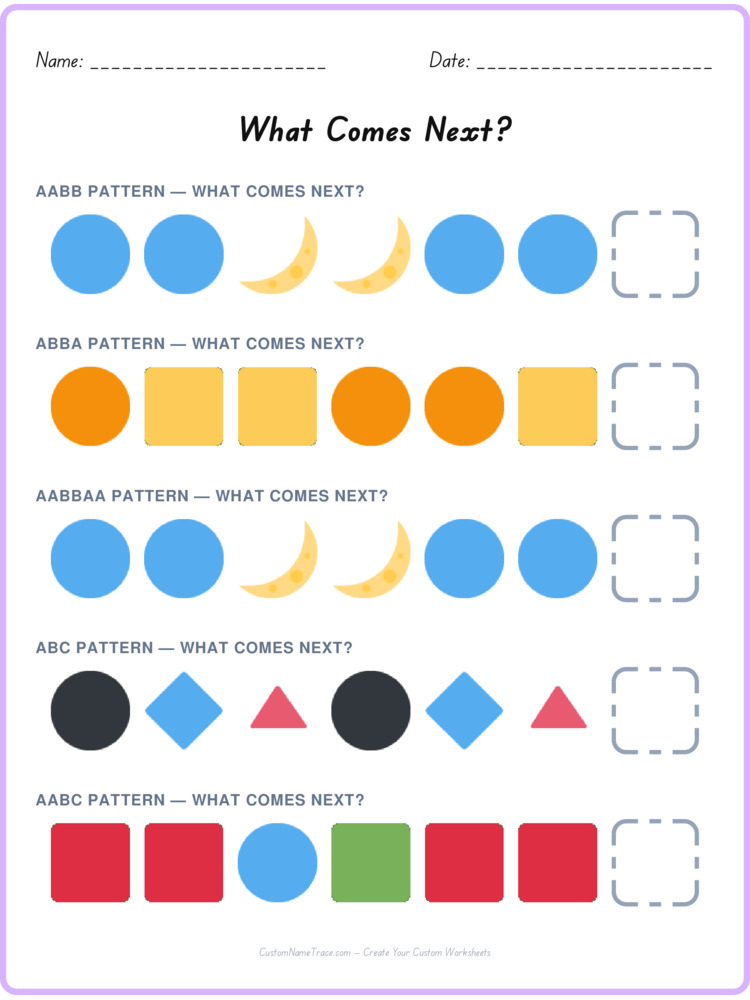
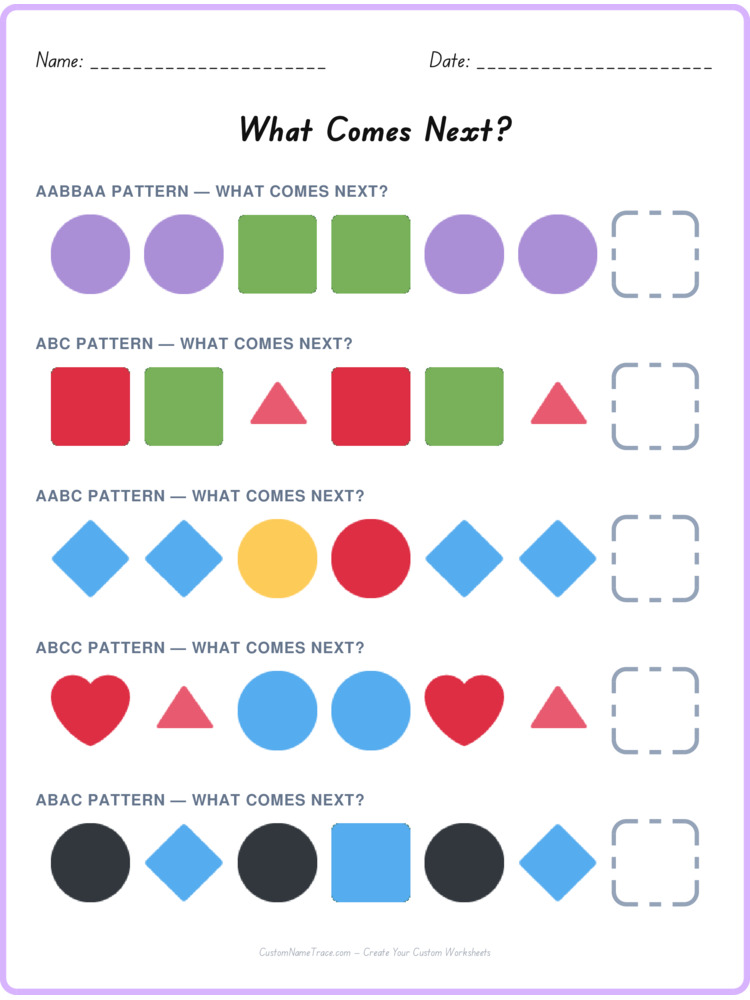
The icons shown here repeat in one consistent rule for several rows, then stop — the last few spots are left blank, and the task is to spot the rule and continue it, not to trace or copy anything that's already drawn. That's a genuinely different kind of task from most of this site's other worksheets: instead of reproducing something visible, a child has to notice a pattern and predict what comes next, which is an early, concrete form of the same reasoning later math and logic skills depend on.
Every icon used across this pattern was checked against a grayscale render before being added to this site, so the sequence still reads clearly as distinct shapes on a plain black-and-white printer, not just on a color screen.
Why pattern recognition matters this early
Spotting that a sequence follows a consistent rule, and predicting what comes next, is one of the earliest forms of logical reasoning a young child can practice — a direct precursor to number patterns, skip counting, and eventually algebraic thinking, long before any of those subjects are formally introduced. This pattern format builds that exact skill using pictures instead of numbers, which keeps the reasoning itself accessible well before a child is ready to apply the identical logic to numerals.
Using this worksheet effectively
If the pattern isn't clicking right away, naming each icon out loud in order — rather than scanning the row silently — often reveals the repeating rule faster, since hearing the sequence spoken sometimes surfaces a pattern that looking at it doesn't. Covering the blank cells and asking a child to predict out loud what comes next, before writing or drawing anything, separates the reasoning step from the drawing step, which can make a stuck child's actual sticking point clearer.
Why the icons stay simple
Every icon in this pattern comes from a small, deliberately chosen set of plain shapes and simple faces, specifically because a young child needs to be able to plausibly draw or mark these by hand in the blank cells — a more detailed, realistic picture would shift the difficulty from pattern recognition to drawing skill, which isn't what this worksheet is meant to test.
Where this pattern fits, and what comes next
This specific pattern is grouped by the age stage it's typically introduced at, browsable from the hub page above alongside simpler and more advanced pattern types. A child who finds this pattern easy is likely ready for a longer or structurally different pattern from the same hub; one who's struggling may benefit from stepping back to a shorter, simpler pattern first.
Printing and downloading
This worksheet downloads as a free, print-ready PDF in both Letter and A4 sizes, with no account required. For a full set of practice pages using this exact pattern, the bundle version combines ten worksheets into a single download.