Organized by grade first, not by operation first
Most worksheet sites make you pick an operation before you can even see what's appropriate for your child's grade — you land on a generic "addition worksheets" page and have to guess your way to something actually pitched at a 7-year-old versus a 5-year-old. Here it works the other way around: pick a grade, and you see every operation that's actually appropriate at that stage, with the number ranges already matched to what that grade typically covers. A kindergarten page never shows multiplication, because multiplication genuinely doesn't belong there yet — and a Grade 3 page doesn't waste your time with single-digit sums a child mastered two years earlier.
Every number range is researched, not guessed
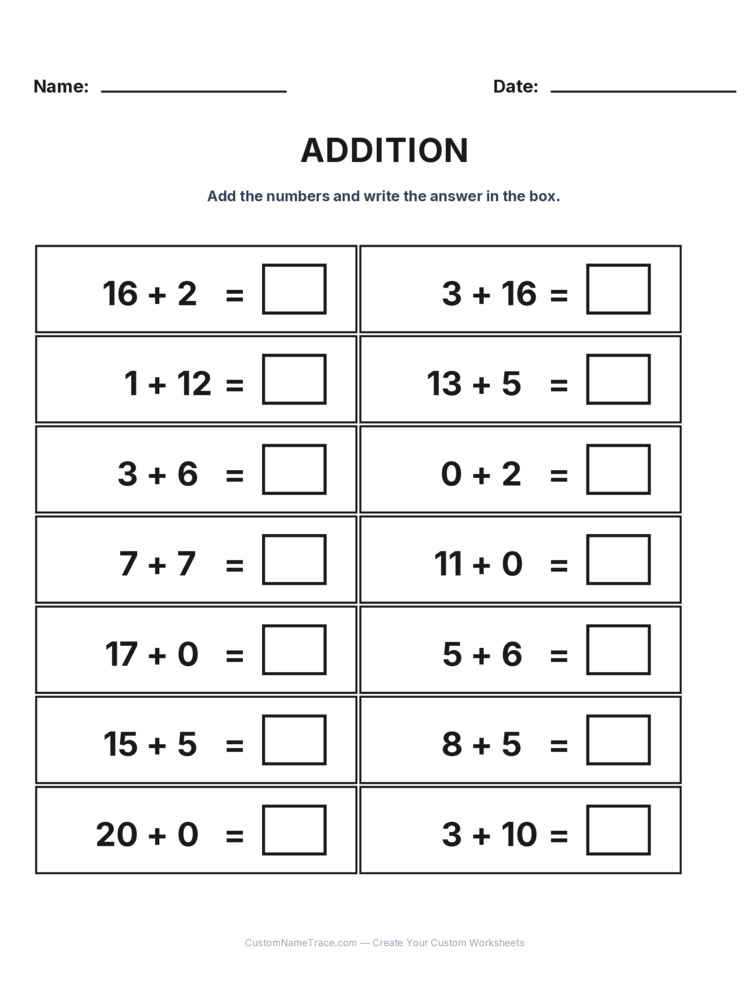
The range a worksheet uses at each grade — addition within 10 for Kindergarten, within 20 for Grade 1, two-digit regrouping for Grade 2, and so on — is drawn from the Common Core K-5 progression documents and cross-checked against what established publishers actually put in front of students at each level. A "Grade 2 addition" worksheet here isn't a guess at what seems about right; it's built to the same range a Grade 2 classroom actually uses.
Two problem shapes, used where each one actually matters
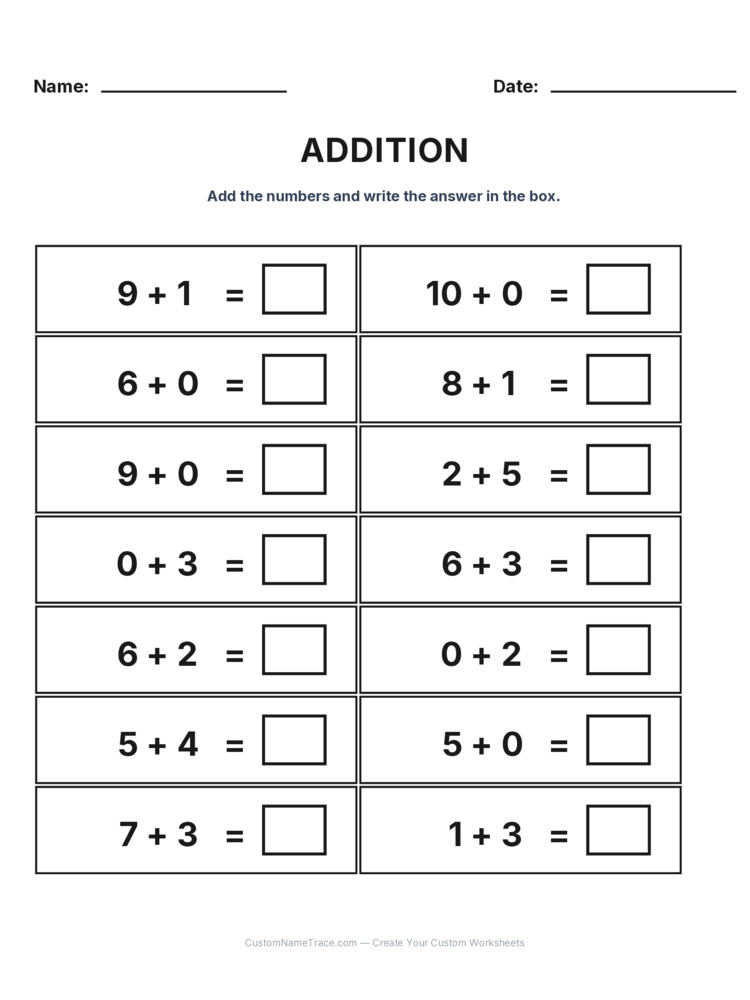
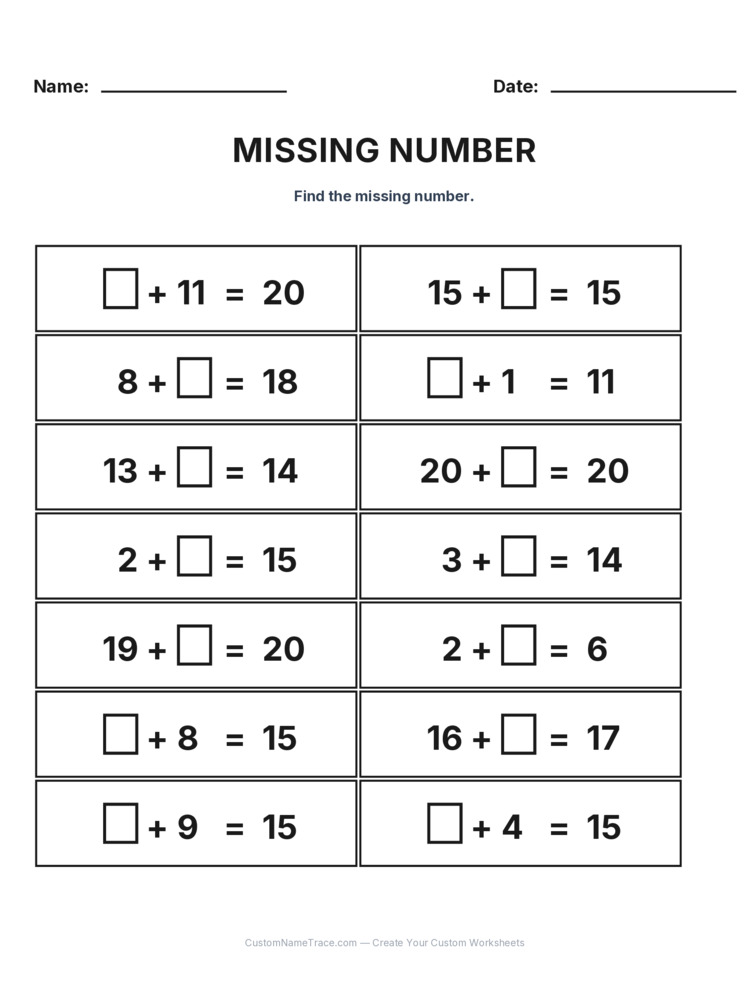
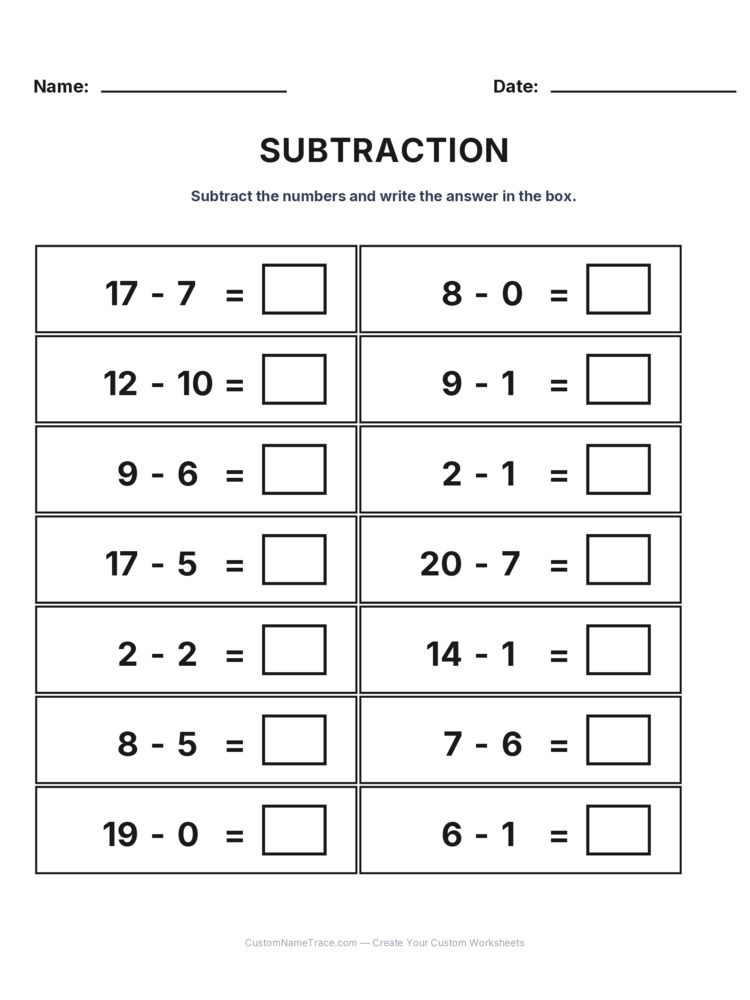
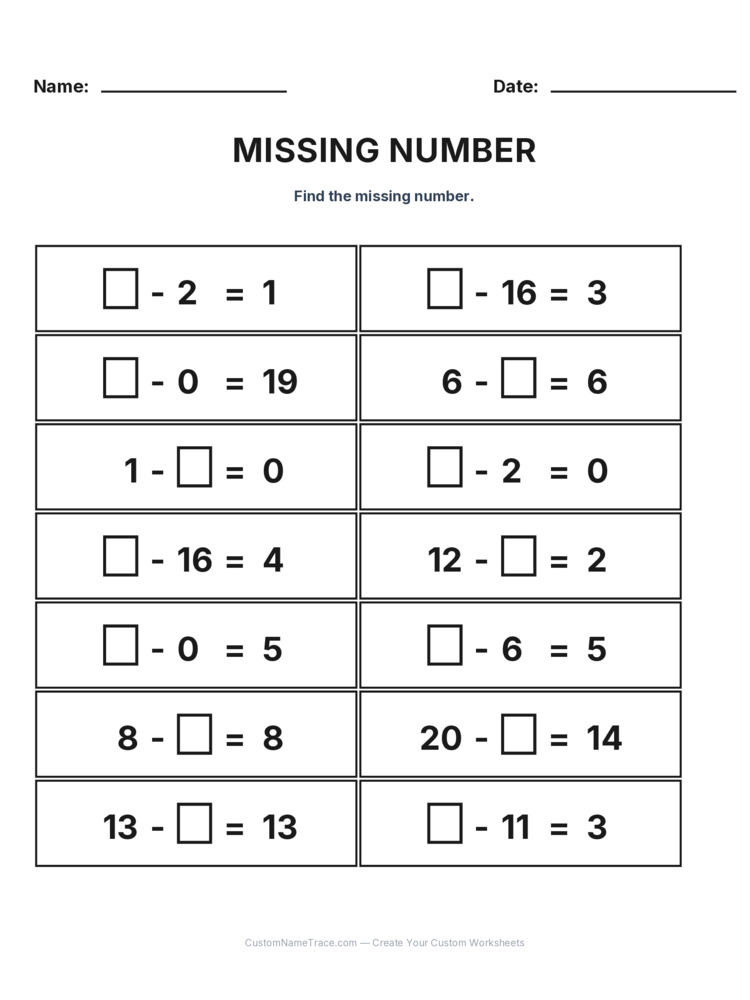
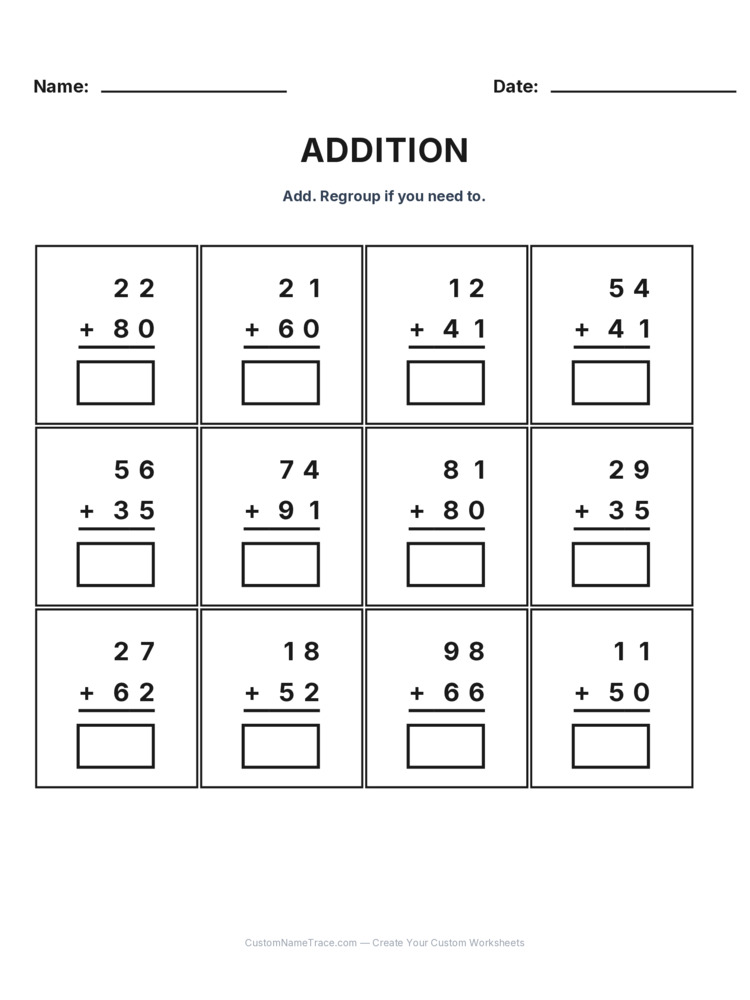
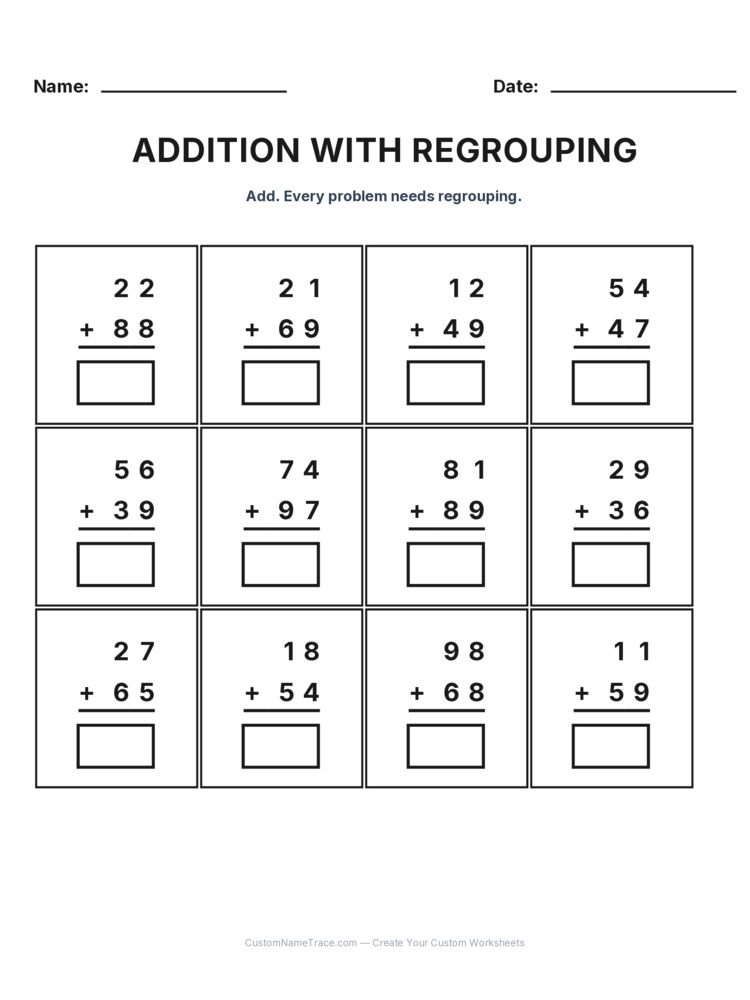
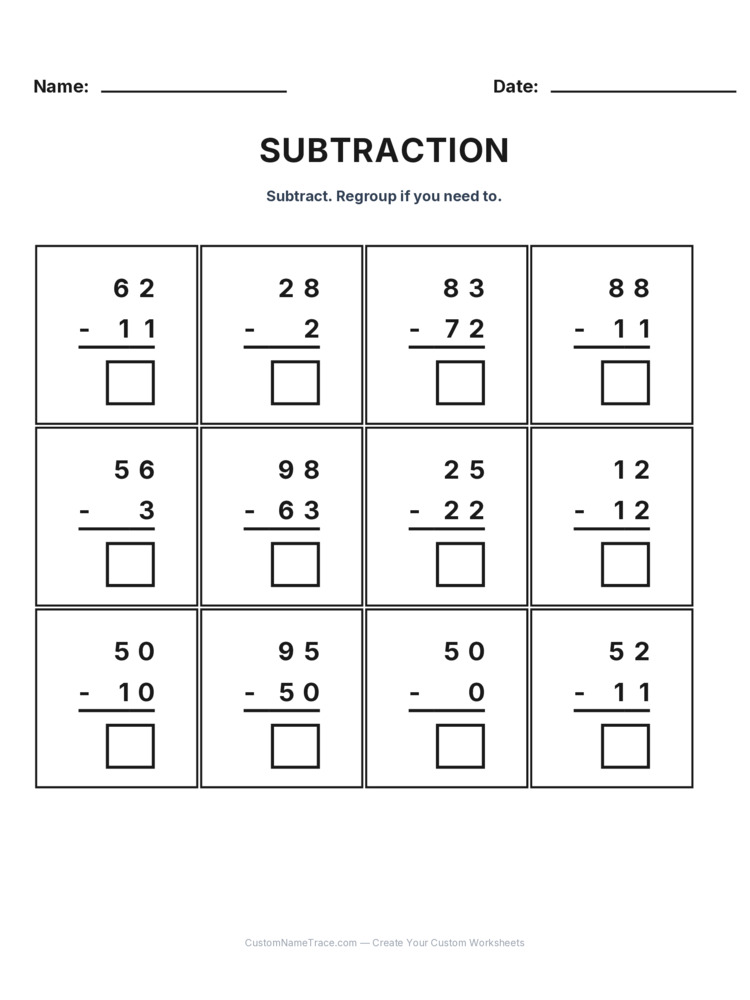
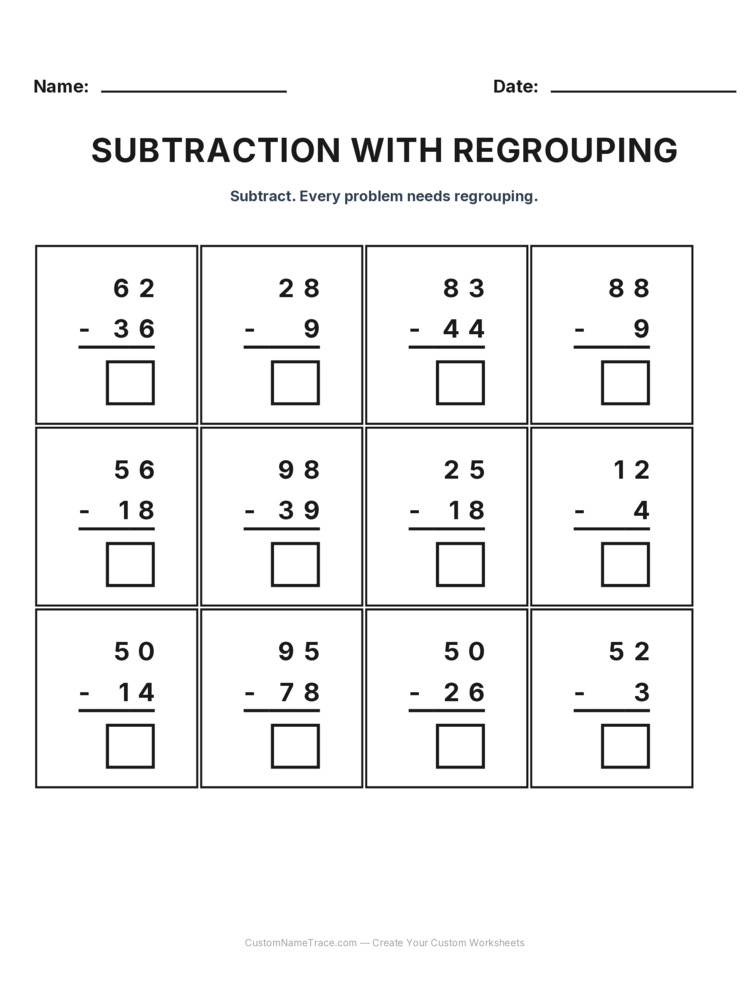
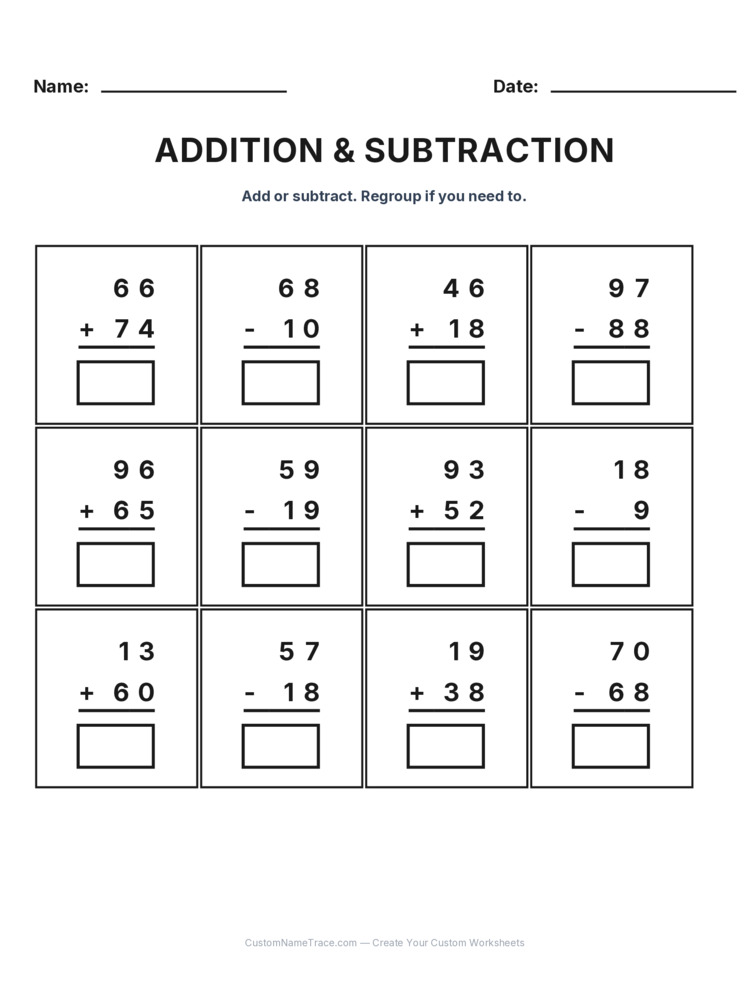
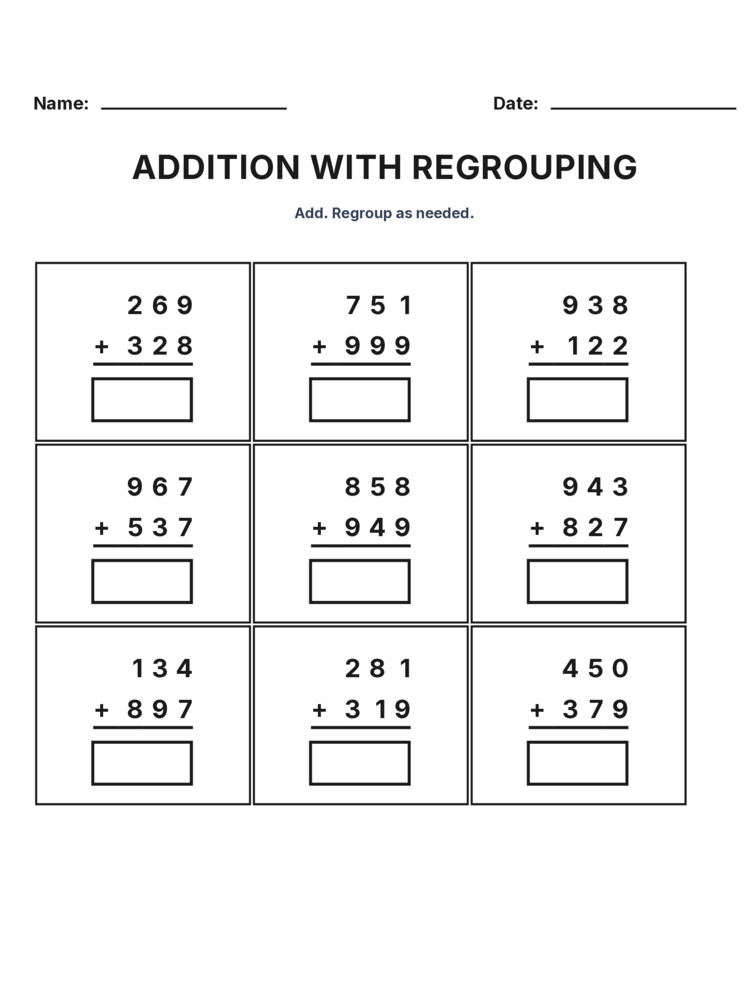
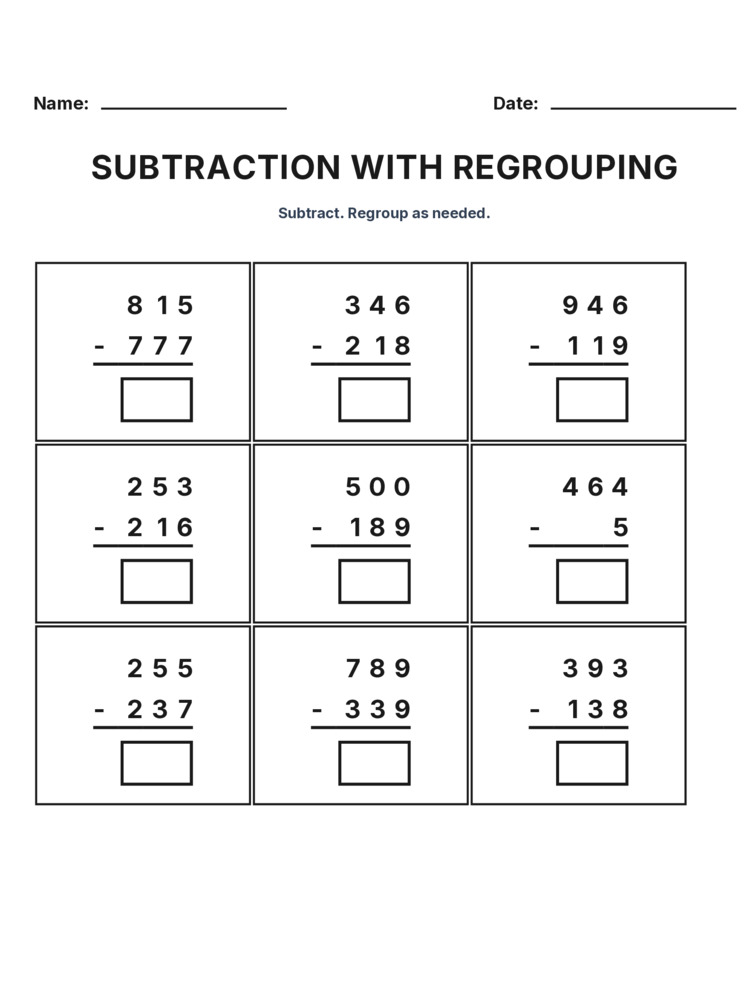
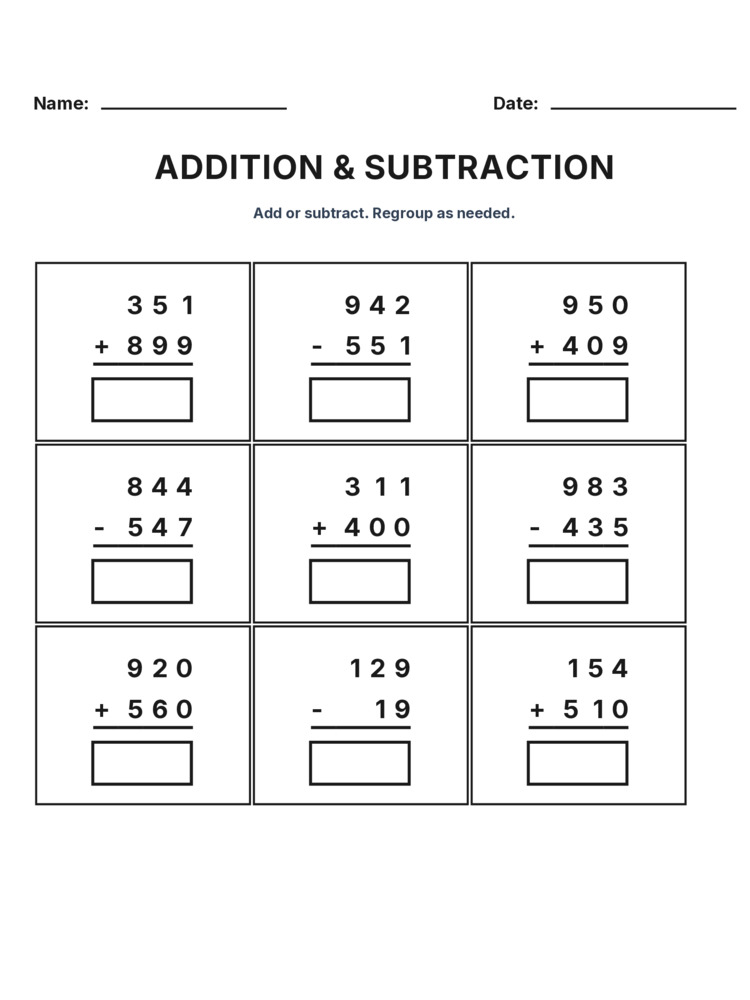
Simple fact-fluency problems ("5 + 2 = ▢") print as a horizontal row — quick to scan, quick to solve, right for building speed on facts a child mostly already knows. Once regrouping enters the picture — carrying a ten in addition, borrowing in subtraction — the problems switch to a vertical, stacked format with the ones and tens columns lined up, because that alignment is the actual skill being practiced, not a style preference. A regrouping worksheet in horizontal form would be testing something different (and easier) than what it's supposed to teach.
Addition and Subtraction, and where Multiplication and Division begin
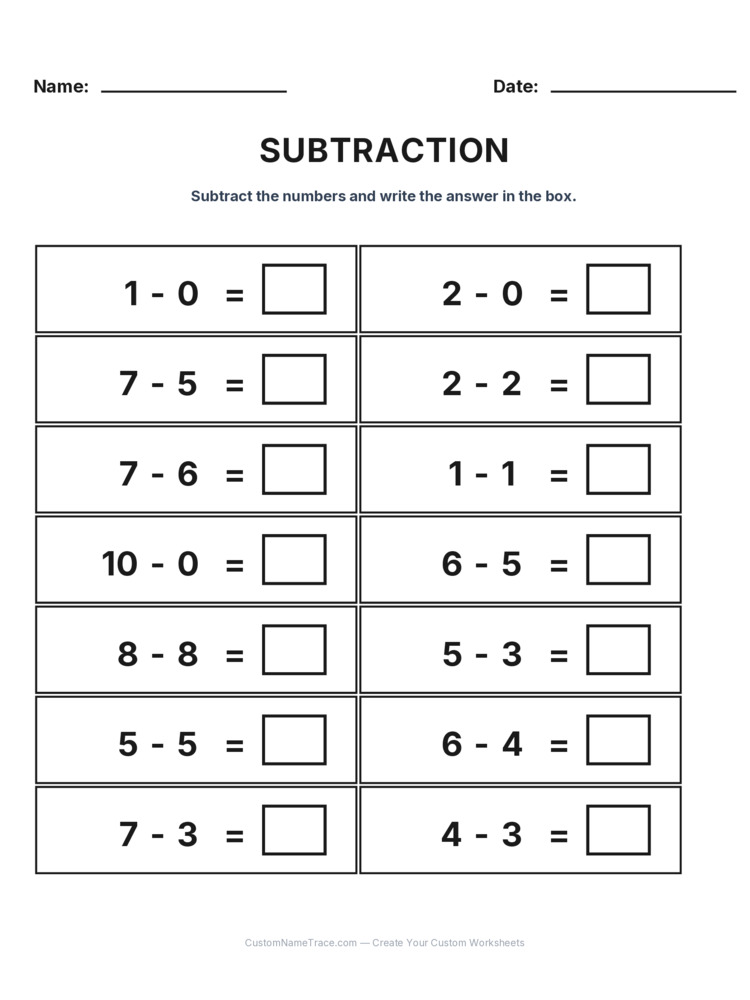
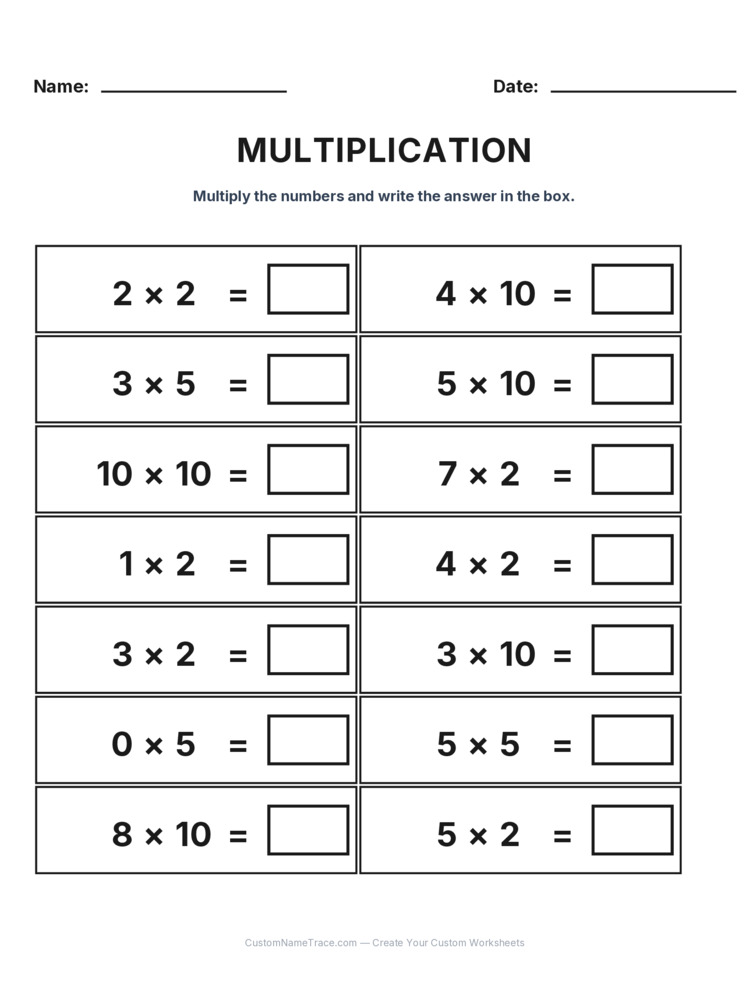
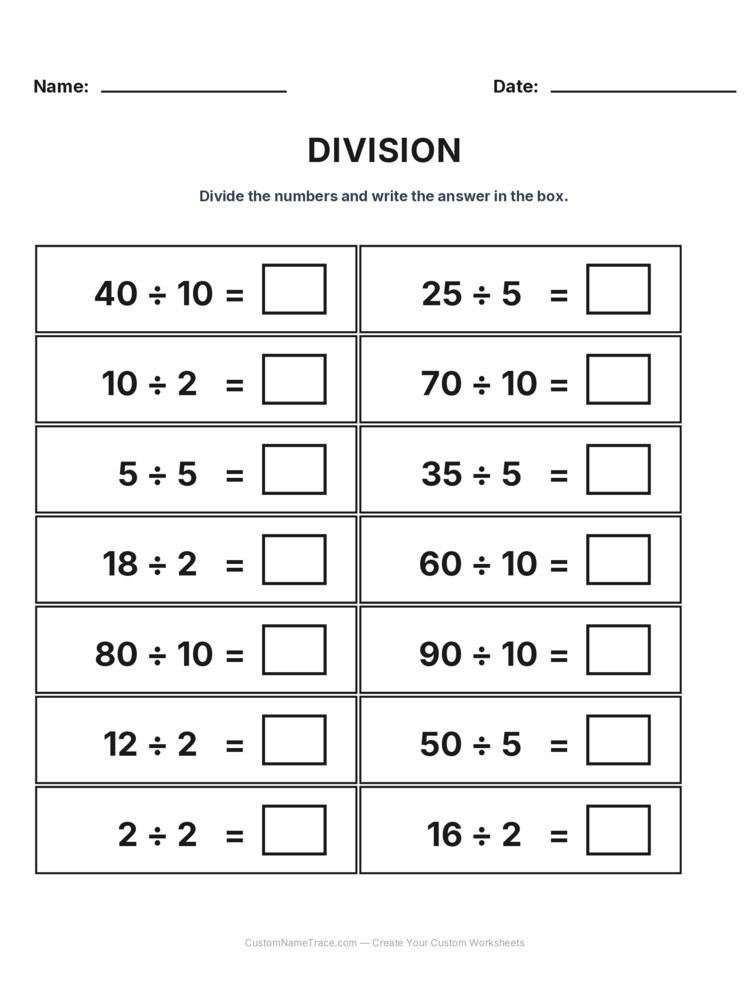
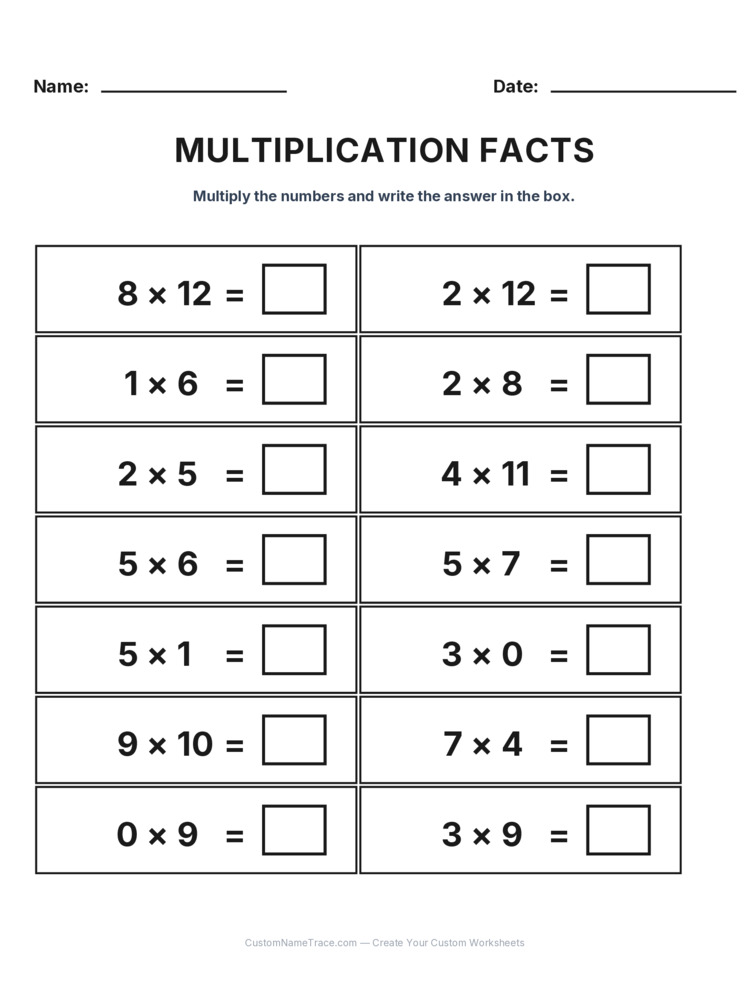
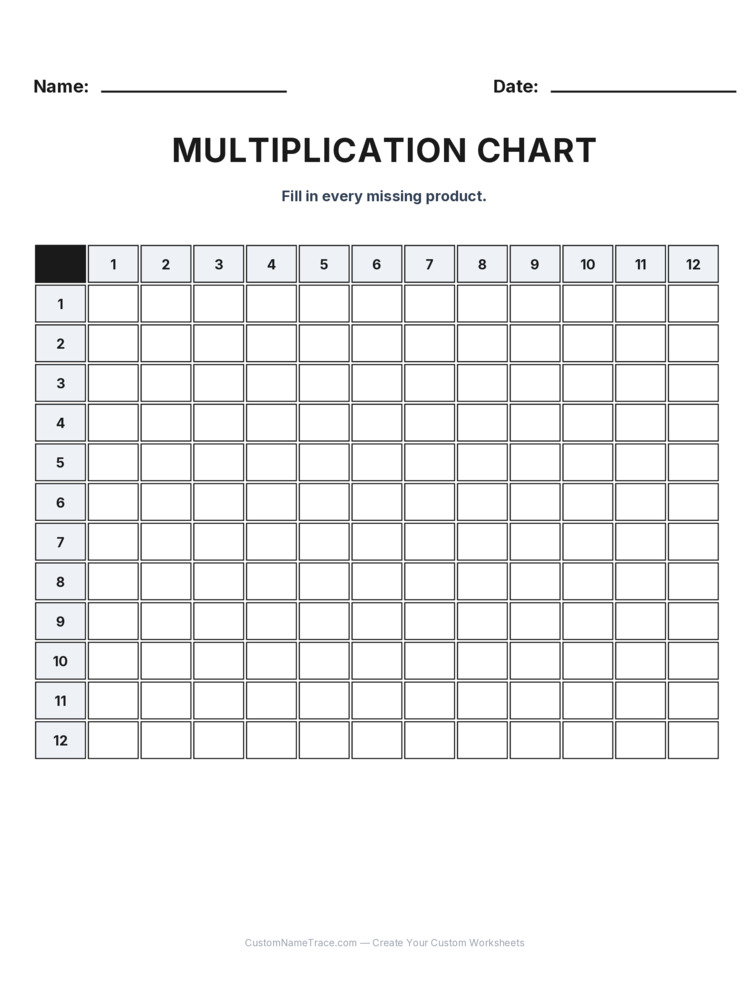
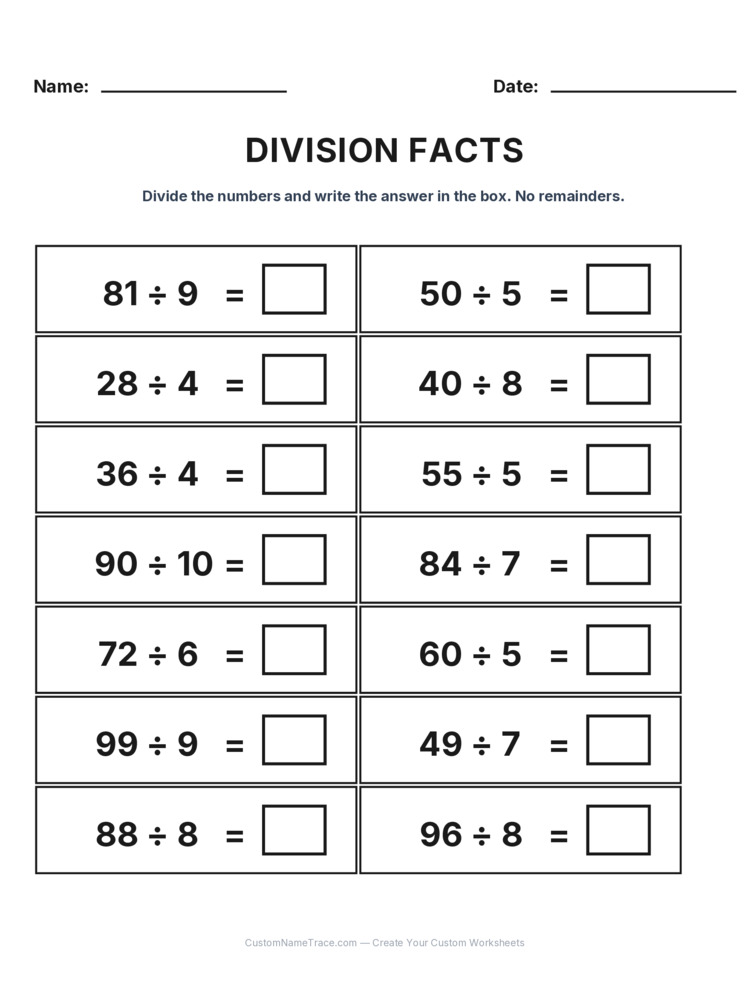
Addition and Subtraction run the full range here, Kindergarten through Grade 3, because both exist as real skills from the very start. Multiplication and Division start later and on purpose — Grade 2 introduces them gently, limited to the easiest fact families (the 2s, 5s, and 10s tables, the ones built on skip-counting a child likely already half-knows), and Grade 3 is where they open up into full fact fluency (0 through 12) and long-division basics. Putting multiplication in front of a Kindergartner wouldn't be a head start, it would just be confusing — the grade-first organization here keeps that from happening by construction, not by hoping a visitor picks the right page.
Mixed Review, and why it's a separate page
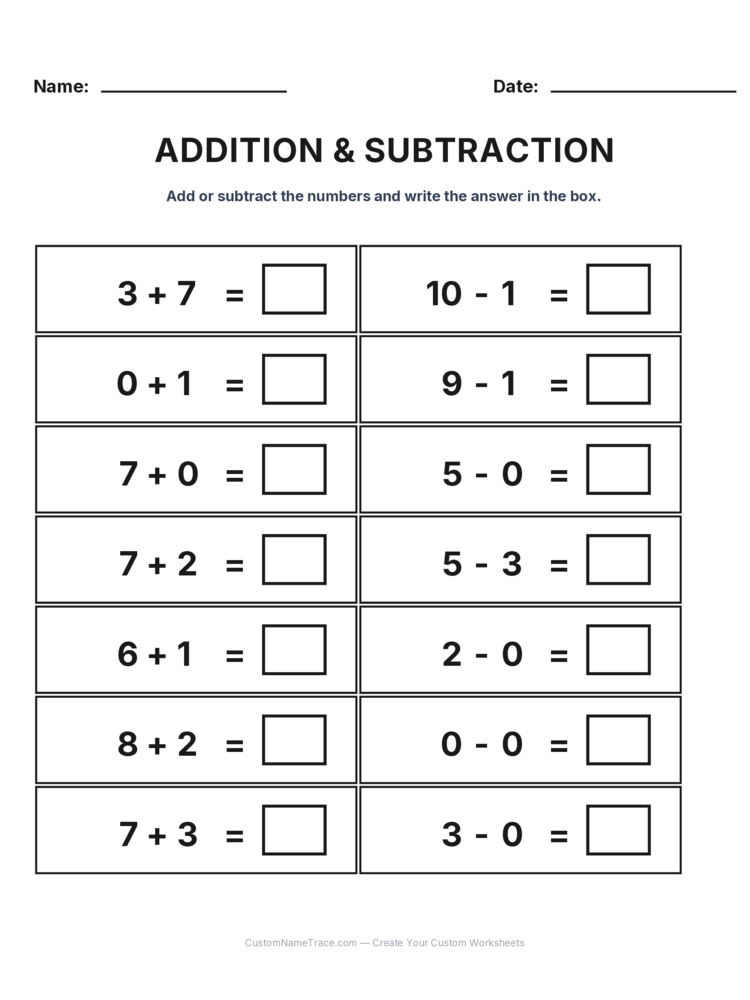
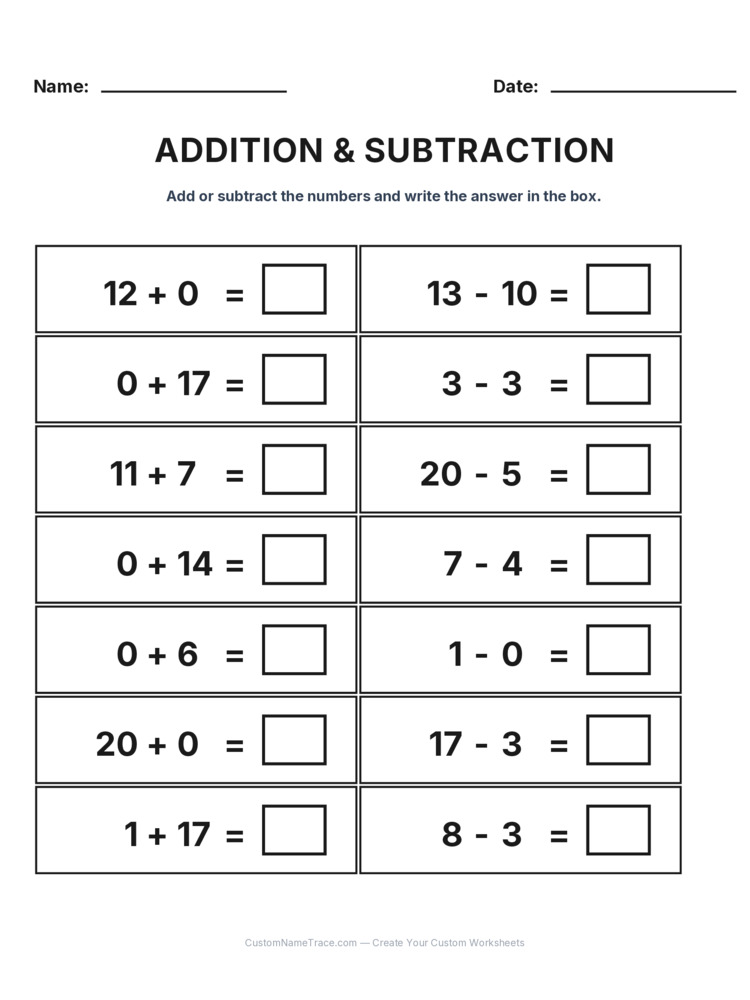
Alongside dedicated Addition and dedicated Subtraction pages at most grades, there's a Mixed Review page that rotates between the two, row by row. That's a genuinely different exercise from either dedicated page: it tests whether a child can tell which operation a problem is asking for, not just whether they can compute once the operation is already decided. The right order for most kids is dedicated practice first, on whichever operation needs it, then Mixed Review once both are solid — using Mixed Review as a first exposure to either operation tends to test operation-recognition before the arithmetic itself is secure.
Choosing a starting point
If you're not sure where to start, judge by the skill rather than the birthday: a child who's already fluent adding within 10 is ready for the next grade's range even if they're young for it, and a child still counting on fingers for basic sums benefits more from extra time at a lower range than from being pushed ahead because of their age. If the struggle is with the underlying quantity sense itself — not recognizing what a number actually represents, not a specific fact — Number Sense worksheets (ten-frames, place value) address that more directly than more arithmetic repetition would. Every grade page below explains exactly what that grade covers and what a child should already be able to do before starting it, so you can match the page to the child rather than the calendar.
Built by the same engine behind this site's other worksheets
This math section isn't a bolted-on second product — it runs through the identical pipeline that generates every other pre-made worksheet on this site: the same PDF engine, the same print-accurate preview-equals-download guarantee that was the hardest engineering problem this whole site ever solved, the same Letter/A4 support, the same no-account, nothing-saved privacy model. A worksheet where the numbers don't sit where the preview showed isn't a shortcut, it's actively unhelpful to a child using it — that discipline carries over here exactly as it does everywhere else on the site.
Printing and classroom use
Every worksheet downloads as a clean, ready-to-print PDF in both Letter and A4 sizes. For a classroom, that means a teacher can print a whole set for a lesson without a second download or a separate site to visit. For a homeschool parent building a full curriculum grade by grade, the same grade-first organization that makes a single worksheet easy to find also makes it straightforward to work through an entire grade's worth of practice in order.
What's next
This is a genuinely large category, and it's being built out deliberately rather than all at once — Addition and Subtraction currently run the full Kindergarten-through-Grade-3 range, Multiplication and Division cover Grade 2's introduction and Grade 3's full fact fluency, and later grades, fractions, decimals, and additional formats are on the way. Pick a grade below to see everything currently available for it.
A note for specialists and homeschool families
Occupational therapists and learning specialists working on early numeracy, and homeschool parents building a deliberate math sequence rather than downloading one worksheet at a time, tend to use this section differently than a parent looking for a single printout: as a full progression to move through grade by grade and operation by operation. Every grade page links to the operations available at that grade, and every operation page links back up to its grade, so moving through a planned sequence in either direction doesn't mean hunting through menus.