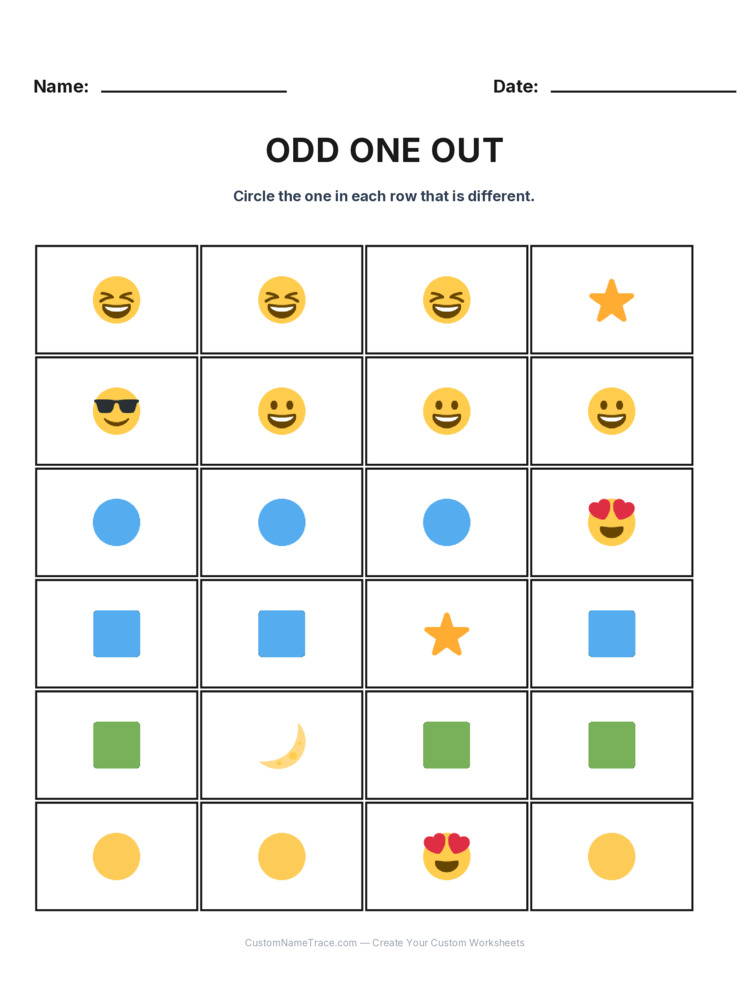
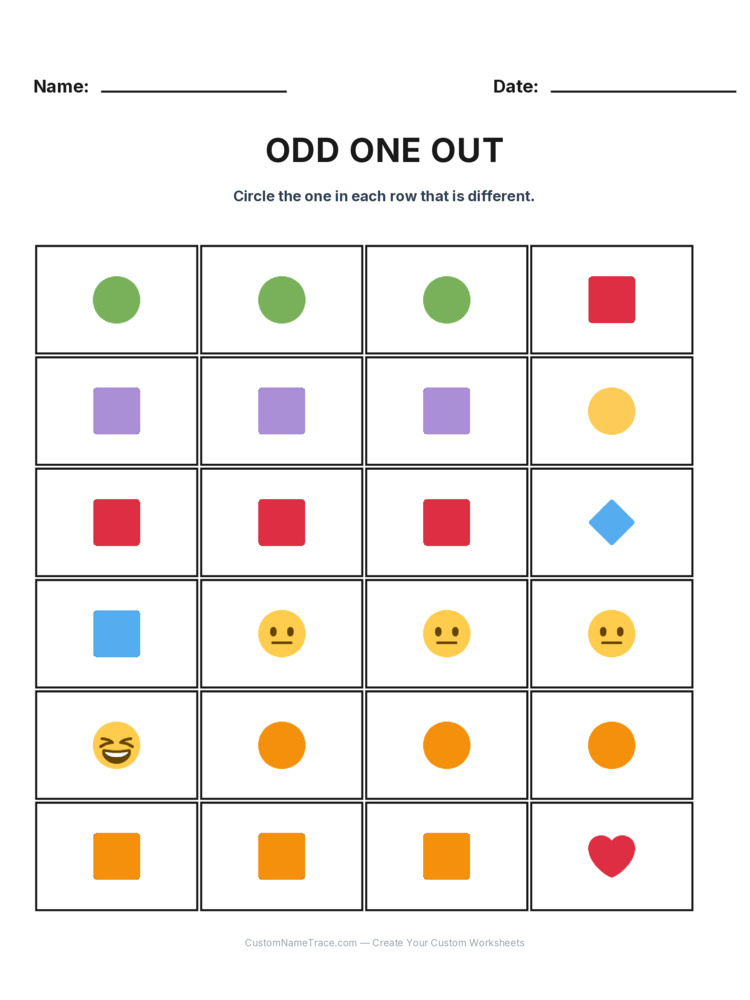
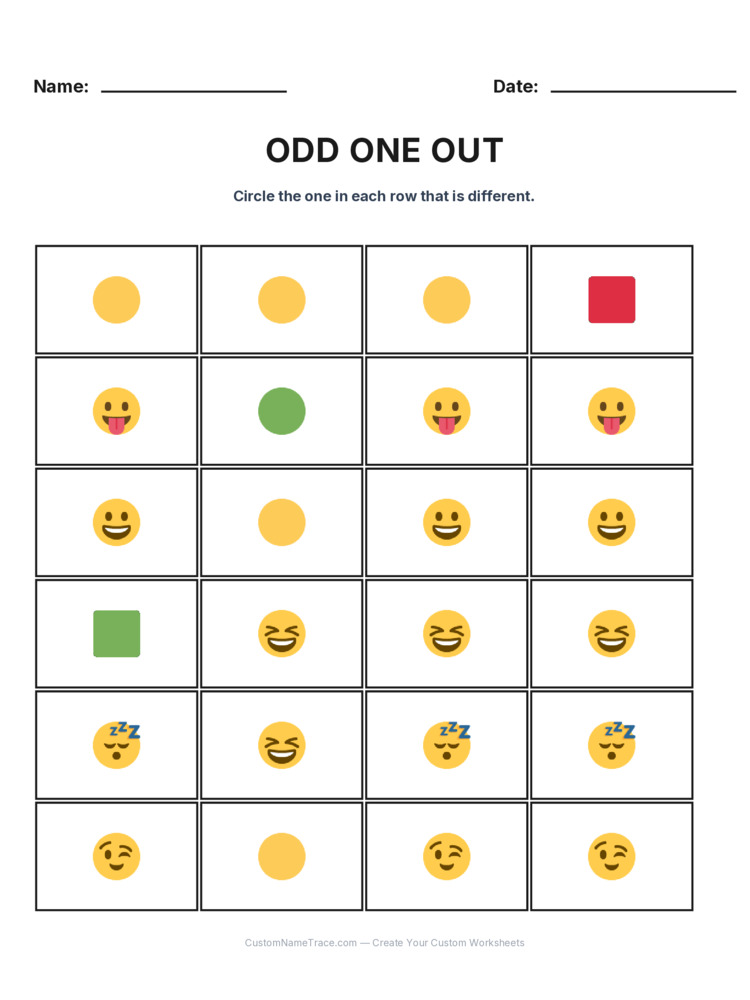
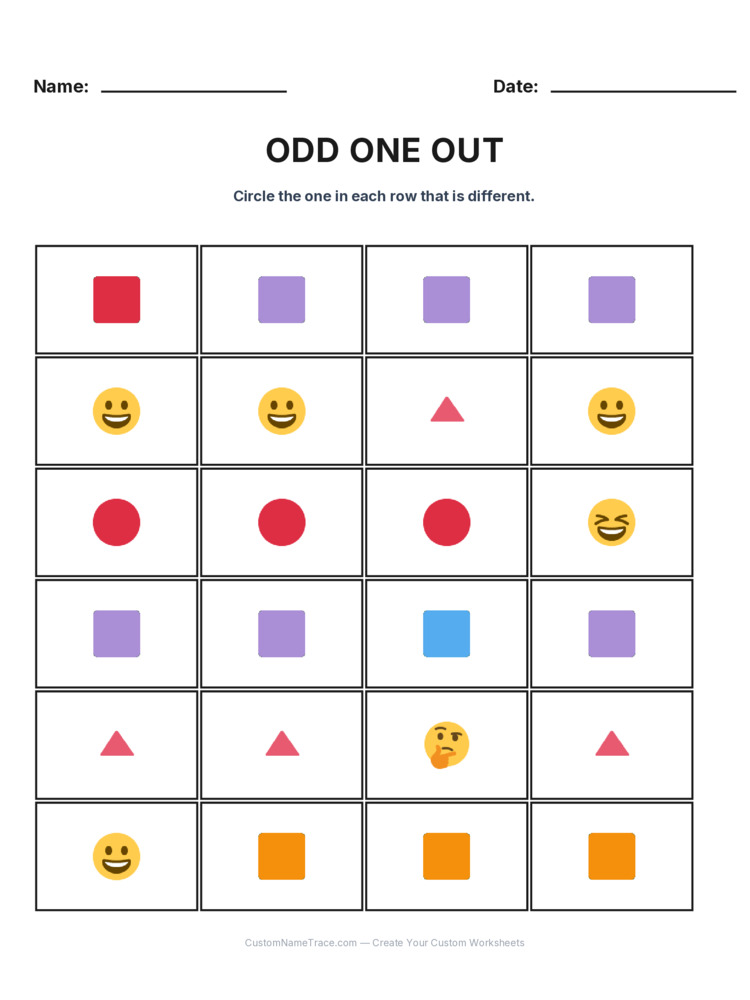
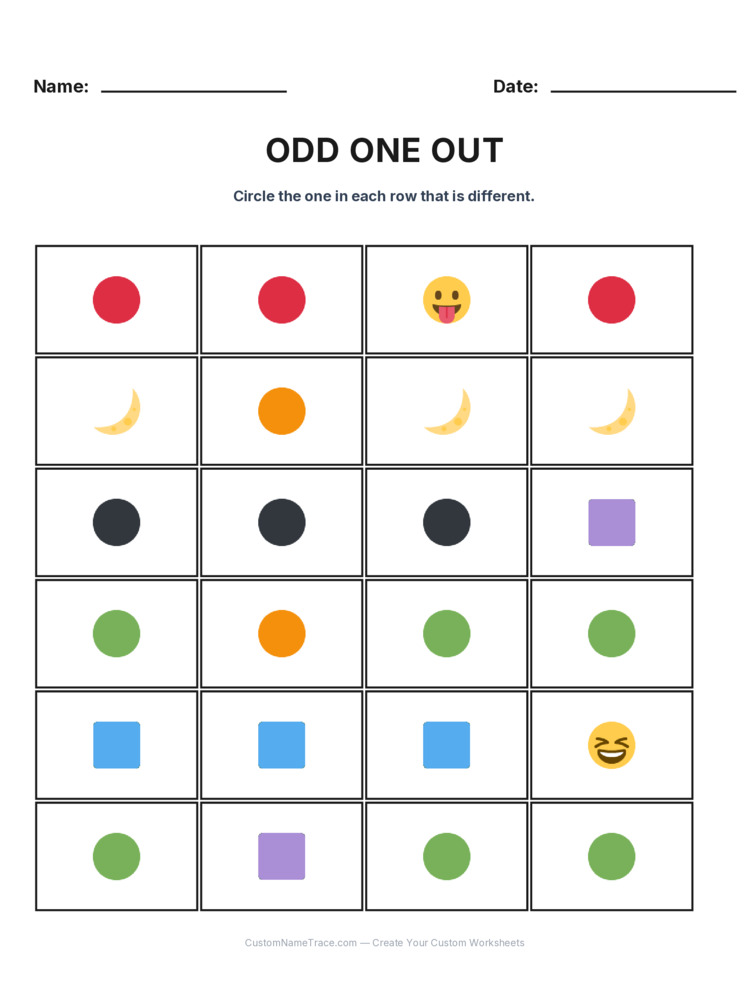
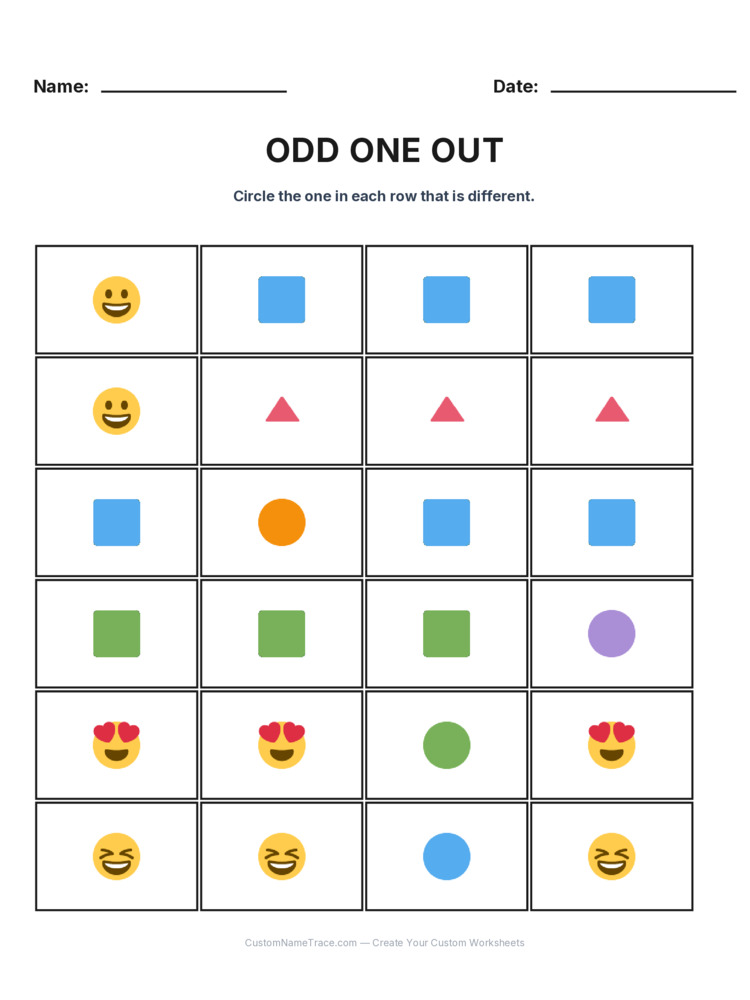
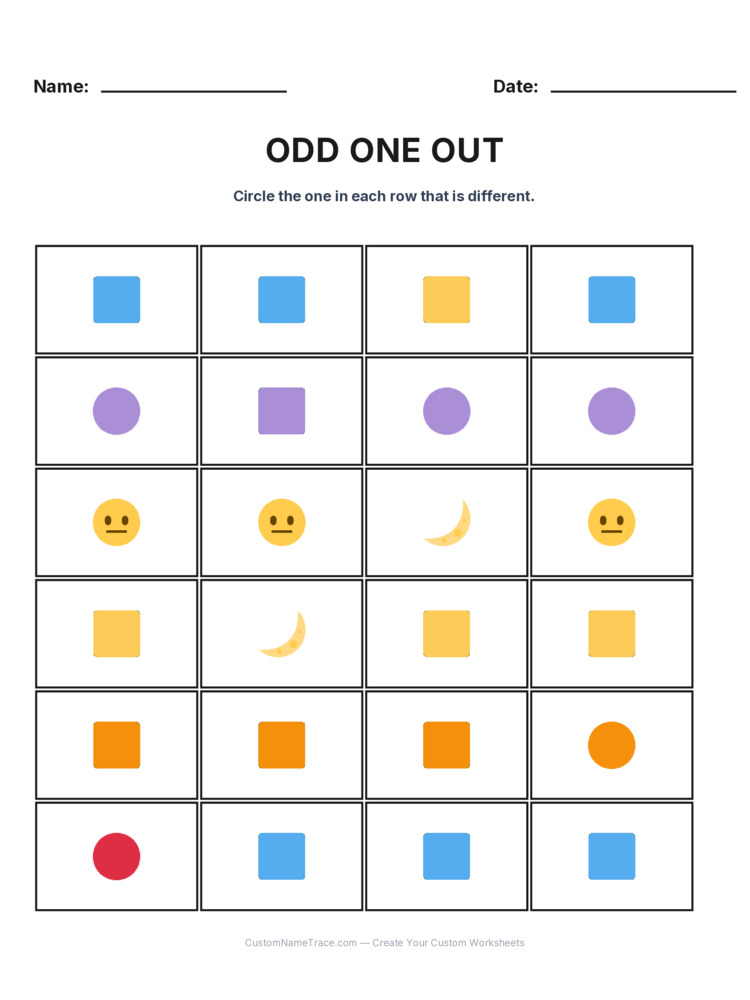
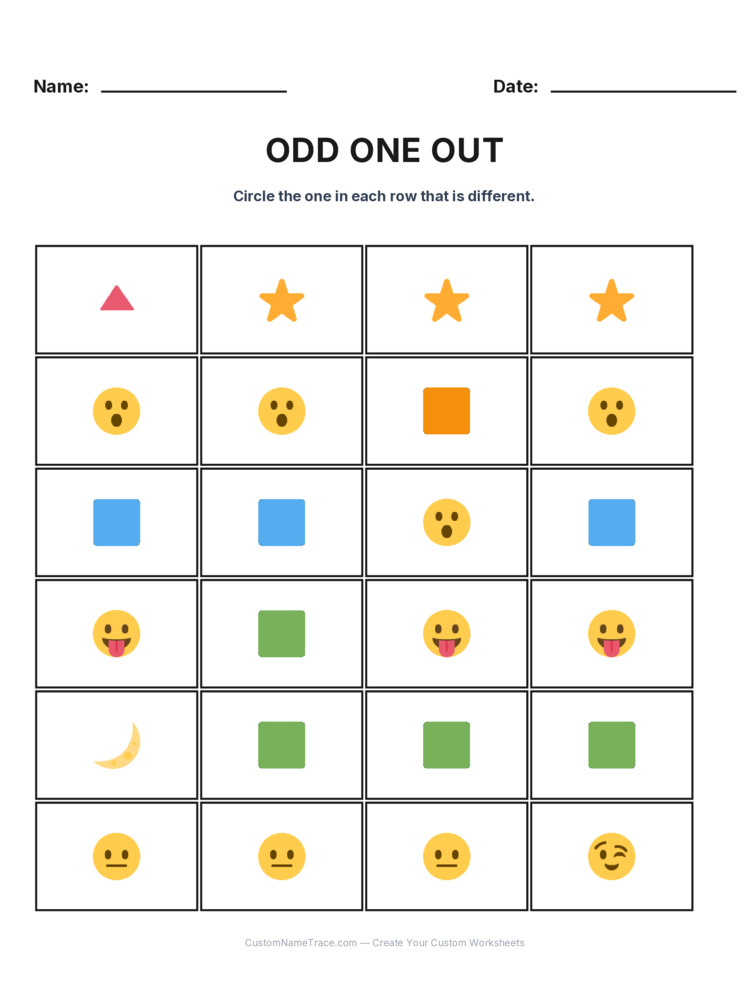
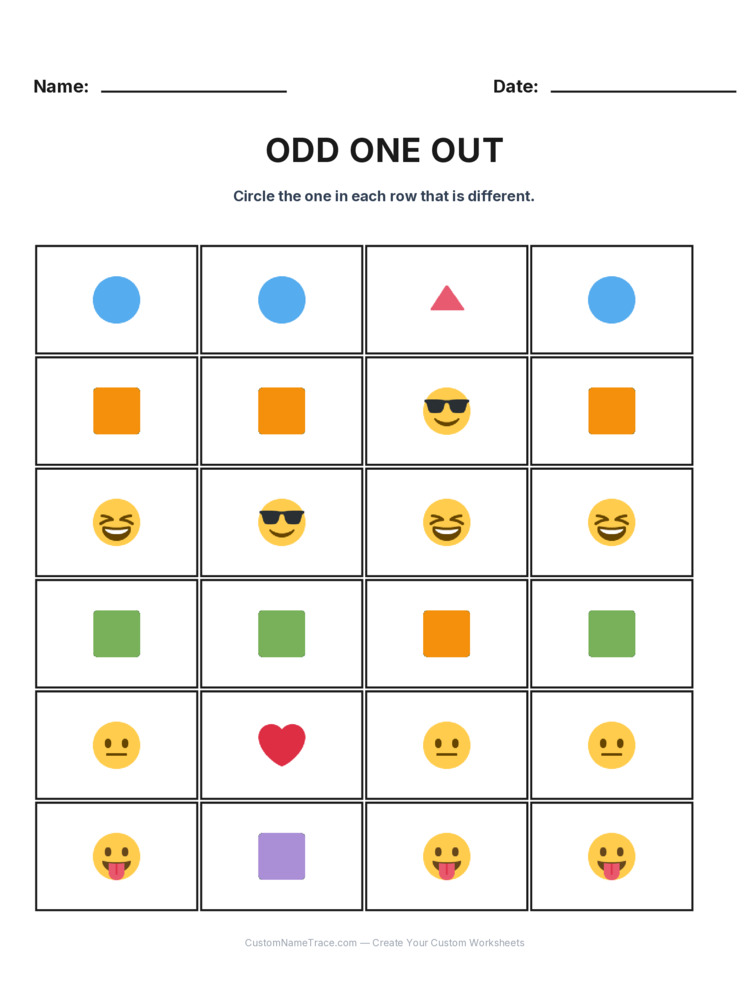
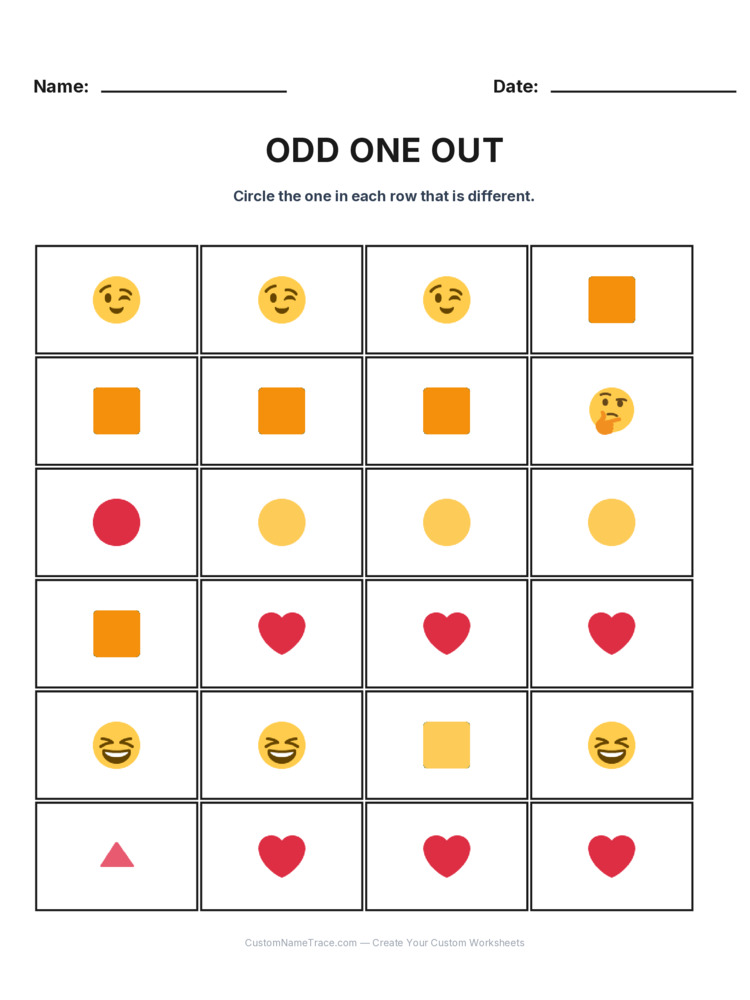
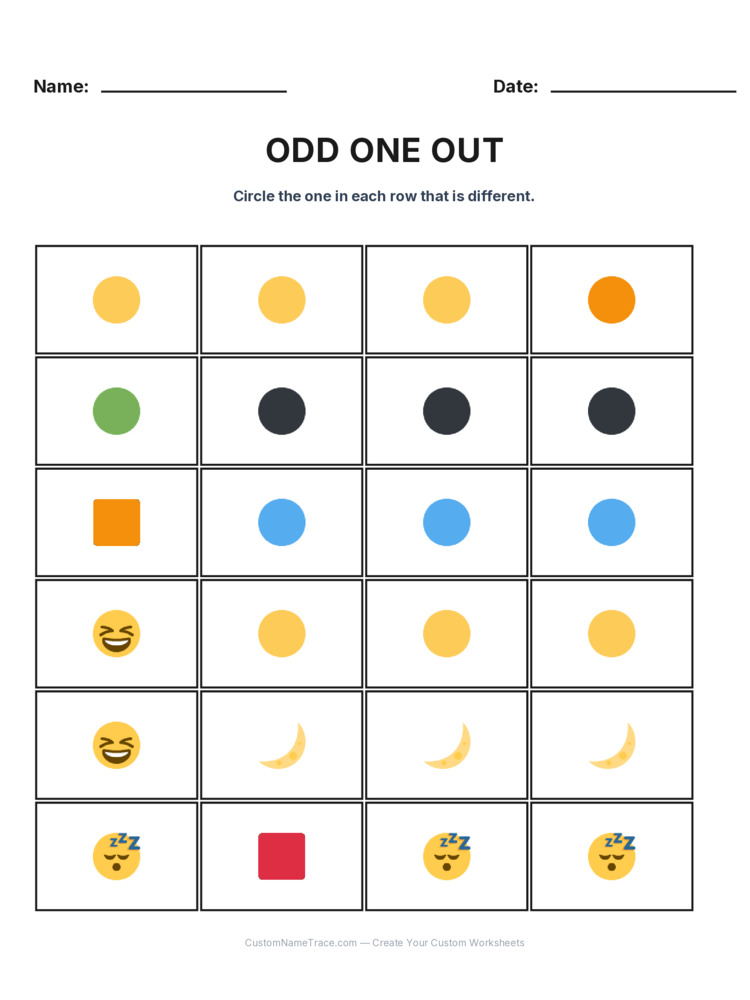
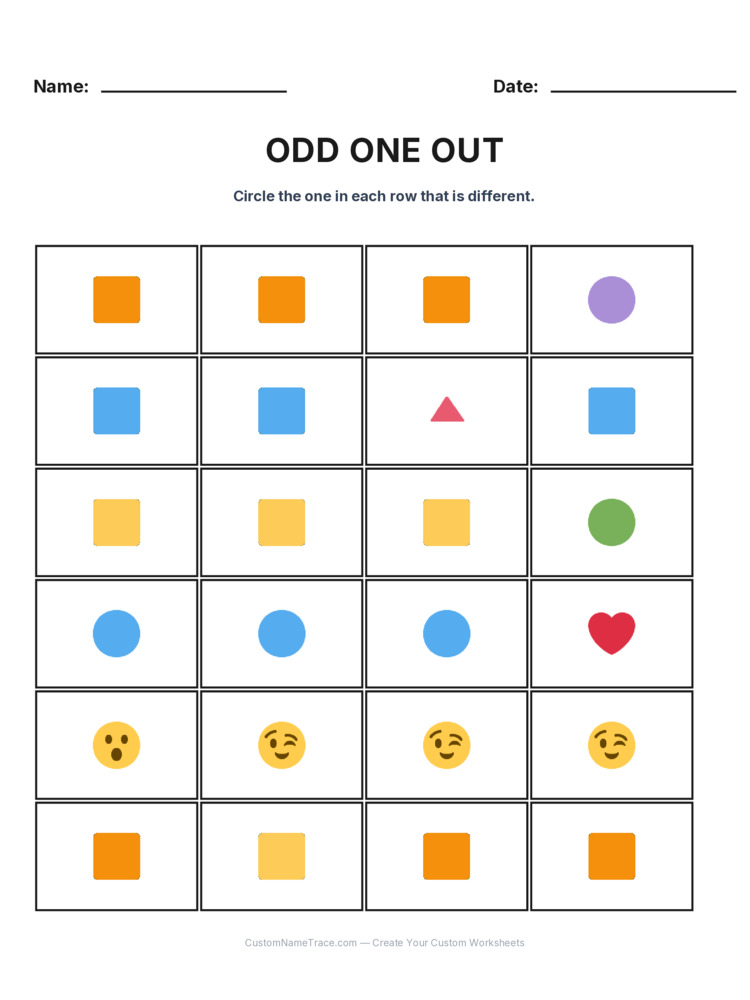
Picture logic, no reading required
Every puzzle at this level works entirely through pictures — a child doesn't need to read a single word to solve one, only to look carefully and compare. That's a deliberate constraint, not a limitation: at Pre-K and Kindergarten, the reasoning skill (comparing, matching, sorting, tracing a path) is what's being built, and requiring reading on top of it would test two skills at once instead of one.
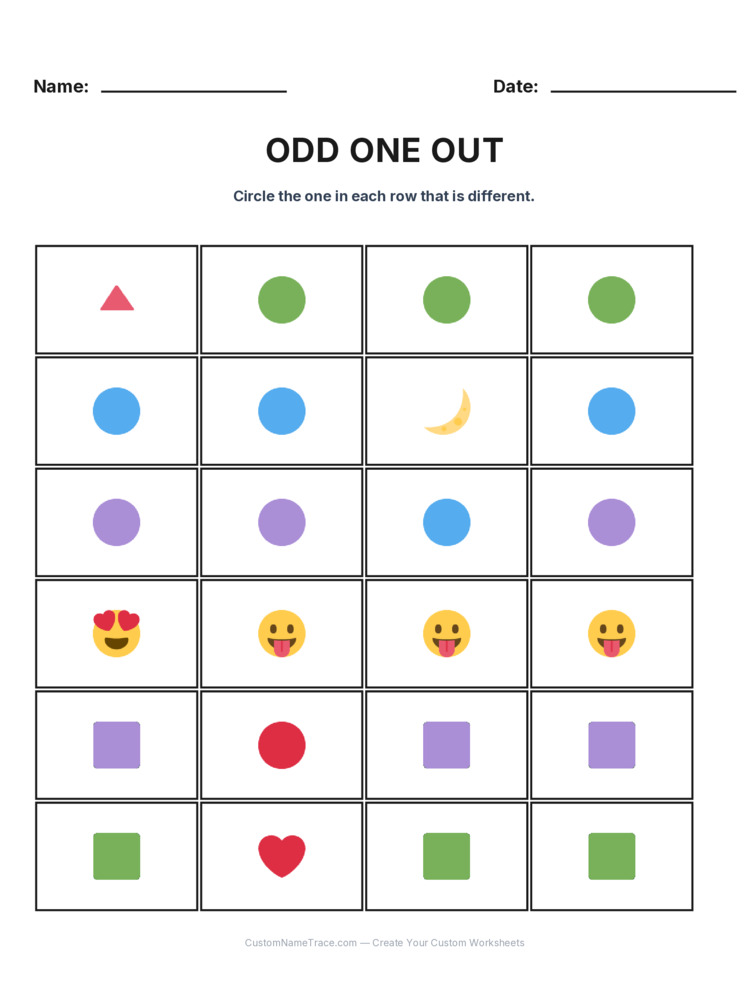
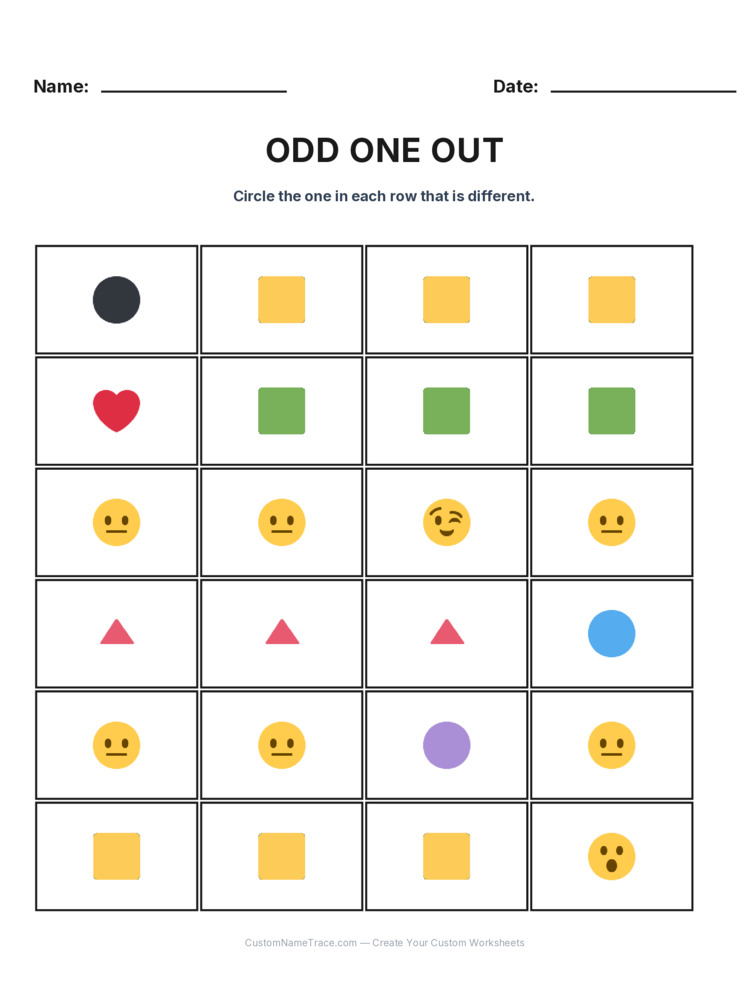
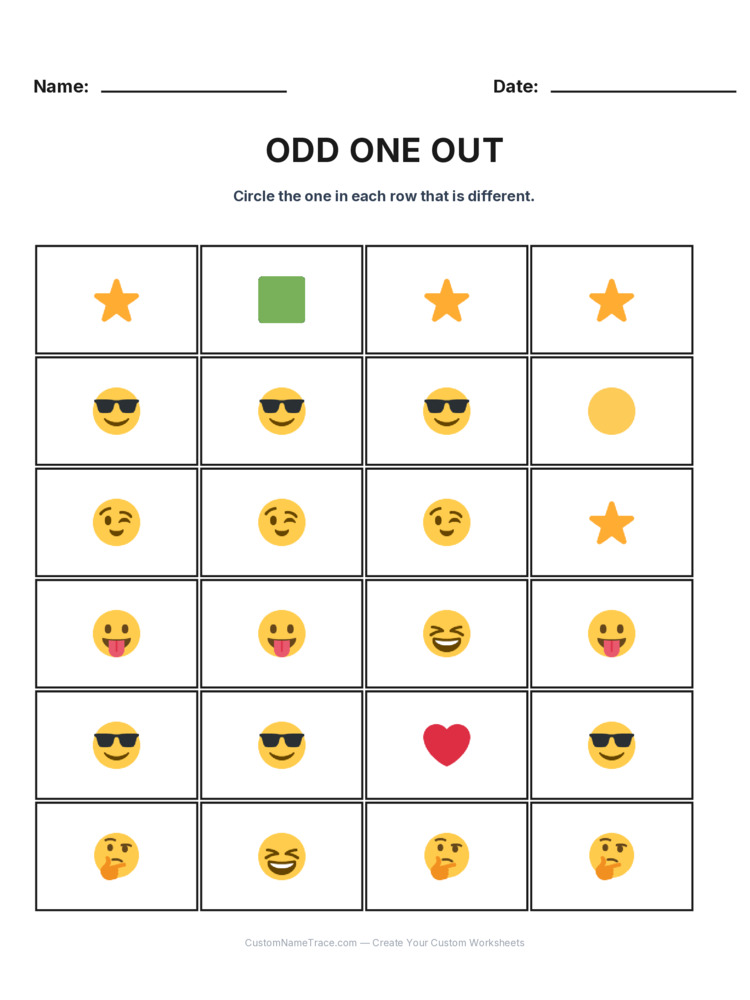
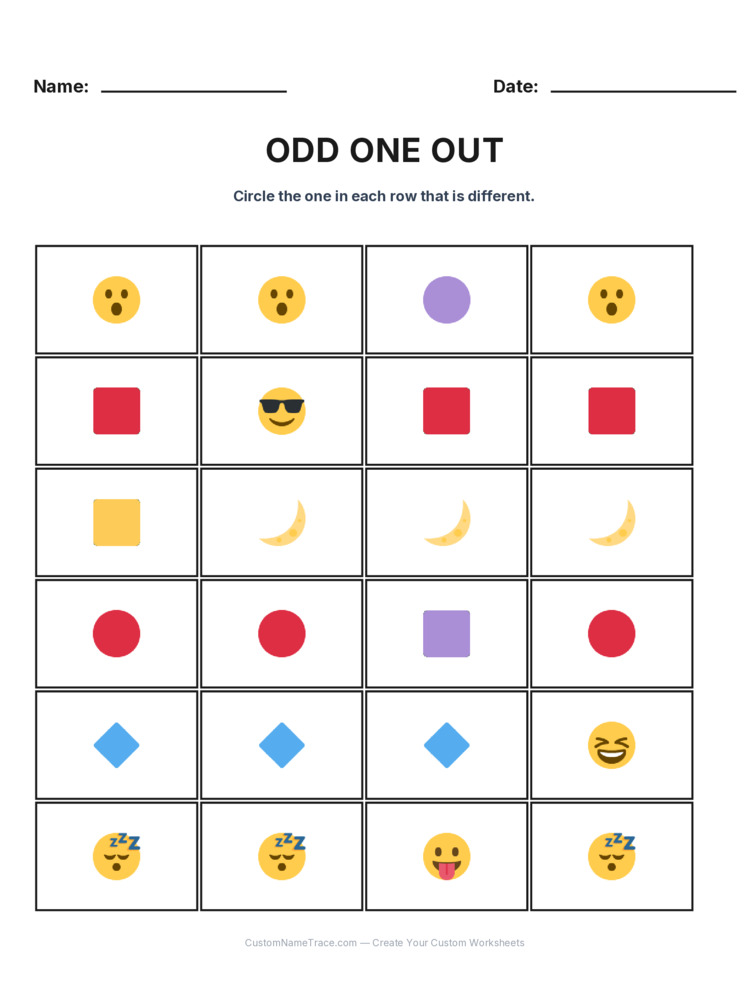
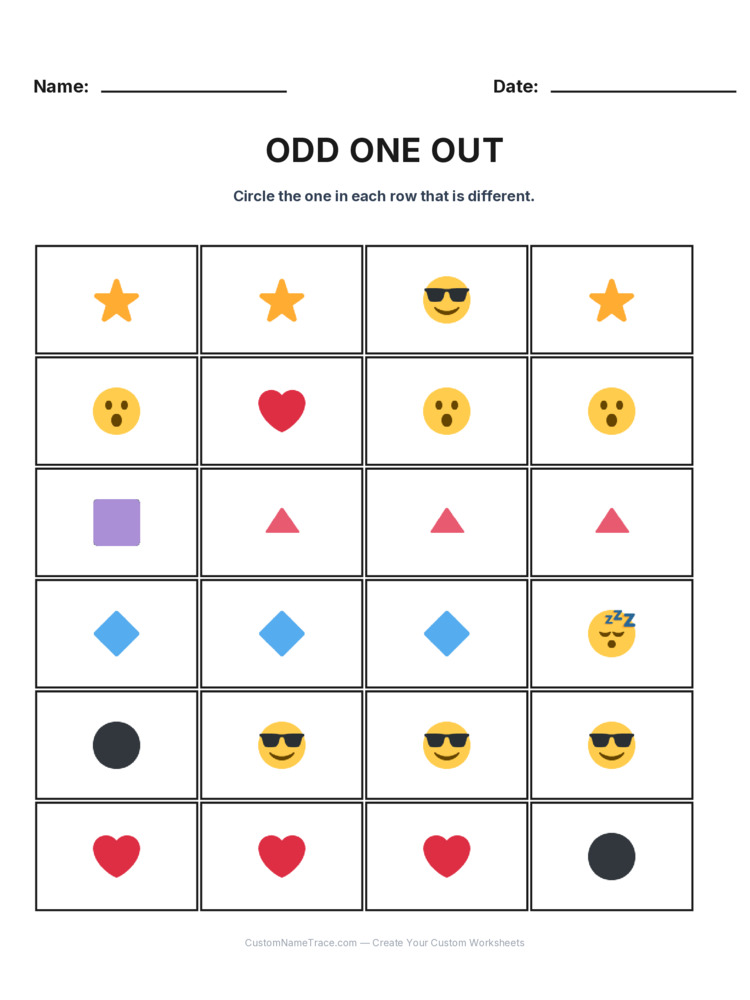
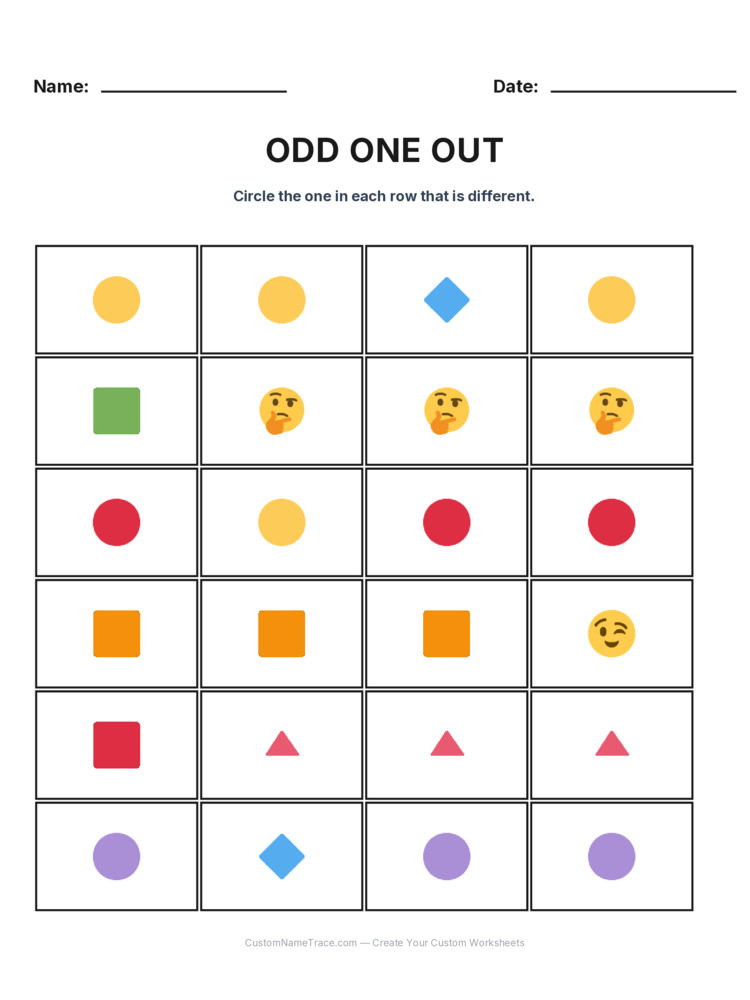
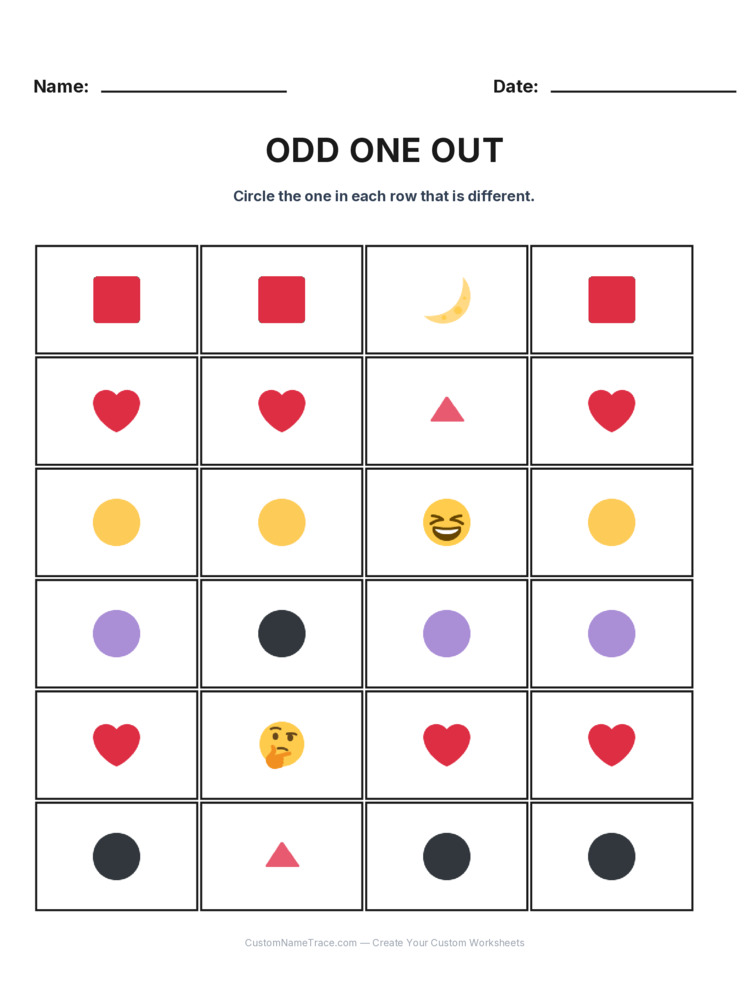
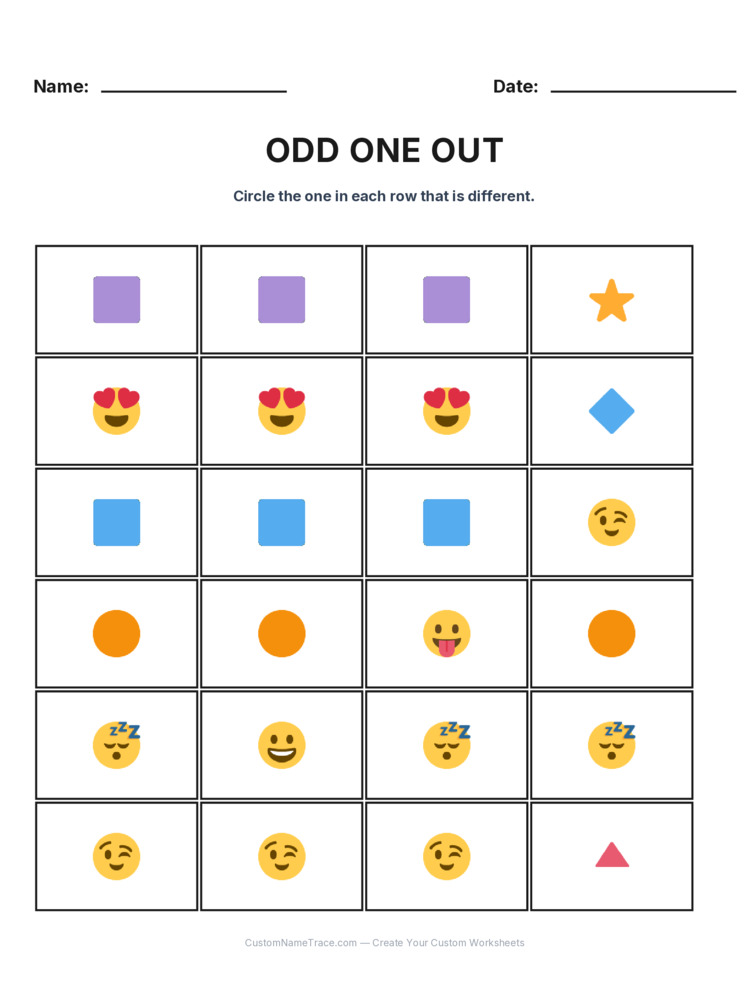
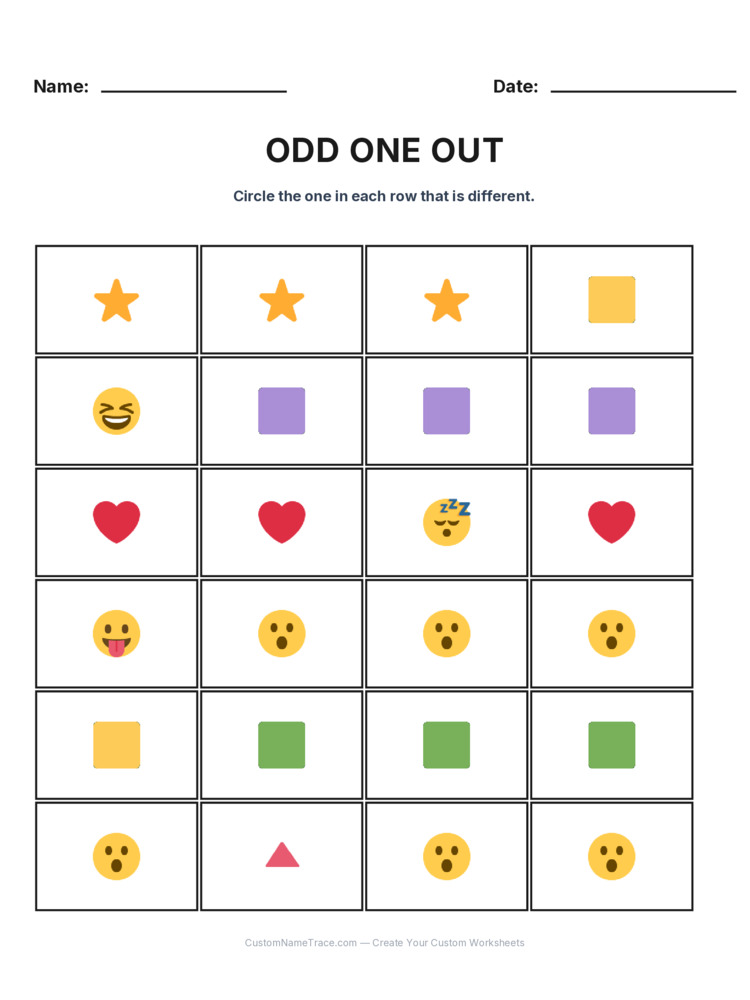
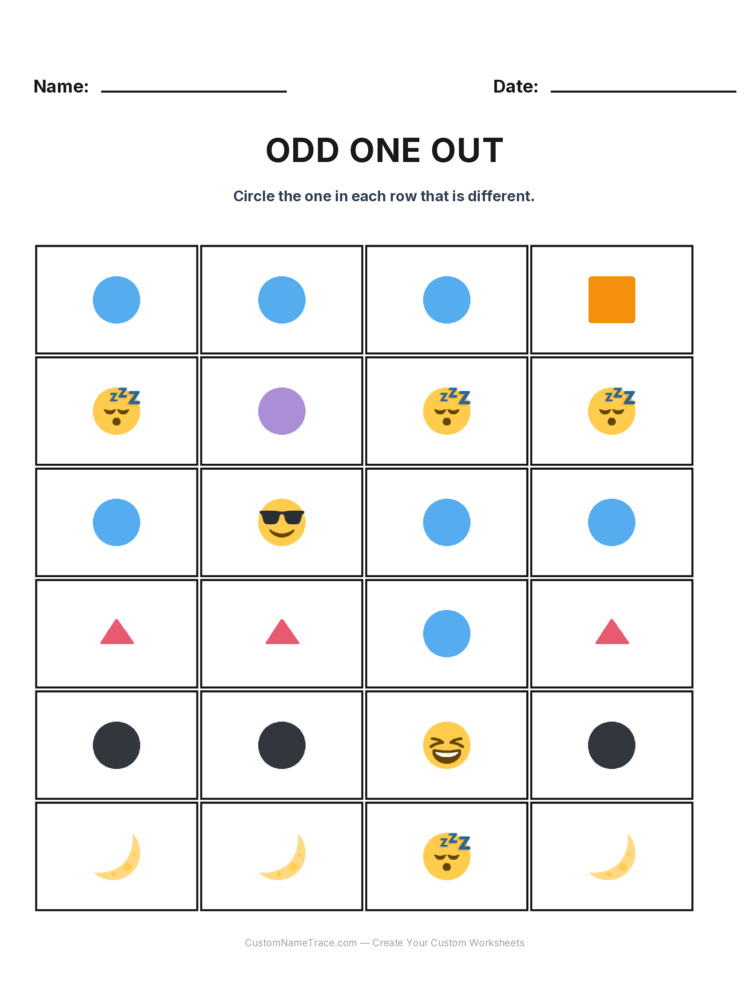
Odd One Out
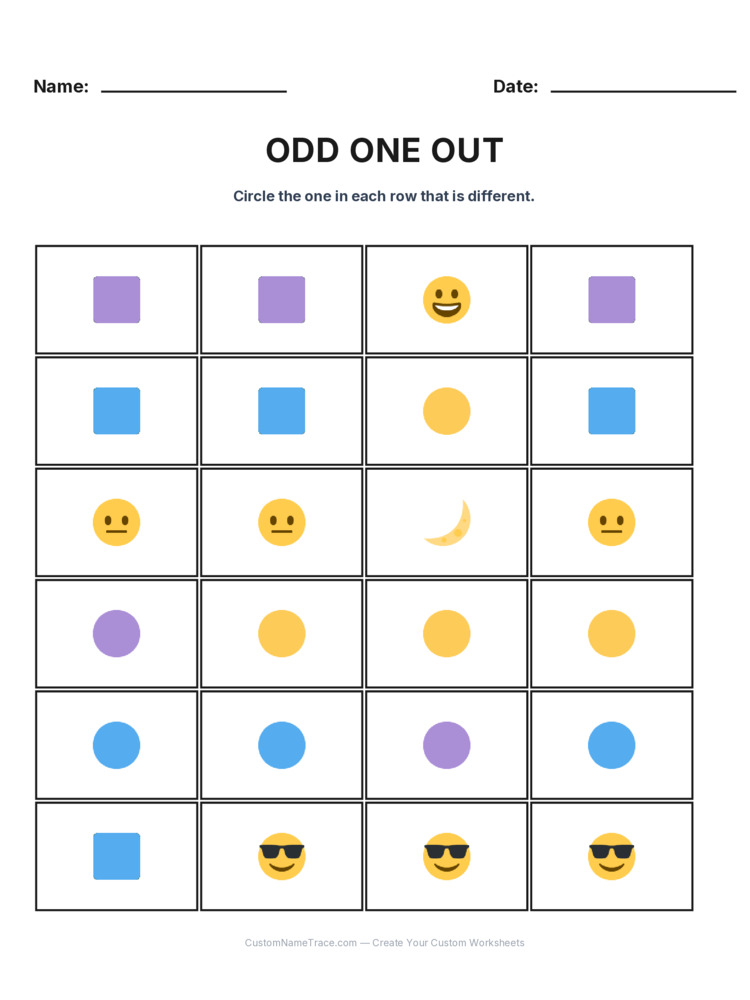
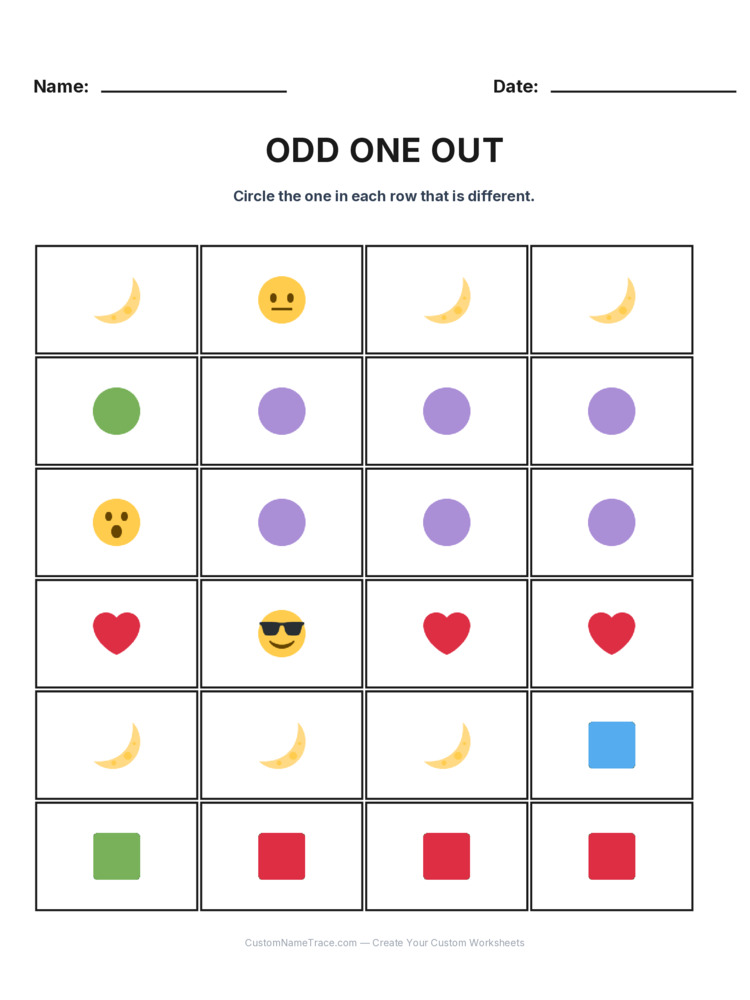
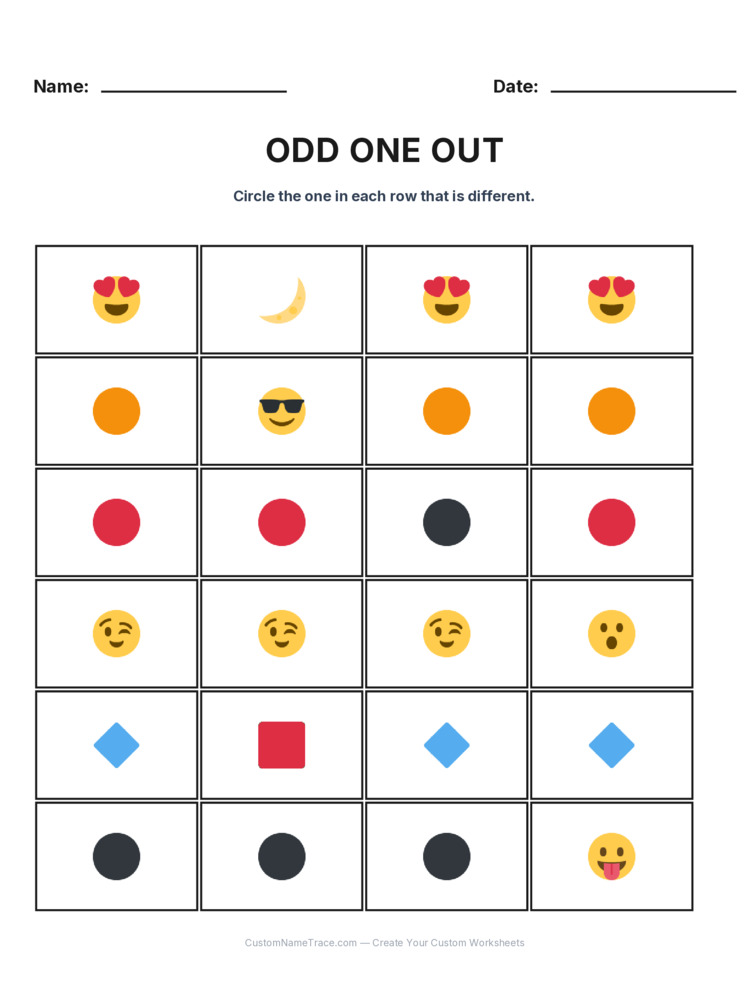
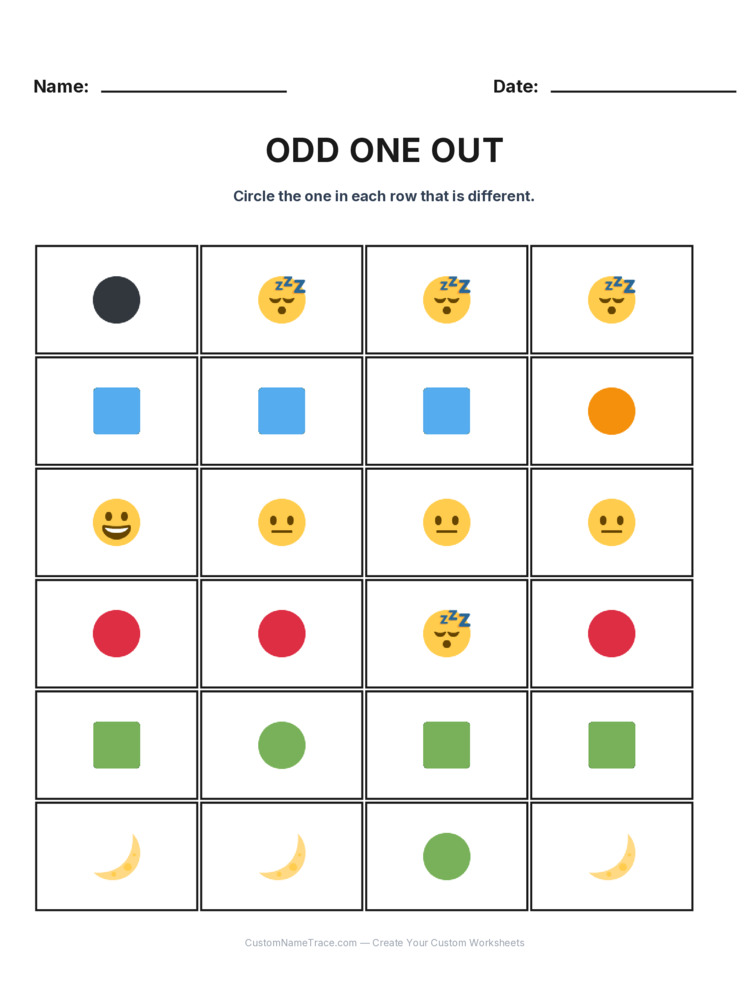
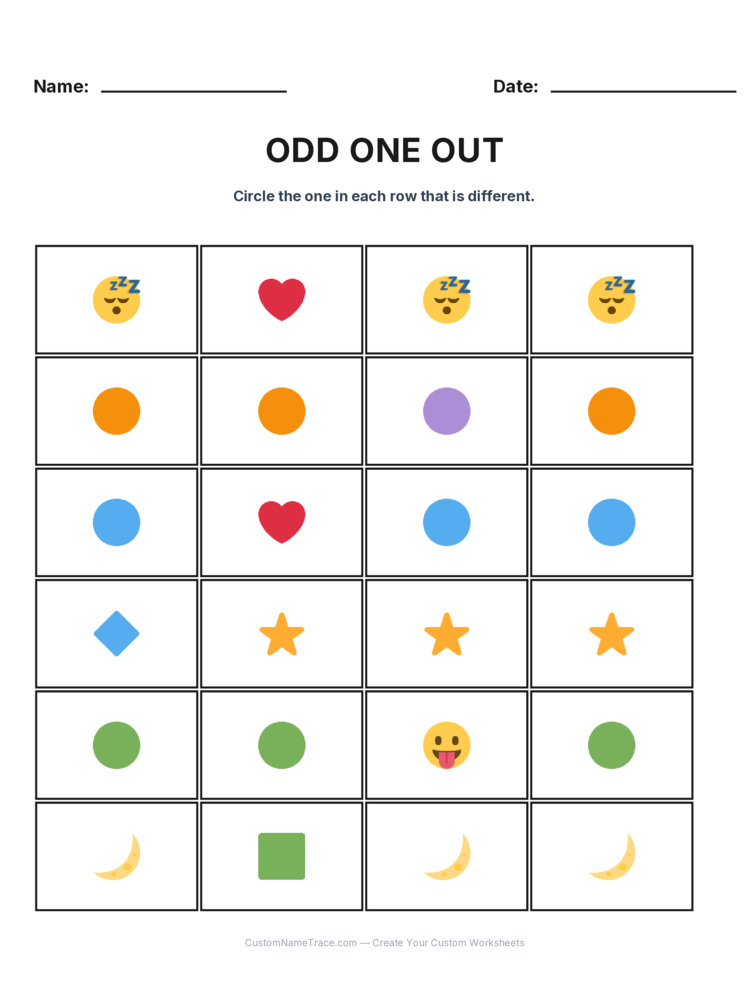
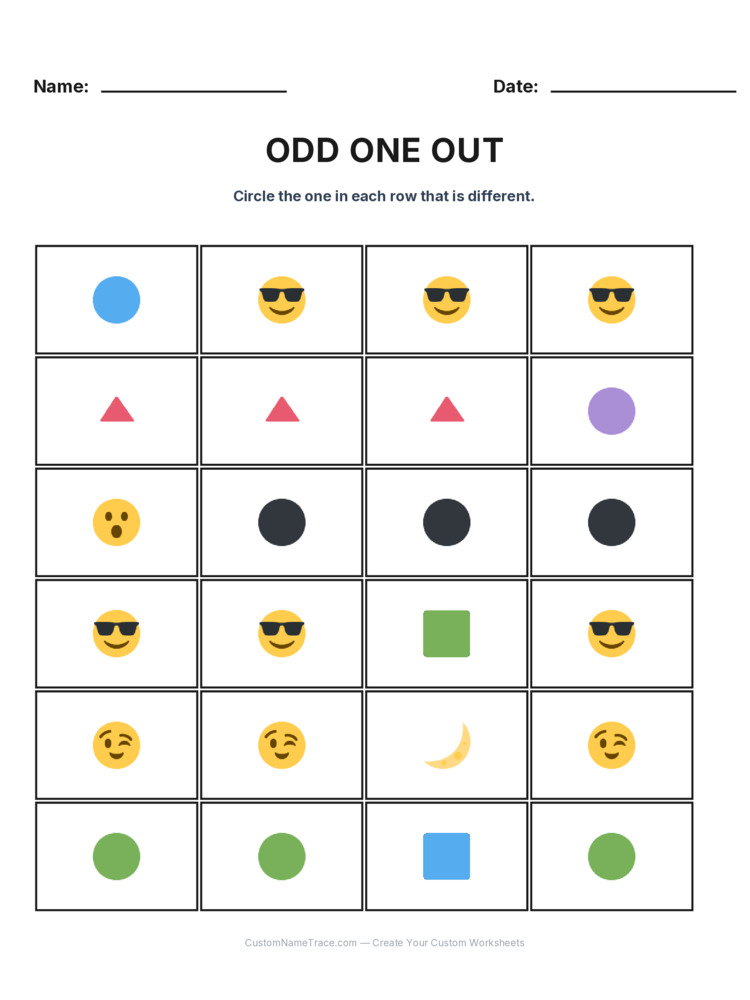
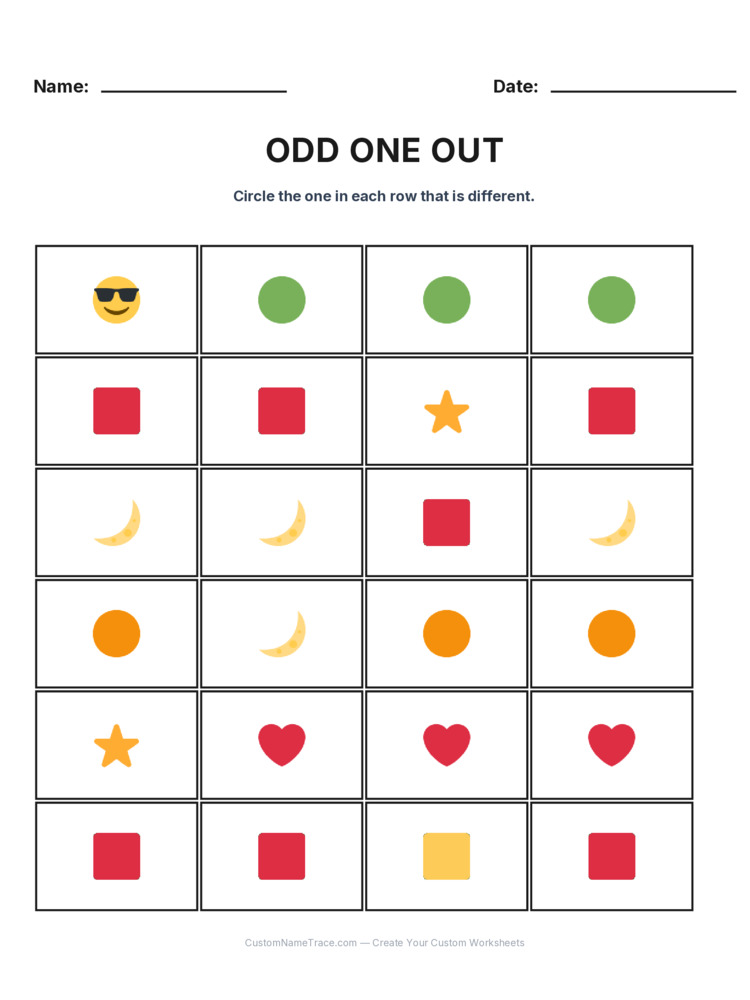
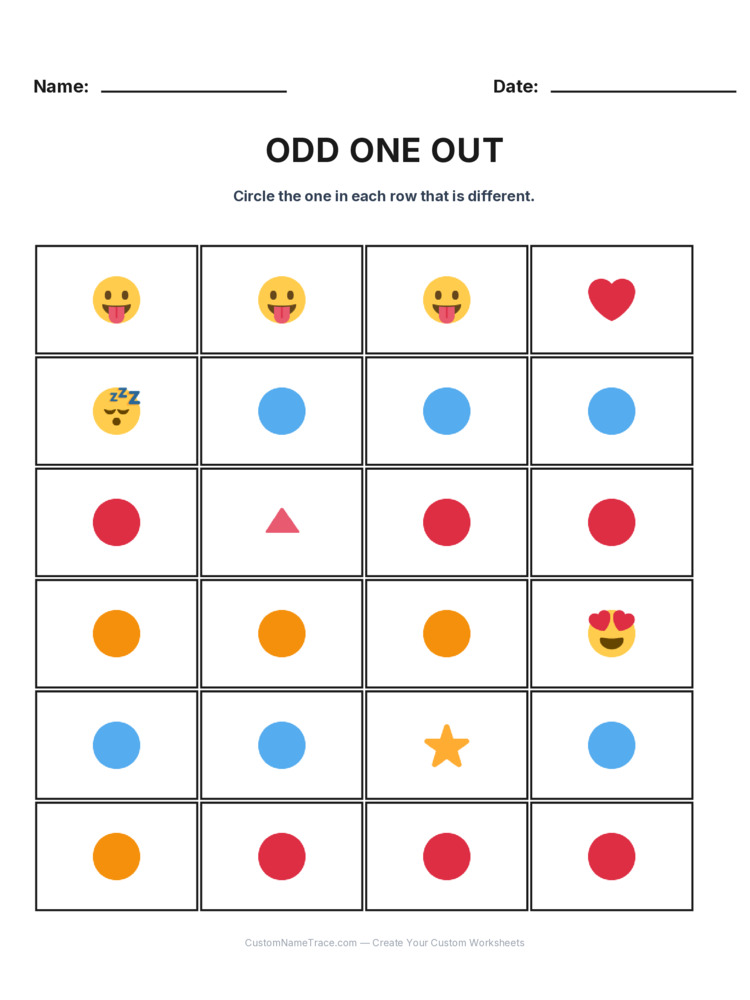
Each row shows four pictures — three identical, one different — and the task is simply to spot and circle the one that doesn't match. It sounds trivially easy to an adult, which is exactly the point: at this age, visual comparison across a full row (not just the item directly in front of them) is a genuine skill still being built, and getting faster and more confident at scanning a whole row before answering is real progress.
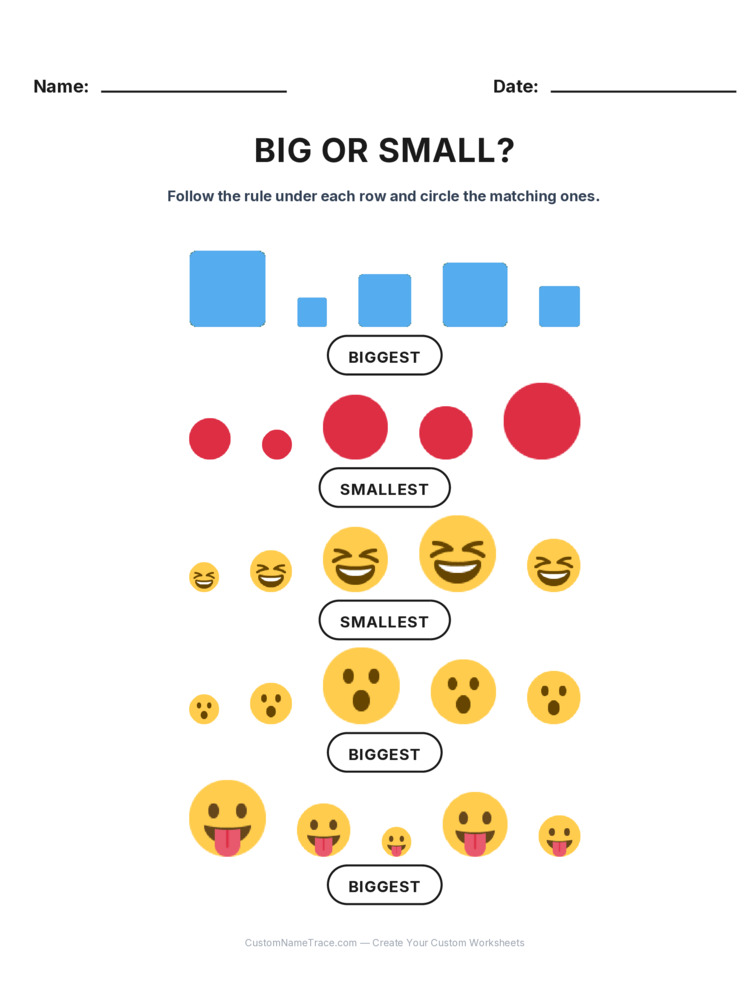
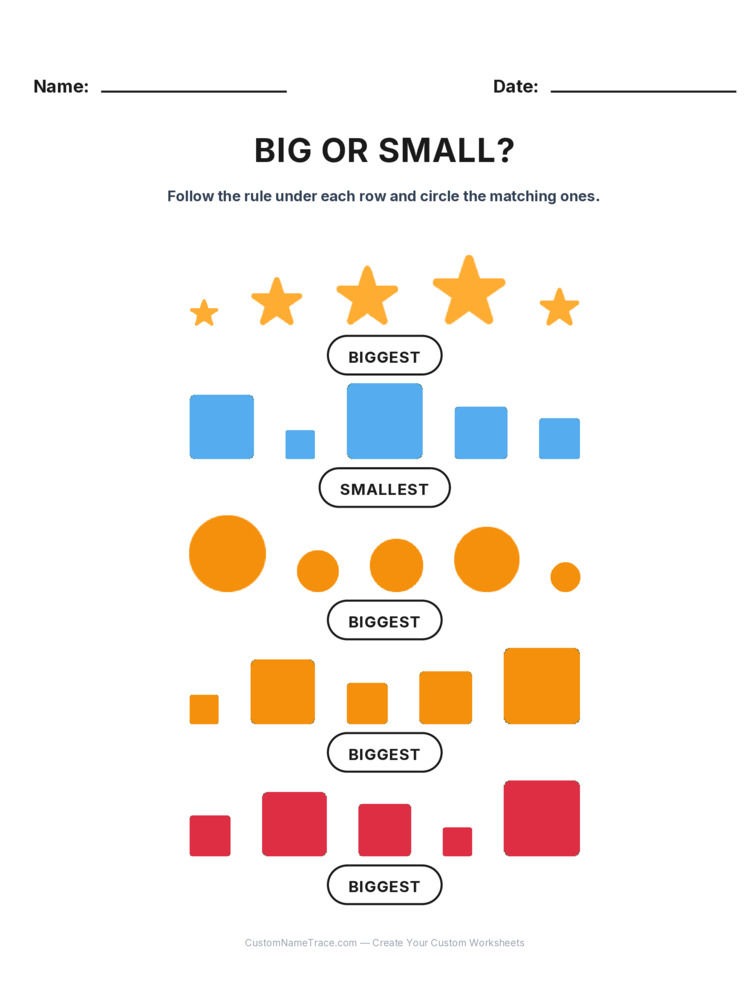
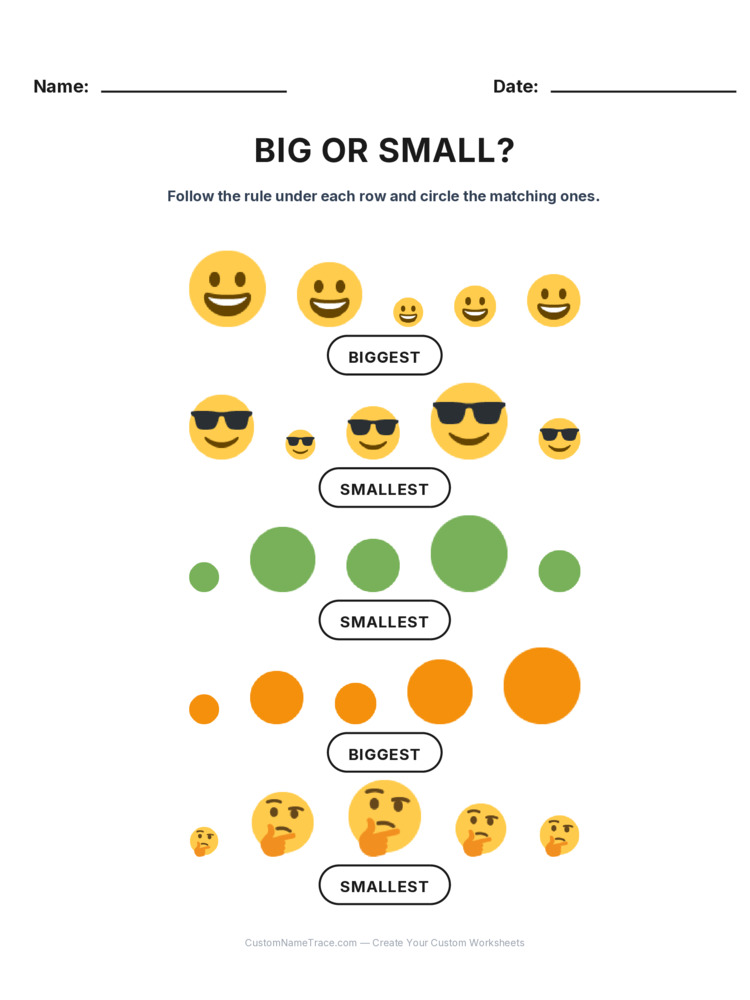
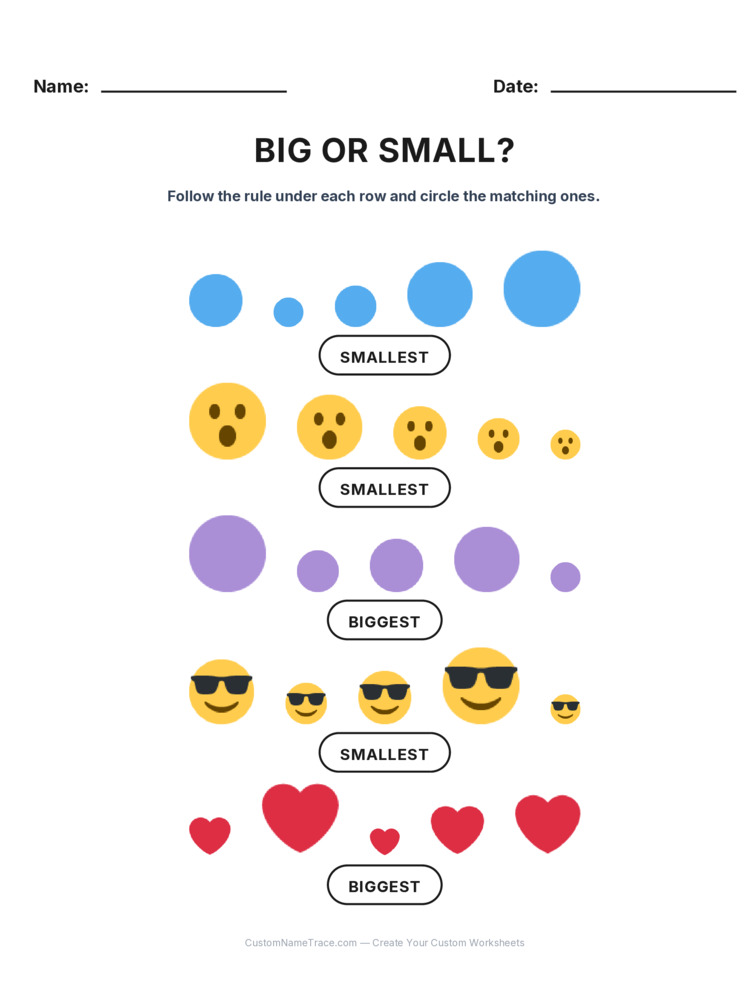
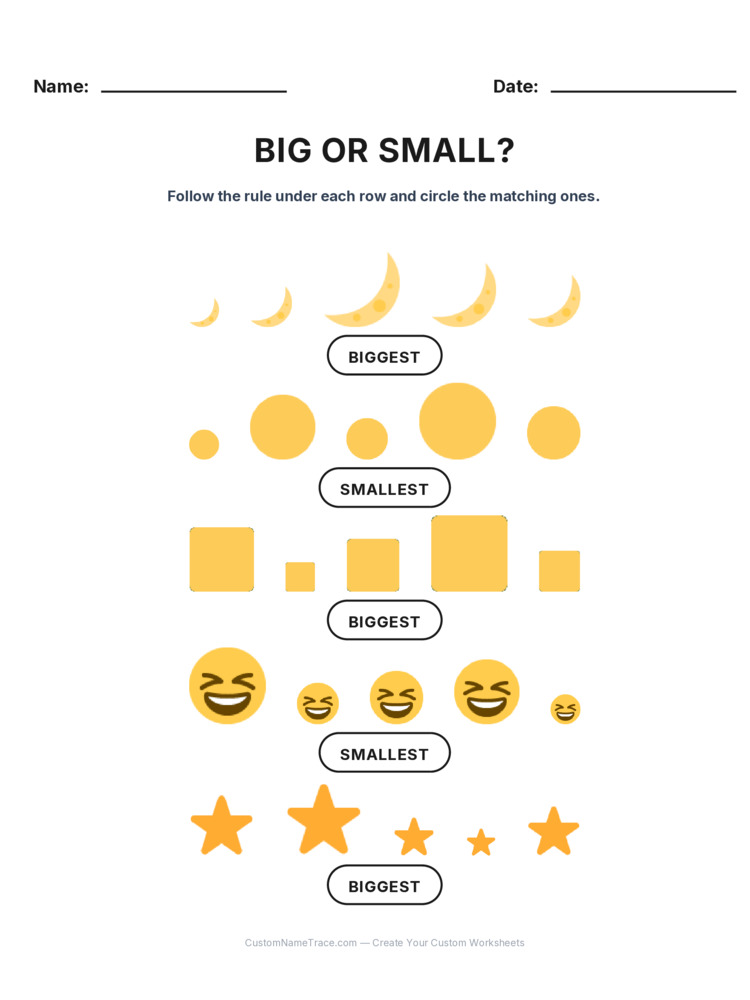
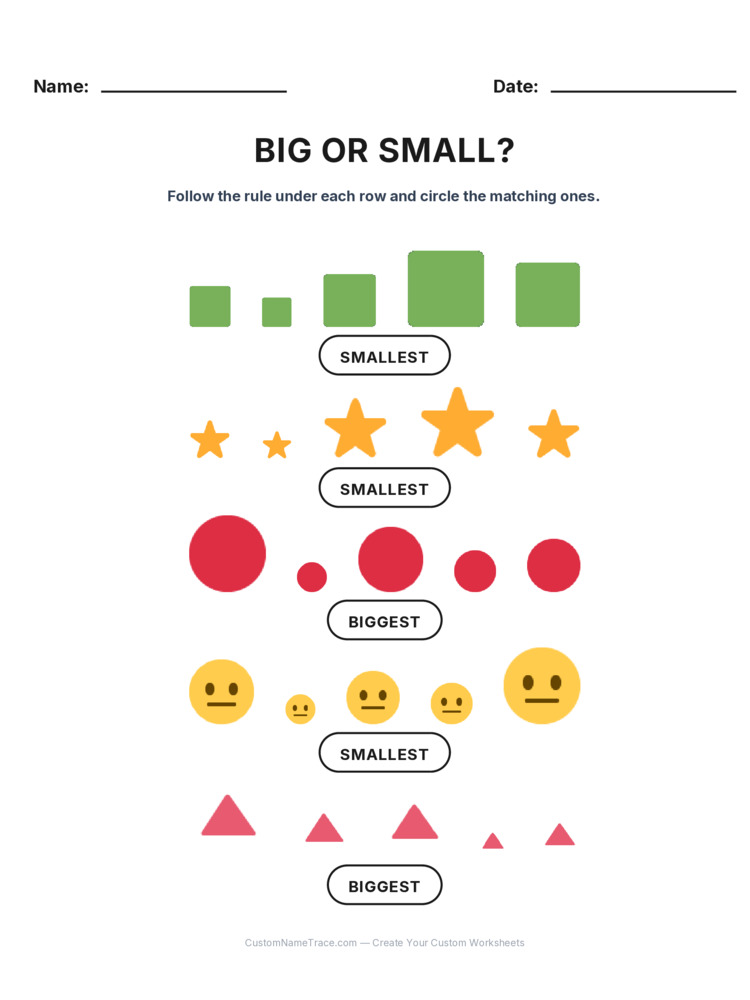
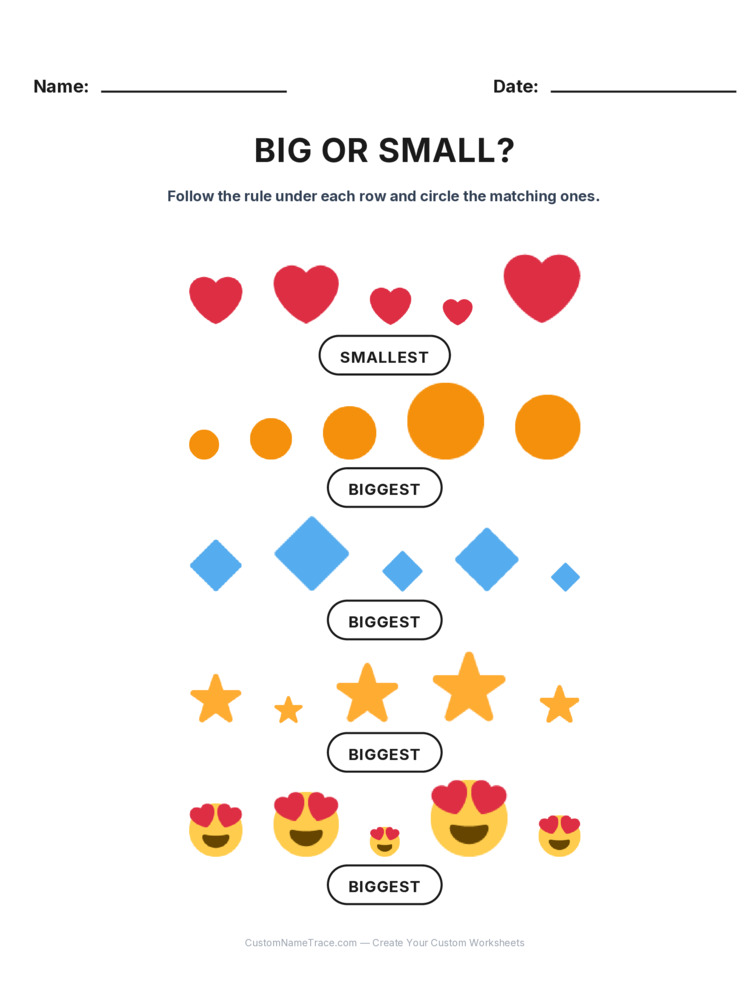
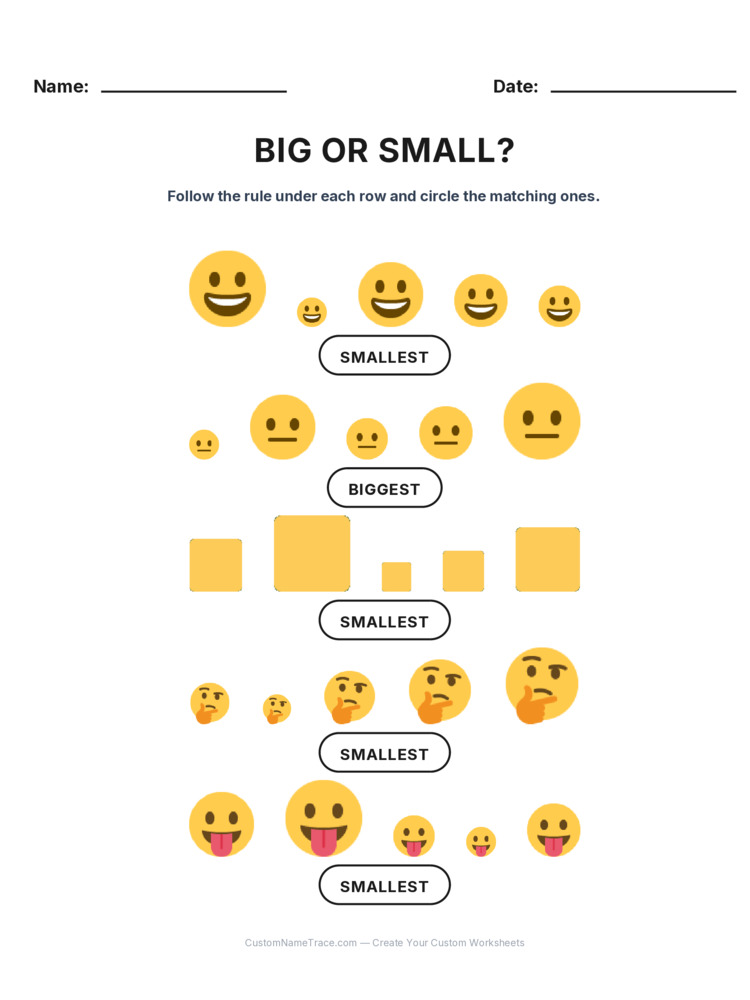
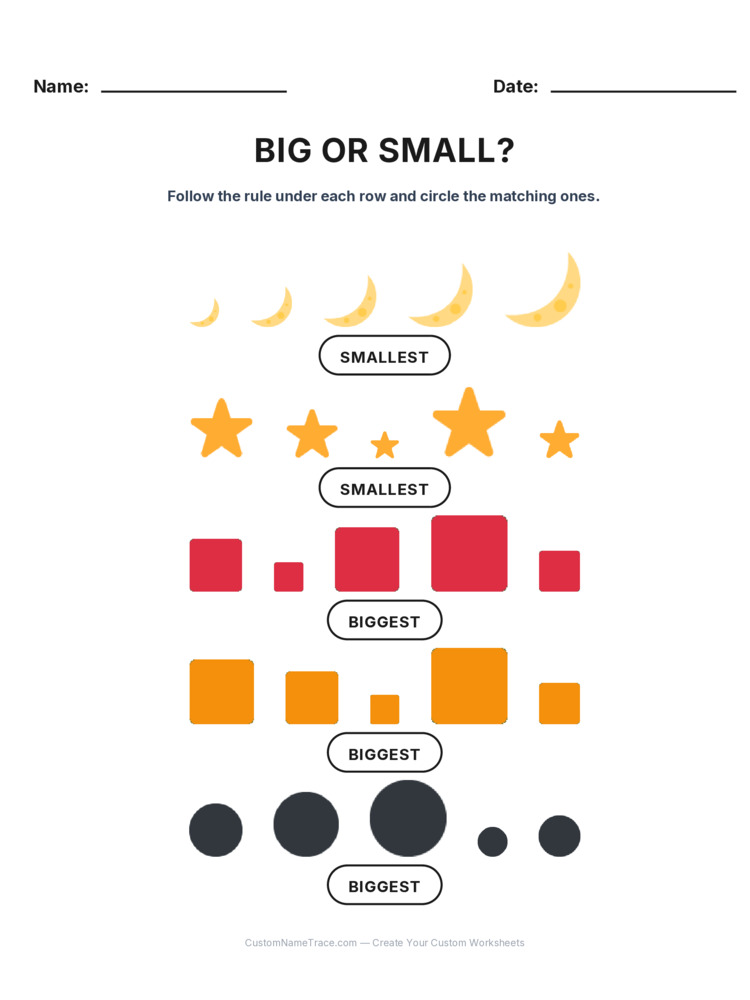
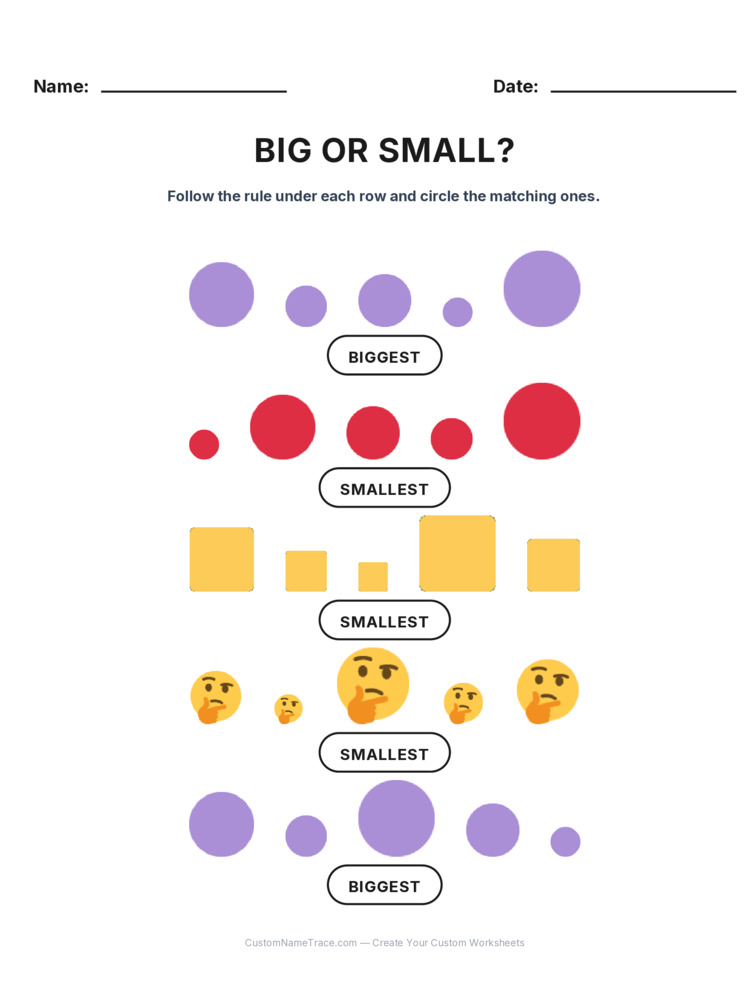
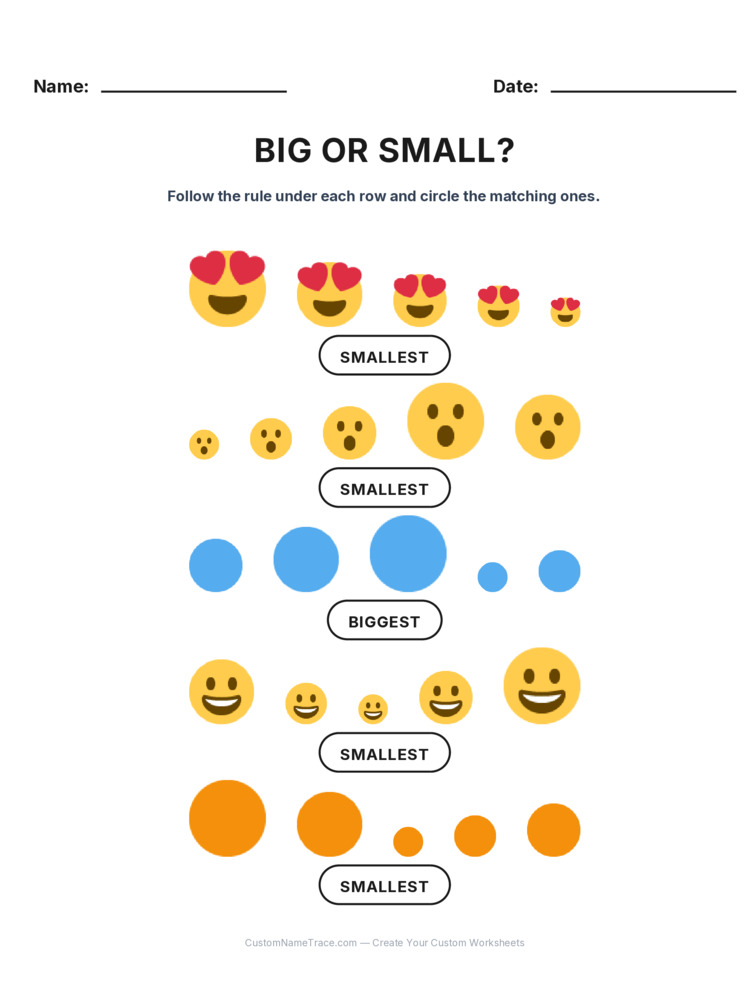
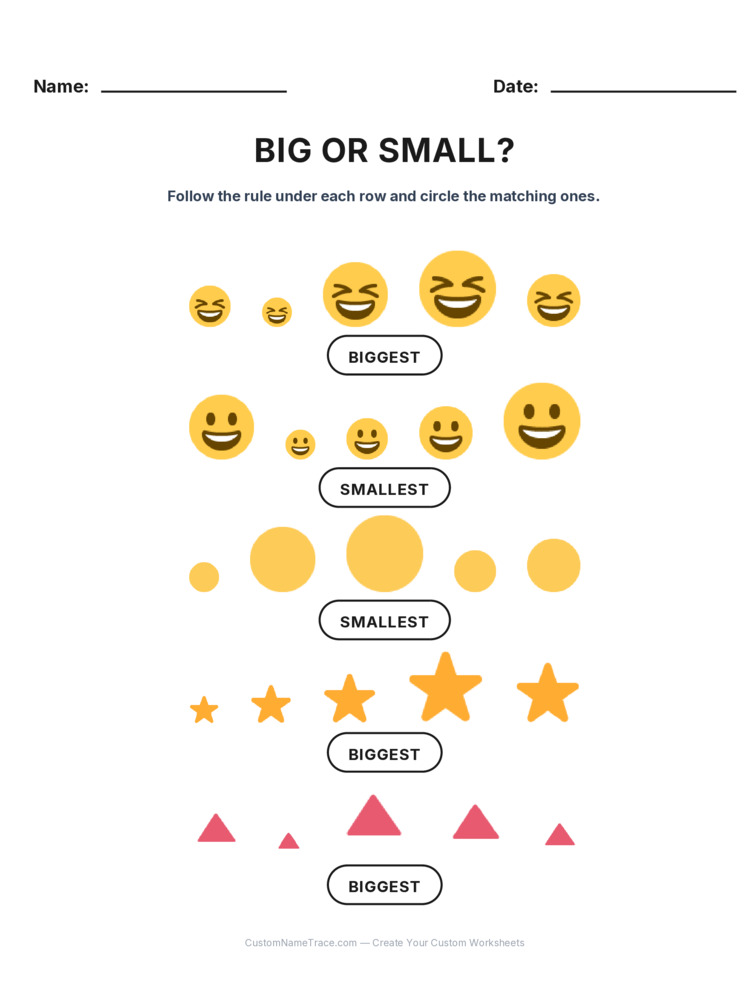
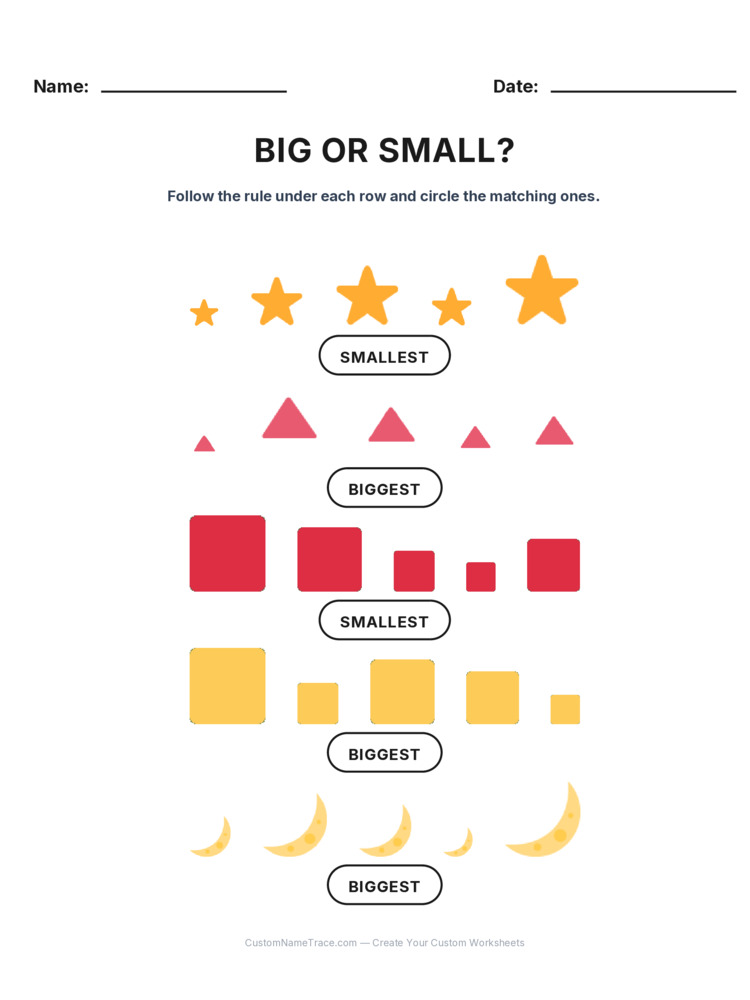
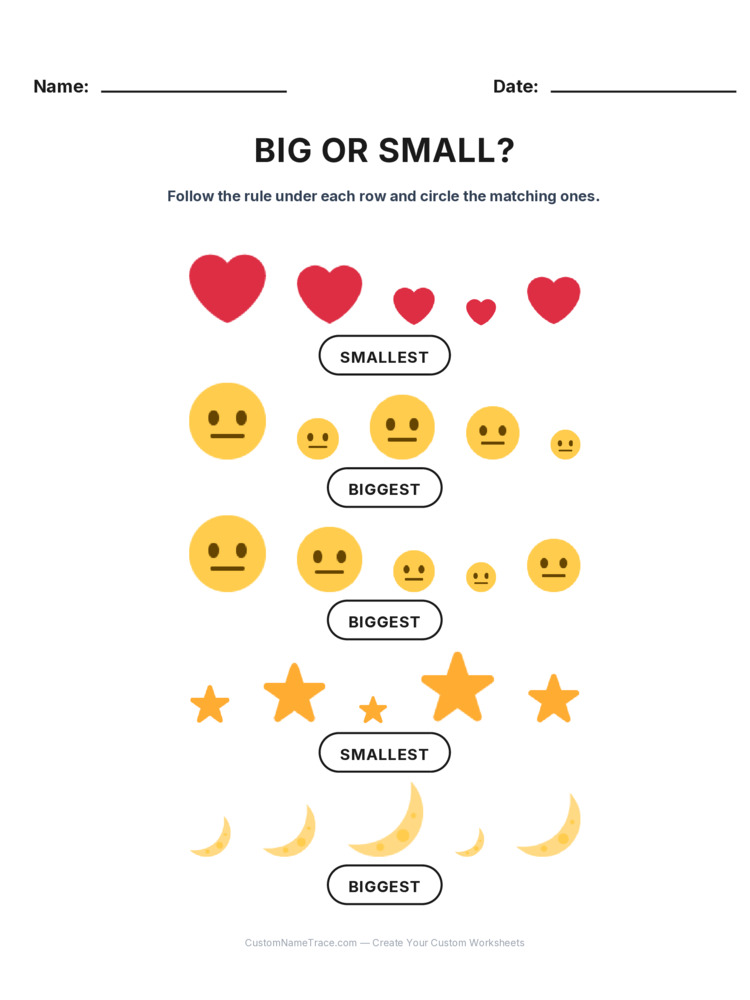
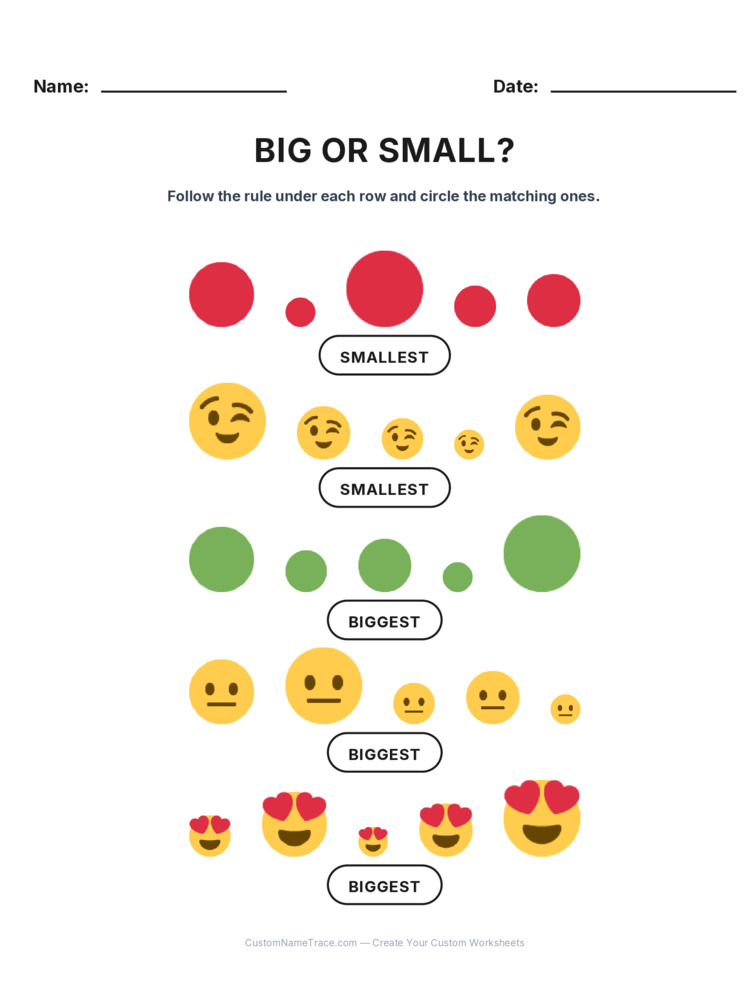
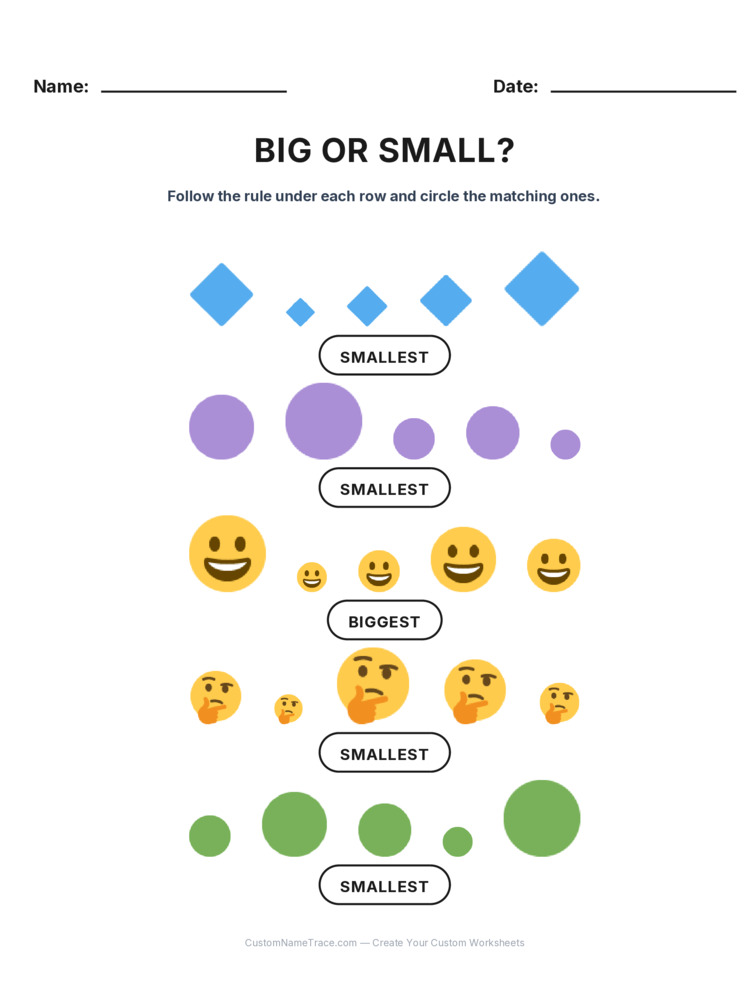
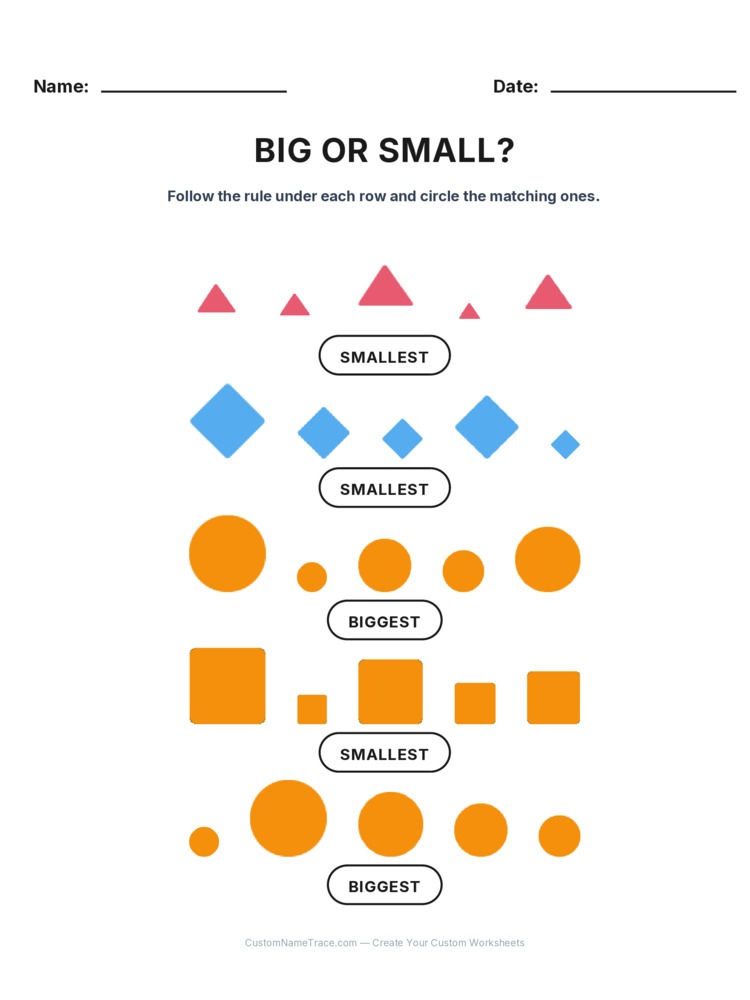
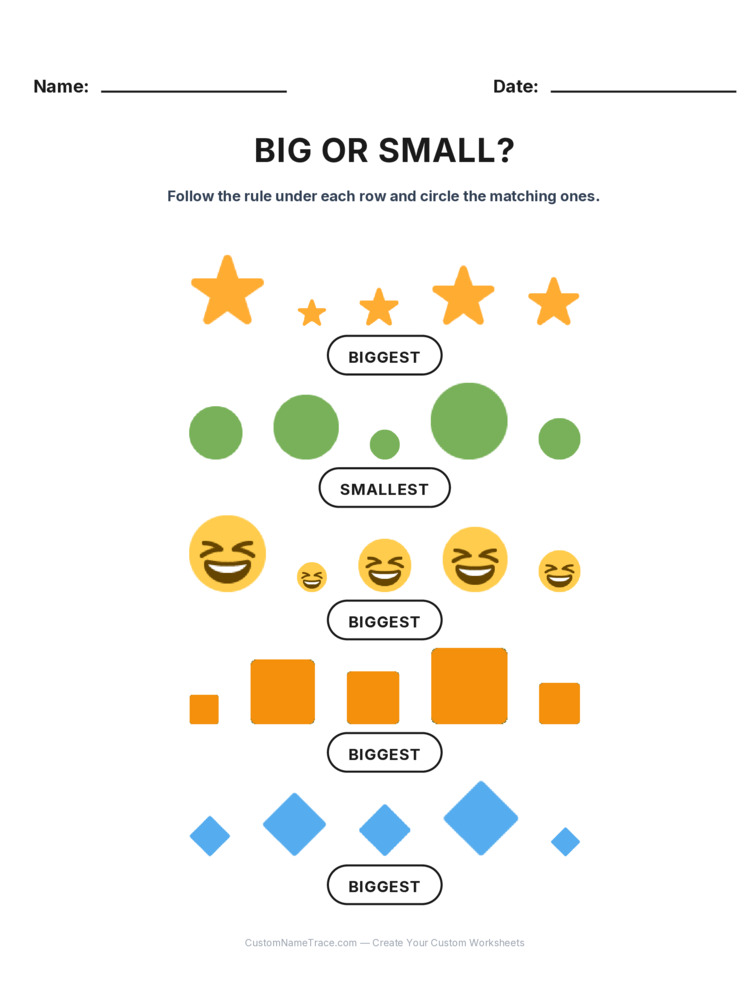
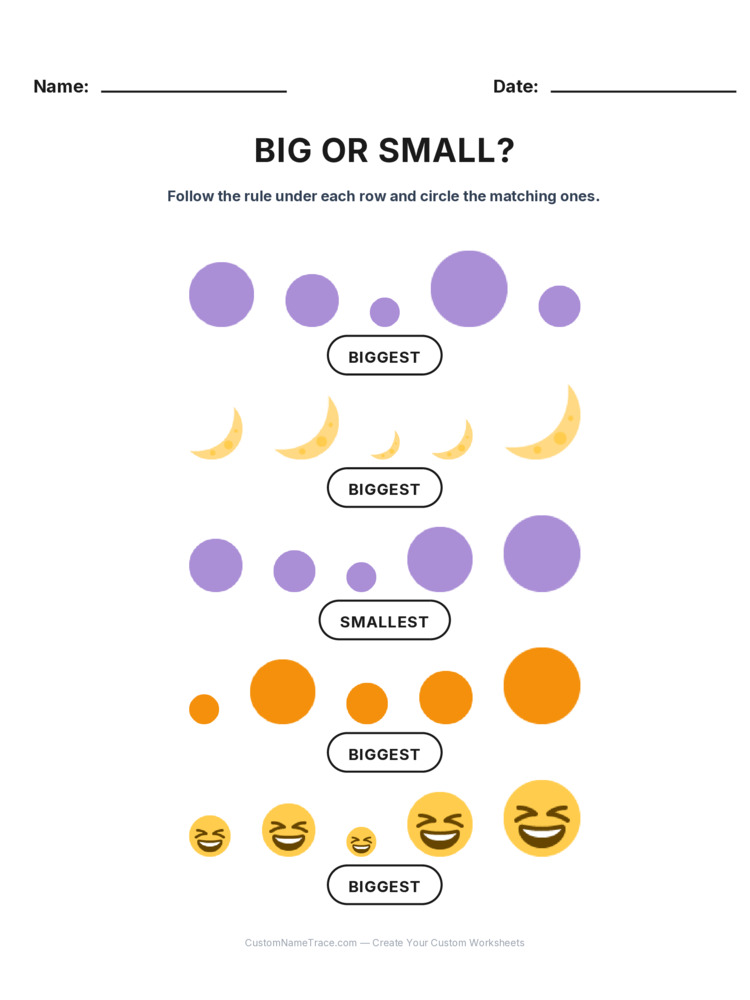
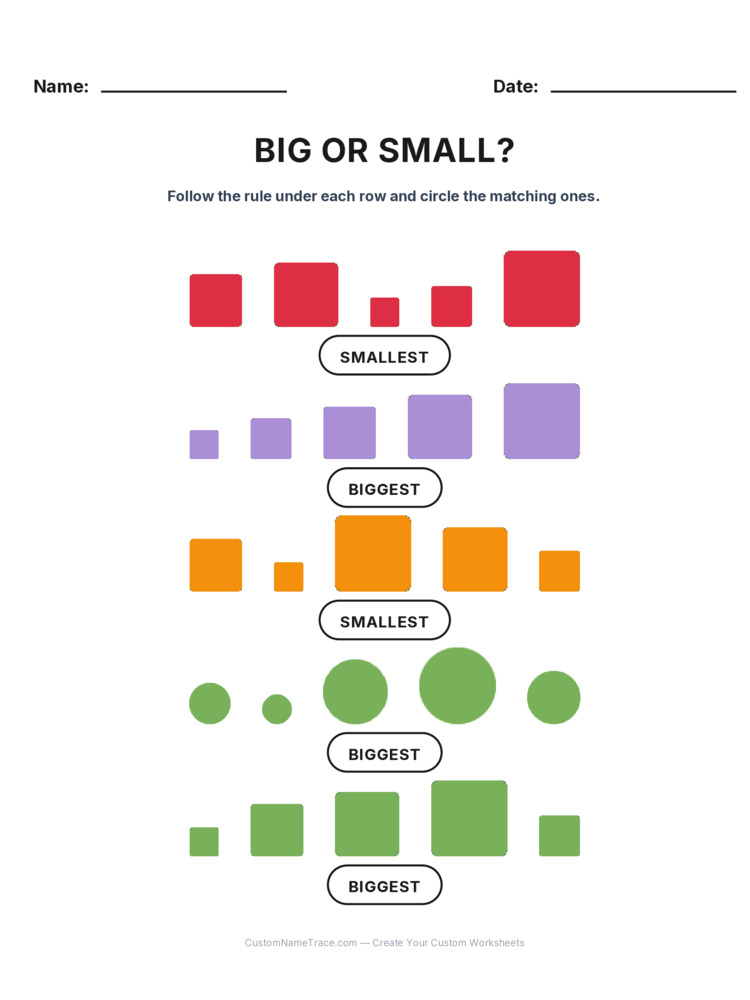
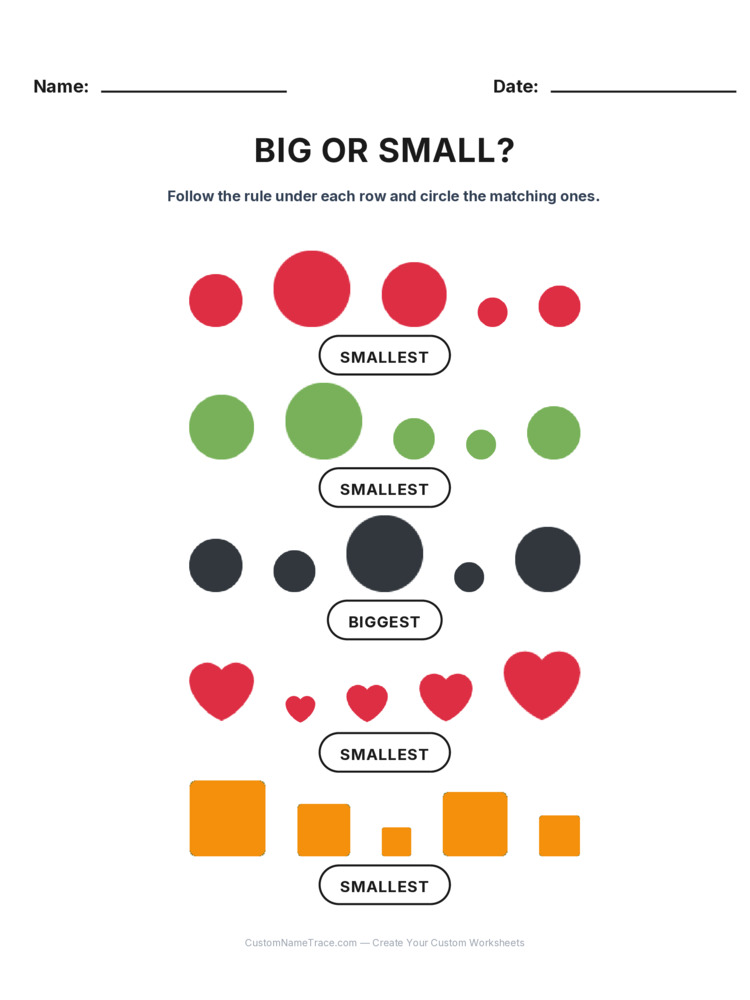
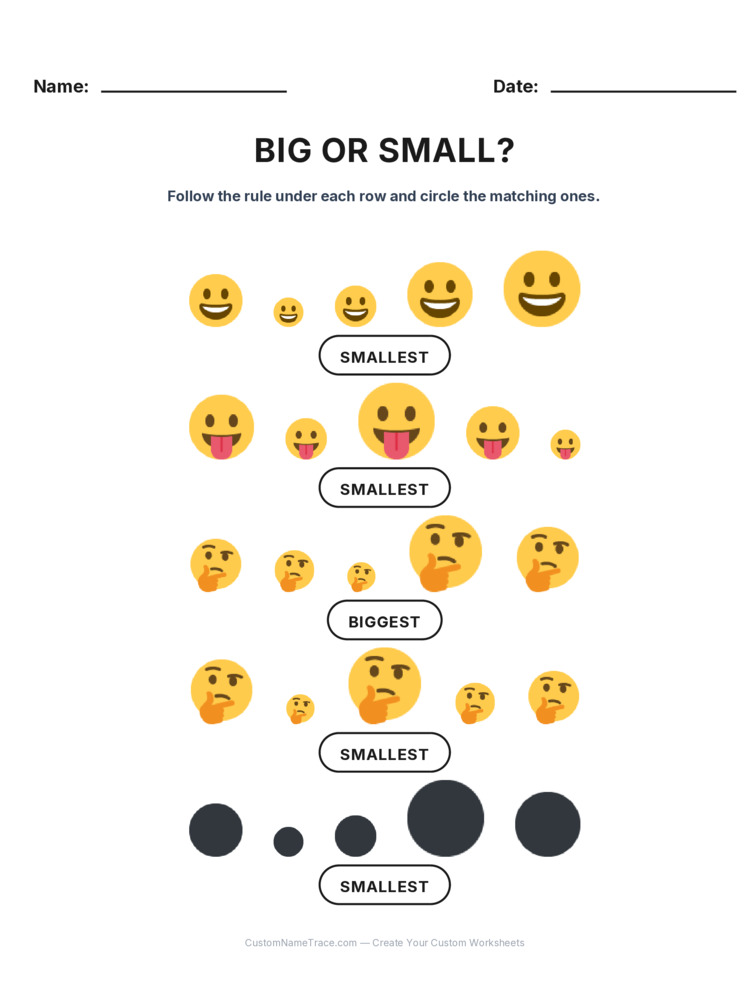
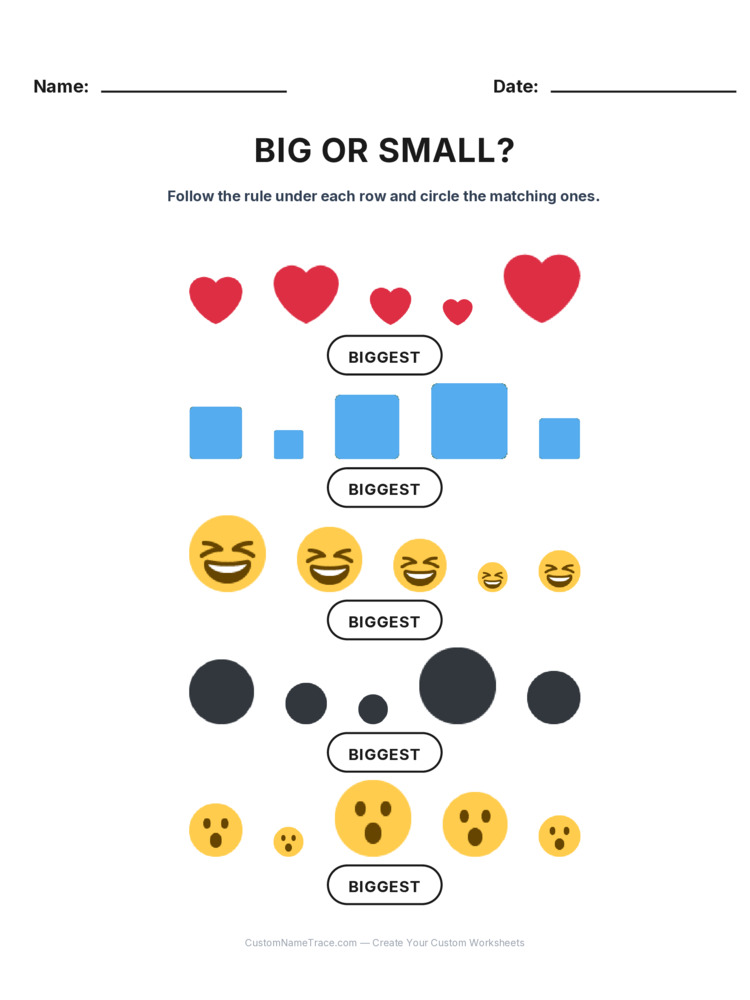
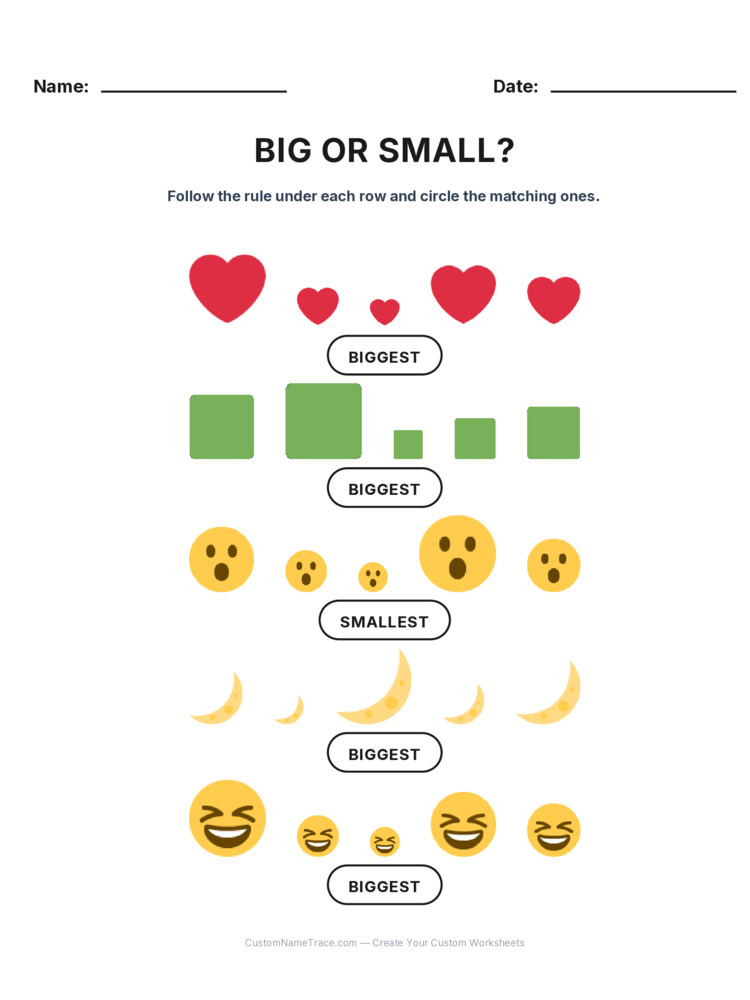
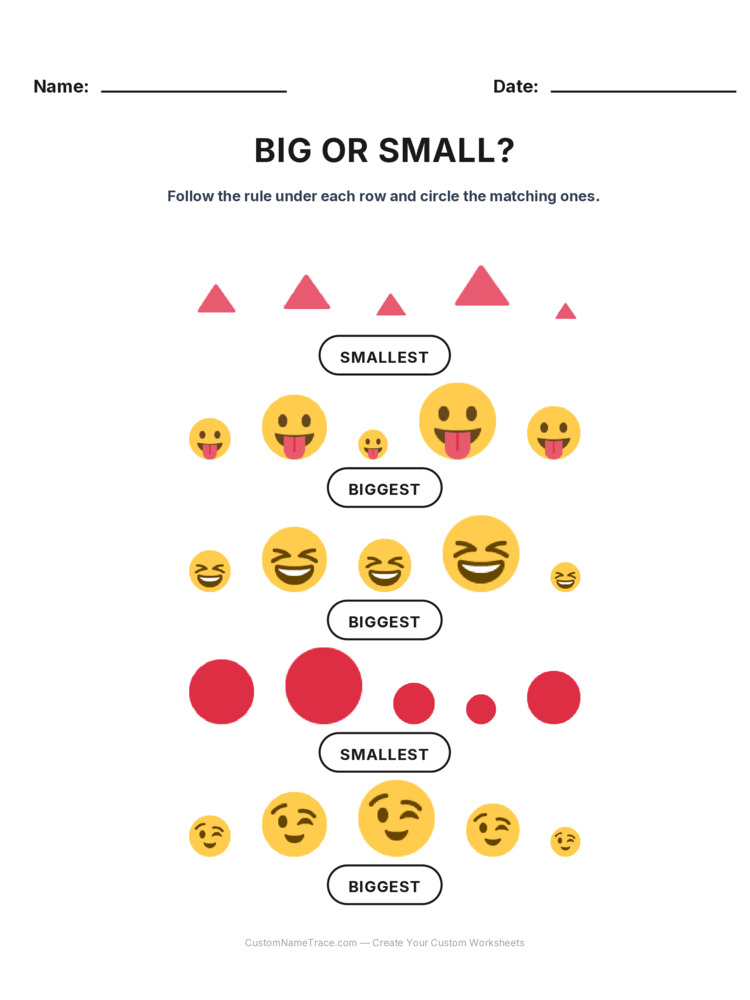
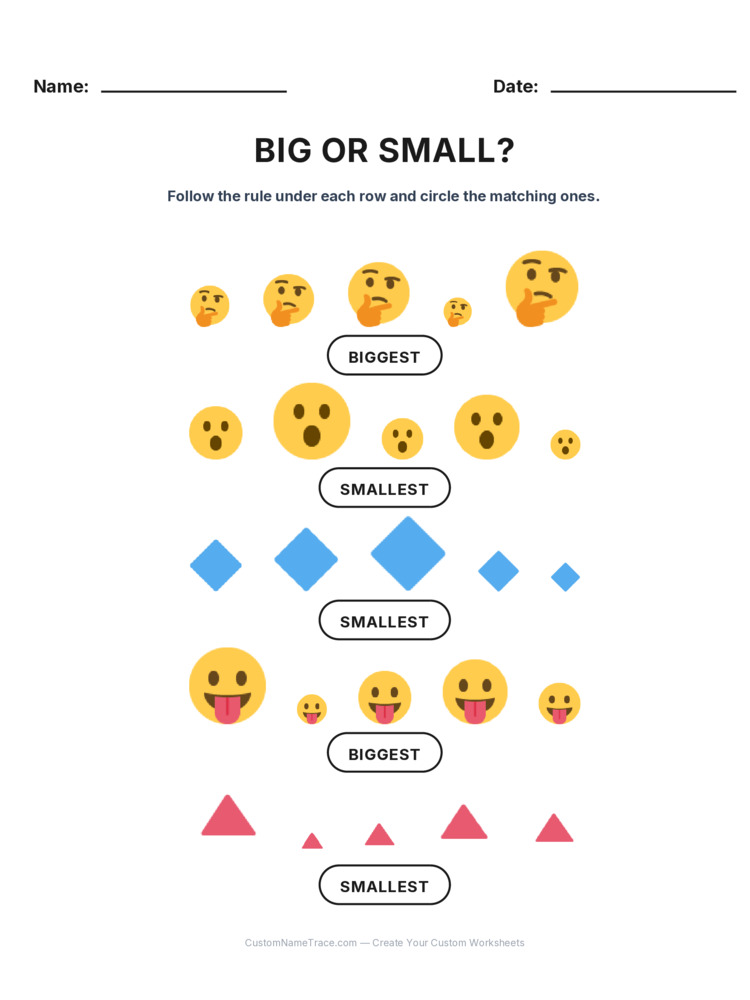
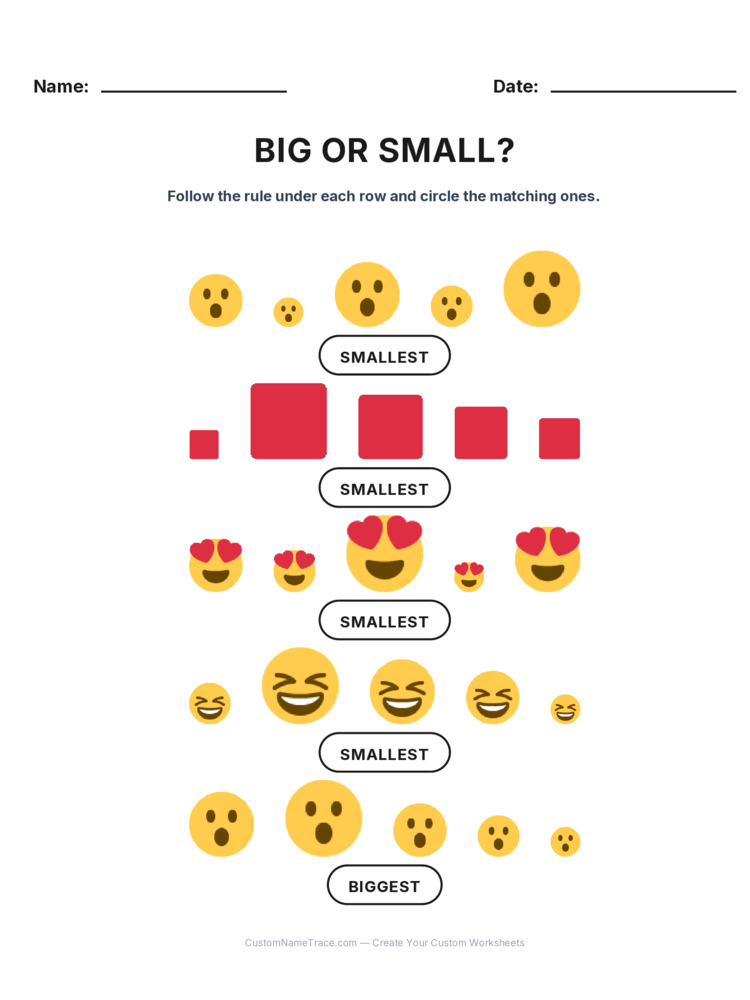
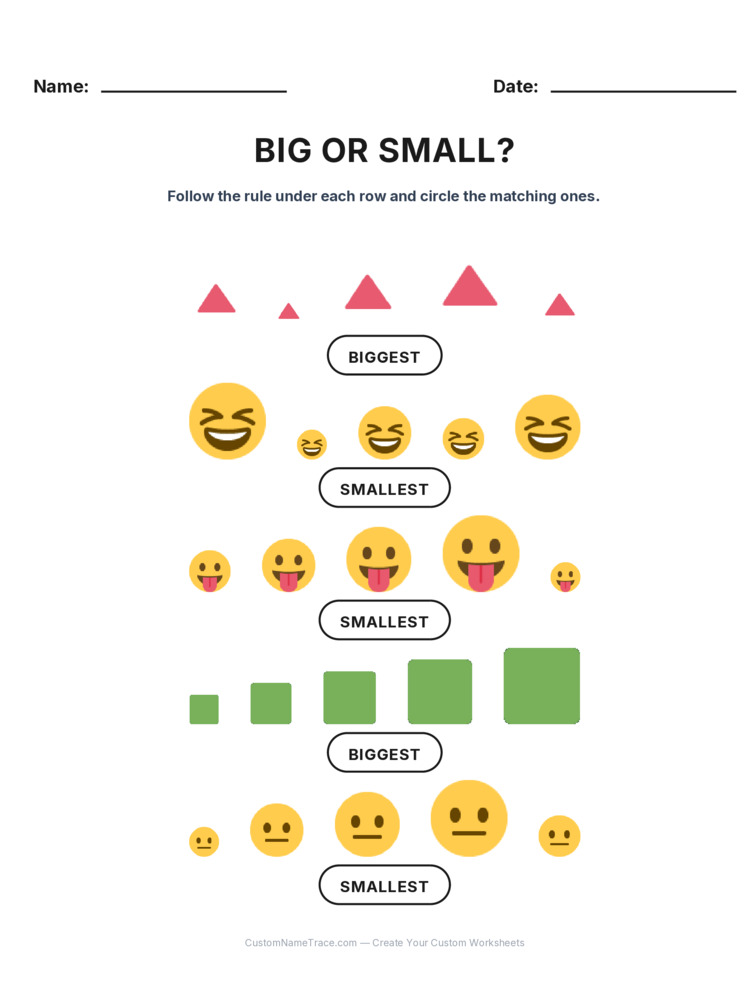
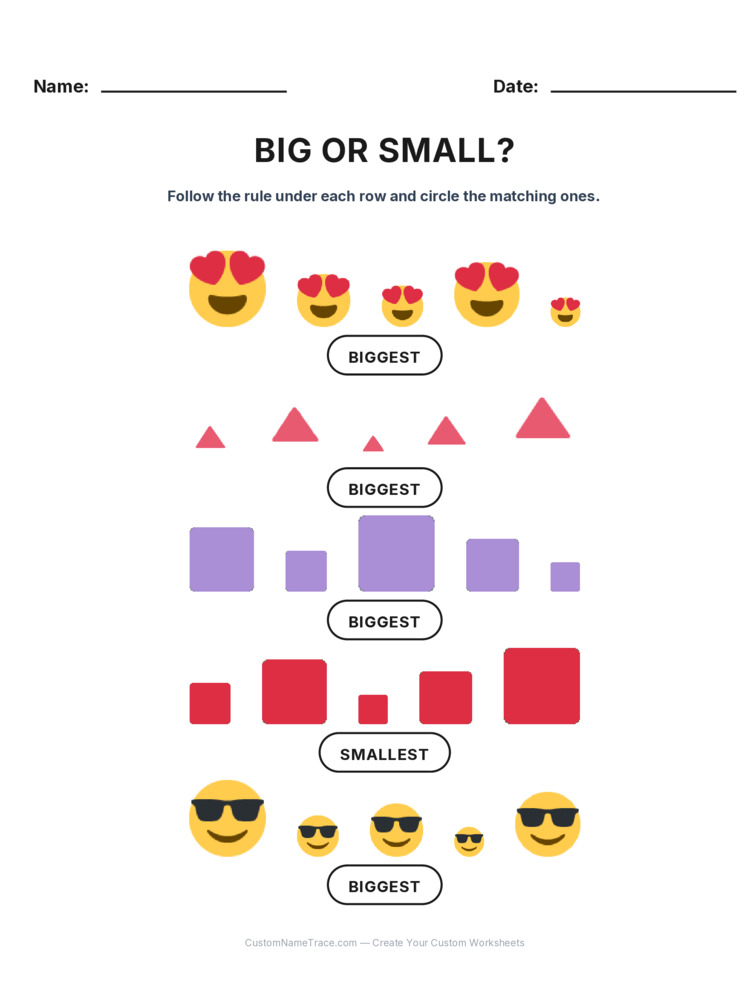
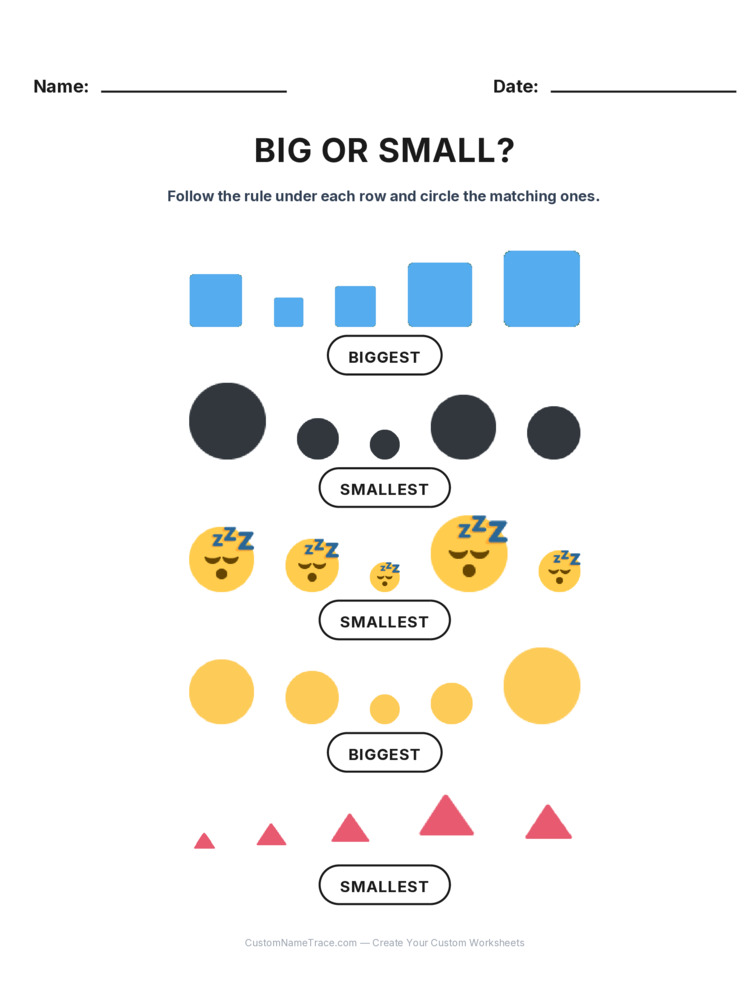
Size Sorting (Big or Small?)
A row shows the same picture at several different sizes, and the rule underneath — "circle the biggest one" or "circle the smallest one" — changes from row to row, so a child has to check the rule each time rather than falling into a habit of always picking the same position. That rule-check-before-you-answer habit is exactly what later, harder logic puzzles depend on.
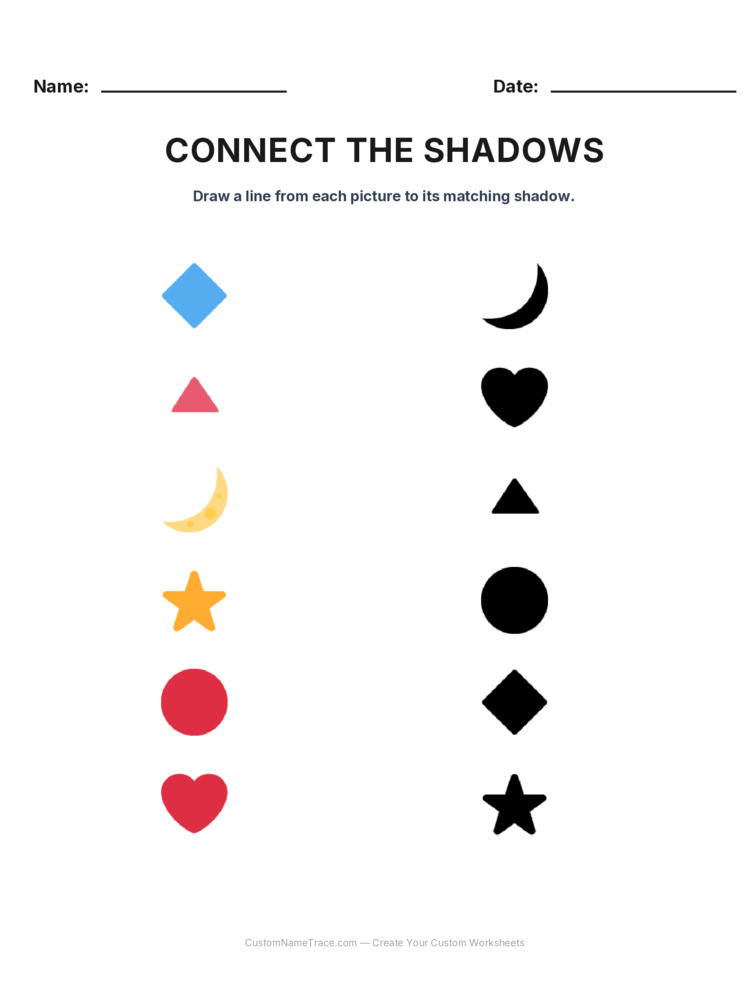
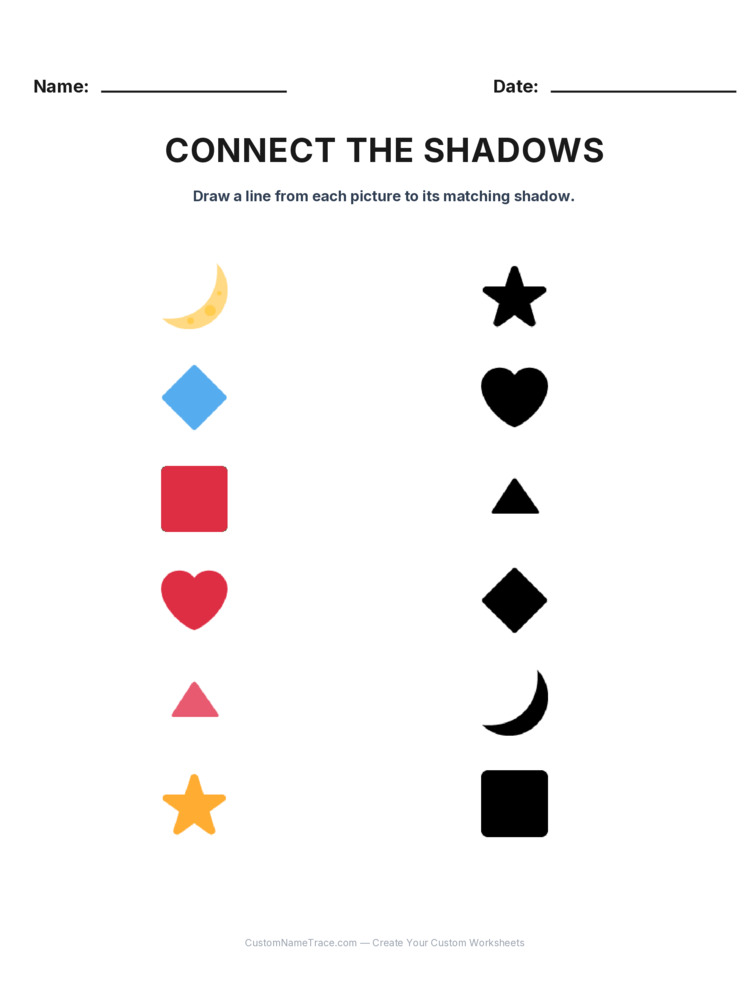
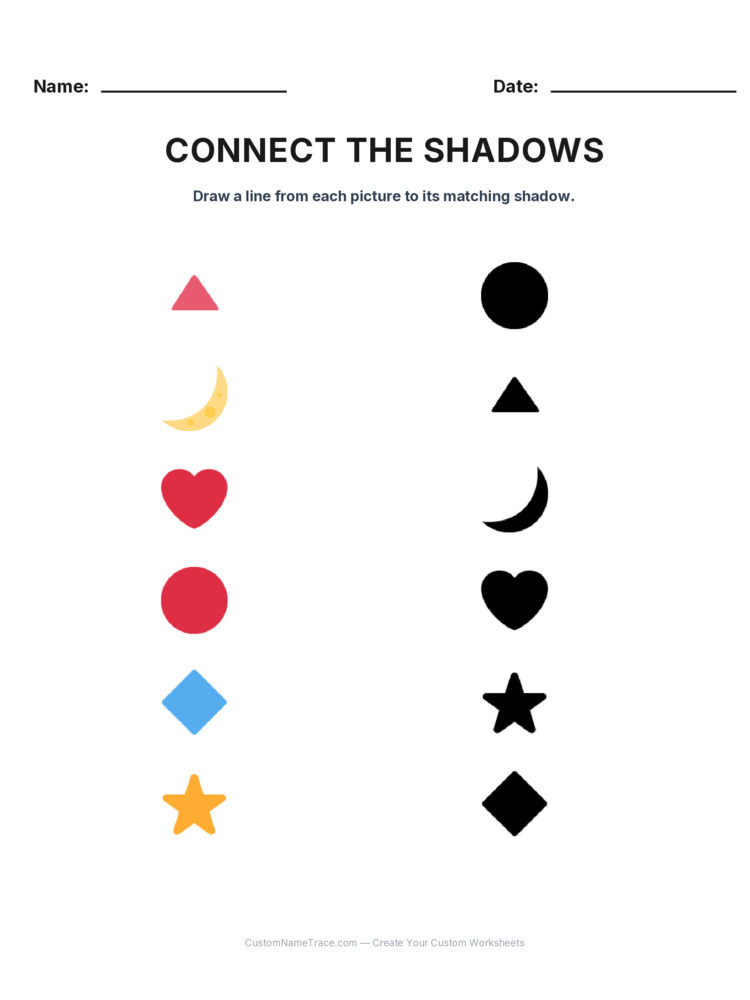
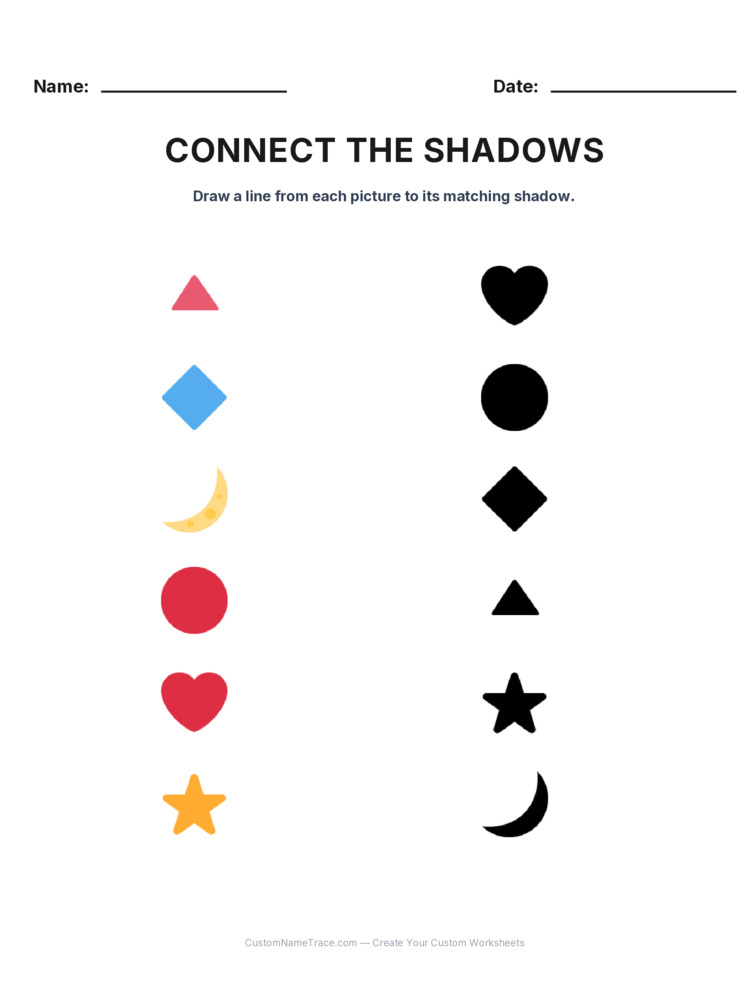
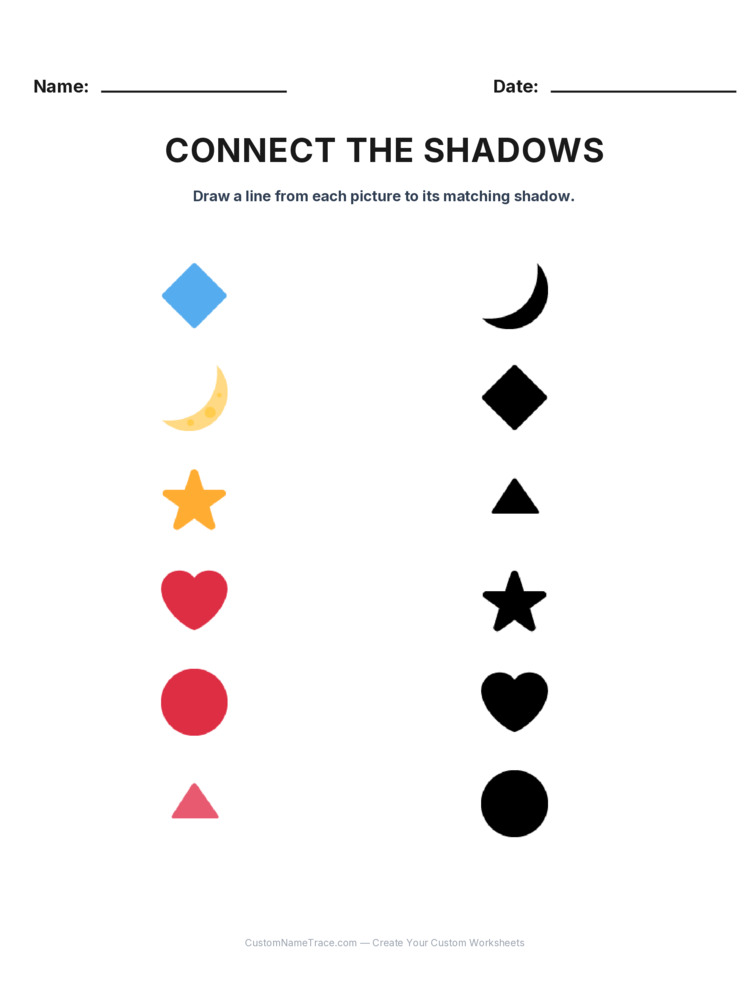
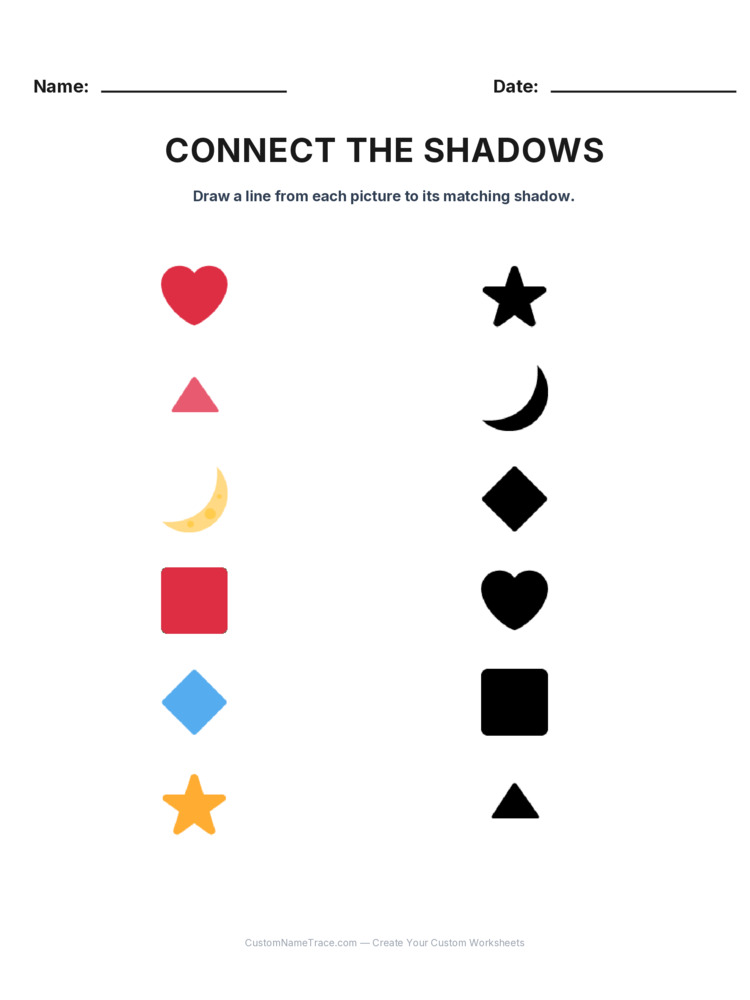
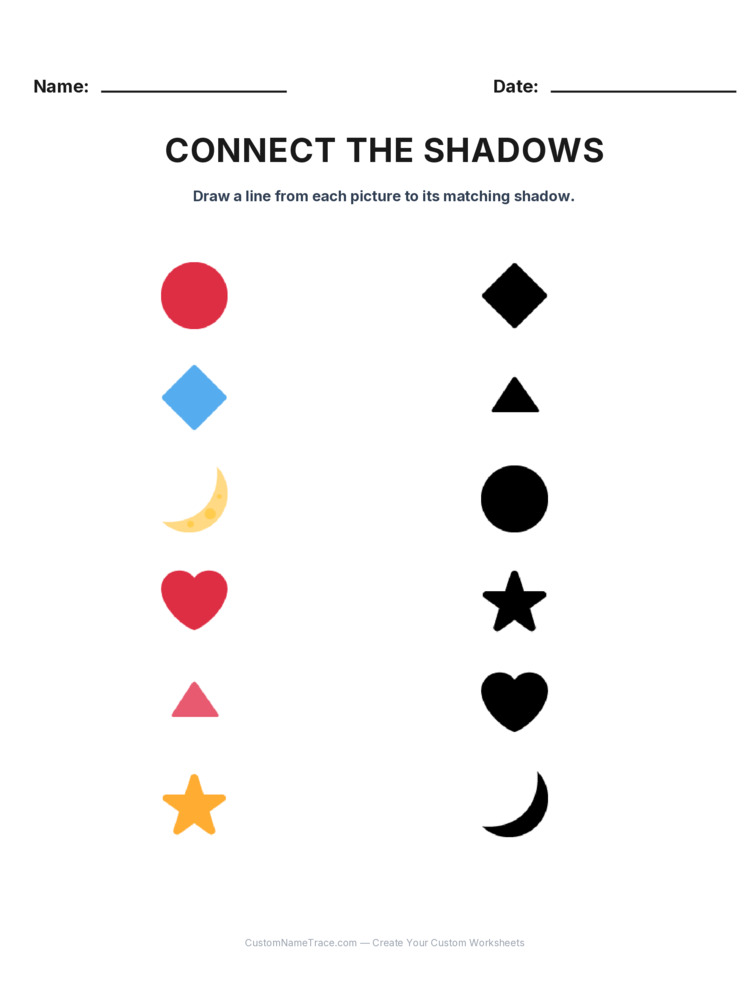
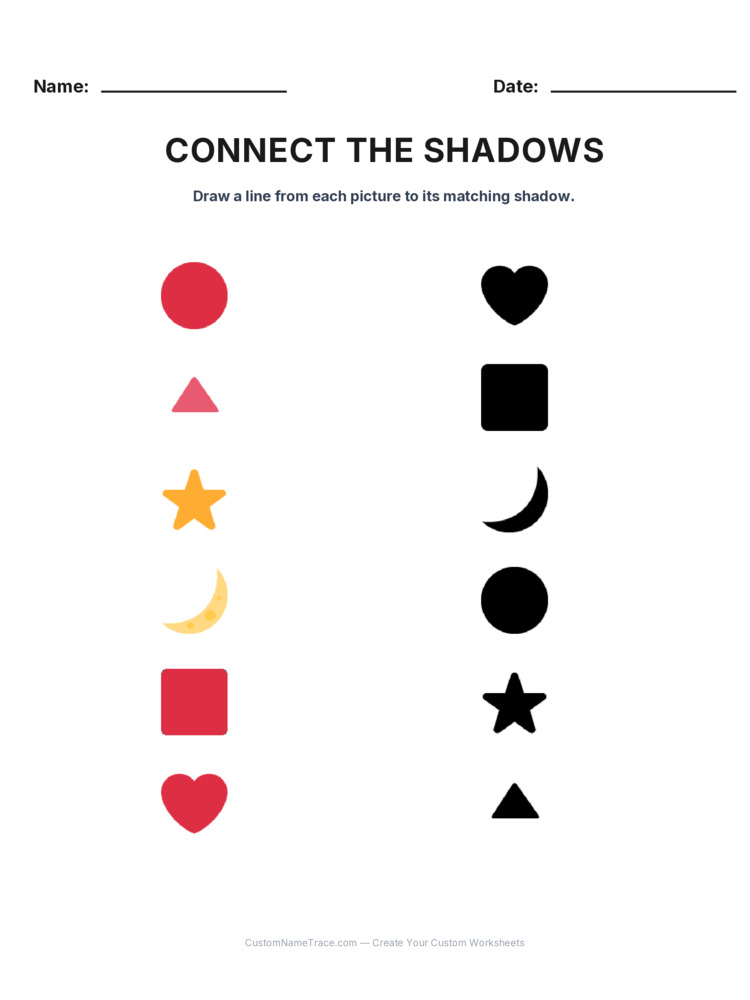
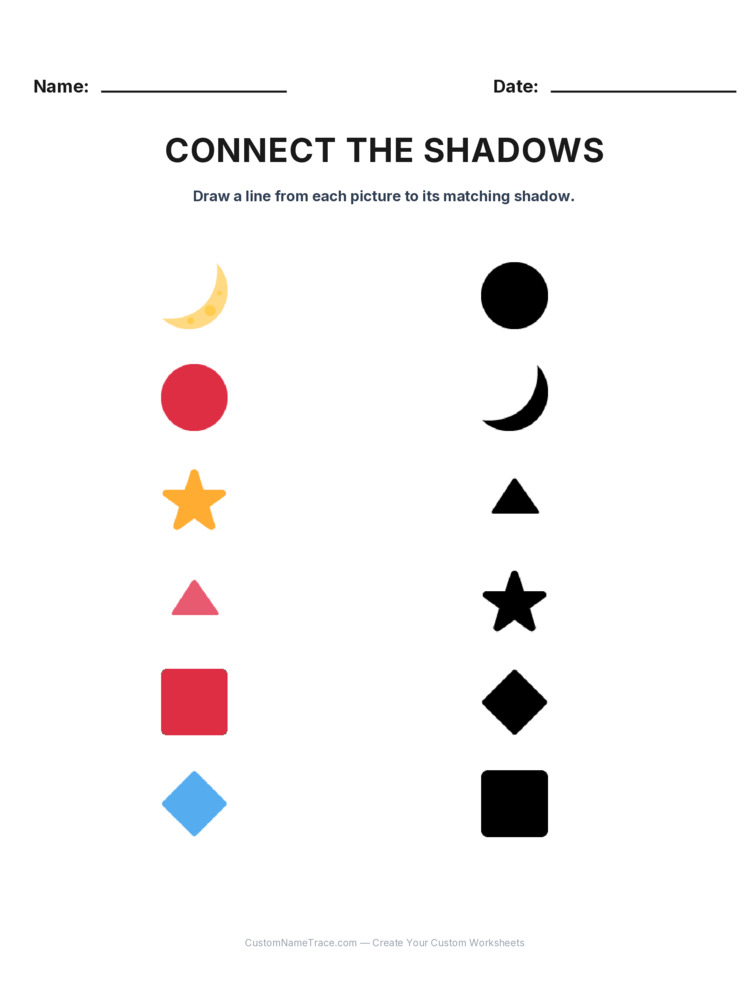
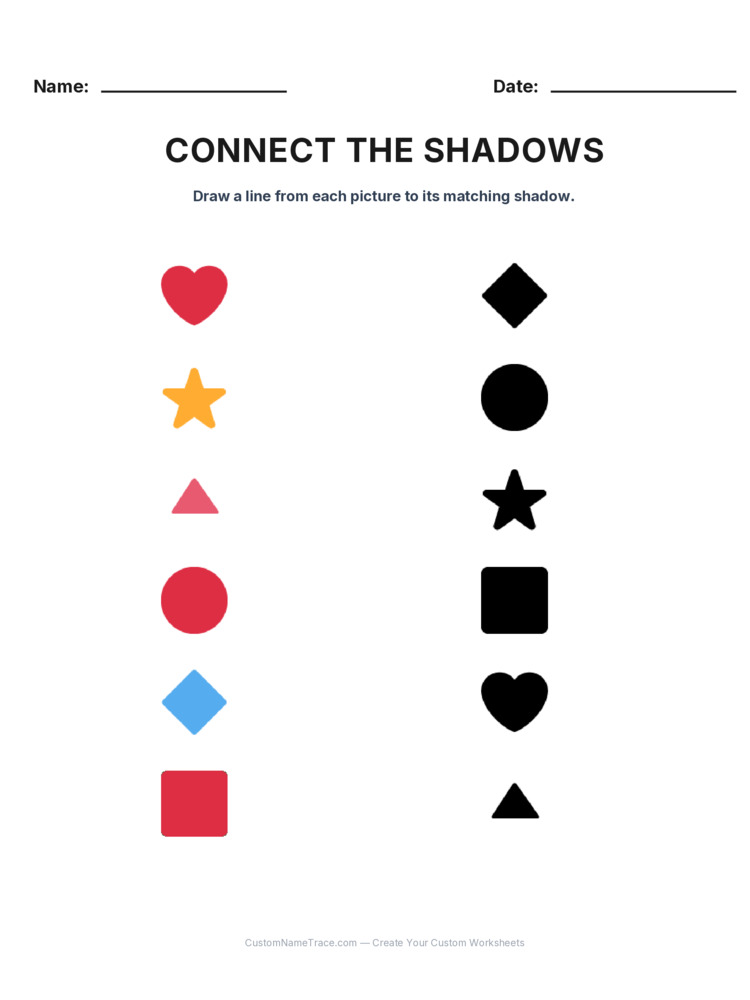
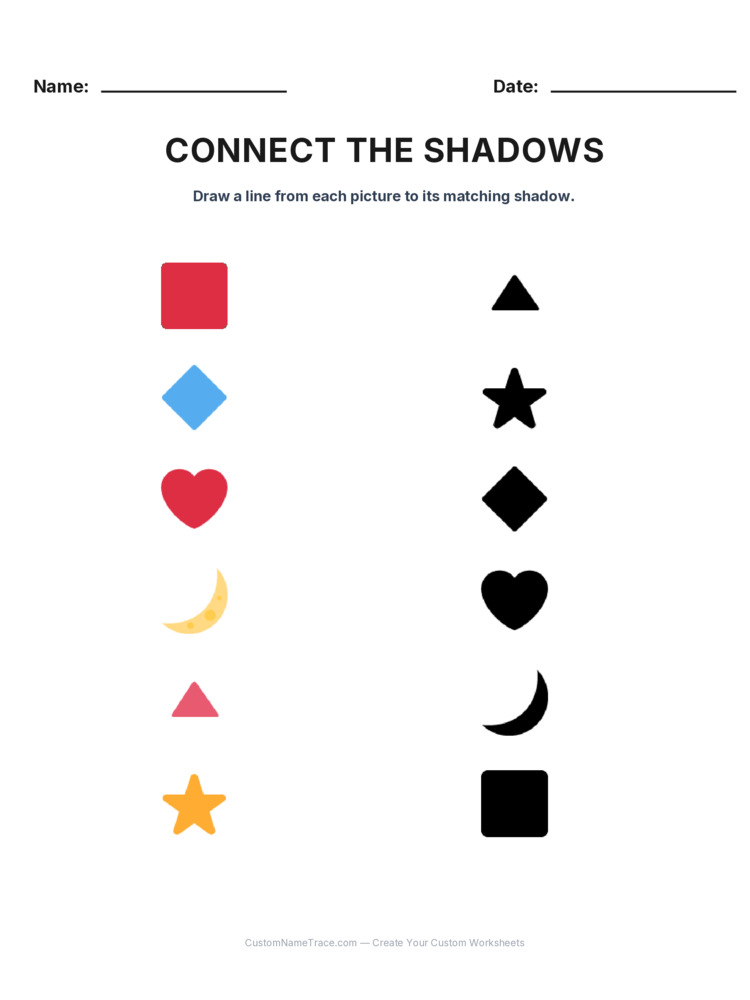
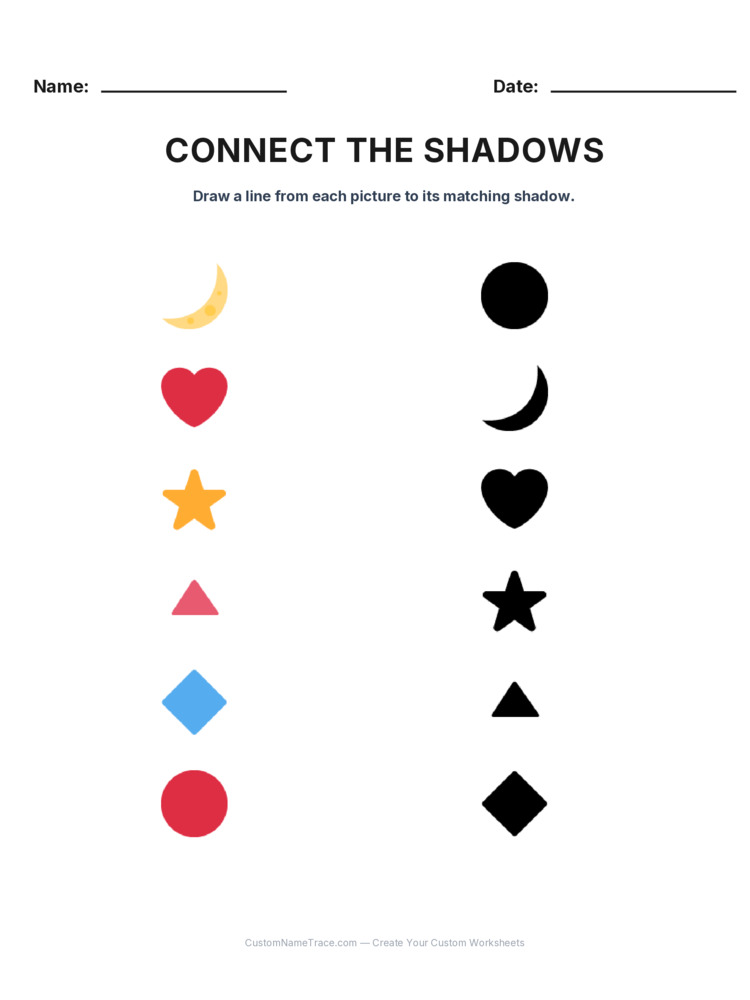
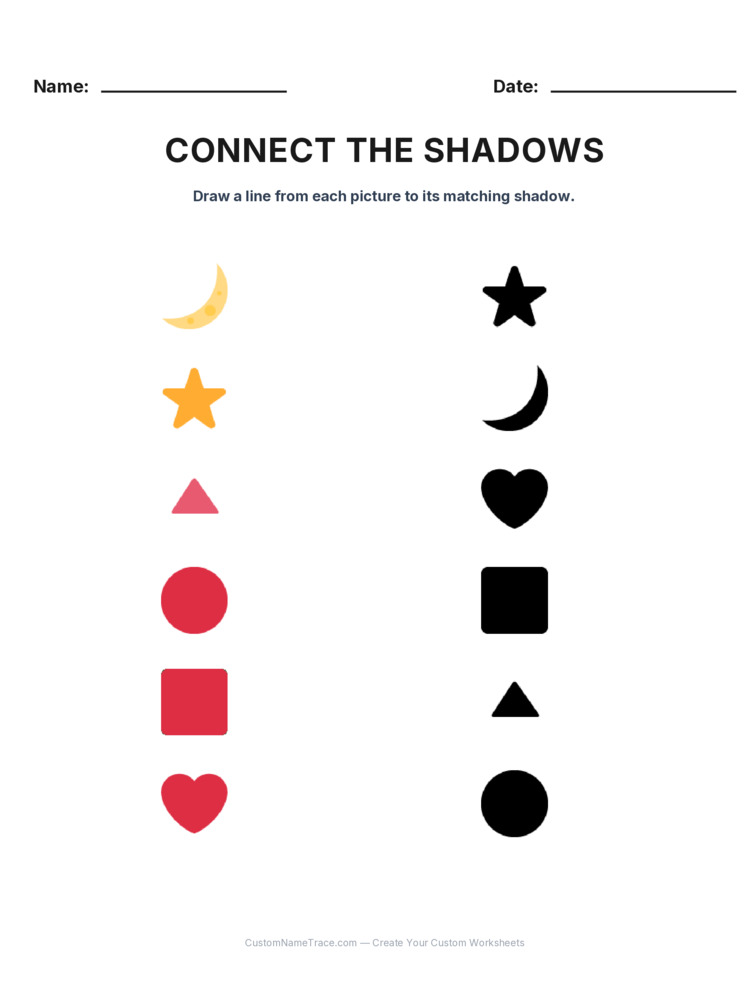
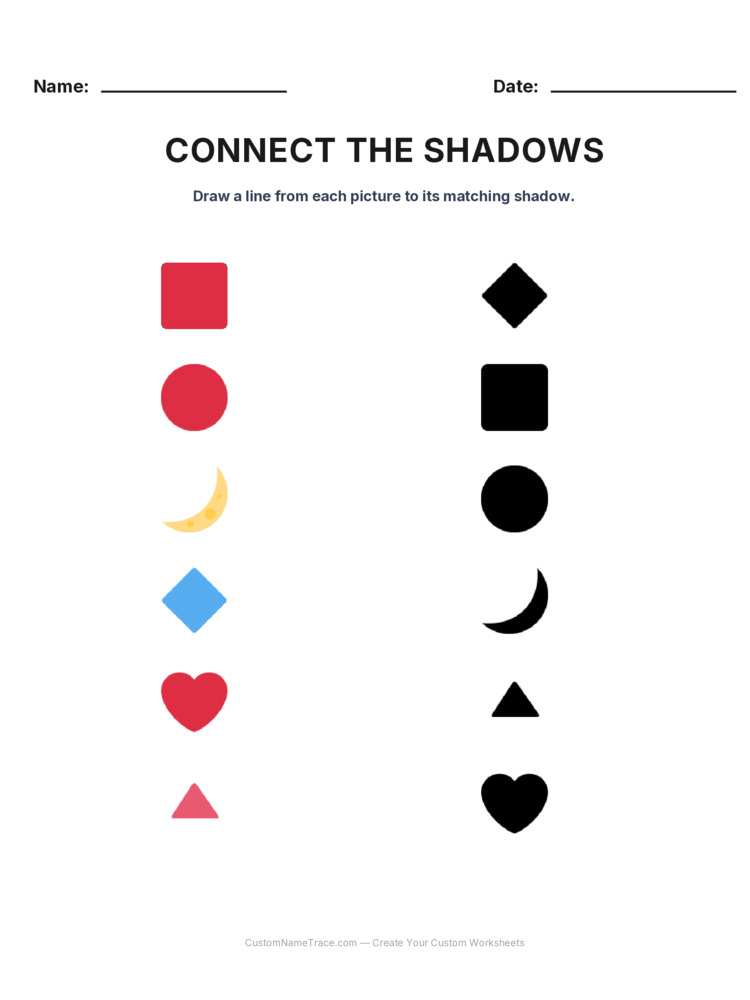
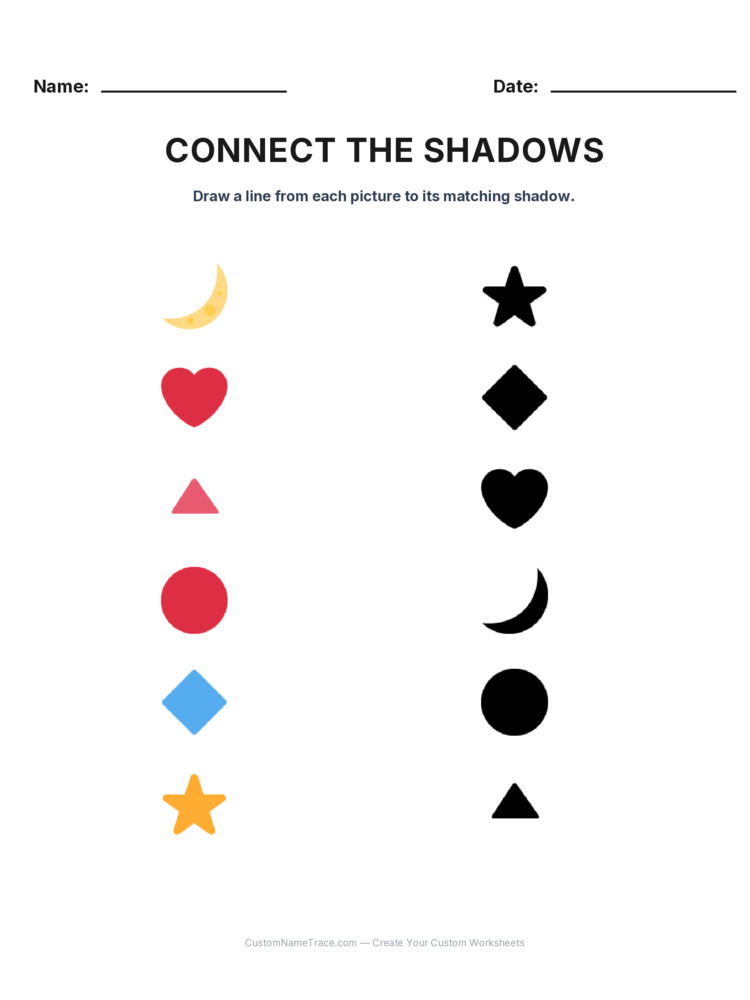
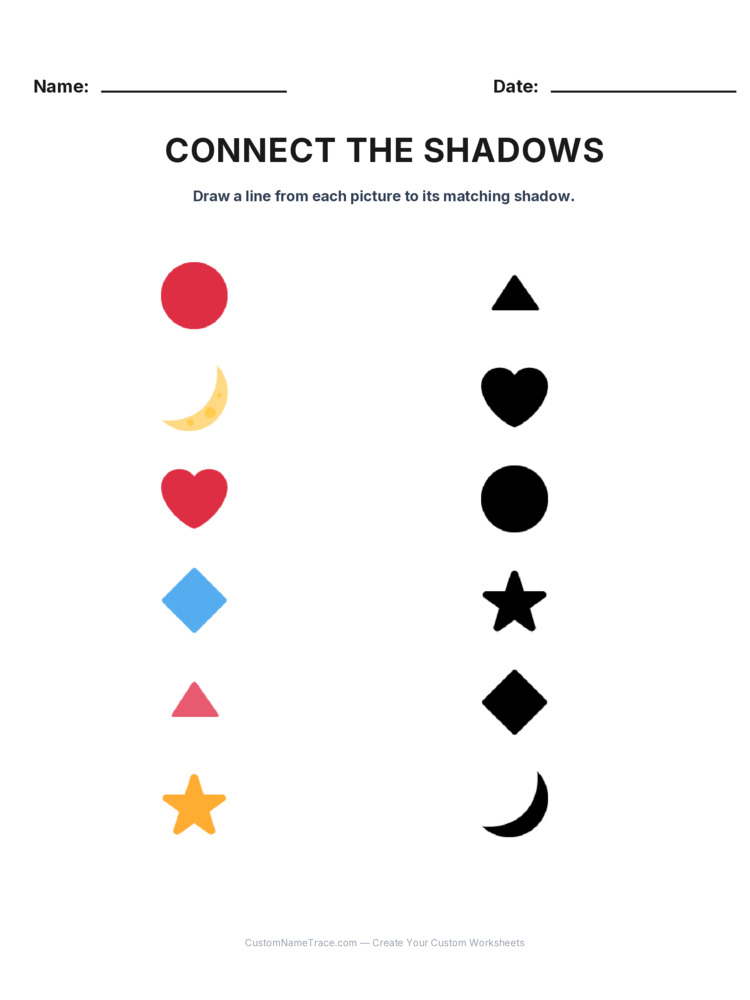
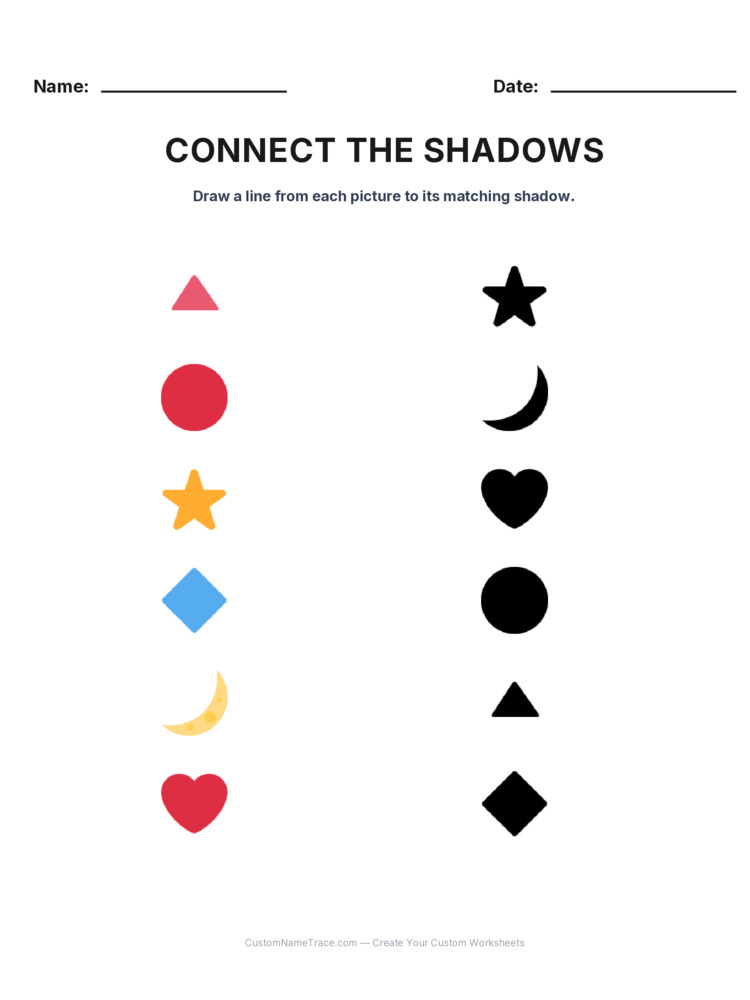
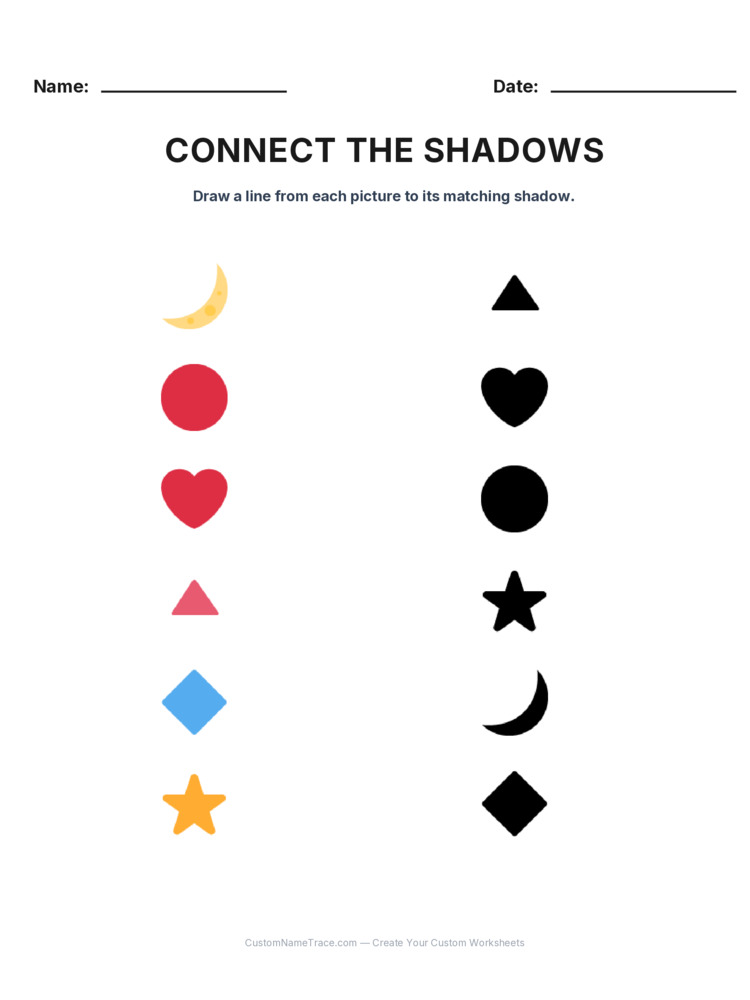
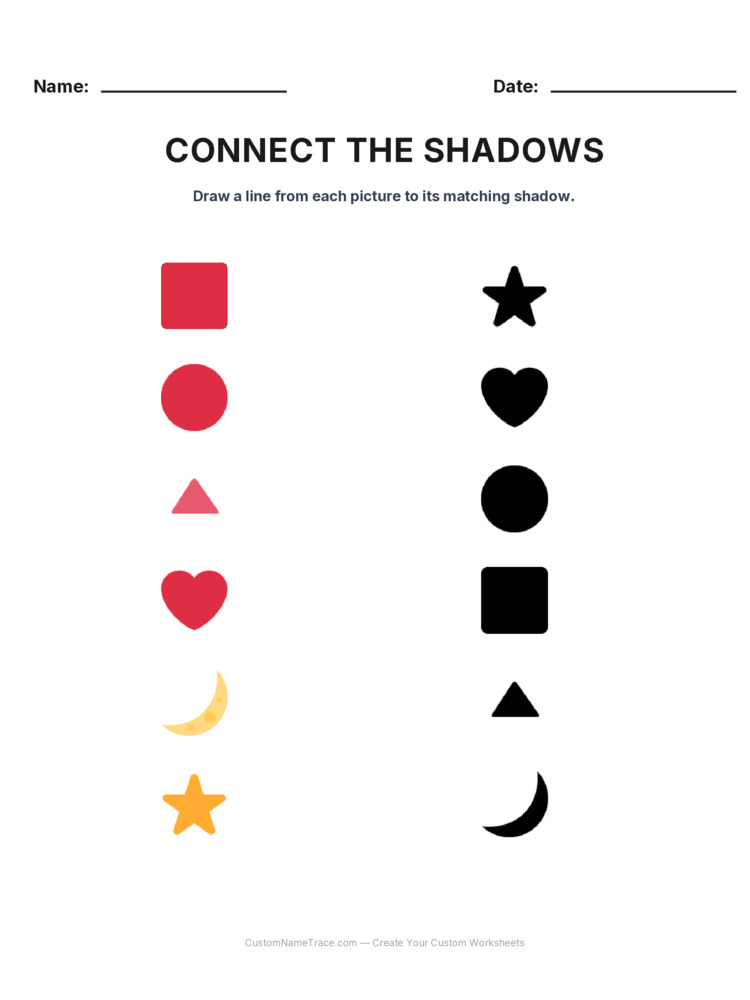
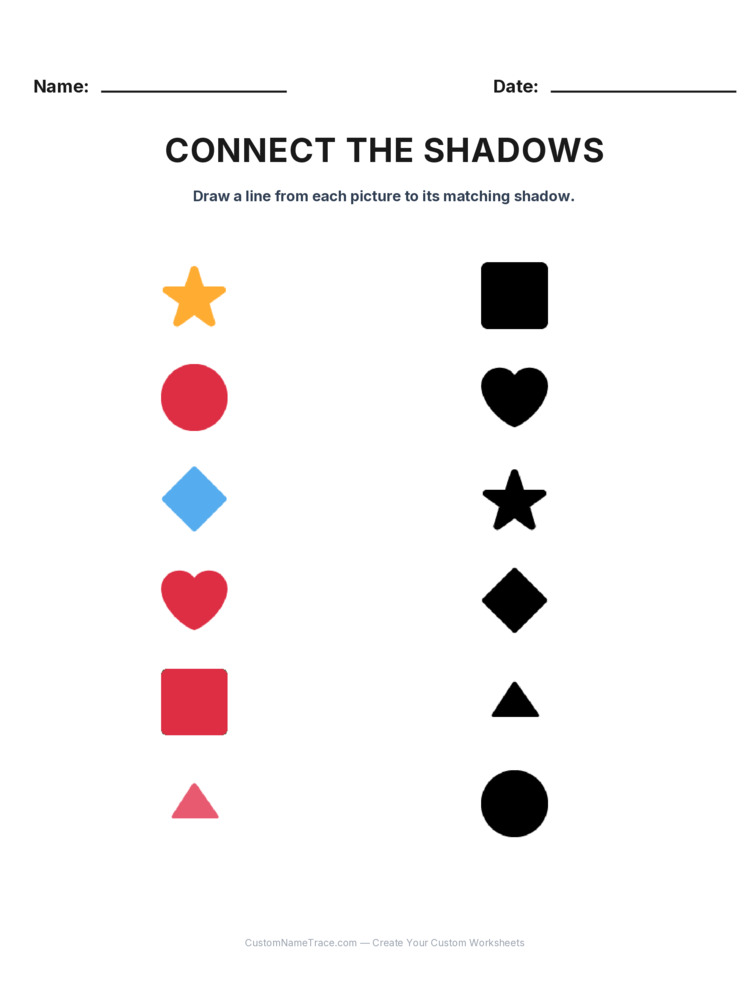
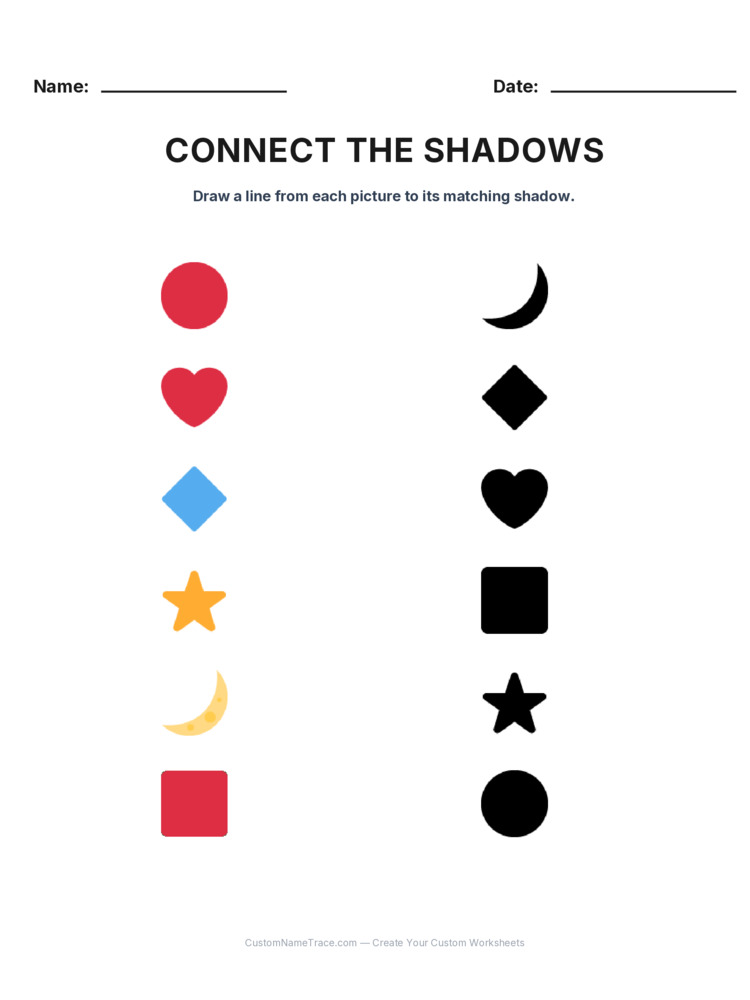
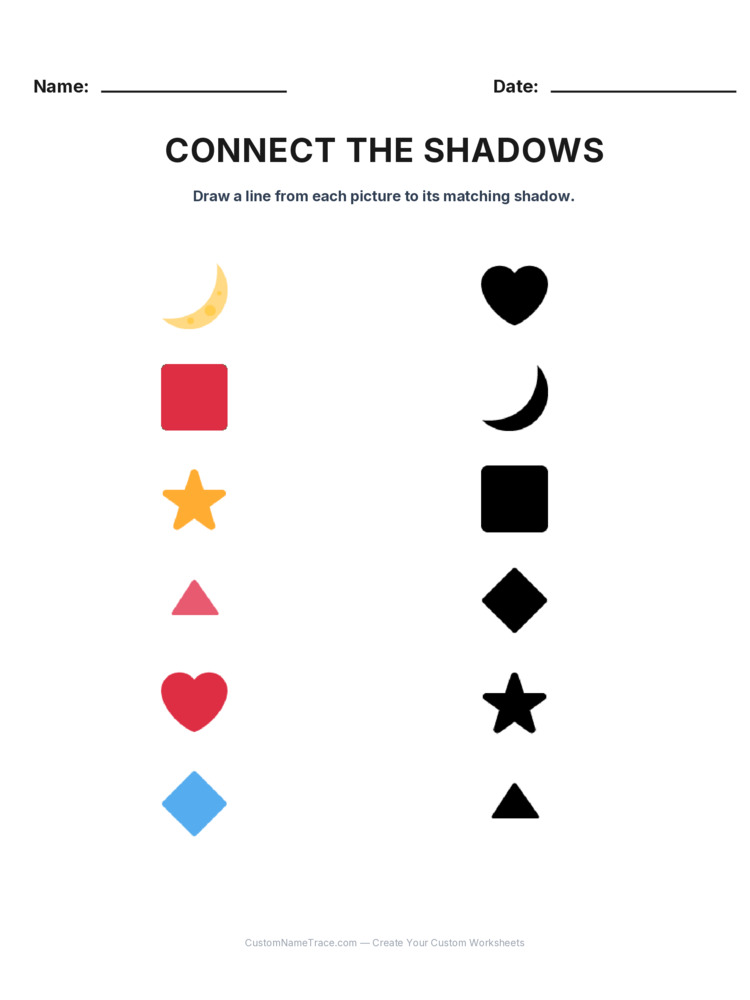
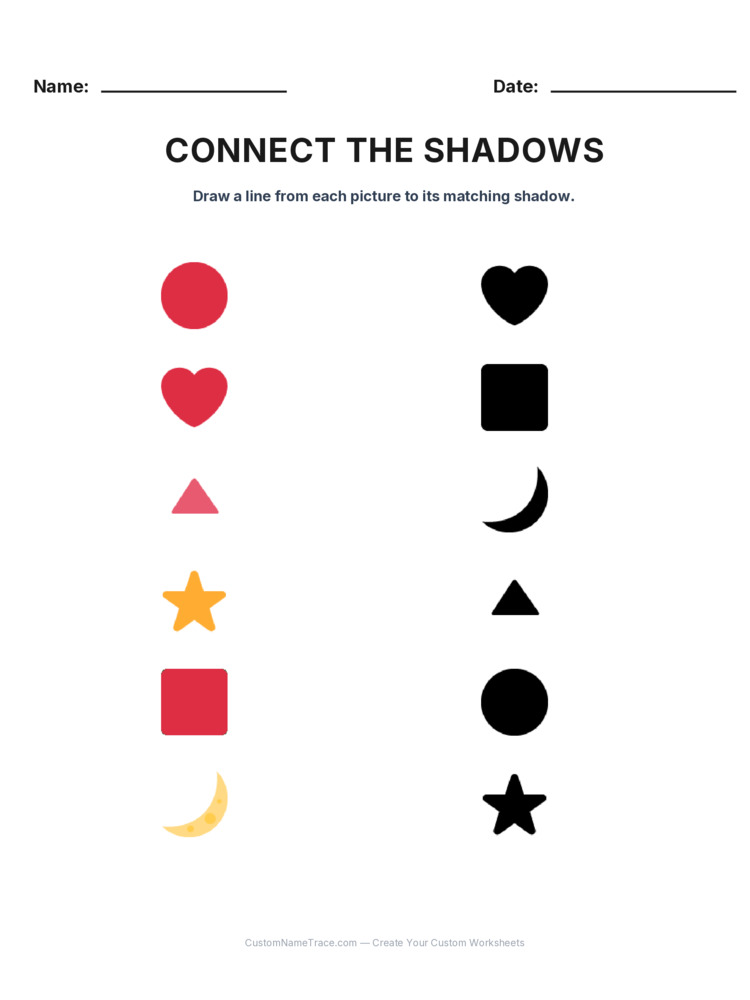
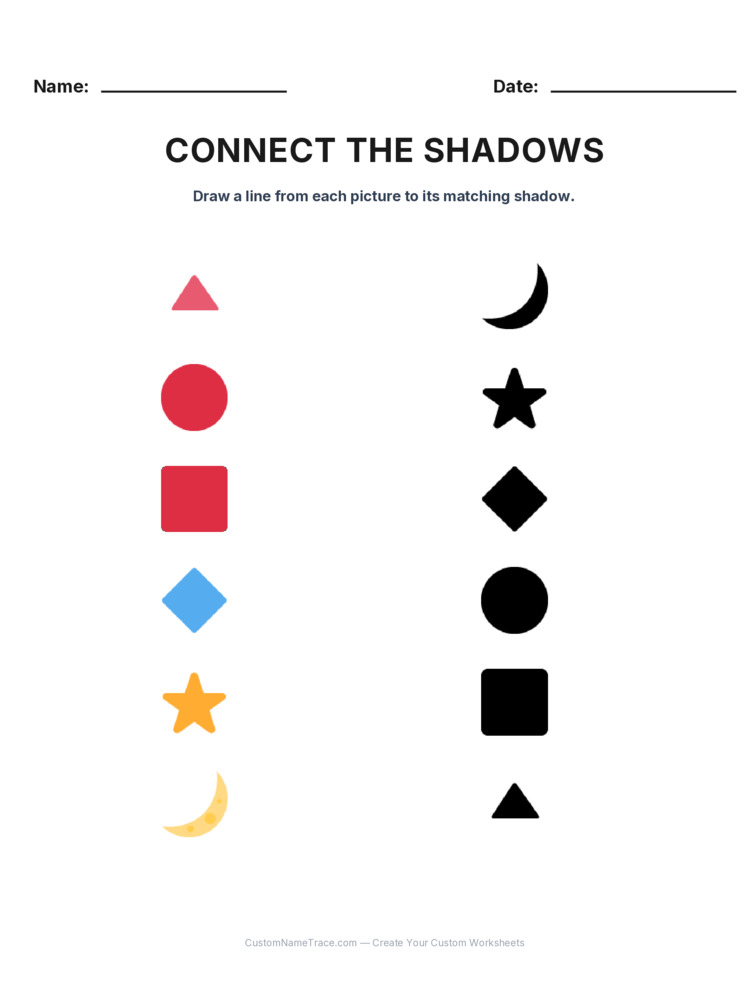
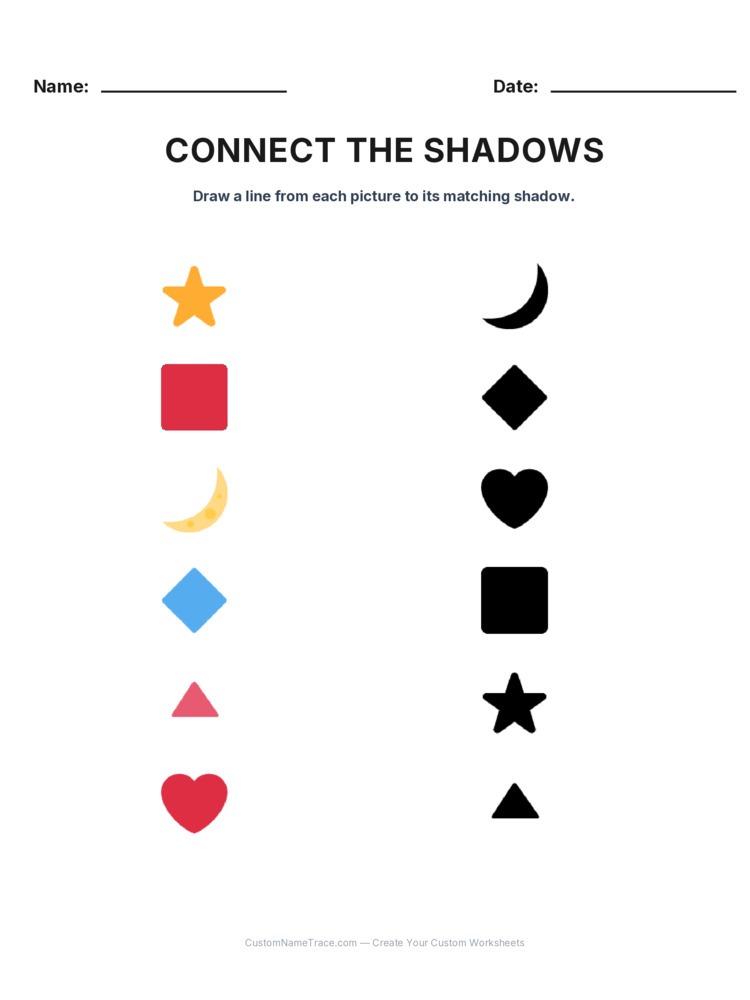
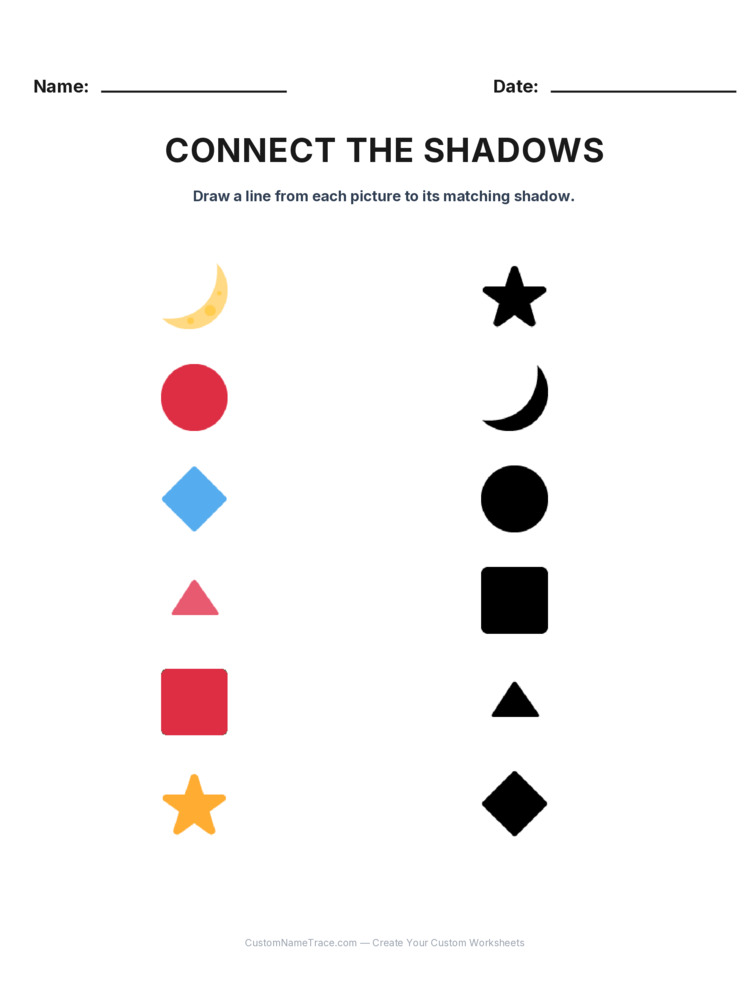
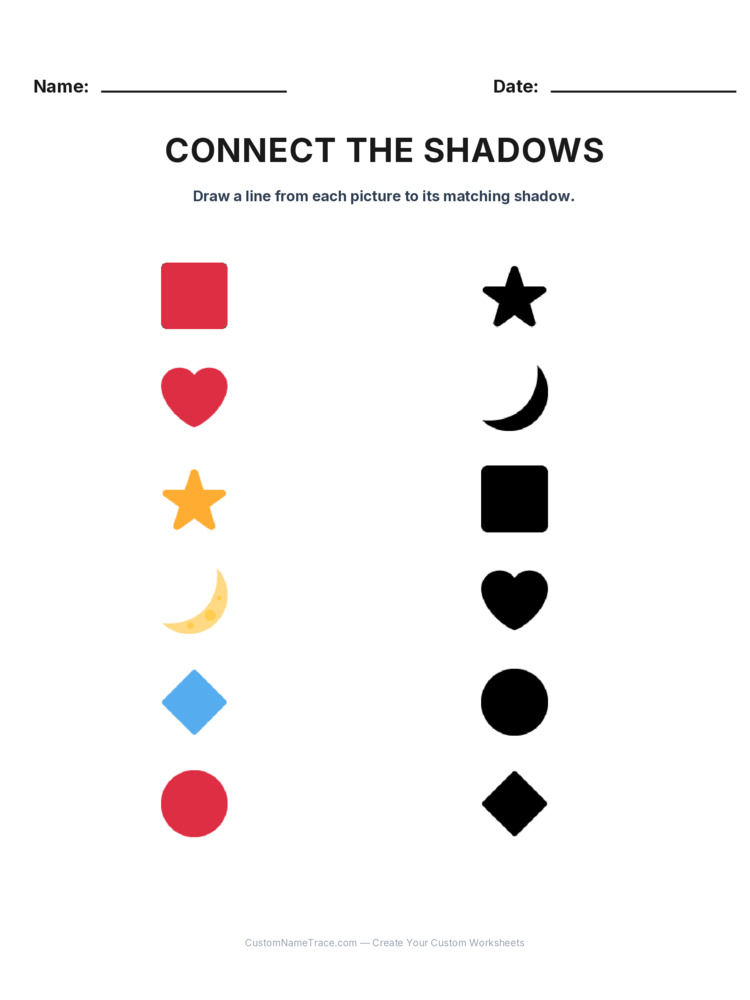
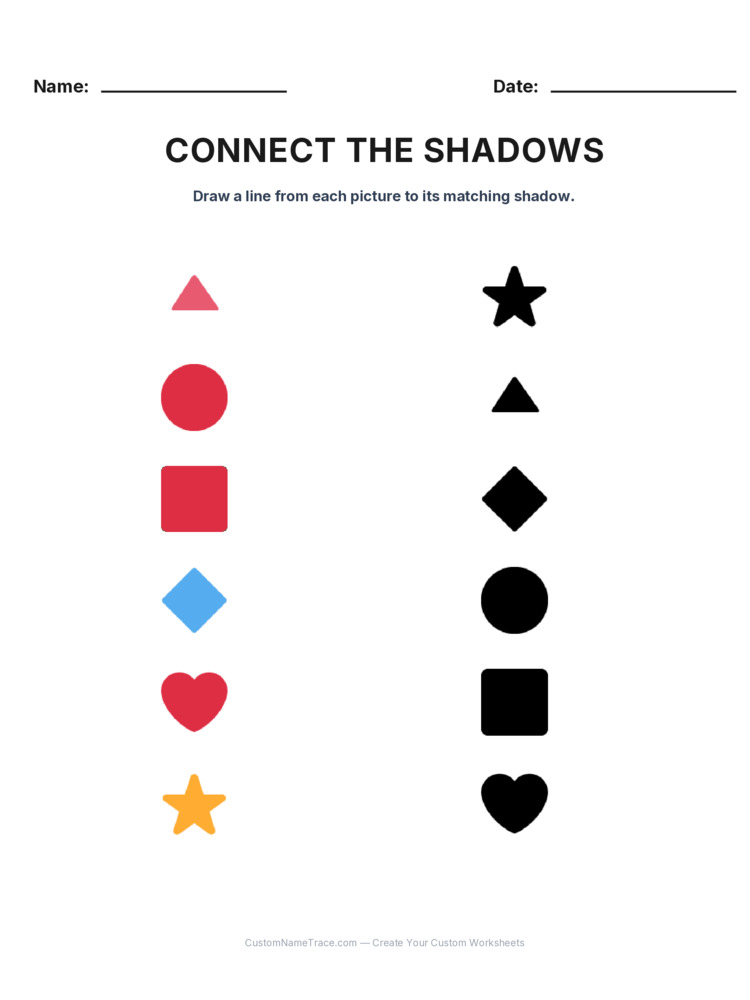
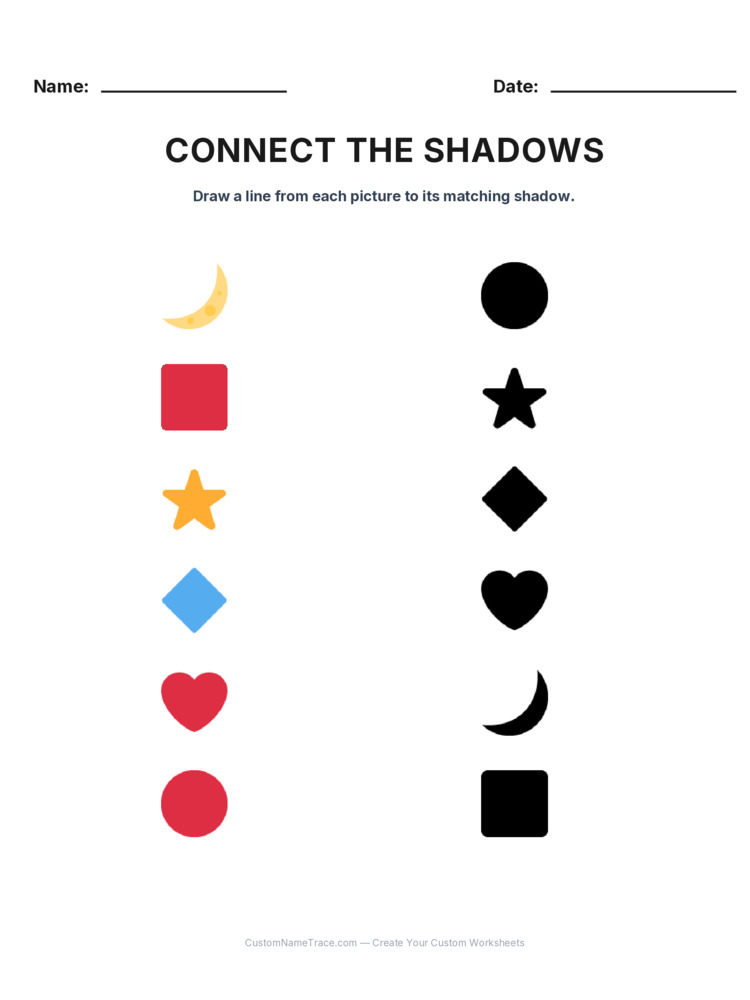
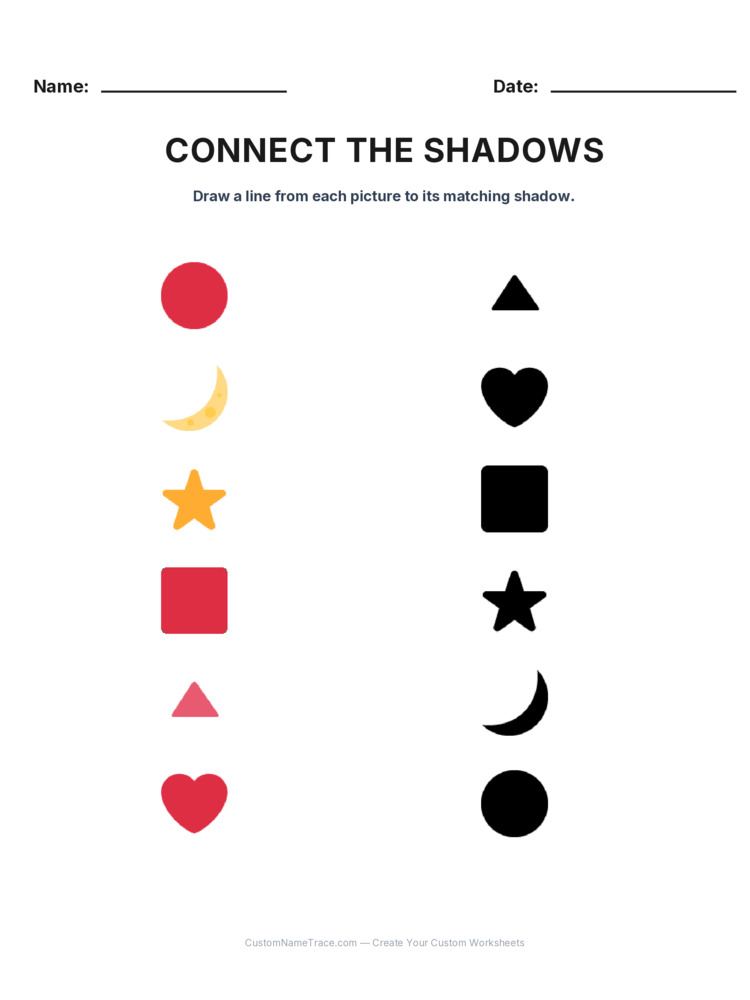
Connect the Shadows
A numbered list of full-color pictures on the left is matched against a lettered list of solid black silhouettes on the right, and a child writes the matching letter next to each number. This is trickier than it sounds — some shapes have very similar outlines — and it builds a specific skill: recognizing an object by its outline alone, without color or detail to lean on.
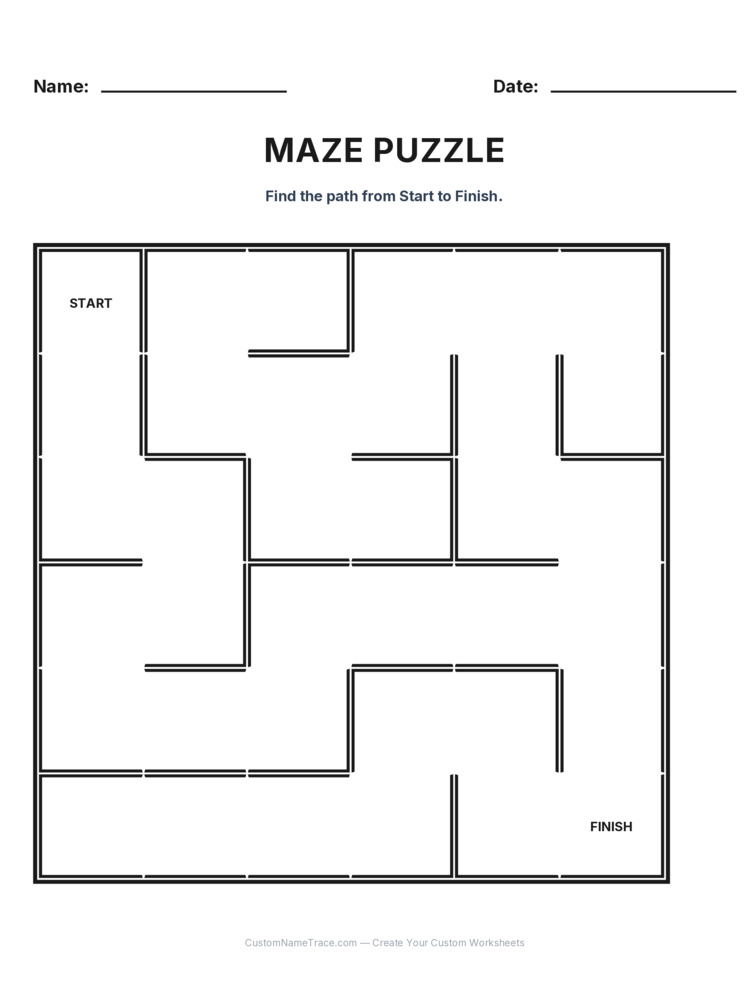
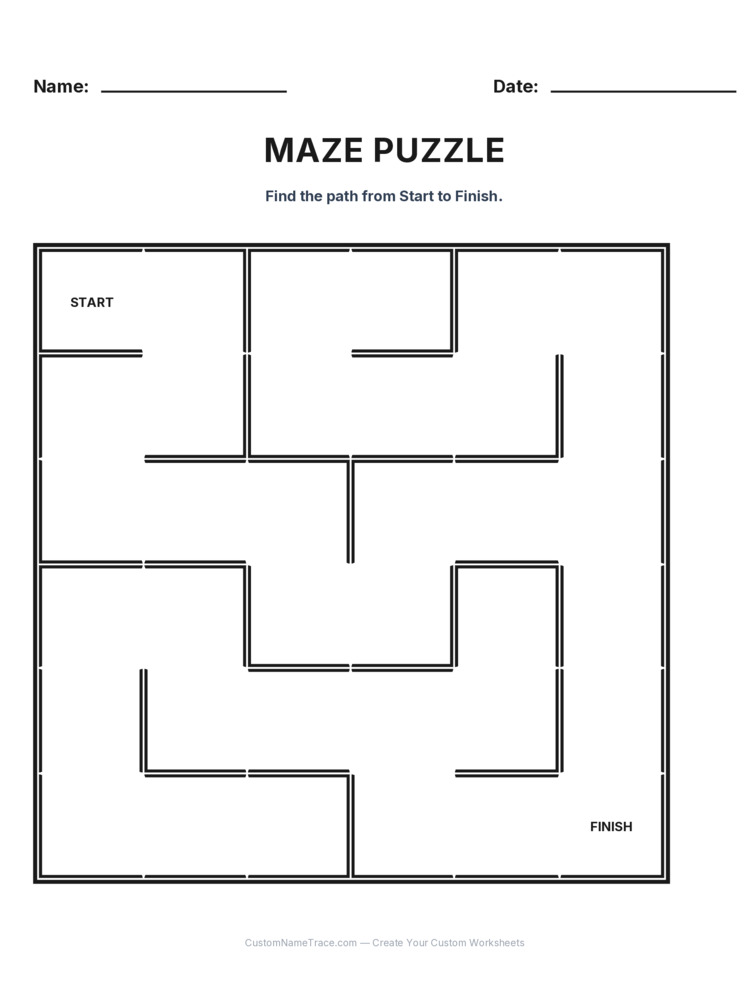
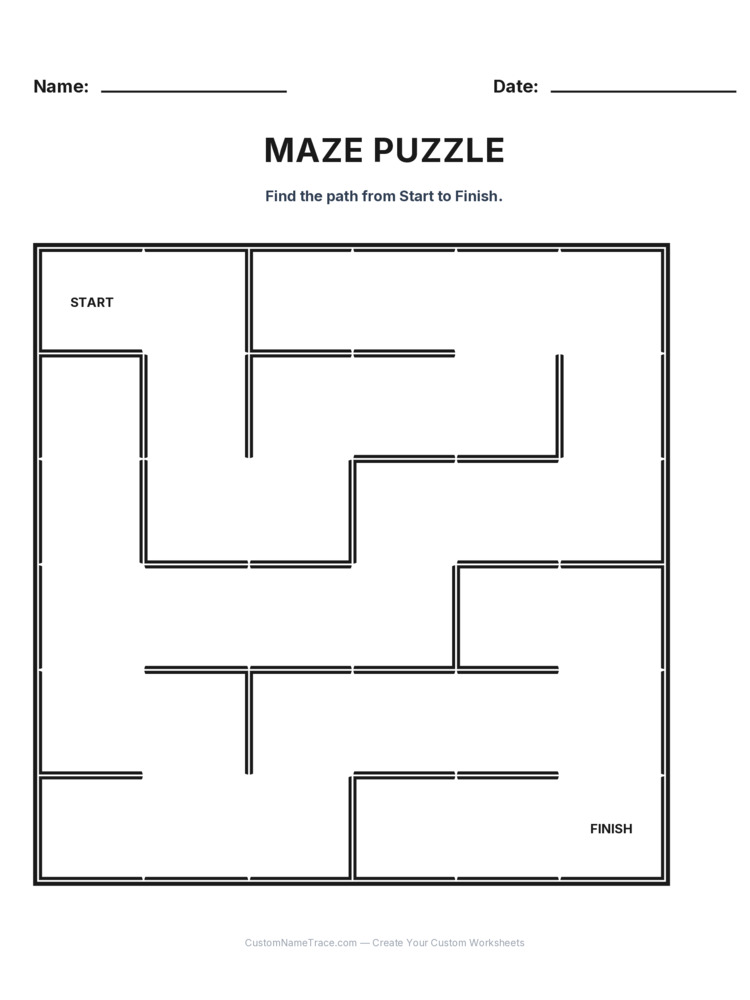
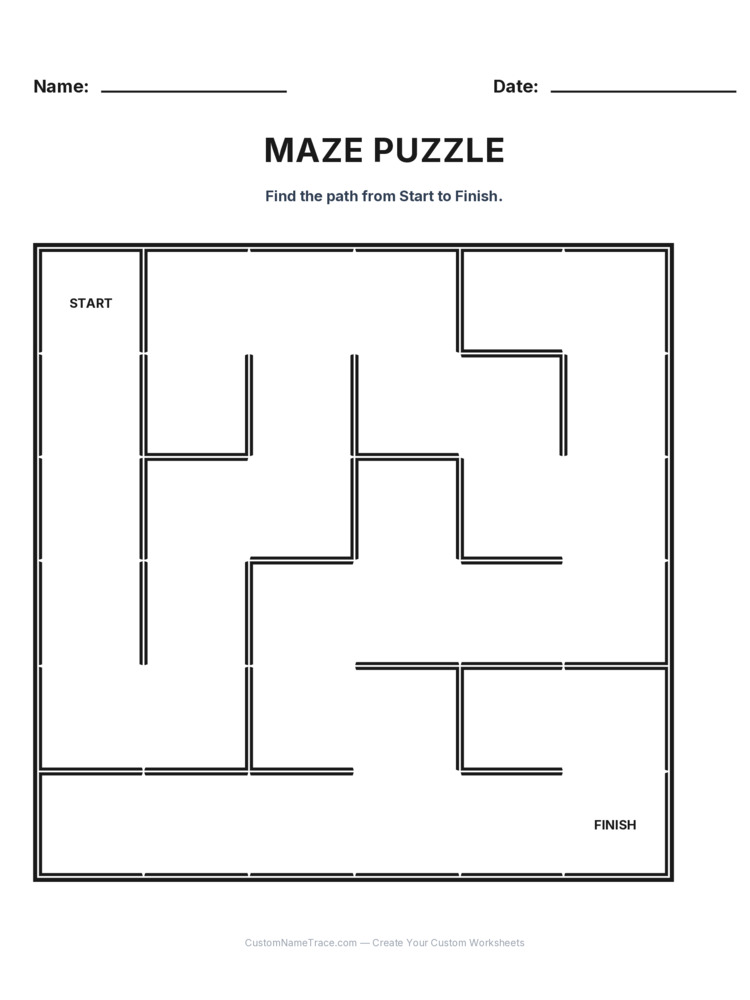
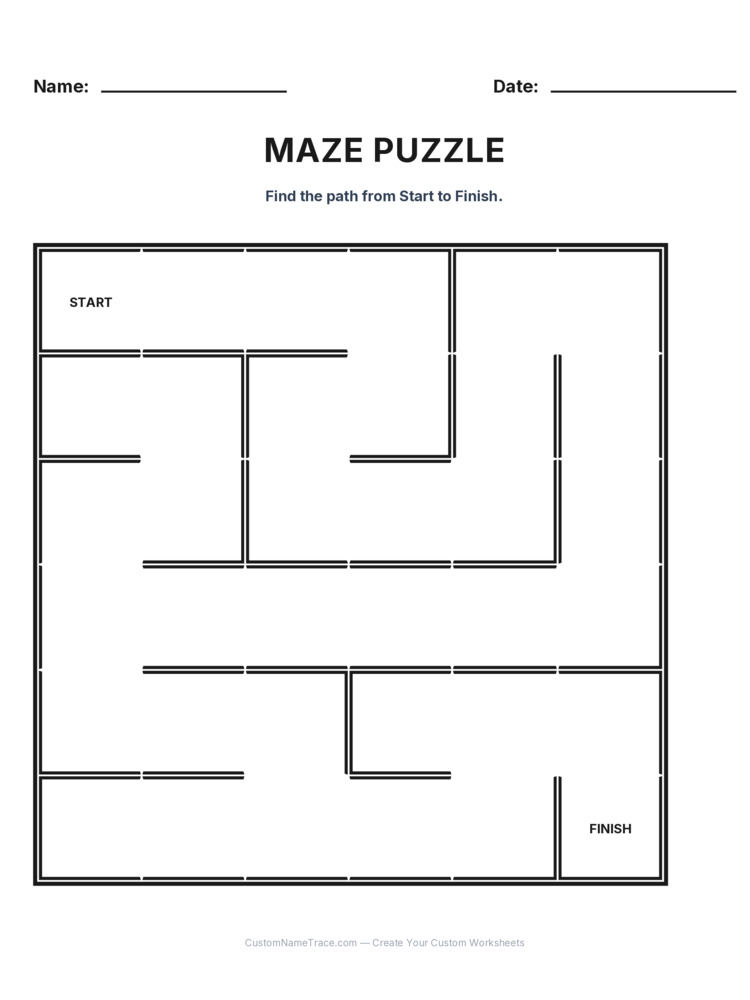
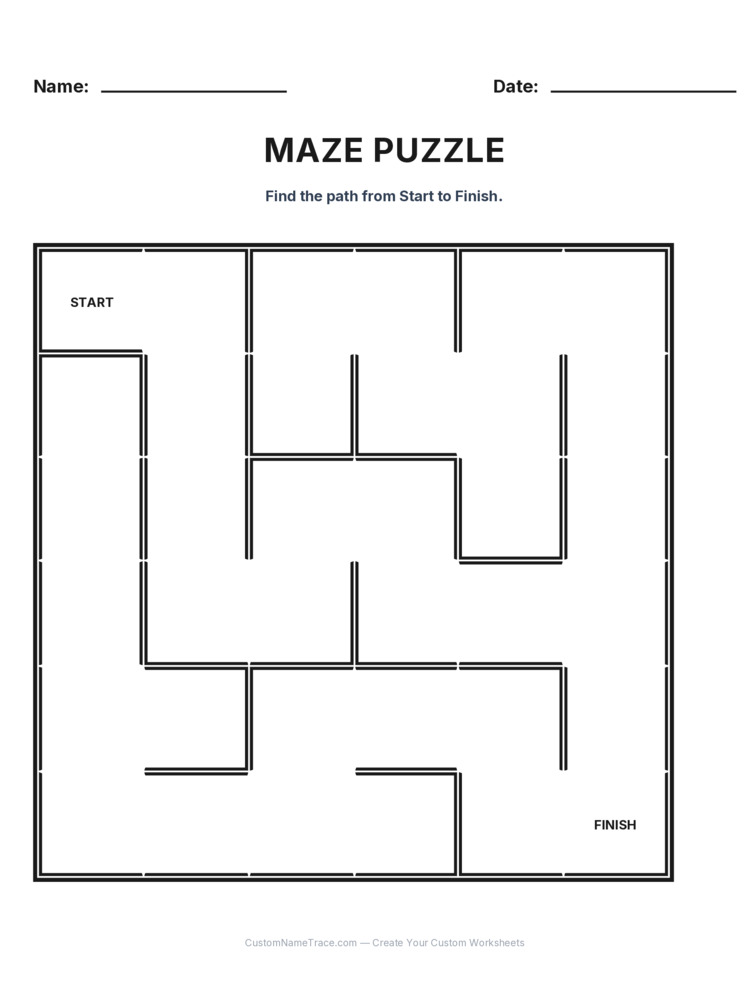
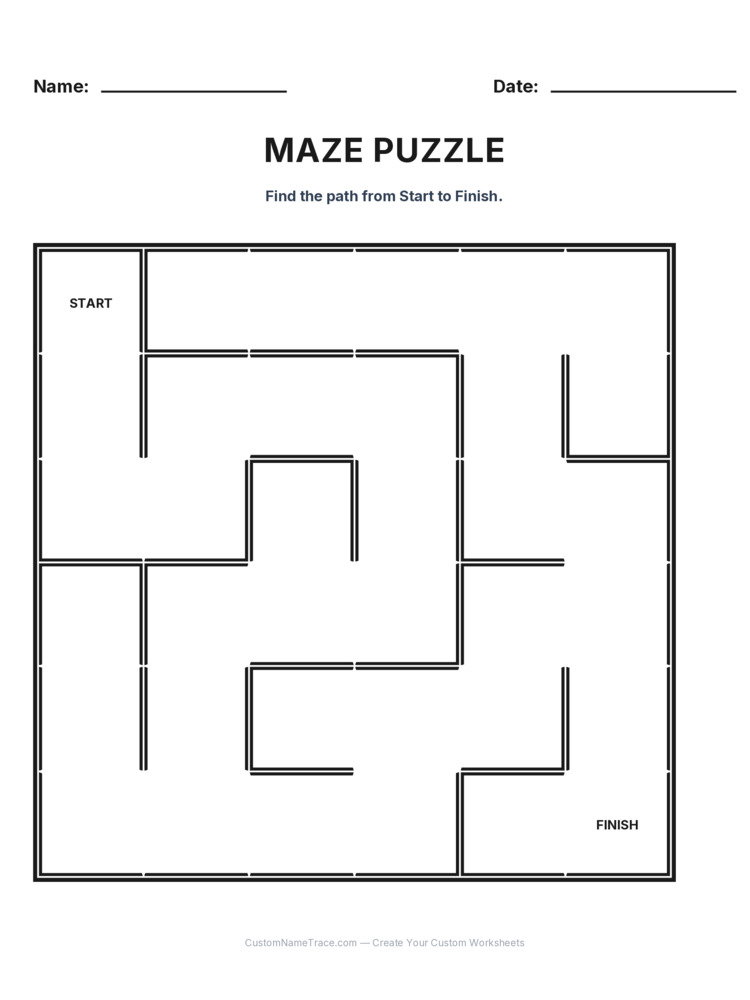
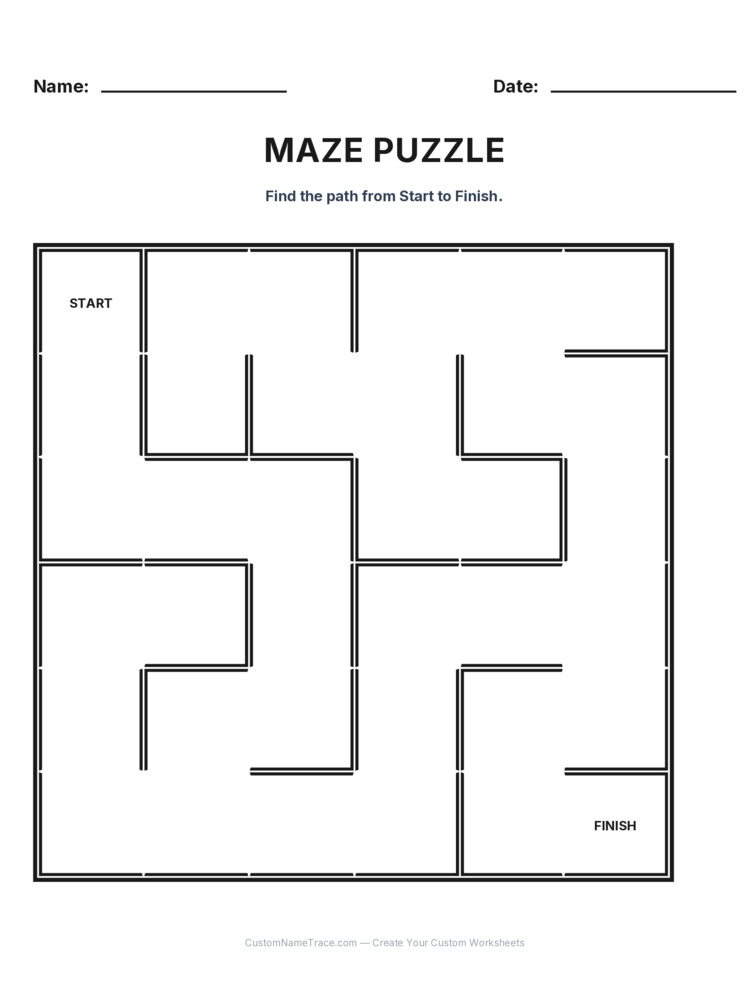
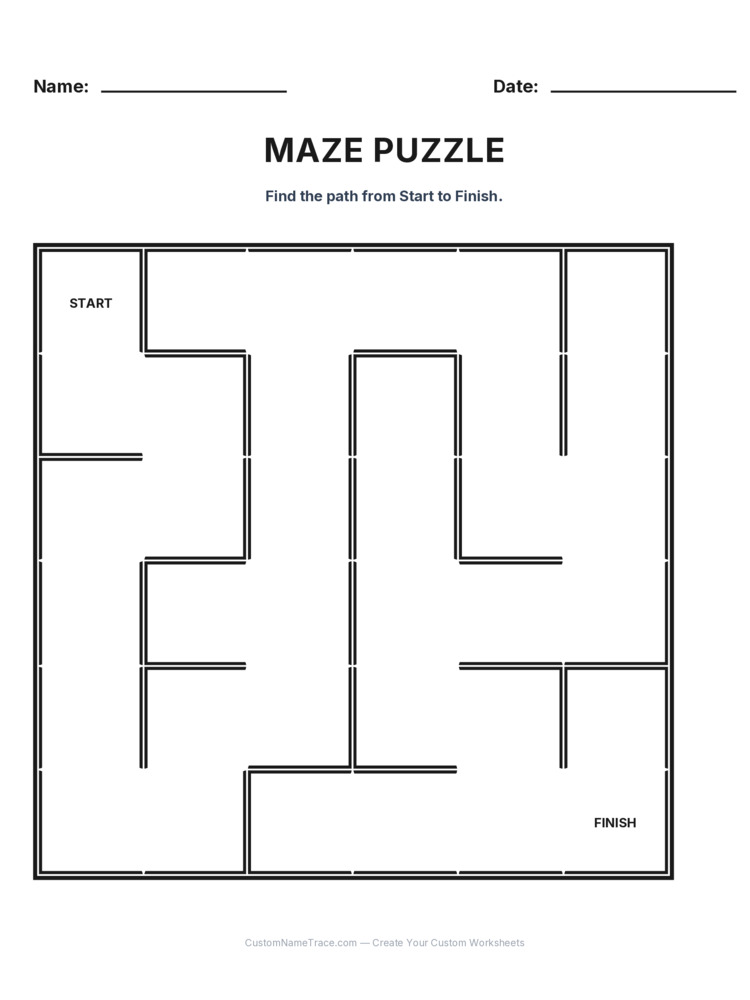
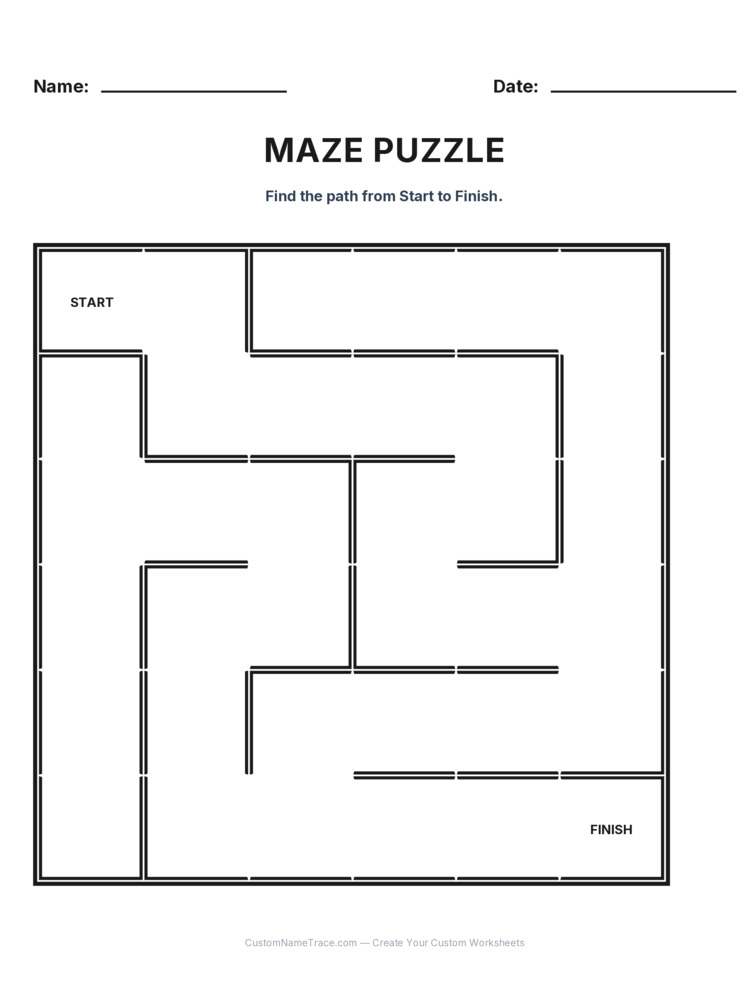
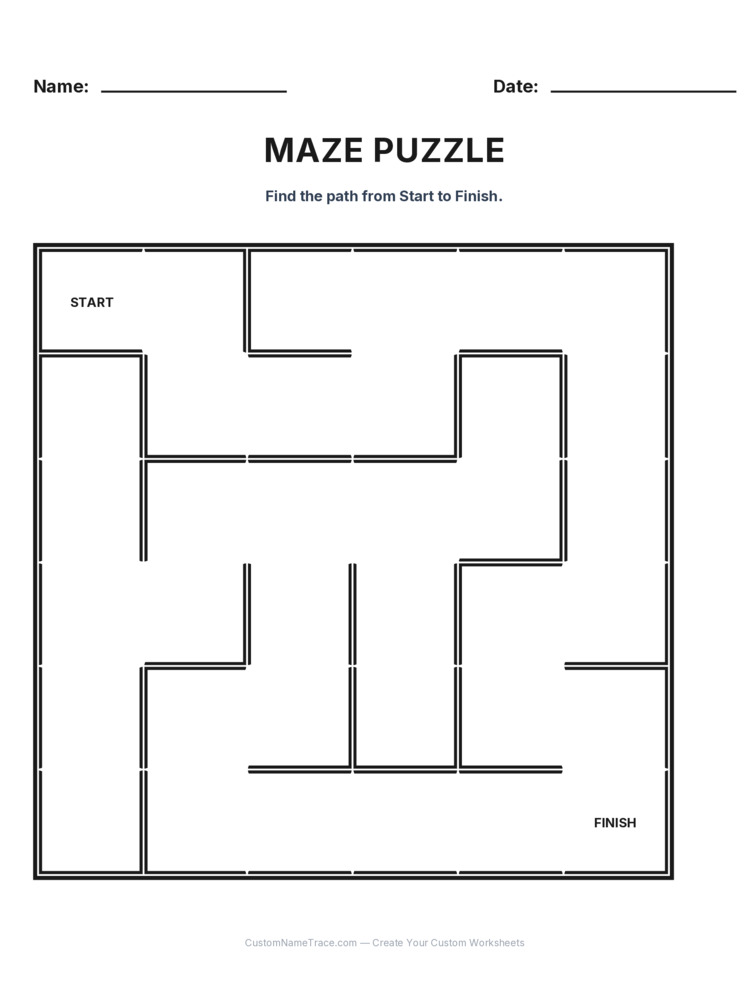
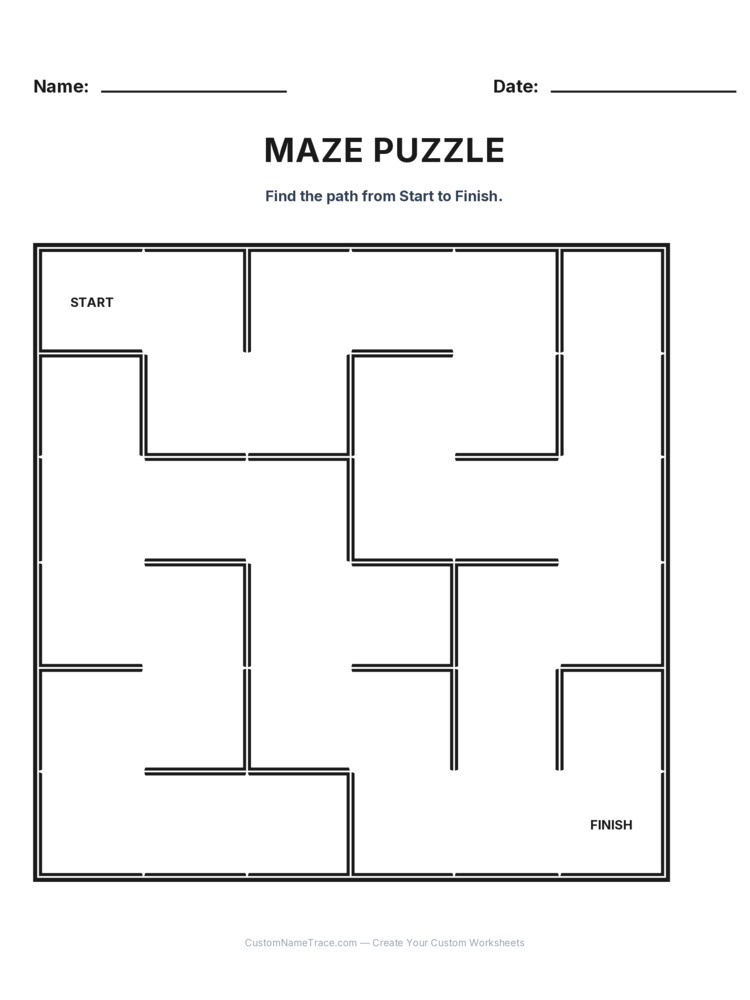
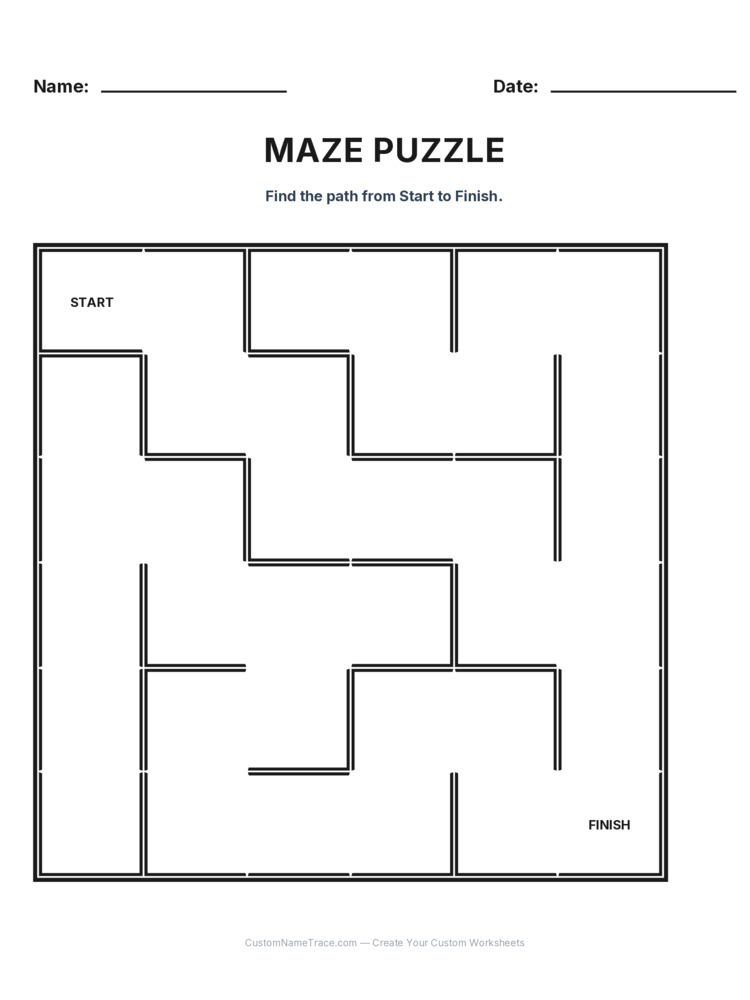
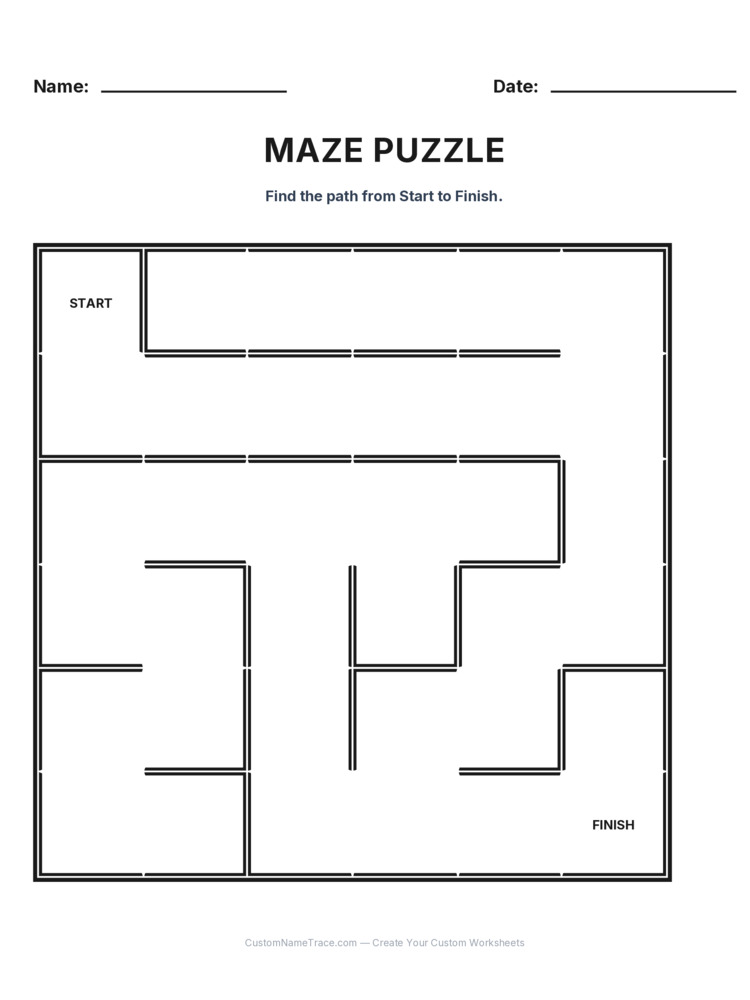
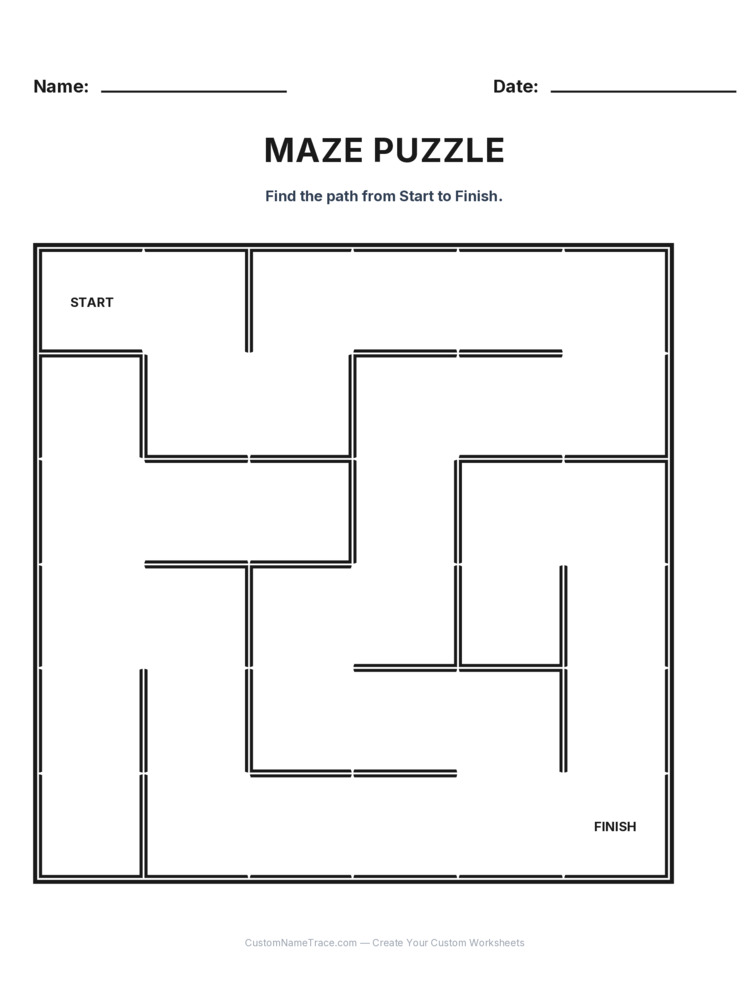
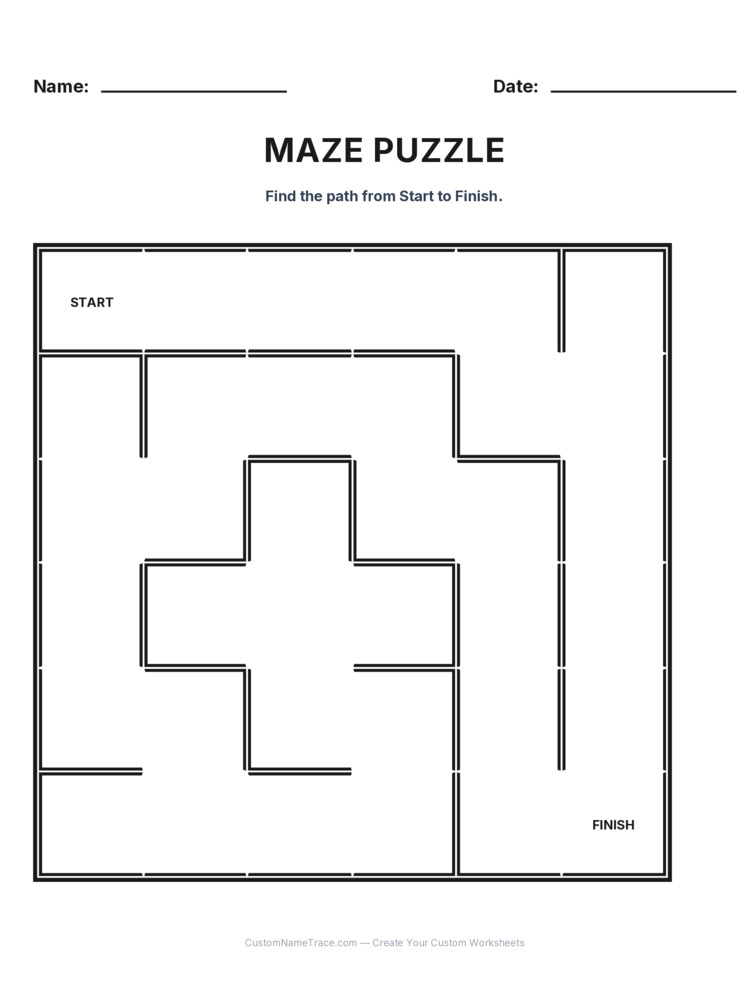
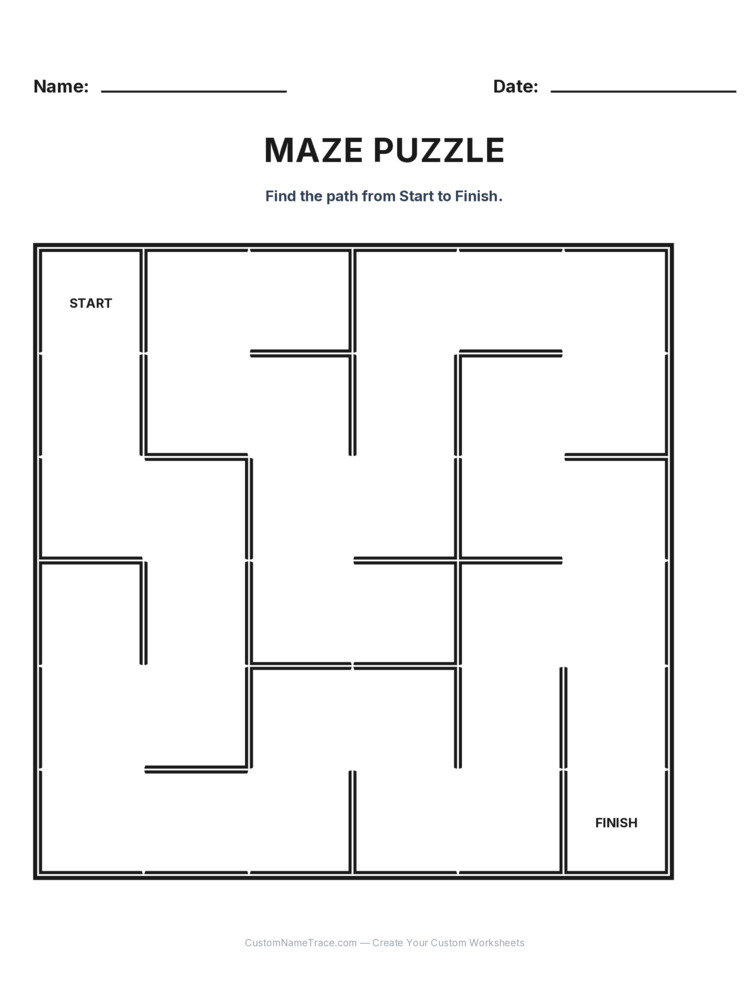
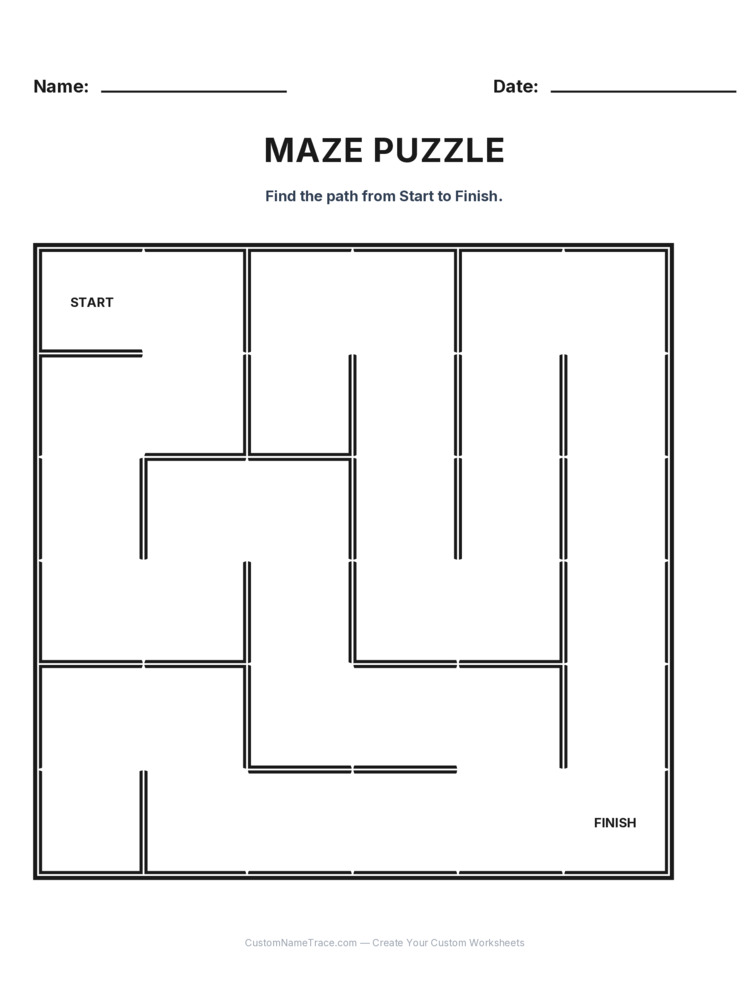
Maze Puzzles
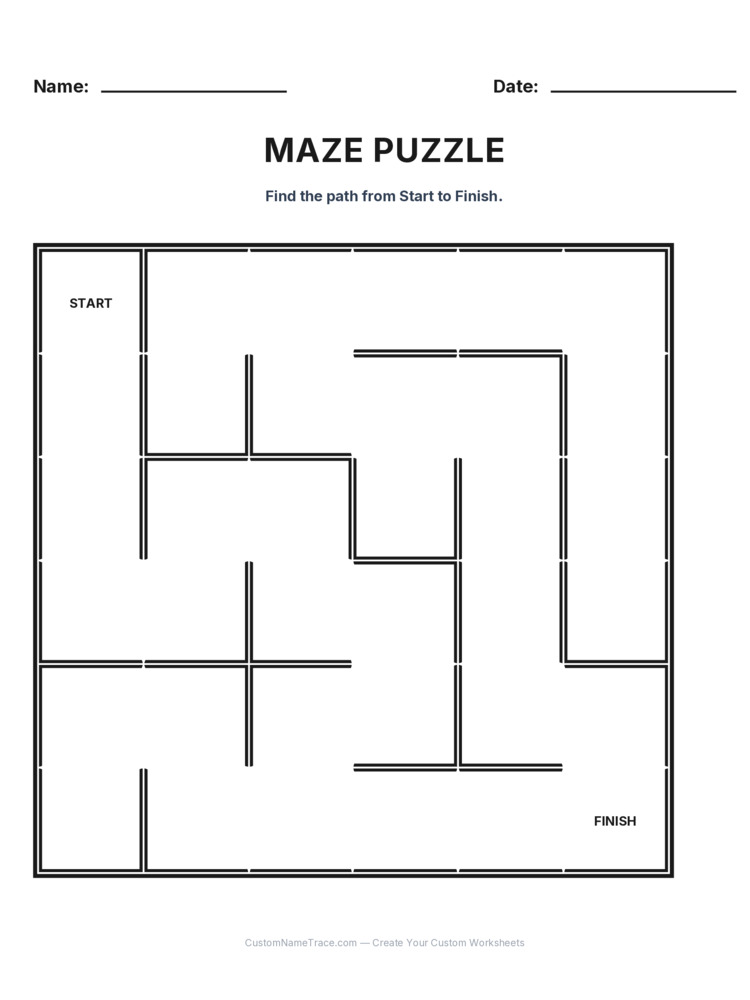
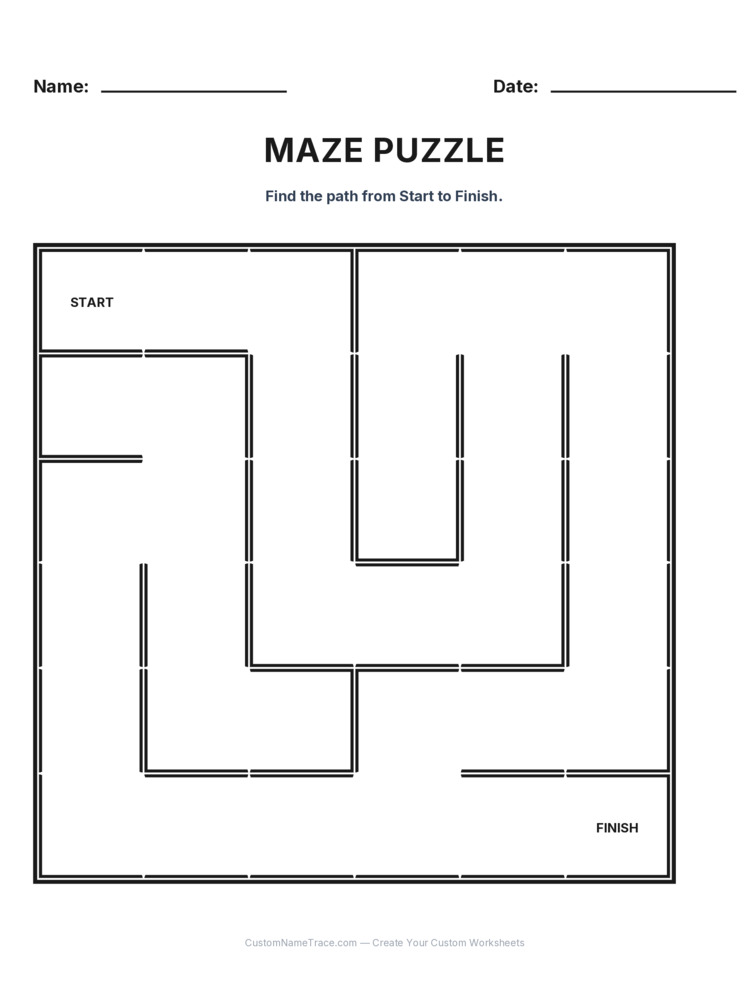
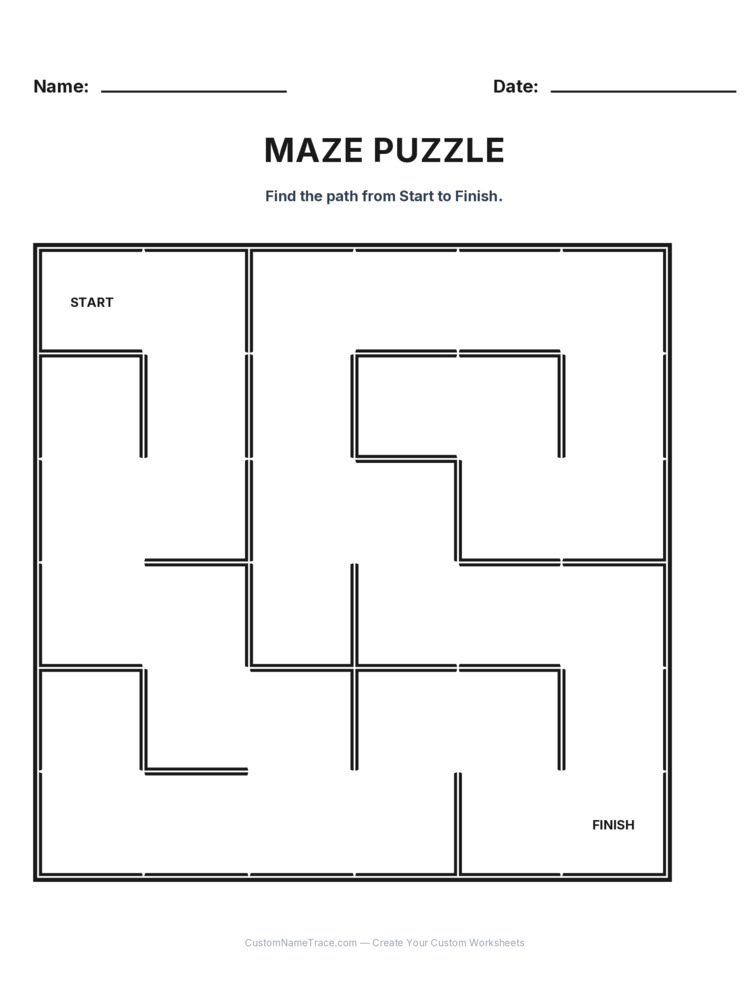
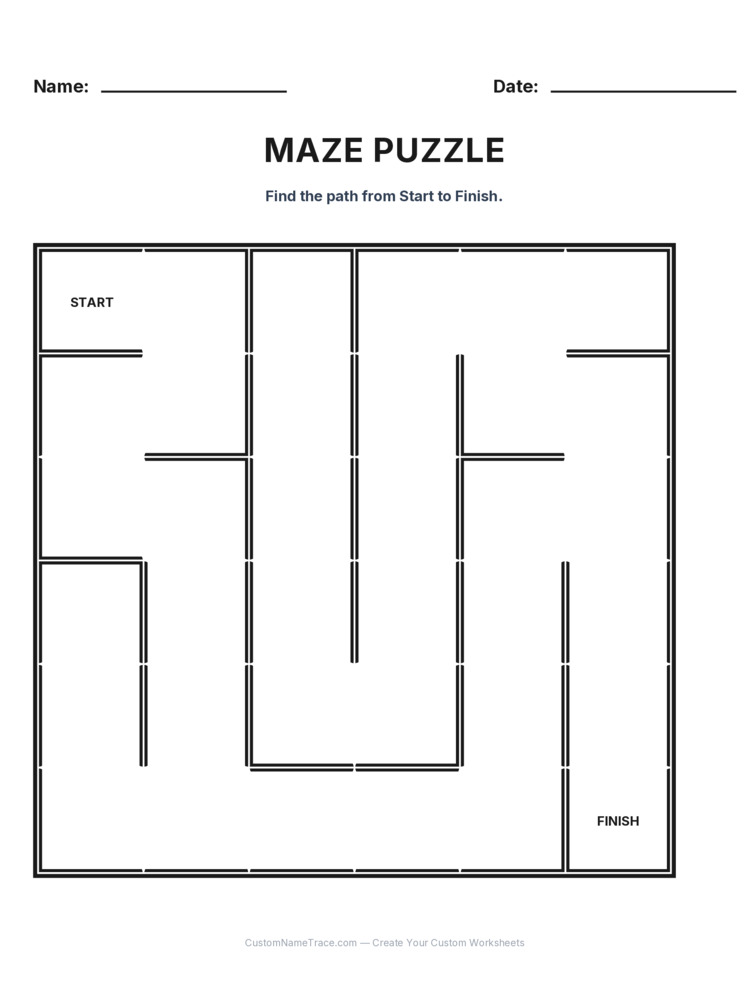
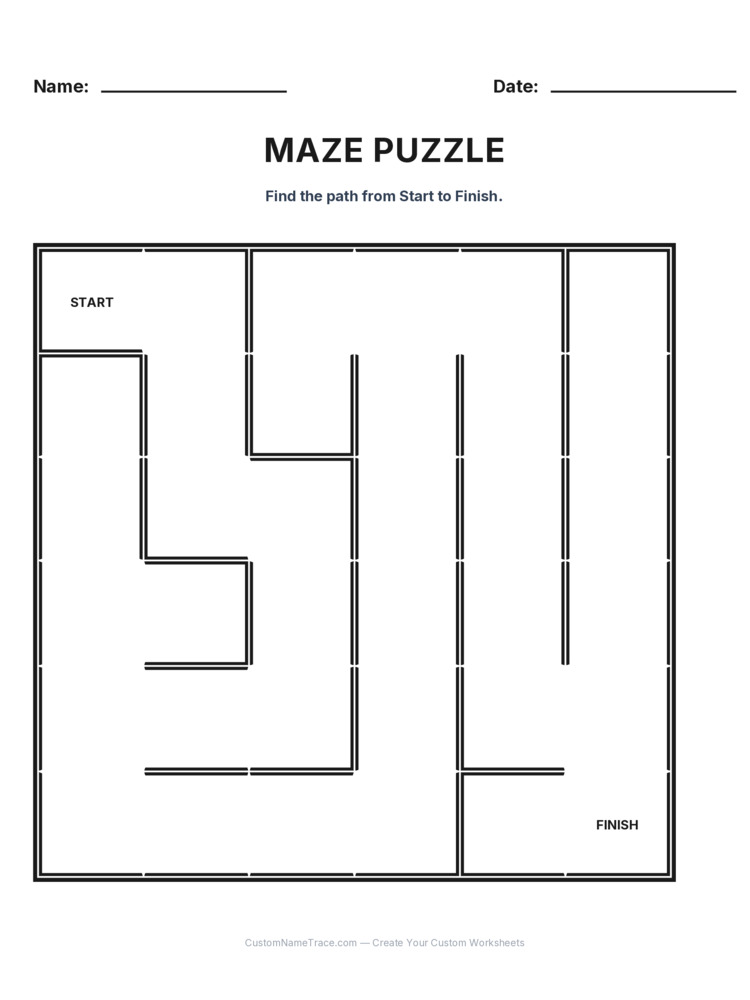
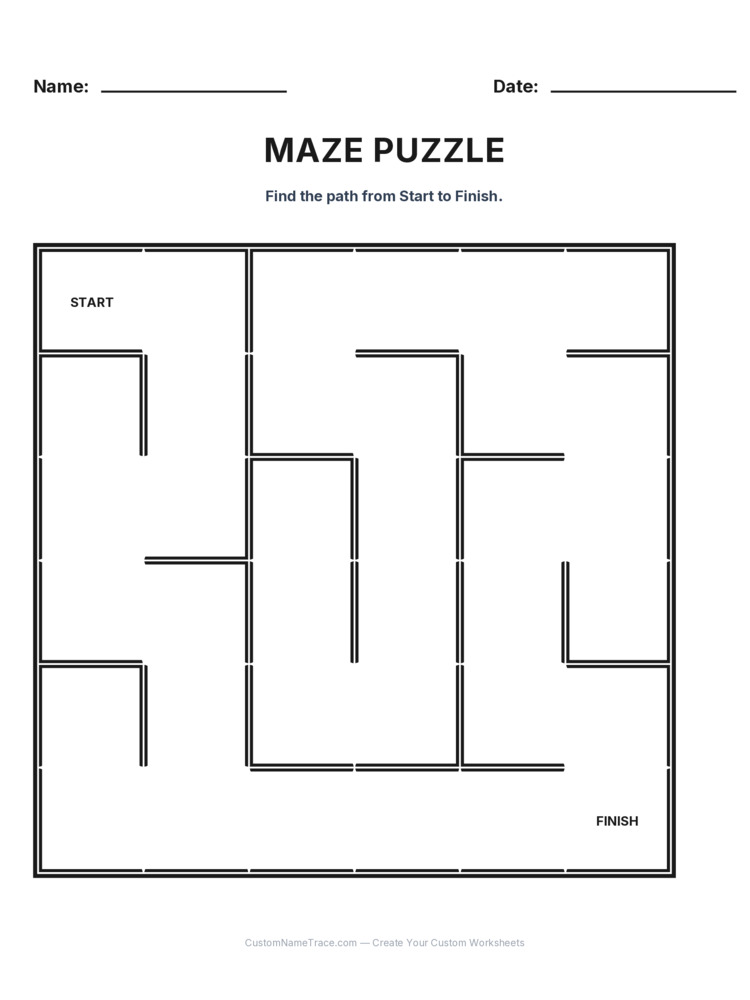
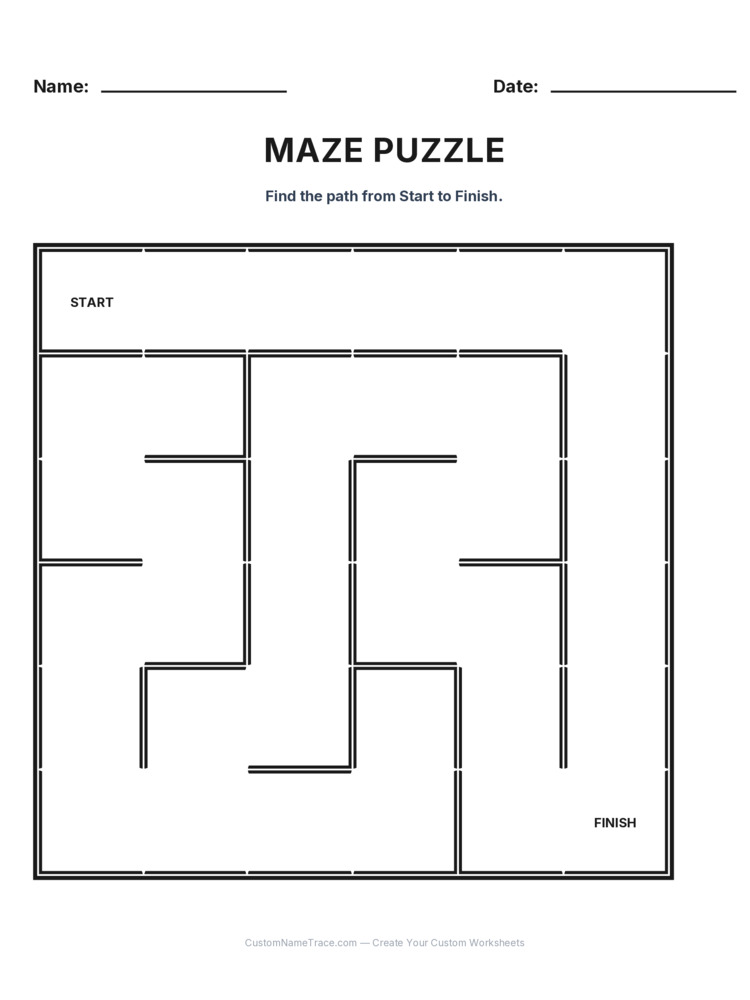
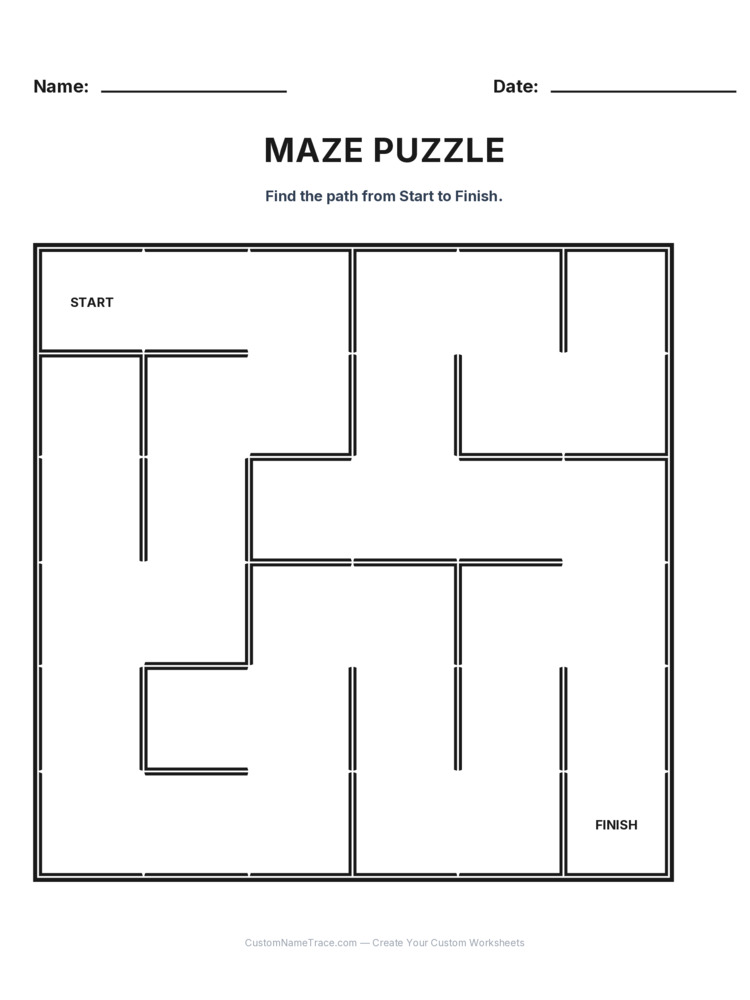
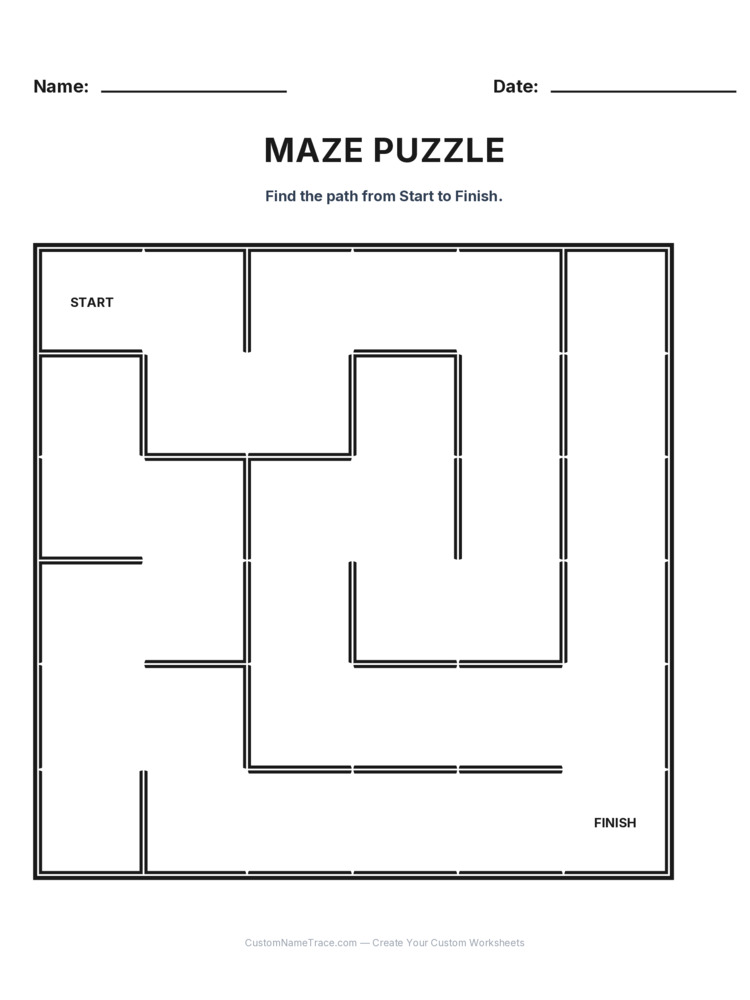
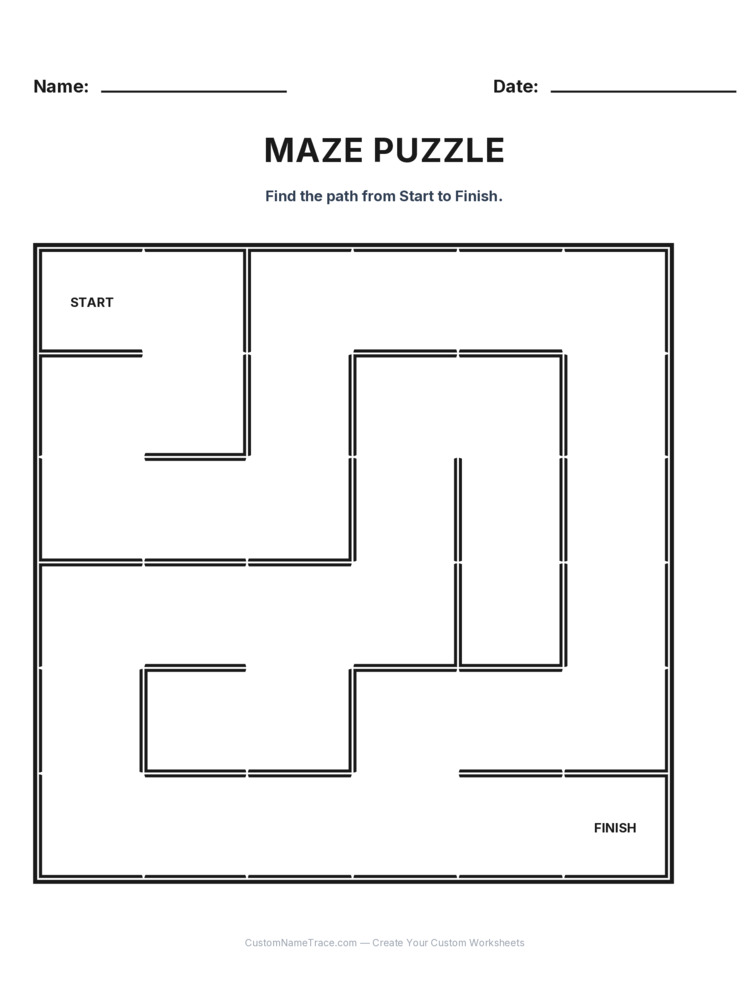
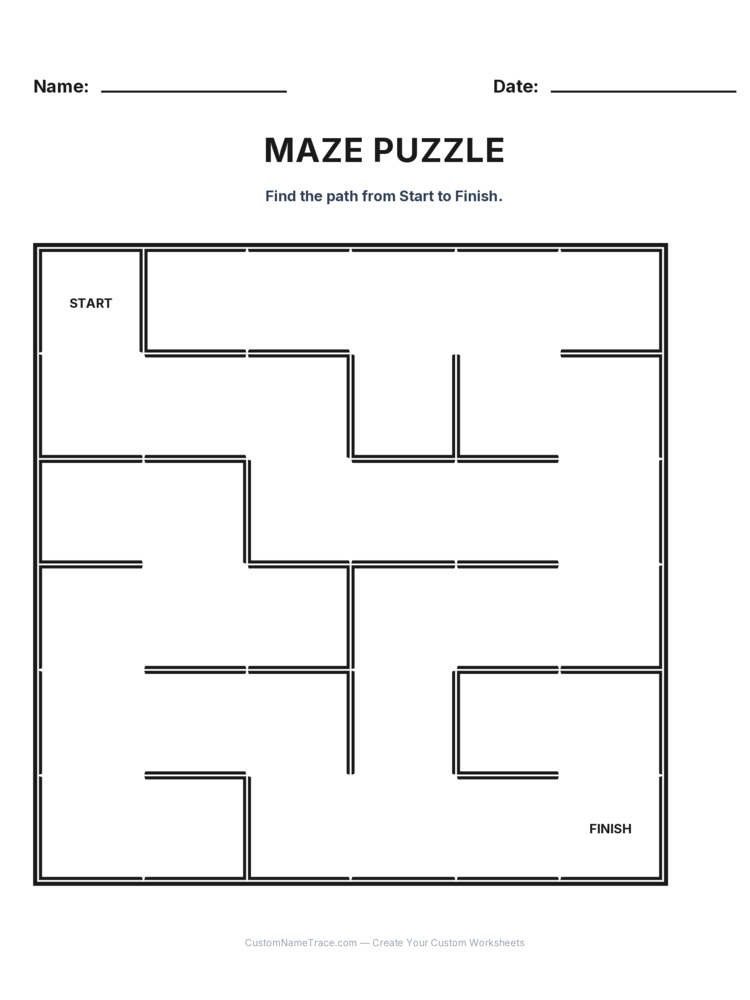
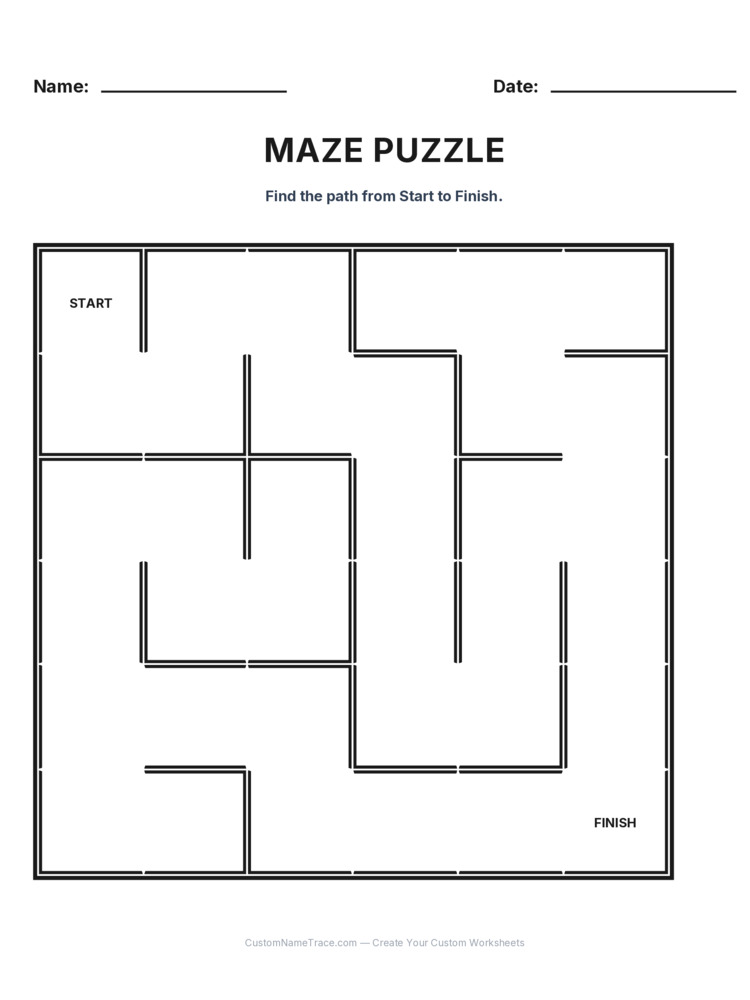
A small grid maze with exactly one path from Start to Finish through the walls drawn on the page. Every maze here is generated by an algorithm that carves a single guaranteed path (never a dead-end-only grid with no solution), so a child who gets stuck can be confident the path exists — the puzzle rewards careful tracing, not luck.
How to use this page with a Pre-K or Kindergarten child
Work through the first row or two together, saying the rule out loud before pointing ("we're looking for the one that's a different shape"), then let a child try the rest of the page independently. Short sessions beat long ones at this age — a few rows at a time, not a whole page pushed through in one sitting.