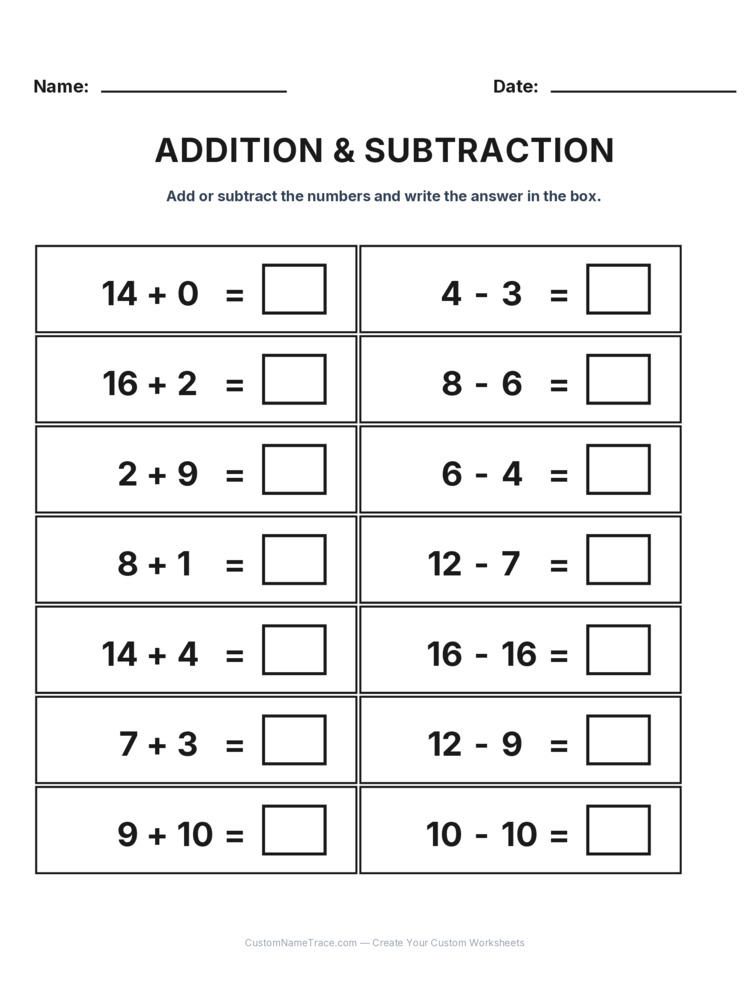
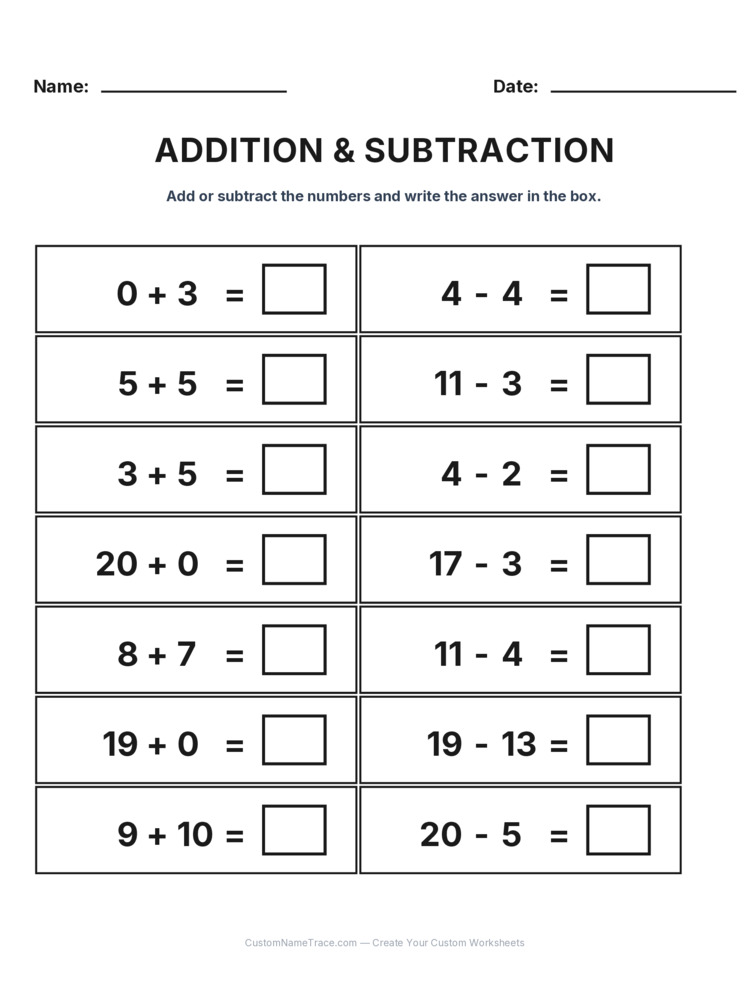
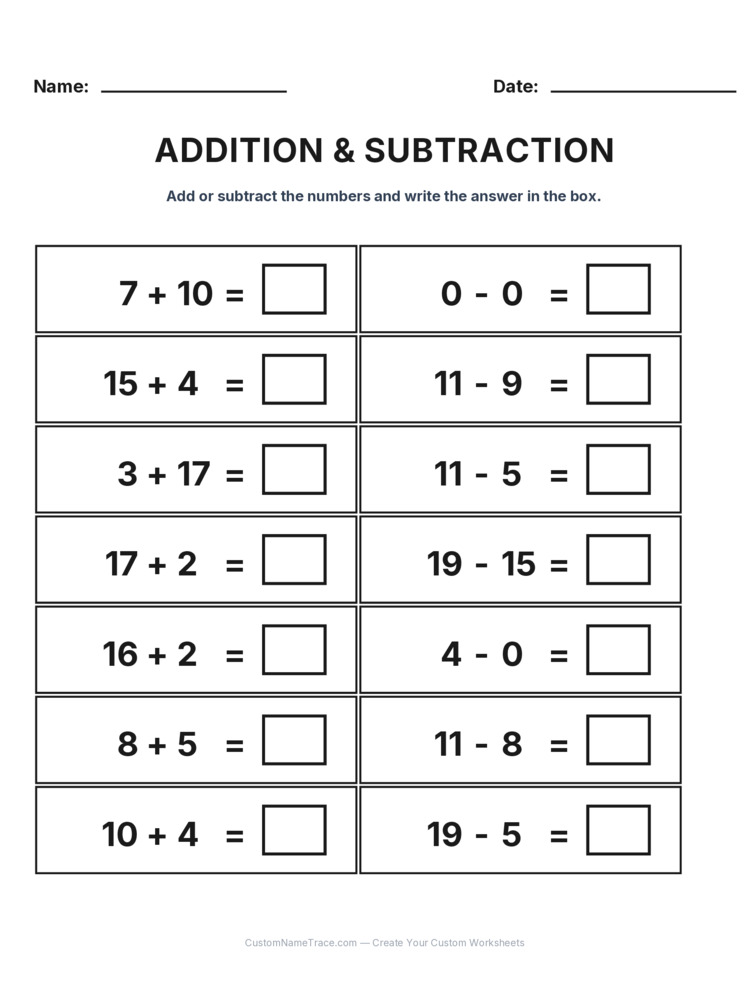
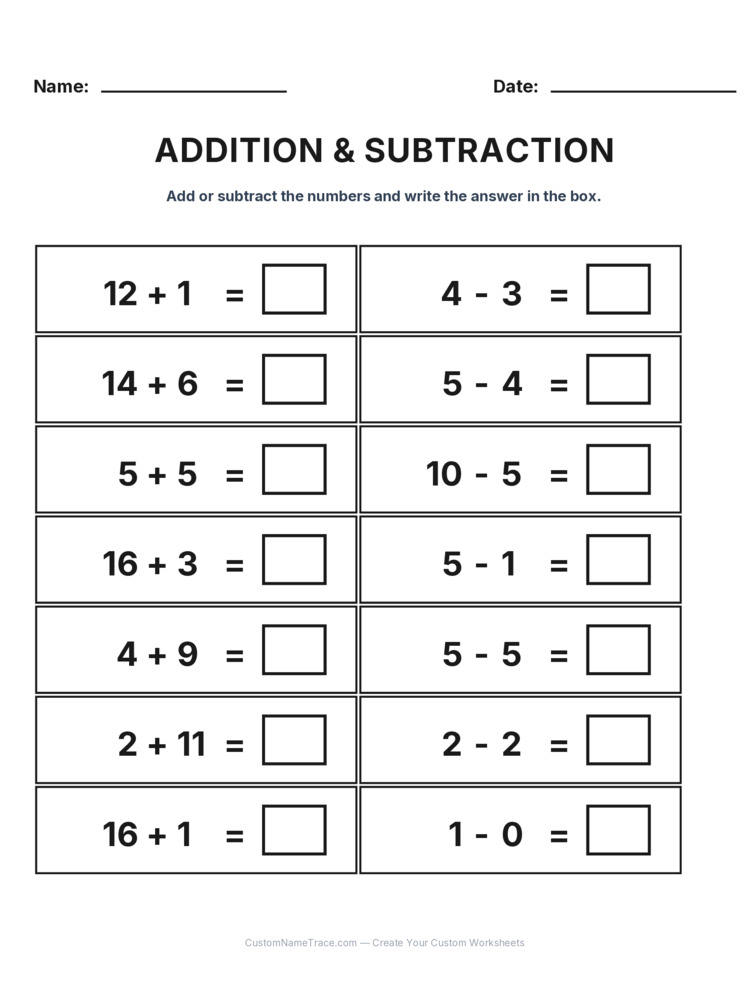
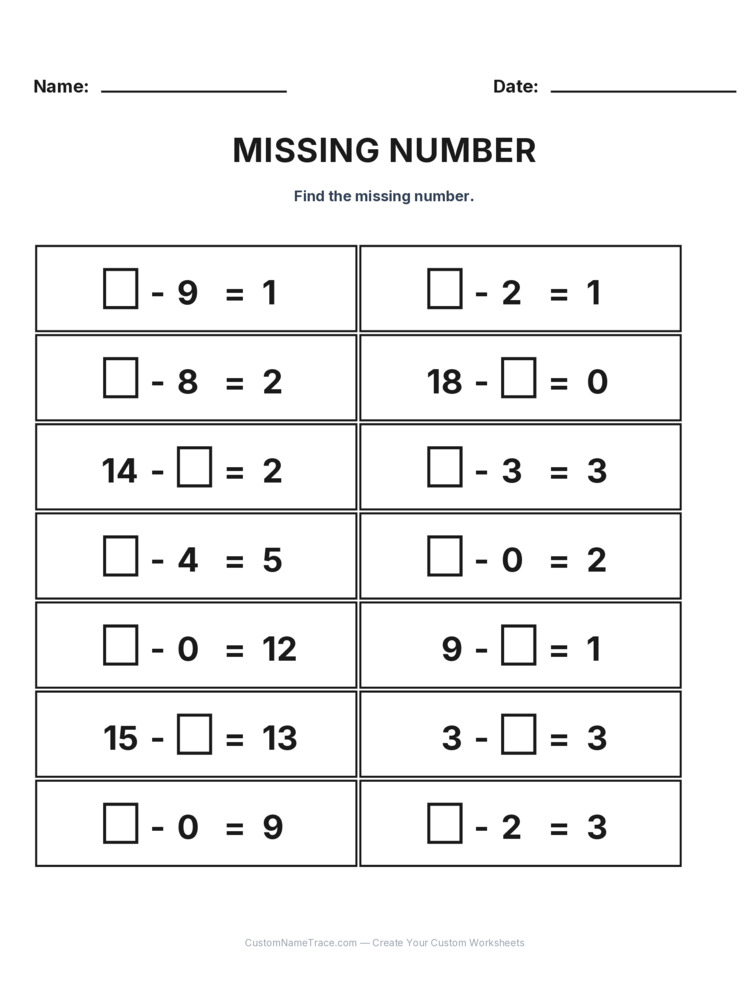
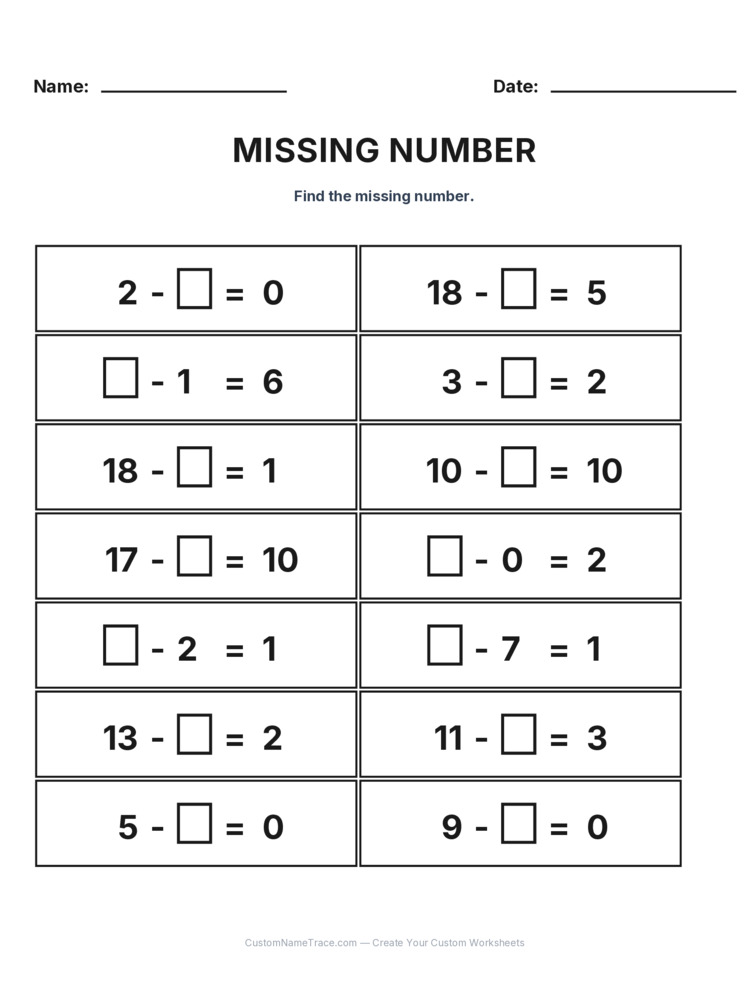
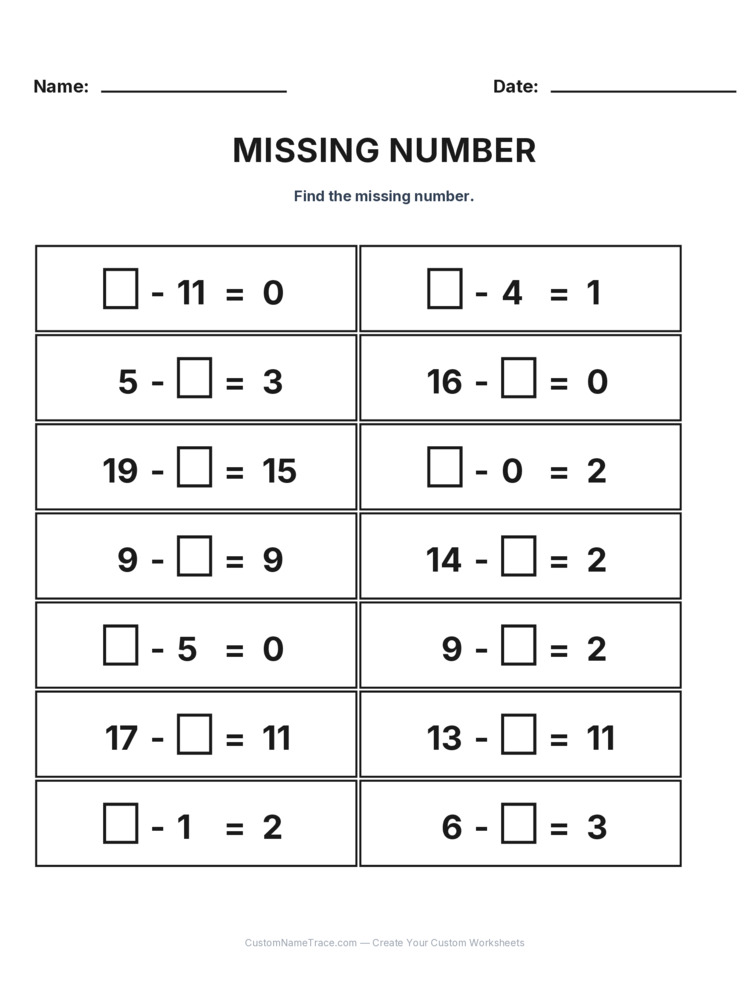
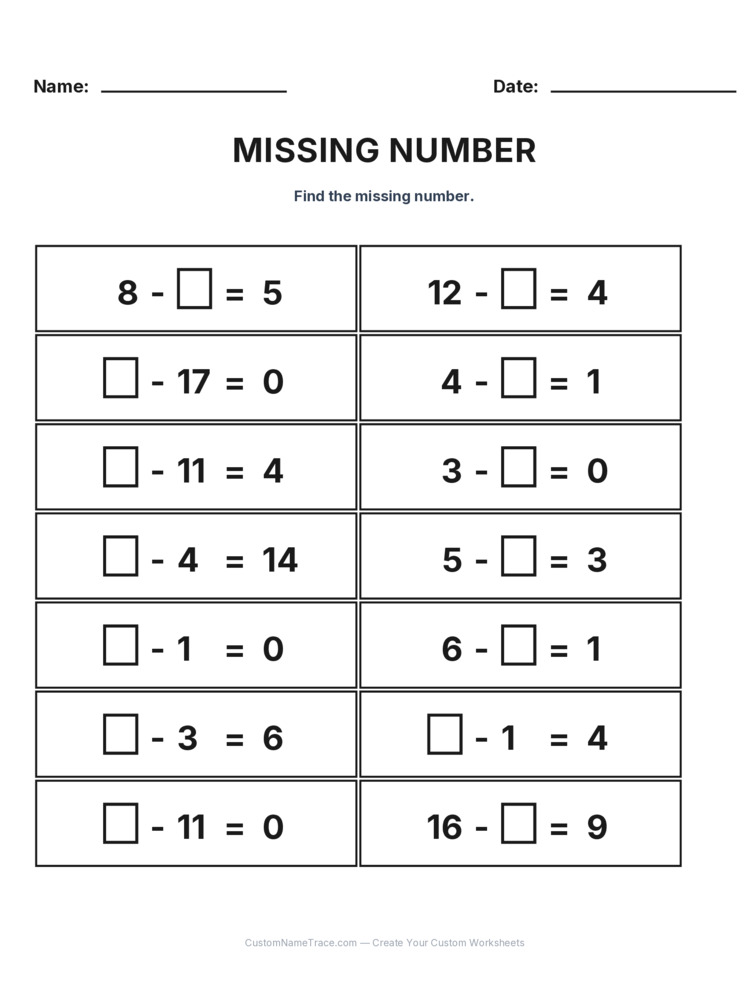
What Grade 1 math builds on
Grade 1 extends Kindergarten's within-10 range to within 20, and by the end of the year most children are expected to be fluent (fast, not counting-dependent) within 10 while still working things out within 20. That's a real jump in scale, not just a bigger number — crossing 10 (like 8+5) asks a child to reorganize a number into tens and ones for the first time, the earliest seed of the place-value thinking Grade 2's regrouping builds on directly.
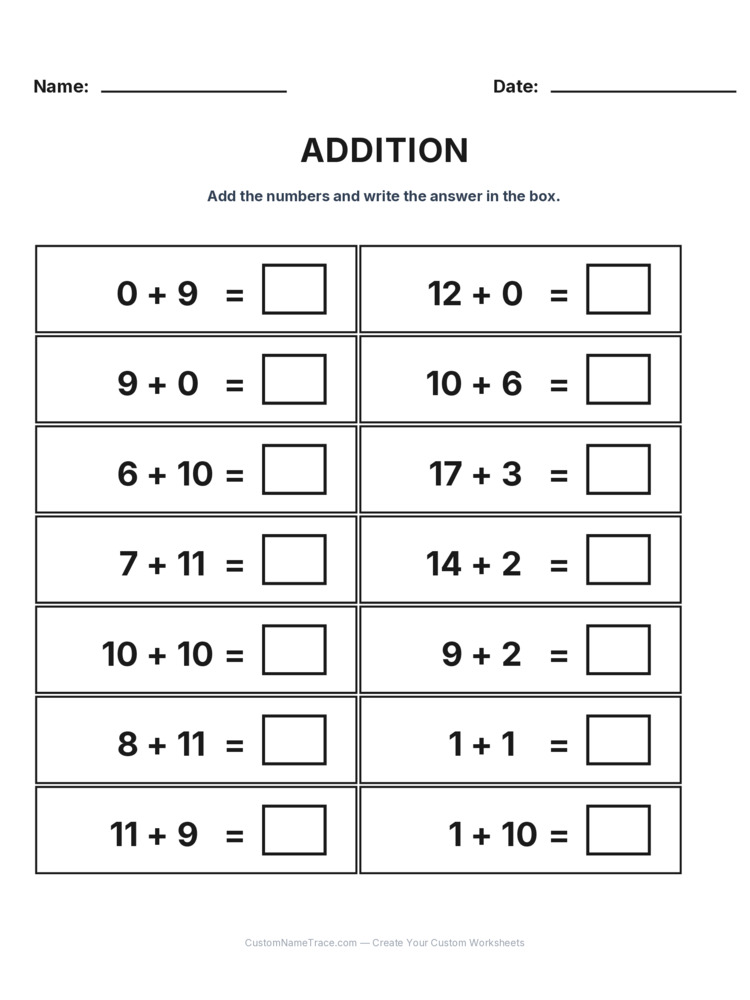
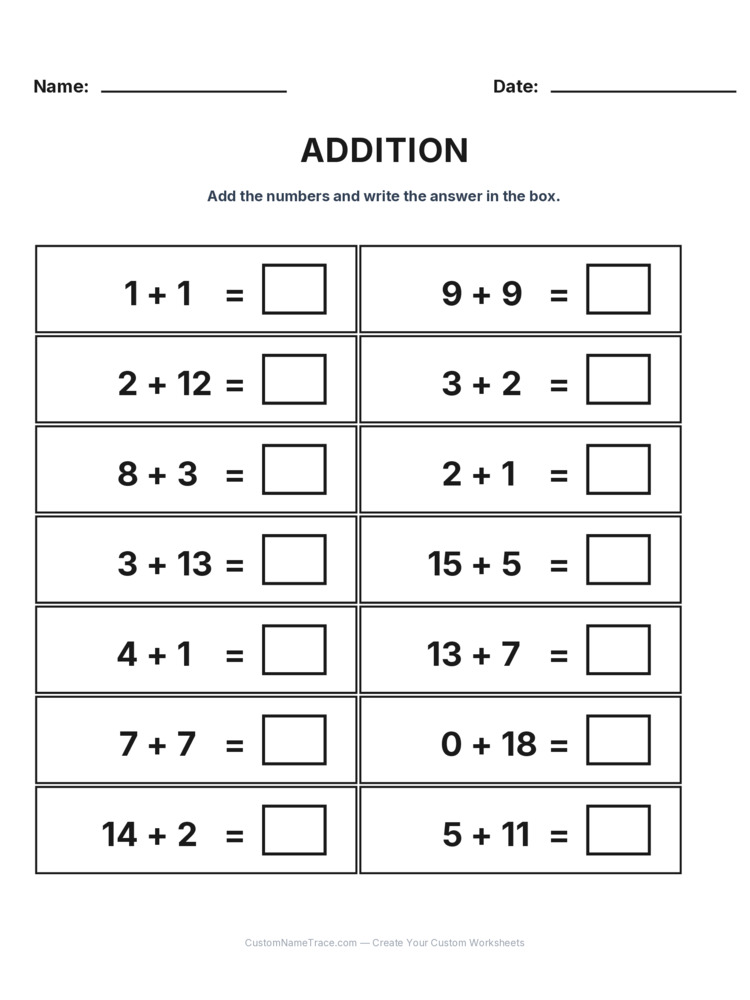
Addition and Subtraction within 20
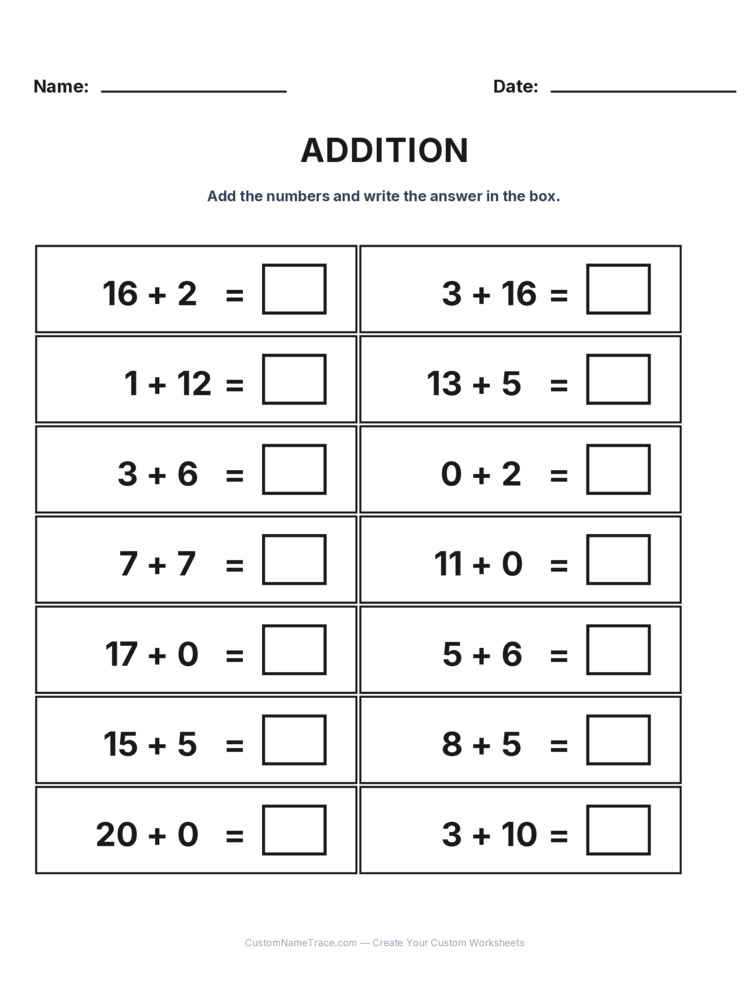
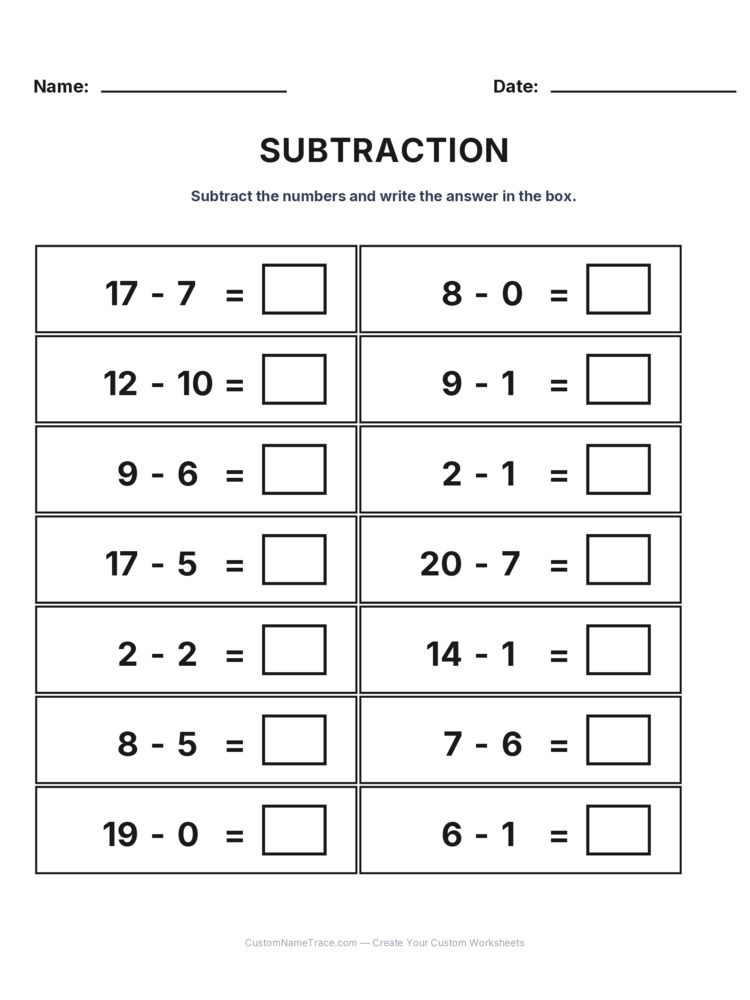
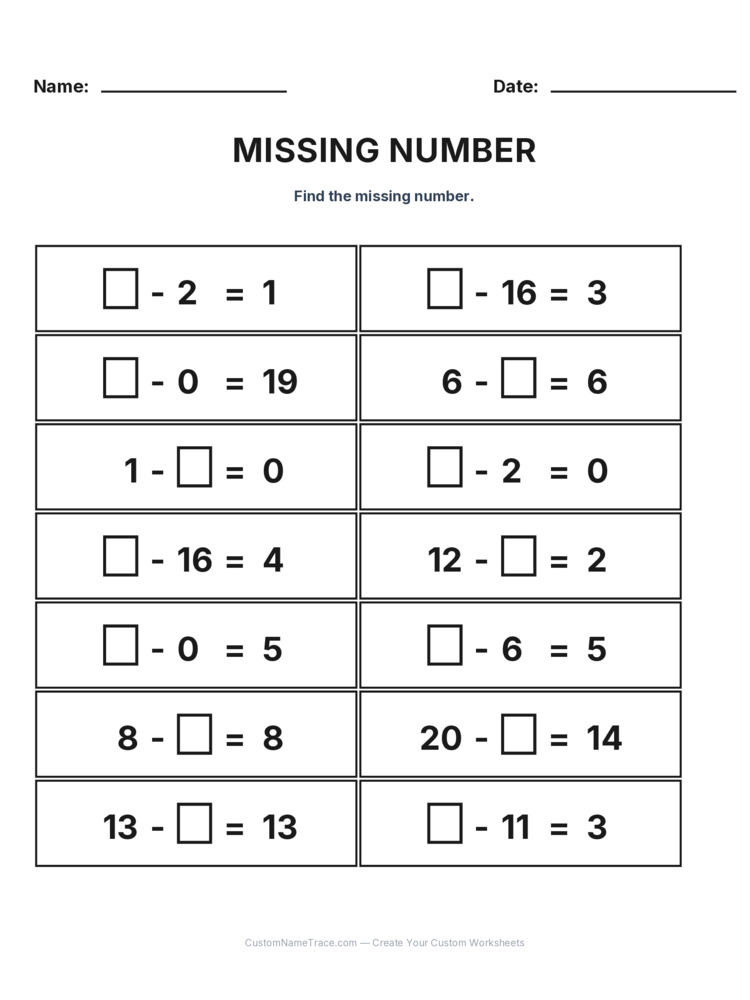
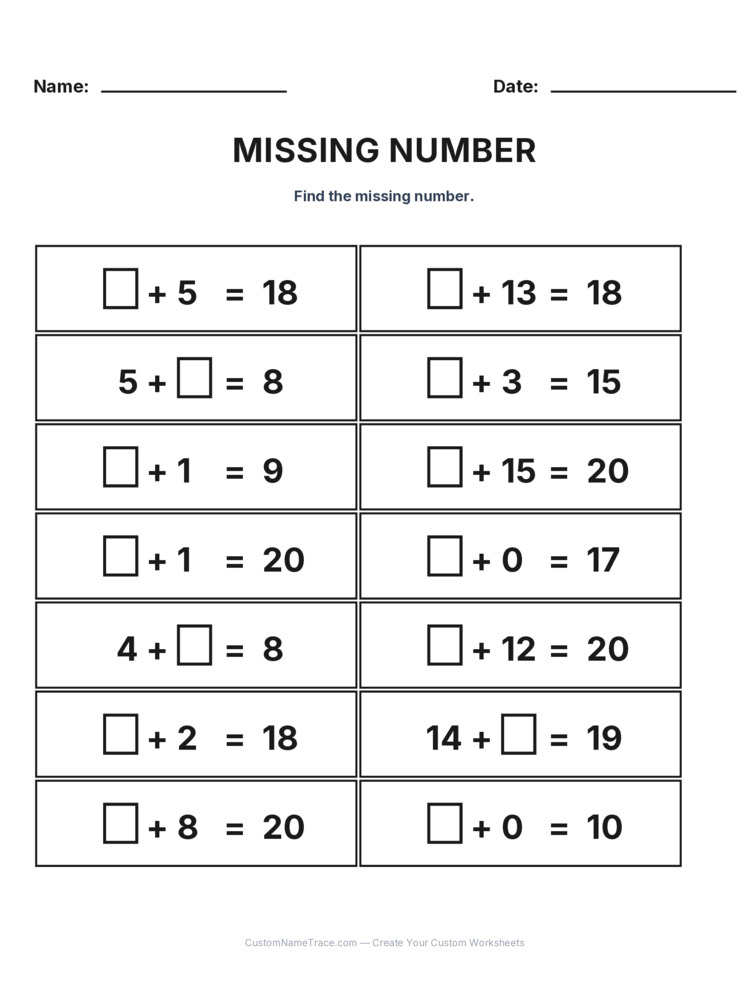
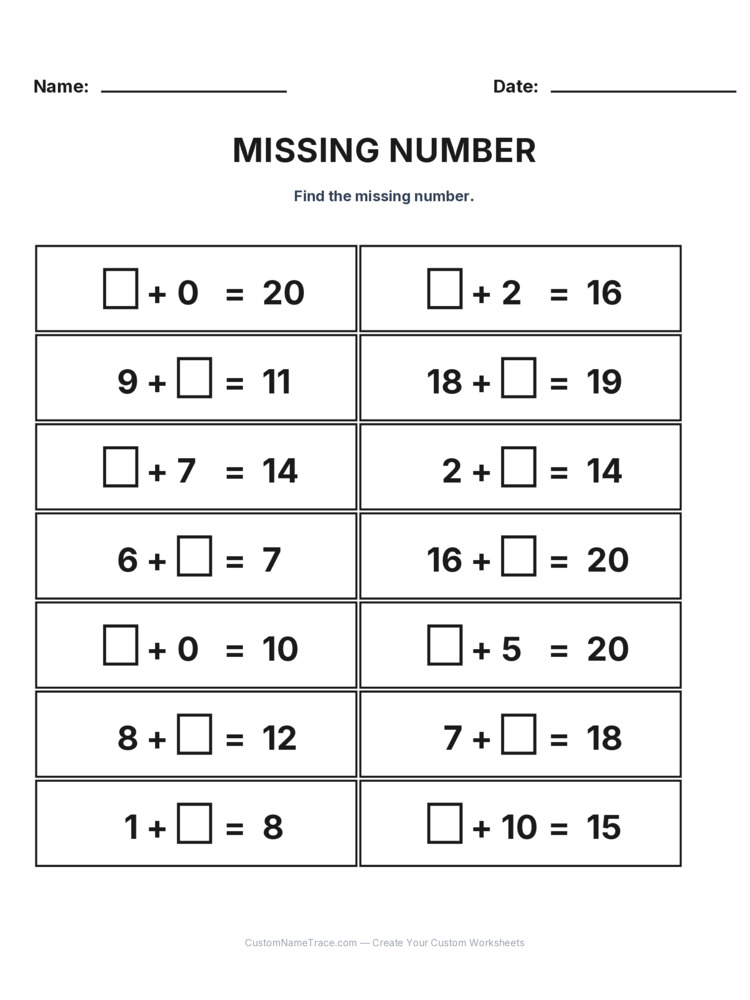
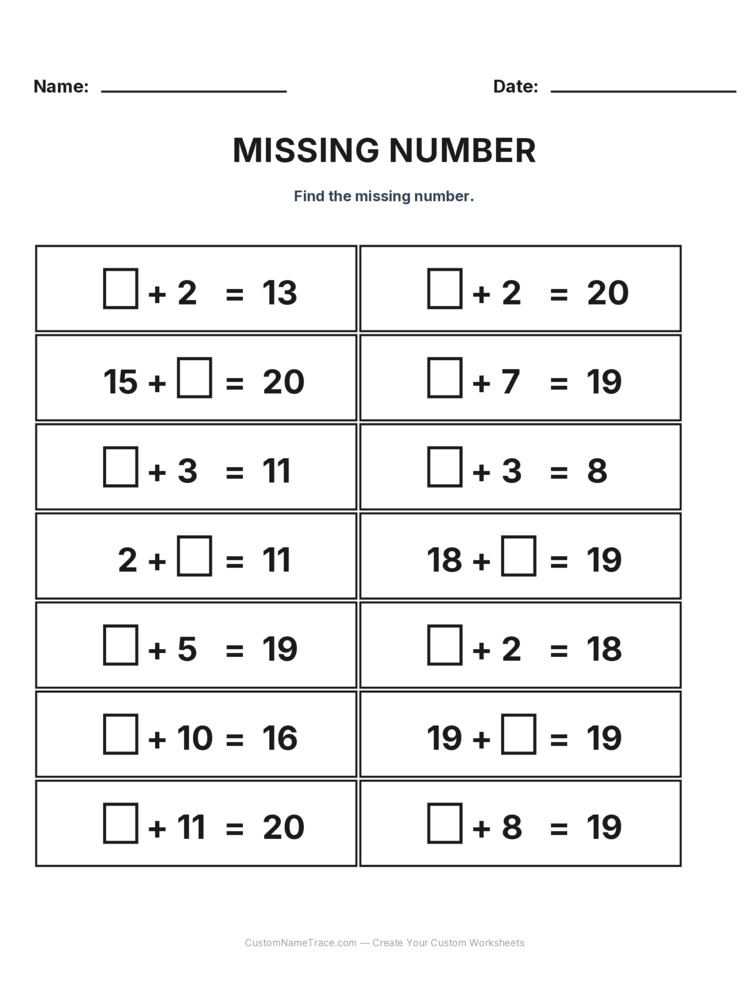
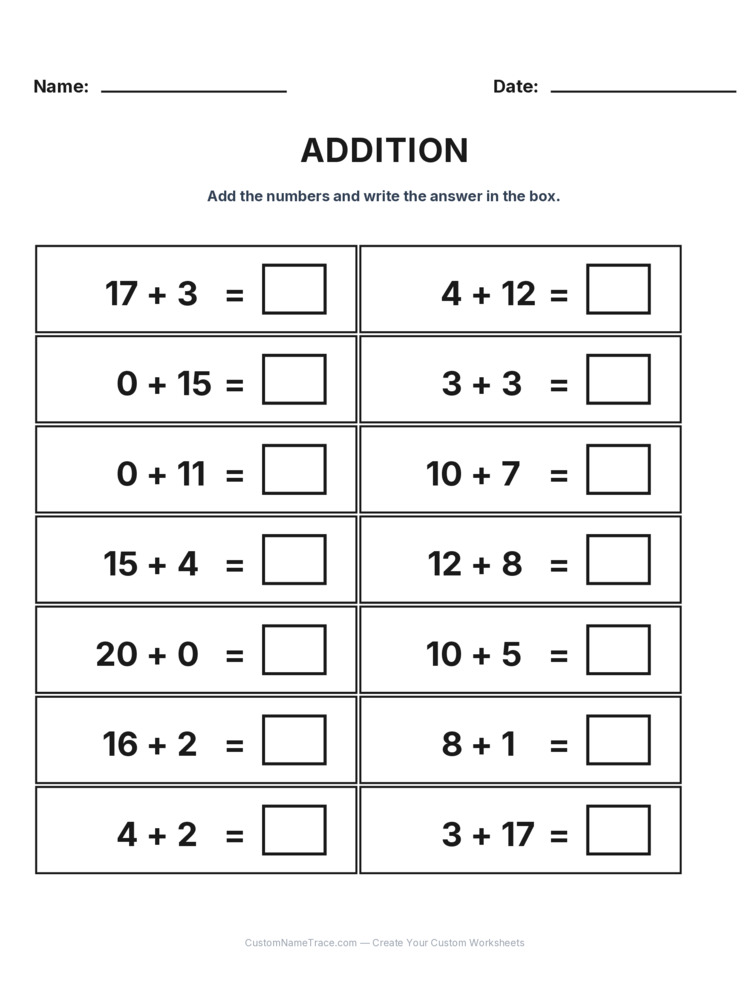
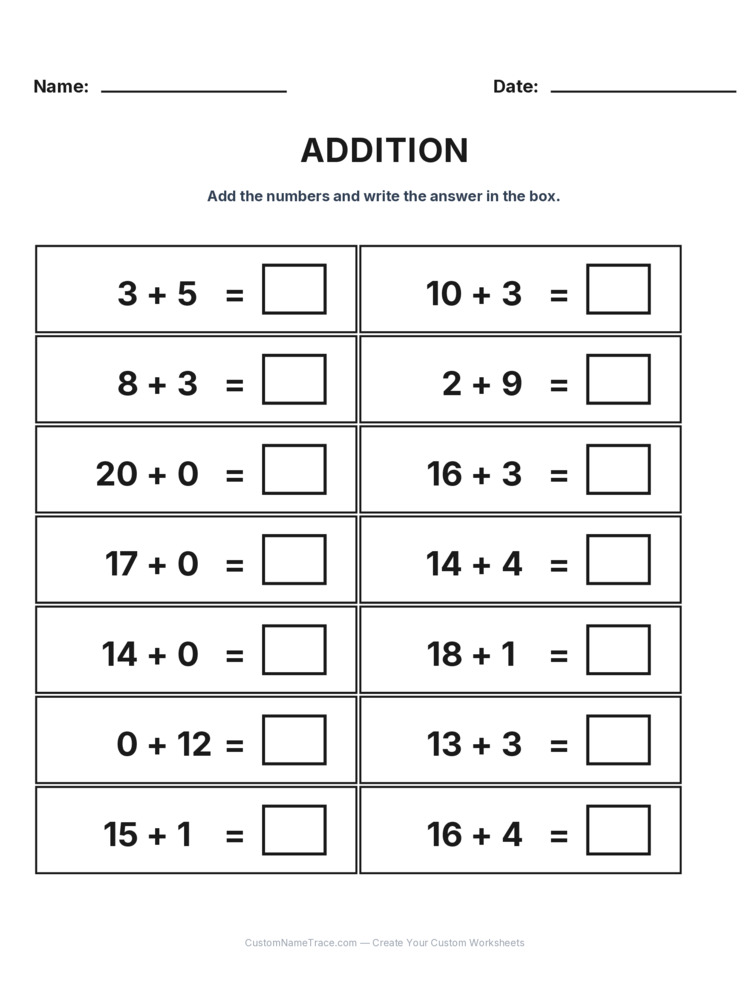
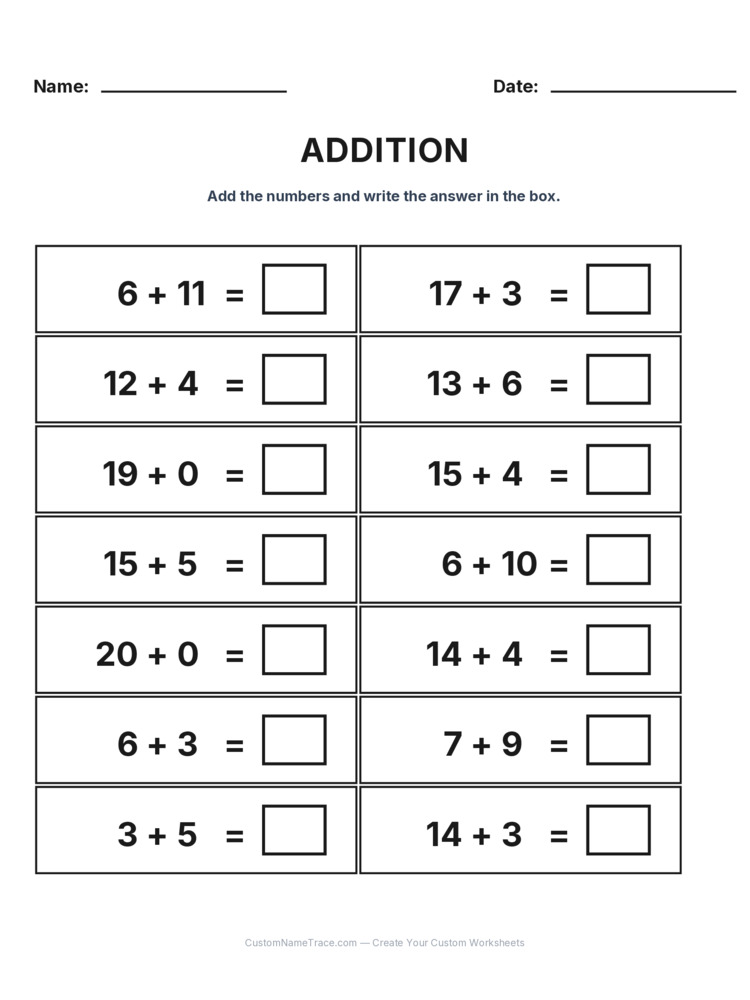
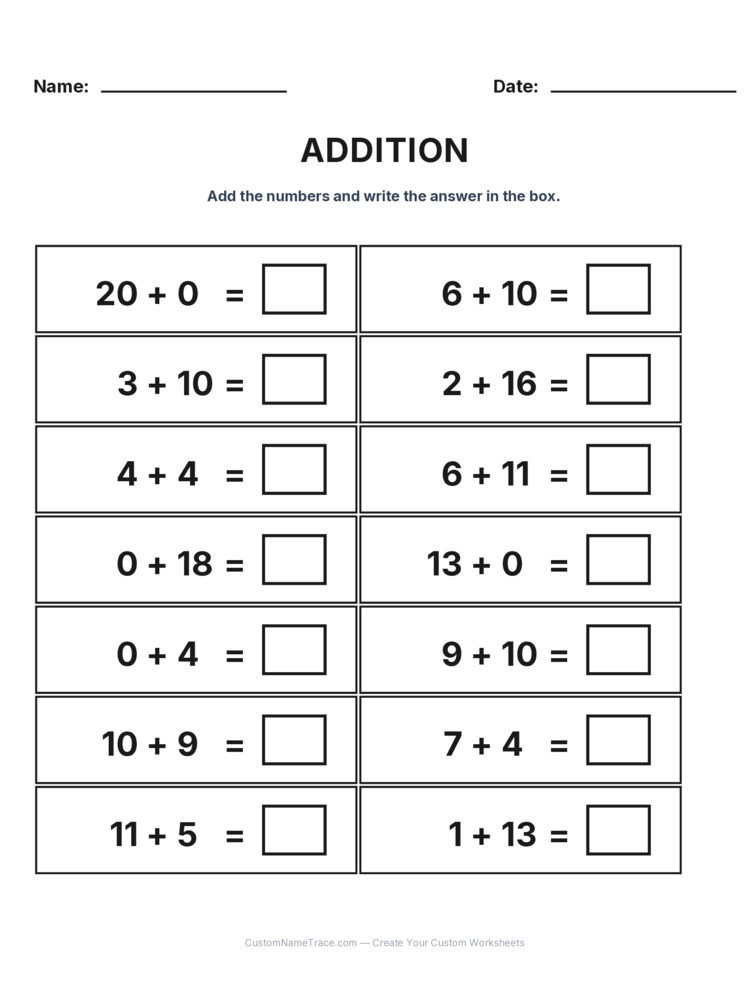
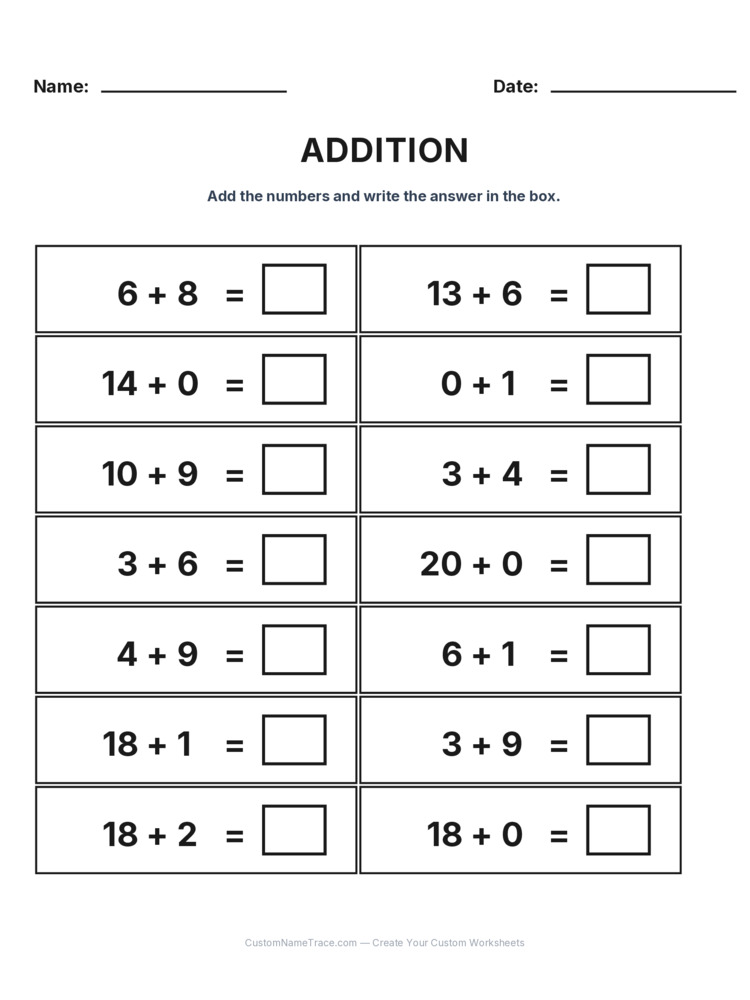
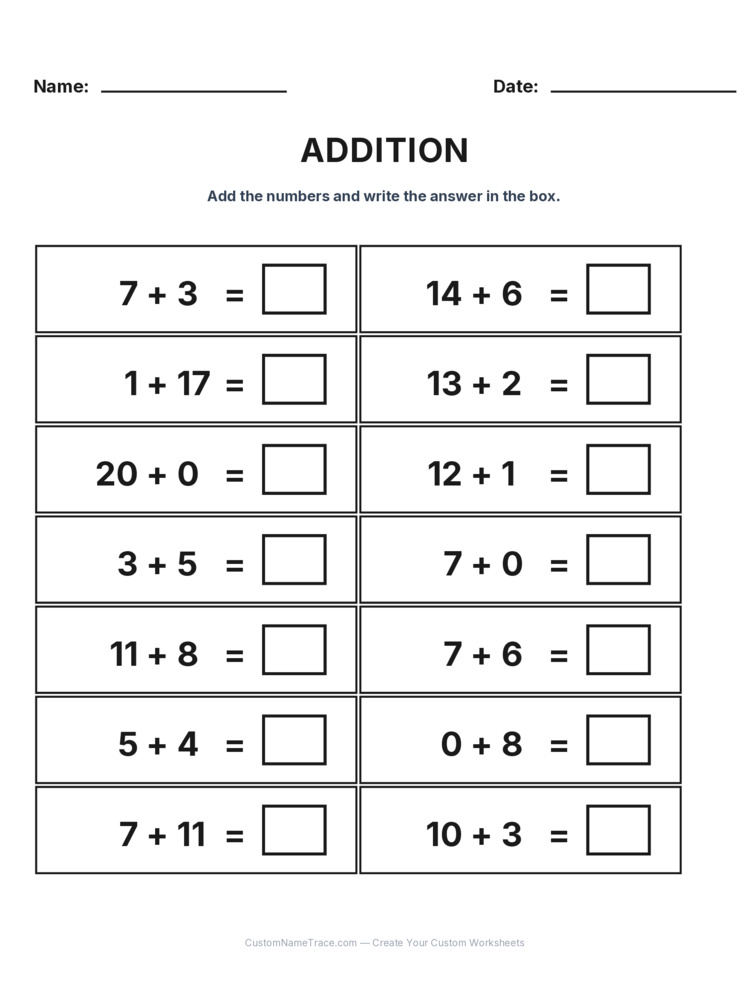
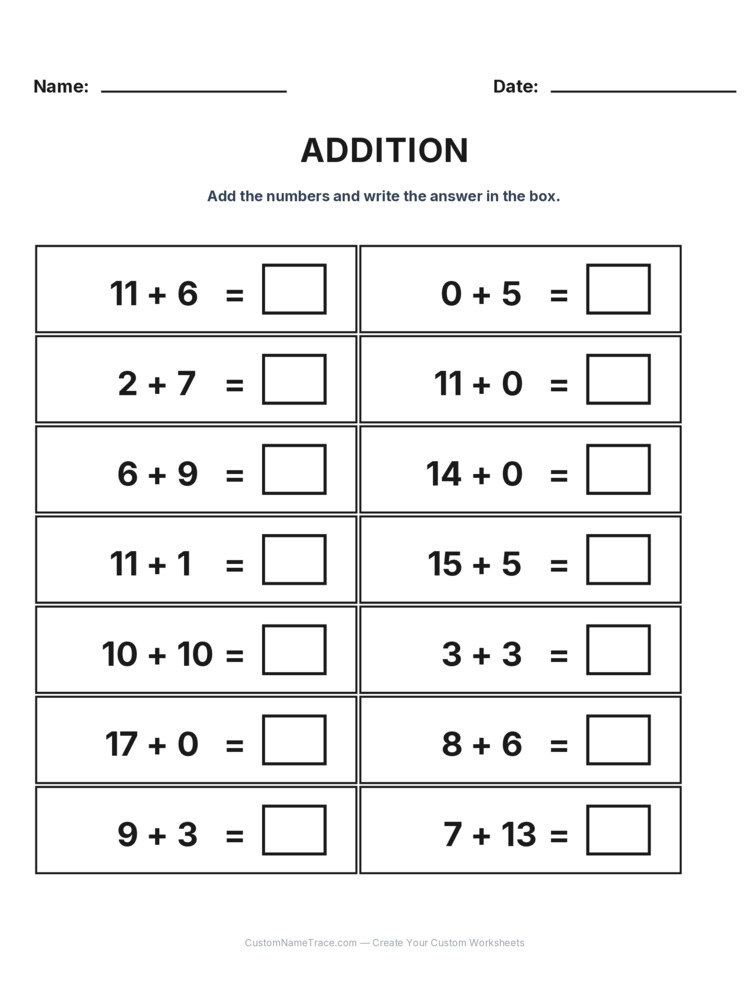
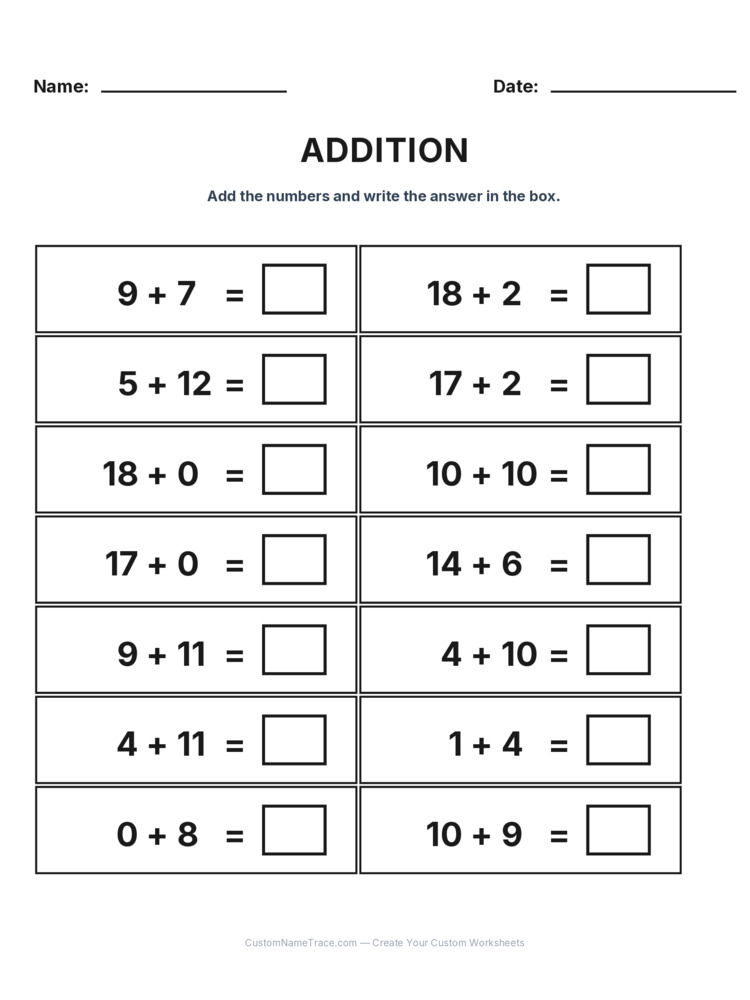
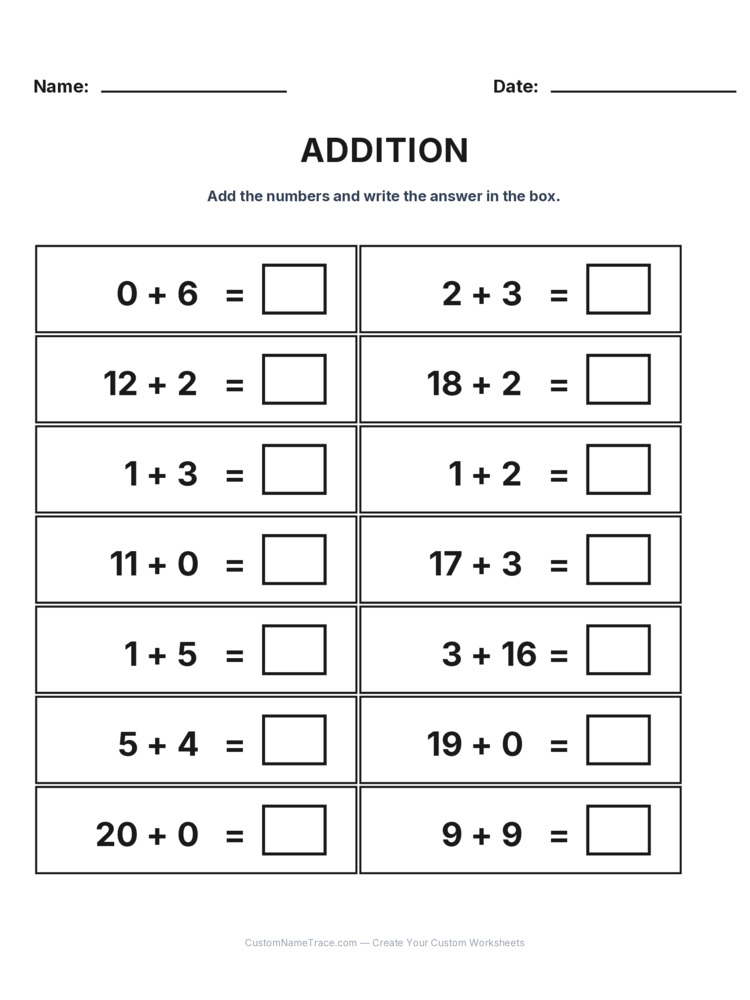
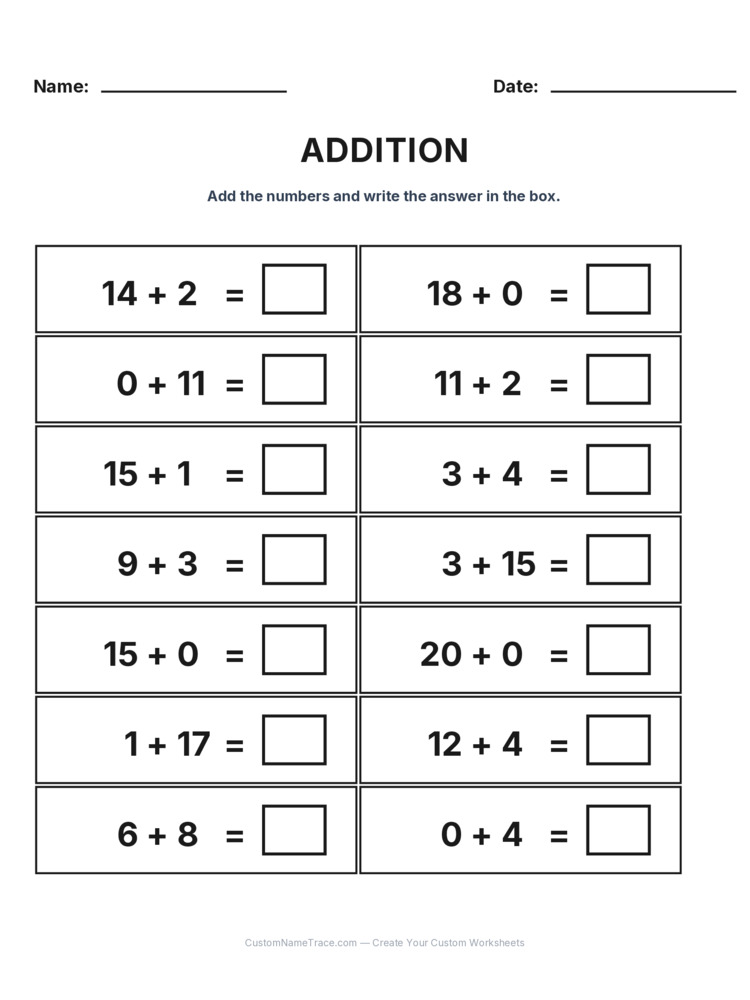
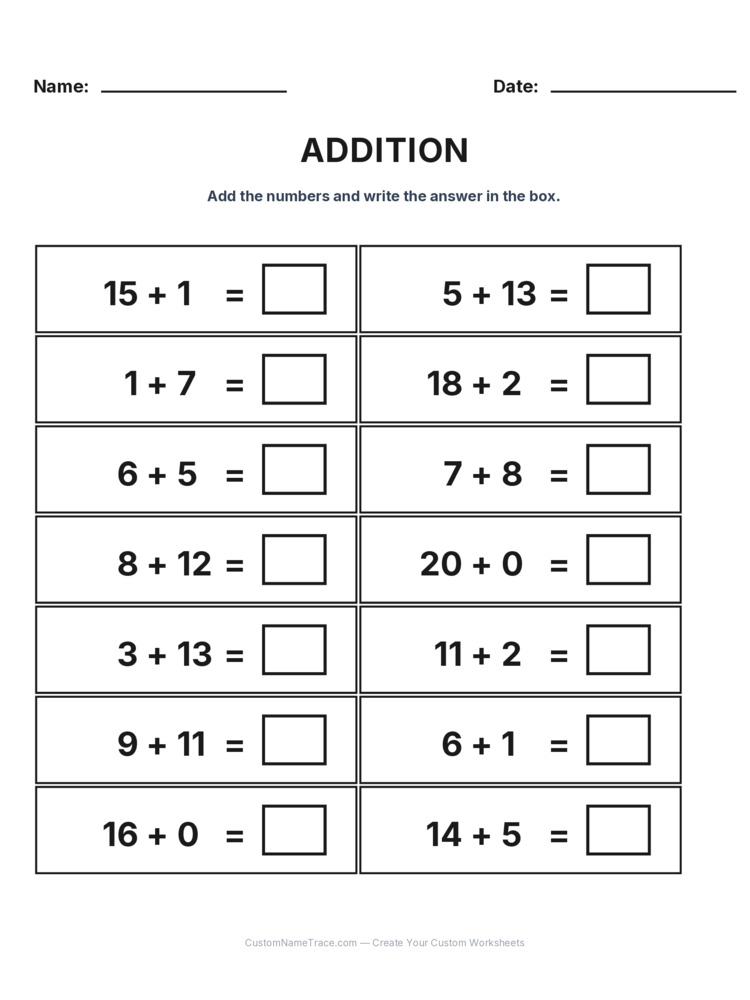
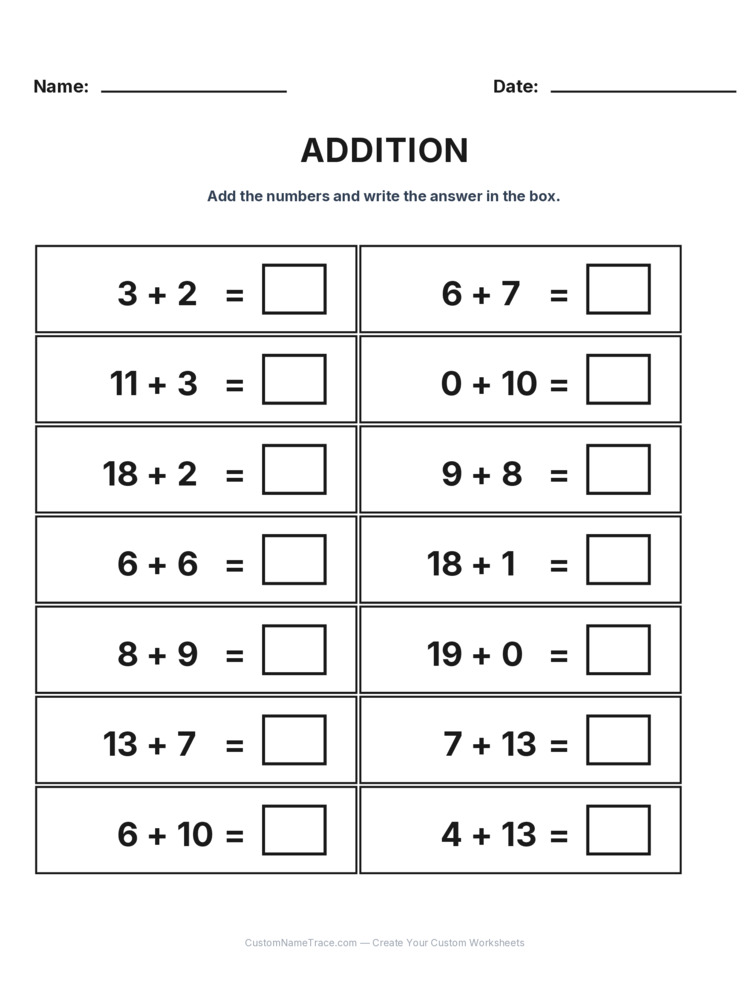
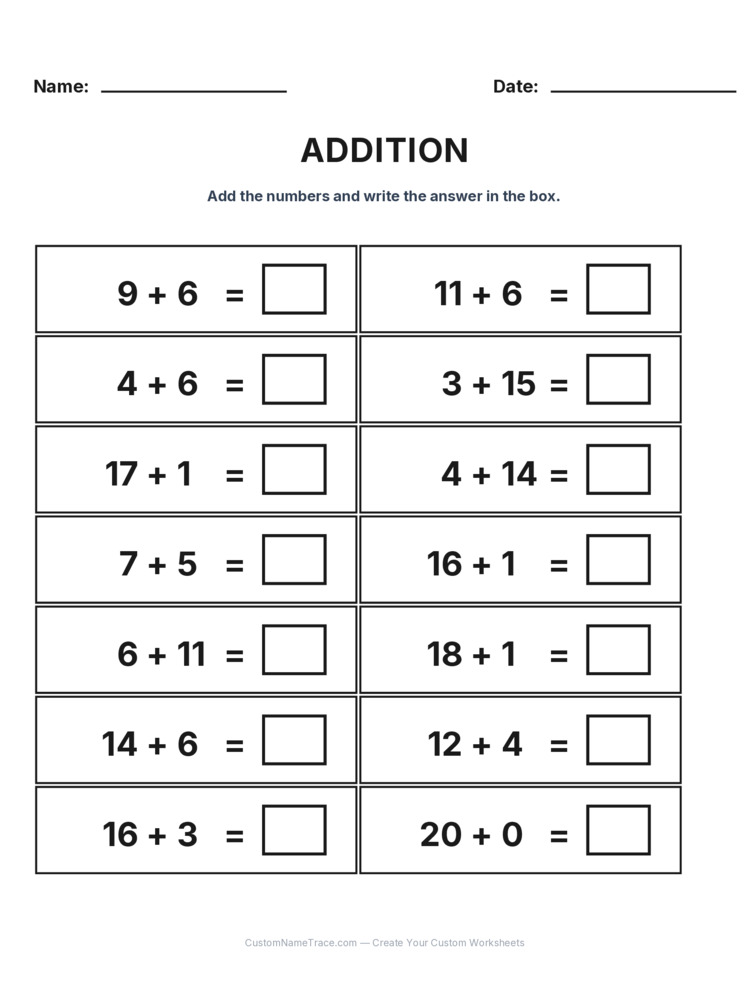
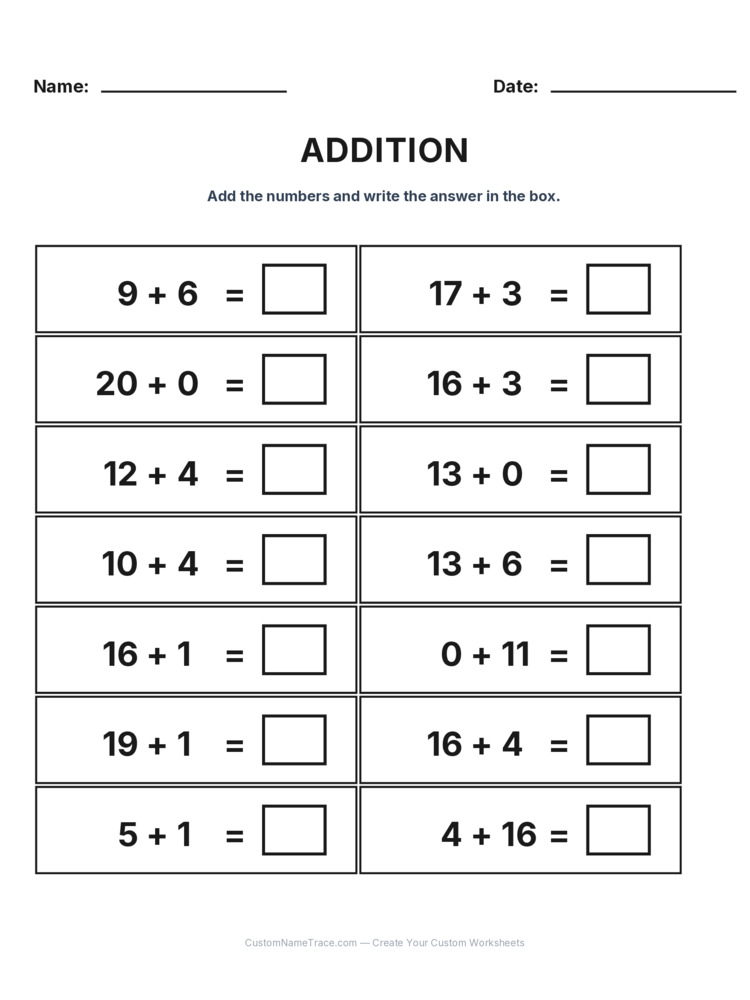
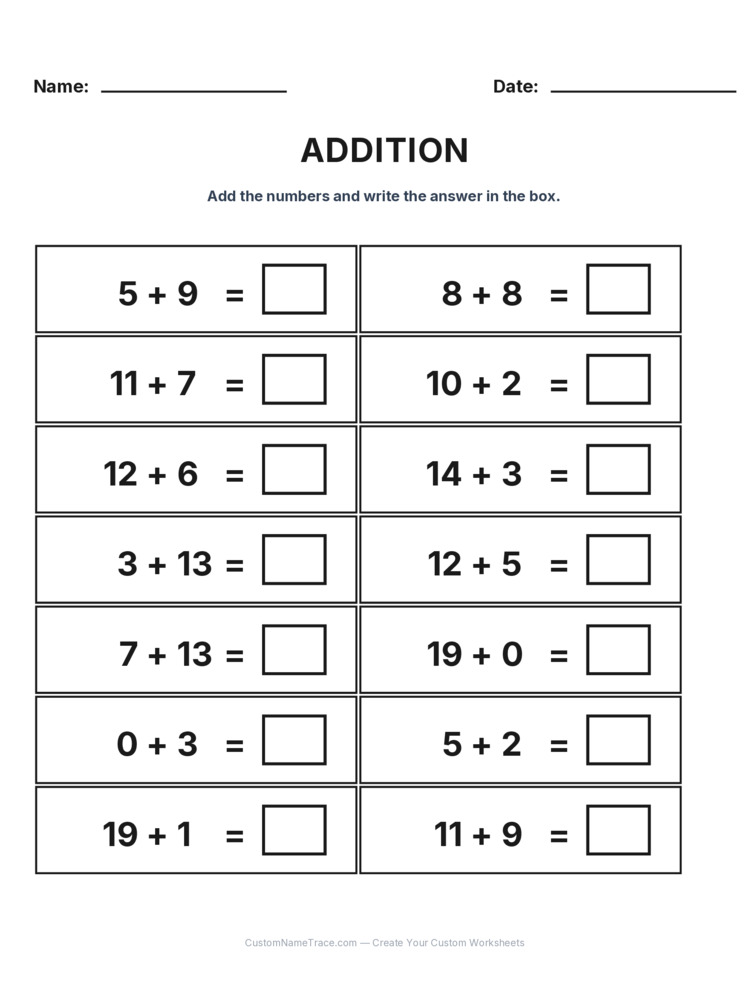
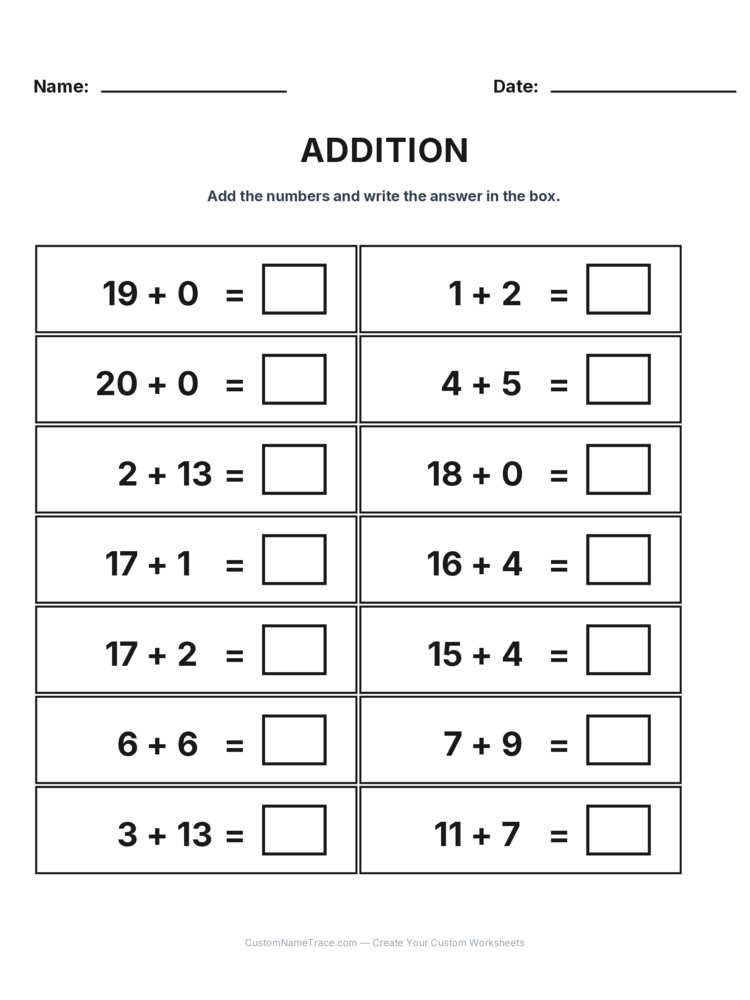
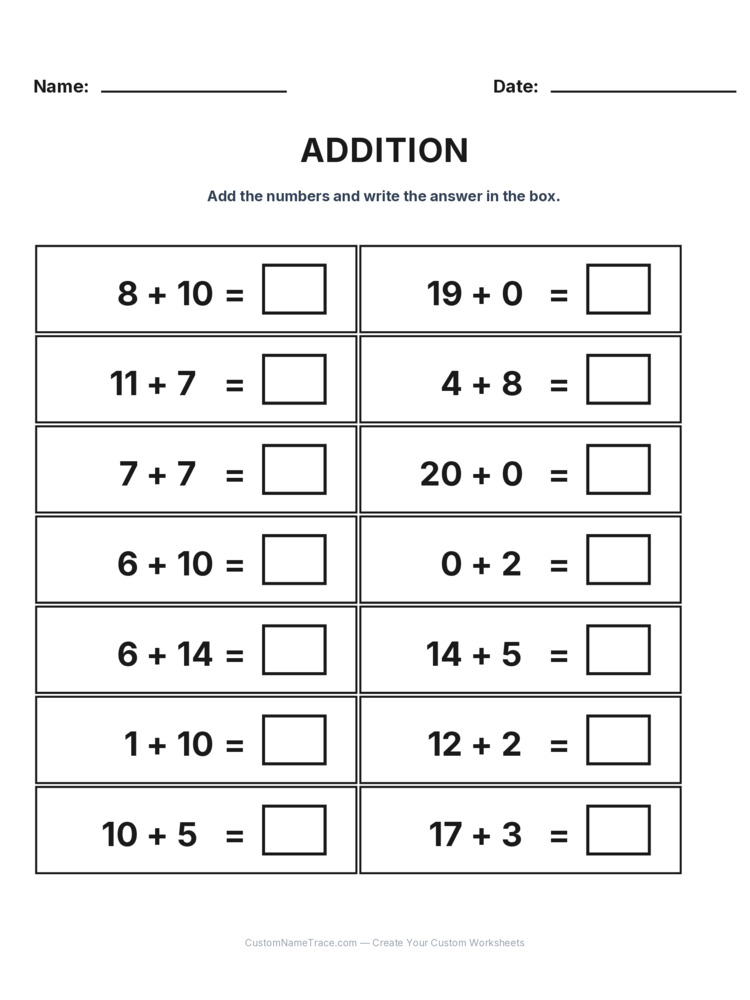
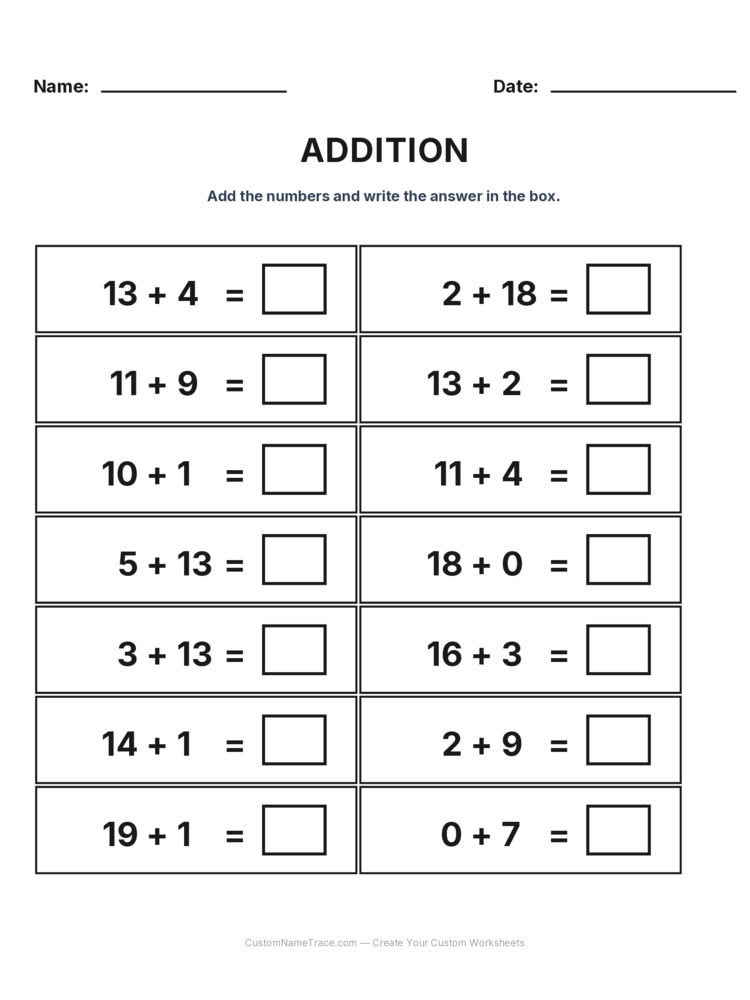
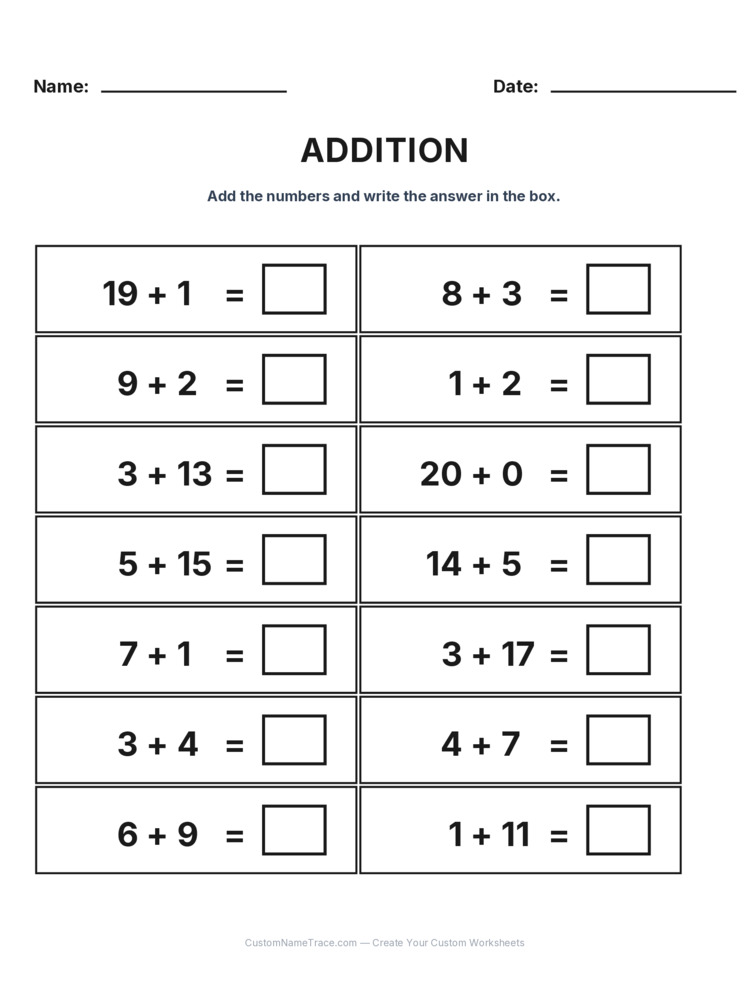
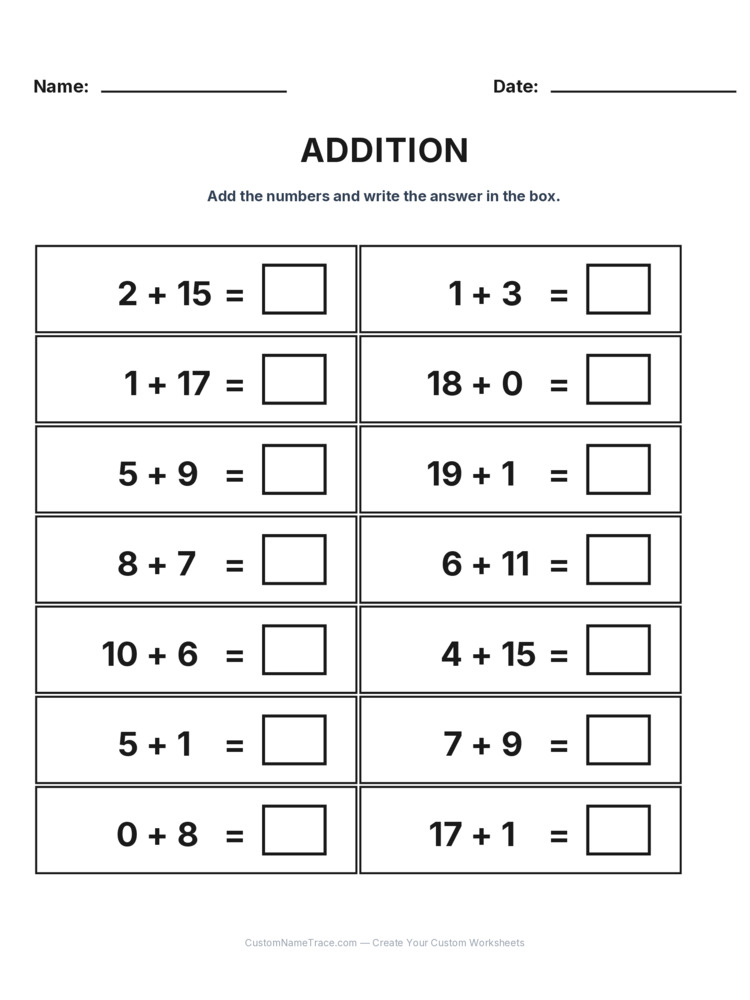
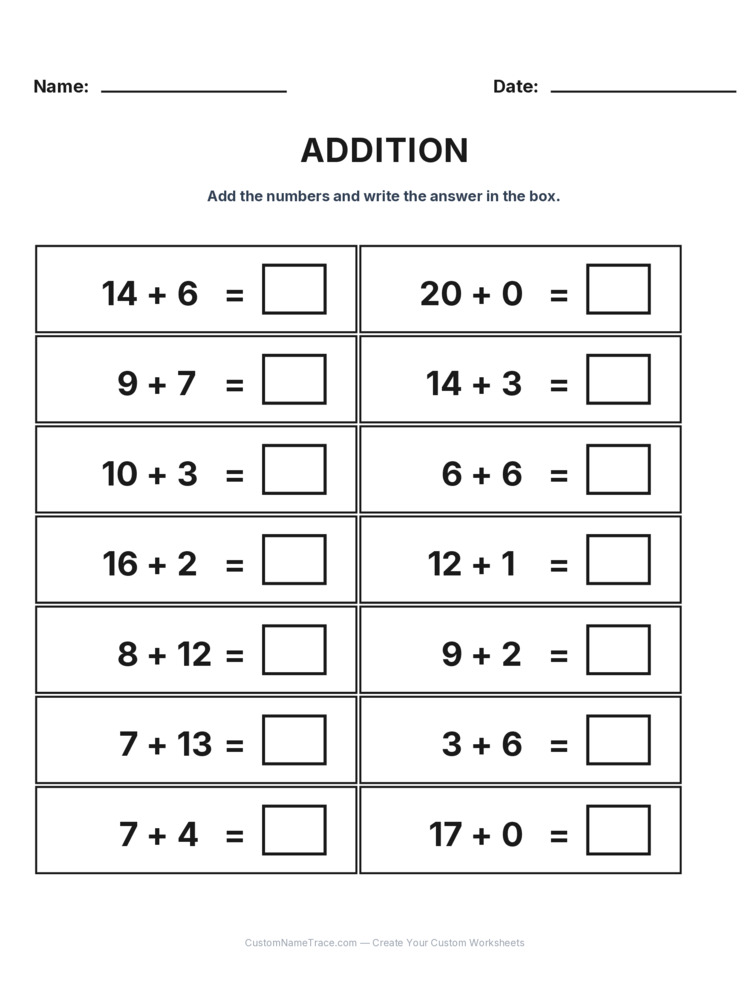
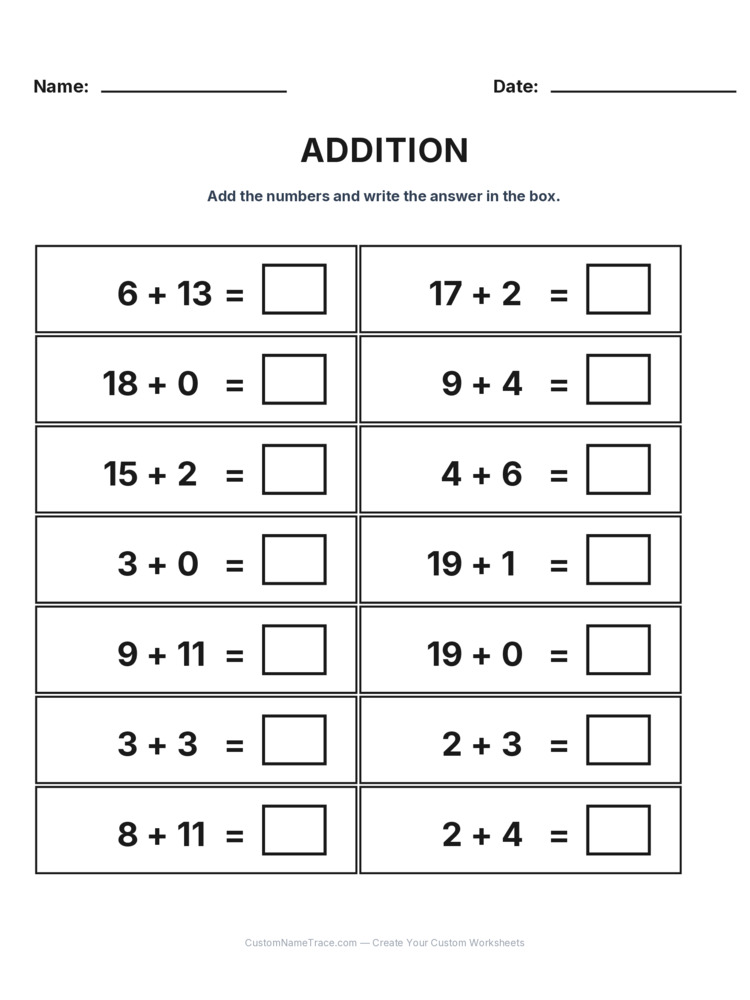
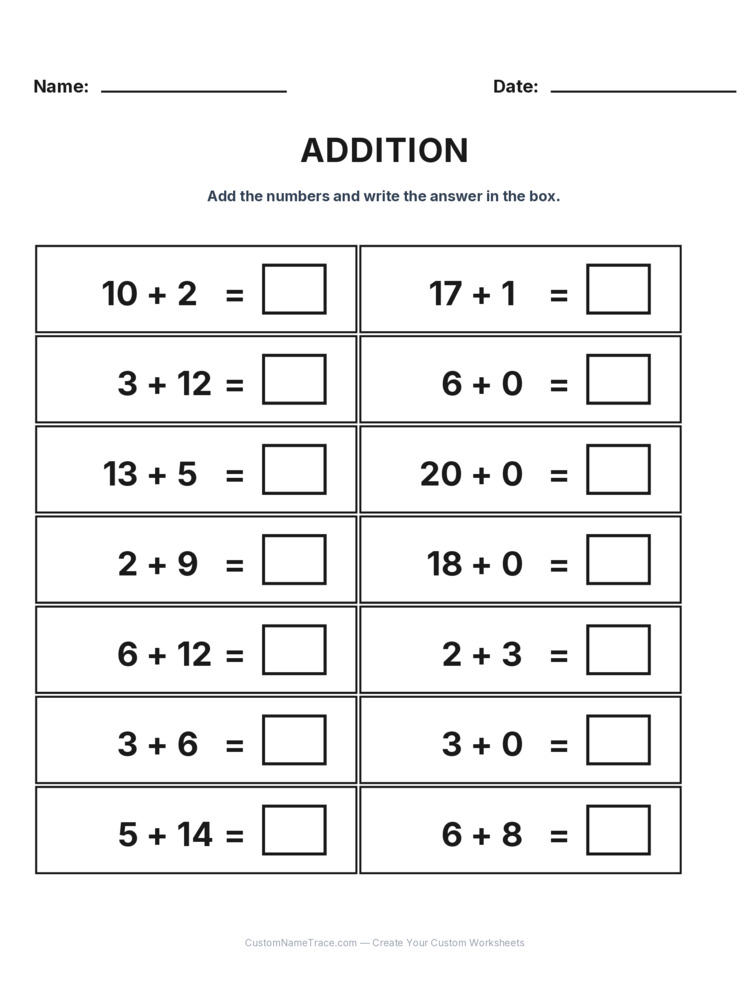
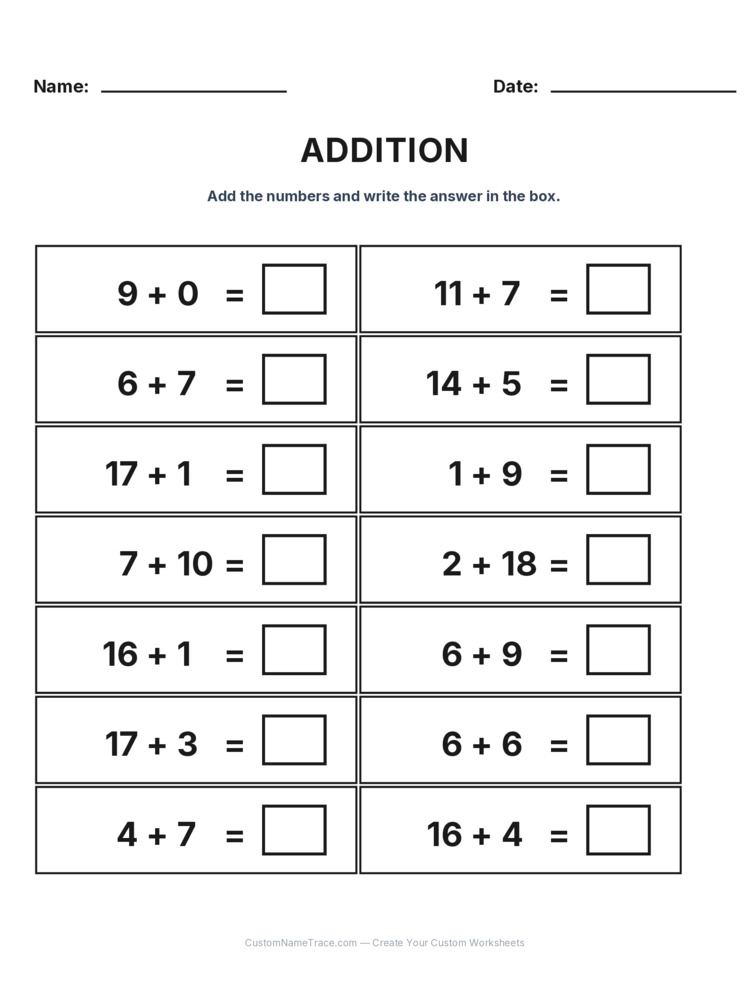
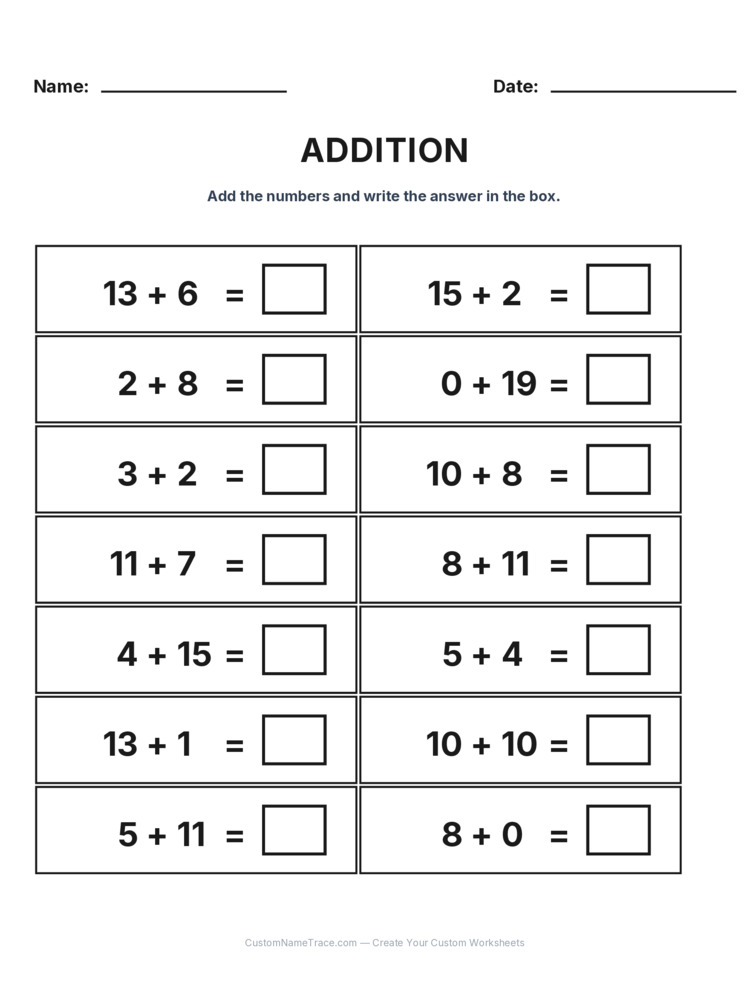
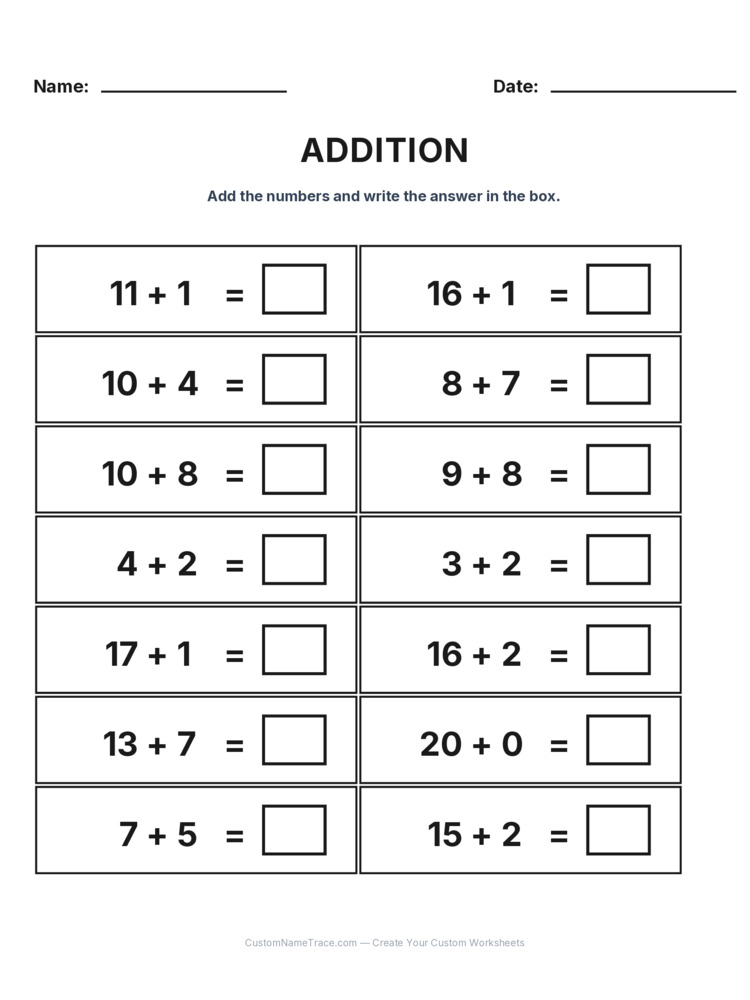
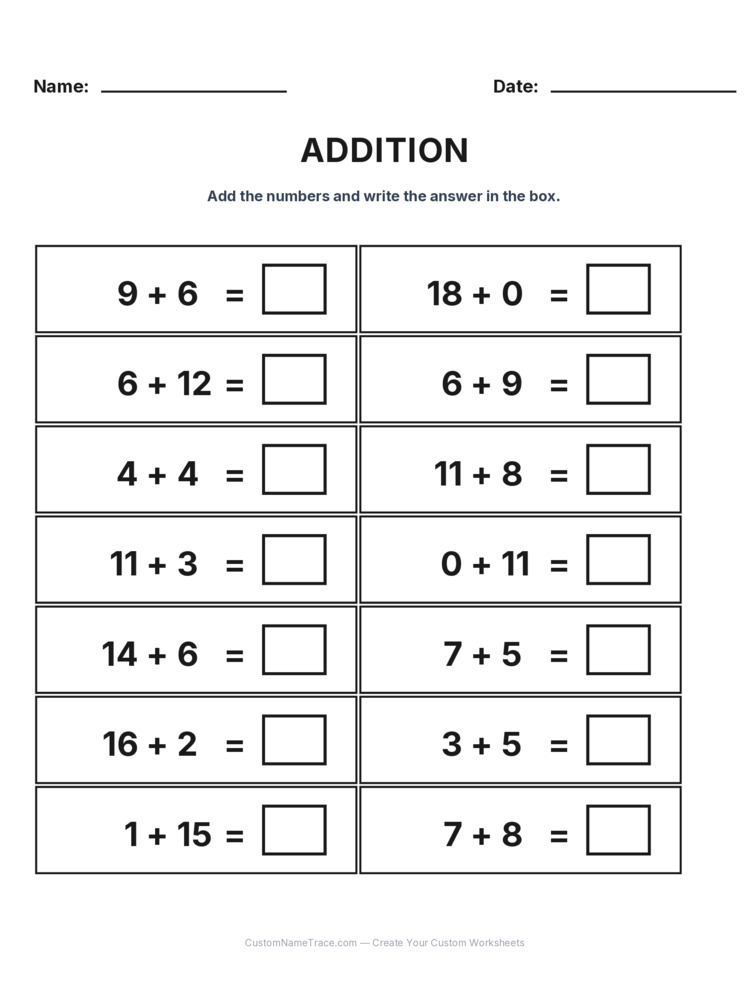
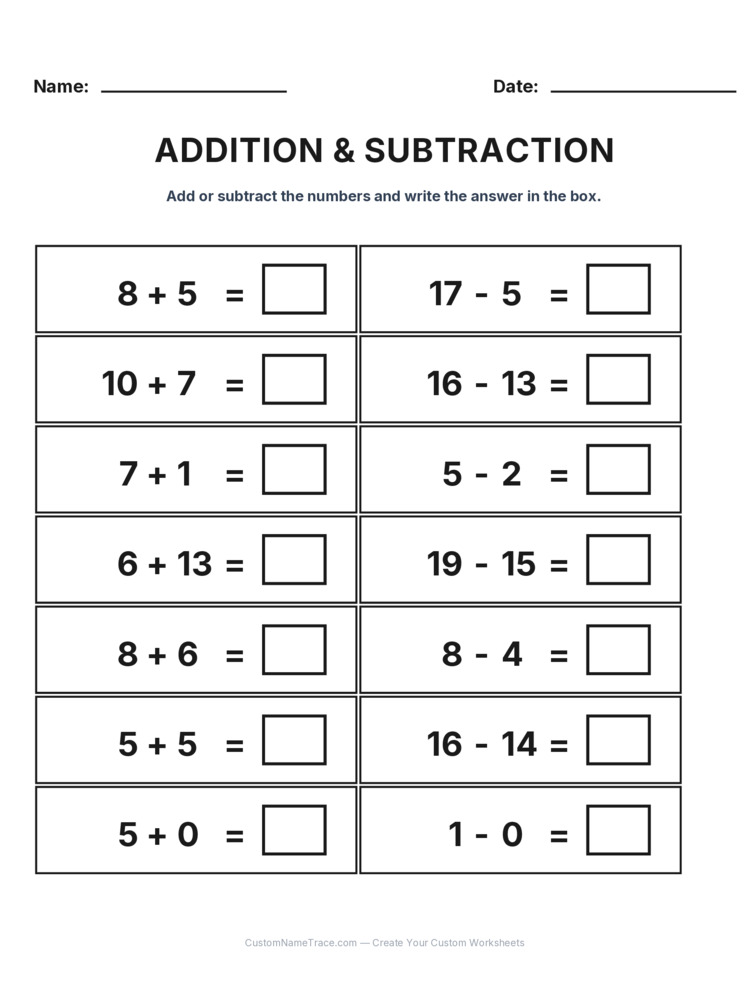
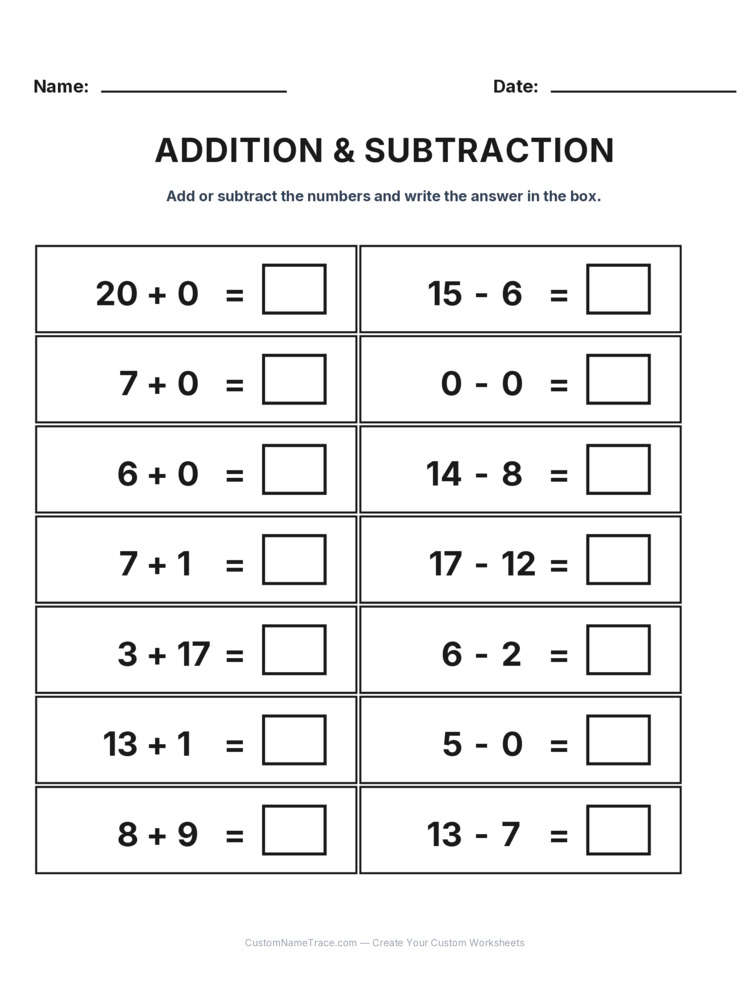
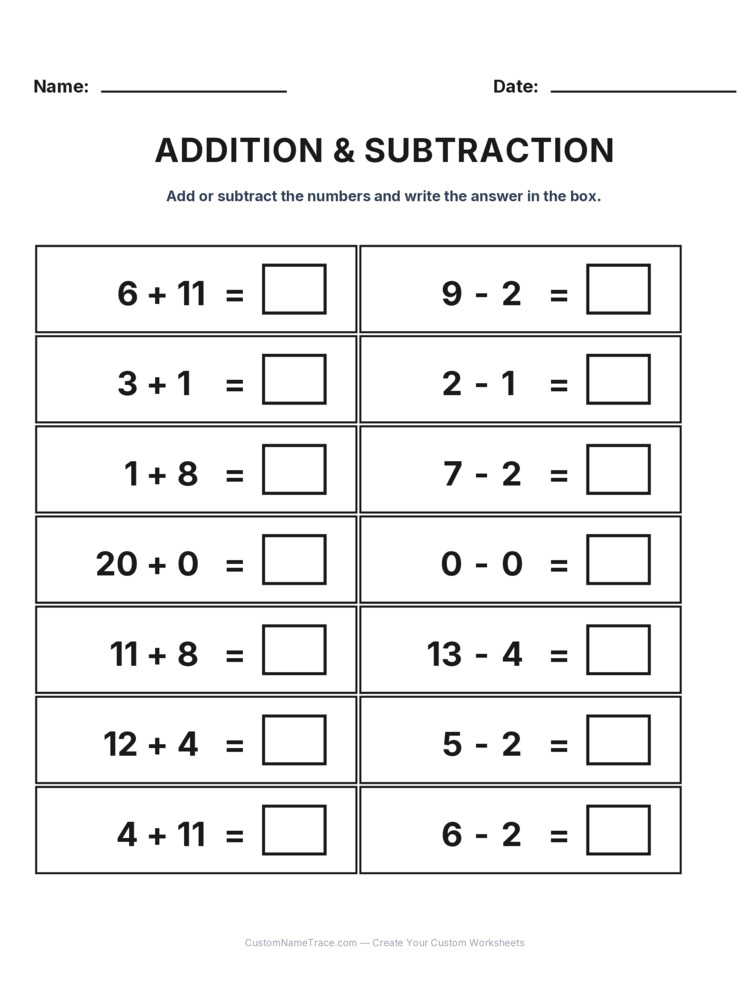
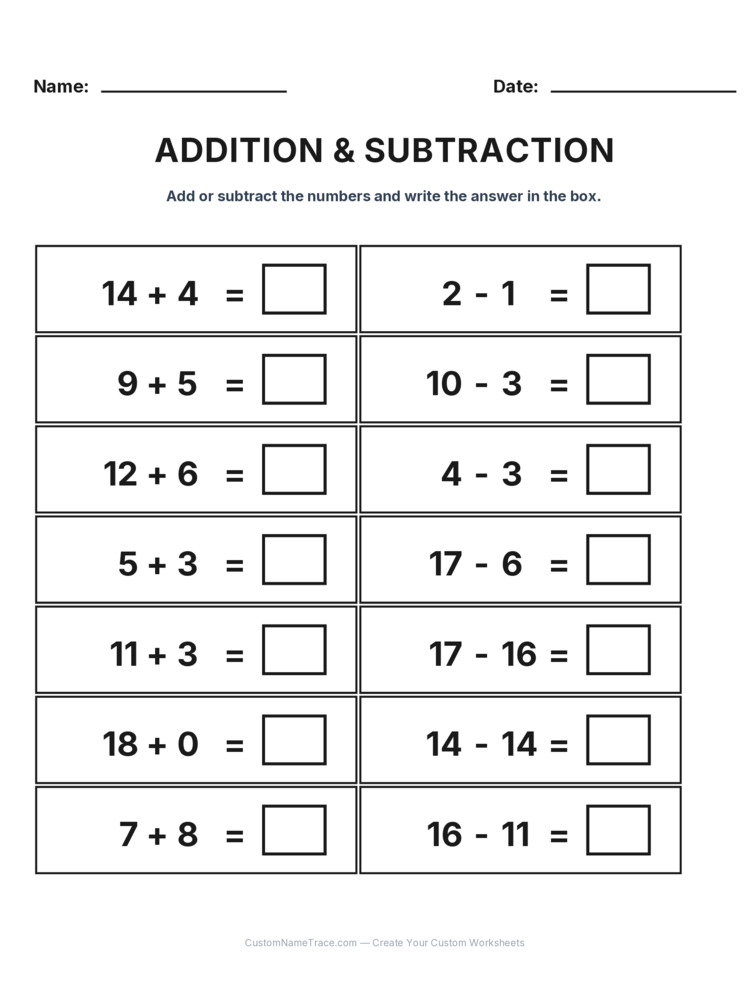
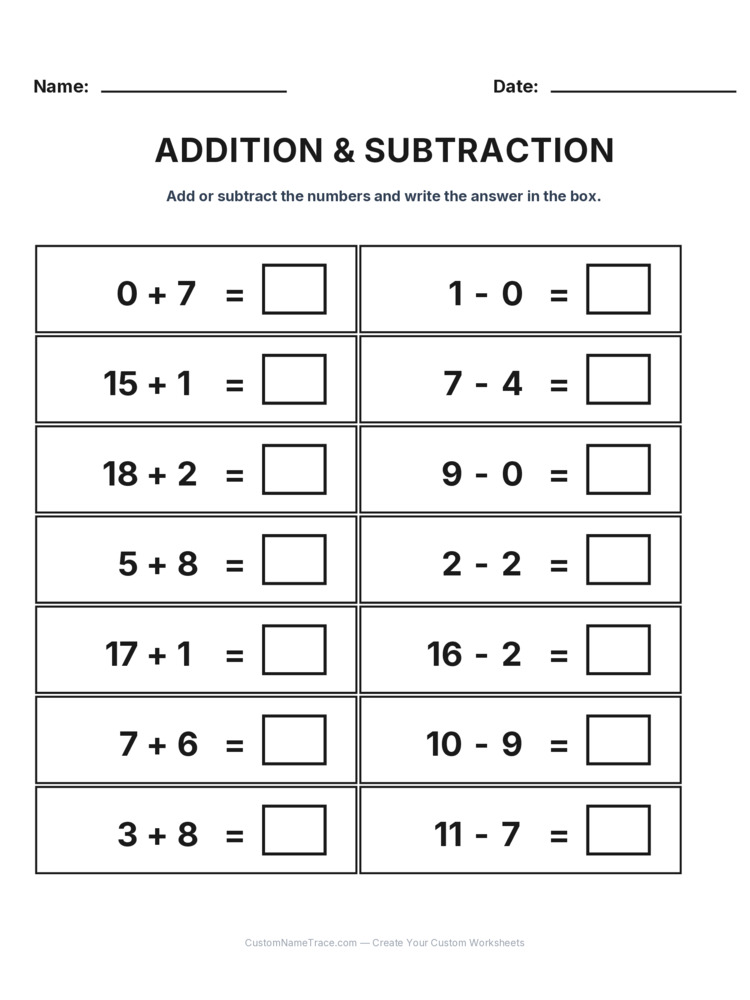
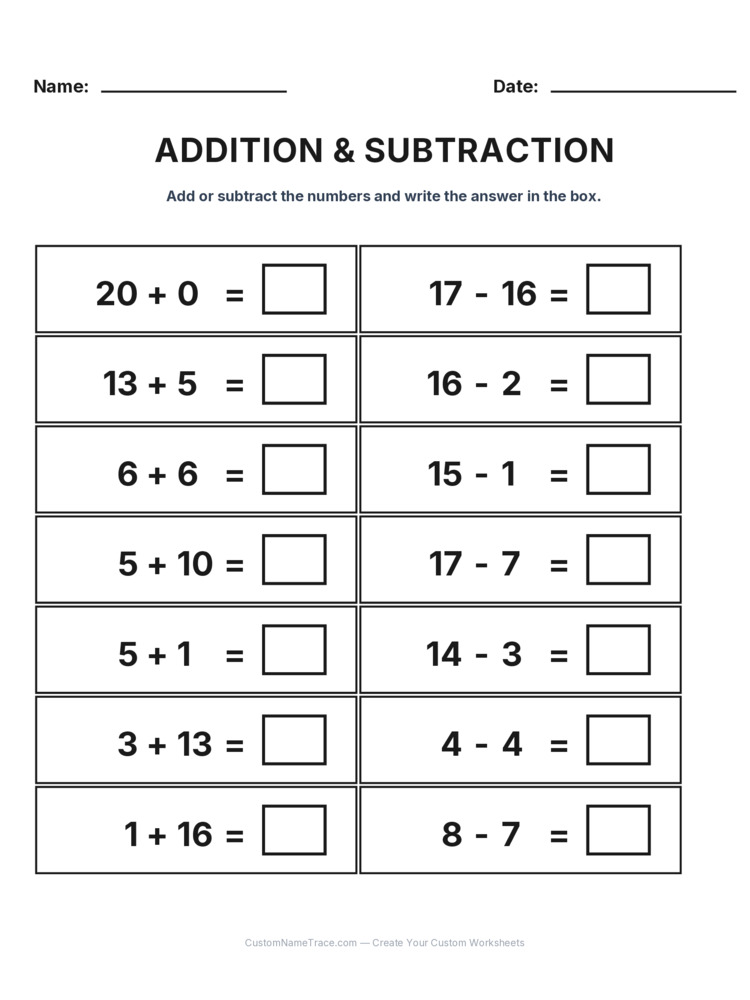
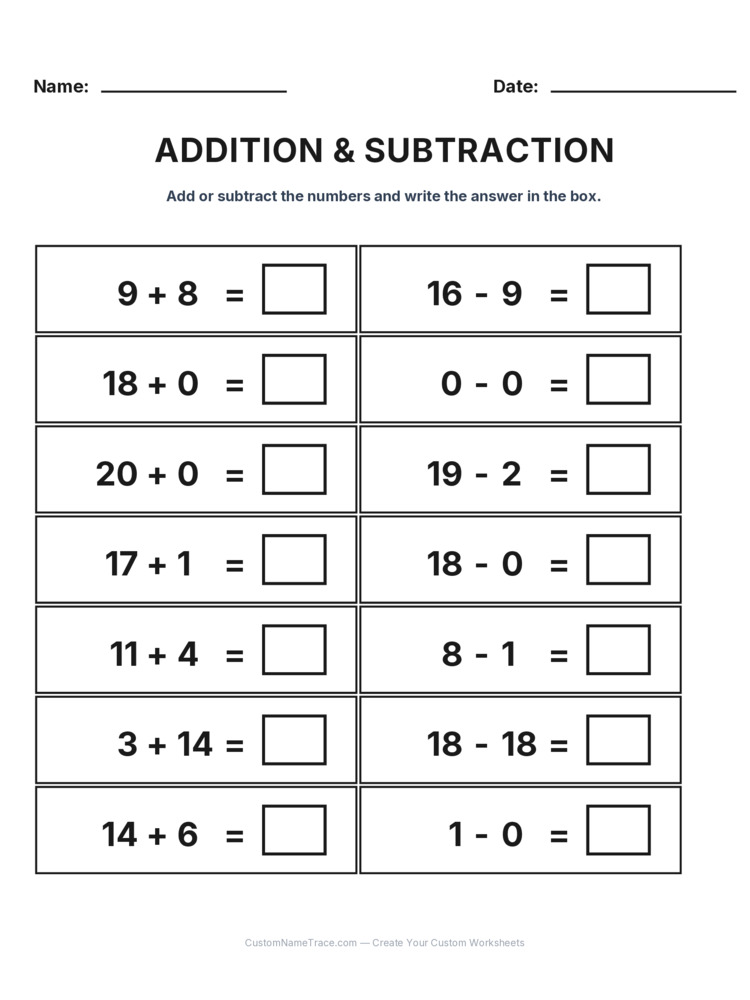
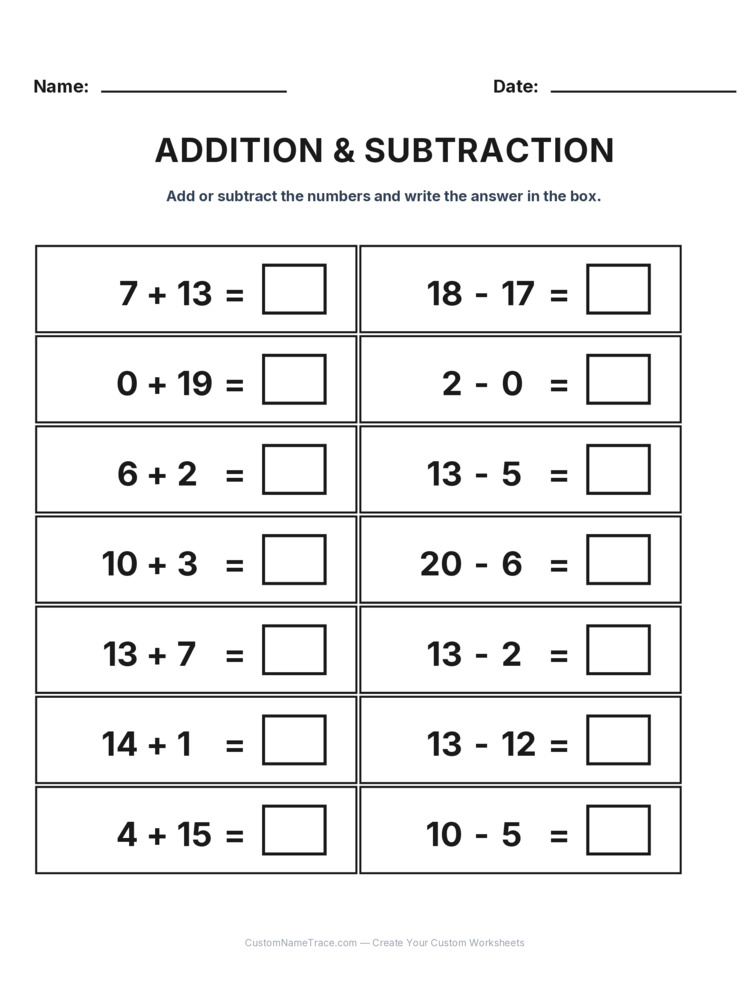
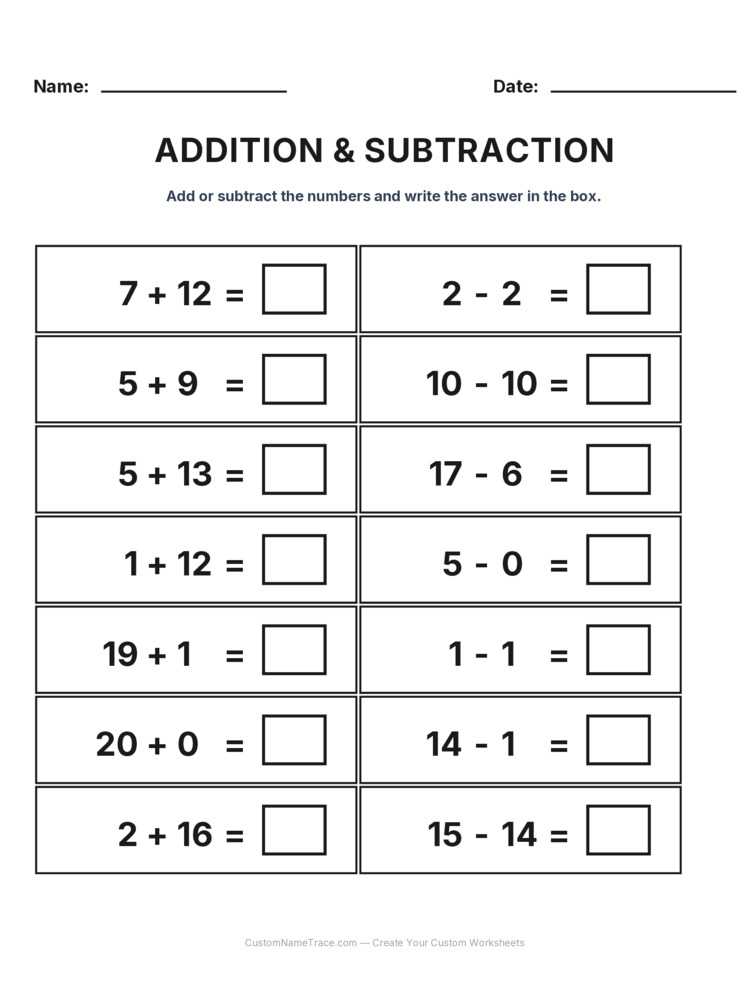
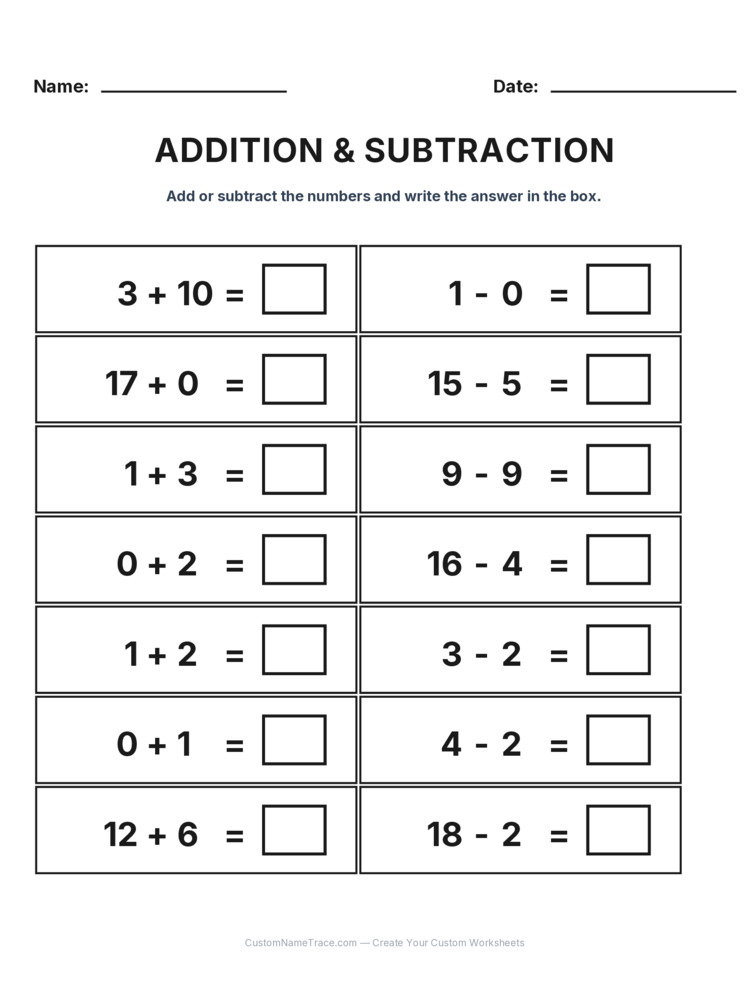
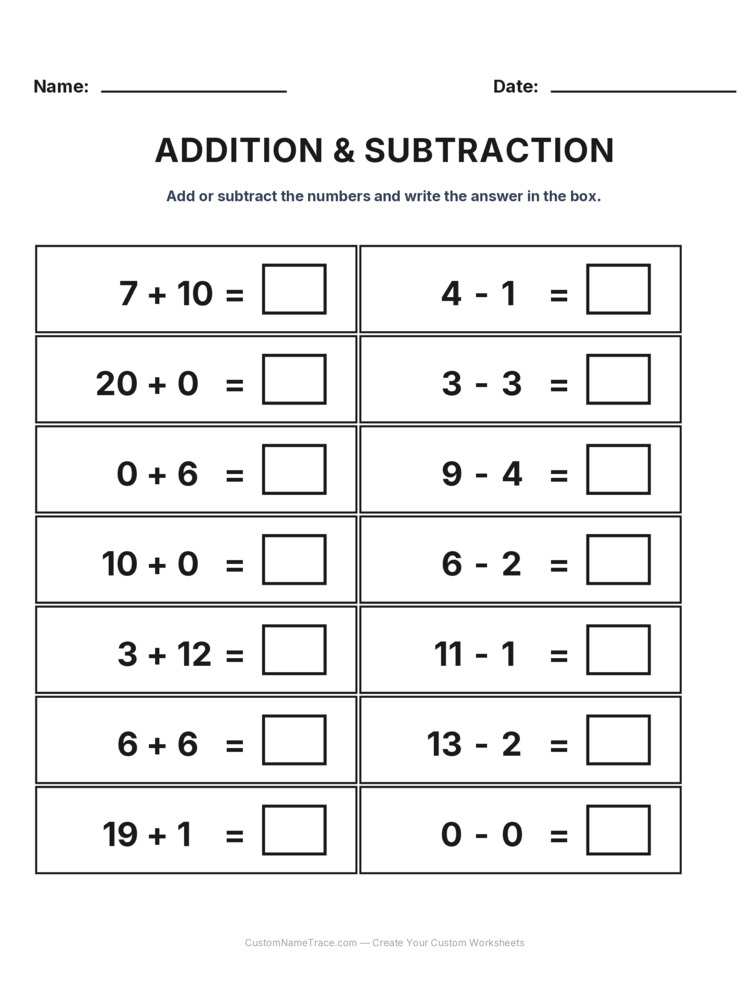
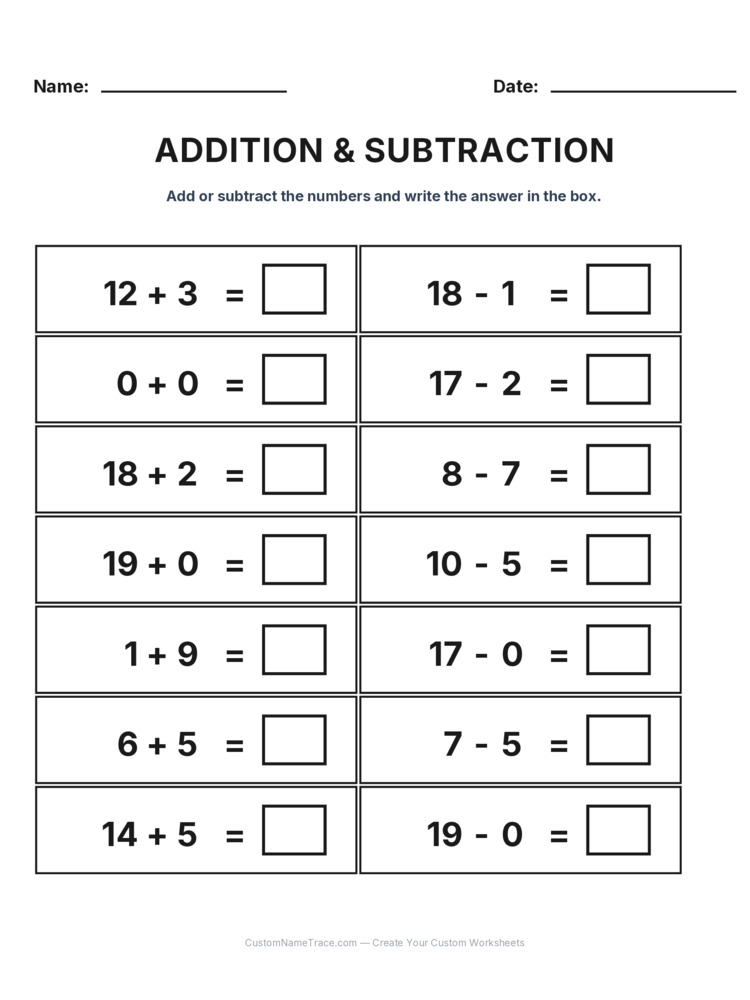
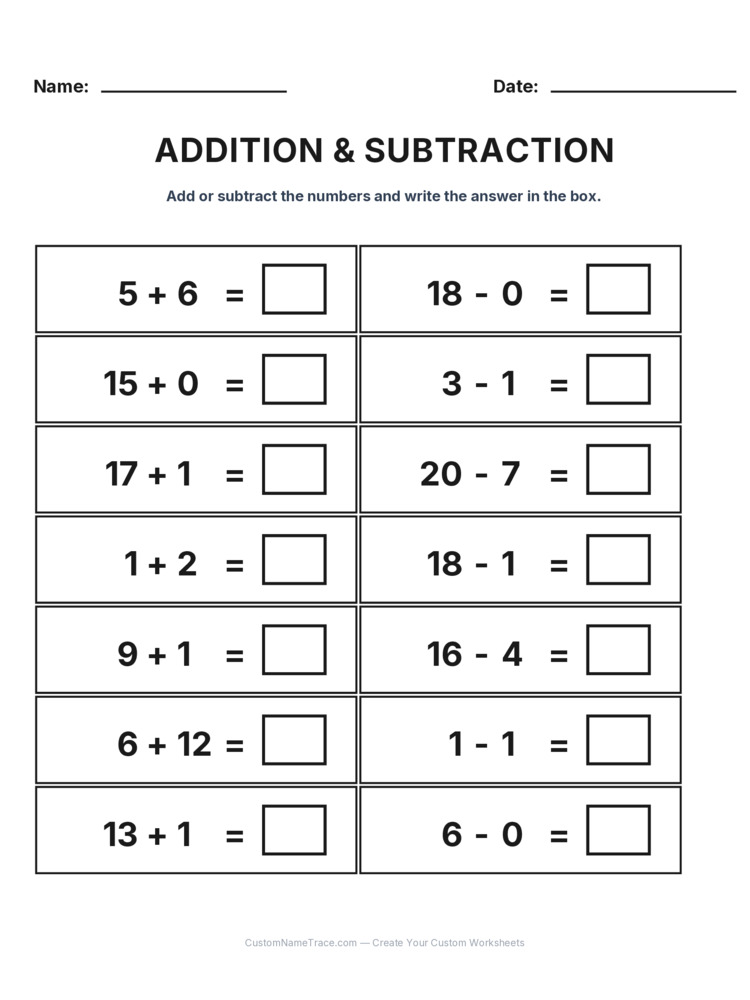
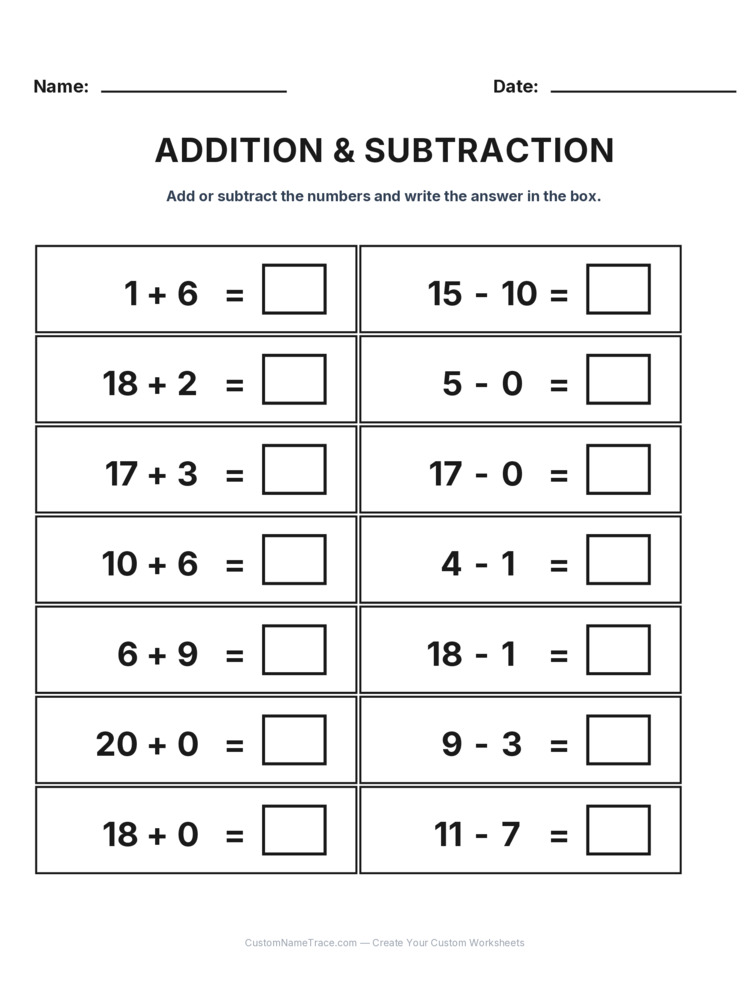
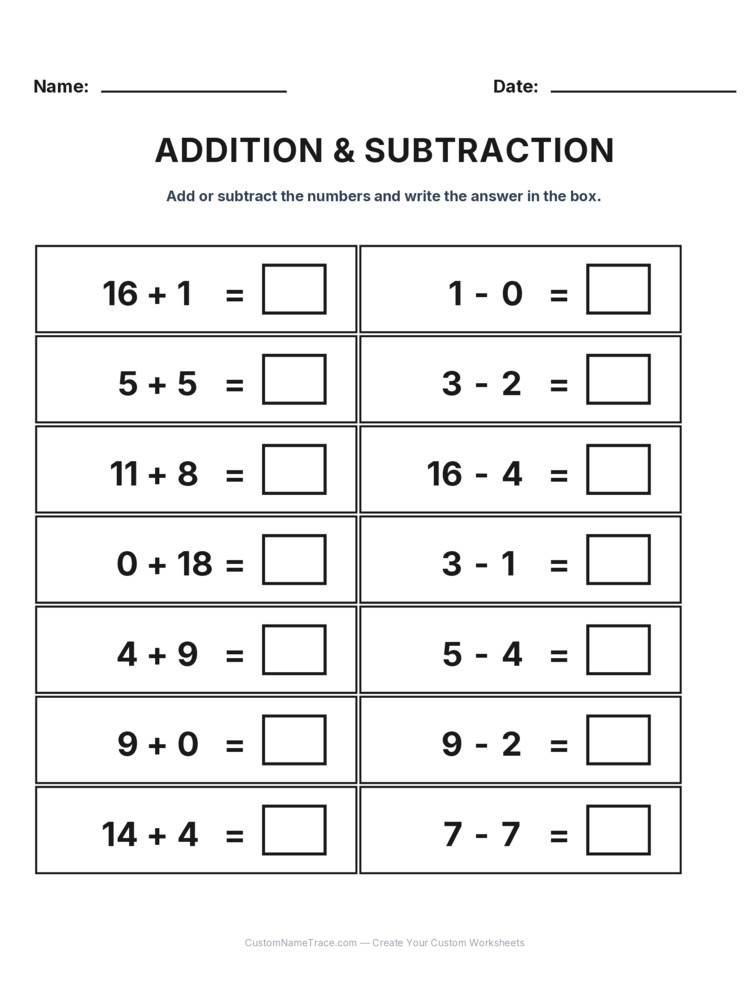
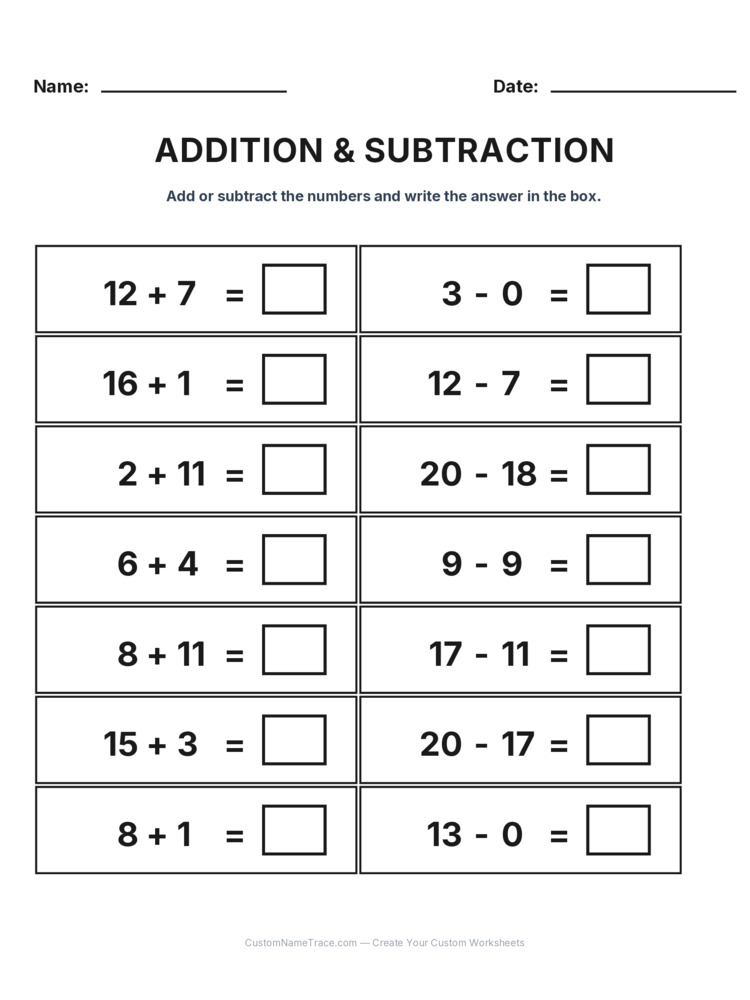
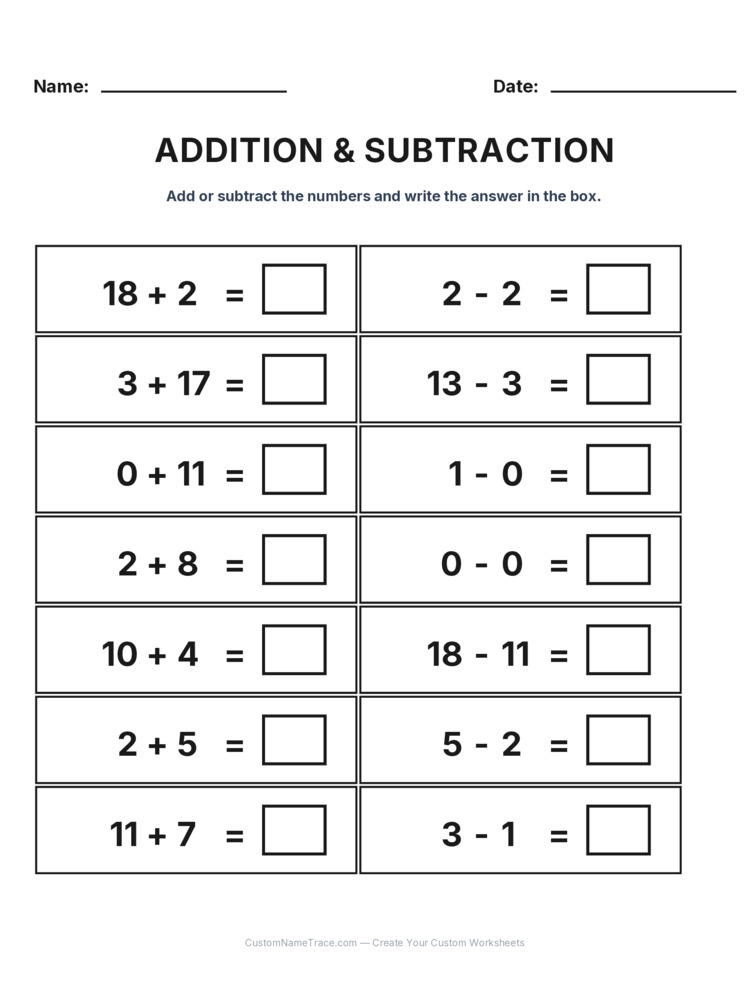
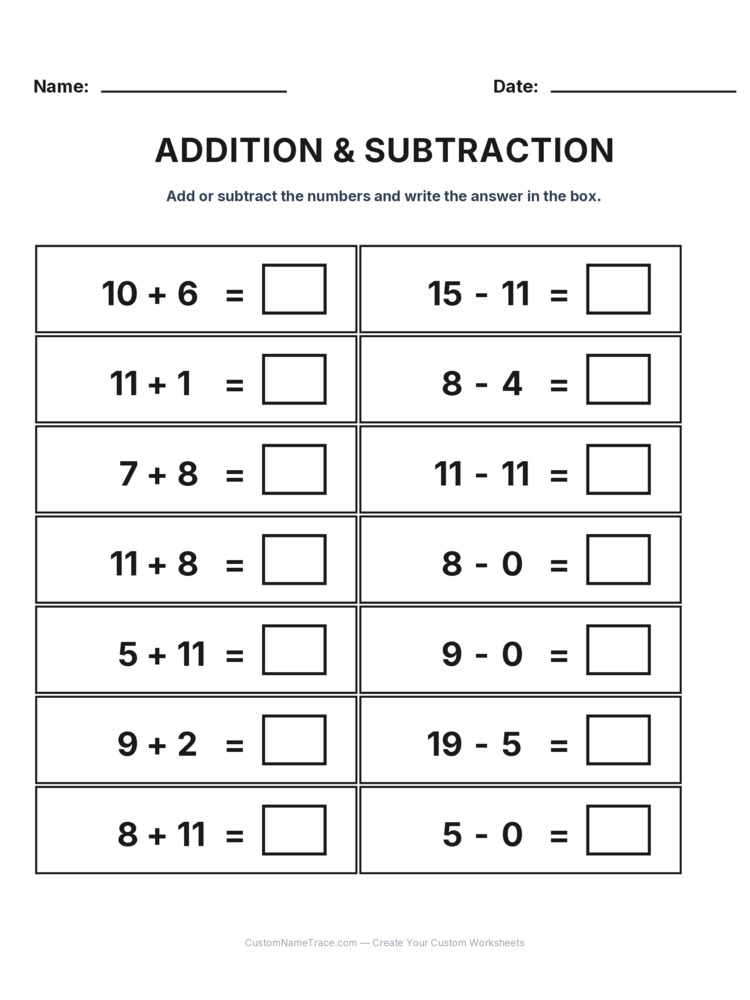
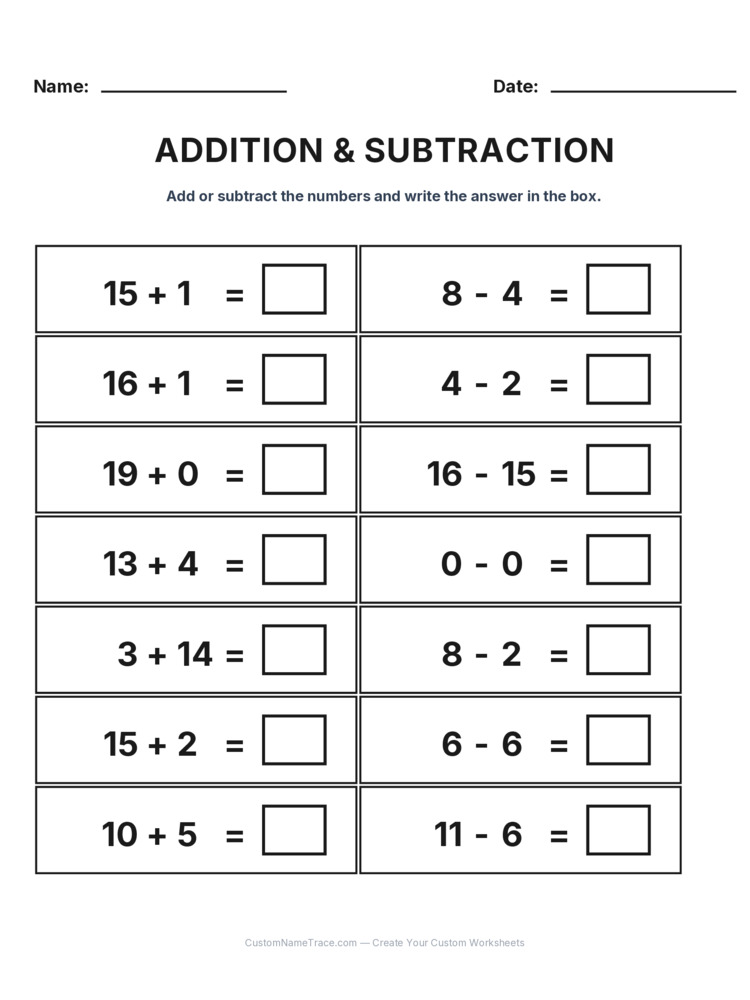
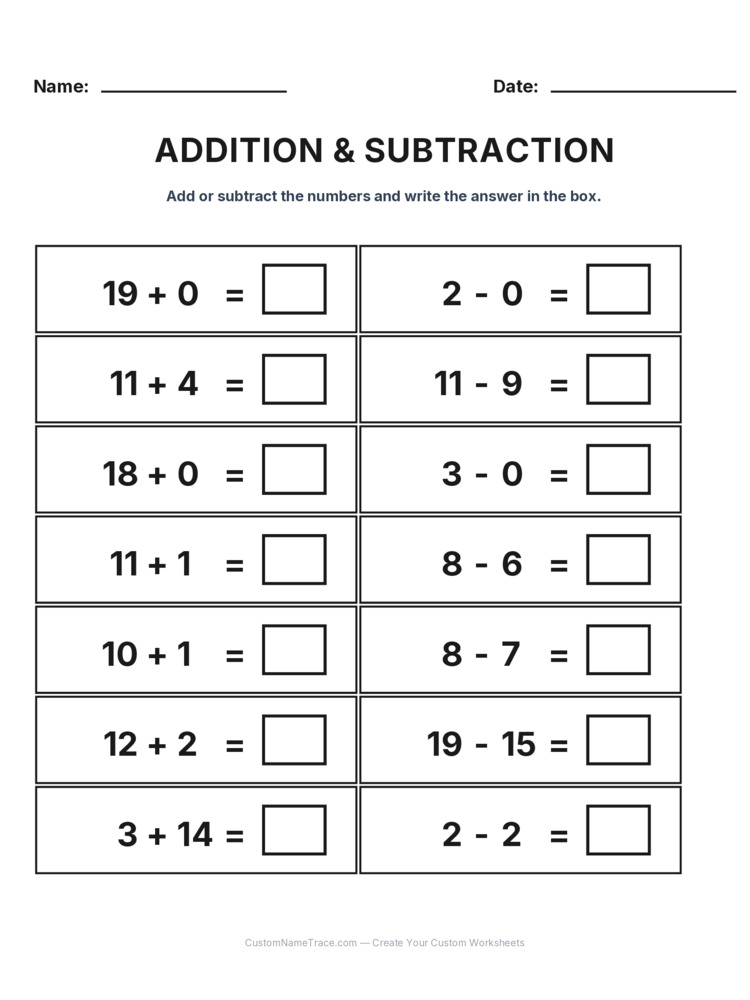
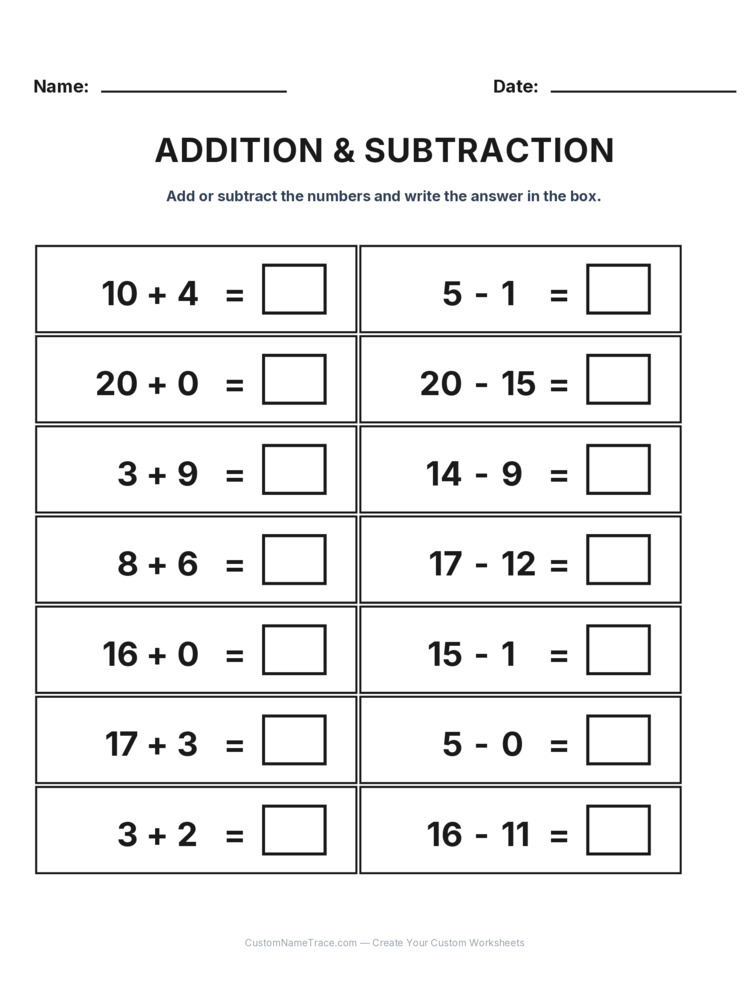
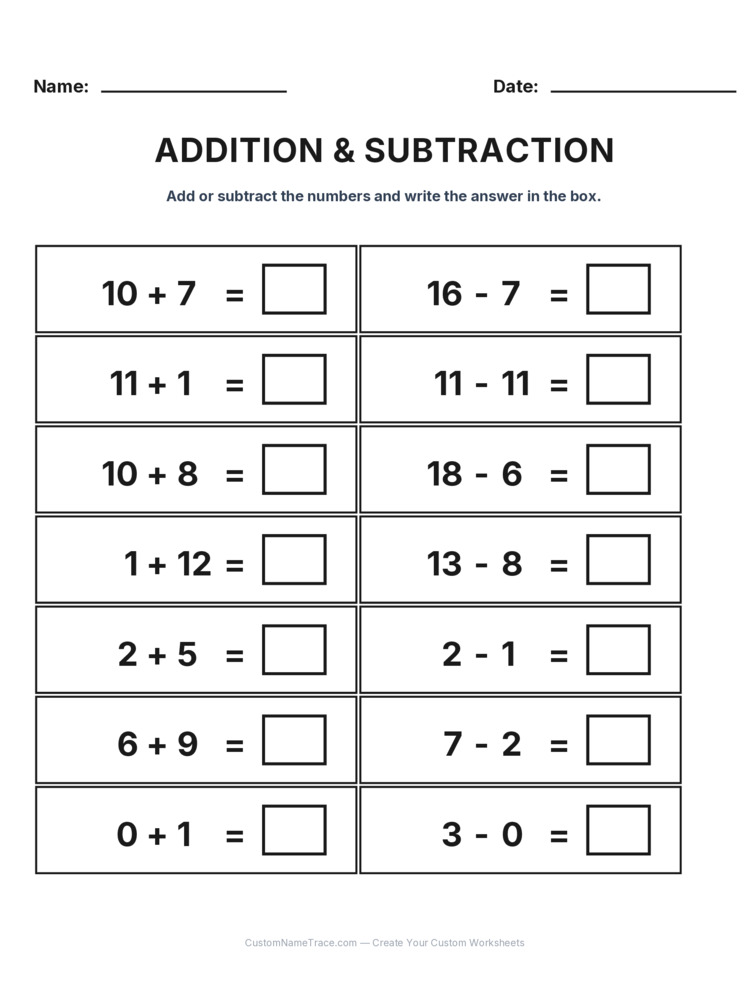
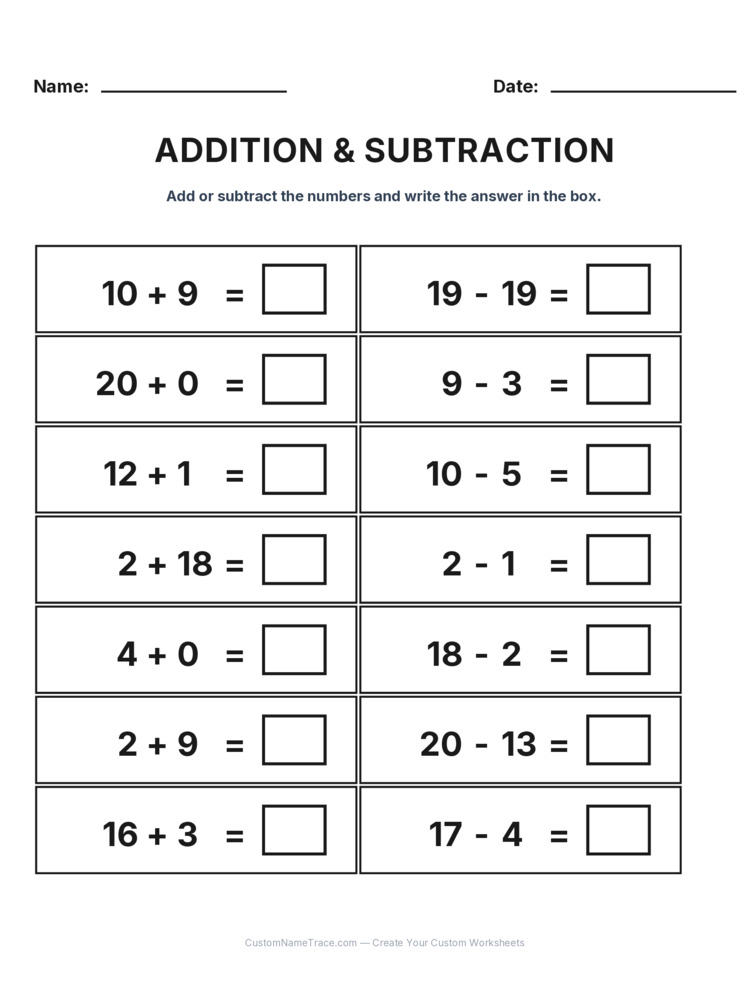
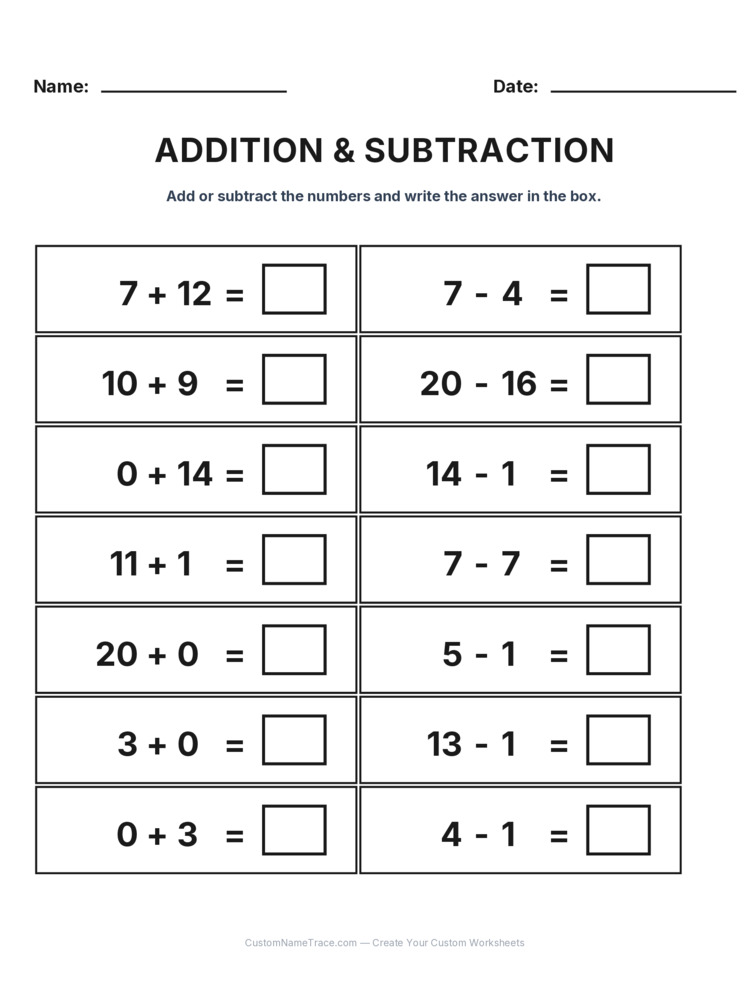
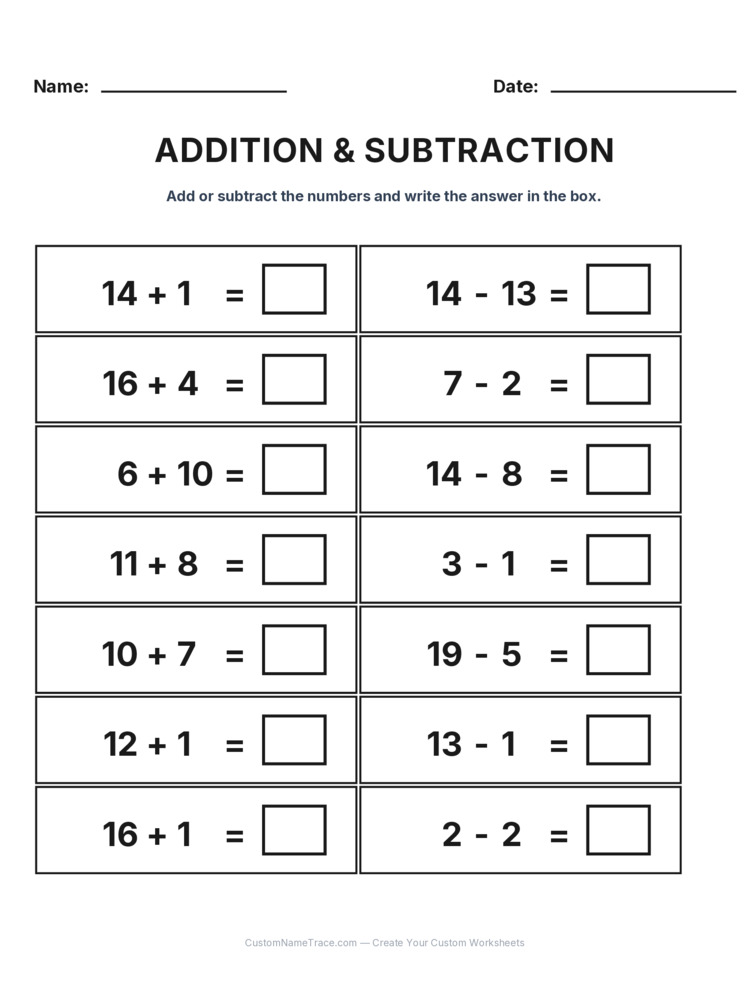
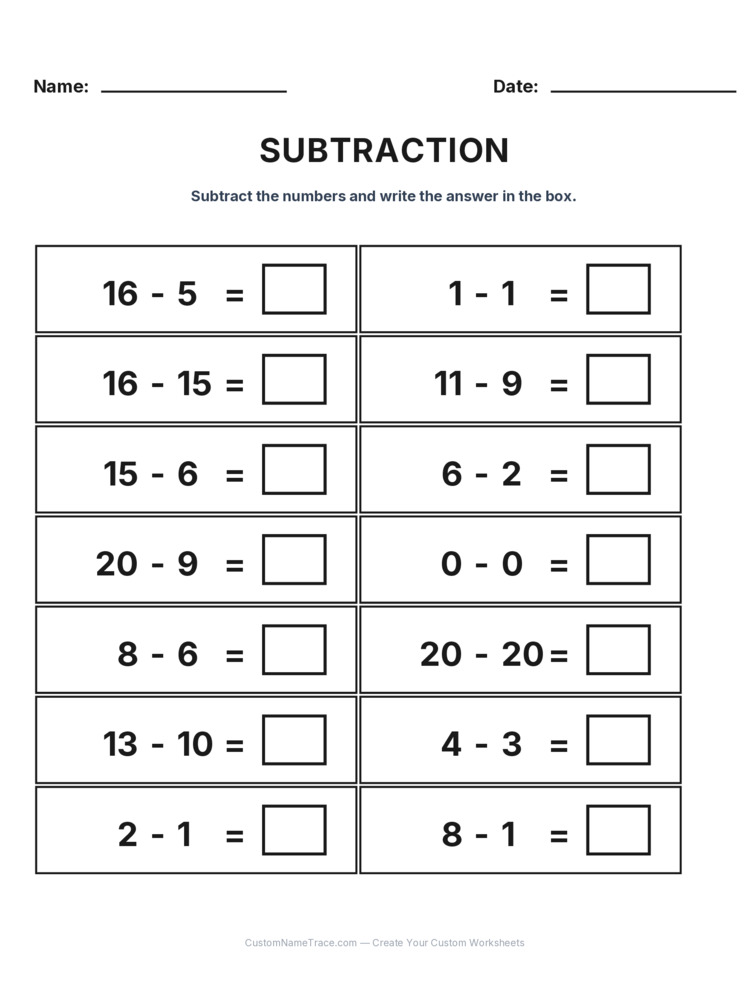
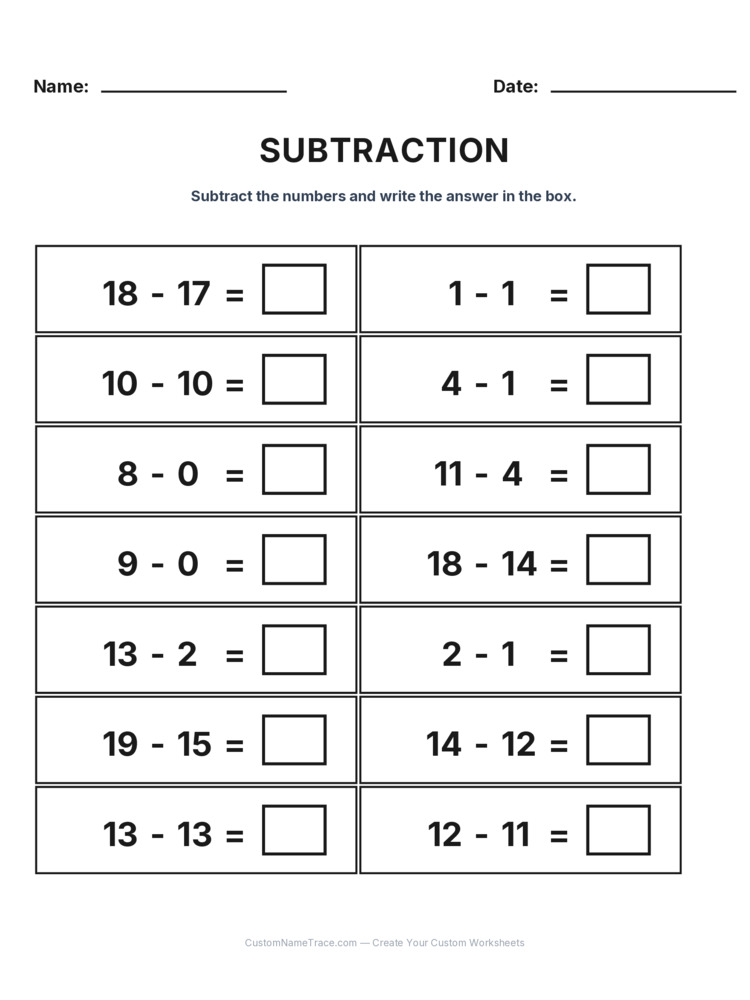
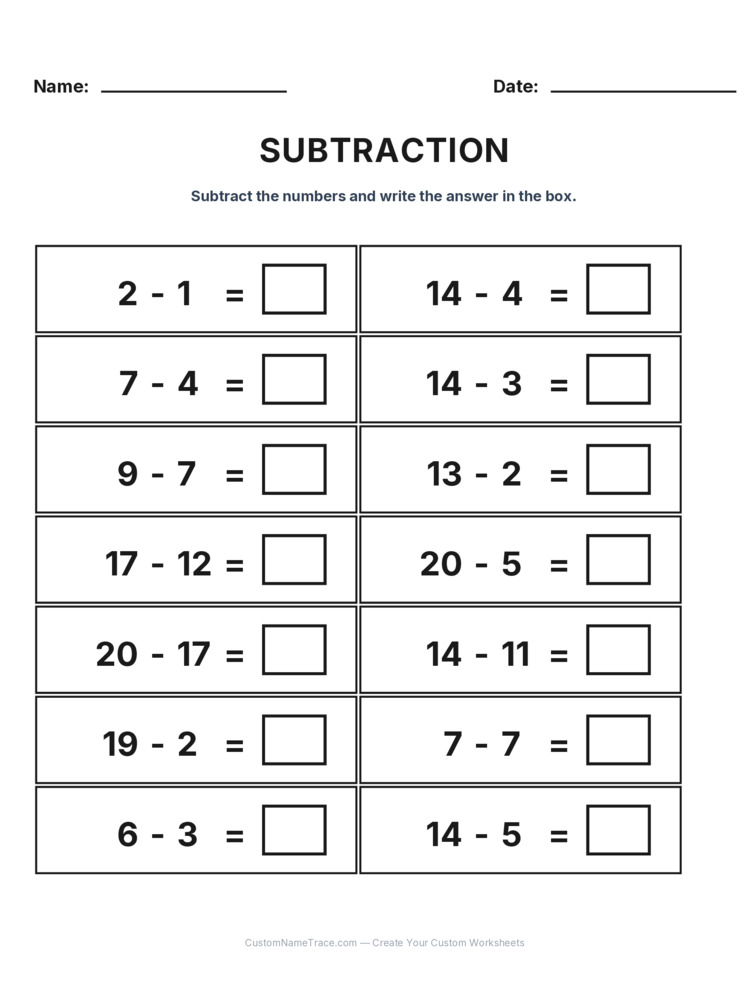
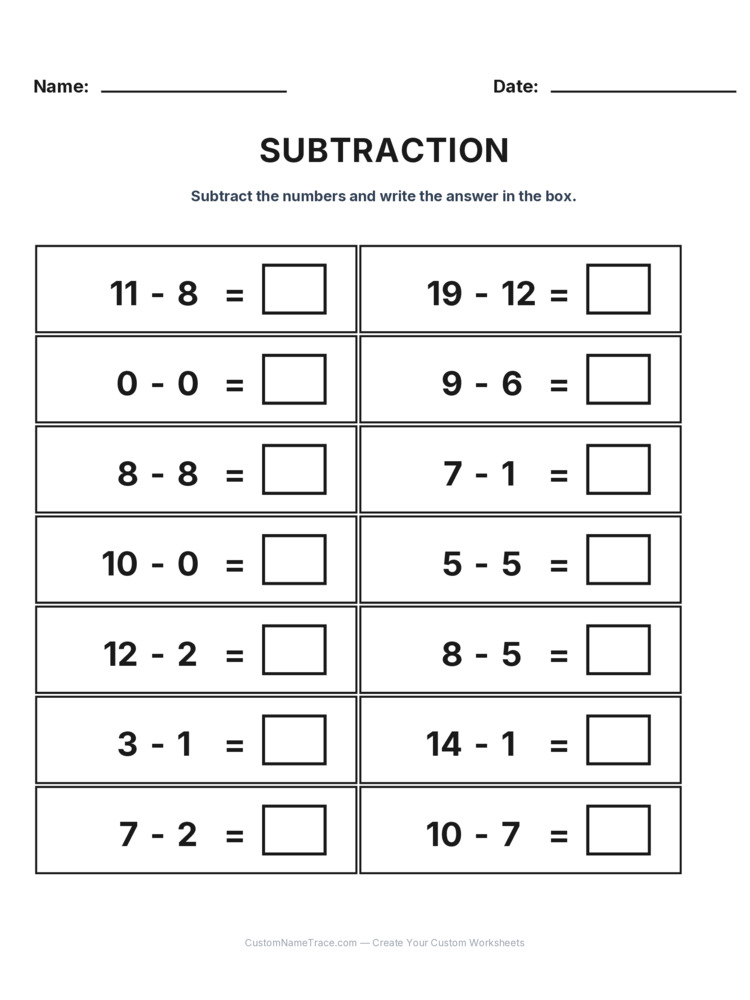
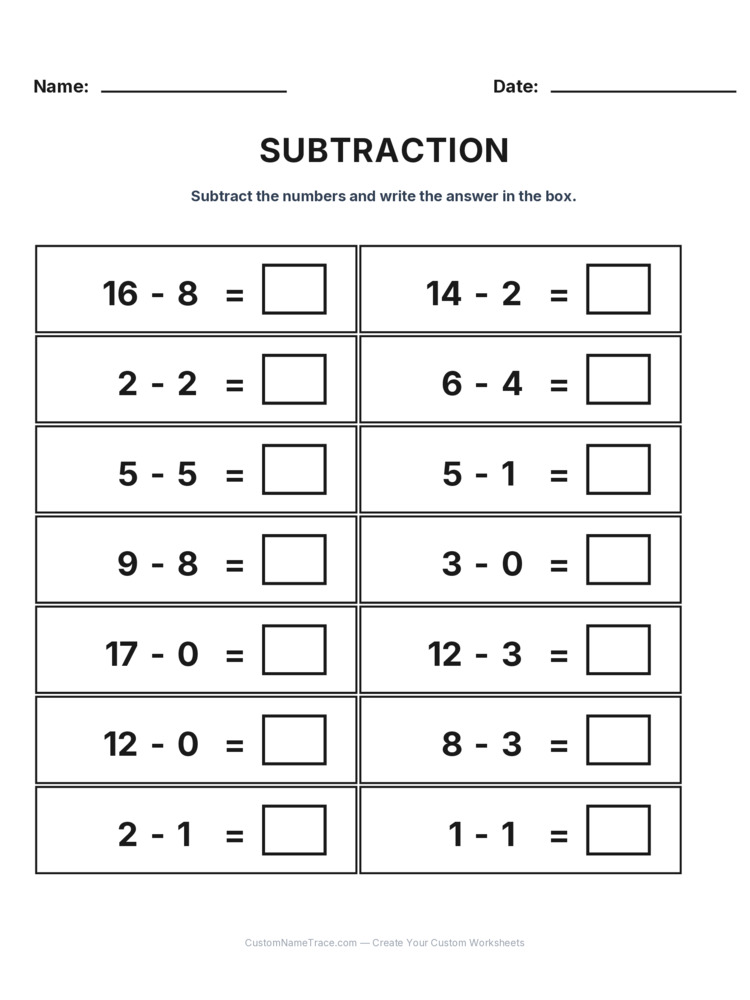
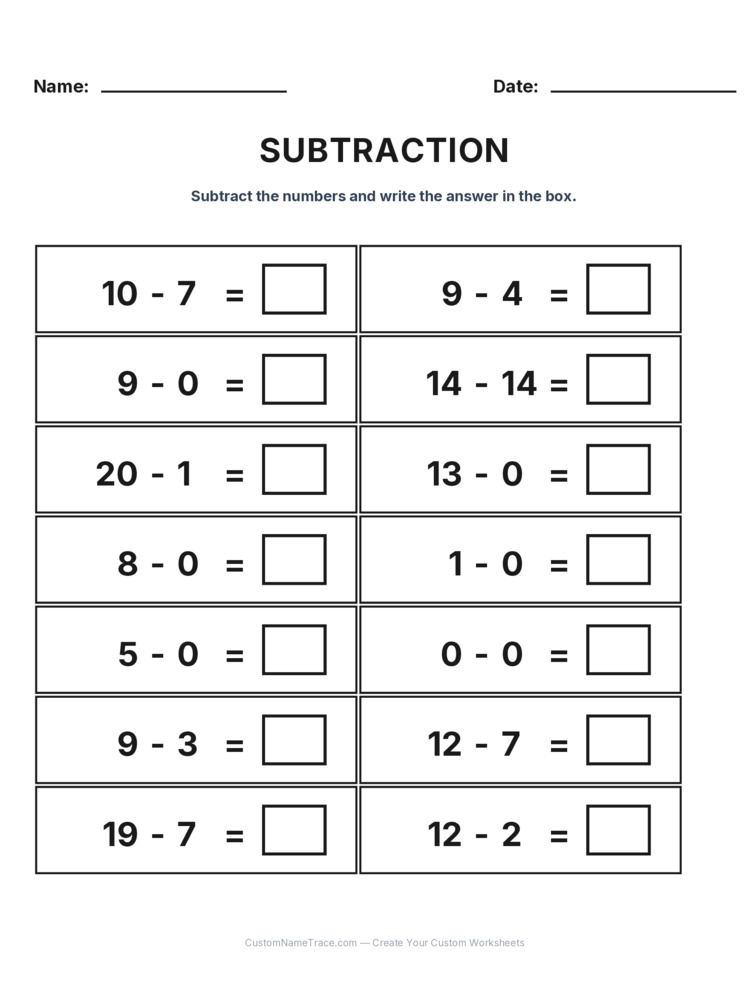
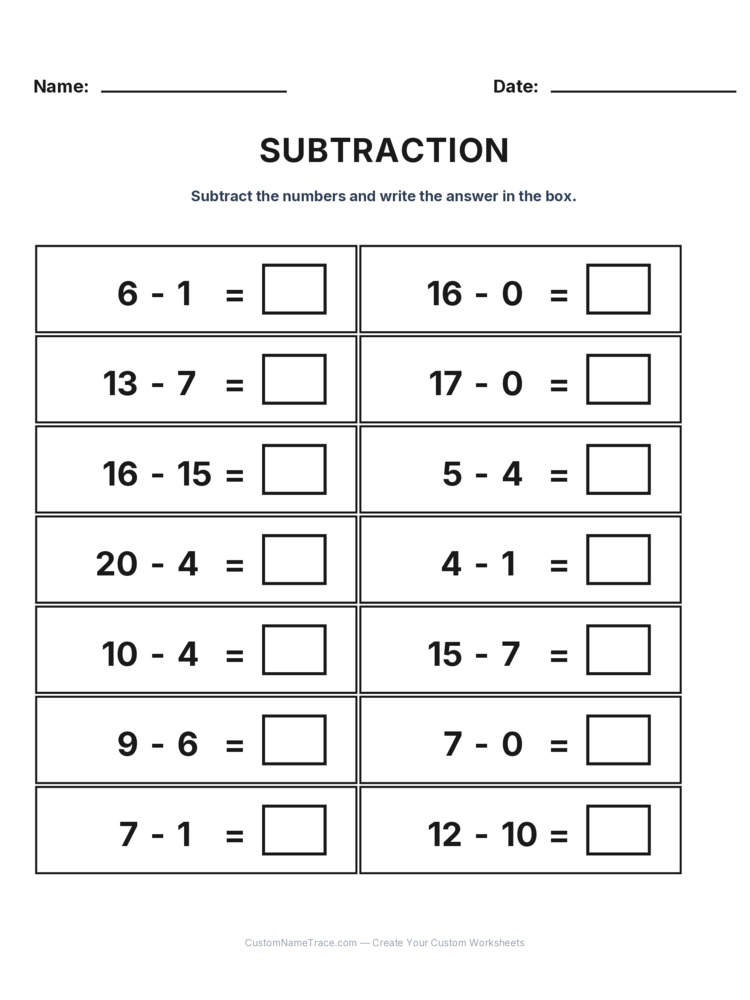
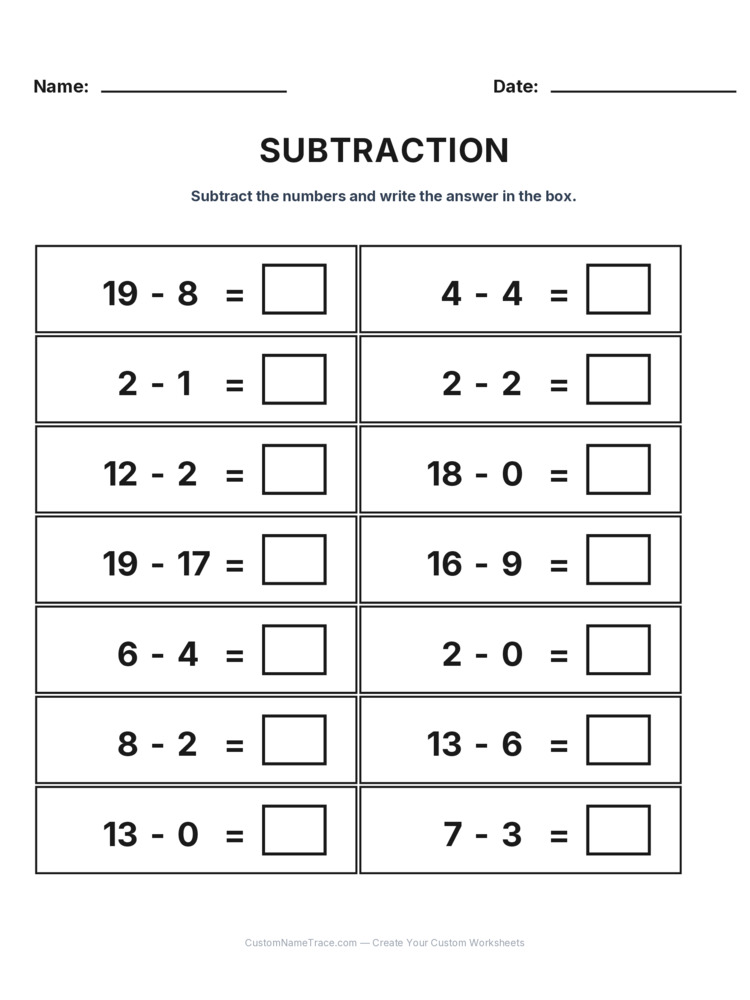
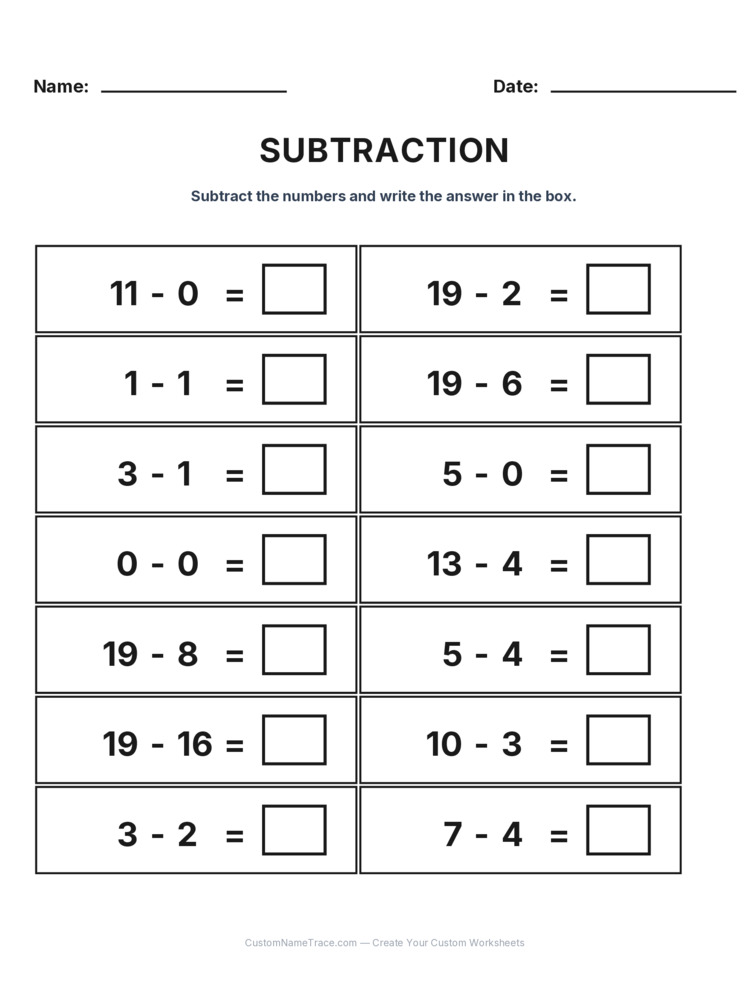
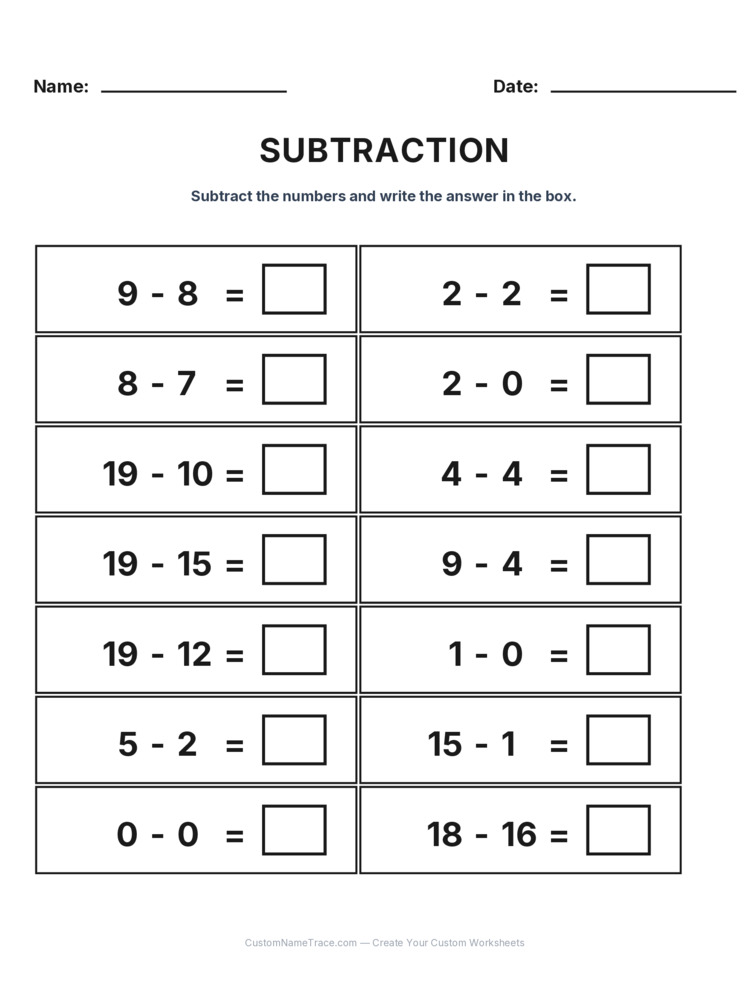
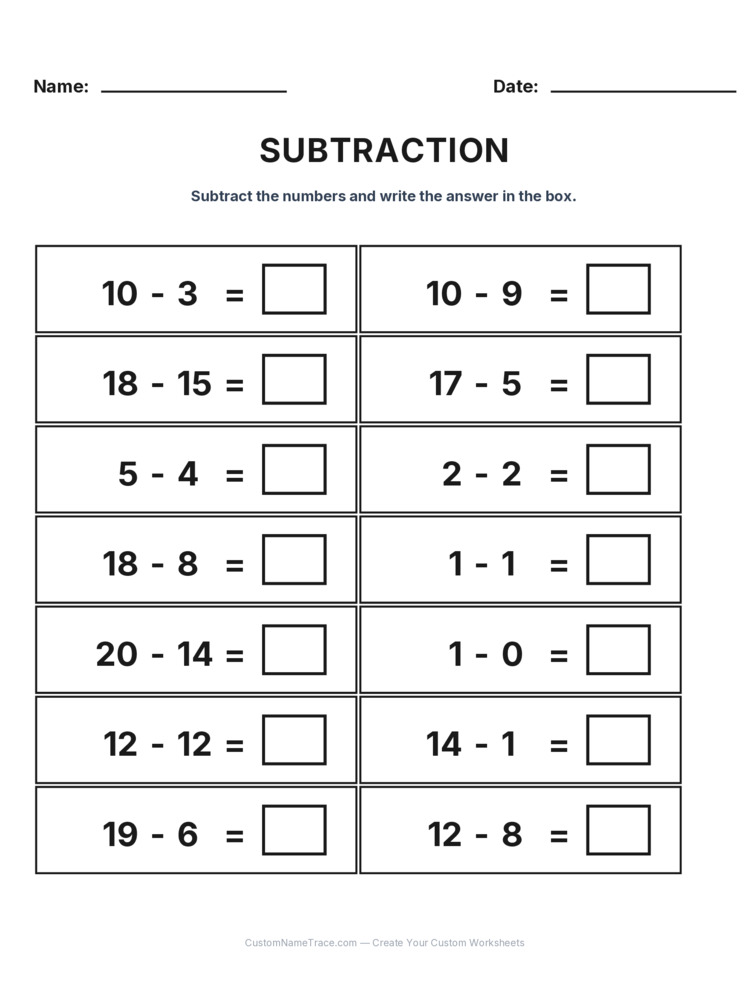
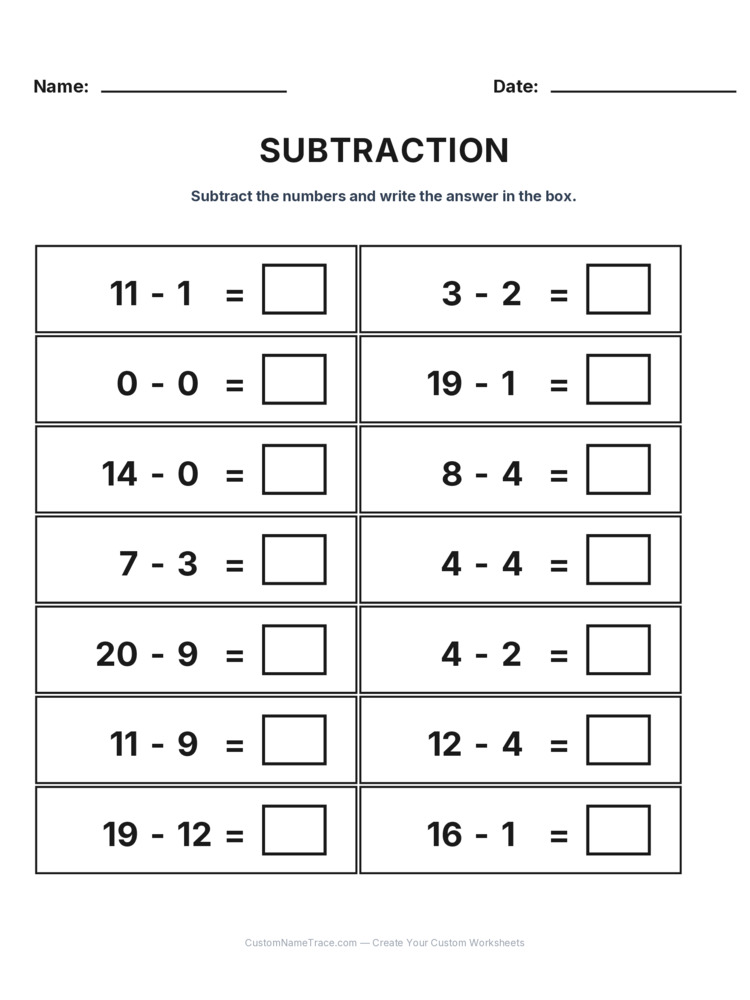
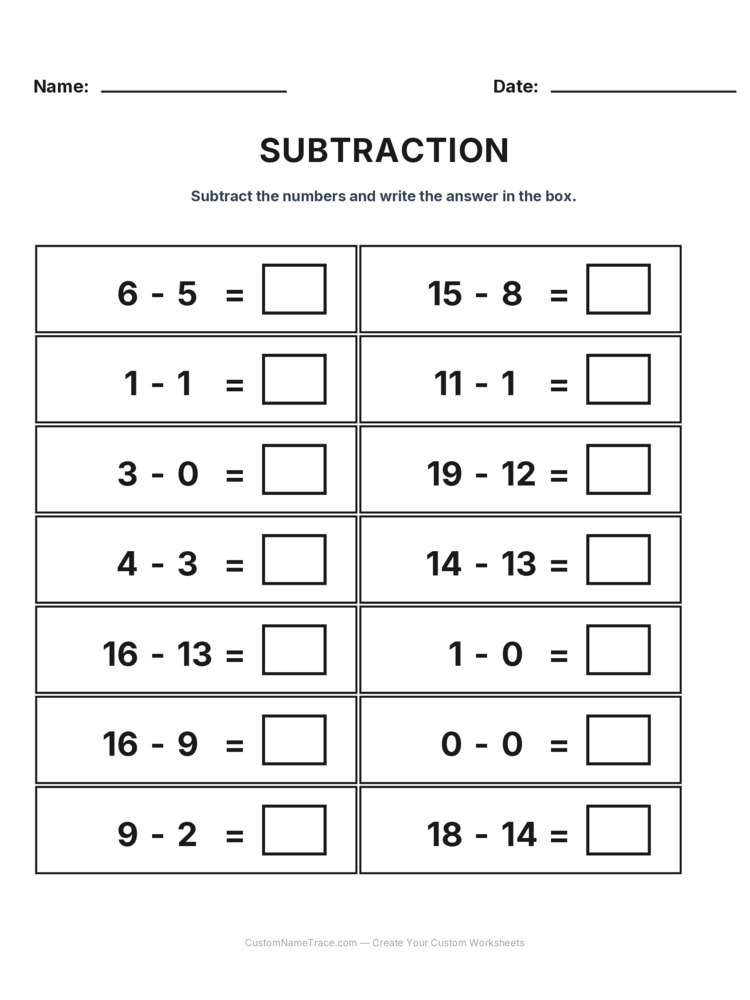
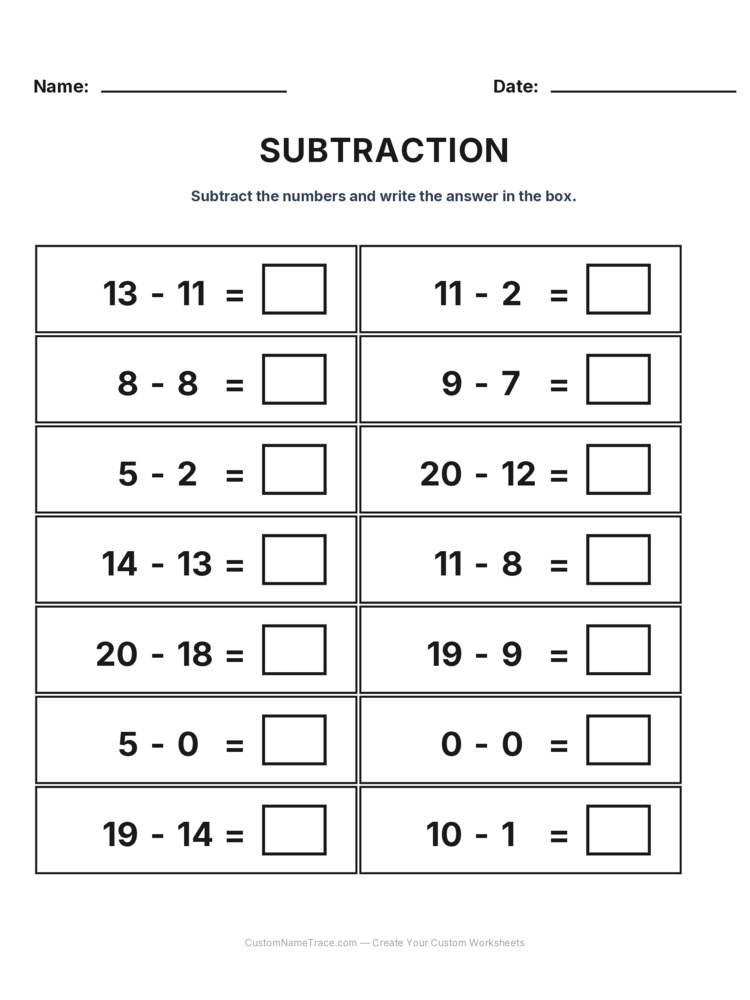
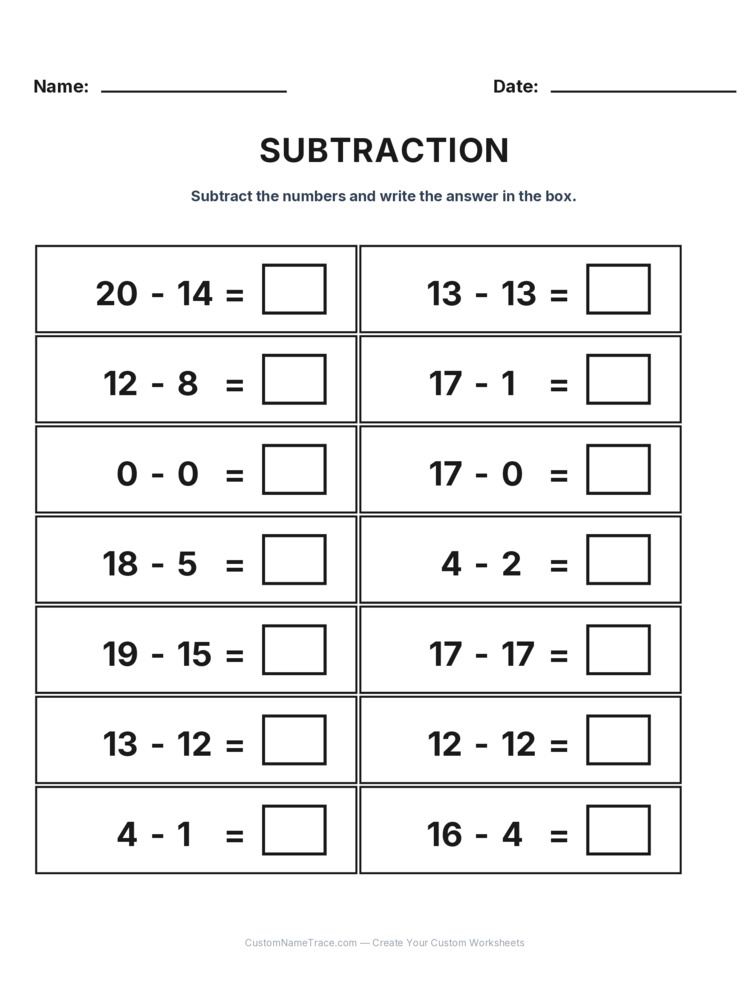
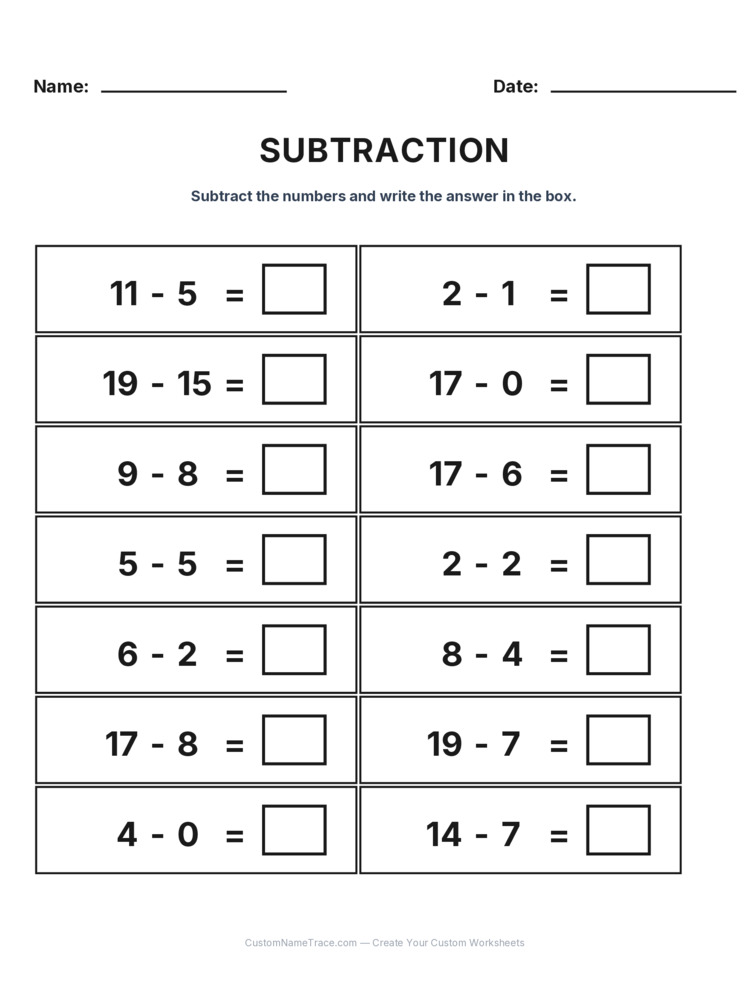
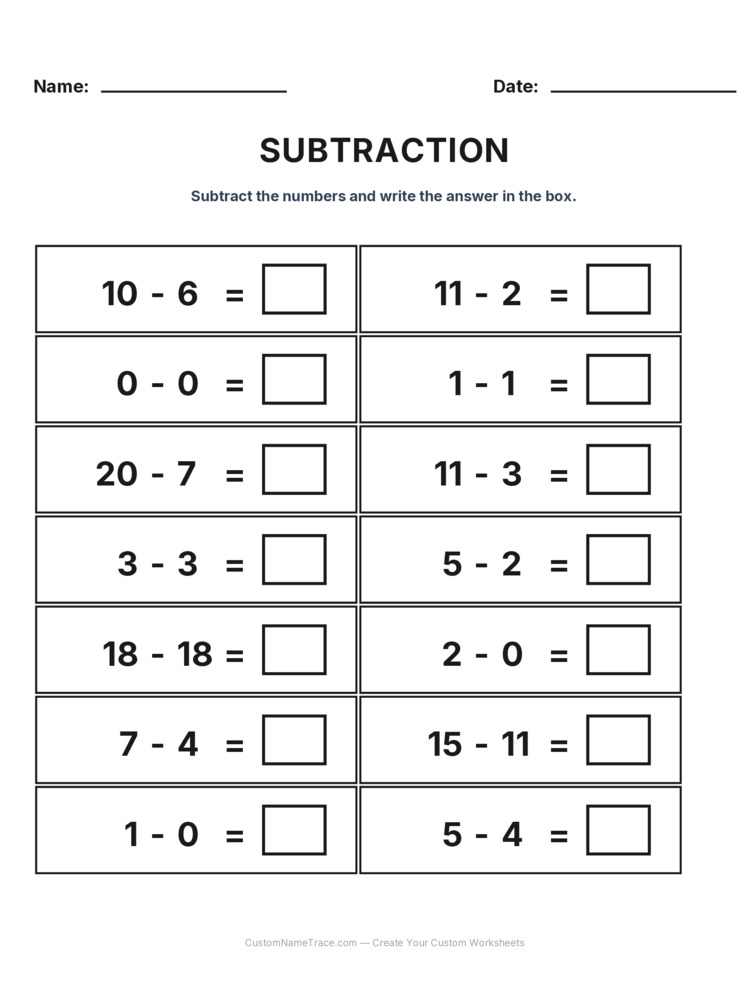
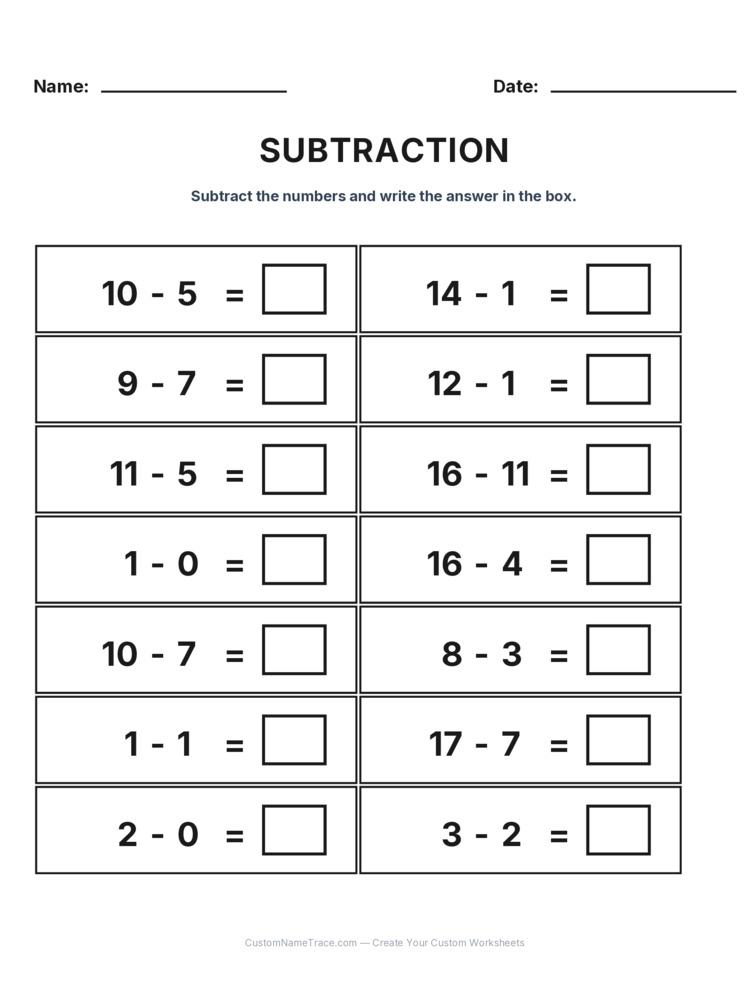
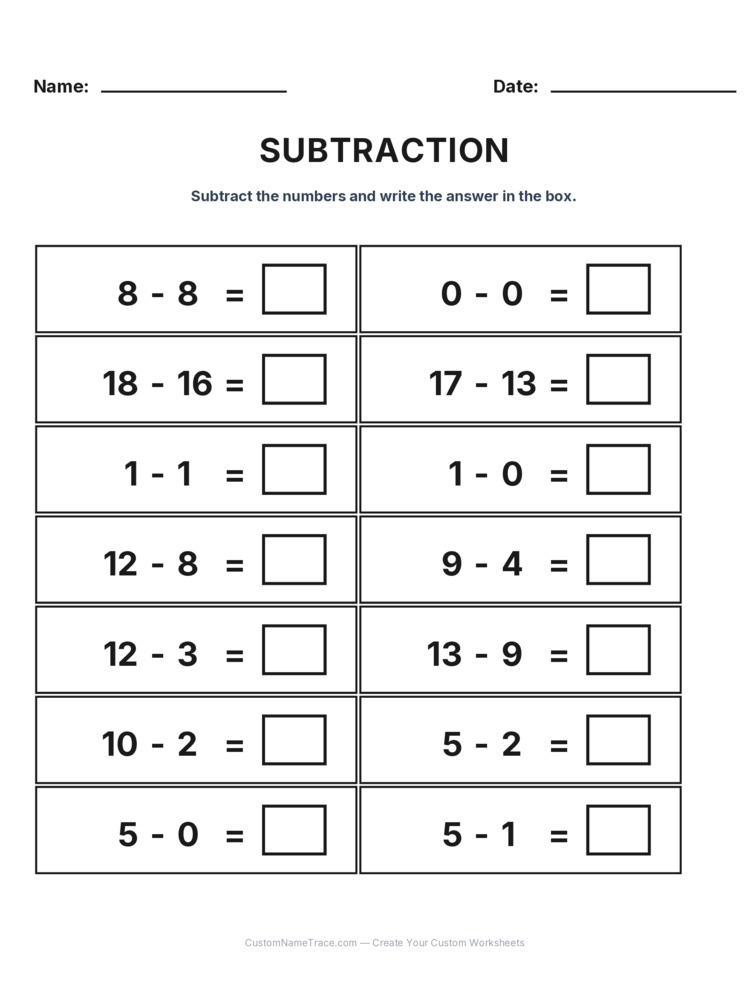
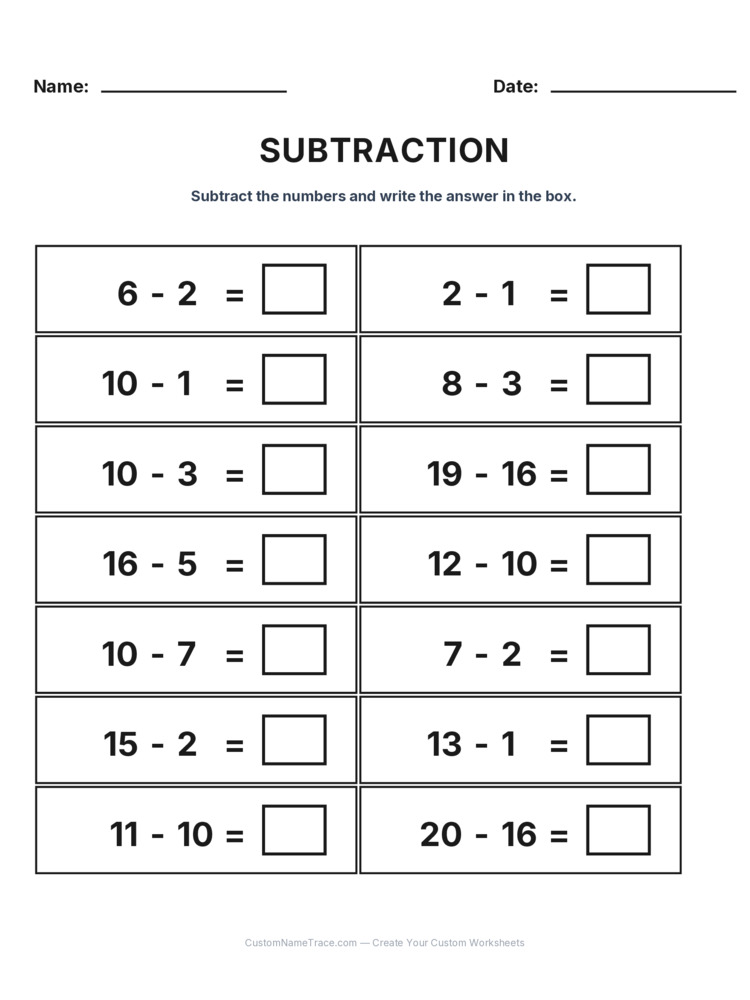
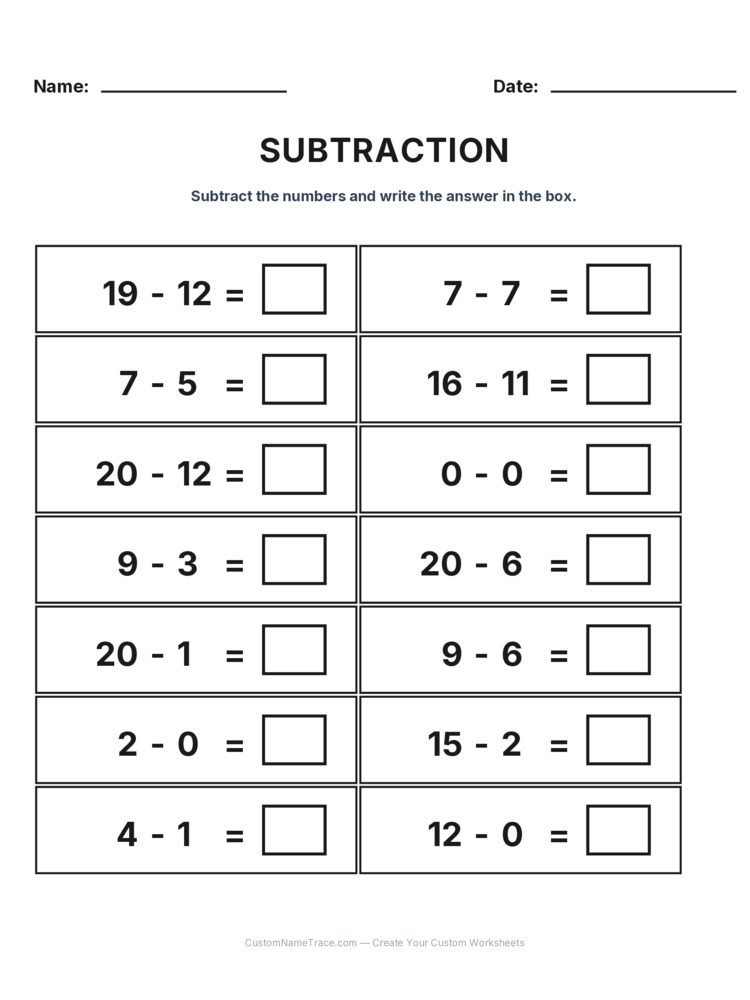
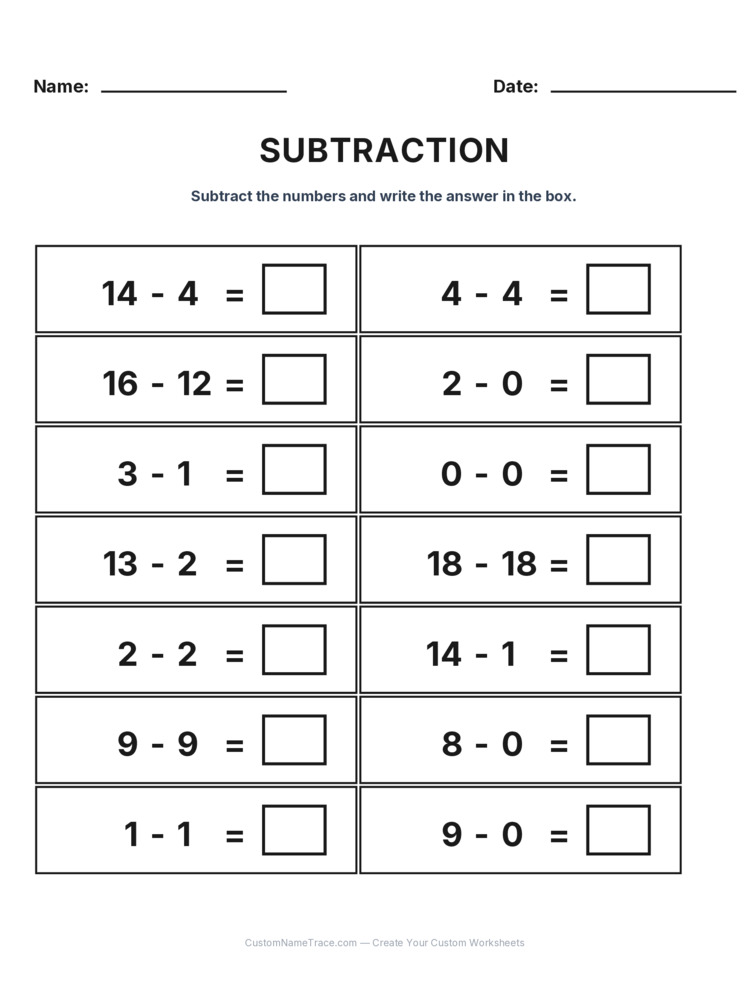
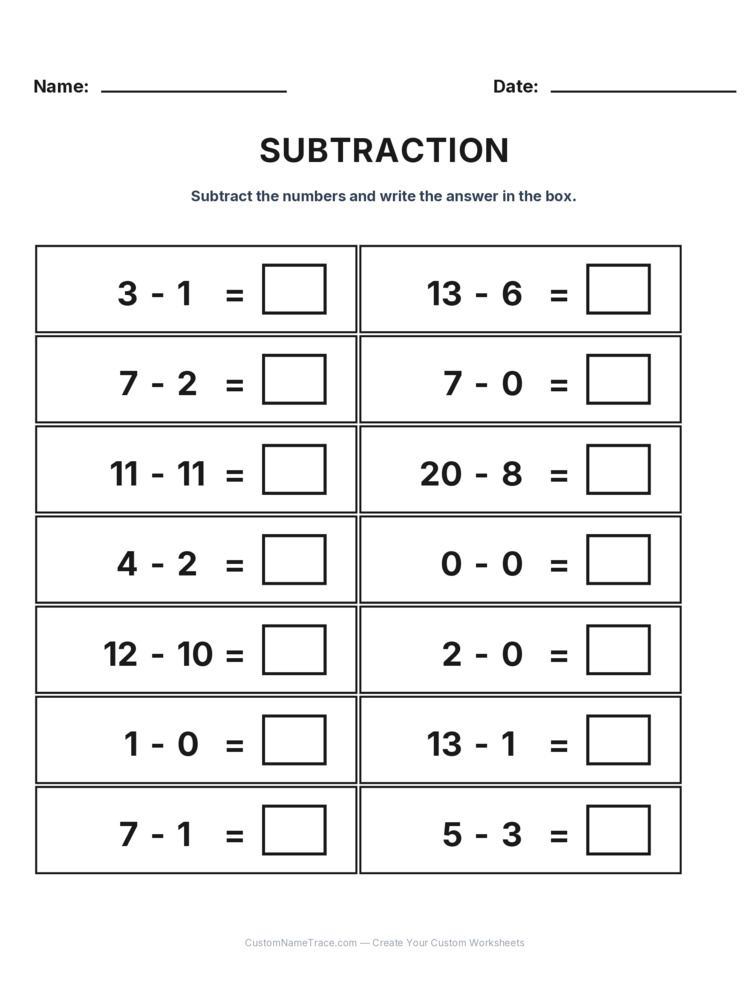
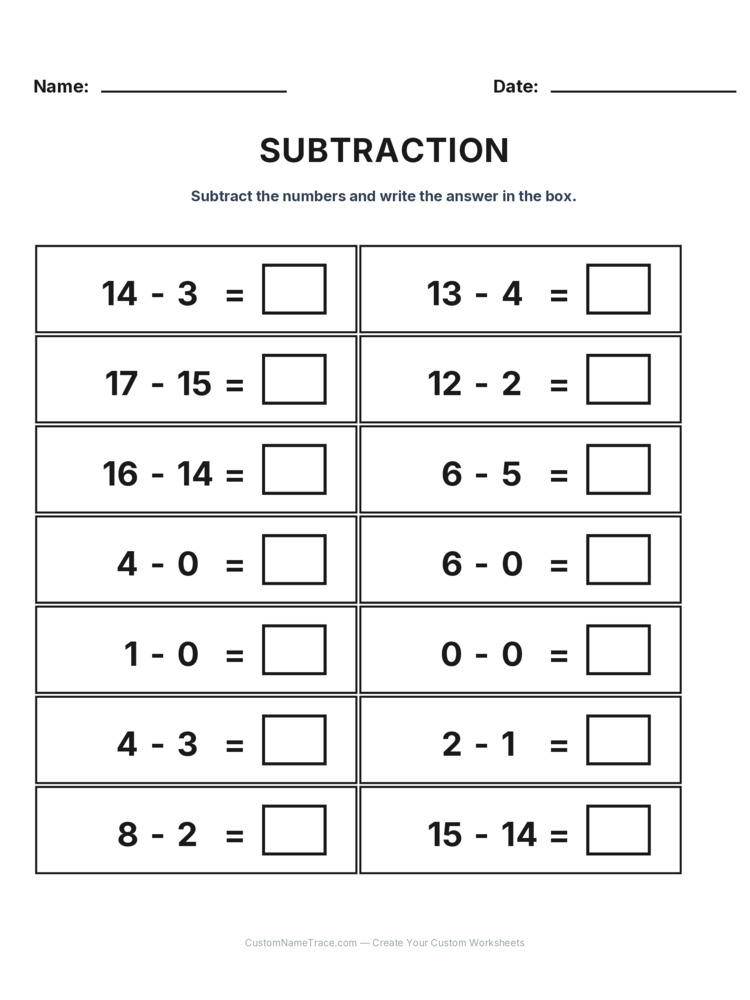
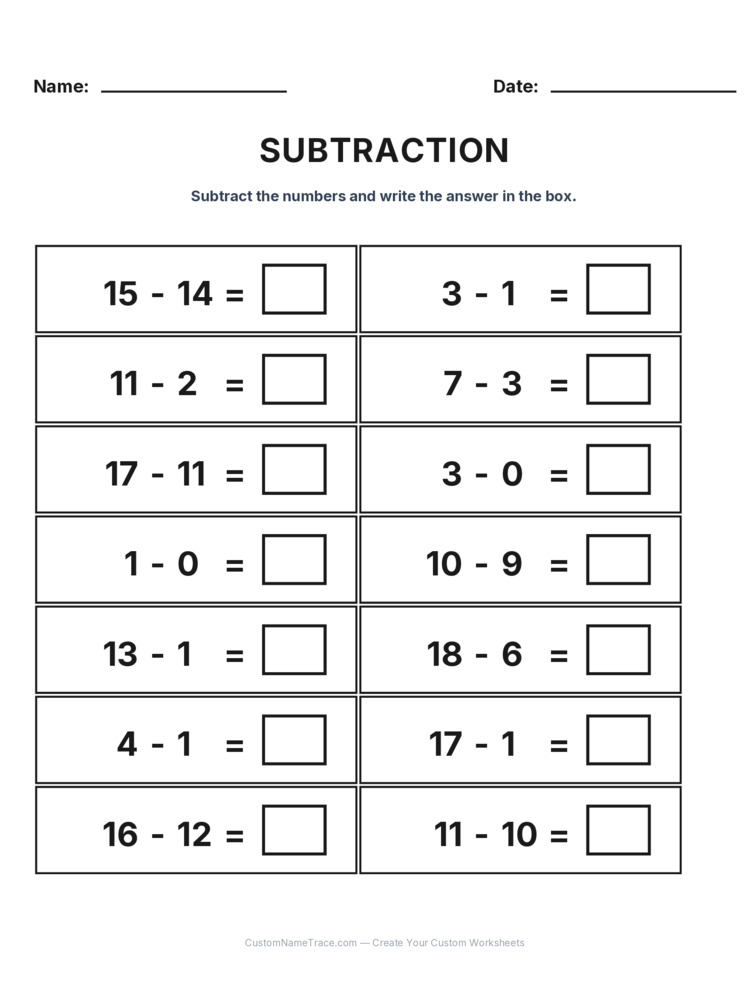
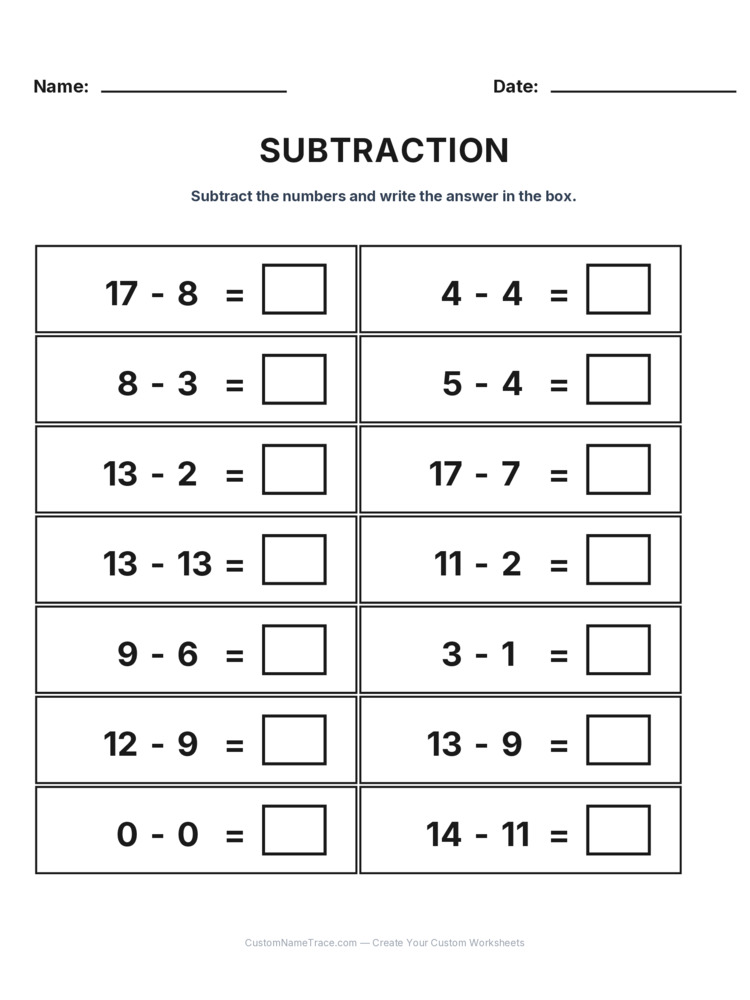
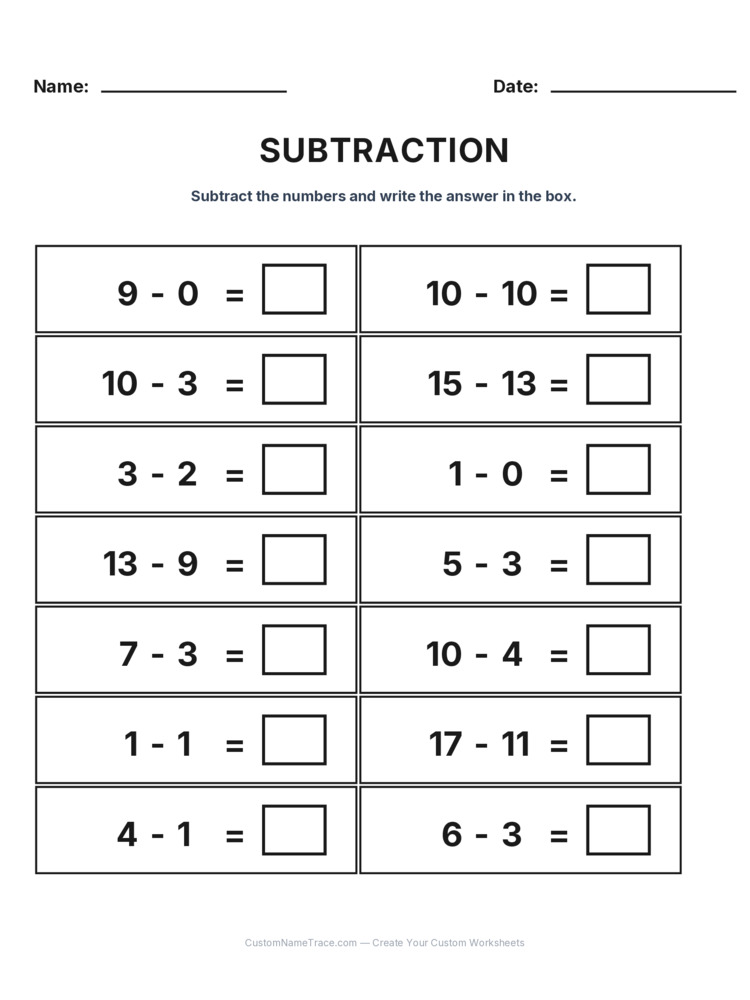
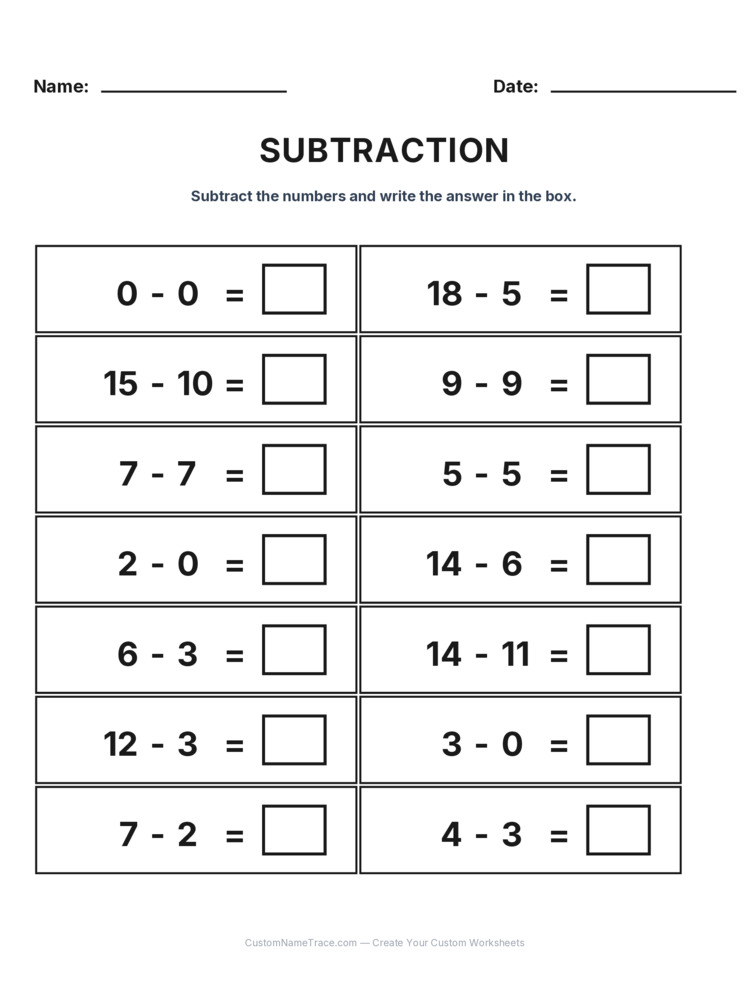
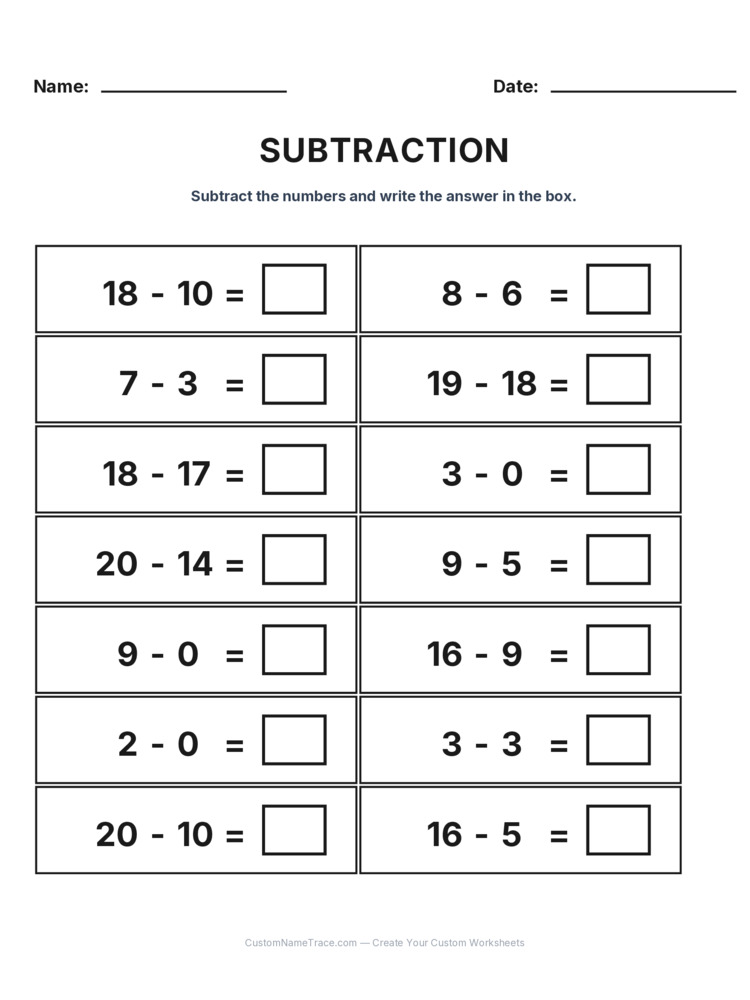
Every problem on these two pages stays within 20, with addition and subtraction each getting a dedicated page so a specific operation can get focused practice without the other one interrupting. A child working through addition here should be getting comfortable with strategies like counting on from the larger number and "making a ten" (turning 8+5 into 8+2+3) rather than only counting from one every time — those strategies are what actually make within-20 fluency achievable.
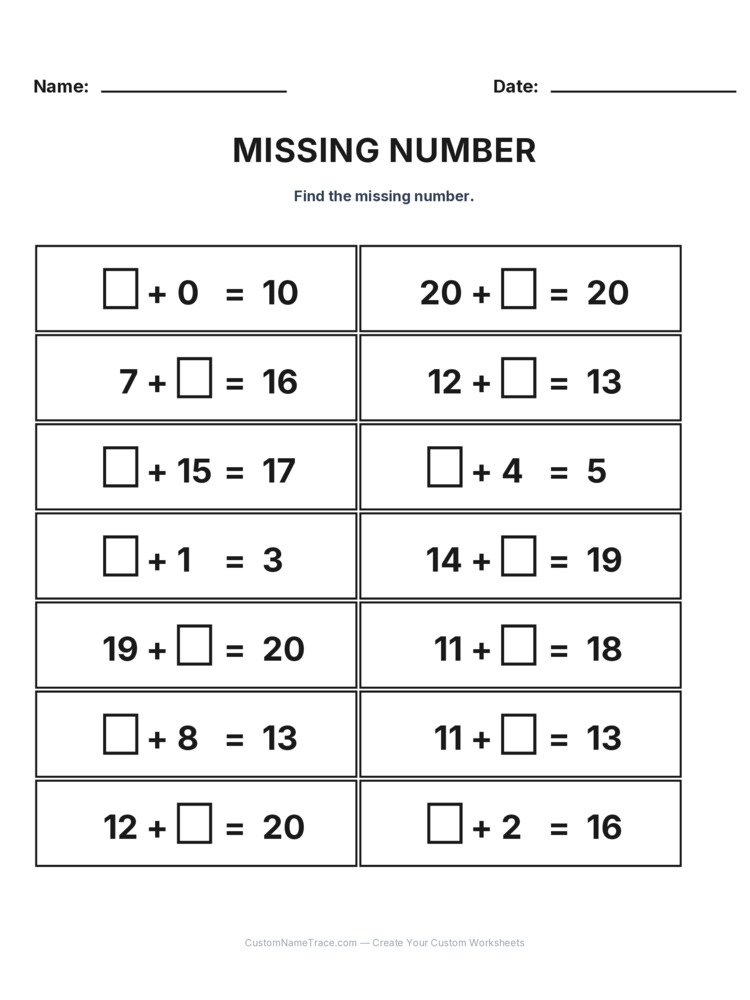
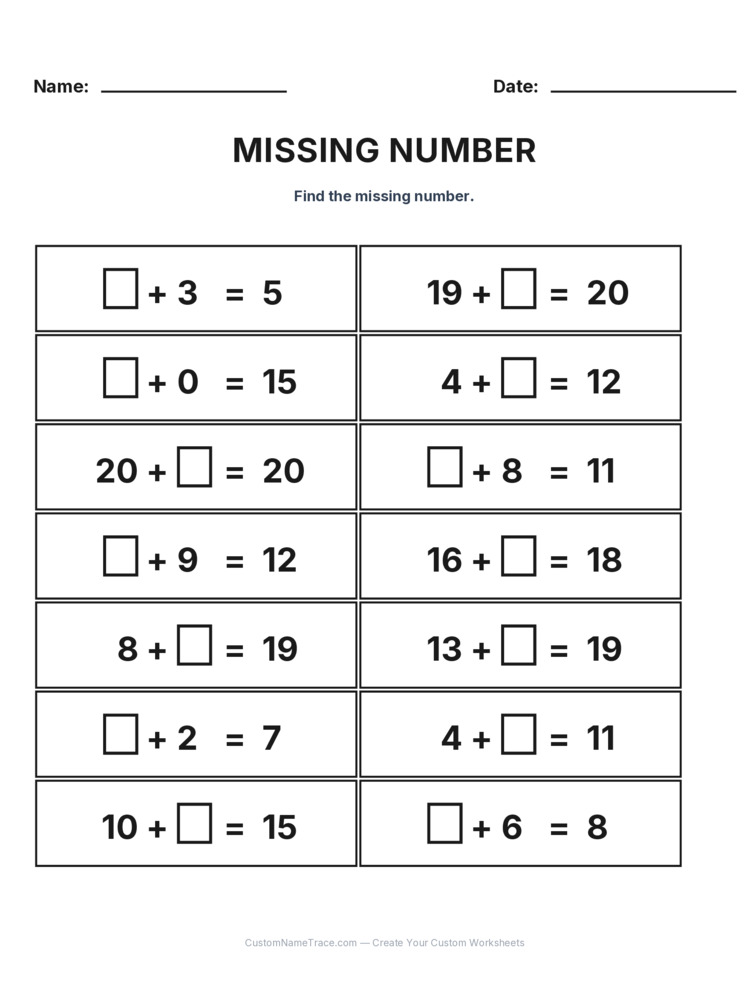
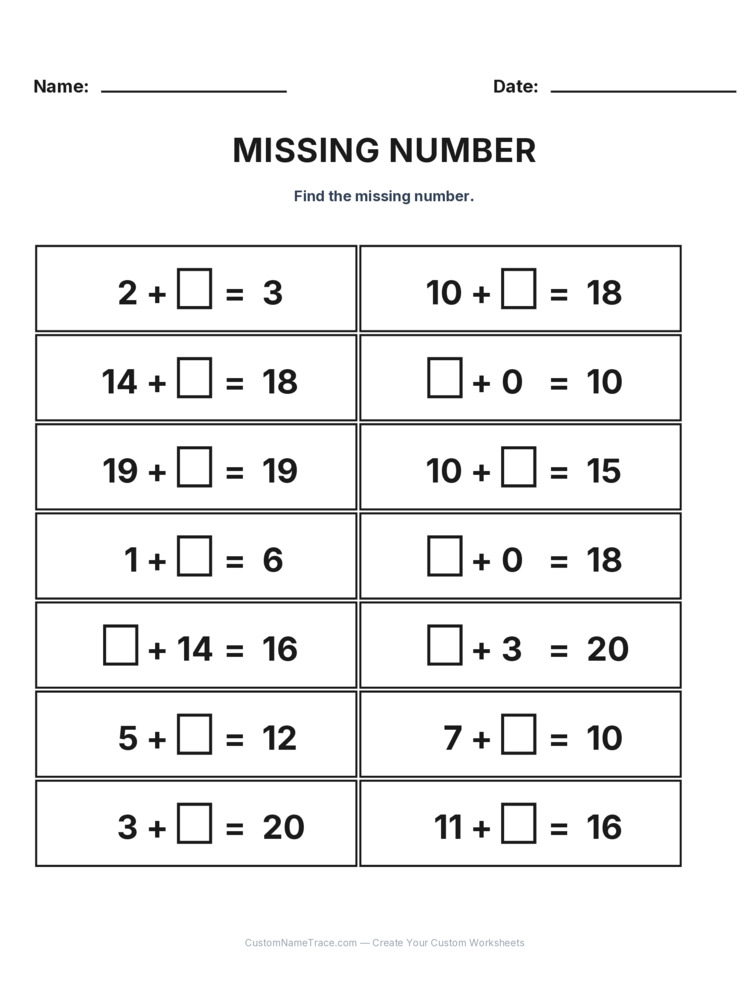
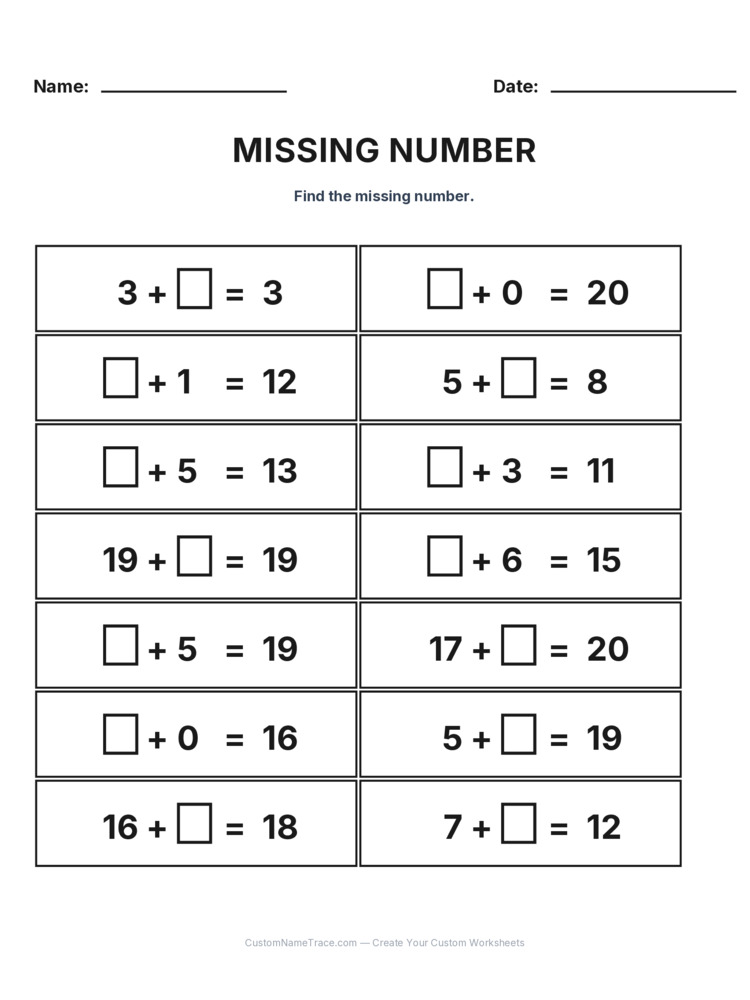
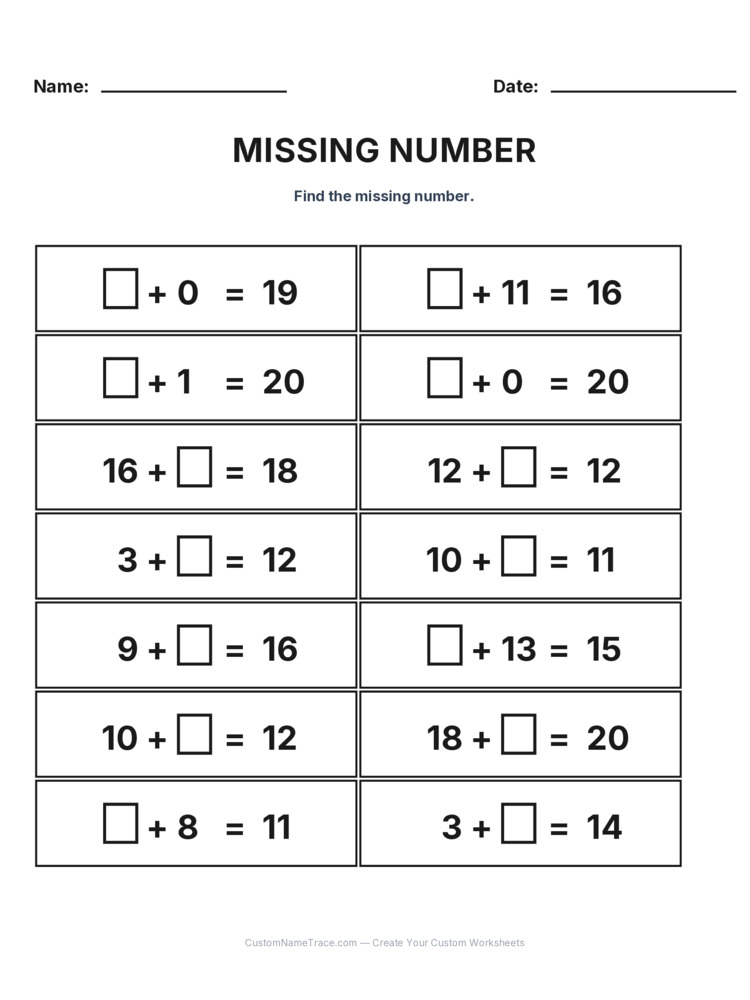
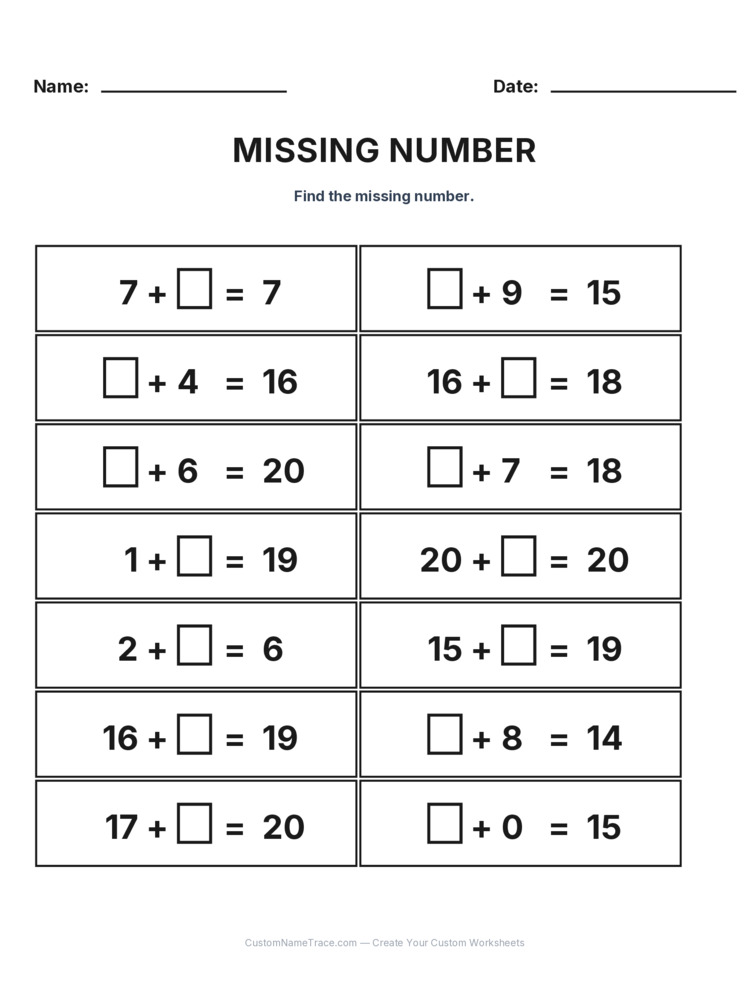
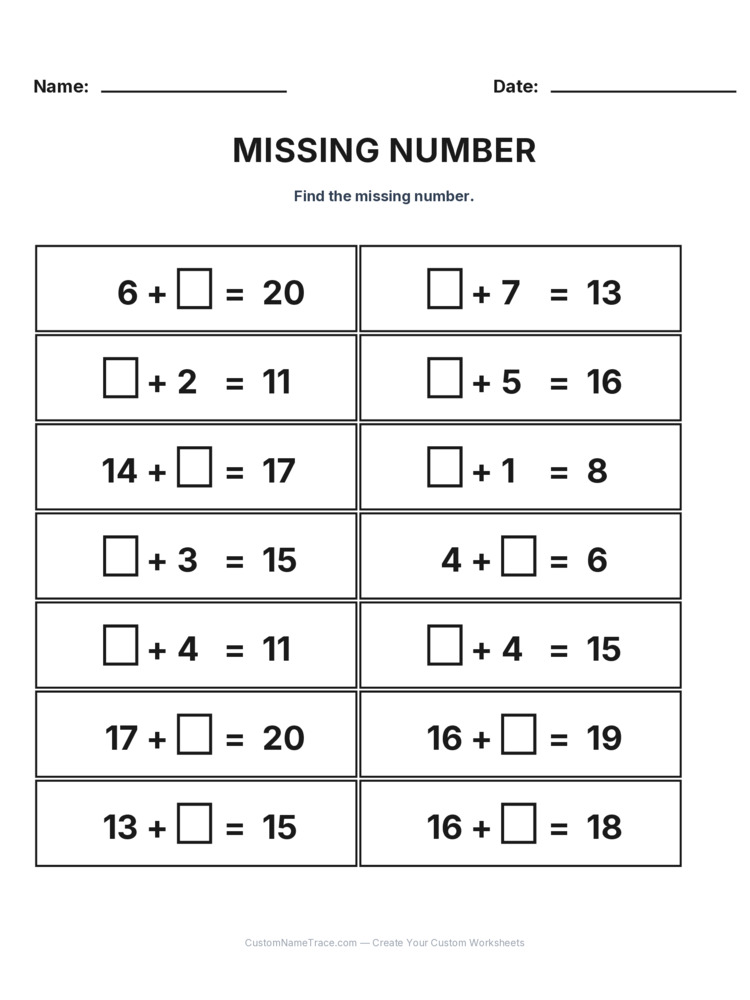
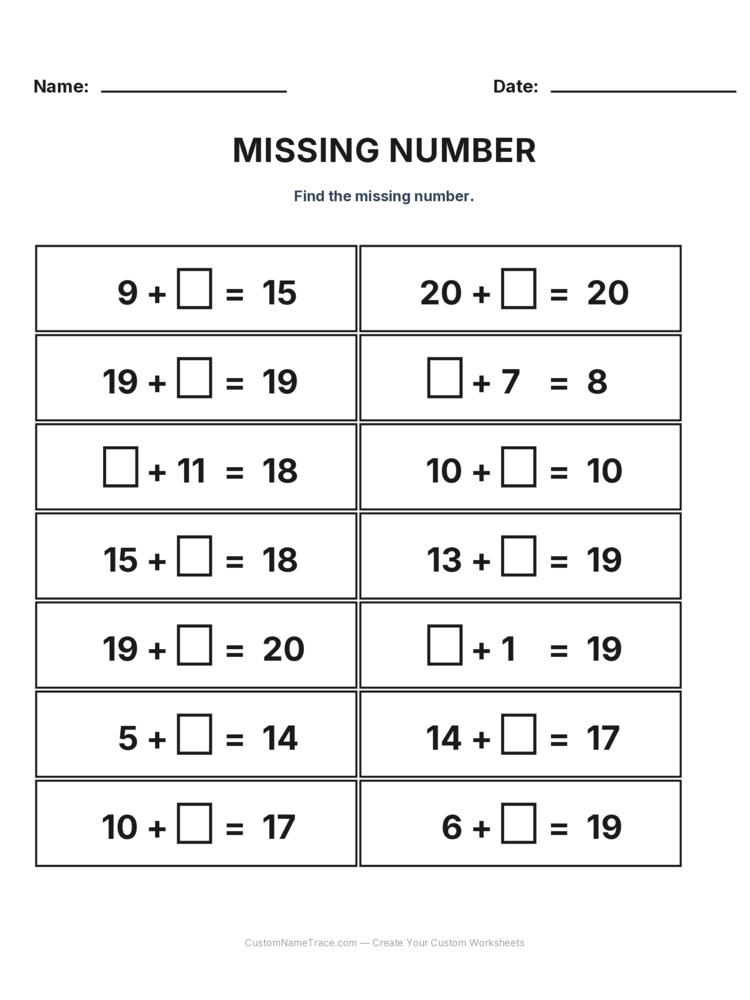
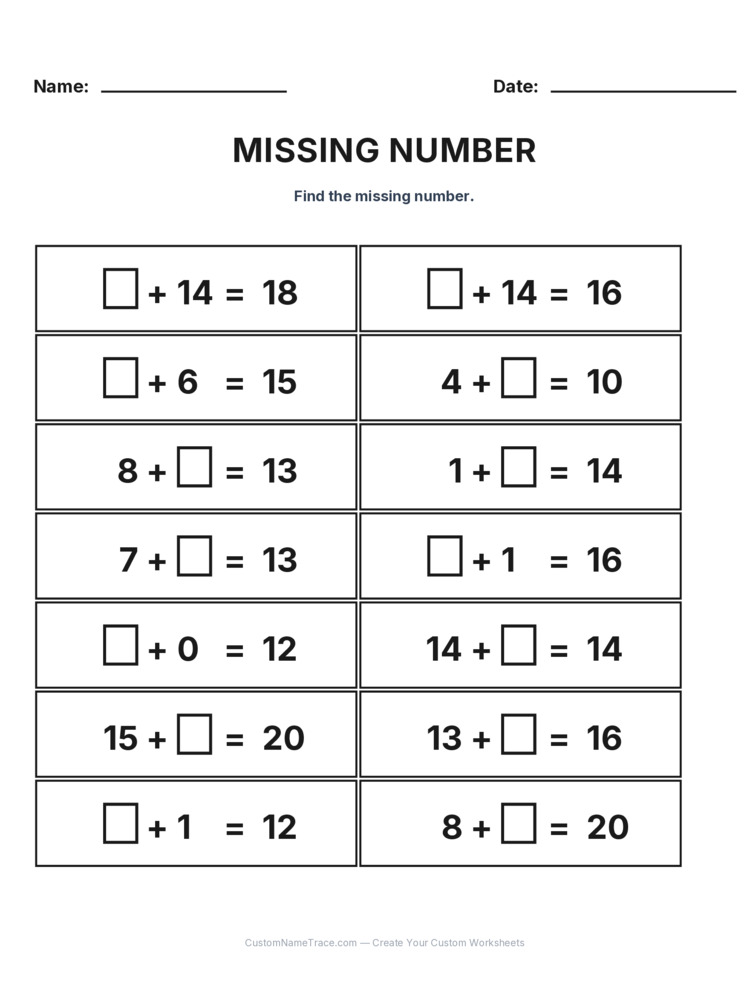
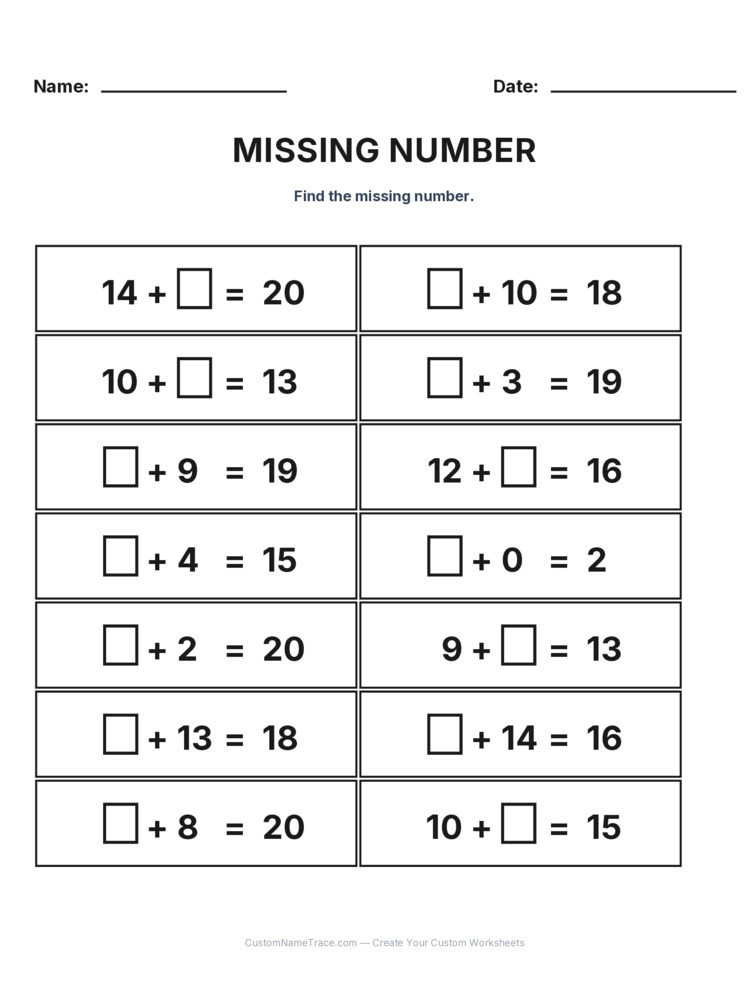
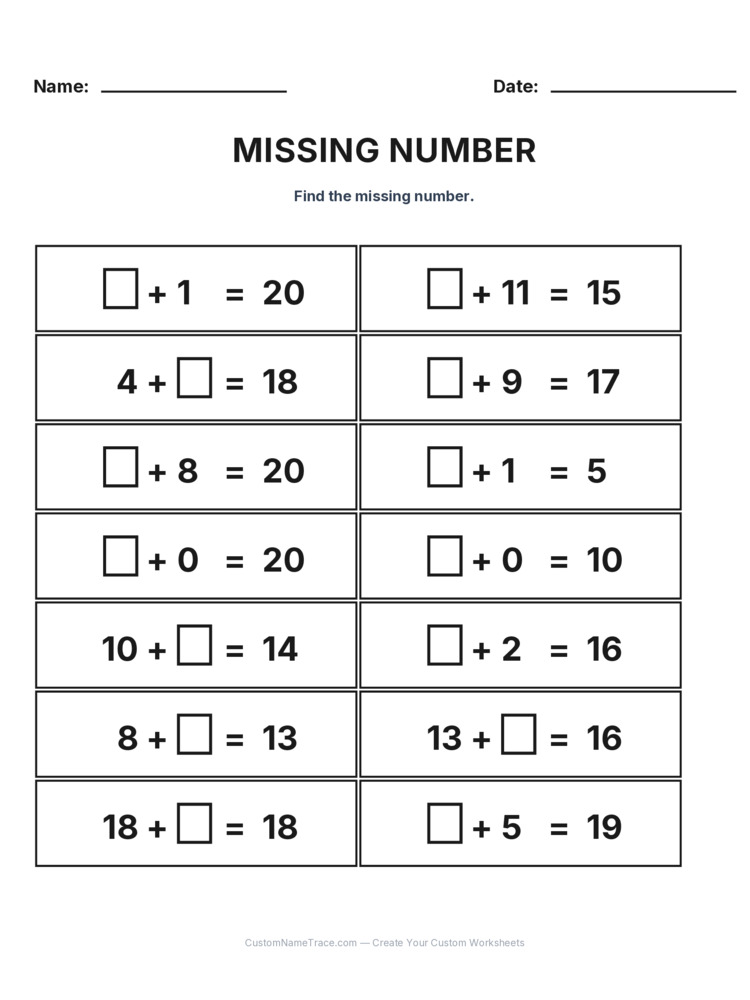
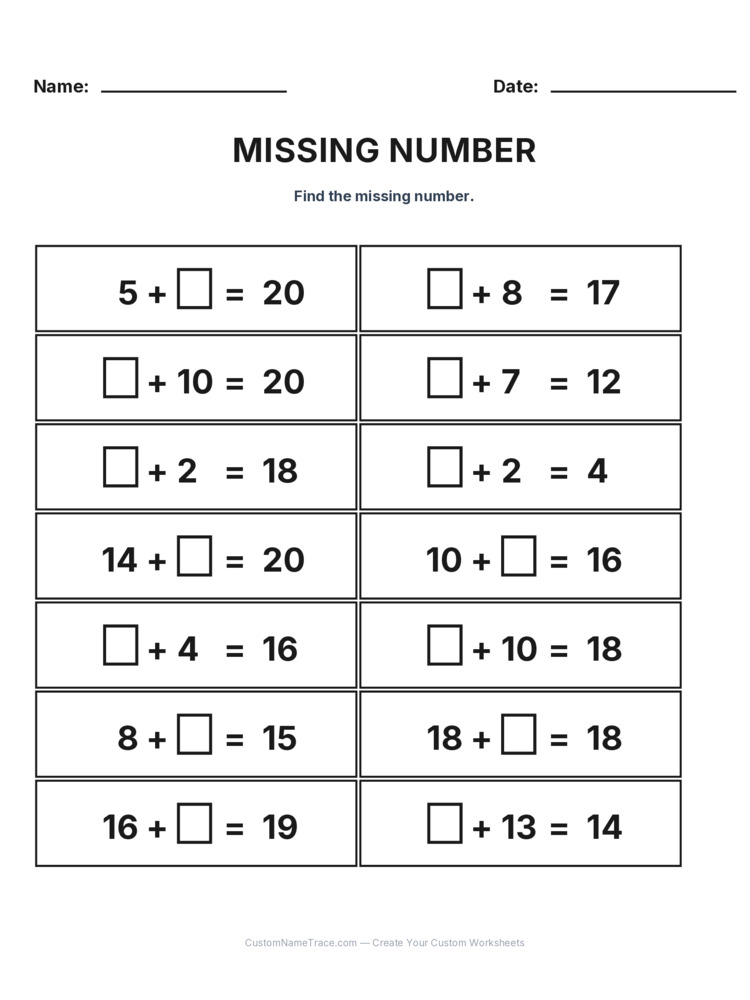
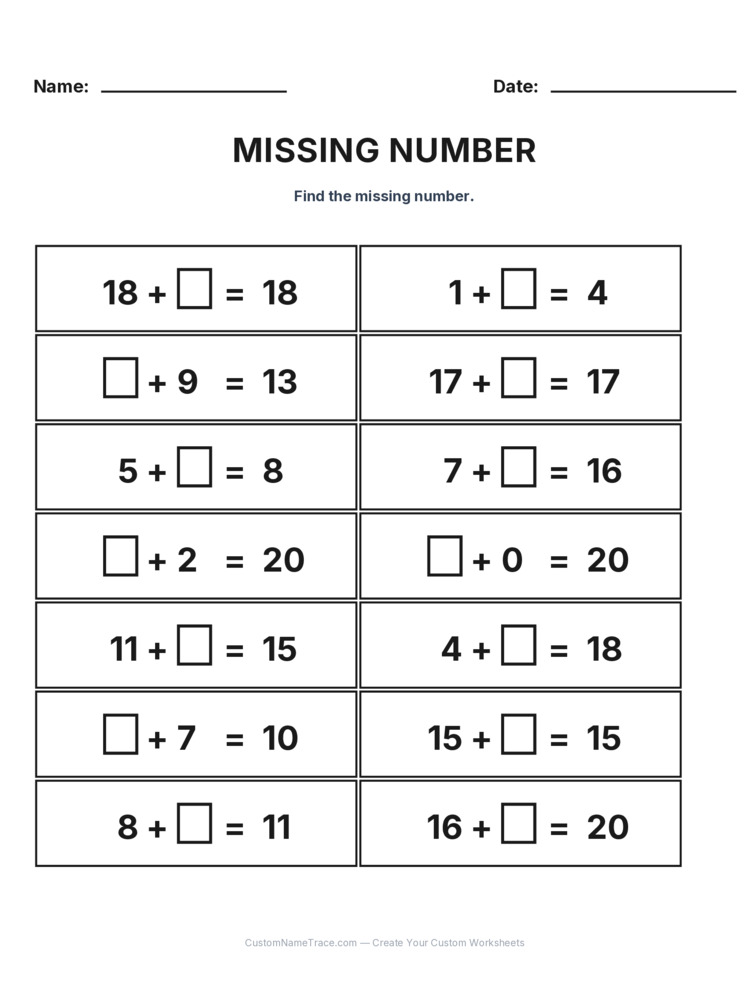
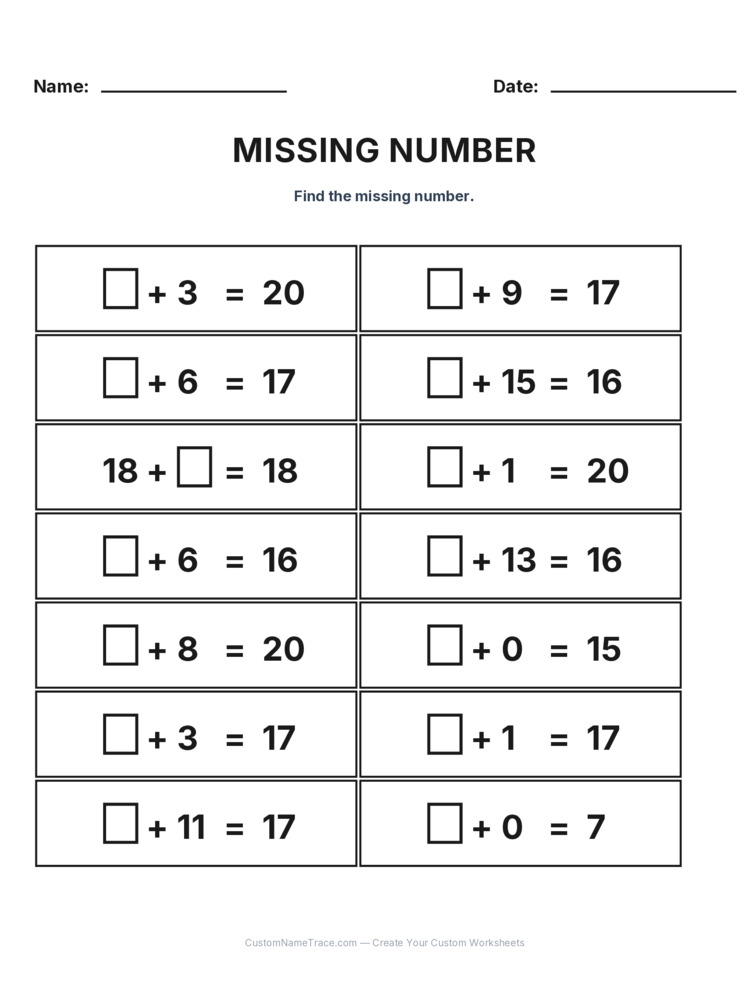
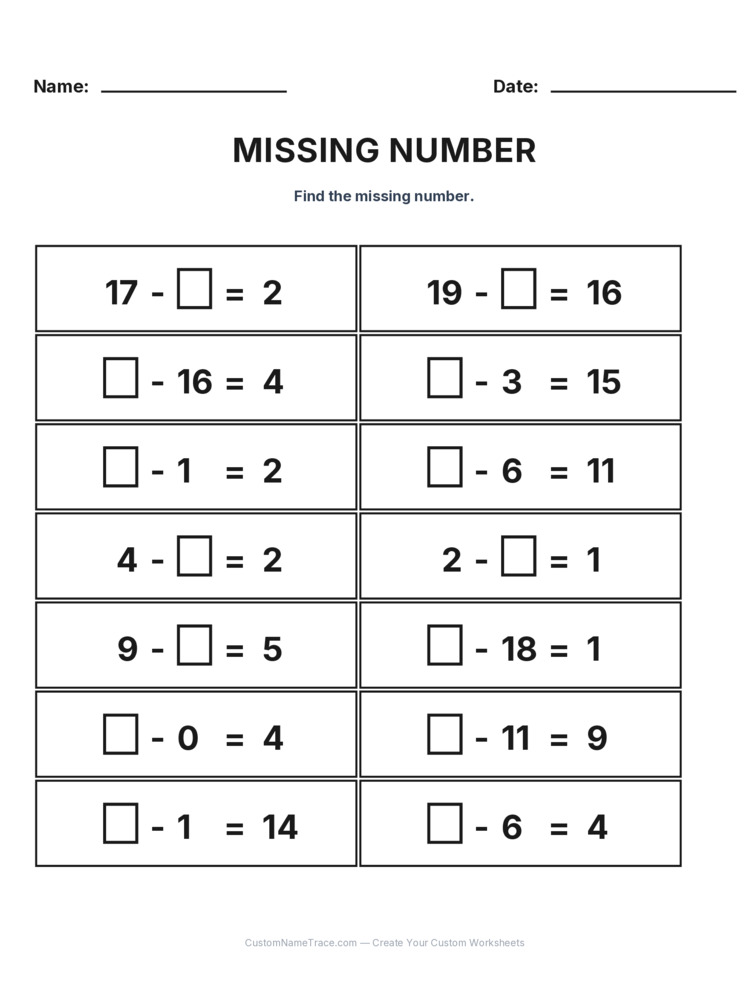
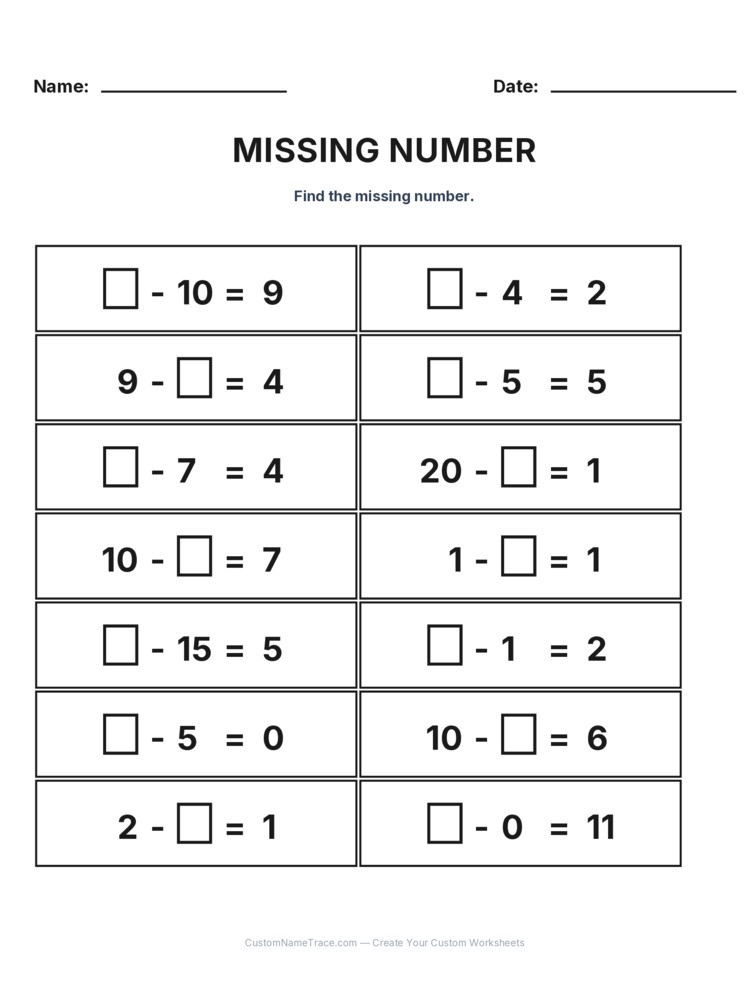
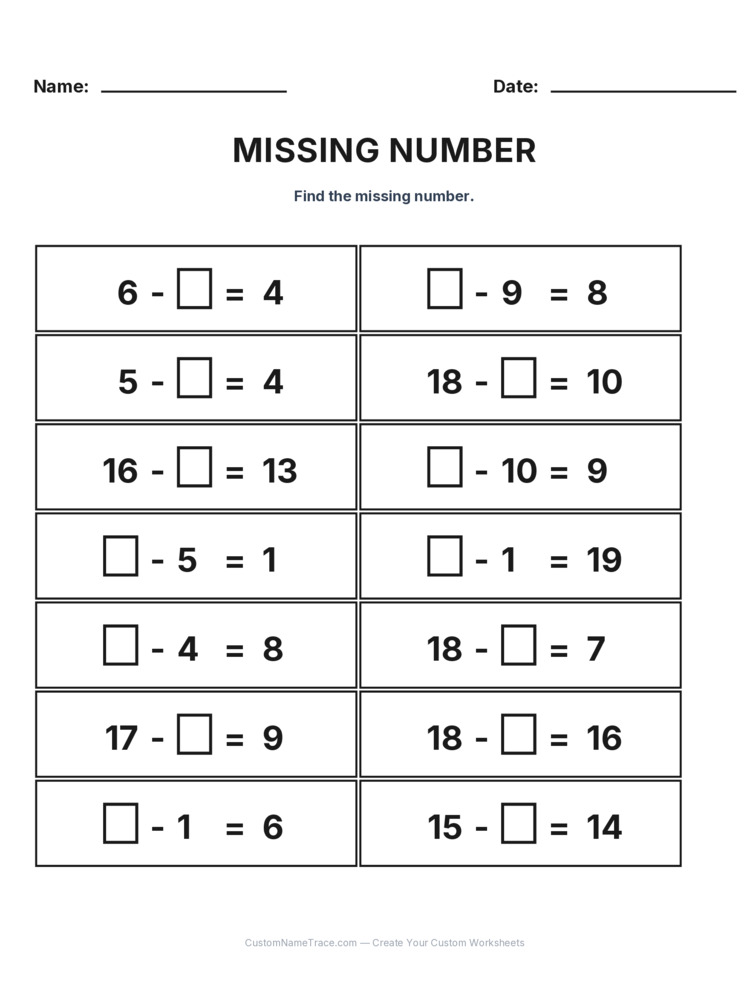
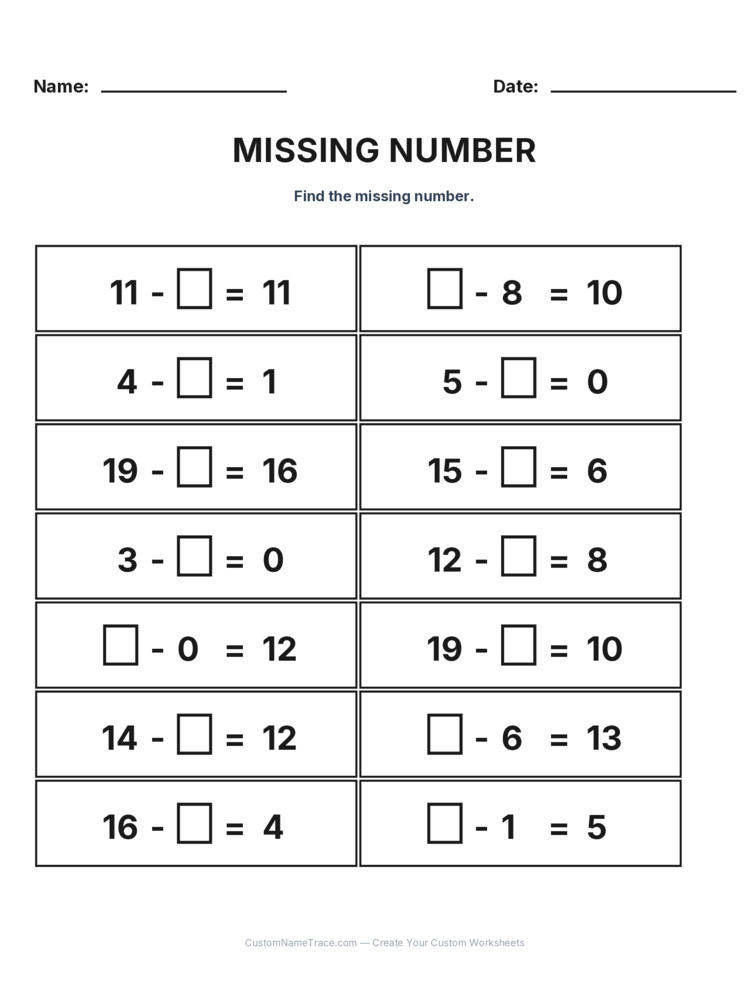
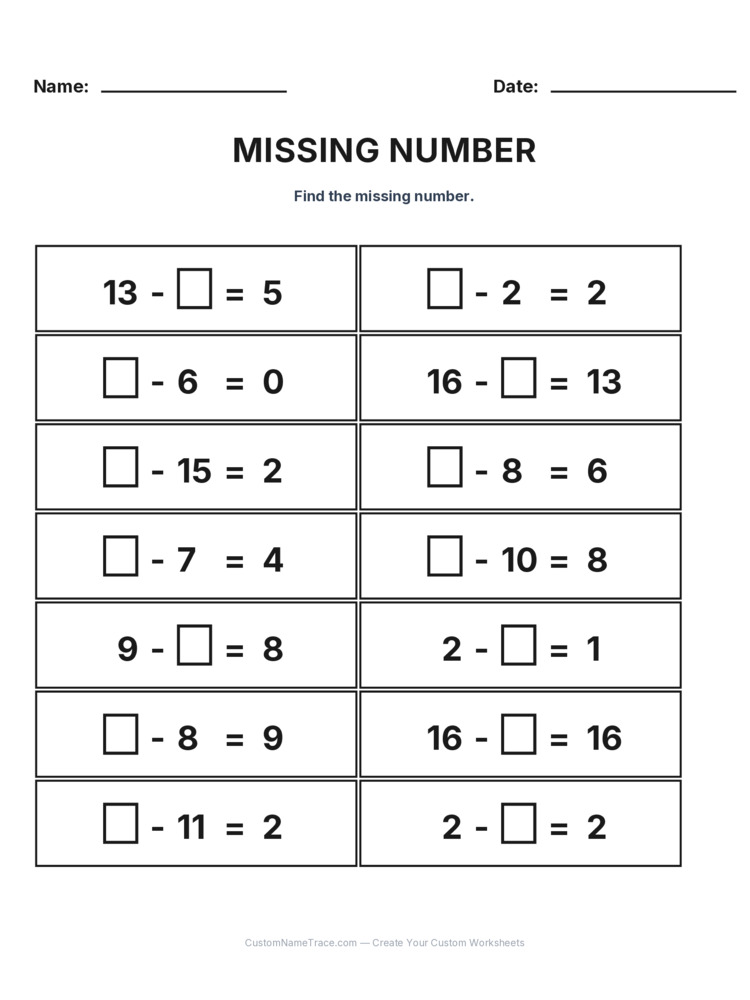
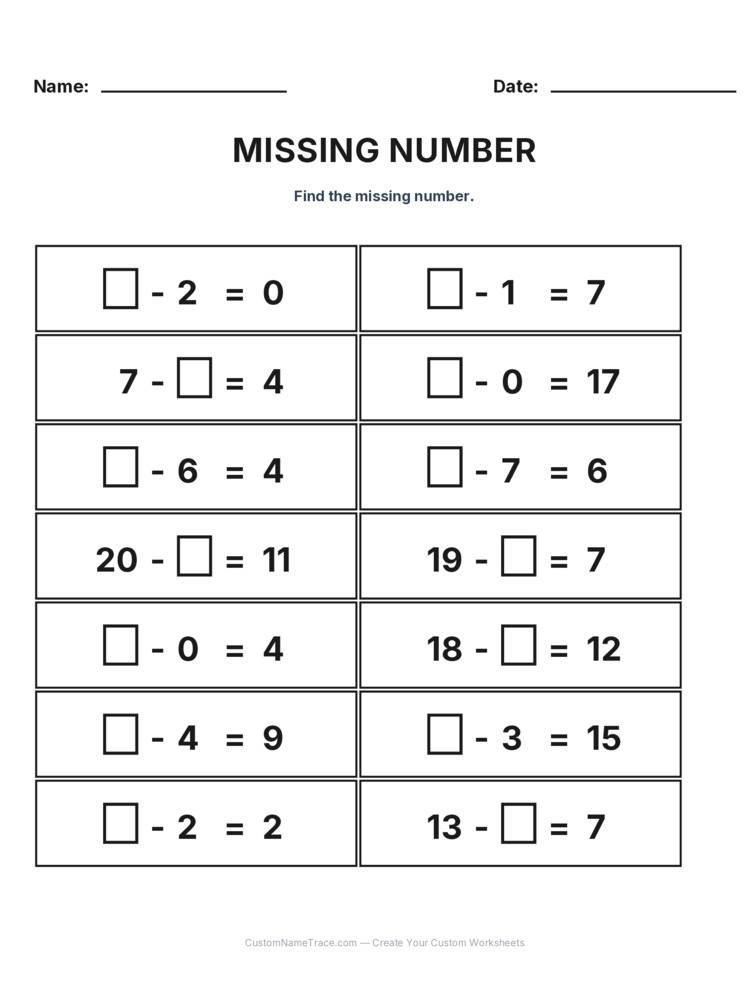
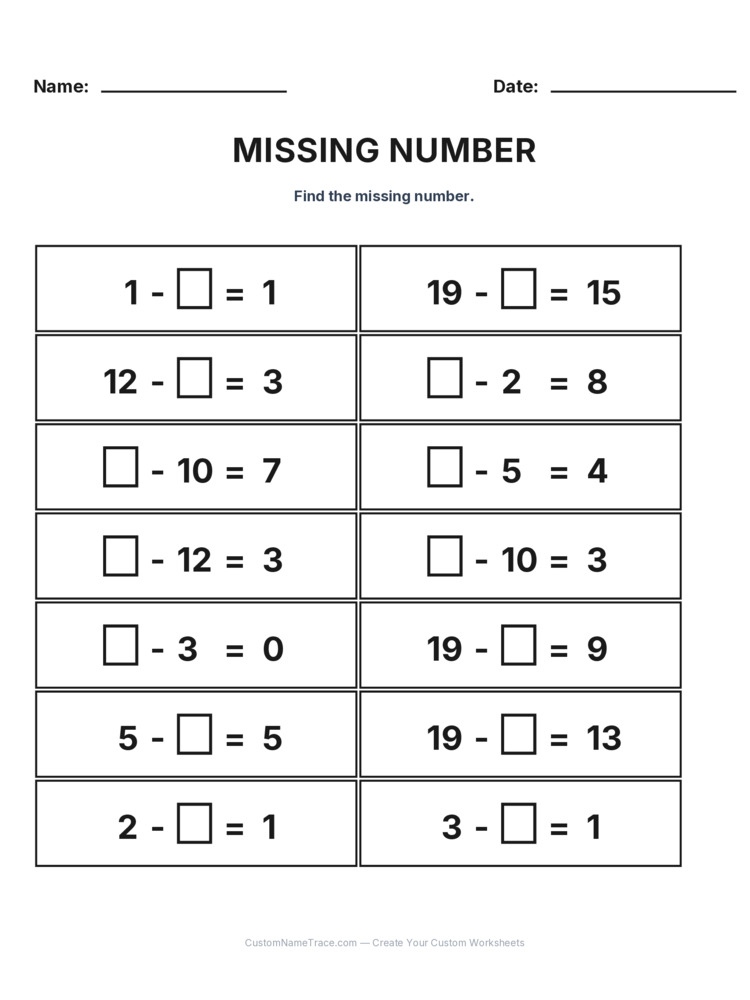
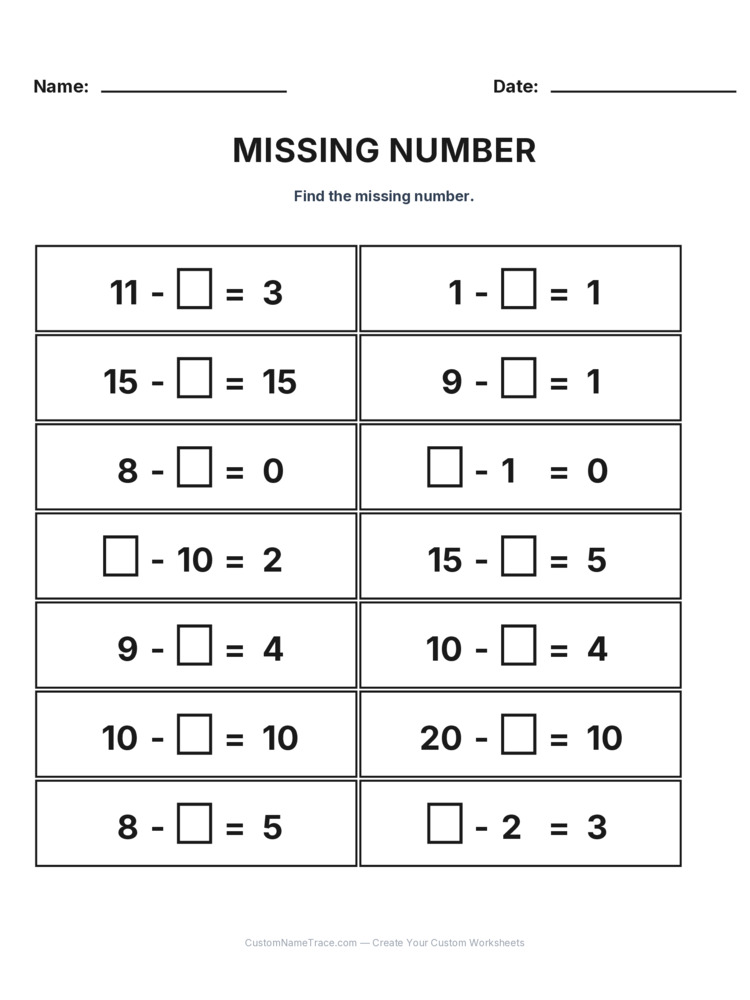
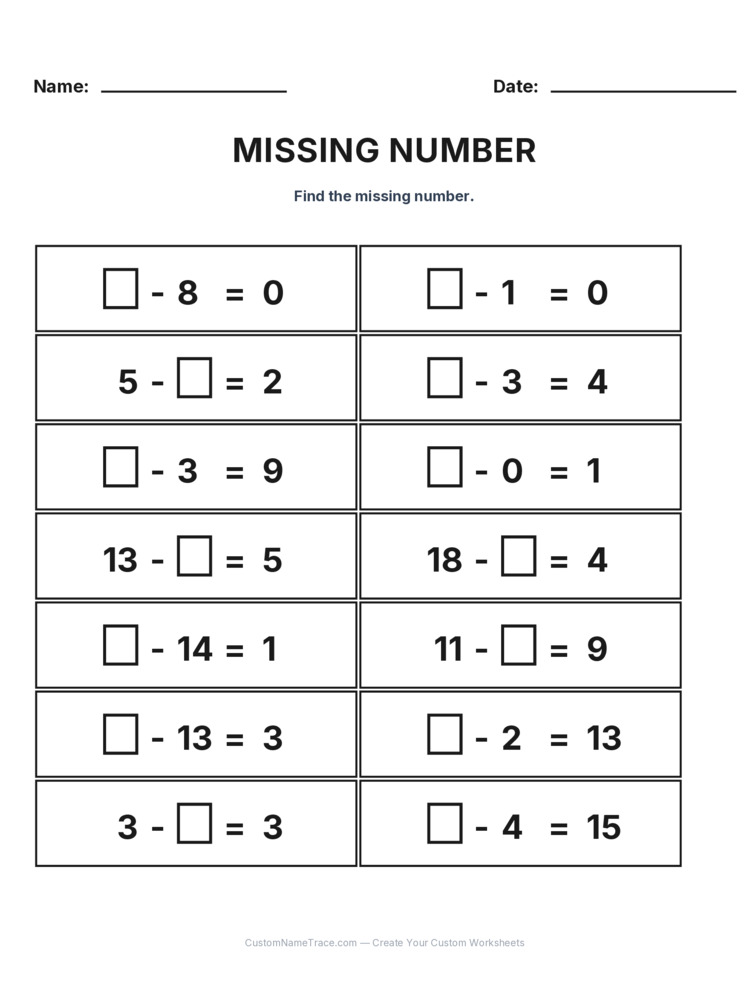
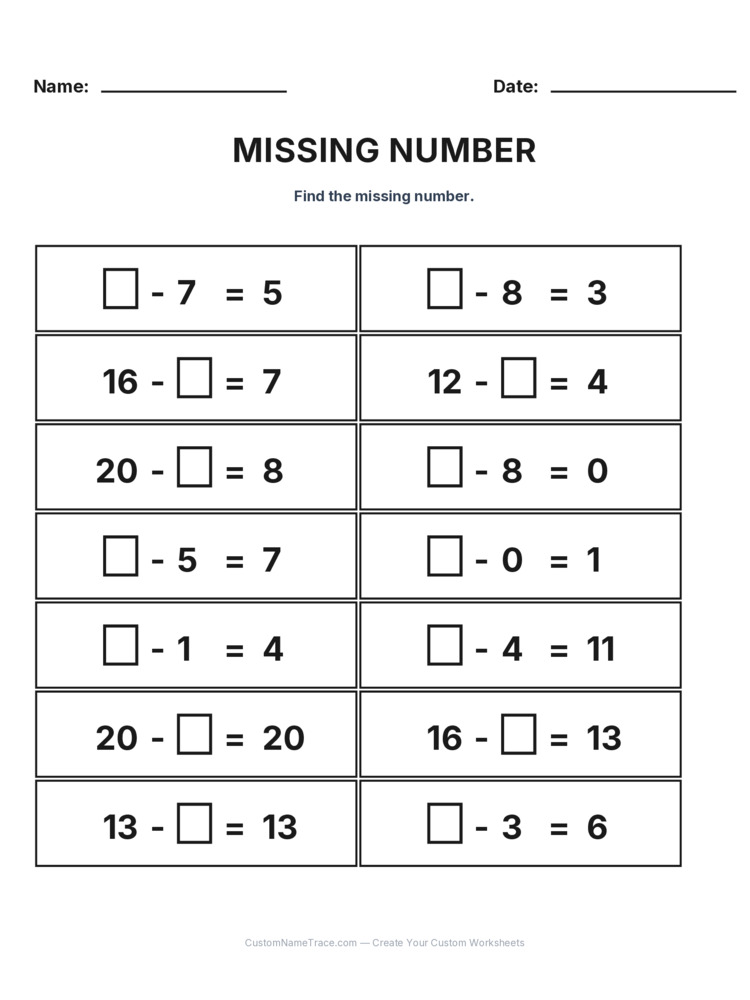
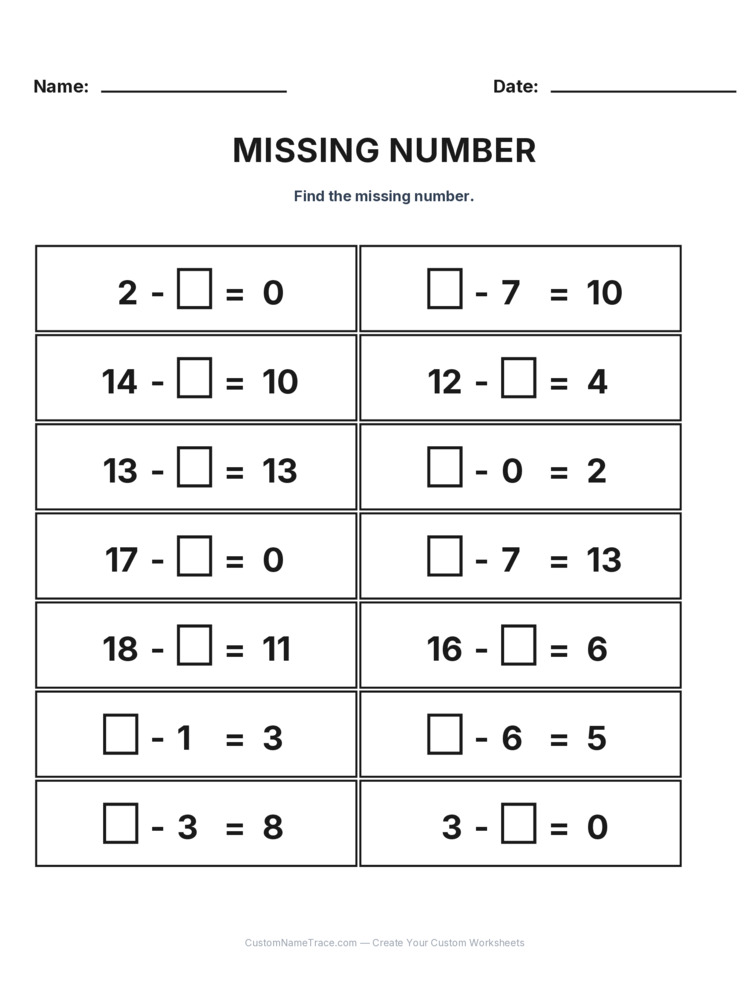
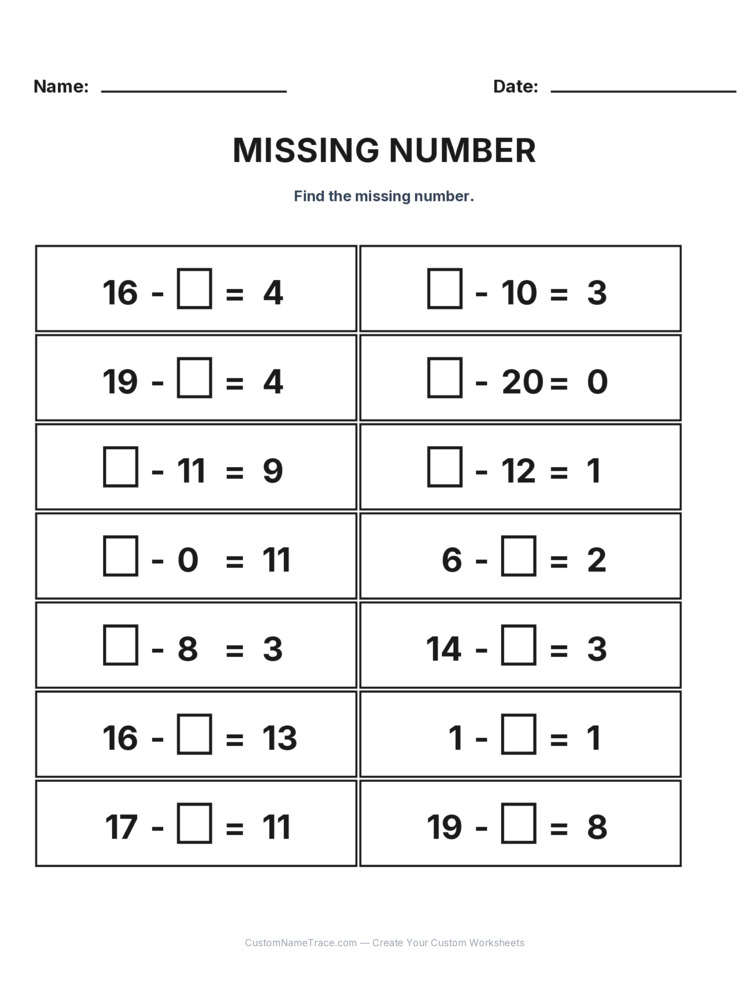
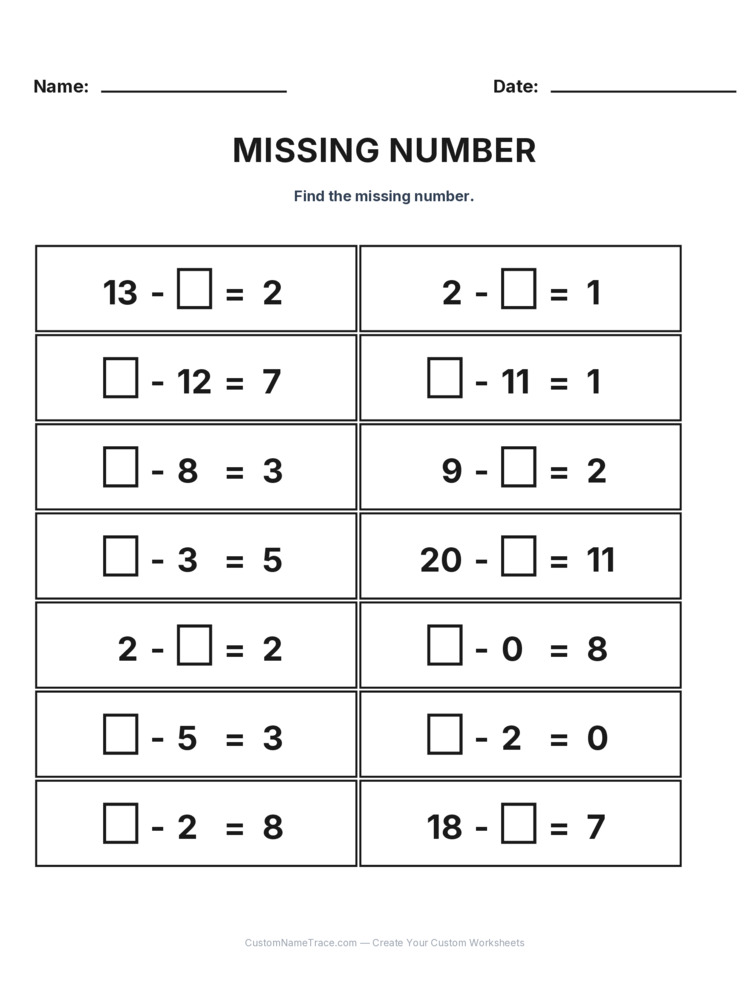
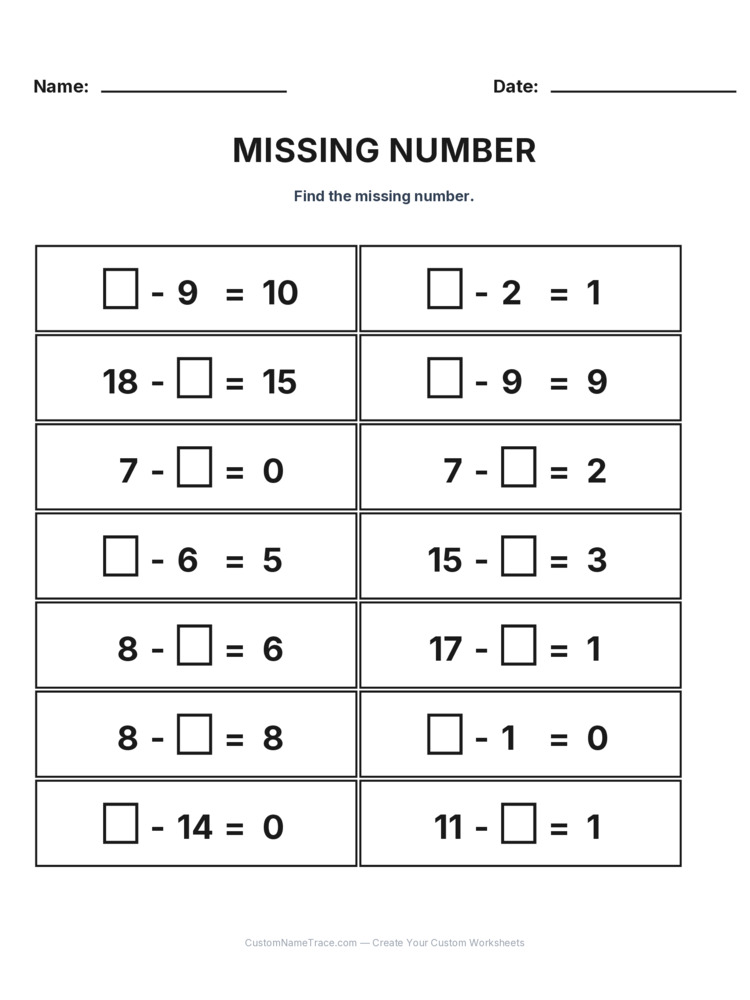
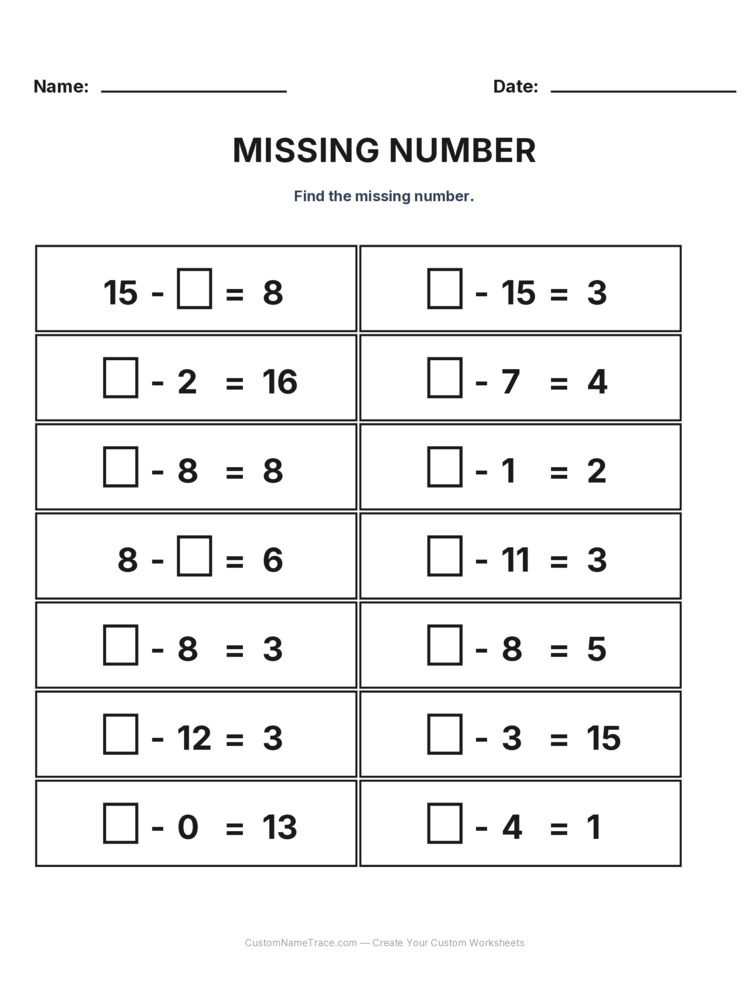
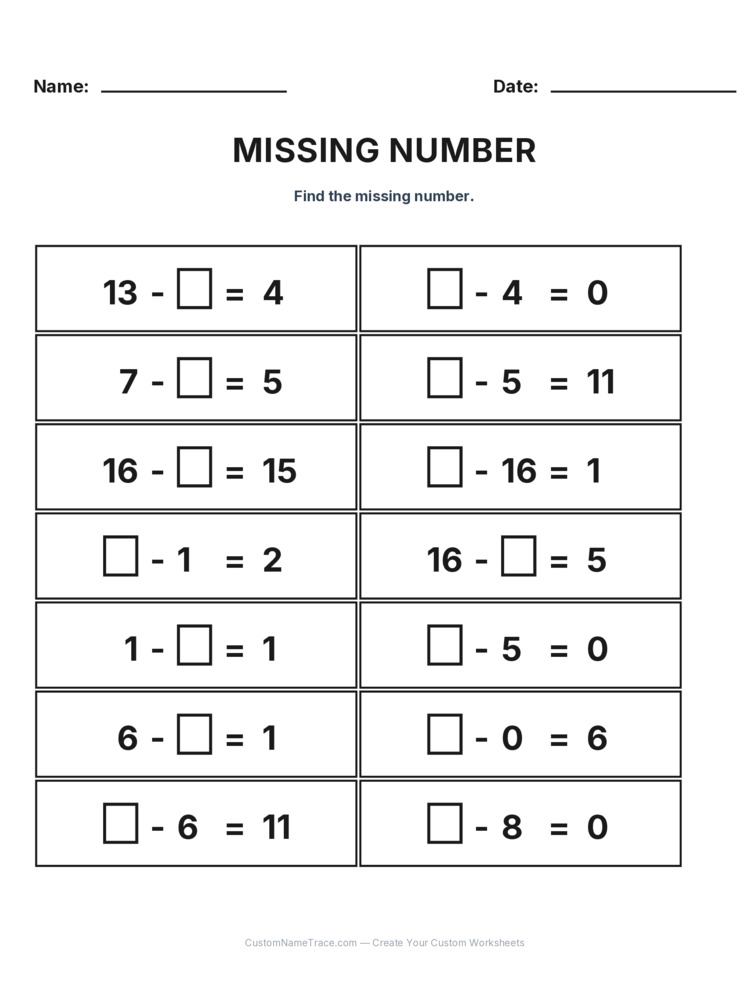
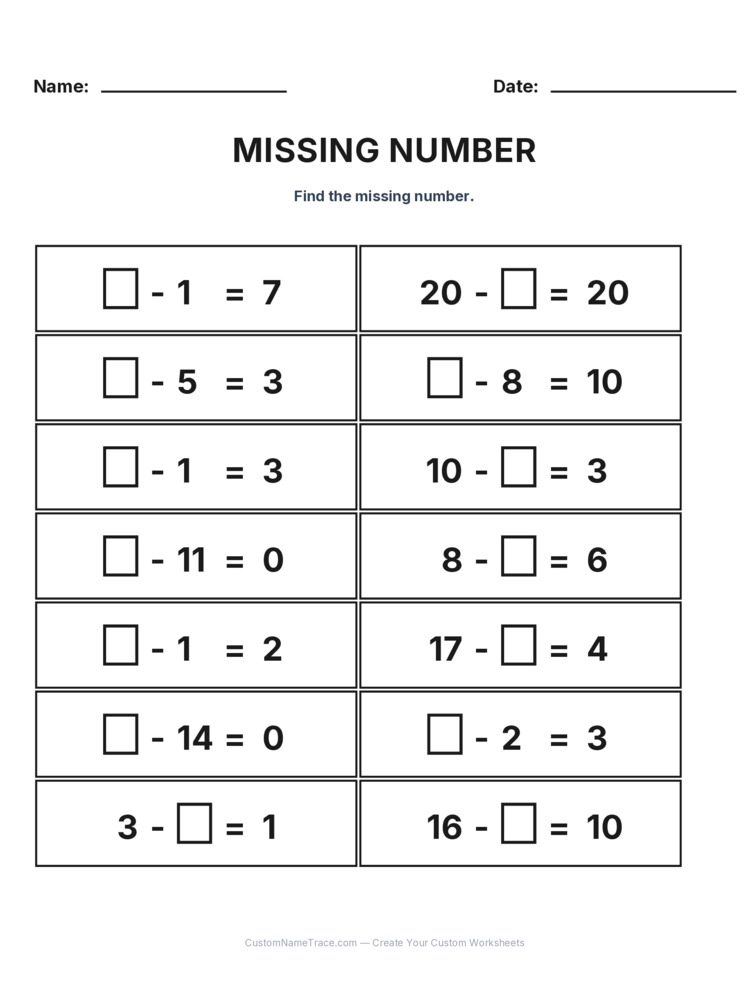
Missing Number — working the operation backward
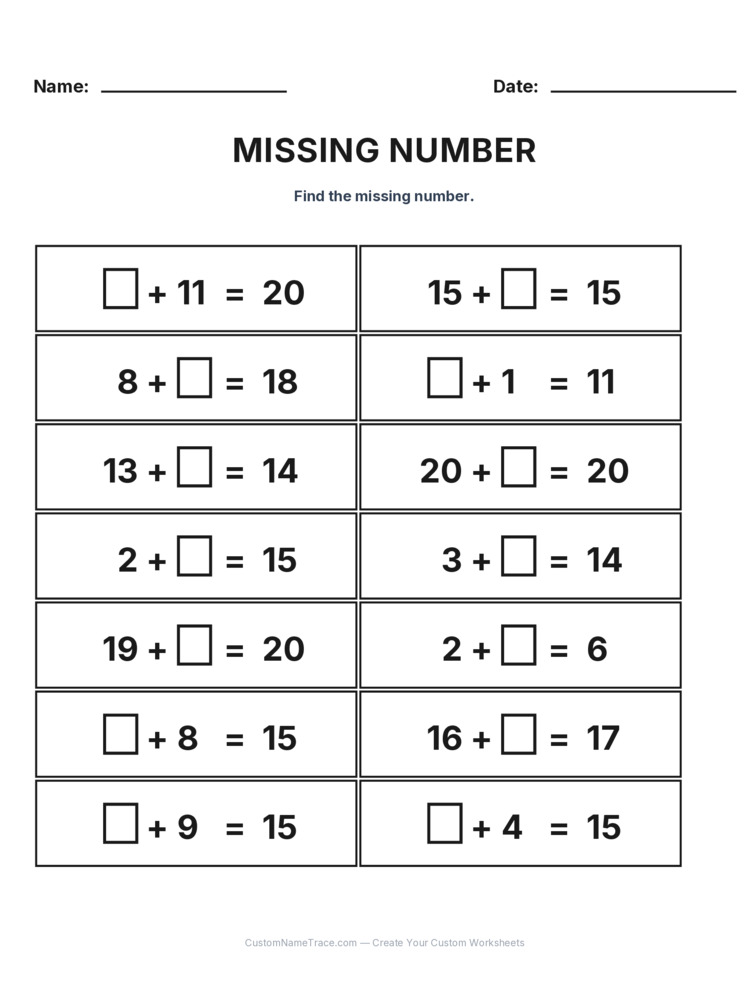
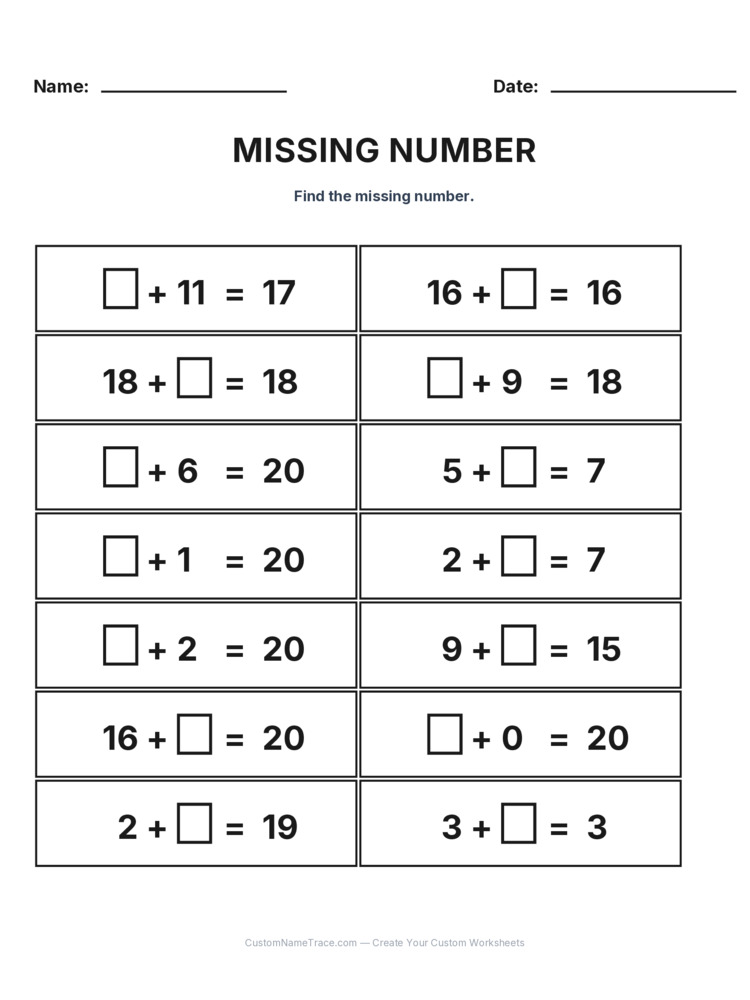
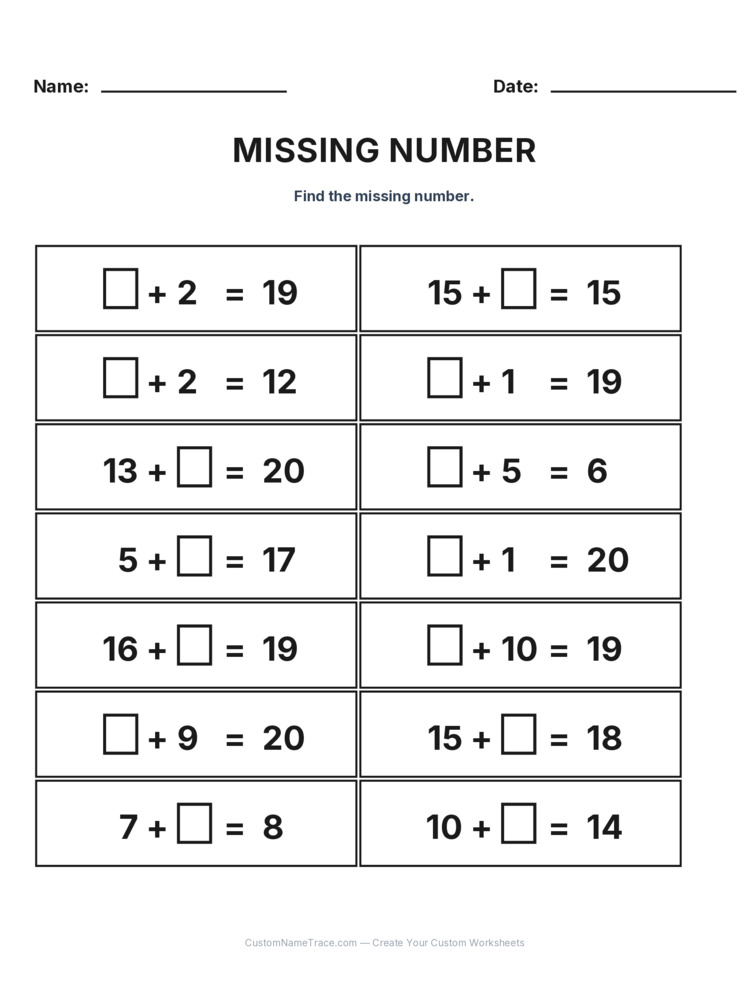
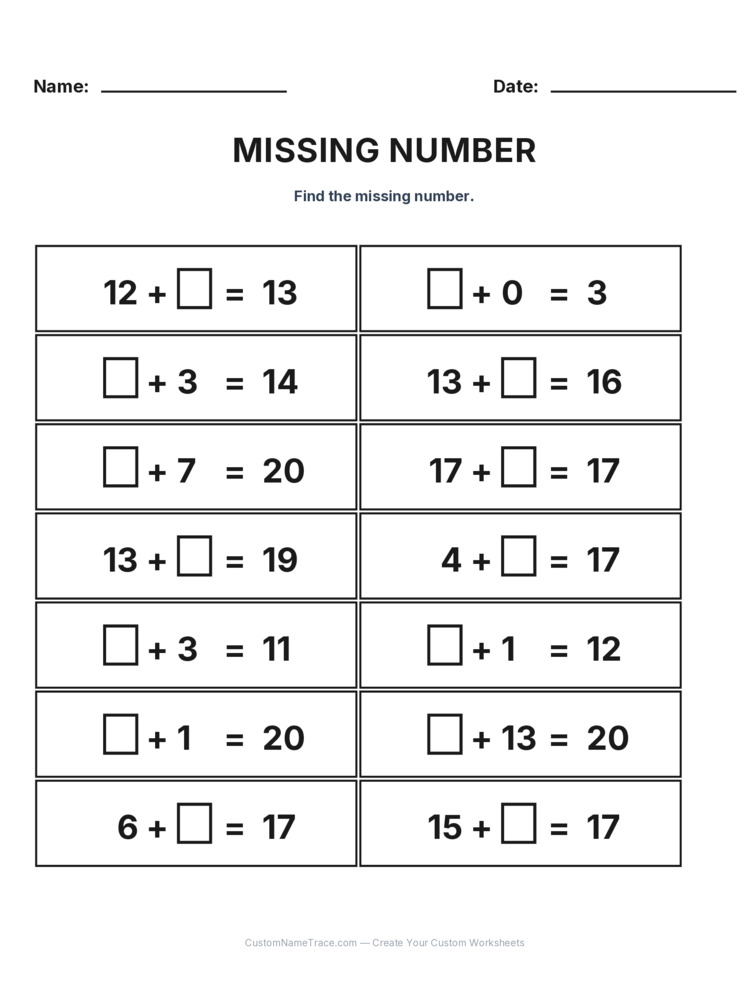
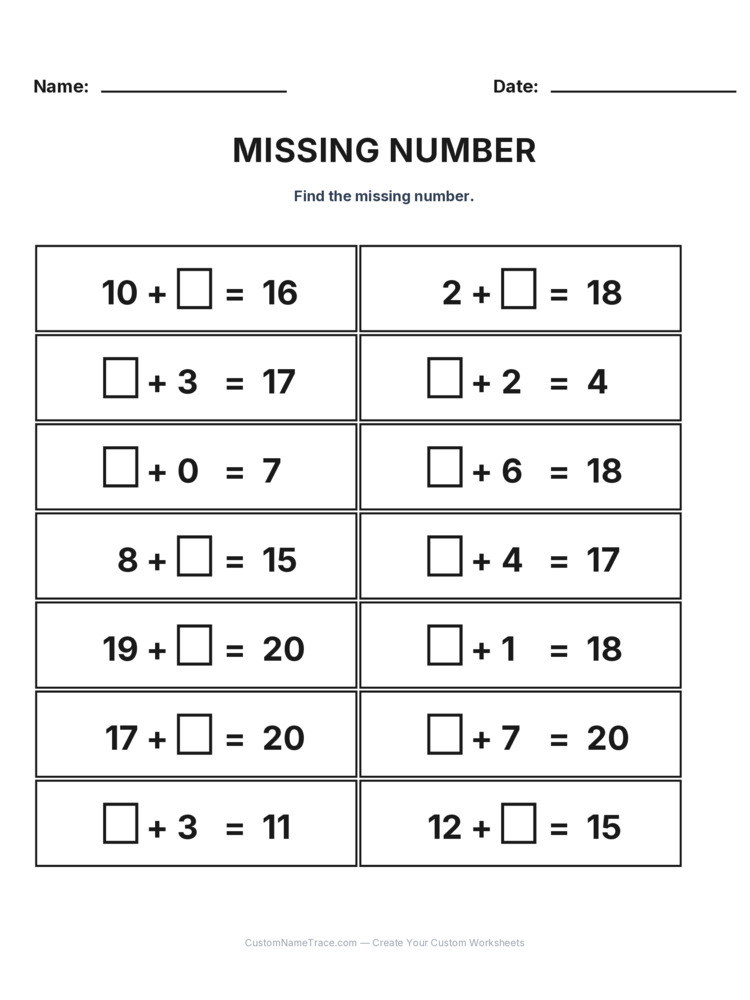
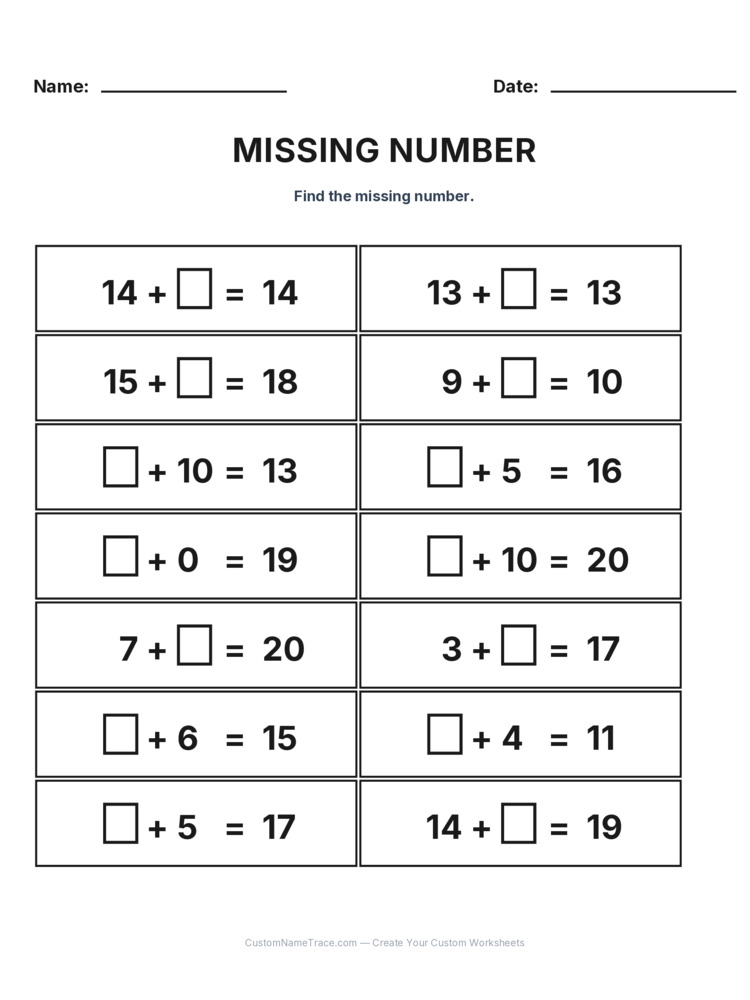
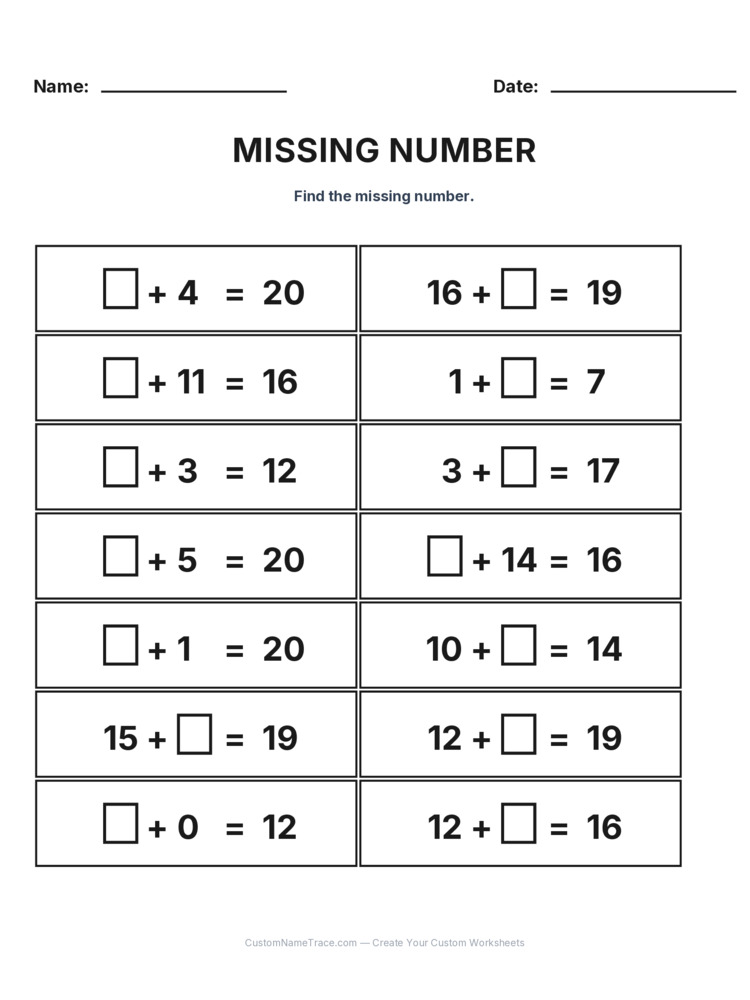
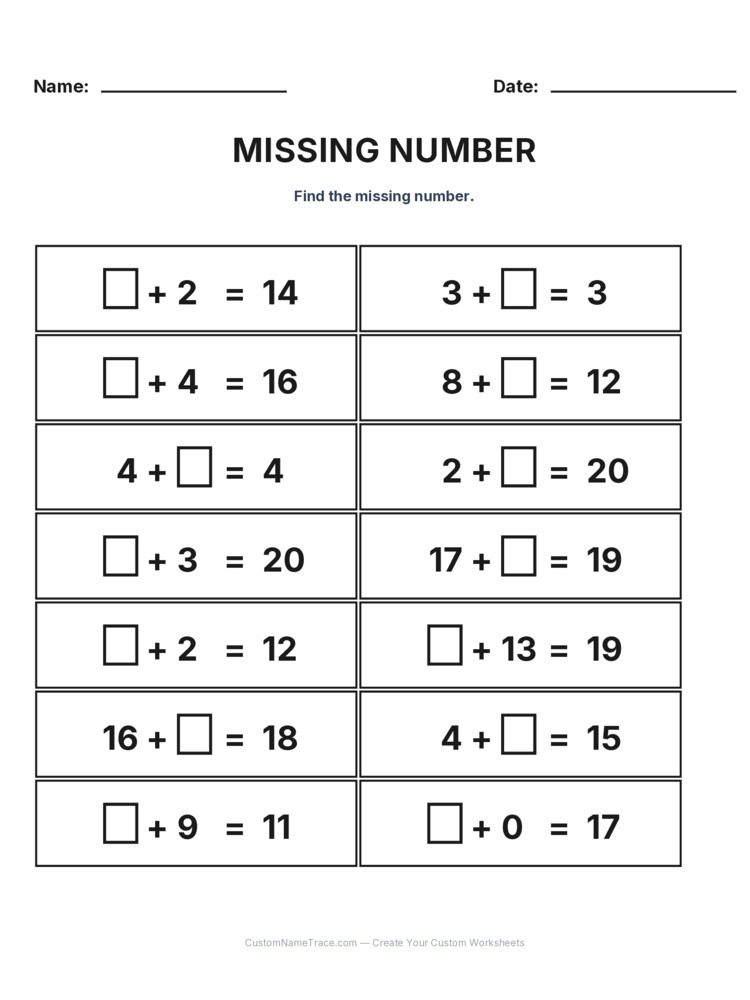
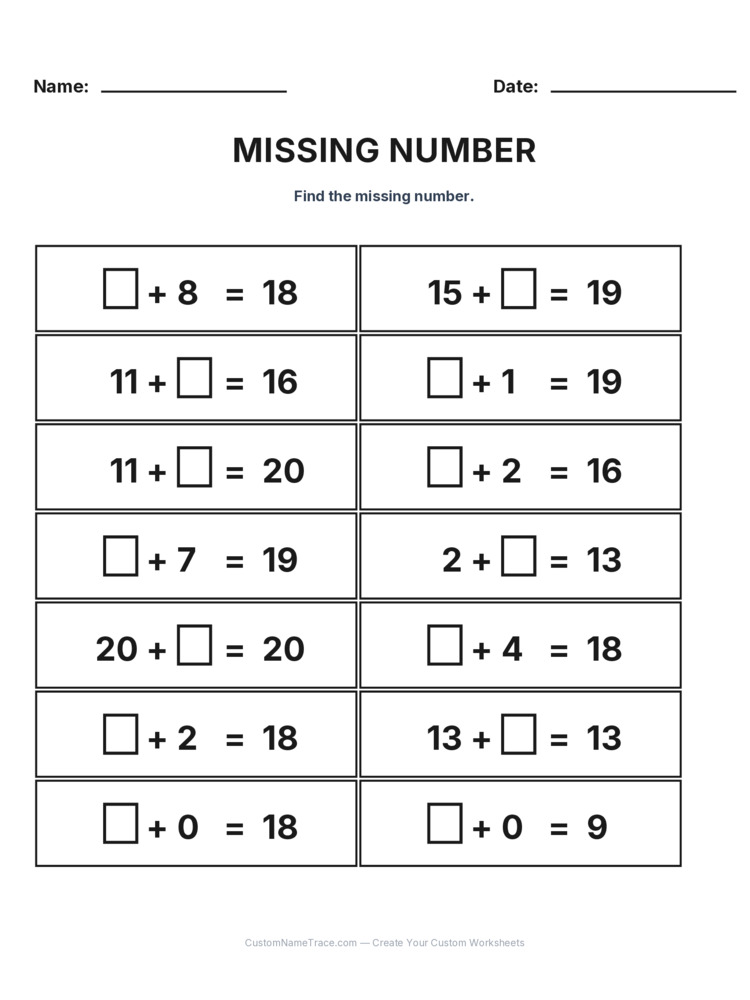
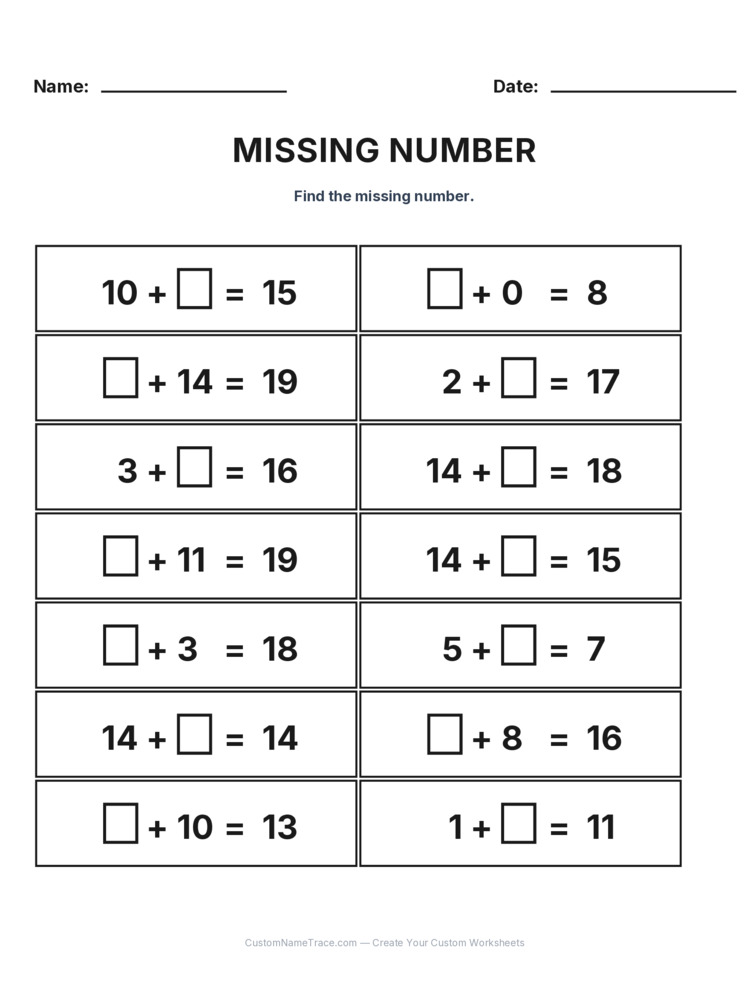
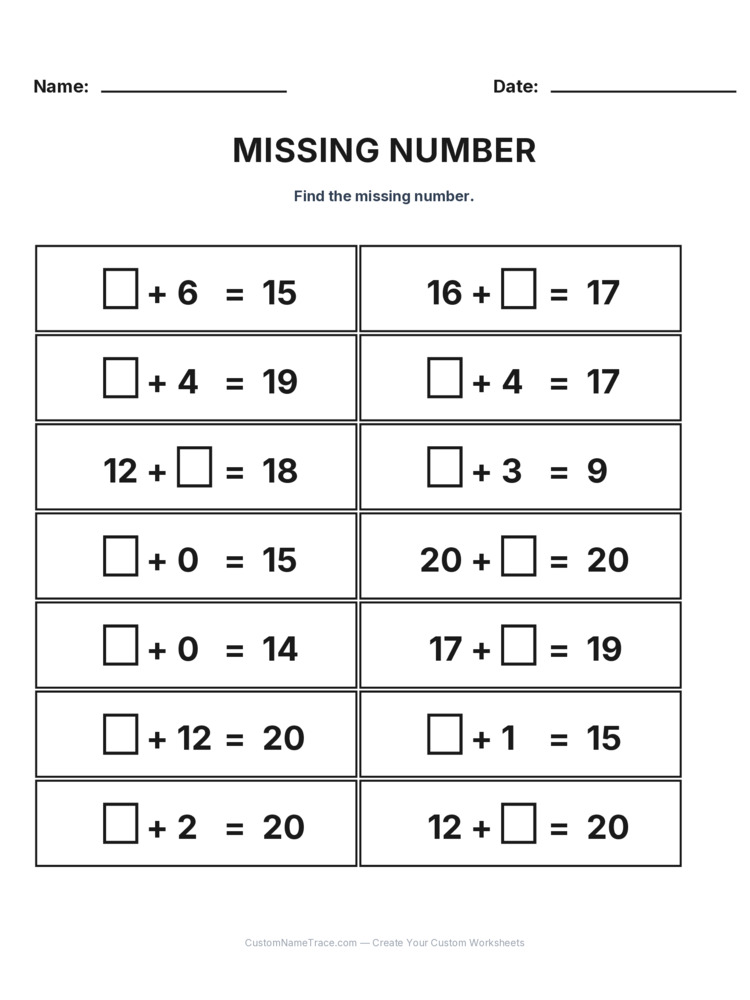
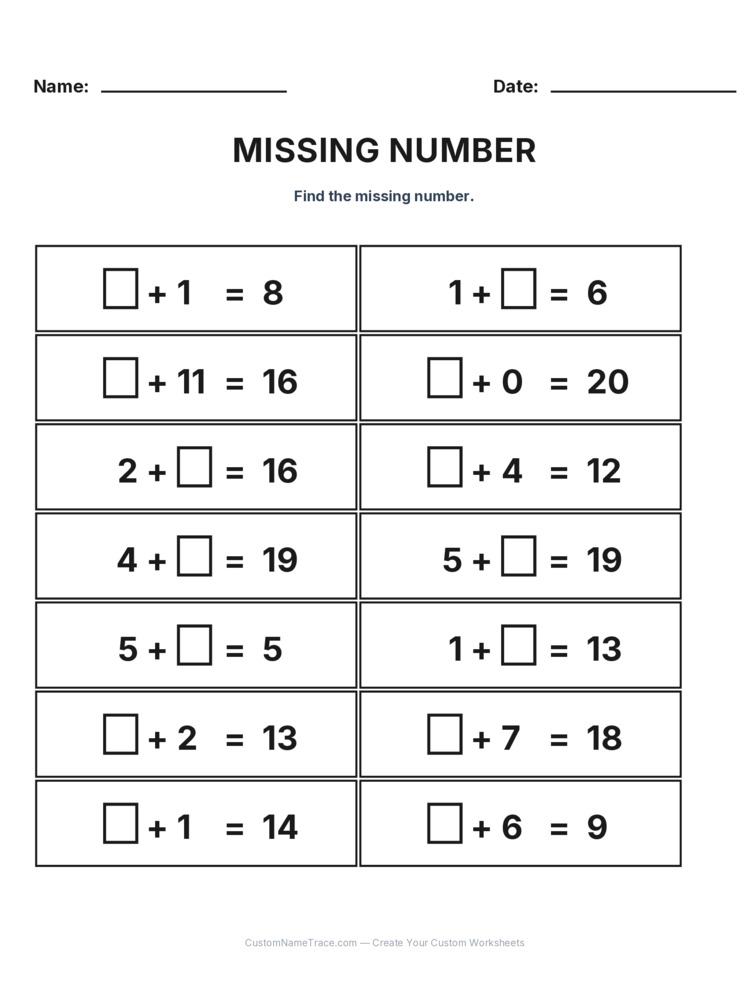
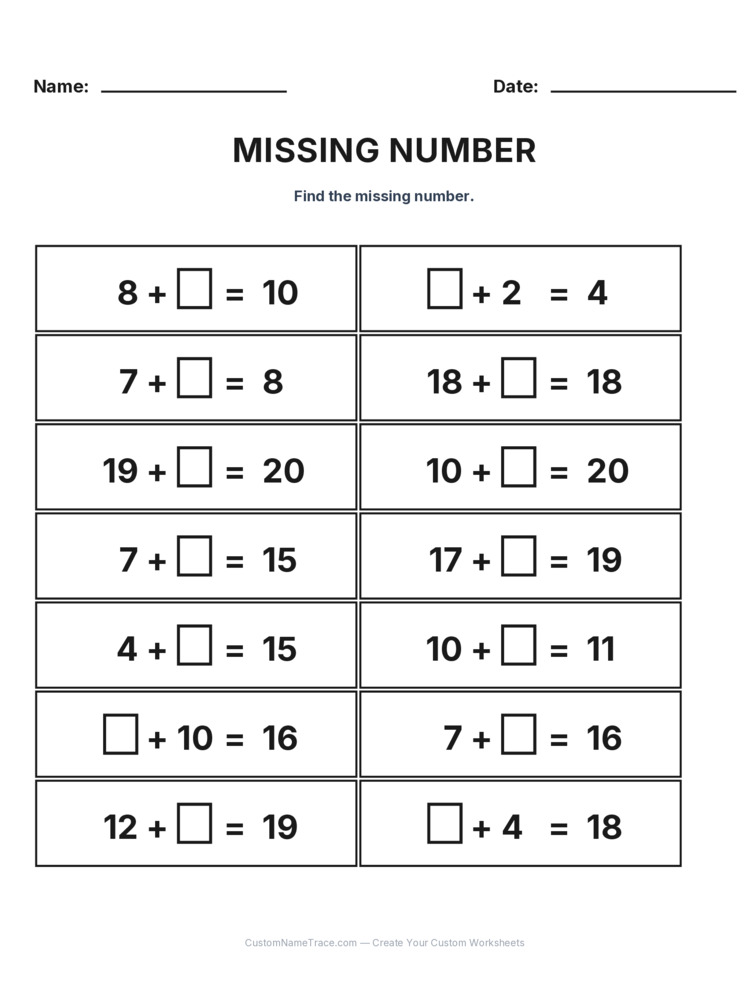
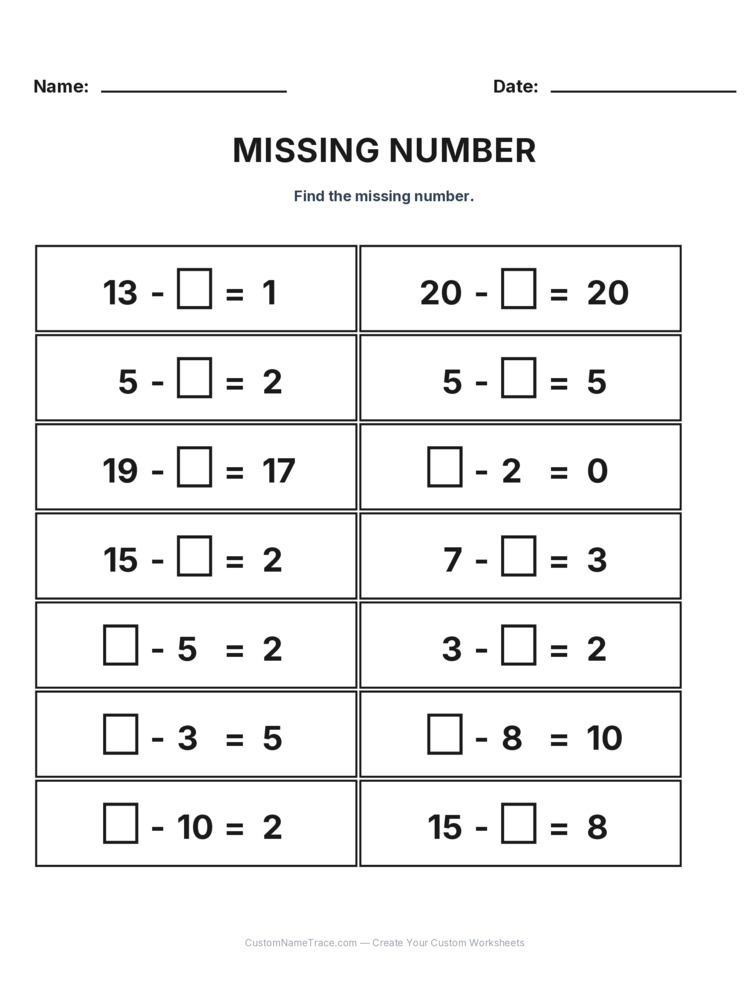
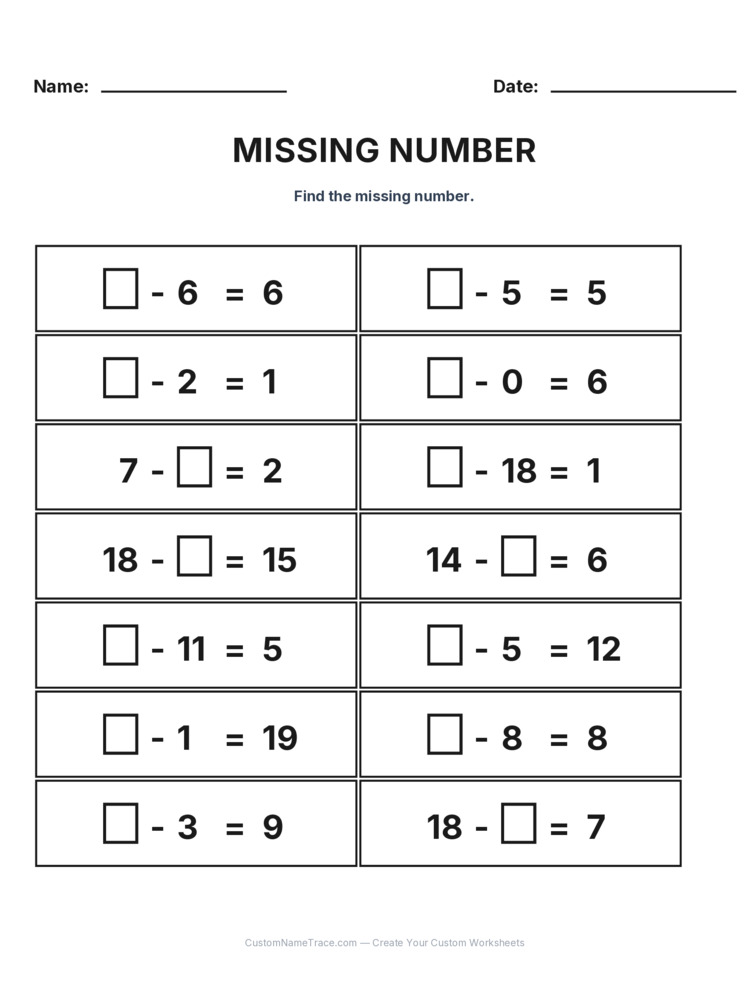
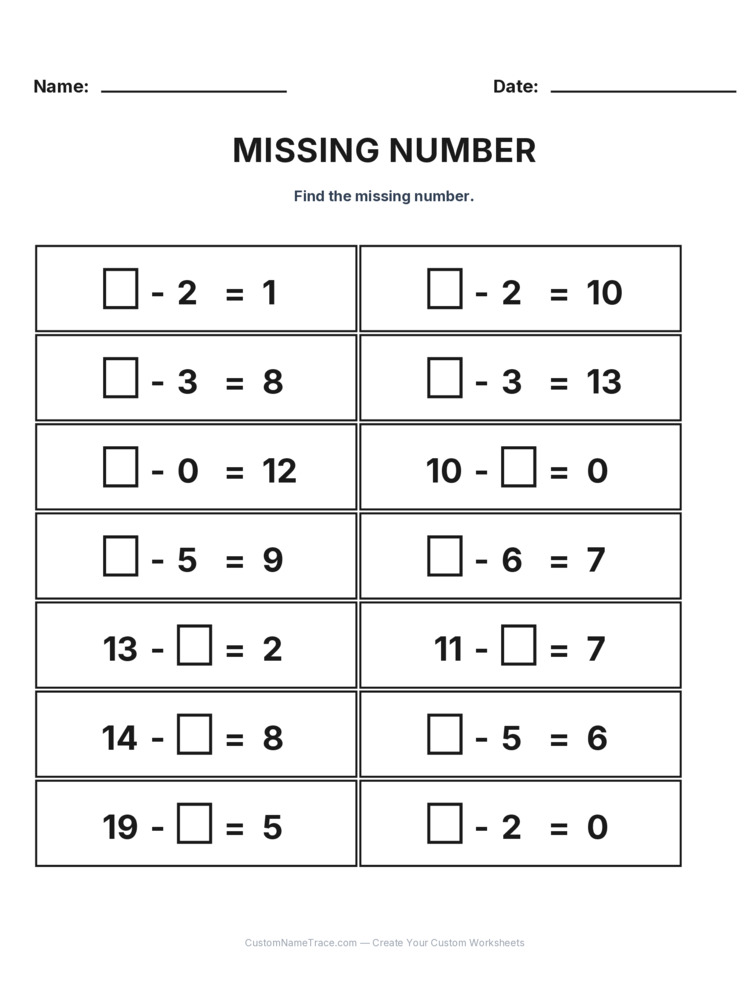
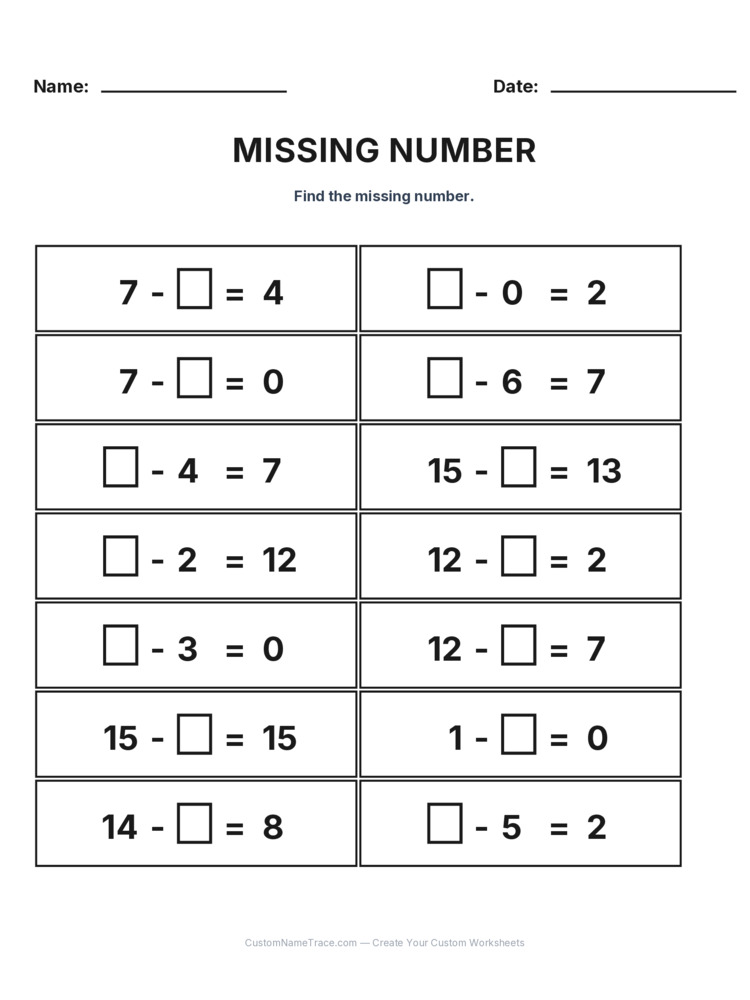
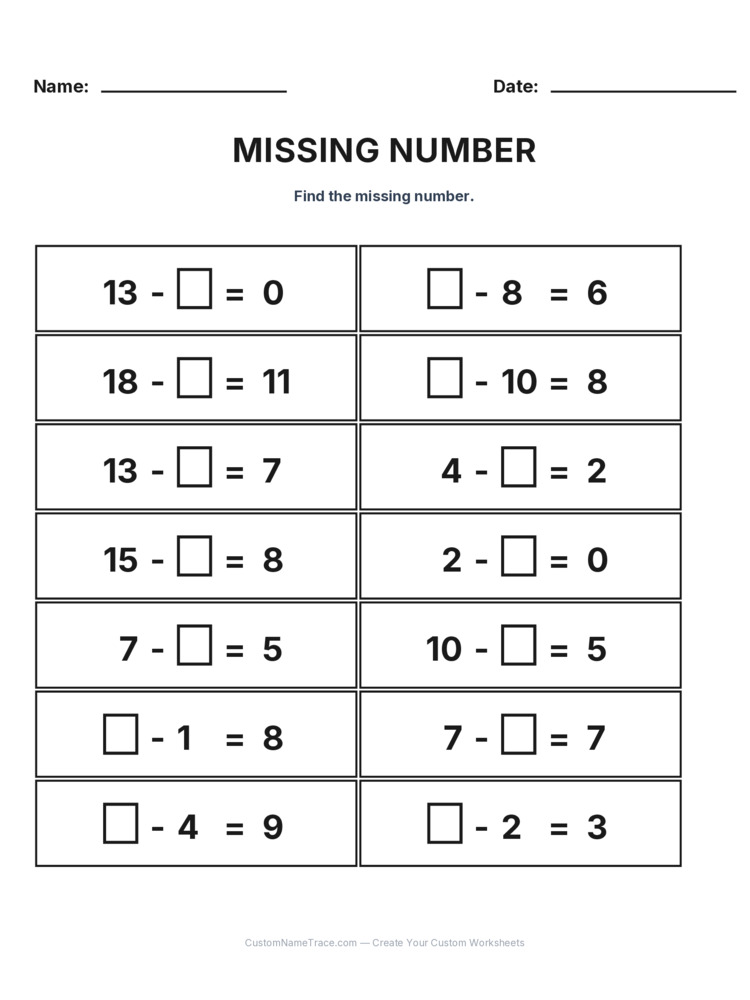
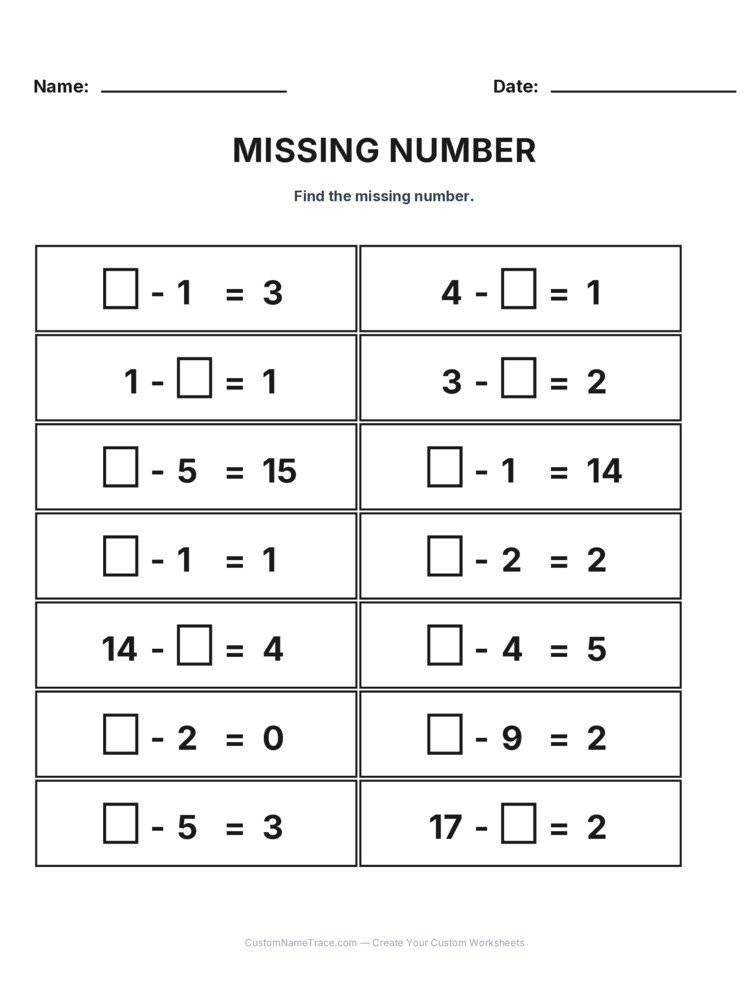
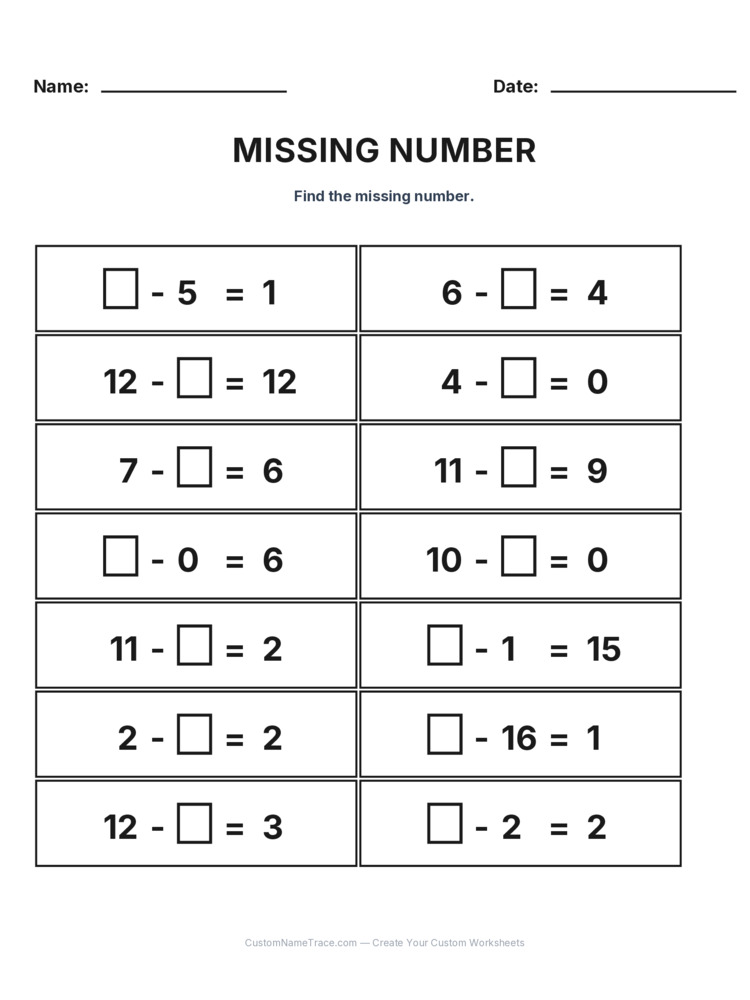
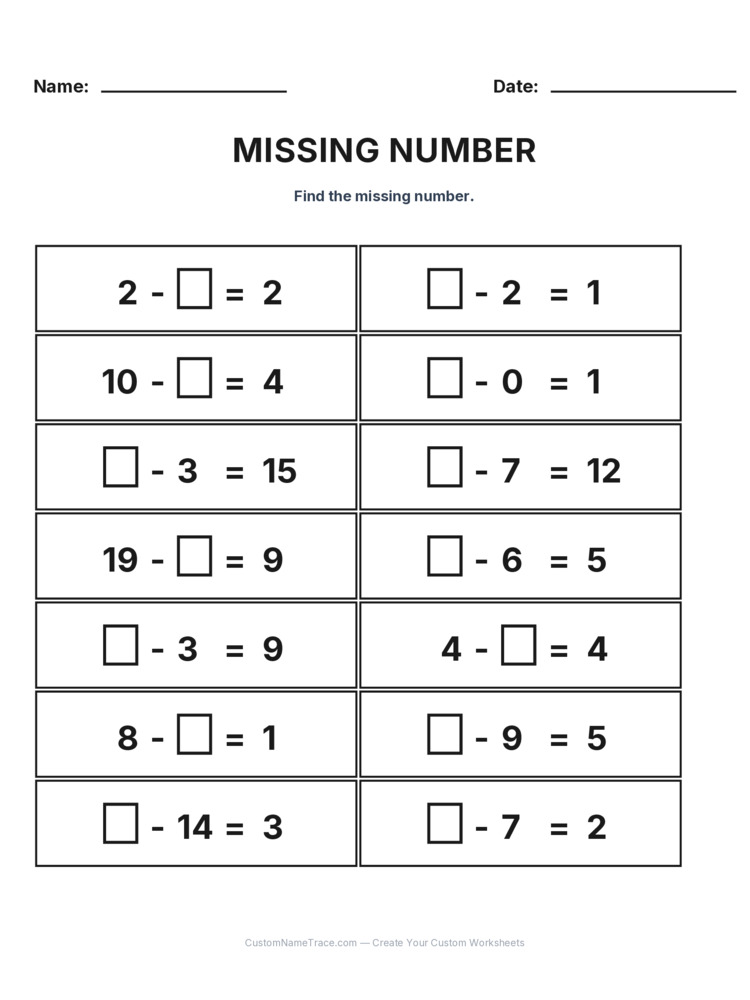
"27.. wait, that's Grade 2 territory — here it's smaller: "7 + ▢ = 12" or "▢ - 4 = 9". This is a genuinely different skill from a normal equation: instead of computing forward from two known numbers, a child has to work the operation backward from a known total. It's easy to underestimate how much harder this is than it looks — a child who's fluent at "7 + 5 = ▢" can still find "7 + ▢ = 12" a real stop-and-think moment the first several times, and that's expected, not a gap.
Why Missing Number matters beyond this one worksheet
Working an operation backward is the direct precursor to algebra — "7 + ▢ = 12" today is literally "7 + x = 12" in a few years, just without the letter. Getting comfortable with it now, while the numbers are still small enough to reason about directly, makes that later transition far less abrupt than meeting the idea for the first time alongside genuinely hard algebra content.
Choosing a starting point
If within-10 addition and subtraction from Kindergarten aren't yet quick and confident, it's worth spending more time there before moving to Grade 1's within-20 range — the extra range here assumes that foundation is already solid, not still forming. If within-10 is already fast and easy, this page is the right next step regardless of the calendar age attached to it.
Using these at home or in a classroom
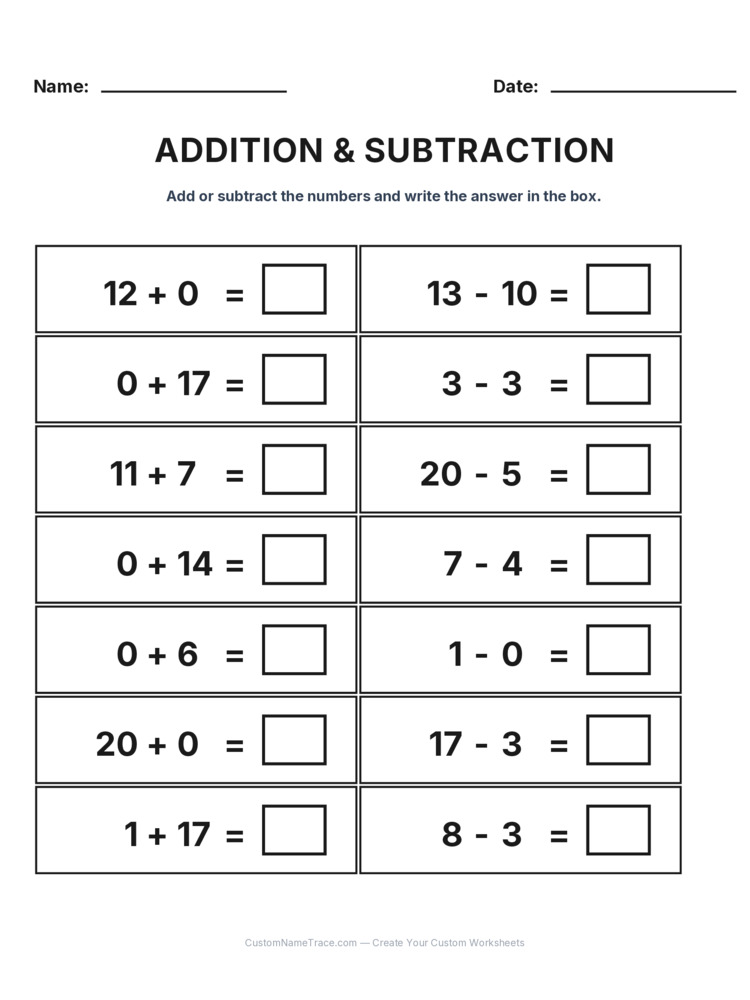
For missing-number problems specifically, it helps to have a child restate the problem as a question out loud — "7 plus what makes 12?" — before reaching for an answer, since that turns an abstract blank box into a concrete question they already know how to think about. In a classroom, the dedicated addition/subtraction pages work well for targeted small-group practice, while Mixed Review (rotating between the two) is a quick way to check whether a group is ready to move on.