Multi-step reasoning that can't be solved by eye alone
Grade 3's three puzzle types share one trait none of the earlier grades' puzzles have: none of them can be solved by simply looking at the page and picking the answer that looks right. Each requires working through several steps in sequence — decoding letter by letter, checking a number against two rules before placing it, filling in a grid cell by cell while a whole row's worth of other cells constrain the answer.
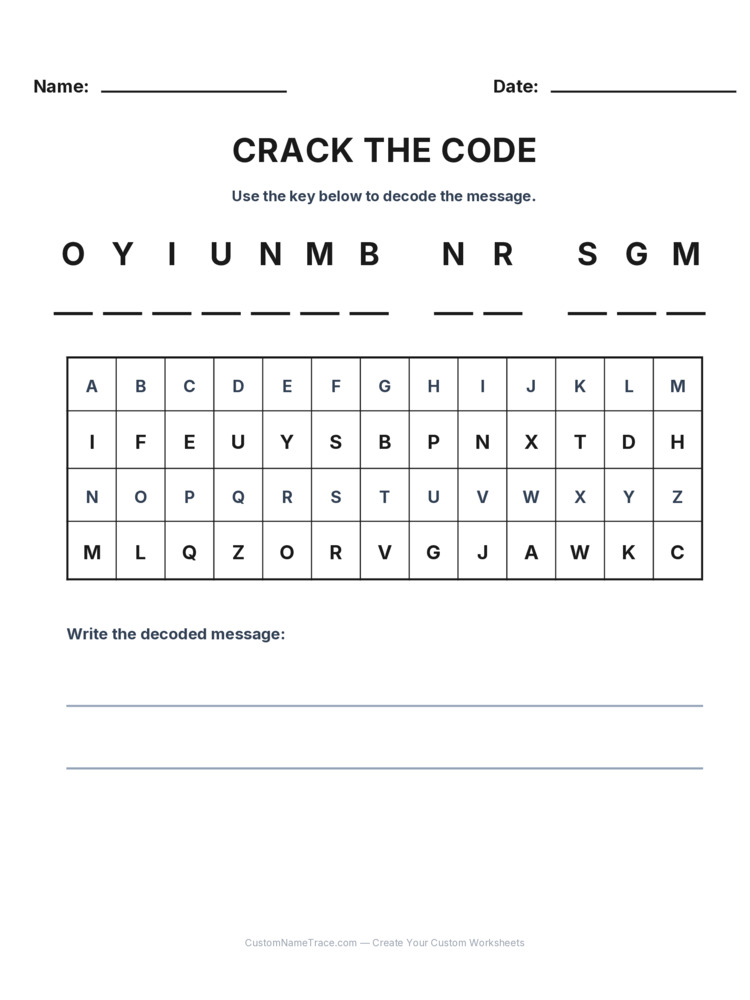
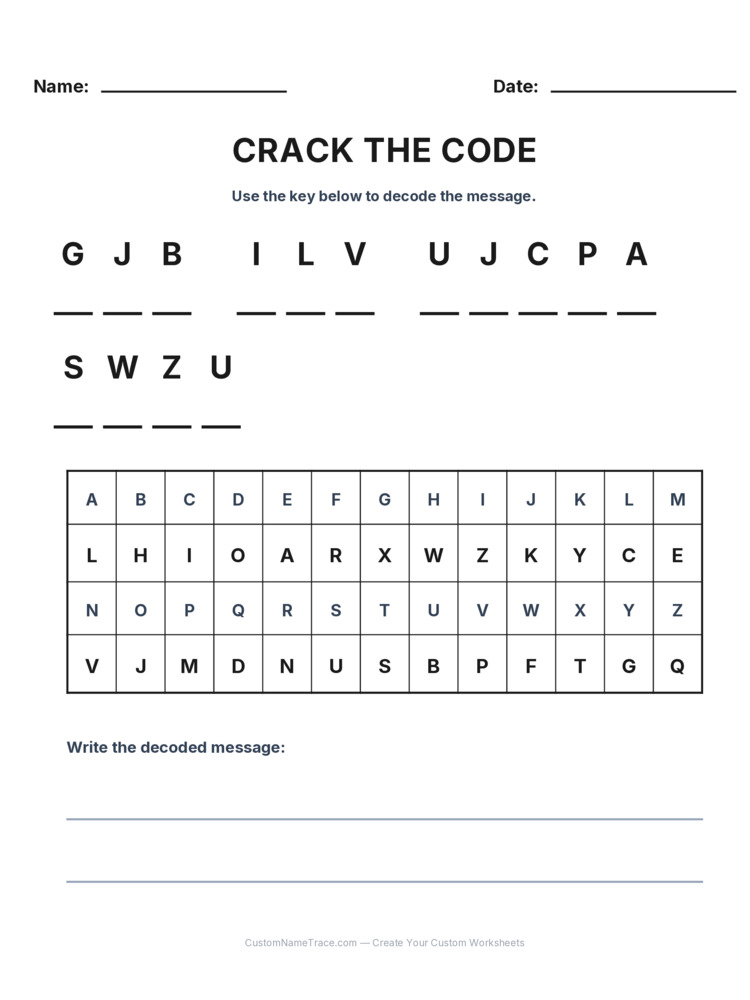
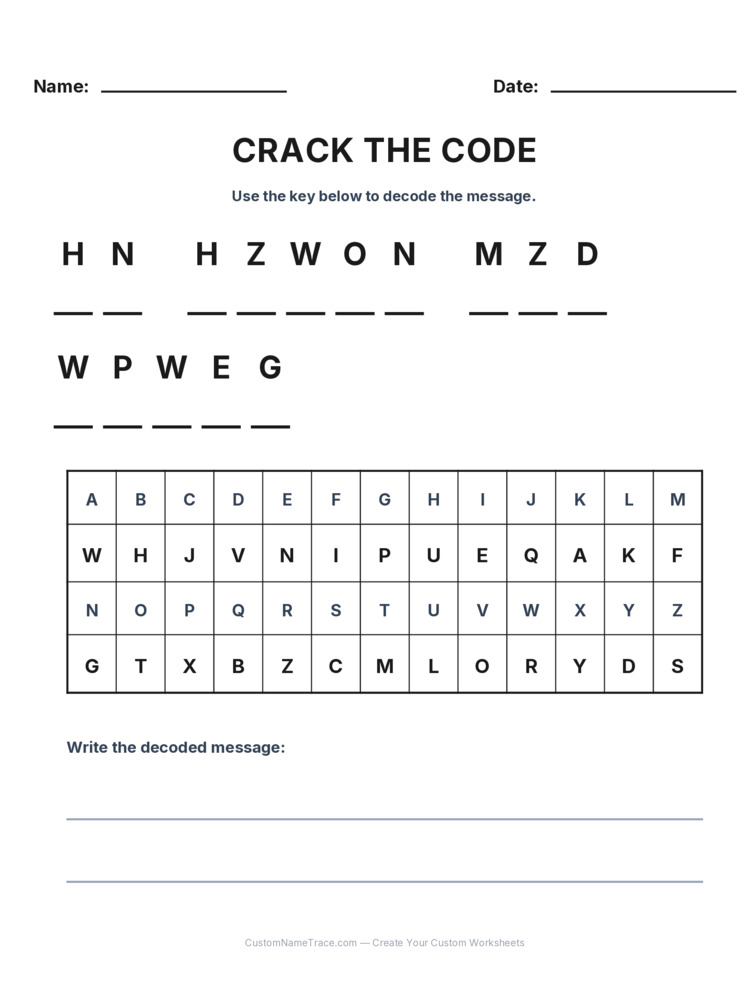
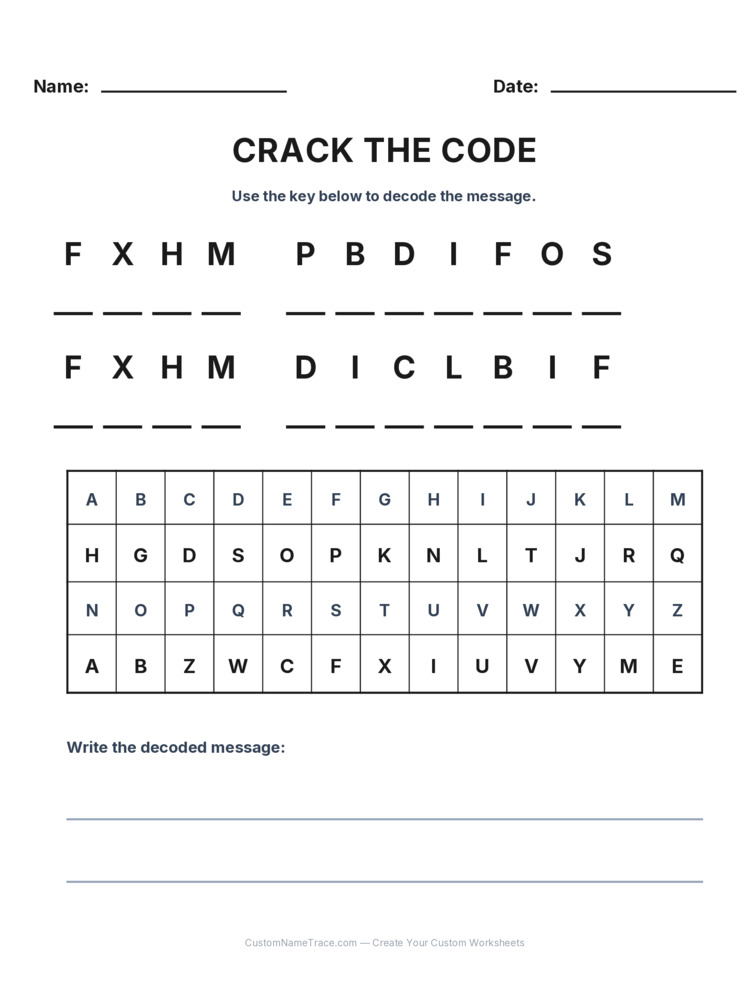
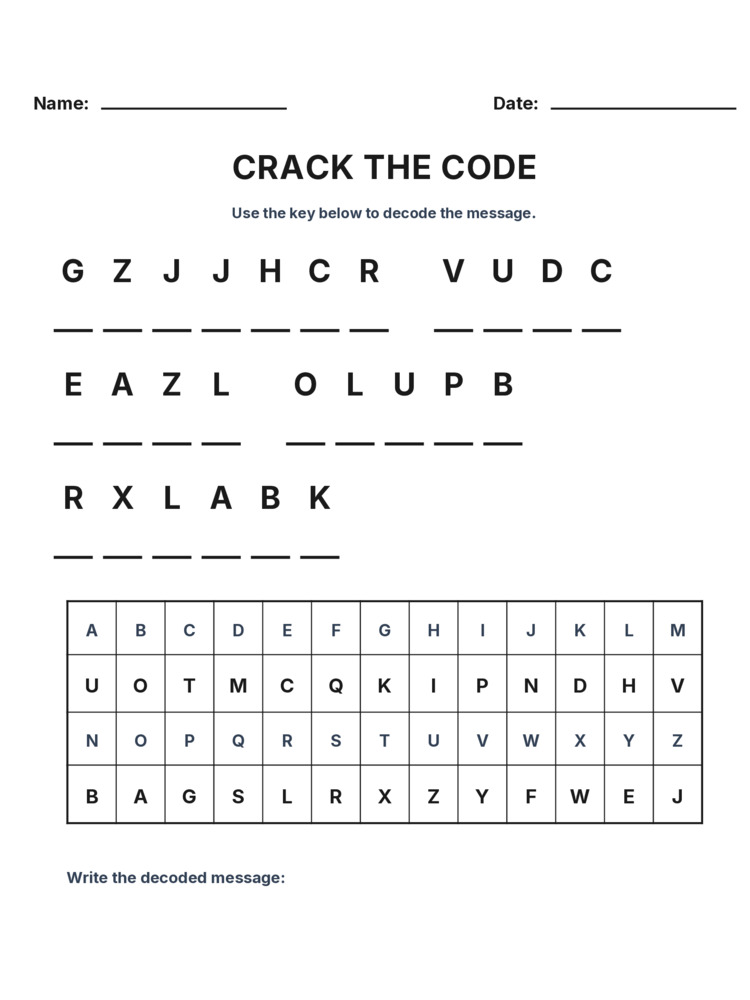
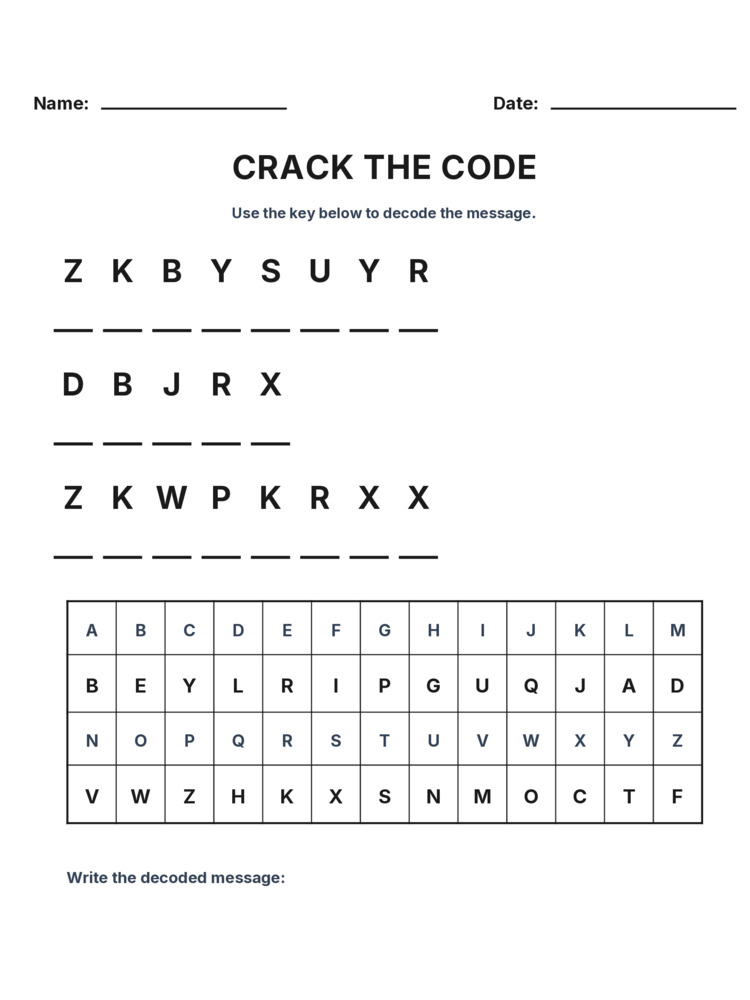
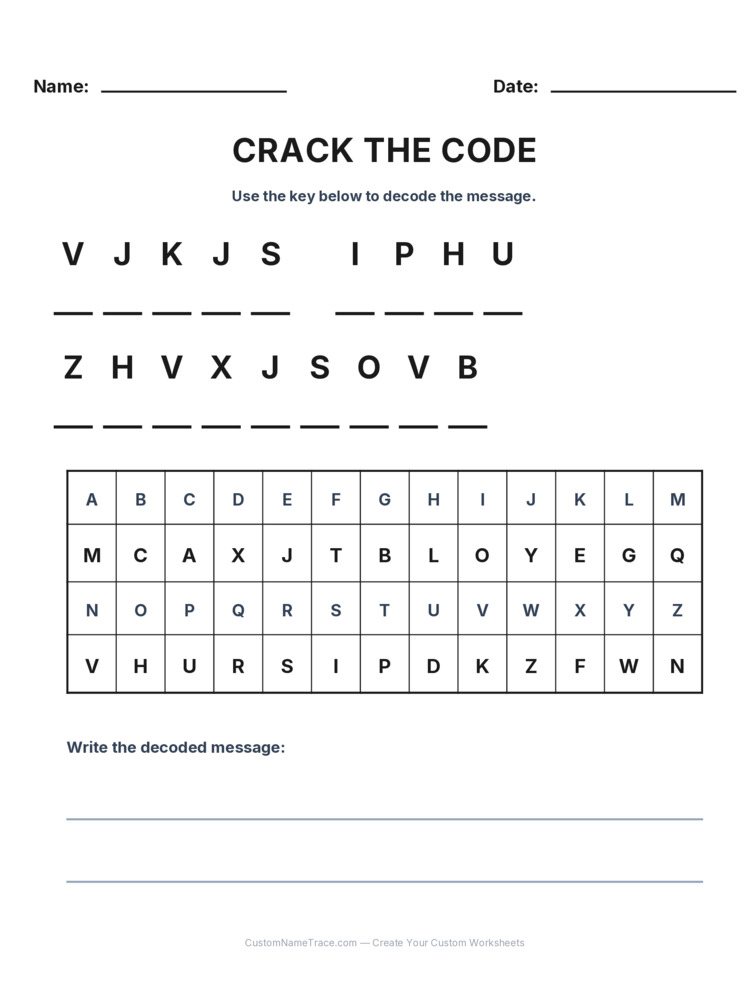
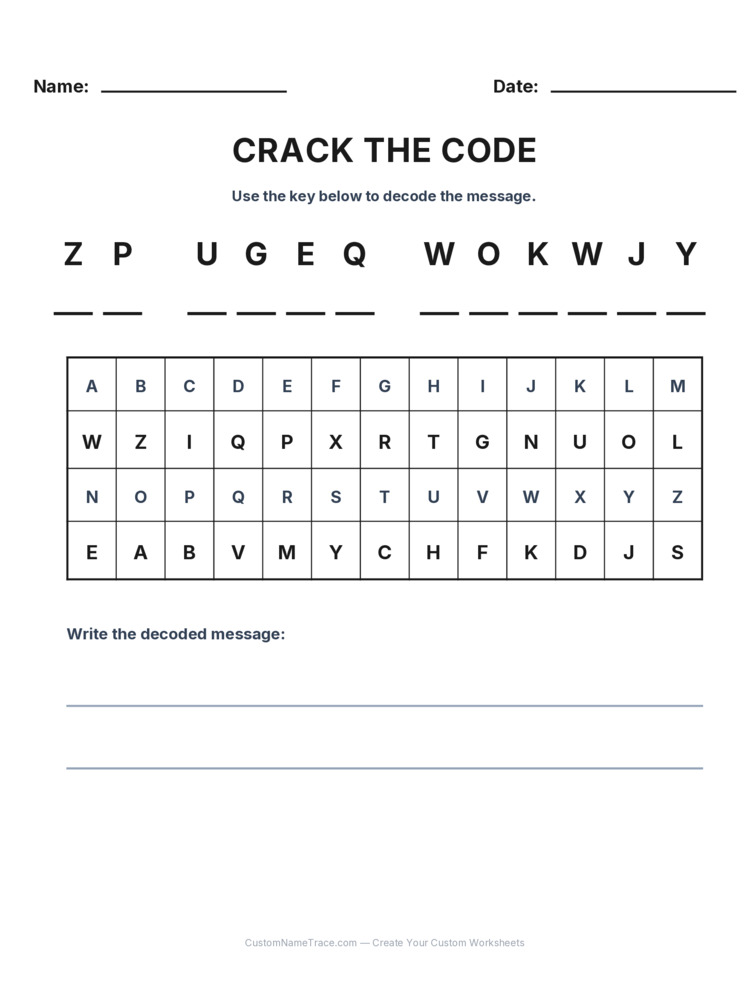
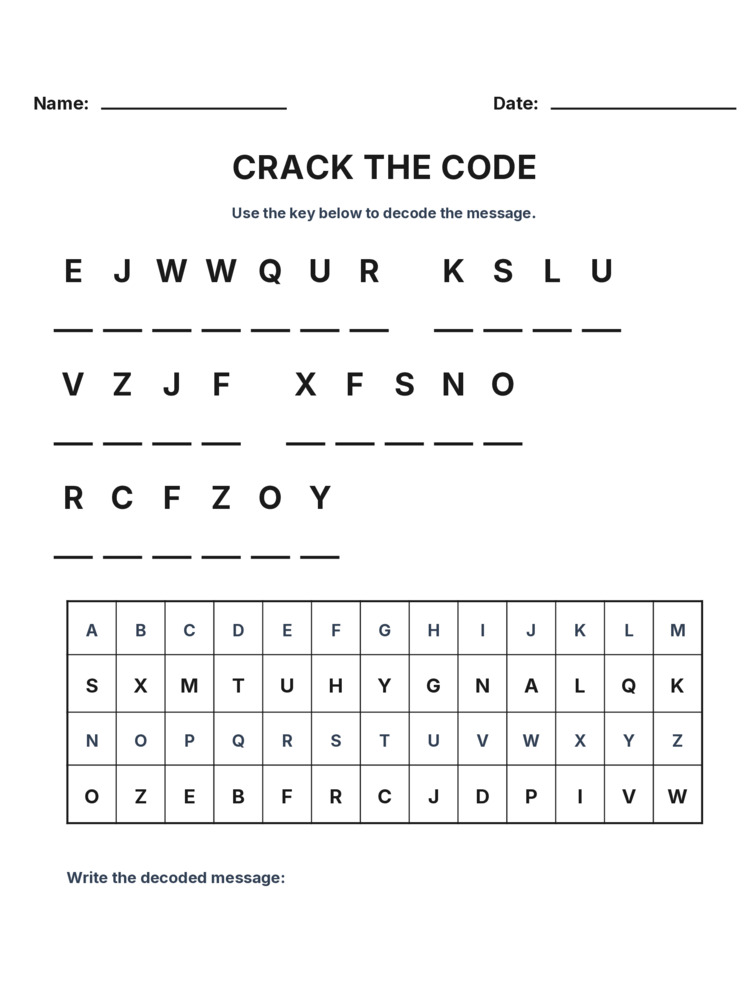
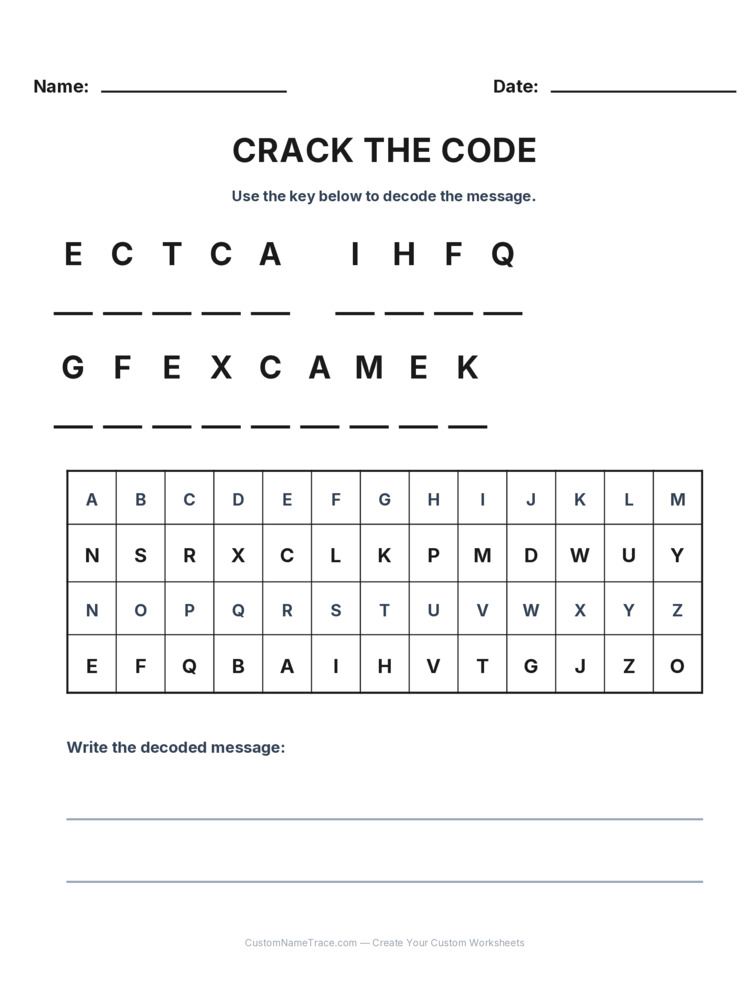
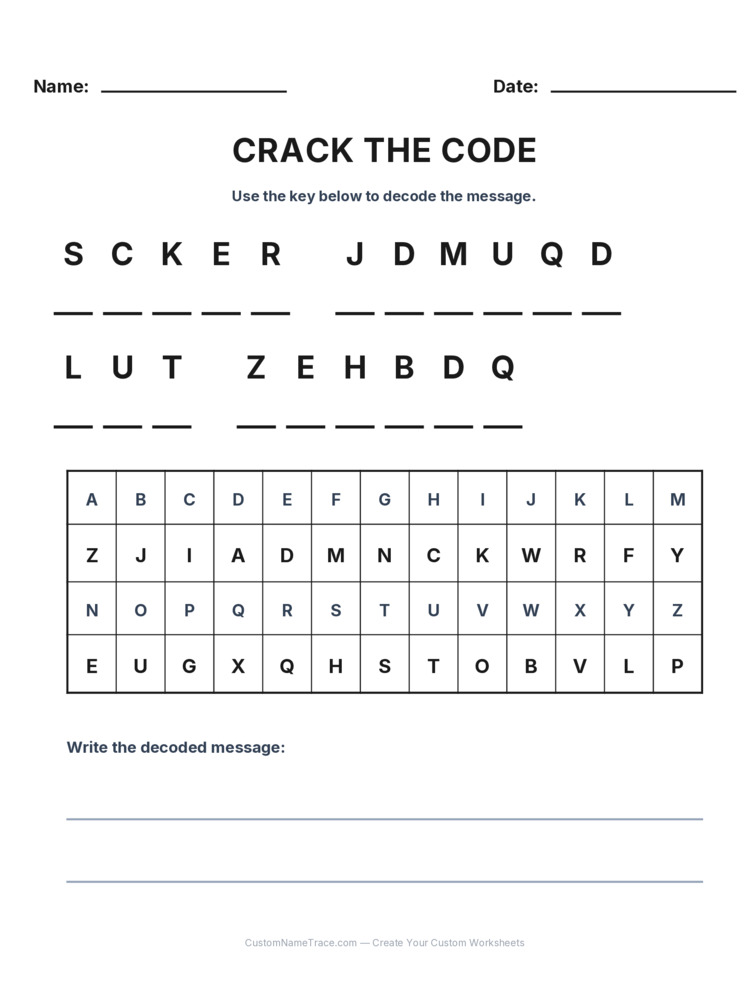
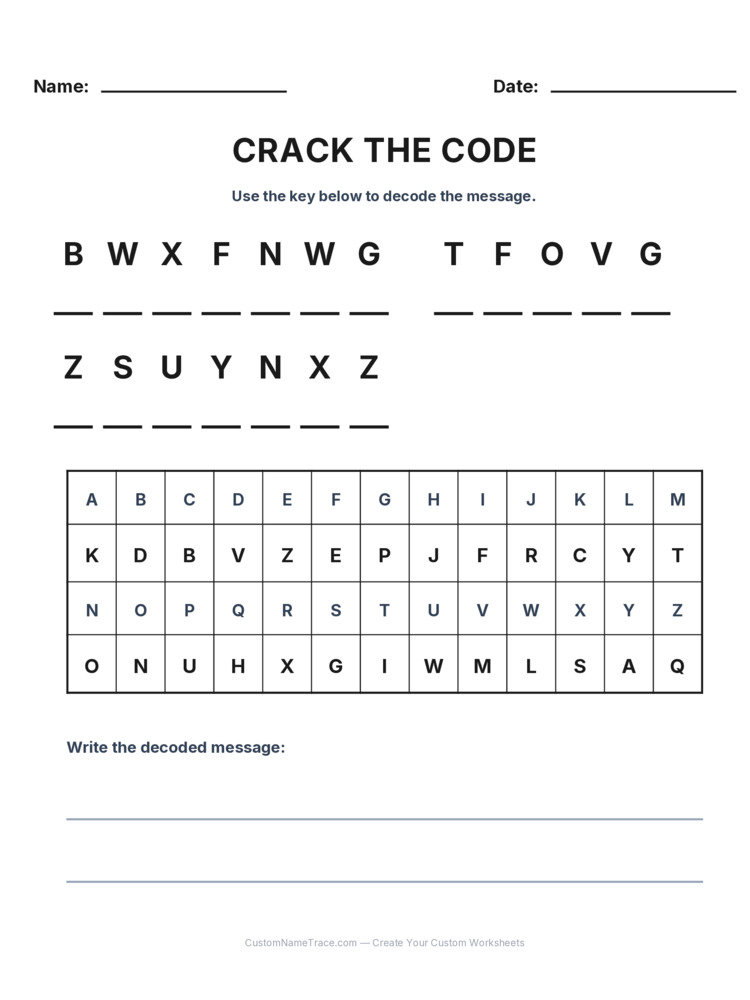
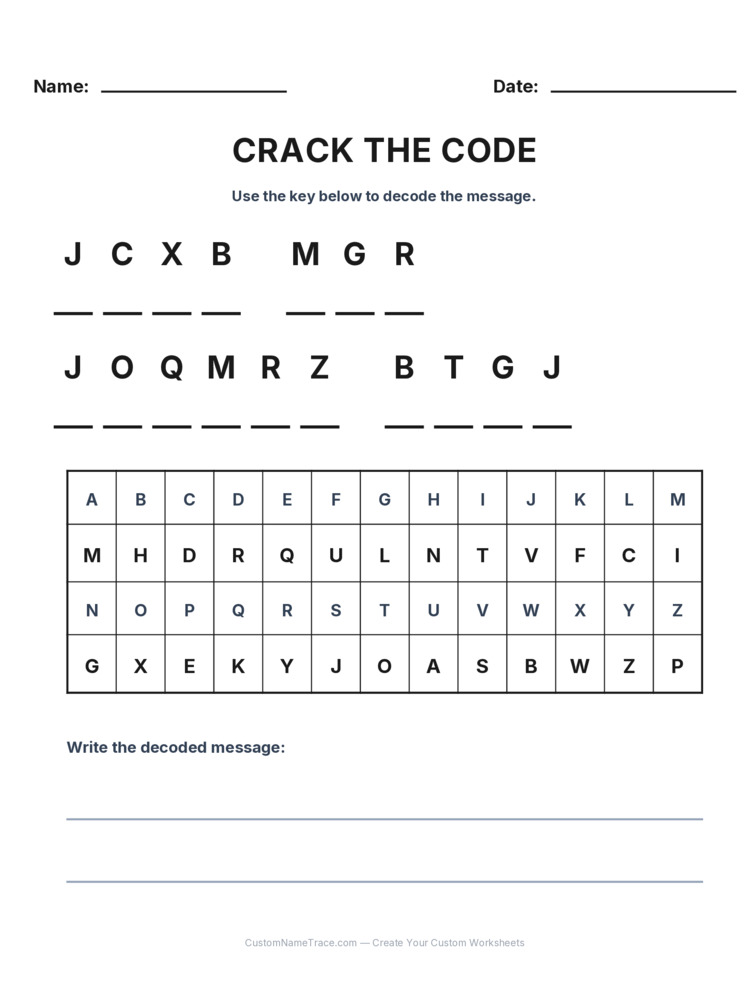
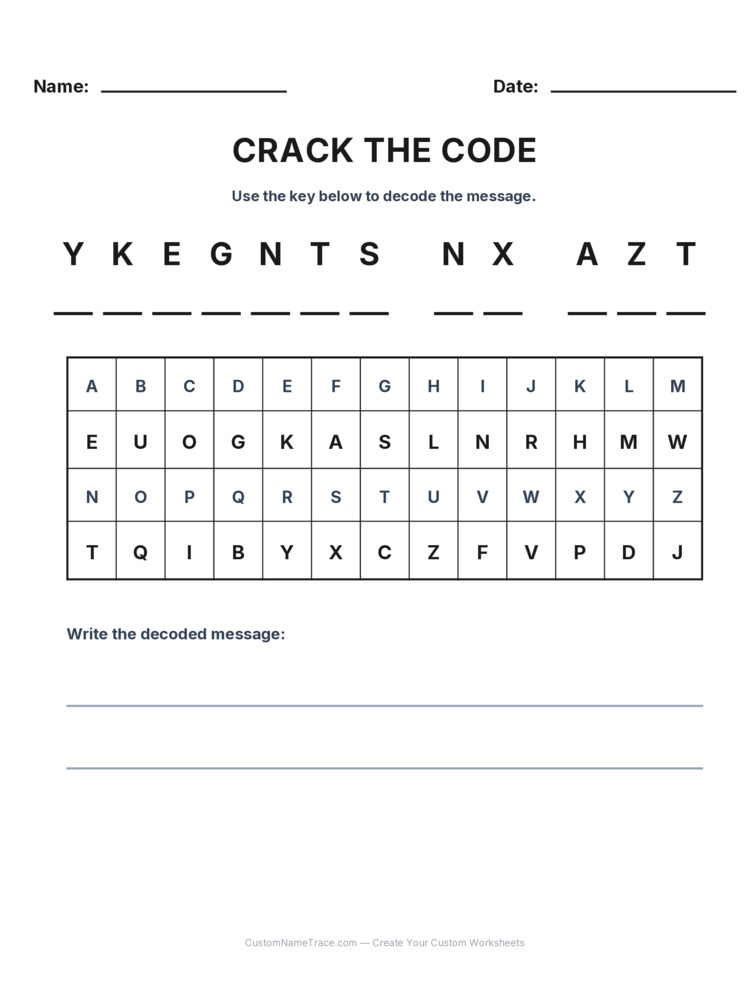
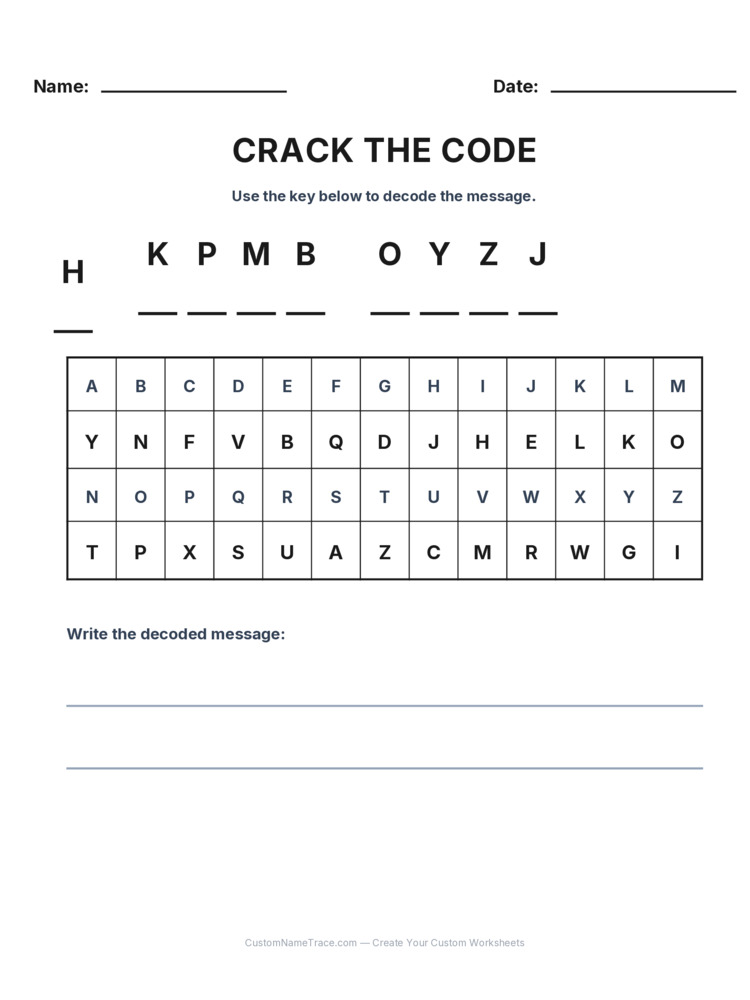
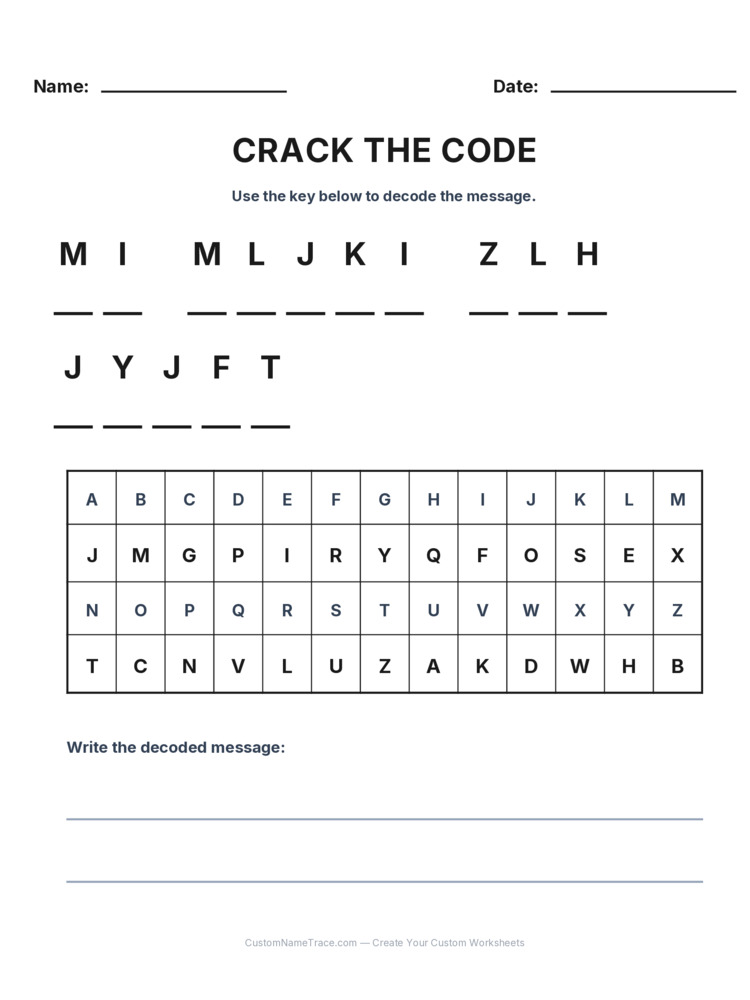
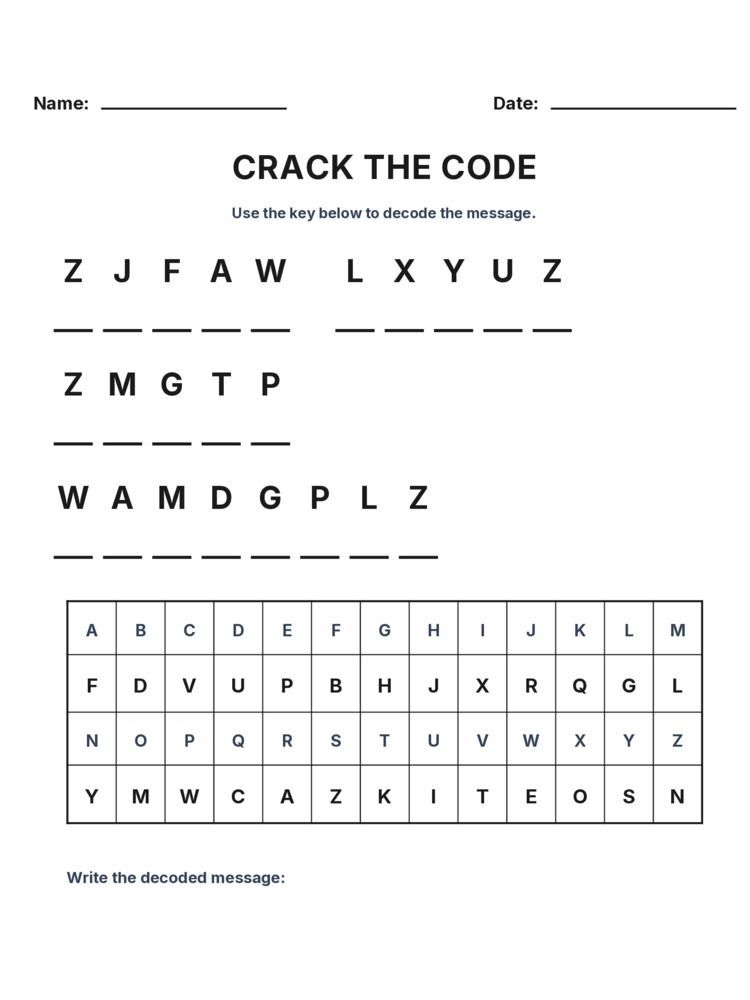
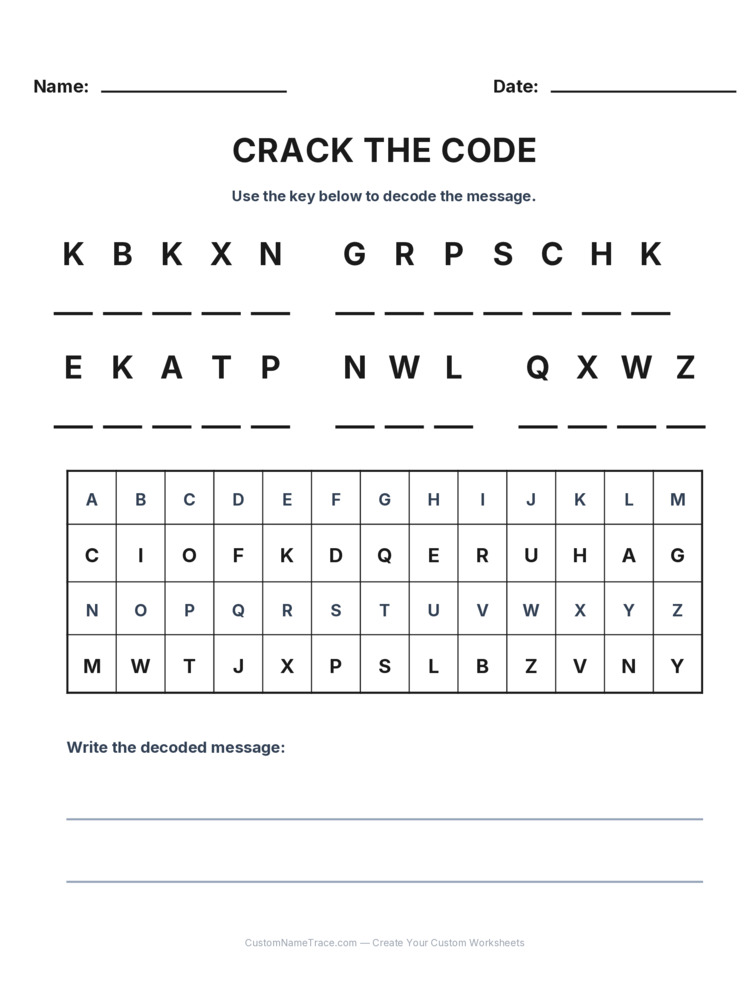
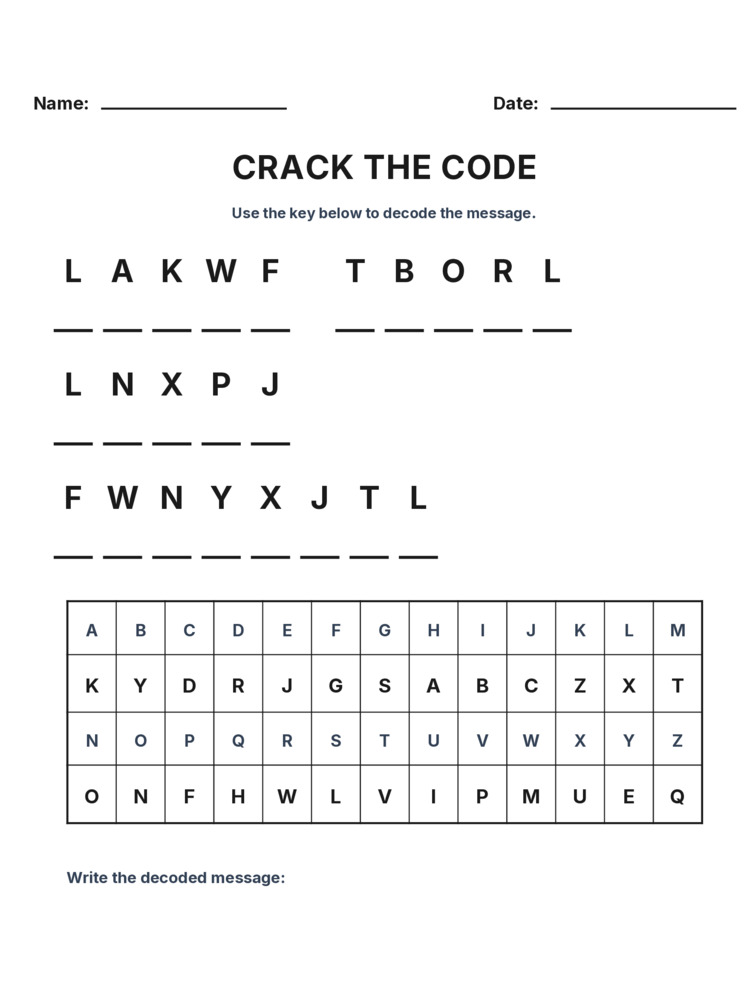
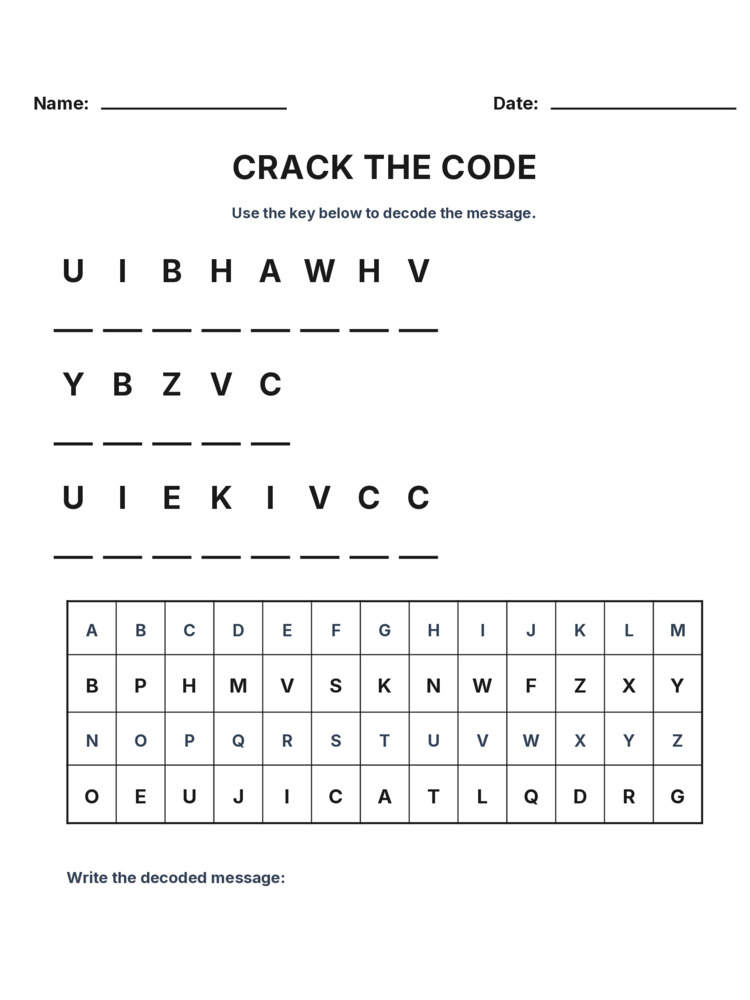
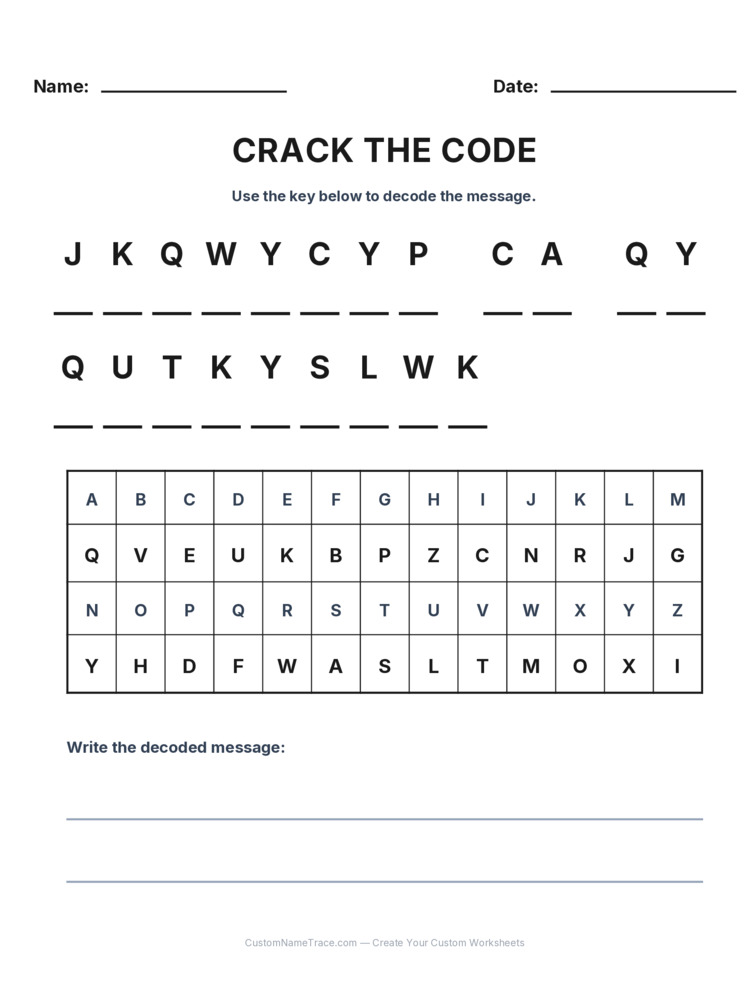
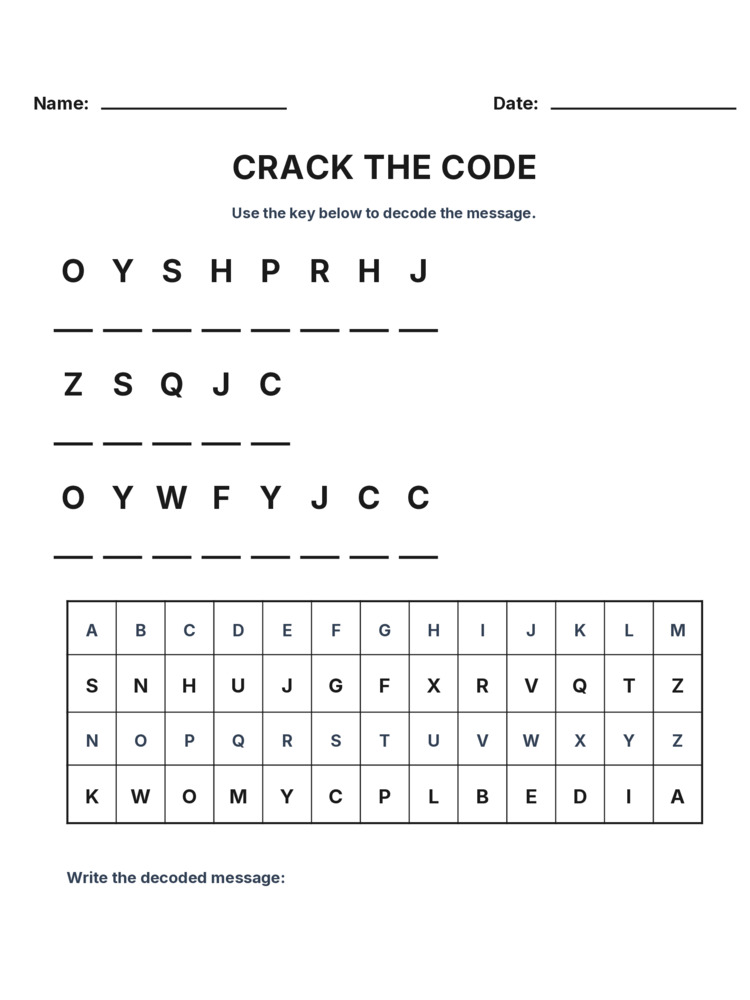
Cryptogram (Crack the Code)
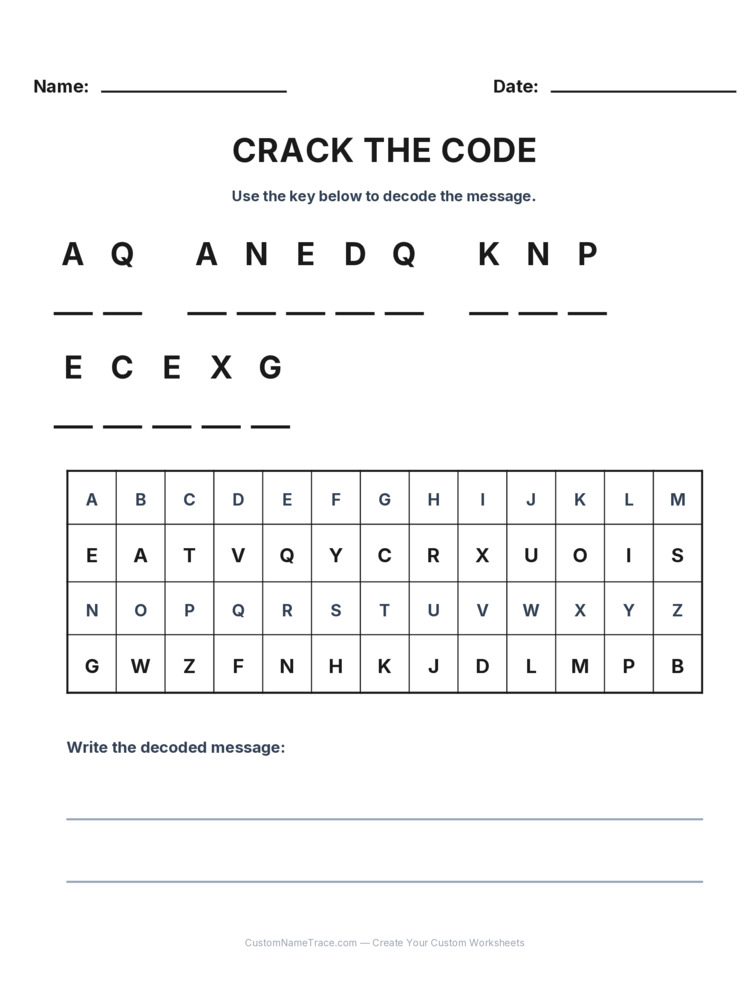
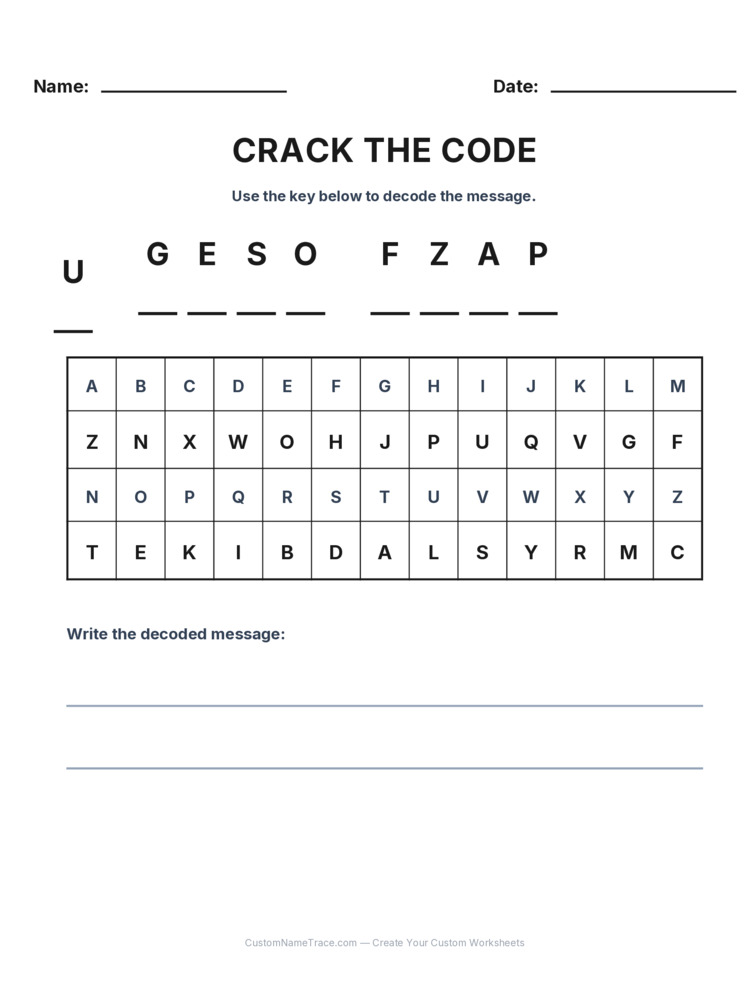
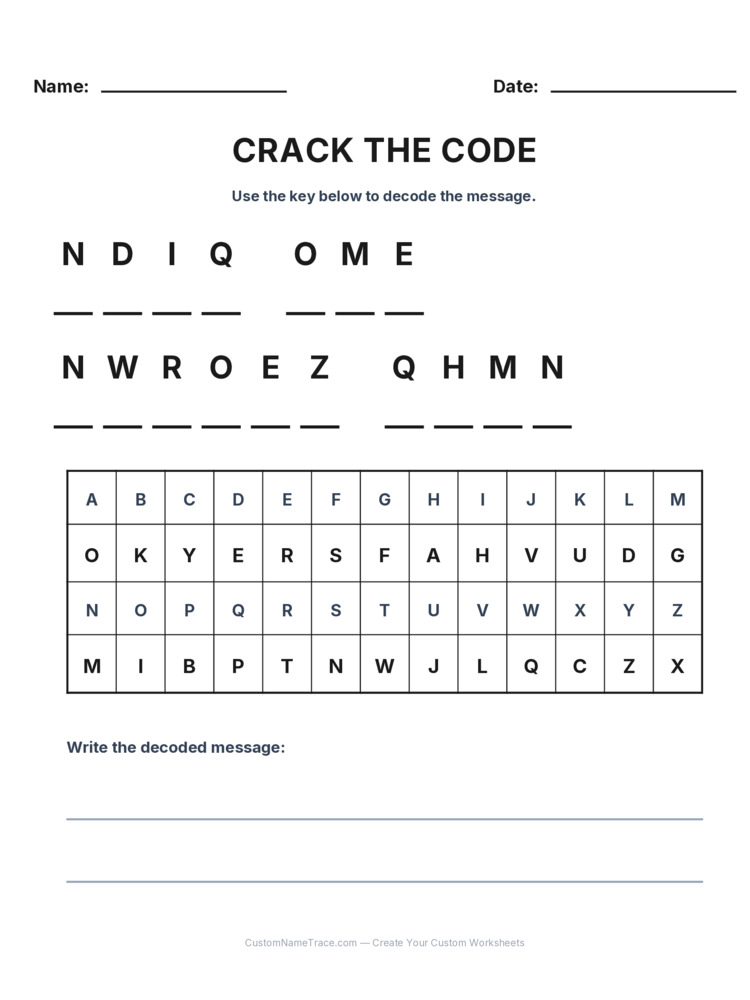
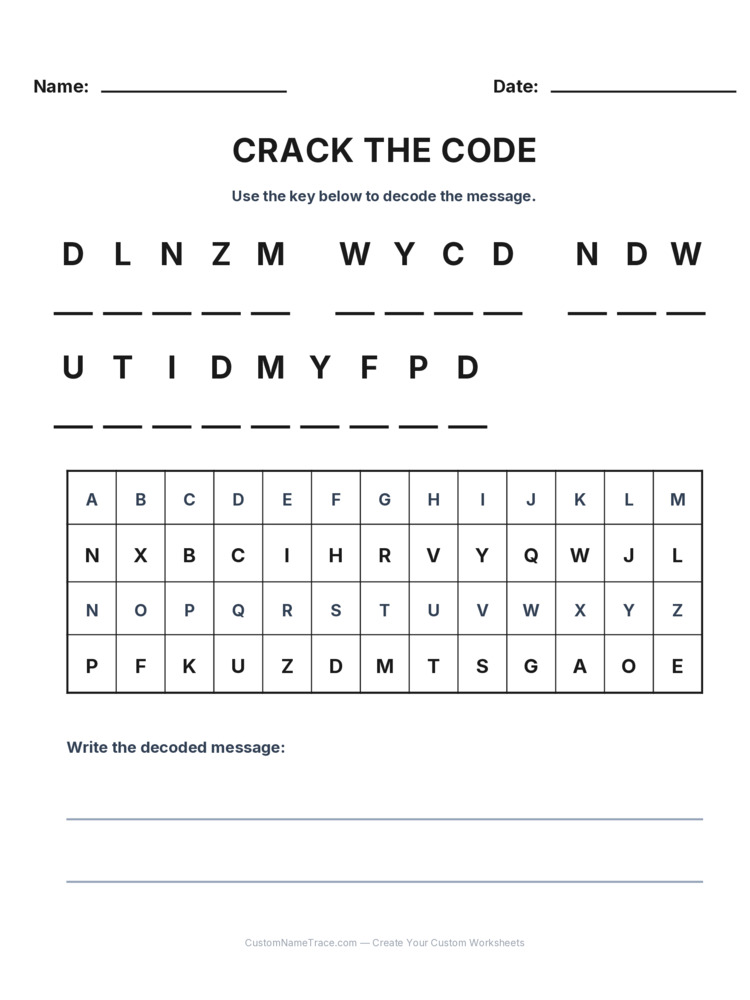
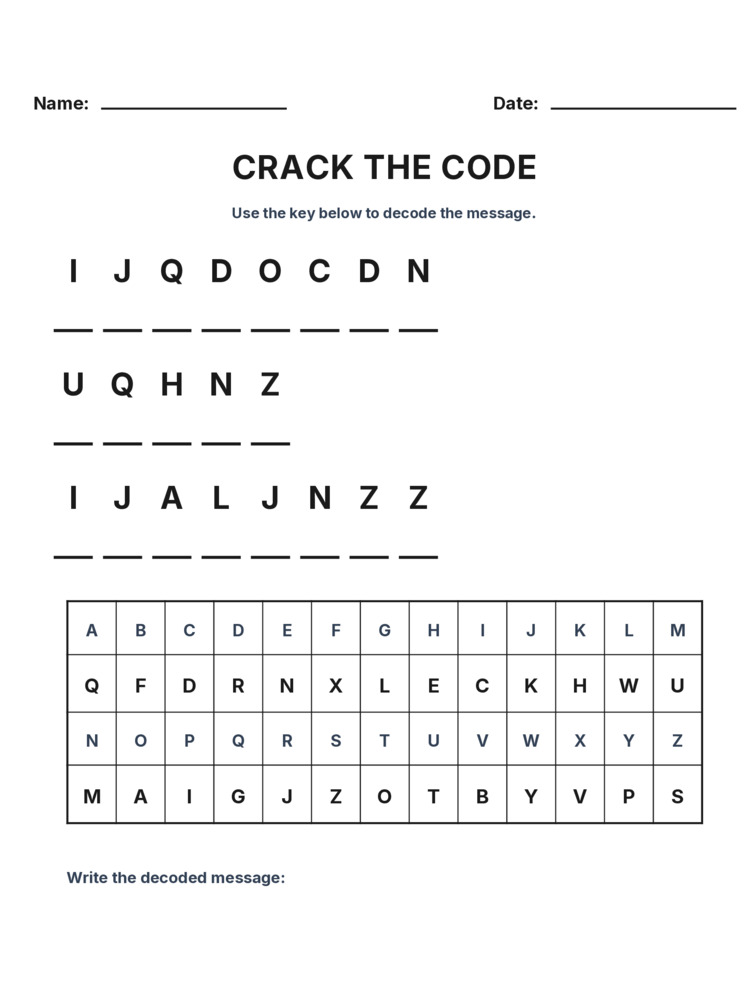
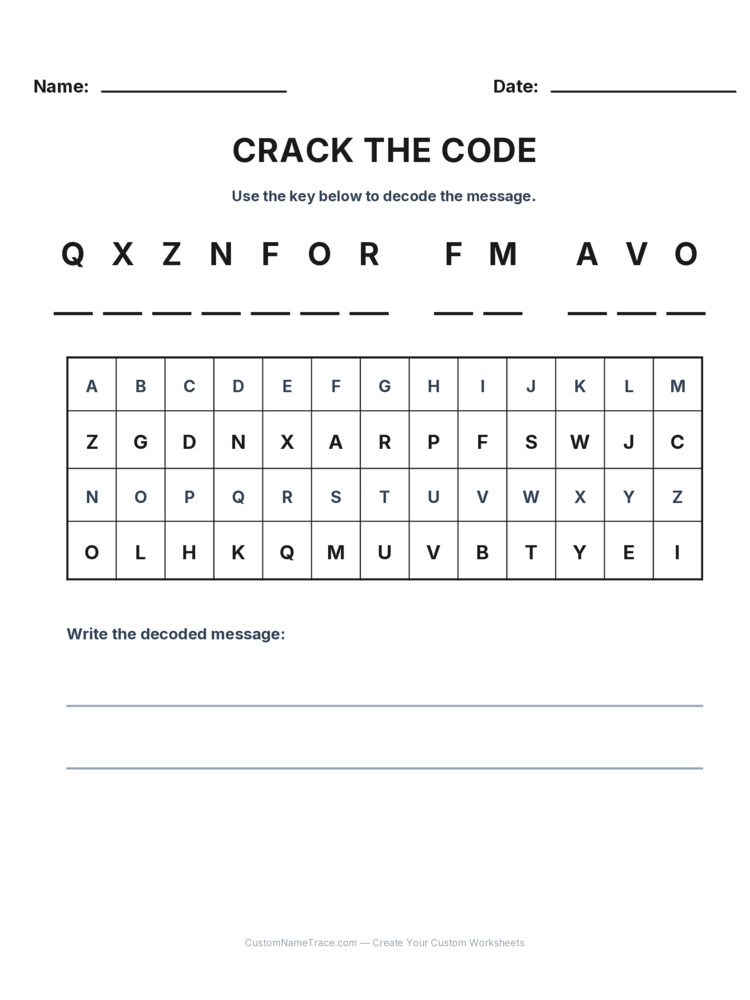
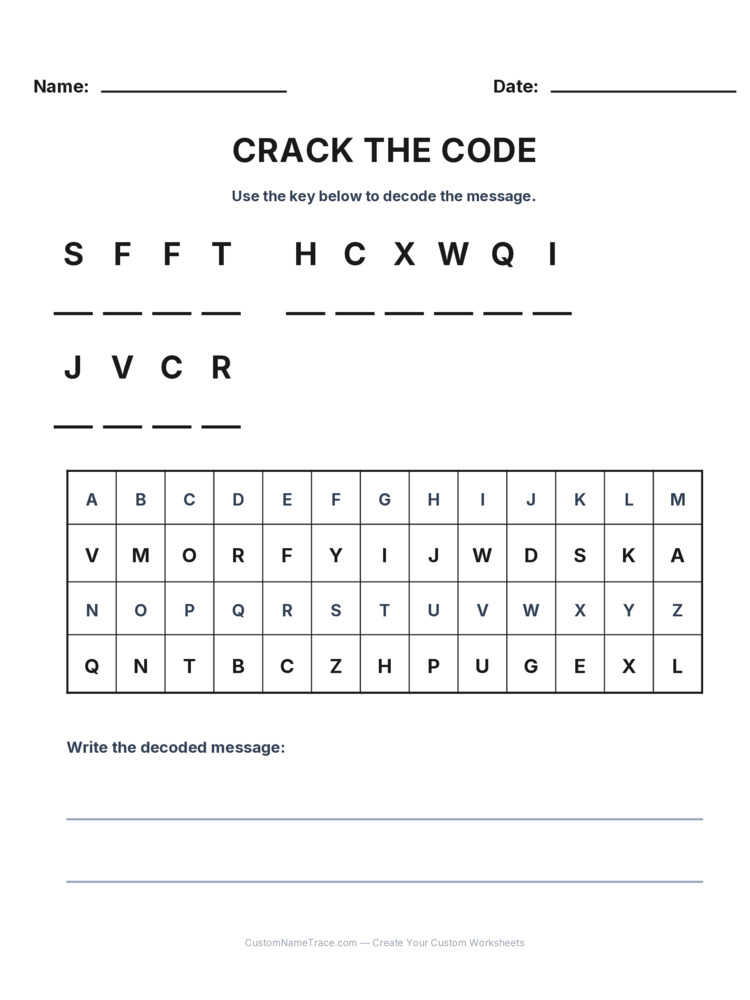
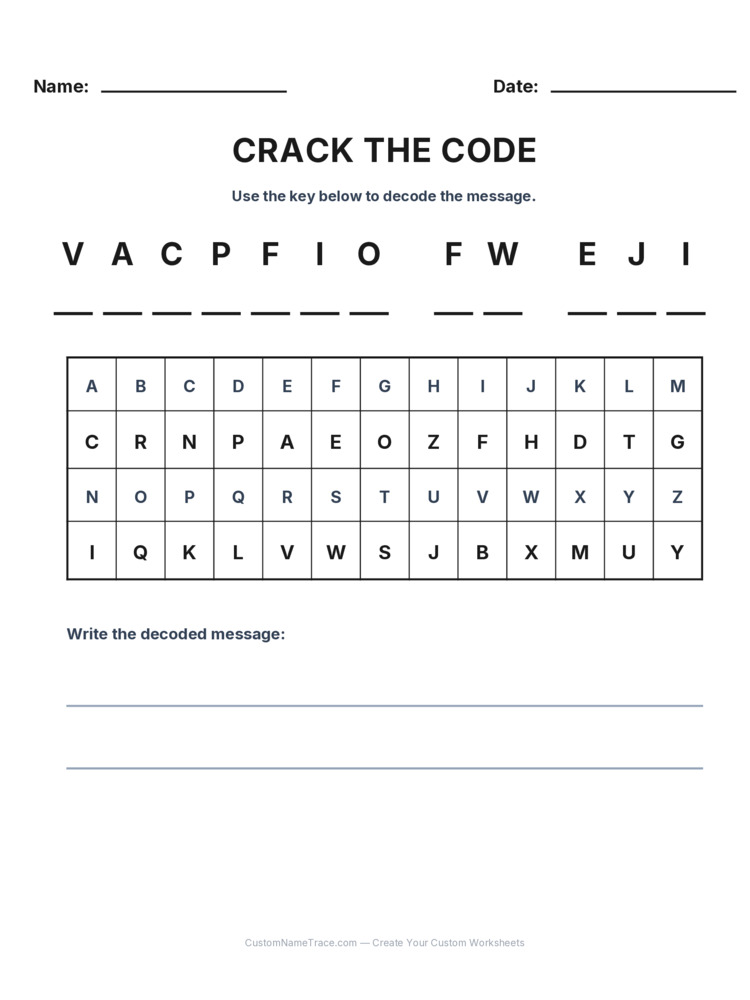
A short, kid-appropriate phrase is enciphered with a simple letter-for-letter substitution, and a full A-to-Z decoding key is printed directly on the worksheet. The task is mechanical but genuinely engaging: work through the ciphered letters one at a time, look each one up in the key, and watch a real message emerge. Because the key is printed on the page itself, this is fully self-checking — no separate answer key needed, and a child knows immediately if the decoded words make sense.
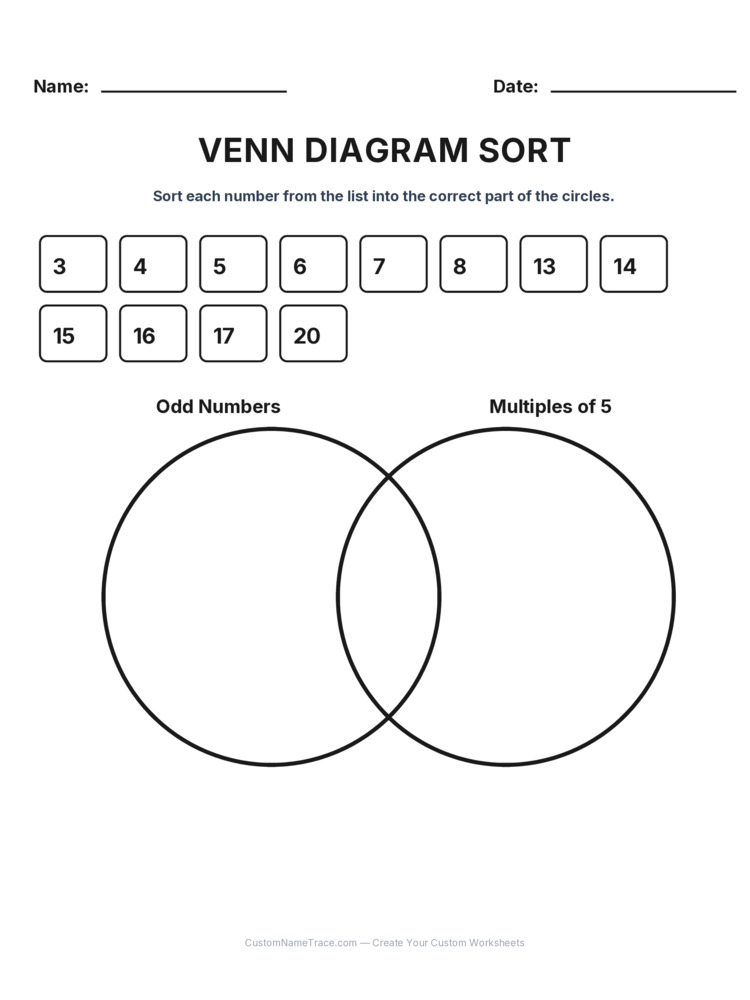
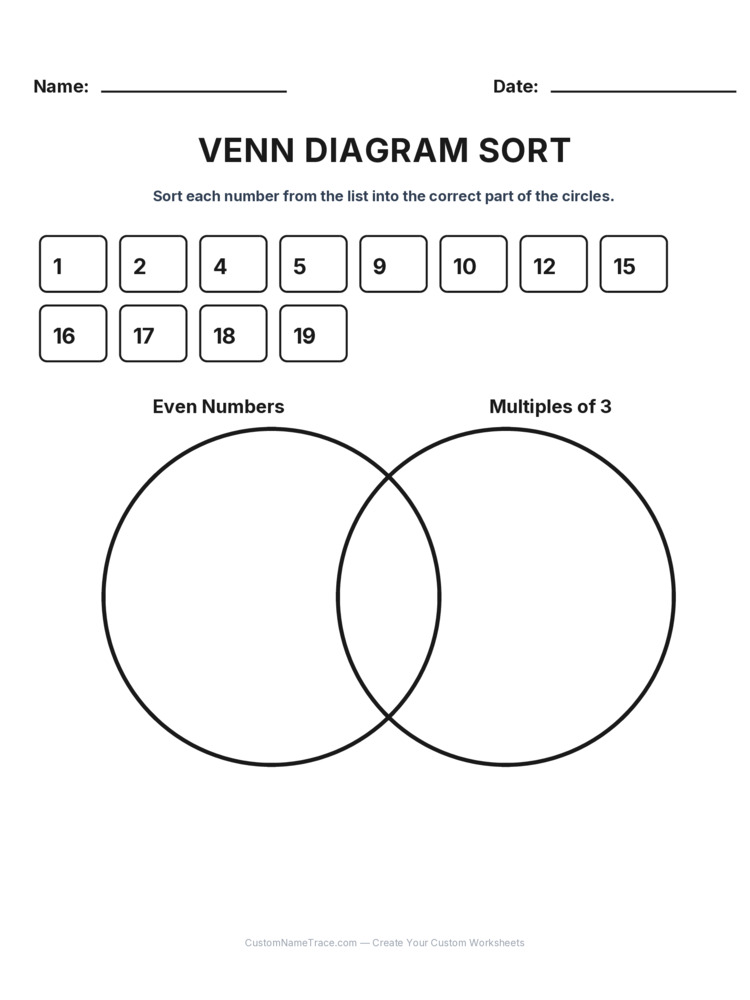
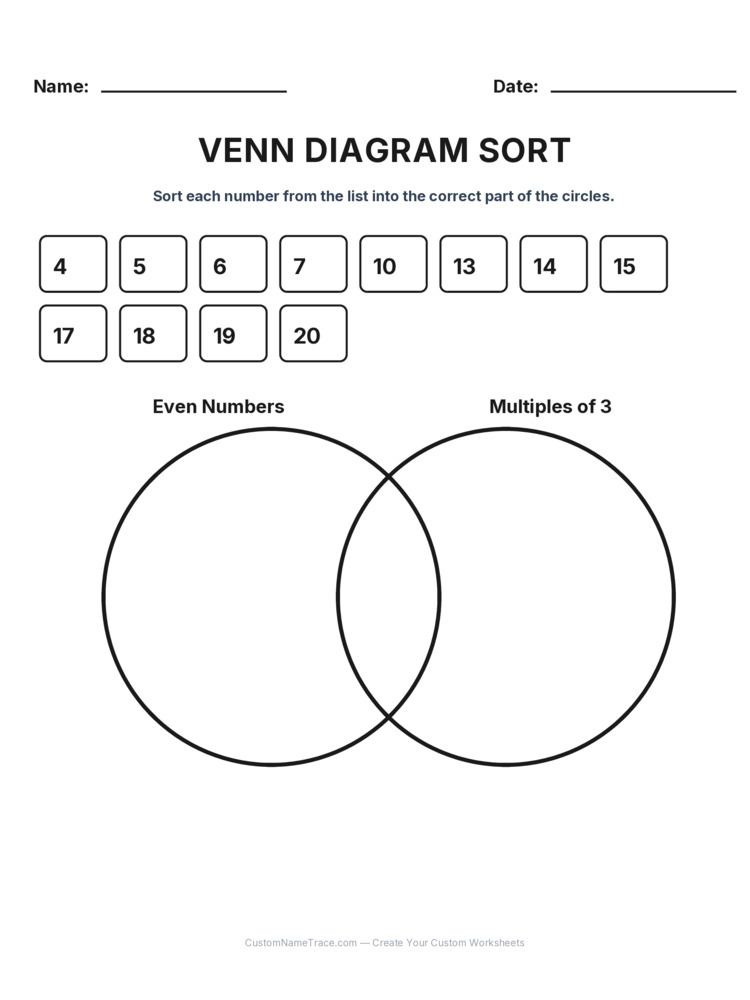
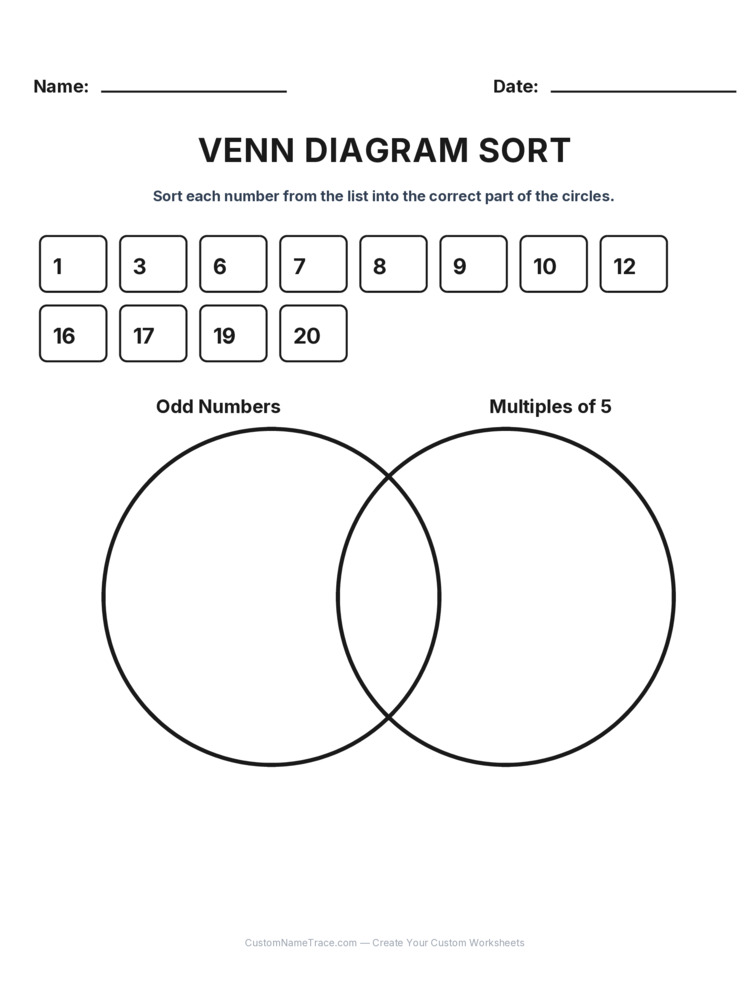
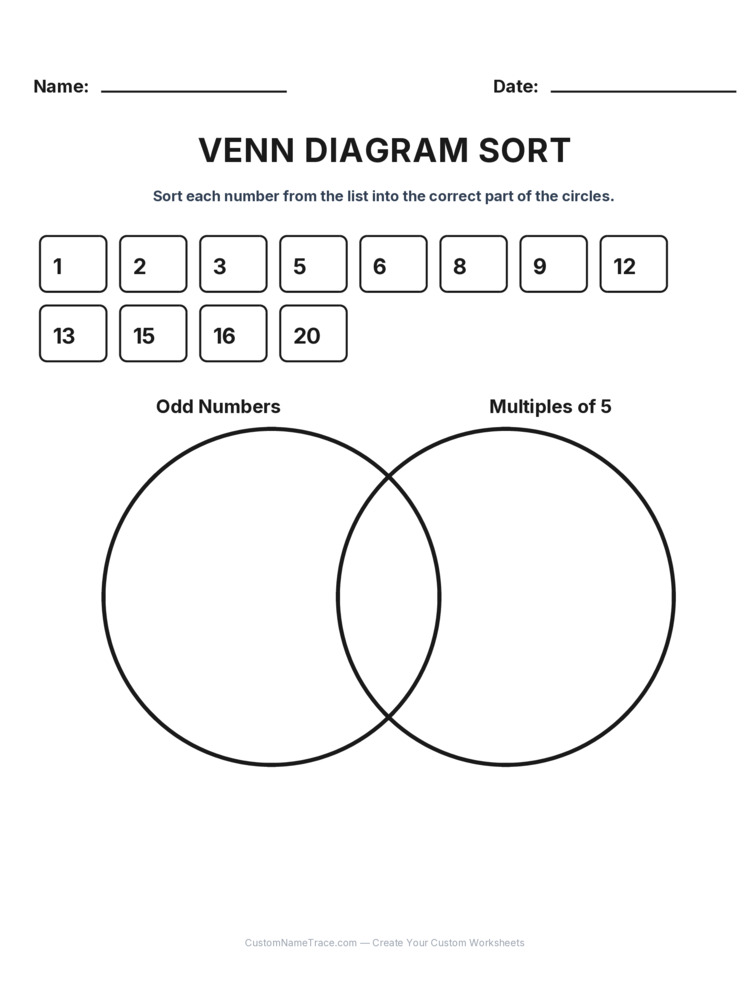
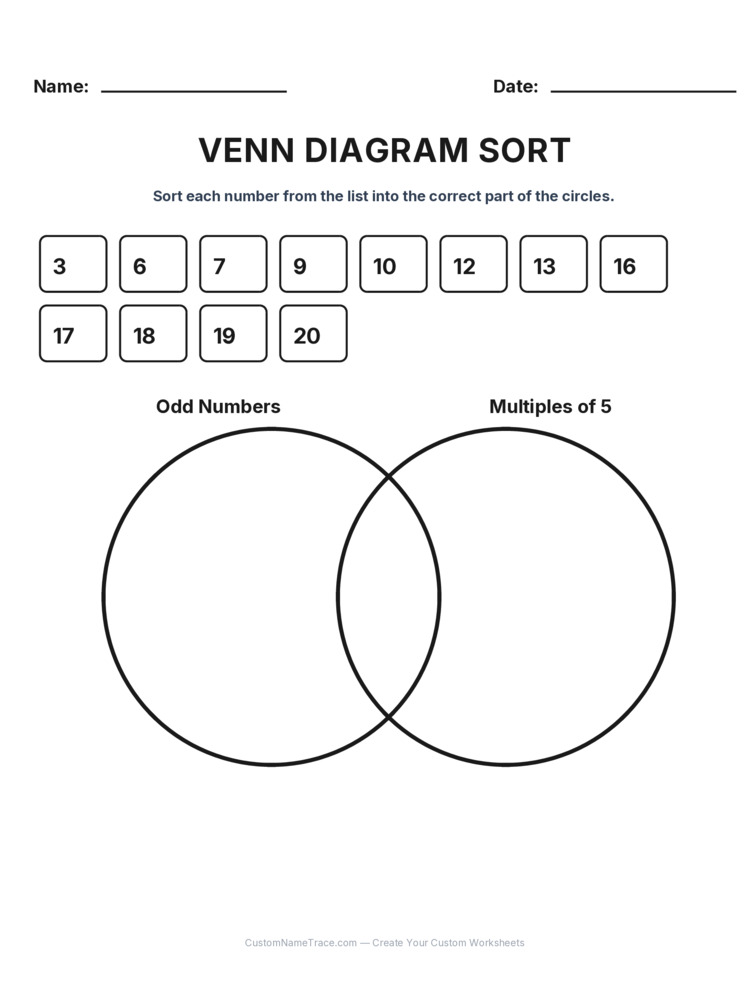
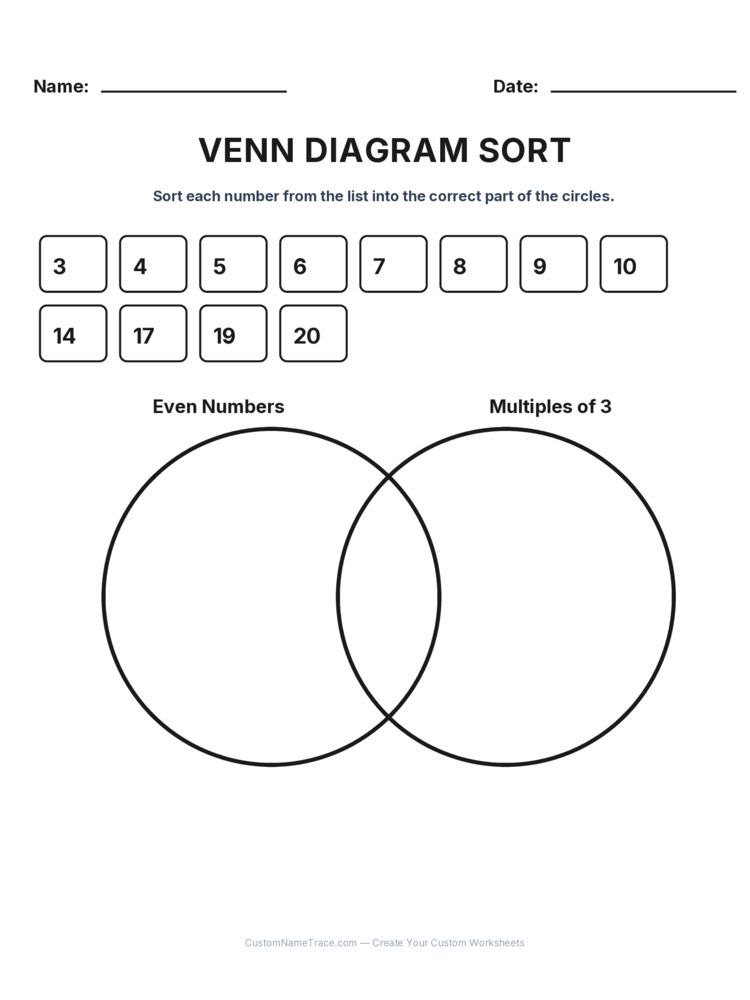
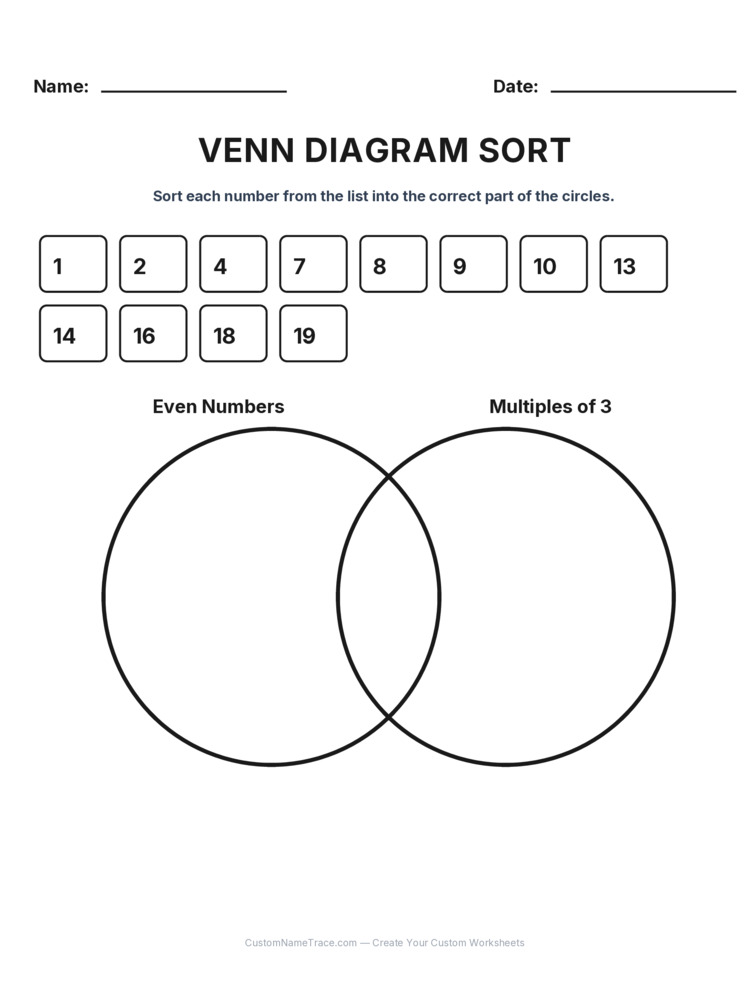
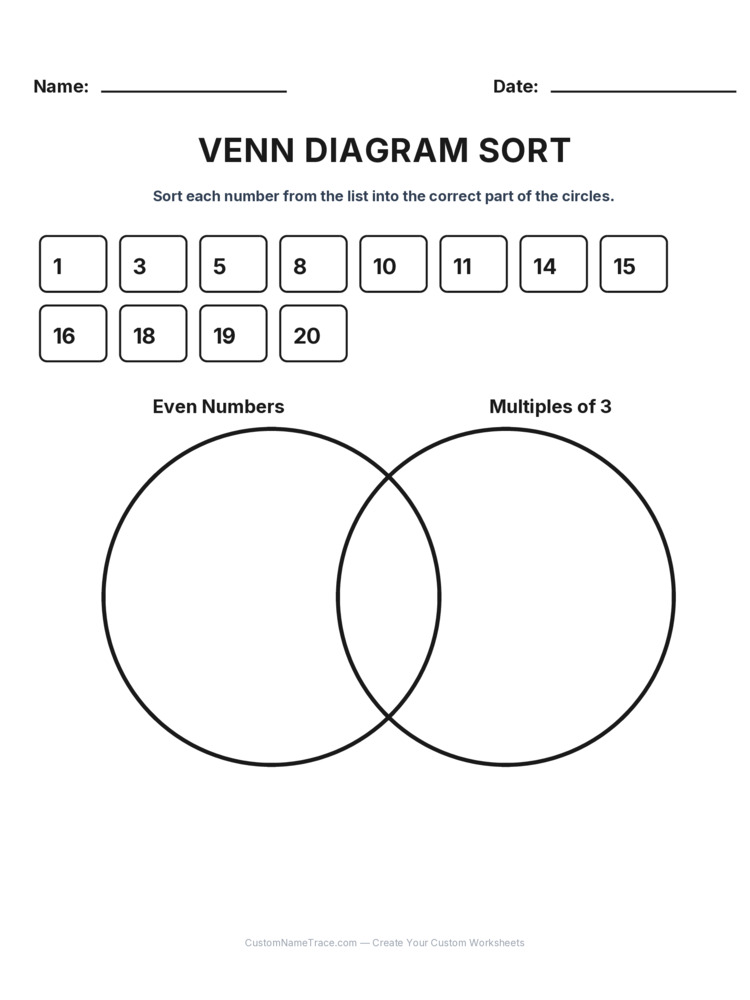
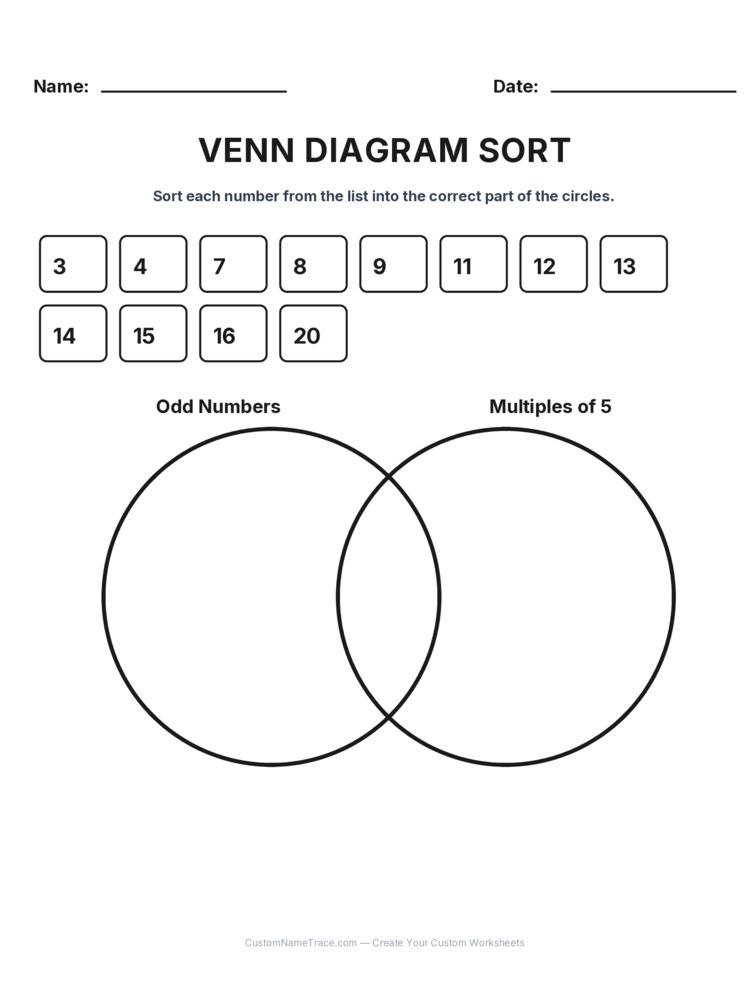
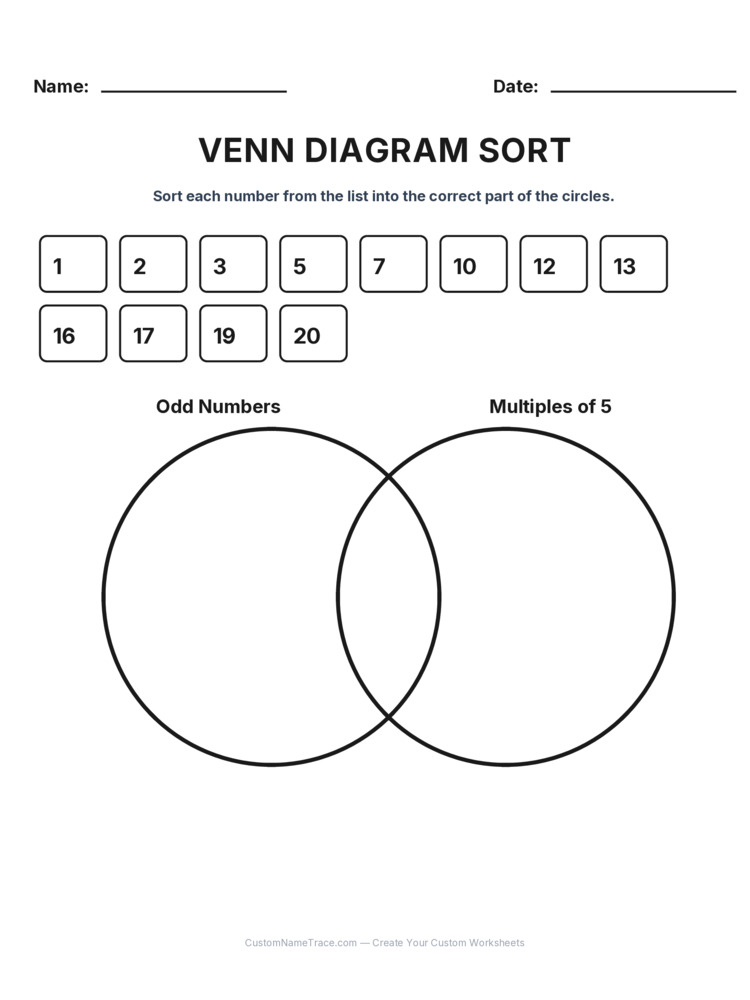
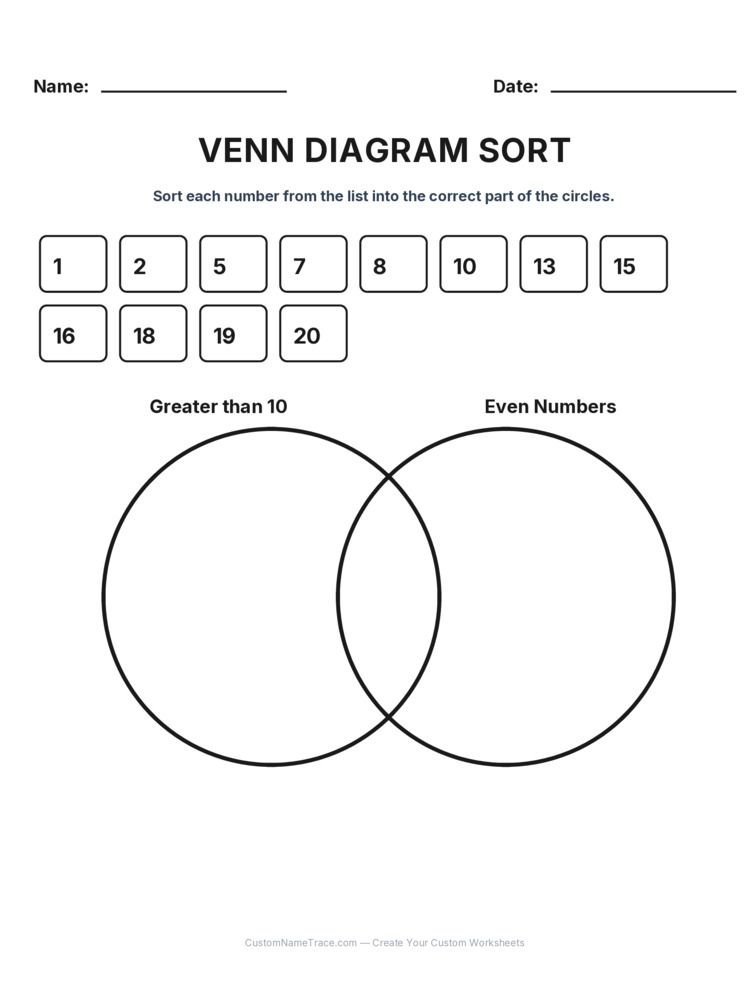
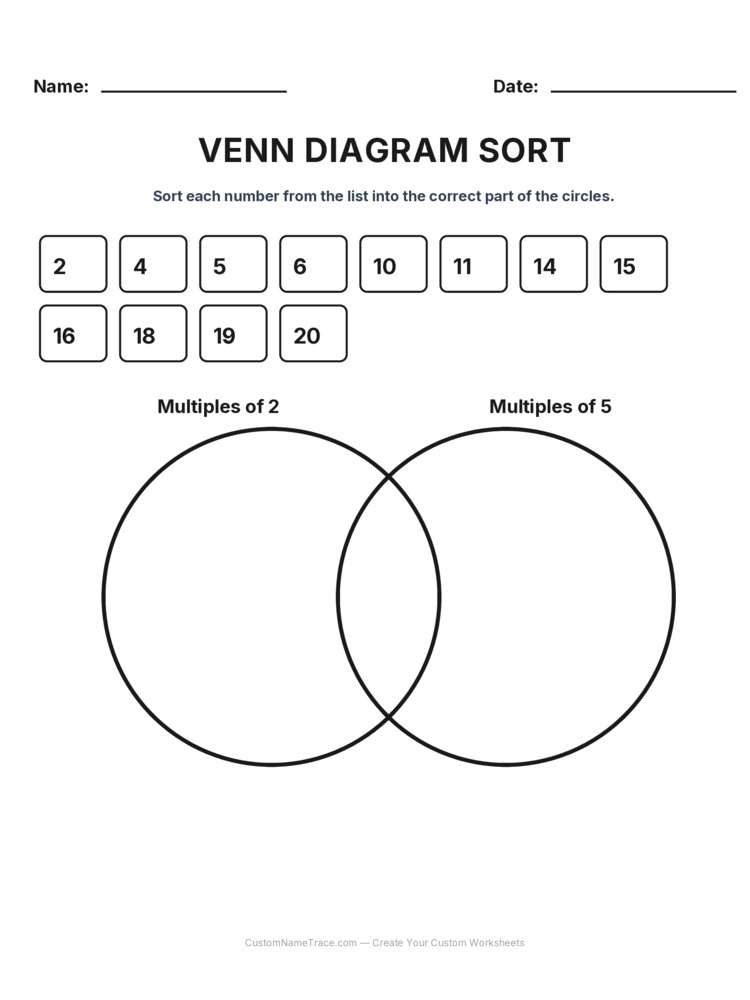
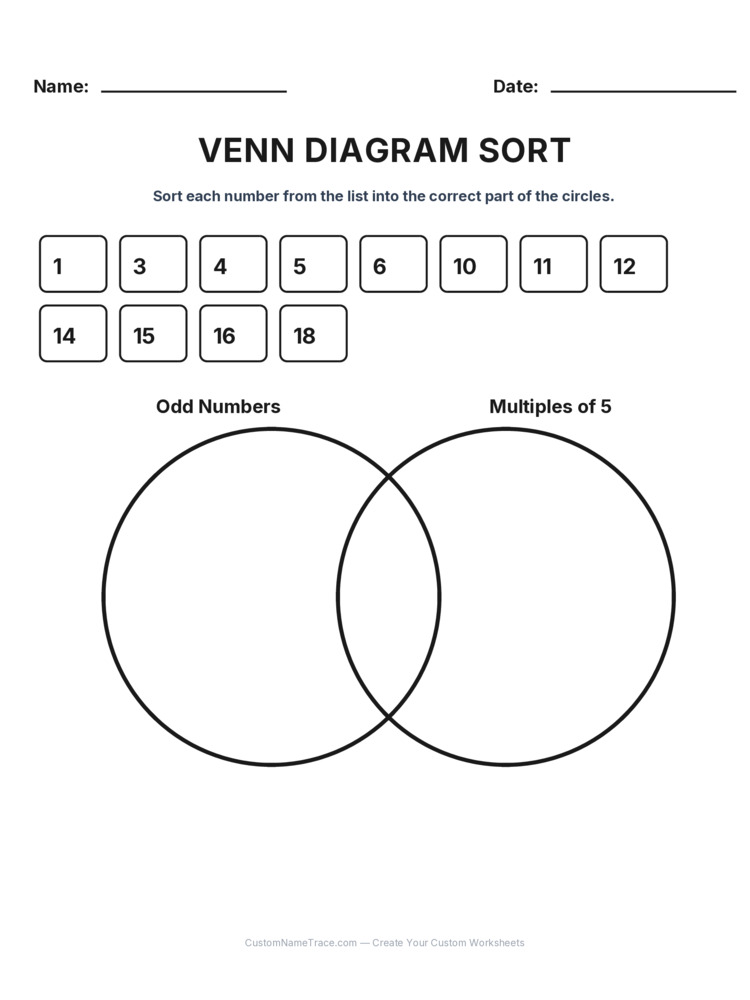
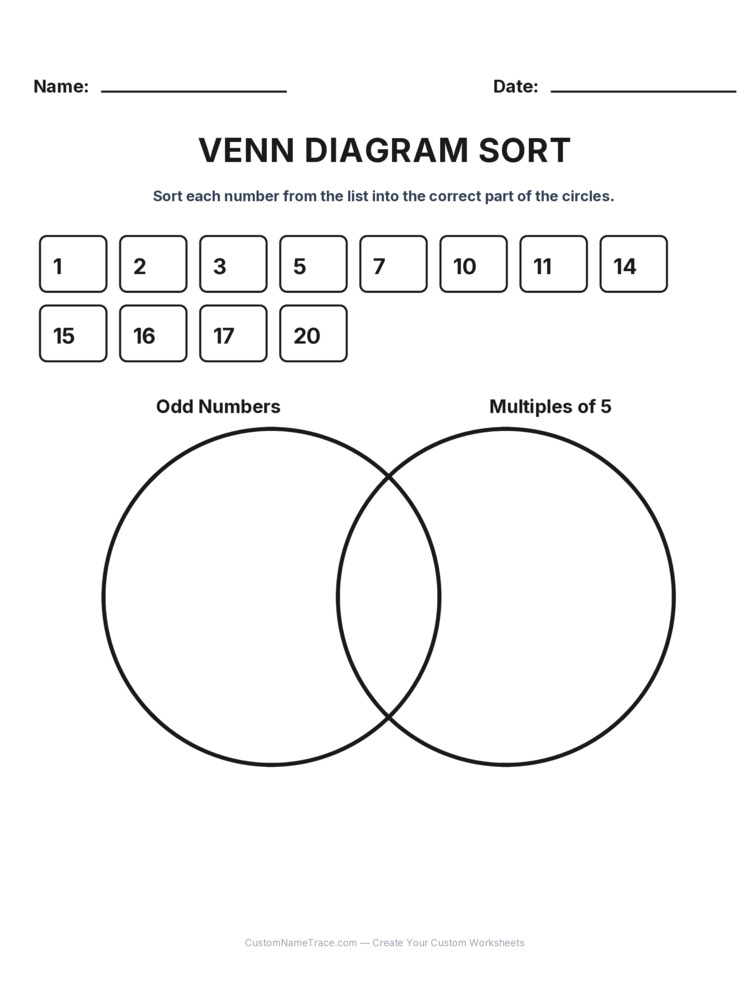
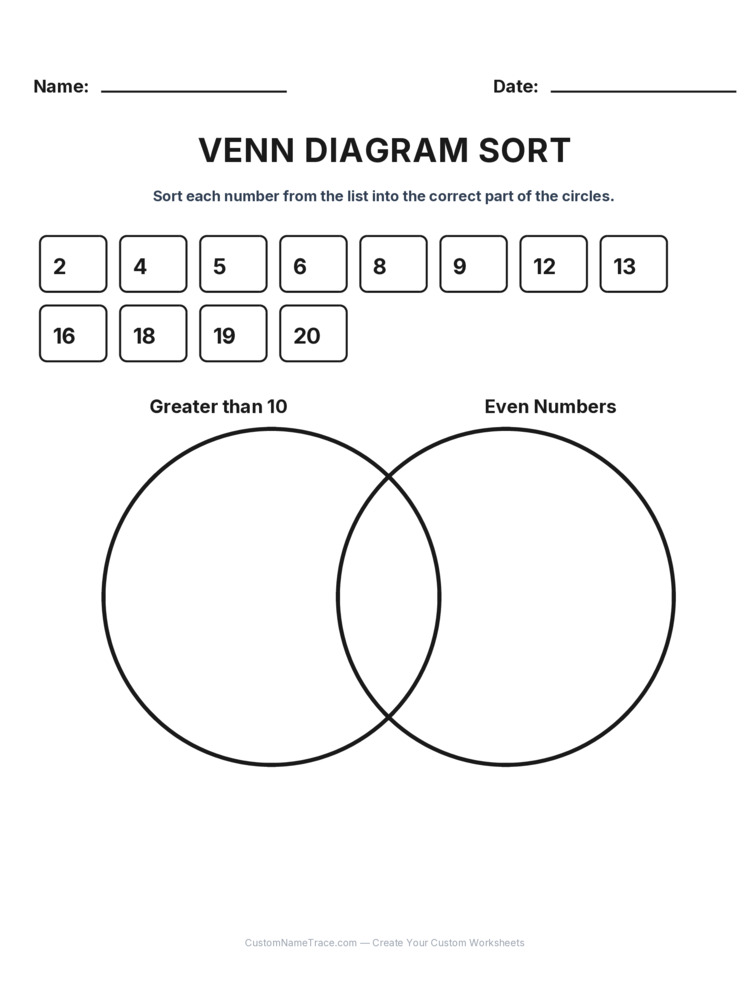
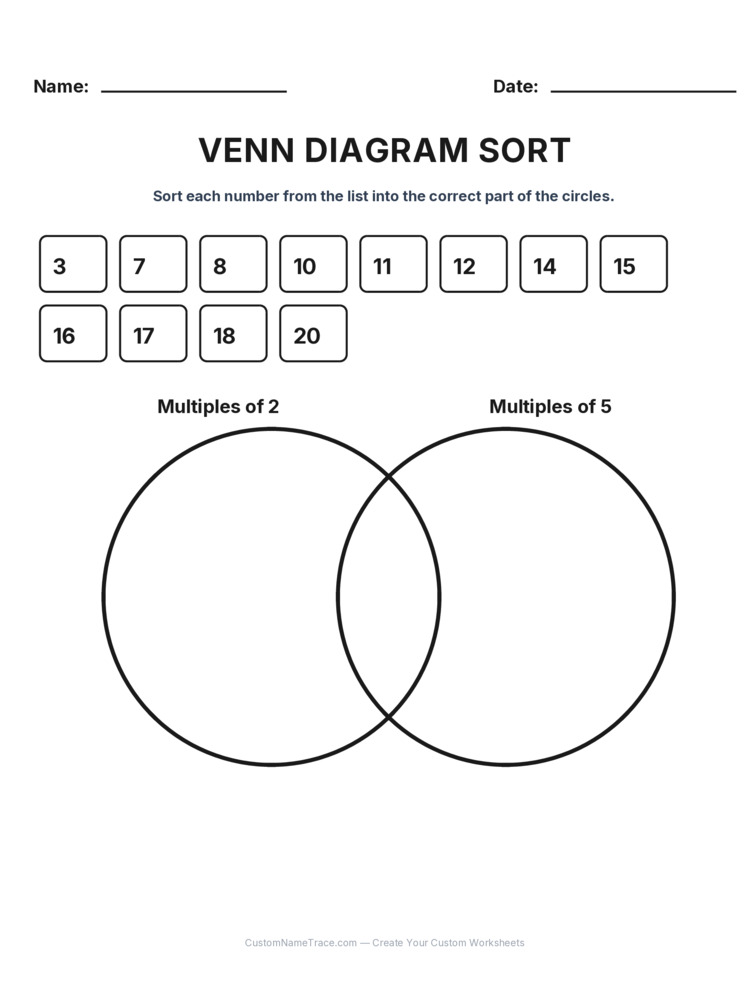
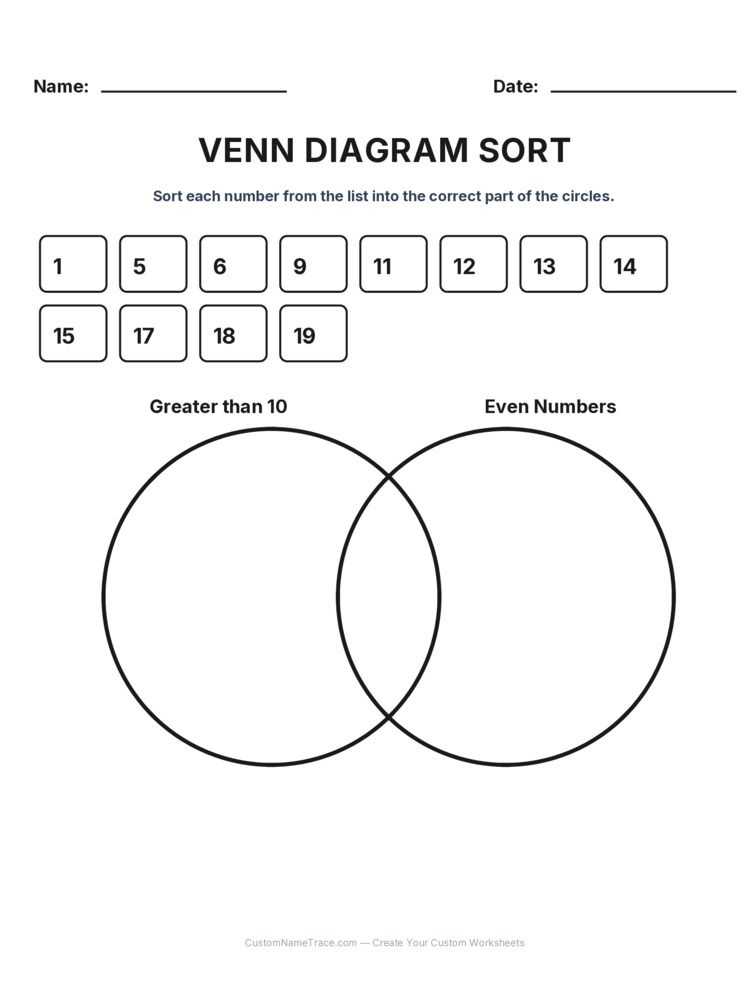
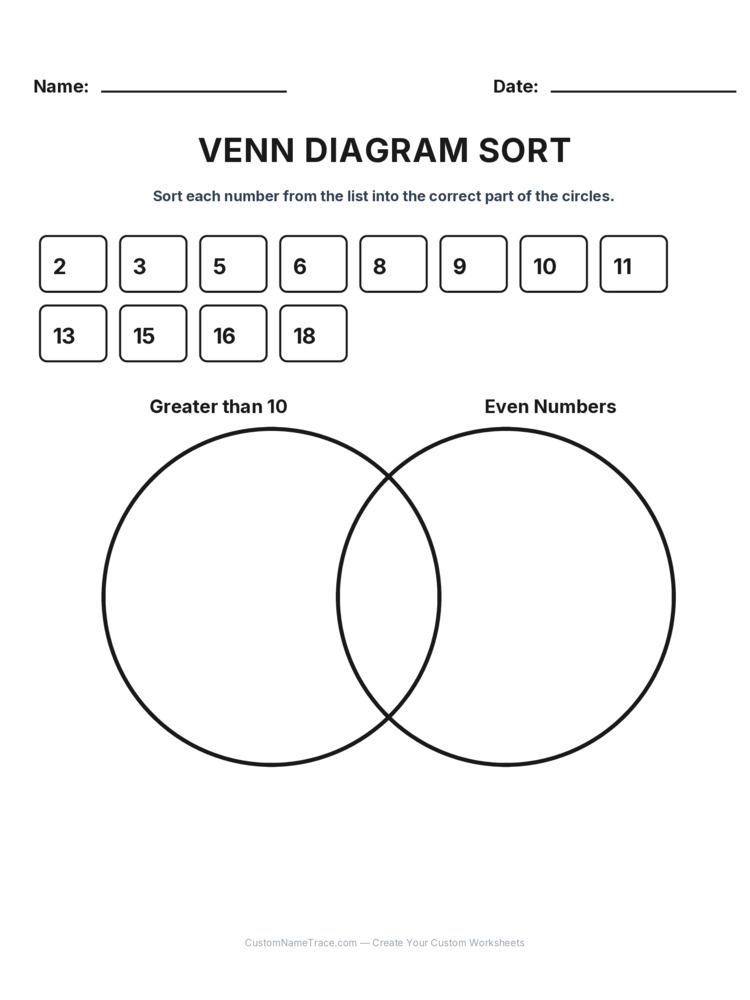
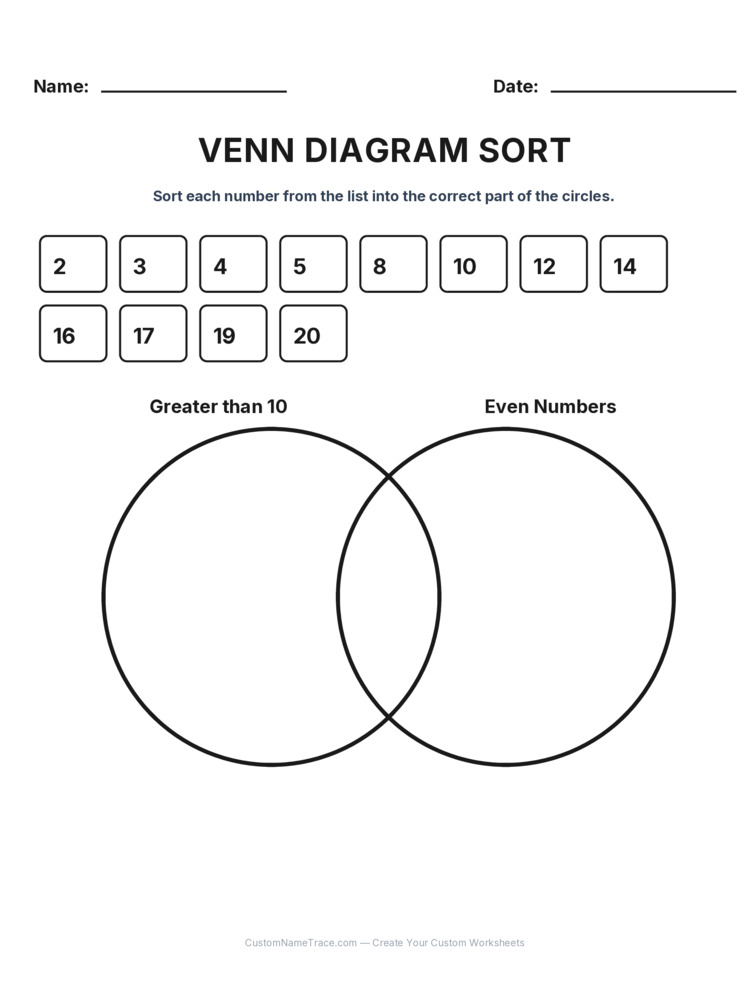
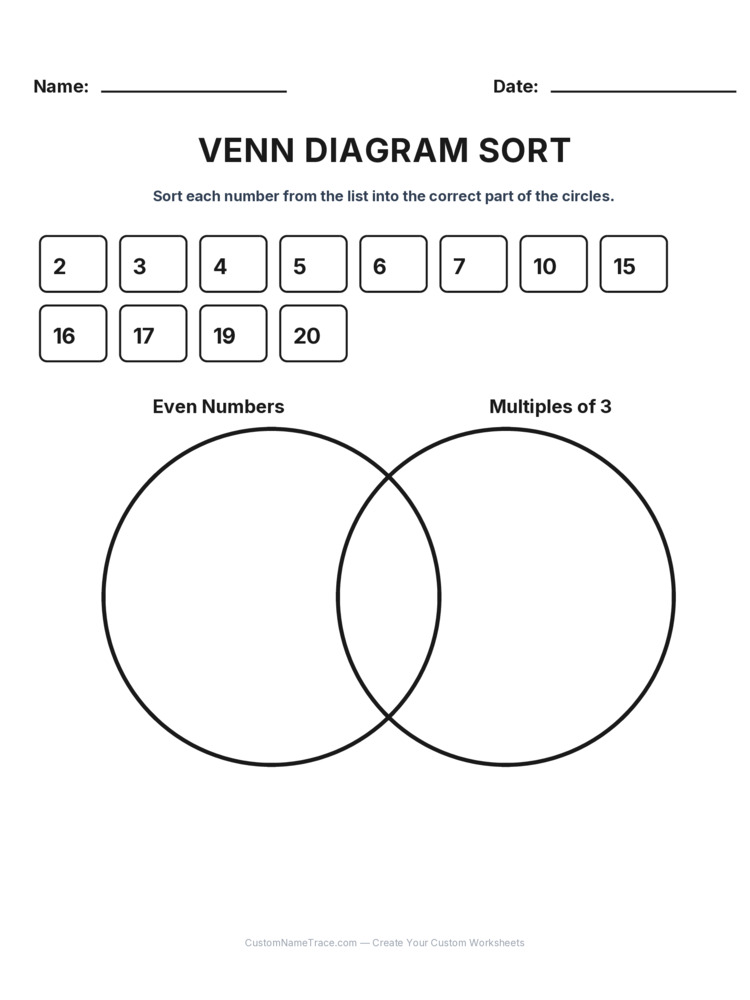
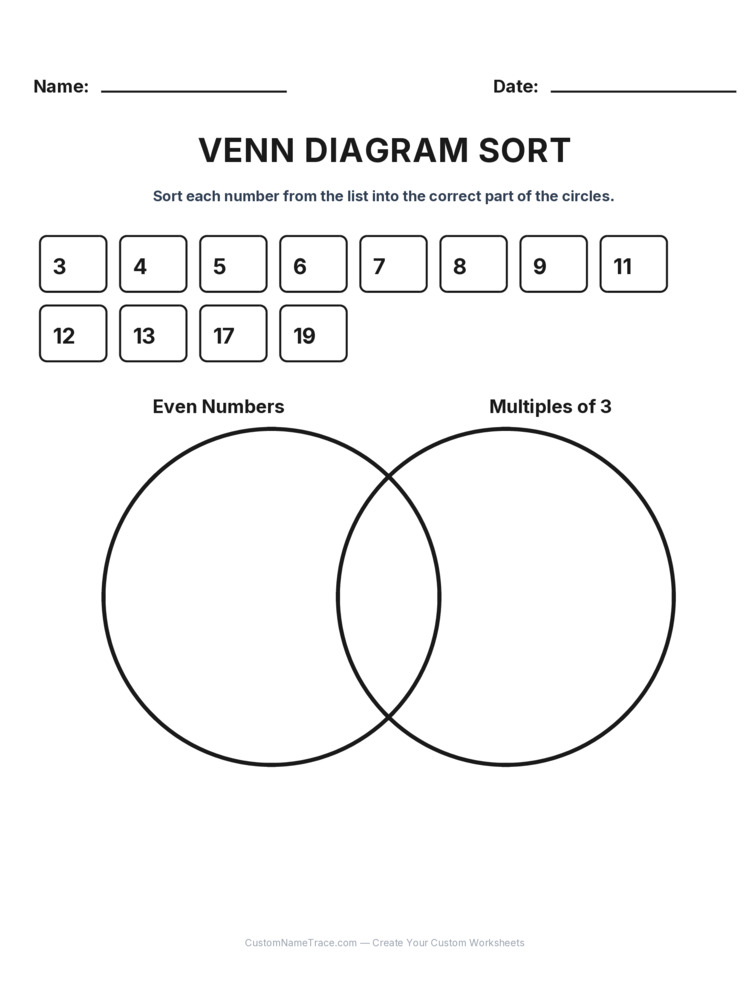
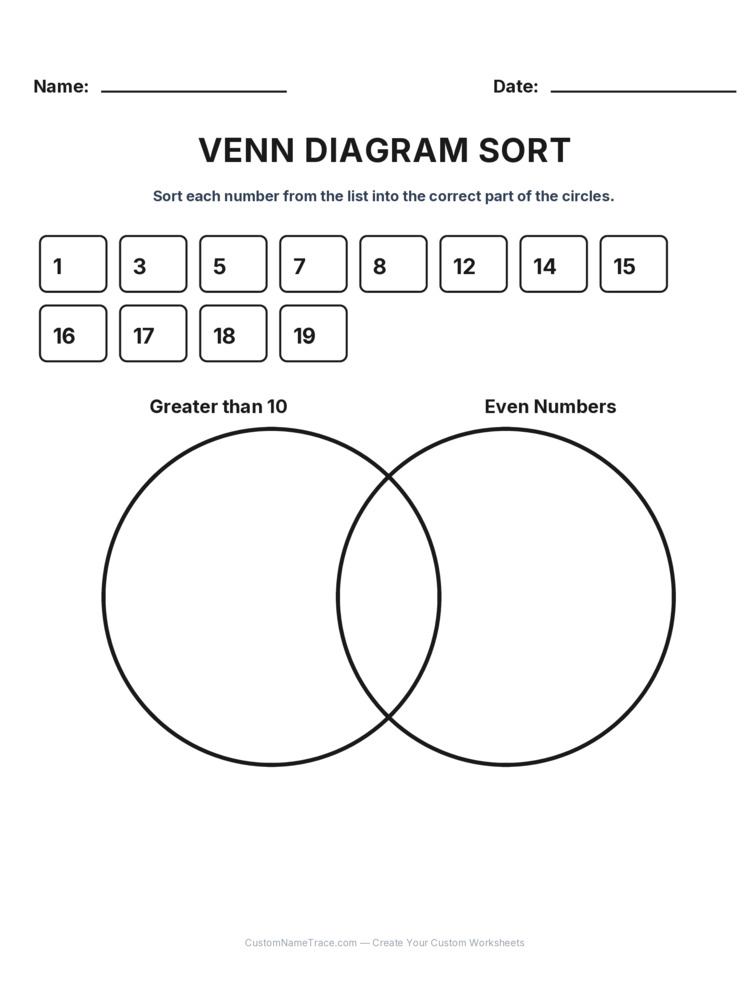
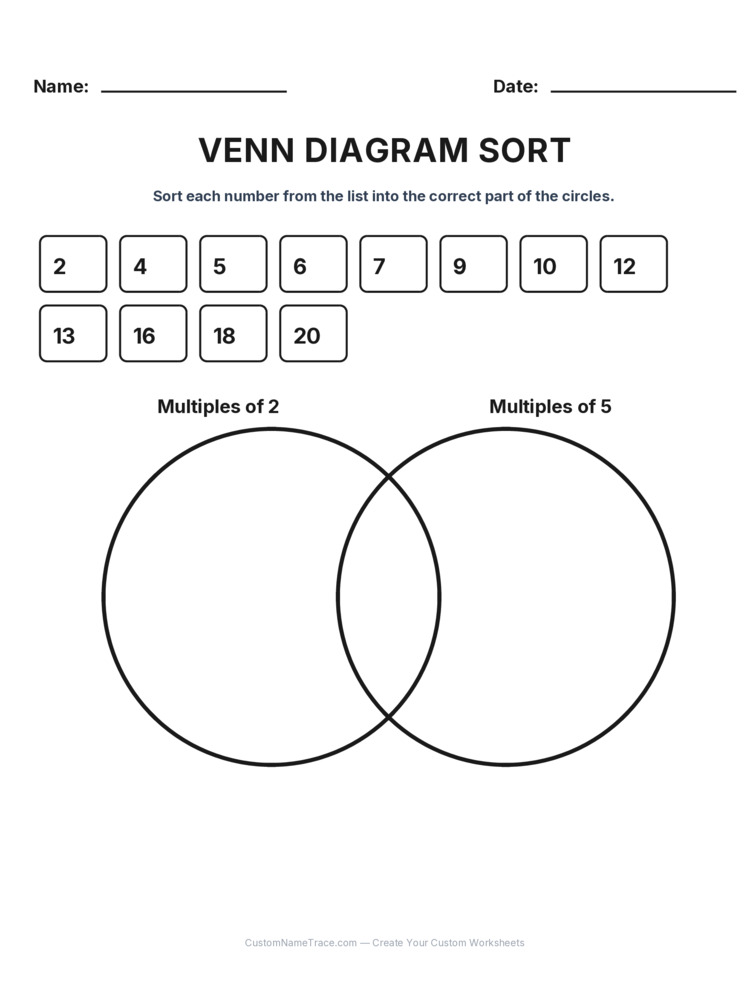
Venn Diagram Sort
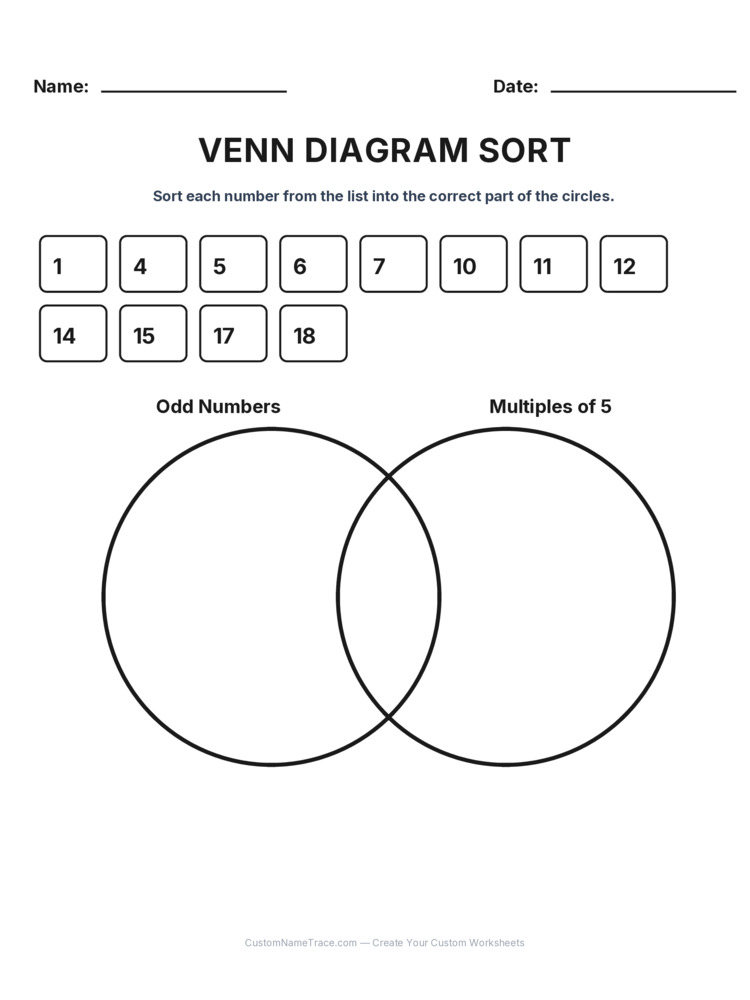
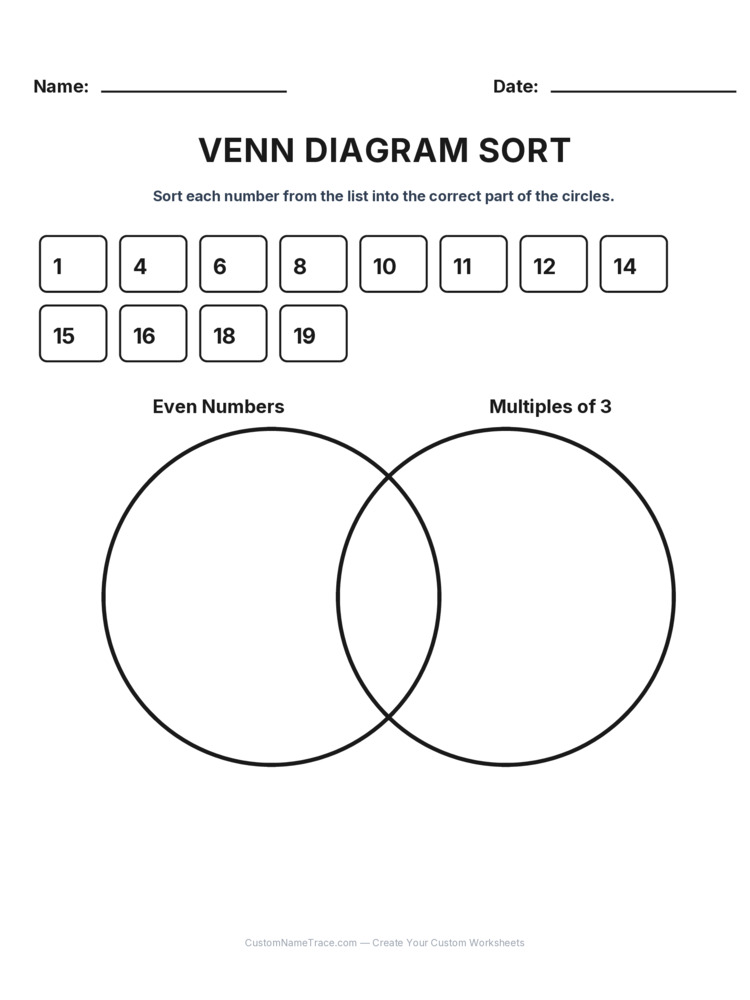
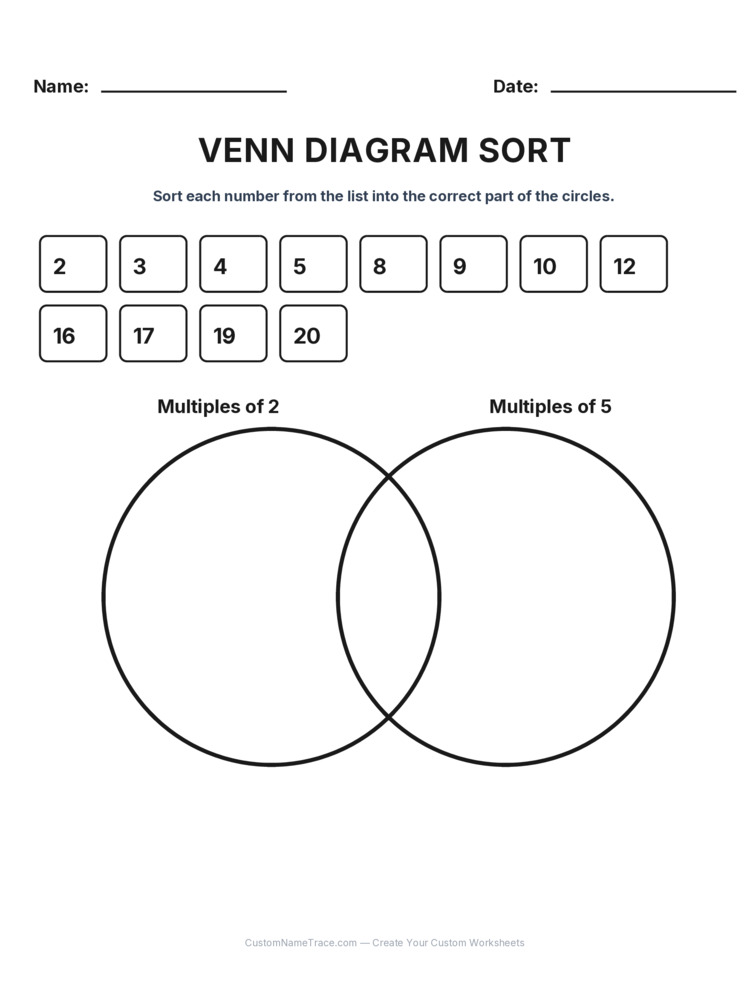
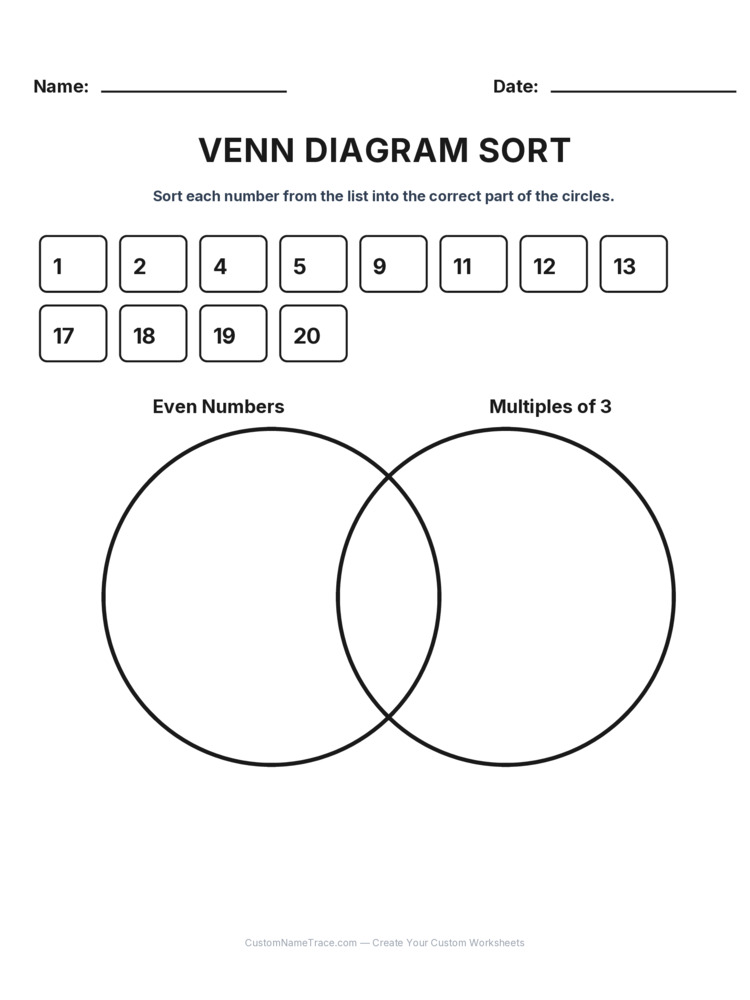
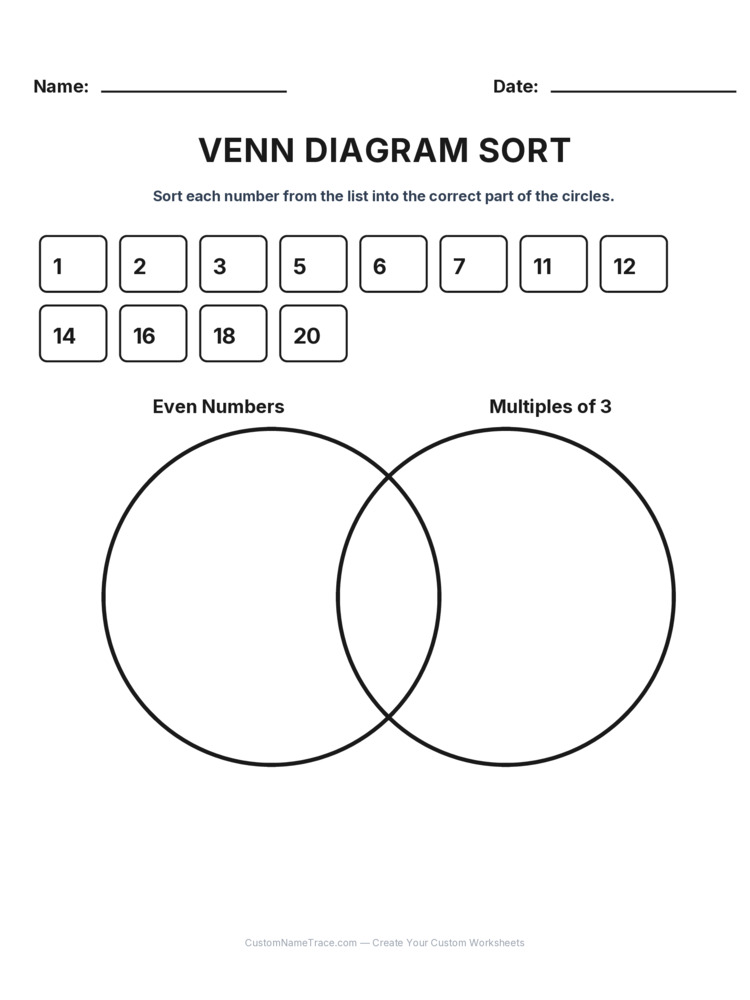
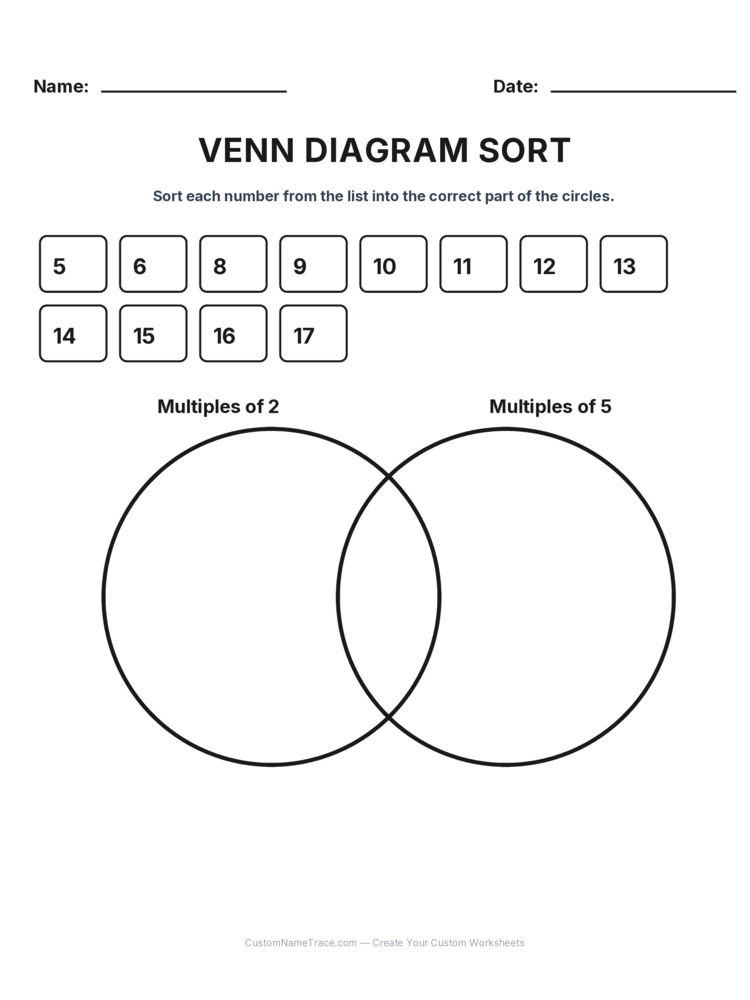
Two overlapping circles are labeled with two different number rules (for example, "Odd Numbers" and "Multiples of 5"), and a word bank of numbers below has to be sorted into the correct region — one circle, the other circle, the overlapping middle for numbers that satisfy both rules, or outside both circles entirely for numbers that satisfy neither. This is the first puzzle on the site that requires checking a number against two independent rules and reasoning about all four possible outcomes, not just true/false against one rule.
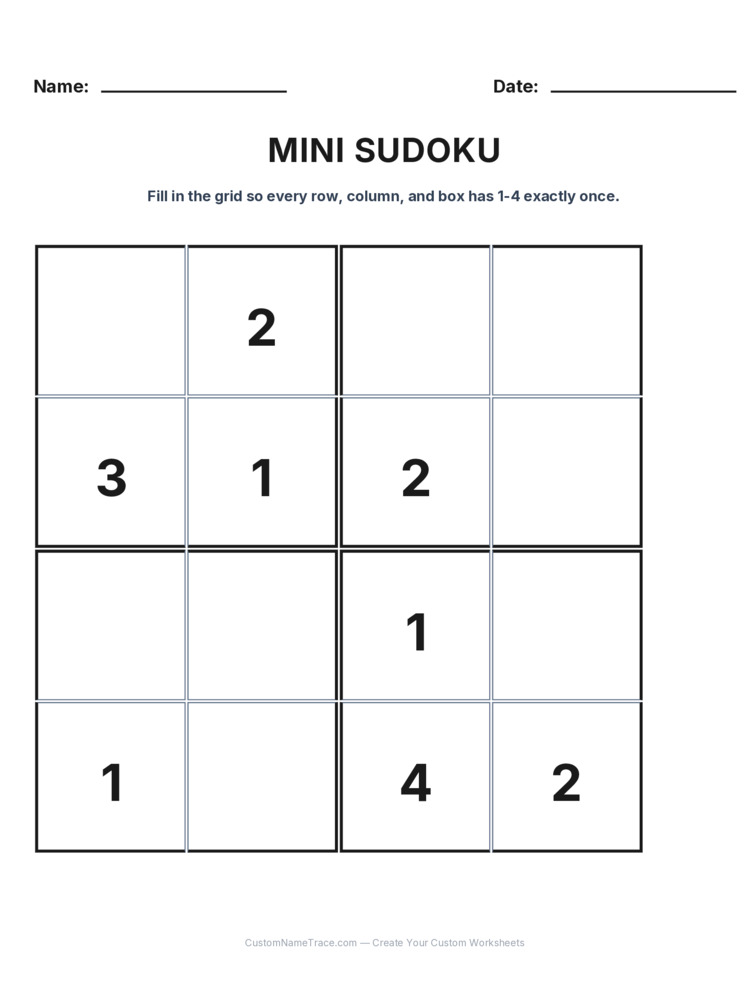
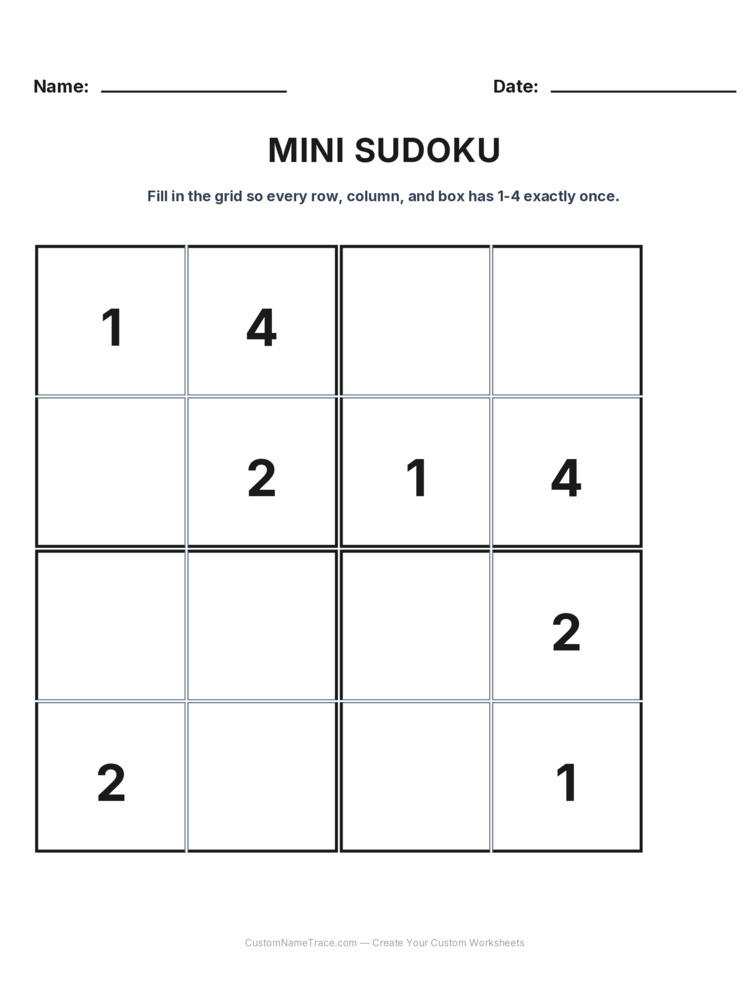
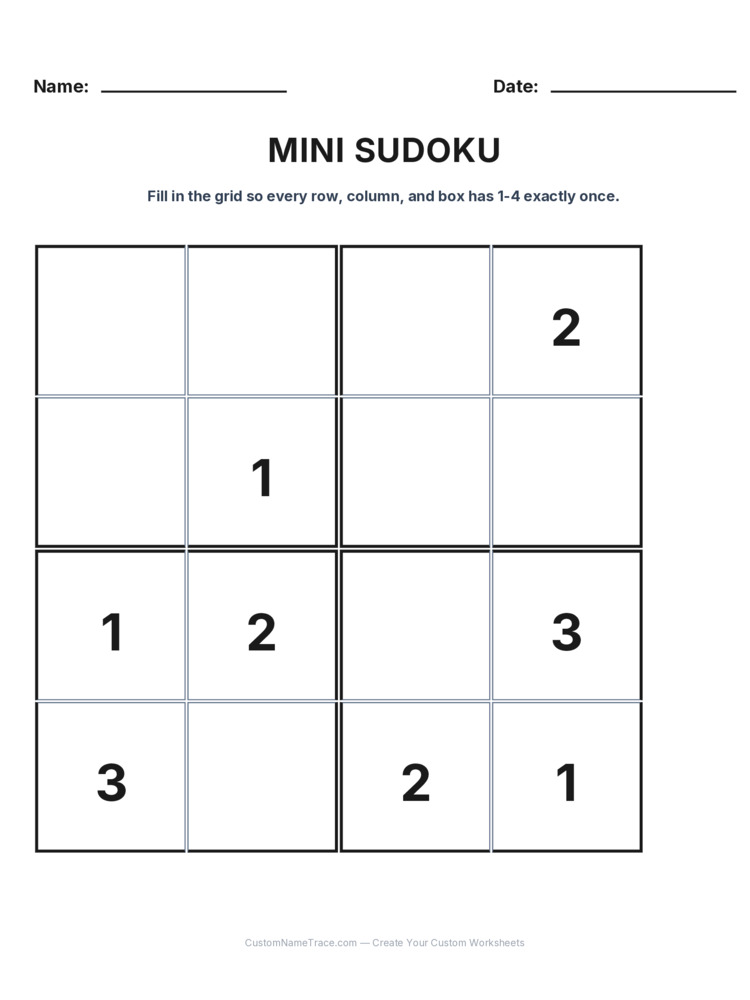
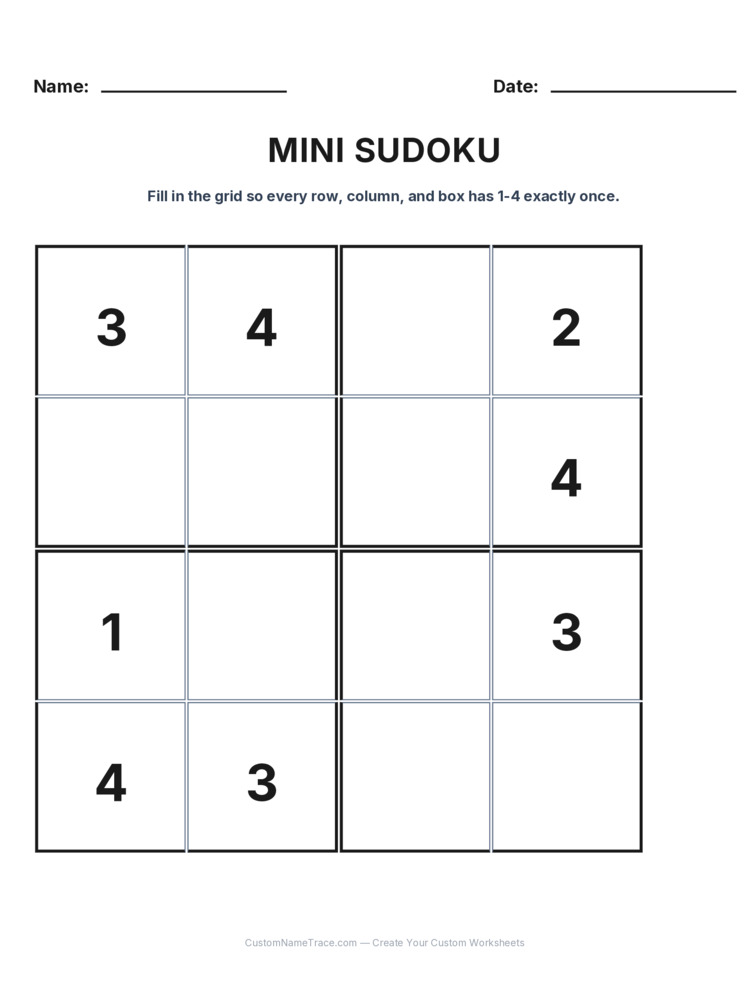
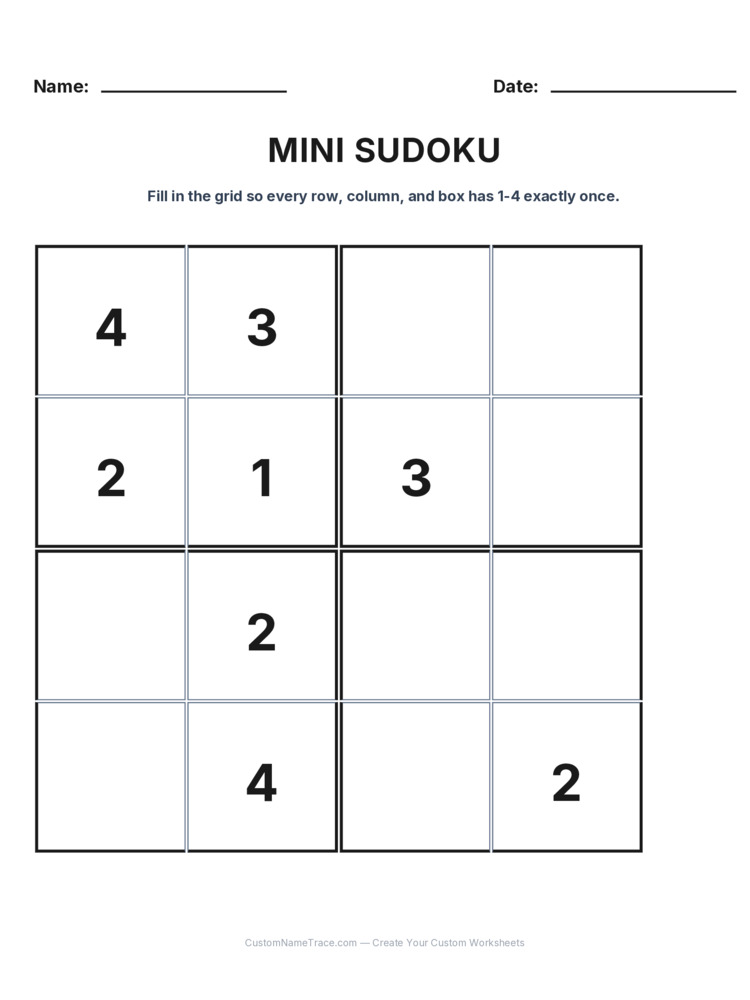
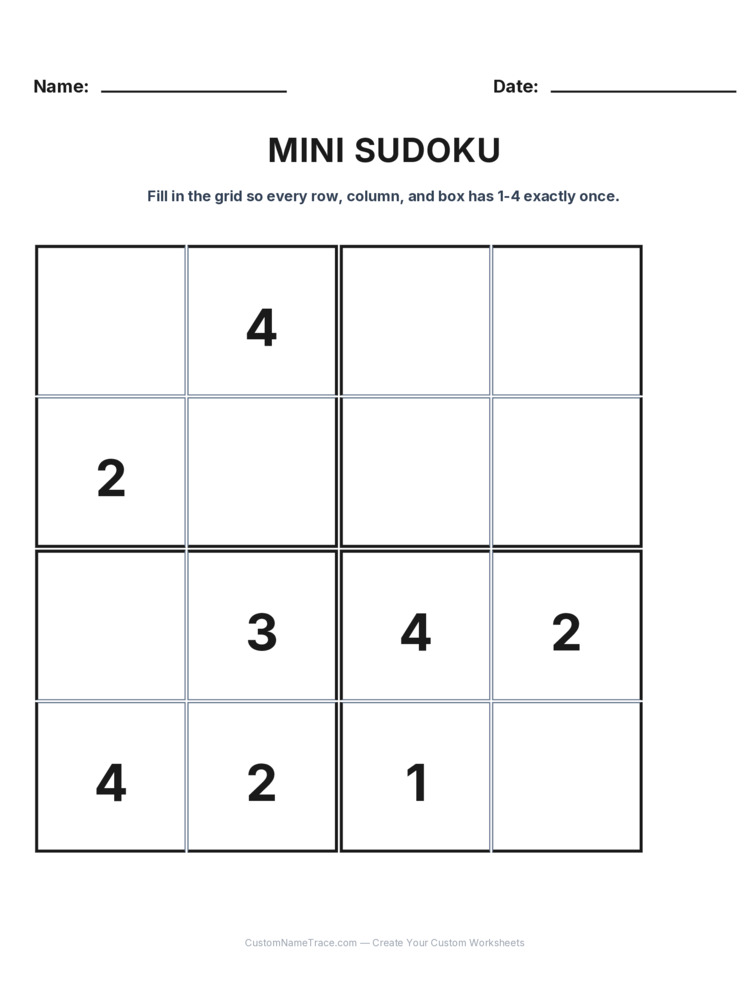
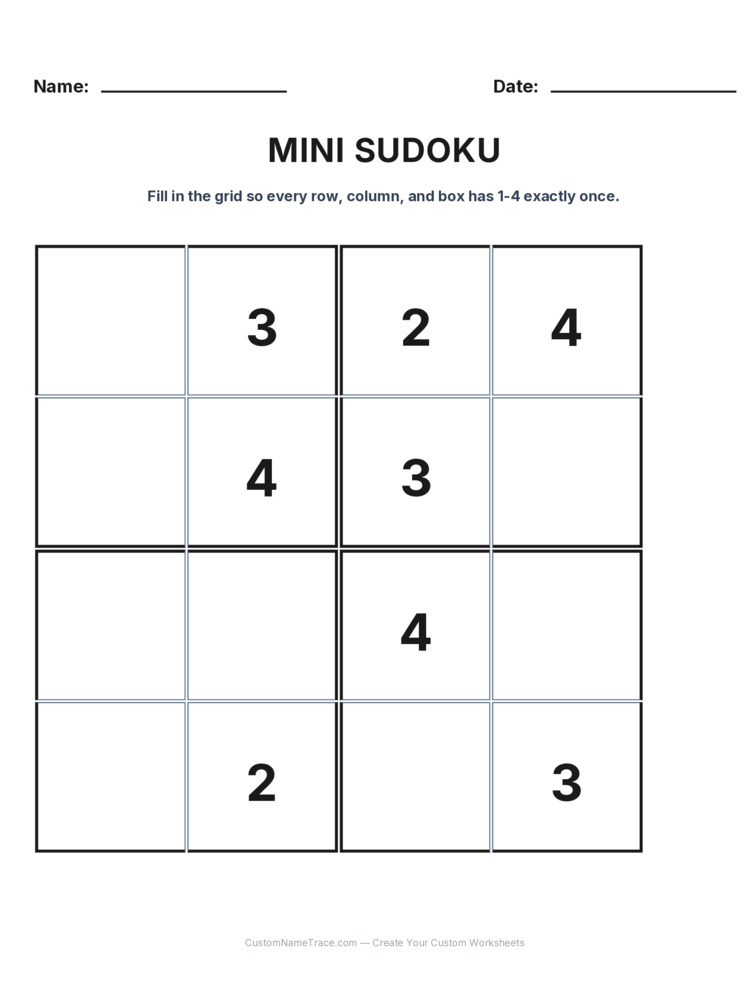
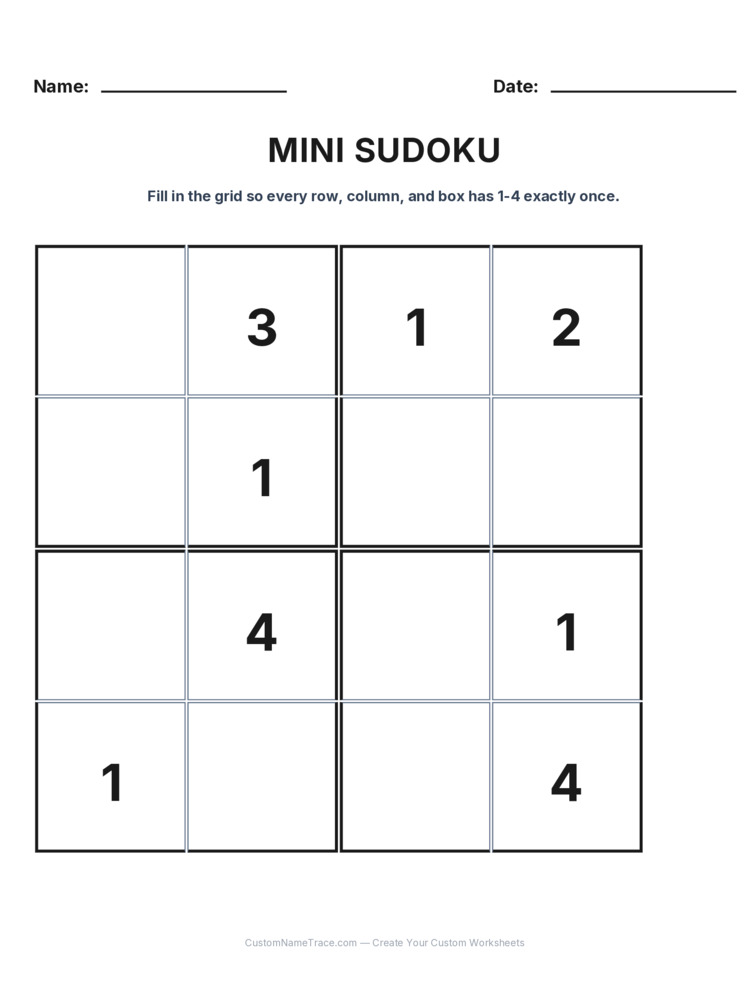
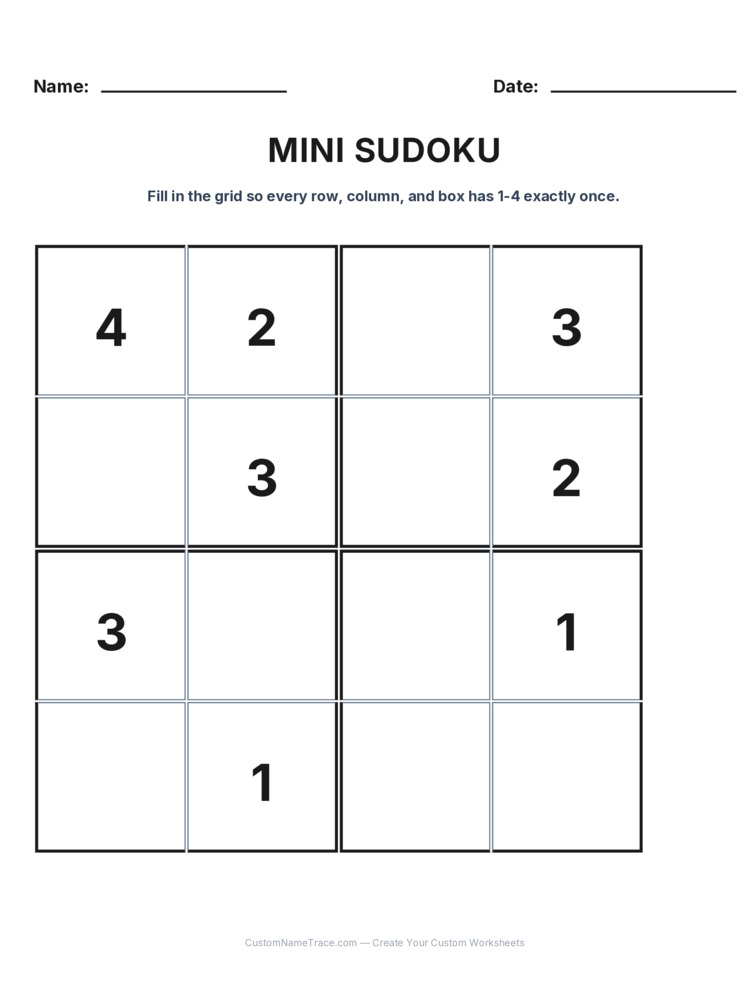
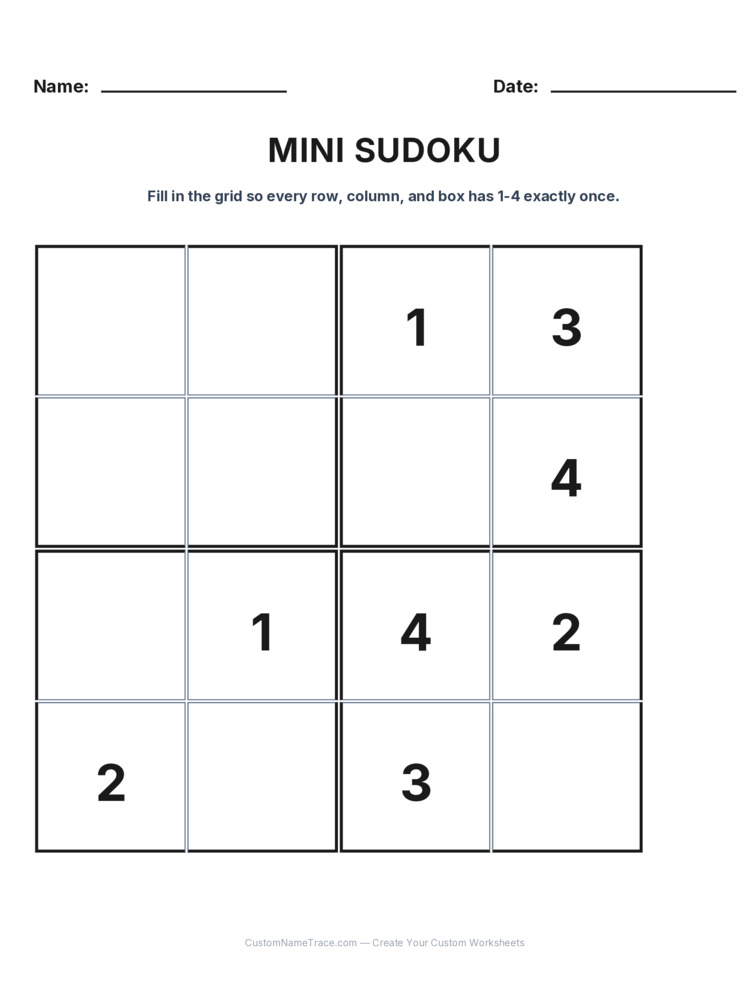
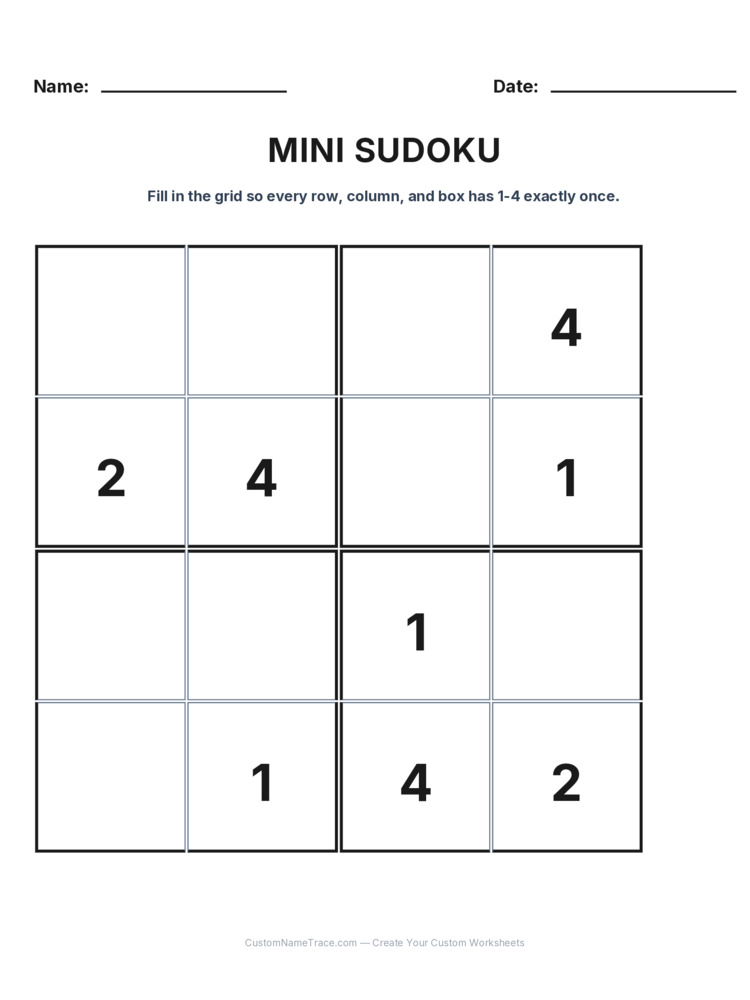
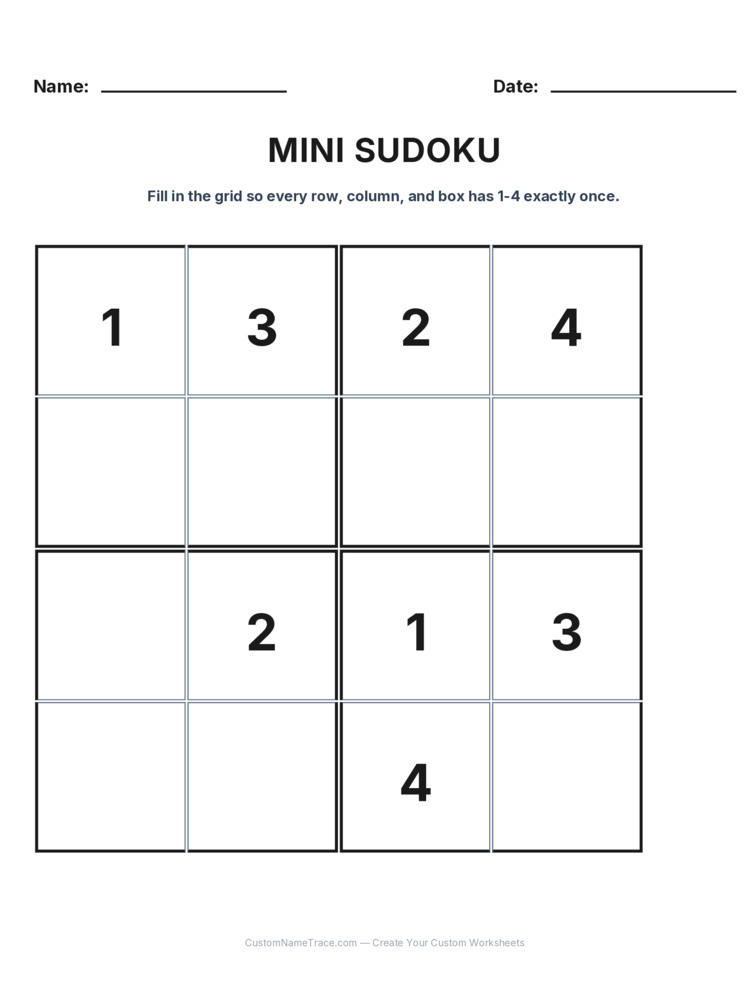
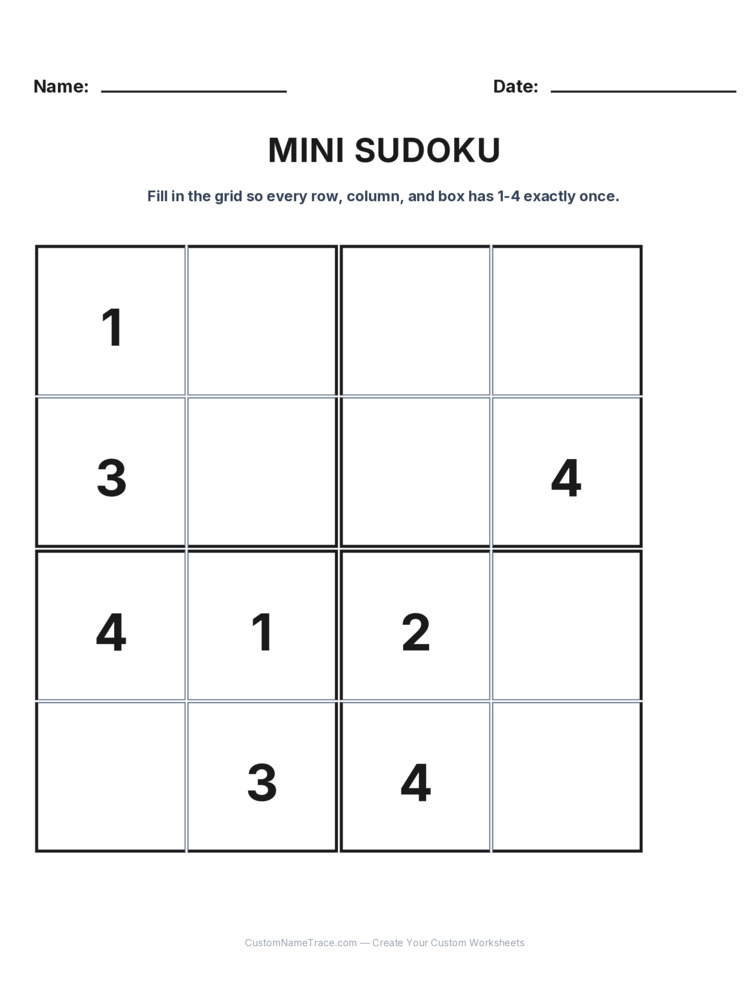
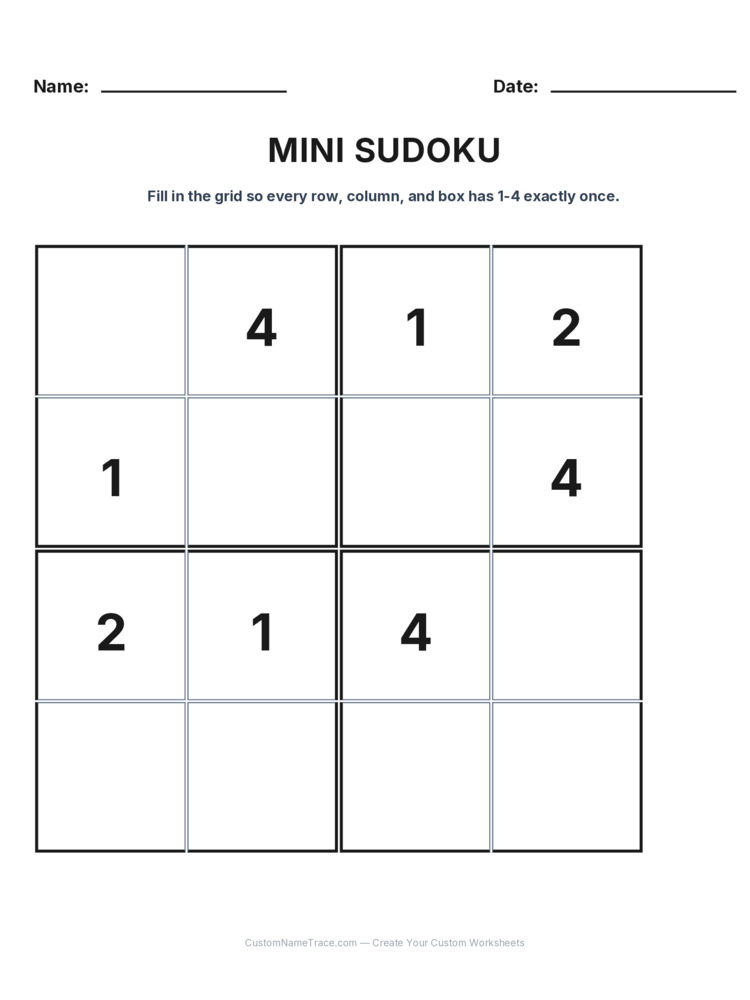
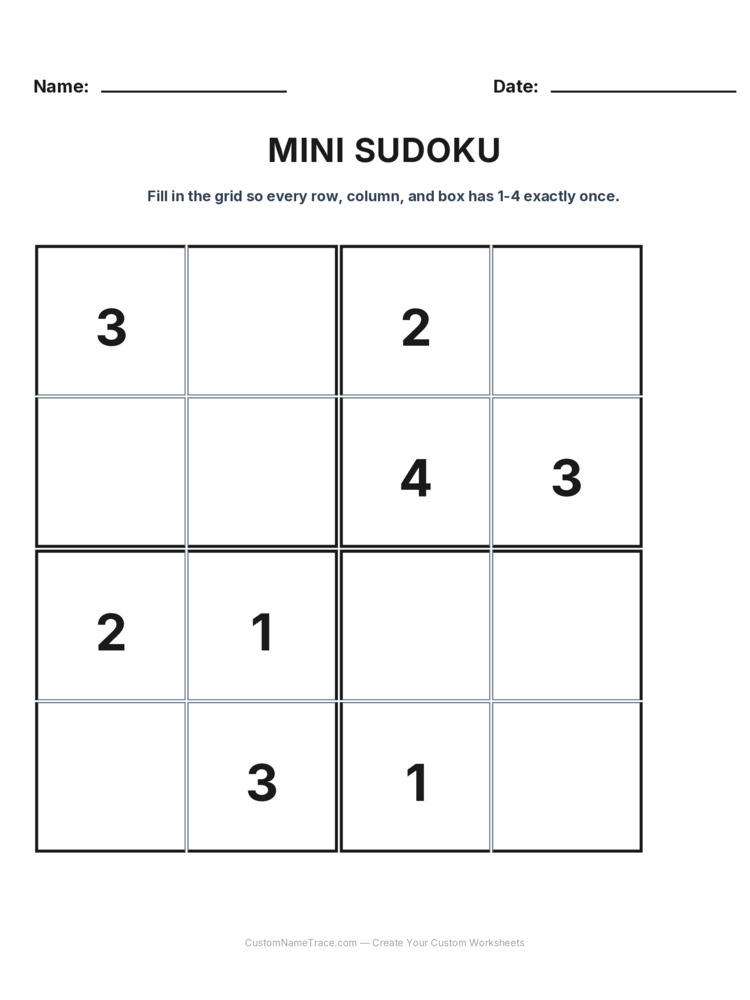
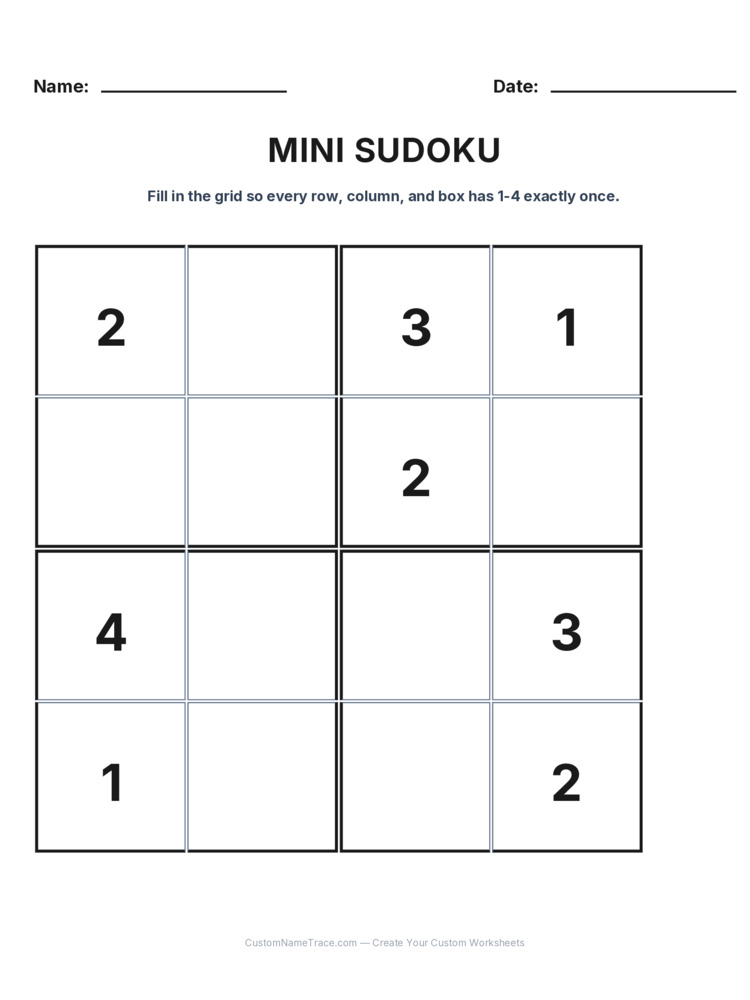
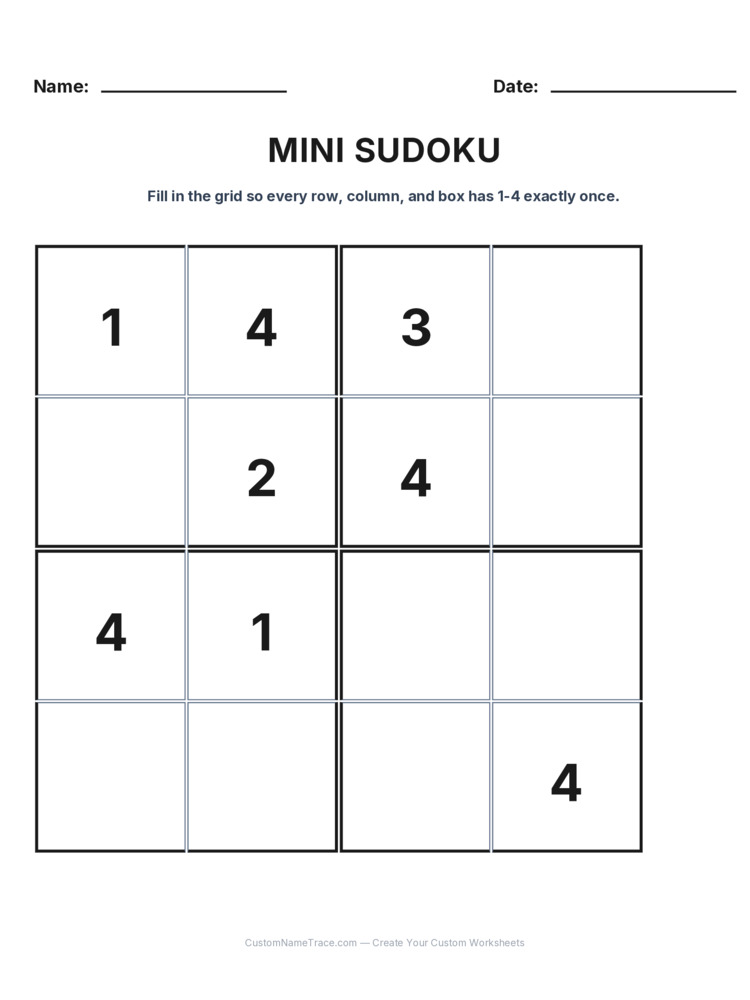
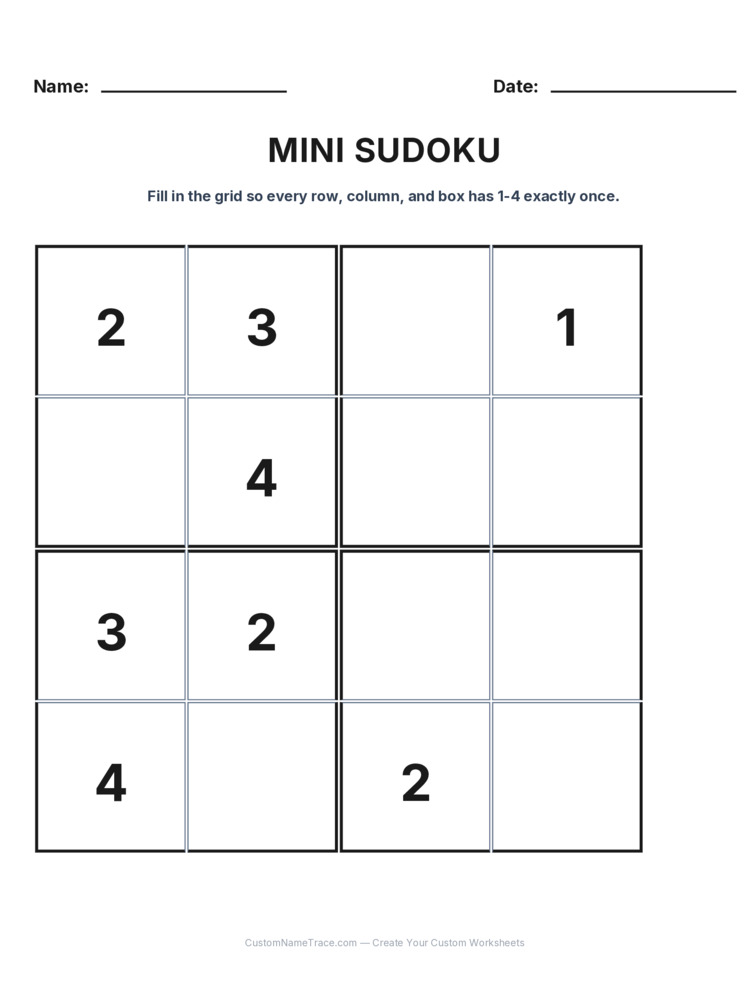
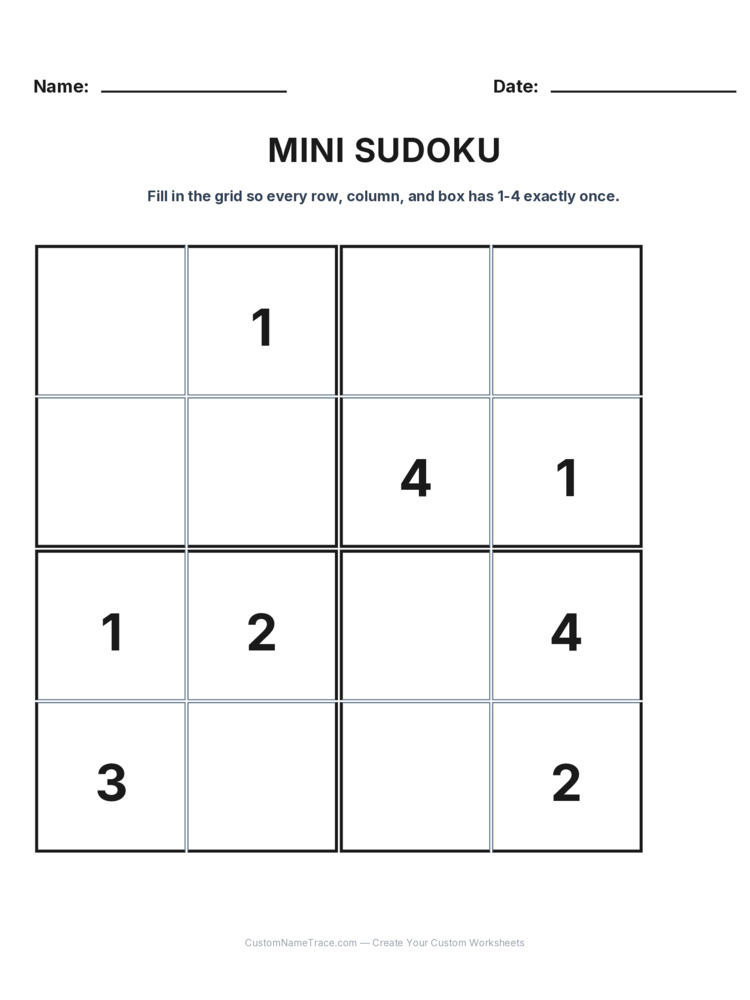
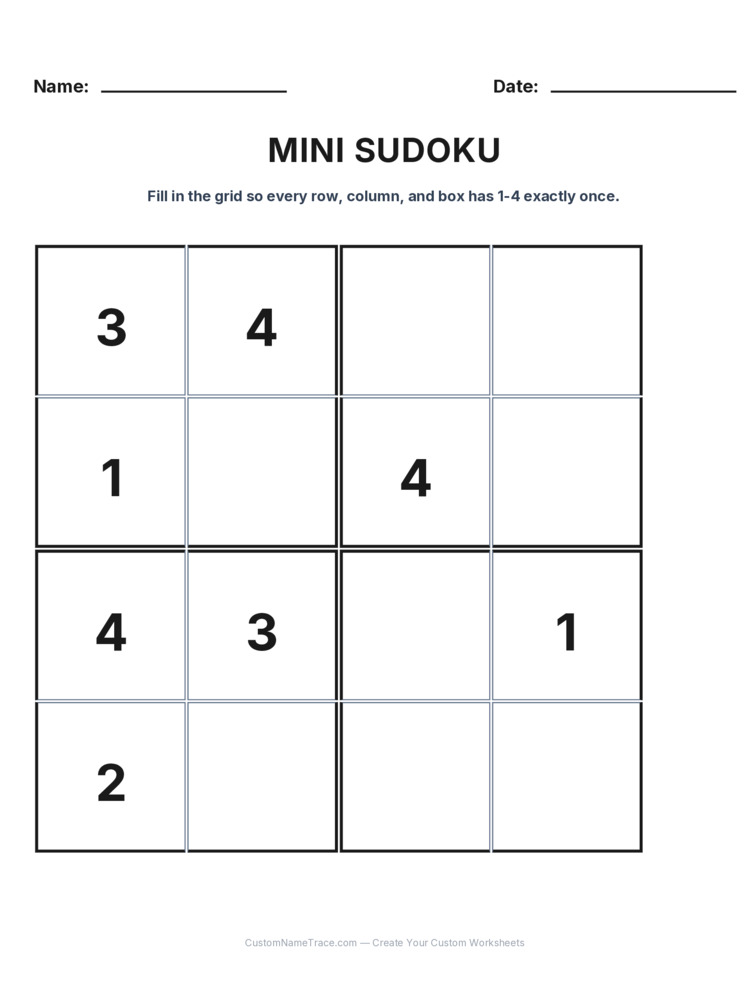
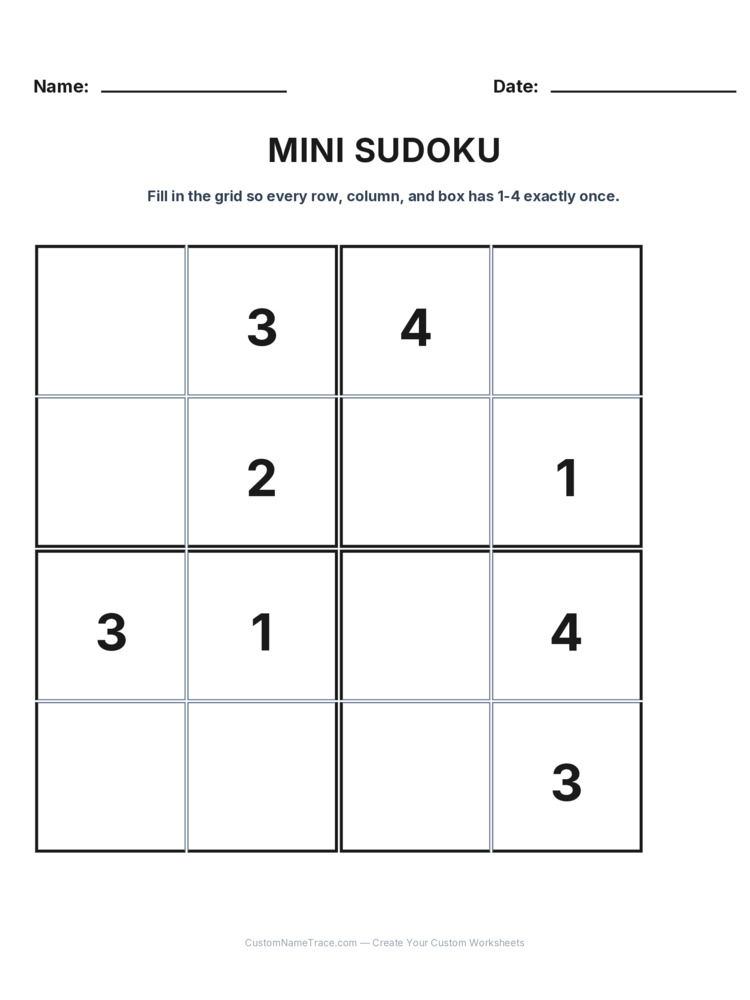
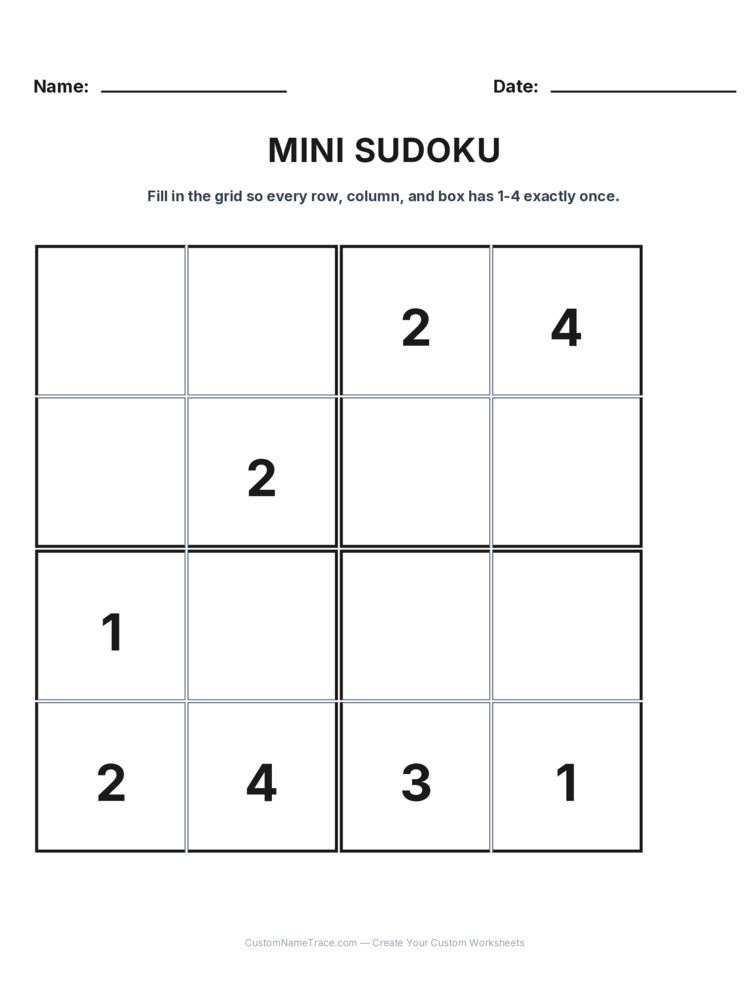
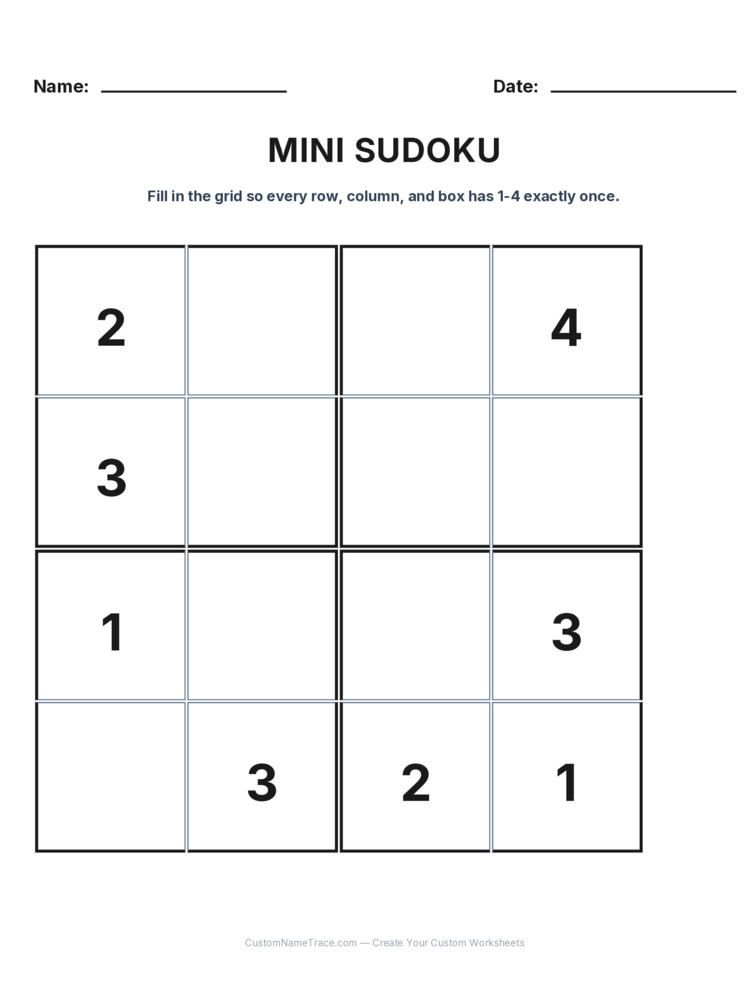
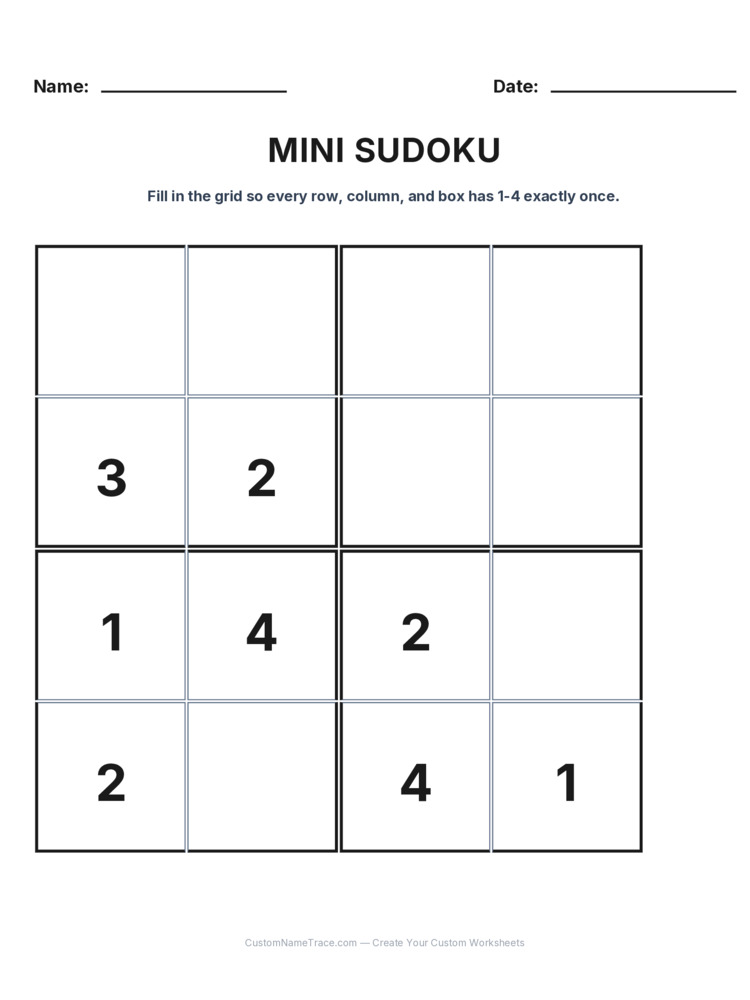
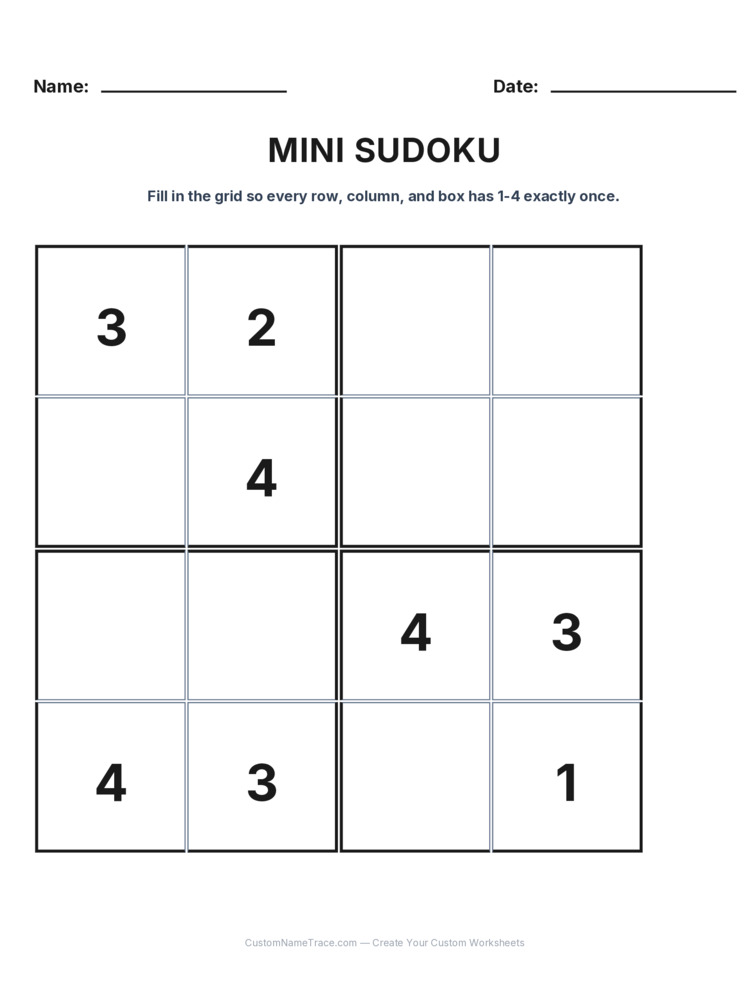
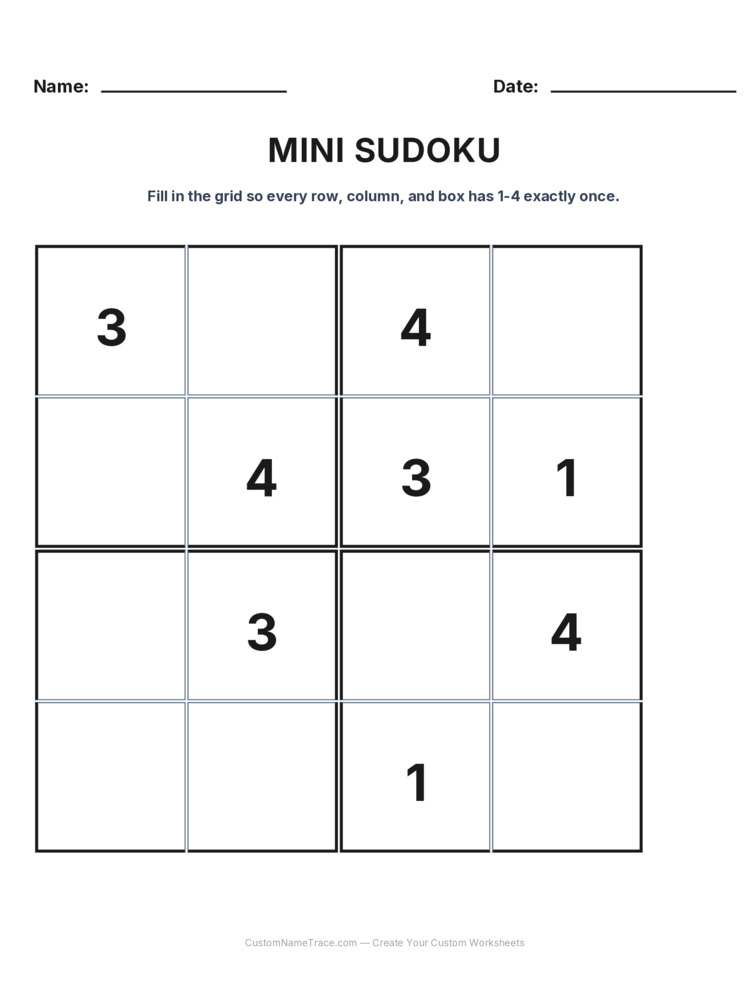
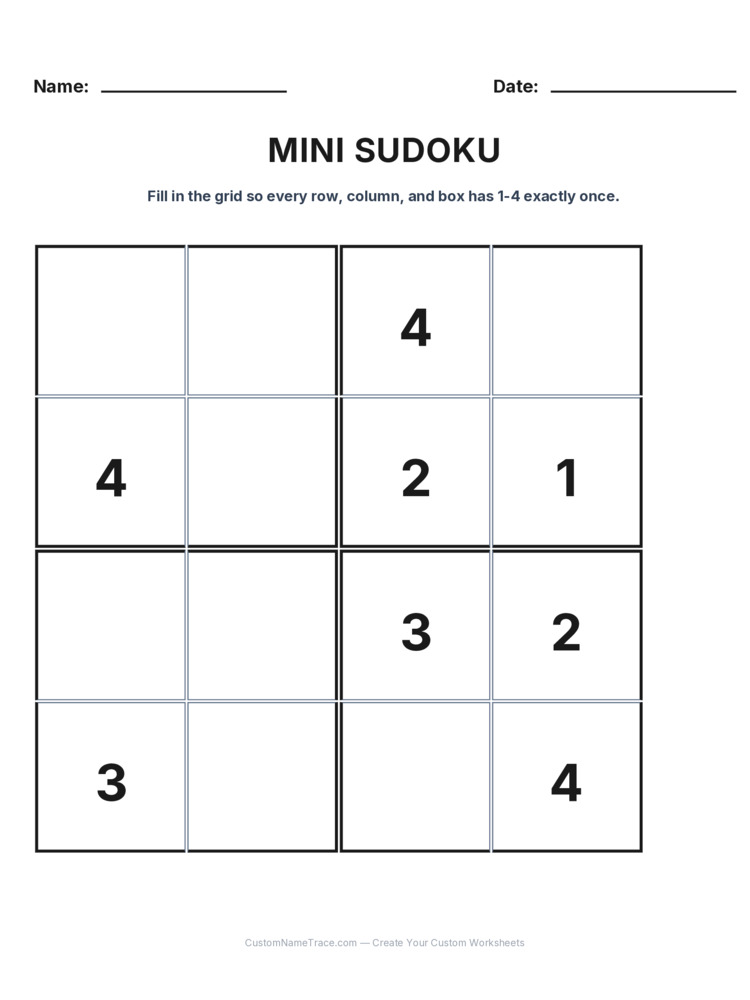
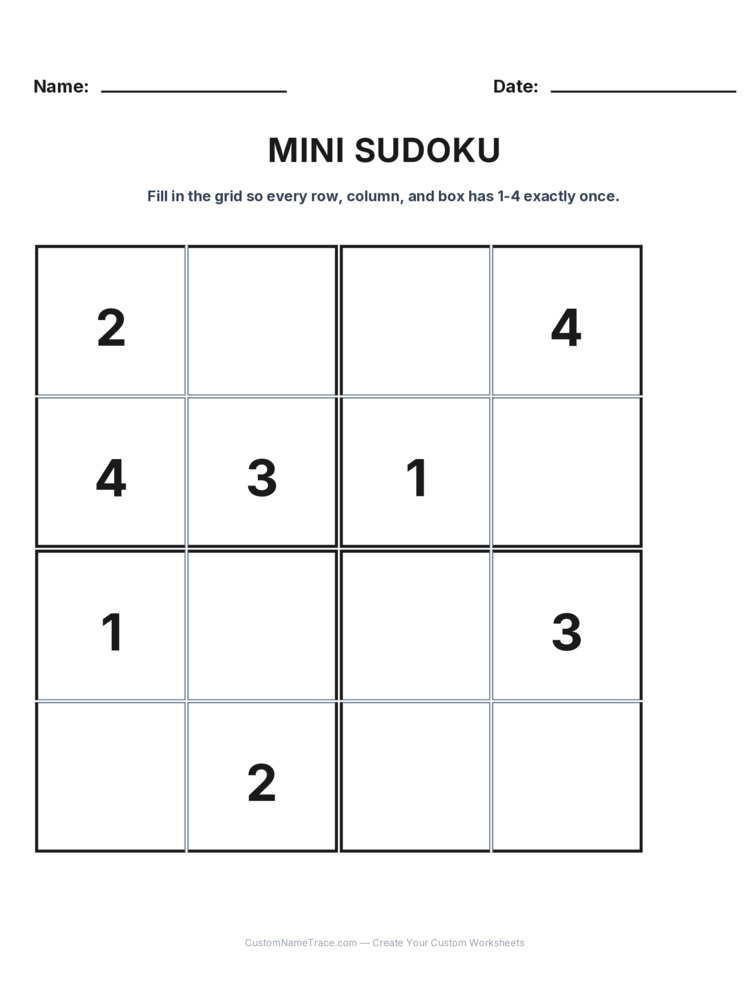
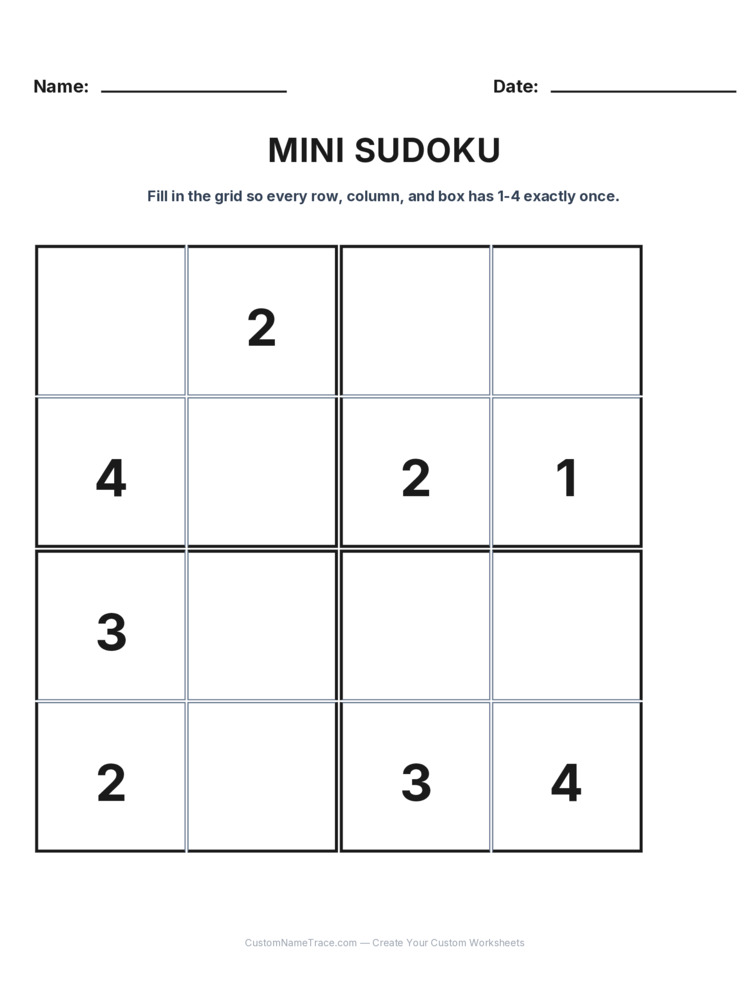
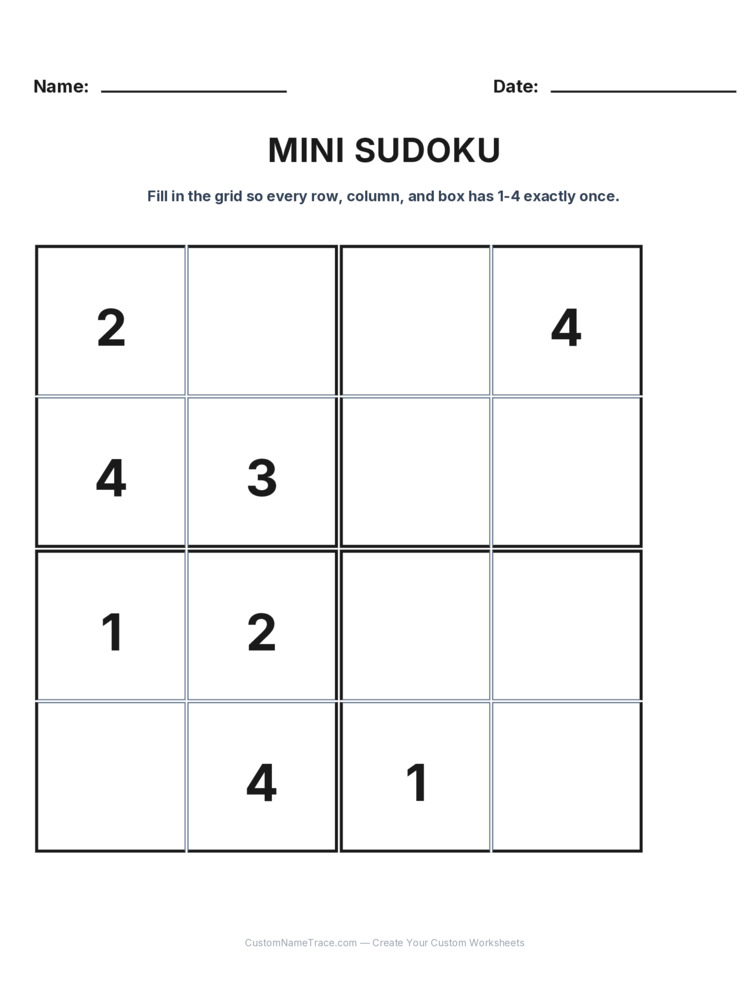
Mini Sudoku
A real 4x4 Sudoku grid, split into four 2x2 boxes, with the same core Sudoku rule as the full 9x9 version scaled down: every row, every column, and every 2x2 box must contain the numbers 1 through 4 exactly once. Every puzzle is generated from a complete, valid solved grid and then checked by computer to confirm exactly one valid solution remains before it's published — never an ambiguous grid with more than one correct way to fill it in.
Why no separate answer key
Cryptograms carry their own key on the page. Venn Diagram and Mini Sudoku answers can both be checked directly against the rule printed on the worksheet (does this number satisfy both circle labels; does this row/column/box contain 1-4 exactly once) without needing a second reference page — checking the logic is part of the exercise, not a separate step that requires a key.