Free Grade 3 Math Worksheets

Free printable Grade 3 math worksheets — Multiplication and Division facts 0-12, a multiplication chart, and 3-digit Addition and Subtraction with regrouping.

Get 10 Worksheets in a Bundle →

Browse by Operation

Jump straight to a skill

Grade 3: multiplication and division become full skills

Where Grade 2 introduced multiplication and division through just three easy fact families, Grade 3 is where both become genuine, full skills — every fact from 0 through 12, expected to be memorized and fast, not worked out from scratch each time. By the end of Grade 3, a child should know these facts the way they know their own name, without counting or skip-counting to get there.

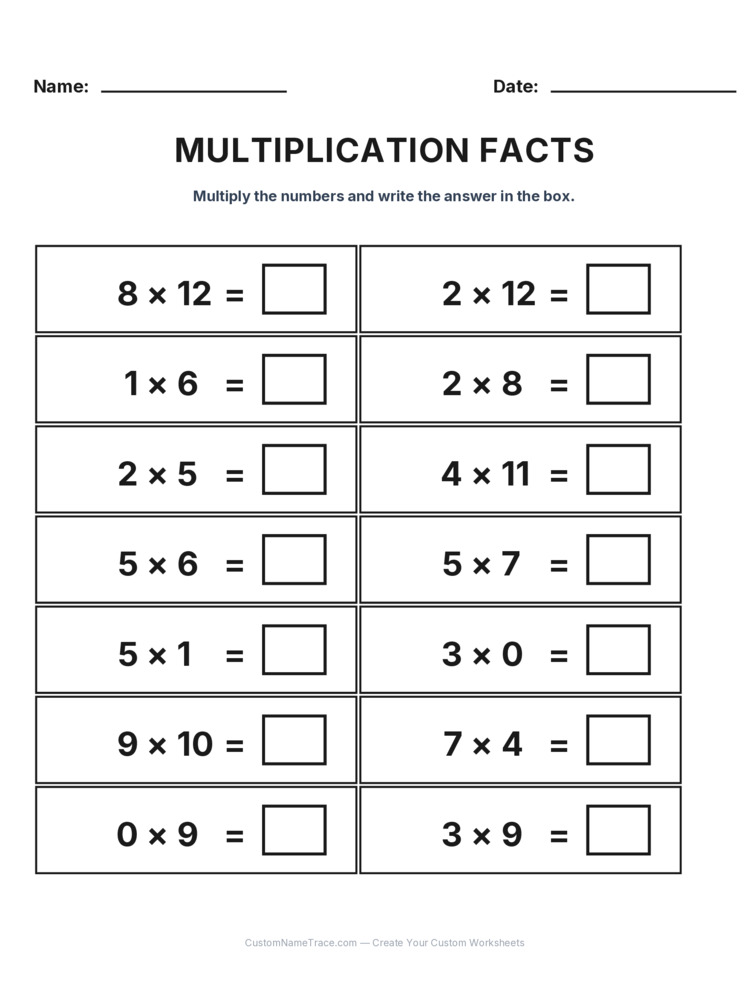
Multiplication Facts 0-12

This page covers the complete times-table range, not just the easy families from Grade 2 — the 3s, 4s, 6s, 7s, 8s, 9s, 11s, and 12s alongside the familiar 2s, 5s, and 10s. These are the facts that take real repetition to lock in, and dedicated, no-frills practice on the full range is what actually builds that fluency, more than any single clever trick.

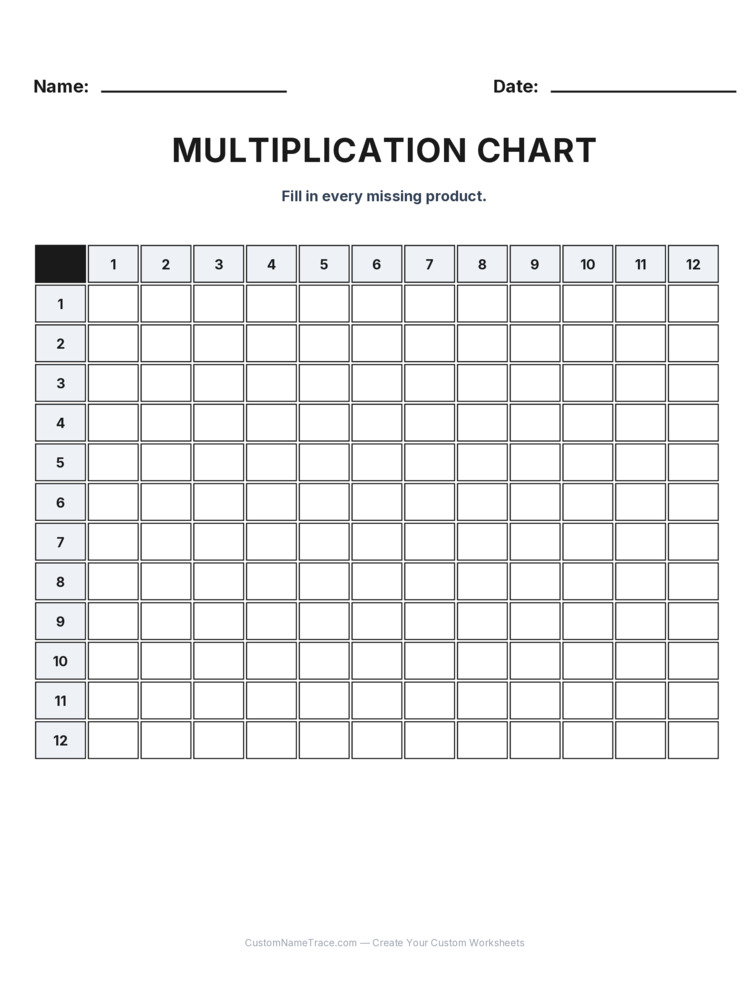
The Multiplication Chart — a different kind of practice

The fill-in-the-blank multiplication grid is a genuinely different format from a list of equations, not just a stylistic variant: it asks a child to find each fact by its row and column rather than reading it in a fixed left-to-right order, which builds a different, more flexible kind of fact recall. It also doubles as a self-checking reference once filled in correctly — a completed chart a child built themselves tends to stick better than one just handed to them.

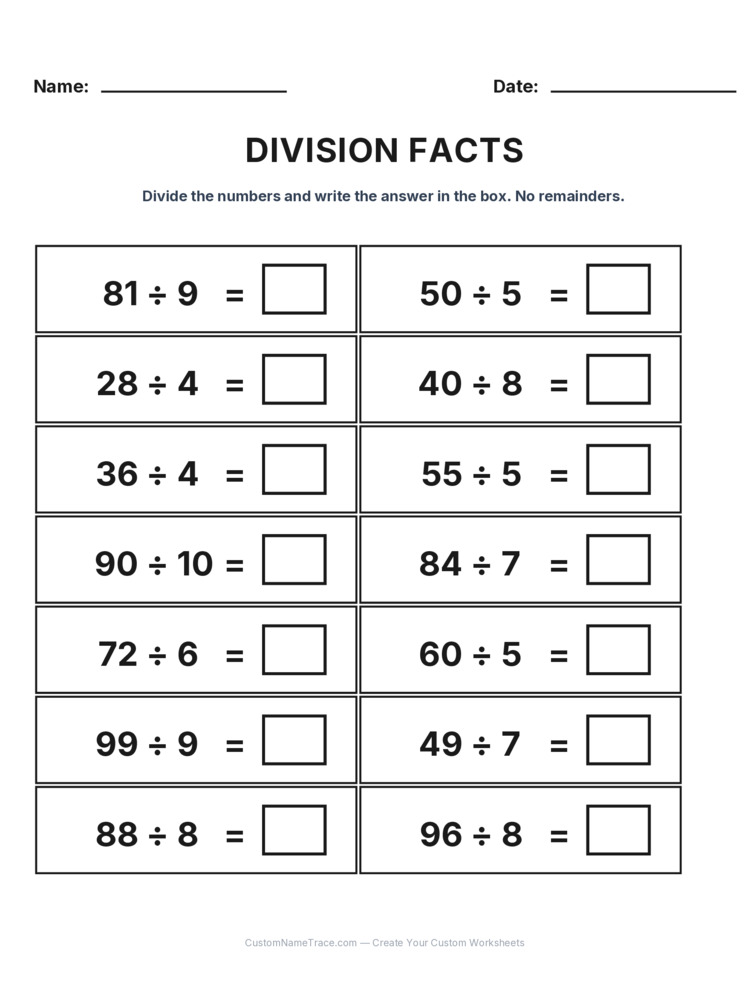
Division Facts, no remainders

Every division problem here divides evenly, with no remainder — these are the basic facts, the direct inverse of the multiplication table, not long division with leftover amounts (that's a later Grade 3/4 skill in its own right). "56 ÷ 7" is being practiced here as the flip side of "7 × 8," reinforcing the same fact from both directions rather than as an unrelated new thing to memorize.

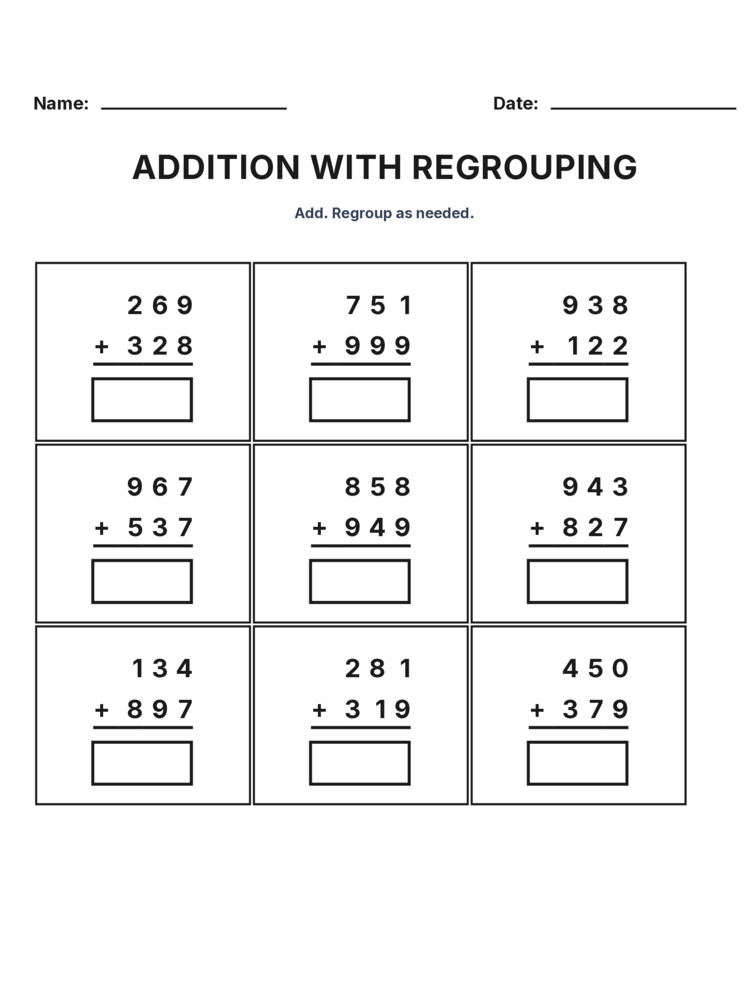
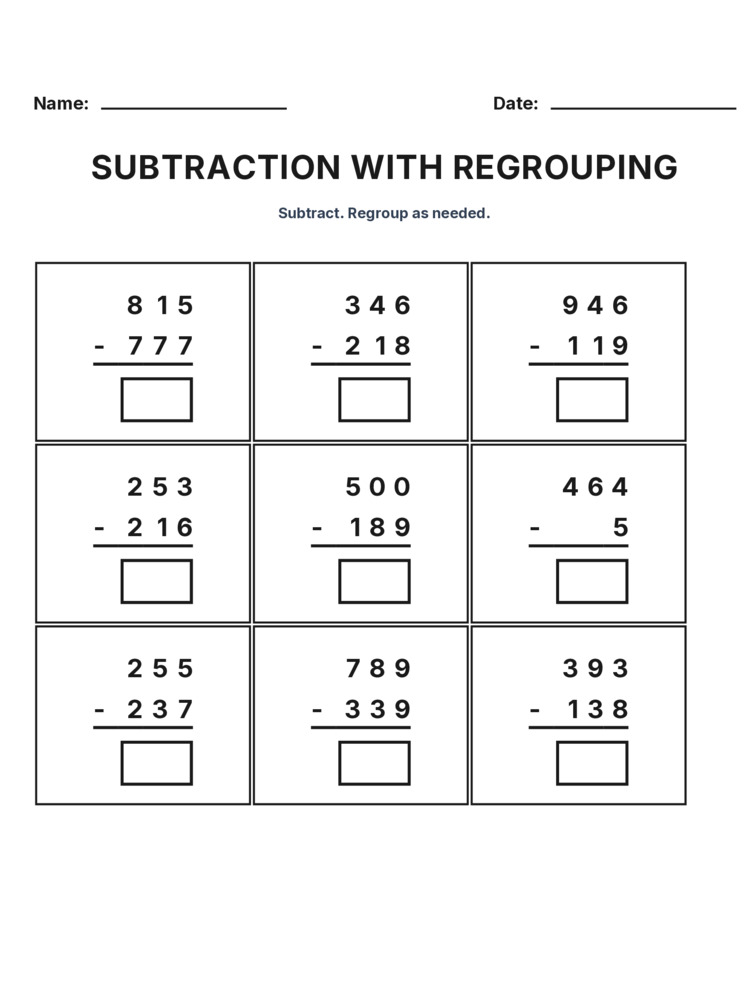
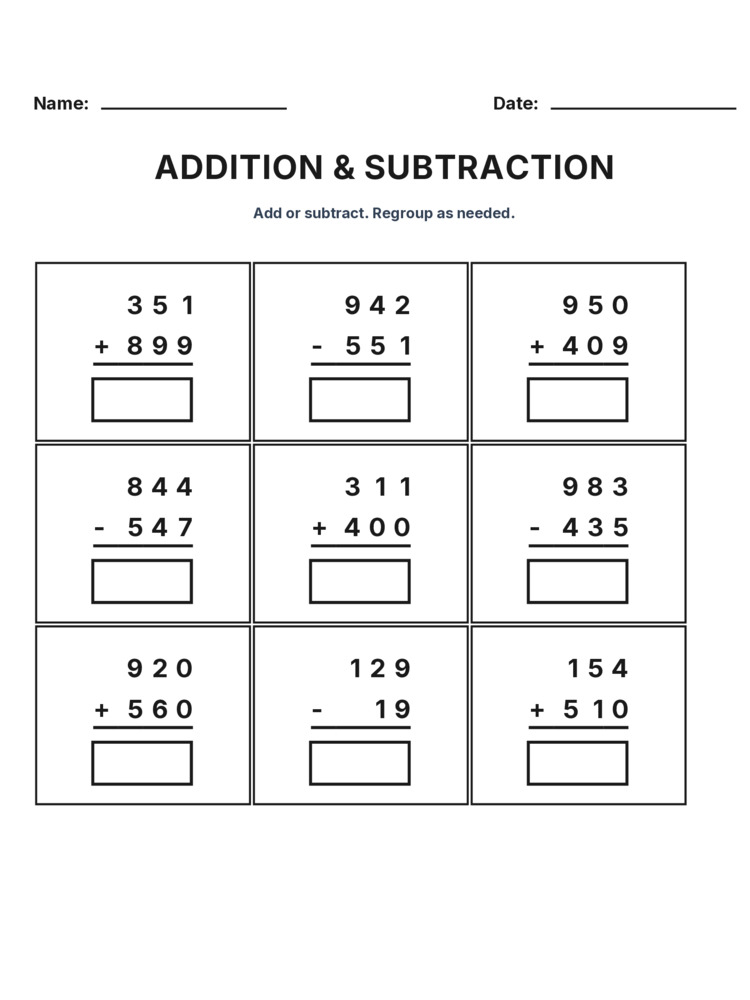
Addition and Subtraction: 3-digit regrouping

Addition and Subtraction move to 3-digit numbers at this grade, with regrouping across two place-value columns instead of just one — a real step up from Grade 2's 2-digit range, since a child now has to track carrying or borrowing potentially twice in the same problem, not just once. The same stacked, vertical format Grade 2 uses continues here for exactly the same reason: column alignment is the actual skill.

How the four operations fit together at this grade

By Grade 3, all four operations are live at once, and that's intentional — this is the grade where a child needs to recognize not just how to compute, but which operation a situation calls for in the first place. Working through the Multiplication and Division pages alongside Addition and Subtraction, rather than treating them as separate units finished in sequence, mirrors how they'll actually show up together in word problems and everyday math from here on.

Frequently asked questions

The full range, 0 through 12 — not just the easier families Grade 2 introduces. Fluency across all of them is the actual Grade 3 target.

No — these are basic division facts that divide evenly, the direct inverse of the multiplication table. Long division with remainders is a related but separate later skill.

It's a fill-in-the-blank grid organized by row and column rather than a list of equations in order, which builds a more flexible kind of fact recall than reading facts in a fixed sequence.

The numbers move to 3 digits, so regrouping can now happen across two place-value columns in the same problem instead of just one, building directly on Grade 2's 2-digit regrouping skill.

12 per page for the vertical addition, subtraction, and mixed review pages; 14 per page for multiplication and division facts — slightly fewer per page than the equation pages, since 3-digit regrouping problems take longer to work through than a single-digit fact.

It's the same mechanic (carry or borrow when a column doesn't fit), just applied across one more column, and sometimes needing to happen twice in the same problem — a child solid on 2-digit regrouping usually adapts to 3 digits faster than the original jump from no-regrouping to regrouping did.

Isolate exactly which facts are shaky (usually 6s, 7s, 8s, and 9s — the tables without an obvious skip-counting pattern) and drill those specifically rather than working through the full 0-12 range evenly; targeted repetition on the actual gap is faster than broad review.

Either works, but filling it in over several short sessions (a row or two at a time) tends to build recall better than one long sitting, since it turns into rote copying rather than active recall once fatigue sets in.

Both, at this stage — understanding why 6×7 works (six groups of seven) is what makes the fact memorable and self-correctable if forgotten, but true fluency (answering without pausing to calculate) still needs real repetition on top of that understanding.

These are basic division facts — the direct reverse of a multiplication fact, always dividing evenly (12 ÷ 4 = 3). Long division, where a larger number doesn't split evenly and produces a remainder, is a distinct, later skill built on top of this fact fluency, not practiced here.

Multiply the quotient back by the divisor and confirm it matches the original number — 12 ÷ 4 = 3 checks out because 3 × 4 = 12; it's the fastest way to verify a division fact by hand.

Yes — division asks a child to work a multiplication fact backward, a genuinely different mental retrieval than the forward direction, even though it's built from the exact same fact family. Extra dedicated division practice is the fix, not more multiplication.

No — Mixed Review at this grade rotates addition and subtraction only, at the 3-digit regrouping level; multiplication and division fact fluency is kept as its own separate practice track.

Full multiplication and division fact fluency (0-12) alongside 3-digit regrouping is the real Grade 3 Common Core scope — this isn't a preview of Grade 4, it's the grade-level target itself.

Multiplication and division going from three limited fact families (2s, 5s, 10s) to the full 0-12 range — a much bigger expansion than the addition/subtraction change from 2 to 3 digits.

This is currently the top of the Math section's grade range — Grade 3 fact fluency and 3-digit regrouping is where the dedicated grade-by-grade math sequence tops out today.