What's new at Grade 2
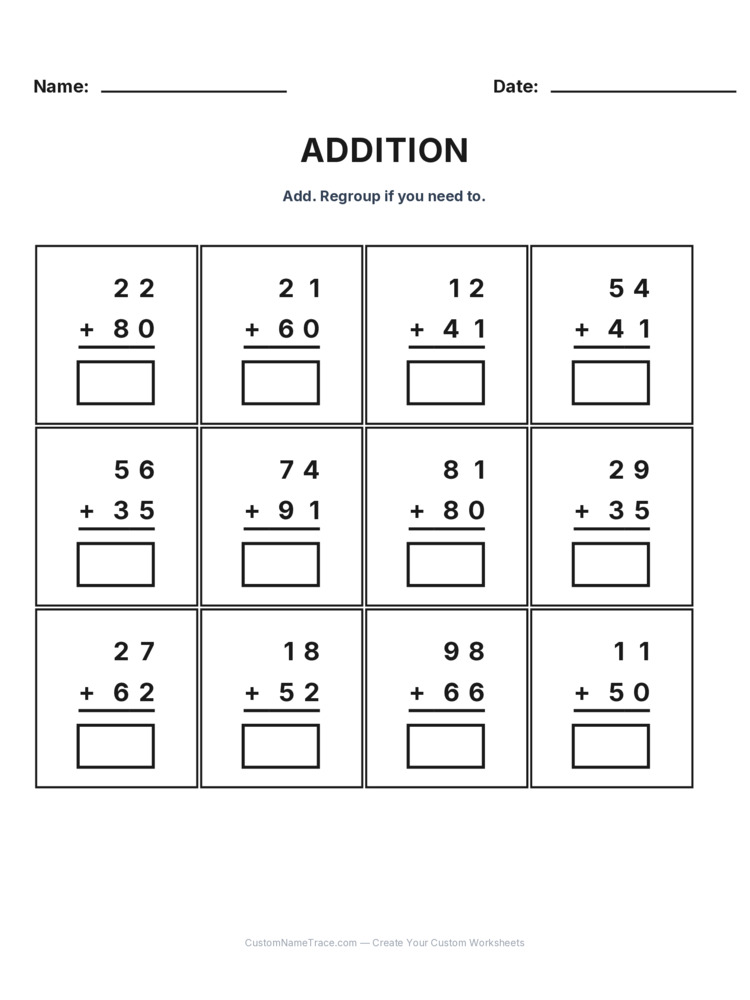
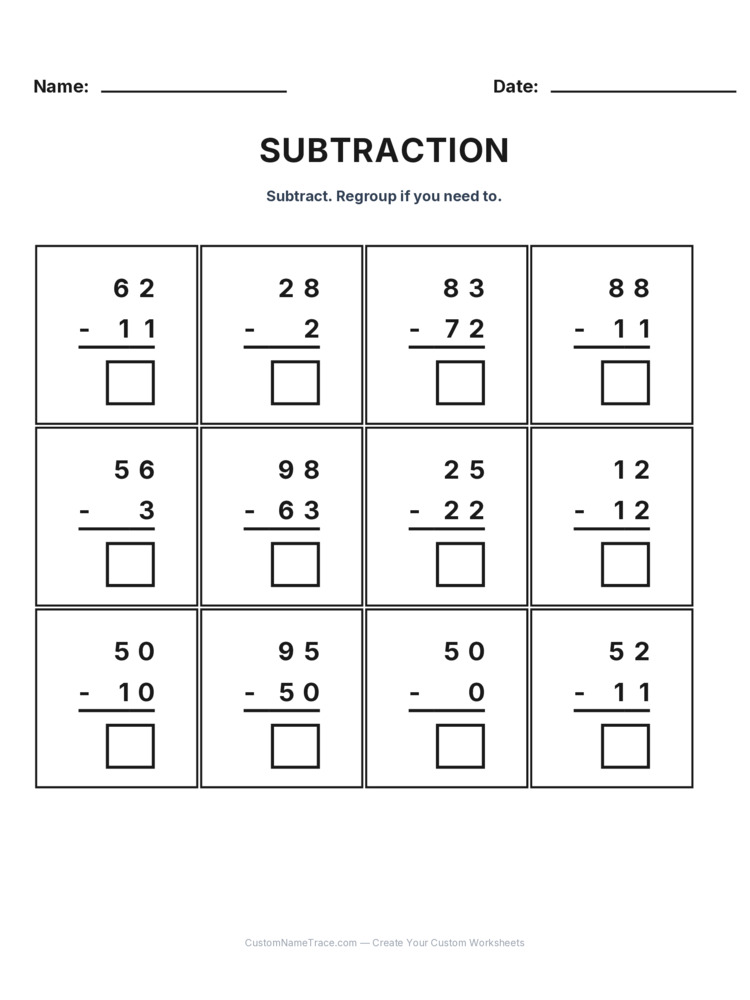
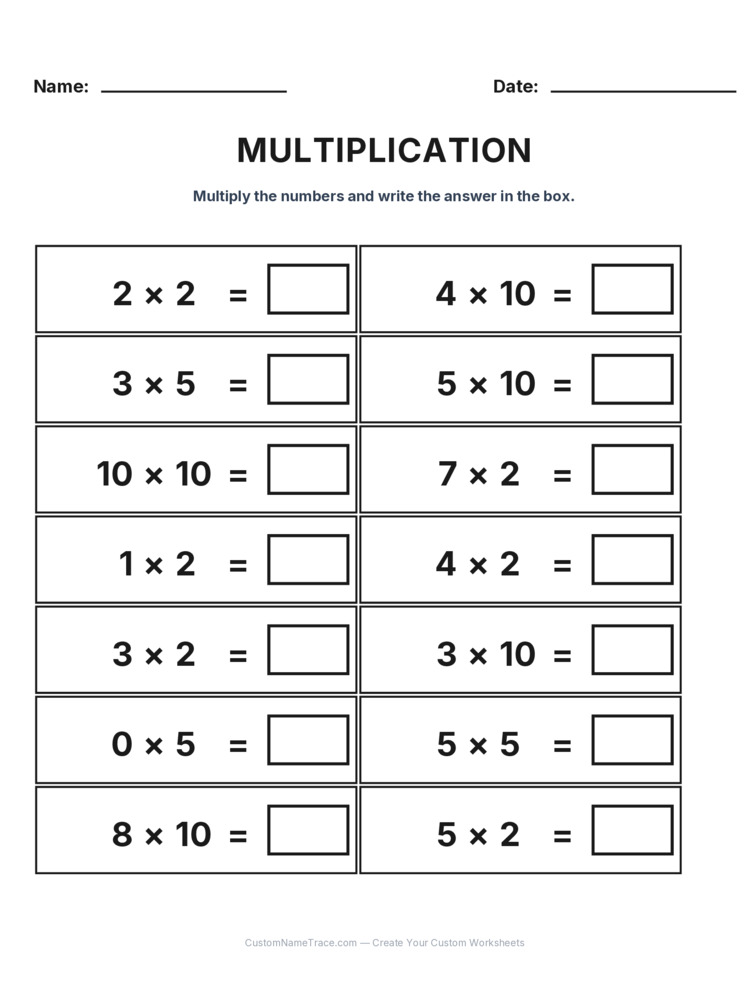
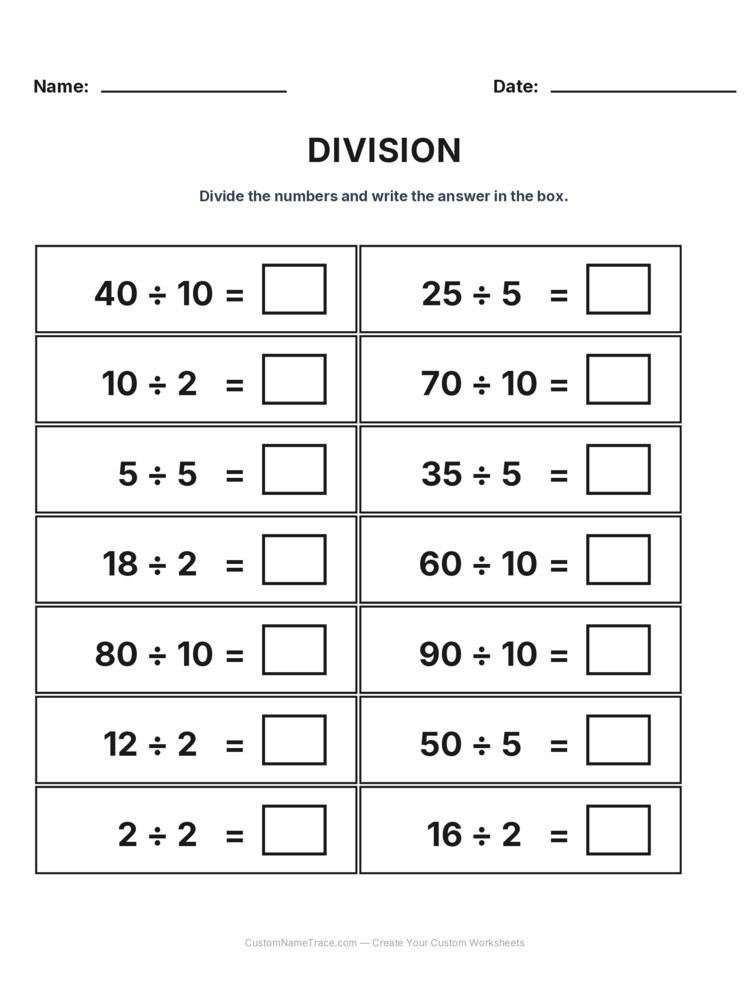
Two things change at once here: addition and subtraction move to 2-digit numbers and introduce regrouping (carrying and borrowing), and multiplication and division appear for the first time. That's a genuinely bigger page than Grade 1's — Grade 2 is where arithmetic stops being purely about single-digit facts and starts becoming the multi-digit, multi-operation math most people picture when they think of "grade school math."
Regrouping — why it gets its own dedicated pages
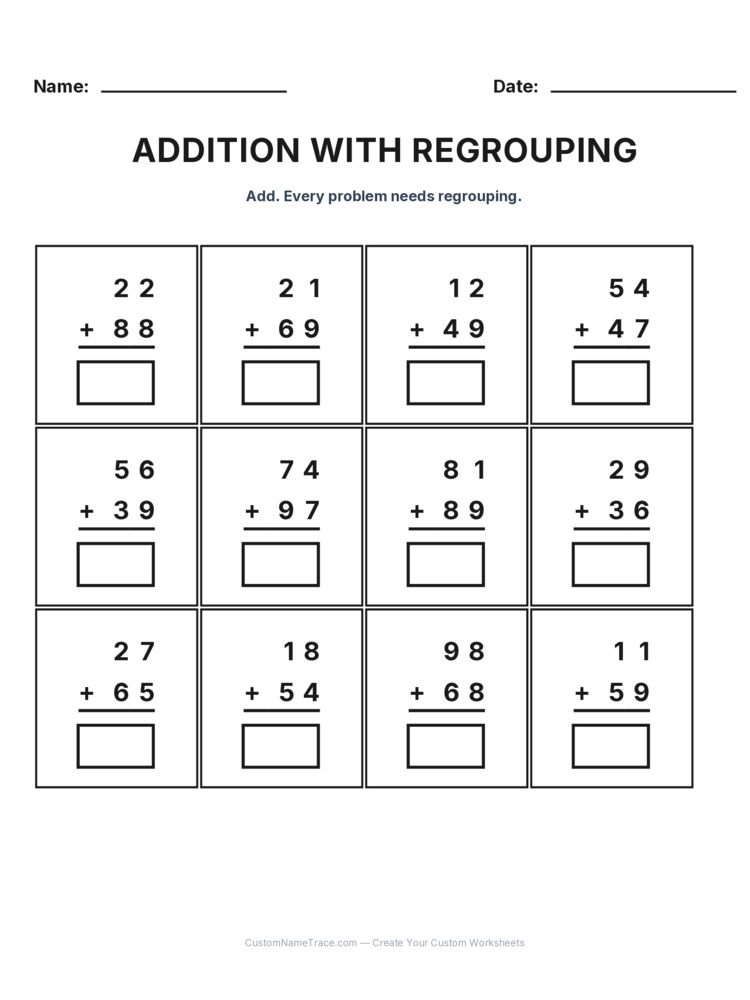
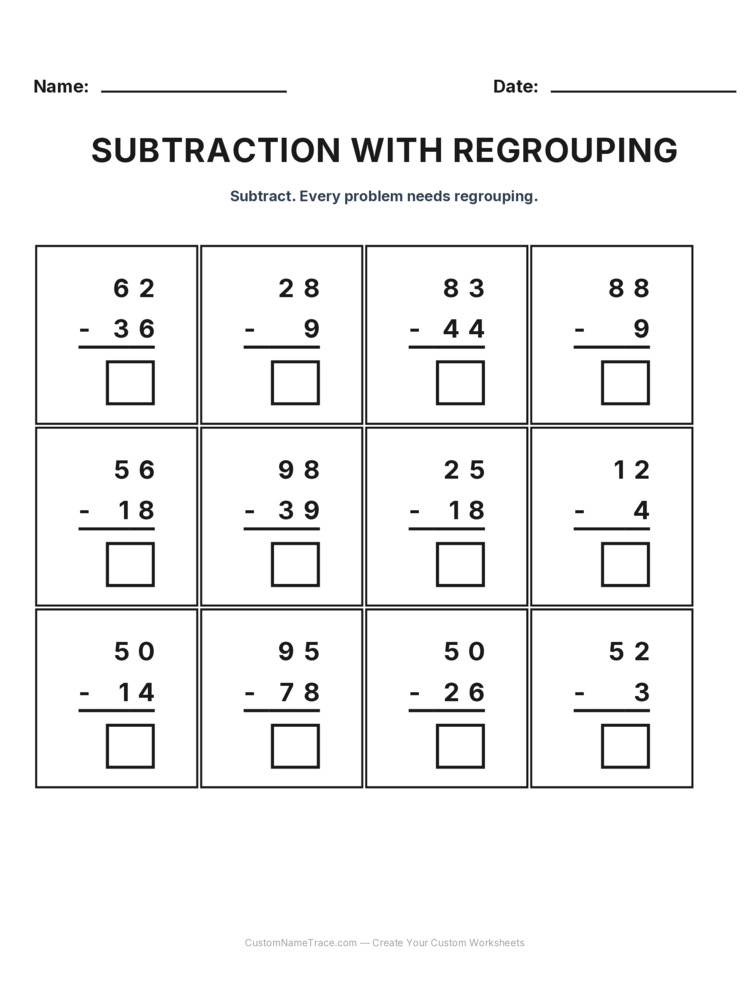
No Regrouping and Regrouping are split into separate pages on purpose, not combined into one "2-digit addition" page. No-regrouping problems (where each column's digits add to under 10, or the top digit is large enough in subtraction) test whether a child can align place-value columns and add or subtract within them — a real skill on its own. Regrouping problems add the extra step of carrying a ten into the next column, or borrowing one from it, which is a distinct skill that deserves dedicated, undiluted practice rather than being mixed in unpredictably with easier problems.
Why these are vertical, stacked problems
Every regrouping-related worksheet here uses the stacked, vertical format — the number on top, the operation and second number below it, a line, then the answer — rather than a horizontal row. That's not a style choice: regrouping is fundamentally about columns lining up, and a horizontal "47 + 25 = ▢" doesn't show a child which digits are in the ones place and which are in the tens place the way a properly aligned vertical problem does.
Multiplication and Division — starting with the easiest facts
Both operations begin here deliberately narrow: only the ×2, ×5, and ×10 fact families, the three tables most children can approach through skip-counting they likely already know informally (2, 4, 6, 8.. or 5, 10, 15, 20..). Division at this level mirrors the same three families as the inverse of multiplication, not a separate harder skill — "10 ÷ 2" is being taught as the flip side of "2 × 5," not as a new, unrelated operation to learn from scratch.
Mixed Review across all four operations
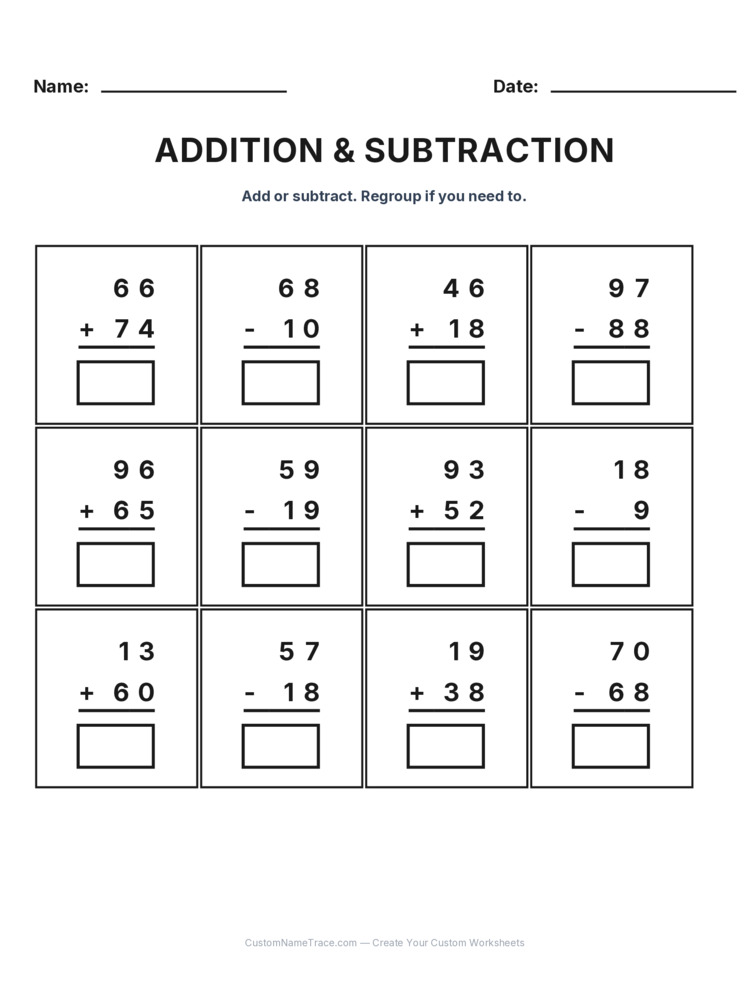
Once addition, subtraction, and the intro multiplication/division facts each feel solid individually, the Mixed Review page rotates between addition and subtraction (the two operations with enough range at this grade to make a meaningful mixed page). Recognizing which operation a problem needs, without being told in advance, is worth treating as its own checkpoint before assuming a child has genuinely internalized all of it.
Choosing where to start
A child who's fluent within 20 from Grade 1 but hasn't seen 2-digit numbers yet should start with No Regrouping, not Regrouping — get comfortable with the column alignment first, before adding the extra carrying/borrowing step on top of it. A child already comfortable with 2-digit addition without regrouping is ready to move straight to the Regrouping page.