Number sense is what makes arithmetic click later
A child who can instantly picture what "7" actually looks like — not just recite it — has an easier time with everything that follows: adding, subtracting, regrouping, even multiplication down the line. Number Sense Worksheets are built around that picture, not the fact. Every page asks a child to count something real (dots in a frame, blocks in a stack) or work out a genuine pattern in a sequence of numbers, rather than recall an answer they've memorized.
Three skills, each teaching a different piece of number sense
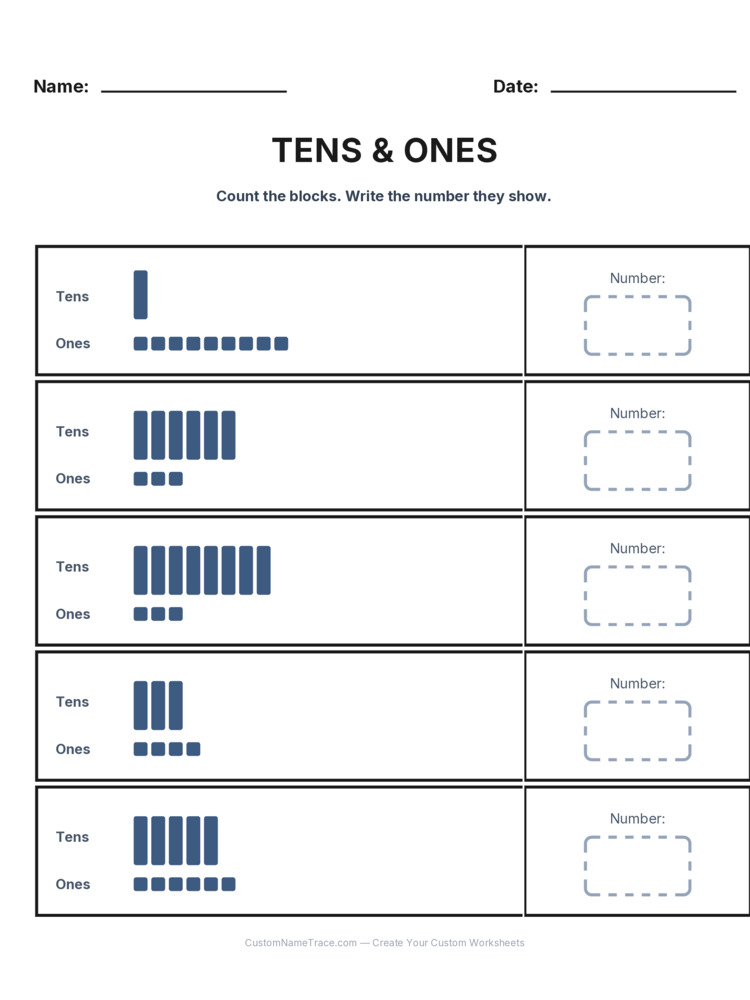
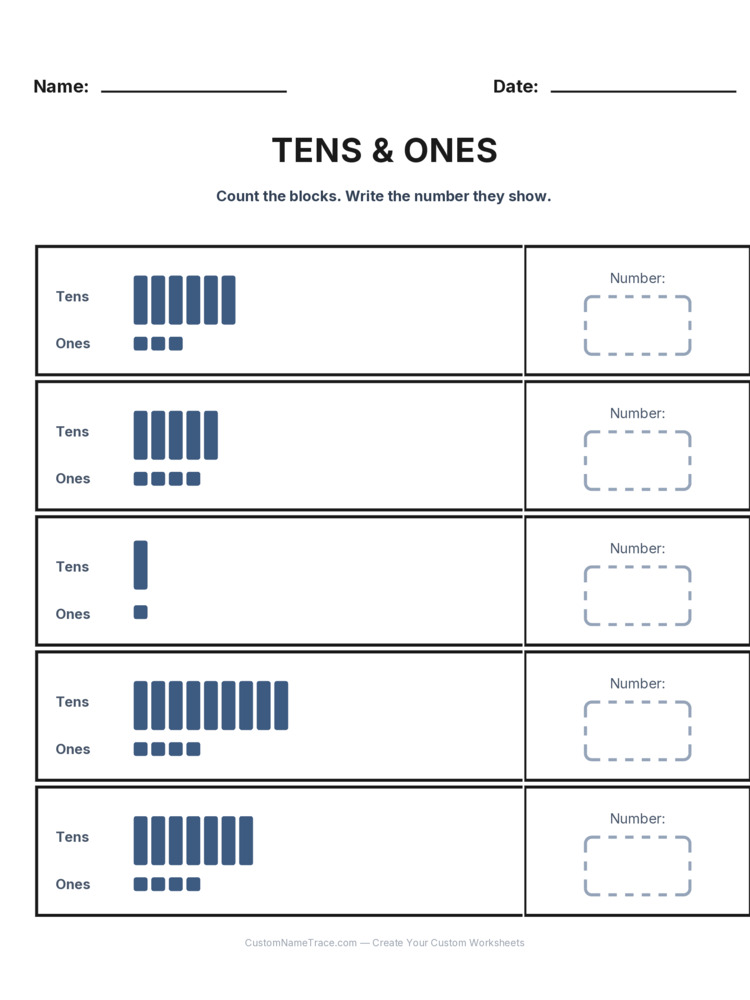
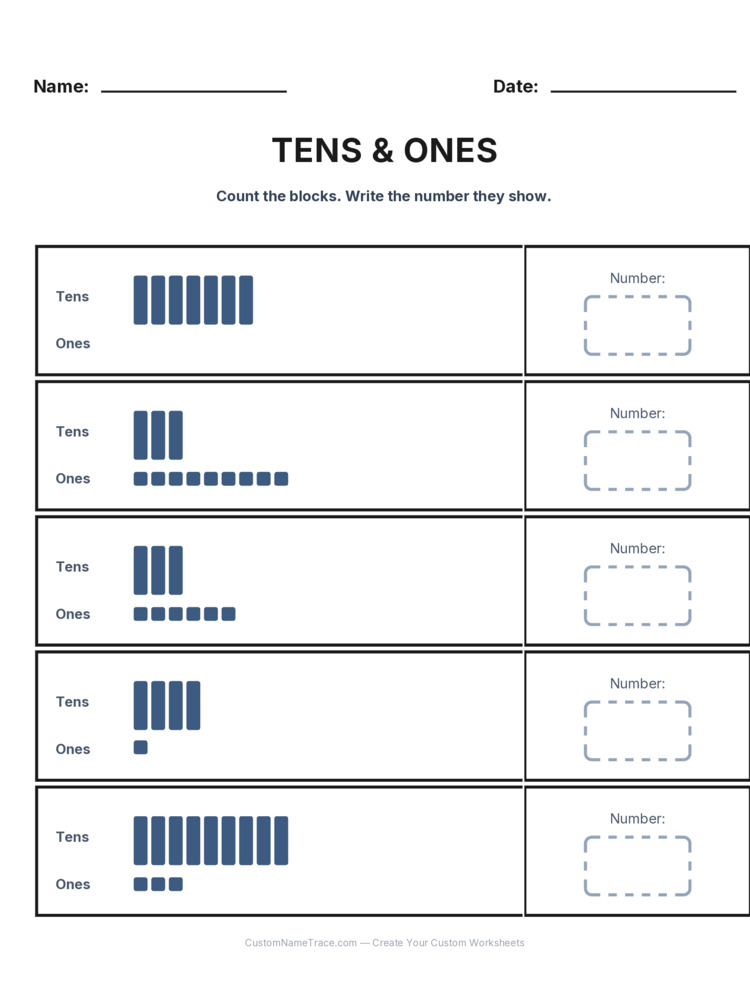
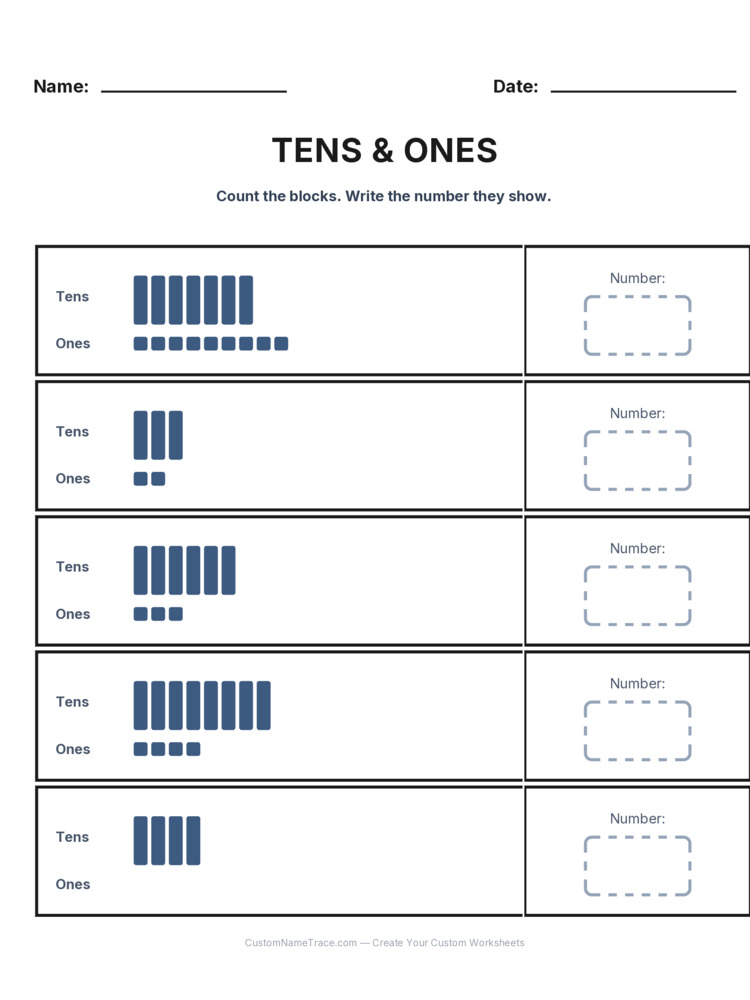
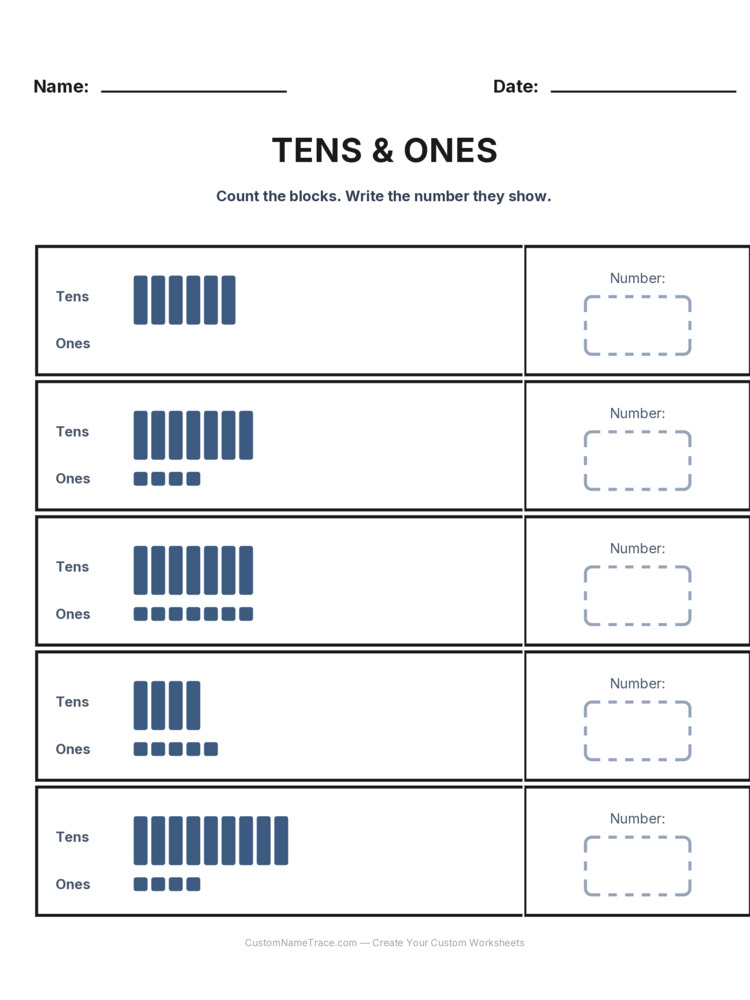
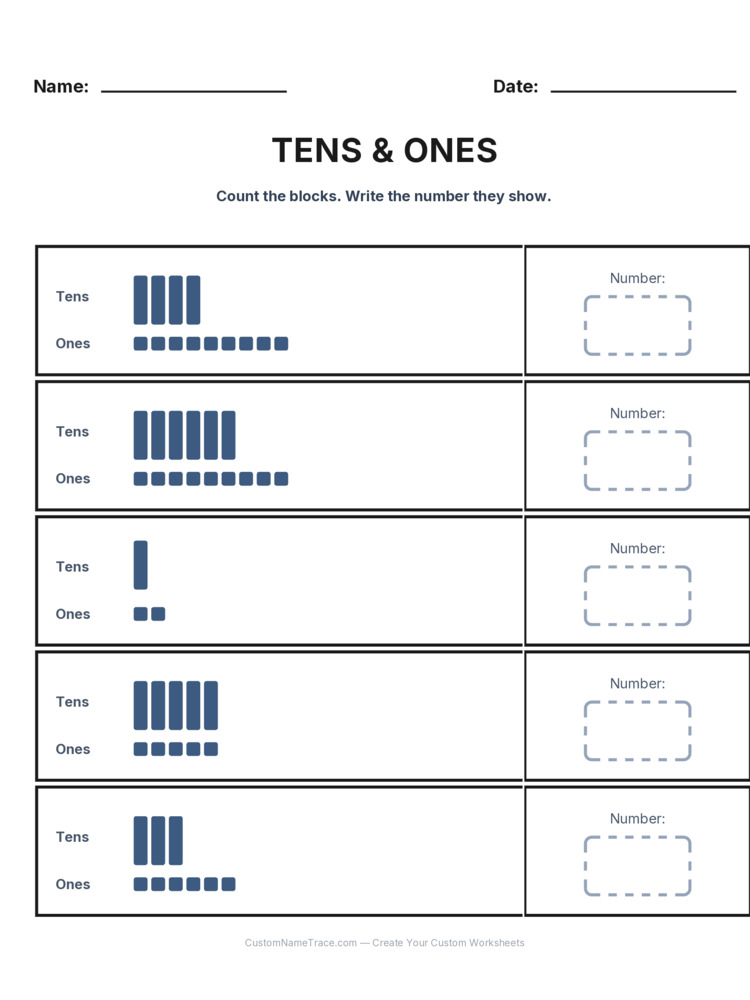
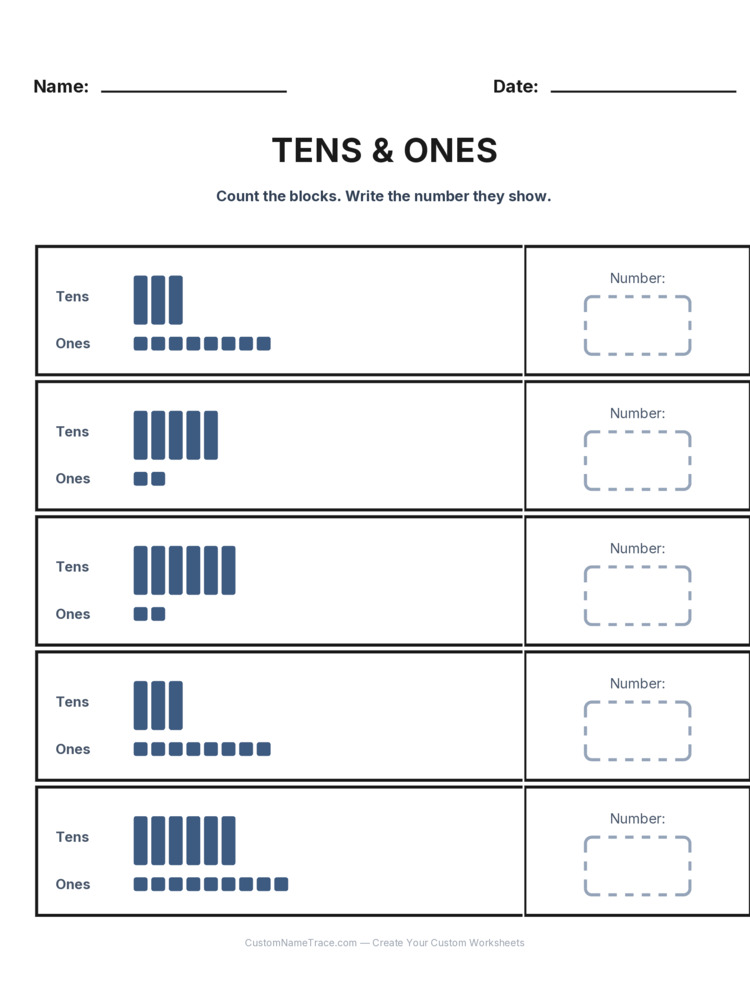
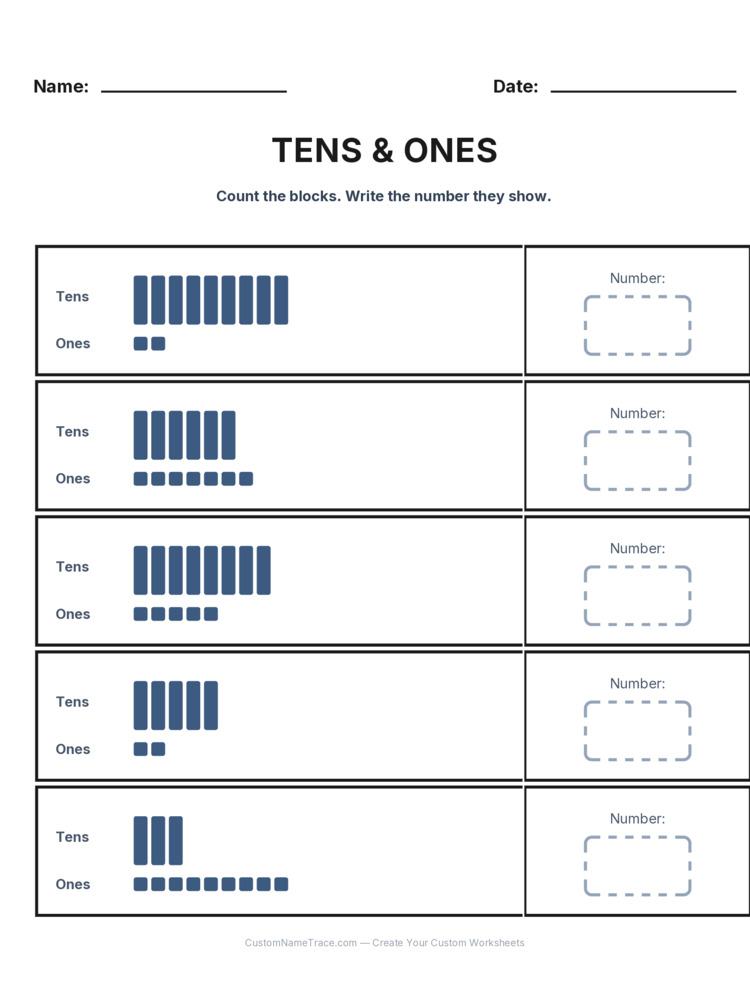
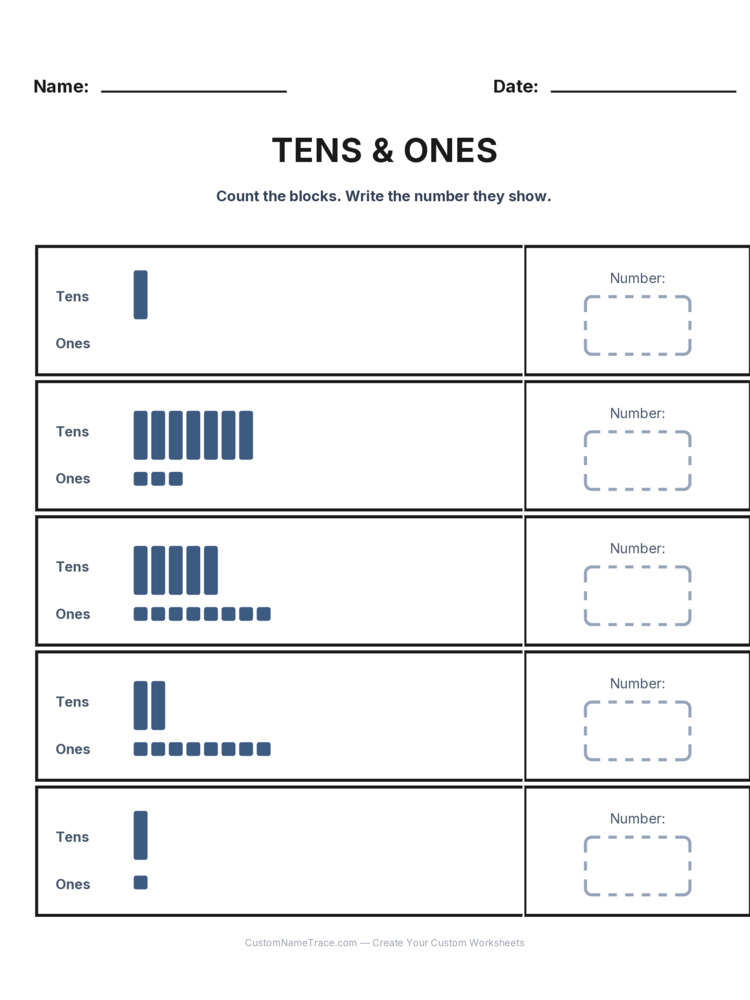
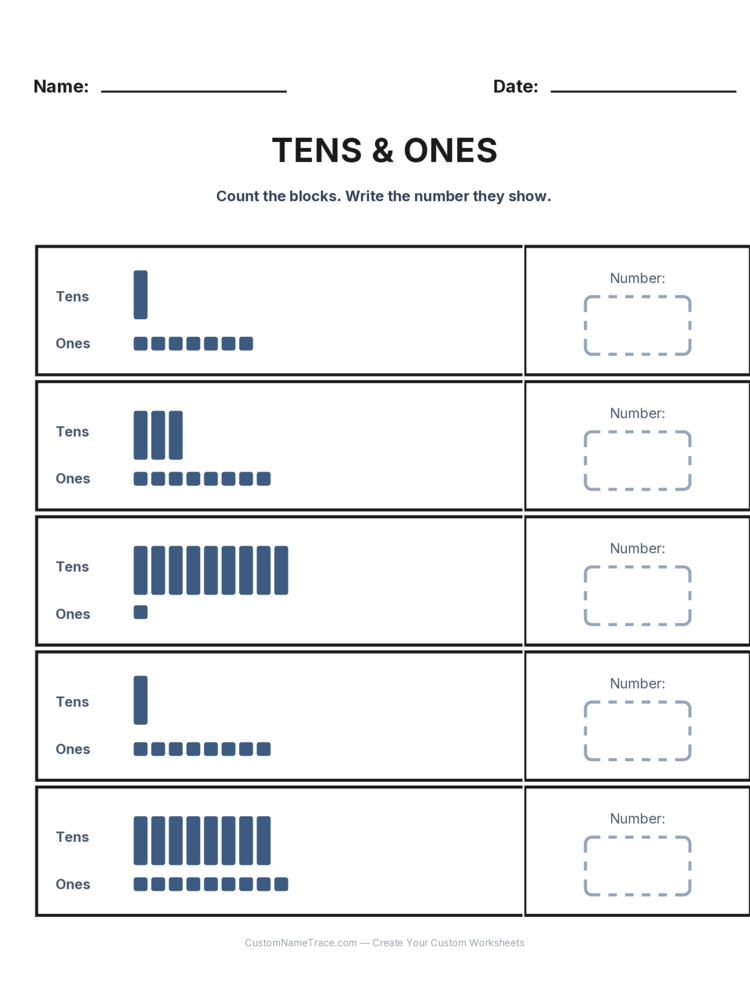
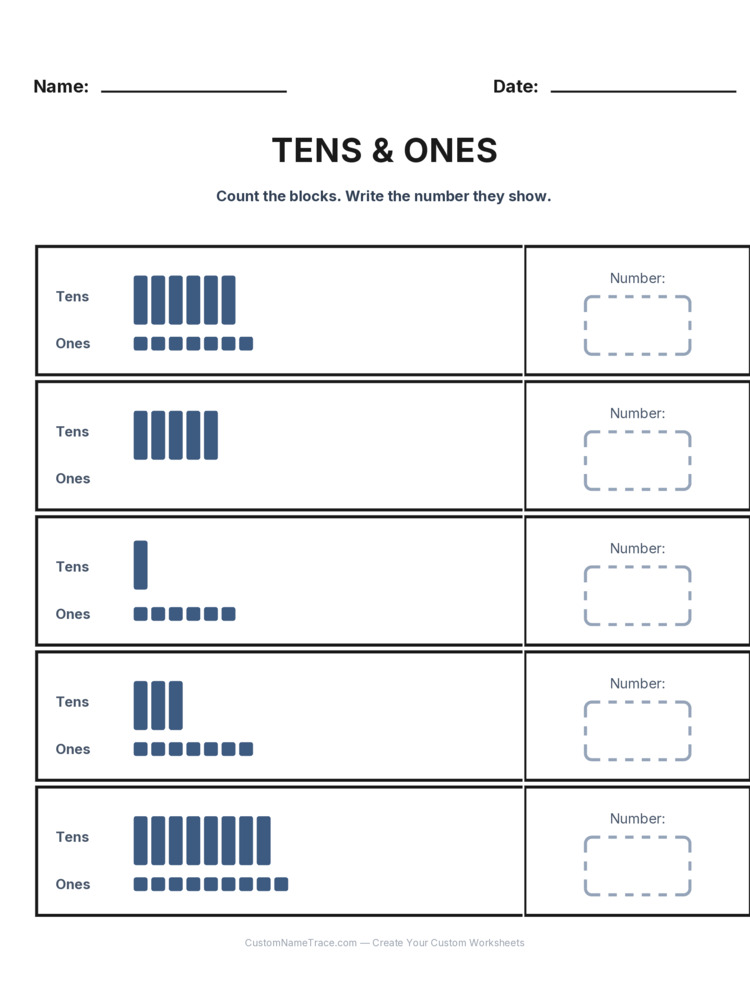
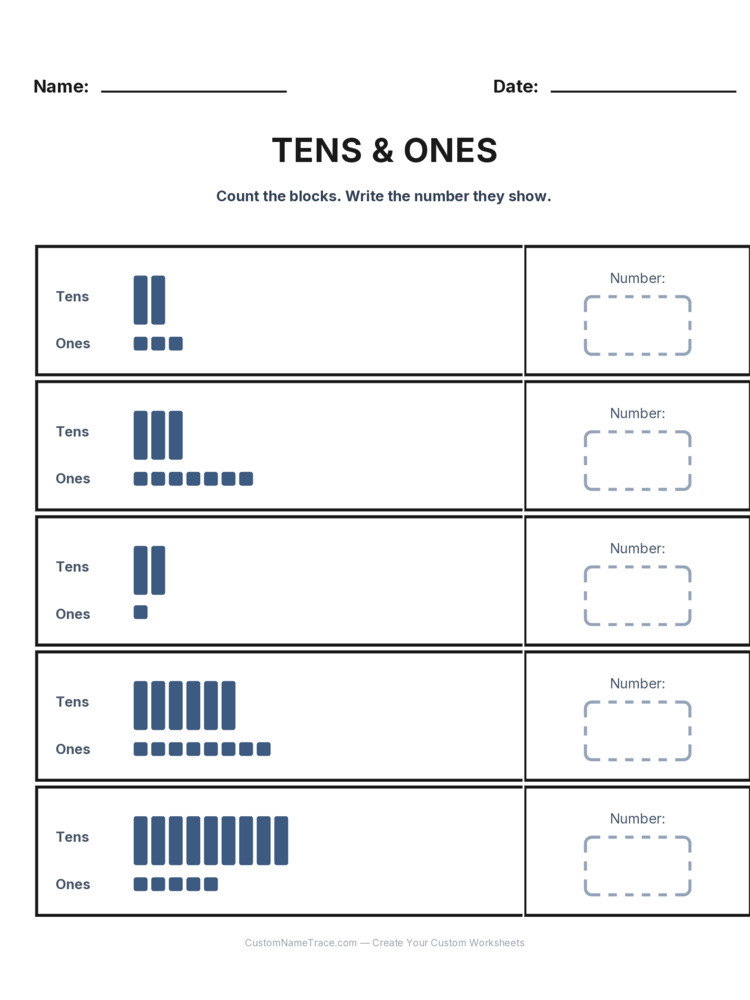
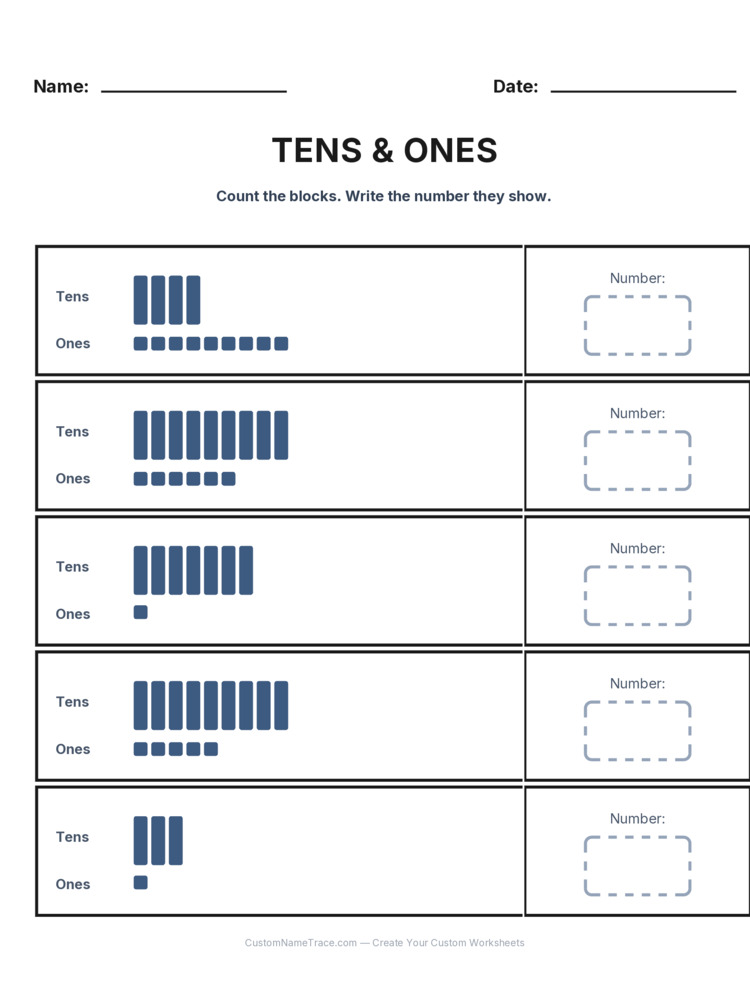
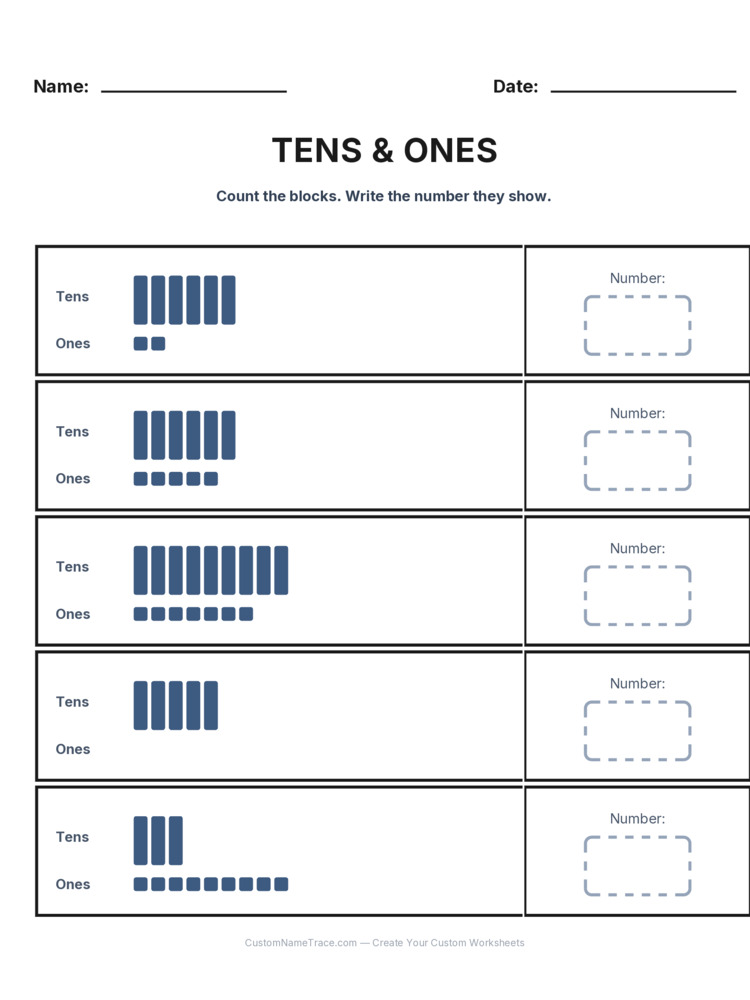
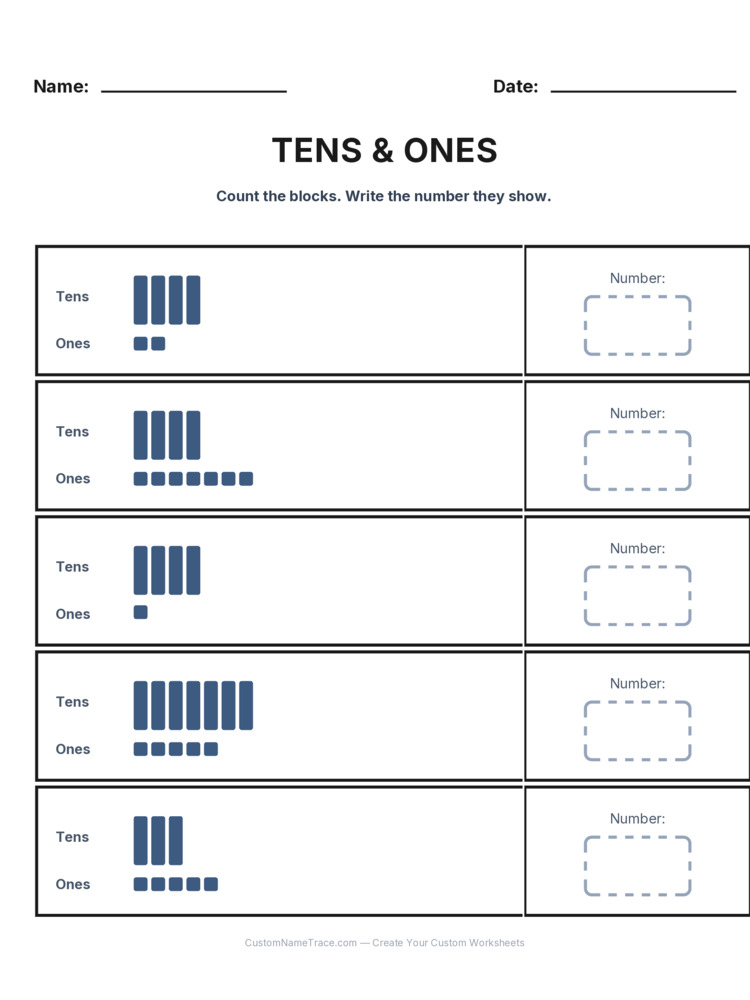
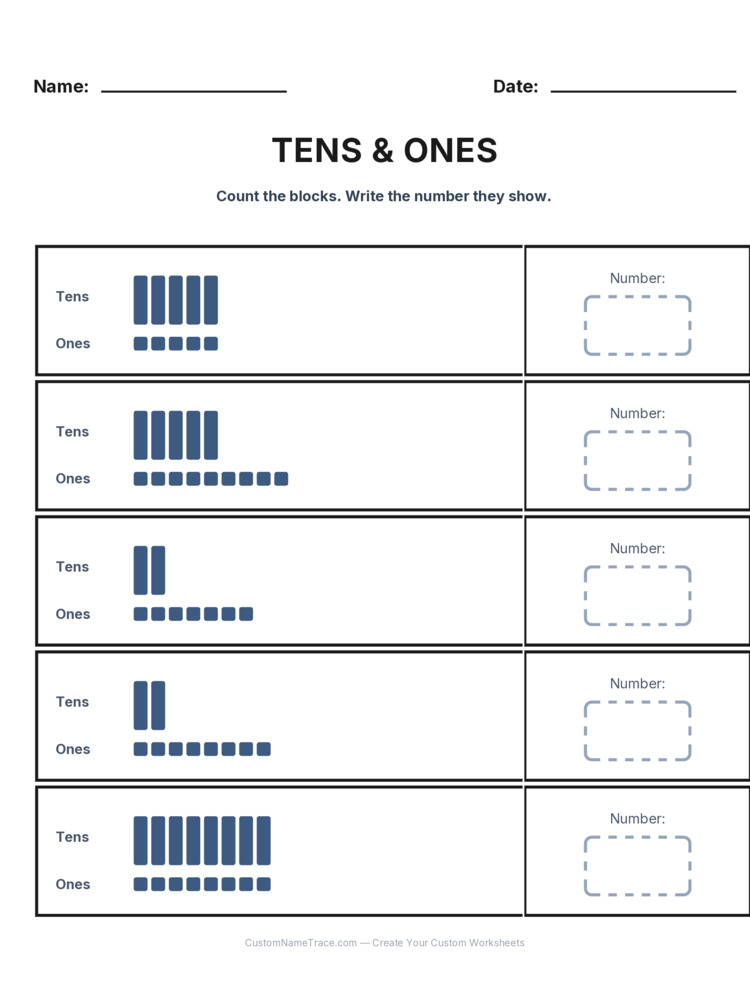
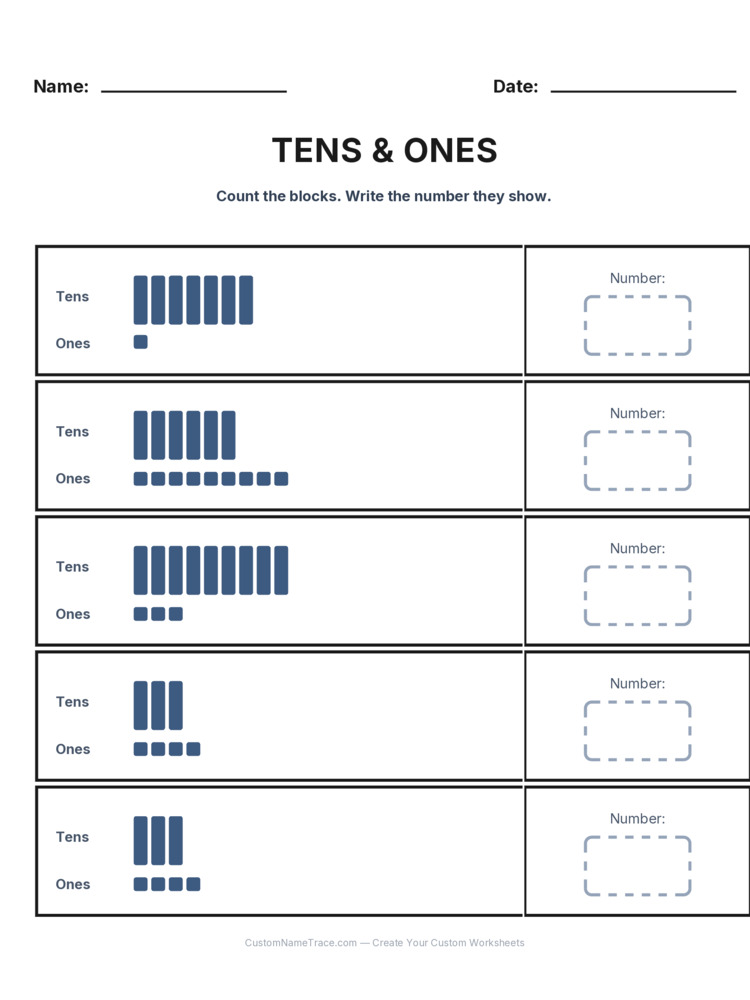
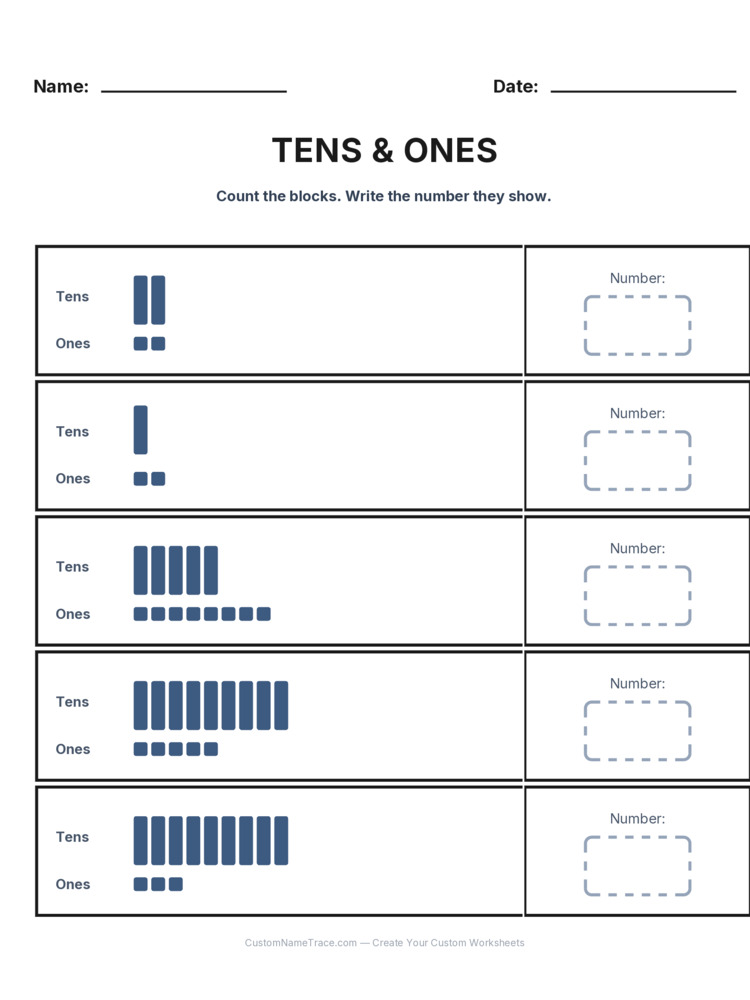
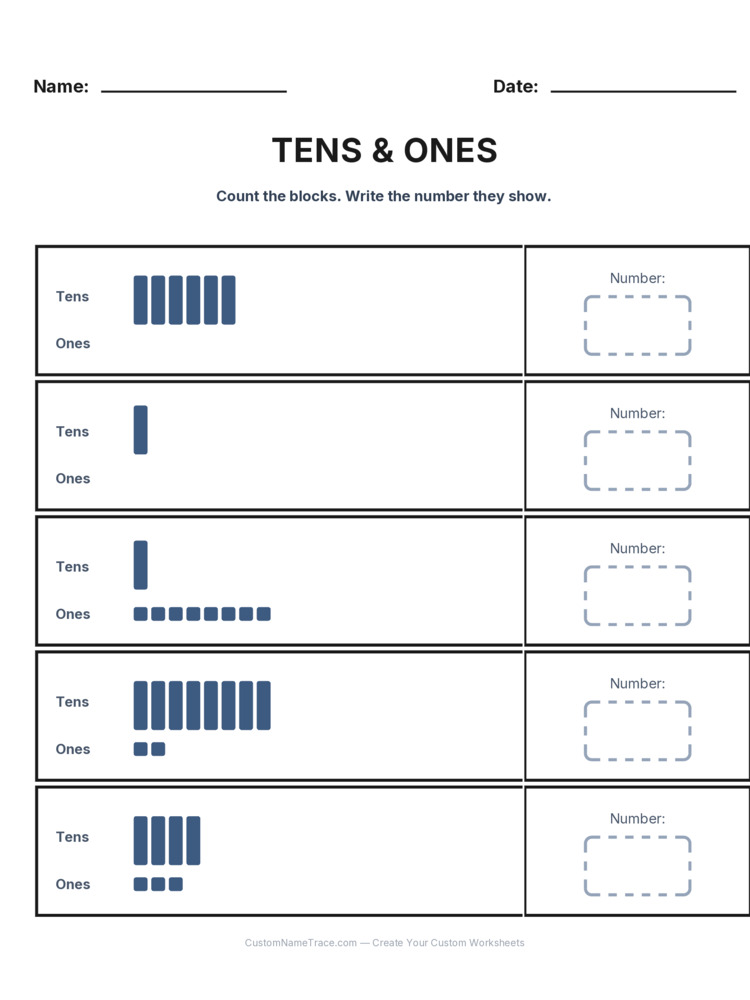
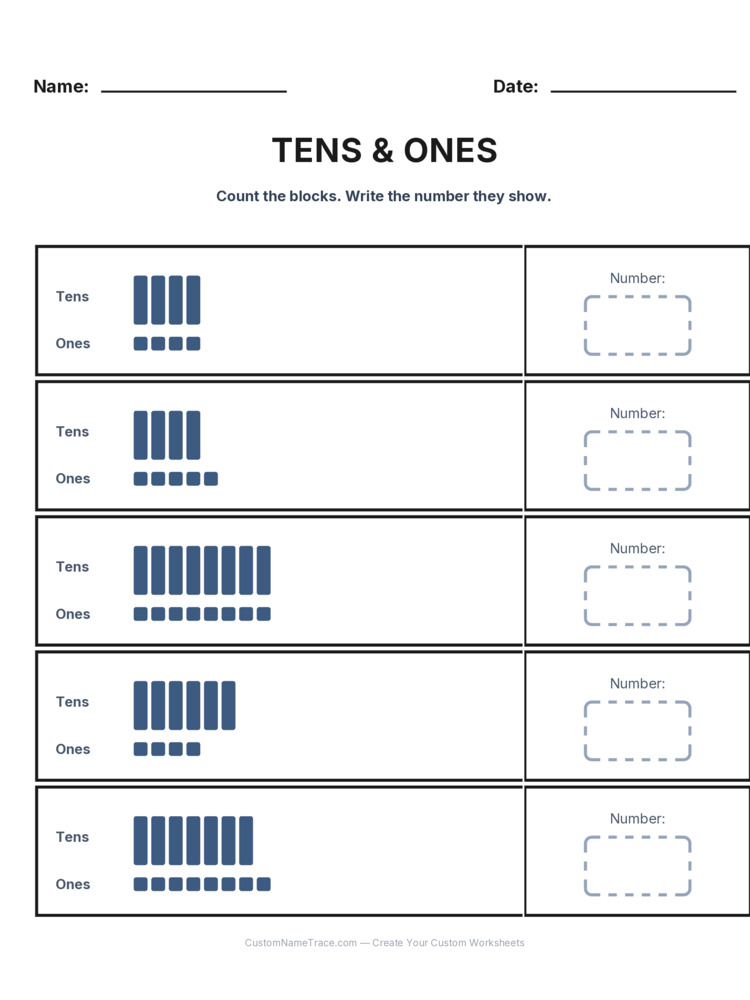
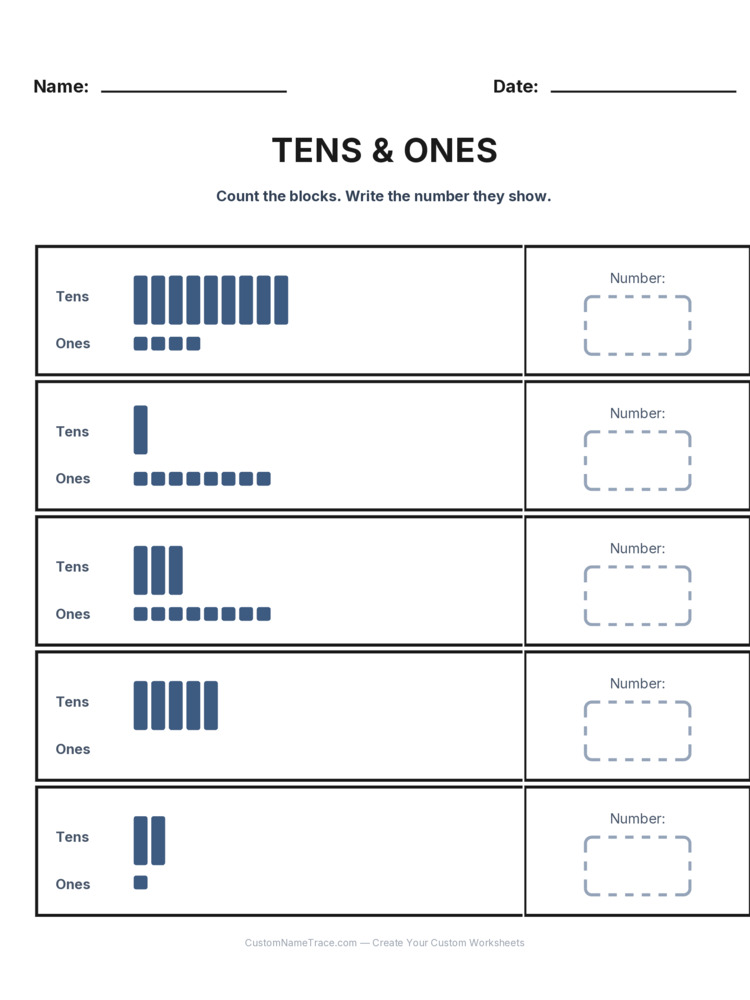
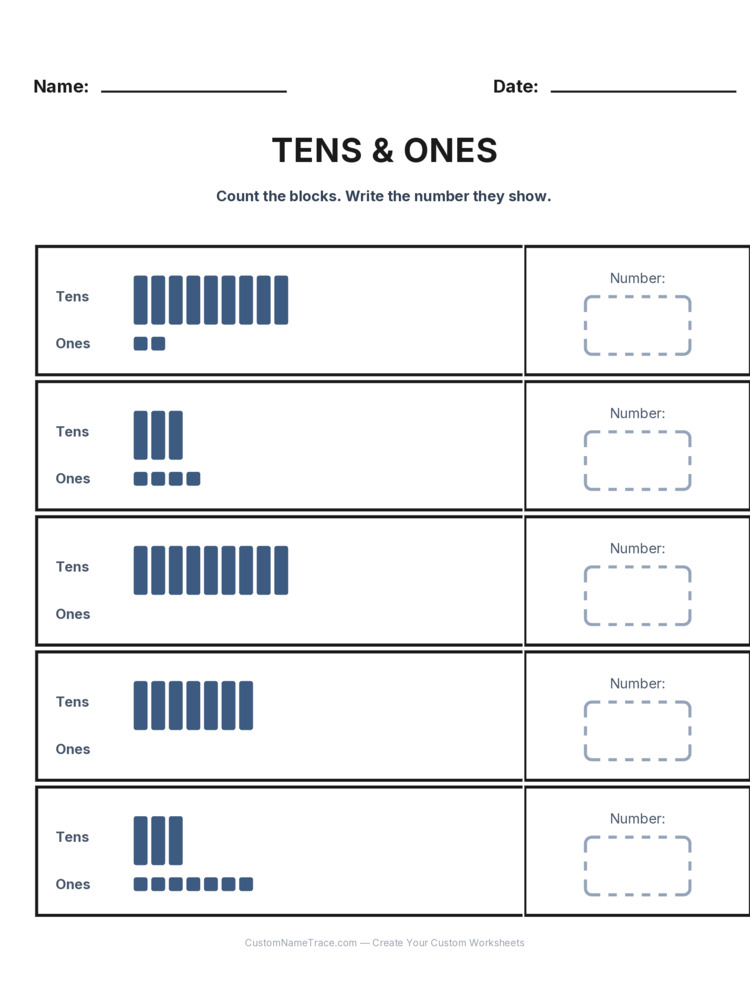
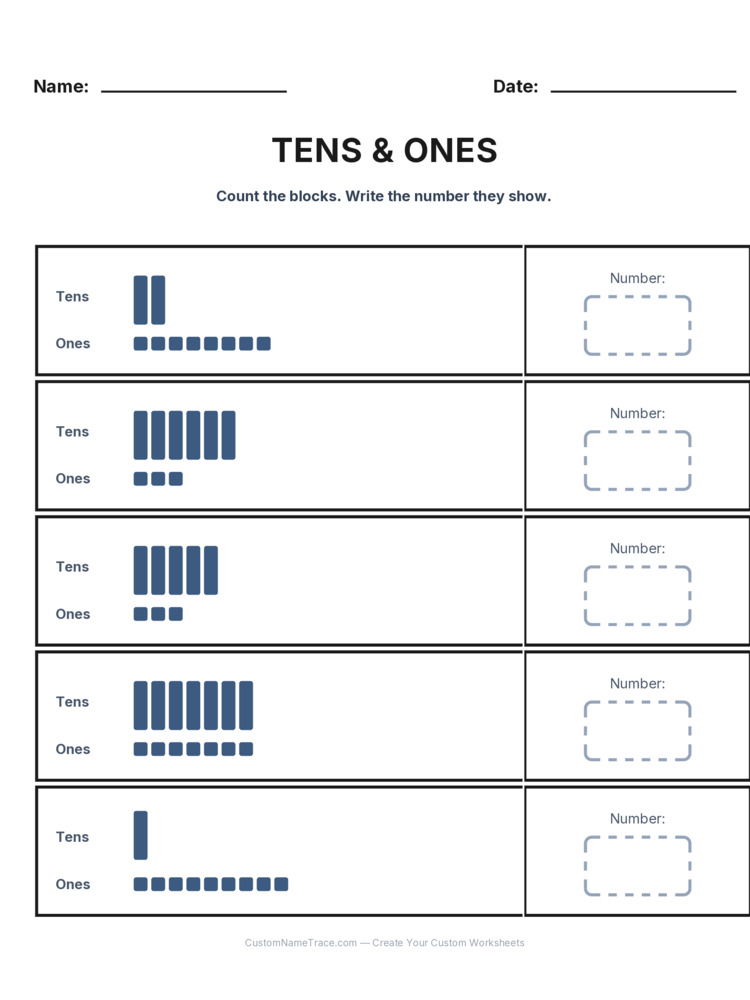
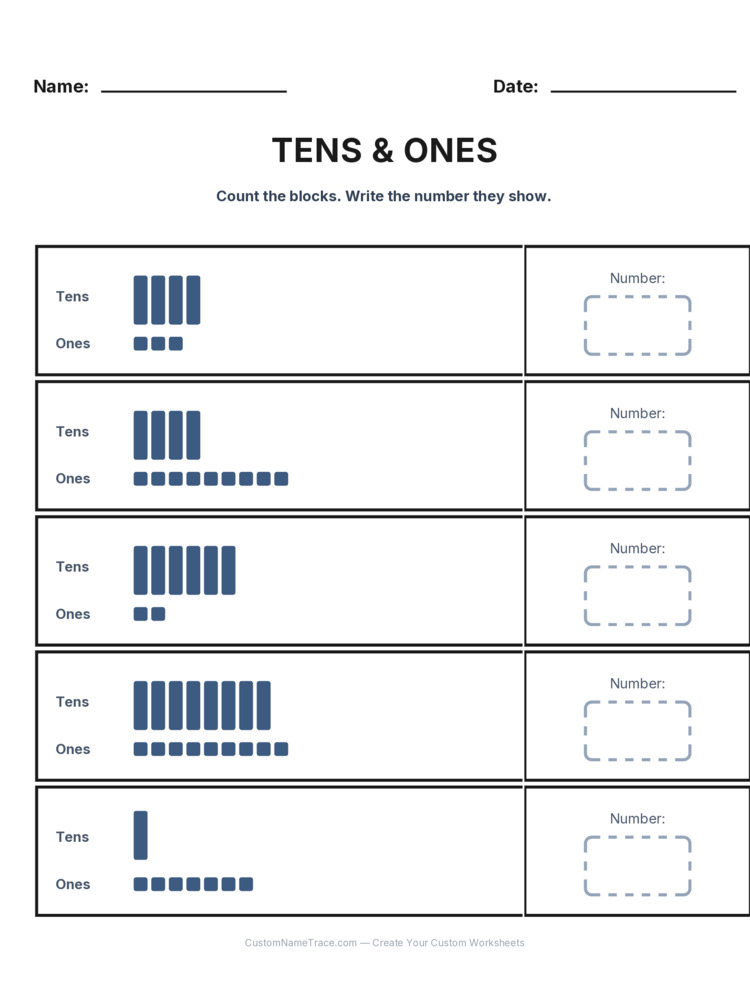
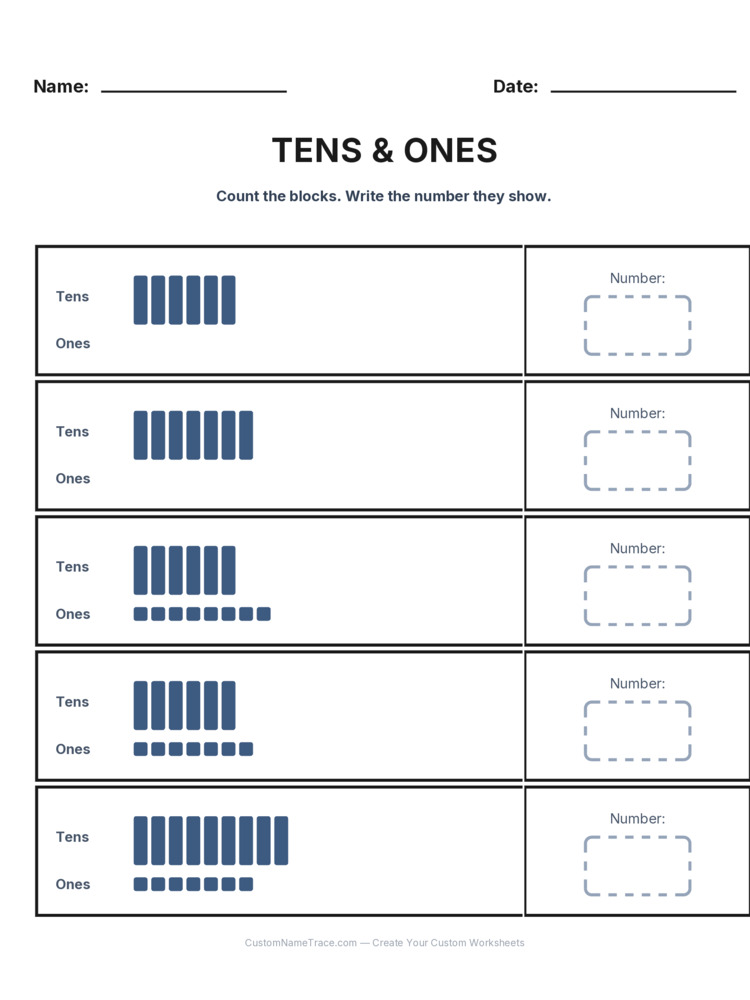
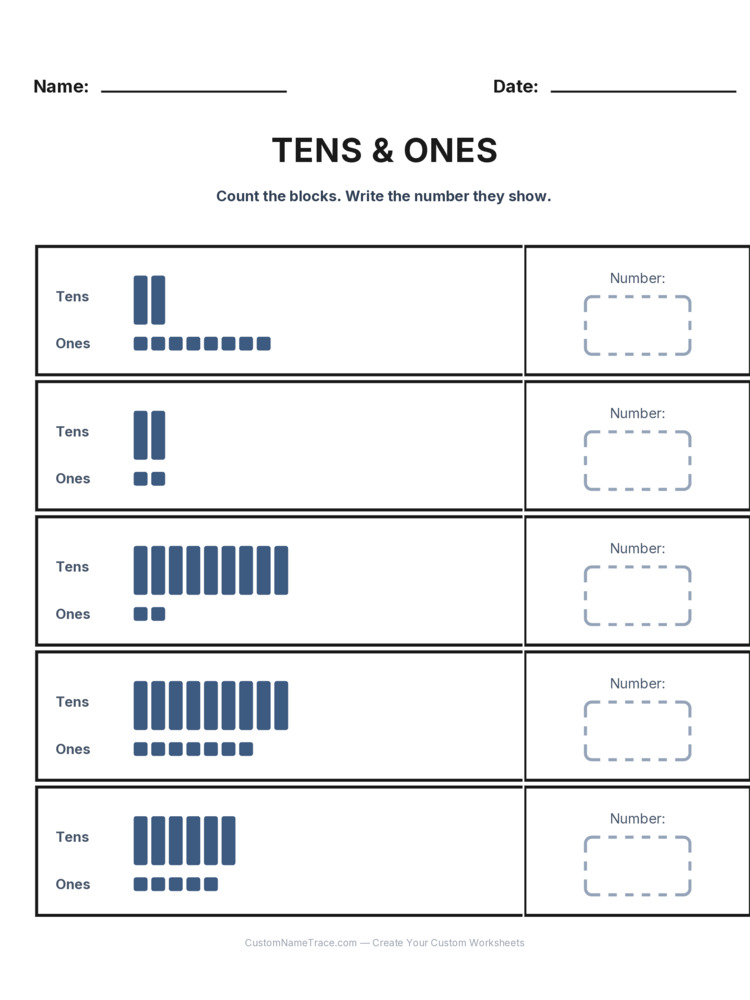
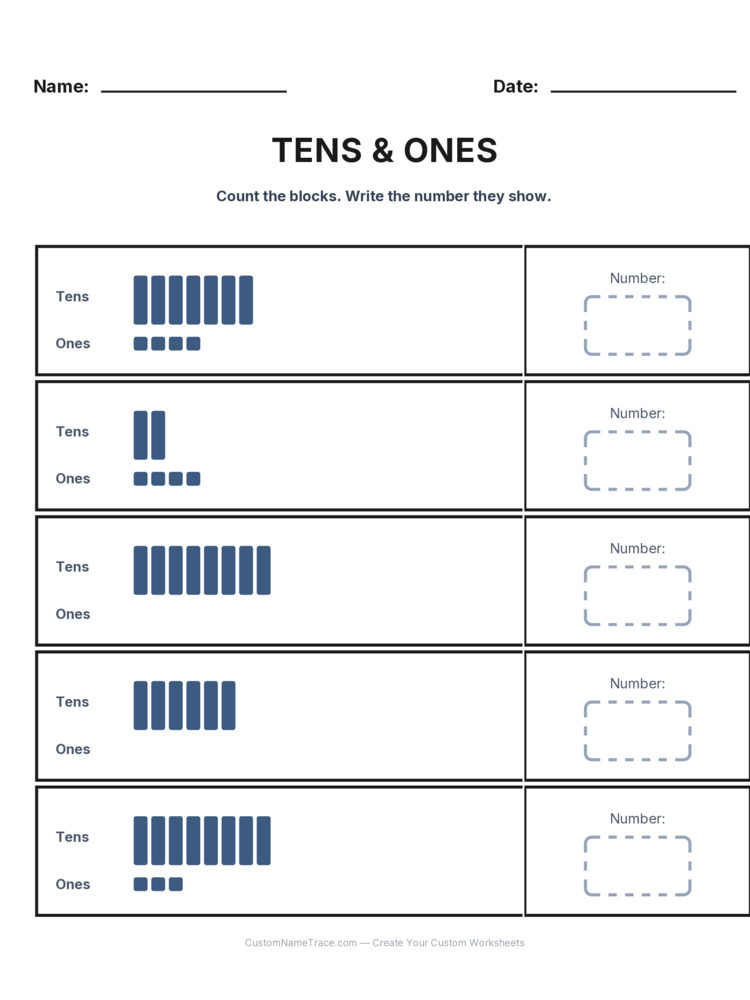
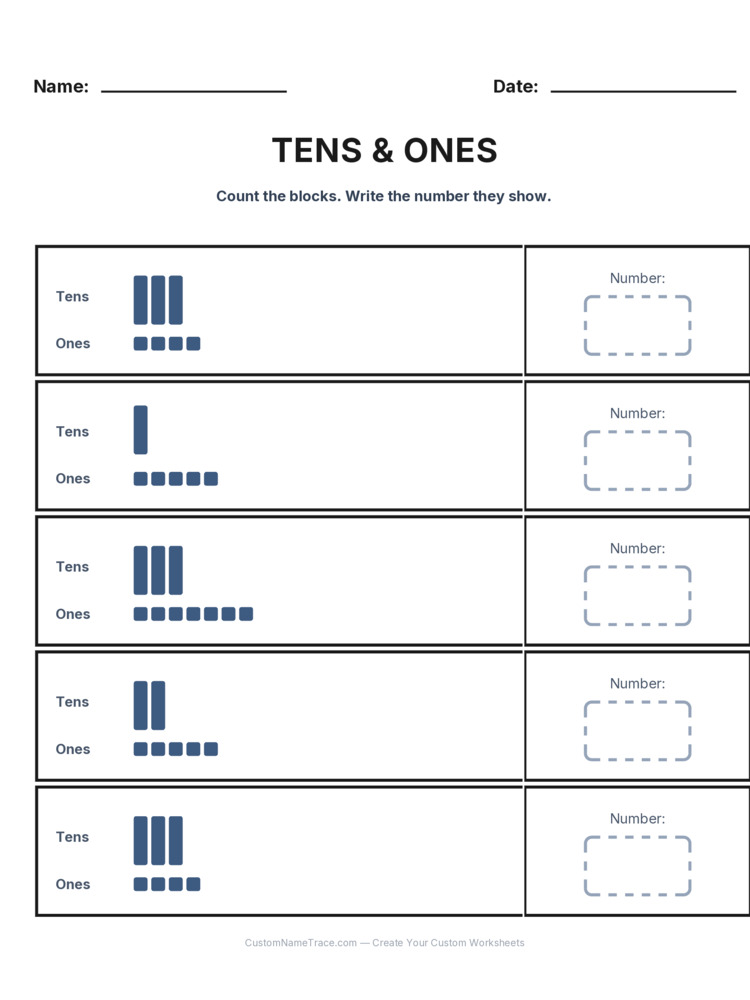
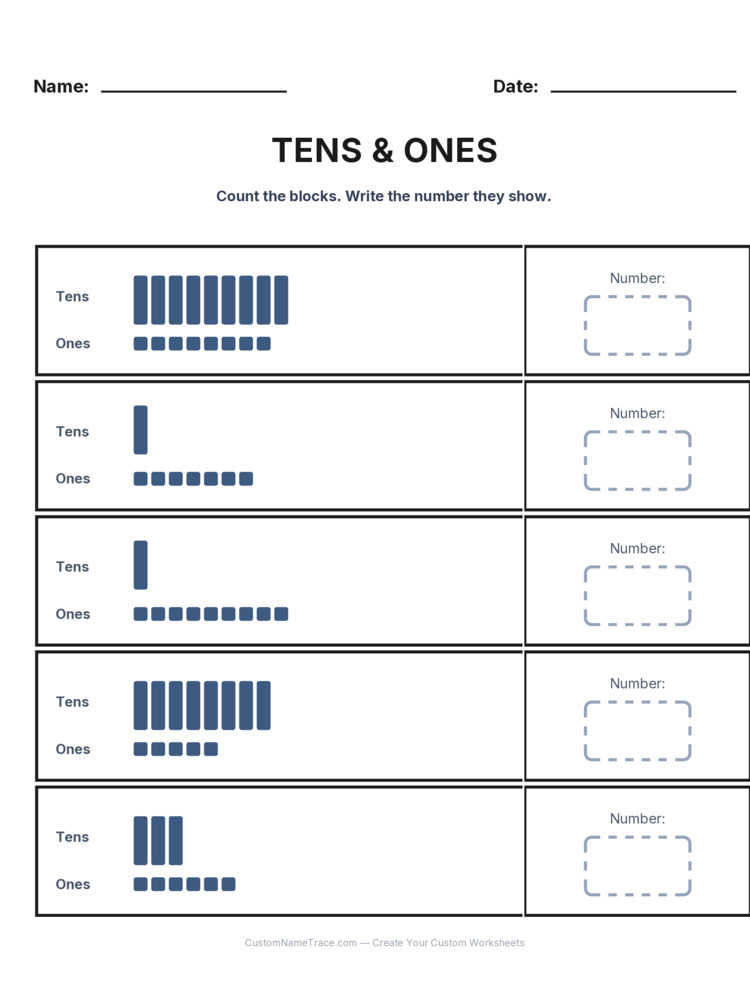
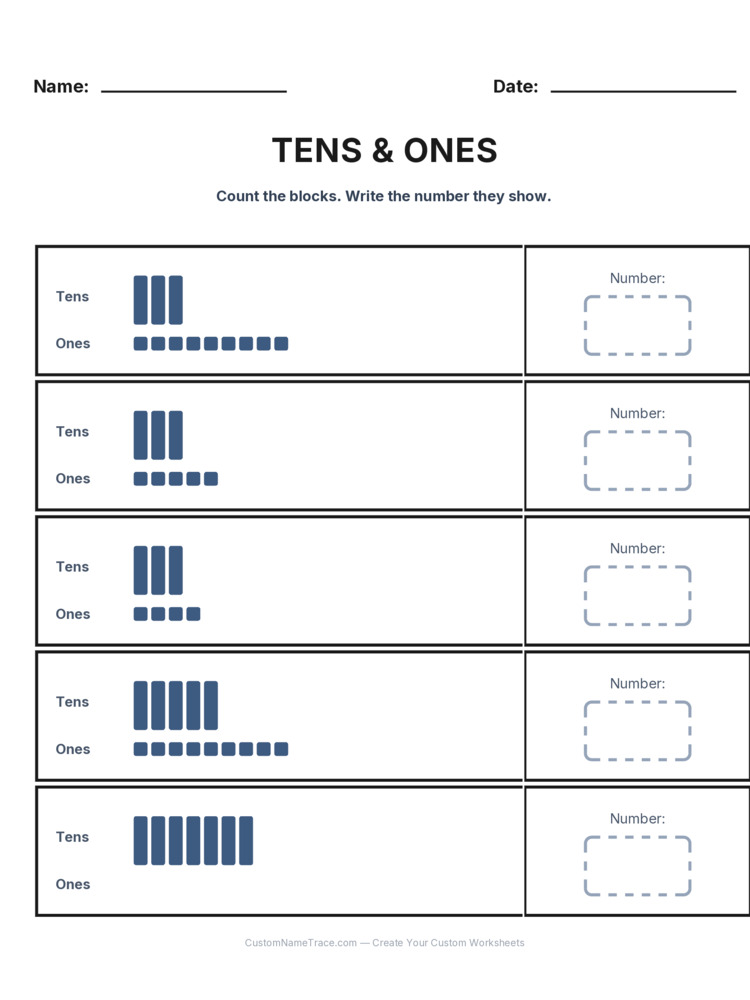
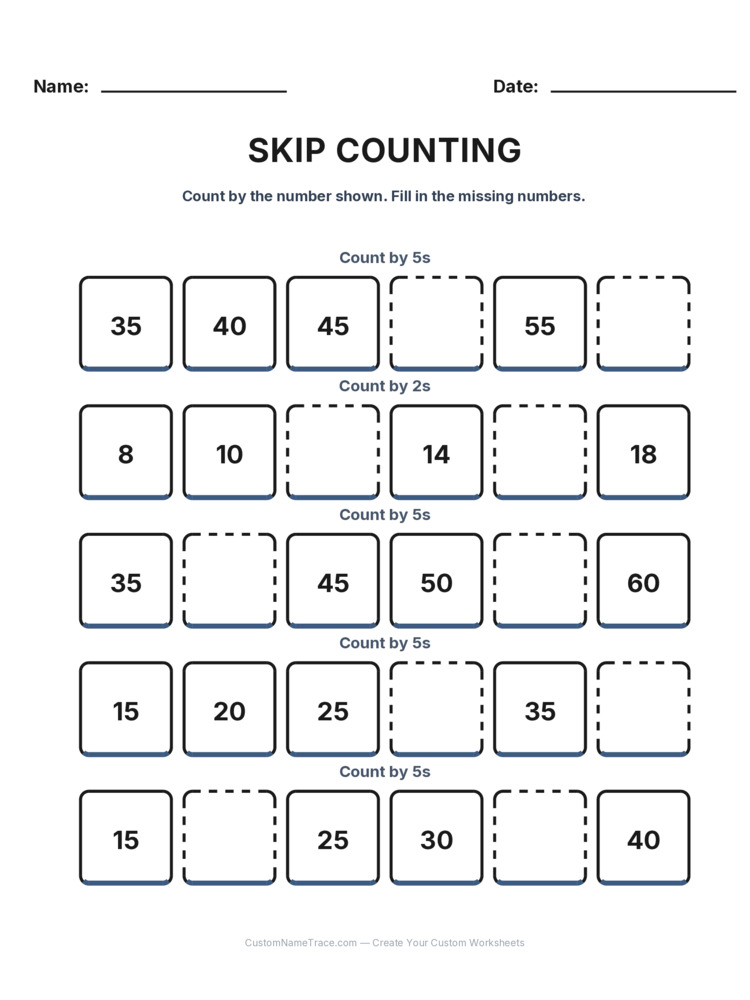
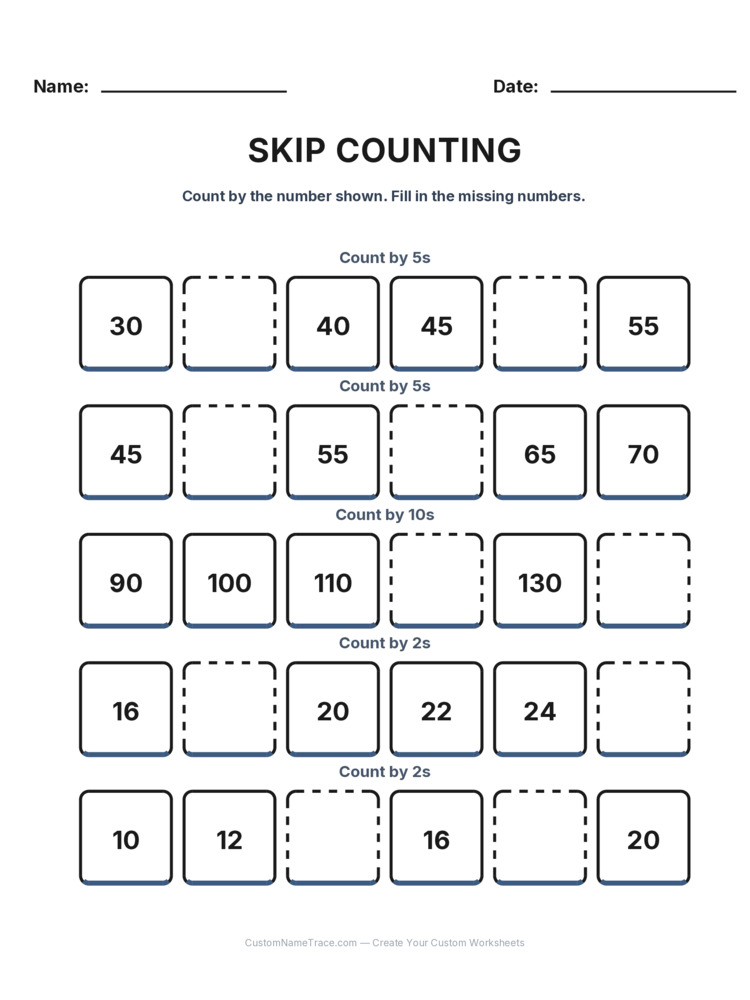
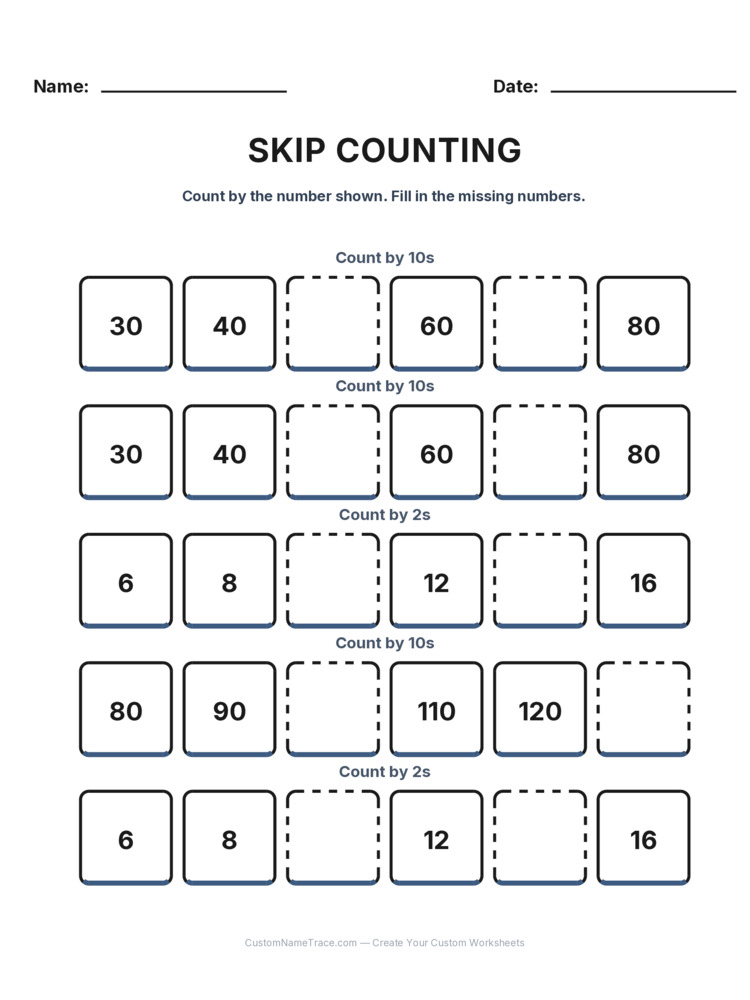
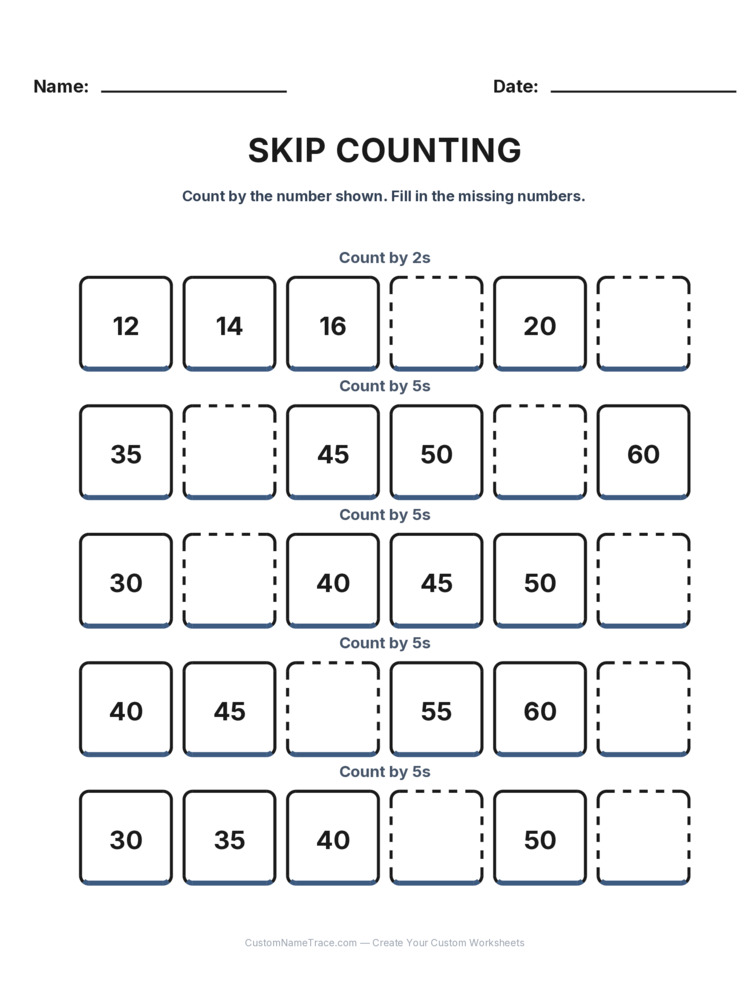
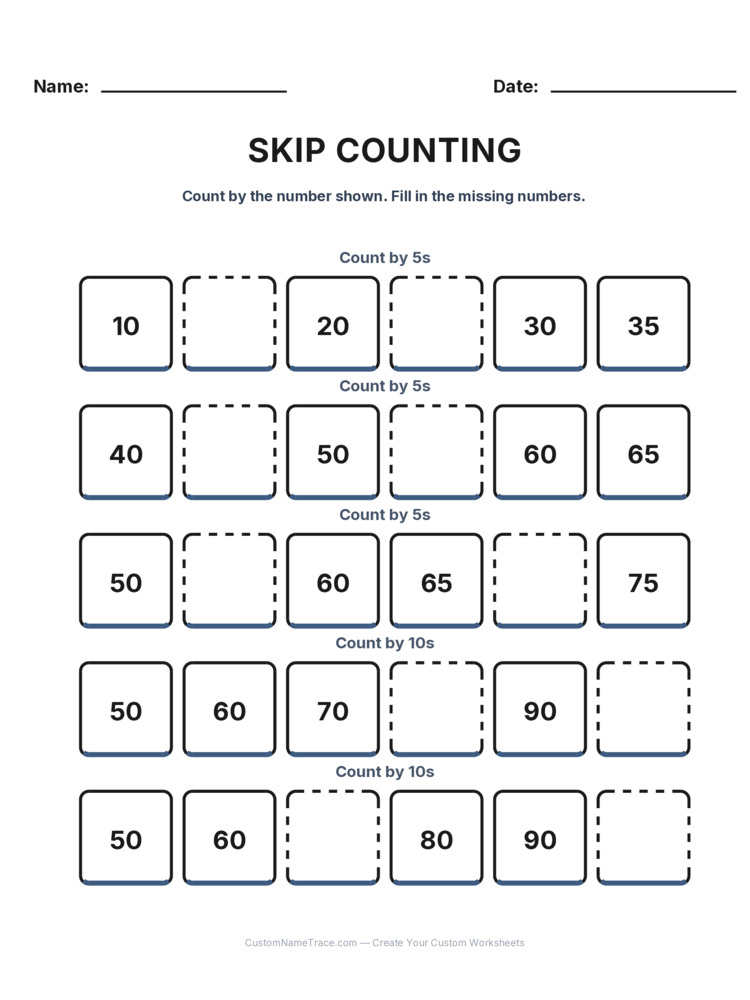
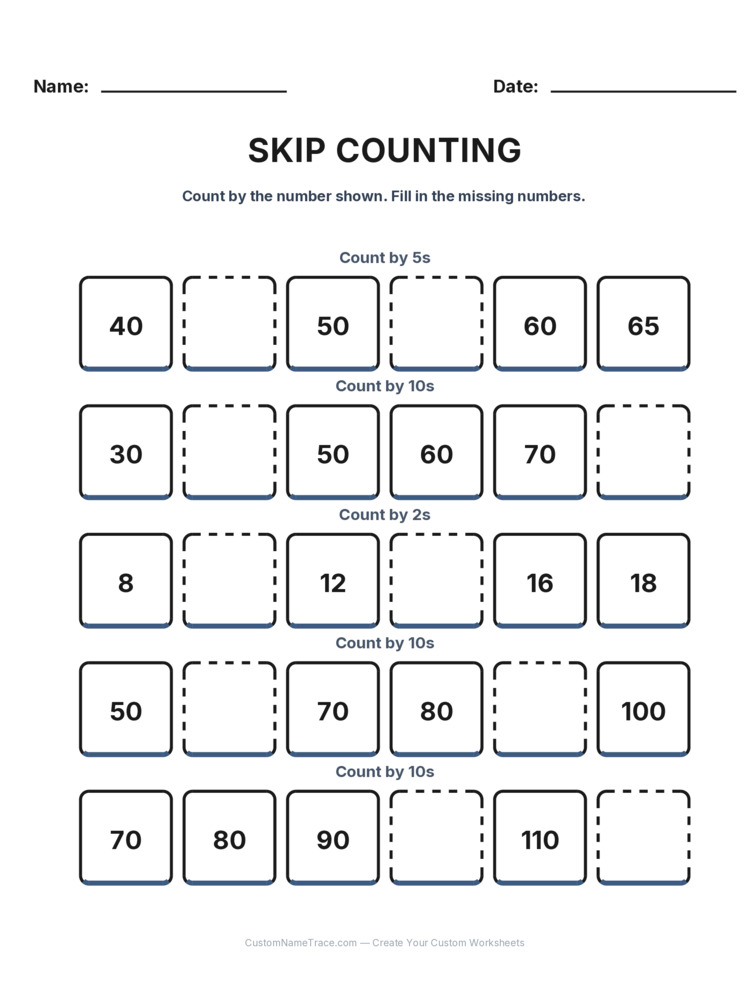
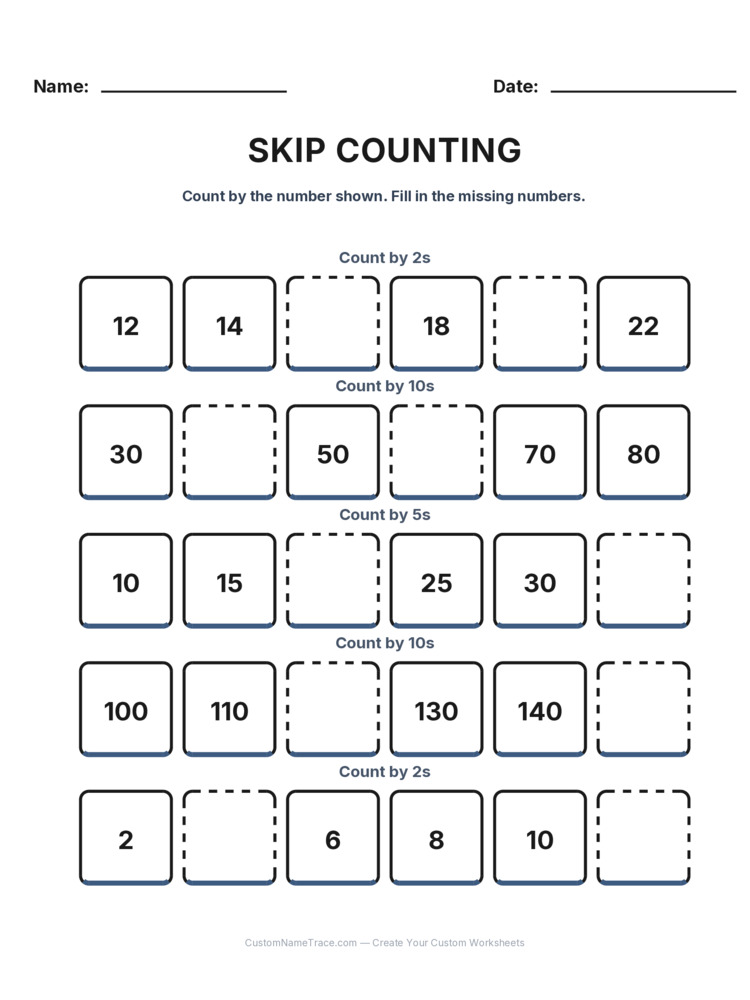
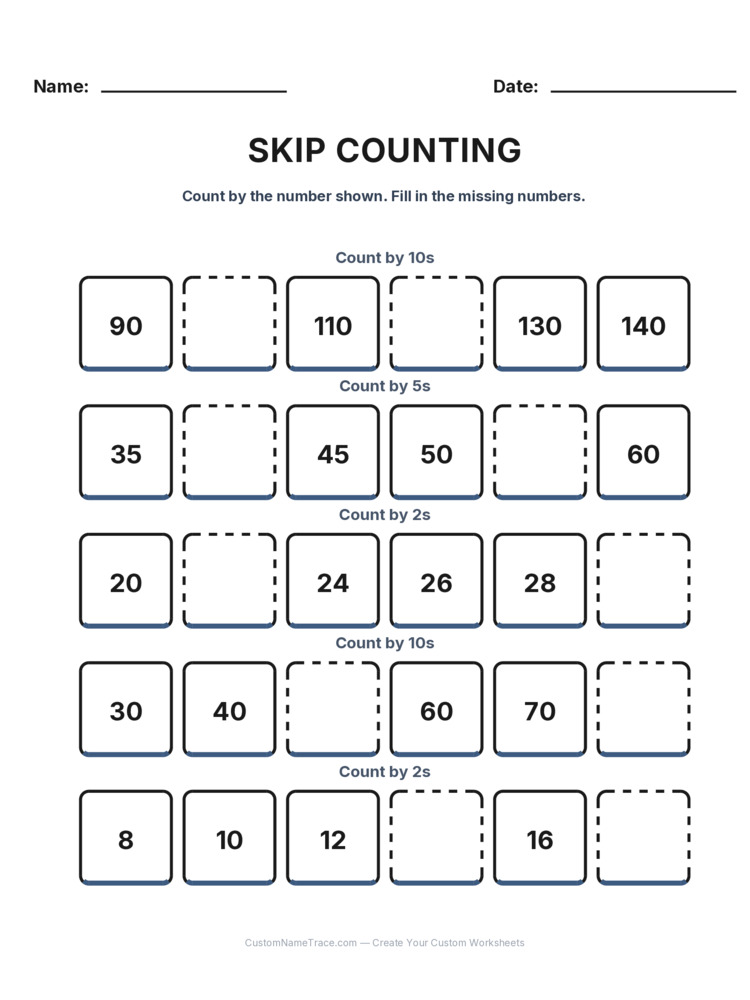
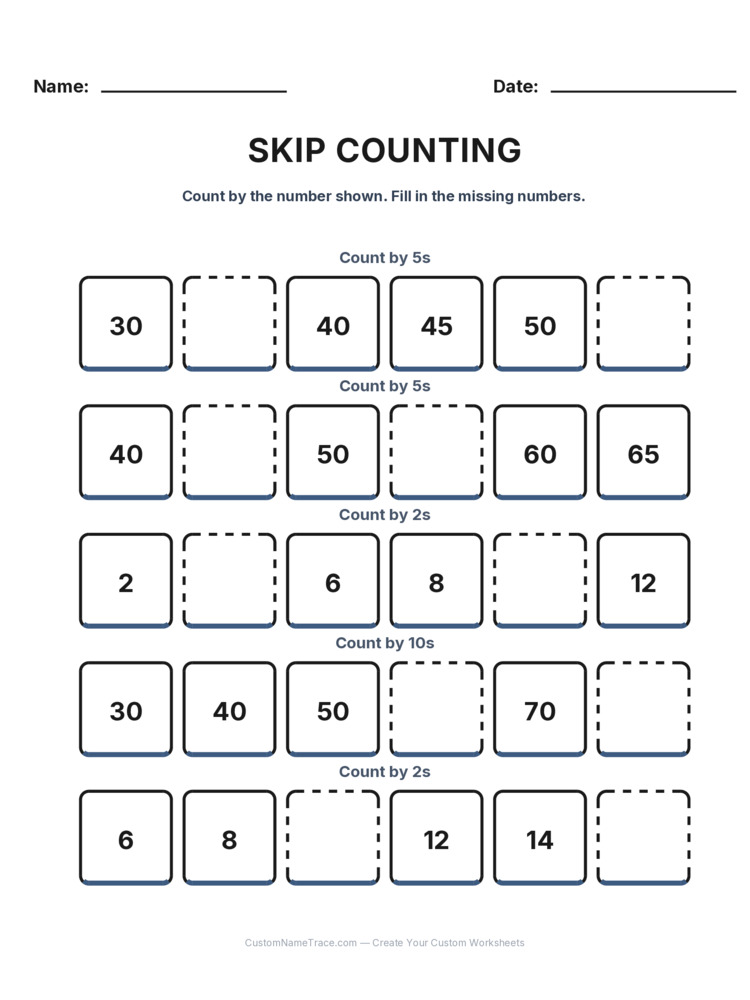
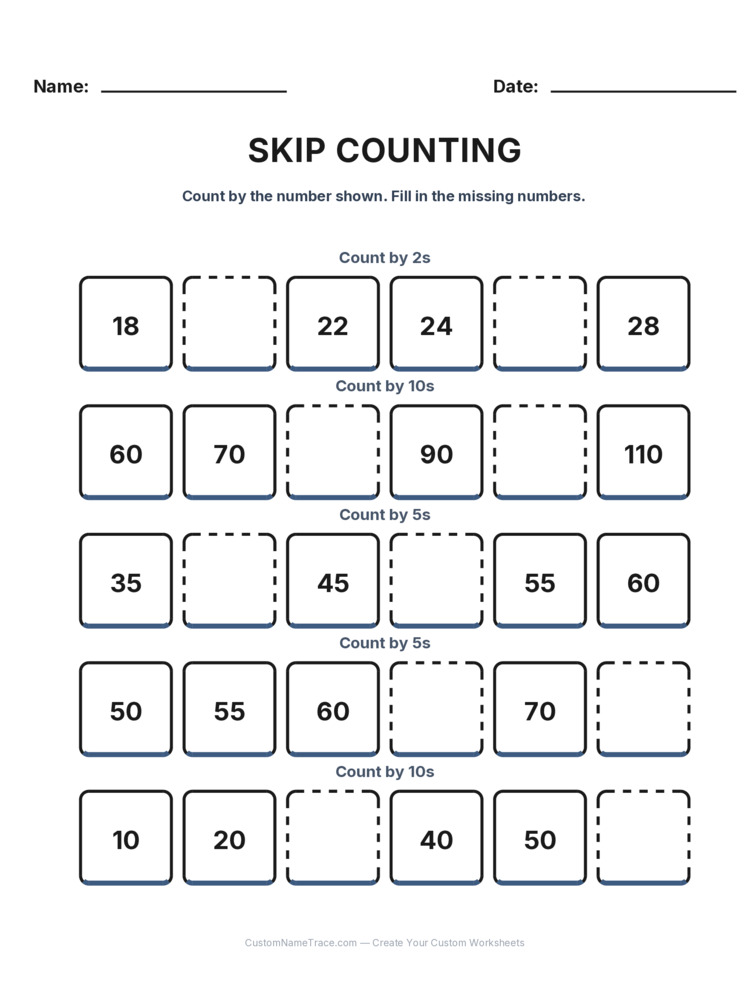
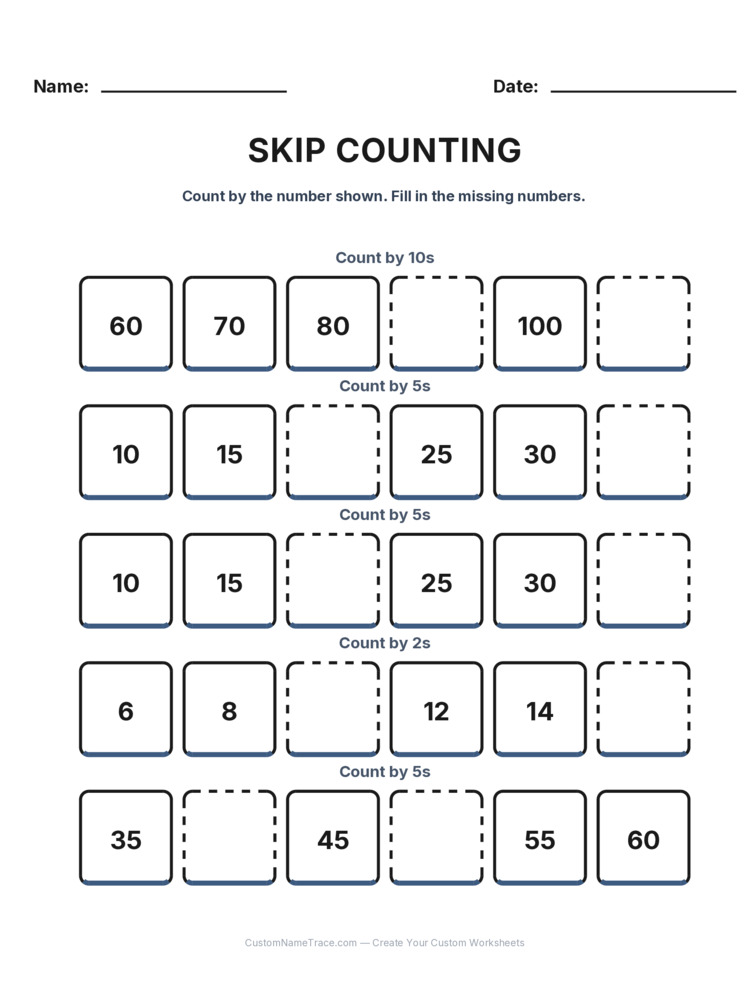
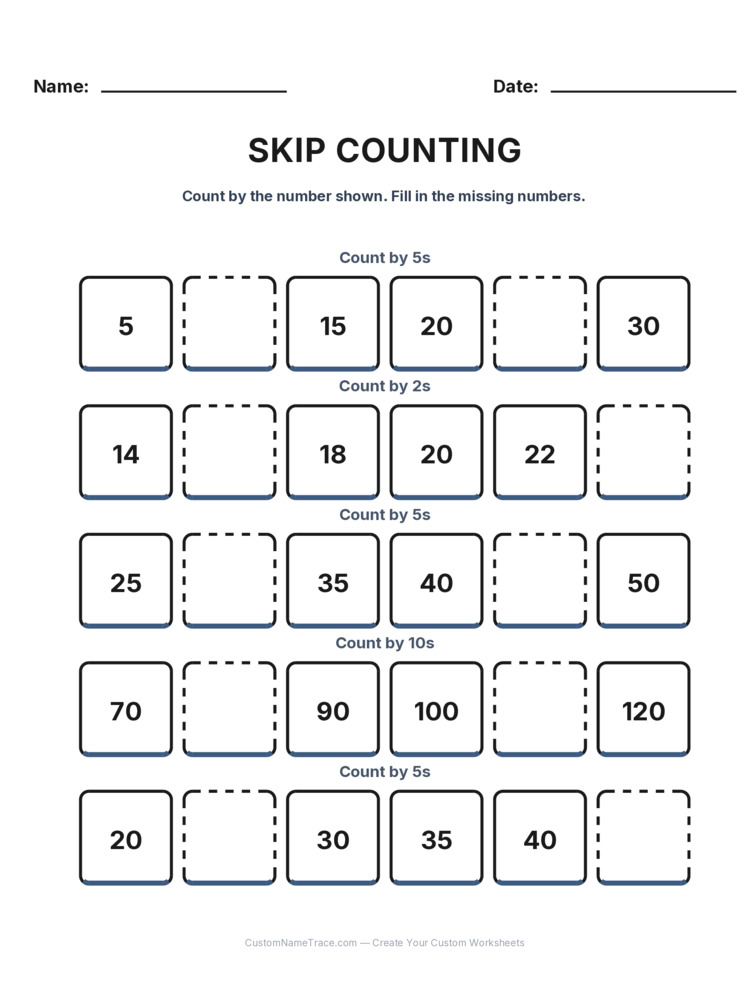
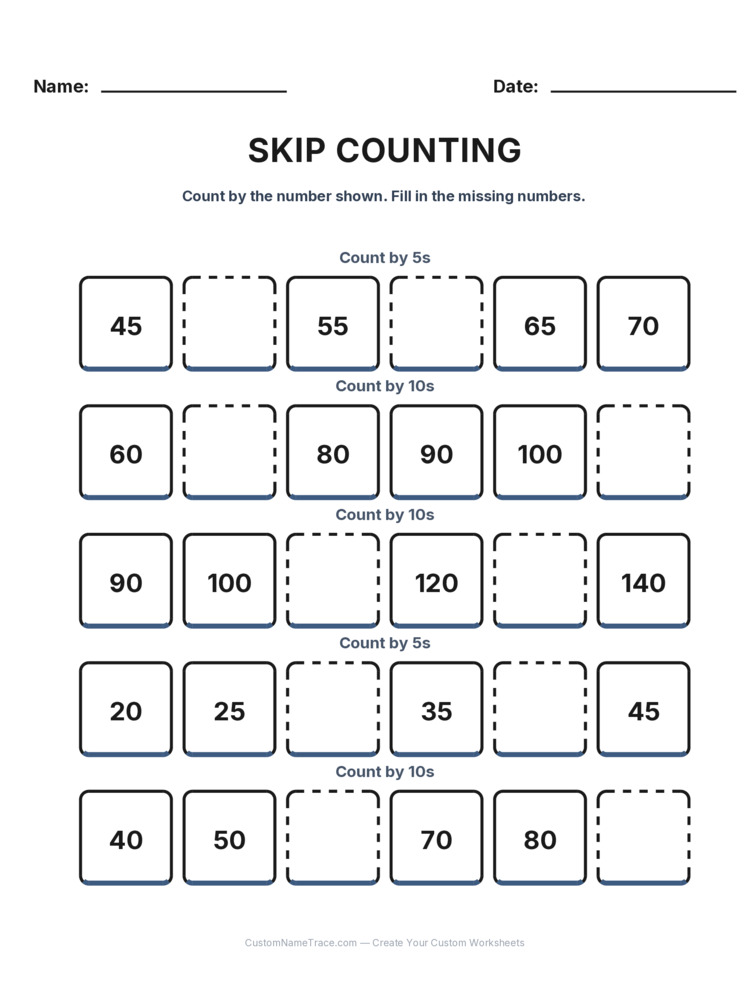
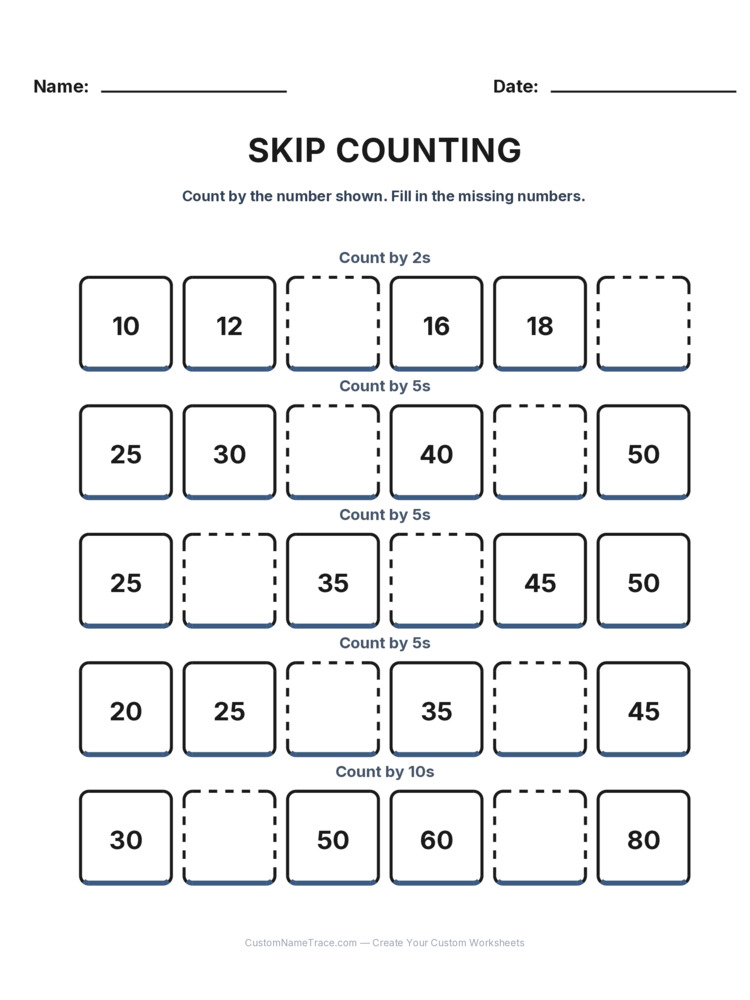
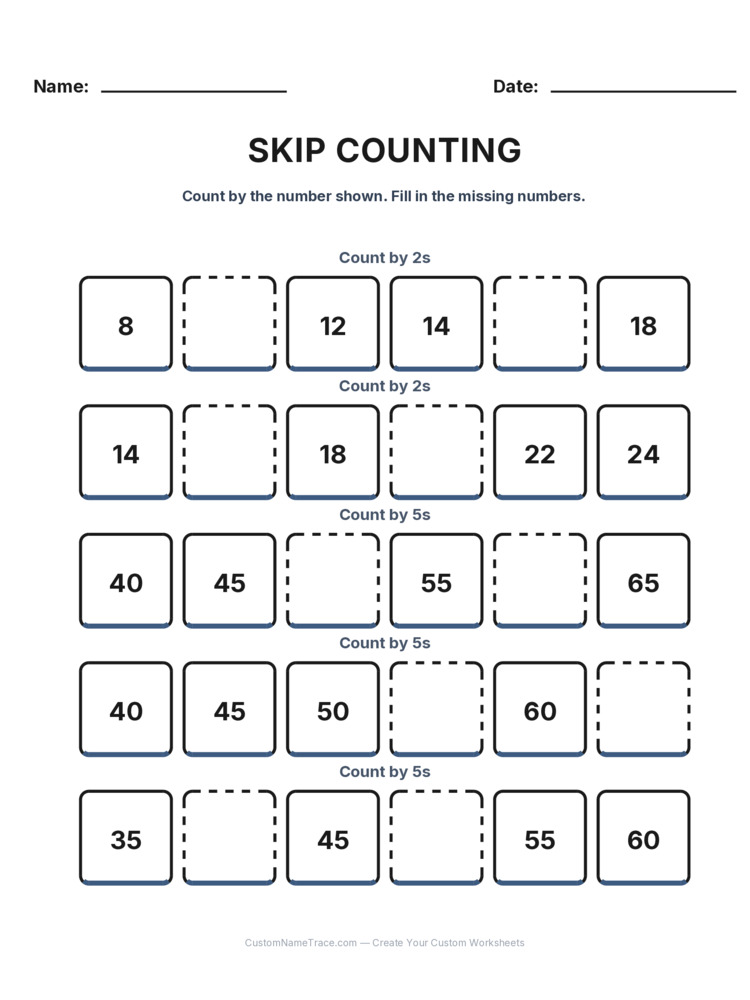
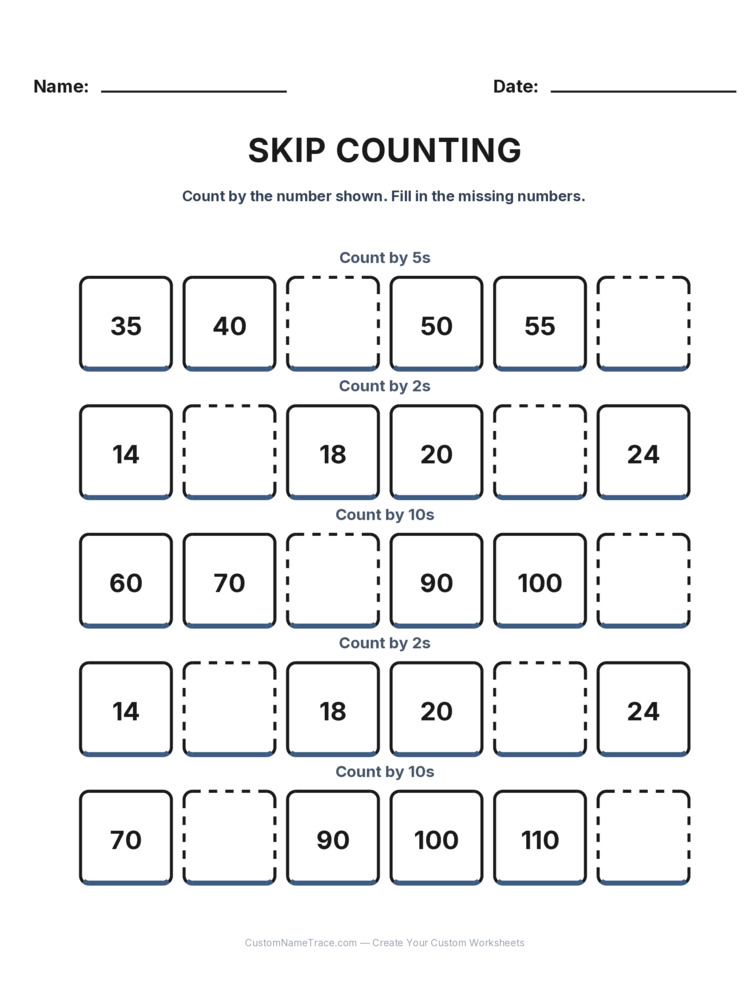
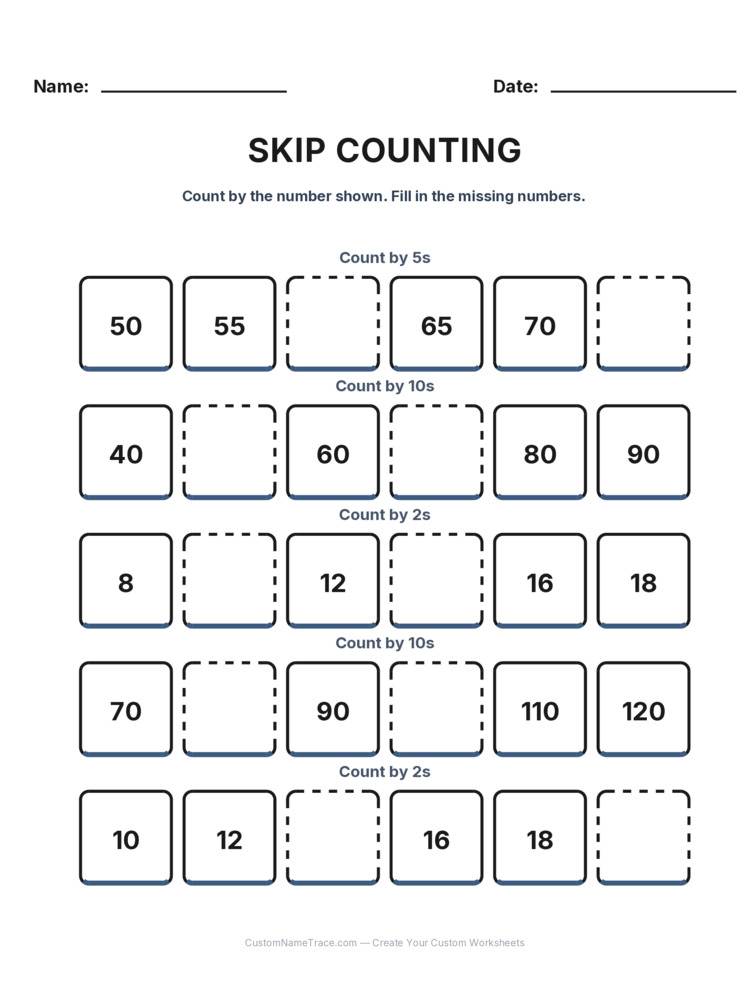
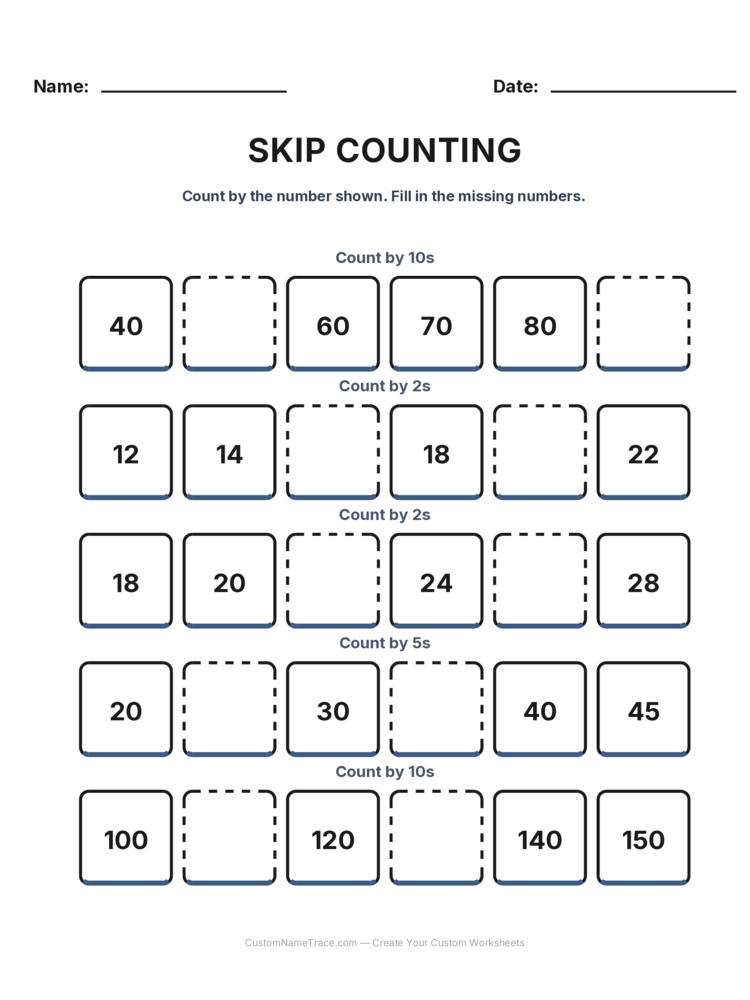
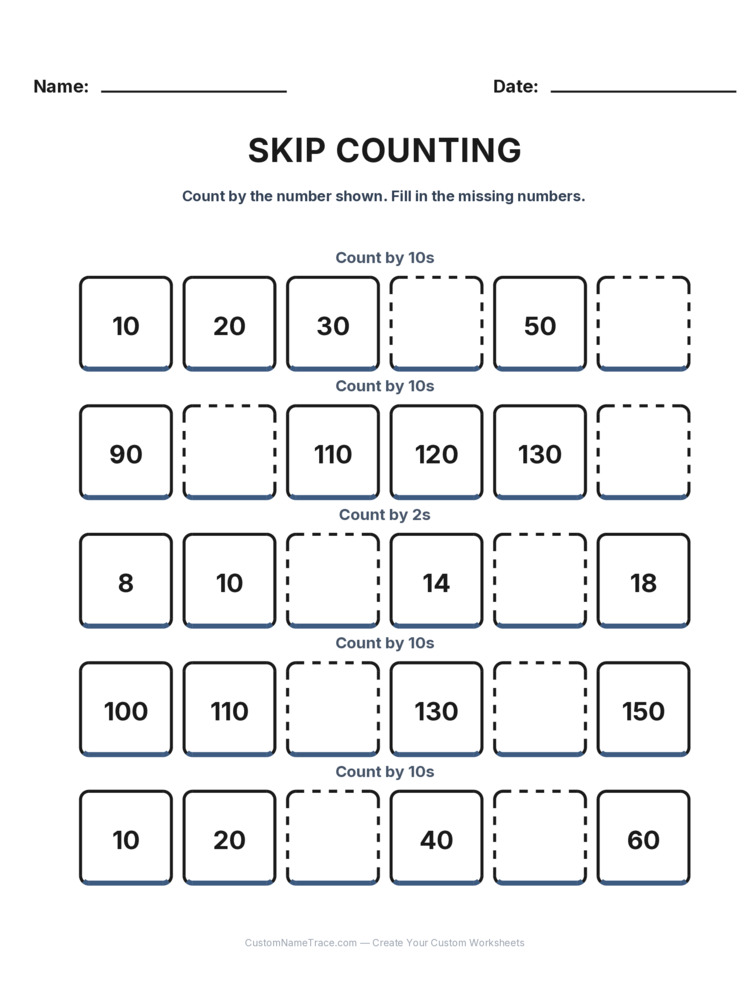
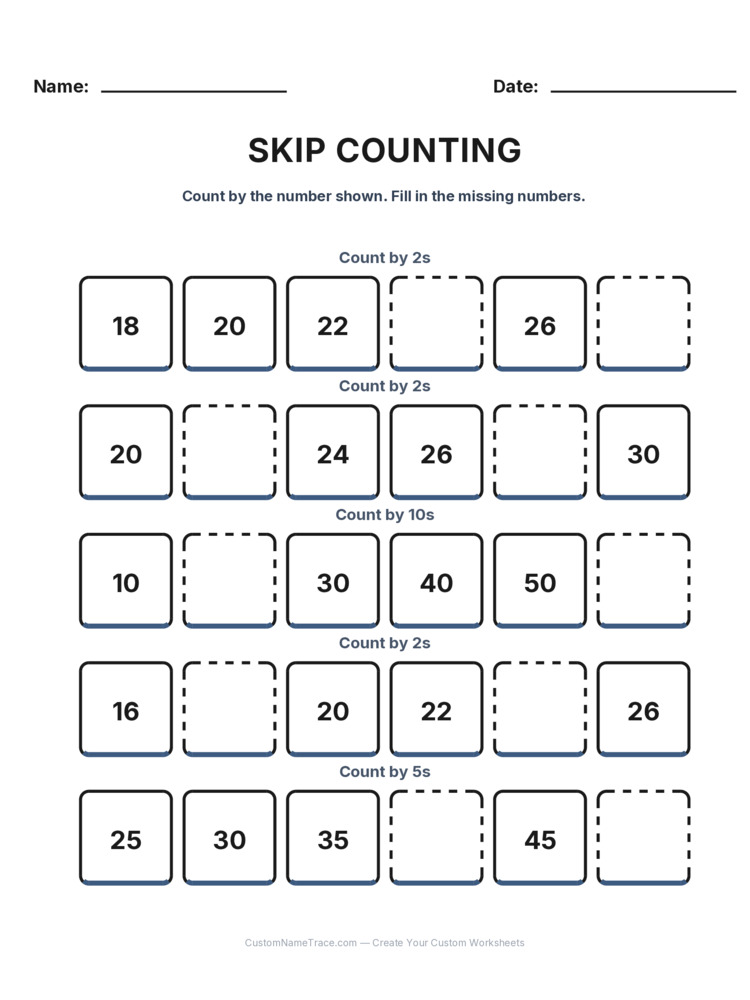
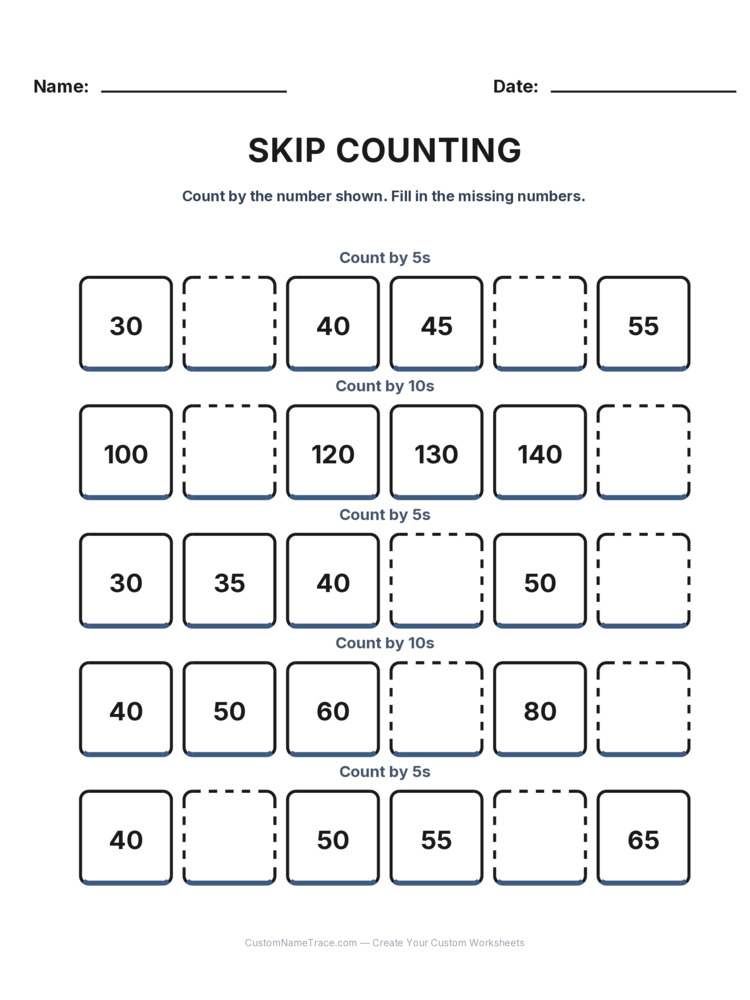
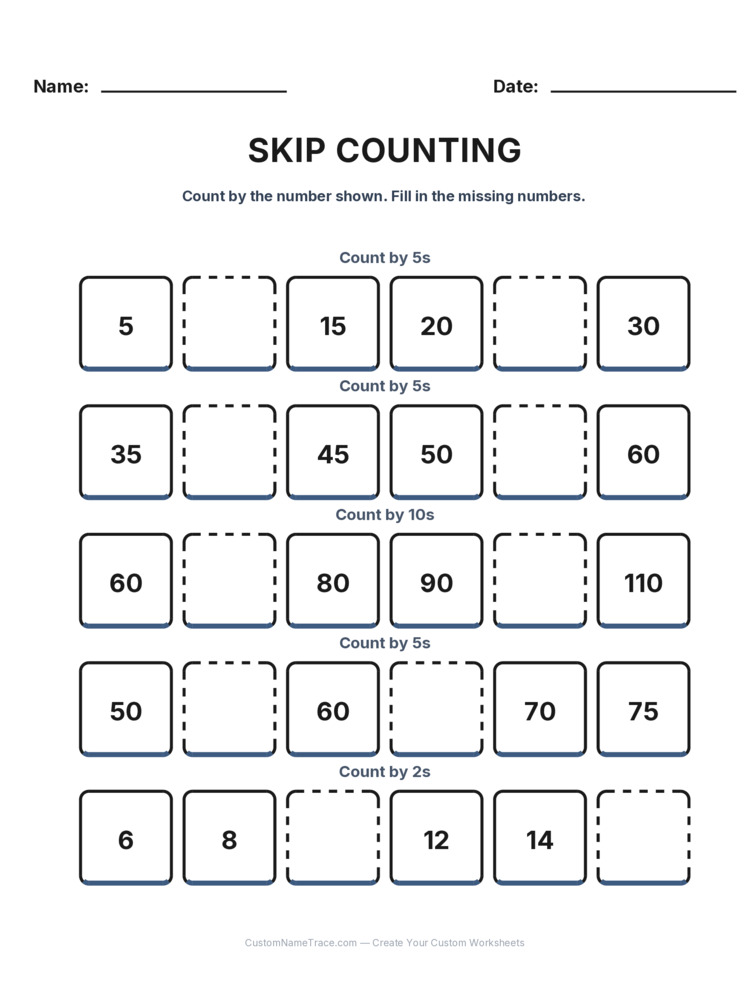
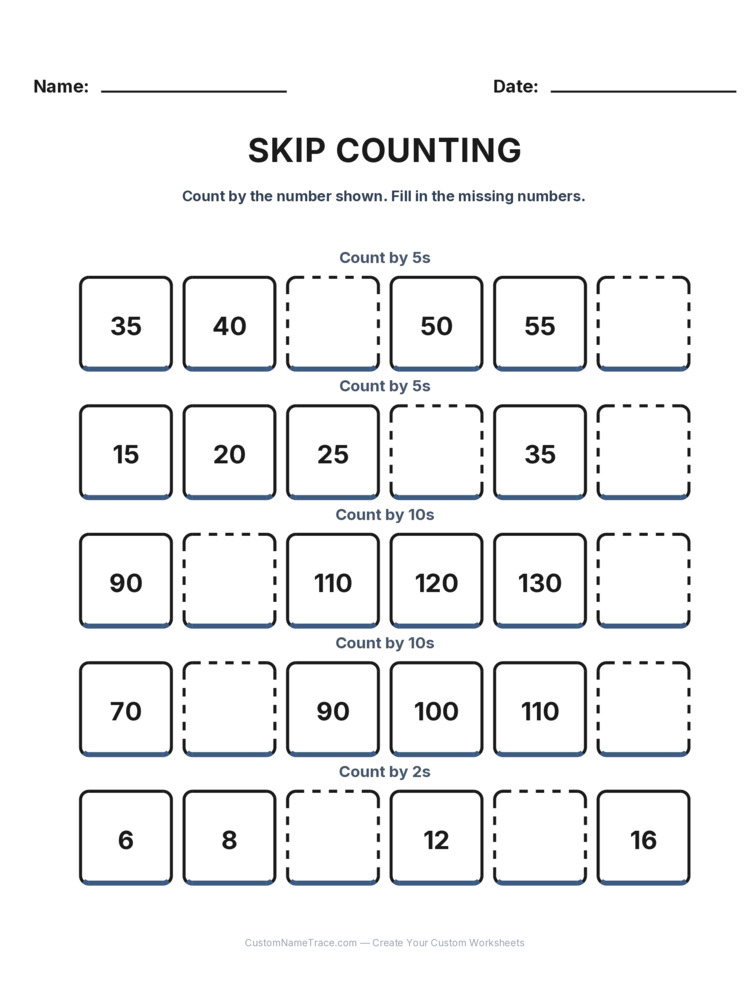
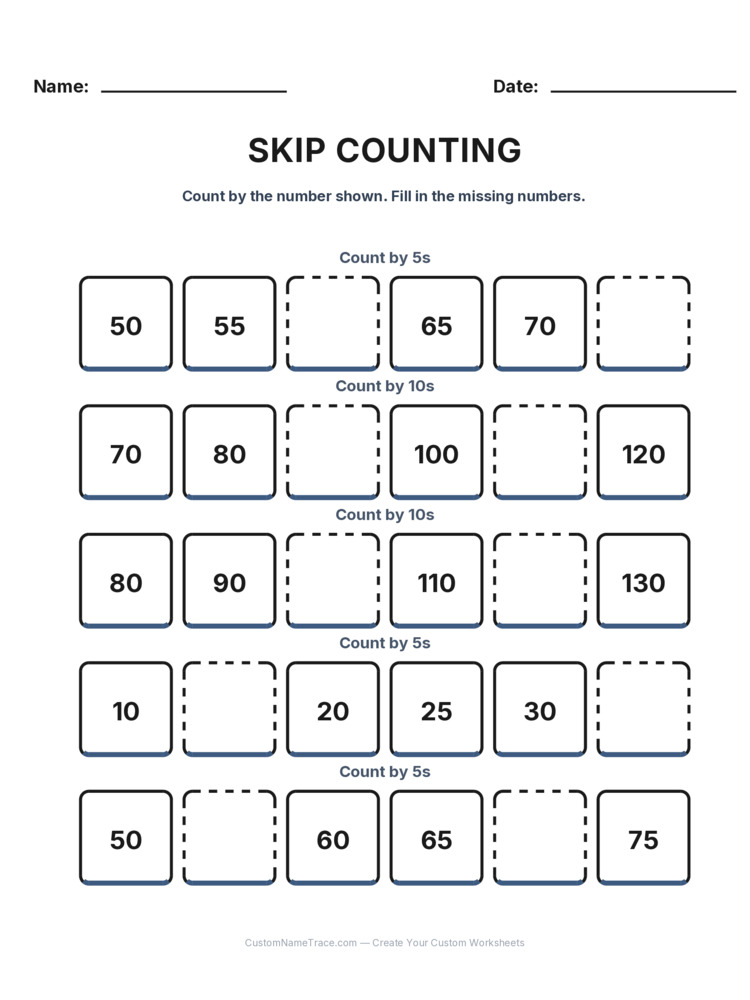
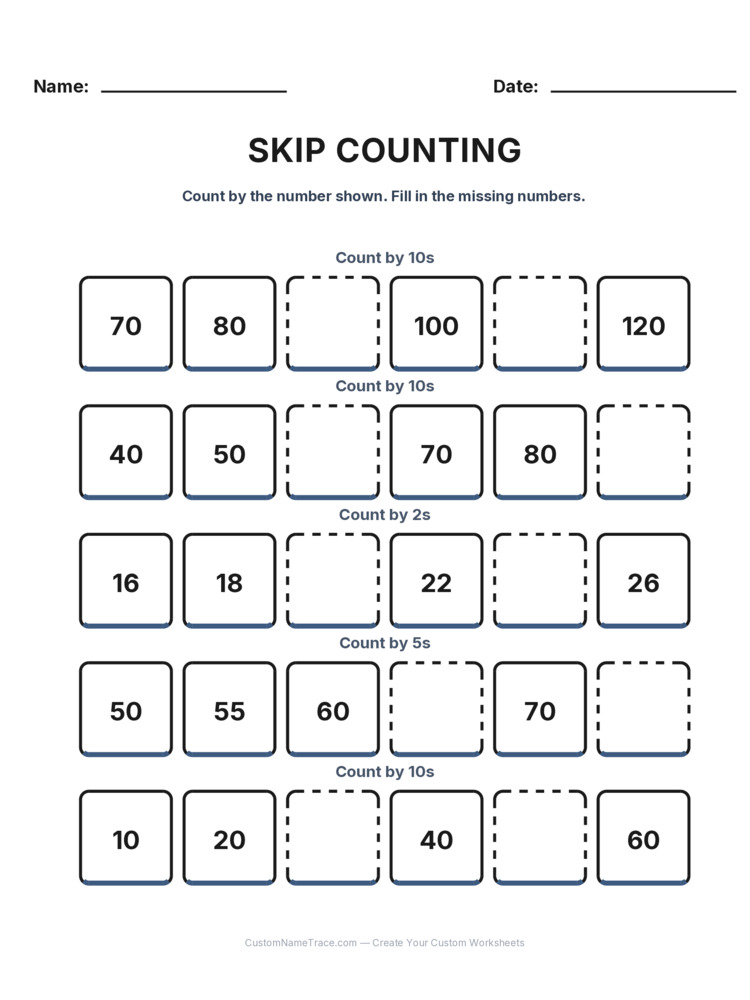
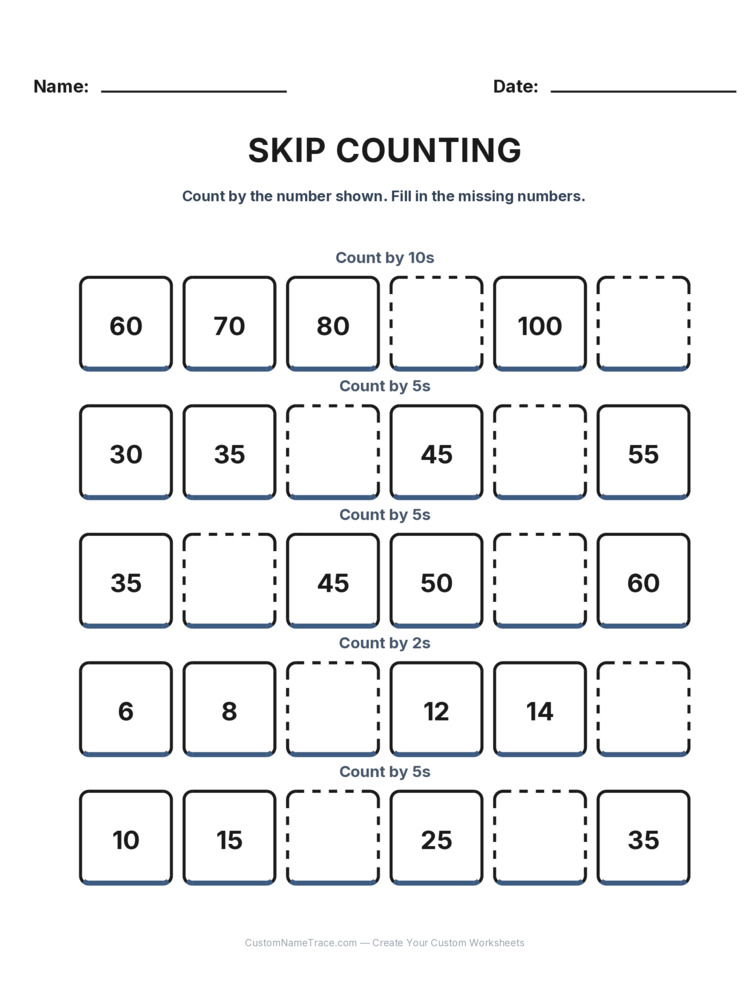
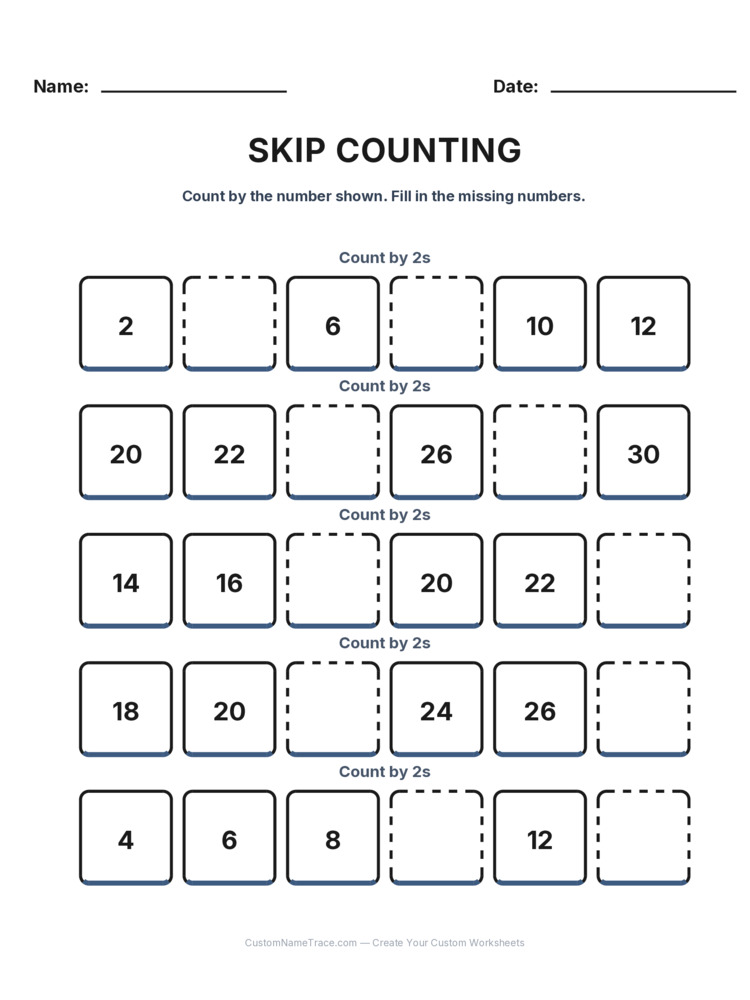
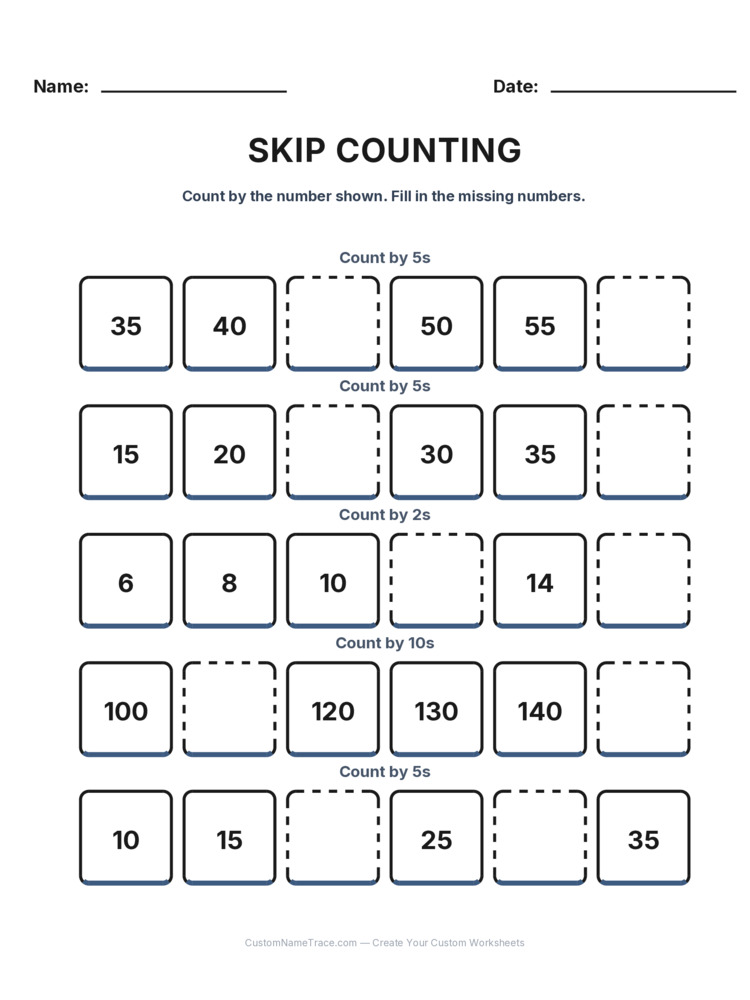
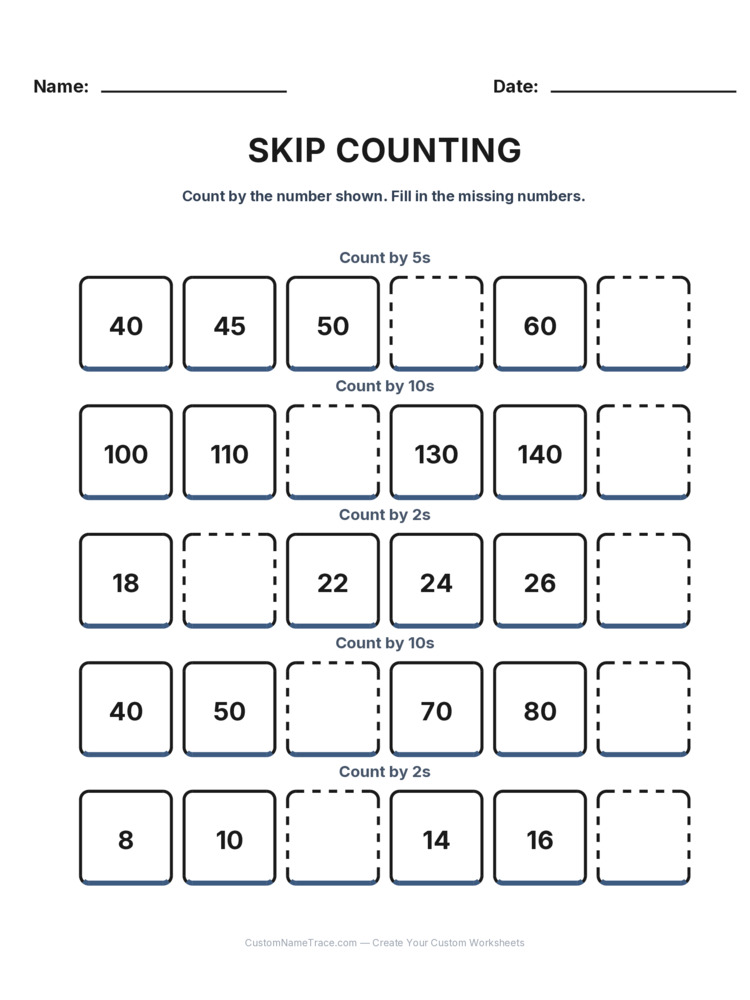
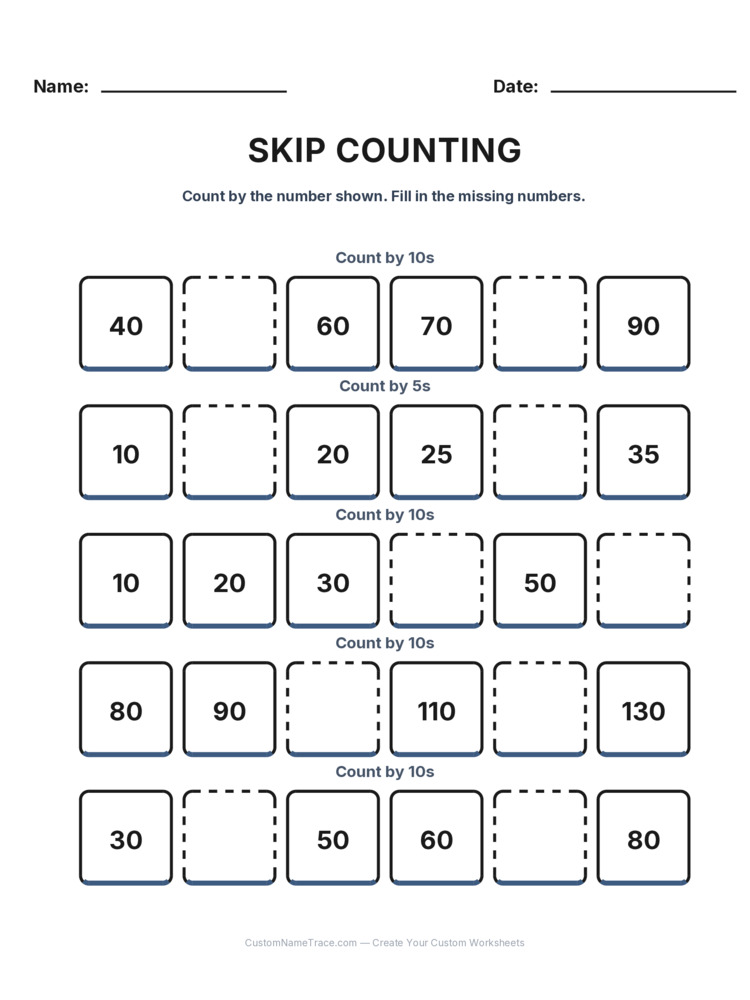
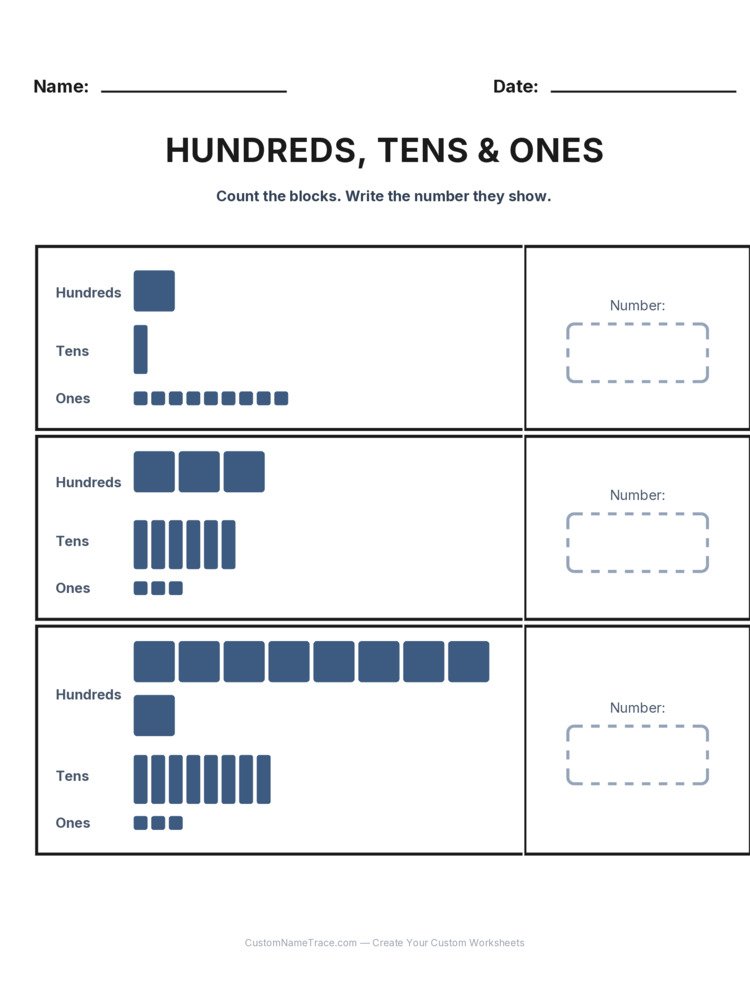
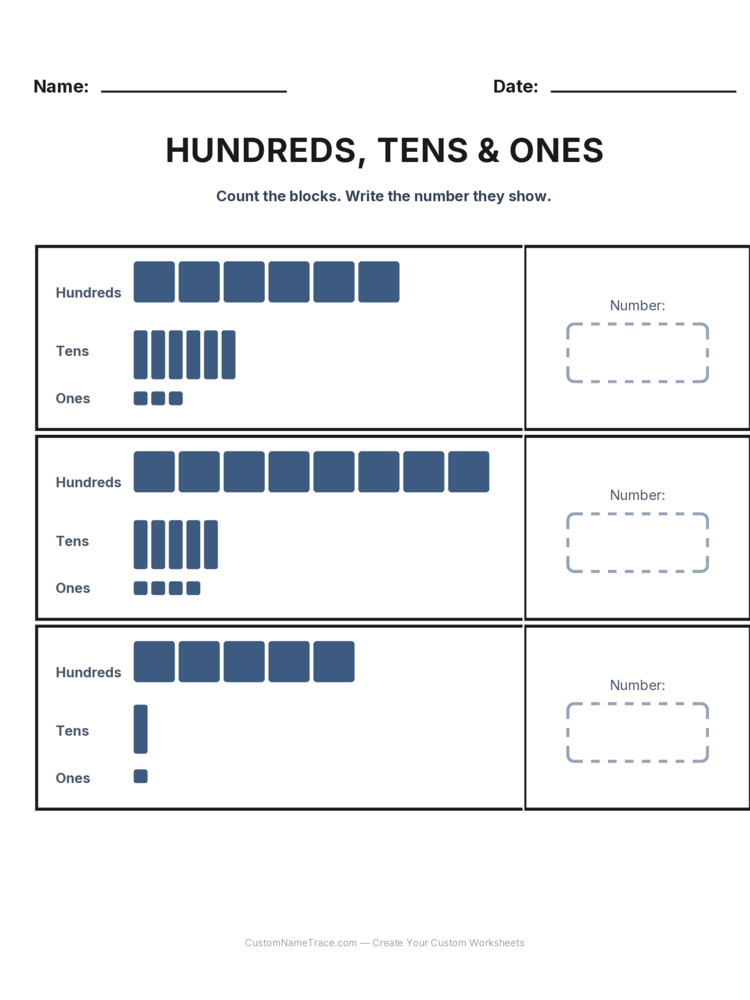
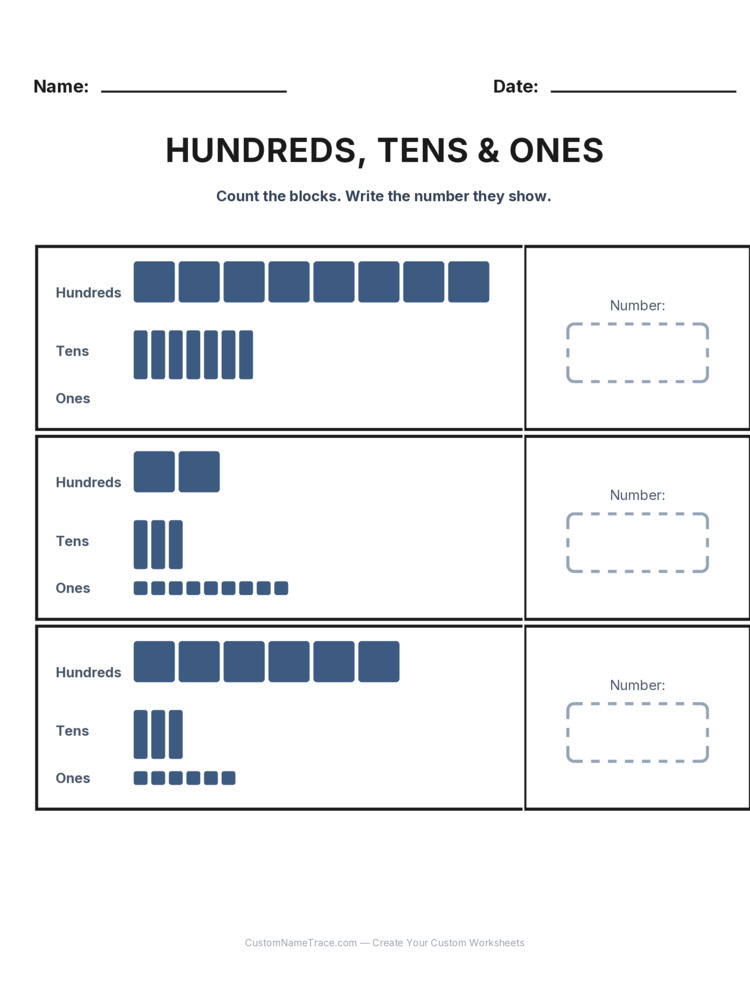
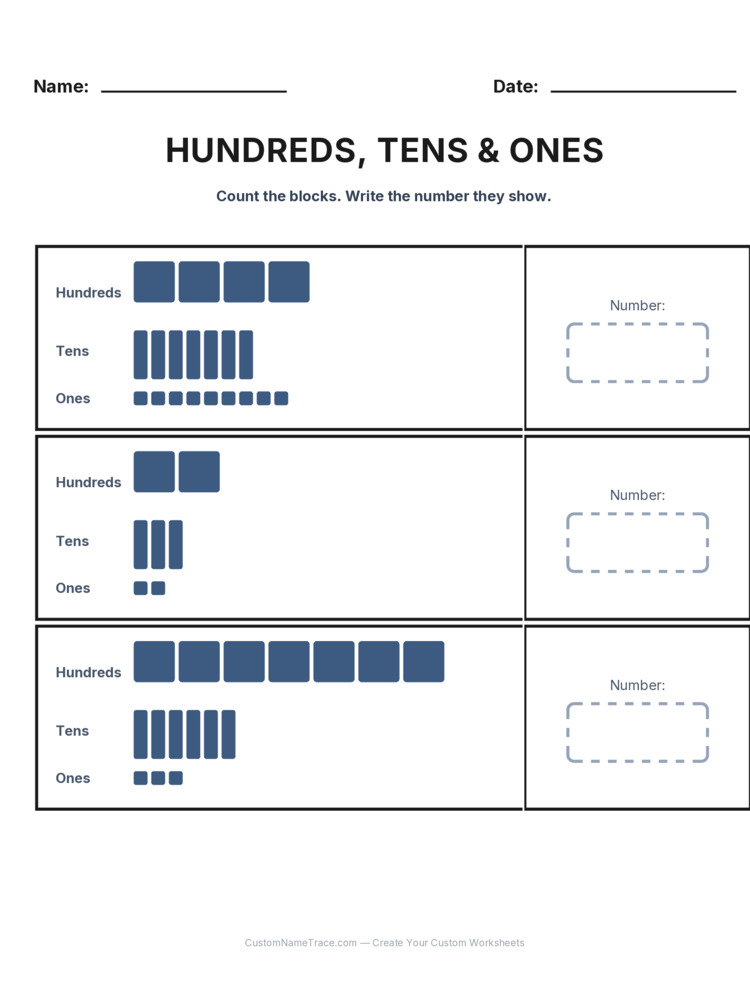
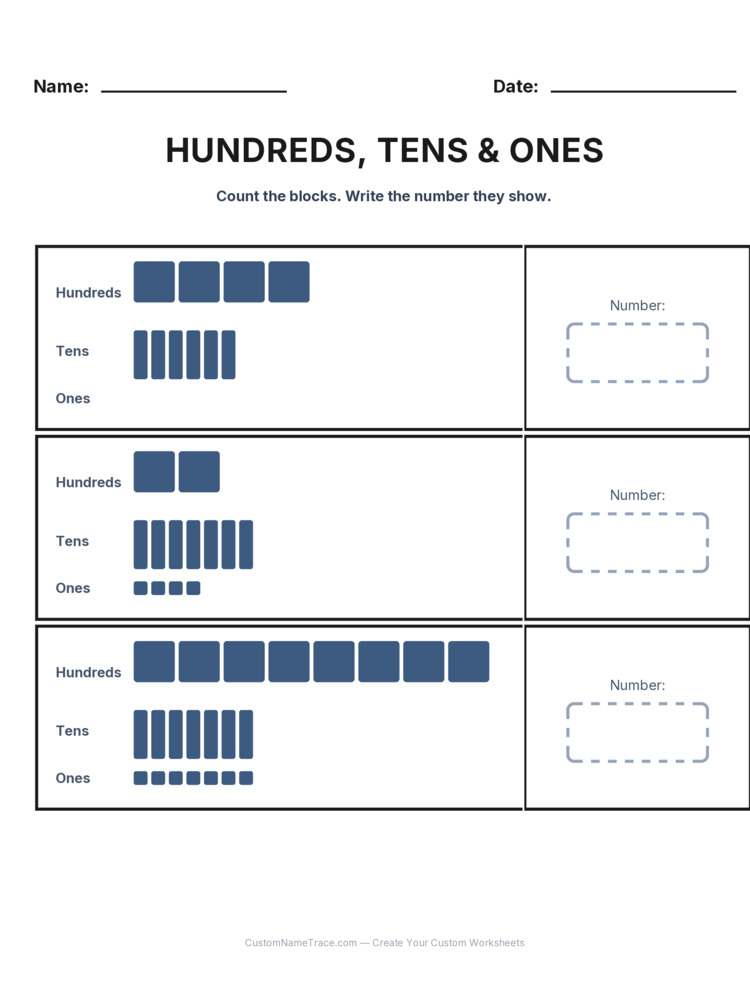
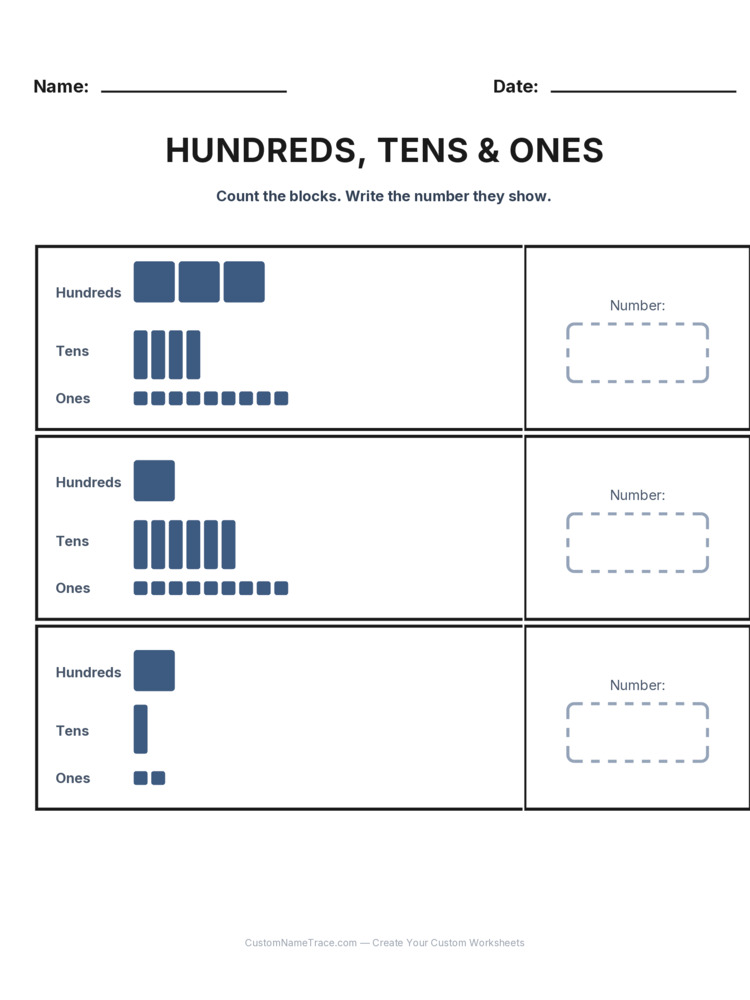
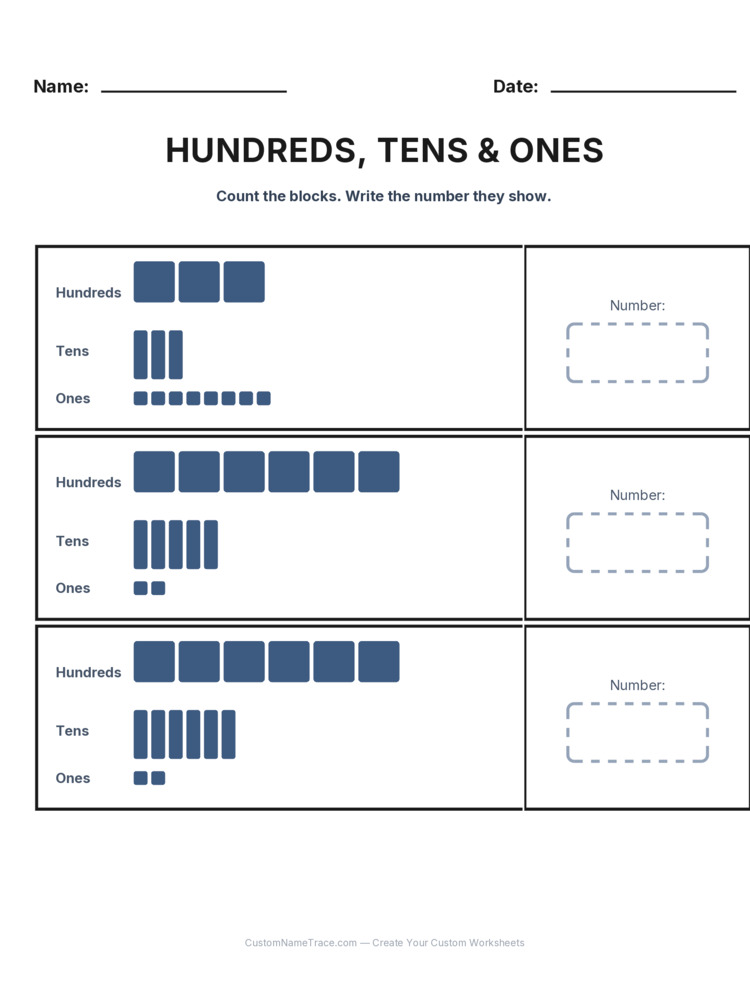
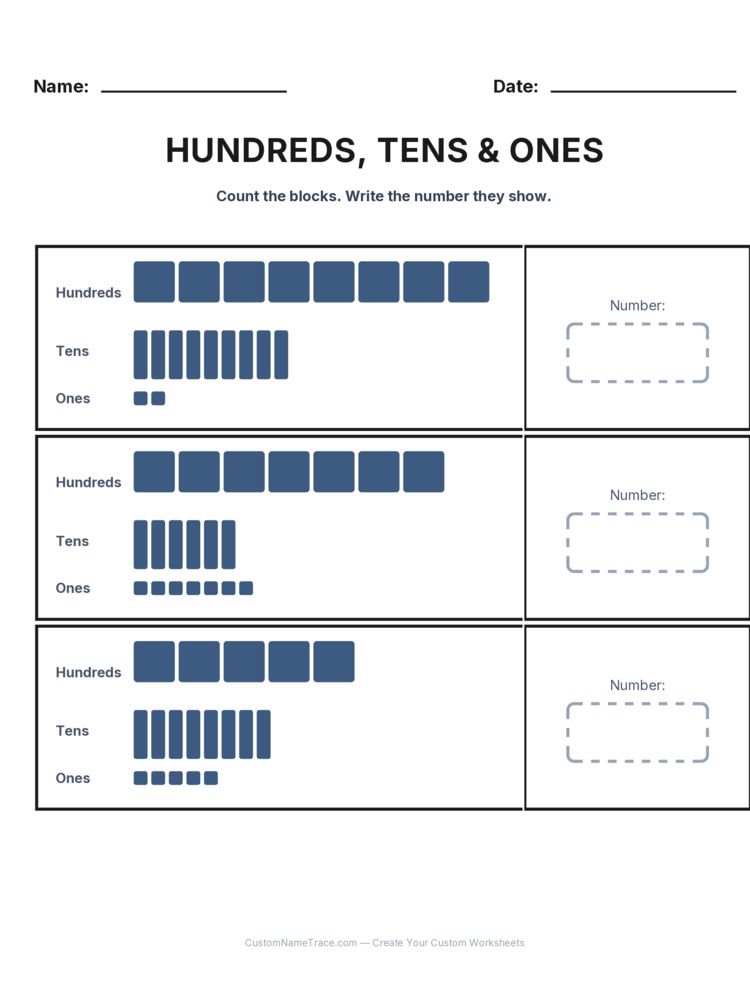
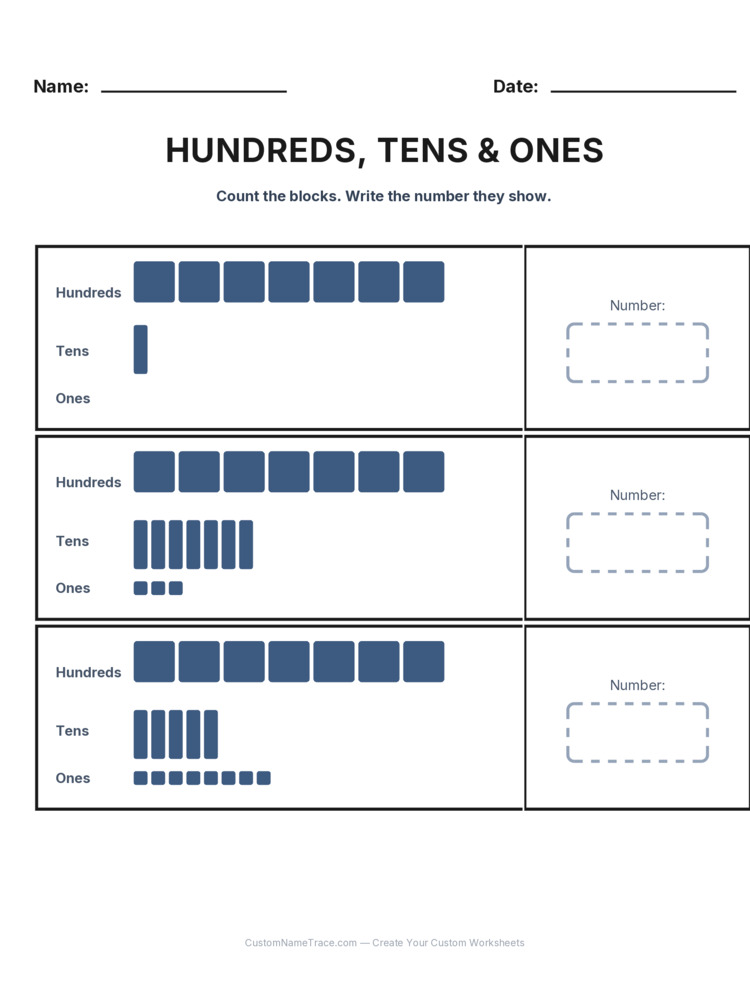
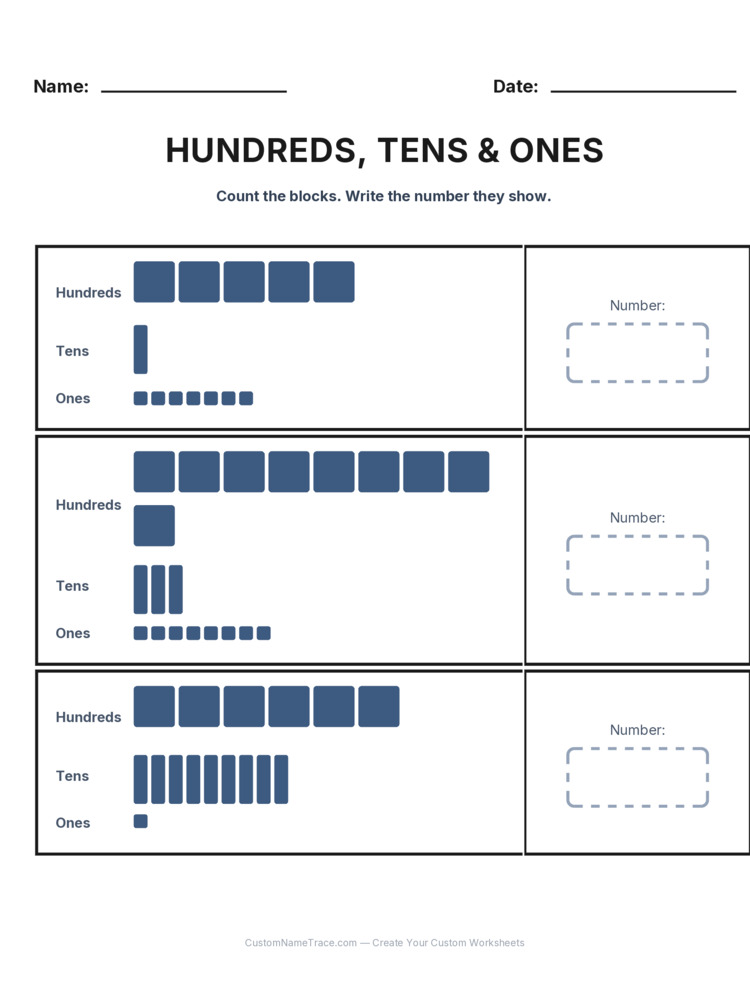
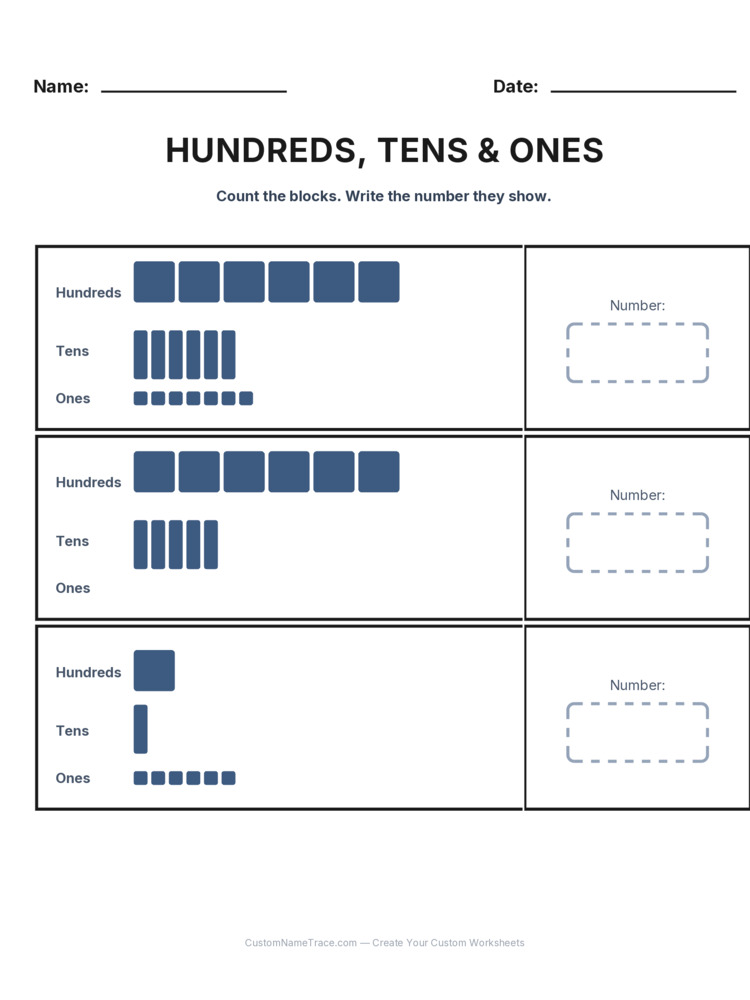
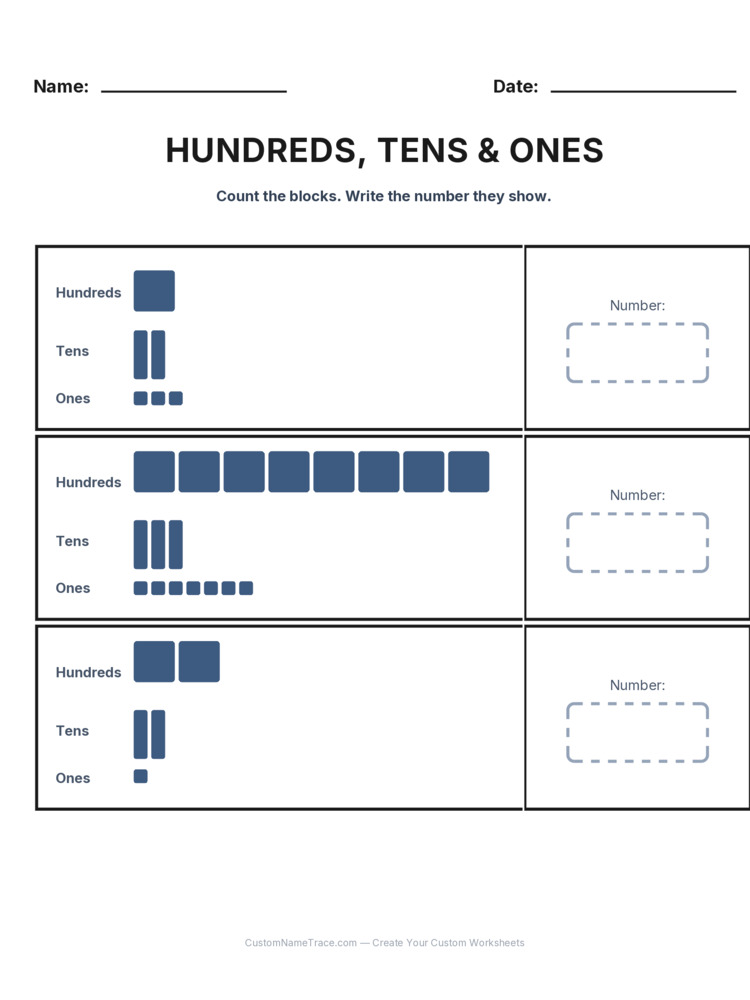
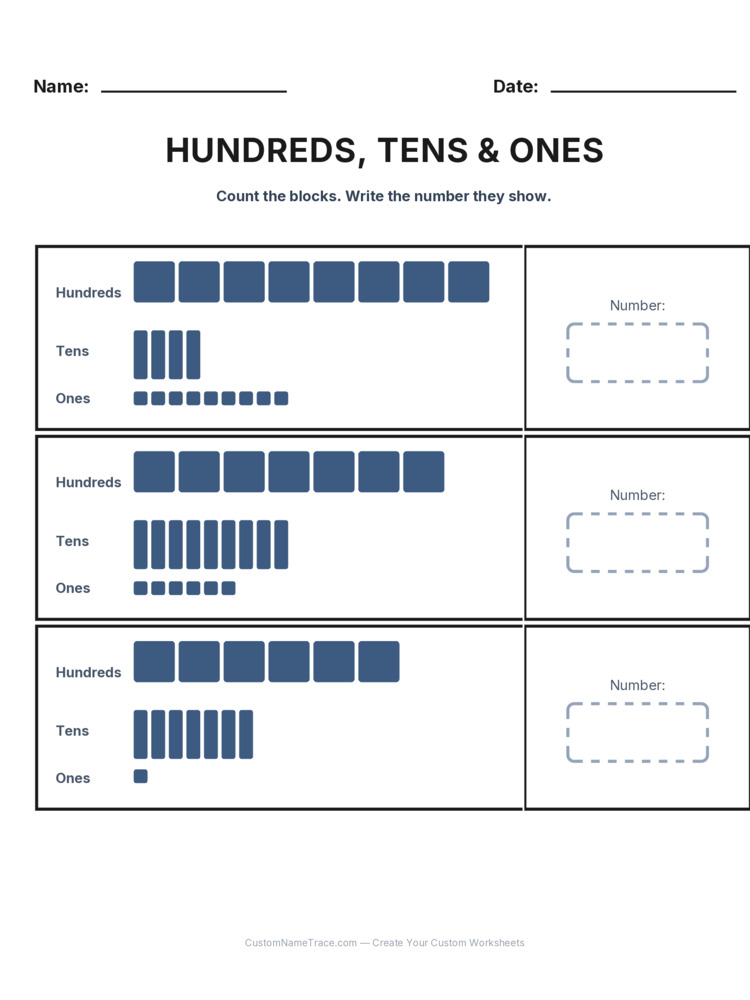
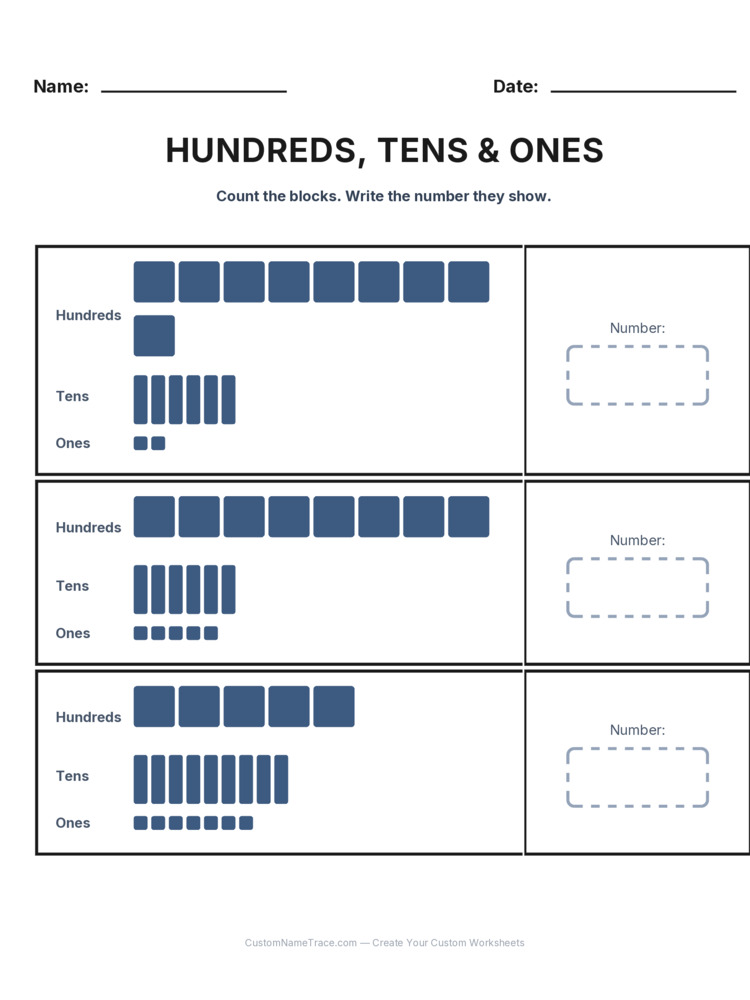
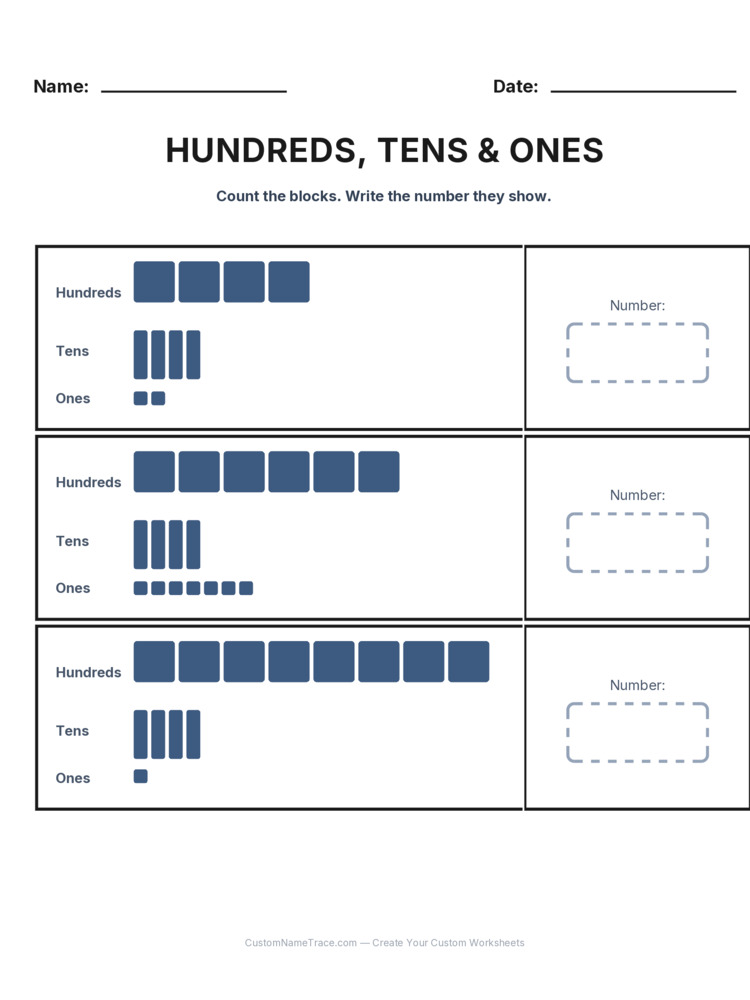
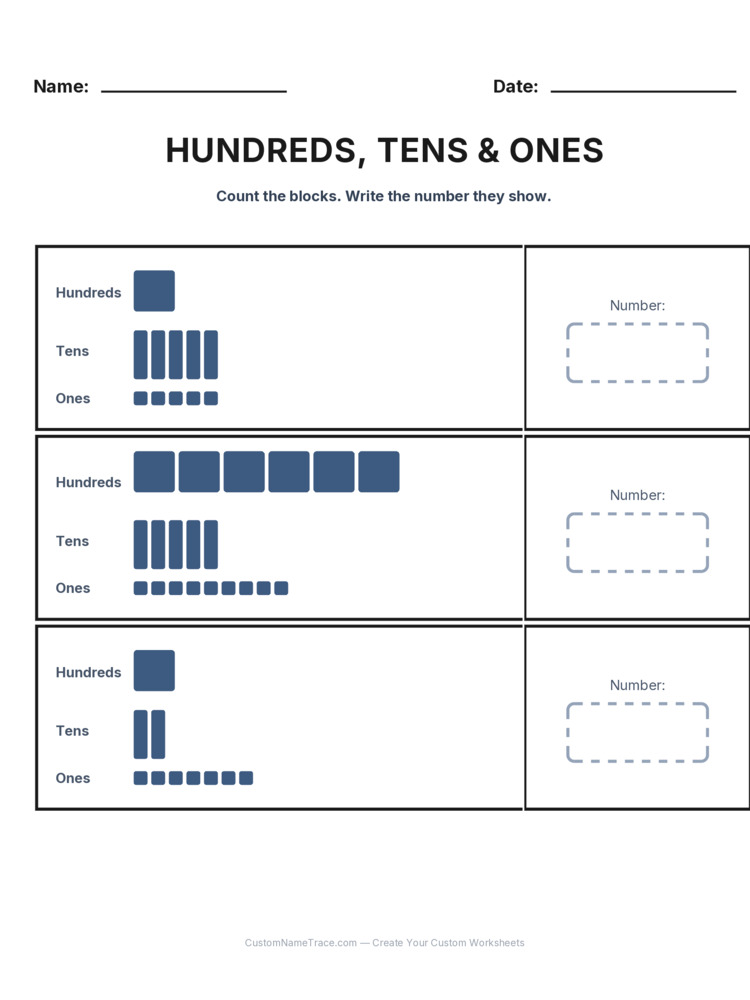
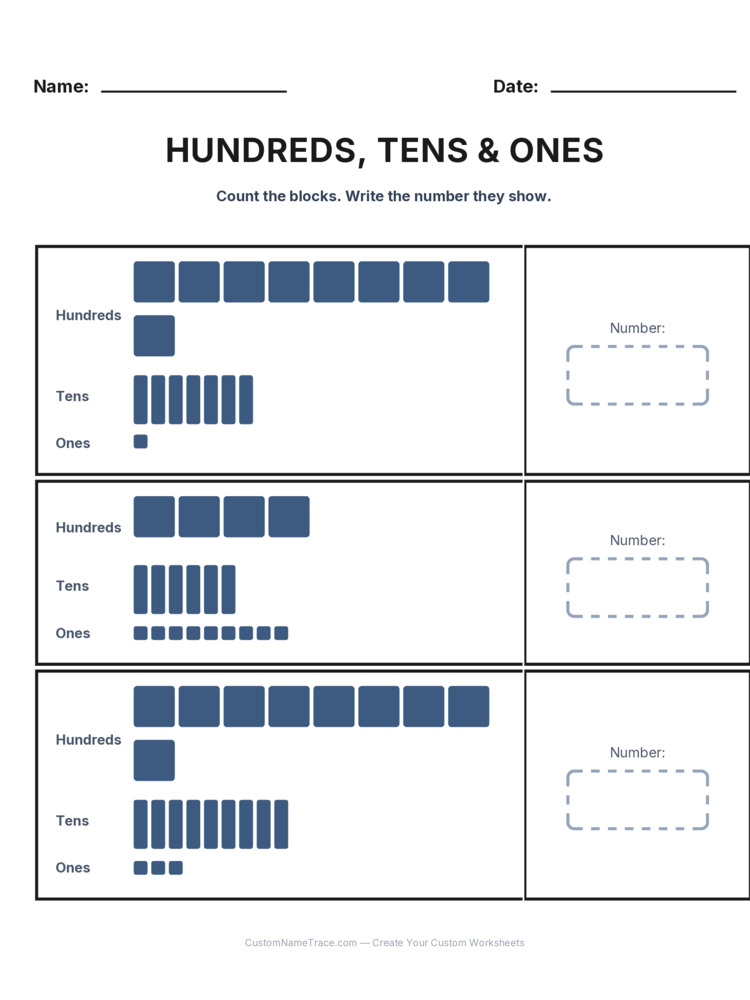
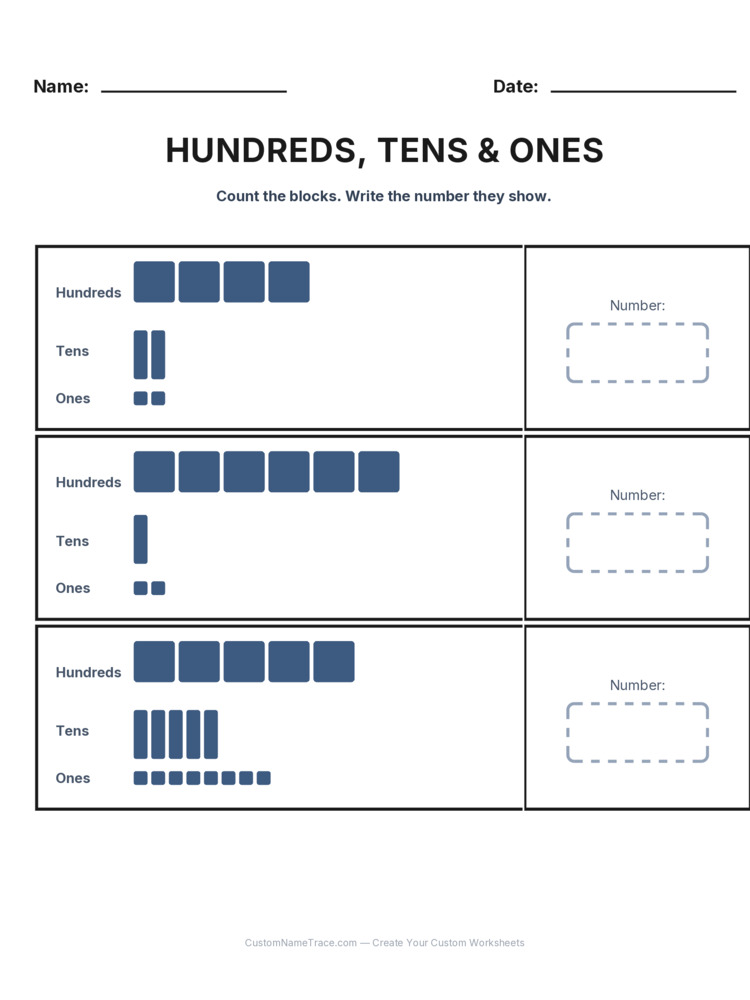
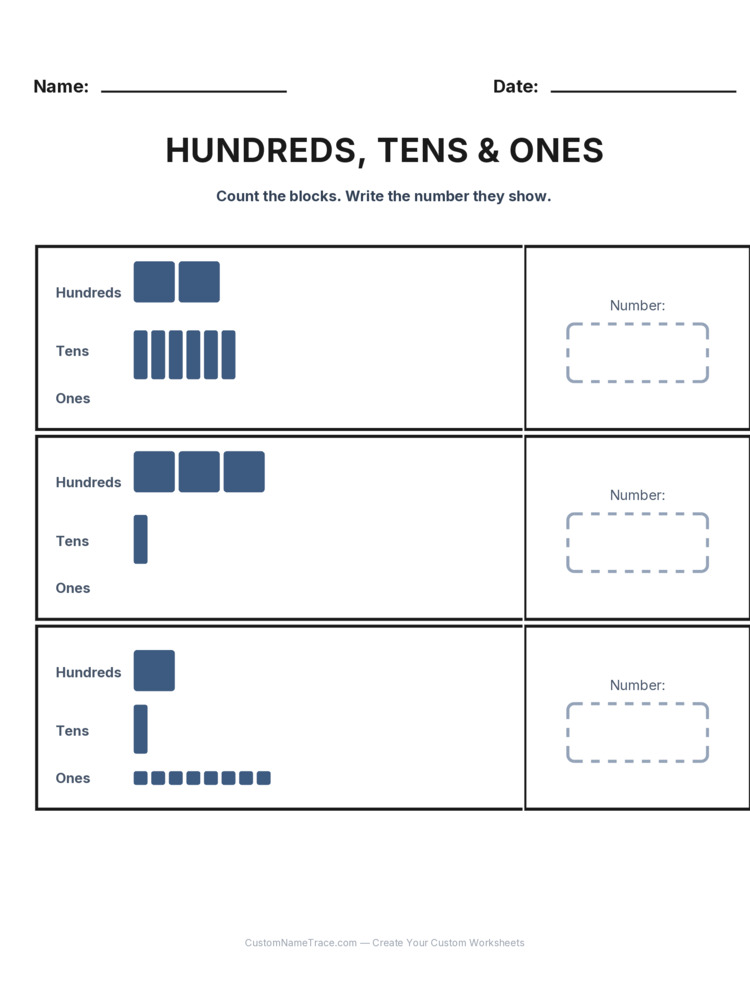
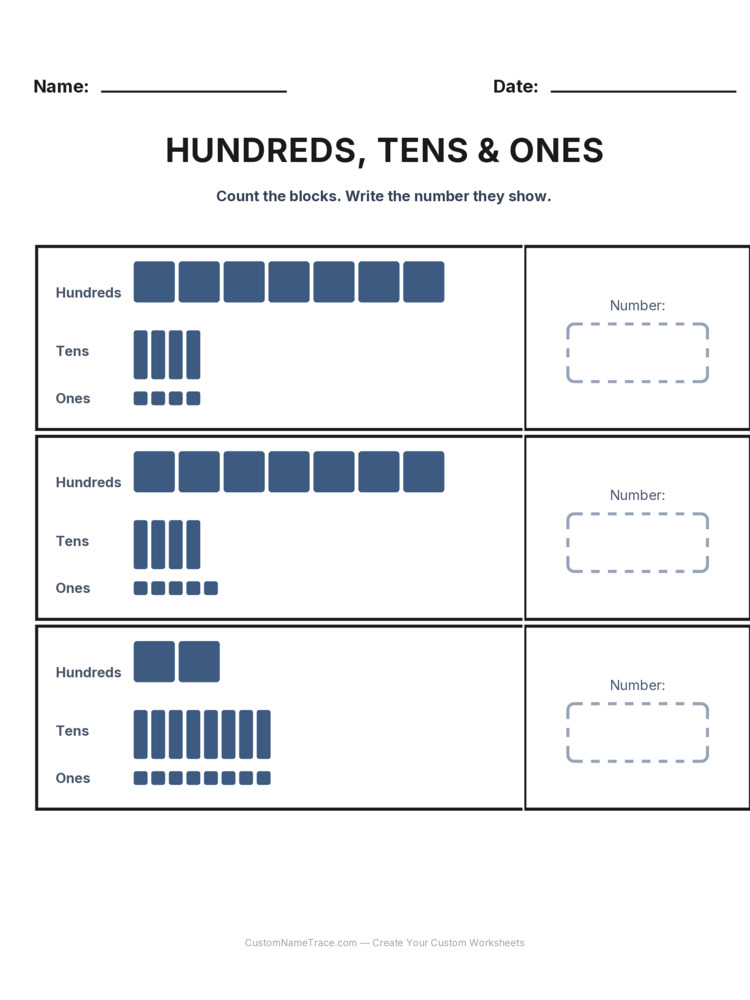
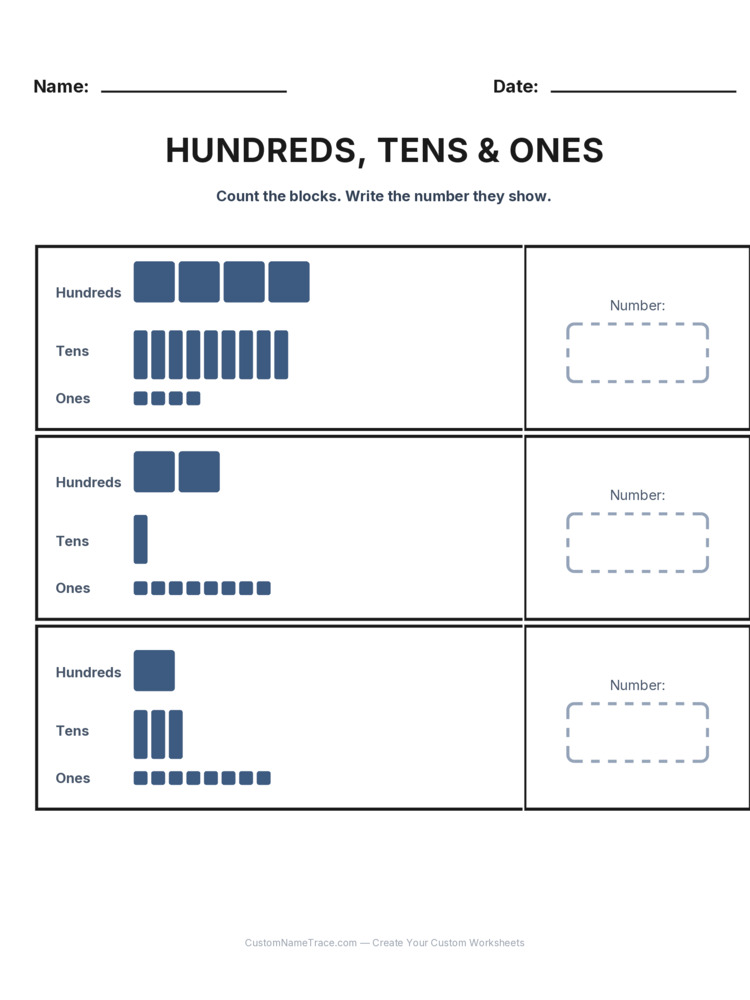
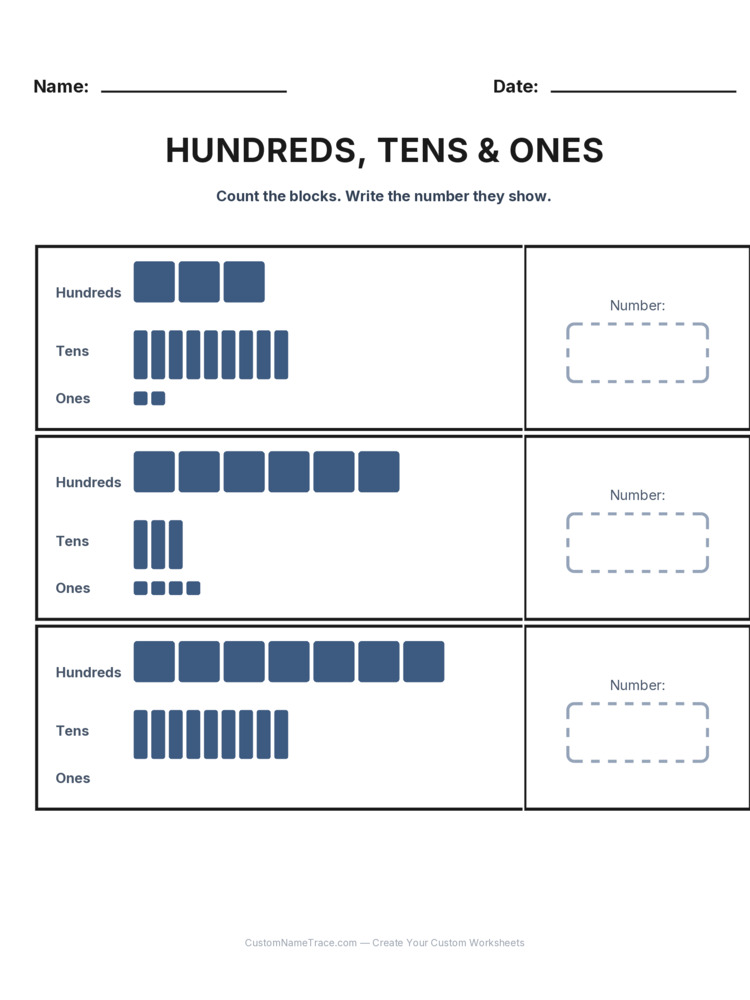
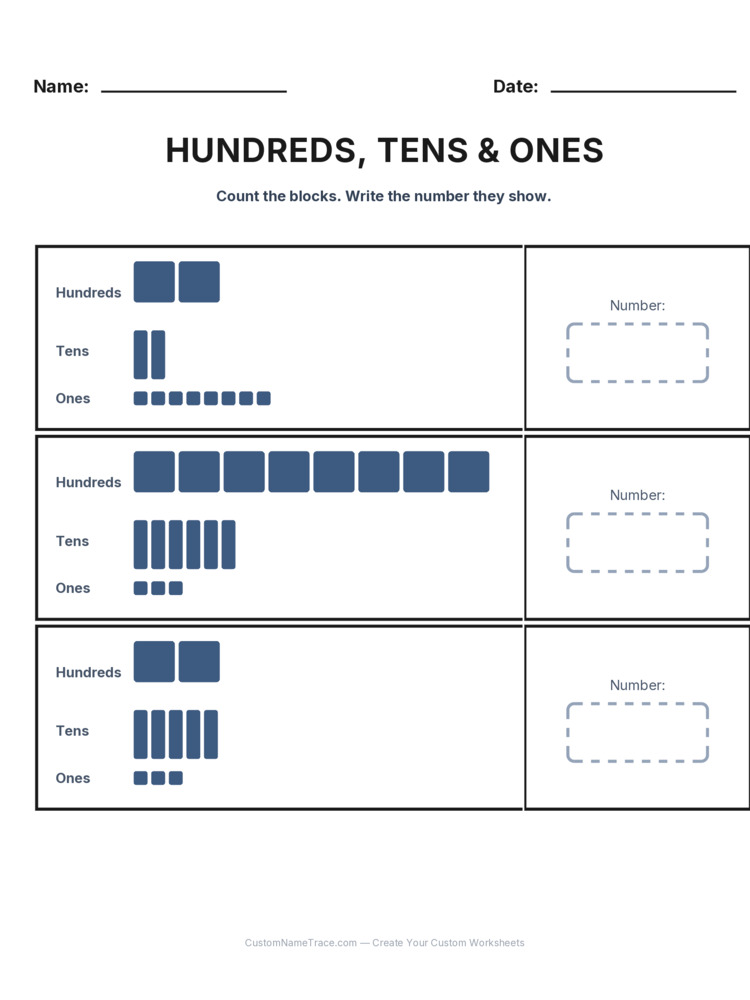
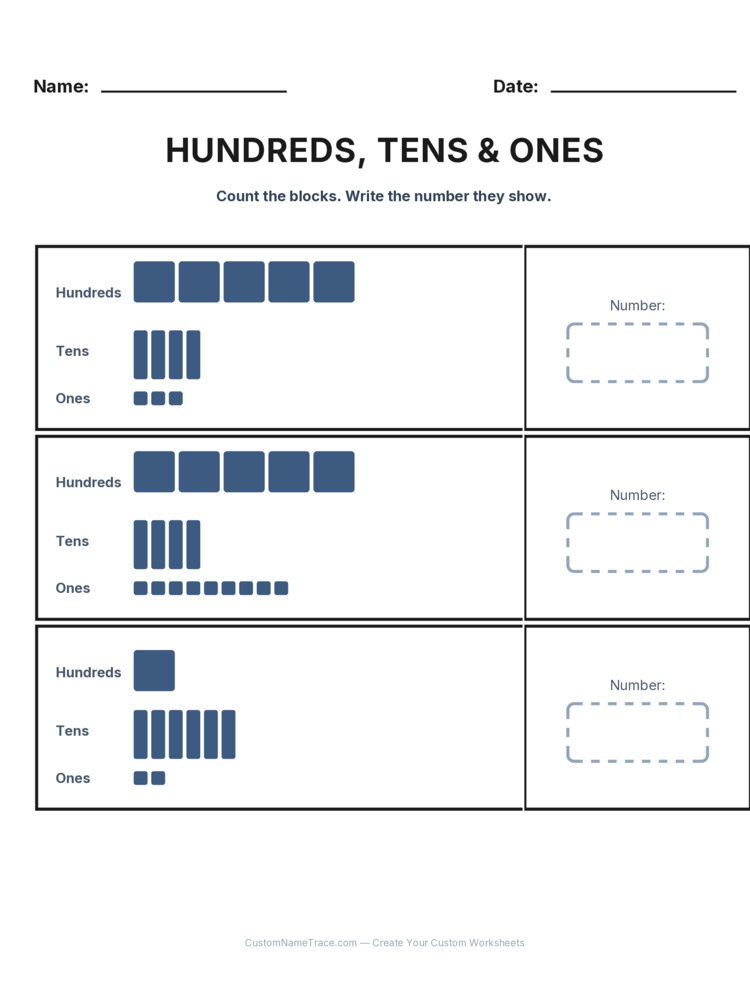
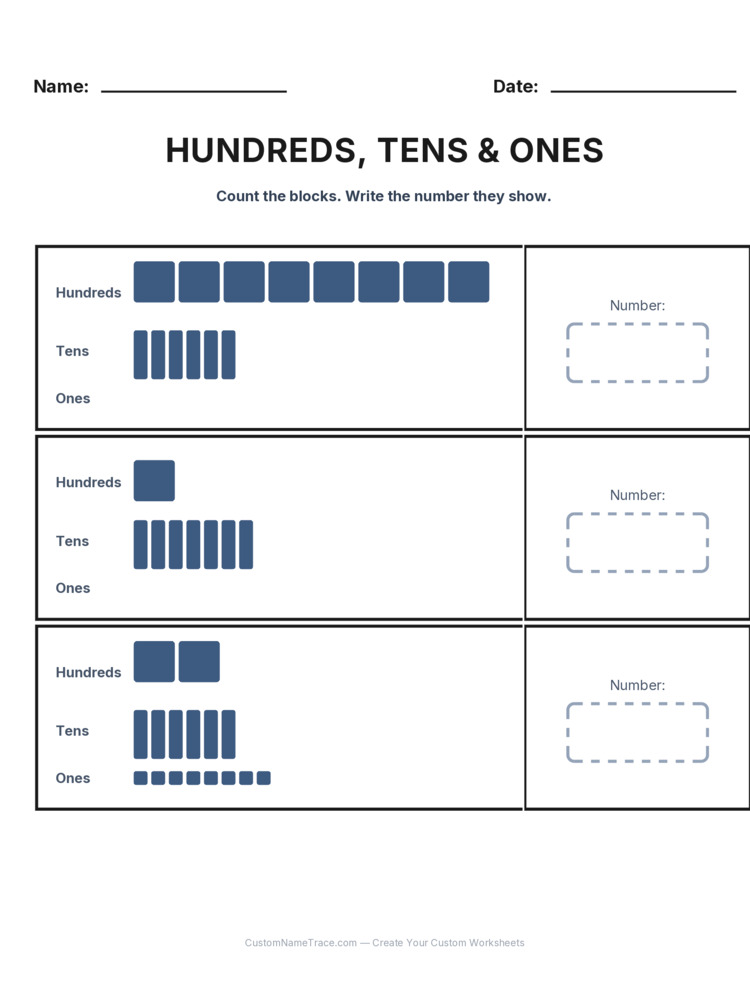
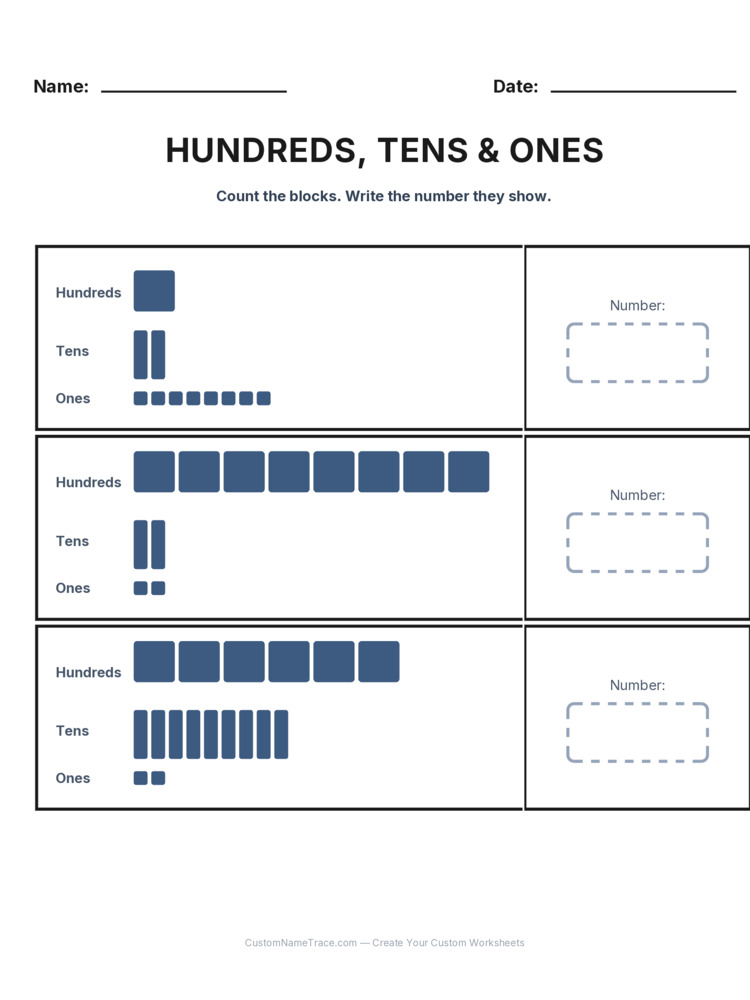
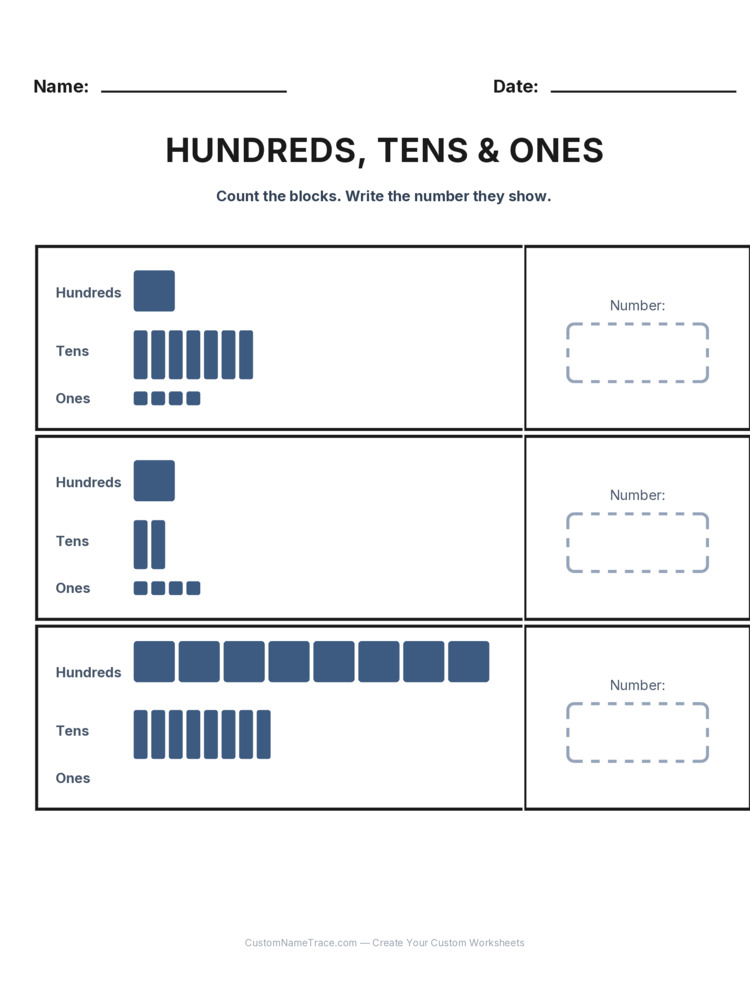
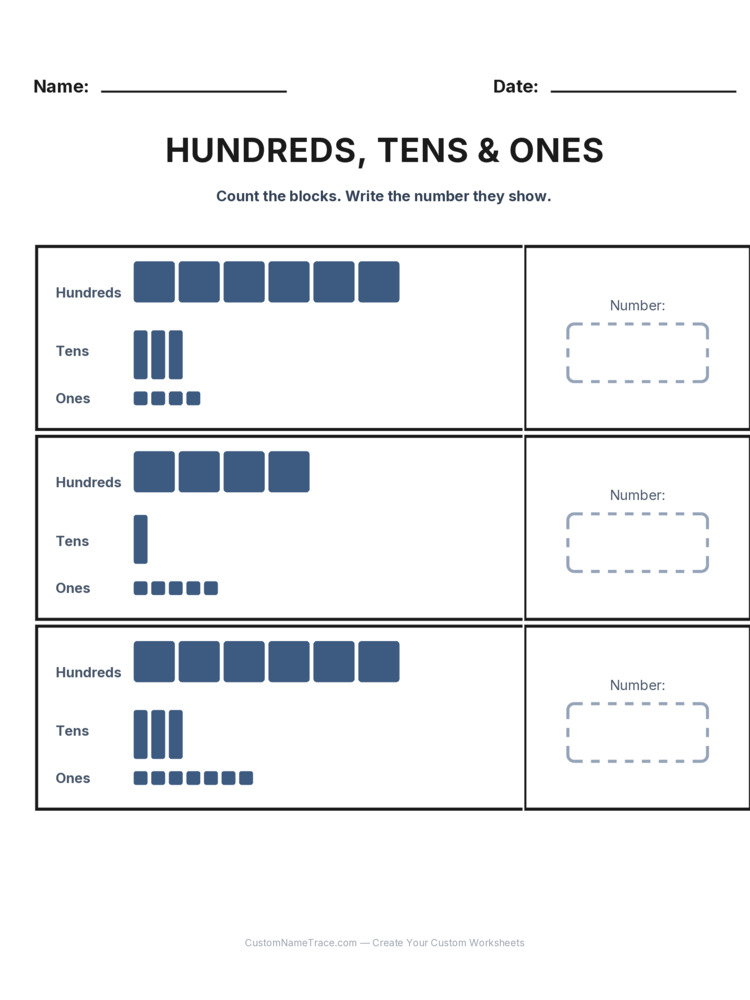
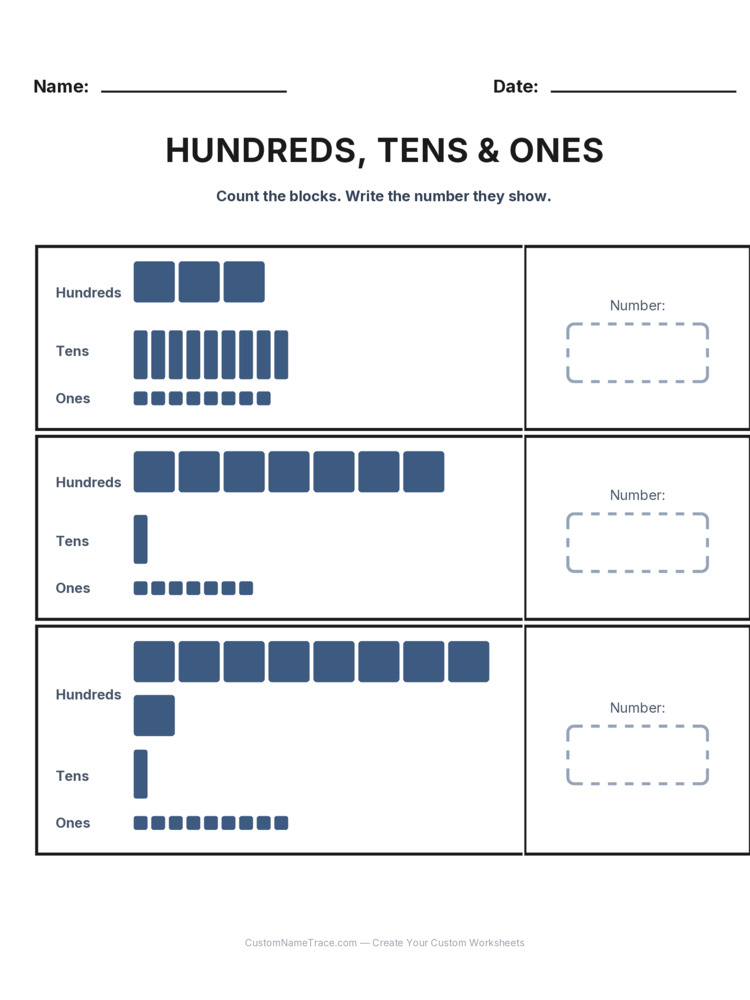
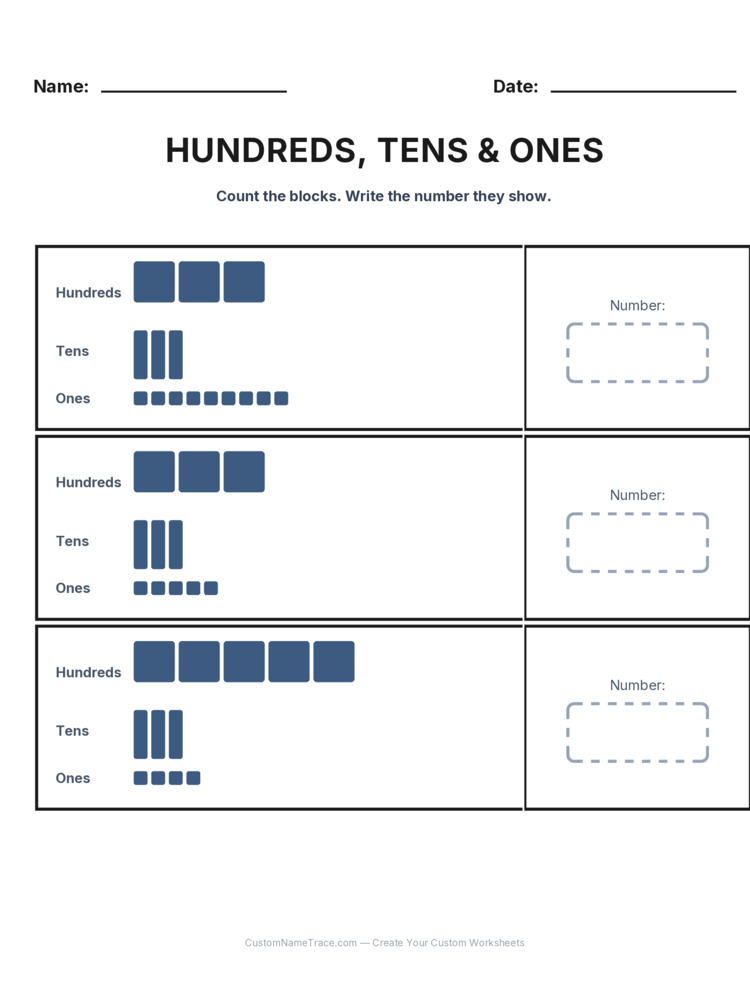
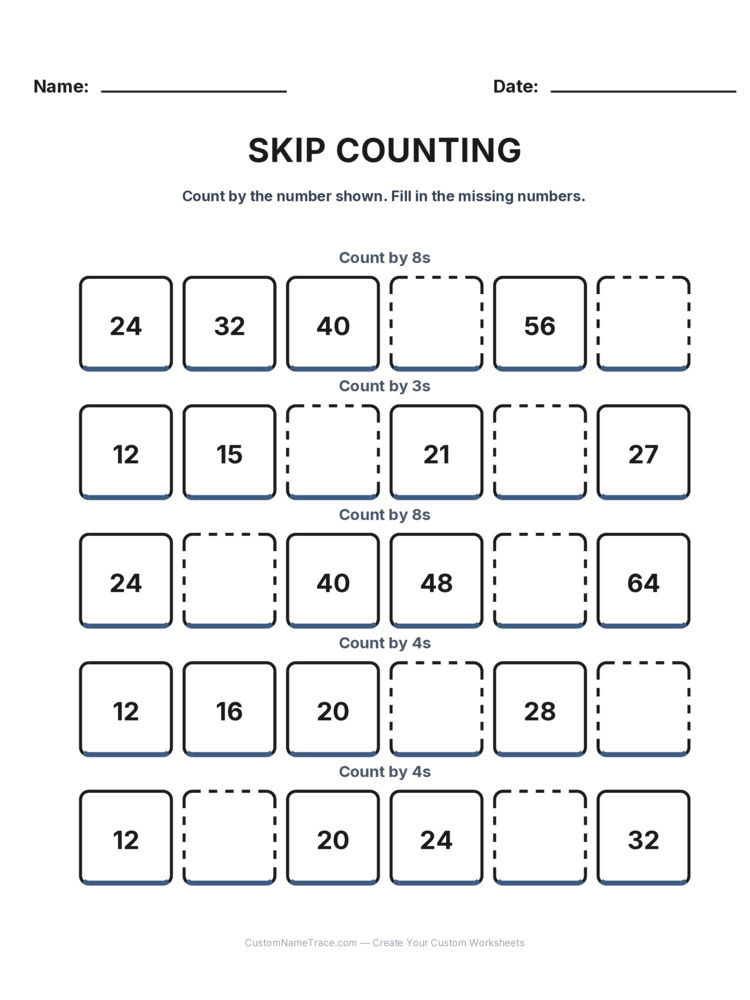
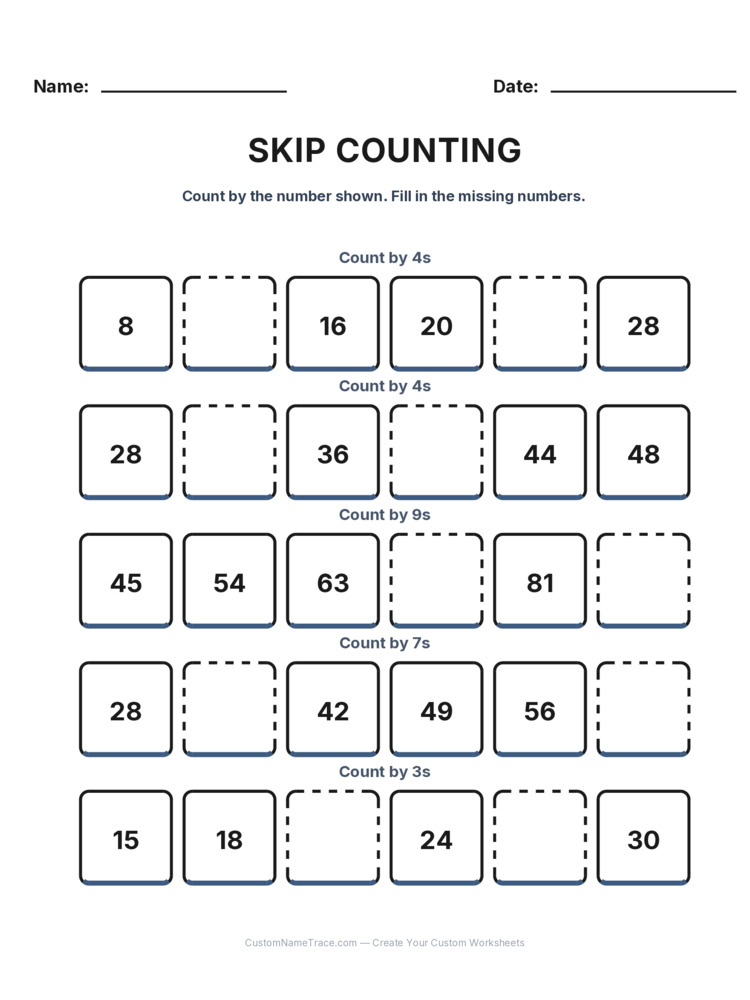
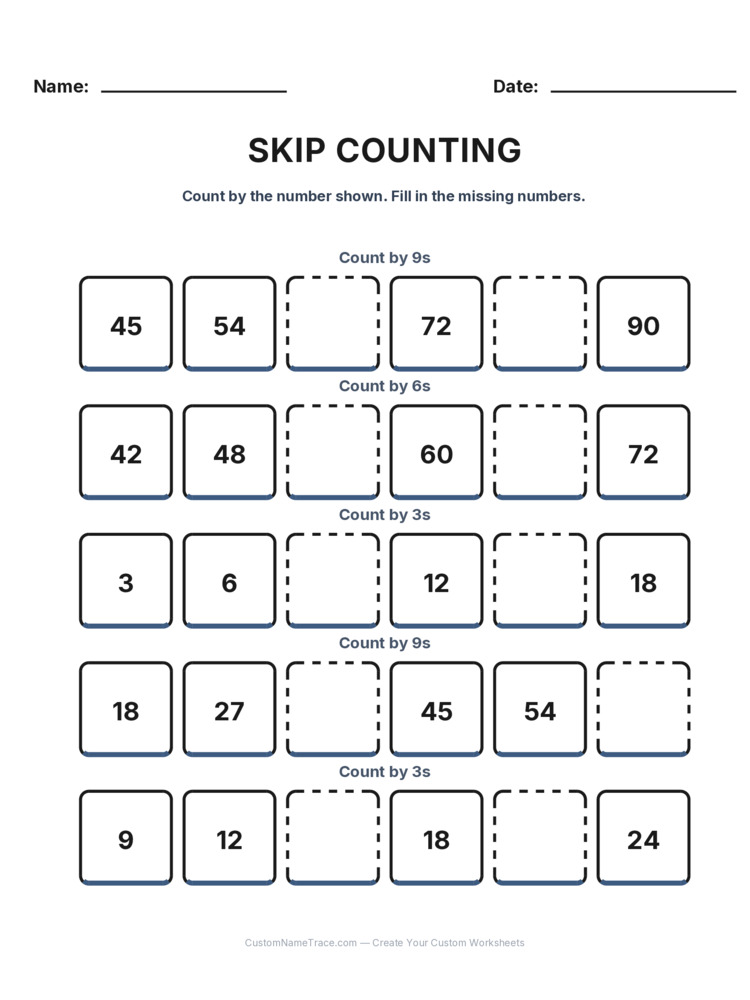
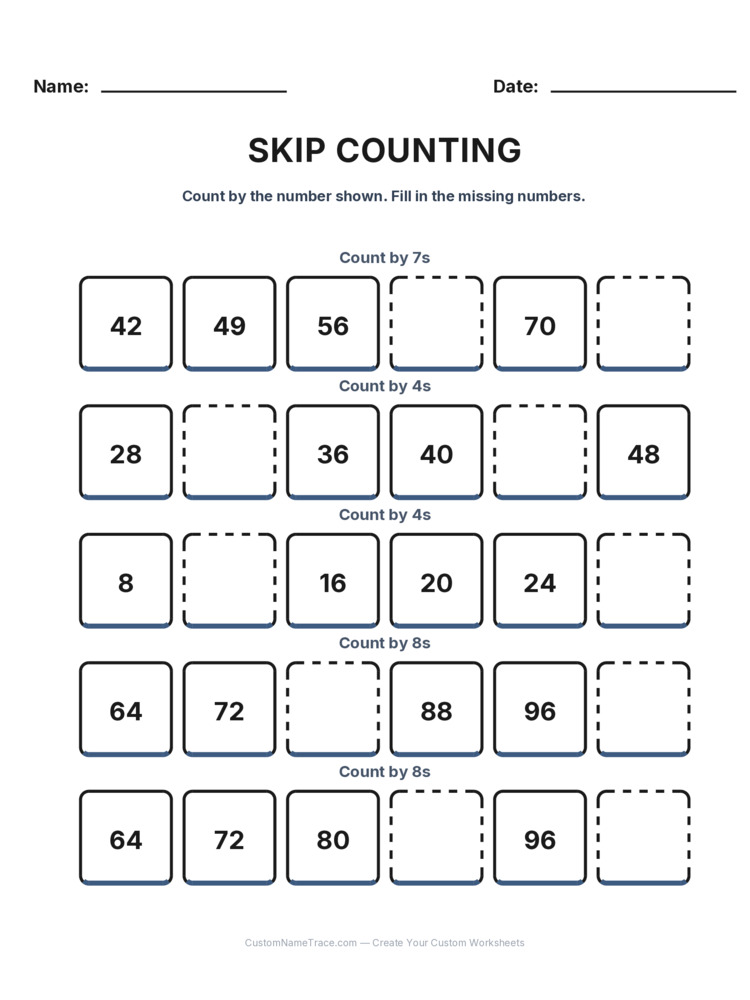
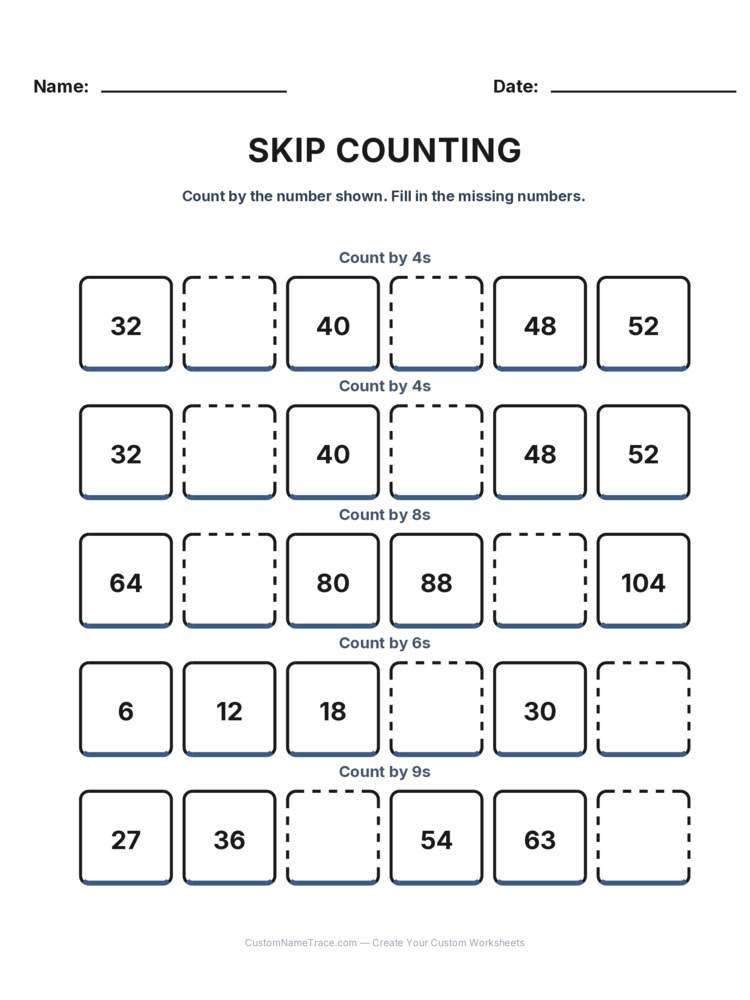
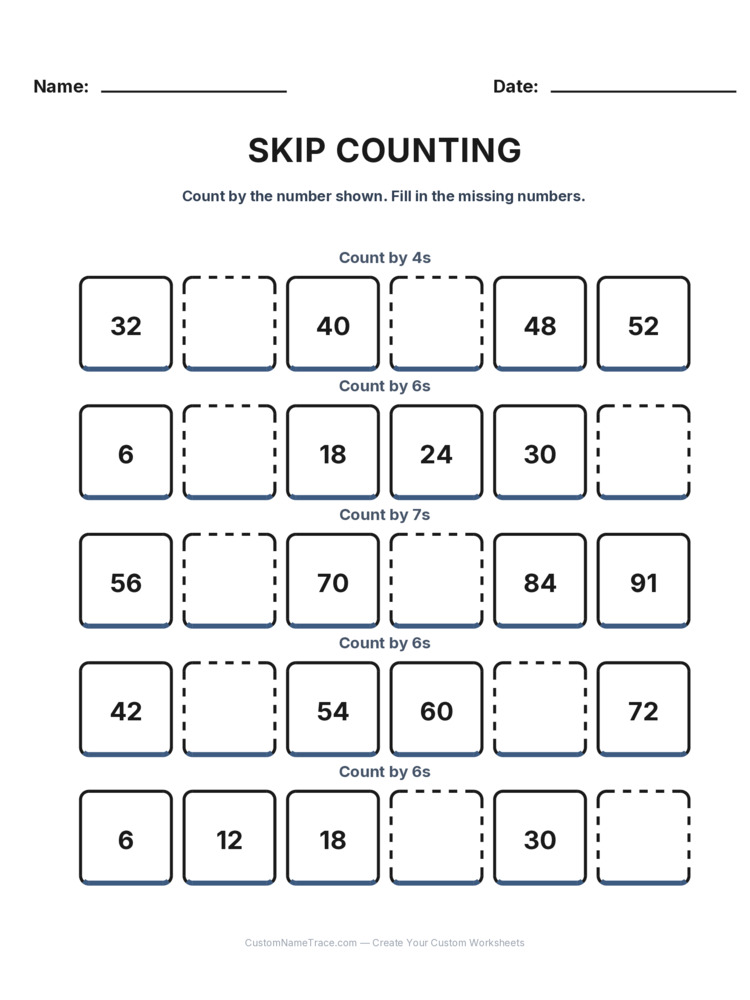
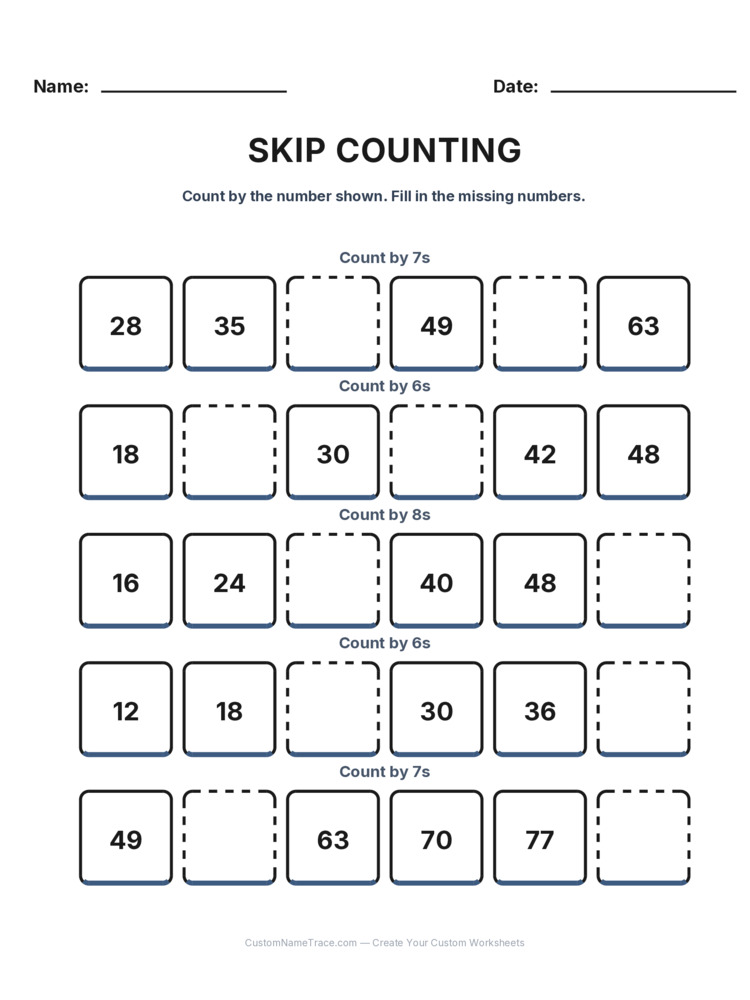
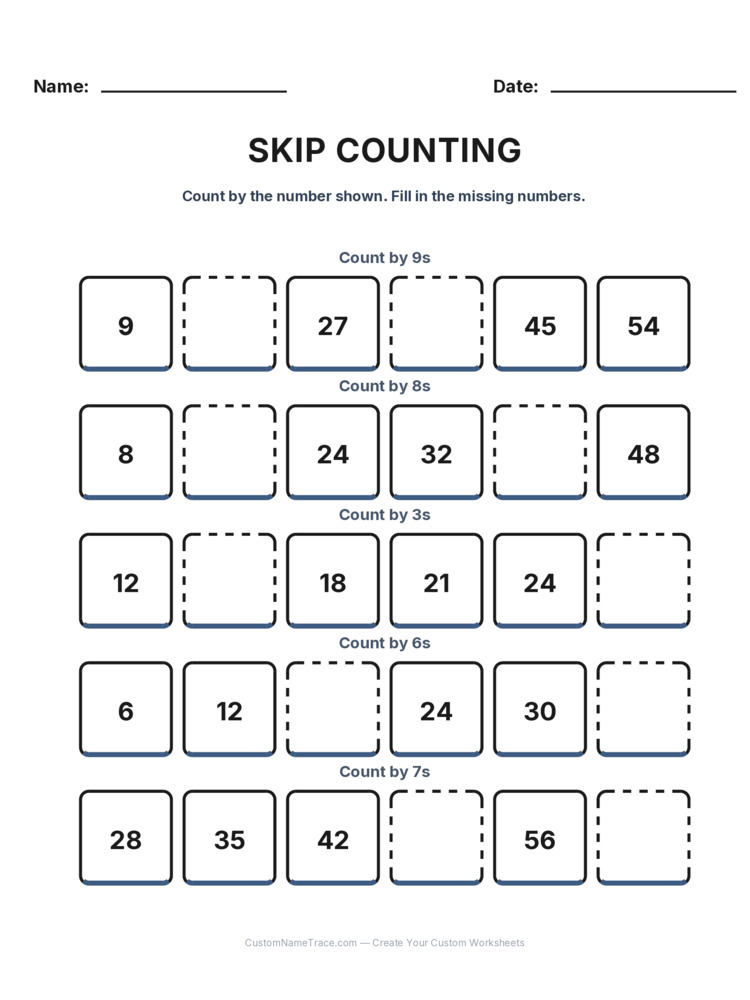
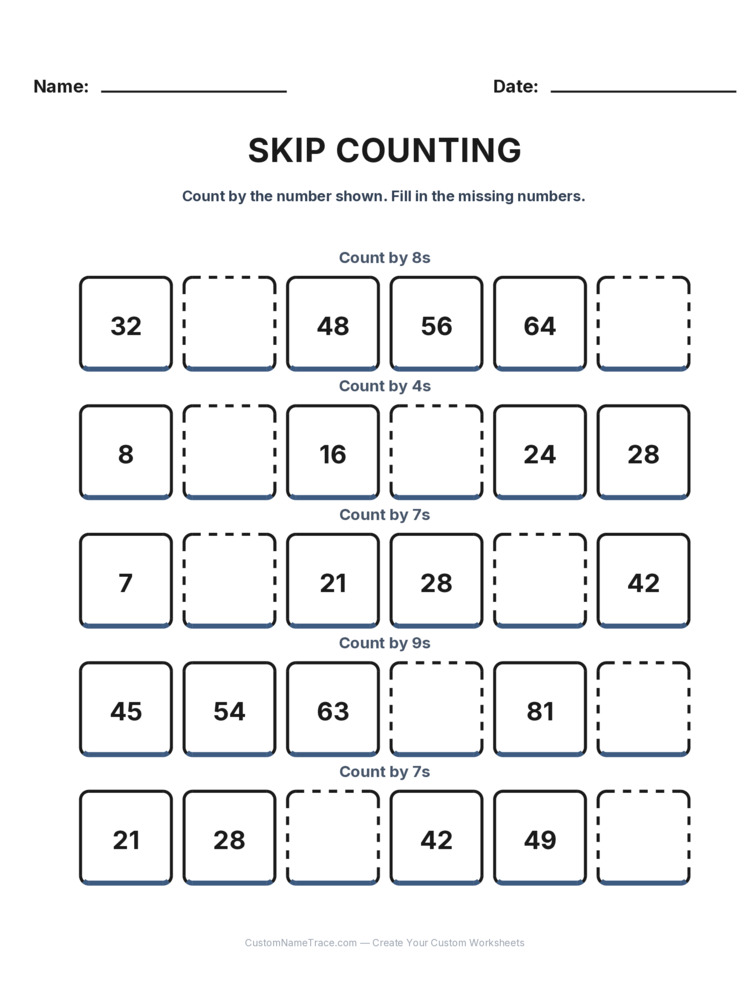
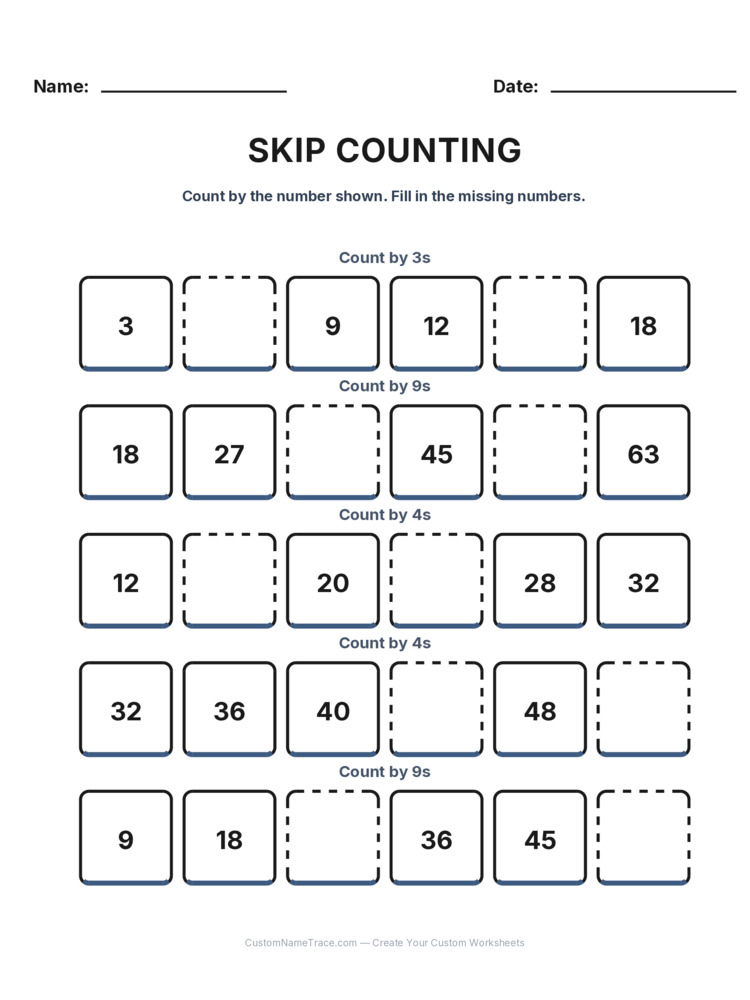
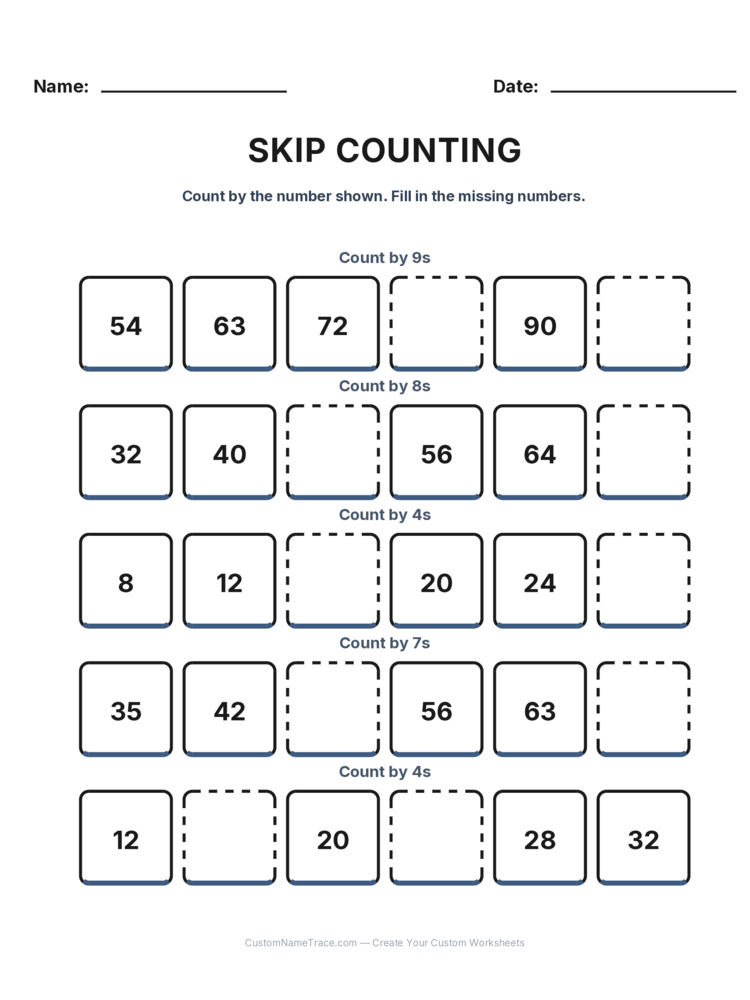
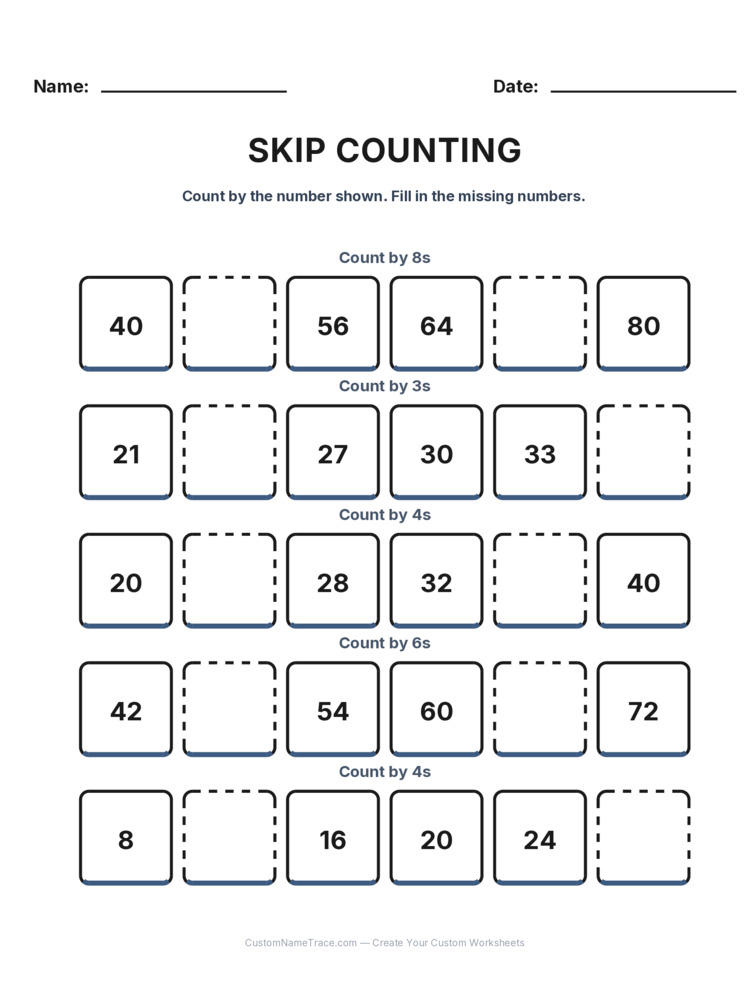
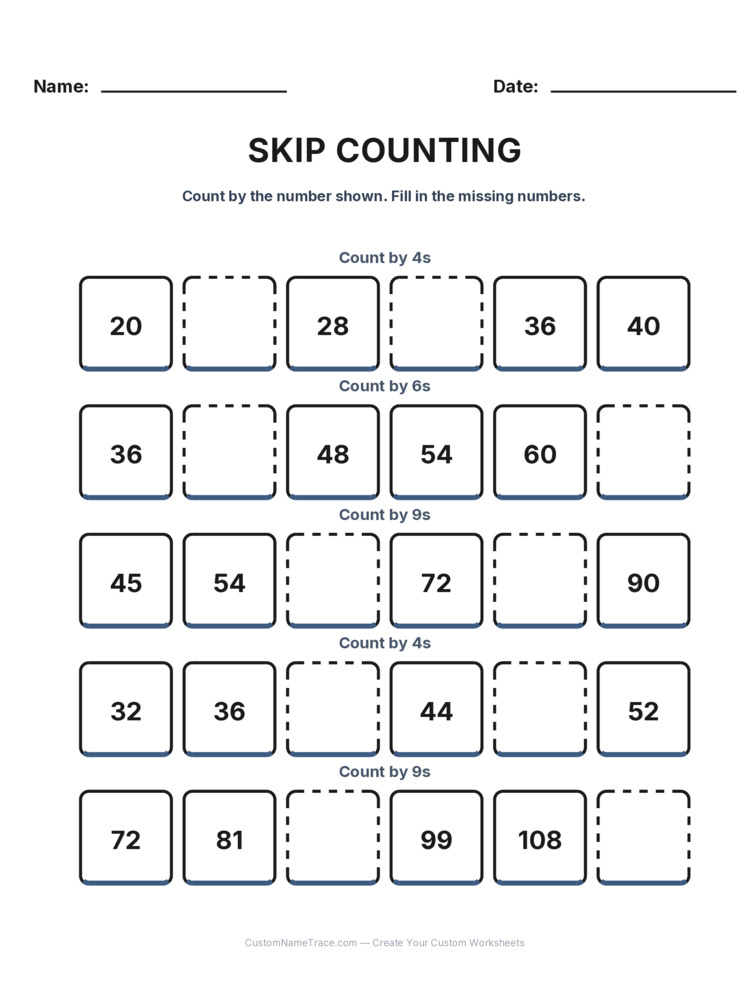
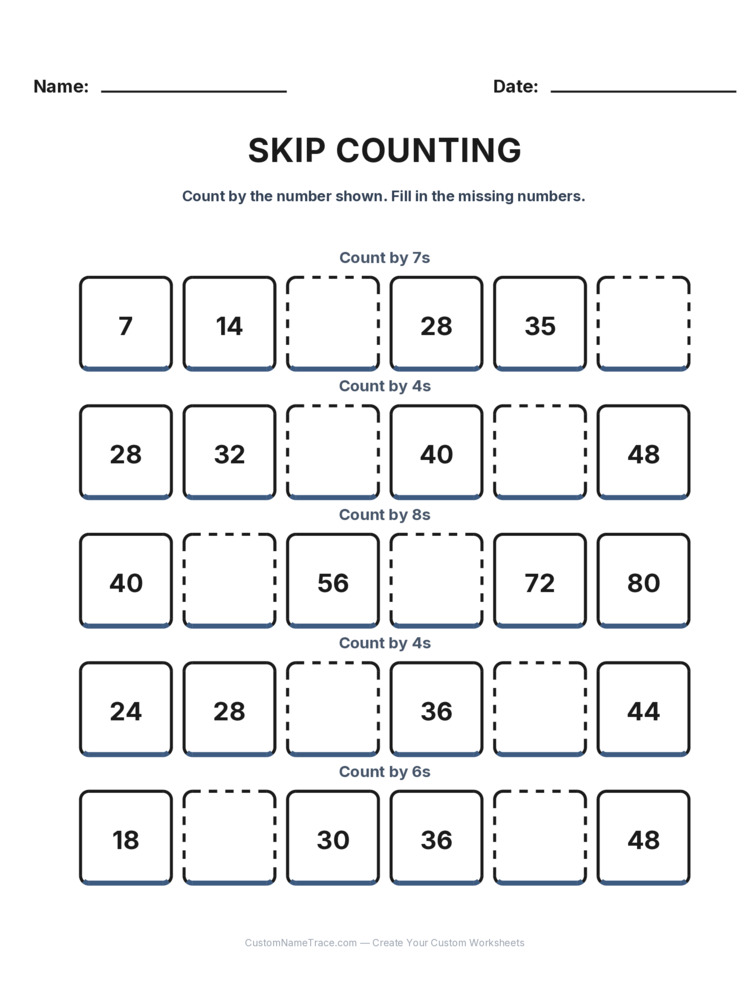
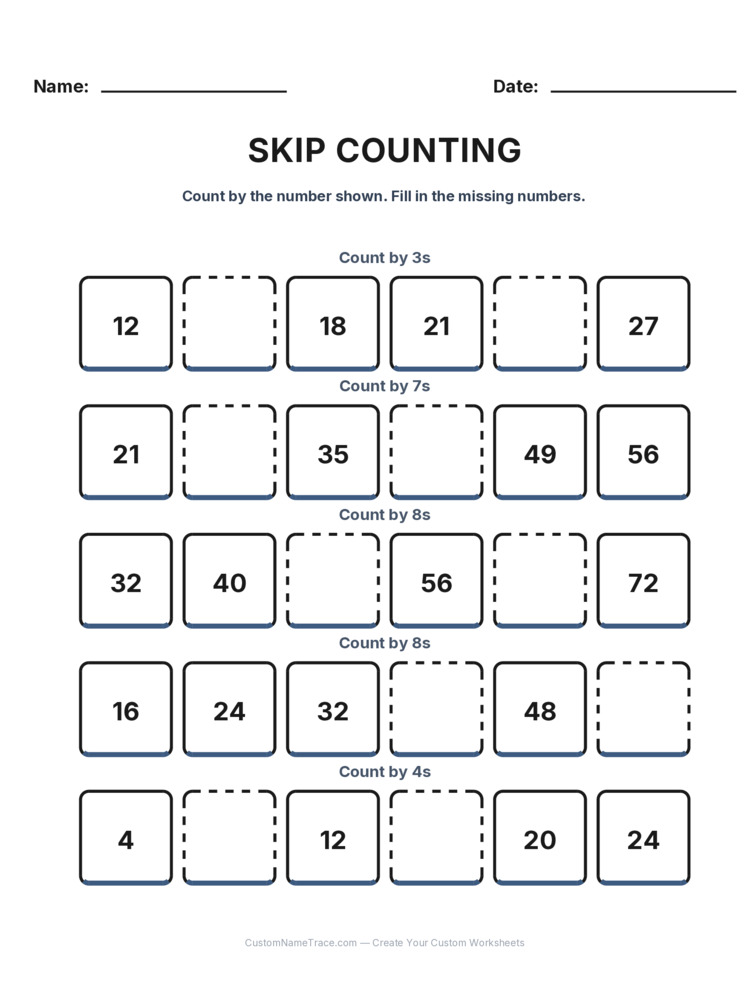
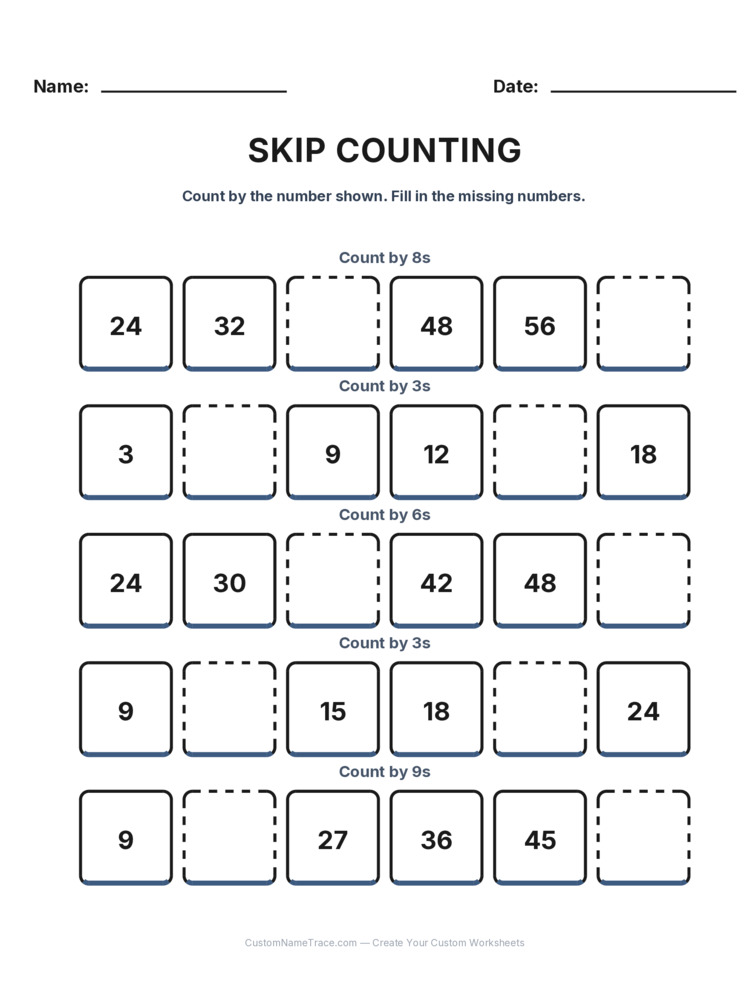
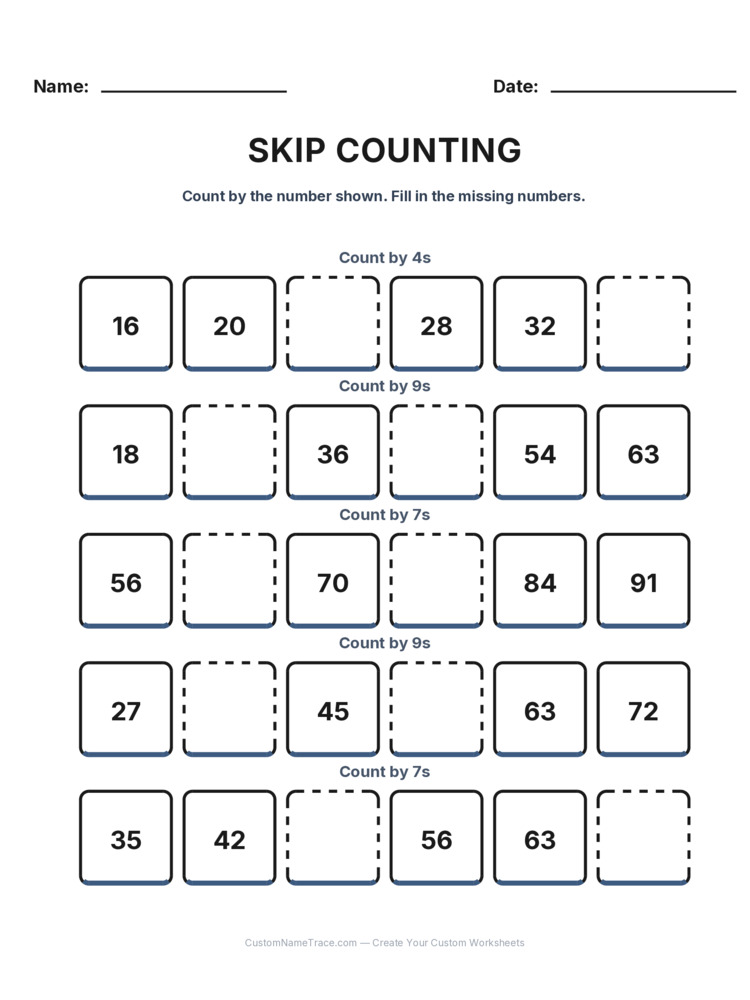
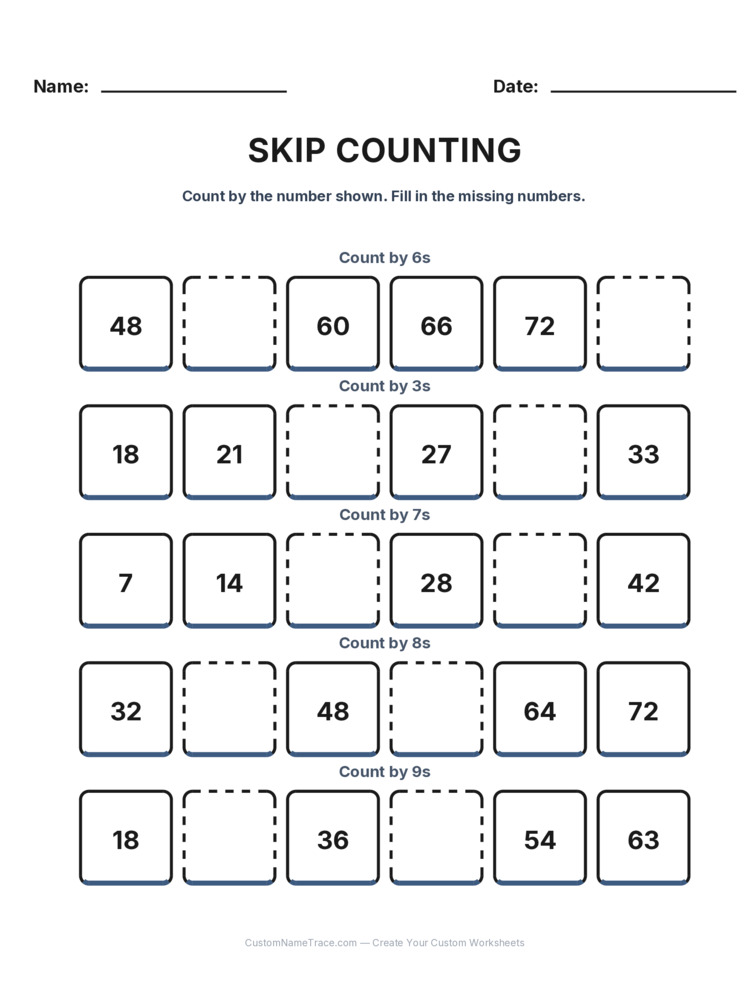
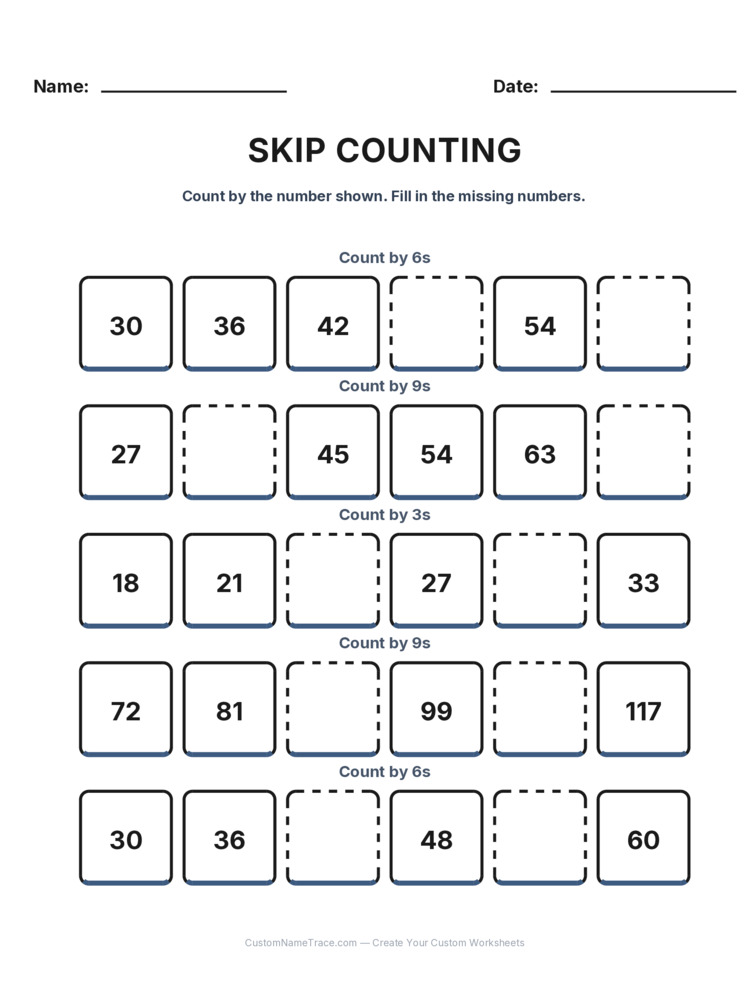
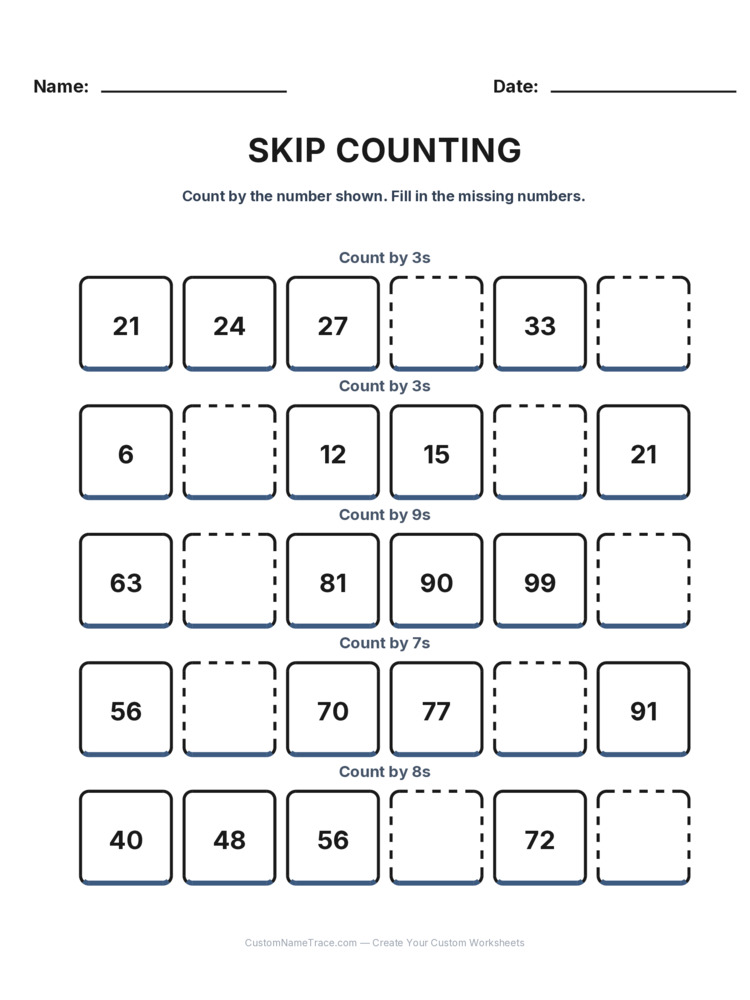
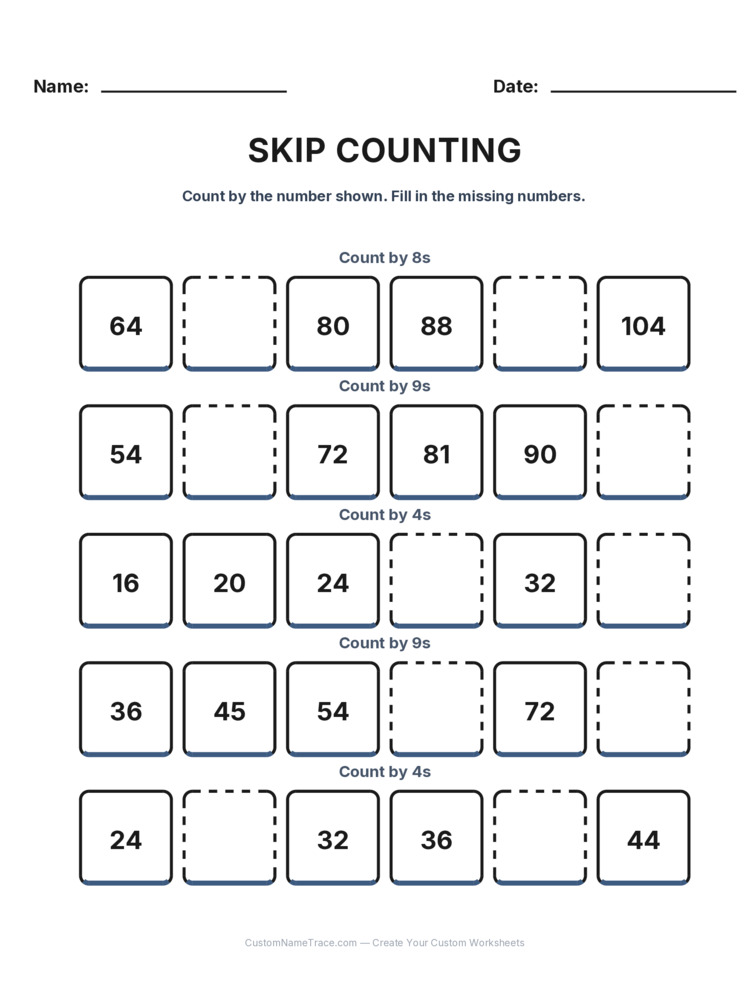
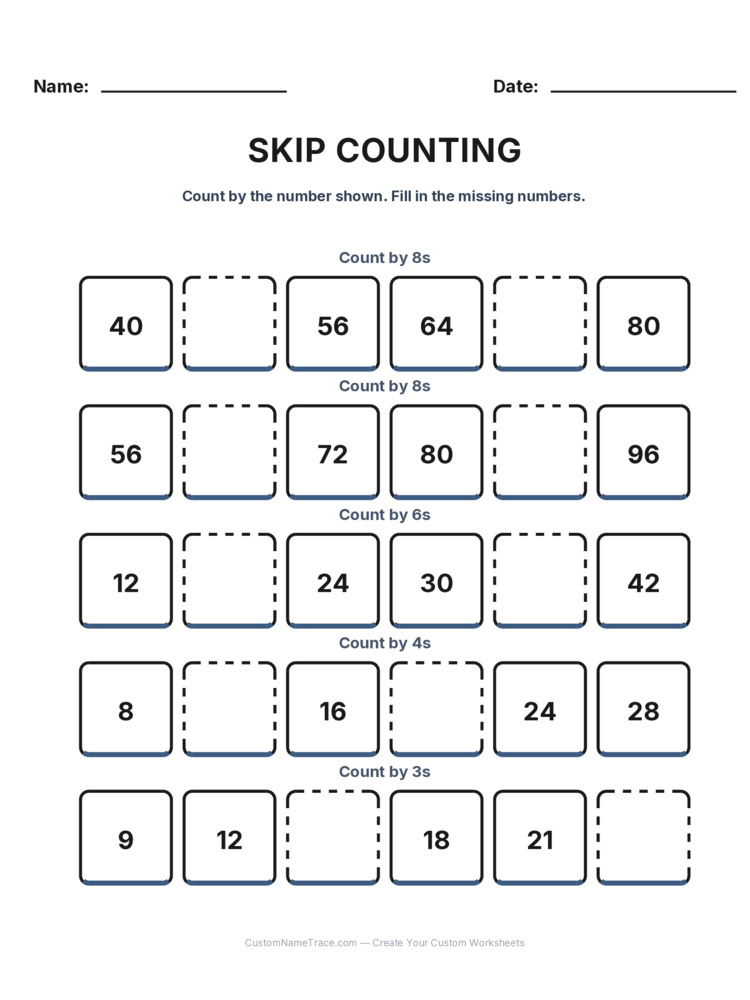
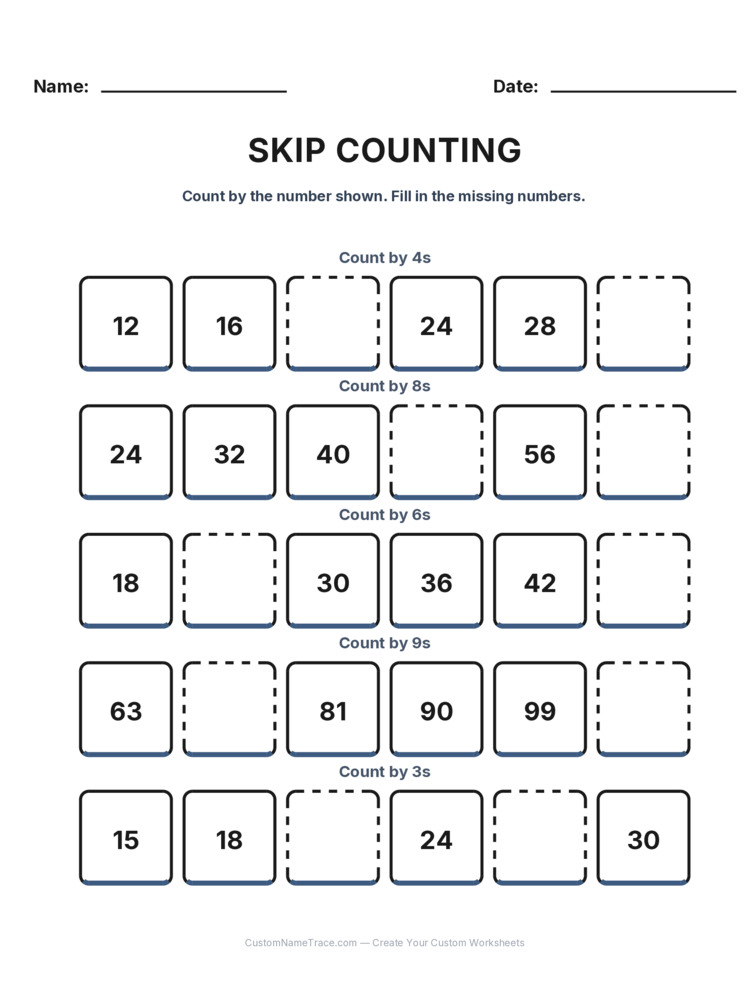
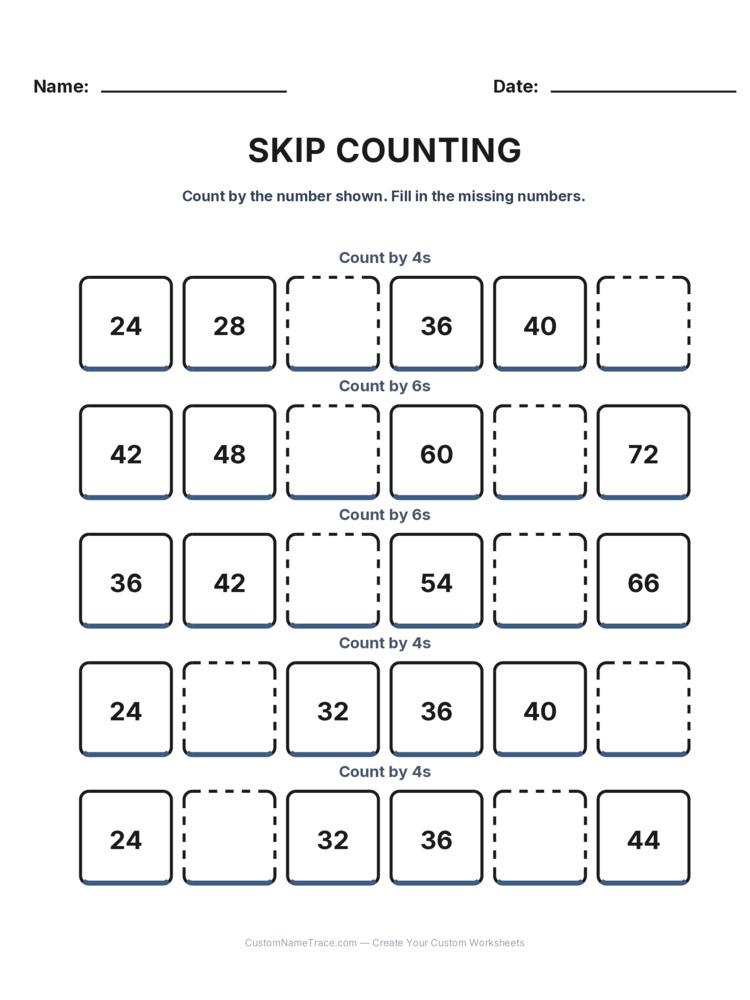
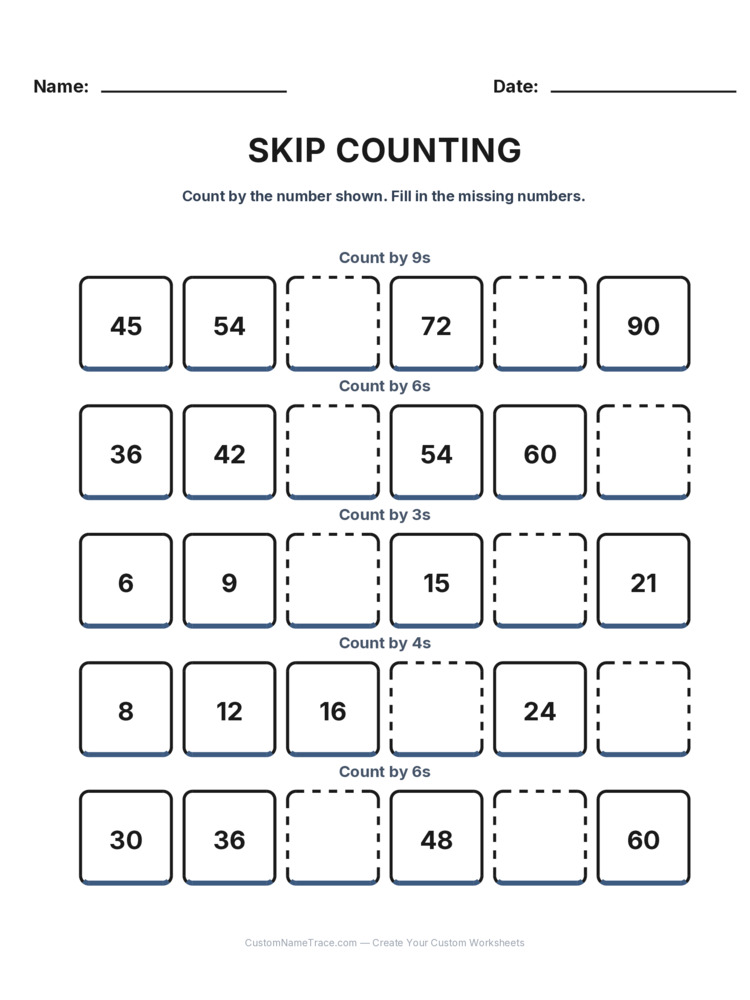
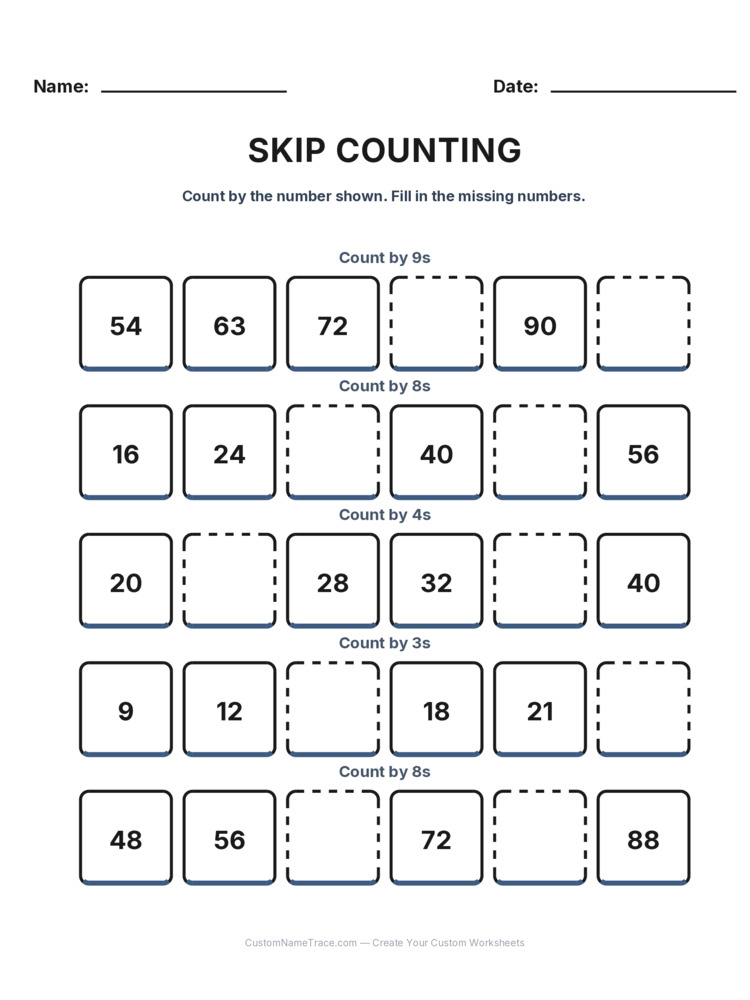
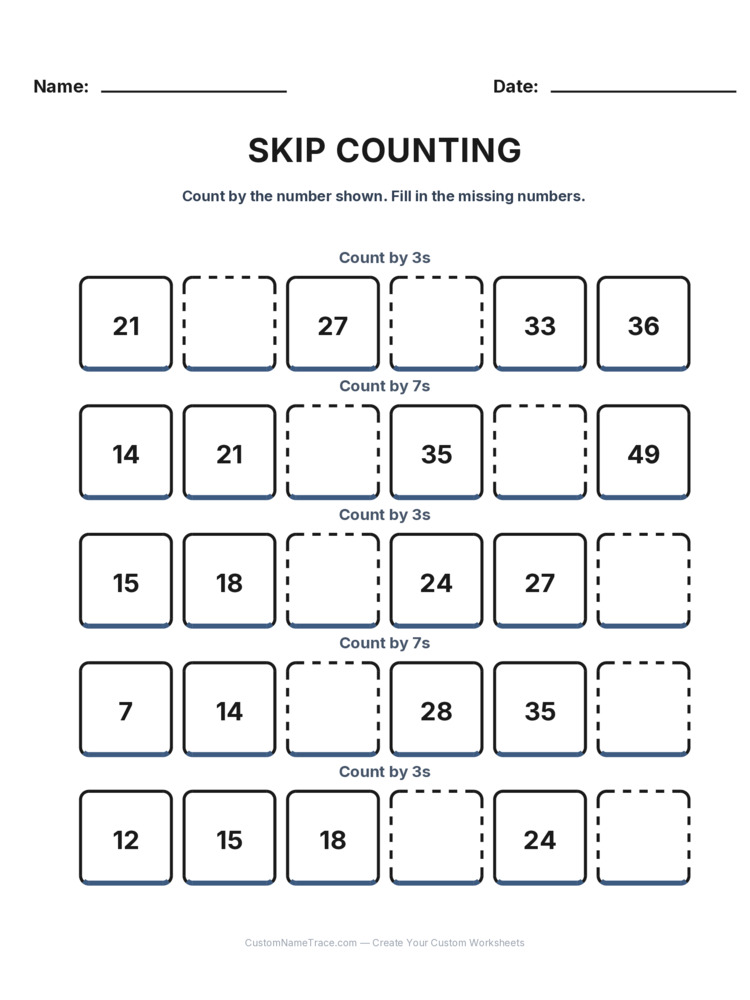
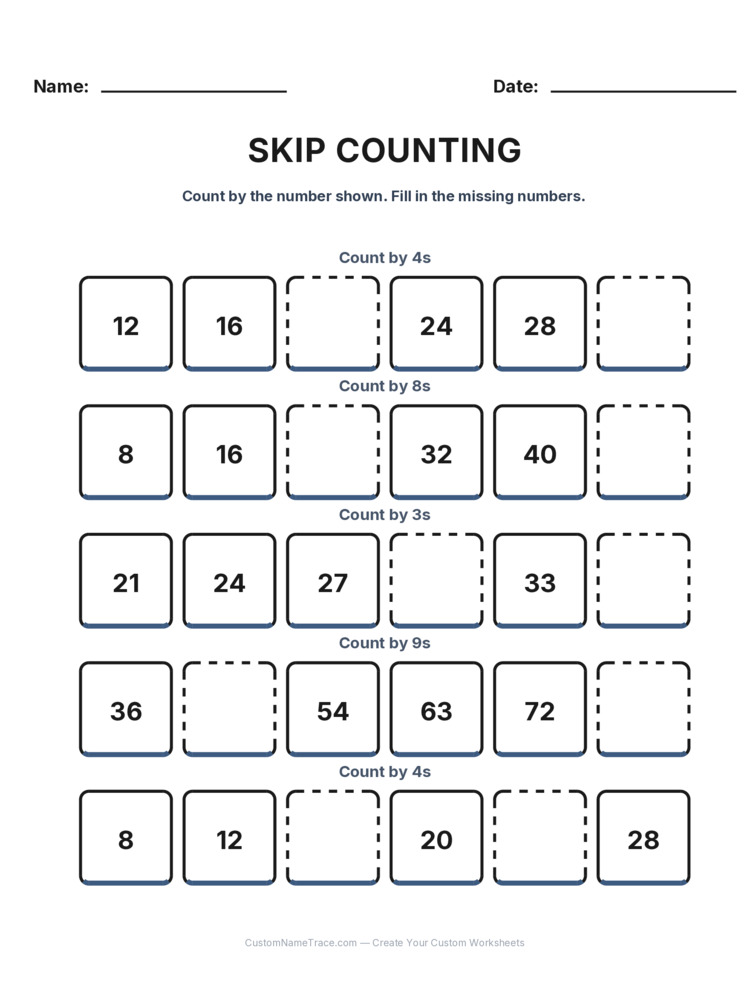
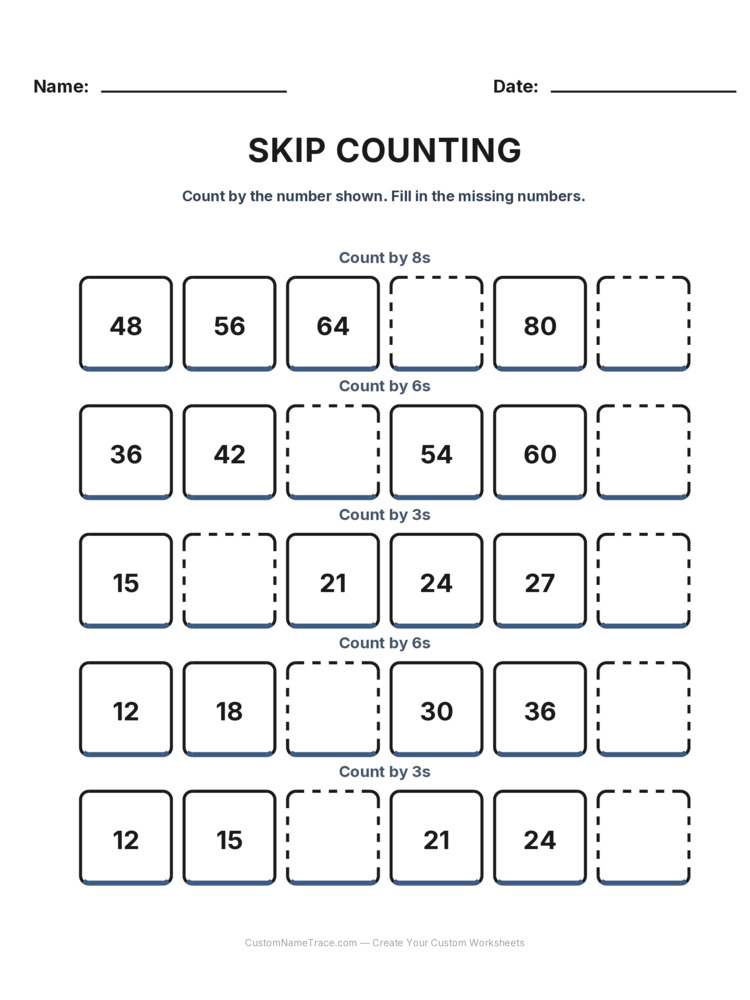
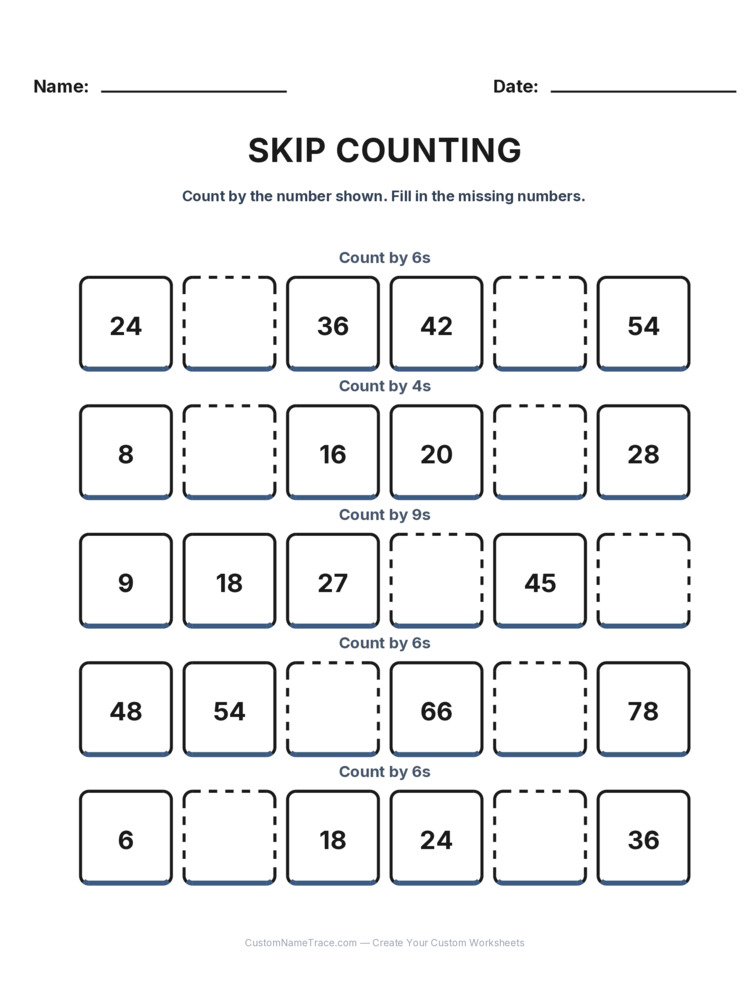
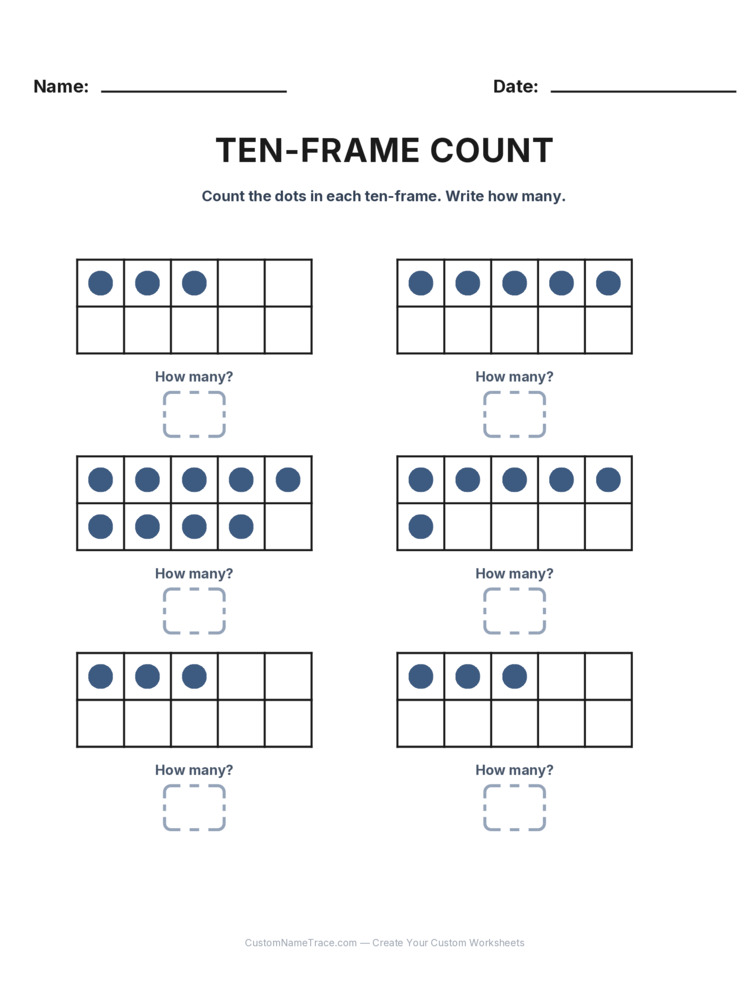
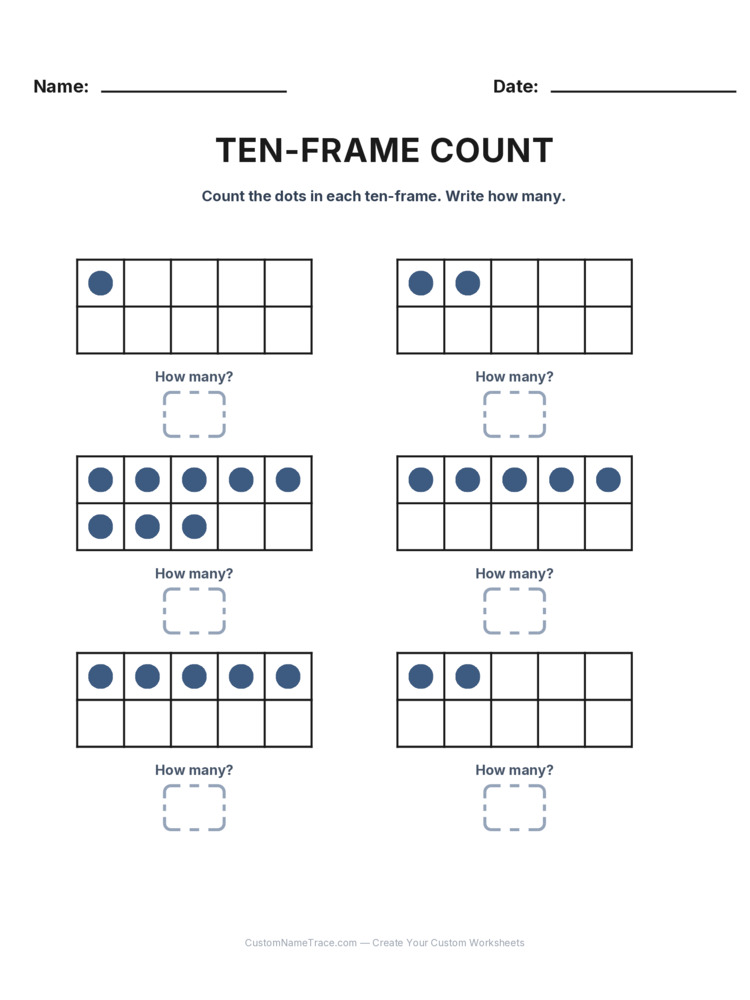
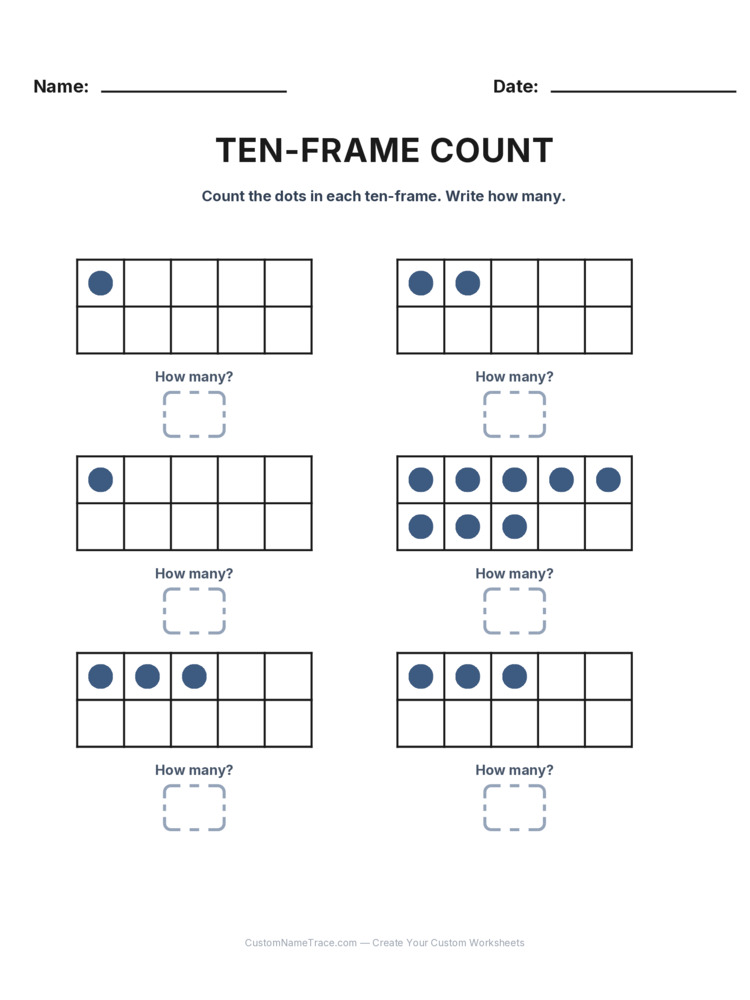
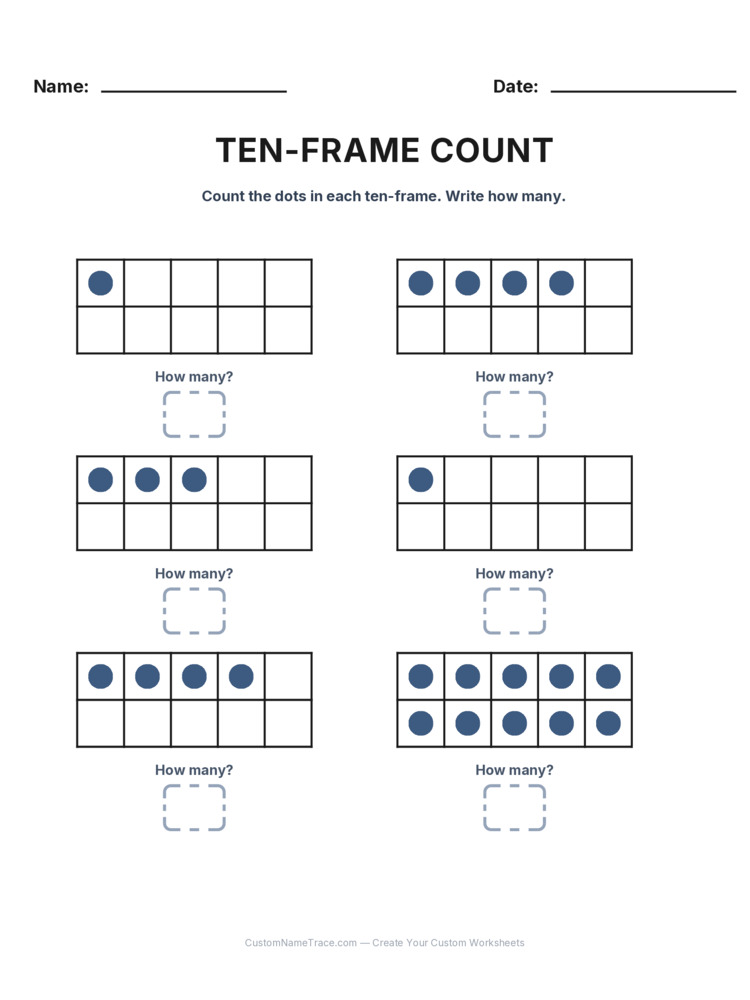
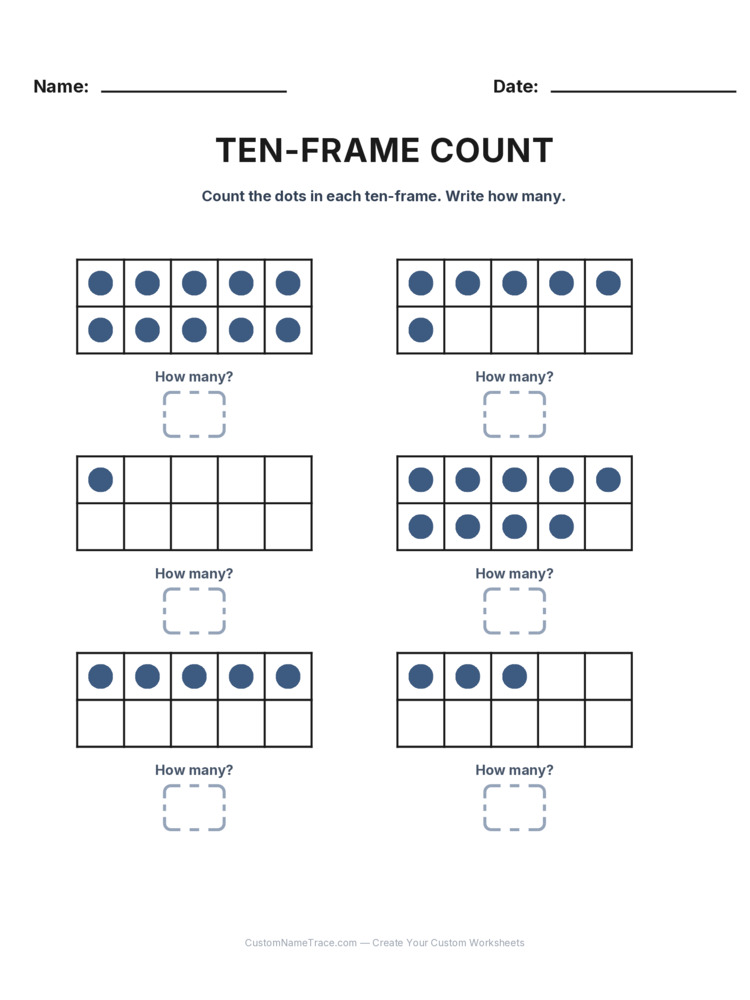
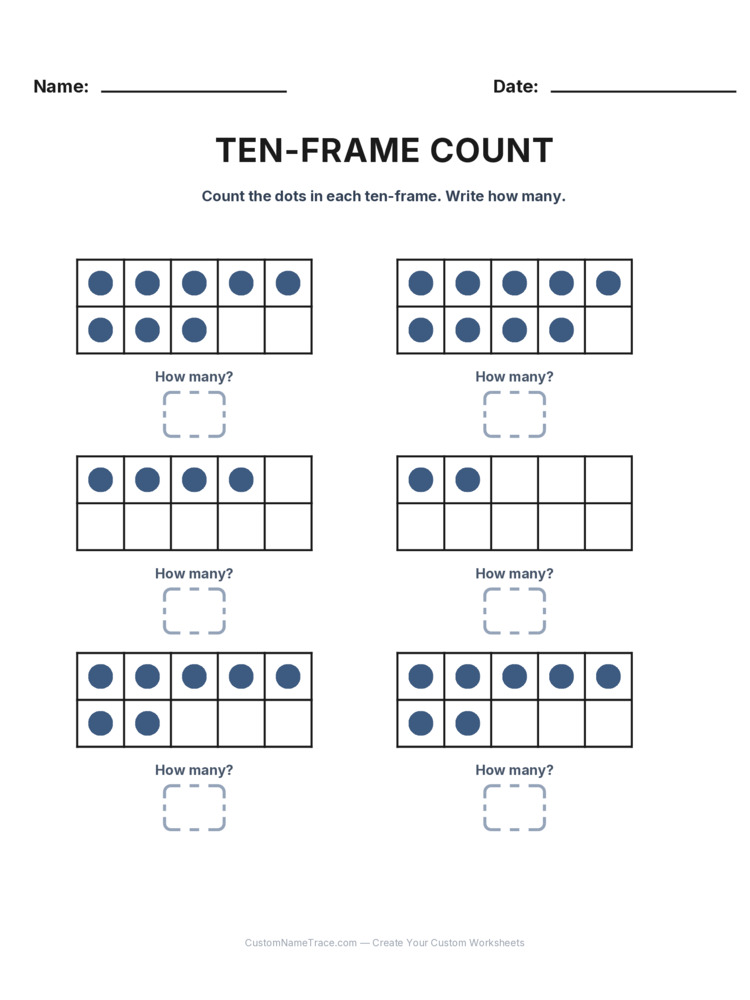
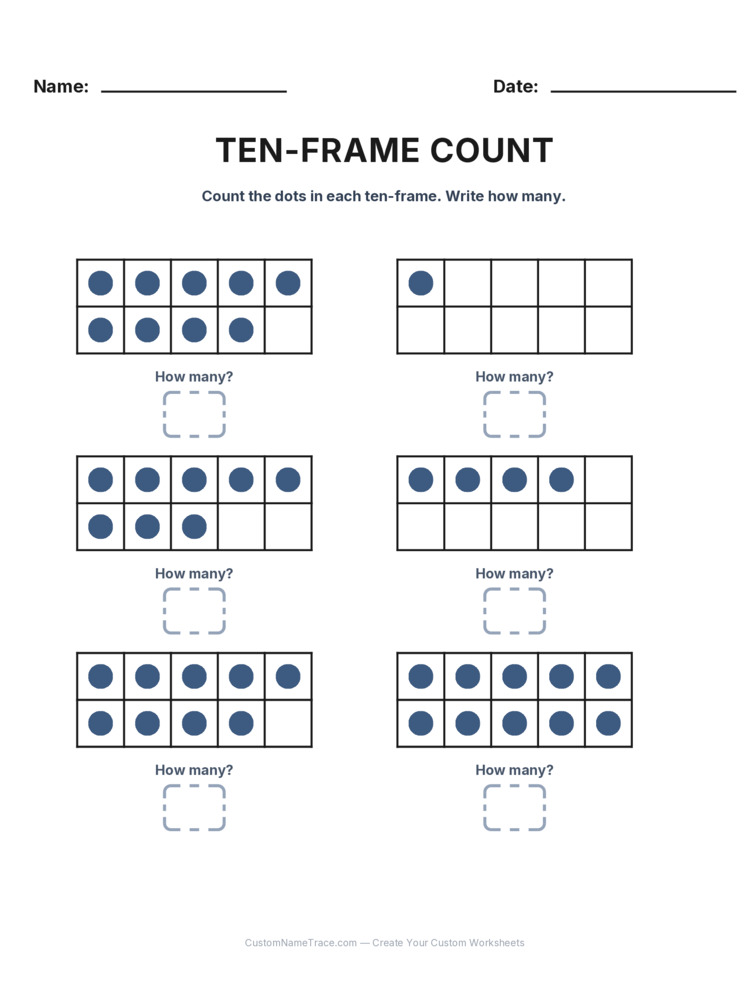
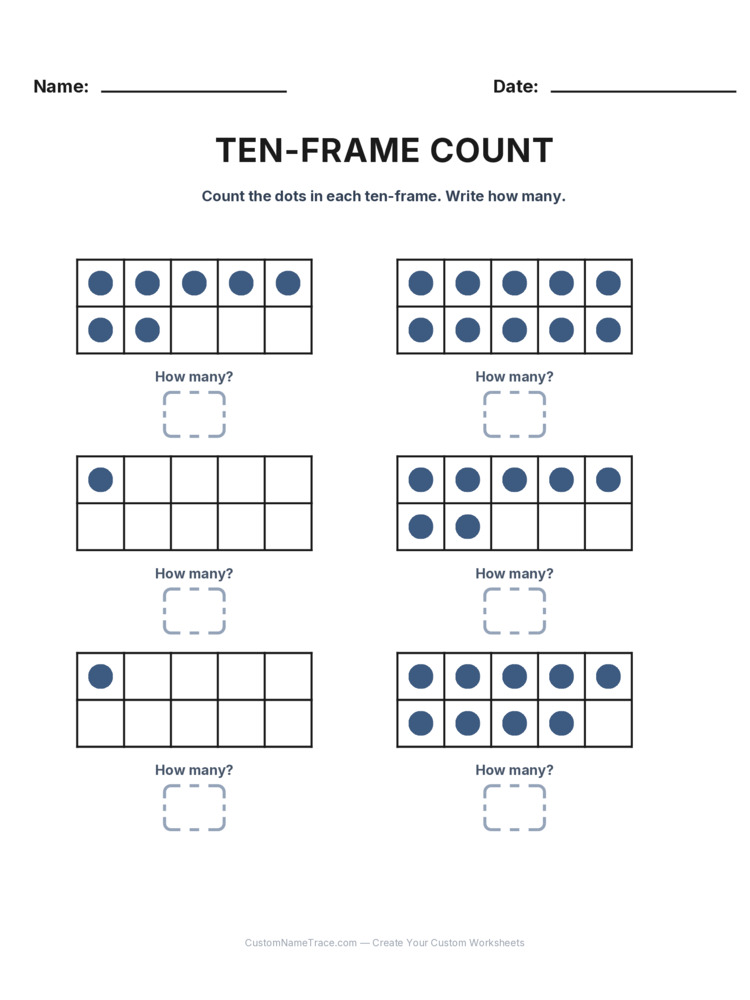
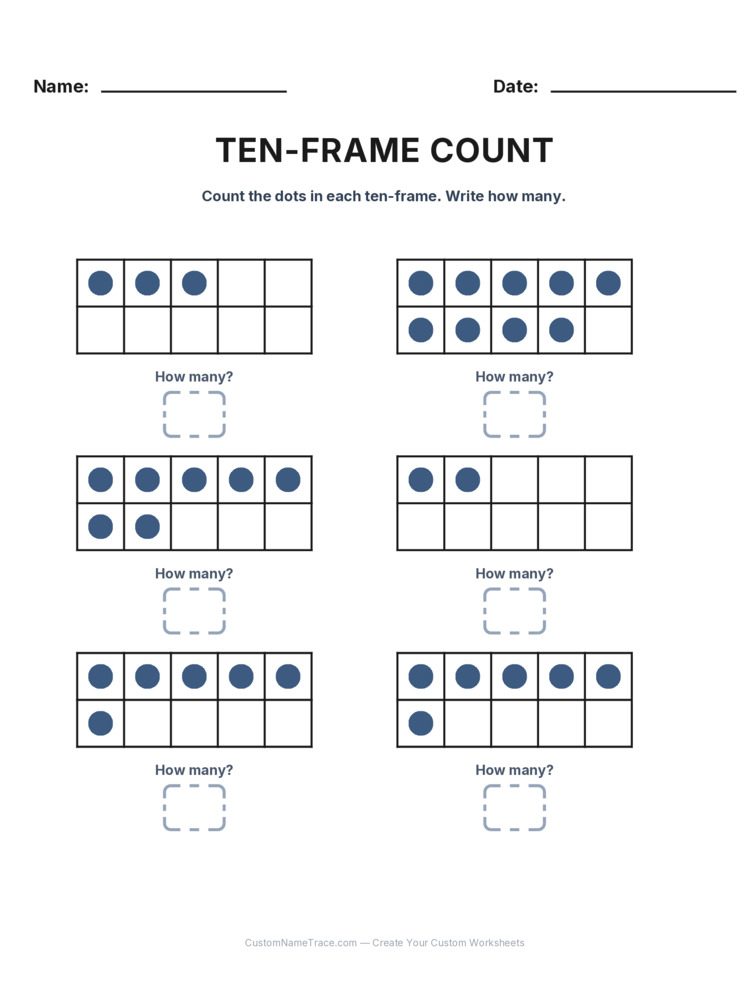
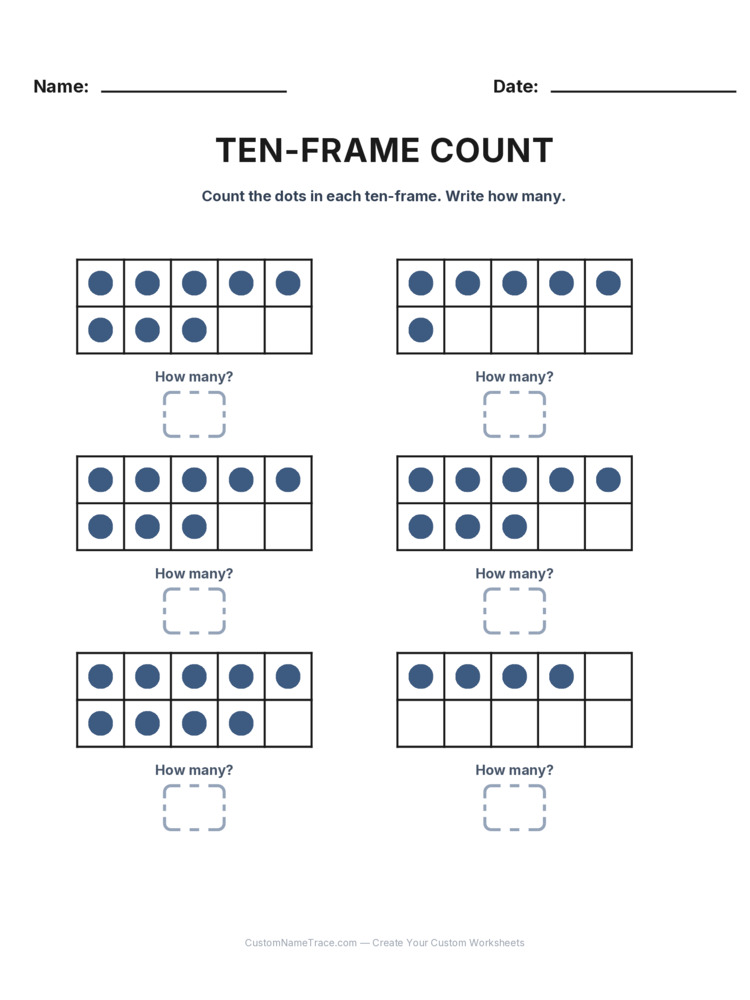
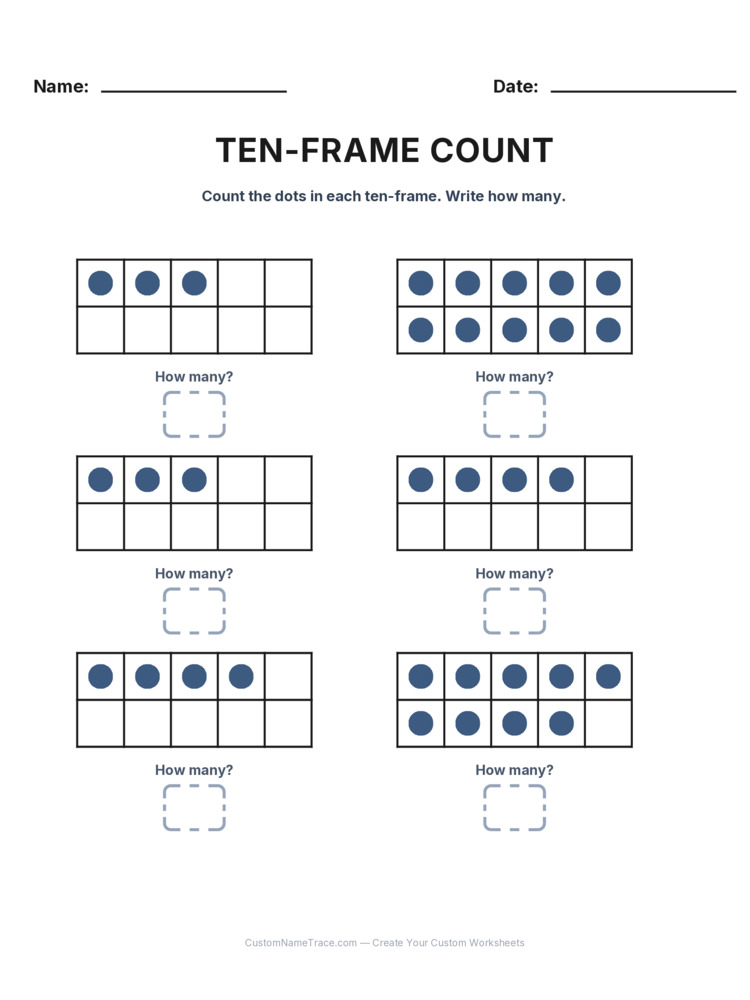
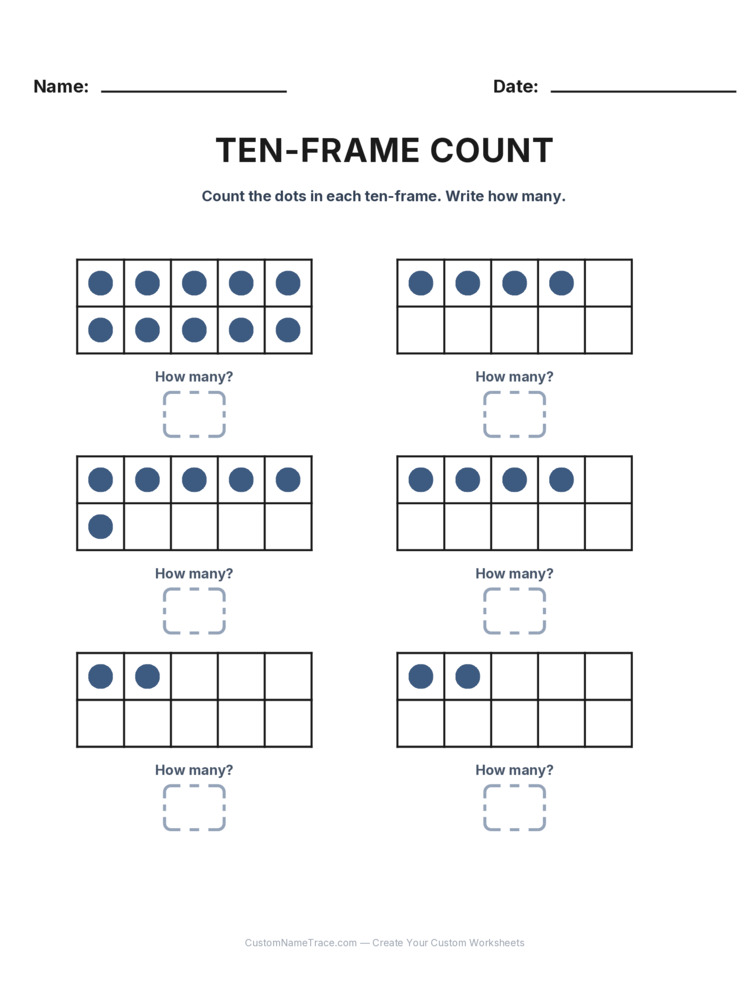
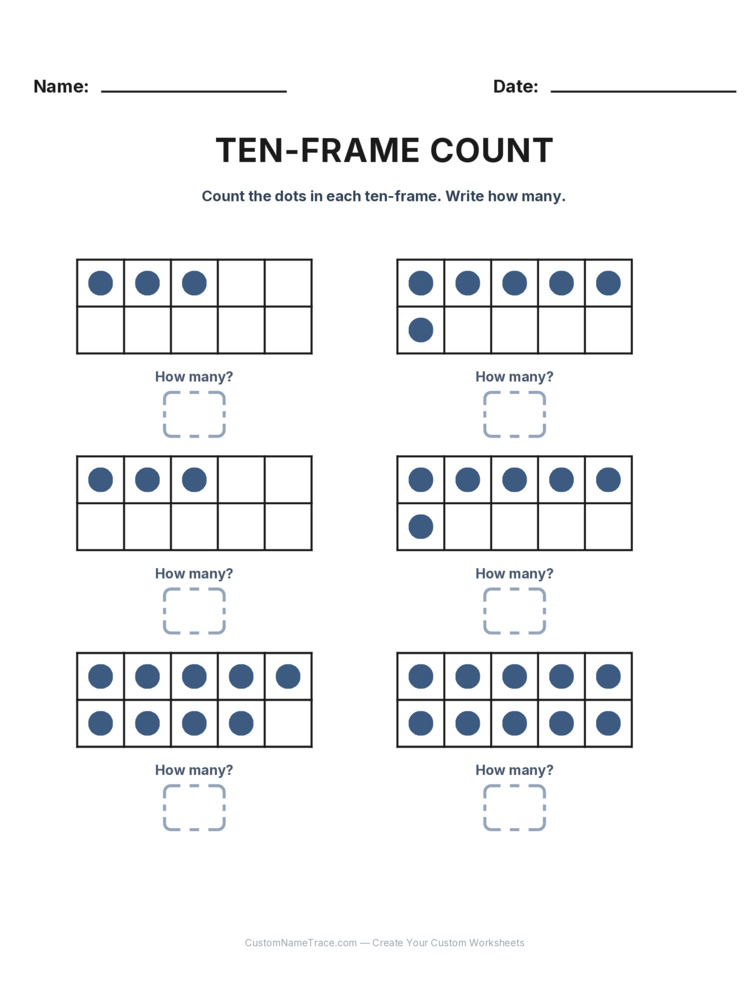
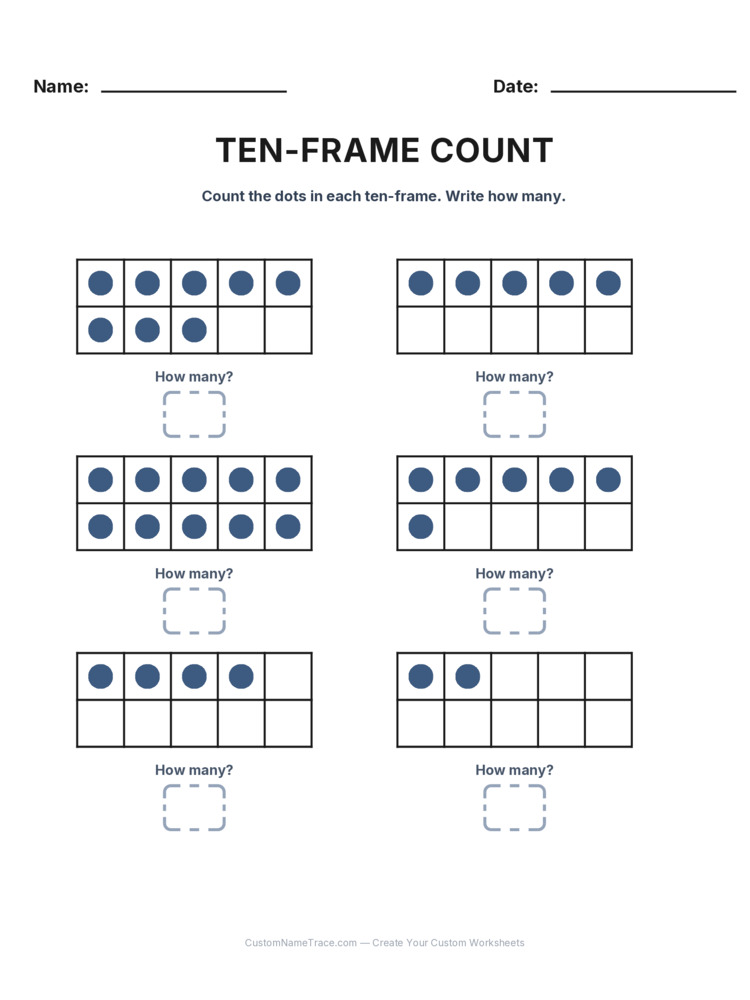
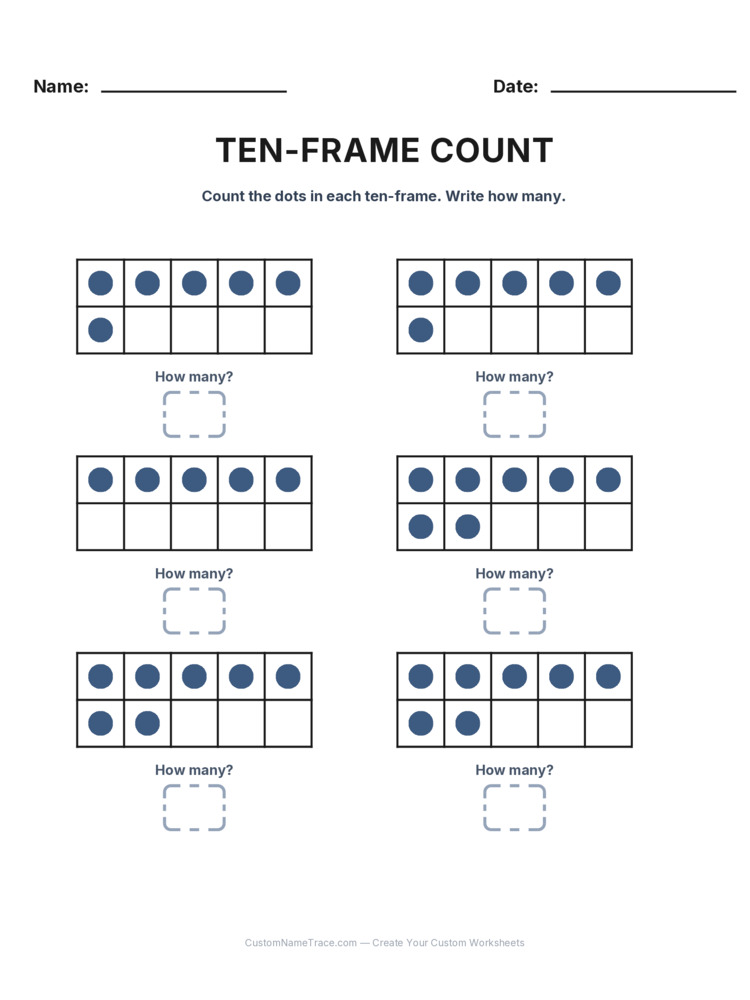
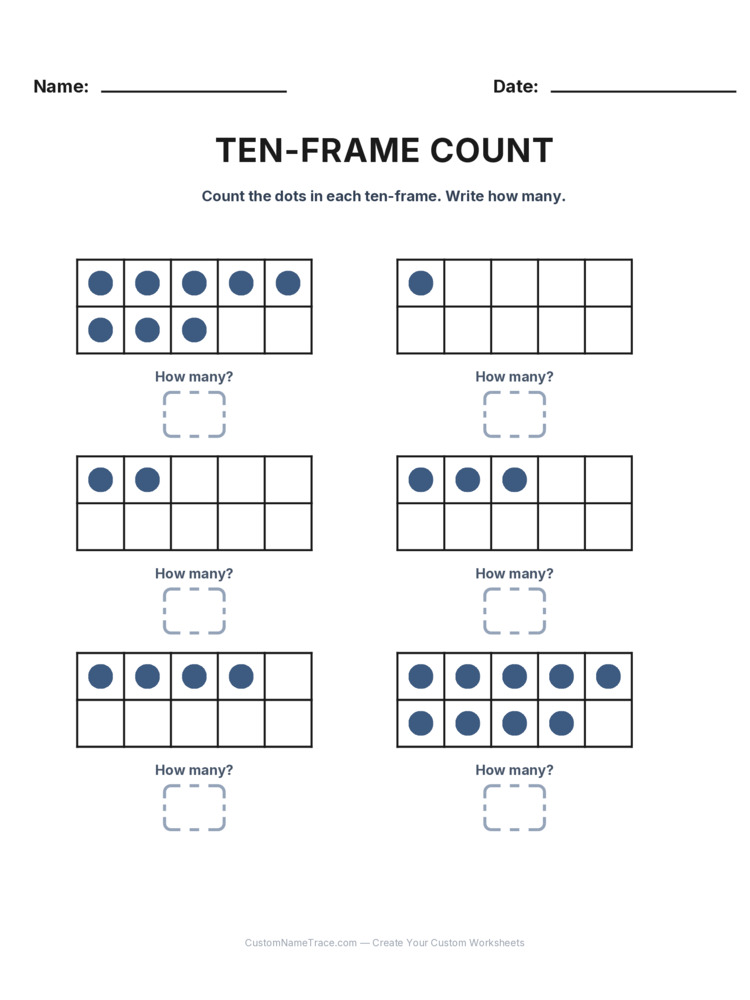
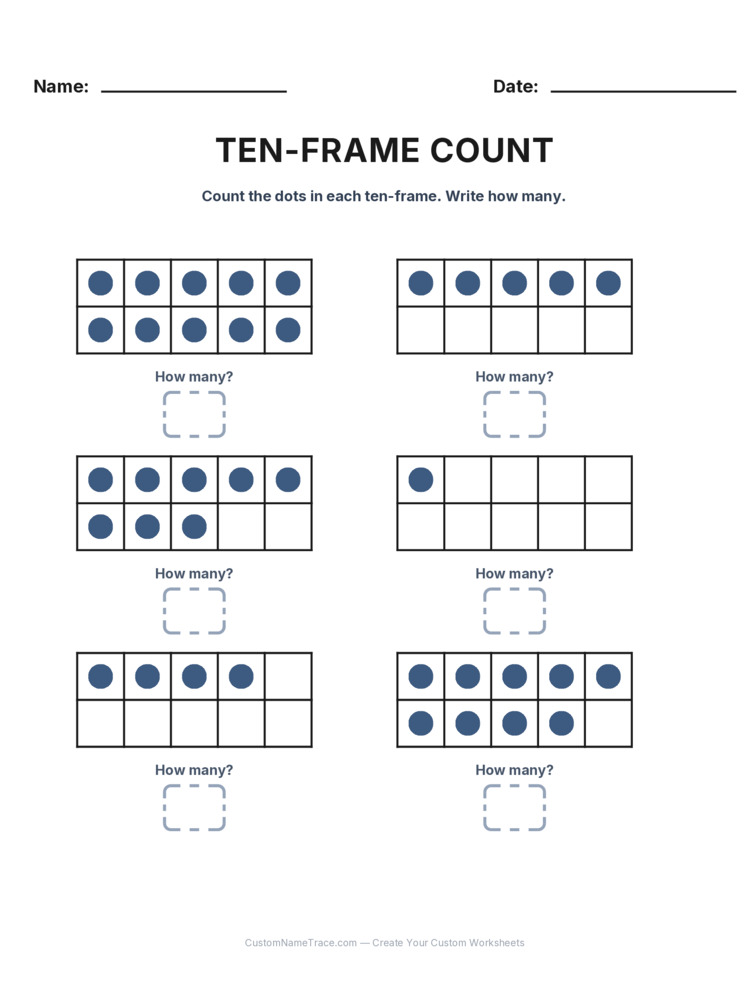
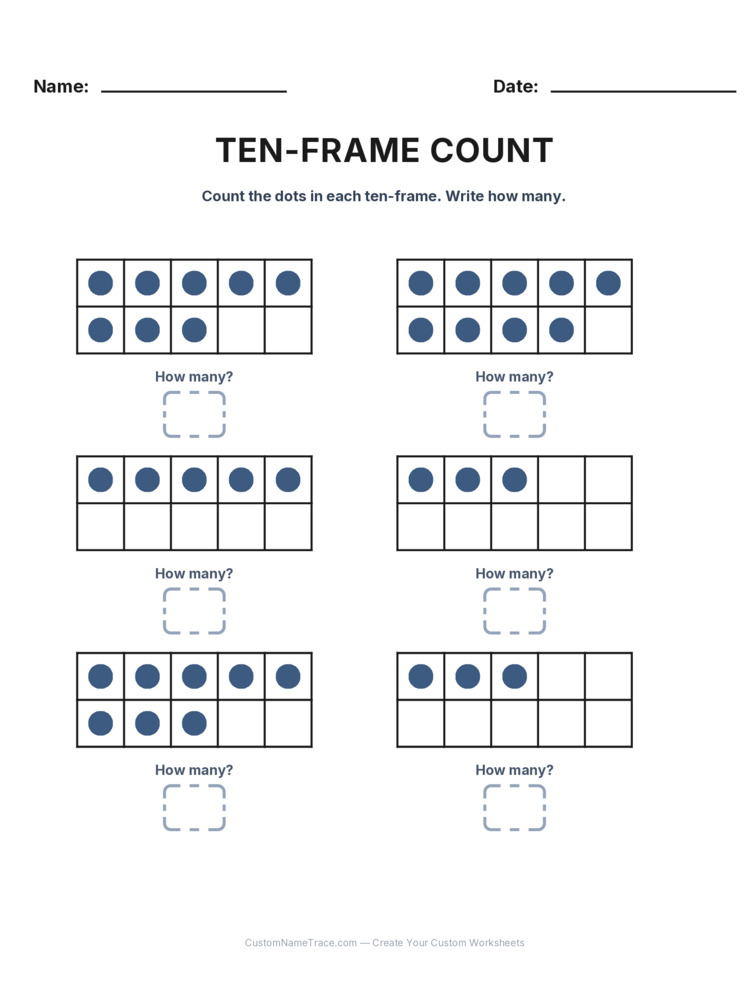
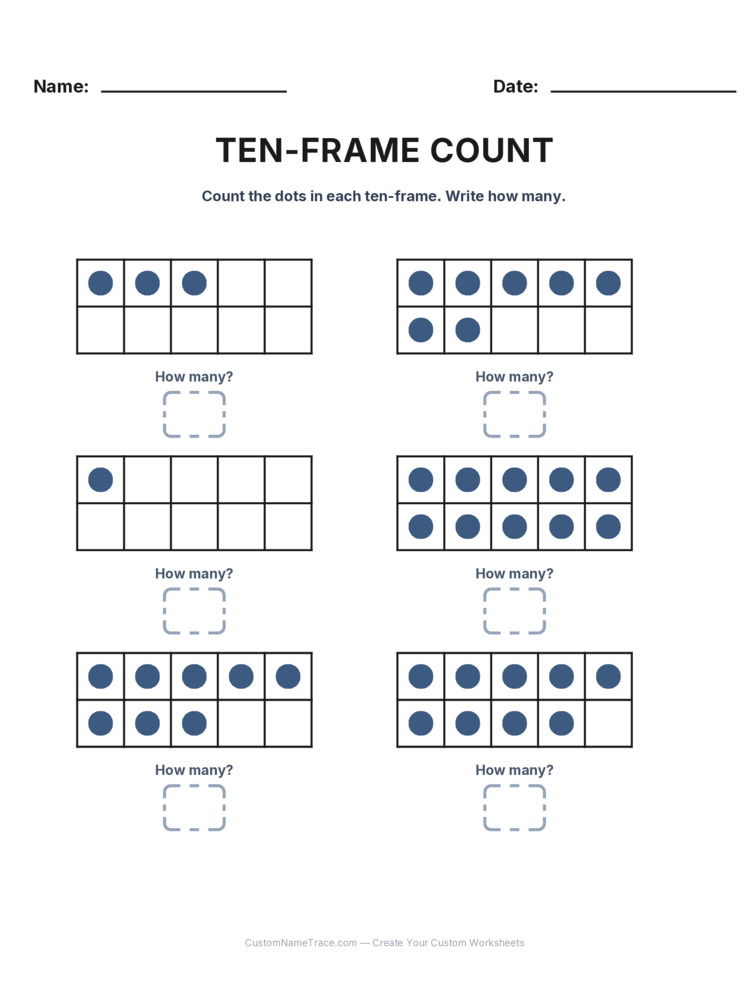
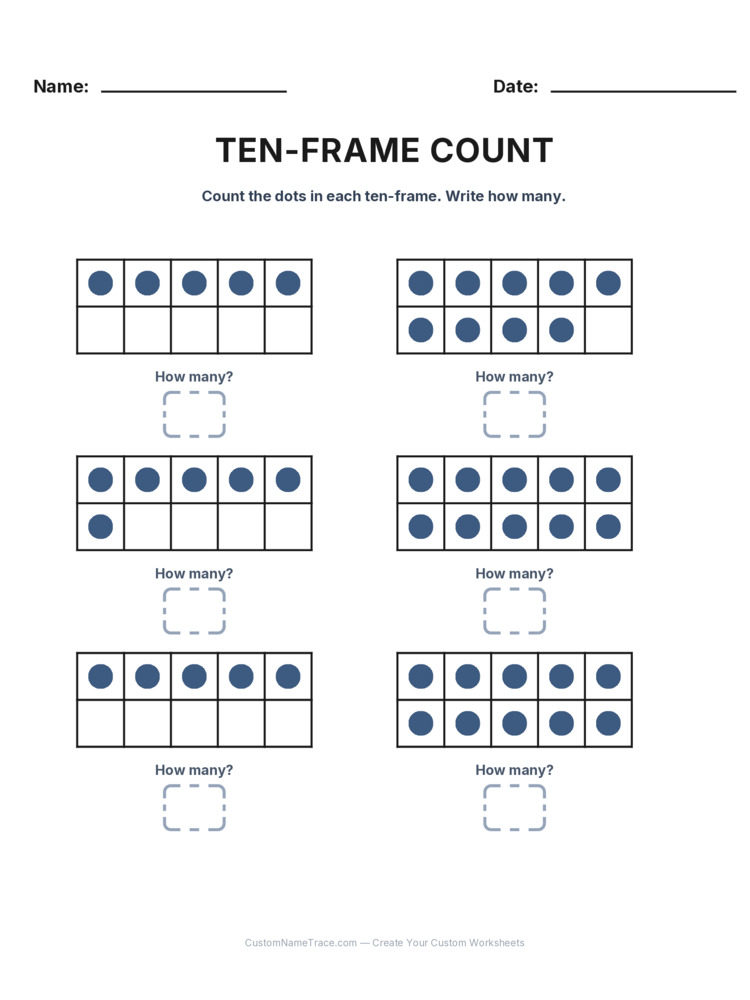
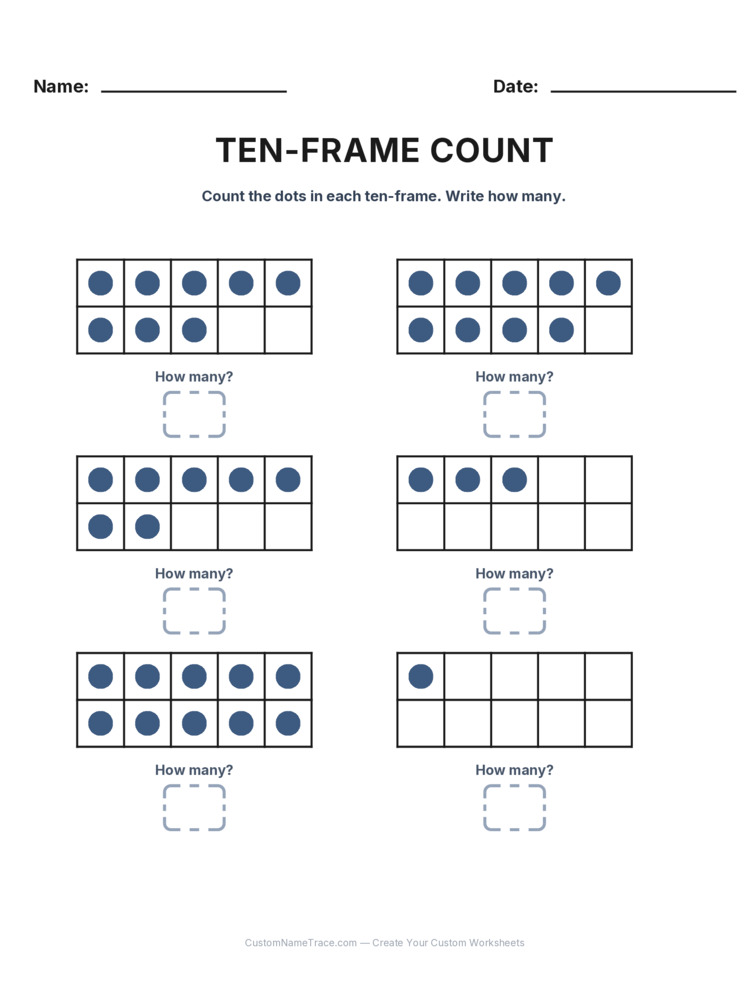
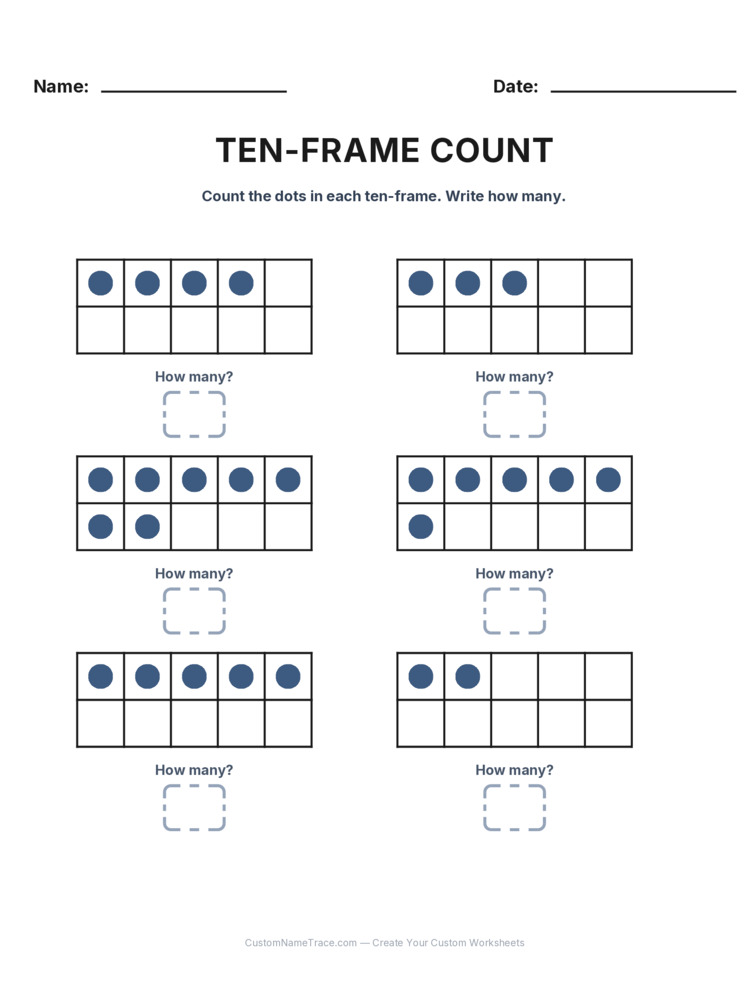
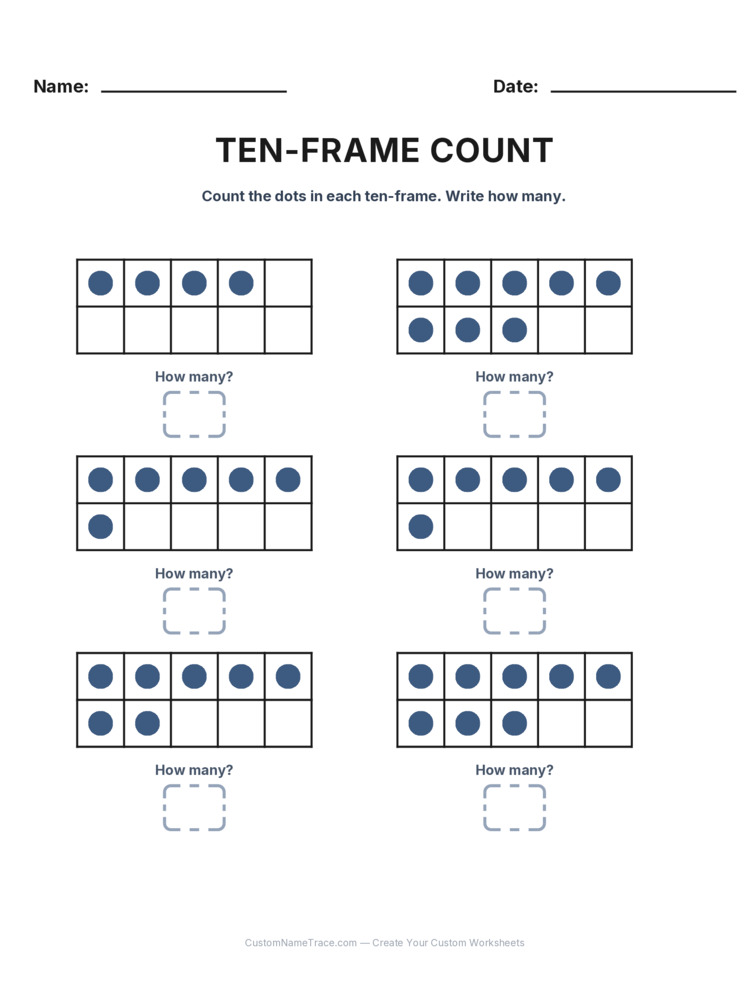
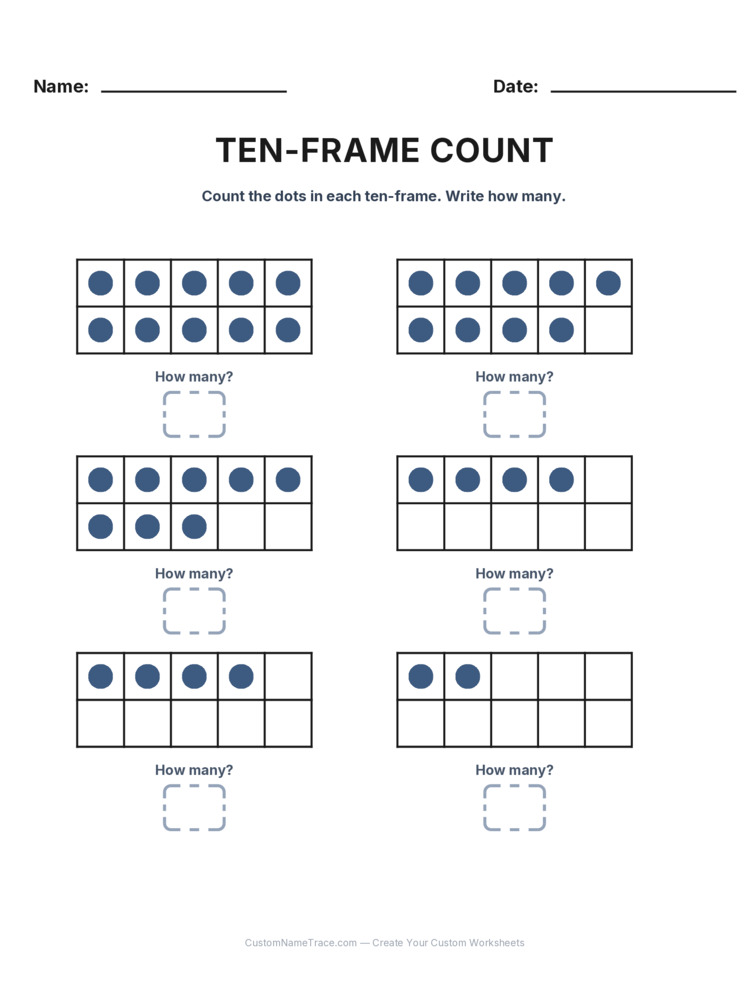
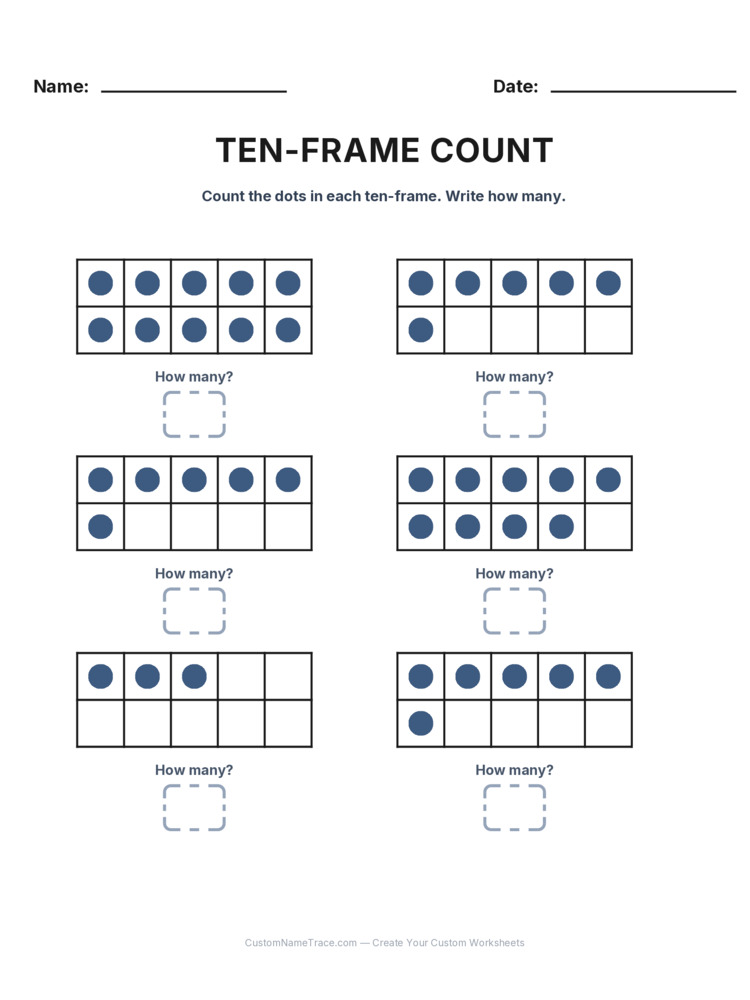
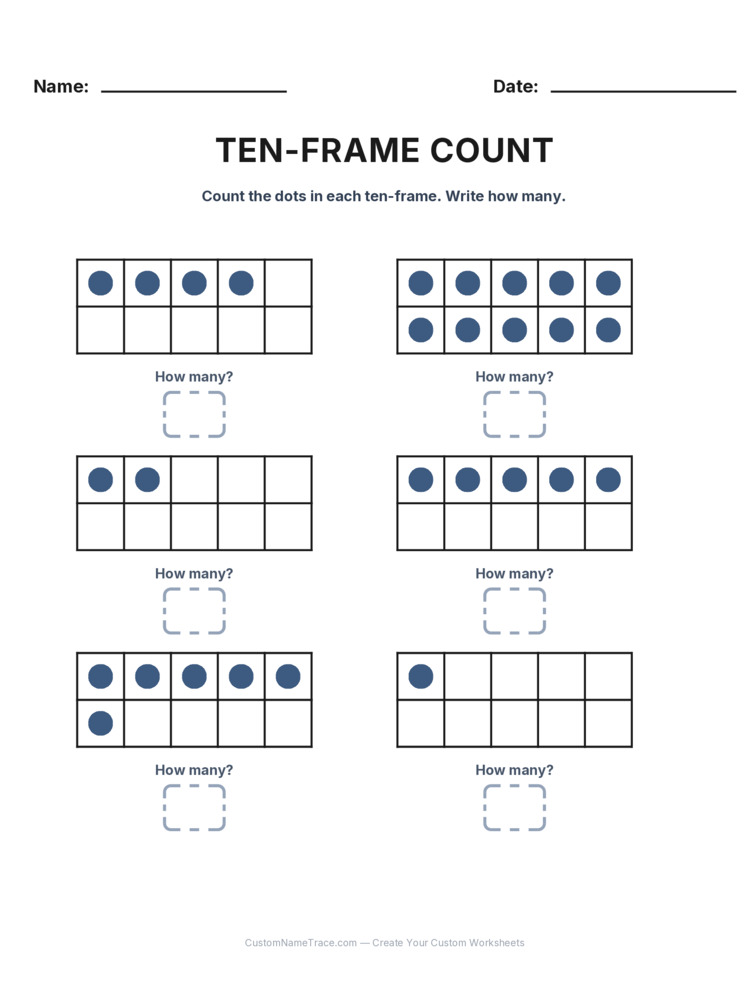
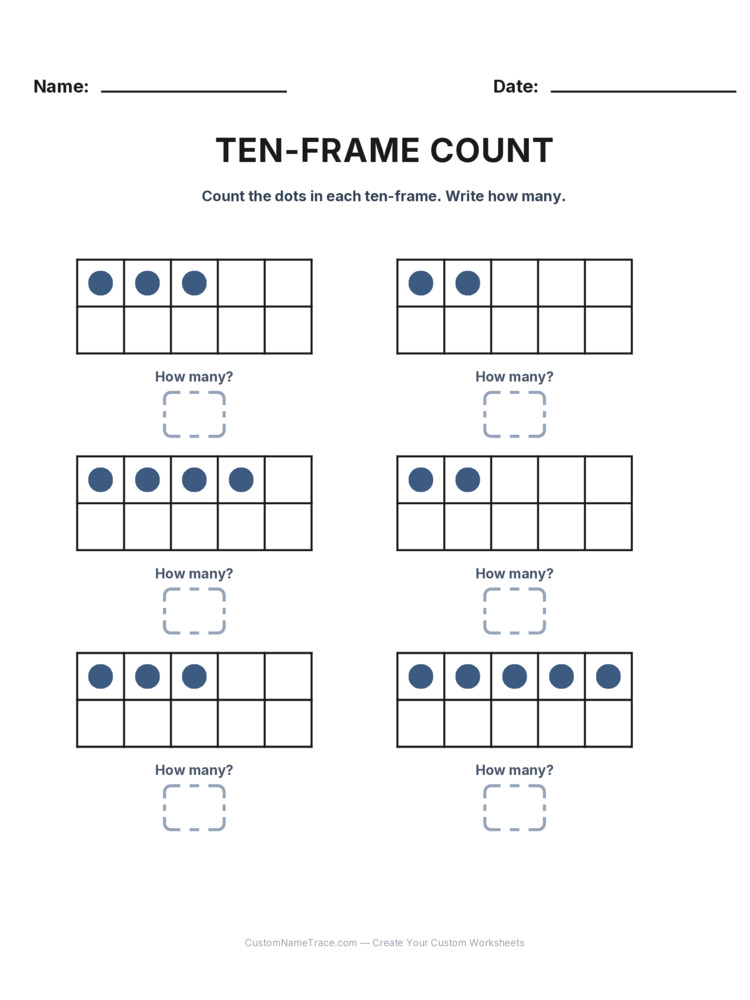
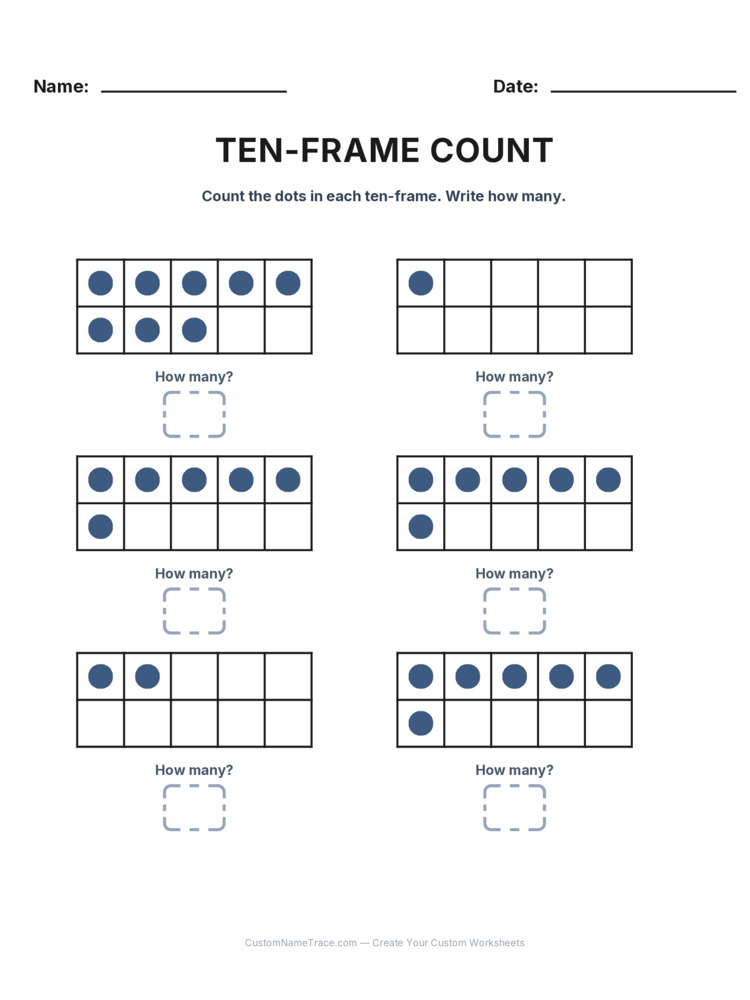
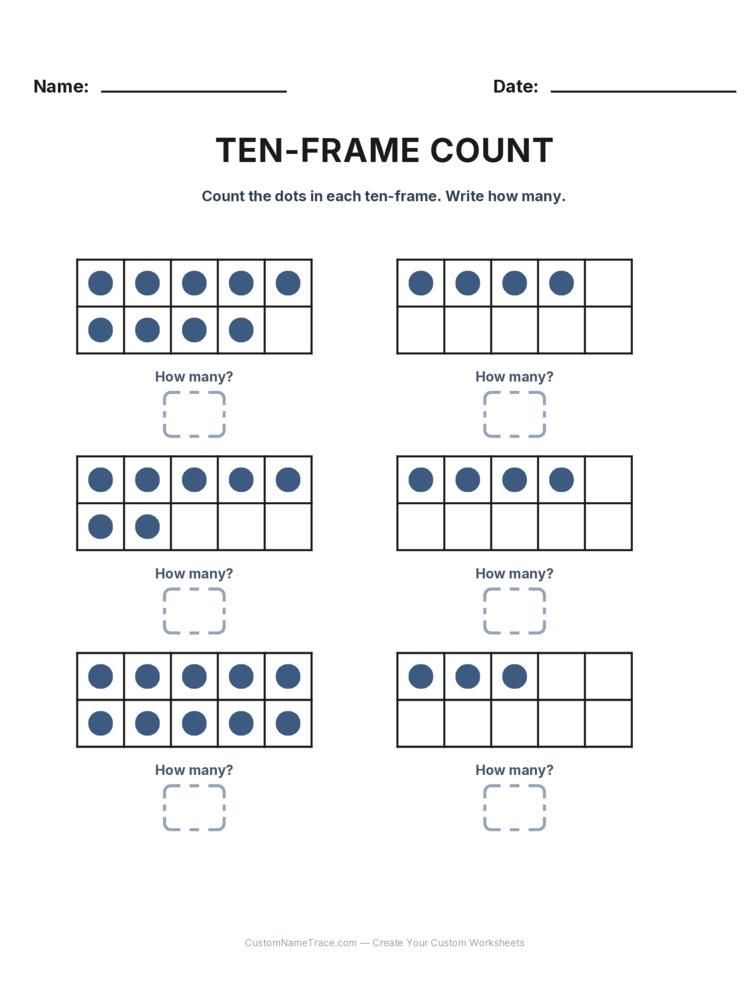
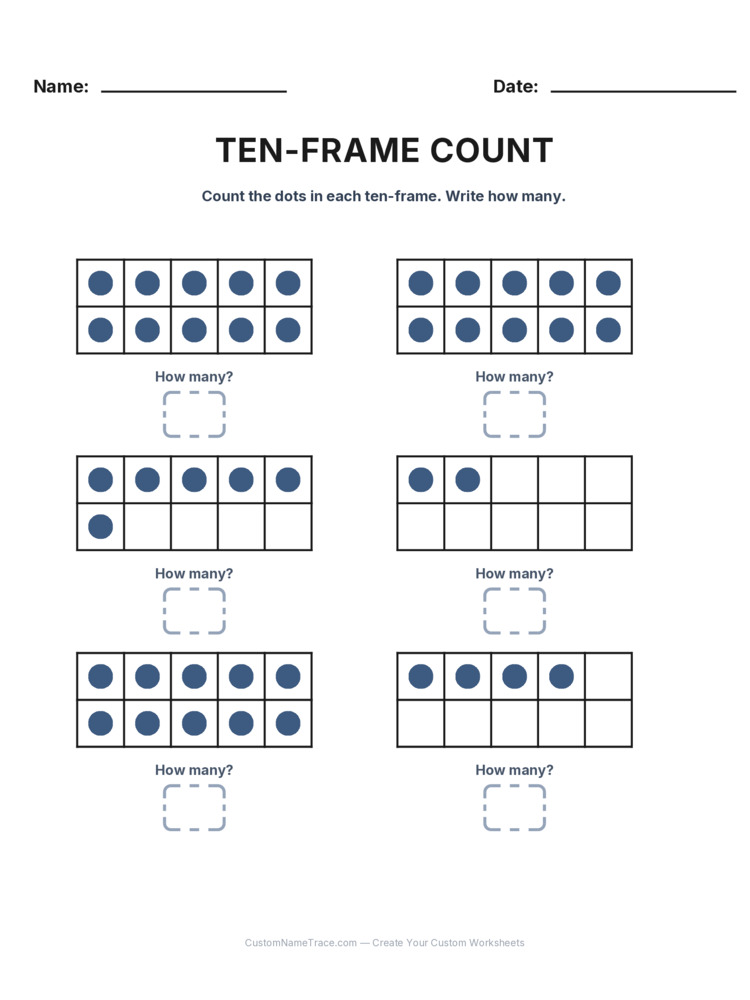
Ten-Frame Count builds instant quantity recognition using the same 2-row, 5-column frame early-math classrooms already use — a specific, deliberately-chosen layout, not an arbitrary grid, because it lets a child anchor a count against 5 and 10 rather than counting one by one every time. Skip Counting builds the pattern-recognition side of number sense — spotting and continuing a consistent step. Place Value builds the structural side — understanding that a 2-digit or 3-digit number is actually a stack of tens and ones (or hundreds, tens, and ones), not just a string of digits to read left to right.
Why blocks and dots instead of just numbers
Every format on this page uses a real, countable visual — dots in a ten-frame, rod-and-cube base-ten blocks — because number sense specifically means connecting a quantity to what it looks like, not just to a written numeral. A worksheet of bare digits tests whether a child already has that connection; these worksheets are built to help form it in the first place.
No answer key, and every format is checkable at a glance
Ten-Frame Count and Place Value can both be checked by counting the same dots or blocks the child counted — the worksheet carries its own answer. Skip Counting is self-checking too: the visible numbers in each row establish the step, so the gap has exactly one number that keeps the pattern consistent. None of these need a separate key page.
How this connects to the rest of the site
Number Sense is the foundational layer underneath this site's own Math Worksheets section — addition, subtraction, and the rest all assume a child already has some working sense of quantity and place value. A child who's shaky on Grade 2 regrouping often benefits from a detour through Place Value here first, rebuilding the underlying concept rather than just drilling the procedure harder. Logic Worksheets is a useful next step once number sense feels solid — it shifts from quantity practice to applying a rule, the reasoning skill this section's patterns (Skip Counting especially) start to build.