Applying one rule across a whole page
Grade 1 logic puzzles ask a child to hold a single rule in mind and apply it consistently across every item on the page, rather than judging each item in isolation the way Kindergarten's row-by-row puzzles do. That's the step up: the rule doesn't change, but the number of things it has to be checked against does, and staying consistent across a full grid is a genuinely harder version of the same underlying skill.
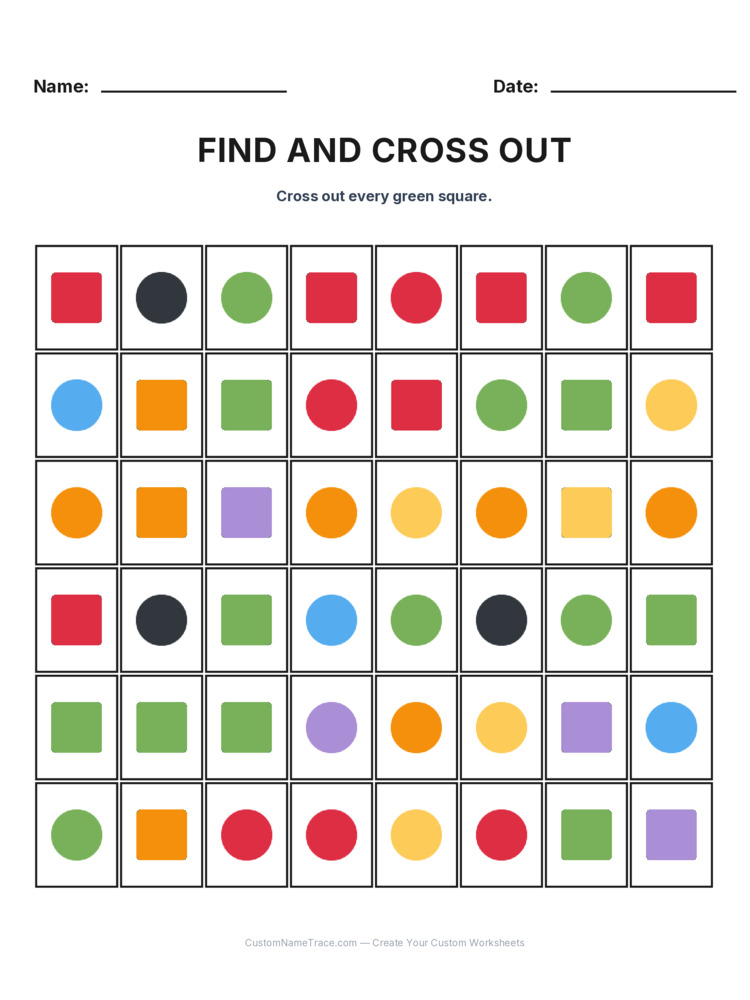
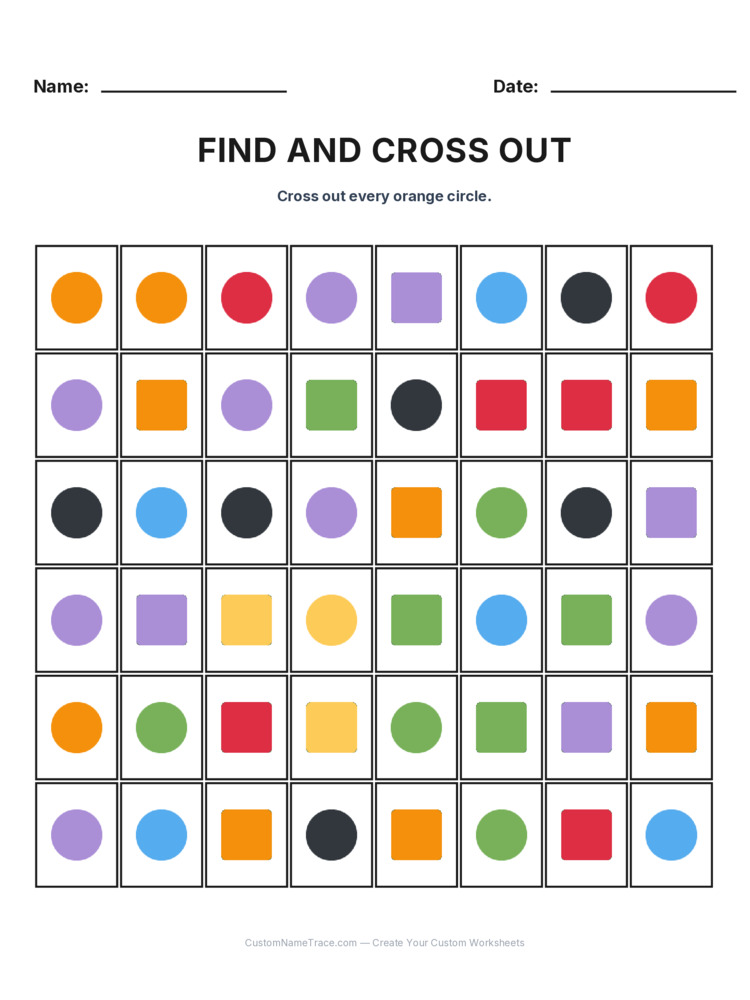
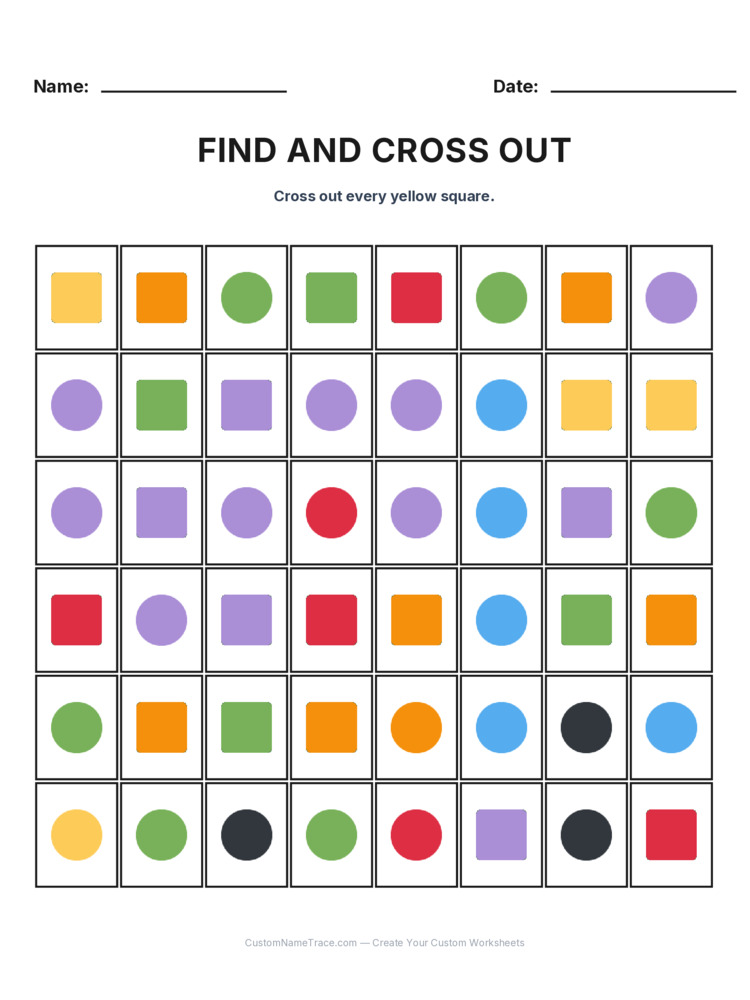
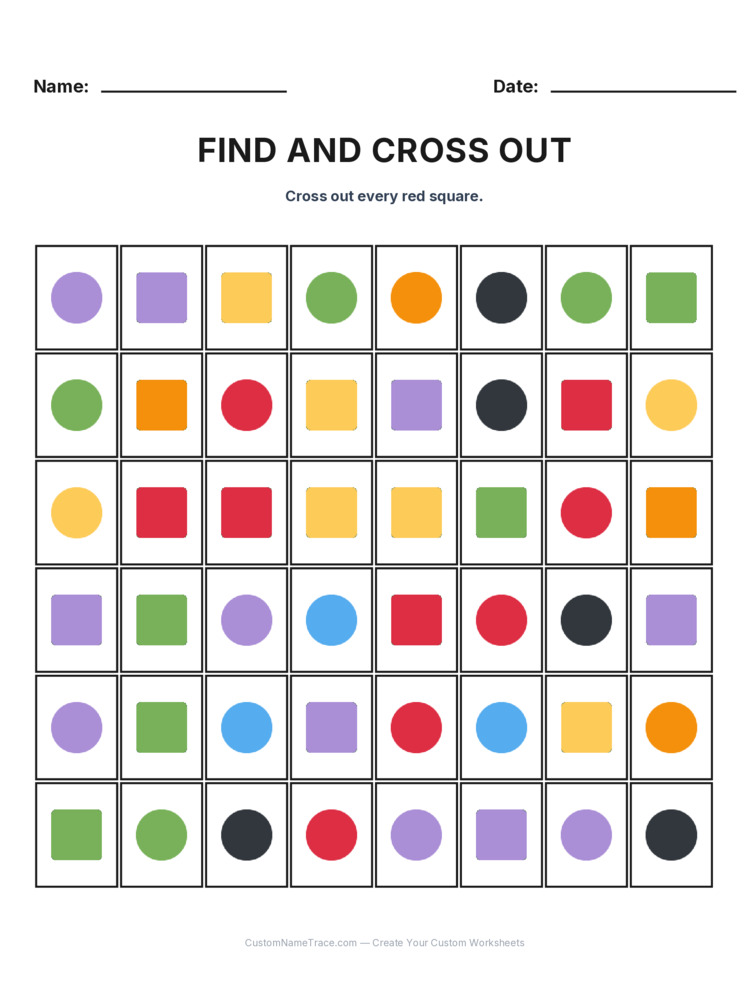
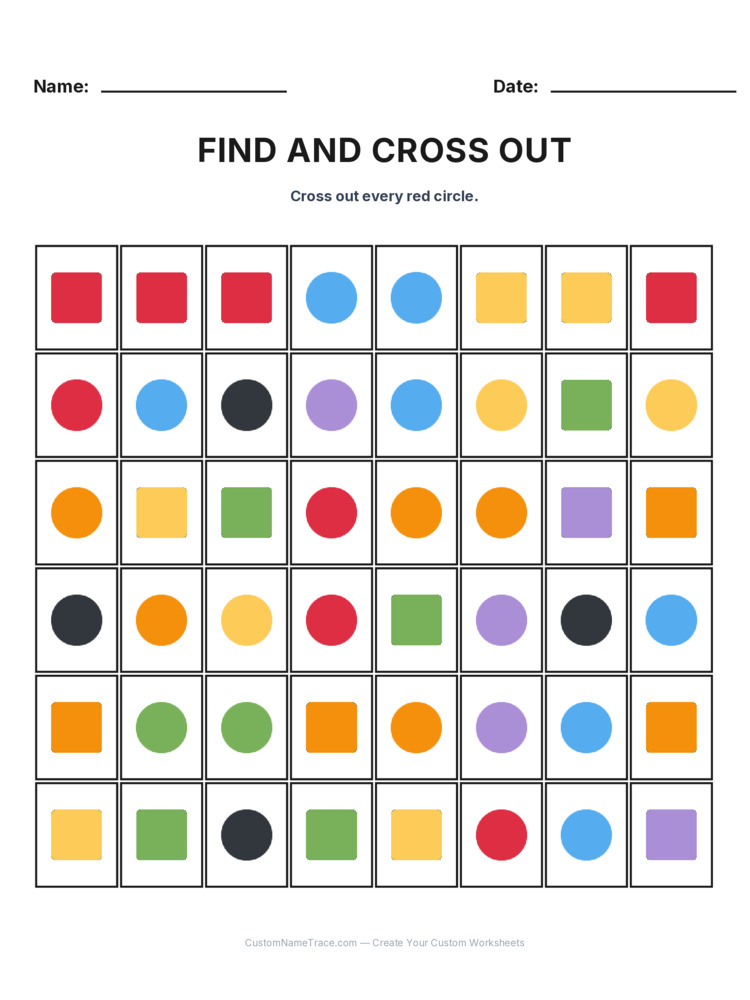
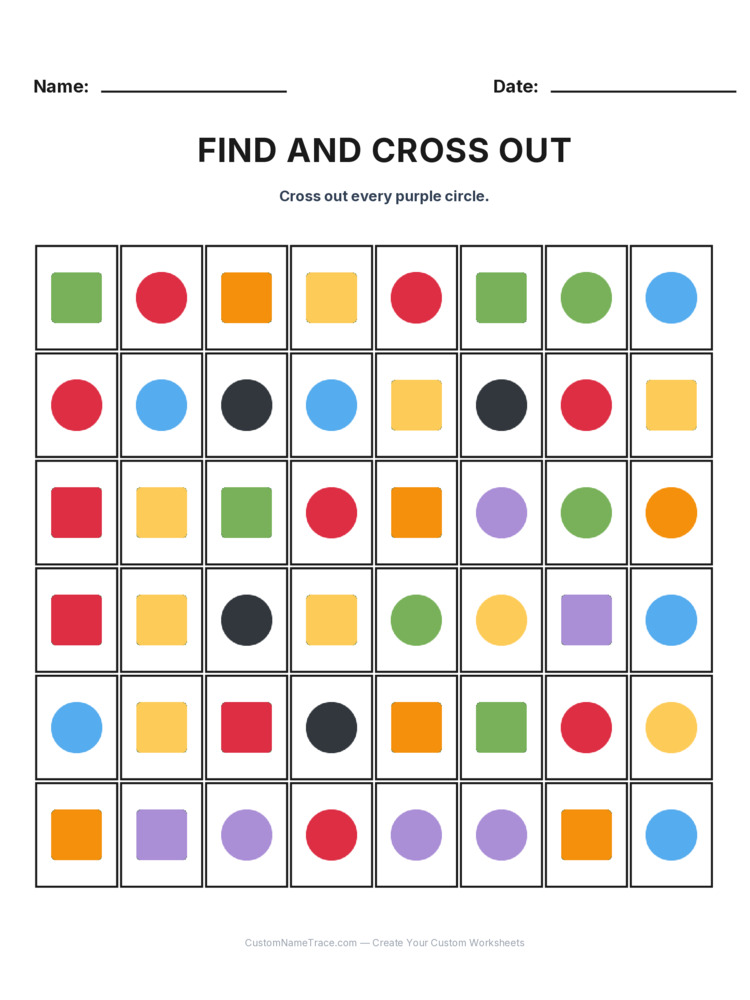
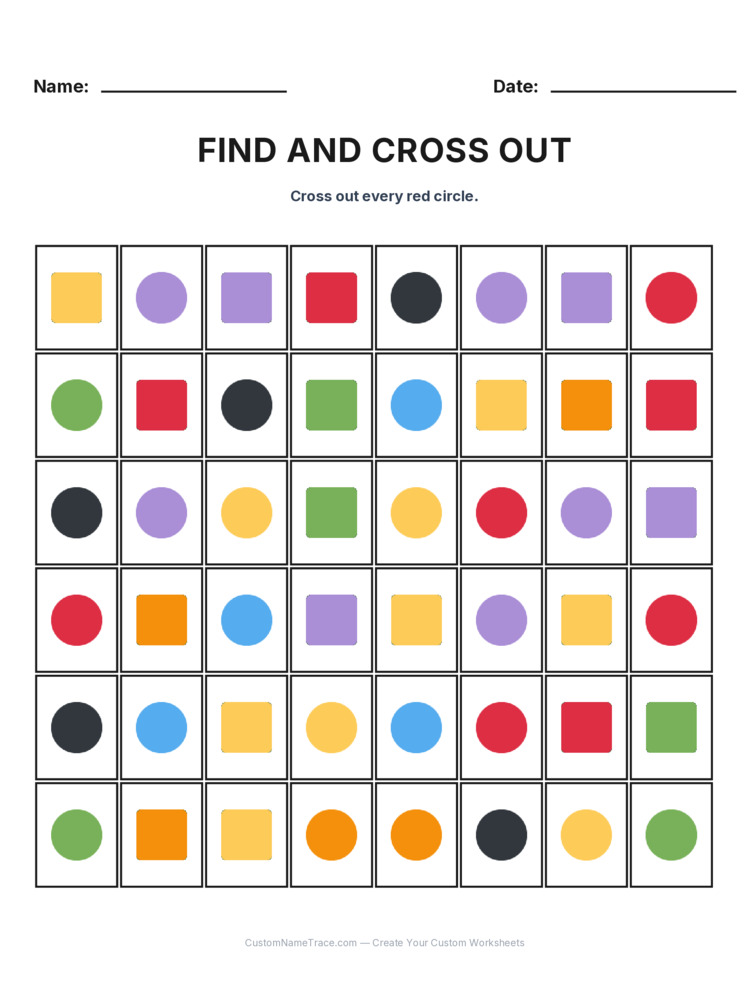
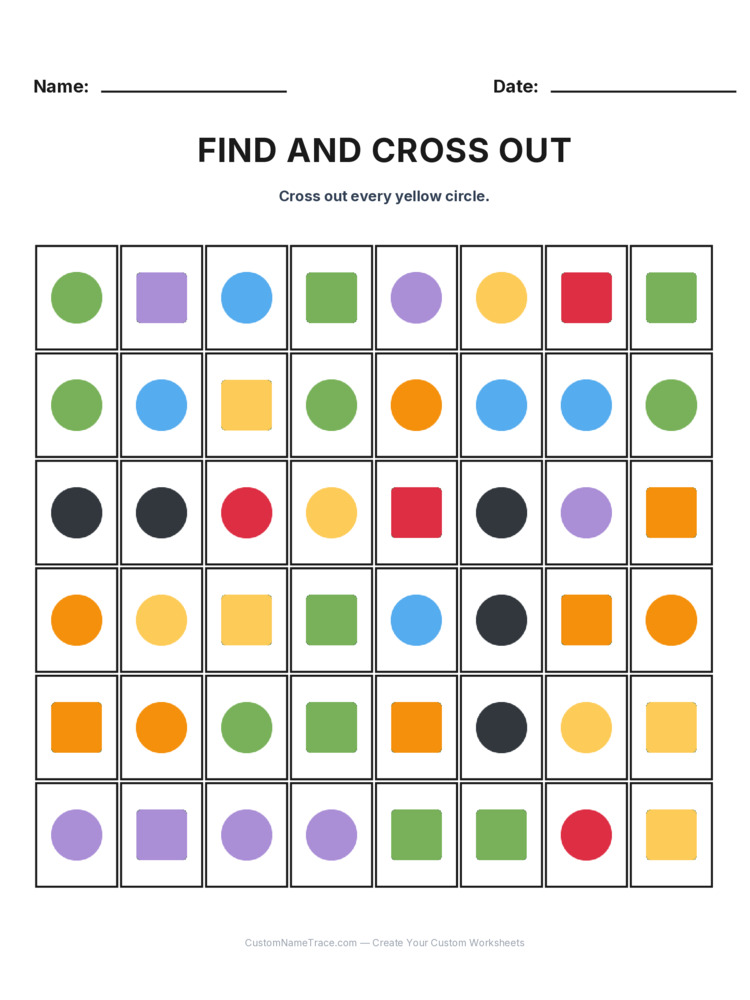
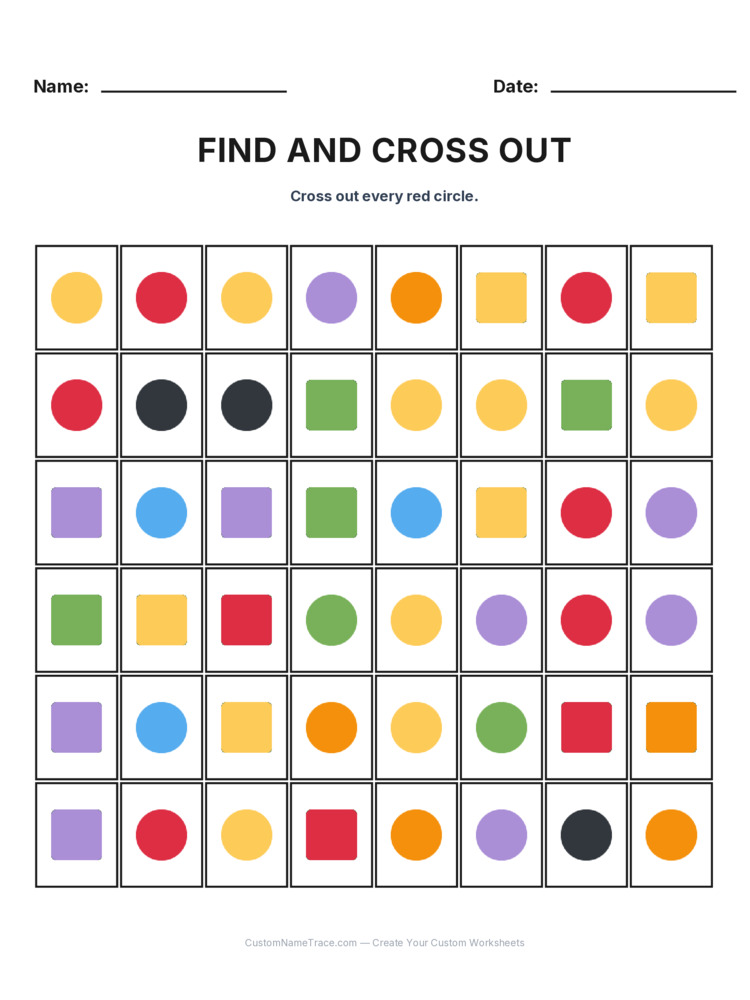
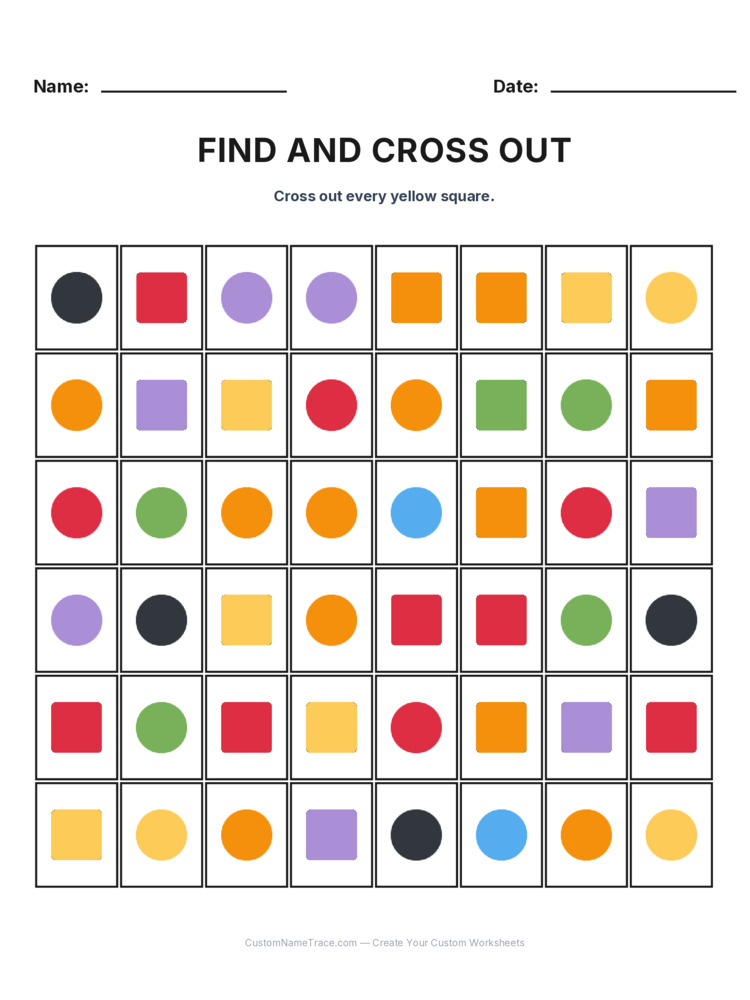
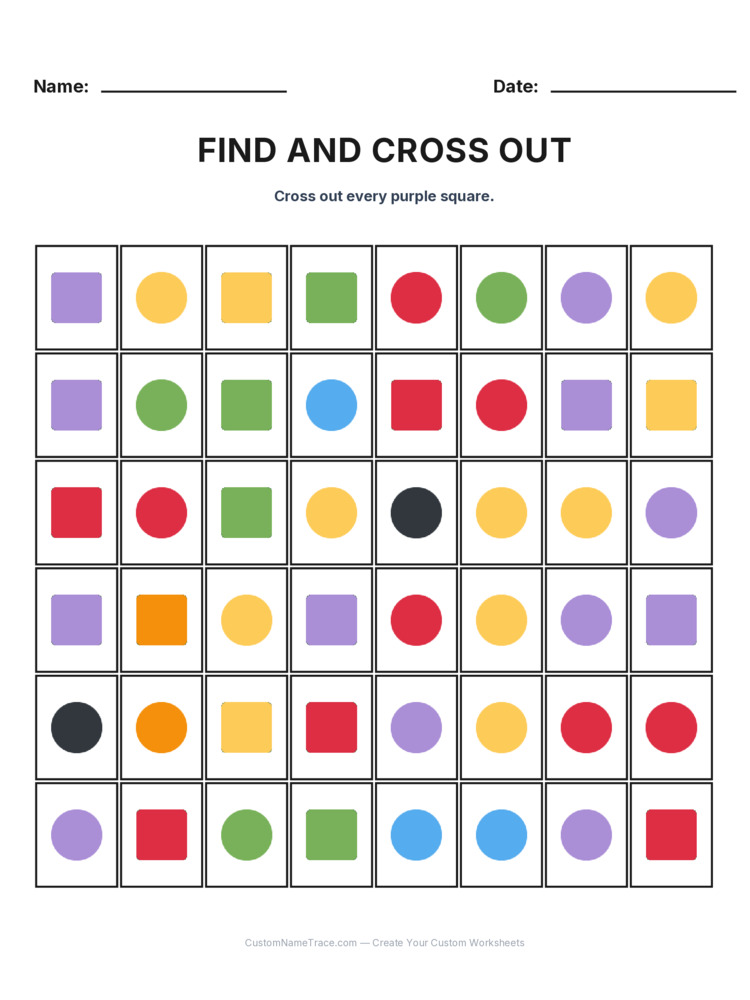
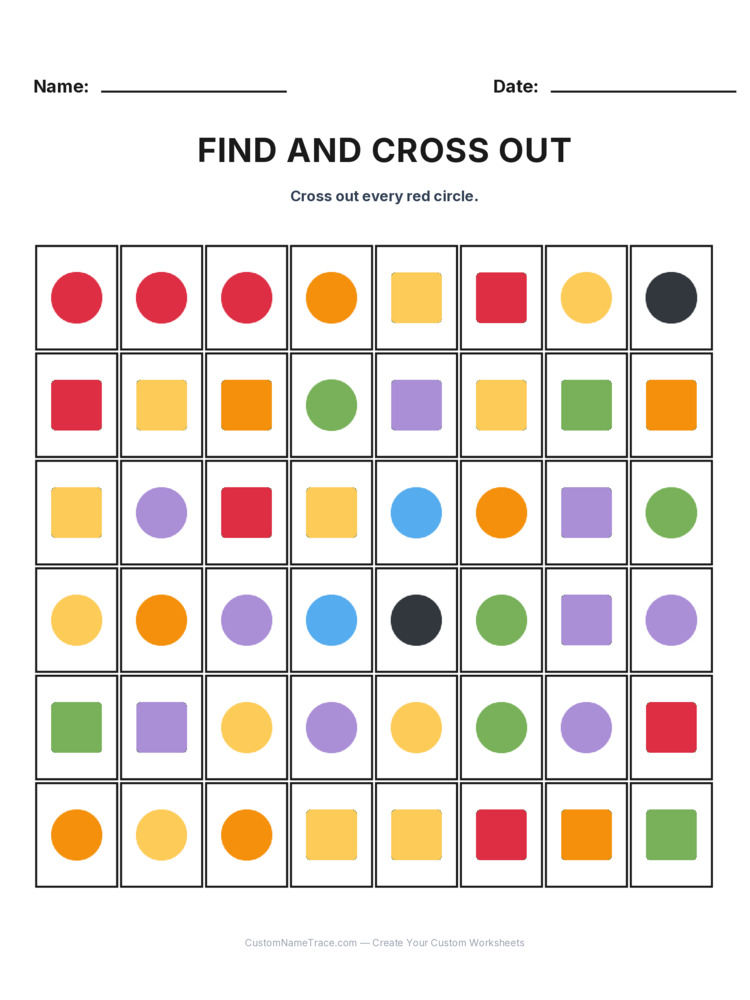
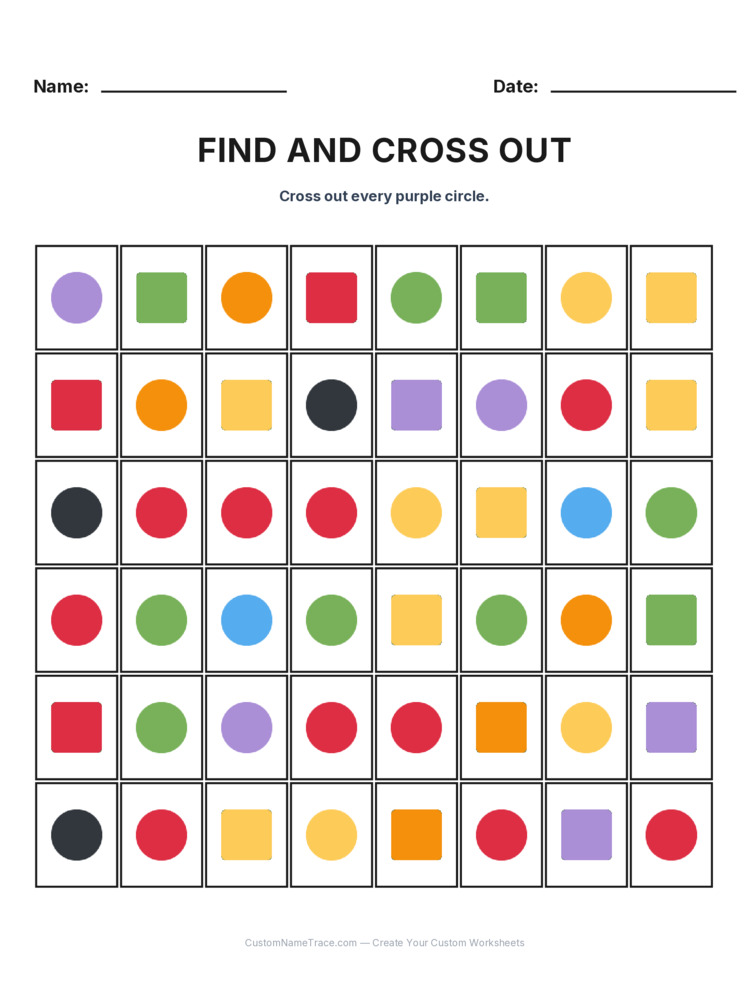
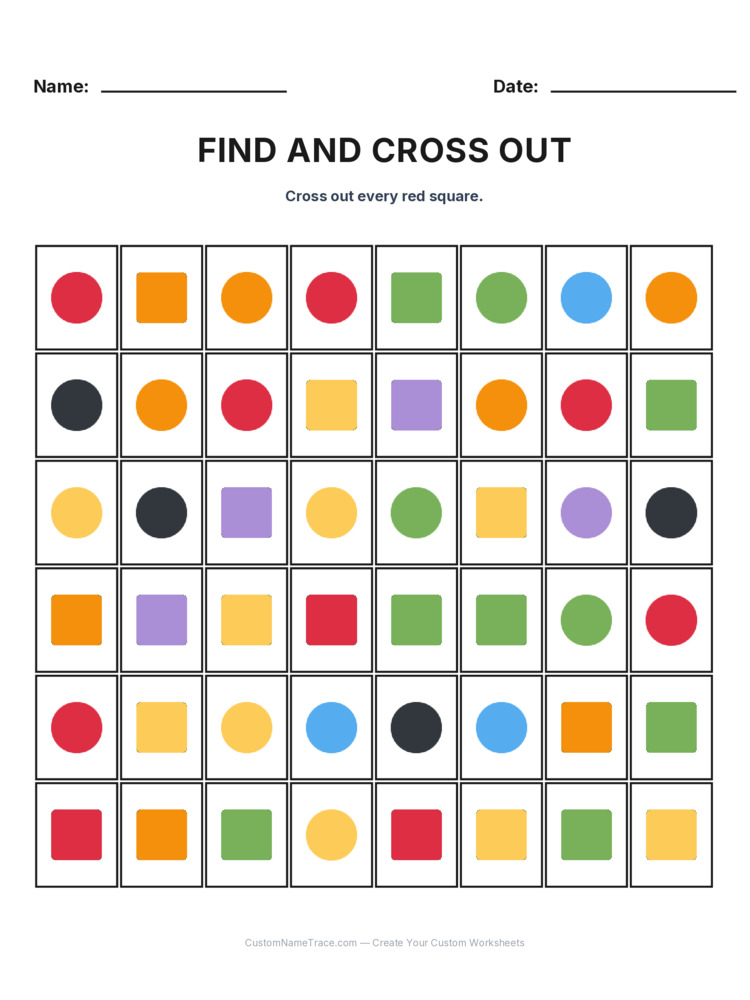
Find and Cross Out
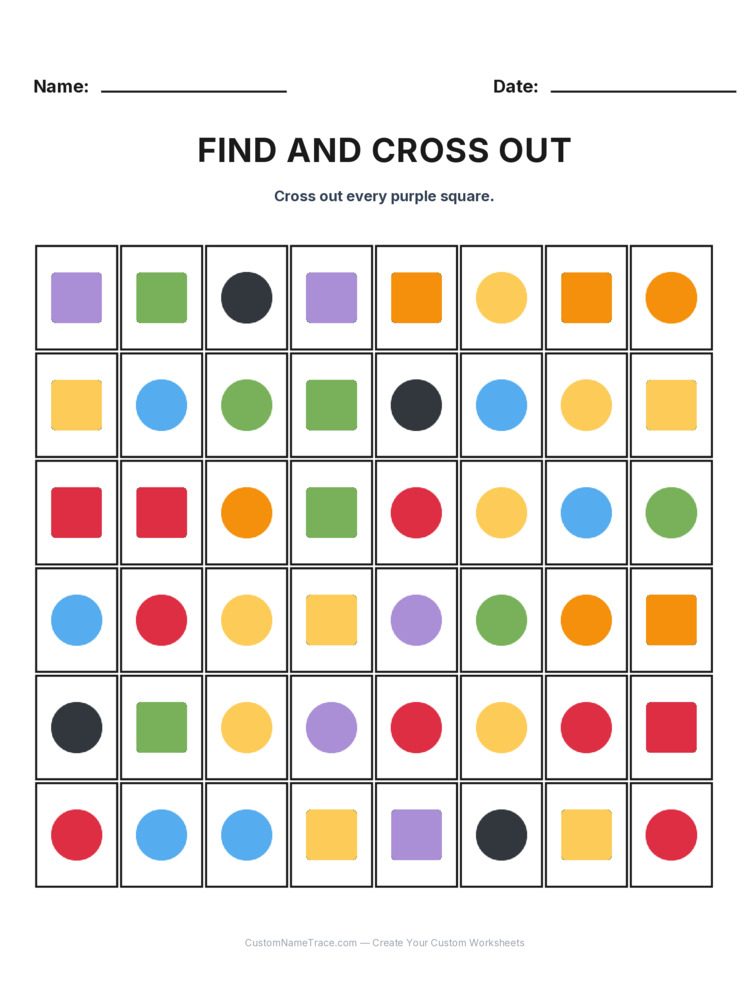
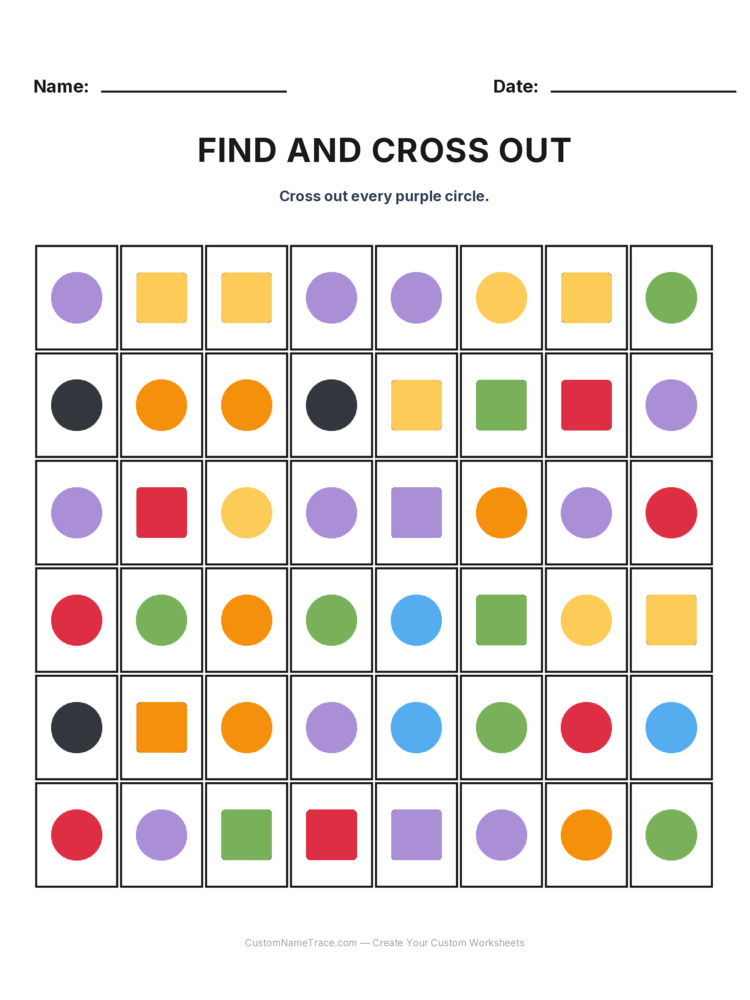
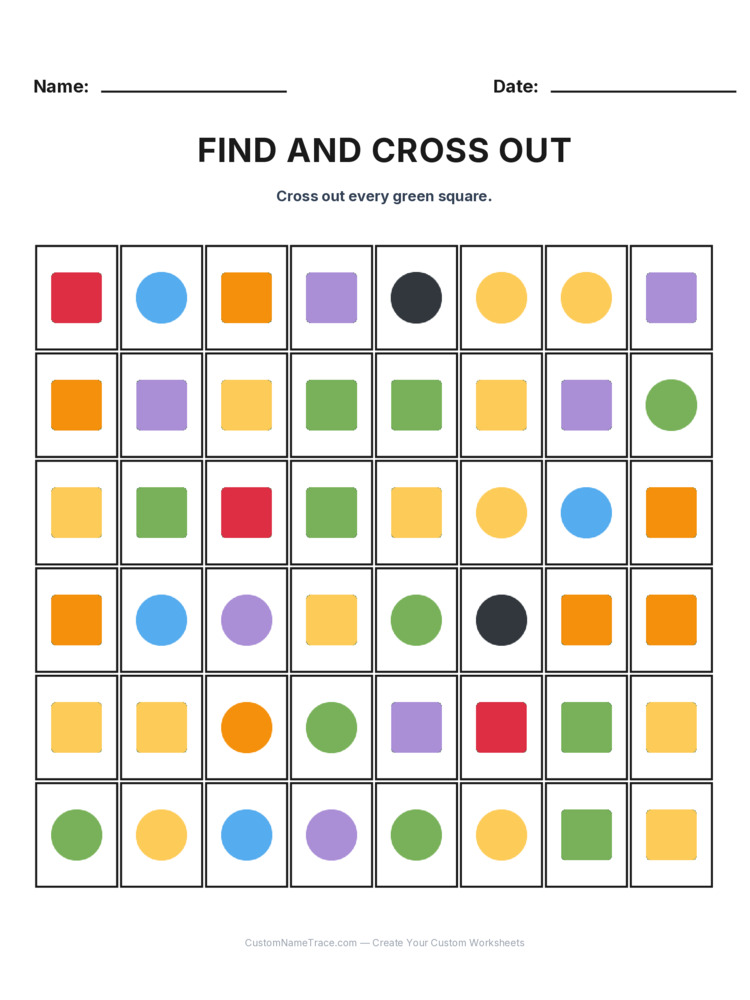
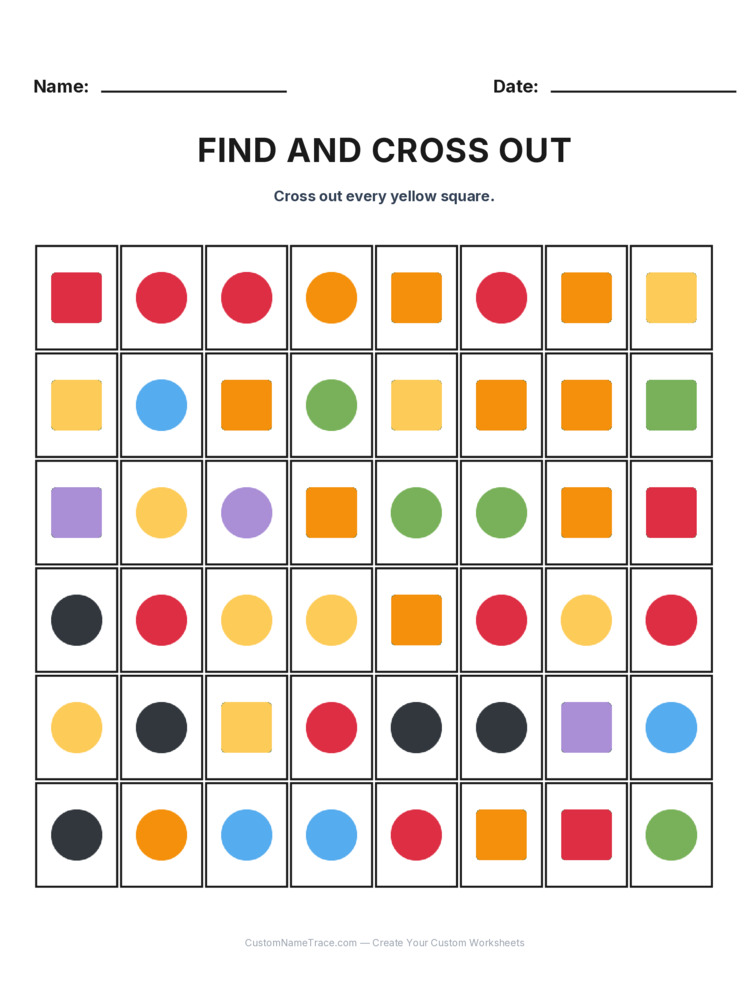
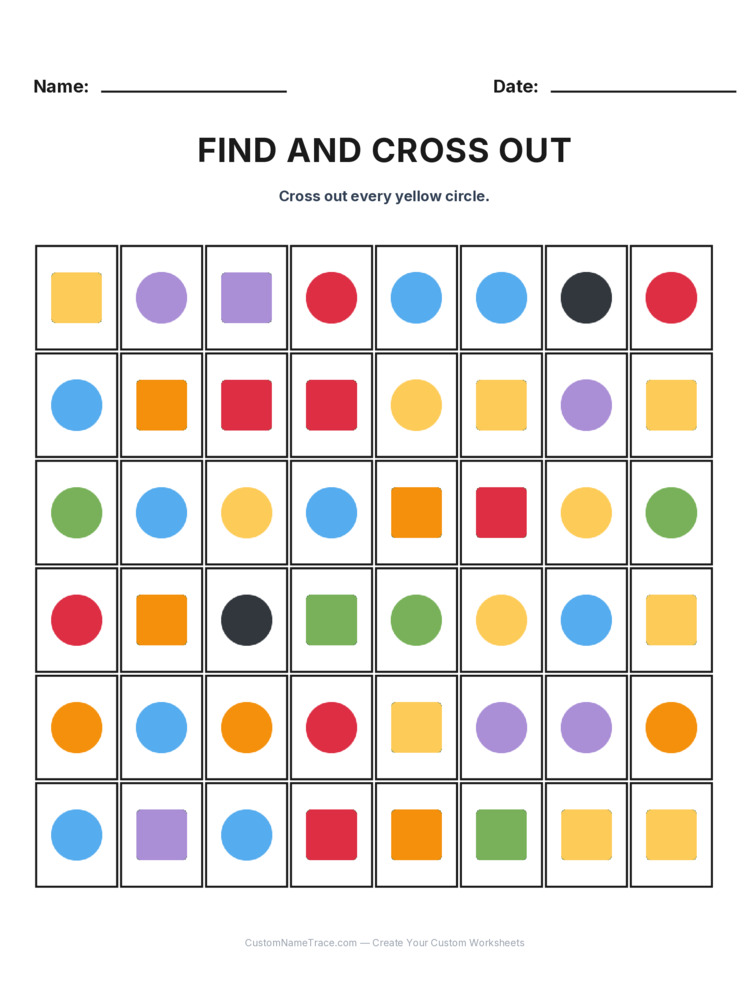
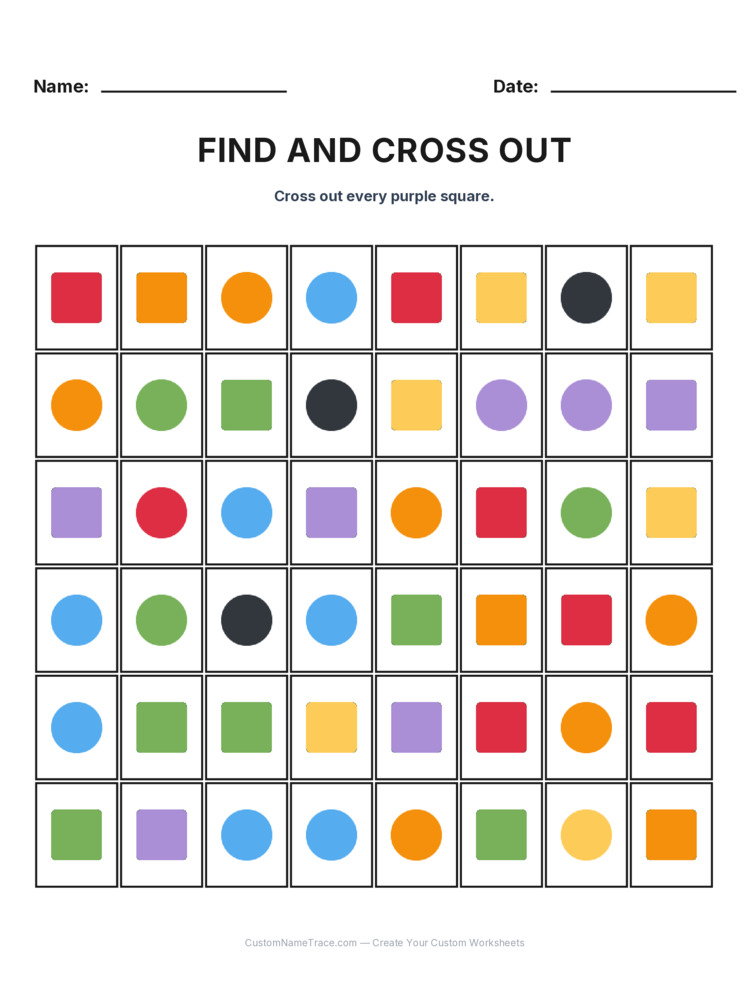
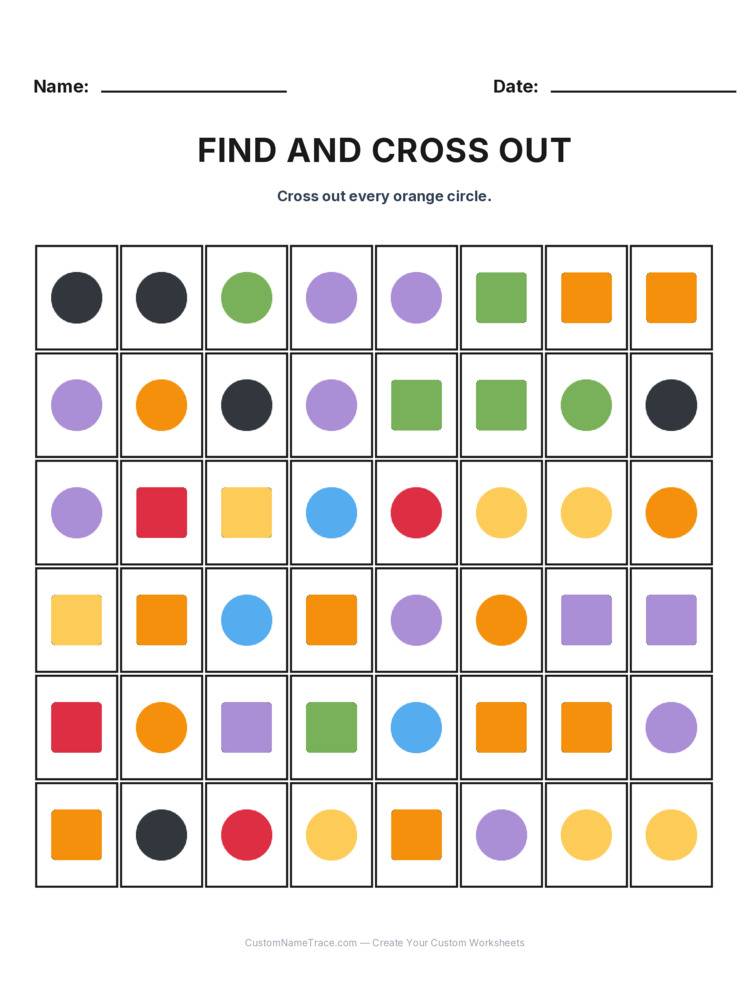
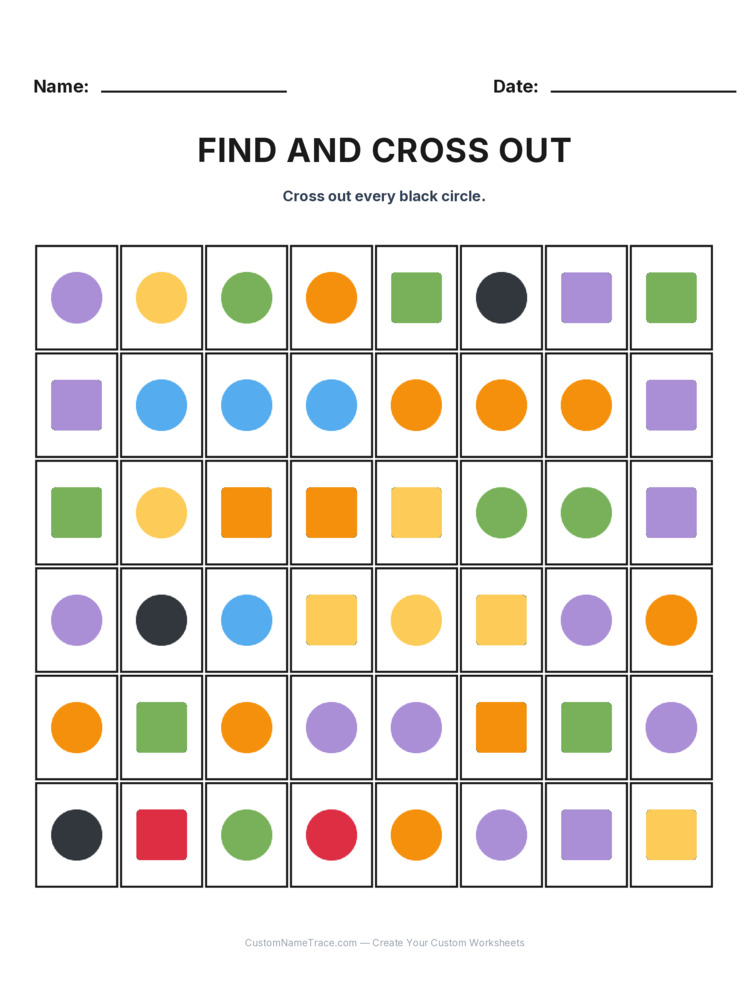
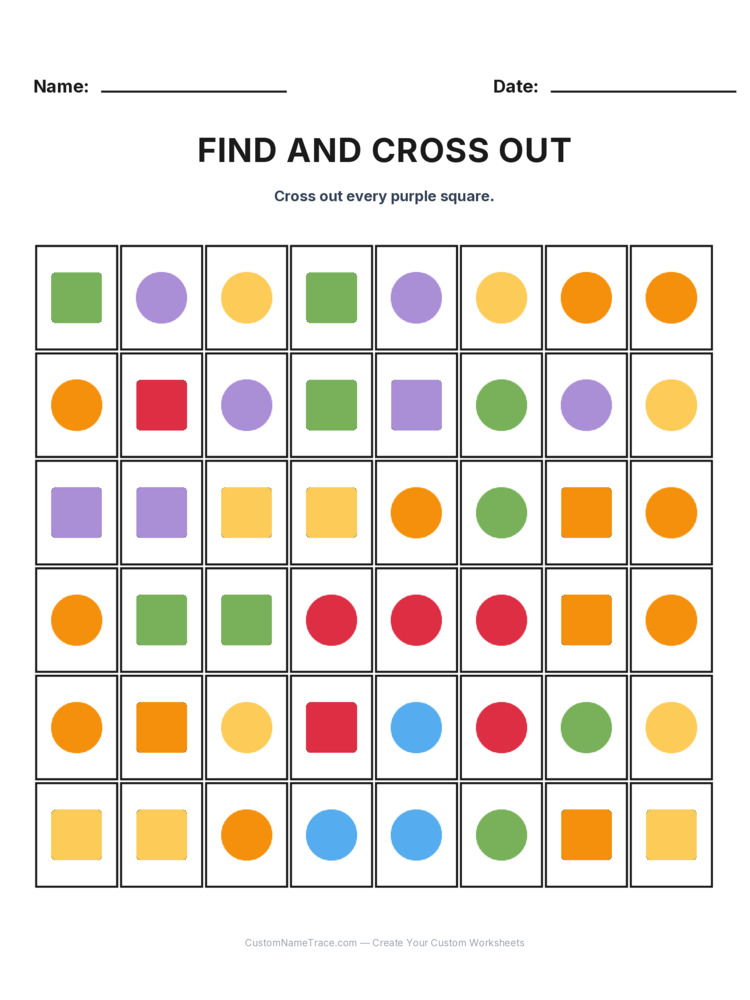
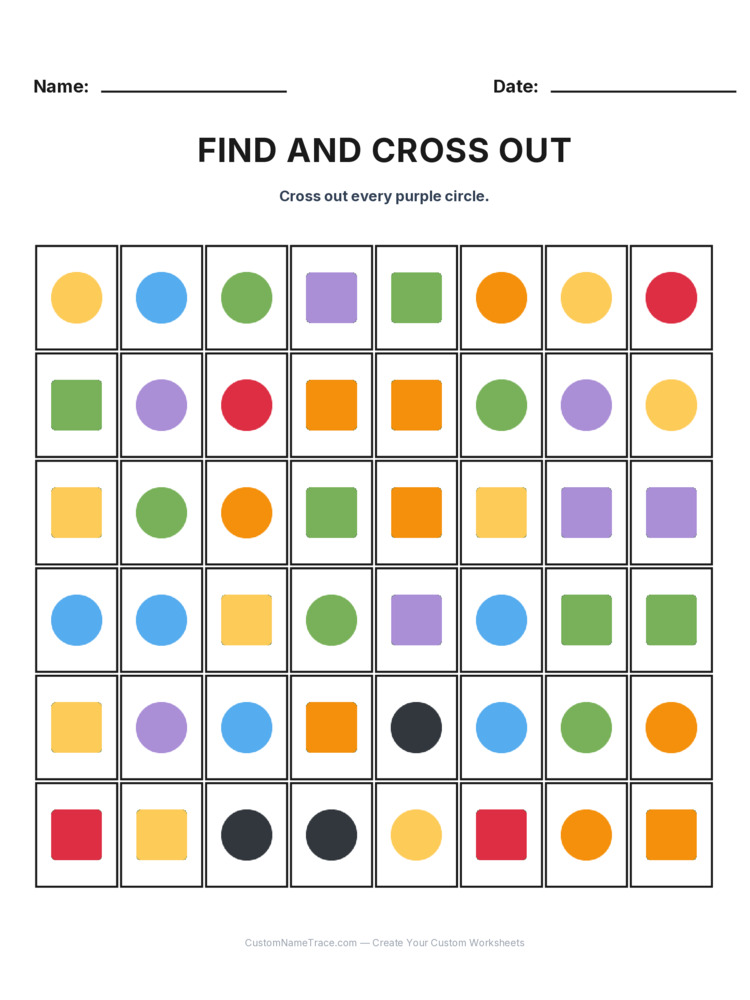
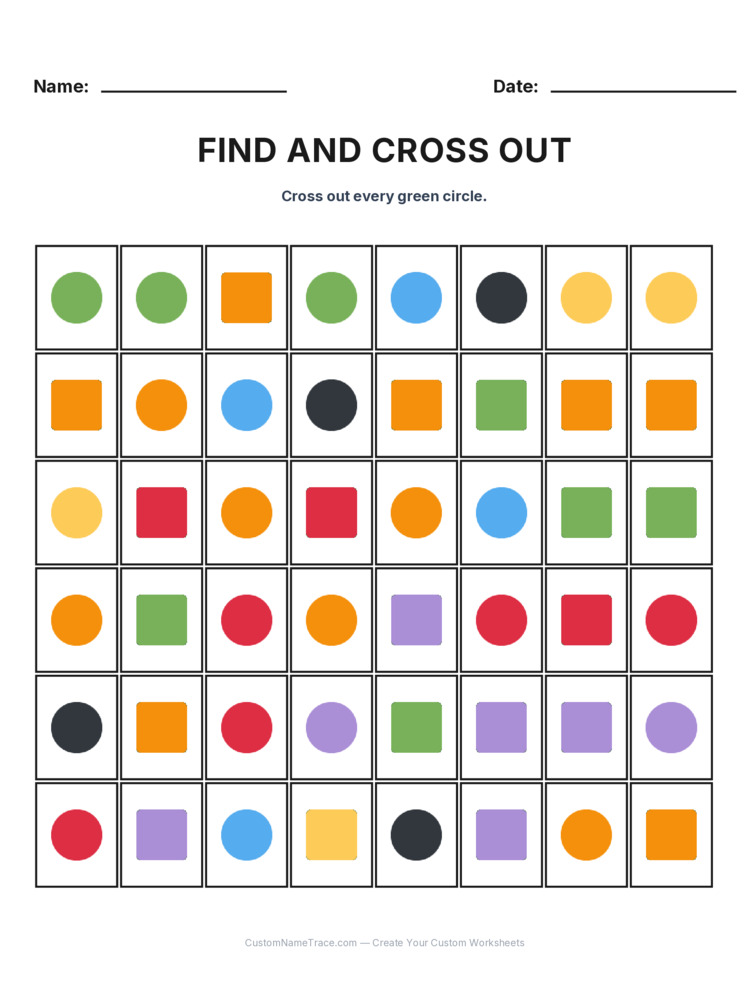
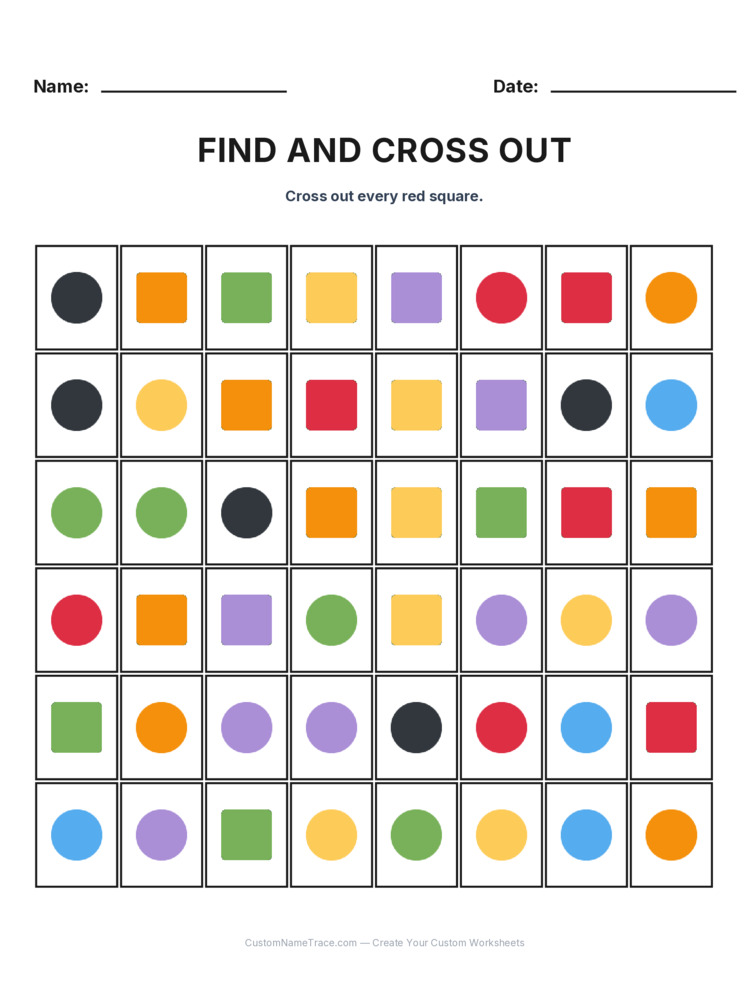
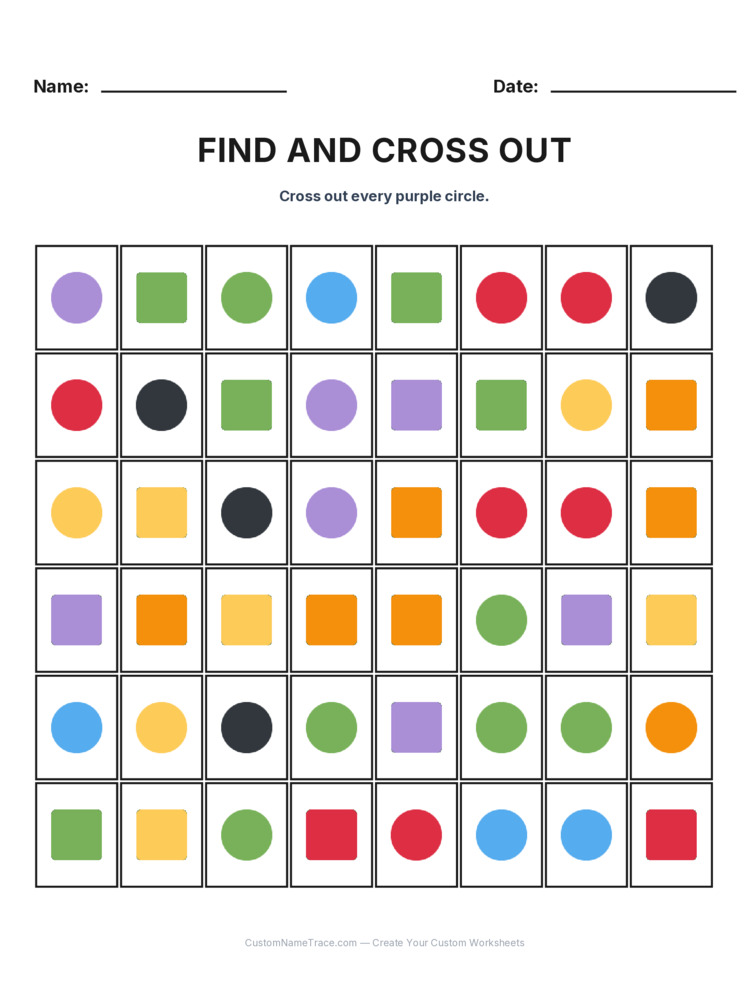
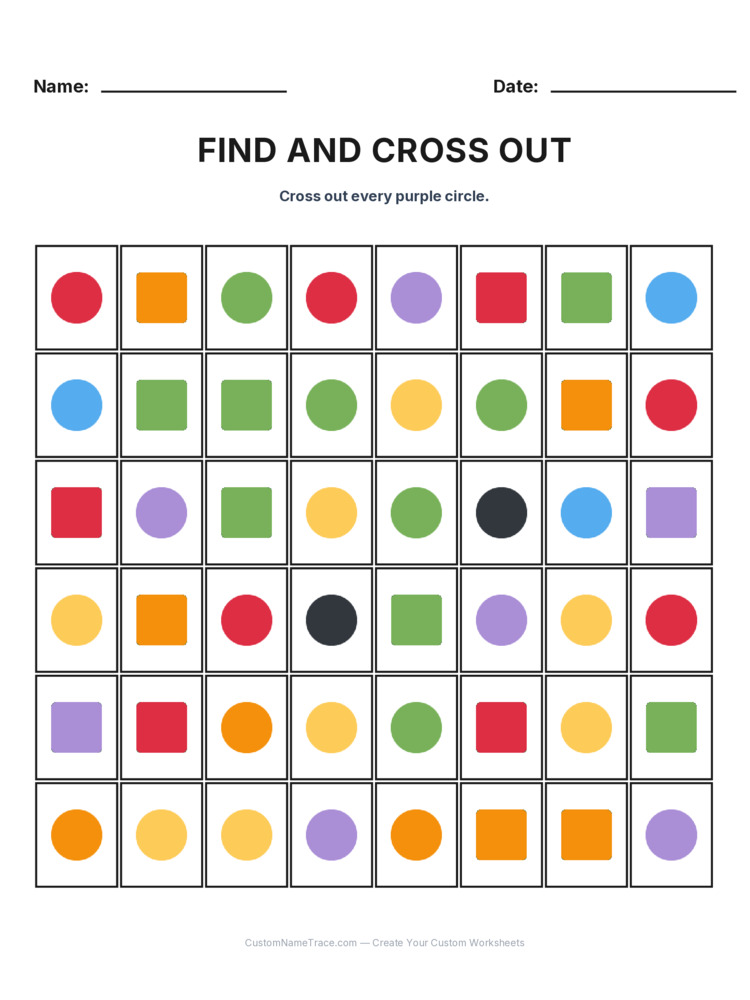
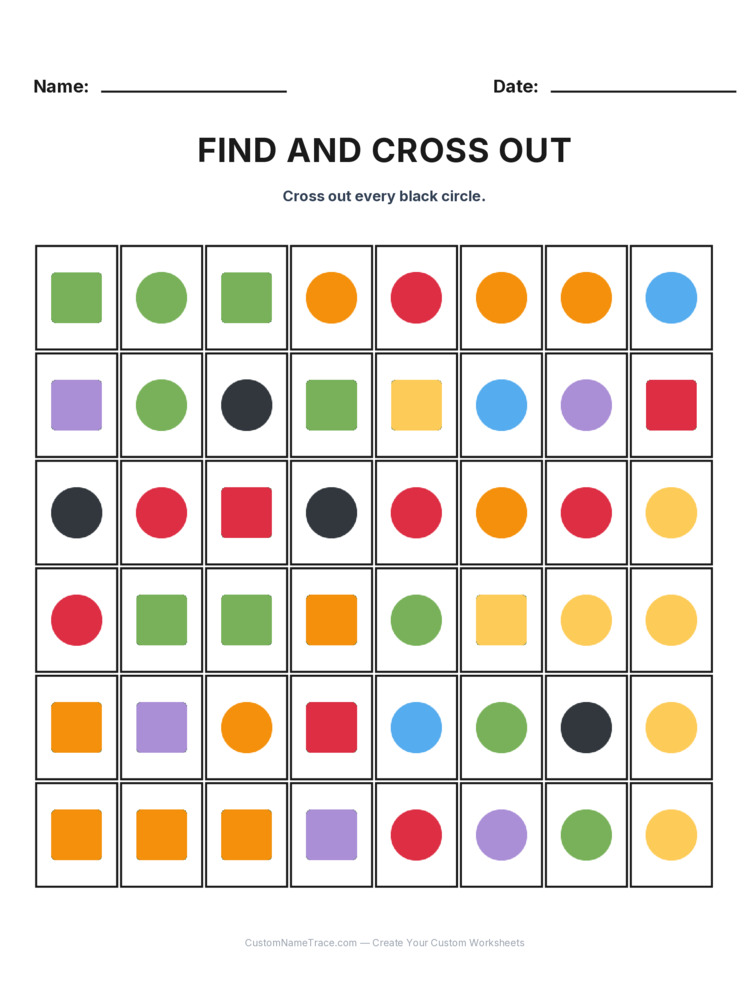
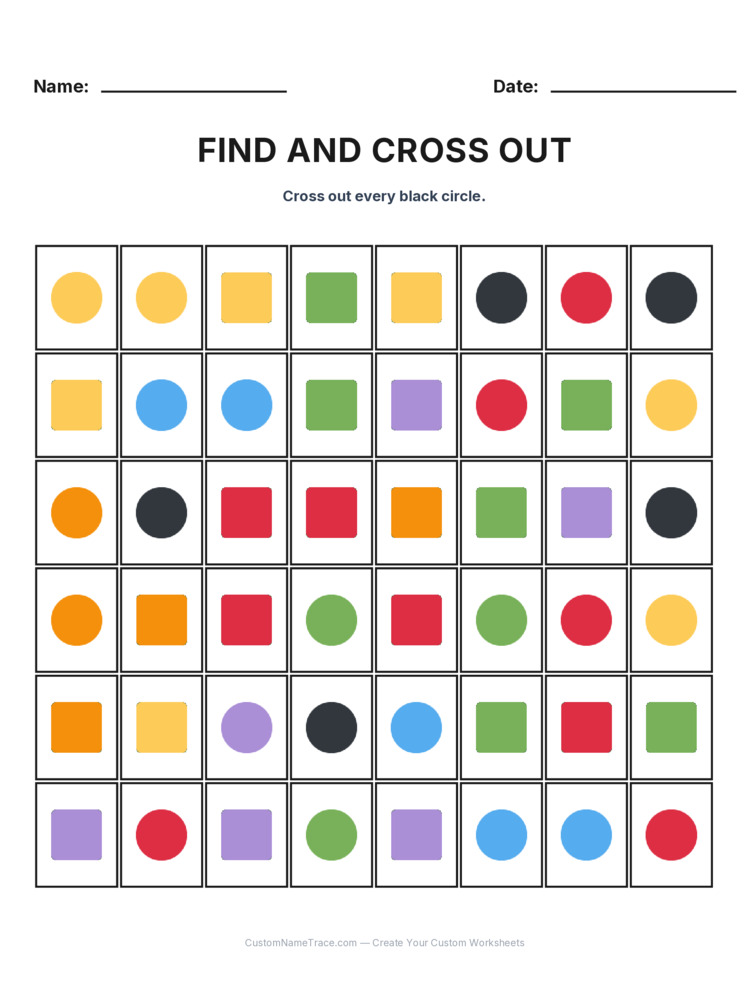
A grid of shapes is shown along with one rule (for example, a target shape and color), and the task is to cross out every single item in the grid that matches — not just the first one found. Every puzzle is built to guarantee at least a few real matches, so a child isn't hunting for something that might not exist; the challenge is thoroughness, checking every item rather than stopping after the first hit.
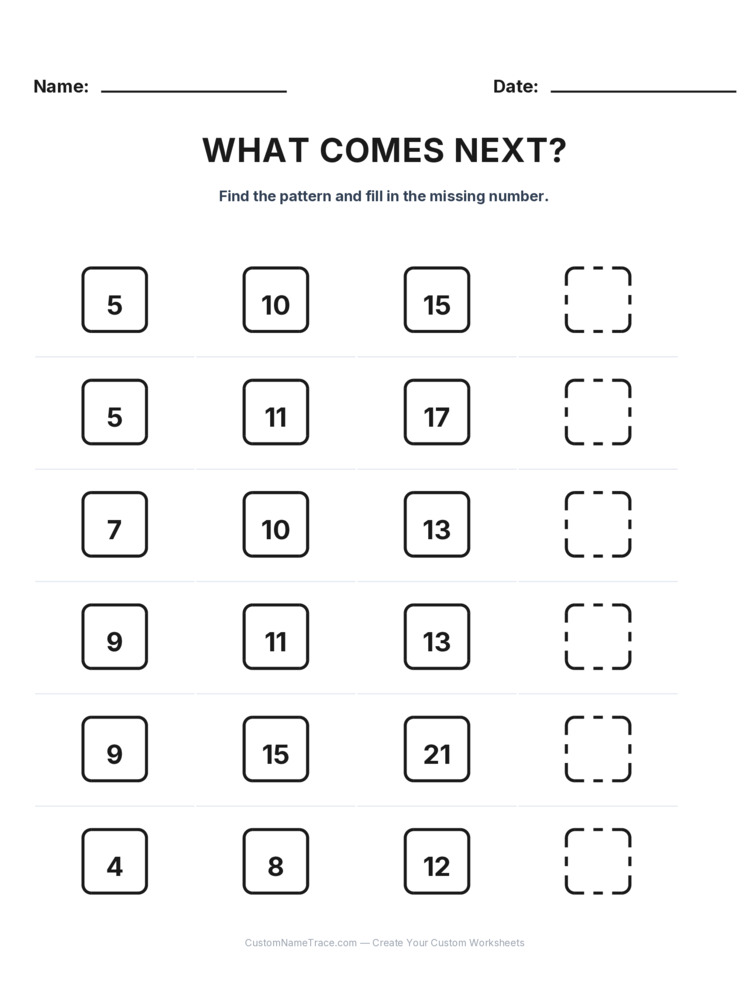
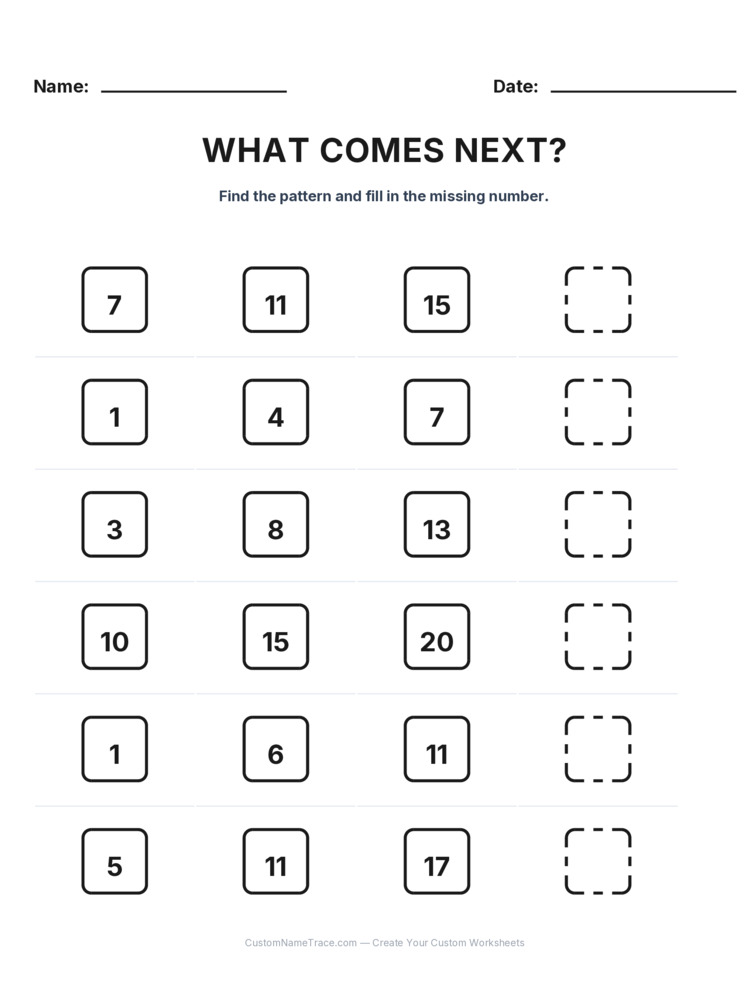
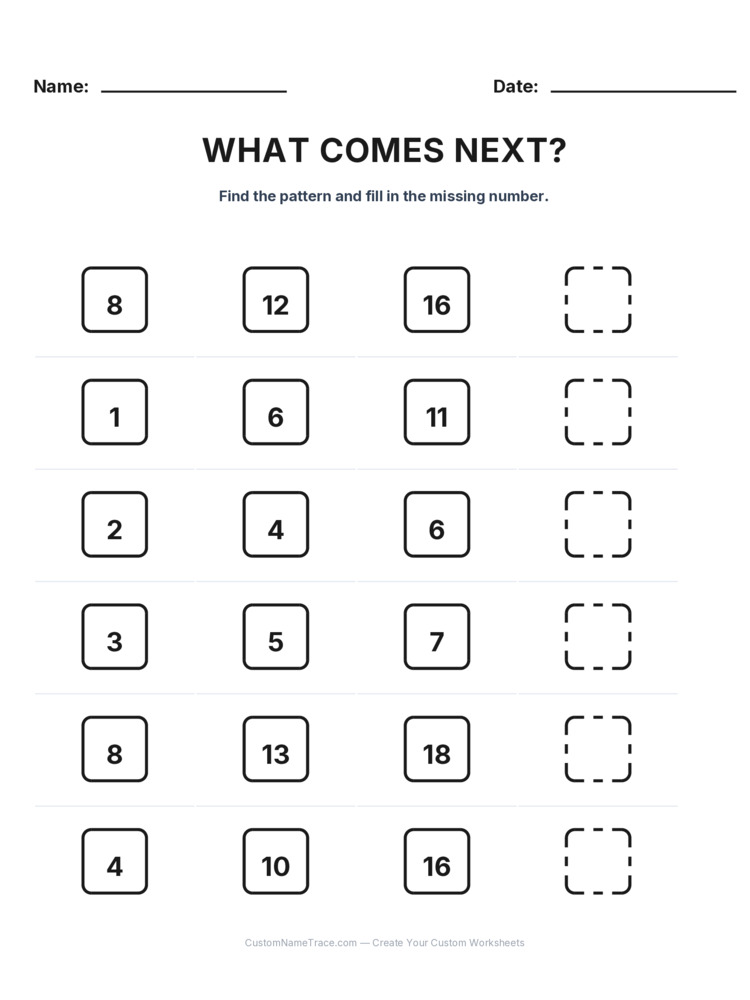
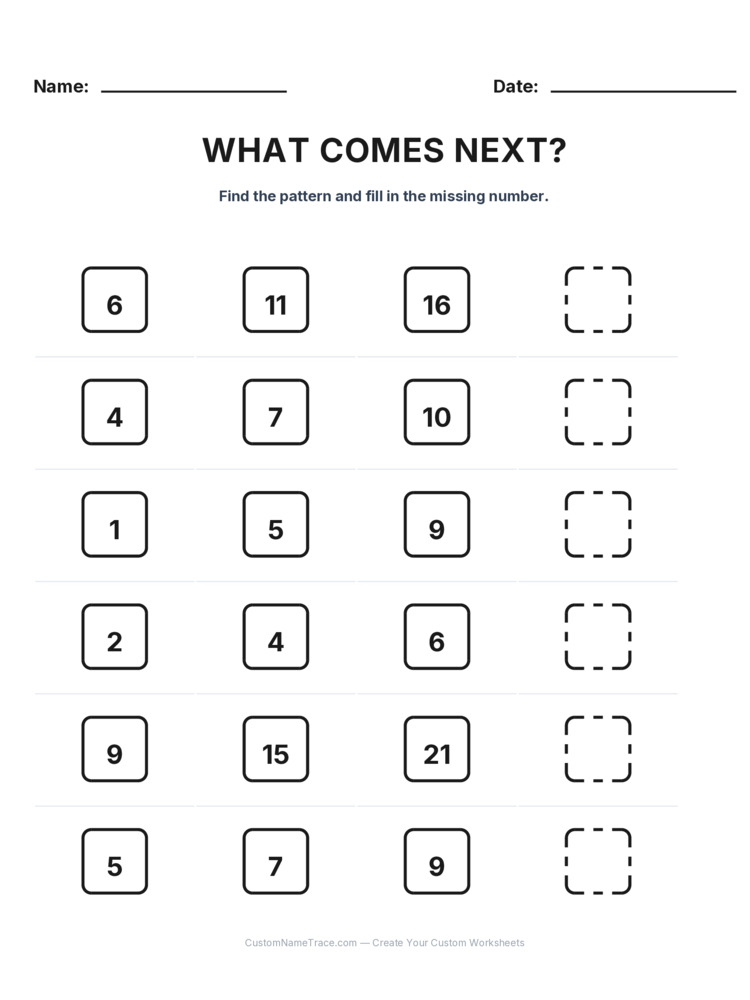
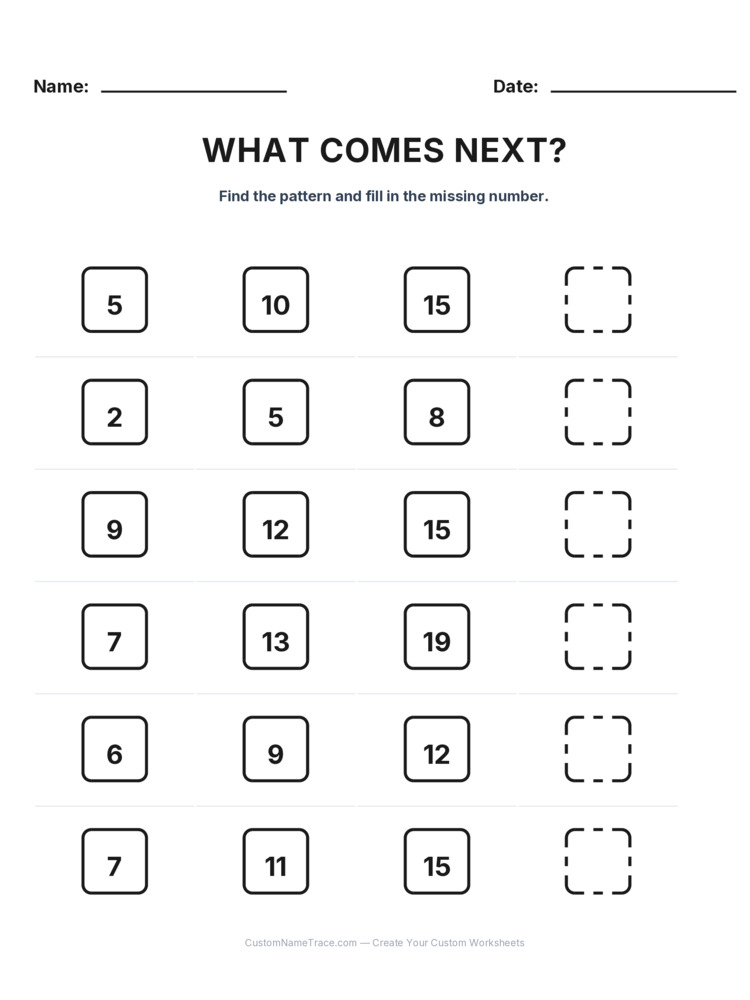
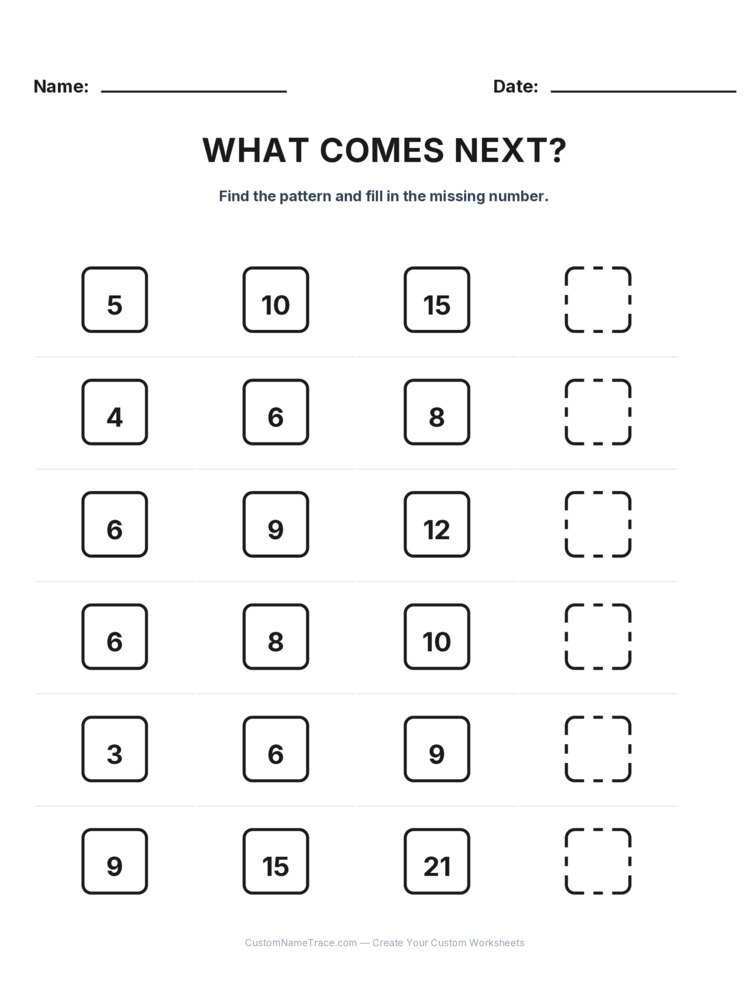
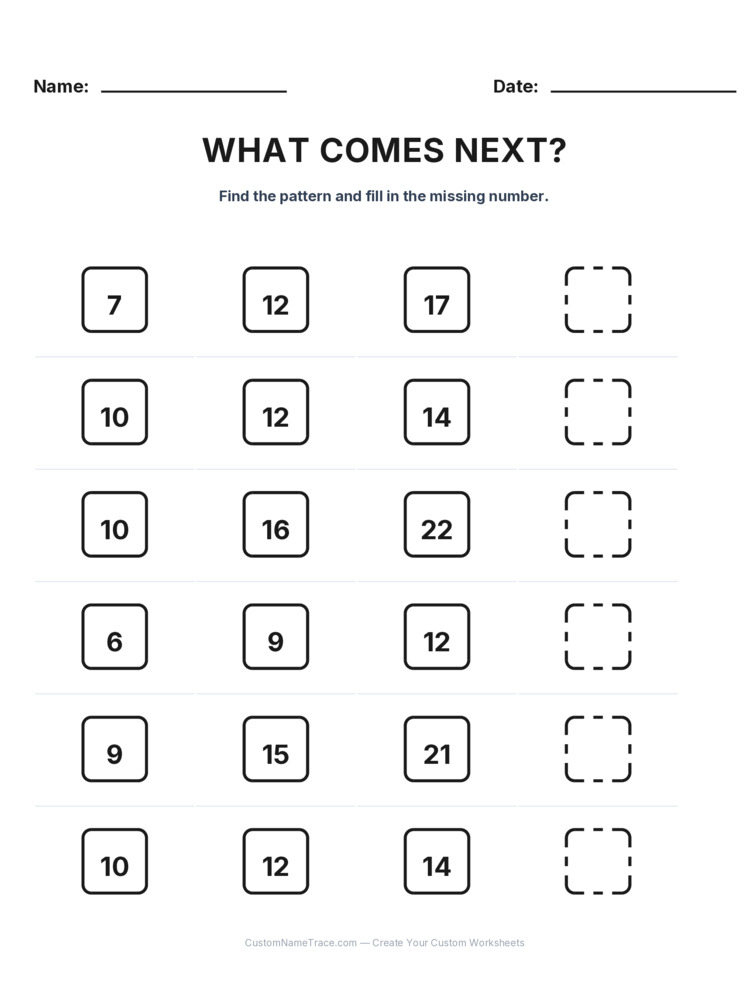
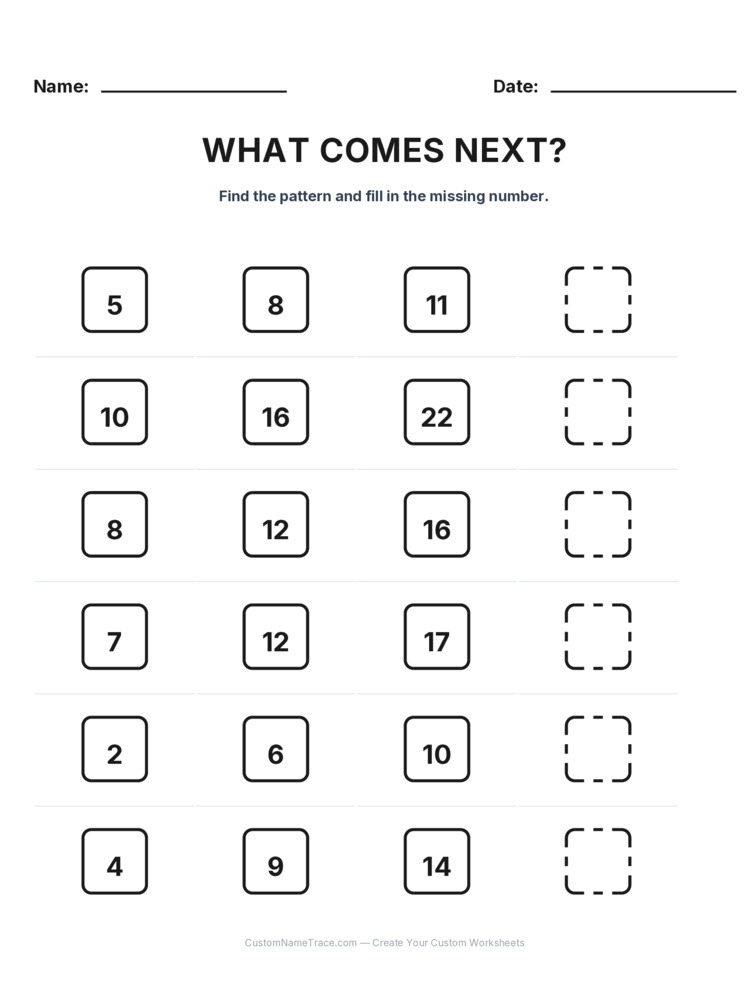
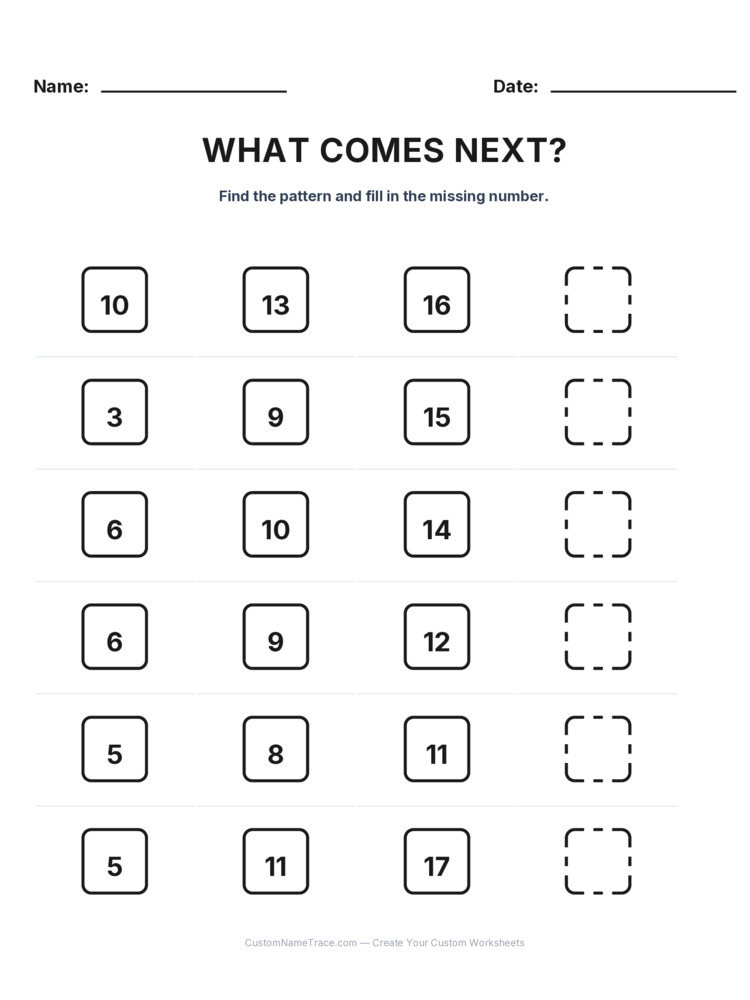
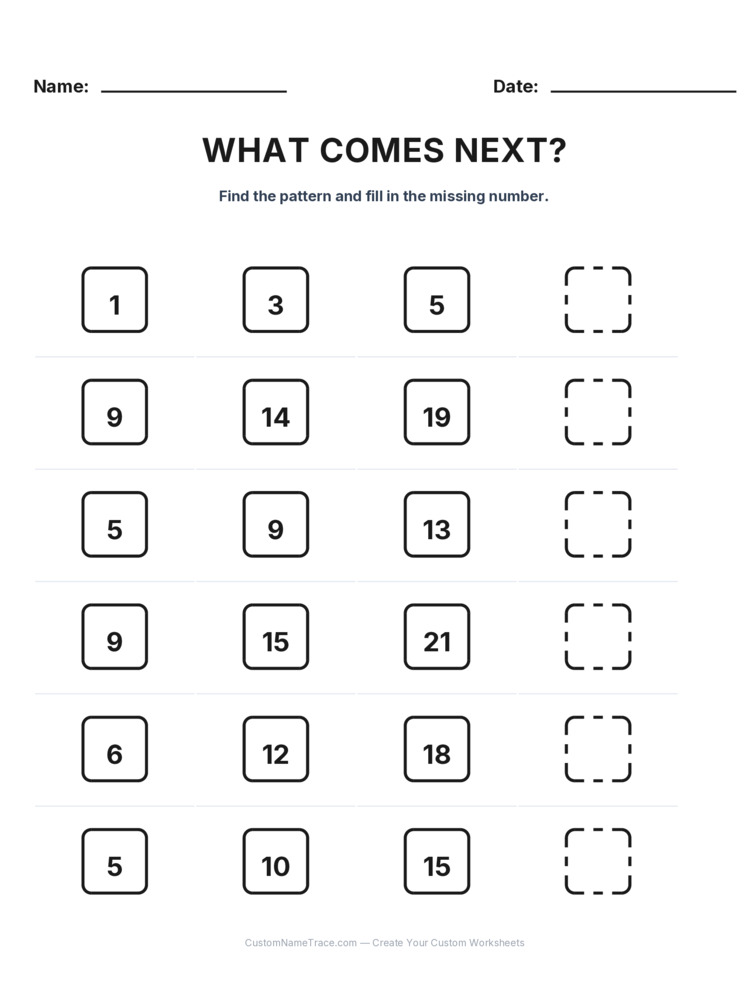
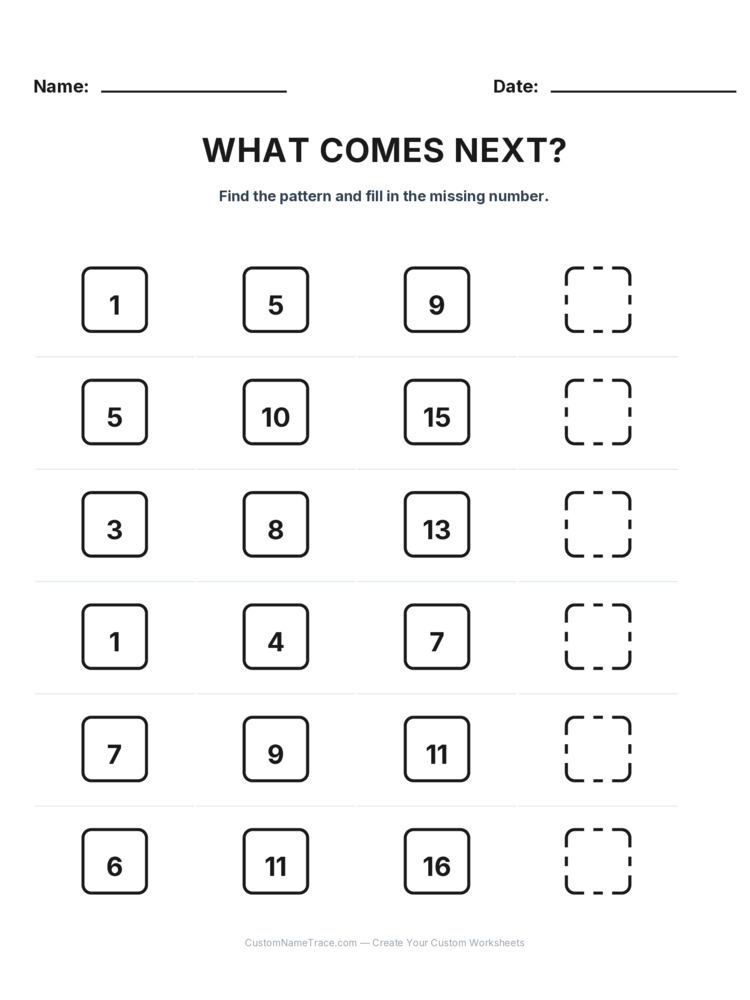
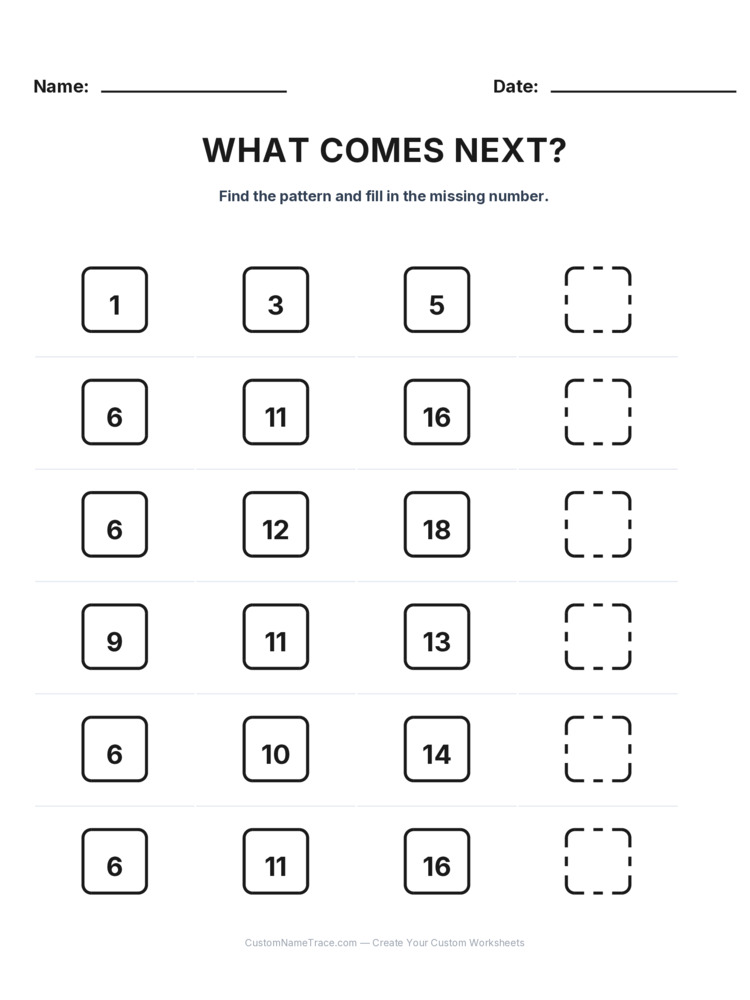
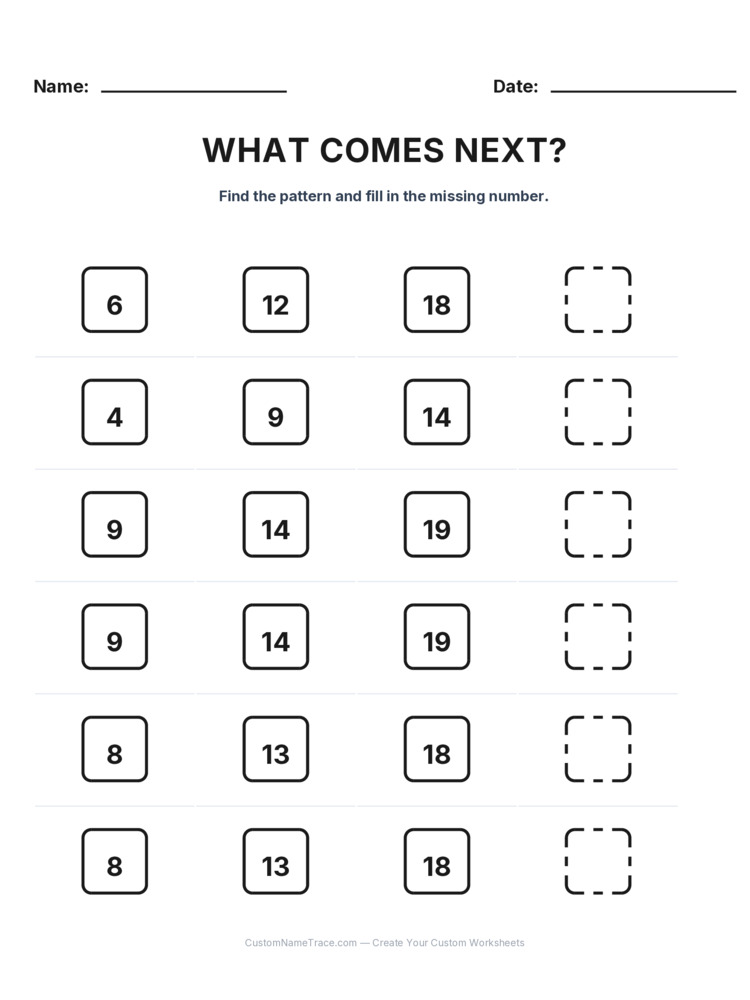
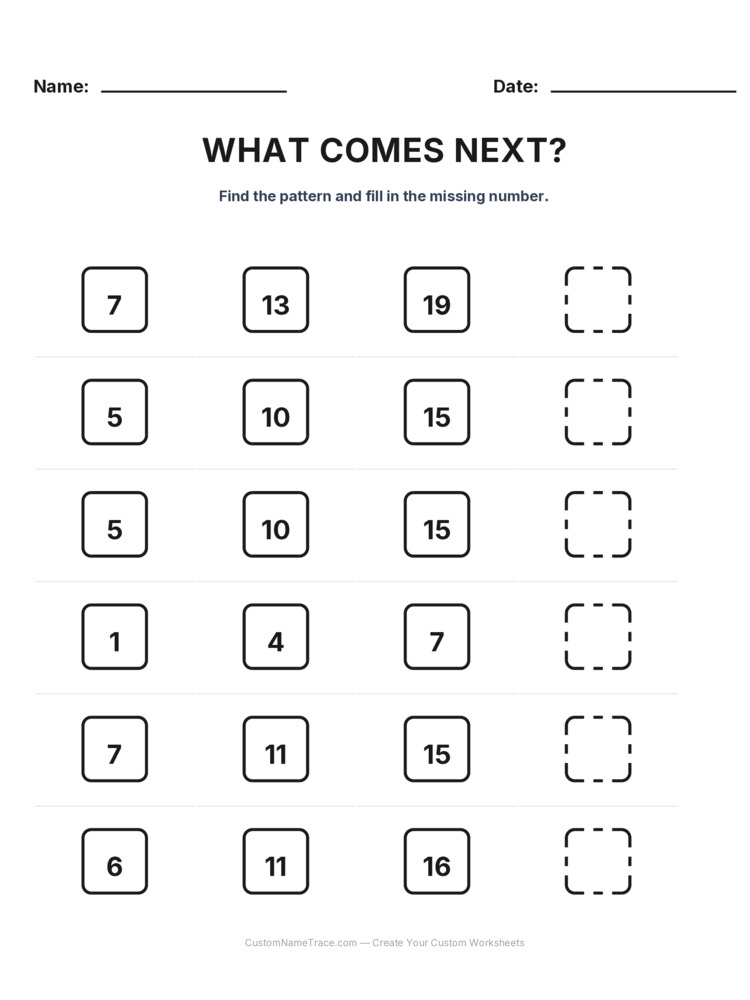
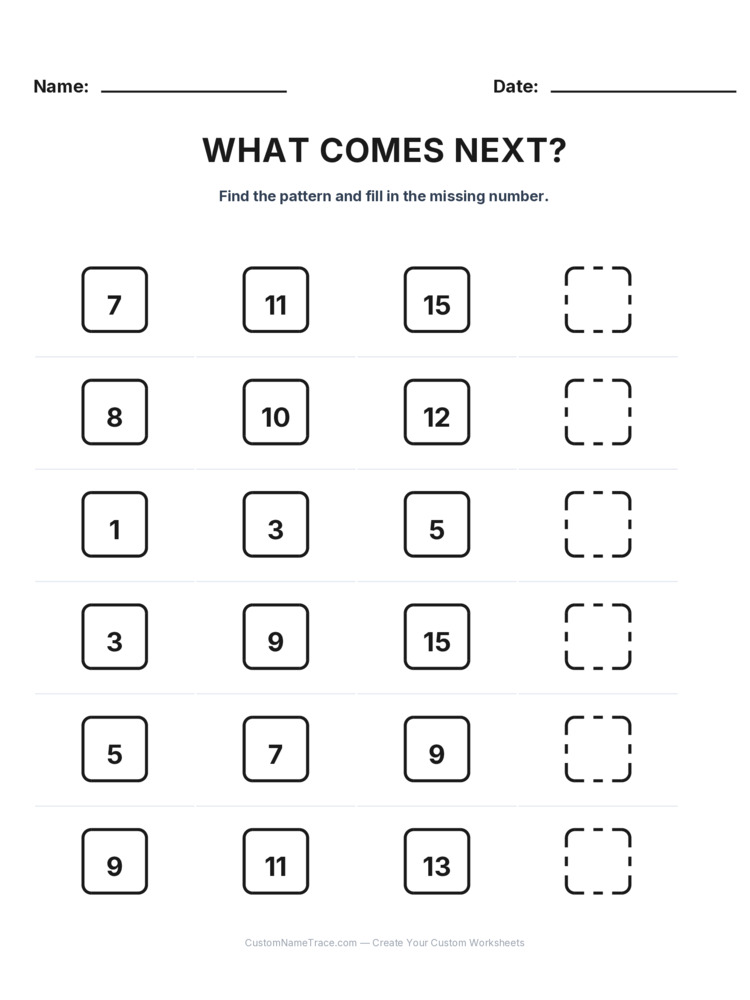
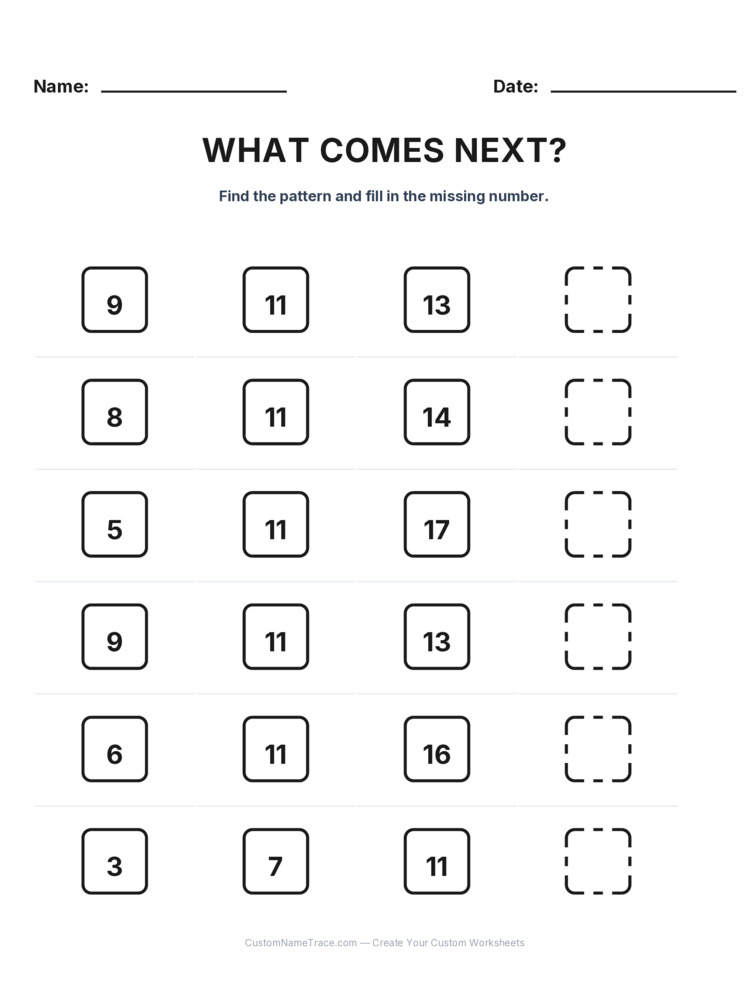
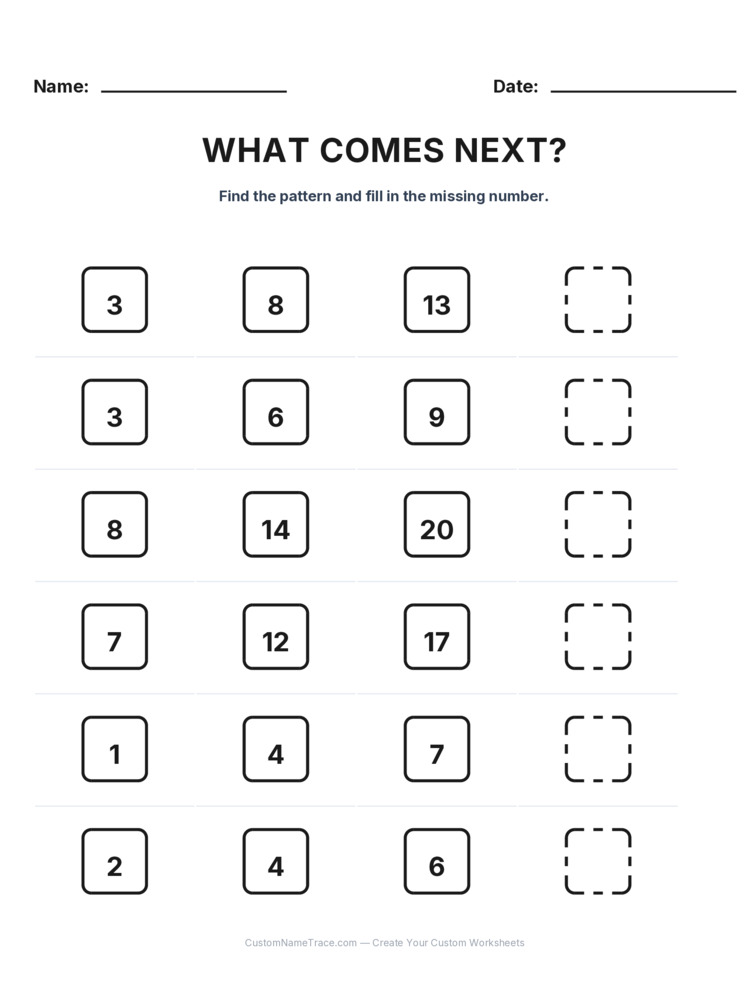
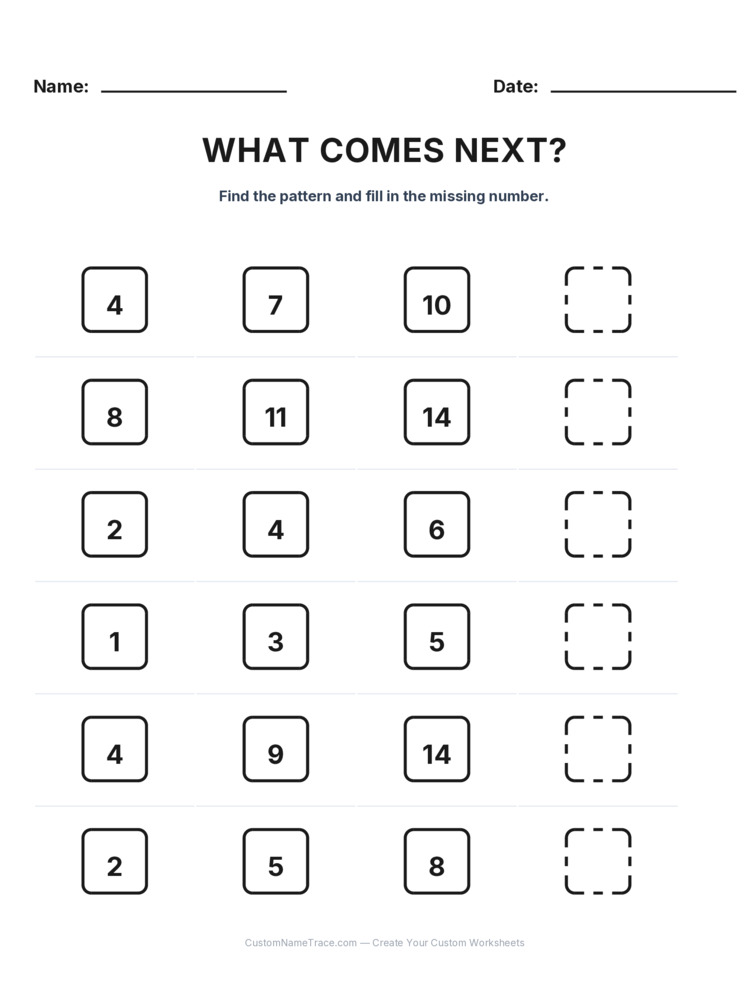
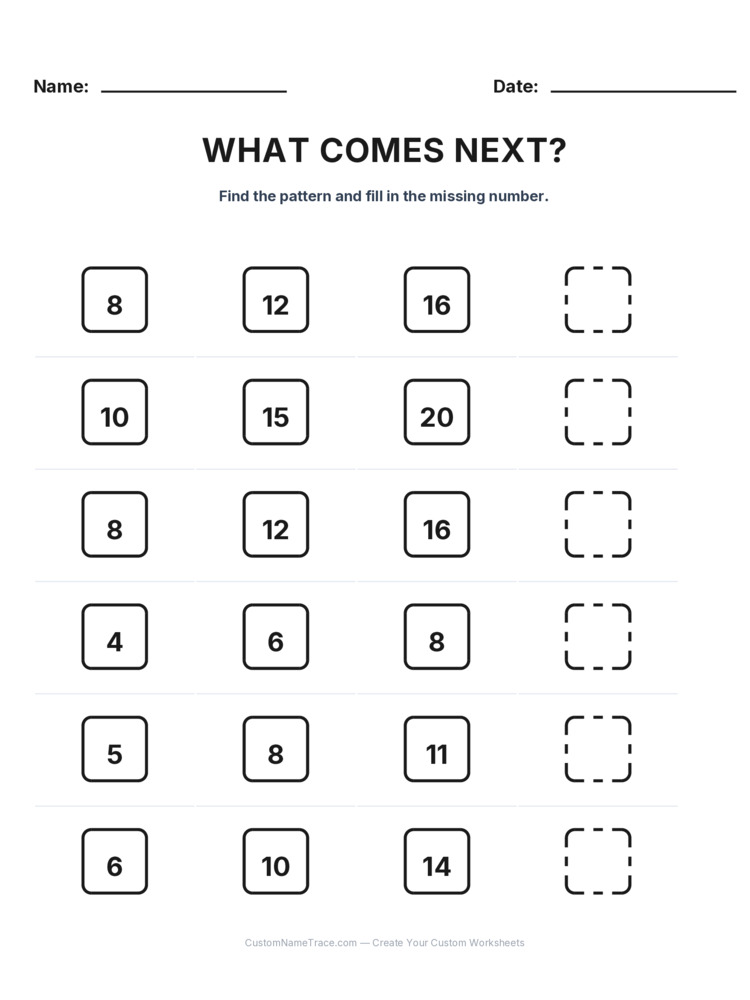
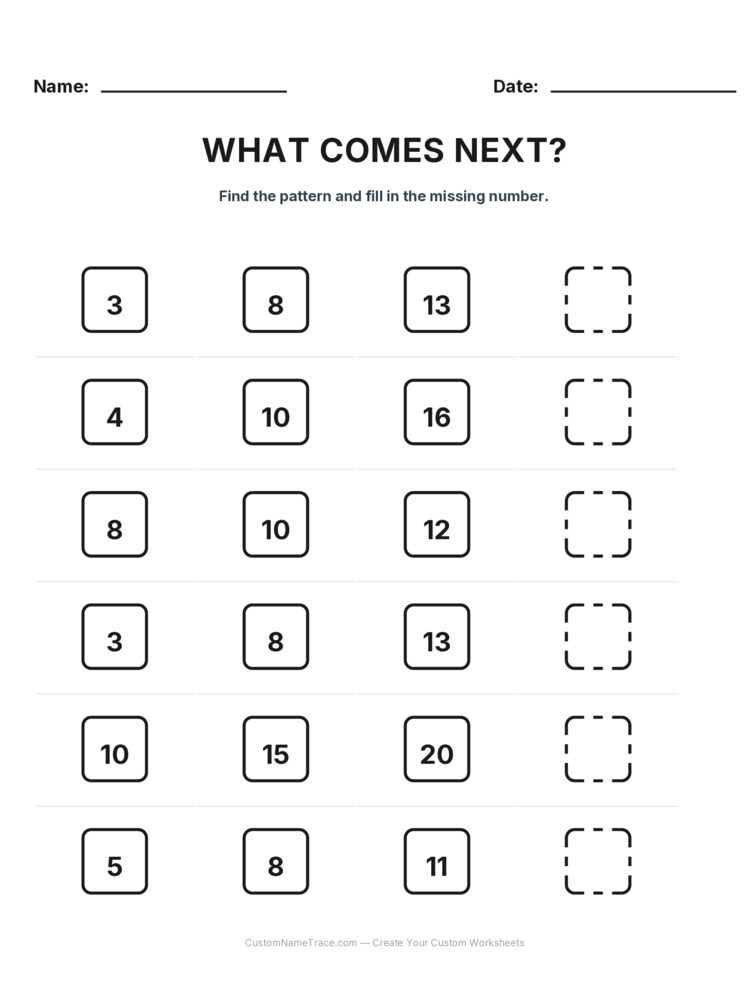
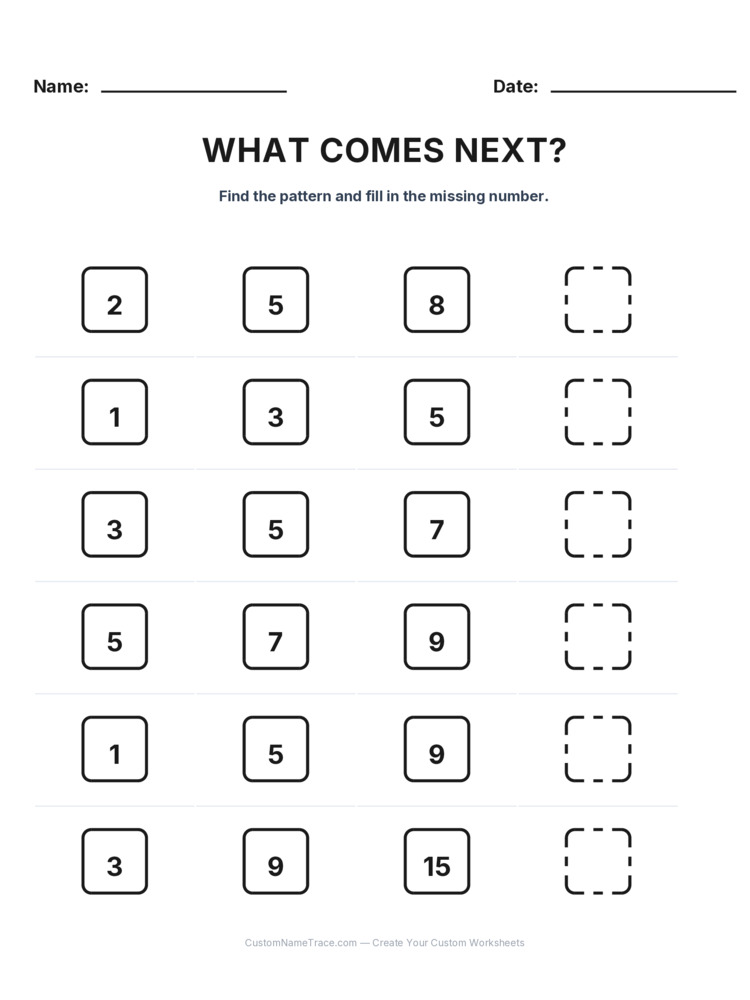
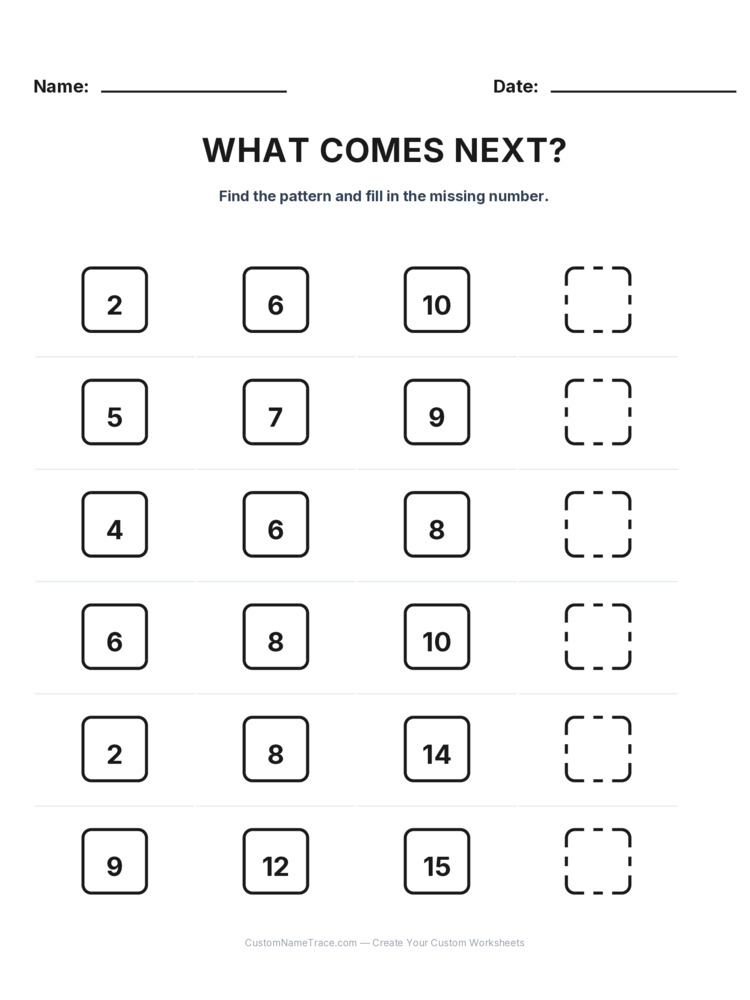
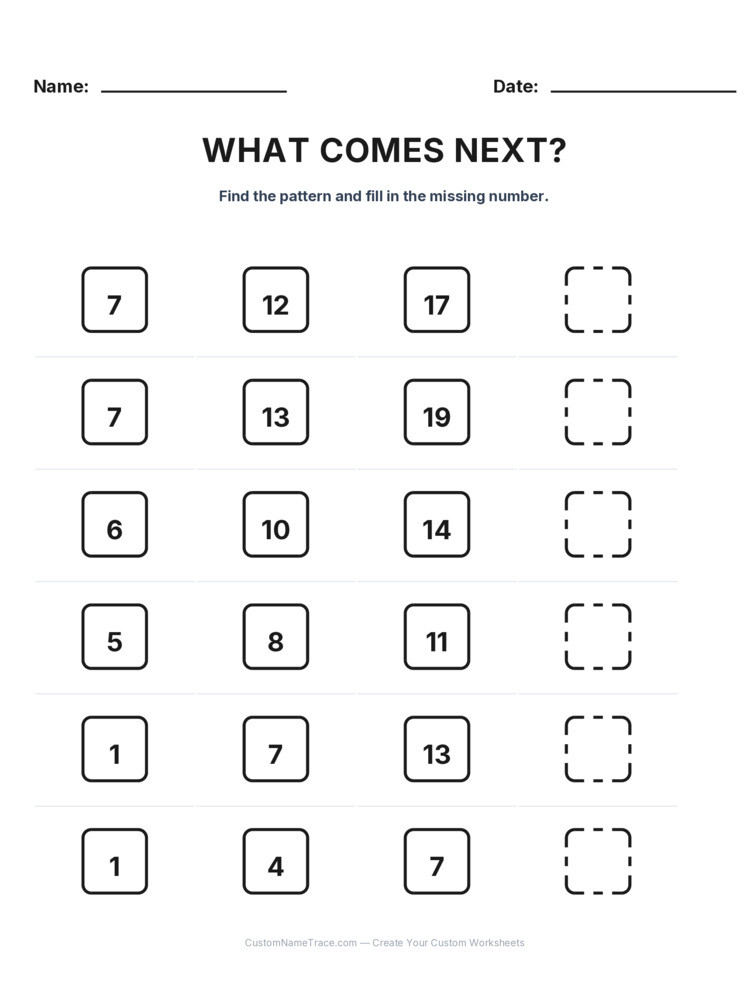
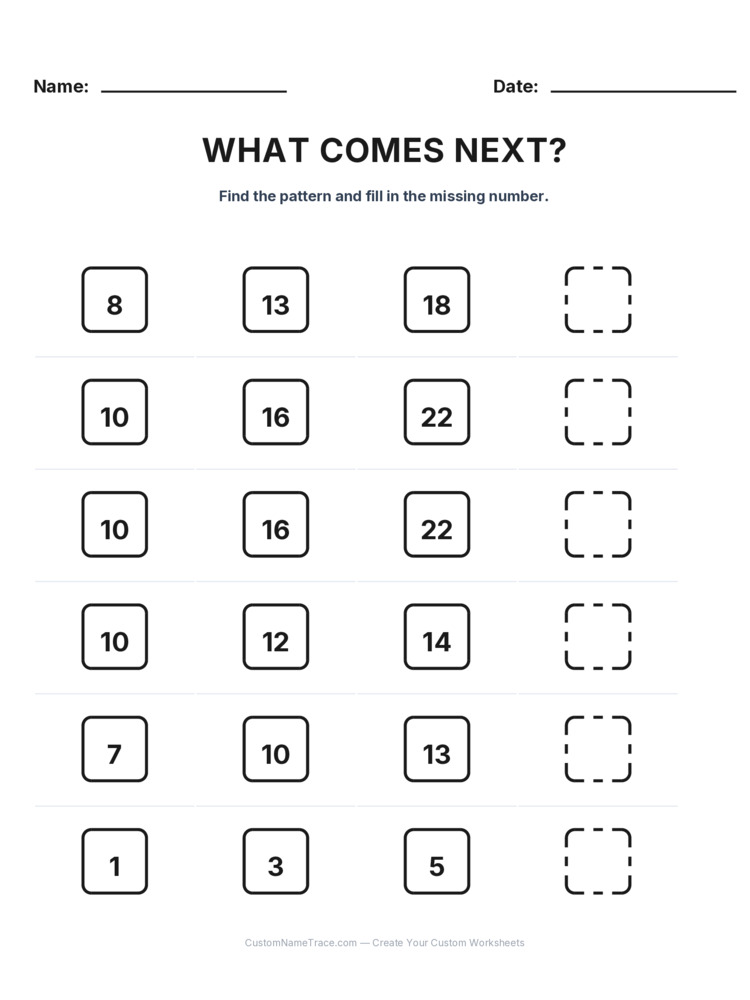
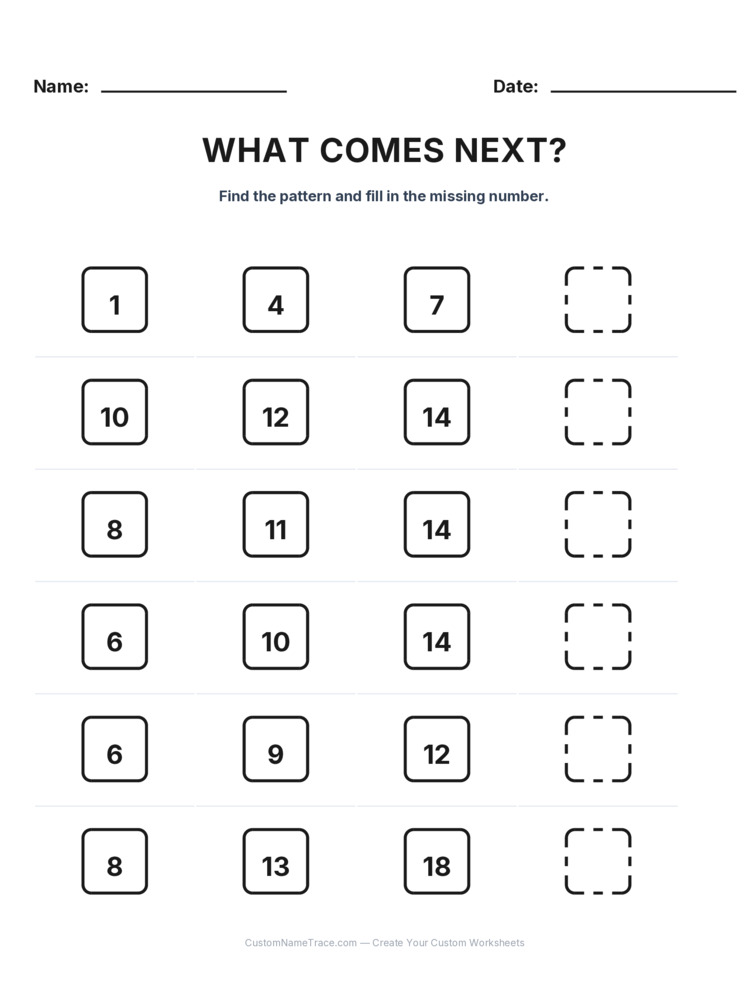
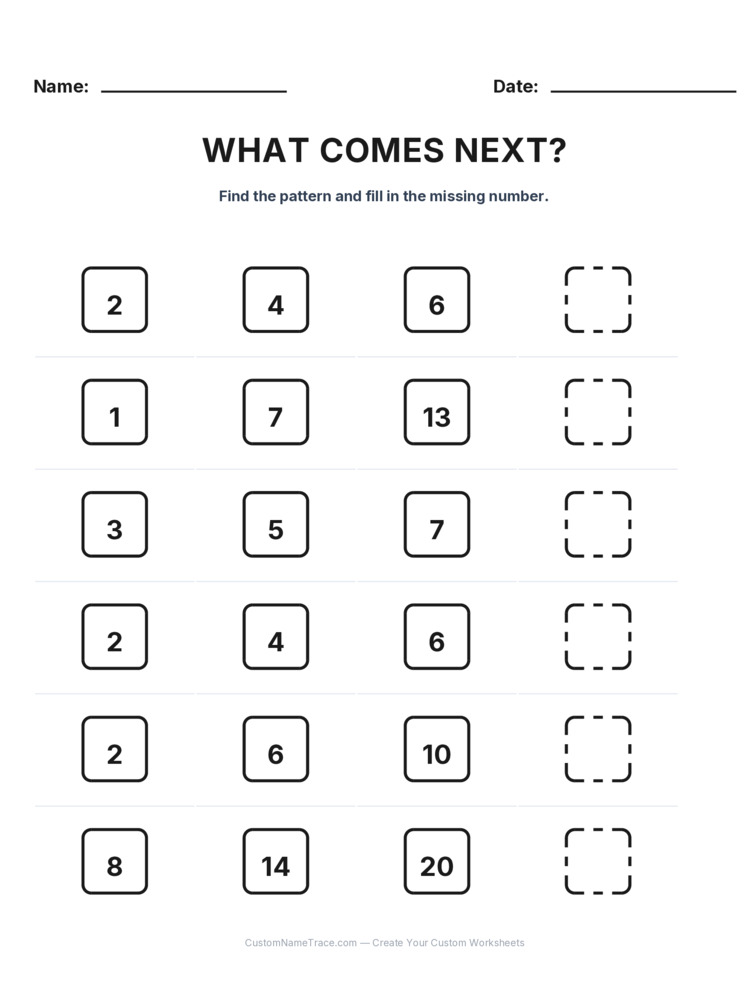
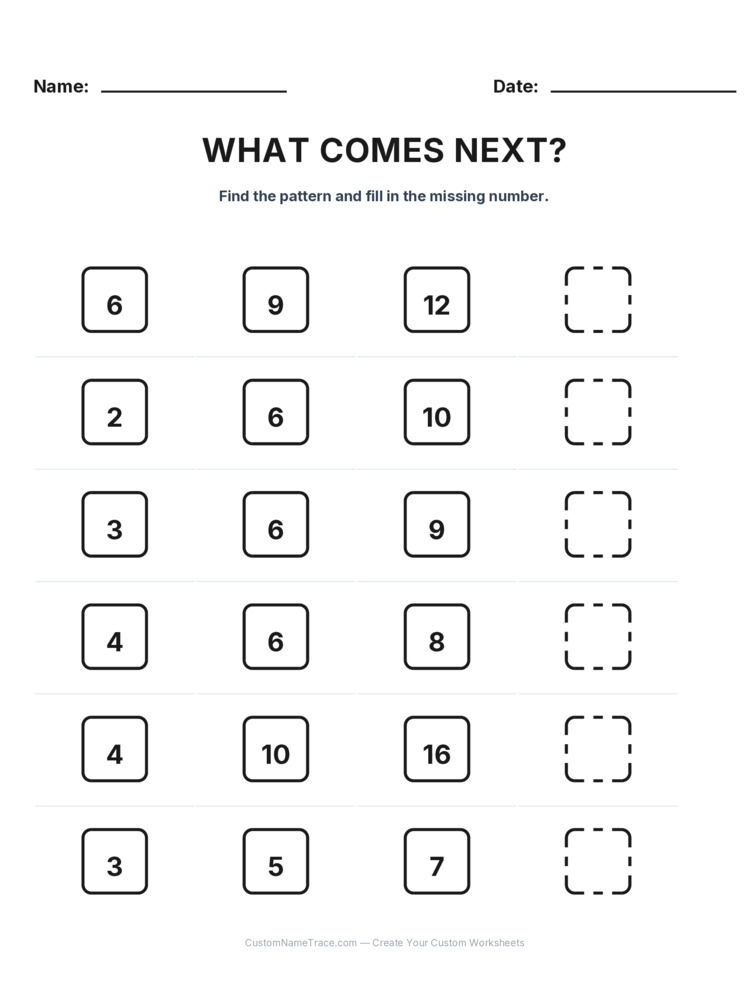
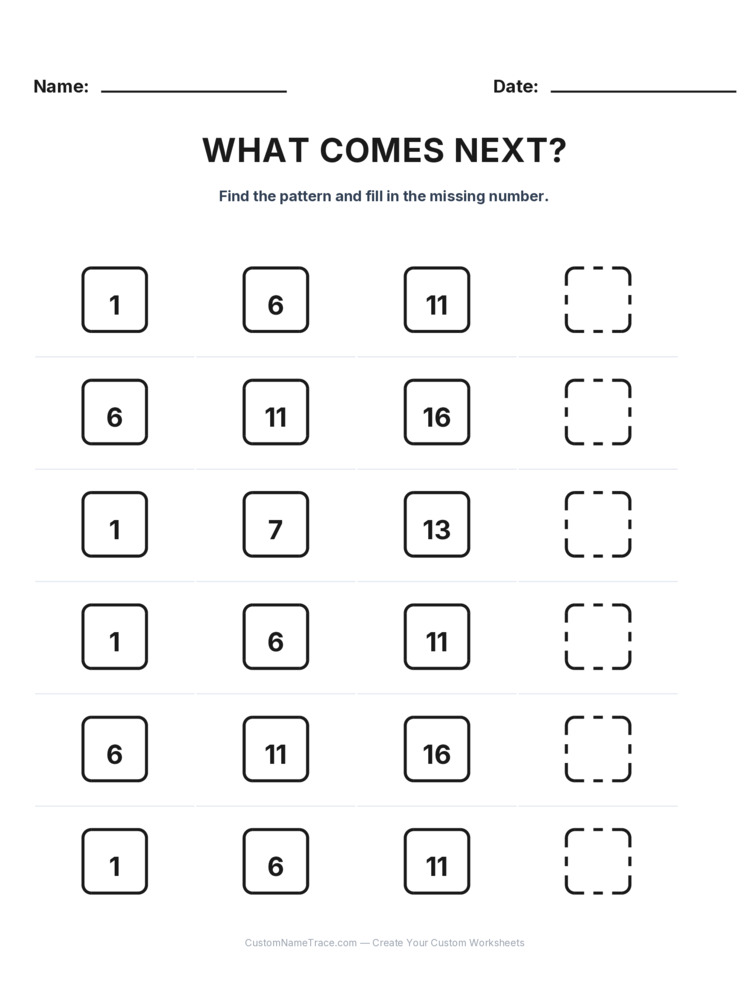
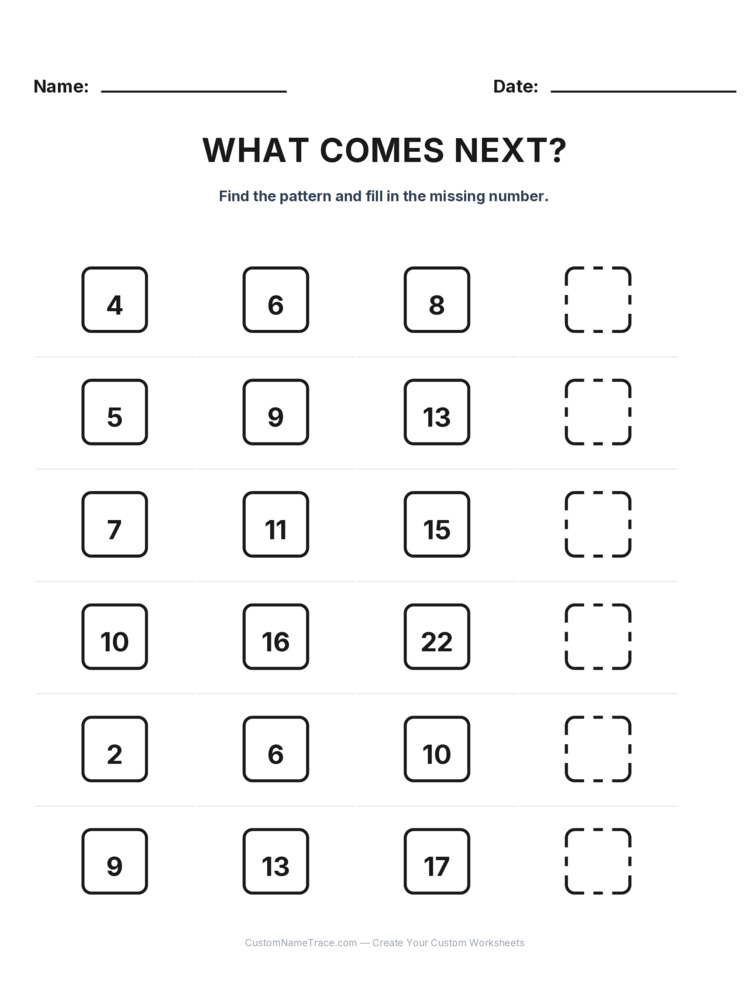
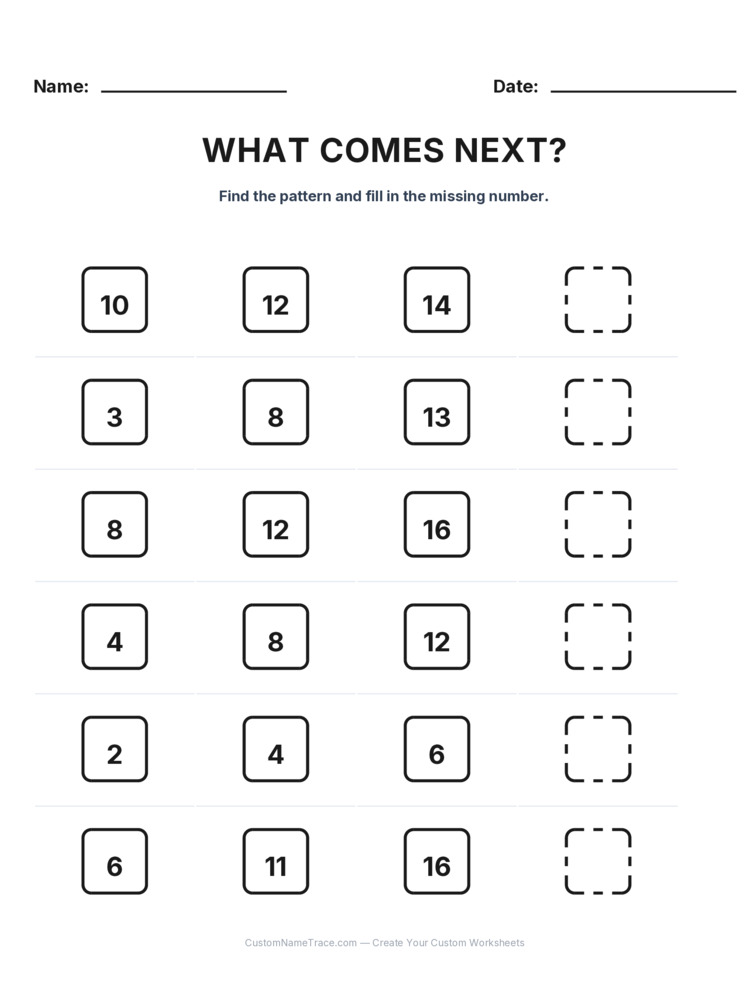
Growing Sequences (What Comes Next?)
A short row of numbers follows one consistent pattern — always adding the same amount, or always adding a growing amount — with the last box left blank for a child to fill in. This is an early, concrete introduction to algebraic thinking: spotting a rule from a few examples and predicting what comes next, the same reasoning that underlies far more advanced pattern and sequence work later on.
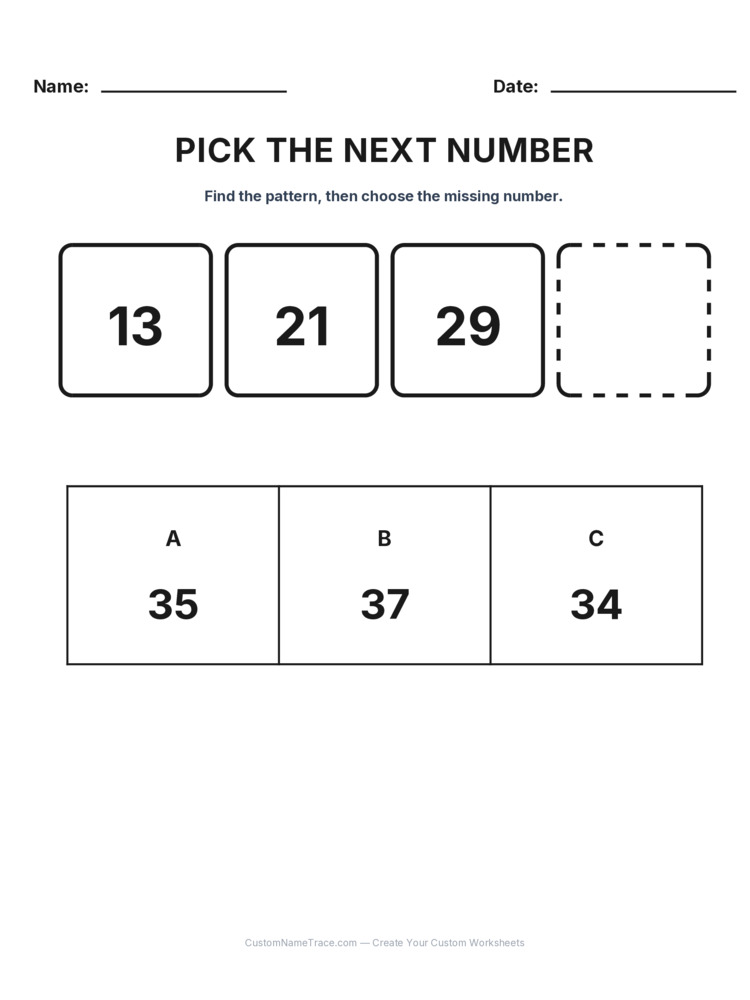
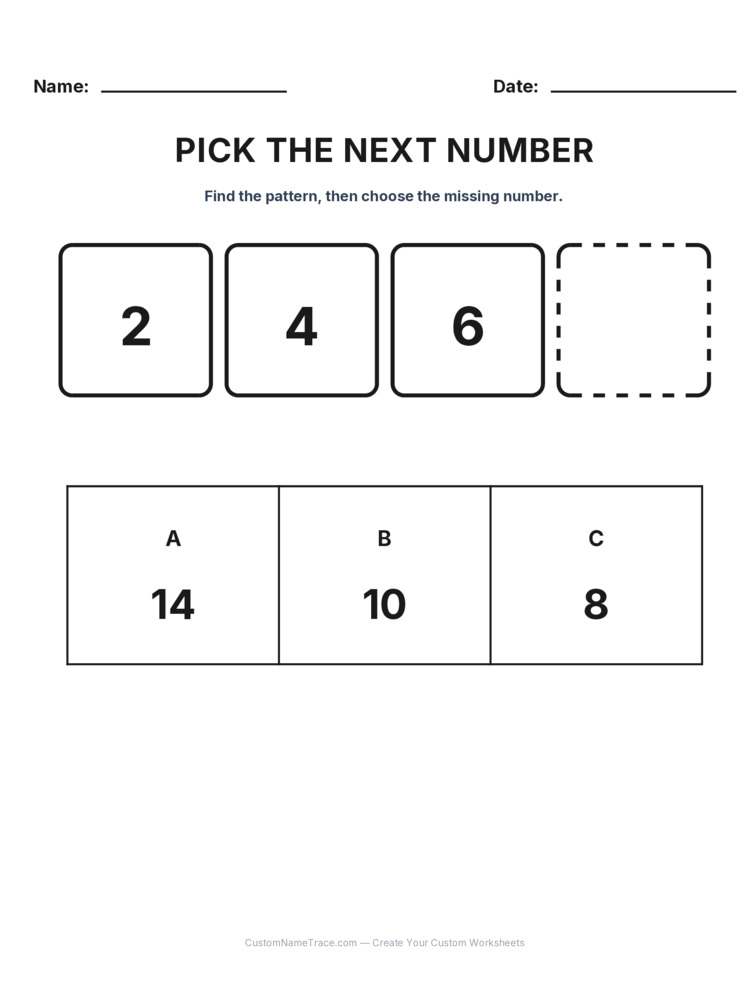
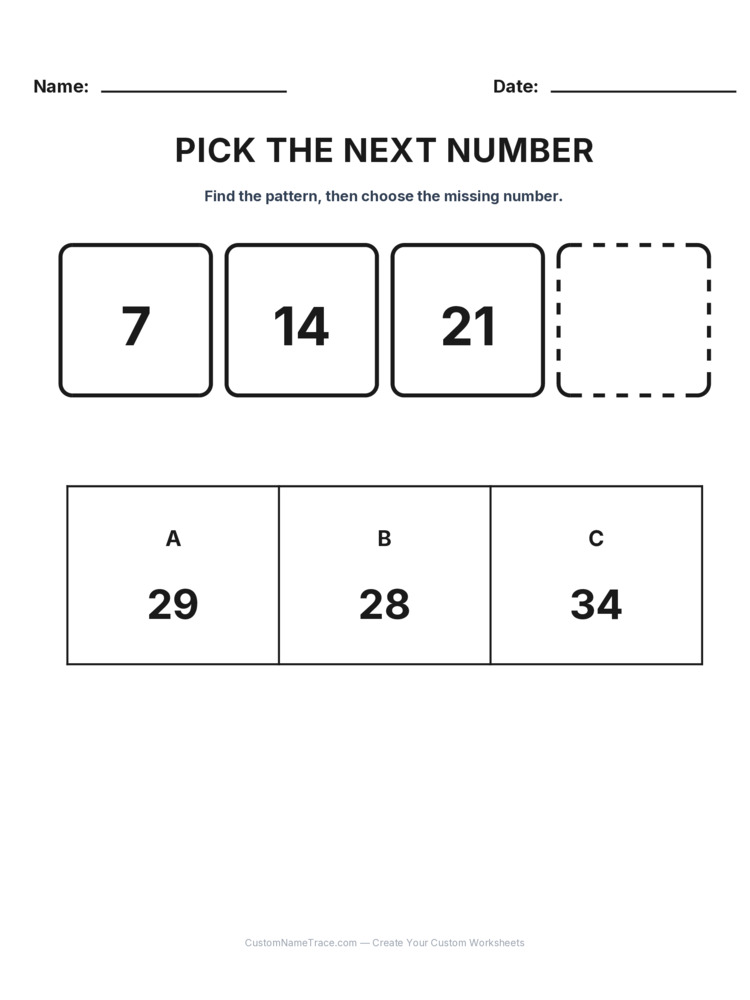
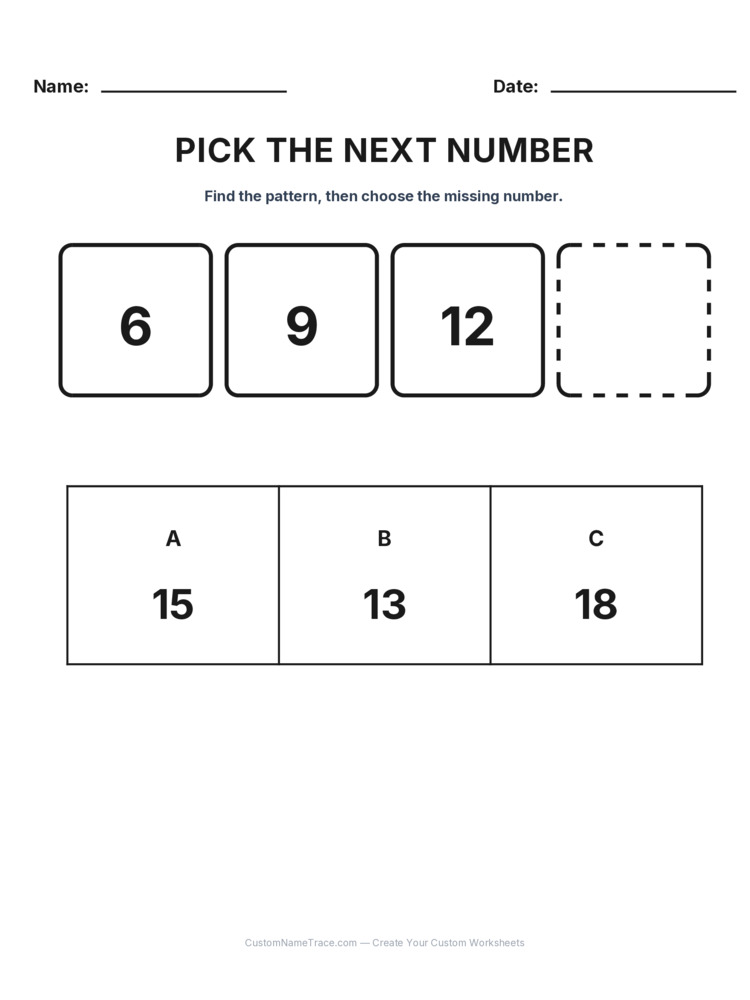
Number Pattern (Pick the Answer)
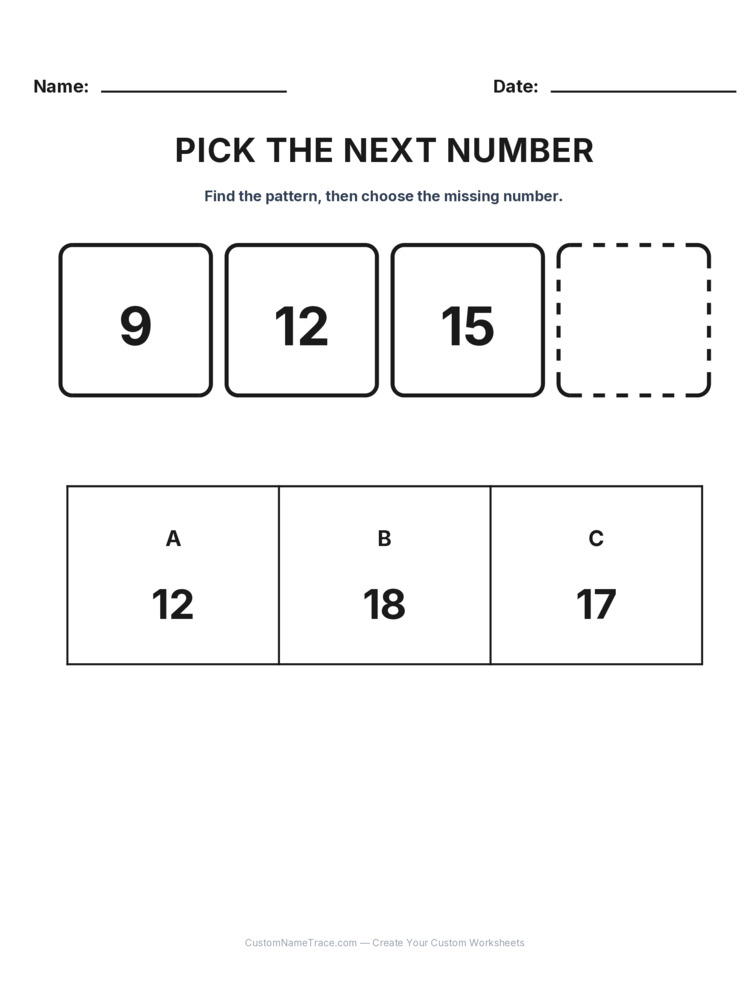
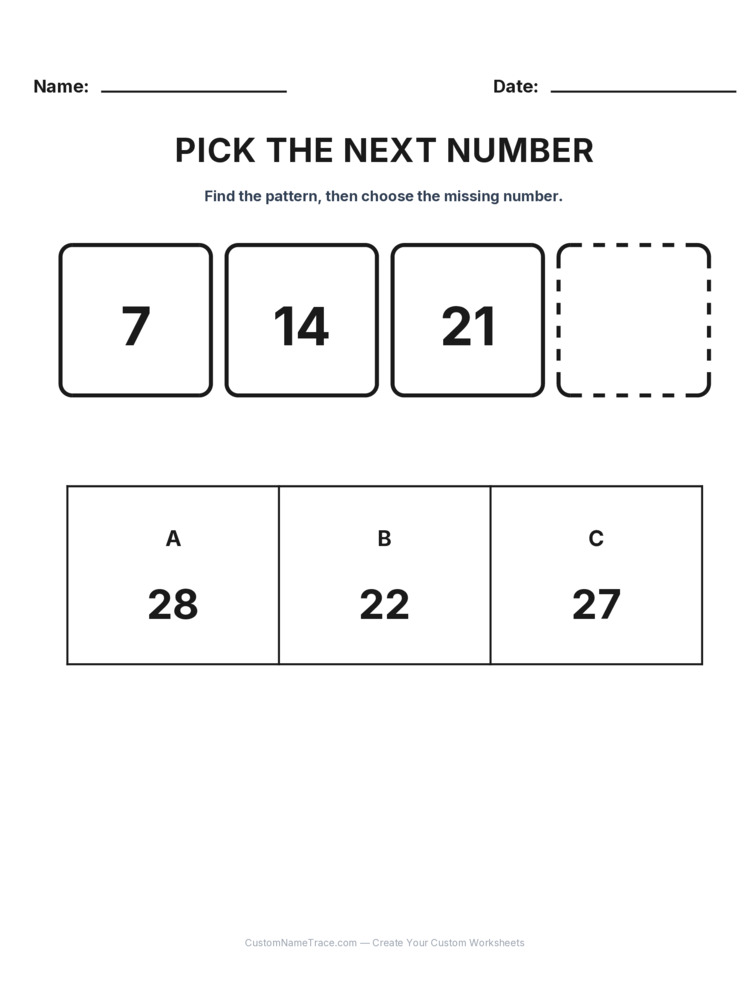
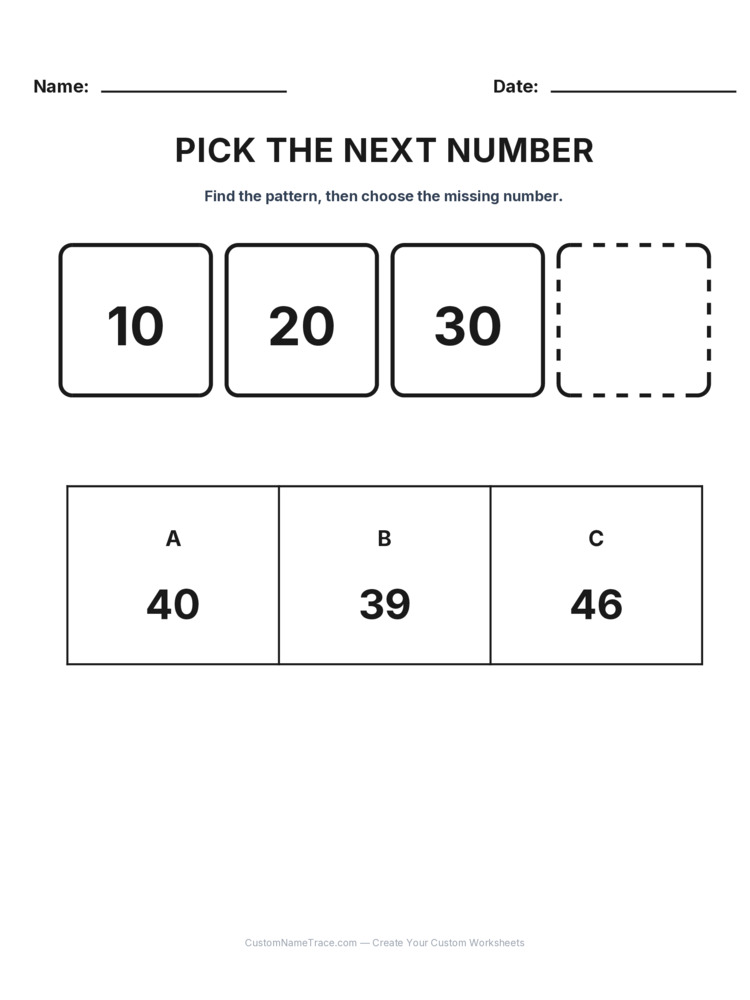
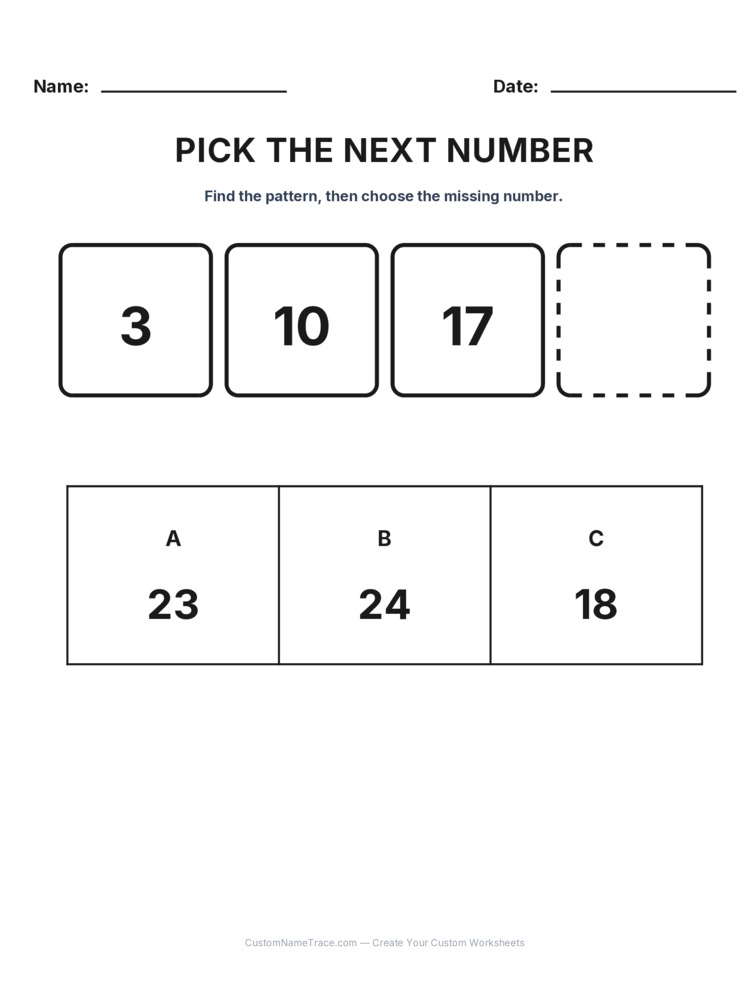
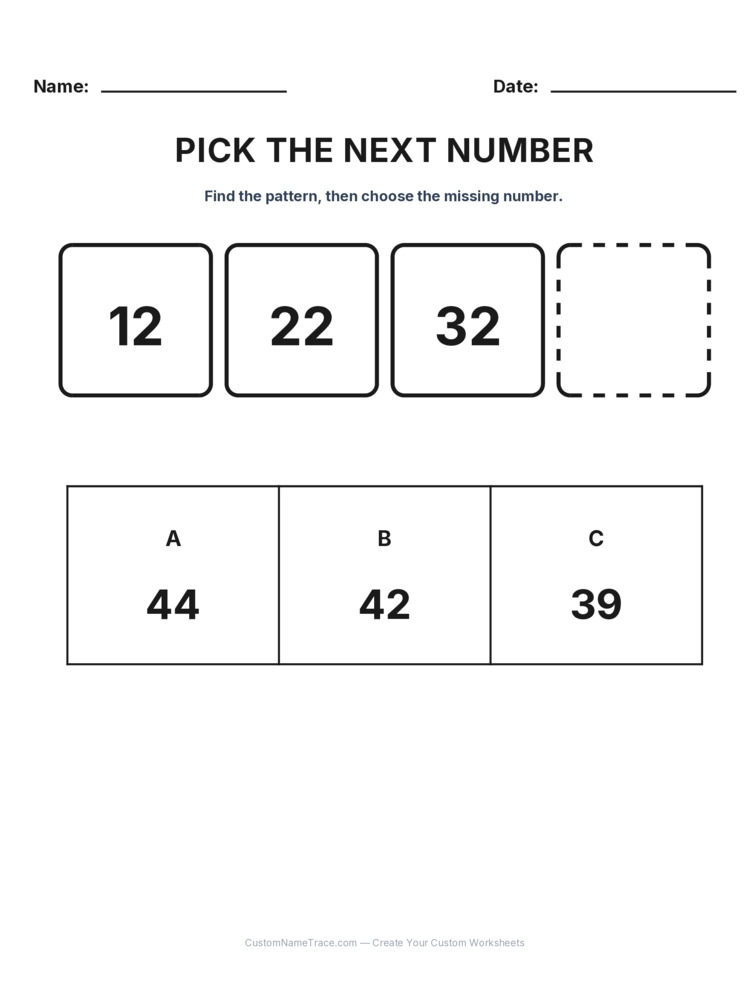
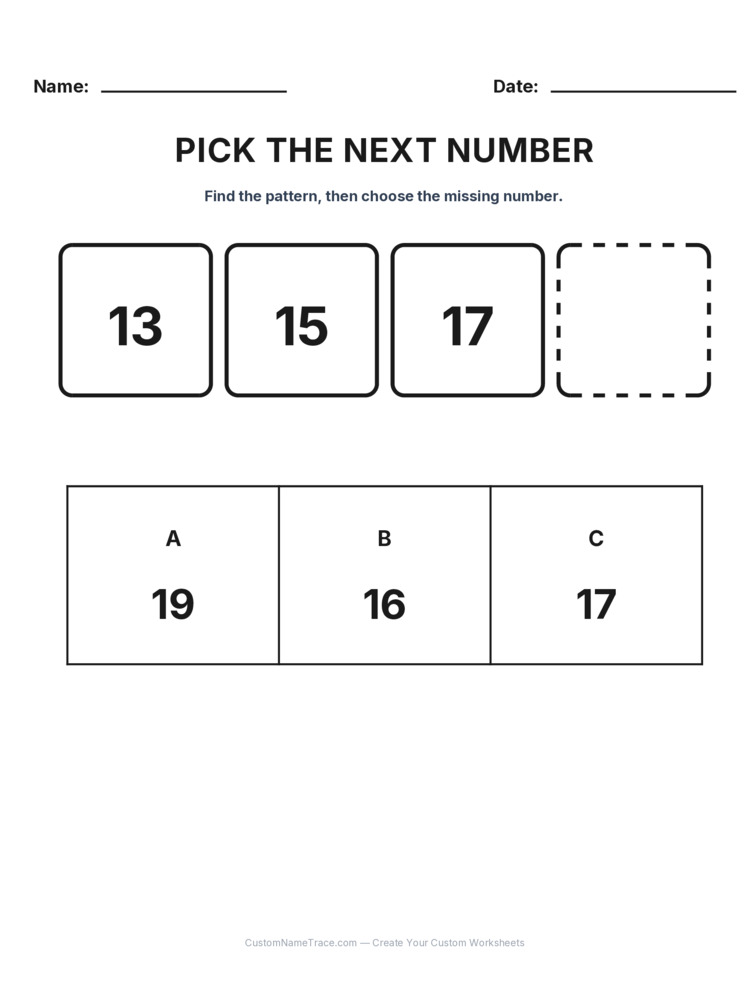
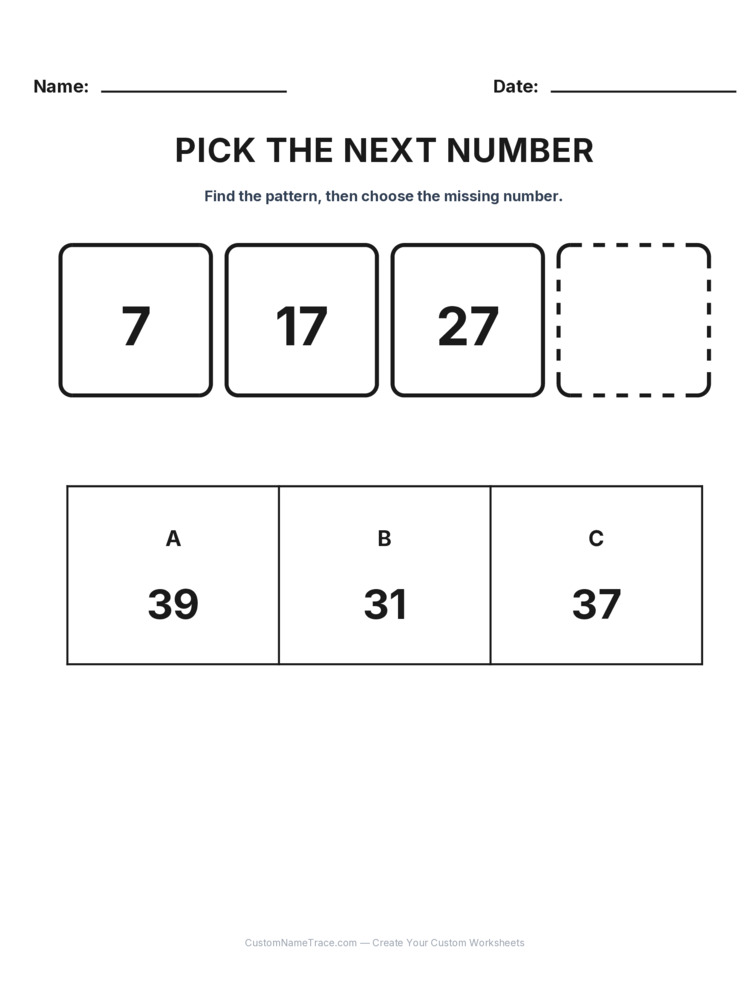
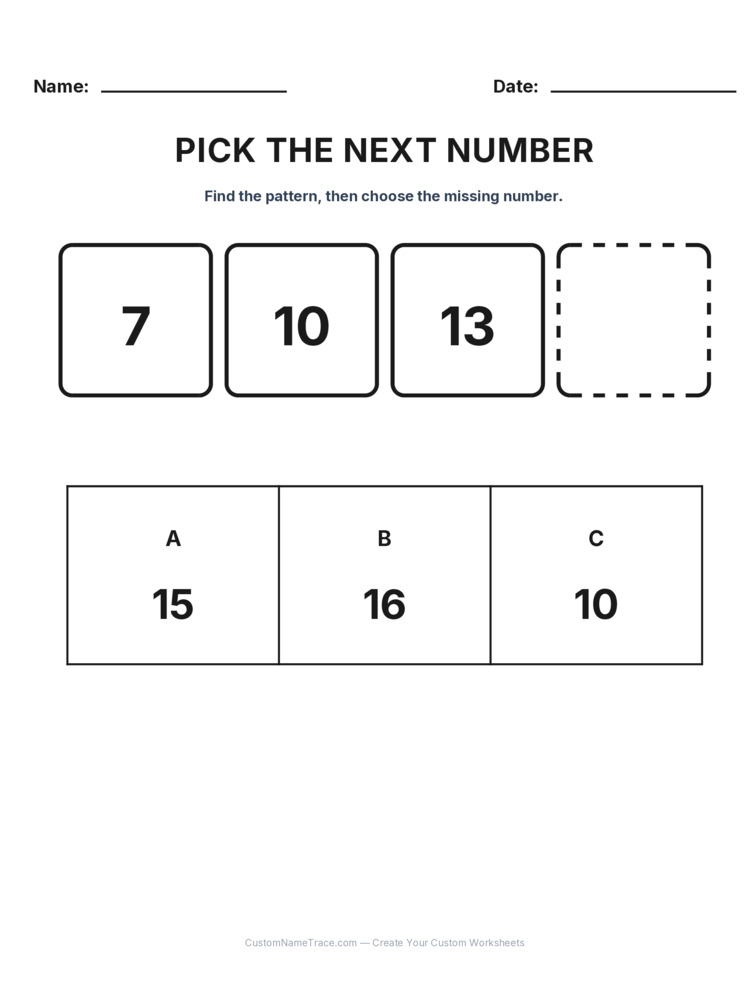
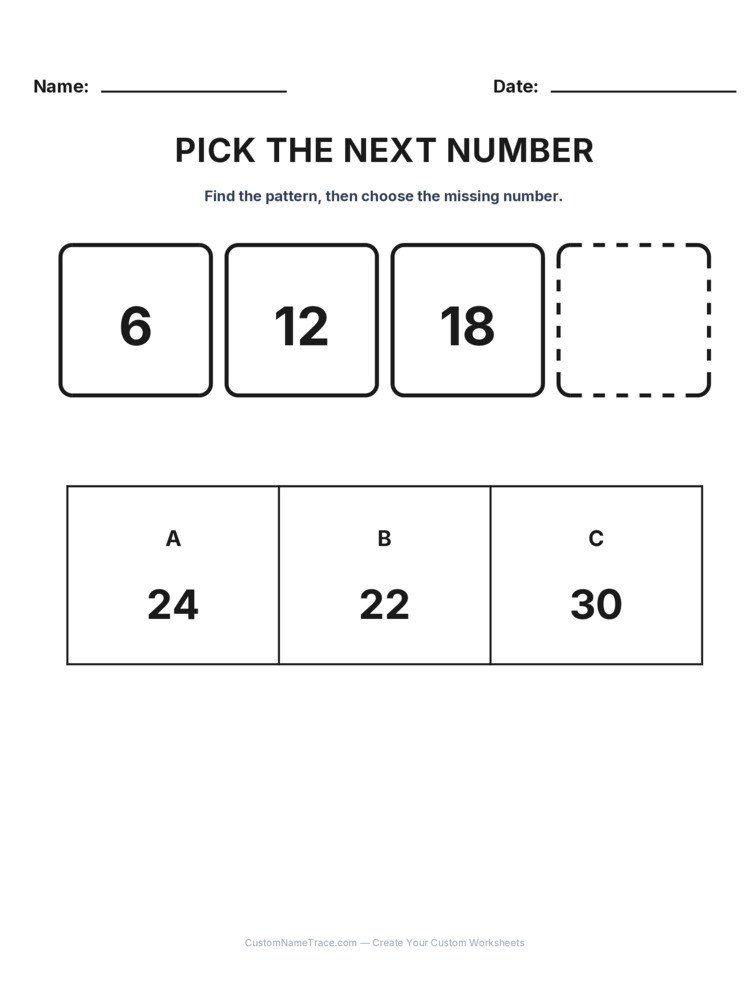
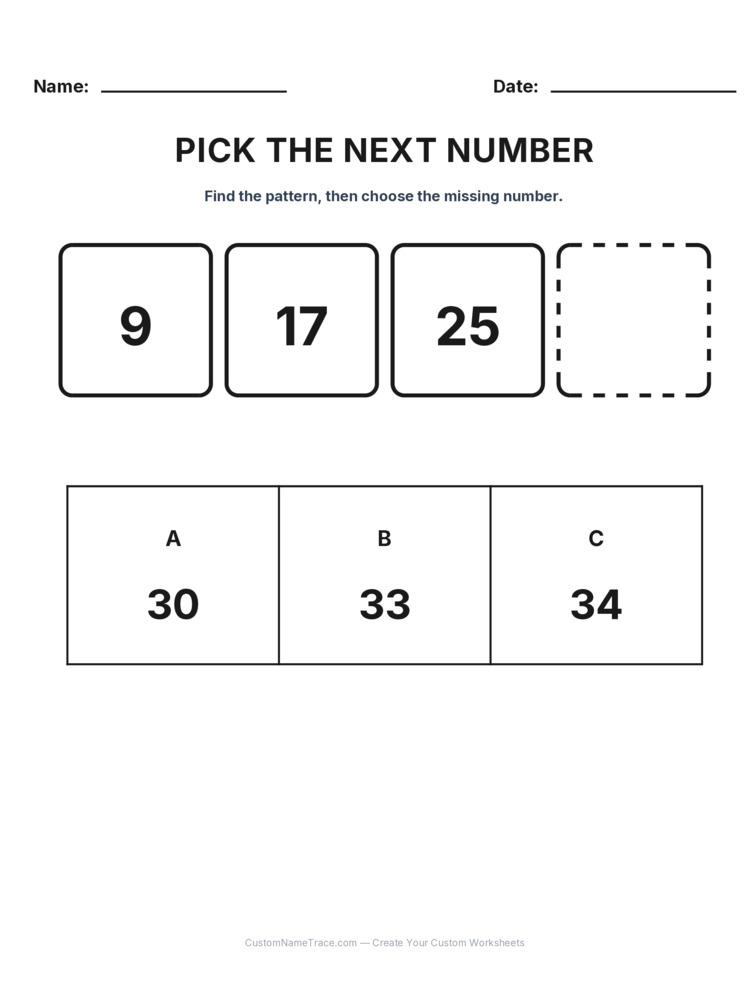
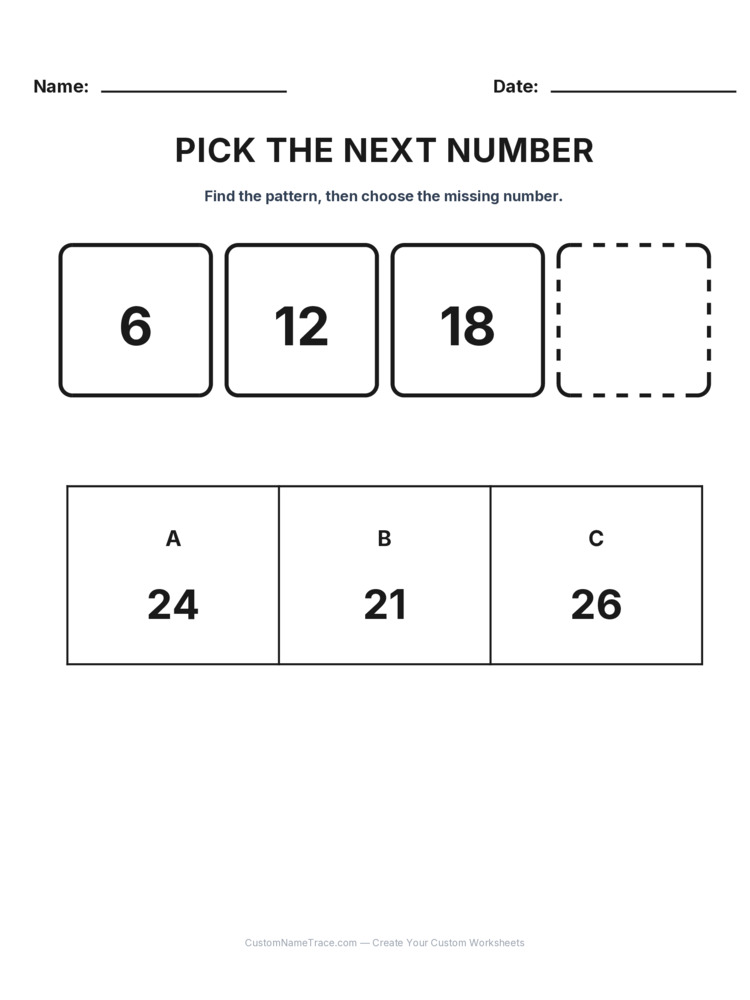
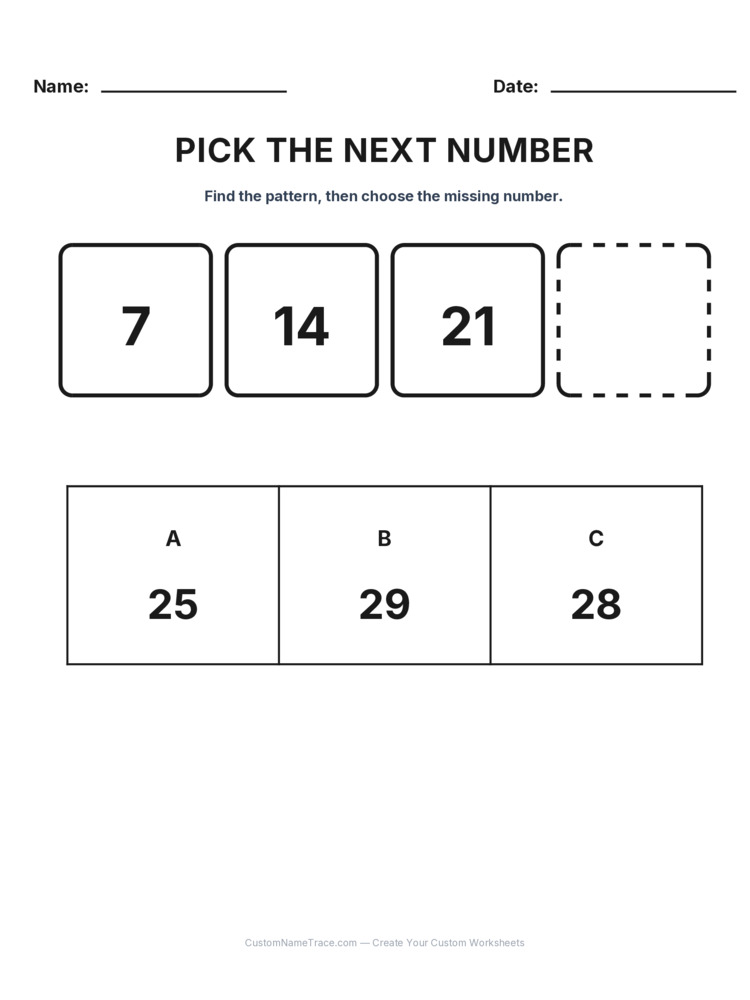
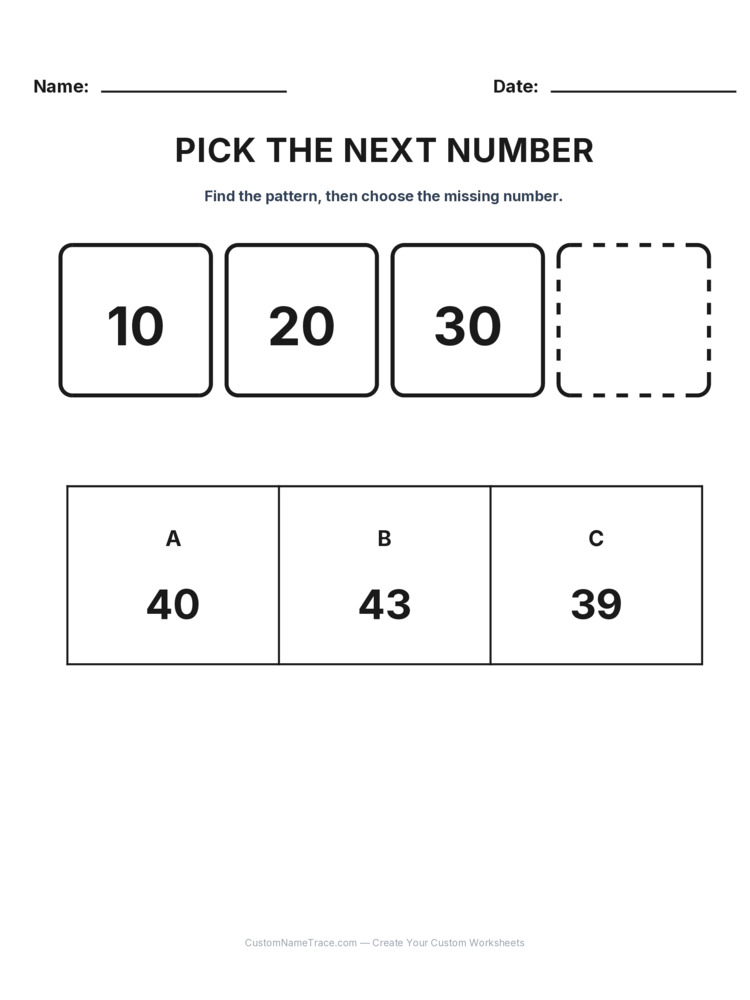
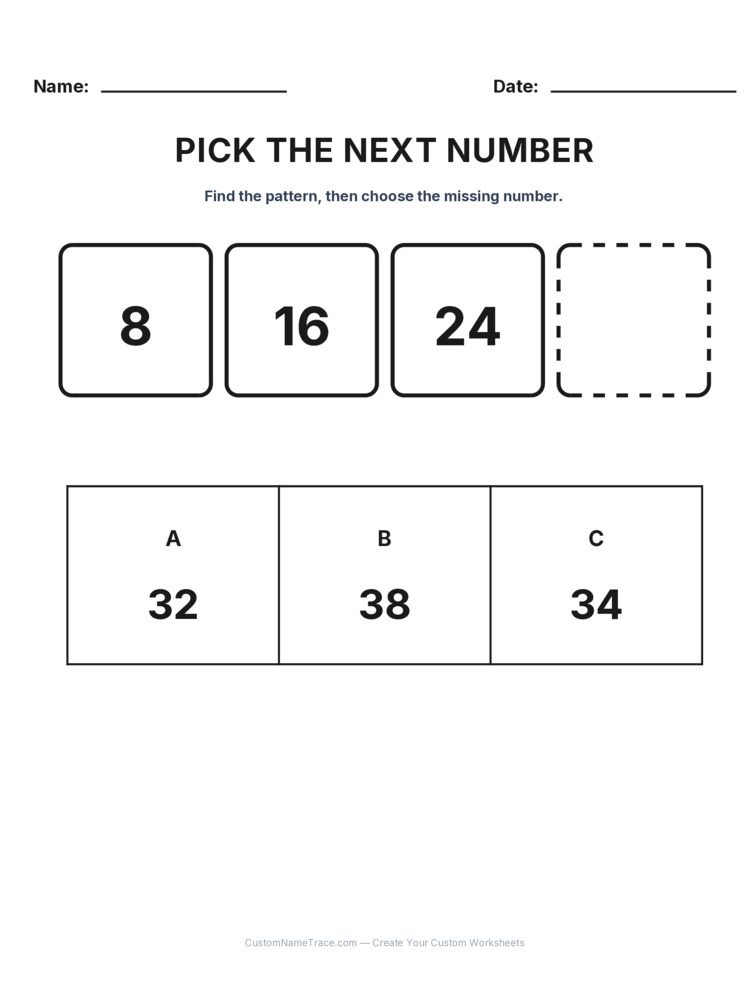
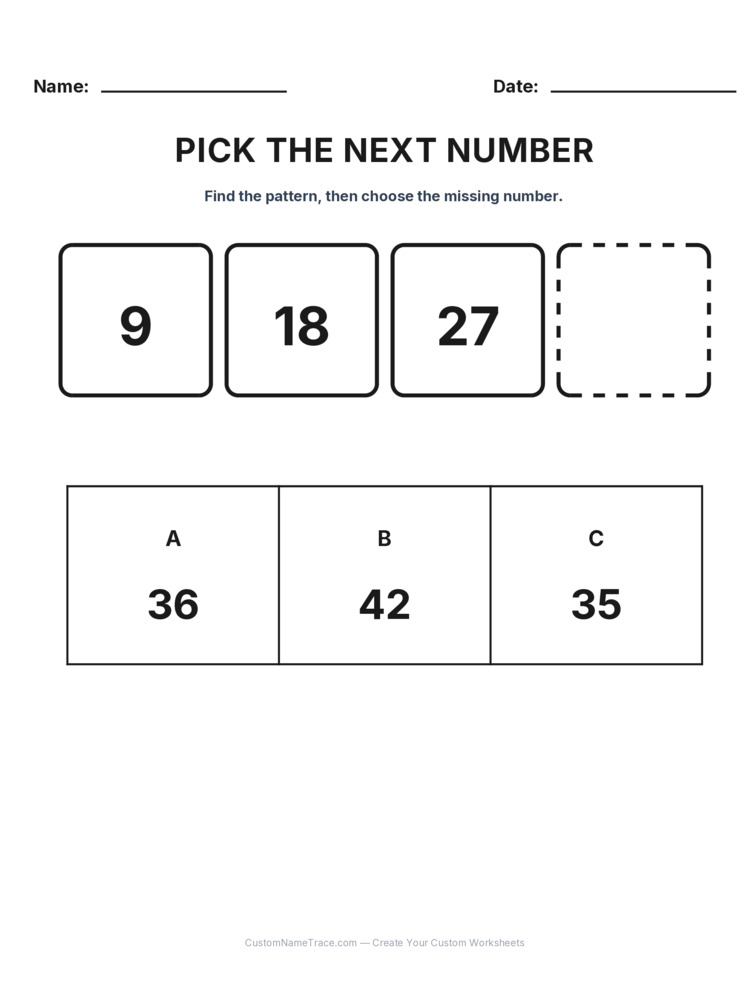
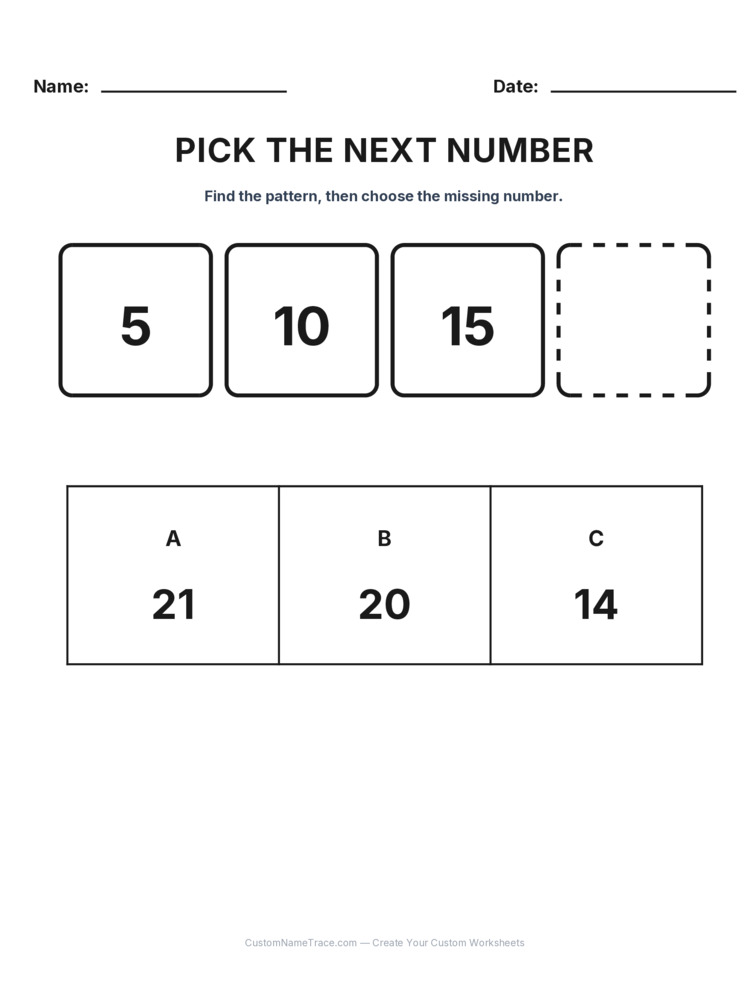
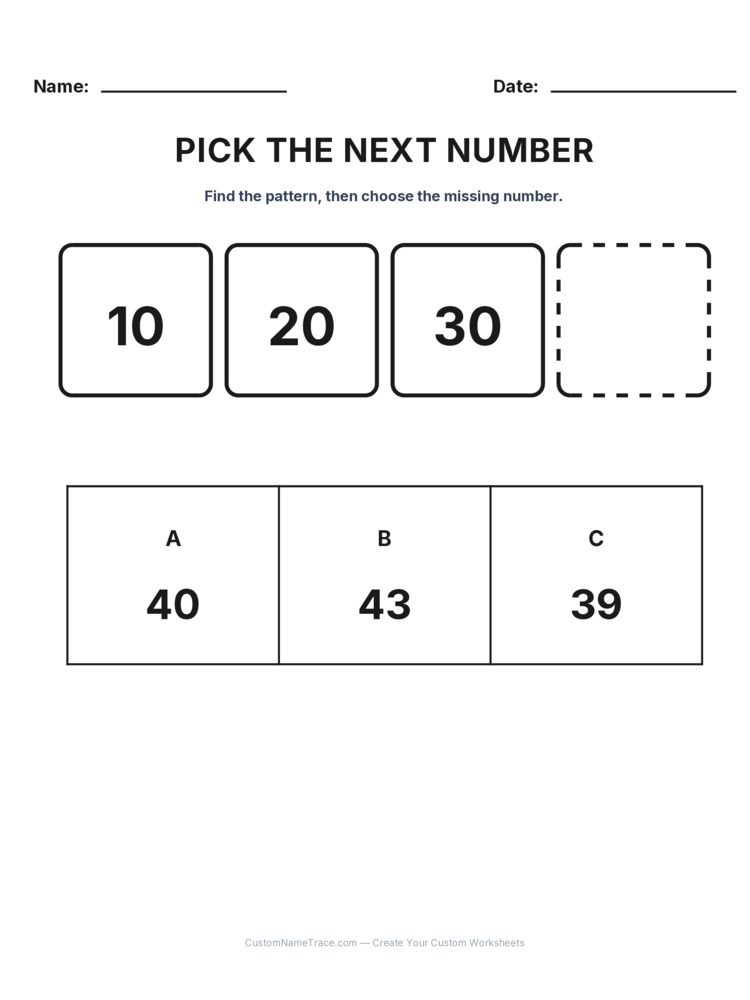
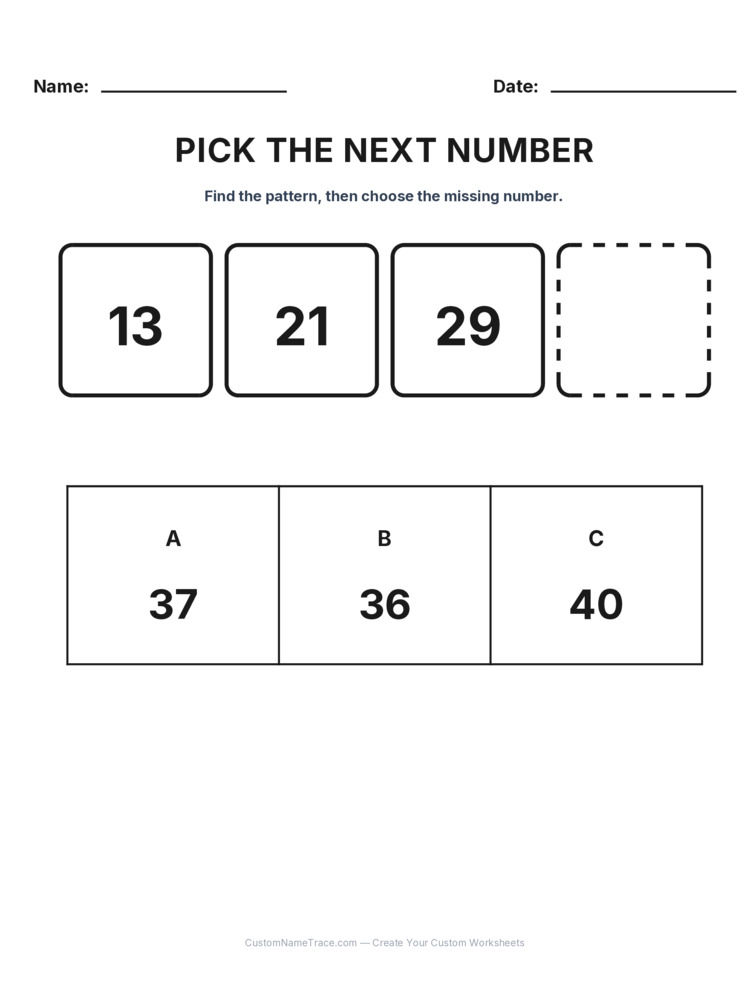
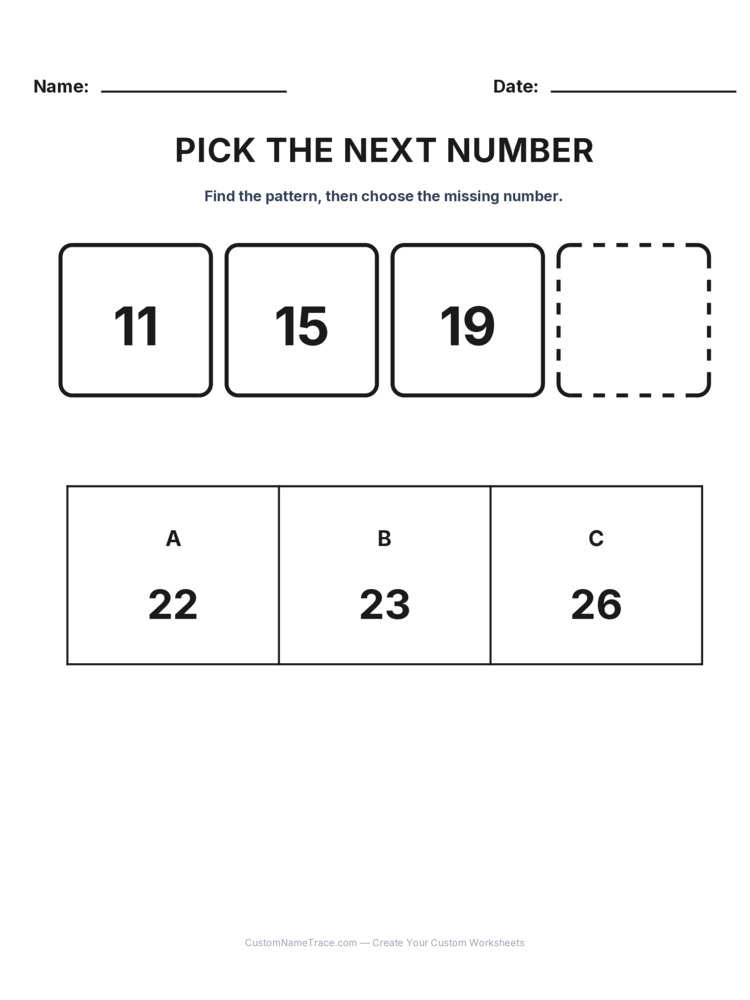
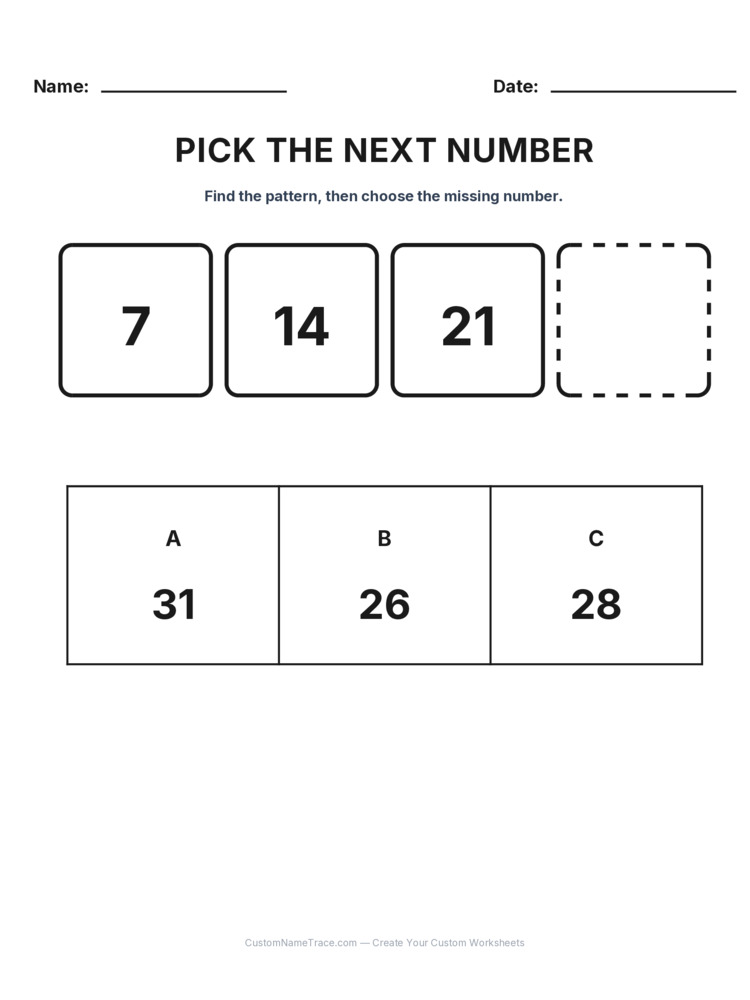
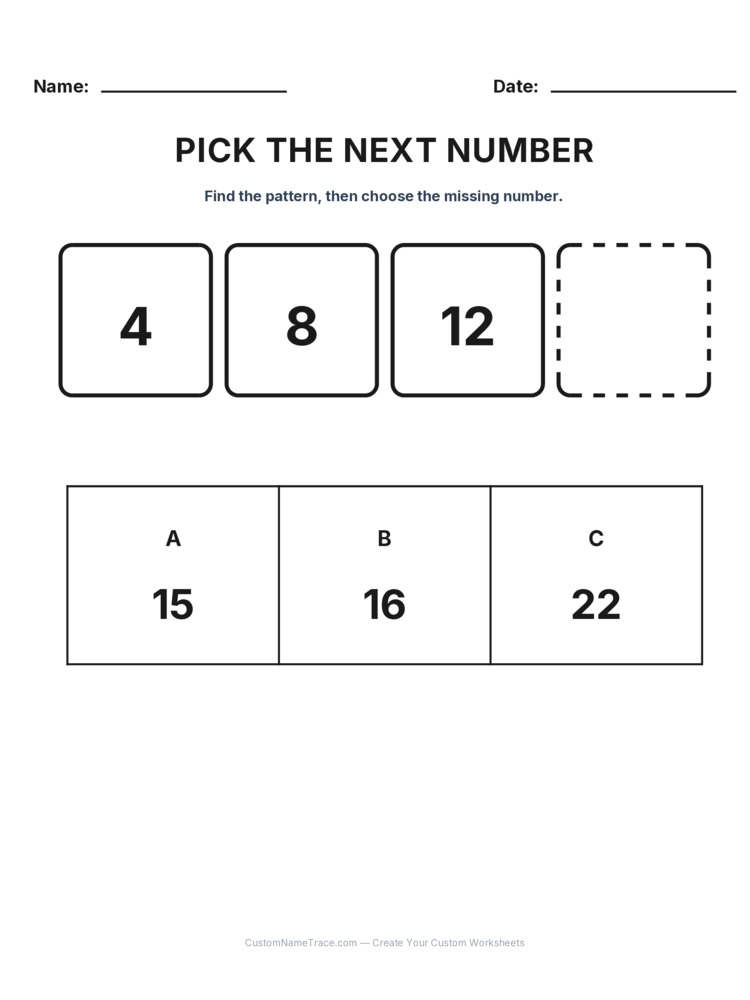
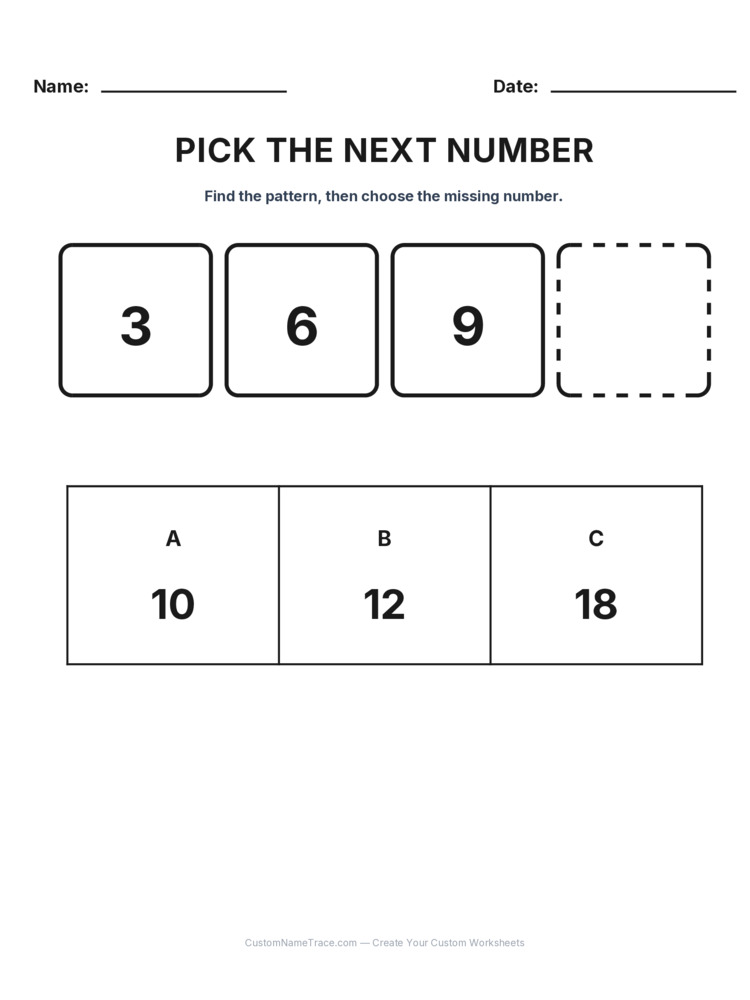
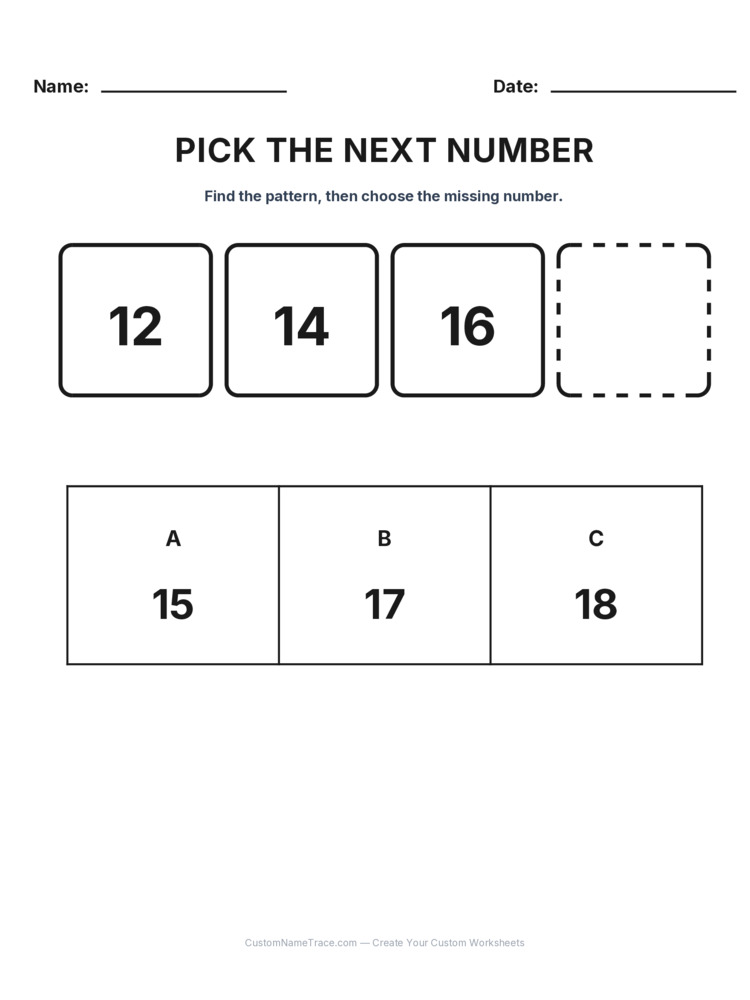
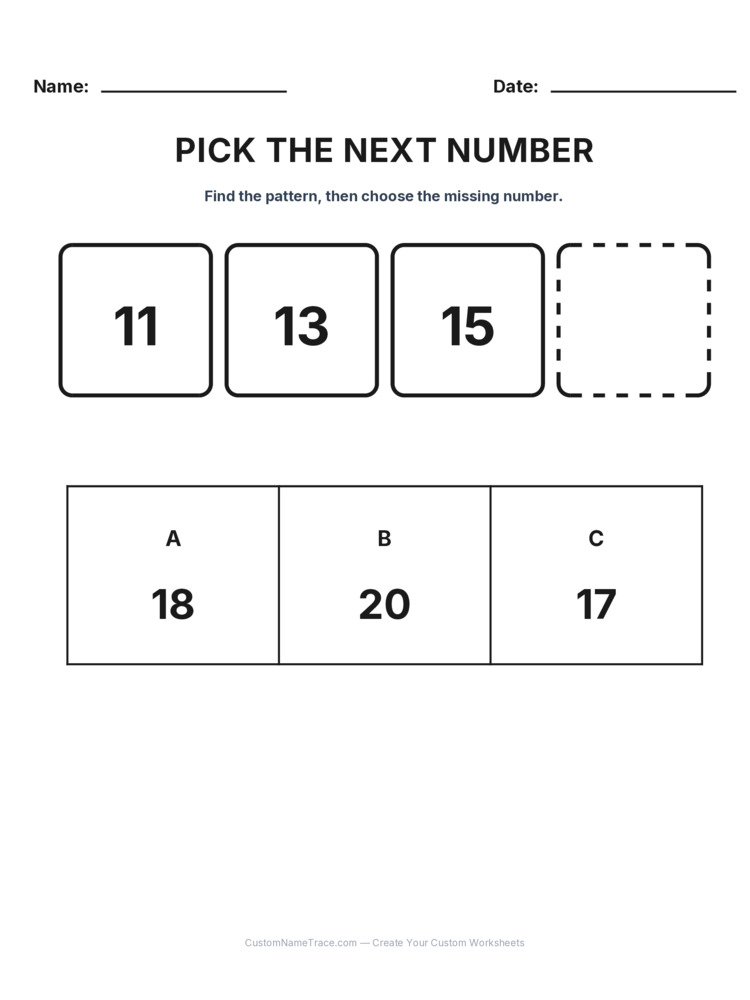
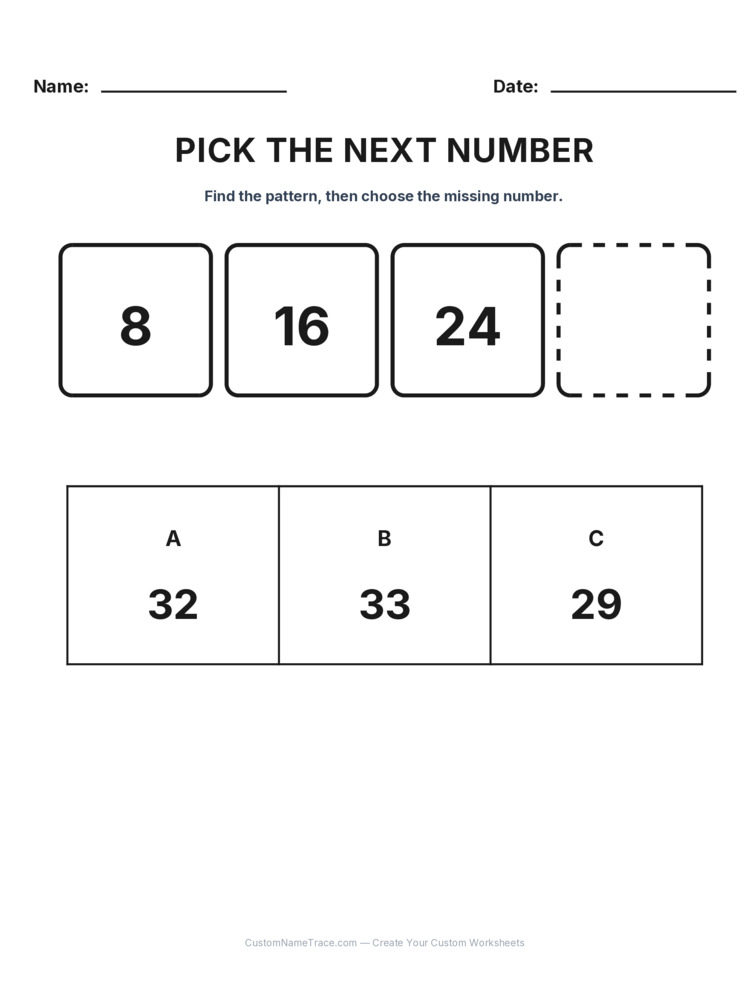
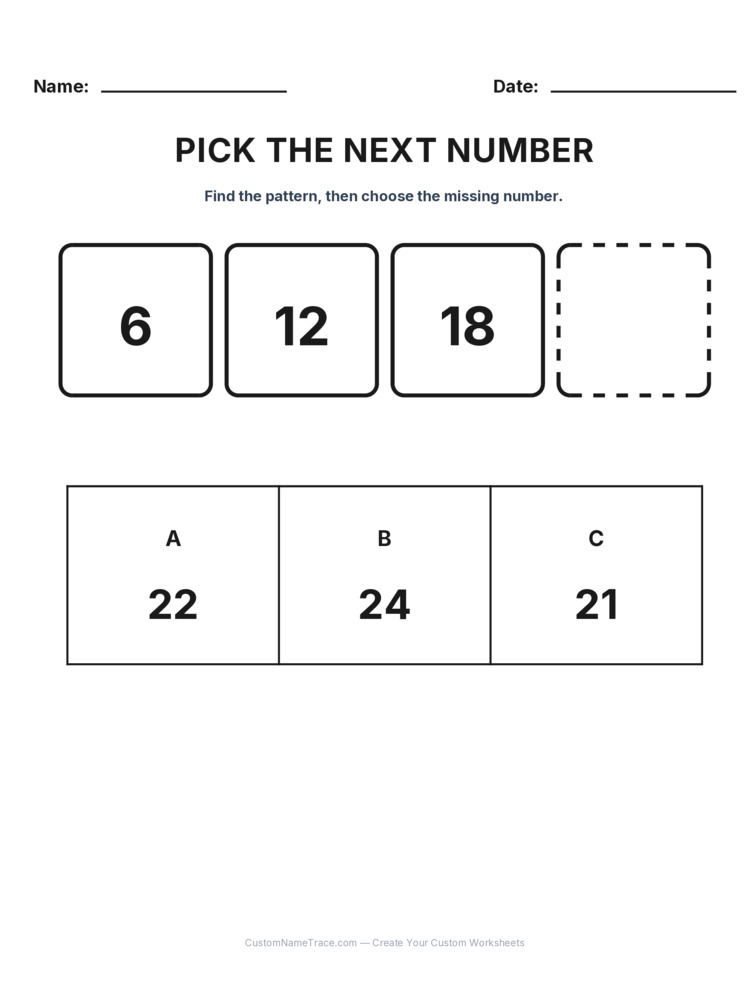
Number Pattern takes the same skip-counting and arithmetic-sequence reasoning as Growing Sequence and turns it into a multiple-choice puzzle instead of an open blank — three numbers are shown, a rule connects them, and a child picks the correct next number from three lettered options (A, B, C) rather than writing one in. The distractors aren't random: one is usually the previous value repeated (a common "forgot to add" mistake), and one uses a slightly wrong step size, so picking correctly means actually confirming the rule against all three options, not just recognizing the right-looking number.
Why three puzzle types, together
Cross-Out, Growing Sequence, and Number Pattern look different but train the same underlying move from three directions: Cross-Out gives the rule and asks a child to apply it exhaustively; Growing Sequence gives examples and asks a child to produce the missing number themselves; Number Pattern gives the same kind of sequence but asks a child to recognize the correct answer among plausible wrong ones. Working all three regularly builds the full loop — recognizing a pattern, producing an answer, and discriminating a right answer from a close-but-wrong one — rather than just one piece of it.