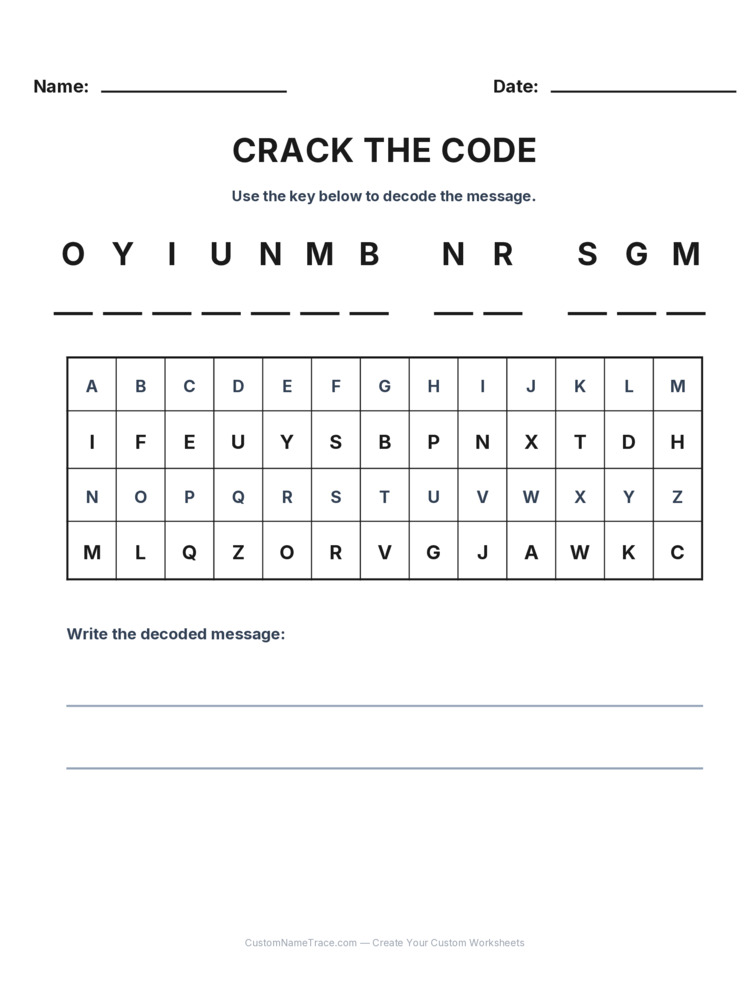
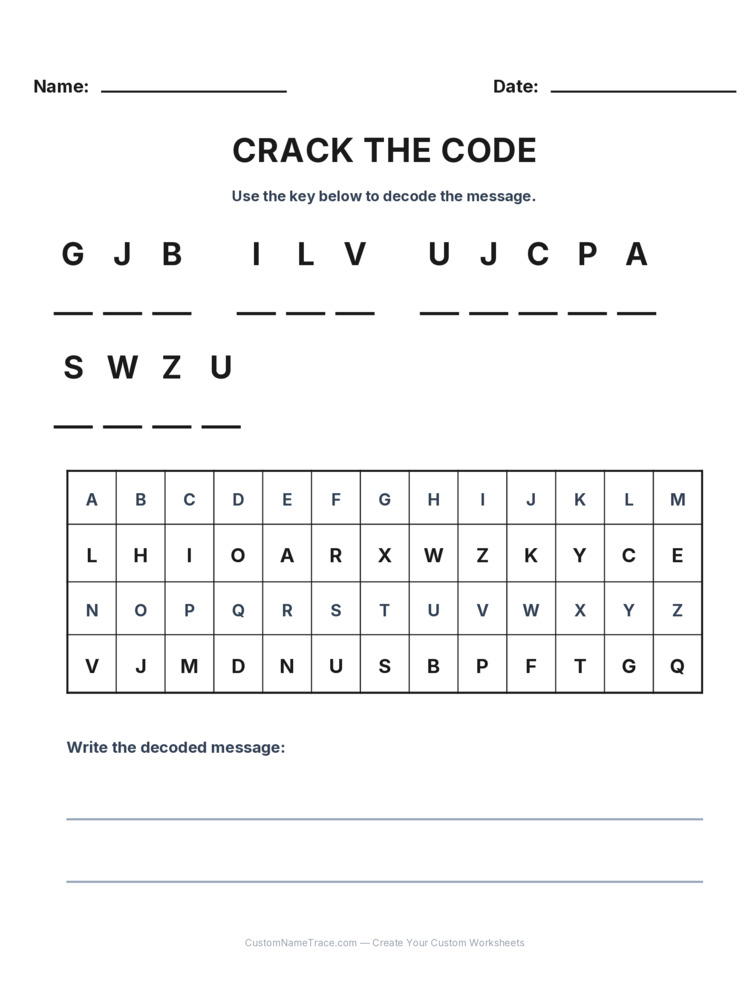
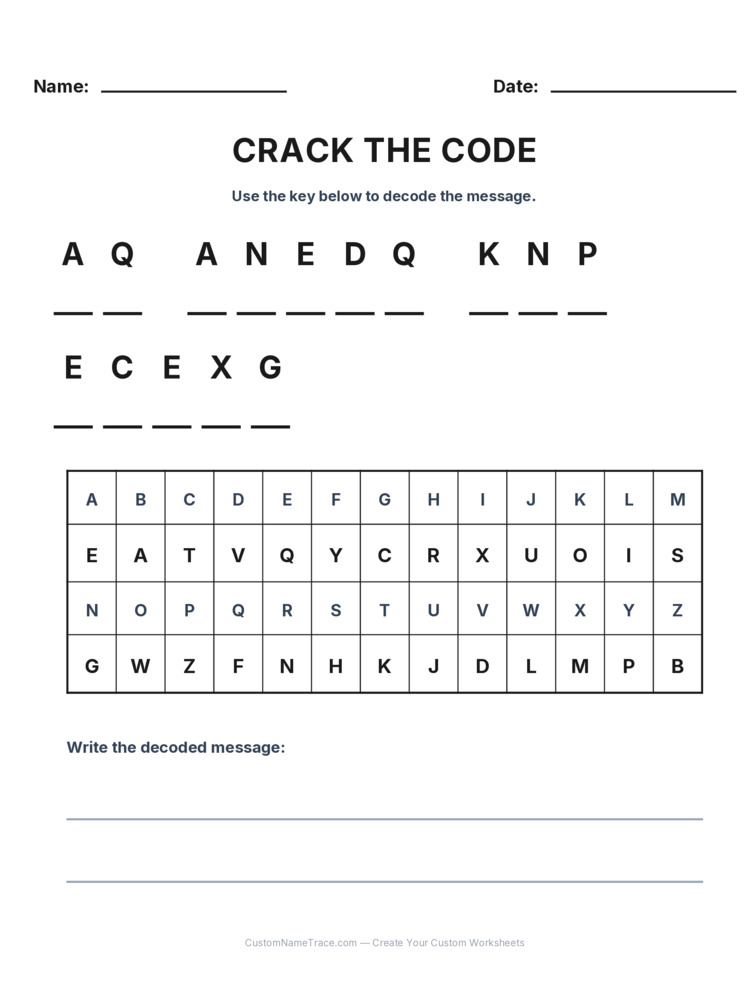
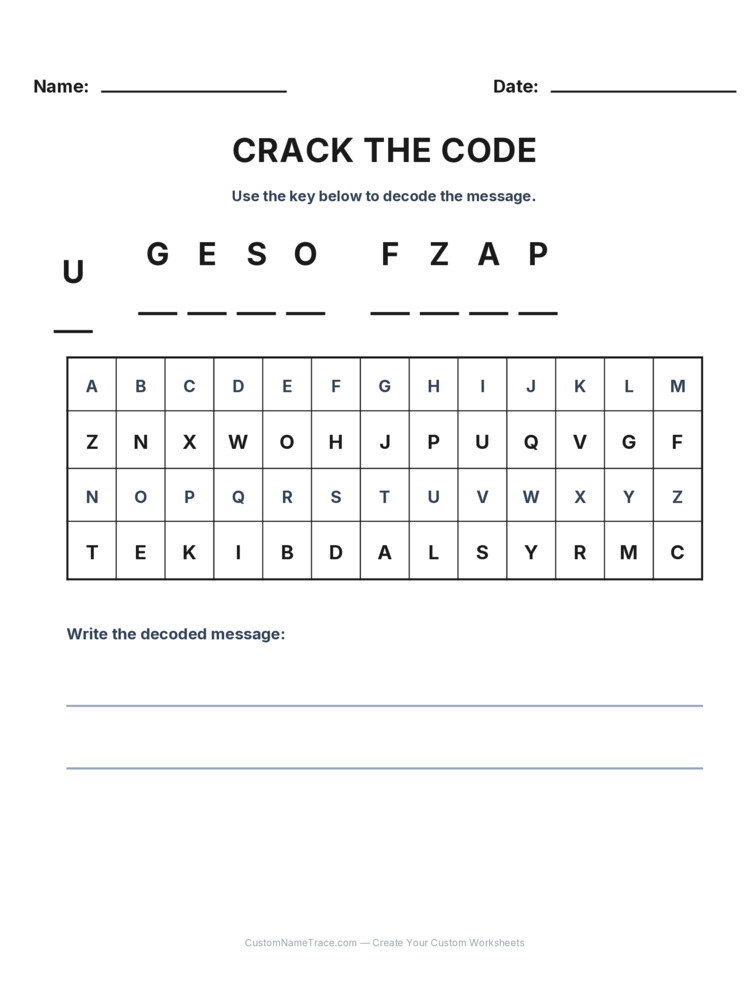
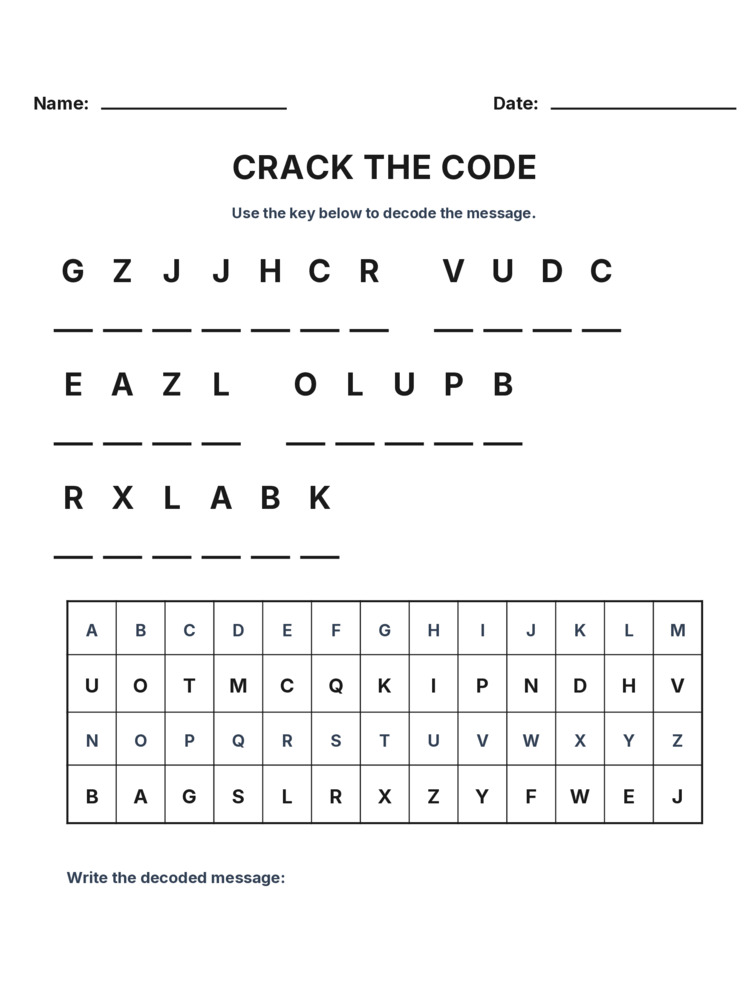
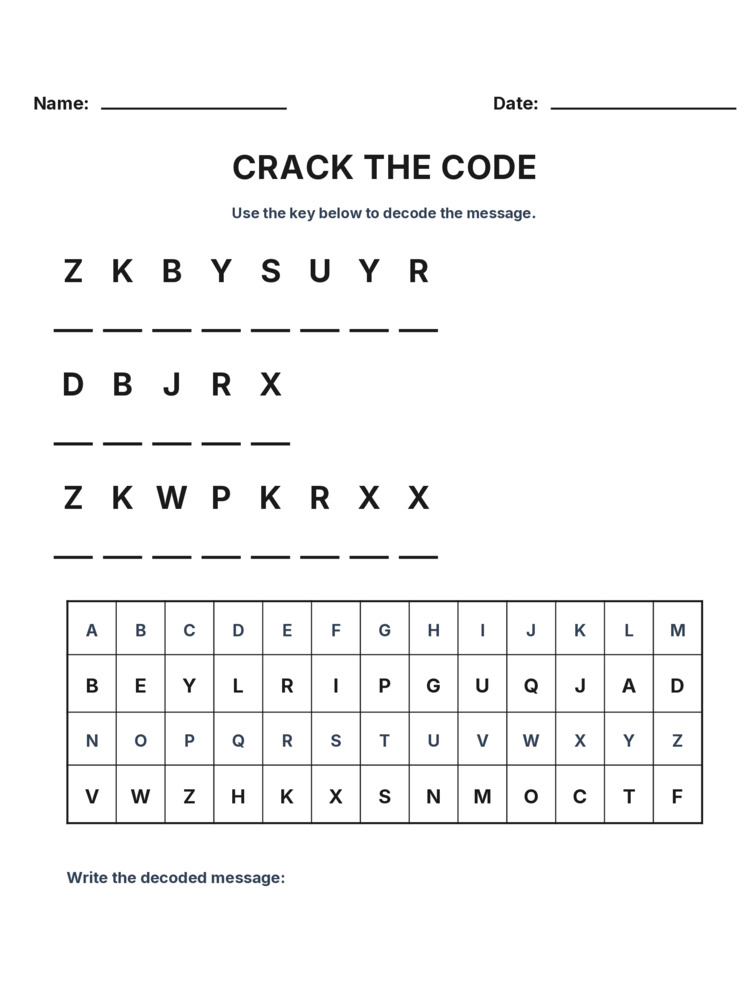
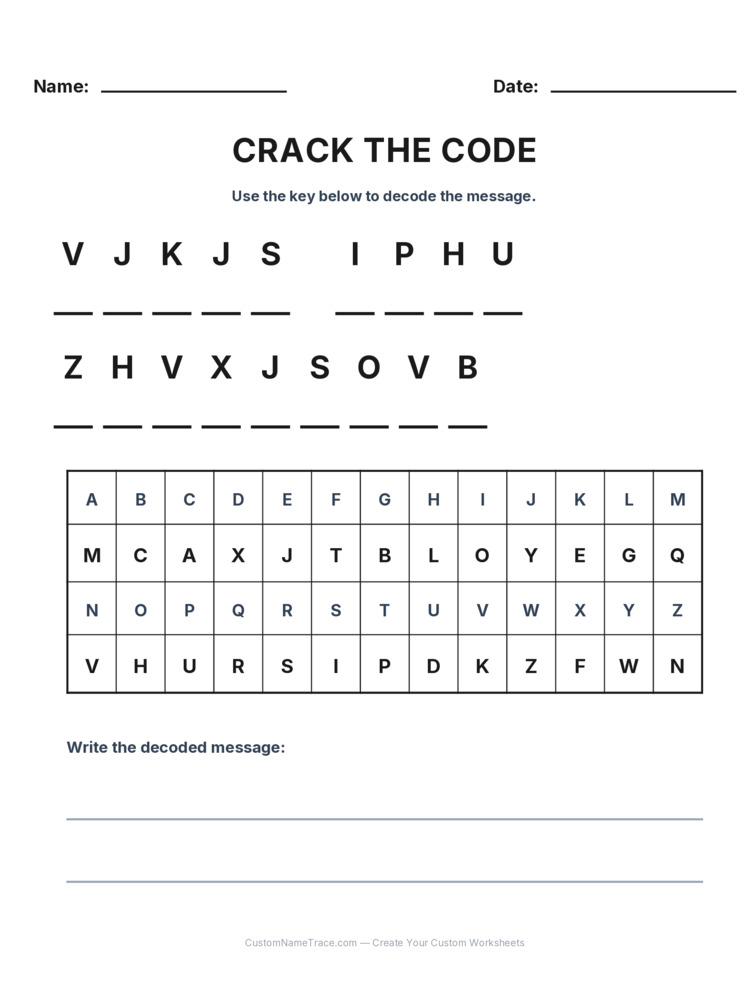
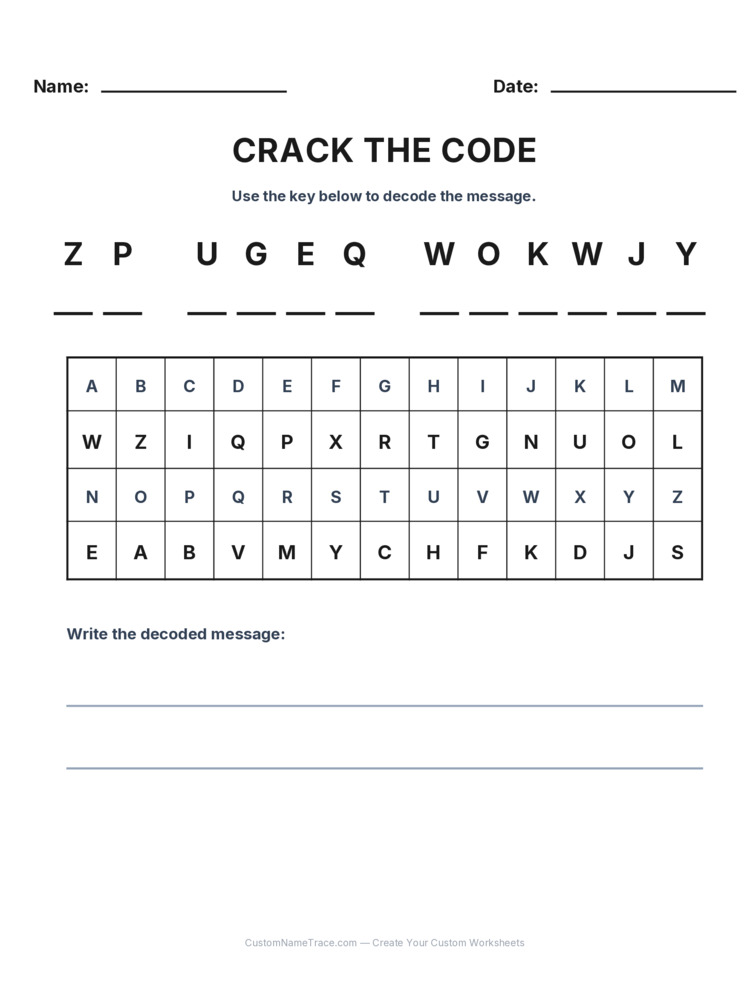
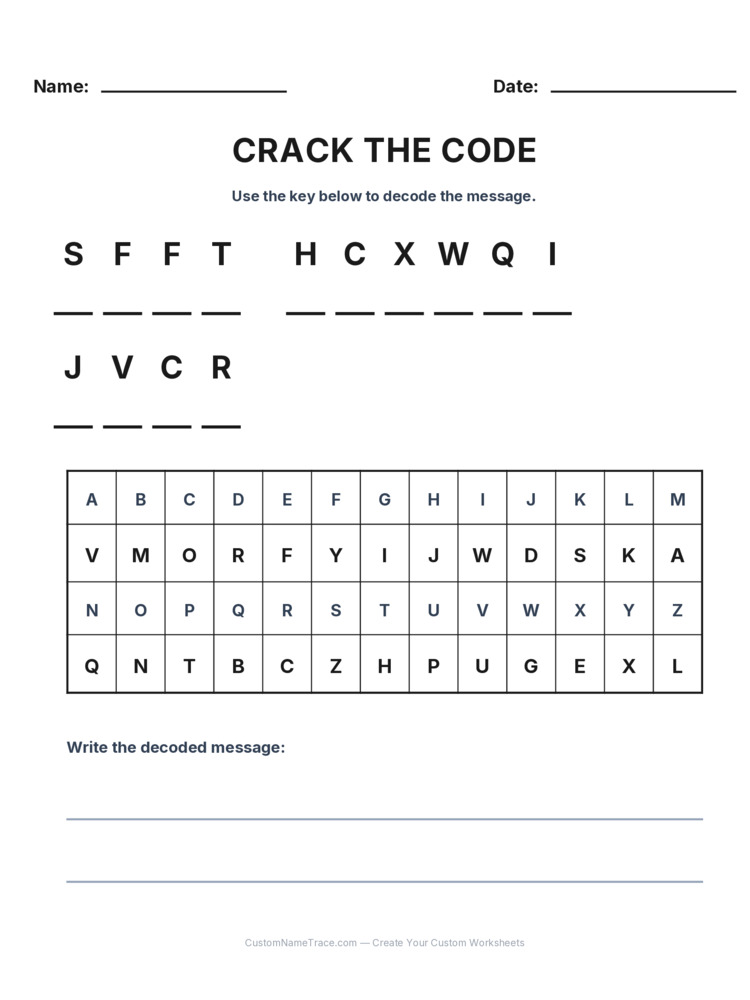
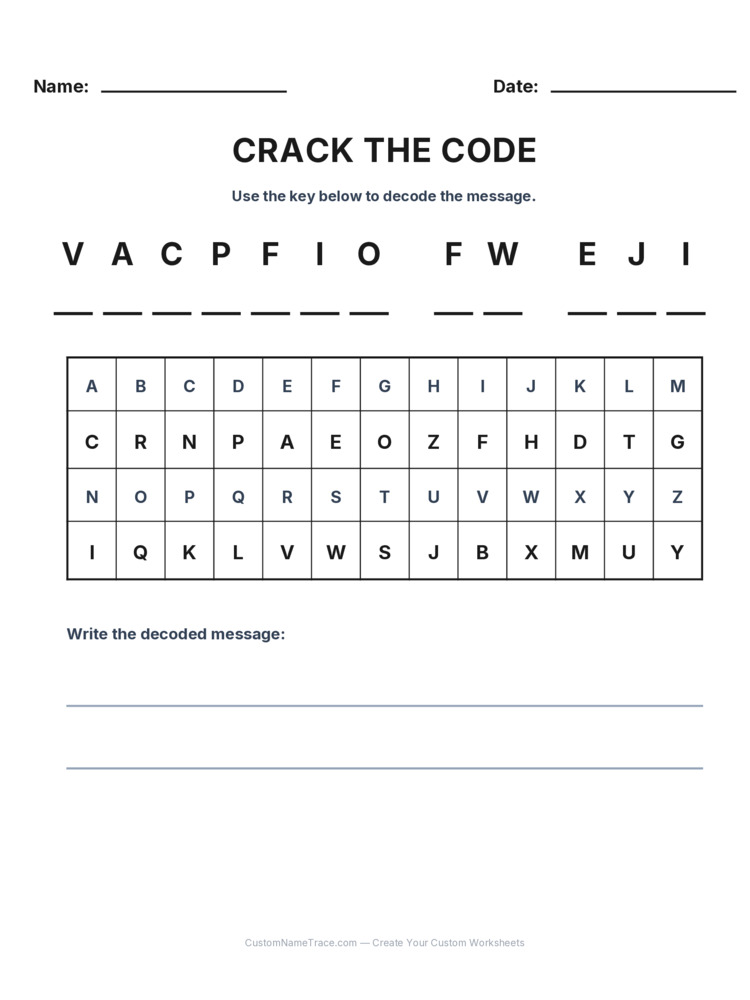
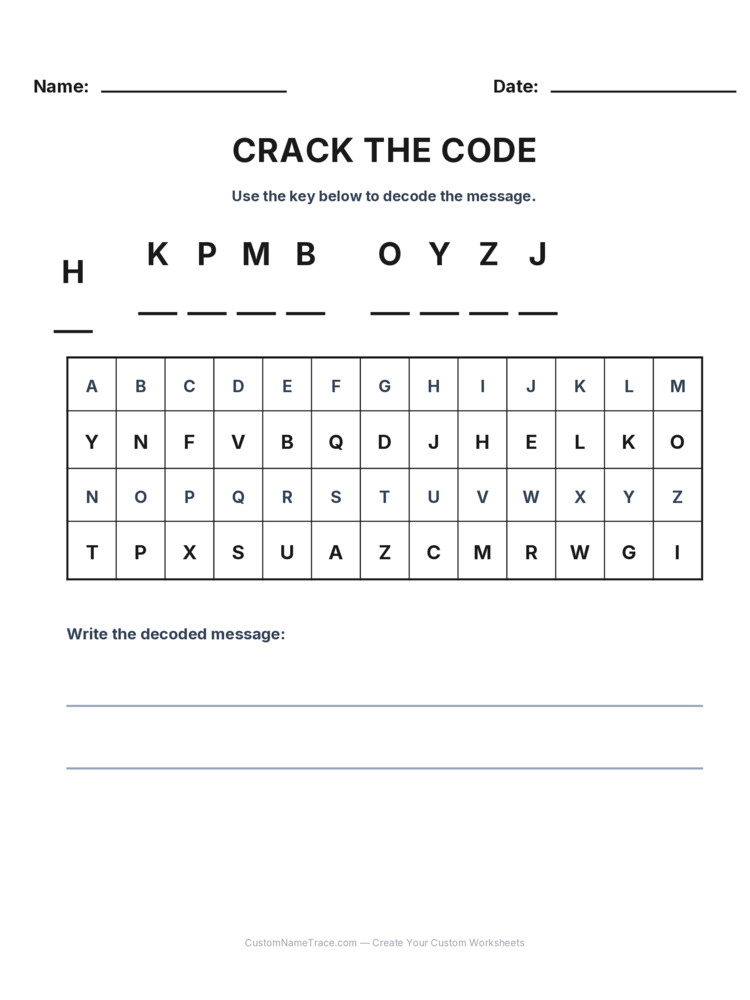
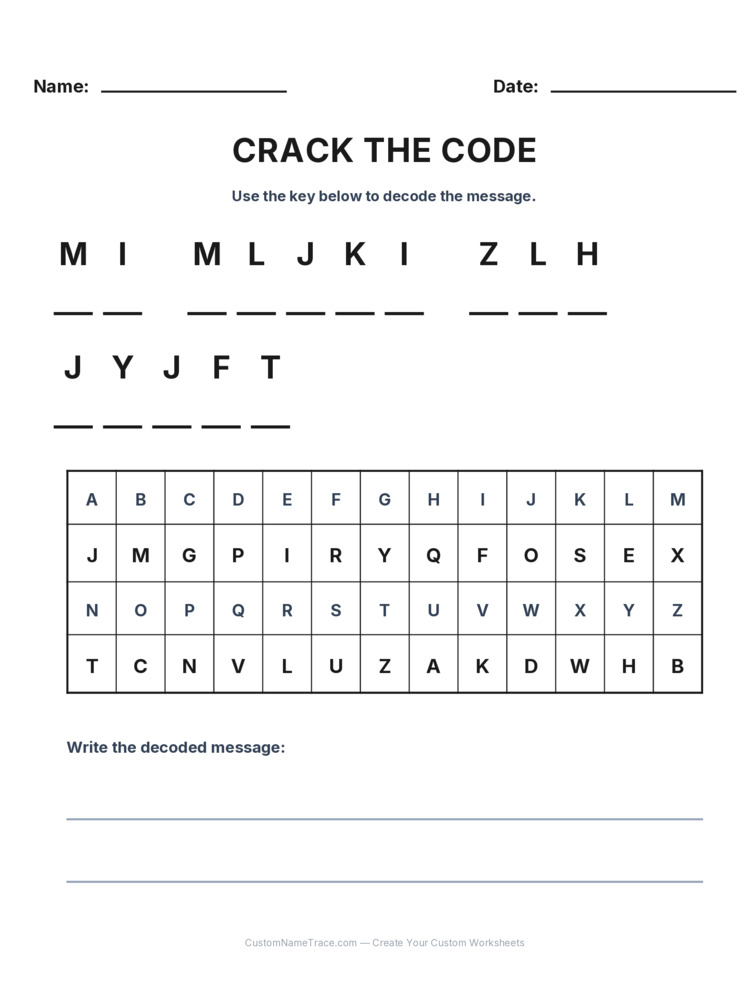
A real substitution cipher, kid-appropriate
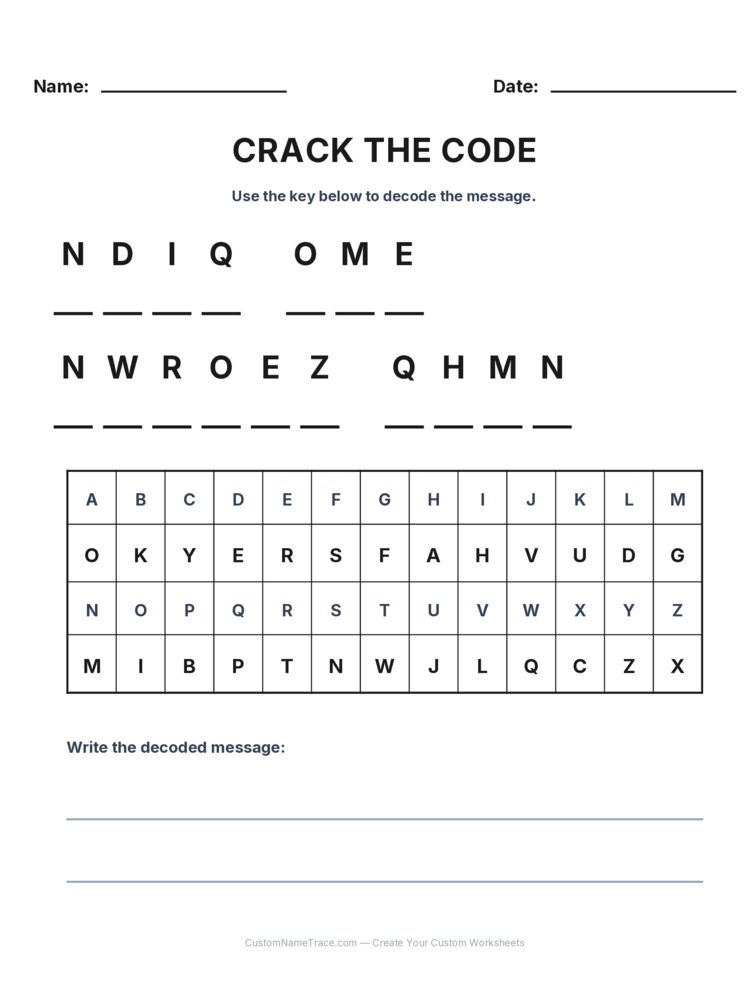
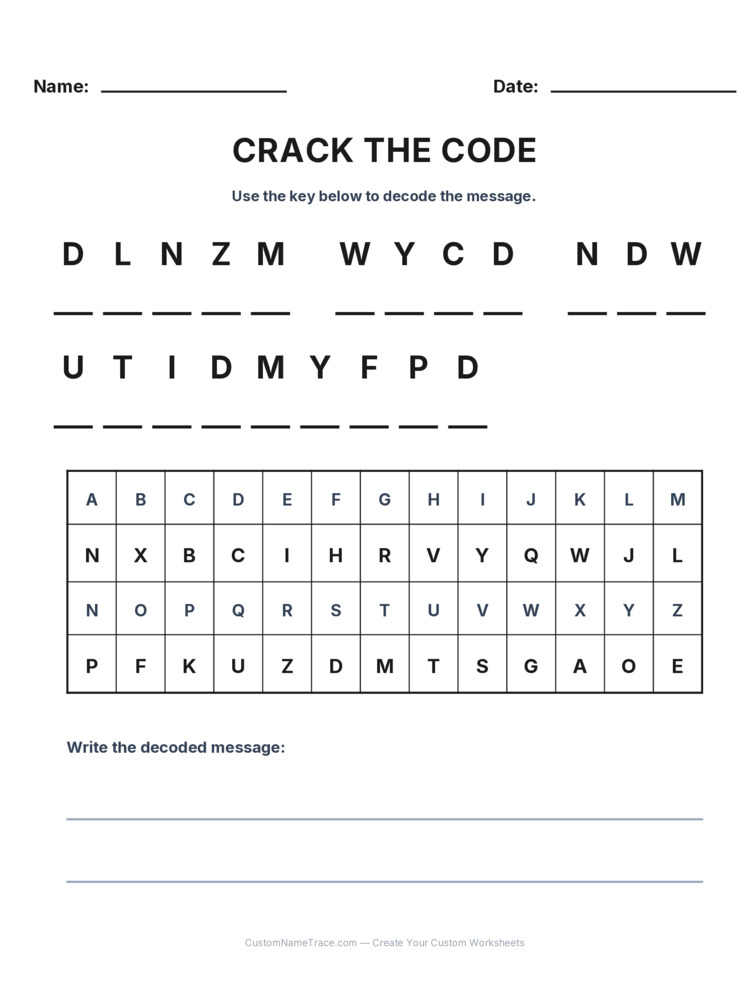
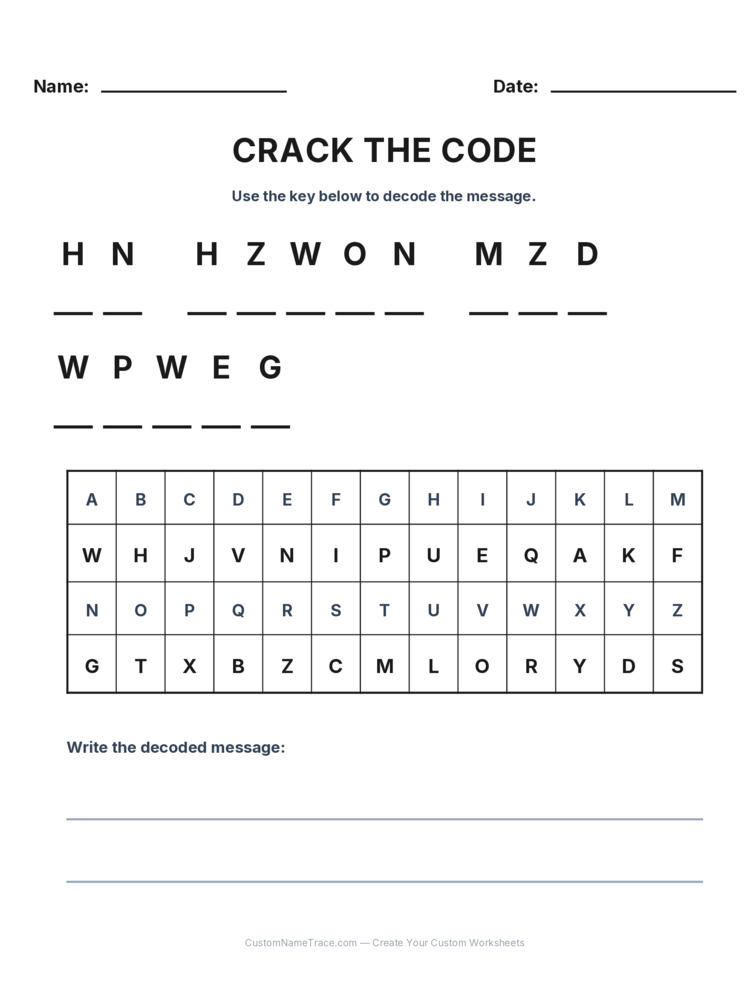
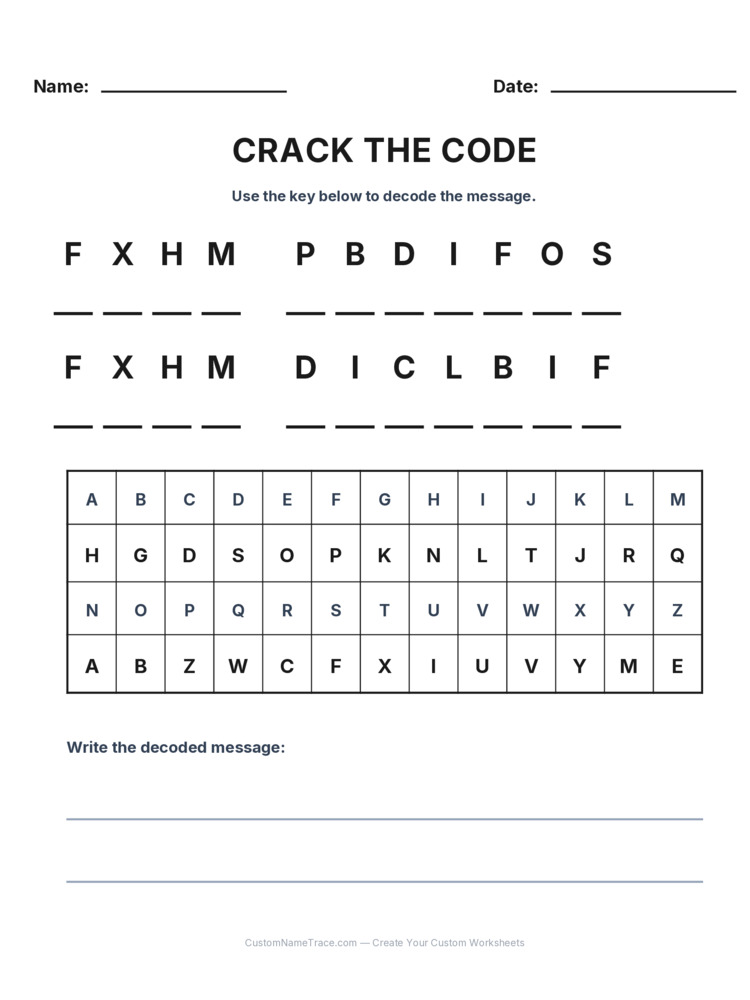
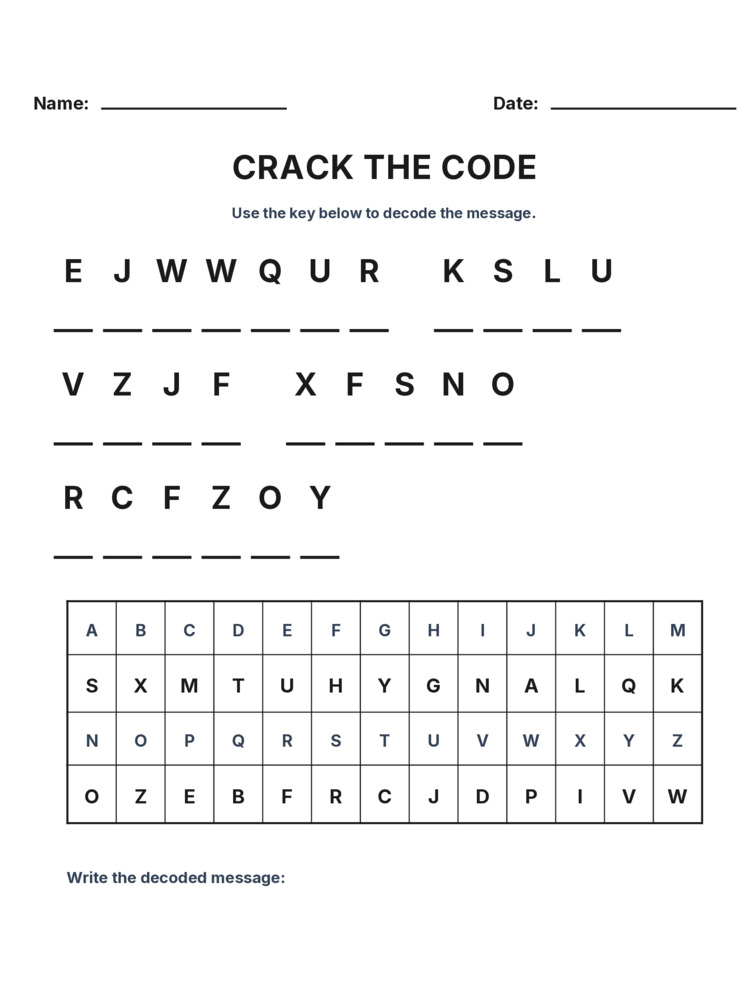
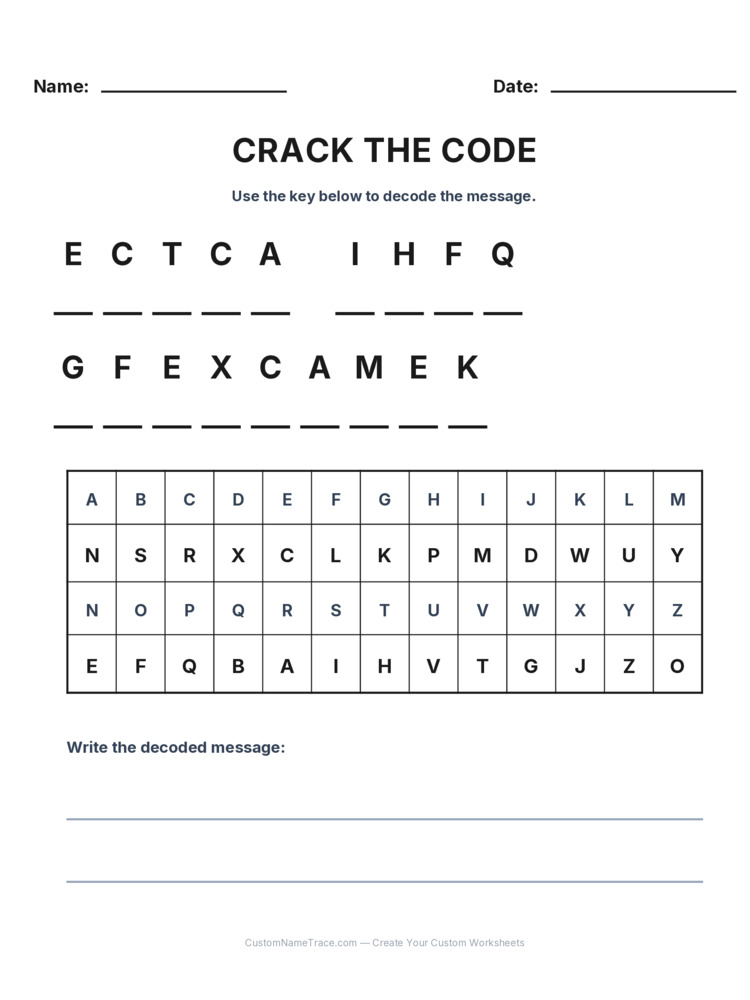
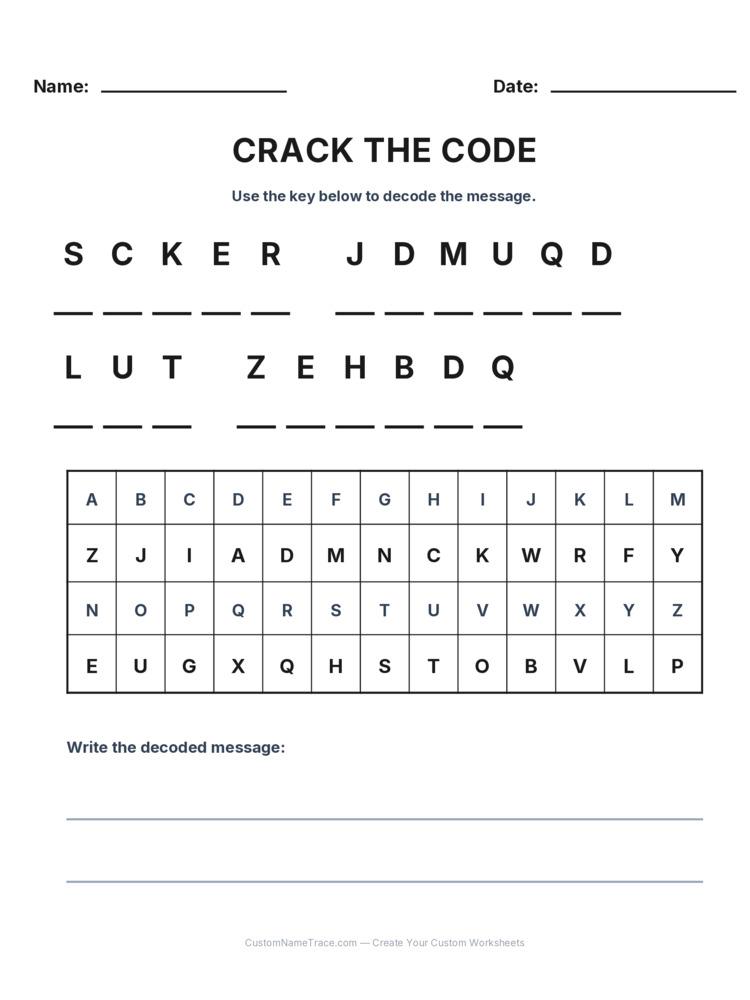
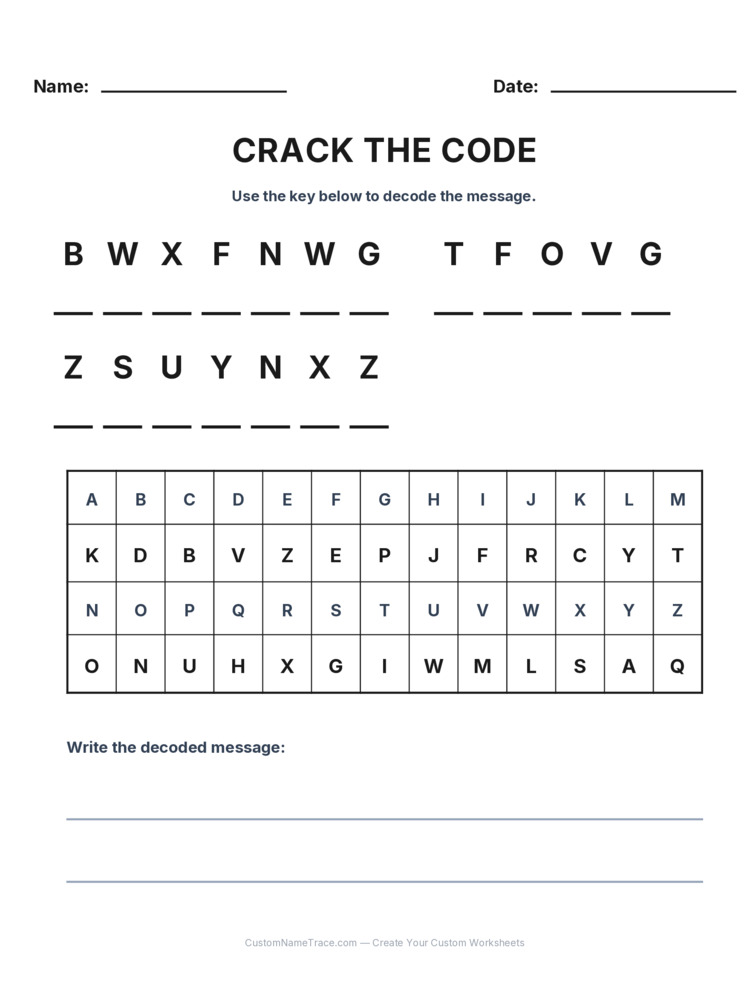
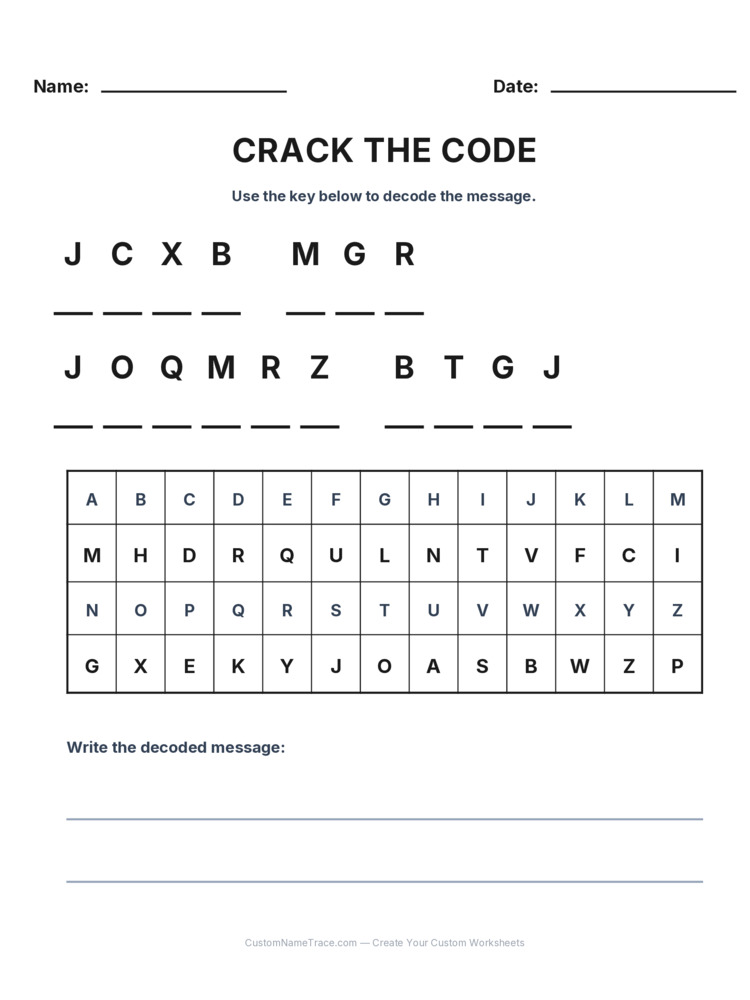
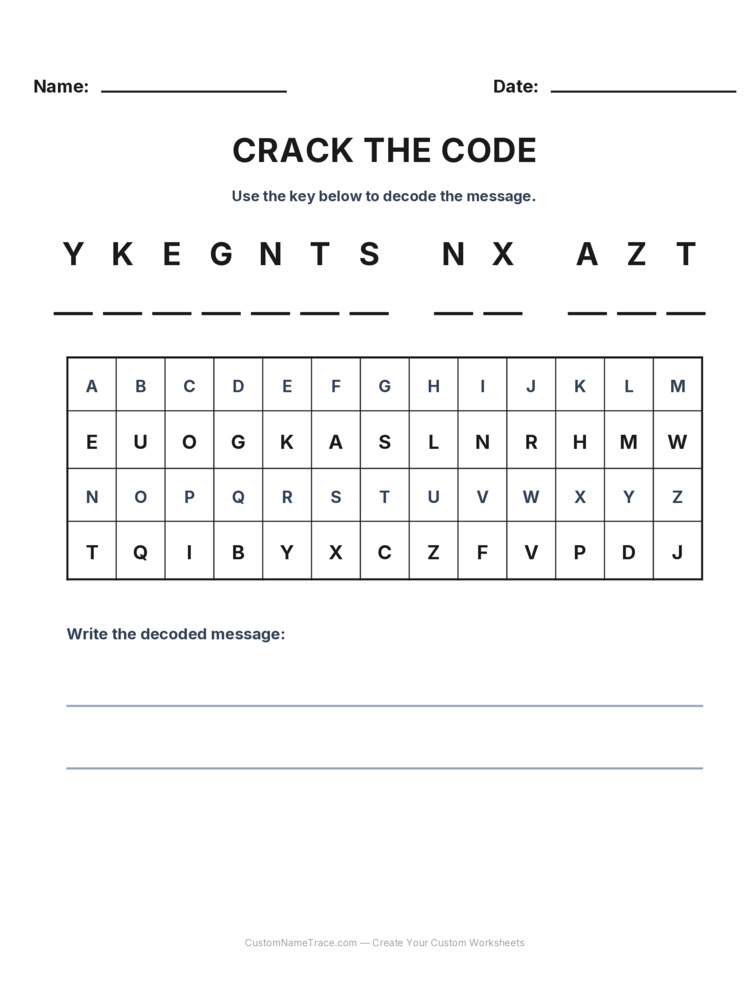
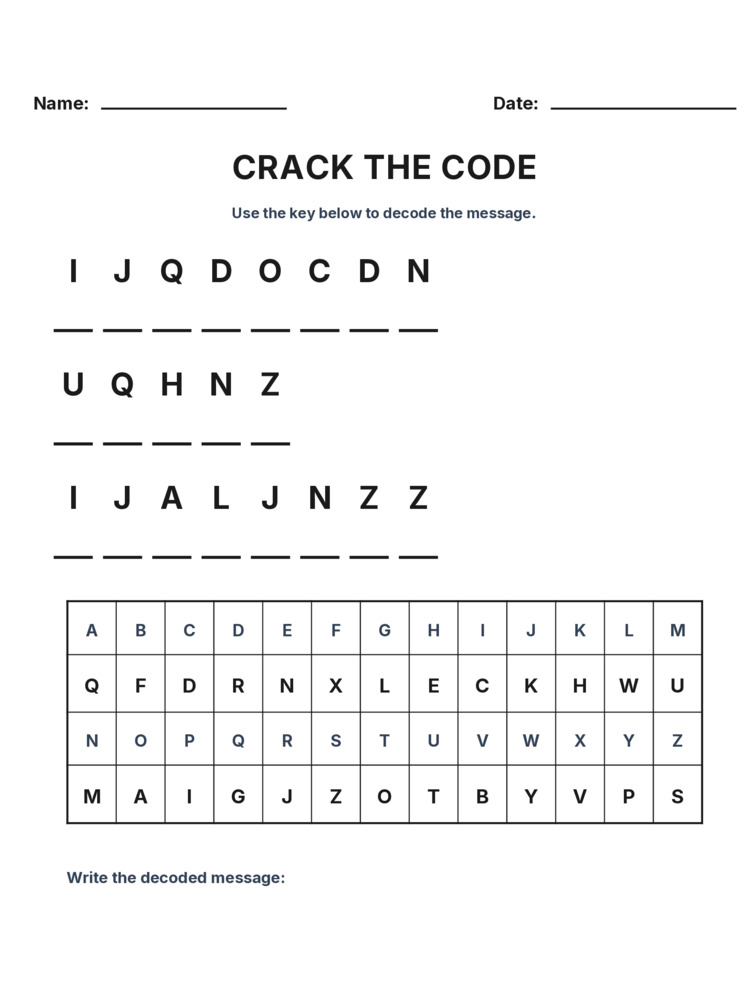
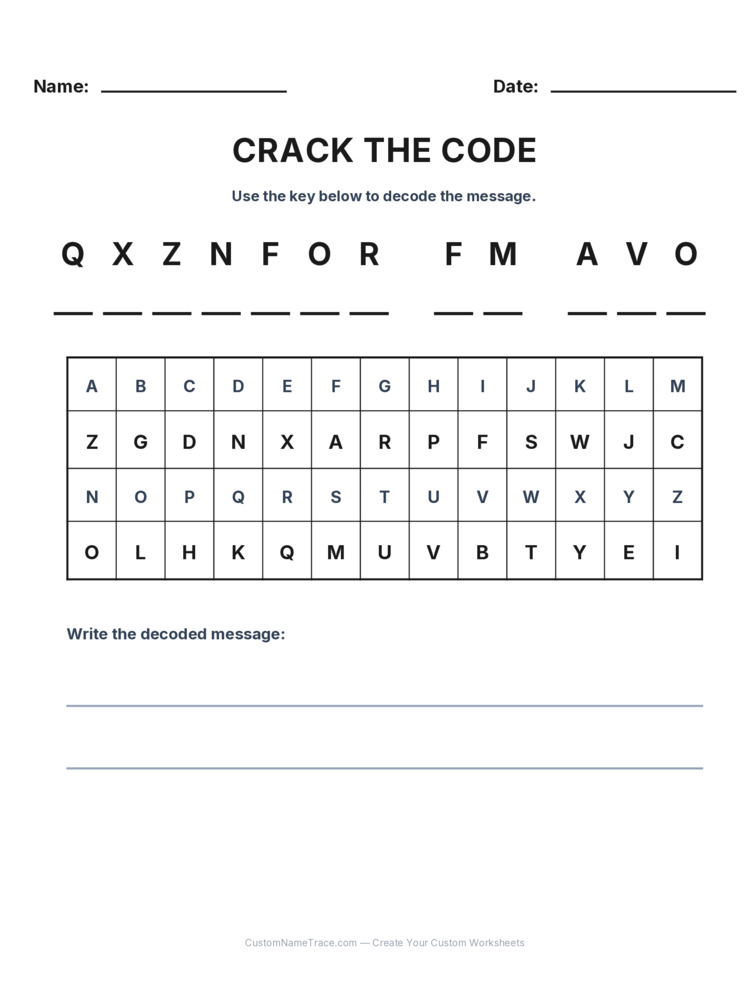
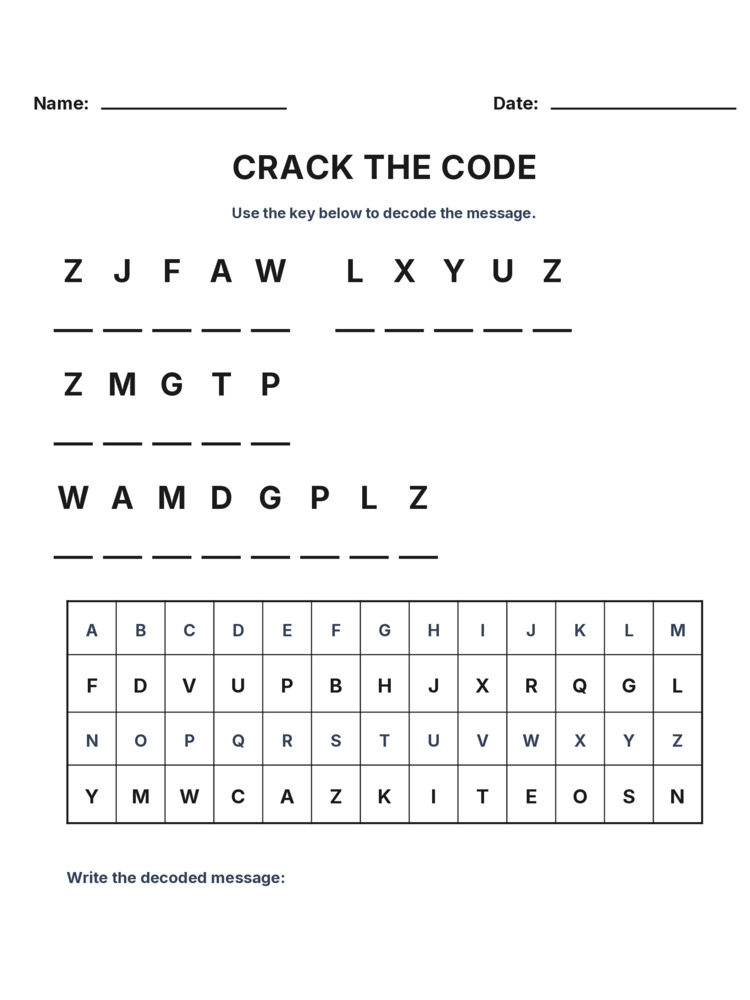
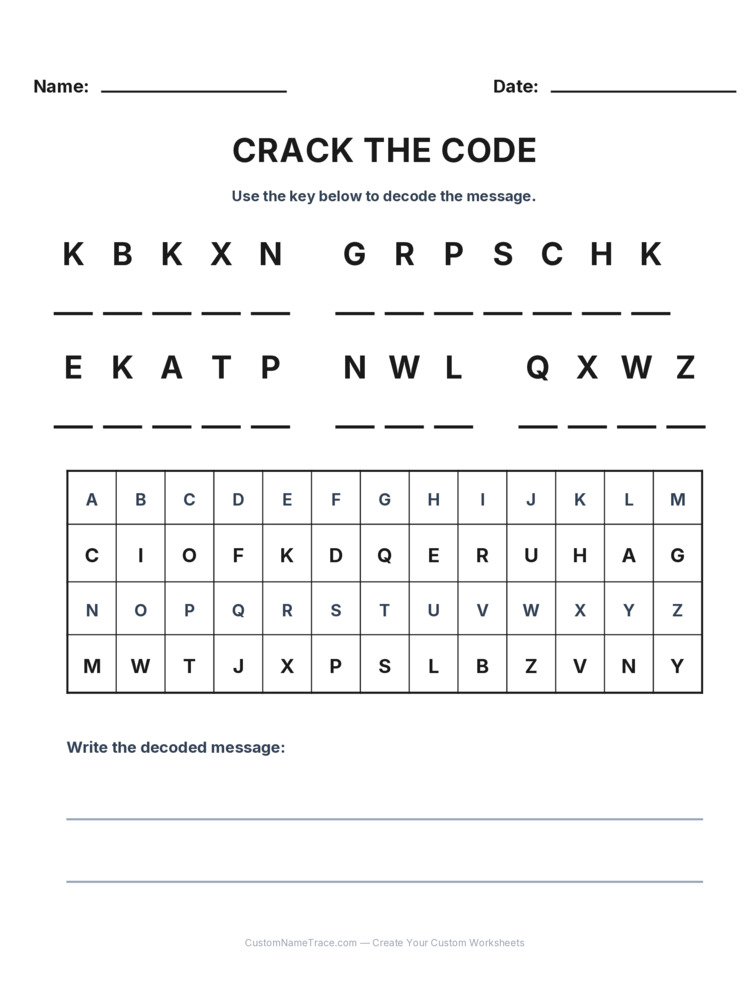
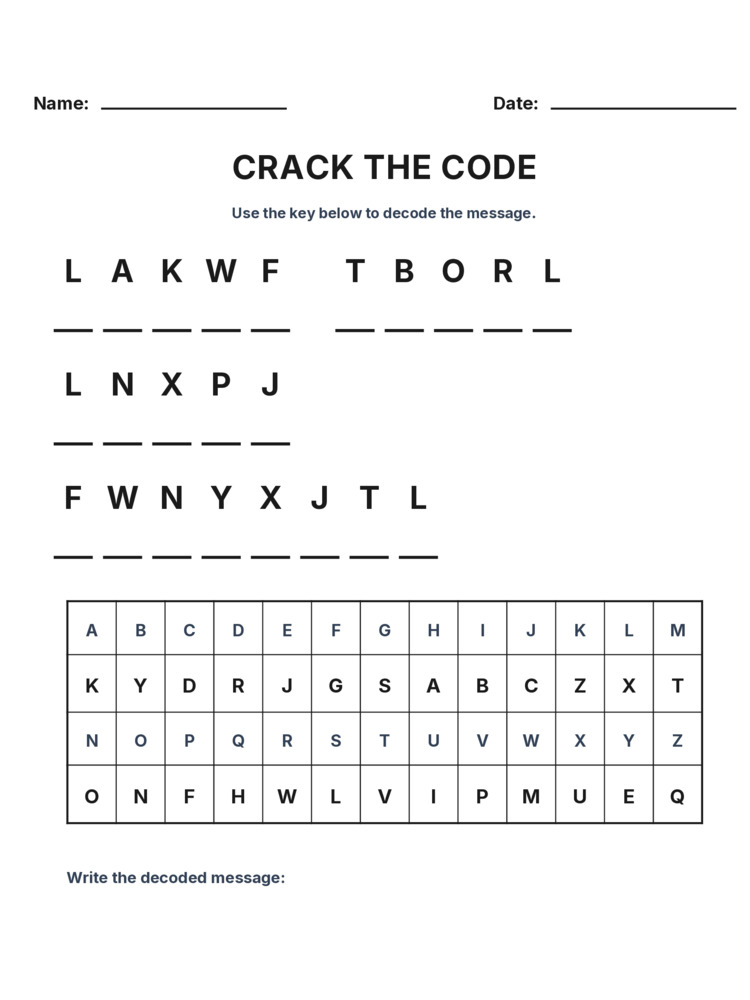
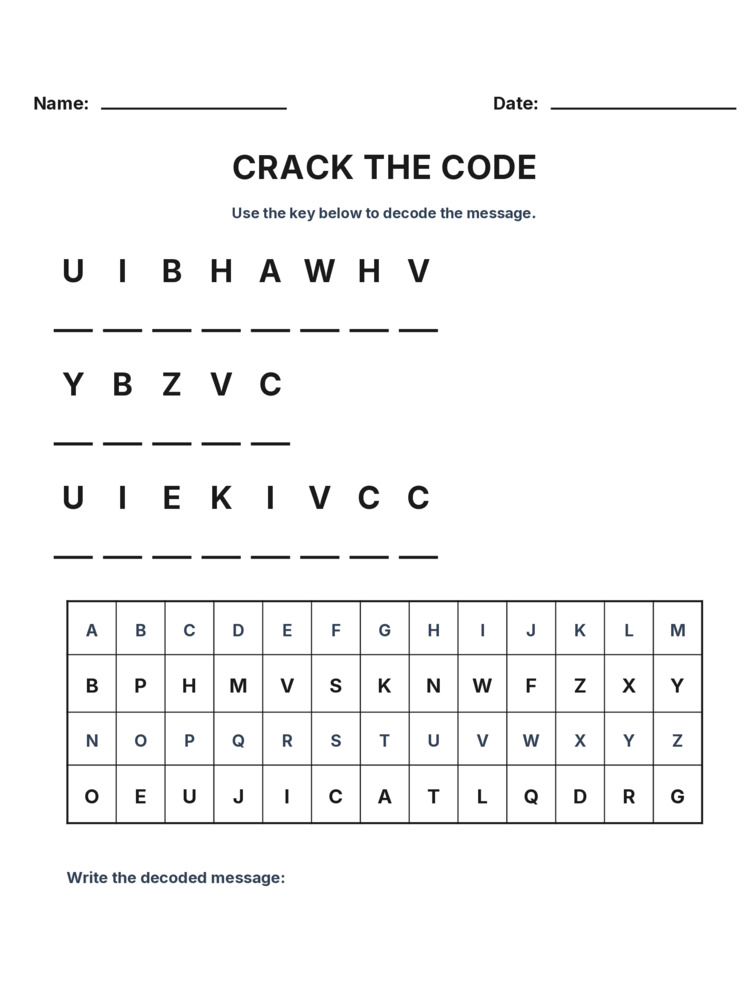
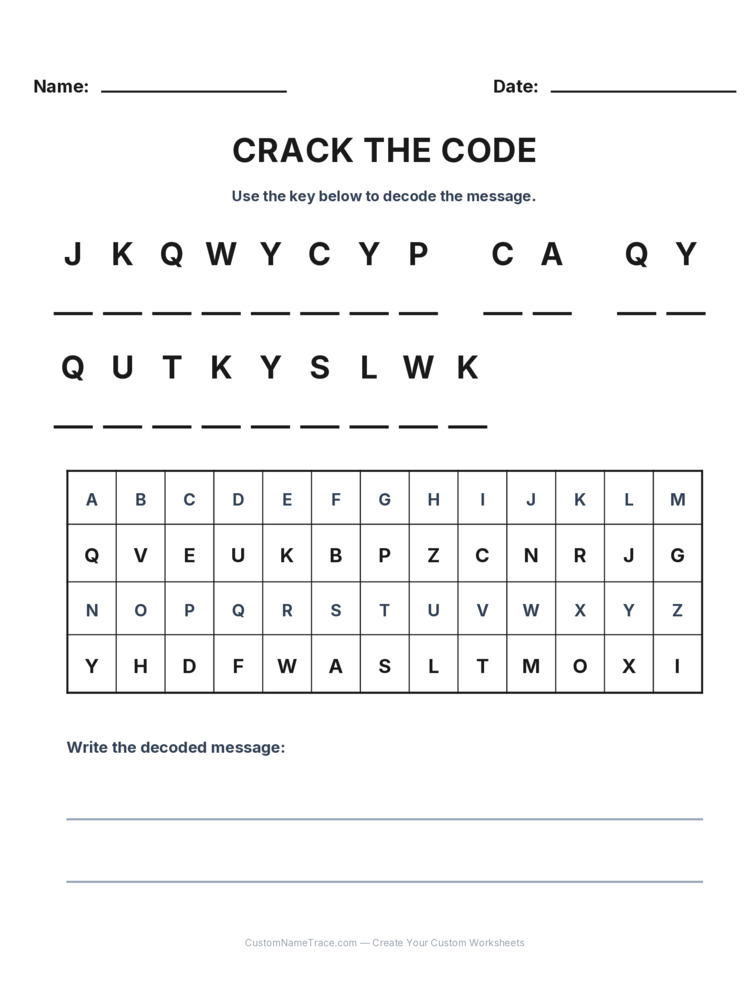
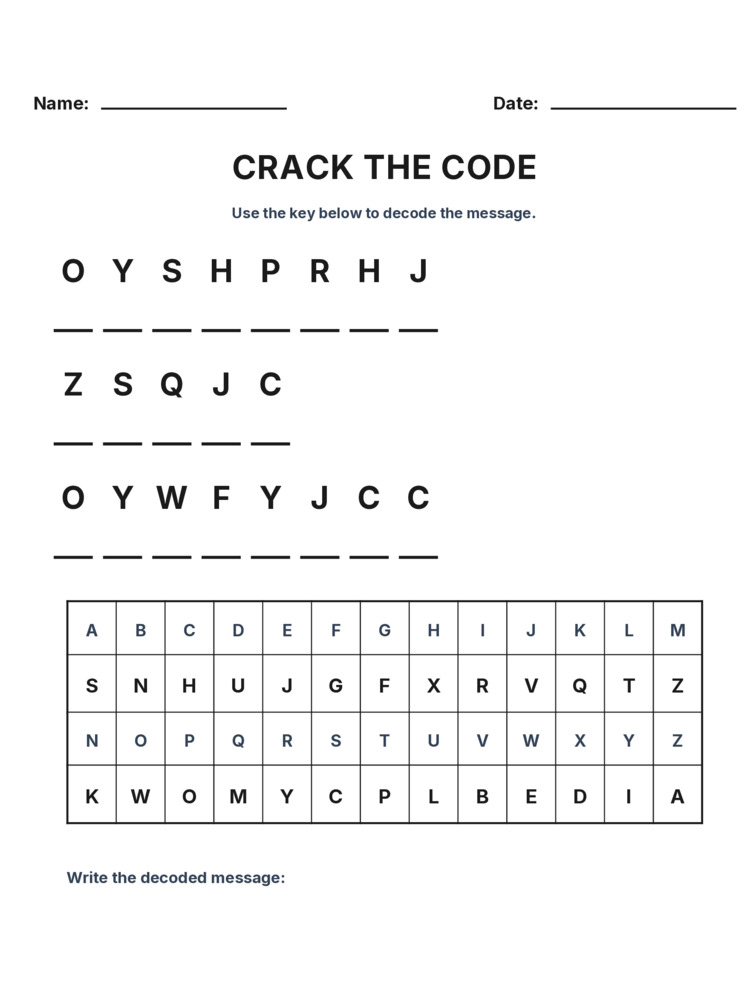
A short, age-appropriate phrase is enciphered using a simple letter-for-letter substitution — every letter in the original message is consistently replaced with a different letter or symbol throughout — and a full A-to-Z decoding key is printed directly on the worksheet. This is a genuine cryptogram, the same basic mechanism used in real substitution ciphers, just built with a friendly message and a key provided rather than requiring the code to be broken from scratch.
Giving the full decoding key up front, rather than asking a child to deduce the cipher through letter-frequency analysis the way an adult codebreaker would, keeps the challenge appropriately scoped: the reasoning task here is methodical, careful substitution — work through each ciphered letter, look it up, write the real letter — not cryptanalysis. That mechanical-but-engaging process is exactly right for the age this puzzle targets, and the payoff (a real message emerging from what looked like nonsense) provides genuine motivation to work through every letter carefully.
The message length and how many distinct letters are used are matched to Grade 3's level, keeping the puzzle genuinely solvable in one sitting rather than becoming a long slog. The underlying cipher mechanism stays exactly the same as a real substitution cipher throughout — what changes with grade level is the length and complexity of the hidden message, not the method used to decode it.
What decoding actually practices
Working through a cryptogram trains sustained, careful attention across many small repeated steps — look up a symbol, find its letter, write it down, move to the next one — without losing track partway through. That's a specific and valuable form of stamina: unlike a puzzle solved in one flash of insight, a cryptogram rewards a child who can keep applying the same careful process letter after letter without getting sloppy near the end, which is directly useful for any longer, multi-step task in school.
Because the payoff for correct decoding is a real, readable sentence, this puzzle format doubles as light vocabulary and reading-comprehension practice alongside the code-breaking logic — a child has to recognize the decoded word as a real word to know the substitution was done correctly, which adds a second layer of self-checking beyond the key itself. A message that decodes to nonsense is a clear, self-evident signal that something needs rechecking, without an adult needing to point it out.
Strategy, and what to do when a child gets stuck
Rather than working strictly left to right, scanning for any letter that repeats several times in the ciphered message and decoding that one first tends to break the code open faster — a repeated symbol is worth decoding early since it reveals the same real letter everywhere it appears. Short words are also a good early target: a two-letter ciphered word decodes to a very small set of realistic possibilities, which can confirm or rule out a guess quickly.
A partially decoded message that isn't making sense yet is a genuine signal worth investigating rather than a reason to stop — go back through the letters already filled in and check each one against the key again, since a single early mistake (misreading one symbol) cascades and makes everything after it look wrong even when the process itself was being followed correctly. Finding and fixing that one seed error, rather than starting over, teaches a more useful lesson: most stuck points trace back to one small, fixable slip, not a fundamentally wrong approach.
For a longer hidden phrase, decoding it in two shorter sittings rather than one long one keeps the careful, letter-by-letter attention this puzzle needs from degrading toward the end — a rushed final few words are the most common source of an otherwise-correct decode reading slightly garbled.
Fully self-checking, on purpose
Because the decoding key is printed directly on the worksheet, this puzzle needs no separate answer key at all — a child (or the adult checking their work) can verify any individual letter instantly, and the strongest signal of all is simply whether the decoded message reads as real, sensible words. A garbled result means a mistake was made somewhere in the substitution and it's worth rechecking a few letters, which is itself useful practice in noticing when something doesn't add up.
Every enciphered phrase on this worksheet is chosen specifically to be encouraging or simply fun once decoded — never a trick, a warning, or anything that would land oddly for a child working through it alone. That choice matters more for a cryptogram than for most other puzzle formats here, since the entire payoff of decoding is discovering what the message says, and a flat or strange final sentence would undercut the motivation that makes a child want to push through the careful letter-by-letter process in the first place.
Extending this puzzle further
Once a child is comfortable decoding, flipping the activity — picking a short message together and working out a substitution to encode it themselves, using the same A-to-Z key format — deepens the skill from a different angle. Encoding requires understanding the substitution system well enough to apply it forward, not just follow it backward, which is a genuinely harder and more revealing test of whether the underlying logic has actually been understood.
A child who decodes messages quickly and confidently is ready to try writing a short message and encoding it themselves using the same A-to-Z substitution idea, which reverses the direction of the skill and tests whether the underlying logic — not just the mechanical lookup process — has genuinely been understood, before eventually moving on to Grade 3's other two-rule puzzle formats on this page.
For a child who enjoys this format, timing how long a message takes to decode and trying to beat that time on the next numbered variant adds a light layer of motivation without changing the puzzle itself — the challenge stays the same careful letter-by-letter substitution, just with a personal-best framing that some children find more engaging than an untimed page. This works well as an optional extra, not a requirement; a child who prefers working at their own unhurried pace should be left to do exactly that.
Once a child has decoded a few of these successfully, it's worth explaining plainly that the same basic idea — swapping letters or symbols according to a consistent rule — underlies real historical codes used in wartime messages, and even, in a much more complex form, the encryption that protects information online today. That connection turns what might otherwise feel like a standalone puzzle format into a small window onto a real, historically and practically important idea, giving the exercise a sense of purpose beyond the immediate satisfaction of decoding one message.
Every numbered variant hides a different message with its own decoding key, so a child who enjoys this format never runs out of fresh codes to crack. Print at full size so the small print of the decoding key stays legible — a shrunk page can make similar-looking letters in the key genuinely hard to tell apart, which turns a fair puzzle into a frustrating one for reasons that have nothing to do with the actual reasoning skill.
Unlike some of this site's other logic formats, rushing through a cryptogram tends to actively slow a child down rather than speed them up — a single skipped or misread symbol early on compounds into a garbled result that then has to be untangled. Framing this puzzle explicitly as a "slow and steady" exercise, rather than something to race through, sets the right expectation from the start and tends to produce both faster and more accurate results than encouraging speed.