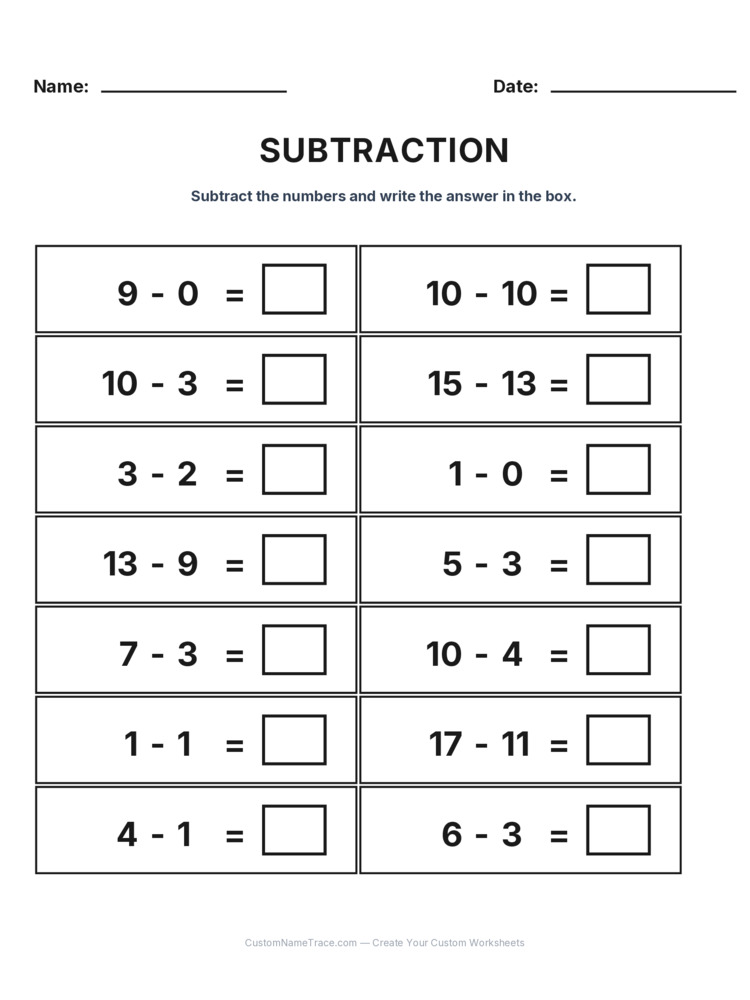
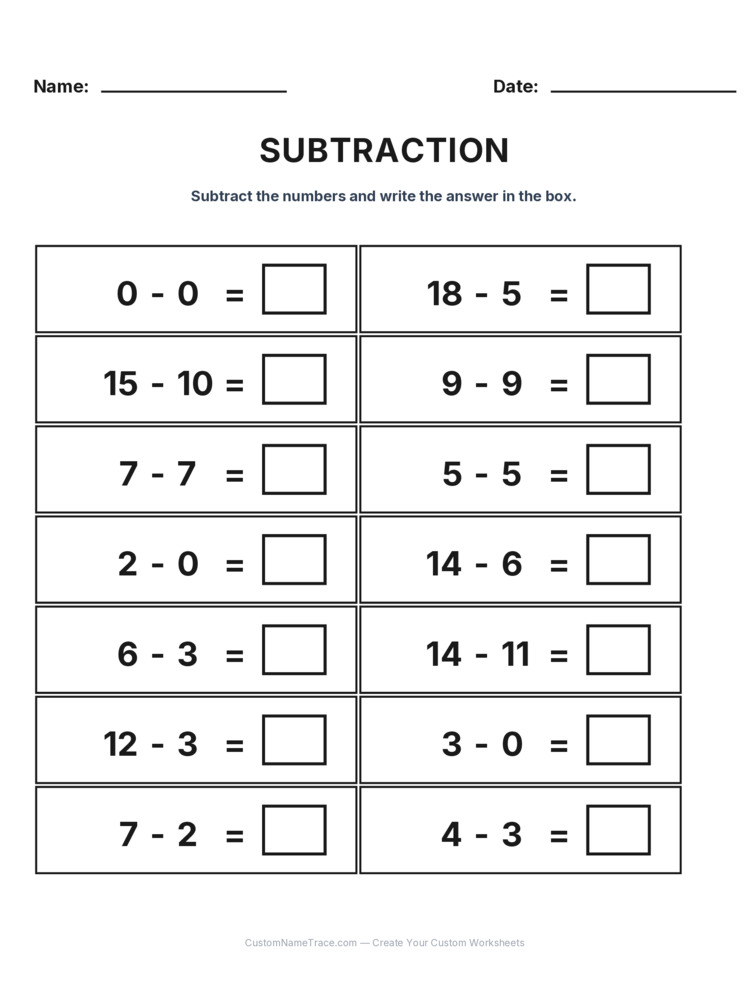
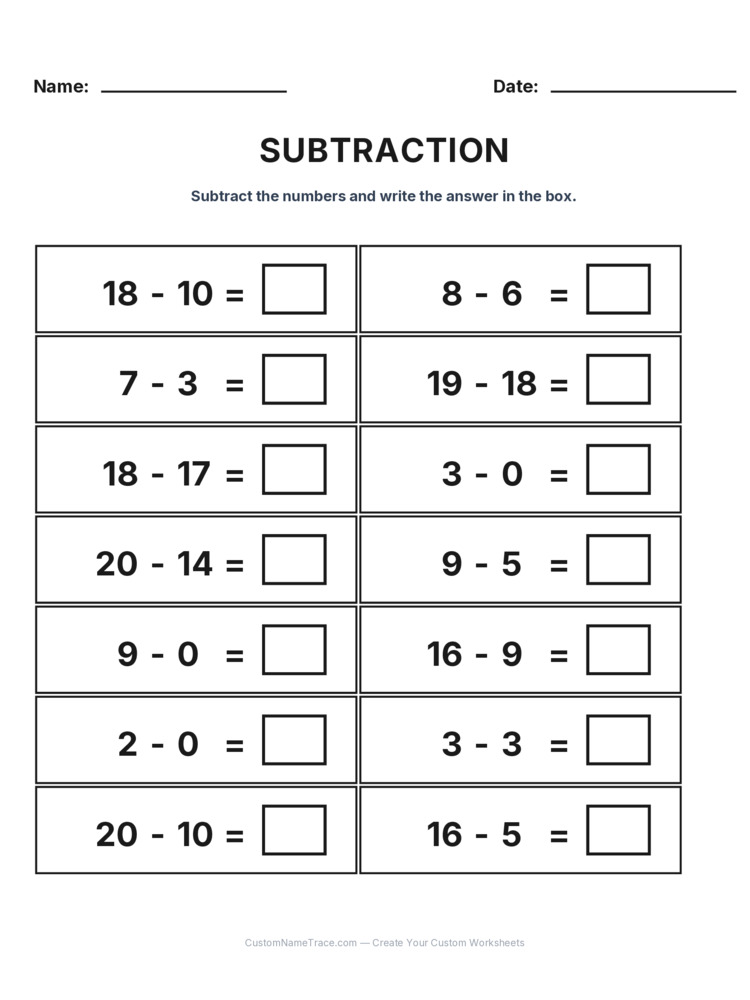
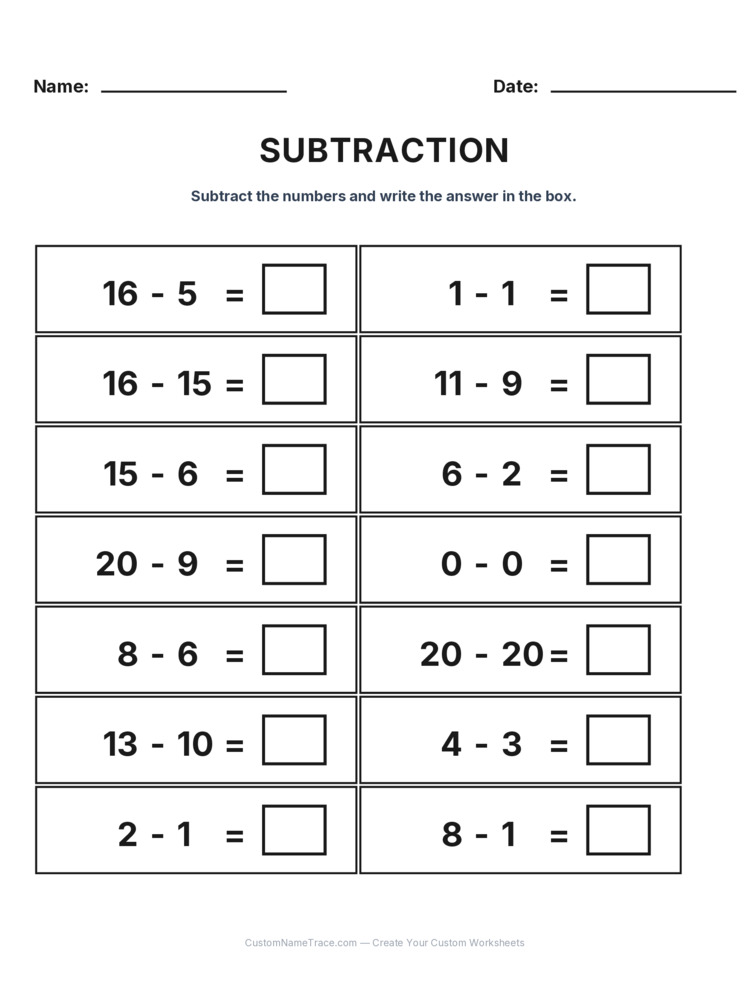
Why I stopped printing these one at a time
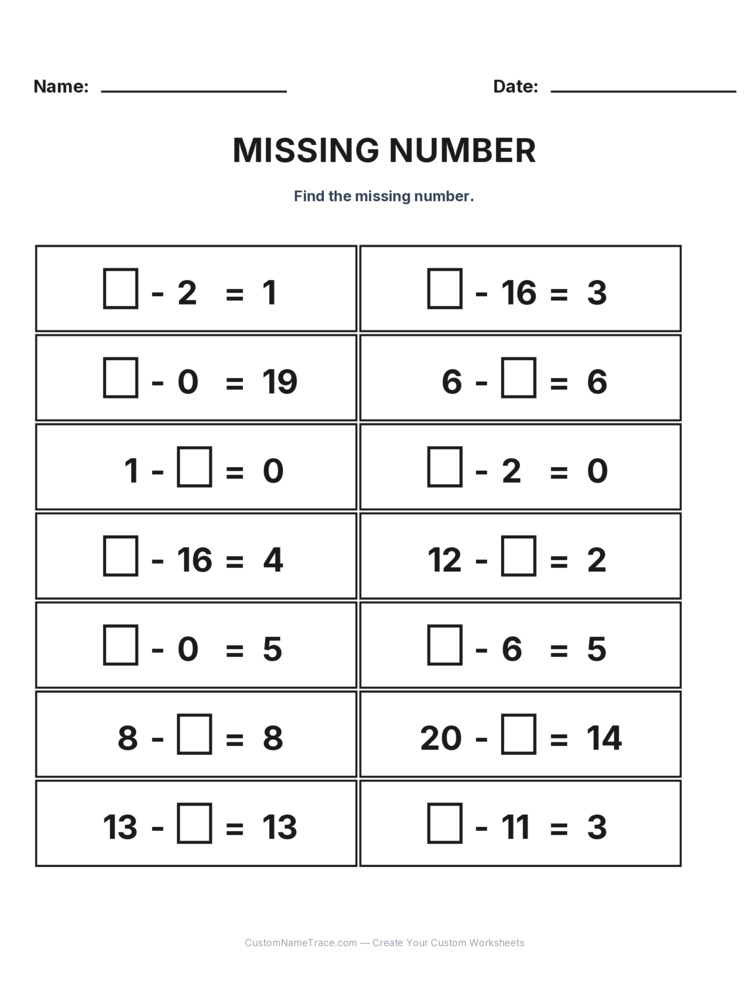
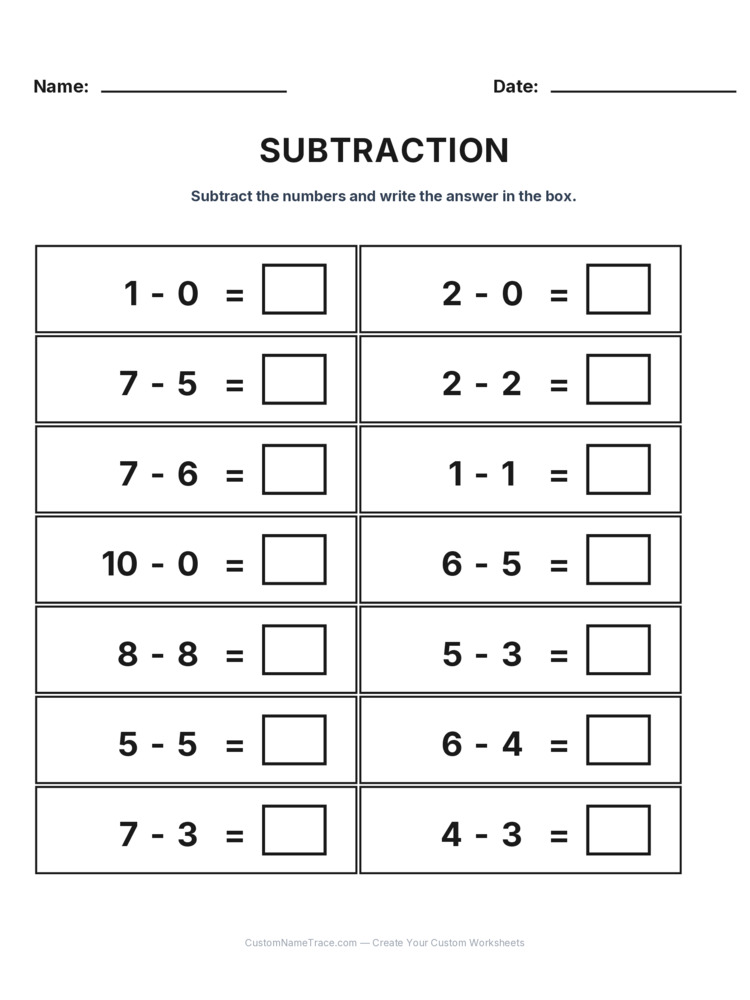
I used to keep a folder of bookmarked worksheet pages, and every Sunday night I'd click through five or six of them one at a time, print each one, and staple the stack together for the week. It worked, but it was the kind of small, repetitive task that eats twenty minutes you don't actually have. This subtraction within 20 bundle is the fix I wish I'd had years ago: ten worksheets for the exact same skill, already put together in one PDF, so the Sunday-night version of that routine is one click instead of ten. Nothing about the worksheets themselves changed — they're the same Grade 1 subtraction within 20 problems you'd get printing them individually — the only thing that changed is how many you get in one download.
What's actually inside this download
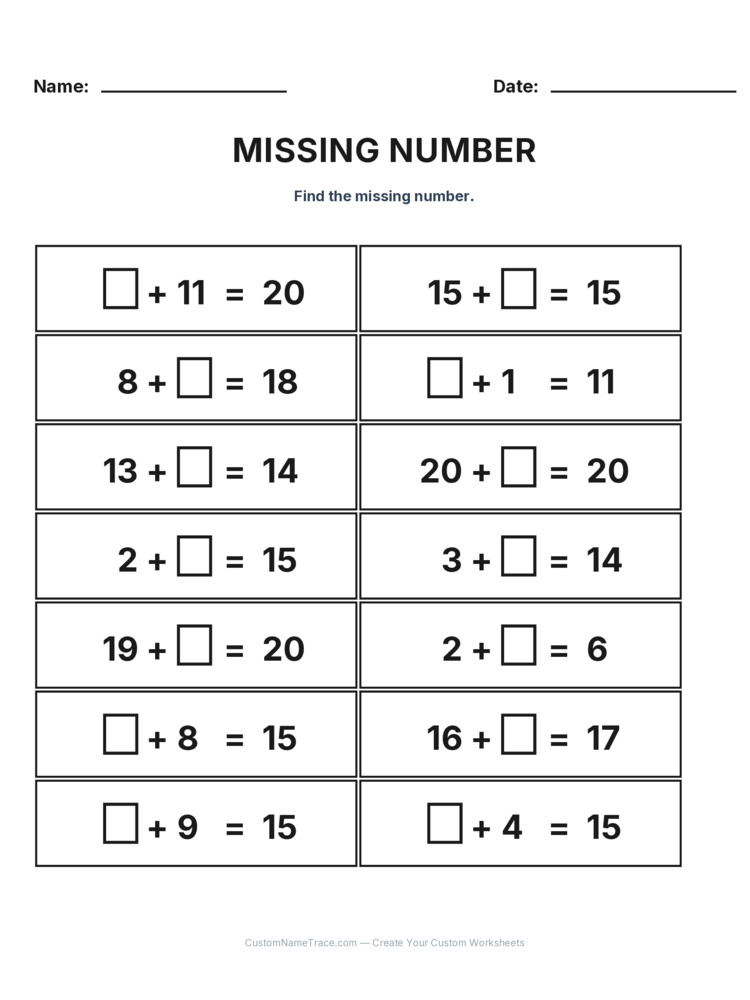
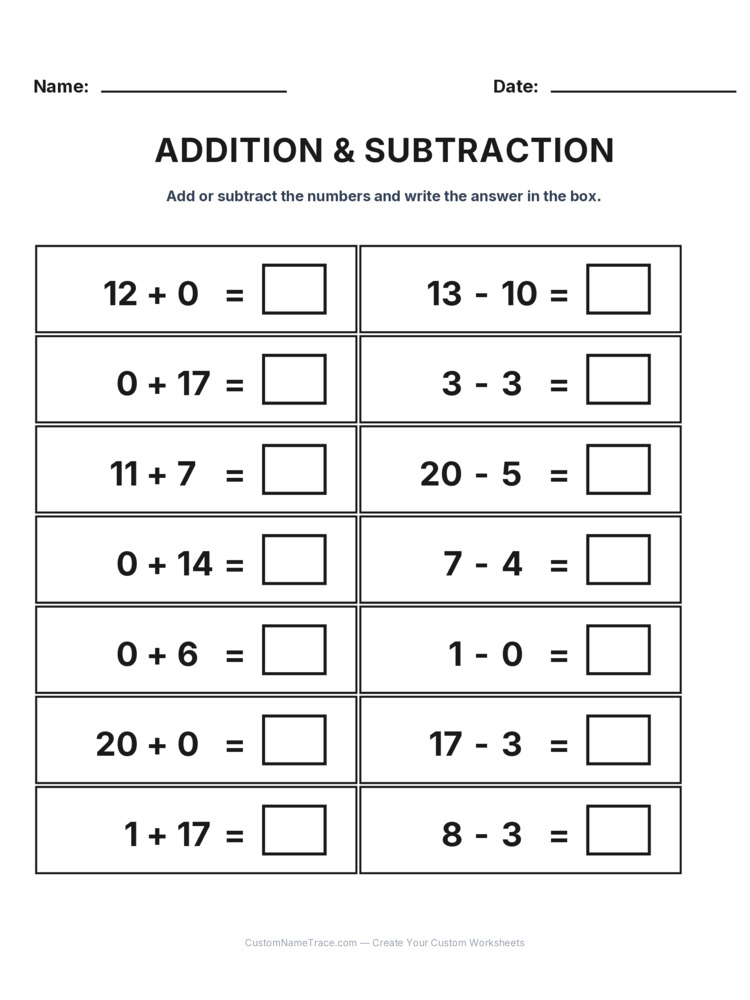
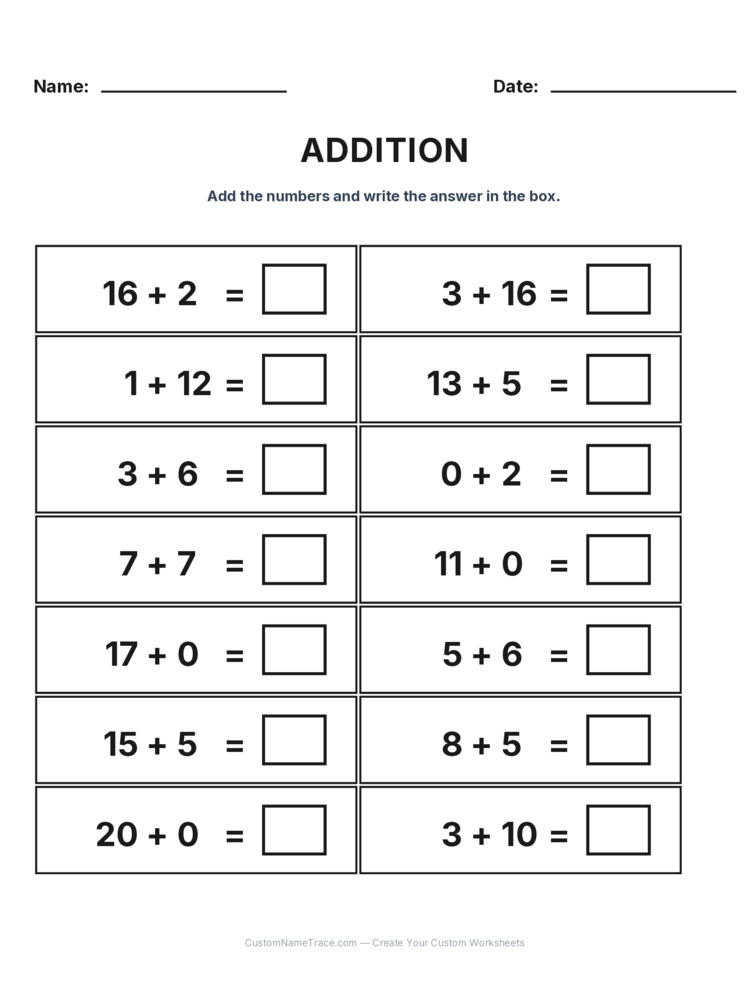
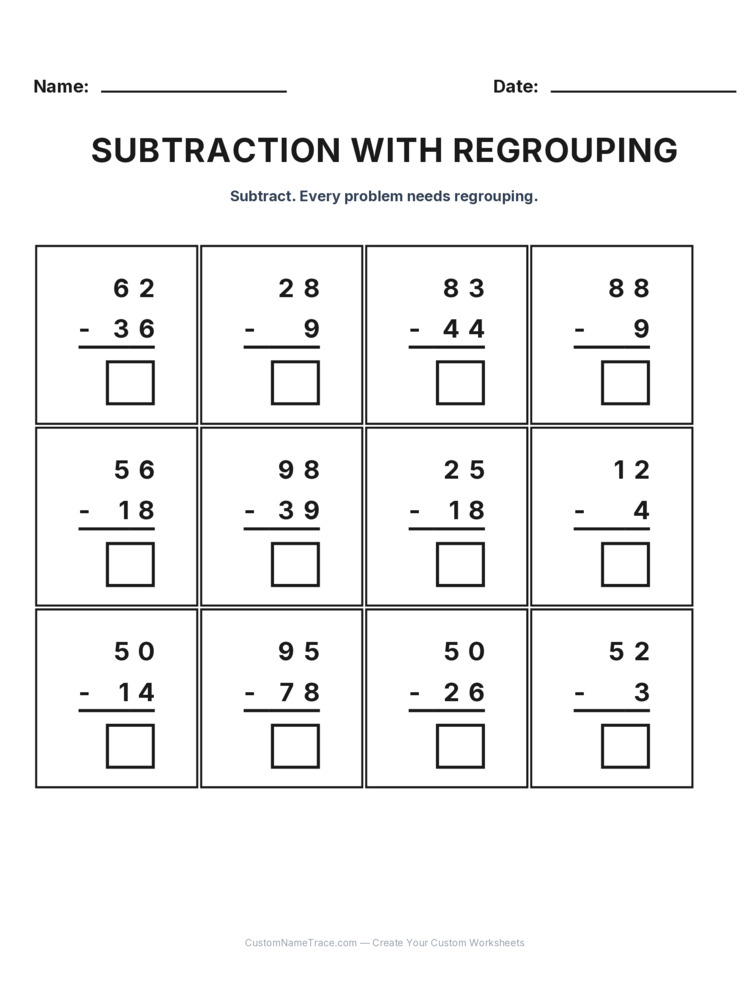
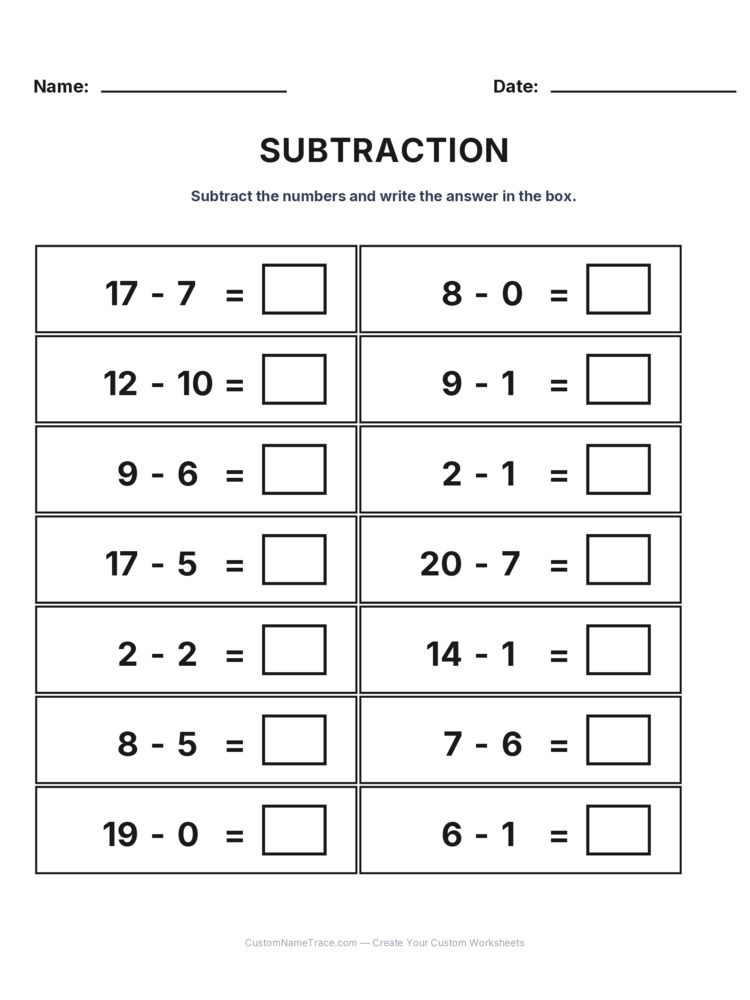
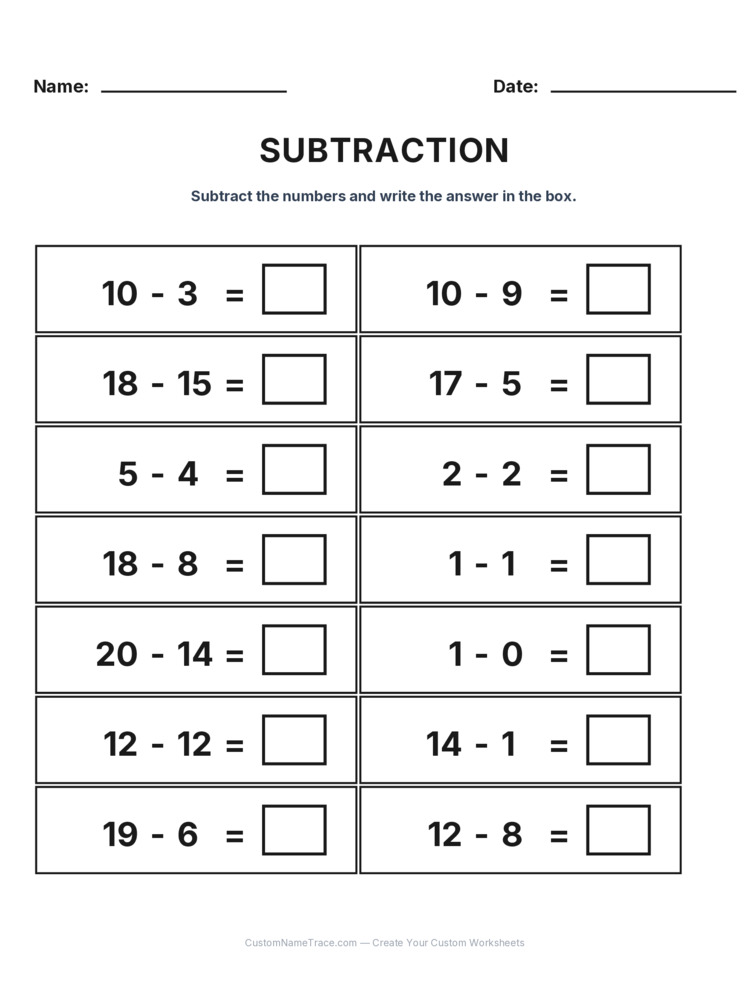
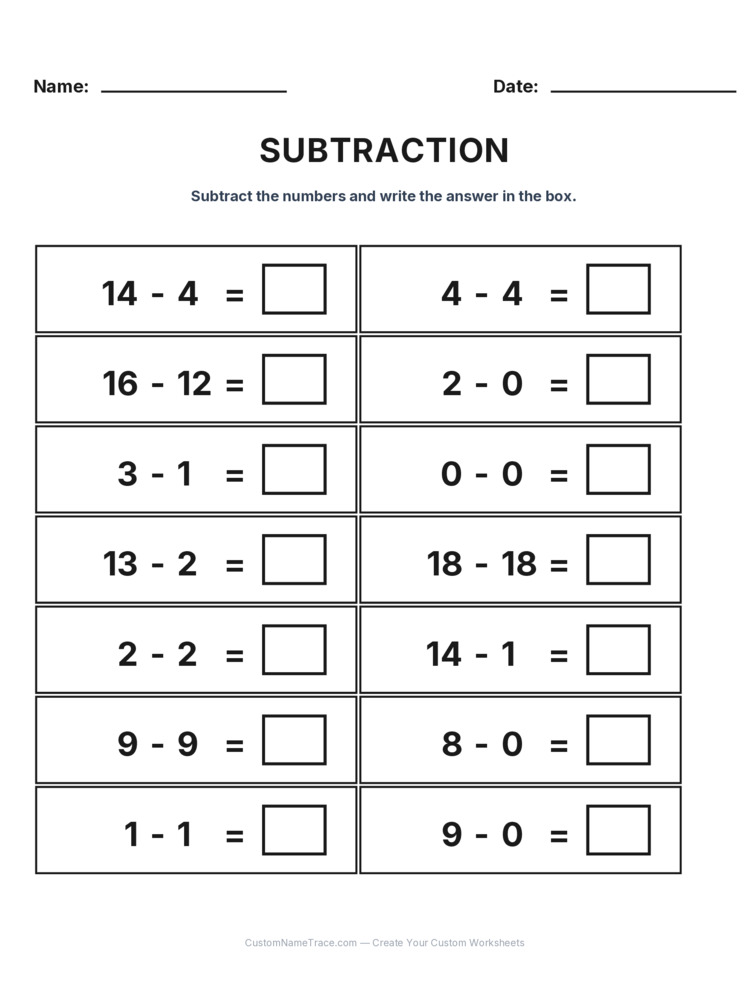
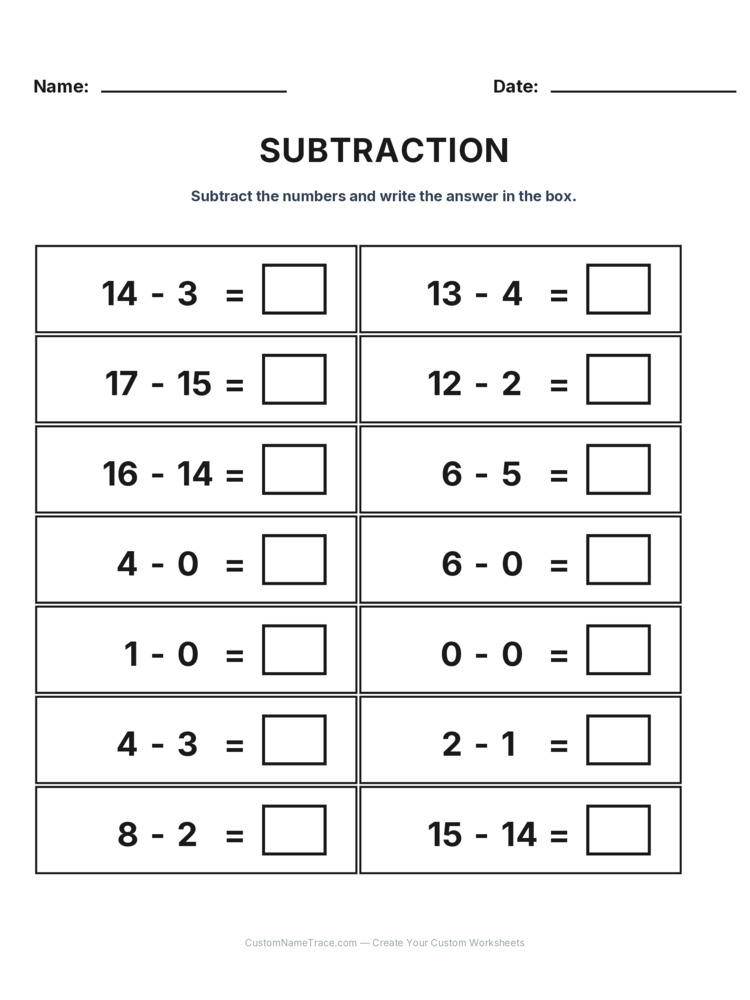
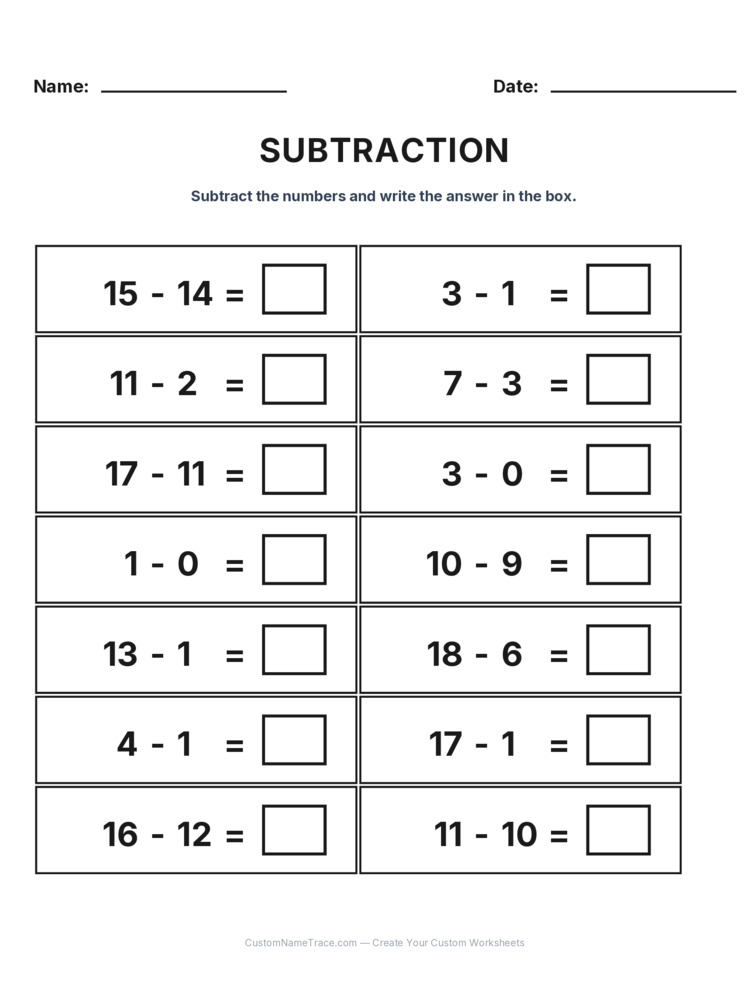
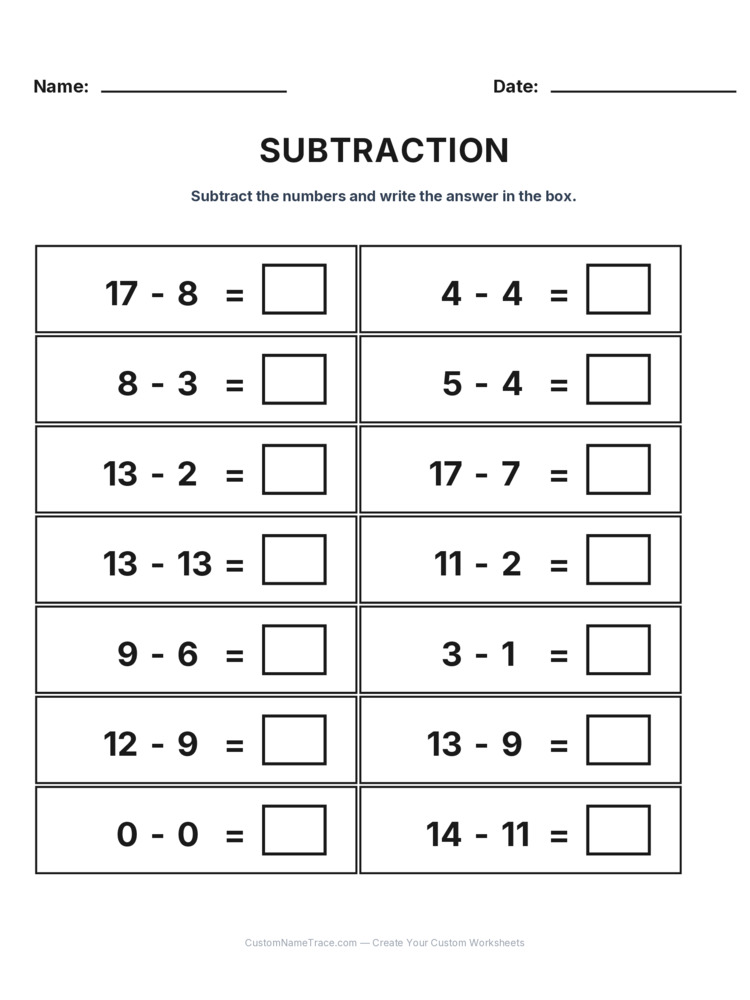
Ten worksheets, each one a full page of subtraction within 20 problems at the number range researched for Grade 1, and nothing else padded in to make the file feel bigger. Every one of the ten uses a different, freshly generated set of numbers — not the same page copied ten times with a new date stamped on it — so a student who blows through the first page in four minutes has nine more genuinely different pages behind it, not nine repeats. That matters more than it sounds like it should: kids notice when a "new" worksheet is actually the same problems in a different order, and the moment they notice, the practice stops feeling like practice and starts feeling like a formality.
Where subtraction within 20 actually sits in a Grade 1 classroom
Every skill on this site is scoped to the grade it's meant for on purpose, not rounded up or down to save someone a decision. Subtraction Within 20 at Grade 1 means the number range, the format, and the difficulty were checked against what Grade 1 students are actually expected to handle at this point in the year — not a generic guess at "about right for that age." I've handed a child a worksheet pitched a grade too high before, watched the confidence drain out of the room in about ninety seconds, and learned the hard way that the range matters as much as the topic. This bundle is built so that mistake doesn't happen by accident: what's inside is what Grade 1 is supposed to be working on right now.
How I'd actually run this in a classroom
Ten worksheets is close enough to two full school weeks of short daily practice — five or ten minutes at the start of a math block, not a standalone lesson — which is exactly the length where a skill goes from shaky to automatic if the range is right. I like starting the week by handing out worksheet one cold, no warm-up, just to see where everyone actually stands before I say another word. From there it's less about reteaching the whole class and more about circulating: most kids need thirty seconds of "nice, you've got it," and the two or three who are stuck need you sitting next to them for the next problem, not a whole-class re-explanation that wastes the ten kids who already have it. By worksheet six or seven, the room usually sounds different — less erasing, less hand-raising, more of that quiet scratch of pencils that means the skill has actually landed.
Using this bundle at home instead of in a classroom
The classroom pacing above still mostly works at a kitchen table, just slower and with more flexibility to stop mid-page. I'd rather see a child do four rows well, get up, and come back later than push through a full page once frustration shows up in the handwriting — you can usually see it before they say anything, the numbers get bigger and messier and the eraser comes out more. Print two or three at a time rather than all ten at once; a stack of ten blank pages sitting on the table can feel like a mountain before a single pencil touches paper, and that's a battle you don't need to start. One page done properly beats three pages rushed through to make the pile smaller.
The mistakes worth watching for, not just the wrong answers
A wrong answer on its own doesn't tell you much — it's the pattern across a few wrong answers that actually tells you something. A student who's wrong in the same specific way every time (the same digit position, the same step skipped, the same kind of number that trips them) has a real, fixable gap; a student who's wrong in a different, careless way each time usually just needs to slow down, not reteaching. I always read down a finished subtraction within 20 page looking for that pattern before I say anything about the score, because "you got 6 out of 10" tells a kid almost nothing useful, while "you're doing great except every time there's a bigger second number" tells them exactly what to fix. That second kind of feedback is the entire reason worksheets like this are worth grading by hand at least once in a while instead of just checking for a completed page.
Knowing when subtraction within 20 is actually solid
The real signal isn't a perfect score on one page — it's speed and confidence holding up across several of them in a row without the child needing to think hard about the process anymore. If worksheet eight takes noticeably longer than worksheet two, or the eraser marks pile up again after a few clean pages, that's not a failure, it just means there's more runway left at this exact level before moving on makes sense. If instead the pace picks up and the mistakes thin out by the back half of the bundle, that's the real readiness signal — not a single good day, but a trend across multiple worksheets that a single page can't show you.
If a few pages feel wrong the moment you look at them
Trust that instinct — it's usually right, and it's cheaper to fix before a child sits down with a pencil than after. If the first worksheet gets finished in under two minutes with zero mistakes, the range is too easy and ten more pages at the same level just burns time without building anything new; skip ahead to the next skill up rather than working through the rest of the bundle out of a sense that it has to be finished. If instead the first page produces more frustration than actual attempts at the problems, the range is too hard for right now, and no amount of encouragement fixes a worksheet that's pitched above where a child currently is — better to drop back a level for a week and return to this one once the foundation underneath it is steadier. Neither of those is a worksheet problem. They're both just information, and the fix is picking a different page, not pushing through the wrong one.
Why ten and not just one
A single worksheet tells you how a child does on one specific set of numbers, on one specific day, in one specific mood — which is useful, but it's a snapshot, not a trend. Ten worksheets spread across two weeks is closer to a trend line: you can actually see whether subtraction within 20 is improving, plateauing, or still shaky, in a way one page never shows you. That's really the whole case for a bundle over a single download — it's not about saving a few clicks, it's about having enough repeated, comparable data points to tell the difference between "had an off day" and "hasn't got this skill yet," which are two very different things that look identical on a single worksheet.
One last thing worth knowing
Nothing about how this bundle was put together is different from any other worksheet on this site — same research behind the Grade 1 number range, same free, no-account, nothing-saved download every other page here uses. The only thing a bundle changes is convenience: instead of ten separate trips back to this page over two weeks, it's one file, printed once, ready to hand out or hand over whenever the next subtraction within 20 page is needed. If it turns out this specific range isn't quite the right fit — too easy, too hard, or just not the skill needed this week — the grade hub above lists every other skill available, so finding the right level again is one click, not a search.