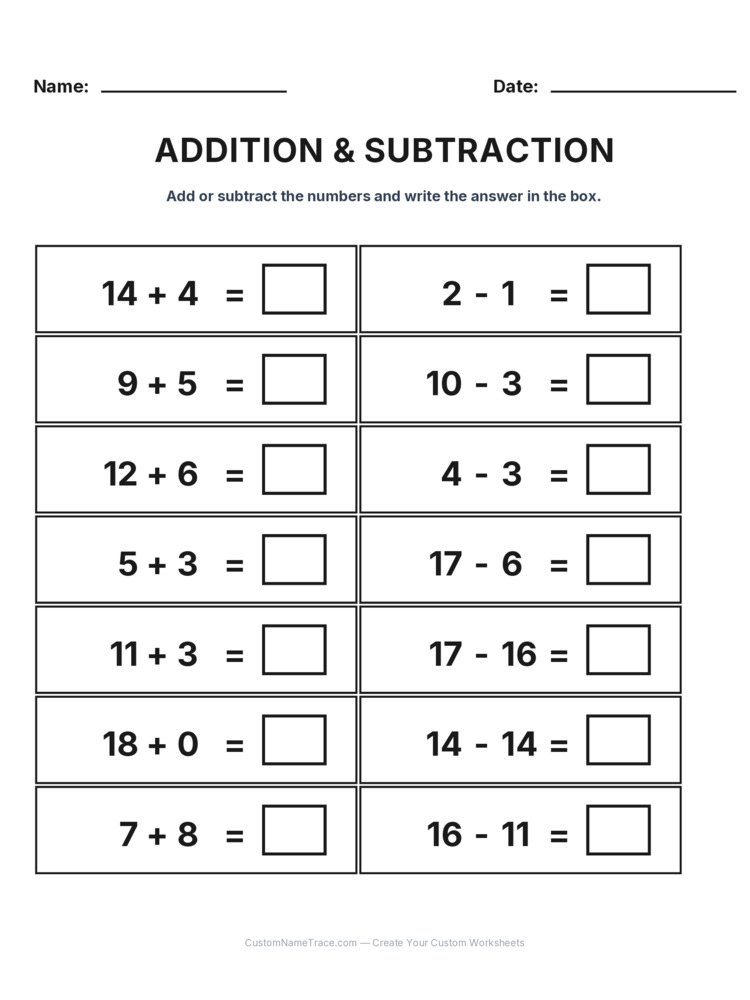
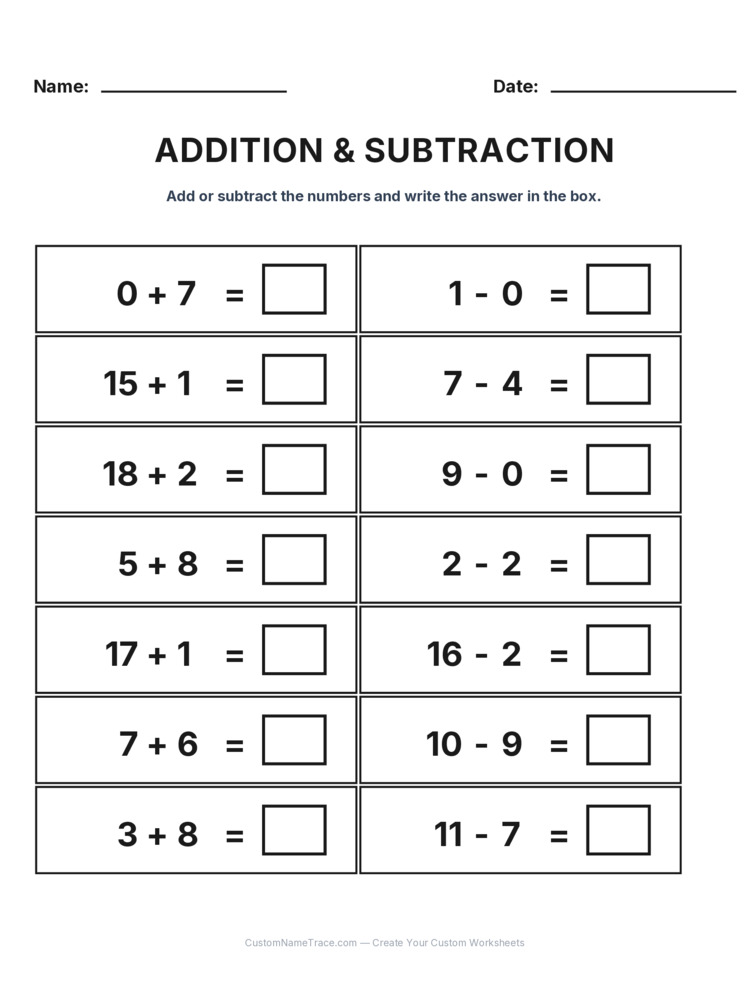
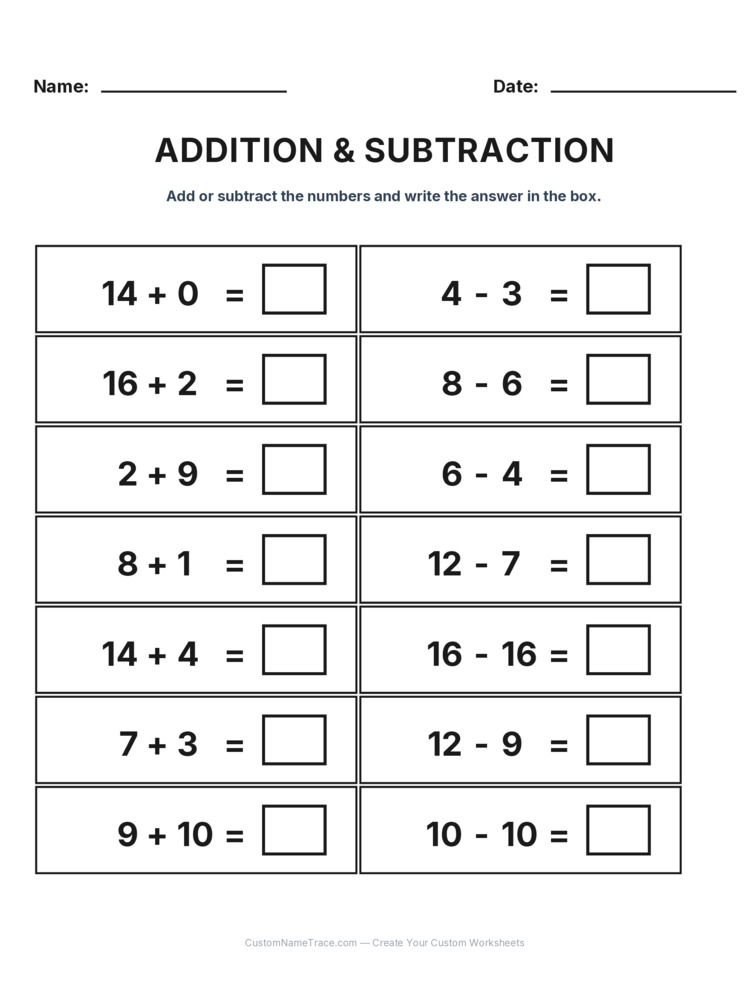
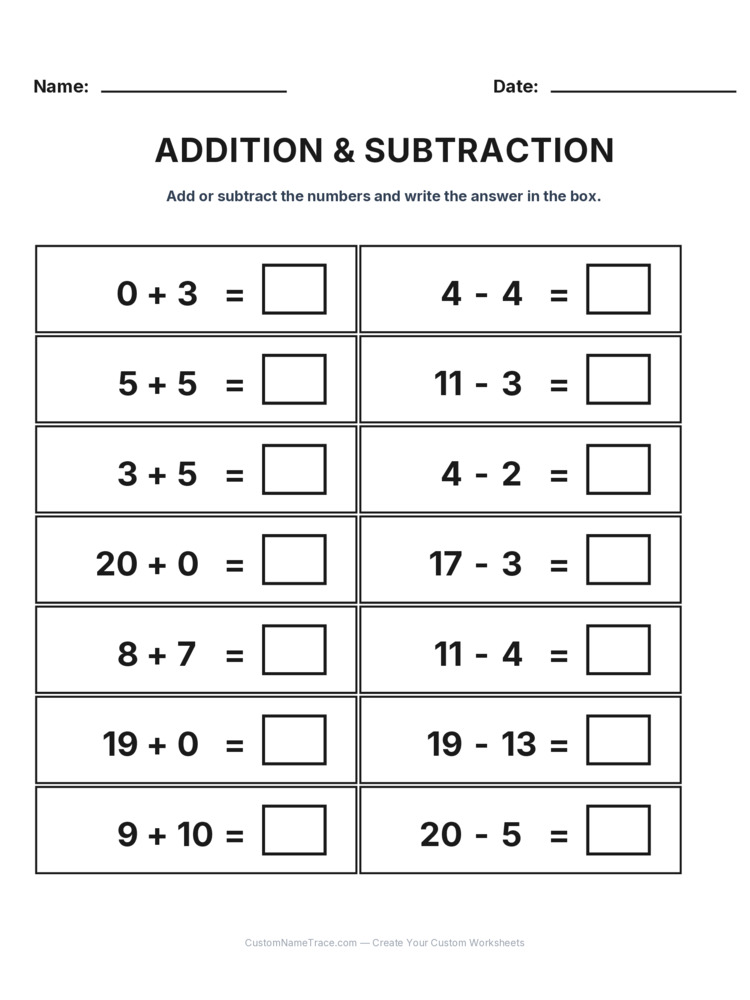
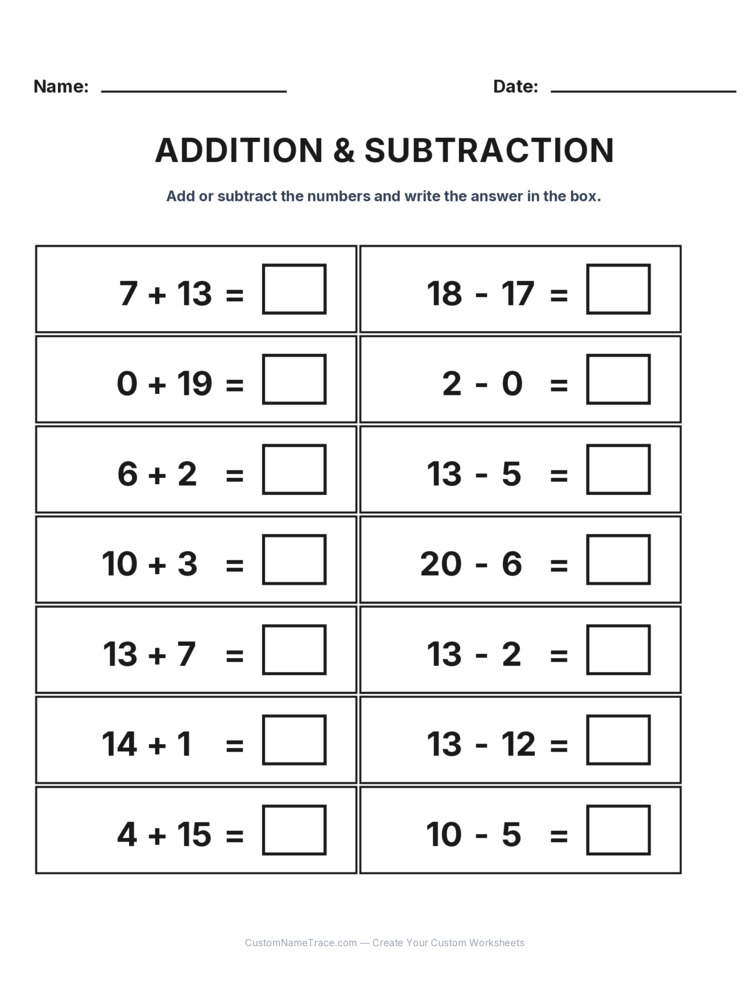
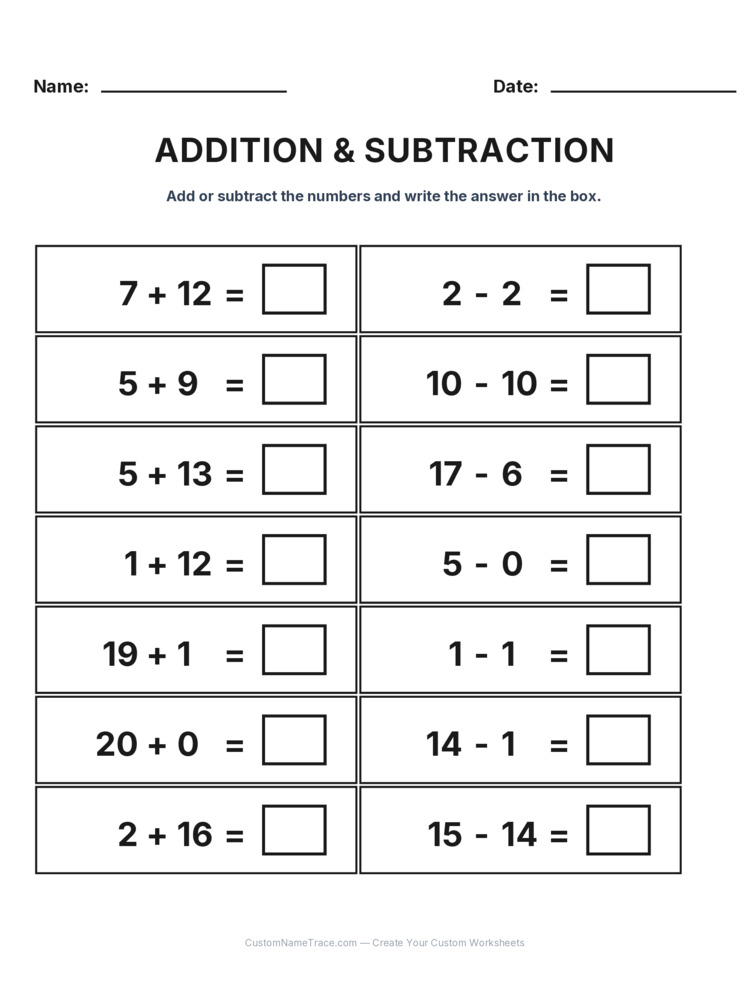
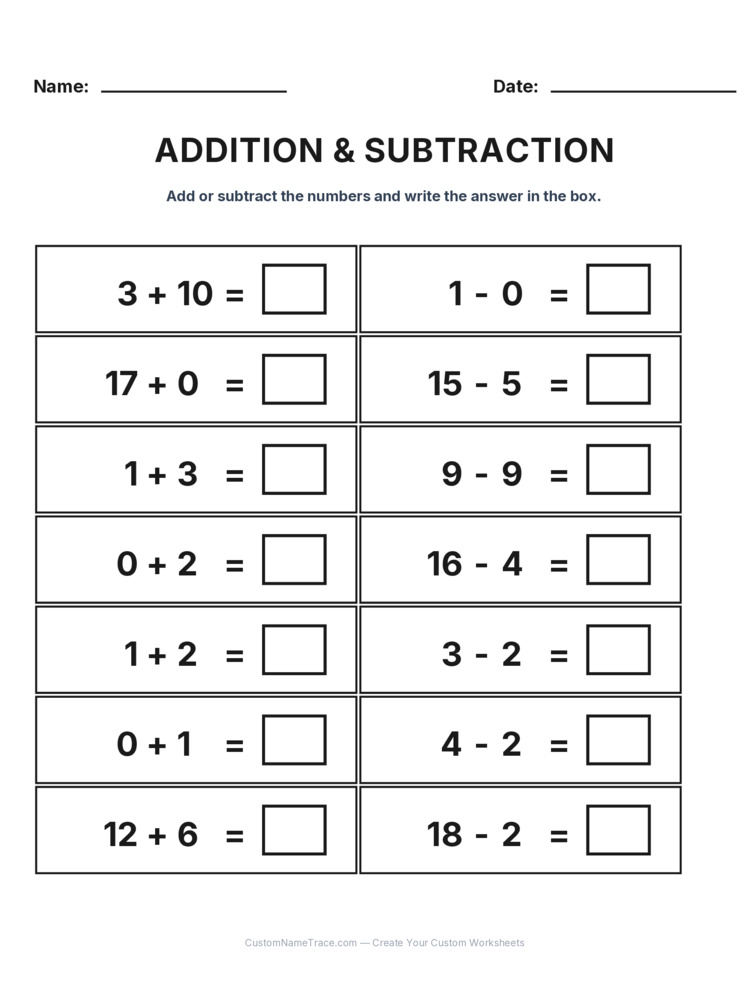
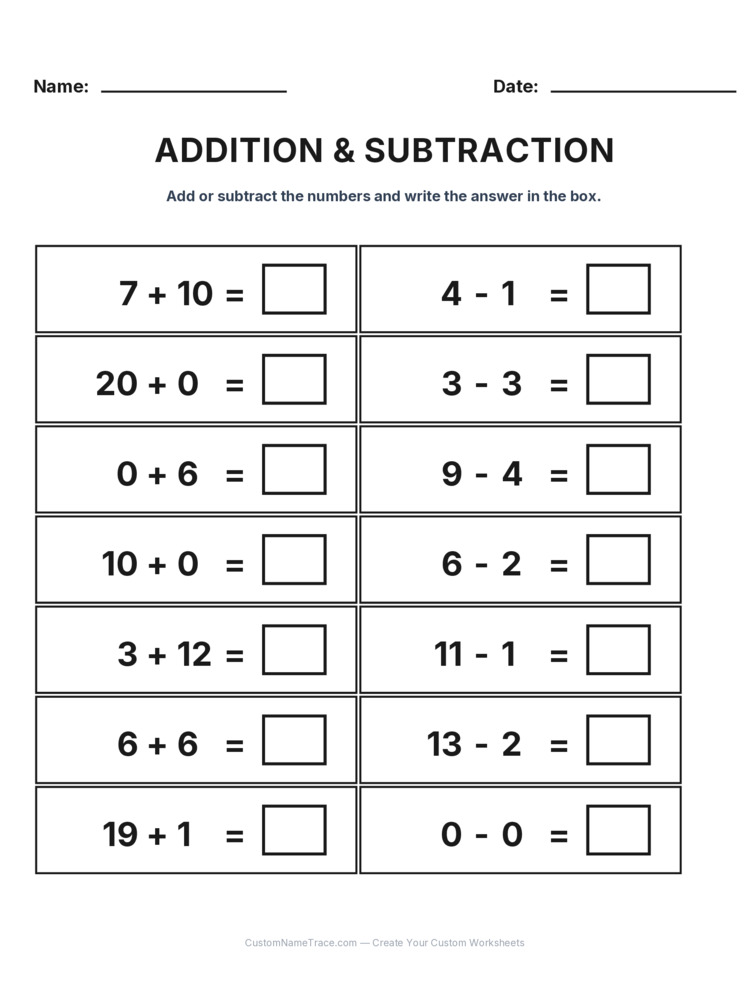
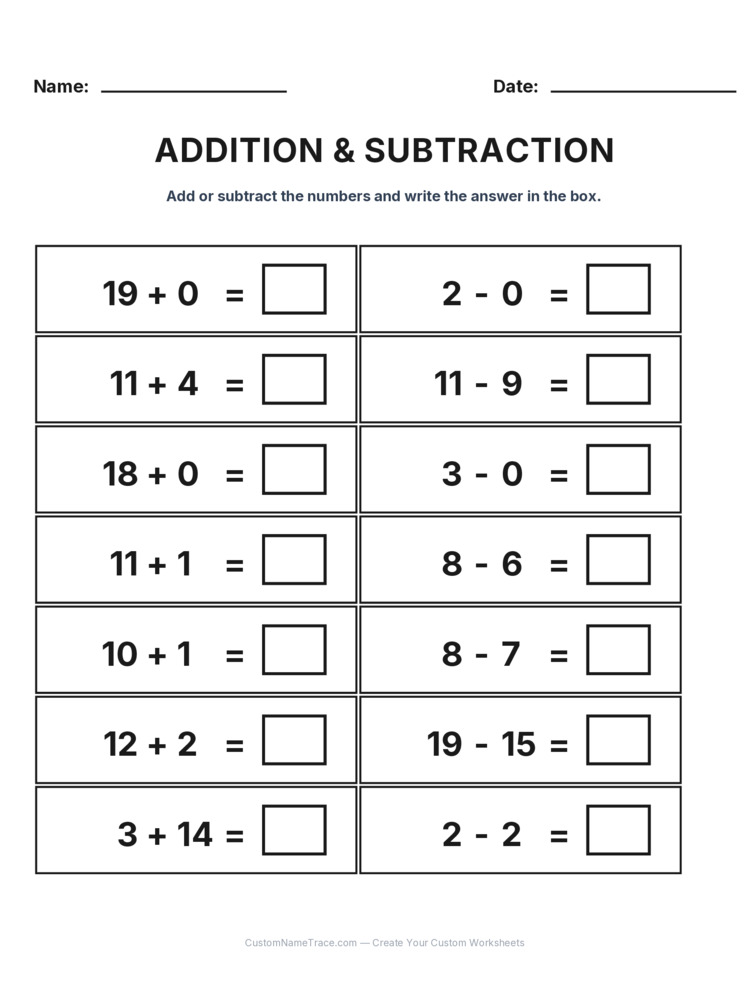
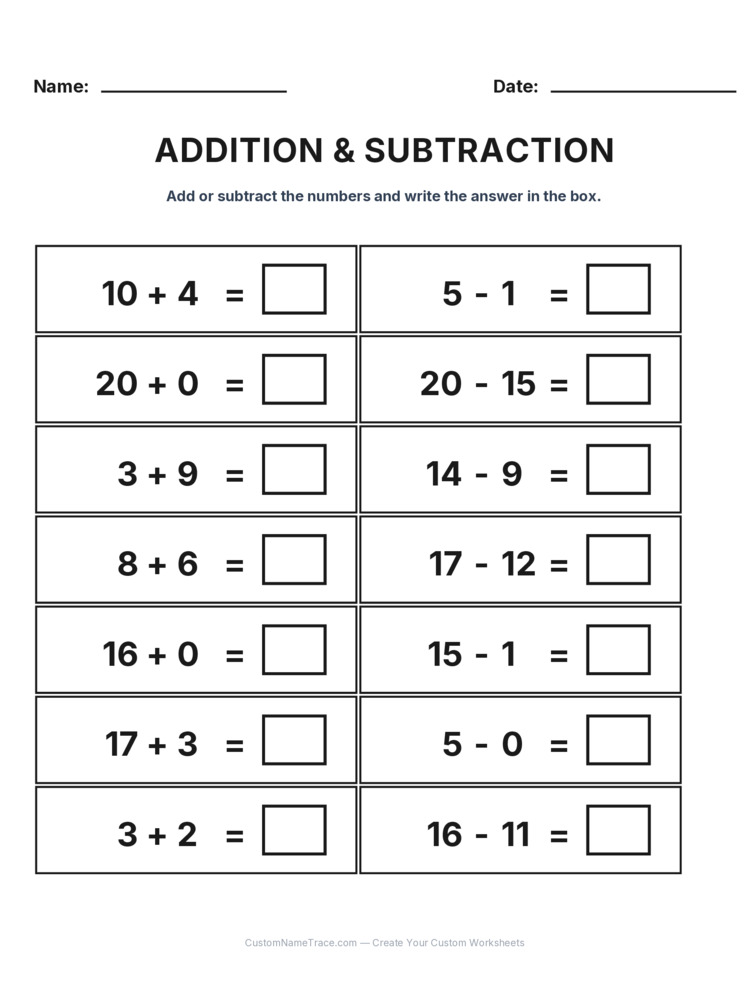
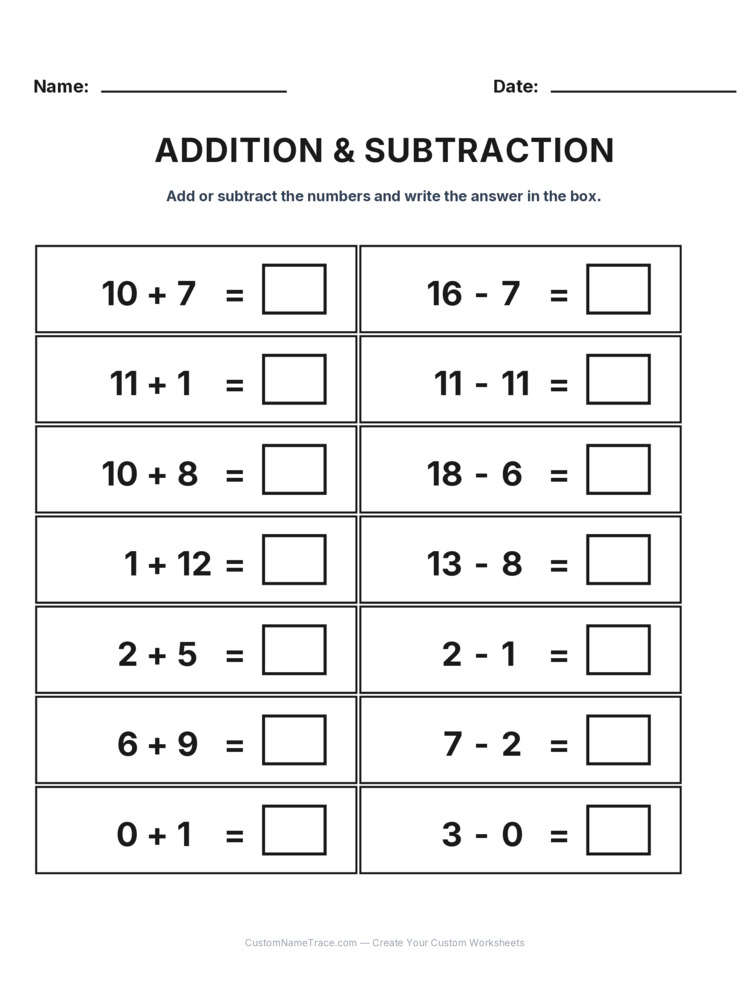
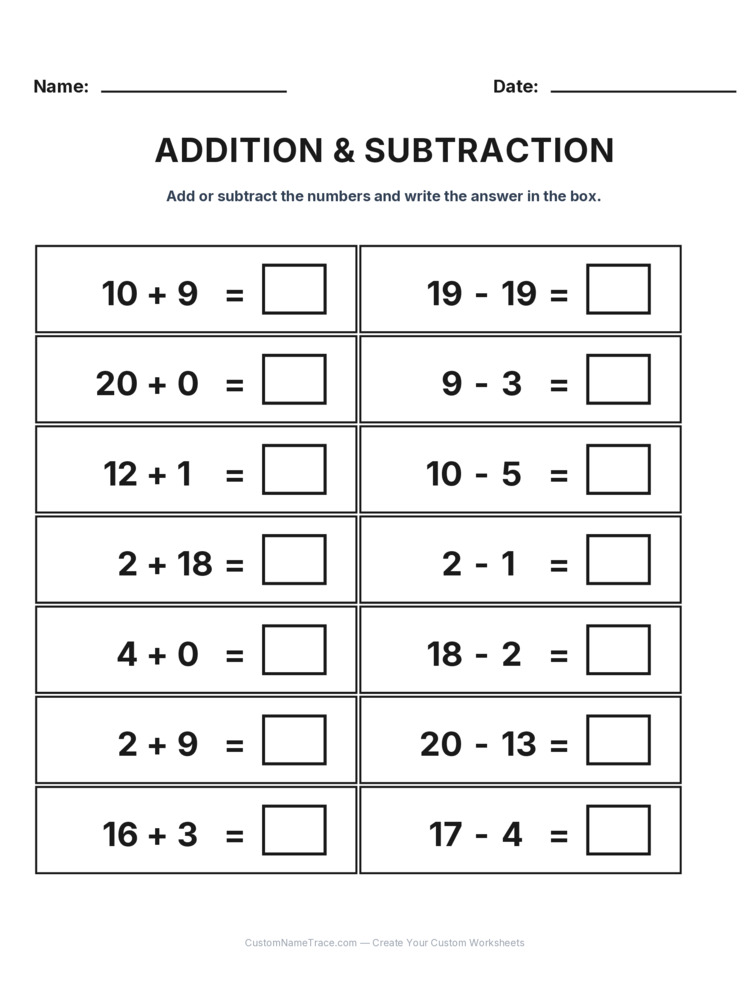
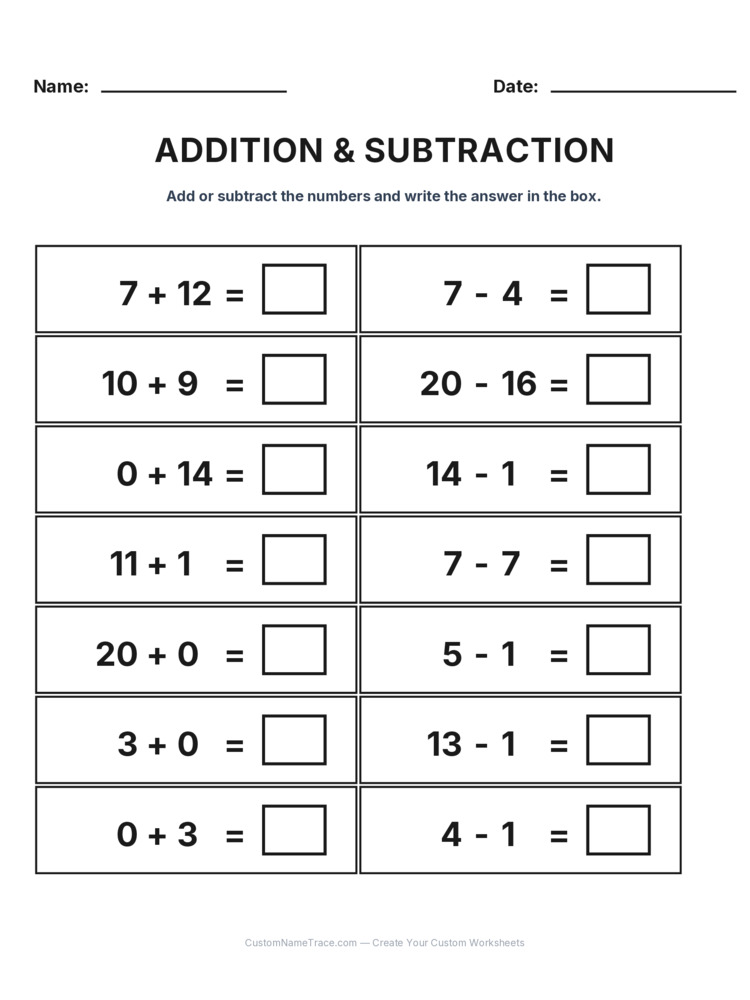
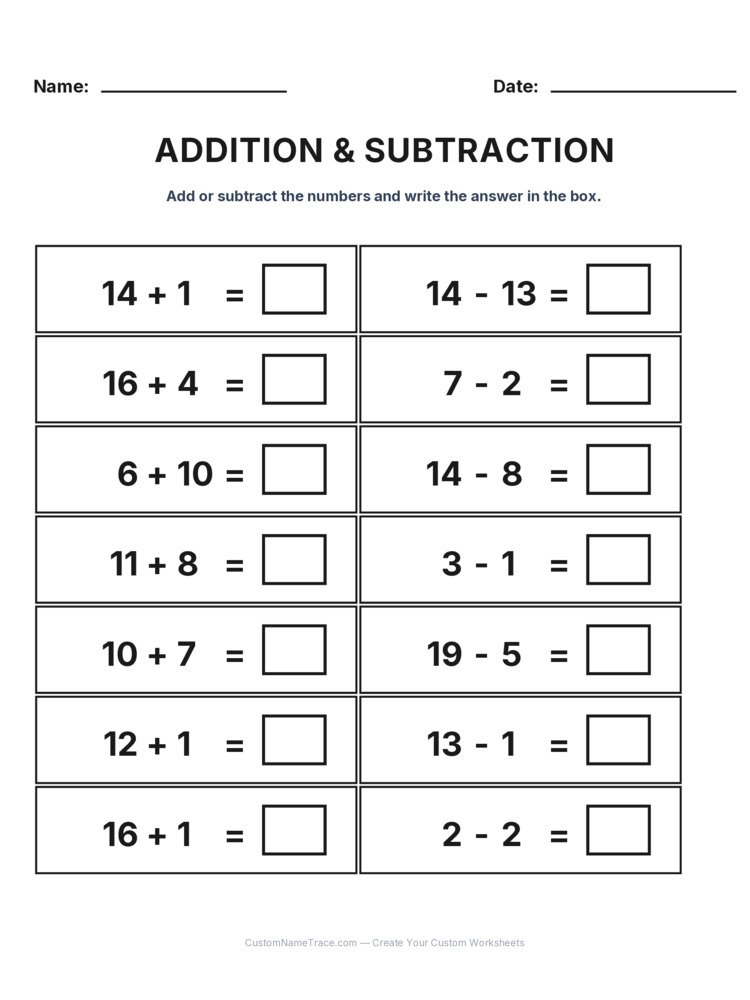
Why mixed review is a genuinely different skill
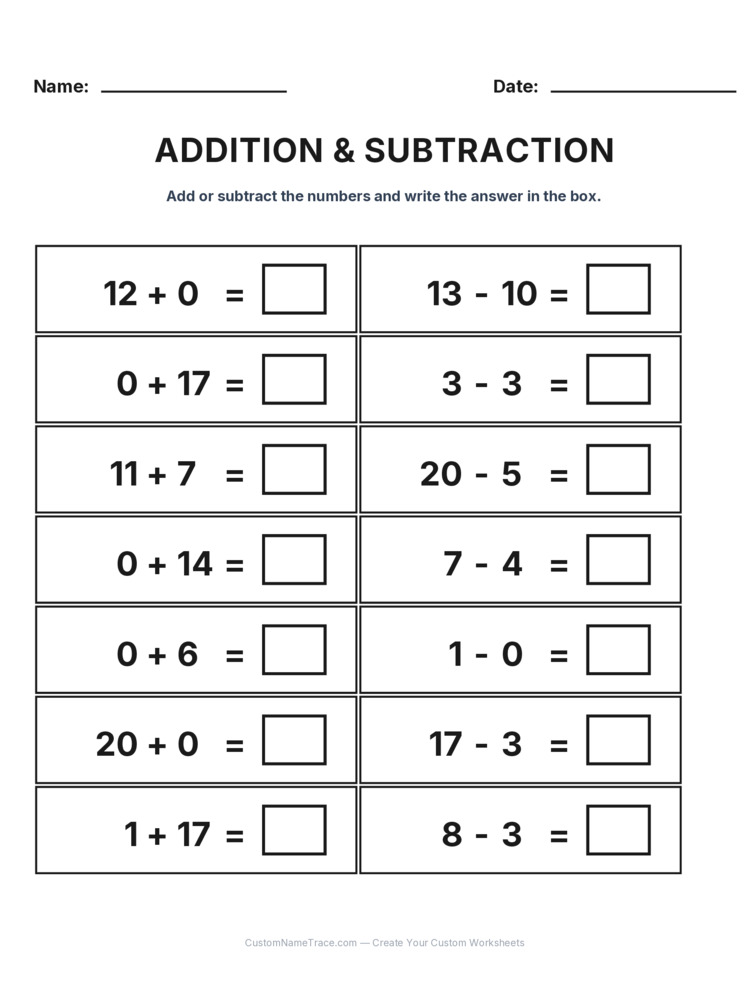
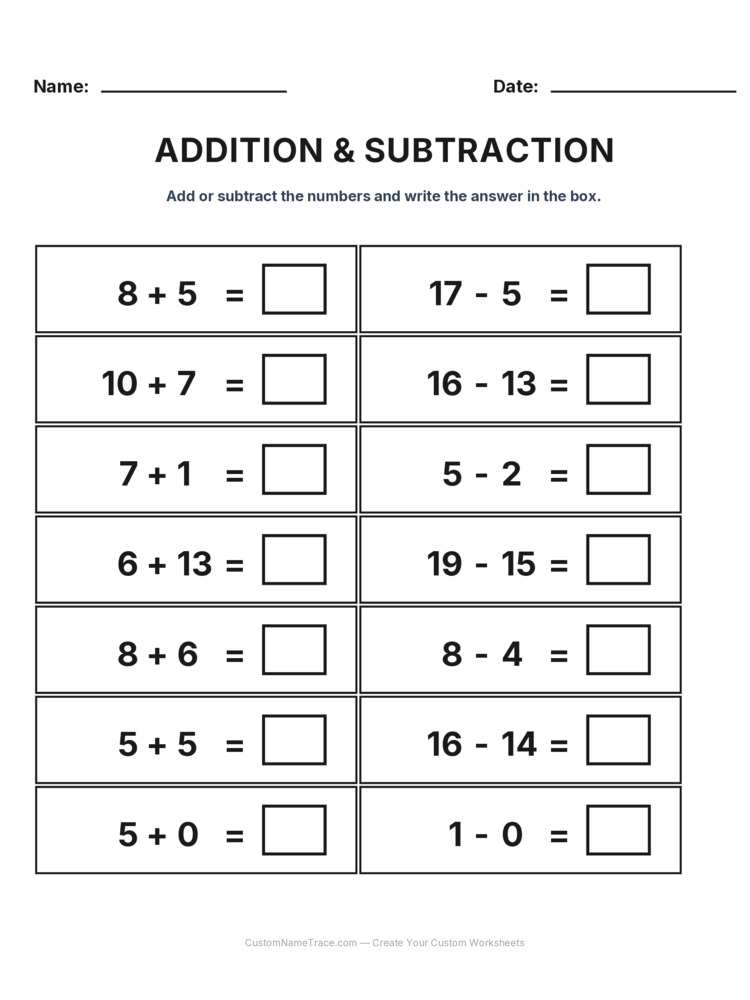
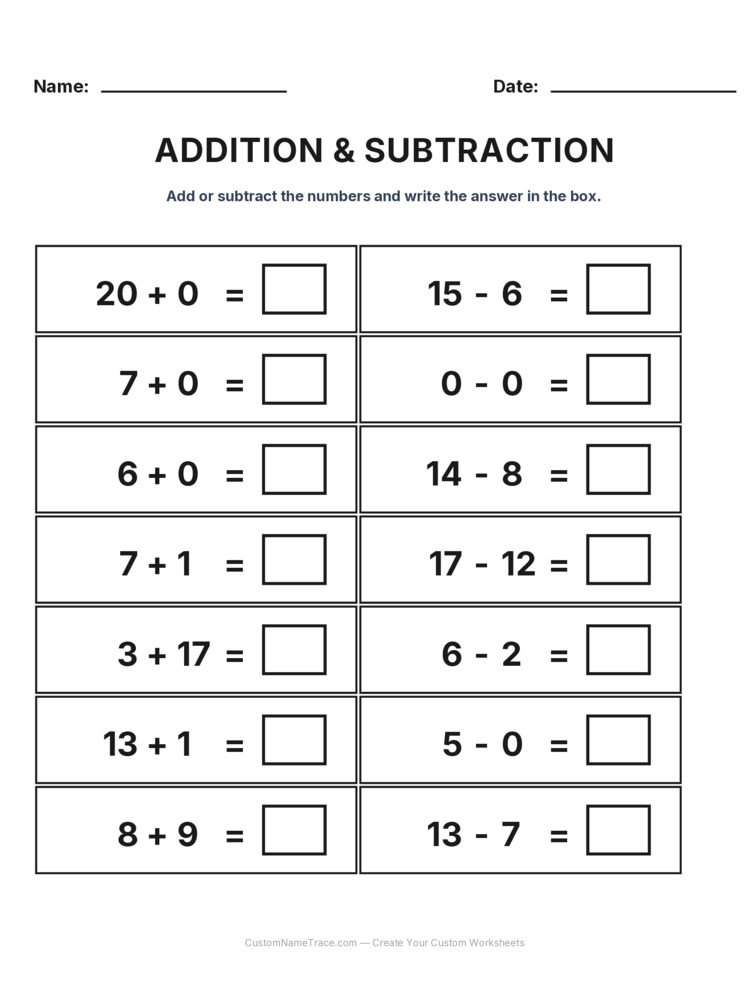
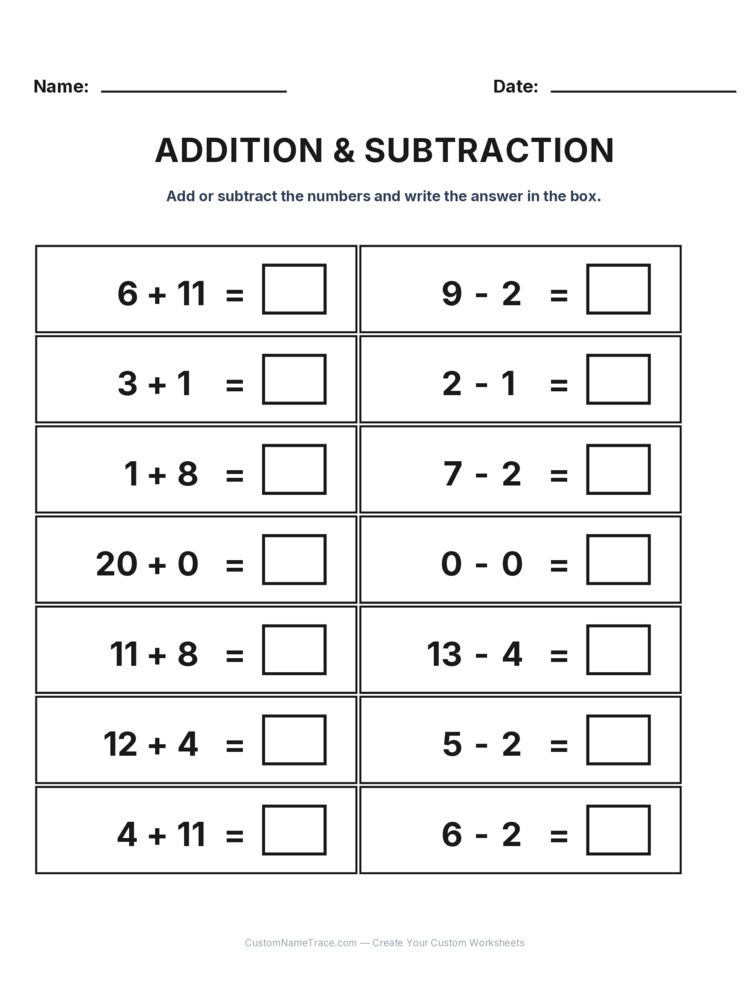
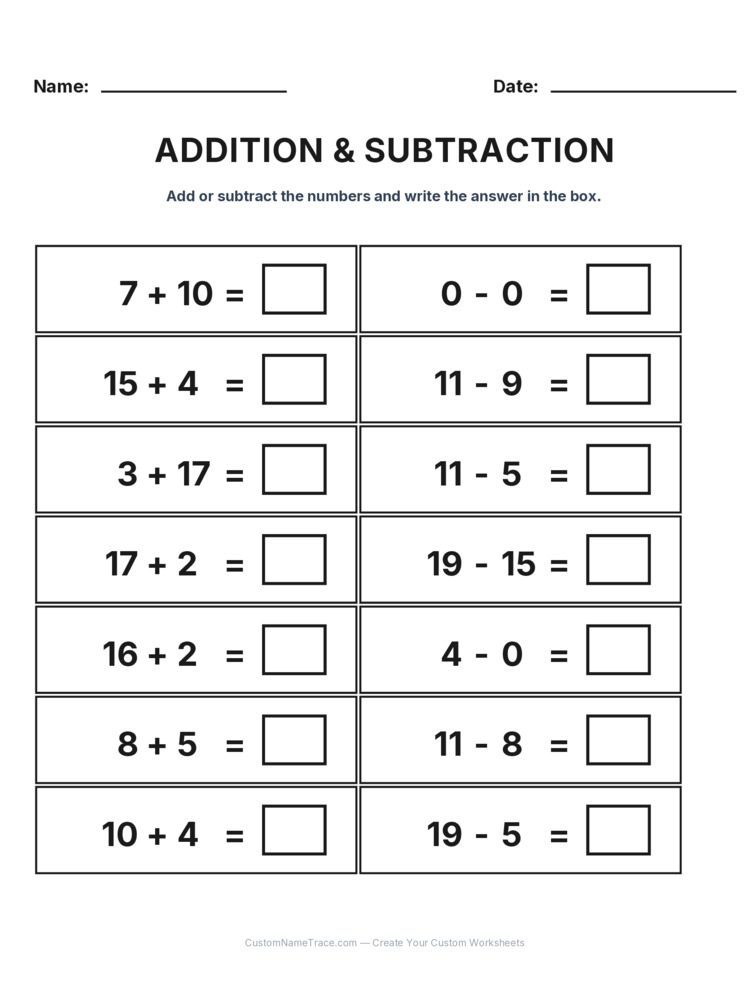
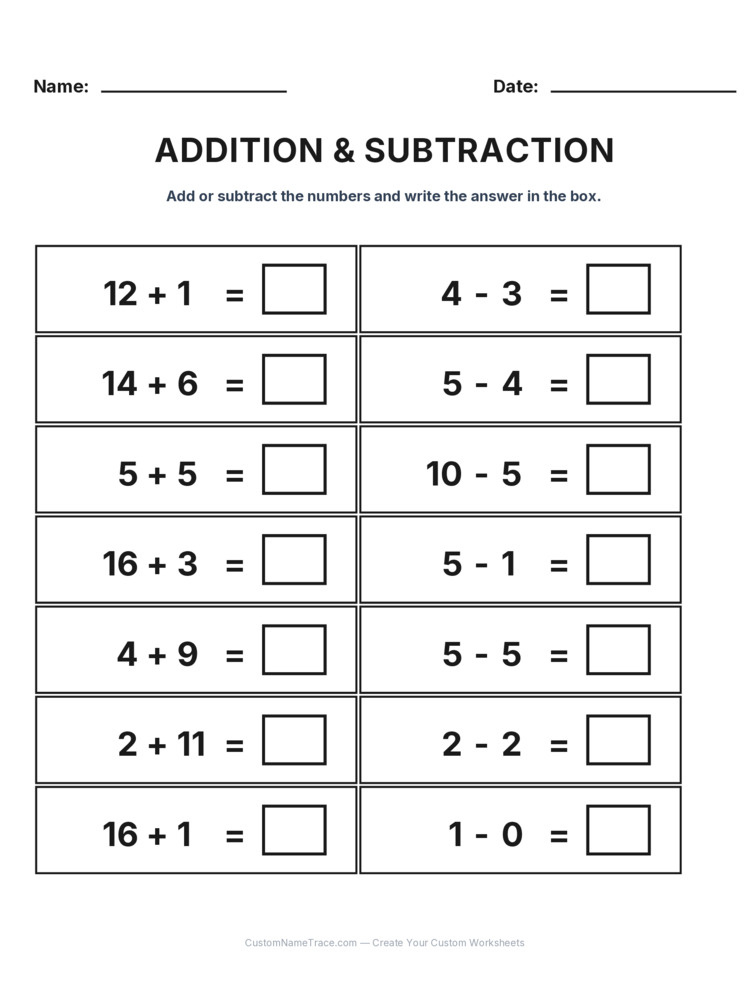
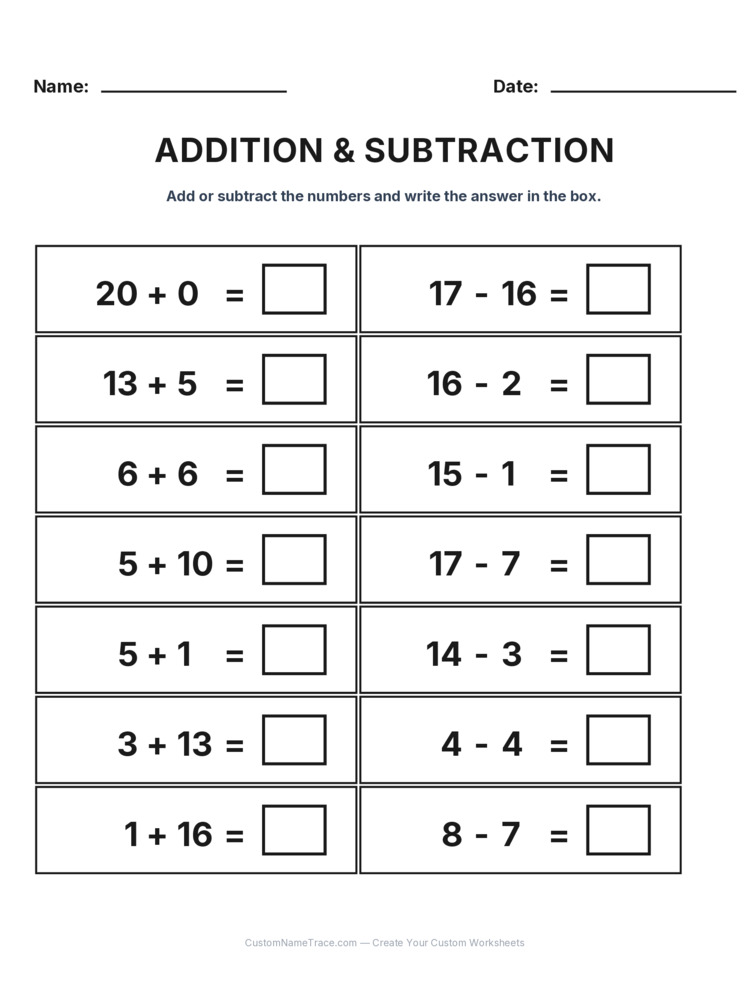
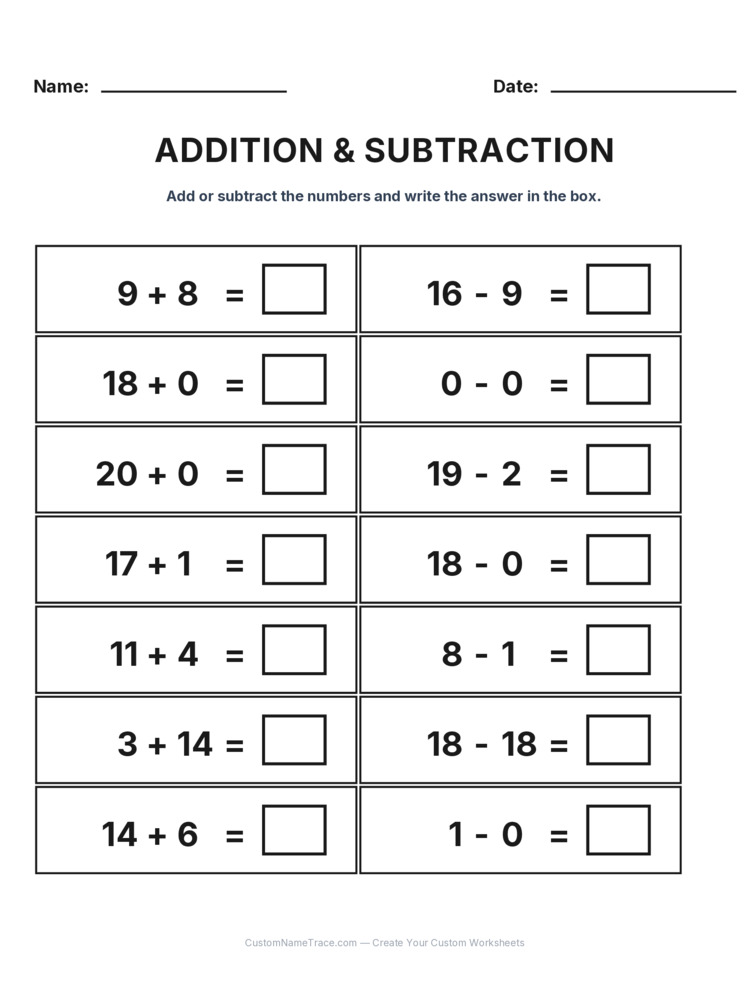
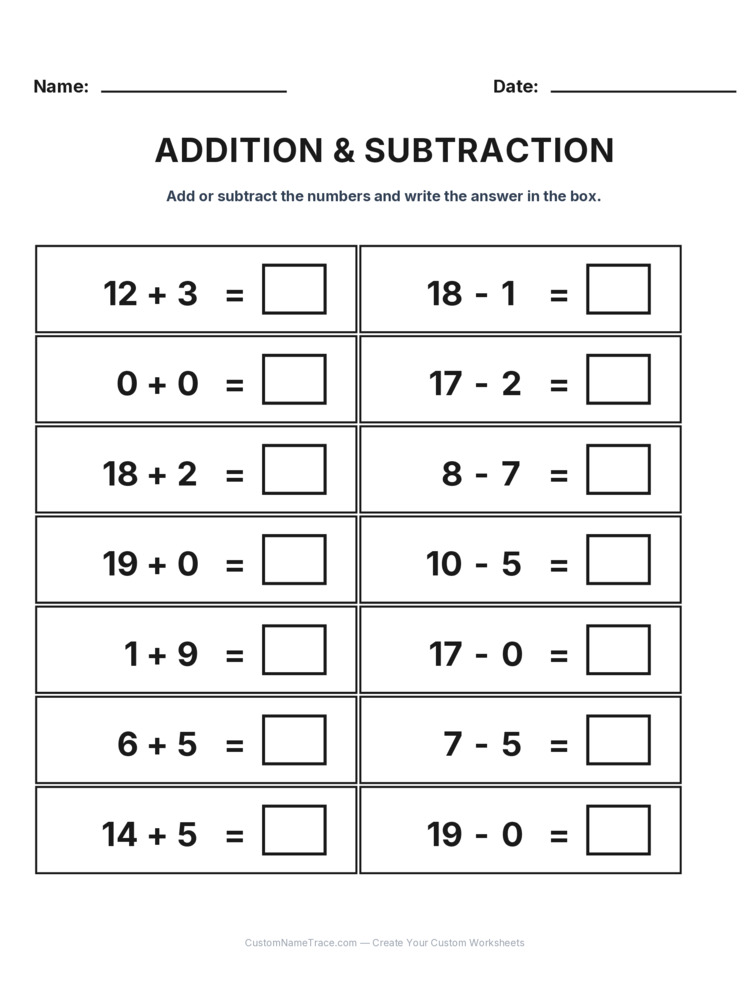
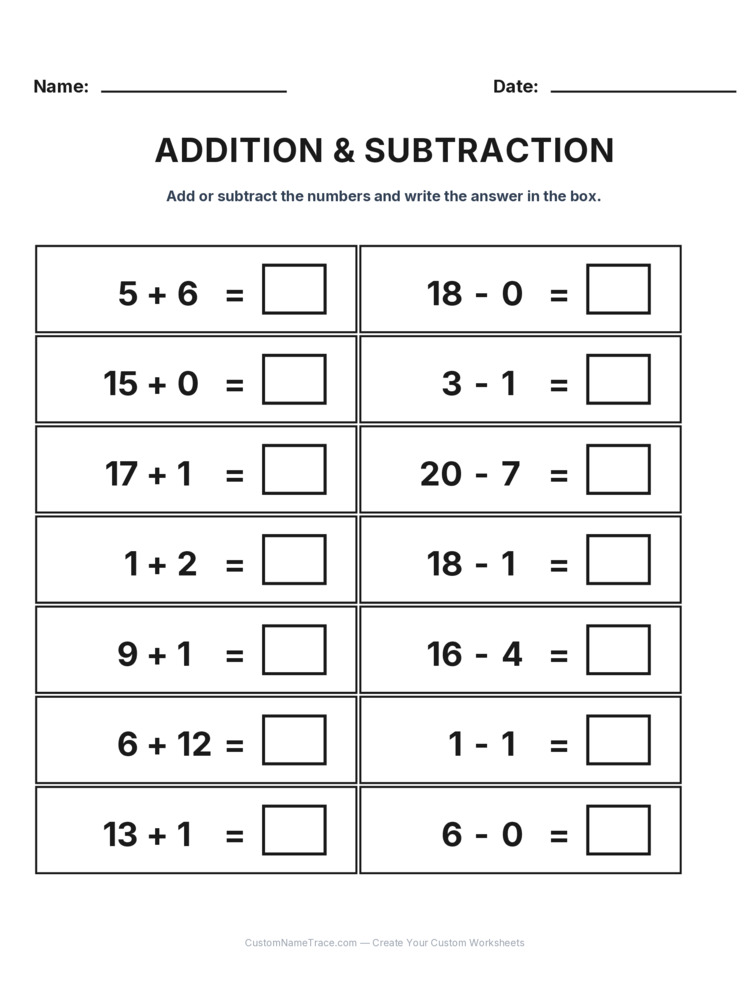
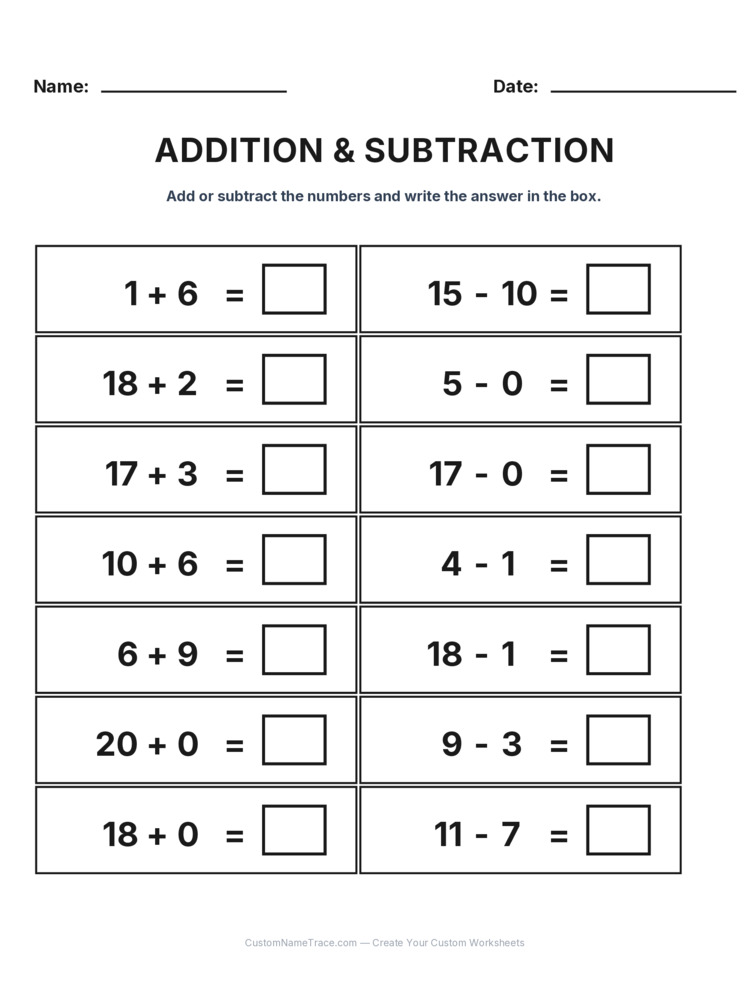
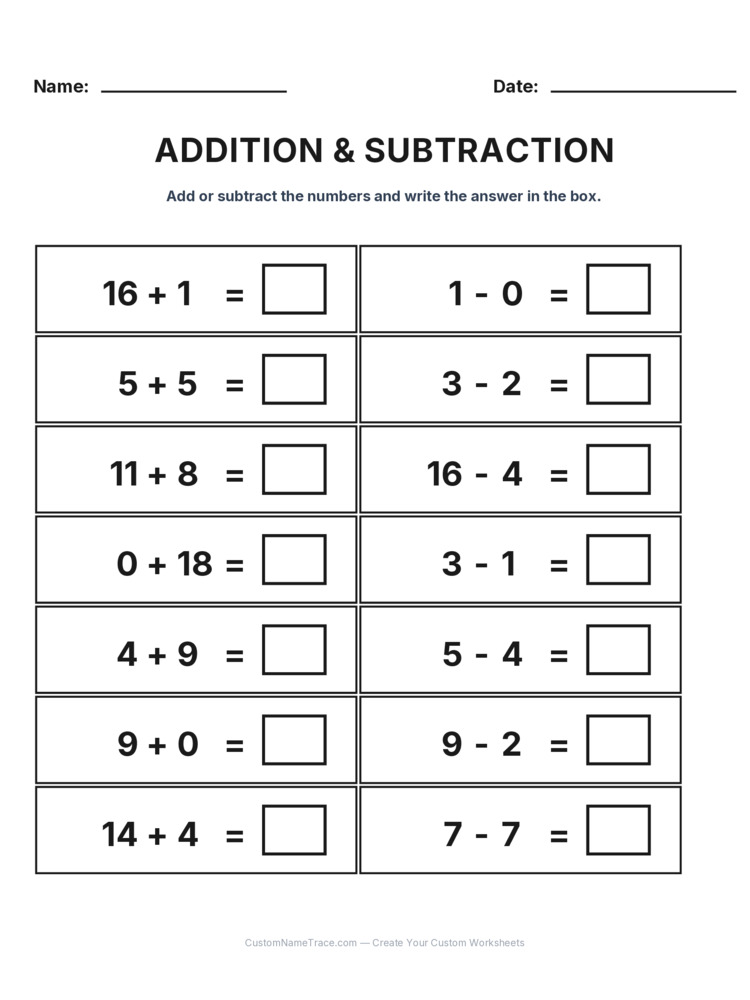
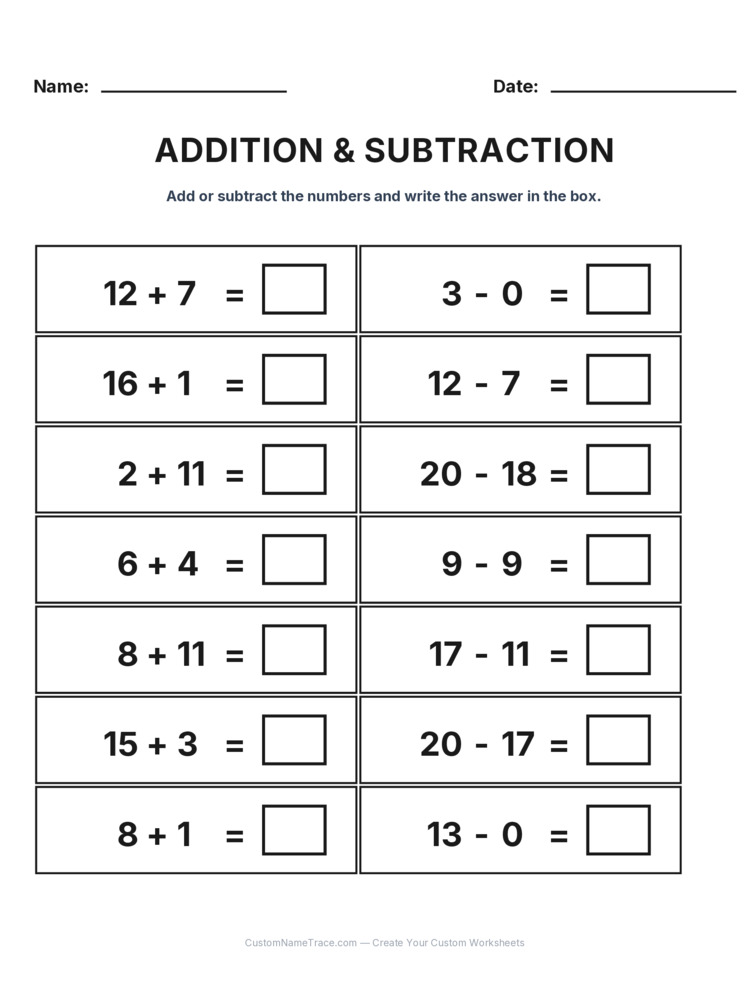
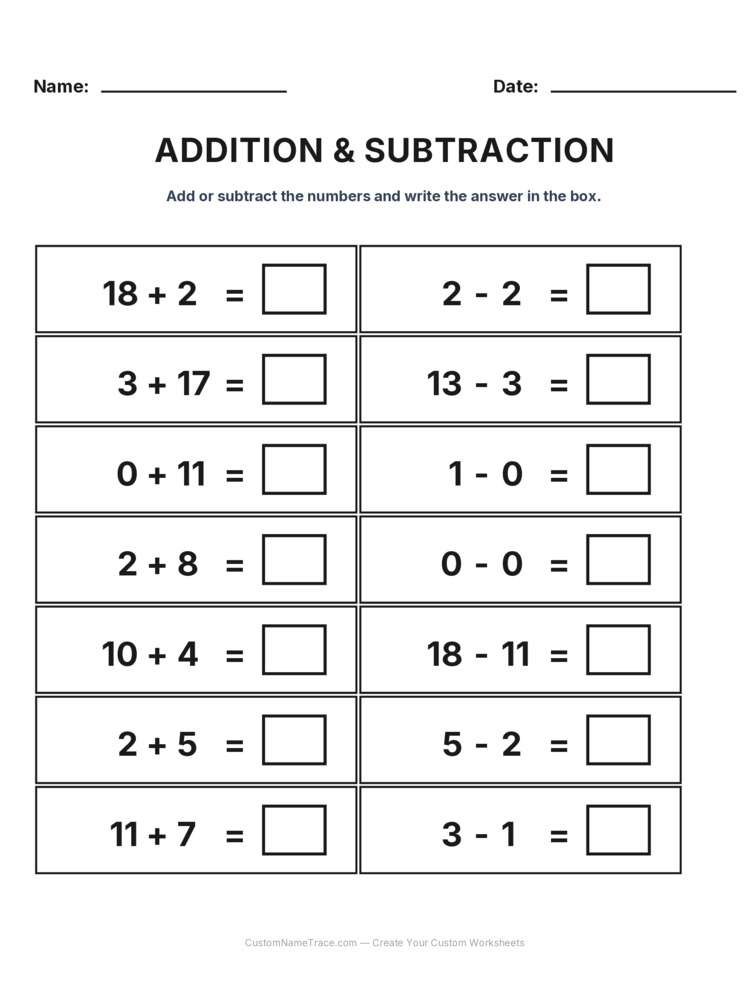
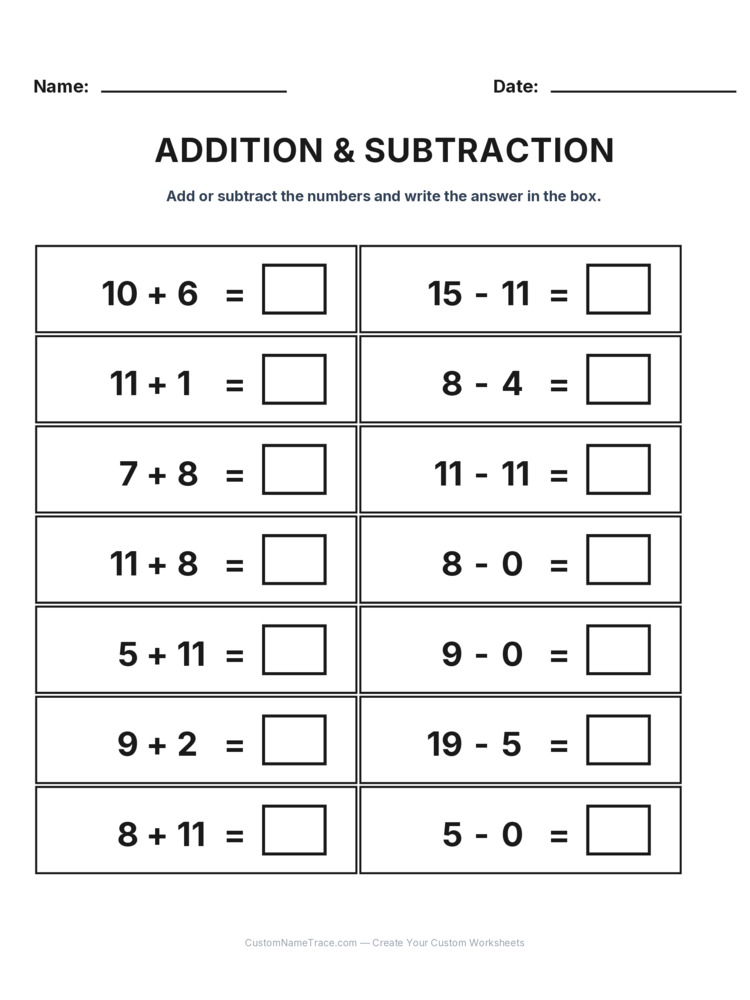
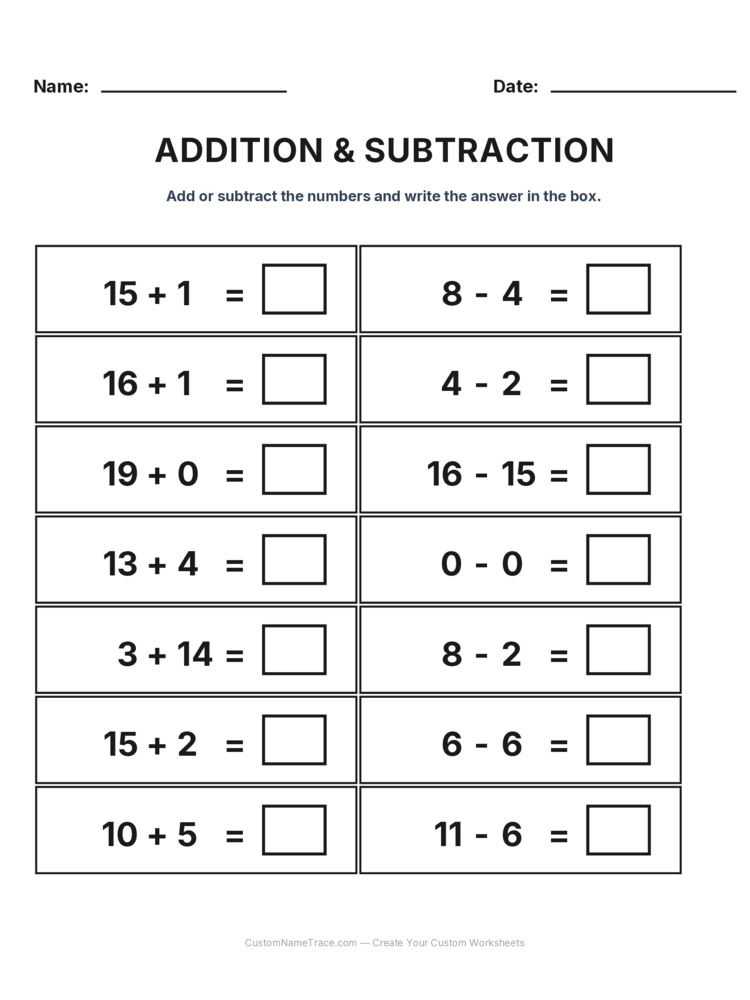
Practicing addition on one page and subtraction on a separate page tells a child in advance which operation to use before they've even read the problem — the hardest part of real-world math, deciding which operation a situation actually calls for, gets skipped entirely. Mixed review at Grade 1 removes that advance notice: every problem uses the same Grade 1 number range as this site's dedicated Addition and Subtraction worksheets, but a child has to identify the operation from the symbol on the page each time, not assume it from which worksheet they happened to be handed.
Every problem on this worksheet uses the identical number range as Grade 1's dedicated Addition and Subtraction worksheets — nothing here is numerically harder. What's different, and what actually makes mixed review feel harder to a child the first few times, is entirely the added demand of identifying the correct operation before applying a calculation strategy that, on its own, they may already be quite comfortable with.
Every problem on a mixed review page appears in a random, unpredictable order rather than a few additions followed by a few subtractions — grouping by operation, even loosely, would let a child anticipate the next few answers from pattern alone rather than genuinely reading each symbol, which defeats the entire purpose of mixed practice. The unpredictability is a deliberate design choice, not an oversight.
It would be simpler to skip mixed review entirely and assume operation identification just develops naturally from separate practice, but that assumption doesn't reliably hold — plenty of children solve addition and subtraction confidently in isolation and still make wrong-operation errors the first time the two are mixed together. Building this specific transition deliberately, rather than leaving it to chance, is exactly why this format exists as its own dedicated practice rather than being folded silently into the single-operation worksheets.
What Grade 1's mixed review specifically covers
Grade 1's mixed addition and subtraction page, often paired with Missing Number problems, checks a slightly different skill than either operation alone: whether a child can work an equation backward (given the answer and one number, find the missing one) rather than only working forward from two known numbers to a total.
The specific mistake this format catches
A child who's fluent at addition and fluent at subtraction separately can still make a very specific error on mixed review: solving the problem using the wrong operation because they weren't paying close attention to the symbol, especially after several problems in a row used the same one. That's not a sign either skill is weak individually — it's a sign the switching itself needs practice, which is exactly what isolated single-operation worksheets can't reveal or build.
If a child consistently gets addition problems right within mixed review but subtraction problems wrong (or the reverse), that's useful diagnostic information pointing back to a genuine gap in one specific operation, not the mixing itself — in that case, returning to this site's dedicated single-operation worksheet for the weaker operation, at the same Grade 1 range, is a better next step than continuing mixed practice.
A wrong-operation slip on mixed review is worth pointing out plainly but without alarm — "you added instead of subtracting there, let's check the sign next time" — since treating it as a routine, expected part of learning this specific skill keeps a child willing to keep trying rather than becoming anxious about the format itself.
Expect wrong-operation errors to be relatively common the first few times a child encounters mixed review, then to drop off fairly quickly once the symbol-checking habit takes hold — this skill tends to click faster than the underlying arithmetic itself did, since the arithmetic is already familiar and only the added identification step is genuinely new to Grade 1's practice here.
A habit that fixes most mistakes
Circling or underlining the operation symbol before attempting to solve each problem — a small, physical pause between reading the problem and solving it — catches the single most common mixed-review mistake directly at its source. This habit feels slow at first and speeds up naturally with practice, without ever needing to be abandoned once it does.
It's tempting to add a timer to mixed review to push for speed, but timing pressure specifically tends to make a child skip the symbol-checking step this worksheet is built to reinforce — a rushed glance at a plus or minus sign is exactly the shortcut that causes wrong-operation errors in the first place. Untimed, careful practice builds the underlying habit far more reliably; speed at Grade 1's level is worth pursuing later, once accuracy on mixed problems is already genuinely solid.
Before starting a mixed review page, quickly sorting a small stack of index cards with plus and minus signs written on them — just naming each symbol out loud, no math involved yet — primes the exact symbol-attention habit this worksheet depends on, in a much lower-stakes, faster warm-up than diving straight into the worksheet itself cold.
How this mirrors real tests, and knowing when to move on
A child who solves an entire mixed review page correctly, at a steady pace, without visibly pausing extra time to check each symbol, has genuinely internalized the operation-identification skill this worksheet targets. At that point, Grade 1's mixed review has done its job, and continuing to drill it further offers diminishing returns compared to moving toward simple word problems, which add a layer of reading comprehension on top of the same underlying decision.
Standardized assessments rarely separate operations onto different pages the way early practice worksheets do — a real test page mixes problem types freely, expecting a student to correctly identify what's being asked each time. Regular mixed-review practice at Grade 1's level builds genuine comfort with that unpredictable format well before it shows up on an actual assessment, rather than a child encountering mixed operations for the first time under real test pressure.
Real-world and word-problem math essentially never announces its operation in advance the way a single-operation worksheet does — a problem describes a situation, and the solver has to work out for themselves whether it calls for addition or subtraction. Mixed review at Grade 1's number range is the most direct, symbol-level version of that same decision-making skill, well before it gets wrapped inside a full word problem.
Using this effectively
For a child who's just been introduced to mixed review, working through the first several problems together — reading the symbol out loud before solving each one — builds the habit explicitly rather than assuming it develops automatically from seeing single-operation practice alone. Once a child solves several mixed problems in a row correctly without prompting, that's a strong, concrete sign this specific skill has taken hold.
The operation-identification skill this worksheet builds becomes directly necessary the moment word problems are introduced formally, since a word problem never states "add these" or "subtract these" outright — it describes a situation and expects the solver to work out which operation applies. A child comfortable with symbol-level mixed review has a real head start on that much bigger leap.
Because this format reveals operation-identification errors that single-operation worksheets structurally can't, an occasional mixed review page — even for a child who seems entirely comfortable with both operations separately — works well as a periodic, low-stakes check that both skills are genuinely solid and genuinely distinguishable from each other, not just two skills that happen to work fine only when practiced in isolation.
Mixed review sits deliberately alongside this site's dedicated Addition and Subtraction worksheets at Grade 1, not ahead of or instead of them — a child moving between all three worksheet types, rather than drilling only one in isolation, gets both the focused fluency practice and the symbol-recognition practice that neither single format alone fully provides on its own.
Every mixed review worksheet under Grade 1 is a free, print-ready PDF using the same number range as this site's single-operation practice at that grade, correctly formatted for Letter and A4 paper with no account required.