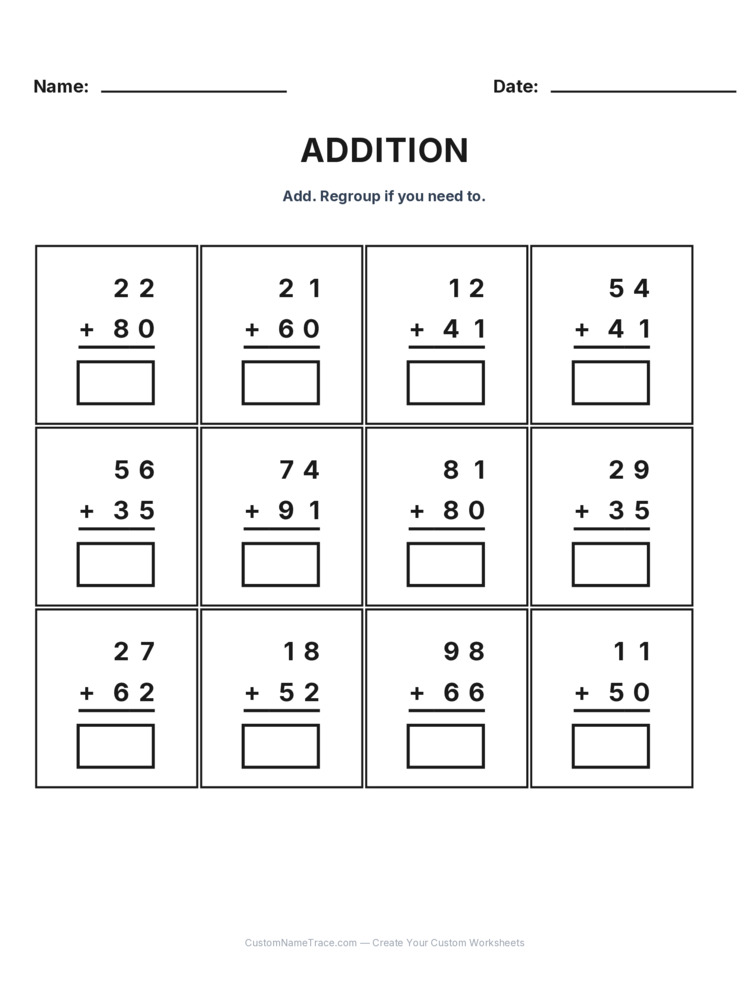
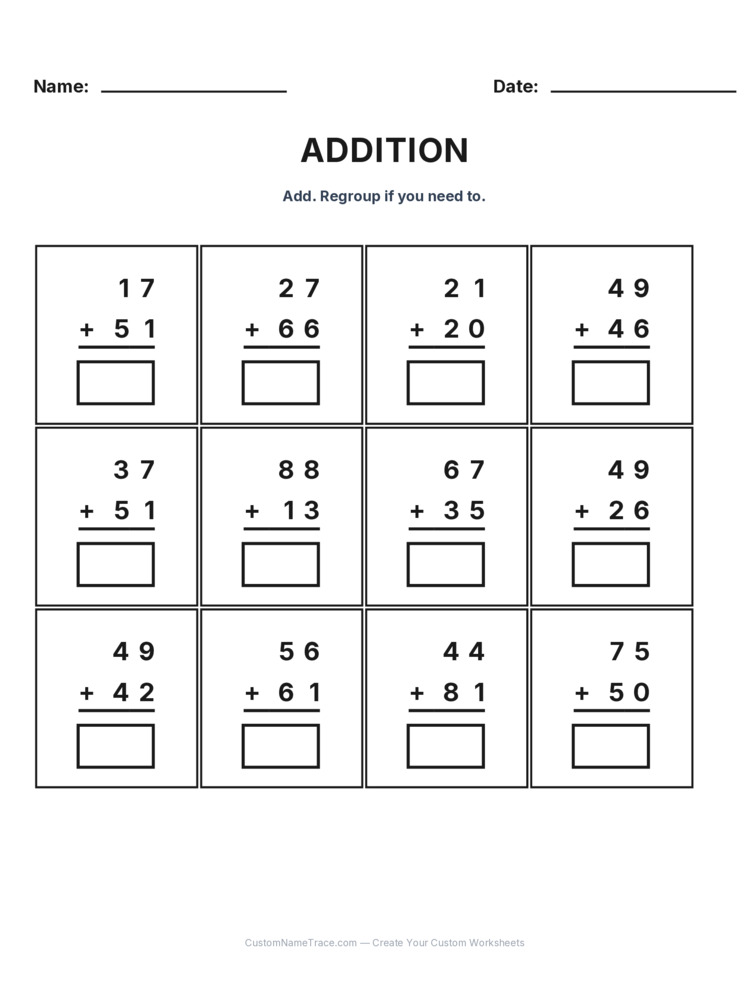
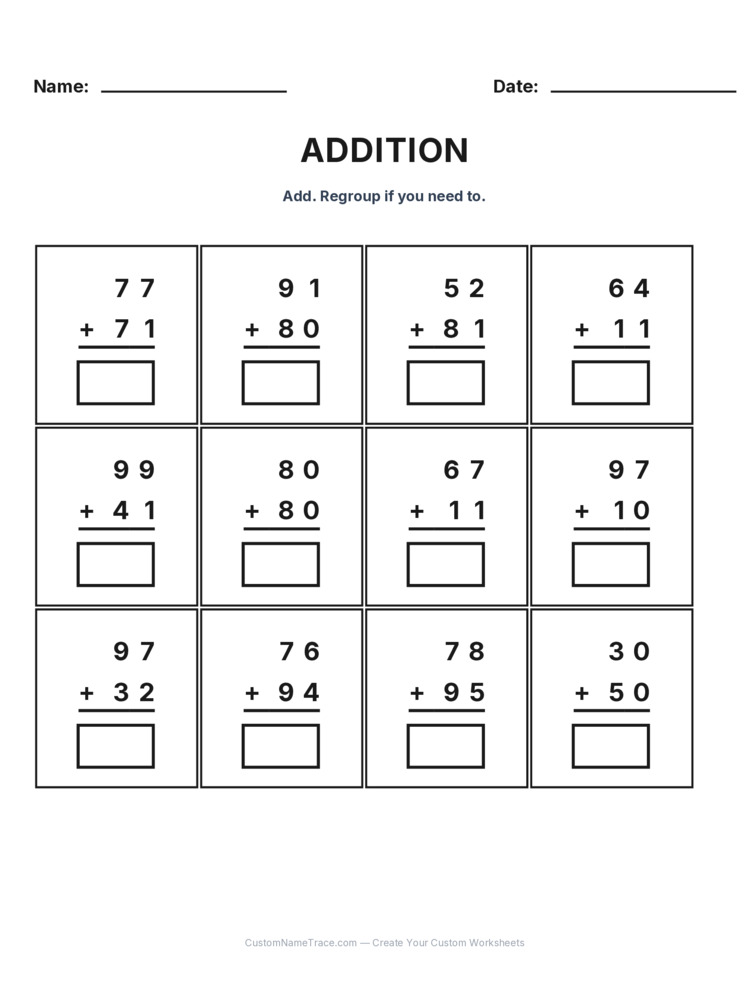
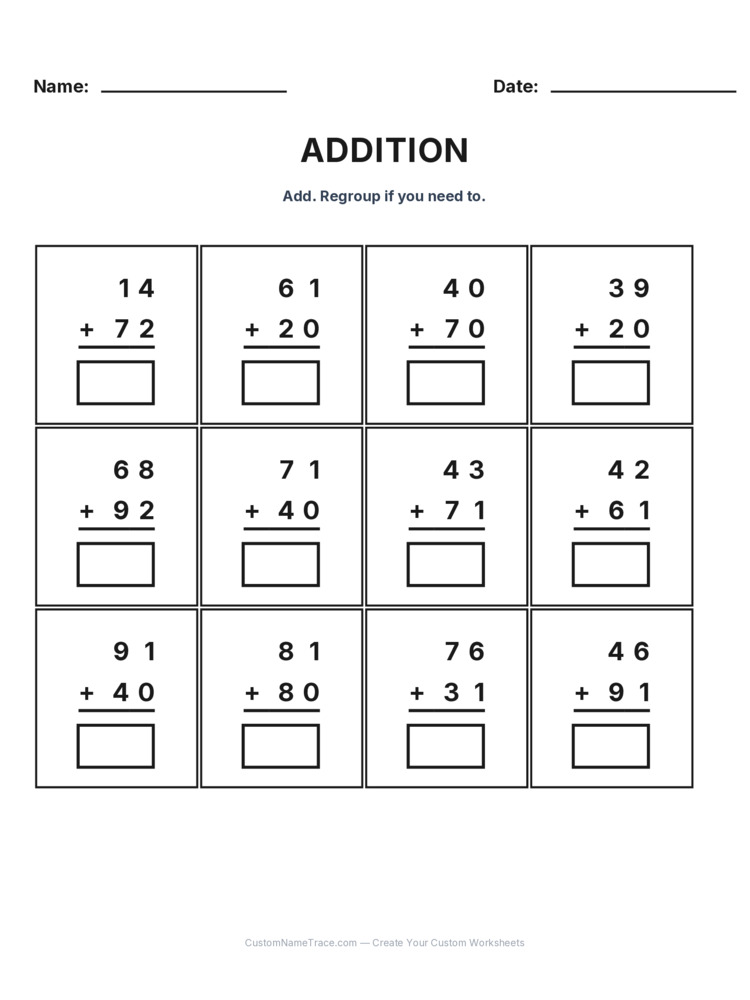
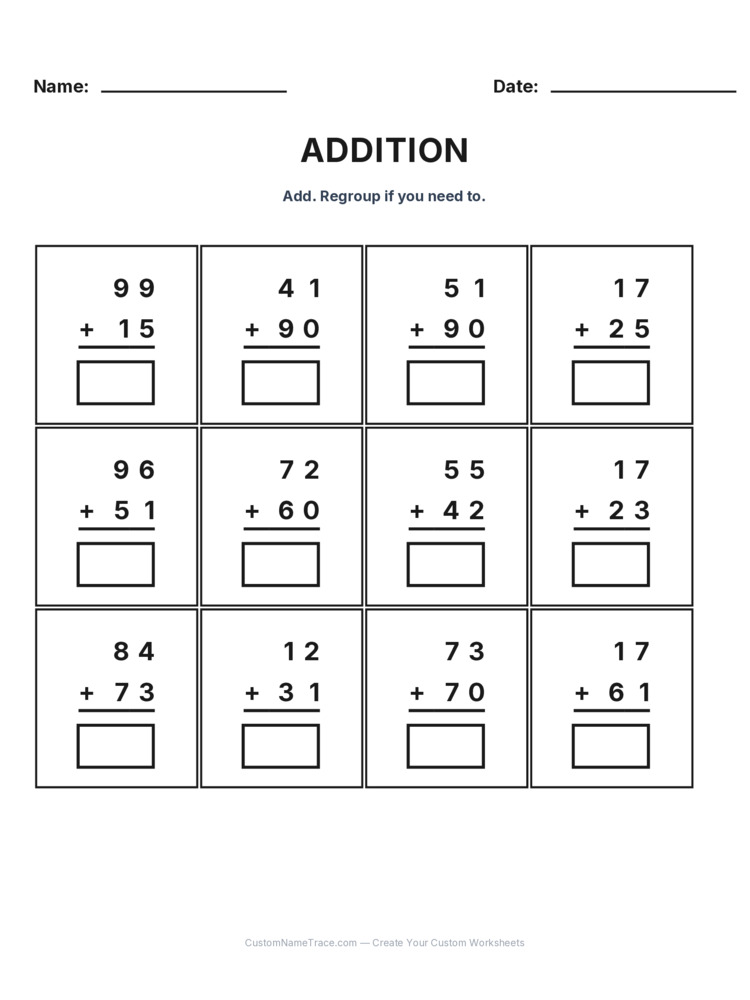
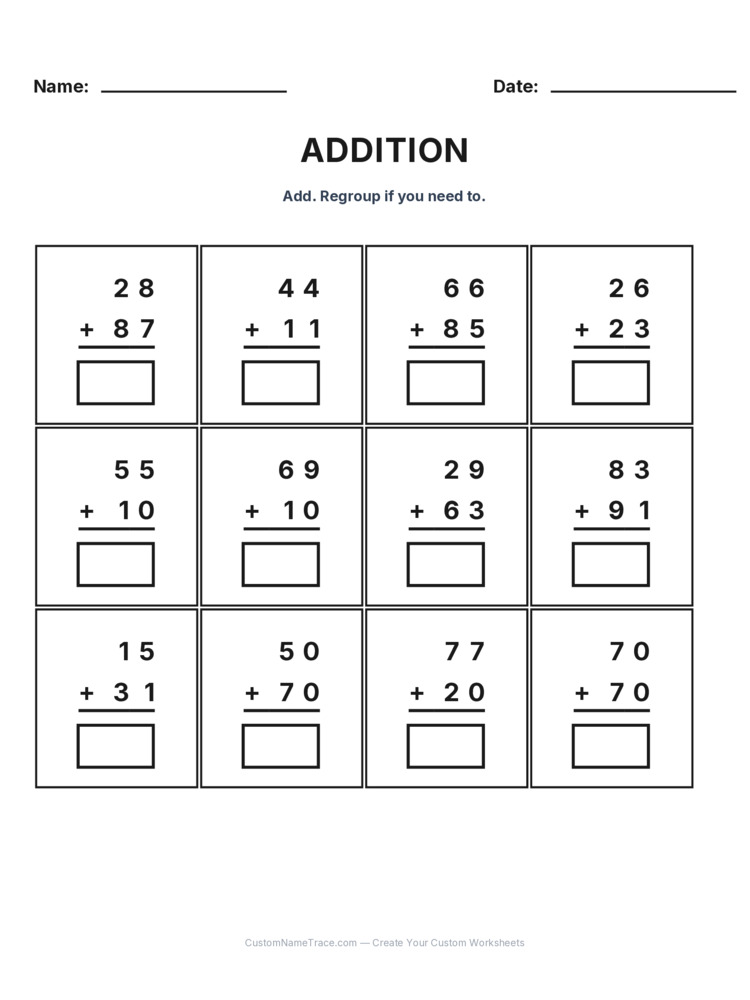
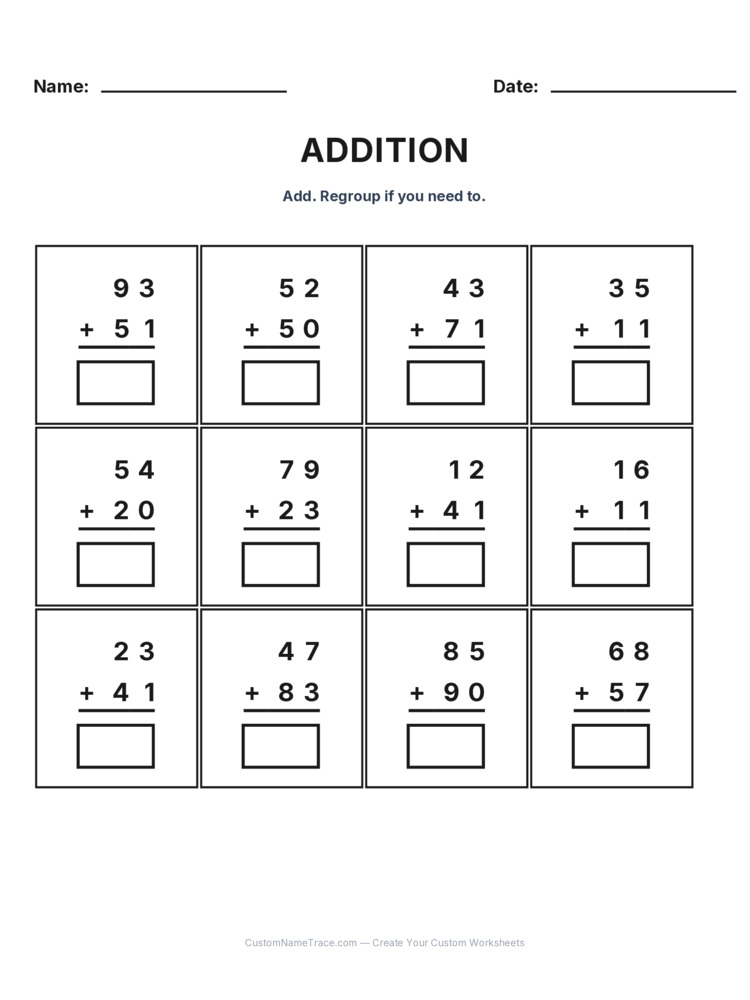
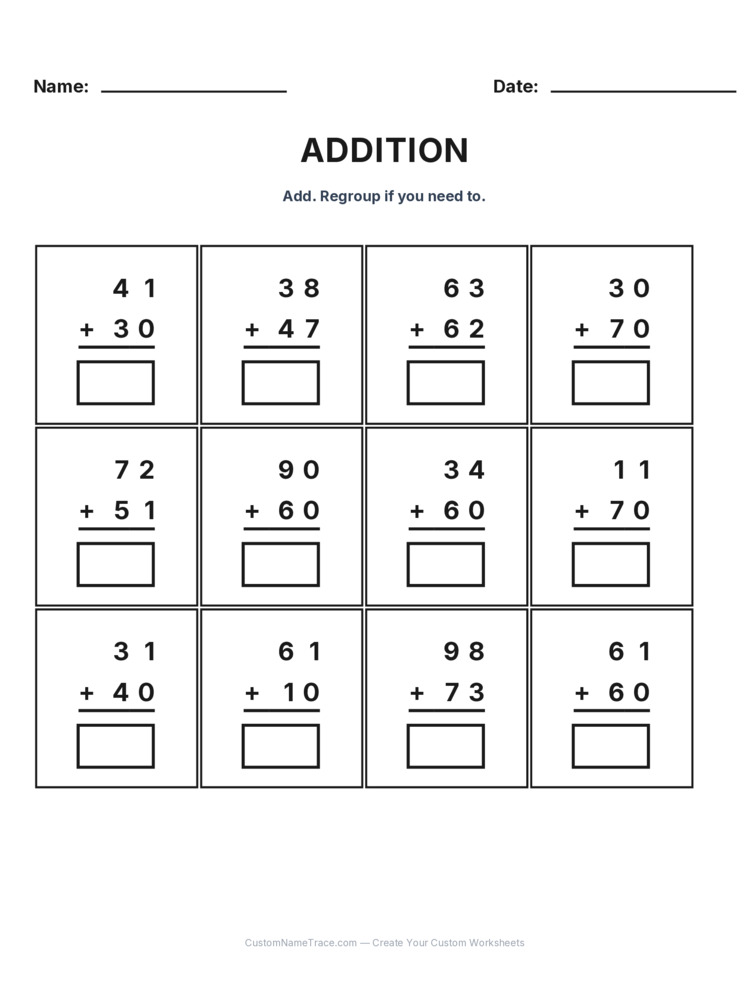
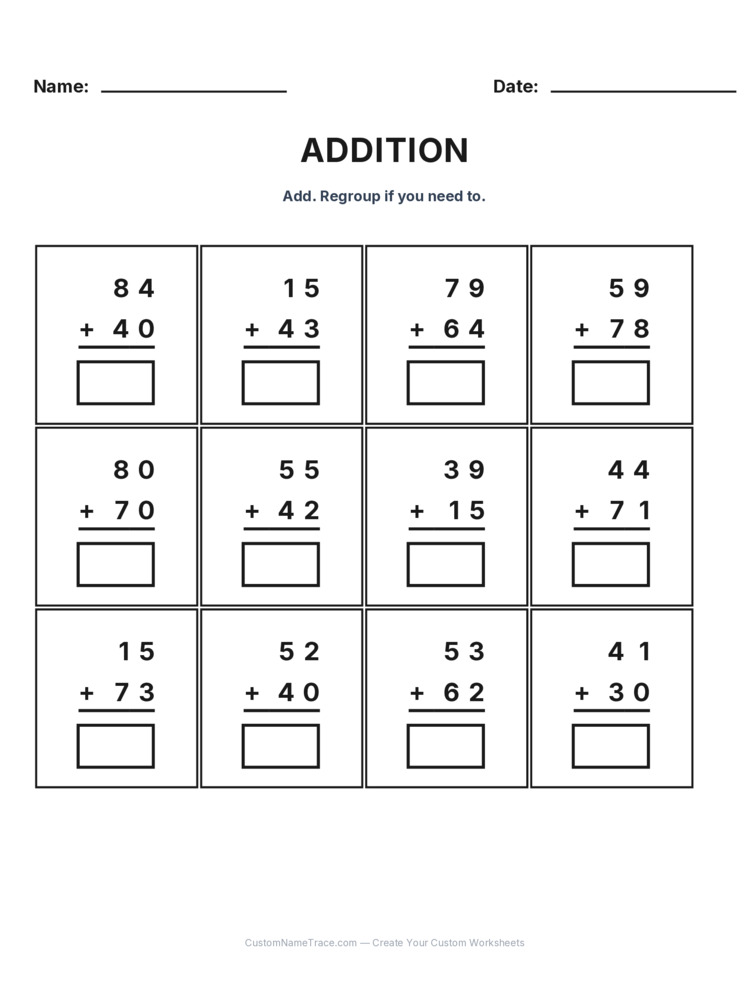
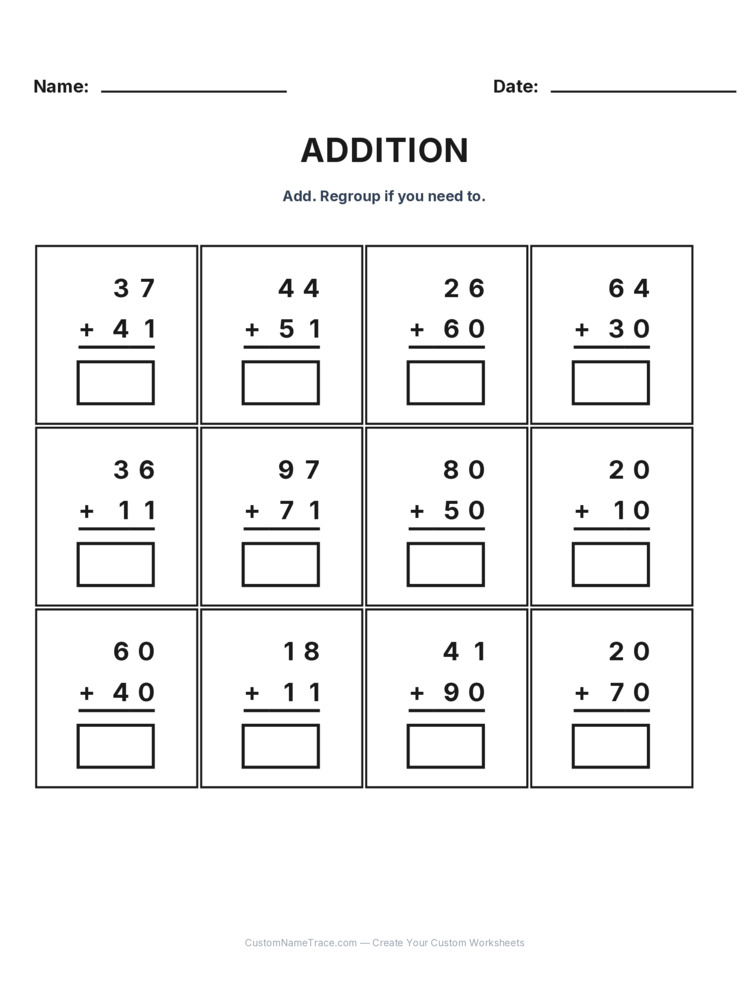
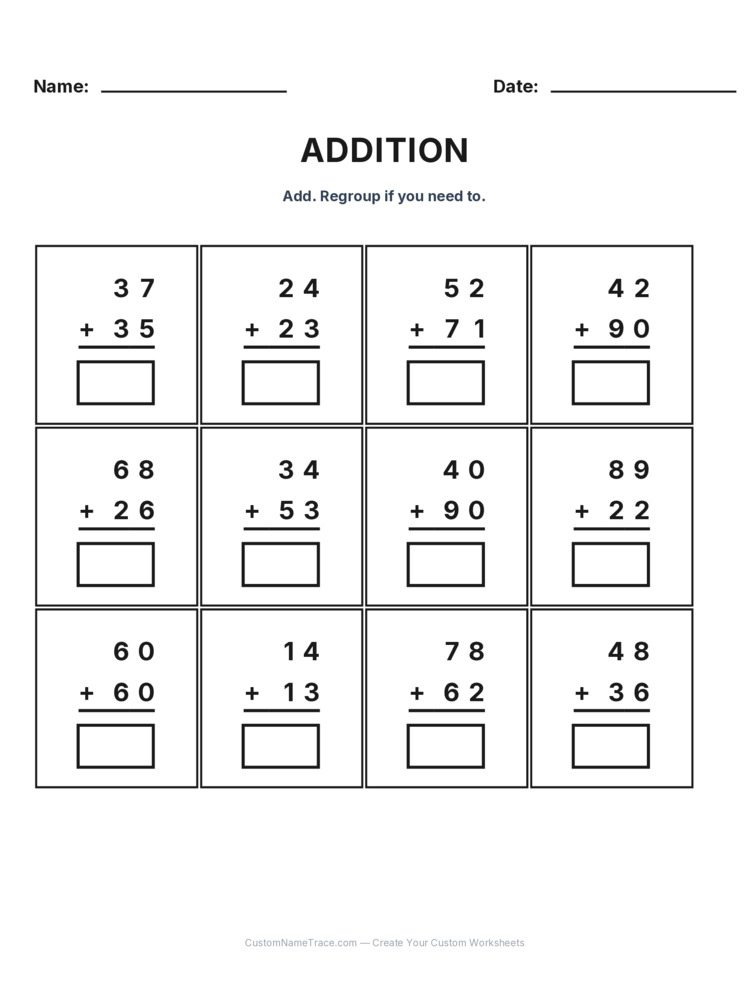
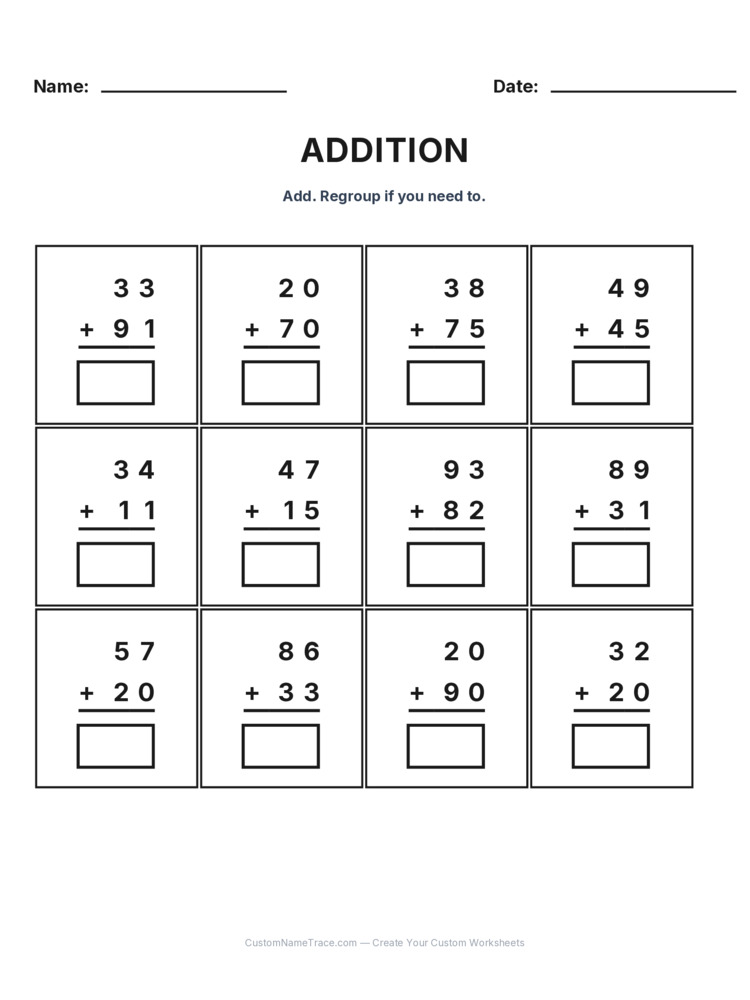
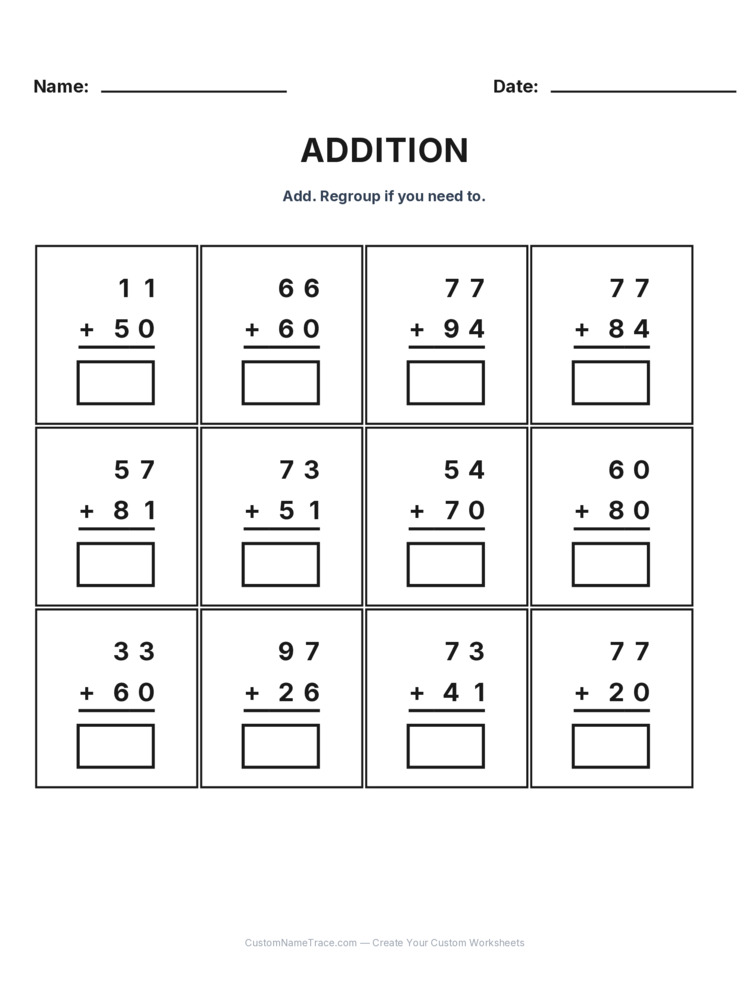
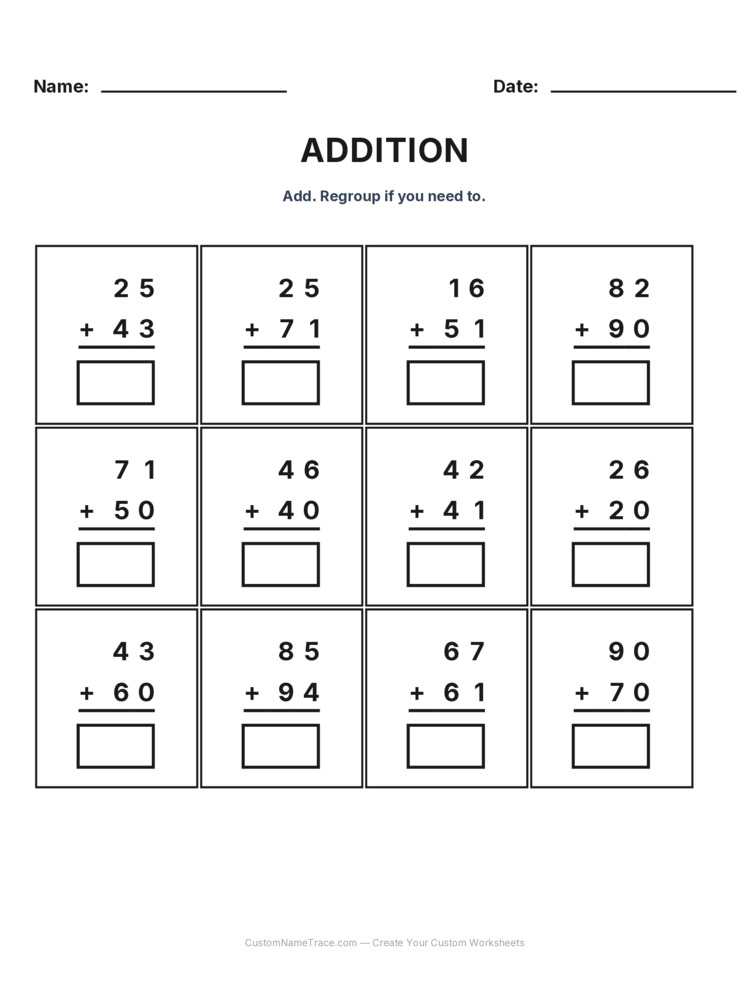
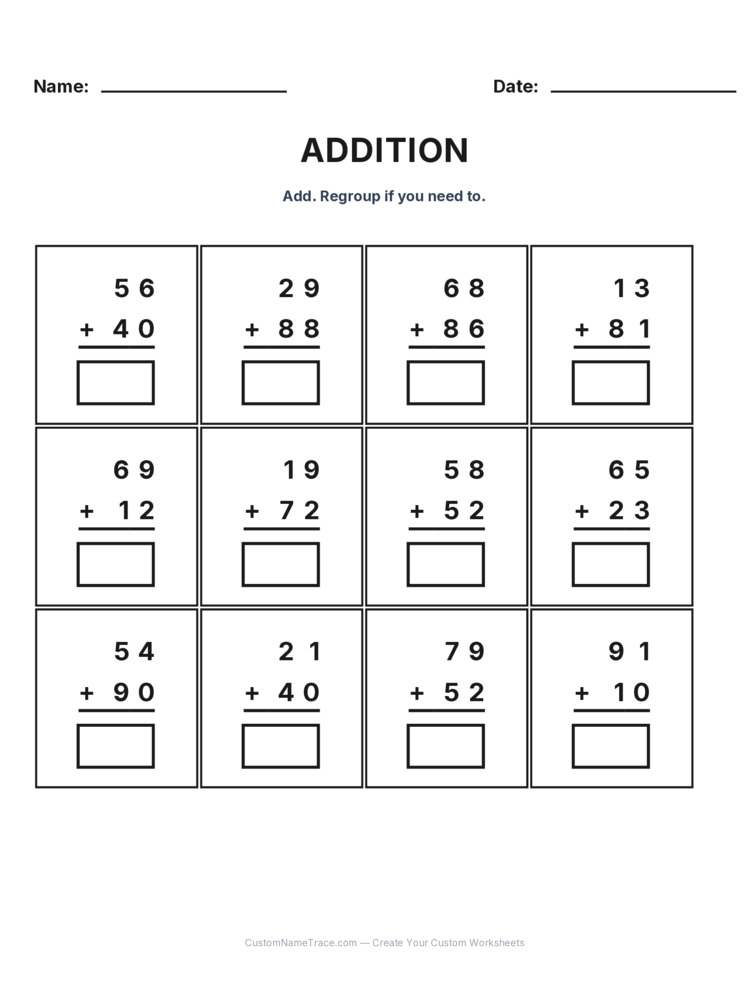
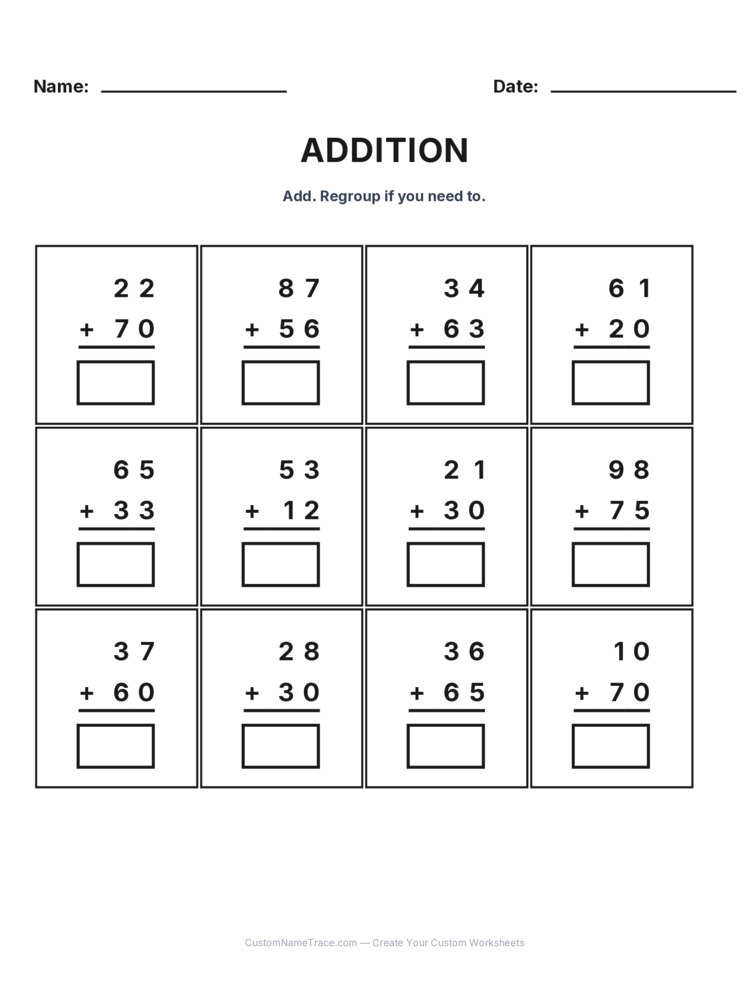
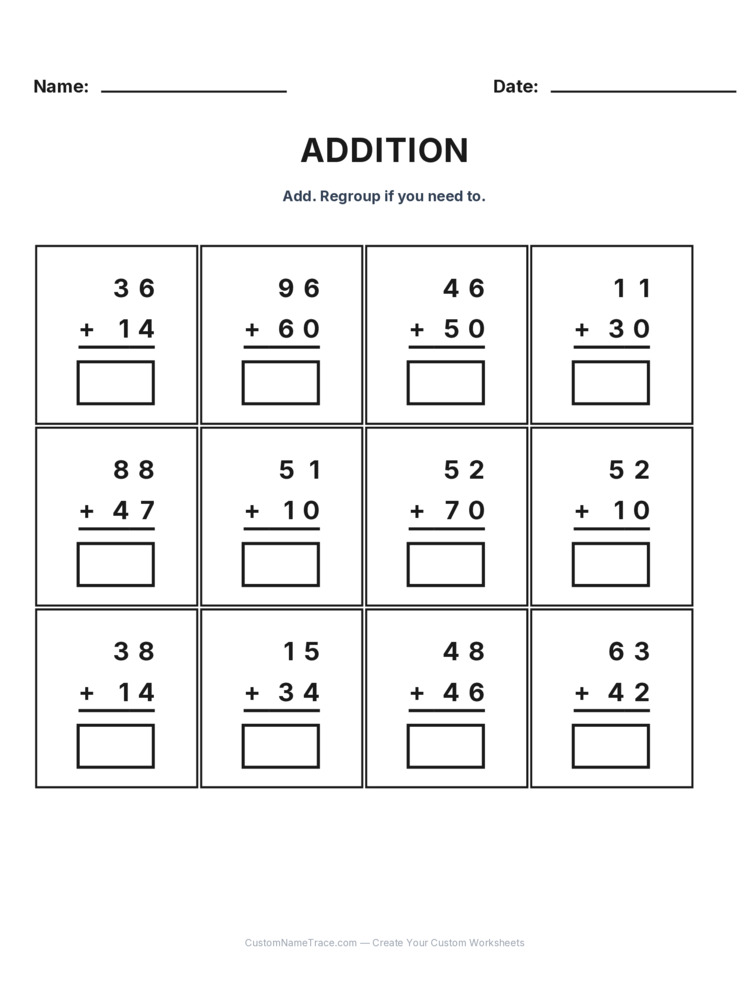
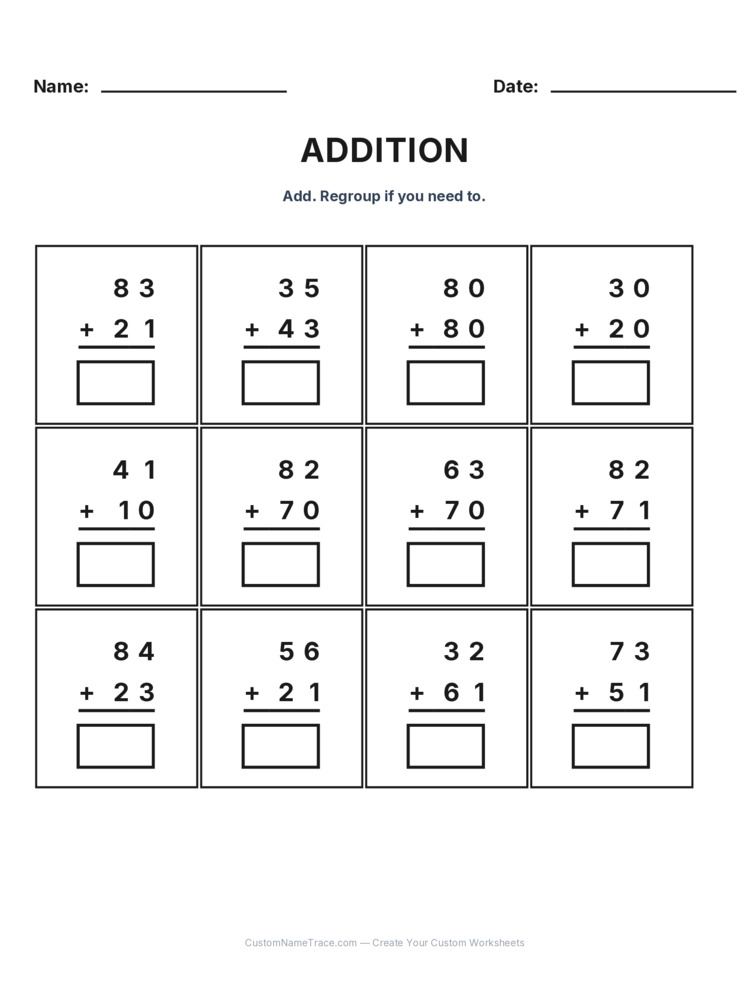
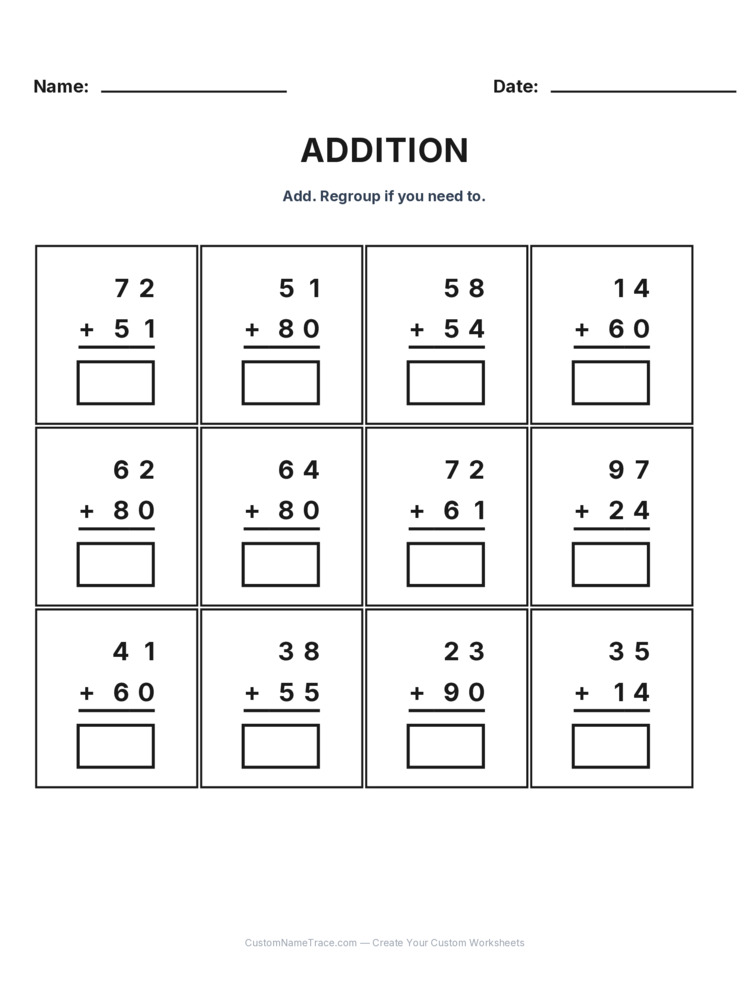
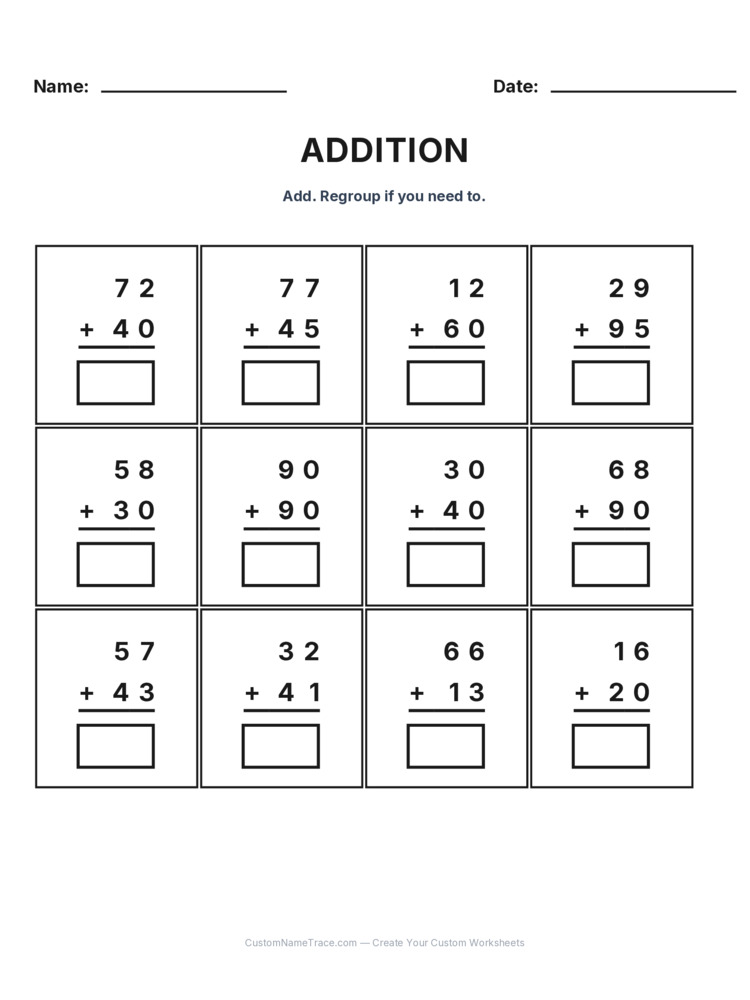
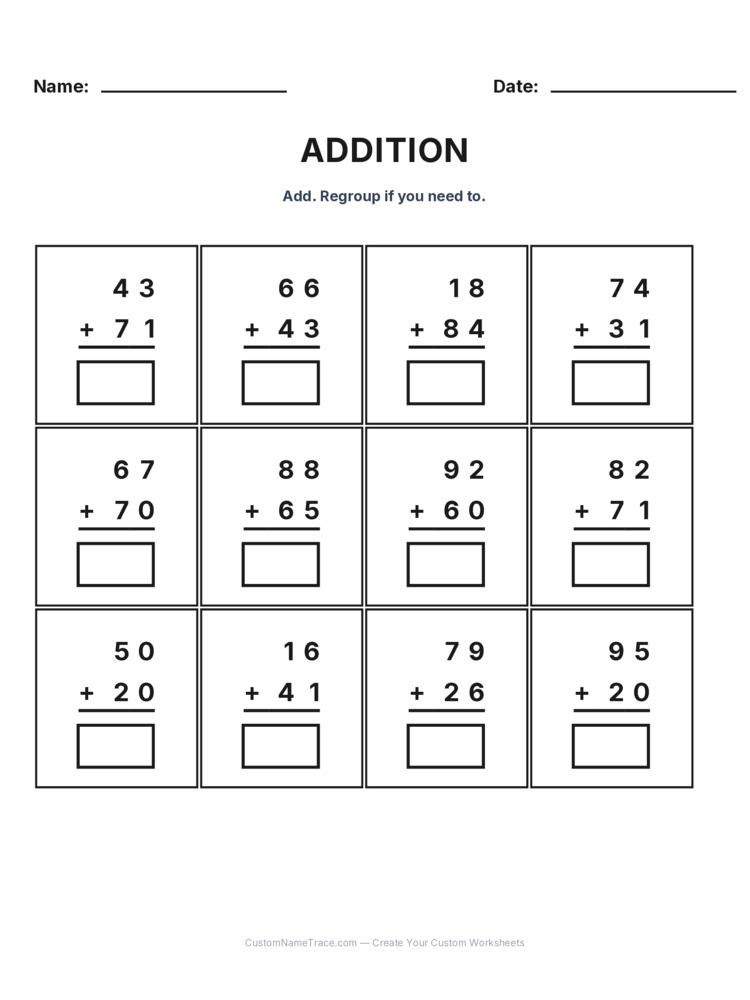
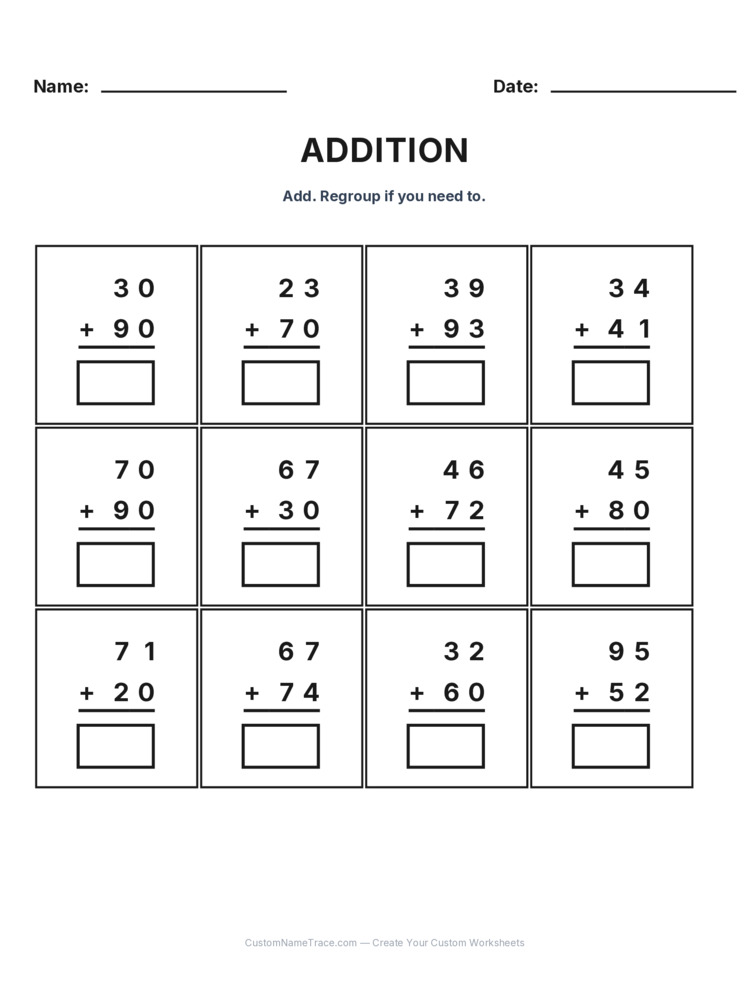
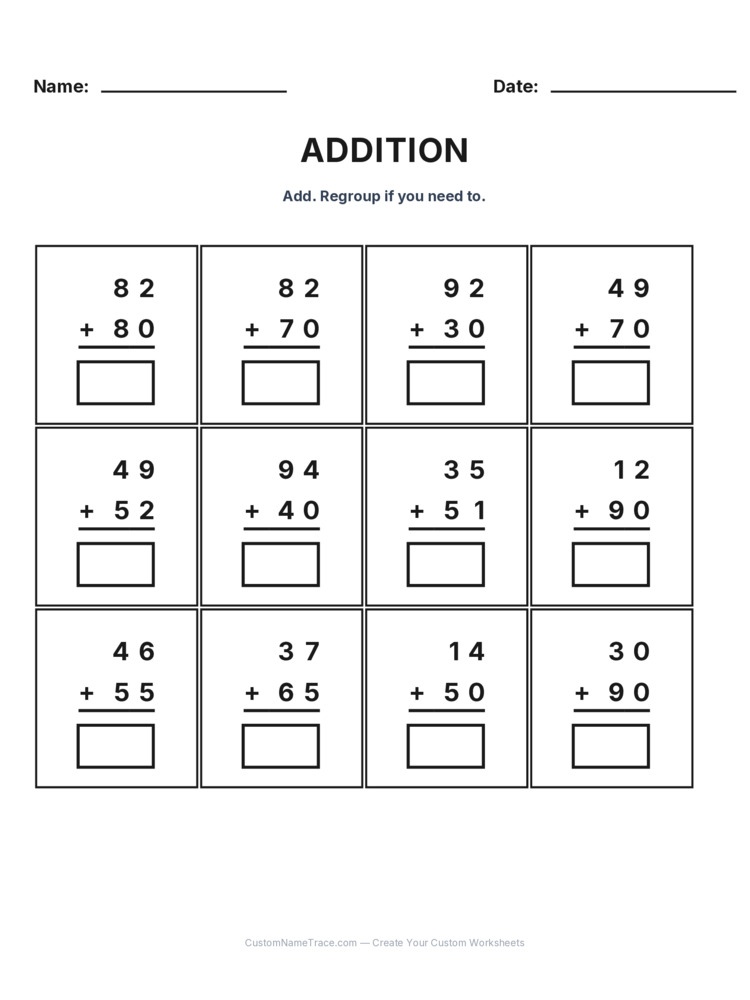
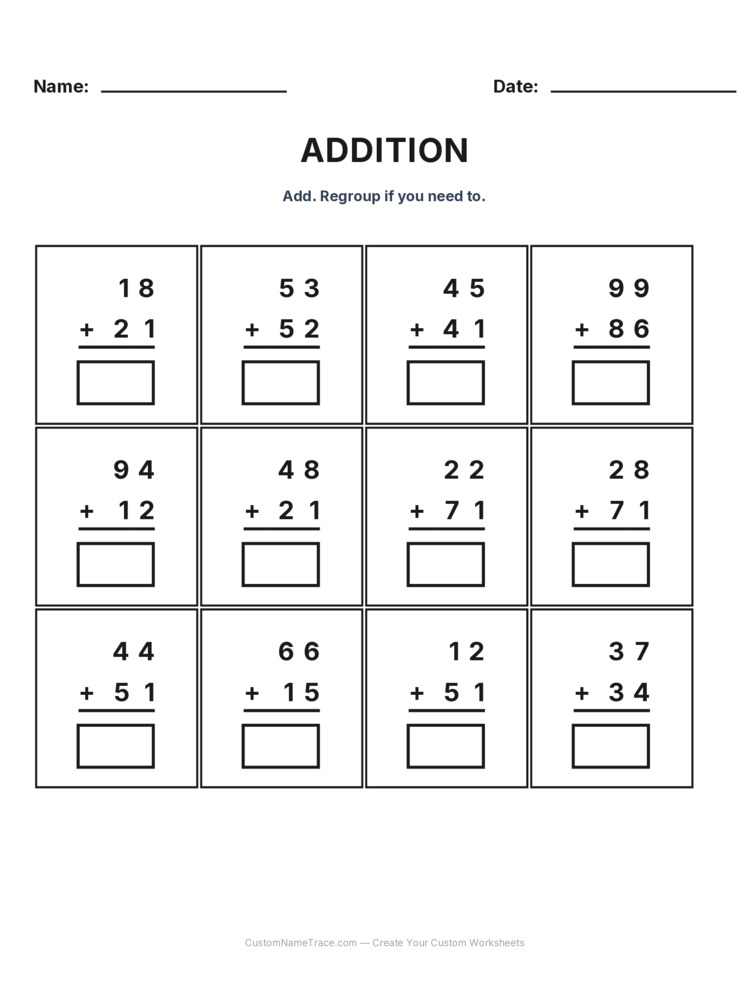
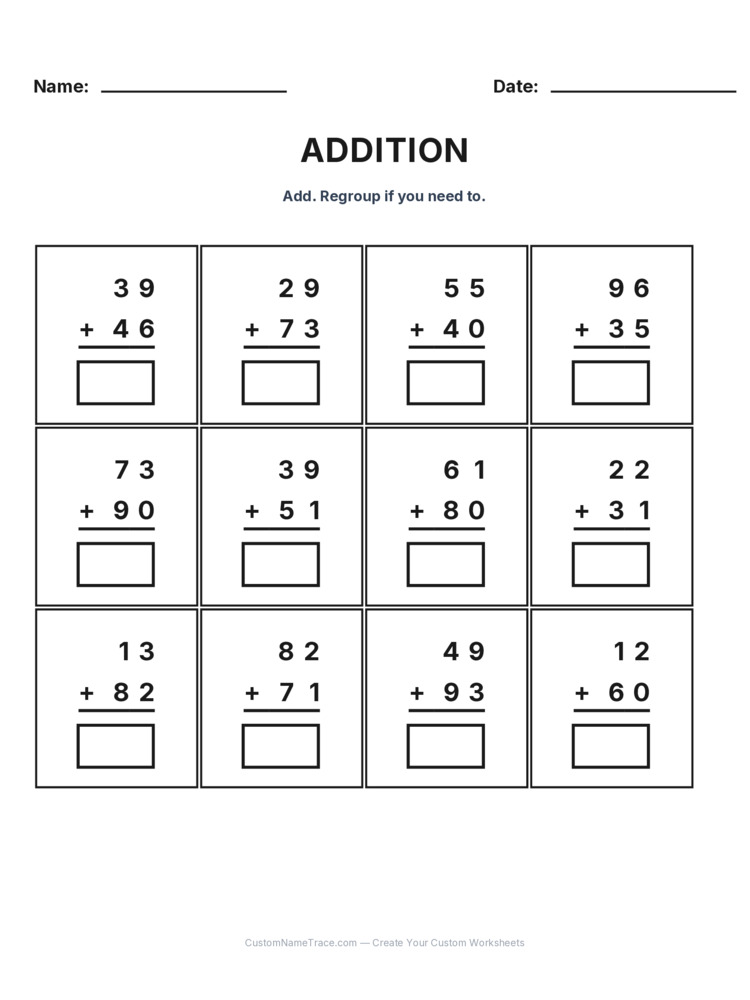
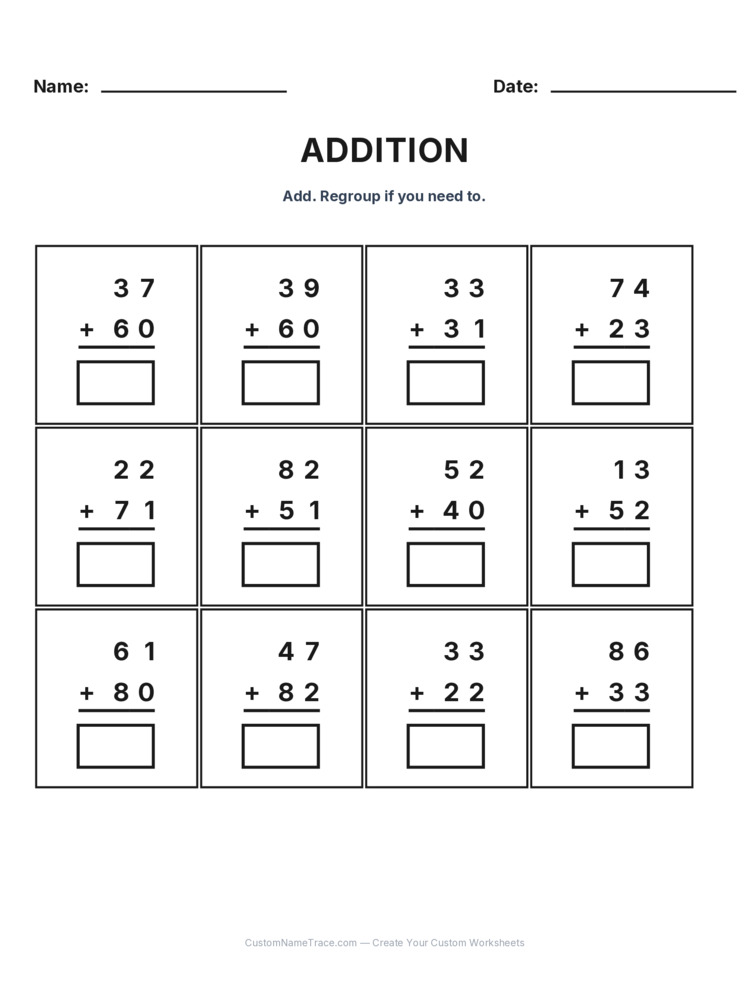
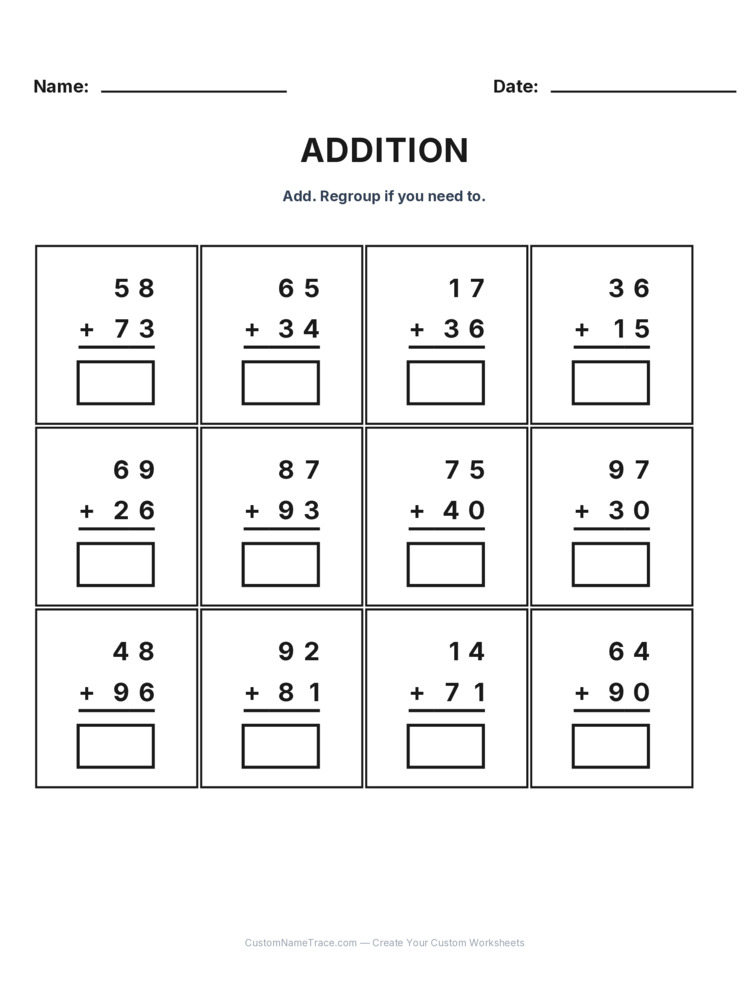
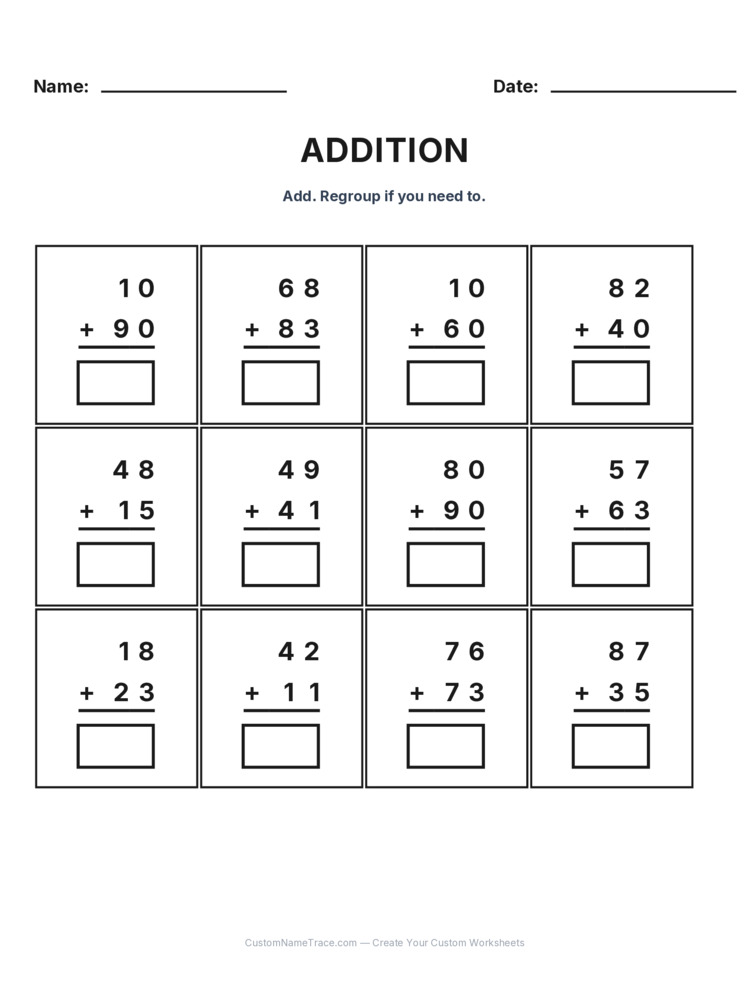
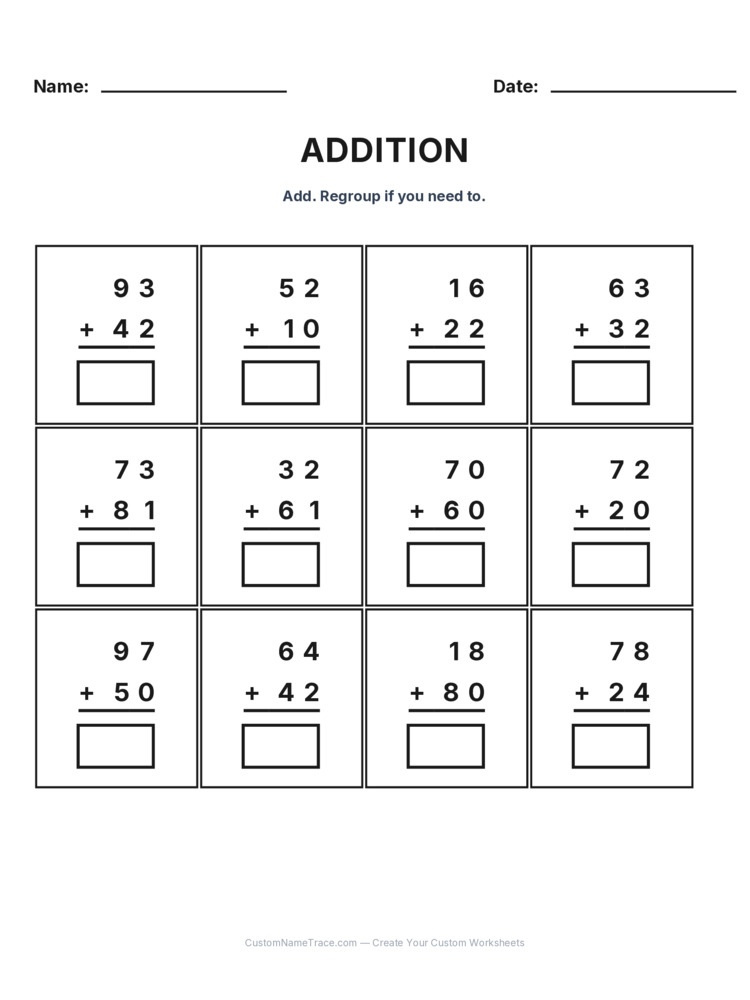
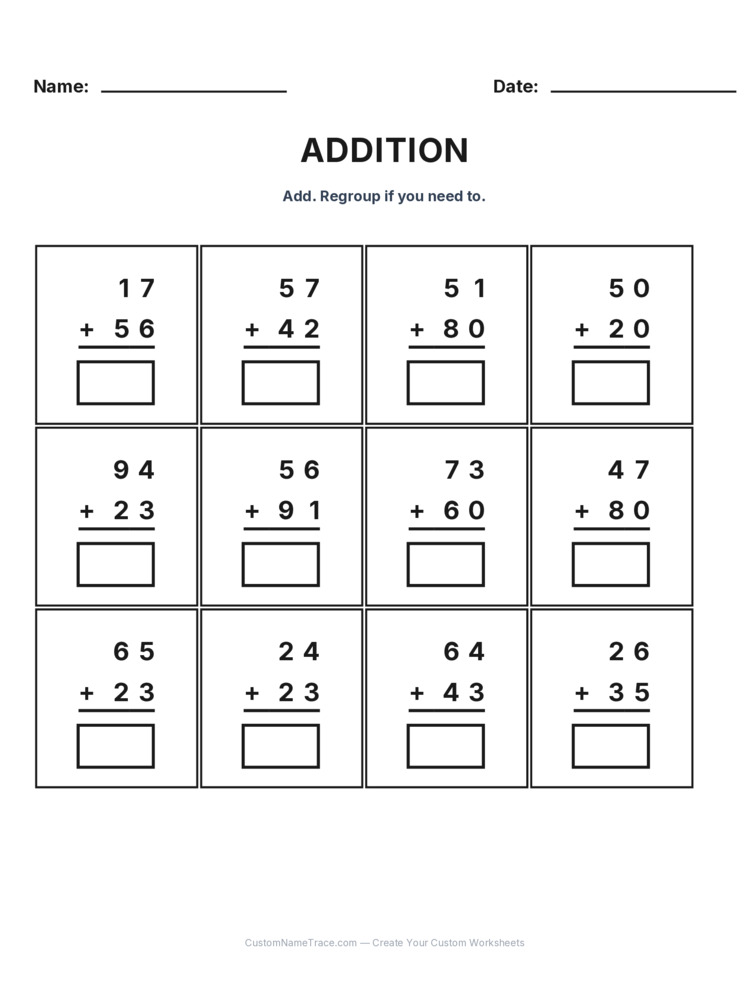
Why this worksheet deliberately avoids regrouping
Every problem here is a multi-digit Addition problem specifically chosen so that no column ever requires carrying or borrowing — each digit combines cleanly within its own place value, with nothing spilling over into the next column. That's a deliberate, temporary simplification: at Grade 2, a child is being introduced to column format itself (writing numbers stacked by place value, working one column at a time) for the first time, and adding regrouping on top of an unfamiliar layout would test two new skills simultaneously instead of one at a time.
This worksheet exists as a genuine, necessary stepping stone toward this site's Addition With Regrouping practice, not a permanently easier alternative to it — every child working through the standard Grade 2 curriculum needs both, in this order.
What column format actually asks a child to do
Stacking numbers vertically by place value — ones under ones, tens under tens — and working one column at a time from right to left is a genuinely new procedure, distinct from the horizontal single-digit Addition a child has already practiced. Getting comfortable with that column structure itself, independent of any regrouping complexity, is the entire point of this worksheet: a child needs to reliably align digits correctly and work through columns in the right order before adding the extra step of carrying or borrowing on top of it.
A misaligned column — writing a ones digit under a tens digit, for instance — produces a wrong answer that has nothing to do with the actual Addition skill, and it's worth checking for that specific error first whenever a wrong answer appears here.
A concrete way to catch column-alignment mistakes
Using lightly ruled or graph paper underneath a worksheet, or simply asking a child to say each digit's place value out loud while writing it ("this is the tens column, this is the ones column"), reinforces correct alignment directly rather than assuming it develops automatically from looking at the printed page's own column guides. A child who consistently misaligns columns benefits far more from this kind of explicit structural support than from more repetition of the same misaligned approach.
Working through each column strictly right to left, one at a time, without skipping ahead, also matters here — column Addition depends on that consistent order, and a child who works left to right instead will get correct-looking individual digits that don't actually combine into a correct final answer.
What genuine mastery at this stage looks like
Mastery here means reliably aligning digits correctly and working through each column in the right order — not necessarily fast, and not yet dealing with regrouping at all. A child who solves every problem on this page correctly, even slowly, has built exactly the column-format foundation the next, harder worksheet depends on, and rushing to regrouping before this foundation is solid tends to produce confusion about which difficulty (the new format, or the new carrying/borrowing step) is actually causing a mistake.
This worksheet also builds naturally on this site's Place Value practice — a child who's genuinely comfortable with what a tens digit or hundreds digit actually represents has an easier time seeing why column alignment matters in the first place, rather than treating it as an arbitrary rule to follow.
Using this worksheet effectively
For a child new to column format, working through the first problem together — narrating the column order out loud, checking alignment before calculating — builds the habit explicitly. Once a child aligns and solves several problems correctly and independently, they're ready to move to this site's regrouping practice at the same grade, which introduces the genuinely new part of multi-digit Addition.
Every numbered variant generates a fresh set of problems guaranteed to need no regrouping at Grade 2's digit range, so repeat practice always means new numbers to align and combine. Every worksheet downloads as a free, print-ready PDF with no account required.