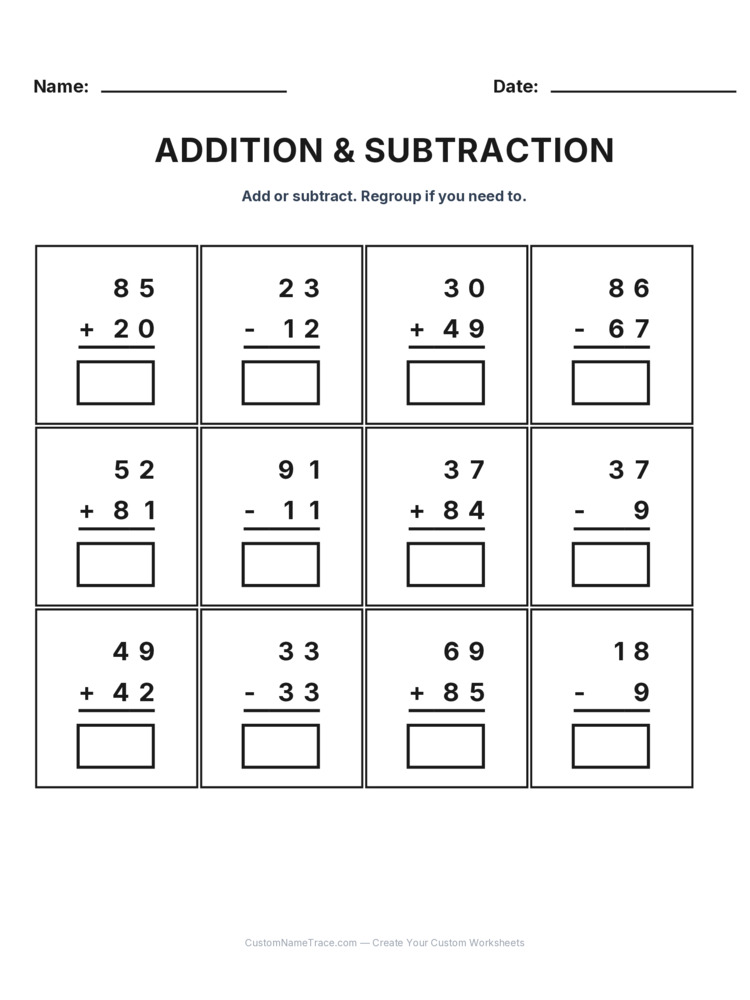
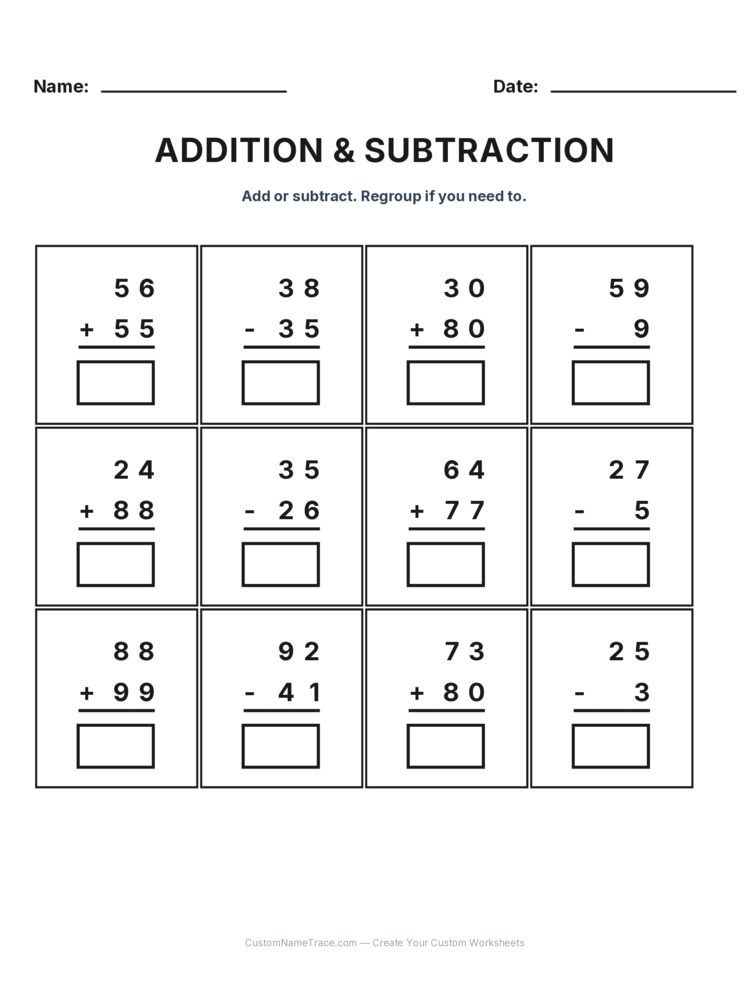
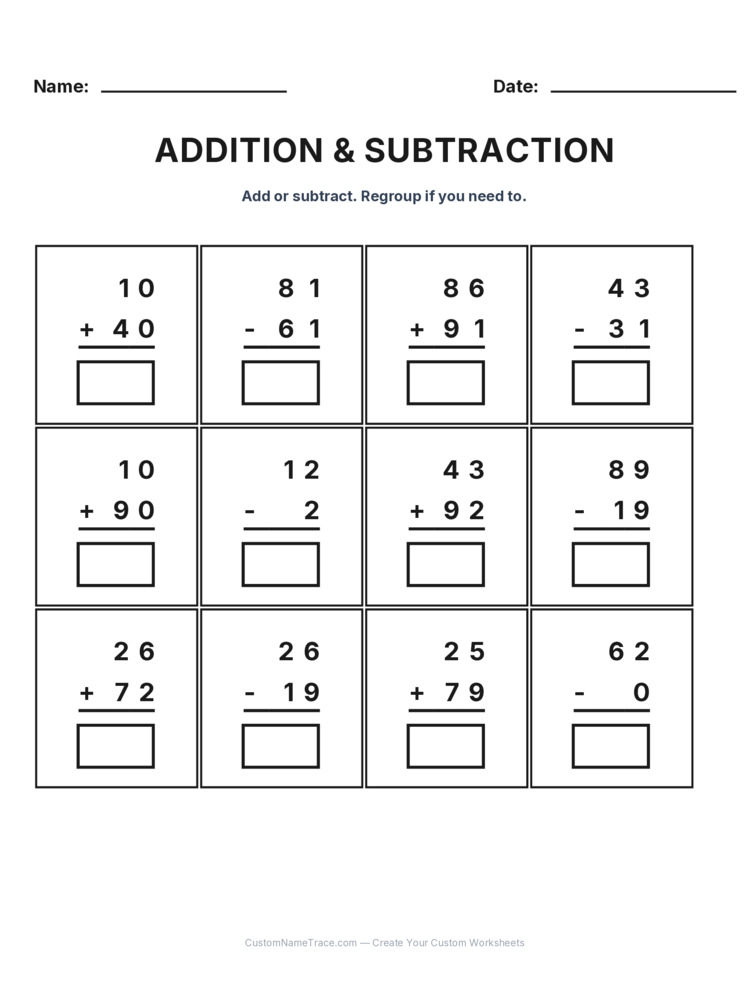
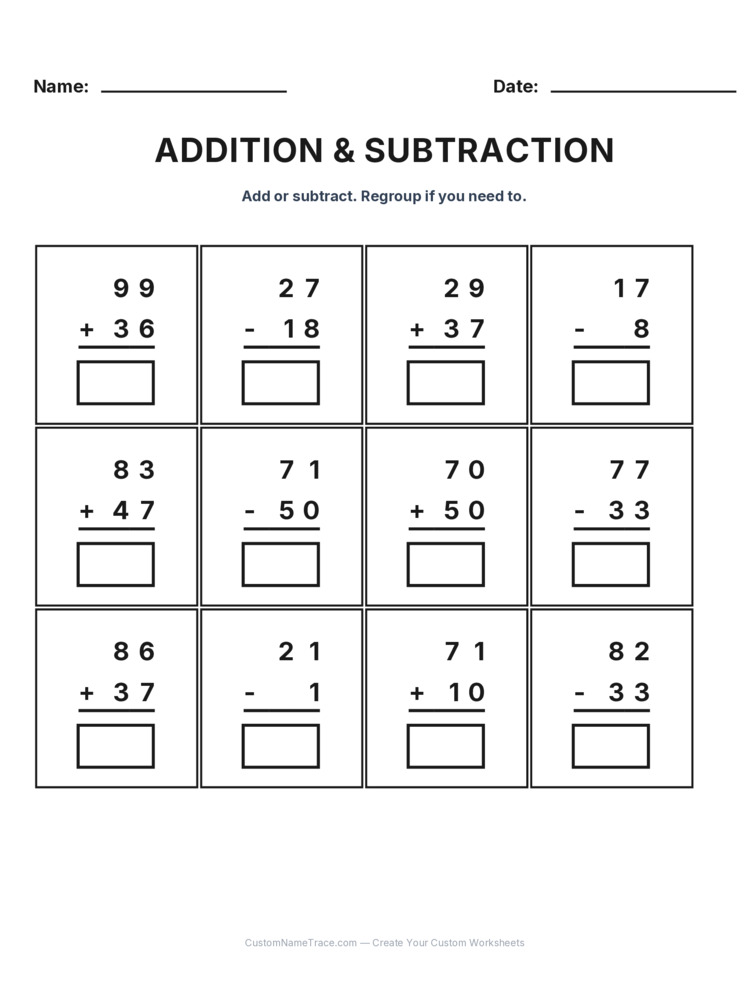
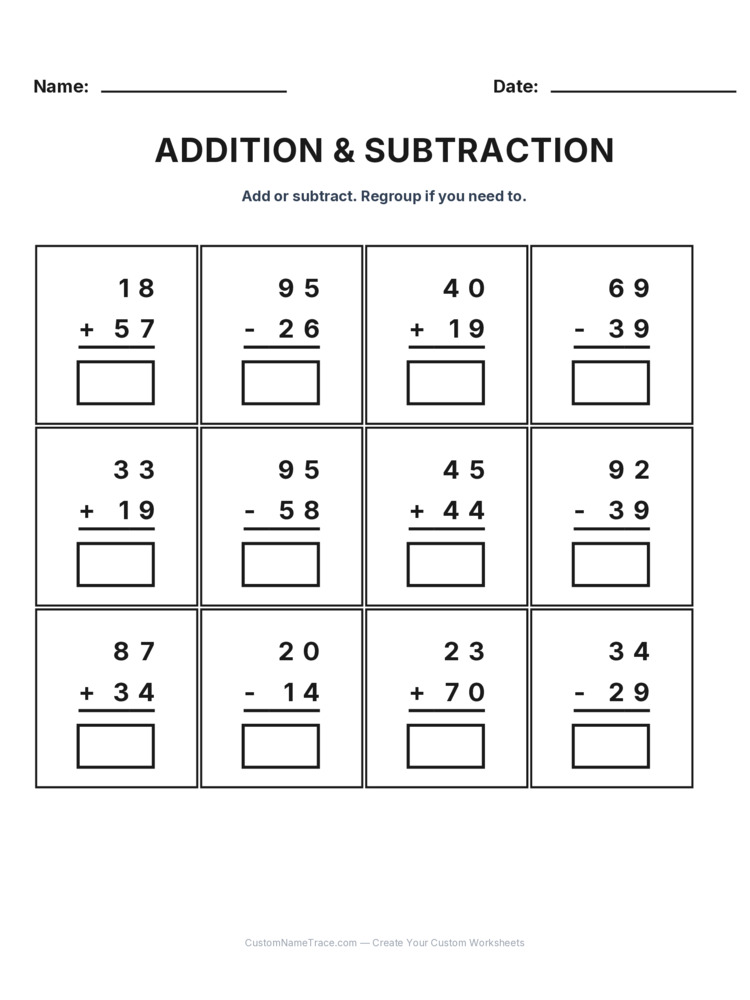
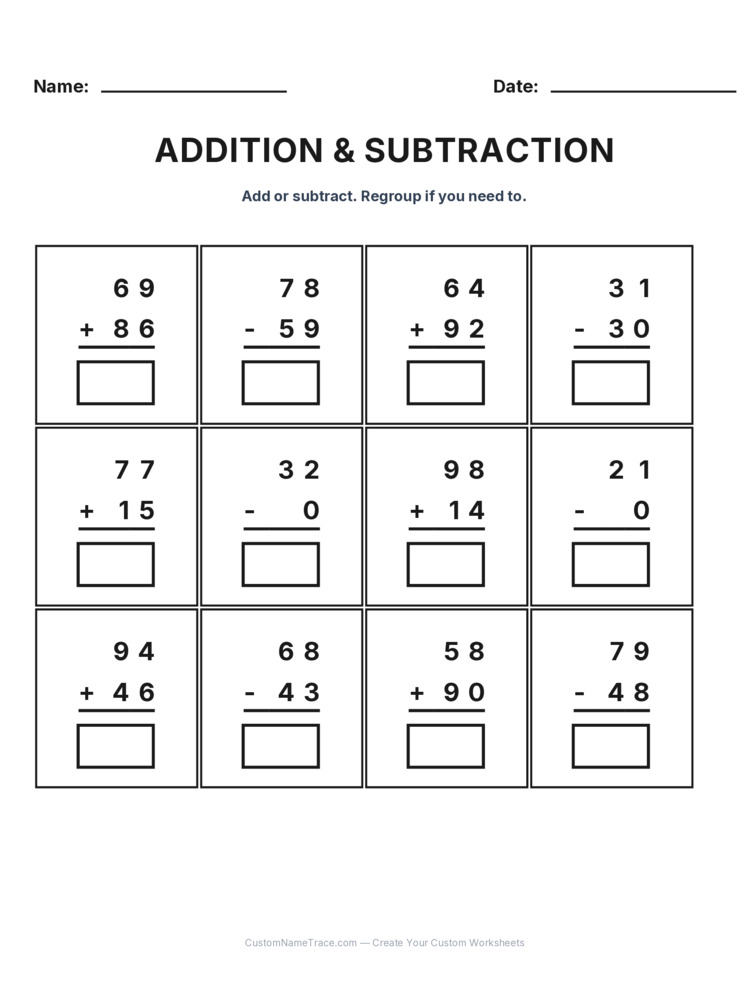
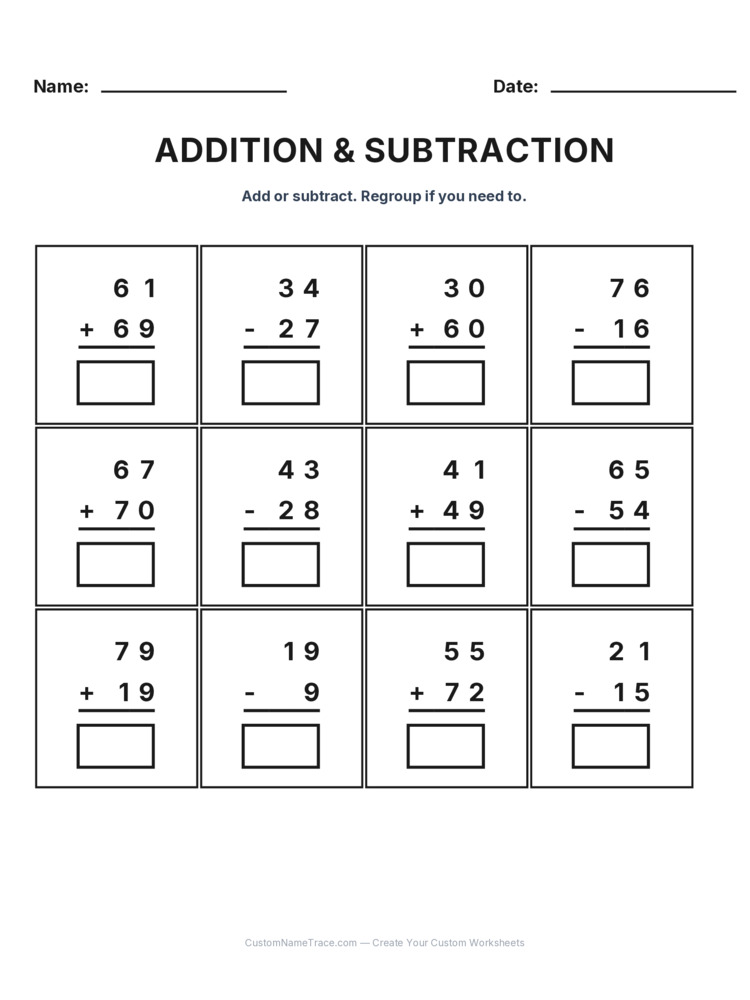
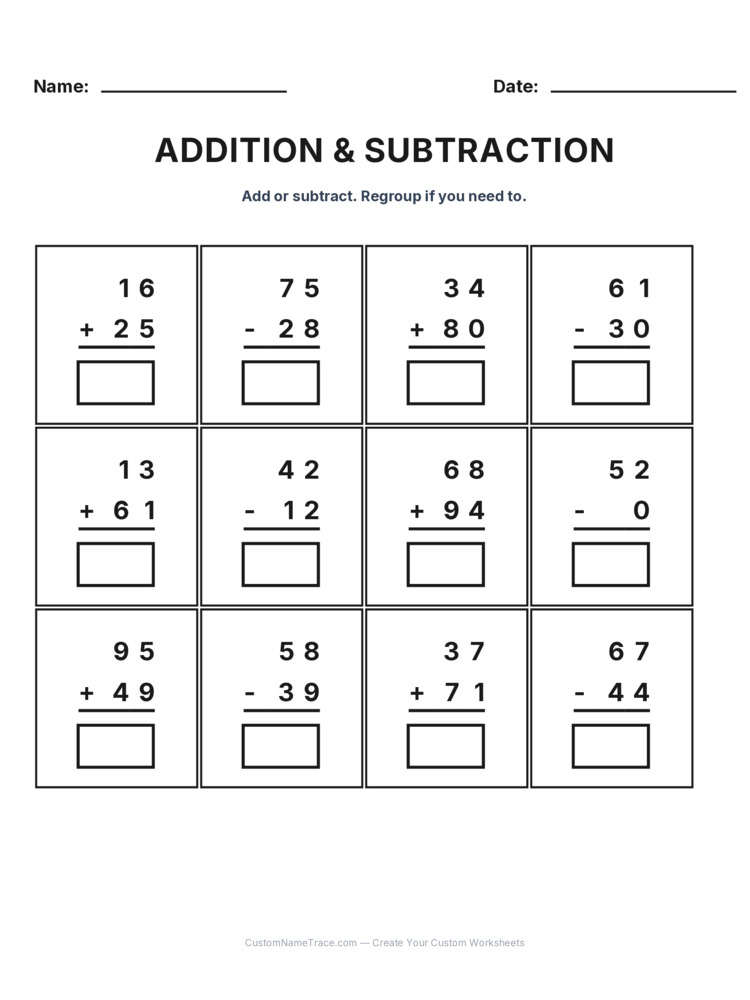
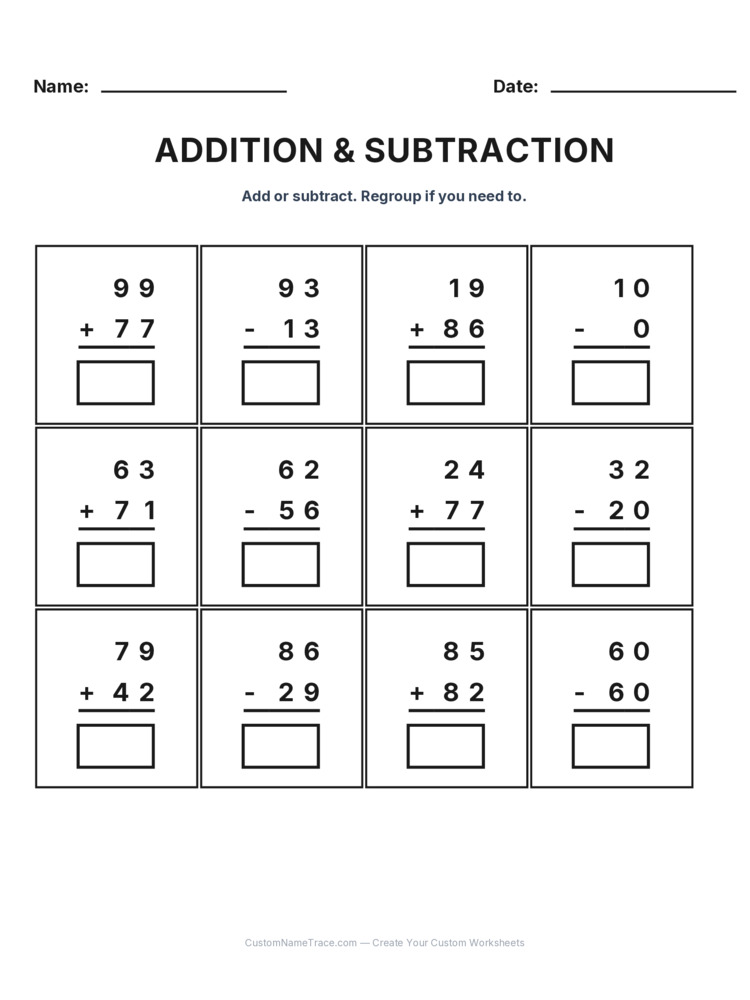
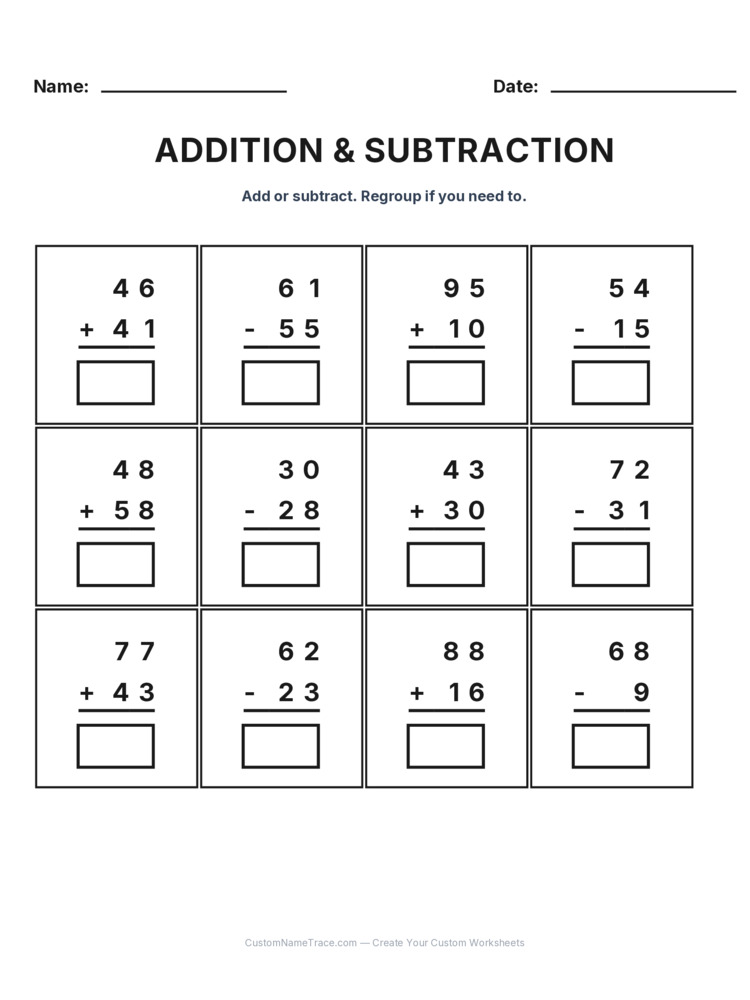
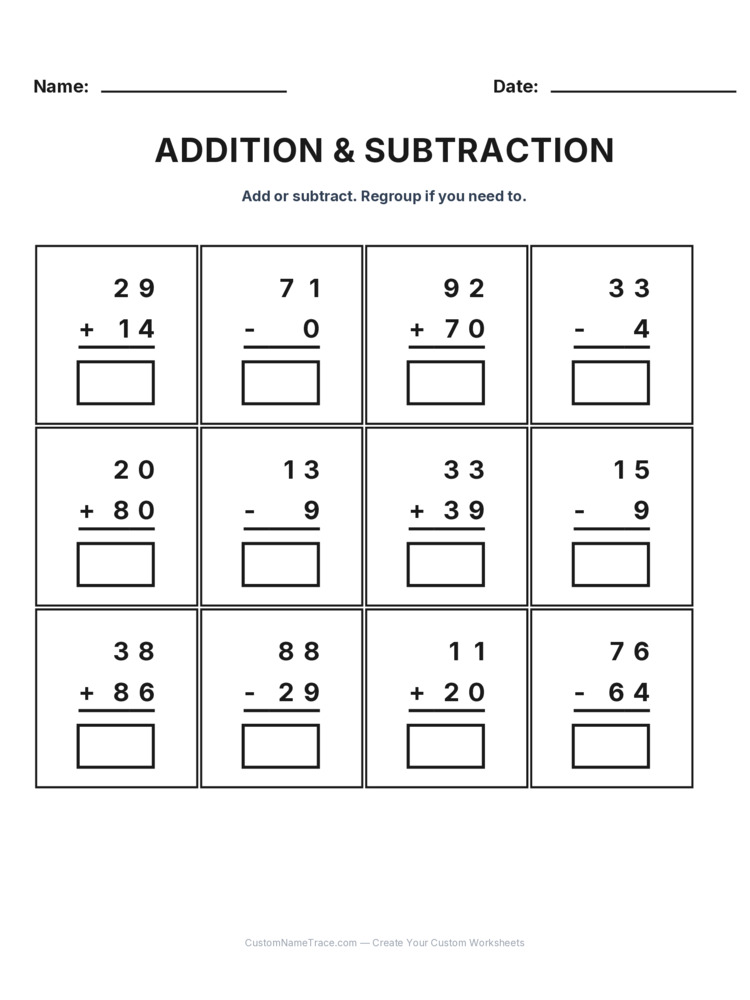
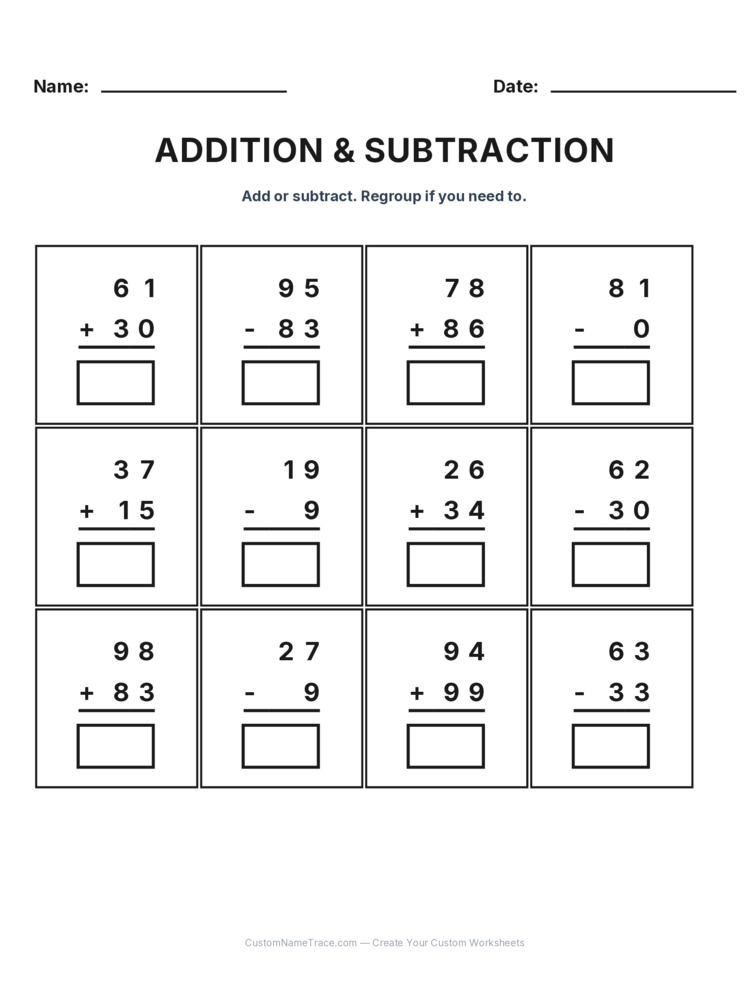
What mixed review specifically tests
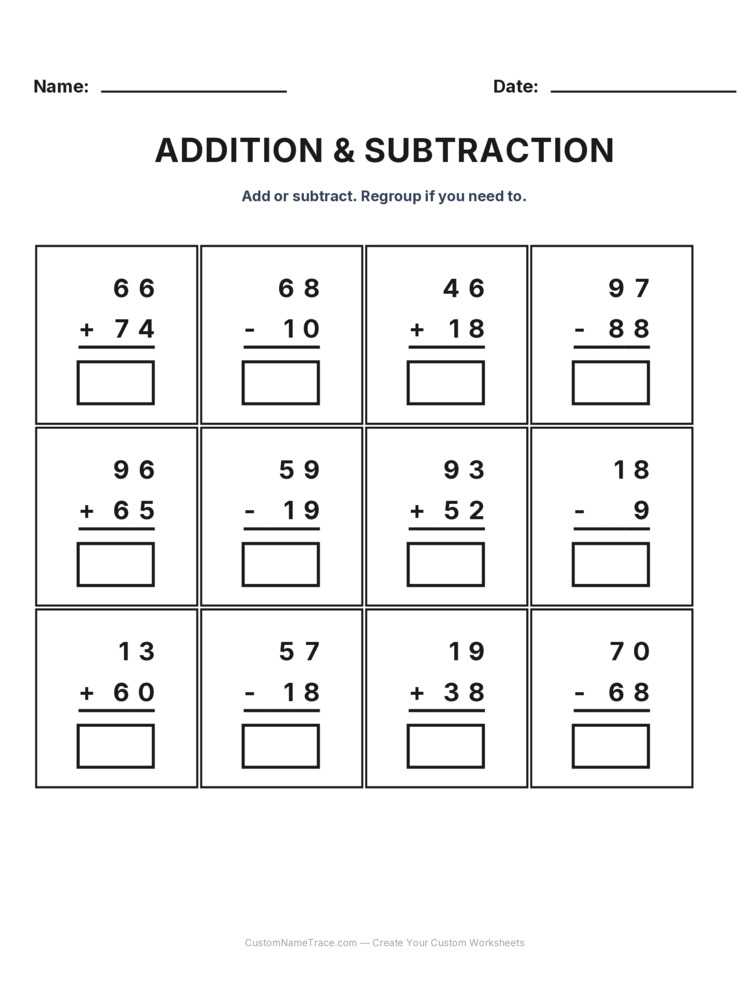
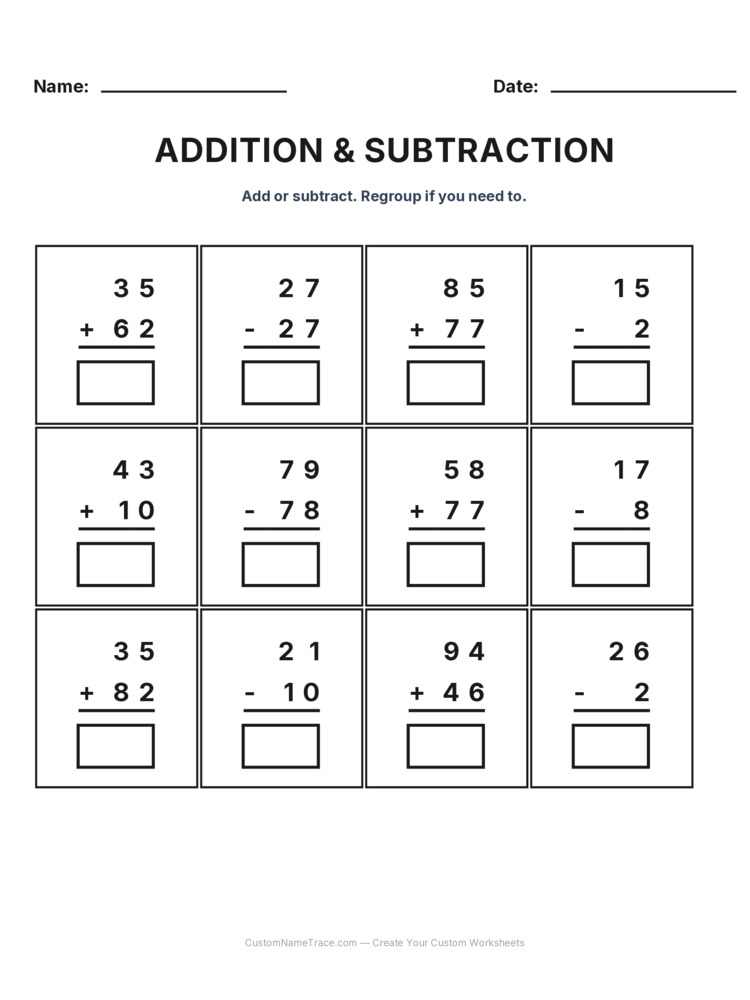
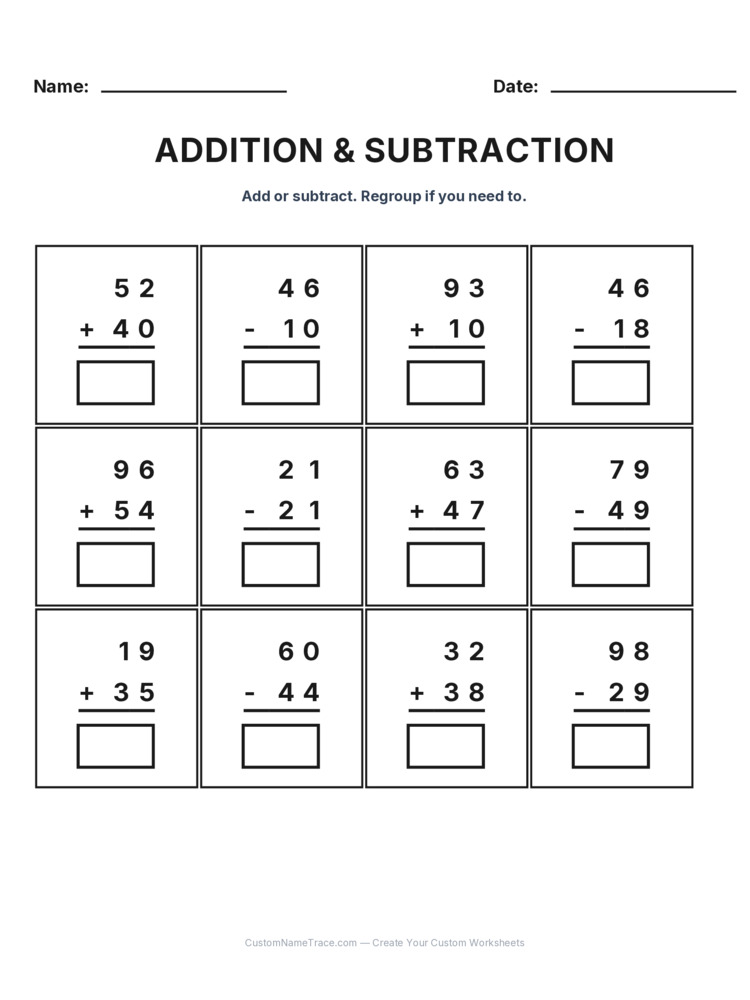
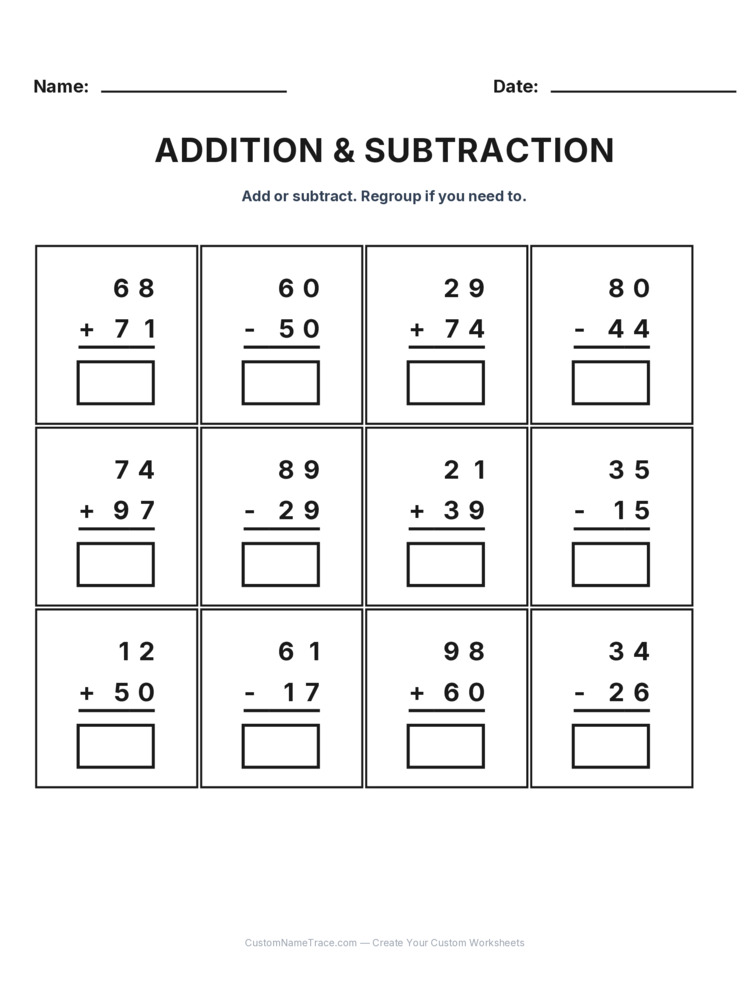
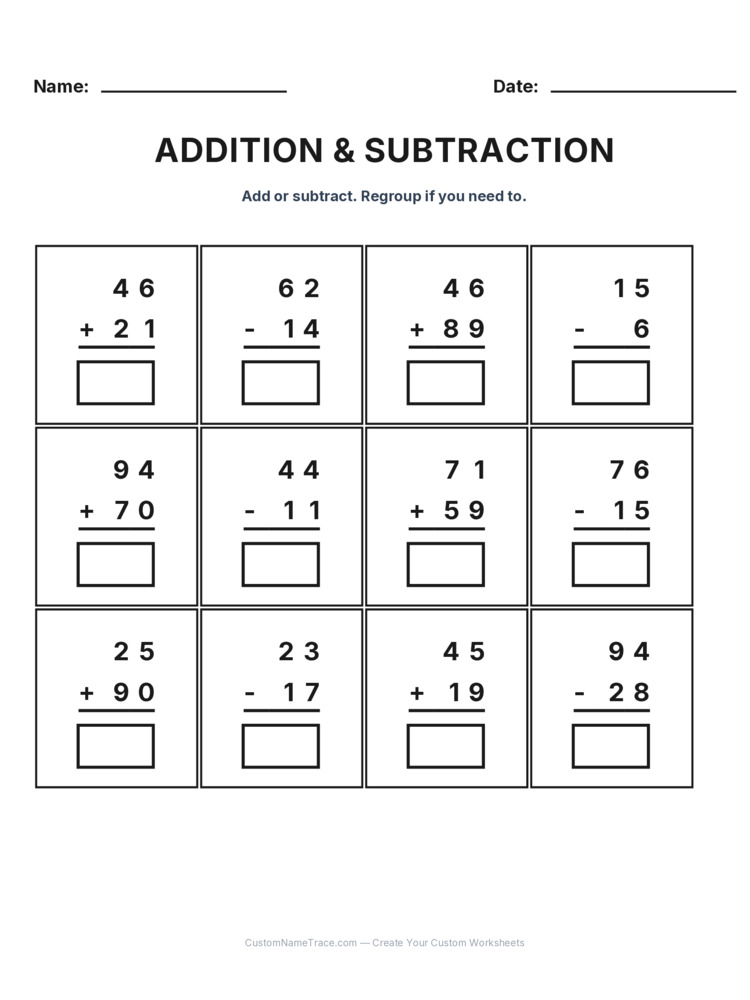
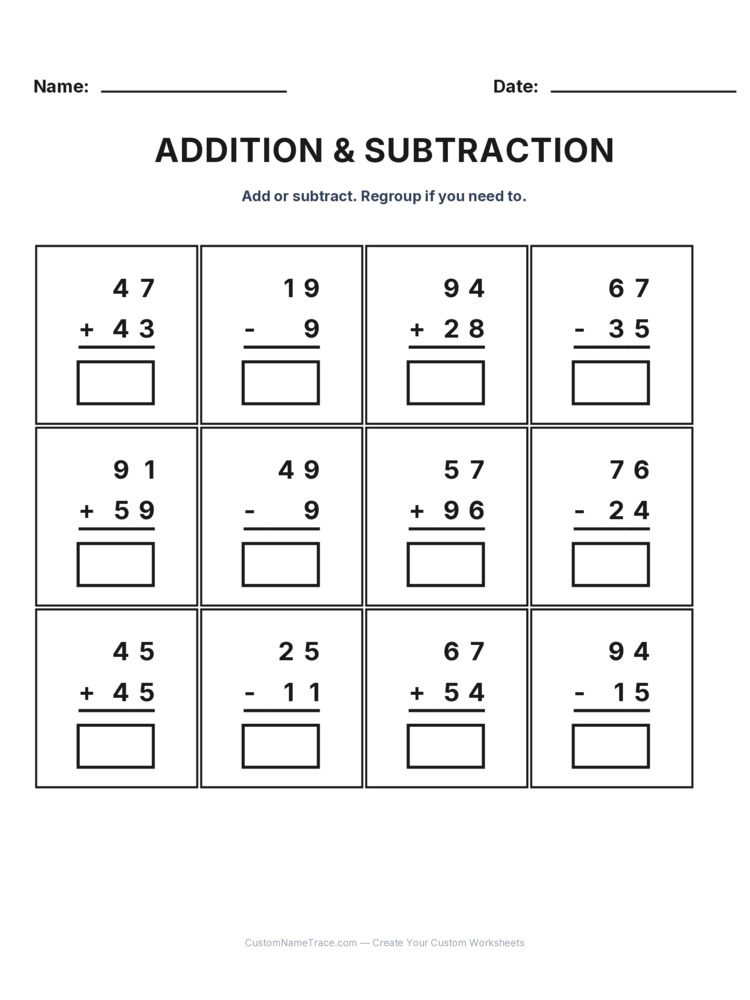
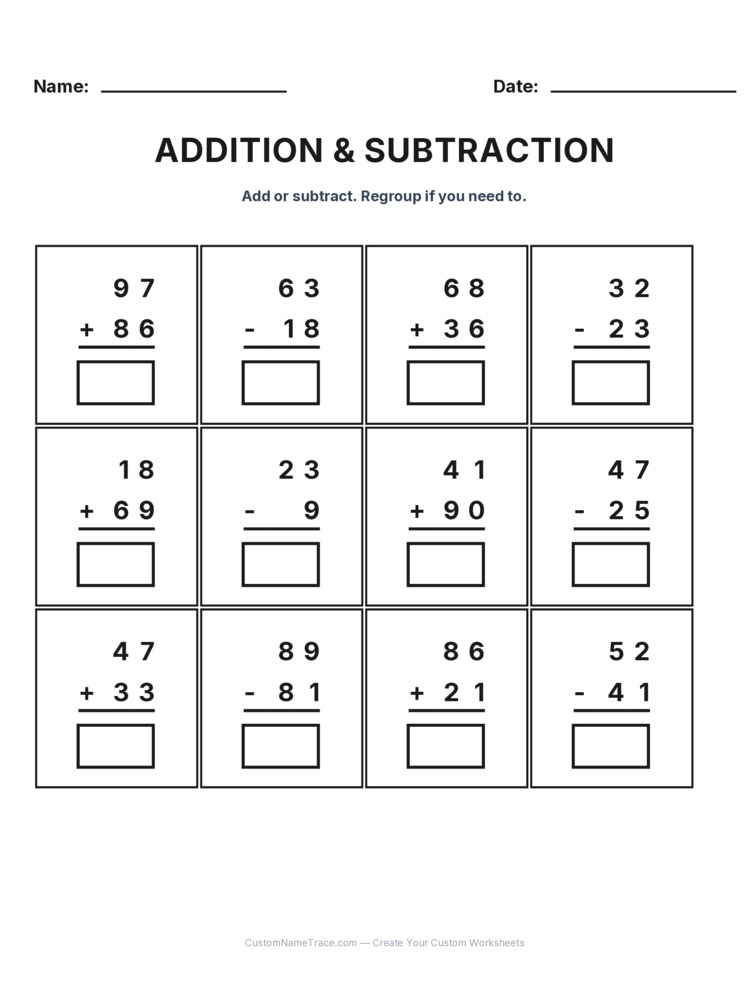
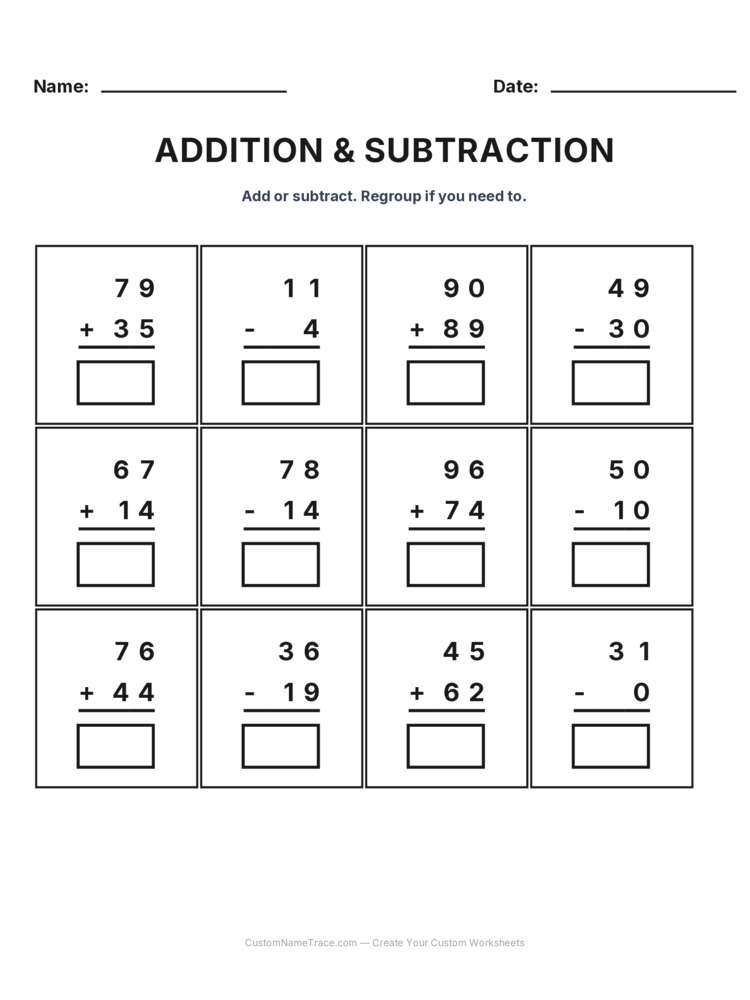
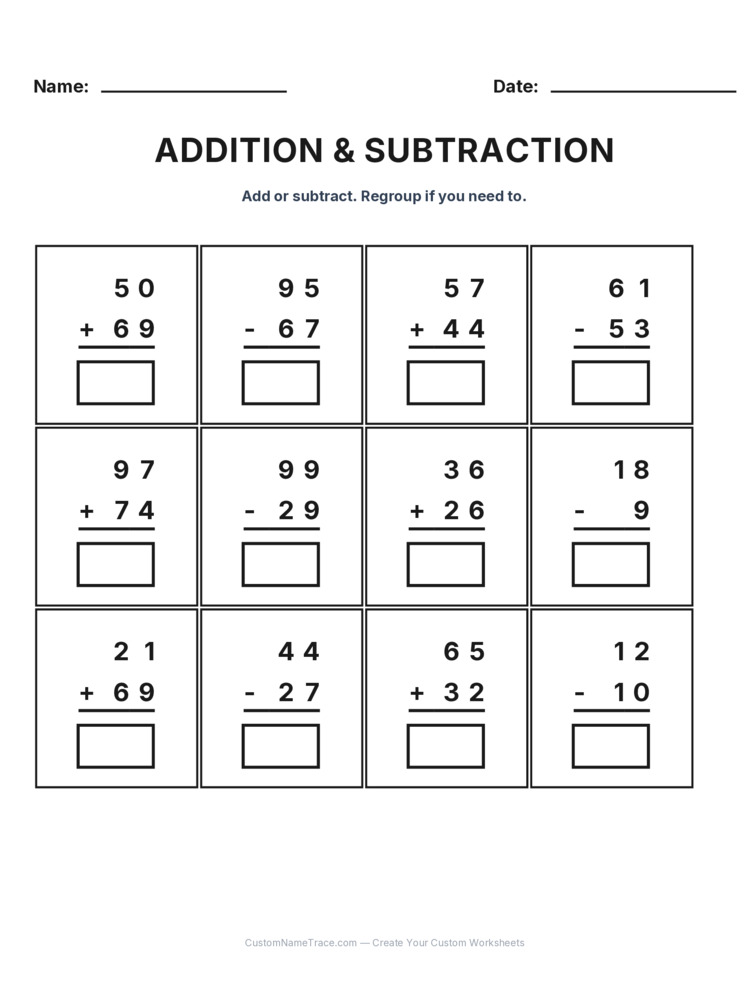
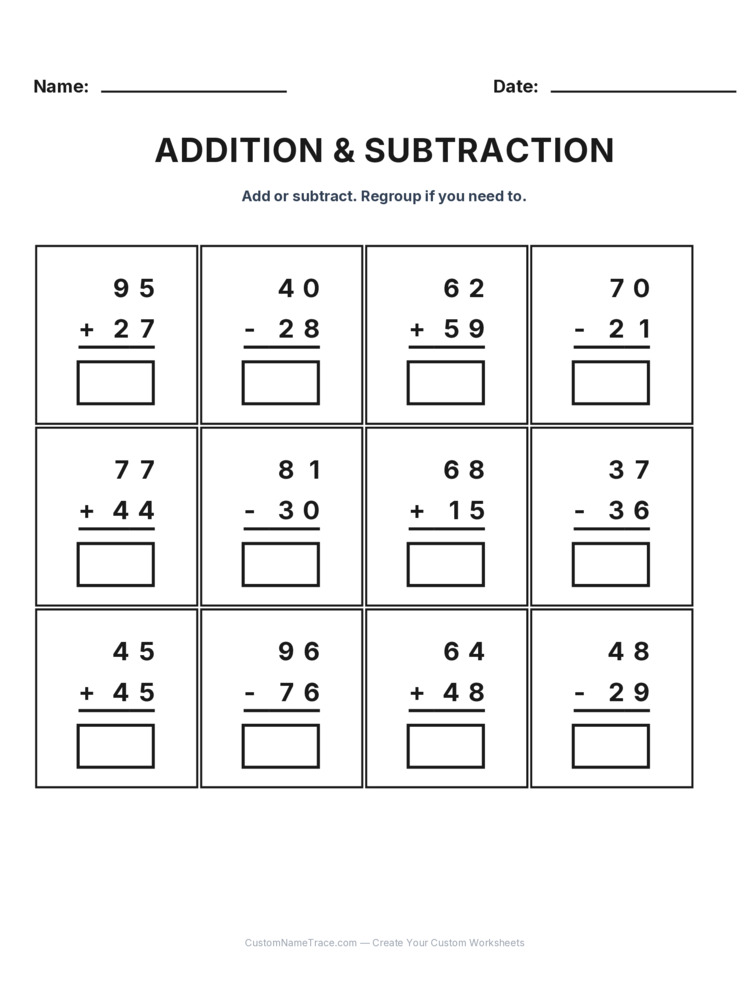
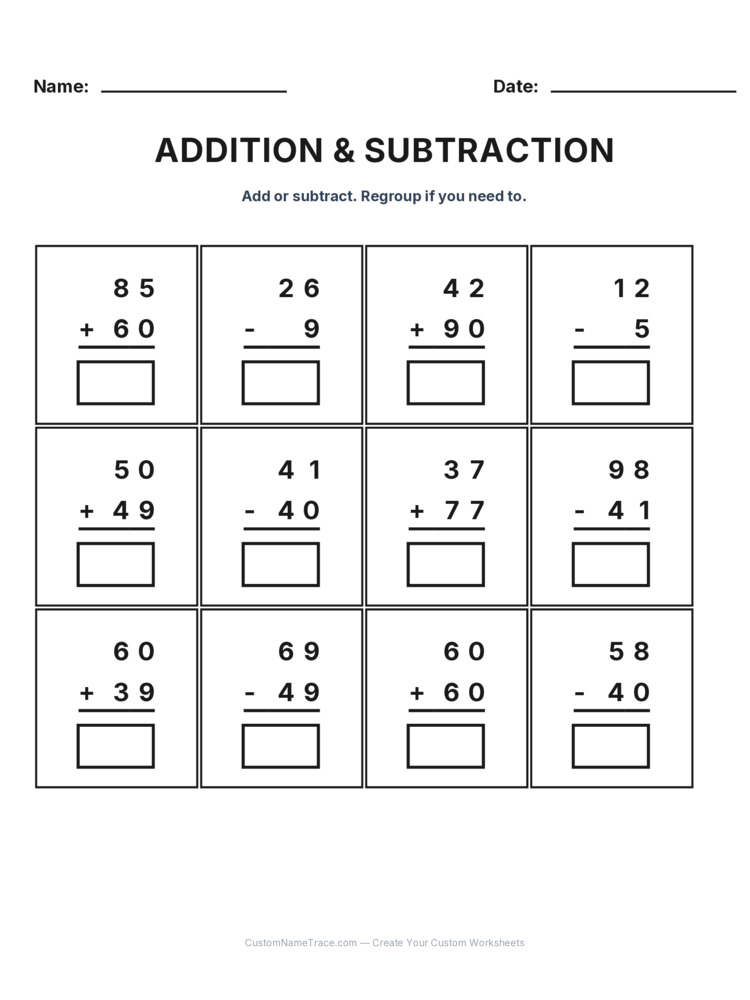
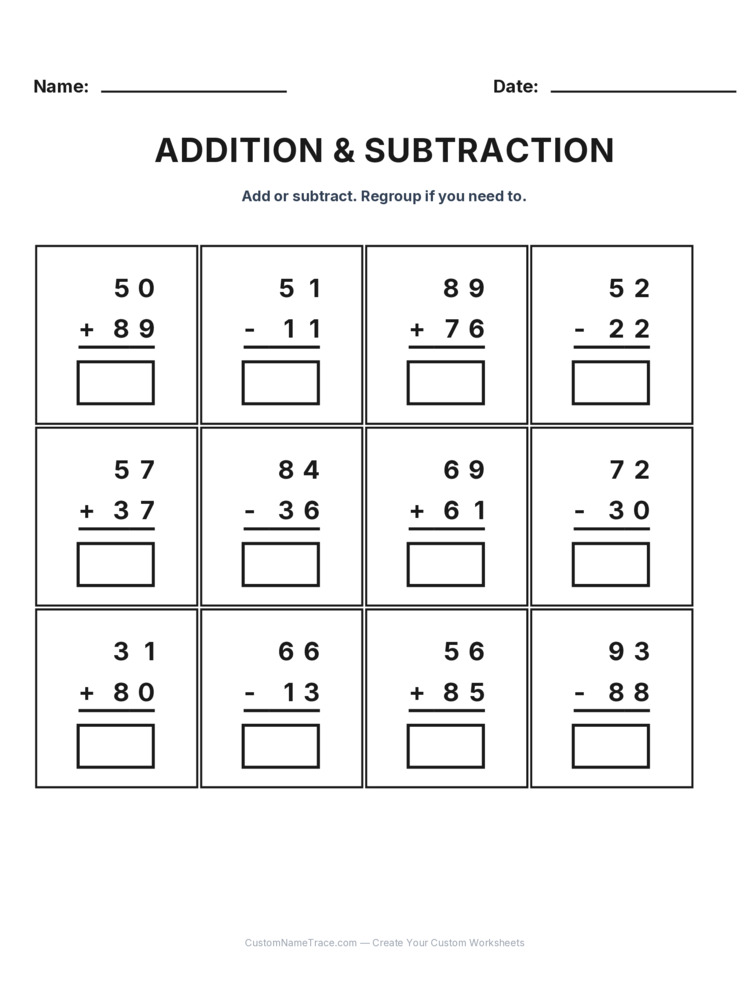
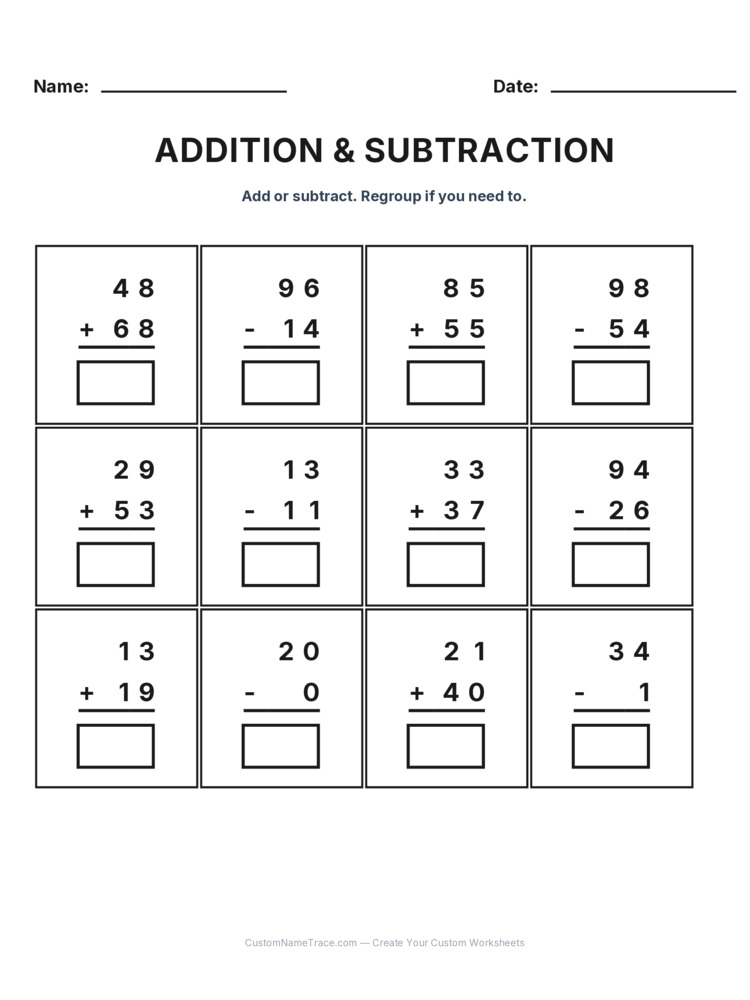
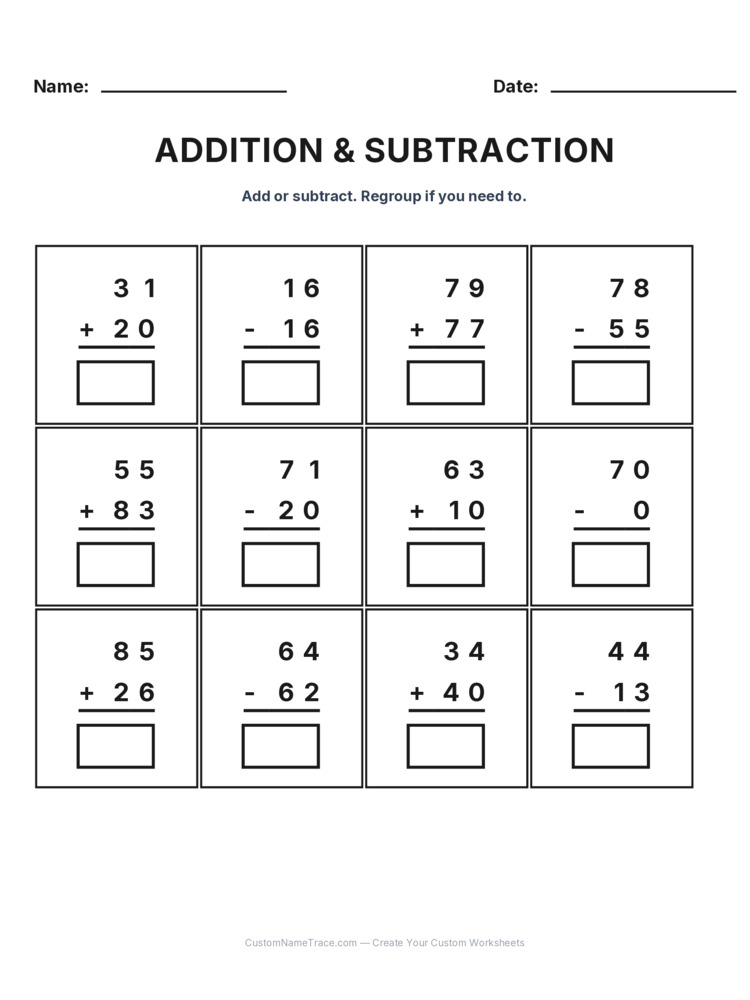
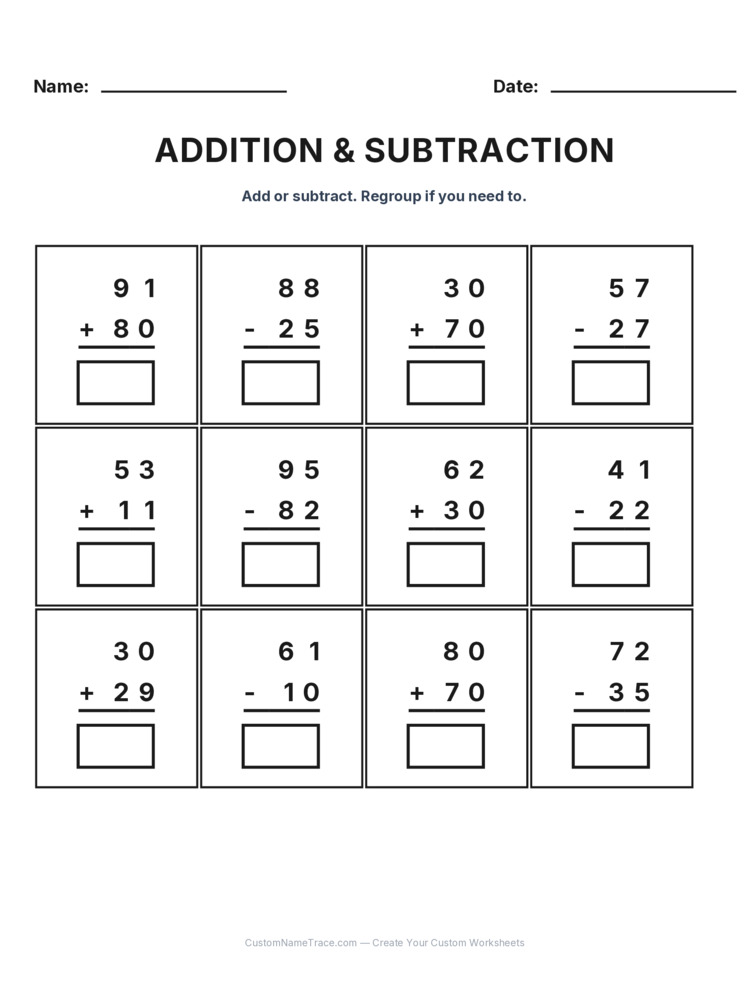
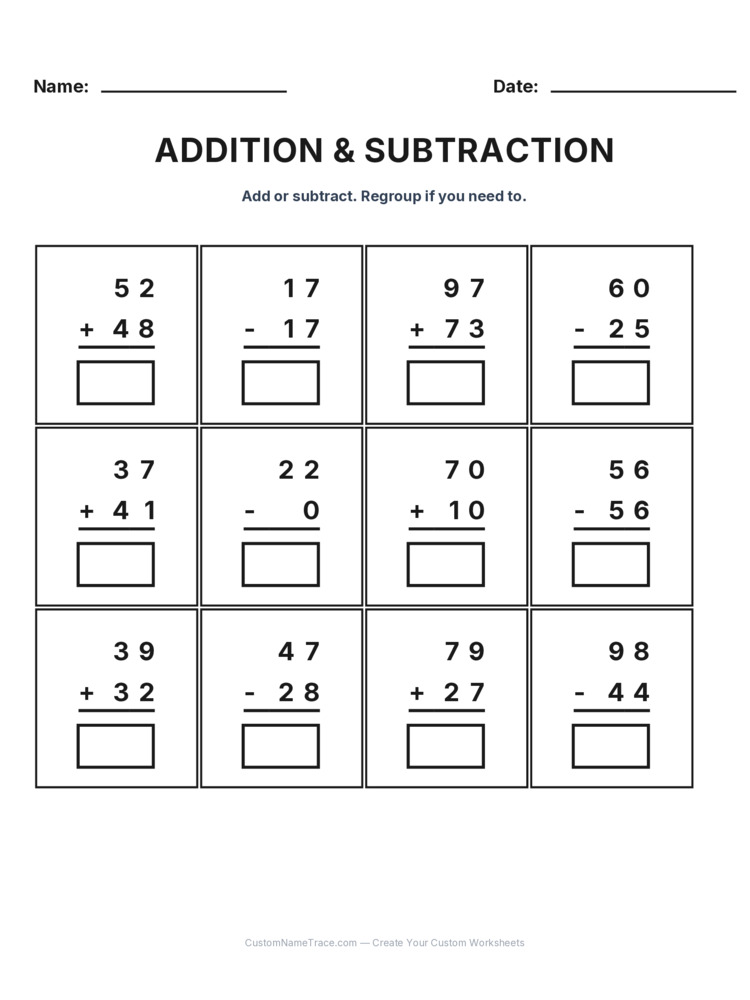
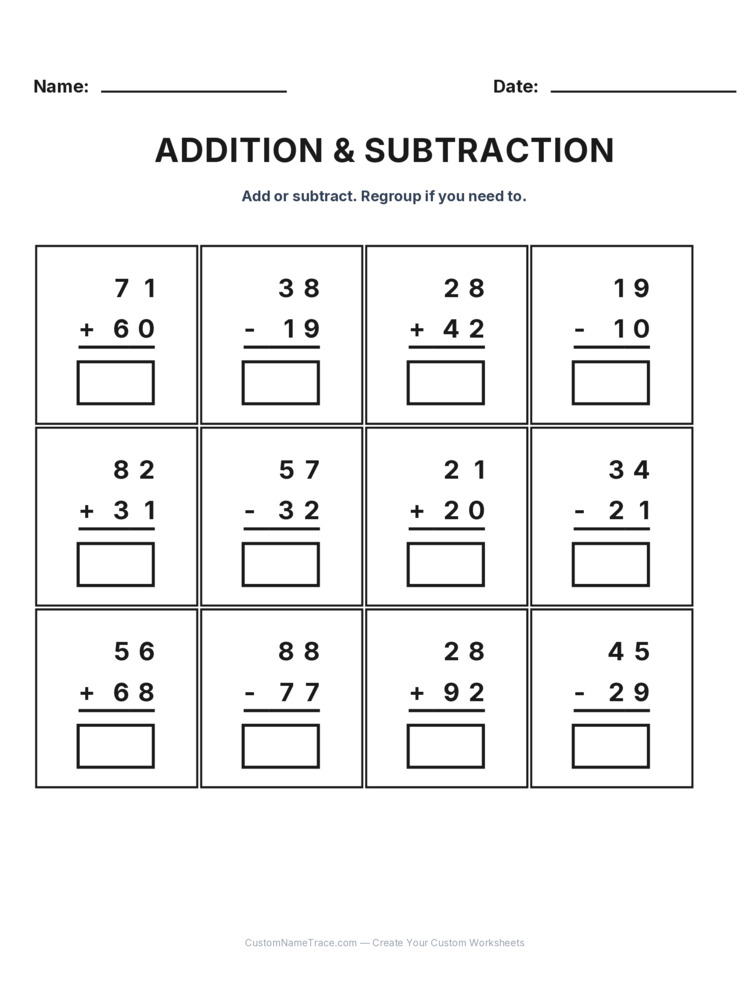
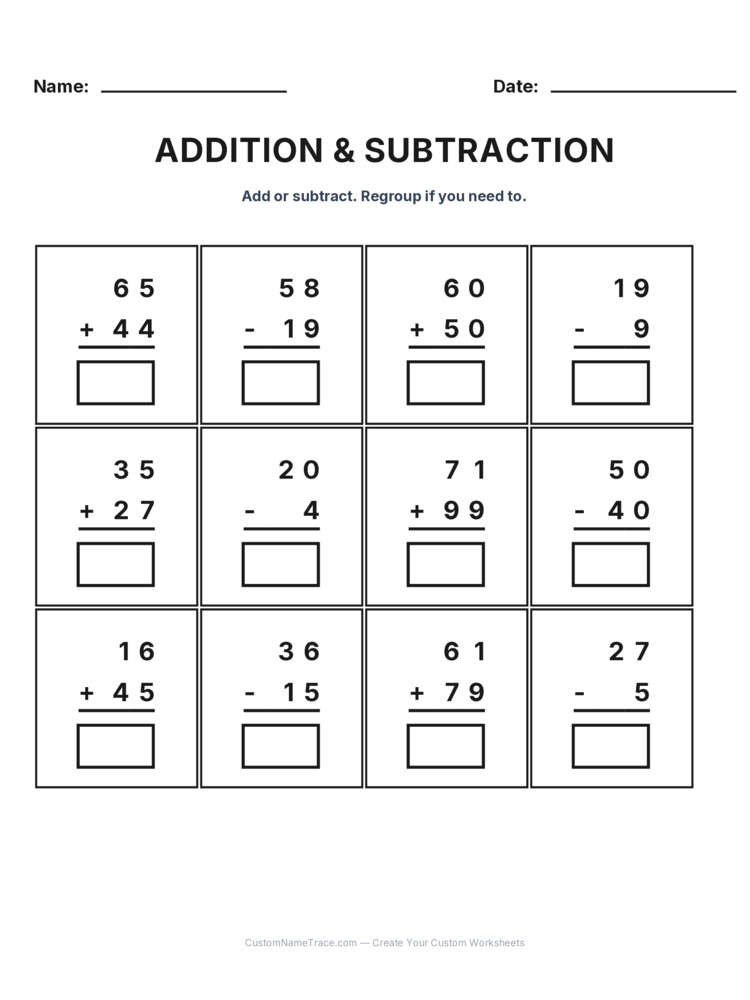
Every problem on this worksheet uses the identical number range as Grade 2's dedicated Addition and Subtraction practice, but the operation symbol changes unpredictably from problem to problem instead of staying fixed for a whole page. That single change shifts what's actually being tested — not whether a child can add or subtract, which single-operation worksheets already confirm, but whether they can correctly identify which operation a given problem calls for before applying it.
It's worth saying directly: nothing about the arithmetic on this page is harder than Grade 2's single-operation worksheets at the same range. The entire added difficulty lives in the operation-identification step, and recognizing that clearly helps a frustrated child (or a worried parent) understand that a mistake here doesn't mean the underlying addition or subtraction skill has slipped.
Every problem here appears in an unpredictable sequence rather than a few additions followed by a few subtractions, deliberately. Grouping by operation, even loosely, would let a child anticipate upcoming answers from pattern alone rather than genuinely reading each symbol, which would defeat the entire purpose of mixed practice at this stage.
It would be simpler to assume operation identification develops naturally just from separate addition and subtraction practice, but that assumption doesn't reliably hold — plenty of children handle each operation confidently in isolation and still stumble the first time they're genuinely mixed. Building this transition deliberately, rather than leaving it to chance, is exactly why mixed review exists as its own worksheet type.
The specific mistake this format catches
A child can be completely fluent with addition and completely fluent with subtraction in isolation and still make wrong-operation errors here — solving a subtraction problem as if it were addition simply because the last several problems happened to be addition. That specific mistake, a switching error rather than a calculation error, is exactly what this format is built to surface and correct.
If a child consistently gets addition problems right but subtraction problems wrong within this same worksheet (or the reverse), that's useful, specific diagnostic information — it points to a genuine gap in one operation, not a general mixed-review weakness, and the right next step is returning to this site's dedicated single-operation worksheet for whichever operation is weaker, at the same Grade 2 range.
Circling or underlining the operation symbol before attempting to solve each individual problem — a small, deliberate pause between reading and calculating — catches the great majority of wrong-operation slips directly at the source. This habit feels slow the first few times and speeds up naturally with repetition, without ever needing to be abandoned once it does.
Adding time pressure specifically tends to make a child skip the symbol-checking step this worksheet exists to build — a rushed glance at a plus or minus sign is exactly the shortcut that causes switching errors in the first place. Untimed, careful practice builds the underlying habit more reliably than a timed drill ever would at this stage; speed is worth pursuing later, once accuracy here is already solid.
How this mirrors real tests and adult skill
Standardized tests and classroom assessments rarely group problems neatly by operation the way early single-skill worksheets do — a real test page moves between addition, subtraction, and eventually other operations unpredictably, expecting a student to correctly identify what each problem is asking. Regular mixed-review practice at Grade 2's level builds genuine comfort with that format well ahead of encountering it for the first time under real test conditions.
The operation-identification skill this worksheet builds becomes directly necessary the moment word problems are introduced formally, since a word problem never states its operation outright — it describes a situation and expects the solver to work out which operation applies from context. A child genuinely comfortable with symbol-level mixed review has real footing for that considerably bigger leap.
Adults switch between addition and subtraction constantly without conscious effort — balancing a checkbook, splitting a bill, adjusting a recipe — and that effortlessness is the end result of exactly the kind of deliberate, sometimes slow practice this worksheet represents in its earliest form. It's worth remembering, especially when a child finds this genuinely difficult at first, that the eventual goal is a skill adults use automatically without ever thinking about it directly.
How progress here tends to unfold
Expect wrong-operation errors to be fairly common the first several times a child works through mixed review, then to drop off relatively quickly once the symbol-checking habit takes hold. This particular skill often clicks faster than the underlying arithmetic itself did, precisely because the arithmetic is already familiar — only the added identification step is genuinely new.
A child who solves an entire mixed review page correctly, at a steady pace, without visibly pausing extra time to check each symbol, has genuinely internalized what this worksheet is built to teach. At that point, continuing to drill this specific format offers diminishing returns compared to moving toward simple word problems, which add a layer of reading comprehension on top of the same underlying decision.
Mastery here isn't necessarily lightning speed — it's consistent accuracy across a full page of unpredictably ordered problems, achieved through a reliable process (check the symbol, then solve) rather than luck or memorized position. A child who's reliably accurate, even at a measured pace, has mastered exactly what this worksheet is meant to teach.
If wrong-operation errors persist longer than seems reasonable, it's worth briefly returning to the single-operation worksheets at Grade 2 to confirm both skills are still genuinely solid on their own — sometimes what looks like a mixed-review problem is actually a sign that one of the two underlying operations has quietly gotten rusty and needs a quick refresher before mixed practice can move forward productively again.
Using this well
Before starting the worksheet itself, quickly sorting a small stack of cards marked with plus and minus signs — just naming each one out loud, no arithmetic involved yet — primes the exact symbol-attention habit this page depends on, in a faster, lower-stakes format than diving straight into full problems.
Calling out a problem verbally, with the operation stated clearly ("seven plus three" versus "seven minus three"), and asking a child to solve it on the spot without paper builds the same switching skill in a faster, more playful format, useful as a quick warm-up or a break from the printed page.
A wrong-operation slip is worth naming plainly but calmly — "you added instead of subtracting there, let's check the sign next time" — since treating it as a routine, expected part of learning this specific skill keeps a child willing to keep trying rather than becoming anxious about the format itself.
Mixed review sits alongside, not instead of, this site's dedicated Addition and Subtraction worksheets at Grade 2 — moving between all three formats, rather than drilling only one, builds both the isolated fluency and the symbol-recognition skill that neither format alone fully covers.
Mixed review draws directly on this site's Number Sense foundation — a child with solid ten-frame and place-value sense has an easier time recognizing which operation a problem calls for, since that underlying number sense makes both addition and subtraction feel more automatic, leaving more attention free for the actual symbol-checking this worksheet demands.
The habit of pausing to verify what's actually being asked before solving — built here in its simplest possible form, just checking a plus or minus sign — is the same underlying discipline a much later, more complex math problem will demand in a more elaborate form. Investing real patience in this small version now genuinely does pay forward.
Every numbered worksheet generates a fresh, randomly ordered mix of addition and subtraction problems at Grade 2's range, so repeat practice always means a genuinely new sequence to work through, never one a child might recall the answers to from a previous attempt.