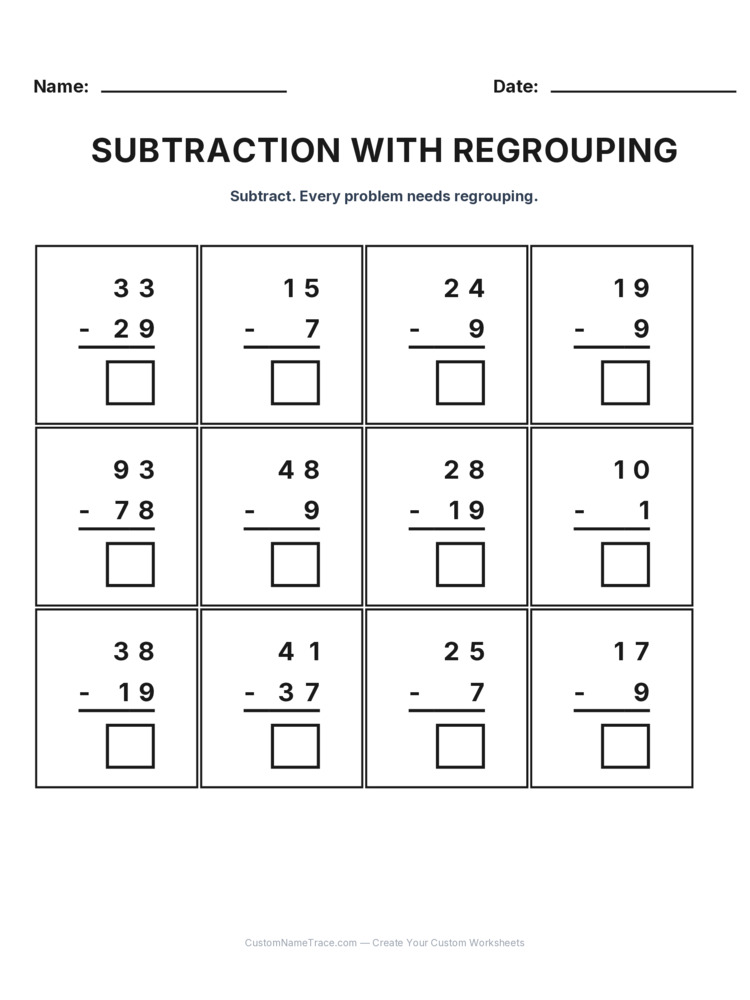
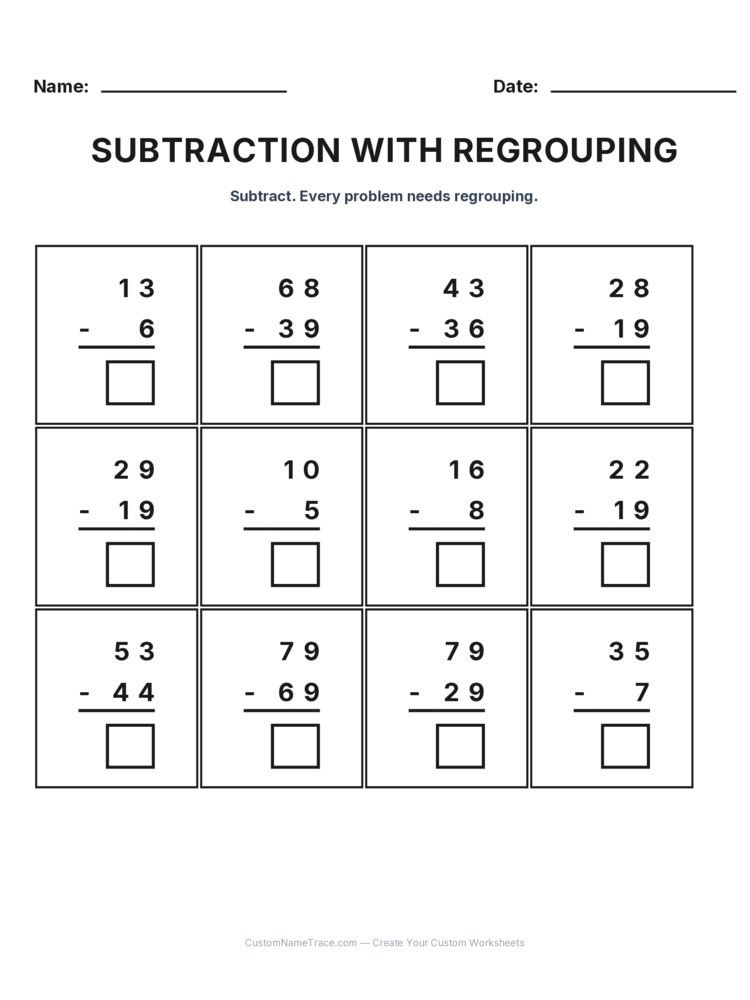
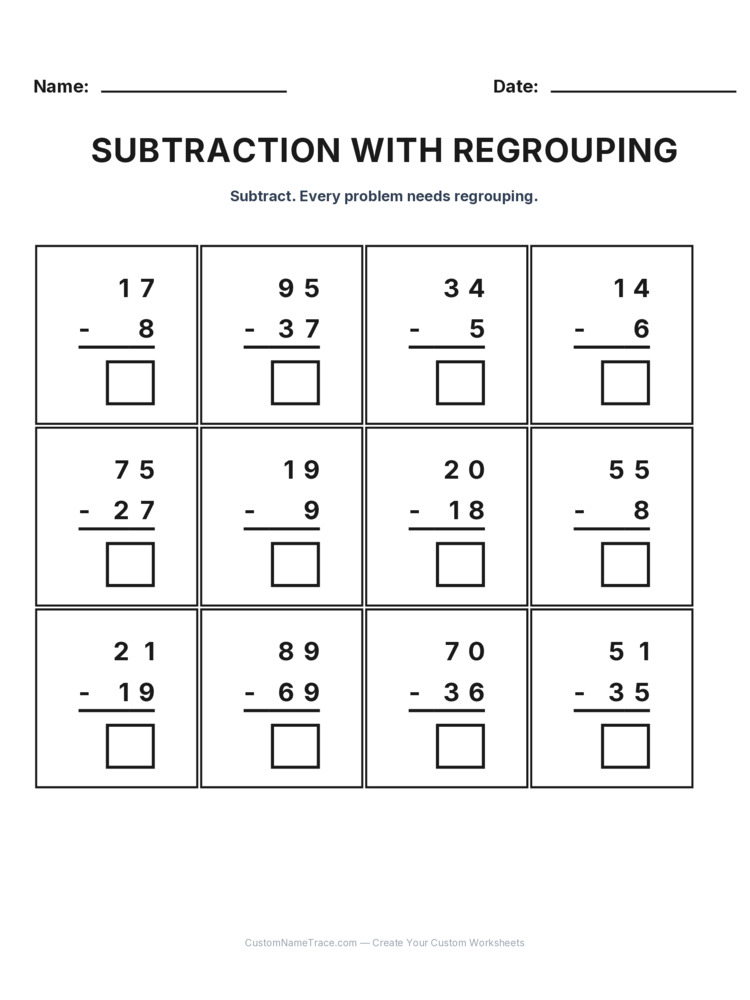
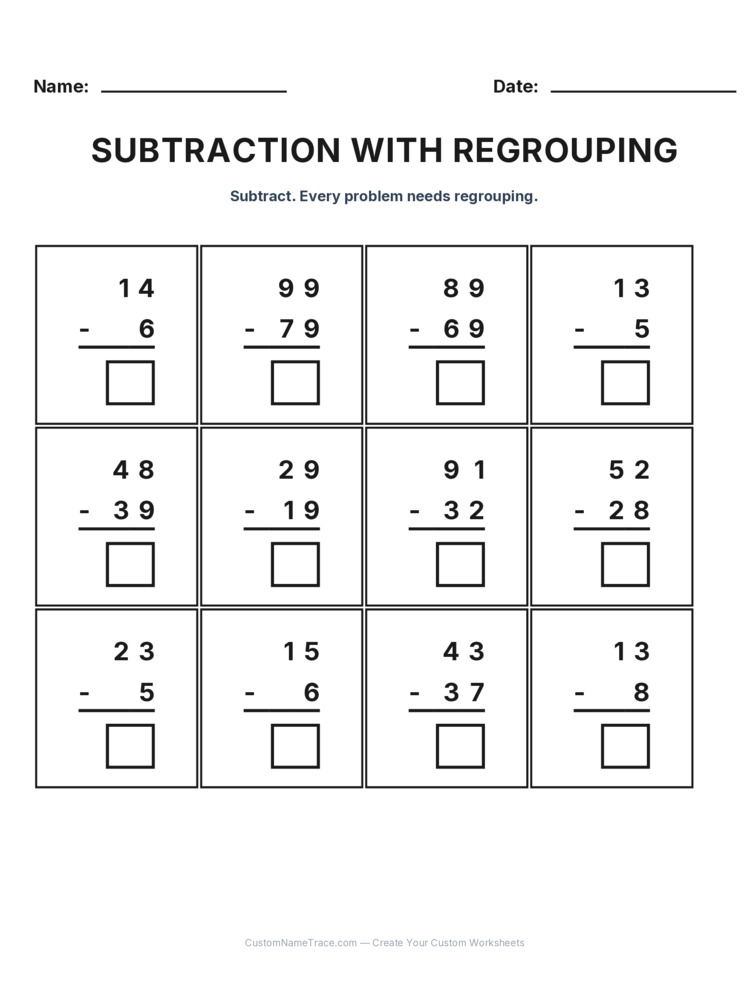
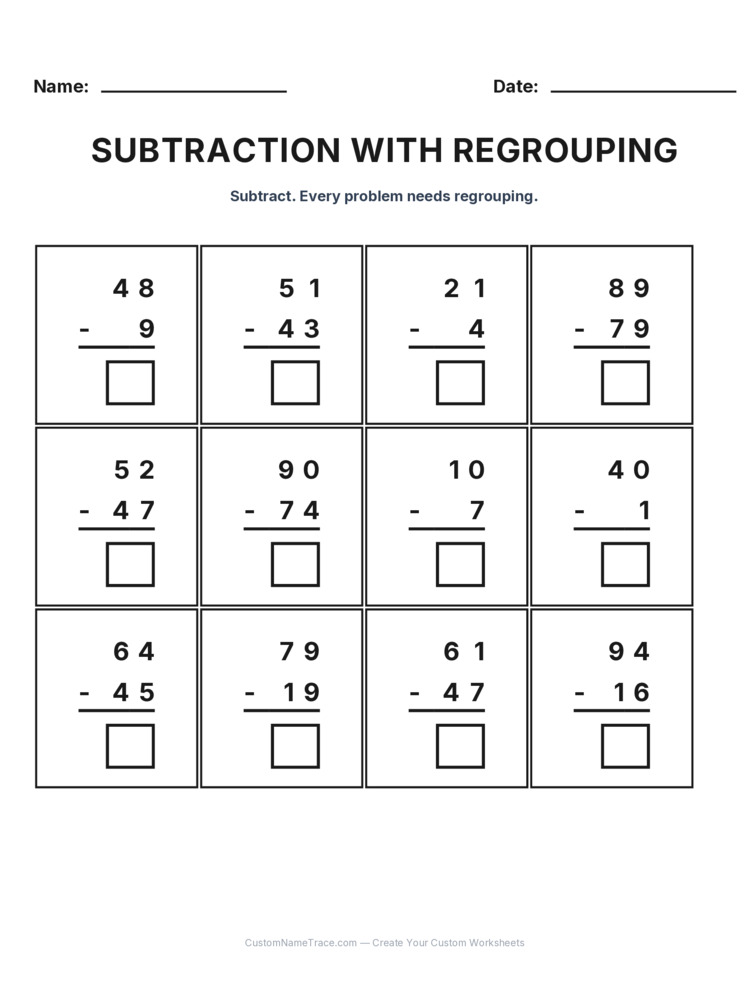
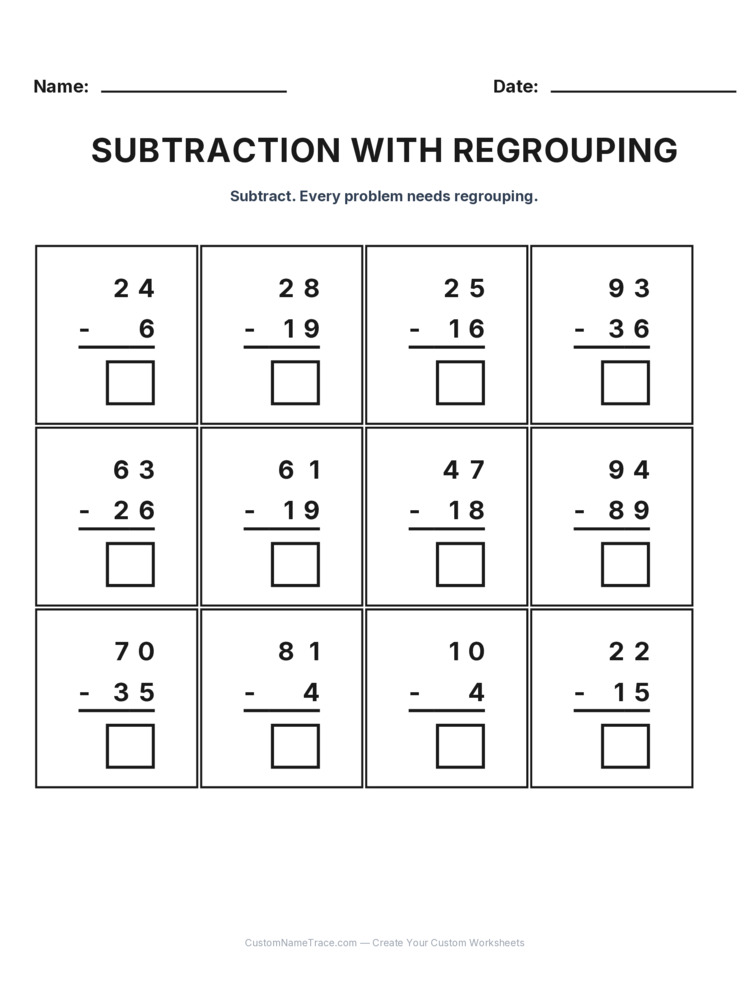
What regrouping actually is, and why every problem here needs it
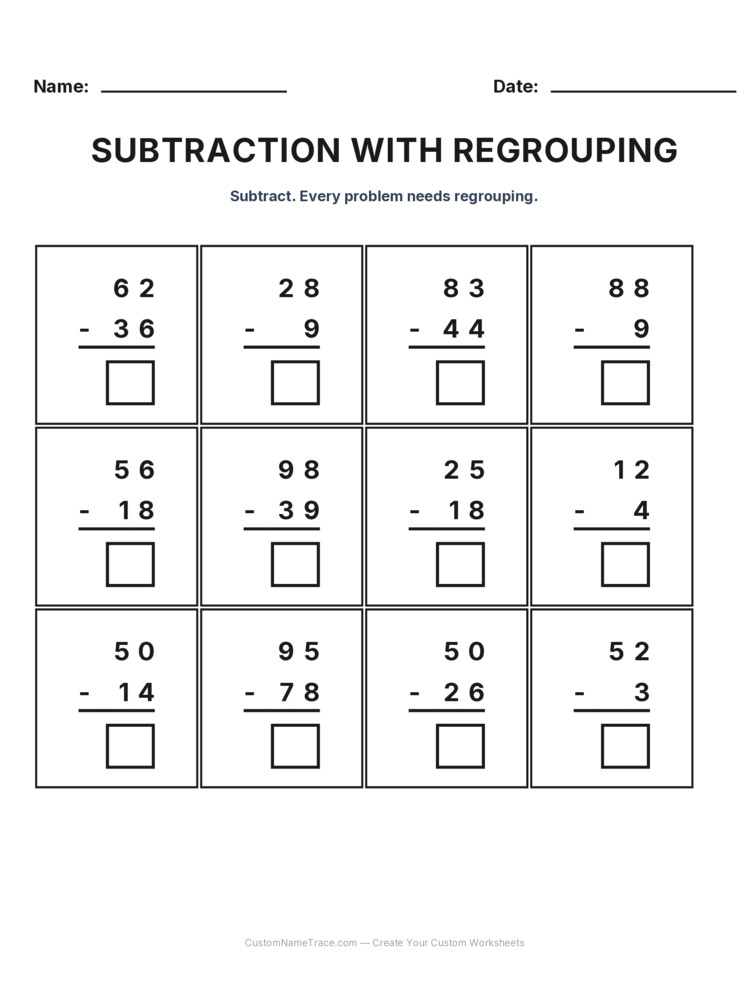
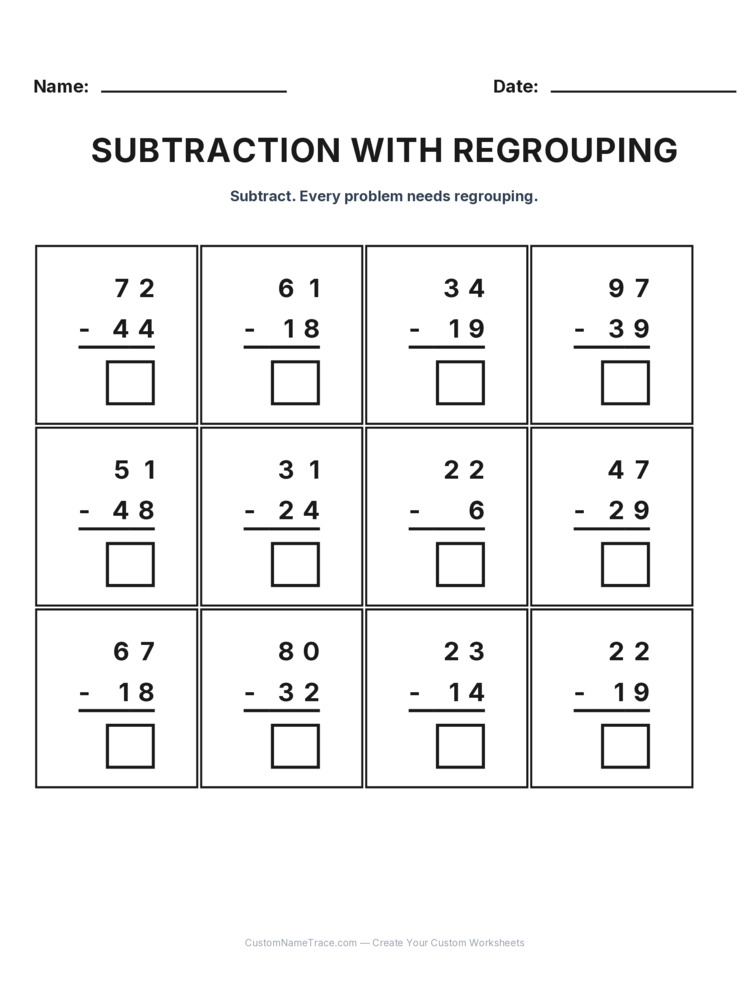
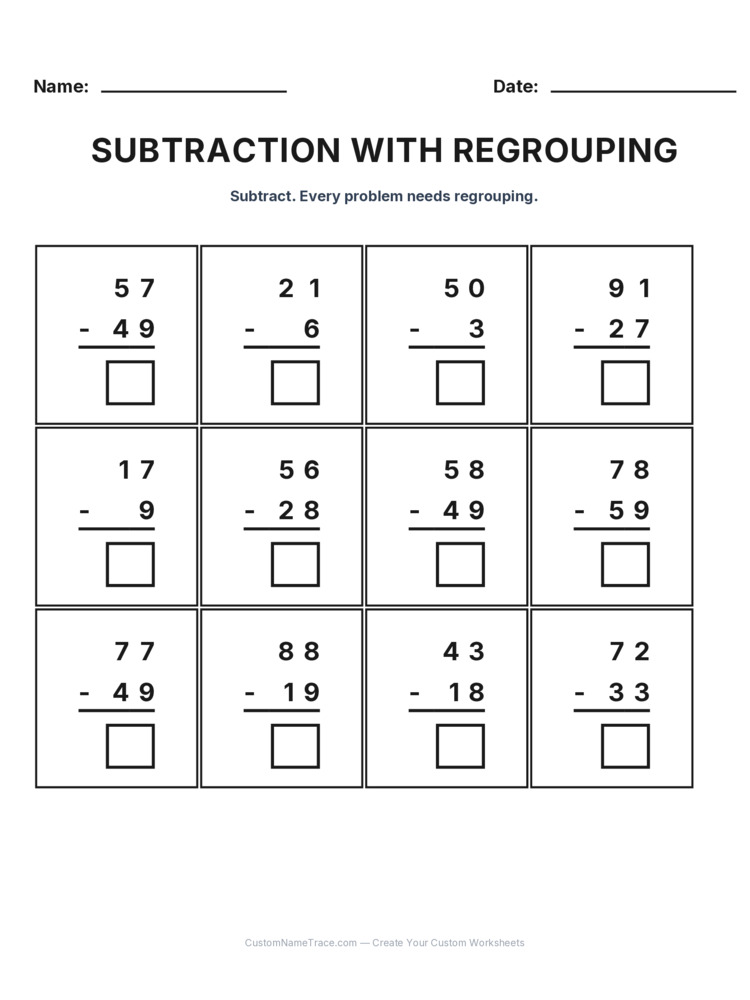
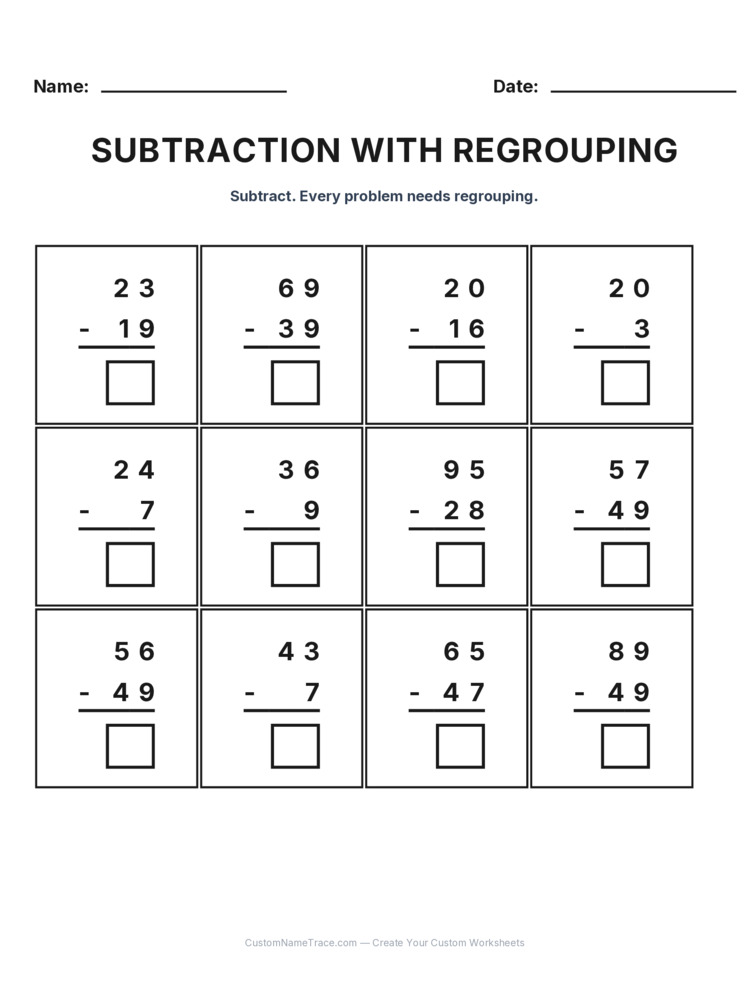
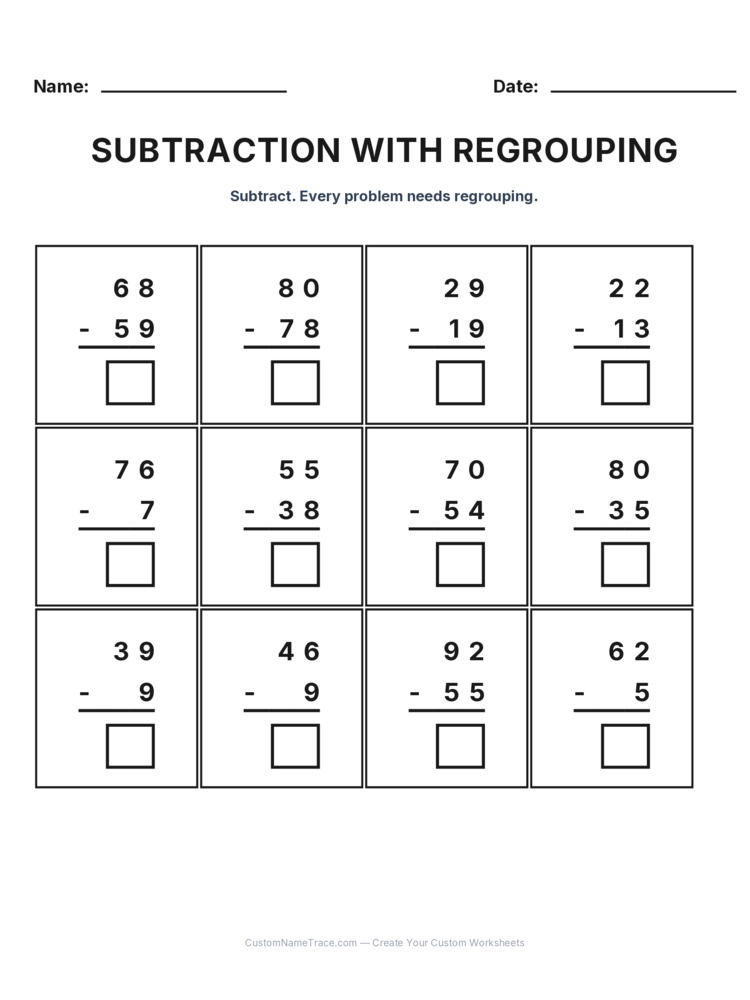
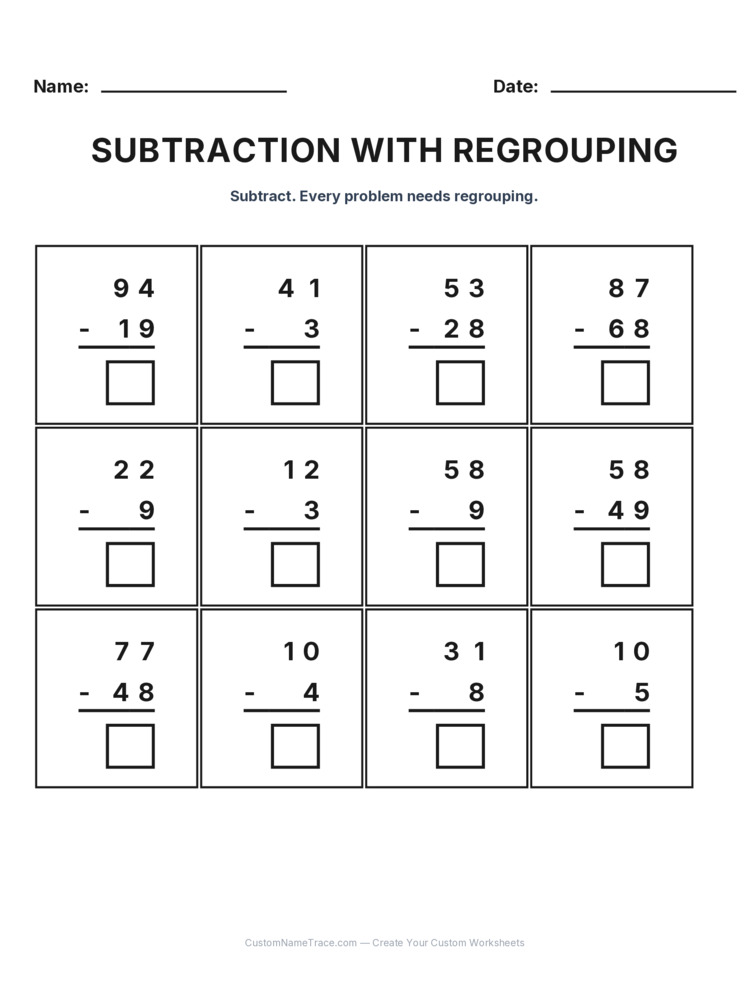
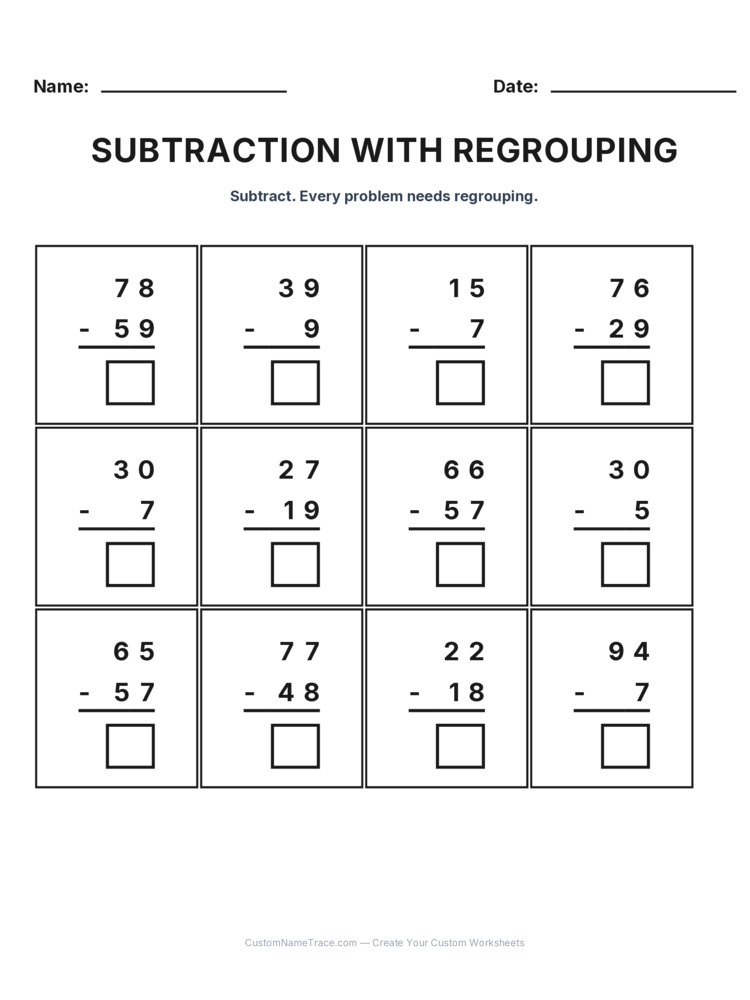
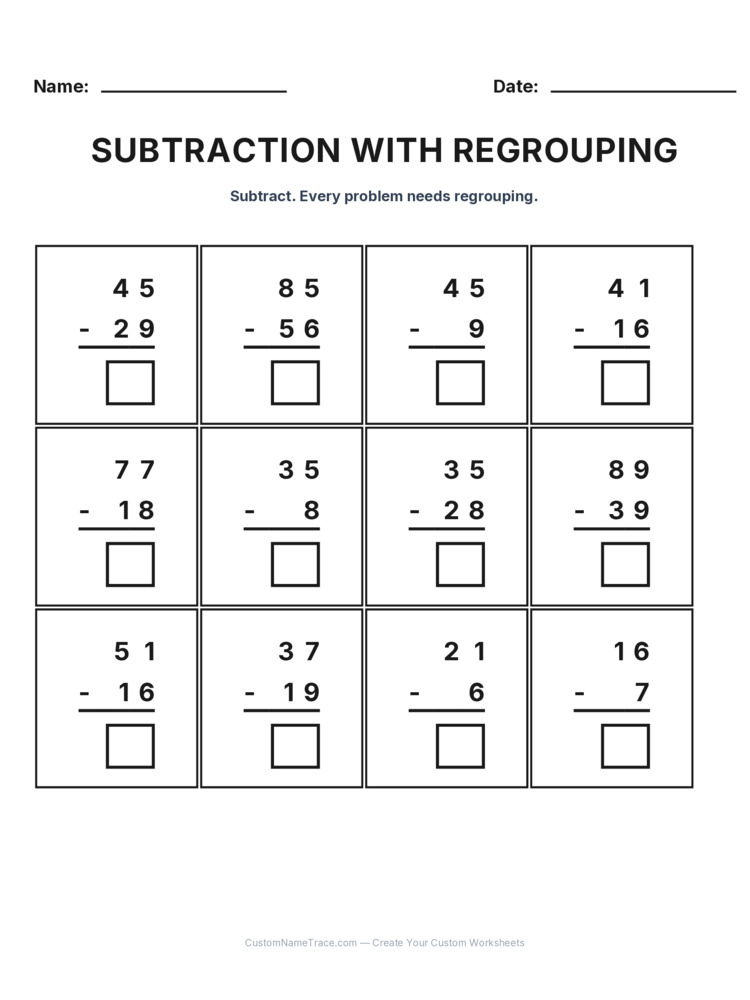
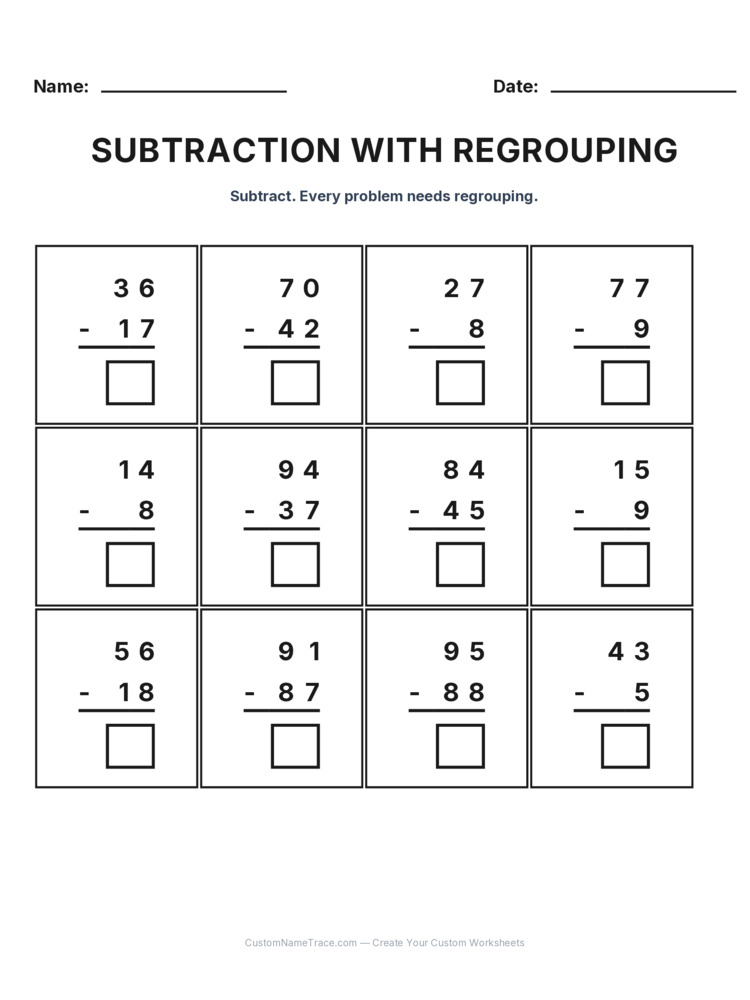
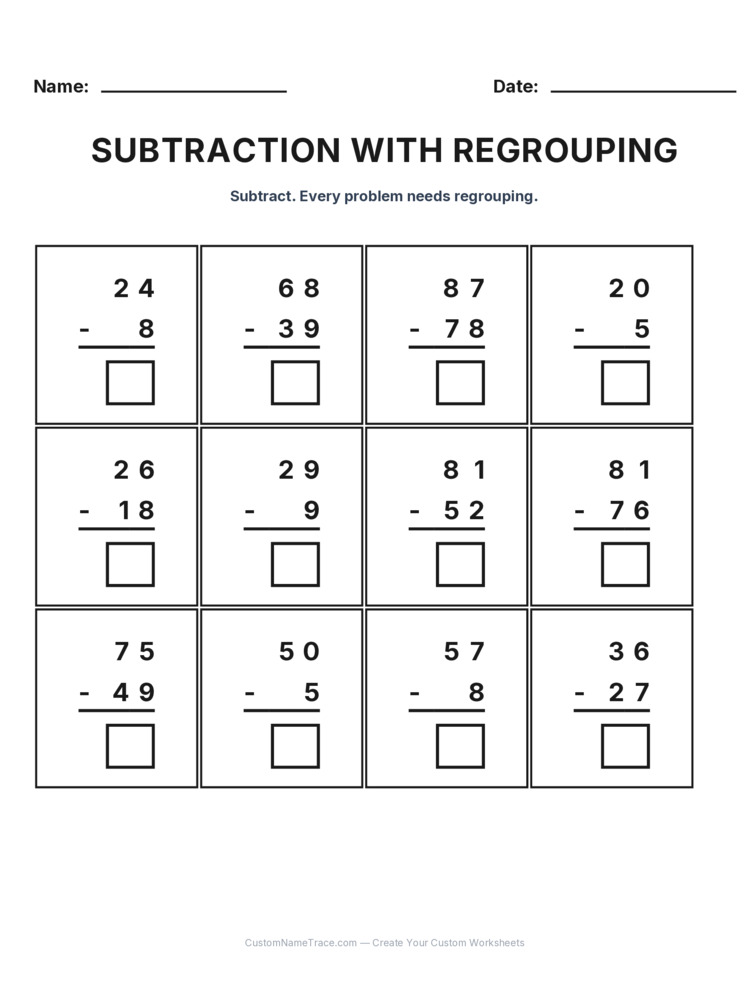
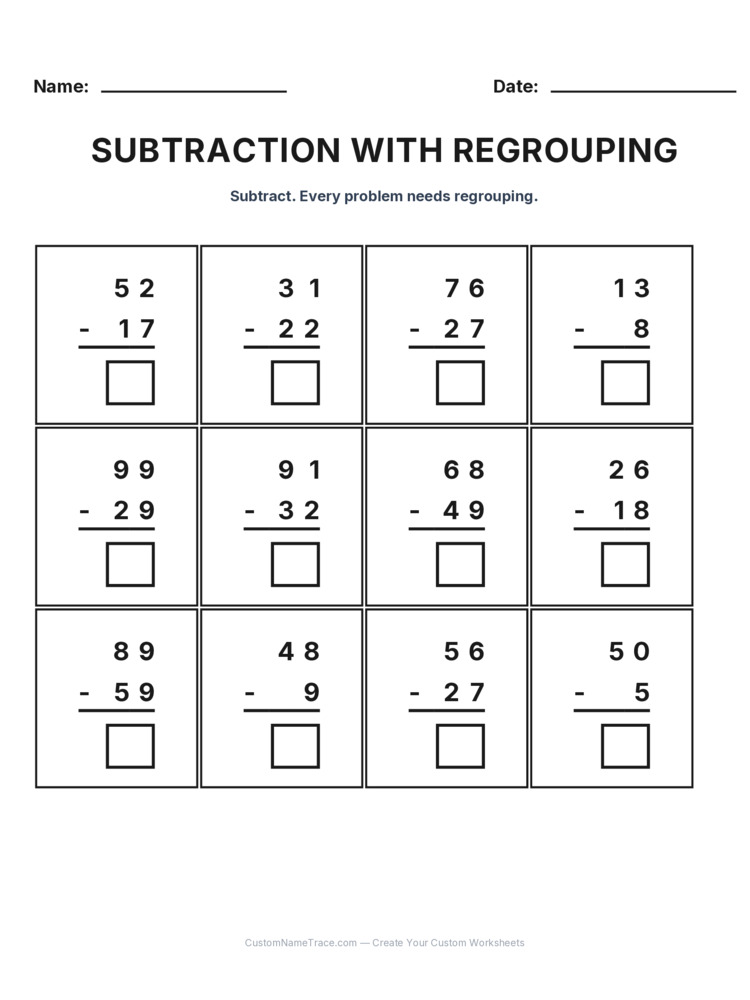
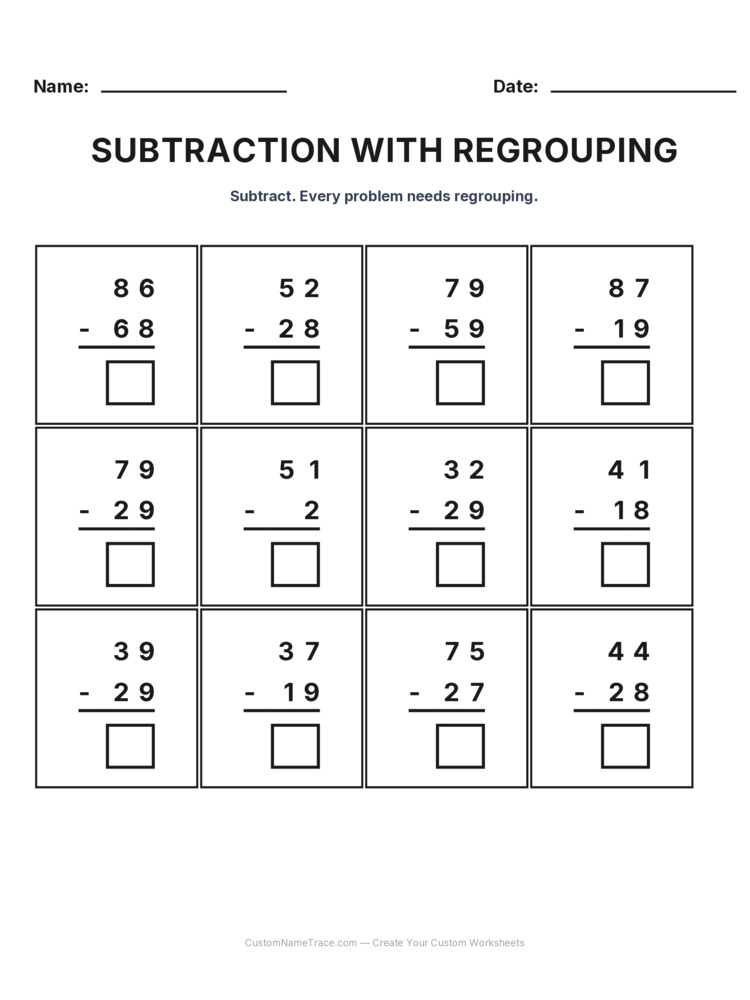
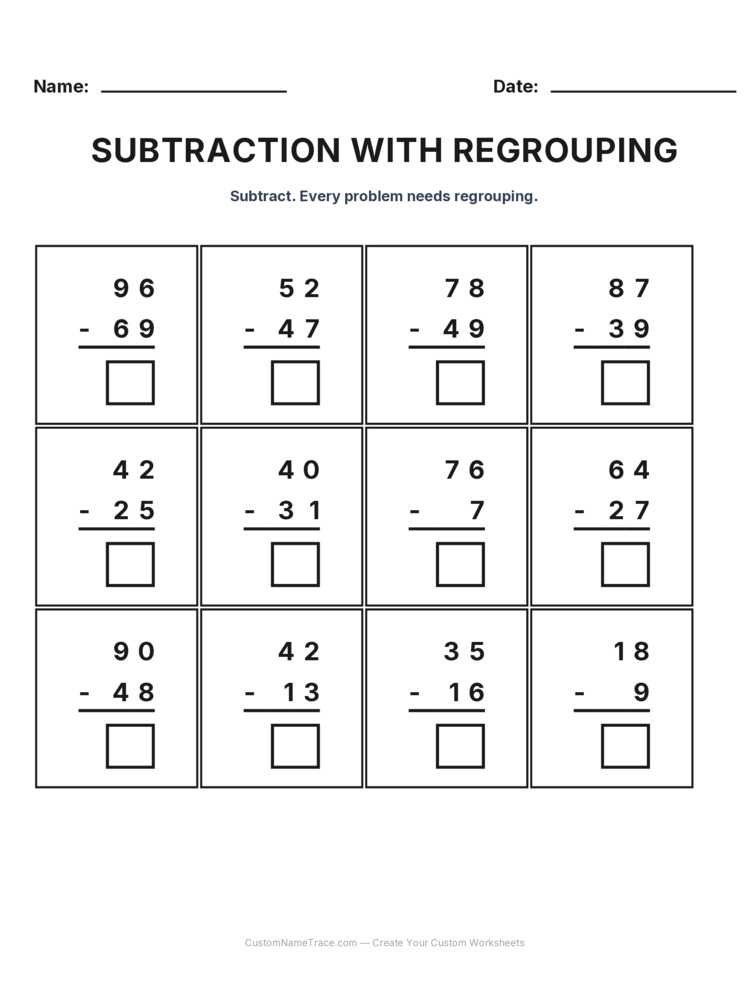
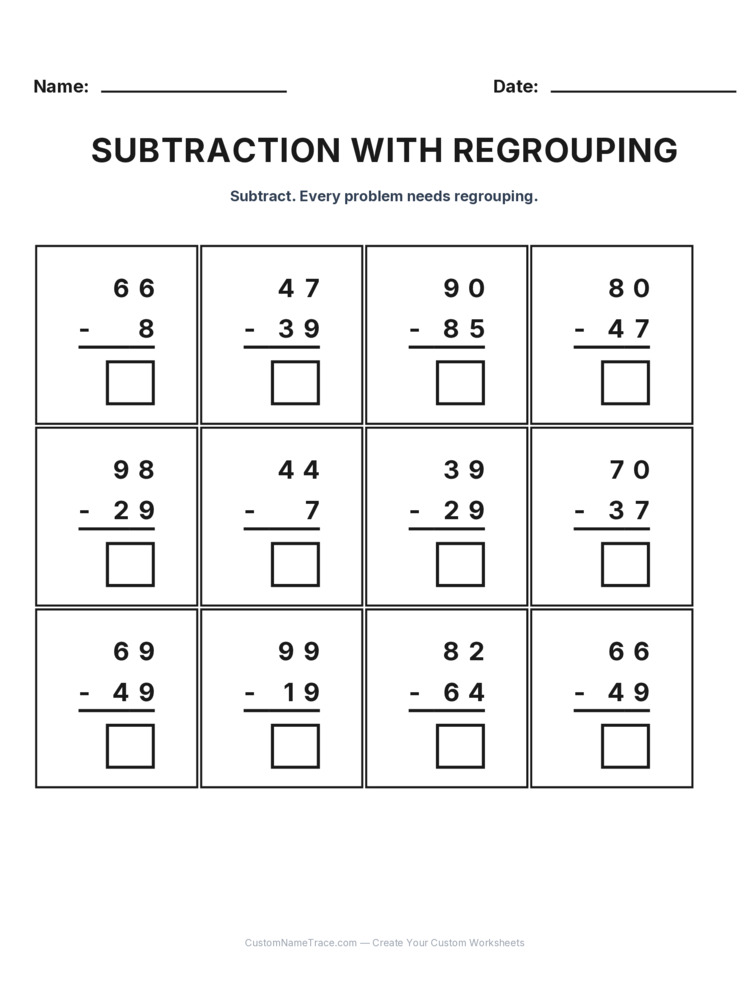
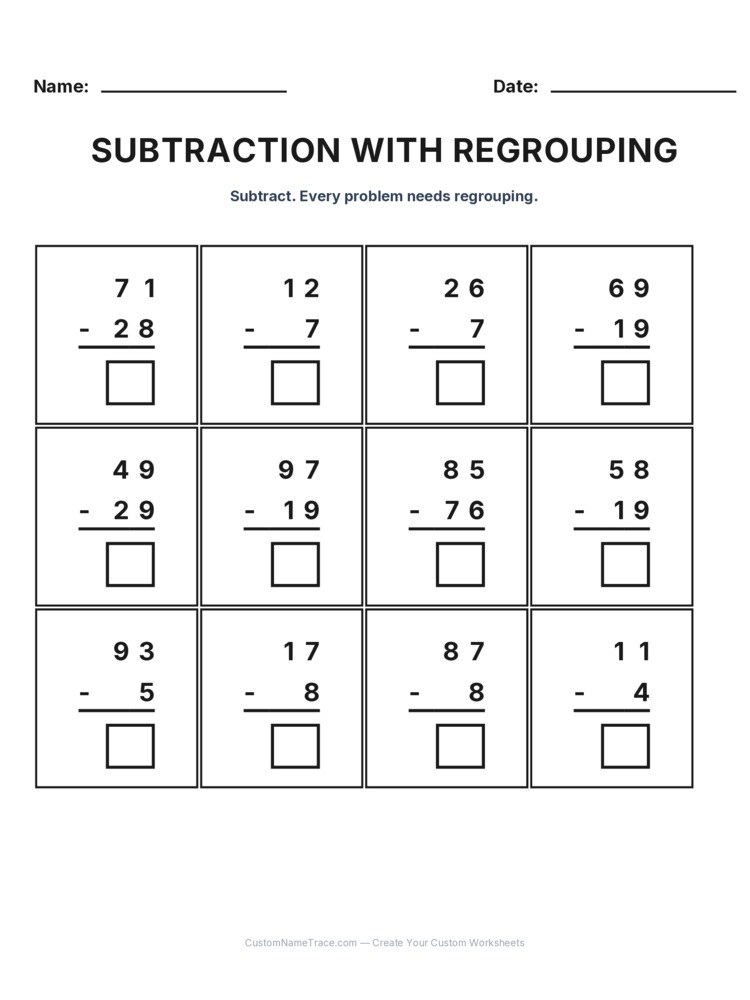
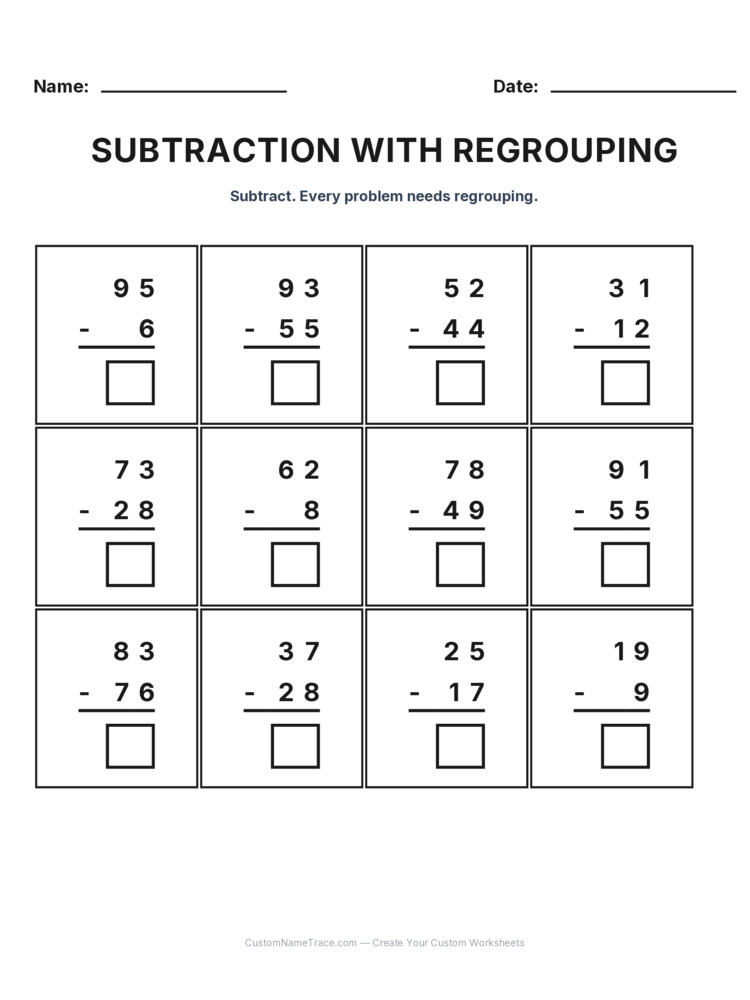
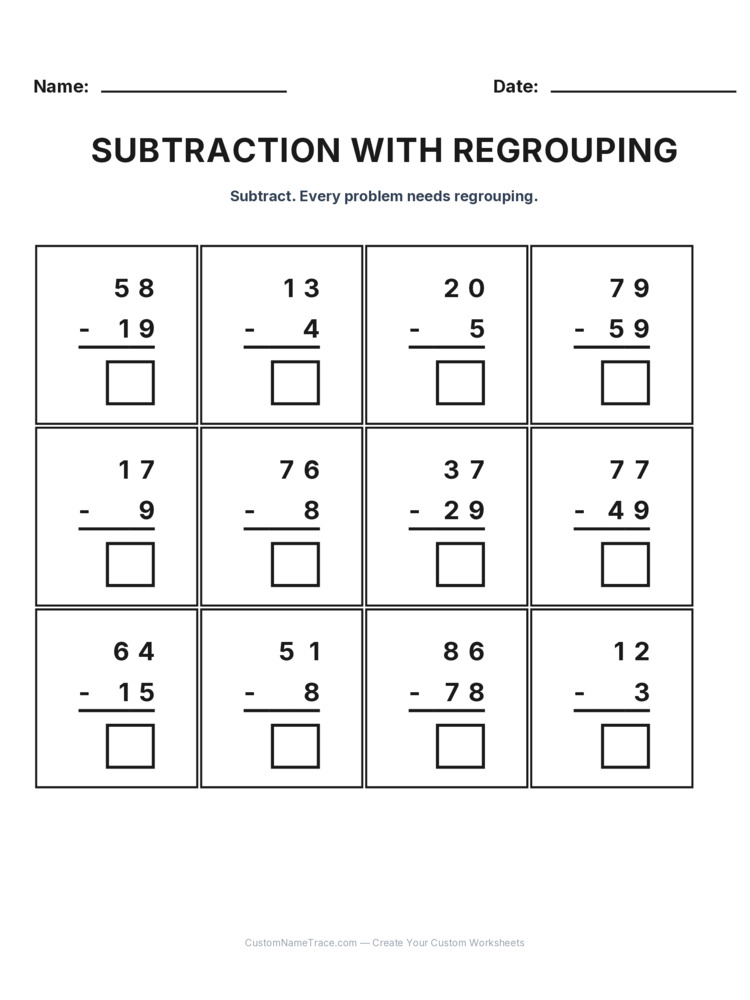
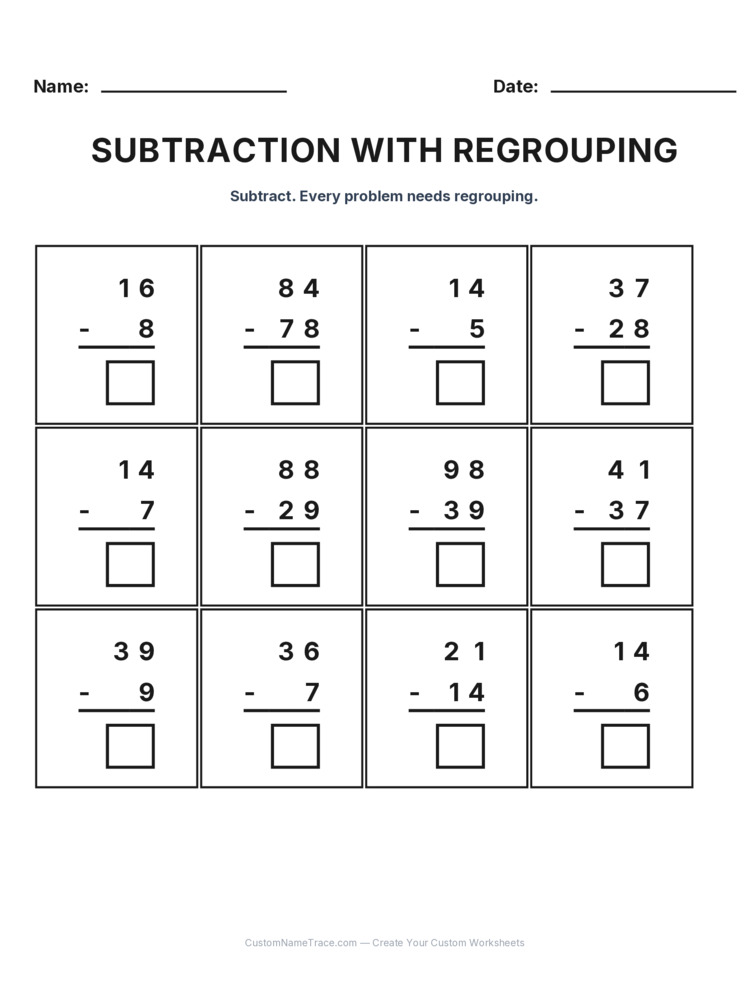
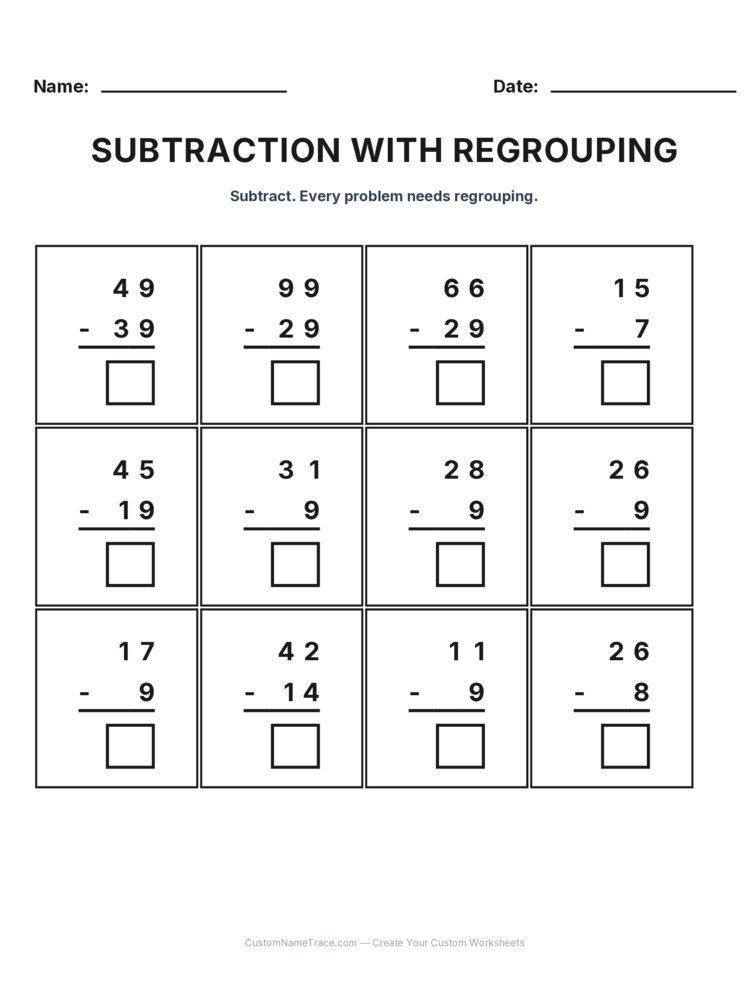
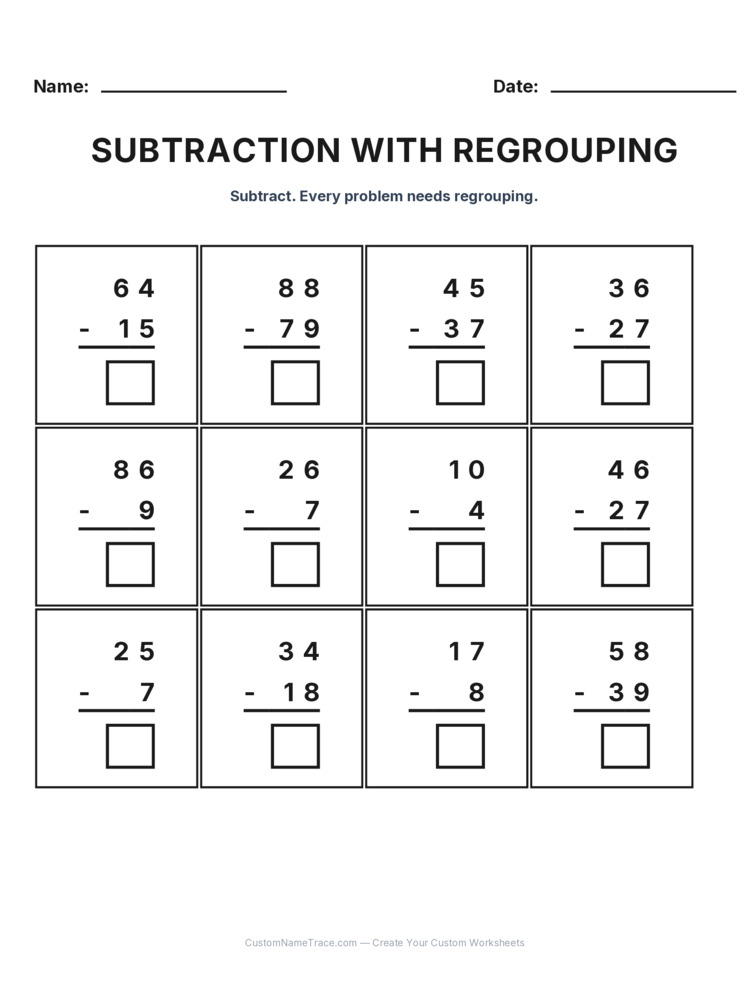
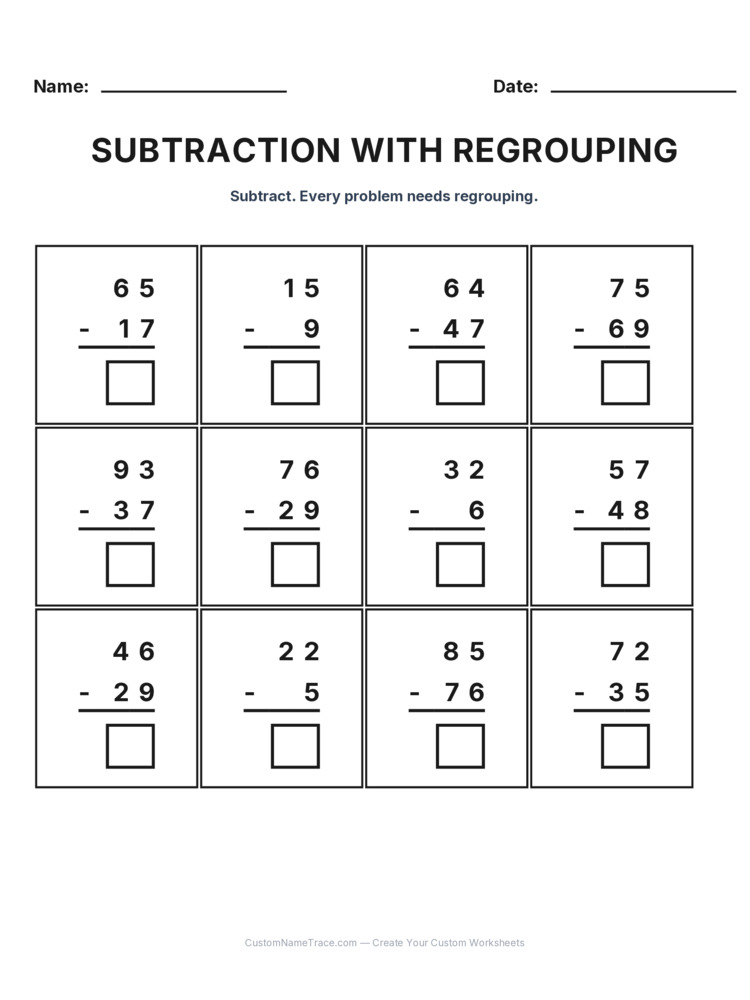
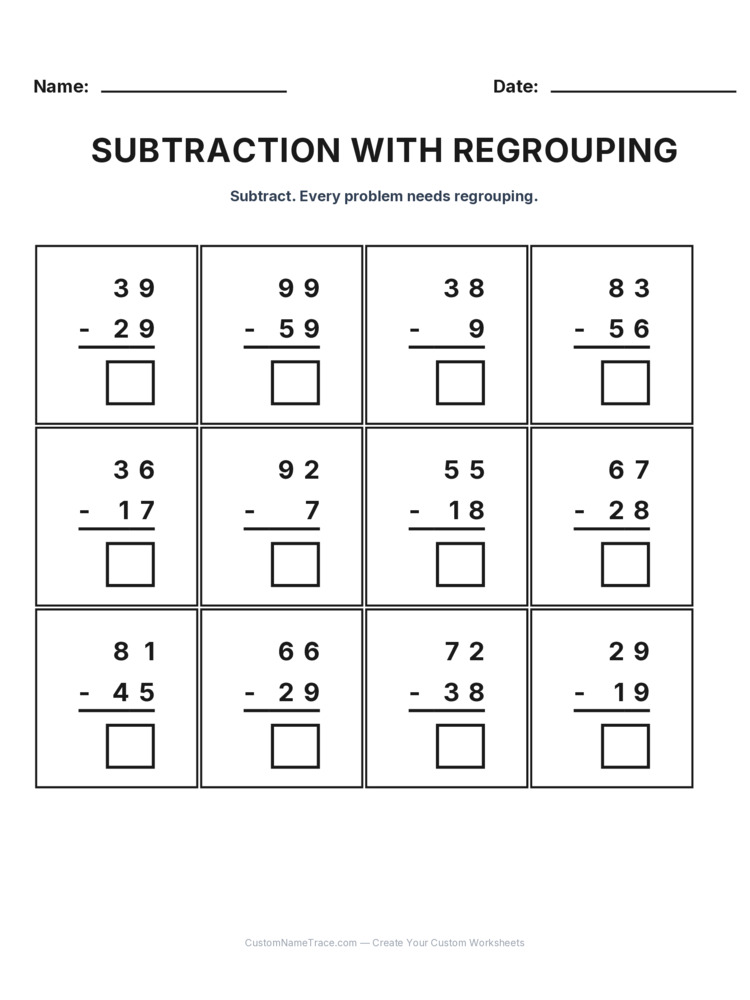
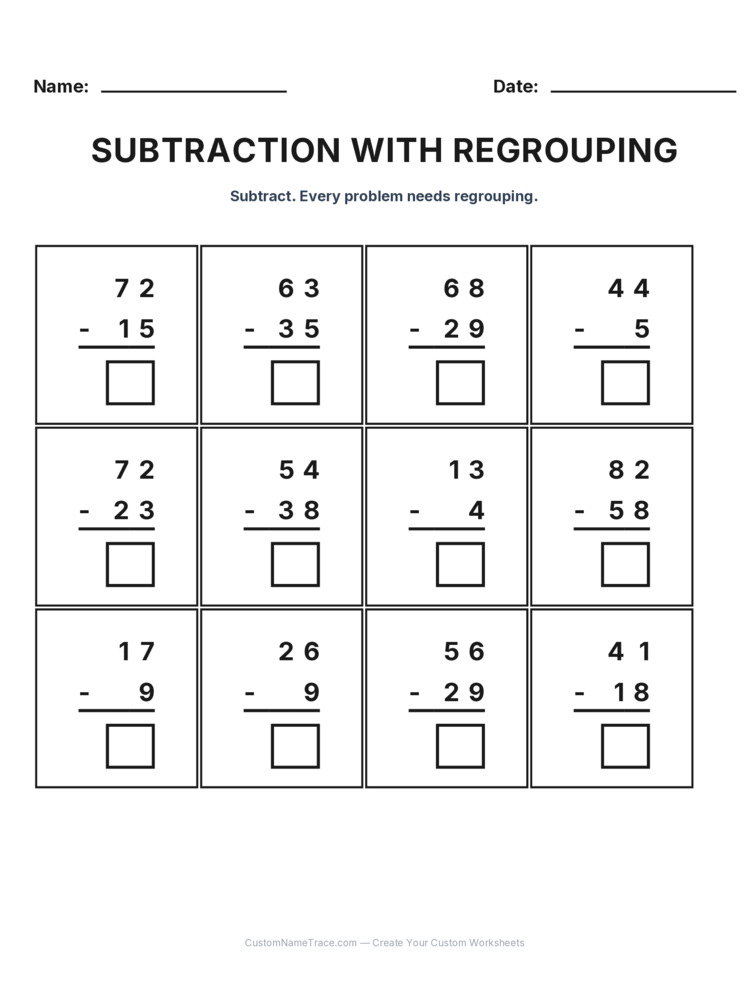
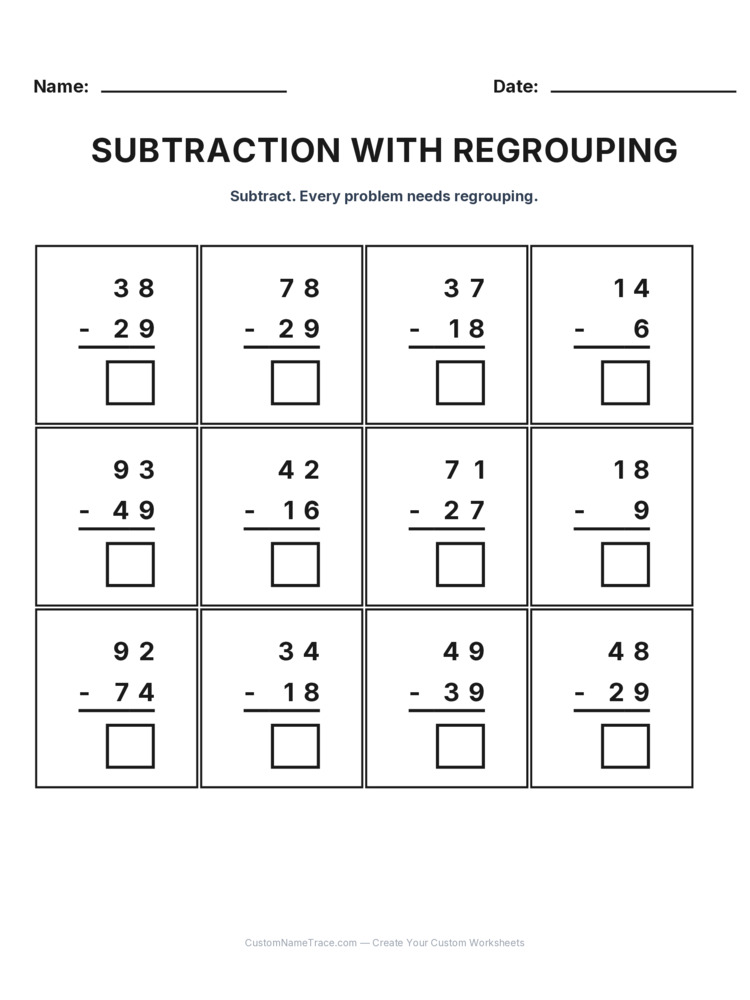
Regrouping — carrying in addition, borrowing in subtraction — happens whenever a single column's digits don't fit cleanly within that place value and have to trade across into the neighboring column. Every problem on this worksheet is deliberately built to require it at least once, rather than mixing in easier problems that don't, because regrouping is the specific new skill Grade 2 is introducing, and a page that only occasionally needs it gives far less concentrated practice at the actual sticking point.
This worksheet follows directly from this site's Subtraction Without Regrouping practice — that earlier stage builds the column-alignment habit this one assumes is already solid, so a child arriving here should already be comfortable with the format itself and ready to add this one new step on top of it.
The mechanics, one column at a time
For addition, when a column's digits add to 10 or more, a 1 gets carried into the next column to the left, and only the remainder stays in the current column — 7 + 8 = 15 means writing the 5 and carrying the 1. For subtraction, when the top digit in a column is smaller than the digit being subtracted, a 1 gets borrowed from the next column to the left, turning that column's digit into a full ten to subtract from. Both moves follow the identical underlying logic in opposite directions: trading a unit from one place value into ten units of the place value to its right, or the reverse.
Working through a single problem slowly, narrating each column's decision out loud ("7 plus 8 is 15, write the 5, carry the 1"), makes this trading mechanism concrete rather than a memorized rule applied without understanding why it works.
The single most common mistake, and how to catch it
Forgetting to actually add the carried digit into the next column — or forgetting that a borrowed column has been reduced by one — is by far the most frequent error at this stage, and it typically produces an answer that's off by a clean, round amount (often exactly 10) rather than a random-looking wrong number. If a wrong answer is off by 10 or a multiple of it, checking specifically whether a carry or borrow was tracked correctly usually finds the problem immediately, faster than reworking the whole calculation from scratch.
Writing the carried or borrowed digit small and directly above the column it affects, rather than trying to hold it in memory while working the next column, is a simple habit that prevents most of these mistakes before they happen.
What genuine mastery looks like at Grade 2
A child who consistently tracks carries and borrows correctly across a full multi-digit problem, even at a careful, unhurried pace, has mastered what this worksheet is built to teach — regrouping is a genuinely demanding procedure to execute cleanly, and reliable accuracy matters far more at this stage than speed. Speed develops naturally with continued practice once the underlying trading logic is solid; pushing for it before then tends to produce careless tracking errors instead.
This skill builds directly on the base-ten understanding this site's Place Value worksheets practice — a child who genuinely understands that a ten is ten individual ones bundled together has real conceptual footing for why carrying and borrowing work the way they do, rather than following the steps as an arbitrary procedure.
Using this worksheet effectively
For a child new to regrouping, working through the first problem together at a deliberately slow pace, checking each column's decision before moving to the next, builds the procedure correctly from the start — a child who practices a wrong version of the steps repeatedly ends up needing to unlearn it later, which takes longer than getting it right from the beginning. Once a child solves several problems independently and correctly, that's a genuine sign of mastery, regardless of how long each one takes.
Every numbered variant generates a fresh set of problems that all genuinely require regrouping at Grade 2's digit range, so repeat practice always means real, continued practice with the actual skill. Every worksheet downloads as a free, print-ready PDF with no account required.