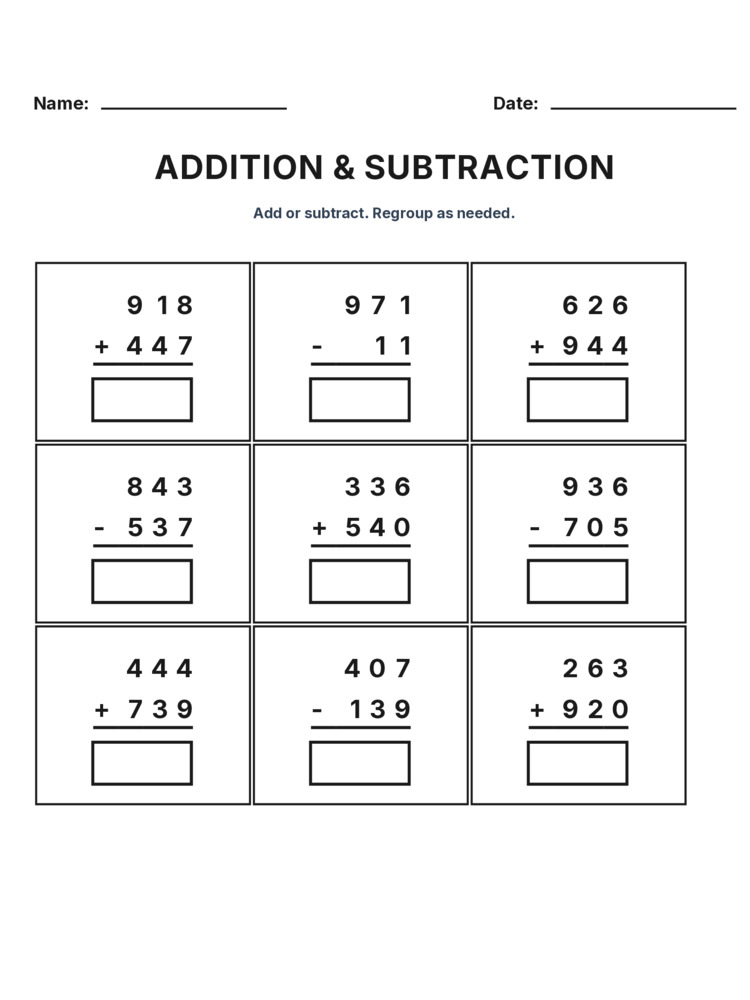
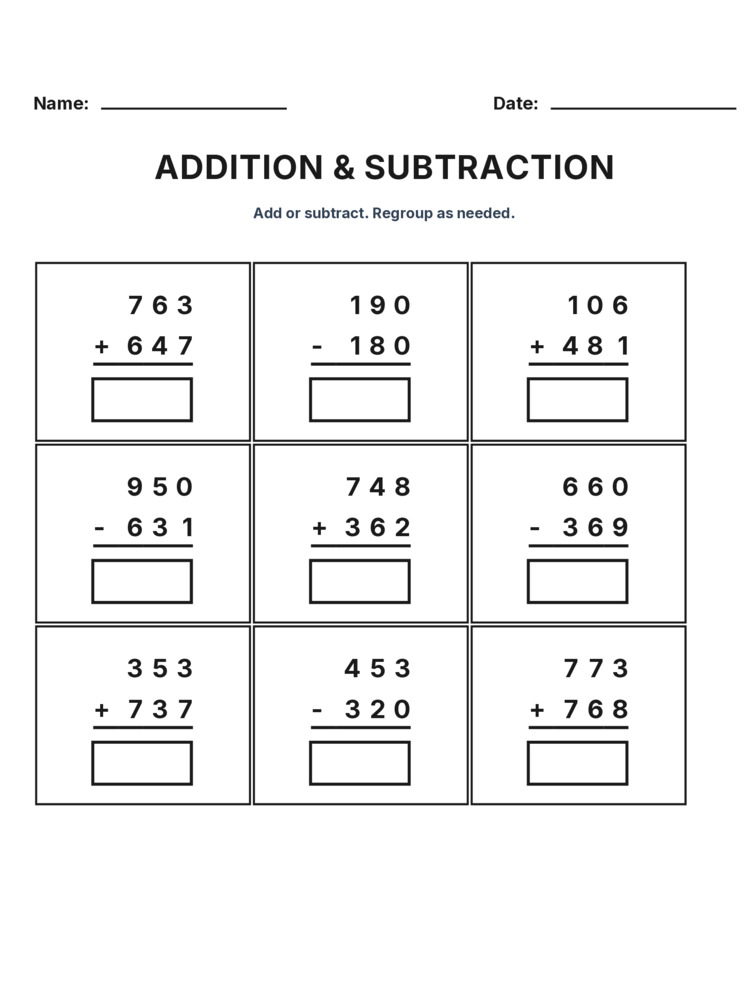
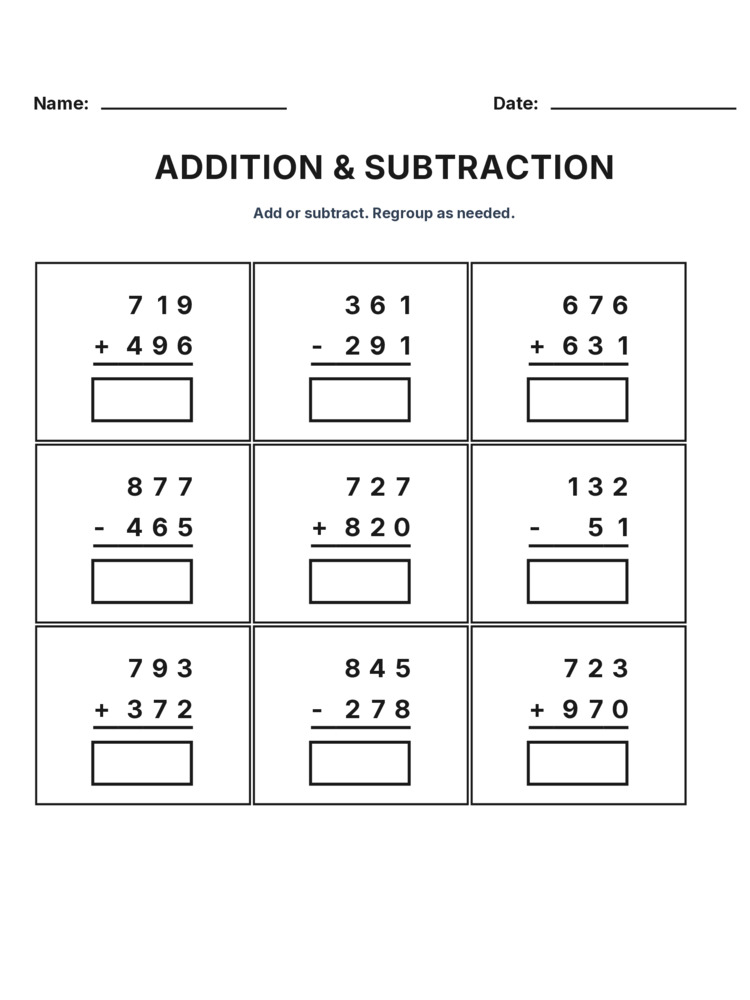
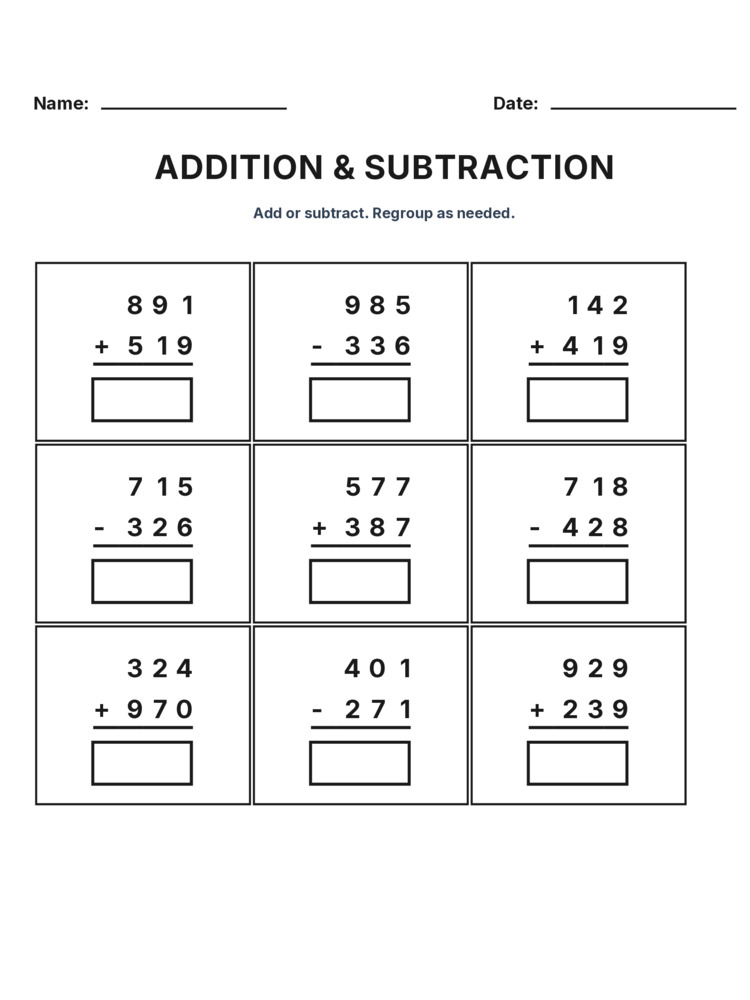
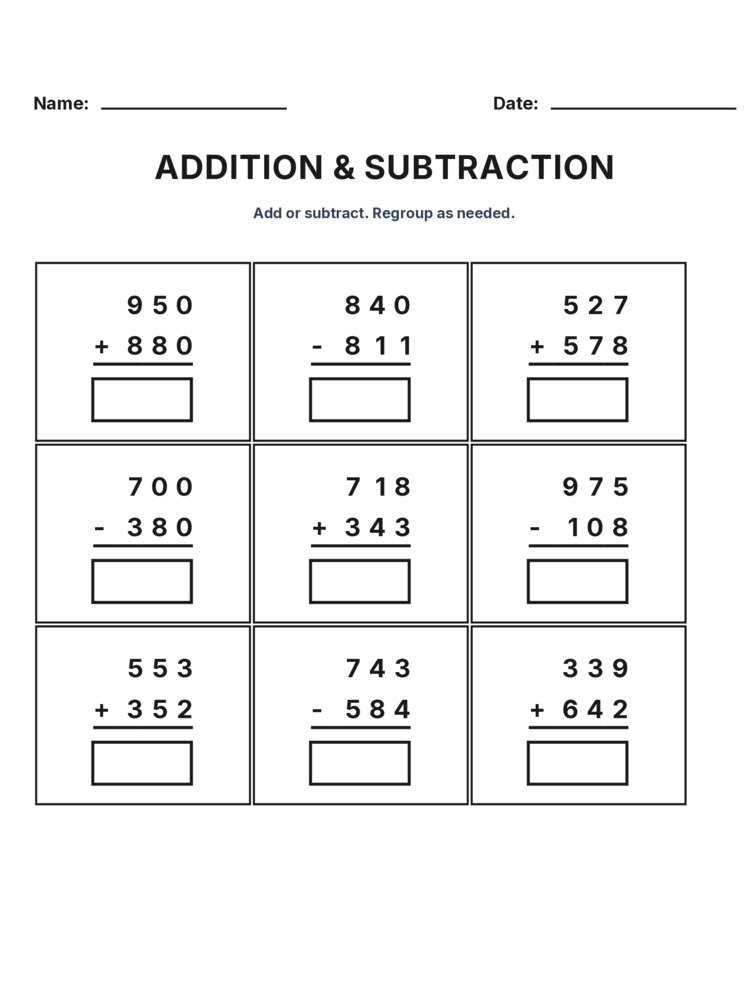
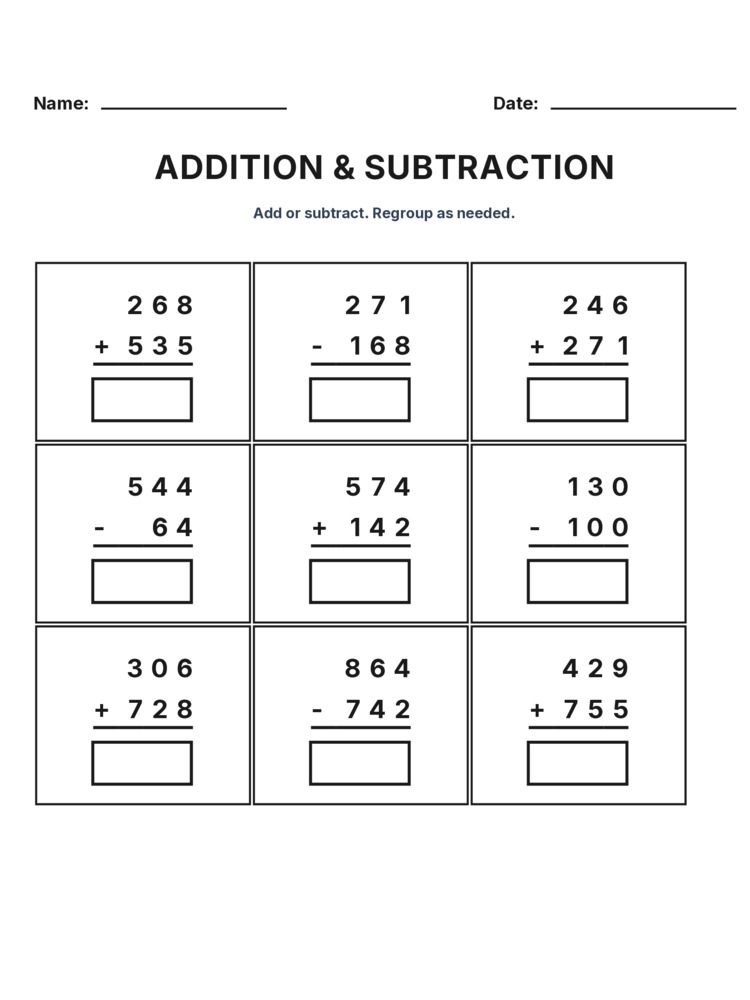
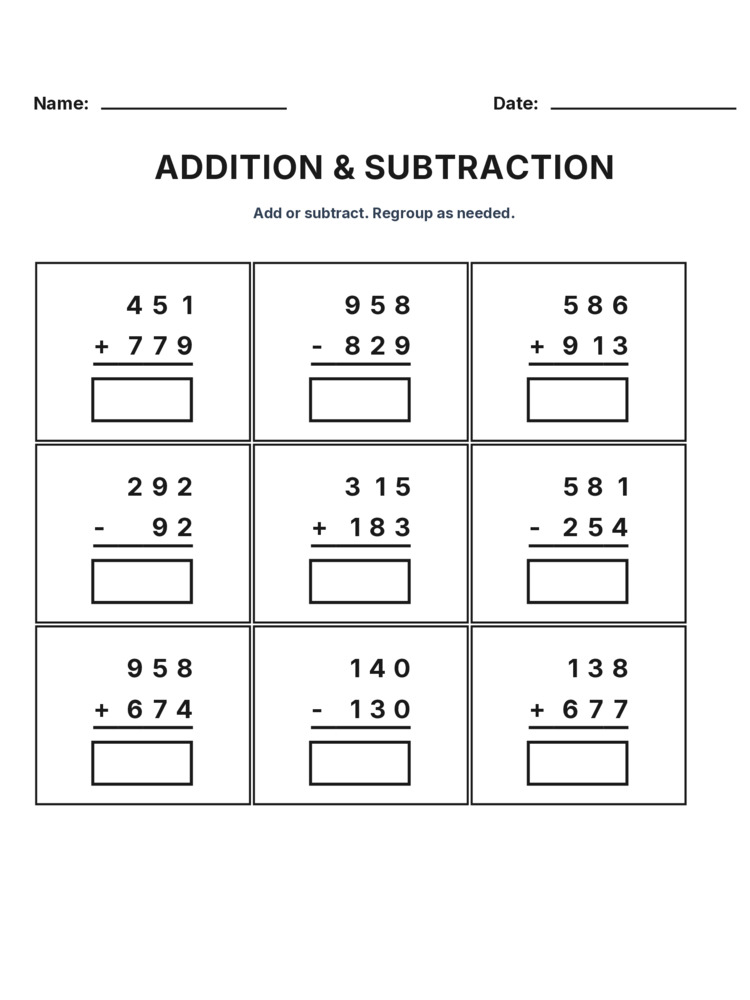
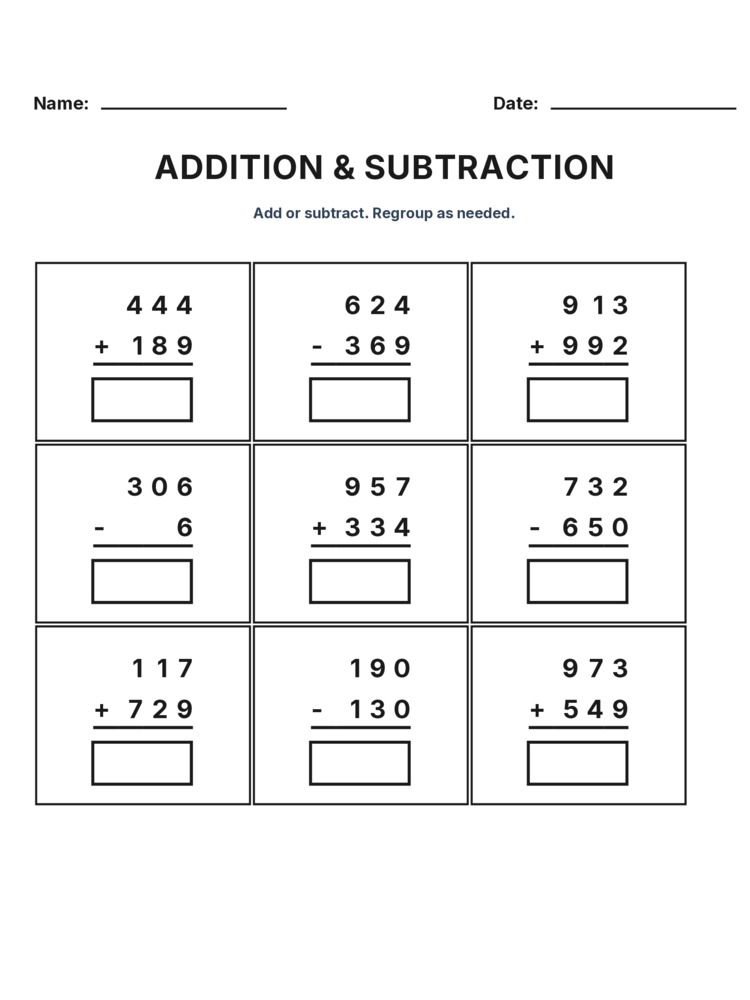
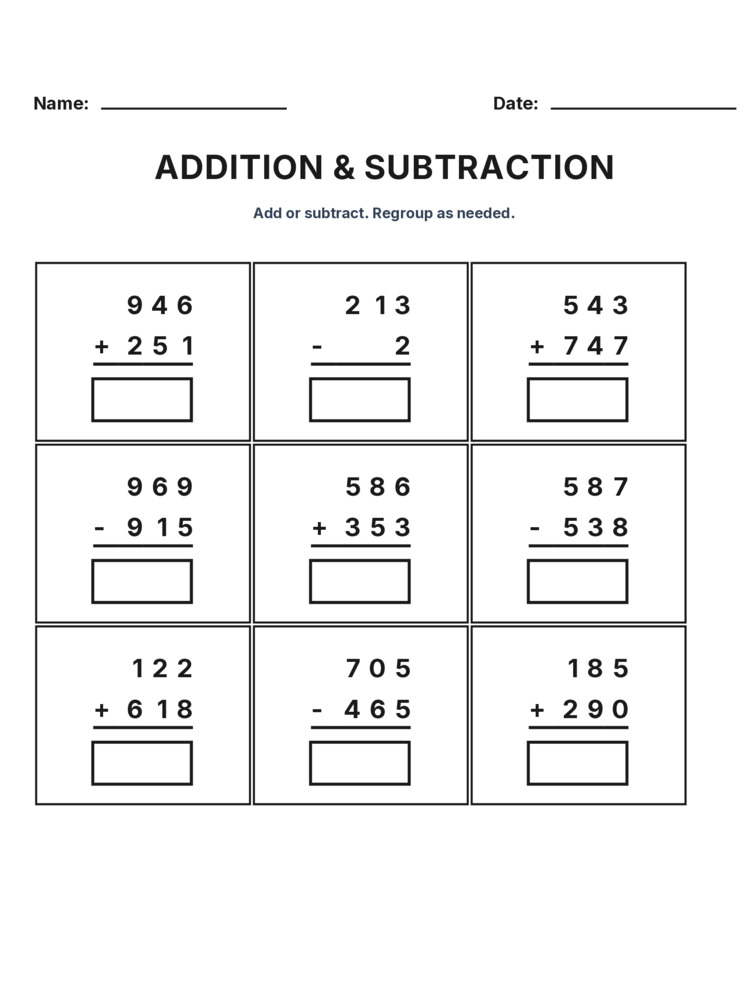
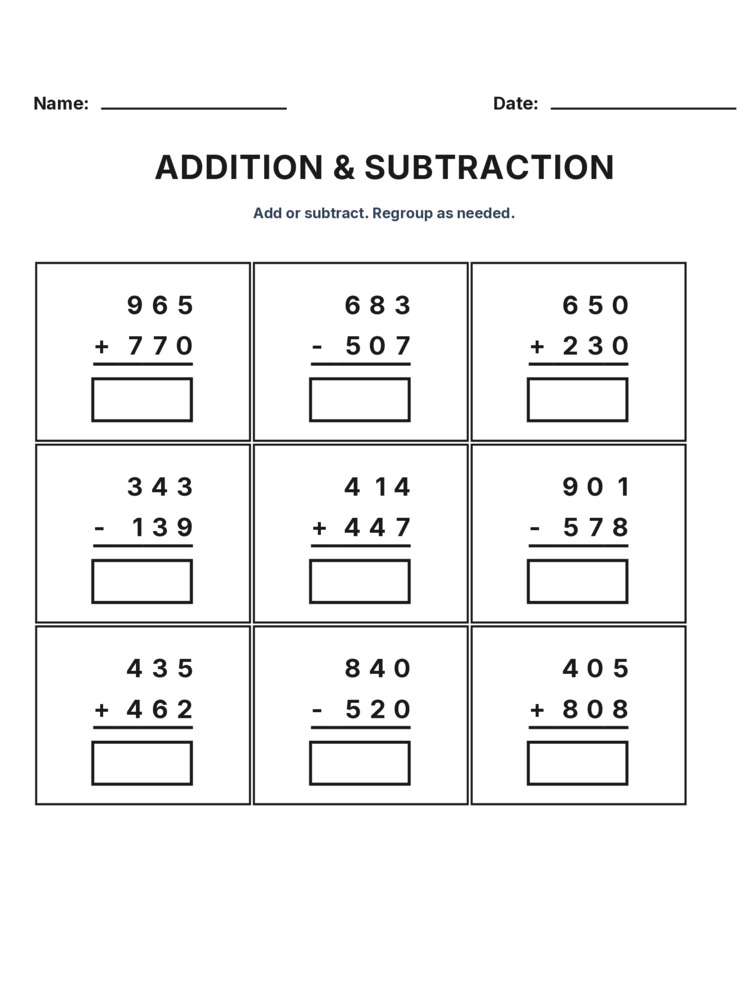
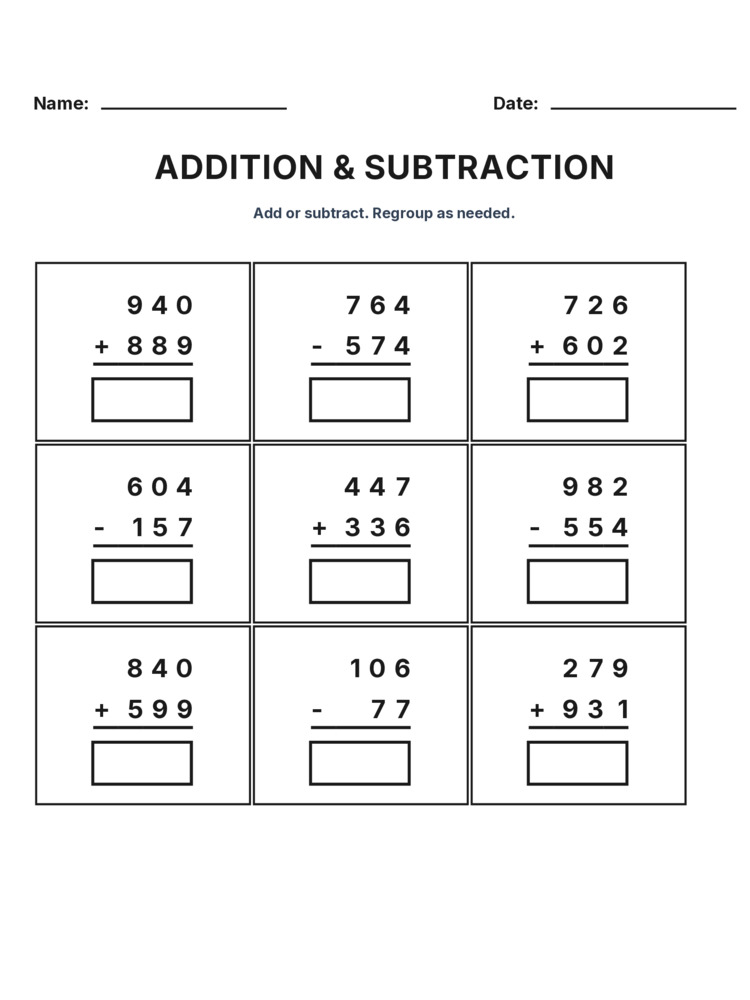
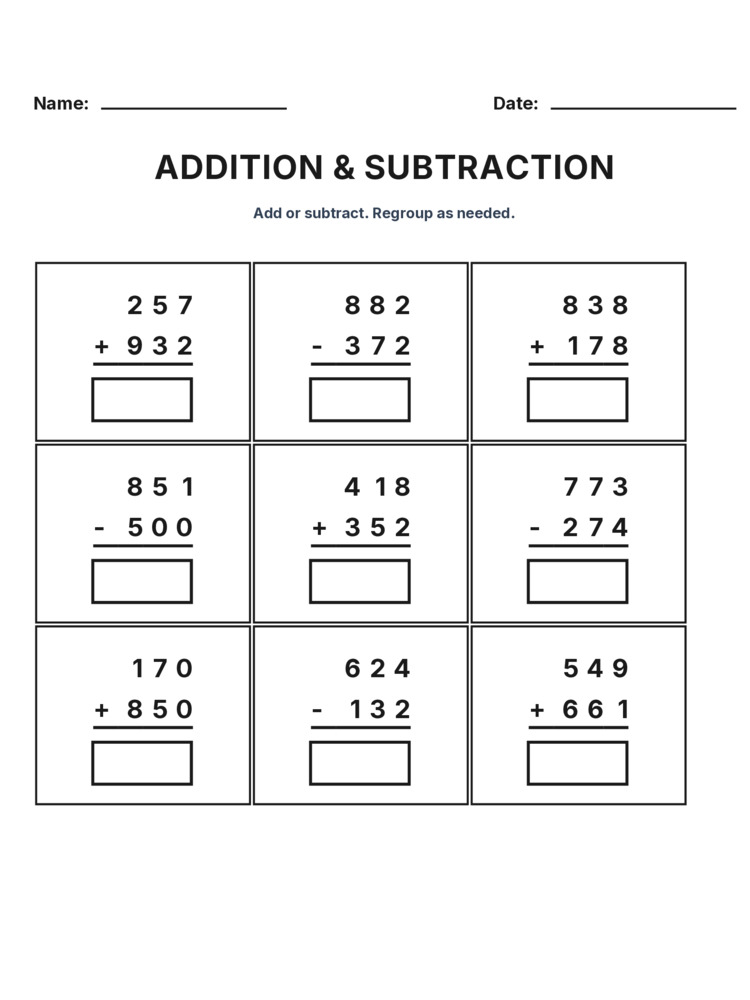
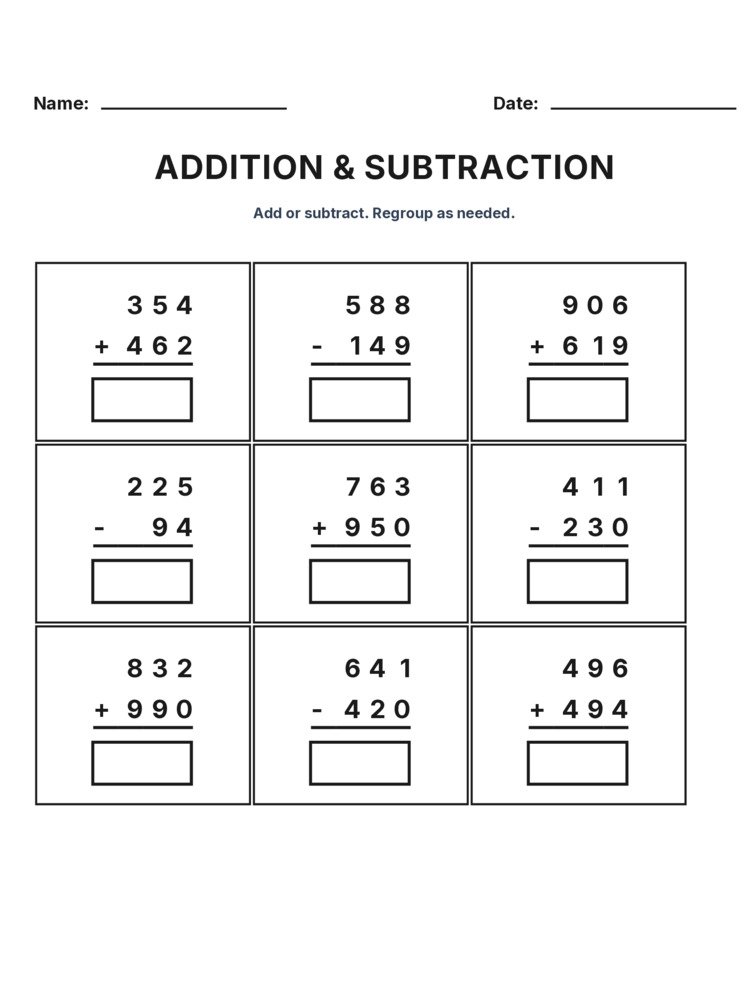
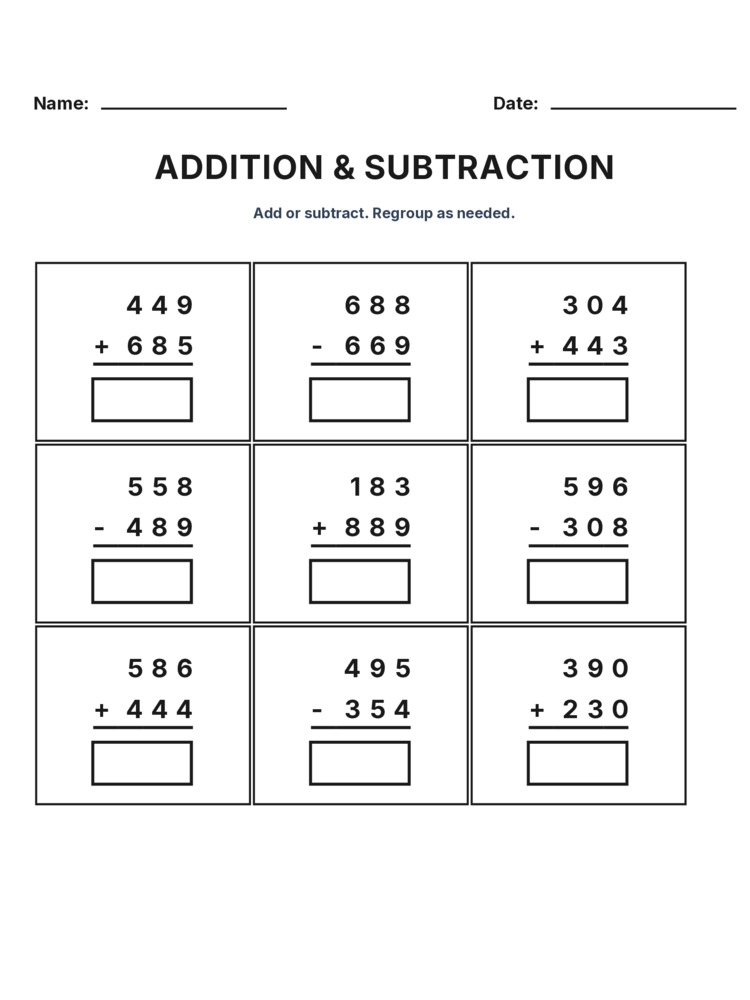
Addition & Subtraction at the Grade 3 level
Every worksheet on this page keeps its number range matched specifically to Grade 3 — not a rounded-up or rounded-down guess, but the actual range that grade's math curriculum covers for Addition & Subtraction. That match is the entire point of organizing this section by grade first: a worksheet that's too easy doesn't build anything new, and one that's too hard just teaches a child to guess rather than compute. The range used here comes from the Common Core K-5 progression documents, cross-checked against what established worksheet publishers actually put in front of students at this exact grade.
What's below, and how it's organized
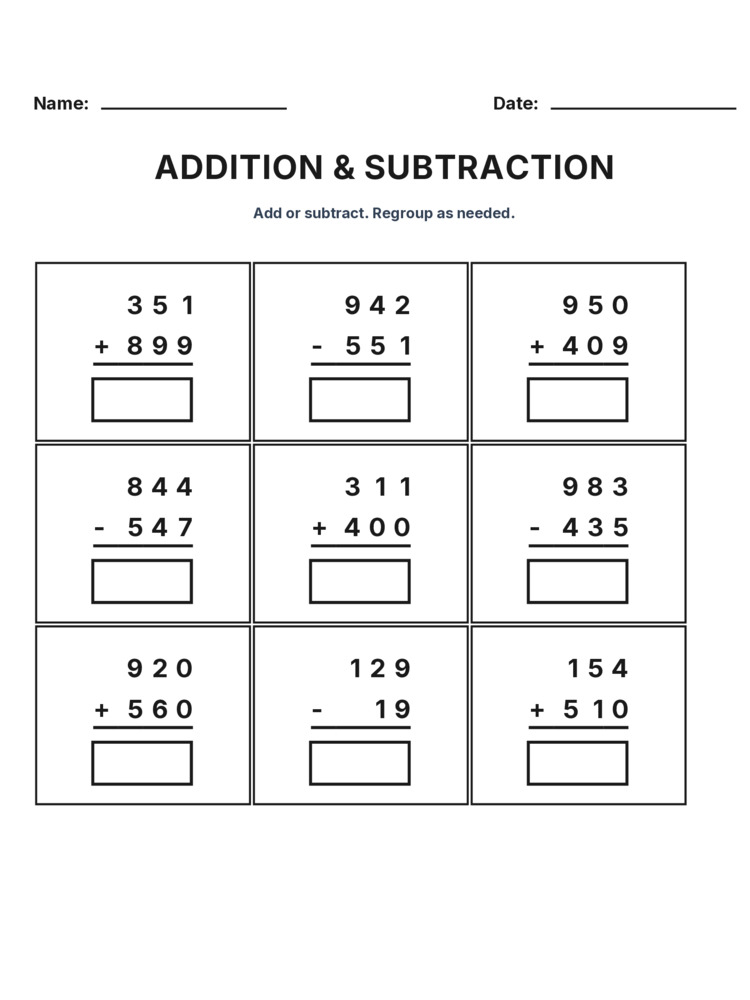
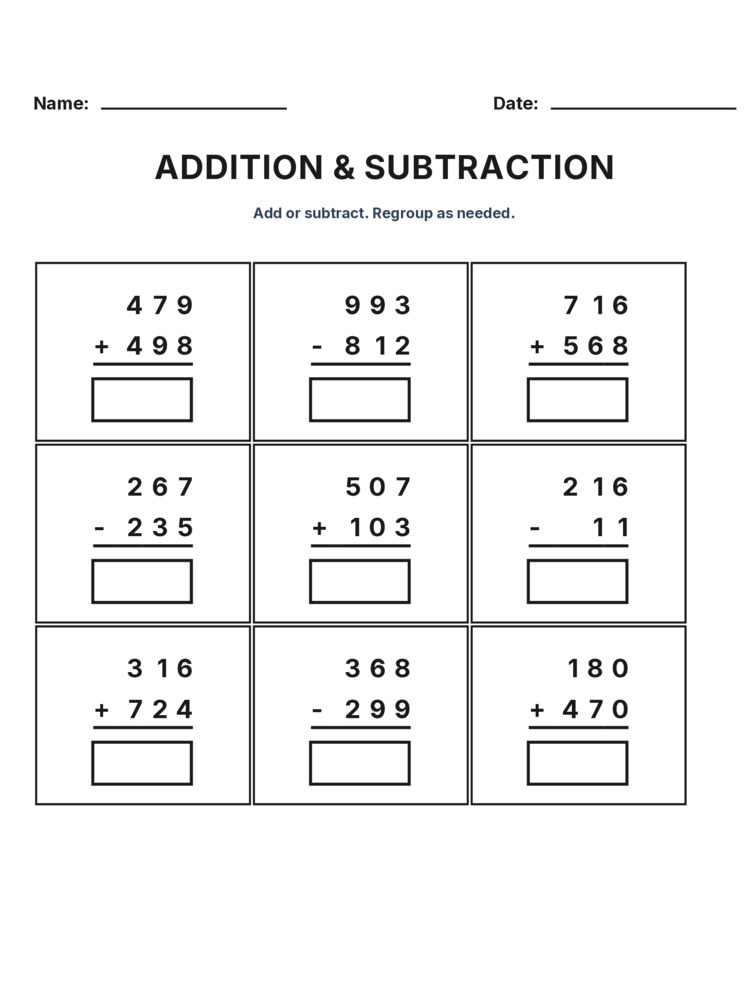
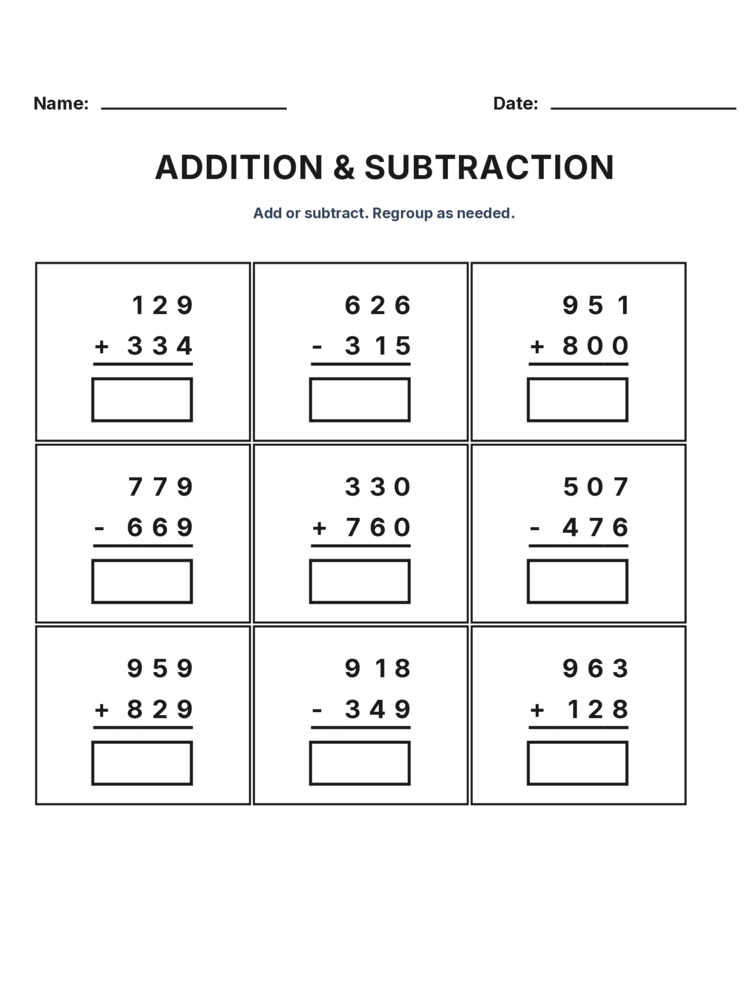
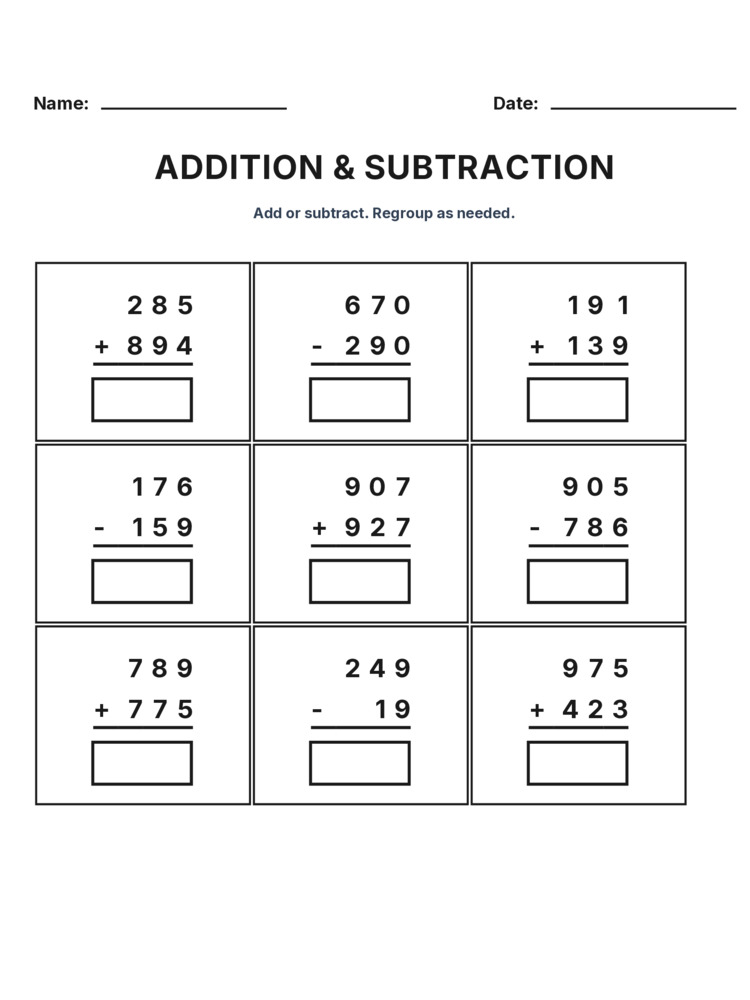
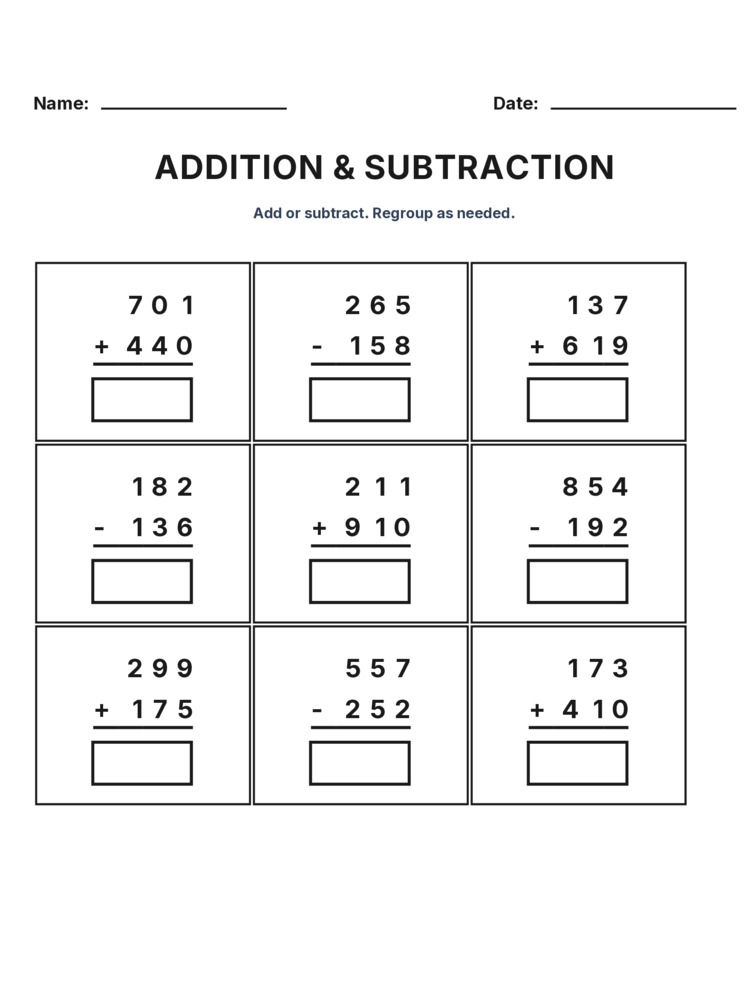
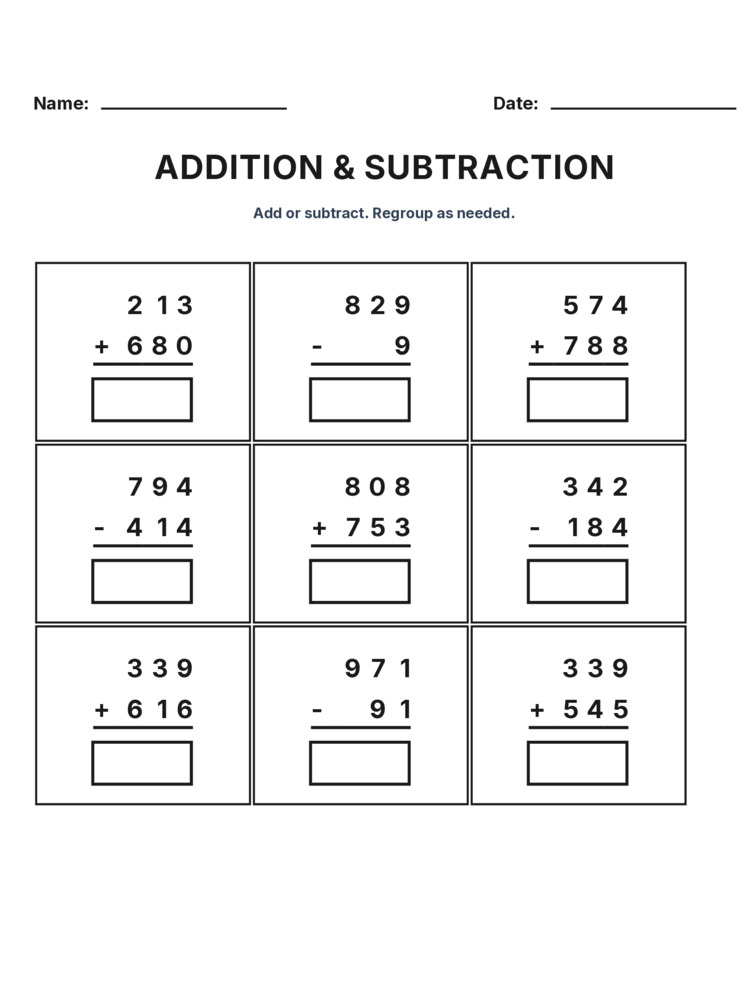
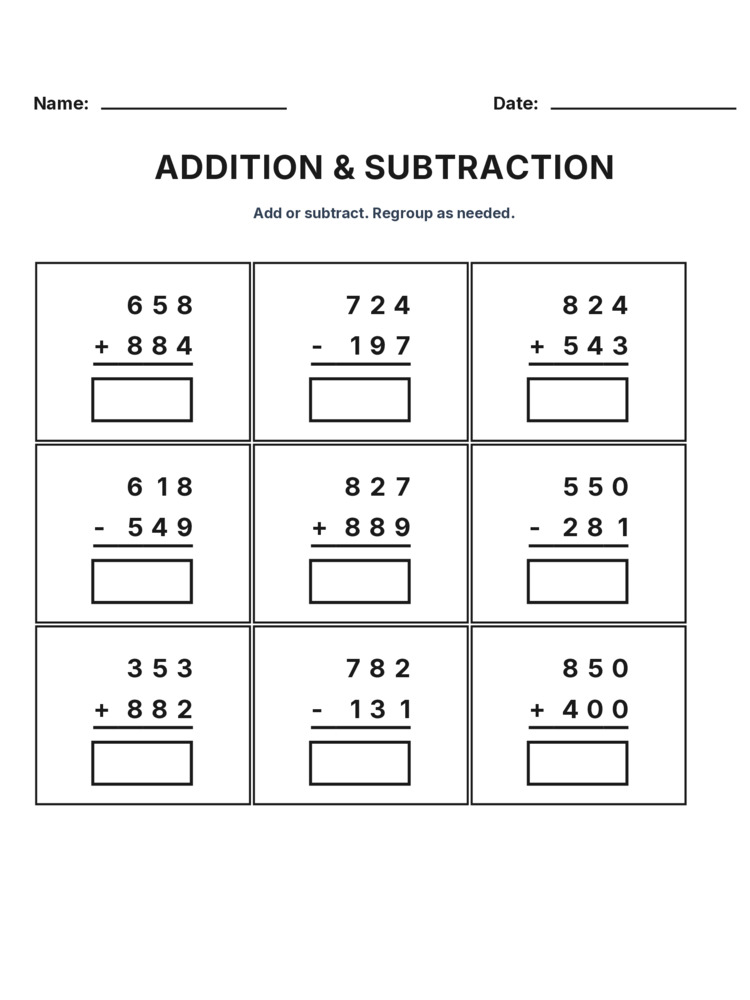
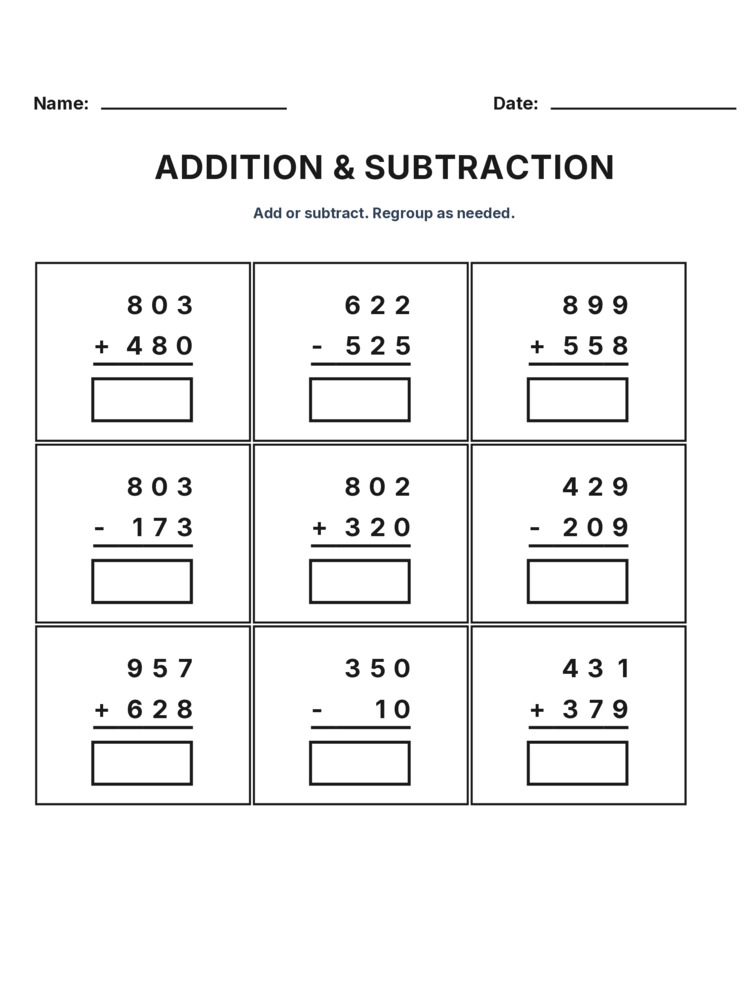
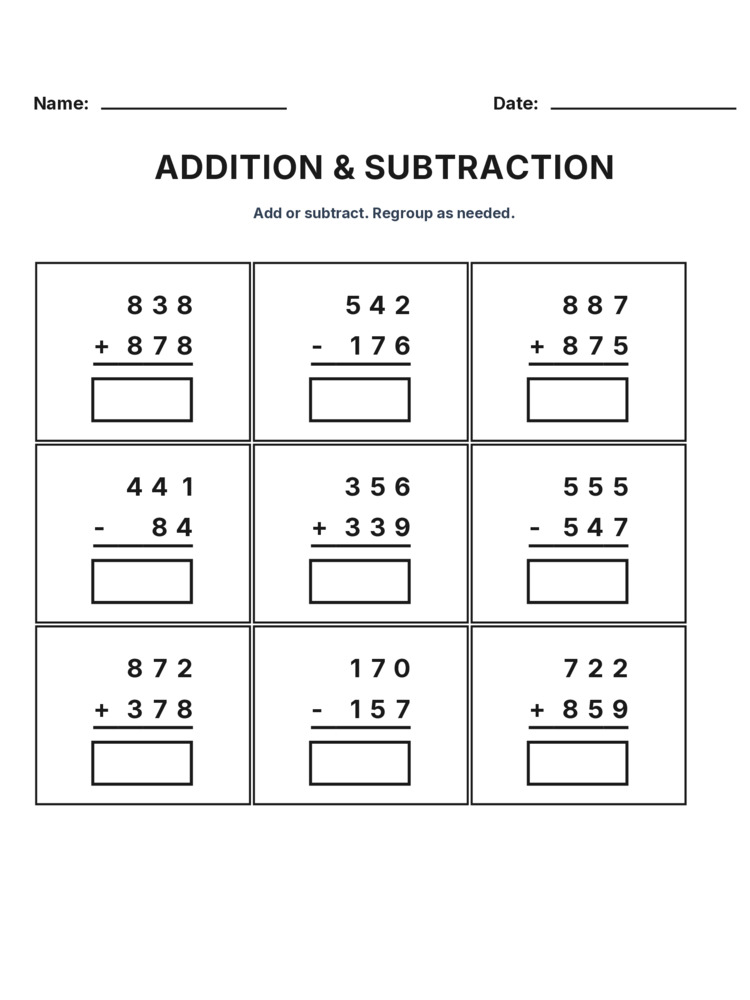
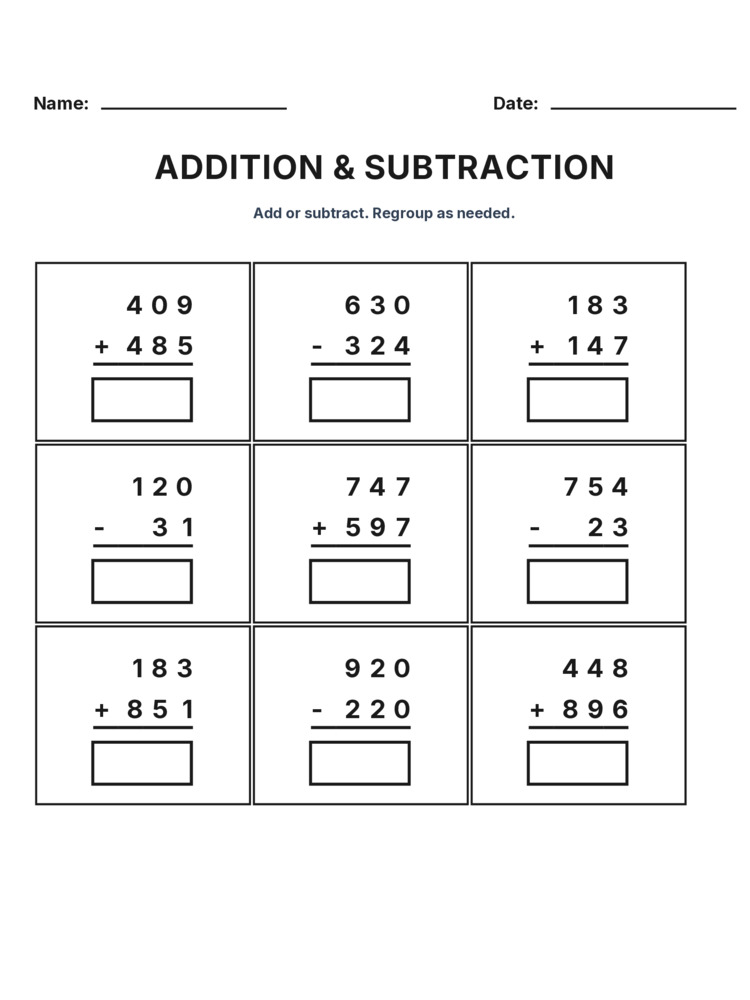
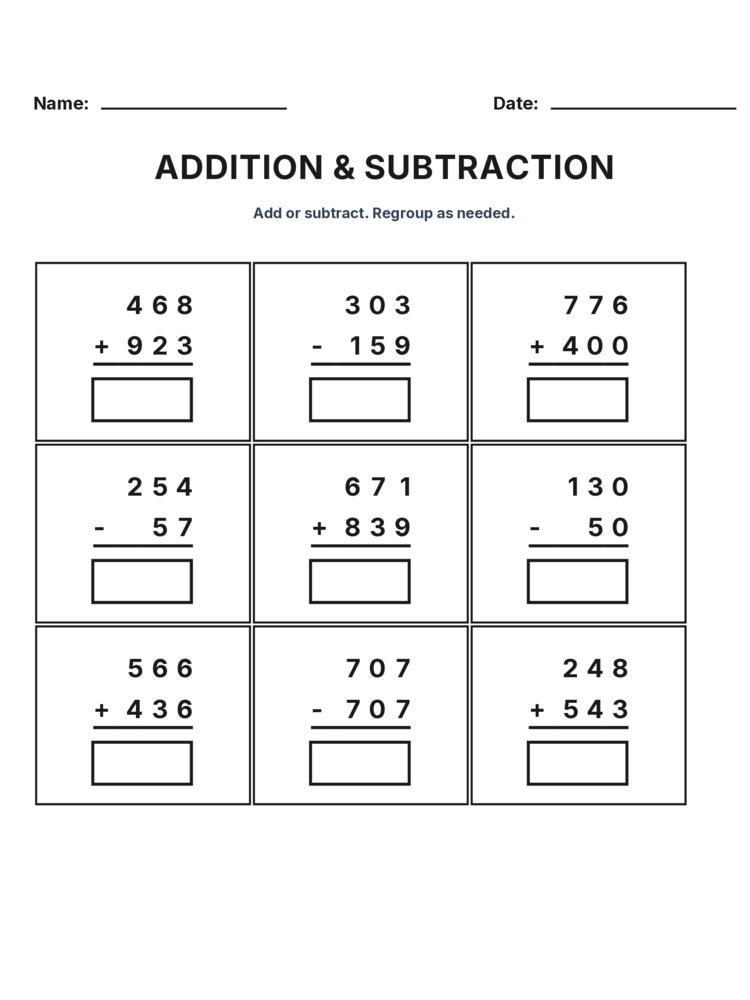
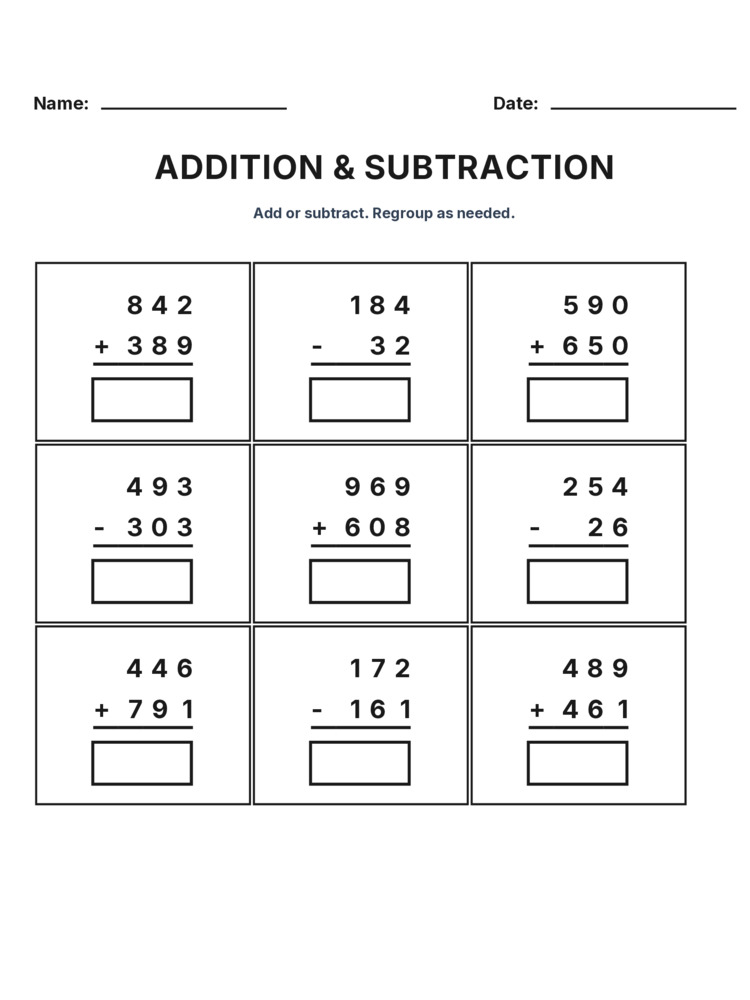
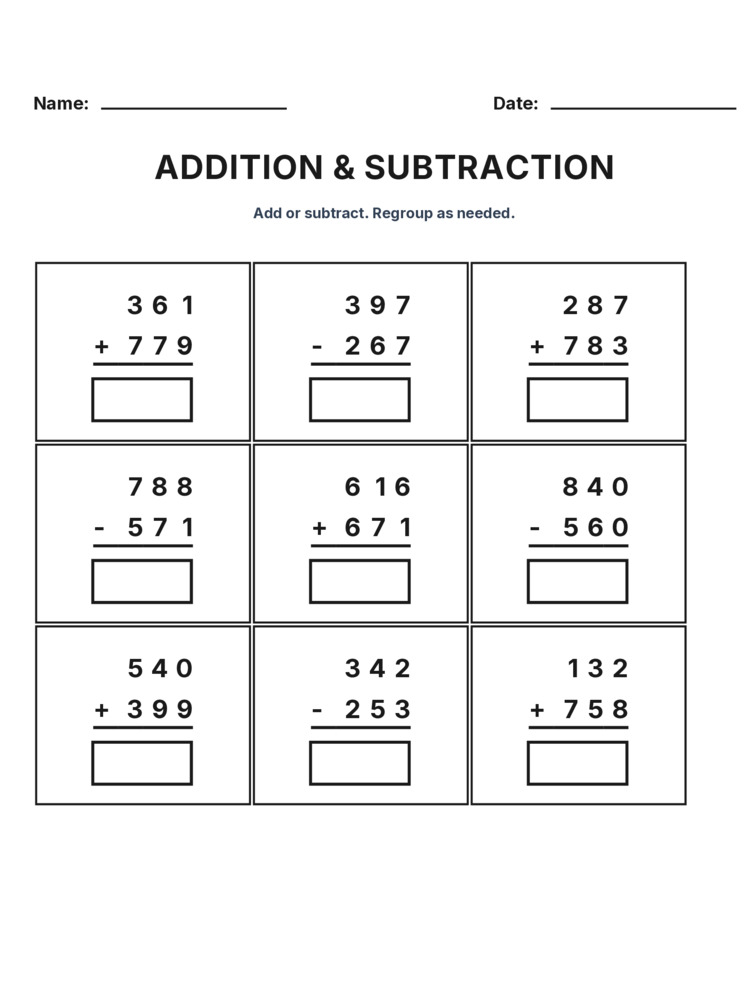
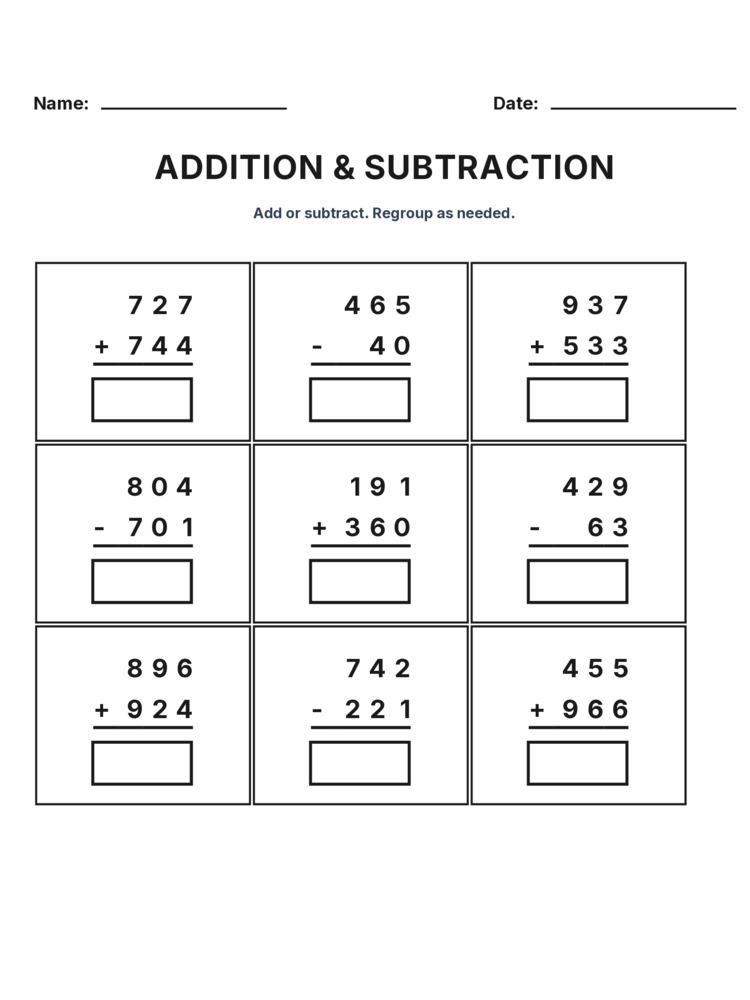
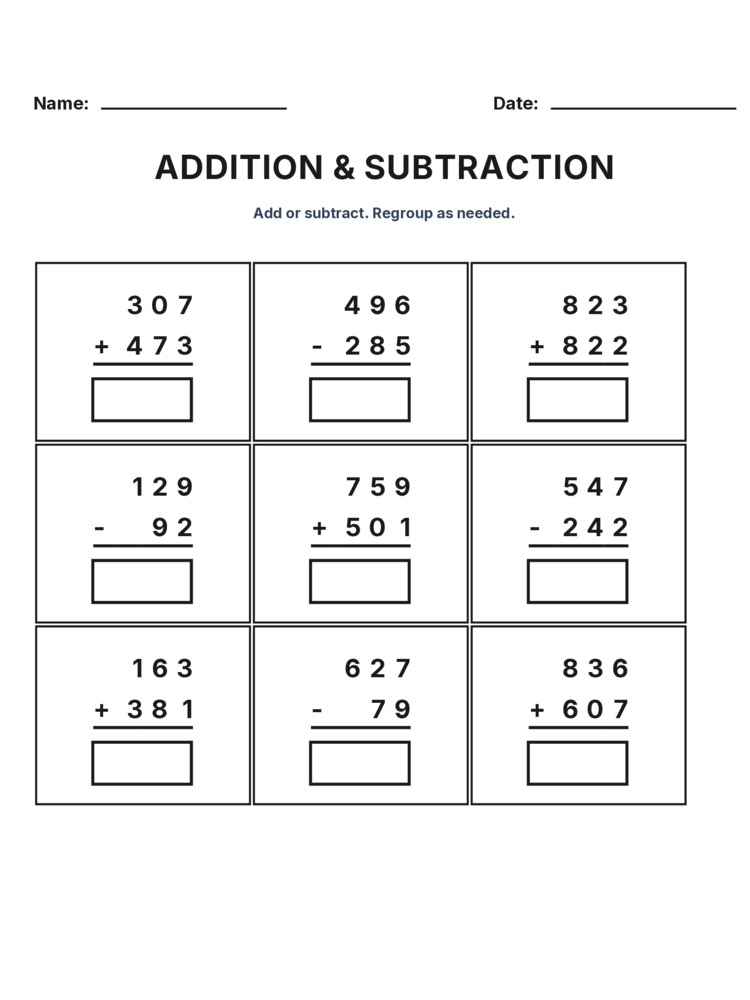
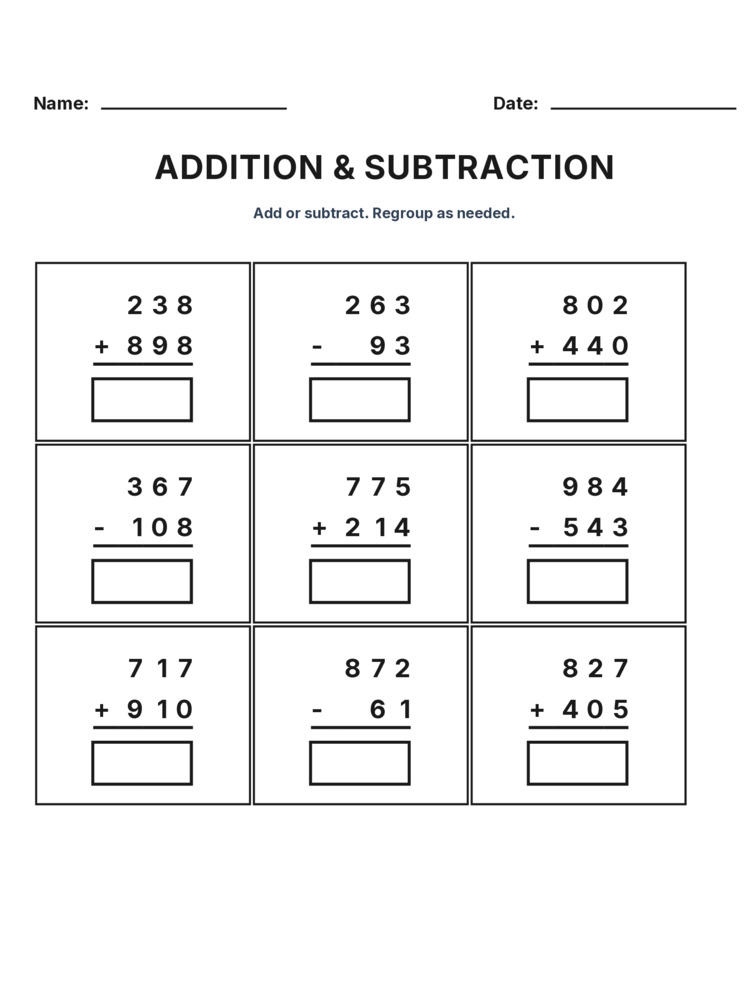
Each card below is a dedicated skill within Addition & Subtraction at Grade 3 — a specific number range, format, or focus, not a single undifferentiated pile of problems labeled only by grade. Picking the specific skill a child needs, rather than a generic "Addition & Subtraction worksheet," is what actually makes practice time count. Some skills use a horizontal row format ("5 + 2 = ▢"), built for quick fact-fluency practice; others use a stacked, vertical format specifically because the skill depends on place-value columns lining up, which a horizontal row can't show.
Fresh numbers, same skill, every variant
Every numbered worksheet under each skill below tests that exact skill with a fresh, deterministically-generated set of numbers — the rule stays identical, only the concrete numbers change. That matters for two practical reasons: a child who needs more repetition on one specific skill can work through several variants in a row without ever seeing the identical page twice, and two students sitting near each other in a classroom can be handed visibly different pages while practicing the exact same underlying skill.
Choosing the right skill for a specific child
The clearest signal for where to start isn't age, it's whether the skill one level down actually feels solid — quick and confident, not effortful. A child who's still counting on fingers, or pausing to think through every problem, benefits more from staying at an earlier skill a little longer than from being pushed ahead because of a birthday. Every skill card below states plainly what it covers, so it's straightforward to match the page to where a specific child actually is, rather than where the calendar suggests they should be.
Using Addition & Subtraction worksheets at Grade 3 — at home or in a classroom
At home, short sessions beat long ones — two or three rows at a time, talked through out loud, rather than a whole page pushed through in silence. A child who can explain what they're doing, not just produce a correct answer, is doing more of the actual thinking the worksheet is meant to build. In a classroom, a specific skill page is useful for targeted small-group work when a handful of students need practice on exactly the same thing, while working down through several skills in order suits a whole-class unit moving through Addition & Subtraction at Grade 3 systematically.
Why the number range matters more than it looks
It's tempting to think a worksheet is a worksheet as long as the operation is right, but the range underneath it is doing most of the actual work. A child fluent within 10 gets nothing new from another within-10 page, and a child not yet fluent within 10 gets nothing but frustration from a within-20 or 2-digit page — in both cases the operation label matches, but the practice itself misses. Matching Addition & Subtraction to Grade 3's actual range, rather than treating "addition" or "subtraction" as one undifferentiated skill, is the entire reason this section exists in the shape it does.
Free, printable, and nothing saved
Every worksheet under Addition & Subtraction at Grade 3 follows the same rule as everything else on this site: free to view, free to download as a PDF., and free to print as many times as needed — no account, no email capture, and no premium tier hiding a specific skill or range behind a paywall. Nothing typed or clicked here is saved anywhere, which also means there's no login to manage and no history to lose.