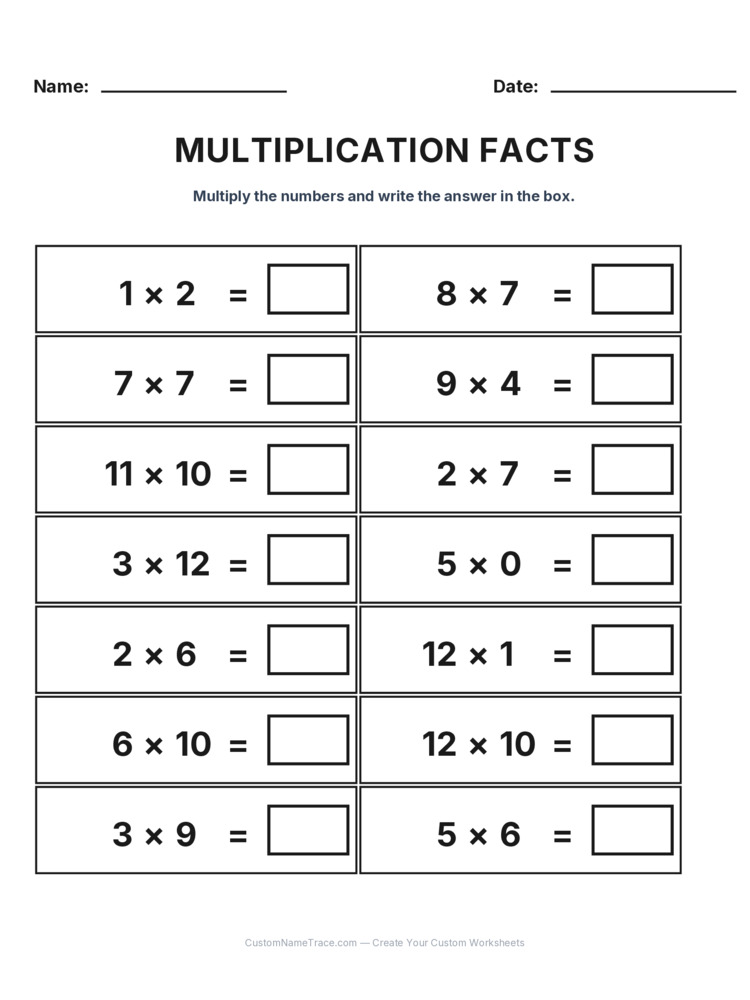
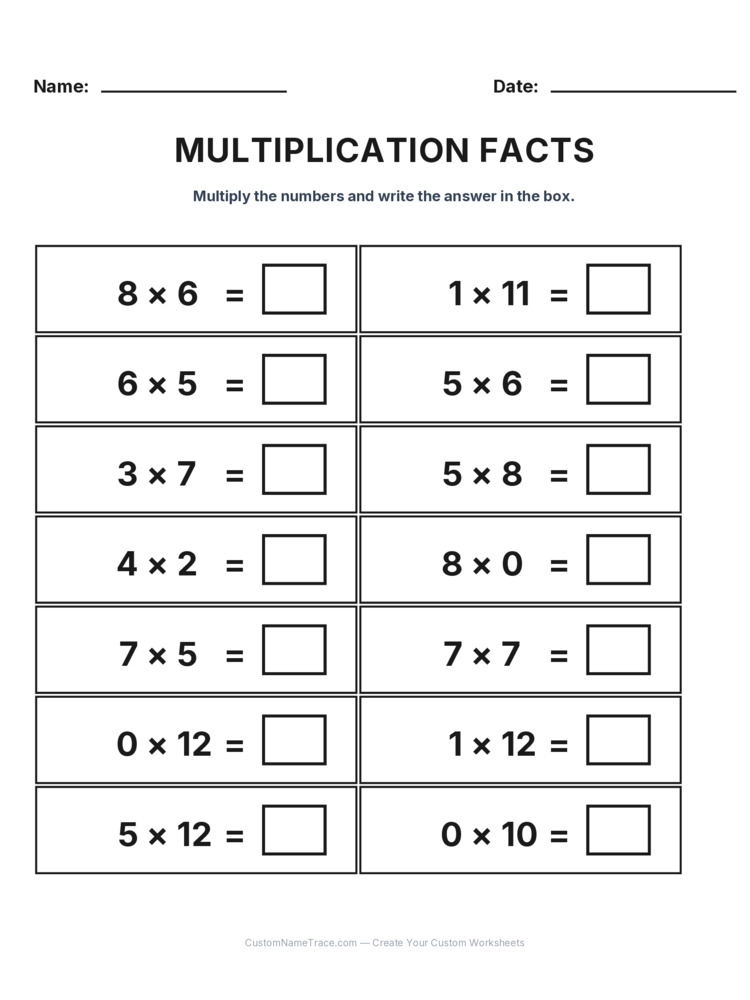
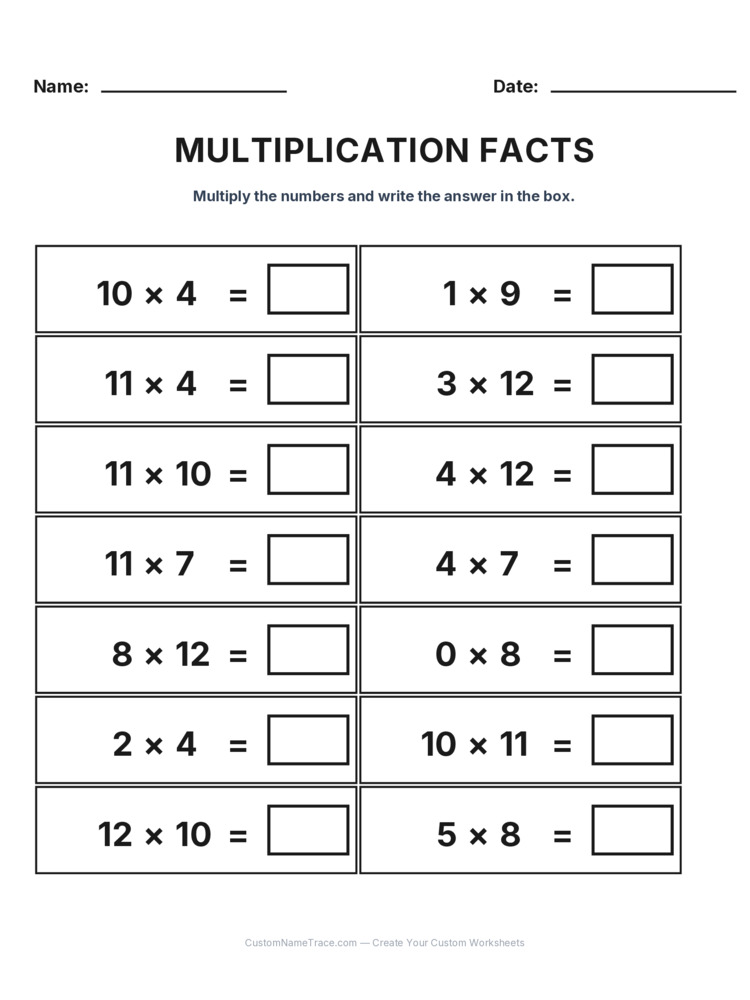
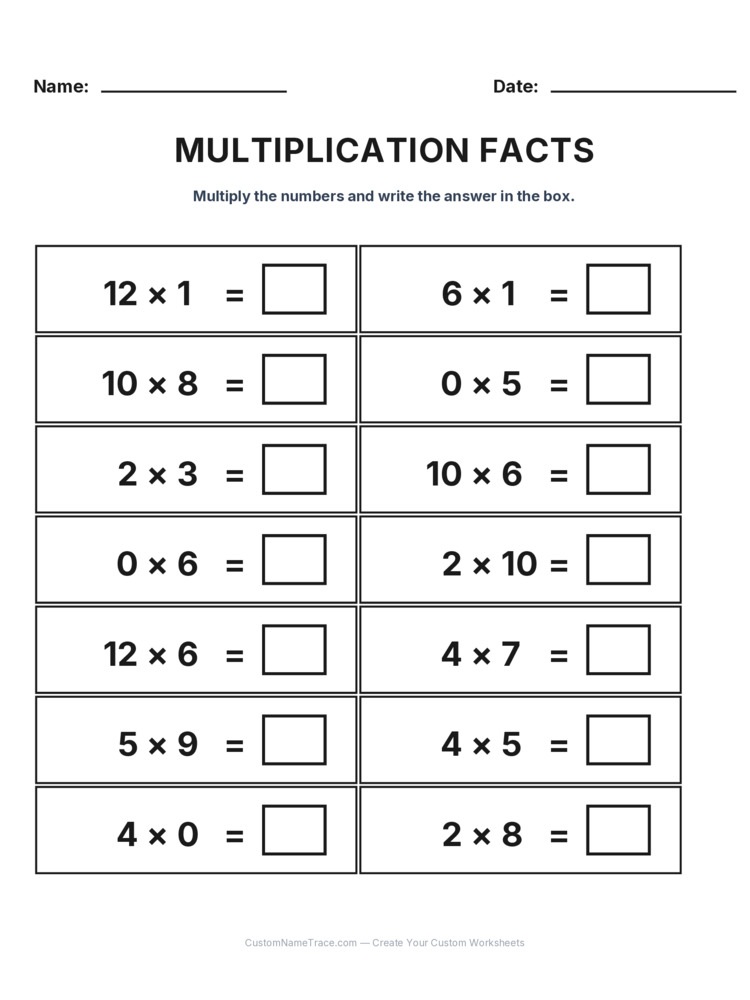
Why the full range matters at Grade 3
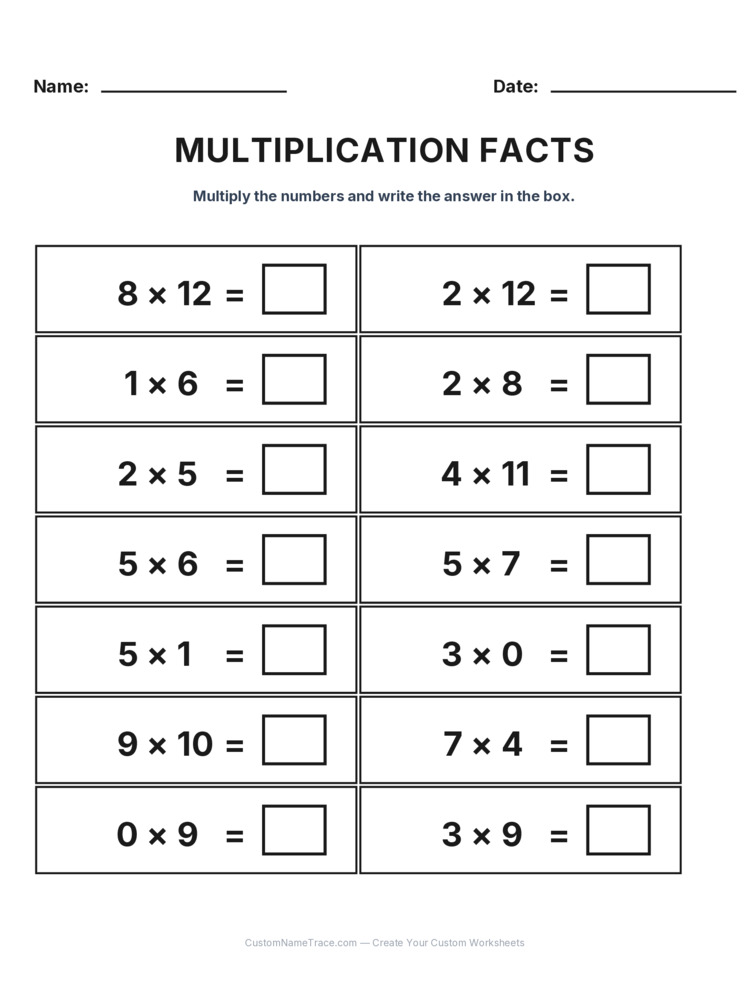
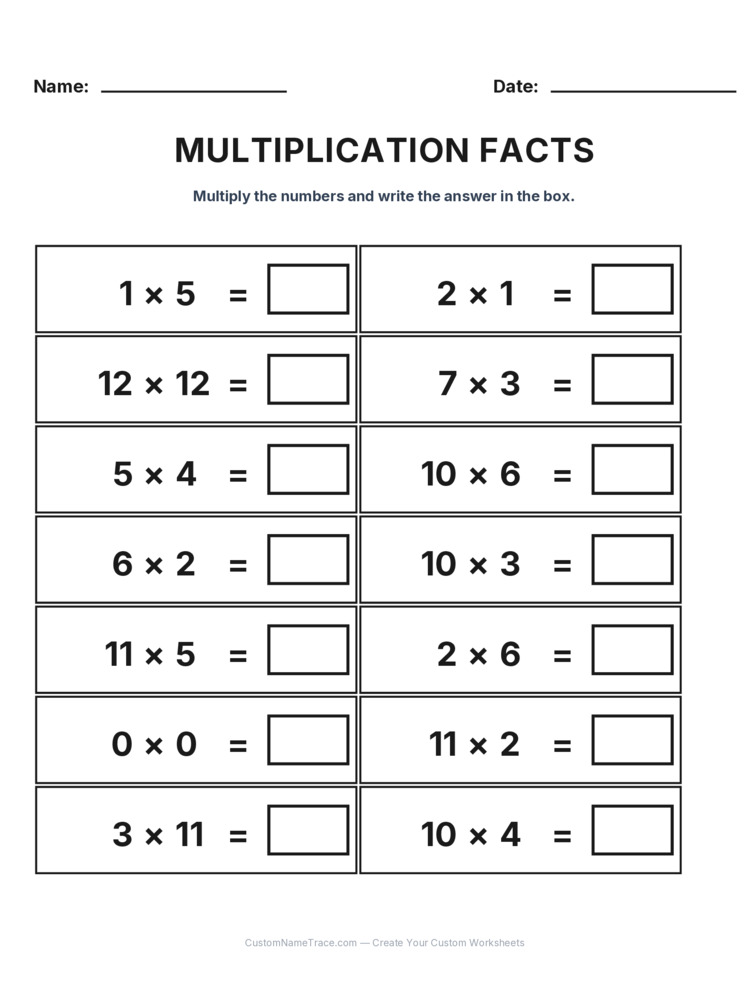
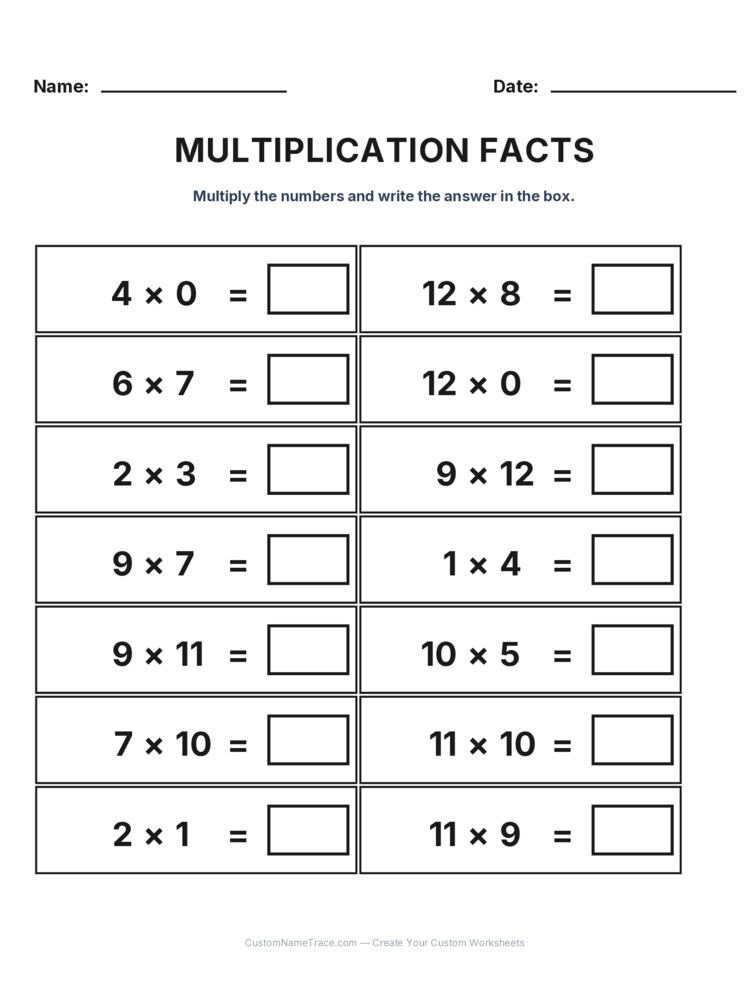
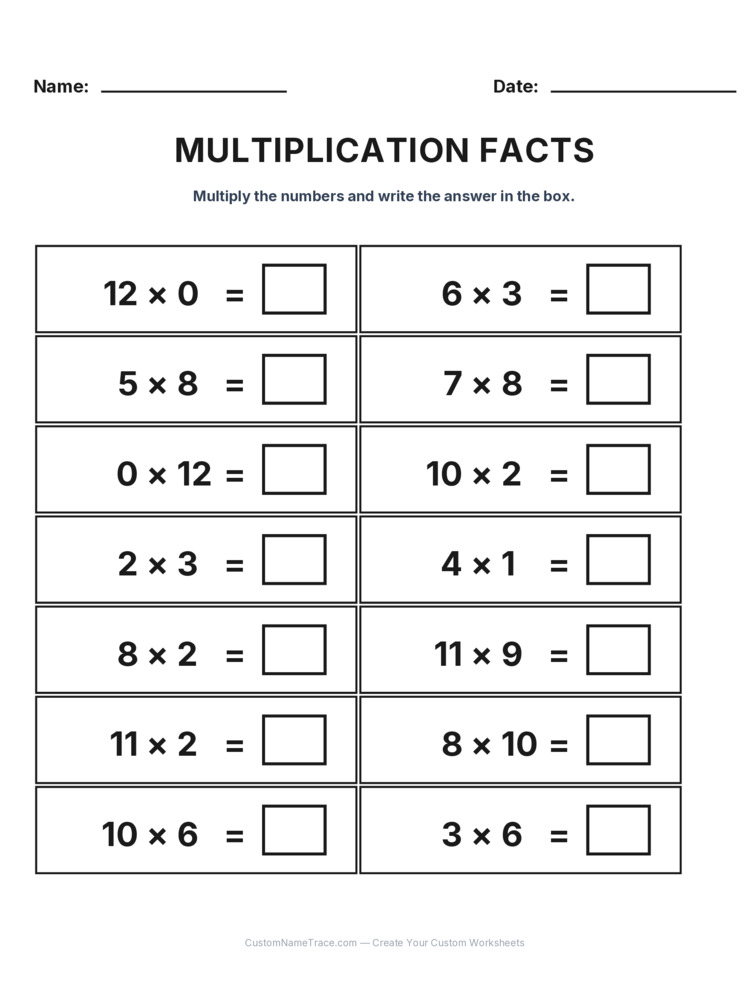
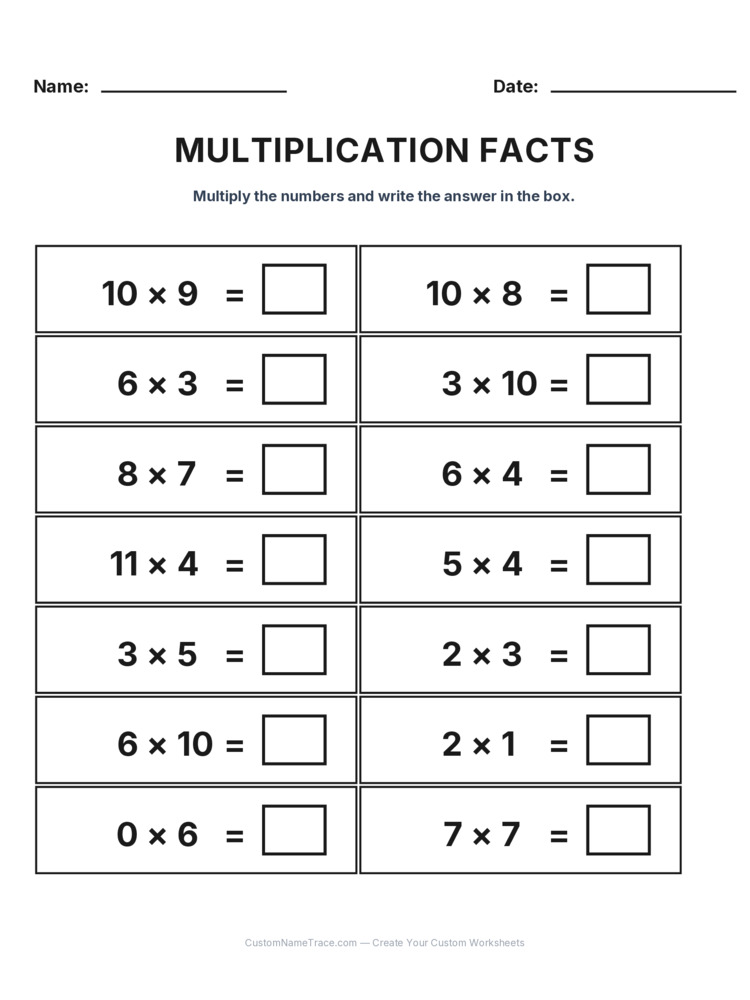
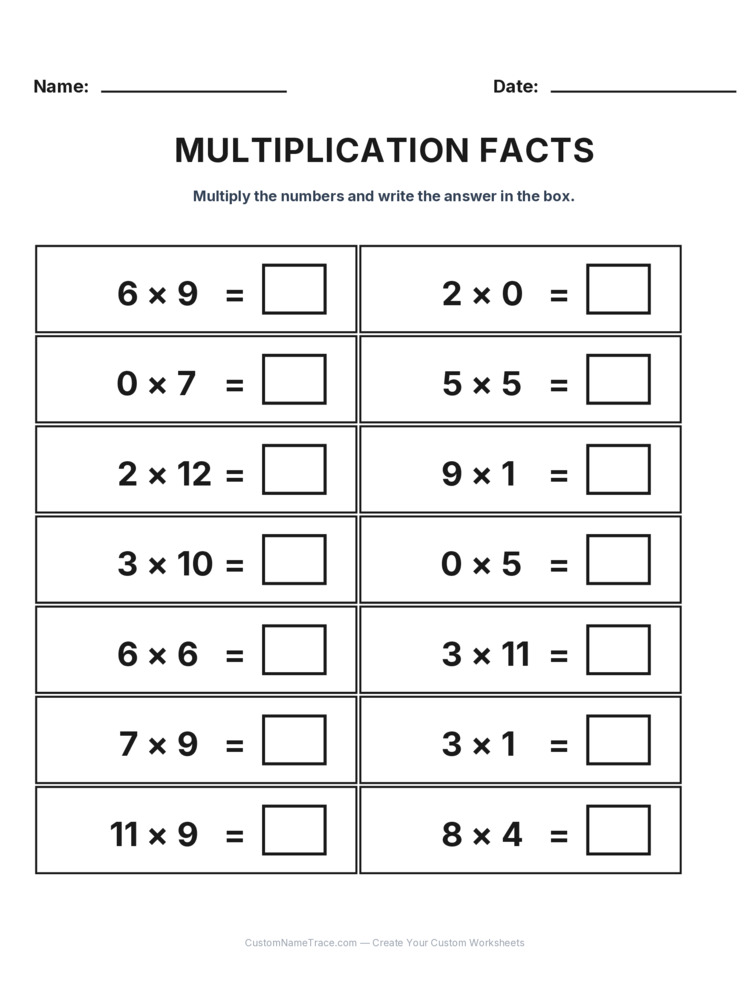
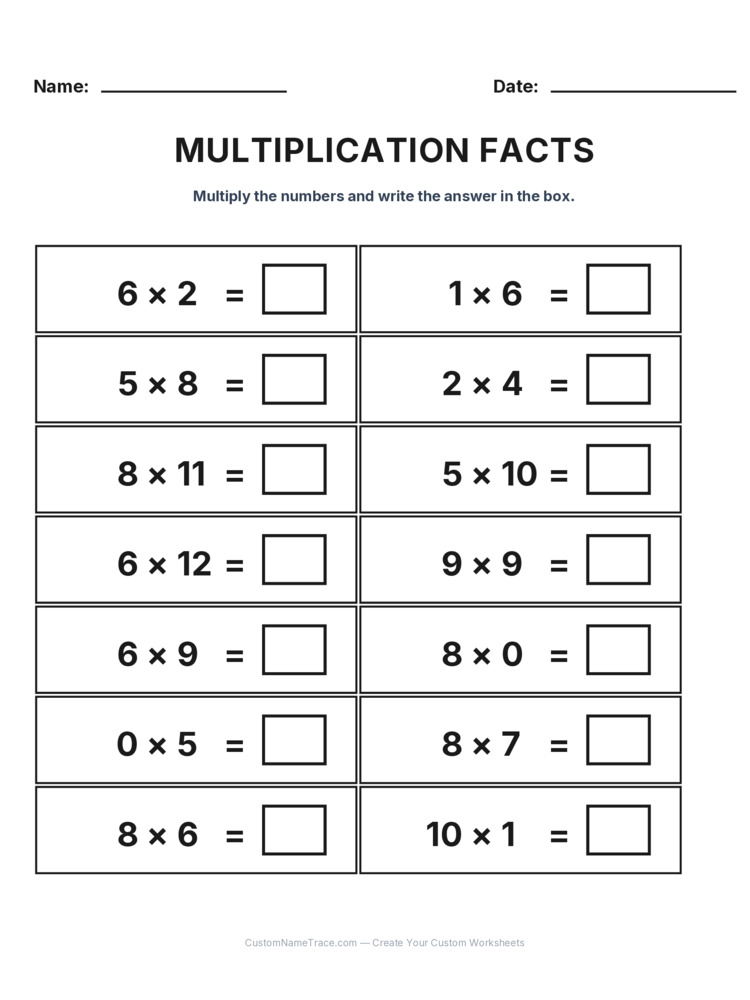
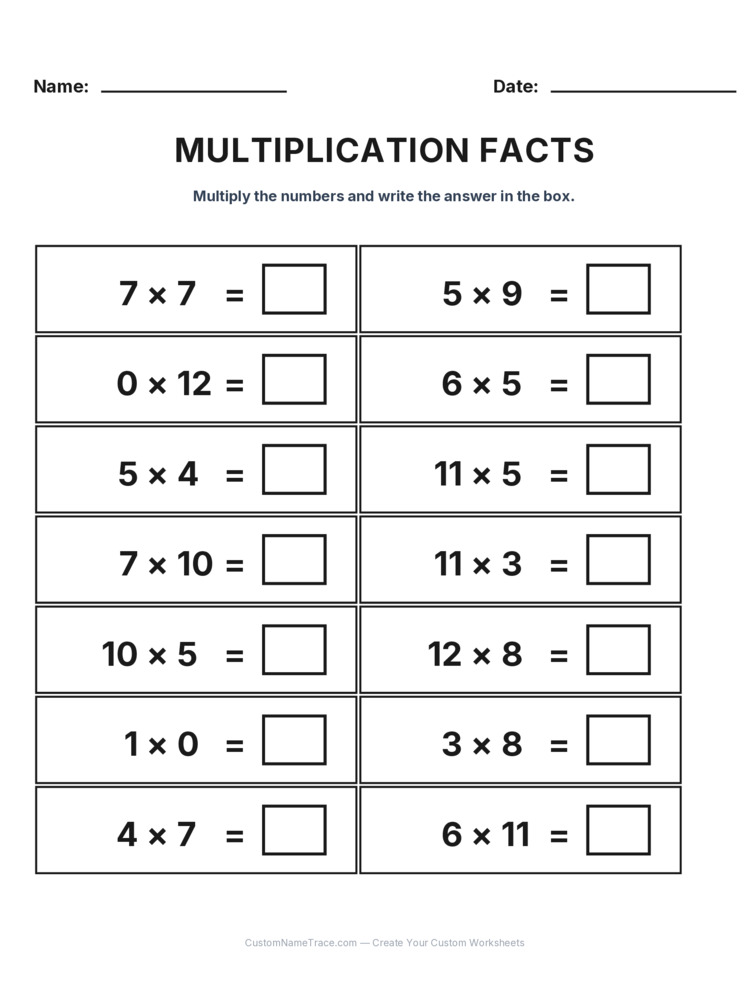
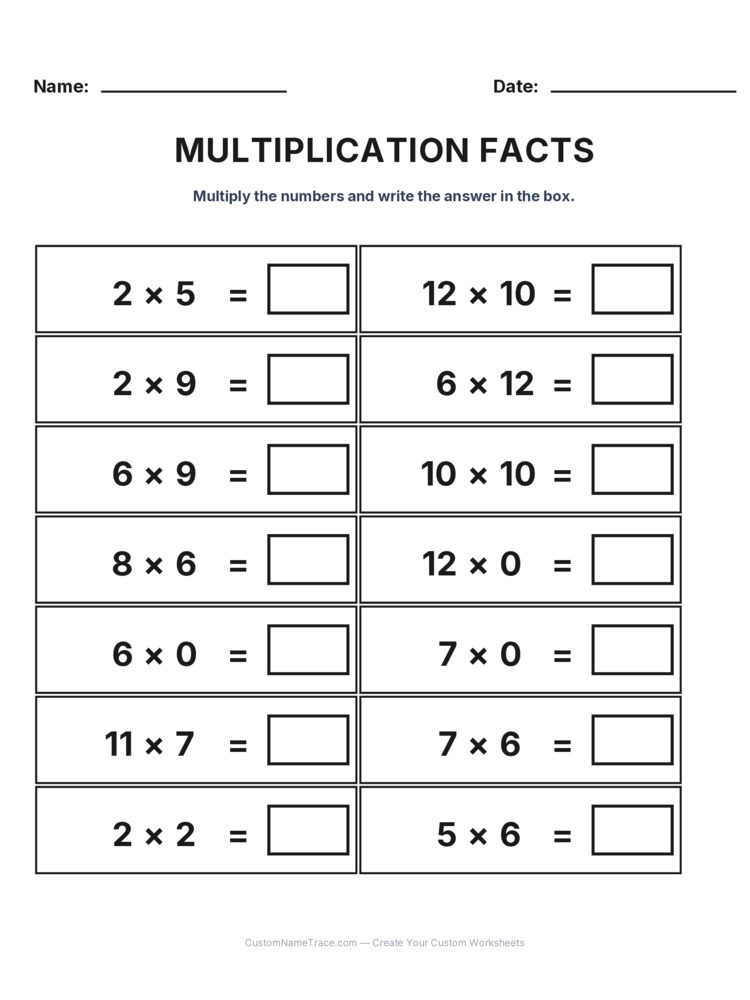
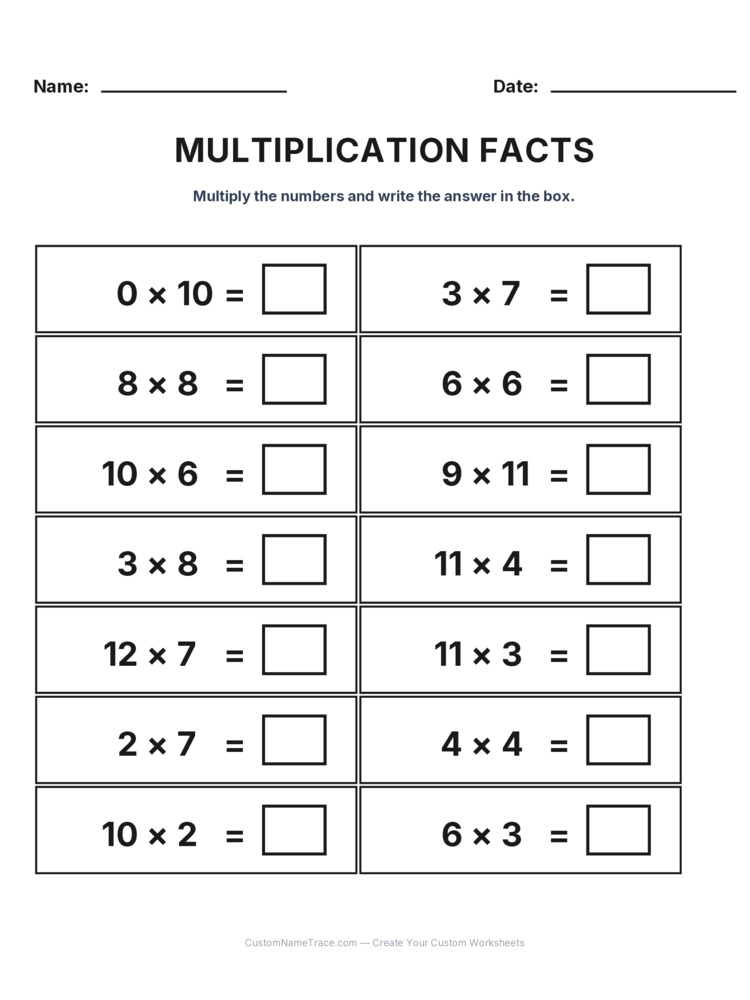
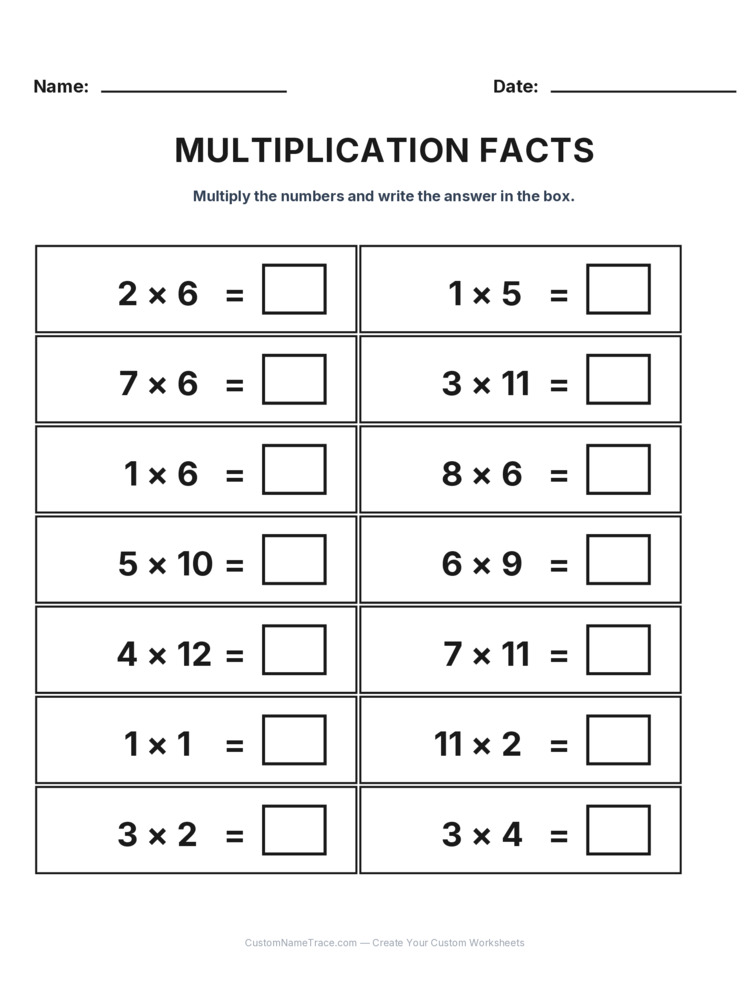
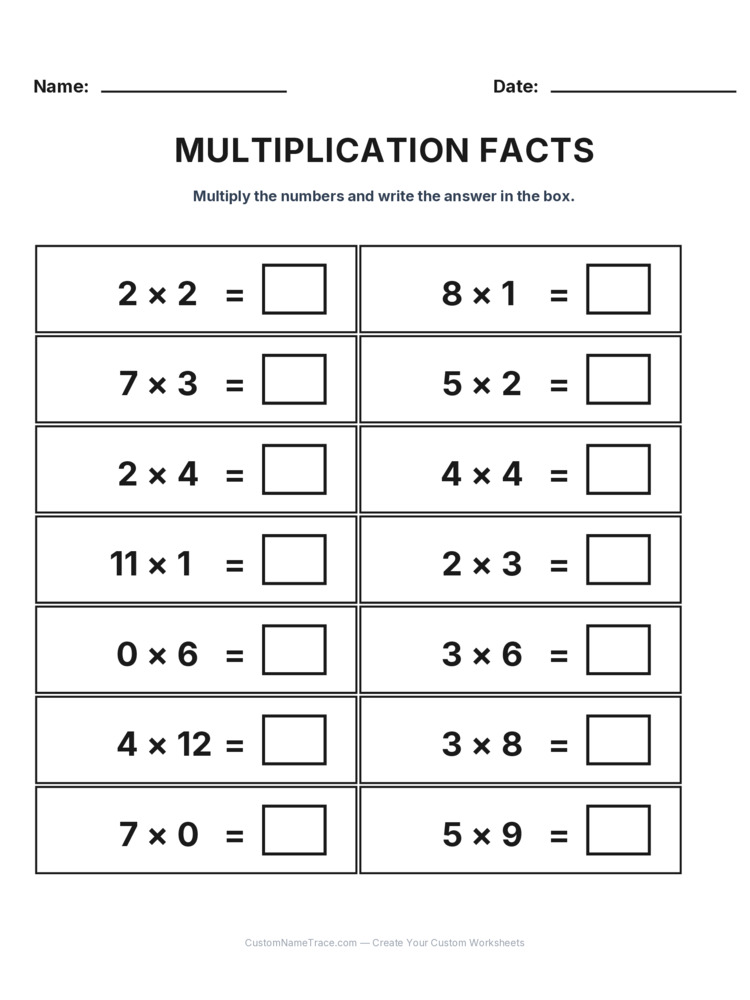
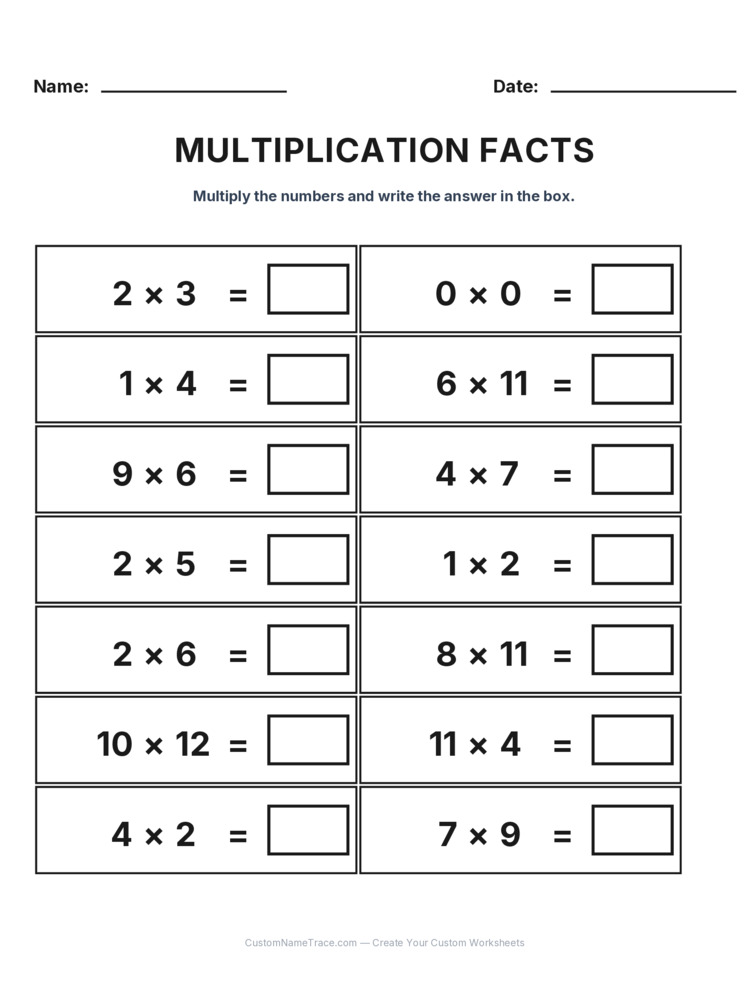
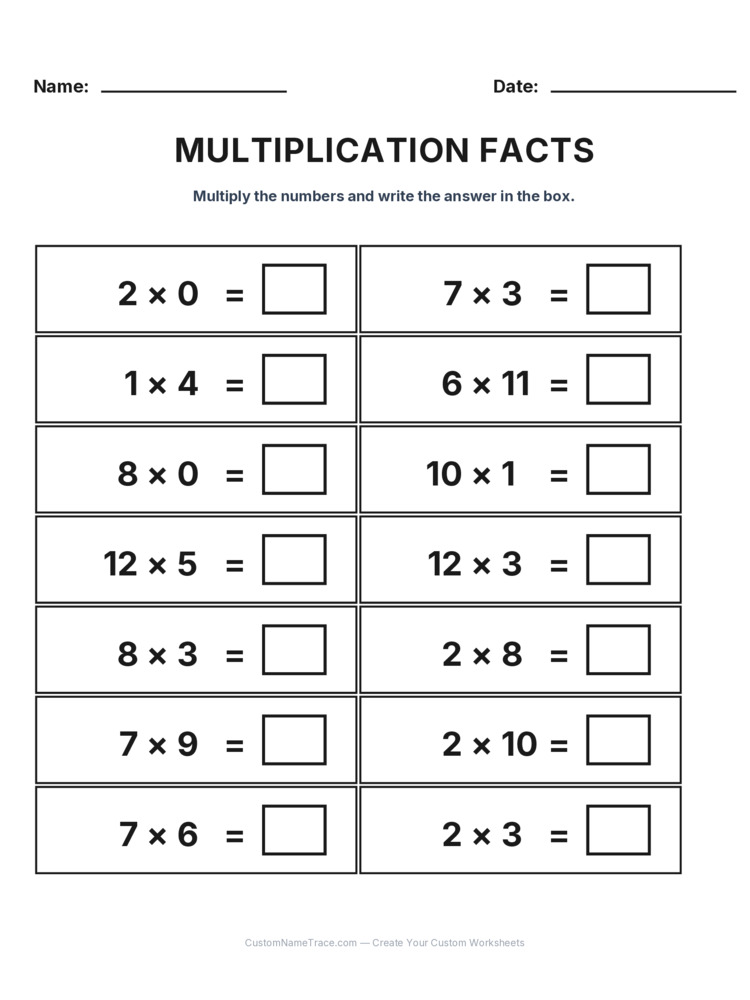
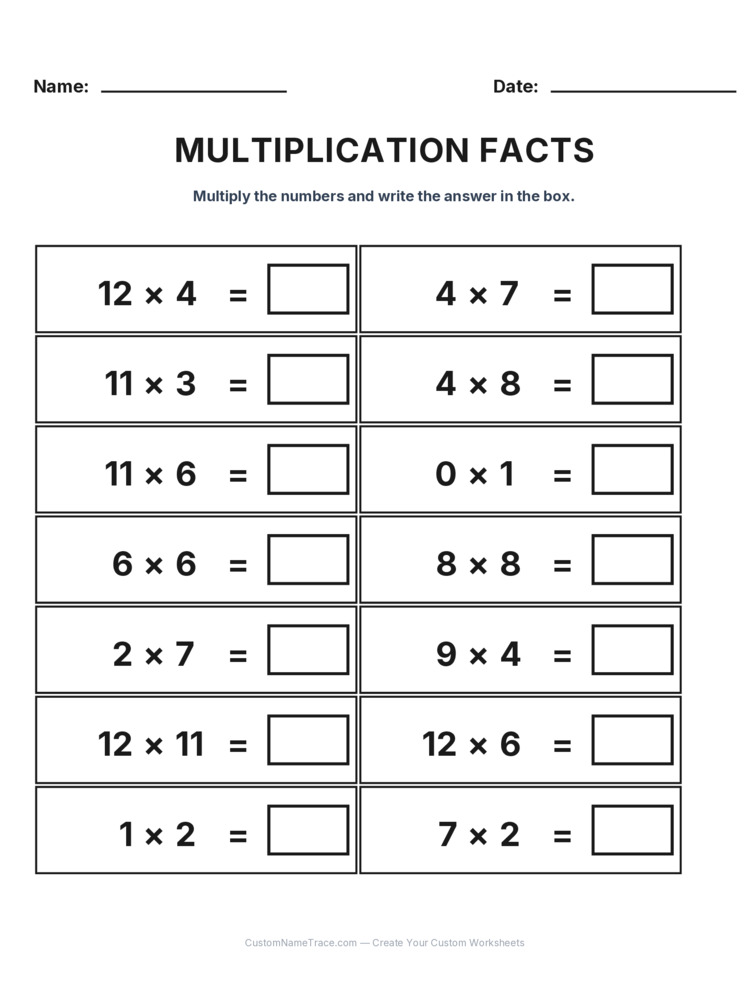
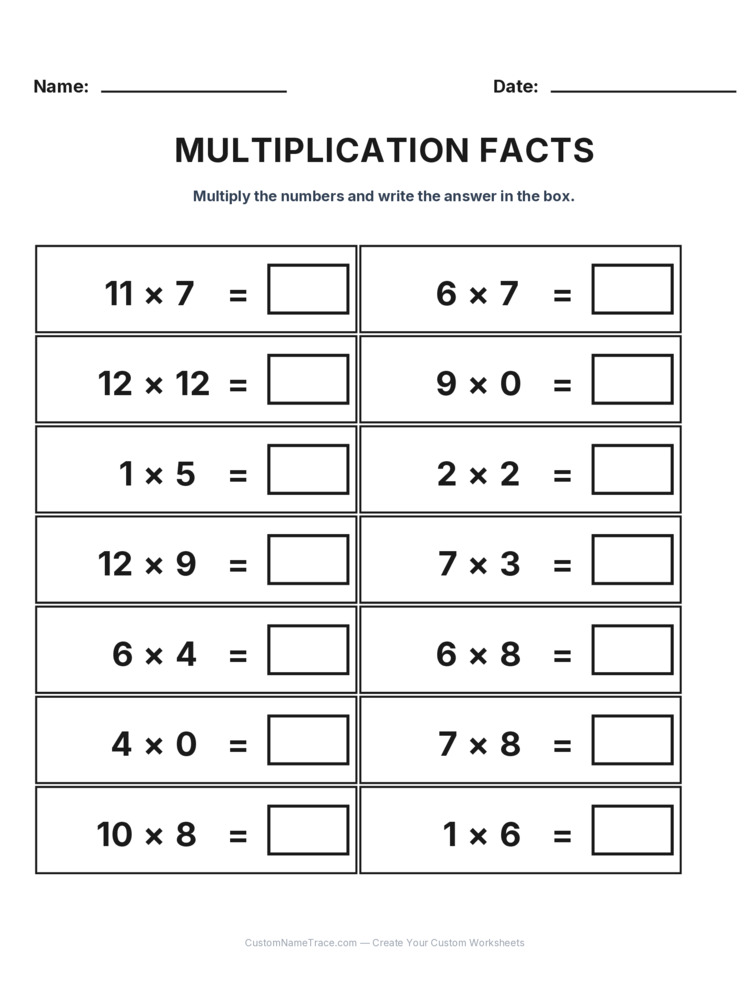
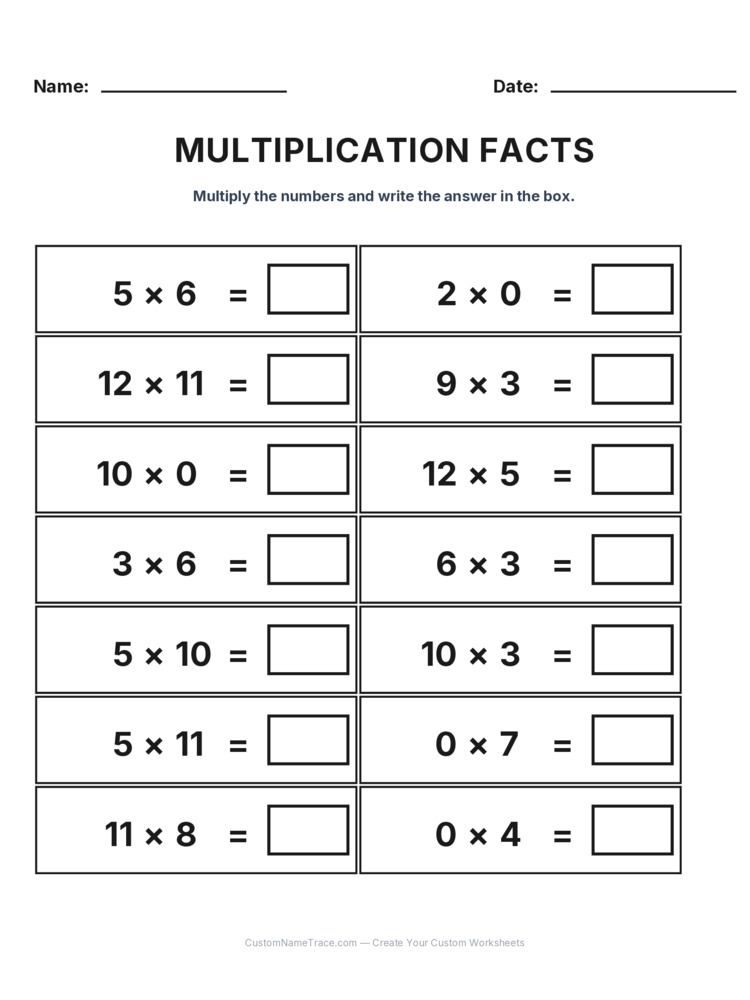
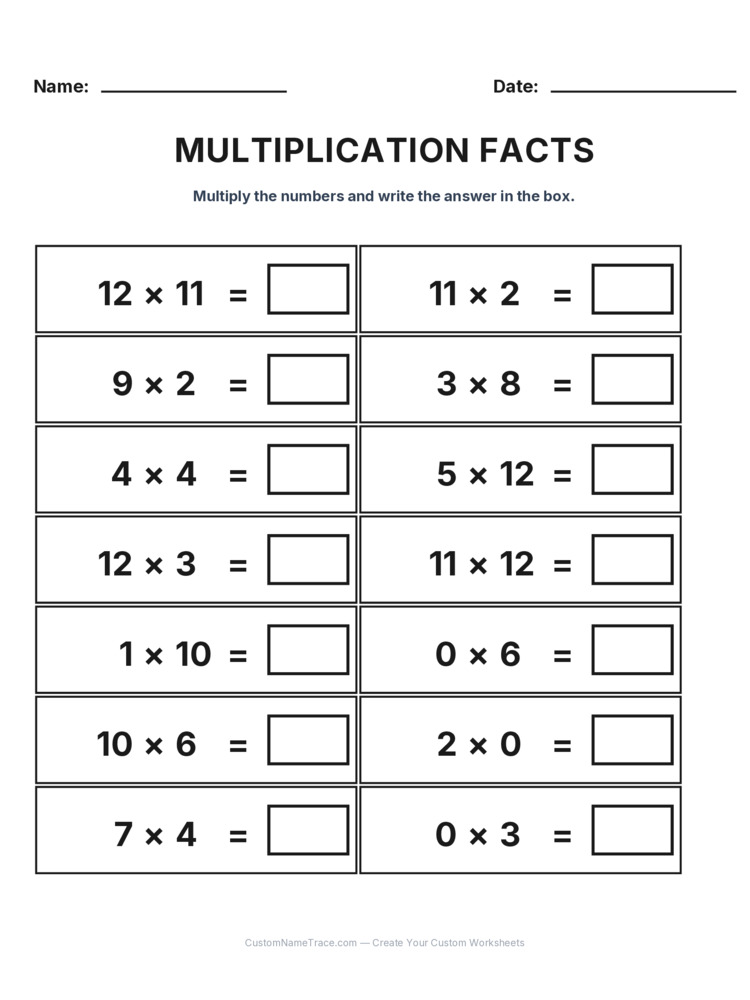
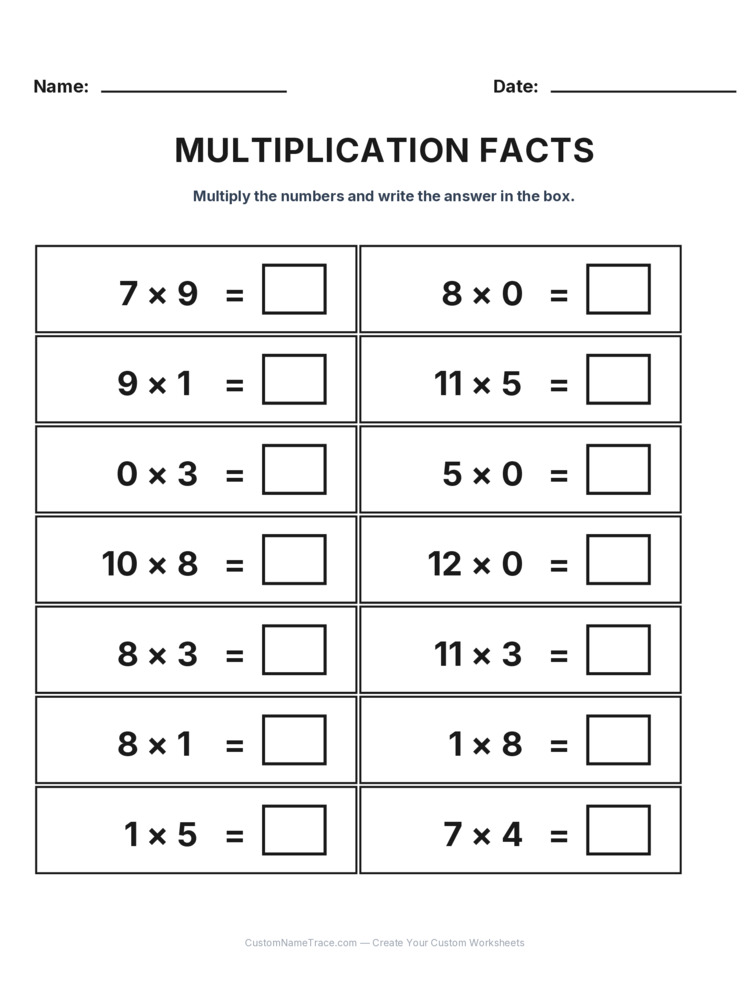
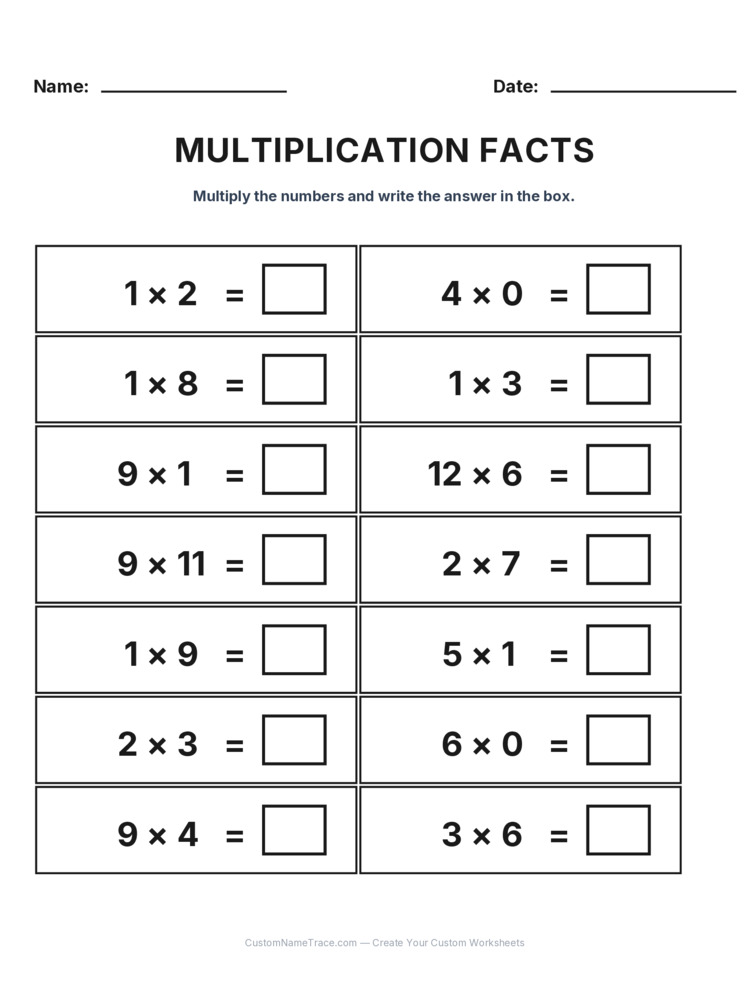
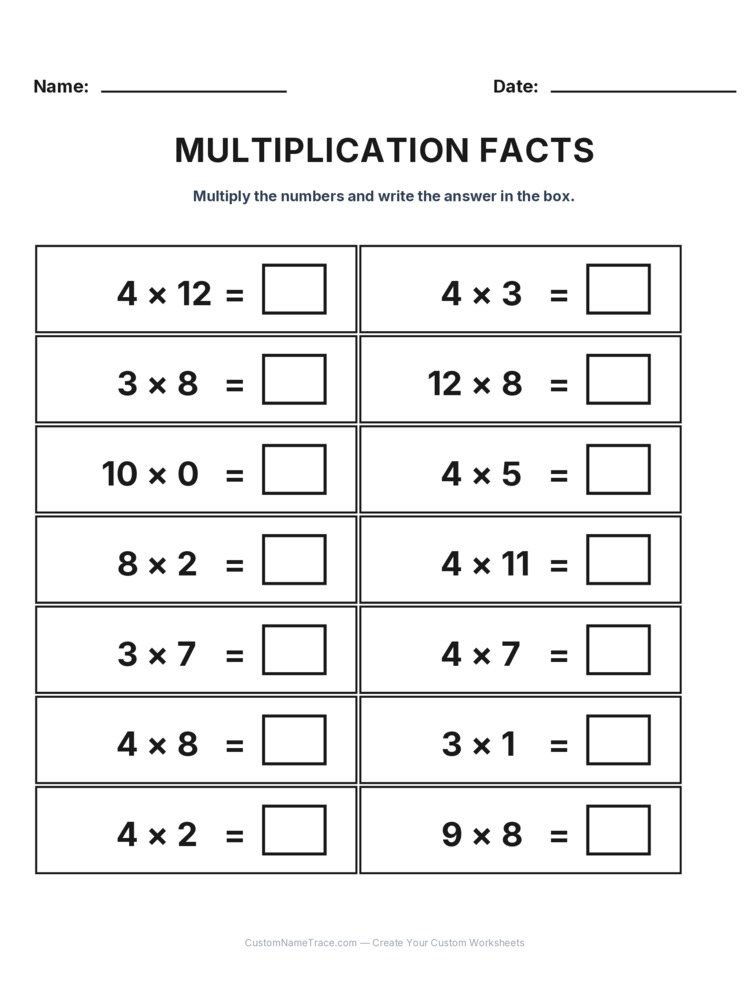
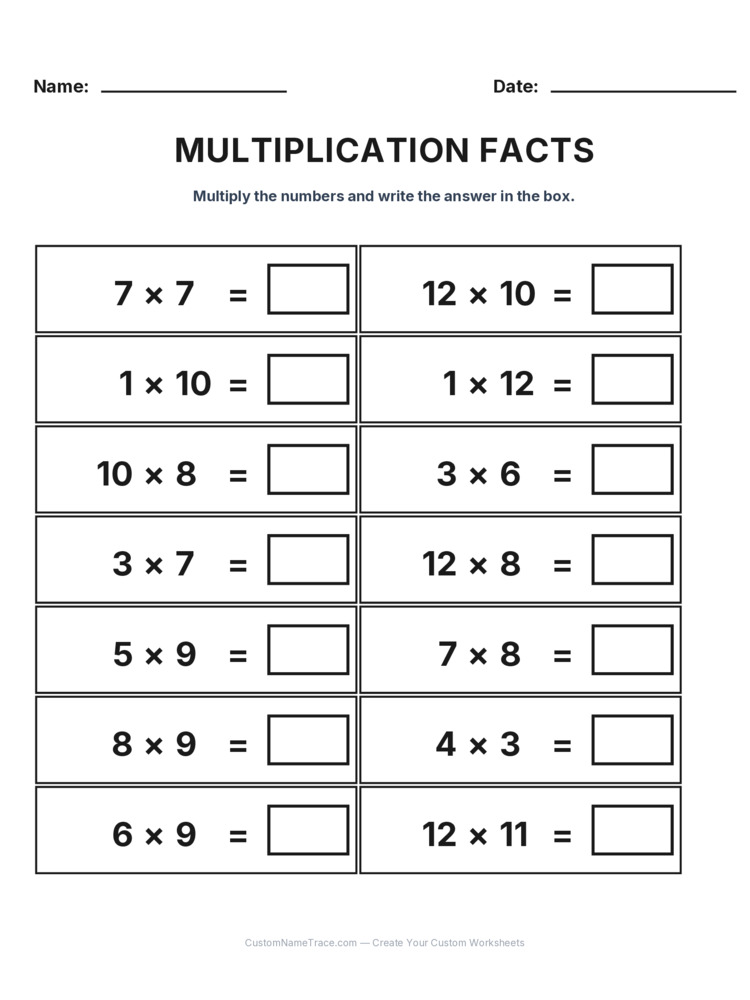
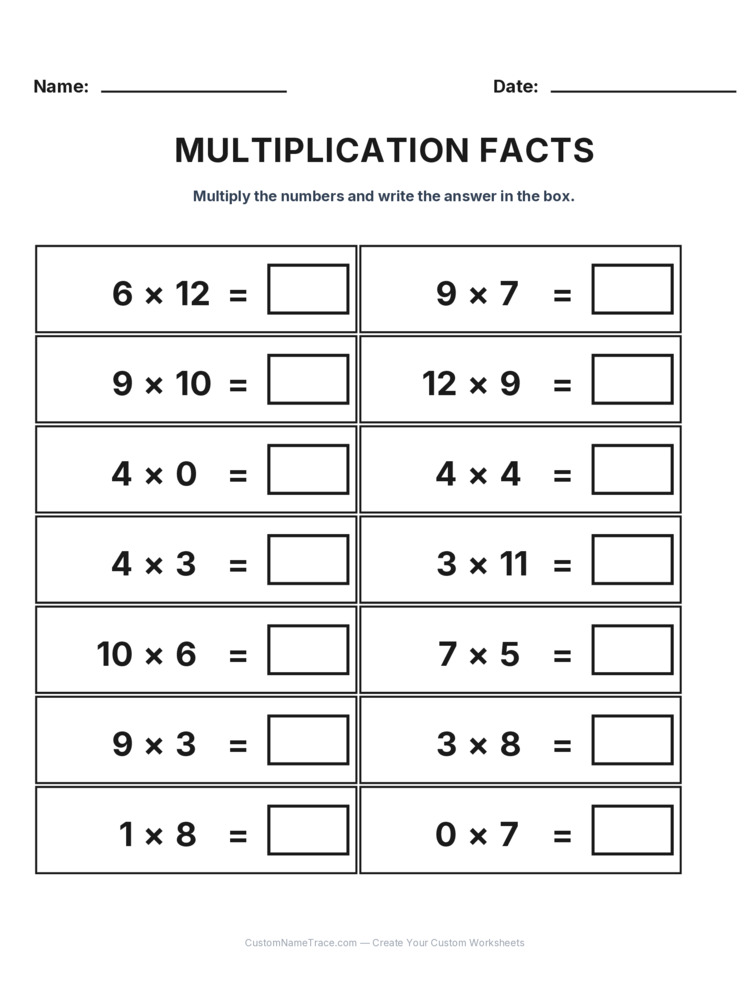
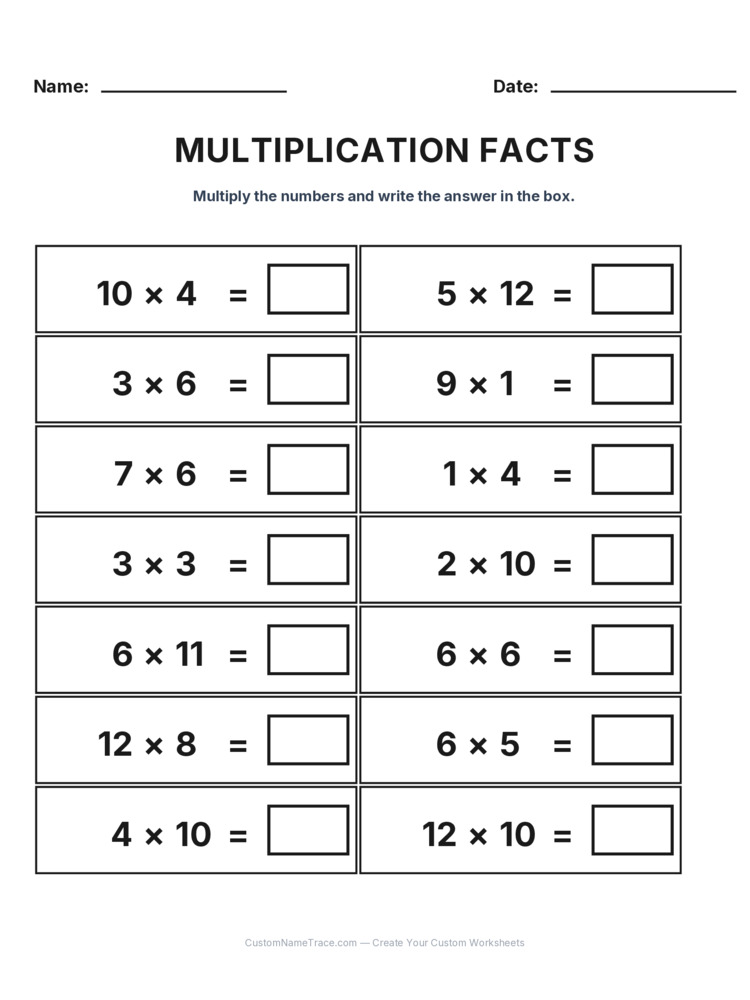
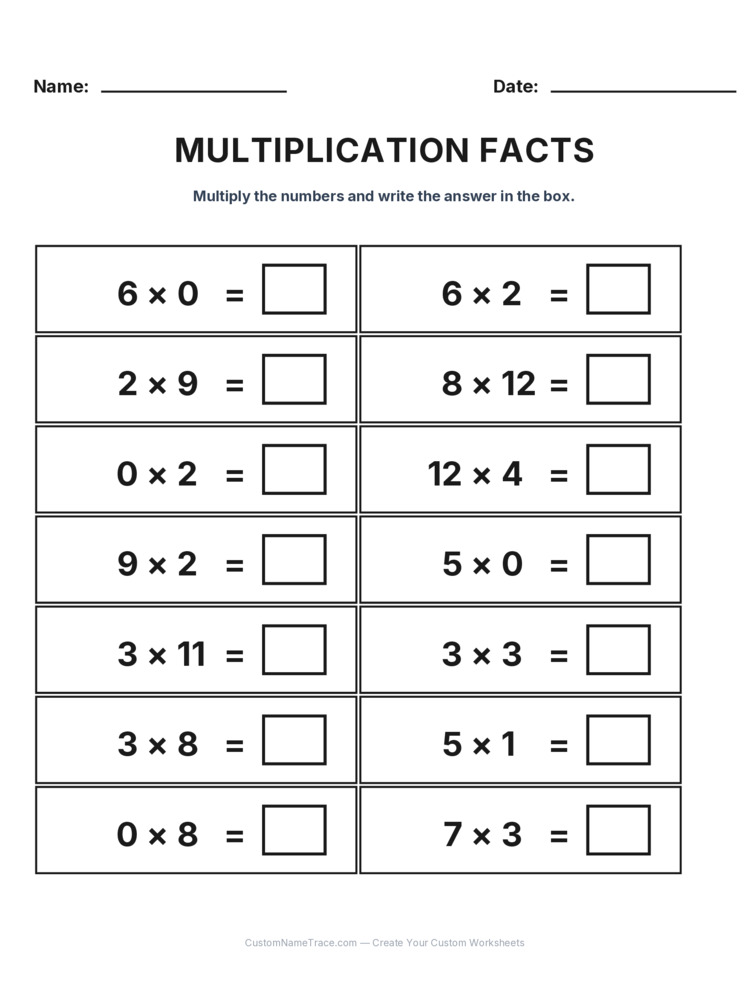
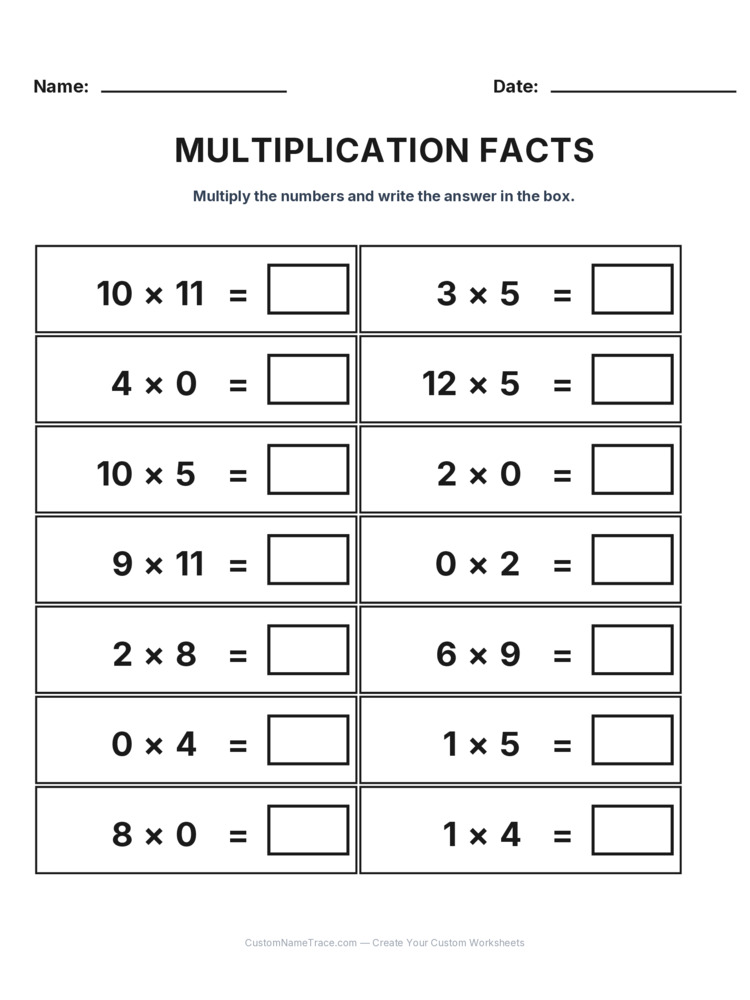
This worksheet expands beyond the 2s, 5s, and 10s introduced earlier to cover the complete multiplication range from 0 through 12 — the full set of facts a child is expected to recall fluently by the end of elementary school. Some of these newly-added factors, particularly 6, 7, 8, and 9, have less obvious visual patterns than the earlier set and tend to take more deliberate, sustained practice to feel automatic.
Zero and one deserve their own explicit attention here too, even though they seem trivial — anything multiplied by zero is zero, and anything multiplied by one stays itself, rules worth stating plainly rather than assuming a child will infer them from pattern alone, since a few children genuinely do get these two backwards at first.
Which facts tend to need the most repetition
Facts involving 6, 7, 8, and 9 — especially combinations of two of these together, like 7 times 8 — are consistently the hardest for most children to commit to memory, simply because they lack an easy shortcut the way doubling, or counting by 5s or 10s, provides. Recognizing that these specific facts deserve extra, focused repetition (rather than spreading practice evenly across all 169 possible combinations) closes real gaps faster than uniform review.
Doubles (6×6, 7×7, 8×8) and their neighbors are worth calling out specifically as a family, since a child who's memorized 7×7 already has a fast way to work out 7×8 (just one more group of 7 added on) if that specific fact hasn't solidified yet.
A strategy for building the harder facts from ones already known
Any unfamiliar fact can be broken down into two already-known ones and added together — 7×8 can be reasoned as 7×5 (a known fact) plus 7×3, or as 7×7 plus one more 7. Teaching this break-apart strategy explicitly gives a child a reliable fallback for exactly the facts that resist simple memorization, rather than leaving them with no path forward beyond repeated flashcard drilling.
Because multiplication is commutative, a child who's memorized one direction of a fact (3×7) already effectively knows the other (7×3) — pointing that out directly can roughly halve the number of genuinely new facts left to learn in this expanded range.
What genuine mastery of the full range looks like
Fluency with 0 through 12 means reliable recall for most facts, with a fallback strategy (break-apart, doubling, or skip counting) still available for the handful that take longer to solidify — this is a genuinely larger set than the earlier 2/5/10 range, and it's normal for full fluency here to take considerably longer to build. This site's Multiplication Chart worksheet works well as a companion reference during this stage, used as a temporary support rather than a permanent crutch.
Every numbered variant presents facts from across the full range in a fresh, non-sequential order, so genuine recall — not pattern-following from position — is what's being practiced and built.
Using this worksheet effectively
Rather than drilling the entire 0-12 range evenly, focusing extra practice specifically on whichever facts a child consistently gets wrong closes real gaps faster than spreading effort uniformly across facts already comfortably known. Short, frequent sessions — a handful of facts most days — build lasting fluency far better than one long, infrequent drilling session.
Every worksheet here downloads as a free, print-ready PDF with no account required, and works well alongside the multiplication chart as a reference during the early stages of building this fuller range of facts.