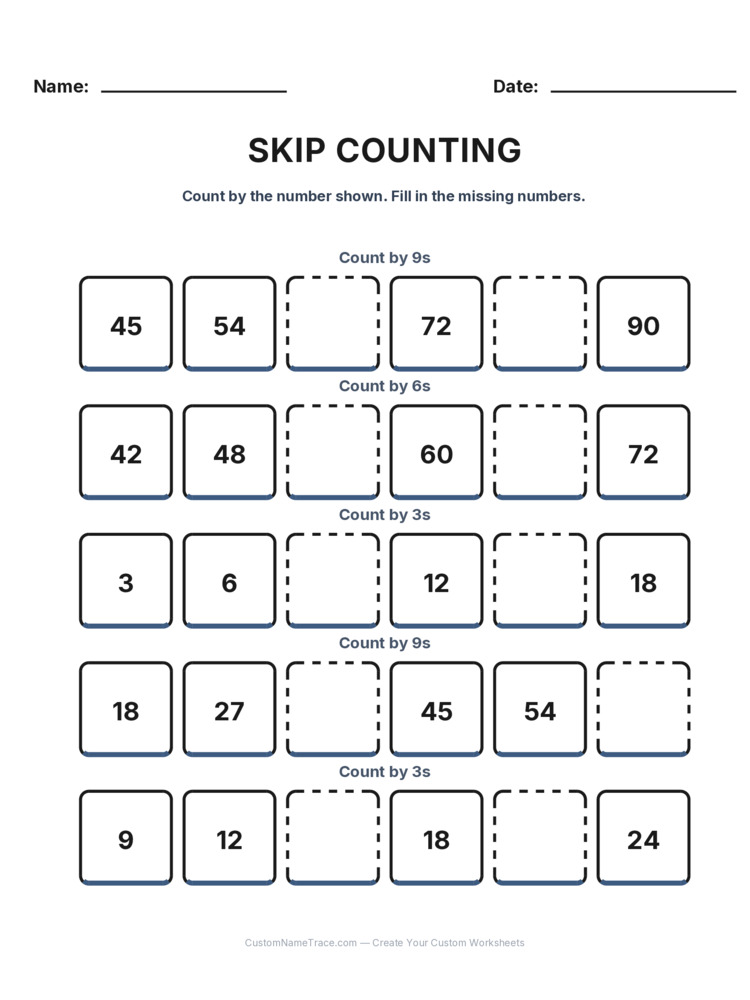
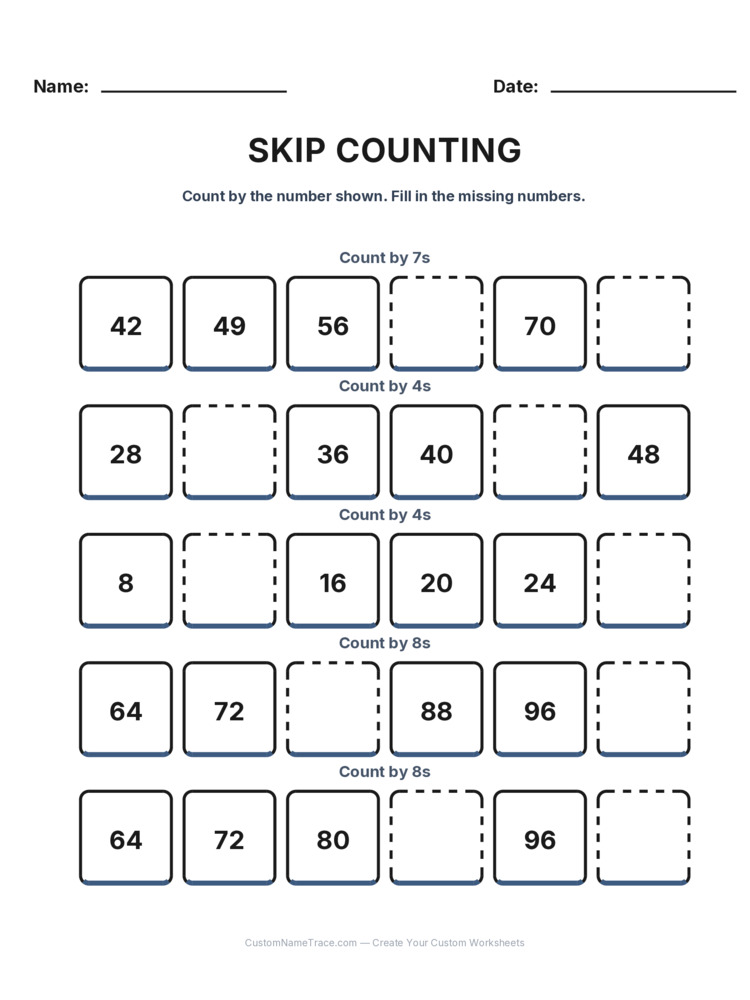
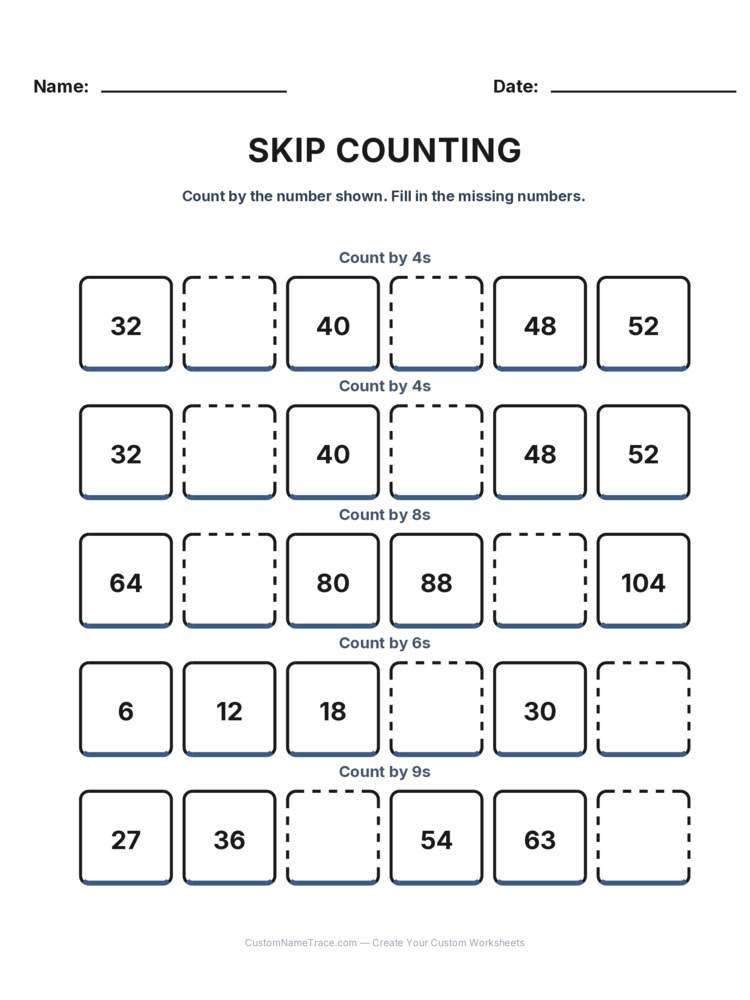
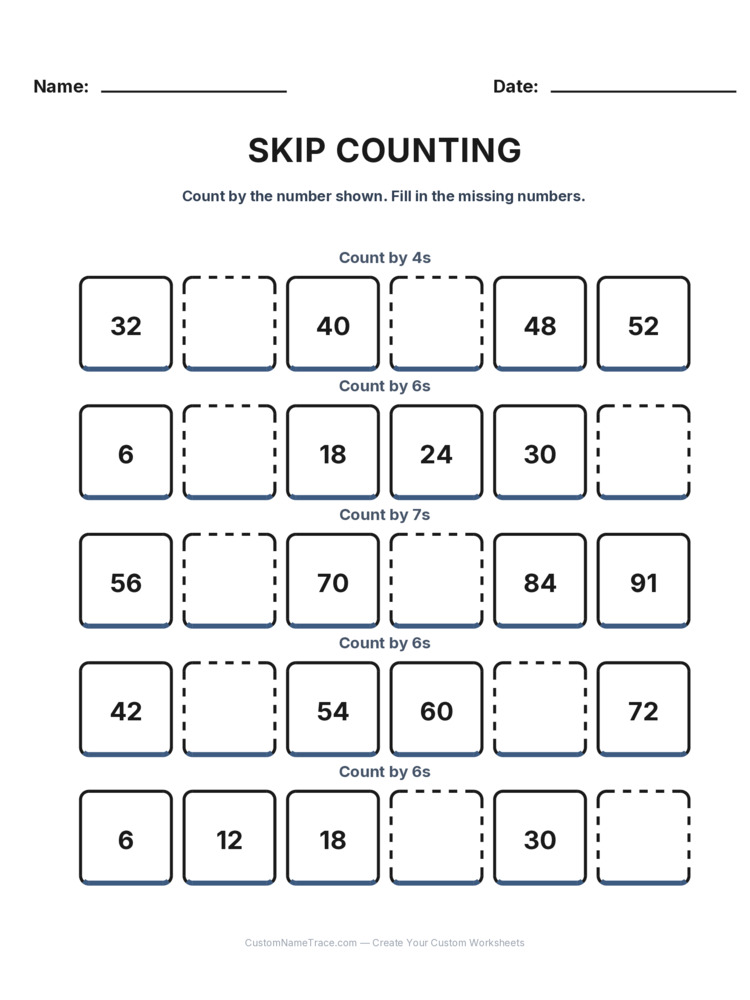
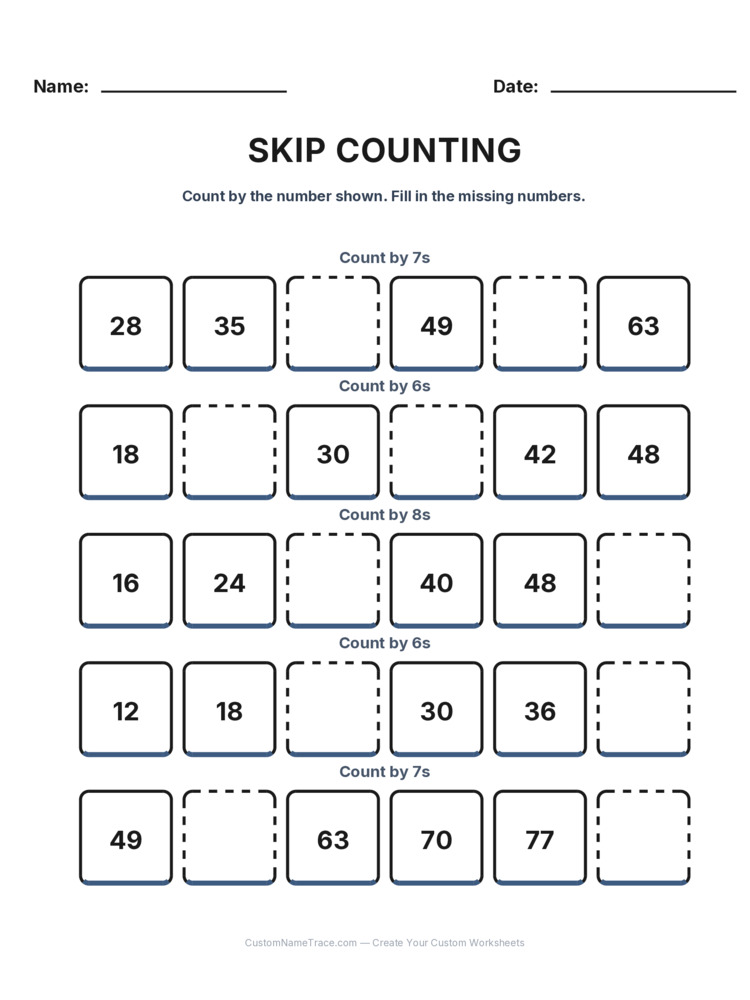
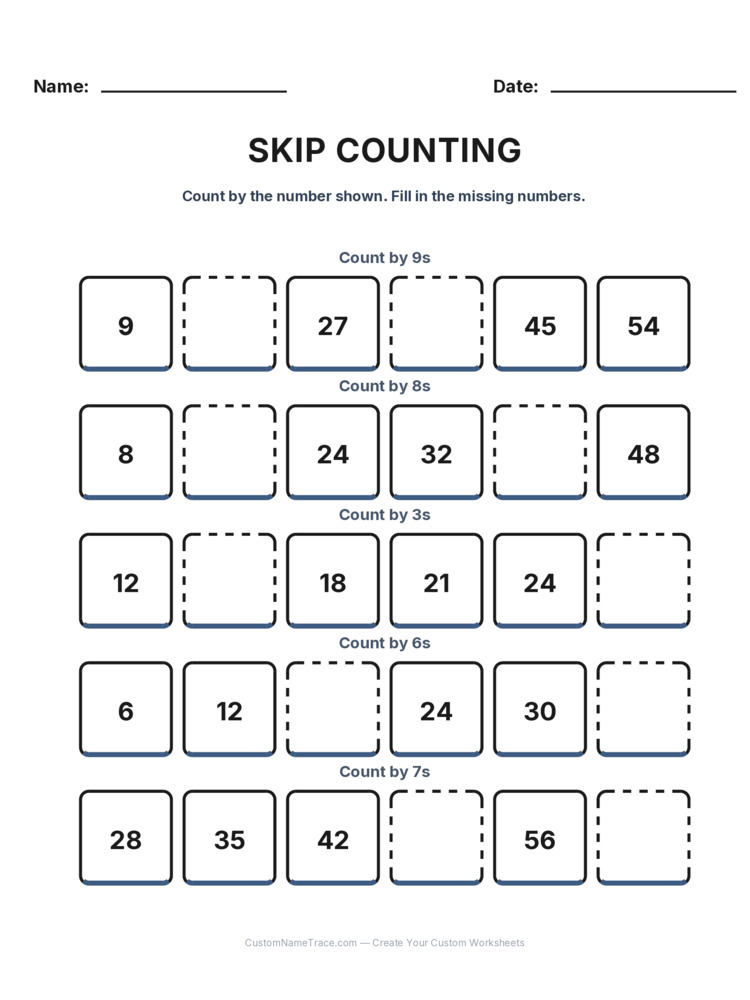
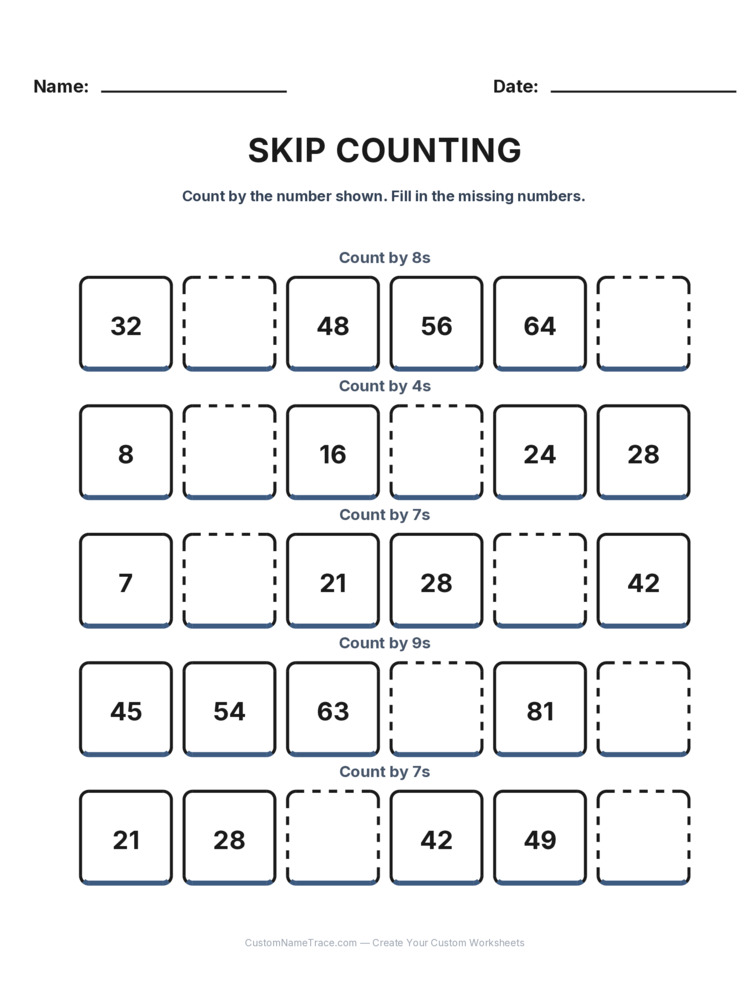
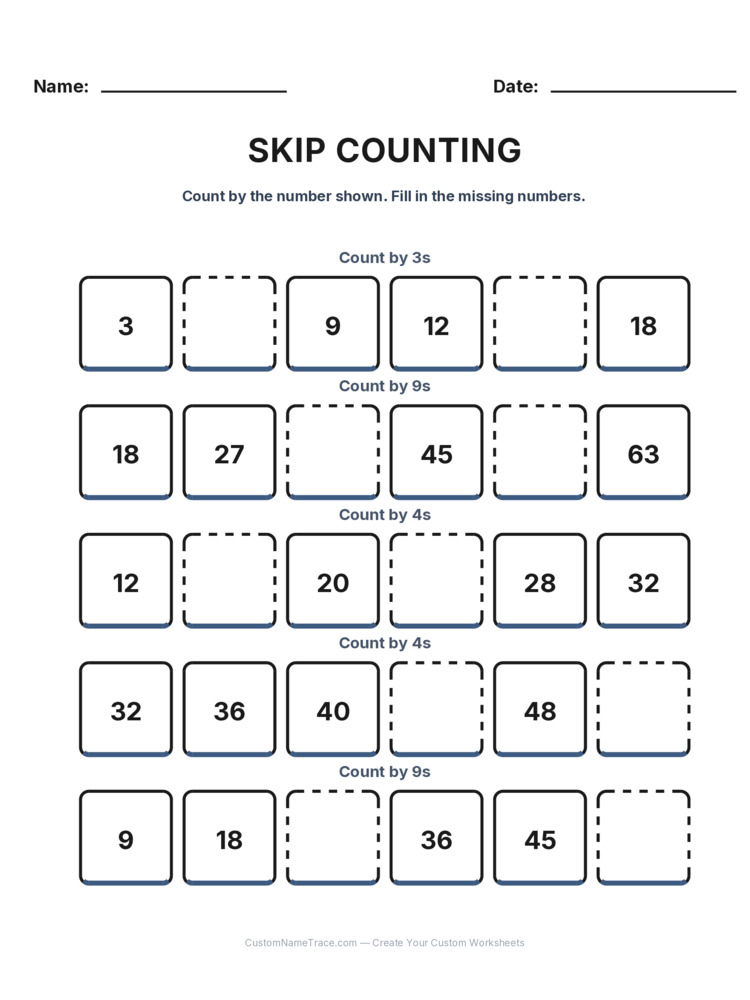
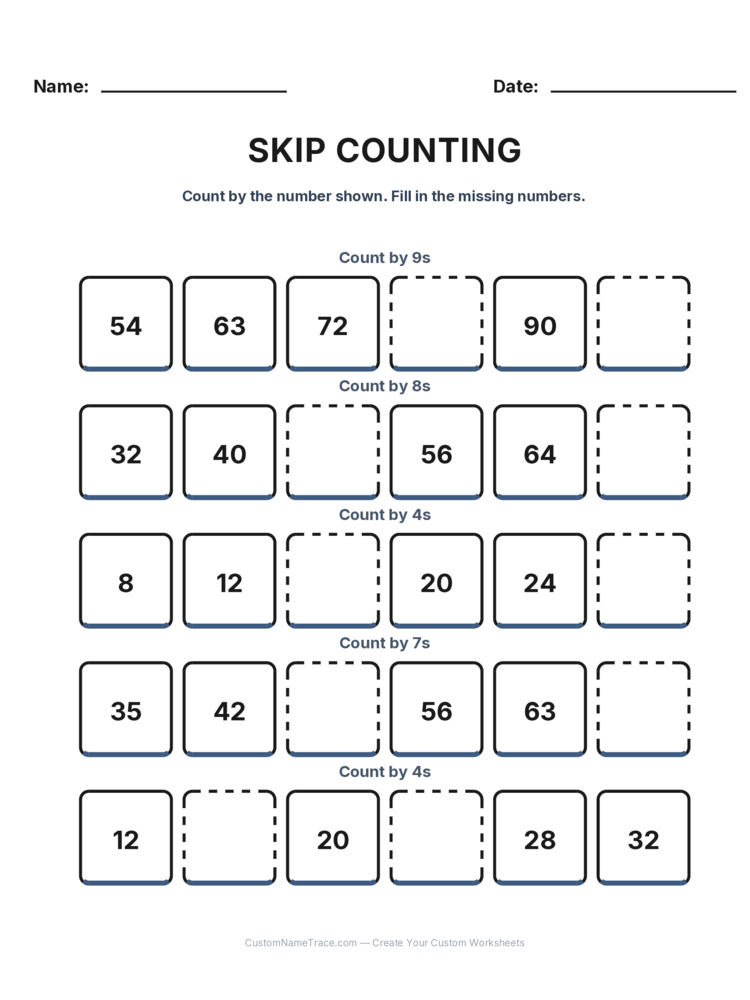
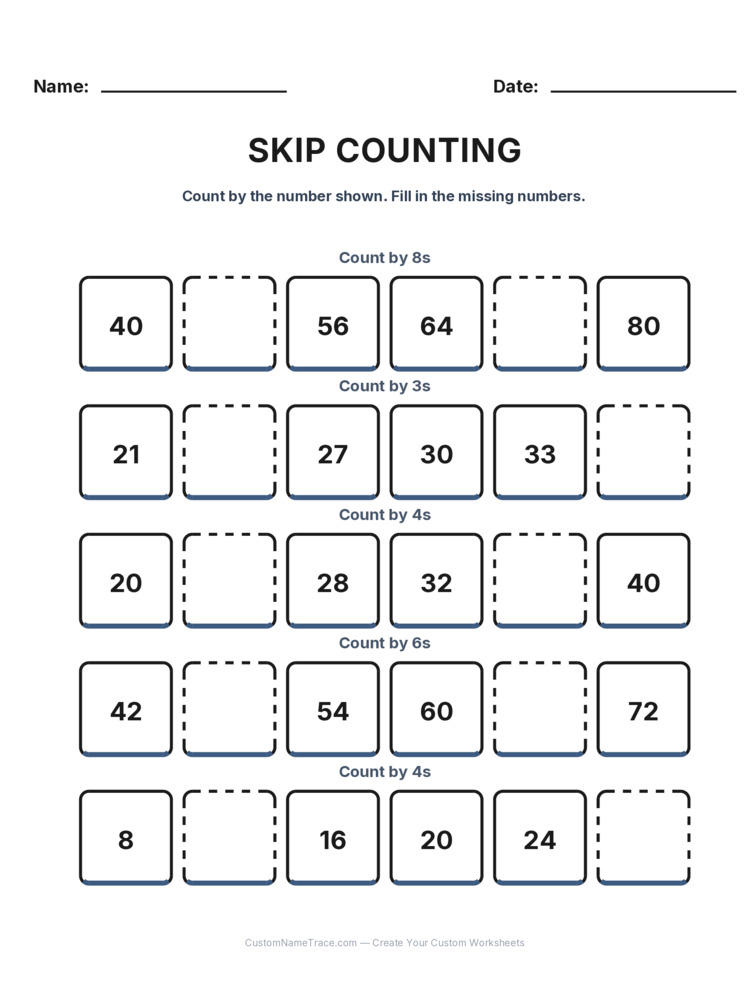
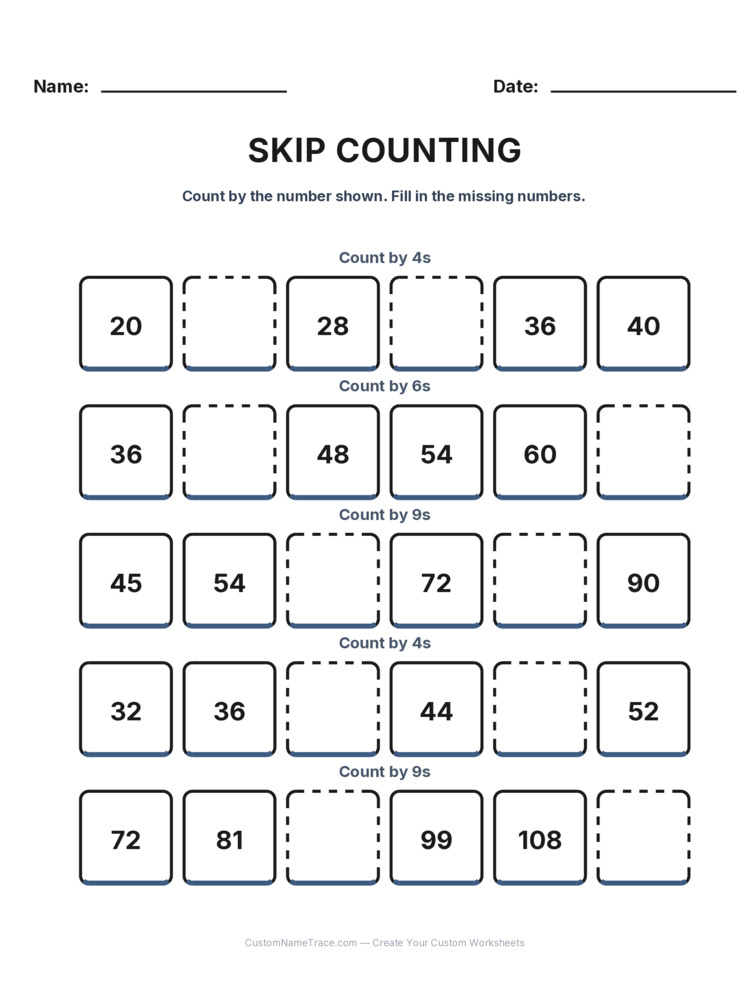
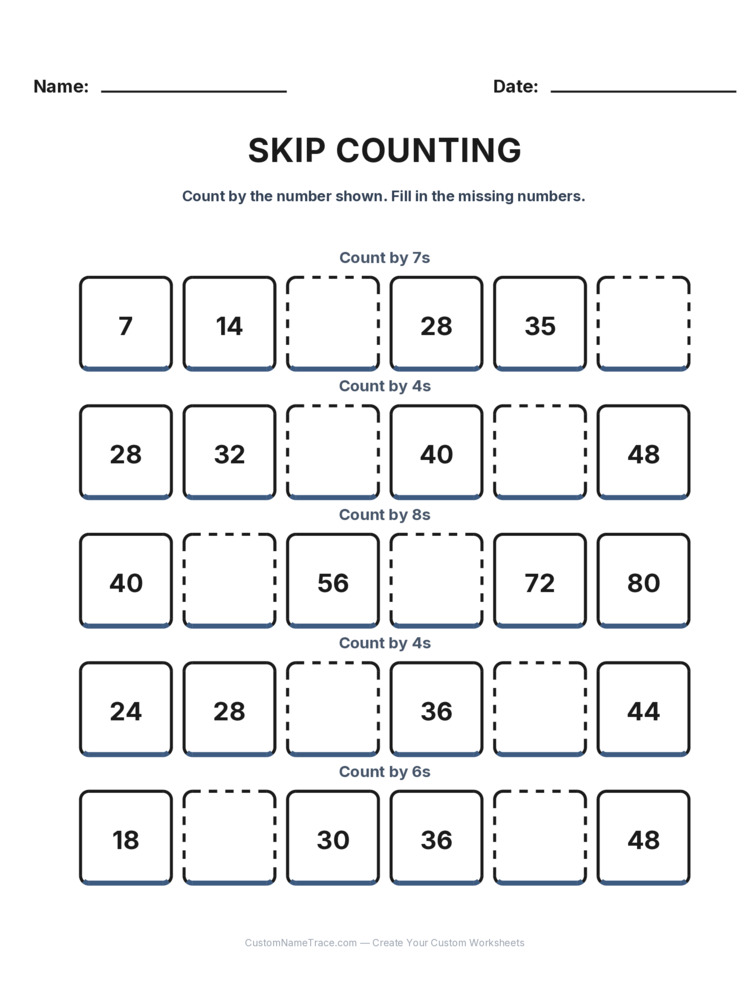
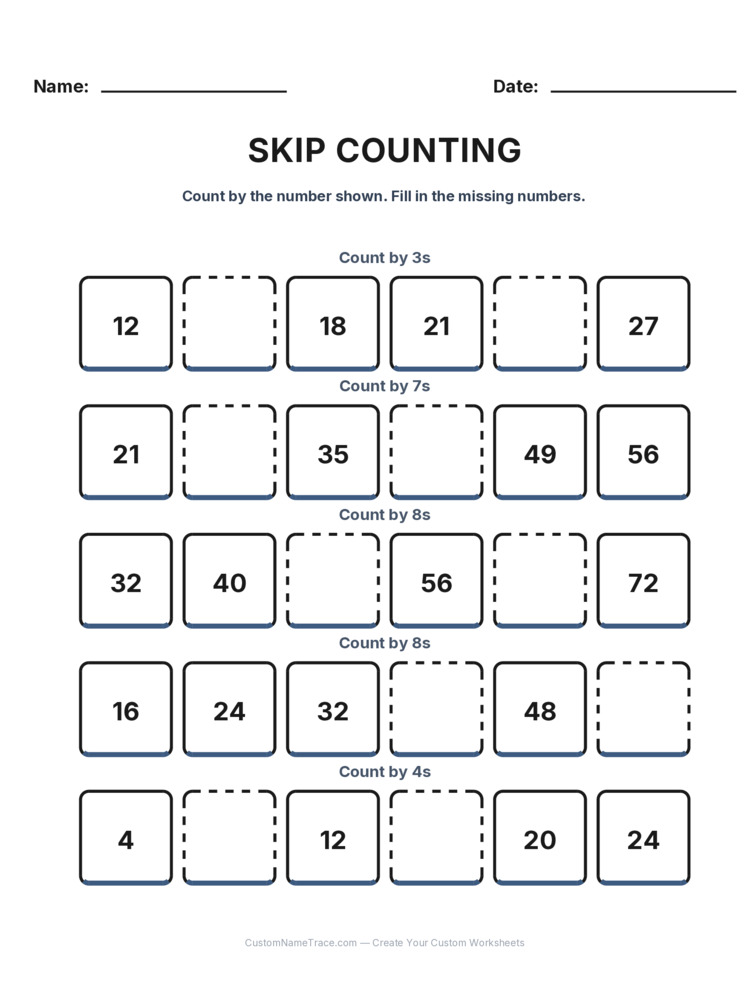
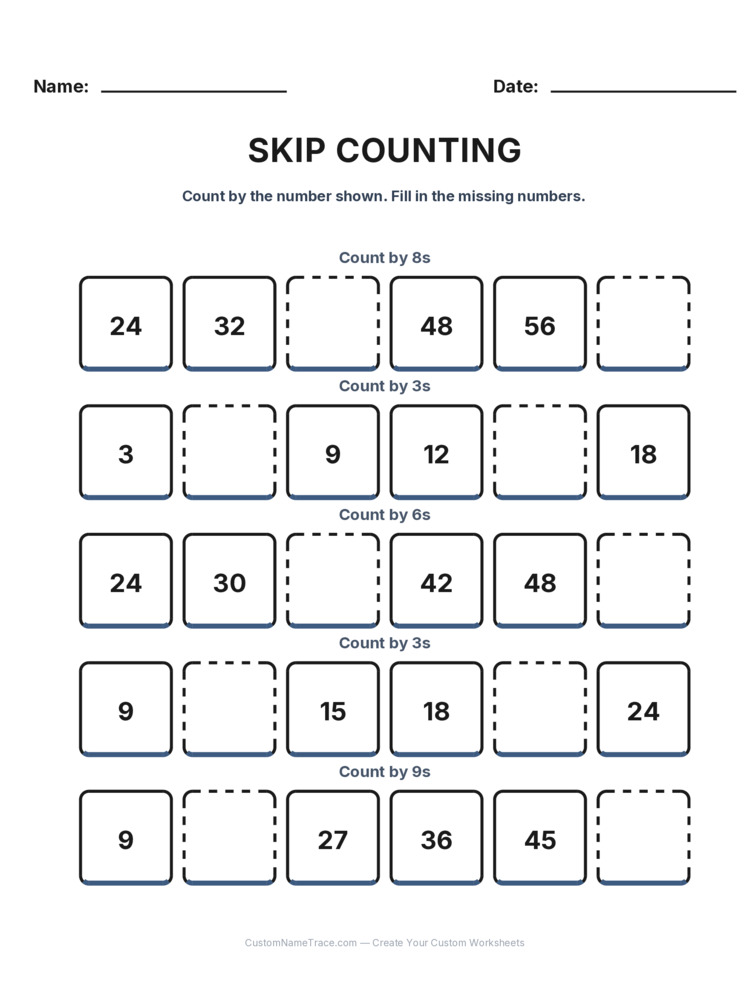
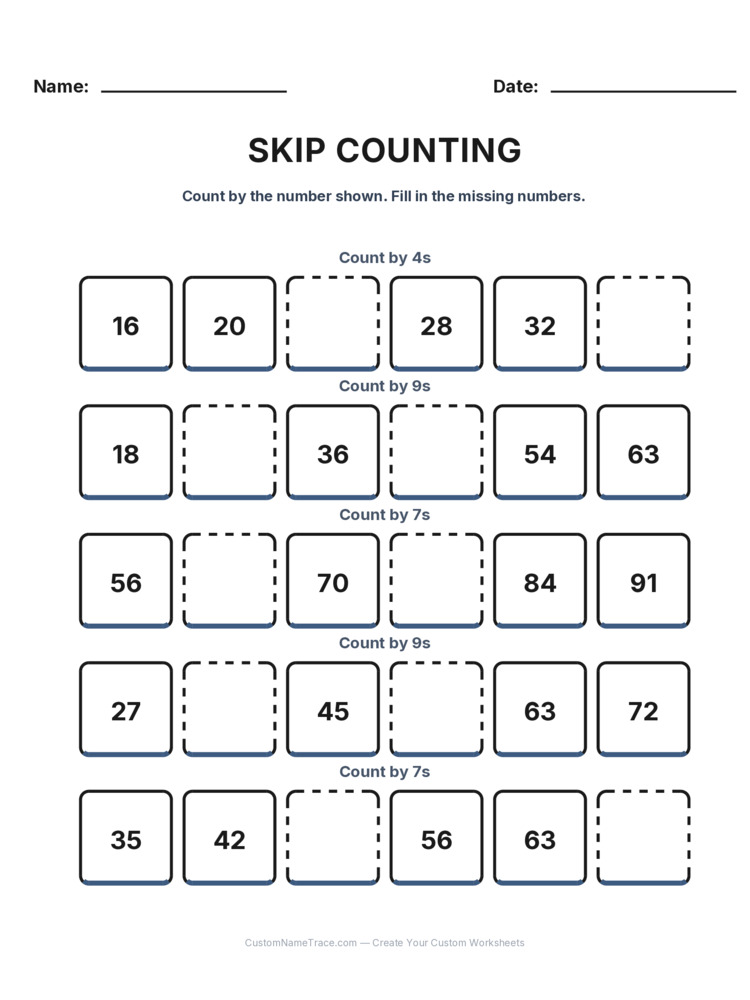
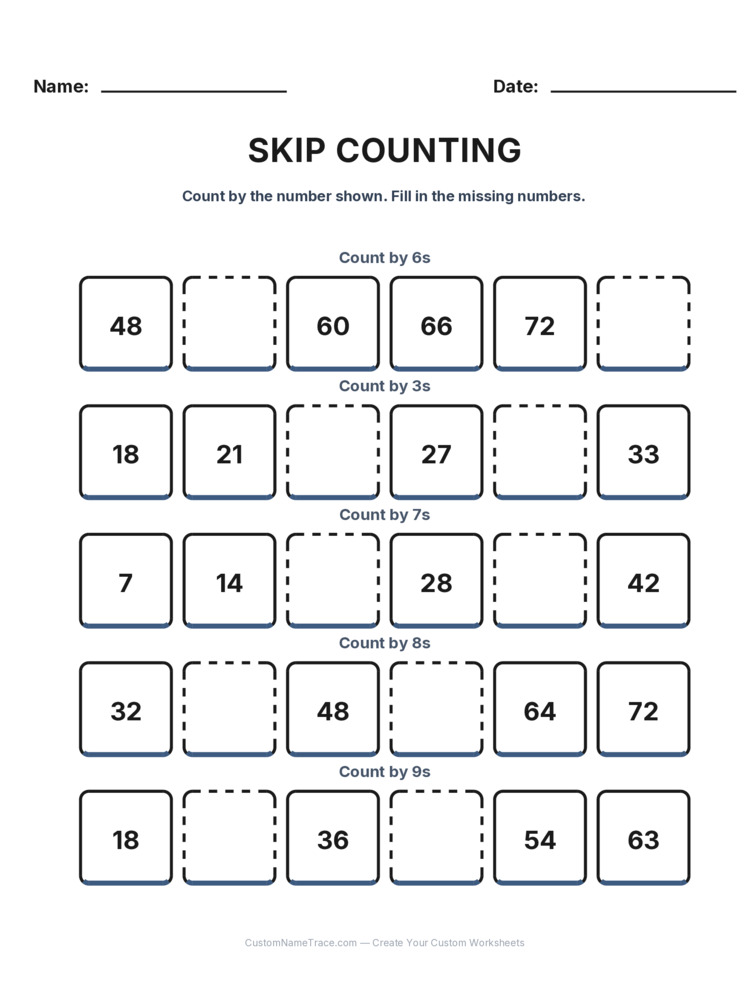
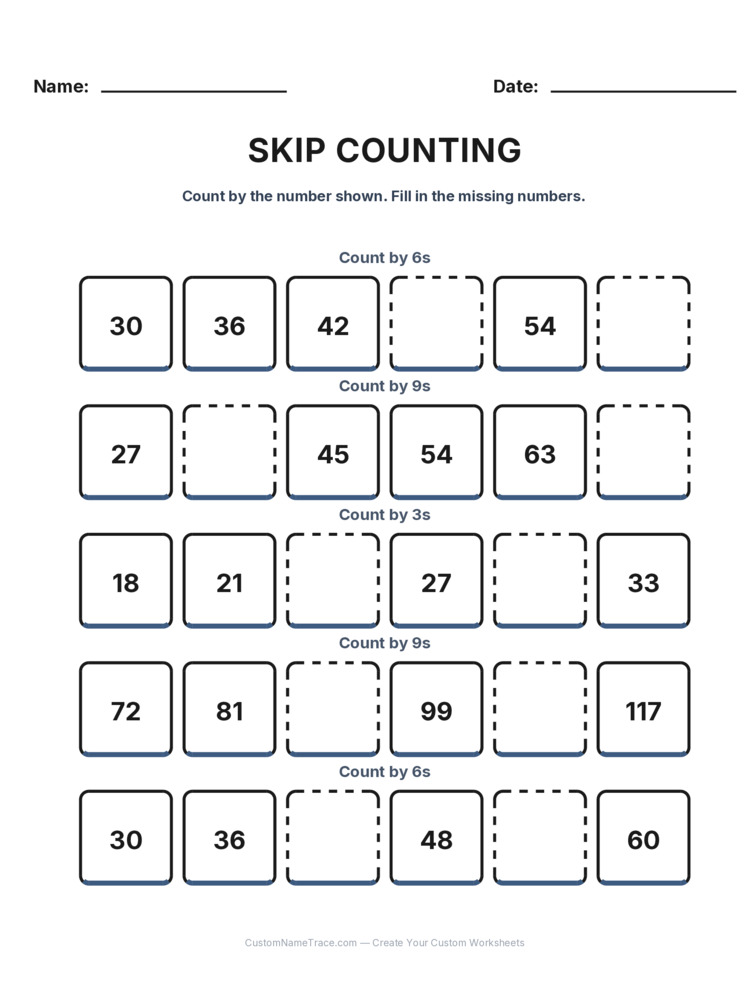
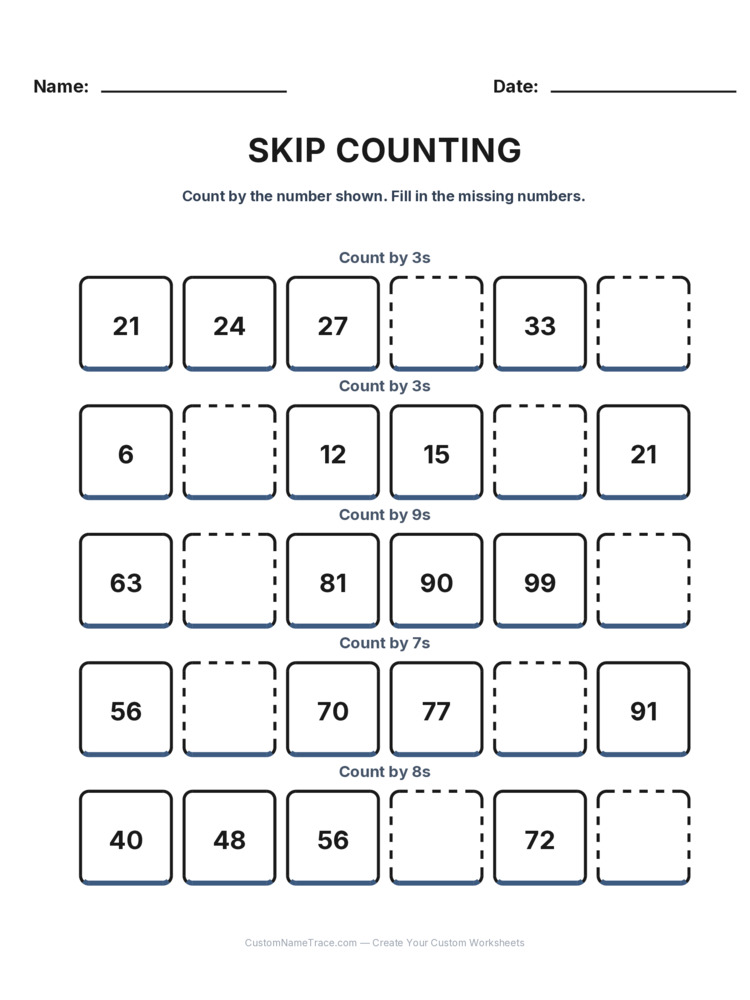
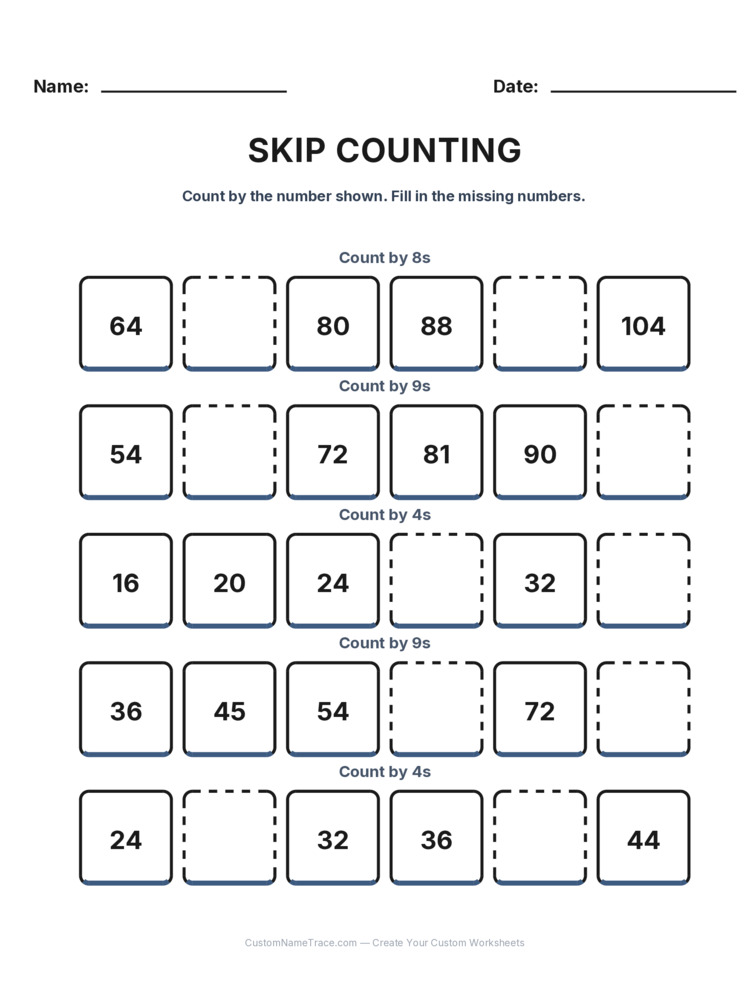
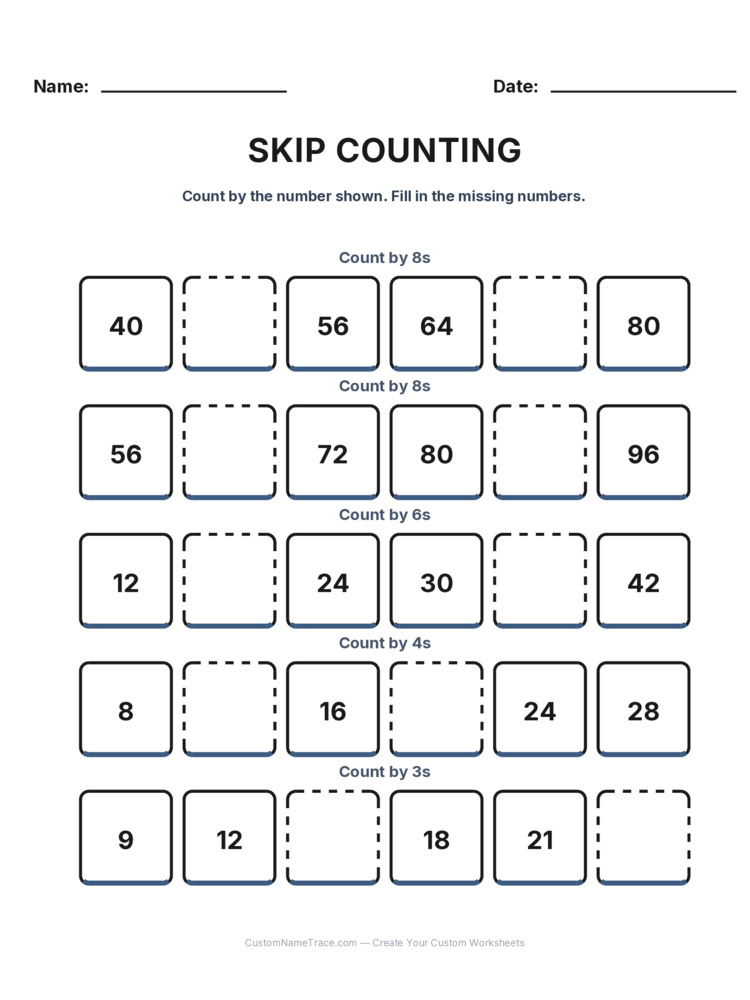
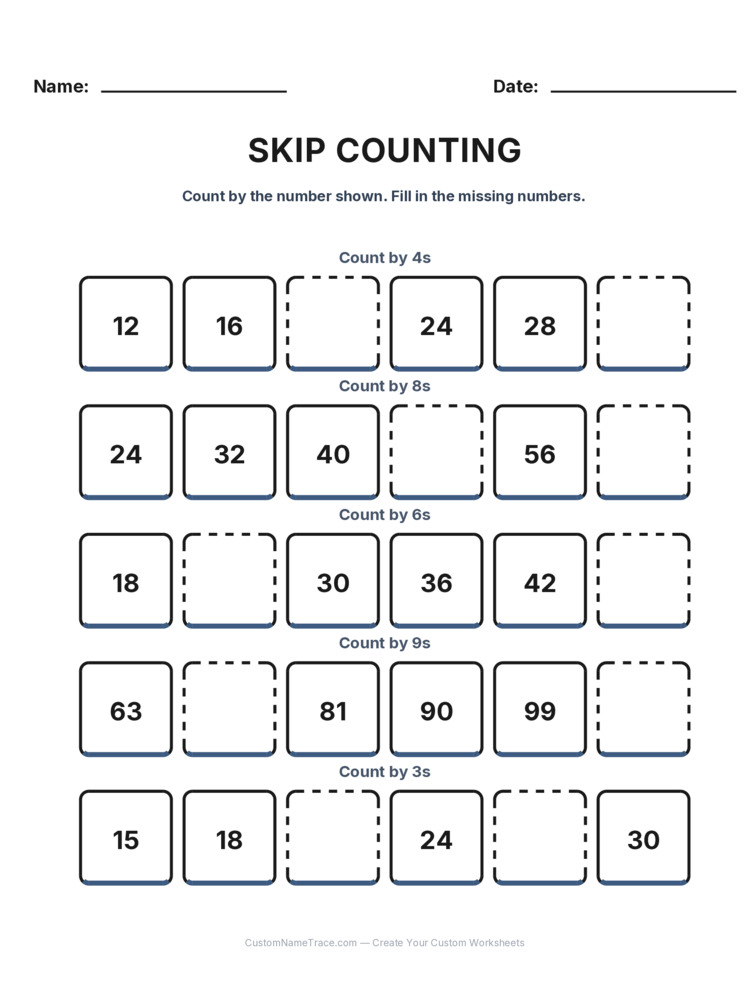
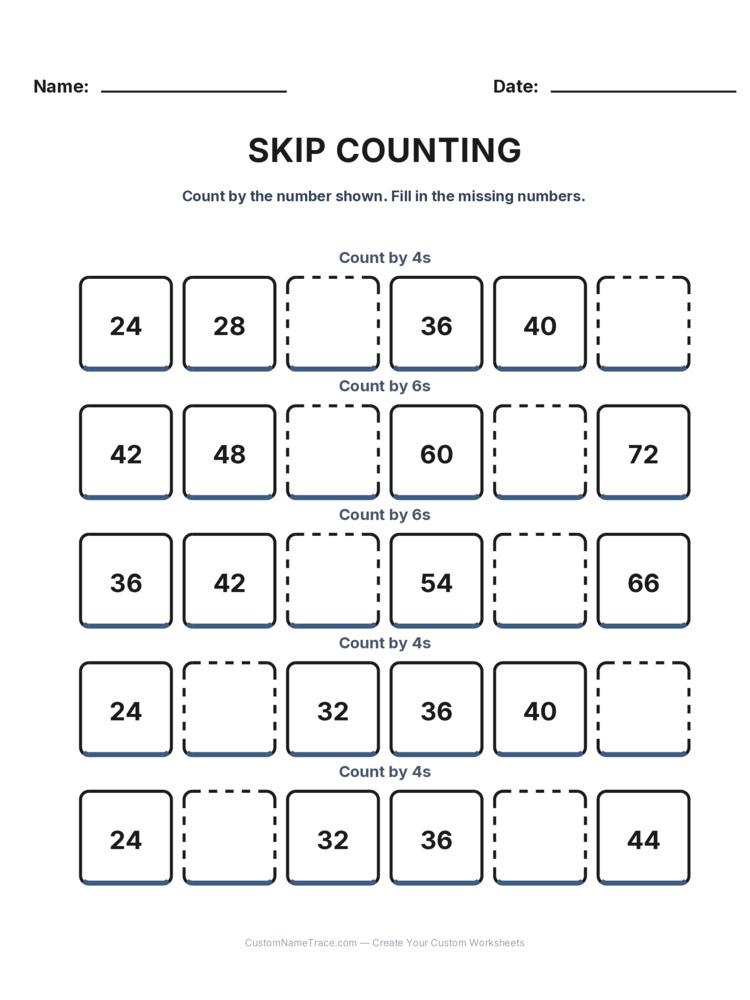
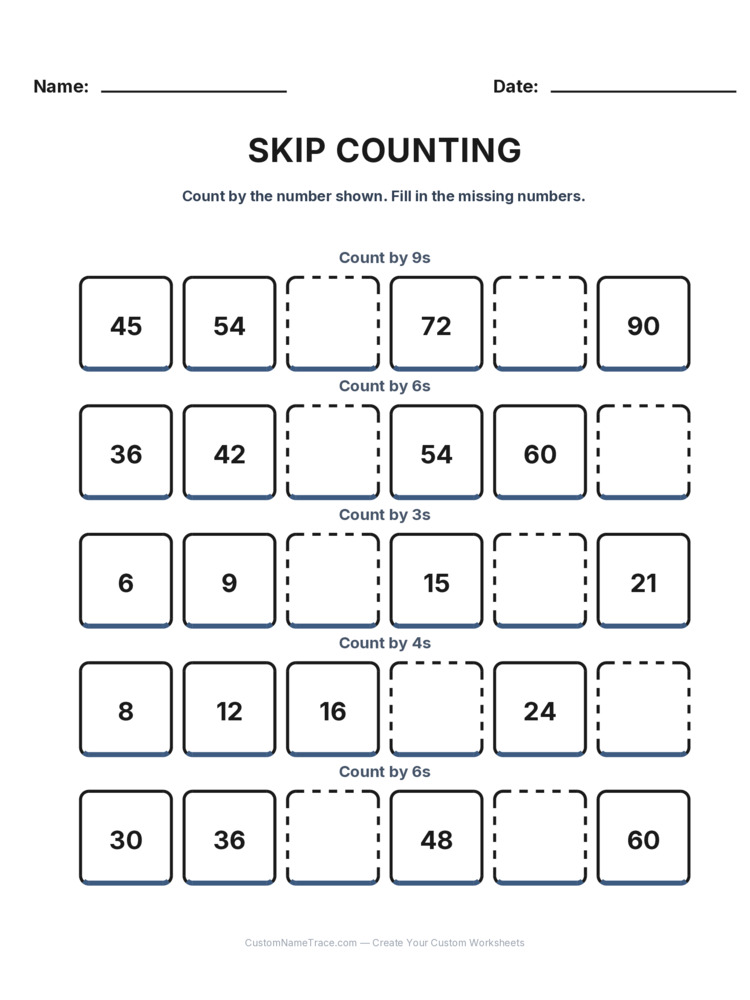
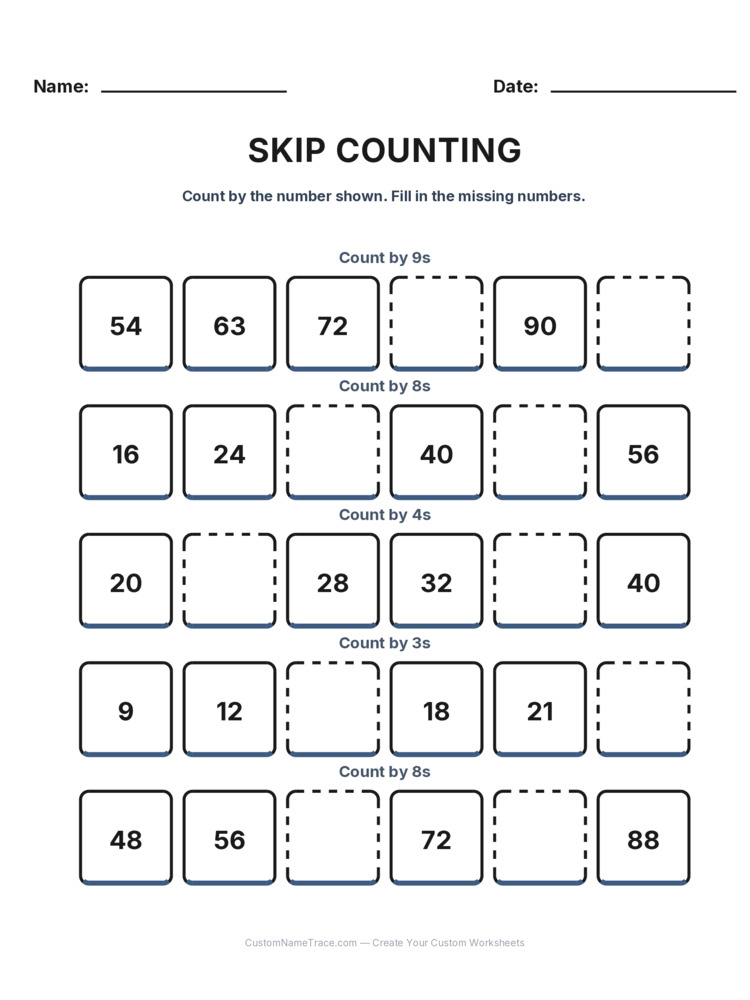
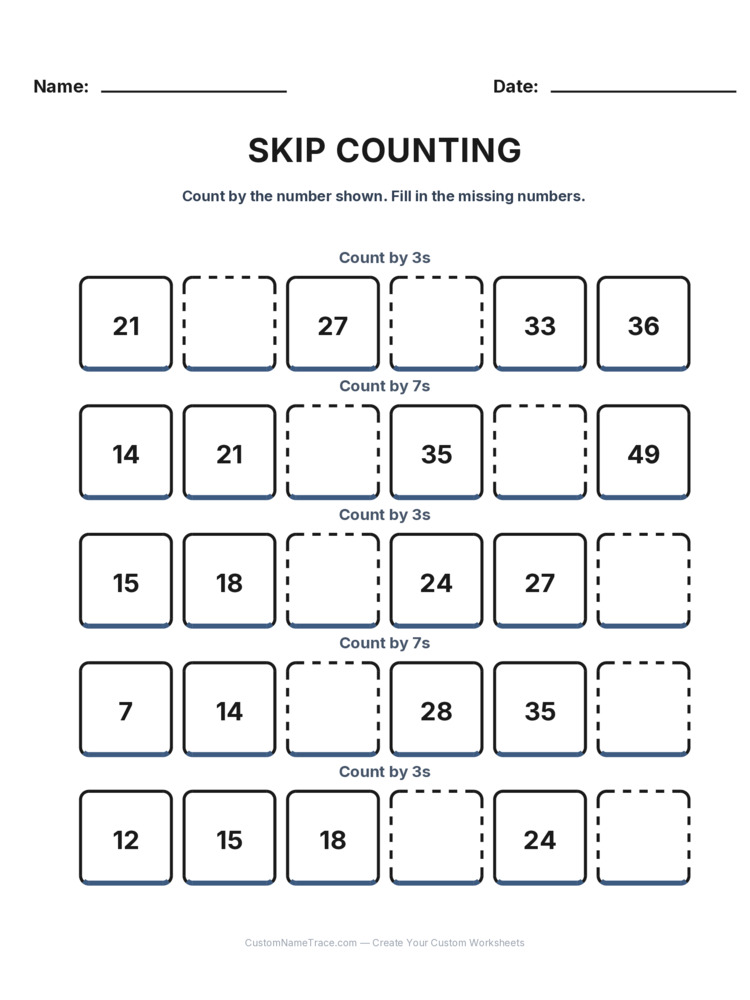
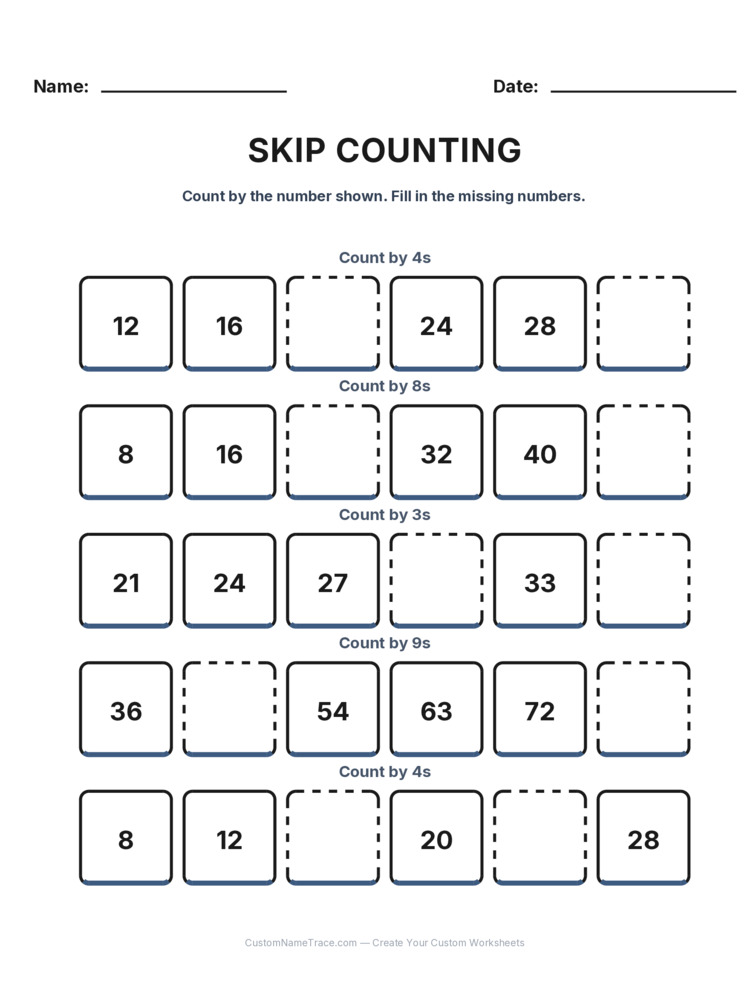
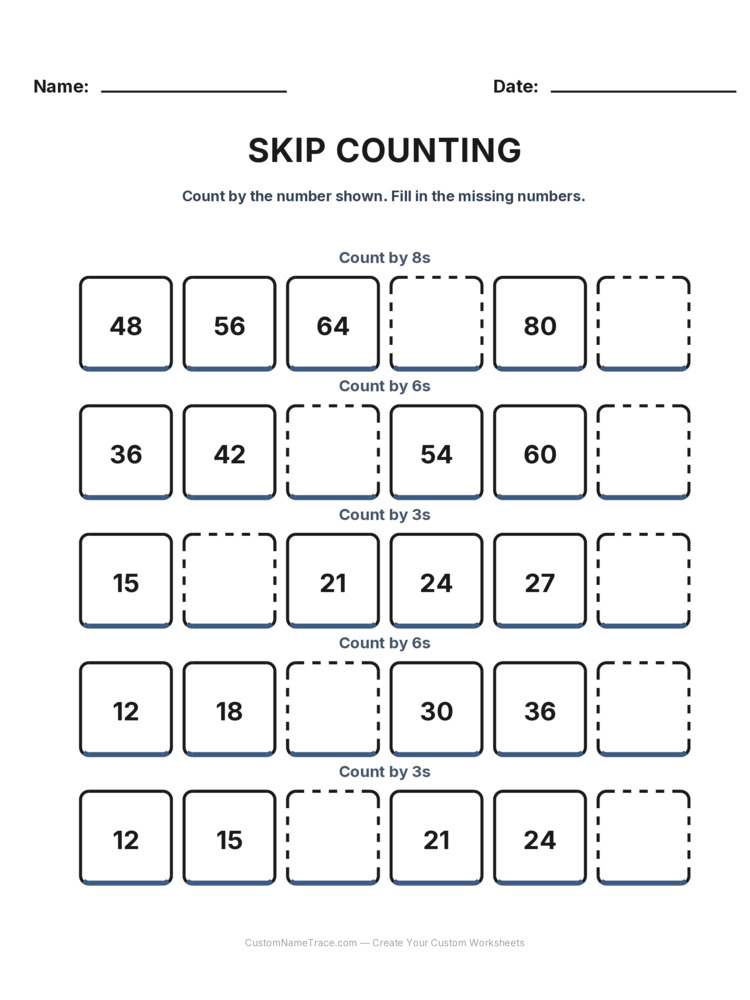
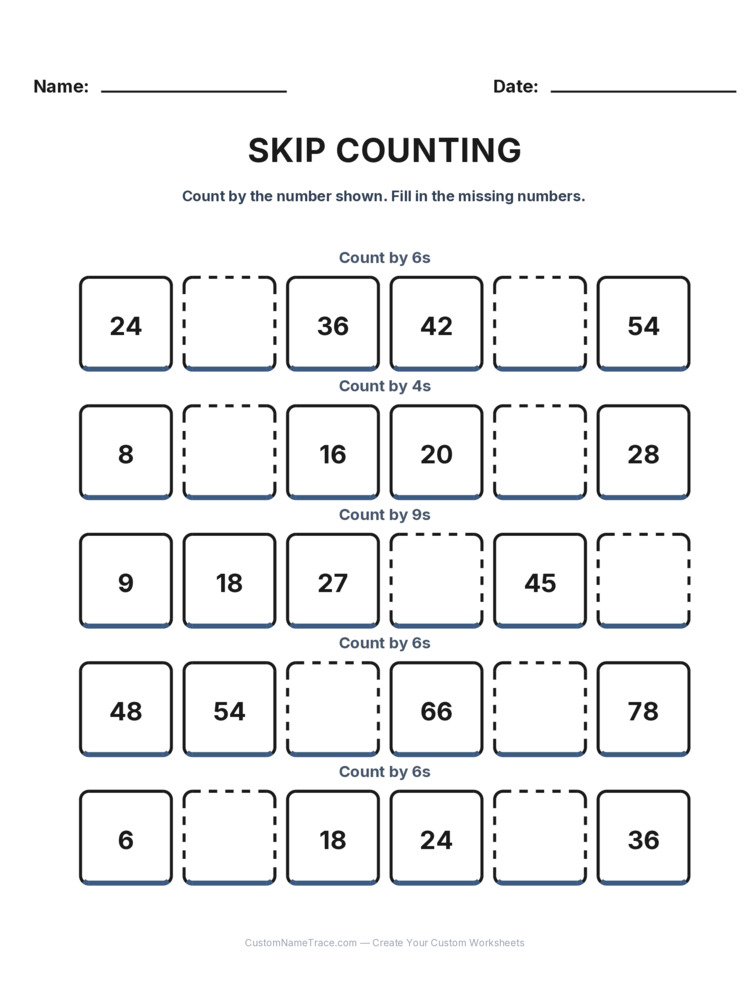
Skip Counting, harder steps
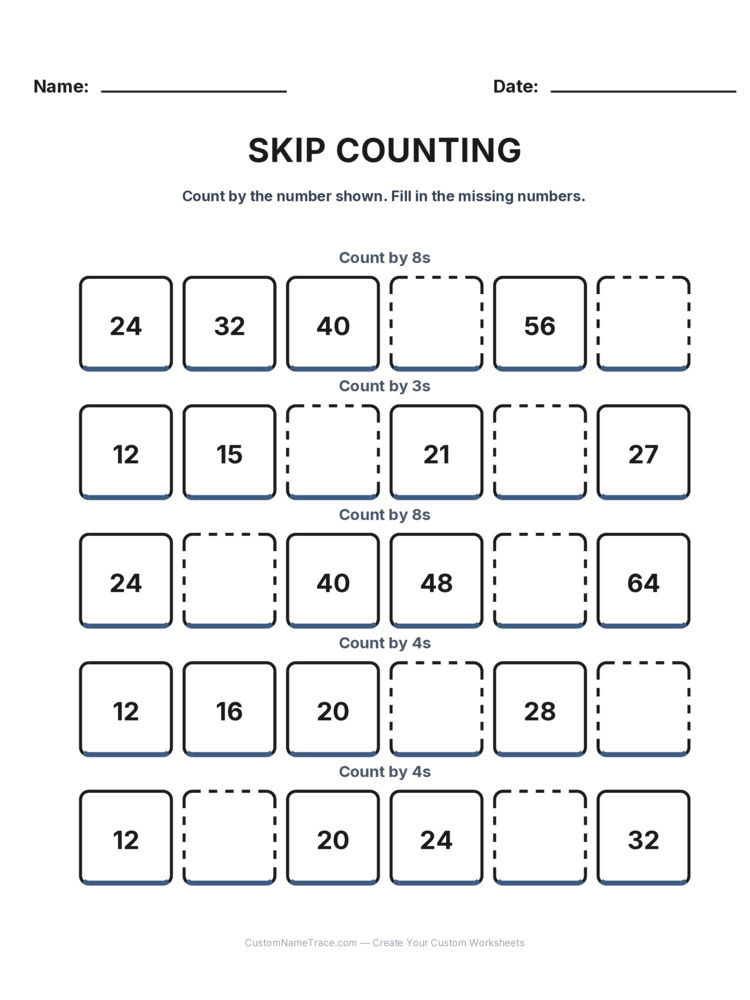
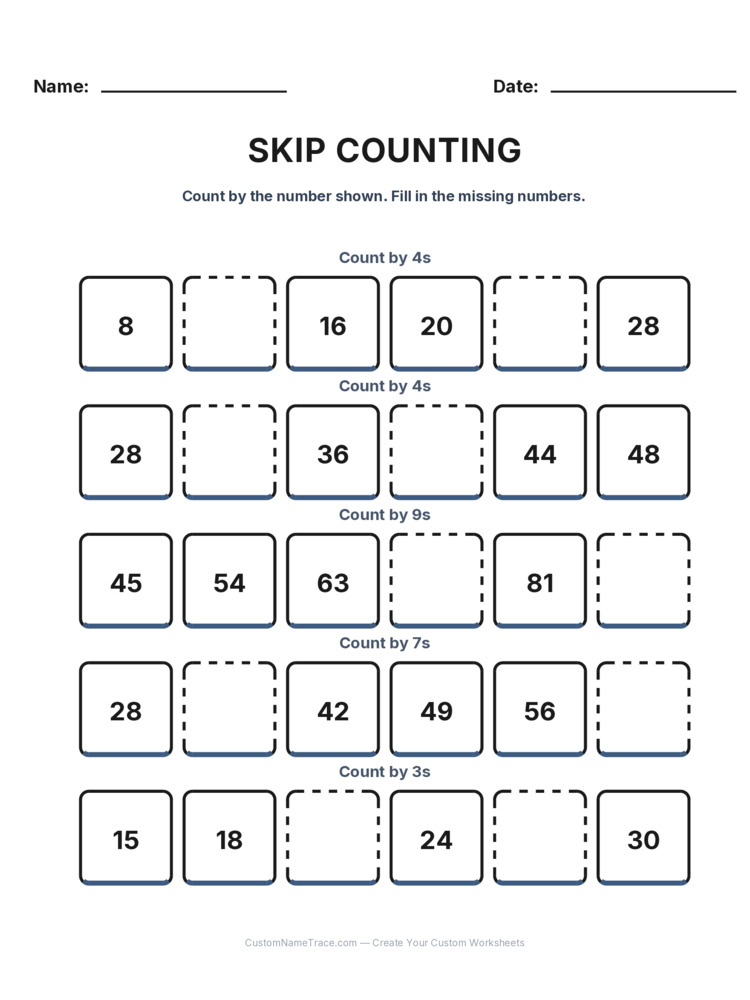
The same Skip Counting format from Grade 1 returns here with less obvious step sizes (3s, 4s, 6s, 7s, 8s, and 9s instead of 2s, 5s, and 10s) — the reasoning skill is identical, but without a skip-counting rhyme or an obviously visible pattern in the ones digit to lean on, a child has to actually track the step by subtracting between visible numbers rather than recognizing it instantly.
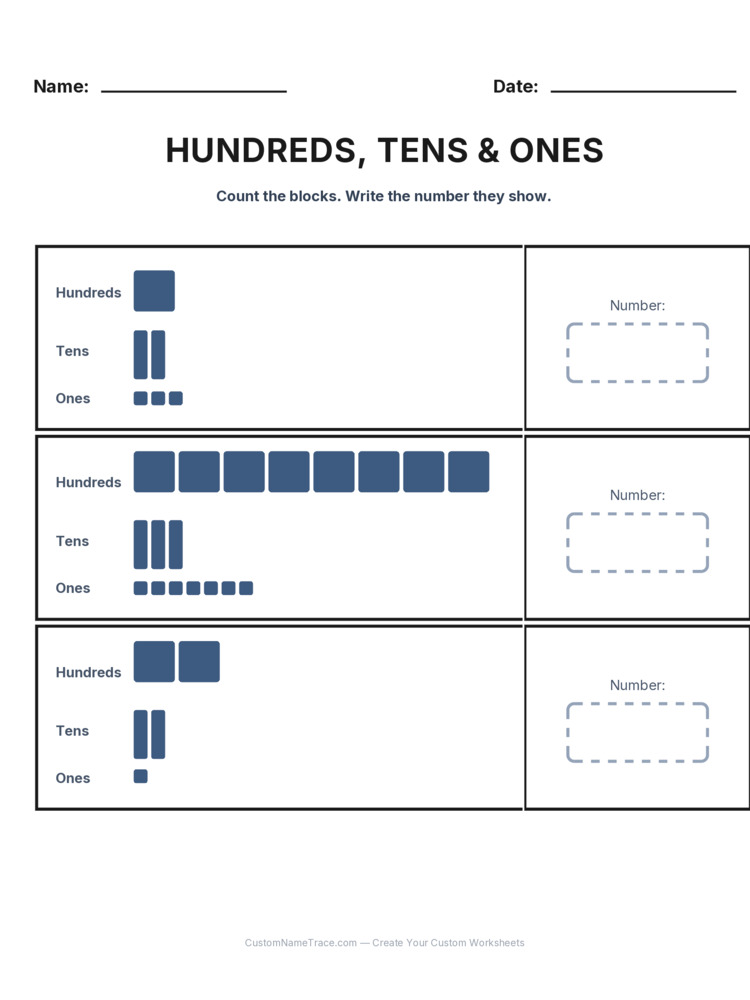
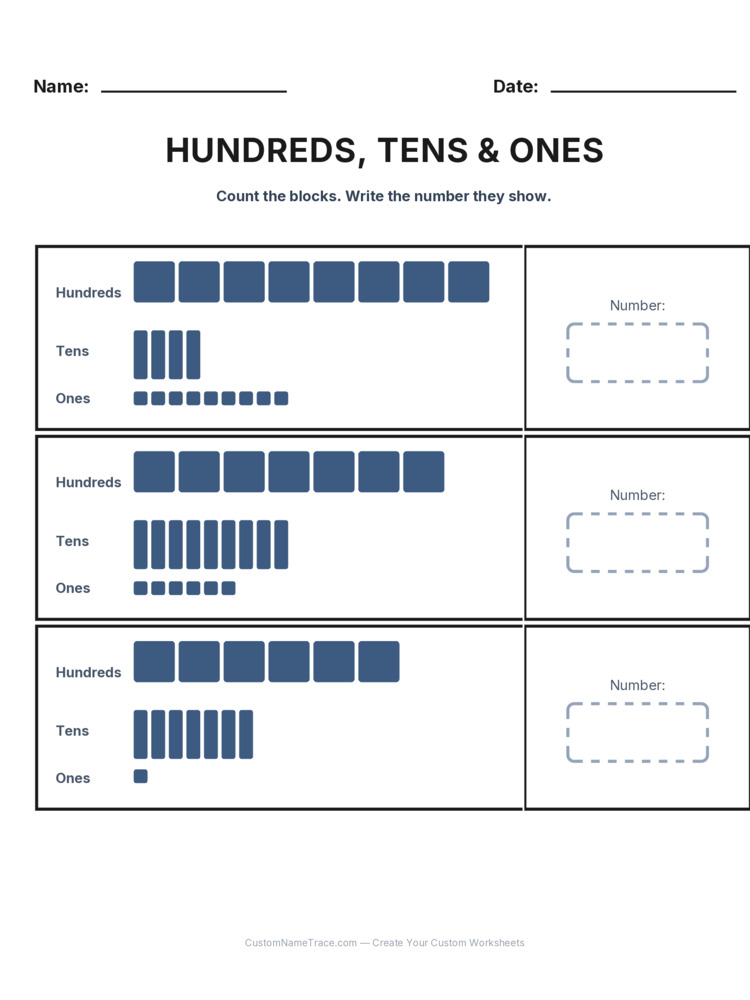
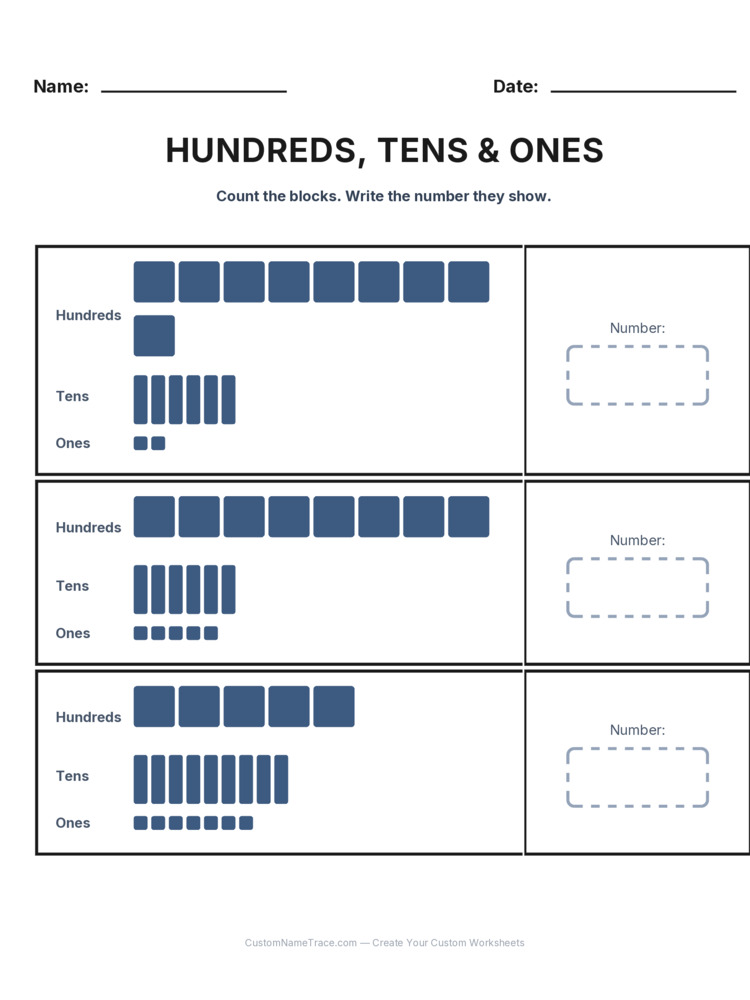
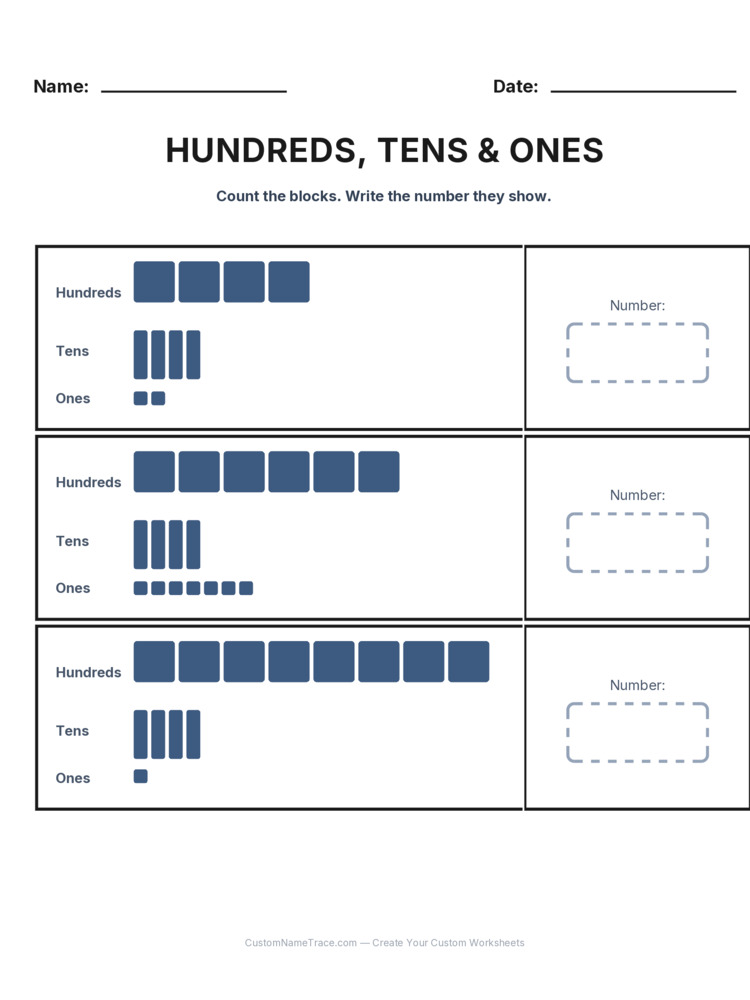
Hundreds, Tens & Ones
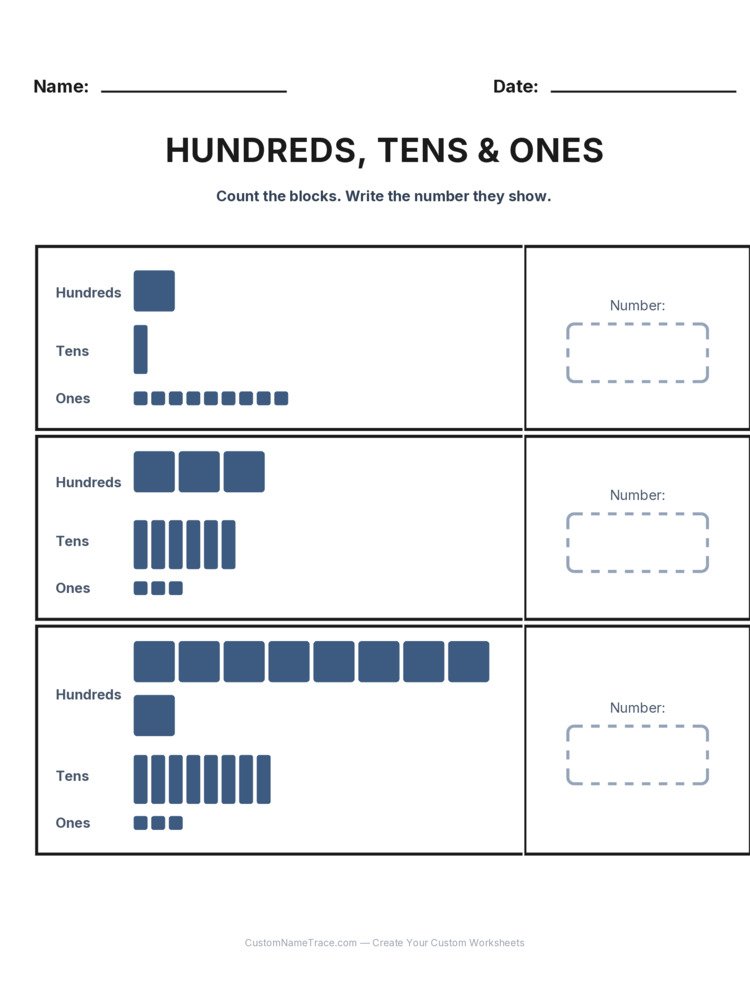
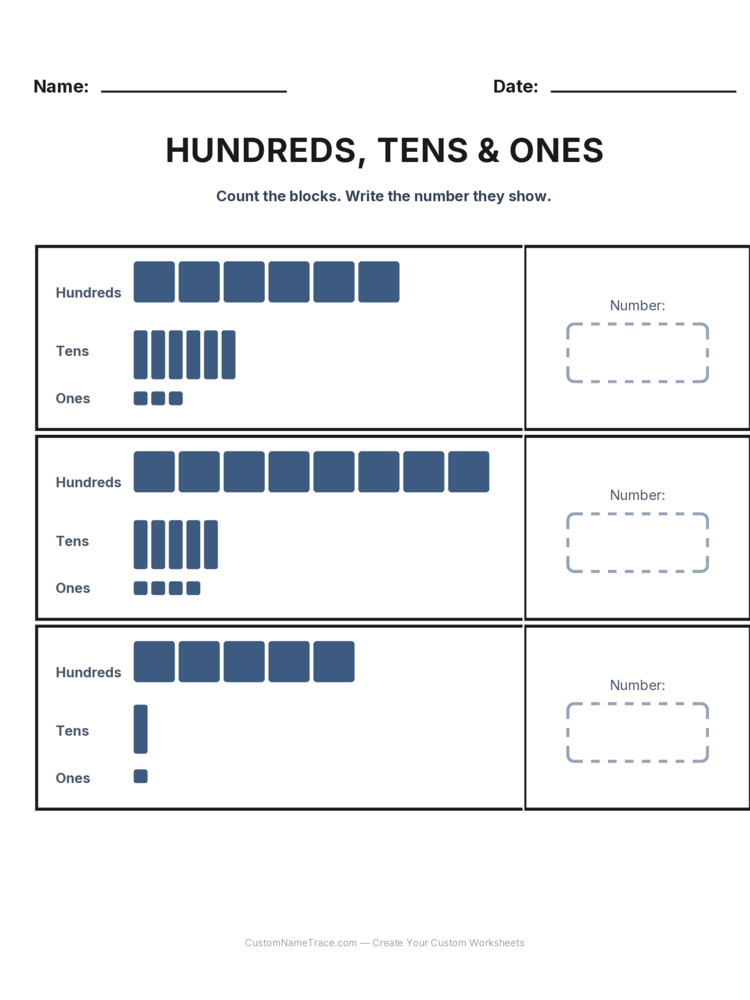
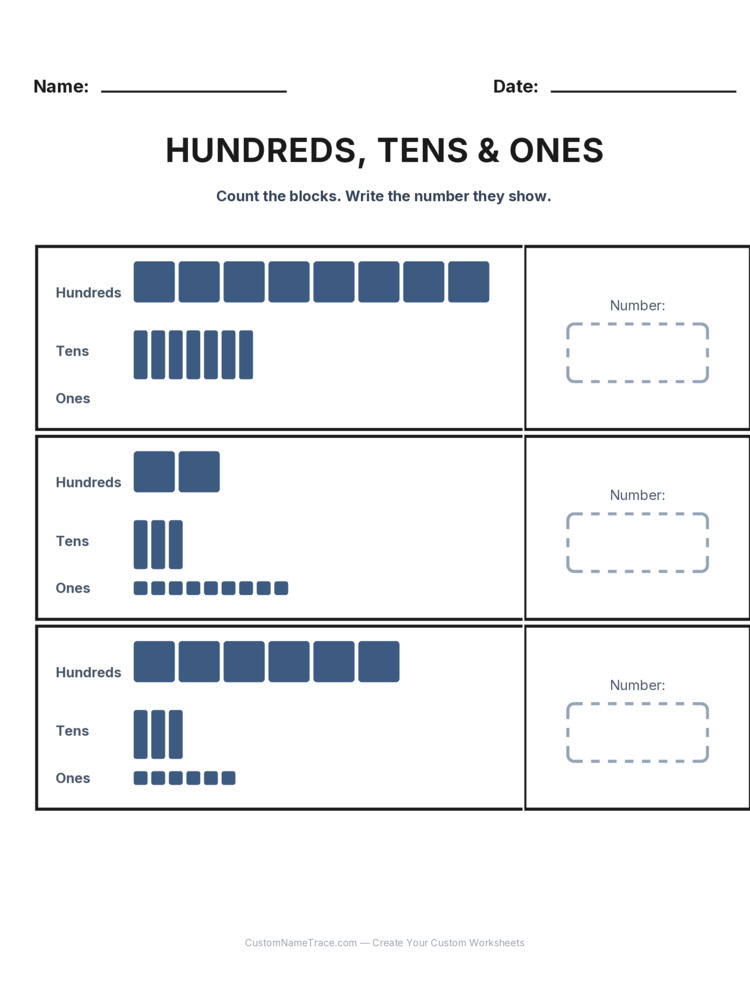
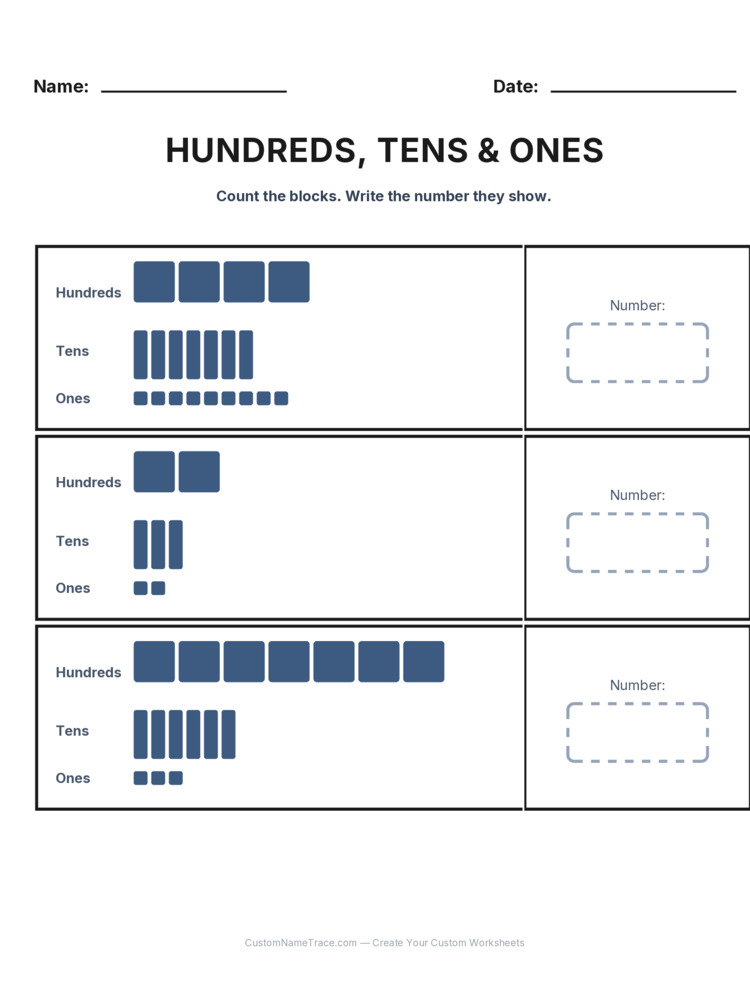
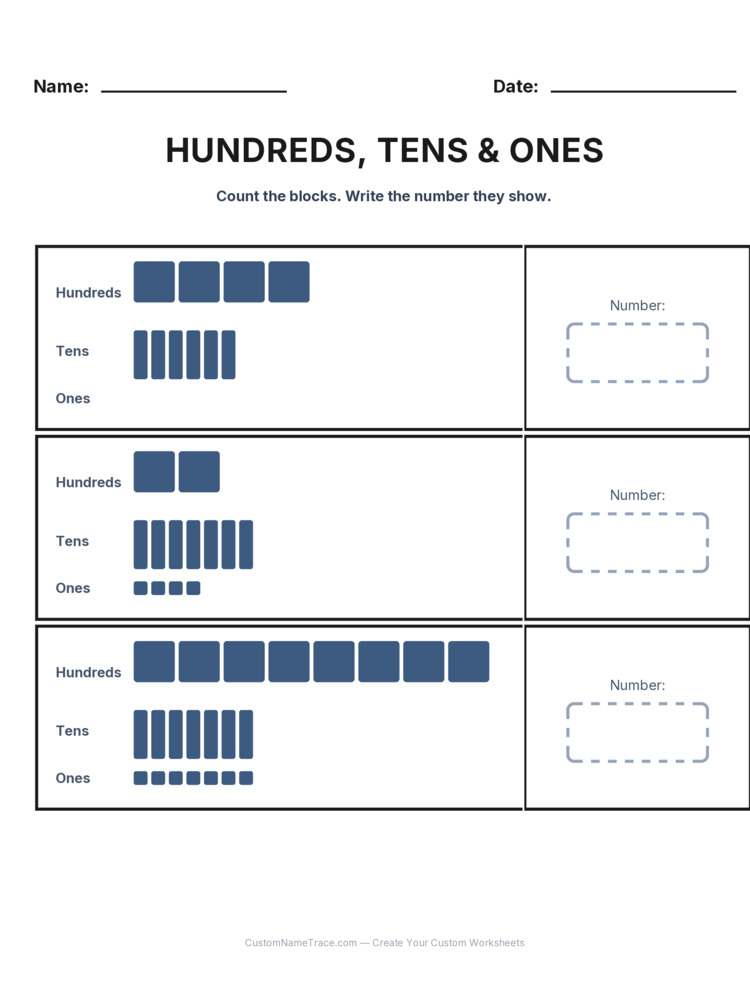
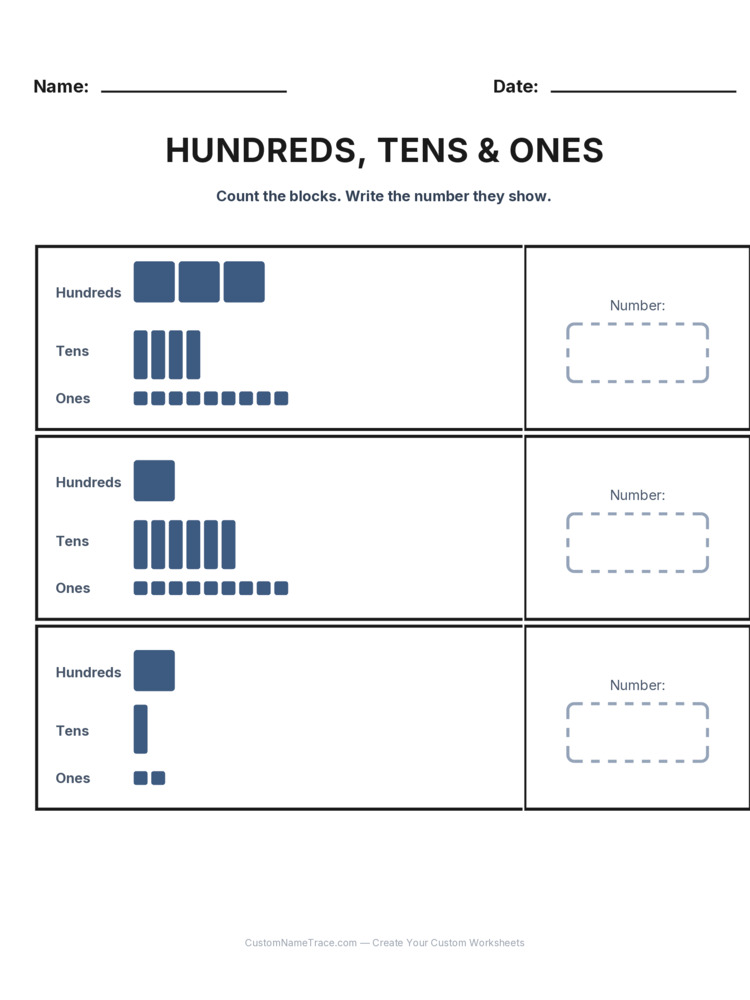
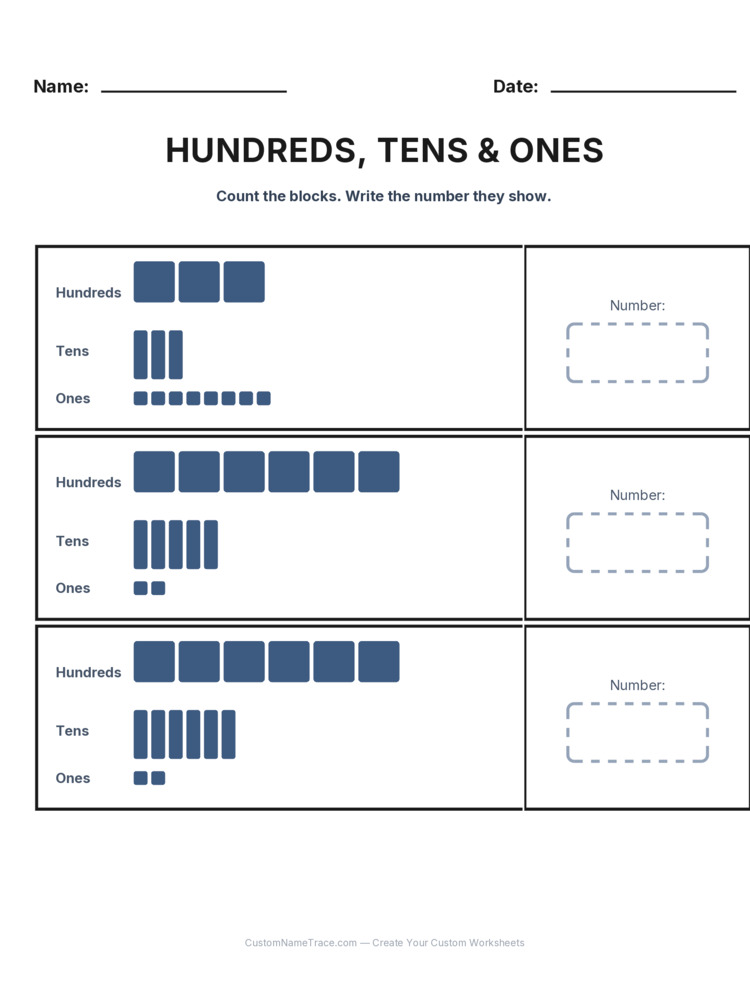
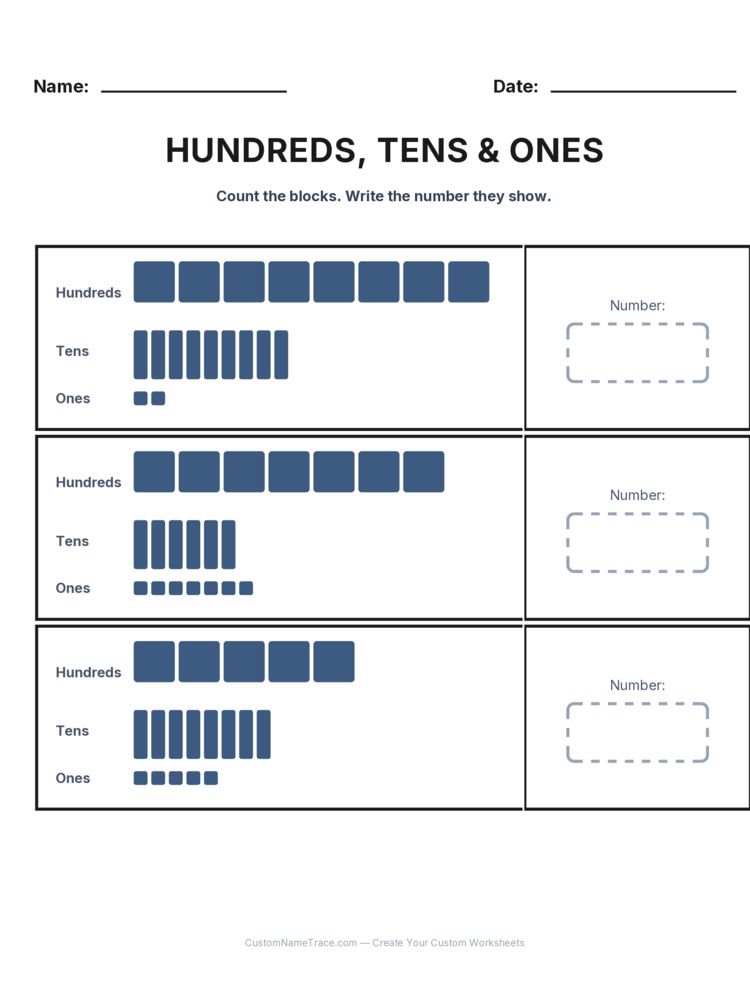
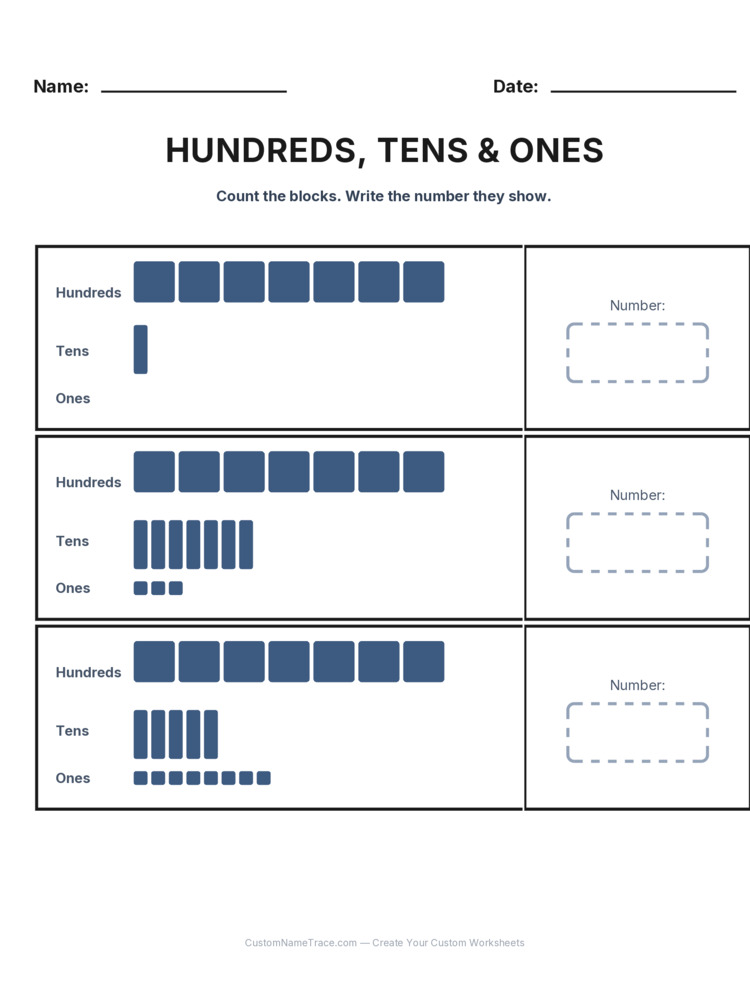
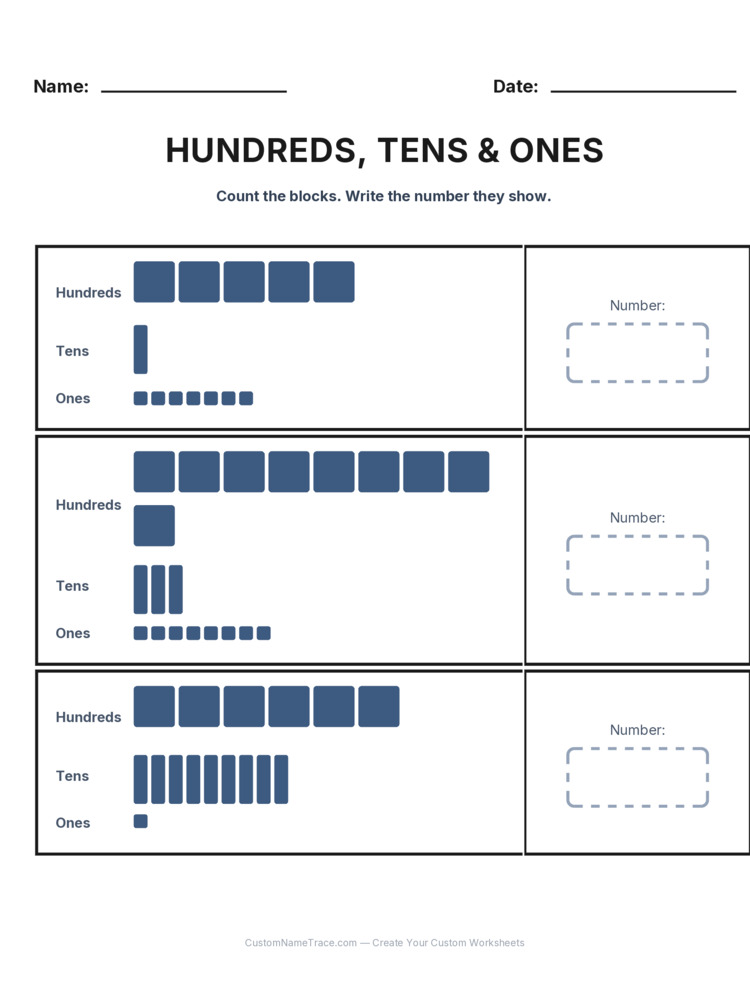
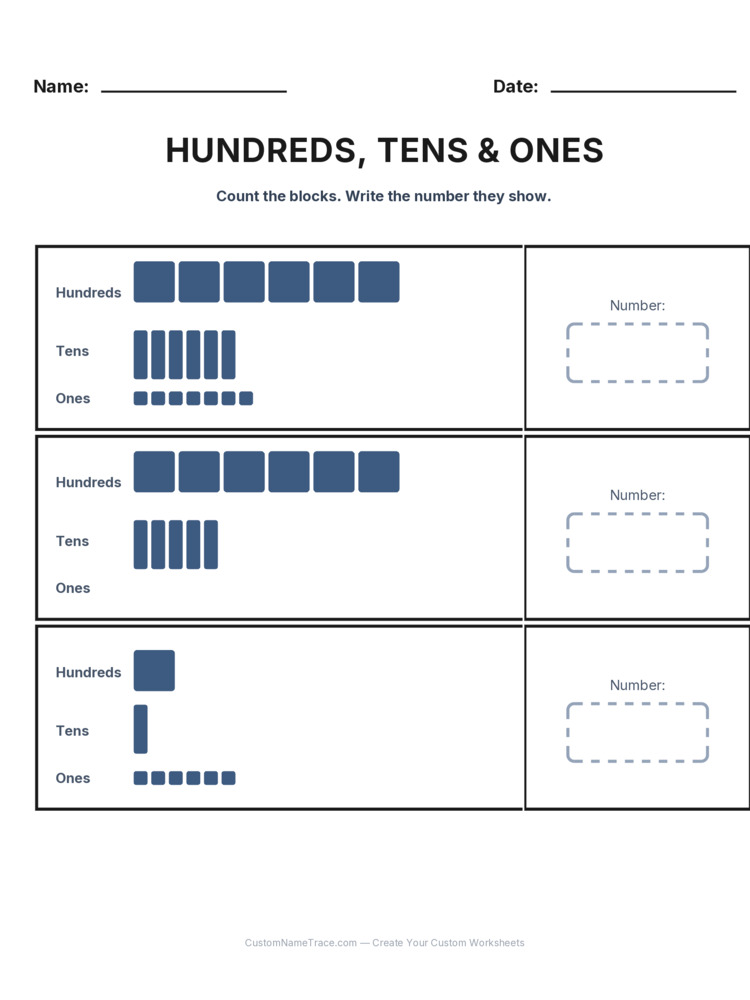
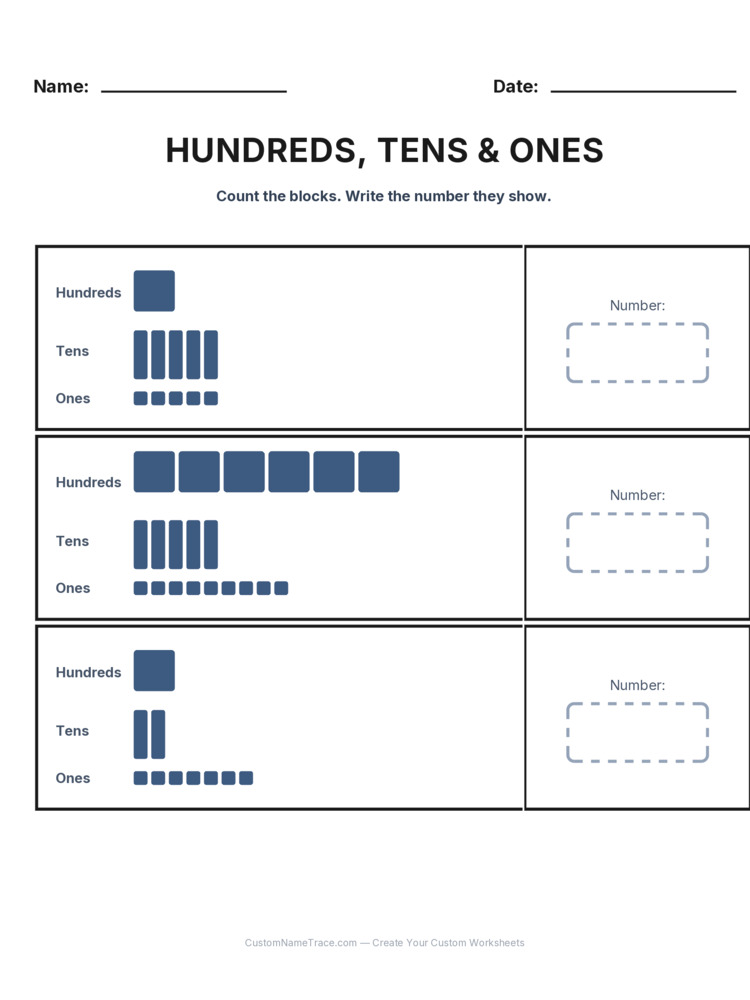
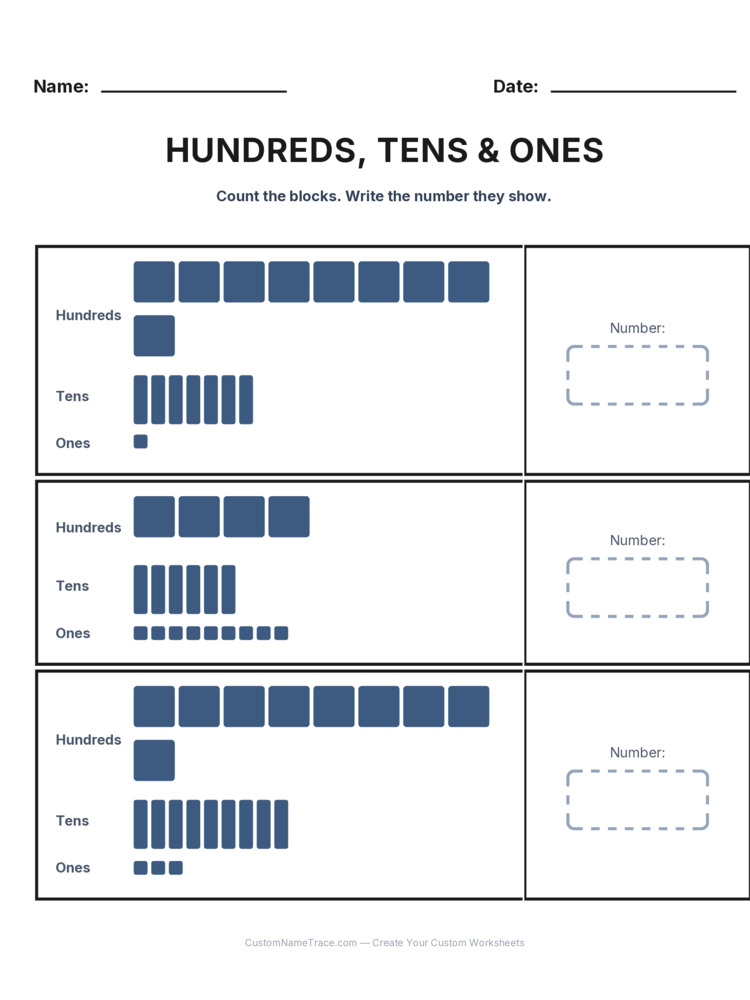
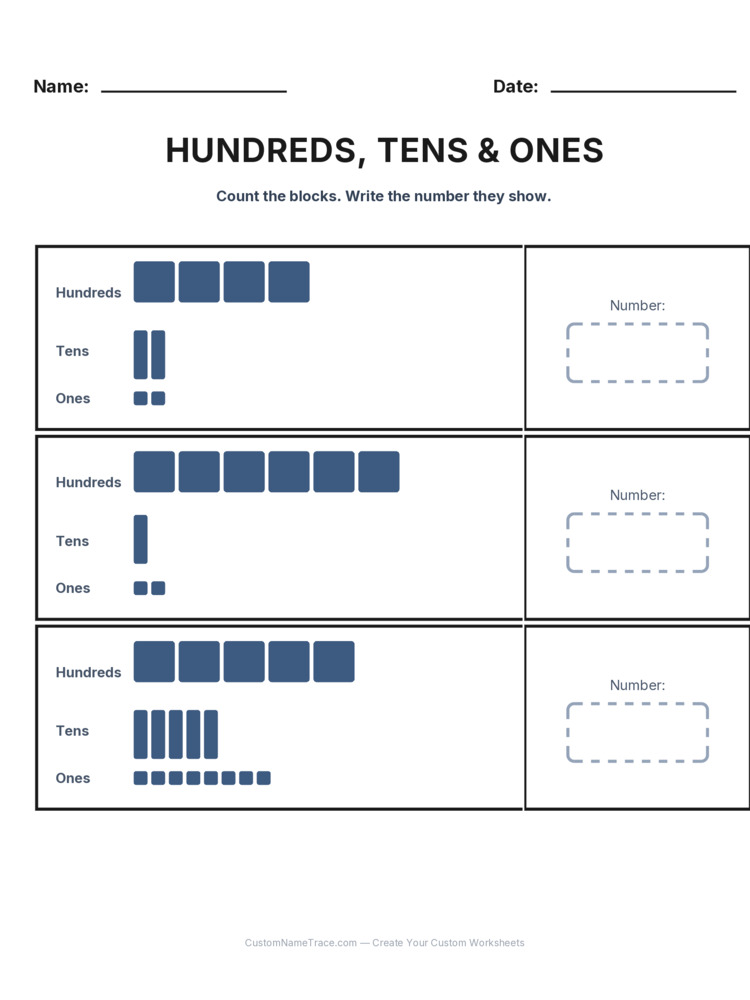
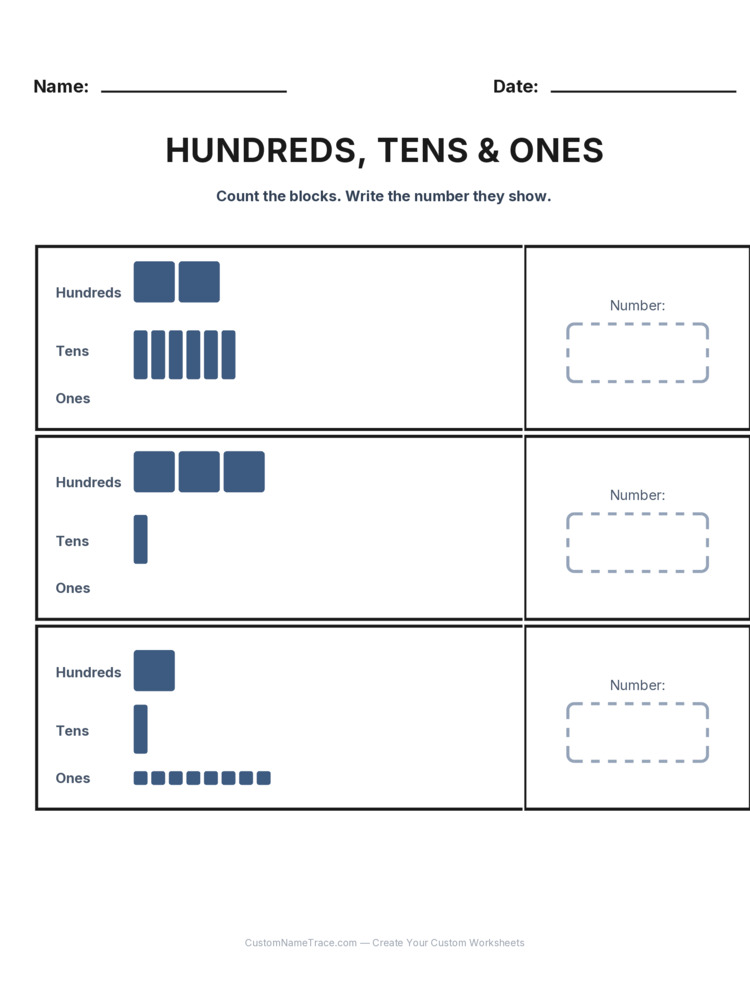
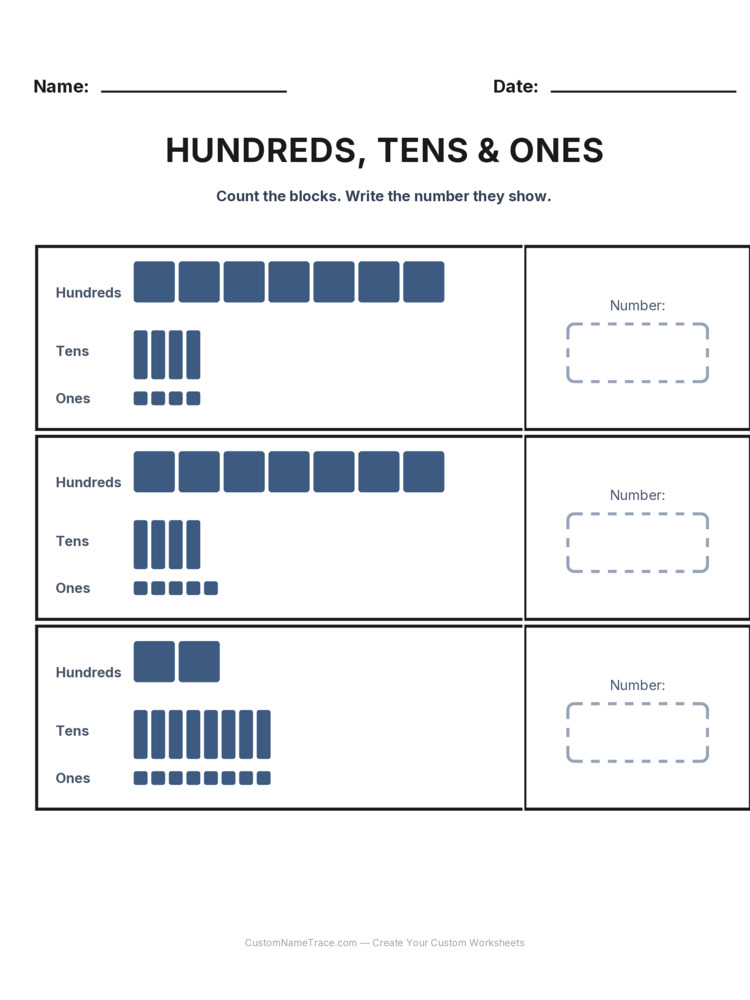
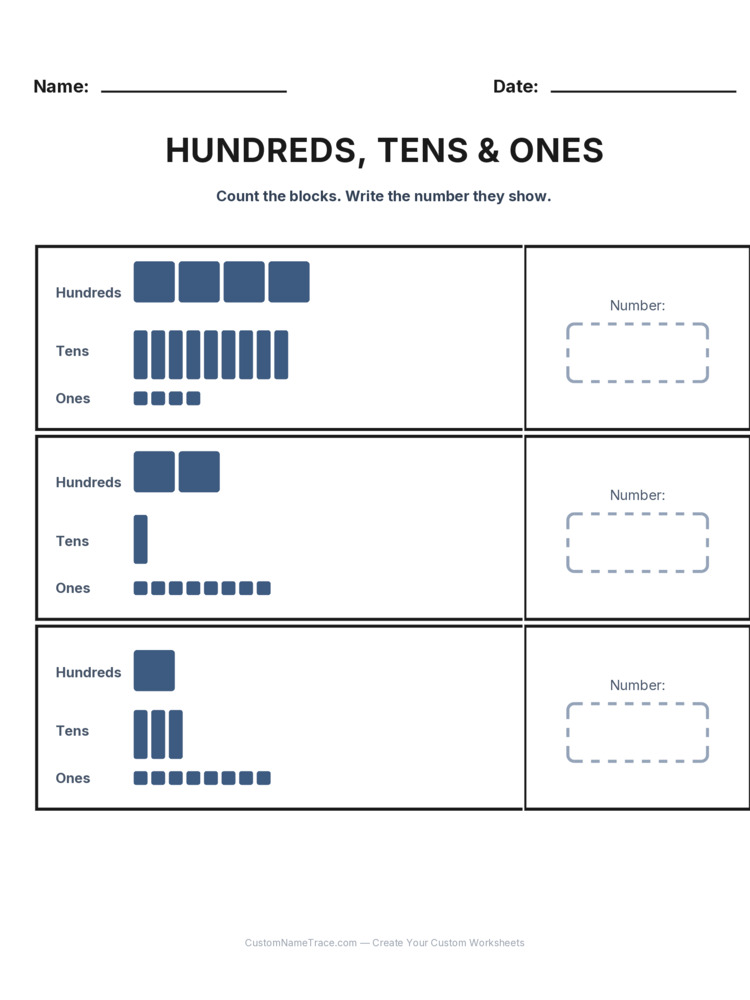
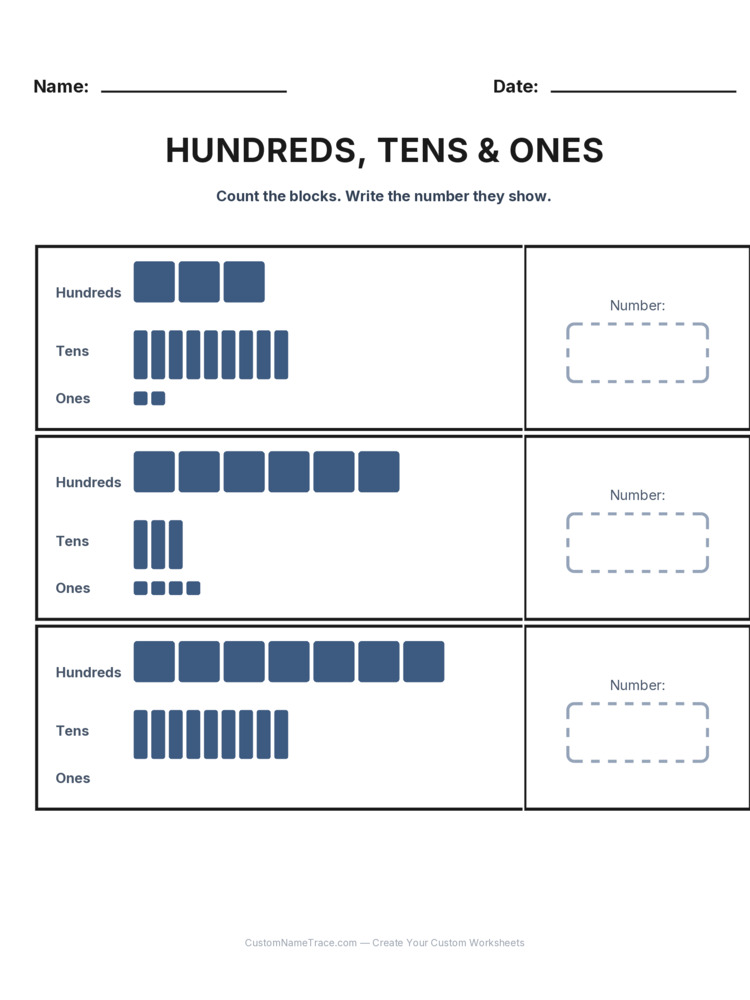
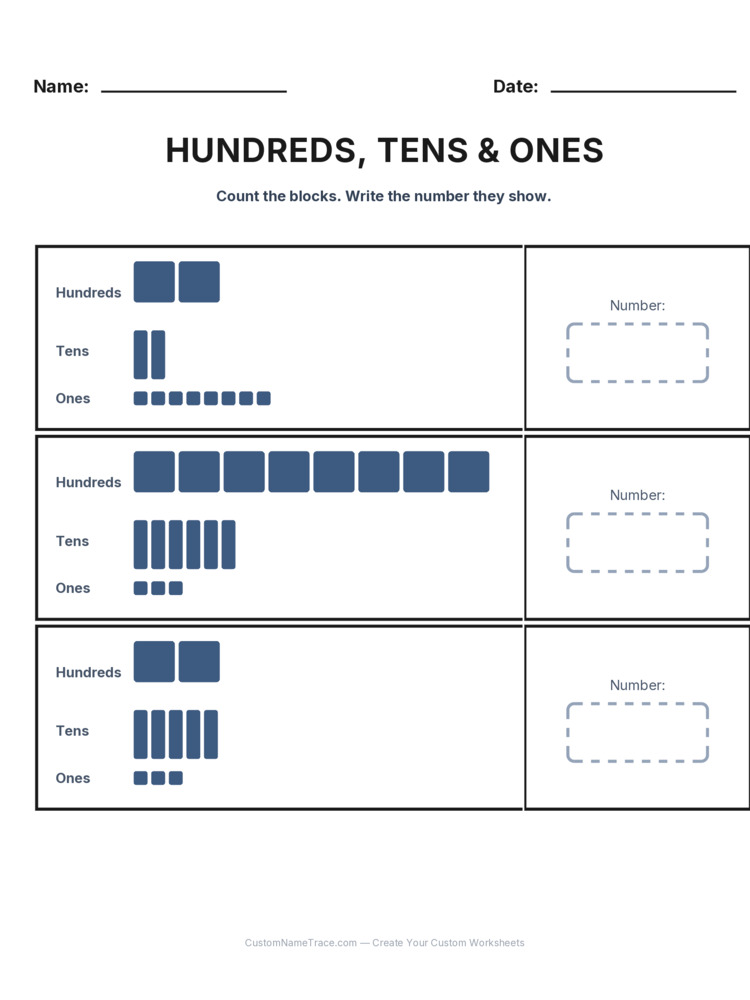
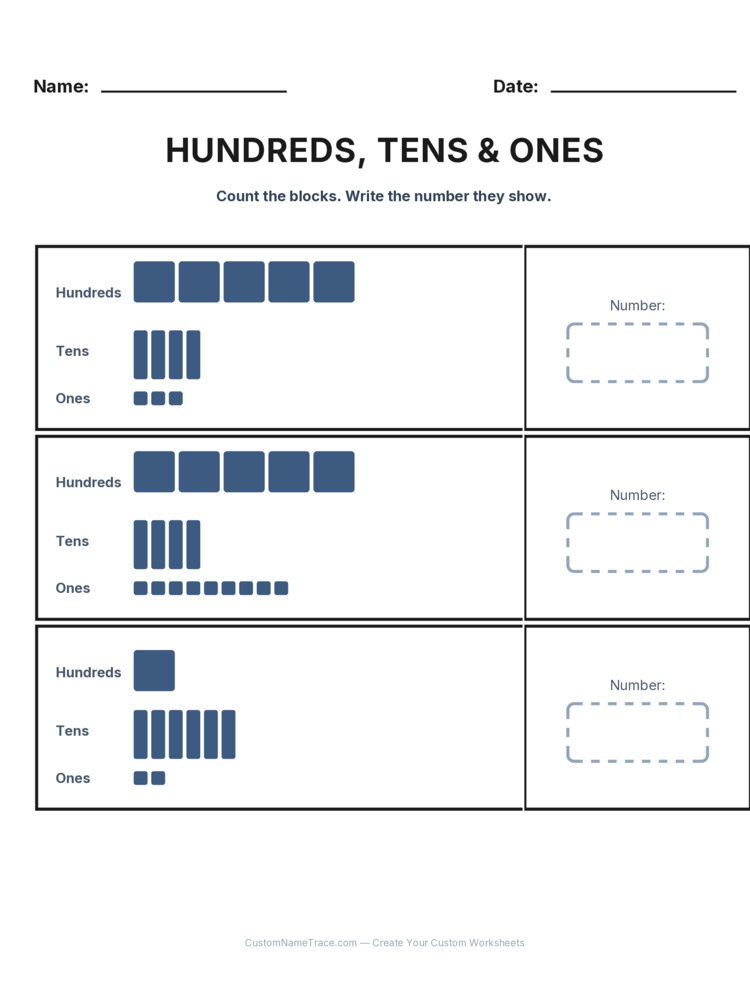
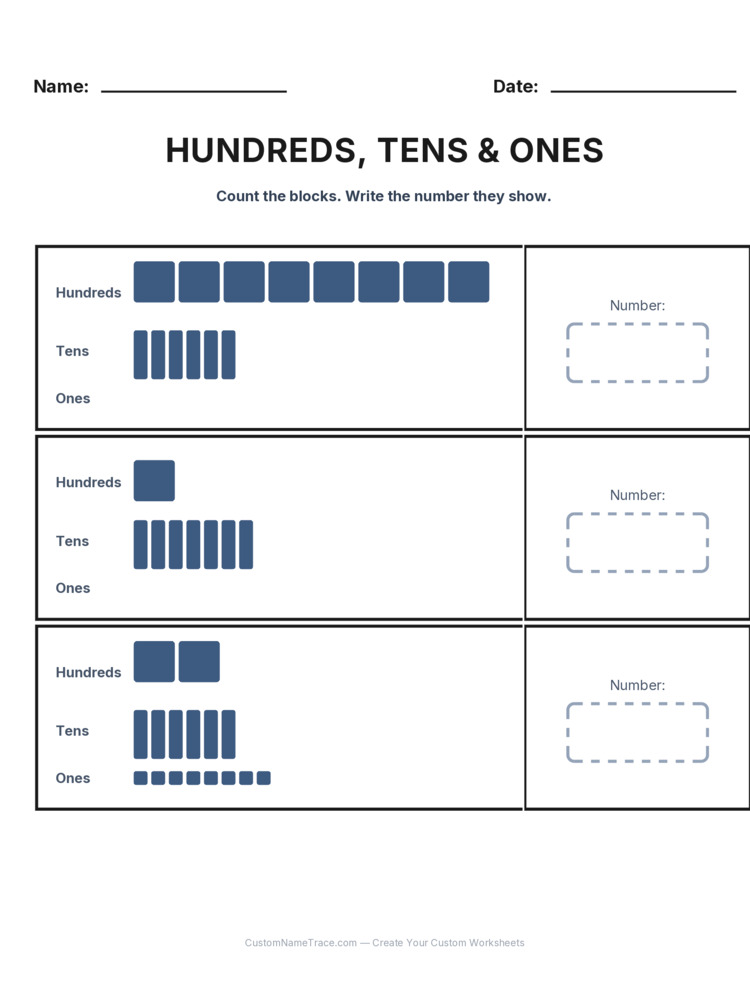
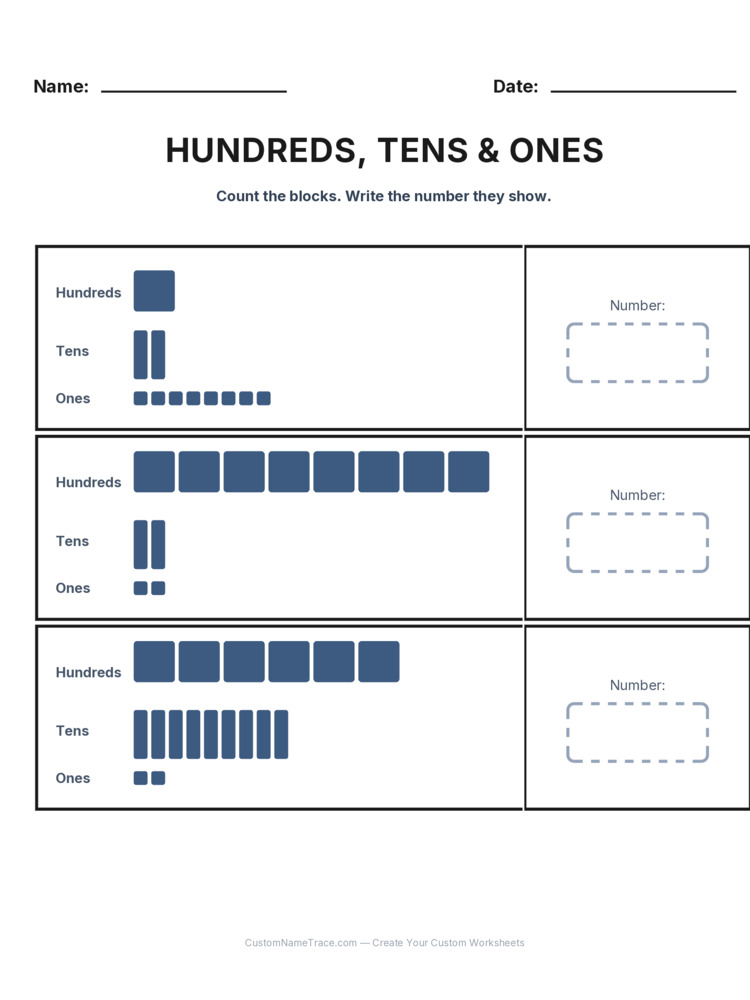
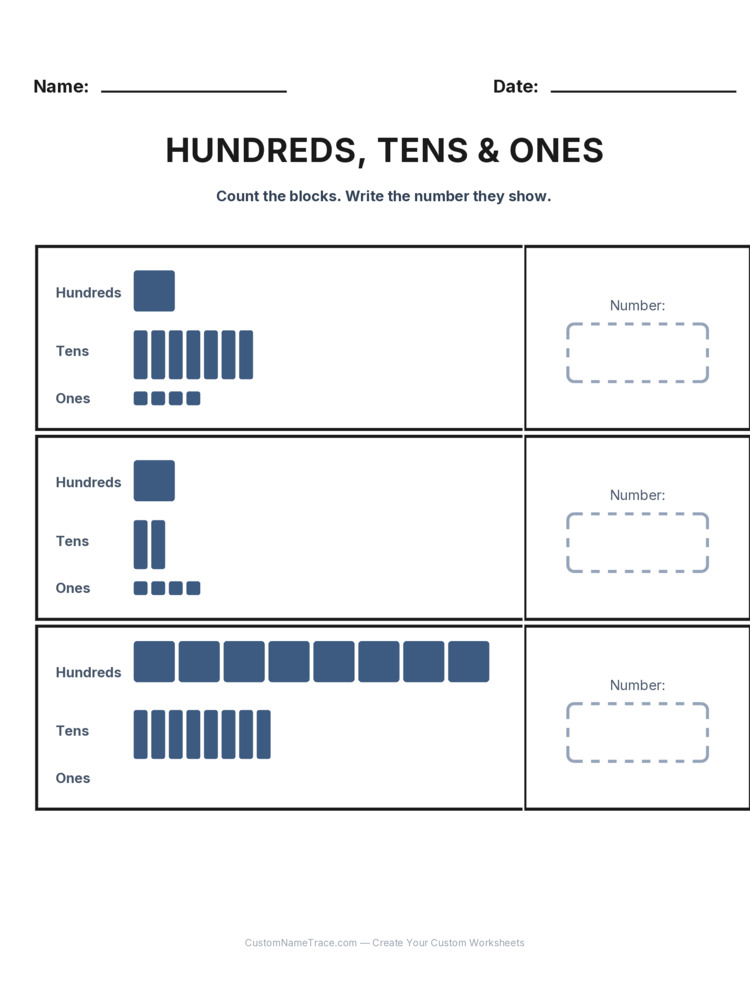
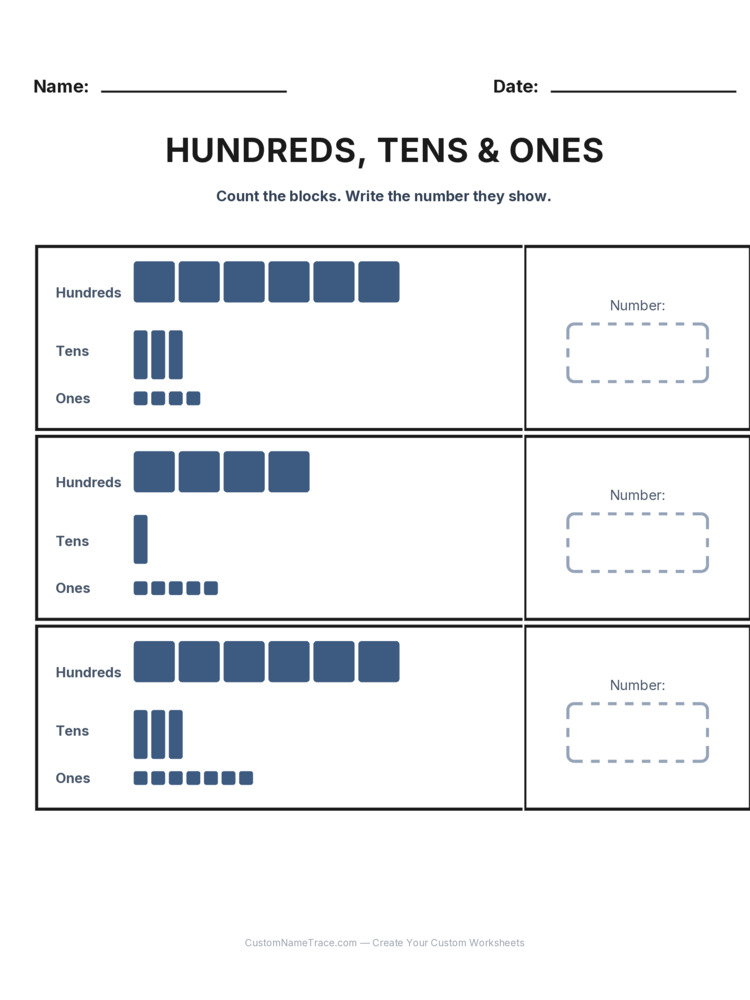
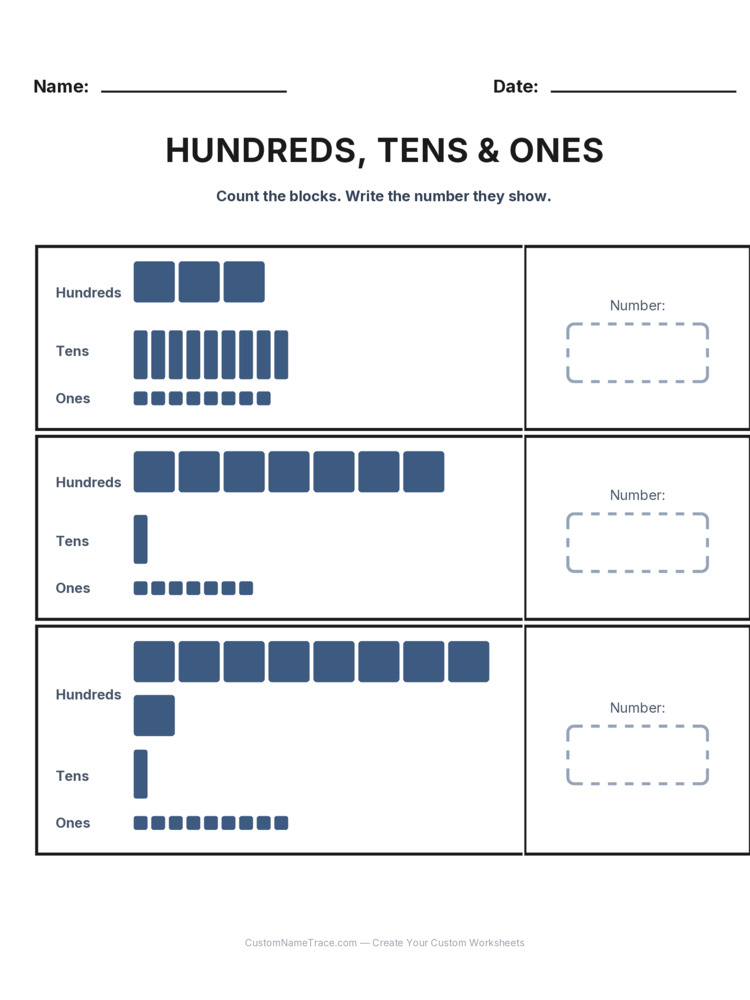
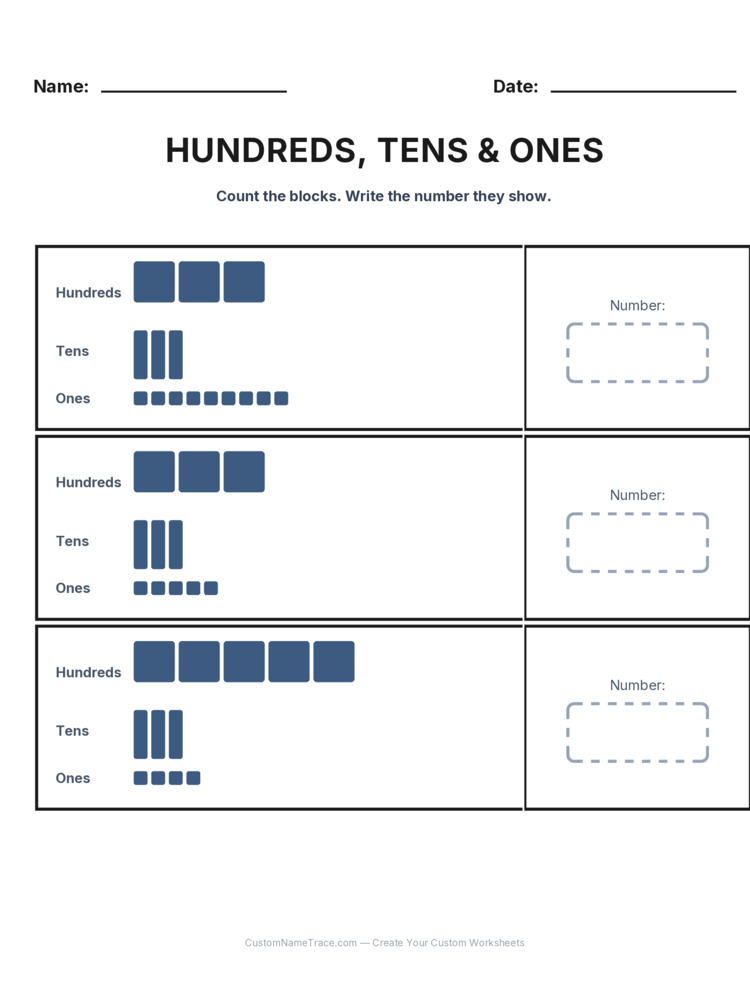
The same base-ten block format as Grade 1's Tens & Ones, extended to 3-digit numbers with a Hundreds group added — a large block standing in for 100. Fewer problems per page than the 2-digit version (4 instead of 5), simply because three block groups per problem take real space to lay out clearly rather than being cramped to fit more on one page.
Why the harder skip-counting steps matter
2s, 5s, and 10s can often be recognized by pattern alone (a 5, 0, 5, 0 ones digit, for instance); steps like 3, 4, 6, 7, 8, and 9 don't have that shortcut, so a child has to genuinely calculate the gap between two visible numbers before applying it — a real step up in the underlying reasoning, not just bigger numbers.