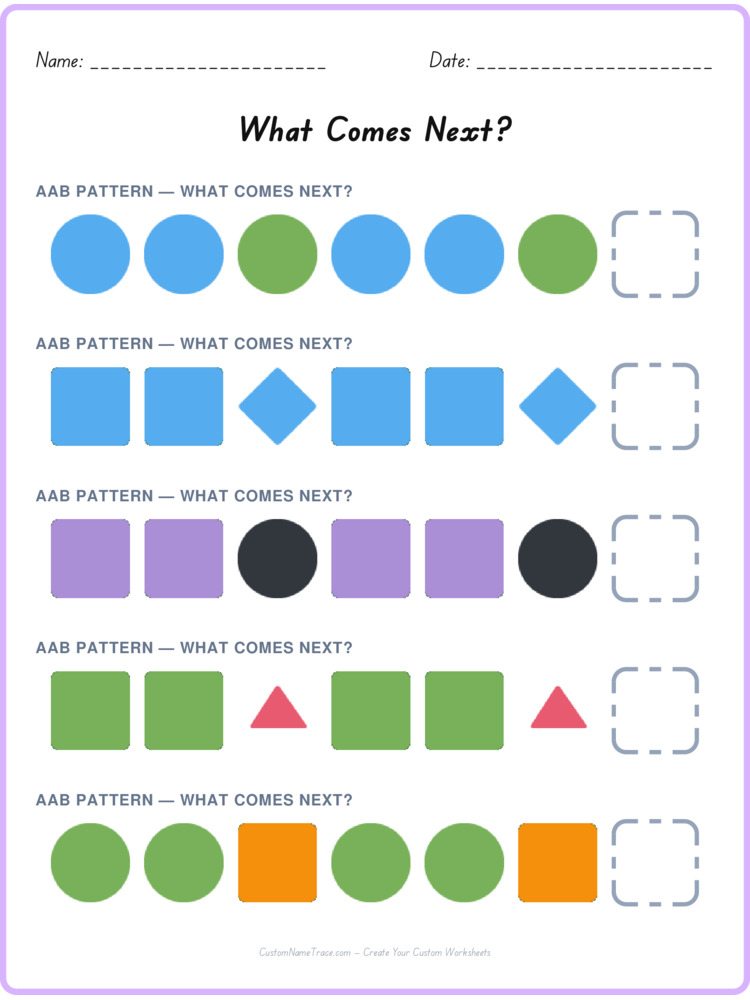
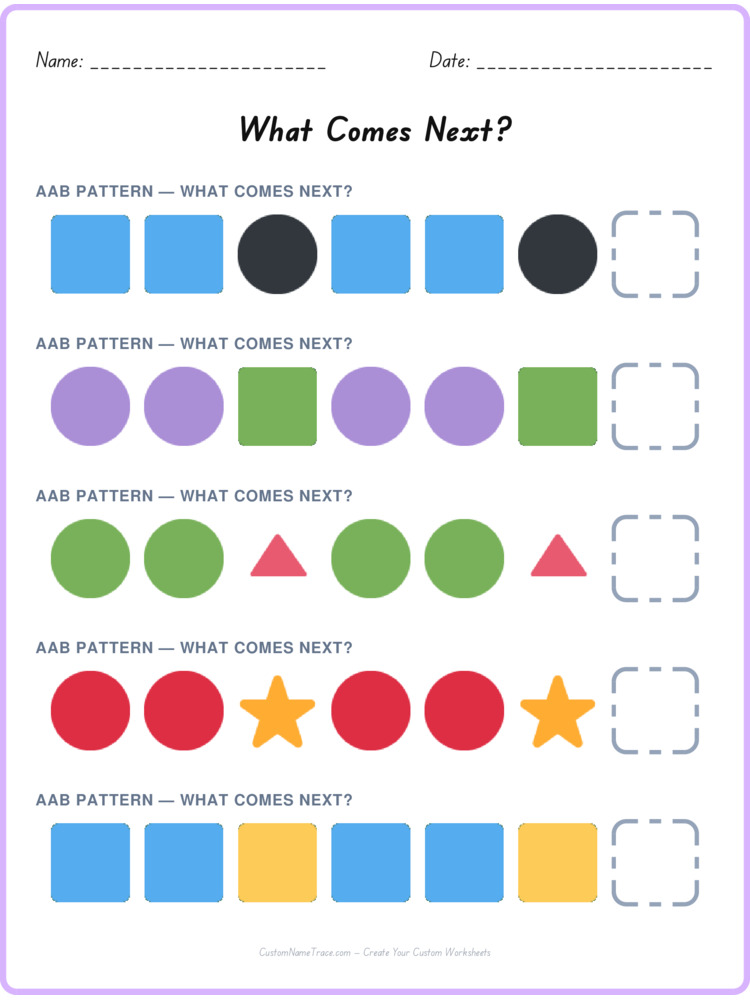
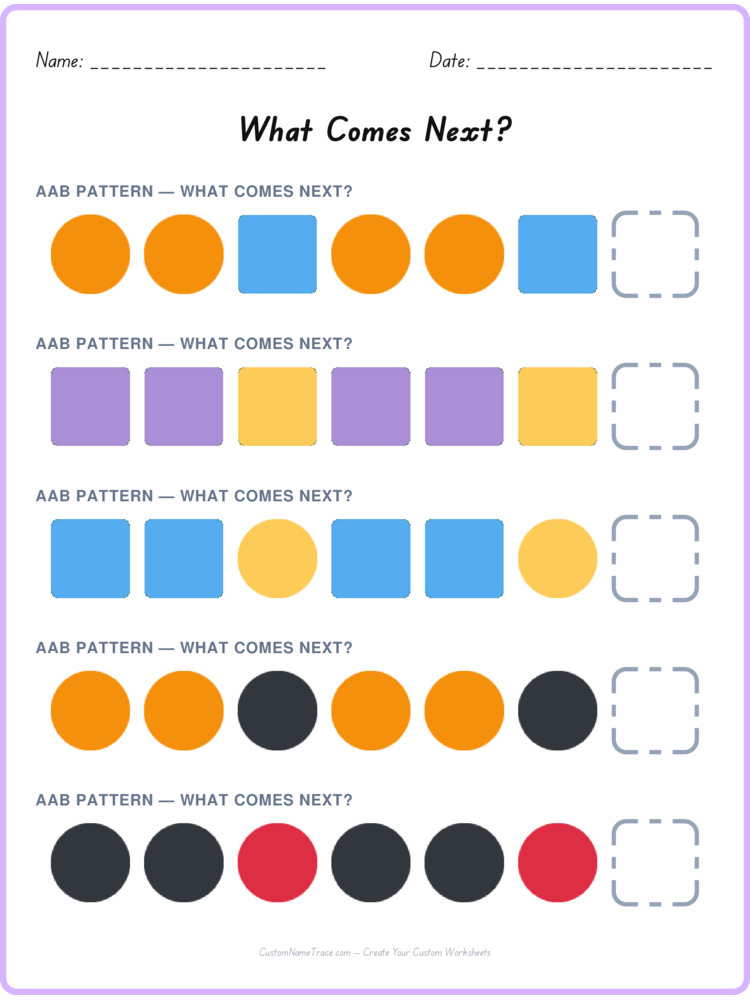
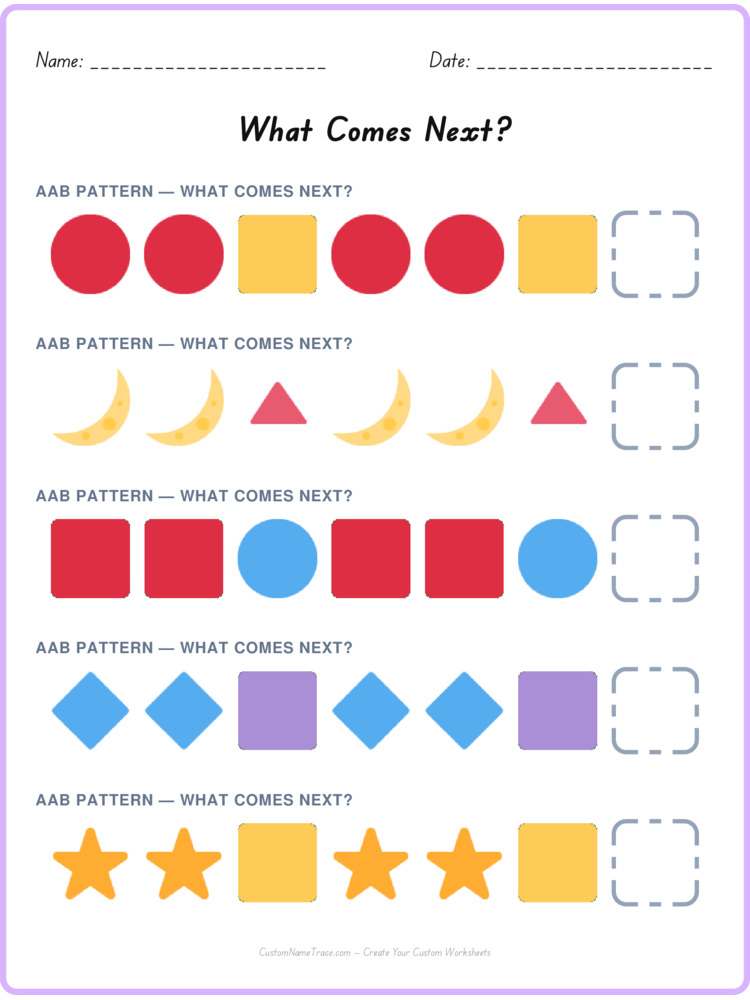
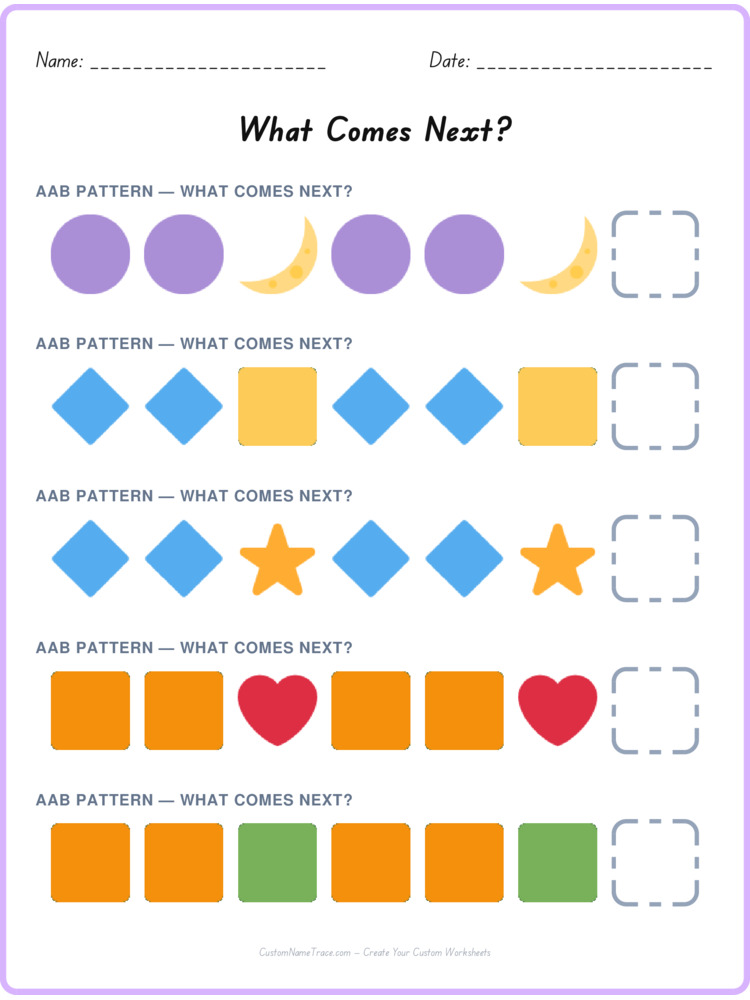
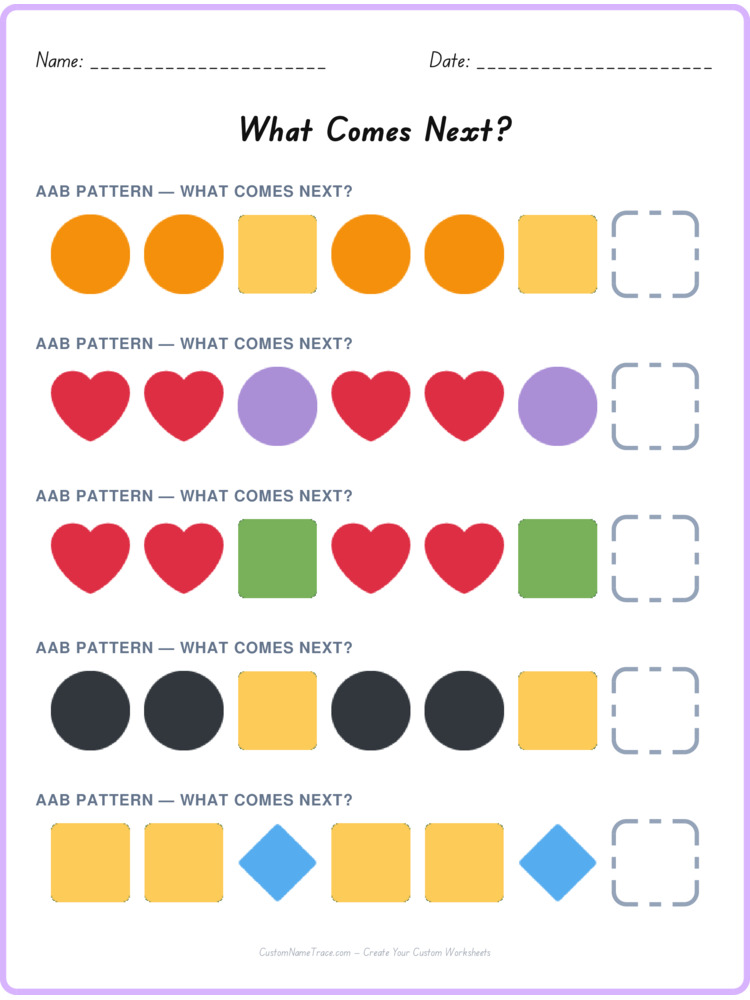
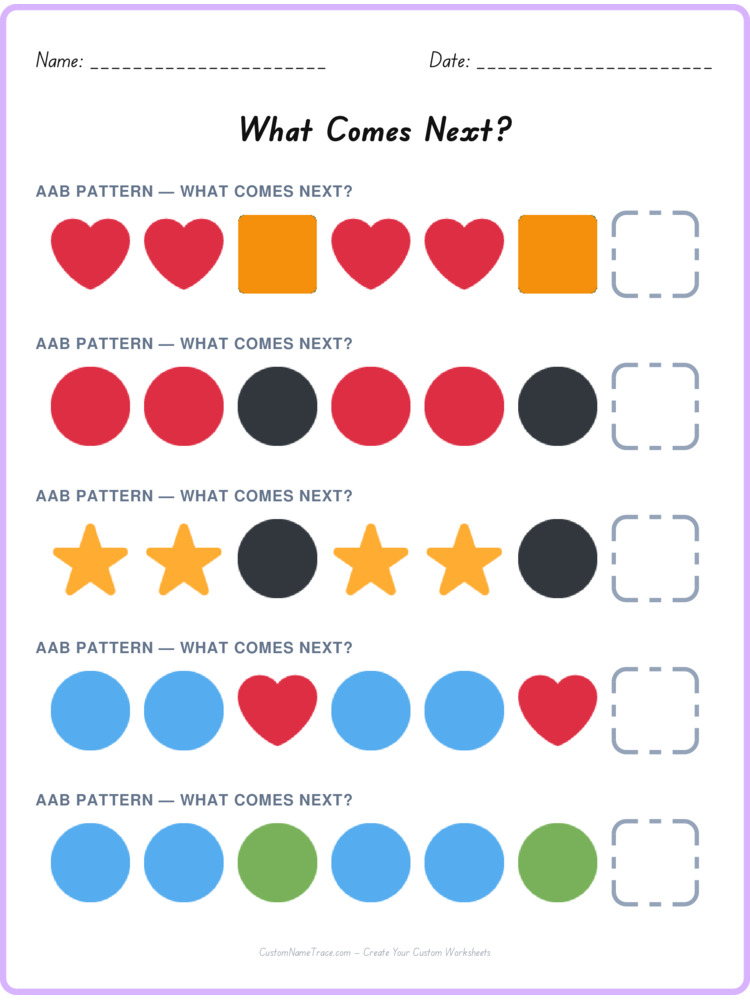
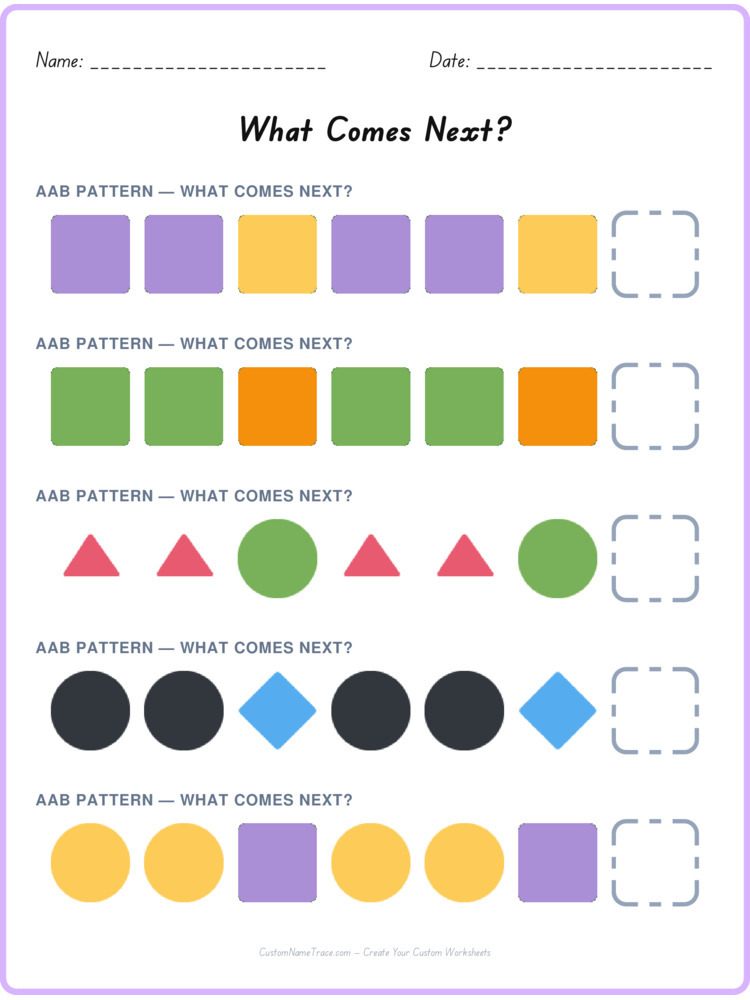
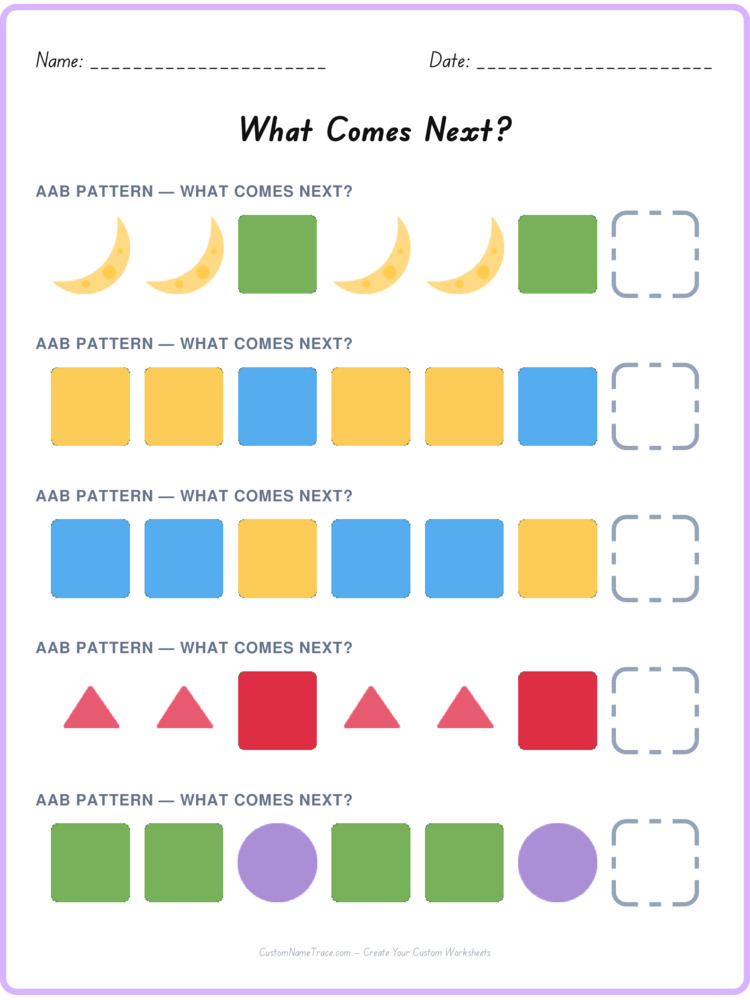
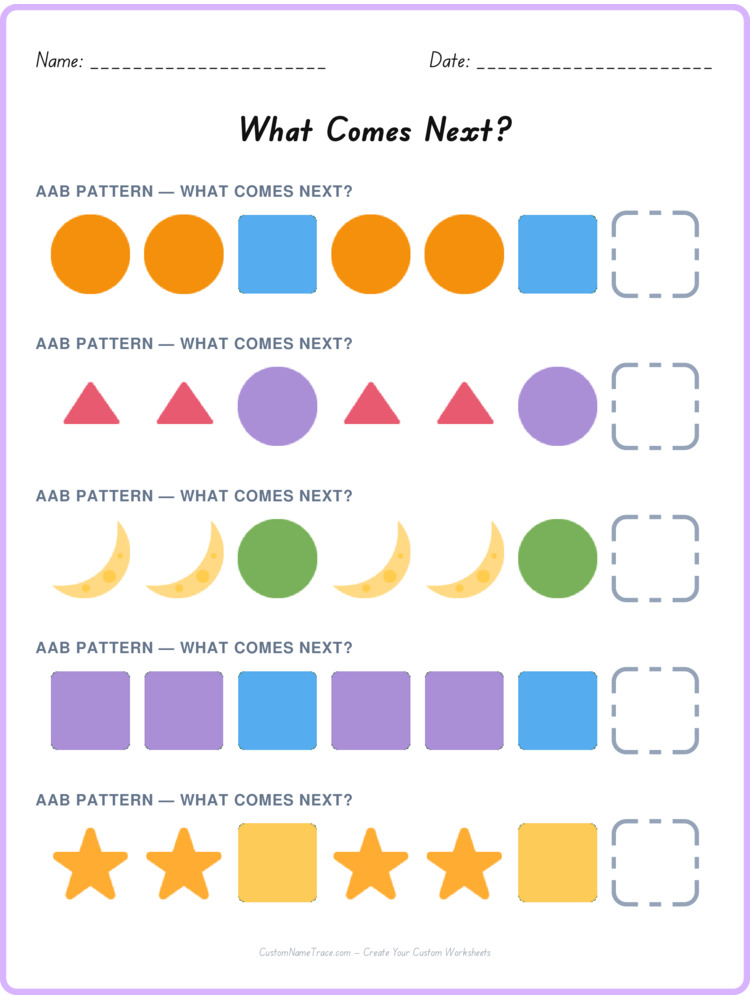
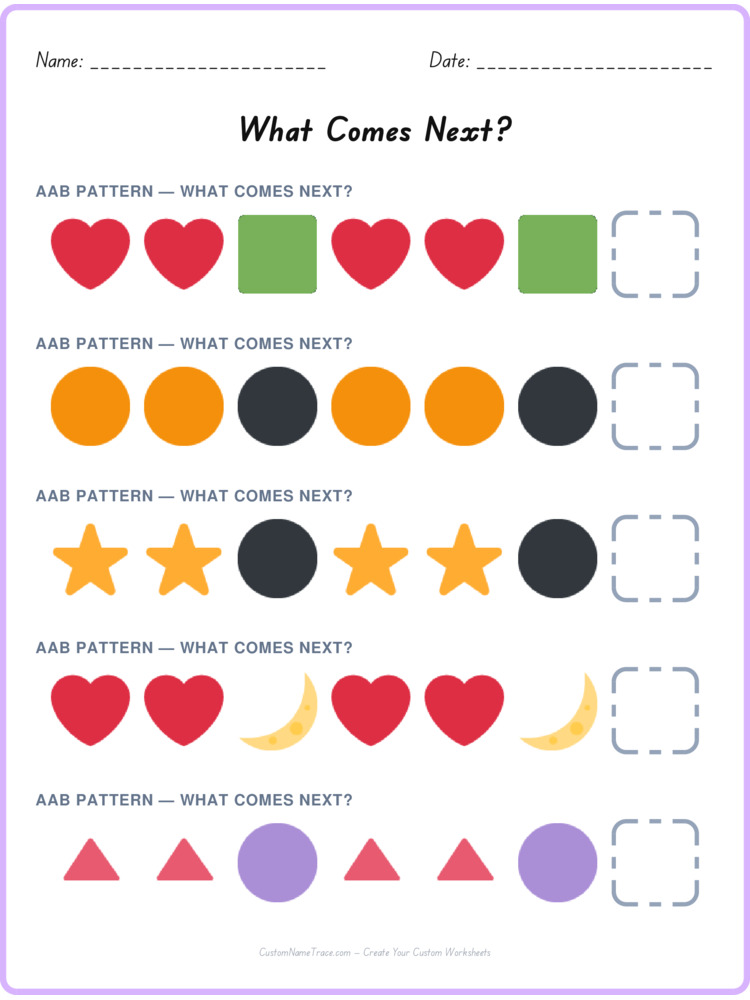
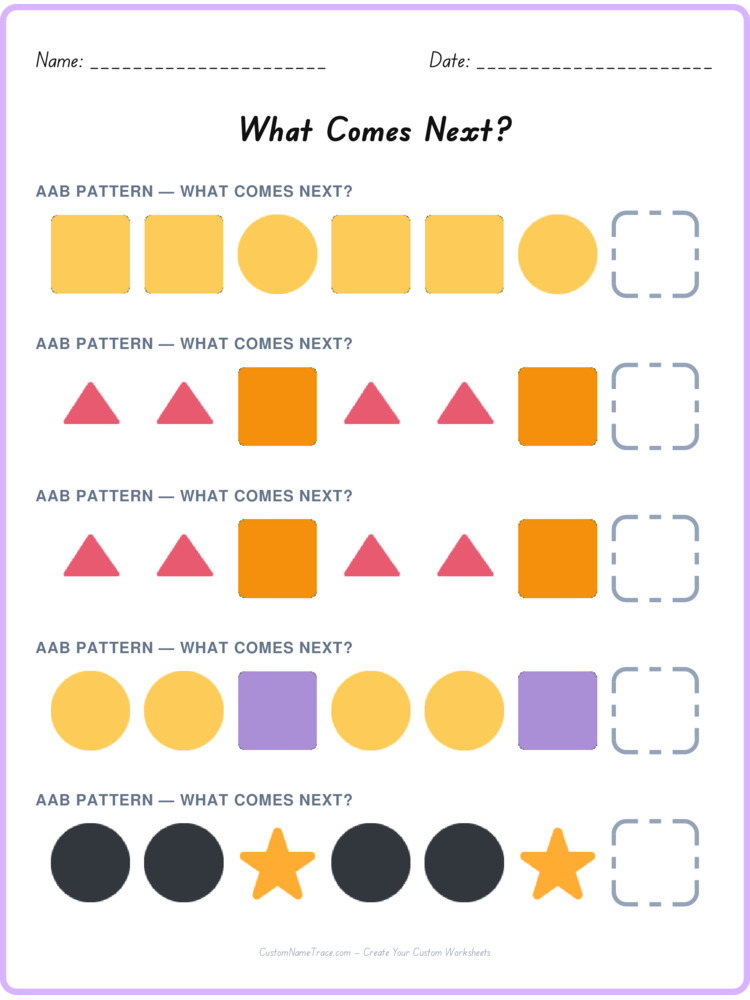
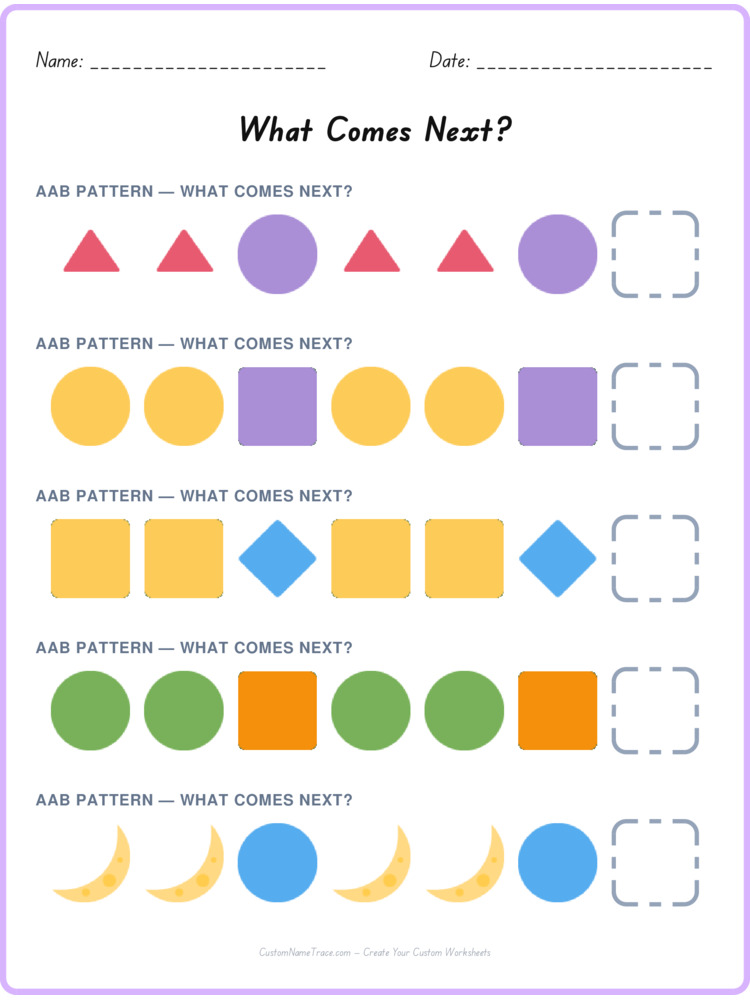
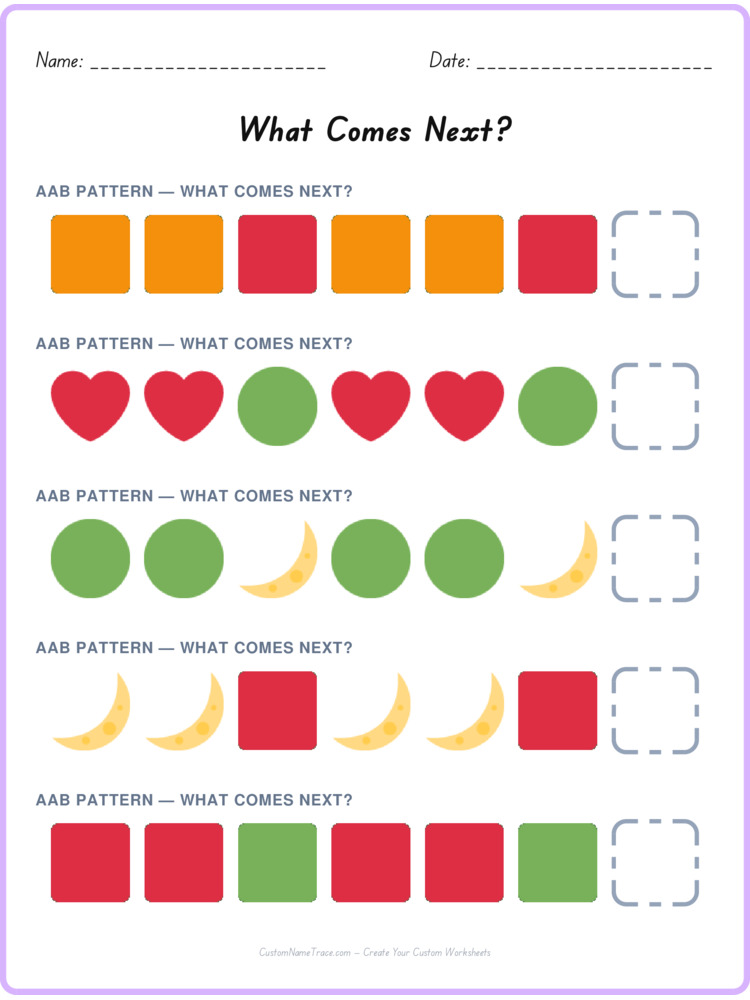
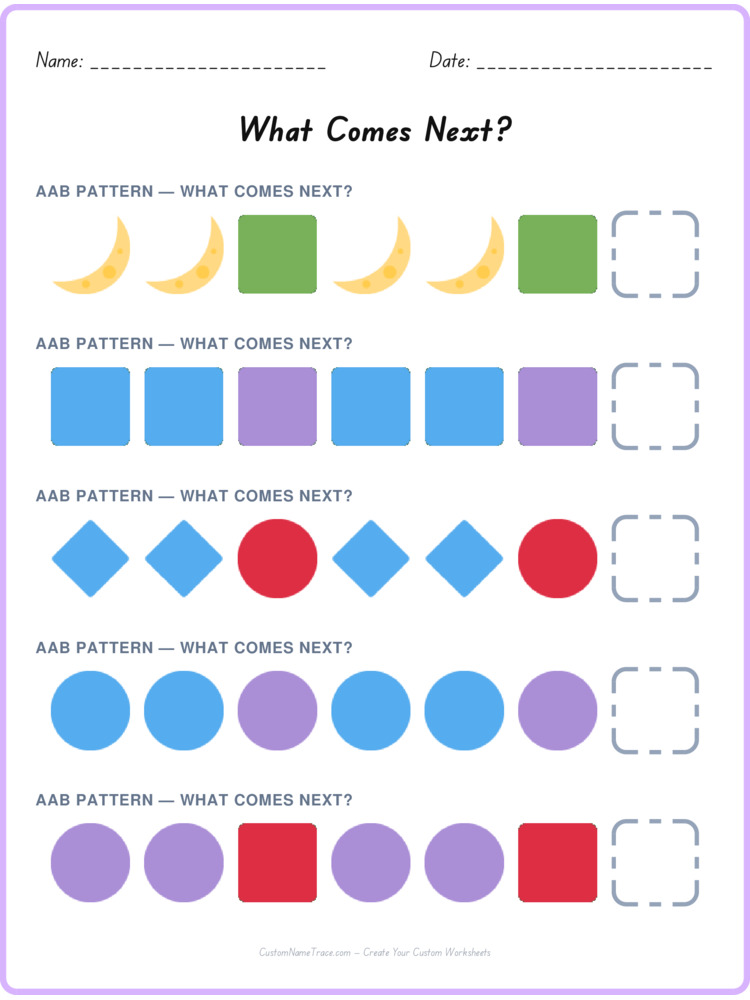
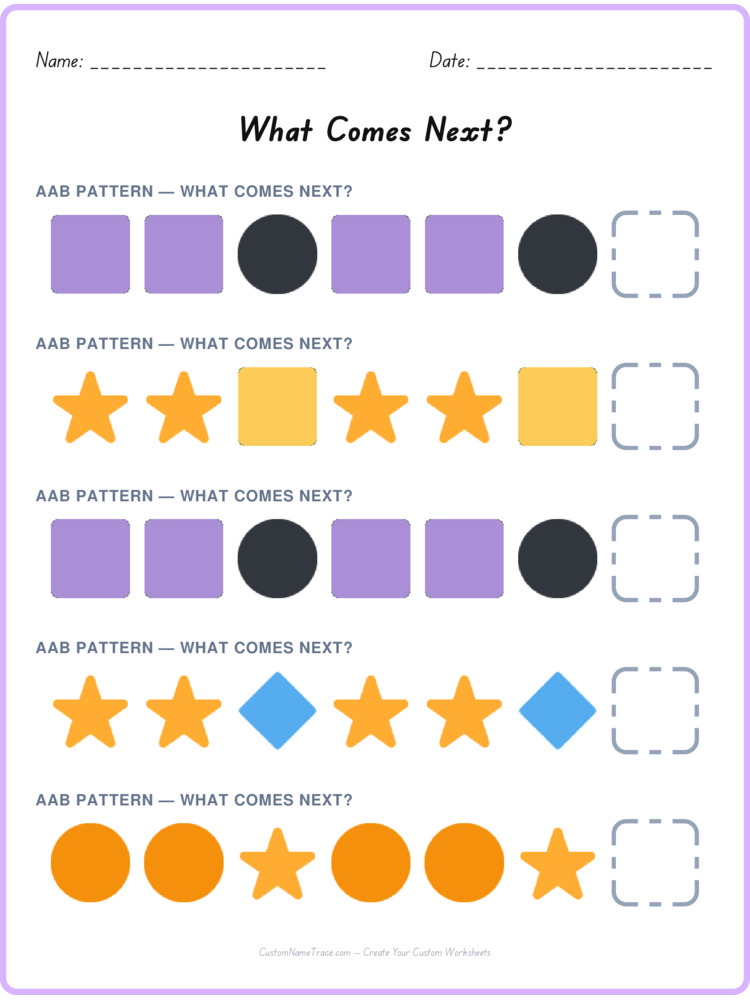
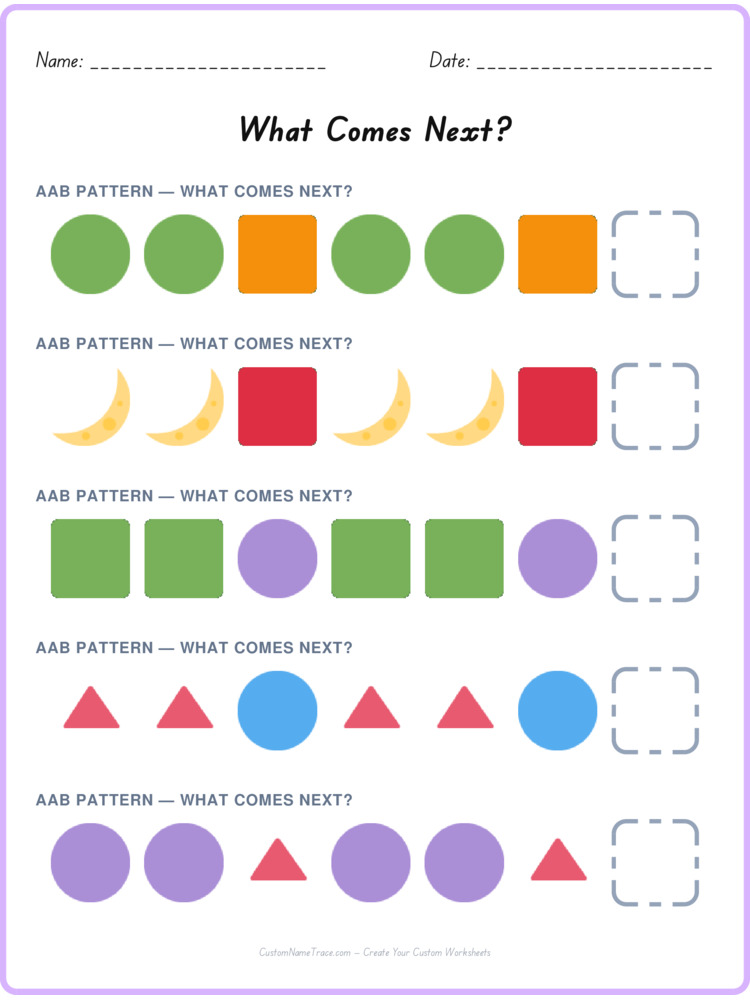
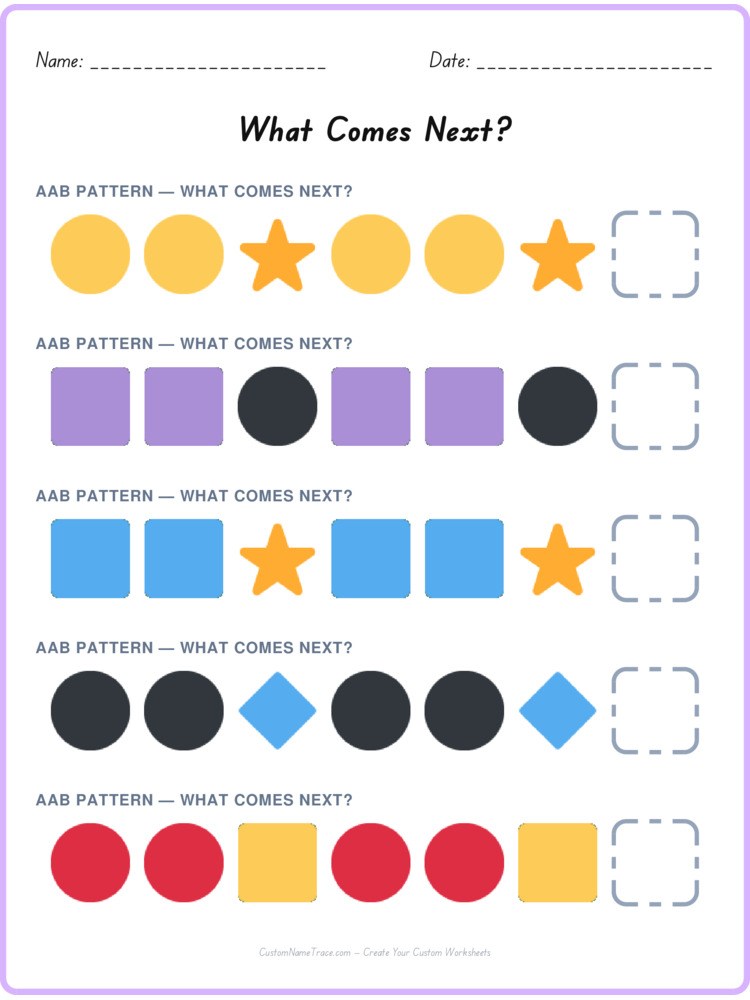
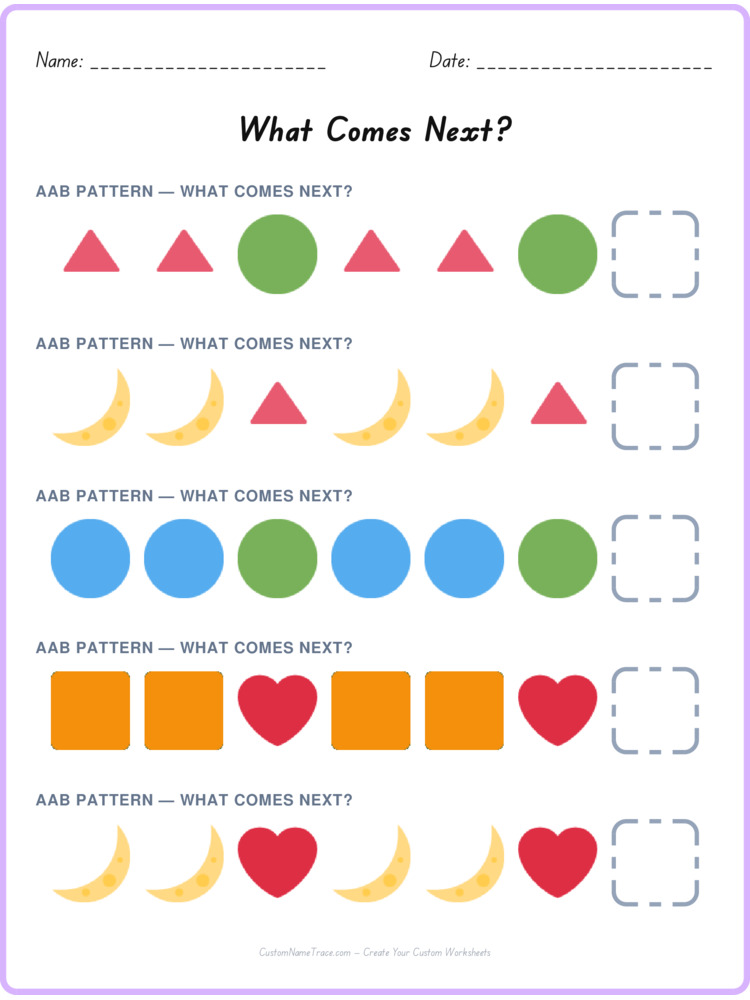
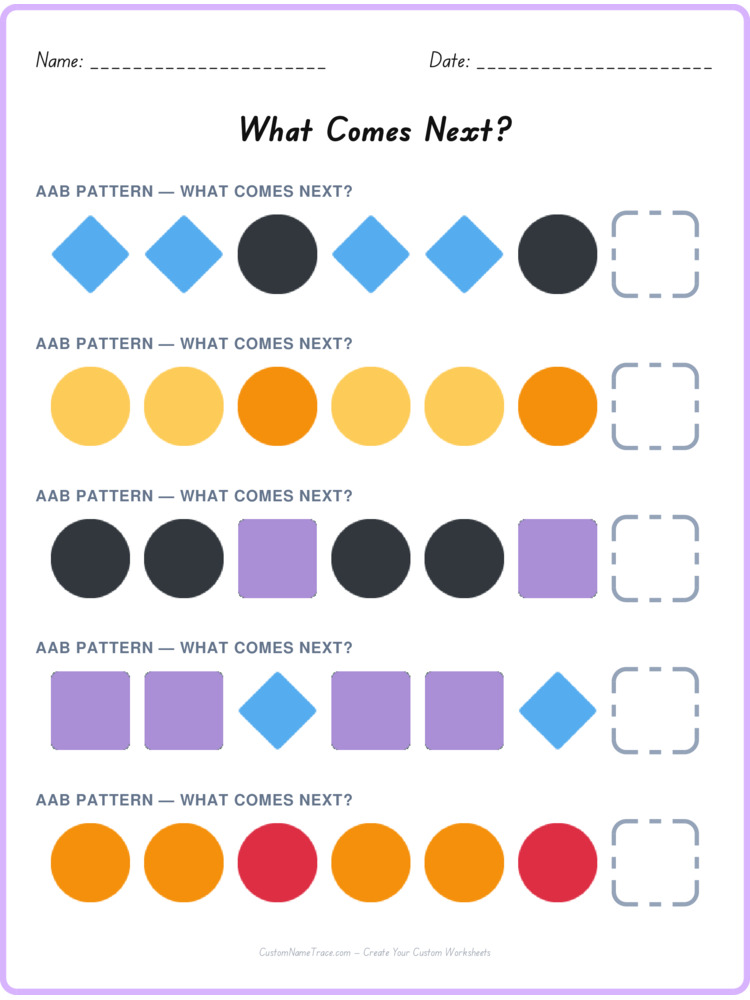
A repeat before the switch
AAB introduces the idea that a pattern's unit doesn't have to switch every single step — here, the first icon repeats twice before switching to a second icon, then the whole three-step unit starts over. That's a genuinely different skill from AB's constant alternation: a child has to notice and count a short repeated run, not just track a back-and-forth flip.
This is usually the first pattern where a child has to genuinely count ("one, two... now switch") rather than simply predicting the opposite of whatever came before, which makes it a meaningful step up even though the unit is still only three icons long.
Helping a child notice the repeat
Pointing and counting out loud — "same, same, different" — as a child names each icon builds the habit of checking whether an icon matches the one before it, rather than assuming every position is a fresh guess. A child who predicts a switch after every single icon, the AB habit, is applying the wrong rule to this new pattern — pointing out explicitly that this one repeats twice before changing resets the expectation.
Clapping twice on the repeated icon and once on the switch icon adds a physical rhythm (clap-clap-tap) that many children pick up faster than verbal counting alone.
Where this fits among the other beginner patterns
AAB, ABB, and ABA are the three genuinely different three-icon patterns at this level — AAB repeats first, ABB repeats second, and ABA returns to its start. Working through all three shows a child that a fixed unit length doesn't mean a fixed internal shape.
Every numbered worksheet uses a fresh pair of icons testing this identical repeat-then-switch structure.
Using this worksheet effectively
For a child moving on from AB, explicitly naming that this new pattern "waits" one extra step before switching helps reset the AB-trained instinct to alternate every time. Every worksheet downloads as a free, print-ready PDF with no account required.