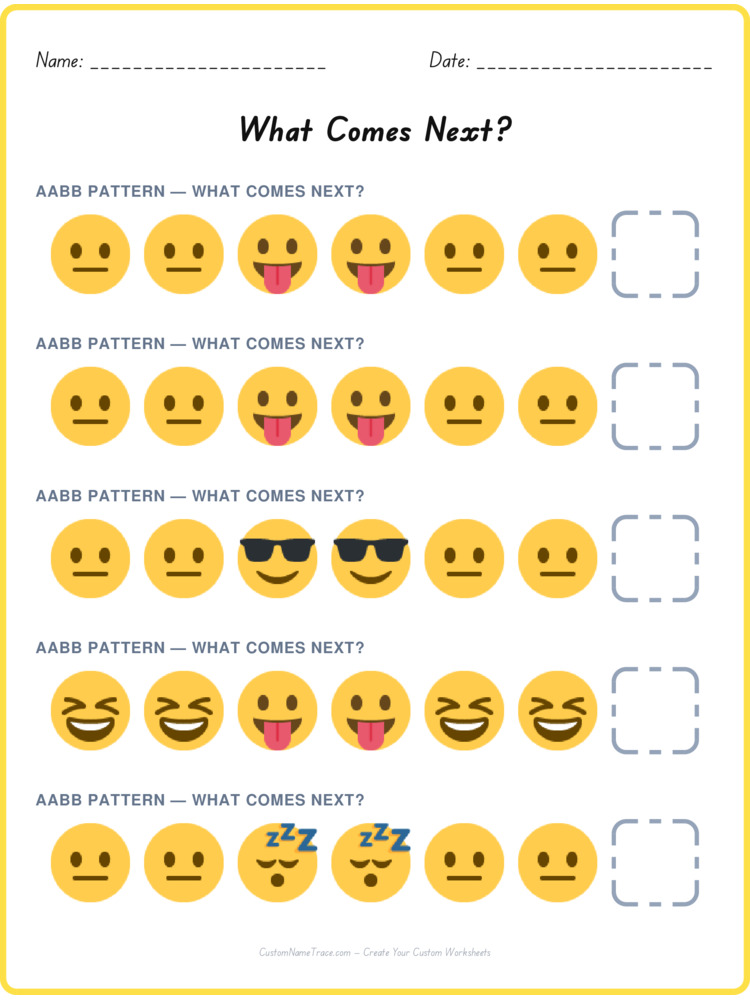
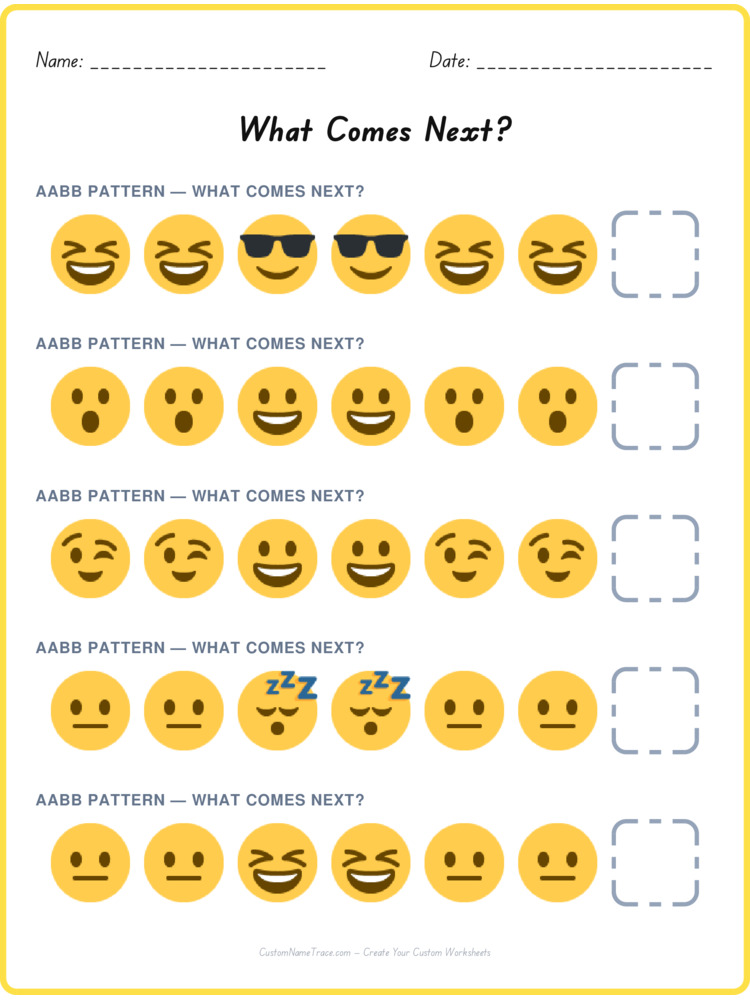
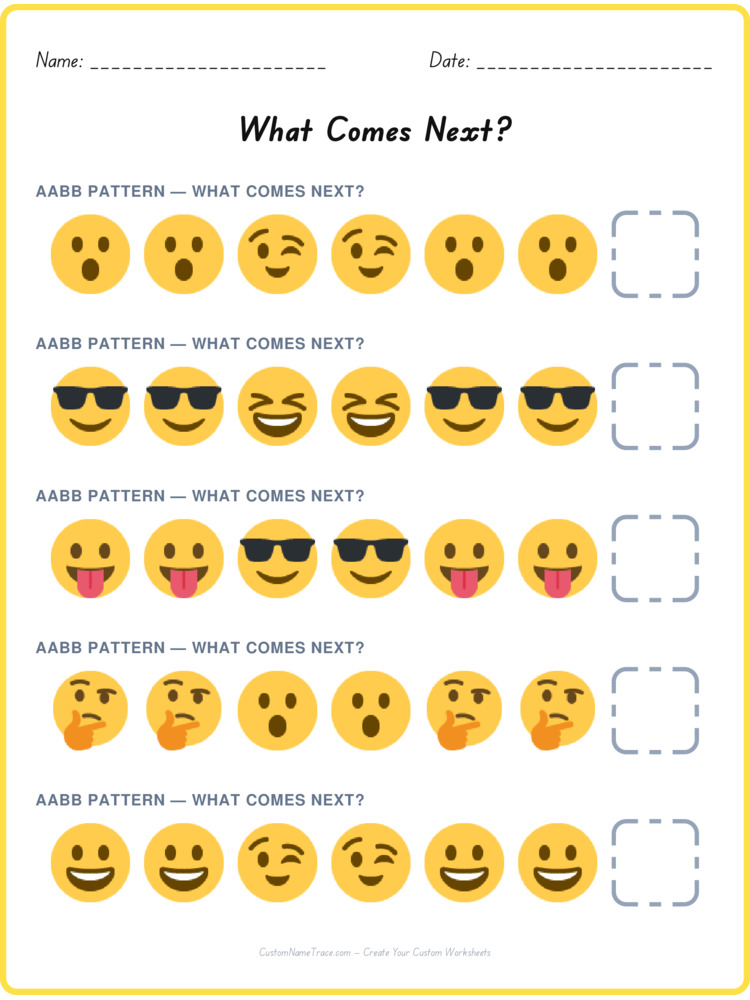
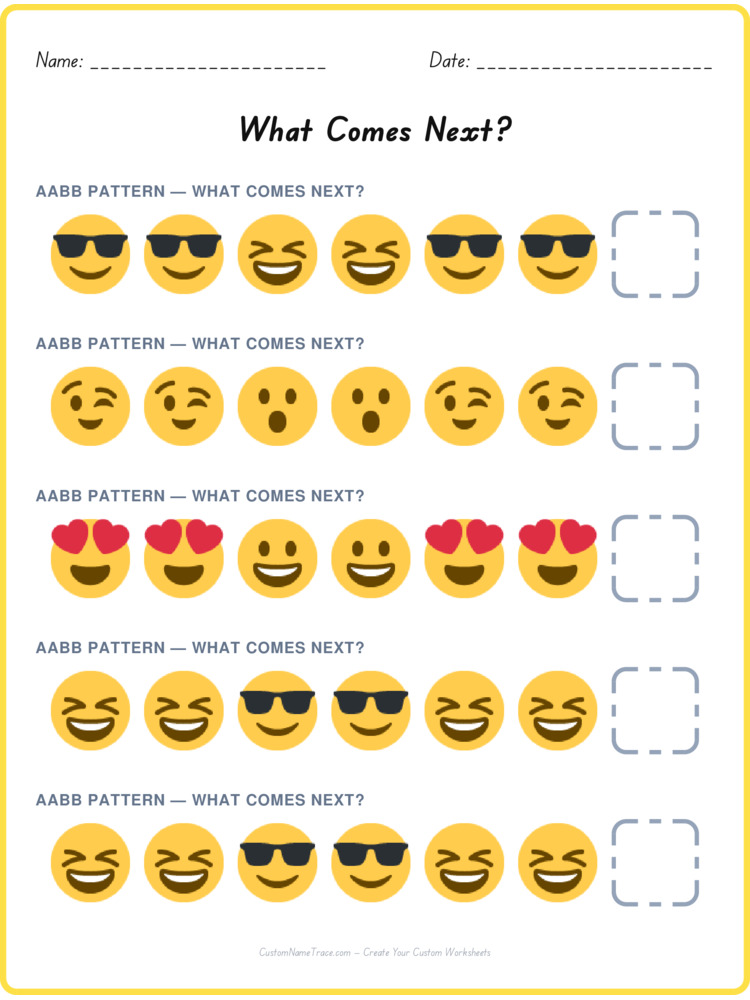
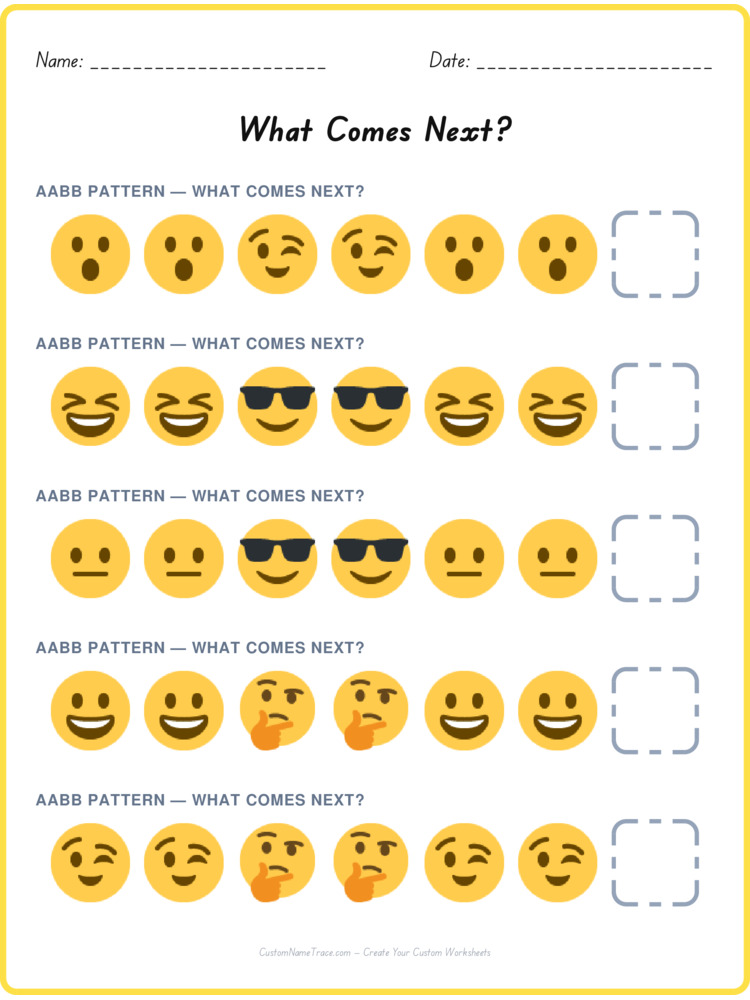
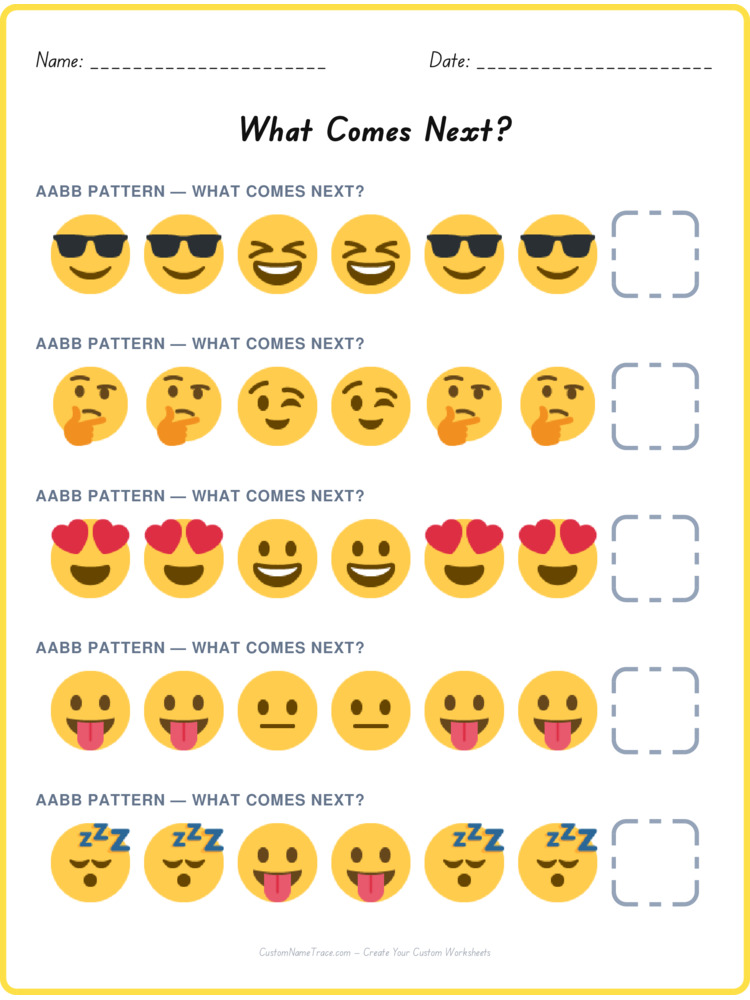
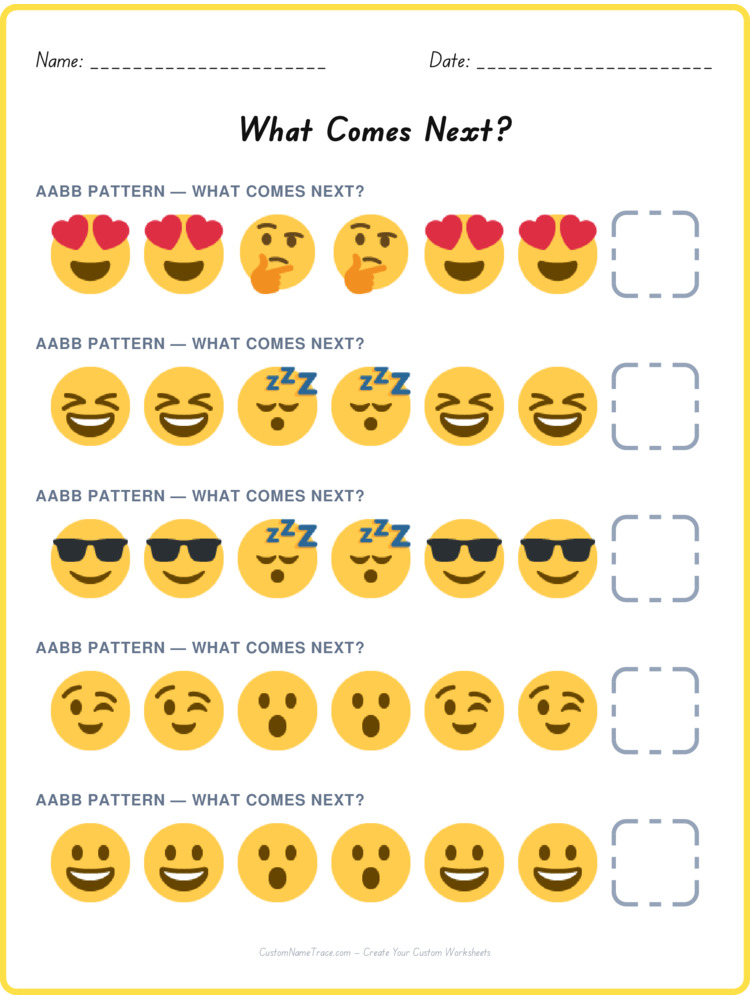
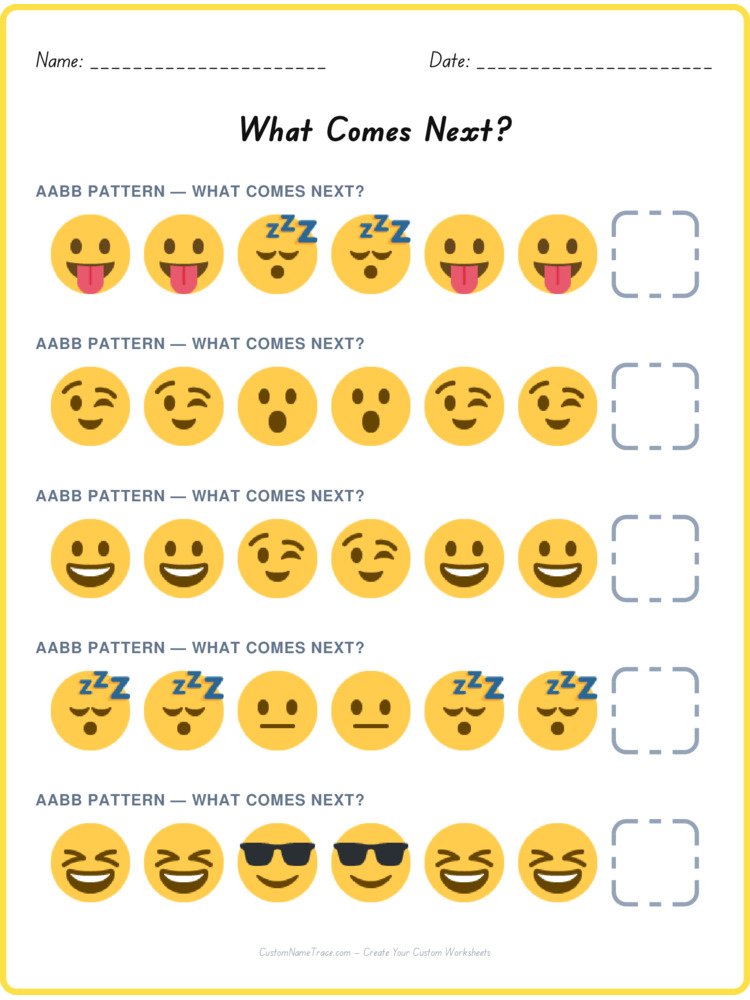
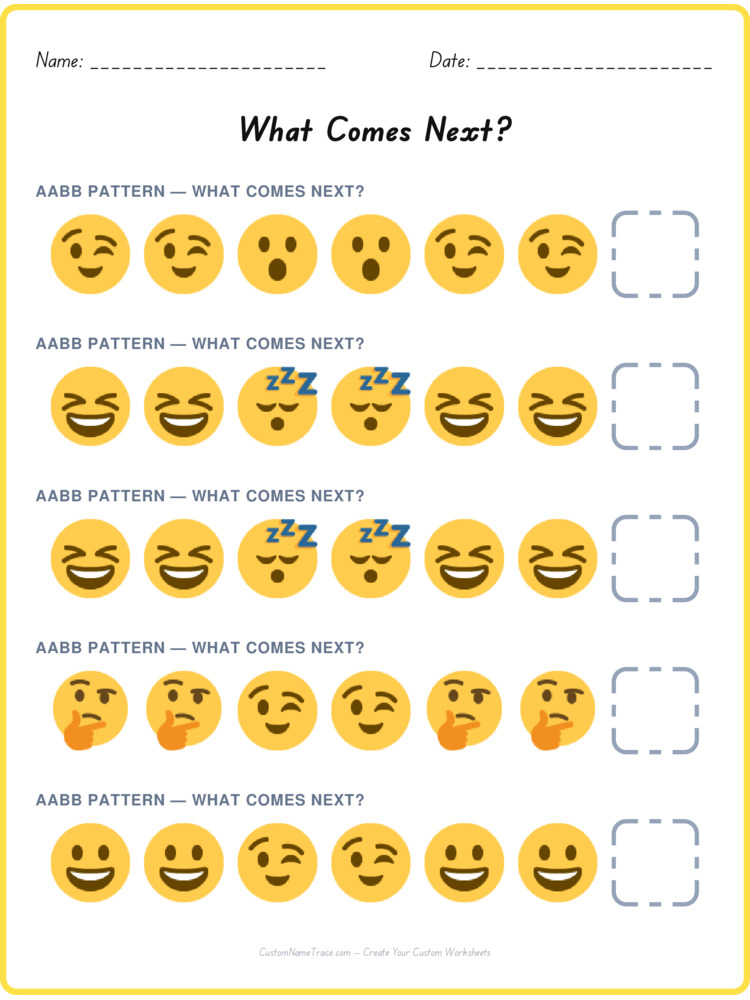
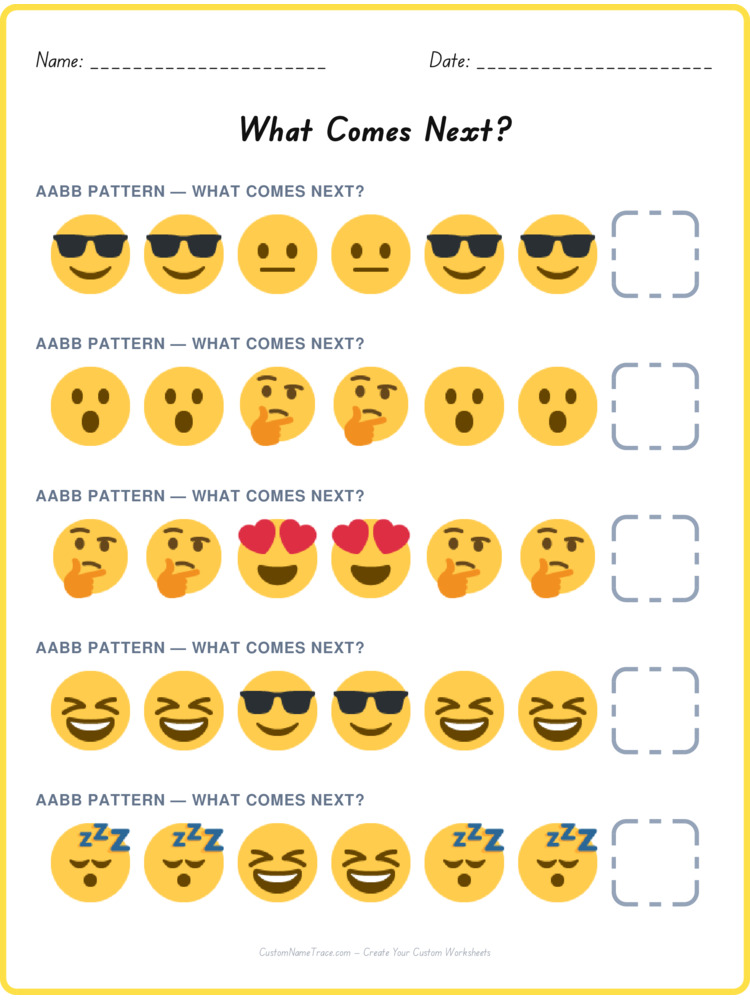
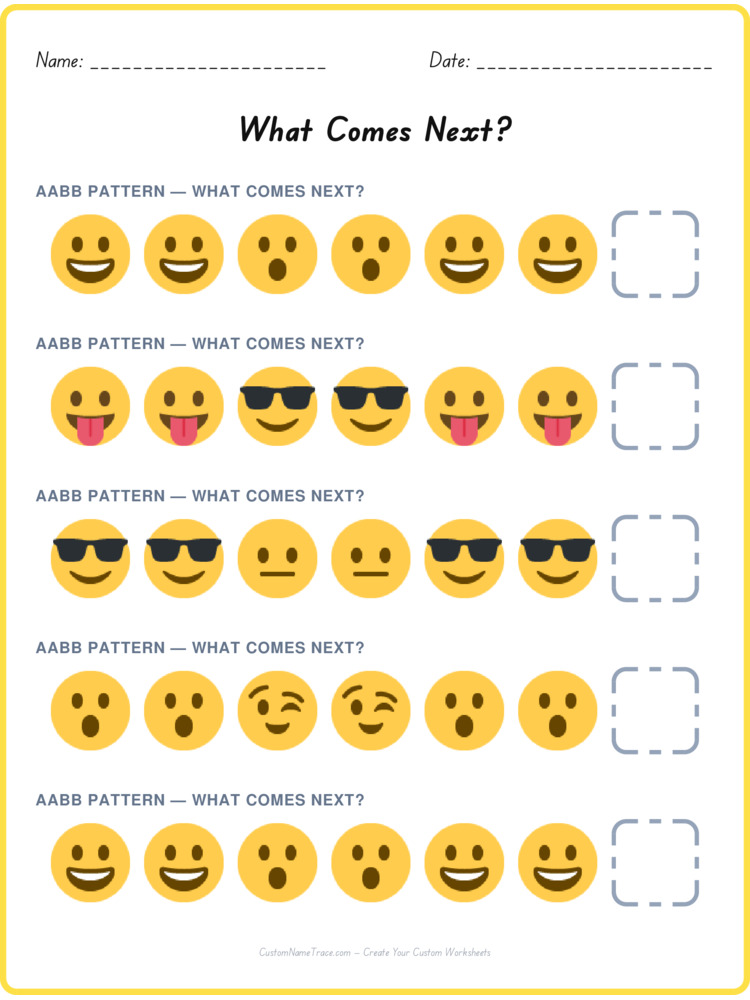
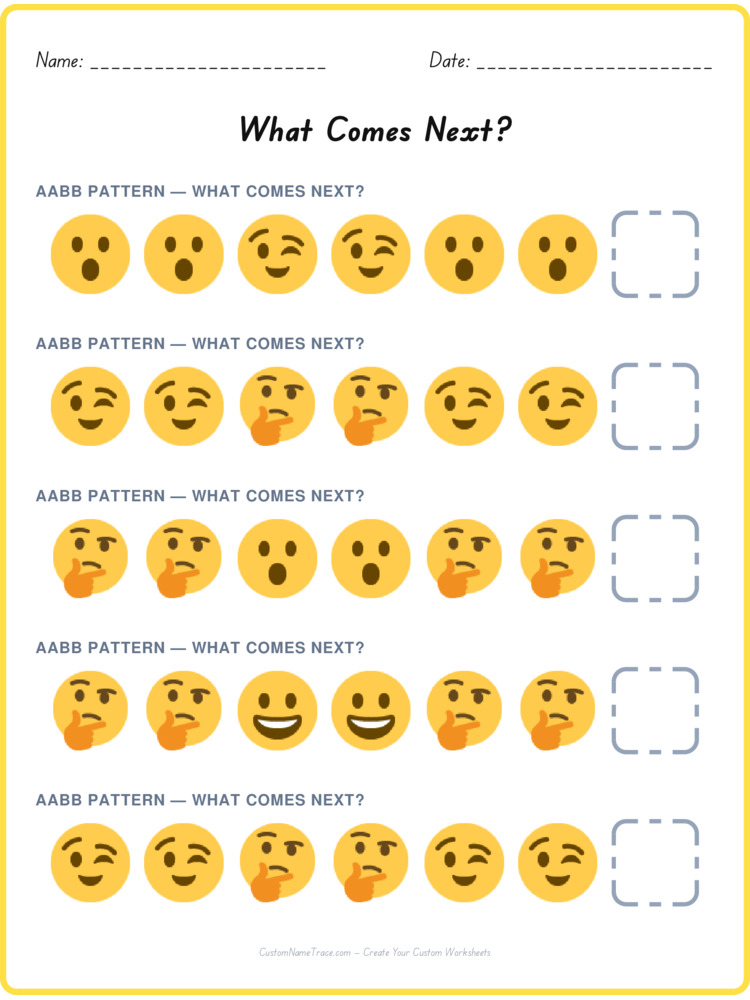
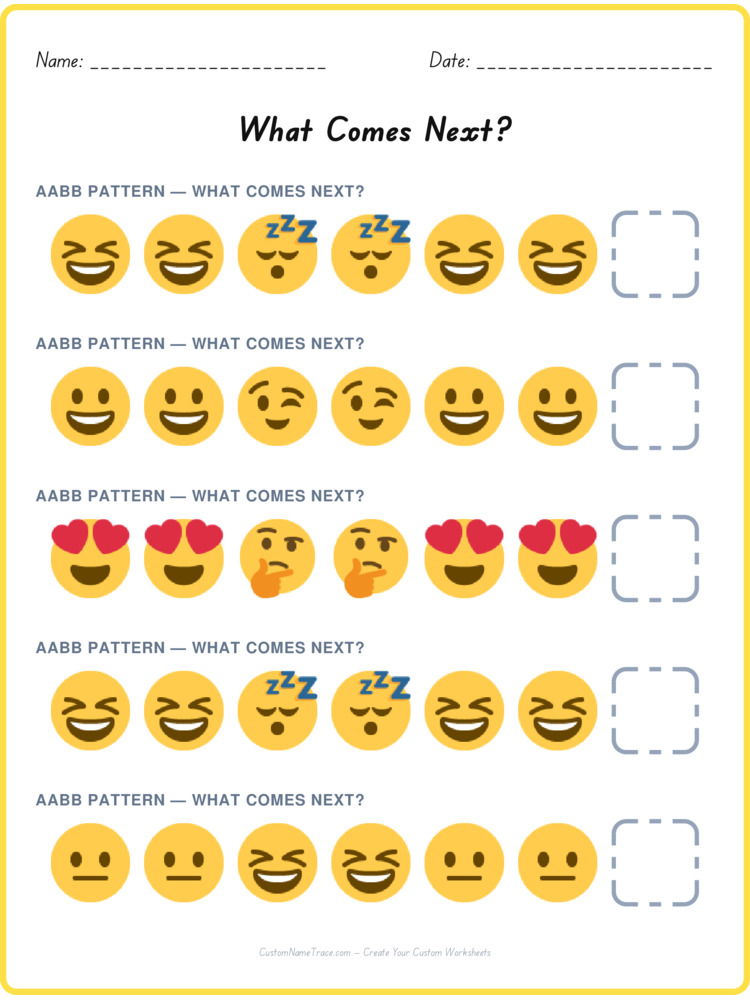
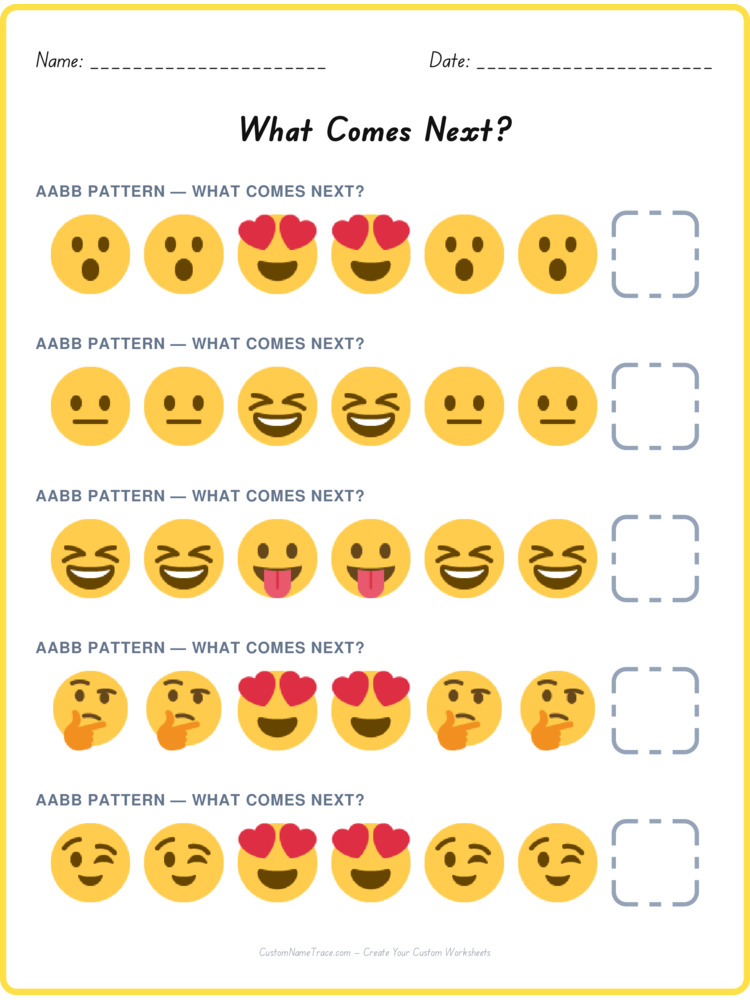
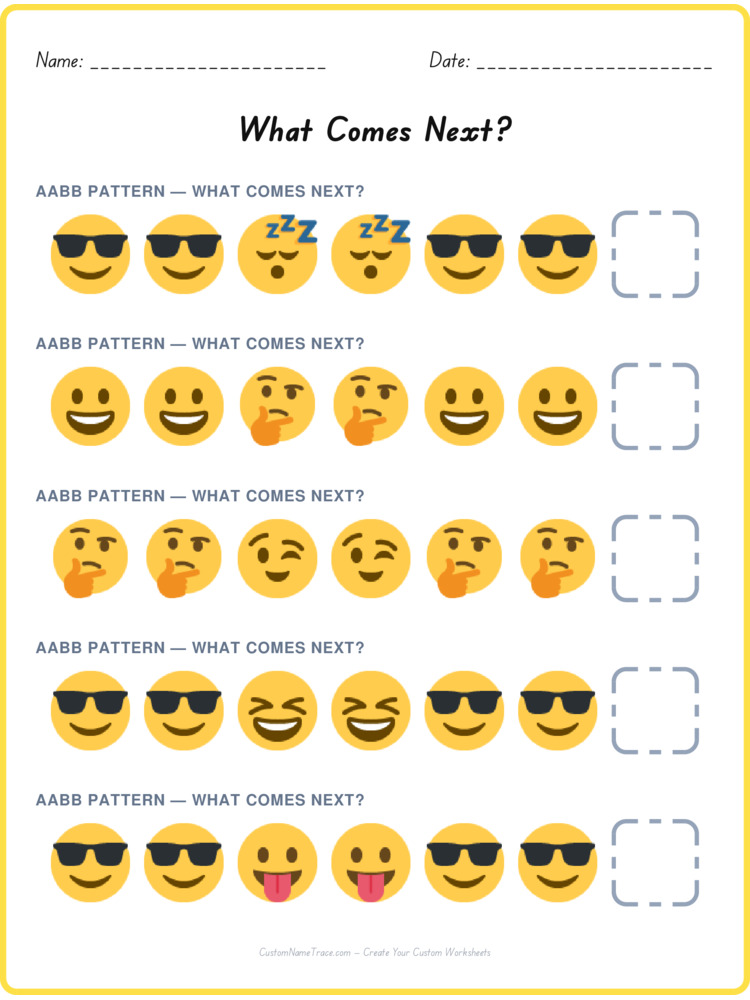
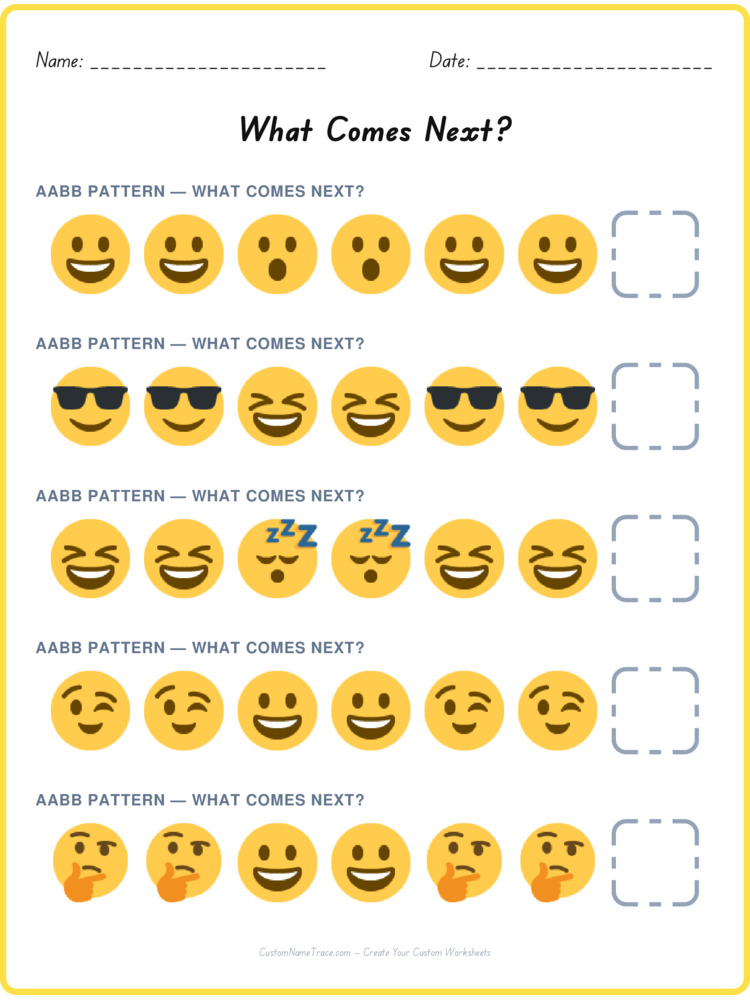
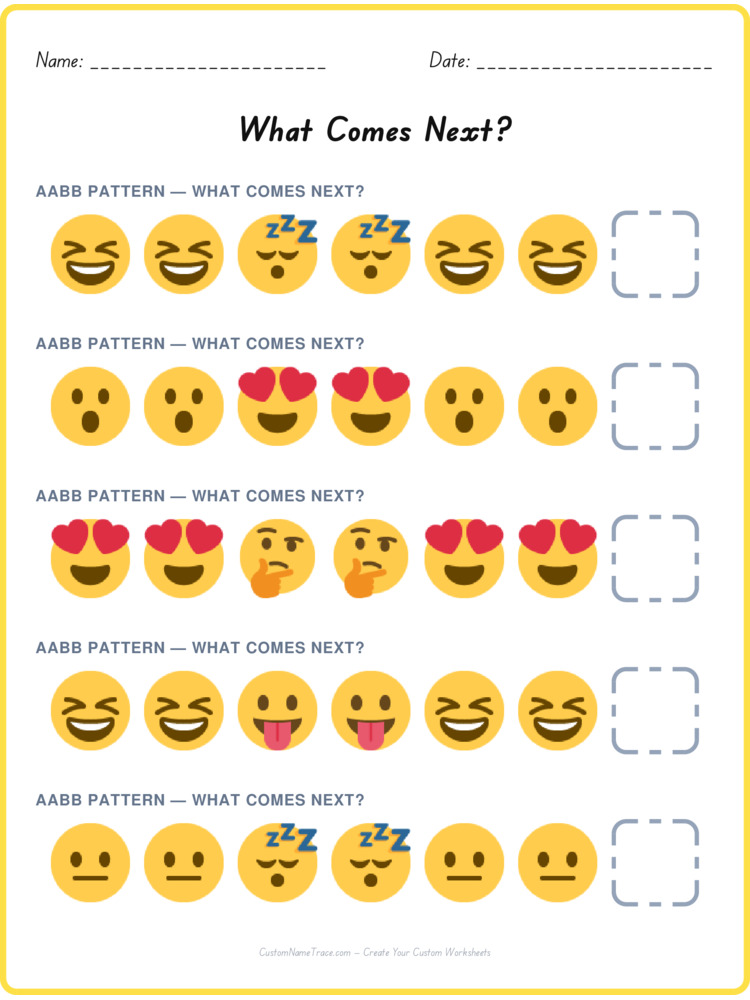
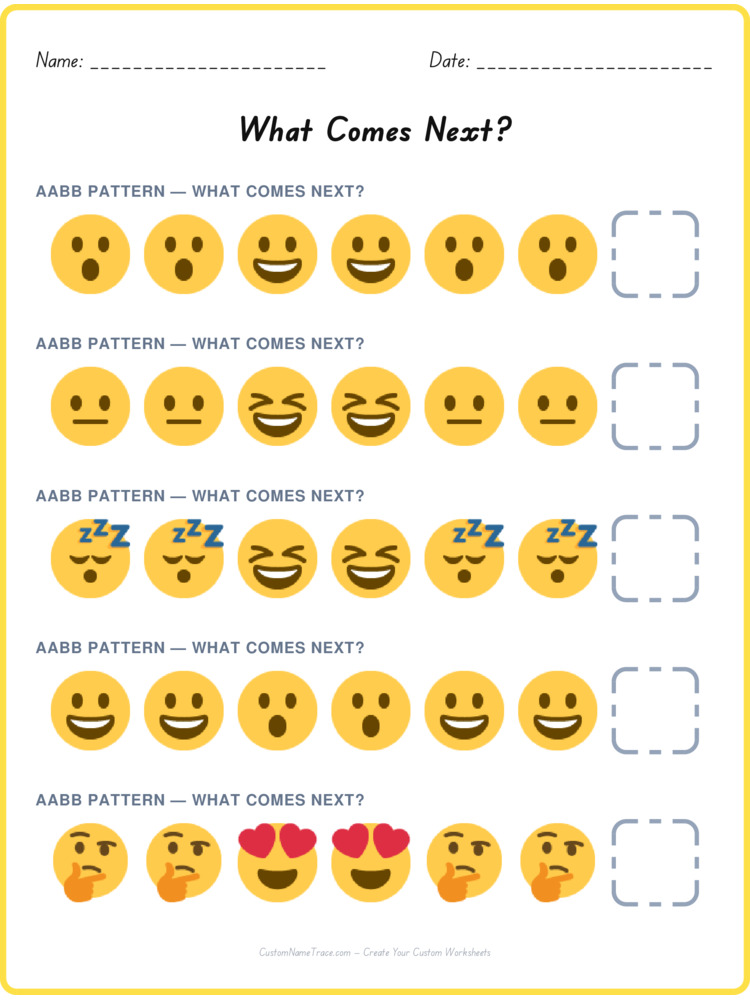
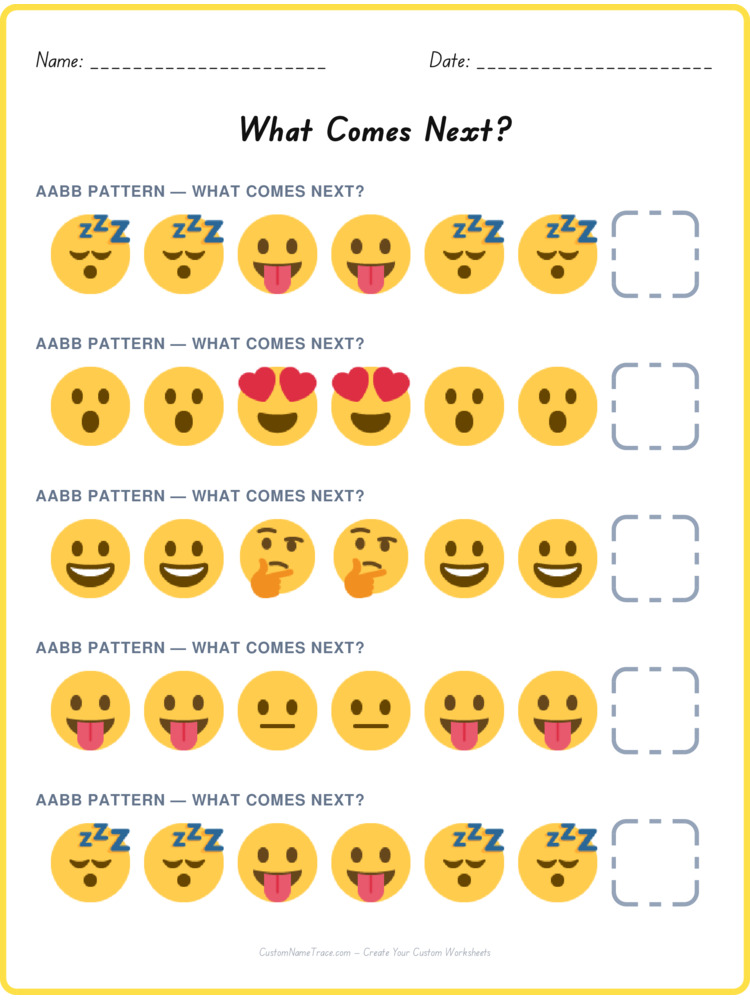
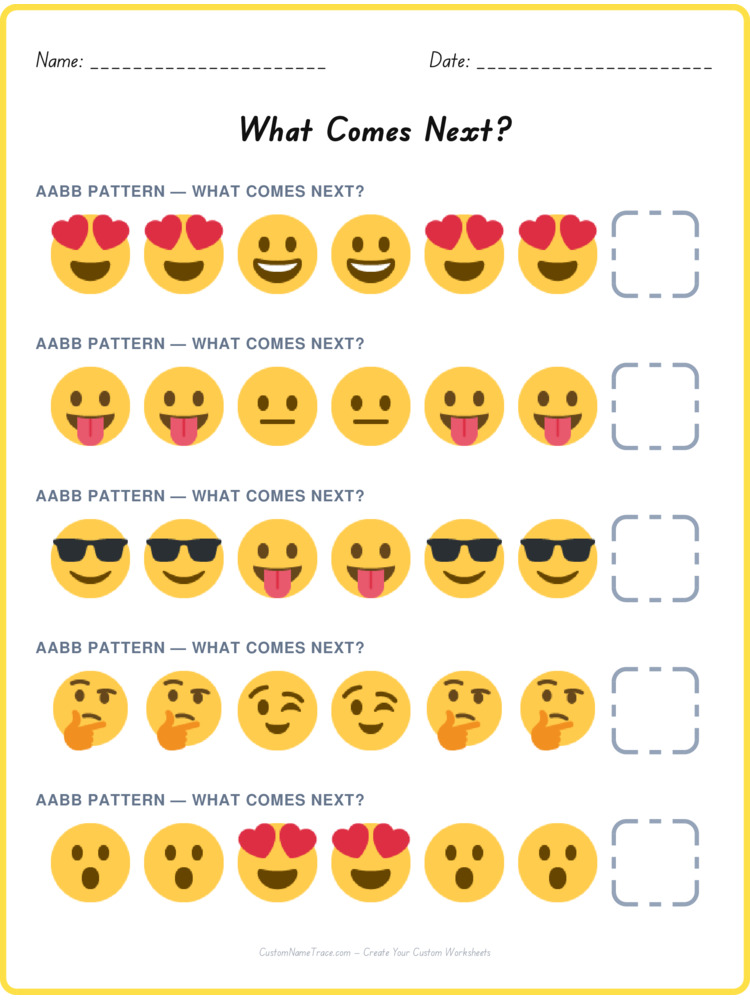
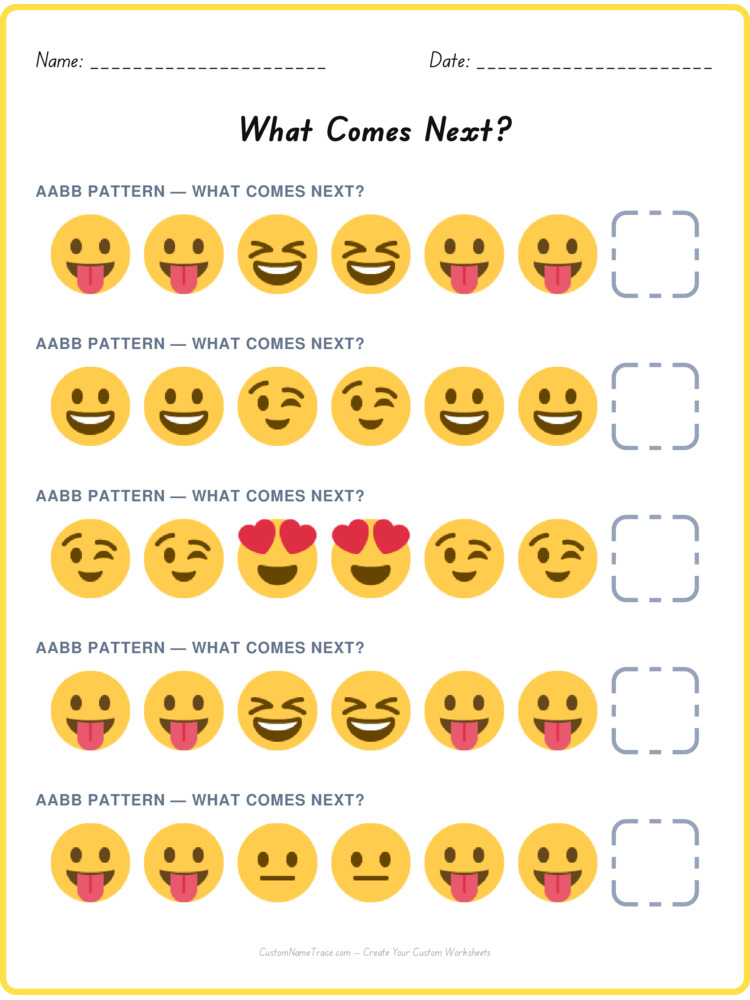
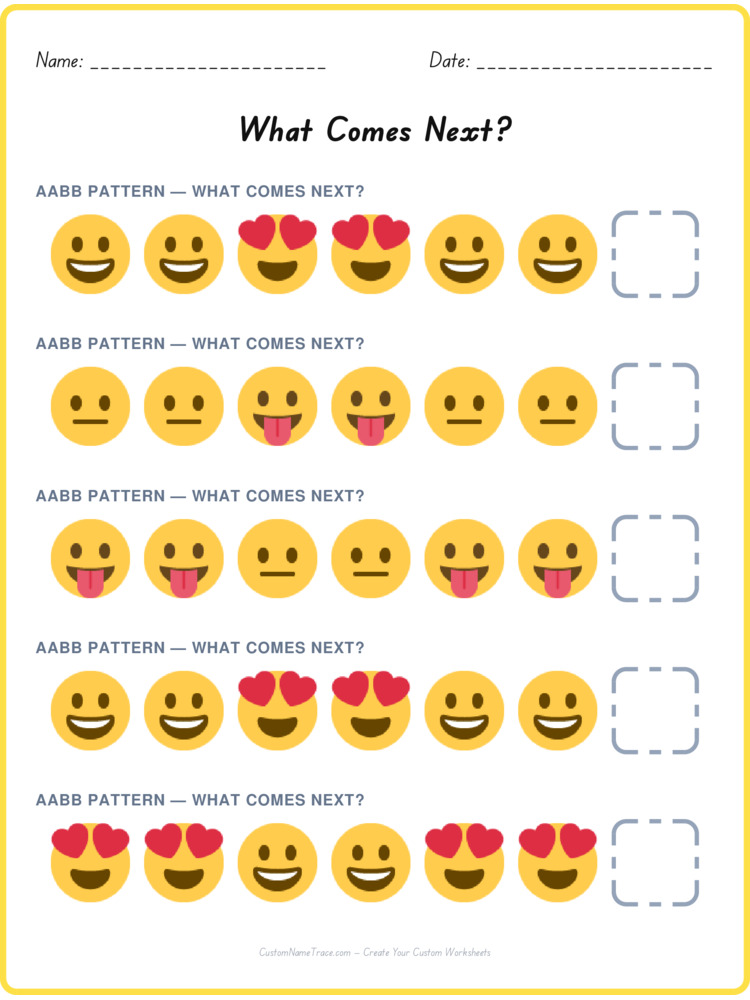
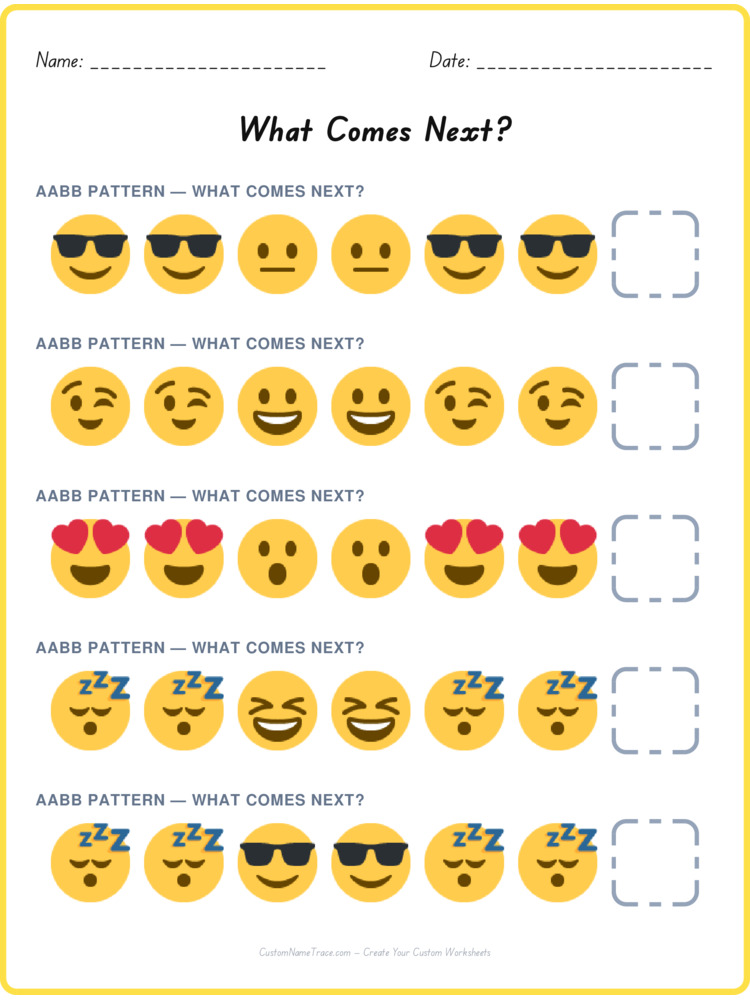
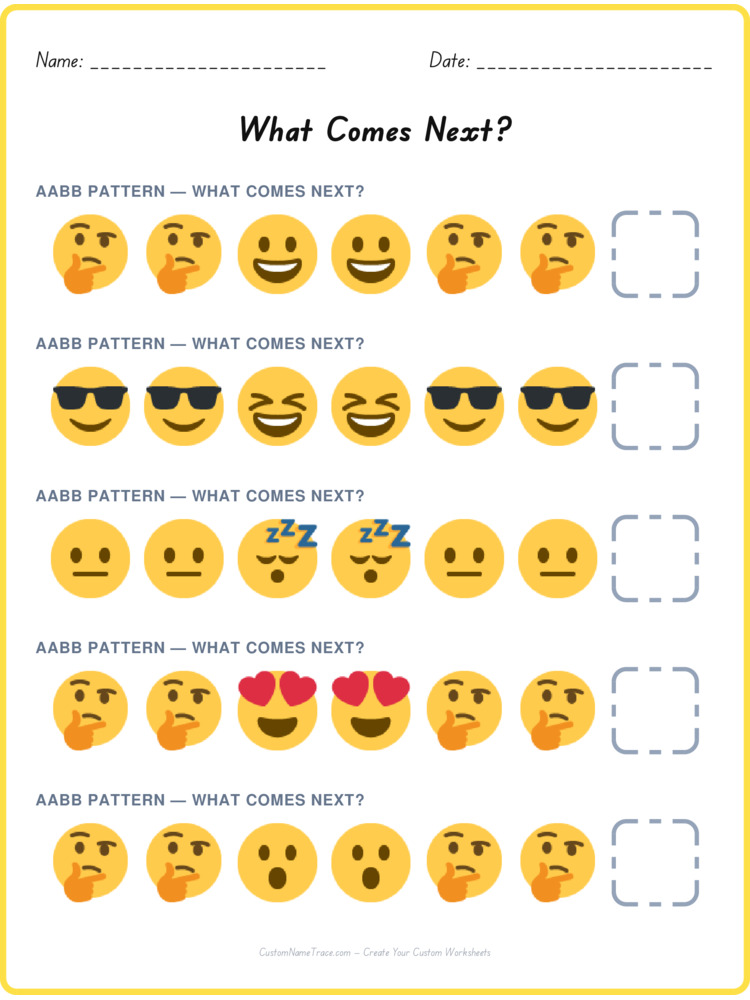
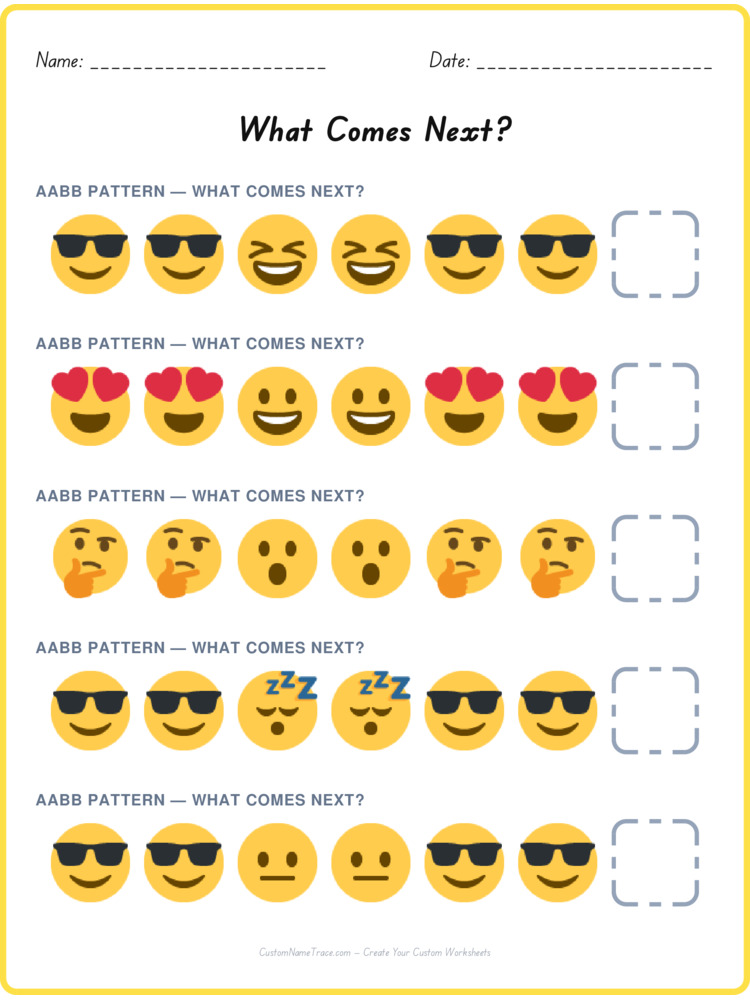
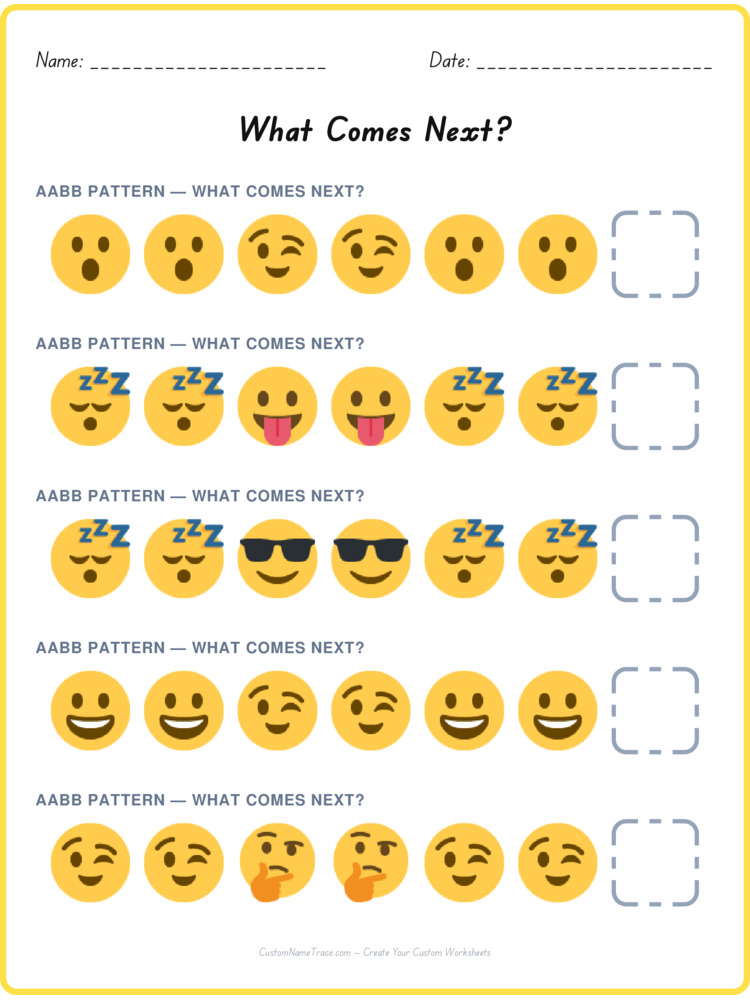
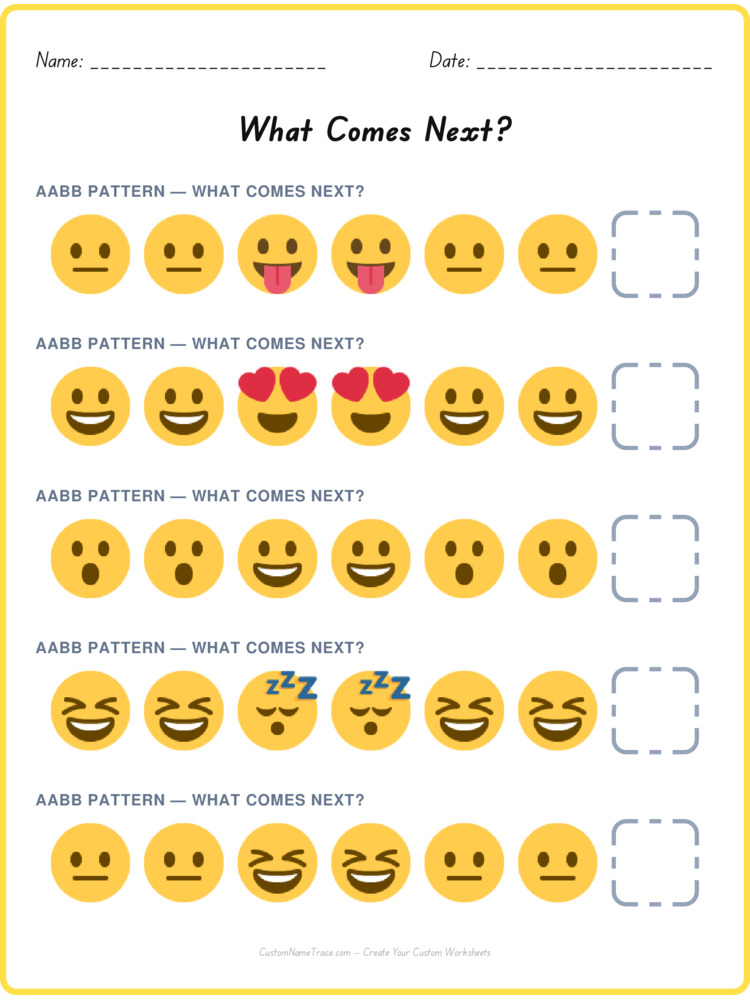
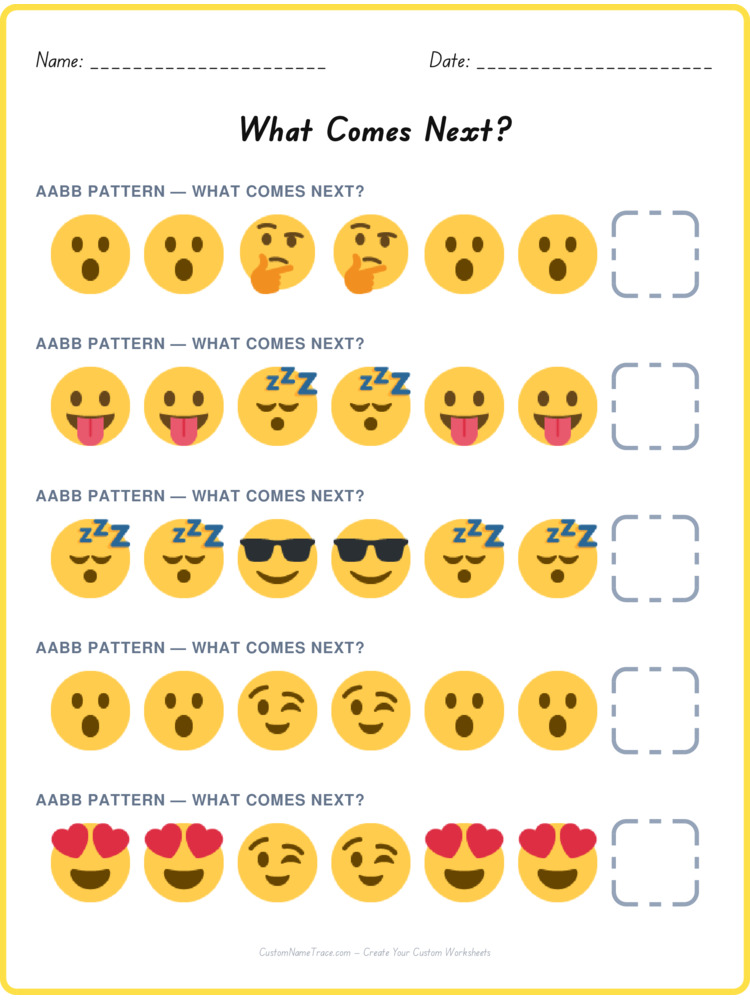
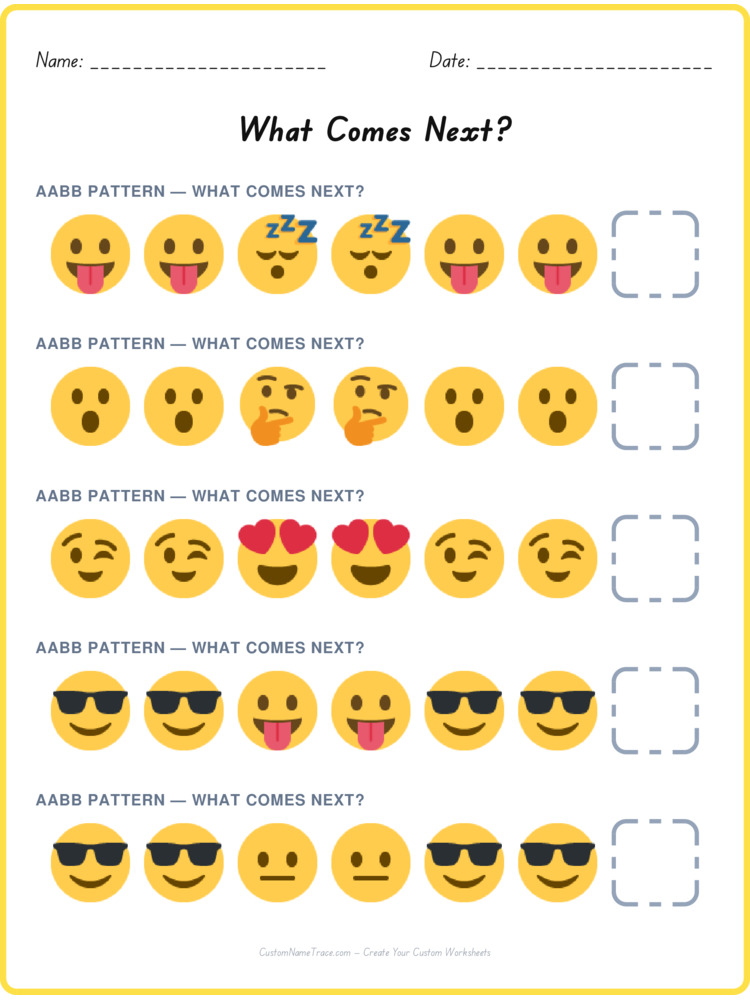
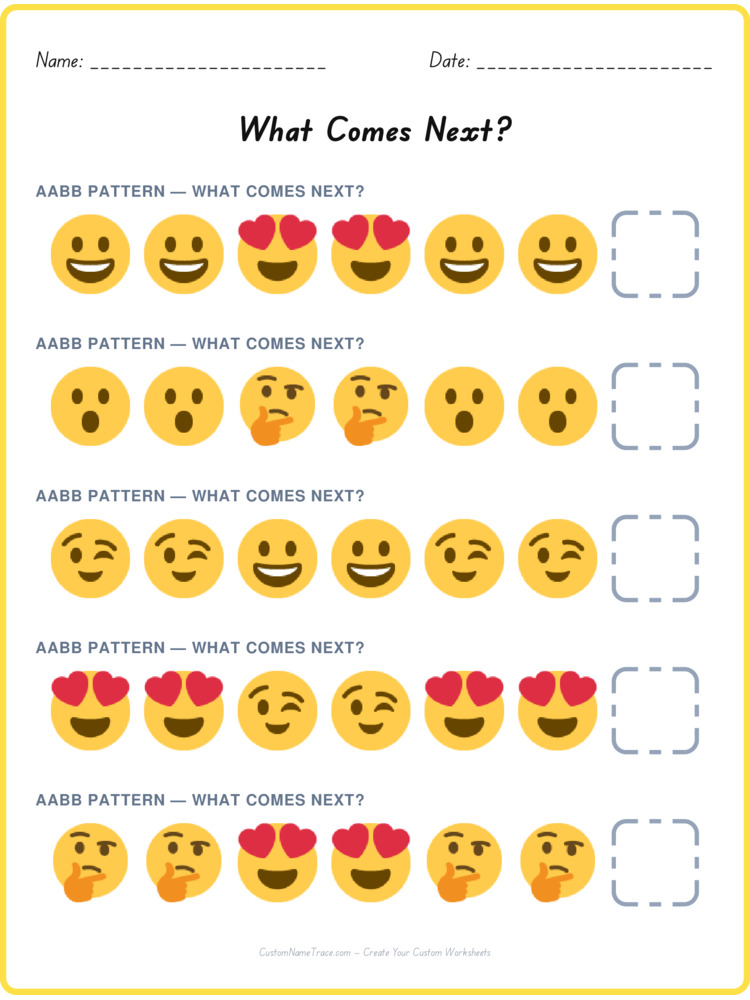
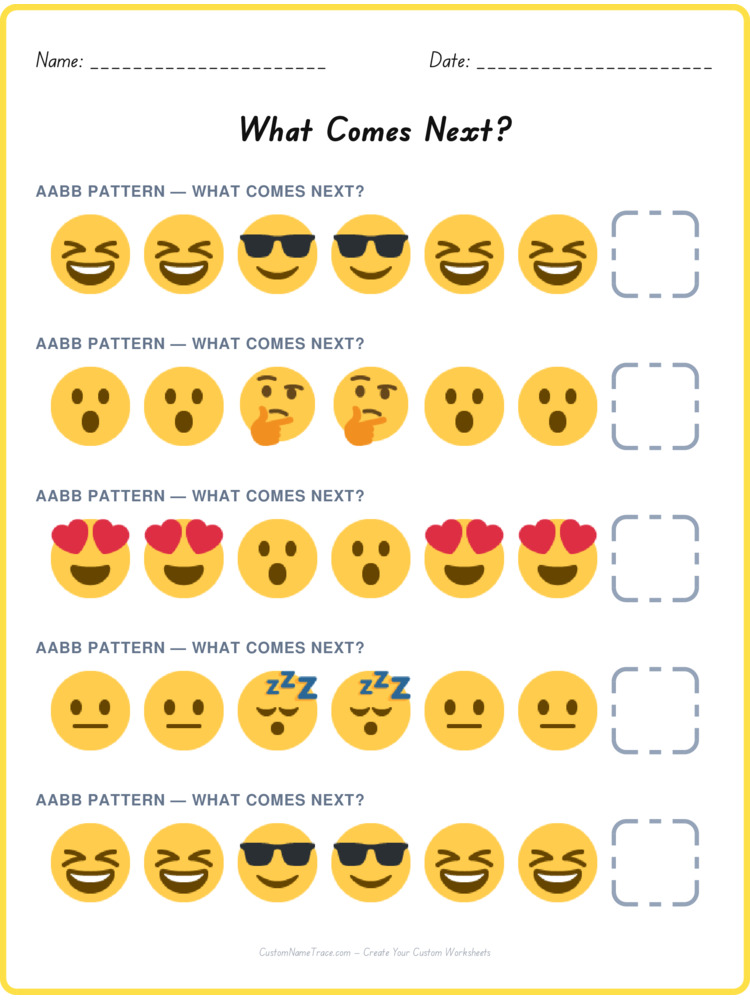
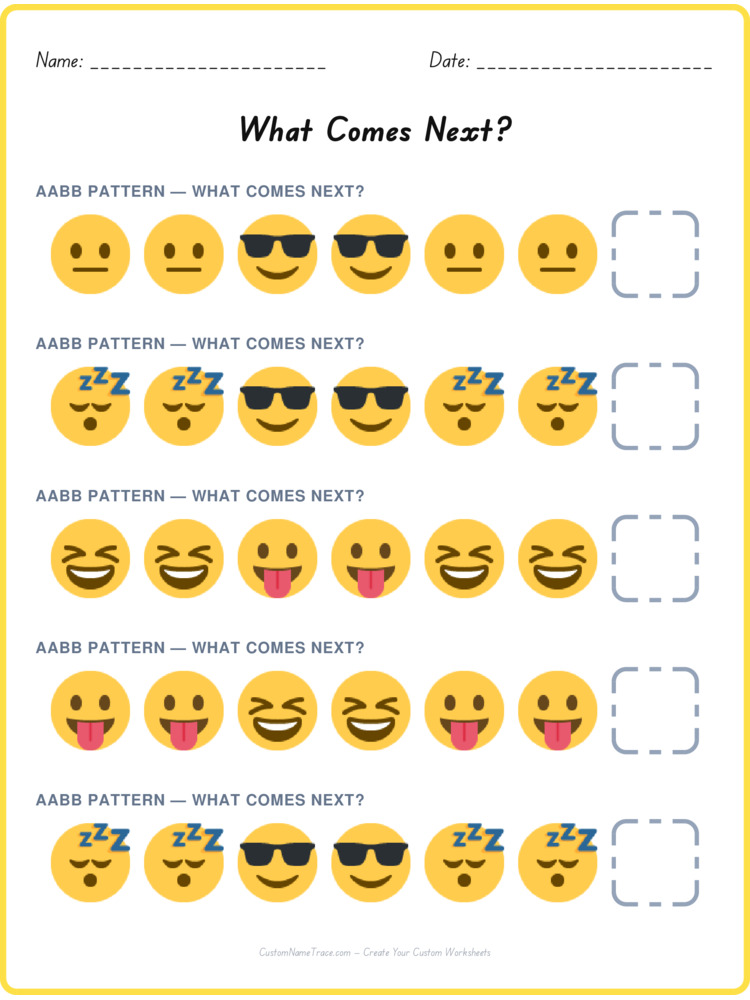
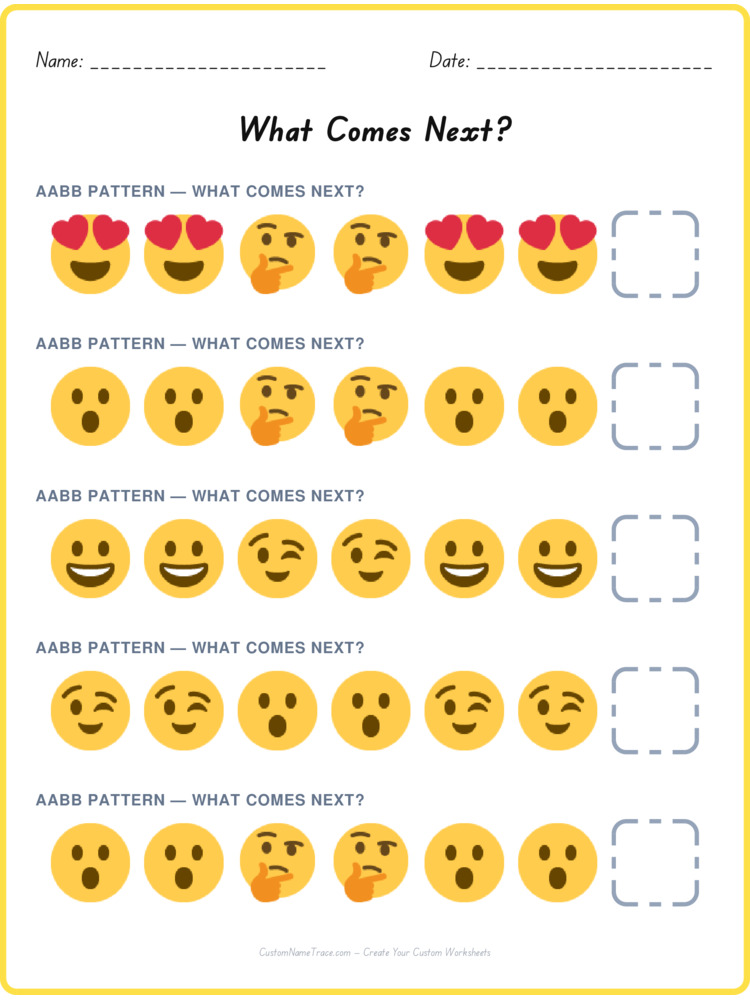
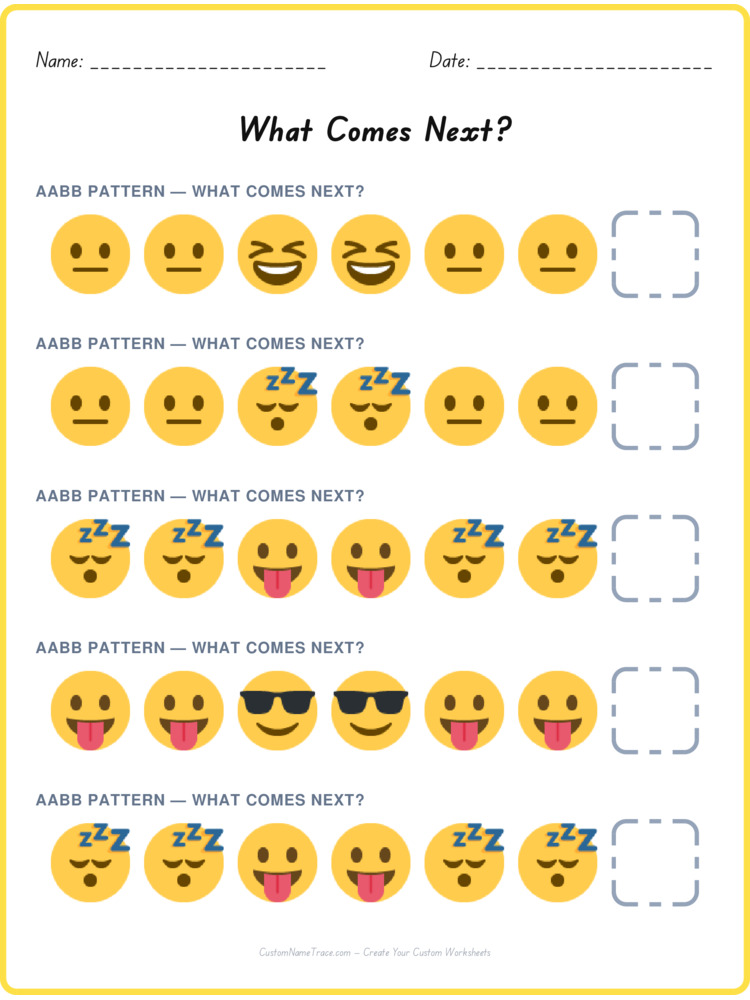
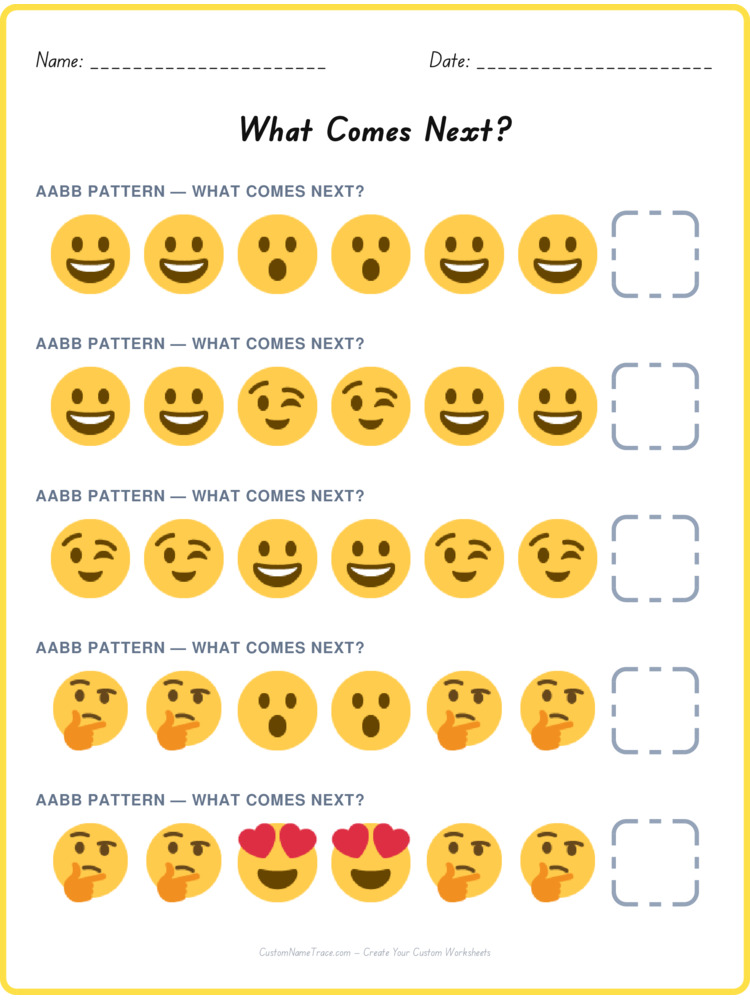
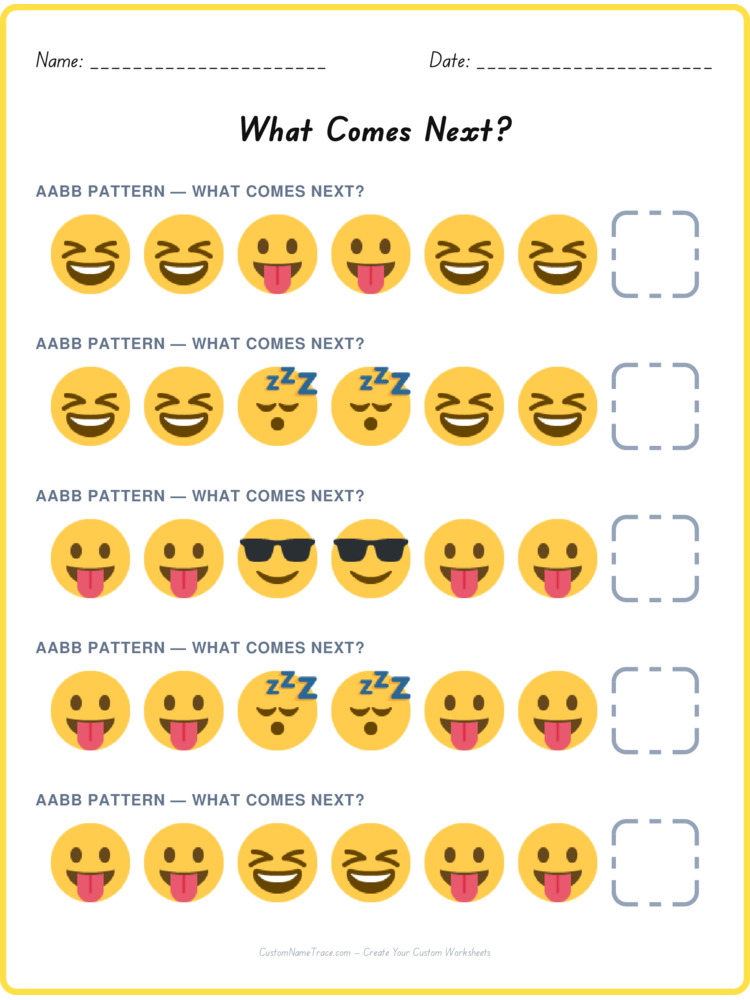
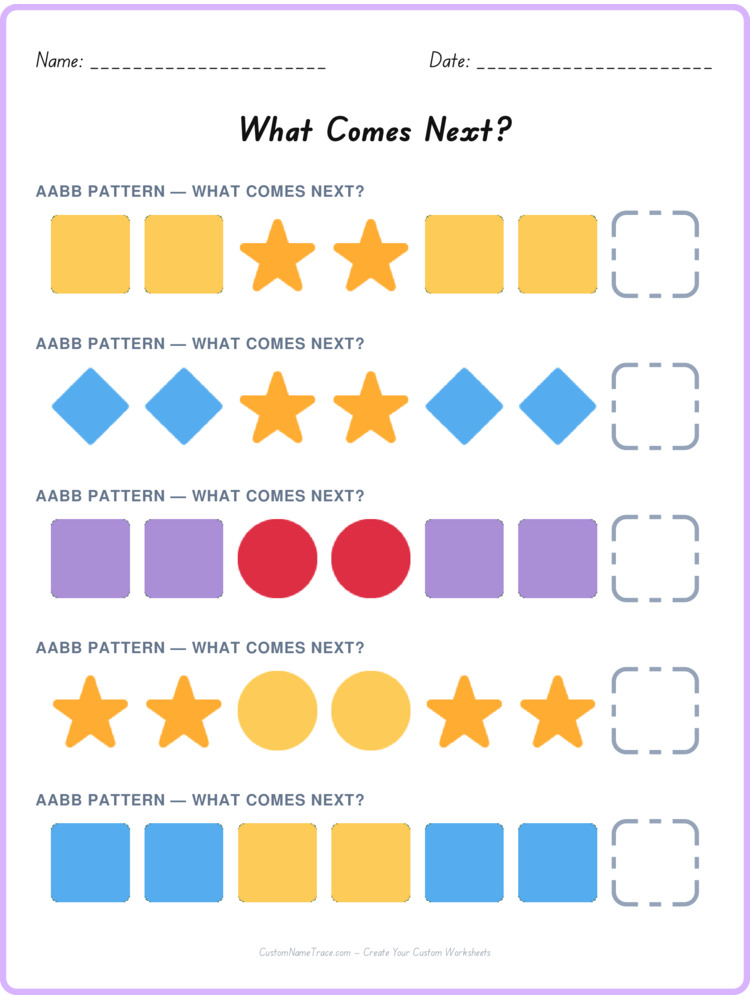
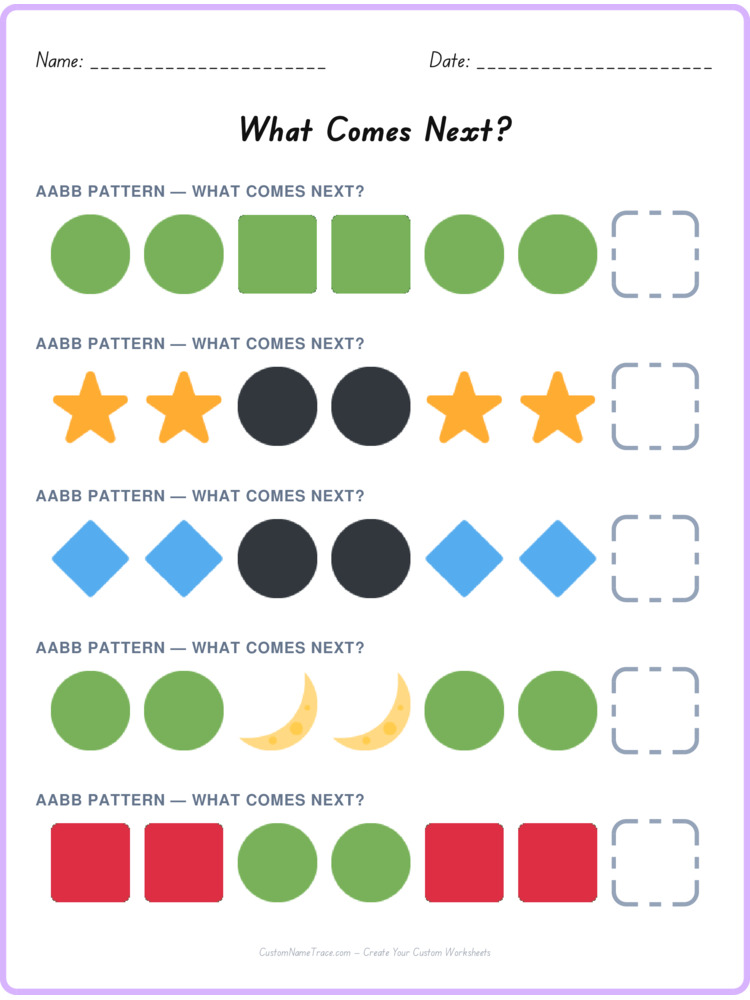
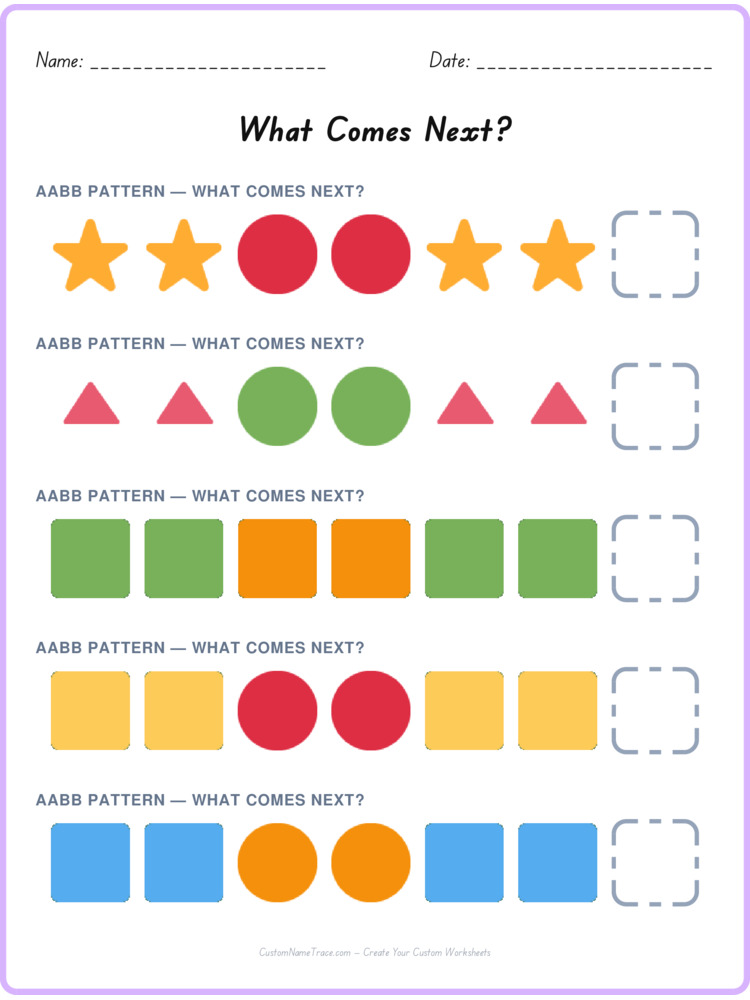
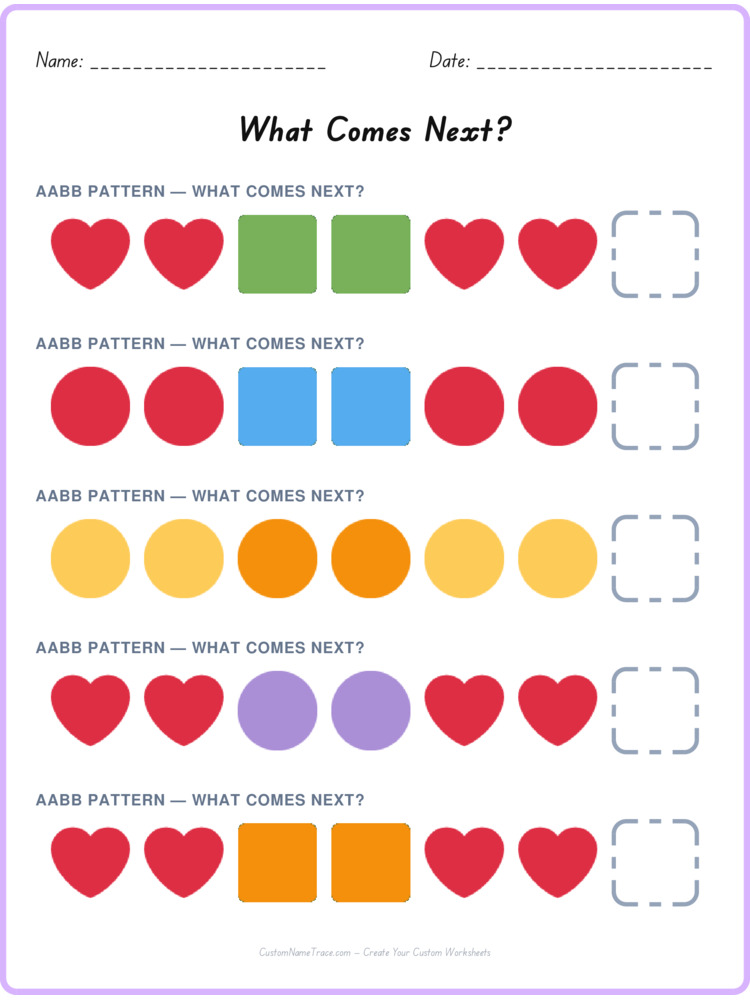
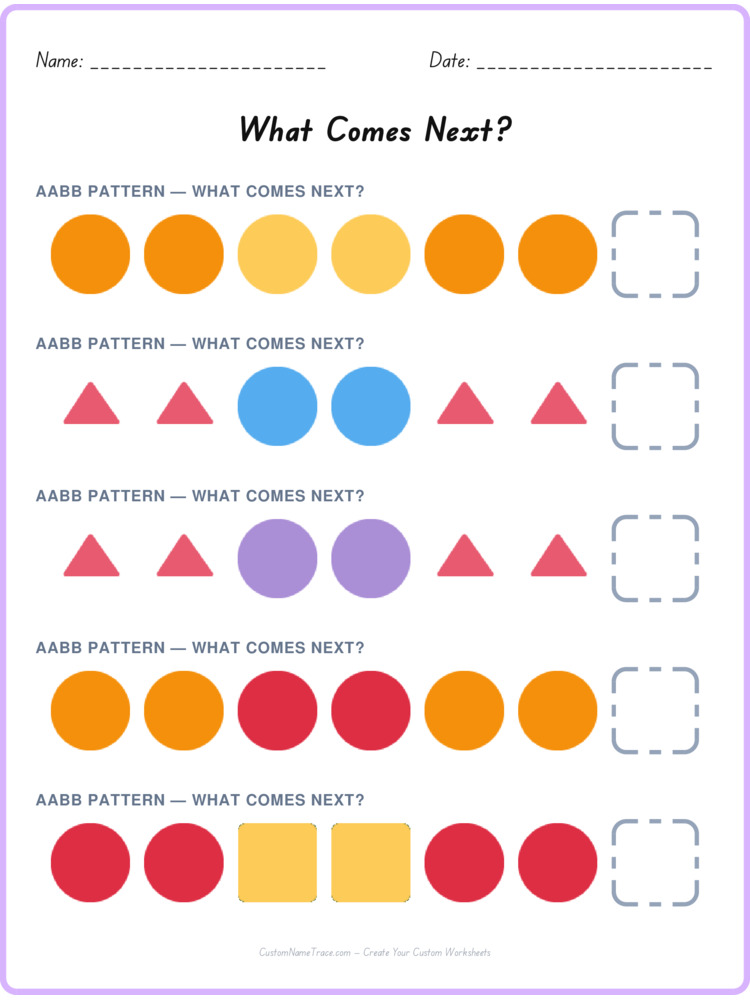
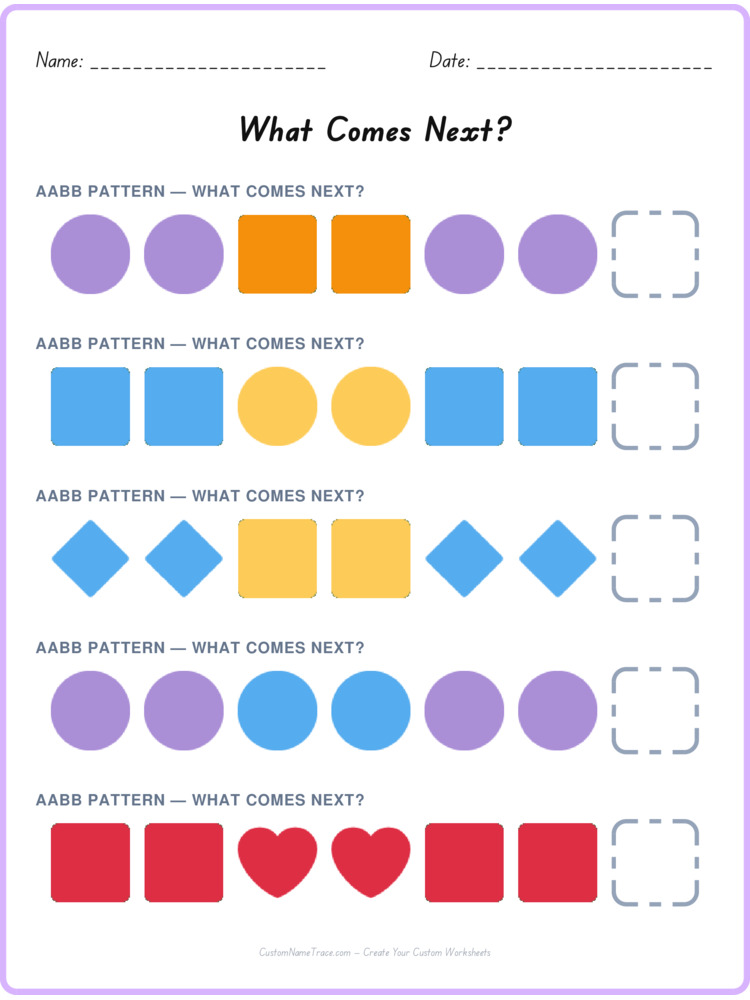
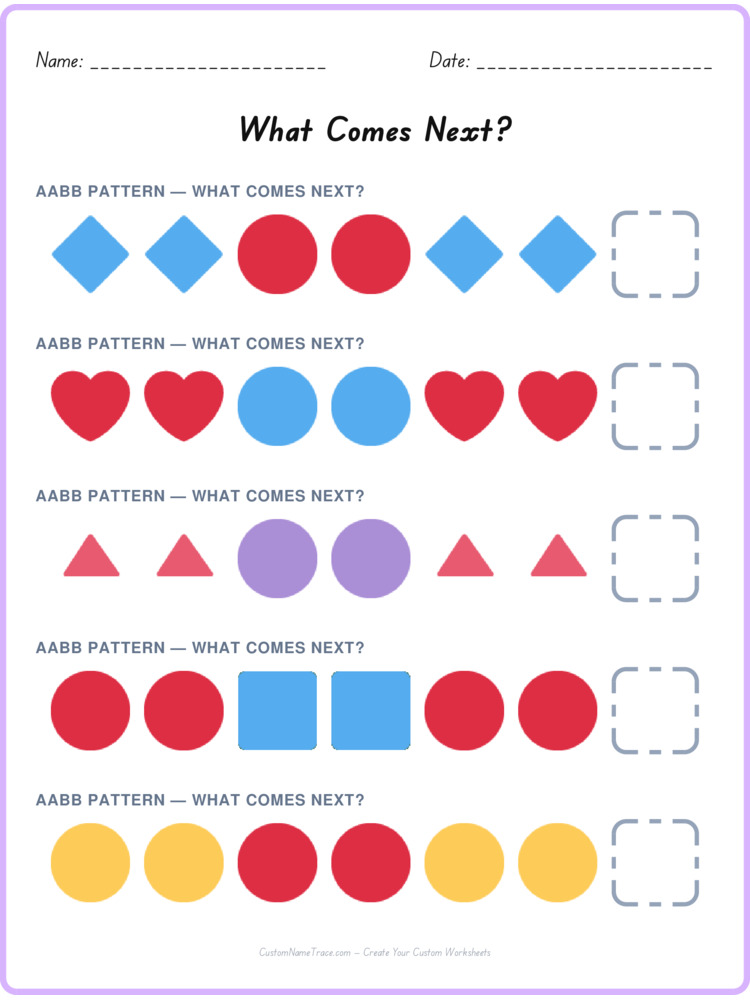
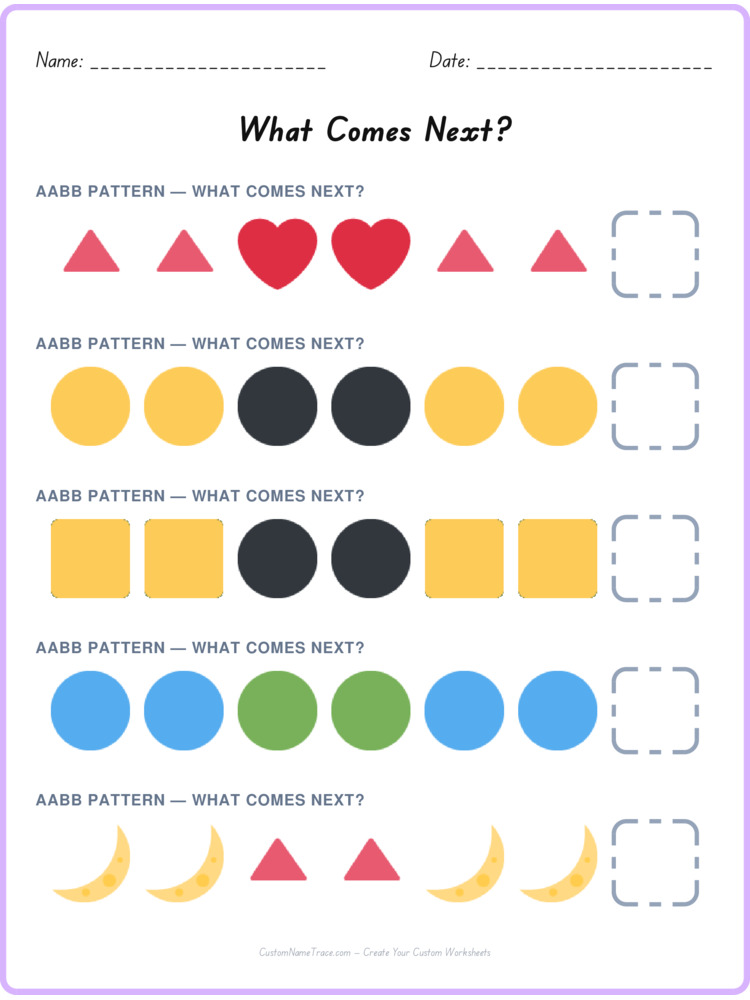
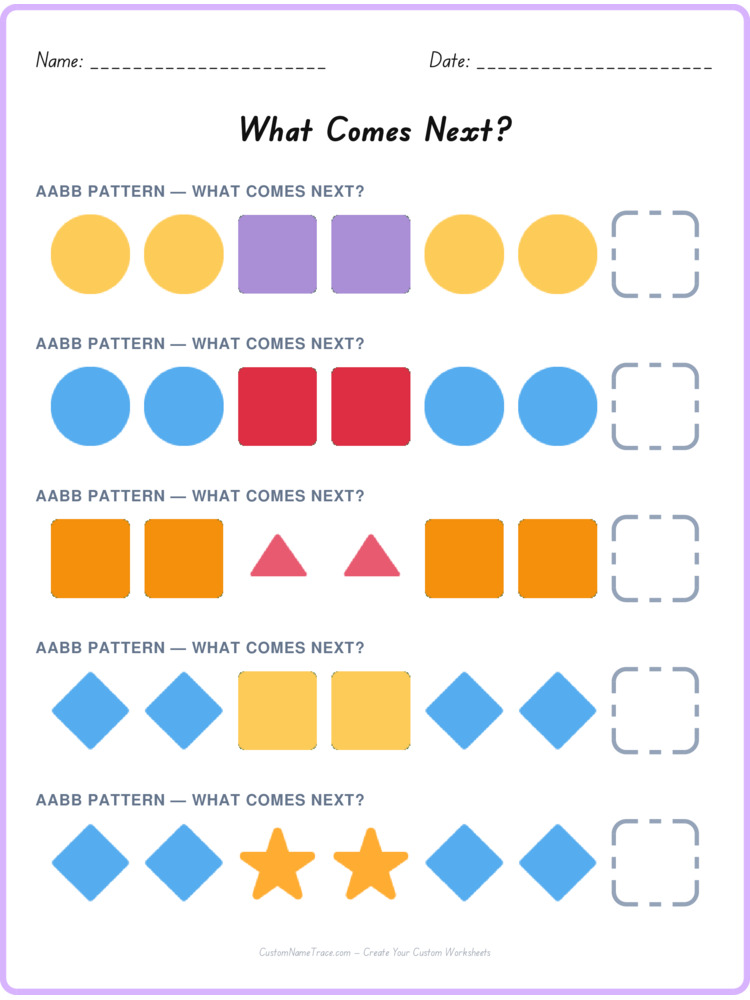
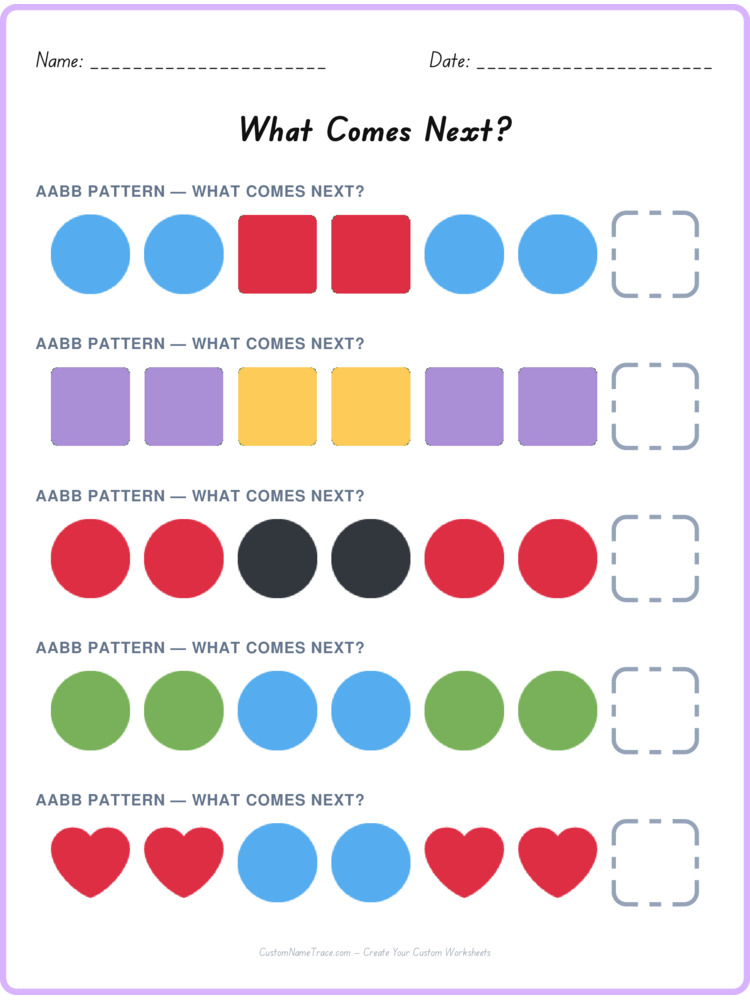
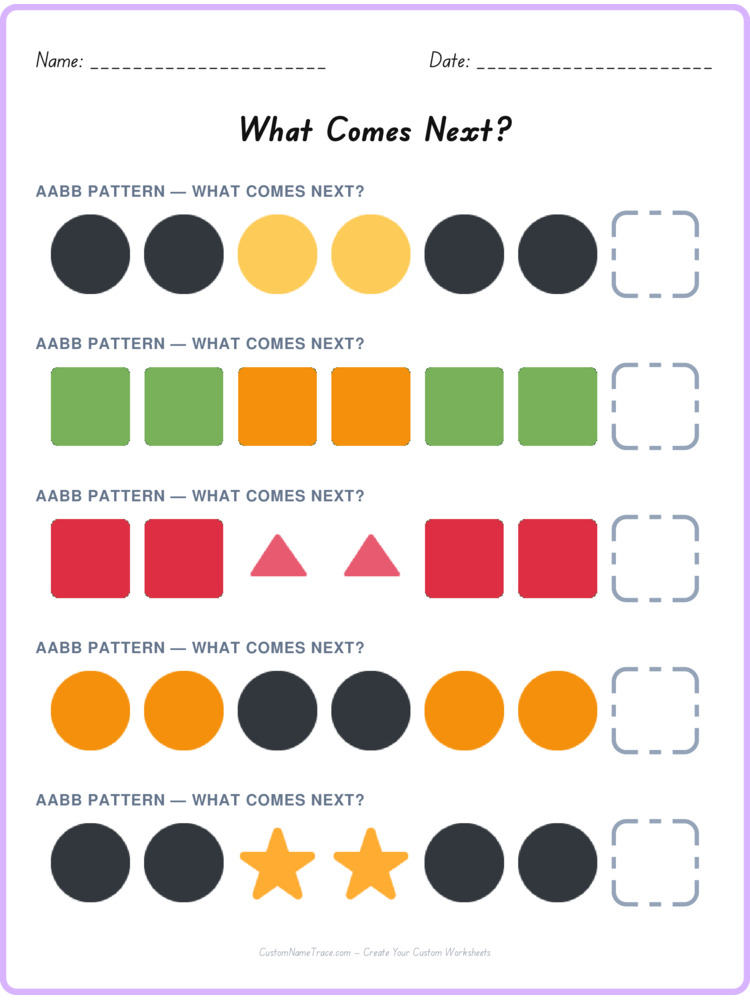
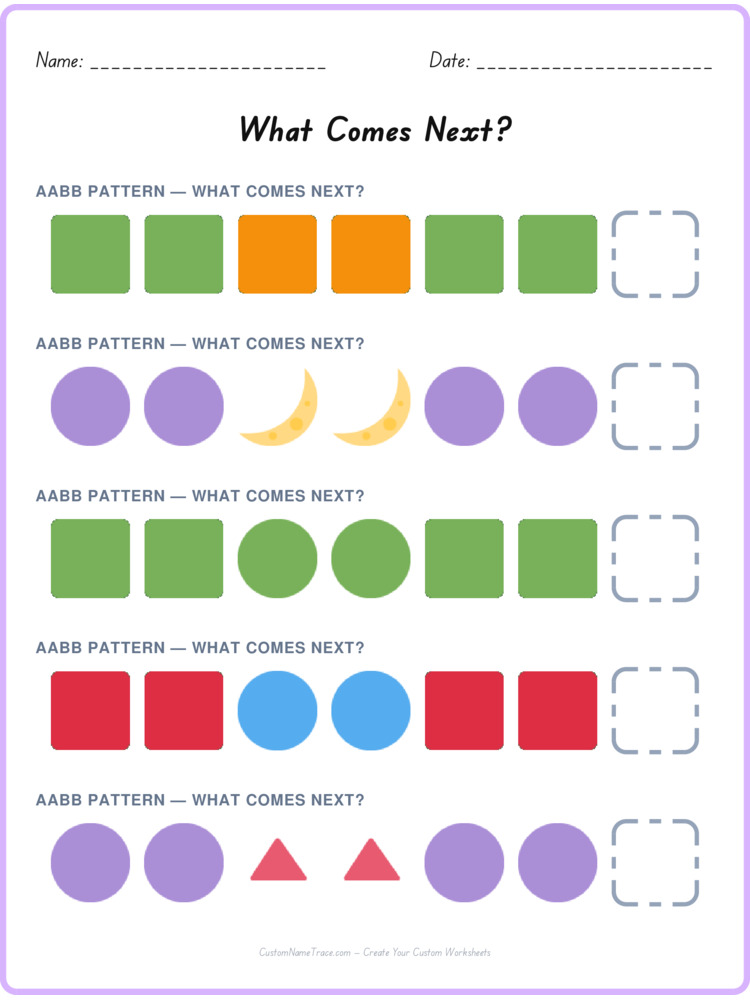
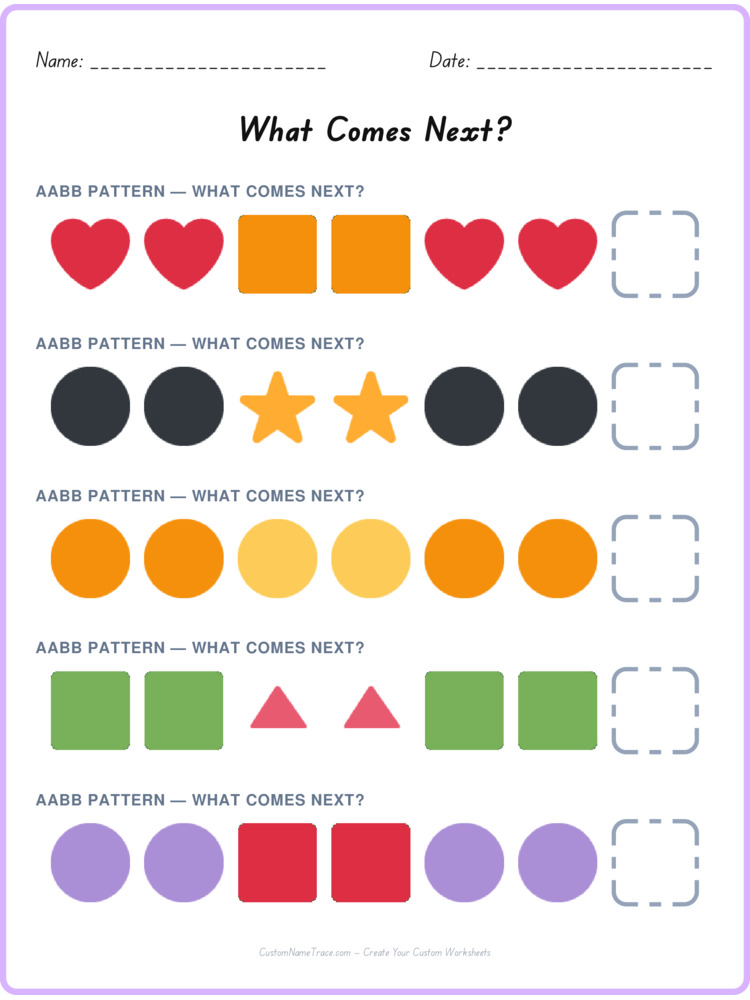
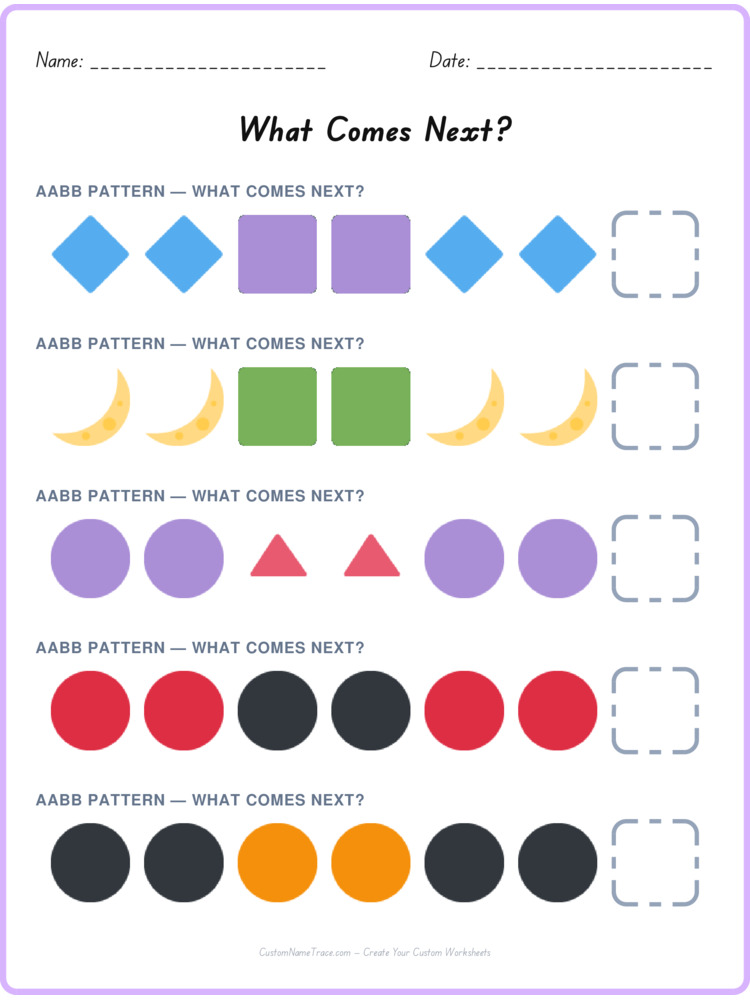
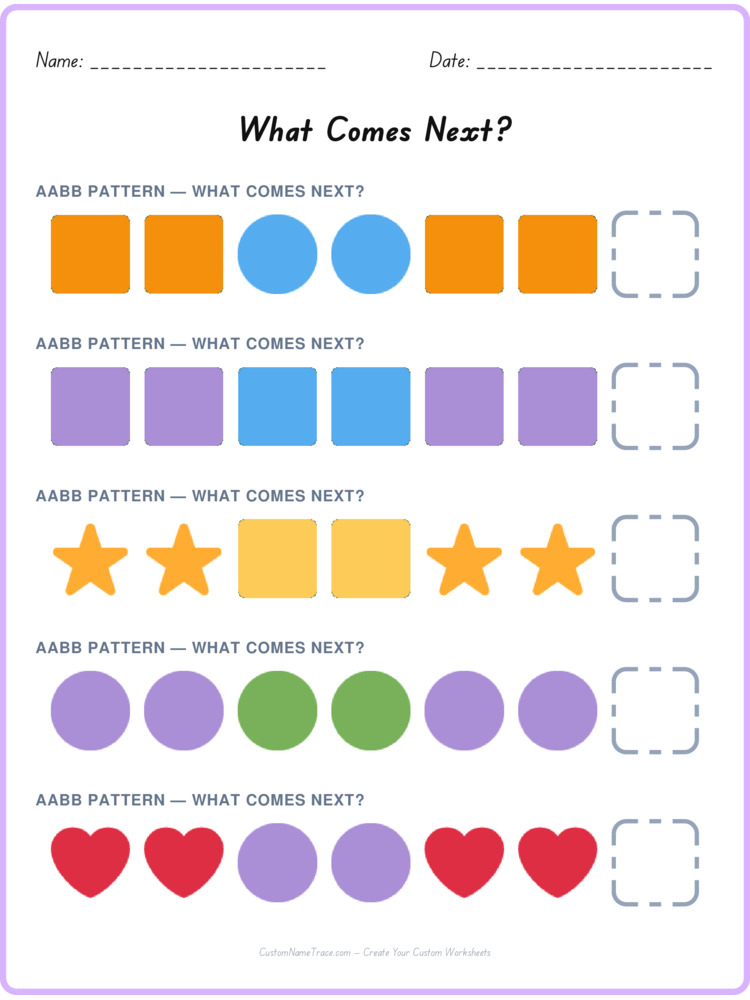
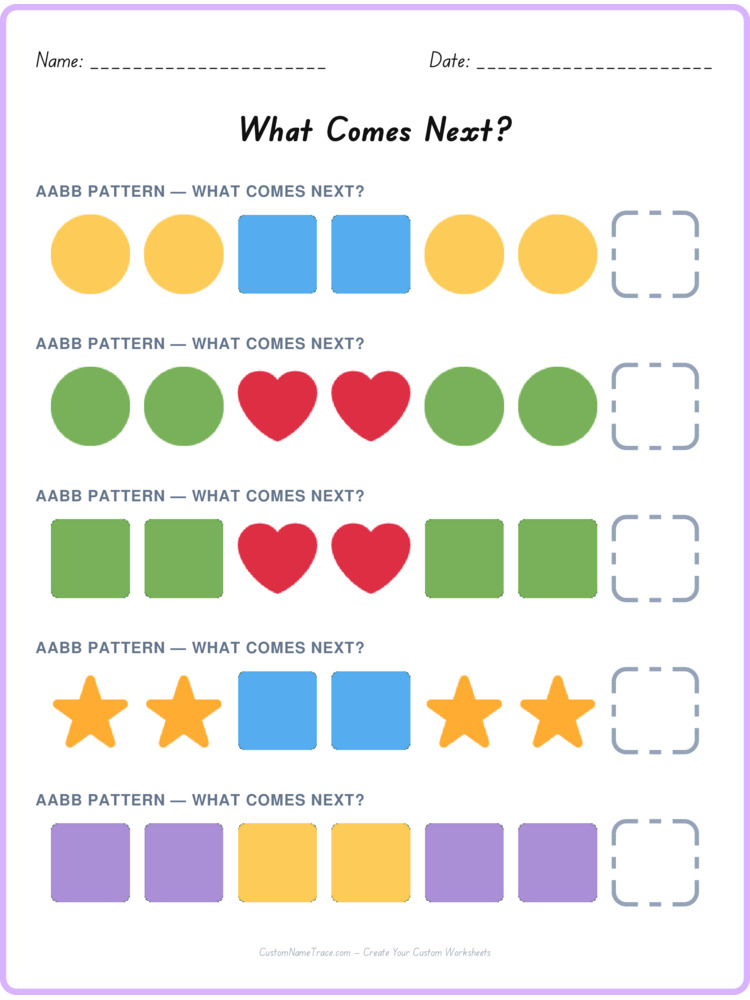
Two matched pairs, back to back
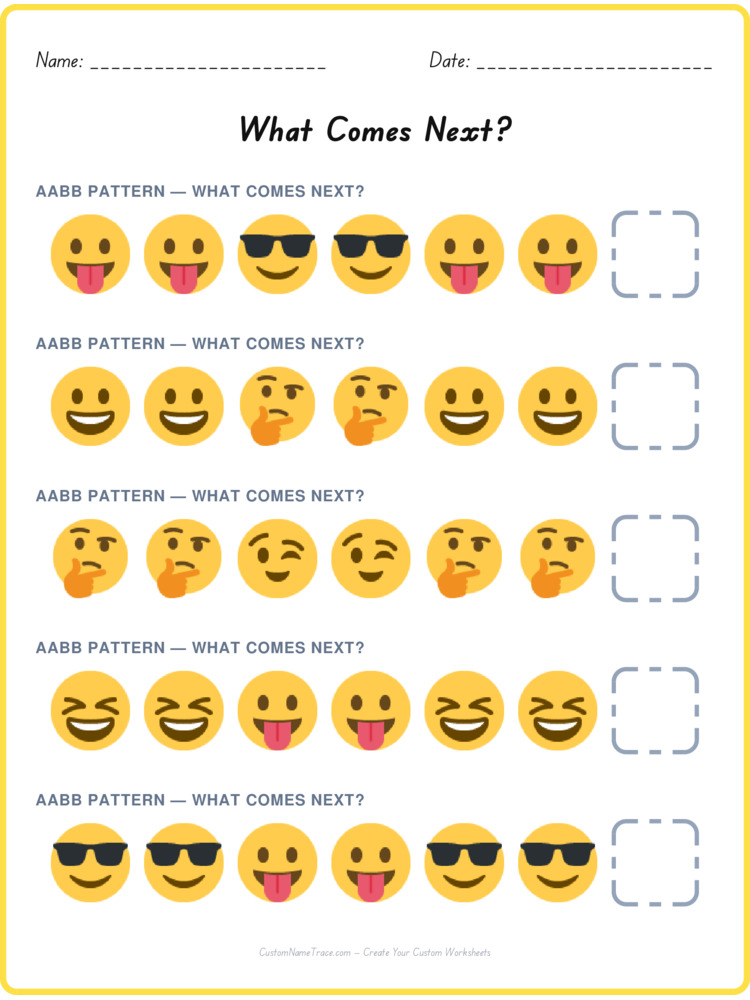
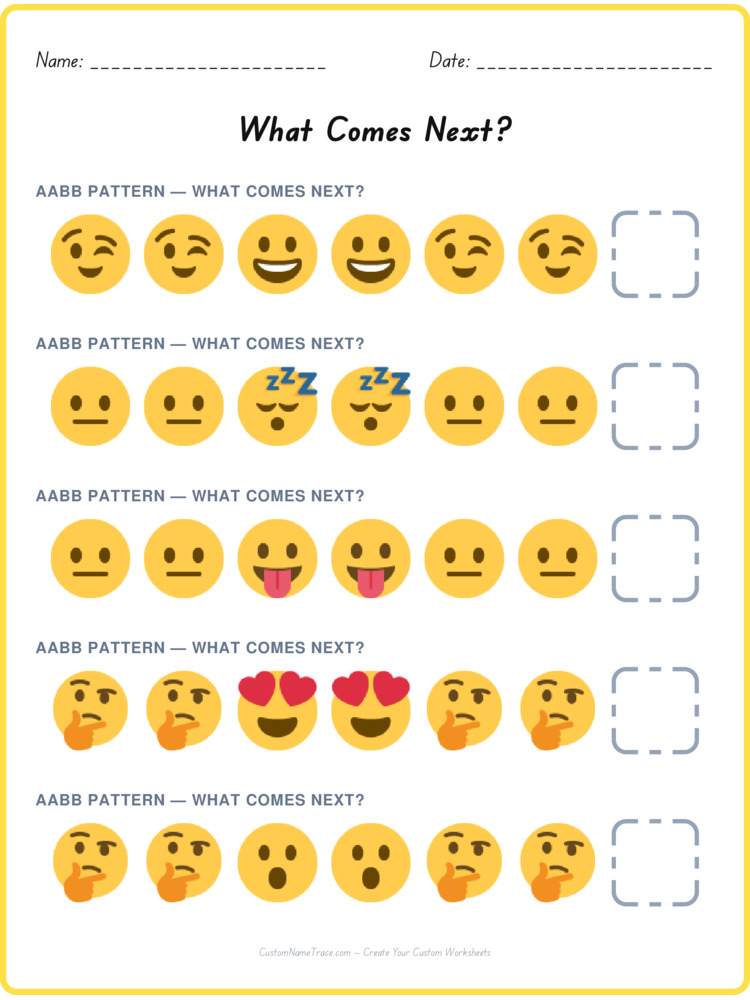
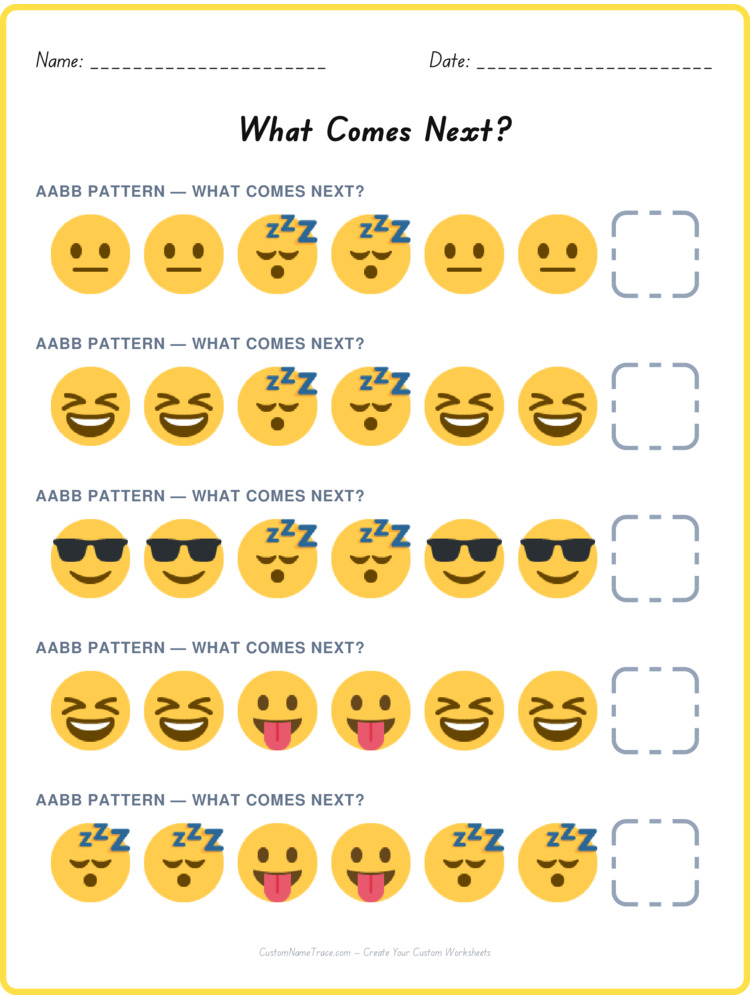
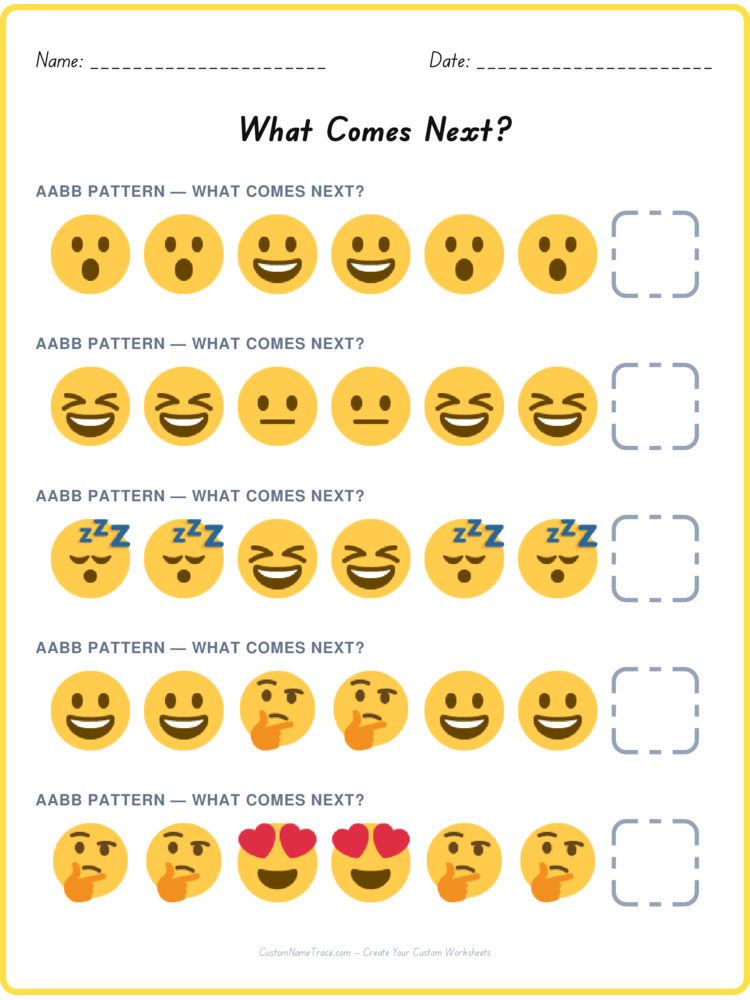
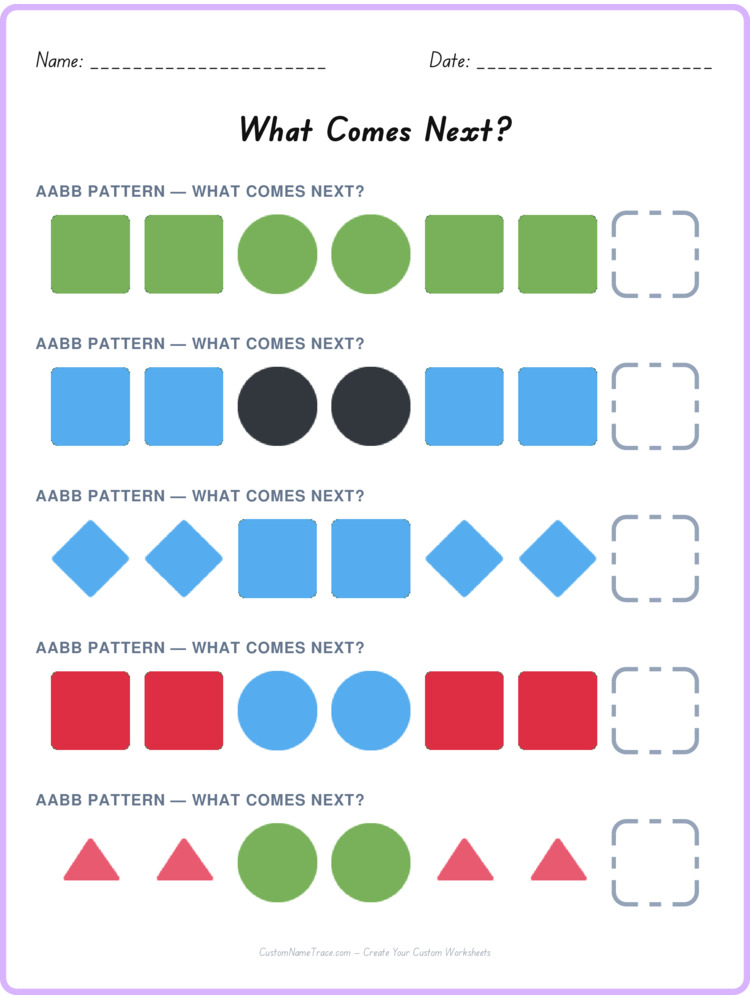
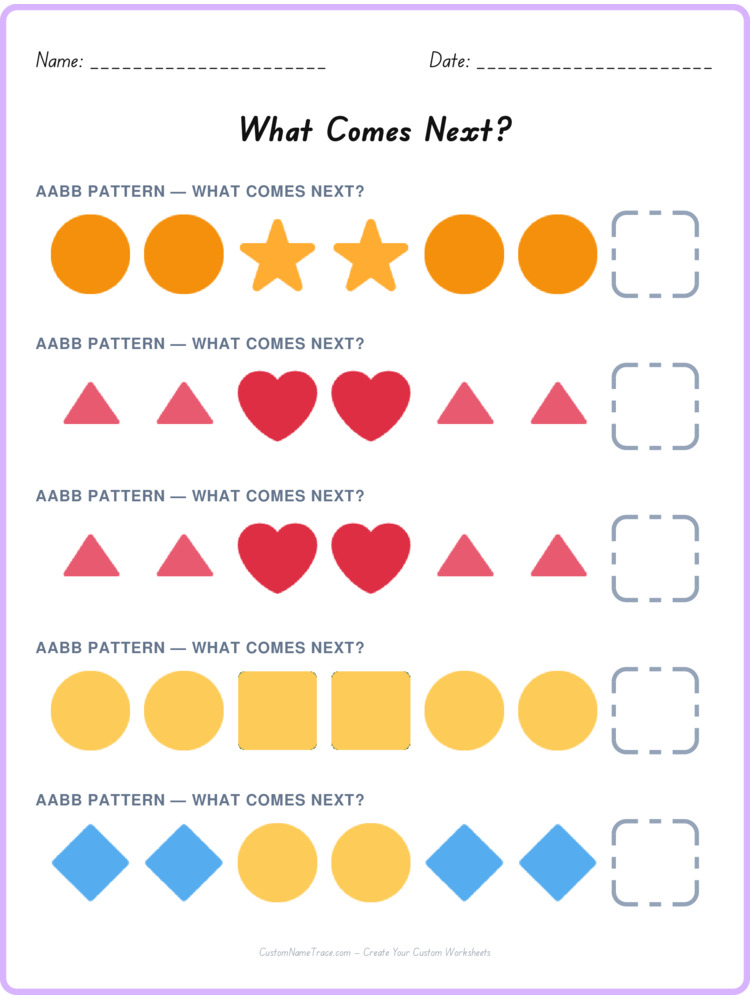
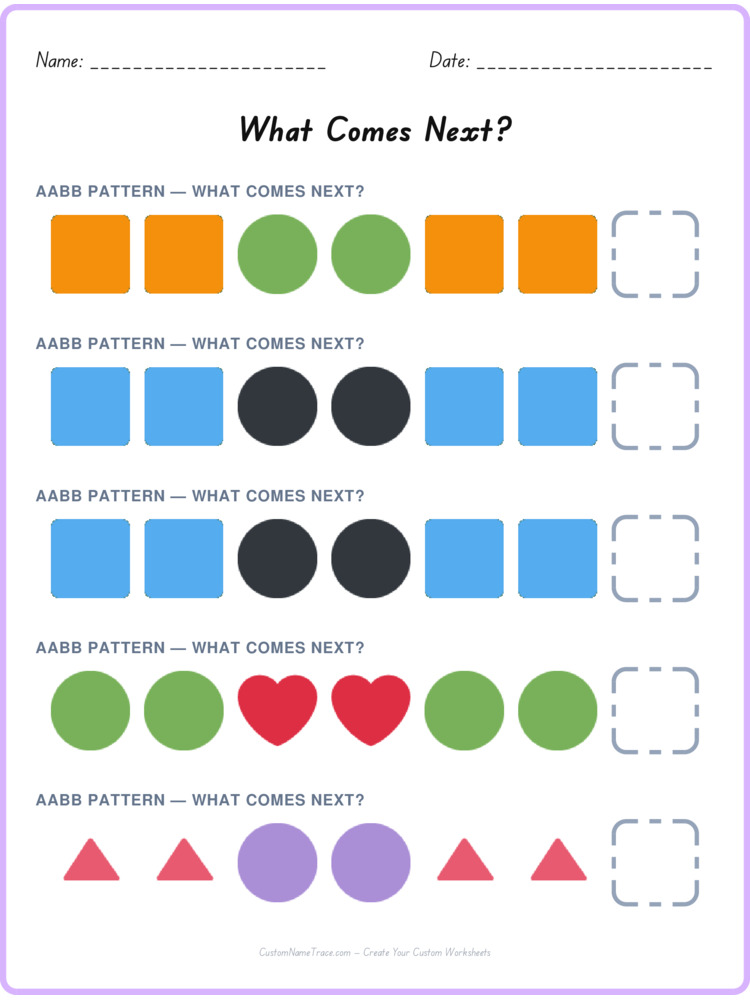
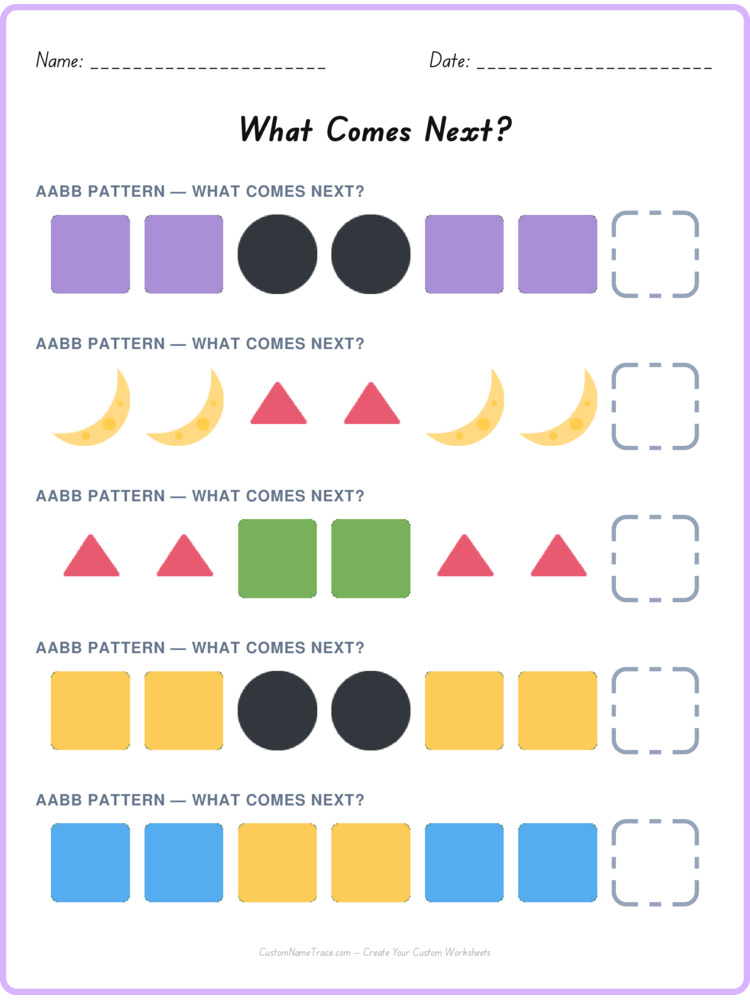
AABB is the first pattern in this Emoji Patterns section built from two equal-sized blocks rather than a single icon repeating unevenly — two of one icon, then two of a second, with both blocks the same length. That balanced, paired structure is a genuinely different shape from the beginner patterns, which all mix a single icon with a short run of another; here, both parts of the unit carry equal weight.
A child working through this pattern has to track two separate counts within one unit — how many of the first icon so far, and, once the switch happens, how many of the second — rather than one repeated run and a single switch.
A strategy for tracking two counts at once
Counting in pairs out loud — "one-two, switch, one-two, switch" — reinforces that both blocks are the same length, which is the specific feature that makes this pattern feel balanced rather than lopsided. A child who's only practiced patterns with a single repeated icon and one lone switch sometimes expects the second block to be shorter than the first; pointing out explicitly that both blocks match resets that expectation.
Where this fits among the advanced patterns
AABB sits alongside ABBA as one of two four-icon patterns built from two matched pairs — AABB keeps them separate and sequential, while ABBA nests one inside the other in a mirrored shape. Comparing the two directly shows a child that equal-length blocks can still combine in genuinely different orders.
Every numbered worksheet uses a fresh pair of icons testing this identical two-and-two structure.
Using this worksheet effectively
Working through the first unit together, counting each pair out loud, builds the two-block tracking habit before a child attempts the rest of the page independently. Every worksheet downloads as a free, print-ready PDF with no account required.