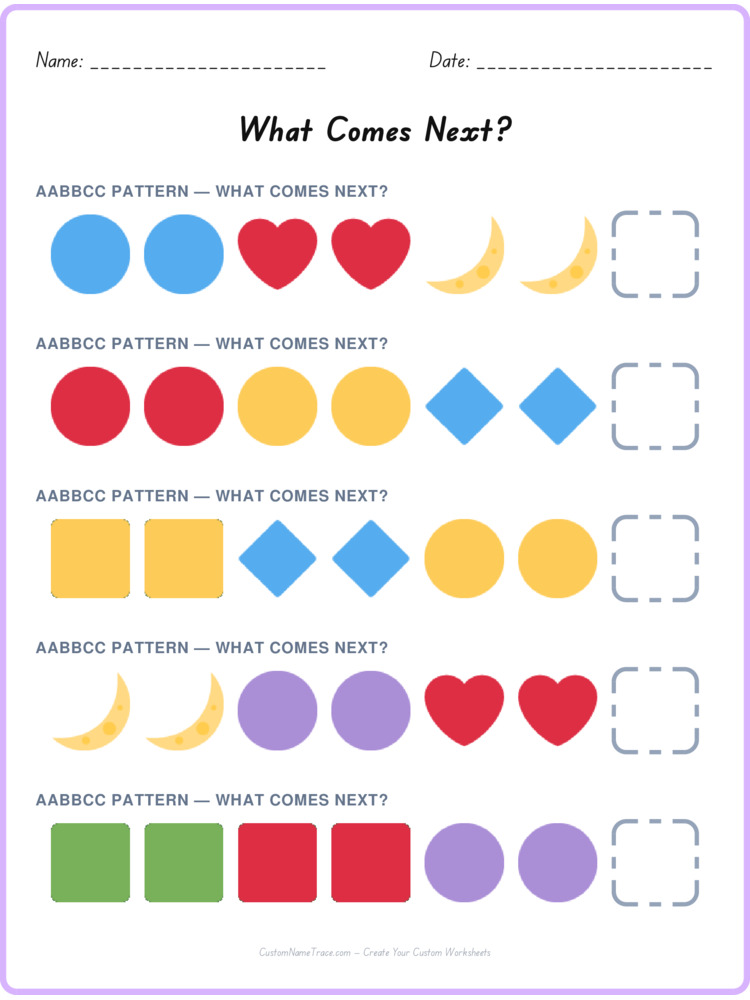
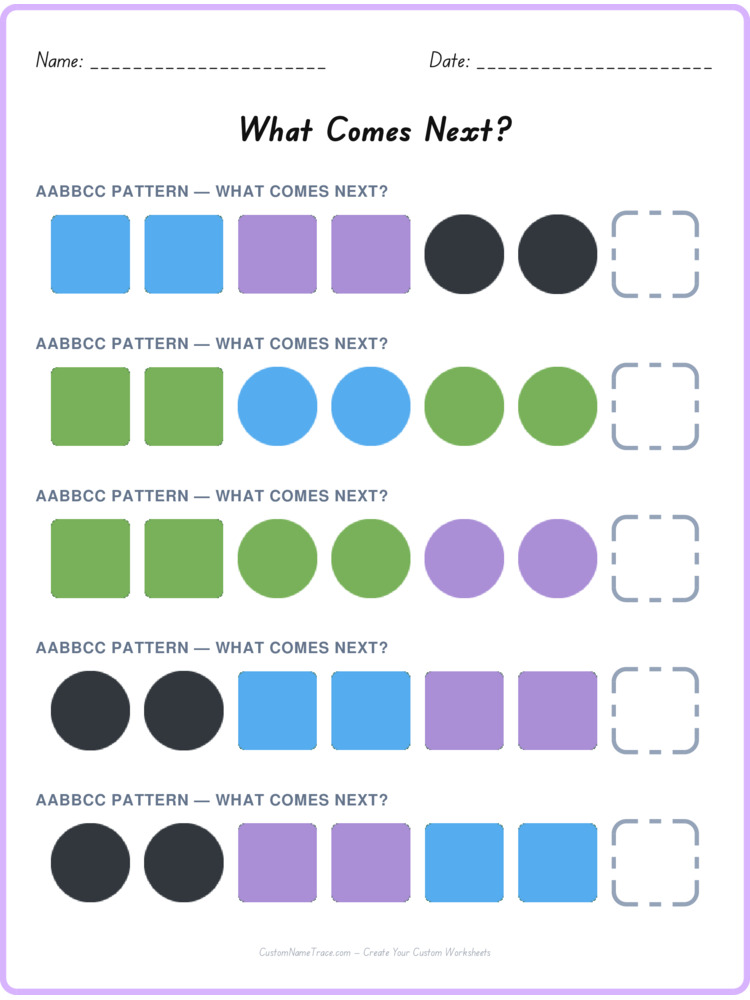
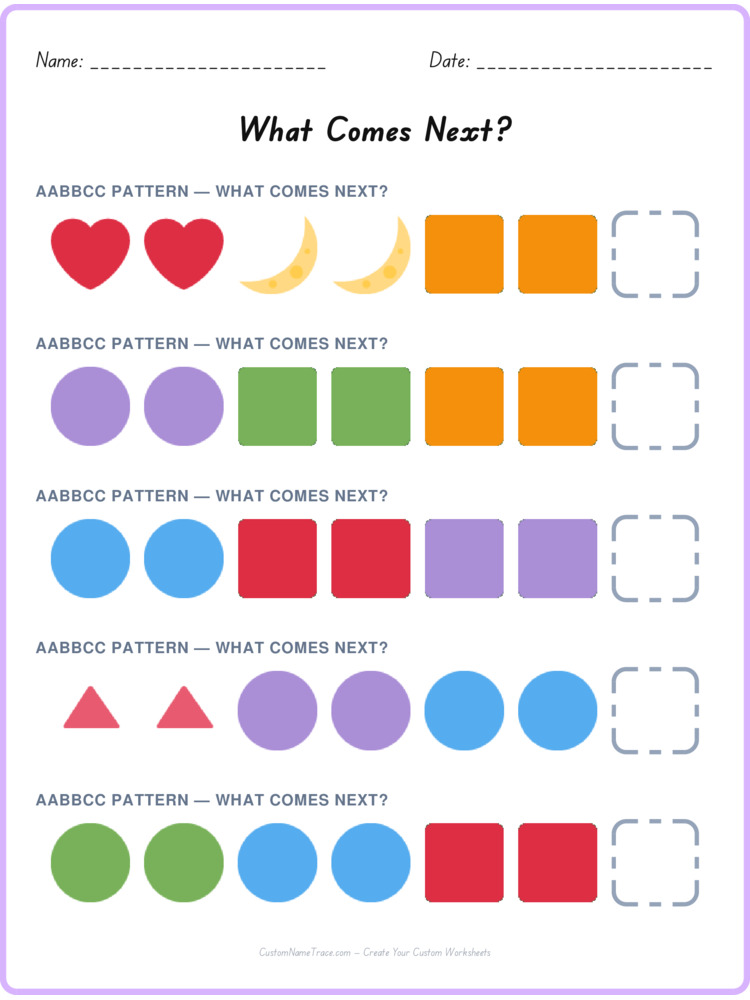
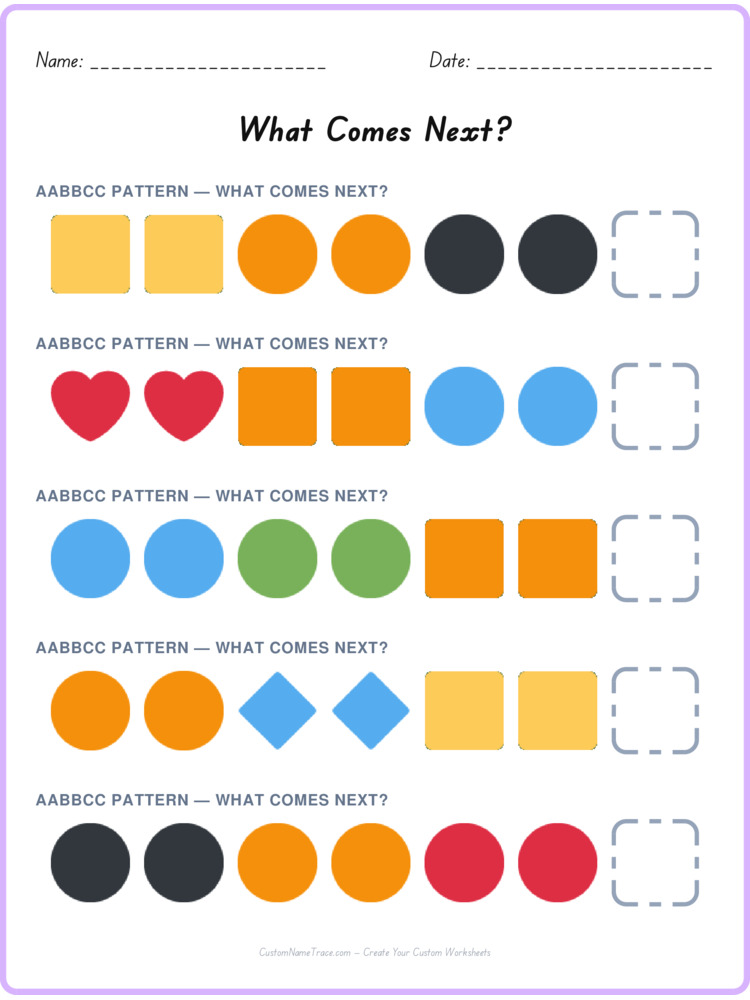
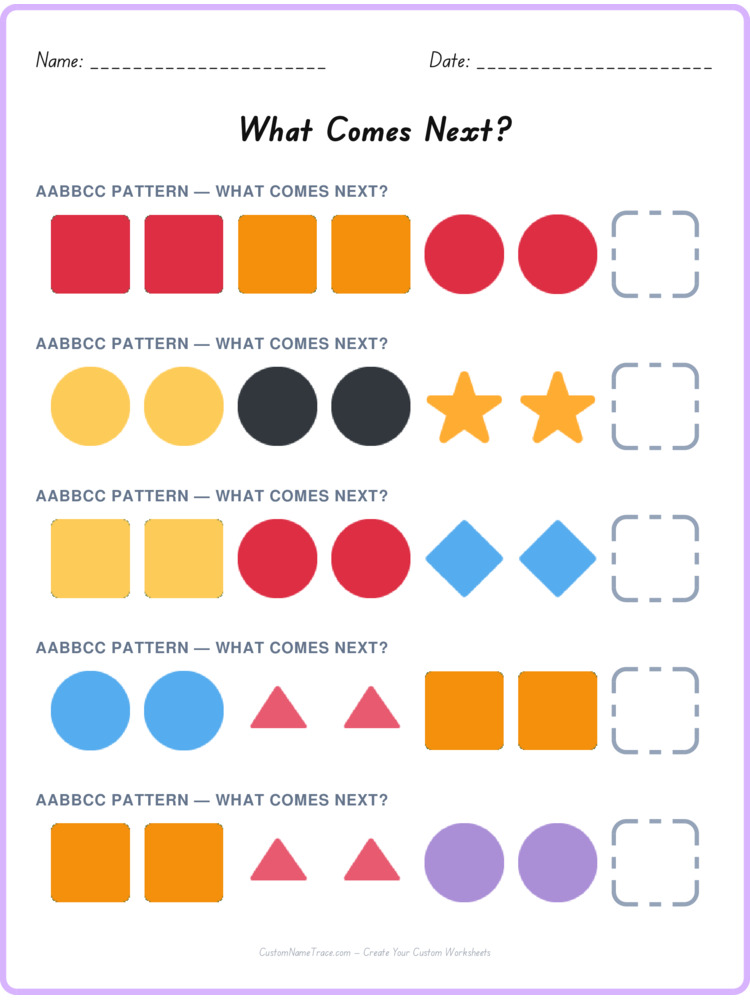
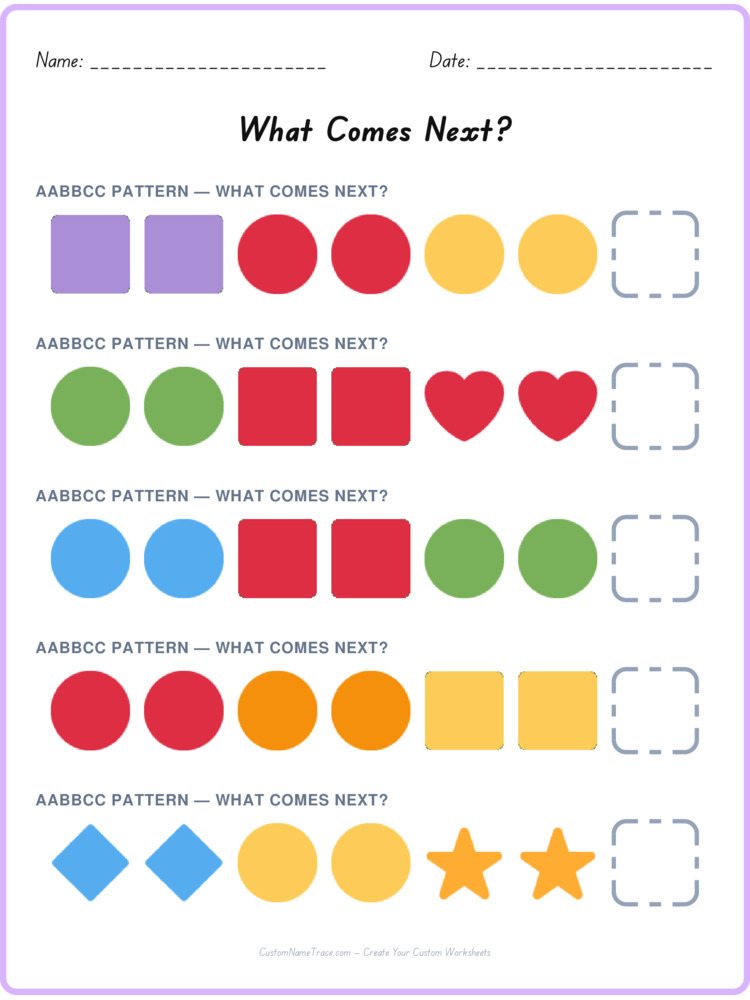
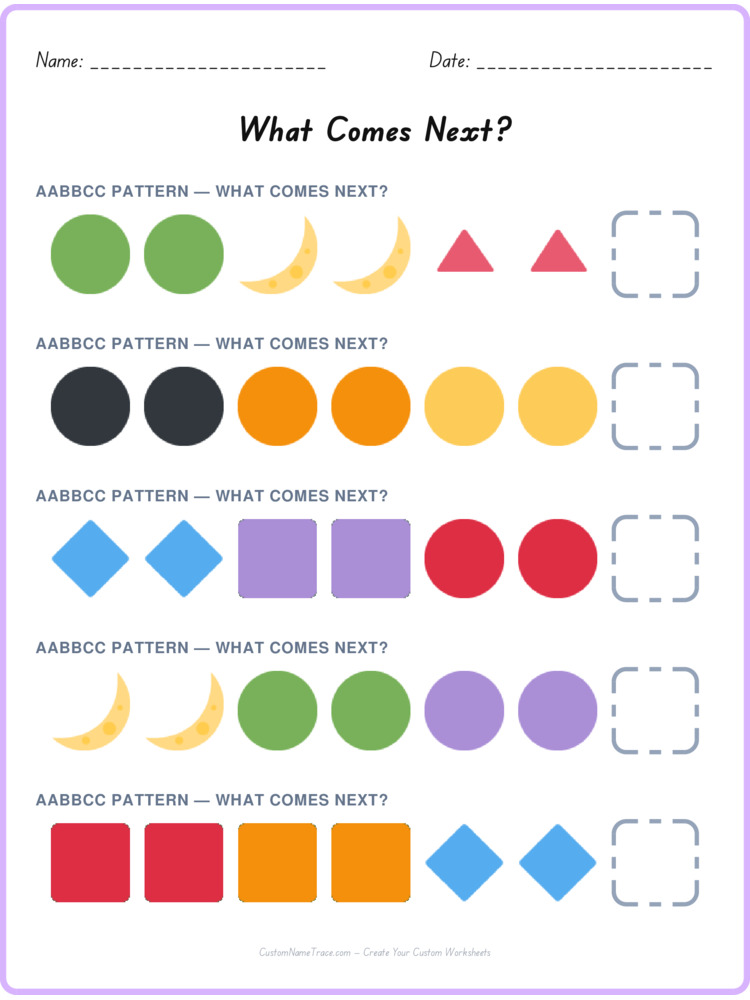
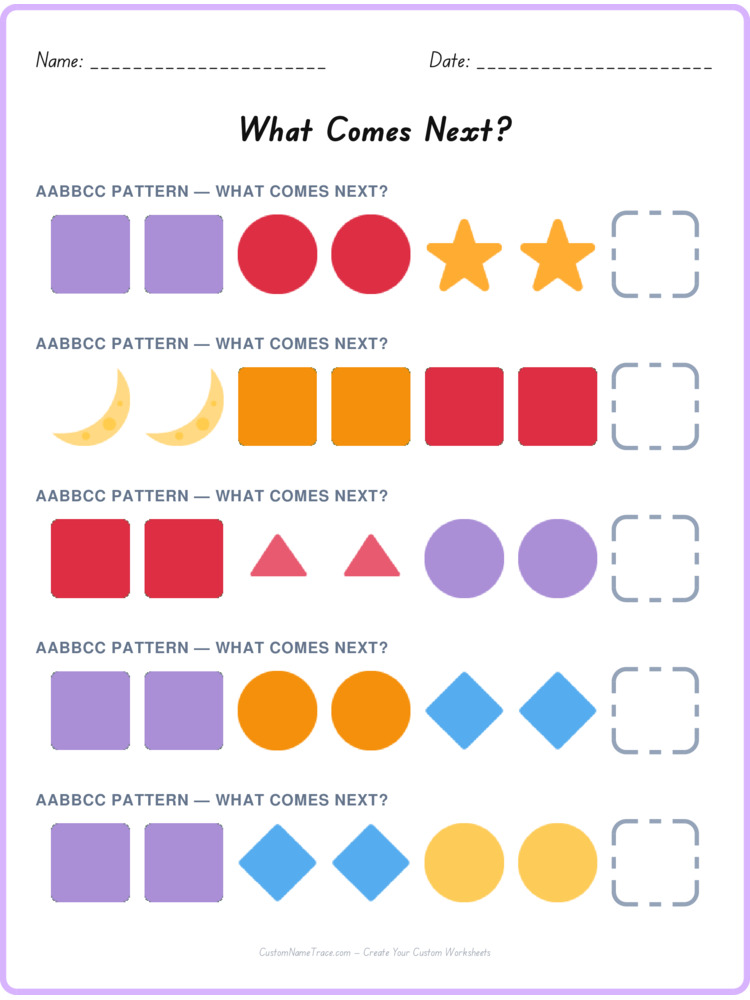
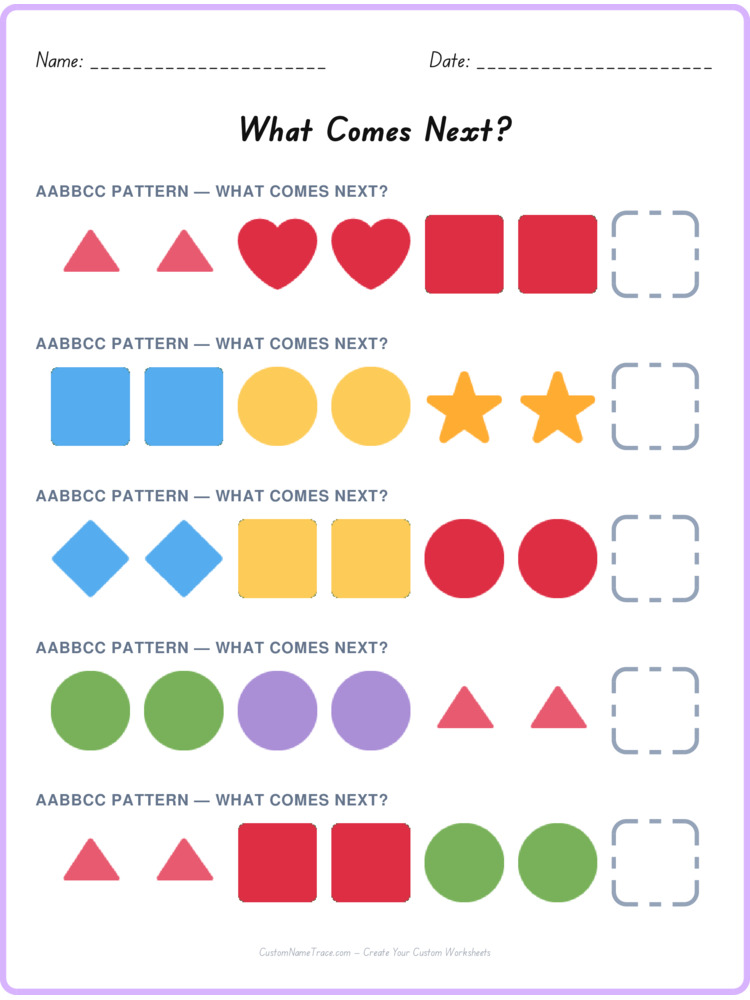
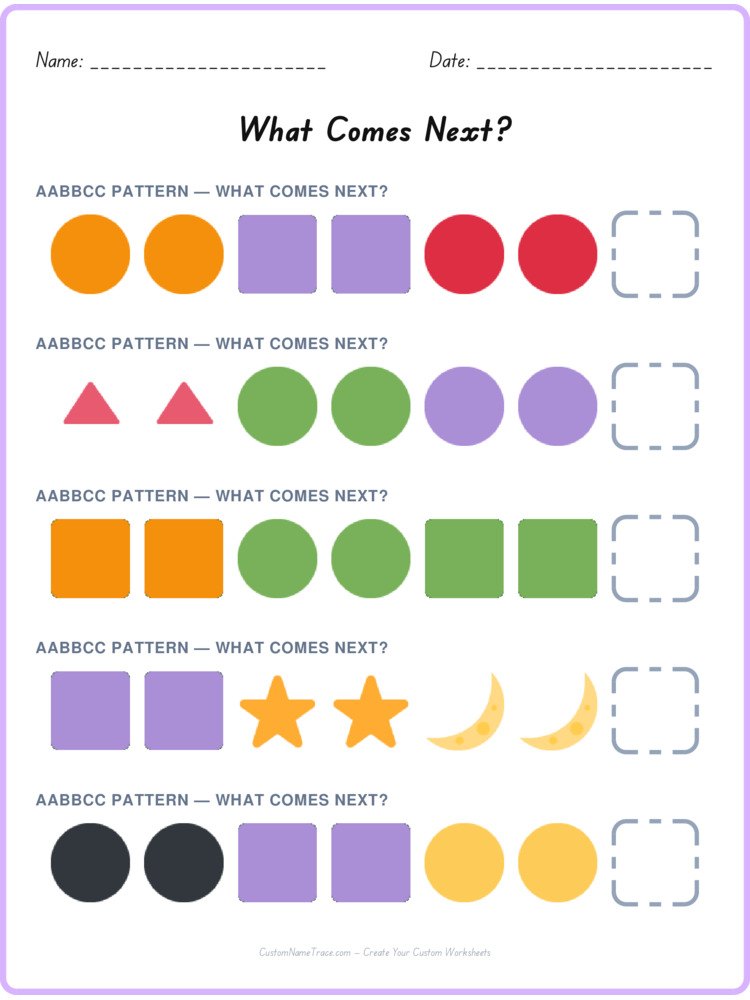
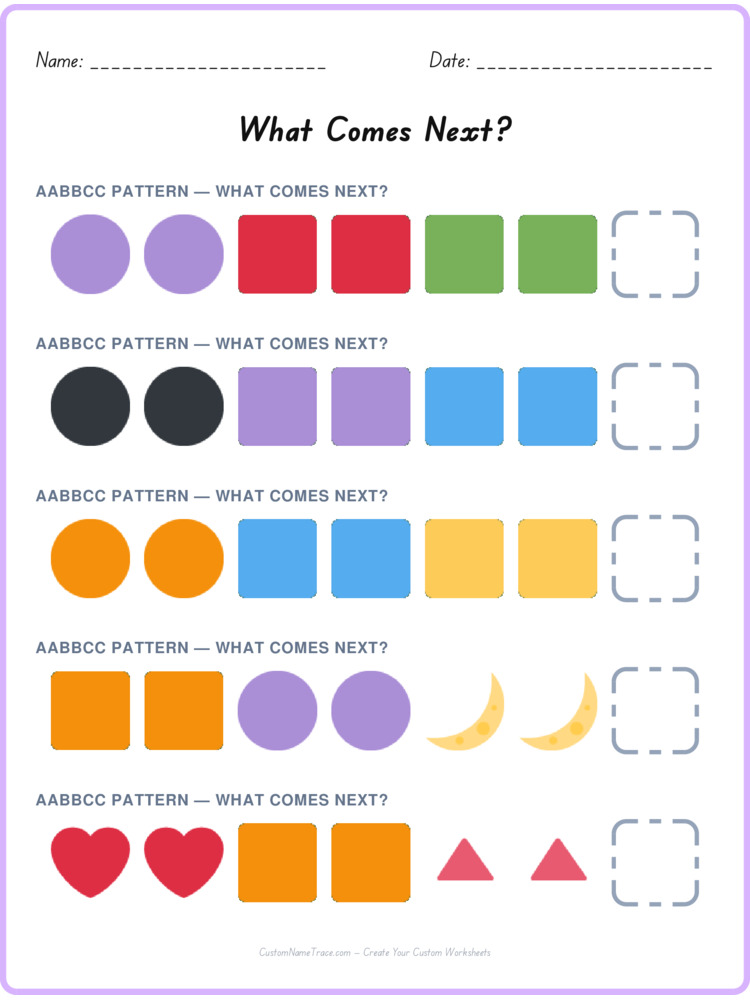
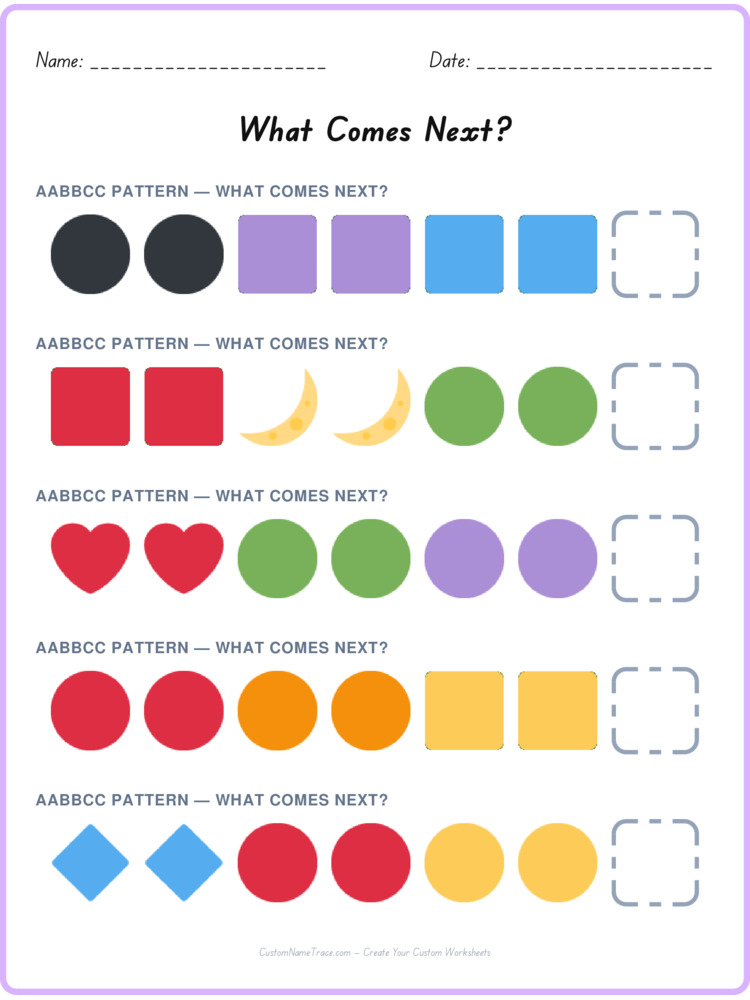
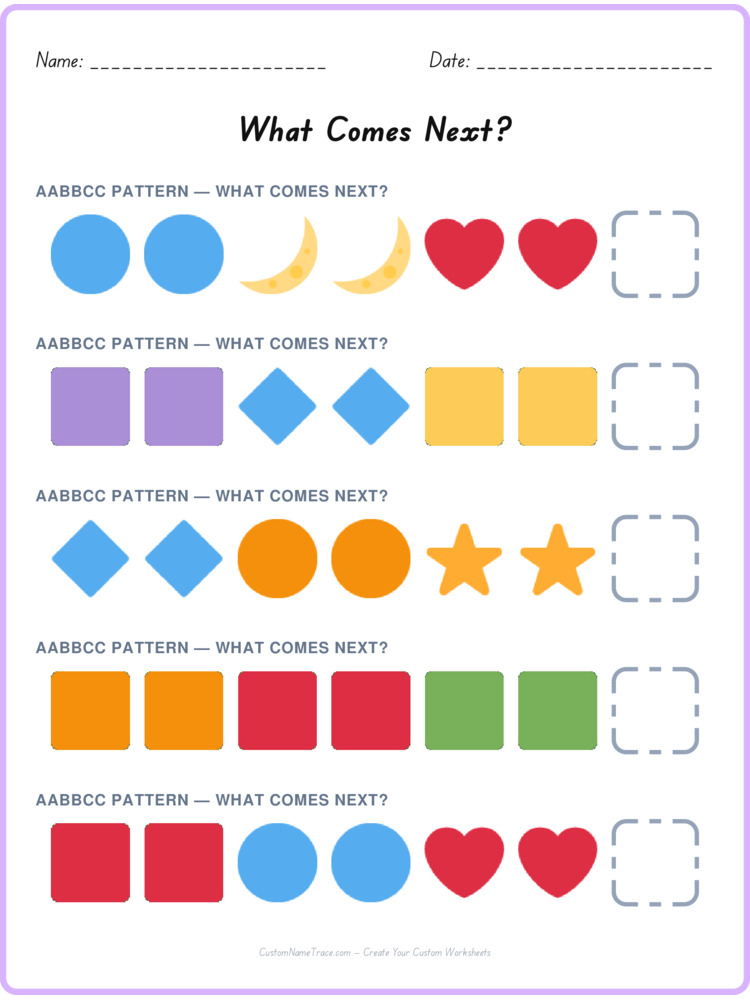
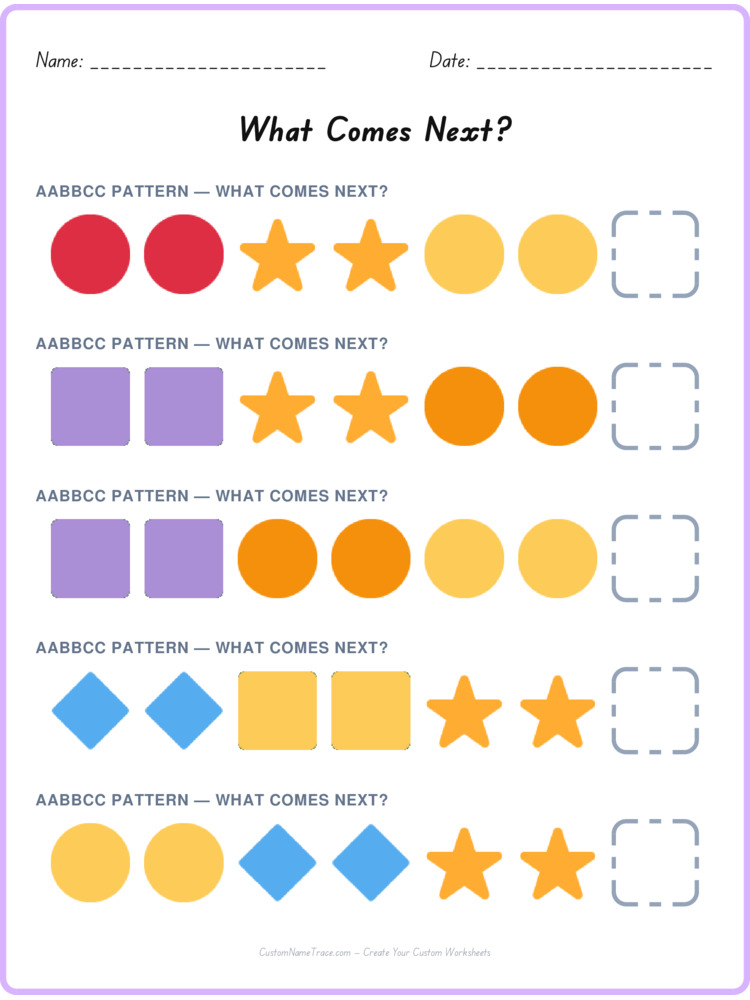
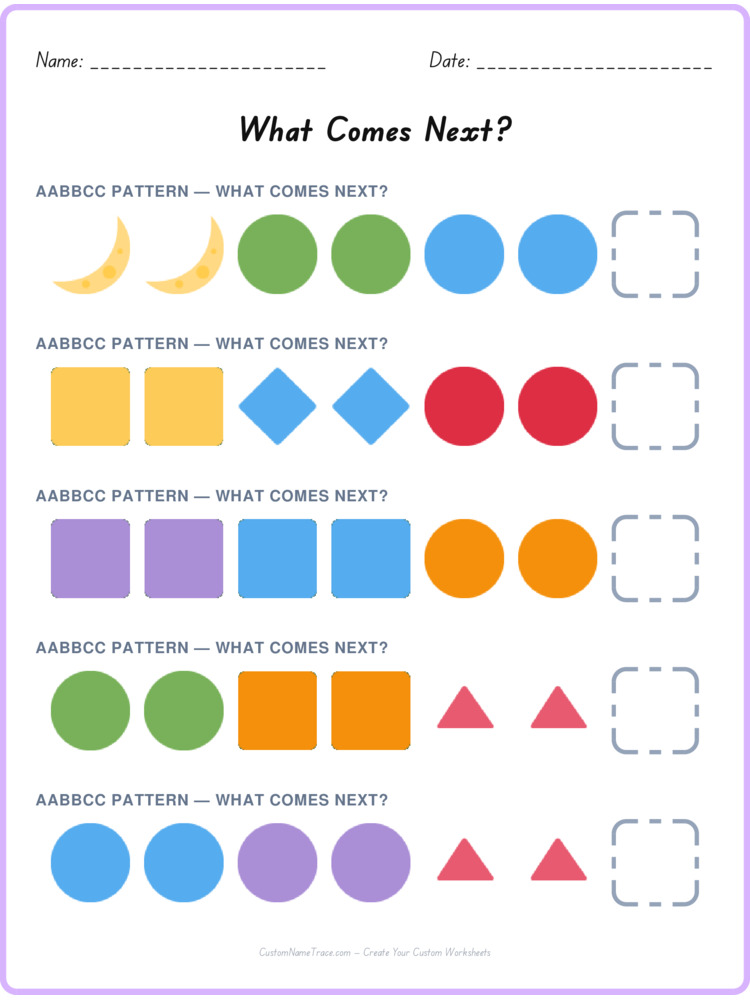
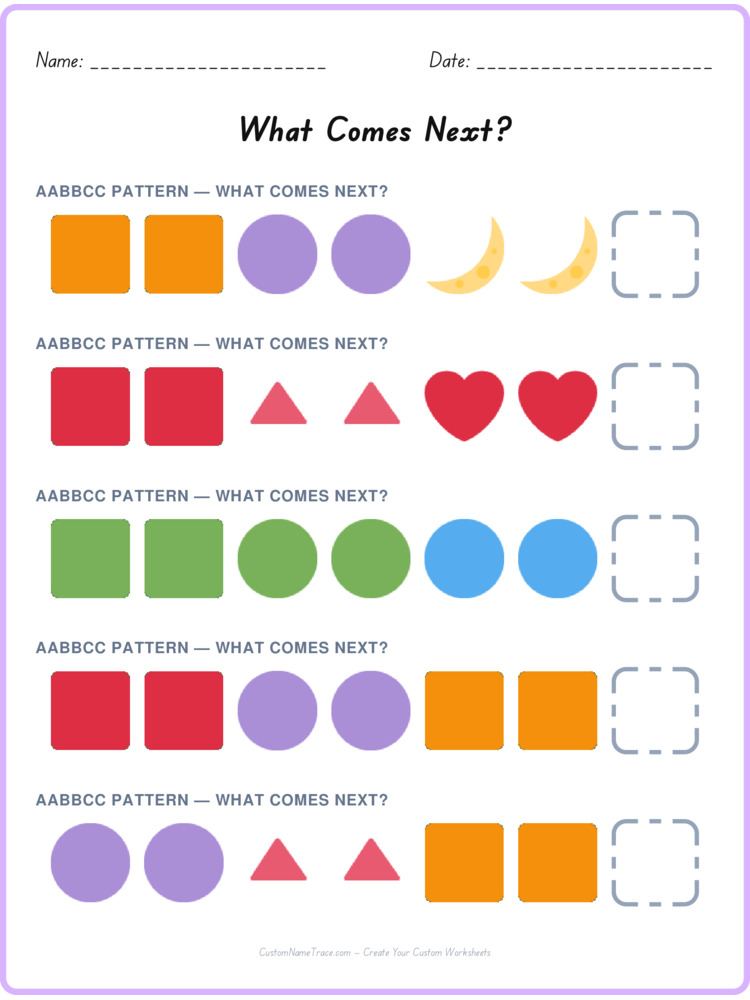
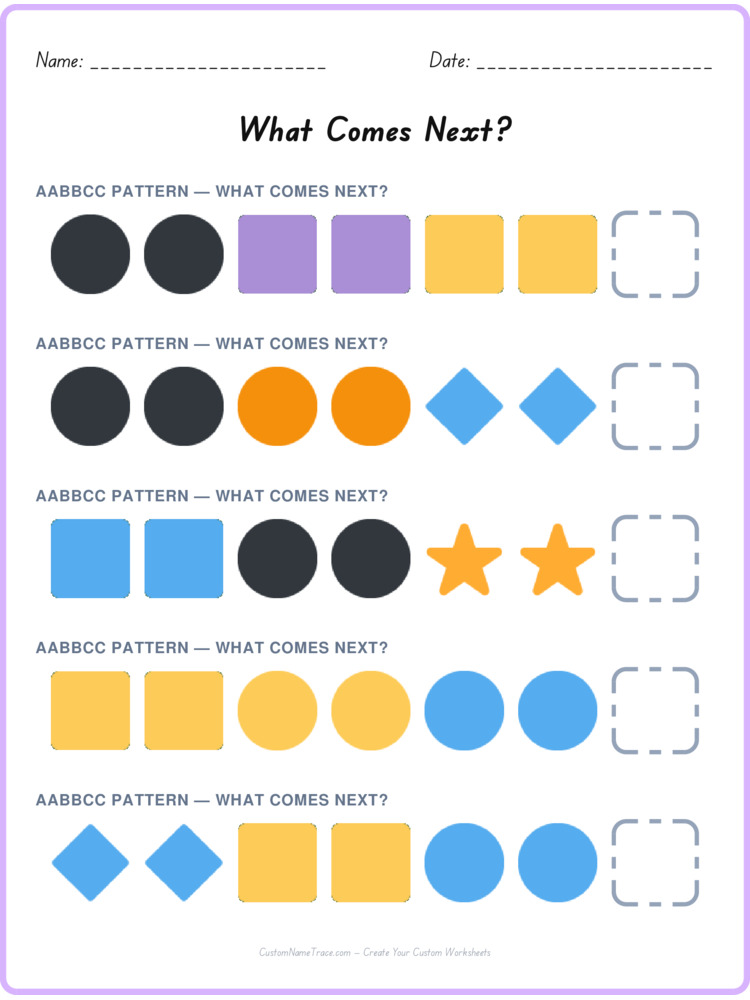
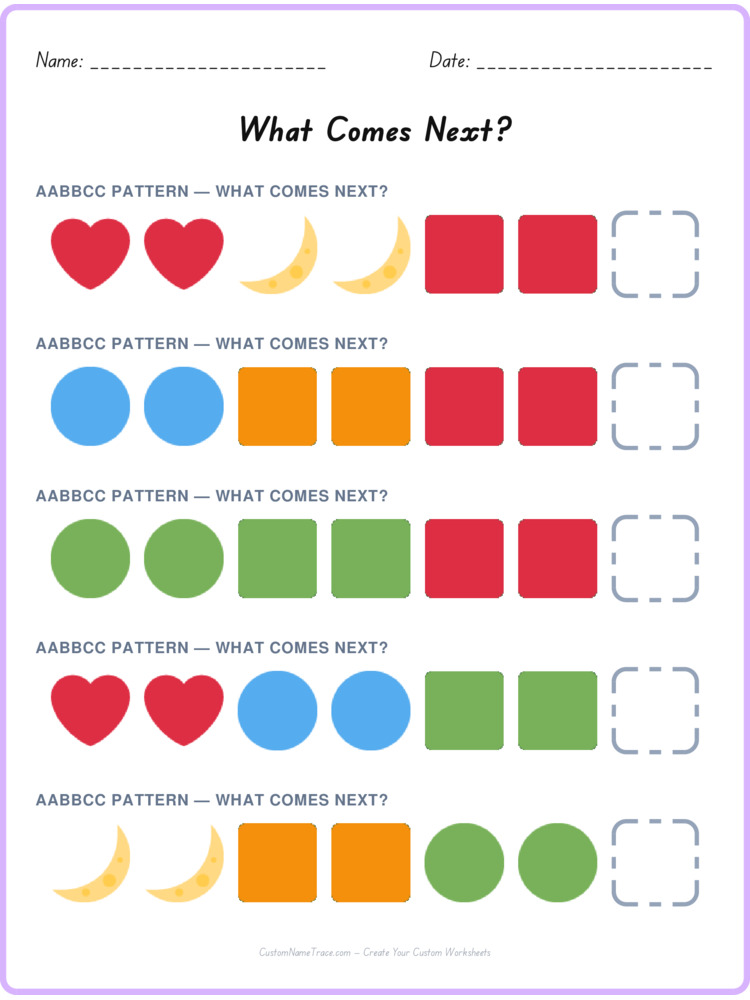
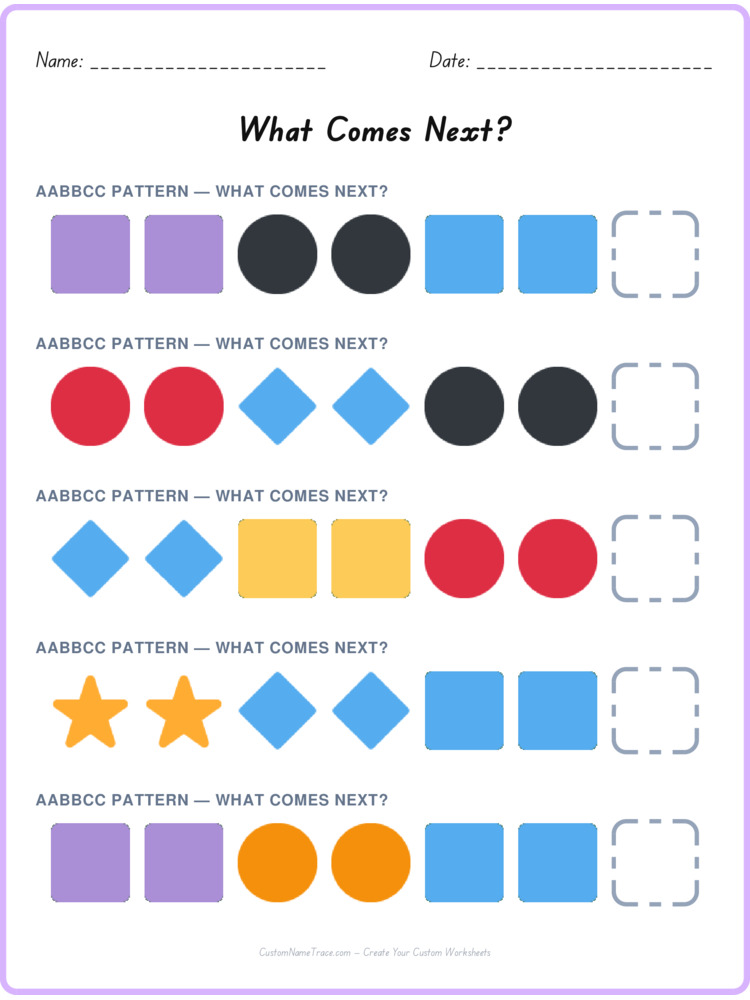
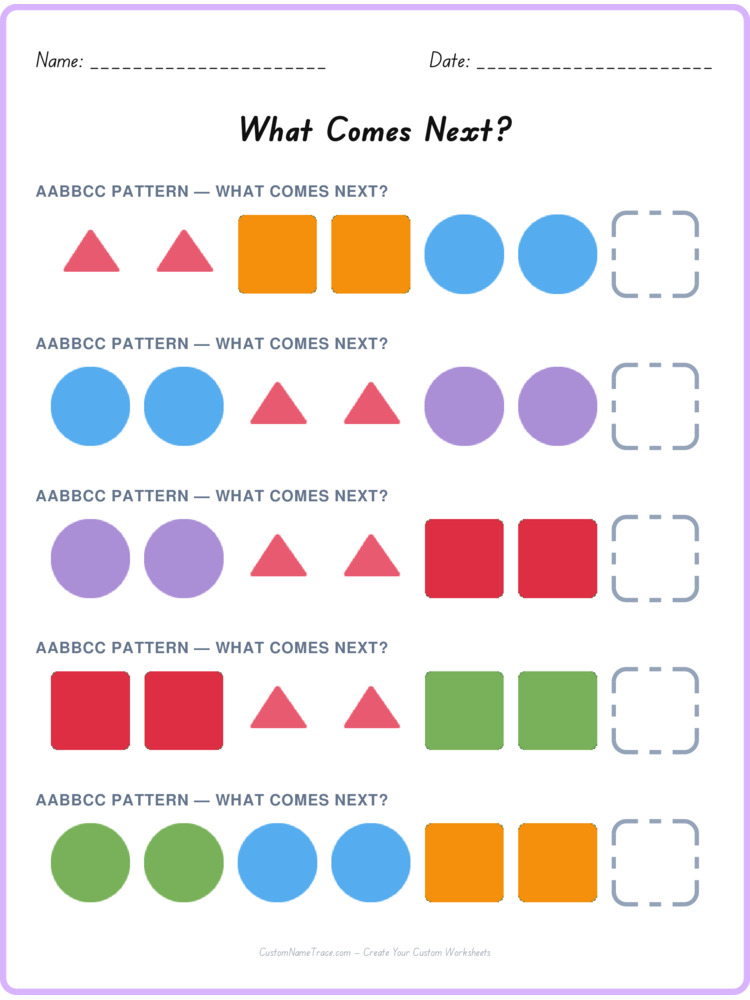
Three matched pairs in a row
AABBCC extends AABB's two-pair idea to three — three different icons, each appearing twice in a row, one pair after another. A child has to track three separate counts across a six-icon unit, extending the same paired-counting skill AABB builds with just two pairs.
A strategy for tracking three pairs
Counting each pair out loud as it's named — "one-two, one-two, one-two" — while noting that a new icon starts each pair, reinforces that all three blocks are equal length, the same balanced-block idea AABB introduces, just extended one pair further.
Where this leads
Tracking multiple equal-sized blocks in sequence, the skill this pattern specifically builds, is a direct precursor to reading grouped data and tables later in a child's schooling, where information is often organized into consistent, equal-sized chunks exactly like this pattern's three matched pairs.
Every numbered worksheet uses a fresh set of icons testing this identical three-pair structure.
Using this worksheet effectively
Confirming AABB already feels solid before introducing this three-pair extension tends to go more smoothly than starting here directly. Every worksheet downloads as a free, print-ready PDF with no account required.