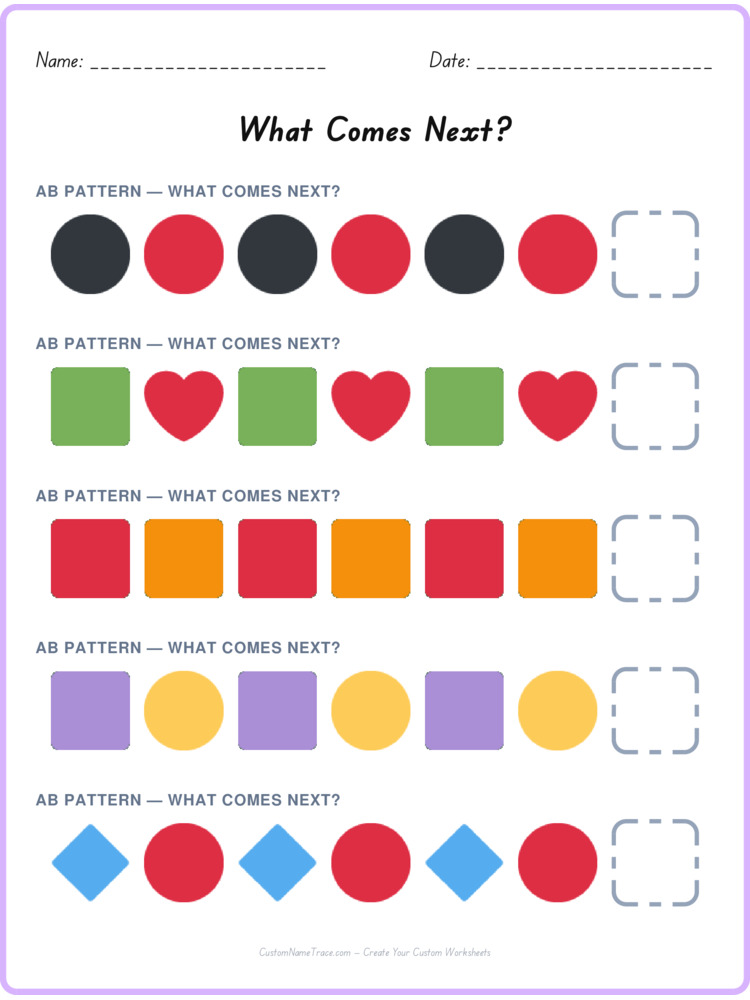
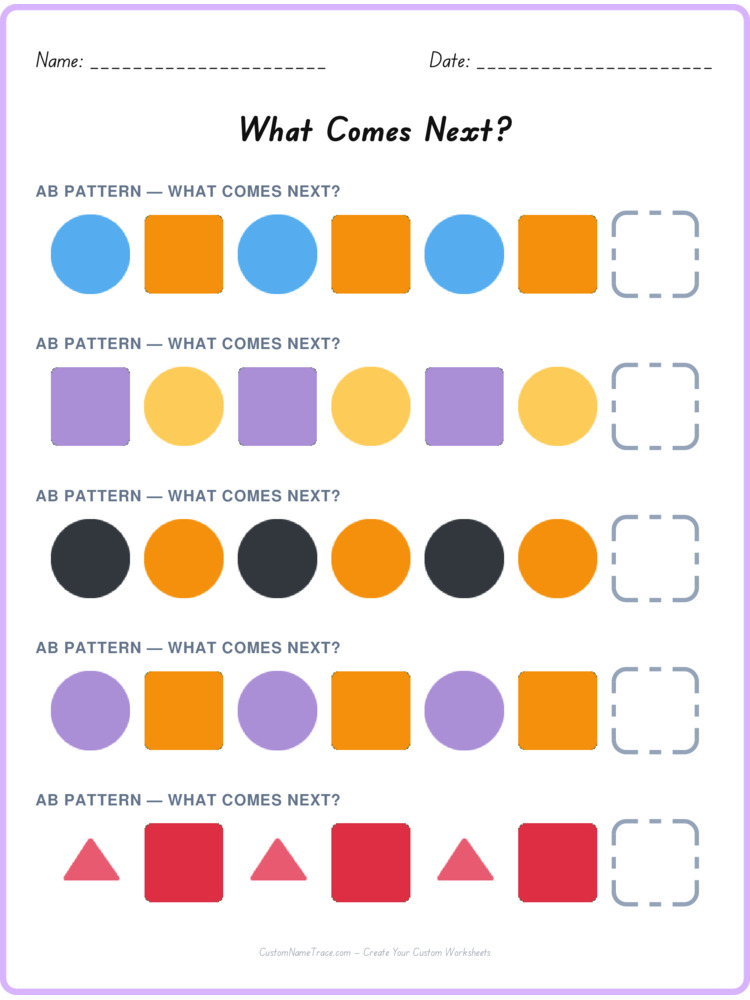
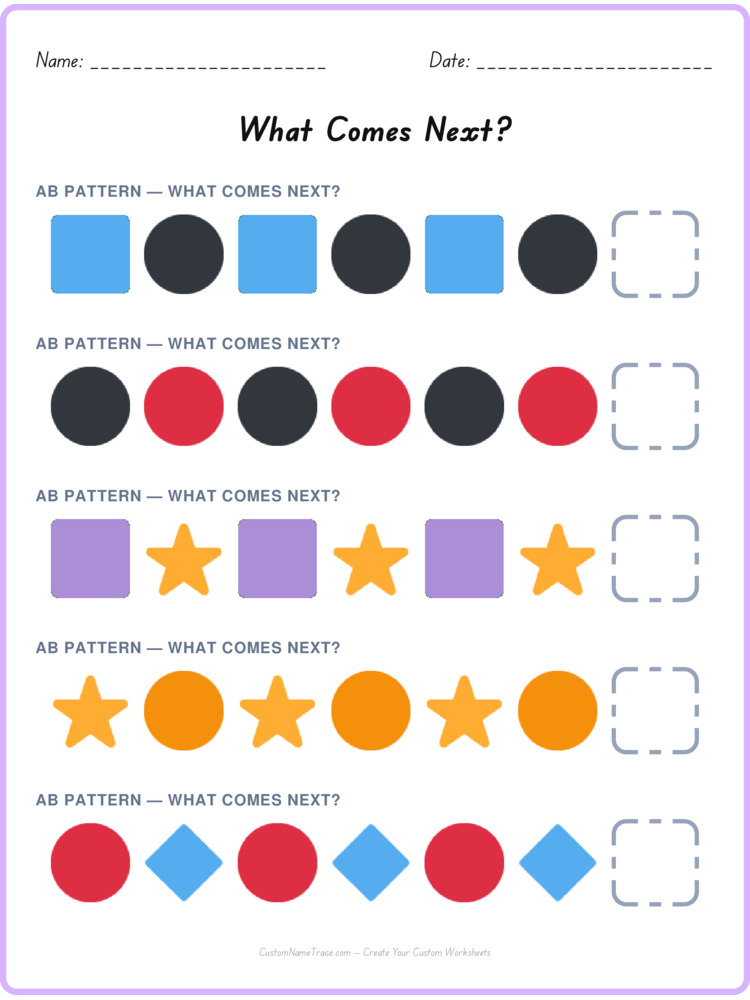
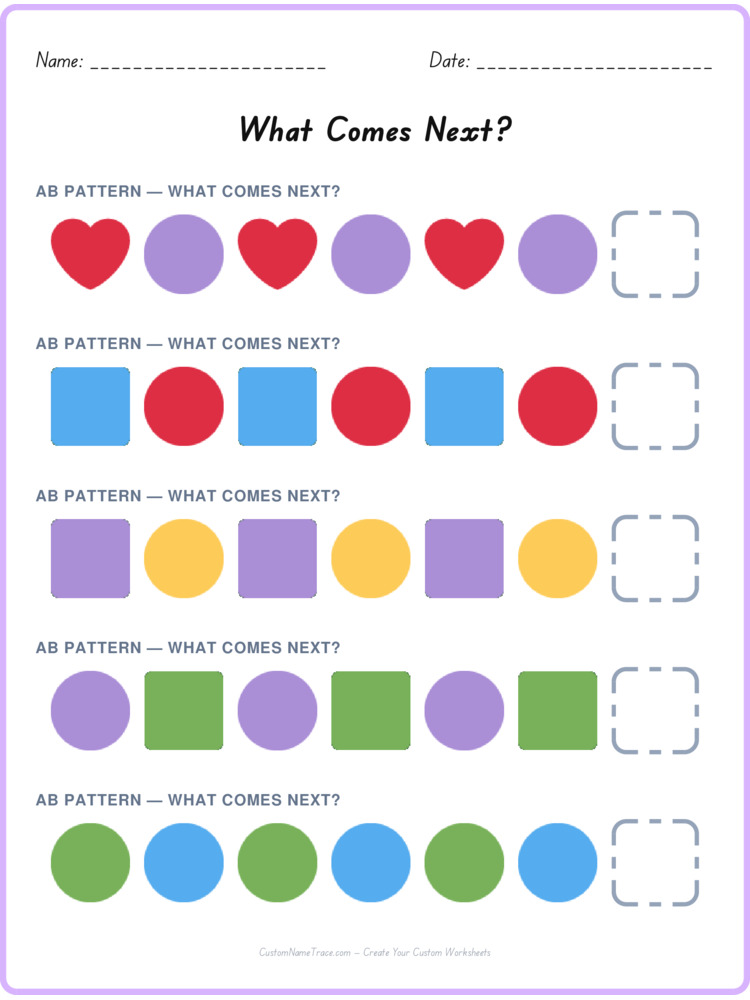
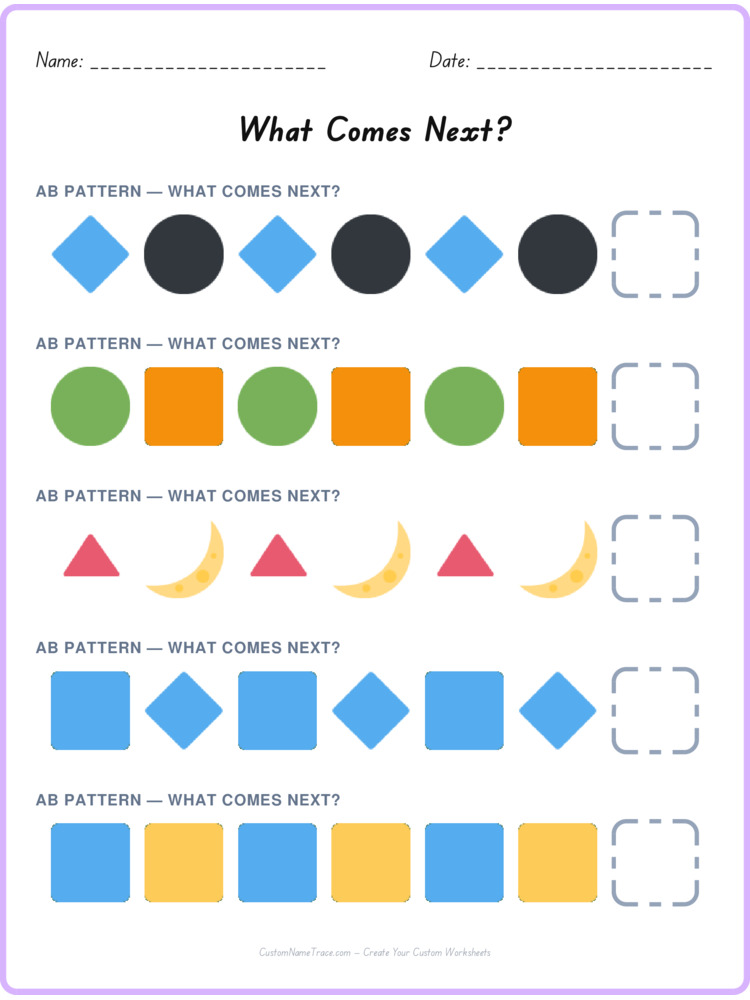
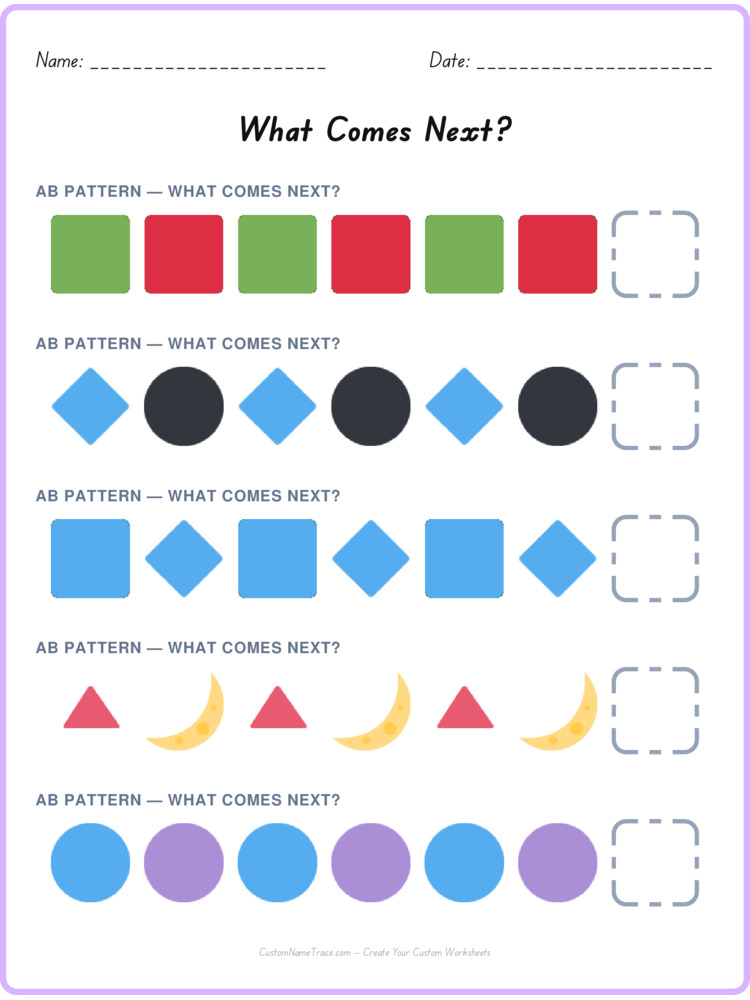
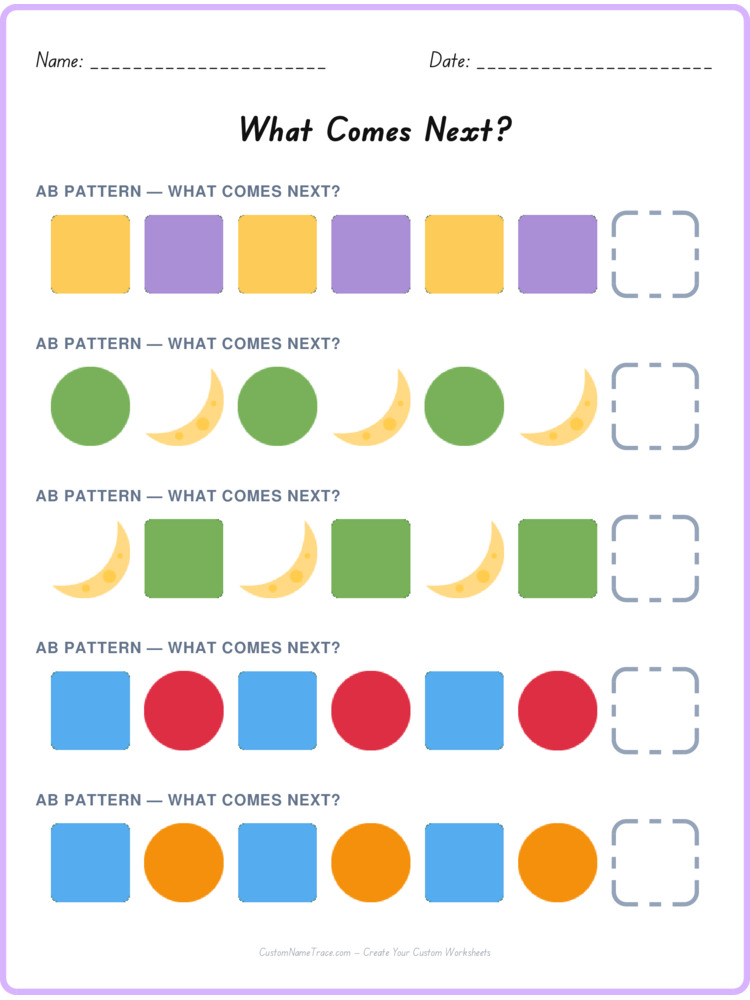
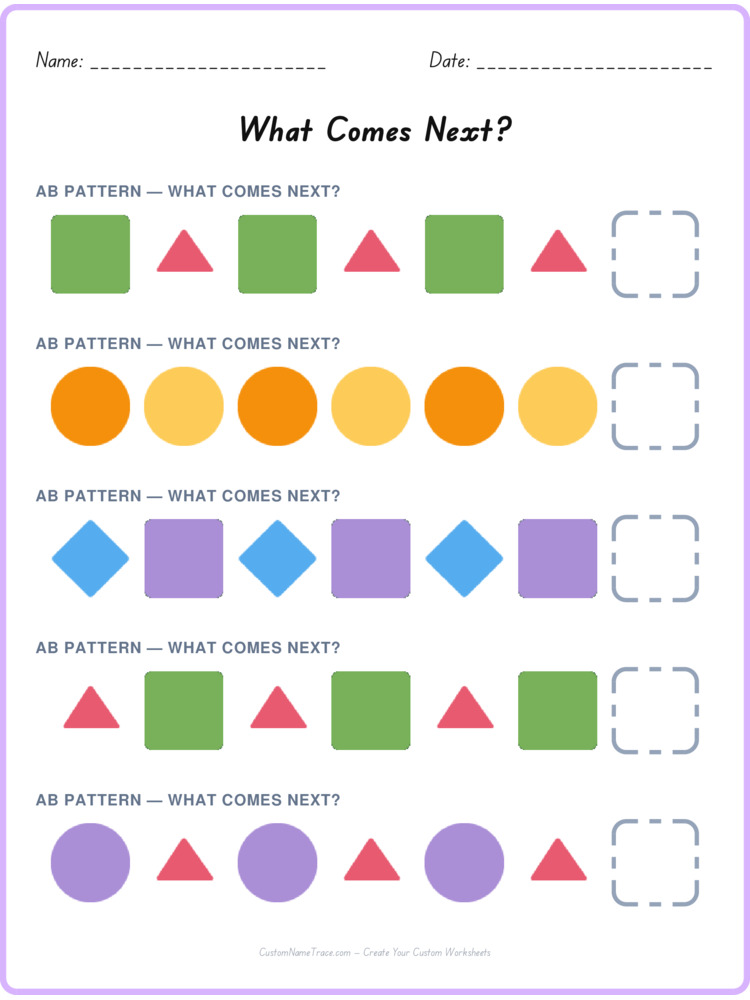
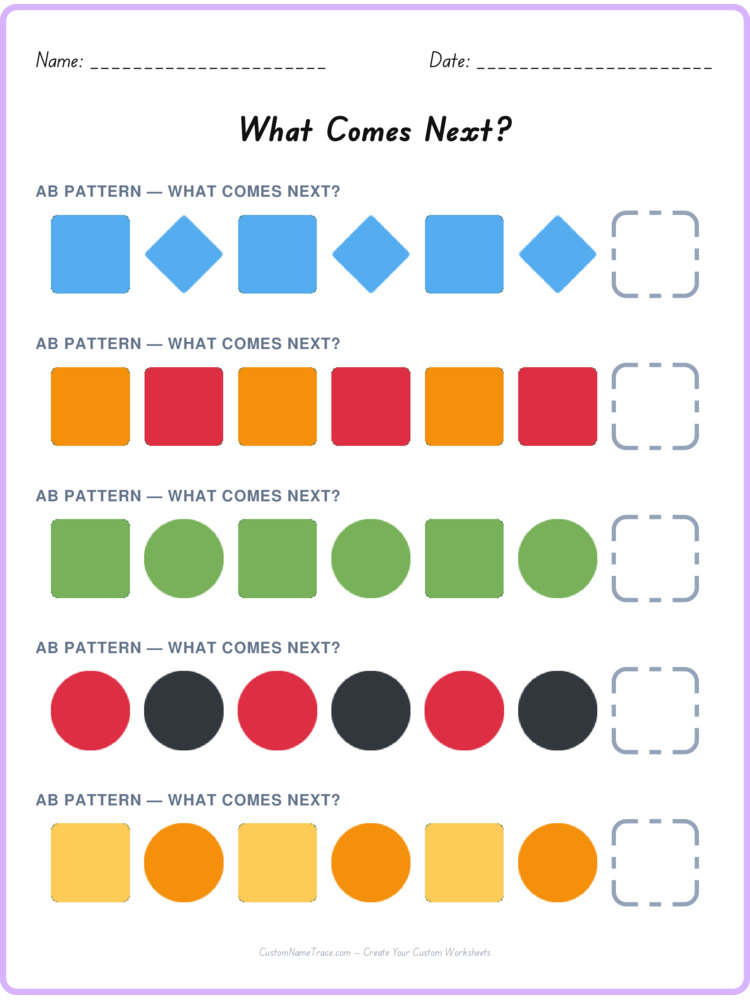
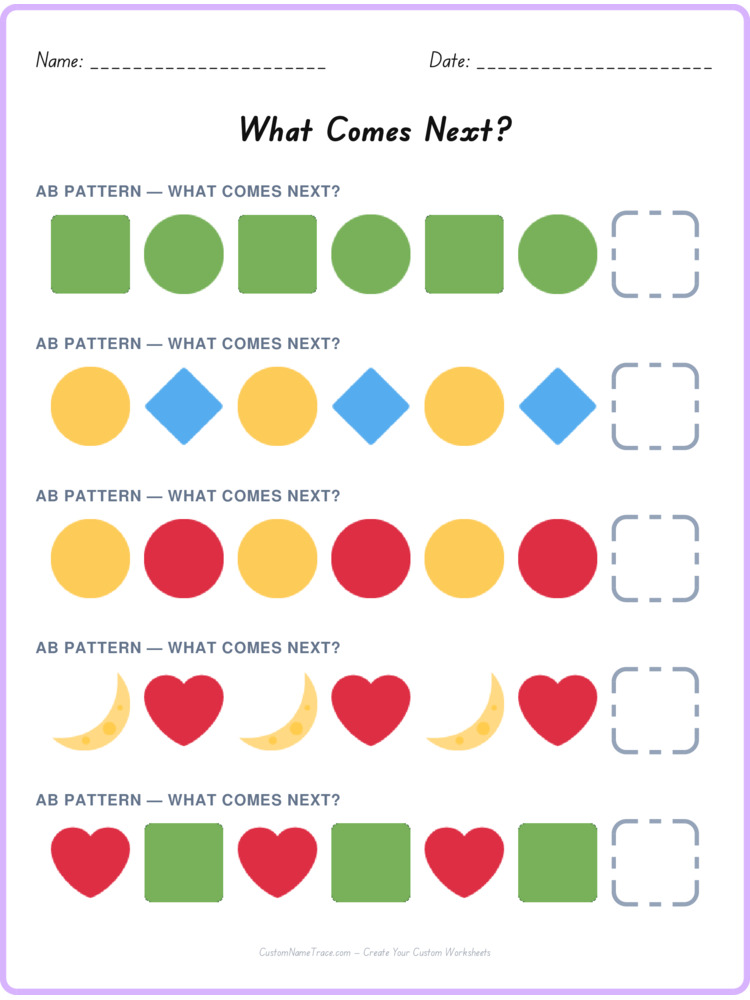
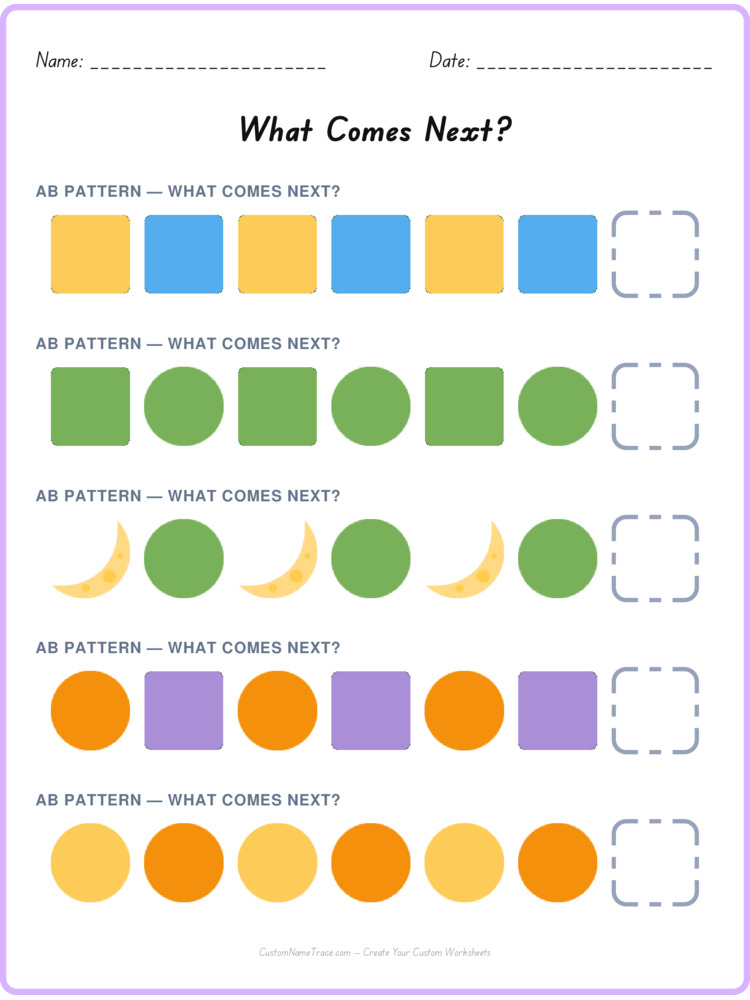
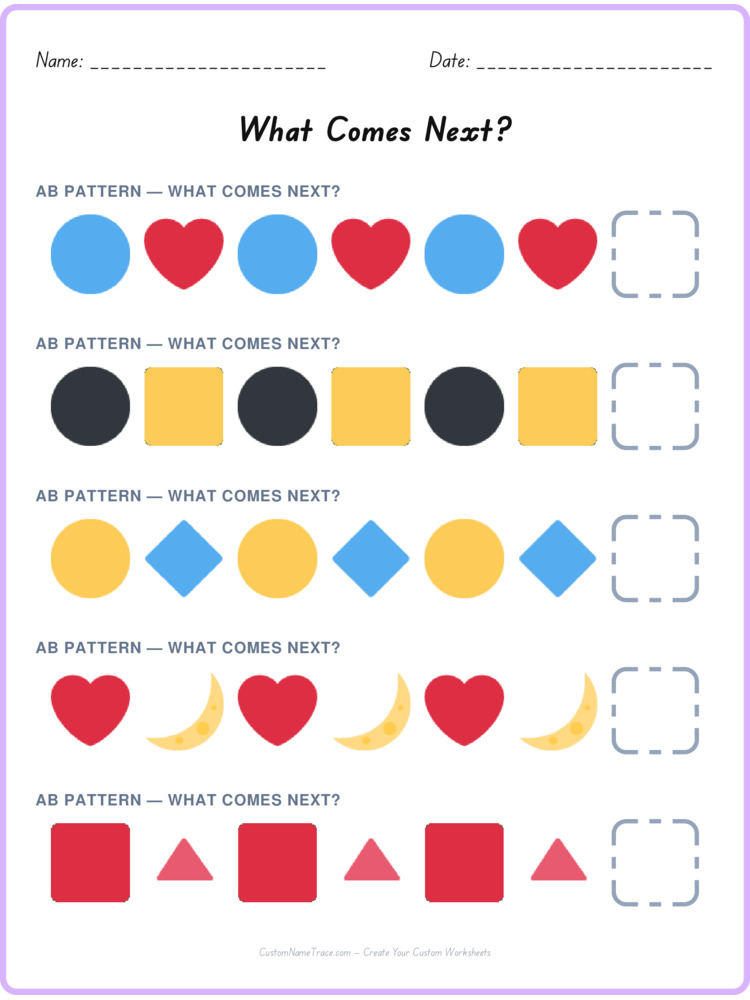
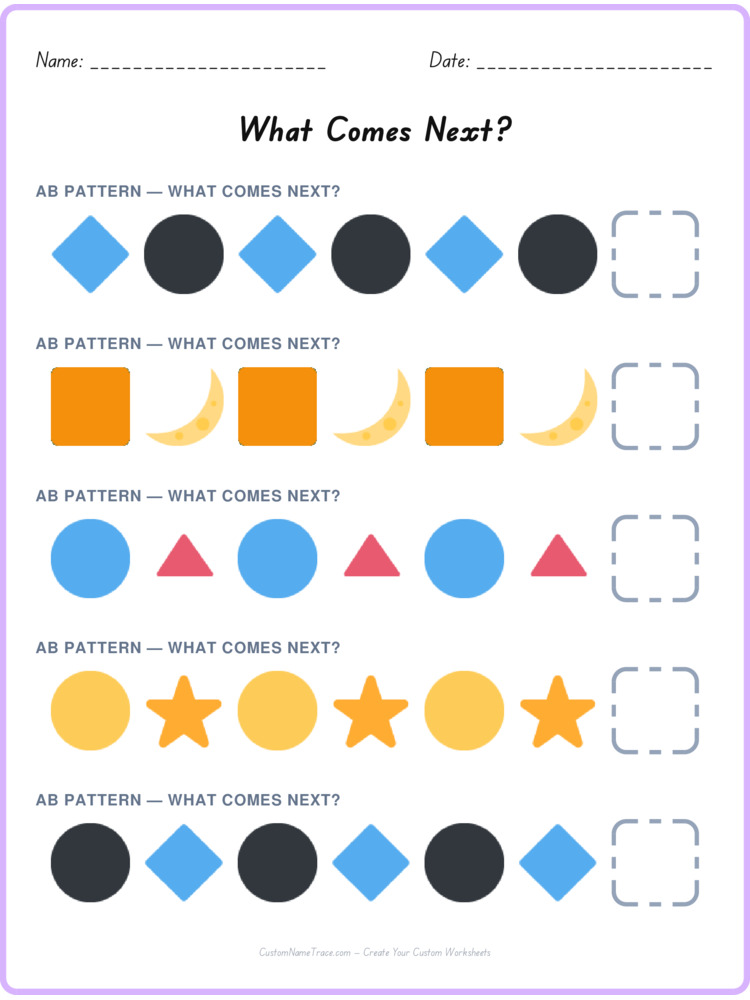
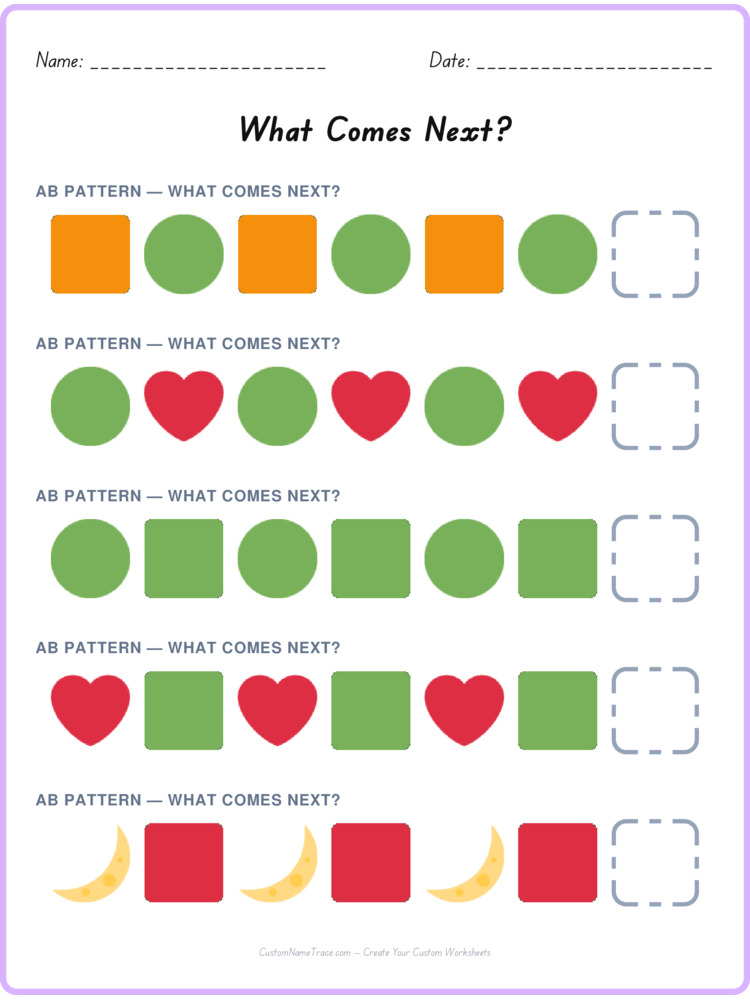
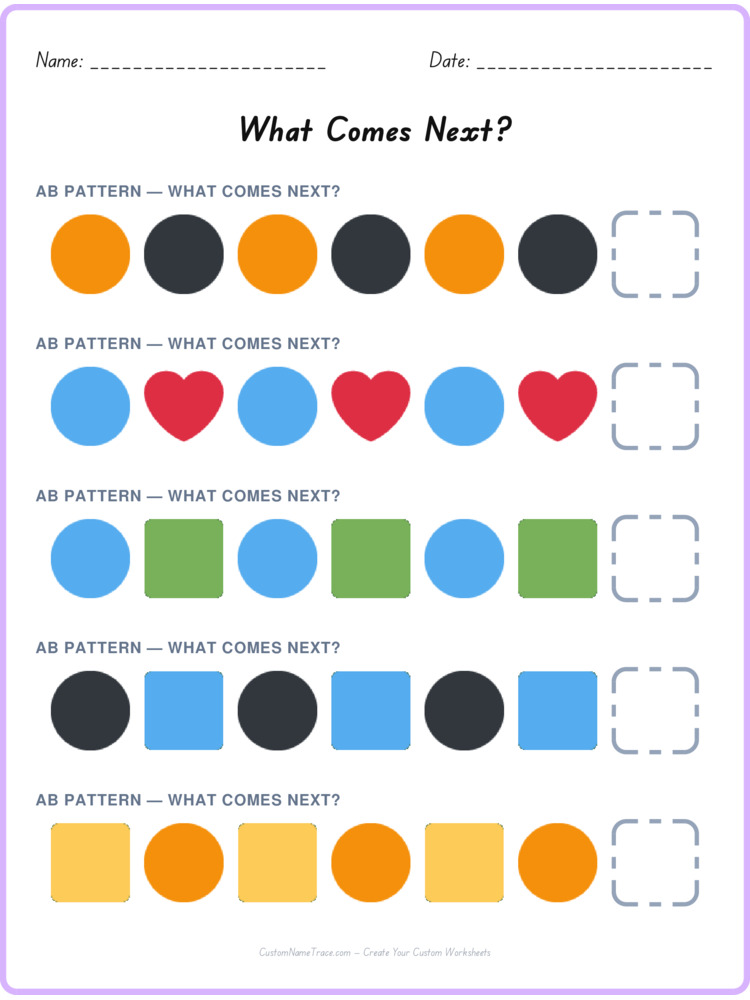
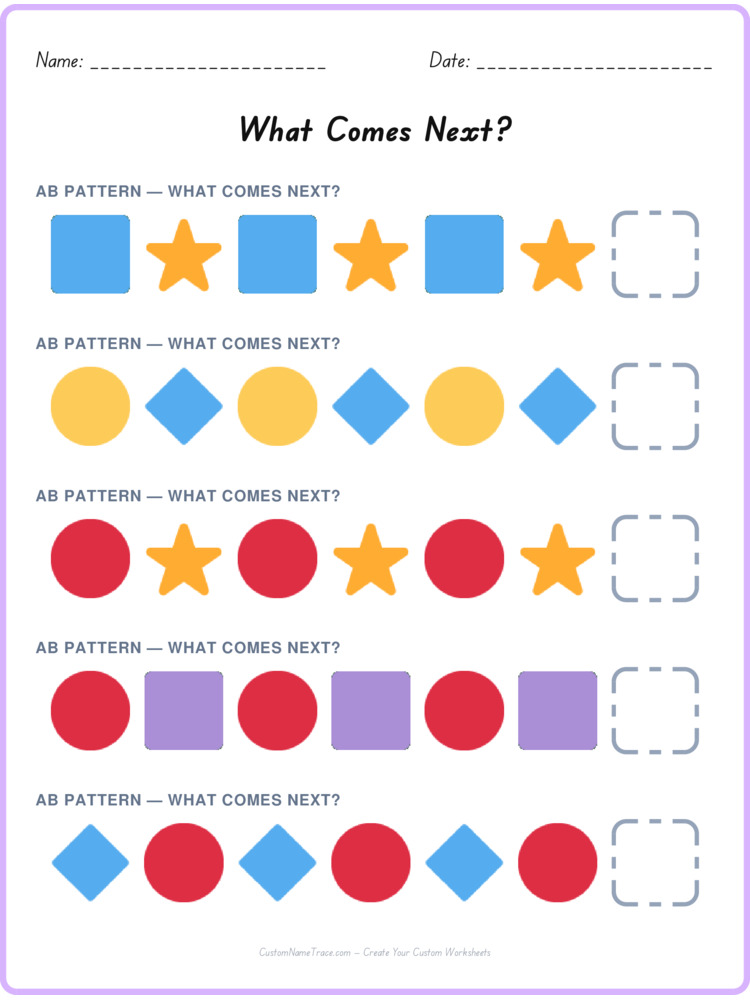
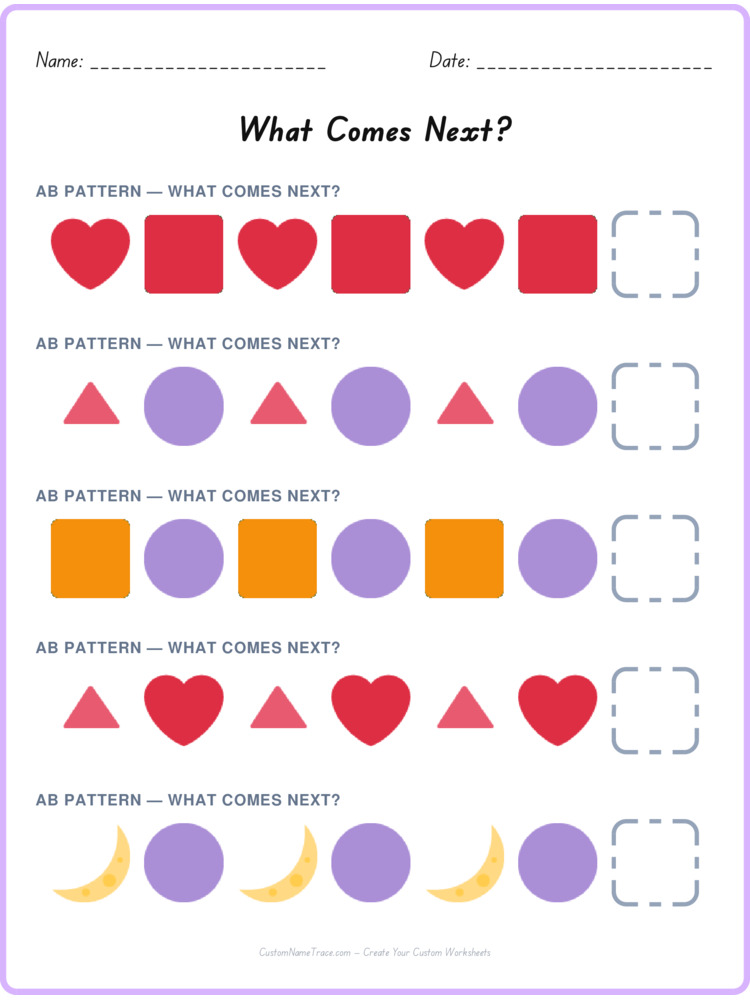
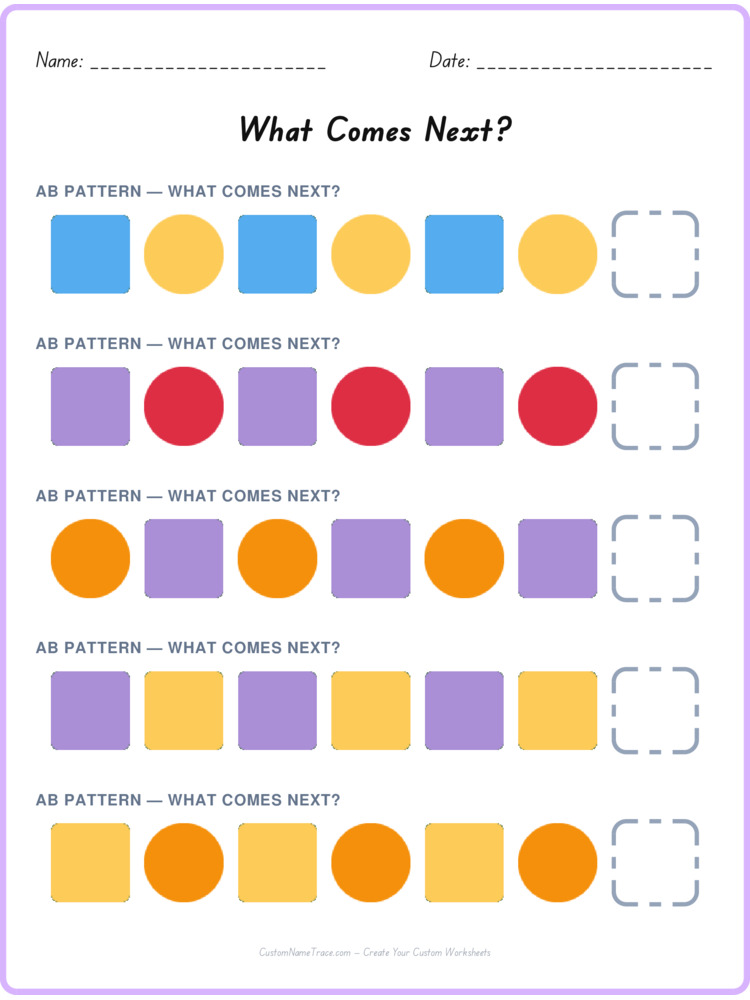
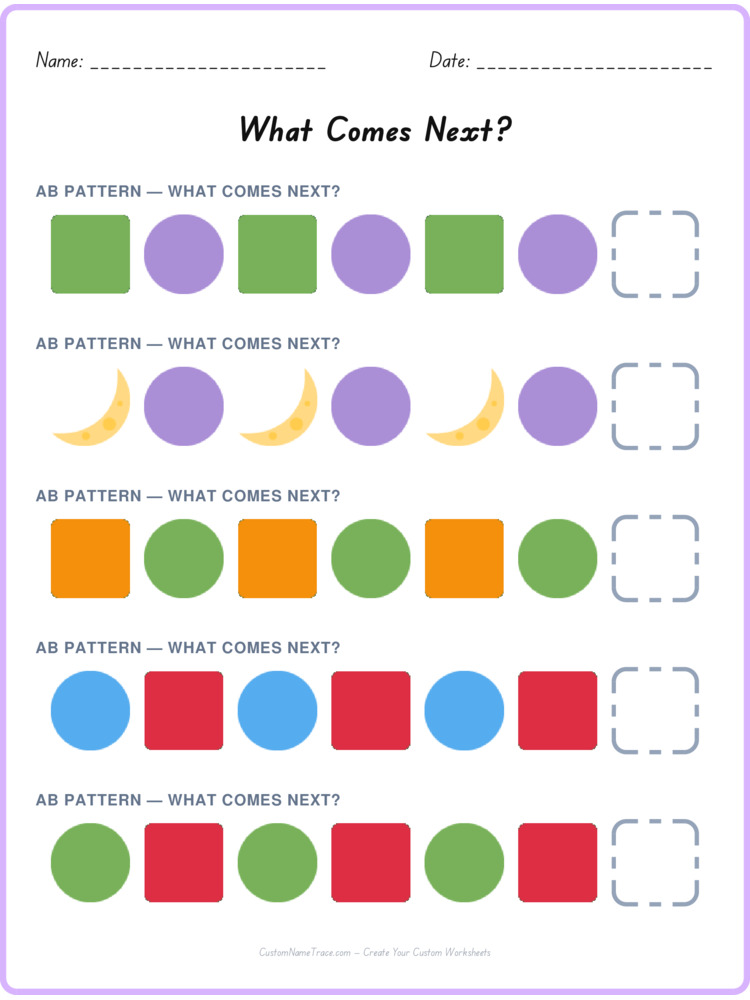
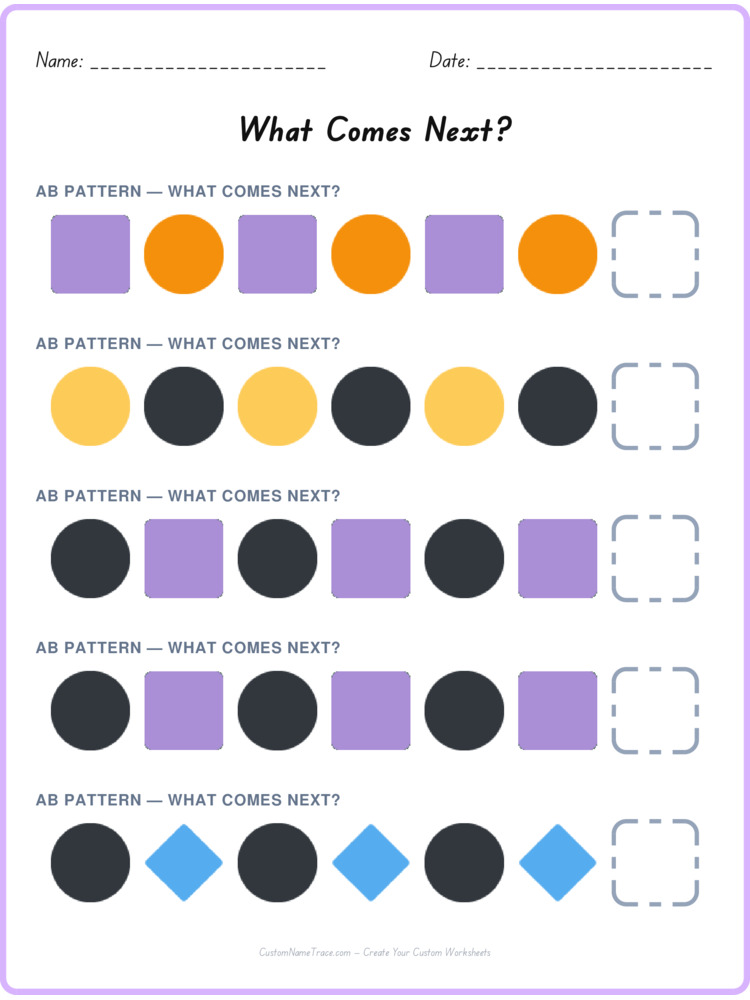
The simplest possible repeating pattern
AB is the shortest, most basic repeating unit a pattern can have — just two icons alternating back and forth, star-heart-star-heart, with nothing more complex layered on top. It's deliberately the very first pattern a child encounters in this Emoji Patterns section, since recognizing that a sequence repeats at all — the core idea underneath every pattern, simple or complex — is easiest to grasp when there are only two elements to track and the switch happens every single time.
Because the unit is only two icons long, a child can often predict the next several icons in the row just by noticing that the sequence keeps flipping, without needing to consciously count or name the rule out loud yet — that intuitive first grasp is exactly what this pattern is meant to build before more complex patterns ask for more deliberate reasoning.
Helping a child see the alternation for the first time
Pointing to each icon in turn and naming it out loud — "star, heart, star, heart" — makes the back-and-forth rhythm audible as well as visible, which helps many children notice the pattern faster than looking at the row silently. Clapping or tapping along with the naming (one clap per icon) adds a physical rhythm to the same idea, turning pattern recognition into something felt in the body as well as seen with the eyes.
Once a child can confidently say what the next icon should be before reaching the blank cells, they're ready to try predicting two or three blanks in a row rather than just one — the same alternating rule just needs to be applied a few more times in succession.
Where this leads next
AB is the foundation every other pattern on this site builds on — ABA adds a twist where the sequence returns to its starting icon in a three-step unit, and AAB introduces a repeated icon before the switch, rather than switching every single time. A child genuinely comfortable predicting an AB sequence confidently has the core "this keeps repeating" insight those next patterns both depend on.
Every numbered worksheet uses a fresh pair of icons from this site's shape and face collections, so a child who wants more practice with this exact pattern always sees a new combination rather than memorizing one specific pair.
Using this worksheet effectively
Because this is usually a child's very first pattern-recognition worksheet, keeping the pace relaxed and celebratory matters more here than with almost any other page on this site — the goal is building confidence with the very idea of a pattern, not testing speed. A child who fills in the blanks correctly, even slowly, has grasped exactly what this worksheet is meant to teach.
Every worksheet downloads as a free, print-ready PDF with no account required.