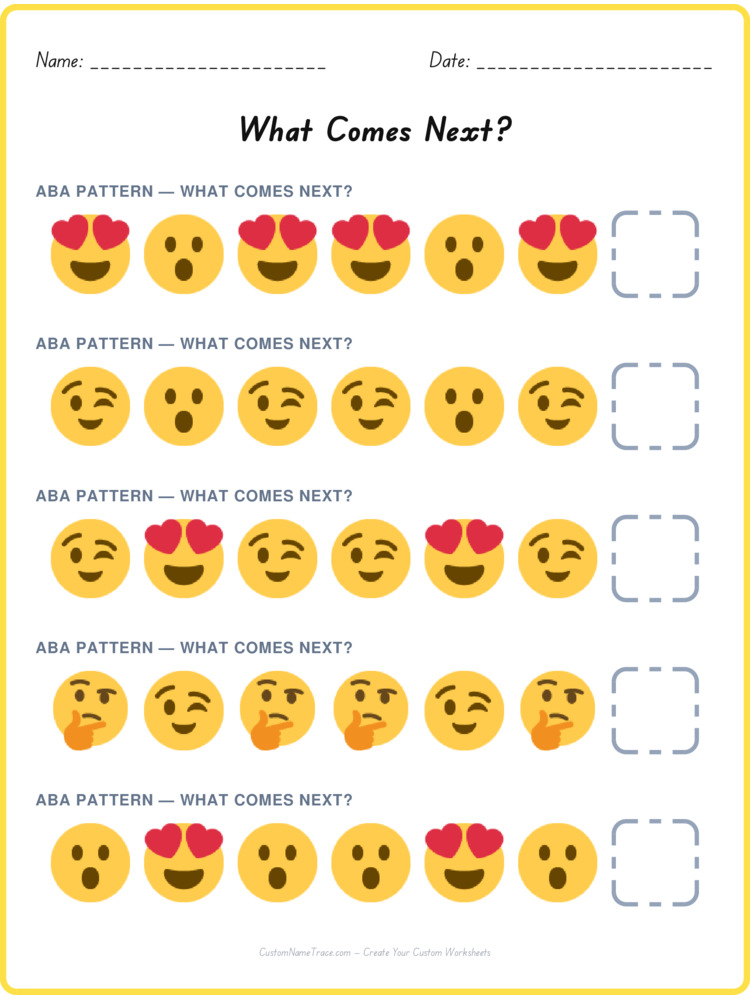
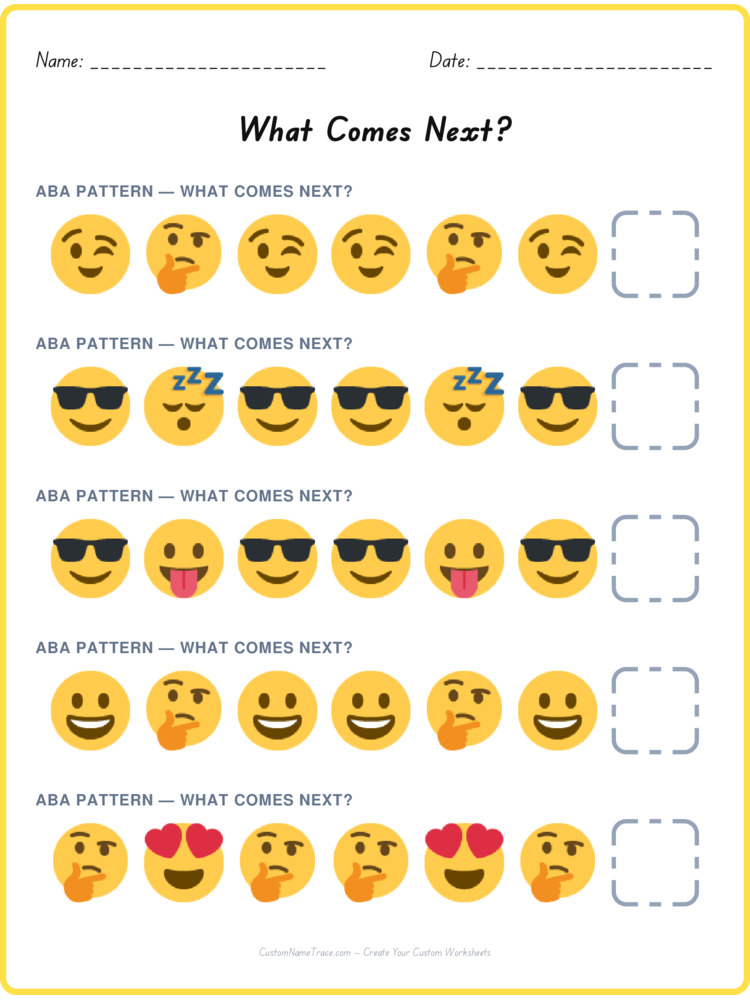
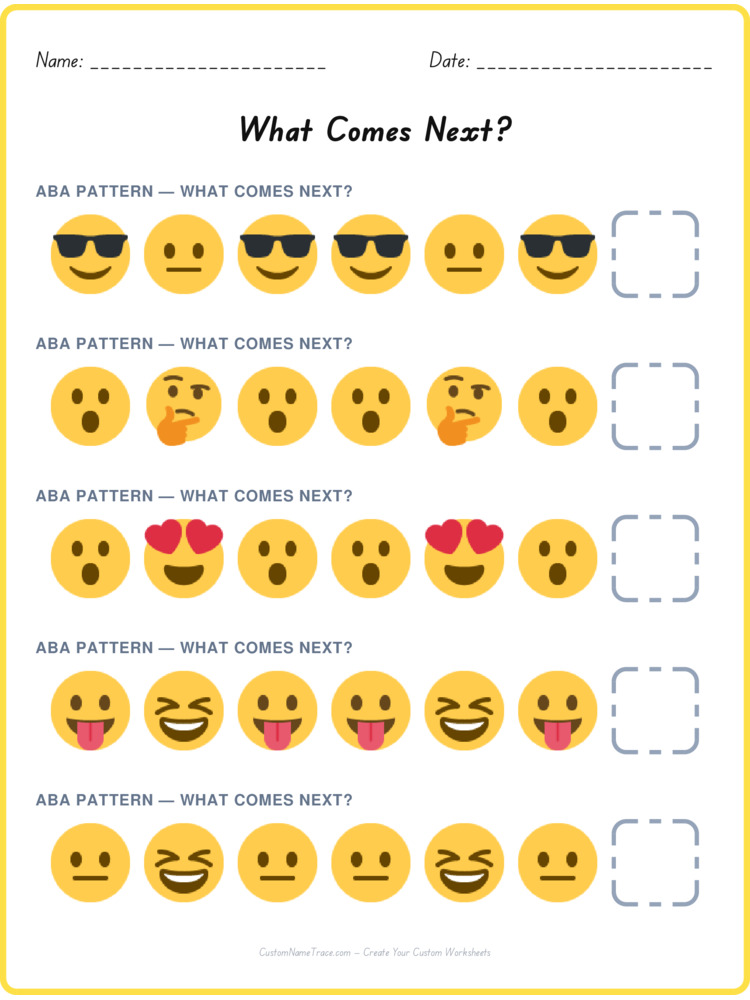
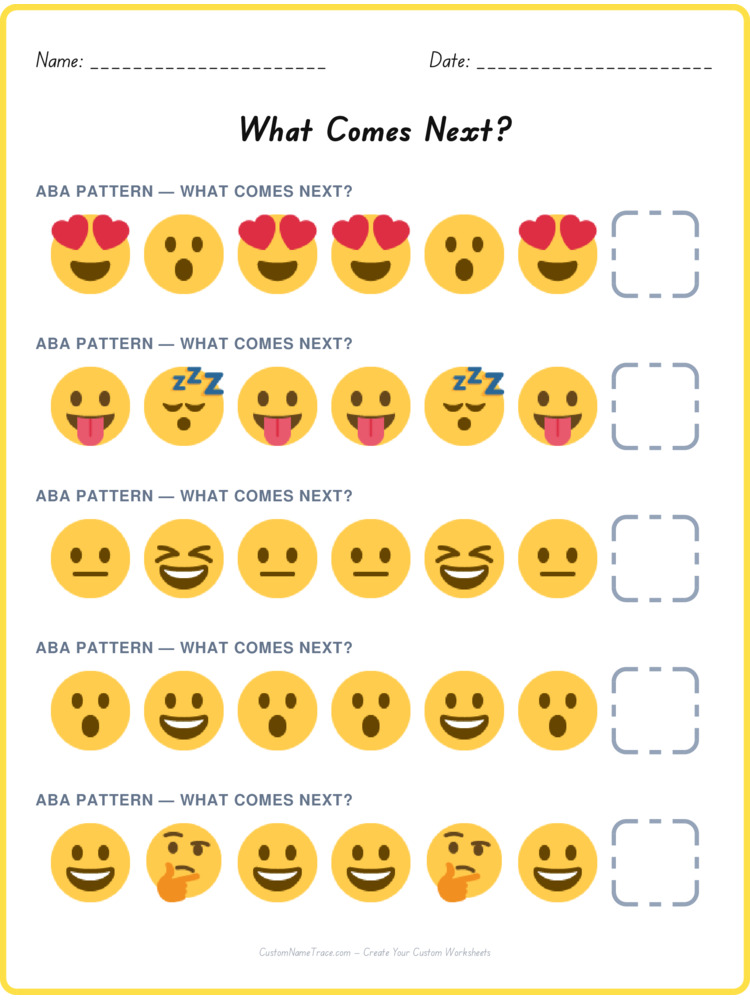
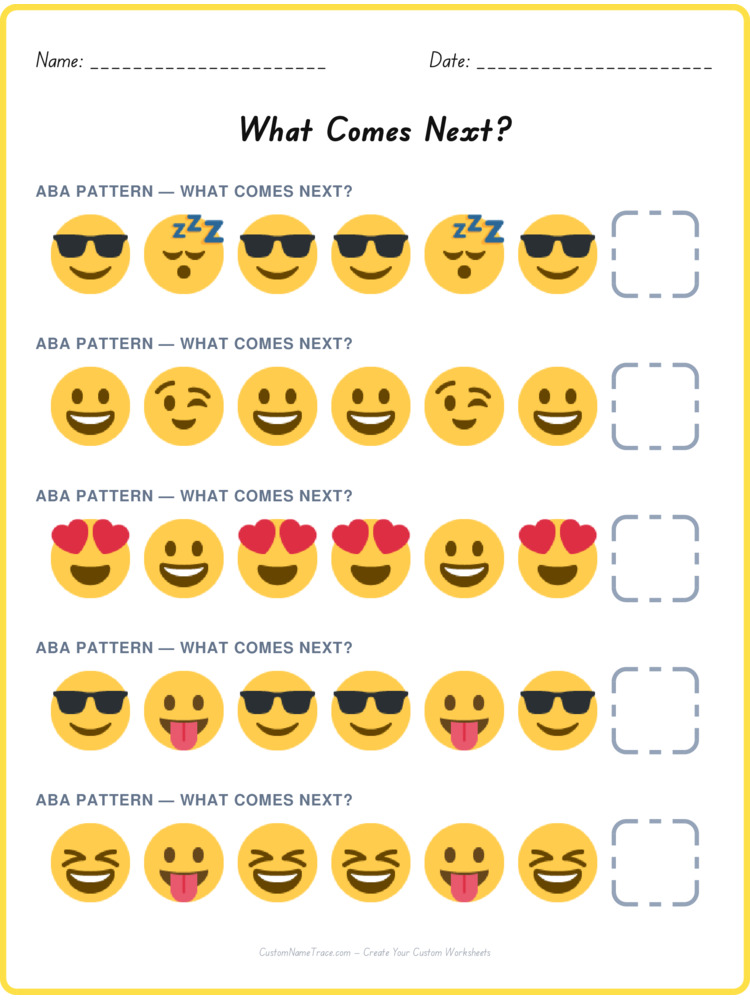
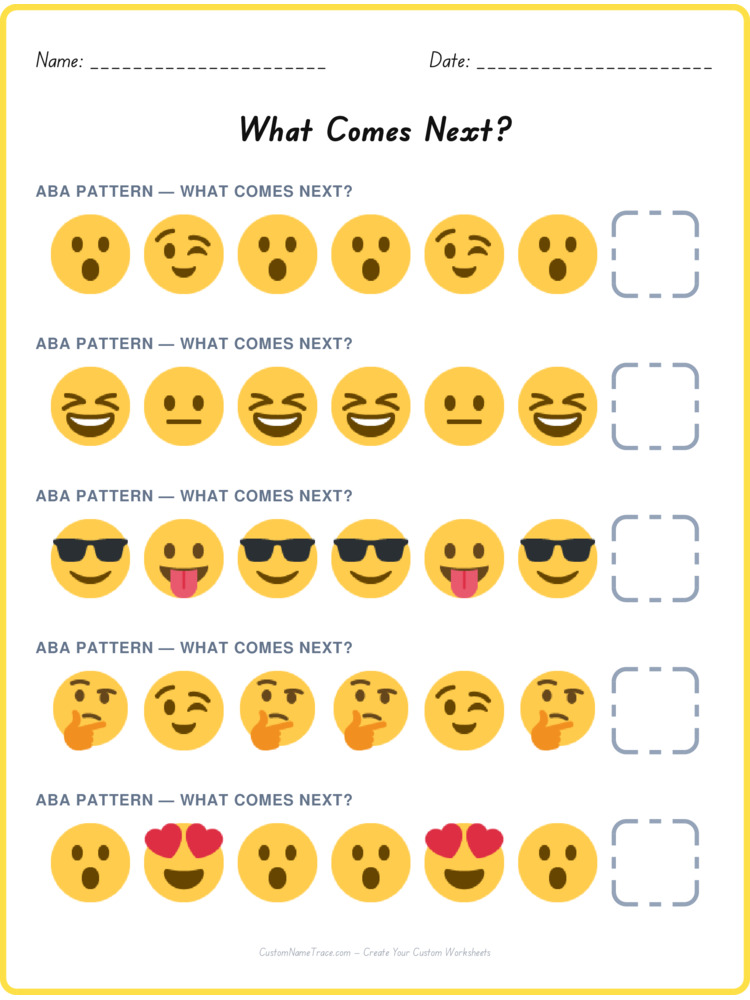
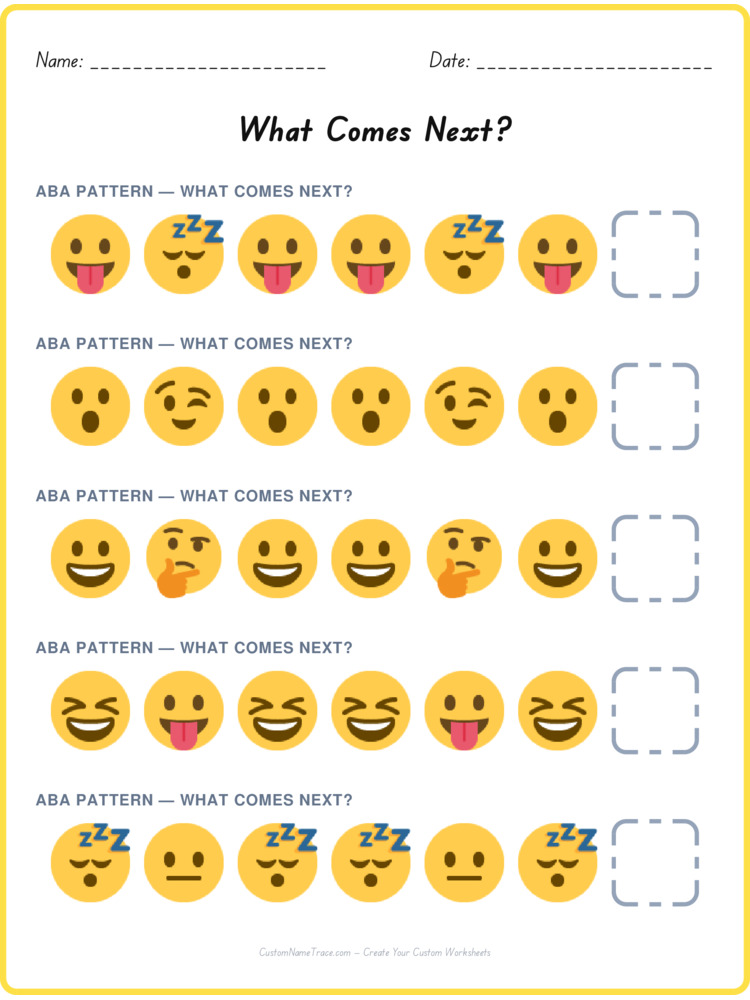
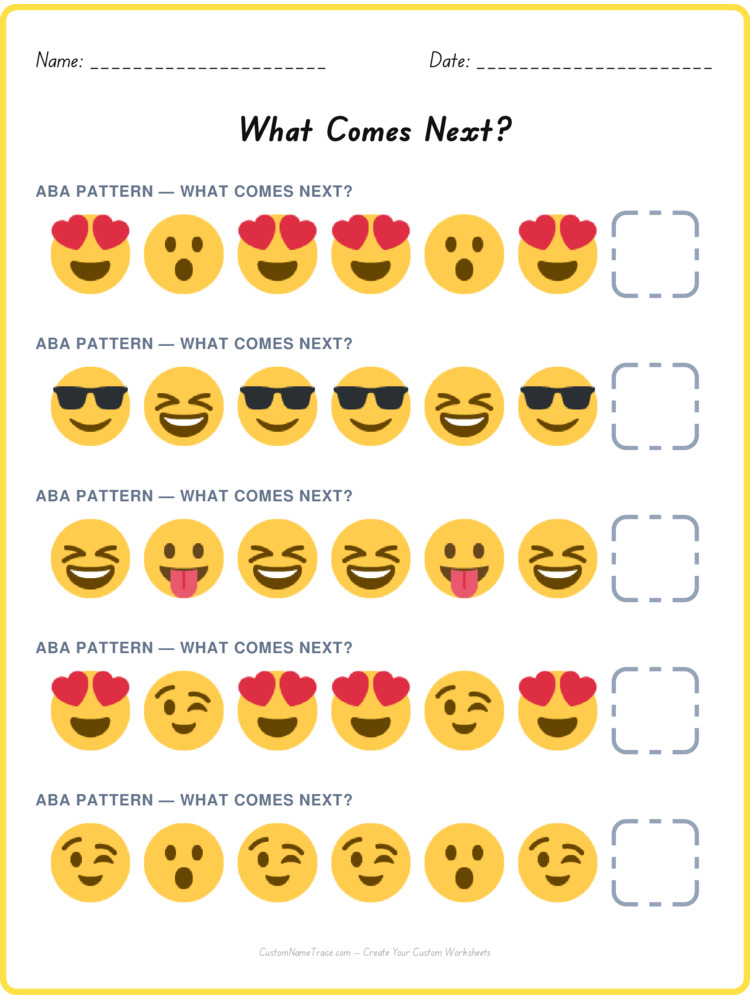
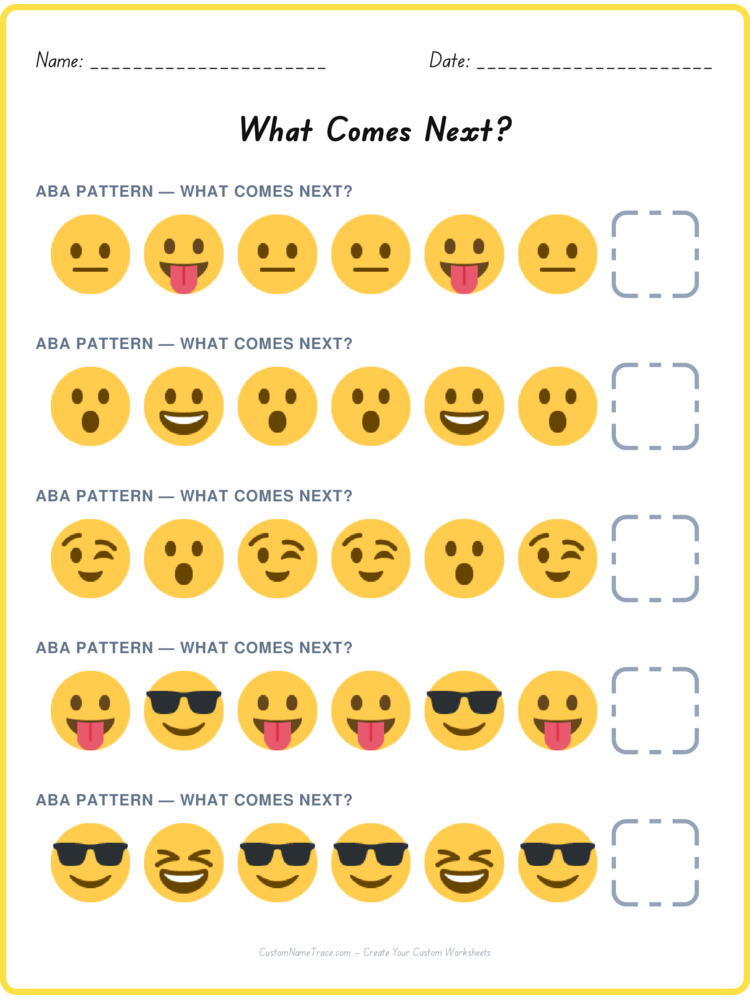
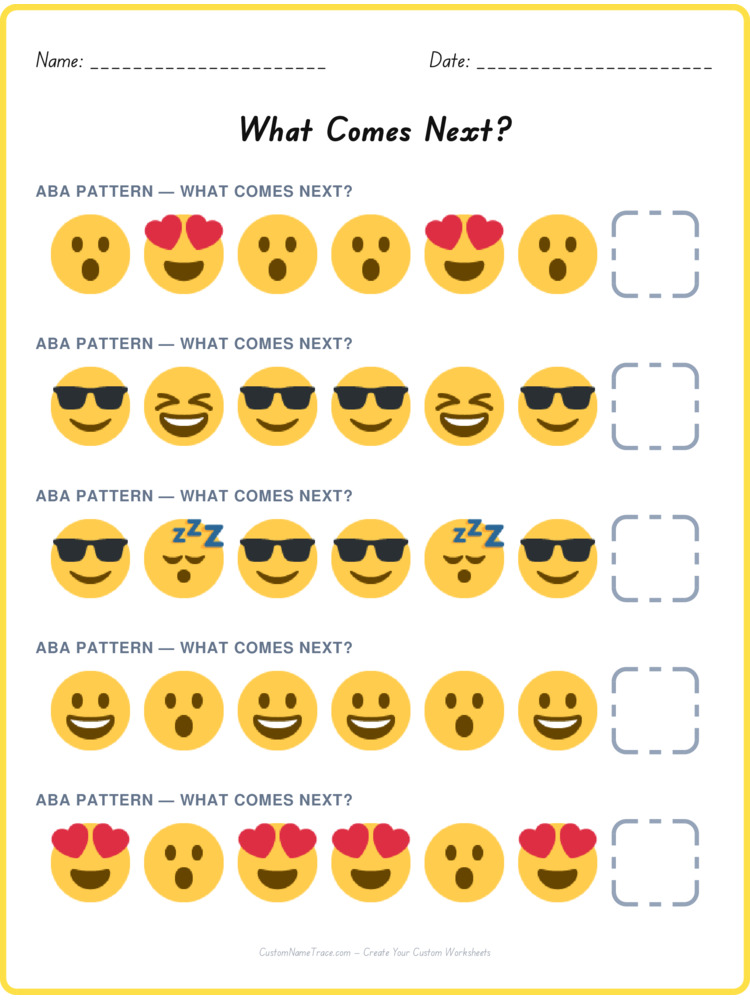
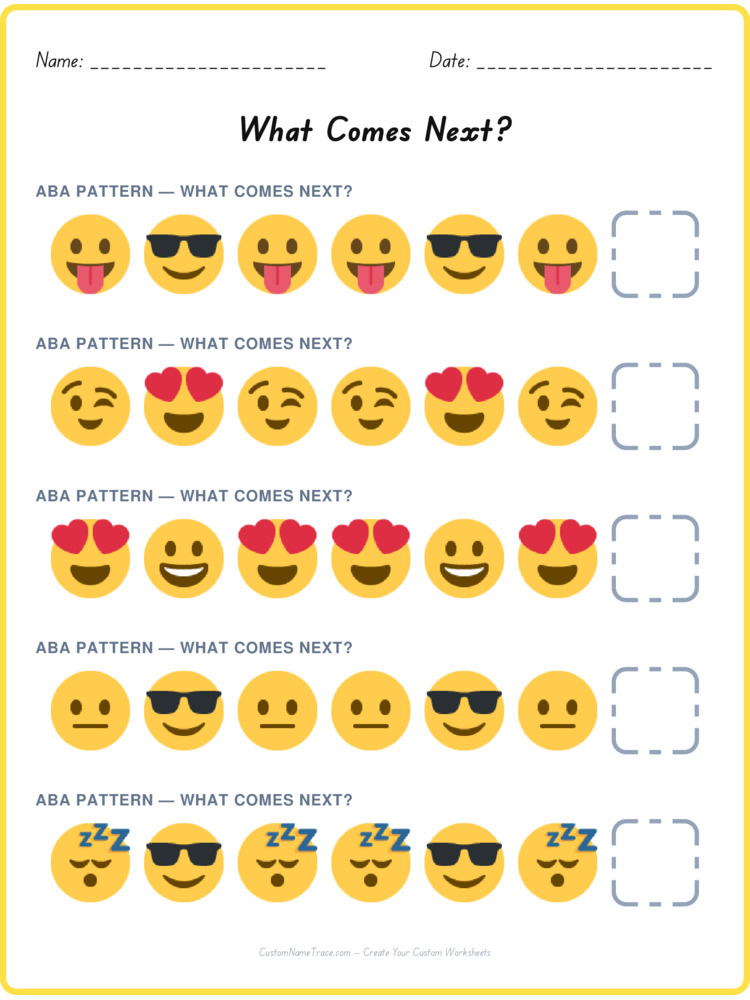
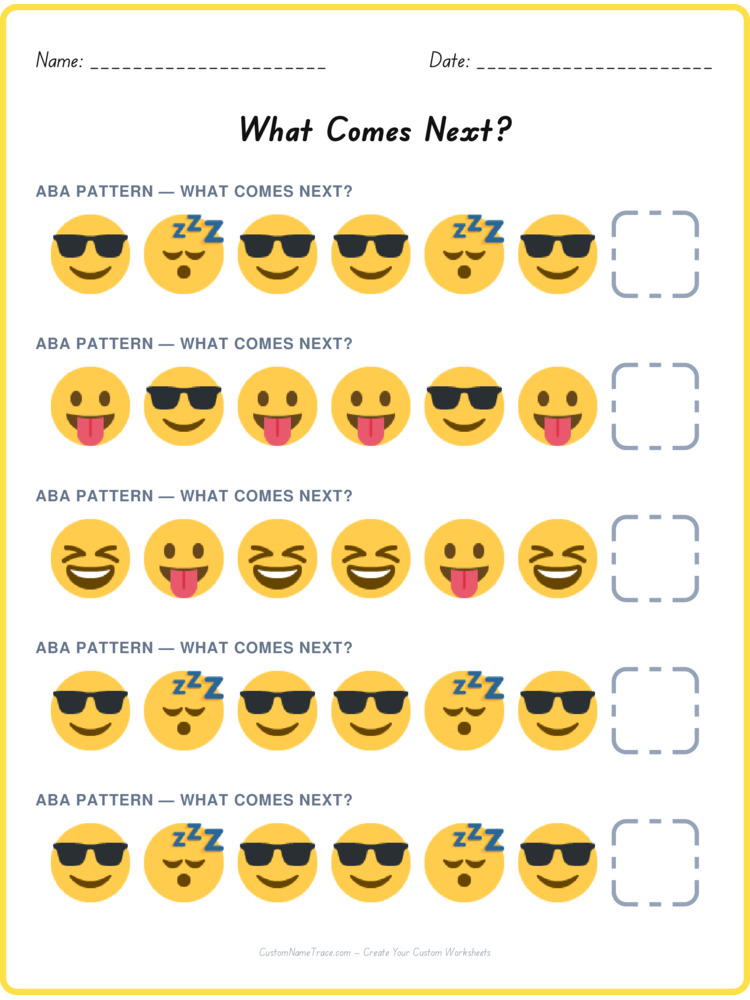
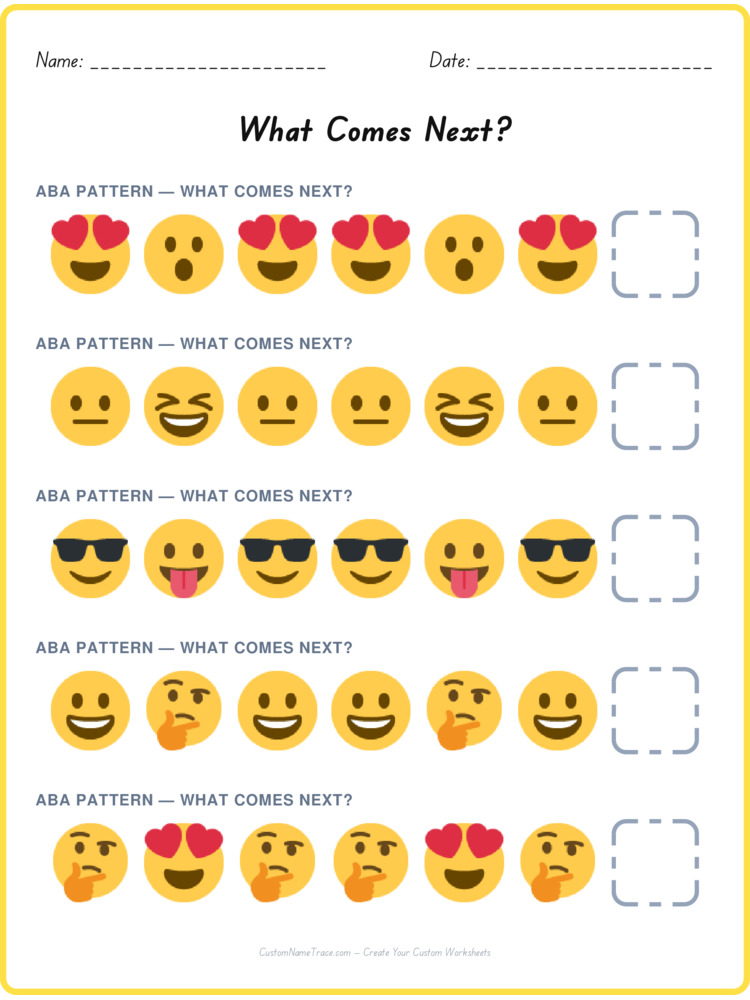
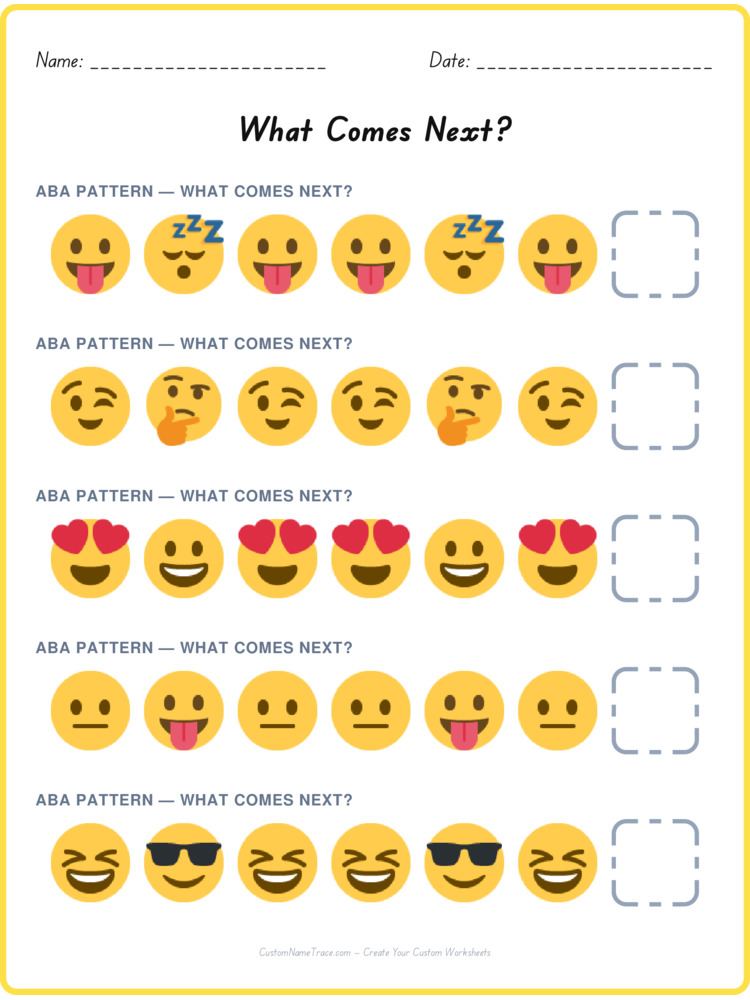
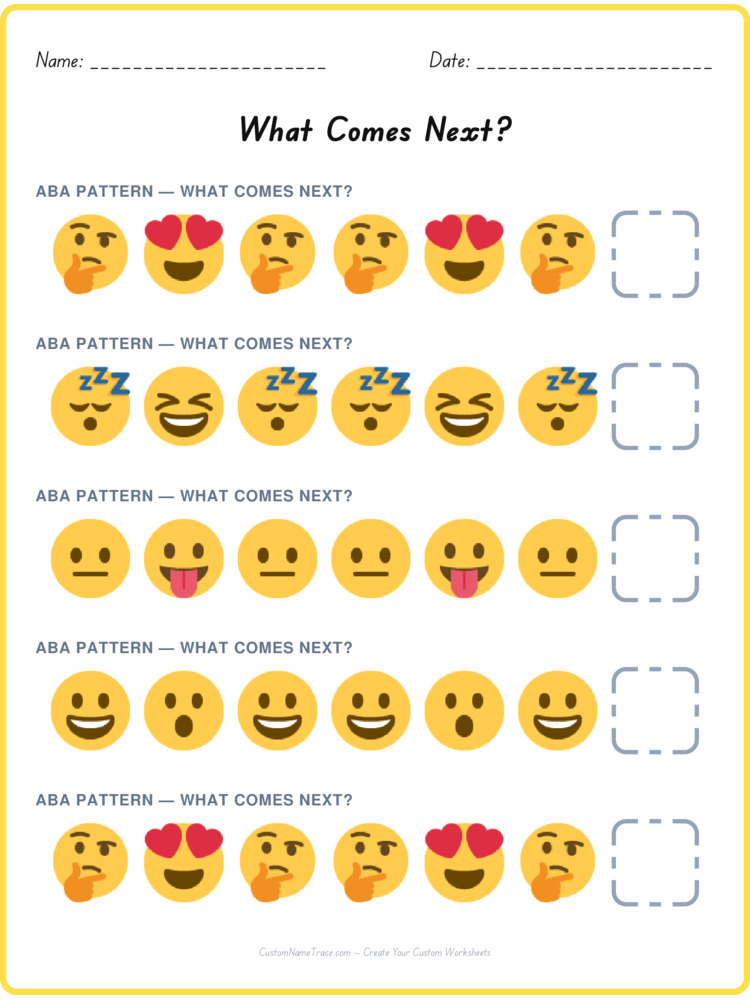
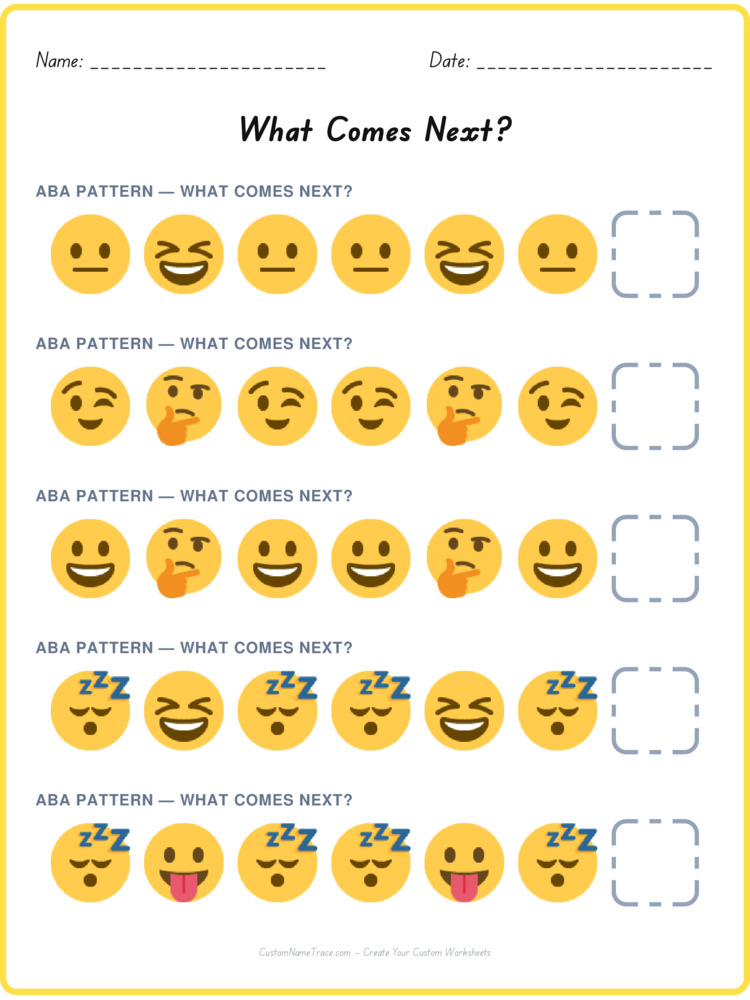
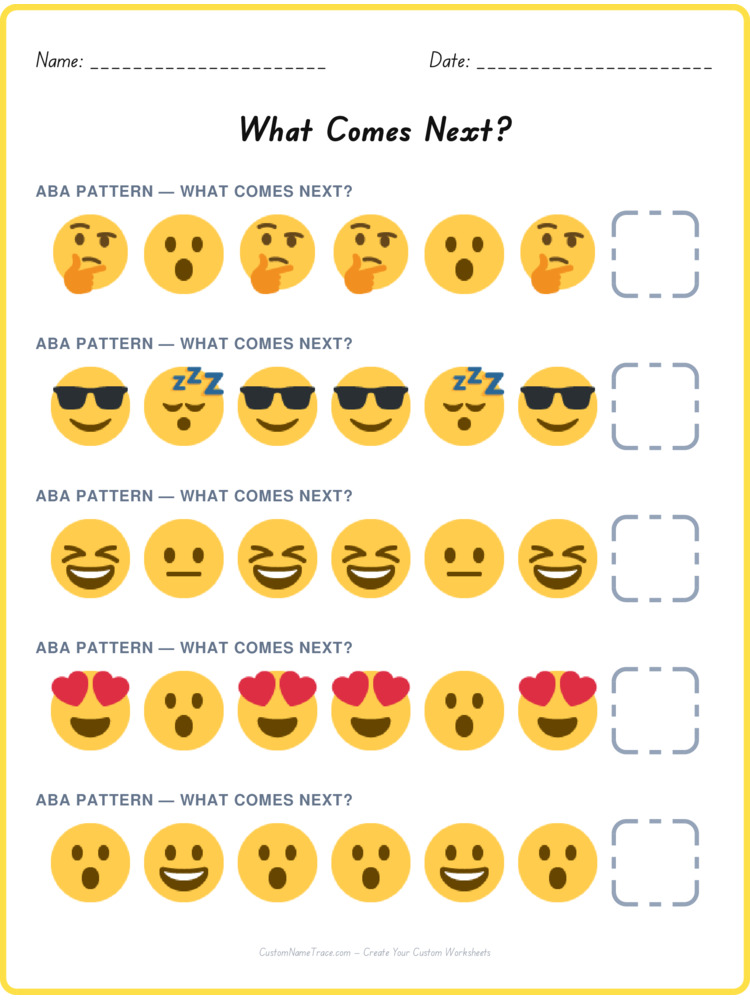
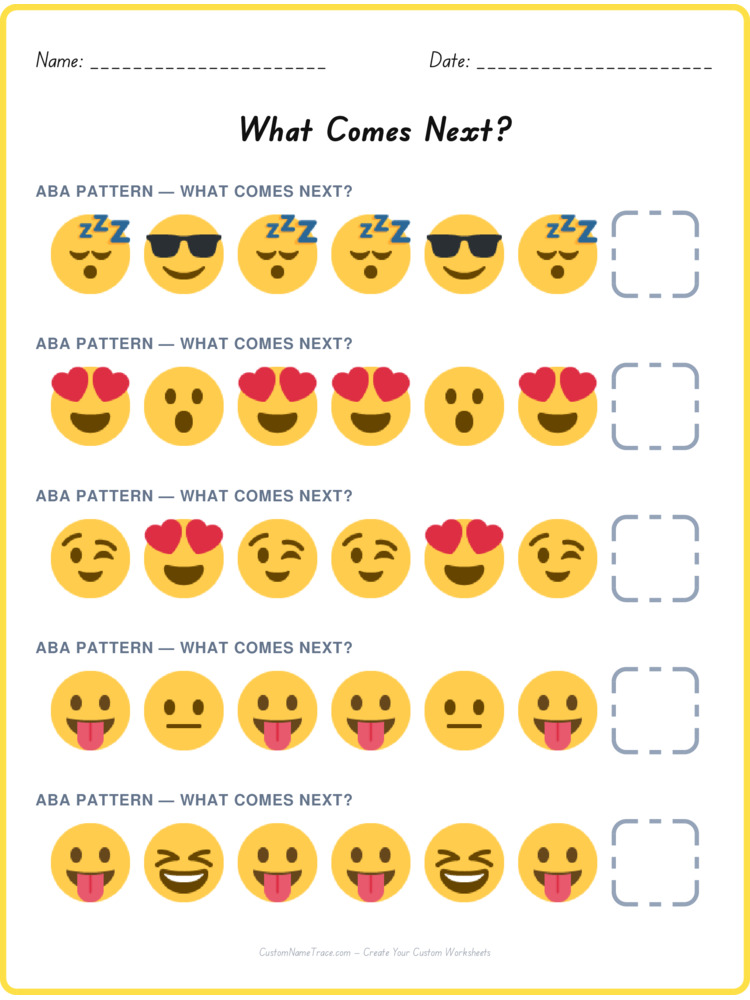
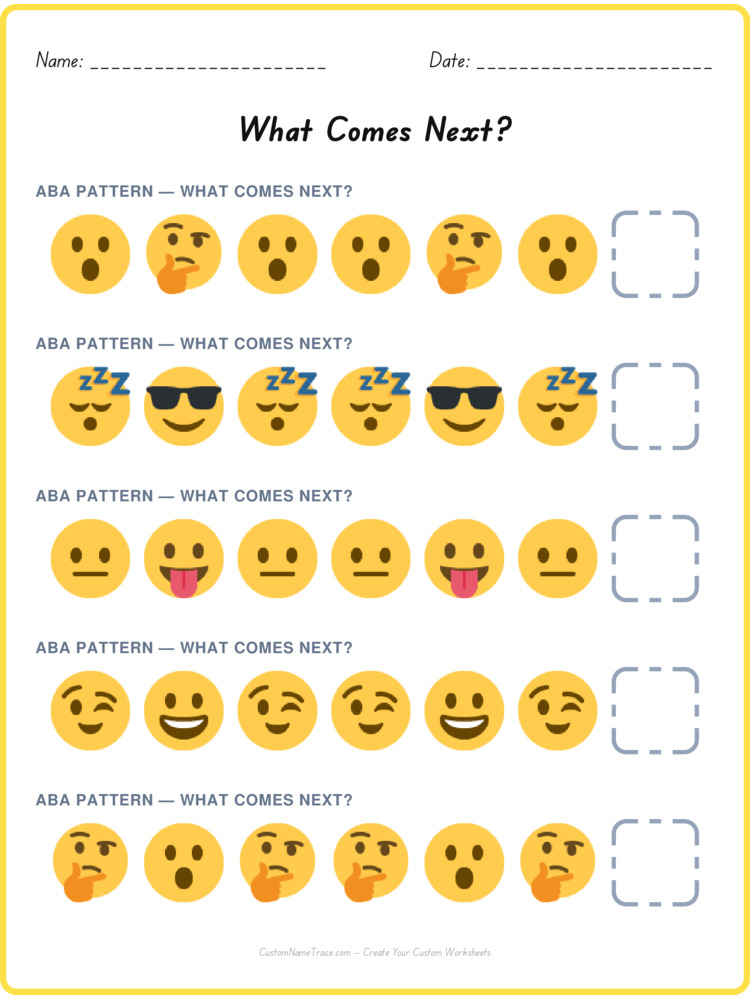
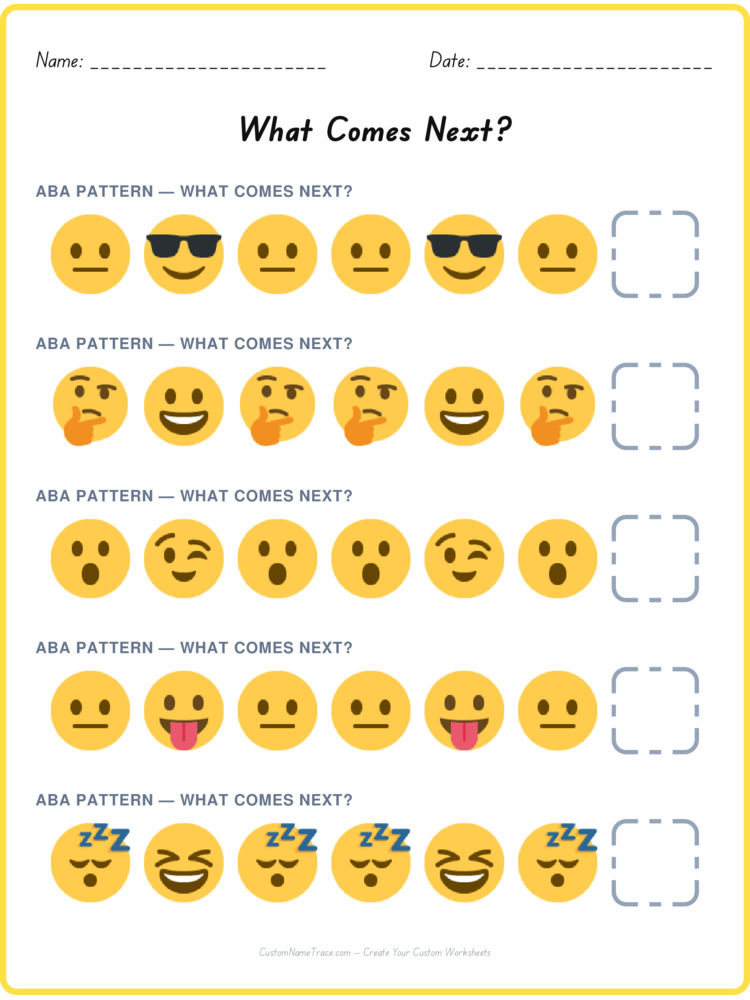
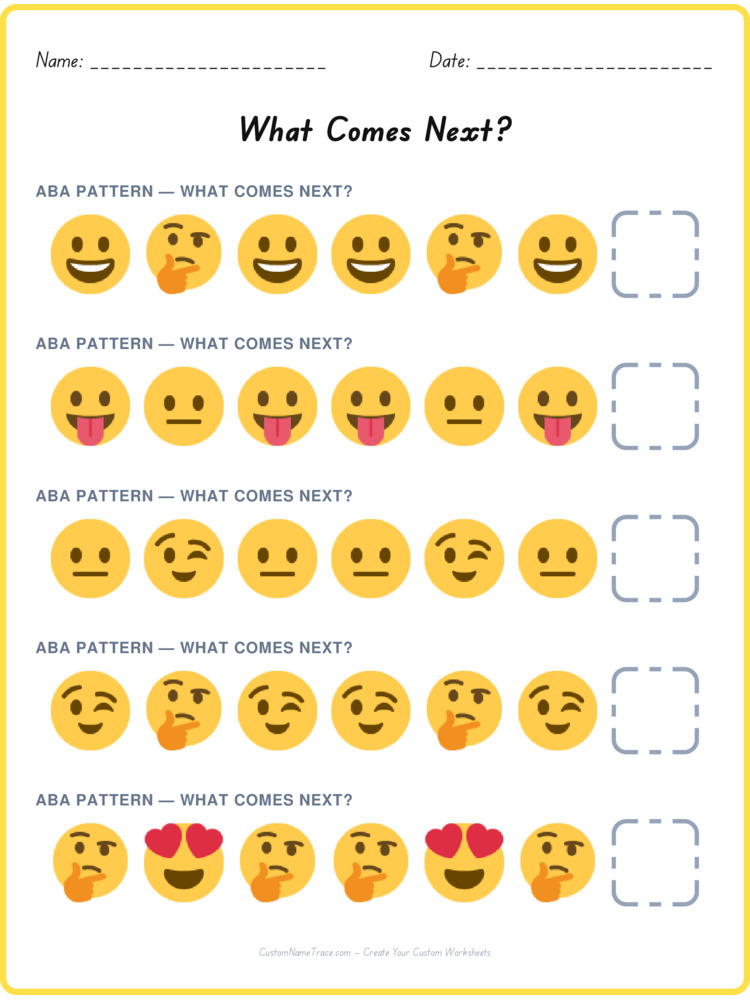
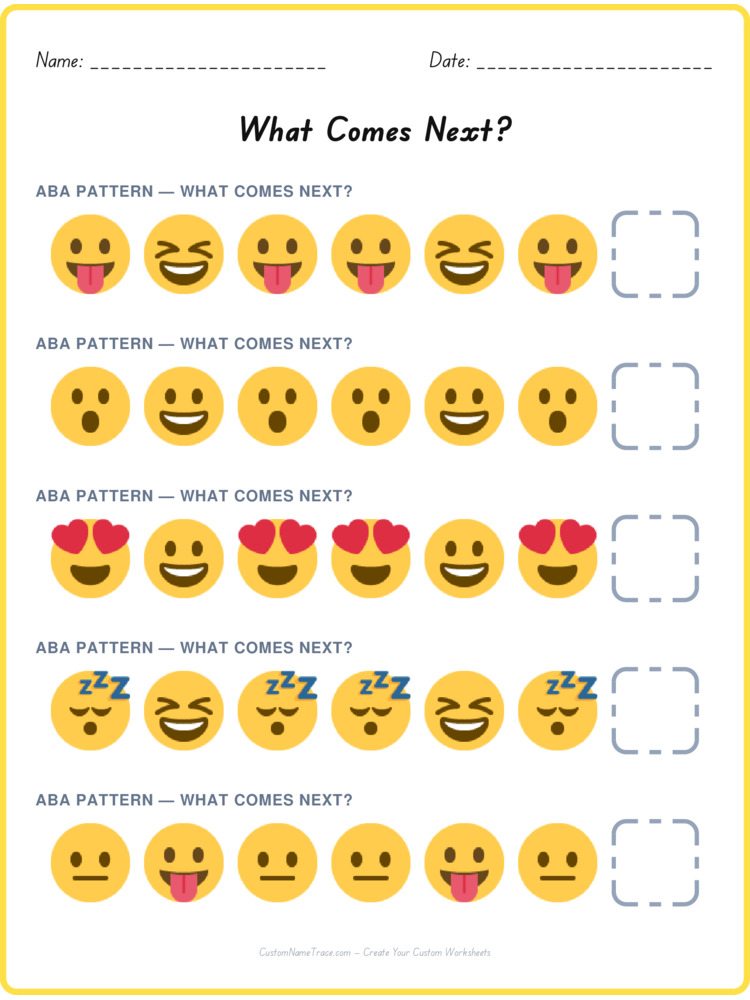
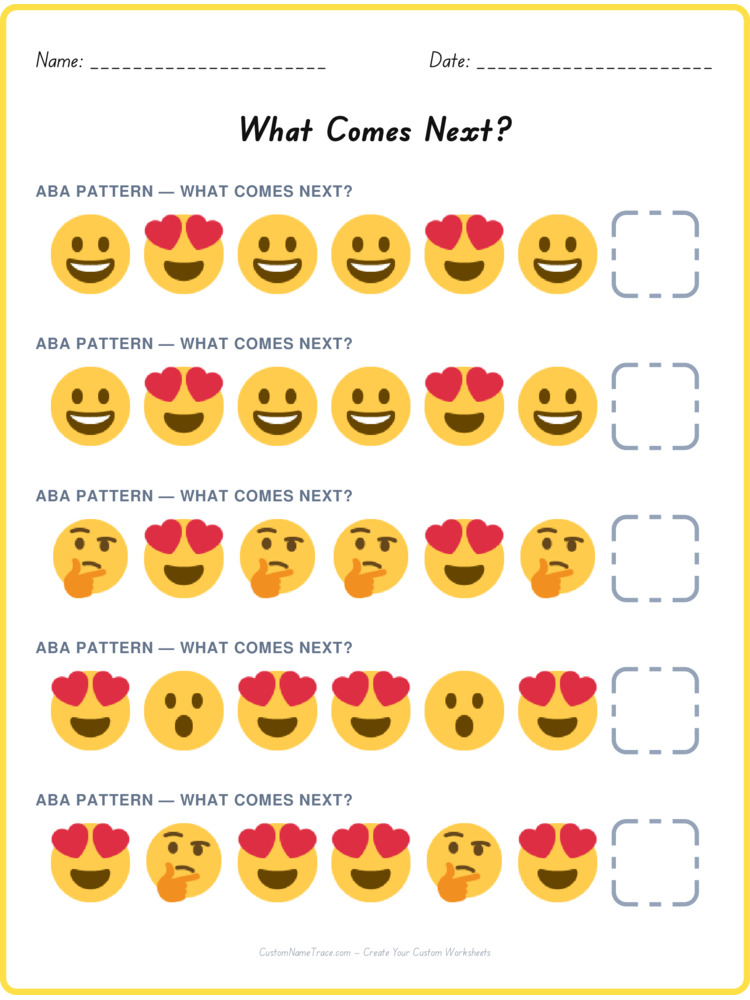
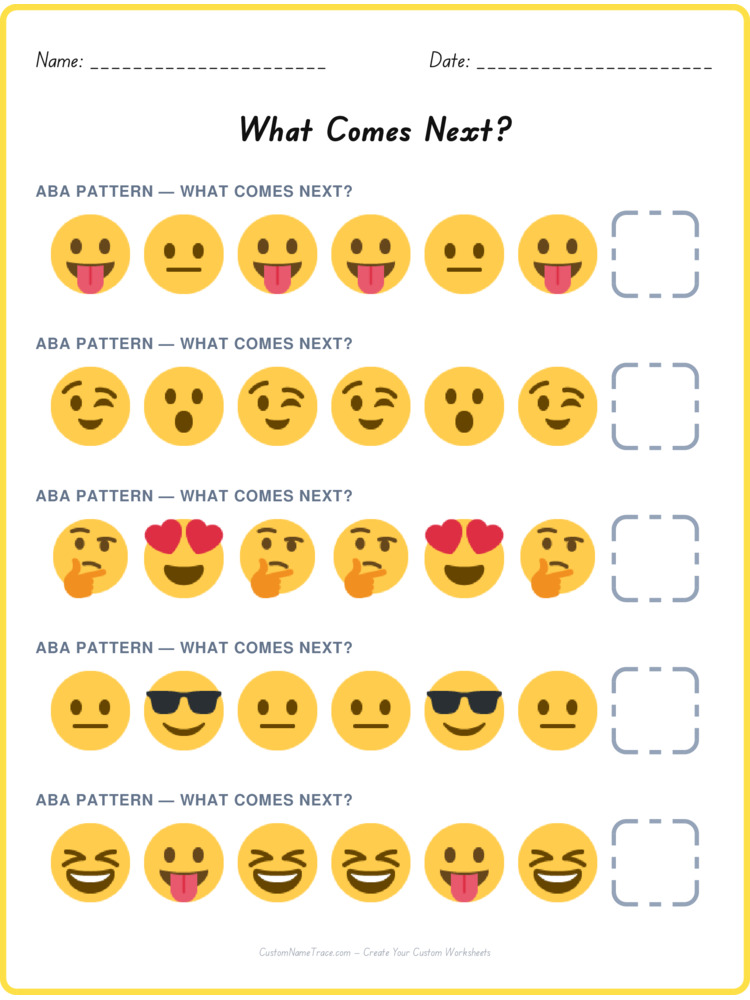
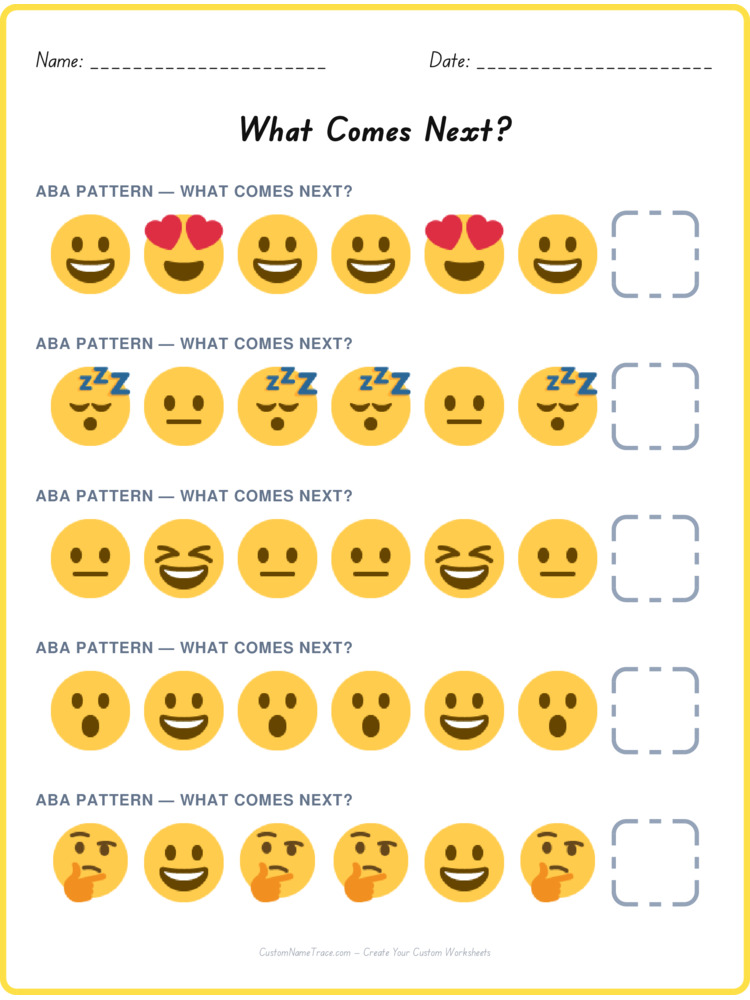
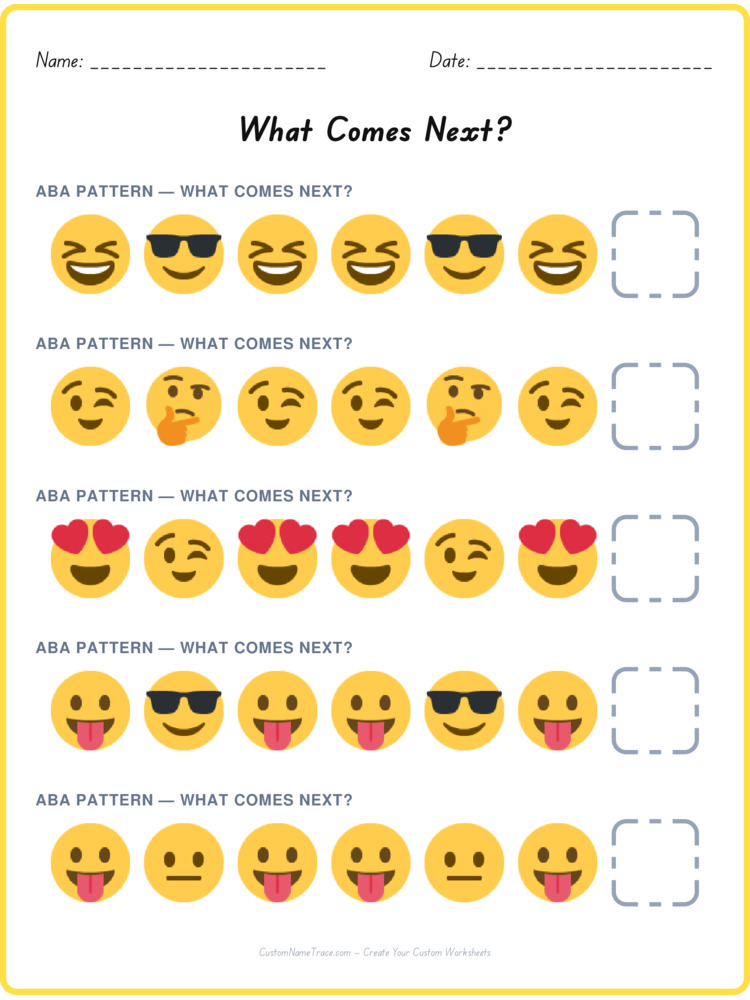
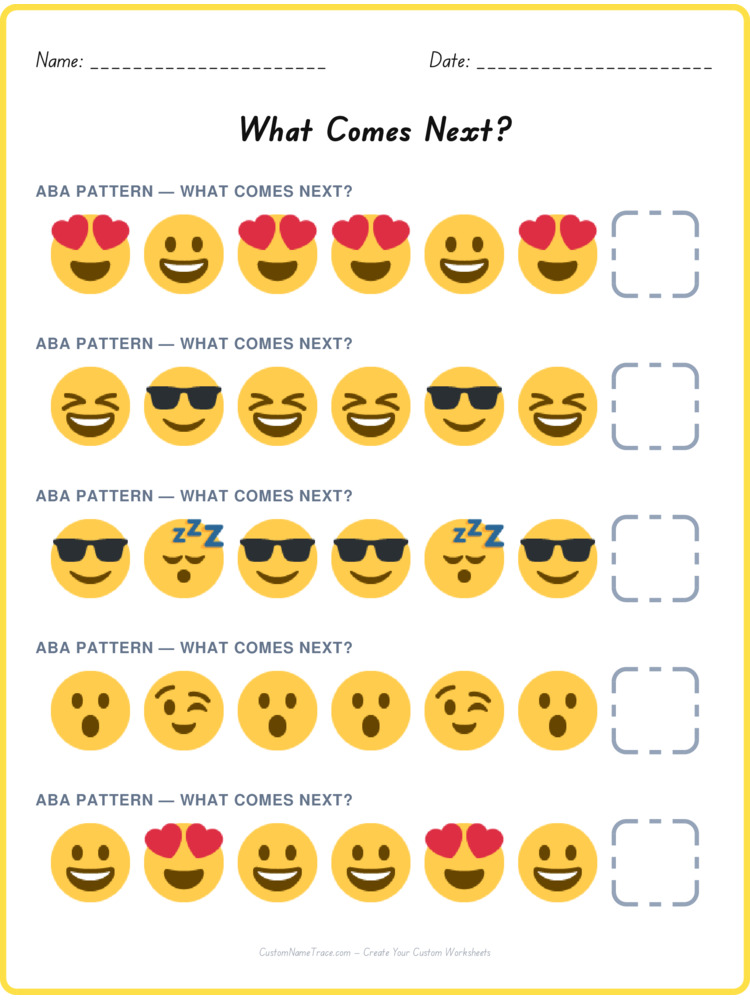
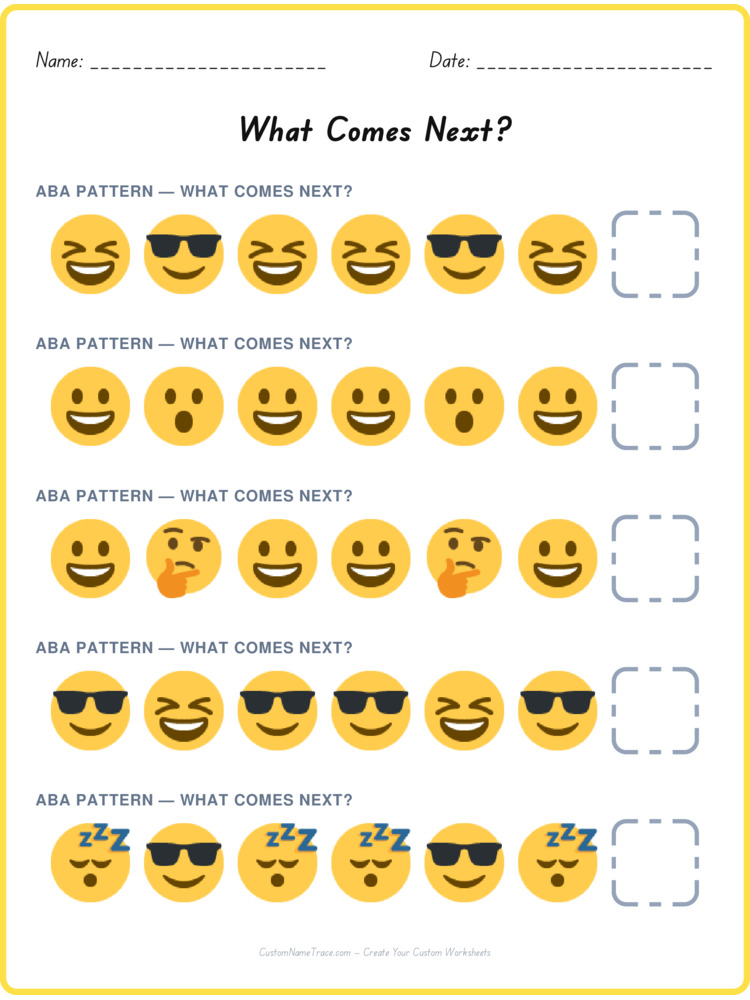
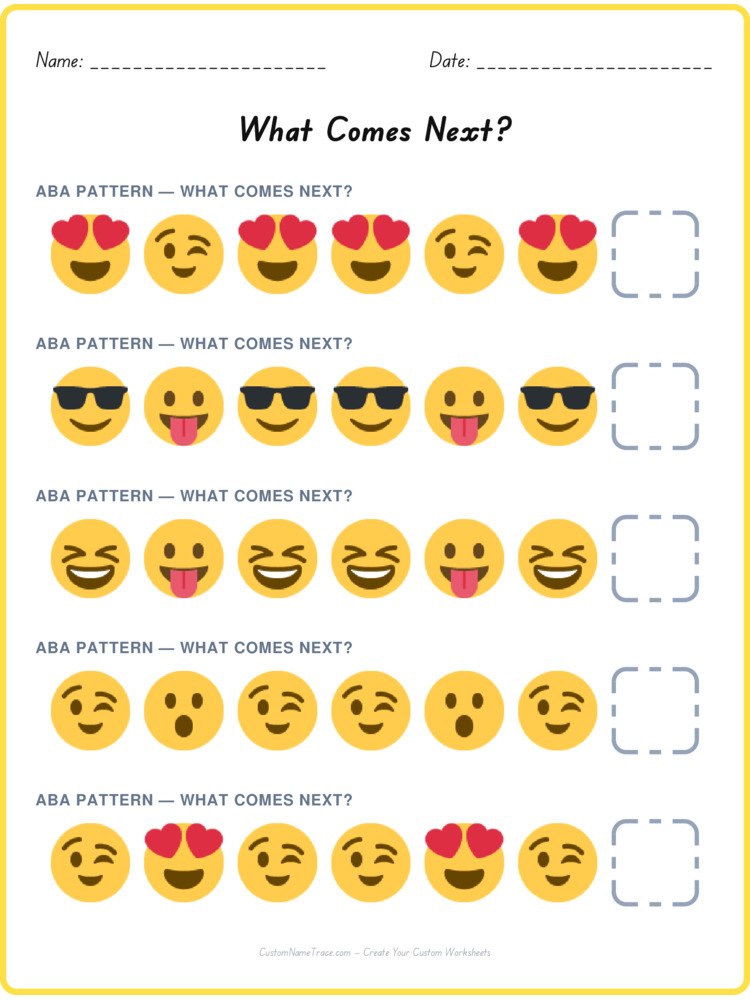
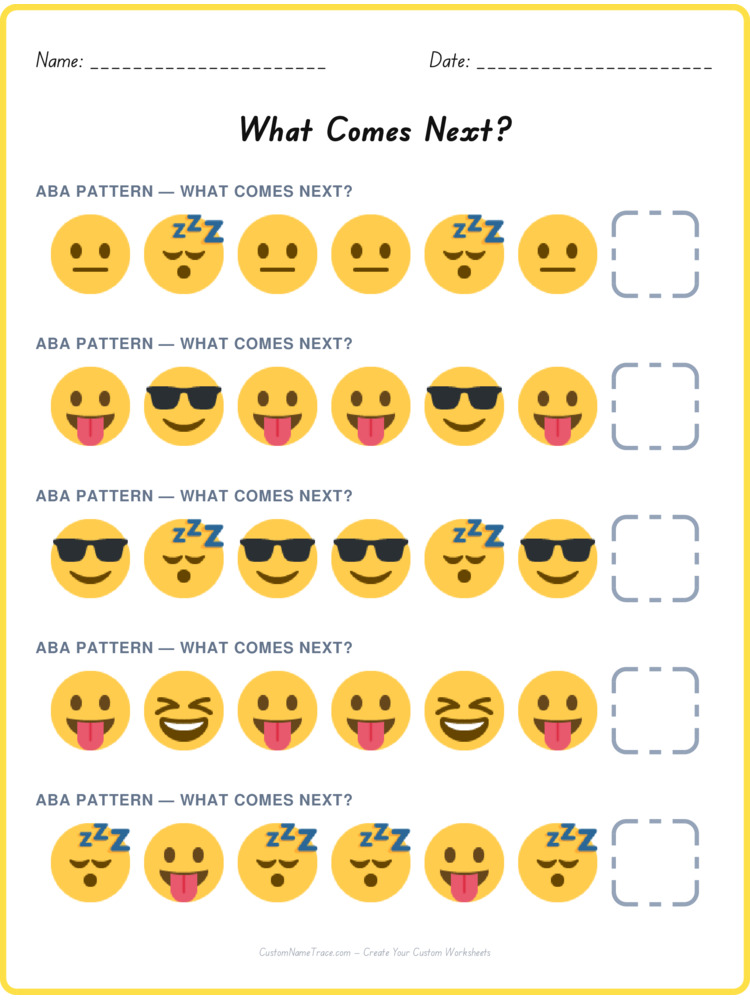
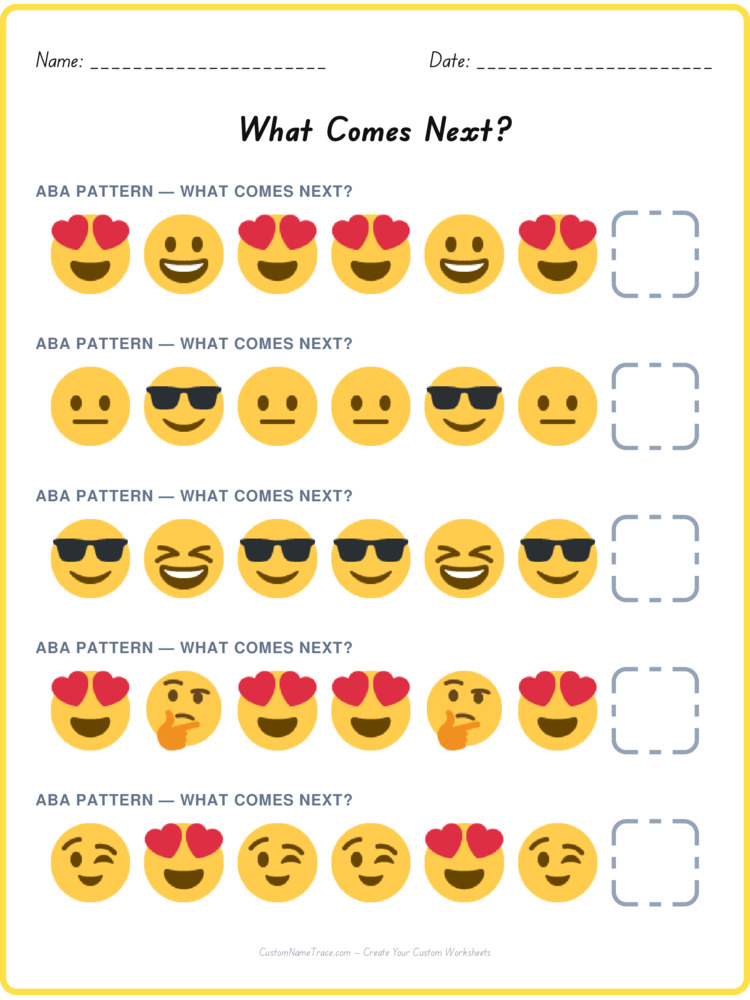
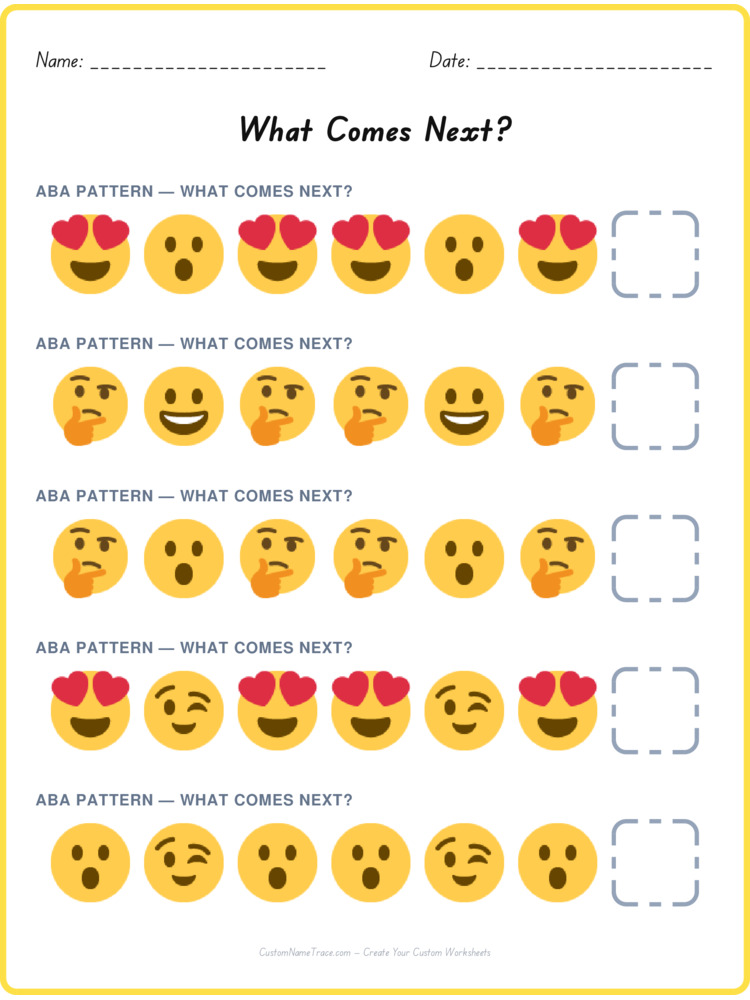
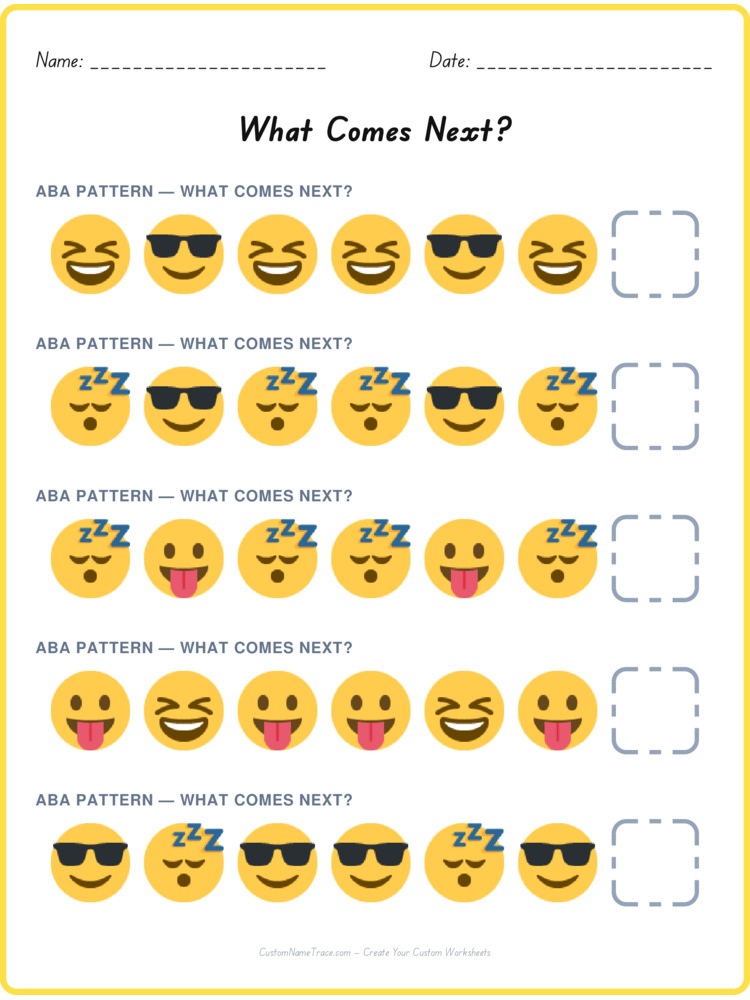
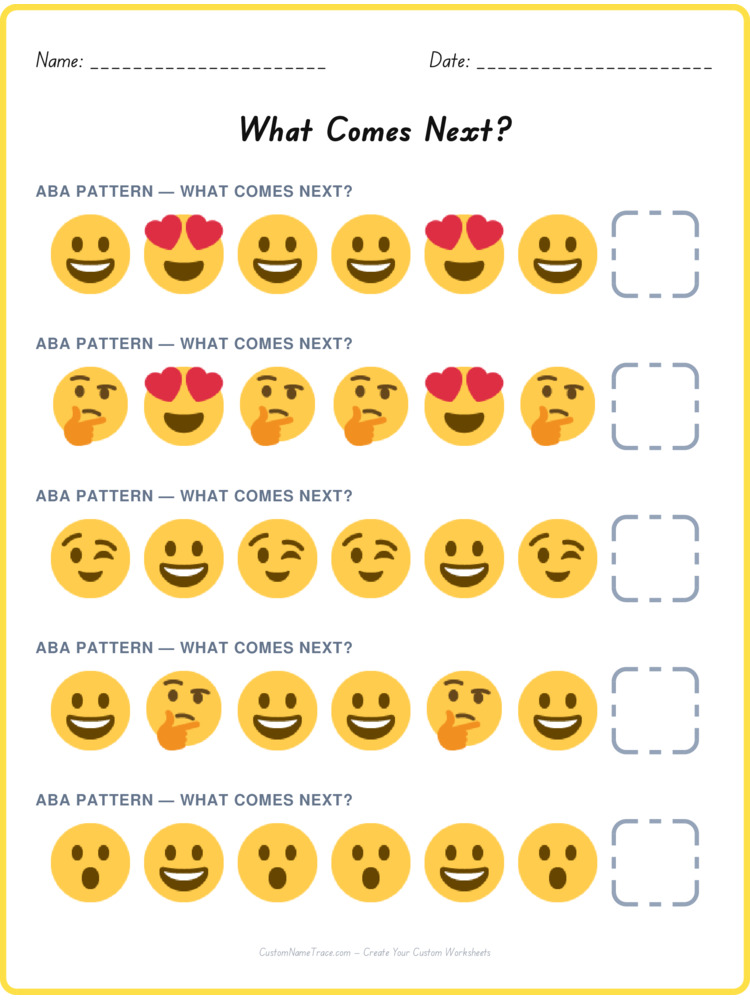
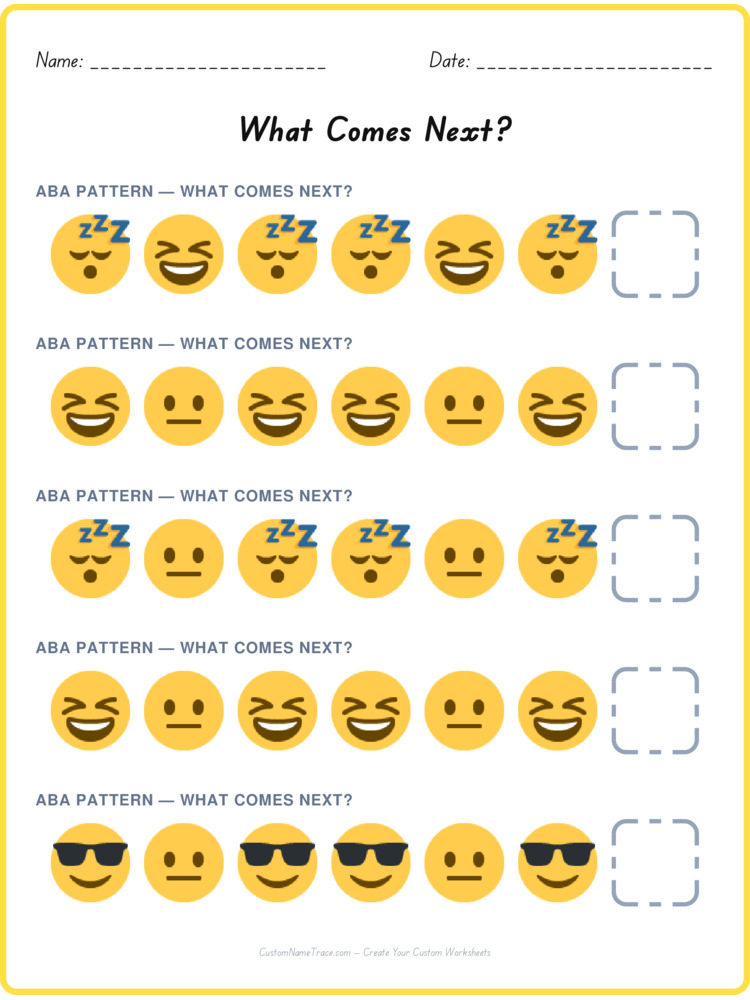
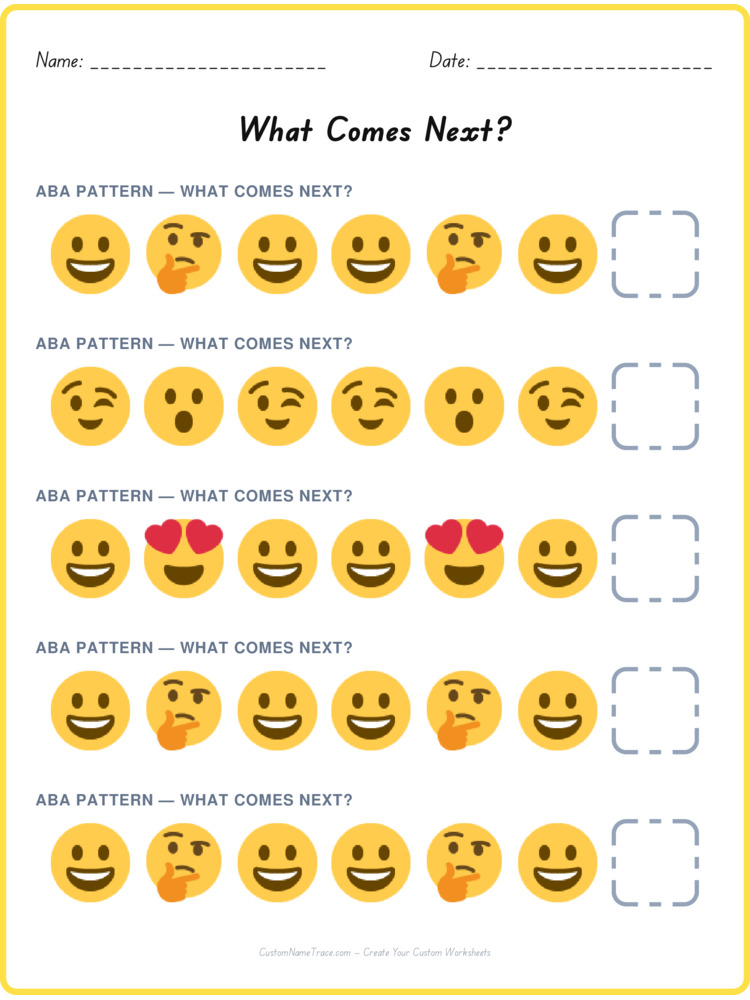
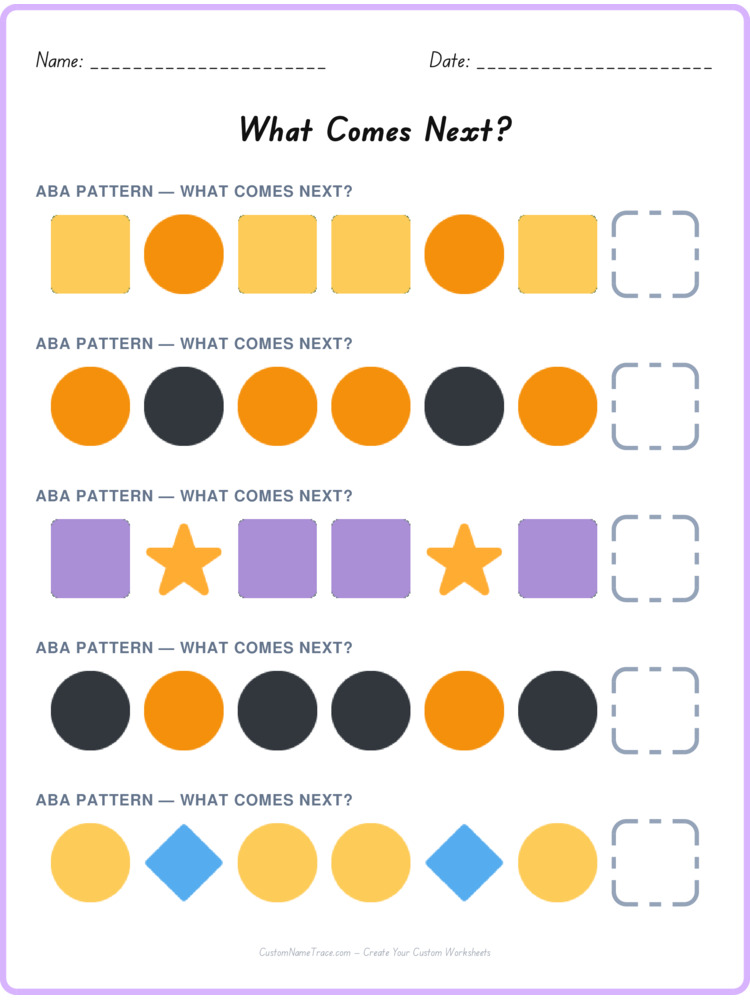
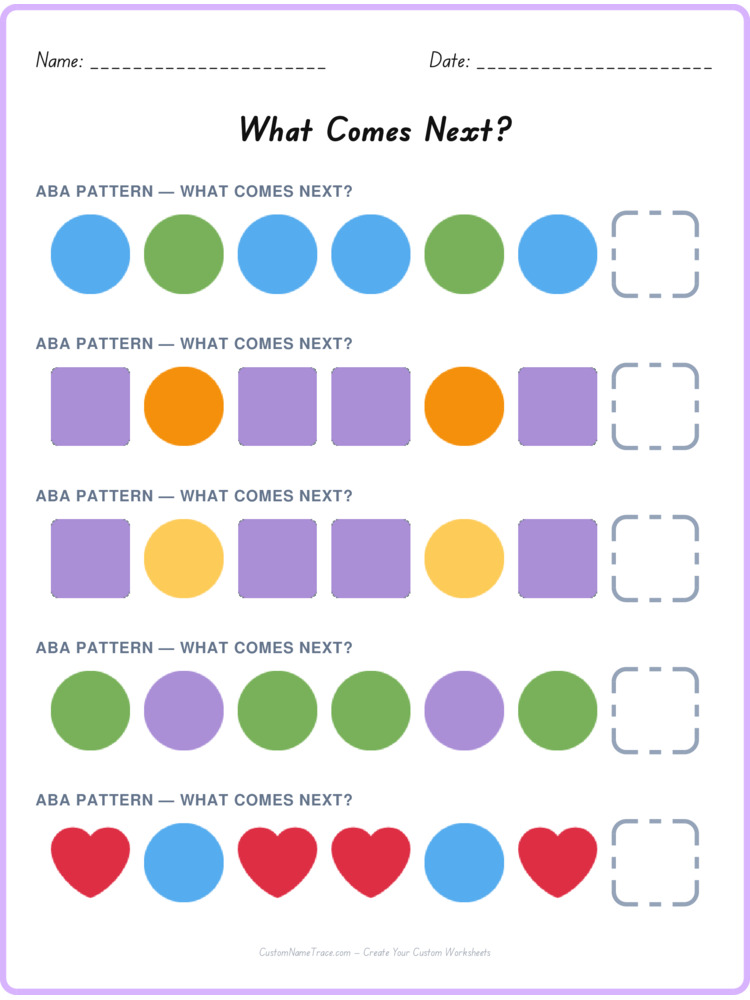
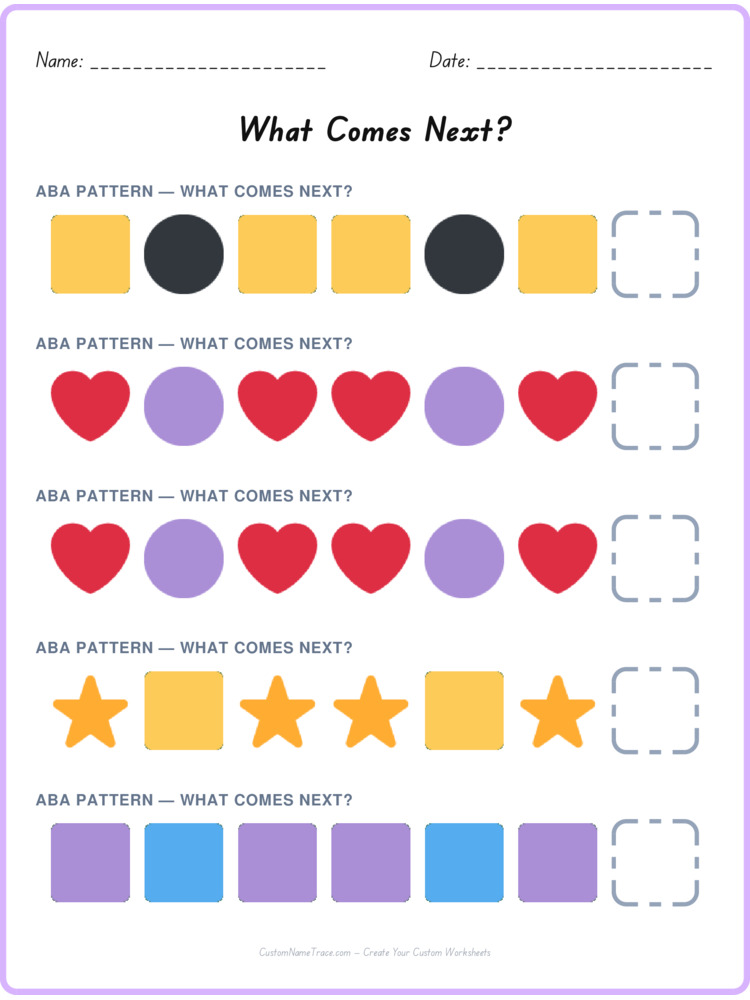
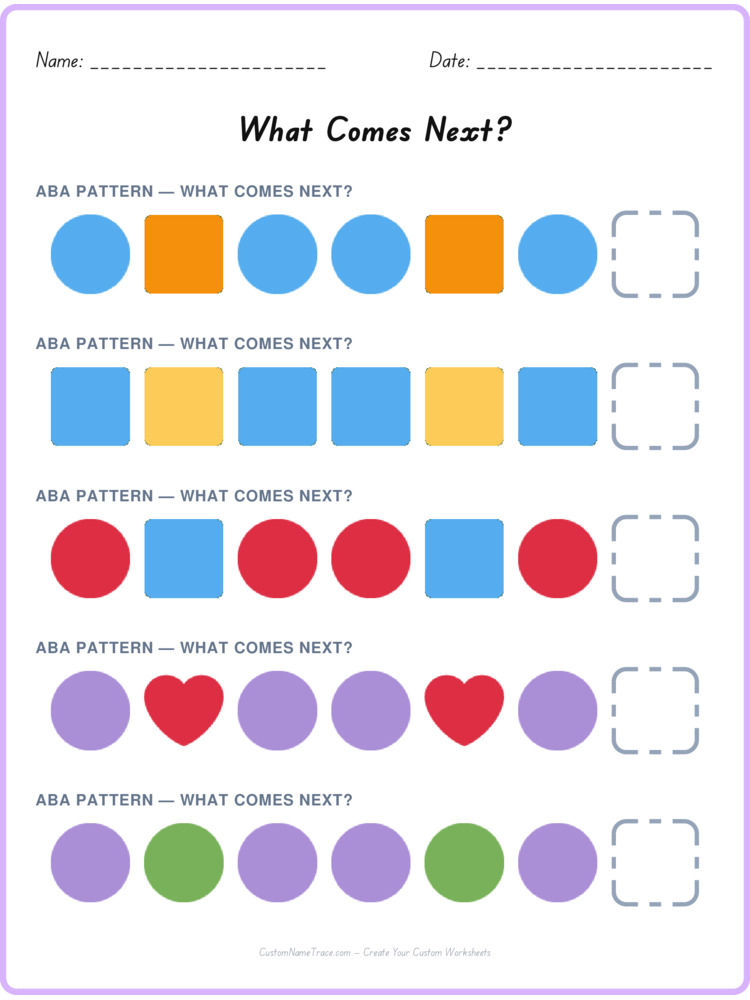
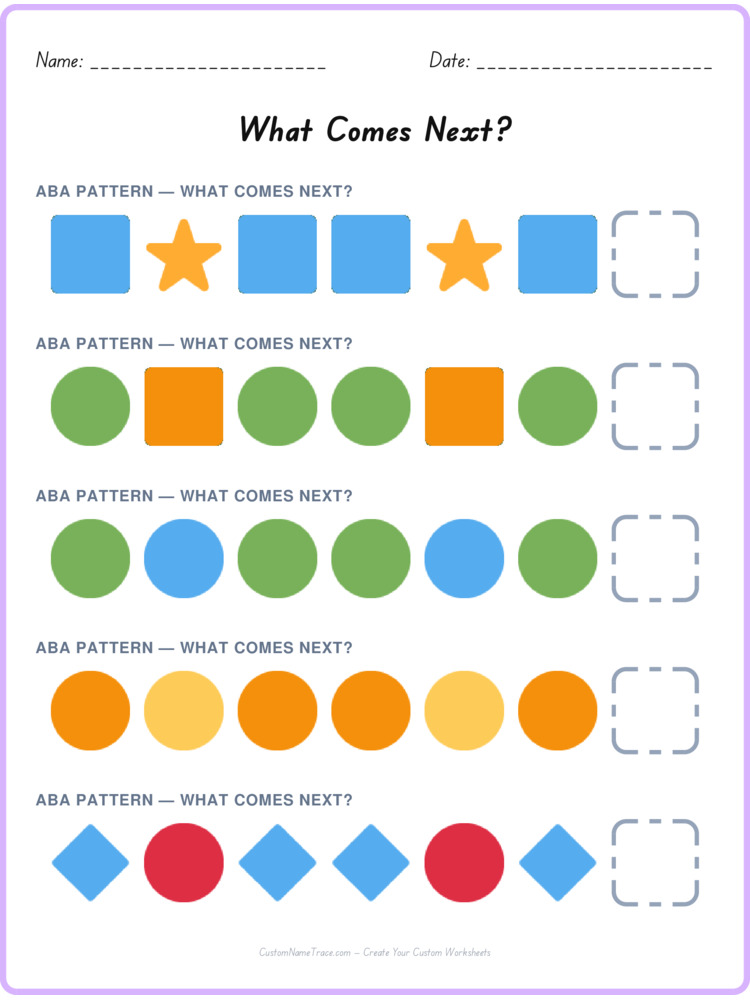
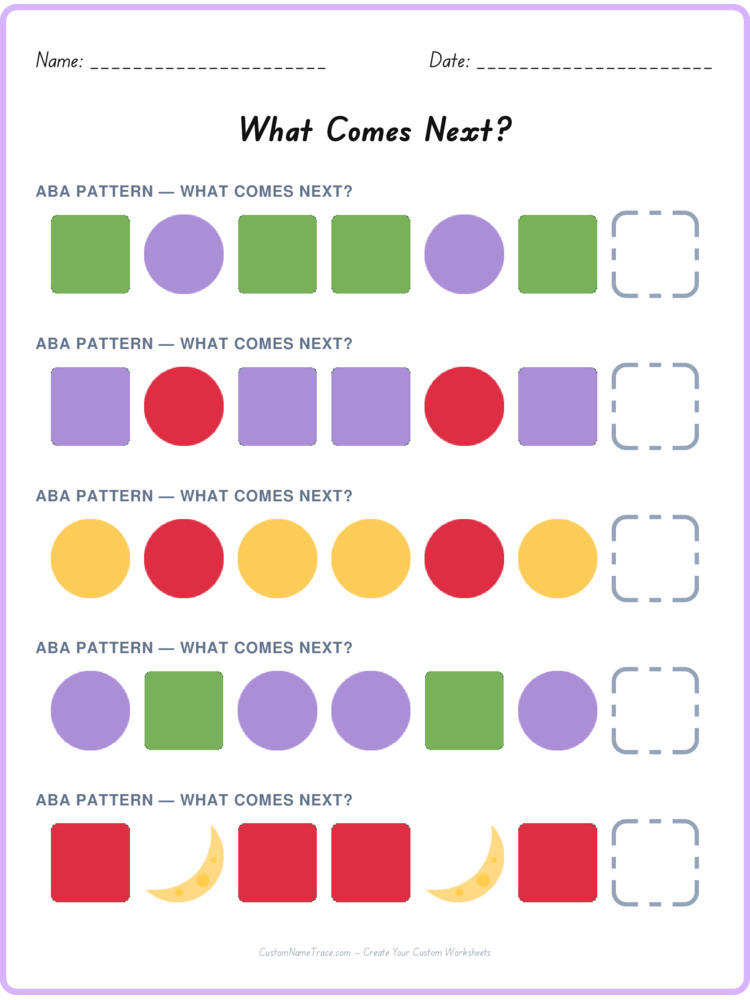
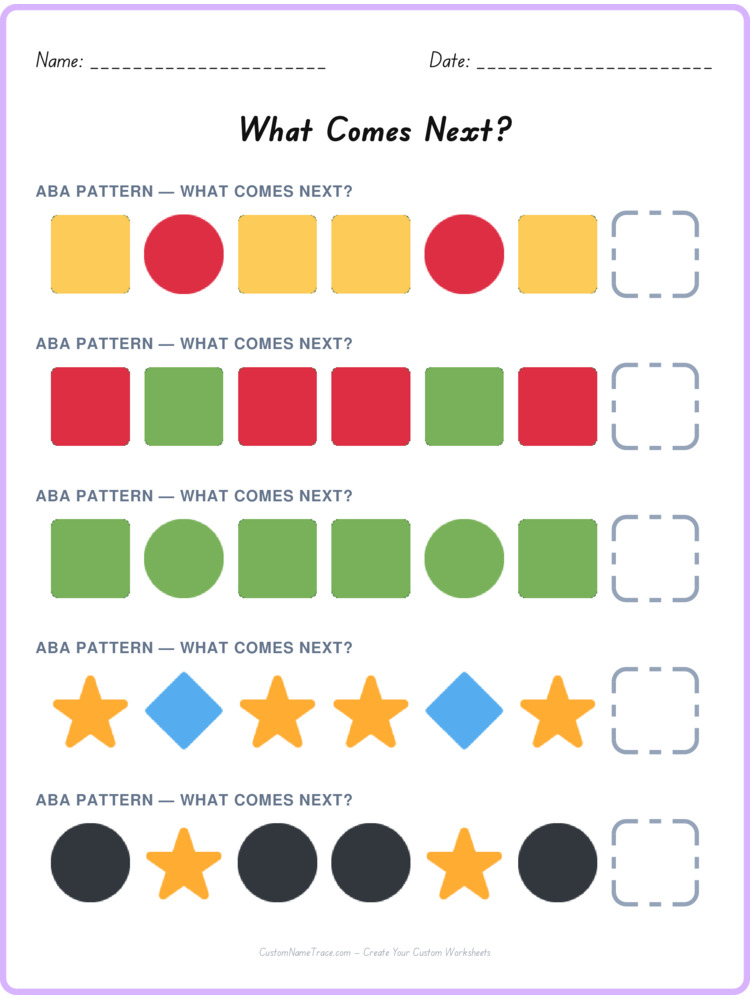
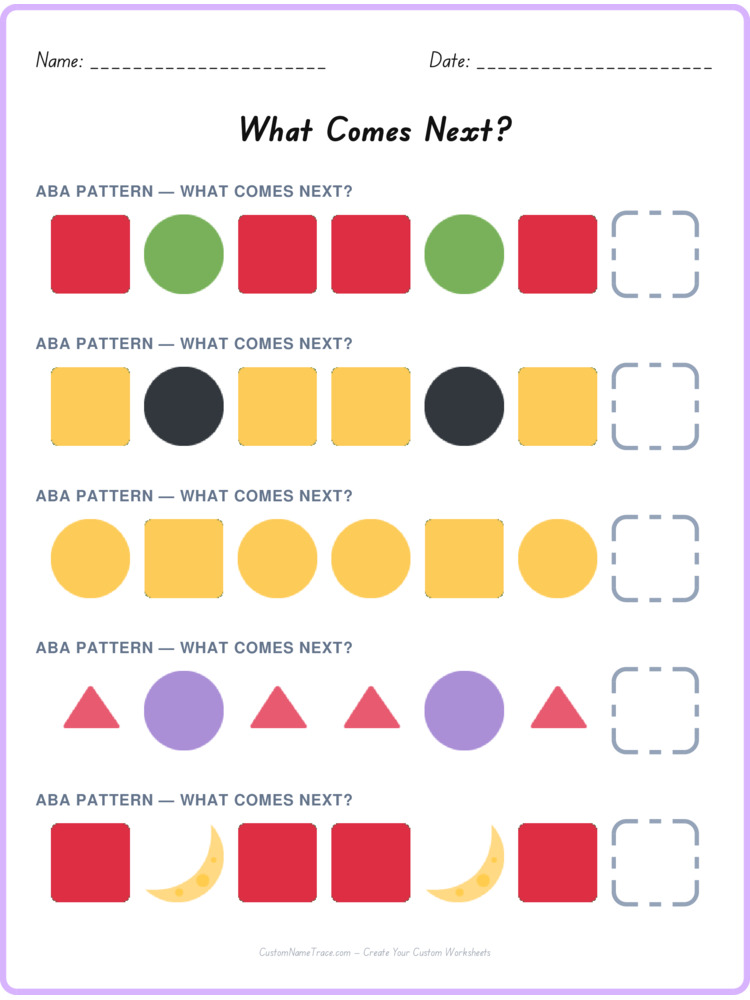
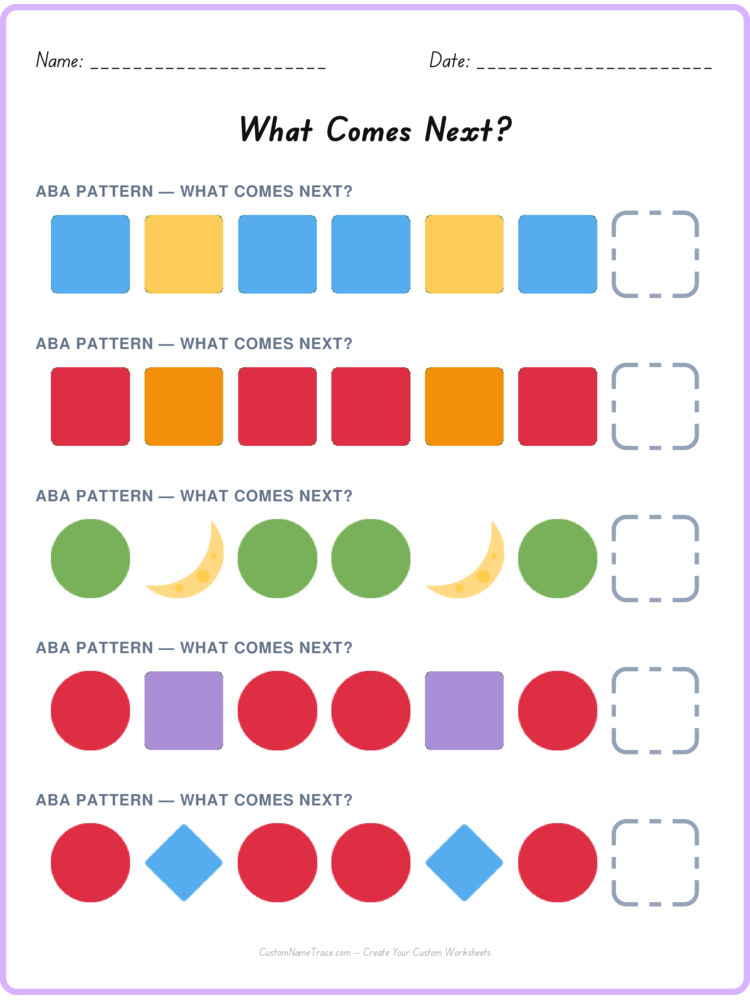
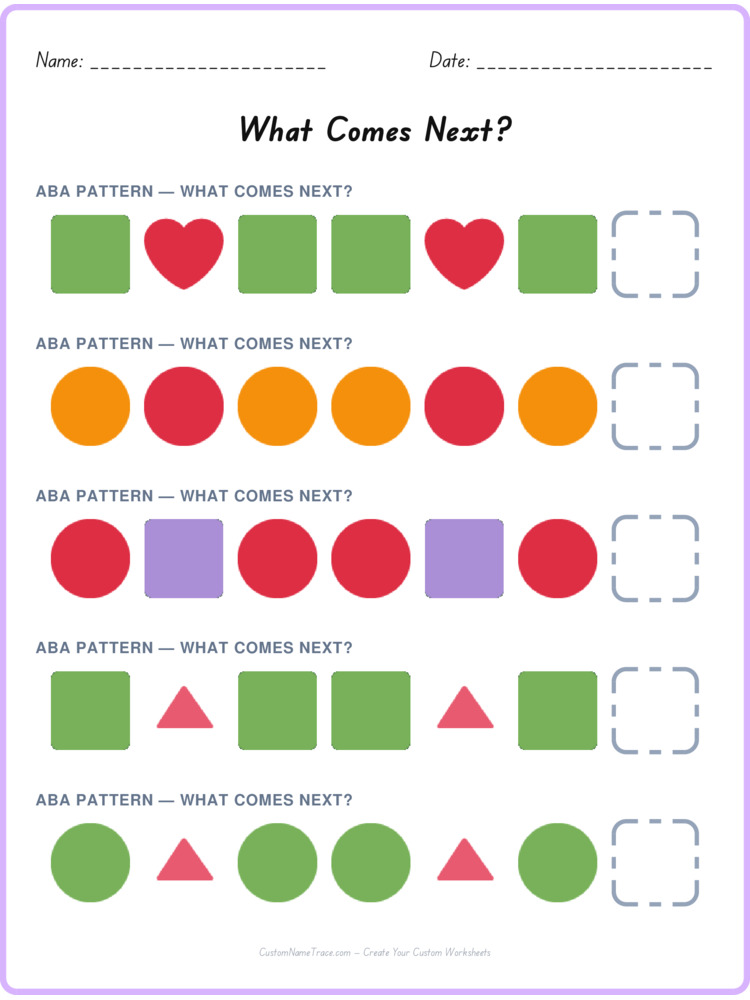
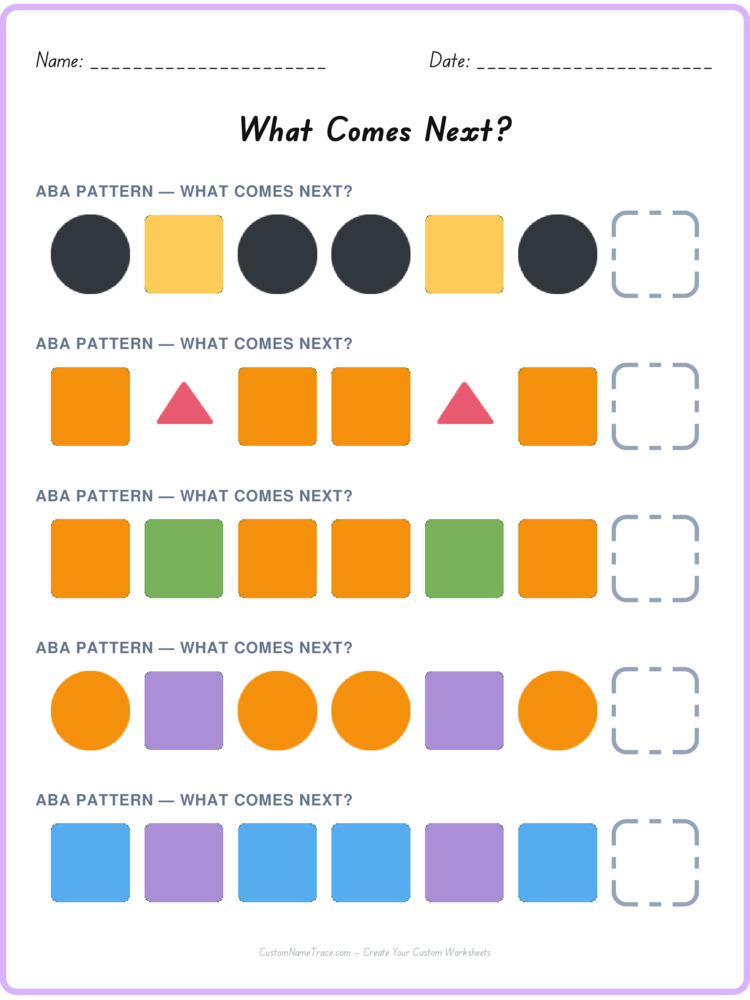
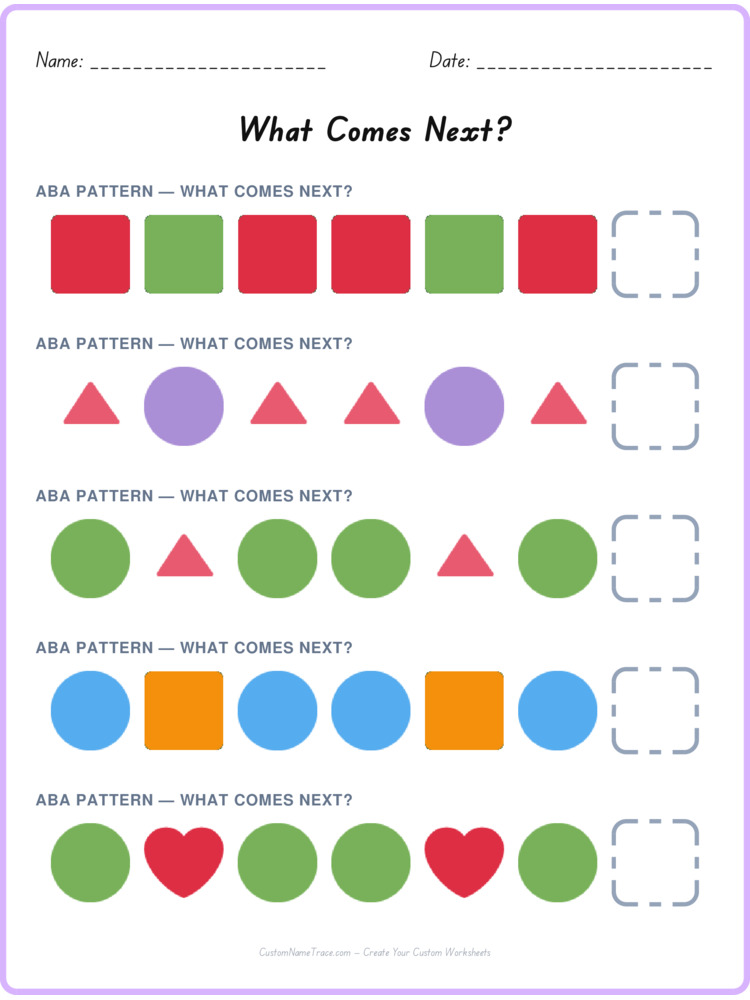
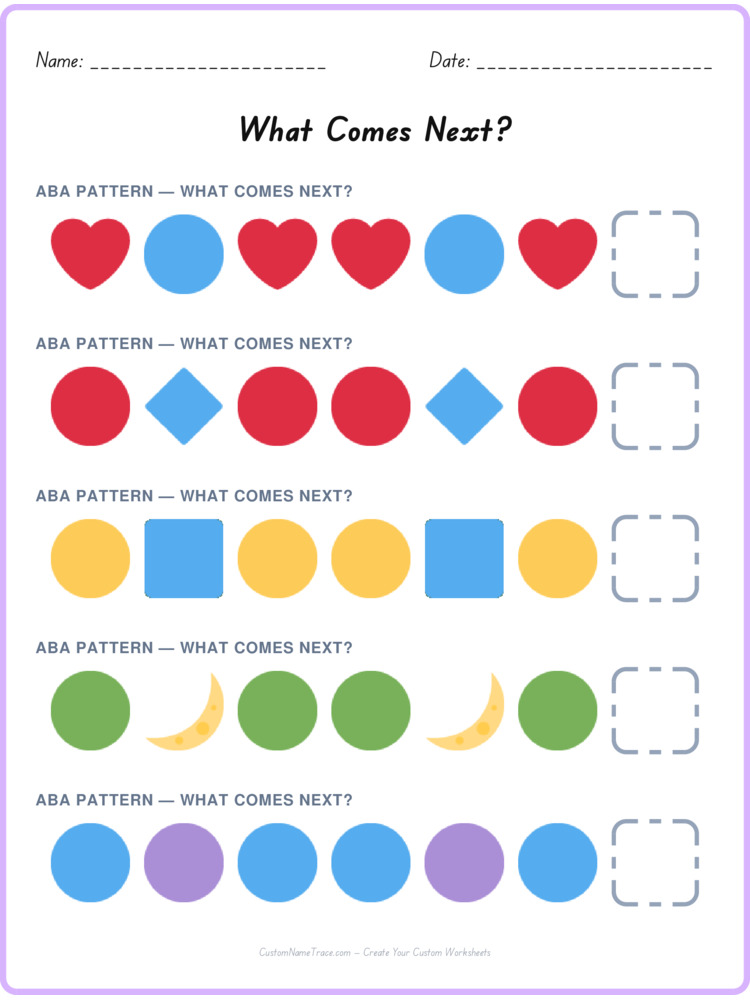
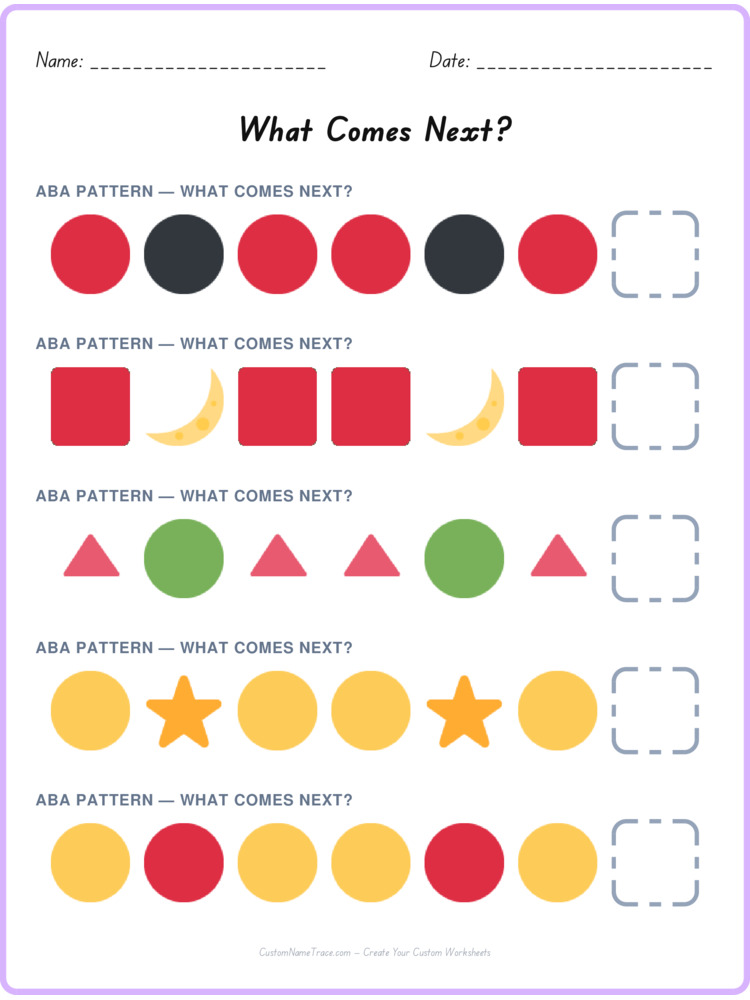
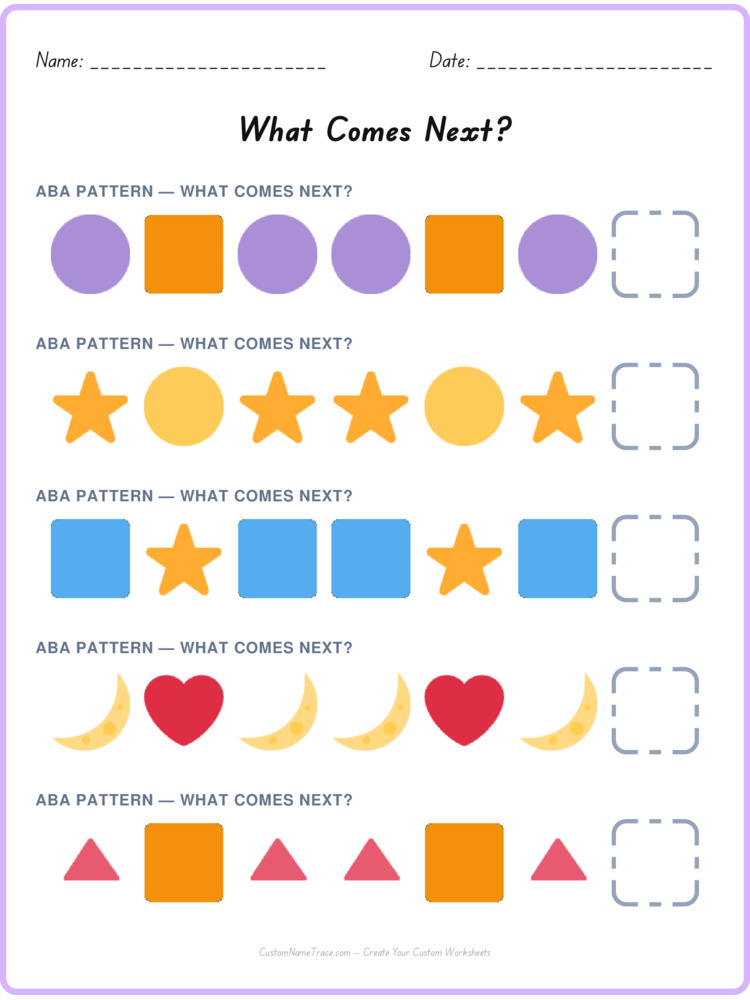
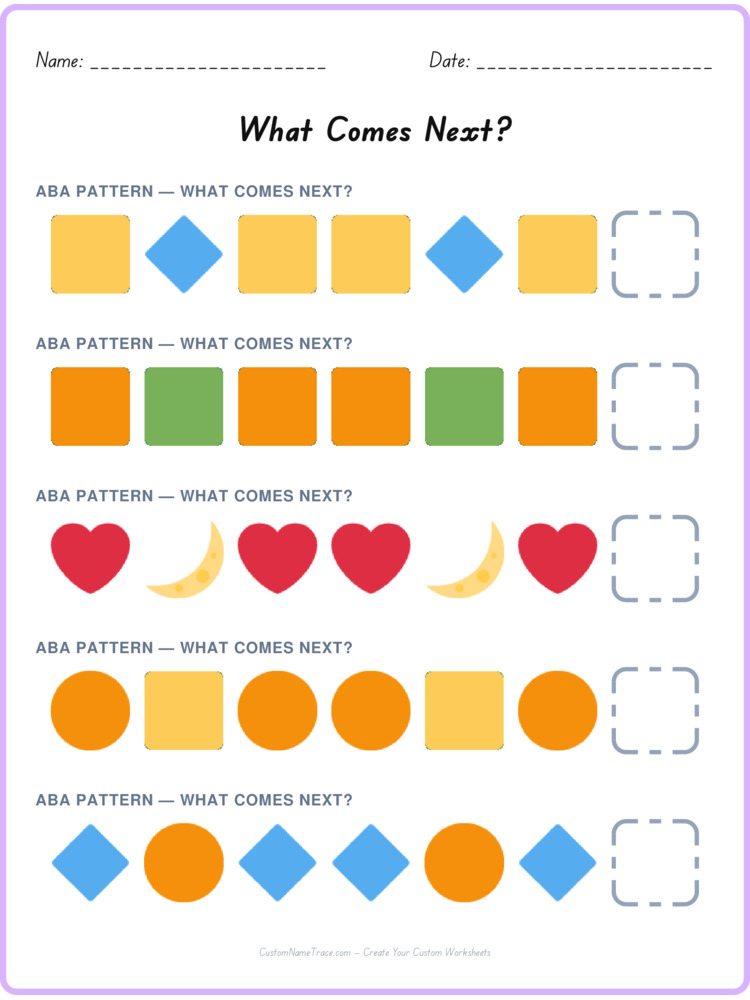
A pattern that comes back to where it started
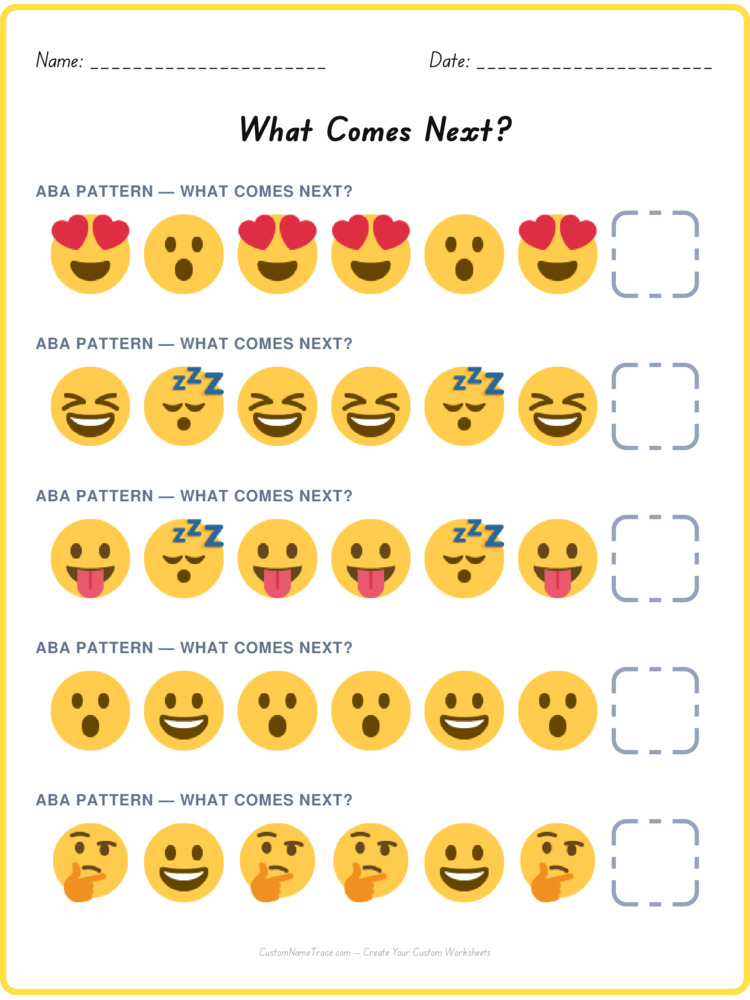
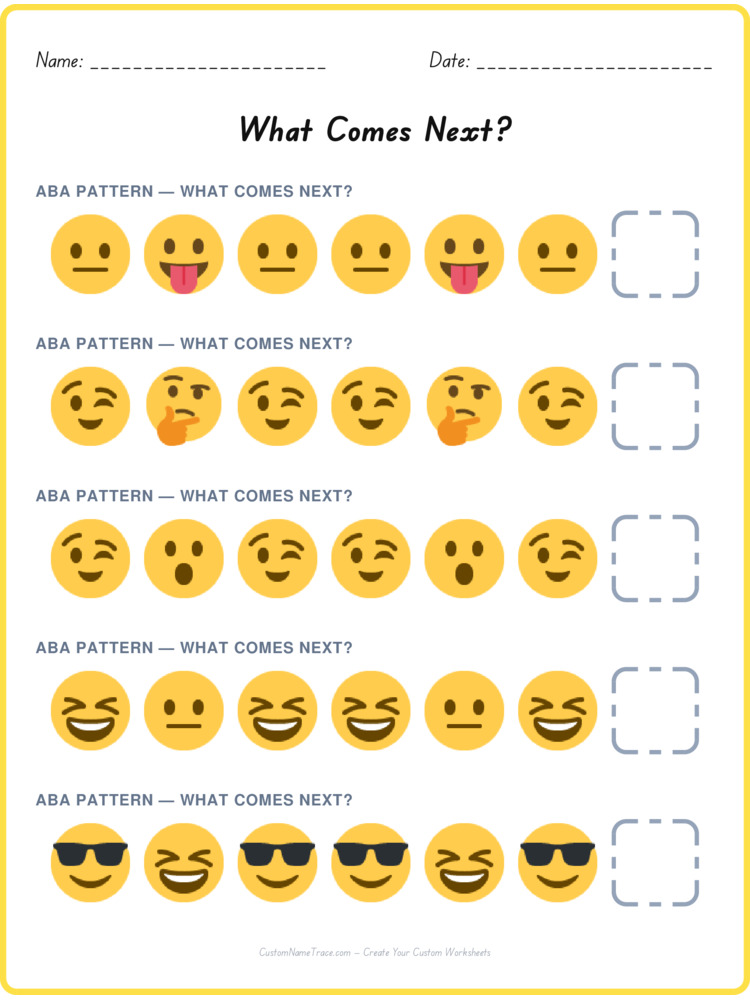
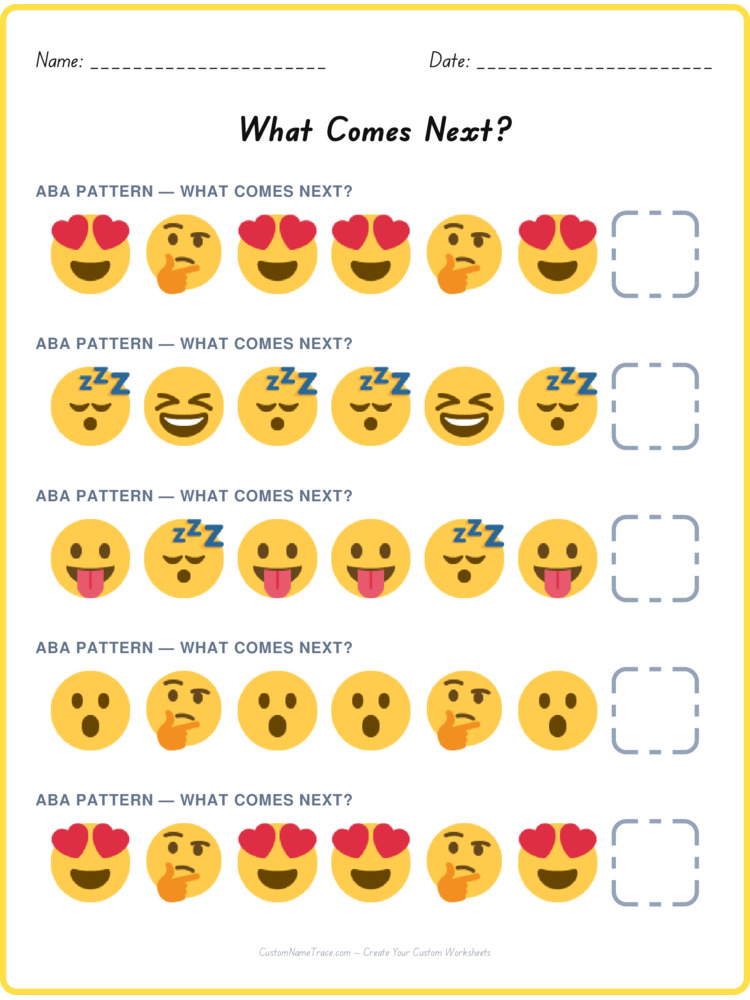
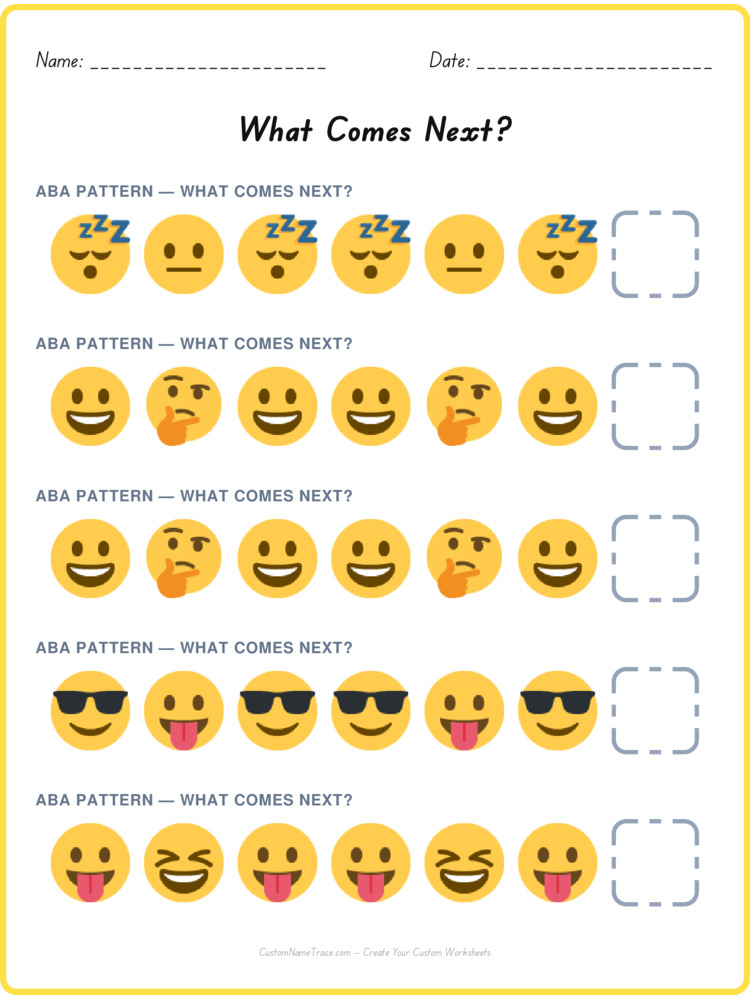
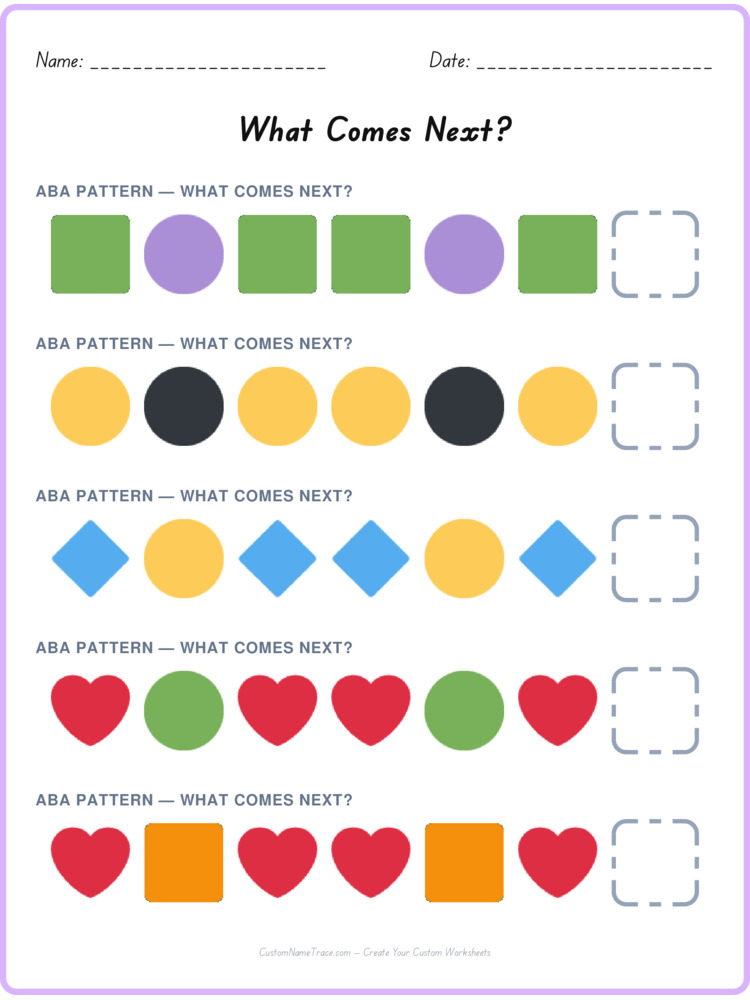
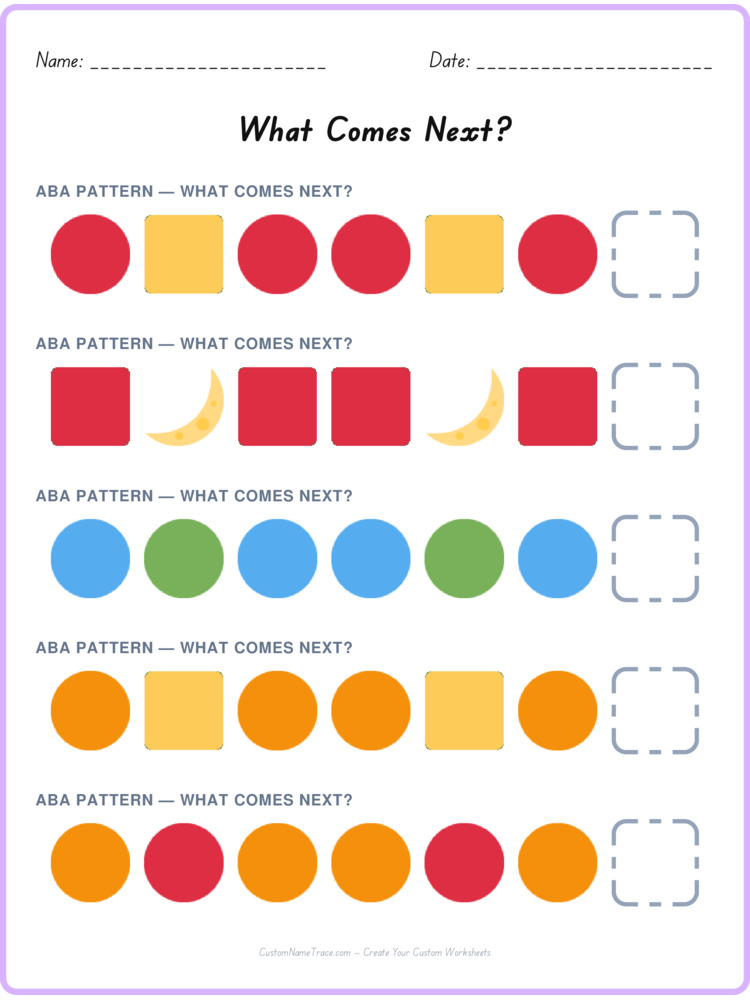
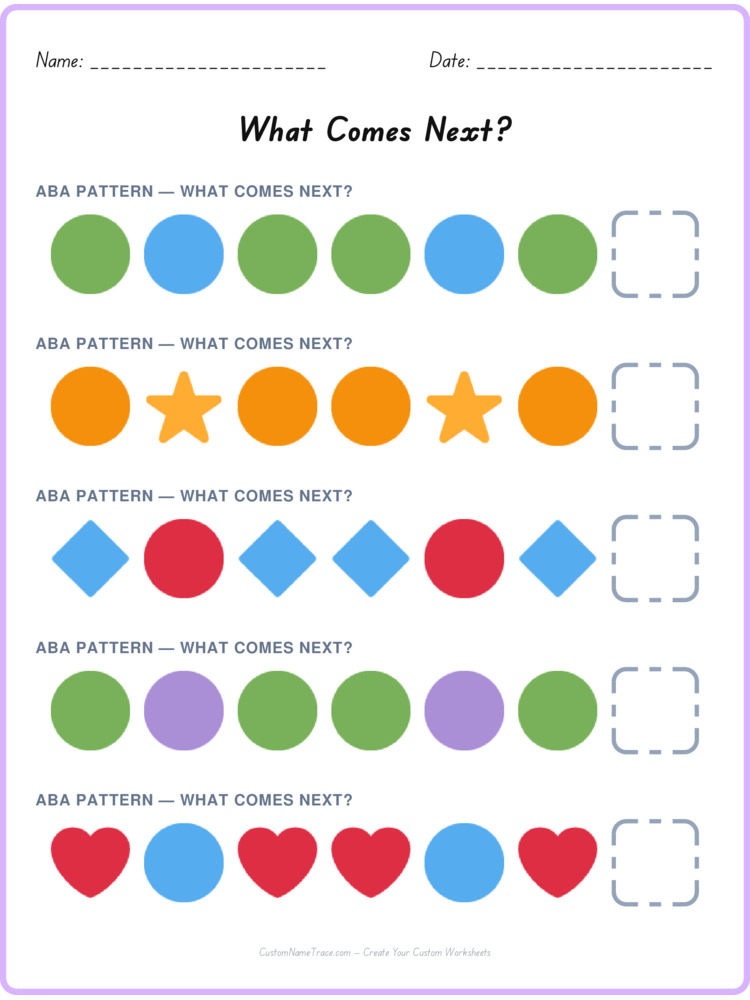
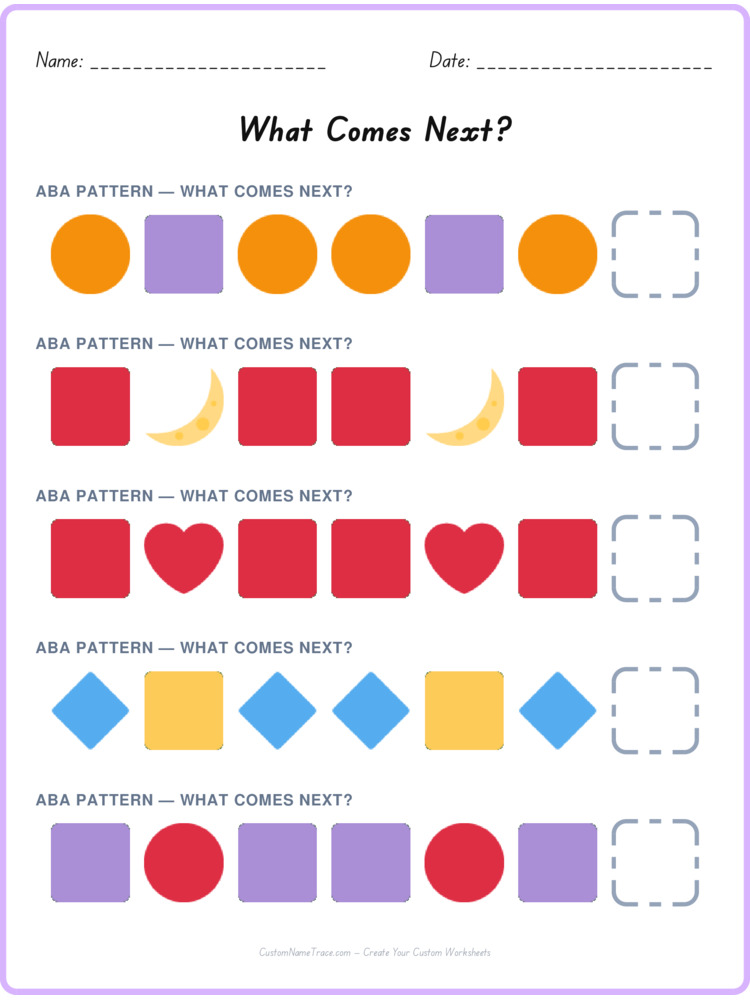
ABA introduces a genuinely new idea beyond simple alternation: the unit is three icons long, and the third icon returns to the same icon the unit started with — star, heart, star, then the whole thing repeats. That return-to-start structure is a small preview of a much bigger idea a child will meet again and again in later math and reading: a symmetric, palindrome-like shape, where the sequence mirrors back on itself rather than just marching forward.
Because the unit is an odd number of icons long (three, not two), the position of any given icon within its own three-step cycle genuinely matters in a way it didn't for AB's simple back-and-forth — a child has to track not just which icon comes next, but where exactly they are within the three-step unit.
Helping a child notice the return
Counting out loud while pointing — "one, two, three, and back to one" — as a child names each icon in the row makes the three-step cycle audible and countable rather than something to intuit purely by eye. Asking directly "what icon do we start with, and when does it come back?" focuses attention on exactly the feature that makes this pattern different from simple alternation.
A child who mistakenly treats this as a two-icon alternating pattern (the AB mistake) will predict the wrong icon specifically at the third position in each unit — that's a useful, specific tell that the return-to-start structure hasn't been noticed yet, rather than a sign of a broader difficulty with patterns generally.
Where this fits among the other beginner patterns
ABA sits alongside AAB and ABB as one of three genuinely different three-icon patterns at this stage — ABA returns to its start, while AAB and ABB each repeat one icon twice in a row before or after switching. Working through all three helps a child see that "three icons long" doesn't mean one single shape of pattern; the internal structure still varies meaningfully.
Every numbered worksheet uses a fresh pair of icons, so repeat practice with this exact pattern always means a genuinely new combination to track.
Using this worksheet effectively
For a child moving on from AB for the first time, working through the first full unit together — naming all three positions out loud before looking at the blanks — builds the three-step tracking habit explicitly rather than assuming it transfers automatically from the simpler pattern. Every worksheet downloads as a free, print-ready PDF with no account required.