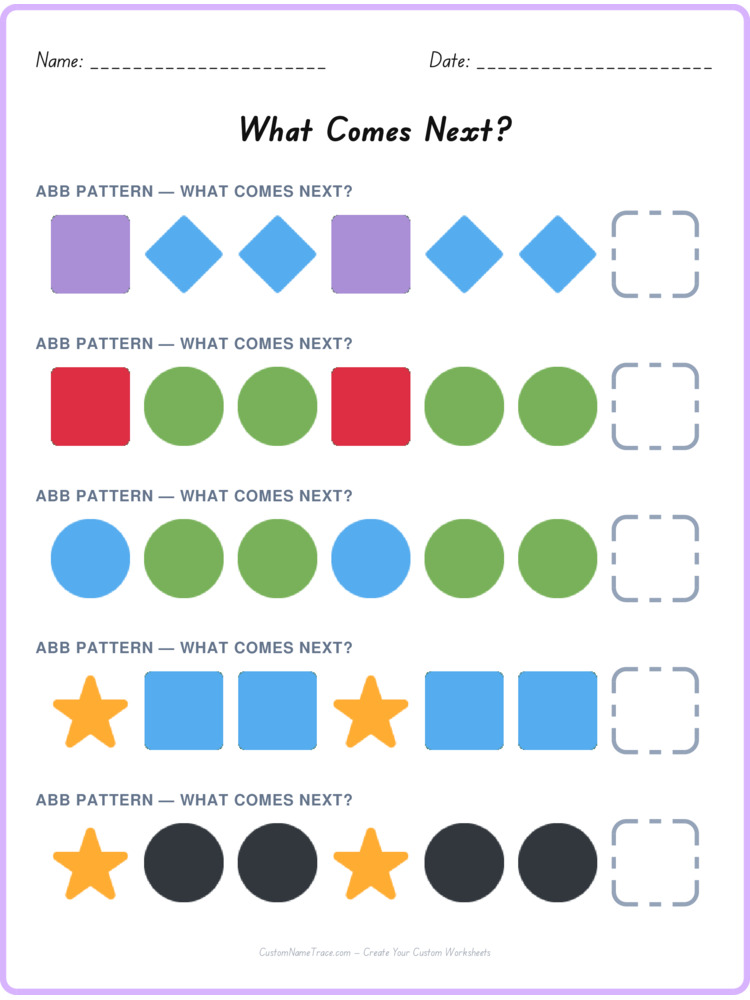
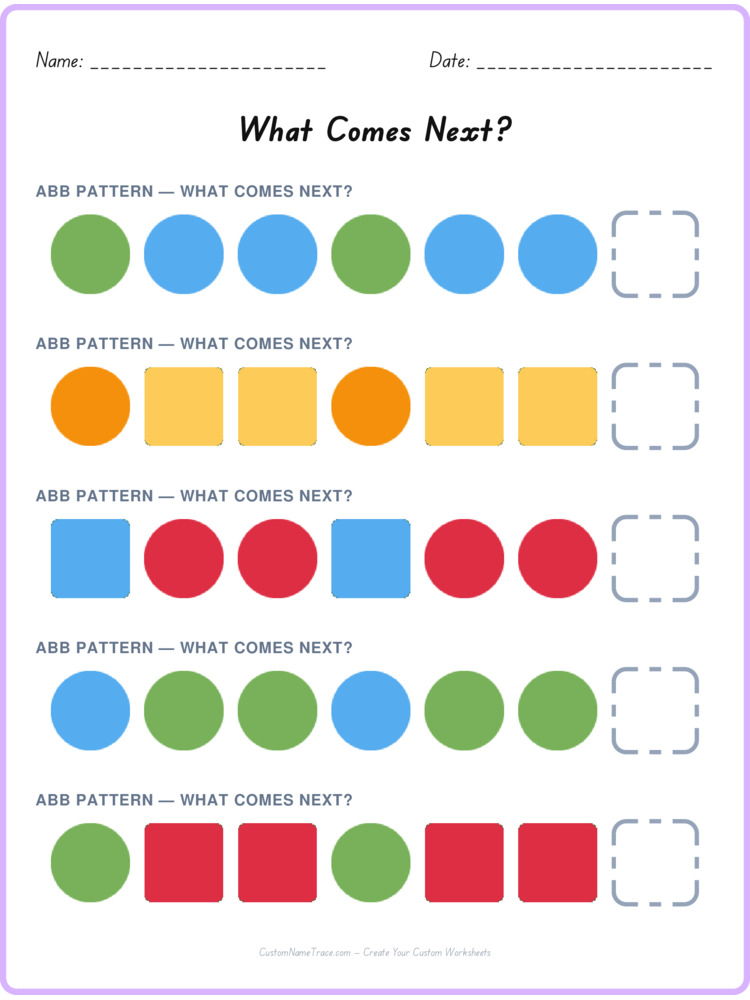
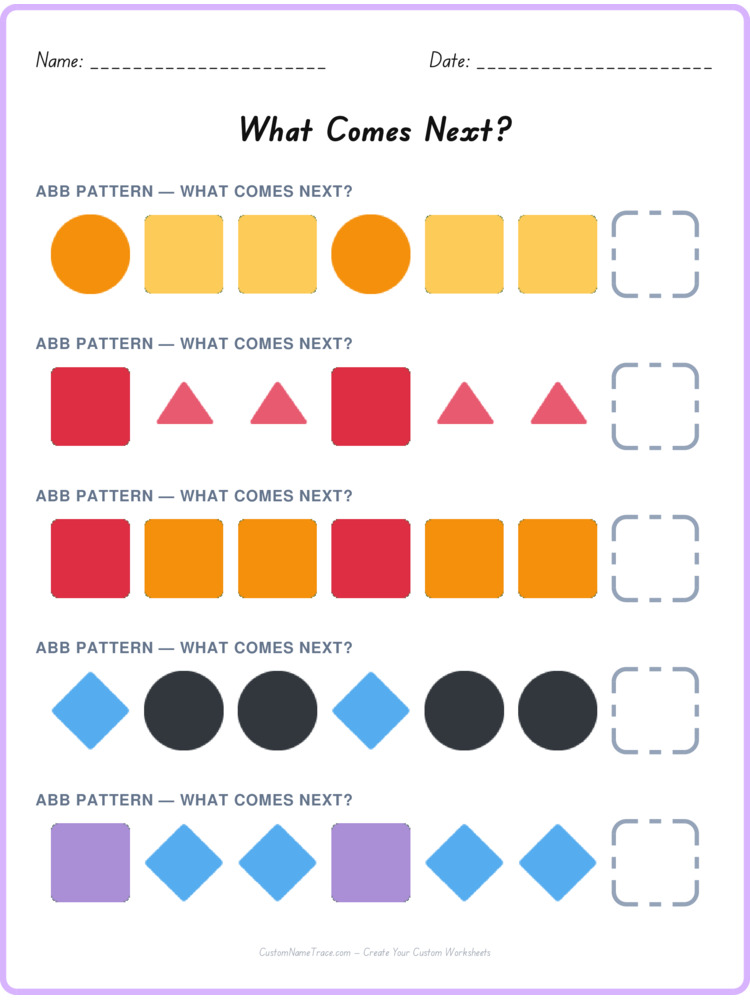
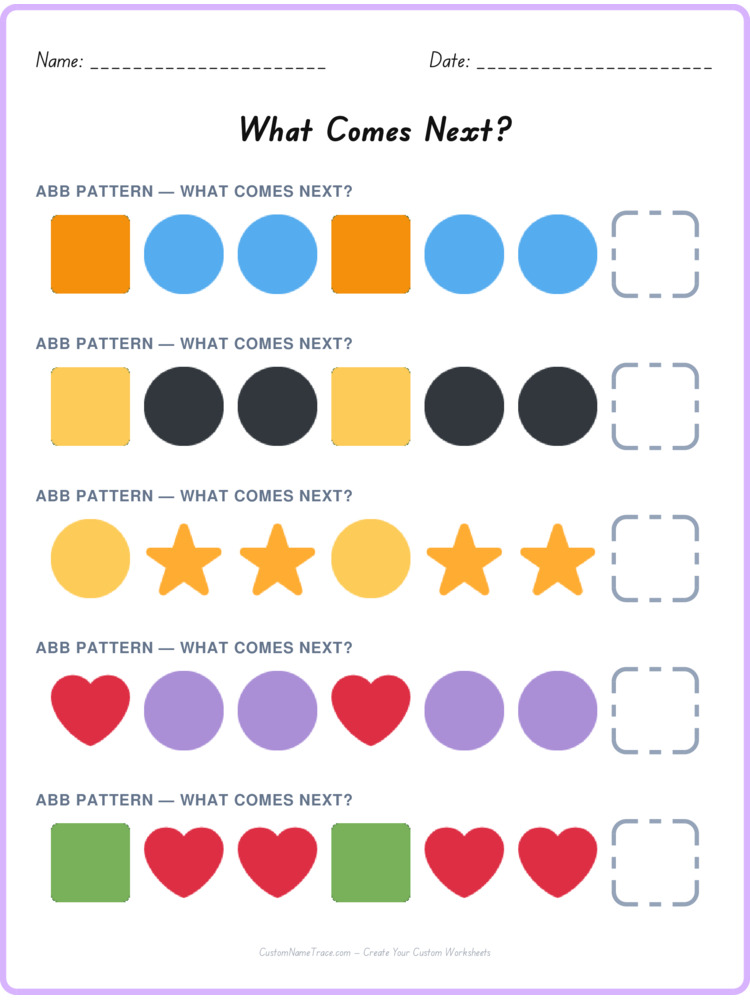
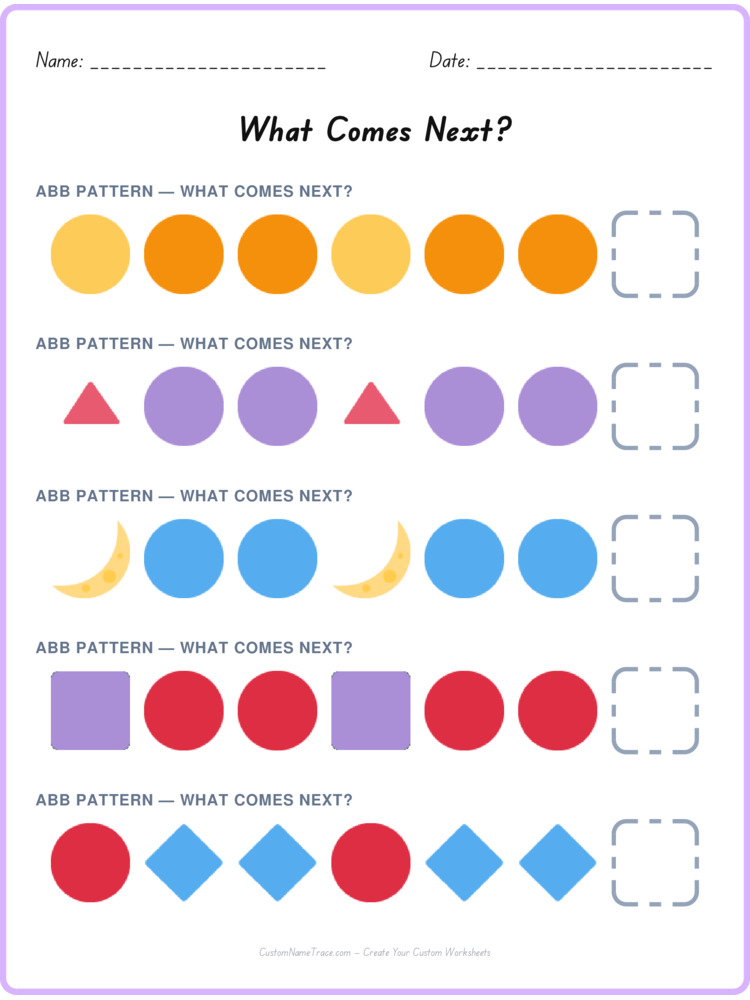
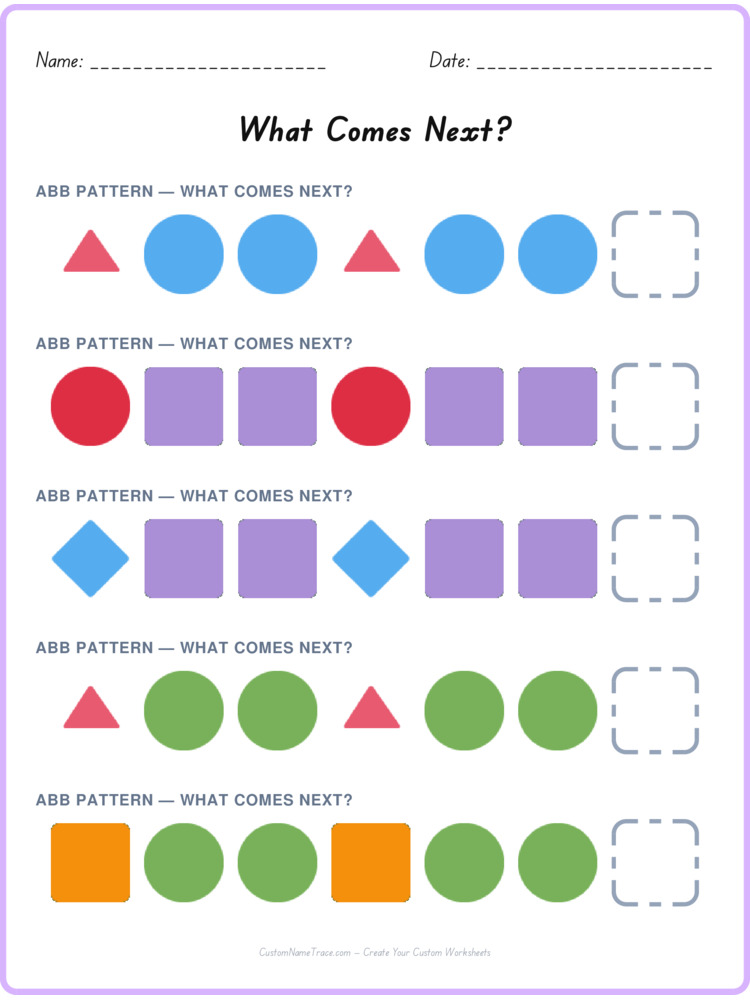
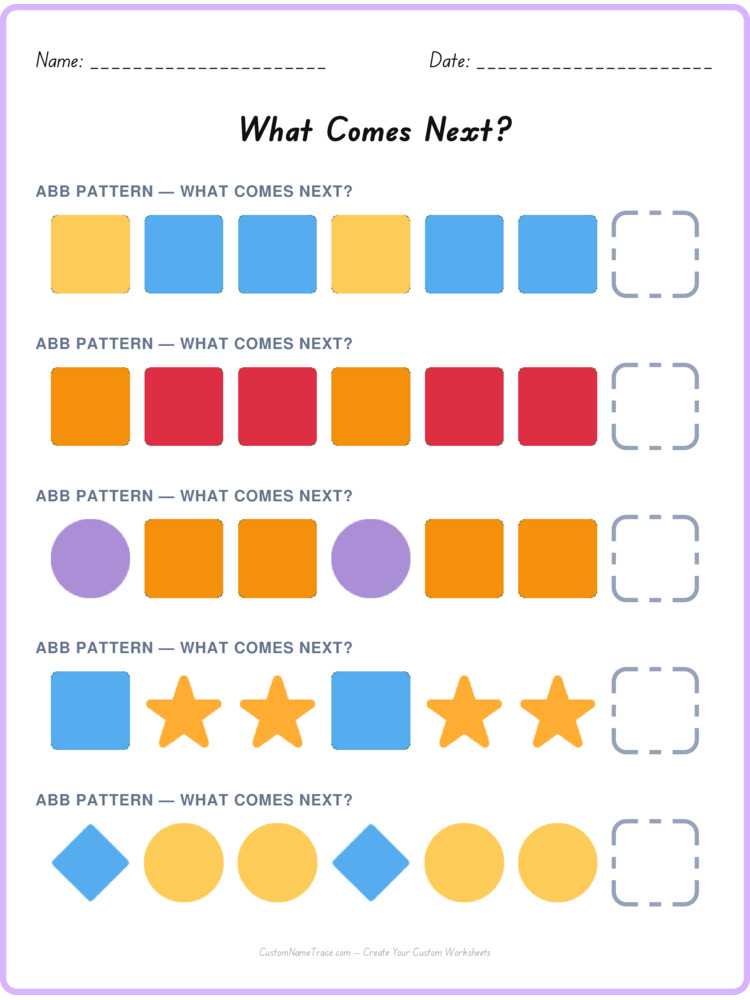
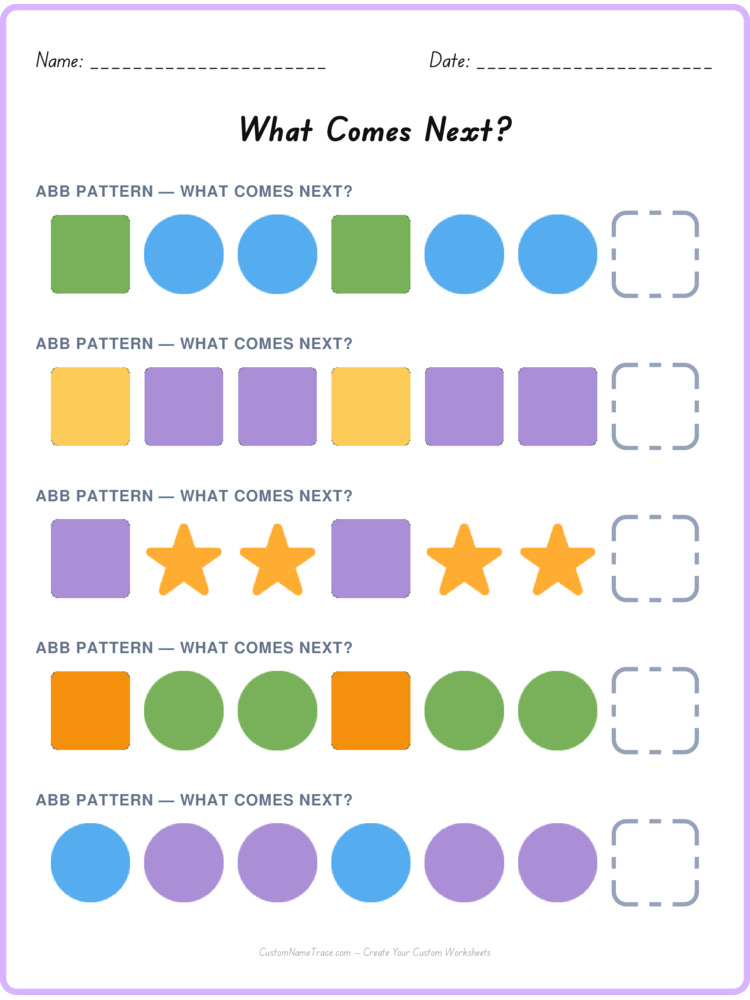
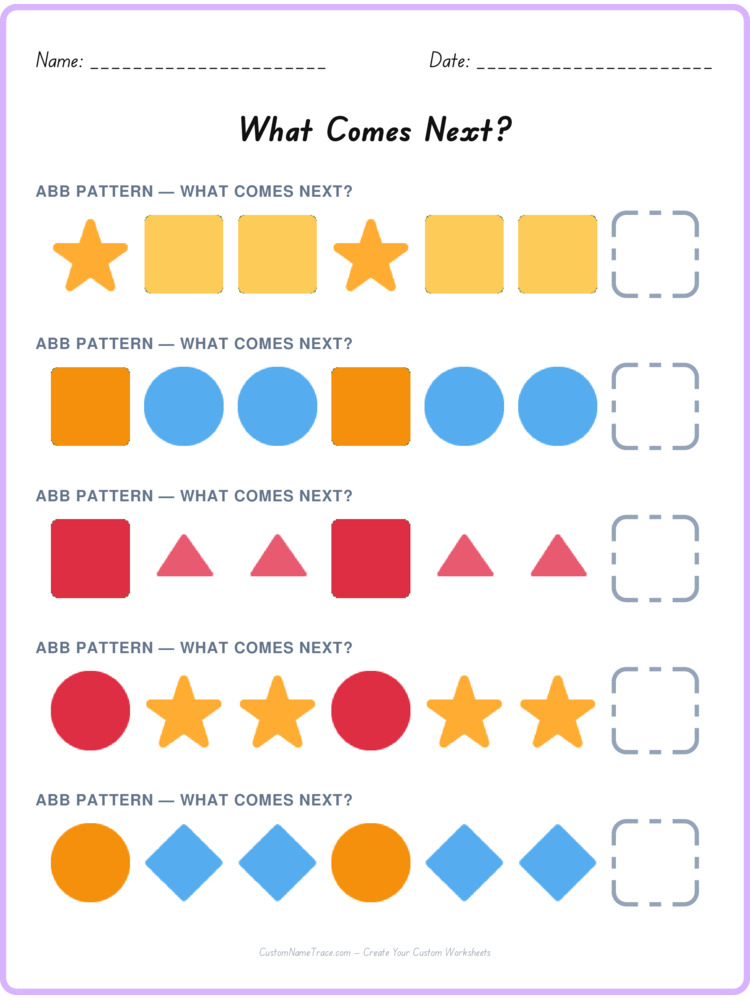
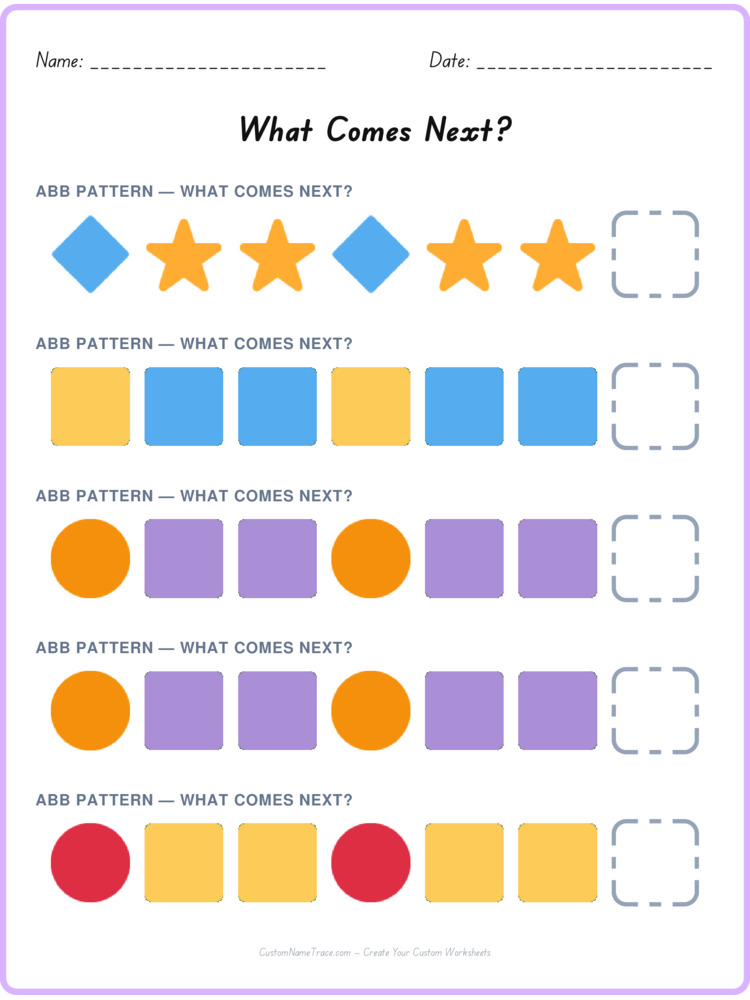
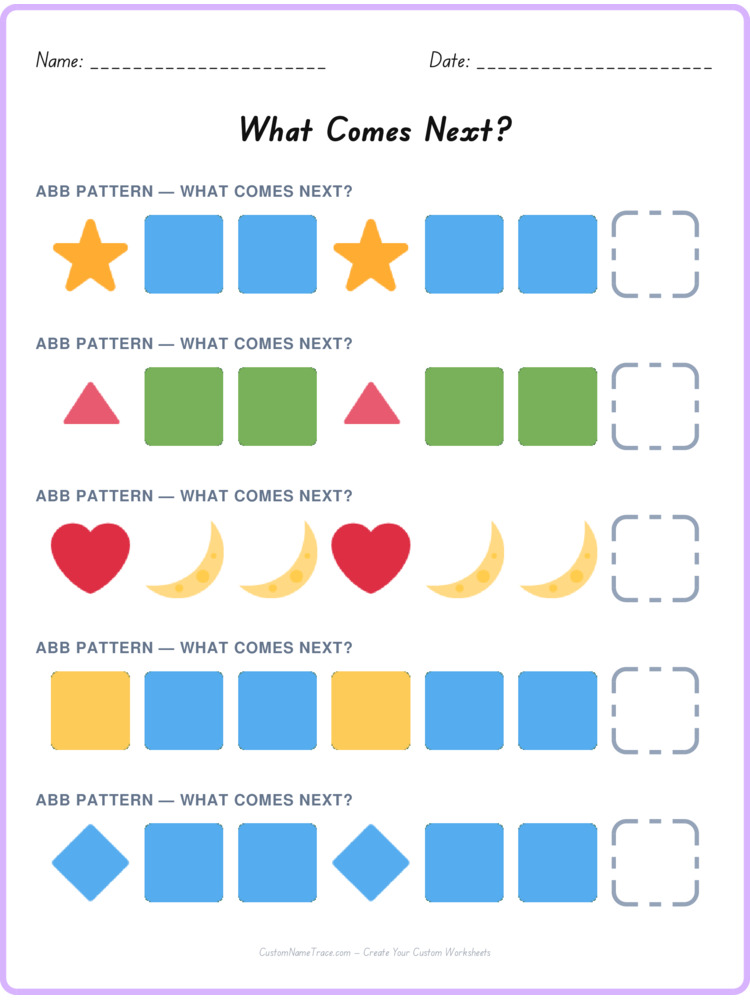
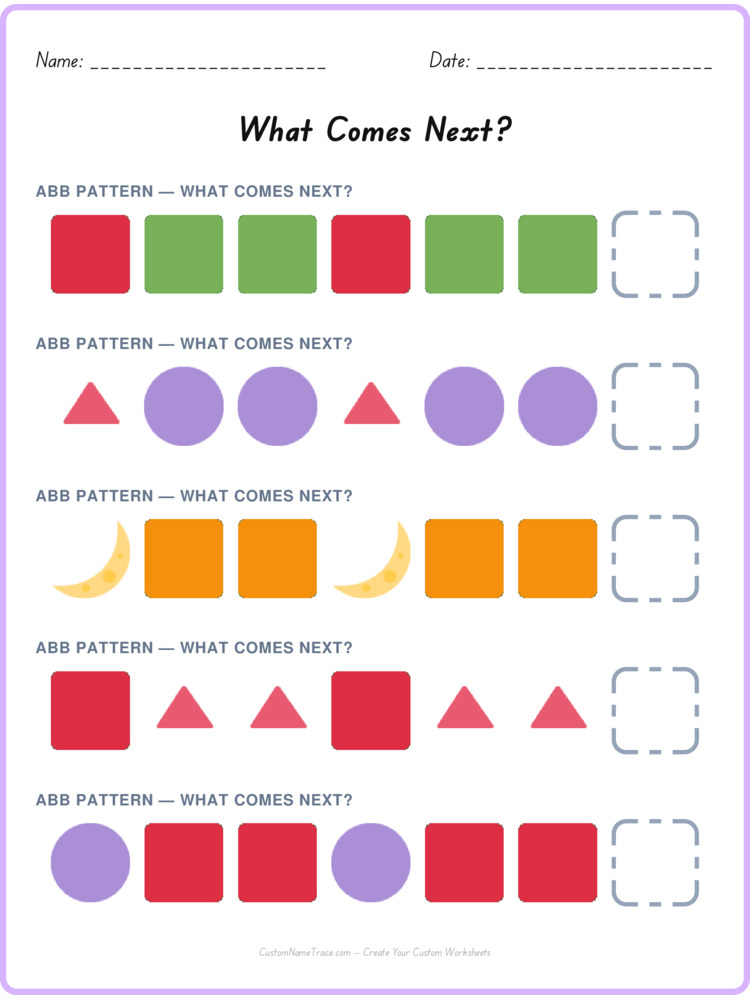
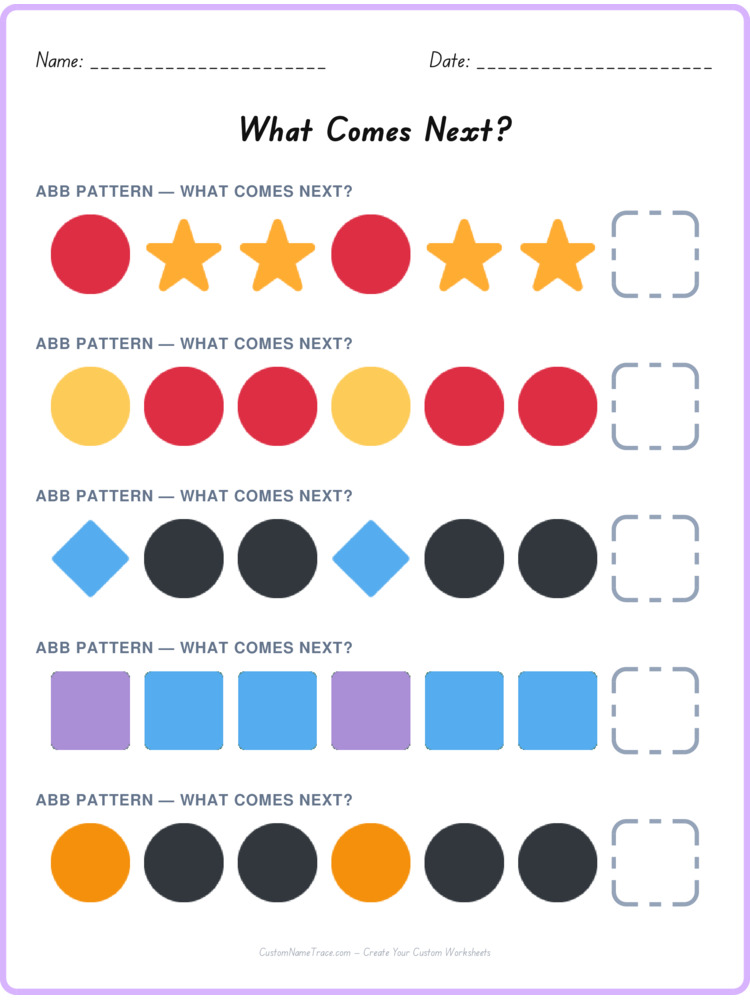
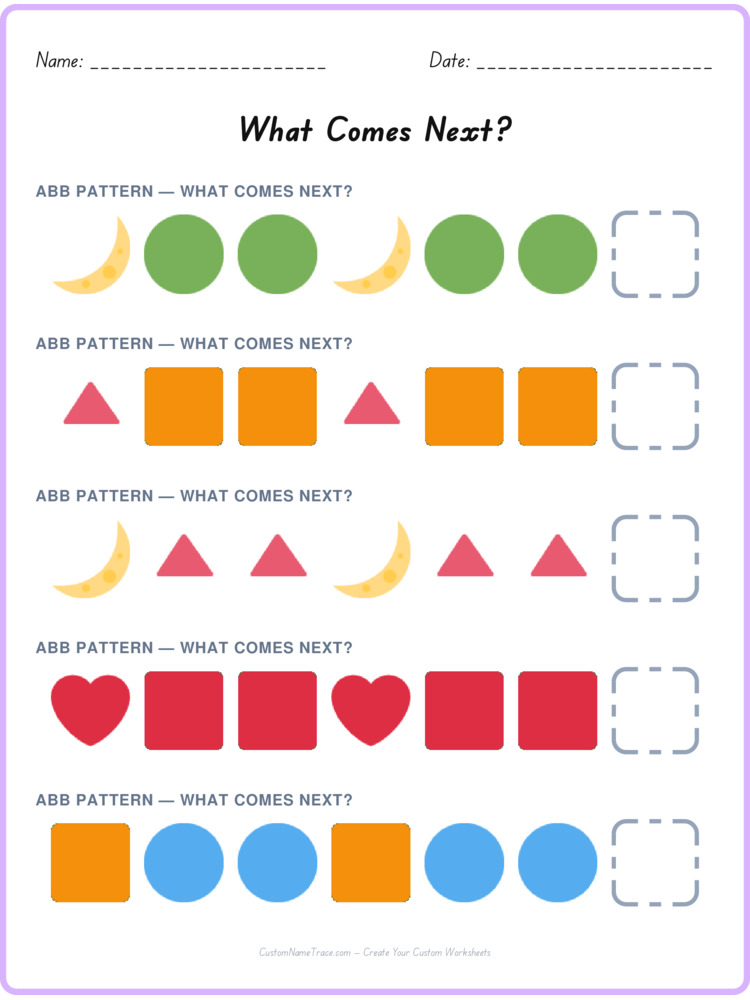
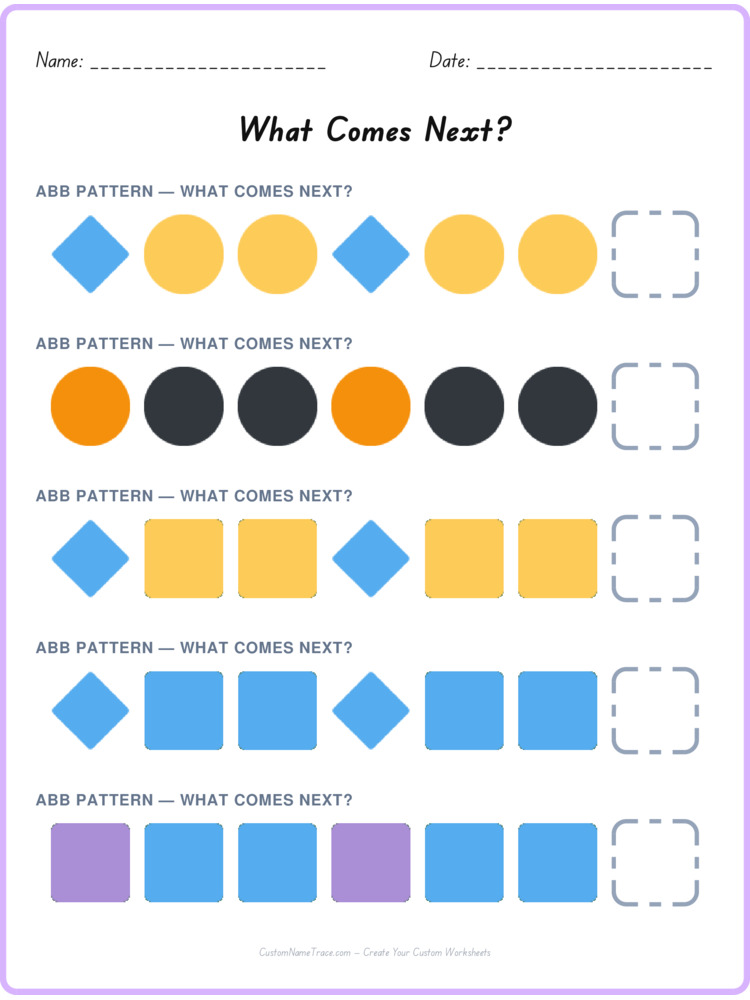
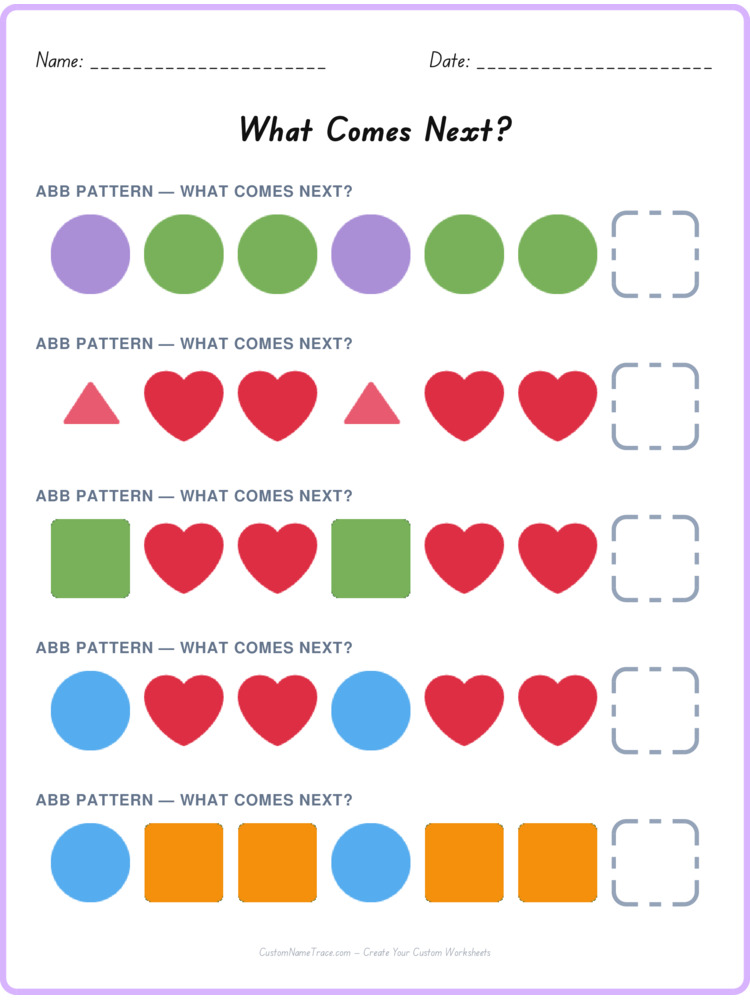
A switch, then a repeat
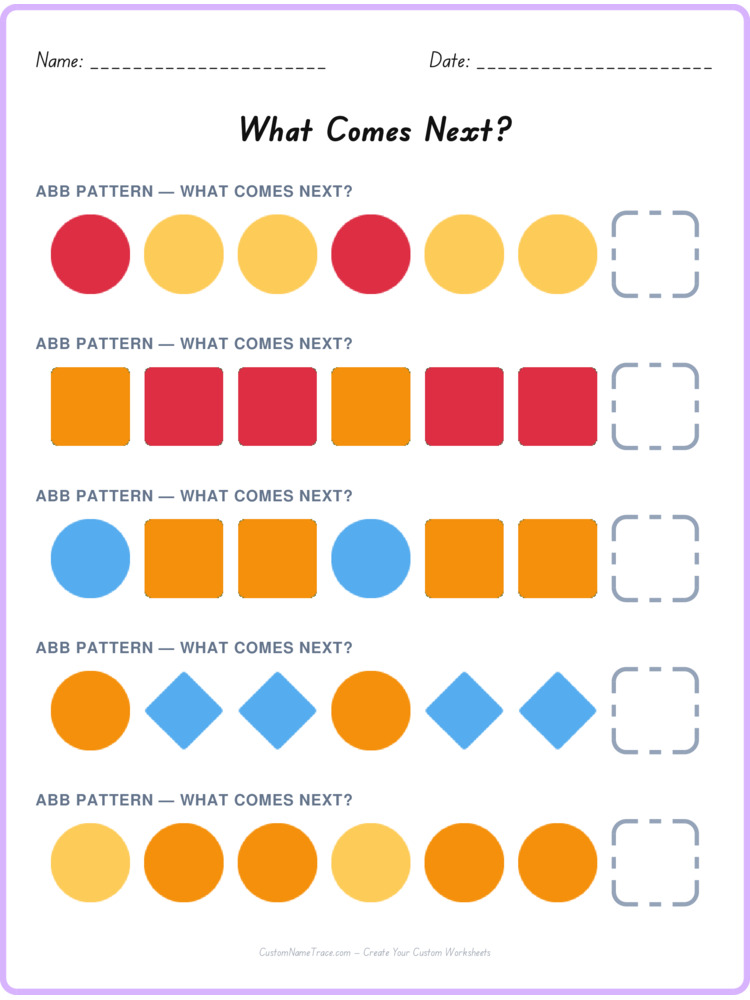
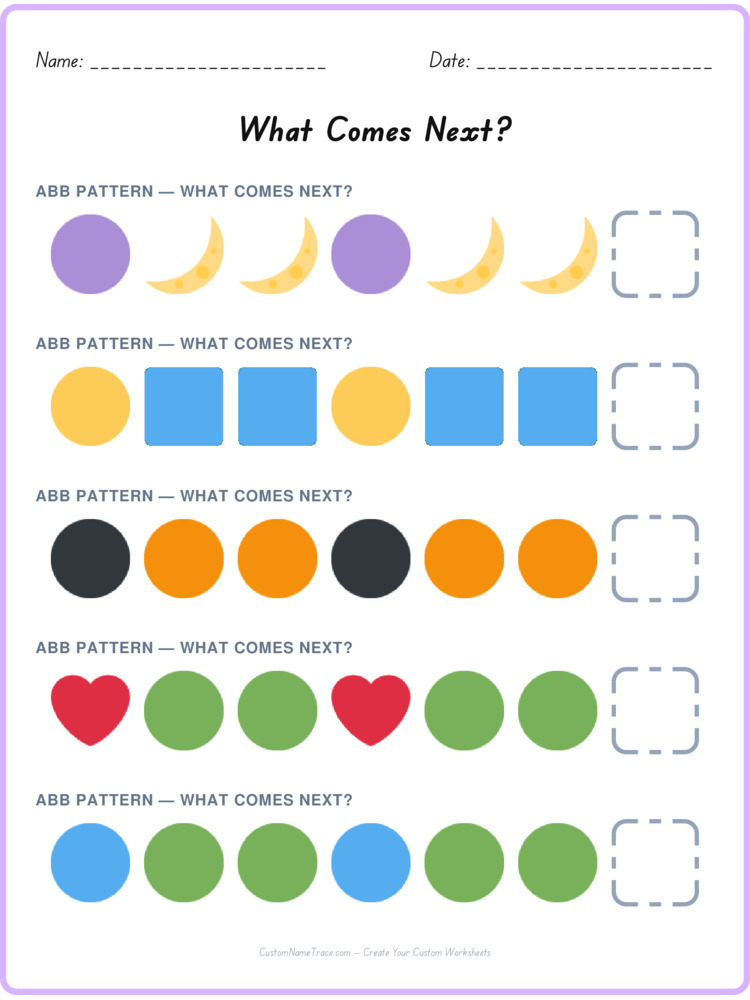
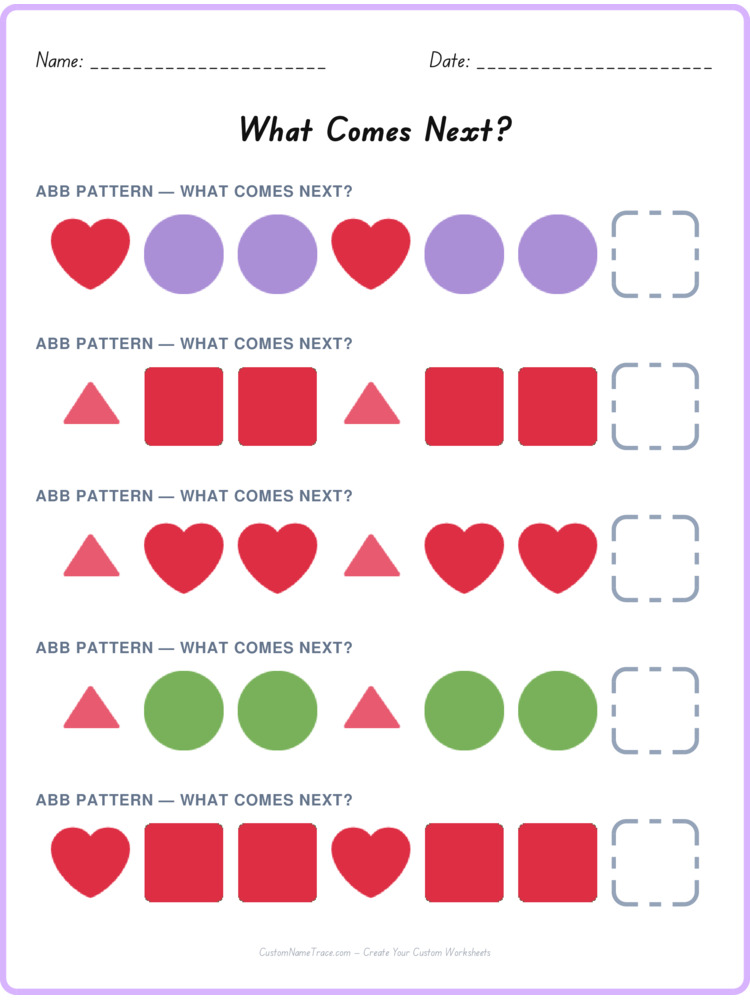
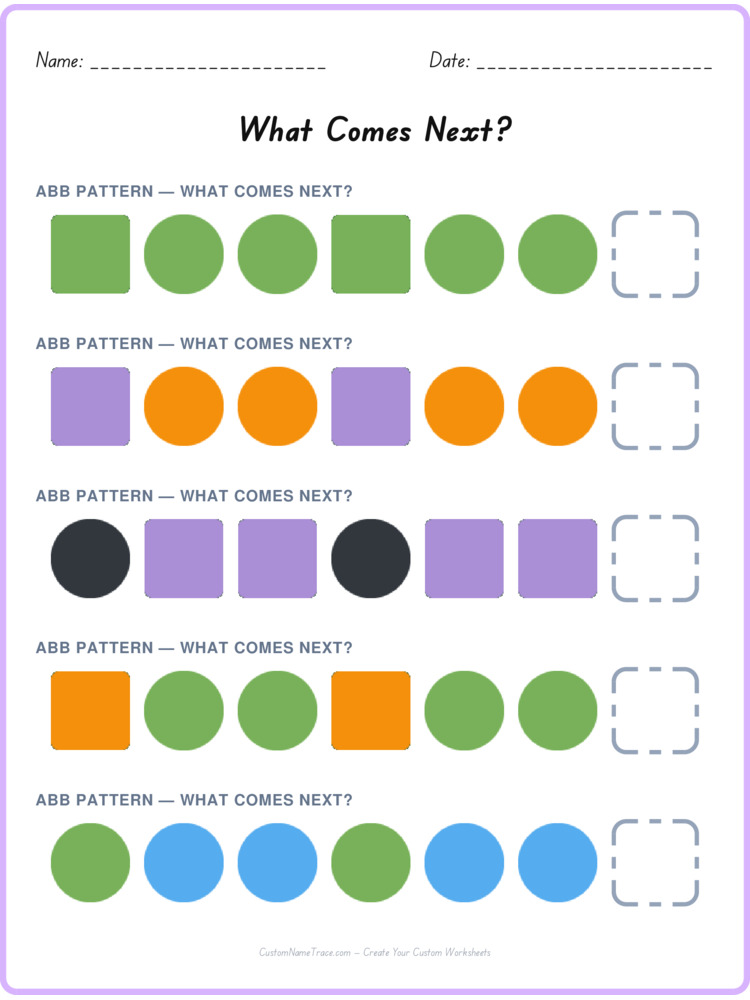
ABB mirrors AAB in reverse — instead of repeating the first icon before switching, this pattern switches right away and then repeats the second icon twice before the unit starts over. A child has to notice the repeat happens on the second icon, not the first, which is a subtle but genuine distinction from AAB's structure.
Working through both AAB and ABB in the same sitting helps a child see clearly that "three icons, one repeat" can mean two different things depending on which icon does the repeating — an important, concrete lesson in paying attention to a pattern's specific internal order, not just its general shape.
Helping a child track the repeat's position
Counting out loud — "different, same, same" — as a child names each icon reinforces that the repeat comes right after the very first icon, not before it. A child who applies AAB's rule here will predict a repeat of the first icon rather than the second — a specific, useful sign that the two patterns are still being confused rather than genuinely distinguished.
Comparing the two patterns side by side, on separate worksheets or drawn out on scratch paper, and asking "which icon repeats — the first one or the second one?" builds the habit of checking a pattern's specific structure rather than assuming based on unit length alone.
Where this leads
Distinguishing between structurally similar patterns that share the same unit length — exactly the skill ABB and AAB together build — becomes directly useful once a child moves to this site's more advanced patterns, several of which share a four-icon unit length but differ meaningfully in internal structure.
Every numbered worksheet uses a fresh pair of icons testing this identical switch-then-repeat structure.
Using this worksheet effectively
Introducing ABB right alongside AAB, rather than days apart, helps a child build a genuine comparison between the two rather than treating each as an unrelated new pattern to memorize separately. Every worksheet downloads as a free, print-ready PDF with no account required.