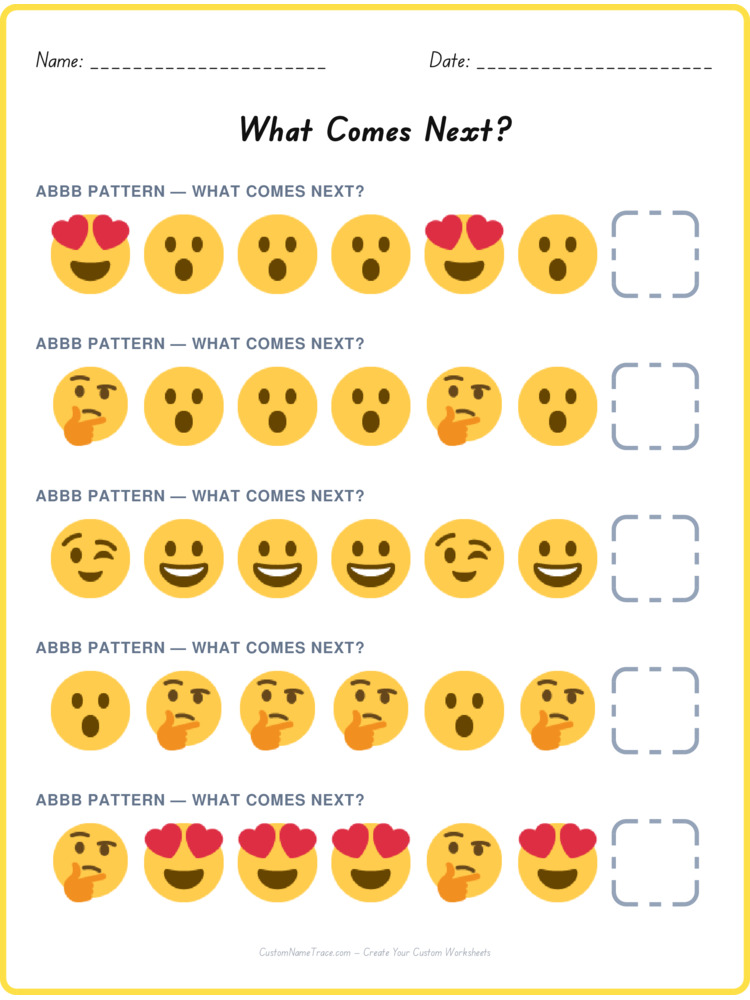
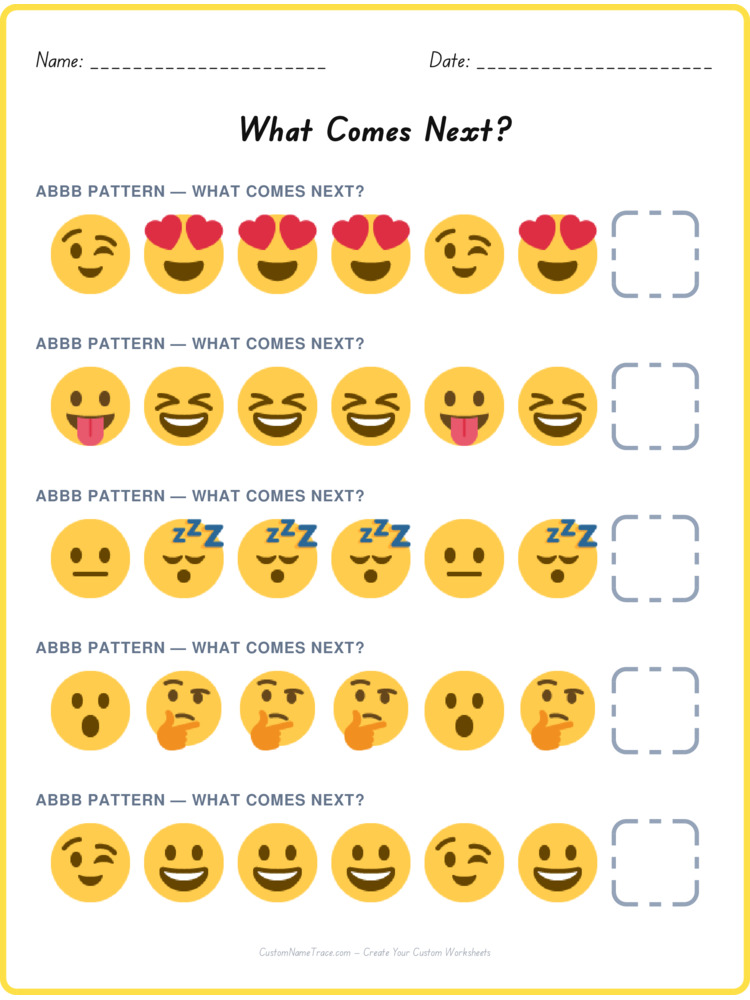
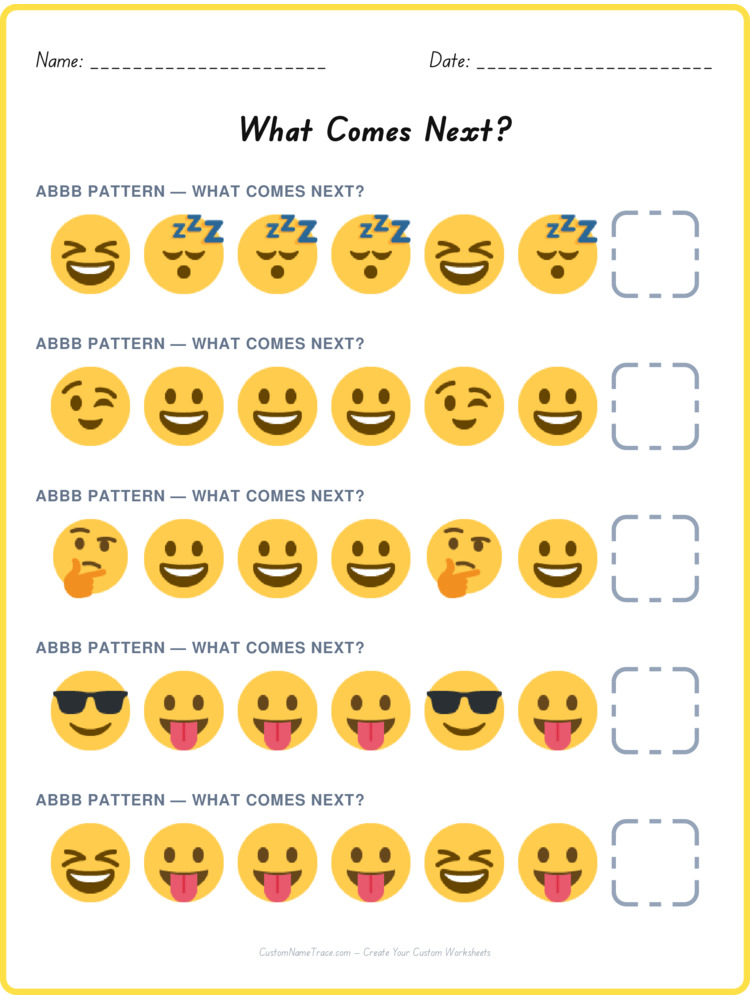
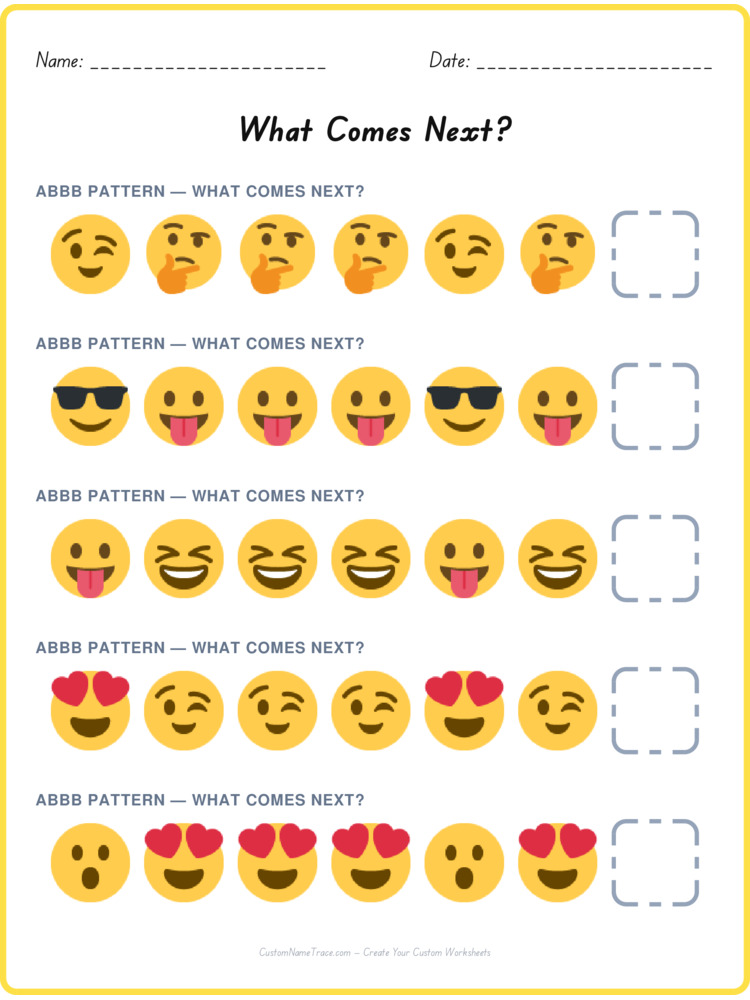
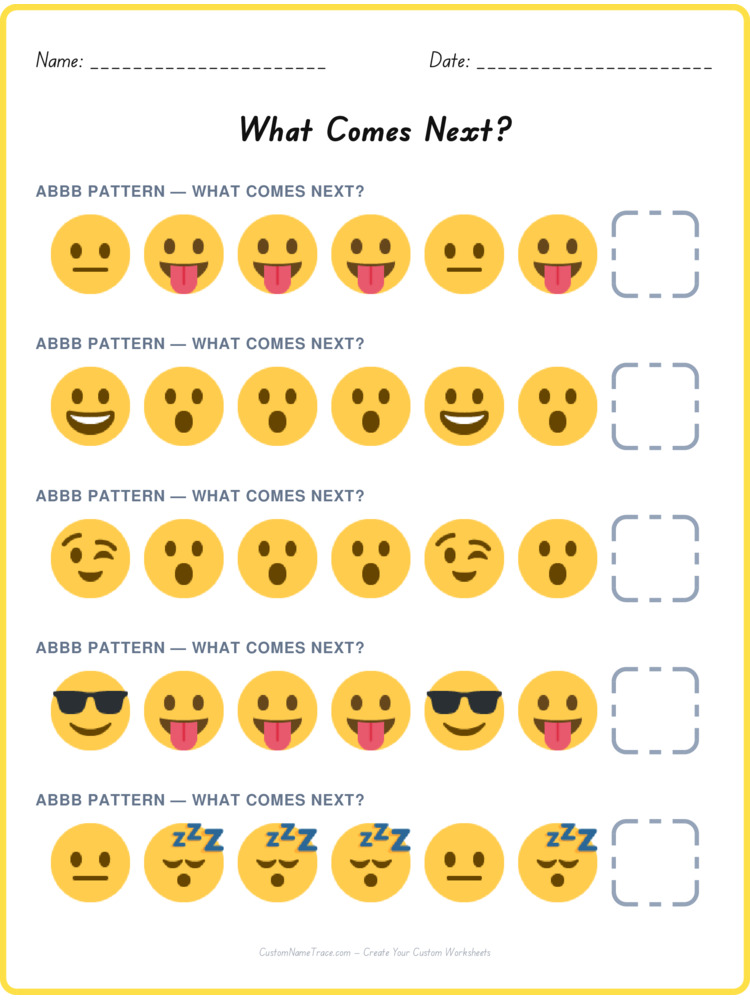
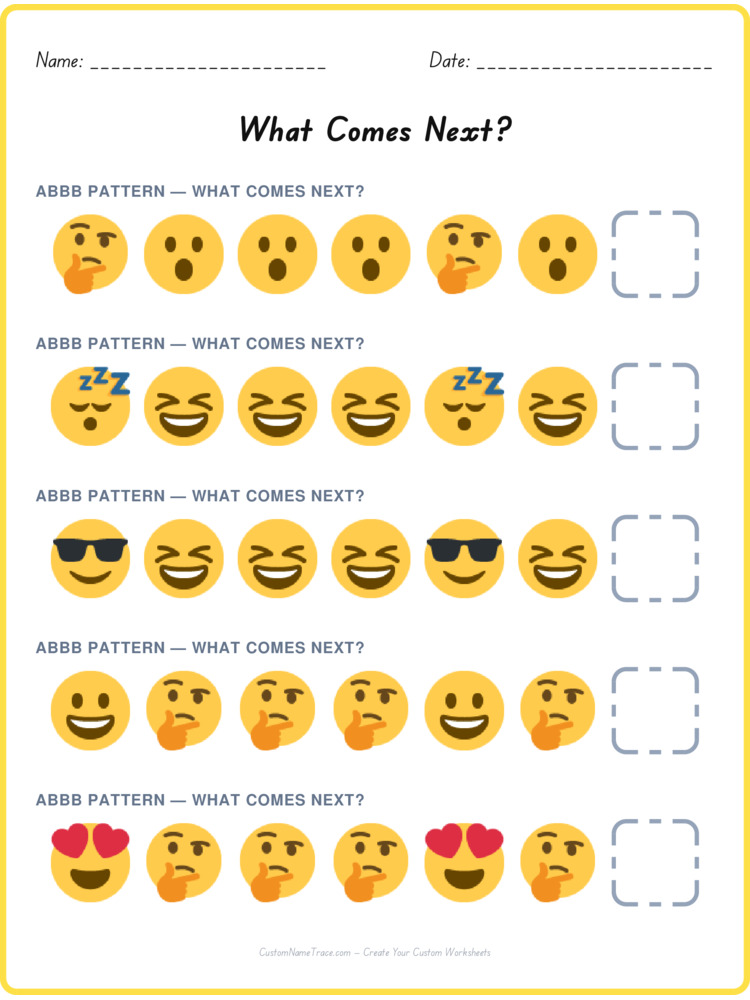
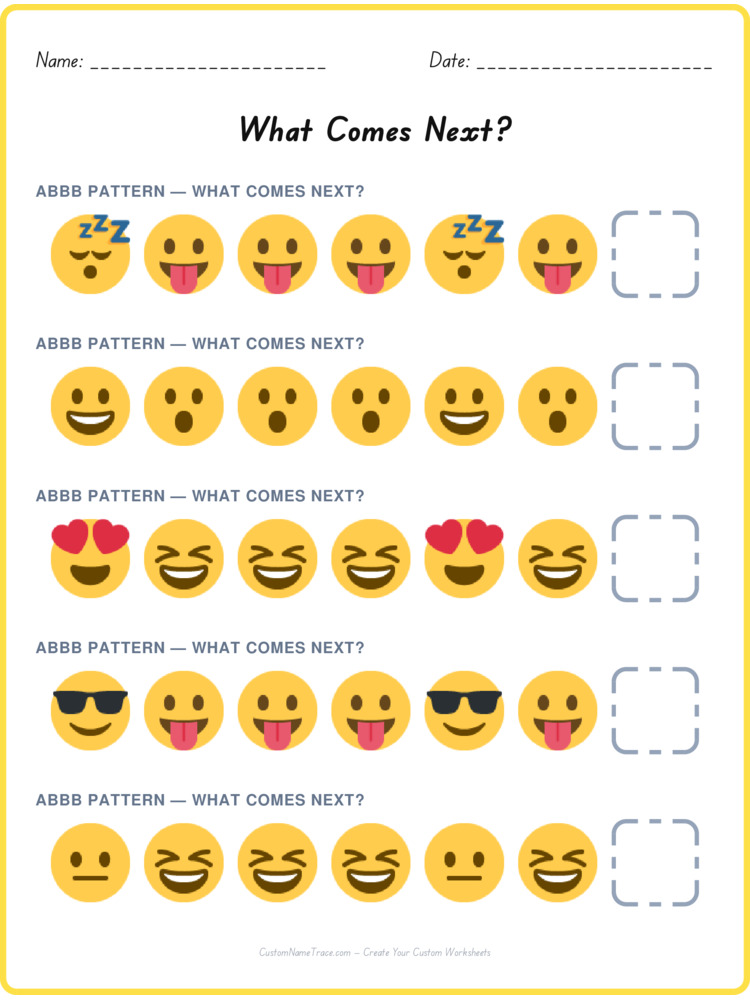
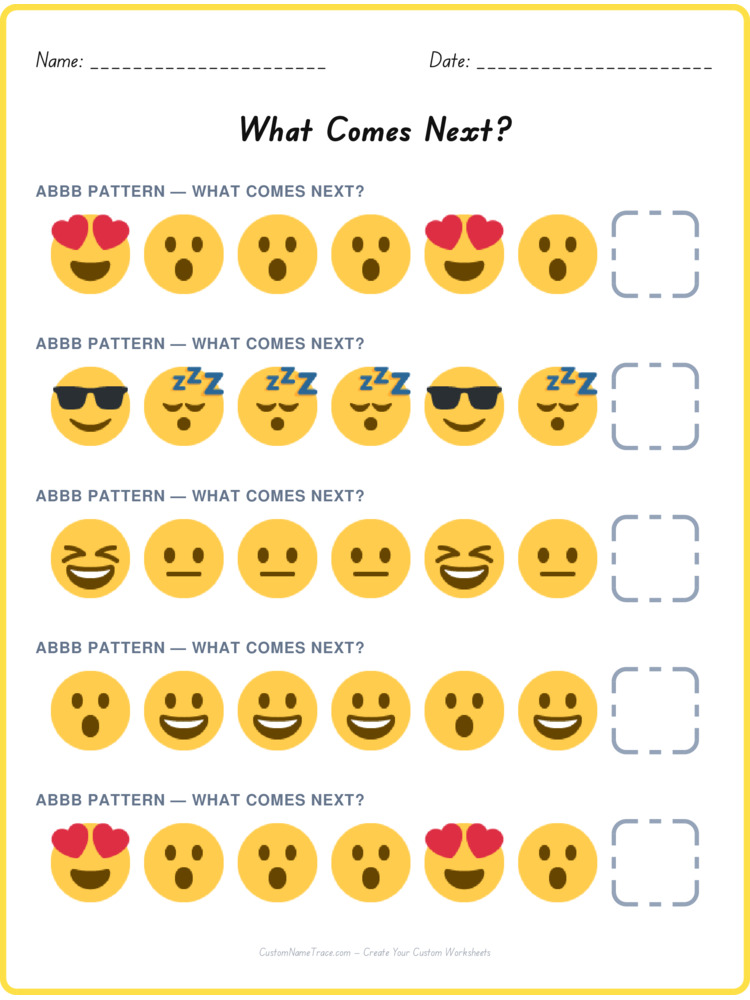
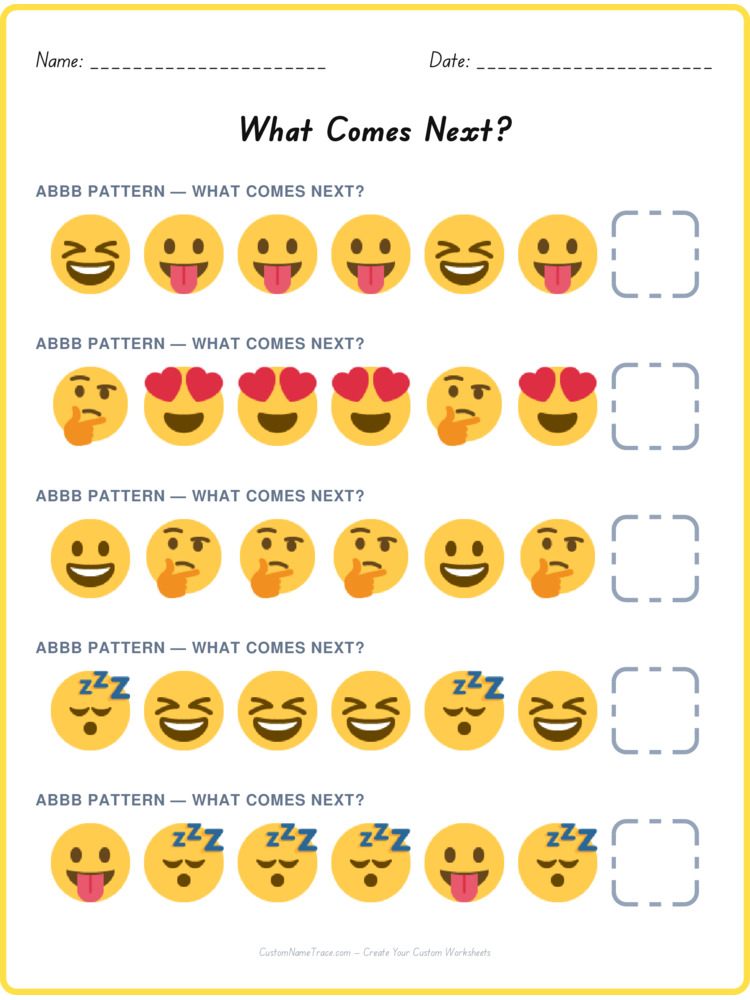
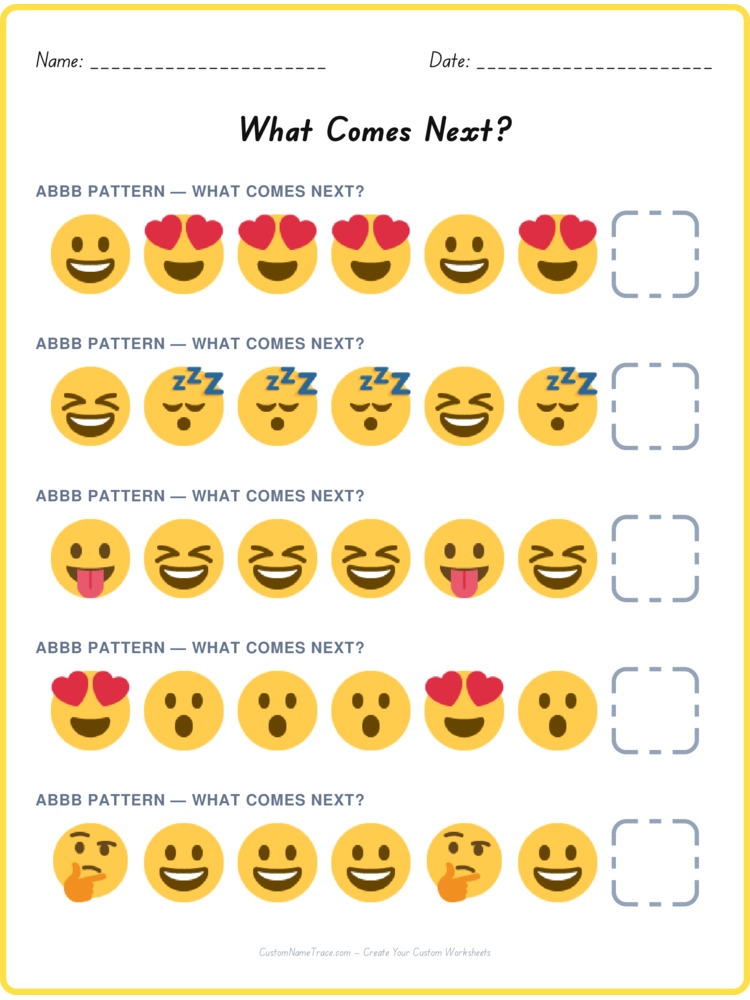
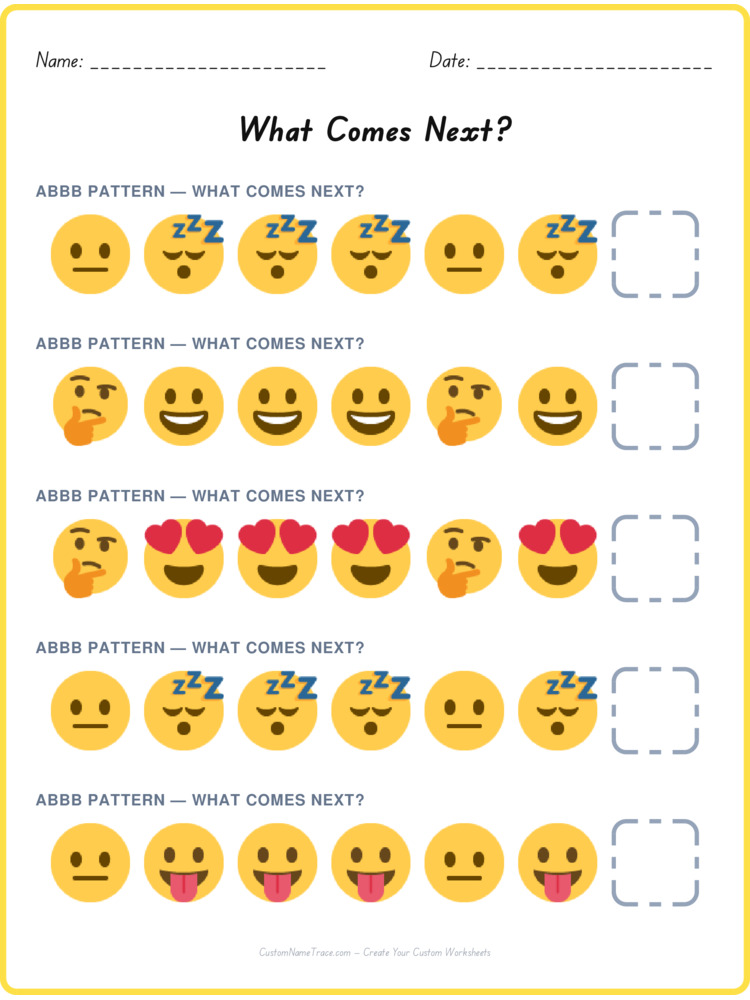
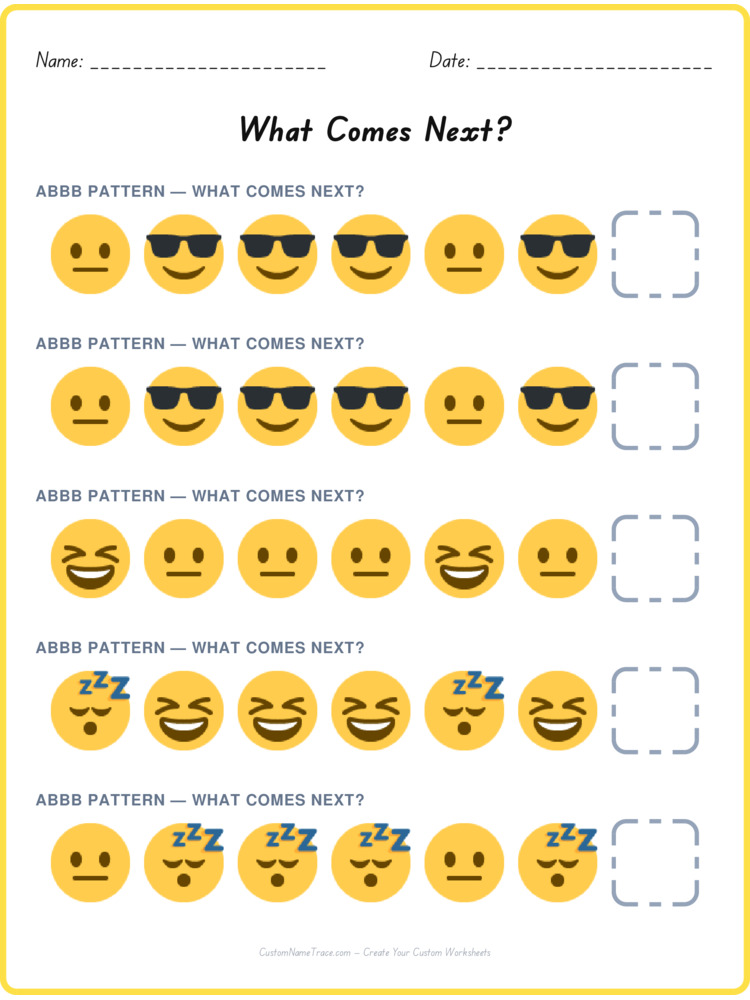
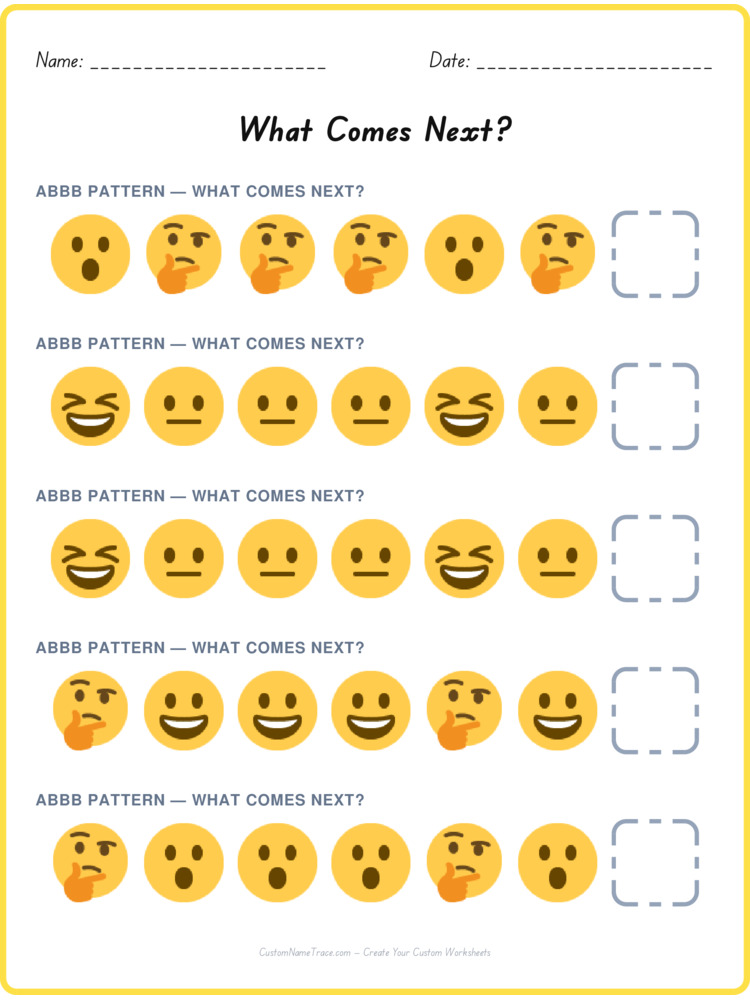
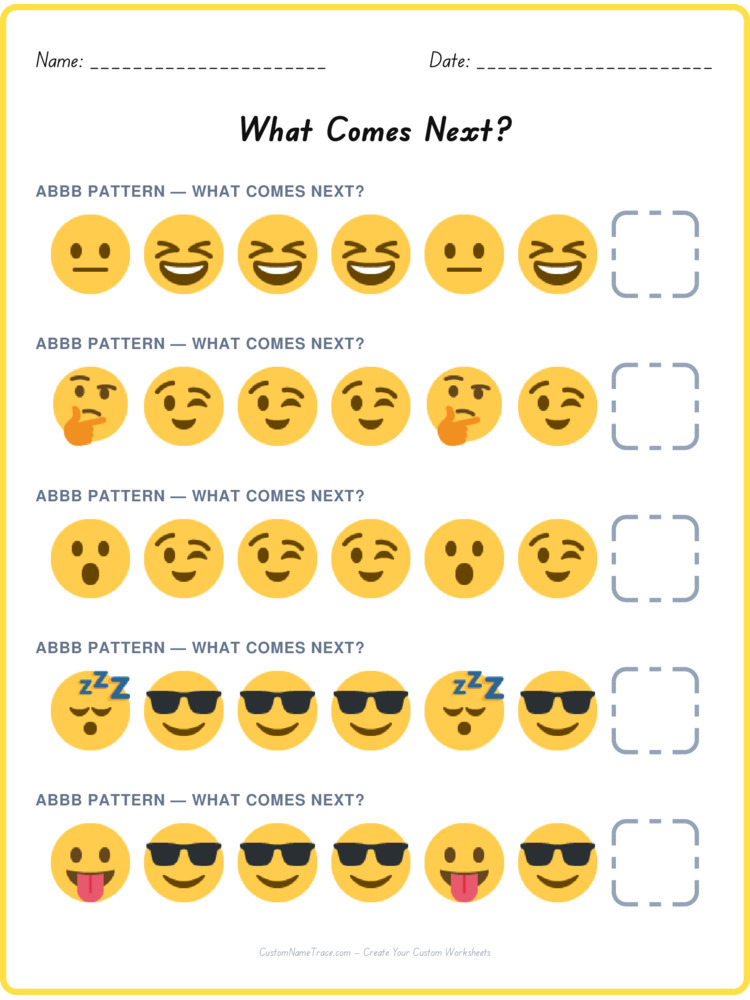
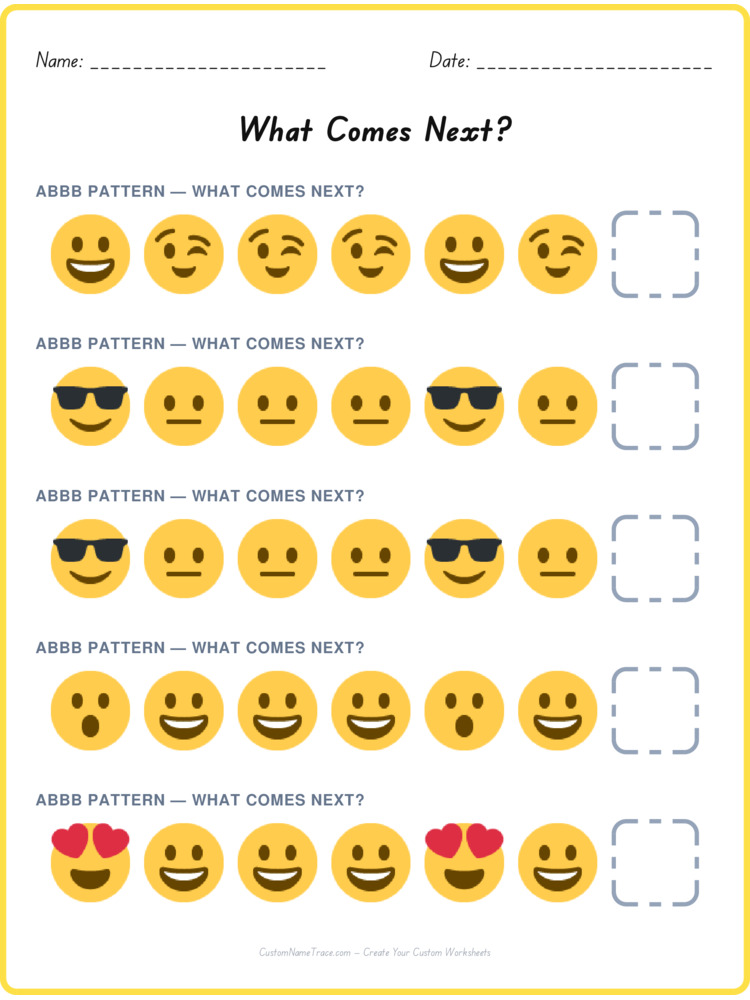
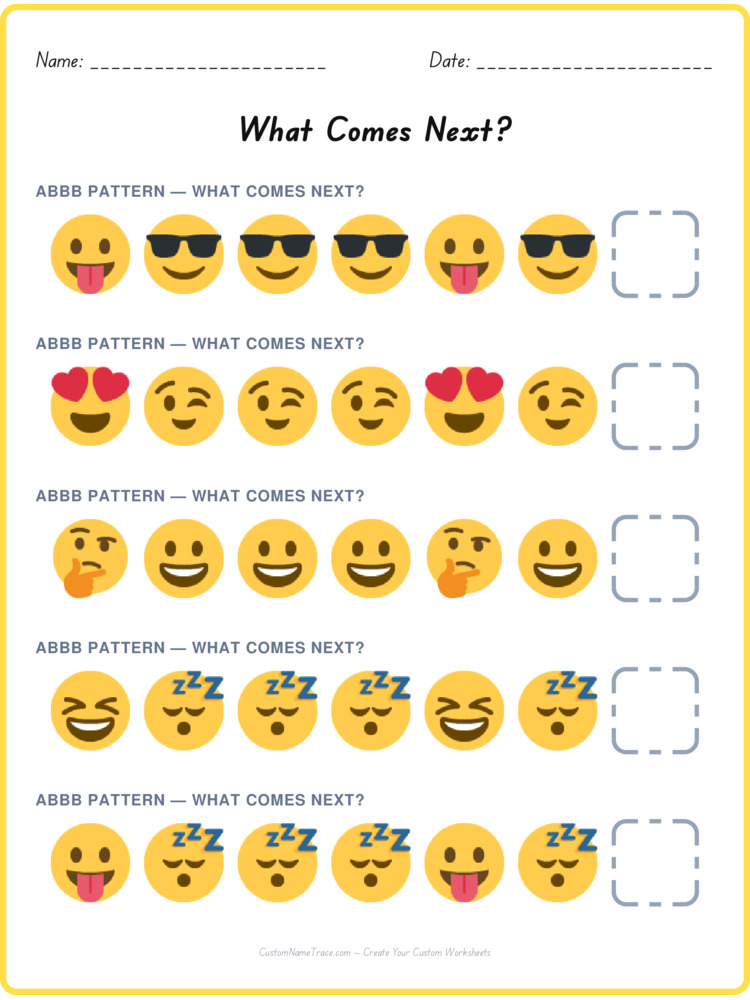
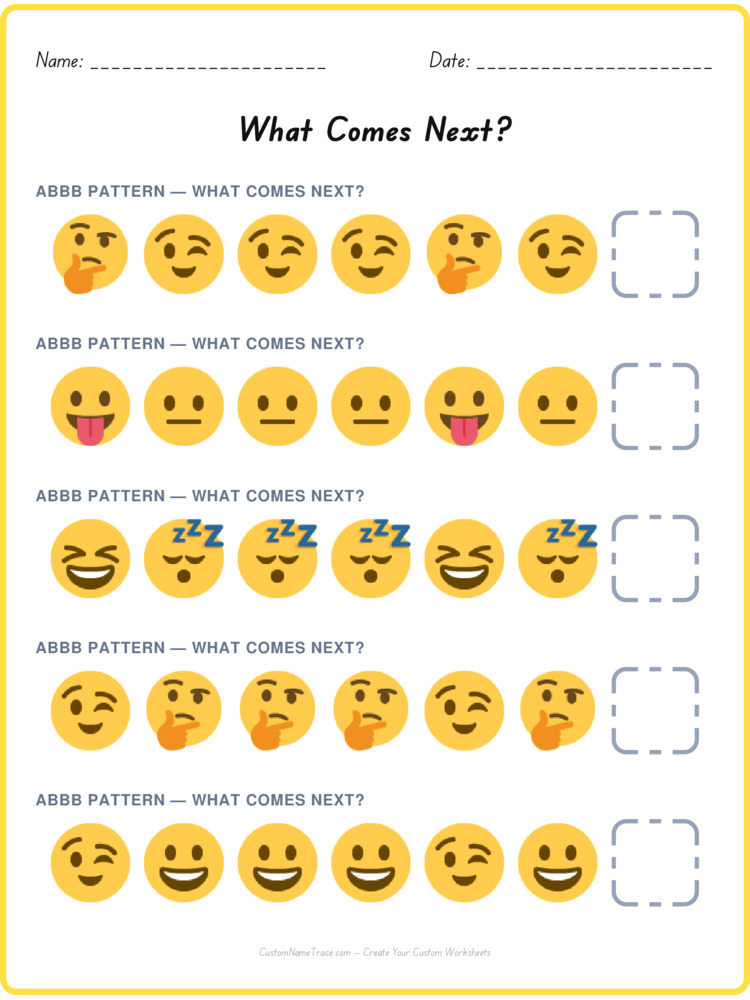
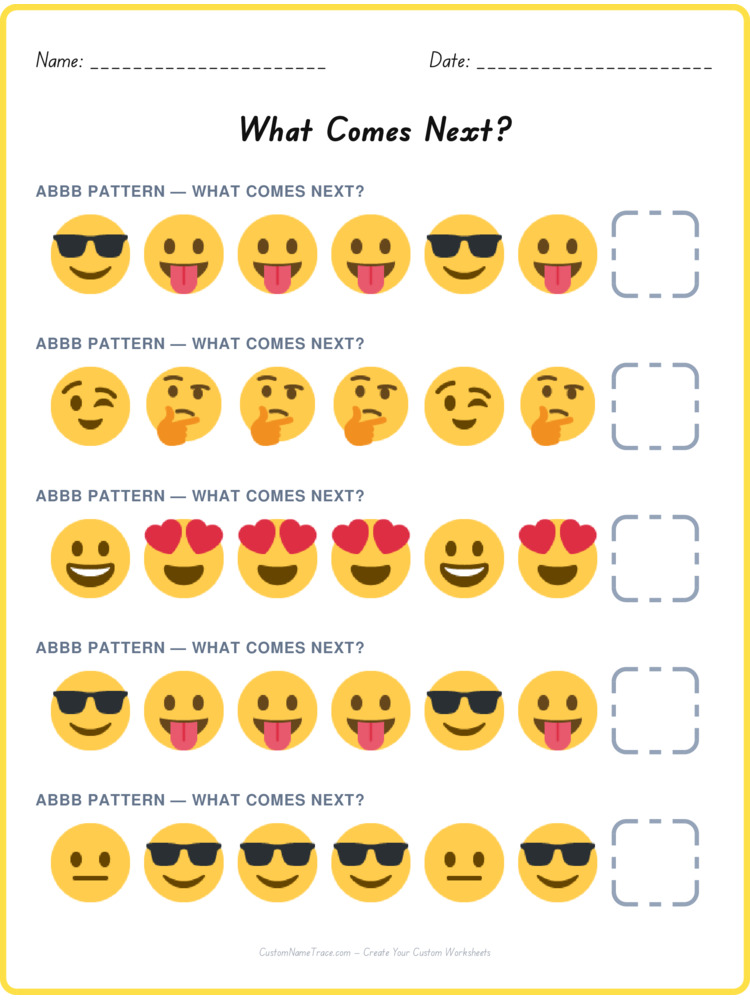
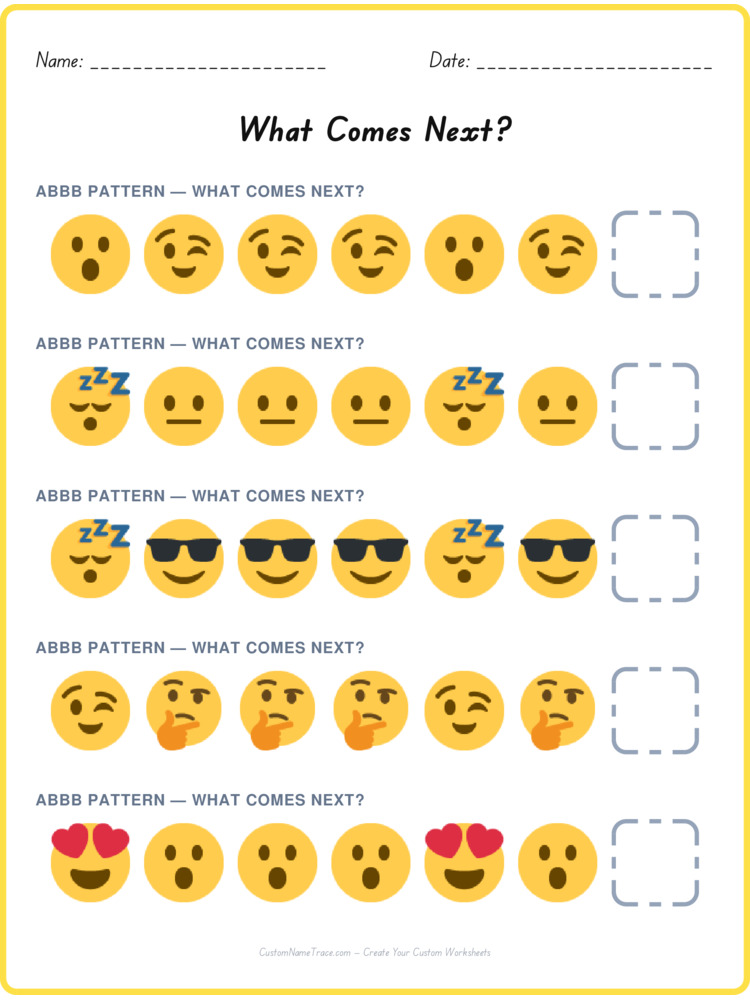
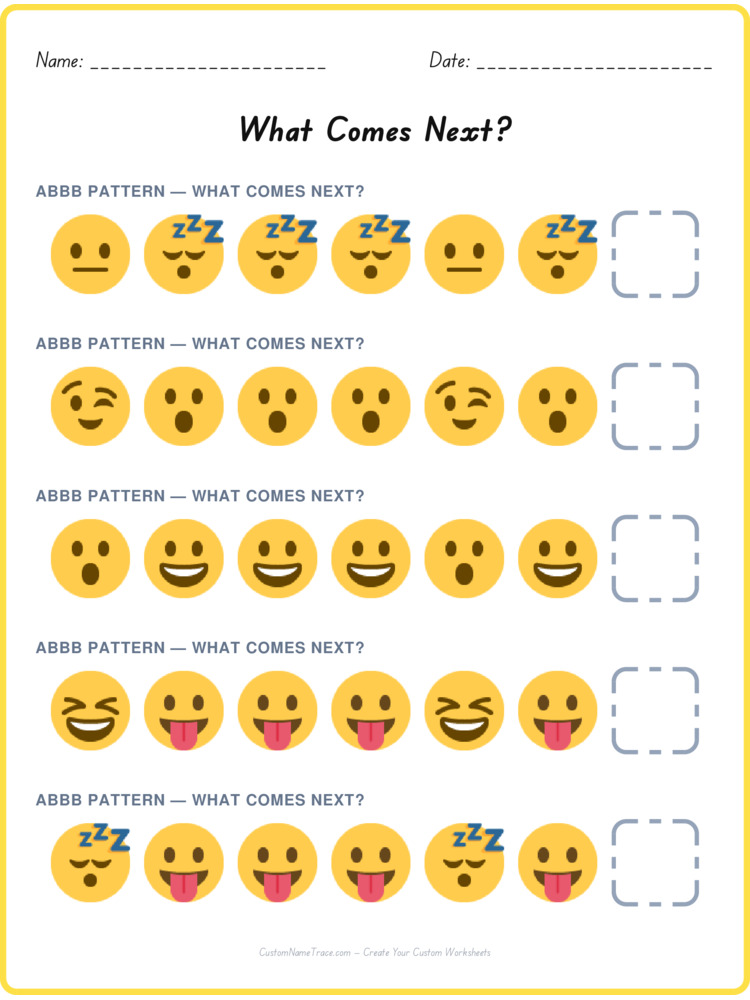
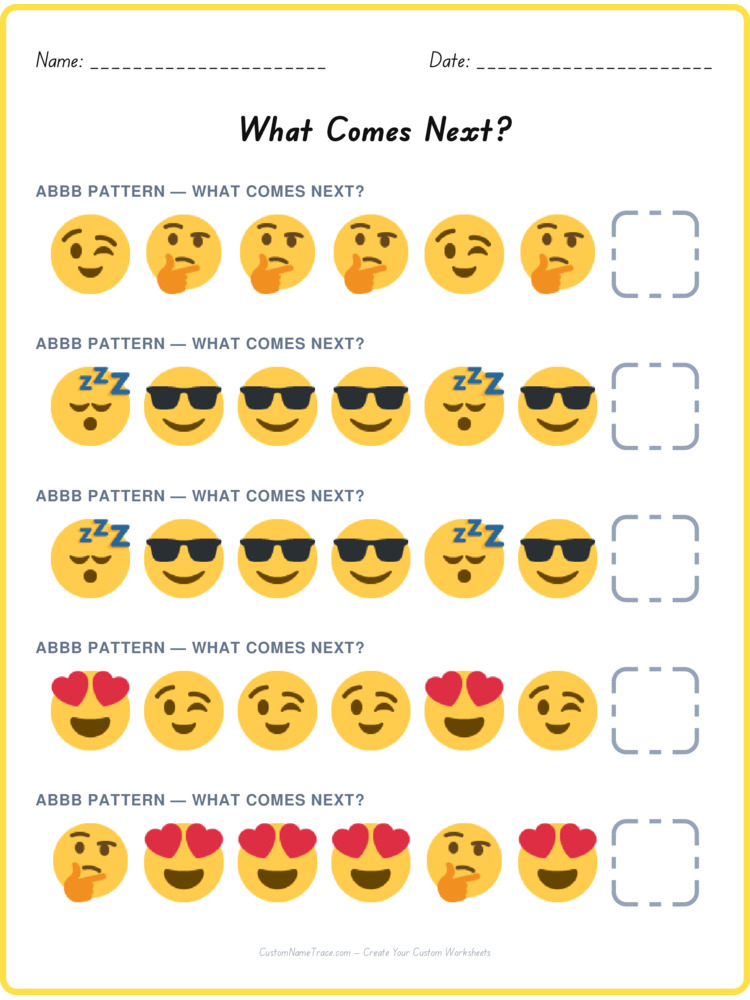
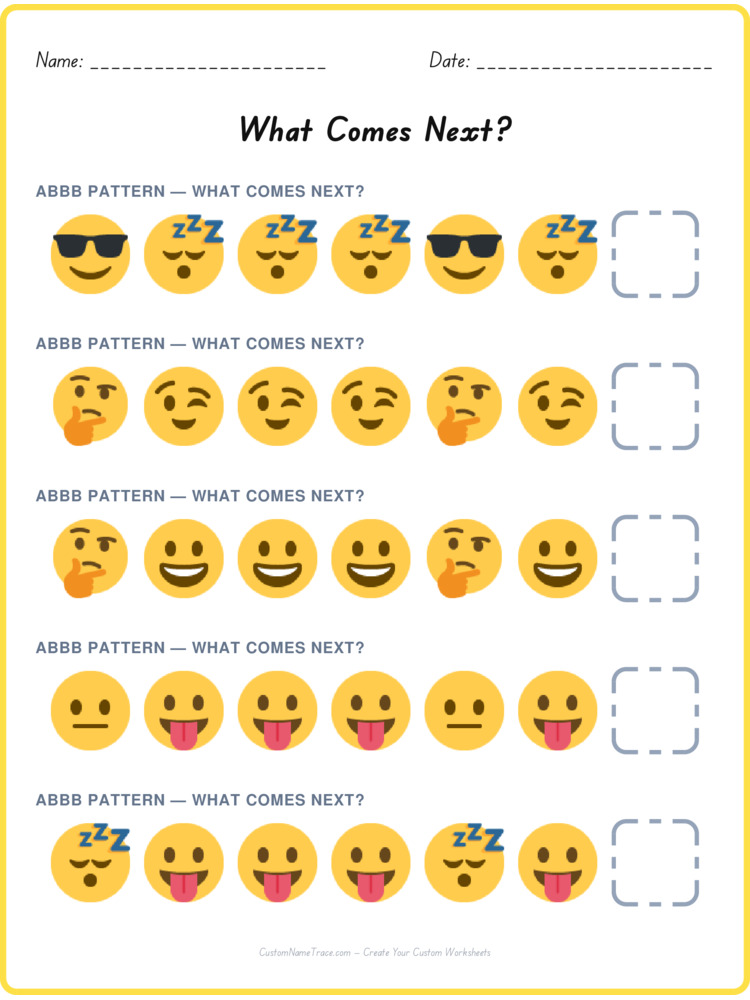
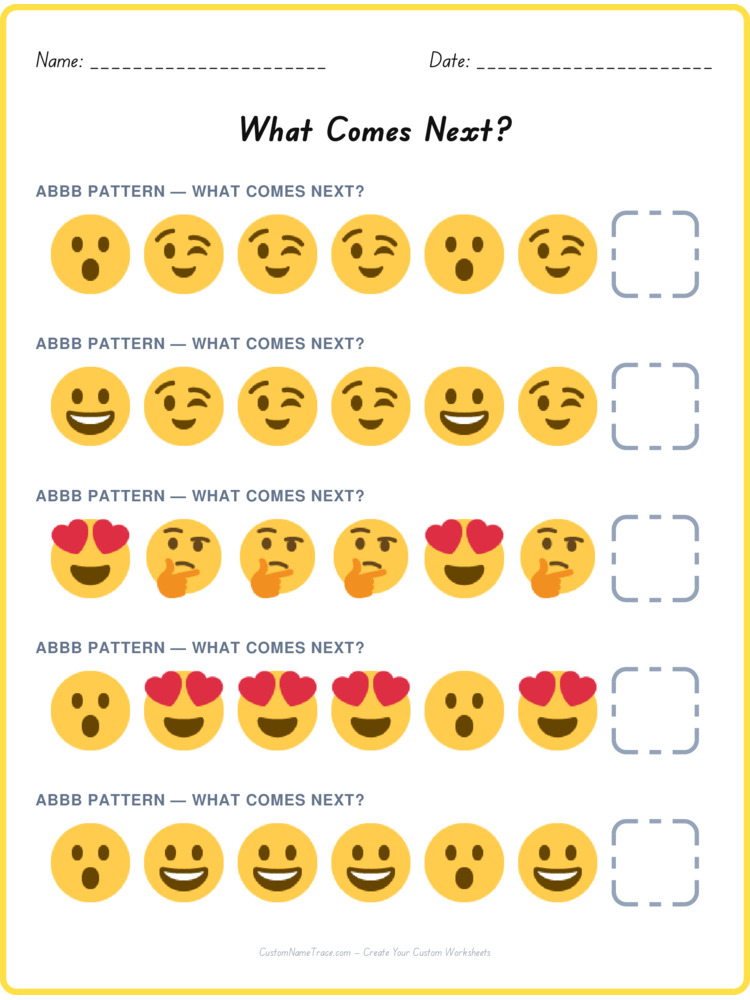
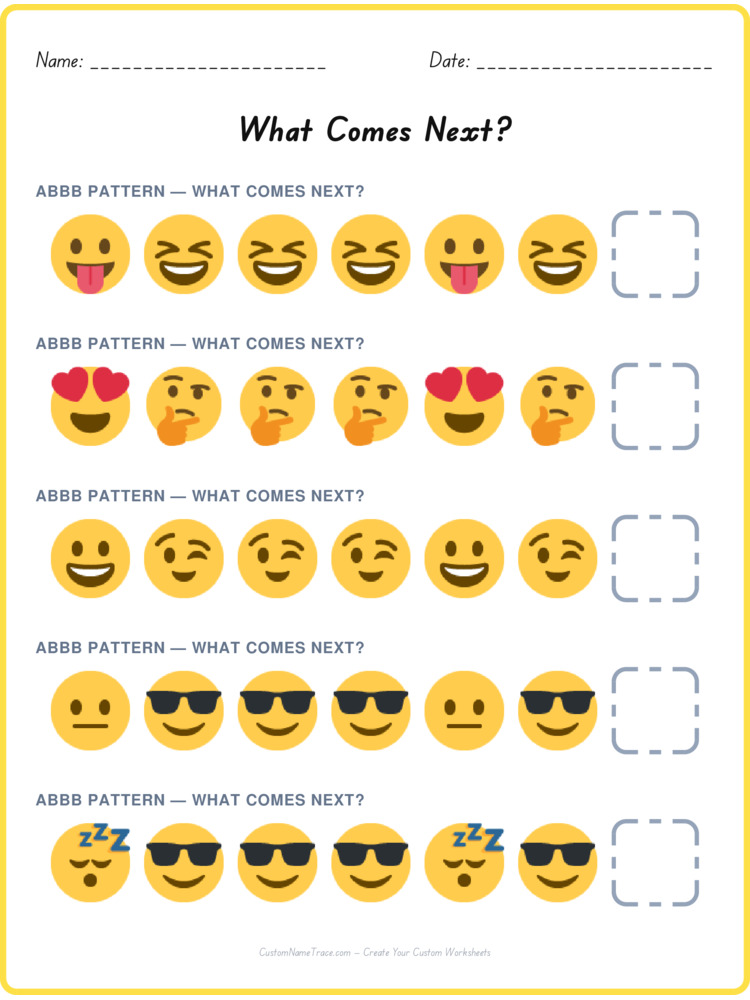
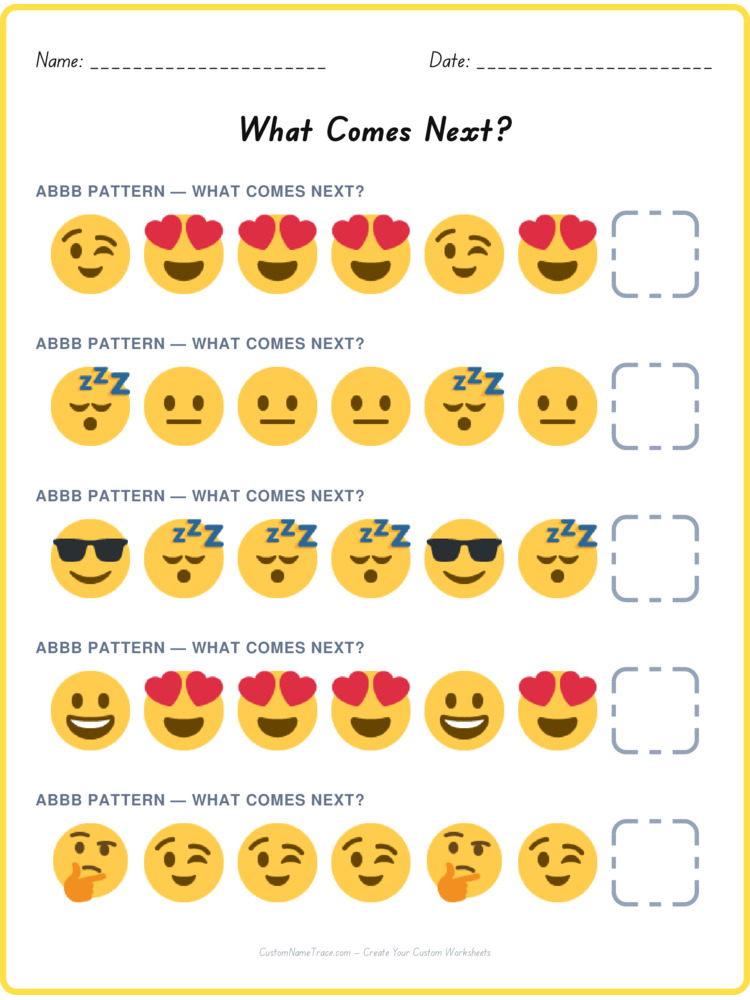
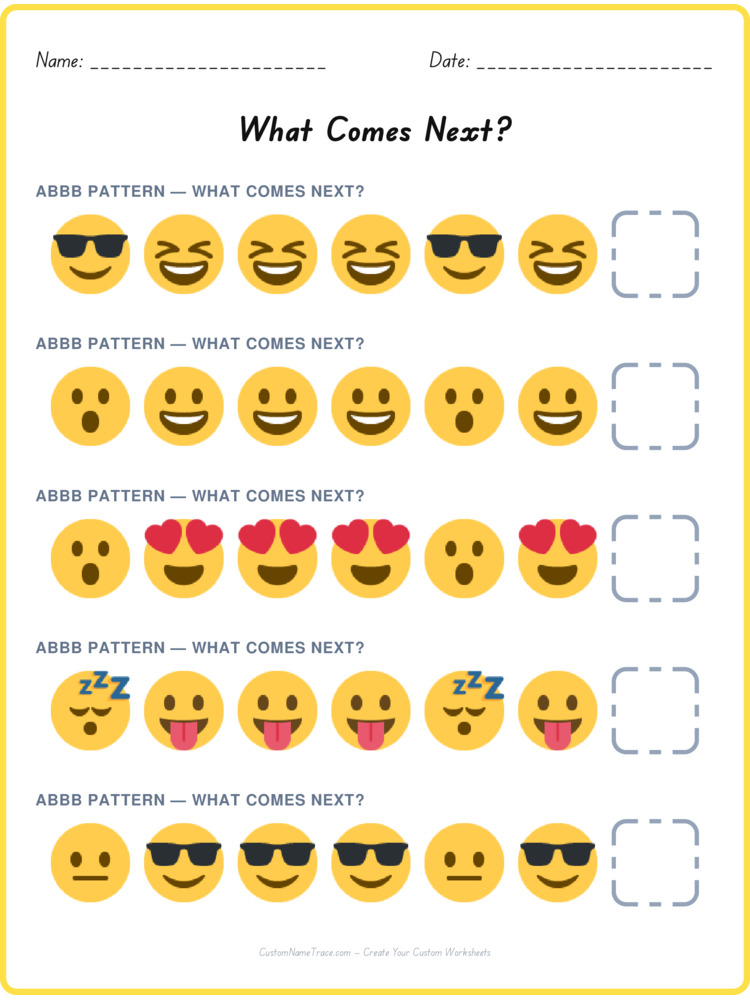
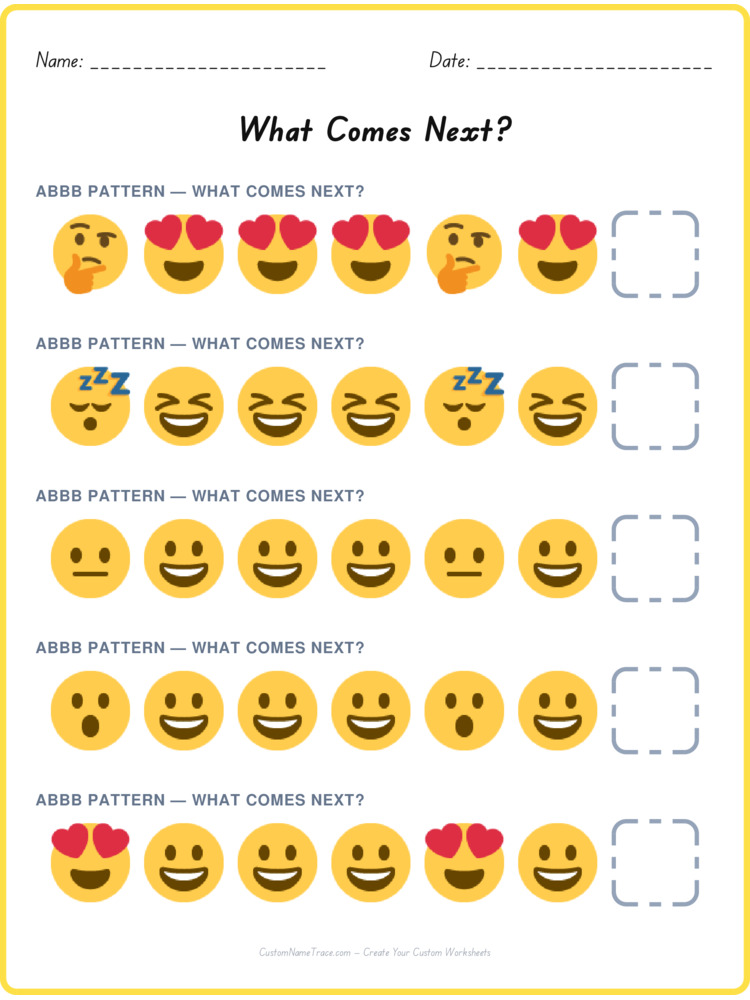
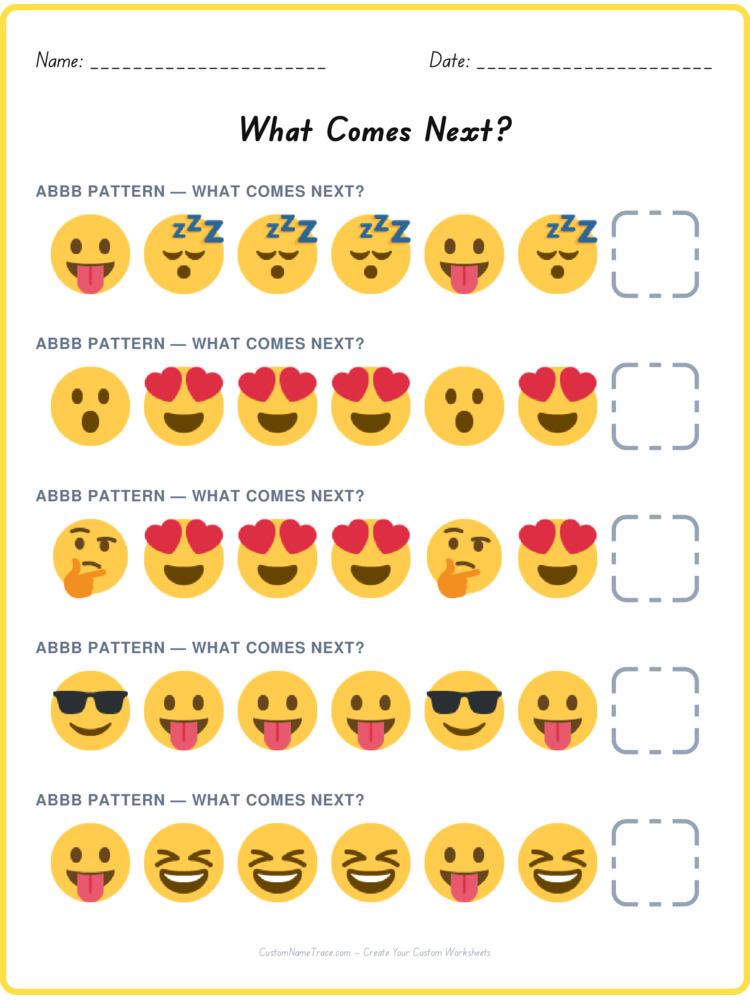
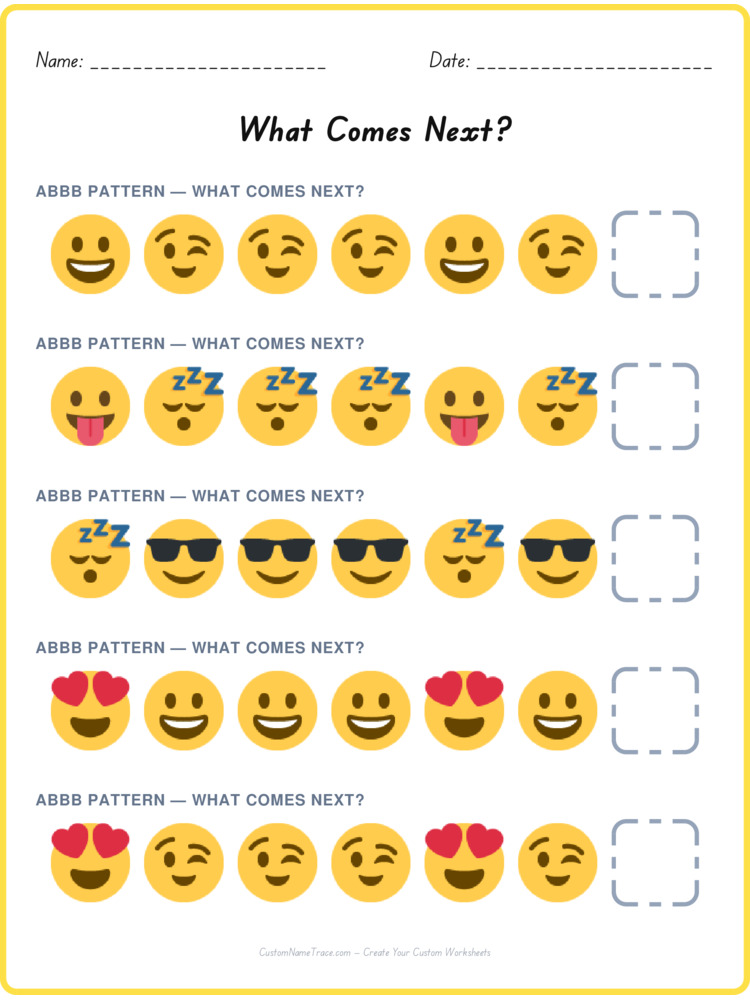
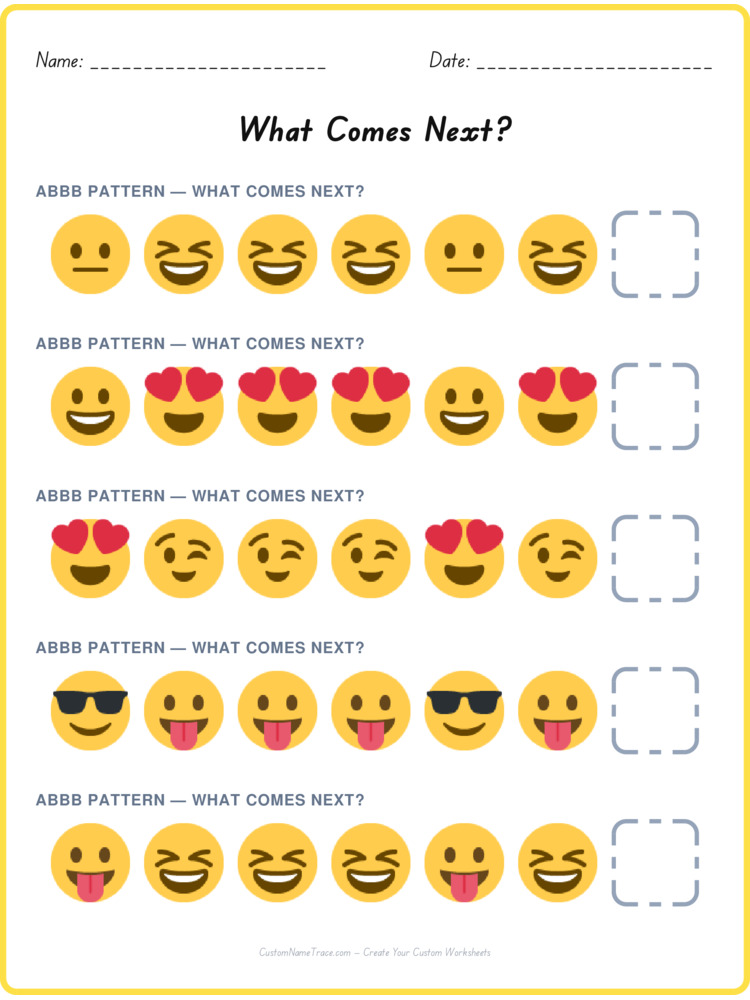
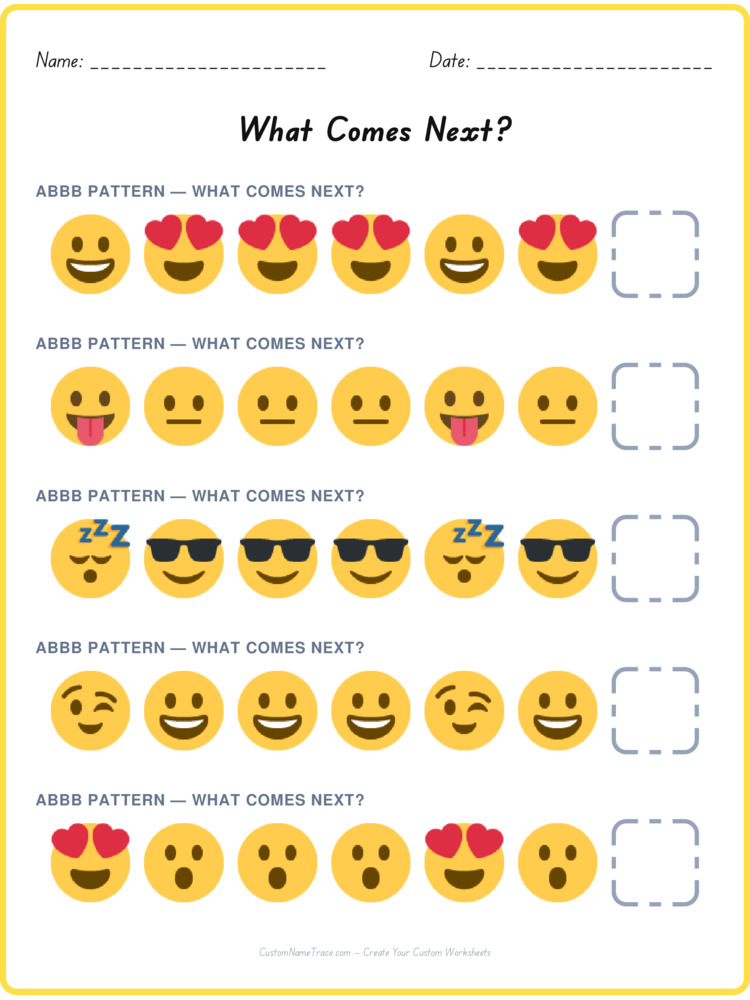
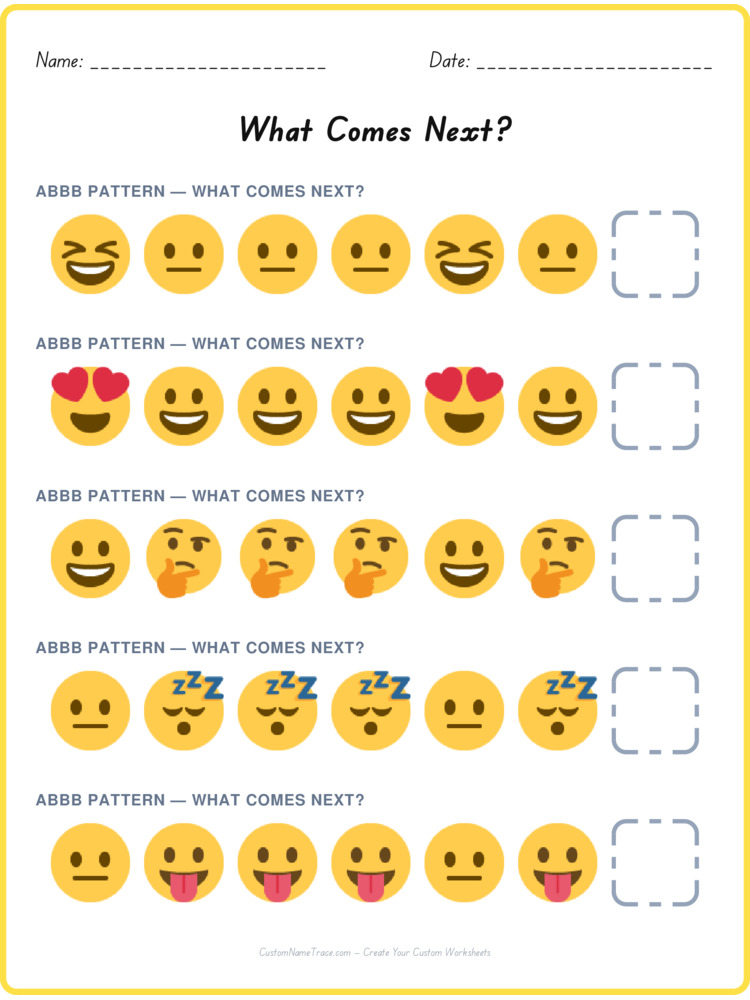
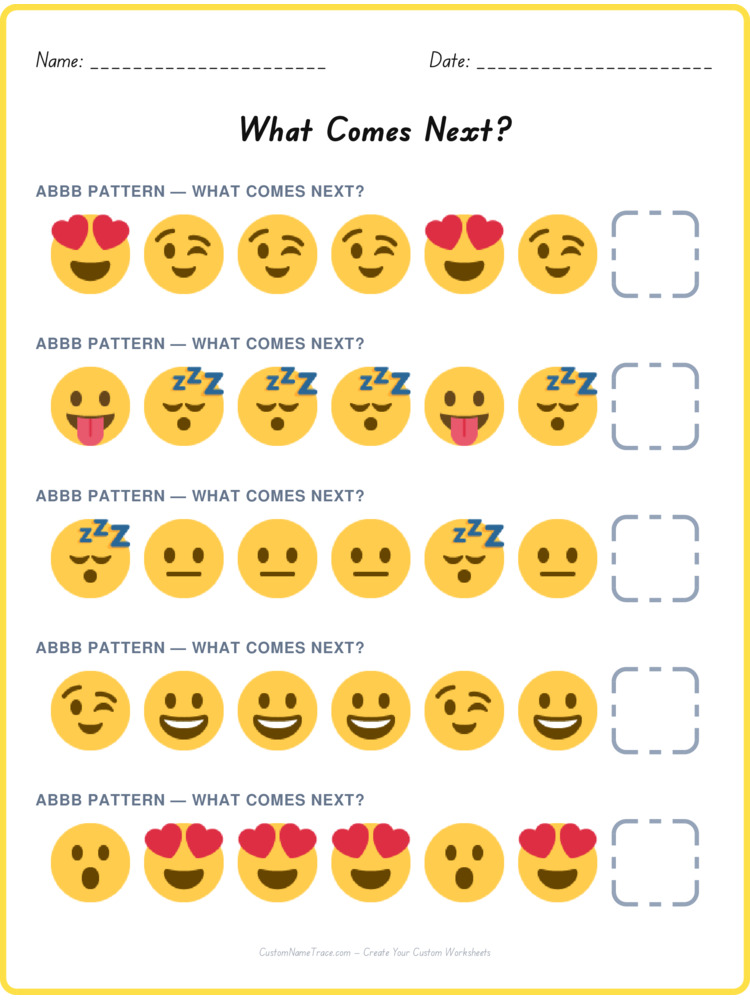
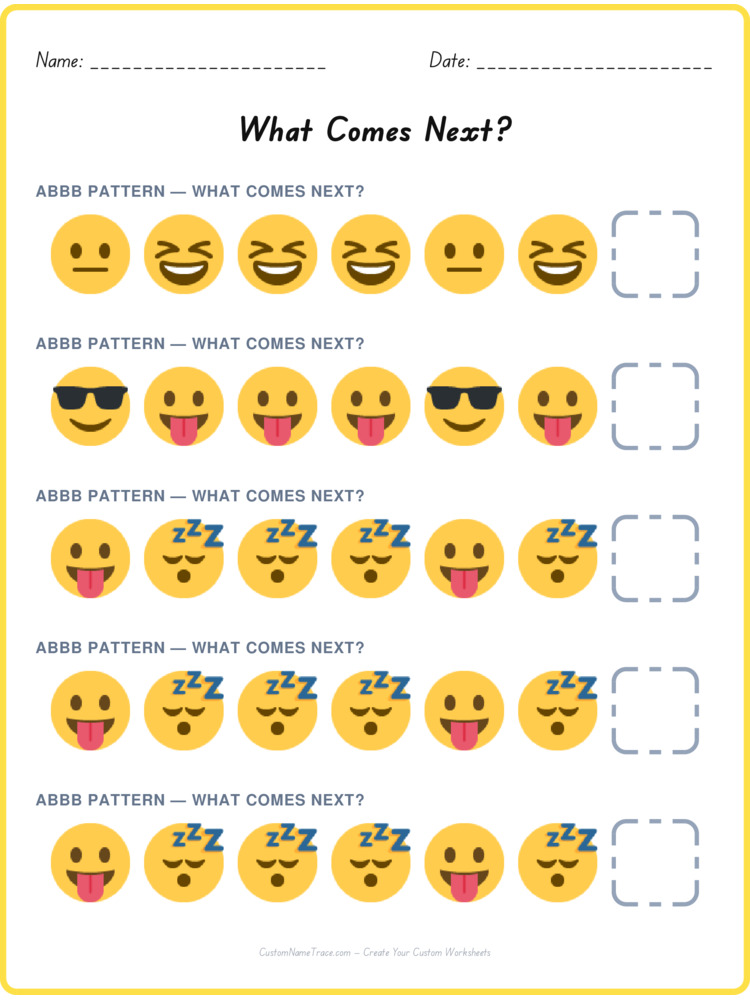
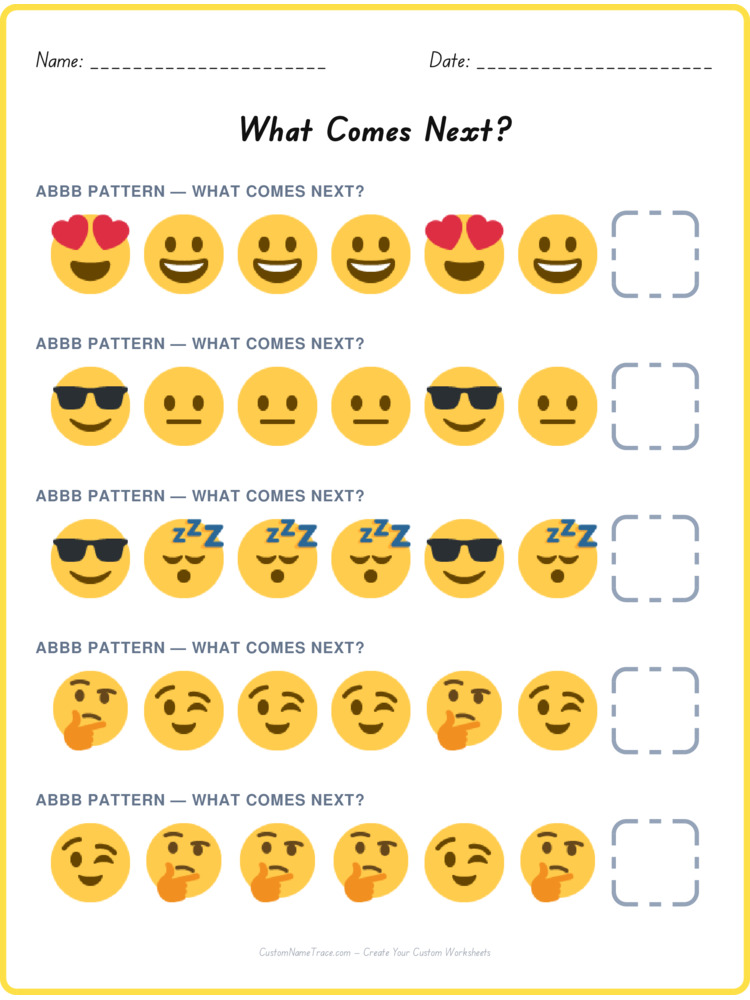
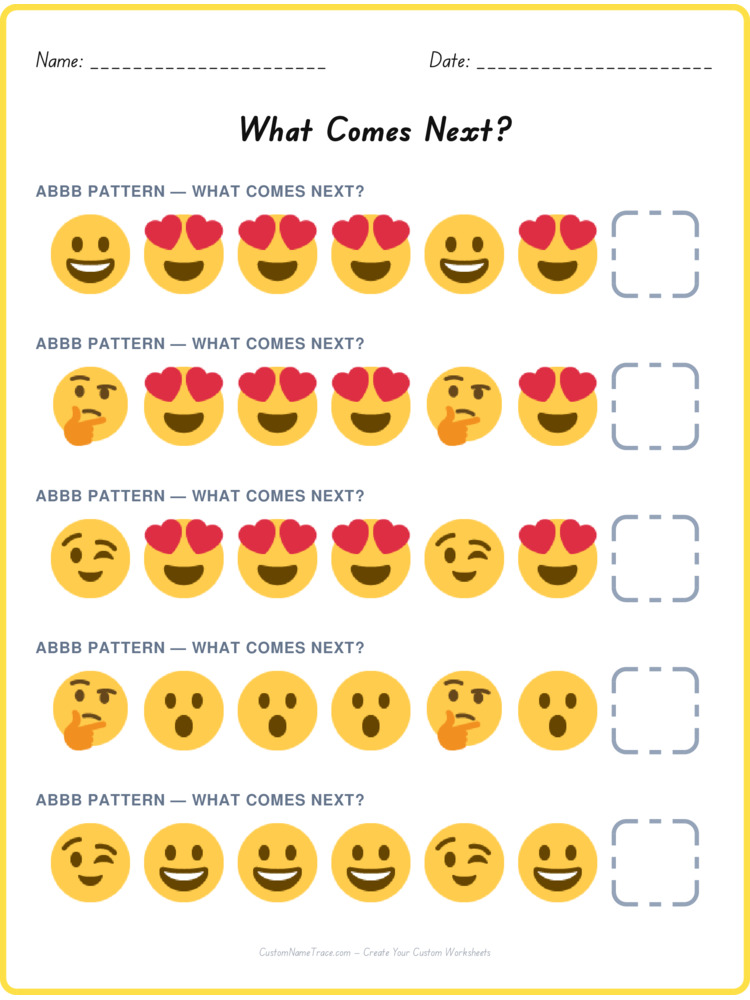
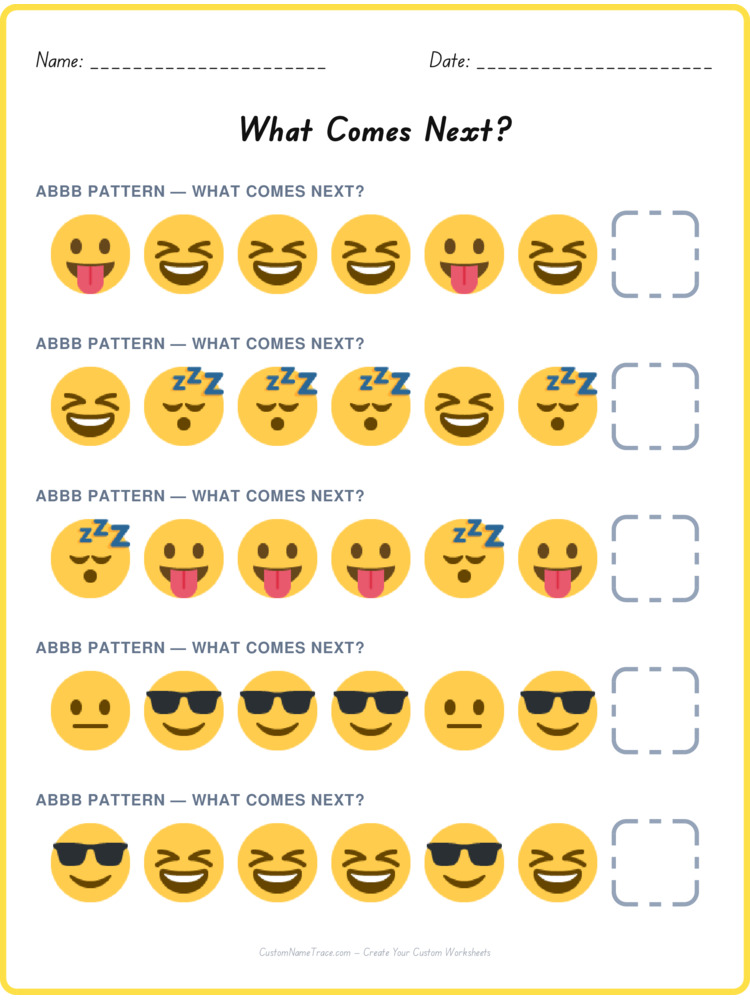
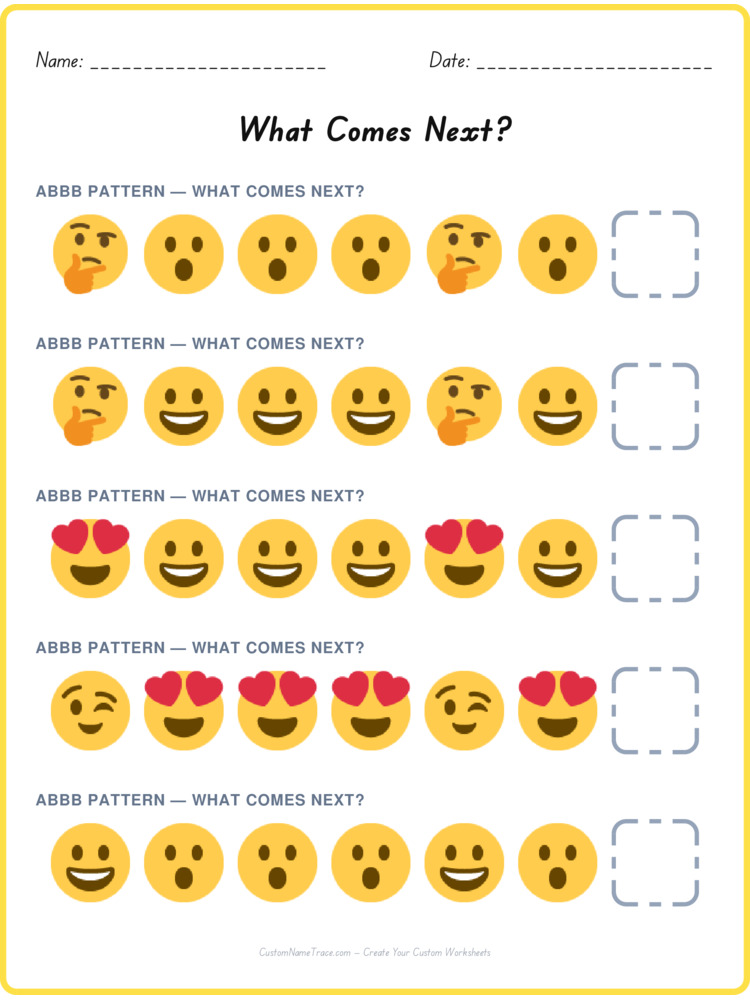
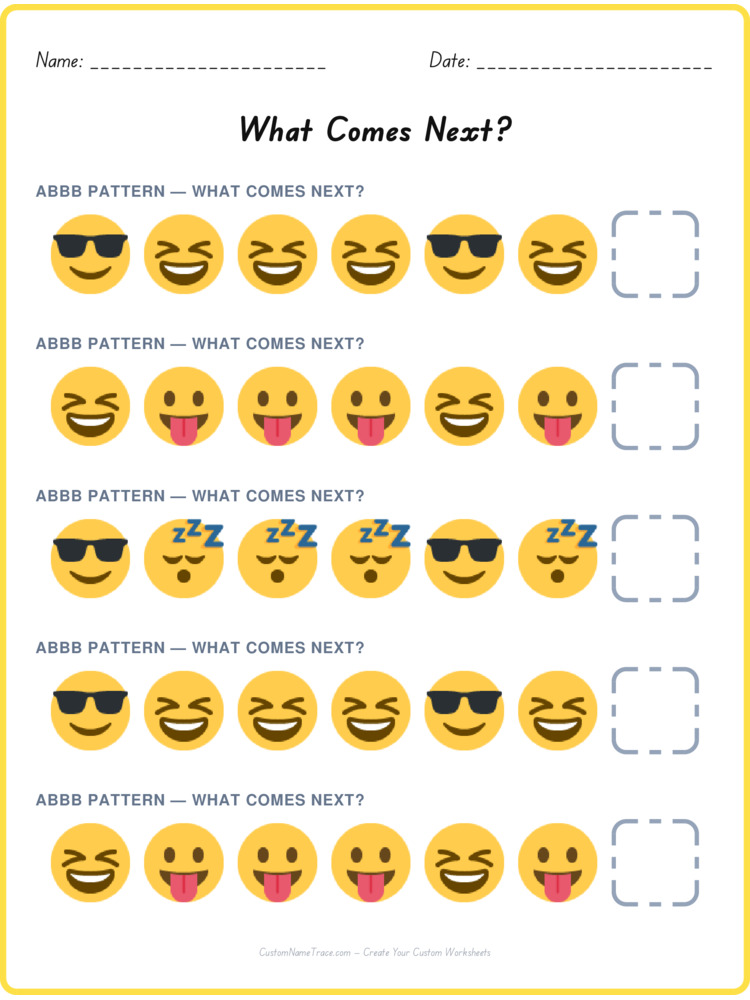
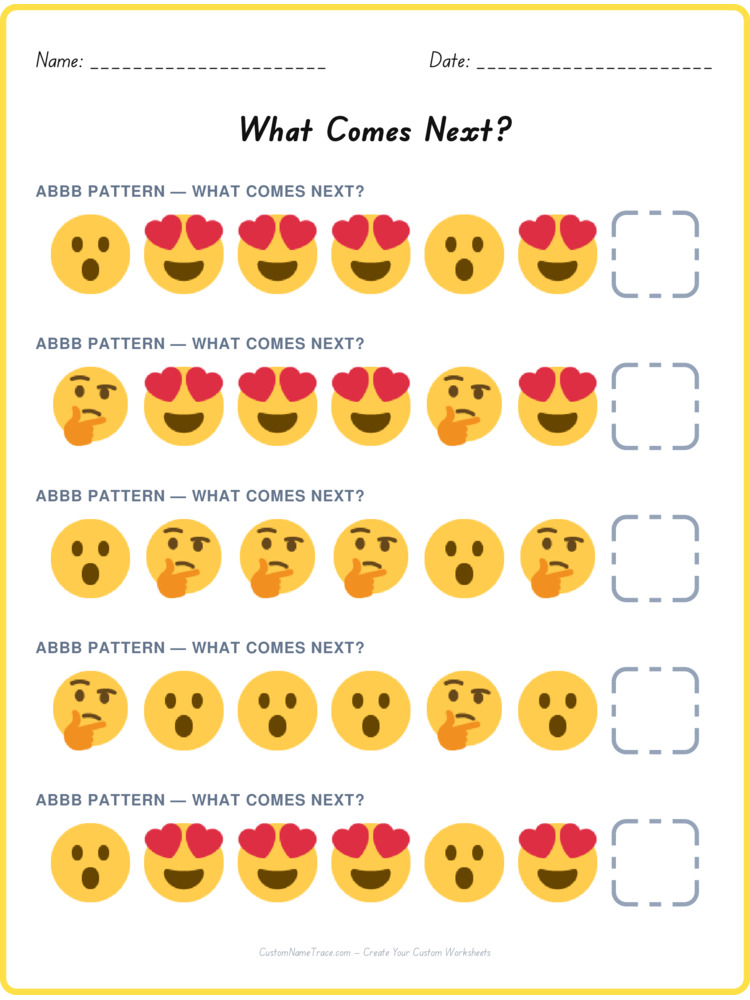
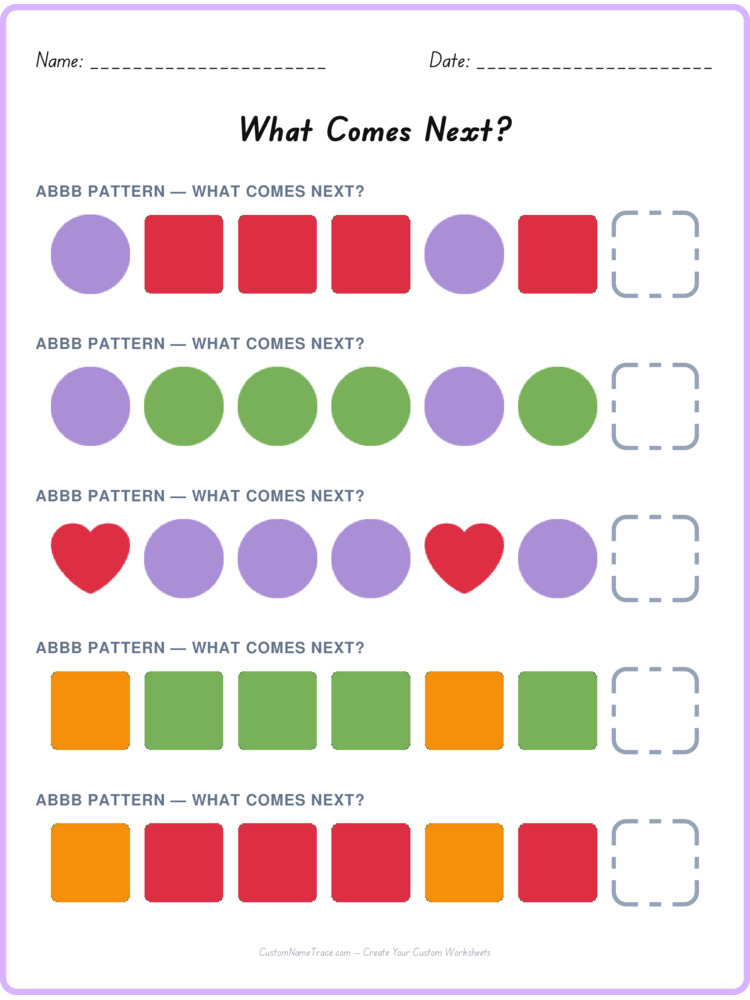
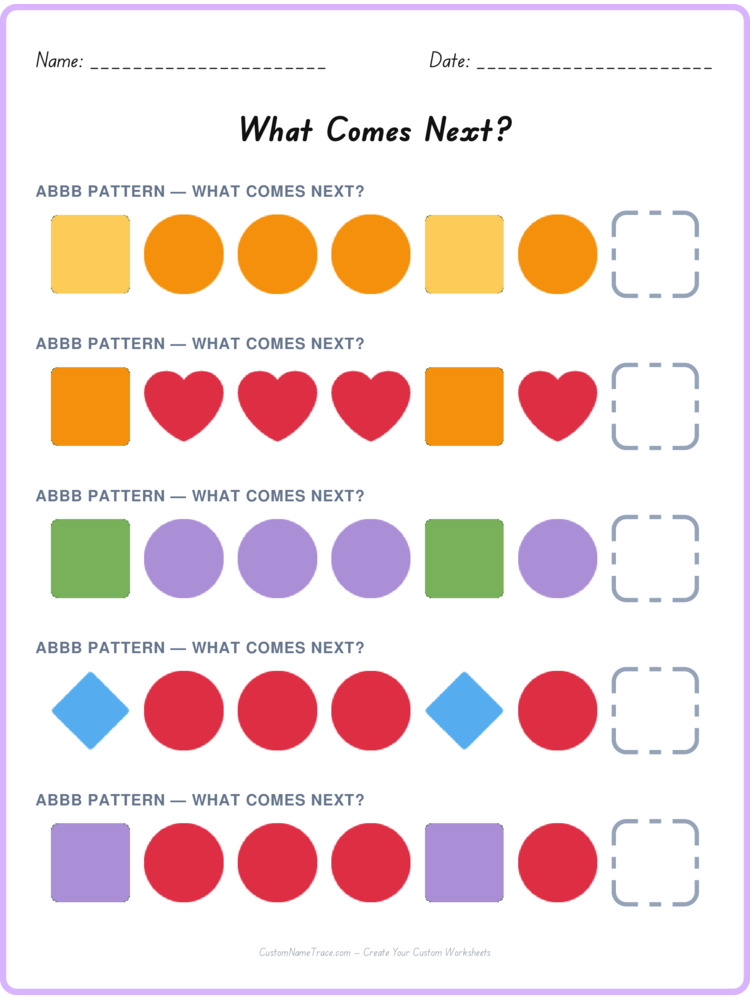
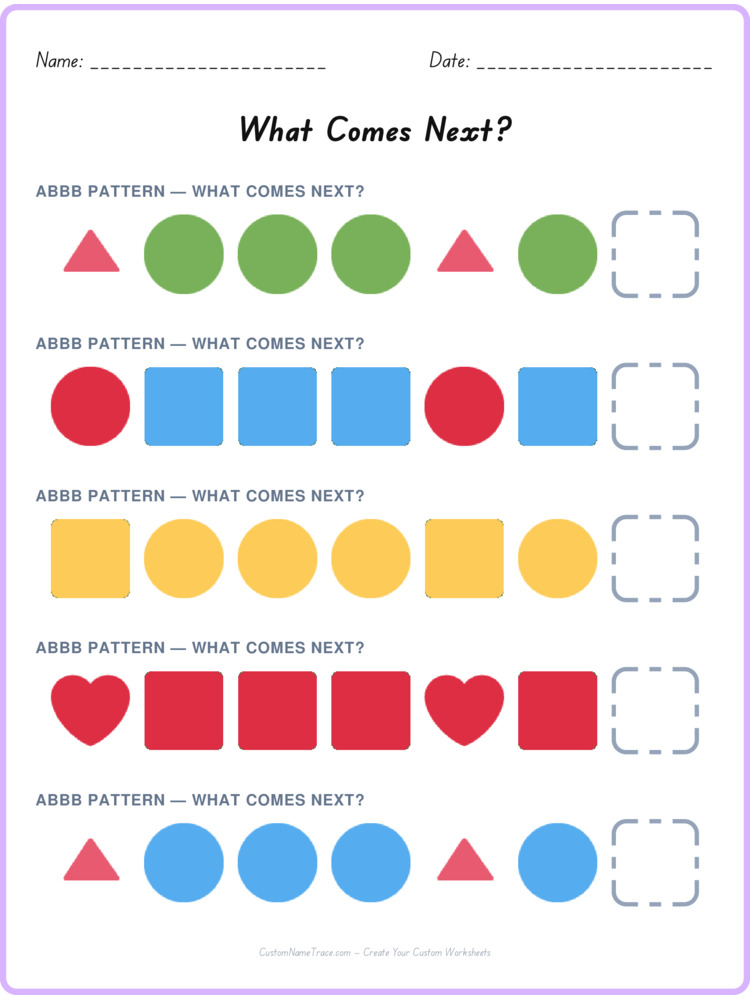
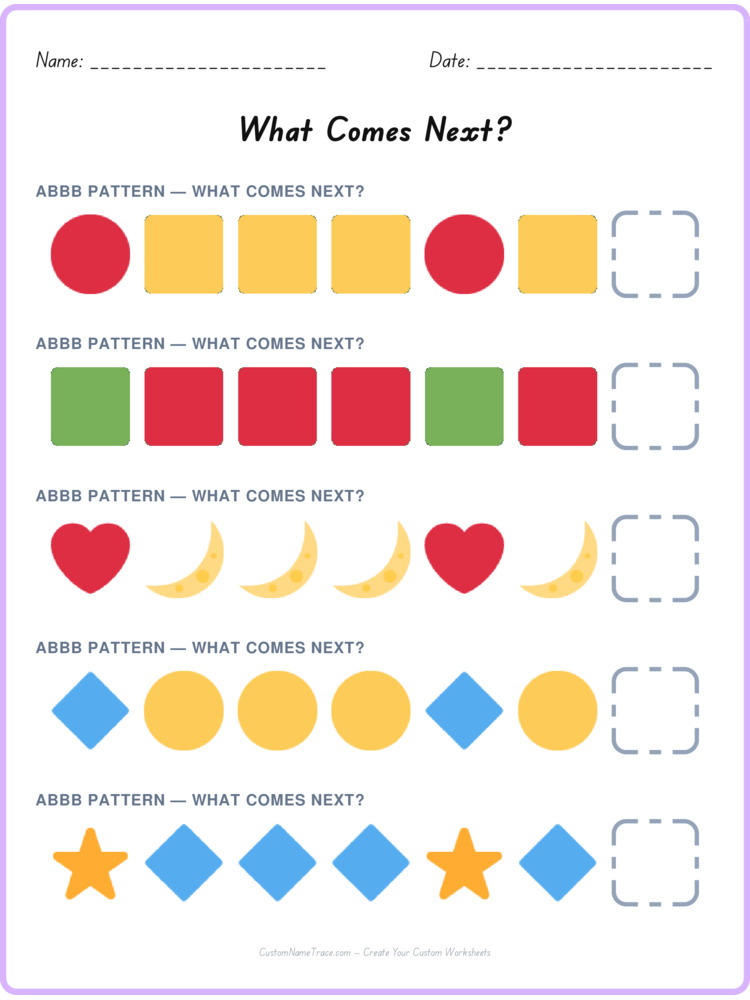
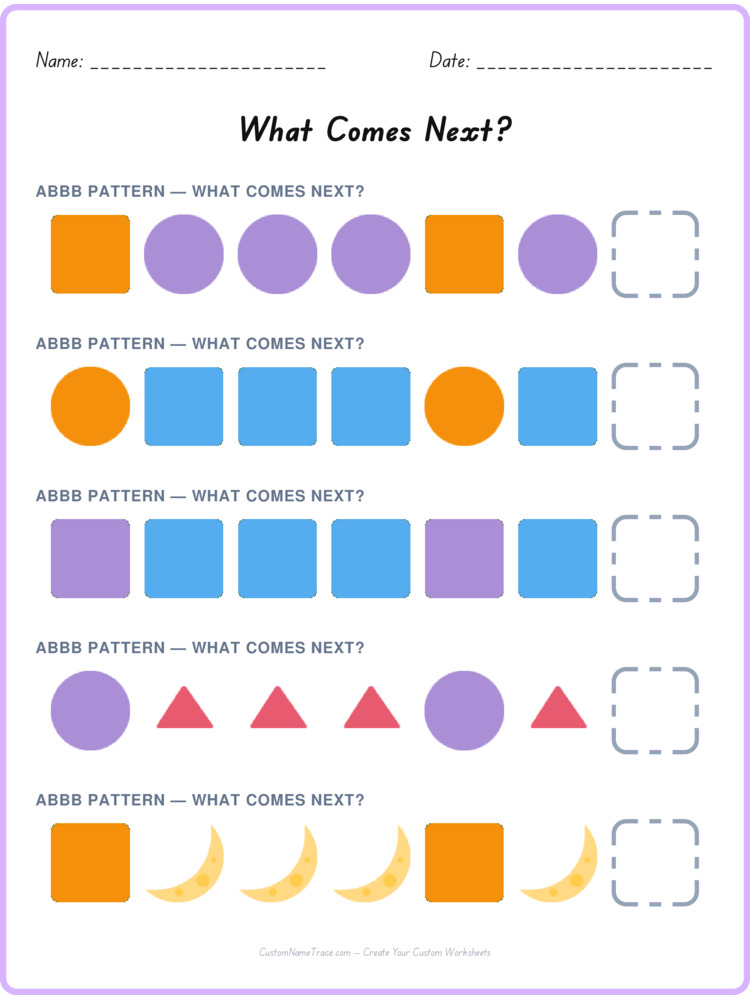
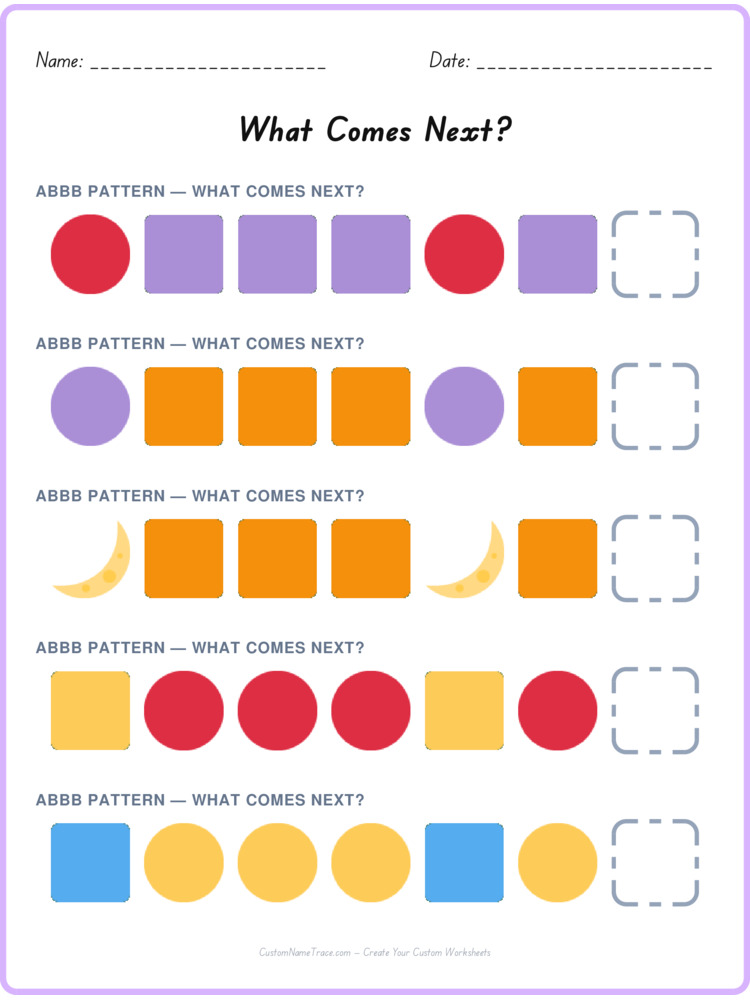
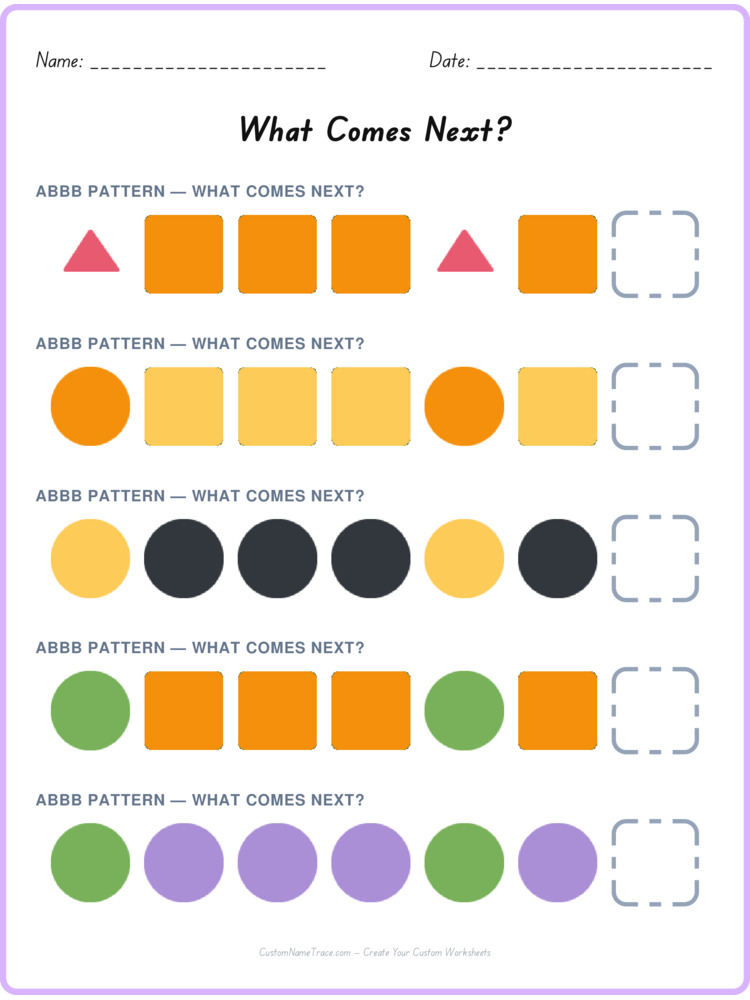
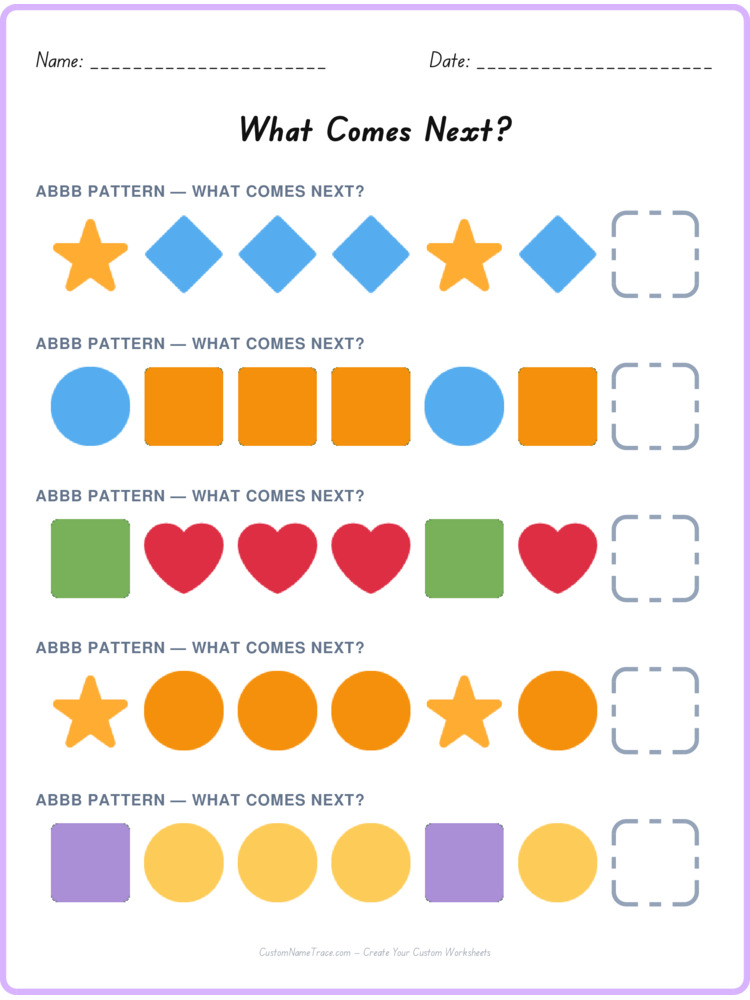
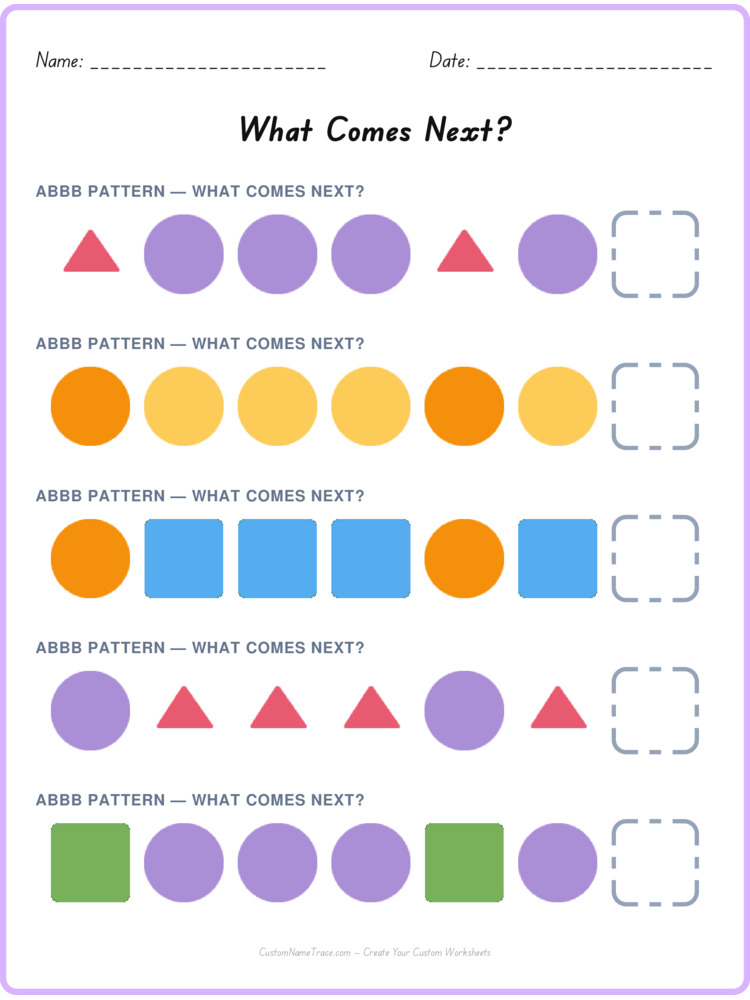
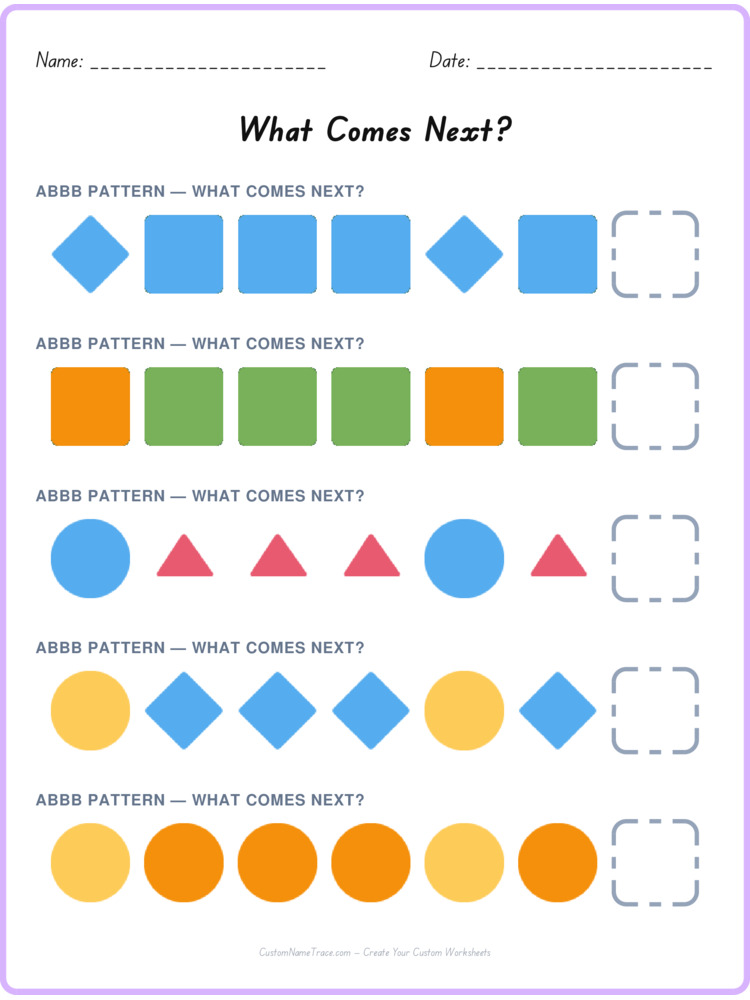
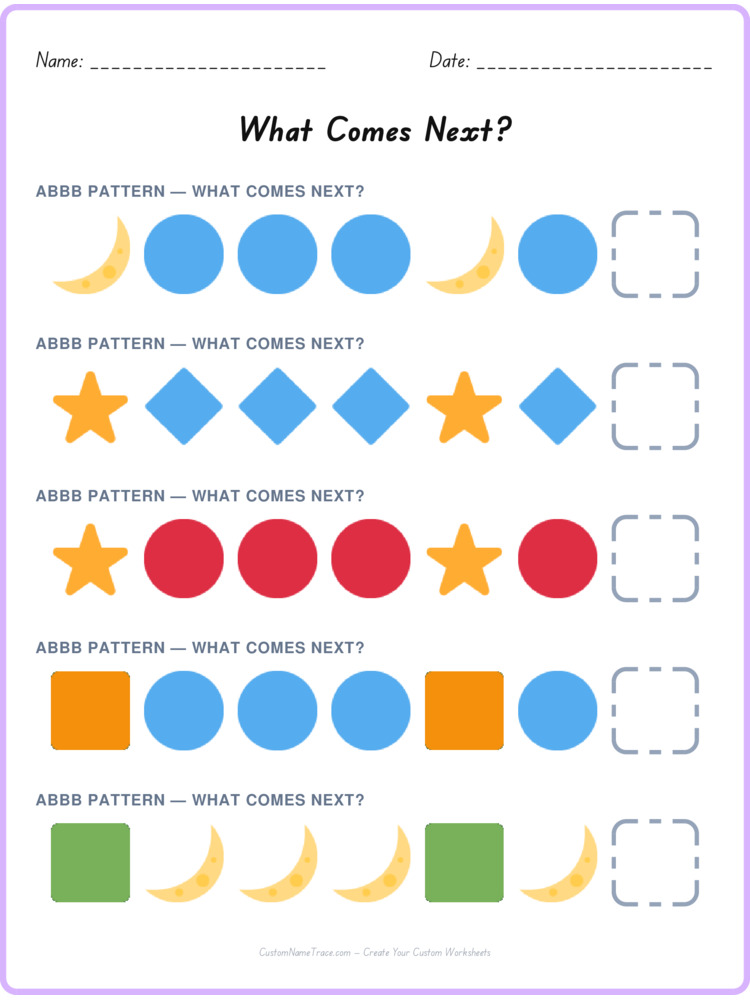
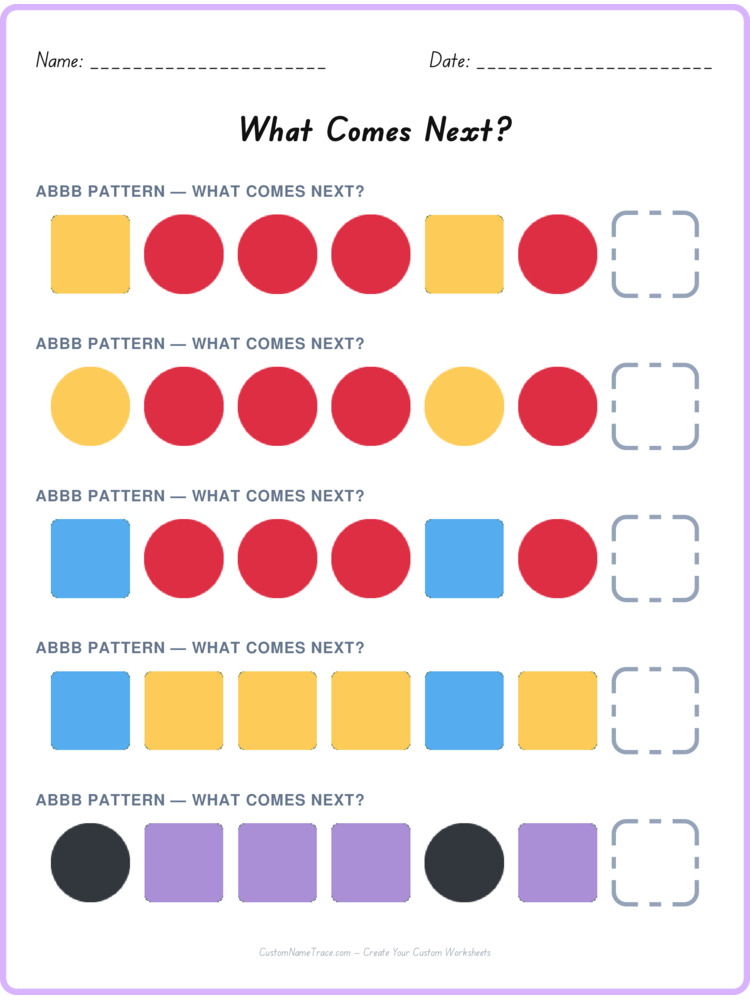
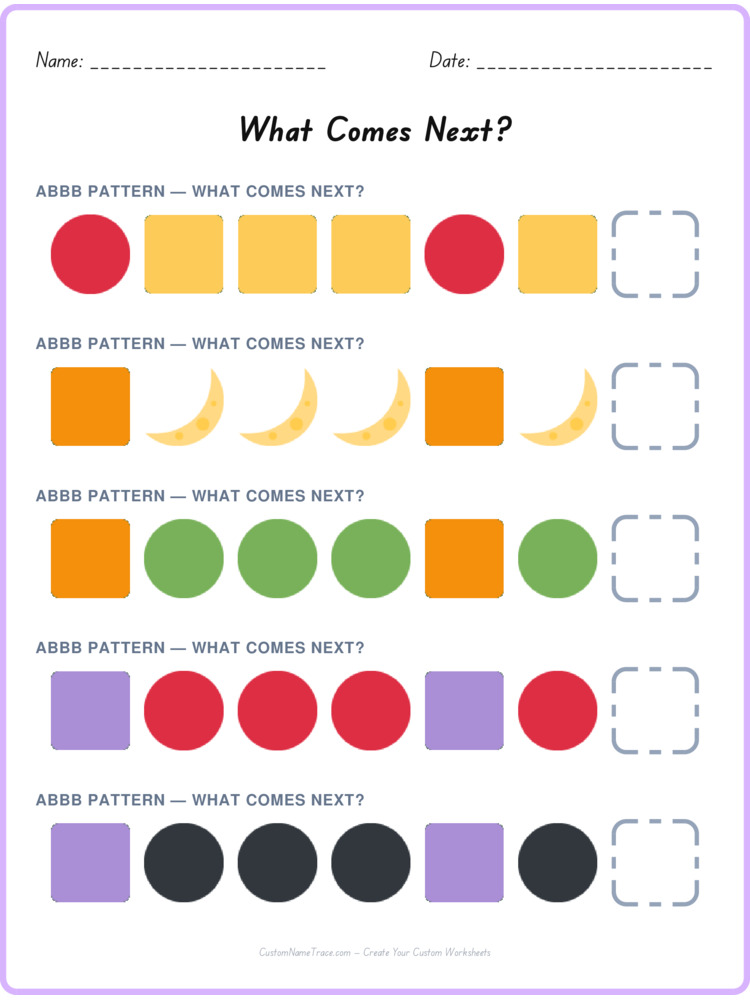
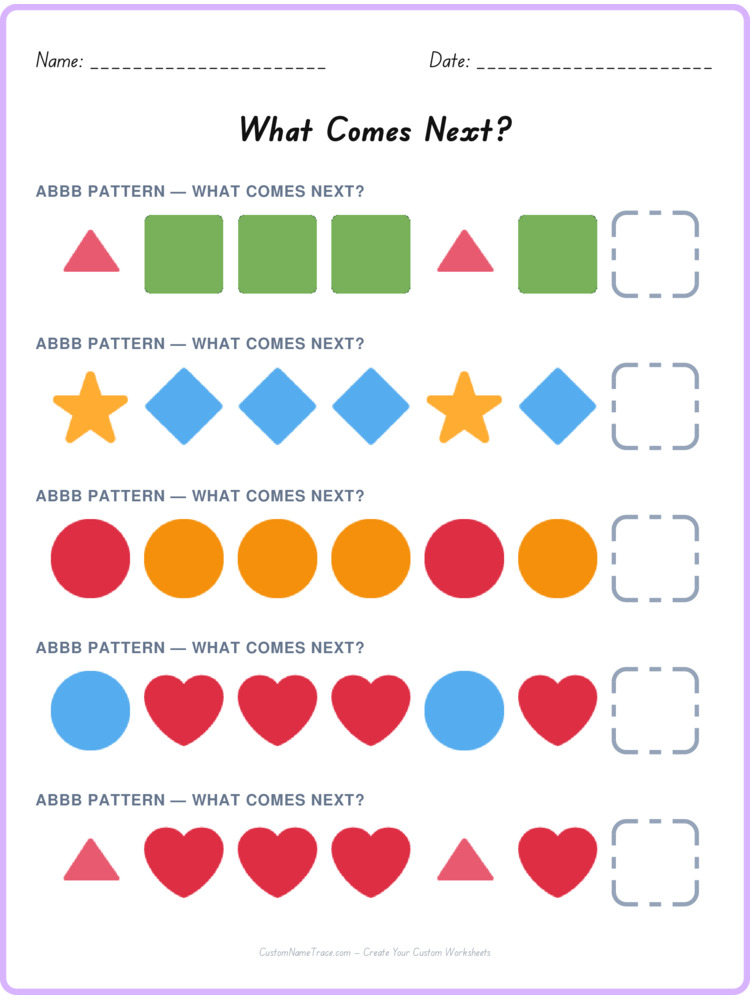
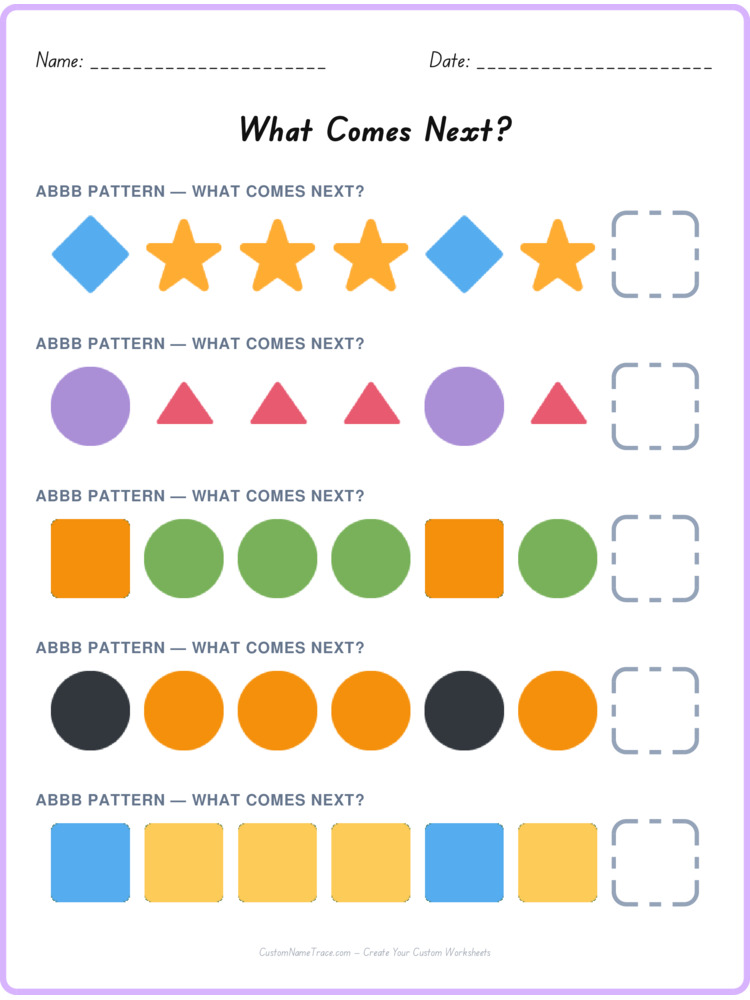
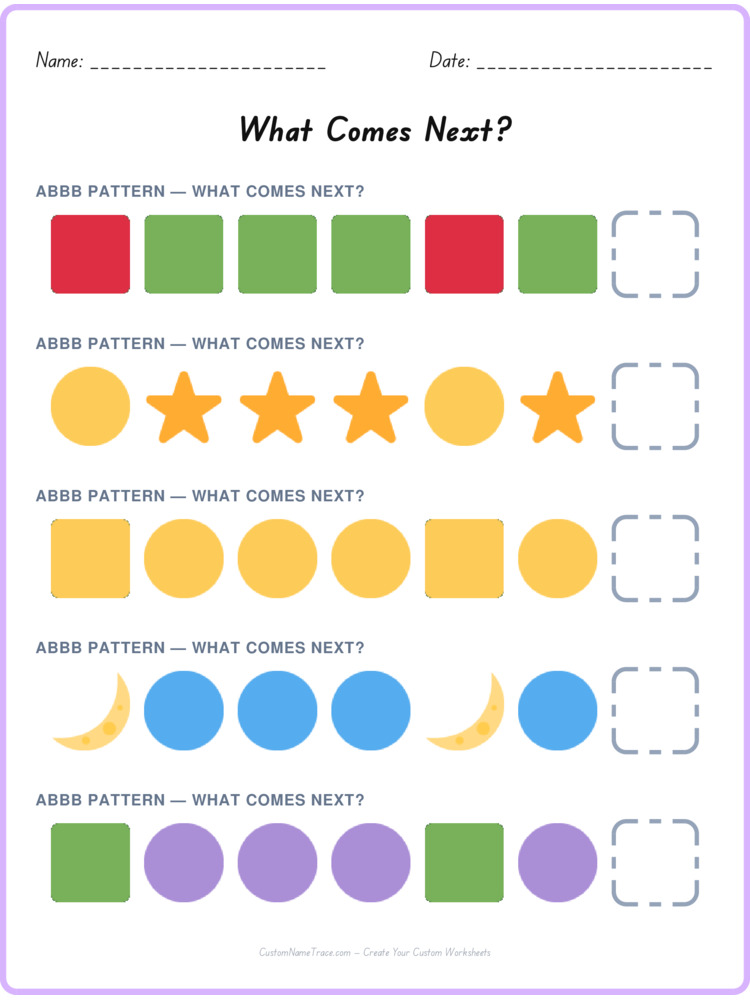
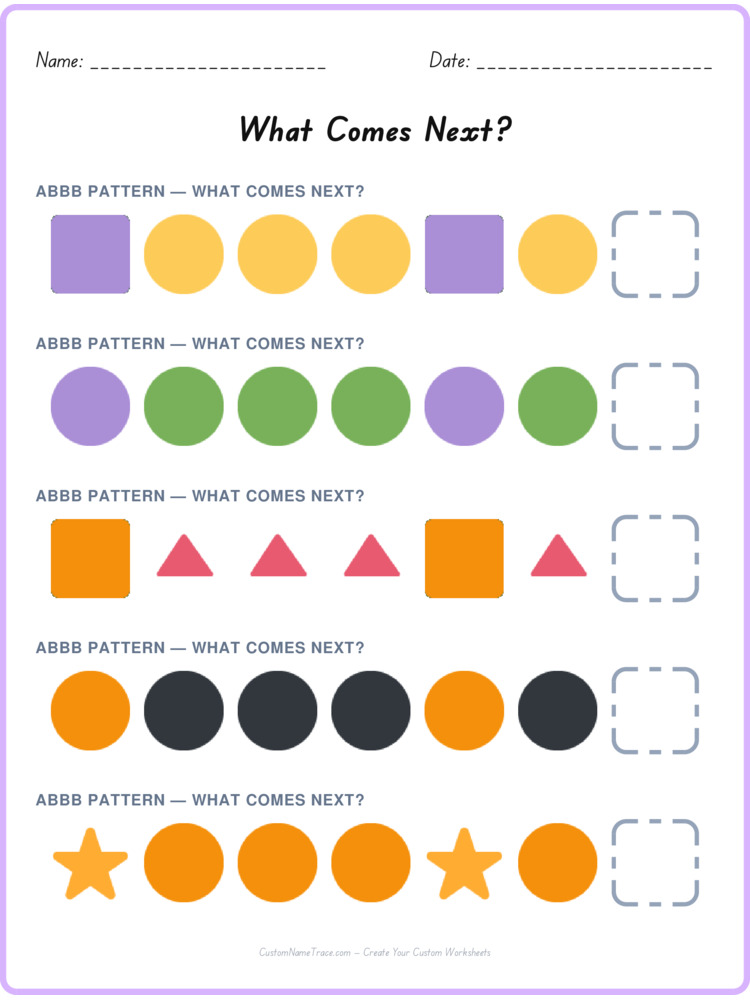
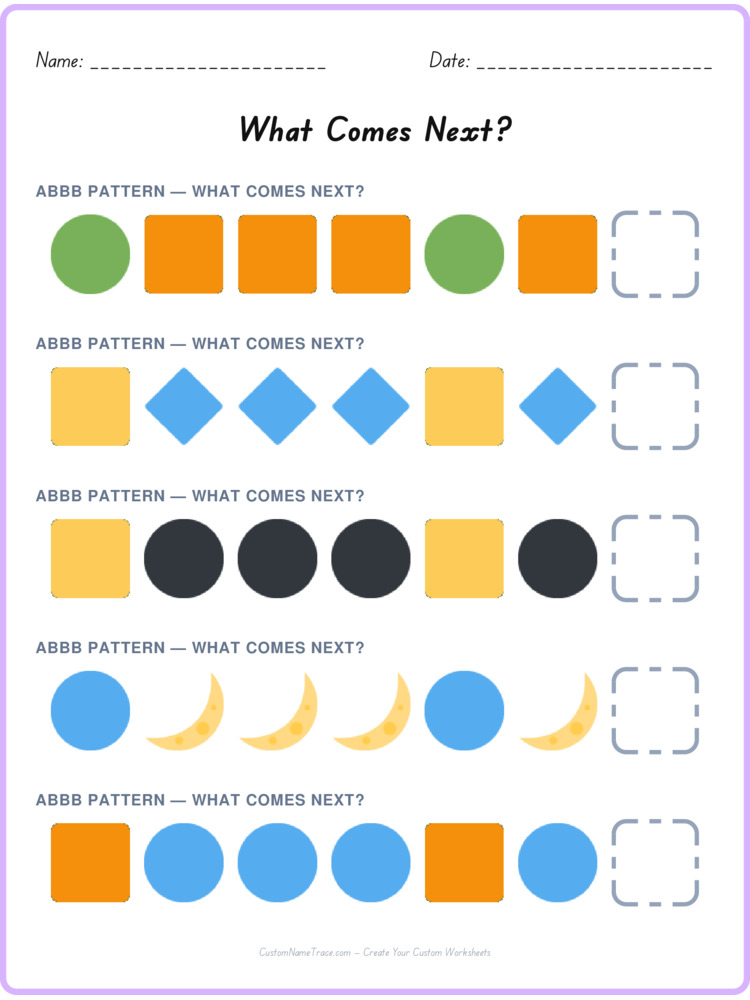
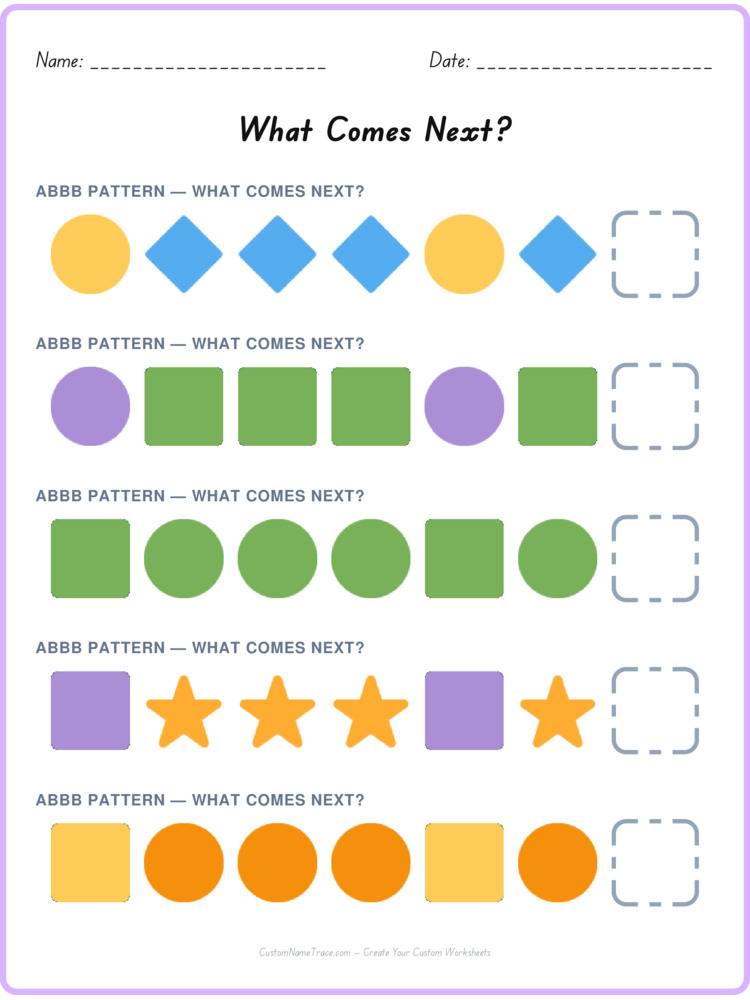
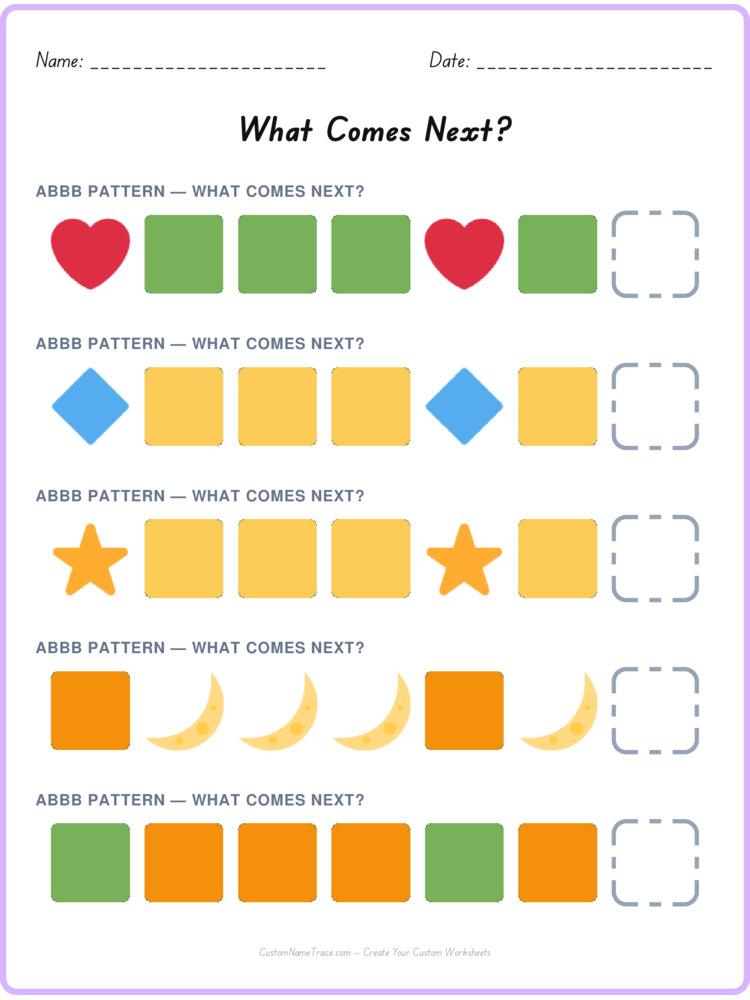
One, then three of another
ABBB flips the structure of AAAB around — instead of three repeats followed by a single switch, this pattern opens with a single icon and then holds a second icon for three consecutive positions before starting over. A child has to notice the switch happens right away, immediately after the very first icon, rather than after a longer stretch of sameness.
This asks for a slightly different kind of attention than AAAB — watching closely from the very start of each unit, since the switch point (right after position one) comes much sooner than a child might expect if they're used to patterns that repeat for a while before changing.
A strategy for tracking the longer stretch
Counting out loud through the three repeated positions — "switch, one, two, three, switch again" — gives a child a concrete way to know when the next change is actually due, the same counting strategy used for AAAB but applied to the second icon in the unit rather than the first. Noticing that the single icon always comes right after a switch, never in the middle of a repeated stretch, is the specific landmark worth pointing out explicitly.
A child who treats this as a simple back-and-forth pattern will predict a switch too early, after just one repeat of the second icon rather than three — that specific, consistent mistake usually means the three-long stretch hasn't been noticed yet.
Where this leads
Between them, AAAB and ABBB give a child practice with the same three-then-one idea from both directions — repeats first then a switch, or a switch first then repeats — which builds a more complete, flexible sense of tracking uneven pattern lengths than either alone.
Every numbered worksheet uses a fresh pair of icons testing this identical structure.
Using this worksheet effectively
Working through the first full unit together, counting each position out loud, builds the tracking habit before letting a child try the rest of the page independently. Every worksheet downloads as a free, print-ready PDF with no account required.