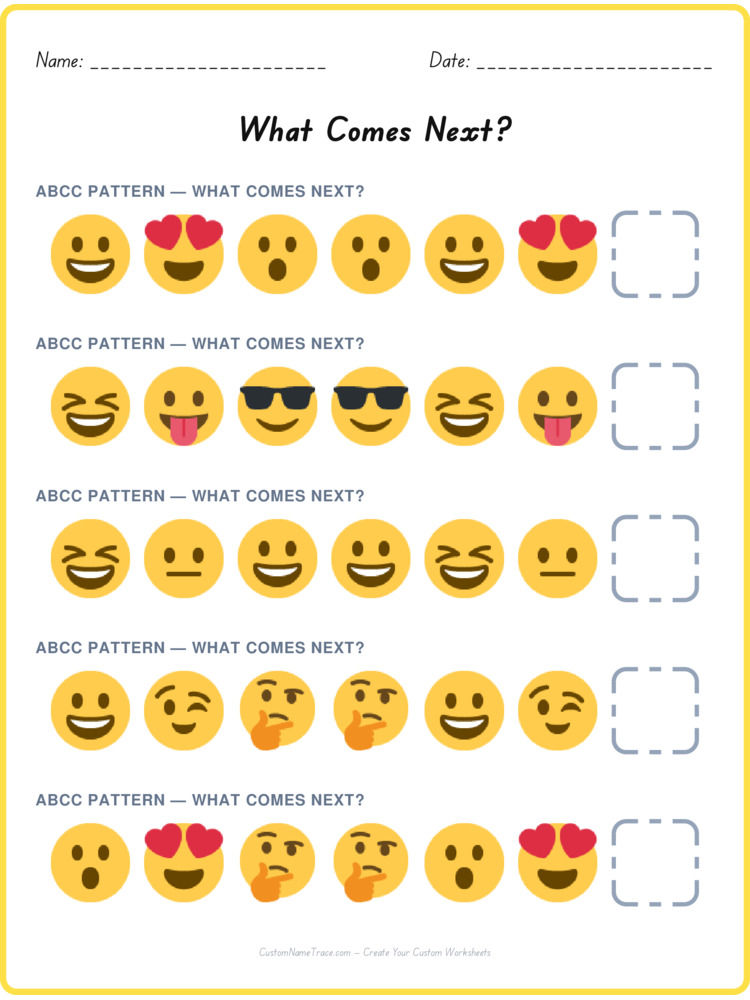
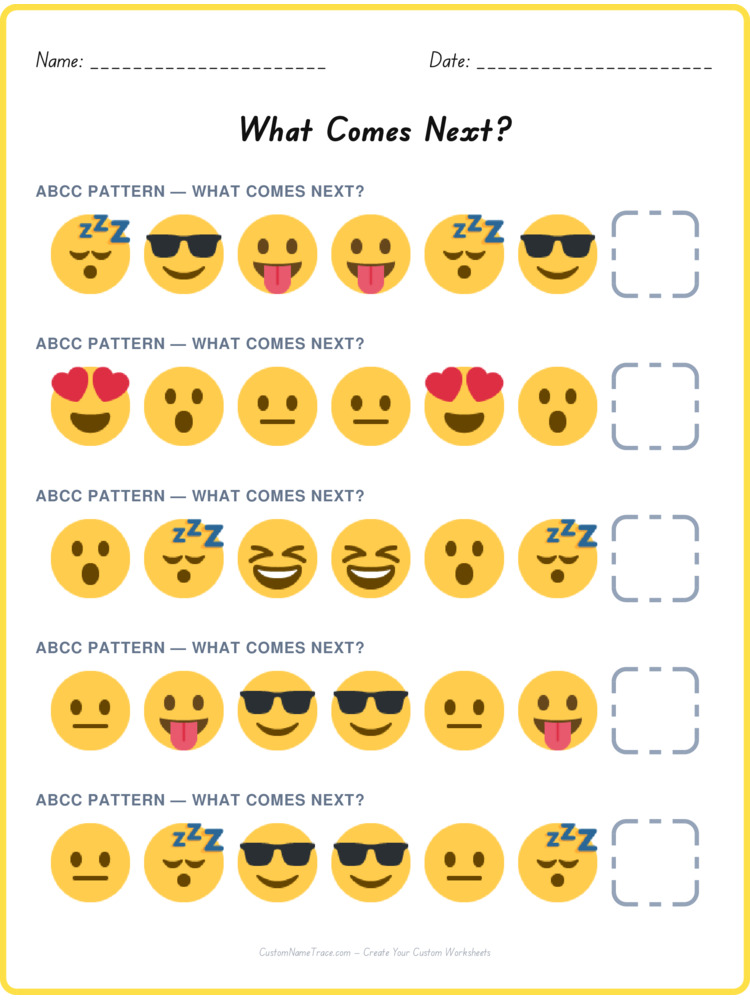
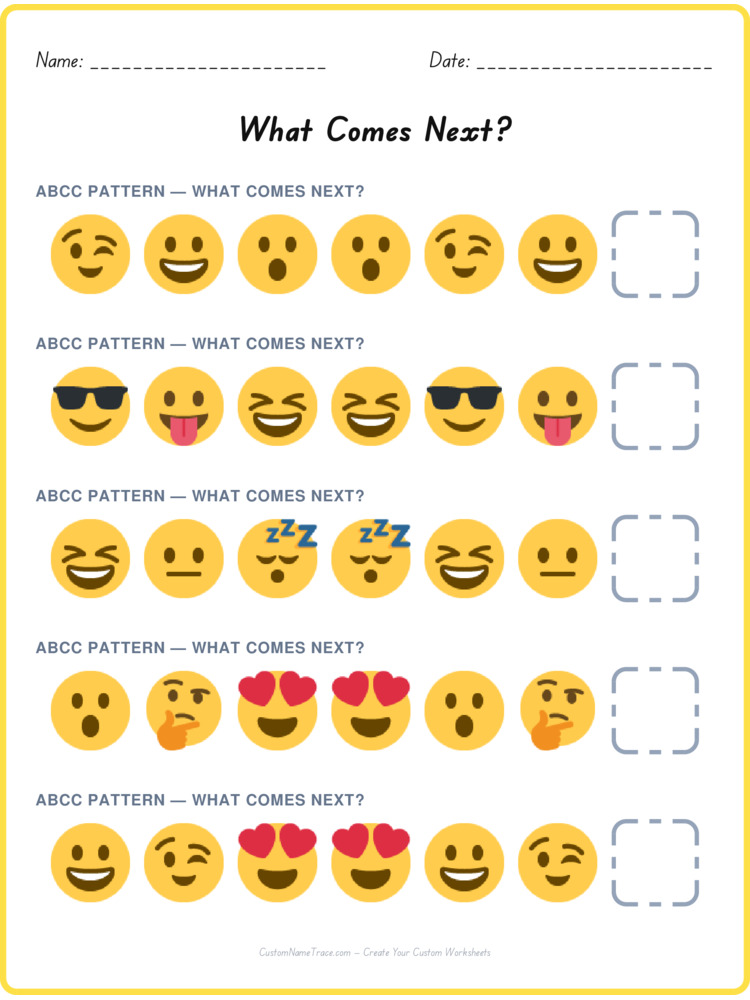
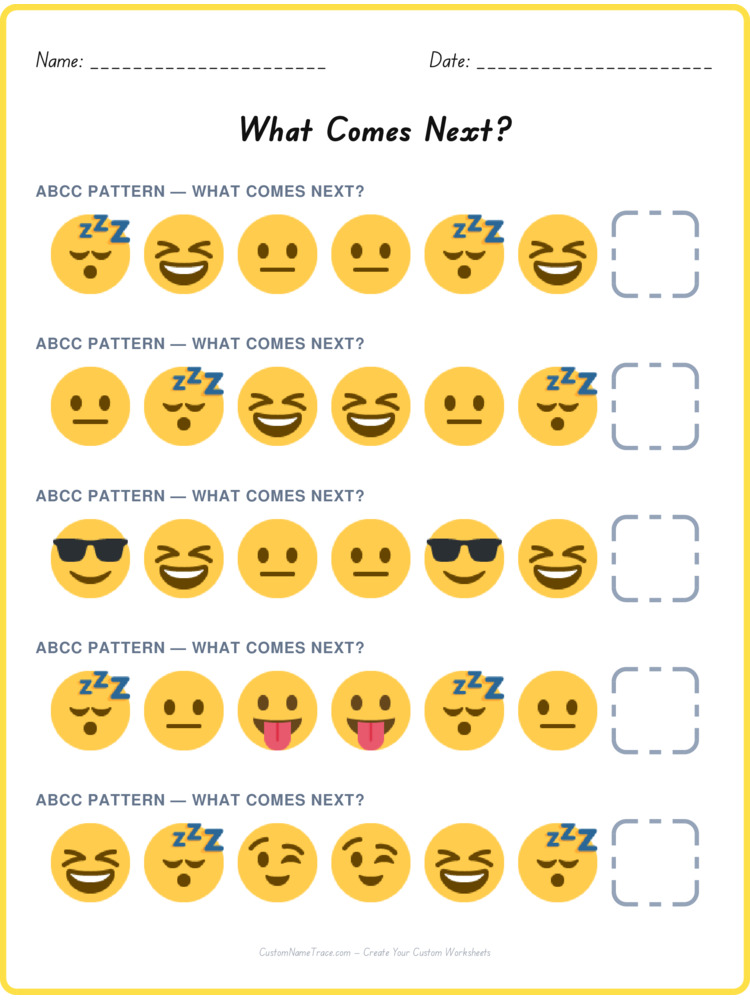
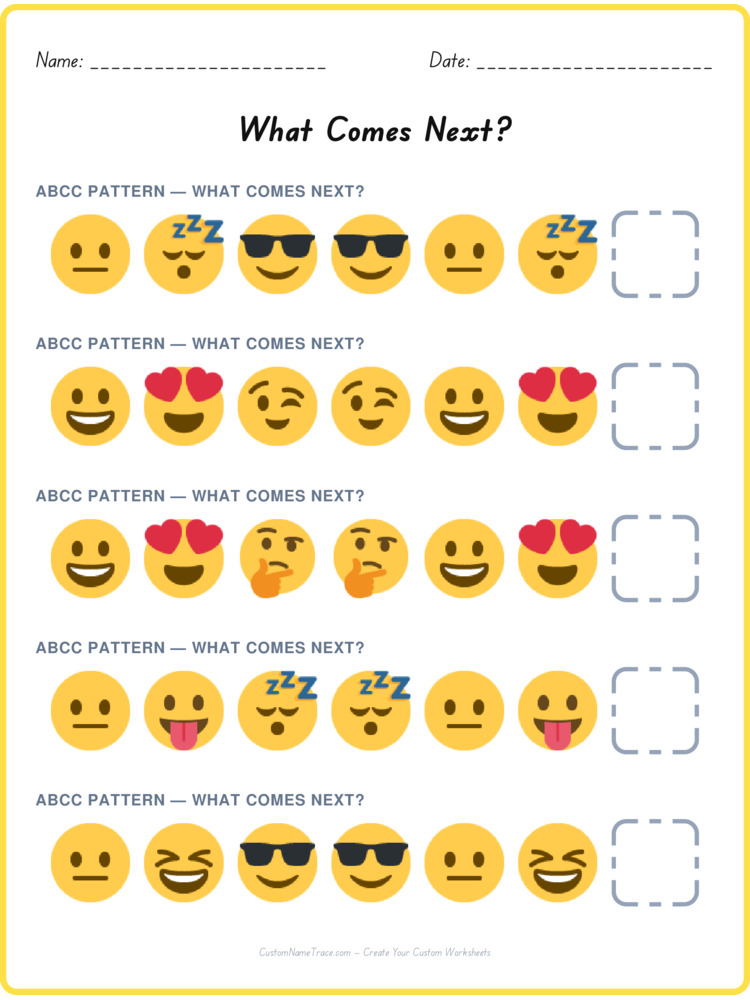
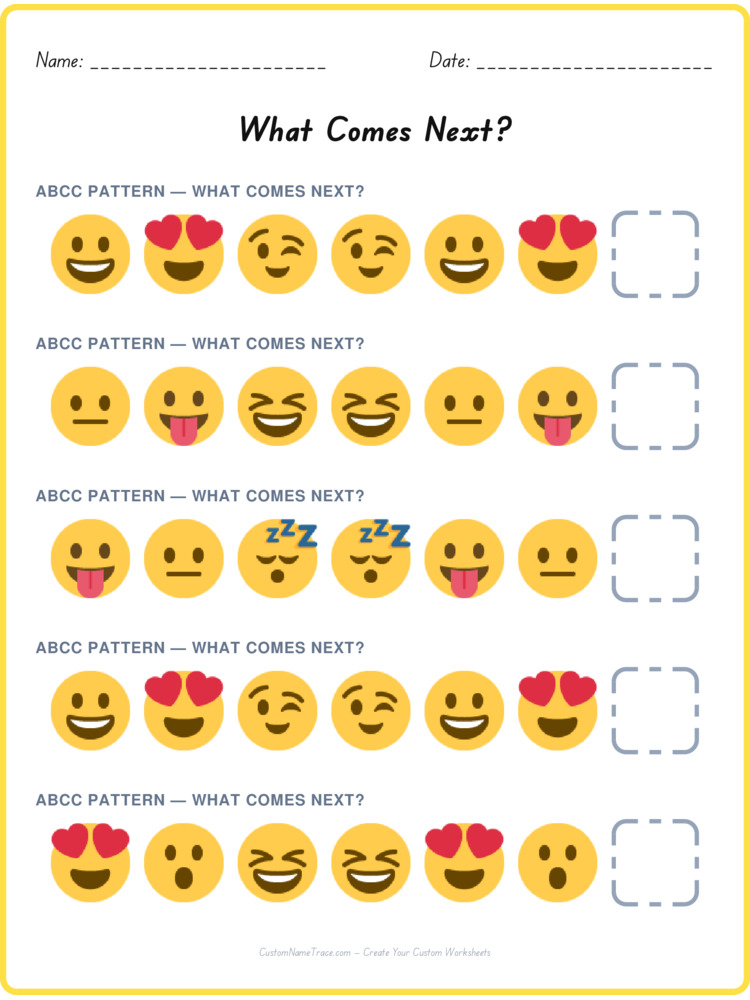
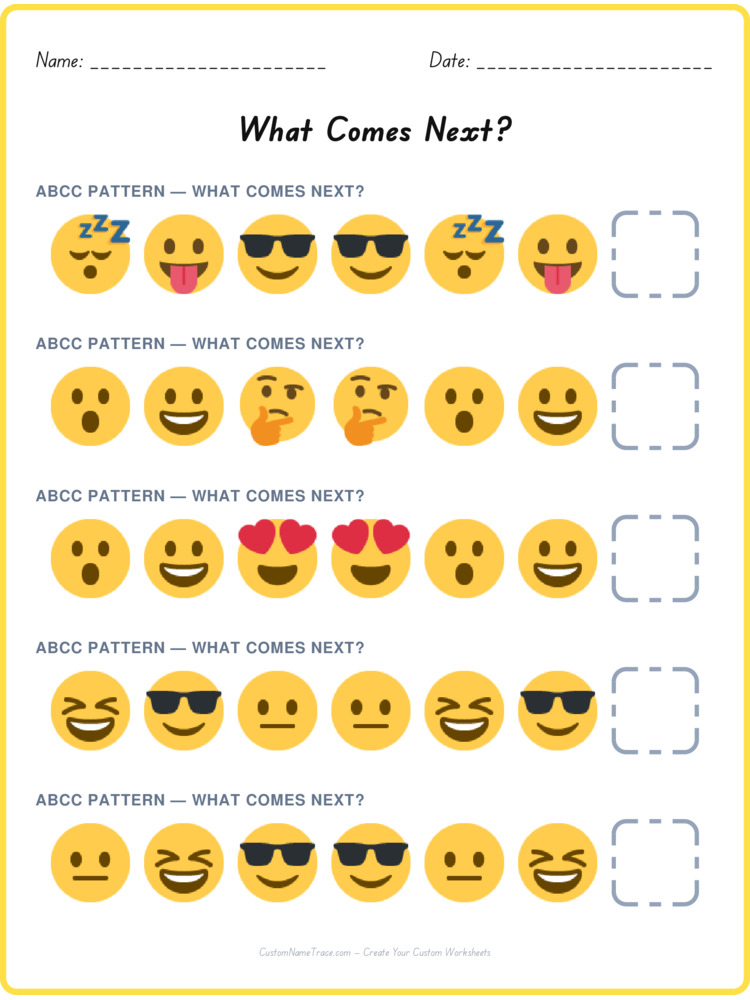
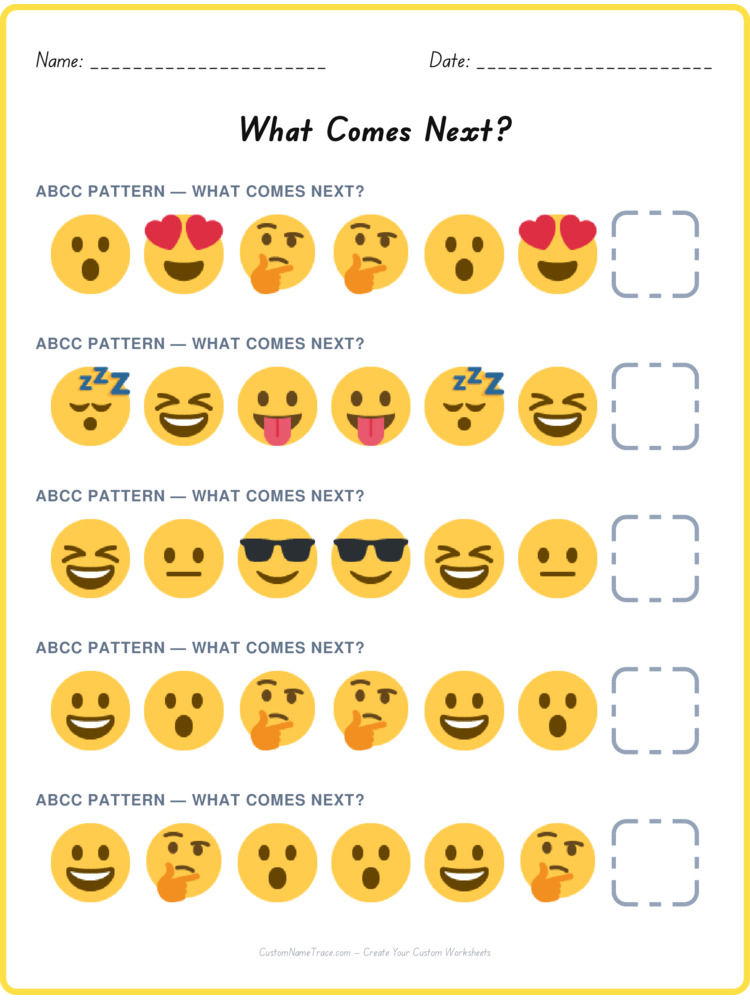
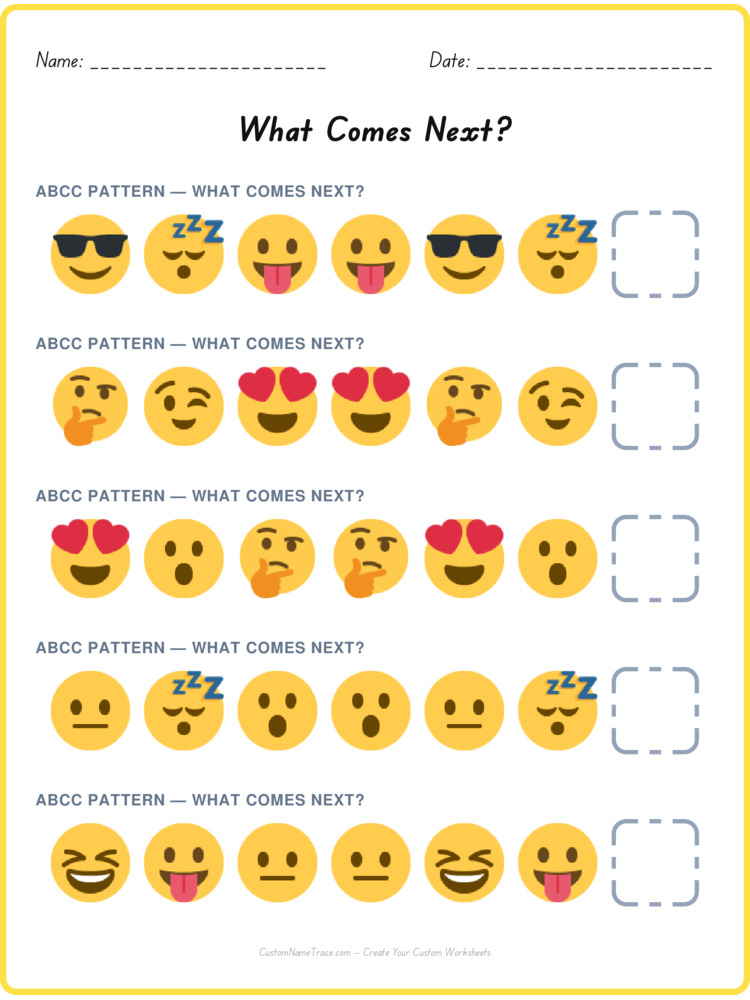
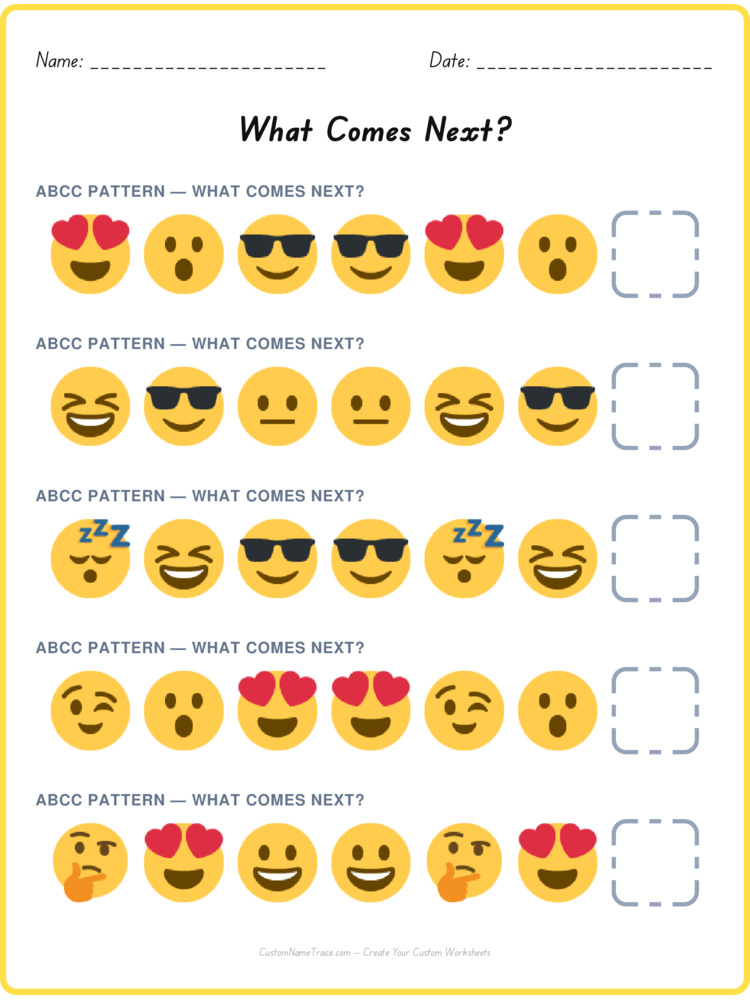
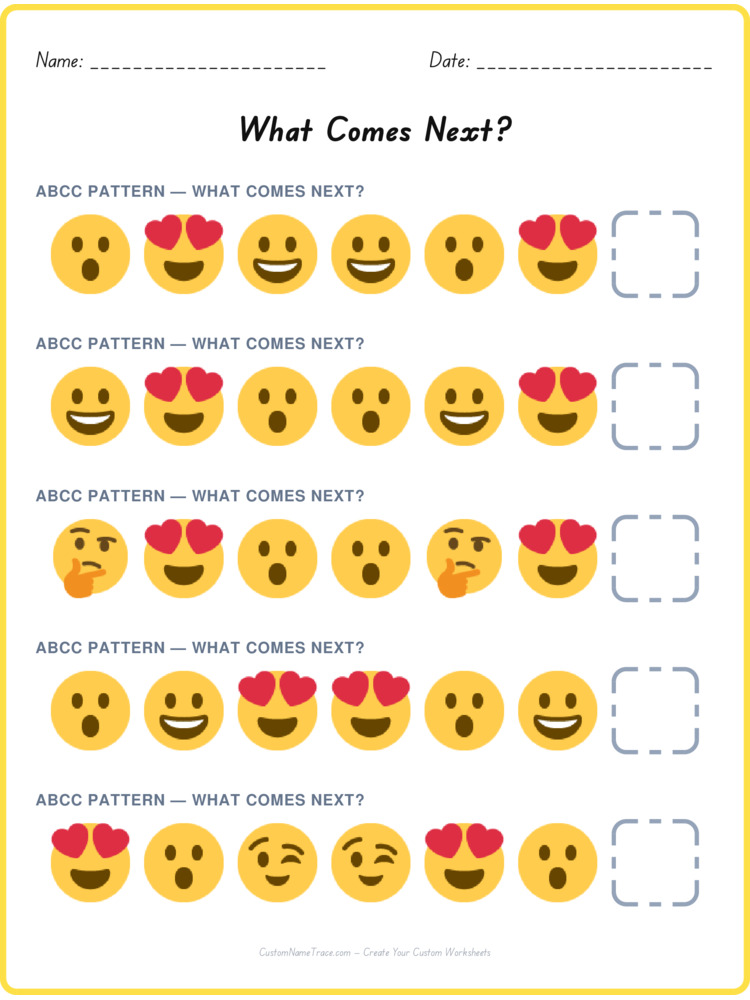
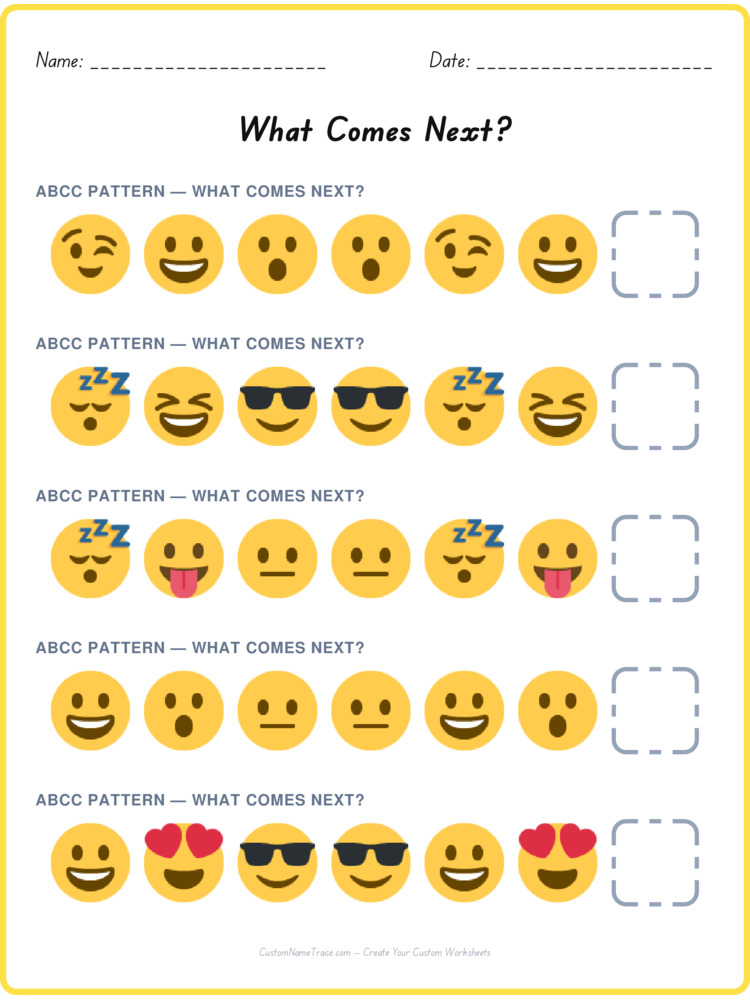
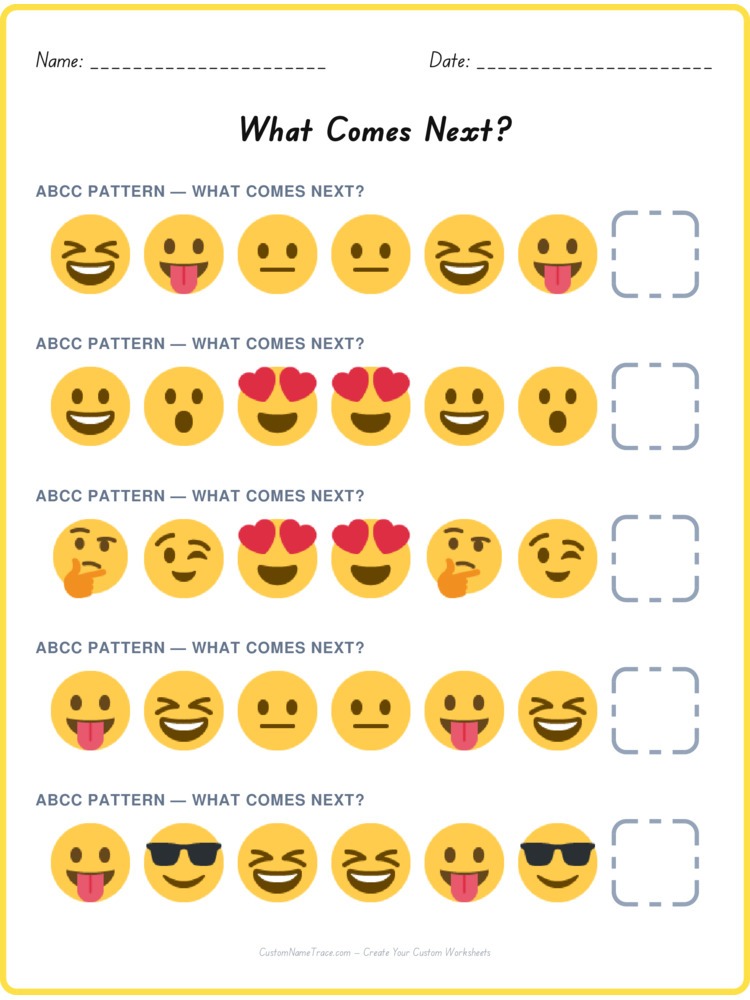
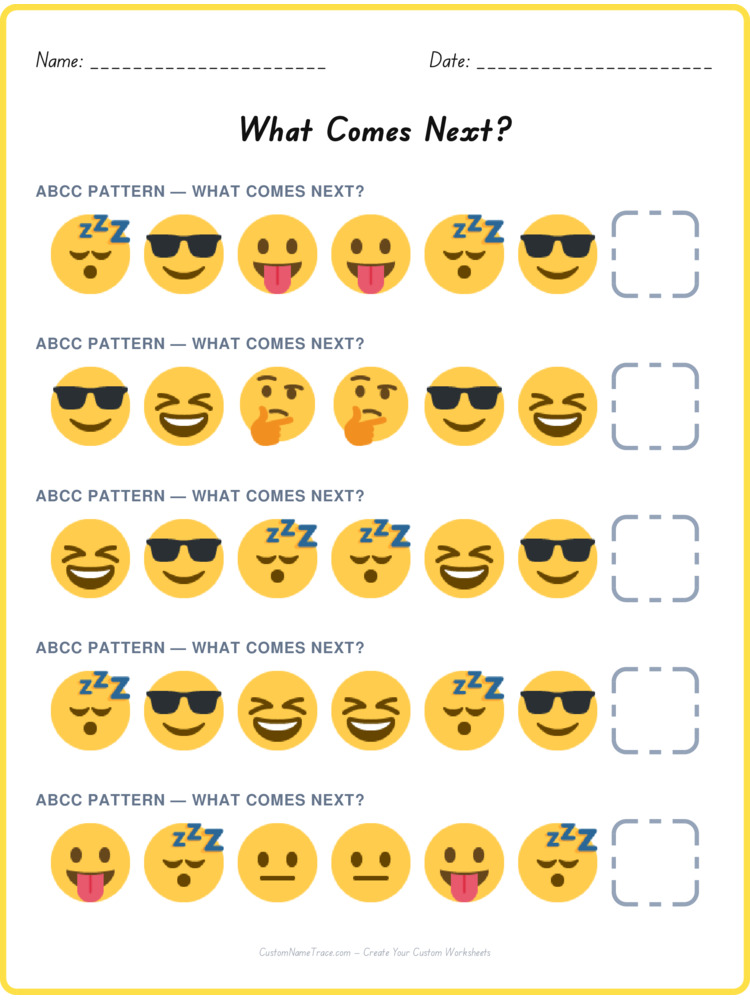
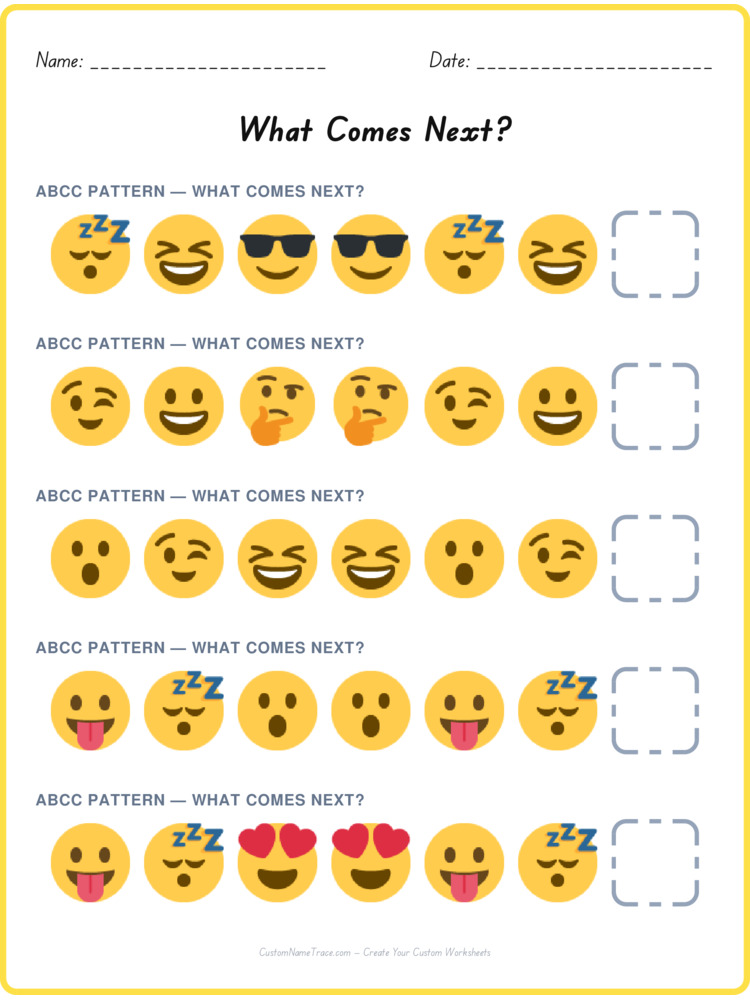
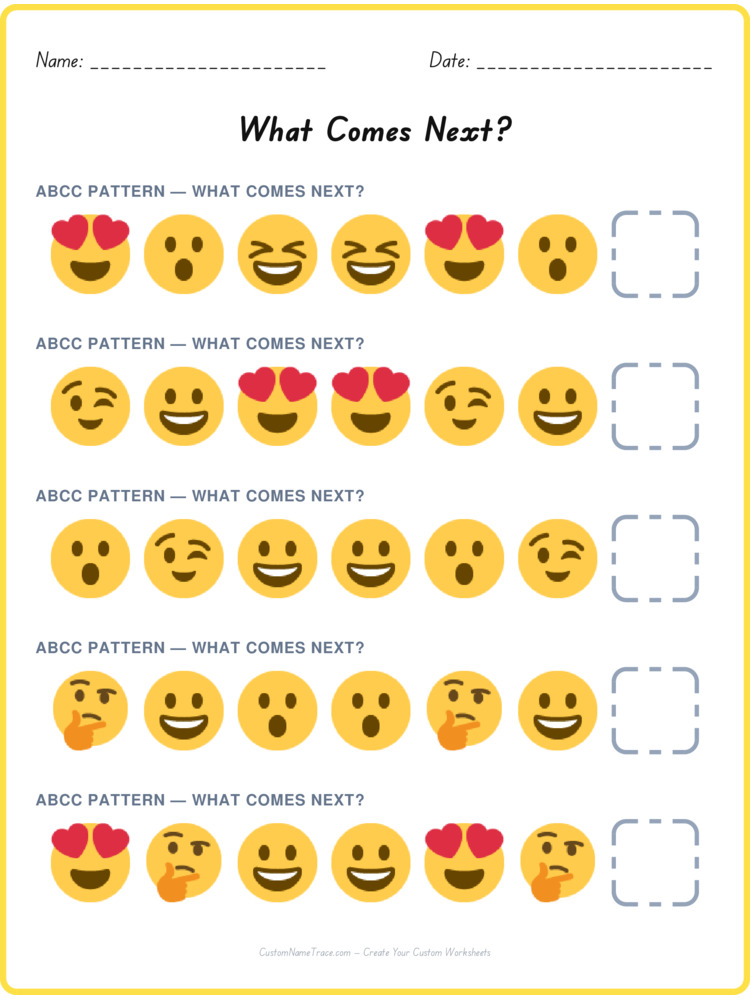
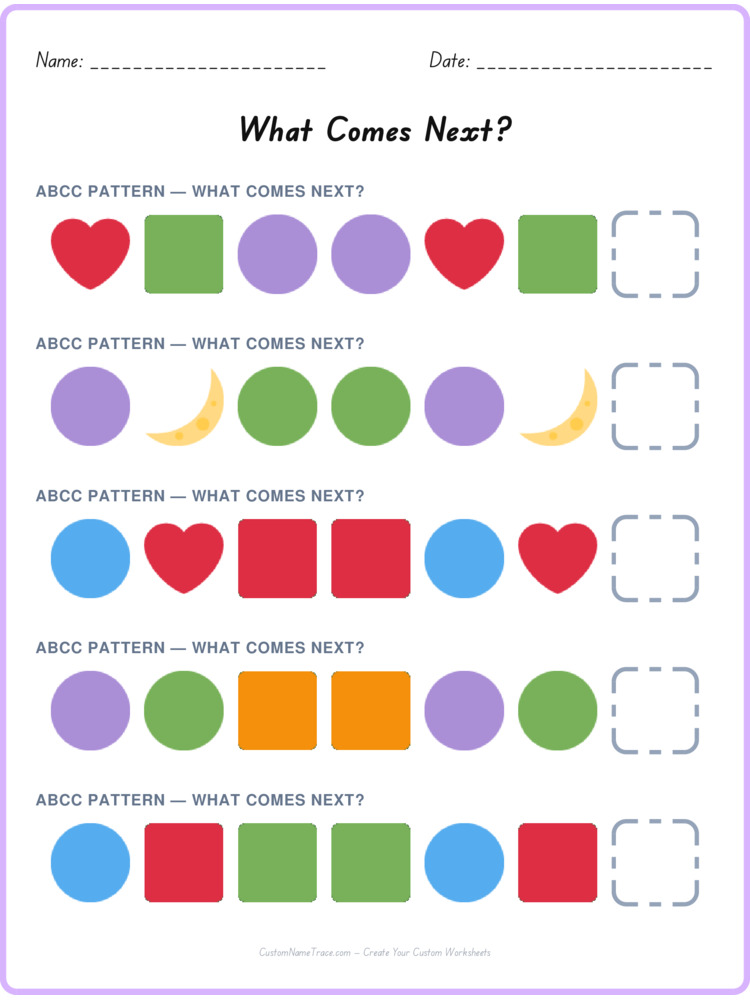
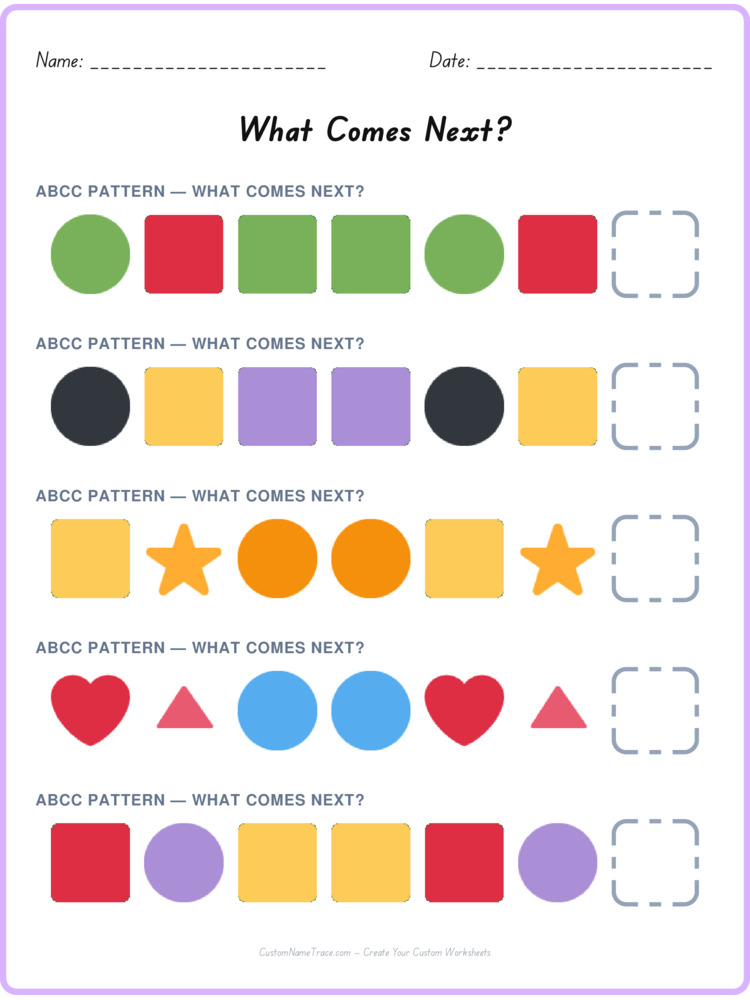
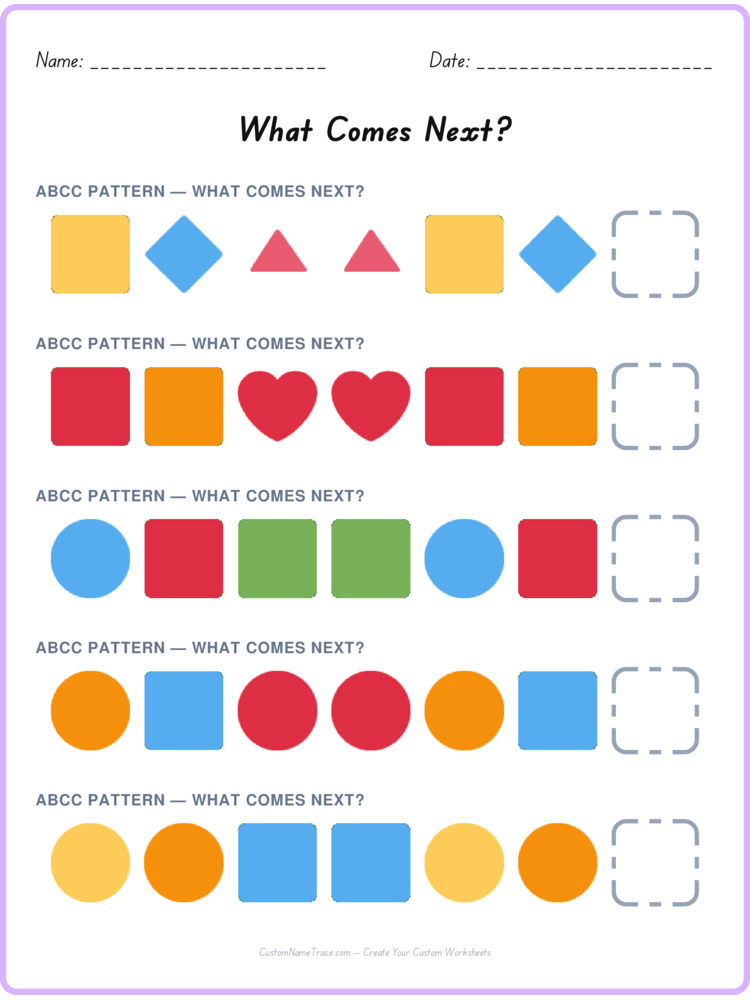
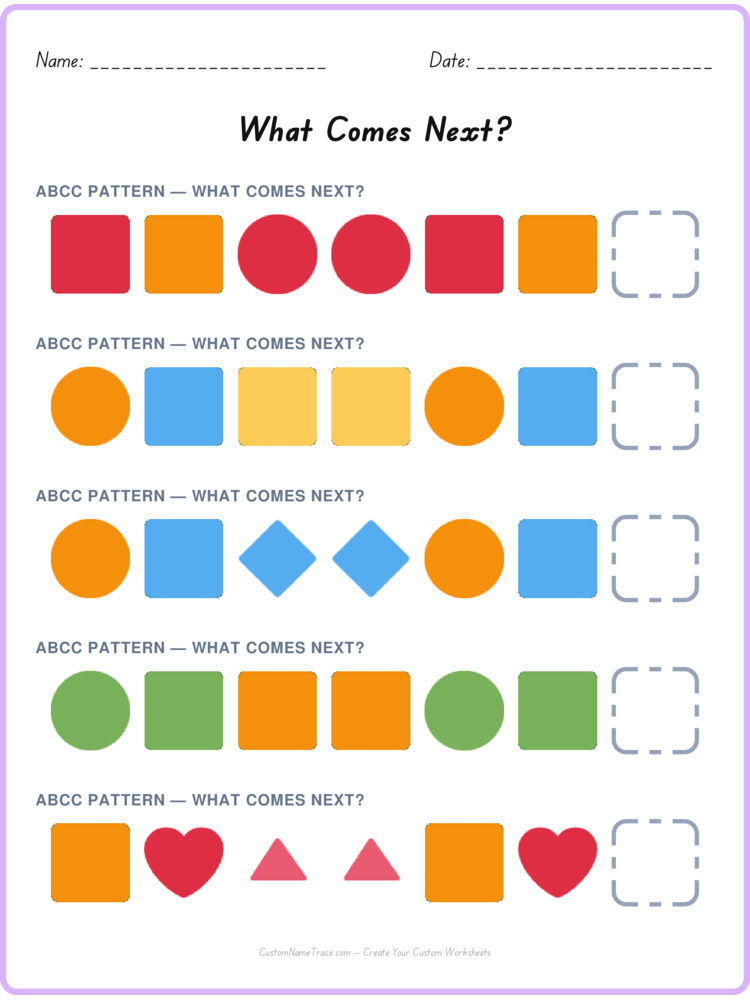
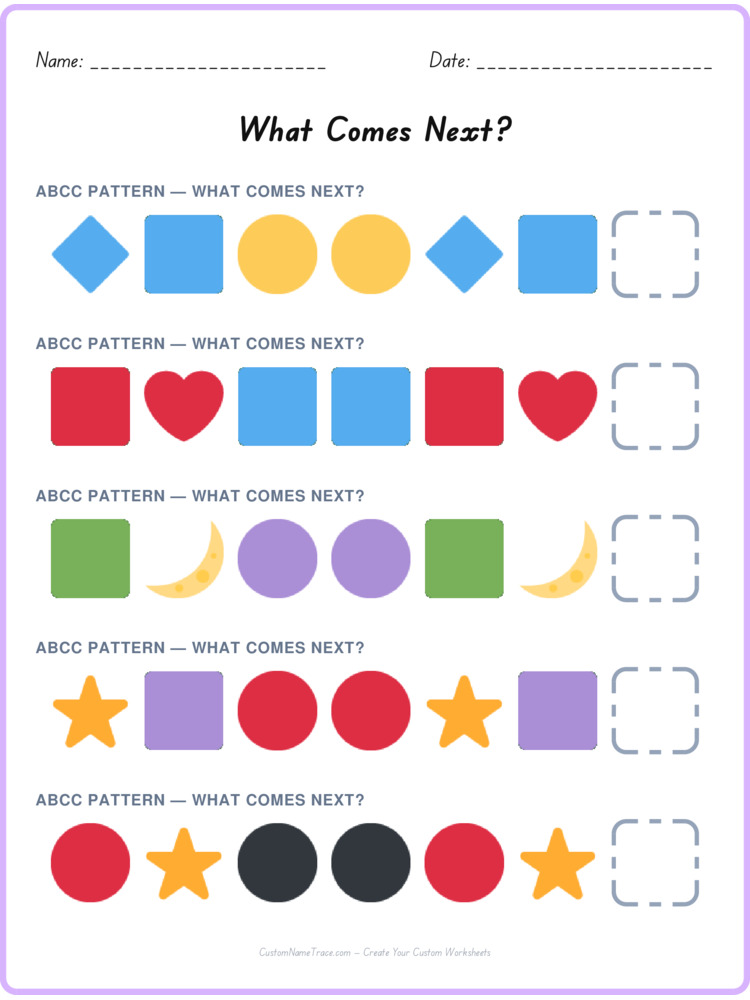
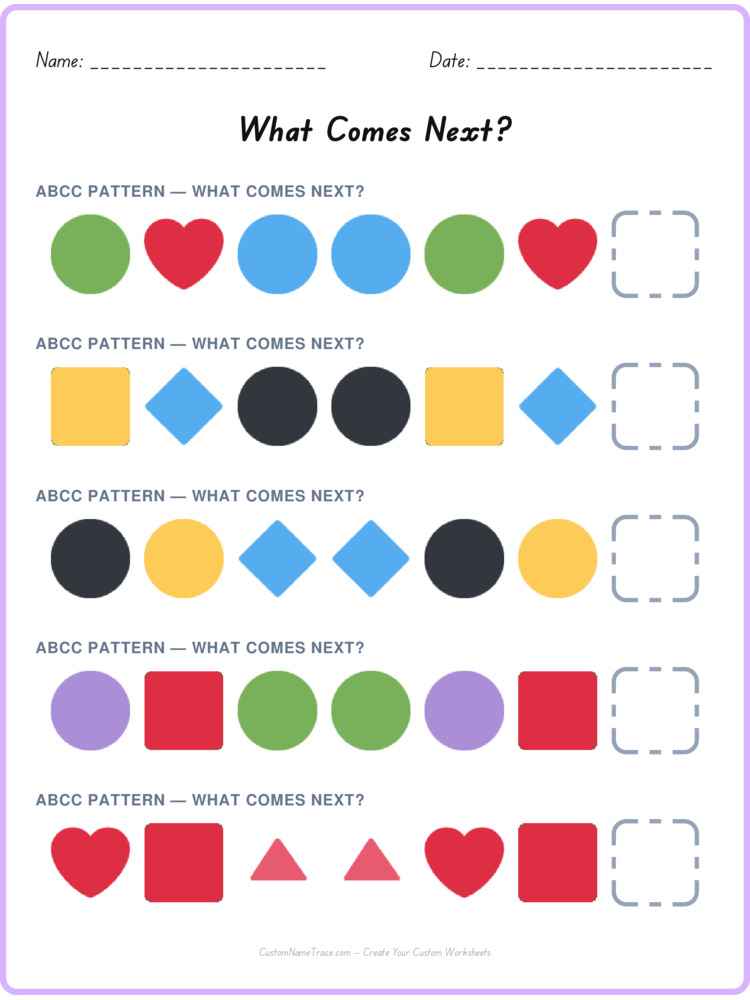
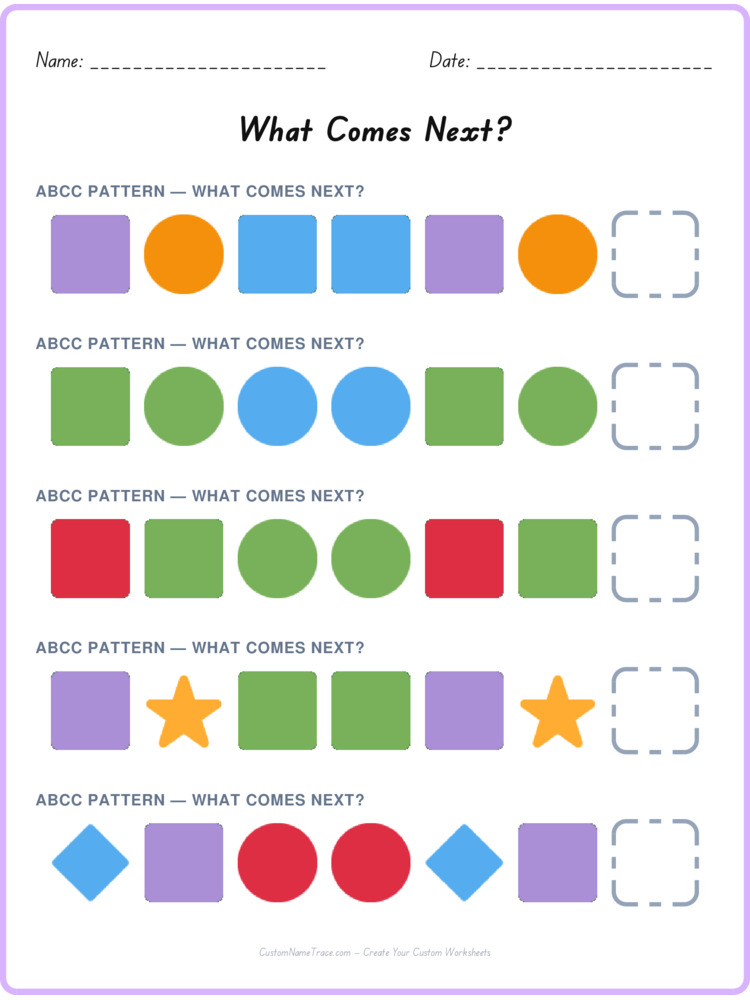
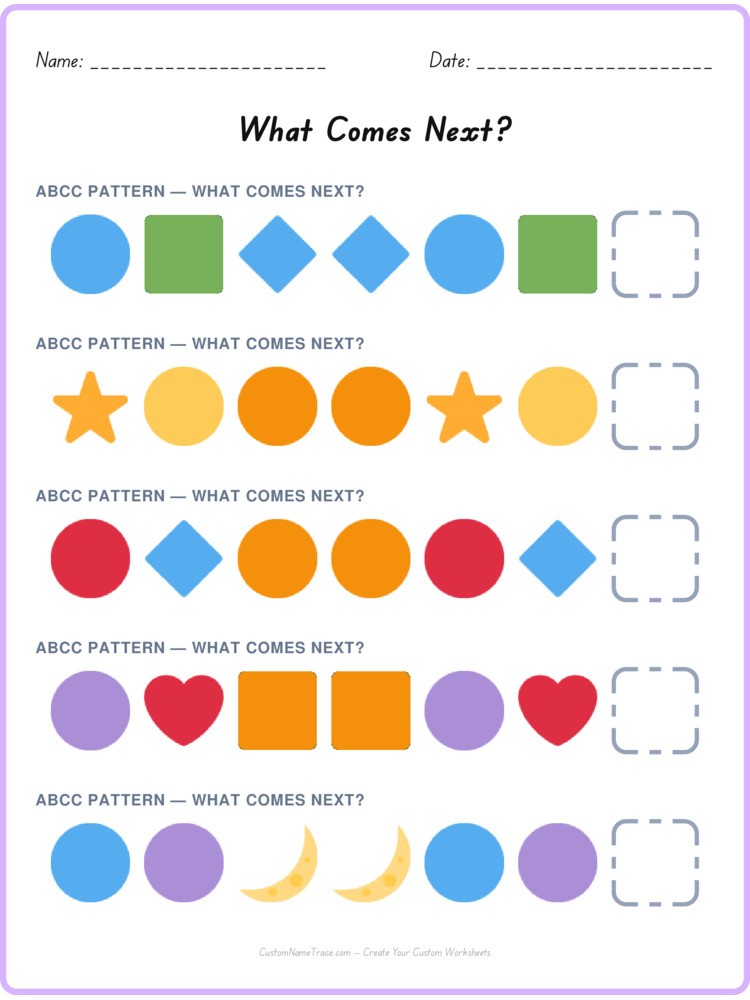
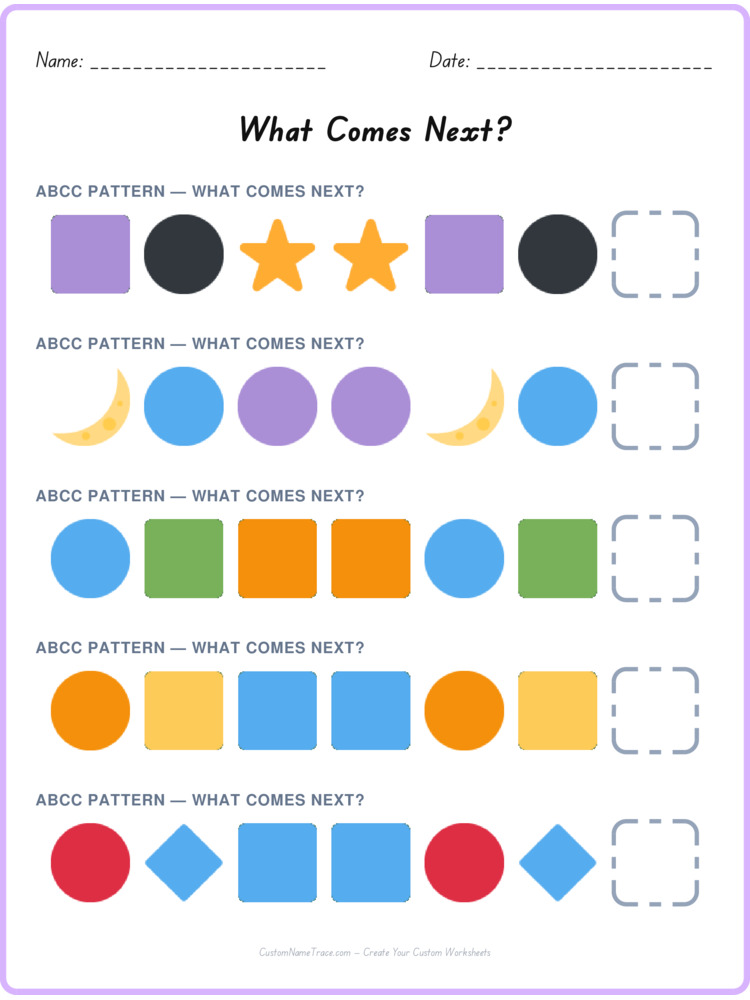
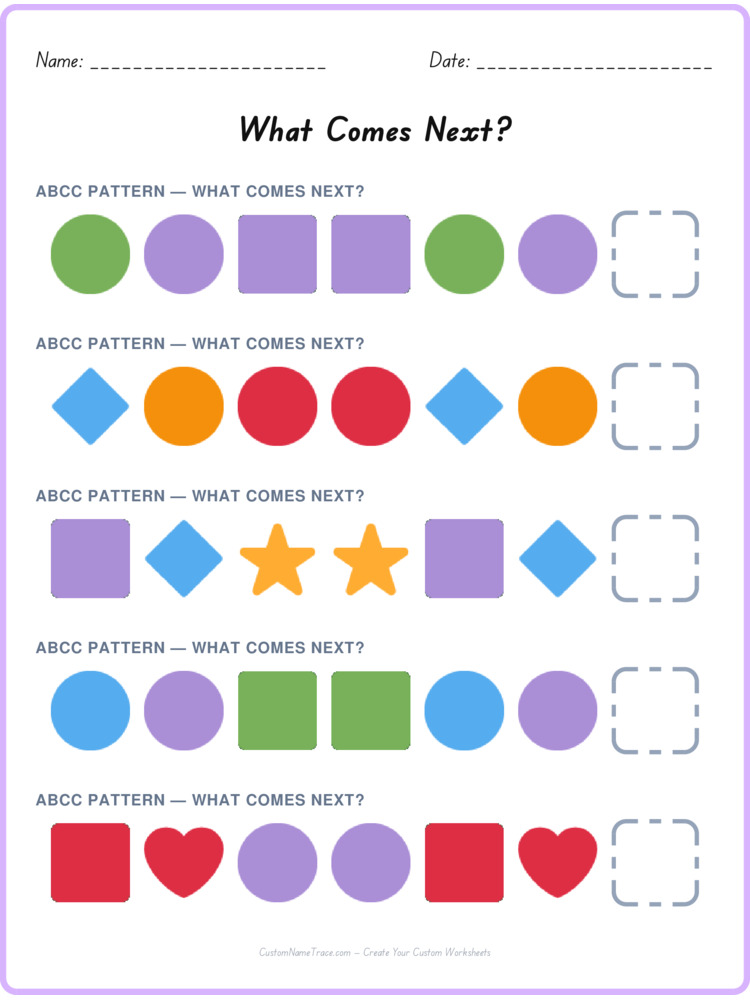
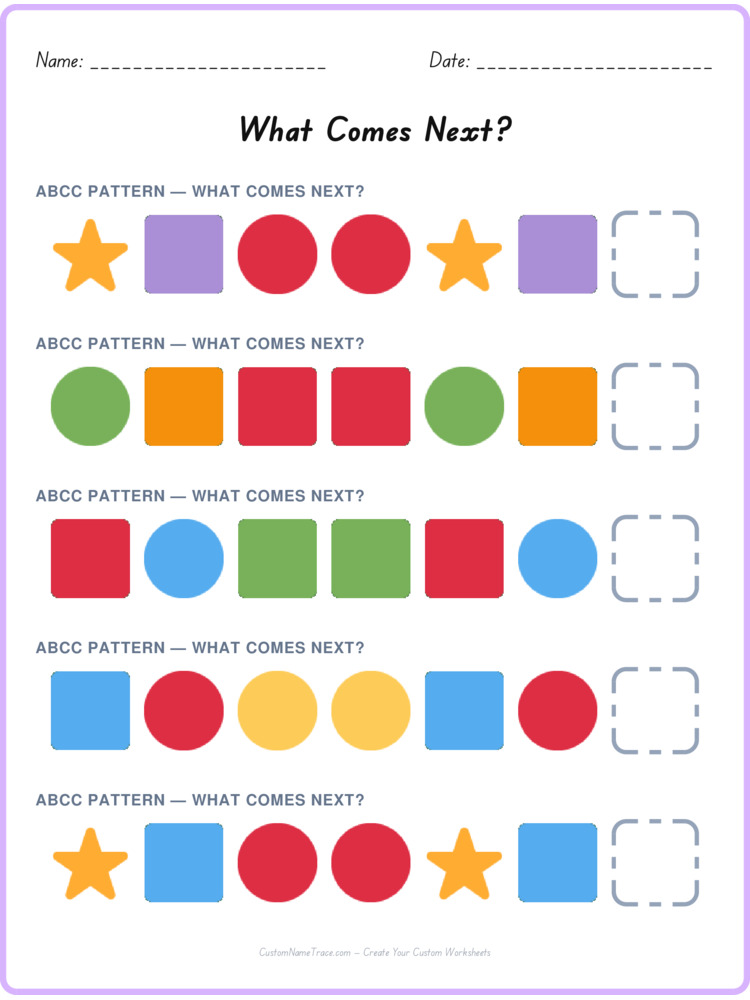
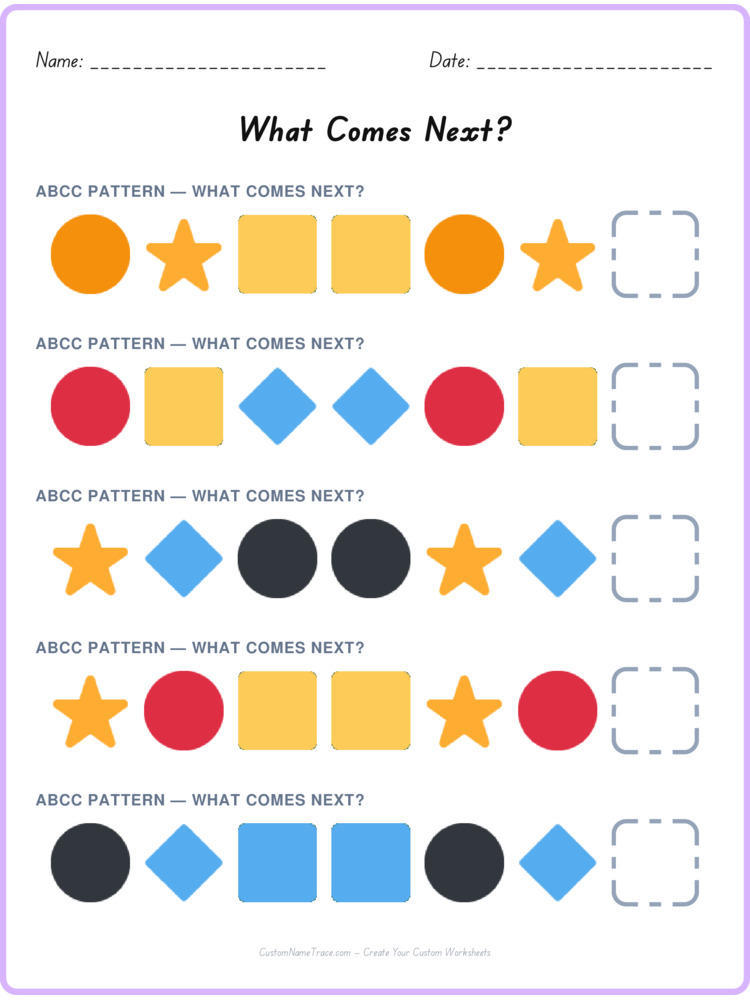
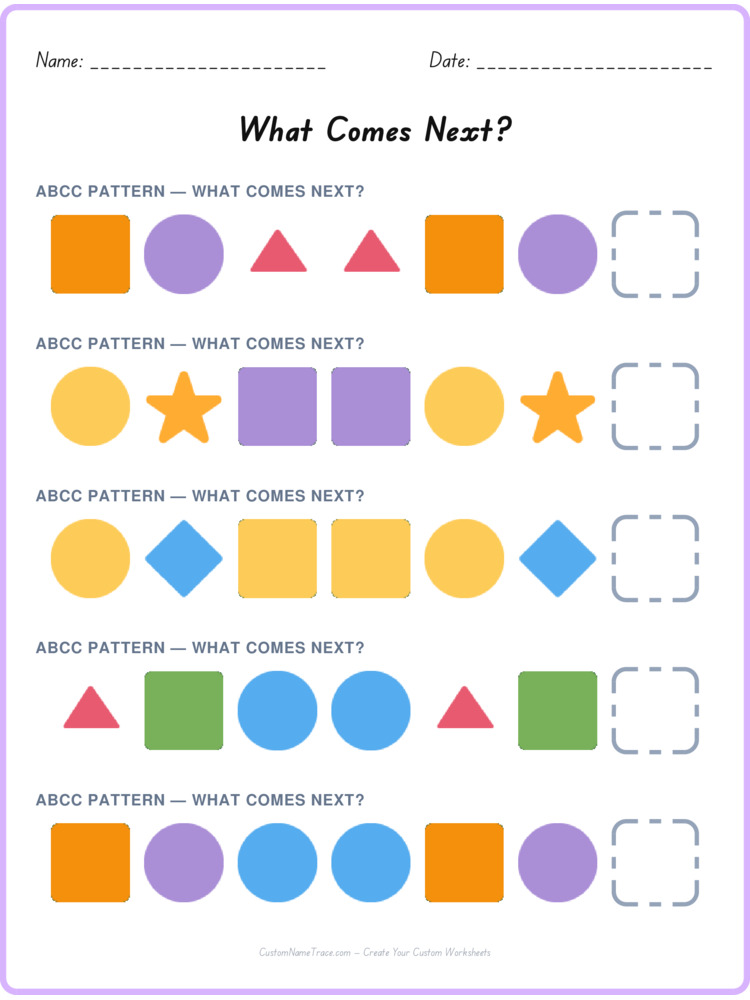
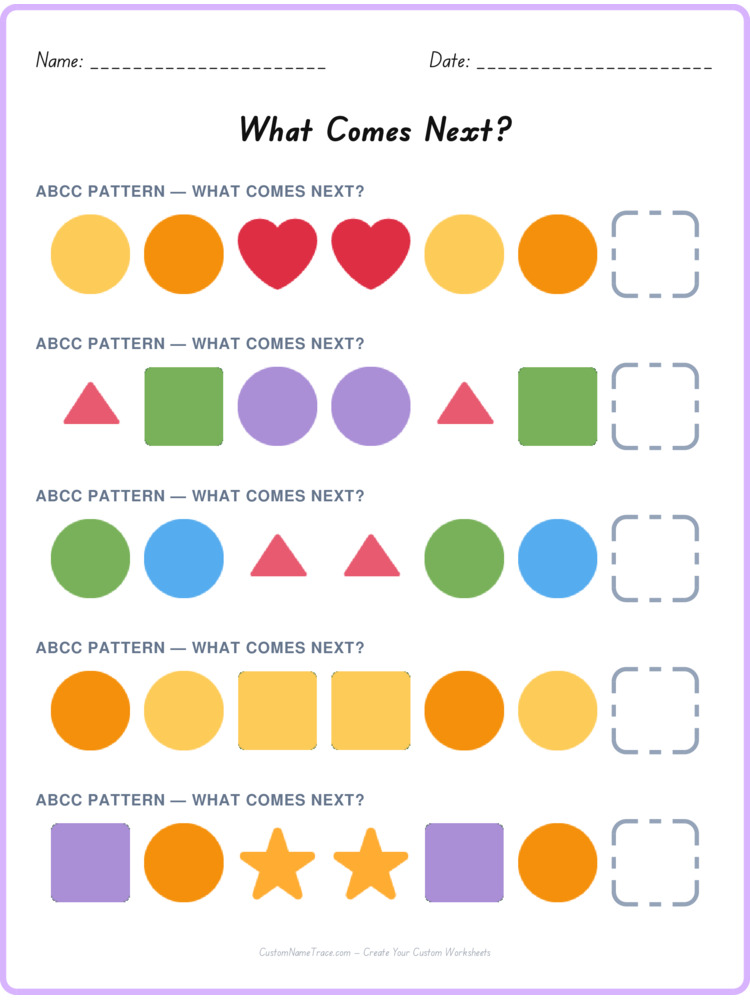
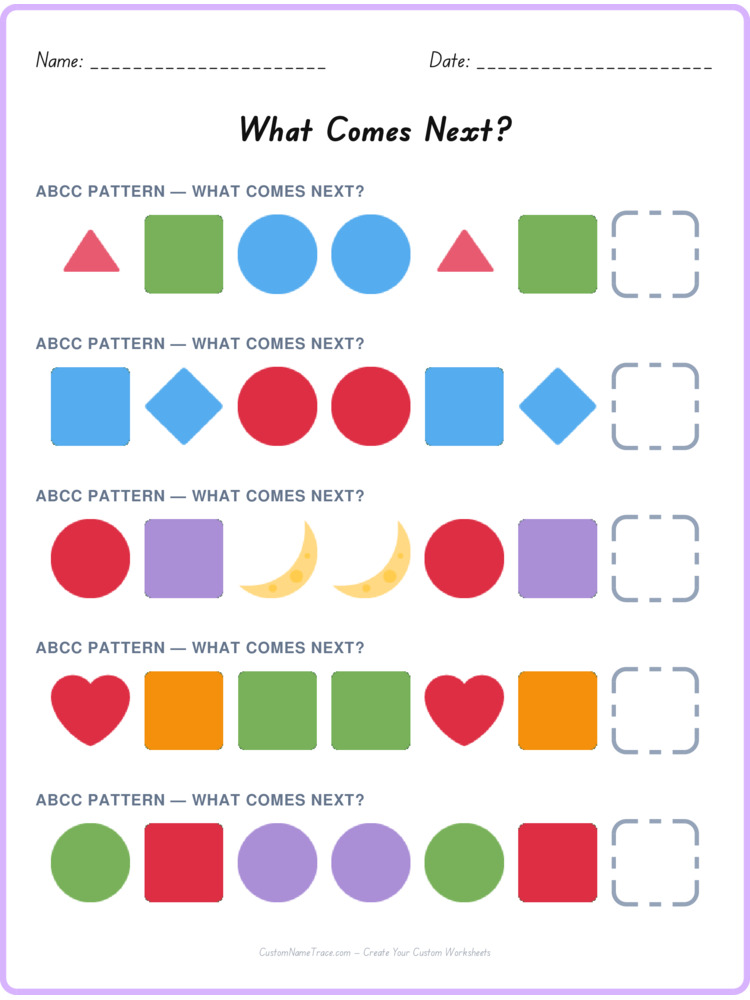
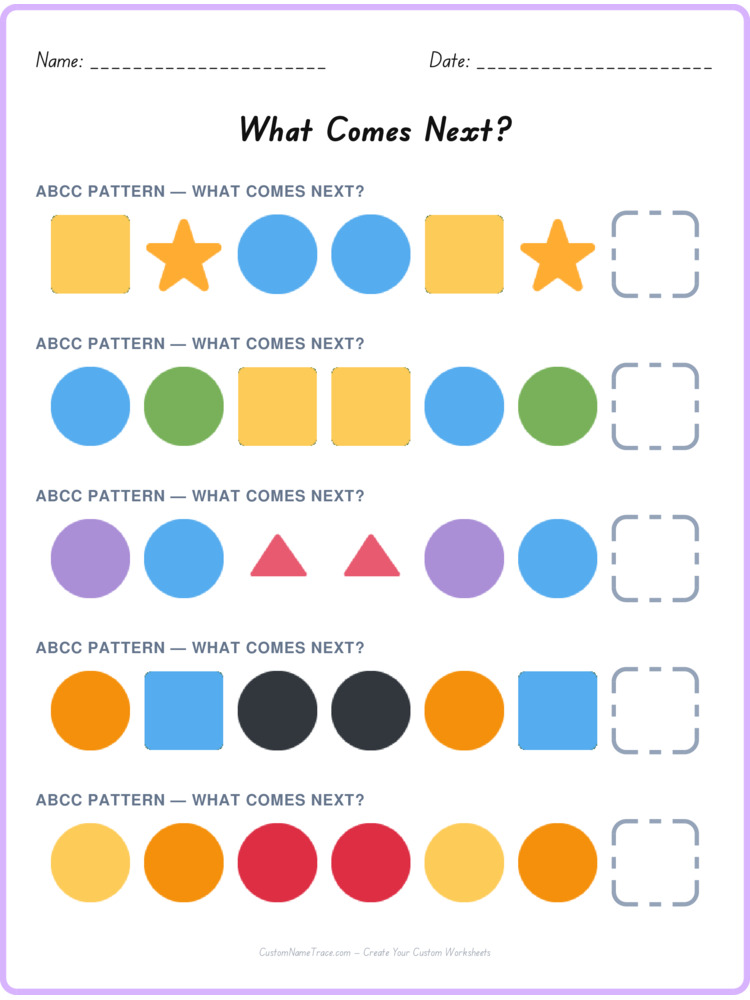
A rotation, then a repeat
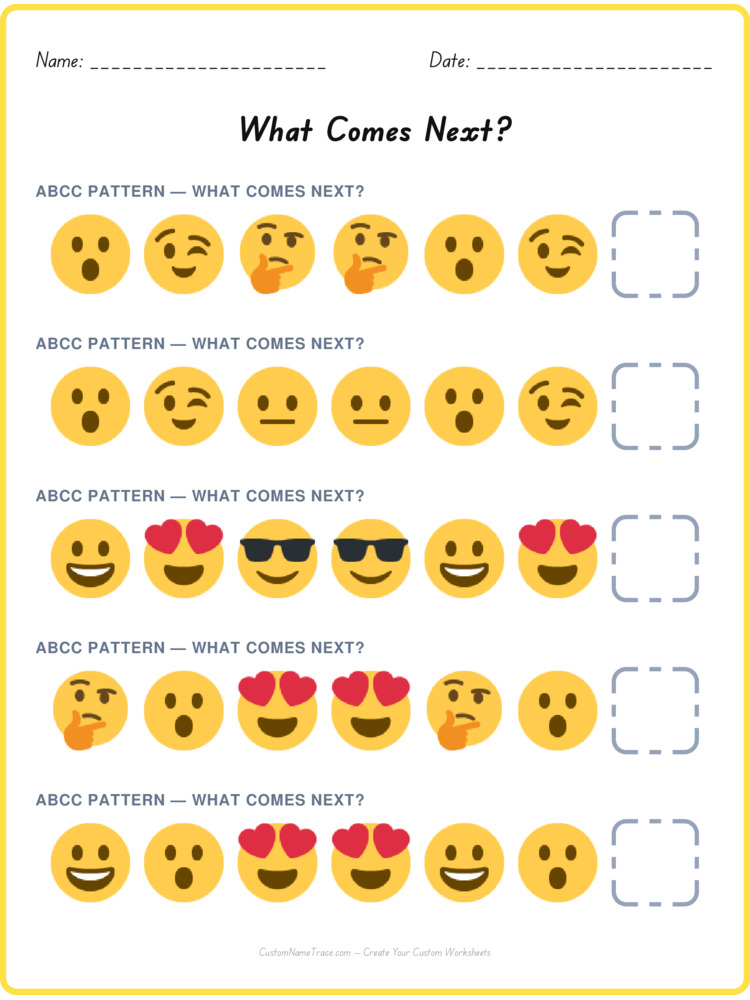
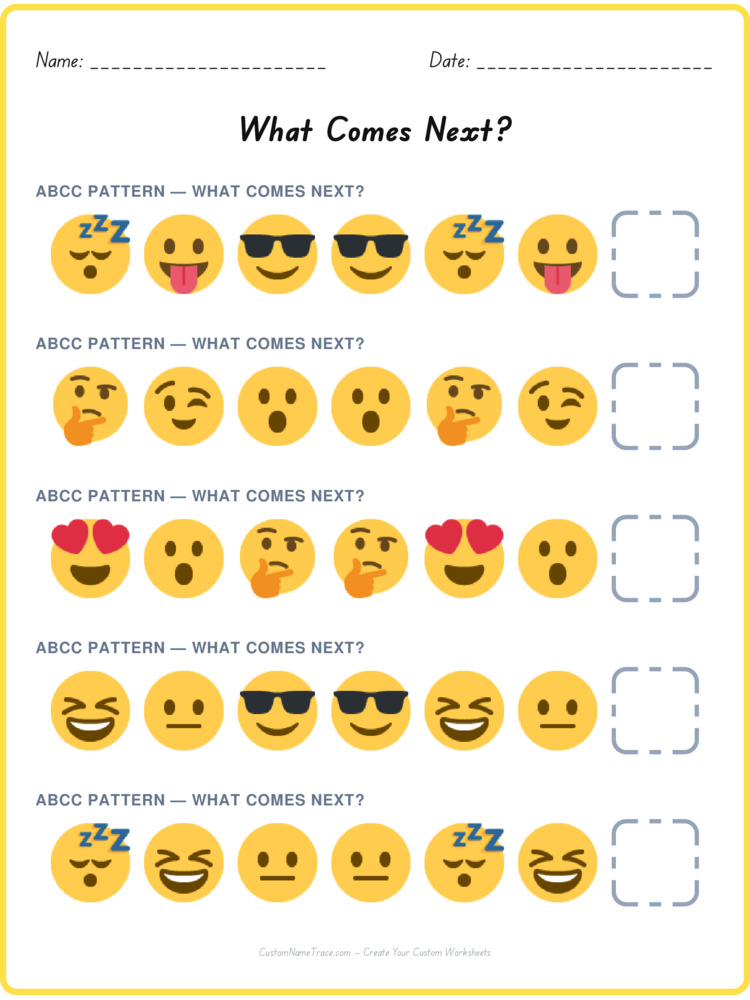
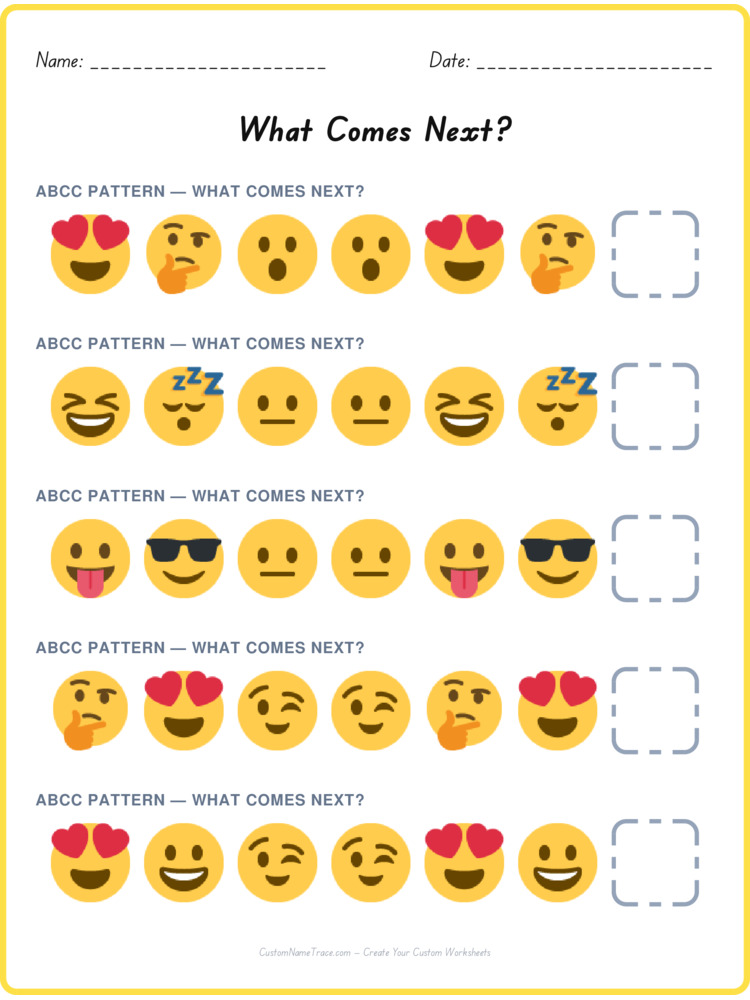
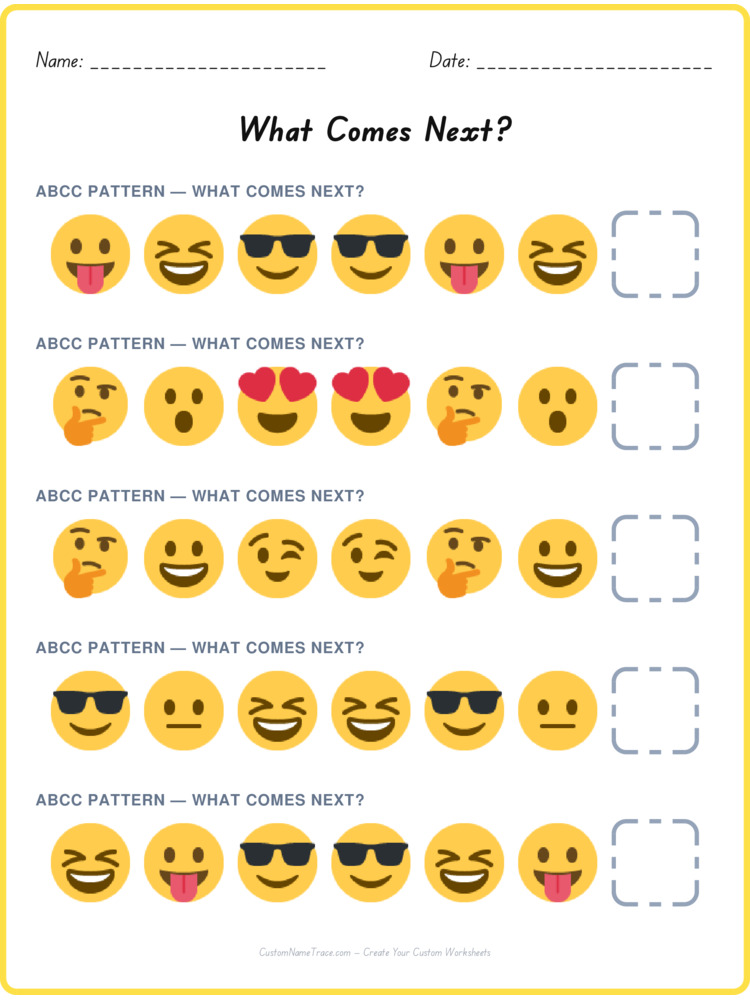
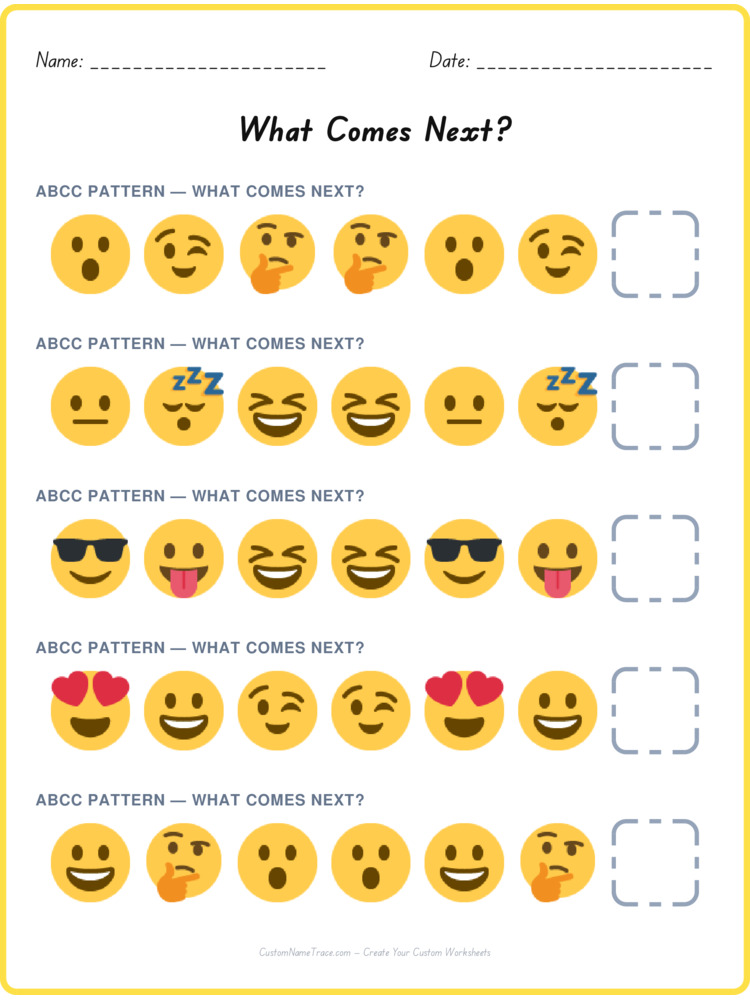
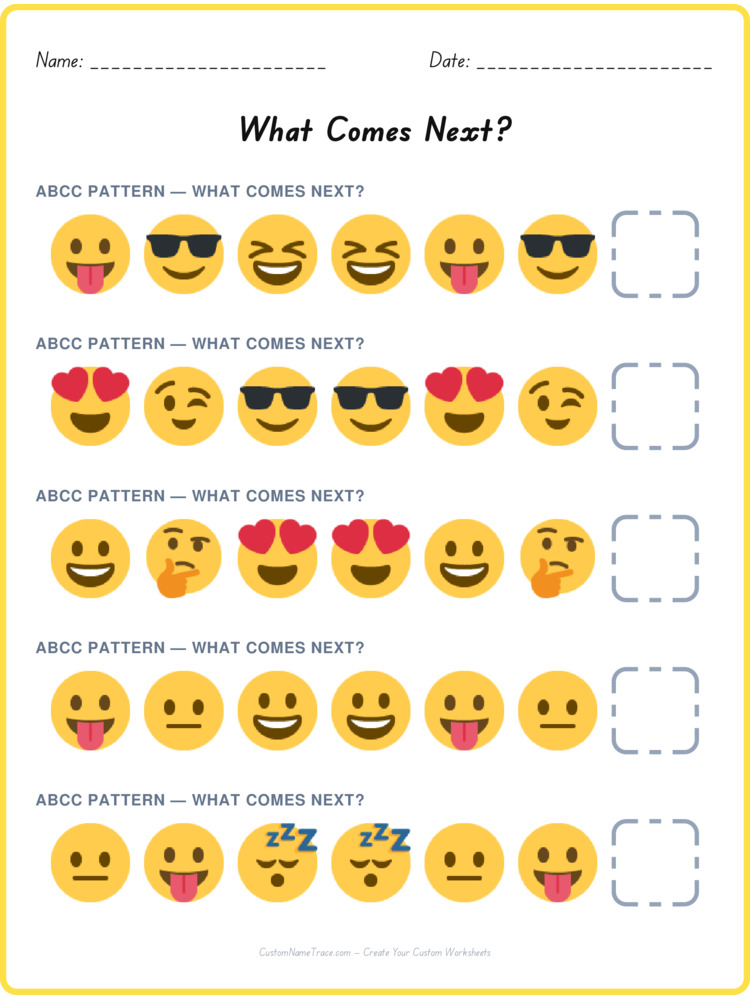
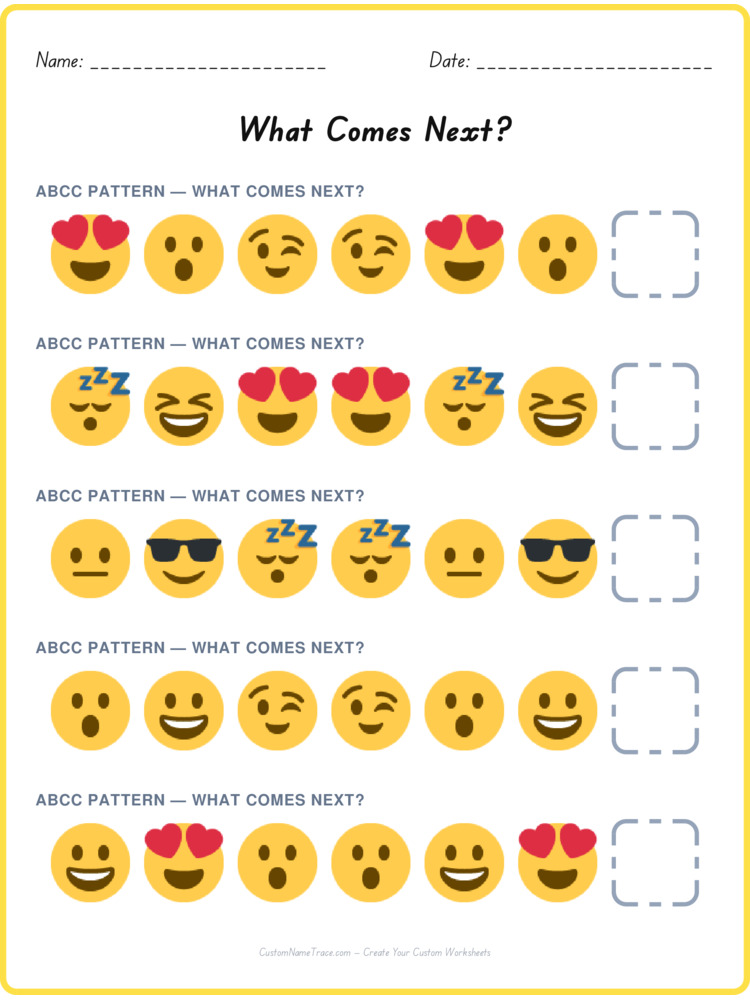
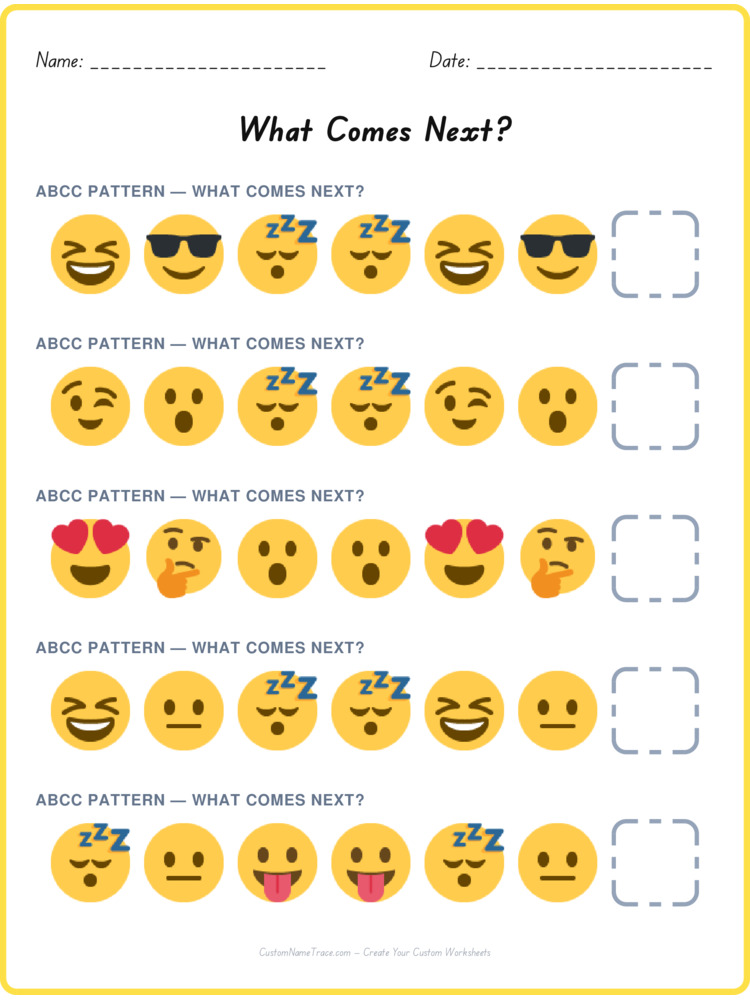
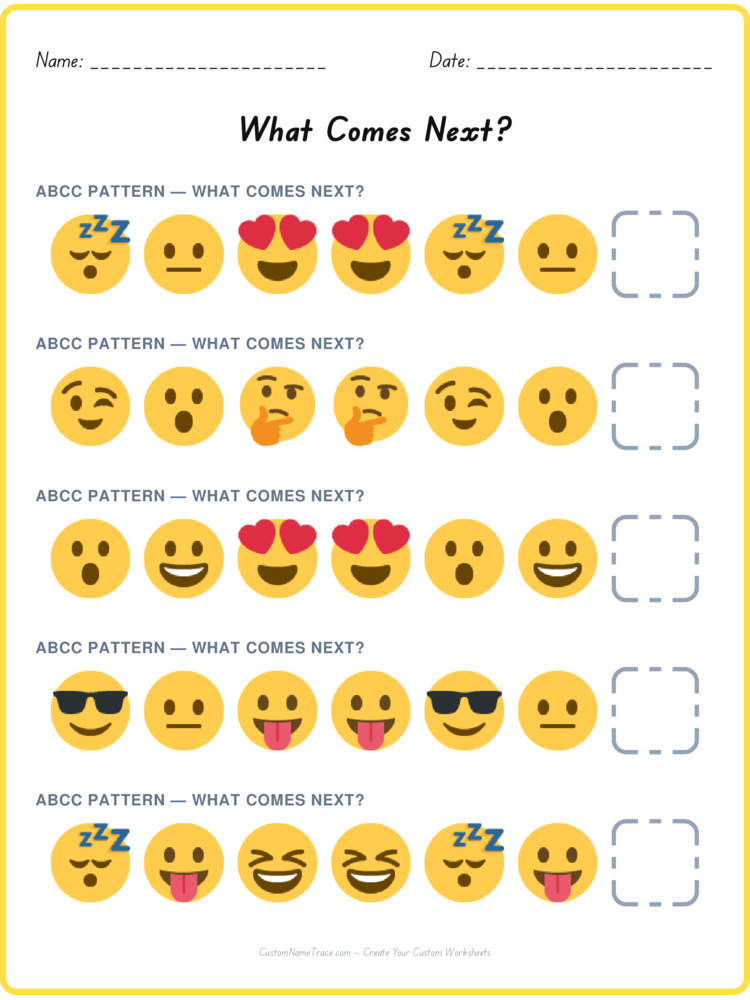
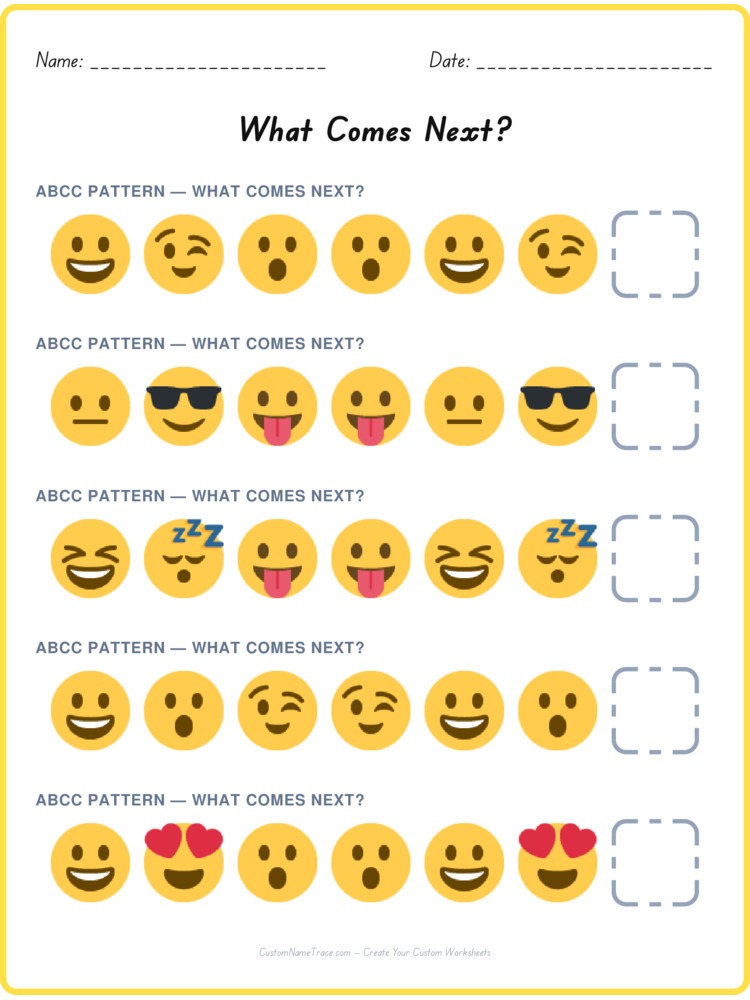
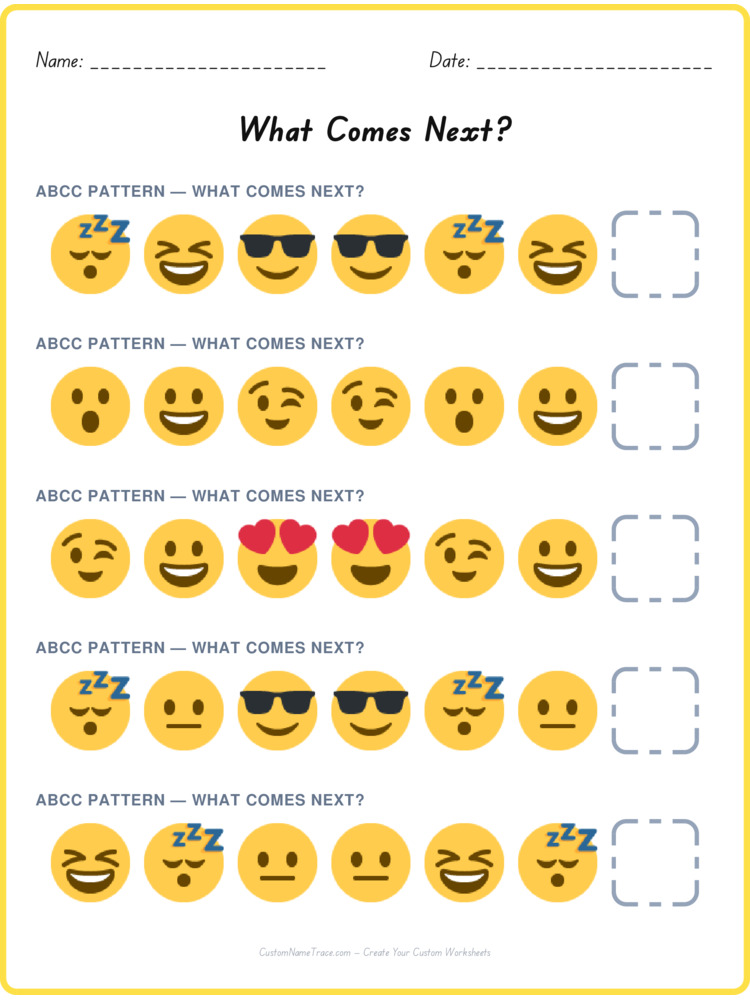
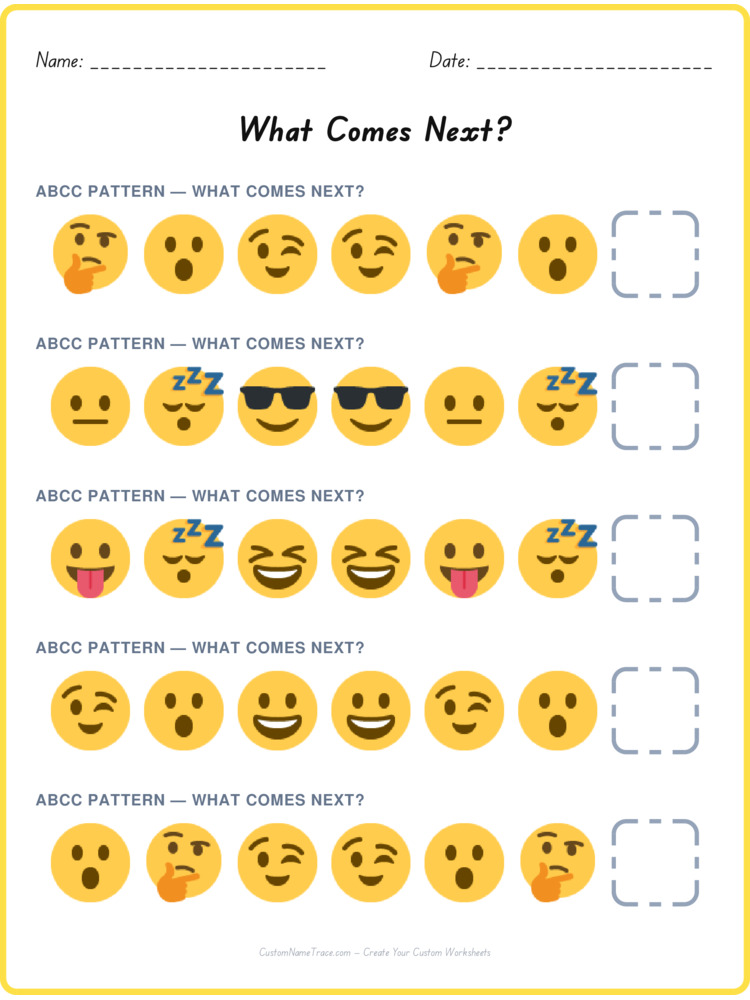
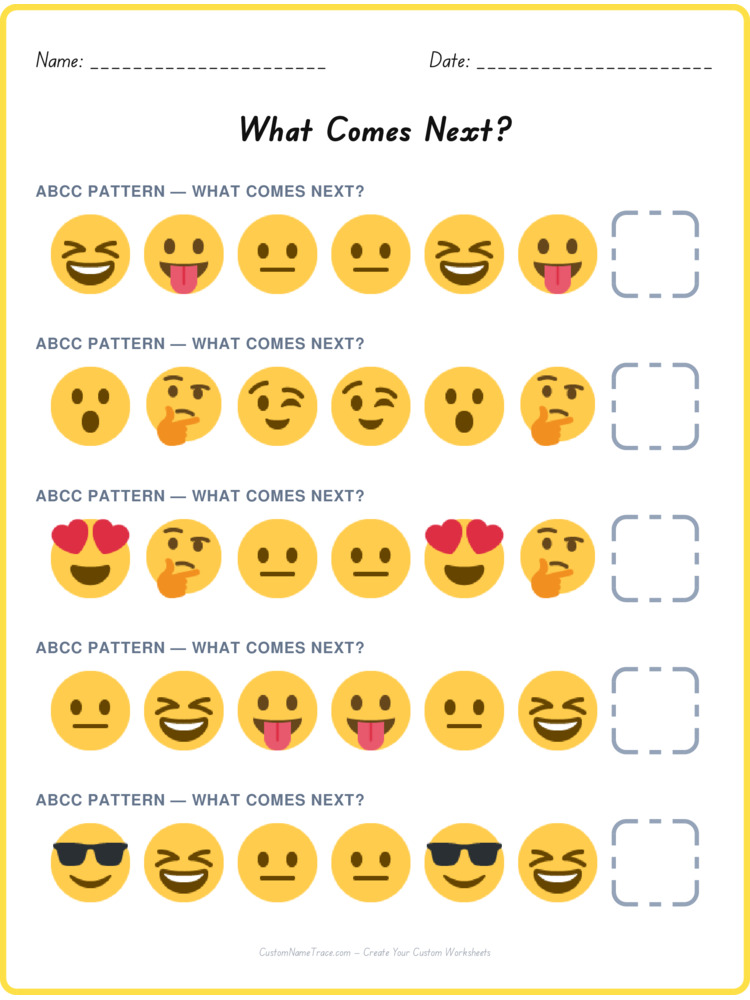
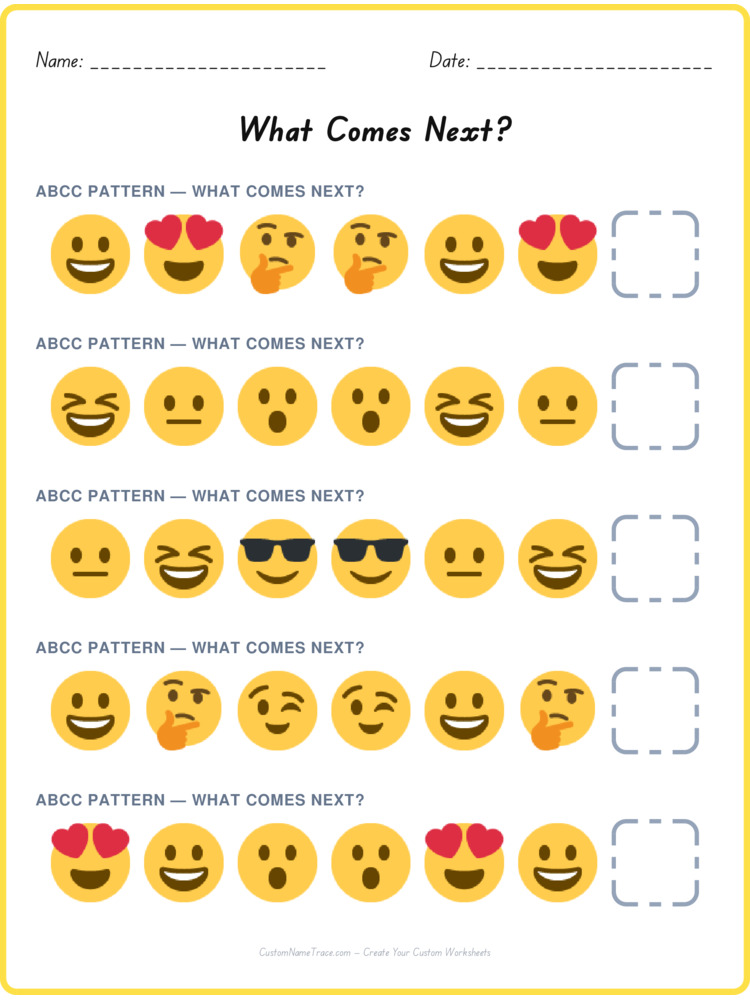
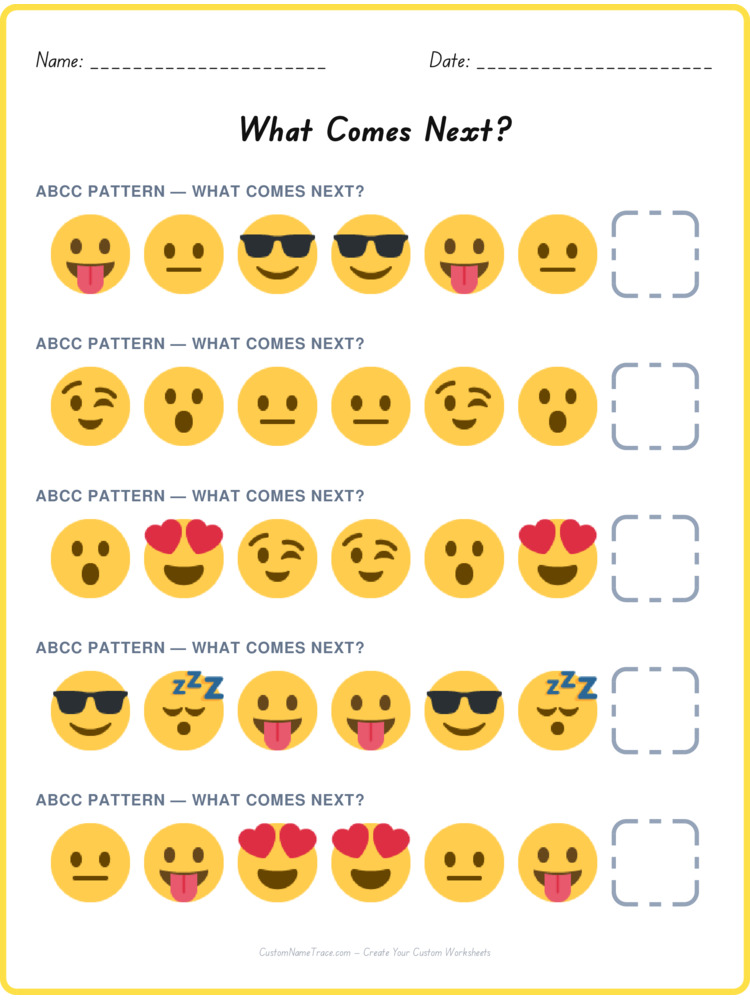
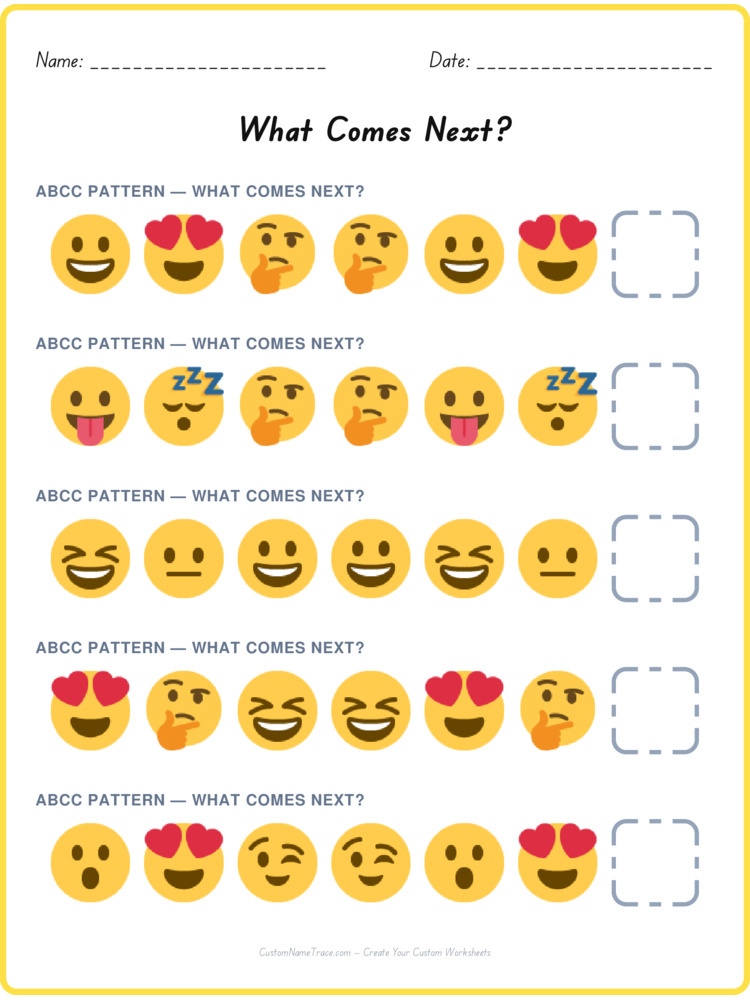
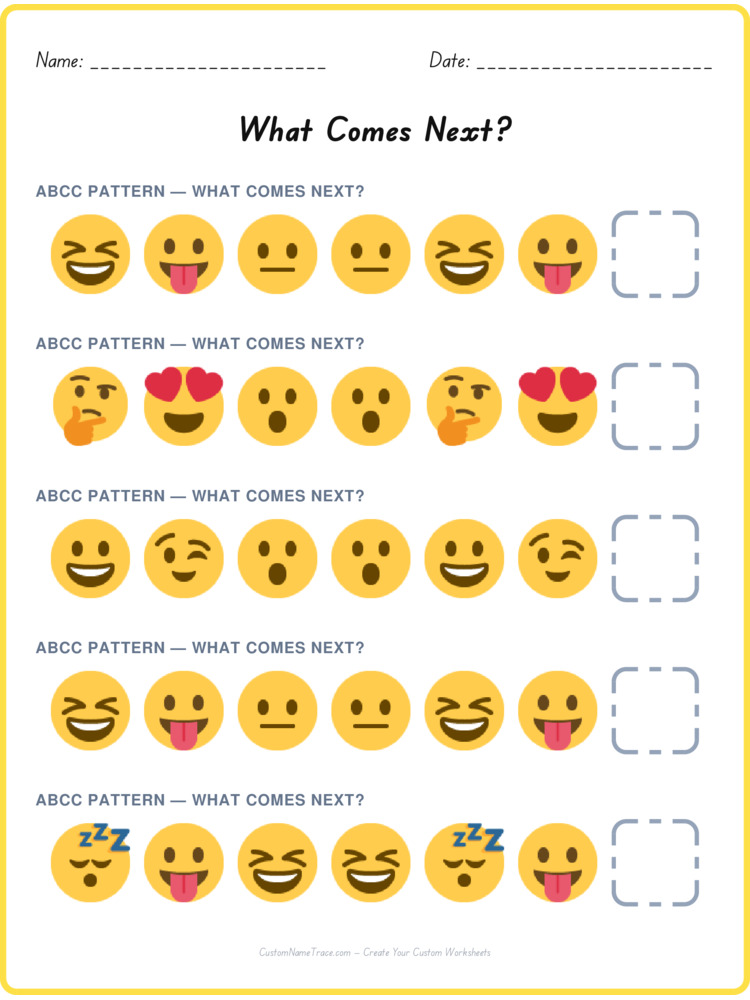
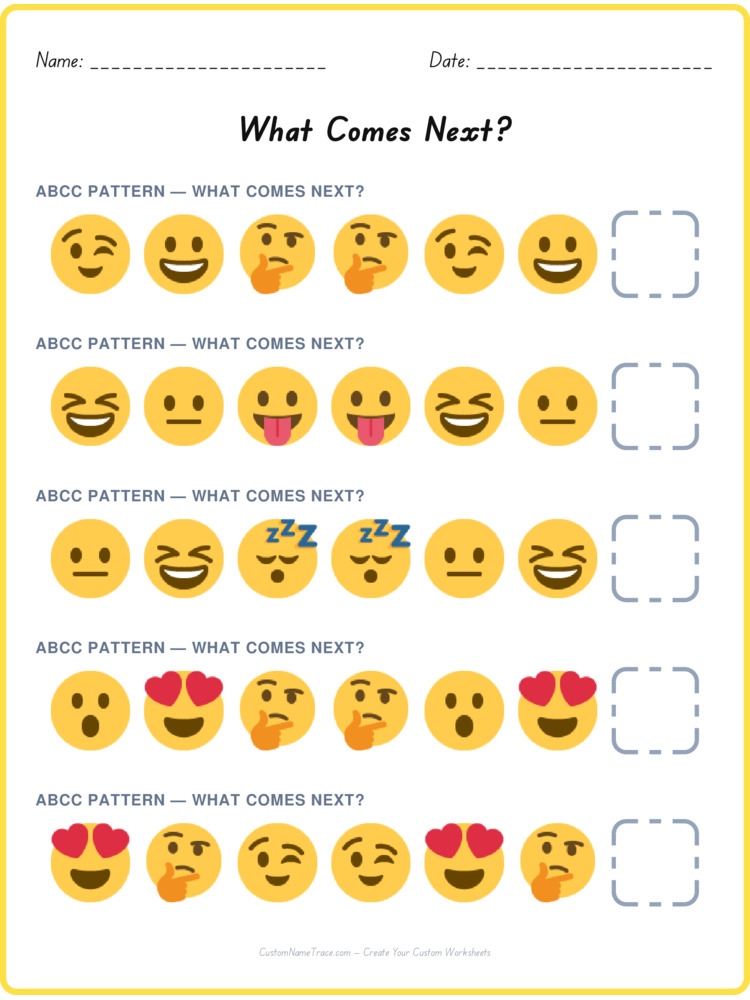
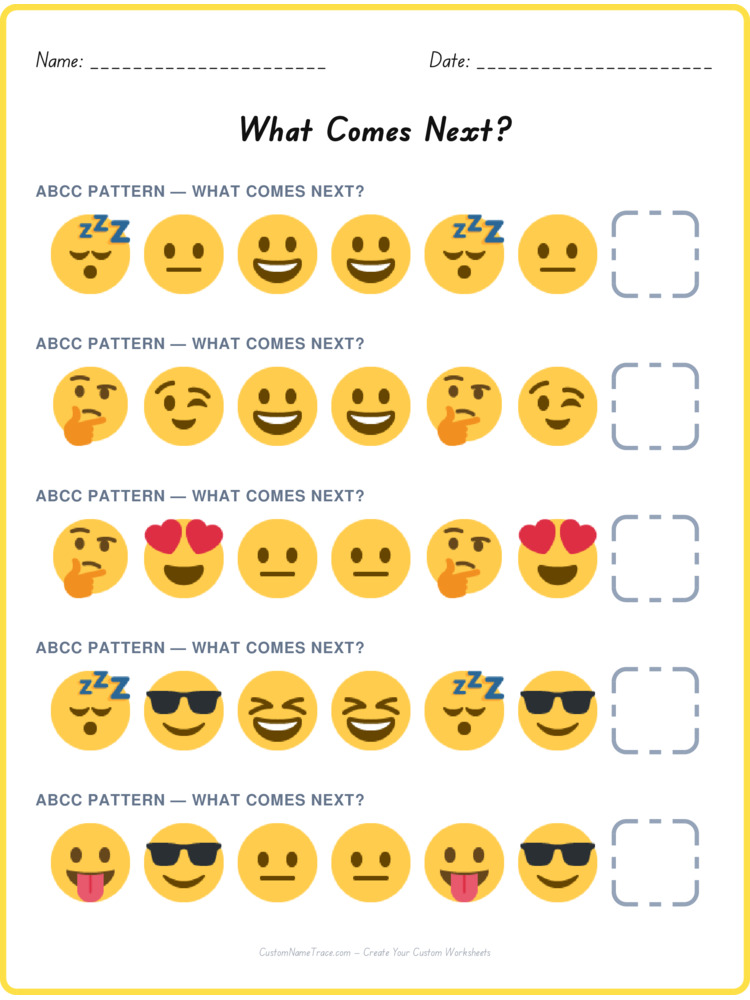
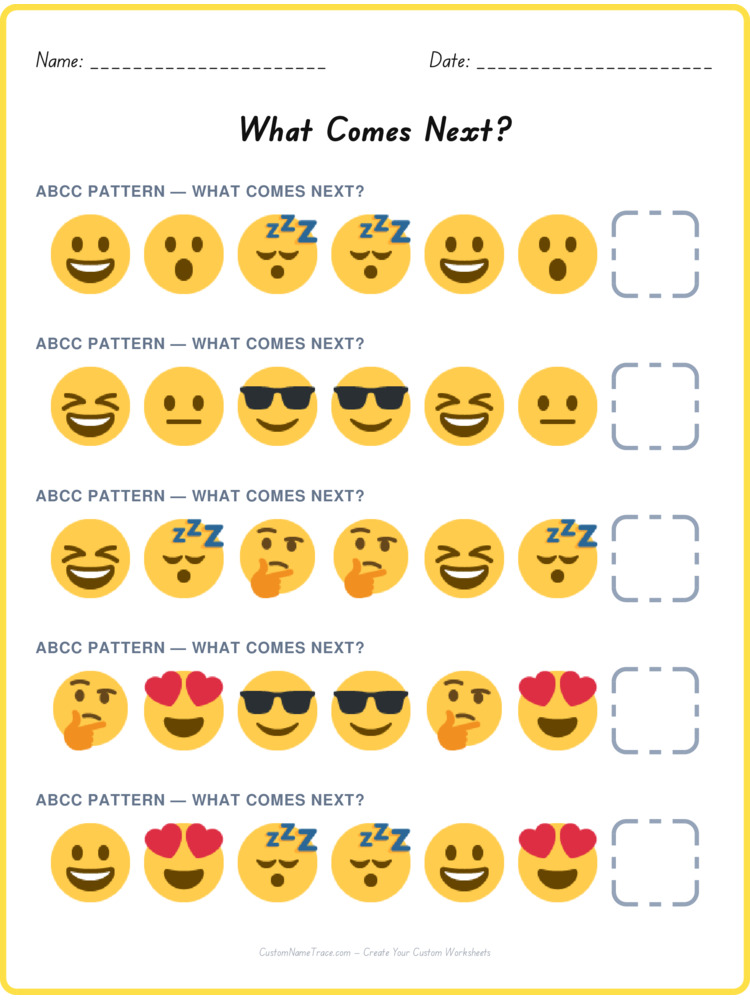
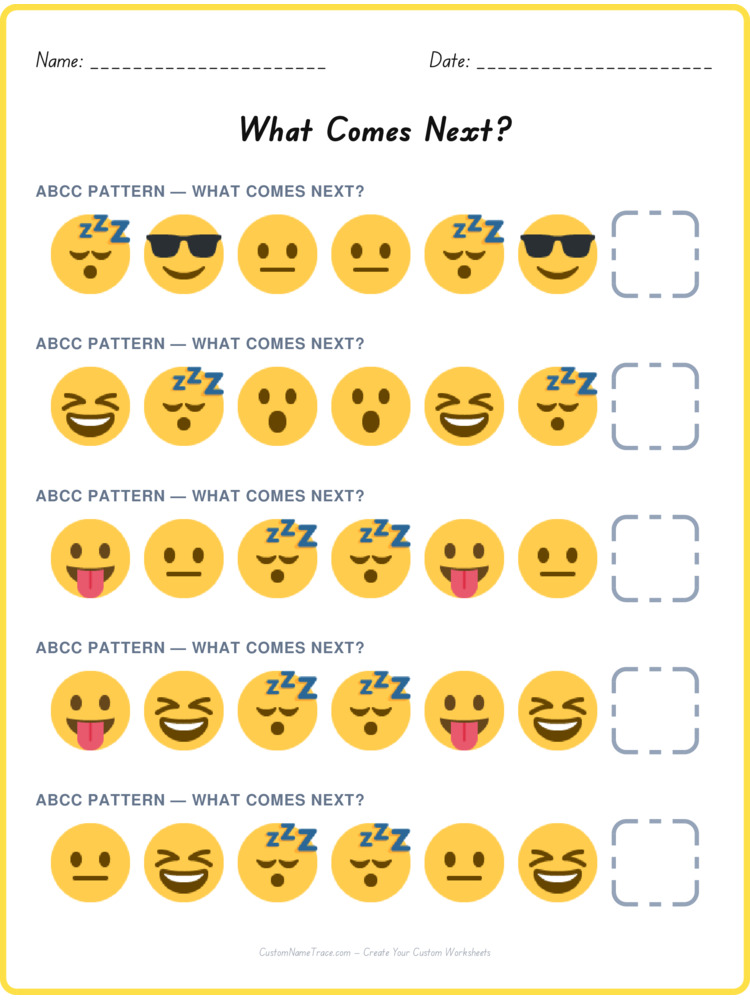
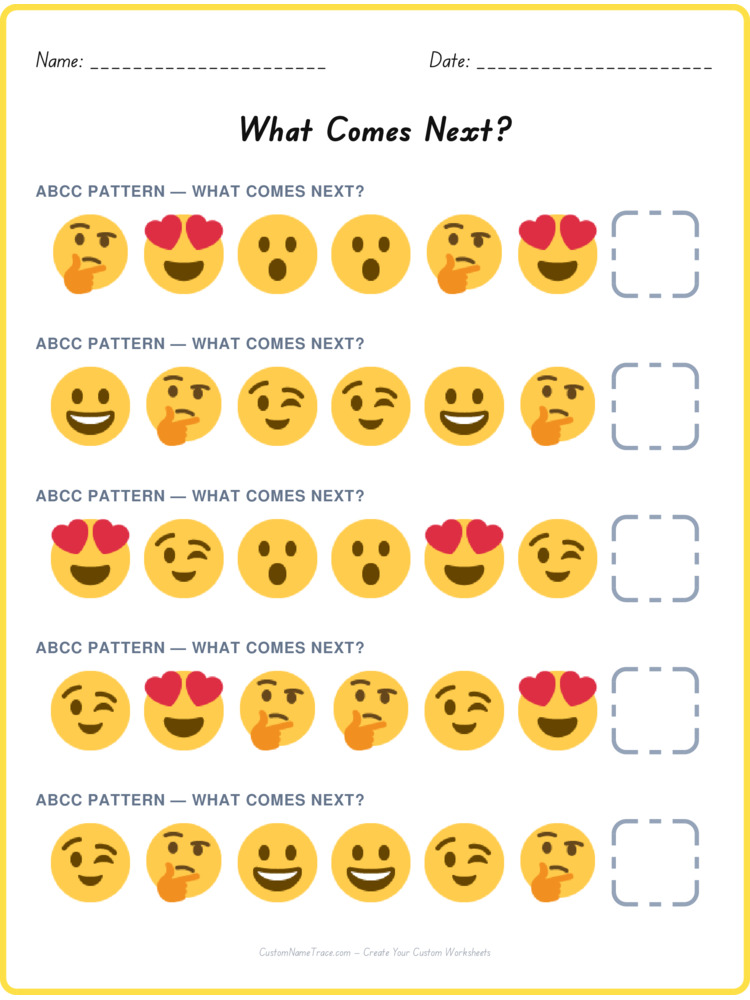
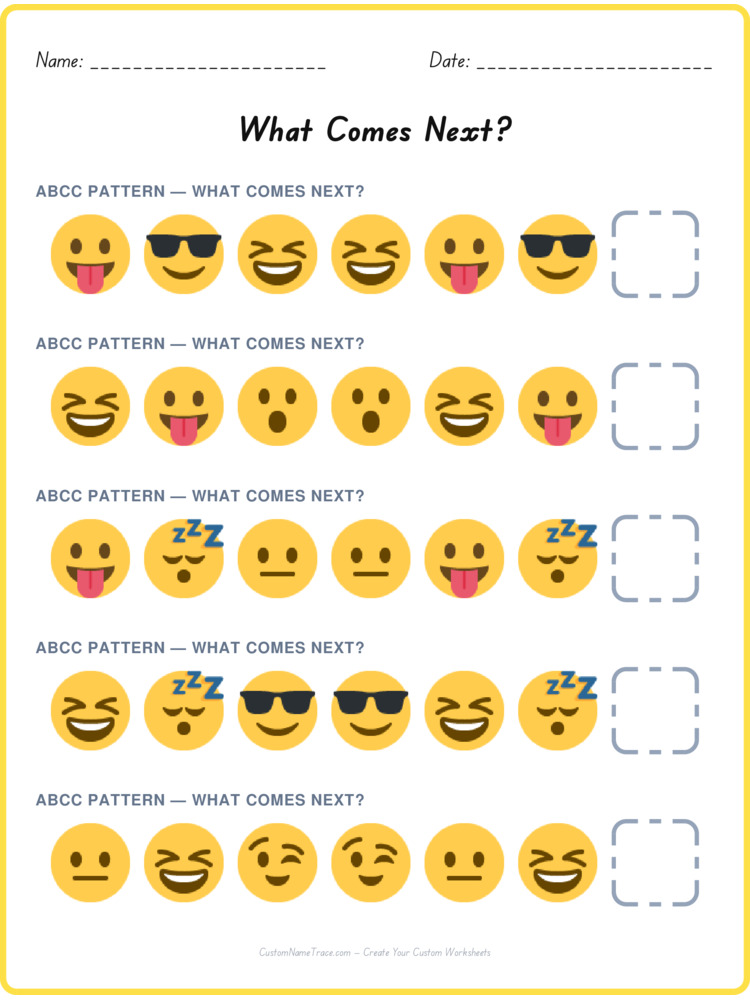
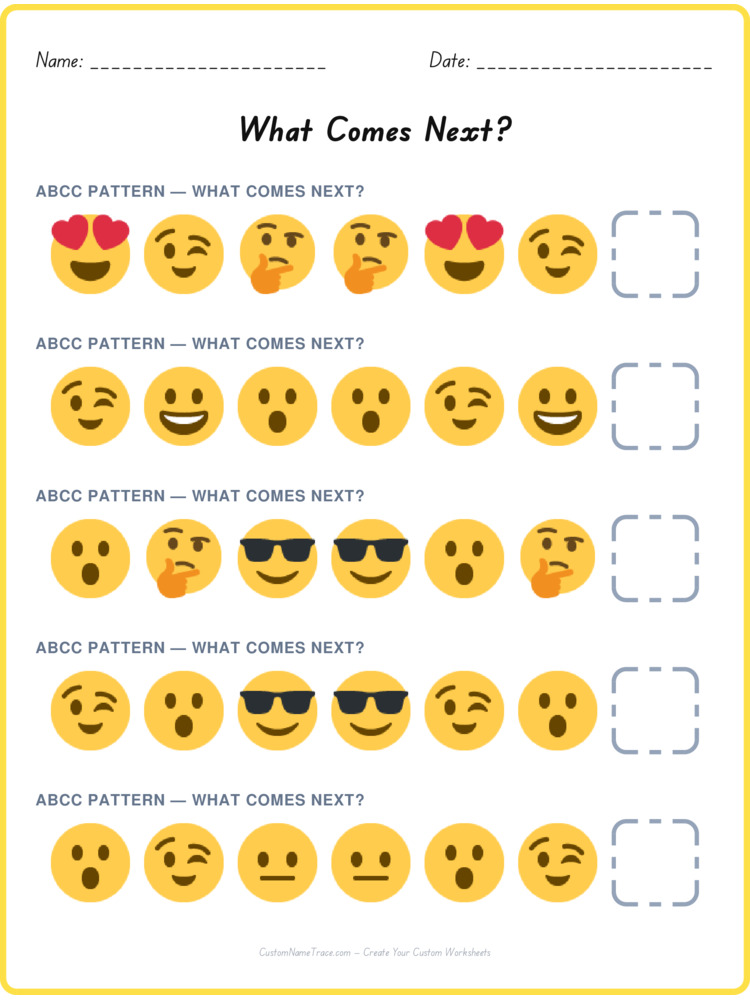
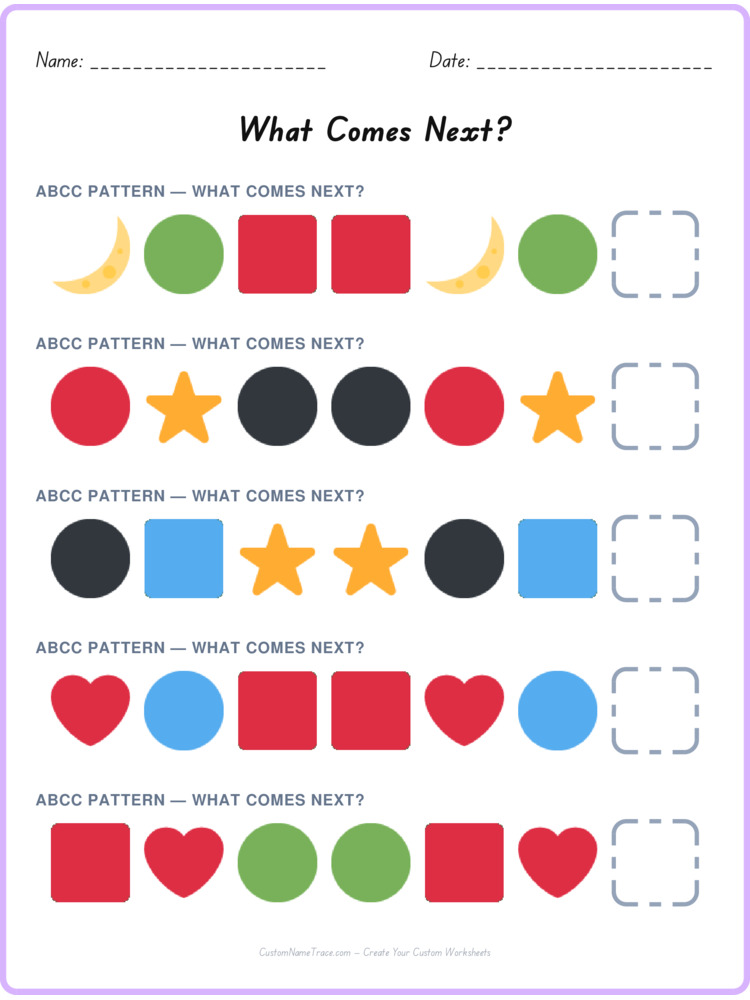
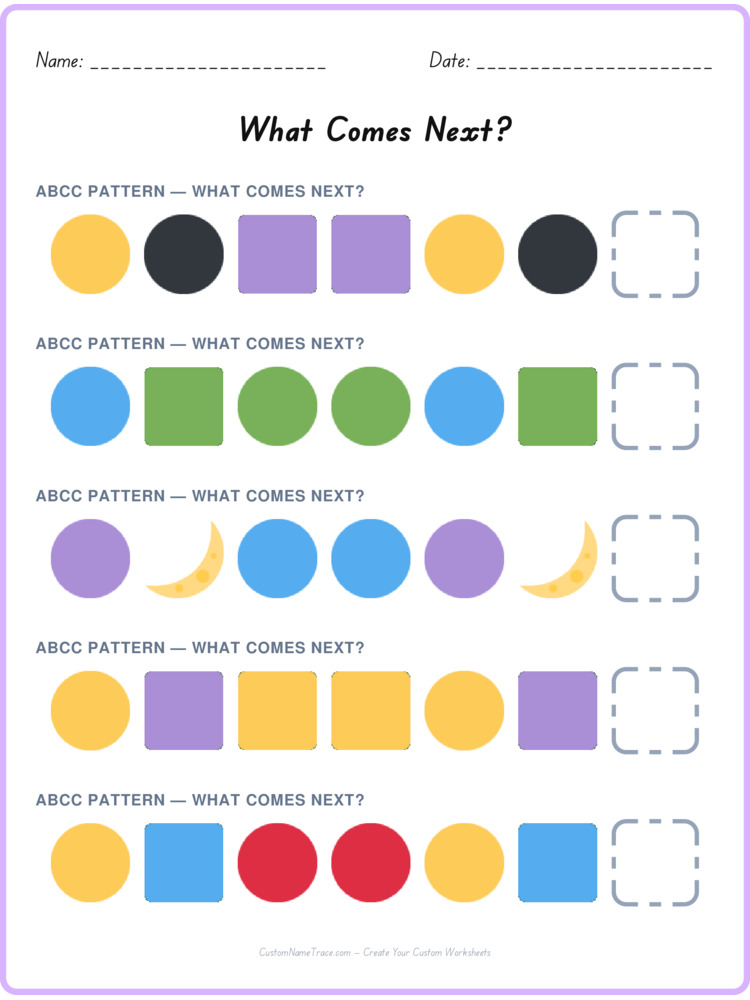
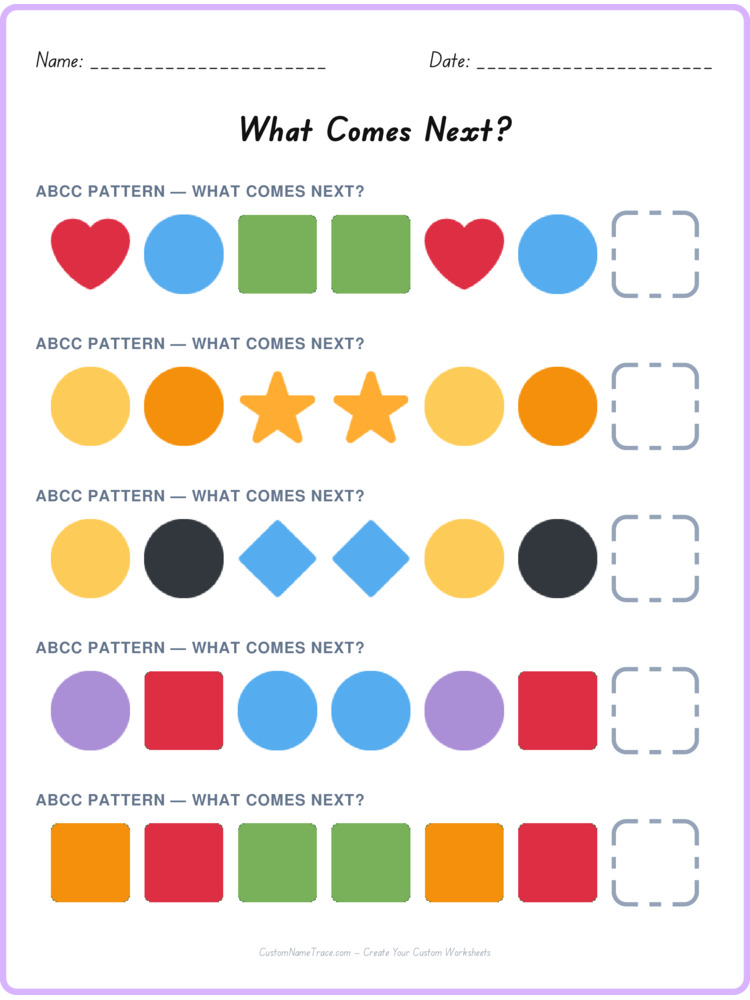
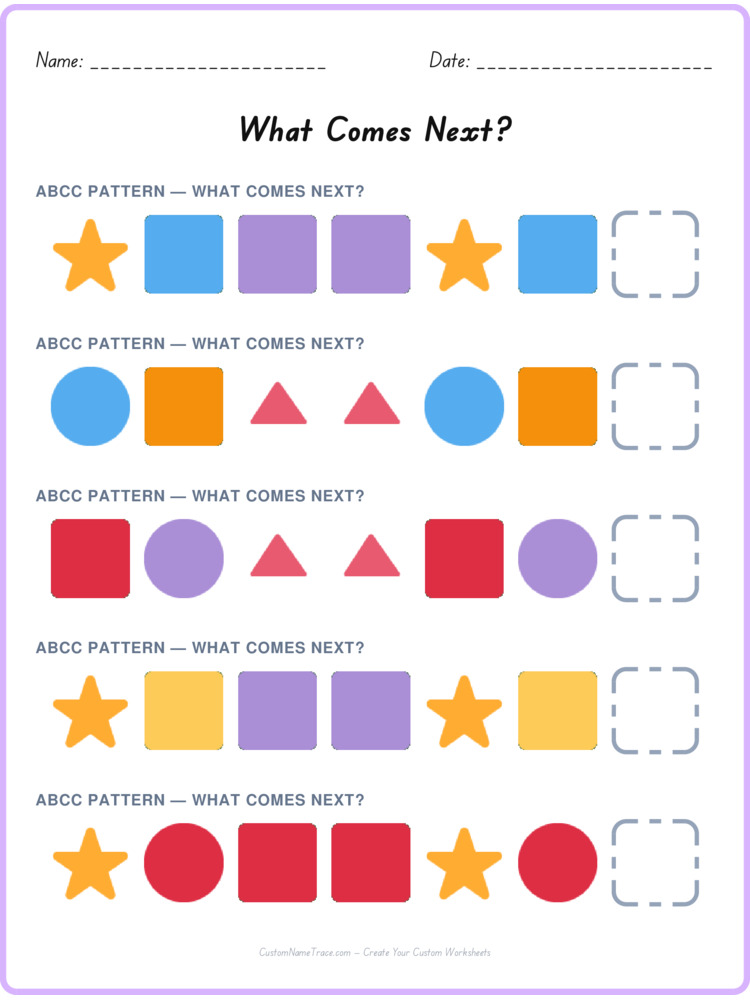
ABCC mirrors AABC in reverse order — two different icons appear first, echoing ABC's rotation, and the third icon then repeats once, closing out the unit. The same two ingredients as AABC, a repeat and a rotation, just combined in the opposite sequence.
Helping a child notice where the repeat falls
Naming the unit as "different, different, same, same" reinforces that the repeat here comes at the end of the unit, not the beginning — the opposite of AABC's structure. A child who's just practiced AABC sometimes carries that pattern's repeat-first expectation into this one; pointing out the reversed order directly resets it.
Where this leads
Working through AABC and ABCC together, and being able to say clearly which one repeats first and which repeats last, builds a genuinely useful habit: checking a pattern's specific order rather than assuming from a general shape or a quick glance.
Every numbered worksheet uses a fresh set of icons testing this identical rotation-then-repeat structure.
Using this worksheet effectively
Introducing this pattern right alongside AABC, rather than separately, helps a child build a genuine side-by-side comparison. Every worksheet downloads as a free, print-ready PDF with no account required.