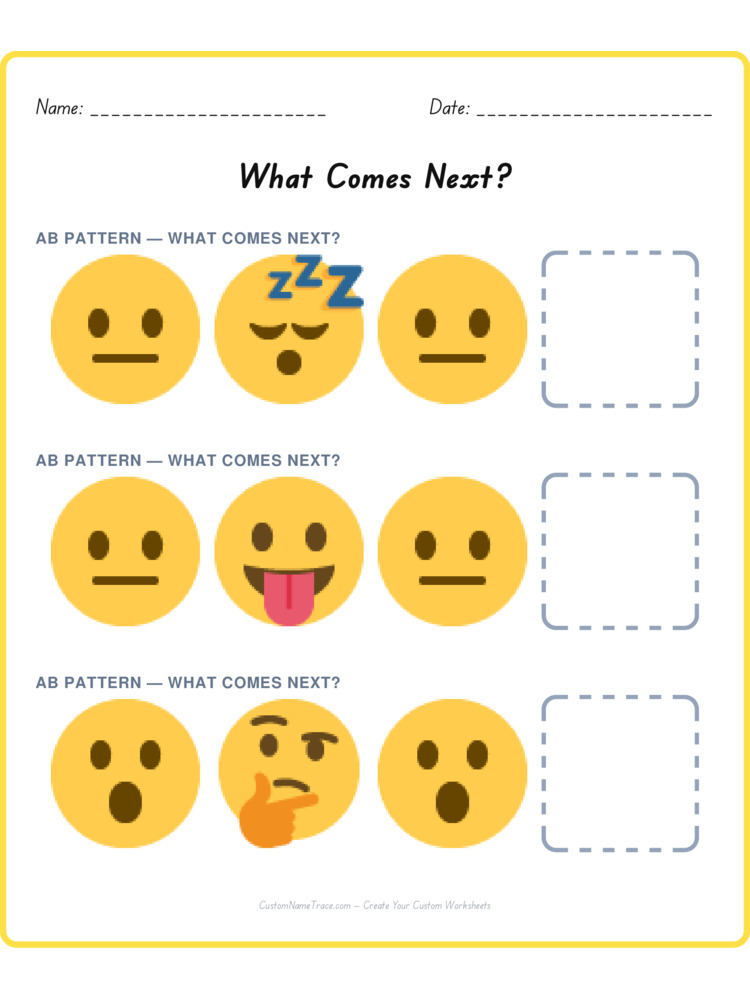
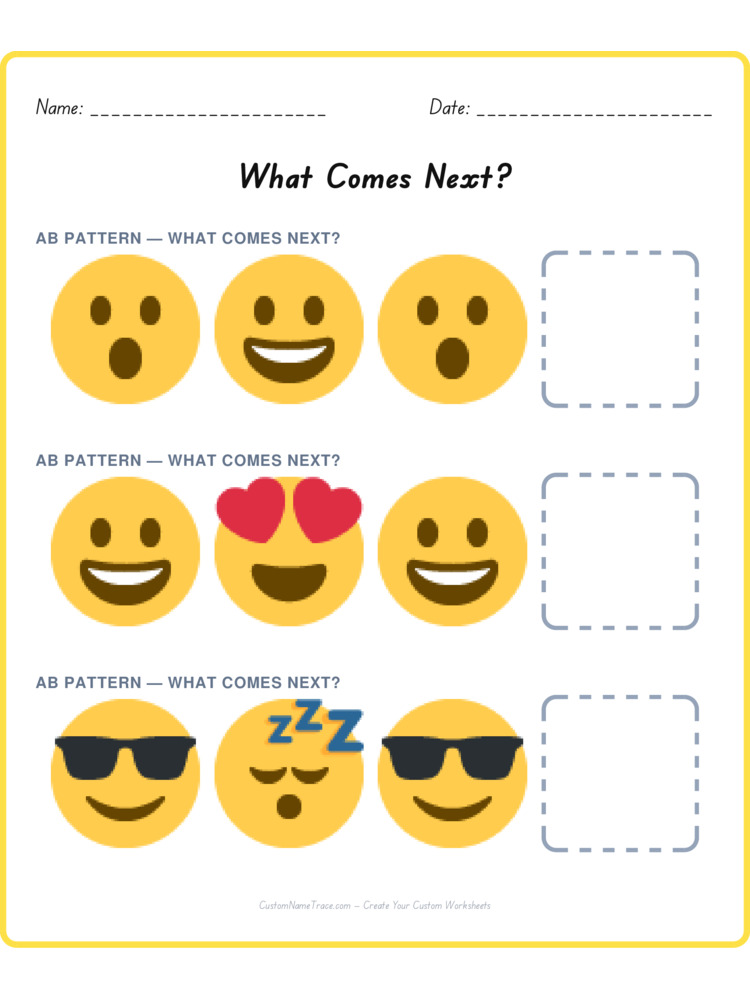
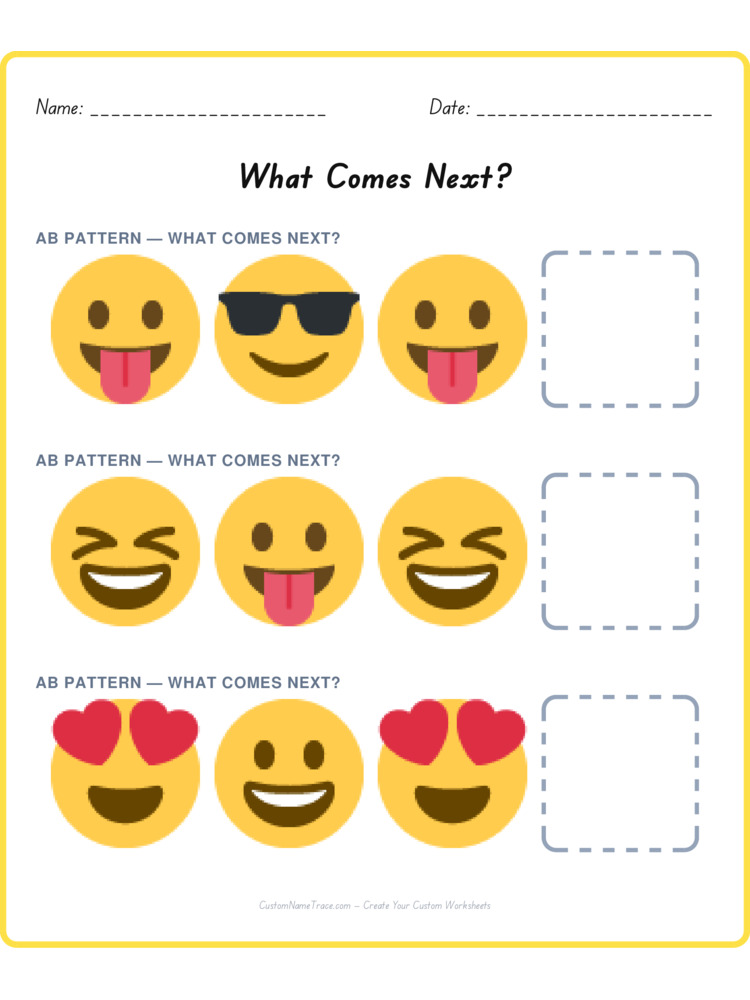
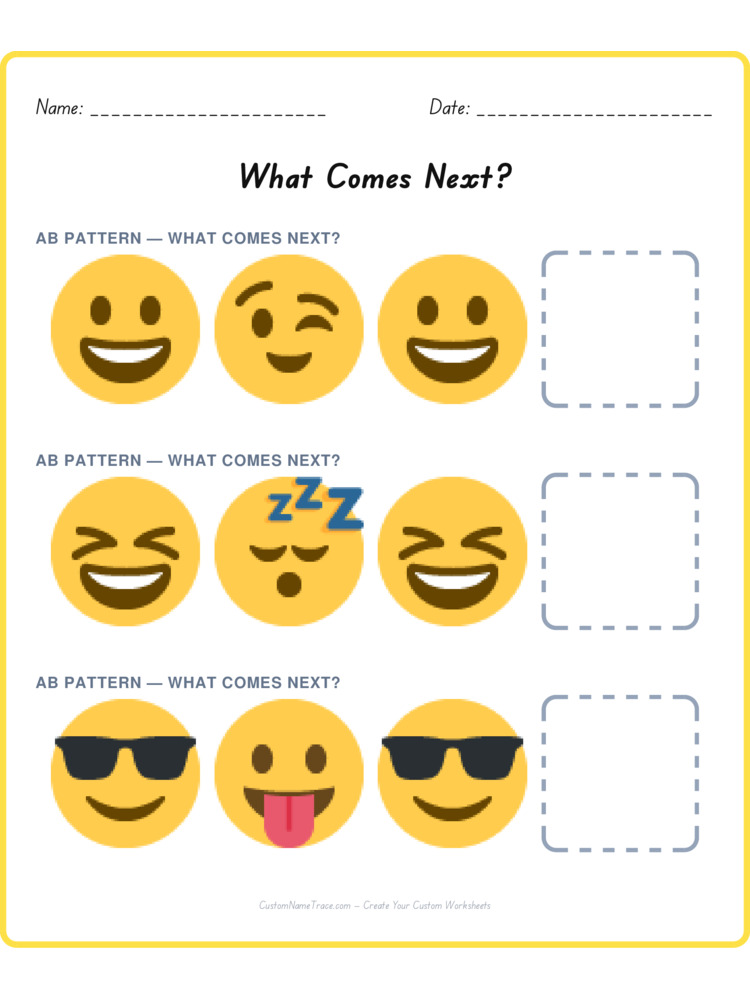
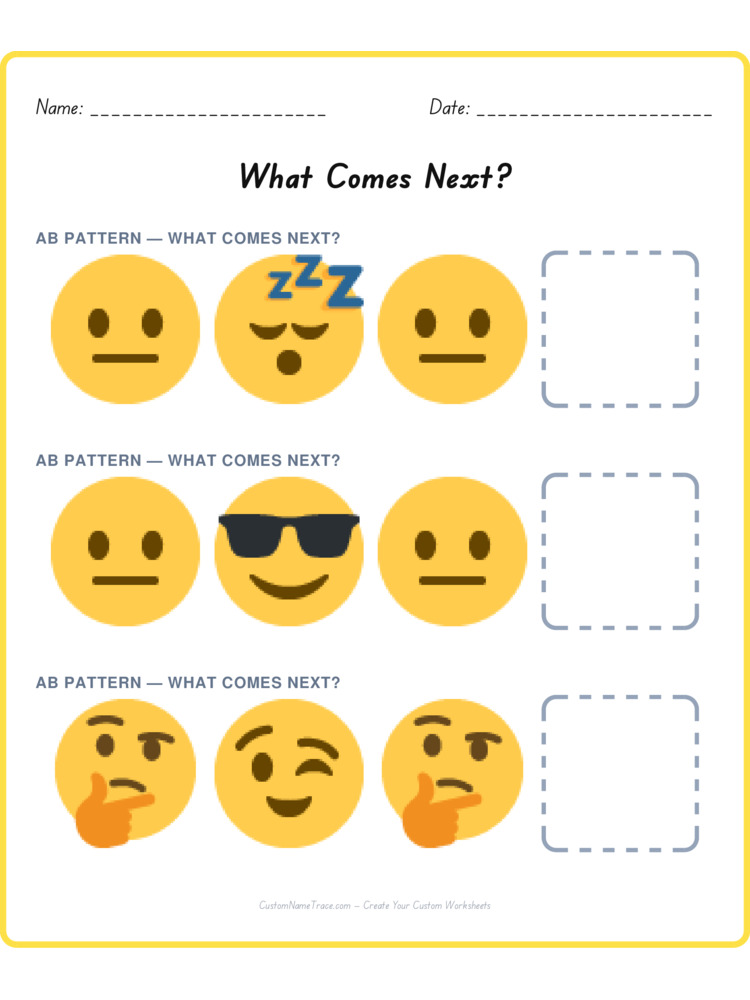
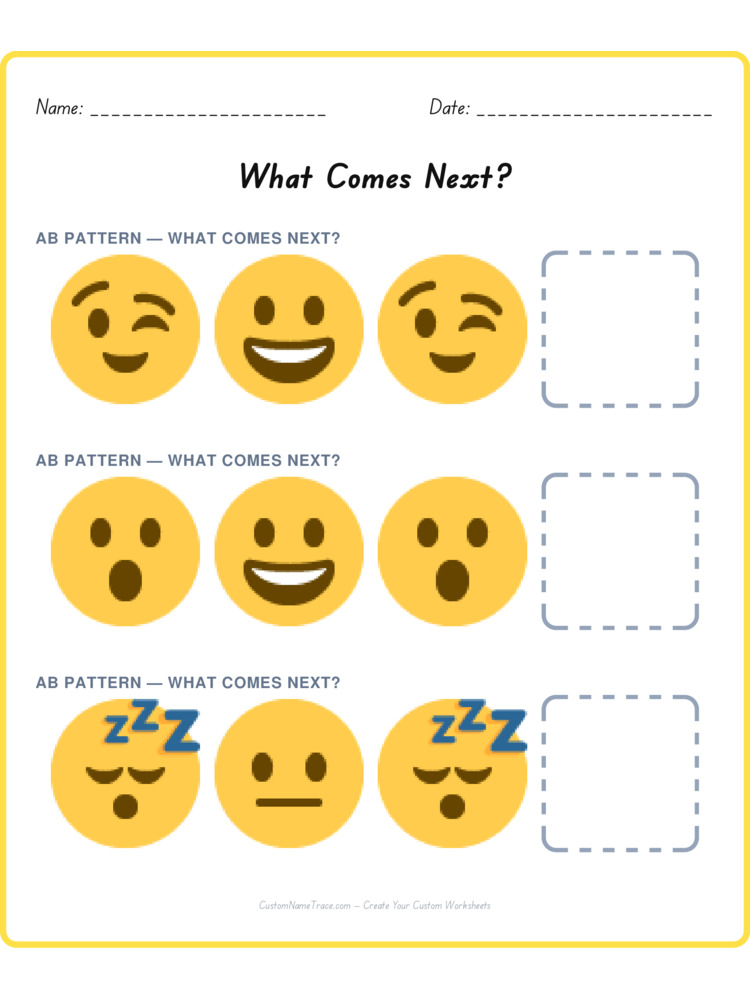
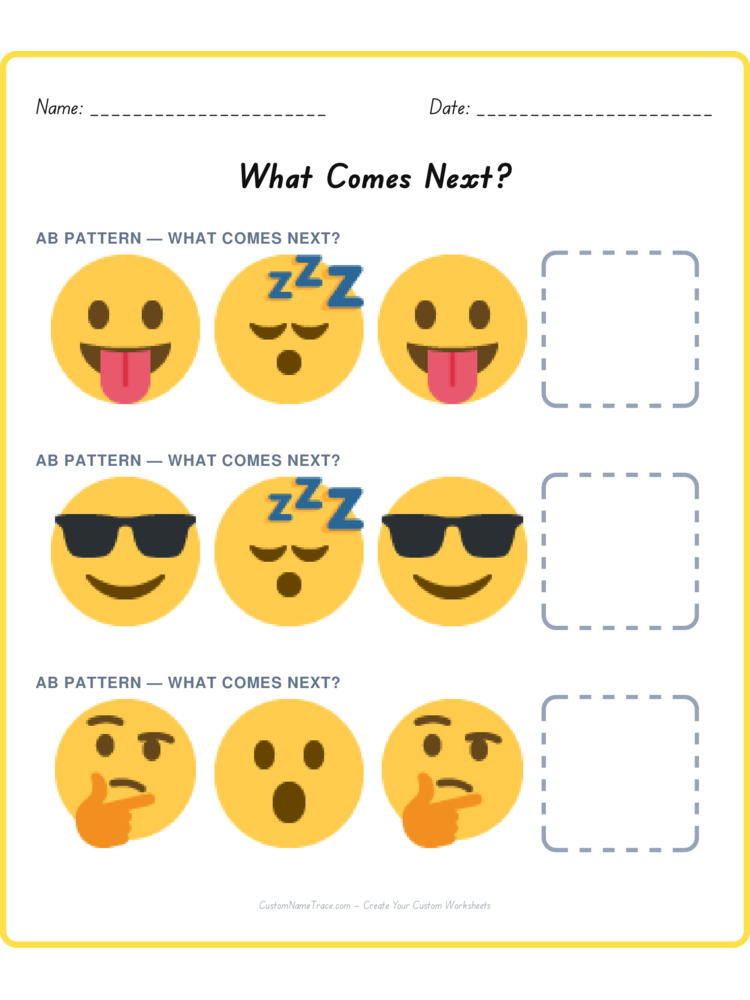
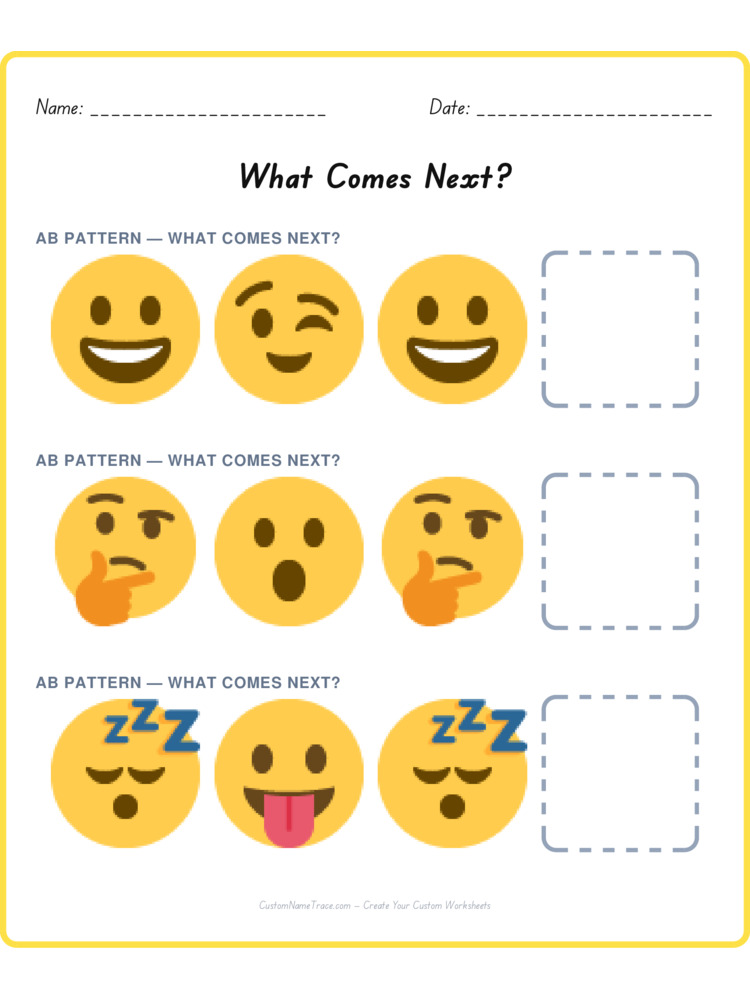
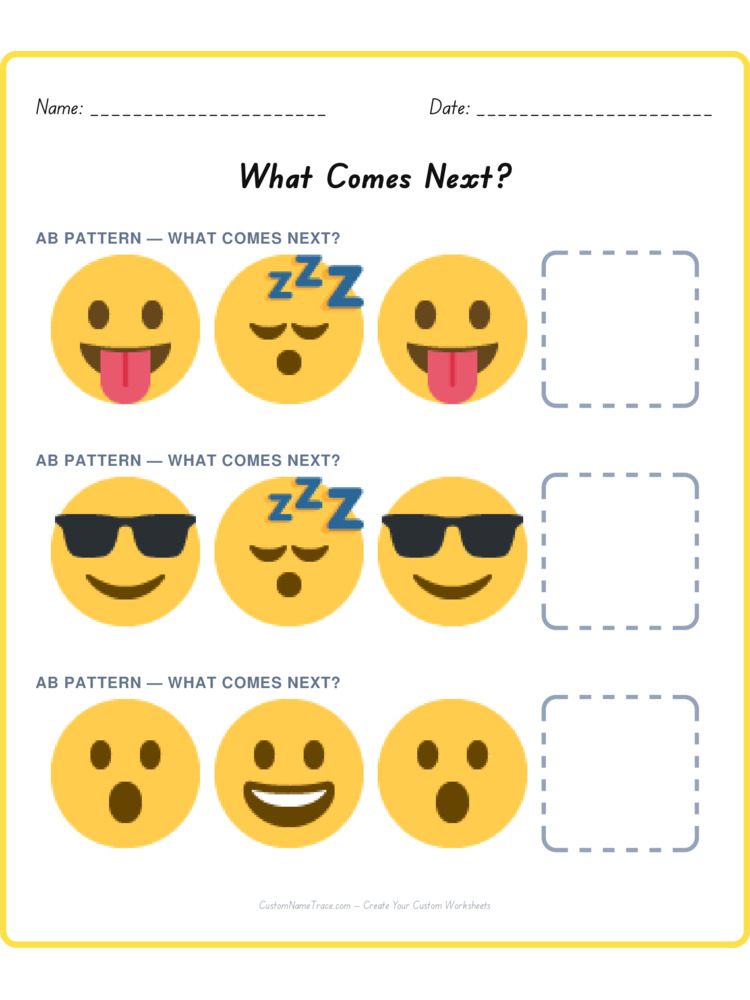
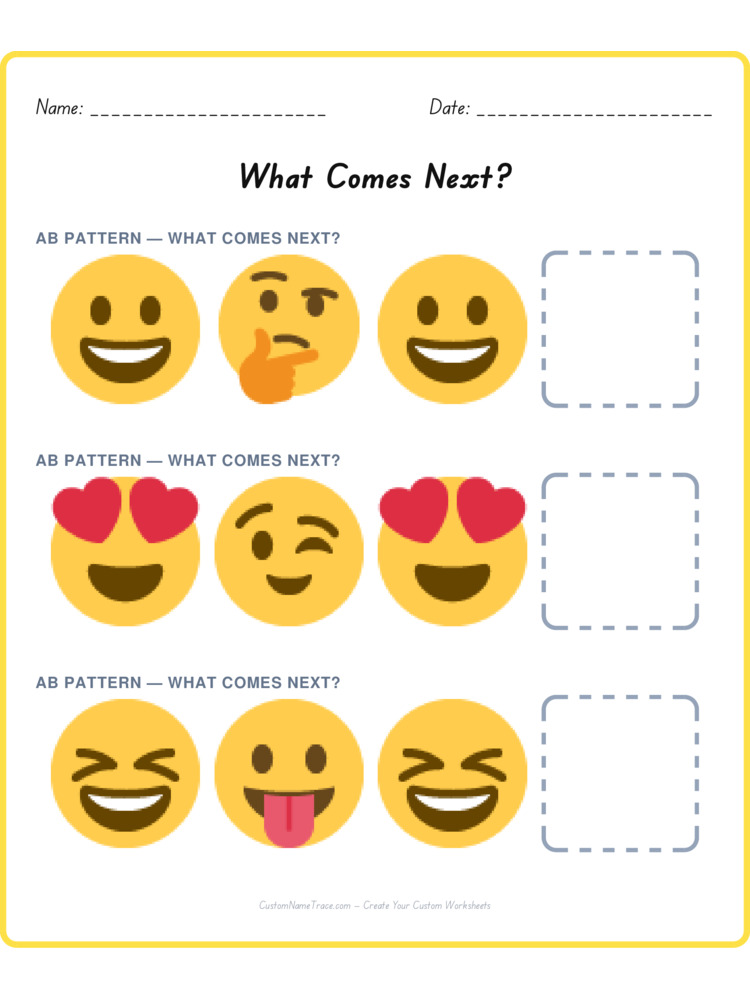
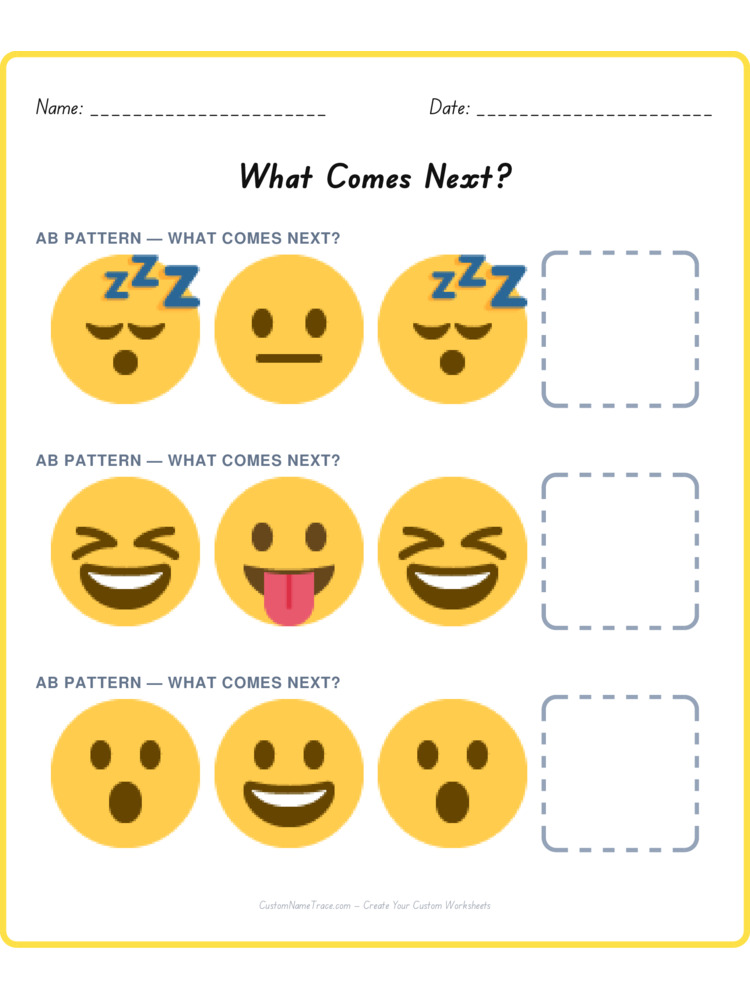
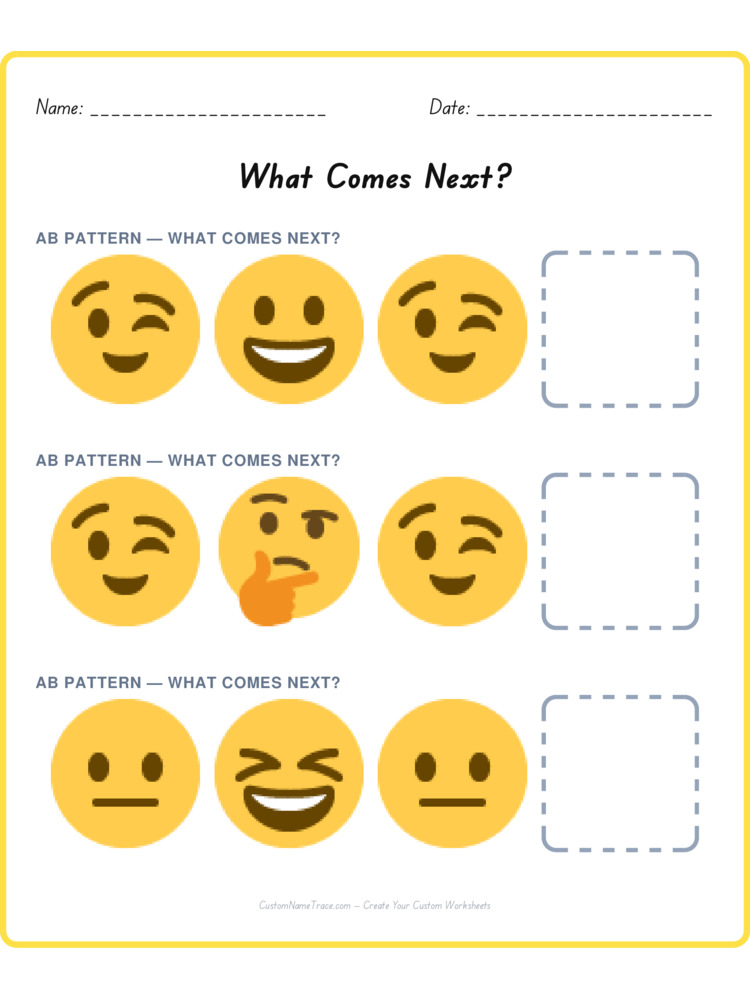
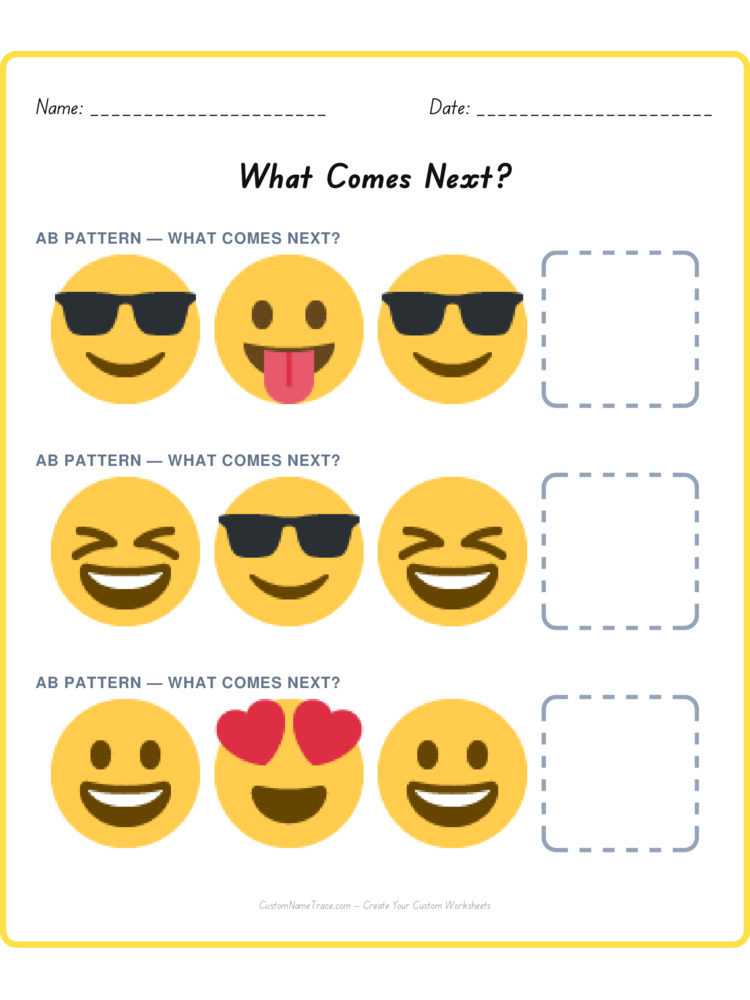
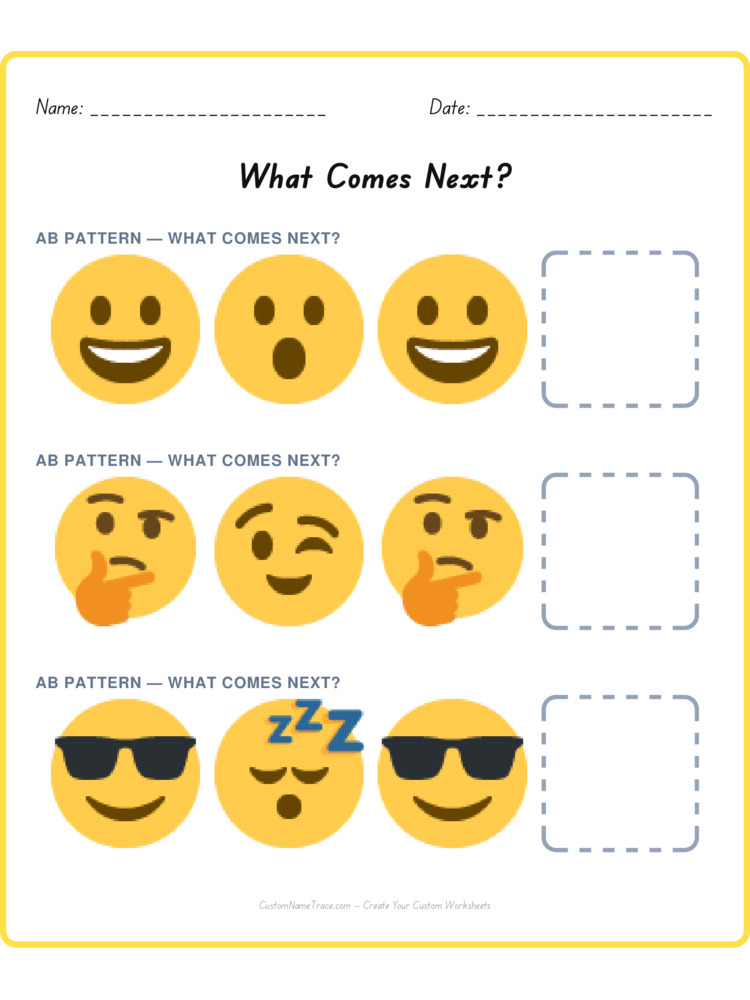
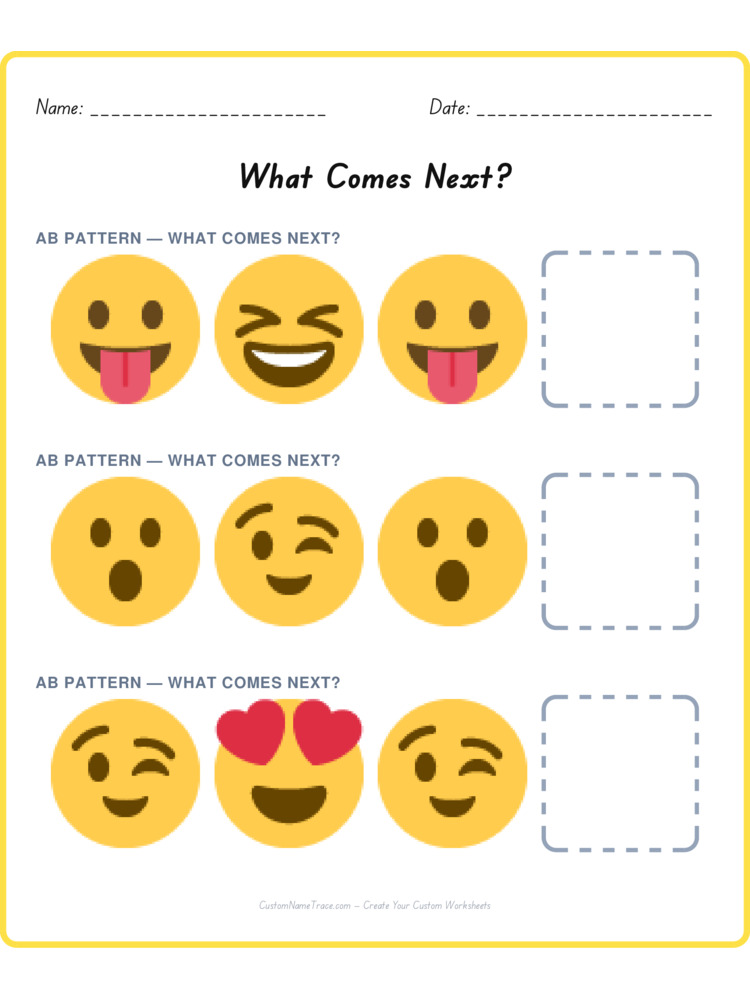
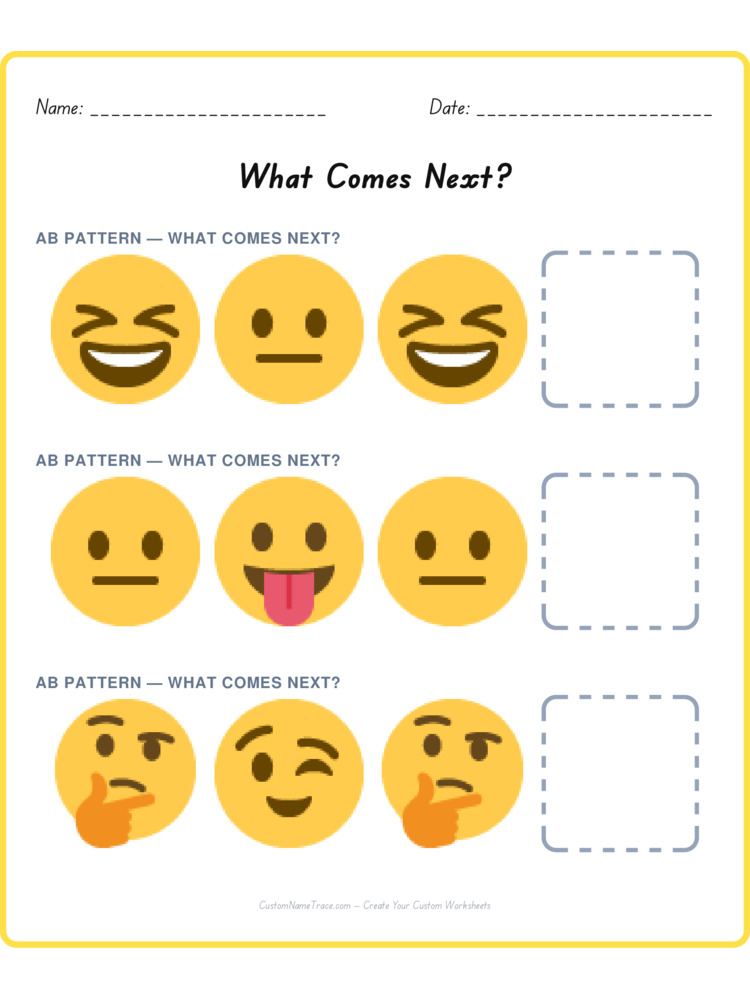
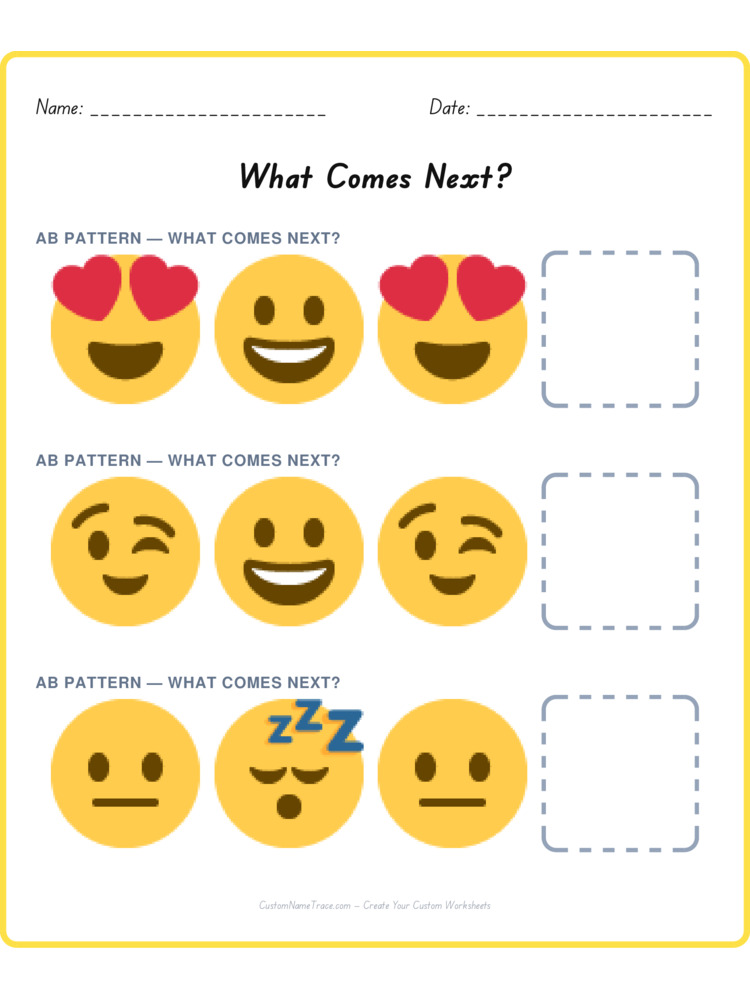
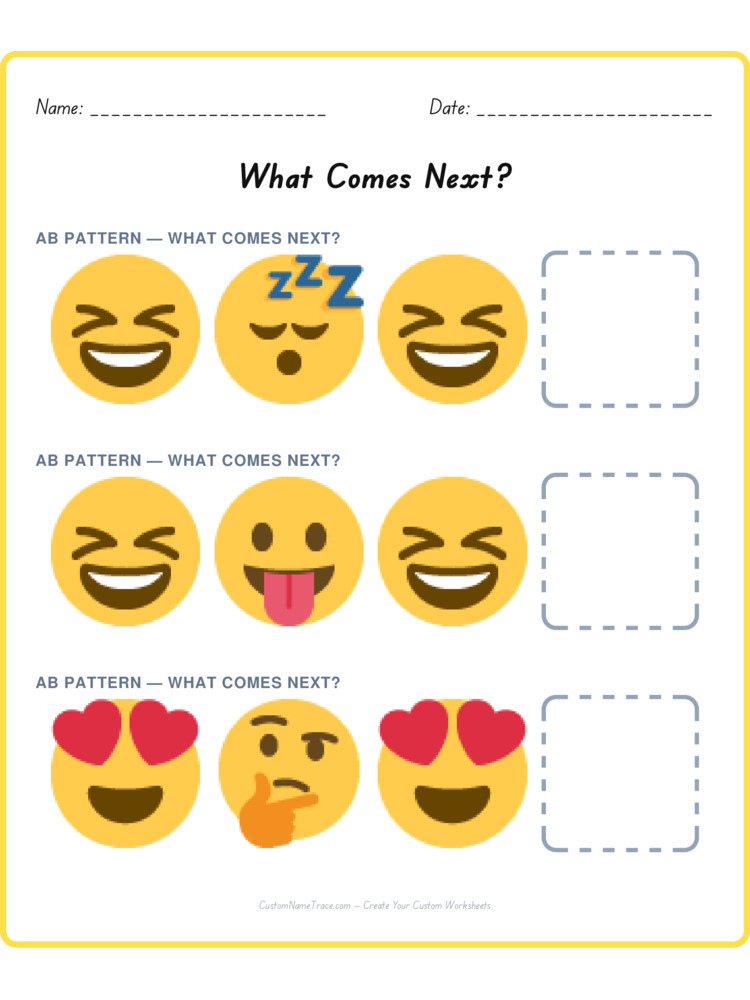
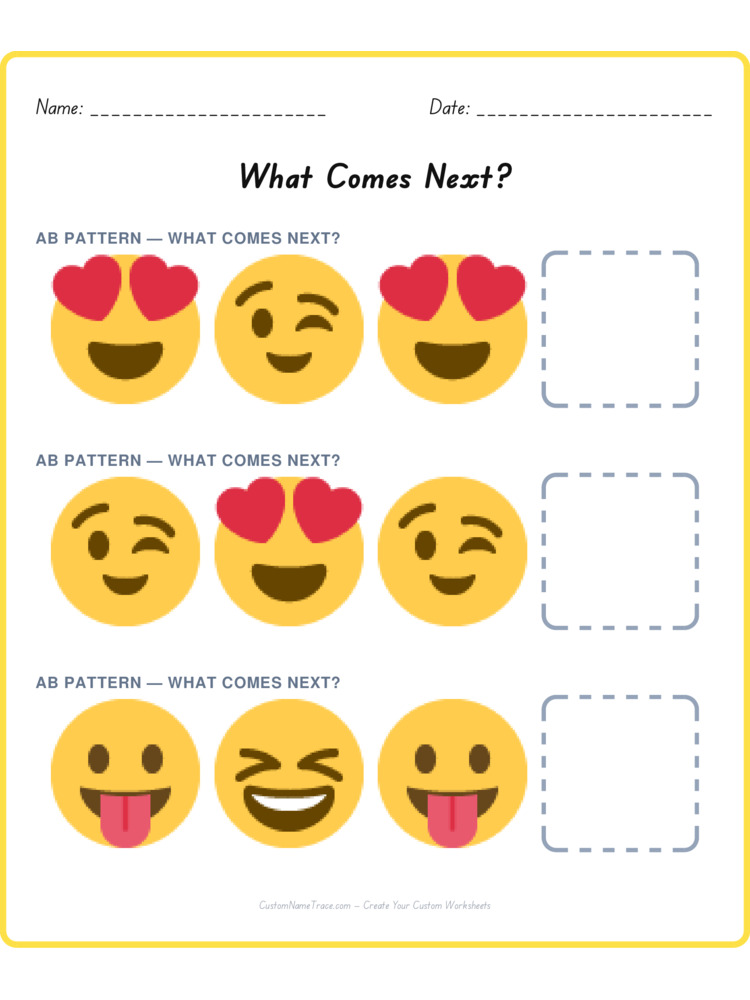
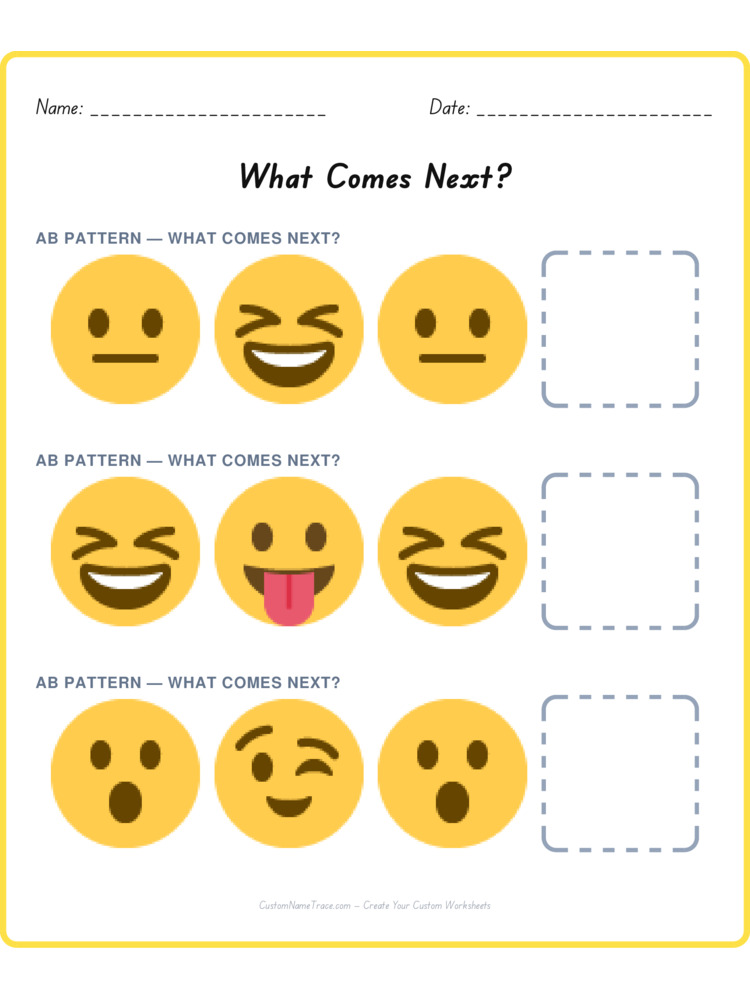
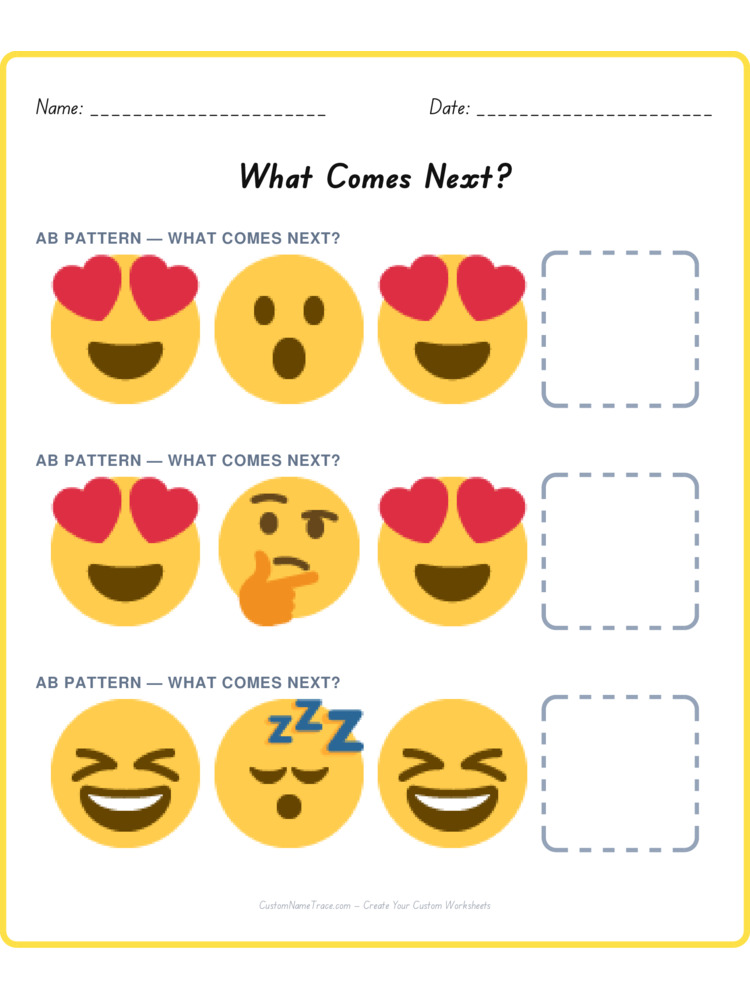
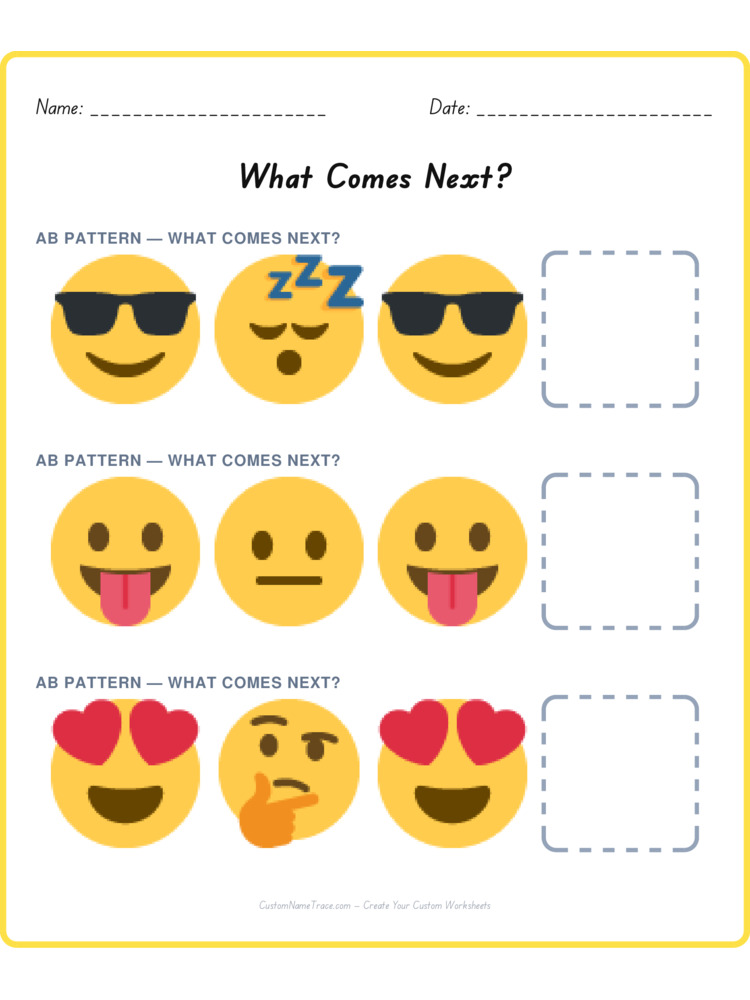
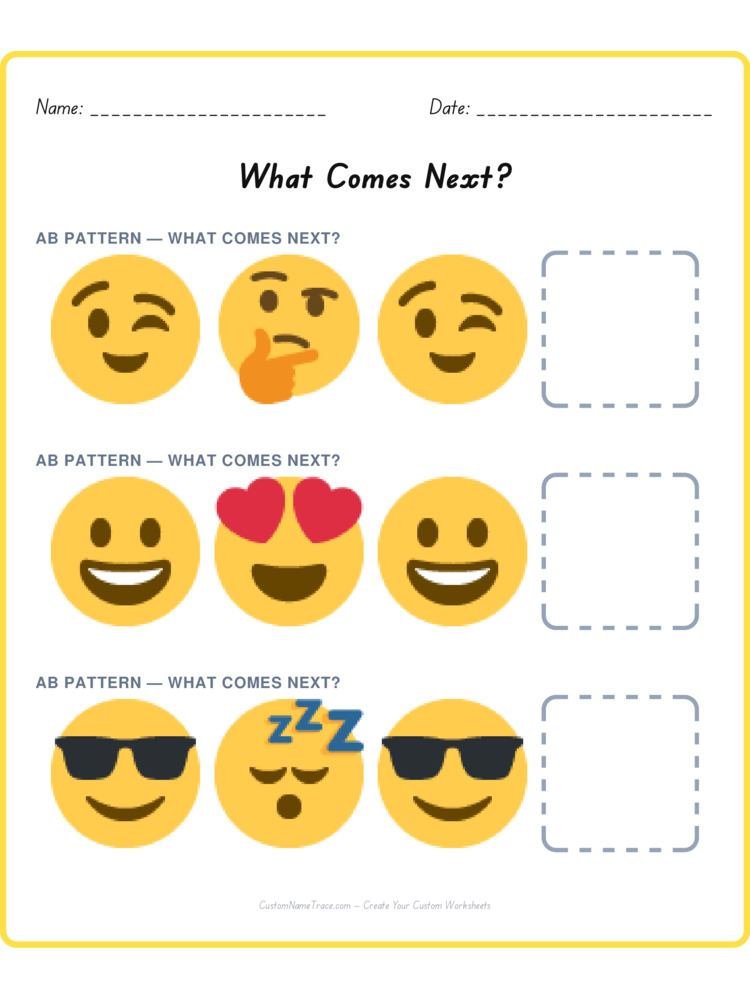
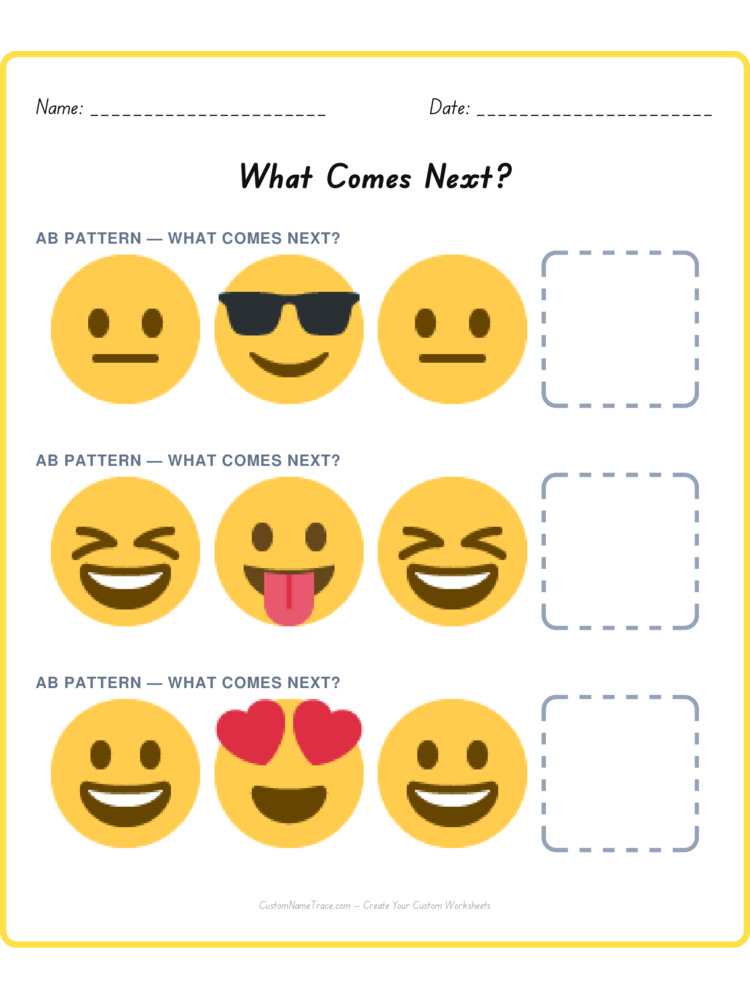
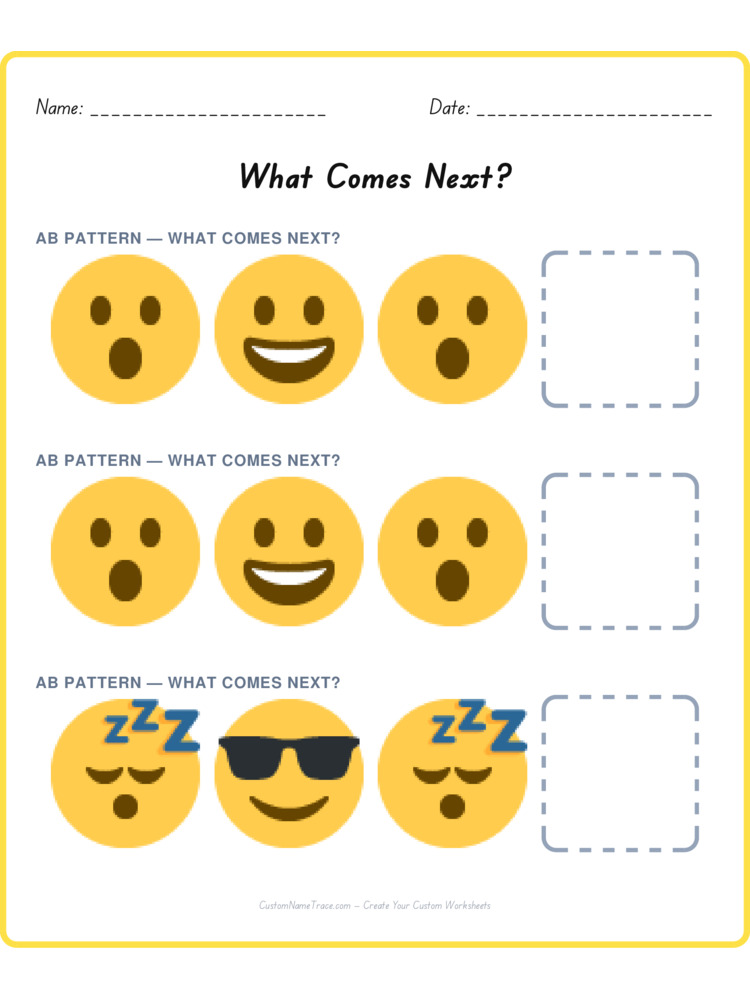
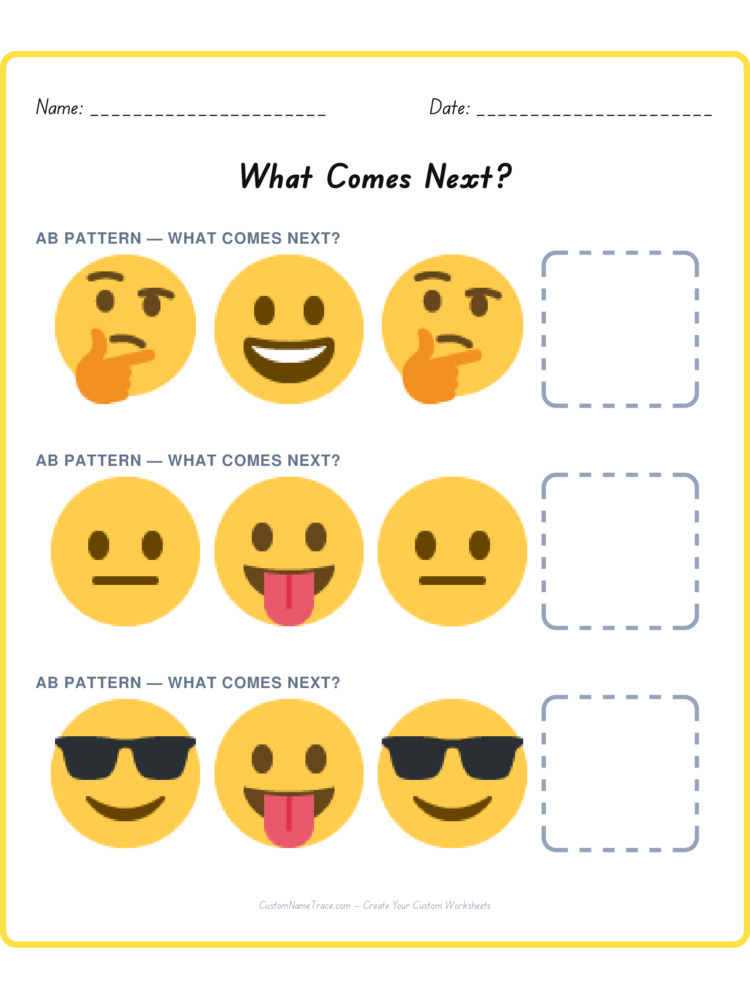
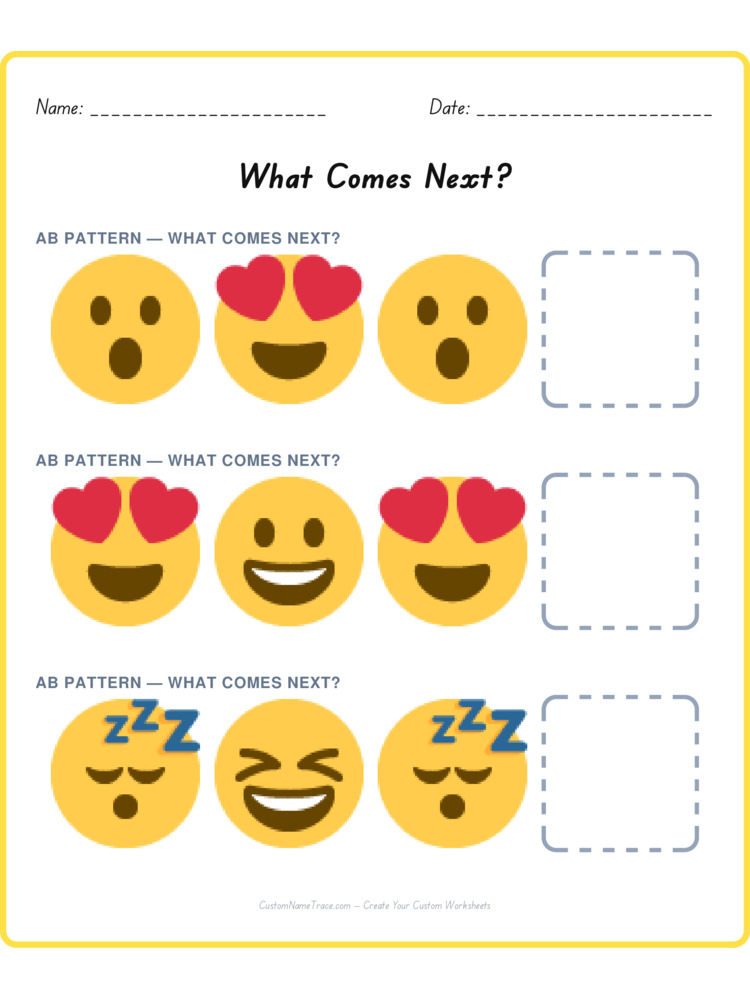
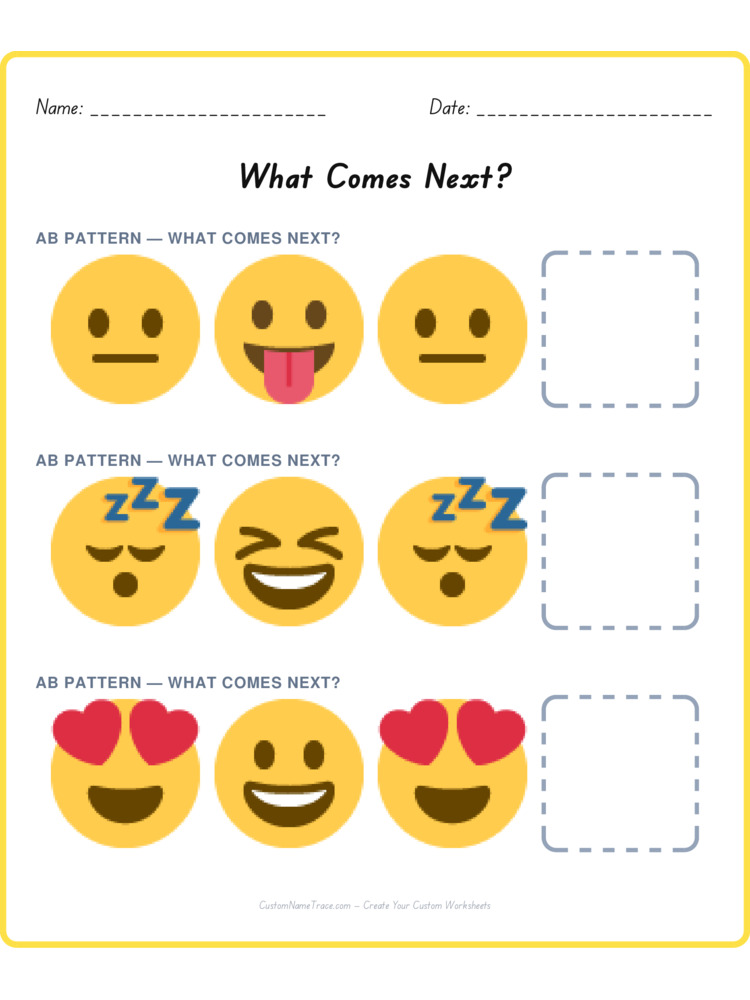
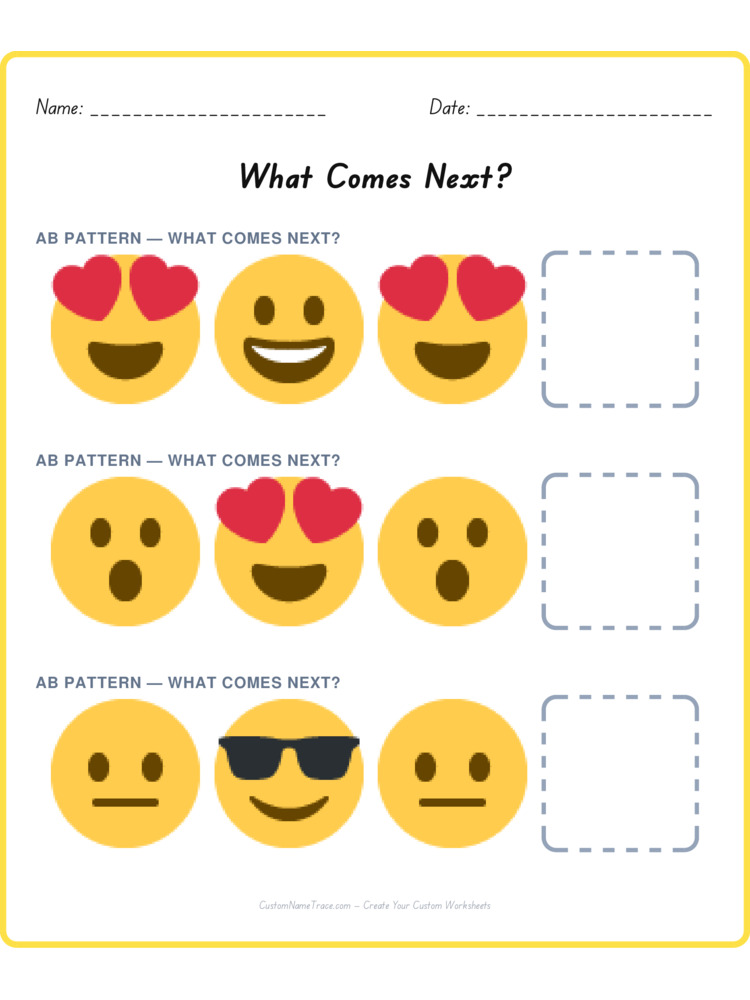
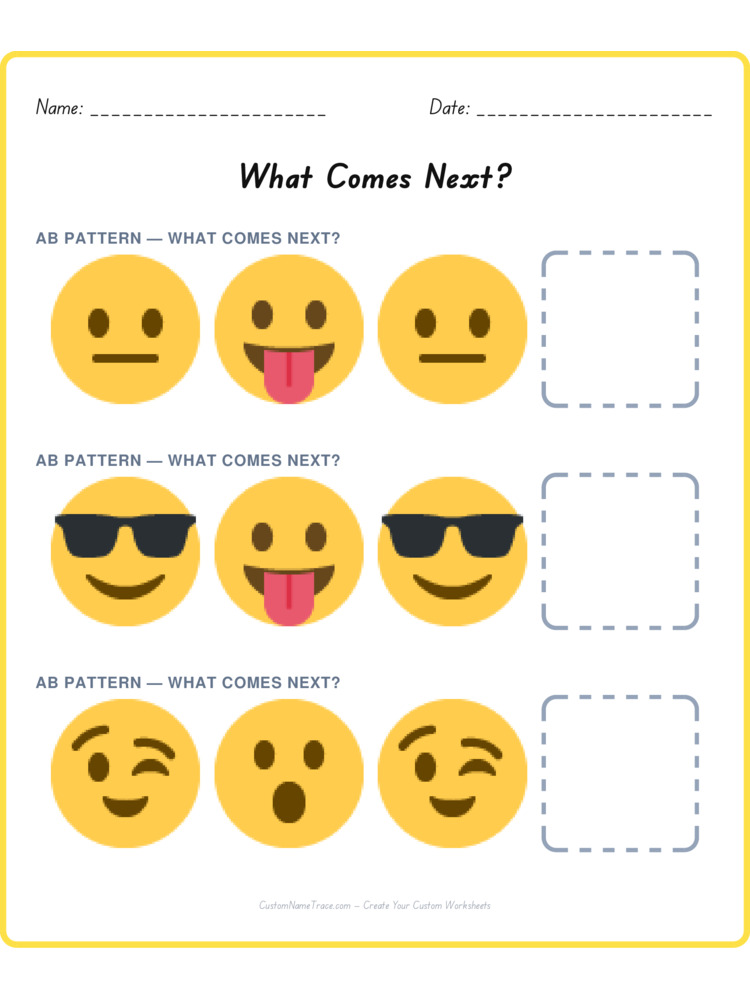
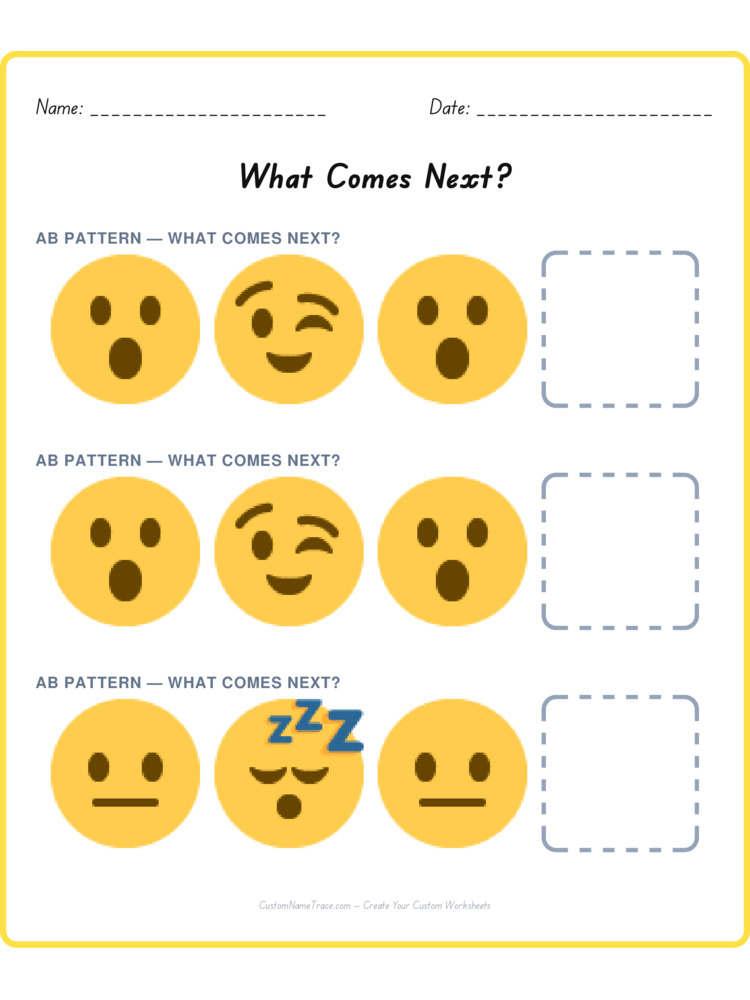
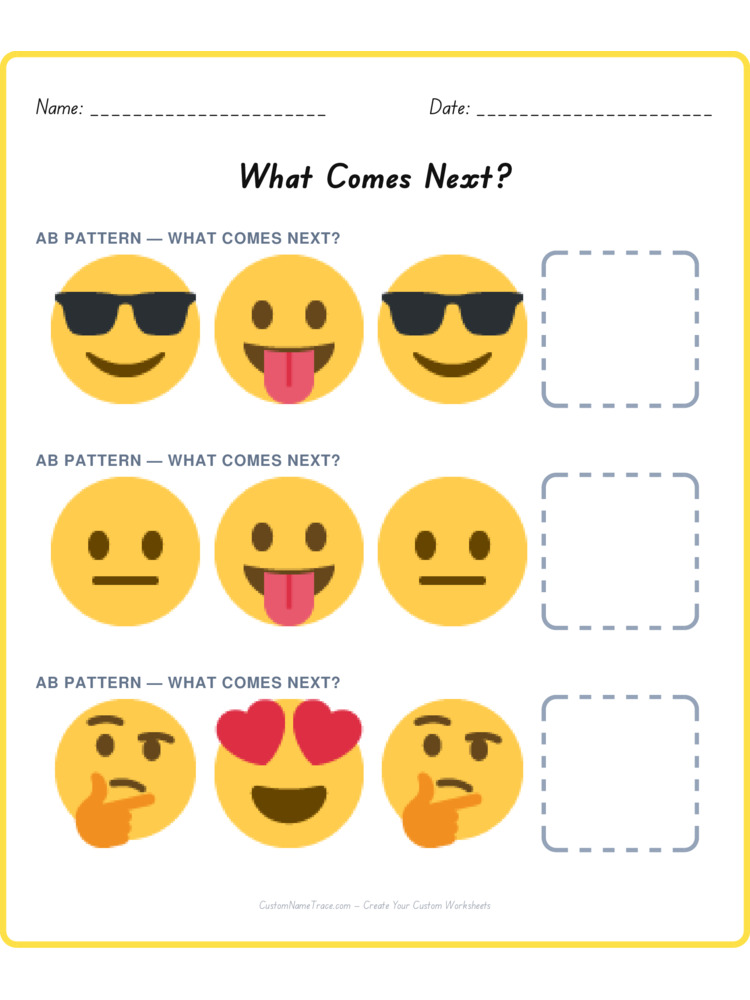
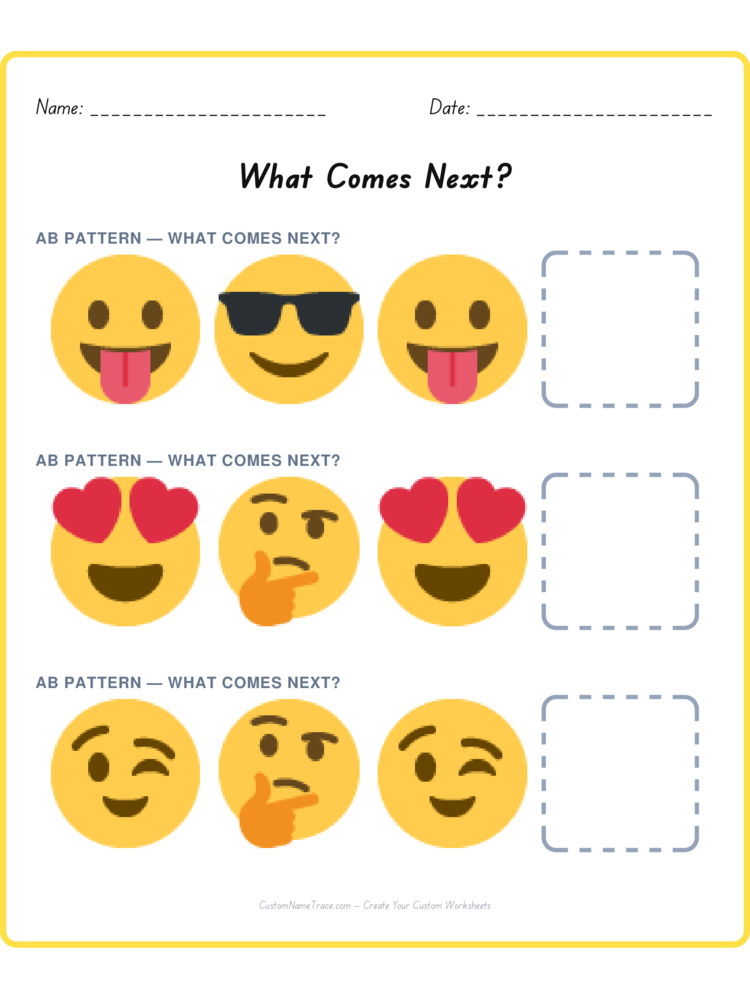
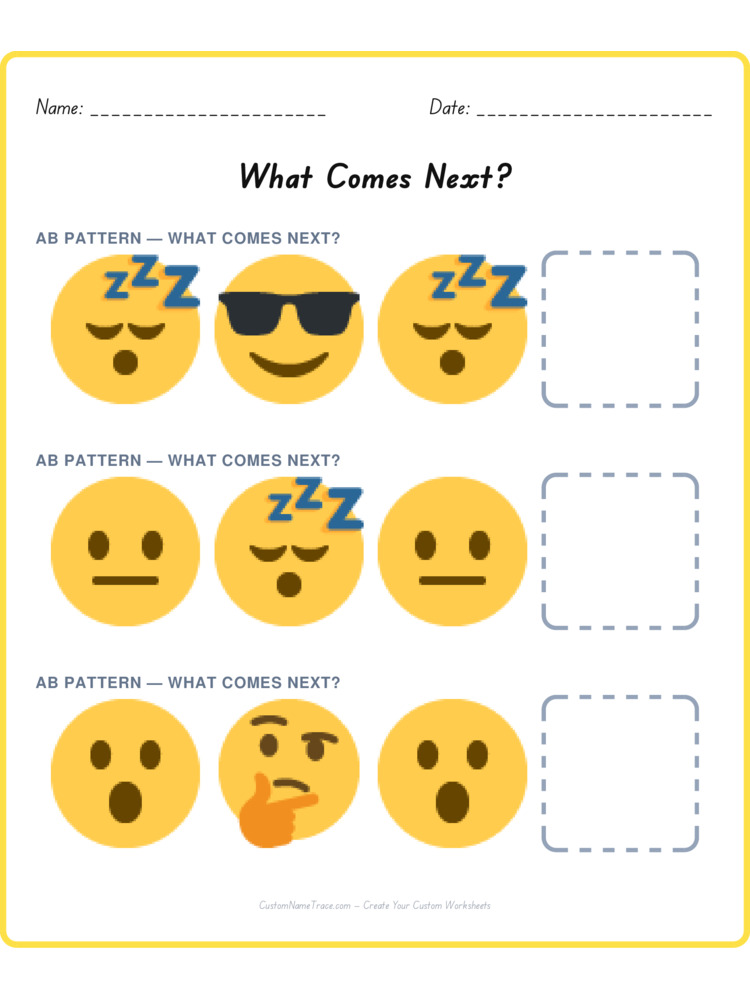
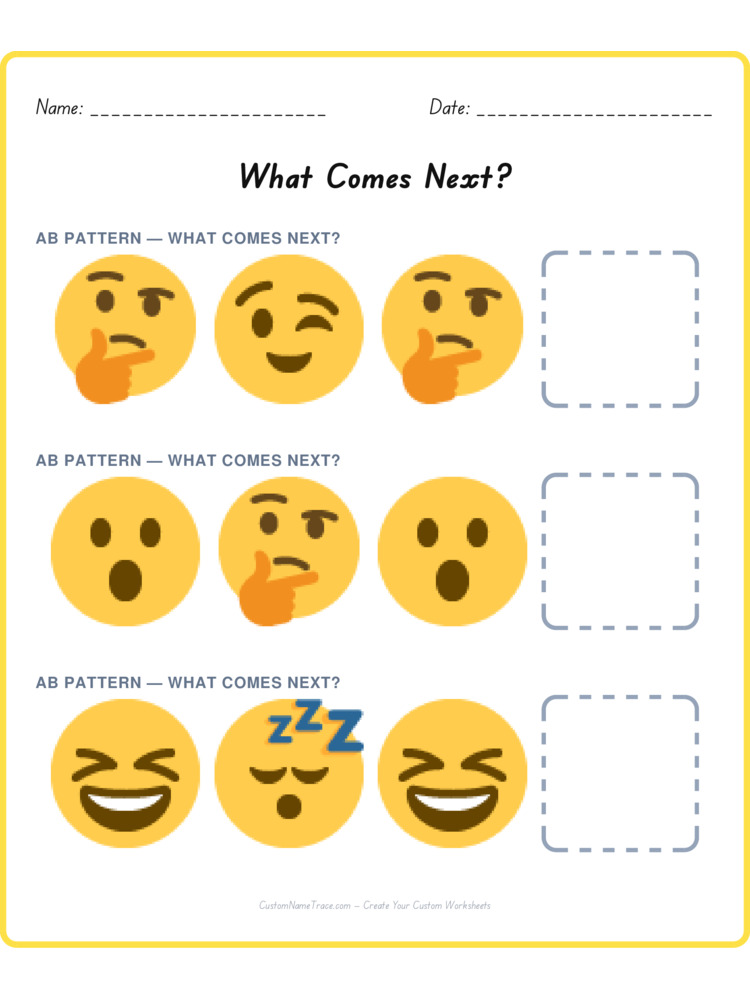
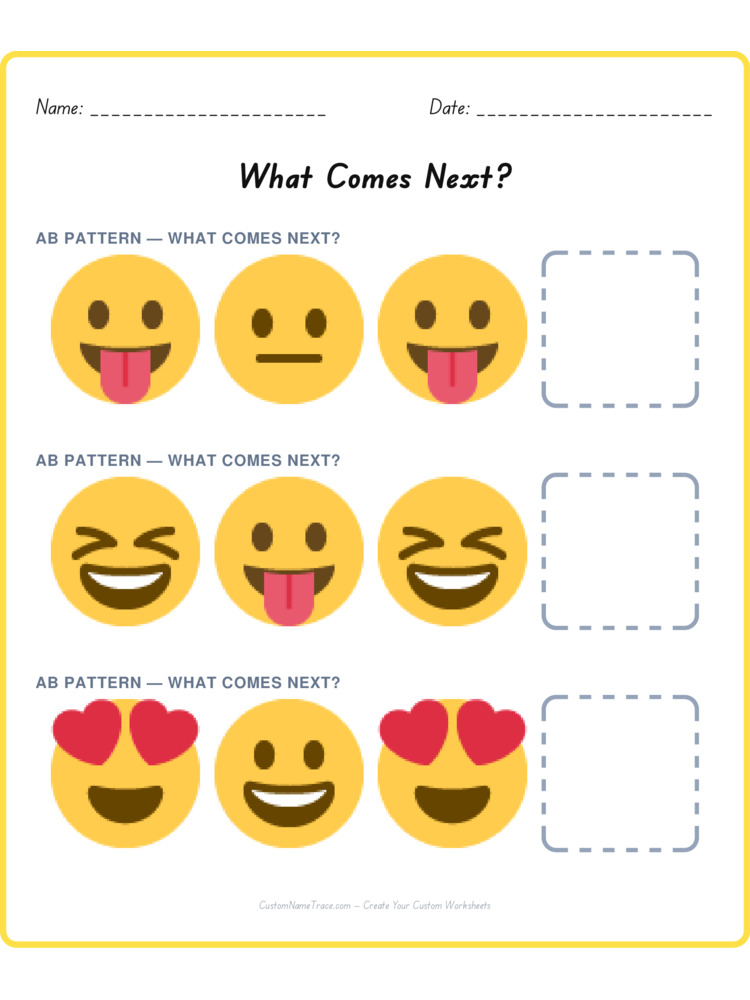
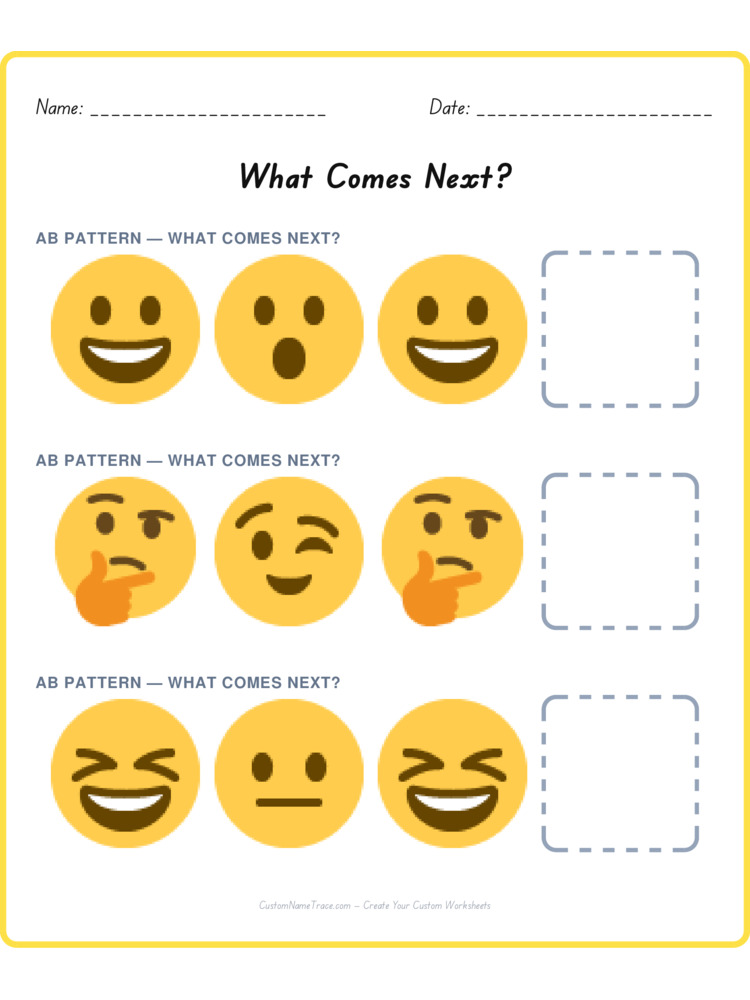
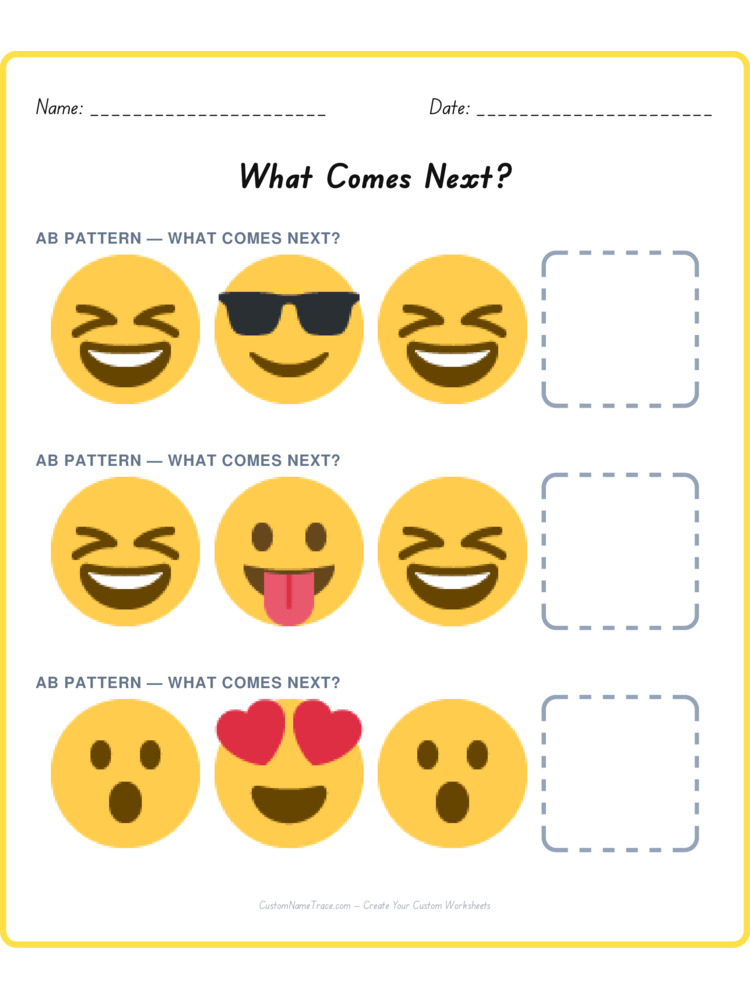
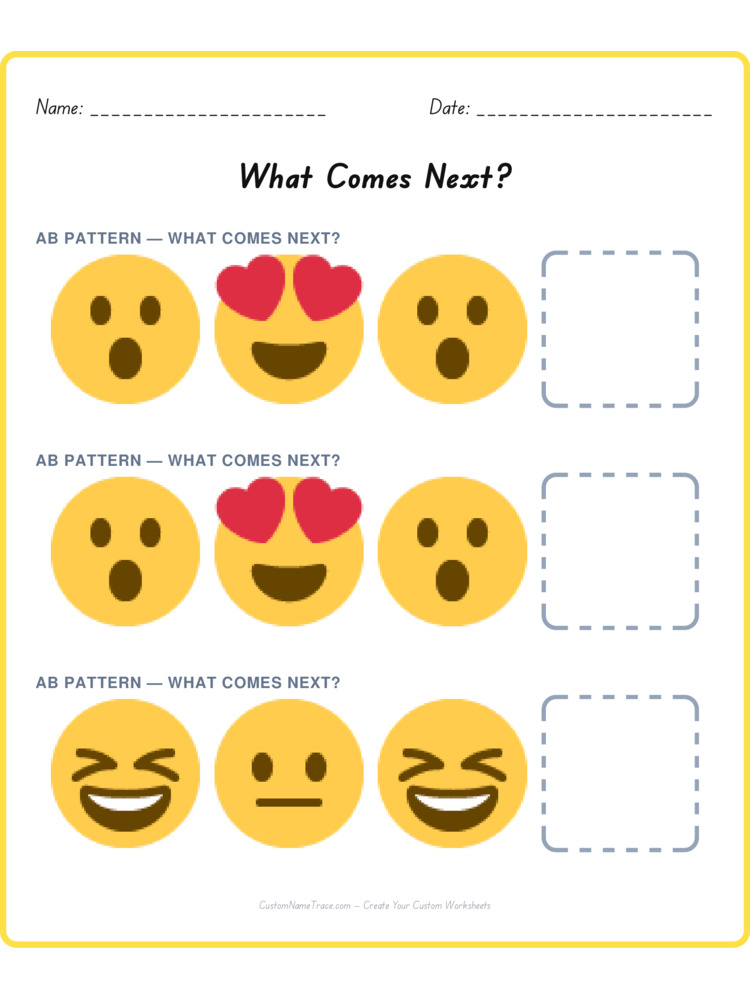
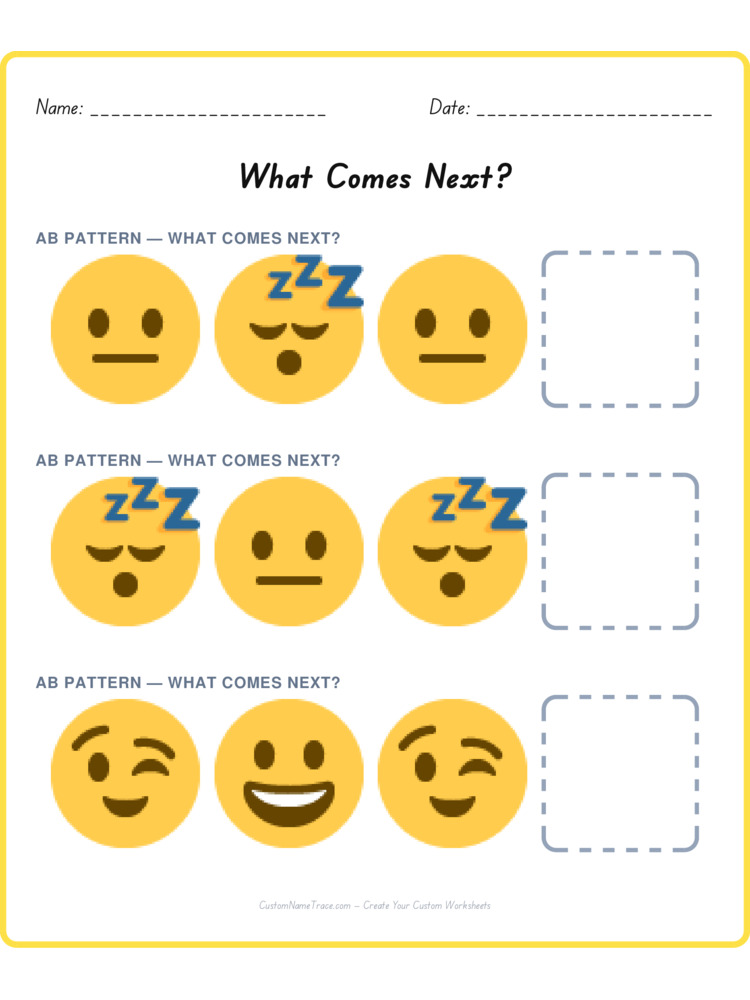
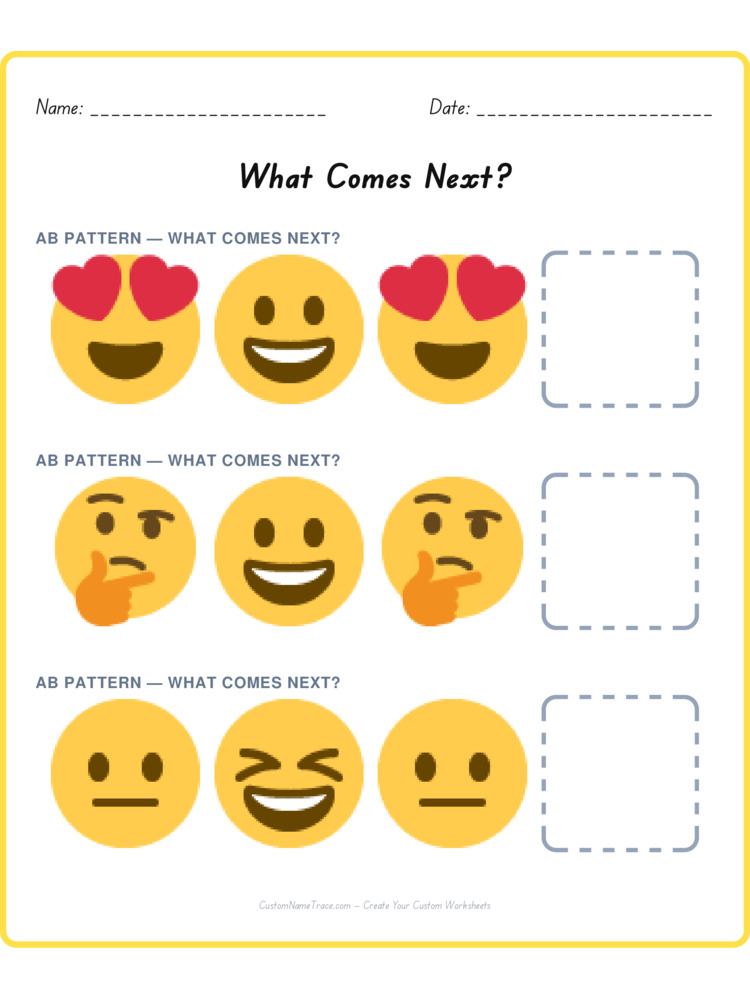
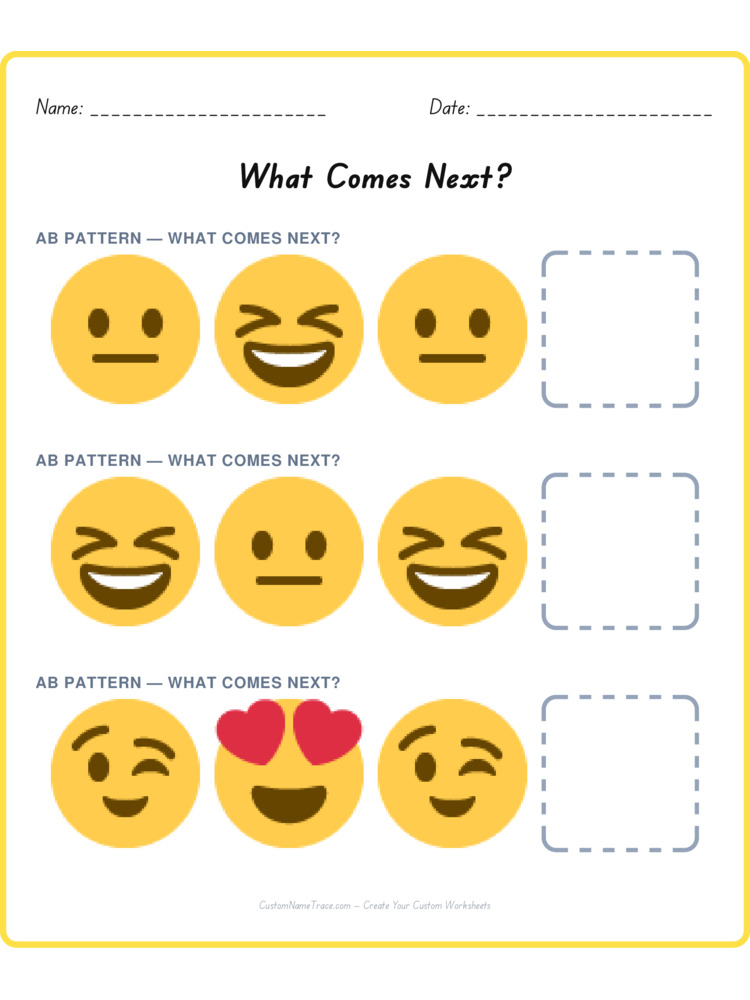
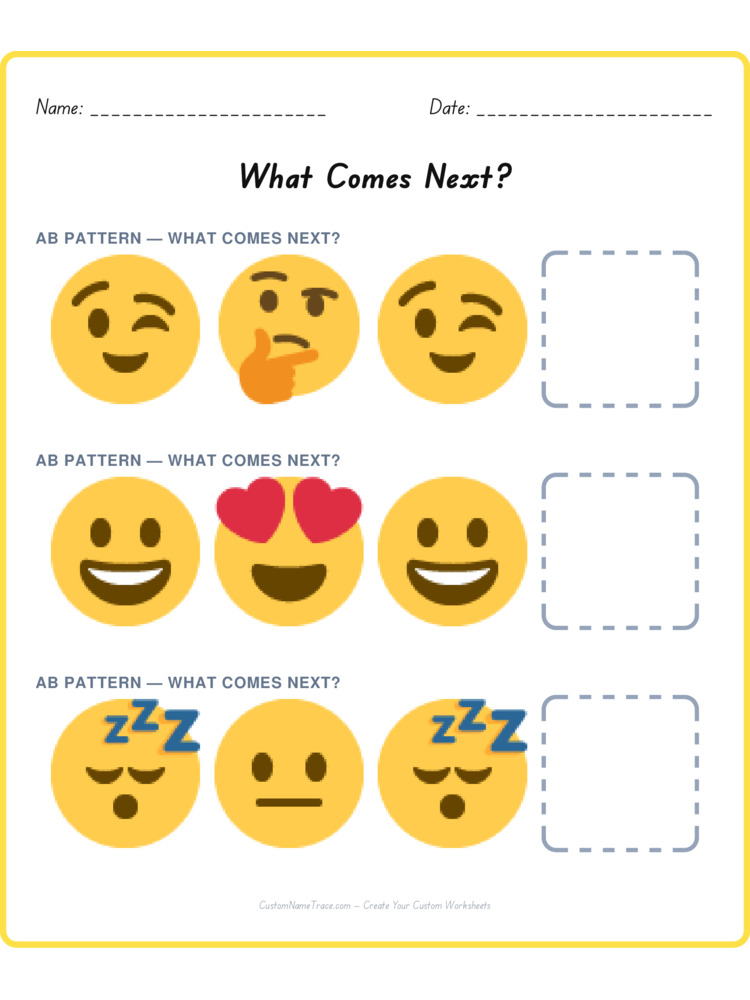
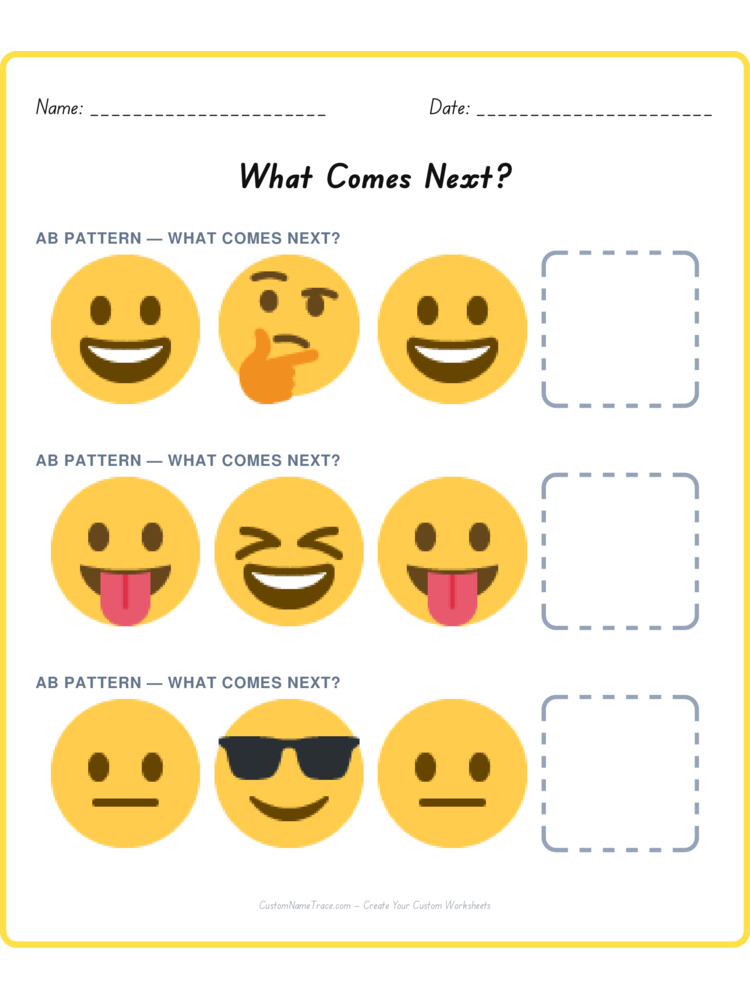
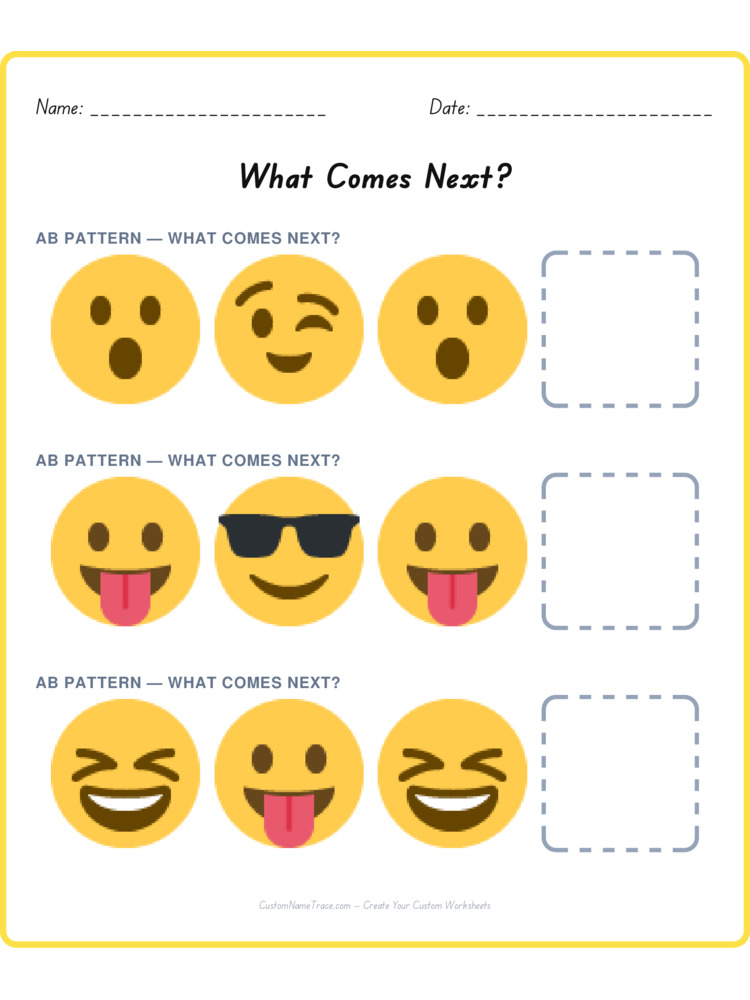
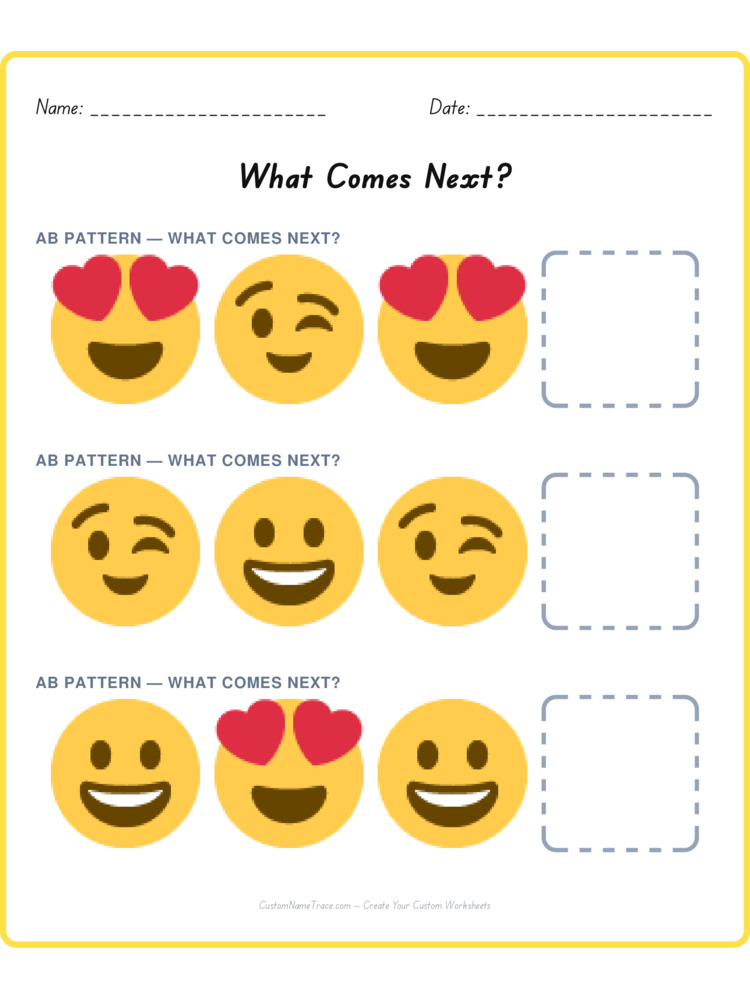
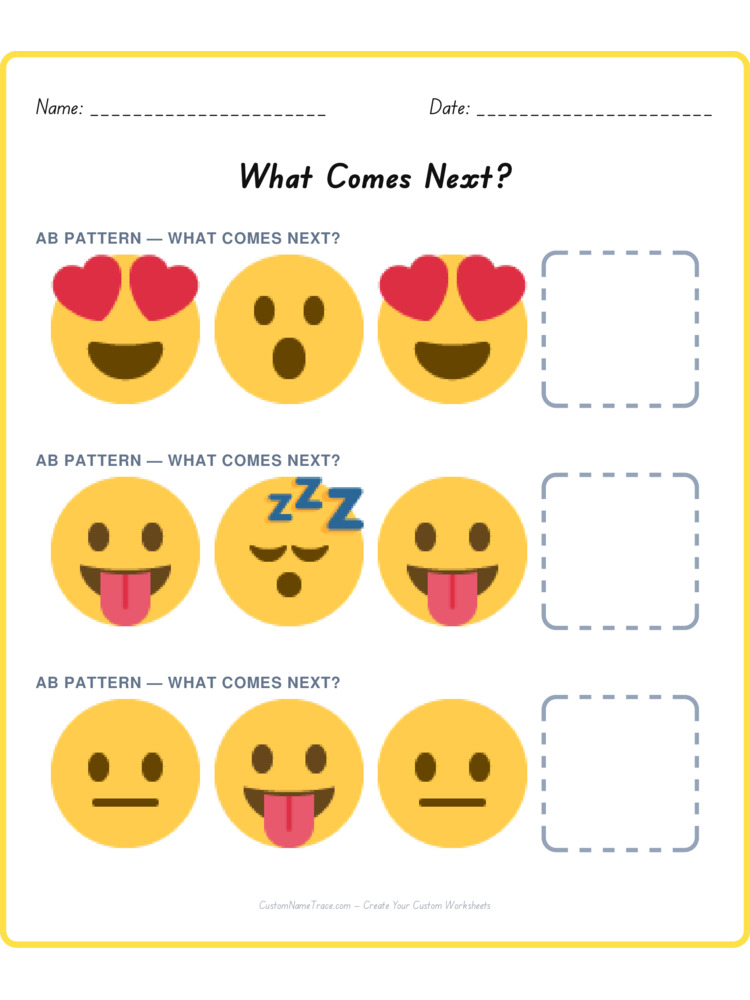
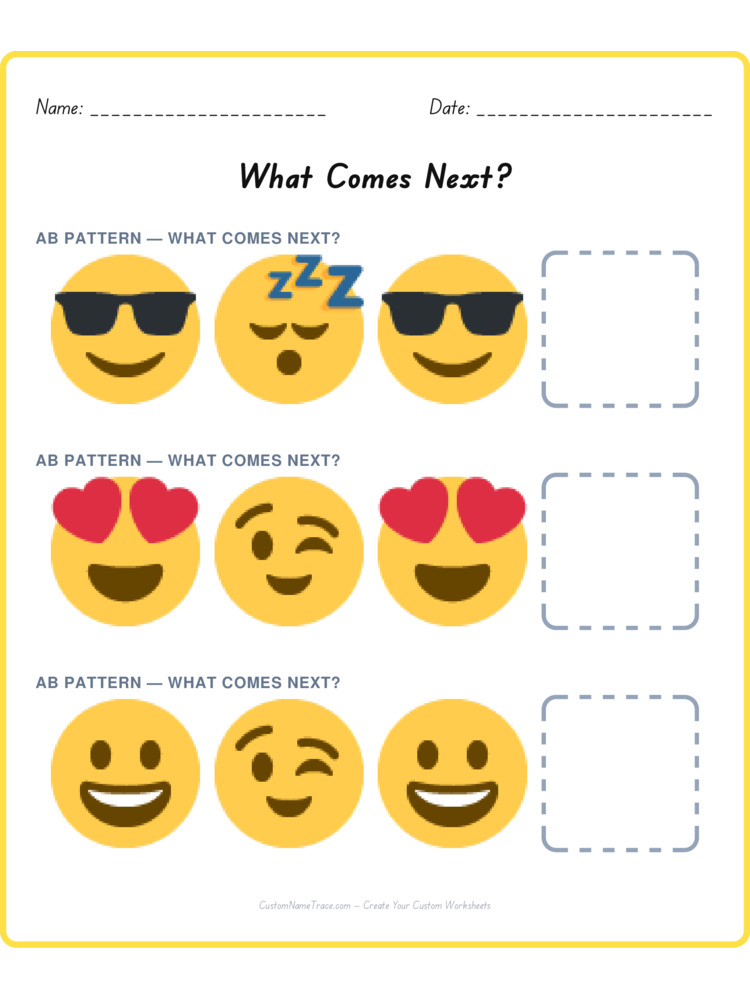
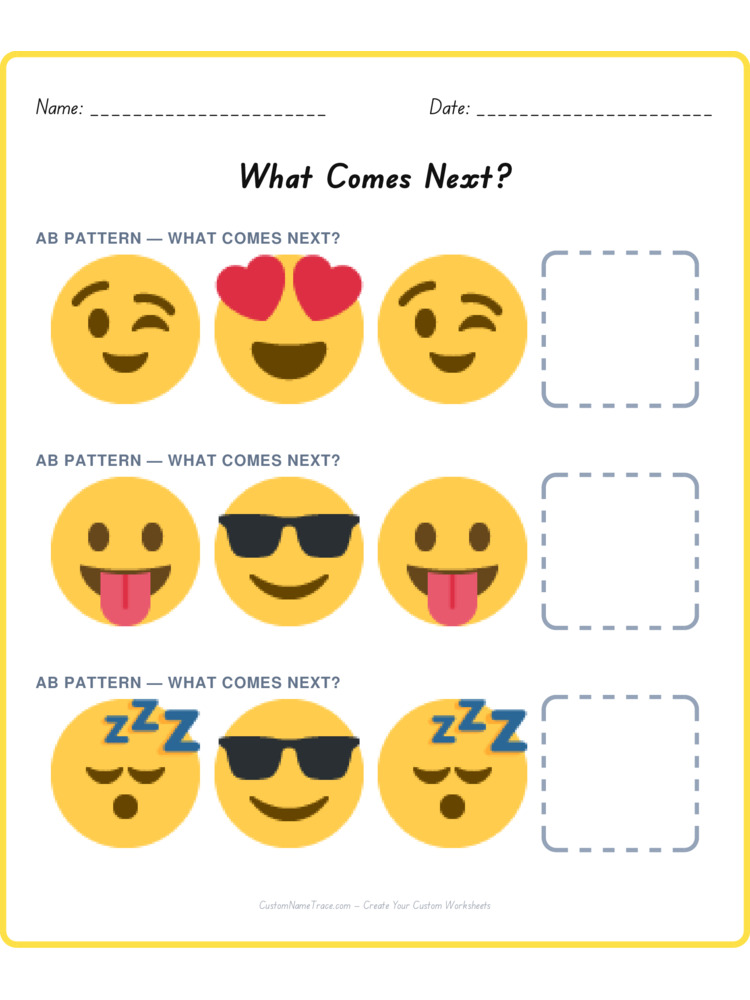
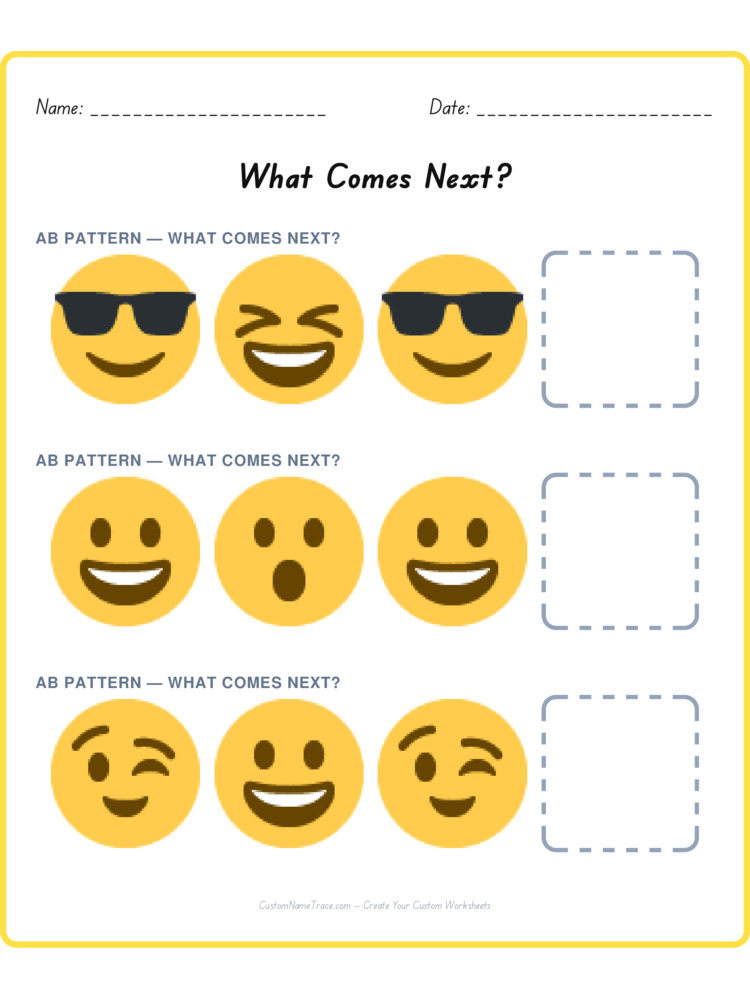
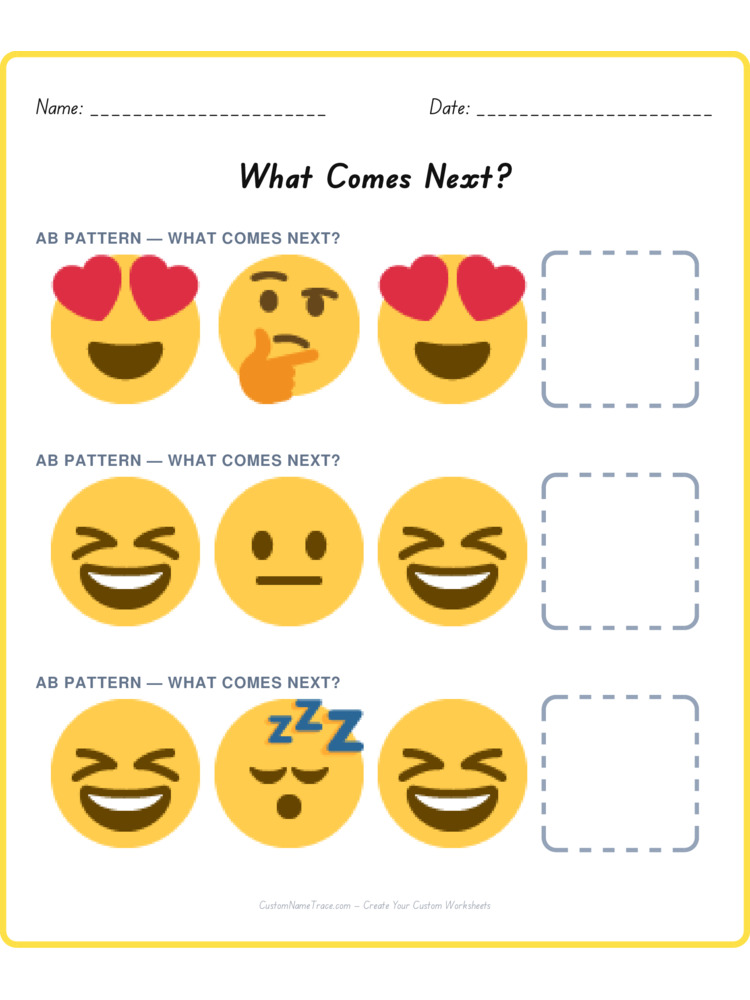
This is a review format, not a first-lesson format
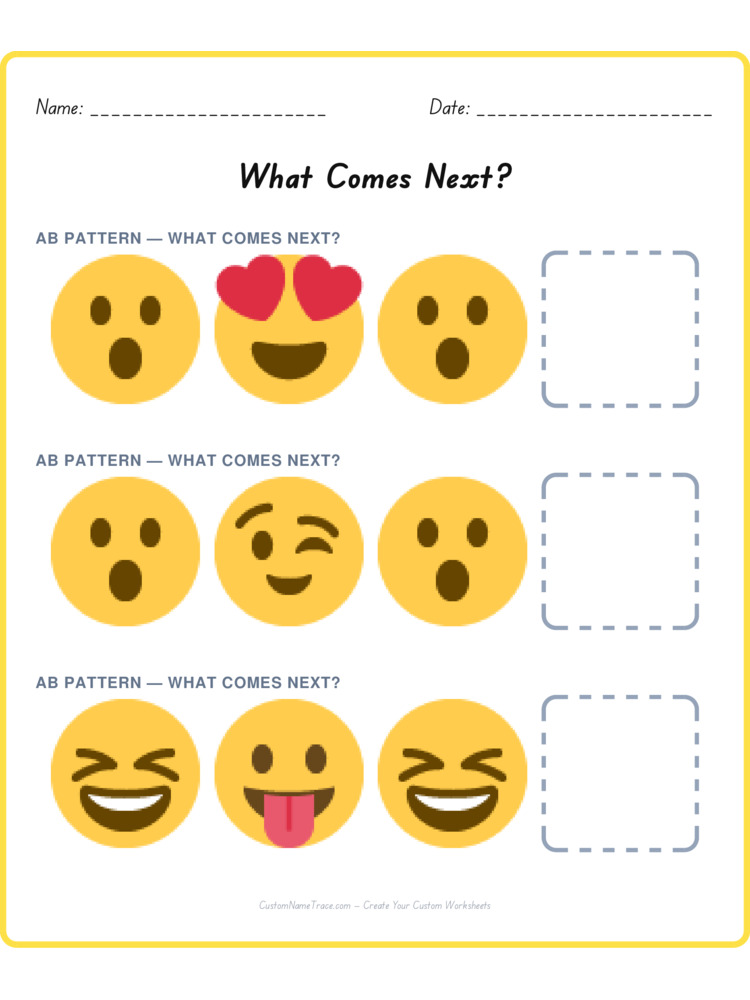
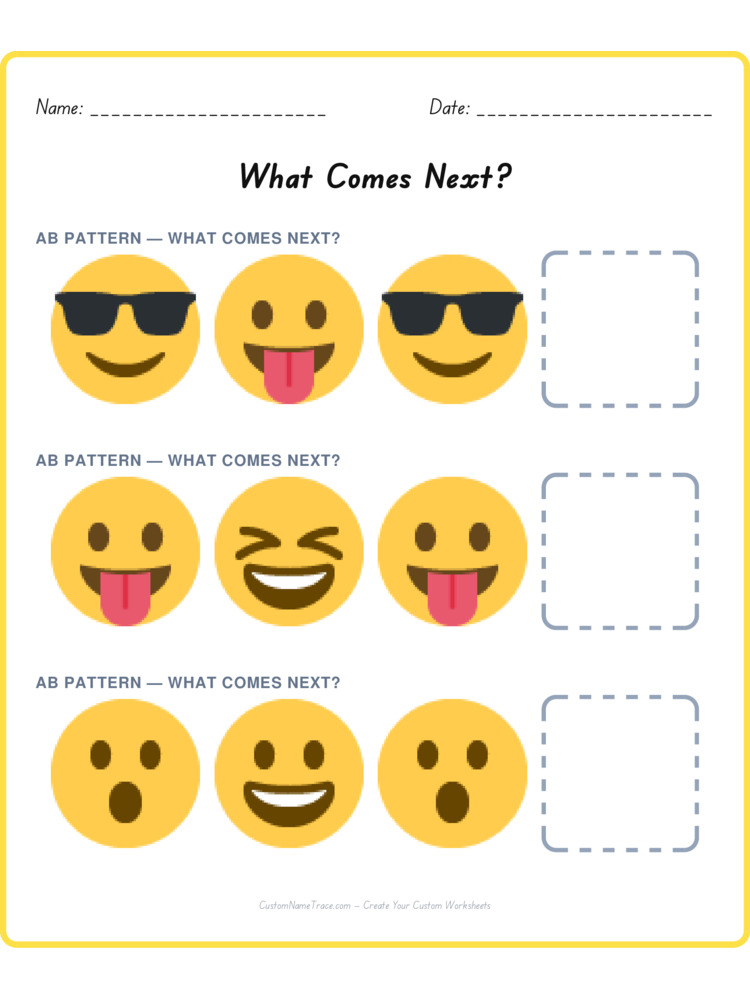
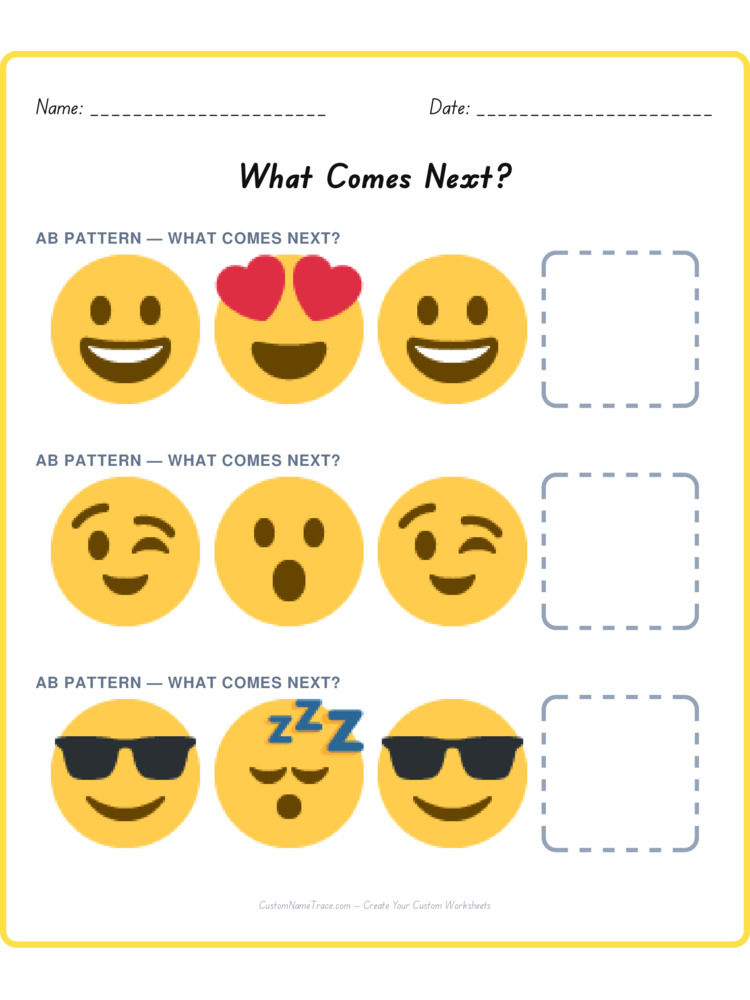
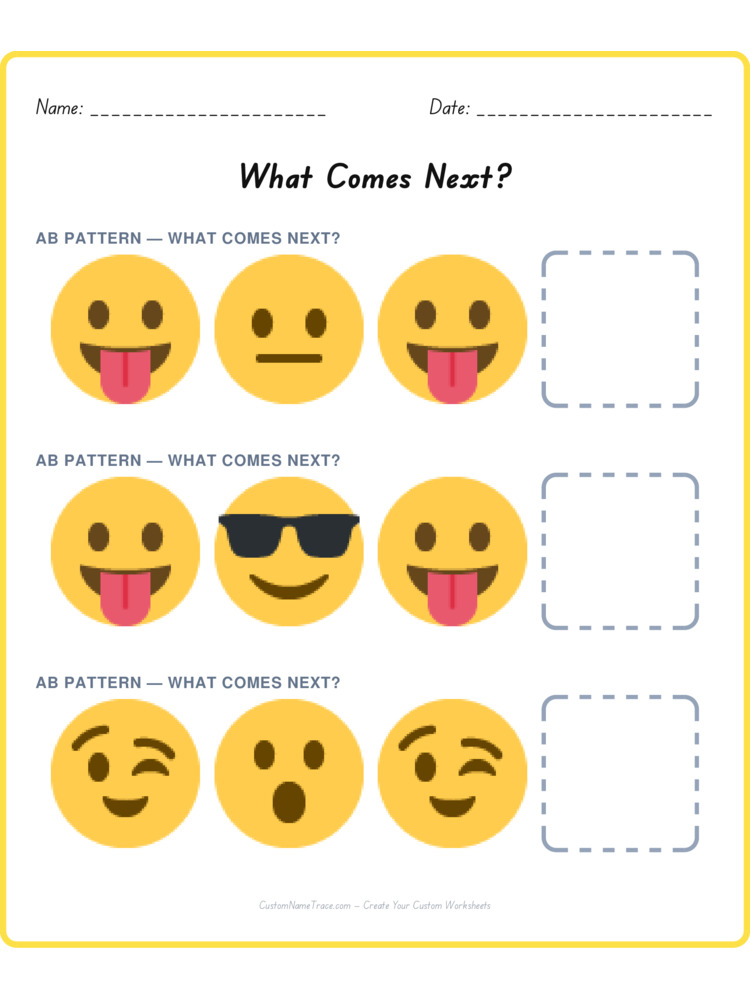
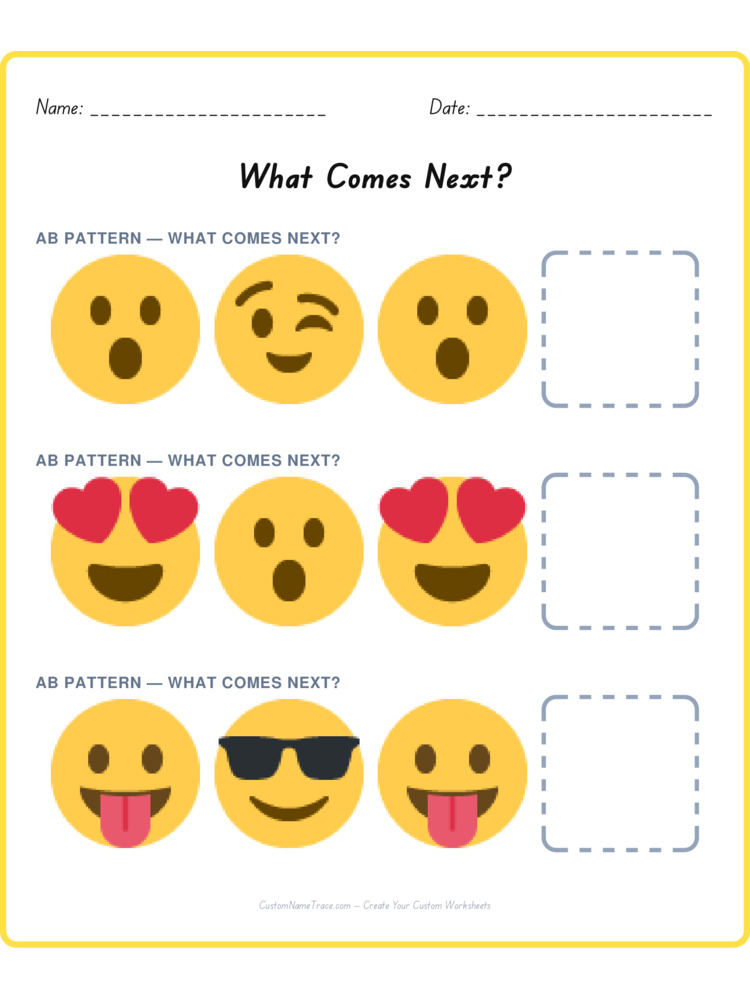
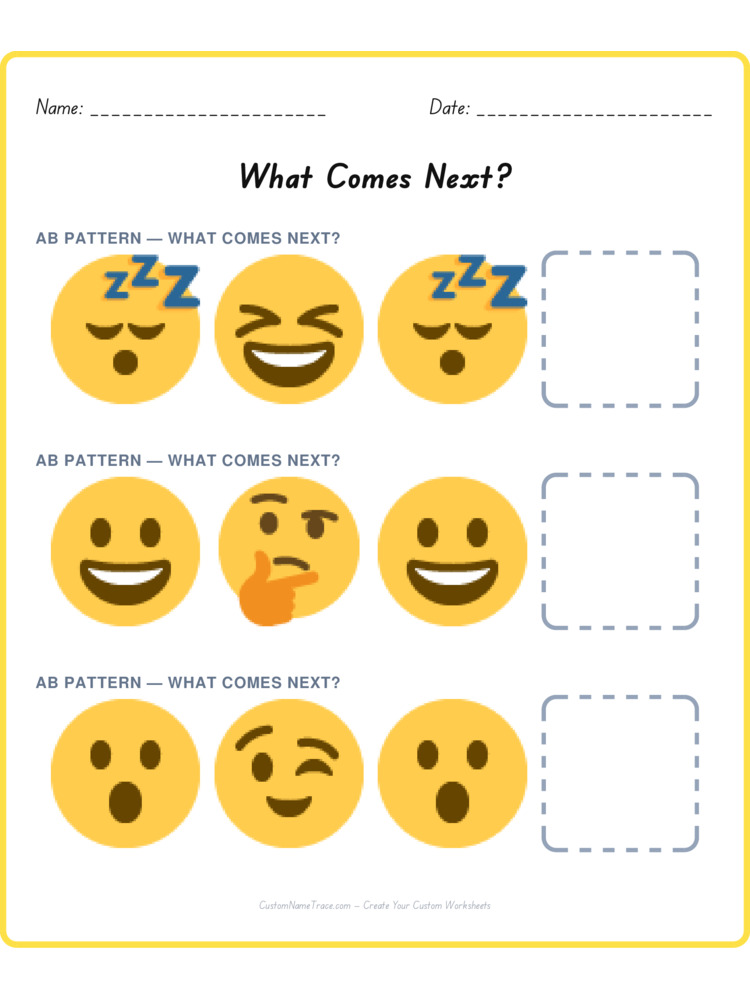
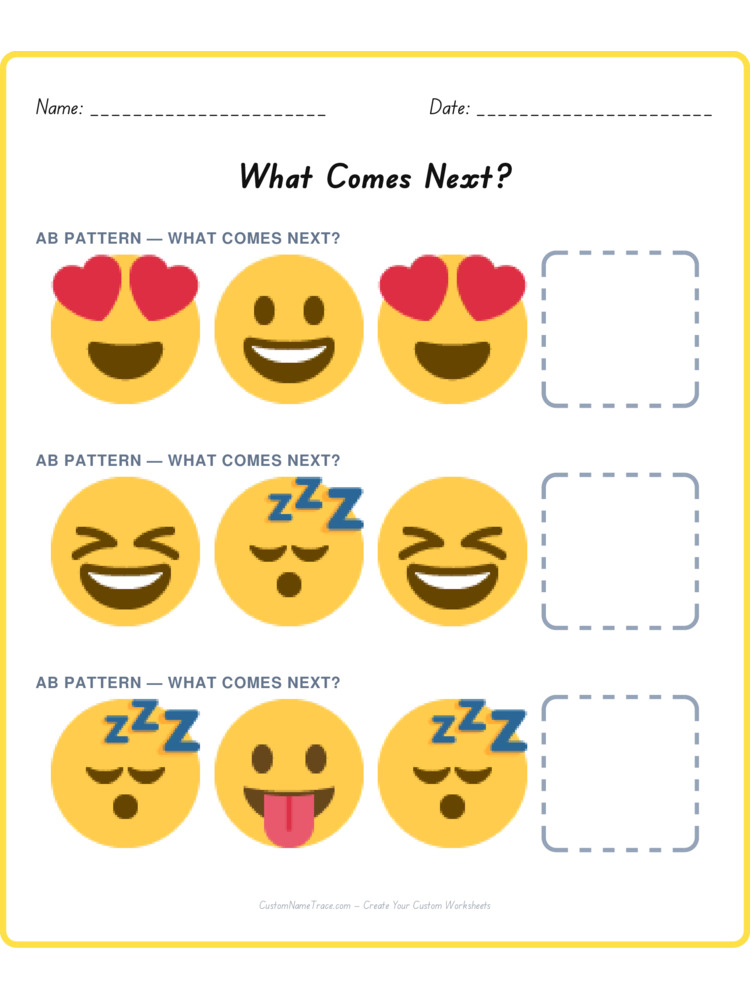
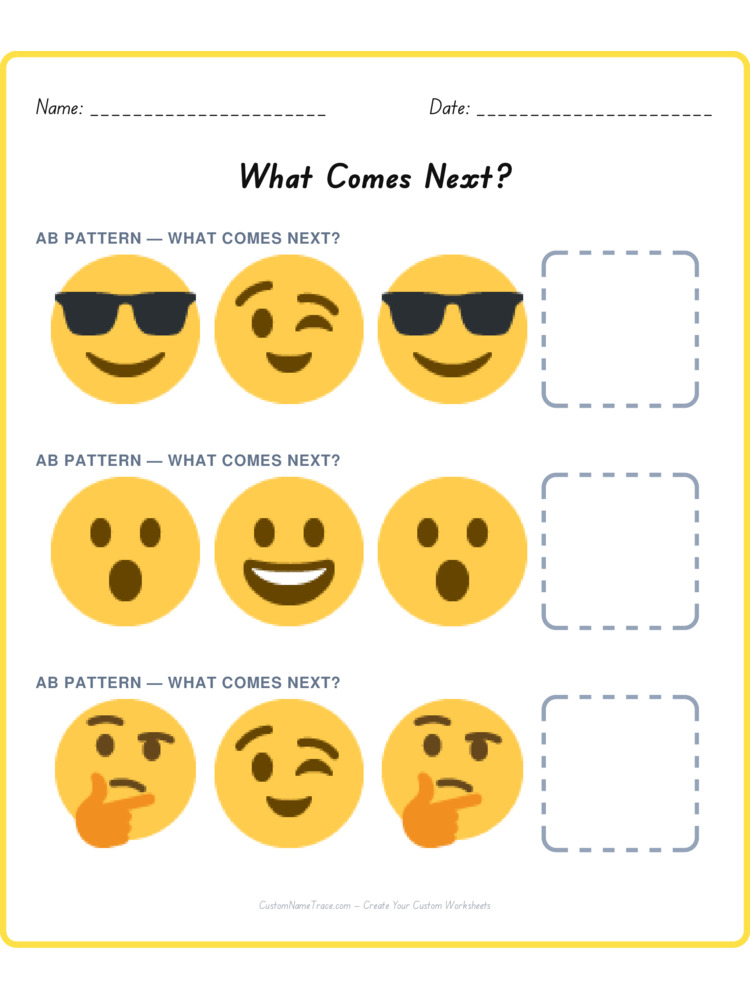
Every row on a Mixed Review page is a different pattern type — one row might be AAB, the next ABC, the next a mirrored sequence — which only works well once a child already has each of those individual rules down separately. If your child hasn't practiced a specific pattern type yet, the dedicated pages linked from the Beginner (Pre-K3-Pre-K4) level hub above are the better starting point; come back to Mixed Review afterward to check that the rules stick when they're not presented one at a time.
What a mixed page is actually testing
Getting one row right proves a child knows that specific rule in isolation. Getting several rows right in a row, each a different rule, proves something more useful: that a child can recognize which rule applies to a given row without being told in advance, and switch between rules cleanly instead of defaulting to whichever one they saw most recently. That switching skill is easy to overlook, since it doesn't show up at all on a dedicated single-pattern page where the rule never changes.
How to use a mixed page well
Pause between rows and ask your child to name what's happening before they answer — "what's the rule in this one?" — rather than letting them move through the whole page on autopilot. A child who can articulate the difference between what row two and row three are each doing is demonstrating real understanding, not just getting lucky with correct guesses. If a specific row consistently trips them up, that's useful information: it usually means the individual pattern type behind that row needs more dedicated practice on its own page before it holds up inside a mixed review.
Why Beginner (Pre-K3-Pre-K4) mixes exactly the patterns it does
The pattern types rotating through a Beginner (Pre-K3-Pre-K4) Mixed Review page are drawn only from what's actually eligible at the Beginner (Pre-K3-Pre-K4) level (Pre-K3/Pre-K4) — nothing here is pulled from a stage a child at this level hasn't been introduced to yet. That keeps a mixed page from accidentally testing a skill it was never meant to assume, and means every row is fair game for review rather than a preview of something harder still to come.
Using this at home or in a classroom
At home, this works well as an occasional check-in rather than a daily worksheet — once a week or so, to confirm that rules practiced individually during the week are still solid when they're not sorted for your child in advance. In a classroom, a Mixed Review page makes a quick whole-class warm-up or an informal way to spot which students are ready to move up a level, since it surfaces gaps a run of identical dedicated pages wouldn't reveal.
Moving between dedicated pages and mixed review
The order that works for most kids: a dedicated page or two on each new rule first, until it holds up on its own, then a Mixed Review page once several of those rules feel solid together. If a mixed page reveals that one specific rule is still shaky, it's worth returning to that rule's own dedicated page rather than repeating the mixed page itself — the mixed format is a test of what's already learned, not the place to learn something new.
What a strong result on this page actually looks like
A child who gets every row right on the first attempt, without pausing to think between rows, may be pattern-matching against the icons rather than genuinely re-deriving each rule — worth a quick spot-check by asking them to explain one or two rows out loud. A child who pauses, seems to consciously switch gears between rows, and gets most of them right after that consideration is showing the actual skill this page is built to test, even if the raw score looks slightly lower on paper.