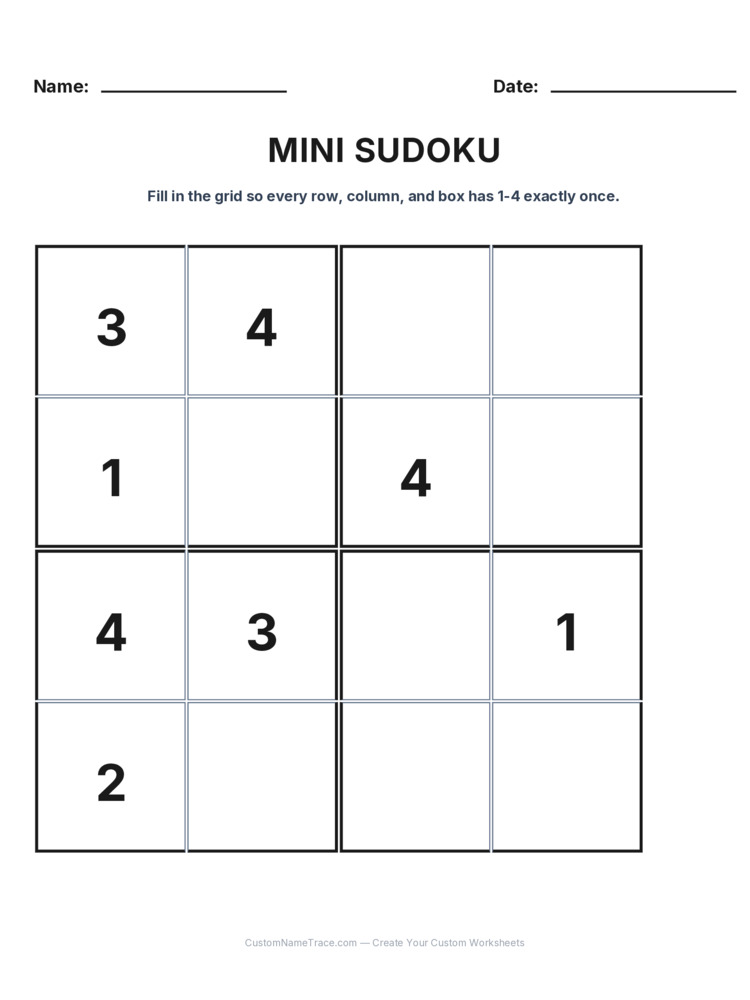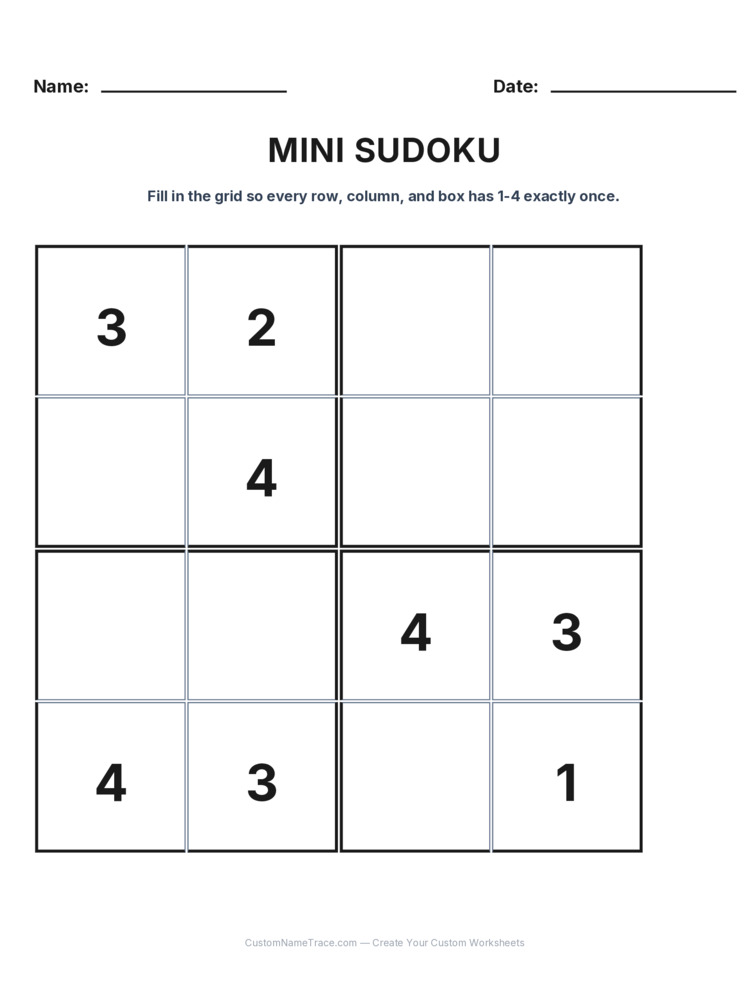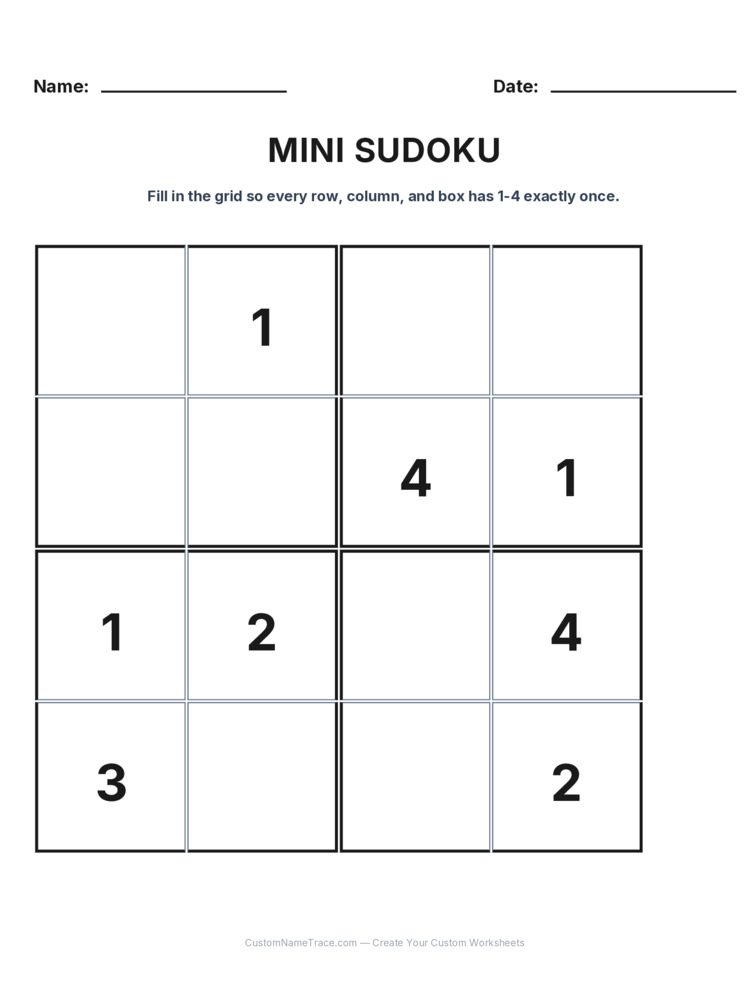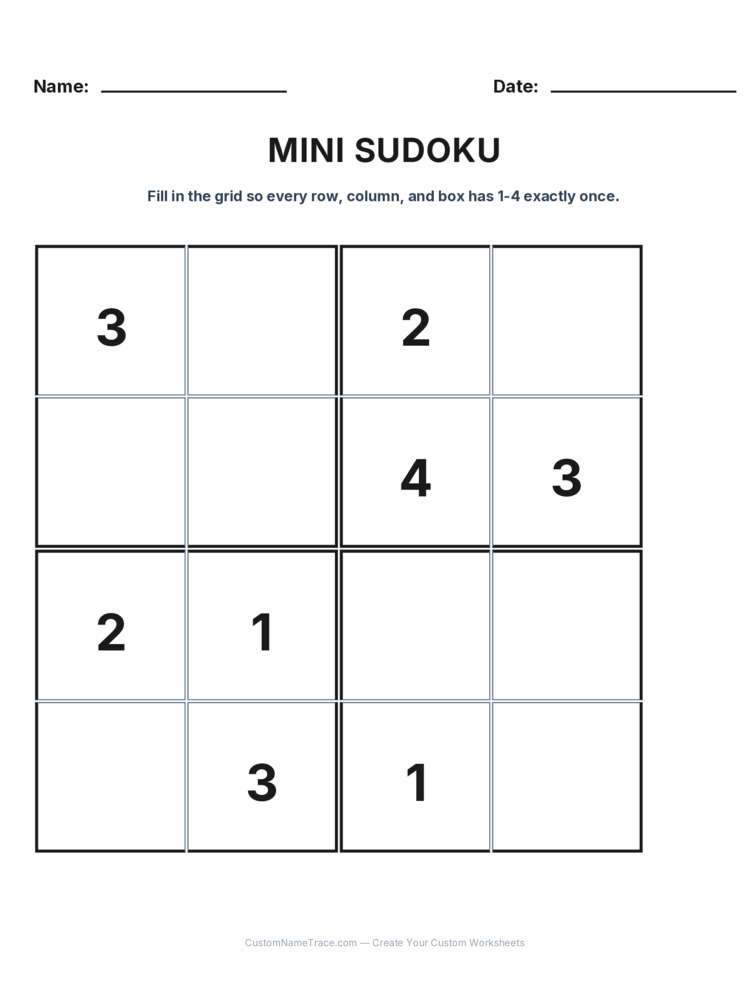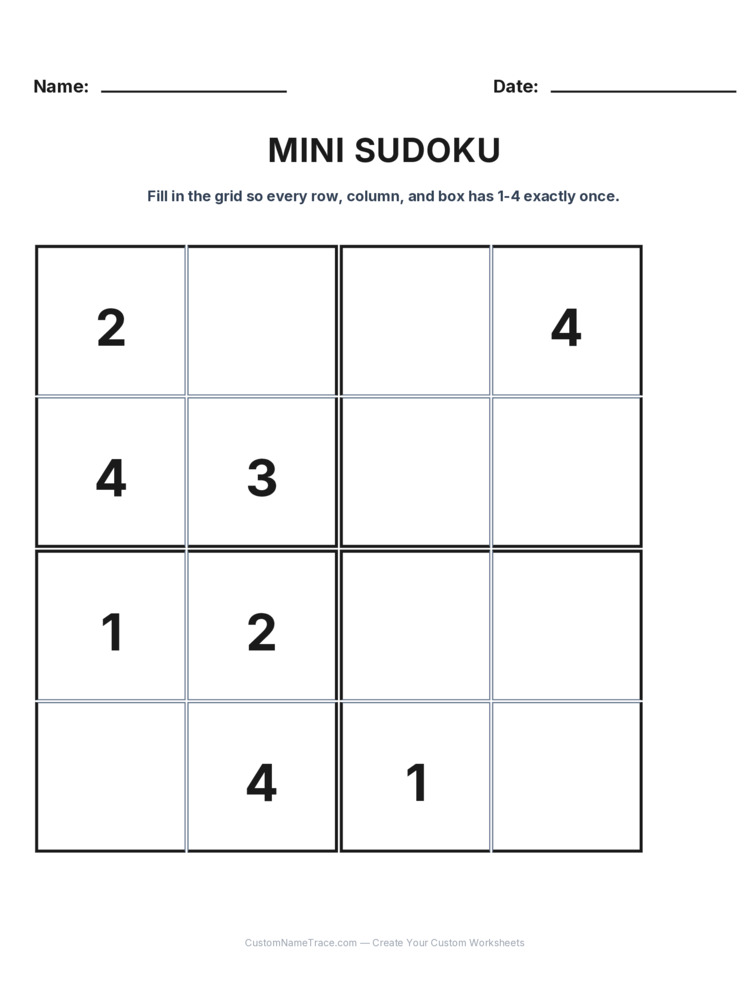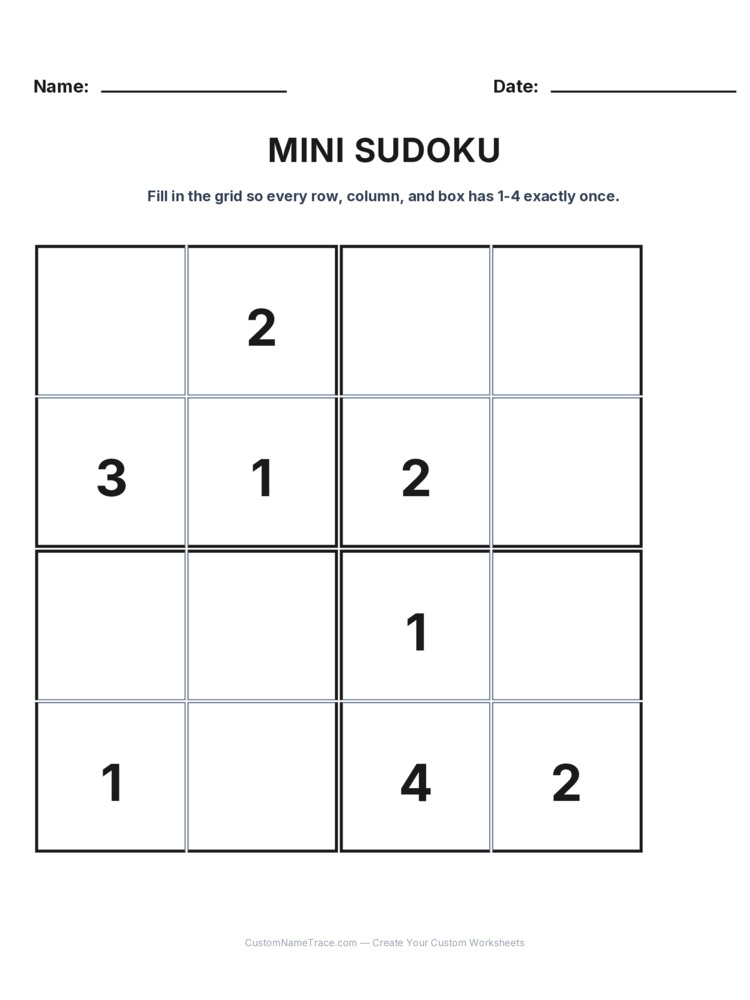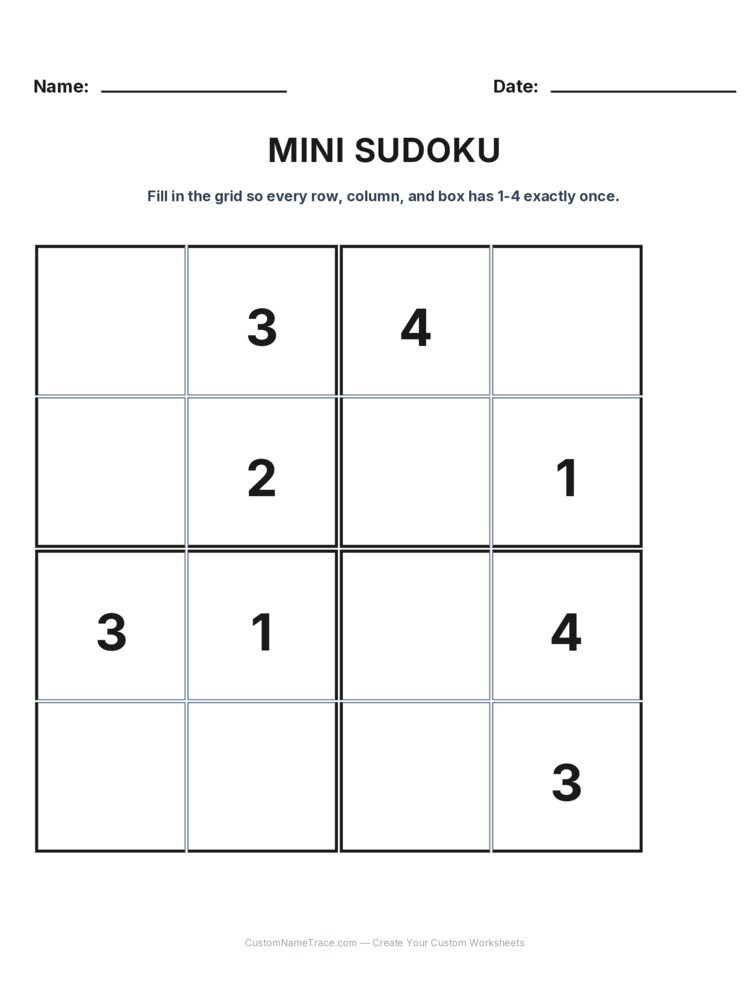
What Mini Sudoku is actually testing
Mini Sudoku is a reasoning skill, not a memorized fact — a child can't recall the answer to this puzzle from prior practice the way they might recall a math fact, because every numbered variant generates a genuinely fresh layout. What's being tested is whether the underlying rule of Mini Sudoku has actually been understood well enough to apply to a puzzle that's never been seen before, which is a meaningfully different, and in some ways more demanding, kind of practice than repetition-based worksheets.
Mini Sudoku was chosen for Grade 3 specifically because it's scoped to reasoning a child at this stage can genuinely work through independently, without needing an adult to first explain the underlying rule.
A strategy worth teaching explicitly
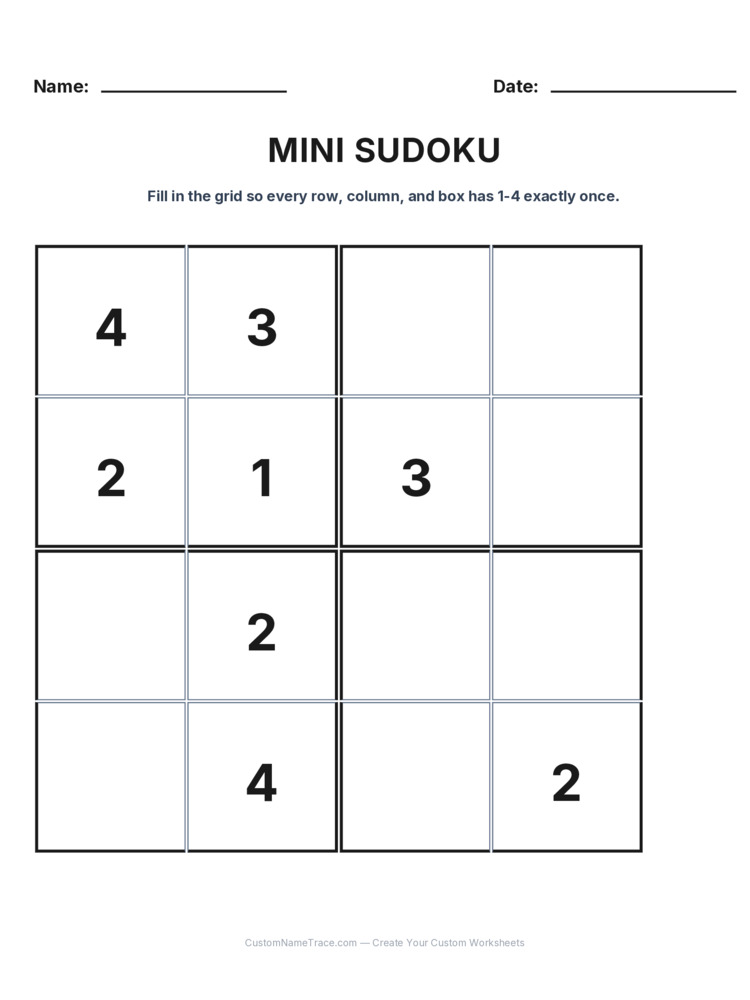
Working through the first Mini Sudoku puzzle together, naming the rule out loud before trying to apply it, builds the reasoning process directly rather than leaving a child to infer the pattern purely by trial and error. Once the rule has been stated once, most children can apply it independently to the rest of the page and to future numbered variants of the identical puzzle type.
Rushing tends to backfire specifically with logic puzzles like Mini Sudoku — a careful, unhurried first pass usually produces a correct answer faster overall than a quick attempt followed by having to redo it.
How to check the answer without a separate key
Every puzzle format on this site, including Mini Sudoku, is deliberately self-checking — the rule needed to verify an answer is either printed directly on the worksheet or plain enough to confirm at a glance, so there's no separate answer key to track down, print, or lose. That design choice matters for a puzzle type specifically: a logic puzzle with an answer key encourages checking the key instead of the reasoning, which defeats the point of the exercise.
What a wrong answer on Mini Sudoku usually reveals
A mistake on this puzzle almost always traces back to one specific, identifiable point in the reasoning — a rule applied inconsistently partway through, or a step skipped under time pressure — rather than a complete misunderstanding of Mini Sudoku itself. Asking a child to walk back through their own reasoning out loud, rather than simply marking the answer wrong, usually surfaces exactly where the process broke down.
Where Mini Sudoku fits into Grade 3's reasoning progression
Mini Sudoku is one puzzle type among several logic formats available at Grade 3, browsable from the hub page above, and working through more than one format — not just this one — builds a more complete reasoning skill set than repeating a single puzzle type indefinitely. Logic Worksheets as a category build the same kind of step-by-step reasoning that later shows up directly in reading comprehension and multi-step word problems.
Printing and downloading
This Mini Sudoku worksheet downloads as a free, print-ready PDF in both Letter and A4 sizes, with no account required, and every numbered variant on the hub page above generates a genuinely fresh puzzle testing the identical rule.