Multiplication as repeated addition, made visible
Before multiplication becomes a memorized fact, it's genuinely repeated addition — 4 × 3 means adding three groups of four, or four groups of three, and either way arrives at twelve. Every multiplication worksheet under Grade 2 is built with that underlying relationship in mind, not just a table of facts to memorize outright, because a child who understands multiplication as repeated addition can reconstruct a forgotten fact rather than being stuck when memory alone fails them.
Beyond repeated addition, arranging objects into a grid — three rows of four, say — gives multiplication a second, equally useful visual model: an array. Seeing that the same 3 × 4 fact can be represented as three groups of four in a row, or as a compact 3-by-4 grid counted all at once, reinforces that multiplication describes a genuine relationship between quantities, not just a memorized answer attached to two specific numbers.
Because multiplication is commutative — 4 × 3 and 3 × 4 always give the same product — a child who's memorized one direction of a fact family already effectively knows the other, even if it hasn't been explicitly pointed out. Naming that directly ("you already know 3 times 4 is 12, so 4 times 3 is also 12") can roughly halve the number of genuinely new facts a child needs to commit to memory.
What Grade 2 specifically covers within multiplication
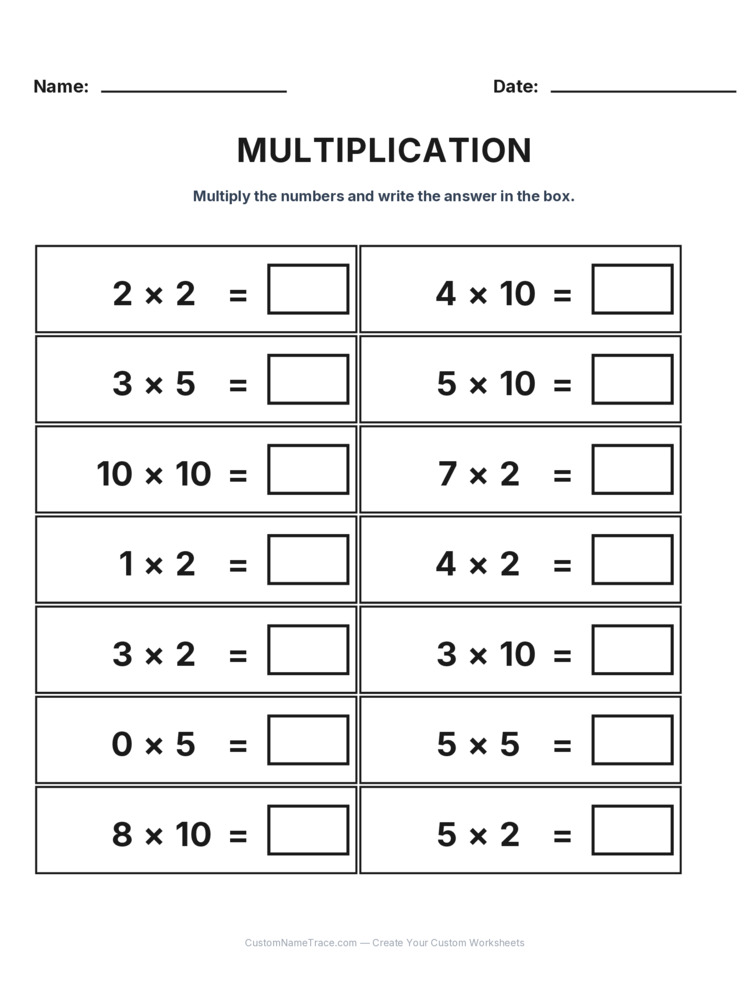
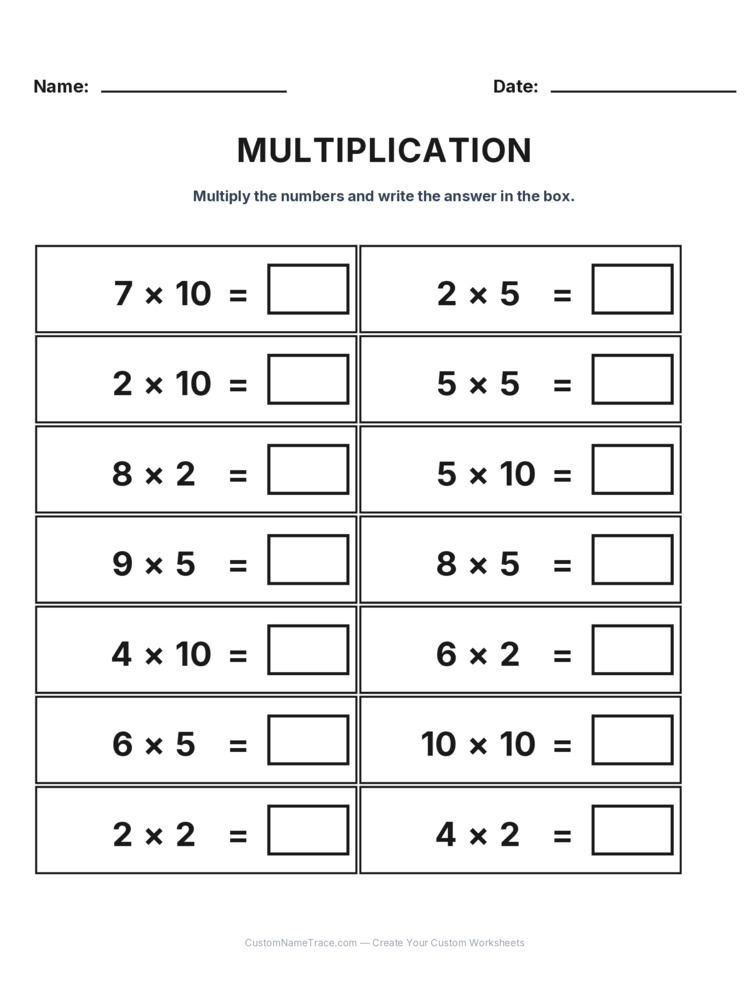
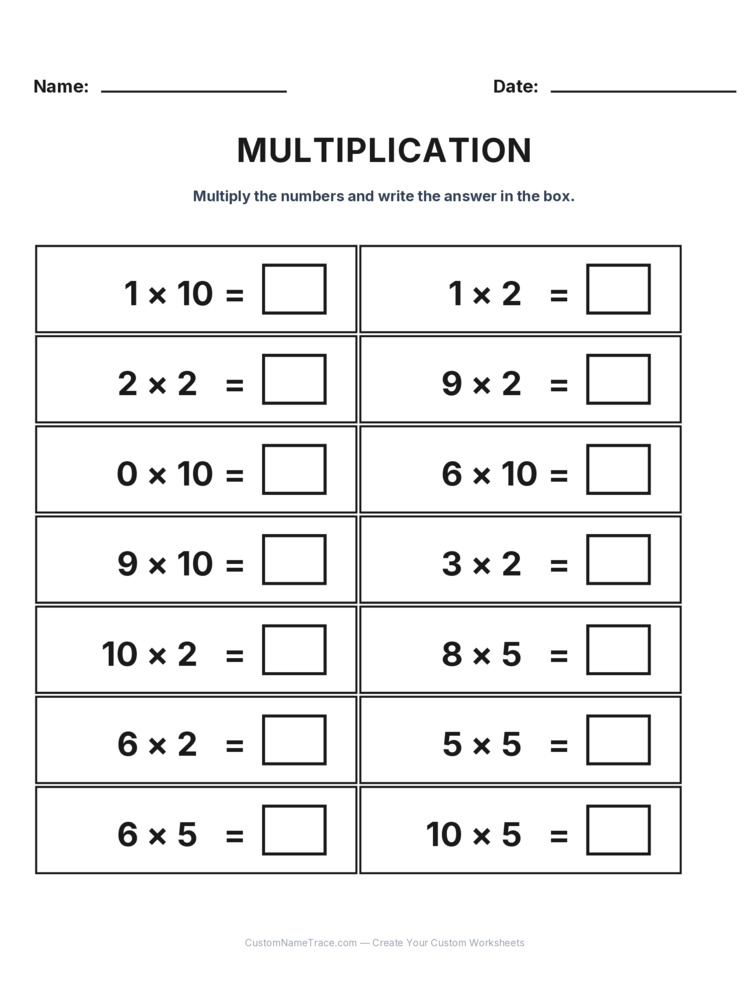
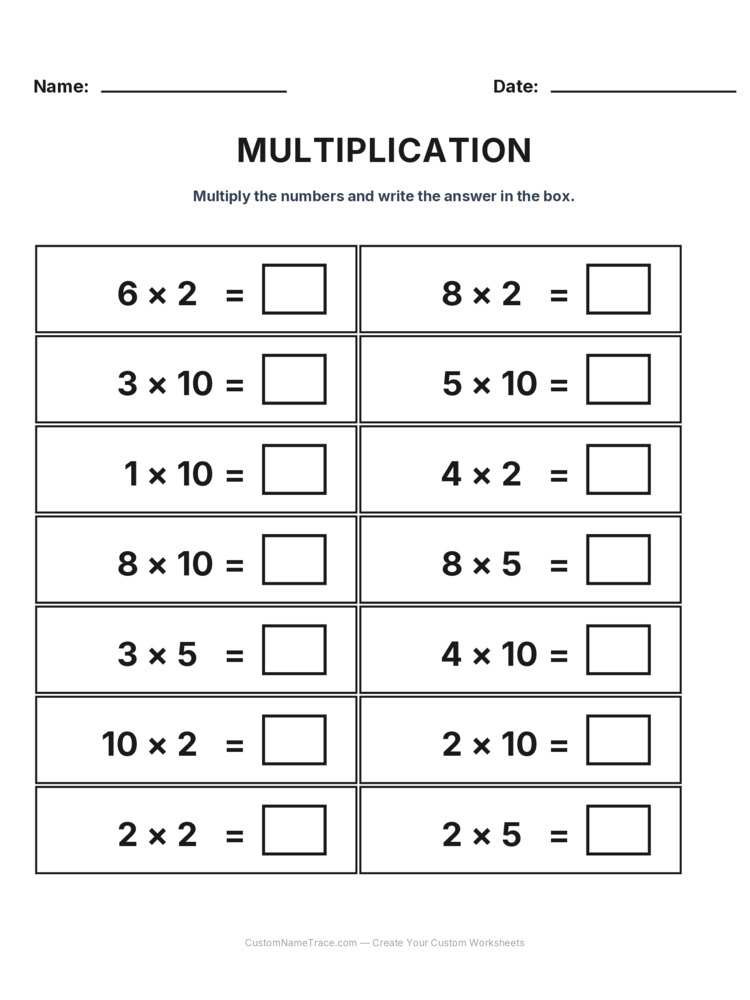
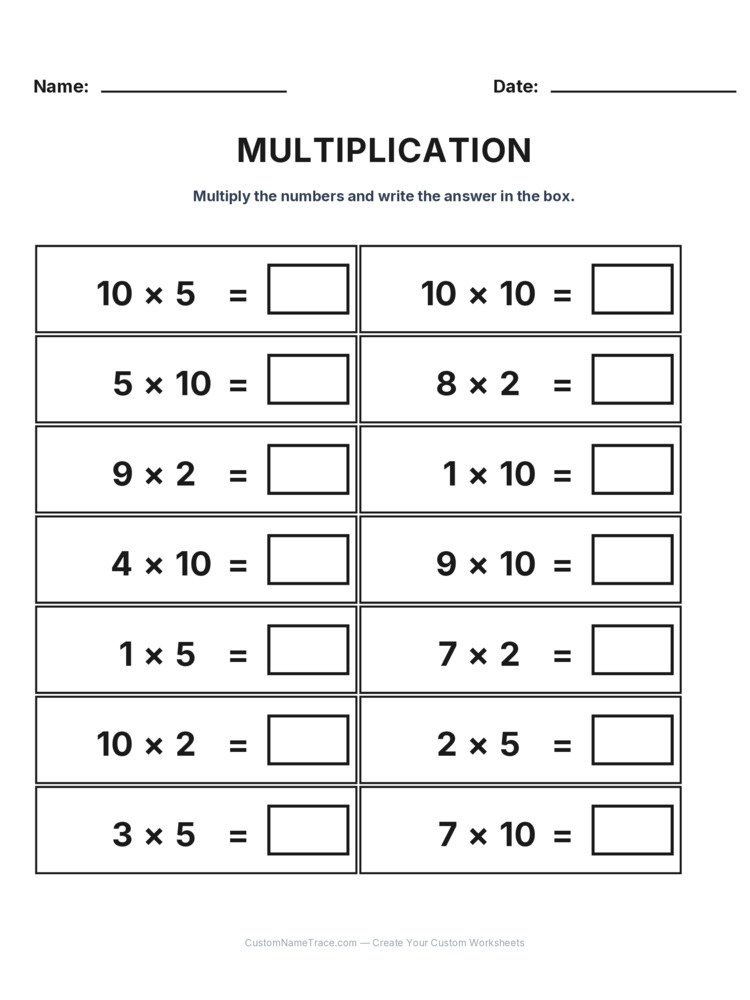
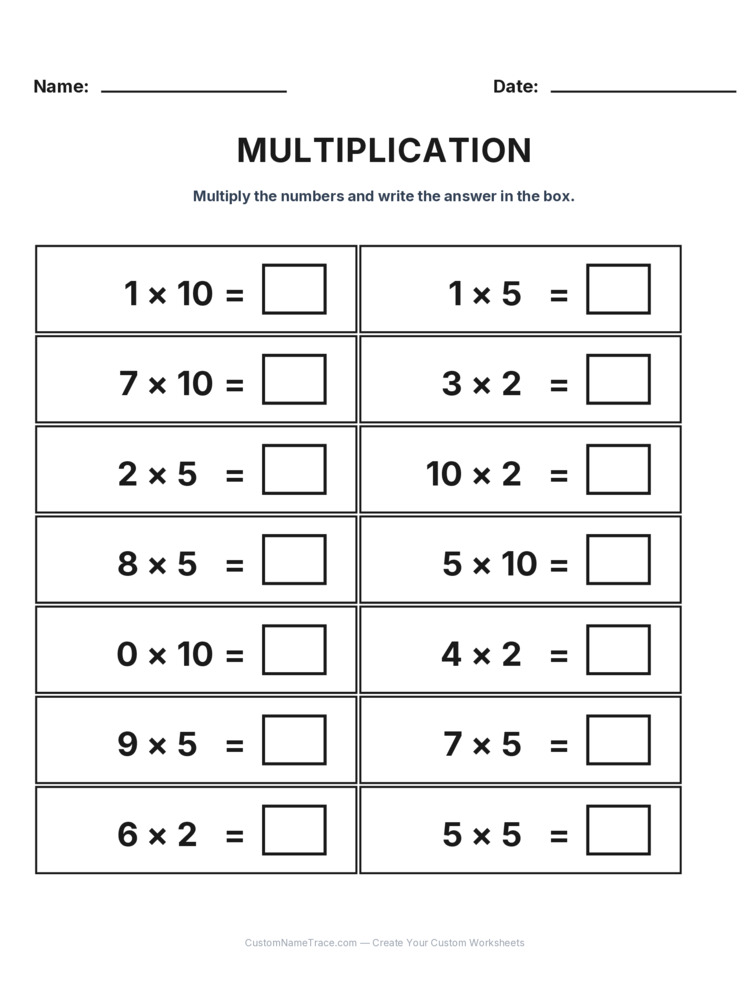
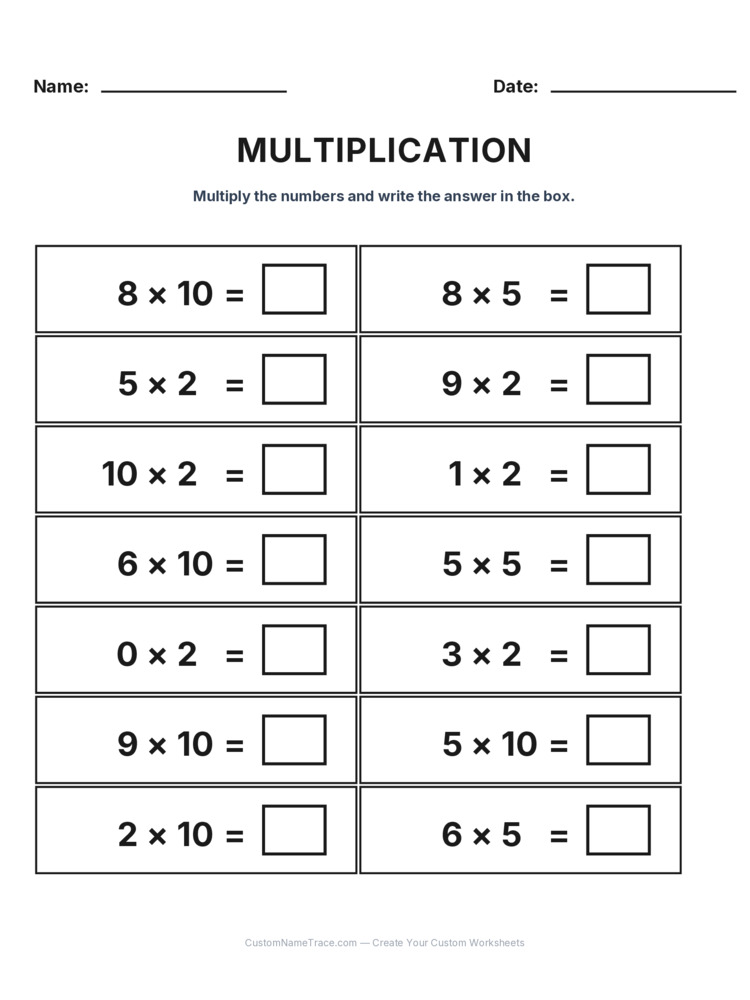
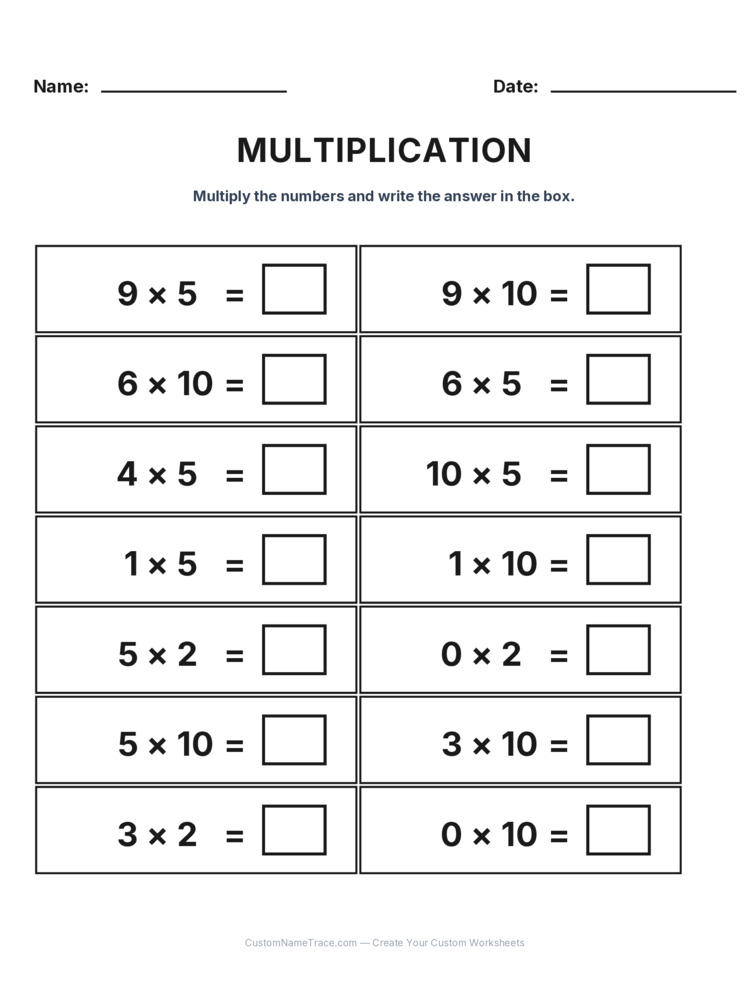
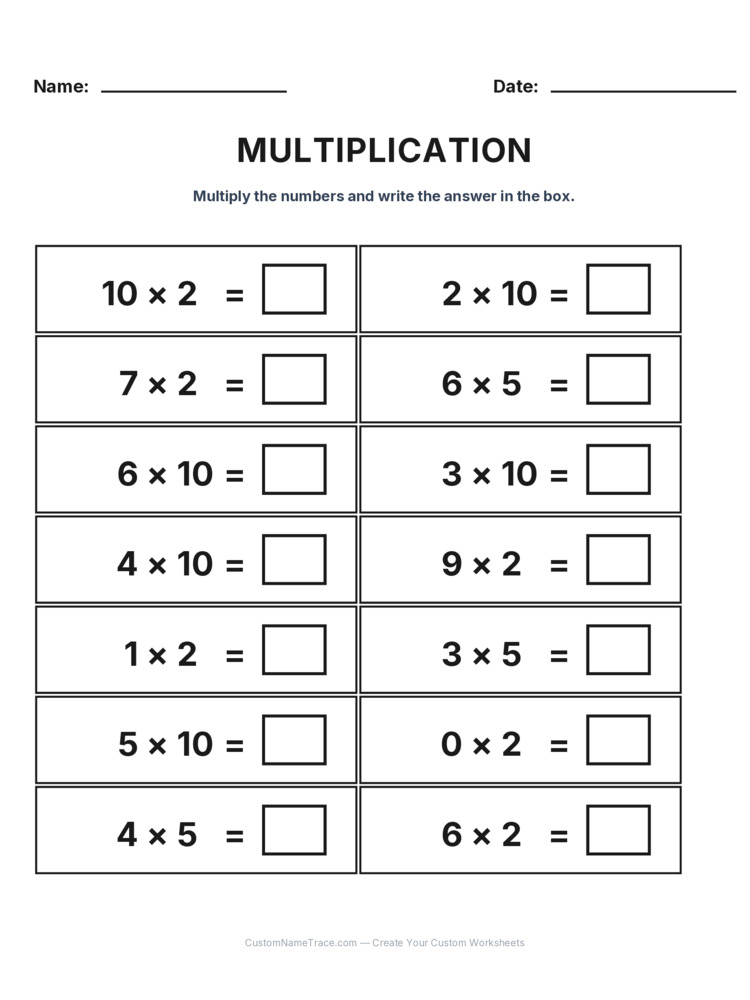
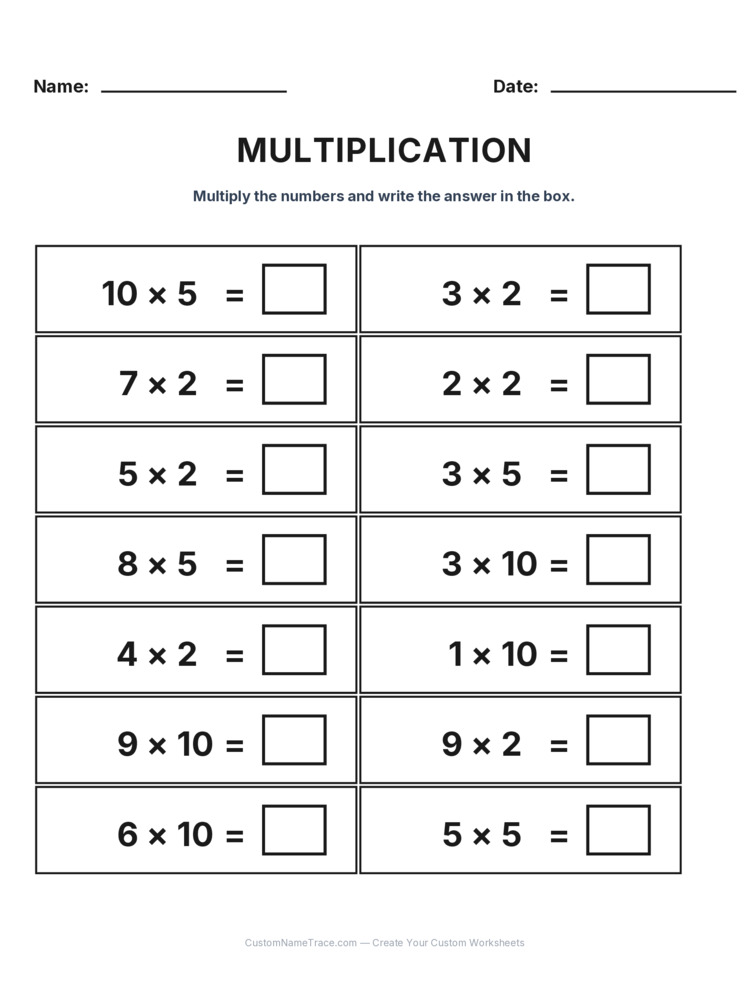
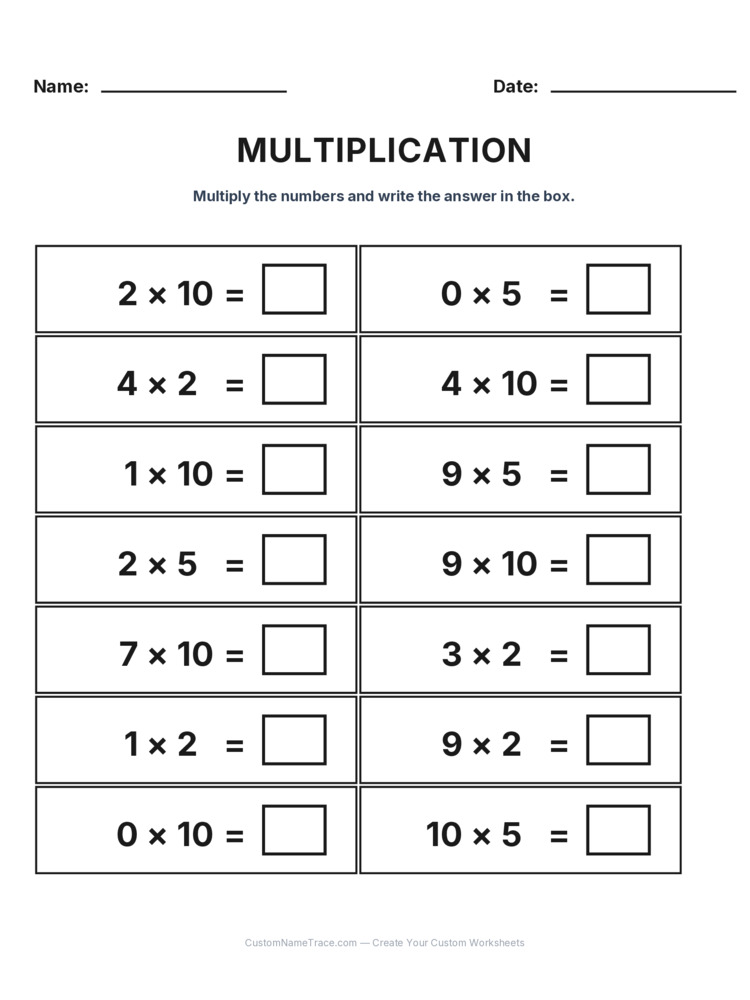
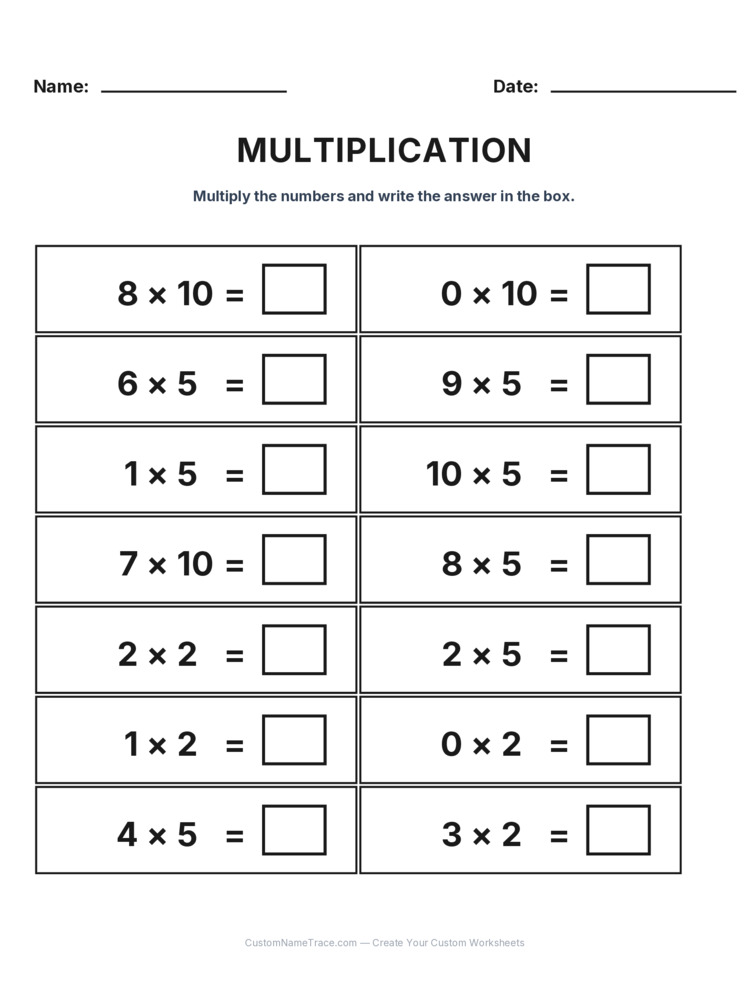
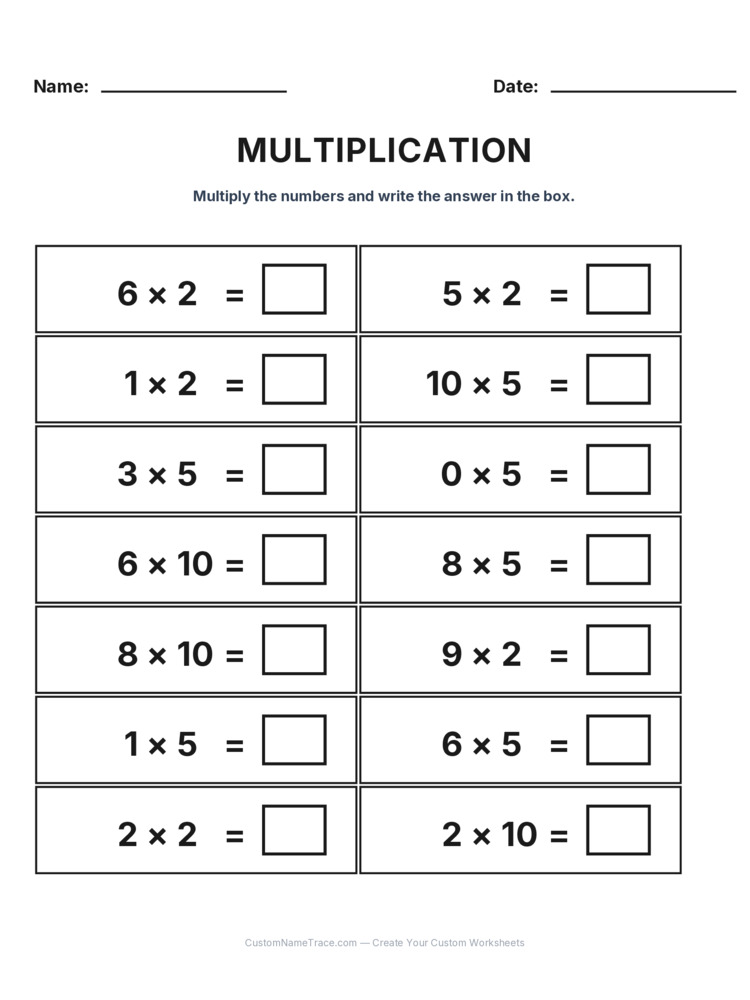
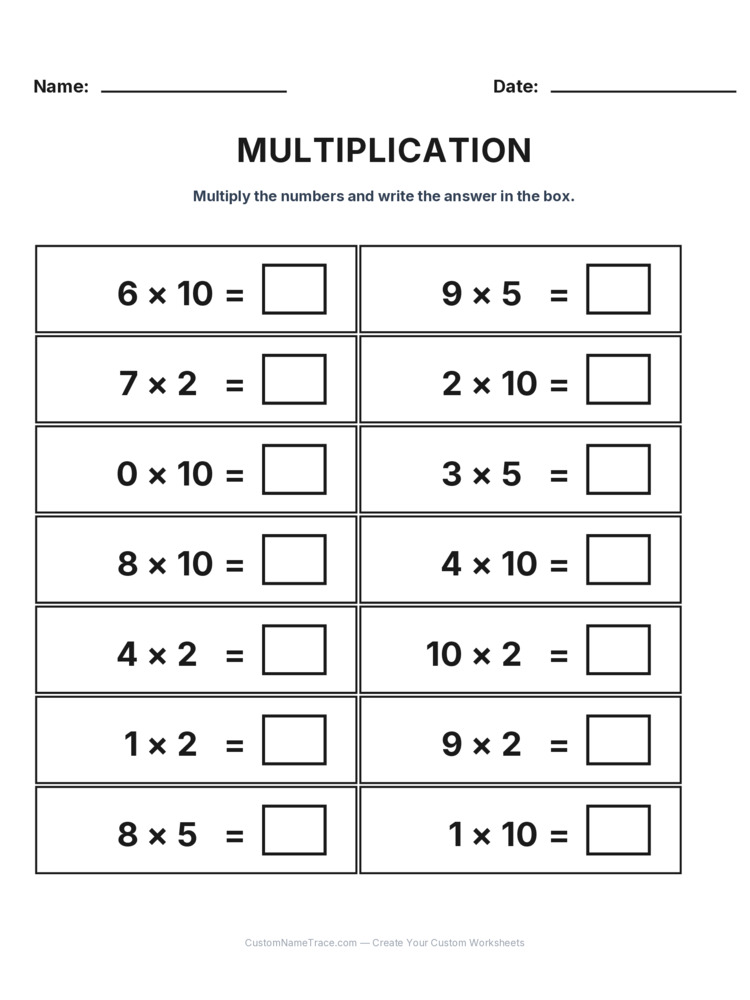
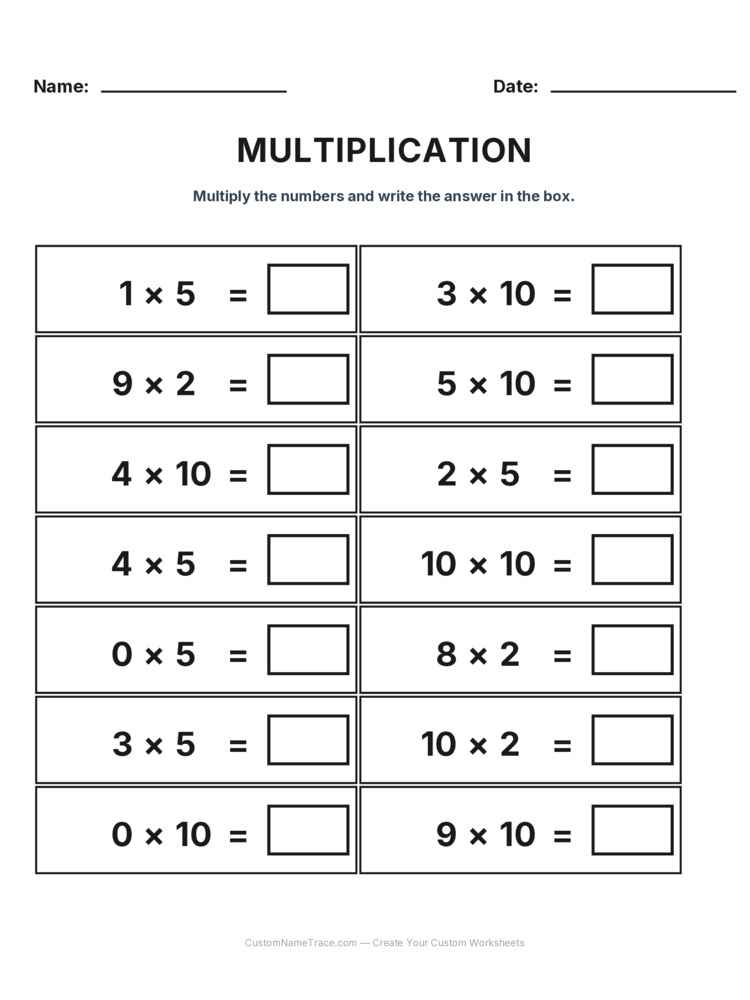
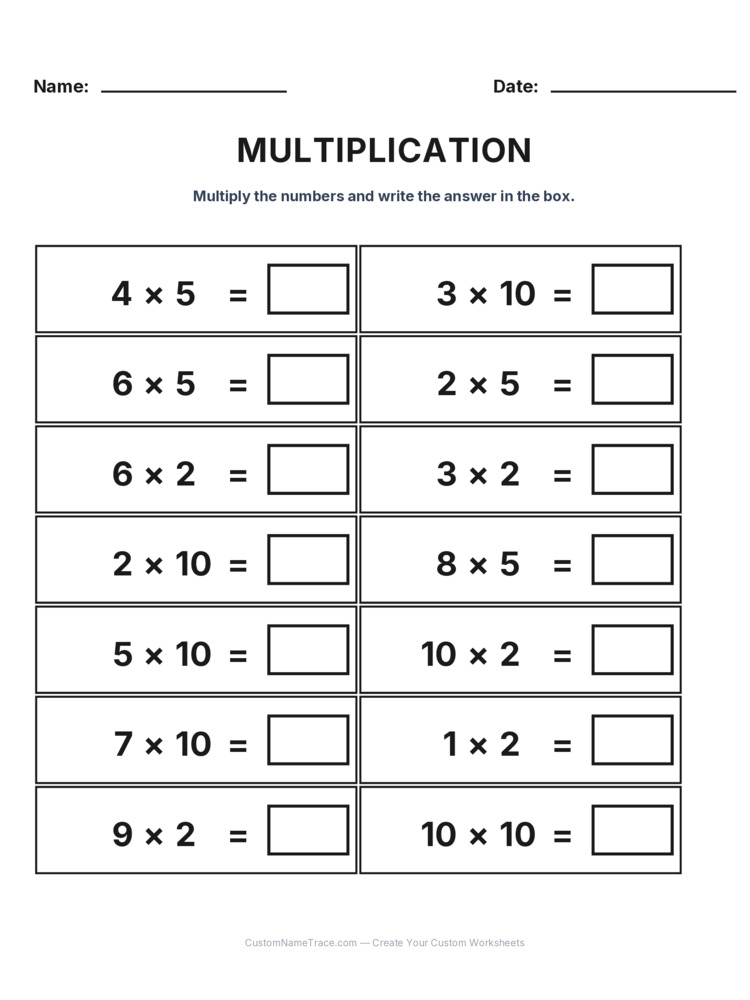
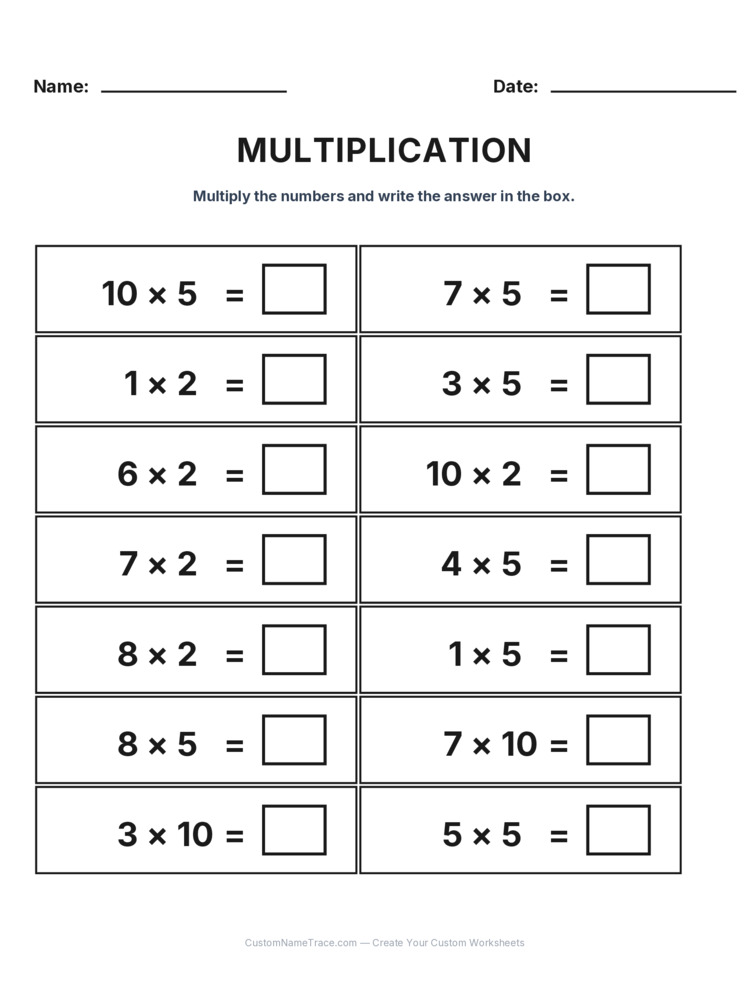
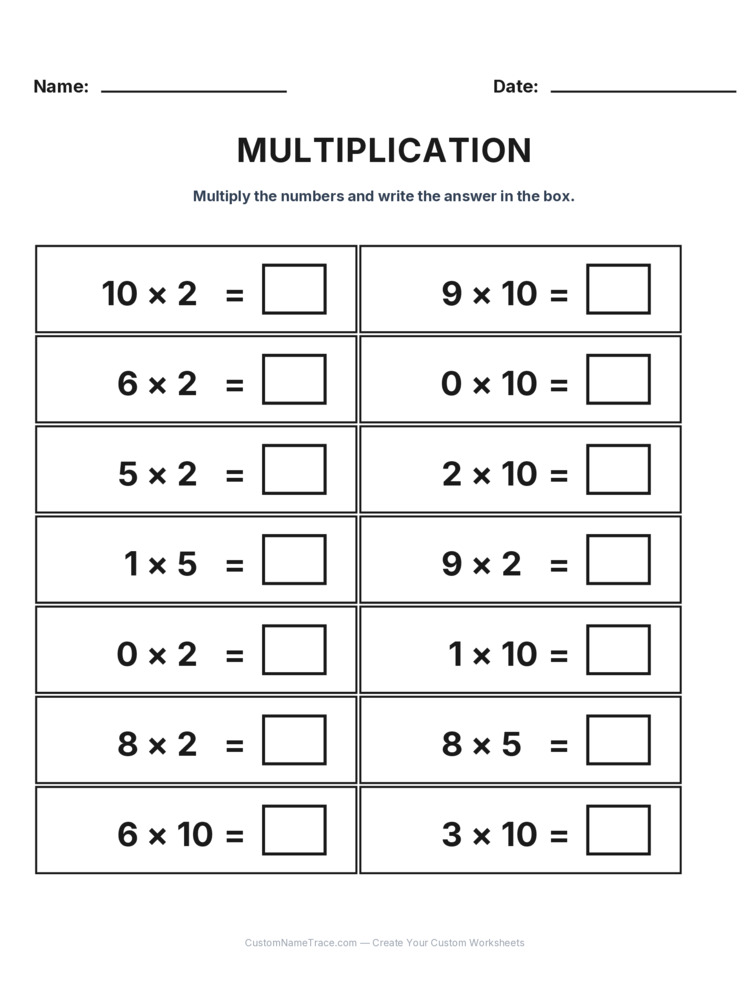
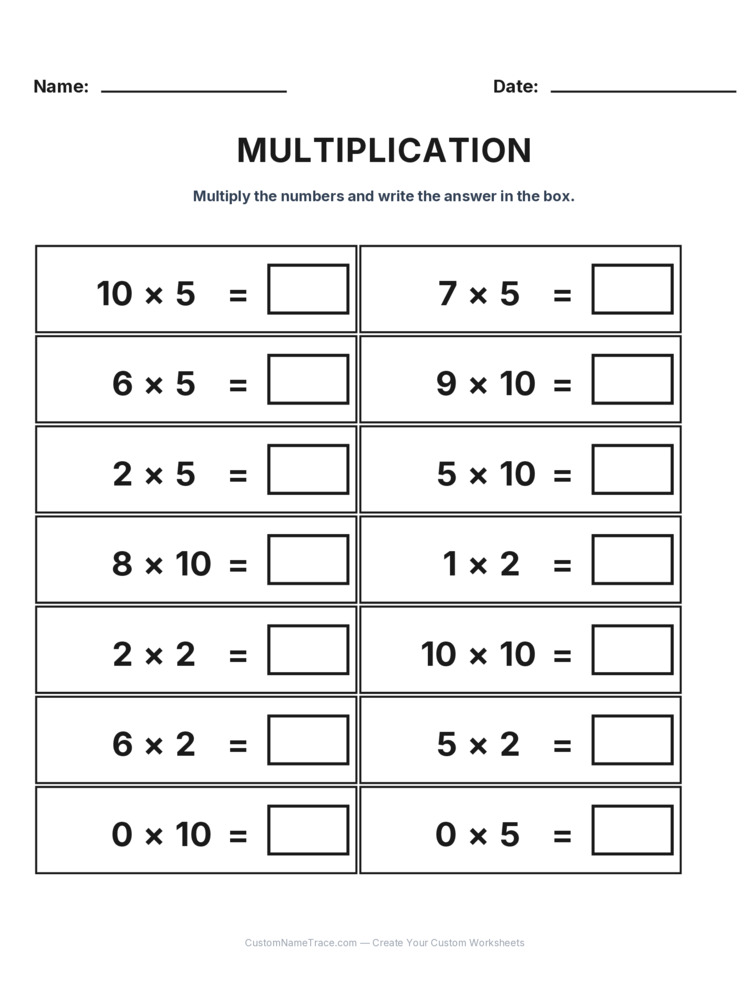
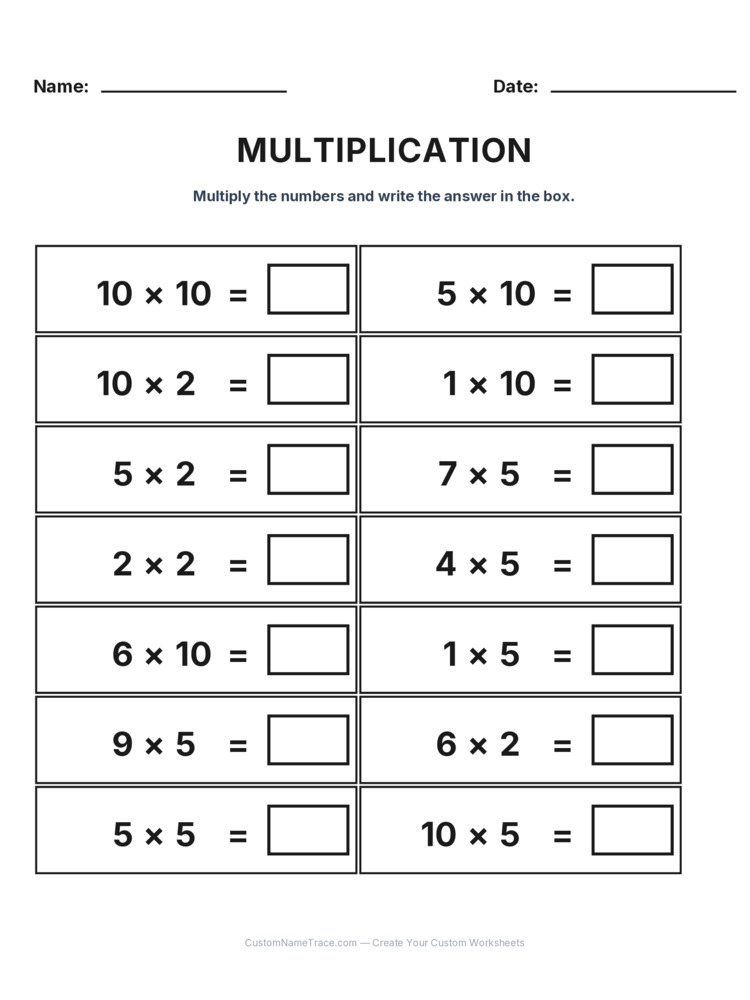
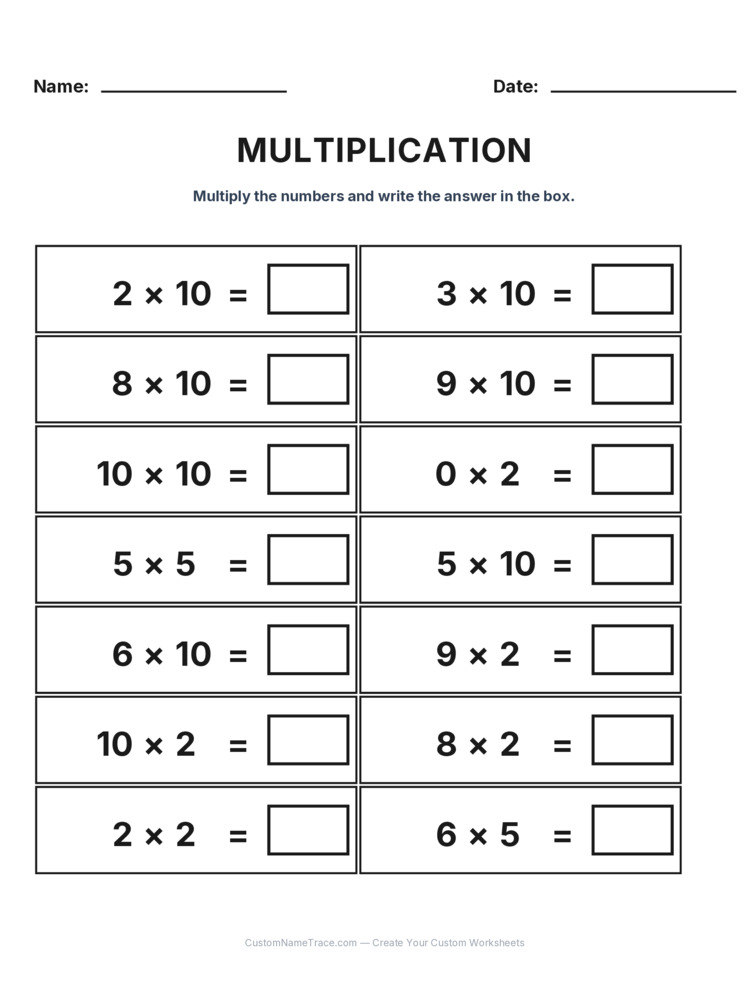
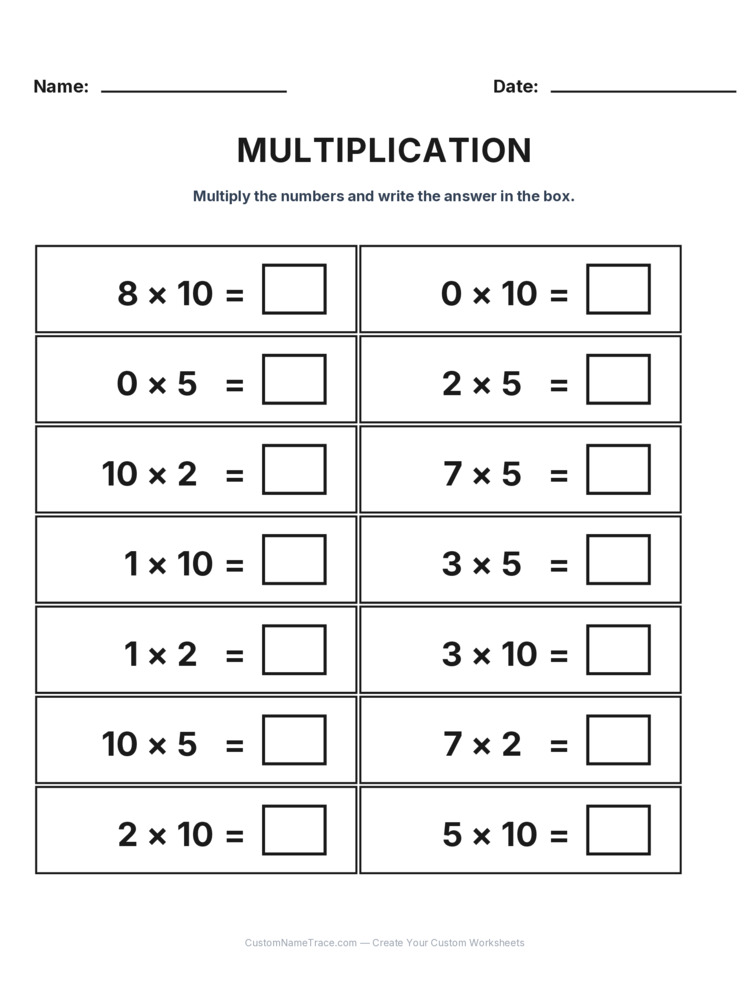
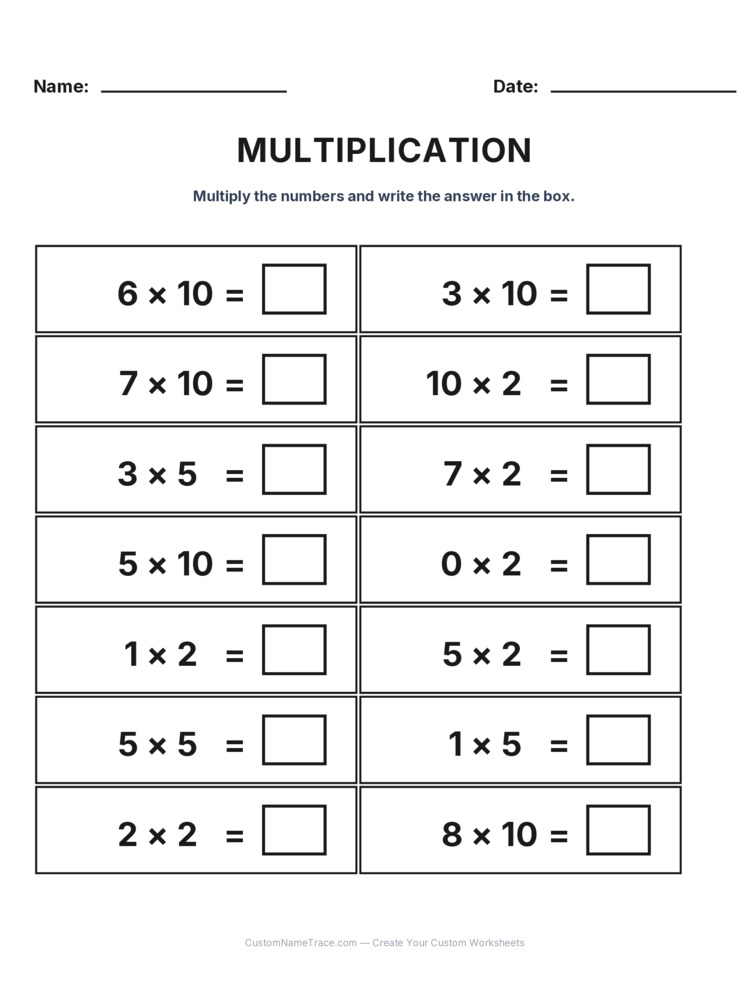
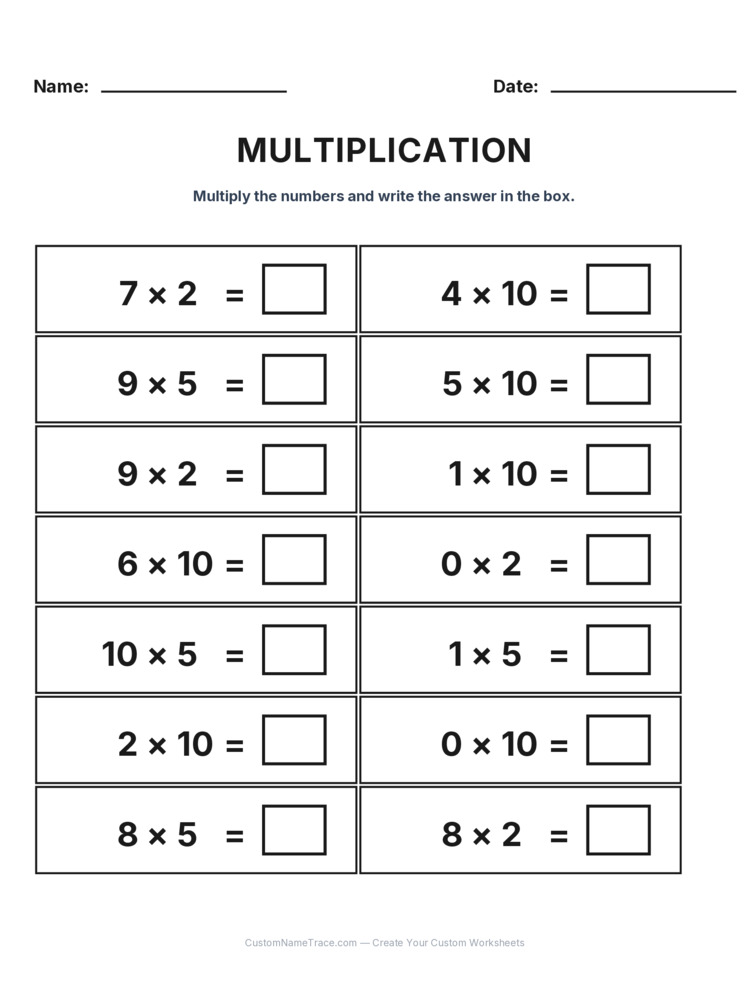
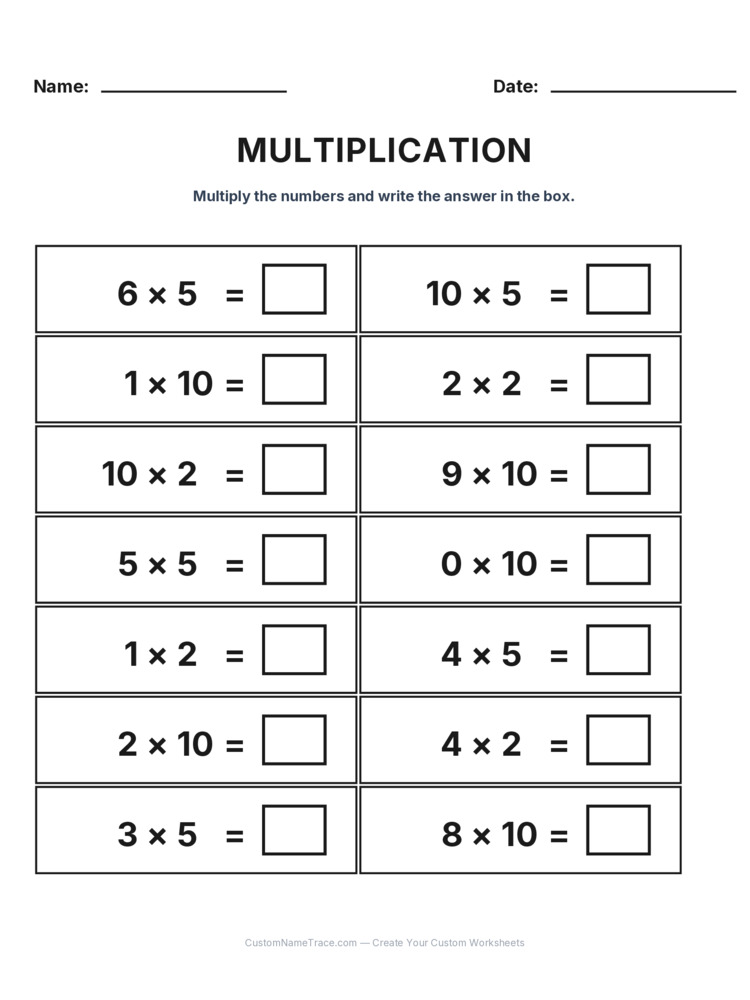
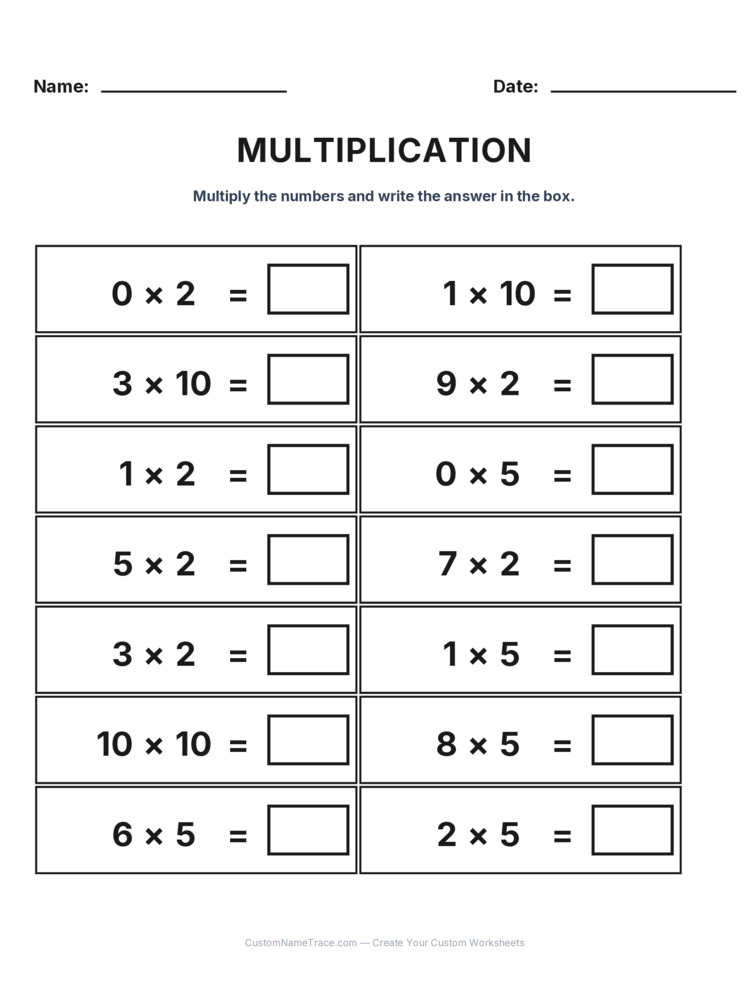
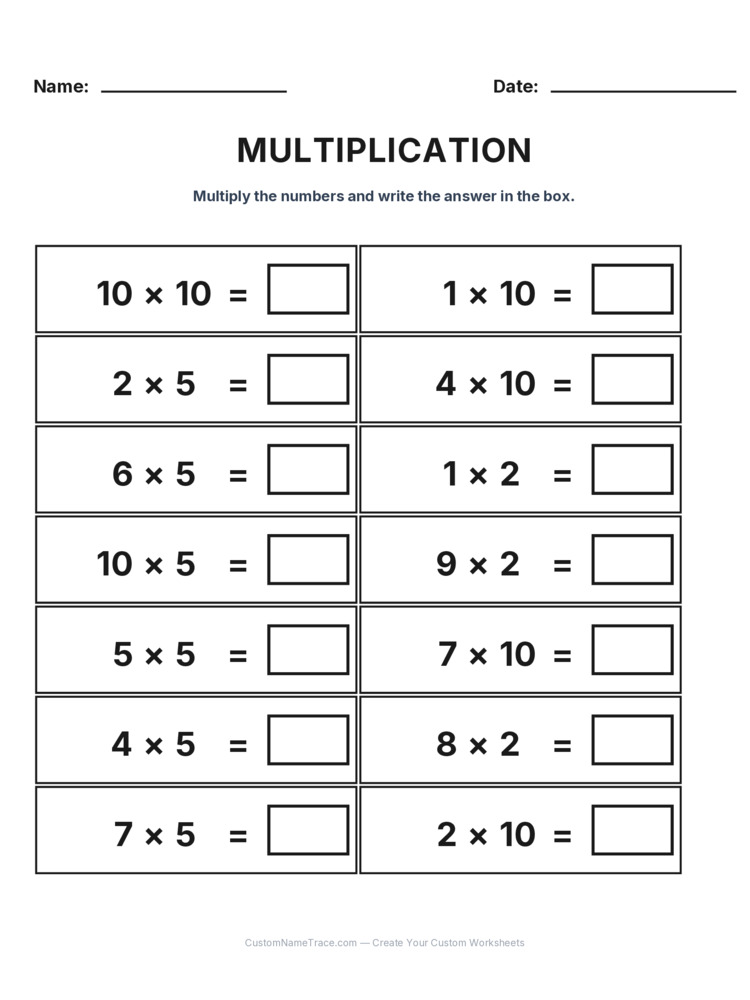
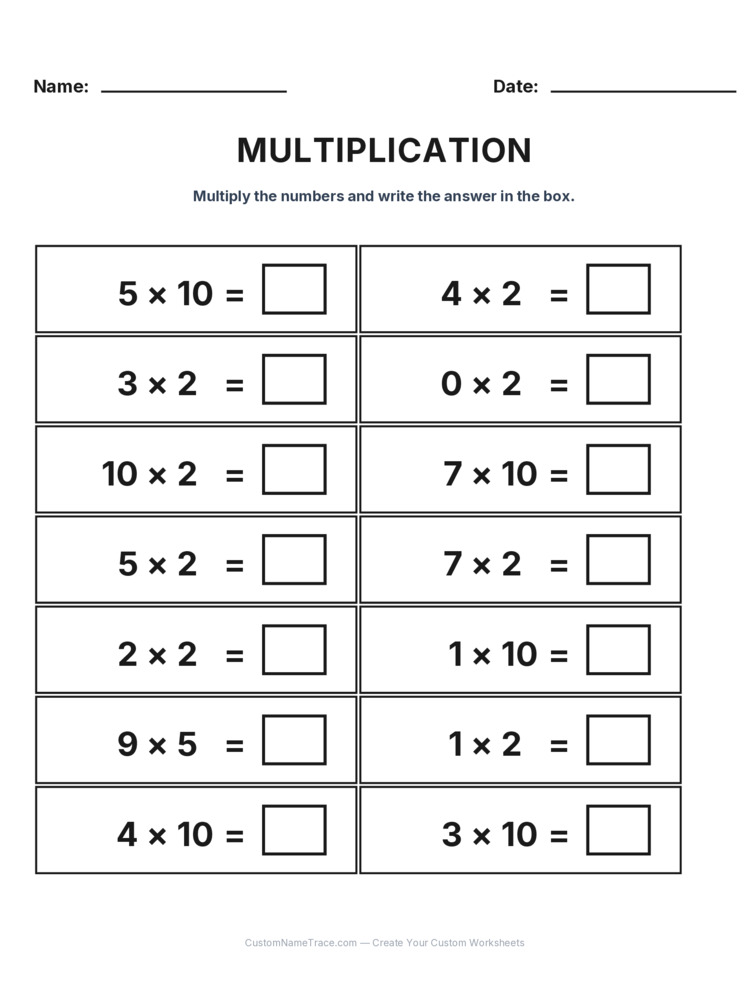
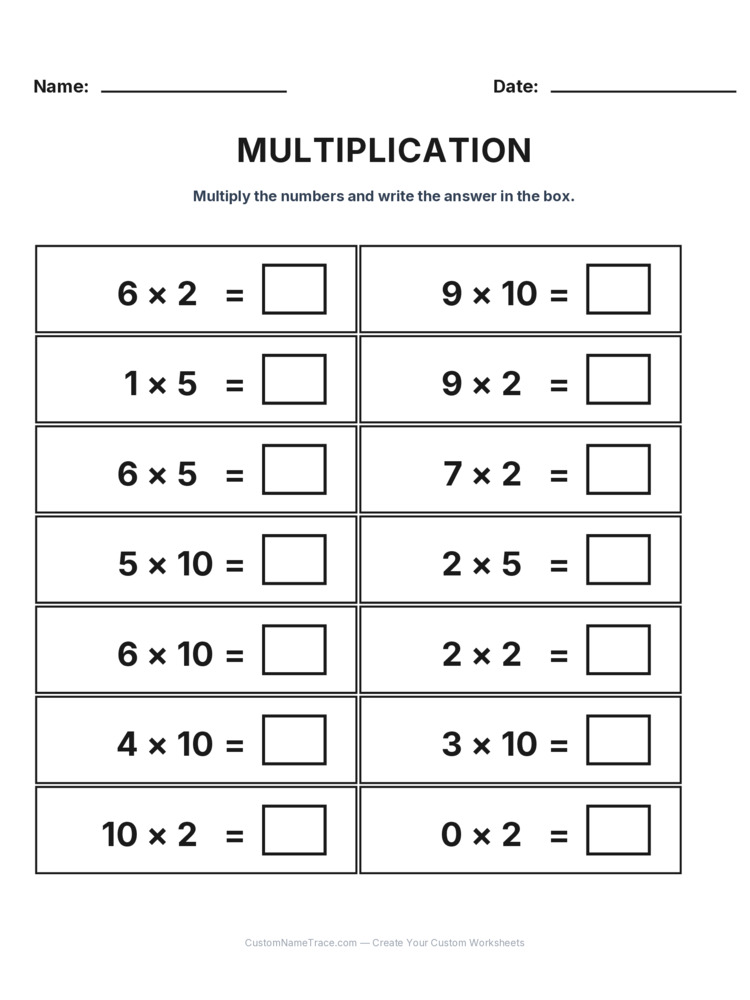
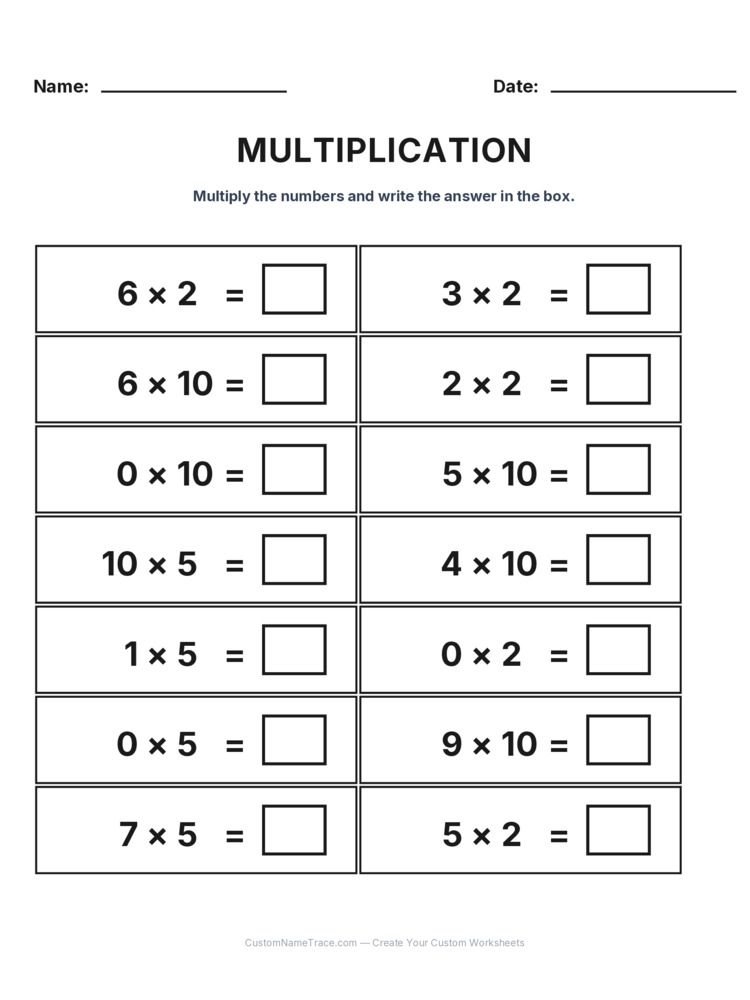
Grade 2 multiplication sticks to the easiest, most pattern-friendly facts — the 2s, 5s, and 10s tables — since these three tables have the clearest visual and skip-counting patterns (2s are just doubling, 10s just add a zero, 5s land on familiar clock-face numbers). This is intentionally a gentle first exposure, well before full multiplication fluency is expected.
The connection to skip counting
A child who's already comfortable with this site's Skip Counting practice has, without necessarily realizing it, already rehearsed several multiplication facts directly — counting by fives four times and landing on twenty is the same fact as four times five equals twenty. Pointing that connection out explicitly when multiplication is introduced turns what could feel like a brand-new subject into an extension of something already familiar and comfortable.
The multiplication facts practiced at Grade 2 are chosen to match real curriculum progressions — starting with the most learnable, pattern-friendly factors (like 2s, 5s, and 10s, which connect directly to skip counting) before expanding to the full range of facts a later grade covers. That sequencing isn't arbitrary: those early factors are deliberately the ones with the clearest visual and countable patterns, making them the natural entry point into multiplication rather than a randomly easier subset.
A child who reaches for skip counting to work out an unfamiliar or forgotten multiplication fact — counting by 5 four times to reach 4 × 5 — is using a completely legitimate, mathematically sound strategy, not falling back on something lesser because memorized recall failed. That strategy only stops being necessary once a specific fact has been practiced enough to recall instantly, and there's no need to discourage it in the meantime.
Memorization versus genuine understanding
Fluent recall of multiplication facts is a real, useful goal, but it works best built on top of genuine understanding rather than instead of it — a child who's memorized facts without understanding what multiplication represents has nothing to fall back on the moment a specific fact is forgotten under pressure, like during a timed test. Worksheets at Grade 2 are designed to build both together, not to rush straight to memorization drilling before the underlying concept is solid.
For a forgotten fact, drawing the actual groups — three groups of four dots, say — and counting the total directly reconnects an abstract, memorized-feeling fact back to something concrete and countable. This is slower than simply supplying the answer, but it reinforces the underlying relationship every single time, which pays off far more than a quick correction that leaves the concept just as shaky as before.
A filled-in multiplication chart is a useful reference tool while facts are still being learned, but the real goal is a child eventually not needing to consult it — using a chart as a temporary support during early practice, then gradually relying on it less as specific facts solidify, tends to work better than either forbidding it outright or leaving it as a permanent crutch with no plan to phase it out.
What genuine mastery looks like
Fluency with Grade 2's multiplication facts means reliable, reasonably quick recall — not necessarily instant, but not requiring the problem to be worked out from scratch every single time either. A child who still occasionally reconstructs a fact through skip counting or an array, rather than recalling it immediately, is still making real progress; that reconstruction strategy is a legitimate fallback, not a sign fluency hasn't developed.
"There are 4 bags with 3 apples in each — how many apples in total?" is a multiplication problem the moment a child recognizes equal groups repeated a known number of times, even though the word "multiply" never appears. Practicing that recognition with a handful of simple word problems, asking specifically "are these equal groups?", builds the same skill this site's mixed-operation worksheets build for addition and subtraction, just one operation ahead.
Working through multiplication facts strictly in order — 2×1, 2×2, 2×3, and so on — makes each answer predictable from the previous one without requiring real recall, which can create an illusion of fluency that falls apart the moment facts are presented out of sequence. Mixing up the order during practice, the way every numbered worksheet variant here does automatically, tests and builds genuine recall rather than sequential pattern-following.
Not every multiplication fact needs equal attention at once — focusing extra practice on whichever specific facts a child consistently gets wrong, rather than redrilling the entire range evenly, closes real gaps faster than spreading effort uniformly across facts already comfortably known.
Calling out a number and asking a child to name every multiplication fact from the current range that produces it — what multiplies to make 12? — reverses the usual direction of practice and often reveals connections a child hasn't consciously noticed, like recognizing that 12 shows up from both 3×4 and 2×6.
Where this leads
Just as addition and subtraction relate directly, multiplication and division are two views of the same relationship — knowing that 4 × 5 = 20 means 20 ÷ 5 = 4 just as directly is a genuine shortcut, not two separate facts to memorize independently. This site's Division worksheets at Grade 2 use matching factor ranges specifically so that relationship stays visible and useful.
Multiplication fact fluency genuinely takes longer to build than addition or subtraction fluency at a comparable range, simply because there are more distinct facts to internalize and less everyday, outside-the-worksheet reinforcement than counting-based operations get. Steady, unhurried practice over weeks and months, rather than an expectation of quick mastery, matches how this skill actually develops for most children working through Grade 2's curriculum.
Multiplication shows up constantly outside of worksheets — counting the total cost of several identical items, figuring out how many chairs are needed for a set number of tables, doubling a recipe — and pointing those situations out as they come up naturally reinforces that this operation is a genuinely useful, frequently-needed tool, not just something practiced on paper.
Short, frequent practice sessions build multiplication fluency far more reliably than infrequent long ones, the same principle that applies to every other arithmetic skill on this site. Mixing in the concrete, drawn-groups strategy whenever a fact is genuinely forgotten — rather than only ever supplying the answer directly — keeps the underlying understanding solid underneath the growing fluency.
Multiplication builds directly on this site's Skip Counting practice, and a child who's spent real time with skip counting has already rehearsed several multiplication facts under a different name, even before multiplication is formally introduced. Pointing that connection out explicitly, rather than treating multiplication as a completely fresh start, turns an intimidating new subject into a natural, comfortable continuation of something already familiar.
Every multiplication worksheet under Grade 2 downloads as a free, print-ready PDF with no account required, correctly formatted for Letter and A4 paper. Browse the specific skills below for the exact factor range matched to this grade.