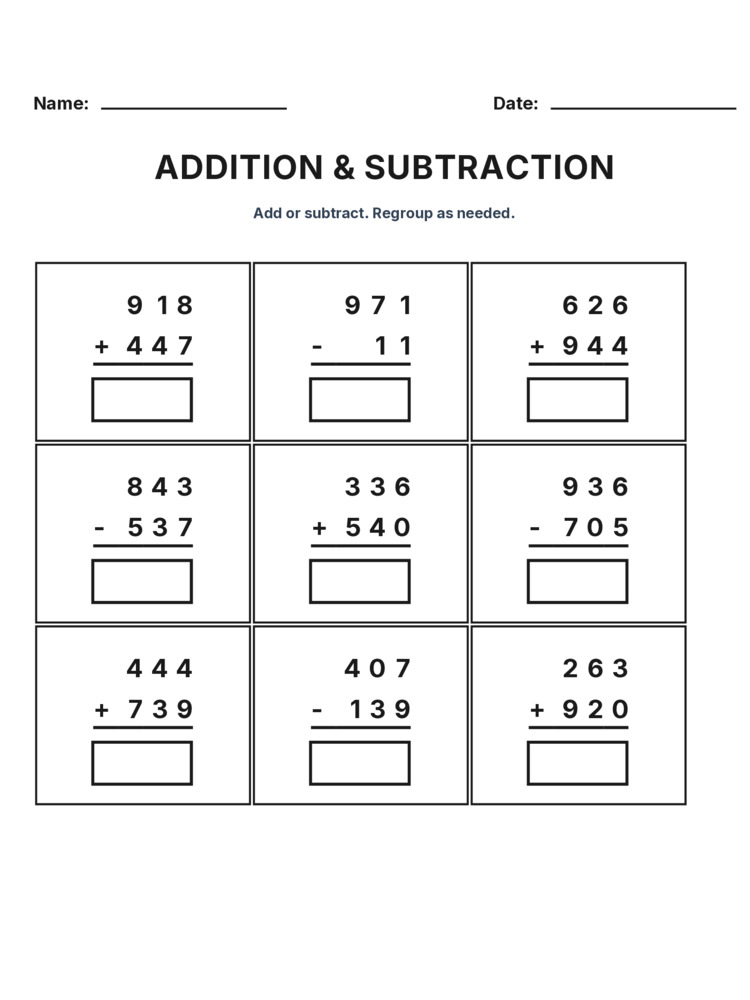
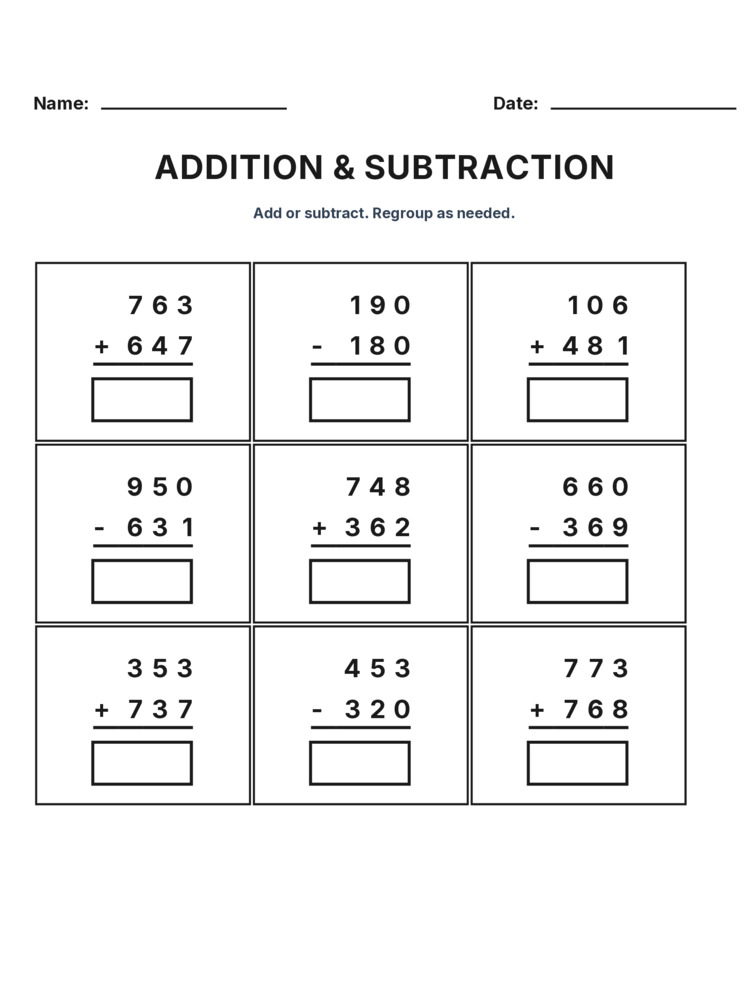
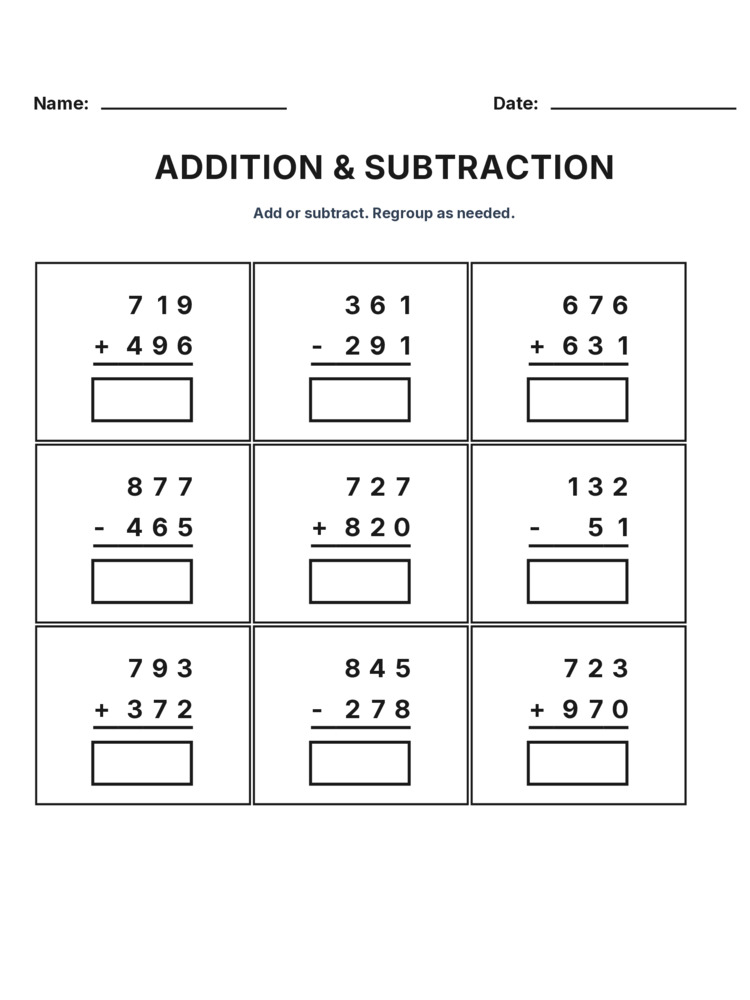
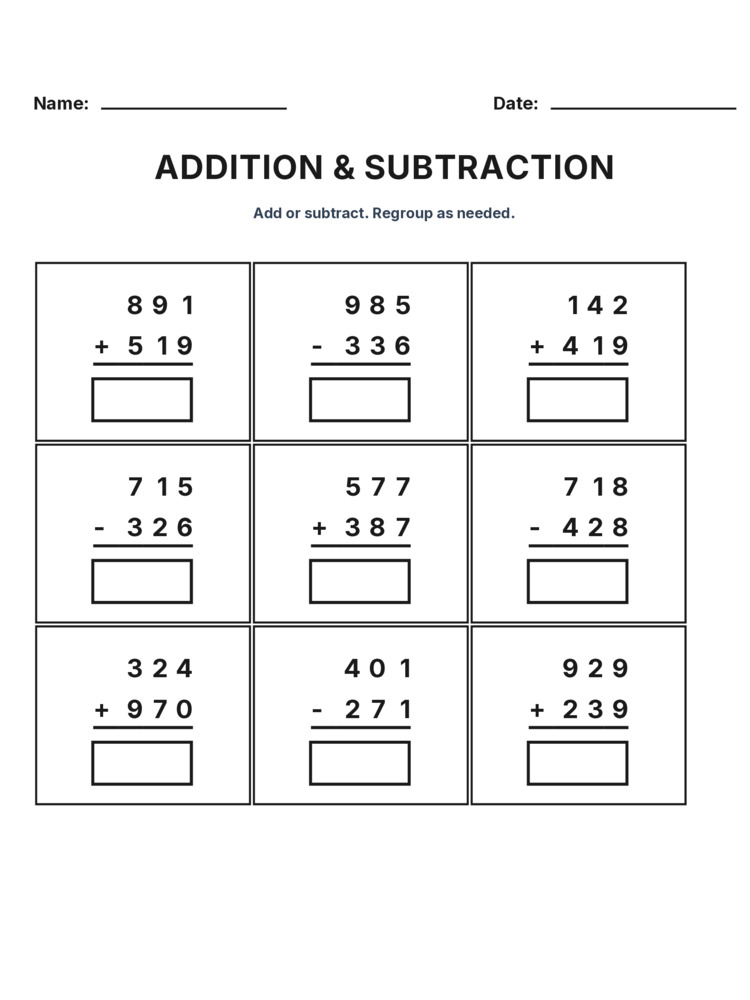
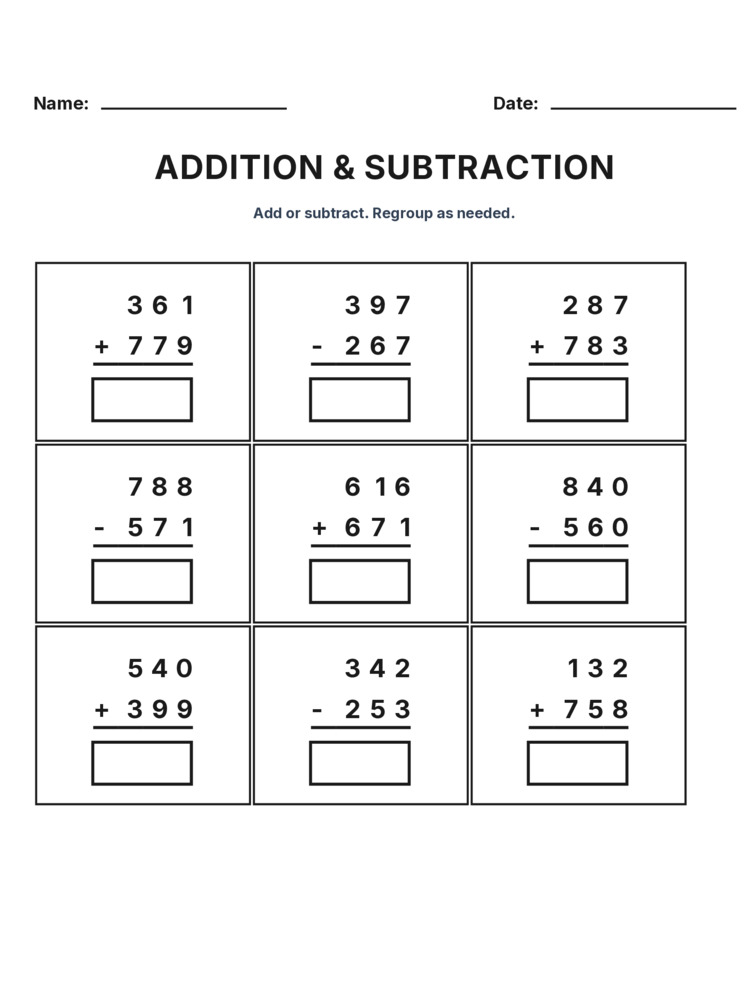
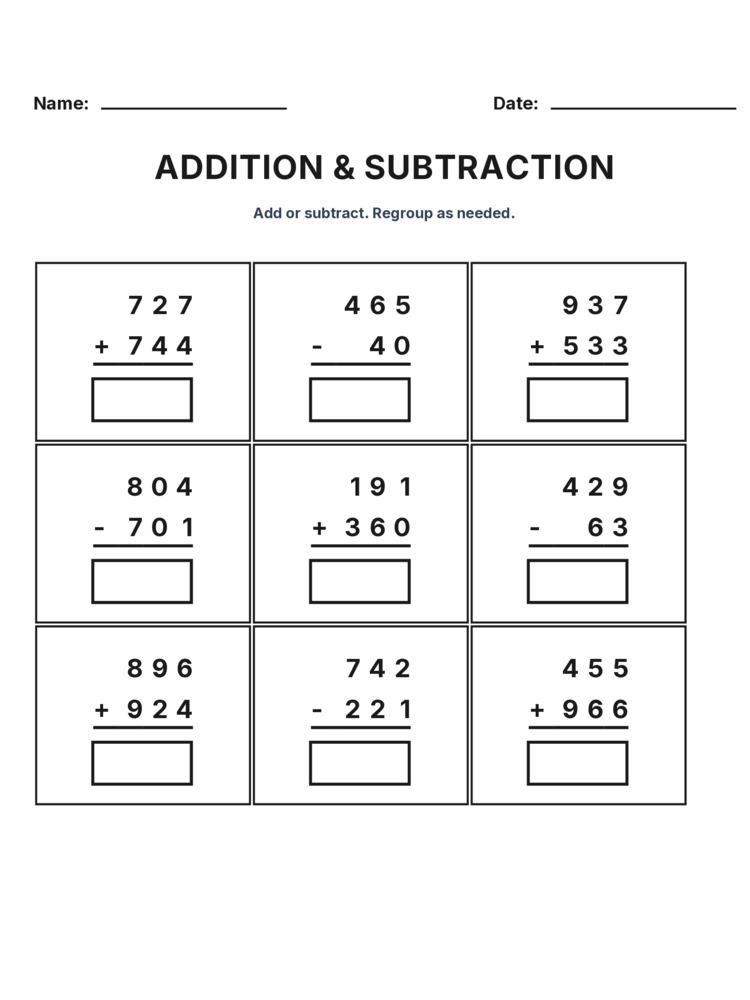
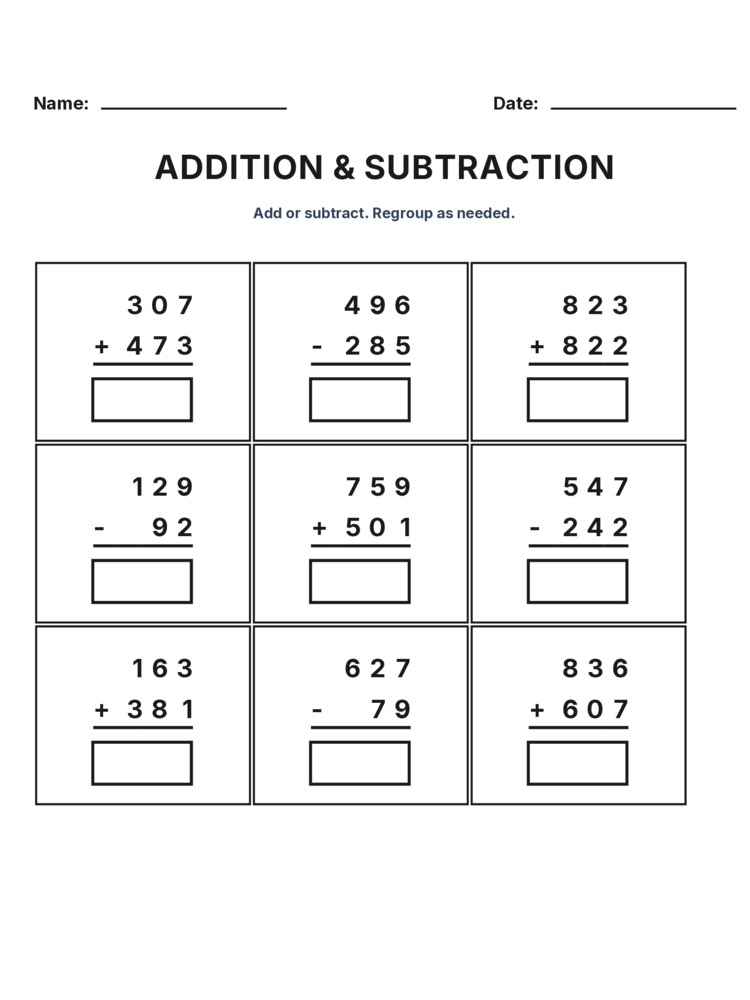
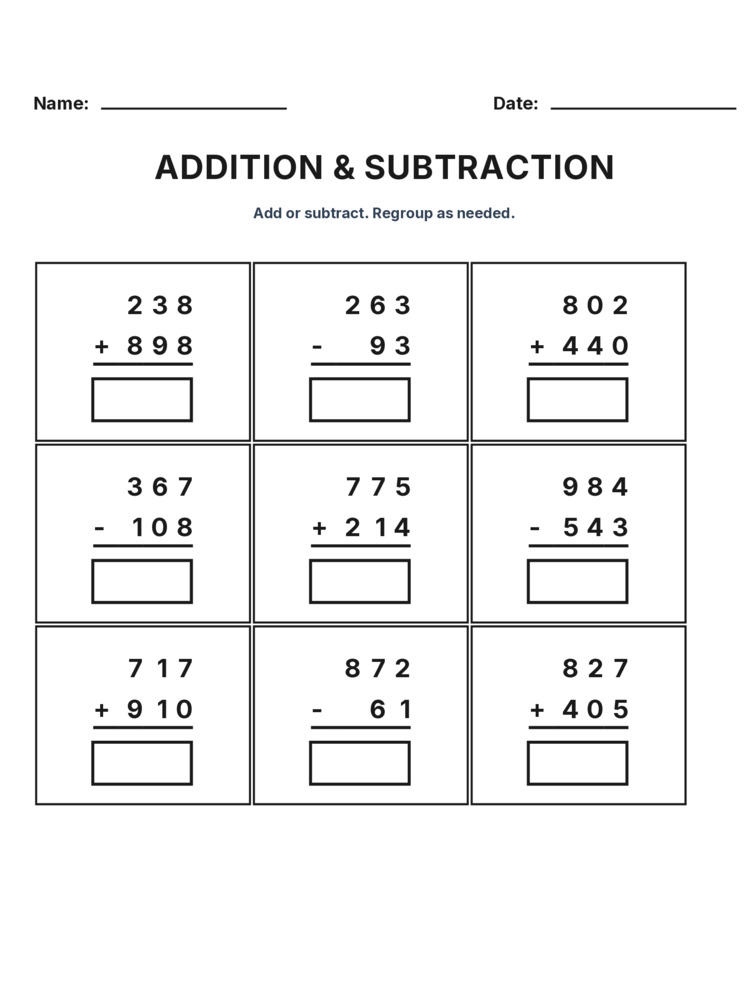
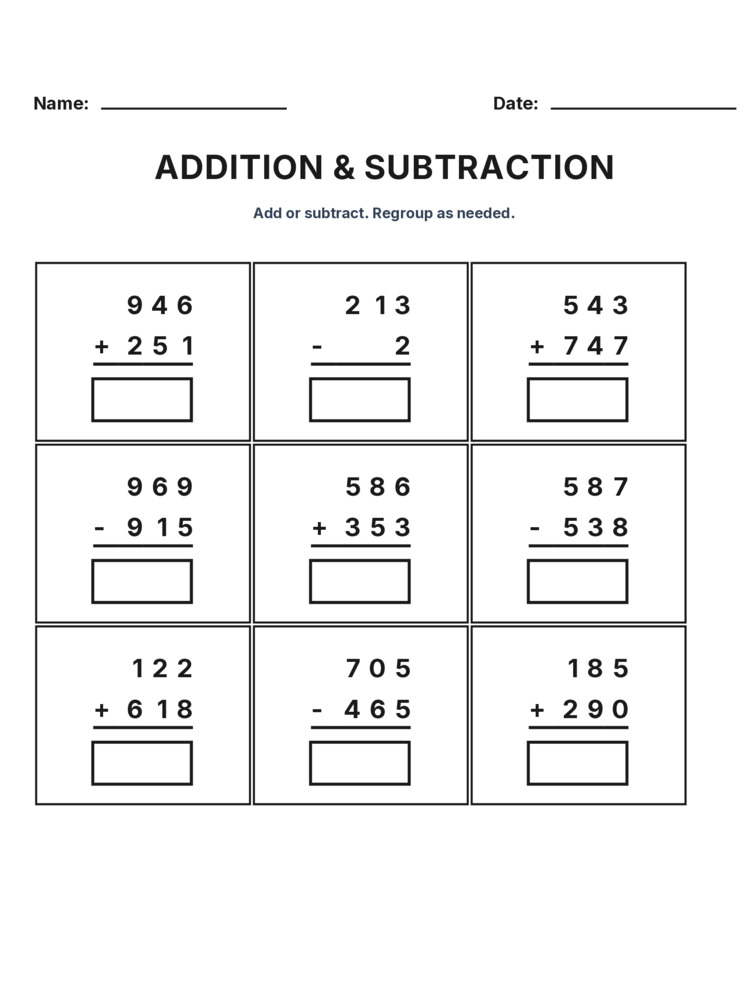
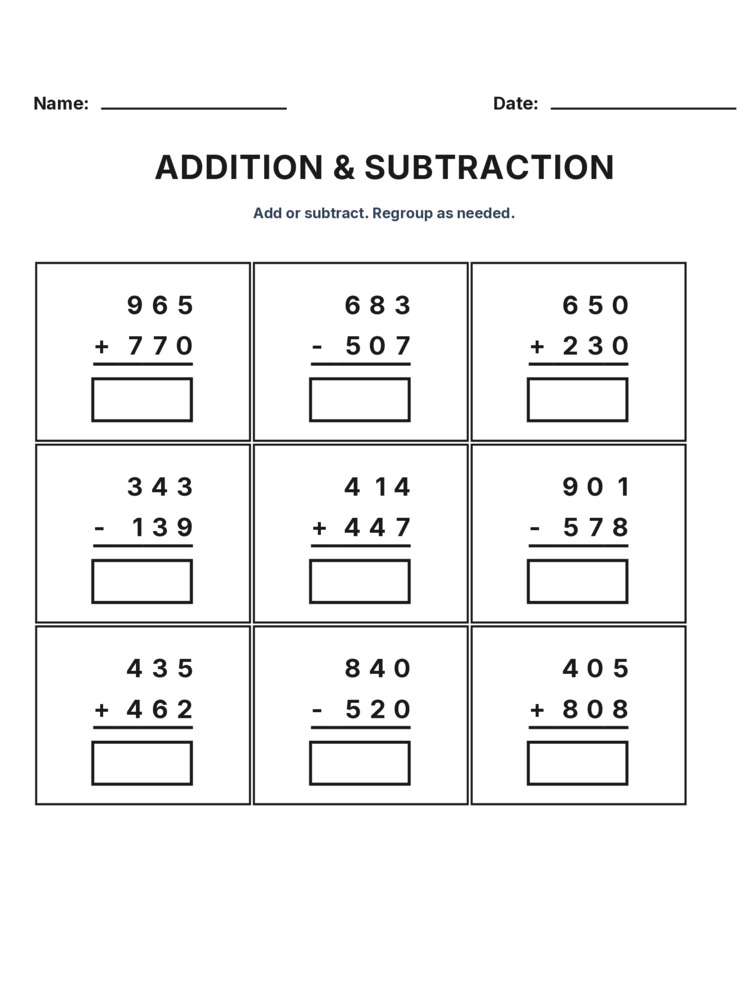
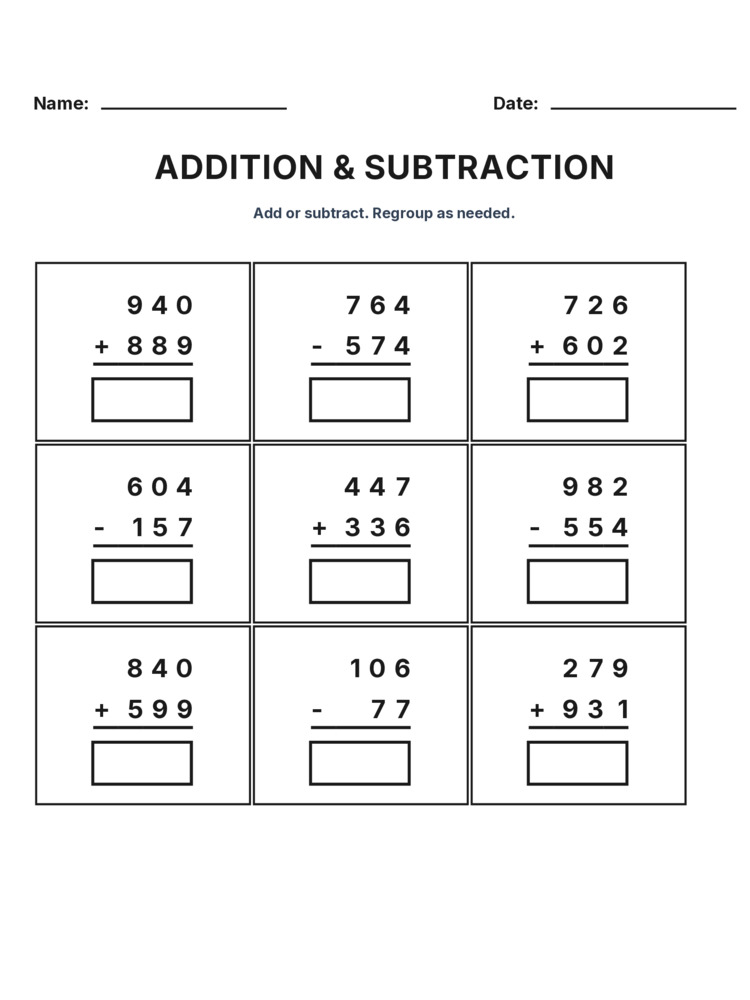
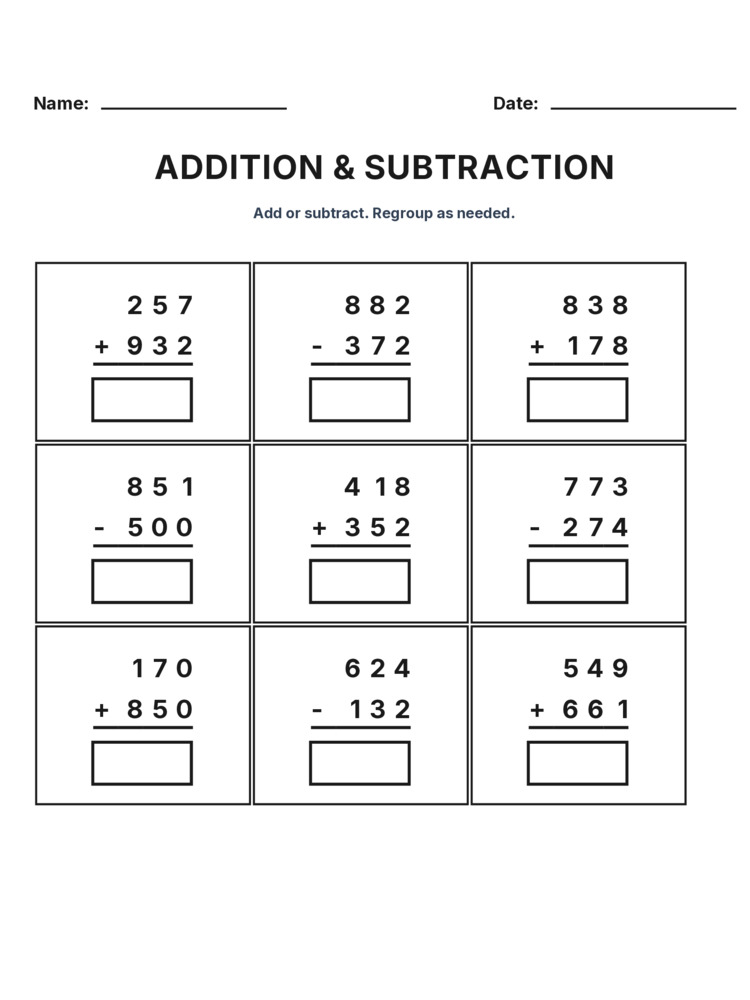
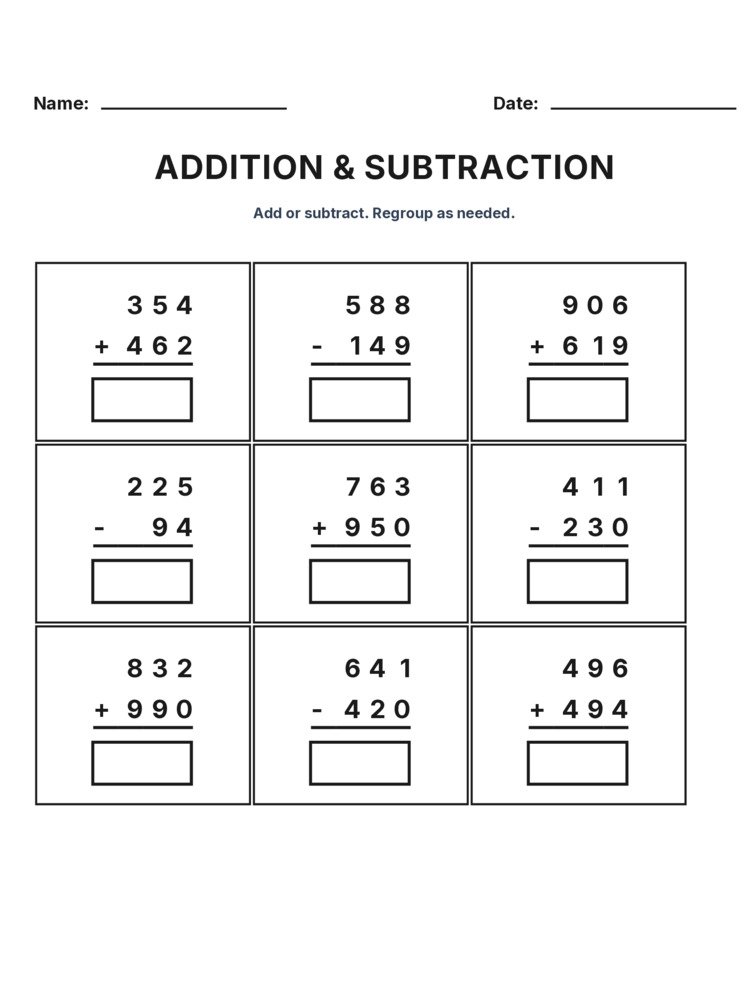
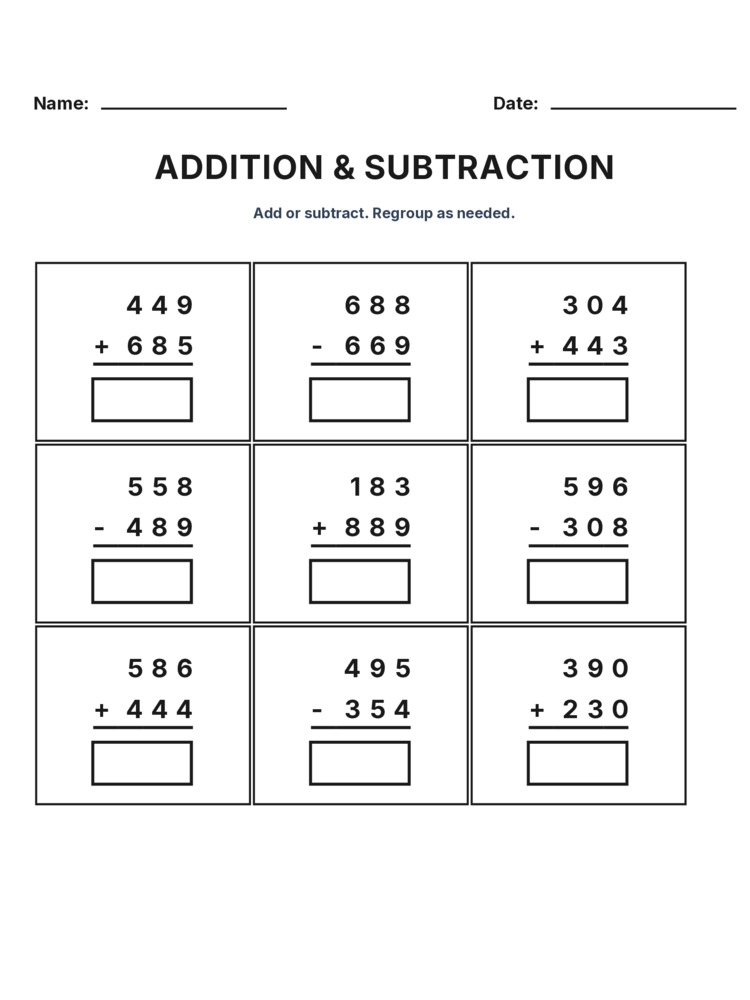
What this page practices
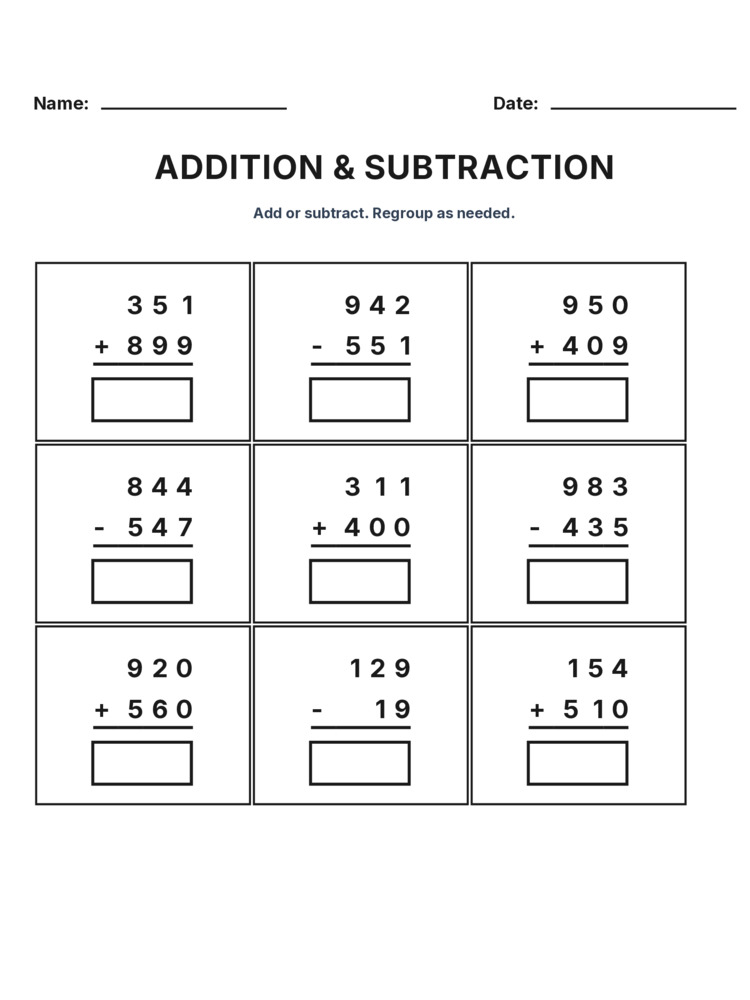
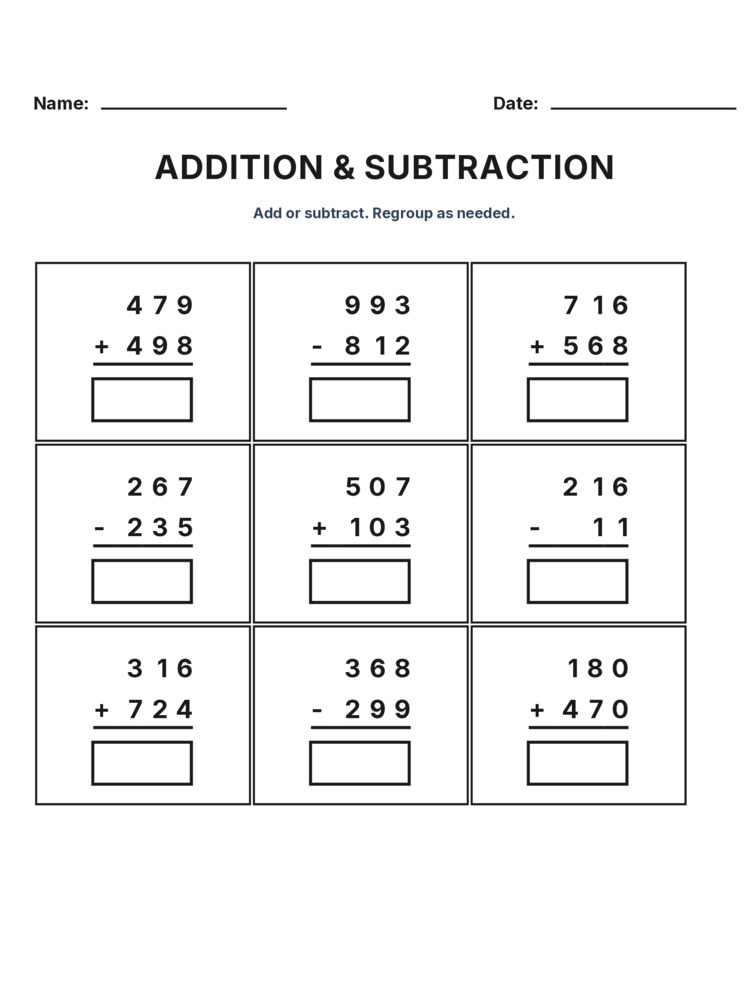
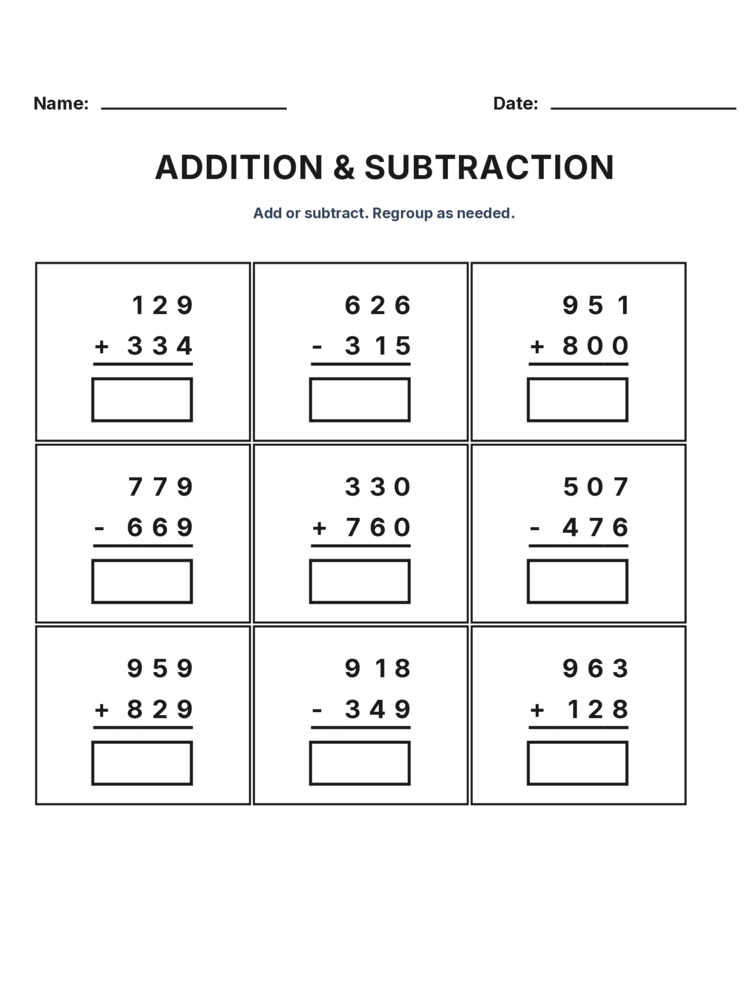
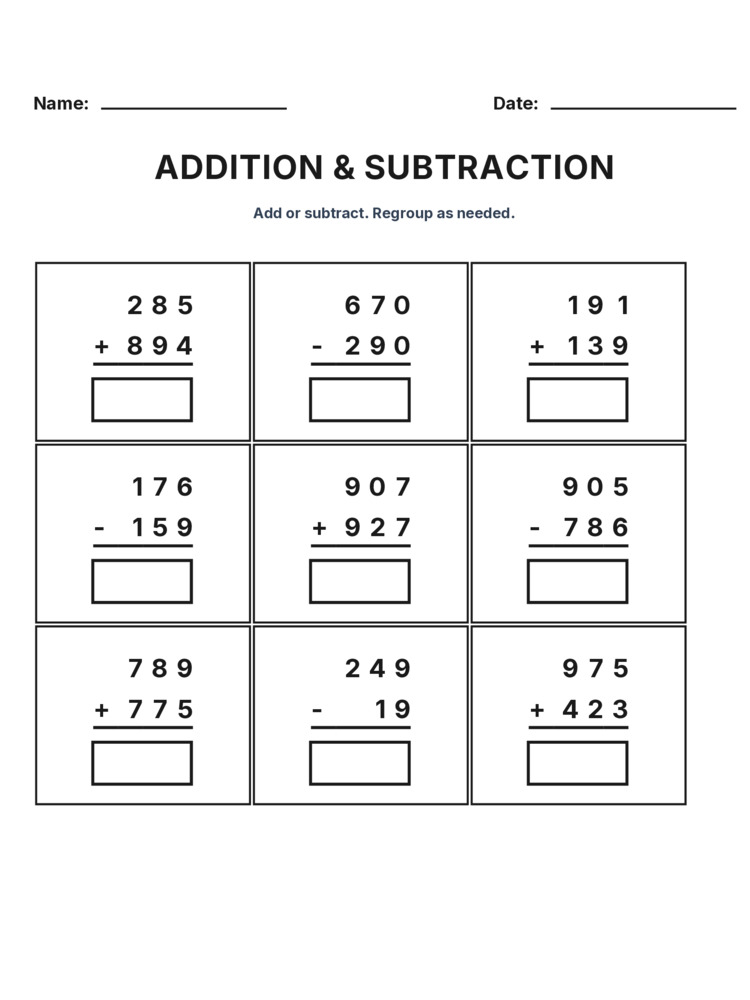
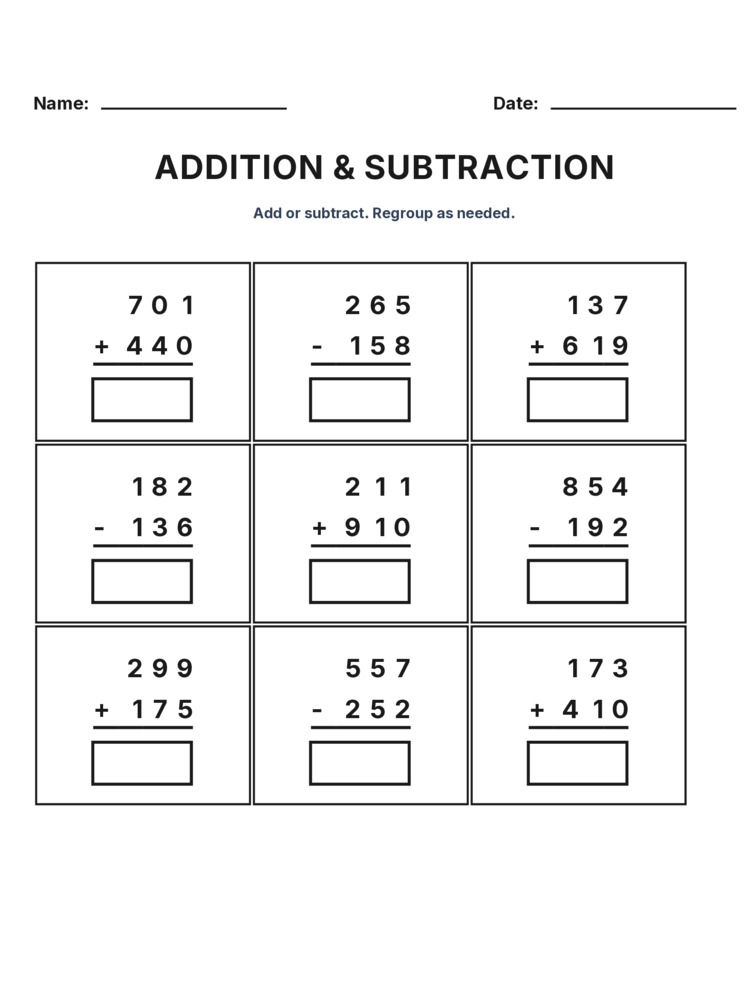
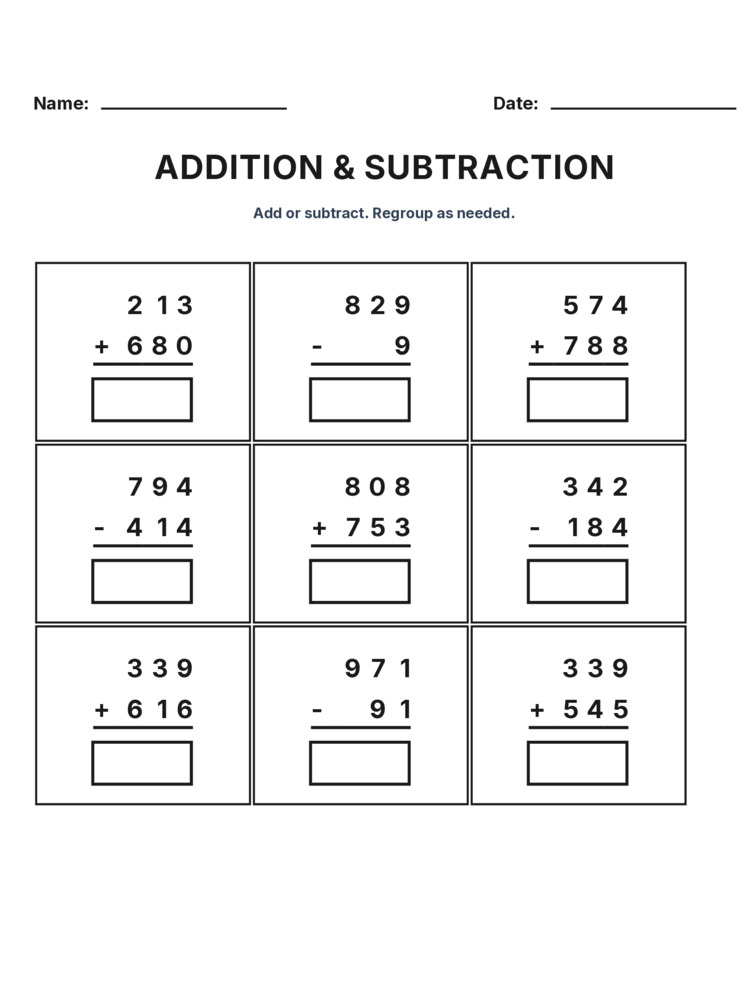
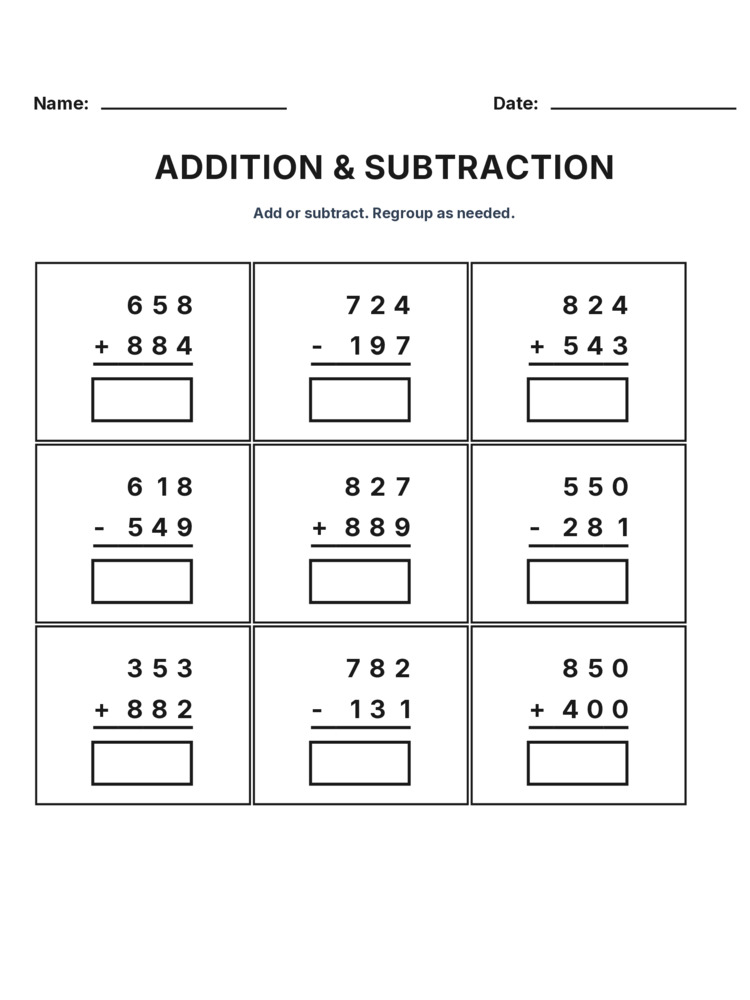
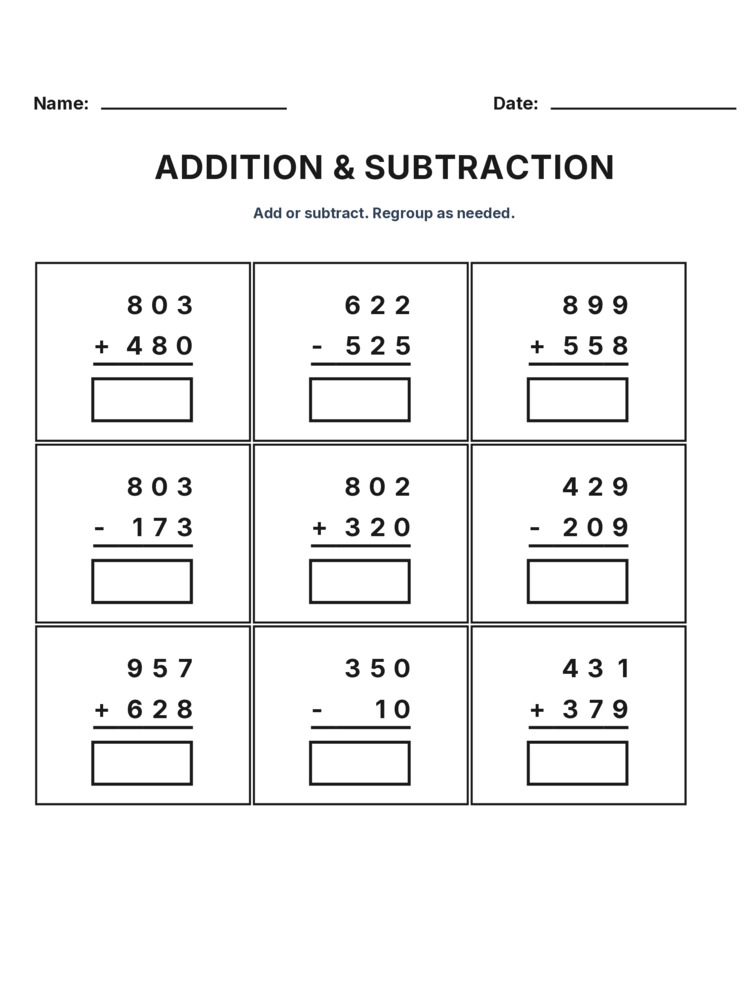
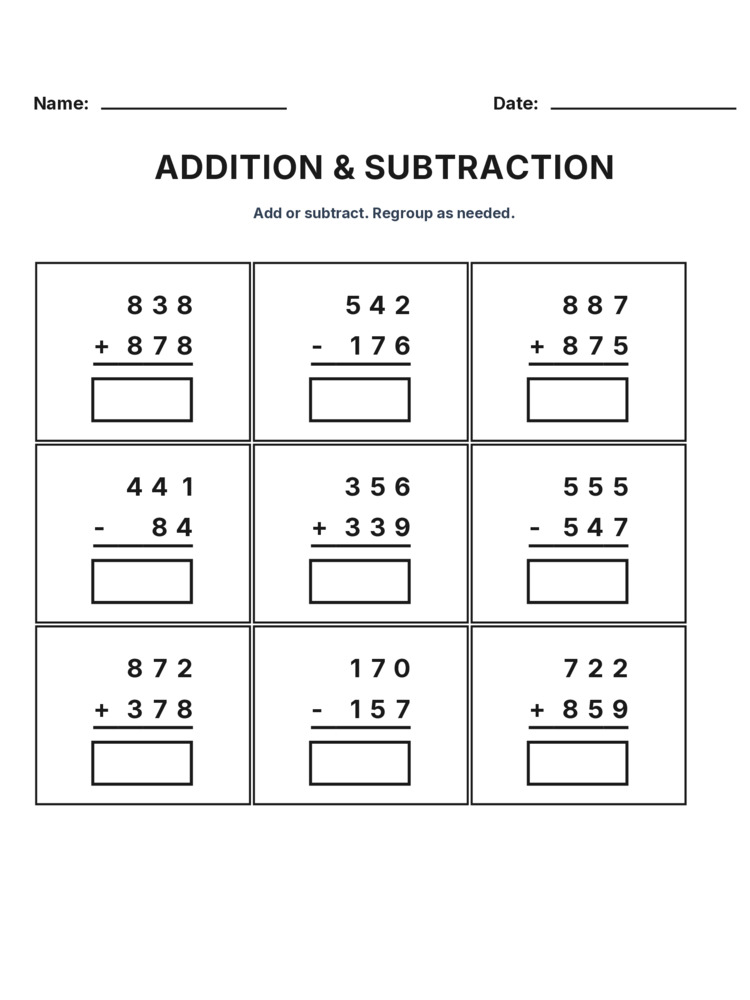
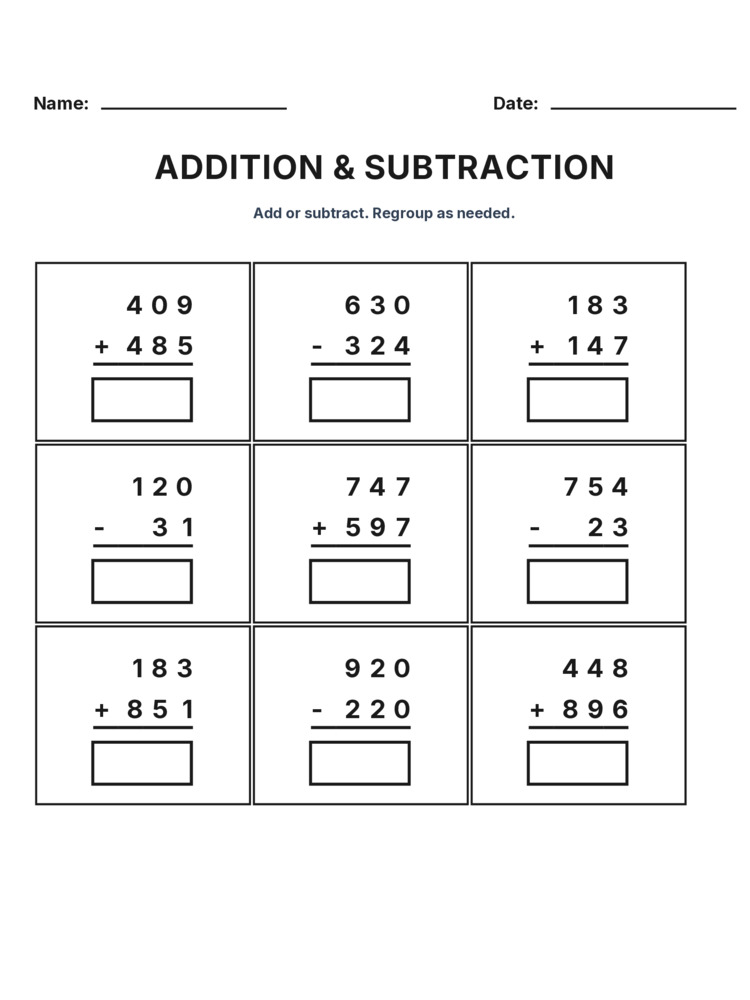
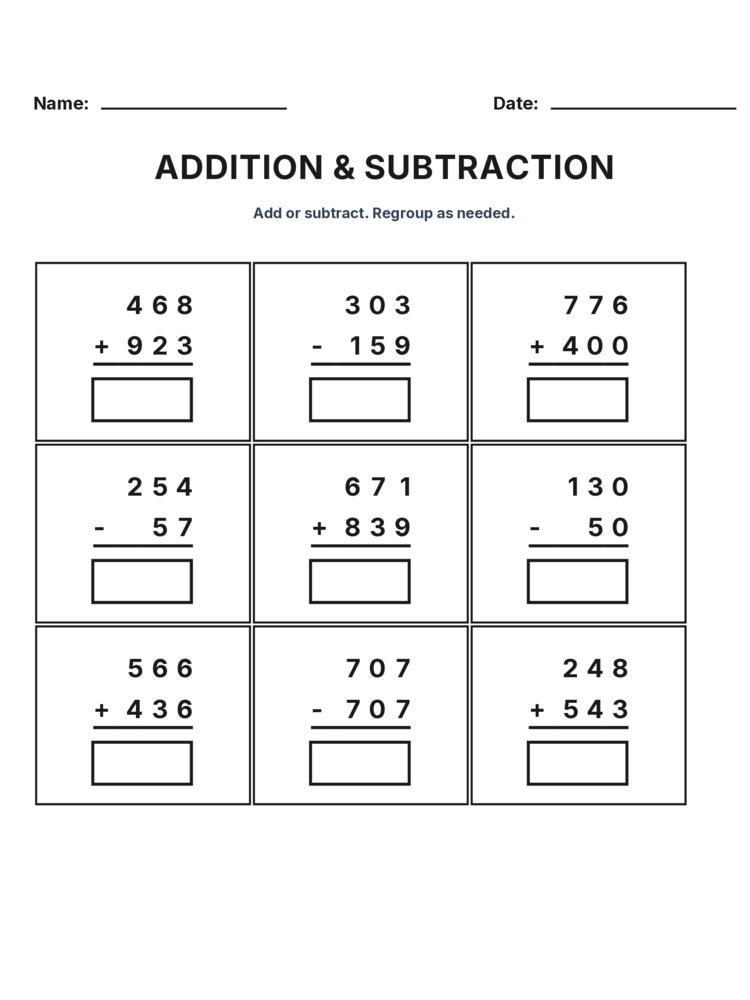
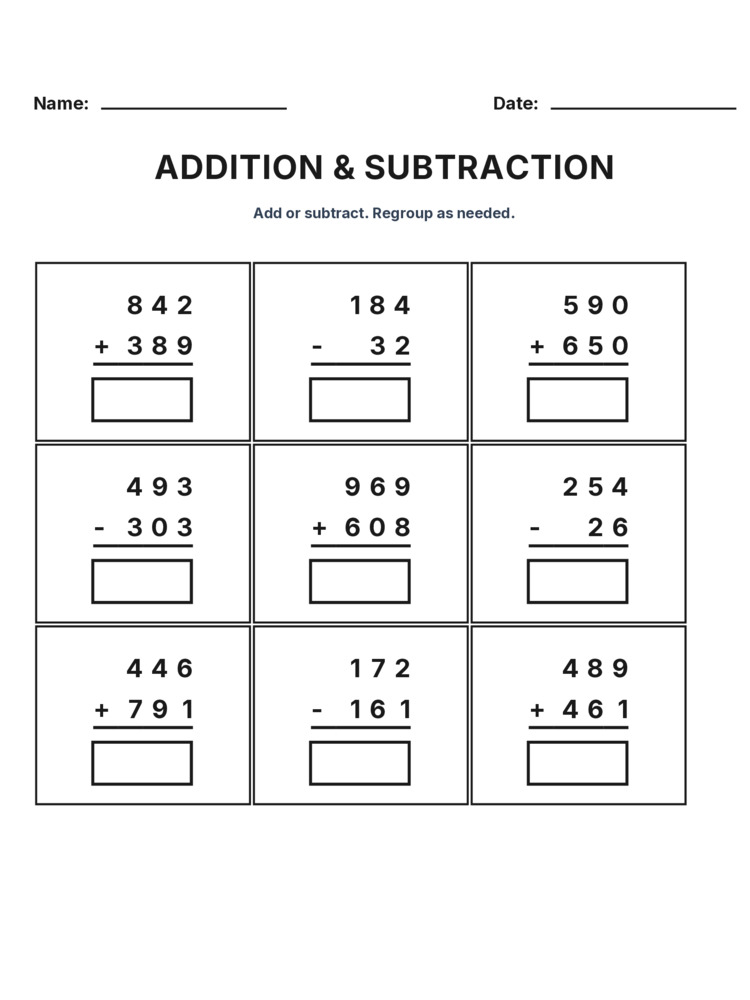
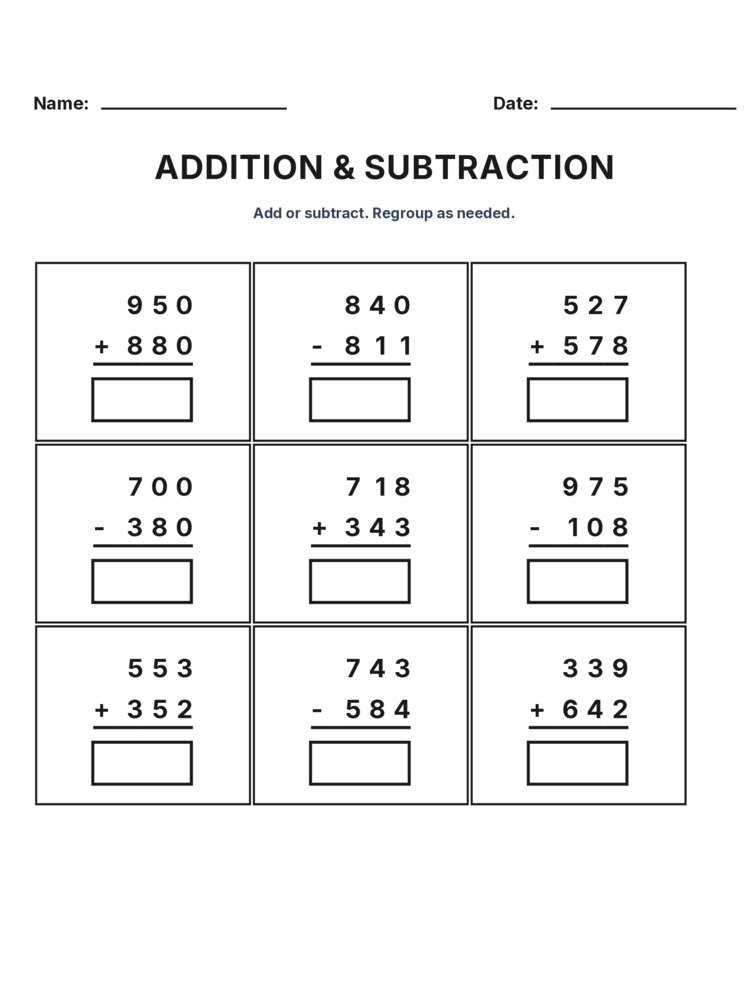
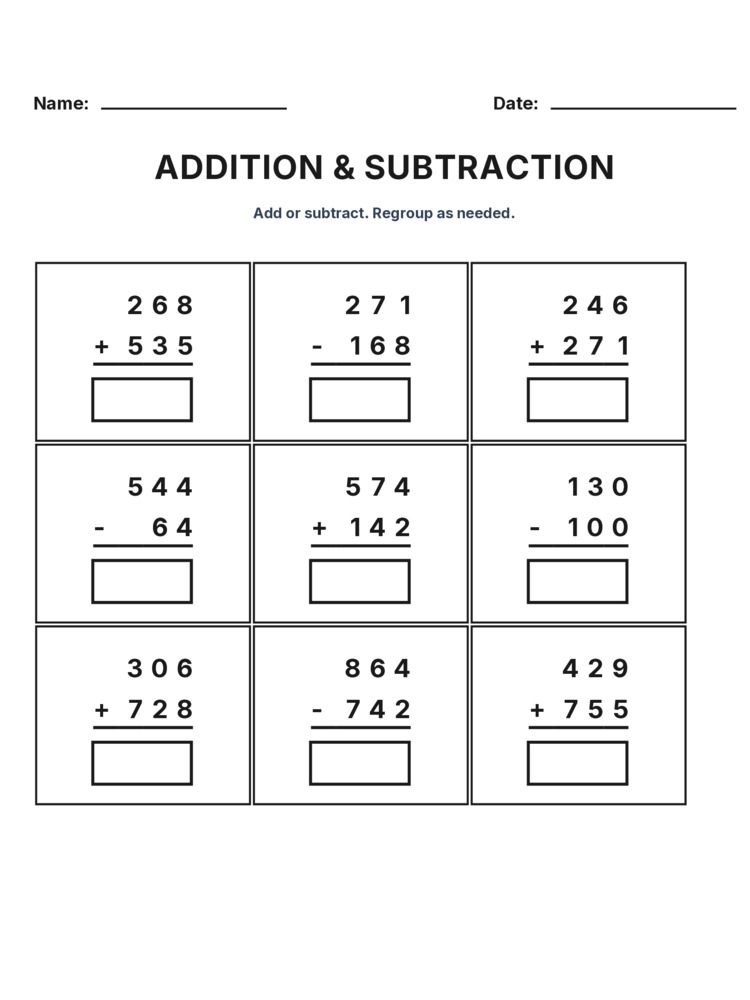
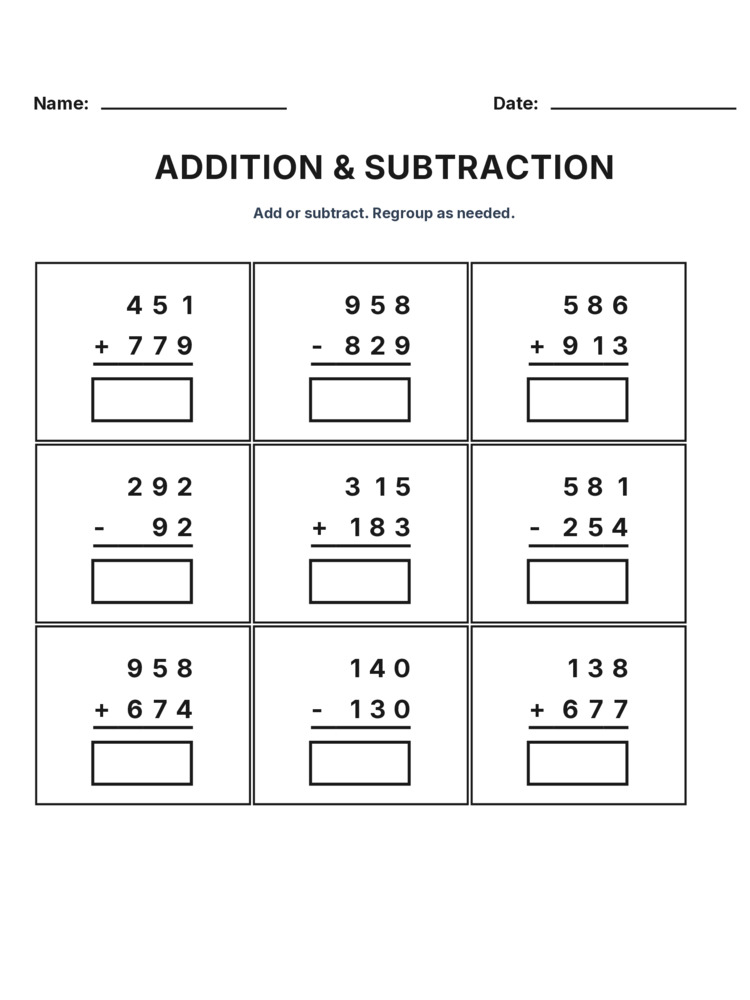
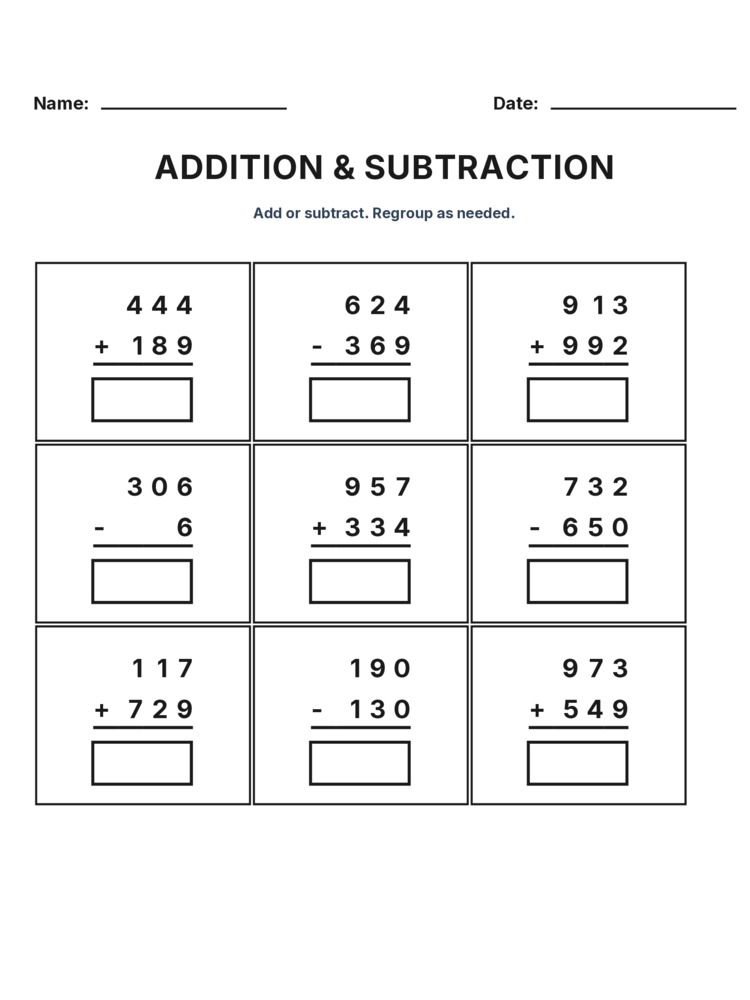
Every worksheet here is Addition & Subtraction at the Mixed Review level, built specifically for Grade 3. The number range and problem format are matched to what Grade 3 actually covers for this skill — not a generic difficulty label, but the real range researched from Common Core's grade-by-grade progression and cross-checked against what established publishers put in front of students at this stage. A worksheet labeled Mixed Review here means exactly that skill, at exactly this grade's range, every time.
How to read a worksheet on this page
Problems here use one of two layouts, chosen for what the skill actually needs, not for variety's own sake. A horizontal row ("5 + 2 = ▢") is built for straightforward fact practice — quick to scan, quick to solve. A vertical, stacked layout — the number on top, the operation and second number below it, a line, then the answer box — is used specifically where place-value columns lining up is the actual point, most often in regrouping (carrying or borrowing). If this page uses the stacked format, that's a deliberate signal about what skill is being tested, not a style choice.
Fresh numbers, same skill, every variant
Every numbered worksheet below tests the exact same Mixed Review skill with a different, deterministically-generated set of numbers — so a child who needs more repetition can work through several variants without ever seeing the identical page twice, and a teacher can hand two students different-looking pages while both practice the same thing. The rule itself never changes across variants; only the concrete numbers filling it in do.
What counts as actually understanding this skill
Getting one problem right can happen by luck, especially with a narrow number range. Getting several right in a row, across different numbered variants, with a child able to explain their process rather than just stating an answer, is the real signal that Mixed Review has actually stuck — not just that this particular page happened to go well.
Printing and using this page
Every worksheet downloads as a clean PDF in both Letter and A4 sizes automatically. For a classroom, this specific skill page is the right tool when a group of students needs focused practice on exactly Mixed Review rather than a broader review — hand out a couple of different numbered variants so no two students are working from the identical page. At home, work through a couple of rows at a time and ask a child to explain their reasoning before checking the answer, rather than racing through the whole sheet at once.
Where to go from here
Once Mixed Review feels solid across a few different numbered variants, the hub page above lists every other skill available for Addition & Subtraction at Grade 3, so it's straightforward to move to the next one without hunting through menus. There's no required order beyond what a specific child is ready for — moving on before a skill is genuinely automatic usually just means more time spent relearning it later.
A quick way to check readiness before printing a full page
Before handing over a whole worksheet, it's worth trying one or two Mixed Review problems out loud first, with a child talking through their steps rather than writing silently. If they can walk through the reasoning correctly, even slowly, printing the full page is a smooth next step. If the spoken version is already a struggle, that's useful information before an entire page gets filled in incorrectly — it usually means the hub page's other, earlier skills are a better use of today's practice time than this one.
Free, printable, and nothing saved
This worksheet follows the same rule as everything else on this site: free to view, free to download as a PDF, and free to print as many times as needed — no account, no email capture, and no premium tier hiding a specific skill behind a paywall. Nothing typed or clicked here is saved anywhere, matching the same no-account, nothing-stored model this entire site is built around.