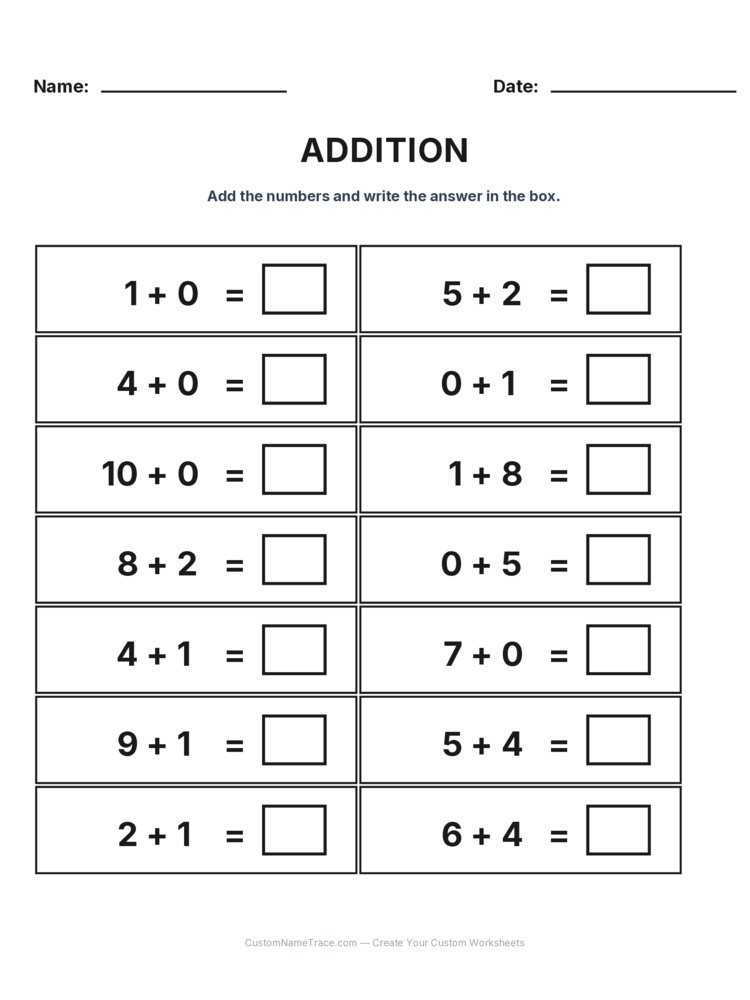
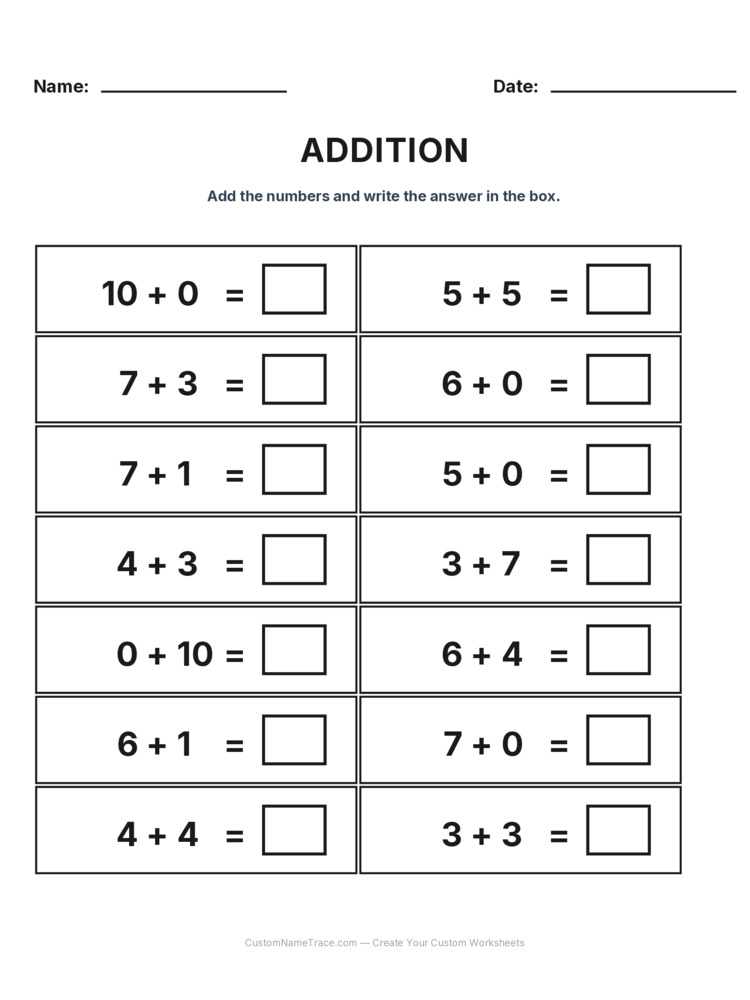
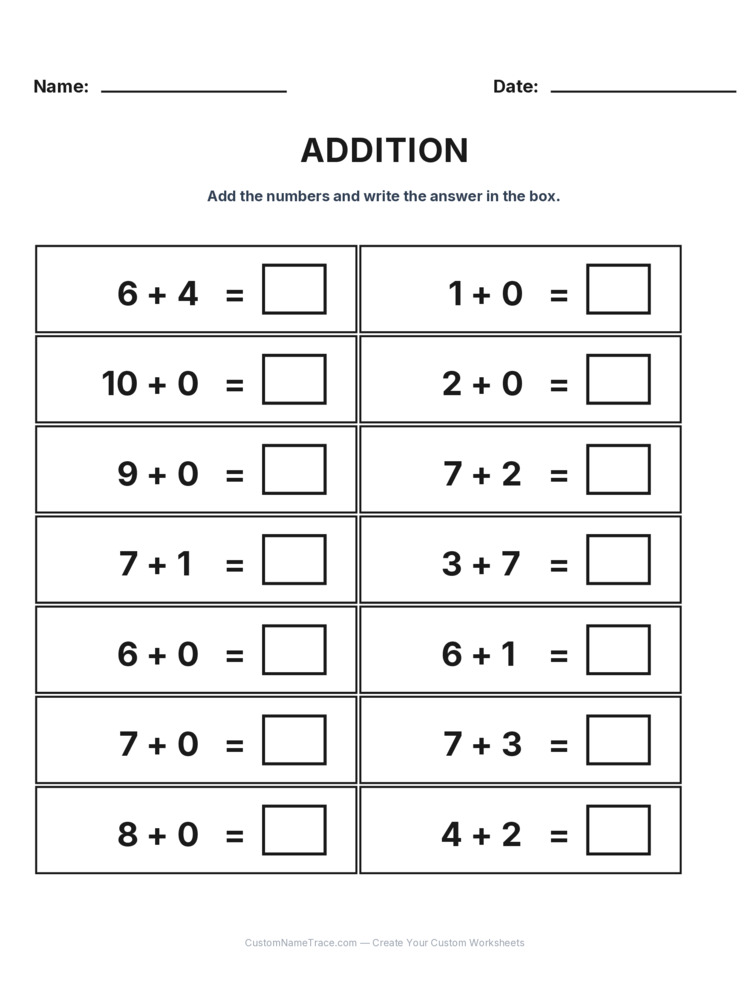
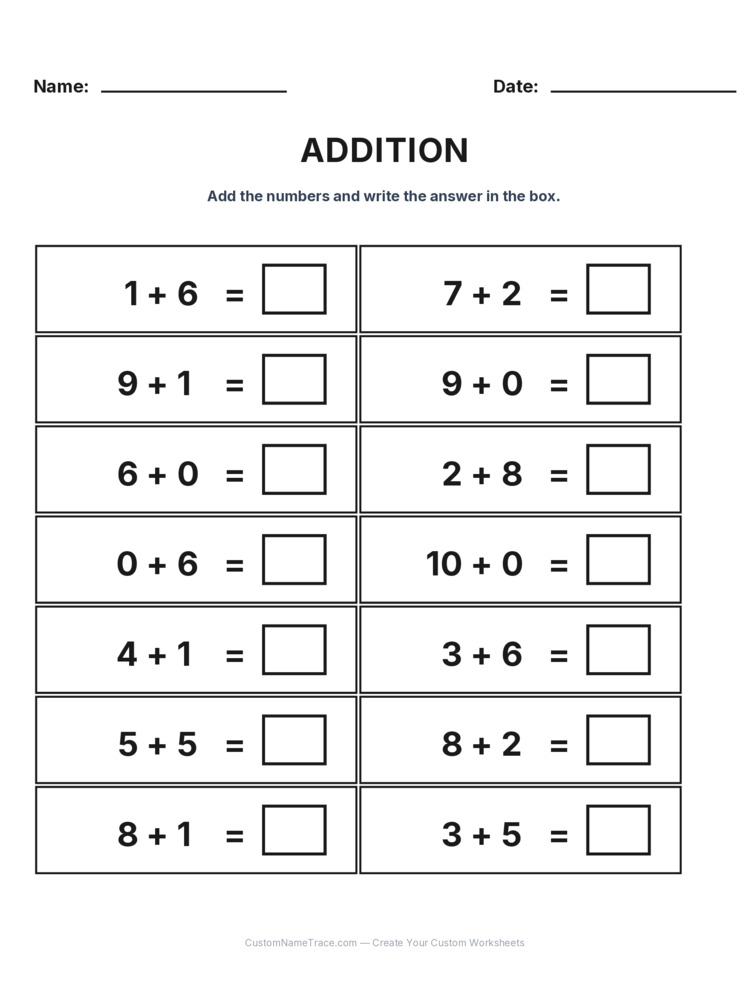
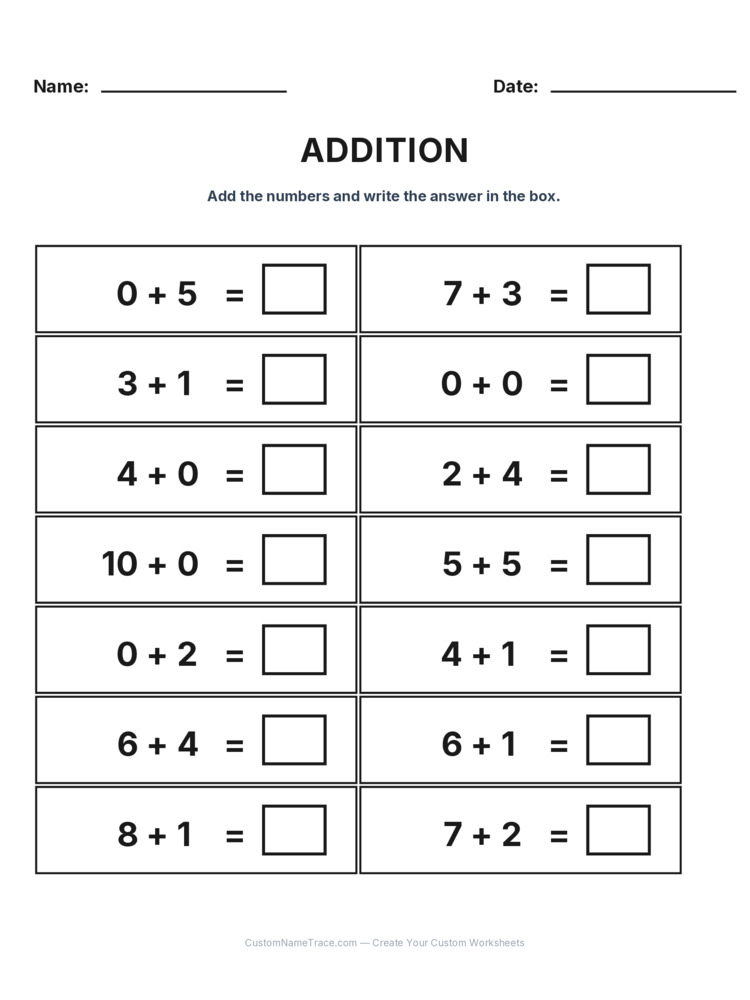
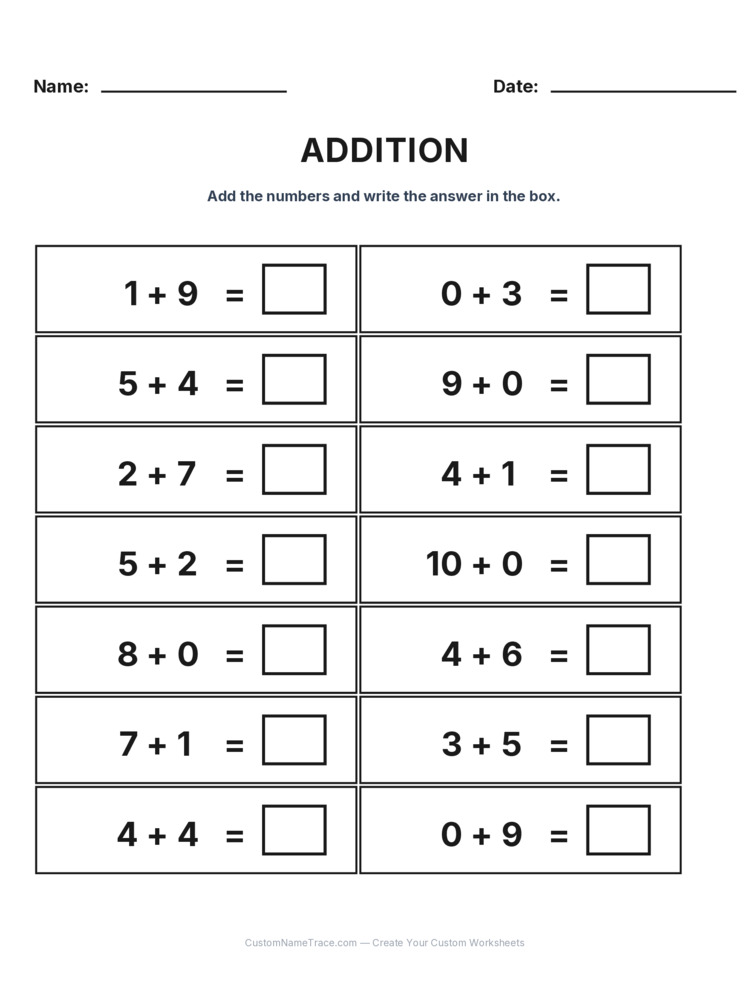
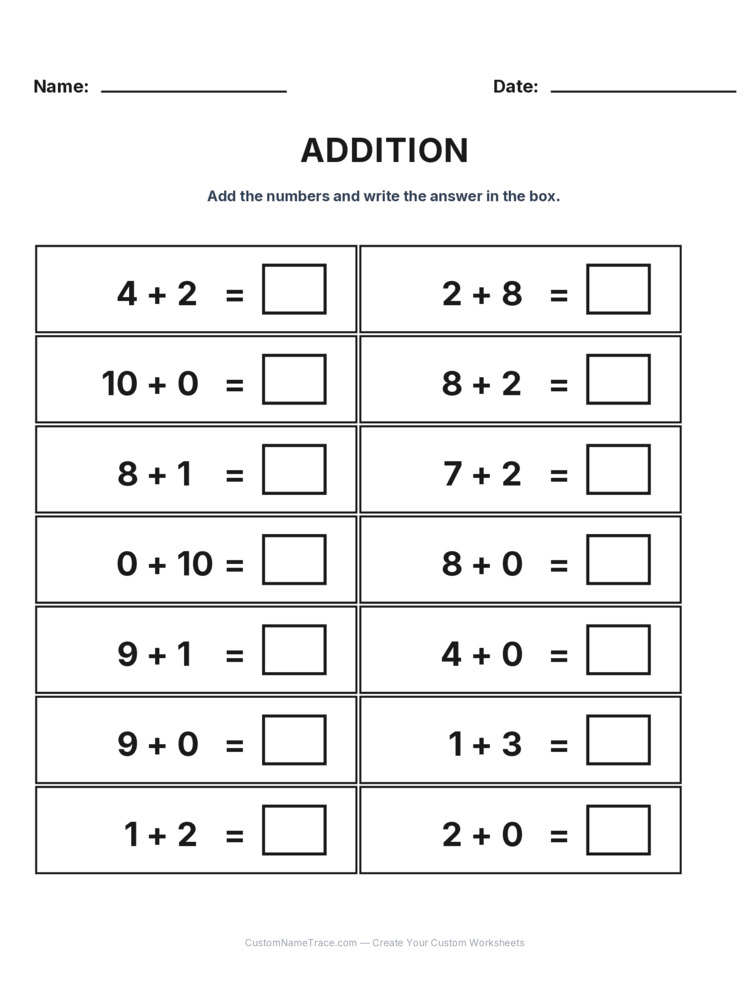
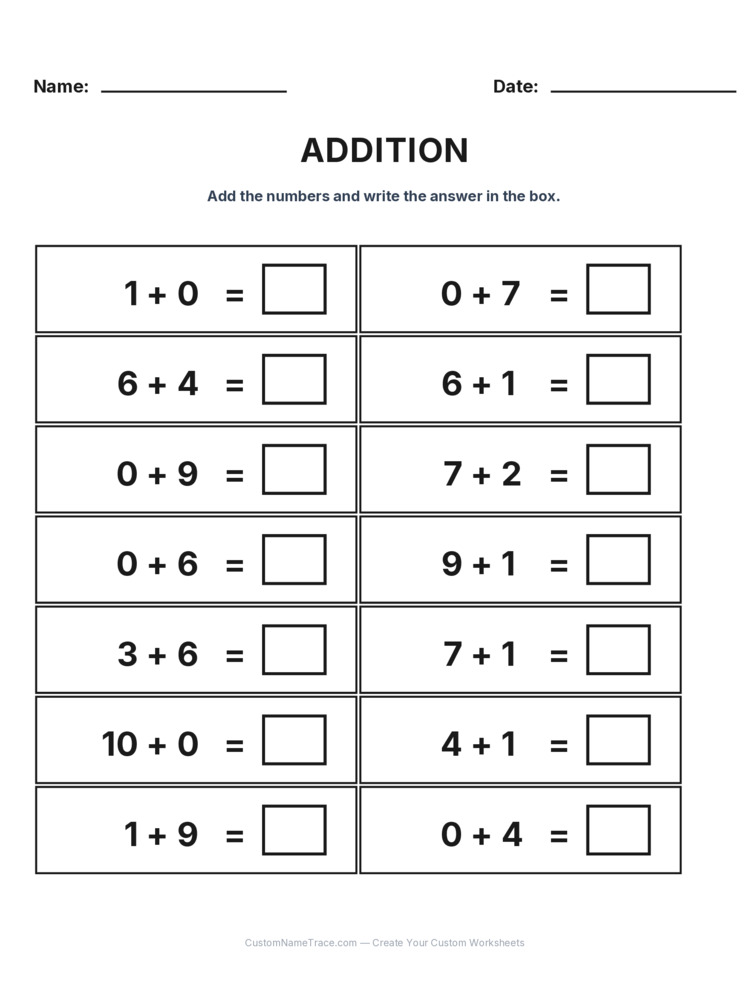
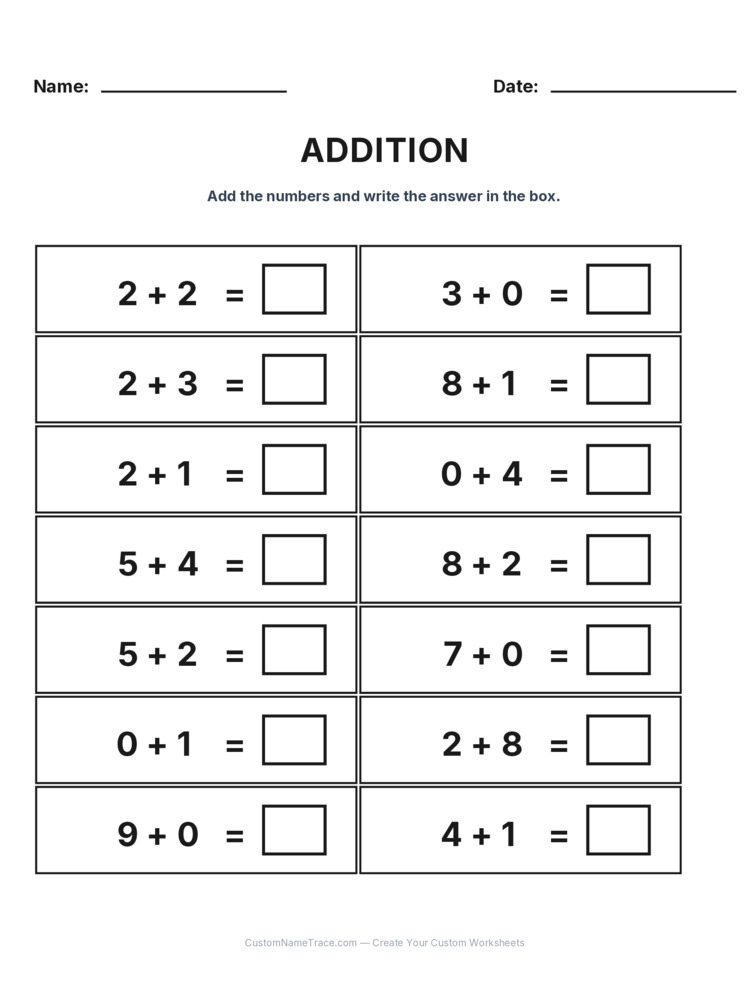
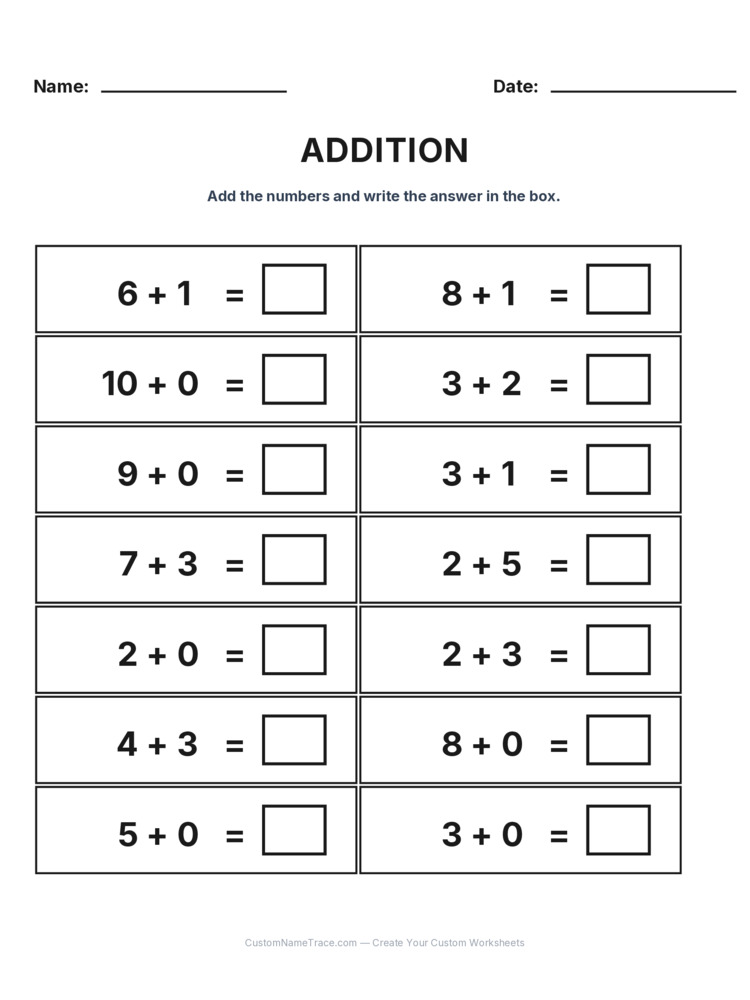
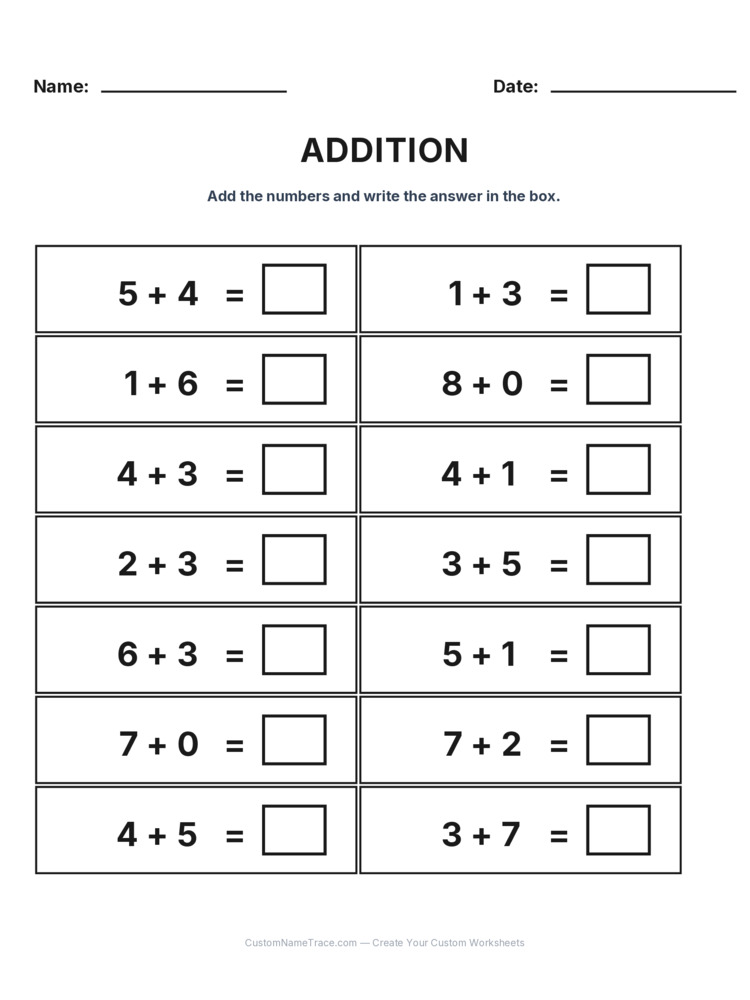
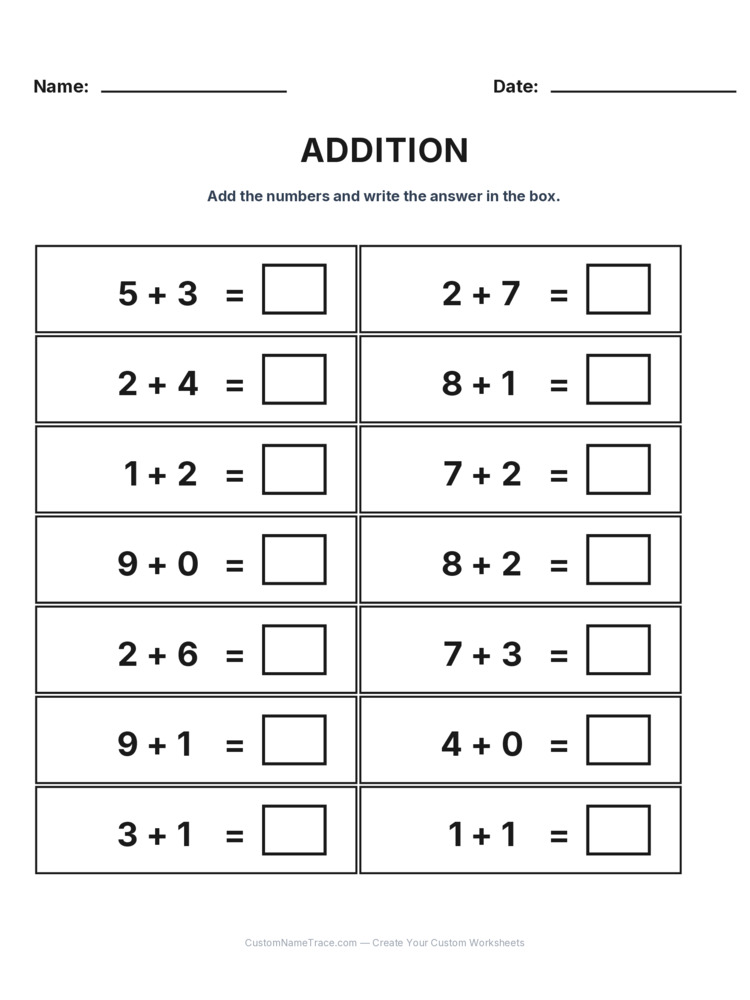
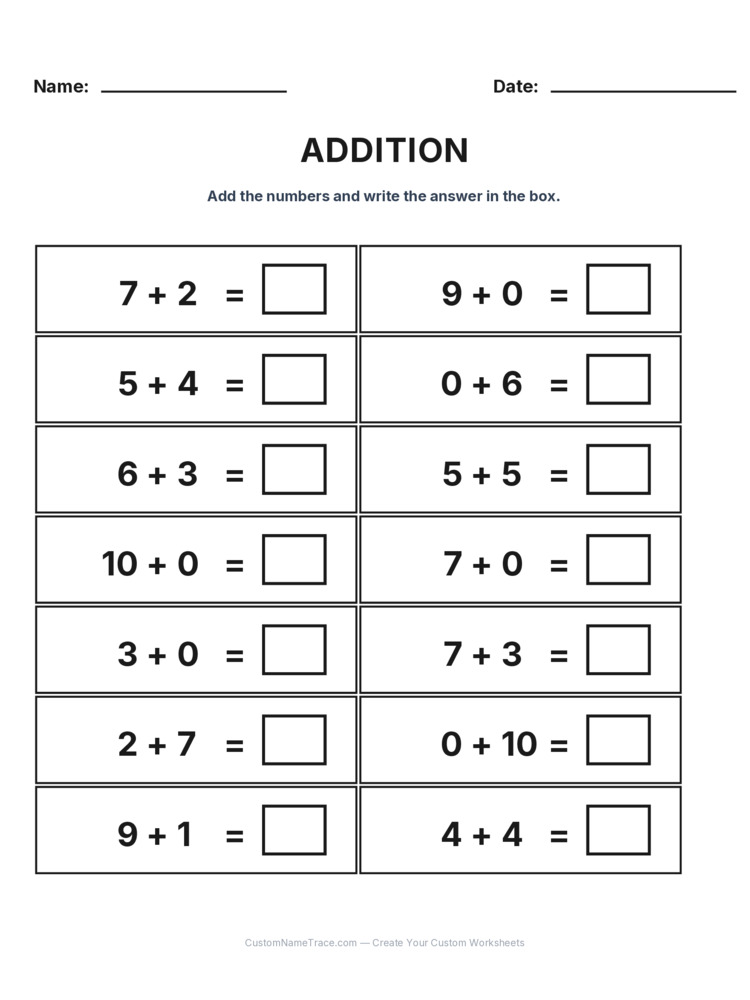
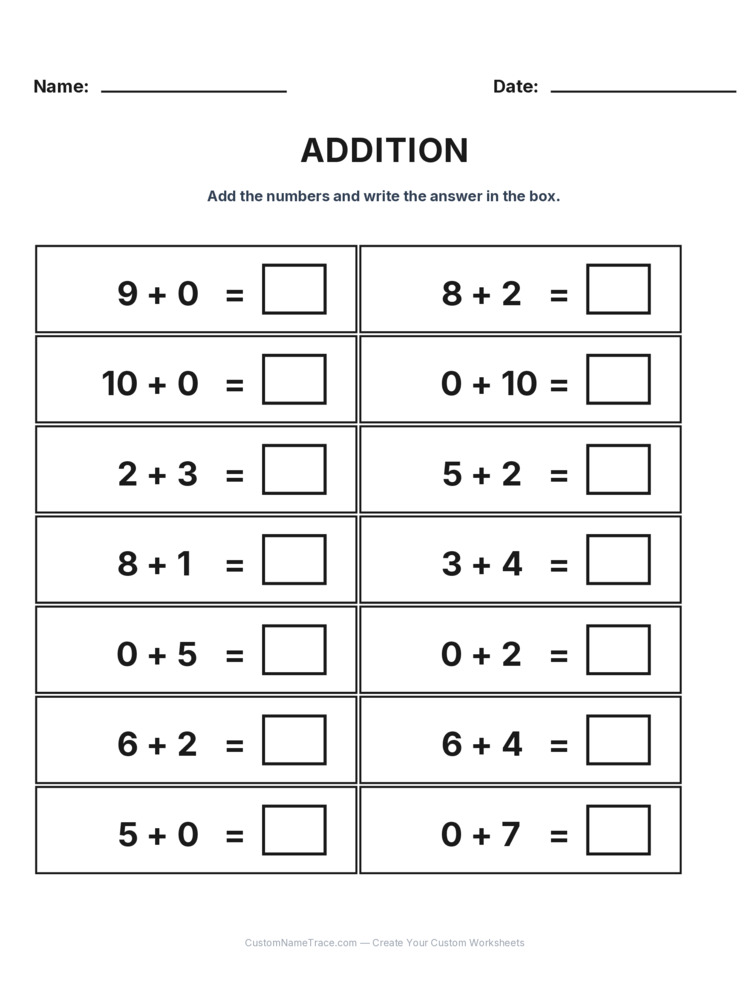
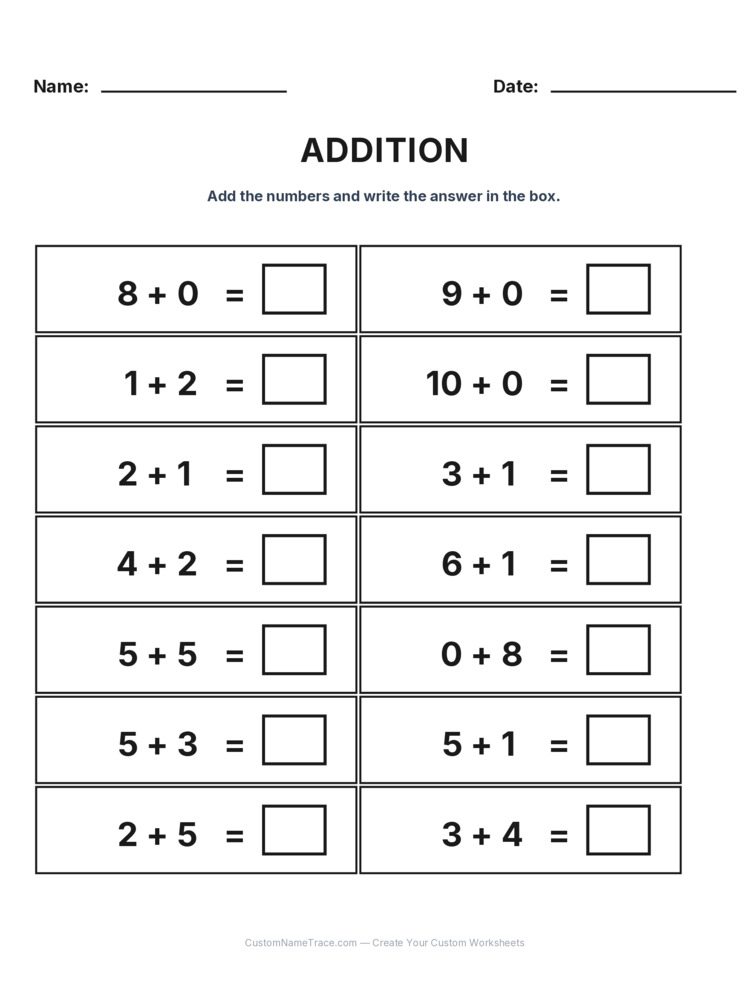
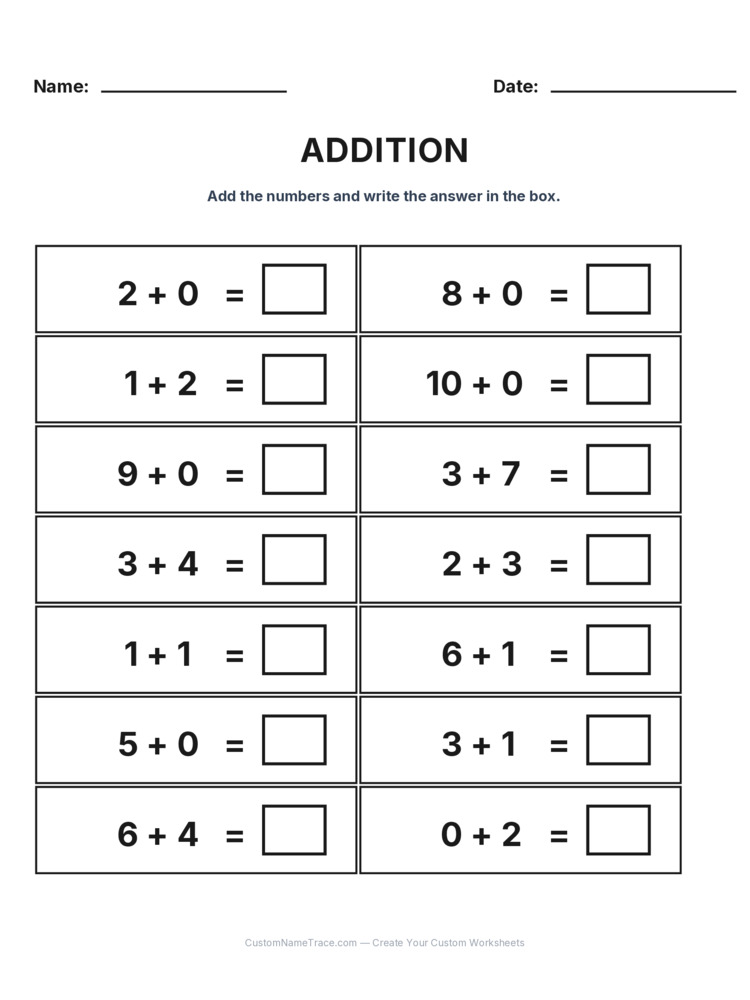
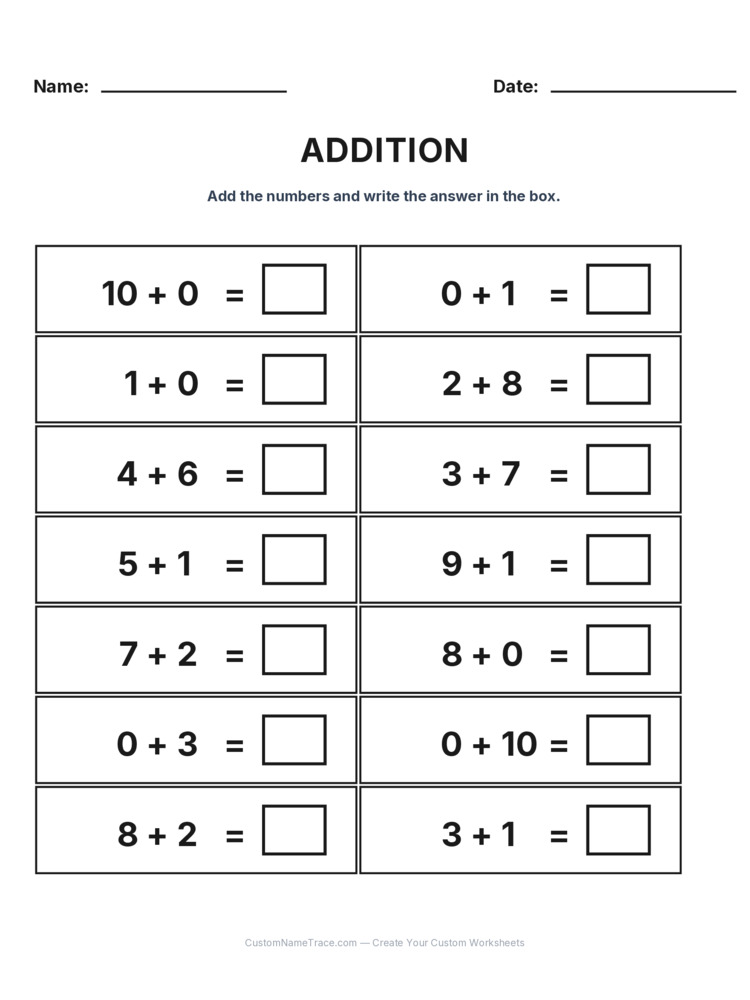
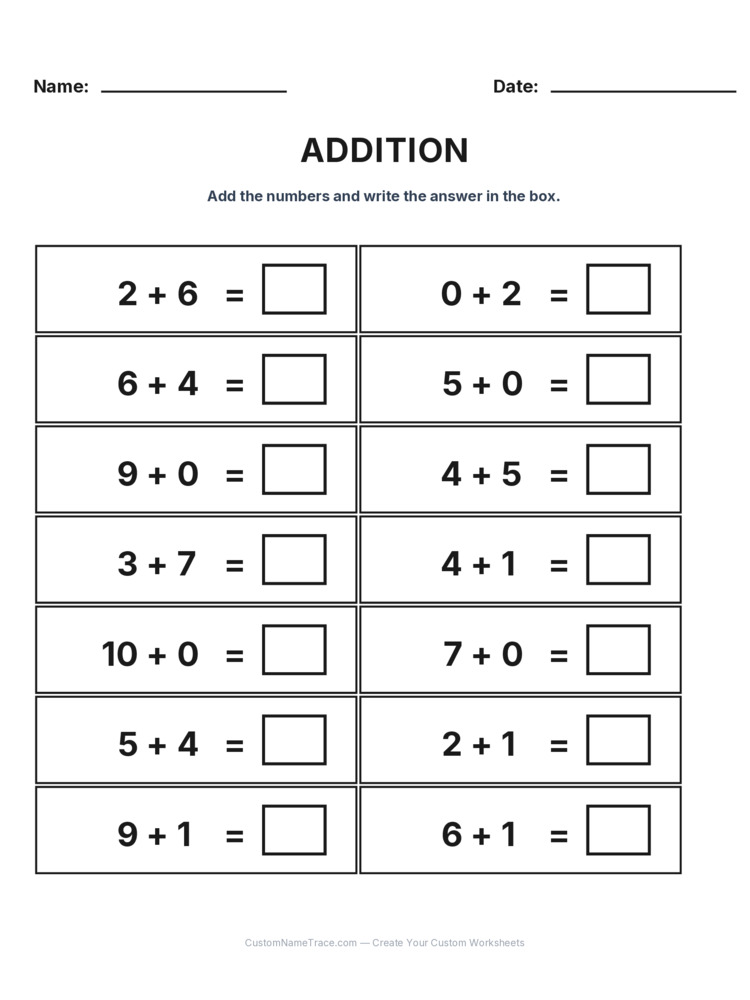
Why every answer stays within 10
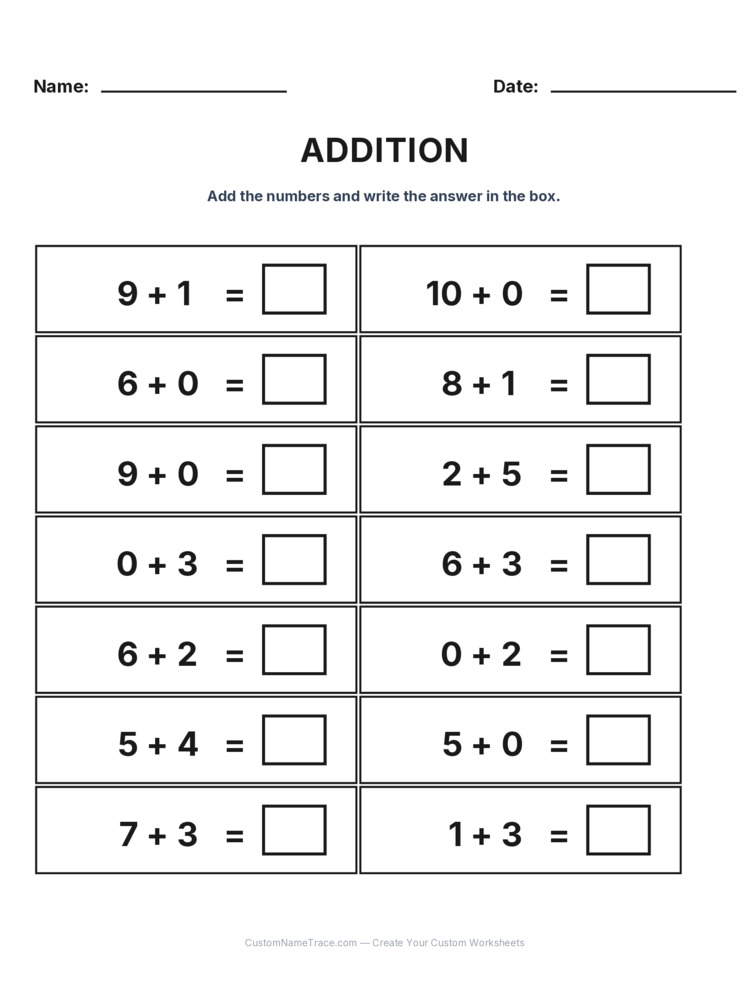
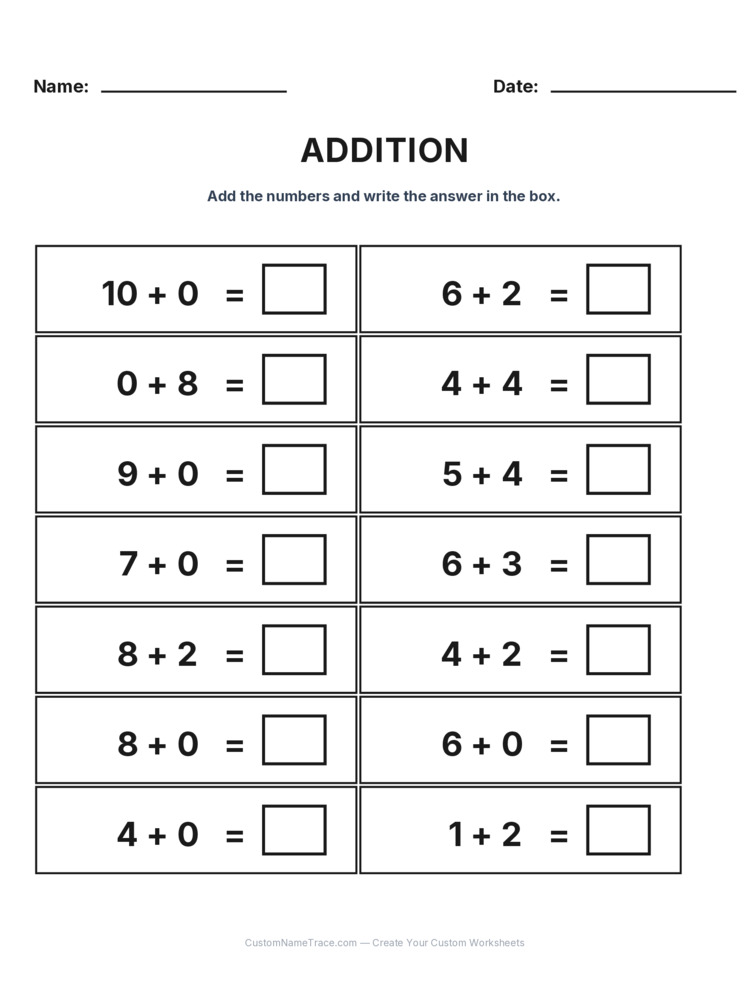
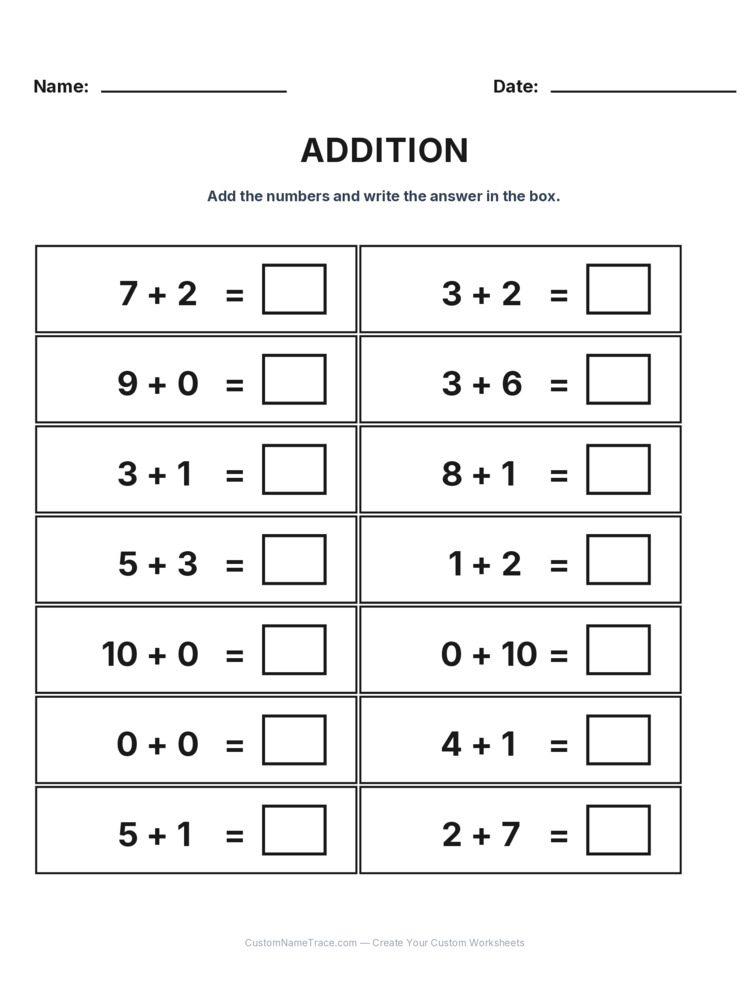
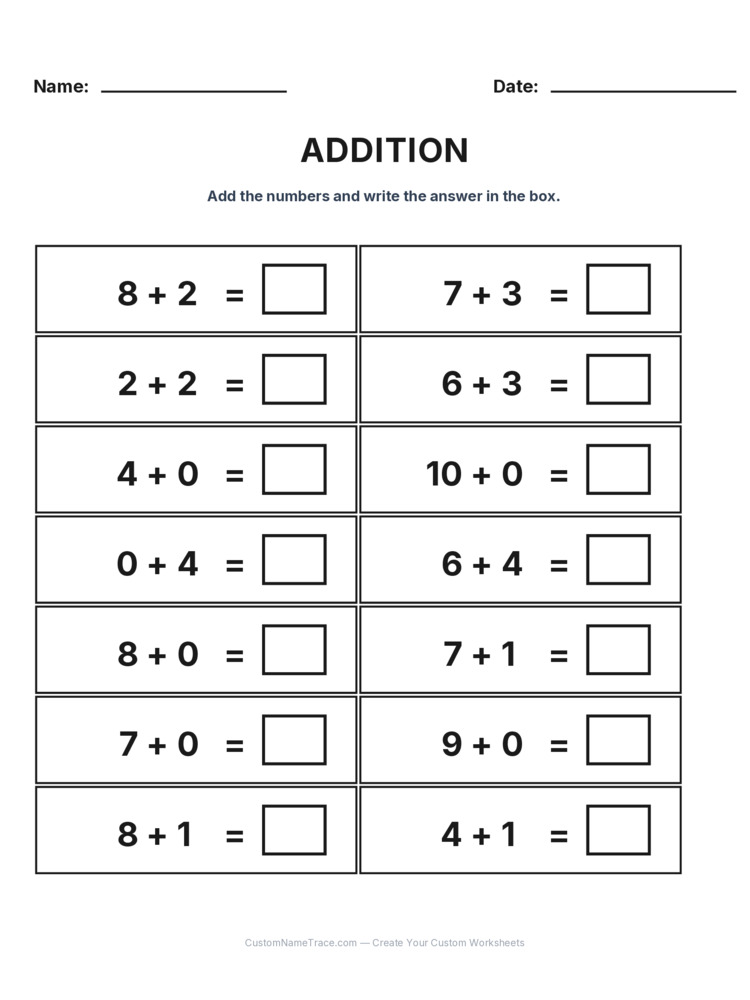
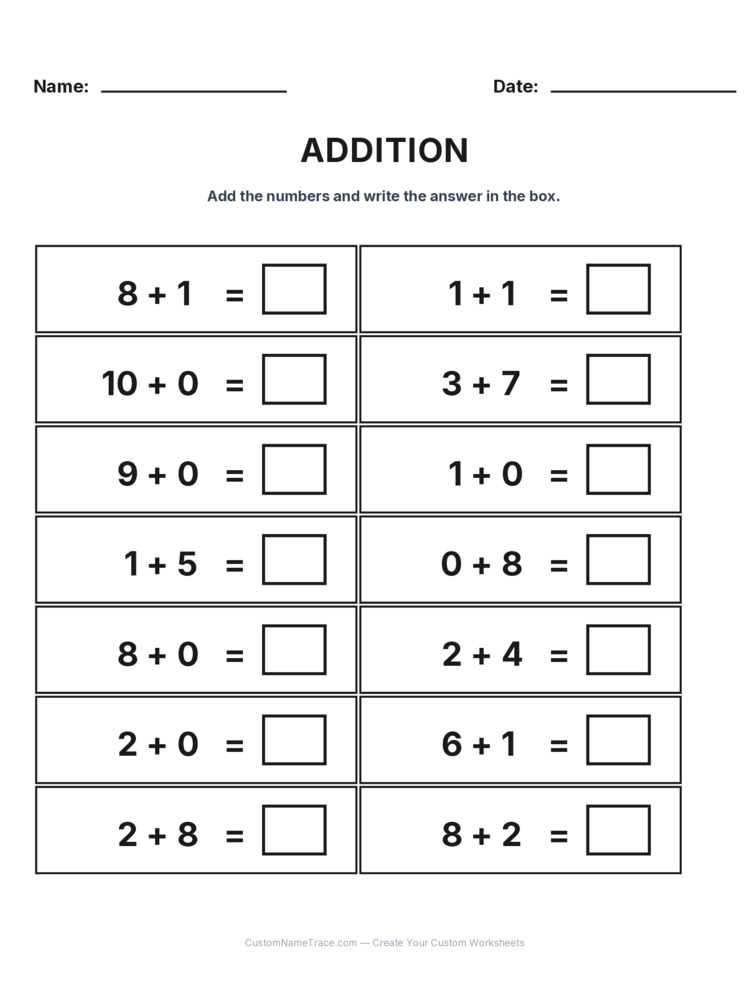
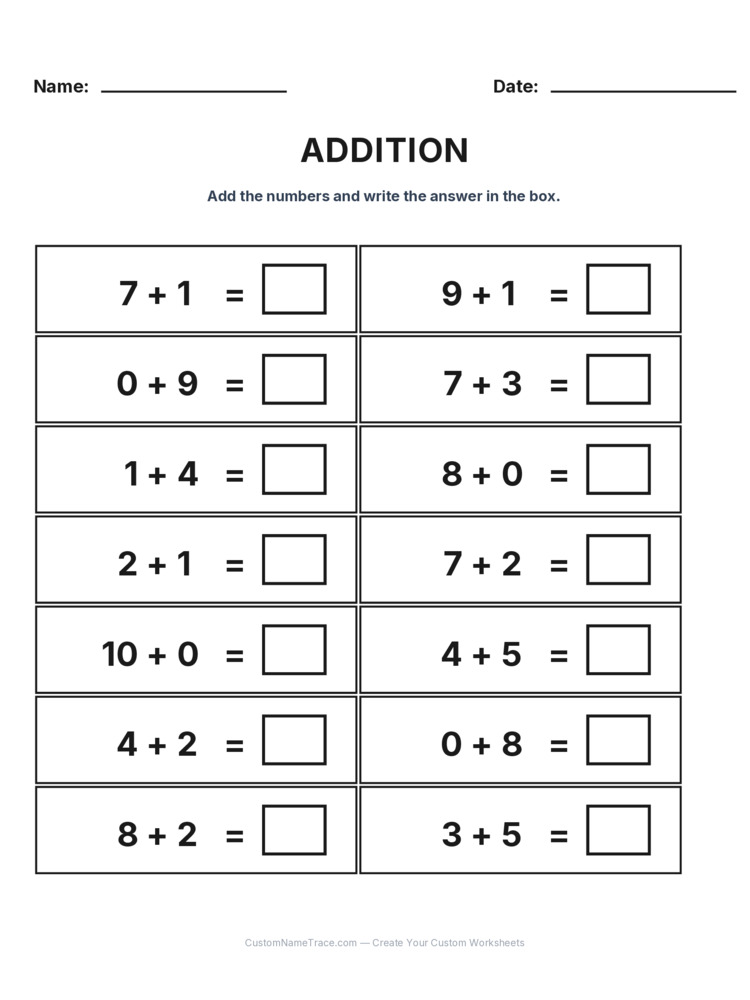
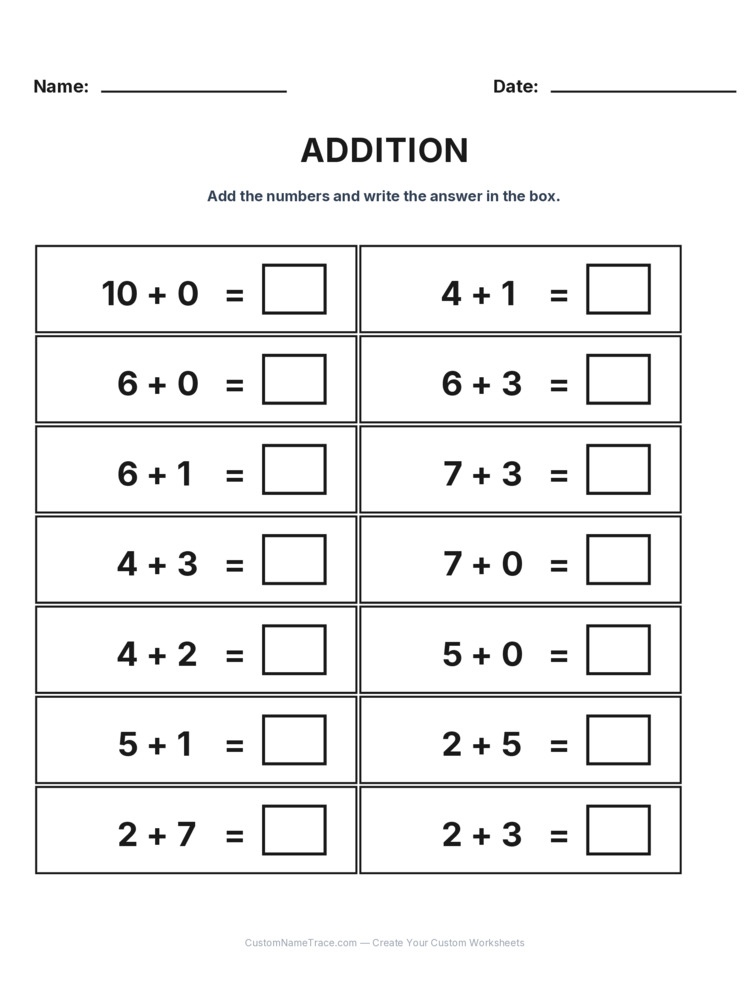
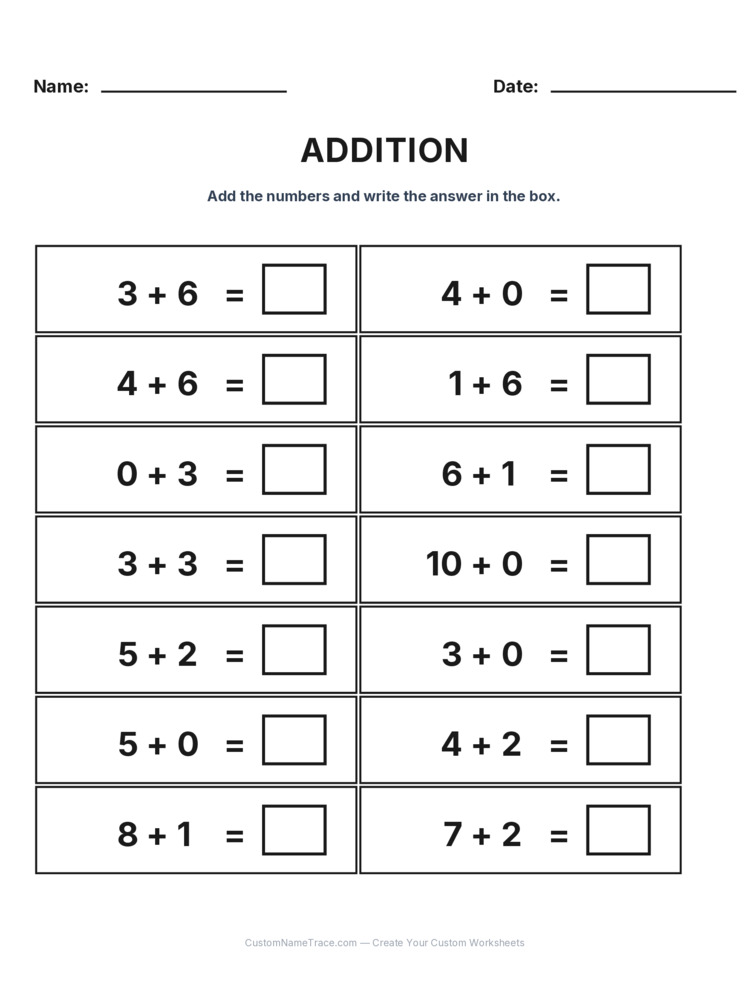
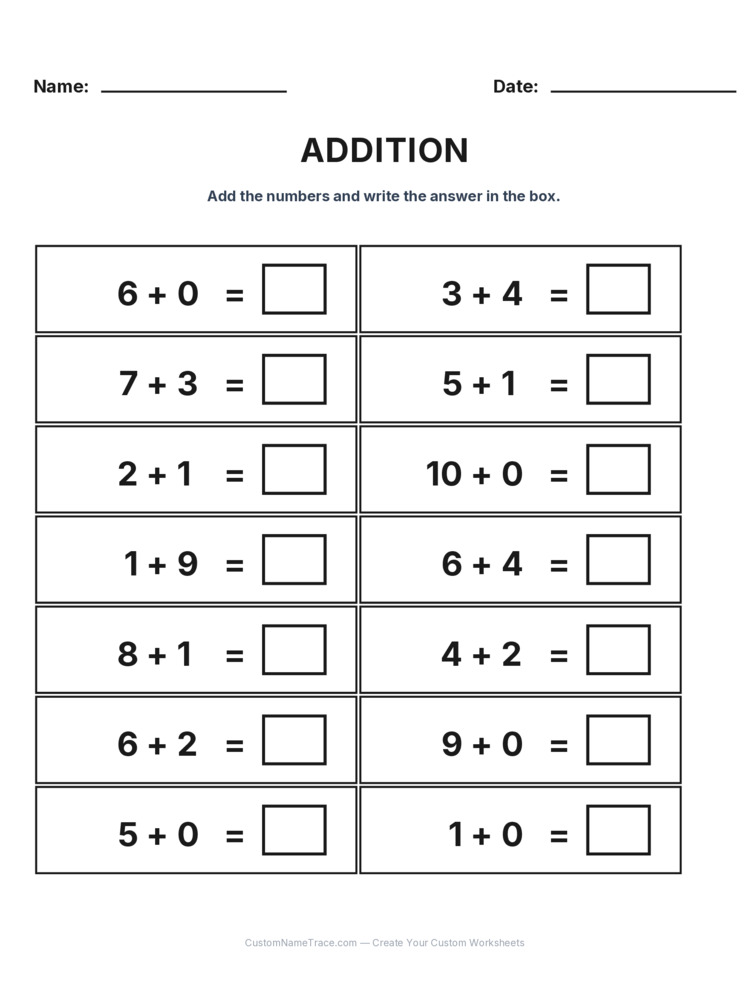
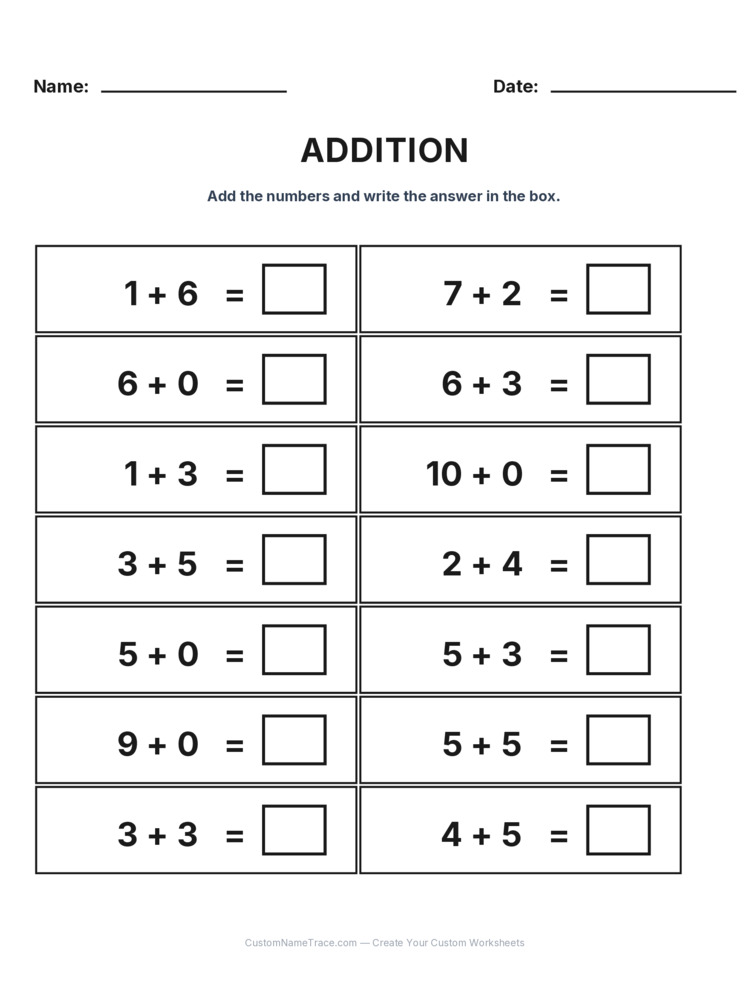
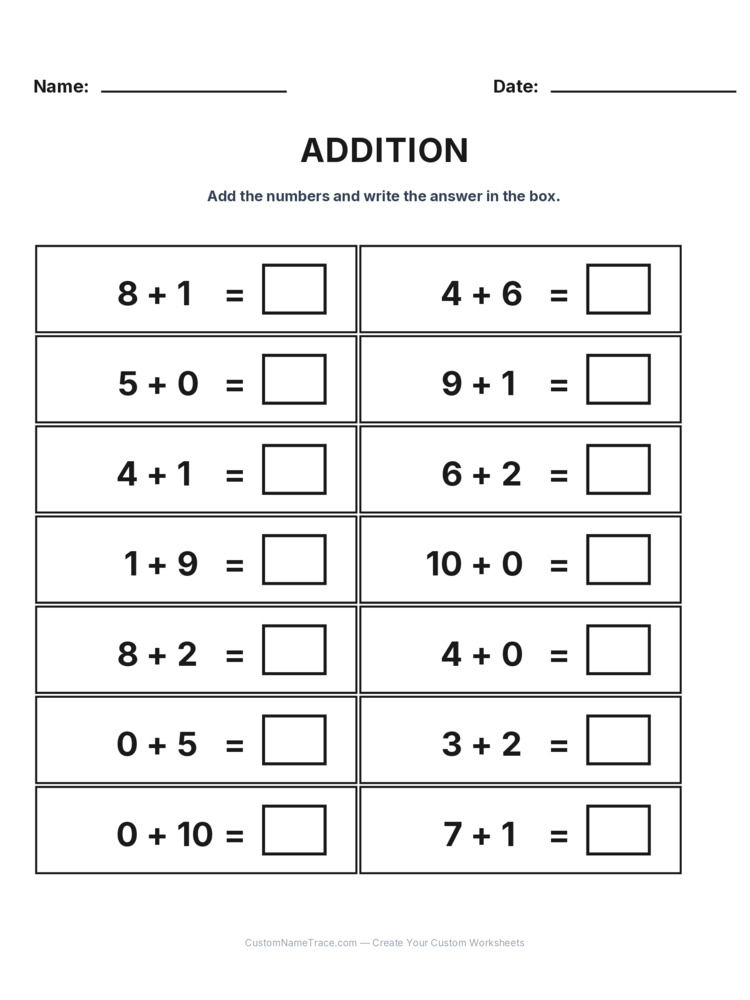
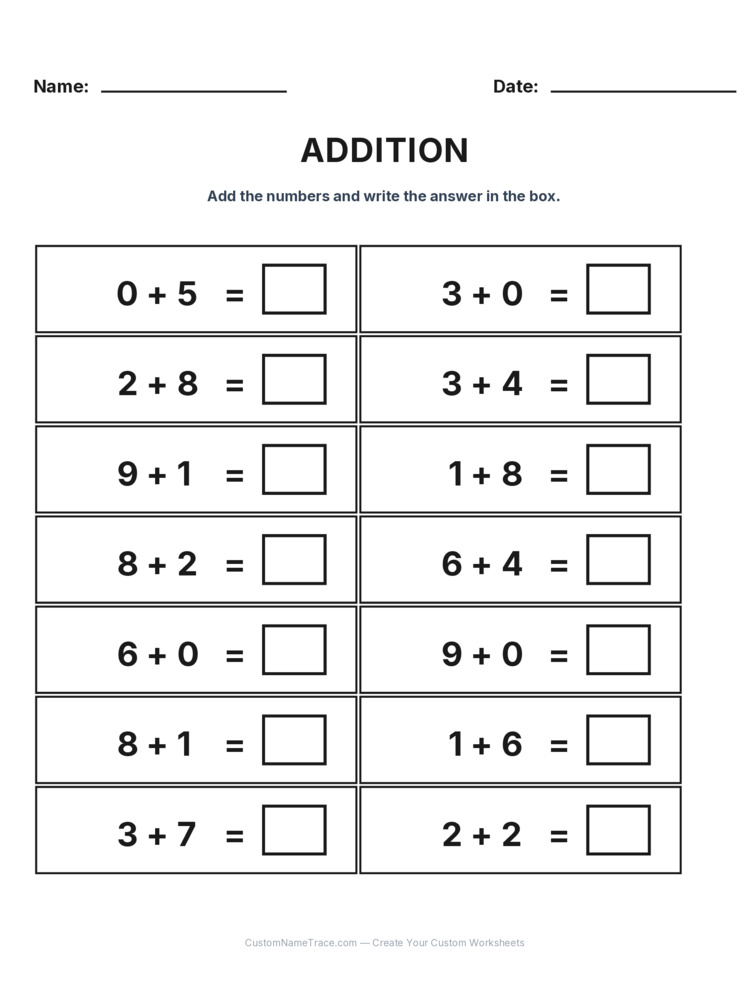
Every problem on this worksheet is built so both the numbers involved and the final answer never exceed 10 — a deliberate, narrow range rather than an arbitrary early-grade limit. Ten is small enough that a child can reliably count on fingers, small enough to fit entirely within a single ten-frame (the same visual model this site's Number Sense section uses directly), and it's the number every later place-value concept is built on top of. Staying within this range at Kindergarten isn't a limitation — it's the deliberate foundation everything afterward depends on.
At this range, Addition is almost always solvable through direct counting — fingers, drawn marks, or objects — rather than requiring any memorized fact or written strategy. That's appropriate and expected at Kindergarten: the goal here isn't speed or memorized recall yet, it's building a correct, reliable process for combining or comparing small quantities, a foundation that later fluency gets built on top of rather than skipped.
Facts within 10 get used constantly as building blocks for larger problems later — a Grade 1 problem like 8 + 5 gets solved efficiently by many children as "8 + 2 makes 10, plus 3 more makes 13," which only works smoothly if the child already has instant, confident command of facts within 10. Extra, even seemingly excessive, practice at this specific range pays off disproportionately later, which is part of why it gets its own dedicated worksheet rather than being rushed through quickly on the way to bigger numbers.
Fingers, mistakes, and why some problems feel easier
Counting on fingers at this stage is not something to discourage in favor of "real math" — for numbers this small, fingers are a genuinely appropriate, developmentally correct tool, and pushing a child away from them before they're ready to let go on their own tends to create anxiety rather than speed. The strategy fades naturally as facts become familiar through repetition; it doesn't need to be forced away.
A wrong answer within this small range is almost always a counting slip — miscounting fingers, losing track partway through, or a simple writing error — rather than a sign the underlying concept isn't understood. Having a child recount out loud, pointing to each item as they count, resolves the great majority of mistakes at this level immediately.
Not every problem within this range feels equally difficult to a child — doubles (3+3, 4+4) and facts involving zero or one tend to be recognized and solved fastest, while facts in the middle of the range without an obvious shortcut take longer. That's expected and not a sign of uneven understanding; noticing which specific facts still take longer, rather than judging overall speed, is a more useful way to target extra practice.
Making this concrete and playful
Ten small objects — coins, blocks, buttons — let a child physically act out Addition within 10 directly: combining two small groups and counting the total, or removing some from a group and counting what remains. This hands-on version is worth using alongside the printed worksheet, especially for a child encountering the concept for the first time, since it makes the operation visible and touchable rather than only symbolic.
Holding up a number of fingers under 10 and asking "how many more to make 10?" turns the same within-10 reasoning into a quick, playful verbal game that works anywhere — waiting in line, in the car, at the dinner table. This specific question, "how many more to make 10," is worth asking repeatedly and often, since that exact skill — recognizing the gap to a full ten — is one of the most useful mental shortcuts a child carries forward into every larger-number problem afterward.
Asking a child to explain their reasoning out loud before writing an answer down — "how did you figure that out?" — surfaces the actual strategy being used, whether that's counting fingers, recalling a memorized fact, or reasoning from a nearby known fact. That explanation is often more informative than the answer itself, since two children can arrive at the same correct number through very different levels of underlying understanding, and knowing which one a specific child is using shapes what kind of practice actually helps them next.
Knowing when a child is ready to move on
A child who solves problems within 10 quickly, confidently, and mostly without needing fingers or counting aids is ready for this site's wider-range Kindergarten worksheets. There's no fixed timeline for that readiness — some children move on within days, others benefit from weeks of repeated practice at this range first, and either pace is completely normal.
A child who finds this entire range trivially easy, answering instantly without any visible counting, is very likely ready to move on to this site's wider Kindergarten worksheets rather than needing more repetition here — there's little value in continuing drills at a range that's already fully mastered, and moving forward keeps practice time productive rather than repetitive for its own sake.
It might seem like there's little point generating dozens of distinct variants for problems this small, but repeated exposure to genuinely different number combinations — rather than the same handful of memorized problems seen over and over — is exactly what builds real, flexible fluency instead of memorized answers tied to one specific worksheet. A child who's only ever seen 3+4 on one particular page might recall that specific answer without having truly internalized the underlying addition relationship; fresh combinations each time close that gap.
Using this well
This site's Ten-Frame Count worksheets, under Number Sense, build the exact same quantity-within-ten sense this worksheet leans on directly — a child comfortable recognizing ten-frame patterns at a glance has a real head start recognizing and solving Addition problems within the same range.
Short, frequent sessions work better here than long ones — a few minutes with a handful of problems, repeated across several days, builds more durable fluency at this foundational range than a single longer session. Every numbered variant generates a fresh set of problems within the same range, so repeated practice never means repeating the identical page.
Because this range is foundational rather than advanced, it's worth keeping the tone light and unhurried — this is a stage almost every child passes through on the way to real fluency, not a test of whether a child is behind, and treating it that way keeps a child willing to engage with math rather than dreading it.
This within-10 practice is meant to sit alongside, not replace, the other early-math routines a Kindergarten classroom or home typically already includes — counting objects during play, noticing numbers on a calendar, comparing quantities out loud during everyday moments. Treating the worksheet as one part of an ongoing, everyday relationship with small numbers, rather than the sole source of practice, tends to build more durable comfort than worksheet time alone ever could on its own.
Some children, even at this early stage, already carry real anxiety about making a mistake on a math worksheet, and it's worth addressing that directly rather than only focused on the arithmetic itself — reminding a child that mistakes are how this stage of learning normally works, and that a wrong answer here is genuinely low-stakes, helps keep the worksheet from becoming a source of dread that outlasts the actual math content.
It's worth saying plainly: nothing on this worksheet is advanced, and that's entirely the point. Every single later math skill on this site, and far beyond it, assumes a child has this specific range solidly in hand — rushing past it to reach more impressive-looking material tends to produce shakier results down the line than the patience to let this foundational stage fully settle first.
Every worksheet here downloads as a free, print-ready PDF, correctly formatted for both Letter and A4 paper with no account required, ready to use alongside fingers, counters, or a ten-frame as needed.