What a ten-frame actually is
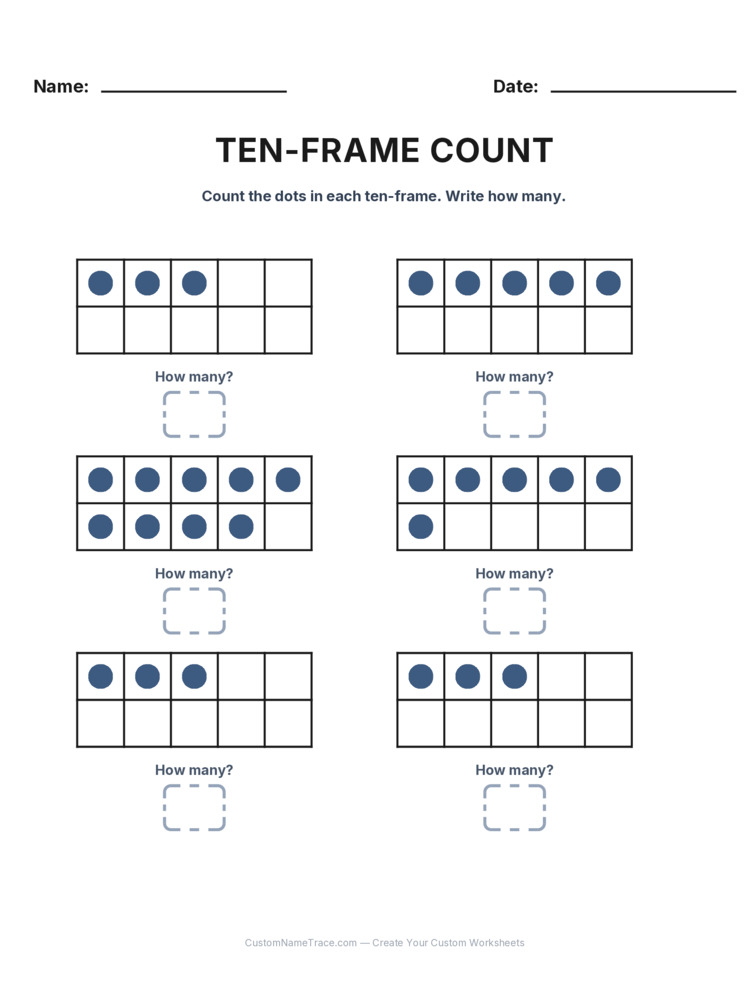
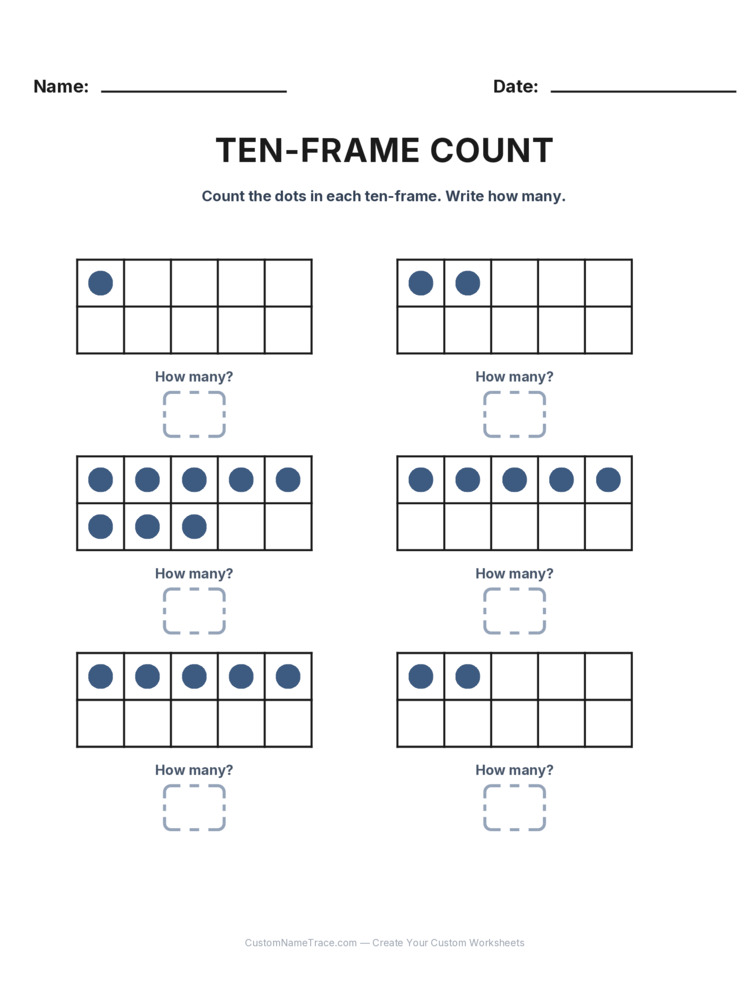
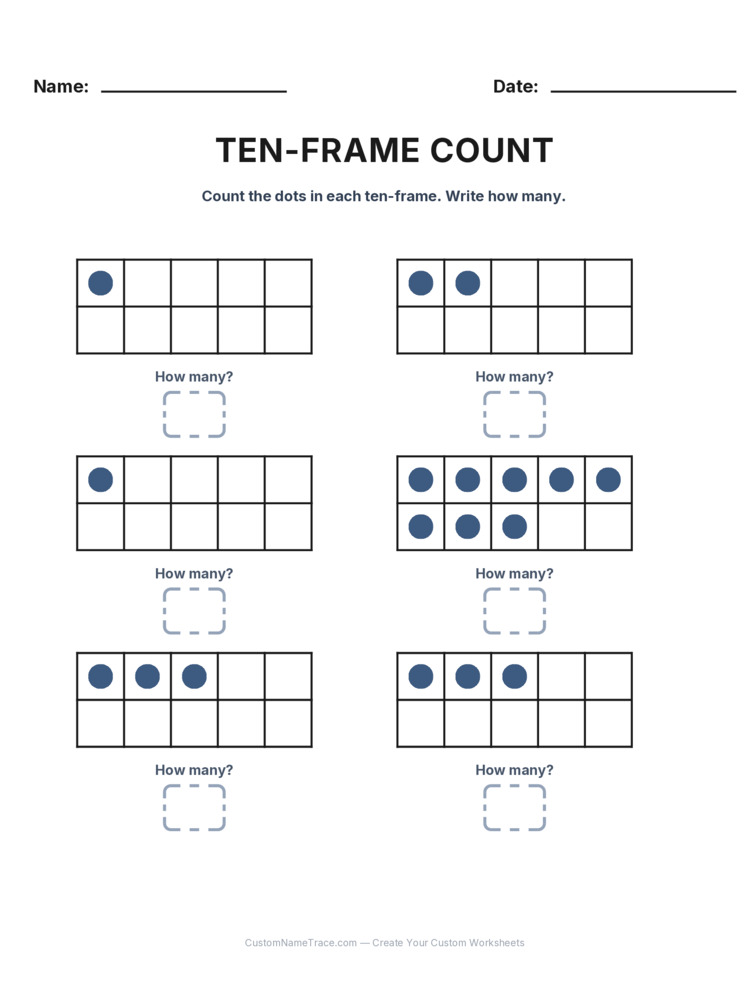
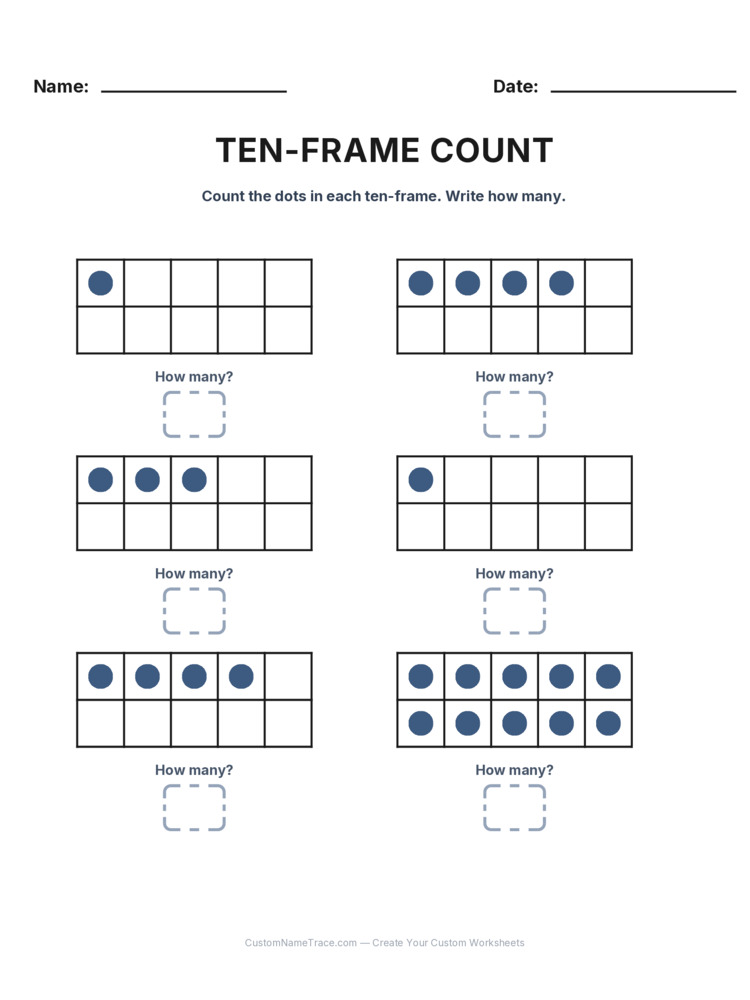
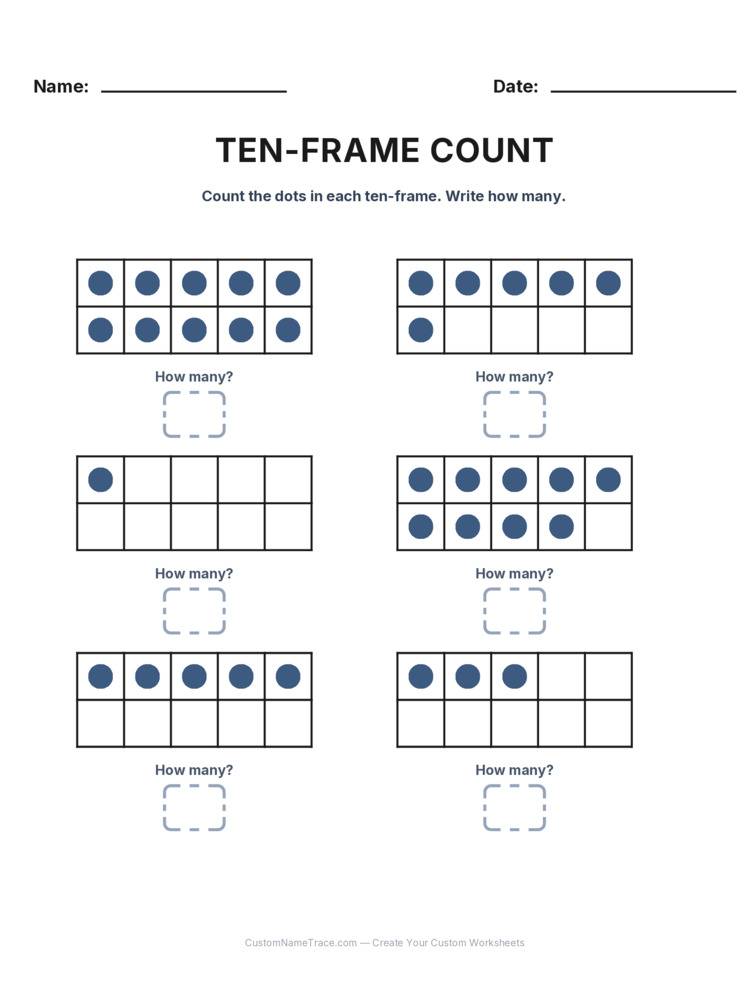
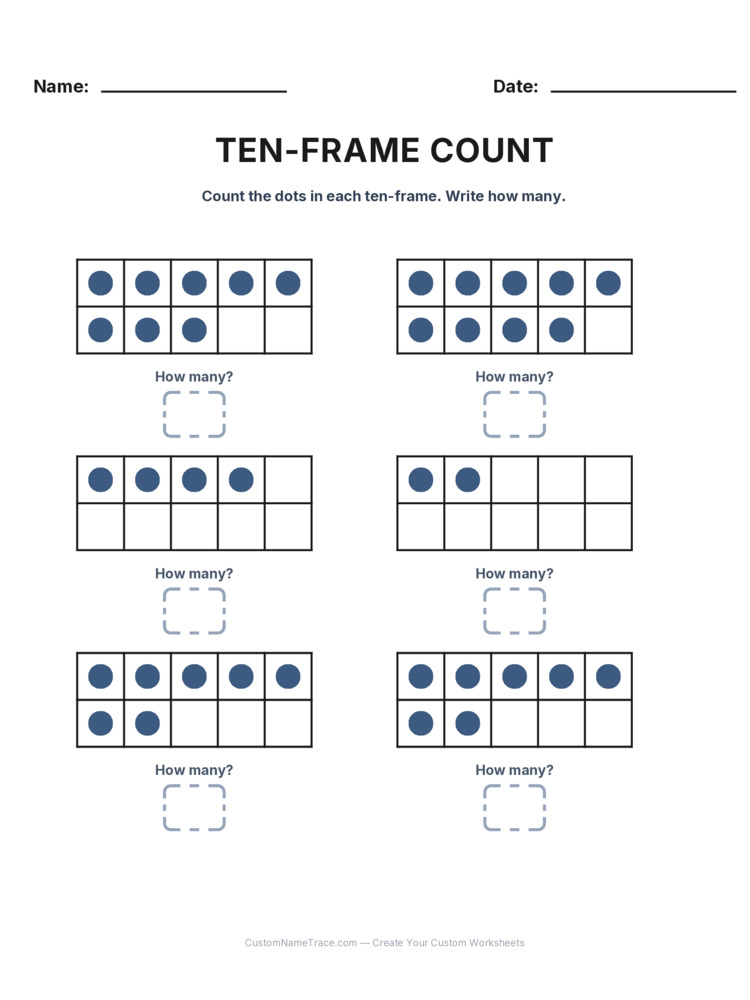
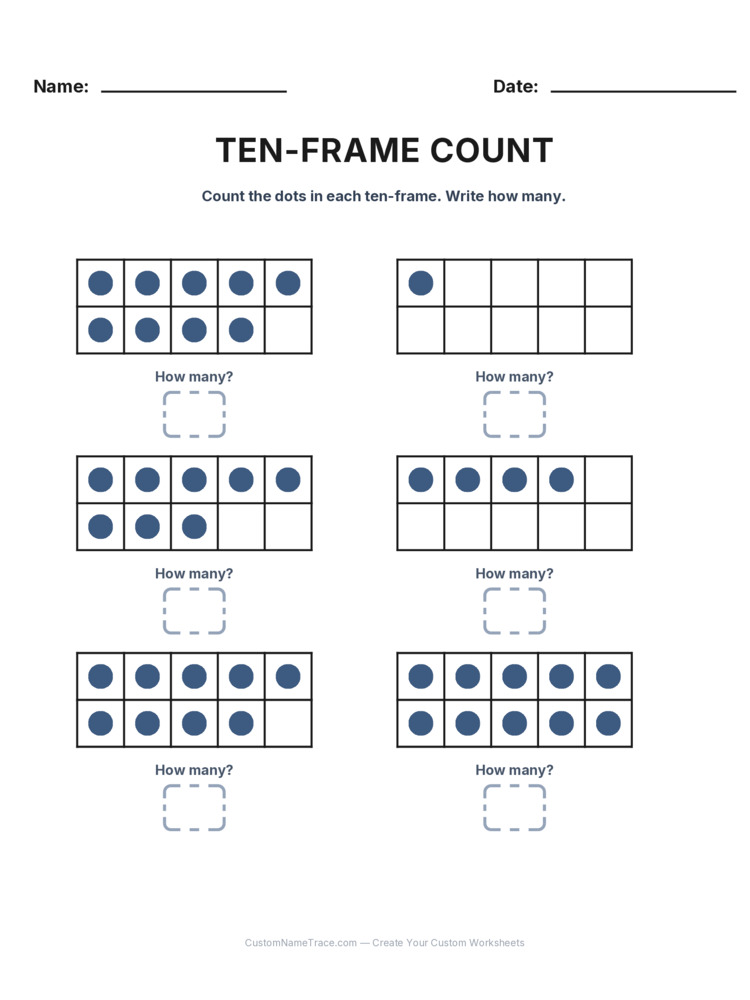
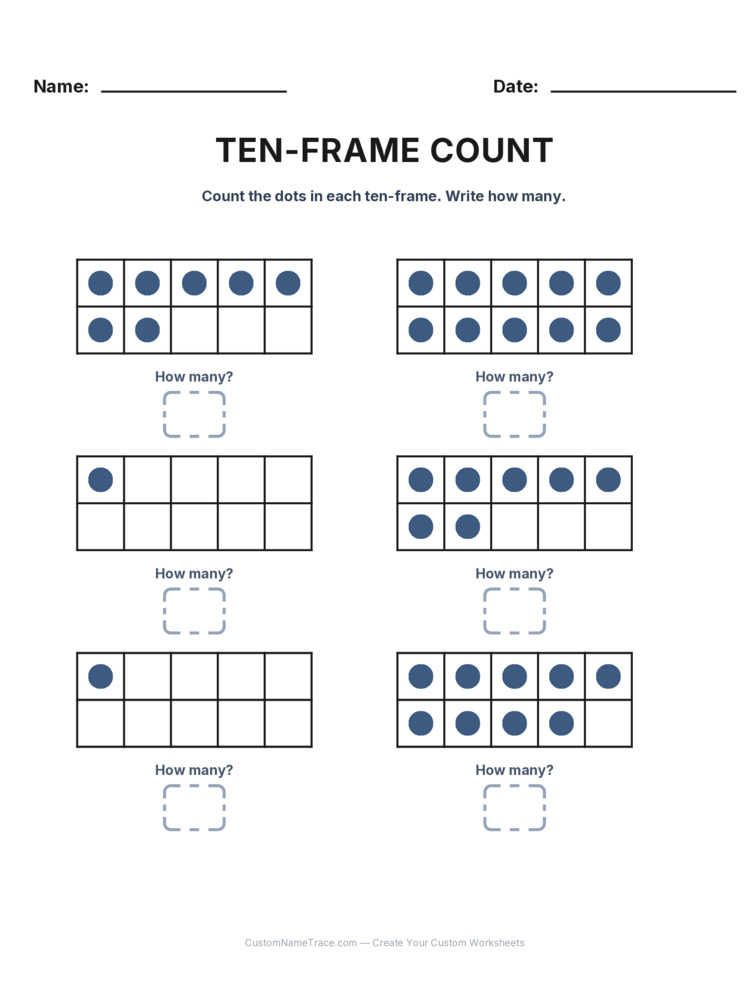
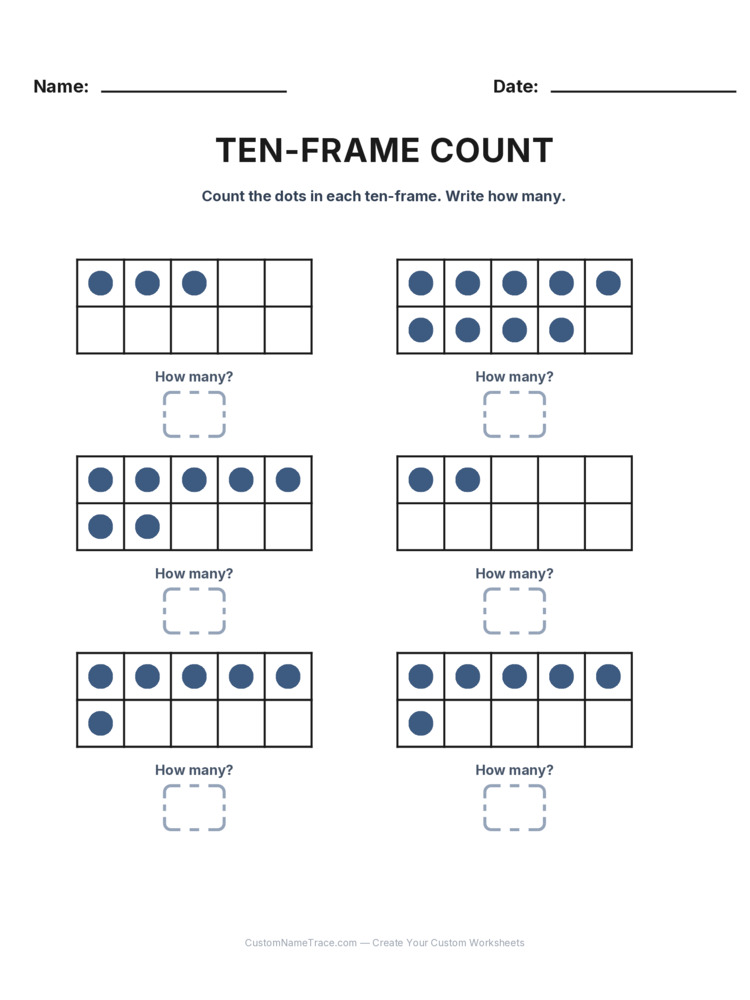
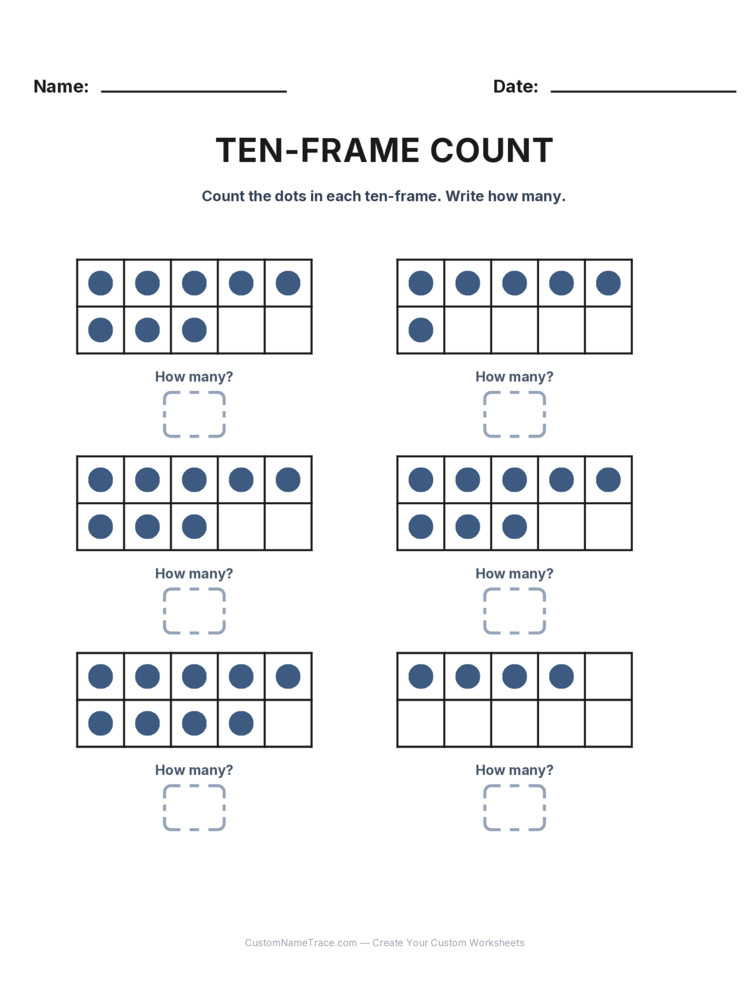
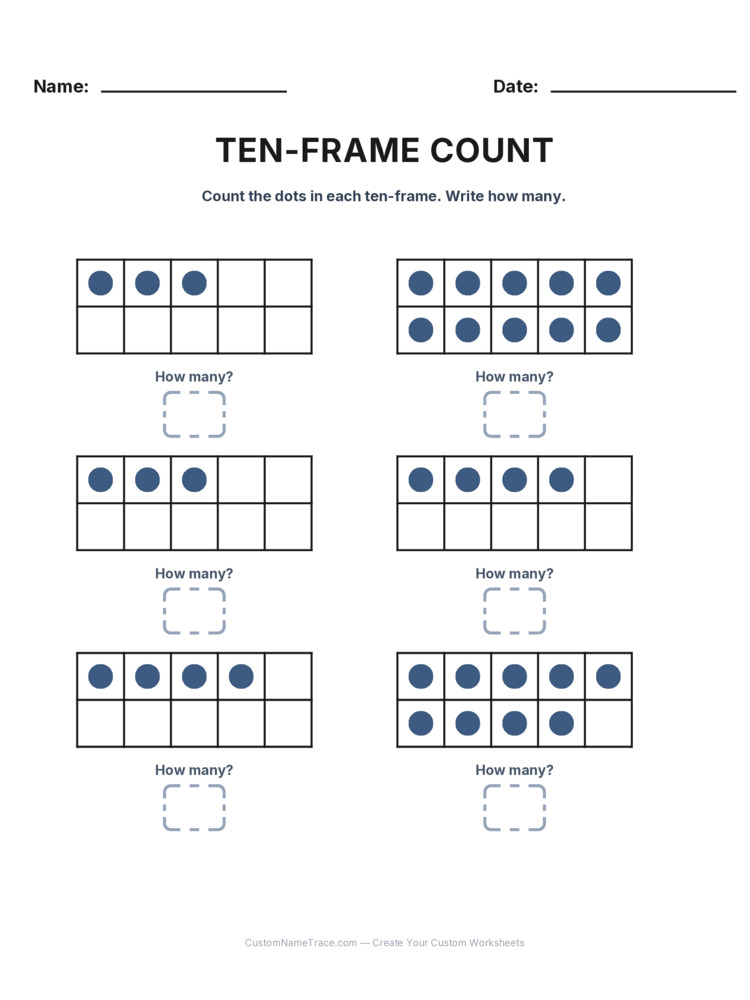
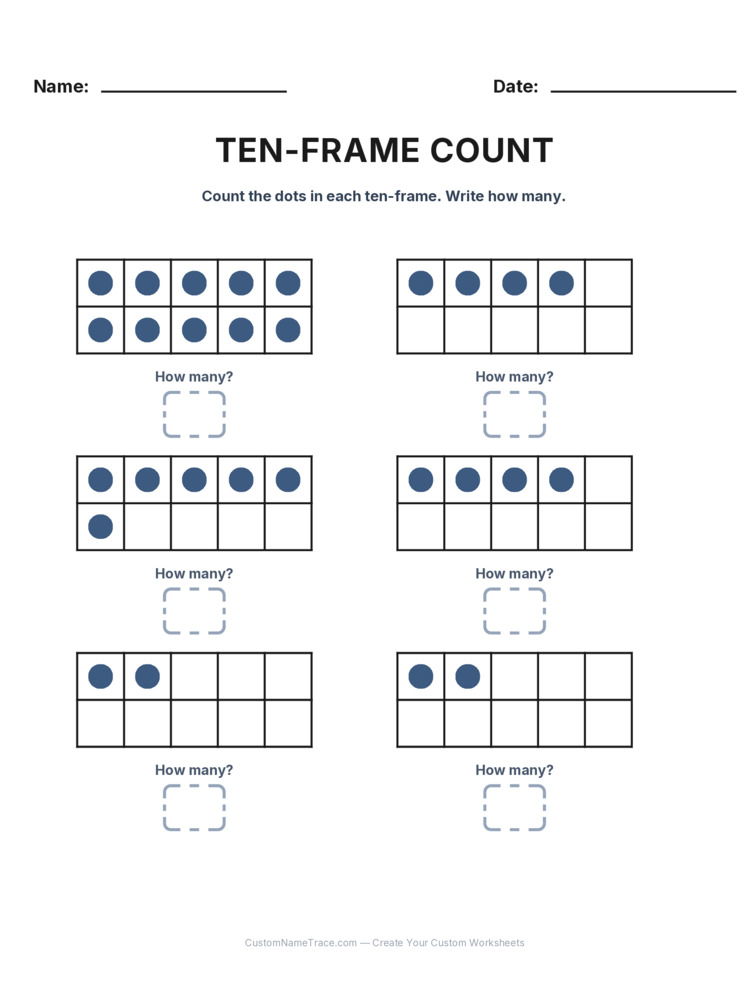
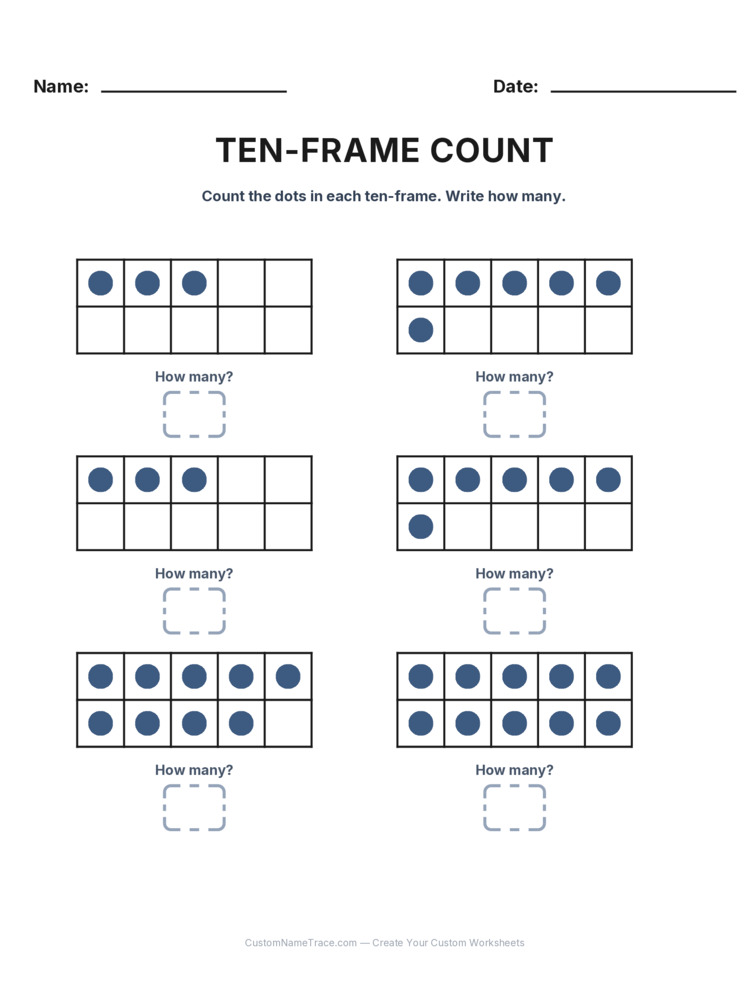
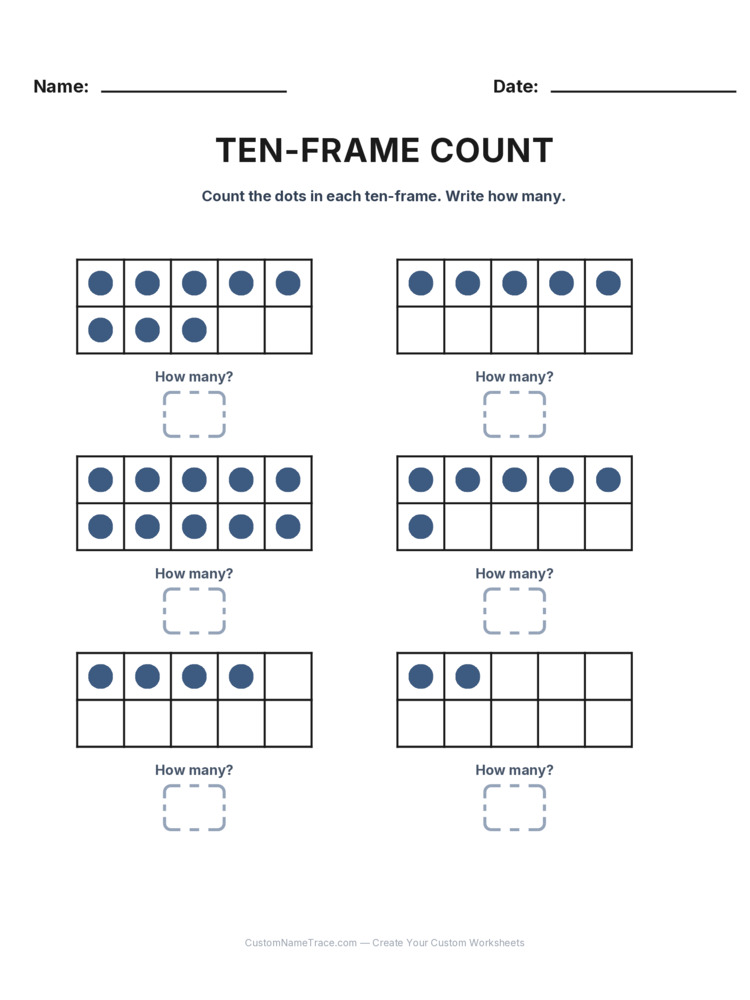
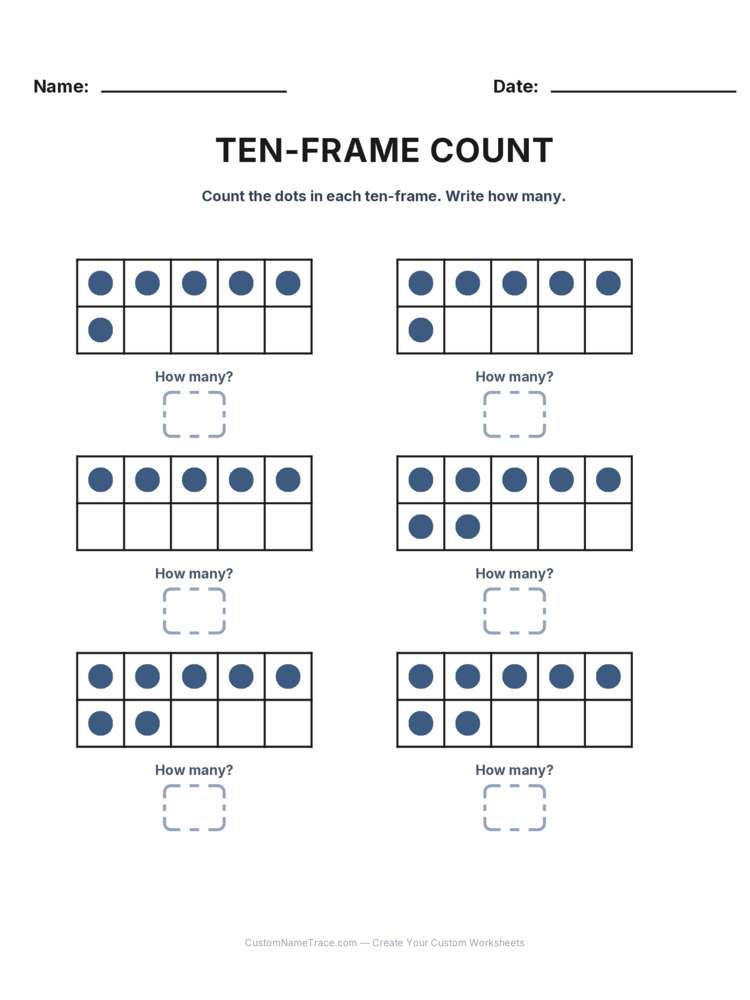
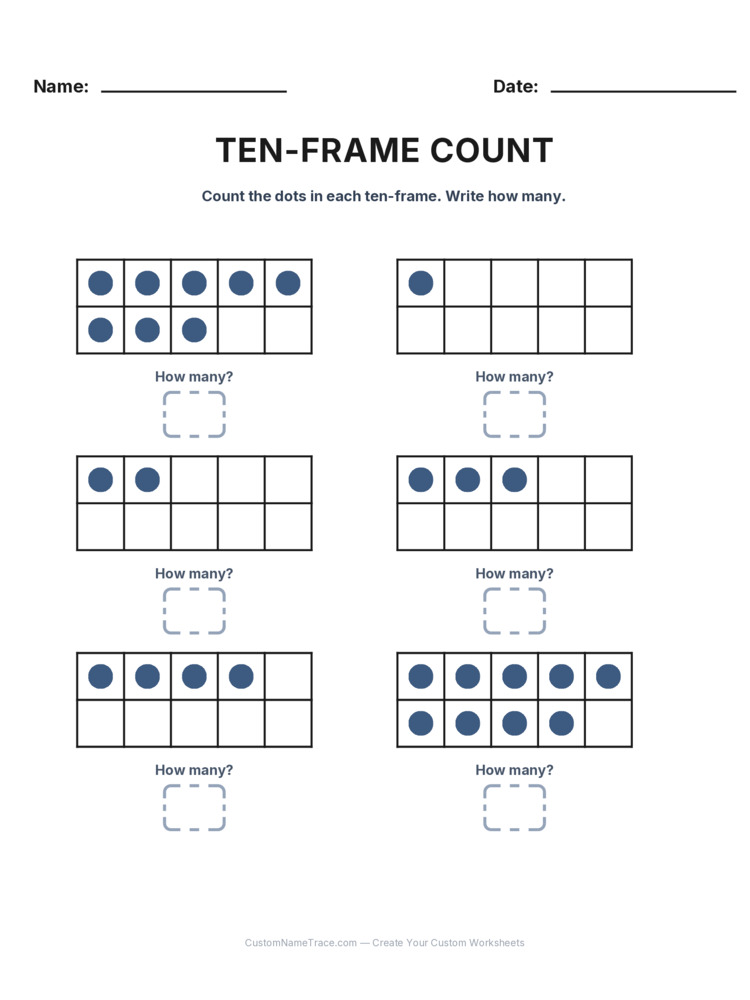
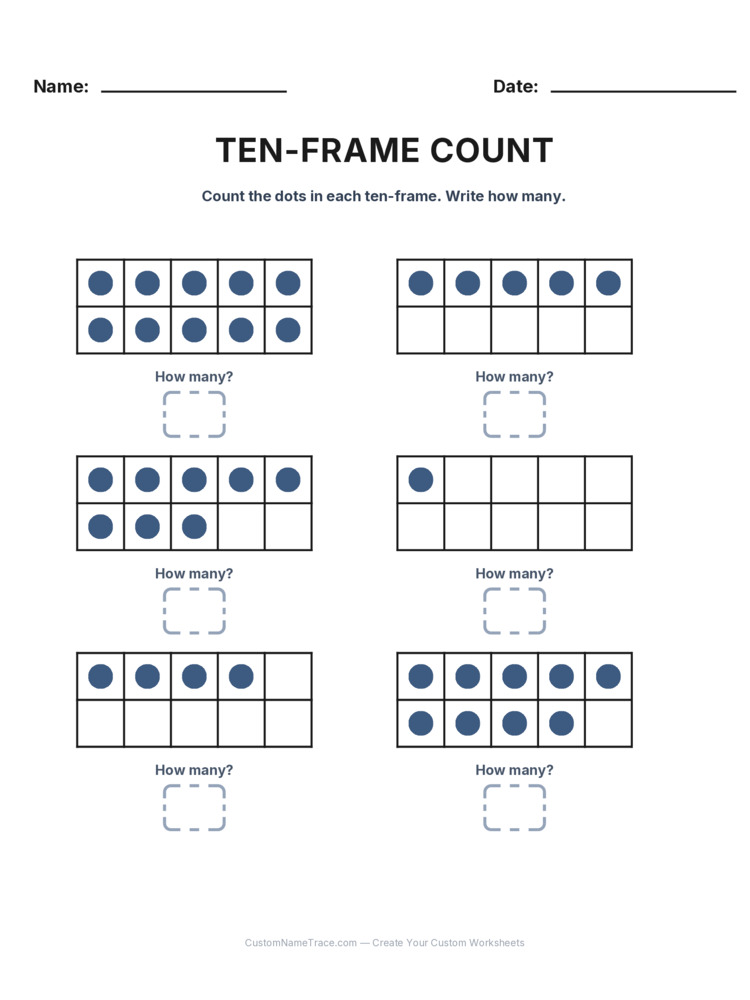
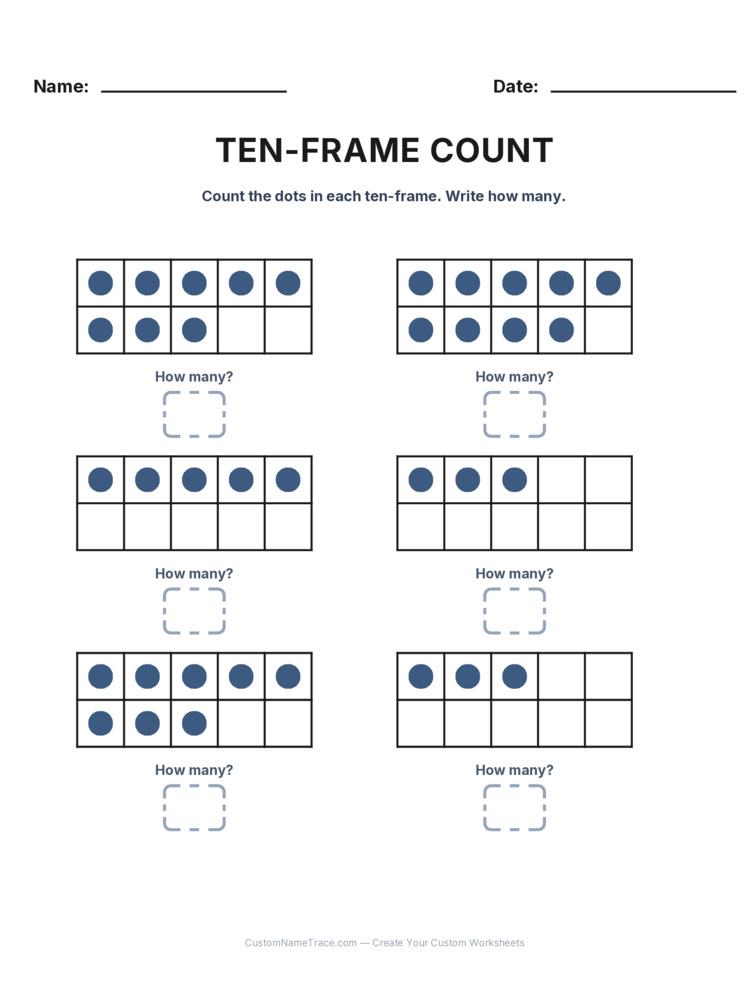
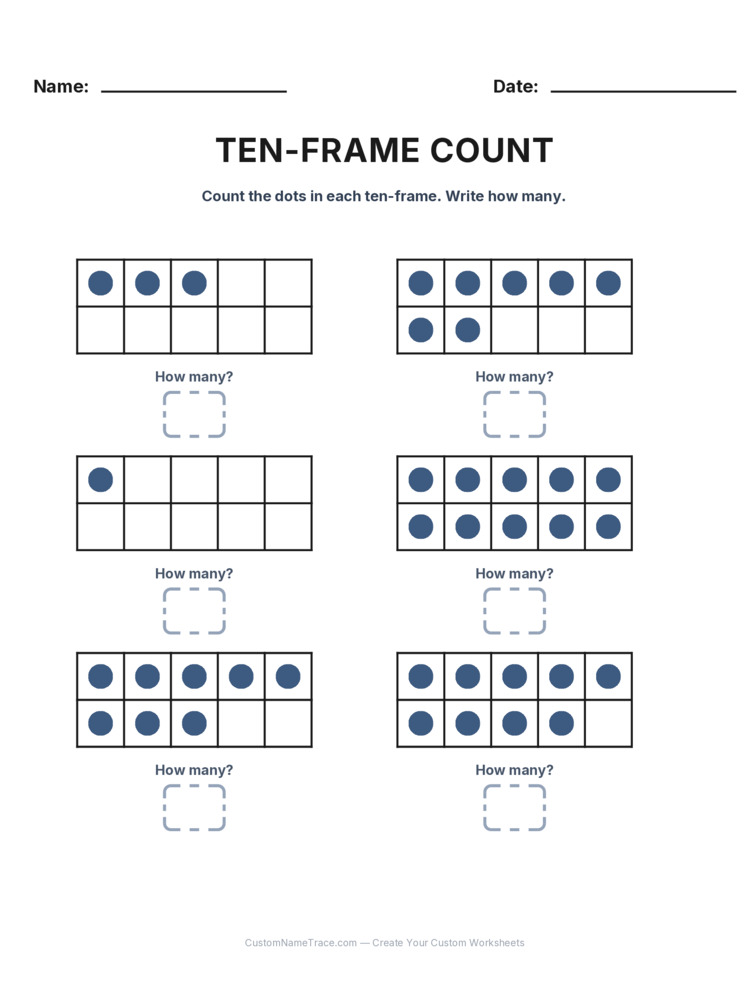
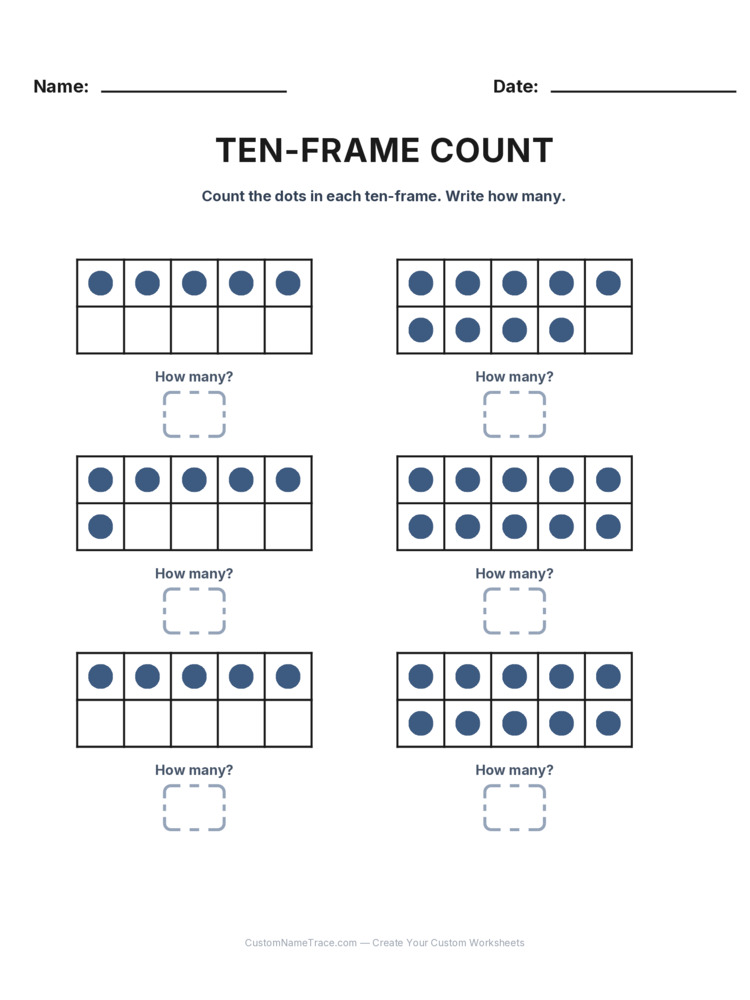
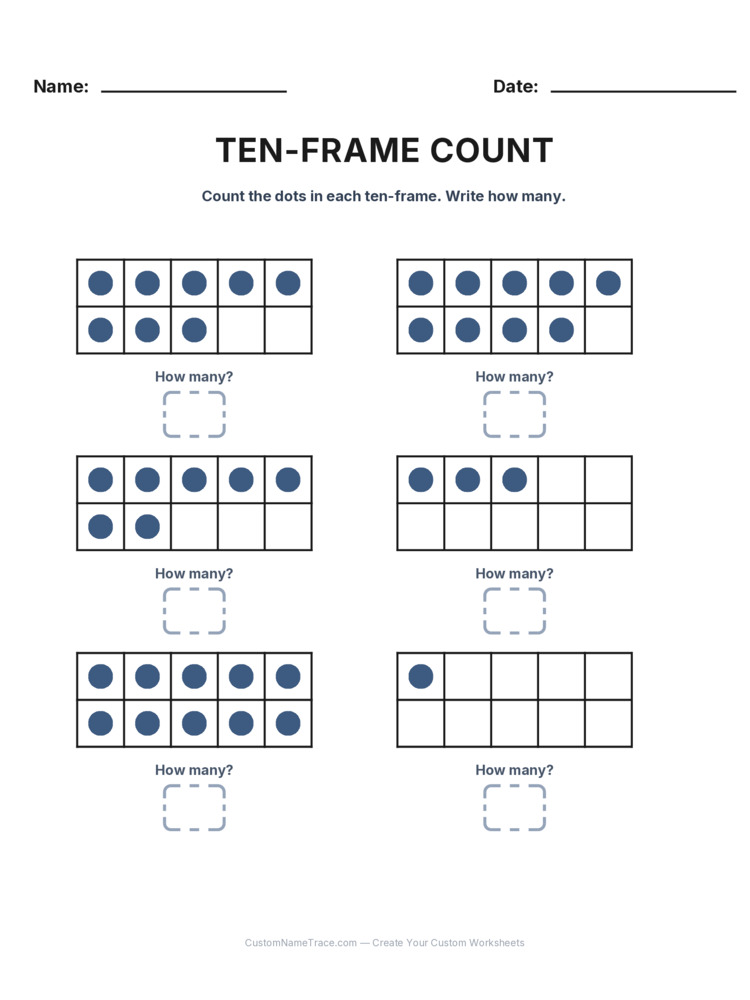
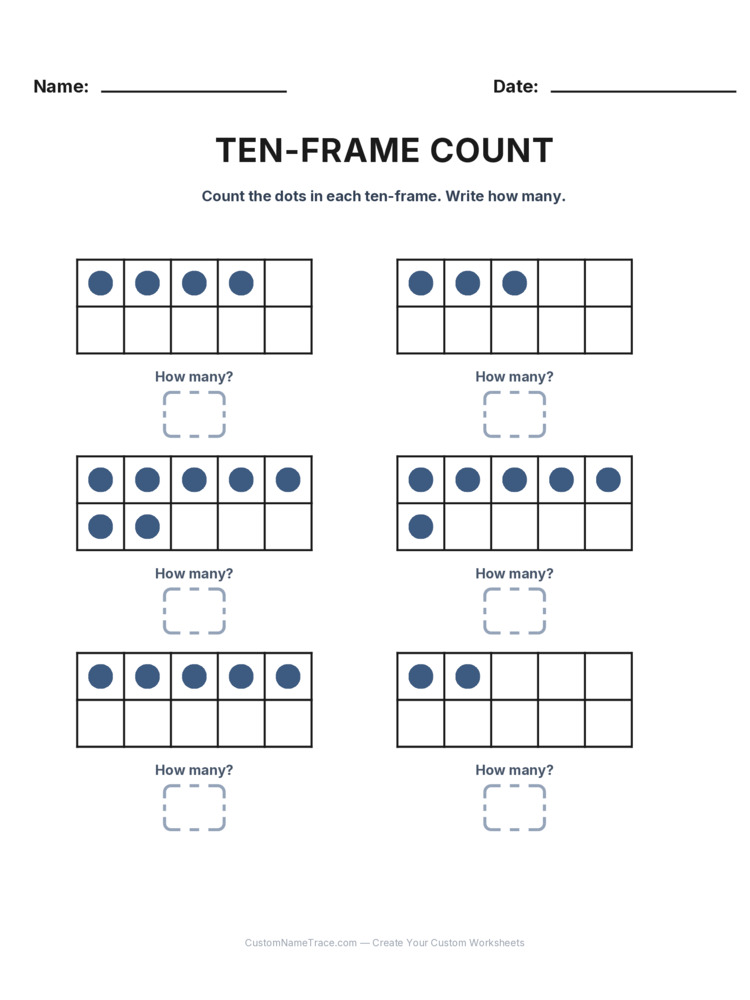
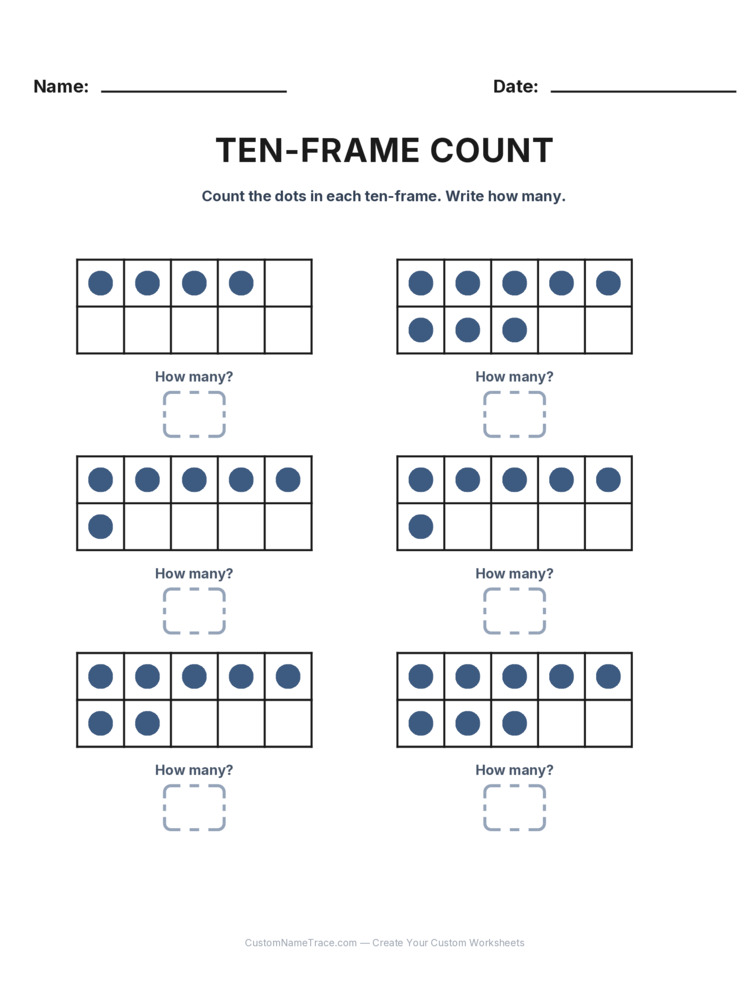
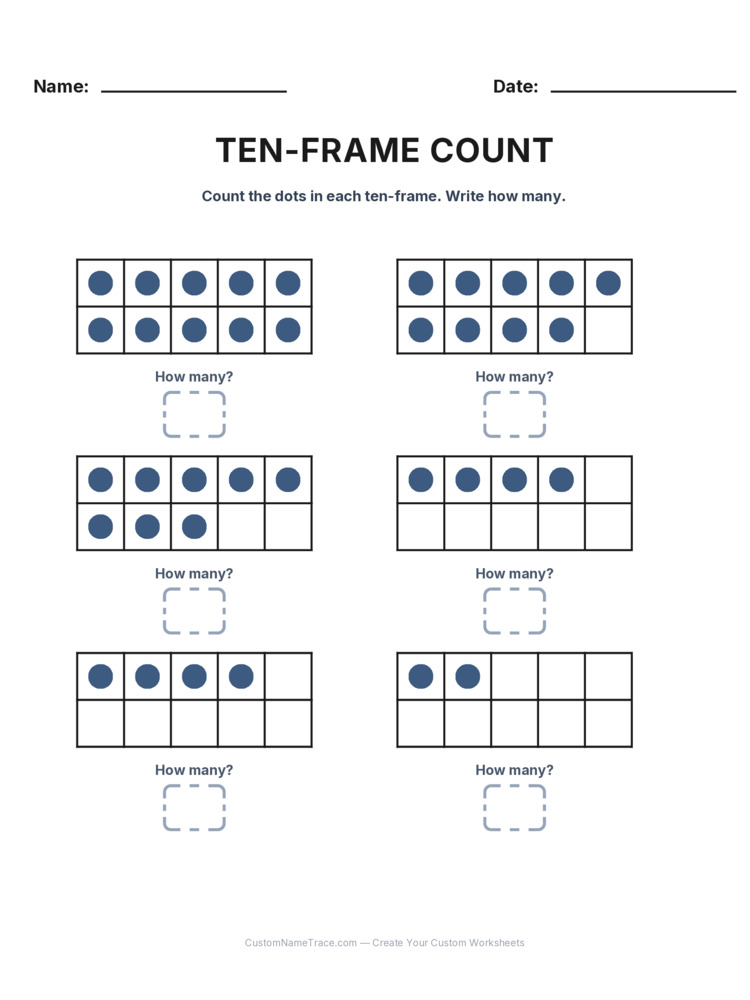
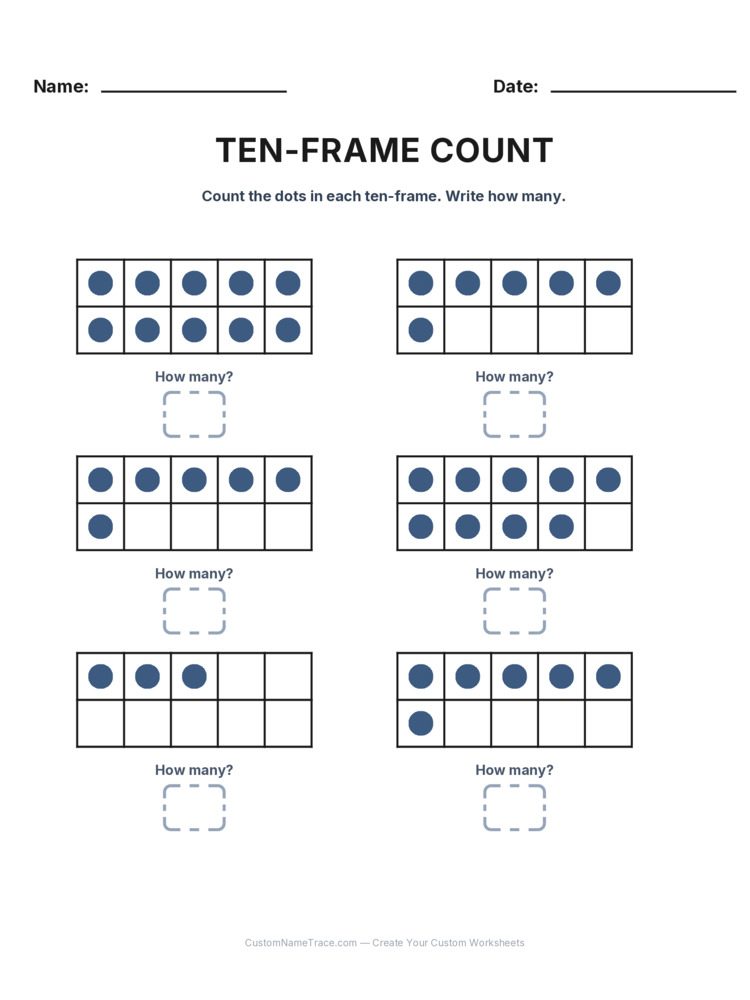
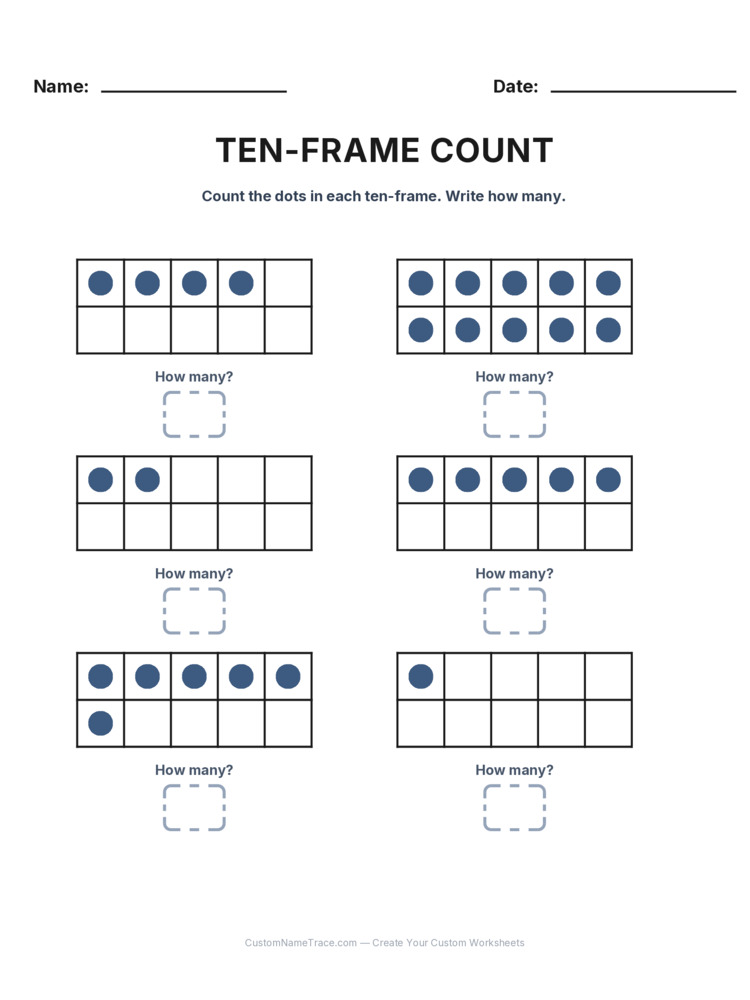
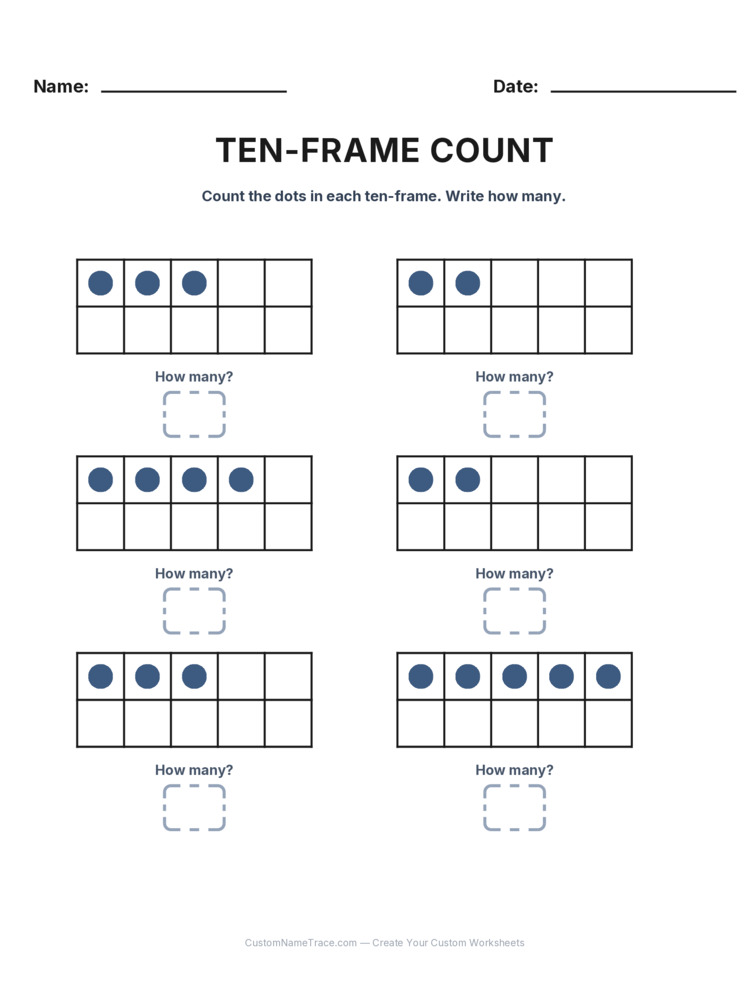
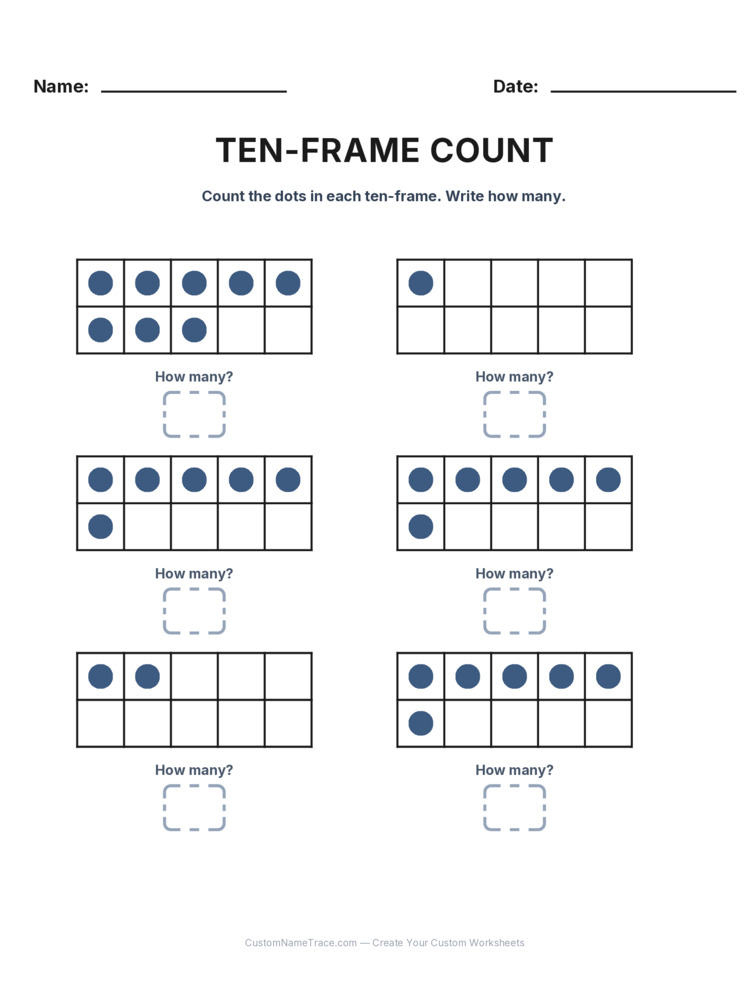
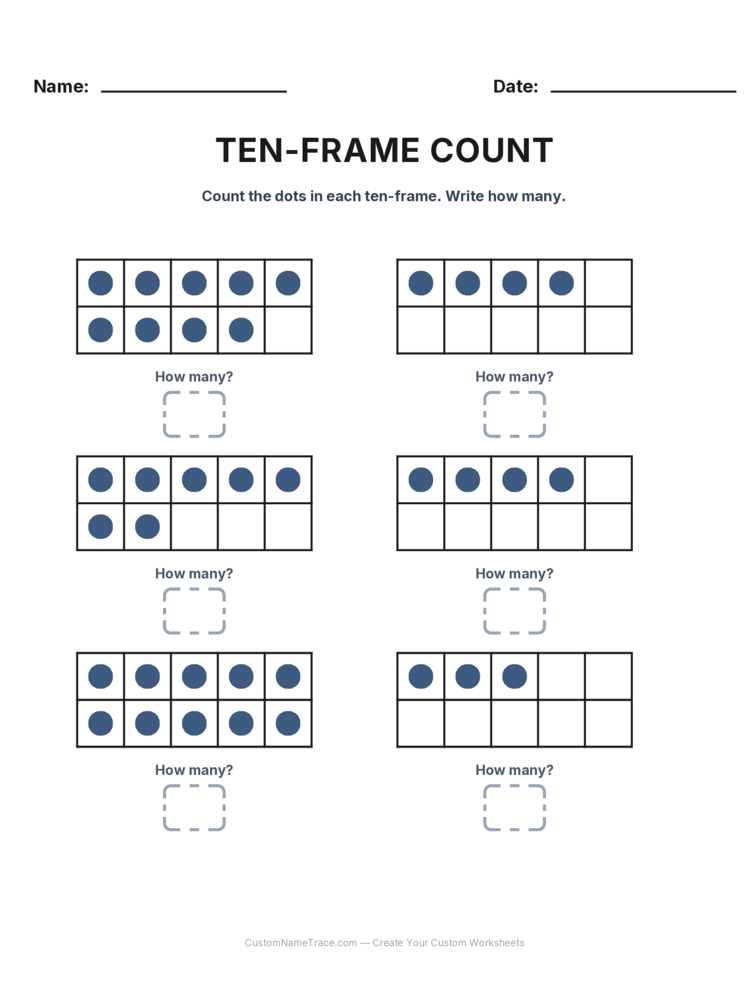
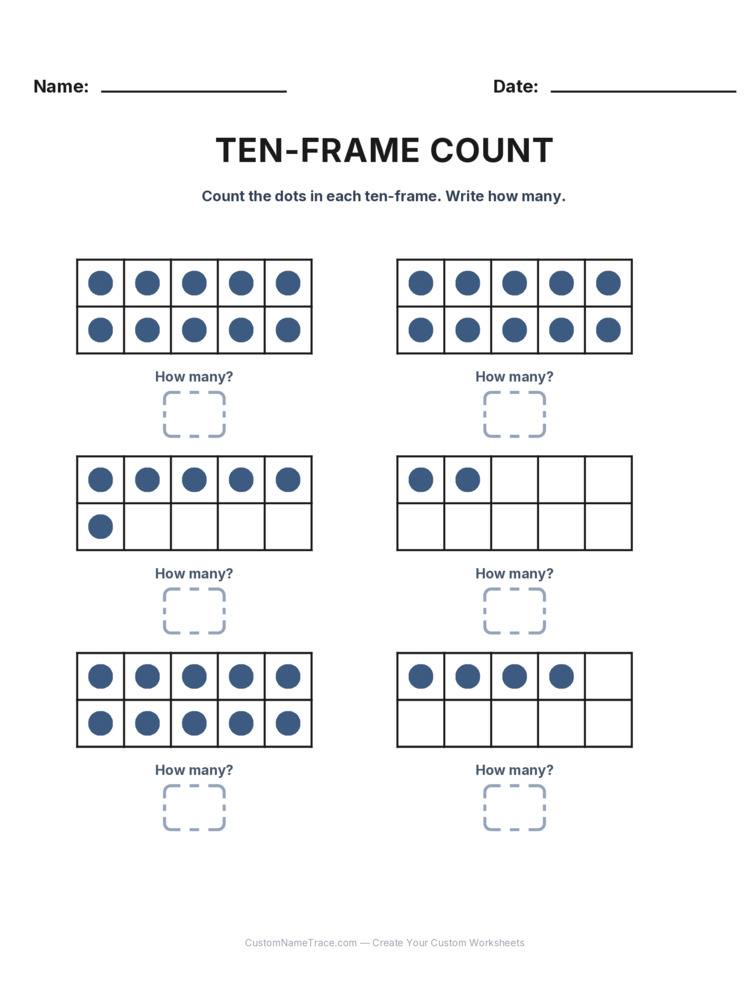
A ten-frame is a simple grid of ten boxes, two rows of five, with some boxes filled in with a dot and the rest left empty. The task is to count the filled boxes and write the total. It looks almost too simple to be called math, and that's exactly the point — a ten-frame's fixed structure is a deliberately designed tool, not an arbitrary grid, and it's one of the most widely used visual models in early number-sense instruction for a specific reason: it trains a child to see quantity in relation to ten, rather than only counting one object at a time from zero.
Base-ten place value — the entire structure behind how numbers are written, with digits worth ten times more each place to the left — depends on ten being a genuinely meaningful, fluent quantity for a child, not just a word in a counting sequence. A ten-frame gives a child a fixed, always-the-same visual anchor for what ten looks like, so that later, seeing a number like 7 doesn't just mean 'seven single things' but starts to carry an automatic sense of 'three away from a full ten.' That anchor is difficult to build through counting alone, and it's exactly what repeated ten-frame practice is designed to install.
Ten-Frame Count typically comes before skip counting or place value in a child's math progression, and that ordering is deliberate: everything else on this site's Number Sense section leans on a solid, felt sense of what quantities up to ten look like, and the ten-frame is the simplest, most direct way to build that sense before introducing any additional layer of complexity. A child who hasn't yet built a confident feel for ten specifically will find both Skip Counting and Place Value harder than they need to be, since both quietly assume that foundation is already in place.
Counting one at a time versus seeing a group
A child's first strategy on a ten-frame is almost always counting each filled dot individually, one by one, starting from the top-left box — and that's a completely appropriate starting point, not something to rush past. Over repeated practice, most children begin to recognize small, familiar arrangements at a glance instead — a full top row instantly reads as five, a full ten-frame instantly reads as ten, without counting each dot. That shift, from counting one-by-one to recognizing a group's quantity instantly, is called subitizing, and it's one of the most important, durable number-sense skills this worksheet builds.
The ten-frame's fixed two-row, five-per-row layout isn't a random design choice — it lets a child use a full top row of five as a stepping stone to the total, rather than starting the count over from one every single time. A ten-frame showing seven filled dots, for instance, reads naturally as 'a full row of five, plus two more' once that structure is internalized, which is a far more efficient and durable counting strategy than starting from zero and counting seven individual dots one at a time on every single worksheet.
Early sessions typically involve counting every dot individually and often double-checking the total by recounting. Real progress shows up gradually as instant recognition of familiar patterns — a full ten-frame answered immediately without counting, a nearly-full frame answered as "one less than ten" rather than counted from scratch. That shift from counting to recognizing doesn't happen on a fixed schedule, and it's worth noticing and naming for a child once it starts happening, since they often don't realize on their own that their strategy has changed for the better.
Helping a child, and knowing when a count is off
Counting one at a time is the correct, expected starting strategy and shouldn't be discouraged — but if a child is ready for the next step, pointing at the full top row and asking 'how many are in this whole row, without counting them?' introduces the five-as-a-unit idea directly. Most children answer 'five' immediately once asked that way, having already absorbed the row's length from repeated exposure, even if they hadn't yet used that knowledge to skip ahead in their counting.
A miscounted ten-frame is much more often a tracking problem than a counting problem — a child loses track of which dots have already been counted, especially when dots aren't filled in a clean, predictable order. Having a child point to and touch each dot as they say its number out loud, rather than counting with their eyes alone, resolves most of these errors immediately, and it's worth teaching as a default habit before assuming a child doesn't understand the quantities involved.
Occasionally covering part of a ten-frame with a hand and asking "if I show you just this much, how many dots do you think are hidden underneath, based on what a full frame looks like?" tests something a straightforward count doesn't — genuine internalized number sense about ten as a whole, rather than the ability to count whatever dots happen to be visible. A child who can reason about a partially hidden frame confidently has built a deeper, more flexible sense of ten than one who can only count a fully visible one, even if both children answer every standard worksheet correctly.
Practicing this without paper
Any set of ten small household objects — coins, buttons, cereal pieces — arranged into two rows of five with some removed works as an improvised ten-frame, and letting a child physically move objects in and out of the frame builds the same anchor-to-ten sense in a hands-on way the printed page can't fully replicate. This is a particularly good option for a child who benefits from touching and moving real objects rather than only looking at a printed pattern.
A few minutes with one or two ten-frames, done attentively, teaches more than a long stretch of frames worked through quickly near the end — this is a short, focused exercise by design, and it holds up better in small, frequent doses than in one long session.
Where this leads
The specific dot arrangements and how many are filled in are matched to Kindergarten's level, ranging across the full ten-frame so a child gets balanced practice with both small quantities and quantities close to a full ten. This isn't a single fixed worksheet reused — every numbered variant generates its own dot arrangement, so a child returning for more practice always counts a genuinely new ten-frame rather than one they might recognize and answer from memory.
The ten-as-anchor sense this worksheet builds becomes directly useful the moment a child starts adding numbers that cross ten — recognizing that 8 plus 5 can be worked out as 8 plus 2 to make 10, plus 3 more, depends entirely on ten already feeling like a solid, familiar landmark rather than just another number in a sequence. This site's Skip Counting and Place Value worksheets both continue building on that same ten-based foundation, in different, complementary ways.
Before formal addition is introduced with numerals, many children first encounter it visually through a ten-frame — filling in a few more dots and counting the new total is, in every meaningful sense, addition, just without the plus sign yet. Later, formally naming what a child has already been doing on this worksheet ("you had six, you added three more, now you have nine — that's what addition means") tends to make the abstract symbol far less intimidating, since the underlying action is already familiar and comfortable.
Print at full size so the ten-frame boxes stay large enough for a child to point to and touch each one individually while counting — a shrunk page can make the dots harder to track cleanly, especially for a child still counting one at a time rather than recognizing groups. Every numbered worksheet uses a fresh, independently generated dot arrangement testing the identical skill.