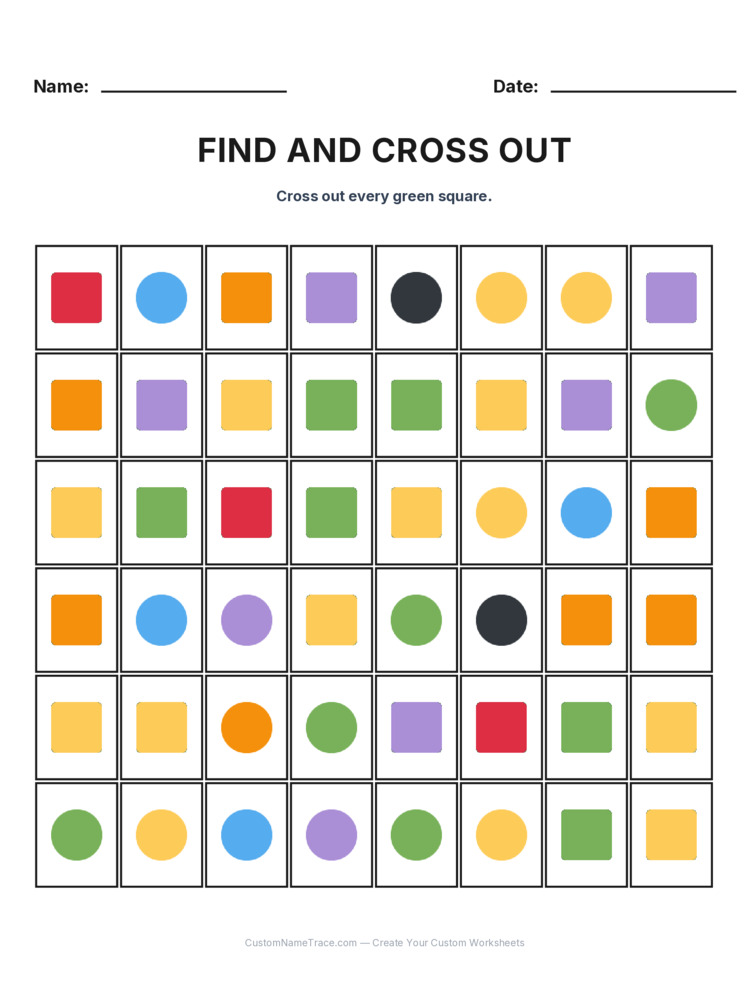
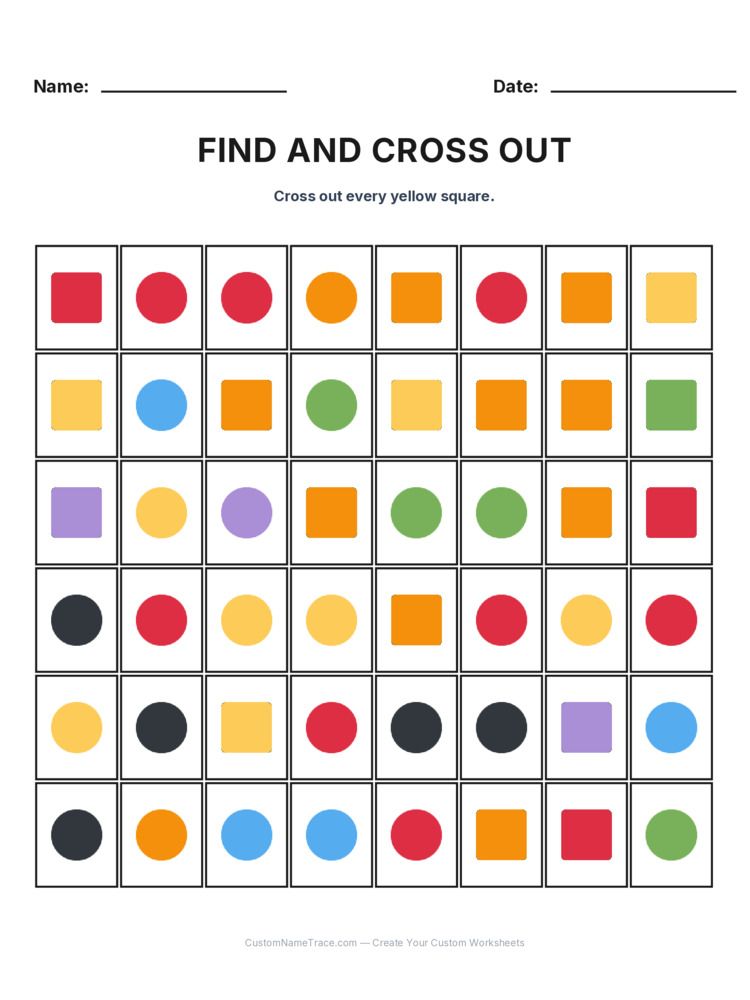
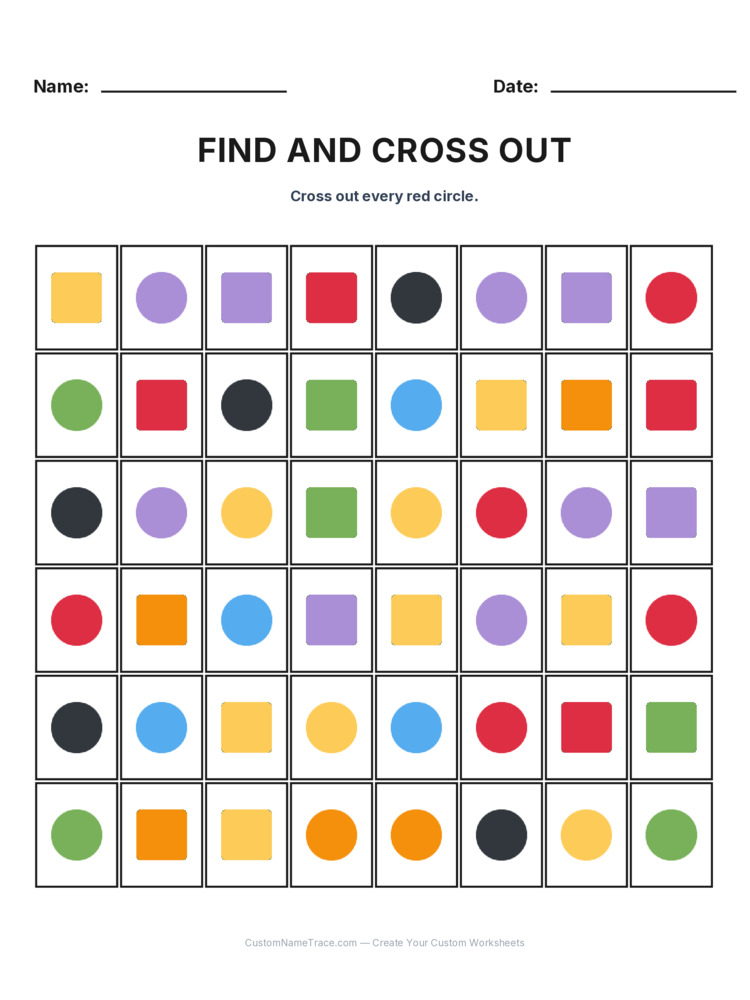
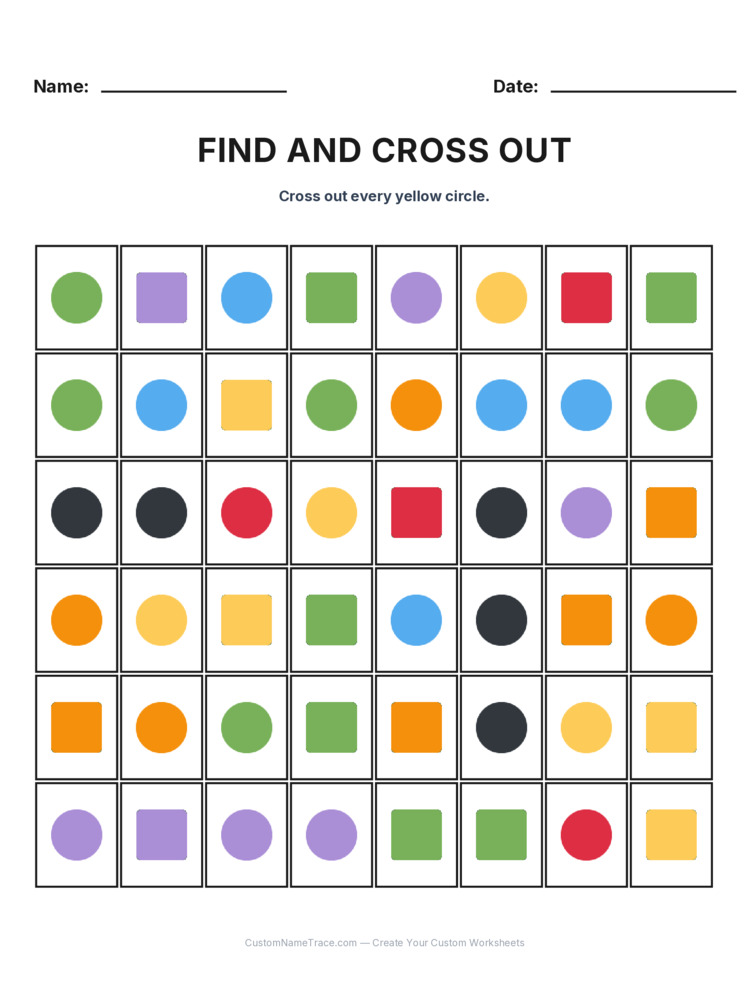
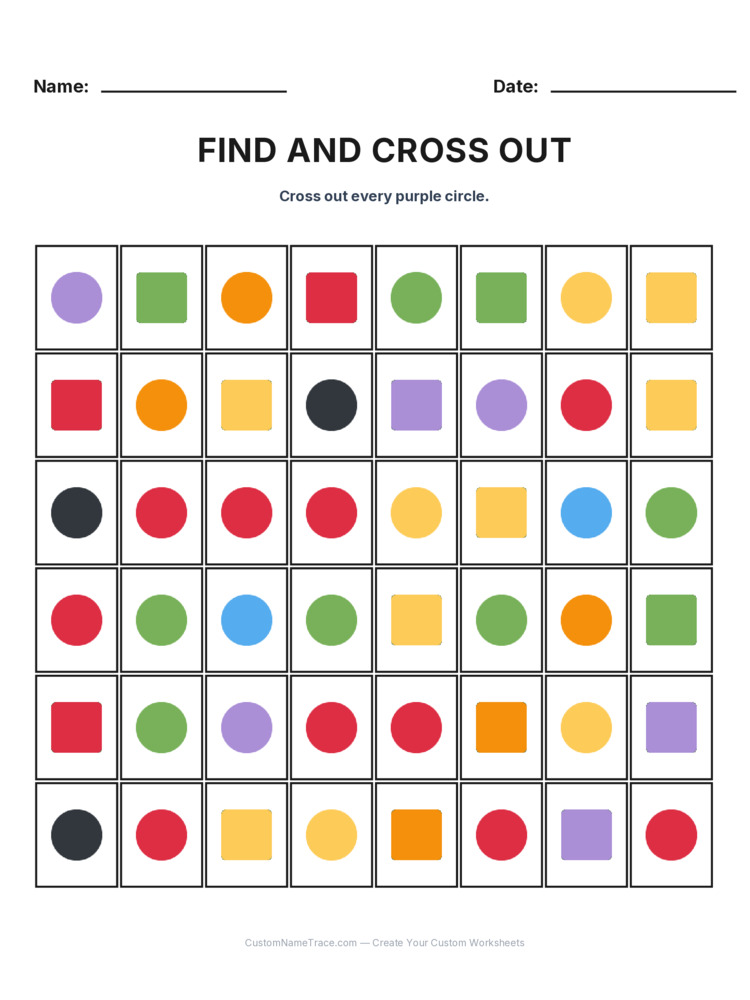
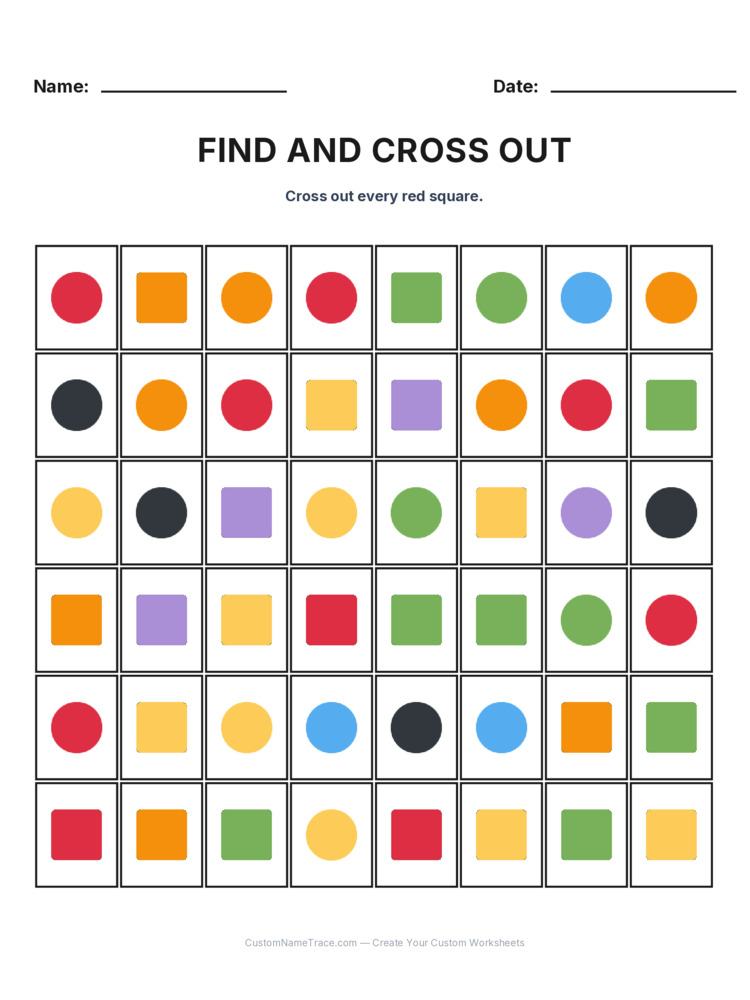
One rule, applied exhaustively
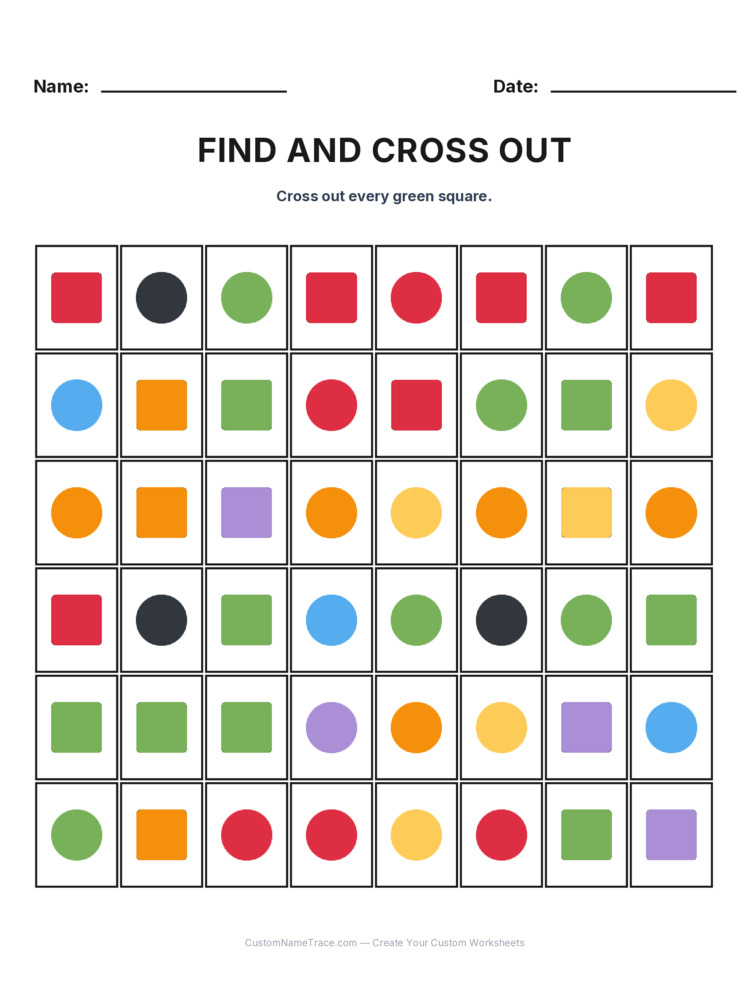
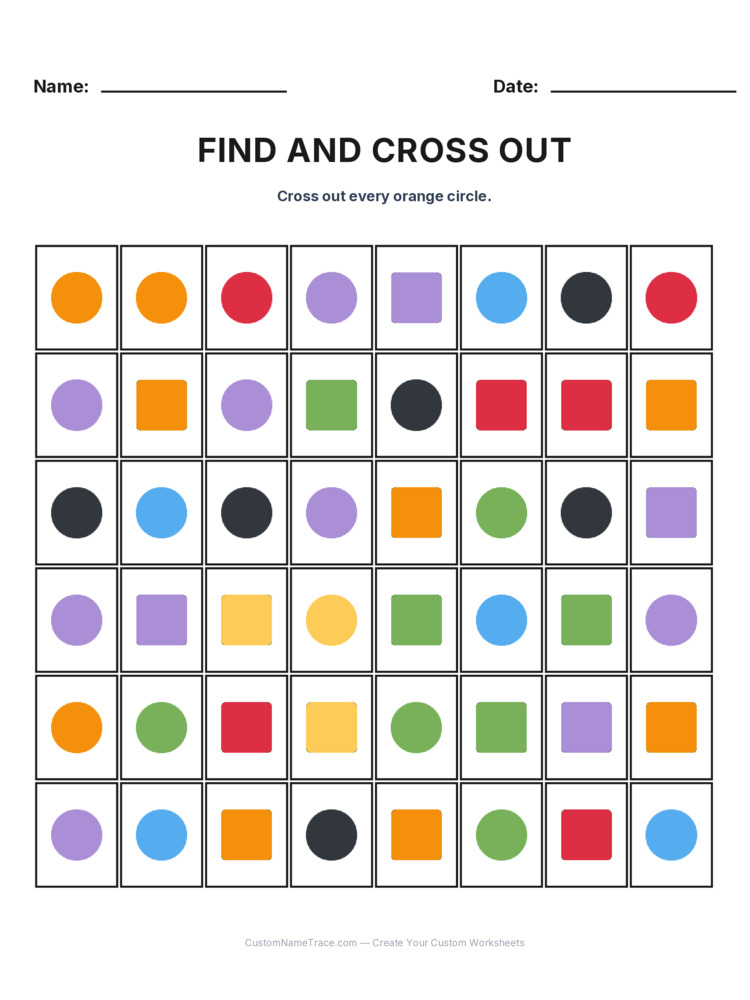
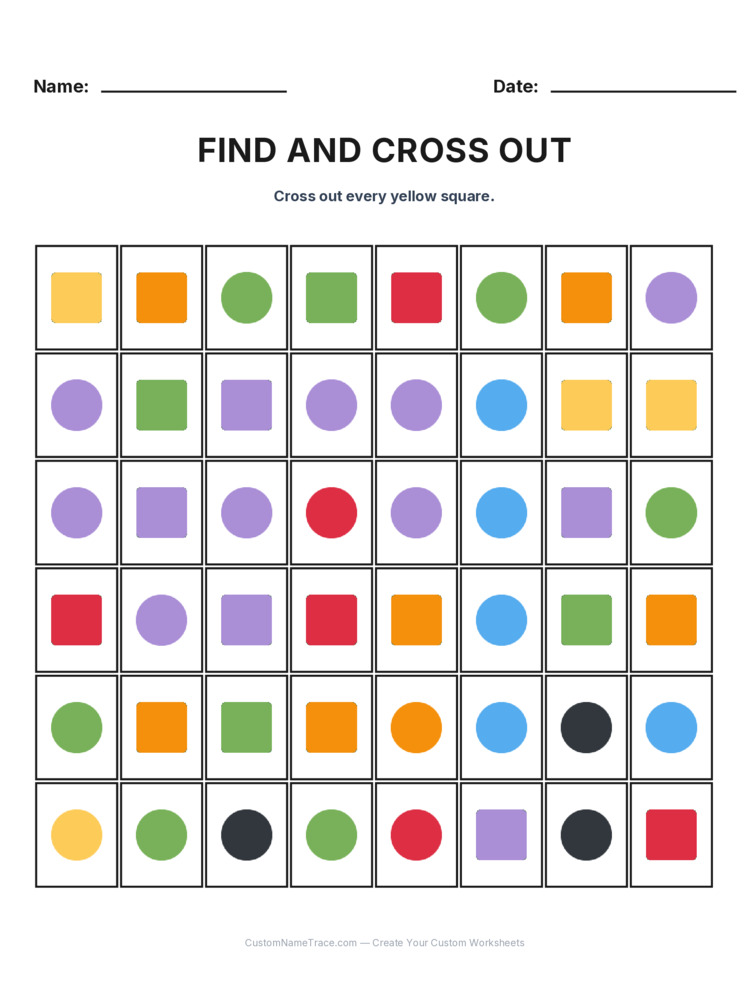
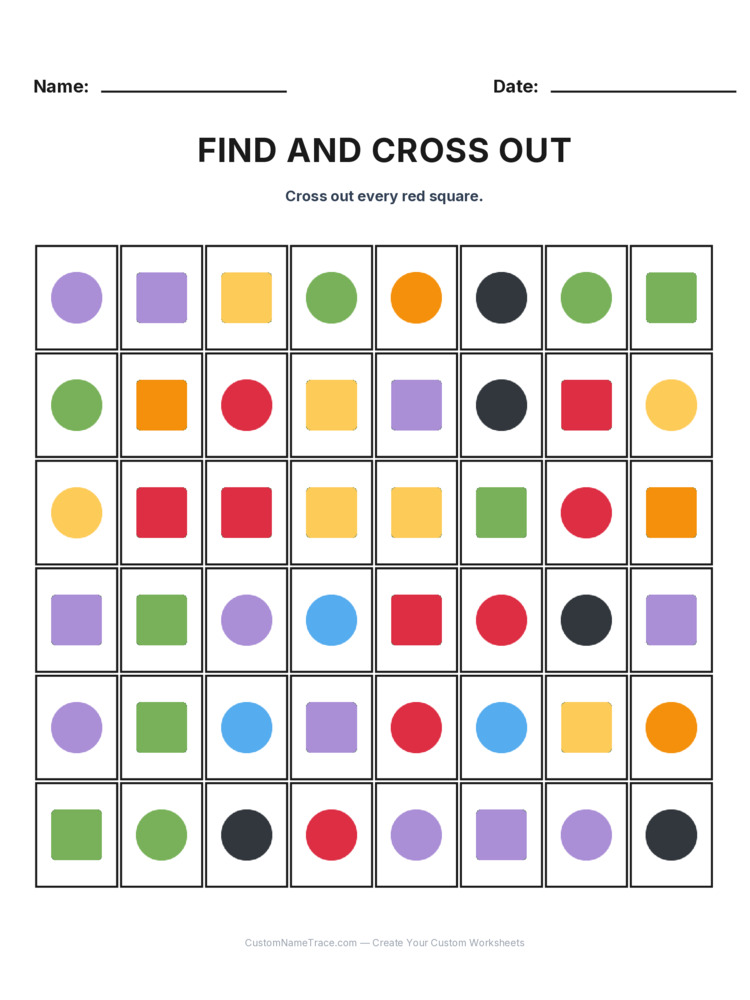
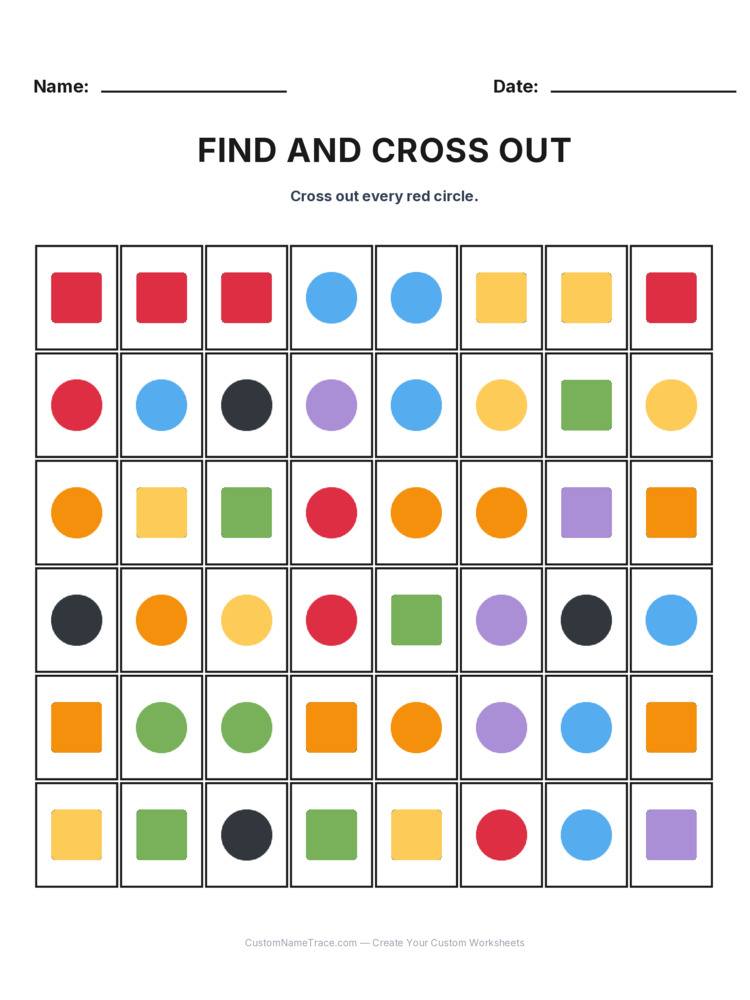
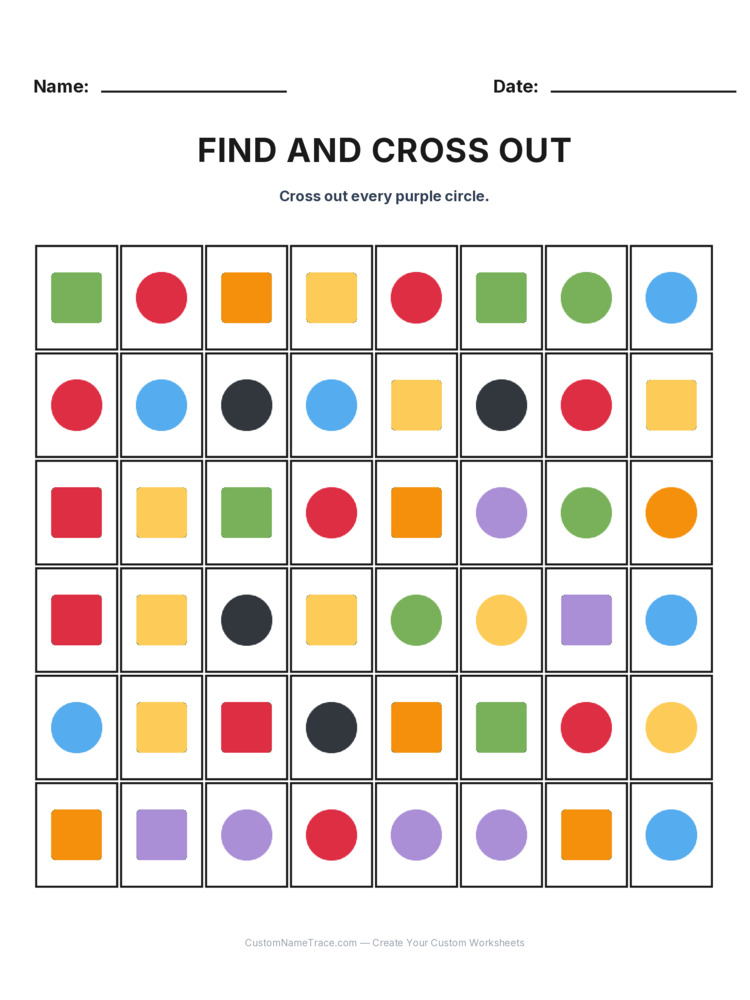
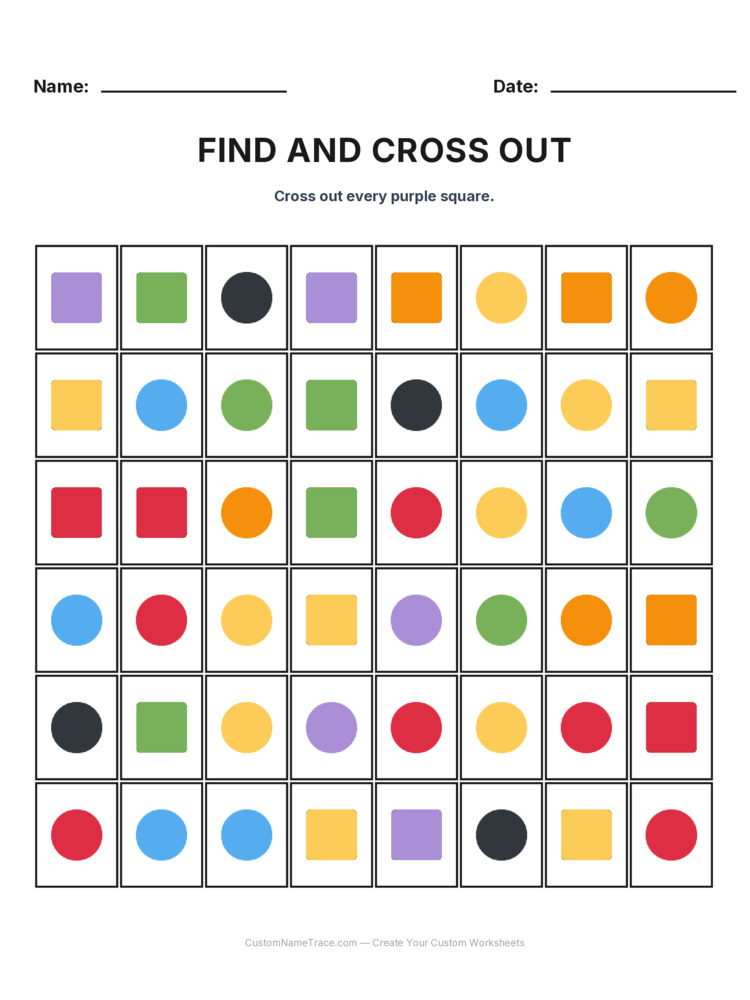
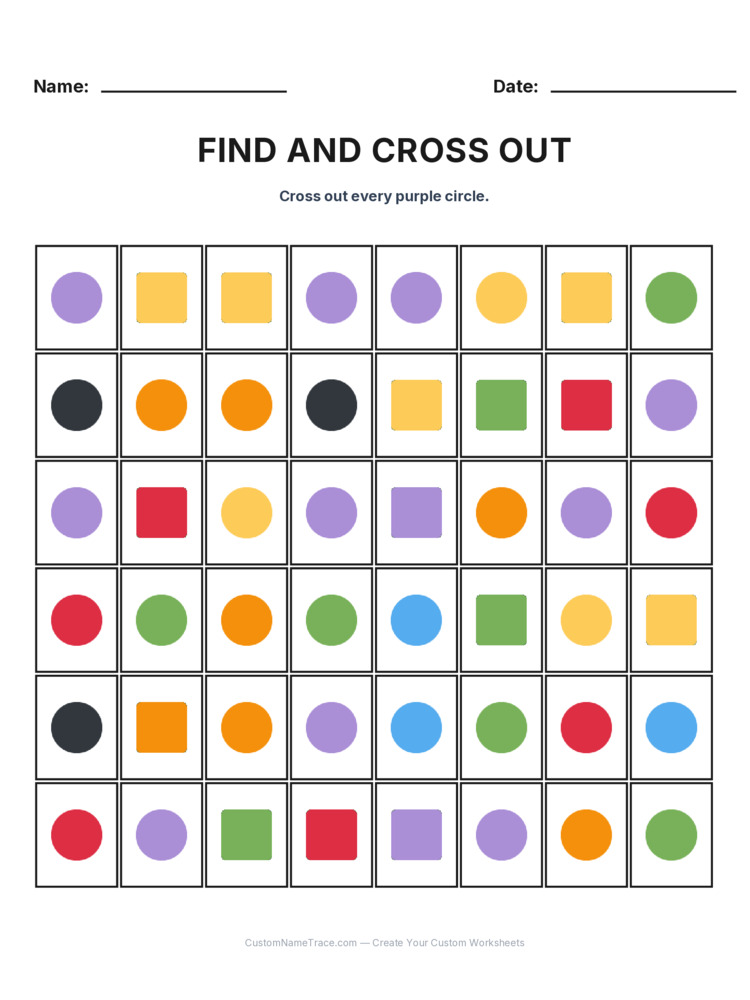
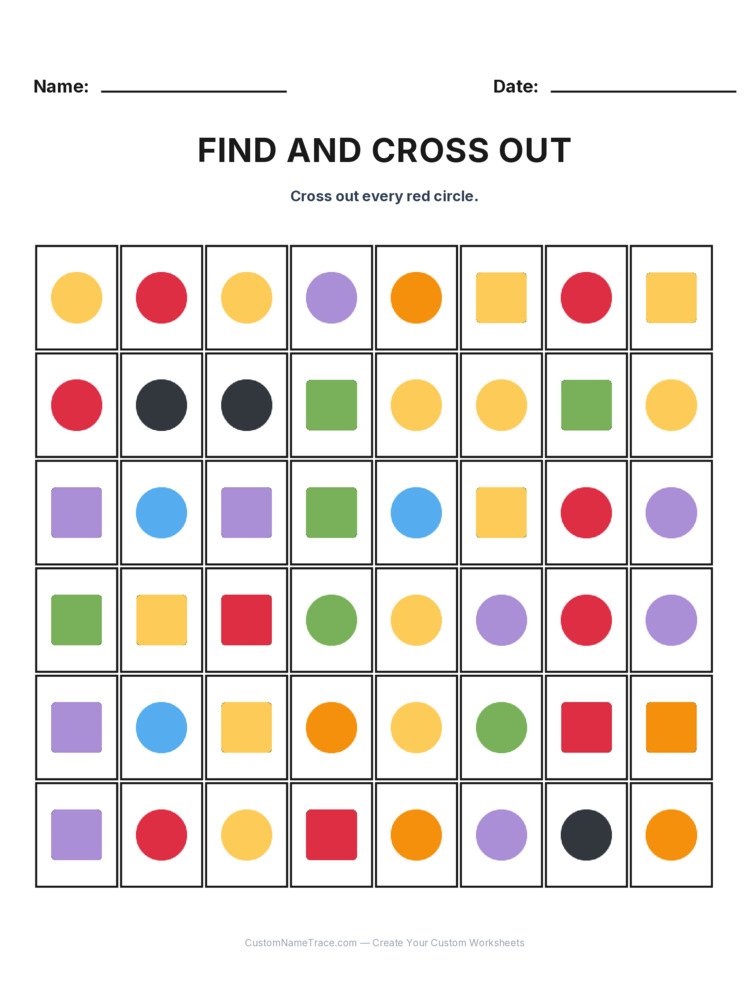
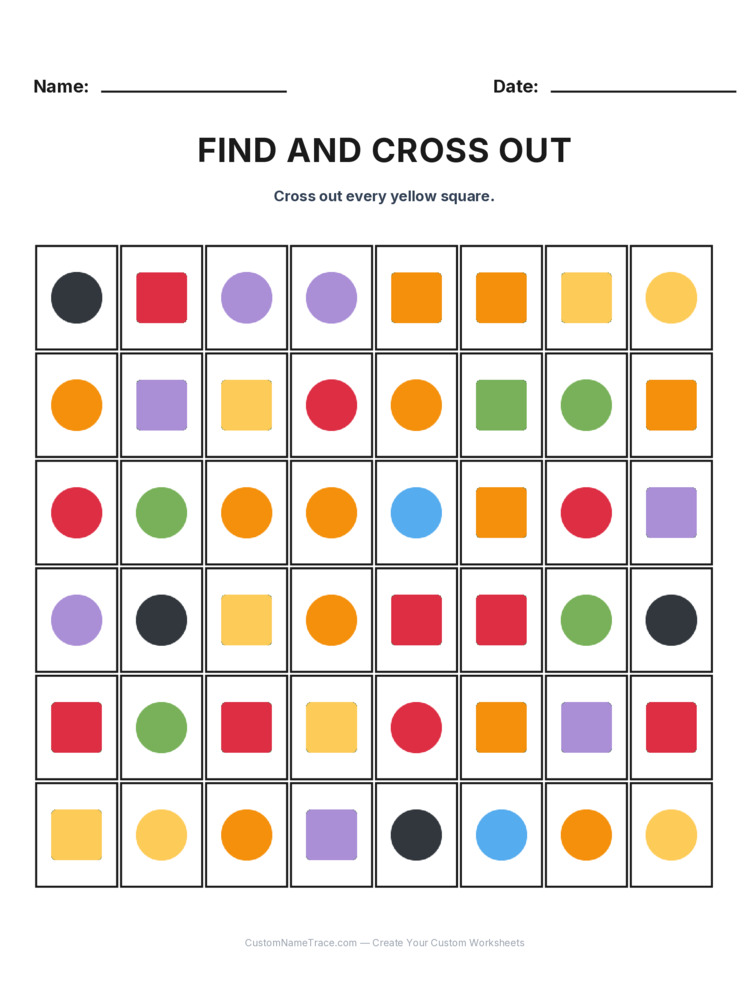
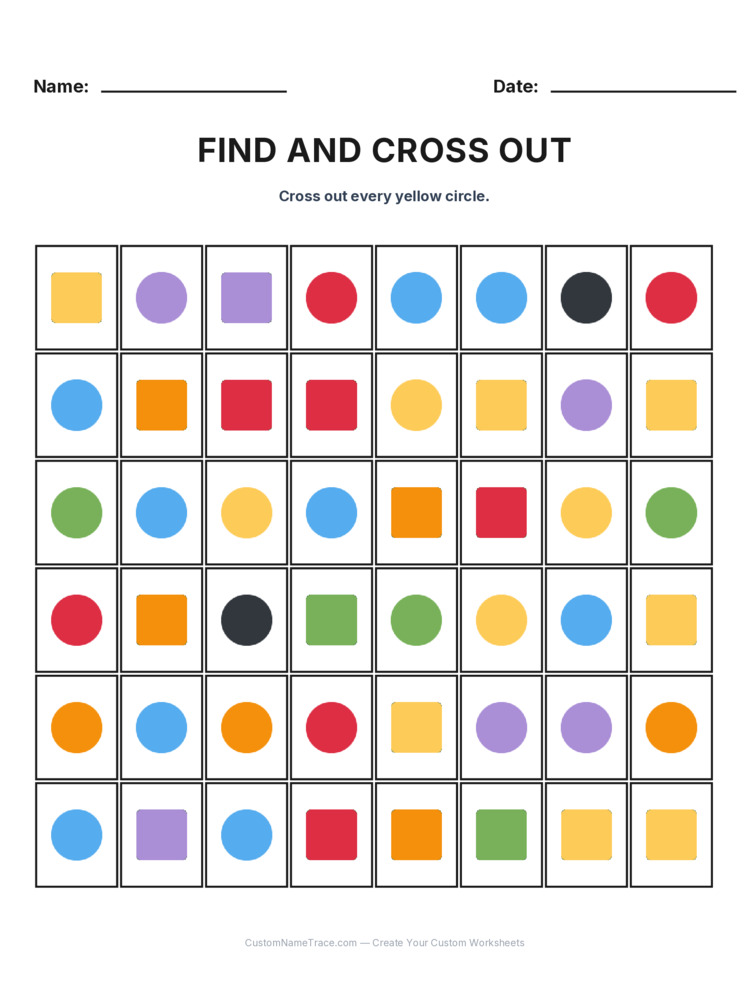
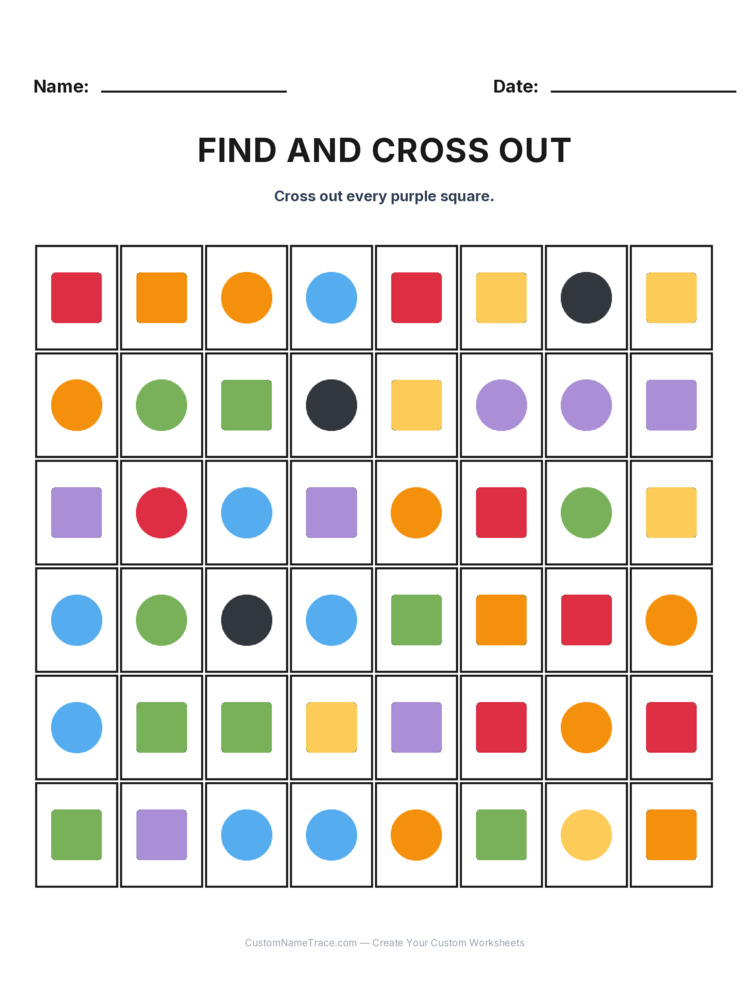
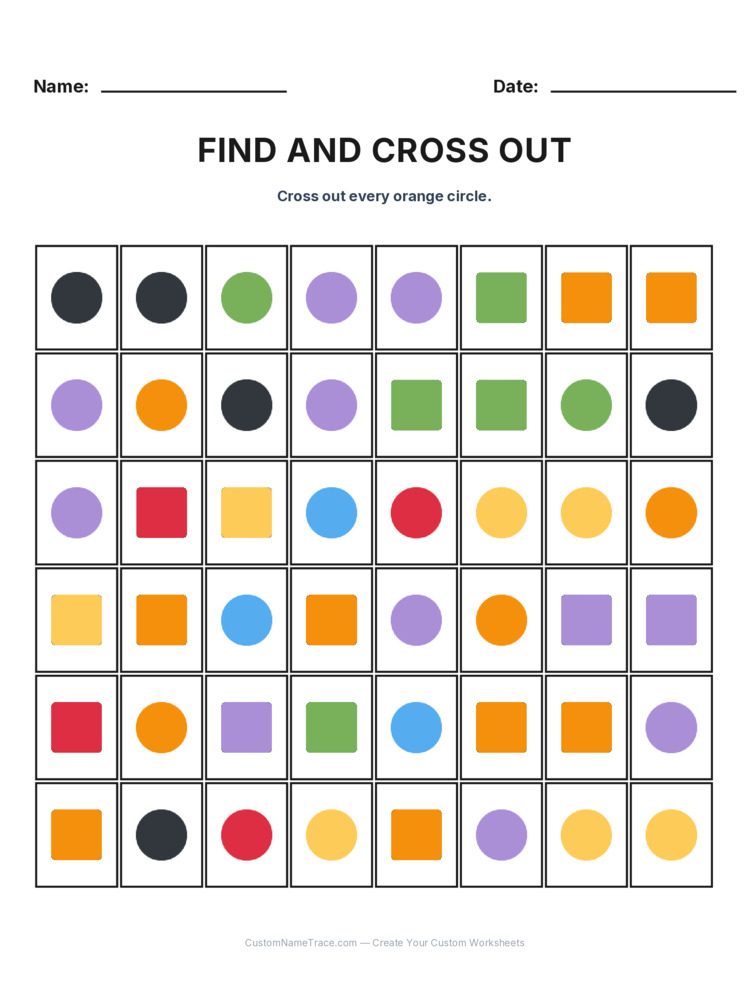
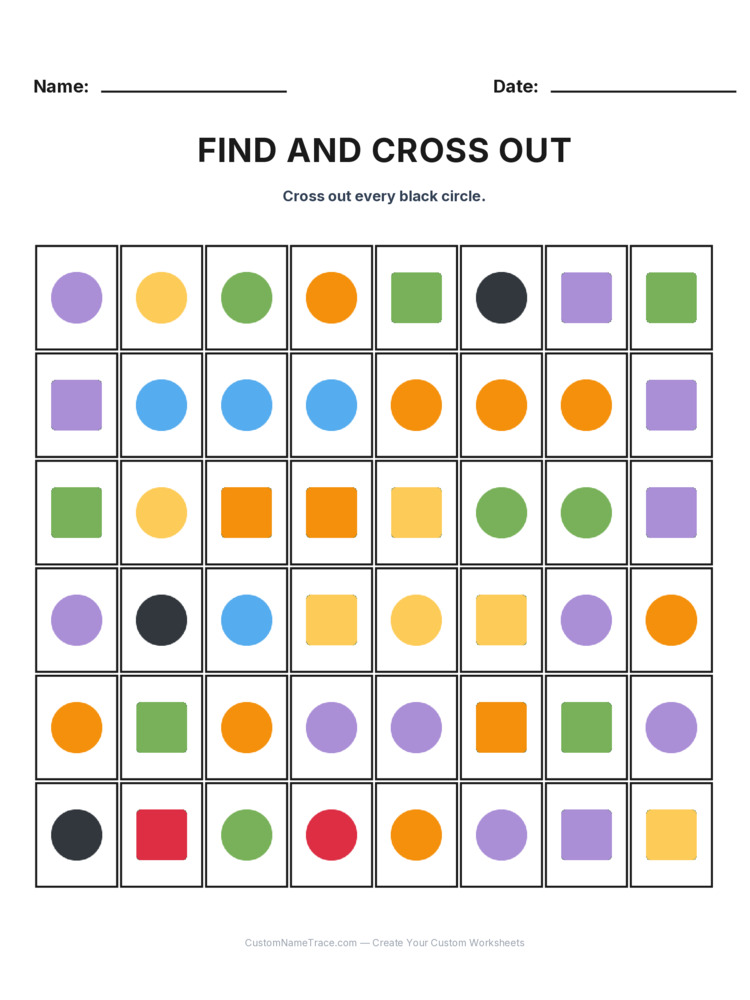
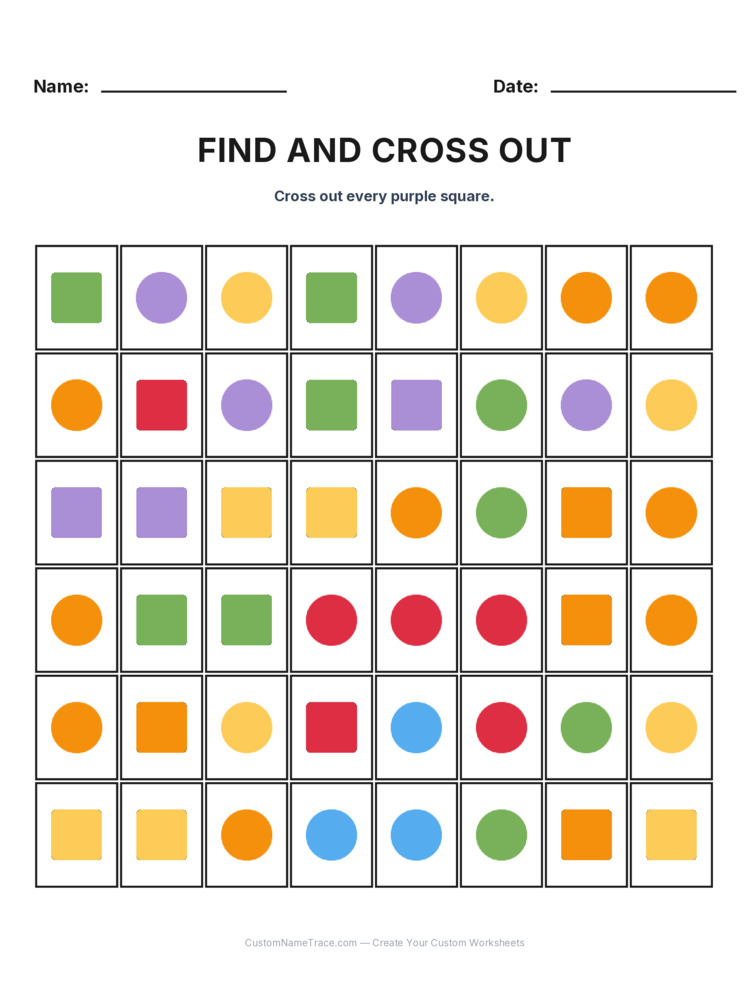
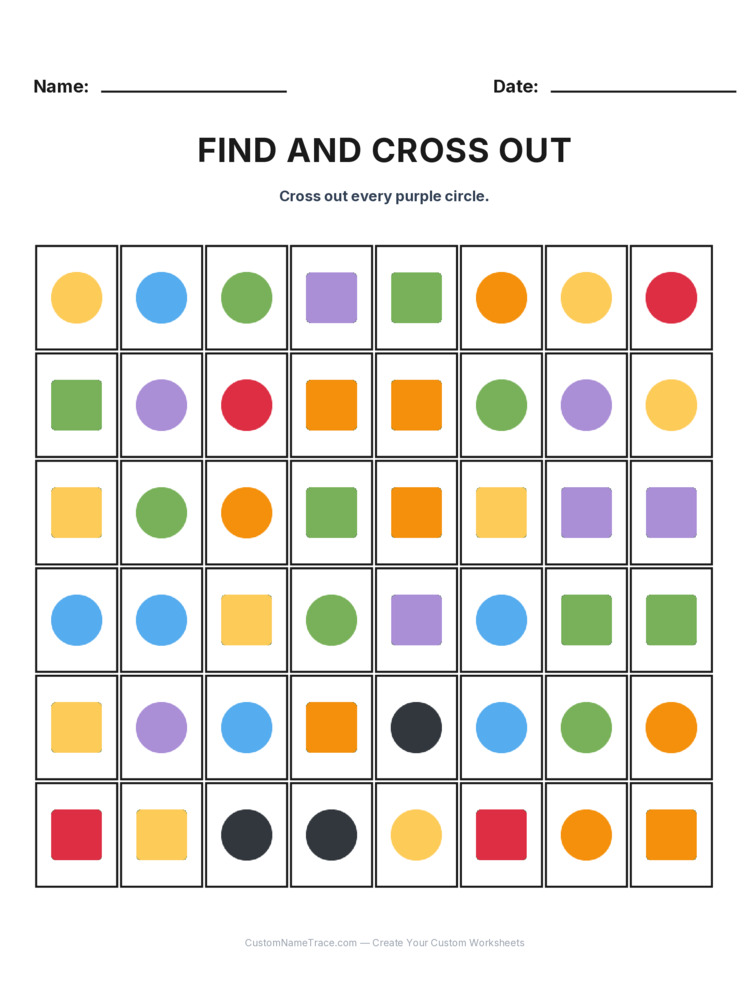
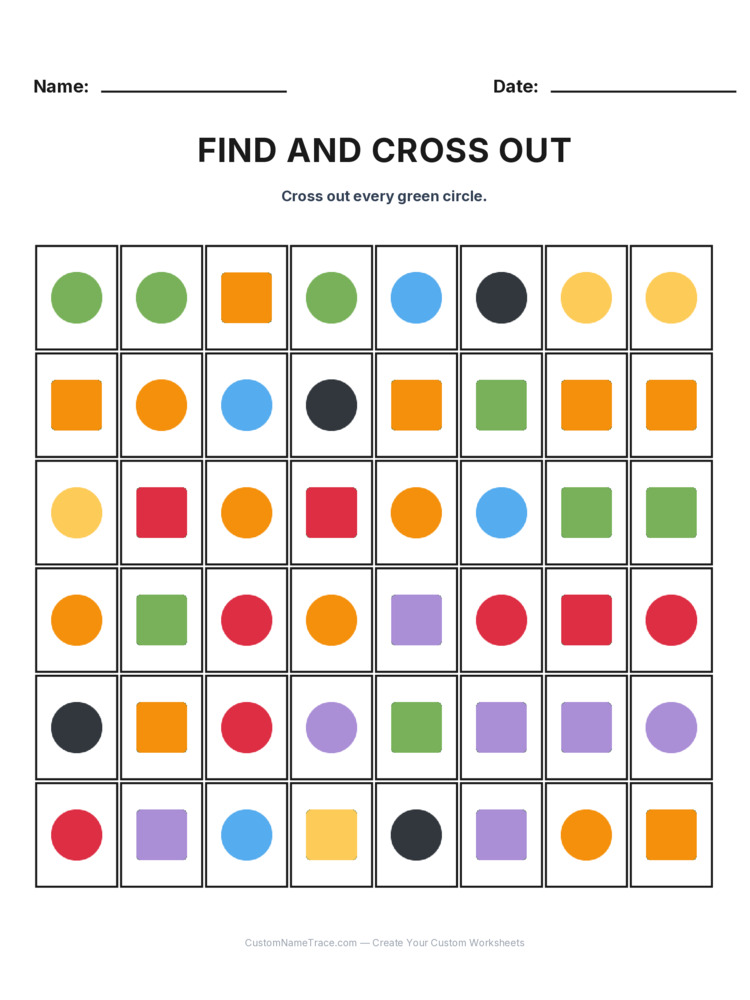
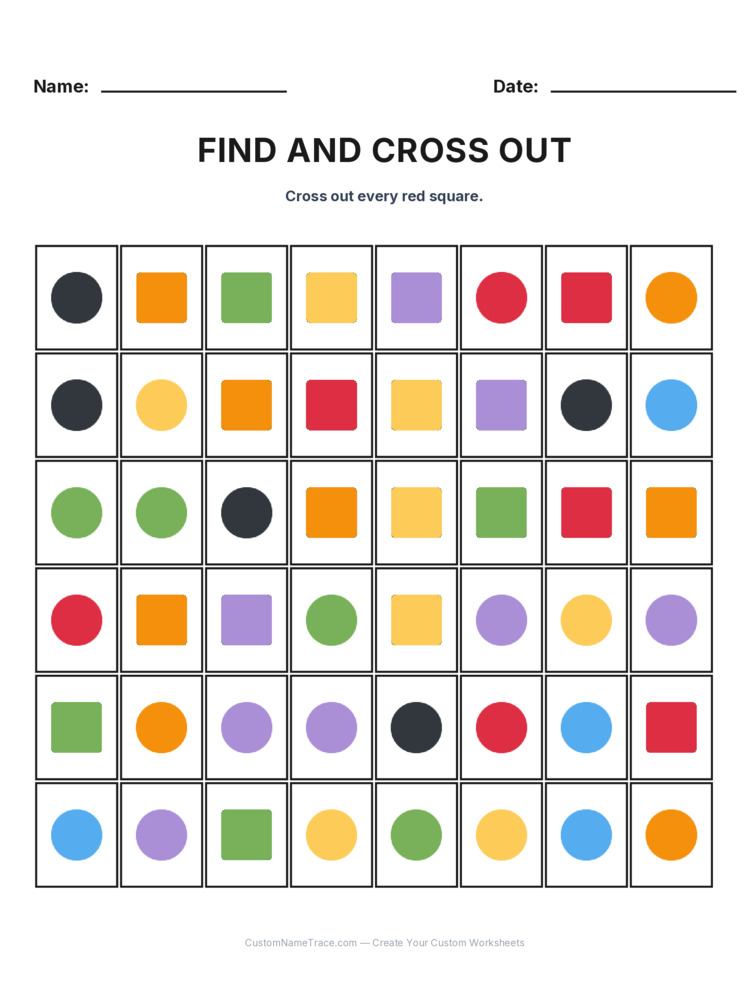
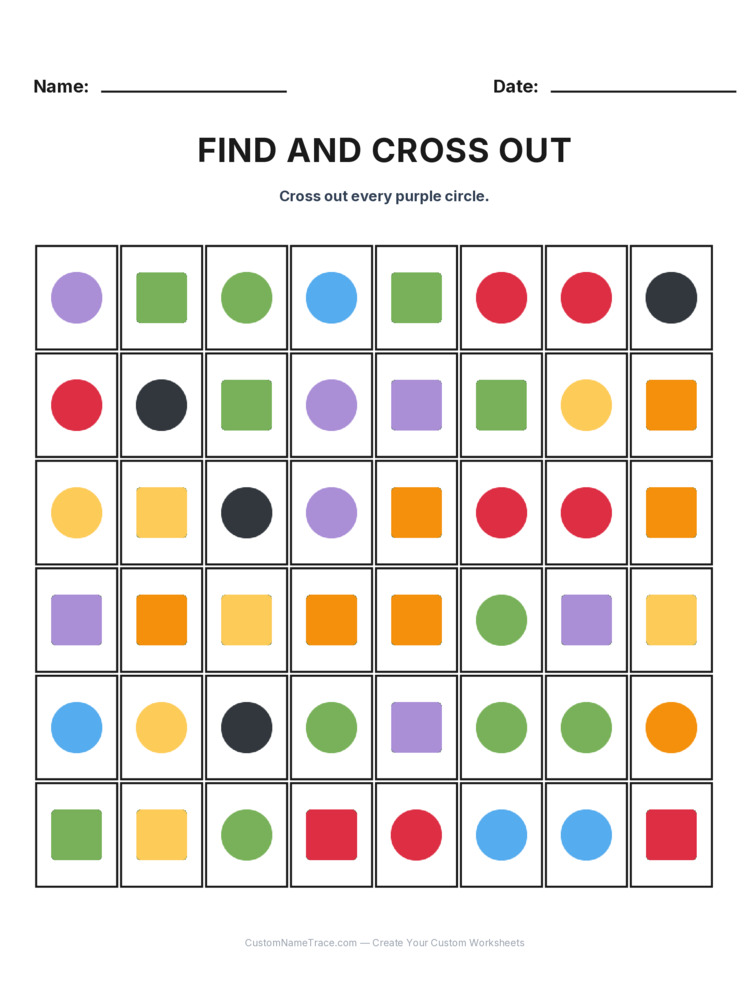
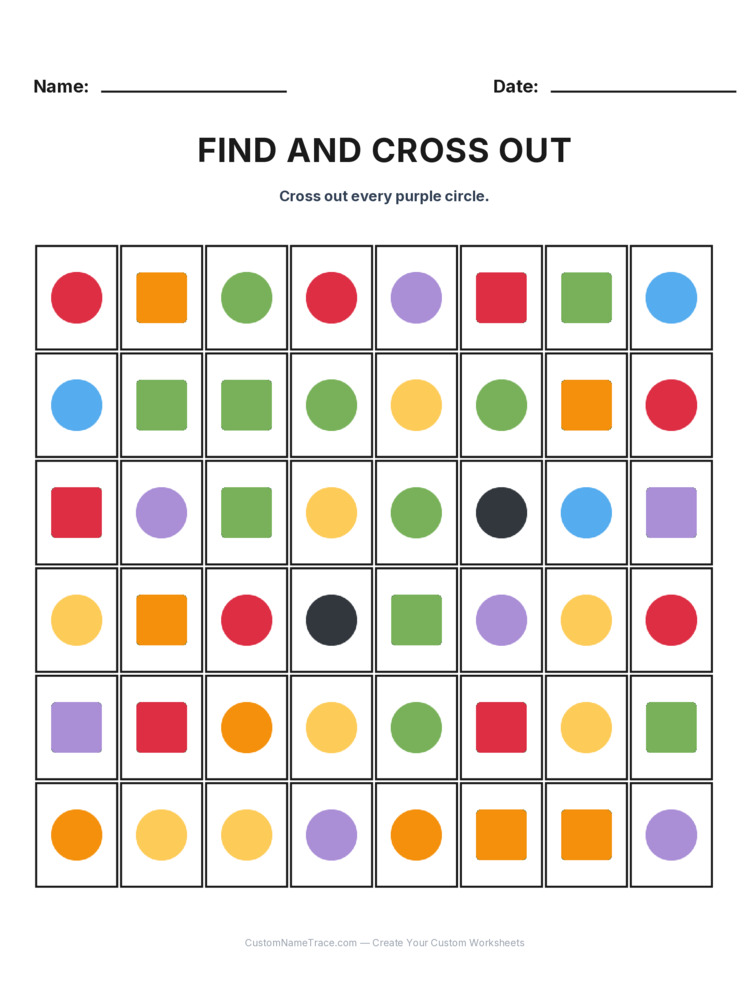
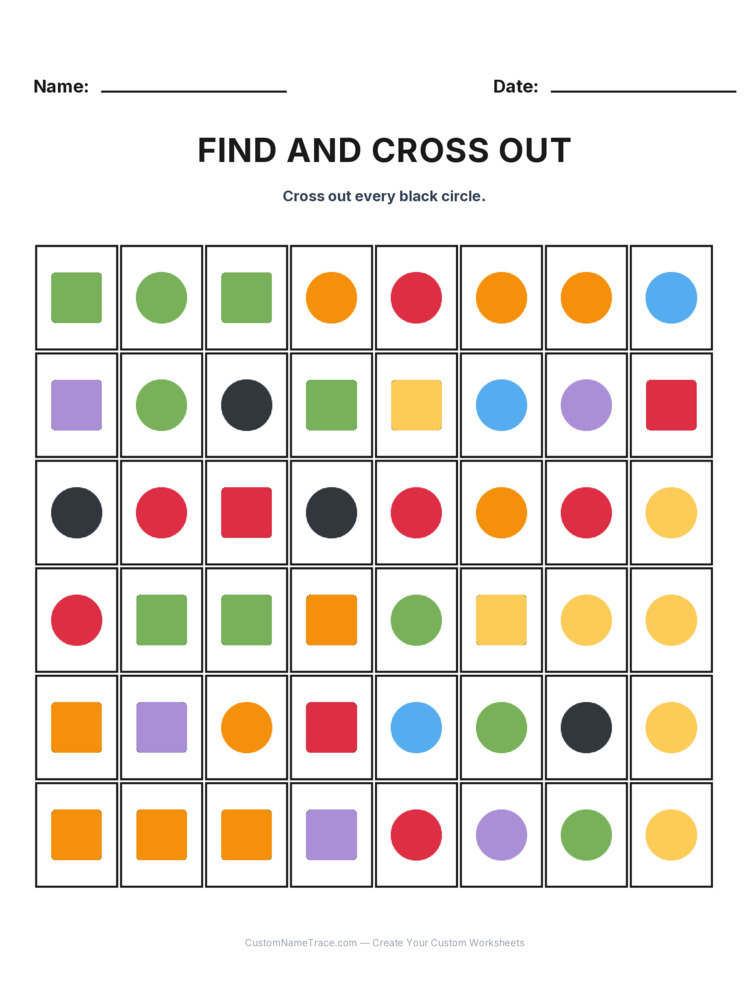
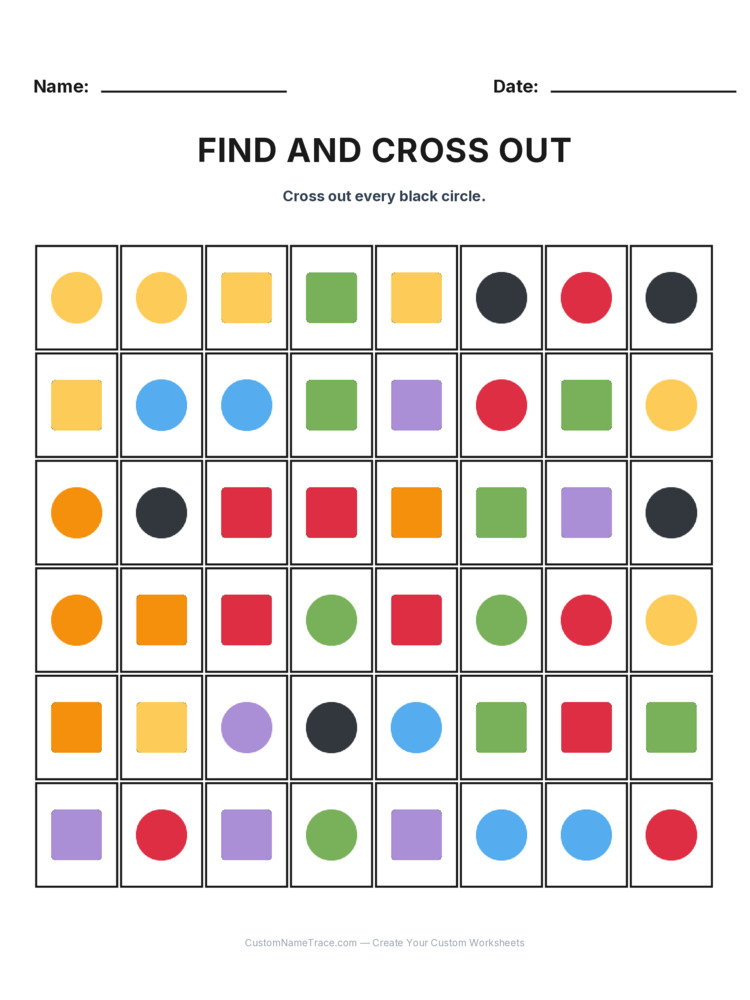
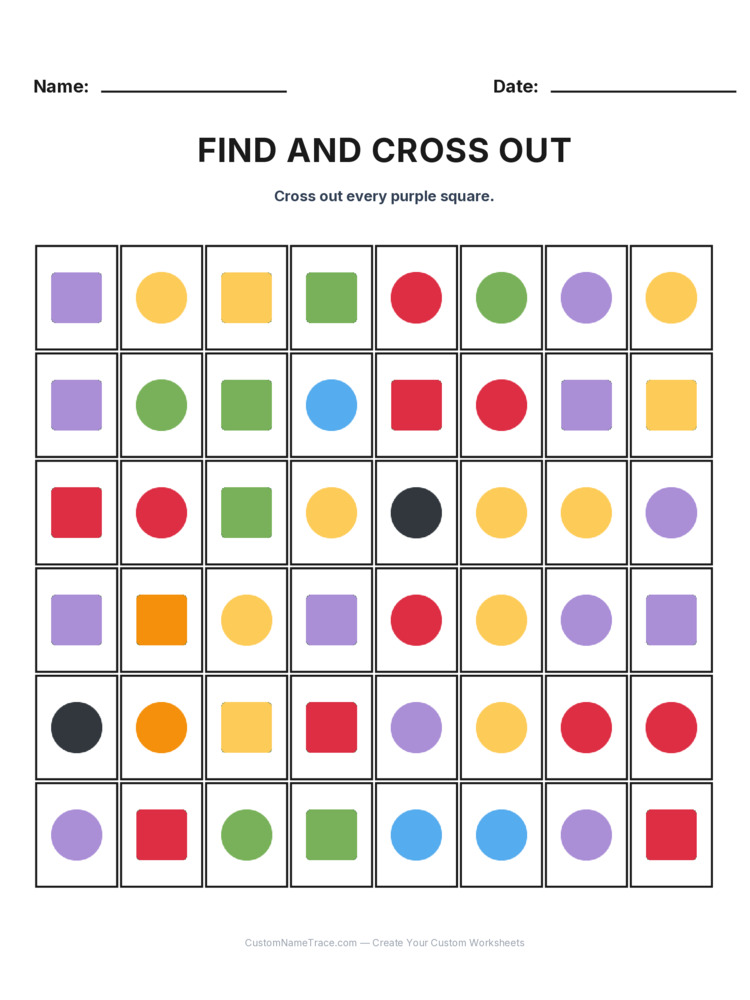
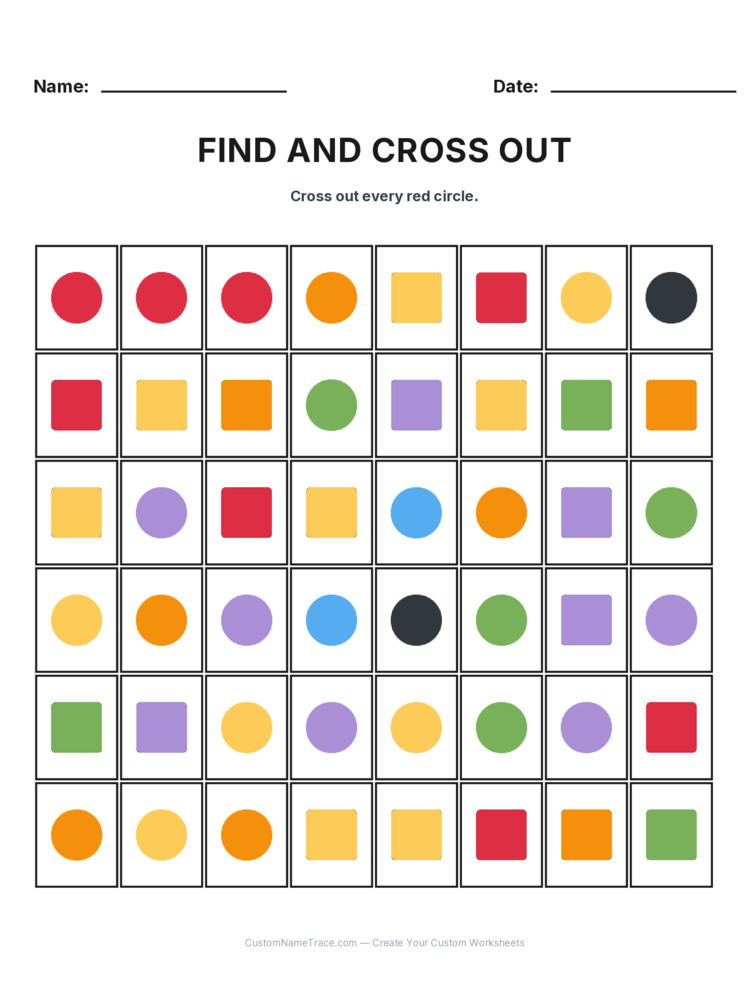
A grid of shapes is shown alongside a single stated rule — usually a target shape and color — and the task is to cross out every item in the grid that matches, not just the first one spotted. That word "every" is what separates this from Kindergarten's Odd One Out: instead of comparing a handful of items and picking one exception, a child has to hold one rule in mind and check it against a much larger set, systematically, without losing track of which items have already been checked.
The matching rule is always stated as one specific, checkable condition — a particular shape and color combined, for instance — rather than something vague or subjective. That precision matters: a puzzle whose rule is ambiguous teaches a child that rules are sometimes a matter of opinion, which undermines the entire point of logic practice. Every match on this worksheet is objectively either right or wrong against the stated rule, with nothing left to interpretation.
The matching condition on this worksheet is always a specific combination — not just "circles" or just "blue," but "blue circles" specifically — which means the grid always contains some shapes that are the right color but wrong shape, and some that are the right shape but wrong color, deliberately placed as near-misses. Checking both properties every time, rather than crossing out anything that matches on just one, is exactly the discipline this worksheet is built to enforce, and it's a direct, simpler preview of the two-rule checking Grade 2's Complete the Pattern grid asks for later.
A scanning strategy that actually works
Working left to right, row by row, rather than jumping around the grid wherever the eye happens to land, is the single most useful strategy for this puzzle type — and it's worth teaching explicitly rather than assuming a child will discover it. "Start at the top-left corner and check every shape before moving to the next row" turns a puzzle that can feel overwhelming at a glance into a manageable, repeatable process, and that systematic-scanning habit transfers directly to proofreading and careful reading later on.
For a child who finds a full grid overwhelming at a glance, marking a small tick or dot in the corner of each row as it's fully checked — not each match, but each completed row — turns an intimidating whole-page task into a series of small, trackable steps. That external tracking system does the same job an adult's mental bookmark does automatically, and it's worth teaching explicitly rather than assuming a child will invent it, since "where was I" is the single biggest source of skipped matches on a busy grid.
For a child whose eyes tend to wander around a busy grid rather than moving row by row, sliding a ruler or a folded index card down the page to reveal one row at a time gives a physical structure to the systematic scan this puzzle rewards, without changing anything about the puzzle itself. This small physical aid tends to fade out naturally as the row-by-row habit becomes automatic — it's a scaffold to remove once it's done its job, not a permanent requirement for solving this puzzle type.
What a missed or wrong answer usually means
If a child's finished grid is missing a real match, it's rarely because they misjudged the rule — it's almost always because their scan skipped a section of the grid. Rather than pointing directly to the missed shape, ask them to re-scan the grid row by row from the top, checking off each row out loud as complete. That rebuilds the systematic habit rather than just fixing the one puzzle in front of them.
A correctly finished Find and Cross Out worksheet has every genuine match crossed out and nothing else touched — no marks on shapes that don't fit the rule, no blank spaces where a real match was overlooked. Reviewing a finished page against that simple standard (every match marked, nothing extra marked) is a faster check than re-verifying each individual shape, and it's a good habit to teach a child to do for their own work before calling a page finished.
Occasionally a child will hesitate over a shape that's close to the rule but not an exact match — nearly the right color, or a very similar shape — and that hesitation is actually useful, not a sign of confusion. Confirming explicitly whether "close" counts (it doesn't; the rule is exact) reinforces that logic puzzles reward precision over approximation, a distinction worth making clearly the first few times it comes up rather than letting a child assume "close enough" is an acceptable standard.
It's natural to praise whoever finishes first, but on this specific worksheet, speed and correctness pull in slightly different directions — a fast pass through the grid is more likely to miss a match tucked into a corner than a slower, systematic one. Praising the process explicitly ("you checked every single row, that's exactly right") rather than the finishing time reinforces the actual skill this puzzle is meant to build, and it avoids accidentally teaching a child that a quick, incomplete scan is what "doing well" on this format looks like.
Using this in a classroom
Because every worksheet is self-checking (the rule is stated plainly and every real match is visually confirmable), Find and Cross Out is well suited to independent classroom seatwork — a teacher doesn't need to circulate constantly to catch mistakes, since a child who's applied the rule correctly has a grid that visibly matches the stated condition. Handing out different numbered variants to different students, each testing the identical skill with a fresh grid, also sidesteps the temptation to copy a neighbor's answers, since no two grids look alike.
Every numbered variant uses the same grid dimensions so the visual layout stays familiar from one worksheet to the next — only the specific shapes, colors, and matching rule change, which keeps a child focused on applying the skill rather than adjusting to a new format each time.
Each numbered variant uses a fresh grid and a fresh matching rule, so repeat practice always means genuinely re-scanning rather than remembering where matches were on a previous attempt. Print at full size so individual shapes in the grid stay easy to distinguish — a shrunk grid can make similar shapes harder to tell apart than the puzzle intends.
Where this leads
Find and Cross Out is a direct, harder successor to Odd One Out: both compare shapes against a rule, but Odd One Out only ever asks for one exception among four items, while this format asks for every match among many. A child who's comfortable with Odd One Out has the underlying comparison skill already — this worksheet's real demand is applying that comparison consistently and exhaustively rather than just once.
This worksheet's rule is always a single condition — one shape, one color — deliberately kept simple so the whole task is about thoroughness rather than complexity. That single-condition design is a direct stepping stone to Grade 2's Complete the Pattern and Grade 3's Venn Diagram Sort, both of which ask a child to check two conditions at once; a child who's built rock-solid habits checking one rule exhaustively has a real head start once a second rule gets added to the mix.