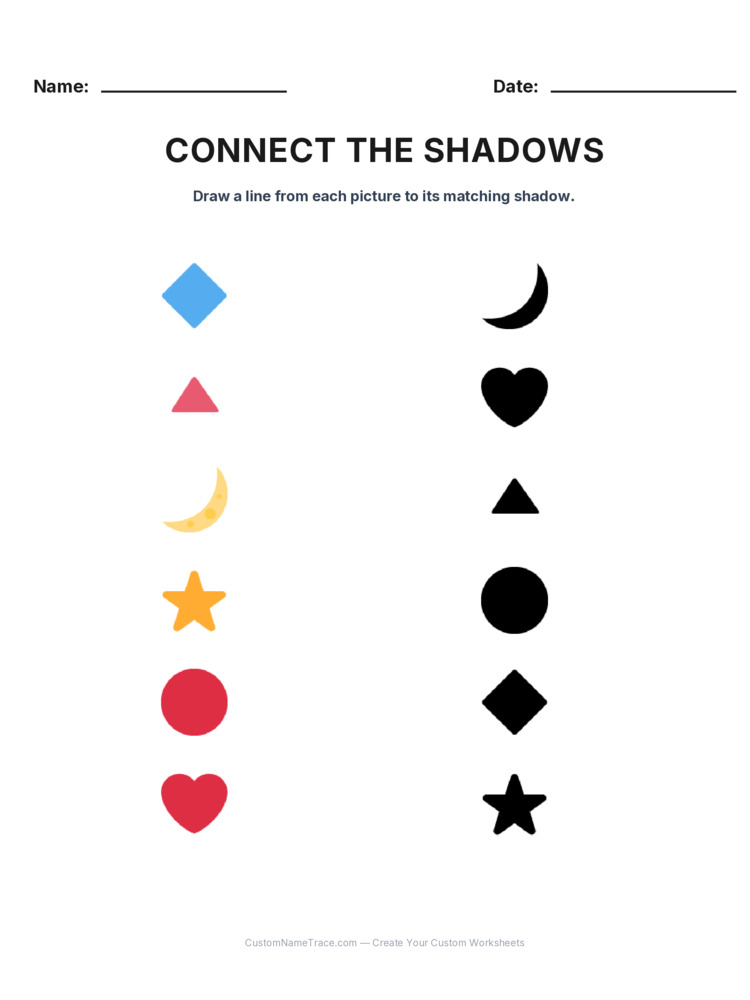
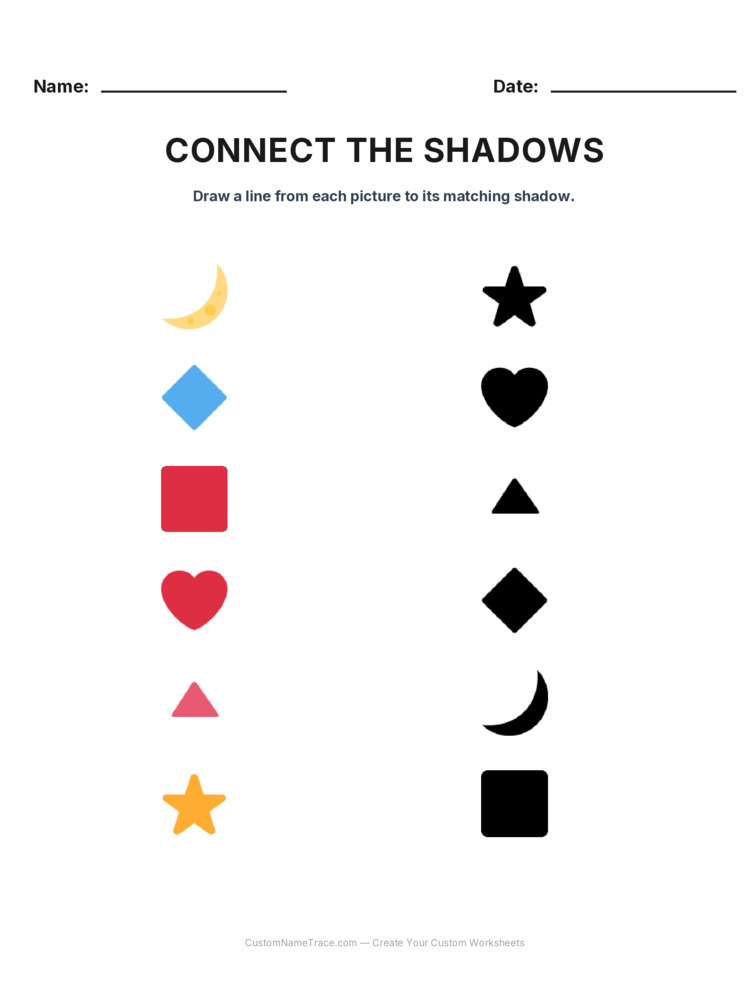
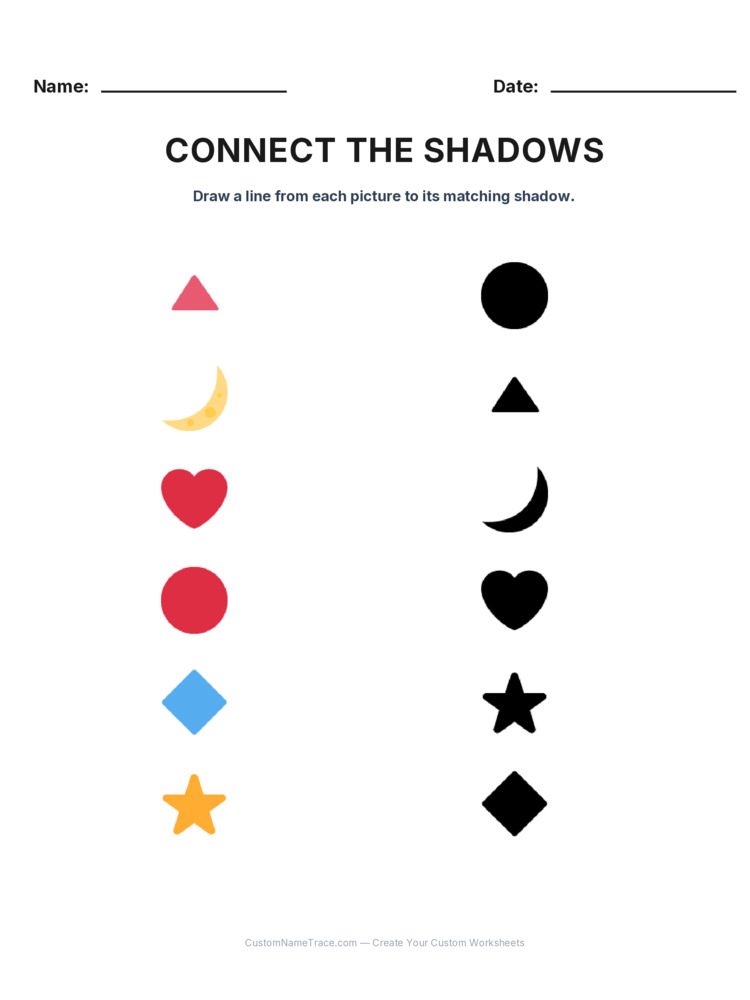
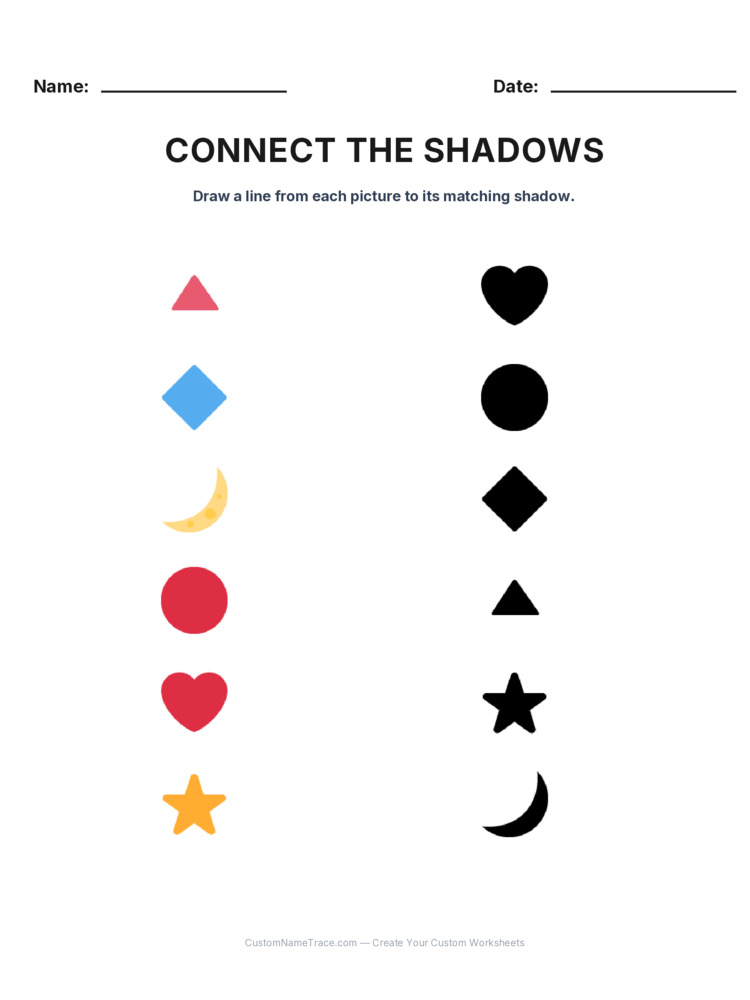
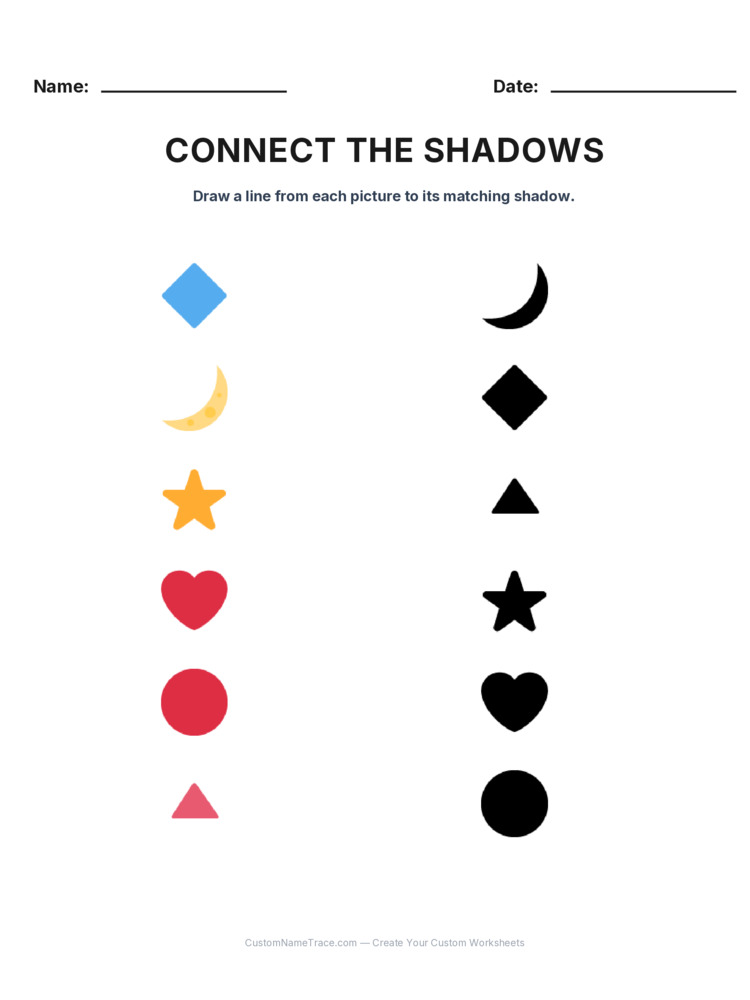
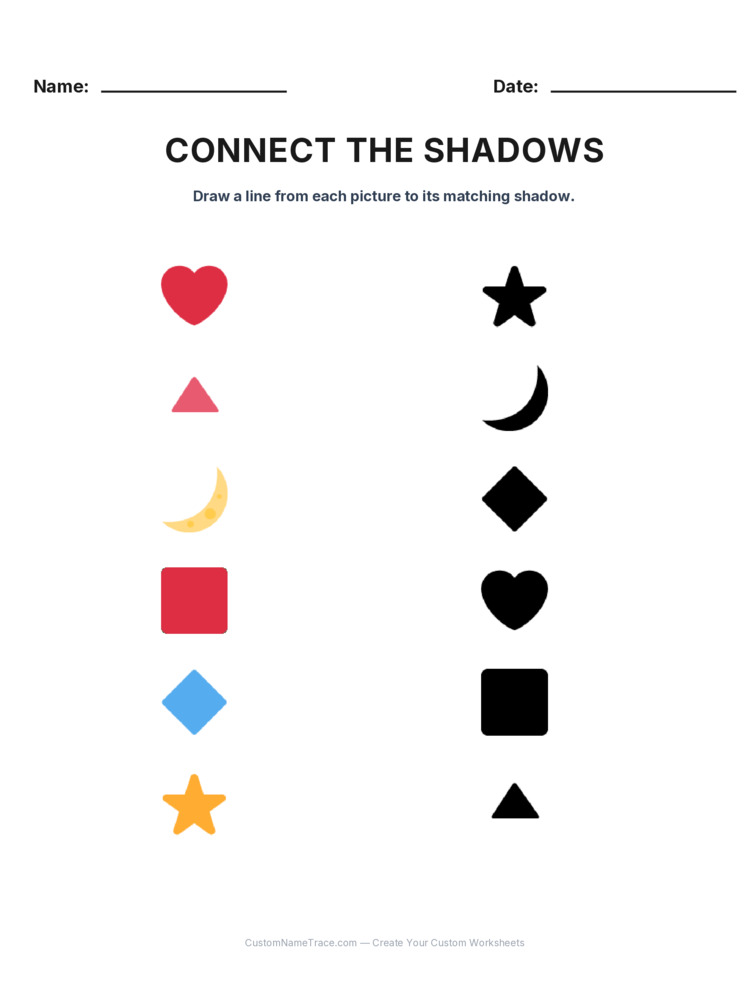
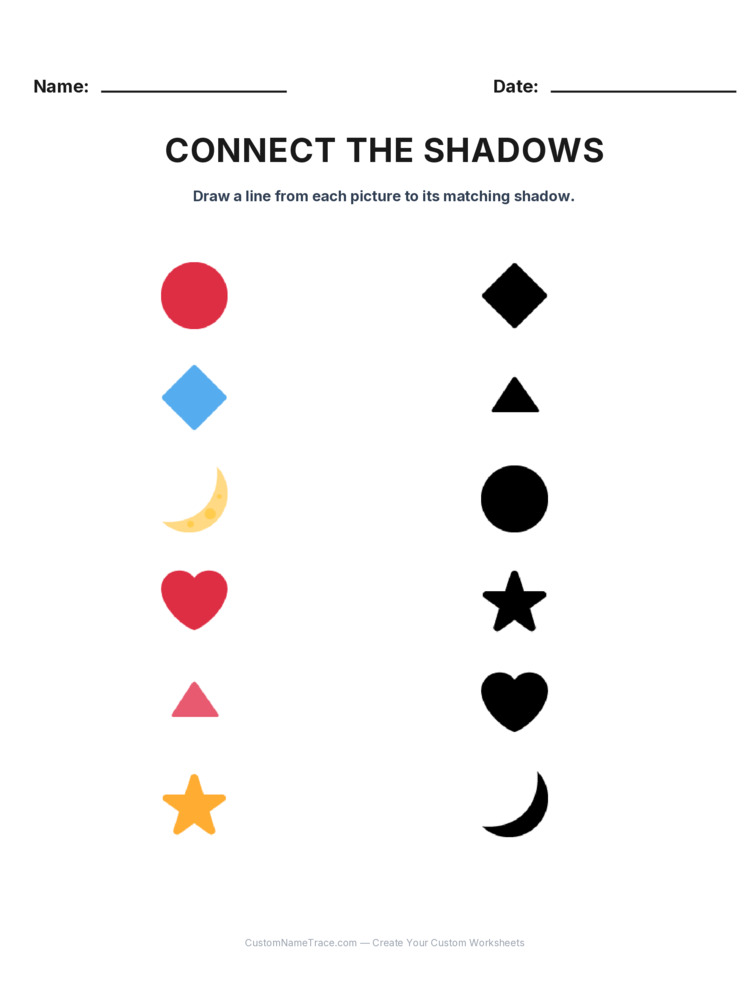
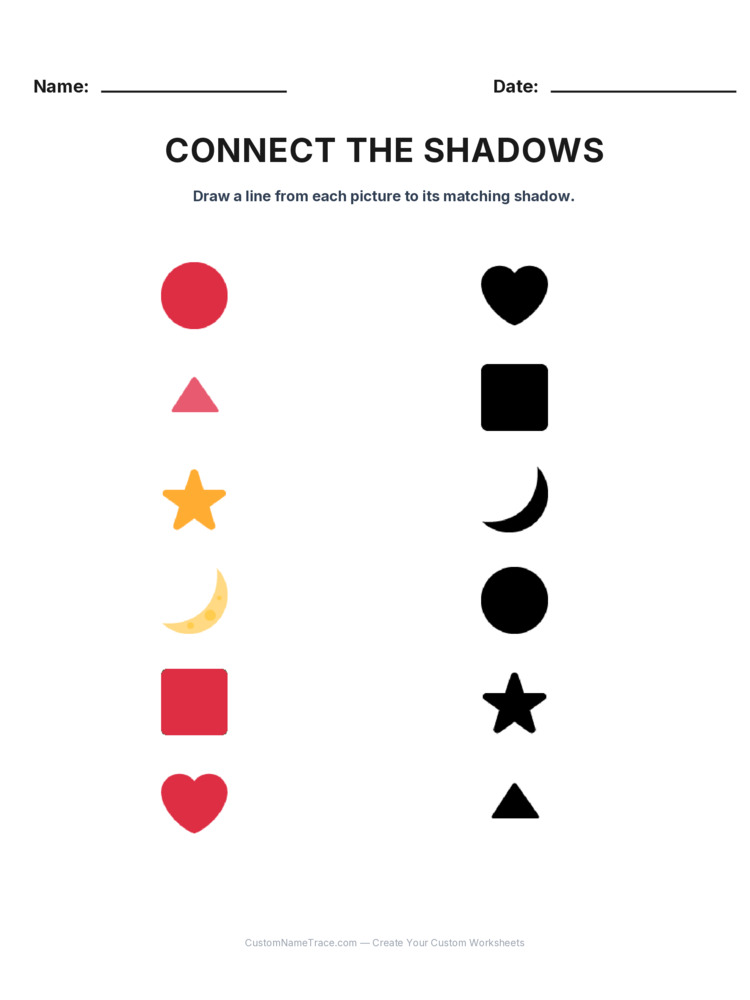
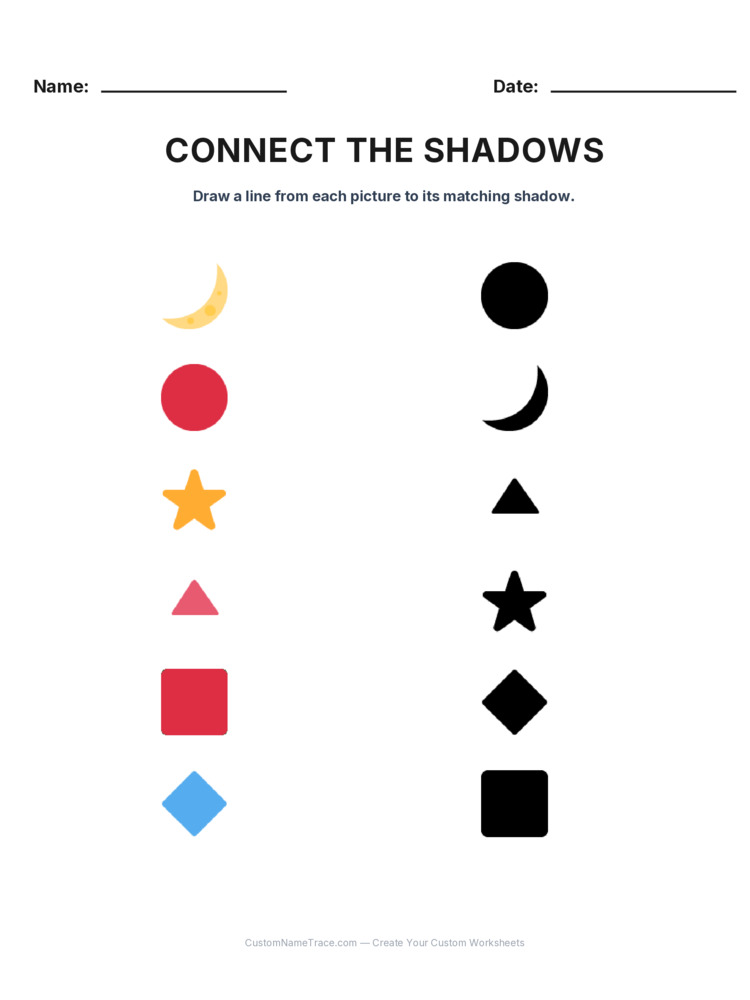
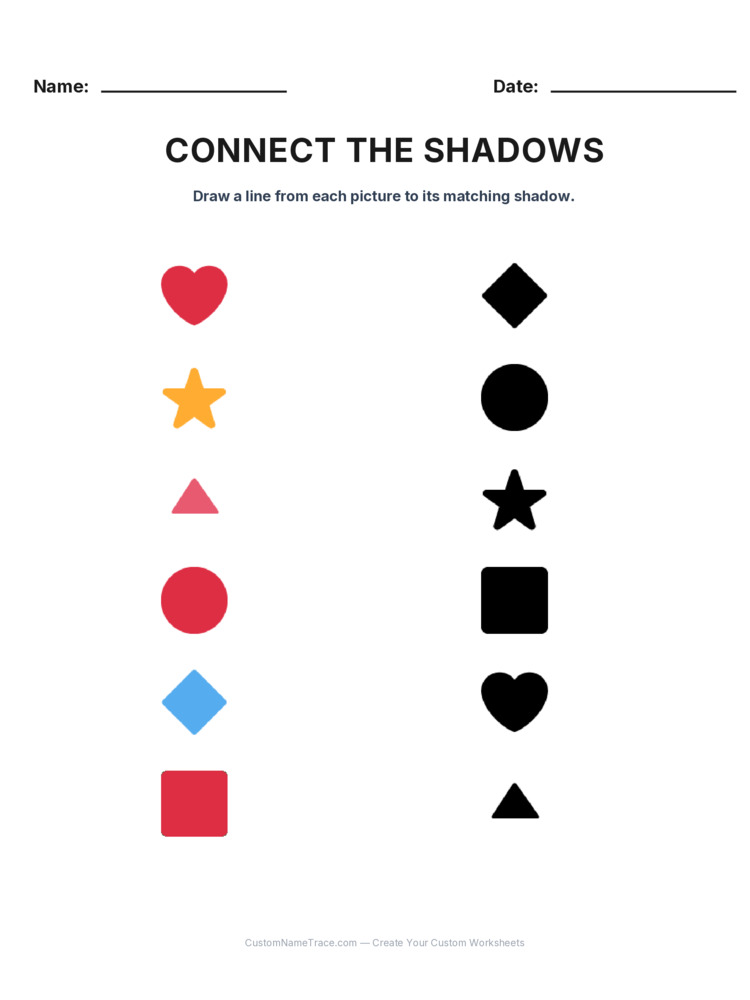
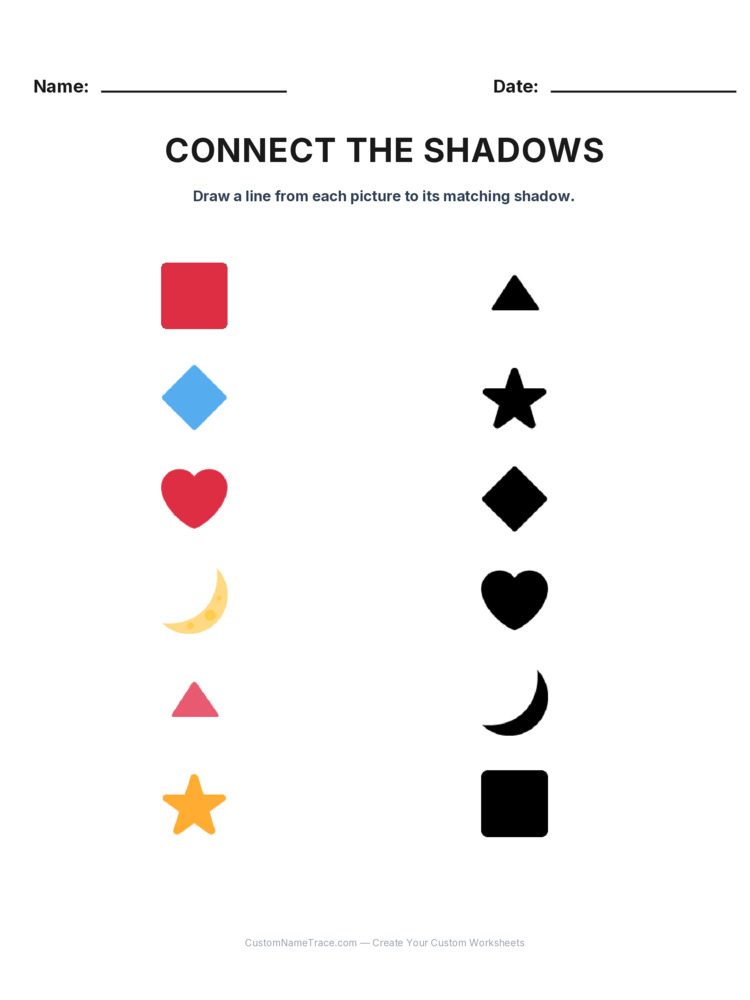
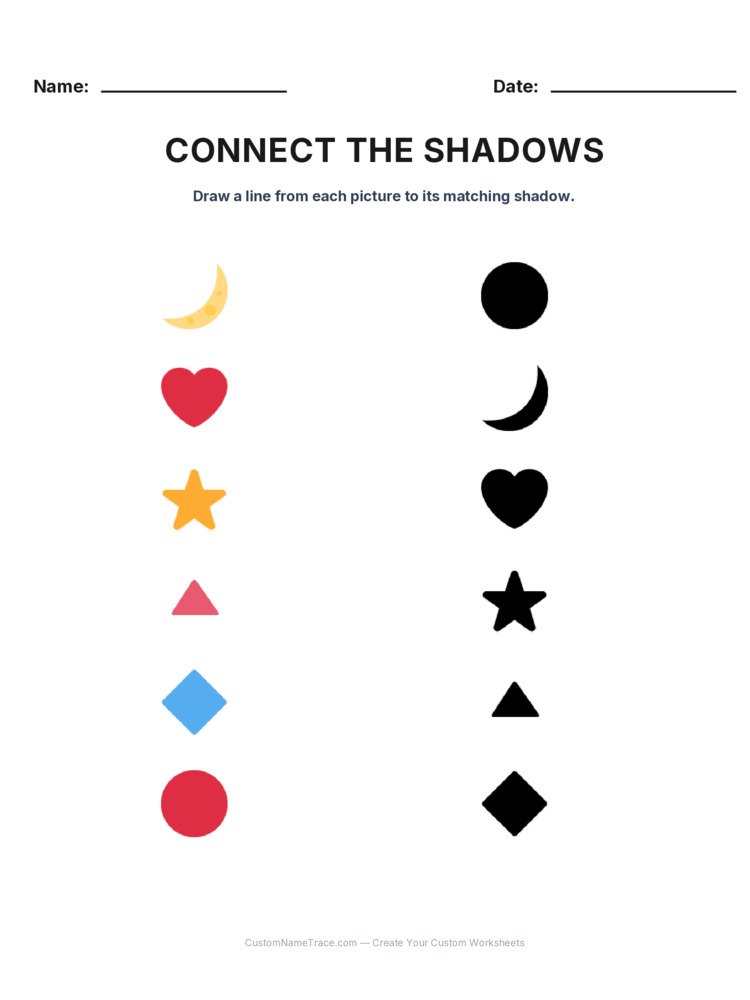
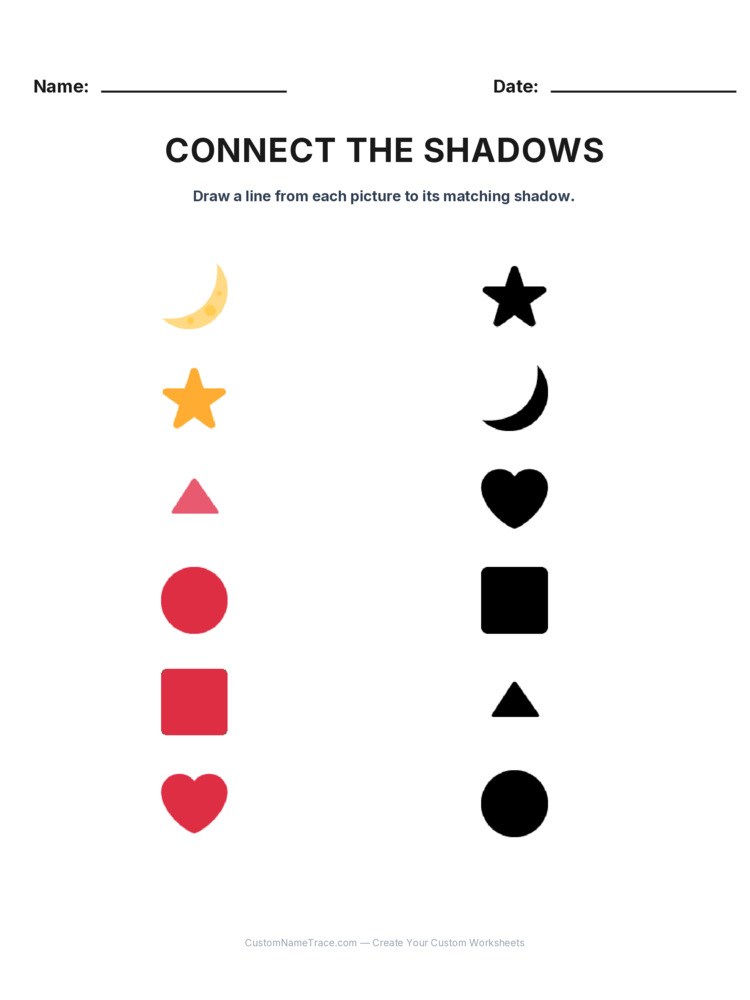
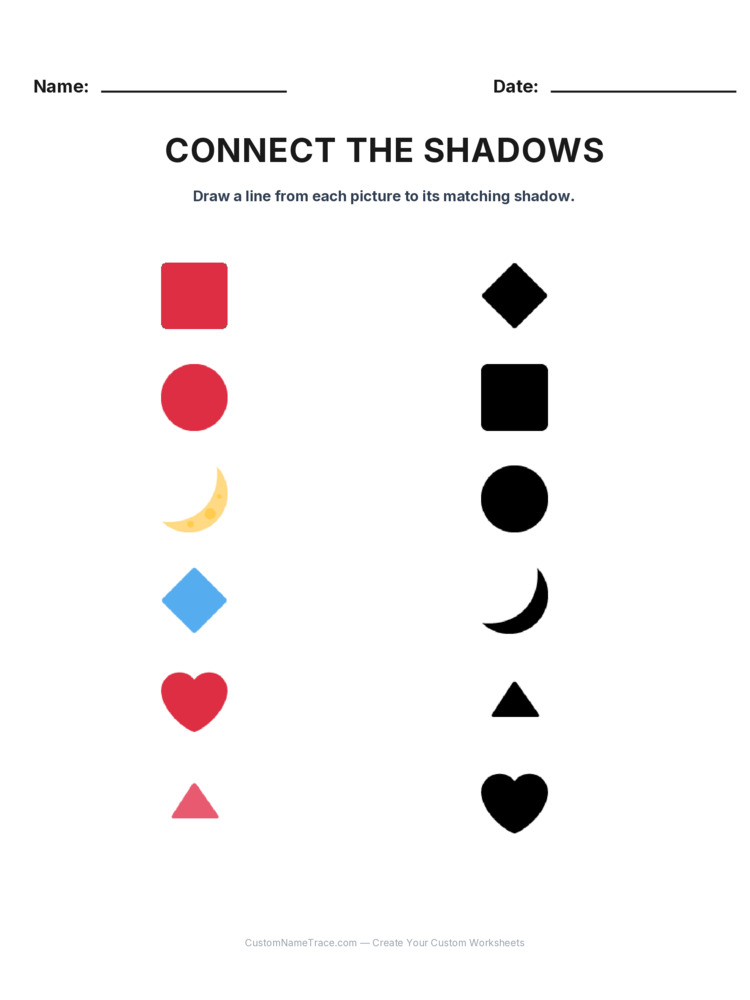
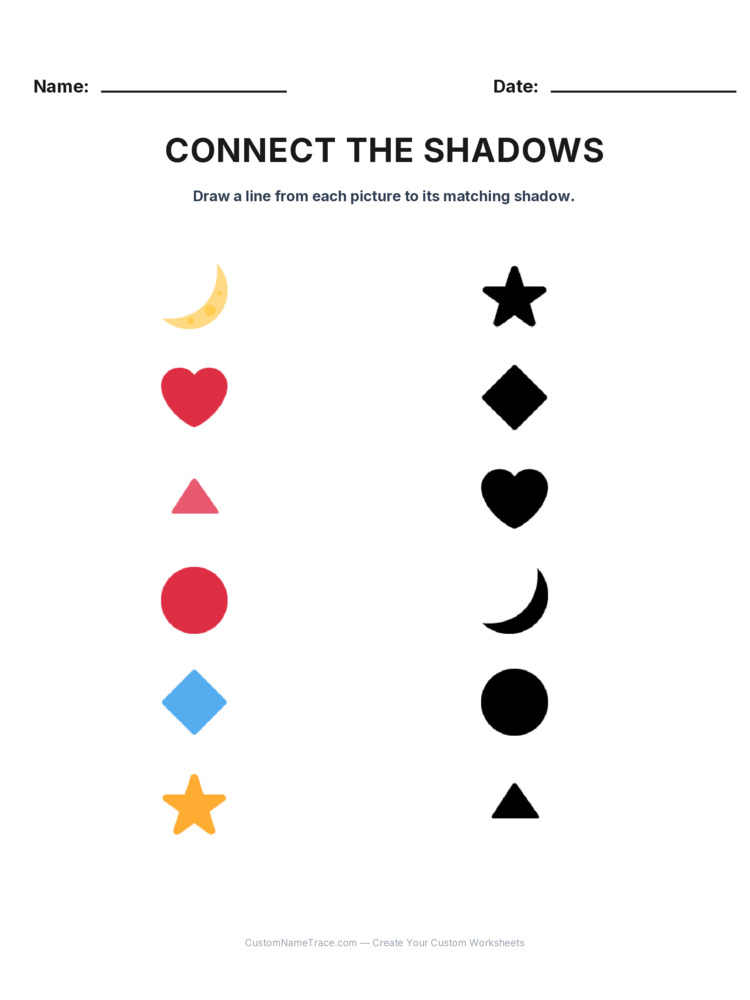
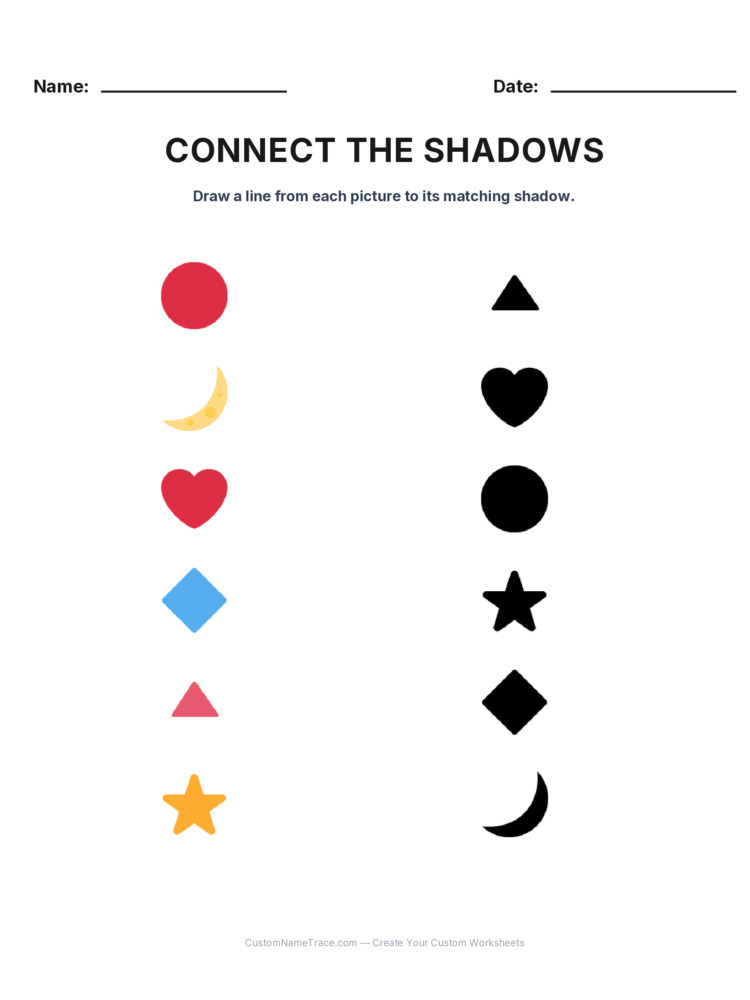
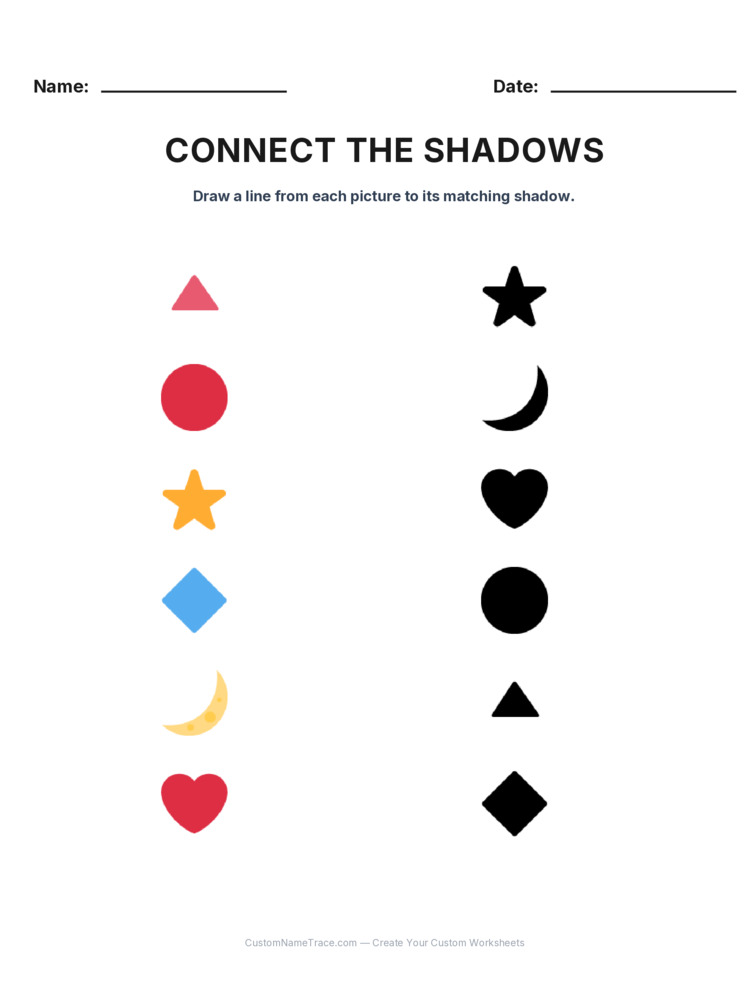
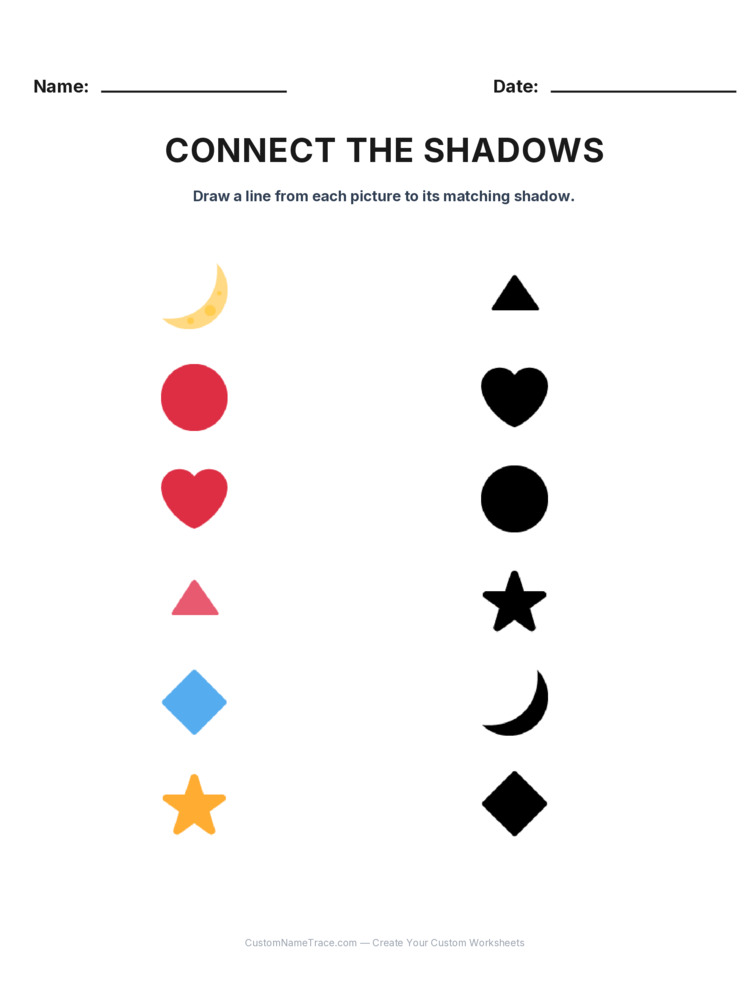
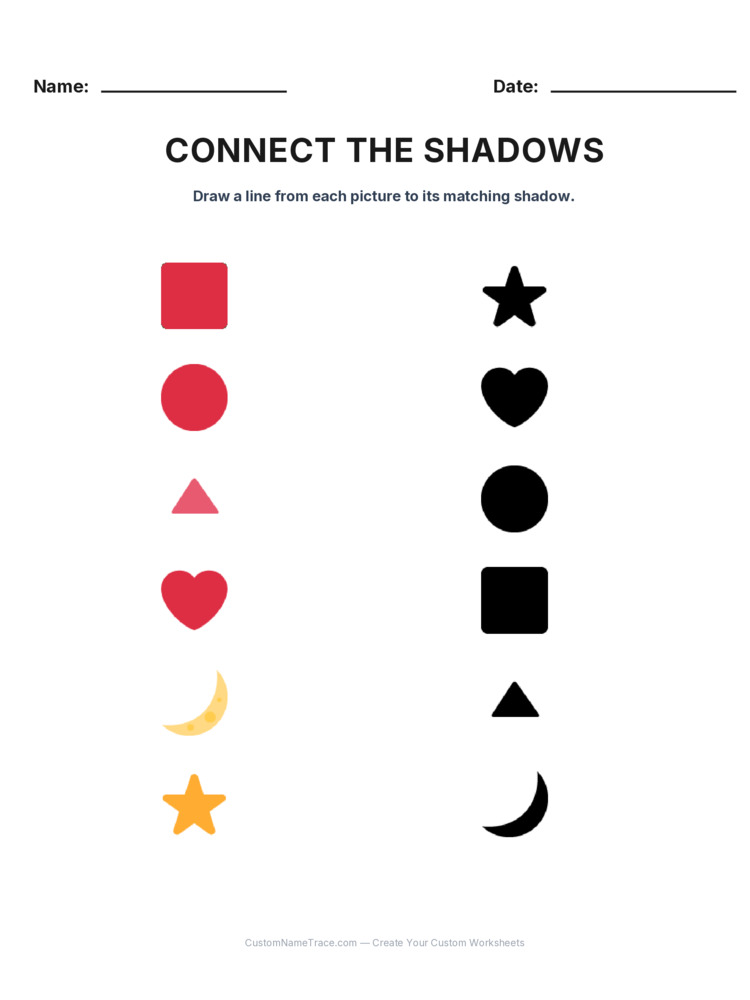
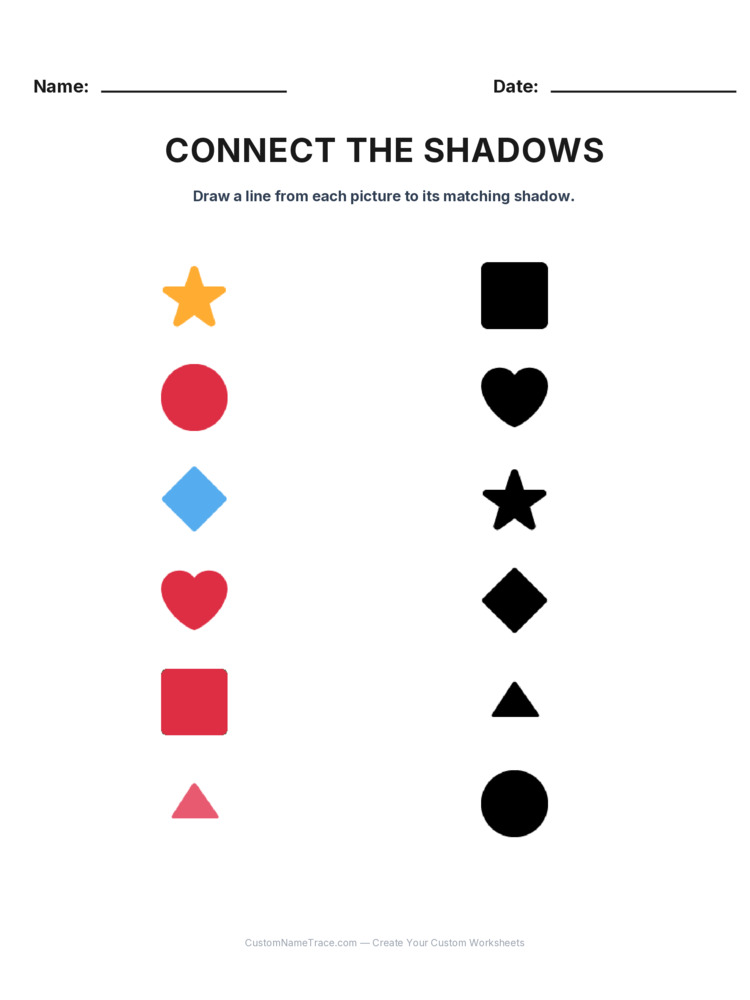
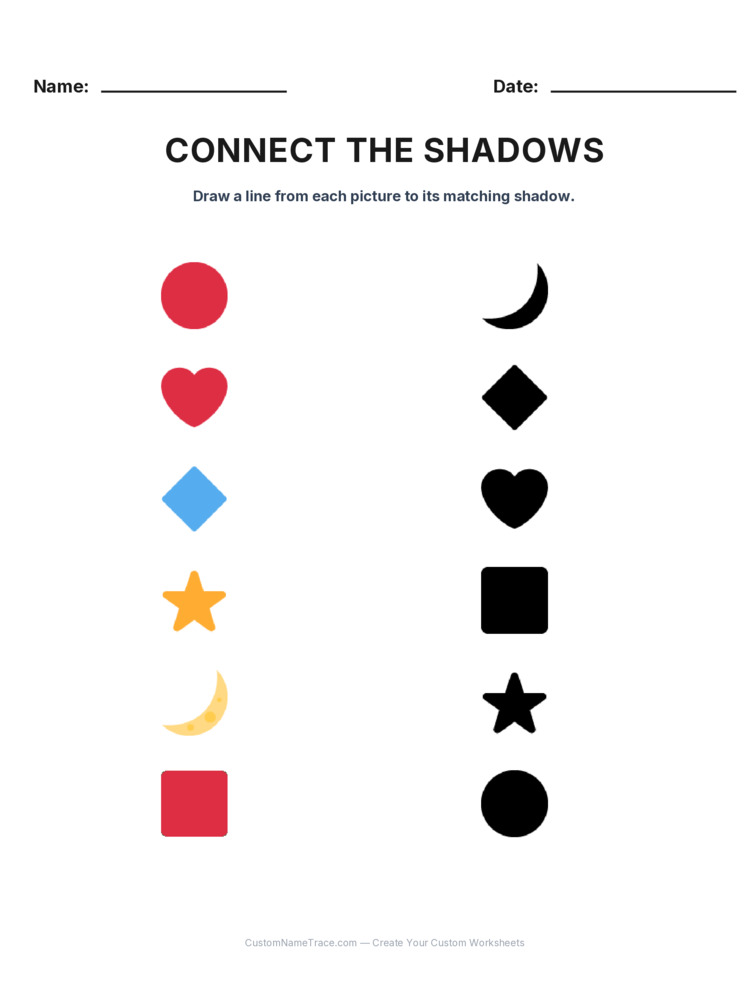
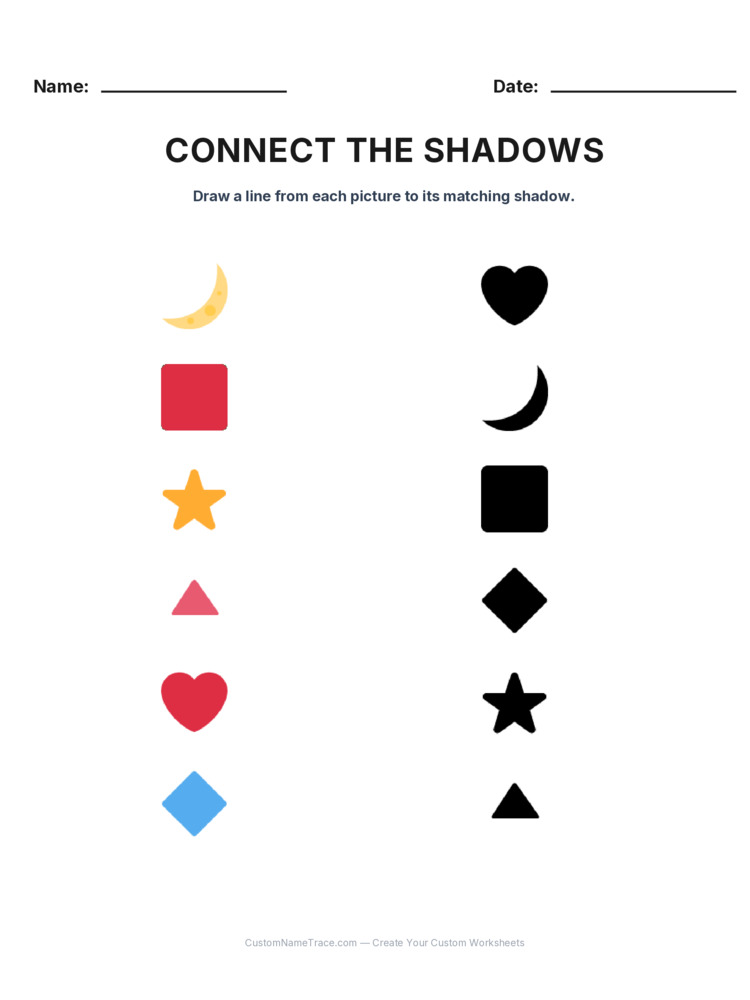
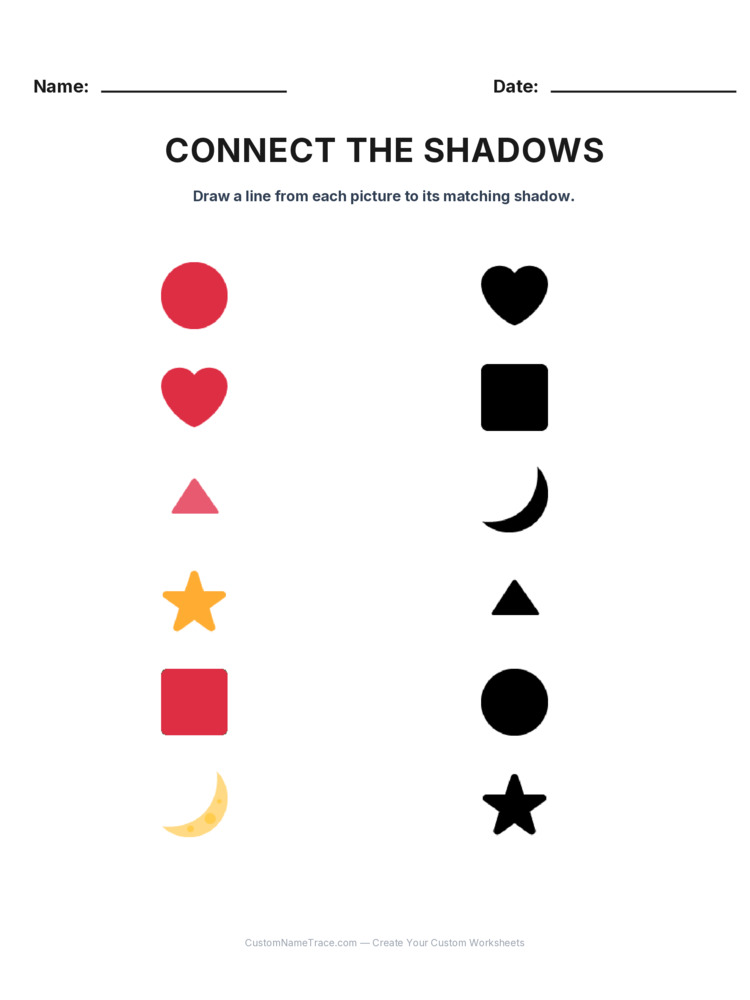
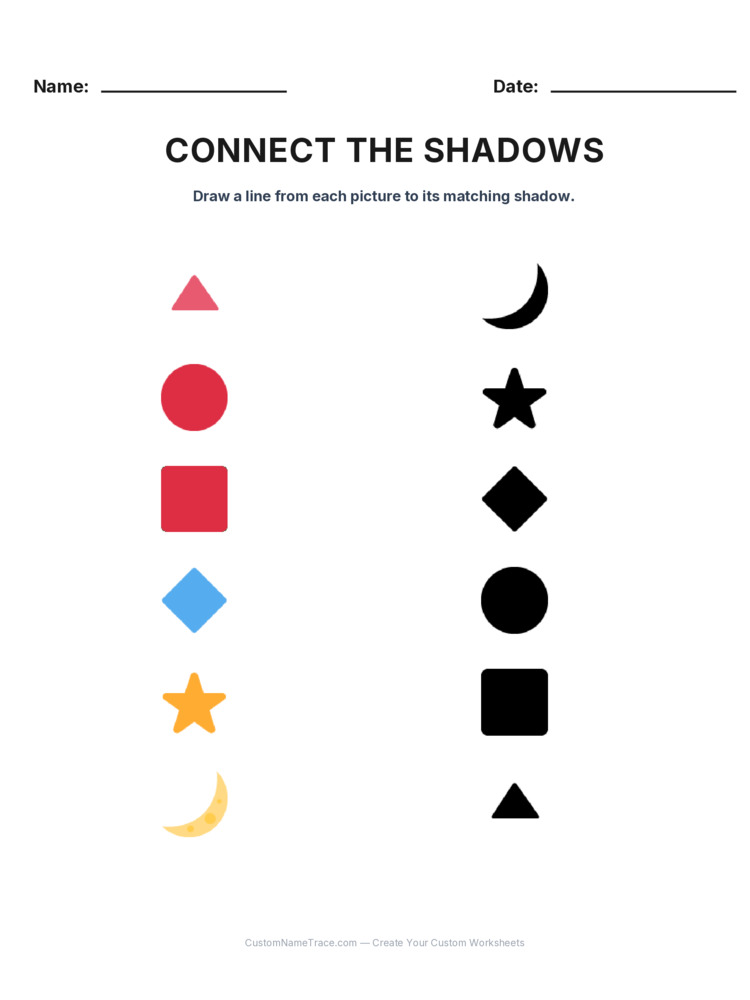
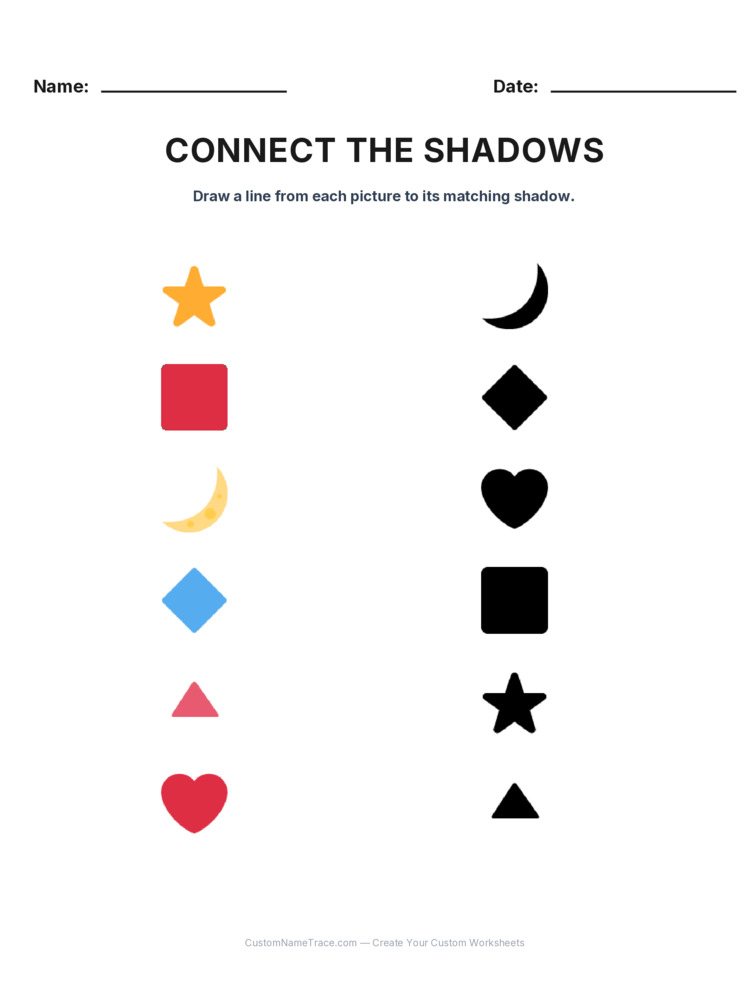
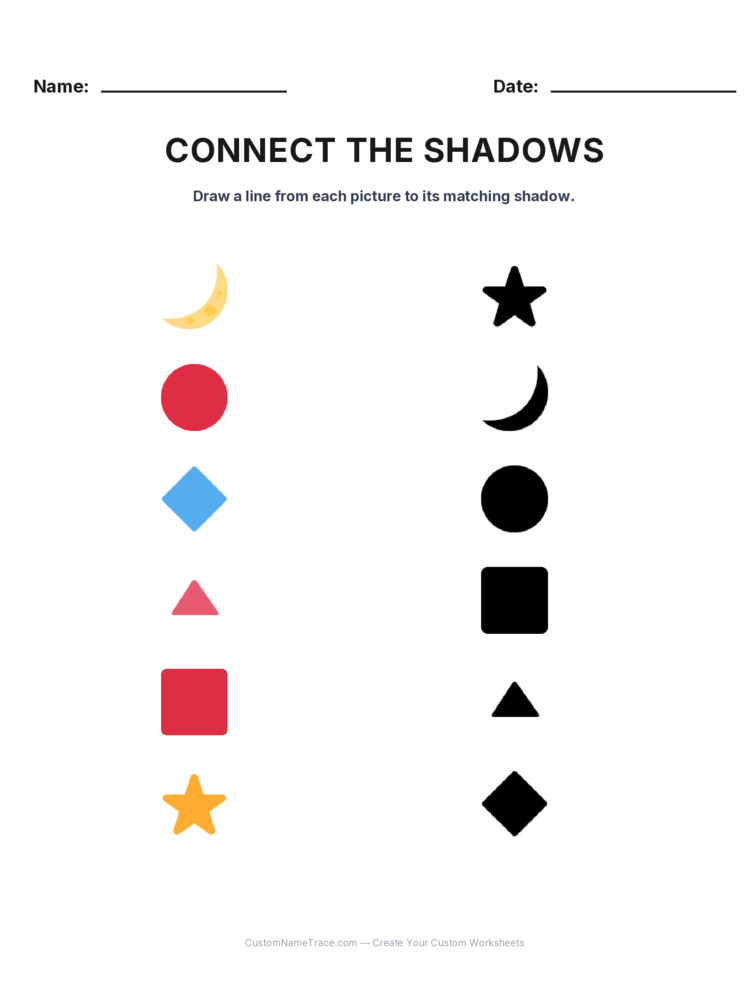
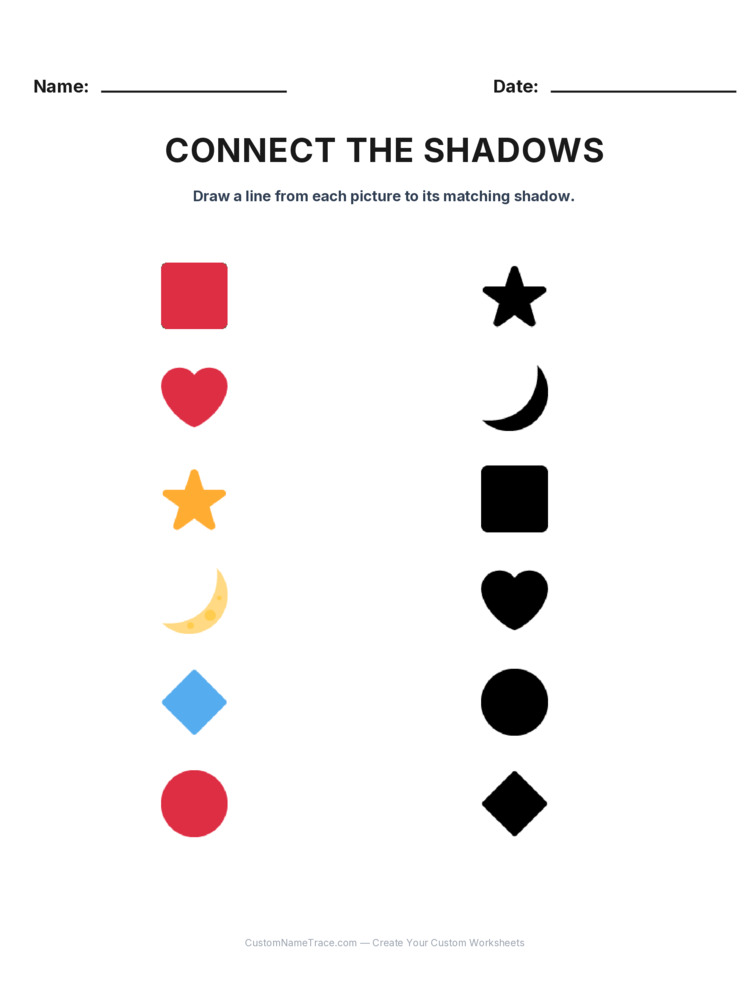
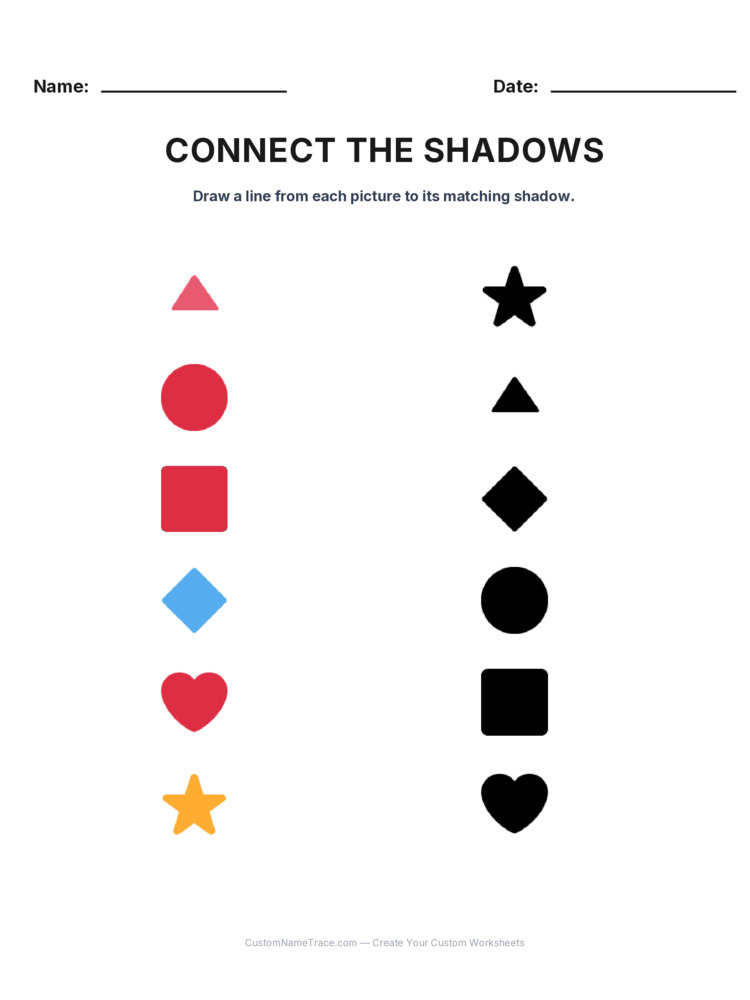
Matching by outline alone
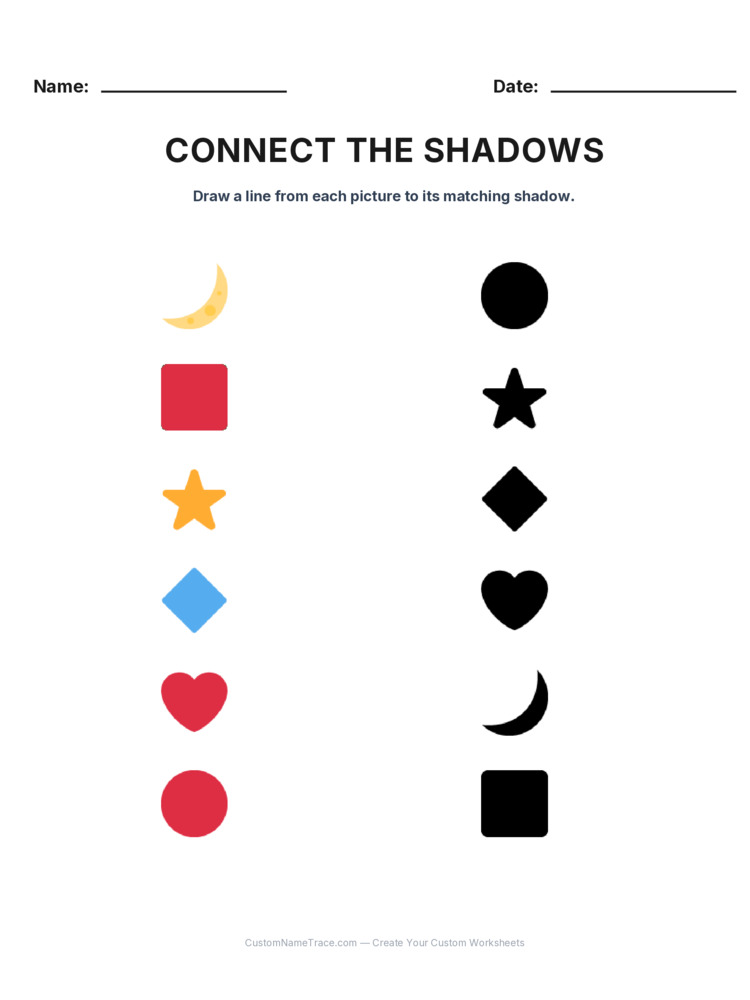
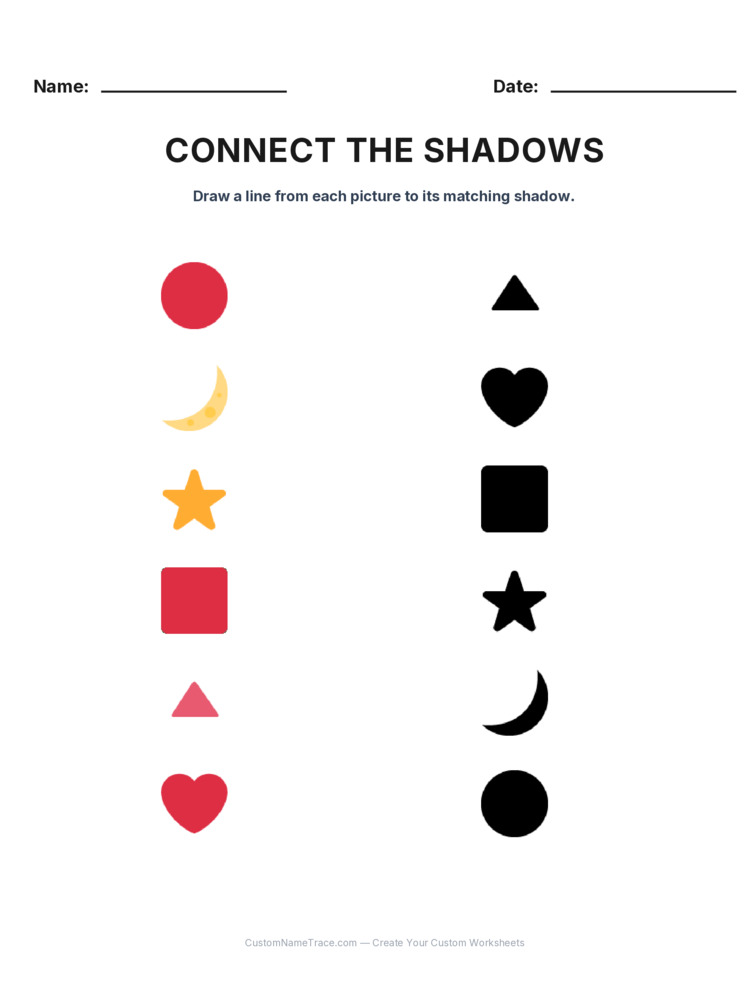
A numbered list of full-color pictures sits on the left side of the page, and a lettered list of solid black silhouettes sits on the right — a child writes the matching letter beside each number. What makes this harder than an ordinary matching worksheet is that every clue that usually helps a young child recognize an object — color, texture, internal detail — has been deliberately removed from one half of the pair. All that's left is shape, and shape alone is what has to carry the match.
Several everyday objects share very similar outlines once color and detail are stripped away — a cat and a rabbit sitting in profile, a car and a bus at certain angles — and this worksheet's silhouette sets are chosen with exactly that difficulty in mind rather than picking six wildly different shapes that would make the task trivial. A child has to genuinely study the outline's specific proportions — ear shape, body length, where a limb sits — rather than guessing from a rough category.
Each worksheet pairs six pictures with six silhouettes. That number is chosen so the silhouette list is small enough to scan fully before committing to an answer, but large enough that guessing isn't a reliable shortcut — a one-in-six chance of a lucky guess is low enough that genuine comparison remains the fastest path to a correct answer.
The skill underneath, and why it matters
This builds a specific, useful visual skill — recognizing what something is from its structure alone, independent of color or texture. That's closer to how letter recognition eventually works than it might seem: a lowercase 'a' is still an 'a' whether it's printed, handwritten, red, or blue, and a child has to recognize the underlying shape regardless of surface presentation. Connect the Shadows practices exactly that kind of abstraction, just with everyday objects instead of letters.
Recognizing objects, letters, and eventually words by their overall shape — independent of font, color, or handwriting style — is a skill children rely on constantly once formal reading begins, and it starts developing well before a single letter is ever introduced. A child who has practiced identifying an animal by its silhouette alone has already exercised the same ignore-the-surface-details, focus-on-the-structure muscle that later lets them recognize a word whether it's printed, handwritten, or set in a different font.
Helping a stuck child
If a child is guessing rather than reasoning through the silhouettes, have them describe each numbered picture's outline out loud first — "it has two pointy ears and a long tail" — before looking at the lettered shadows at all. That converts the task into: find the silhouette matching a description they just generated themselves, which is a much more tractable version of the same problem than eyeballing six silhouettes cold and hoping one looks right.
A child who consistently confuses two specific silhouettes — a cat and a rabbit, say, or a car and a bus — isn't failing the puzzle so much as revealing exactly which structural details they haven't learned to attend to yet: ear shape and proportion in the animal pair, roofline and window count in the vehicle pair. Rather than simply supplying the correct letter, pointing out the one specific structural feature that distinguishes the two ('look at how long the ears are compared to the head') turns a repeated mistake into a specific, teachable moment rather than a guess corrected at random.
After a child completes the page, asking them to justify just one or two of their matches out loud — "how did you know that shadow was the rabbit?" — distinguishes real outline-based reasoning from a correct answer arrived at by chance. A child who can point to a specific feature (the ear shape, the tail length) that led to their answer has genuinely practiced the skill; one who shrugs may have gotten lucky on an otherwise difficult match, which is worth knowing before assuming the skill is solid.
Games to play before and after the worksheet
Away from the page entirely, a quick warm-up game builds the same skill in a more playful form: hold up a familiar object, then trace its outline against a wall using a flashlight and ask a child to guess what it is from the shadow alone. That direct, physical version of guessing an object from its outline primes exactly the visual habit this worksheet then asks for on paper — noticing shape and proportion when color and detail are stripped away — and it tends to make the printed version feel familiar rather than abstract the first time a child sees it.
For a child who finishes the page quickly and wants more, cutting out magazine or catalog pictures and tracing their outlines onto black paper creates a fresh, real-world version of the same puzzle using objects a child chooses themselves — a favorite toy, a pet, a piece of furniture from around the house. Making the silhouette-matching game reciprocal, where a parent or sibling draws a silhouette and the child guesses the object, also reverses the direction of reasoning in a way that reinforces the skill from the other side.
Where this leads
The core skill here — recognizing an object from its structural outline rather than surface features — reappears in a more abstract form throughout the rest of this site's Logic Worksheets, particularly in Grade 2's Complete the Pattern grids, which also require judging shapes by structure (not color) to find what belongs in a missing cell. A child comfortable with silhouette matching has already practiced separating "what shape is this" from "what does this look like on the surface," which is the same underlying move.
Every numbered Connect the Shadows worksheet uses a fresh set of six objects, so a child who wants more practice never re-solves a set they've already matched from memory. Print at full size — the silhouettes need to be large enough that subtle outline differences (a slightly longer tail, a rounder ear) remain visible rather than getting lost at a shrunk print scale.
Connect the Shadows often takes noticeably longer to complete than this site's other Pre-K puzzles, and that's expected rather than a cause for concern — matching six items against six silhouettes by outline alone is a genuinely more demanding visual task than spotting one mismatch in a row of four. Giving it more time, or splitting it across two shorter sessions rather than expecting it to match the pace of a quicker worksheet, respects what the puzzle is actually asking for.
It's tempting to jump in with the answer when a child stares at the silhouette list for a long stretch without writing anything, but that pause is often exactly where the real reasoning is happening — comparing an outline mentally against six candidates takes genuine time, especially the first several times a child encounters this format. Giving a full, unhurried minute or two before offering any hint (even a gentle one, like suggesting they describe the outline out loud) respects that the visual comparison itself, not just the final answer, is the point of the exercise, and stepping in too early trades away the practice for a faster but less useful correct answer.
Because each numbered worksheet stays fixed rather than reshuffling, returning to a previously completed Connect the Shadows page weeks later — without mentioning it's a repeat — is a genuinely useful way to check whether the underlying skill has actually stuck, separate from whether a child simply remembers the specific answers. A child who solves it just as carefully and correctly the second time, reasoning through the outlines fresh rather than reciting memorized letters, has demonstrated real, durable skill rather than short-term recall of one particular page.