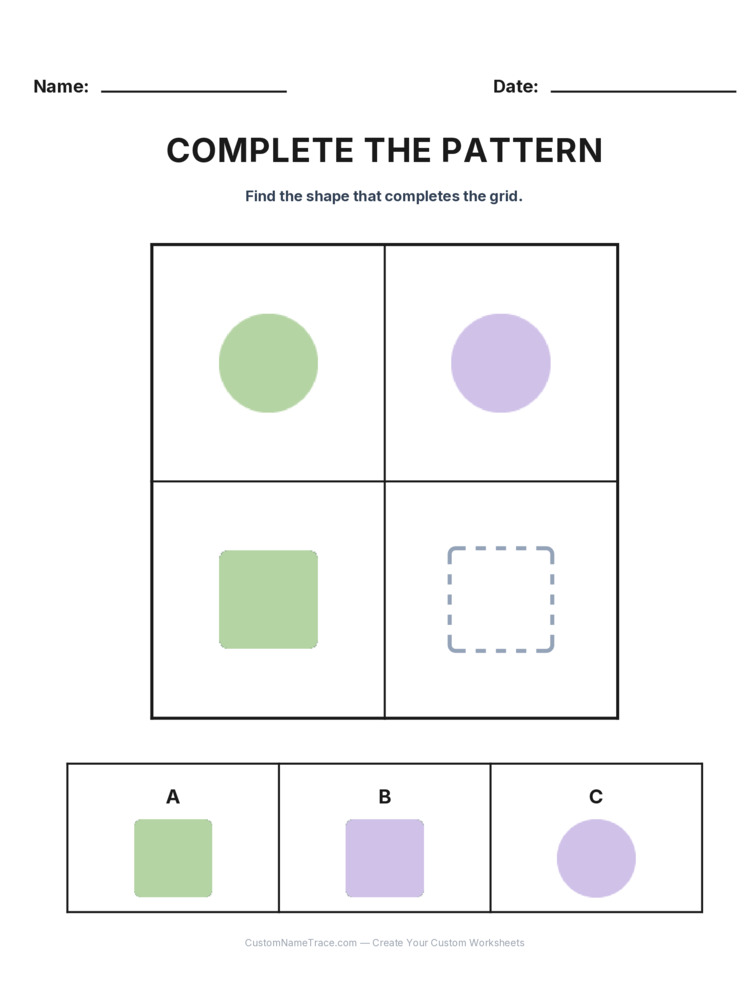
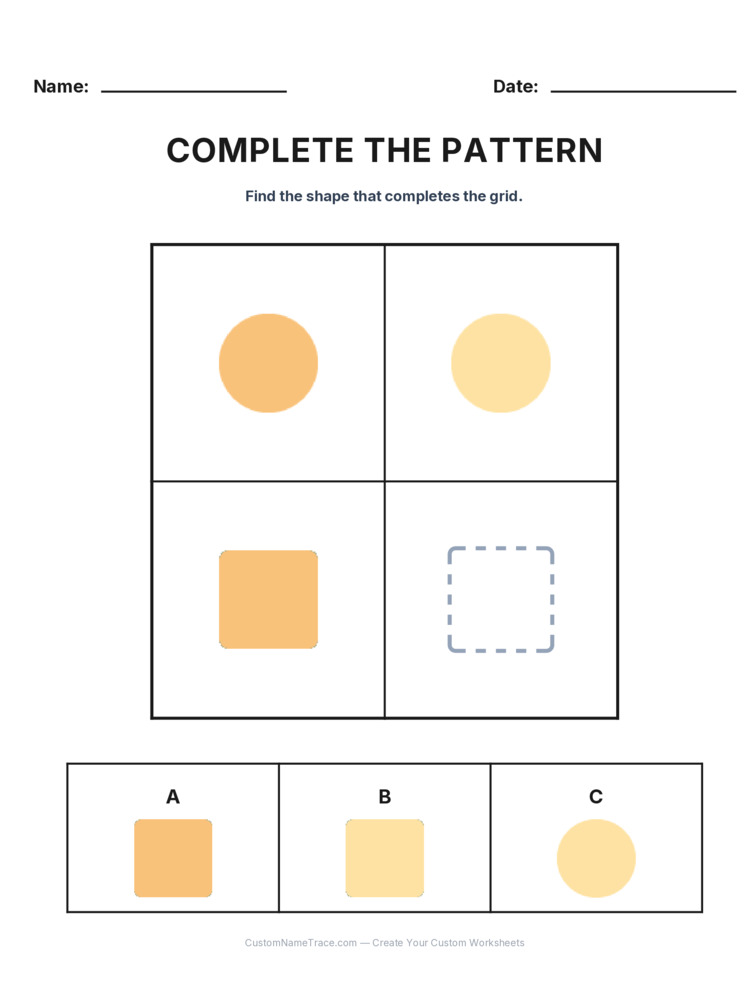
Two rules, one blank cell
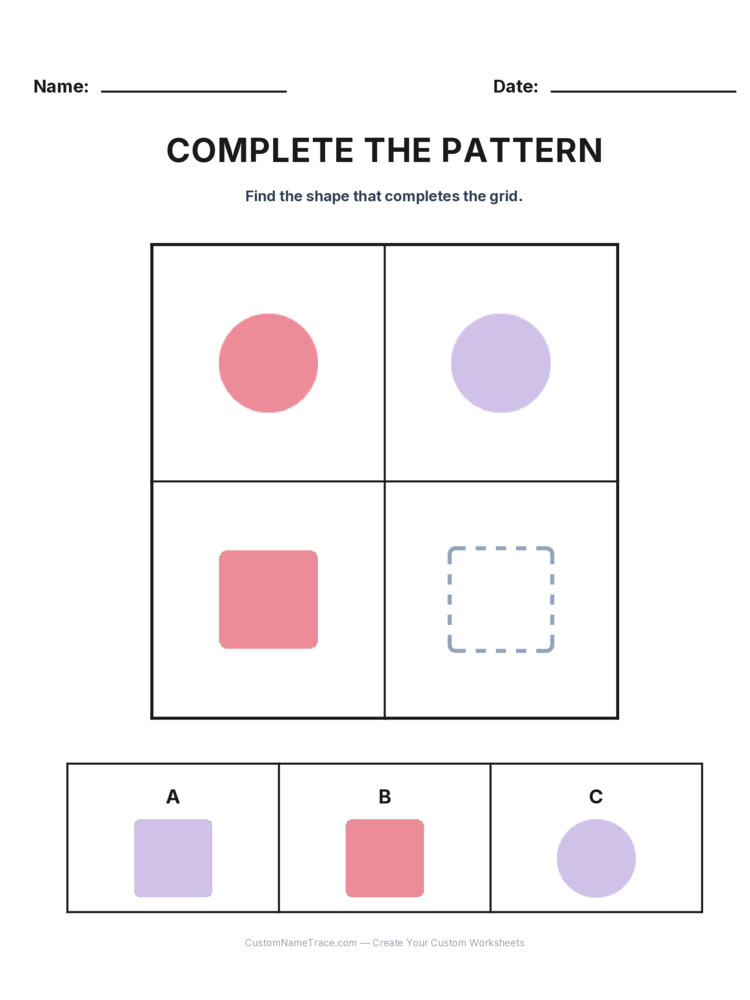
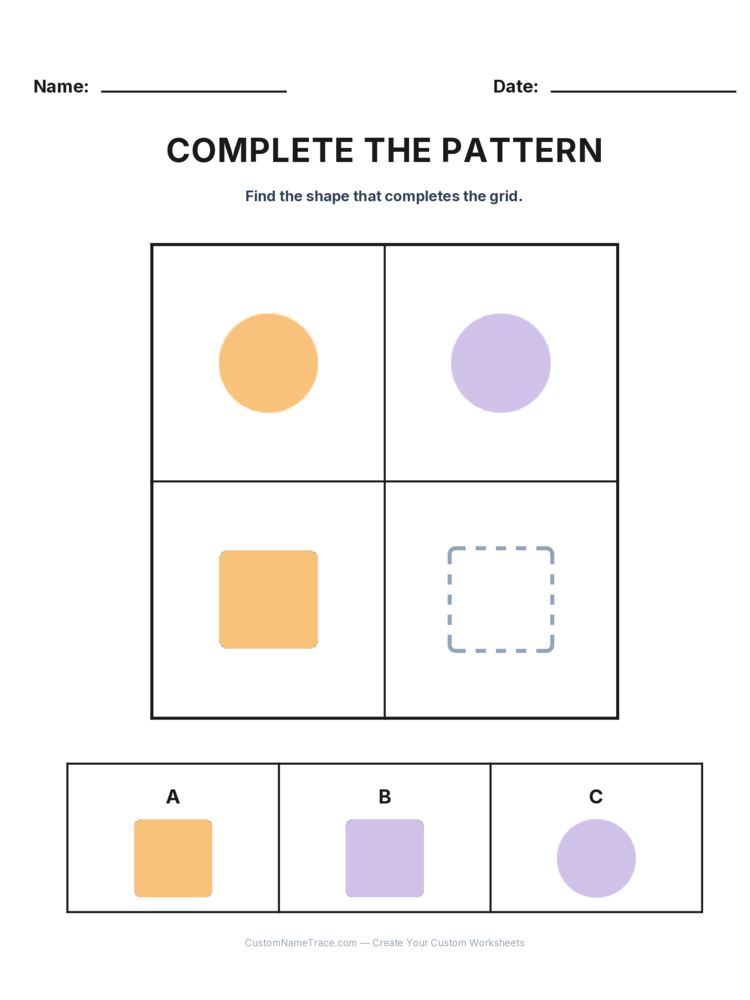
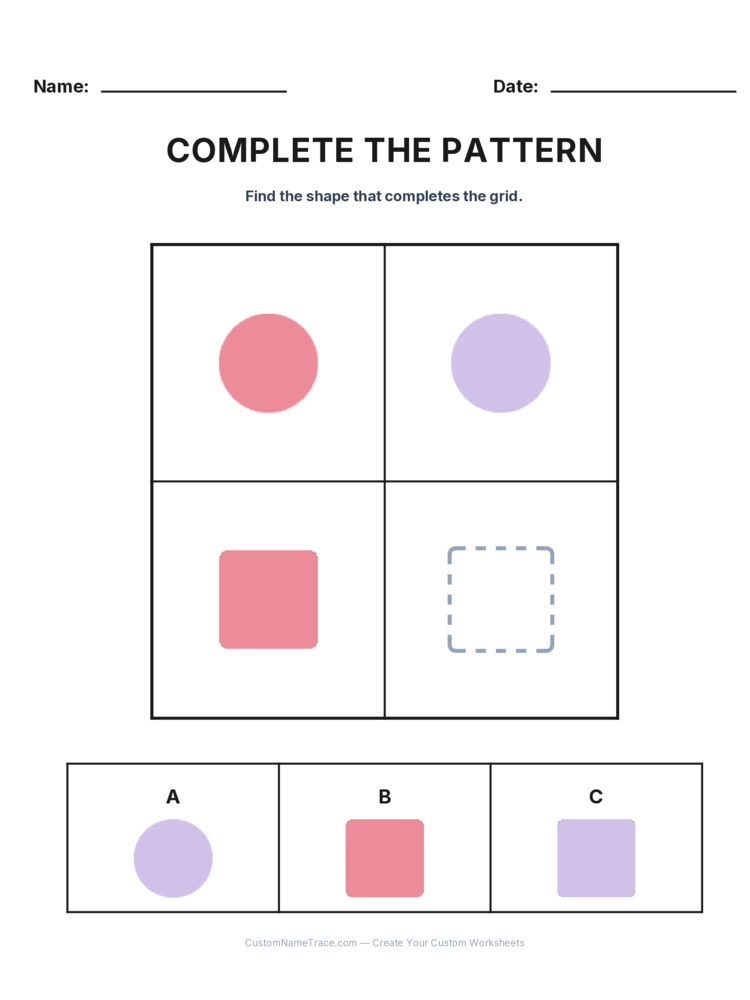
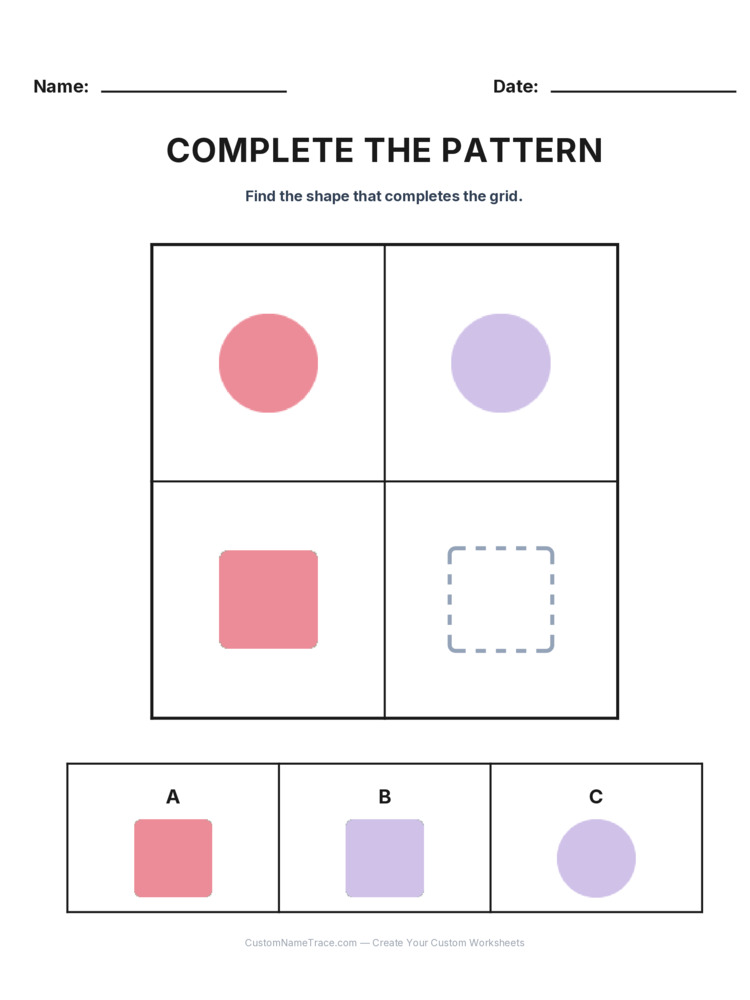
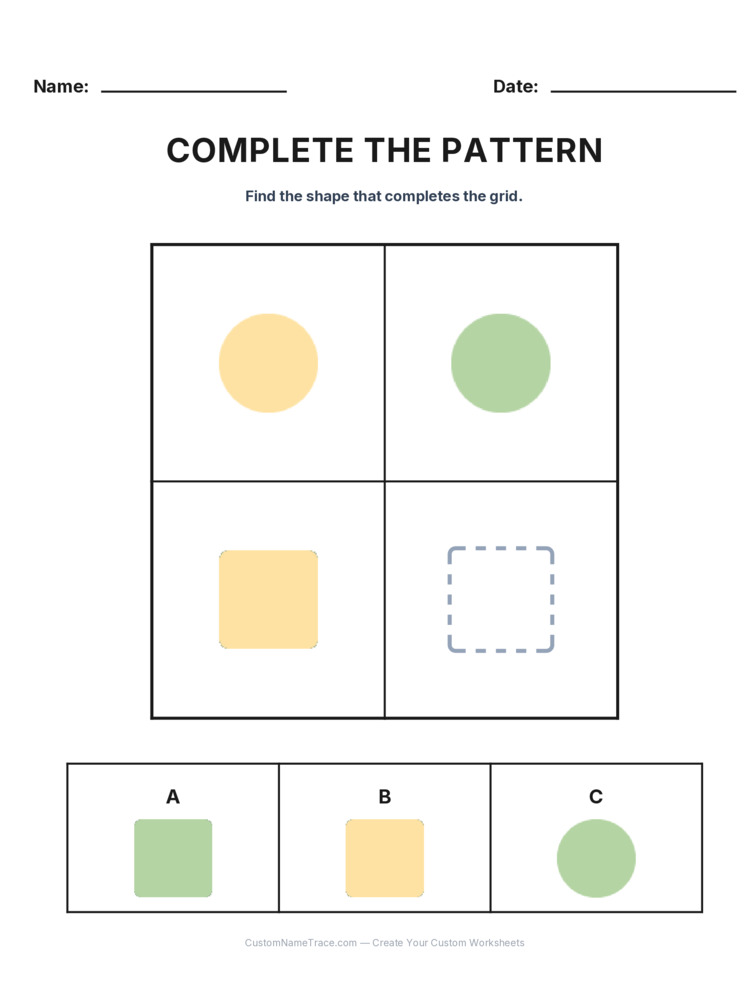
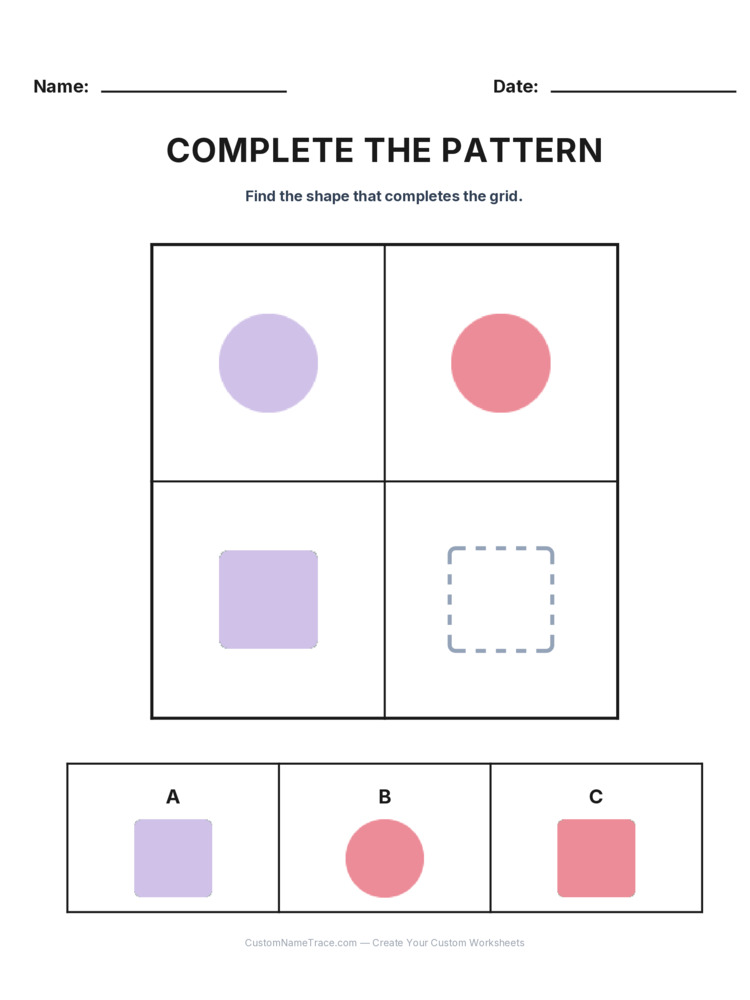
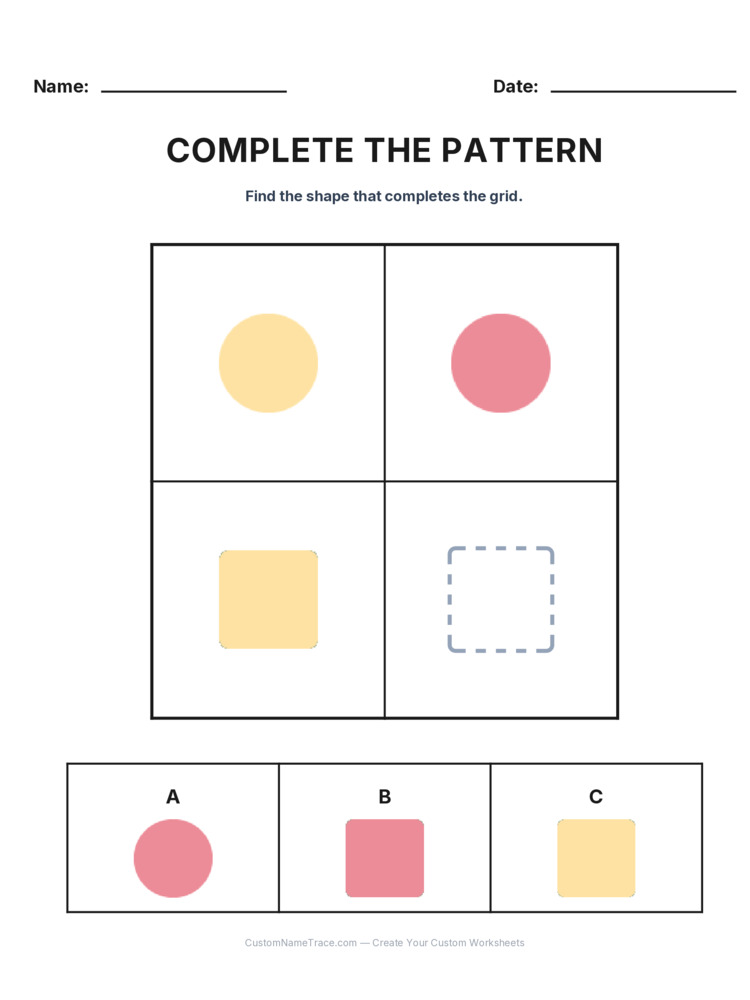
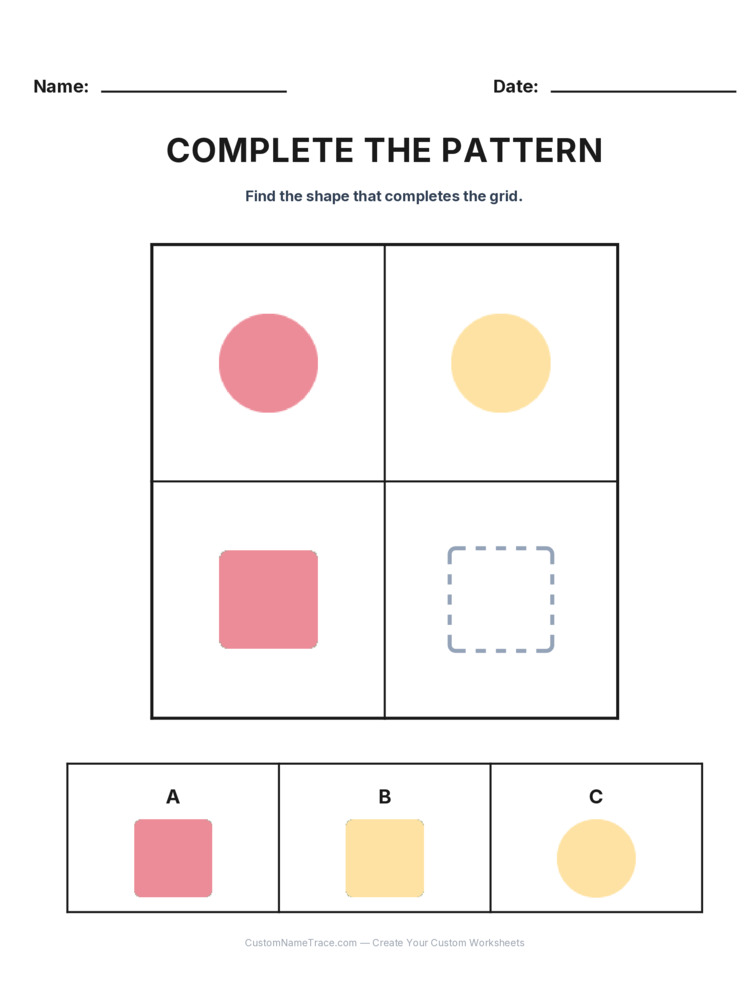
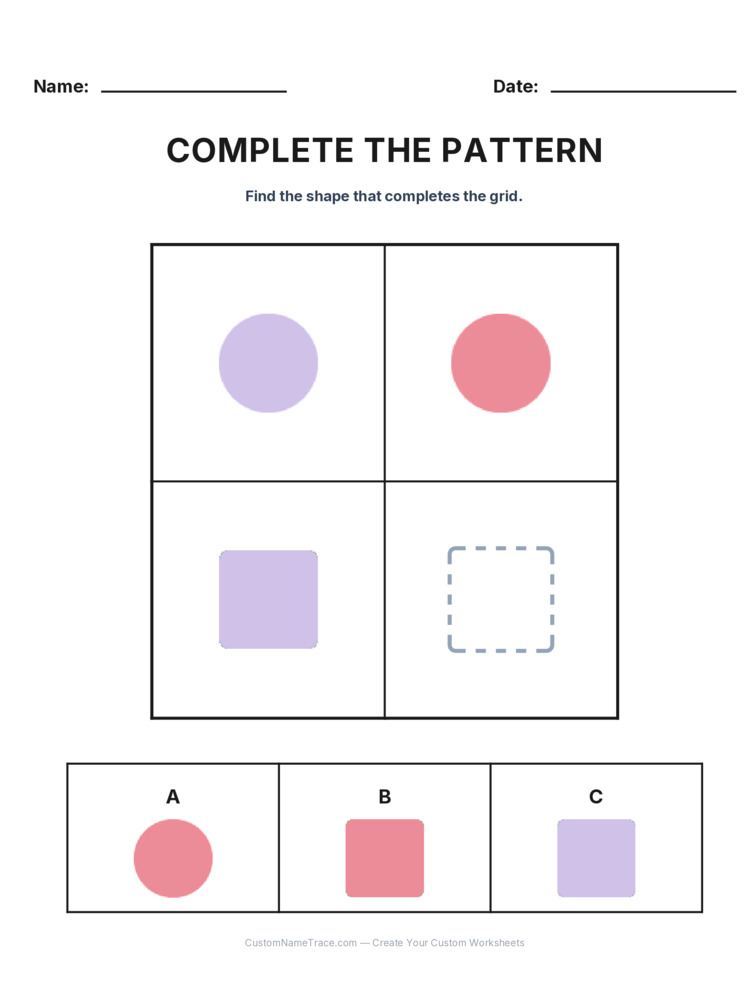
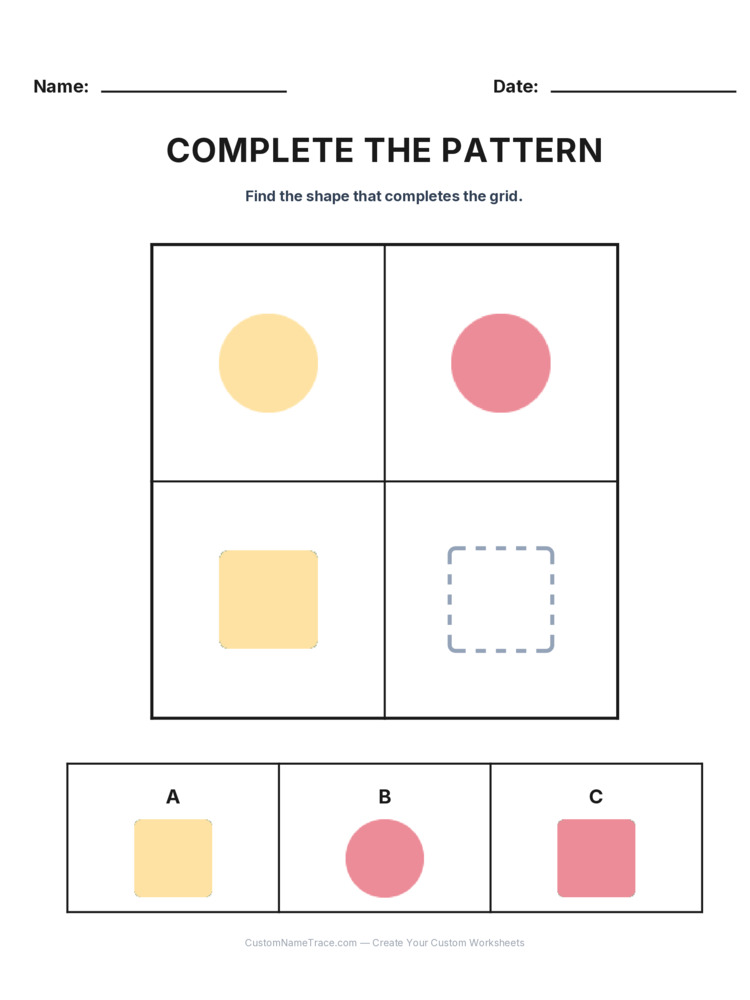
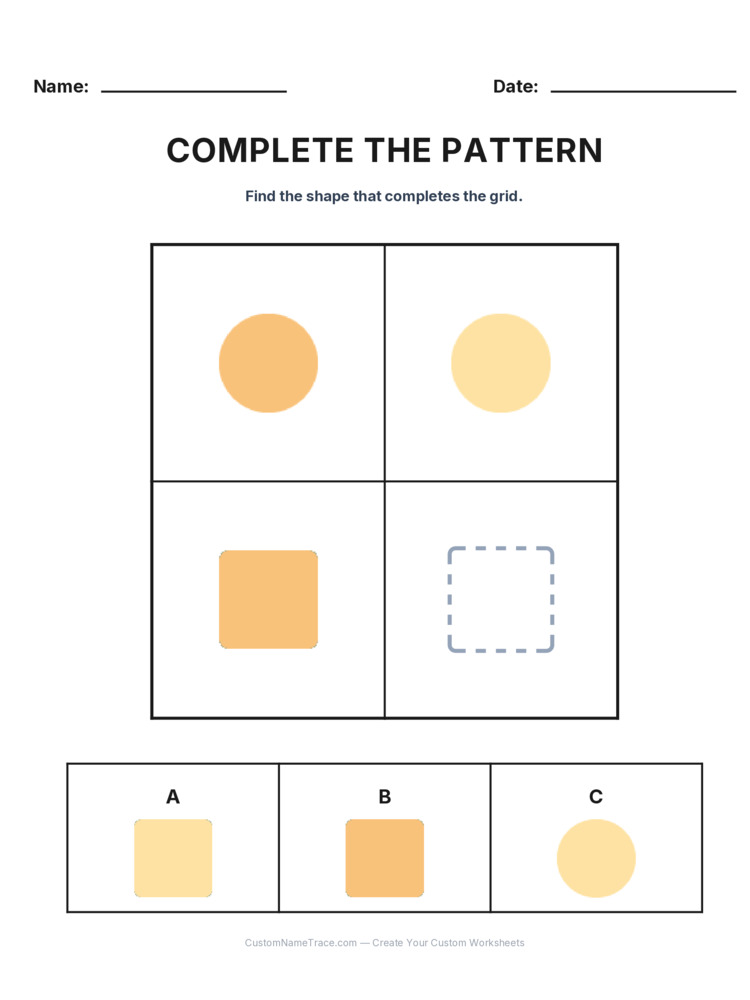
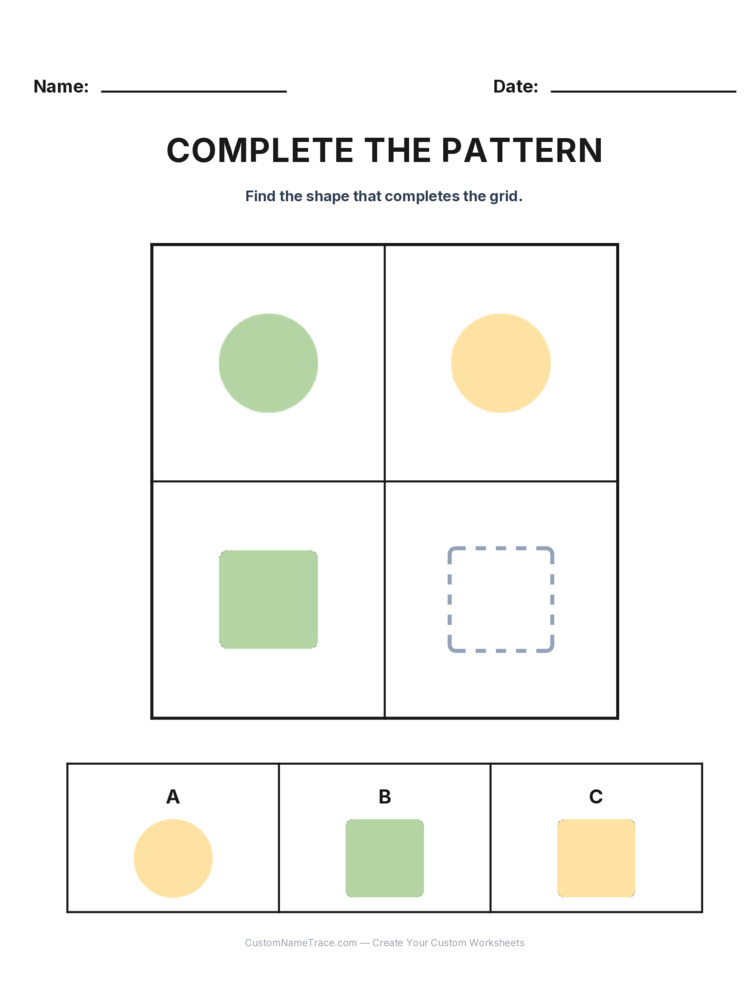
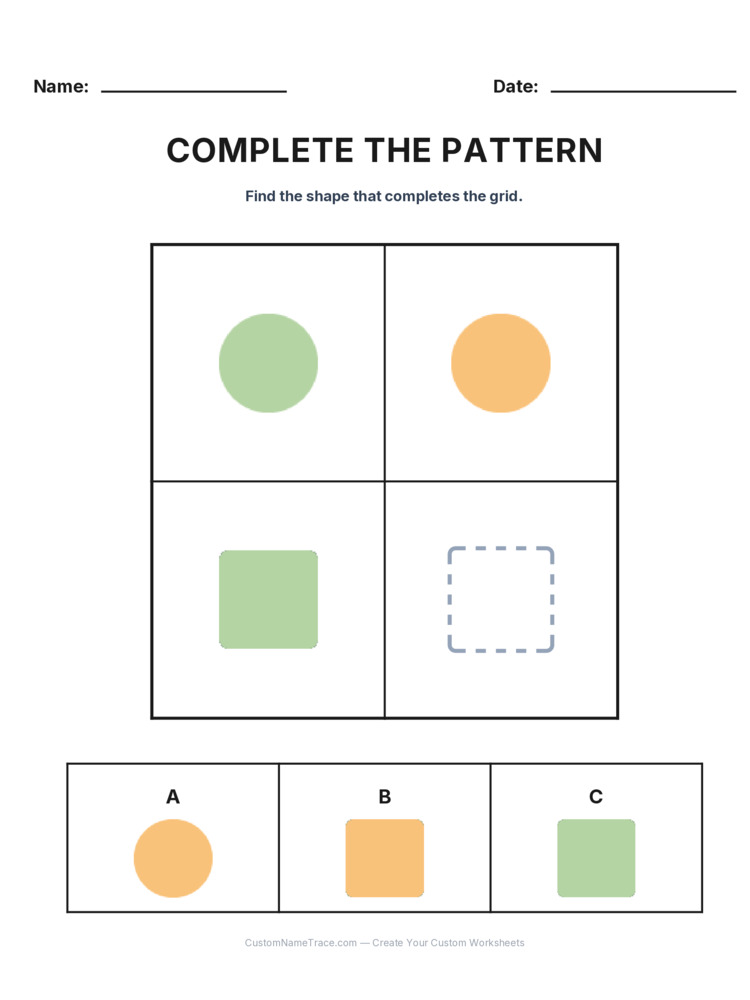
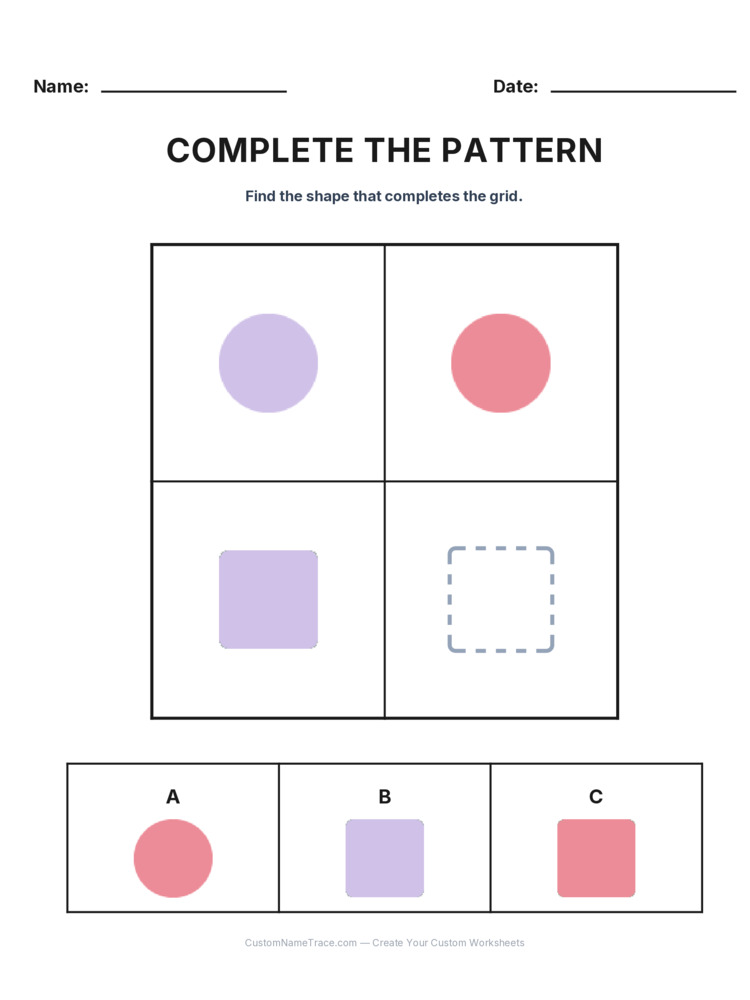
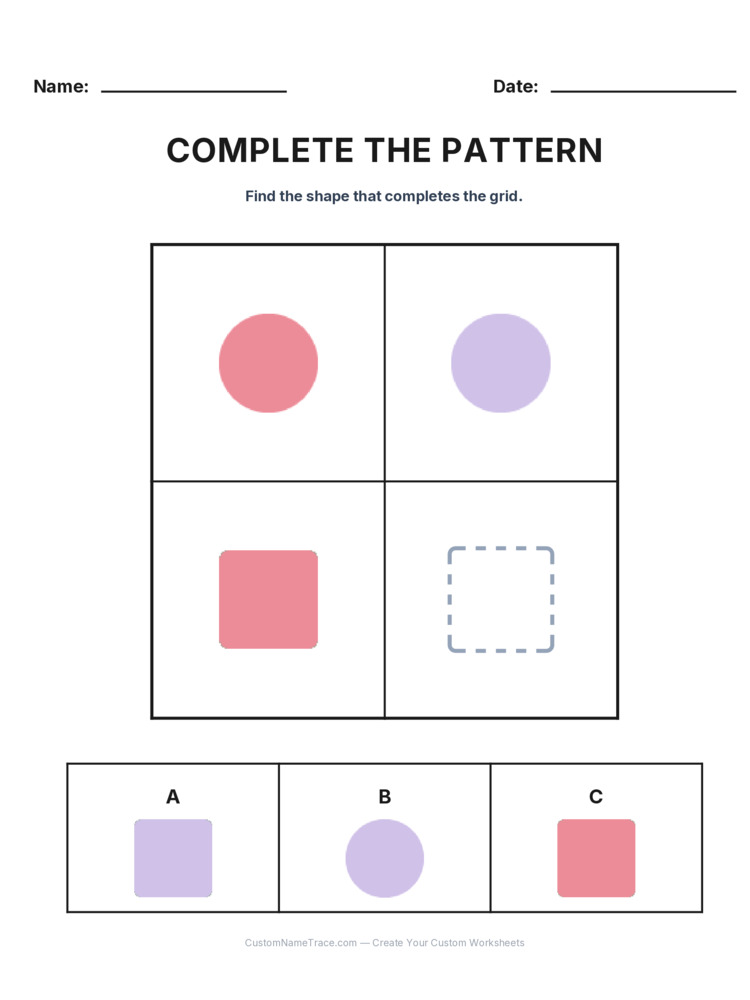
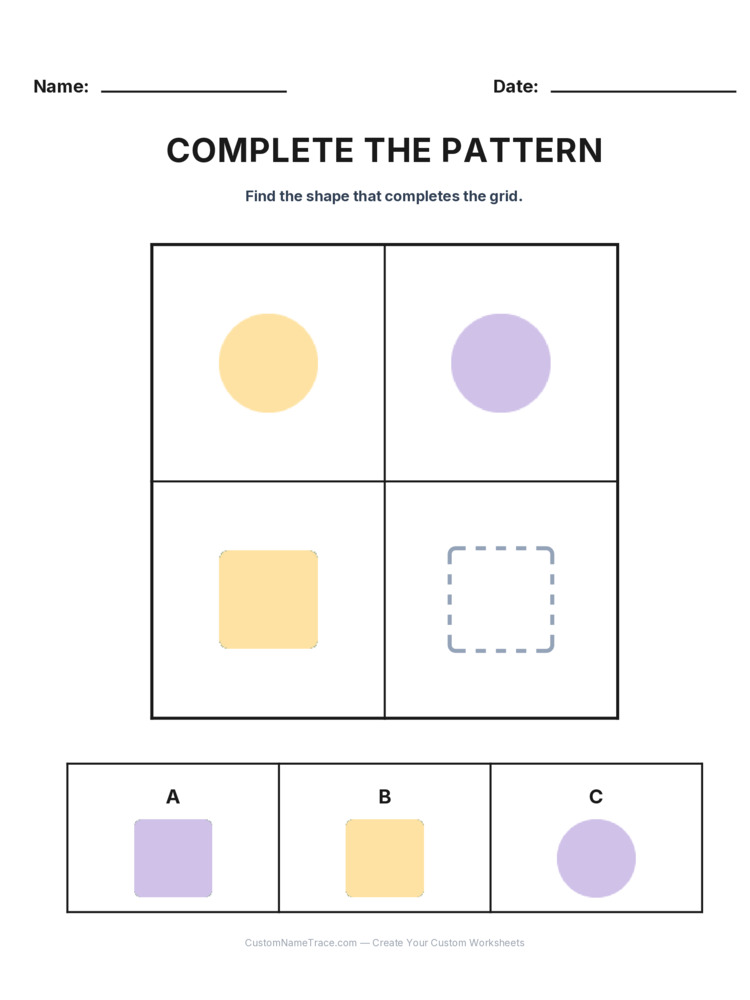
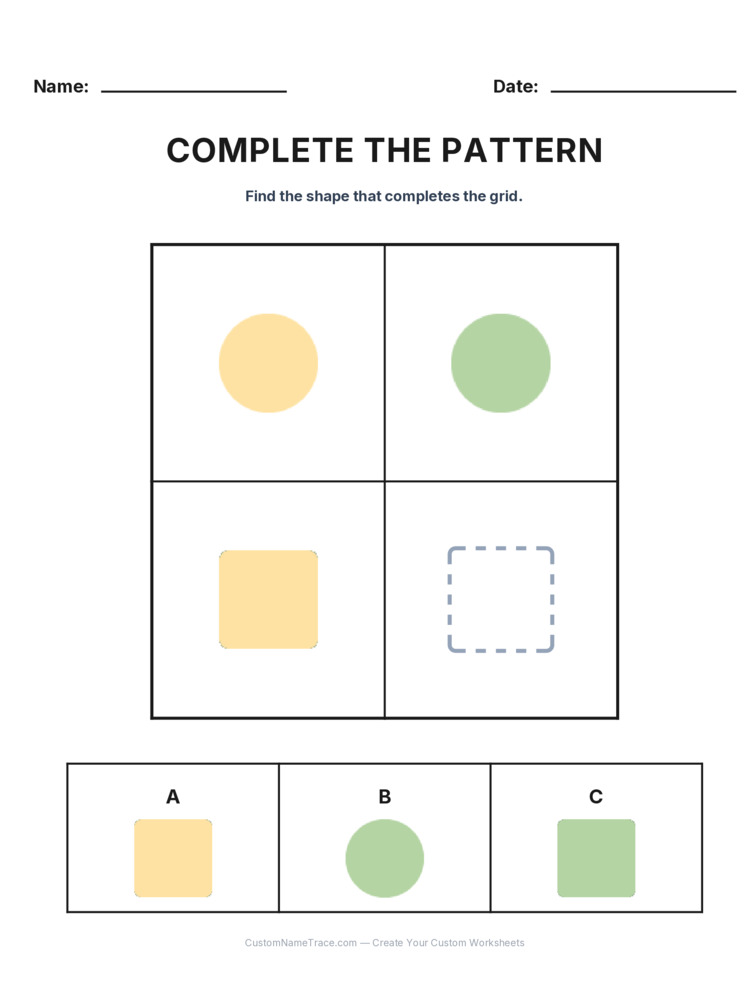
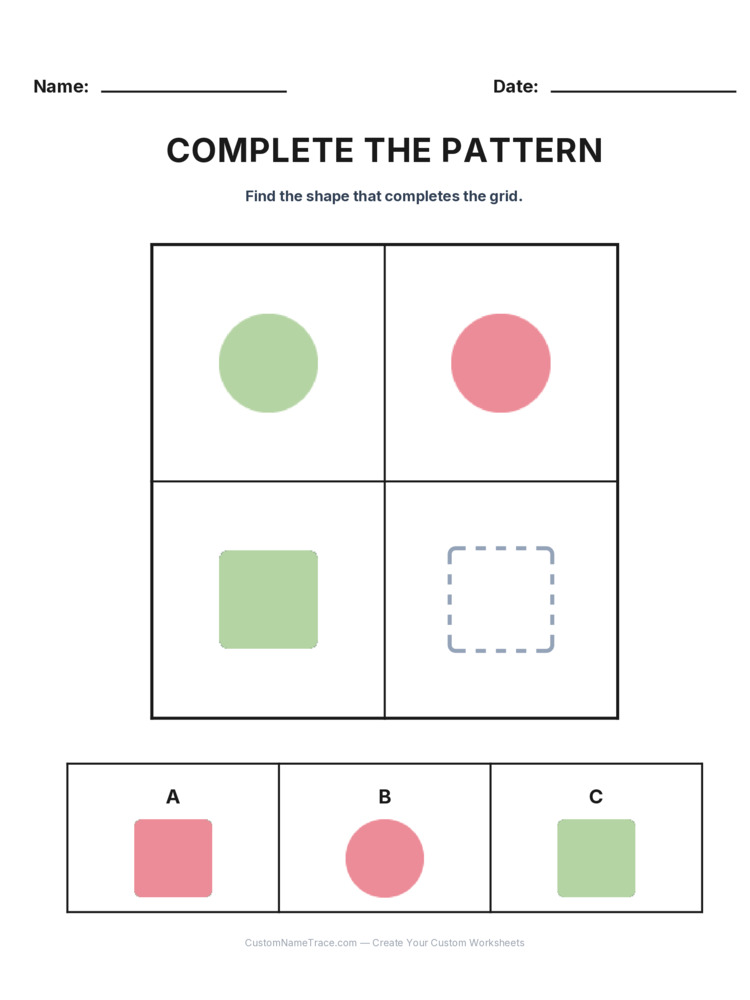
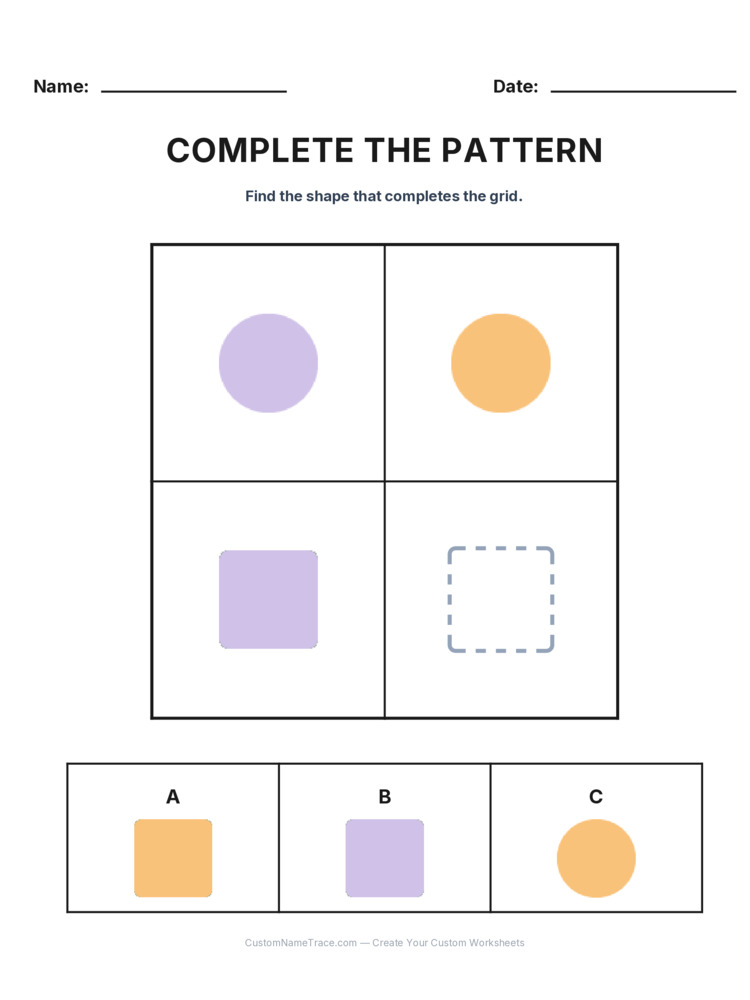
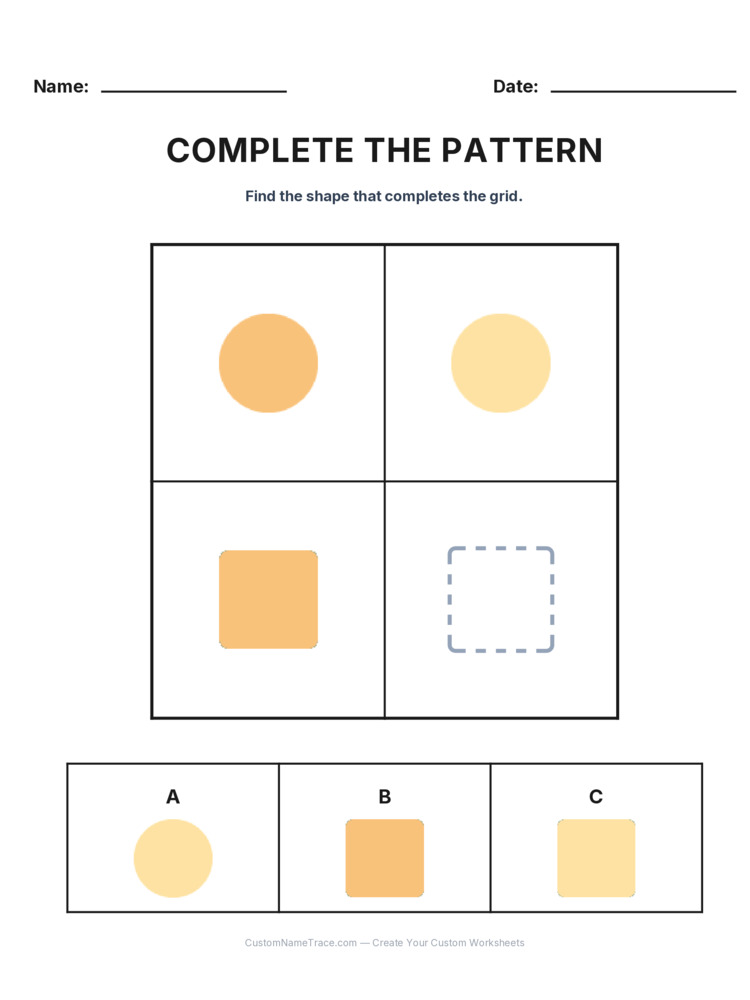
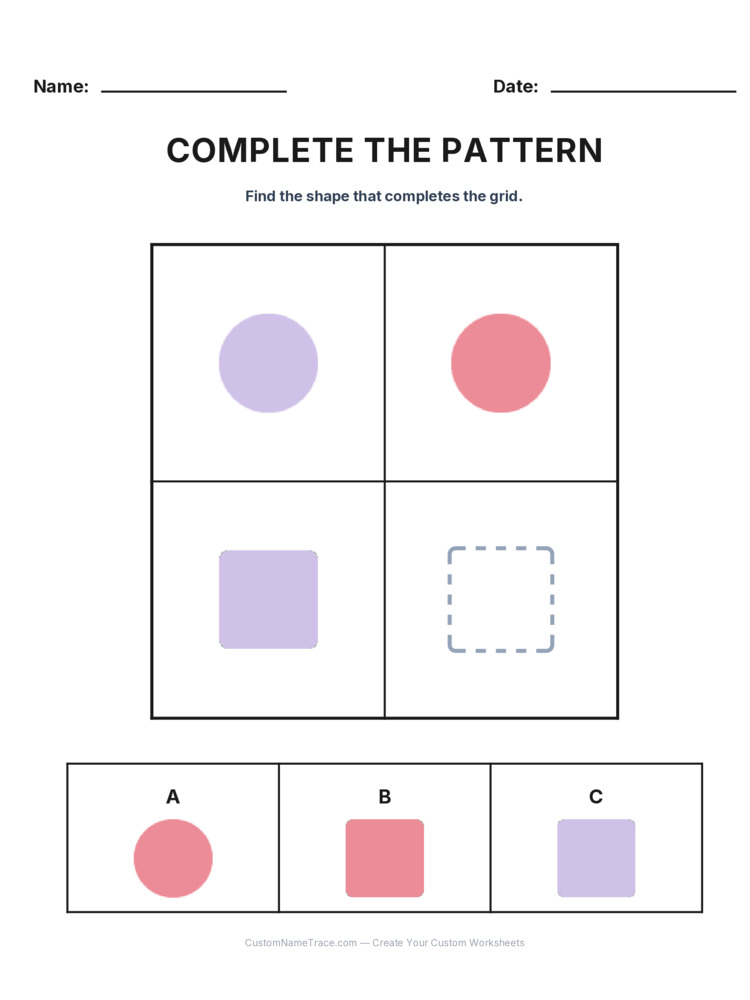
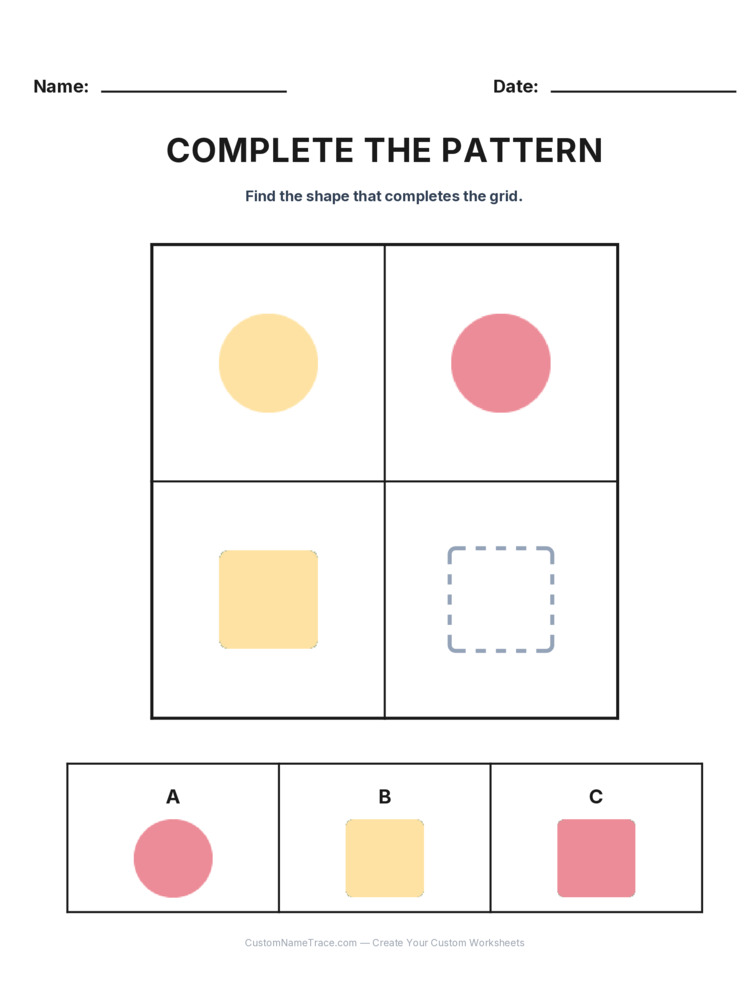
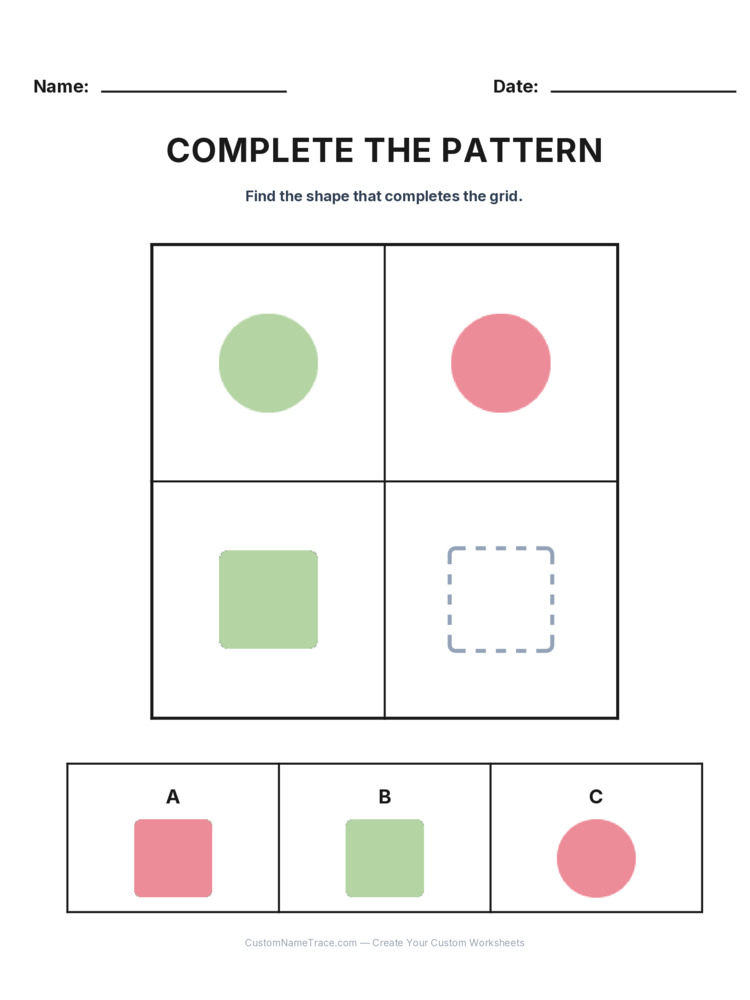
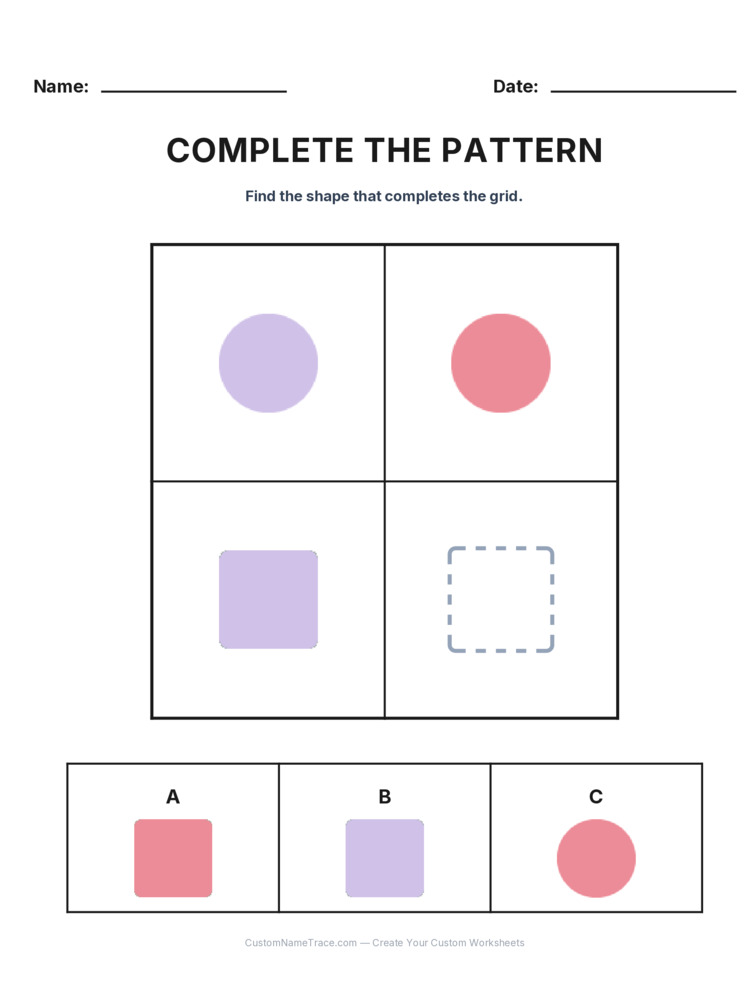
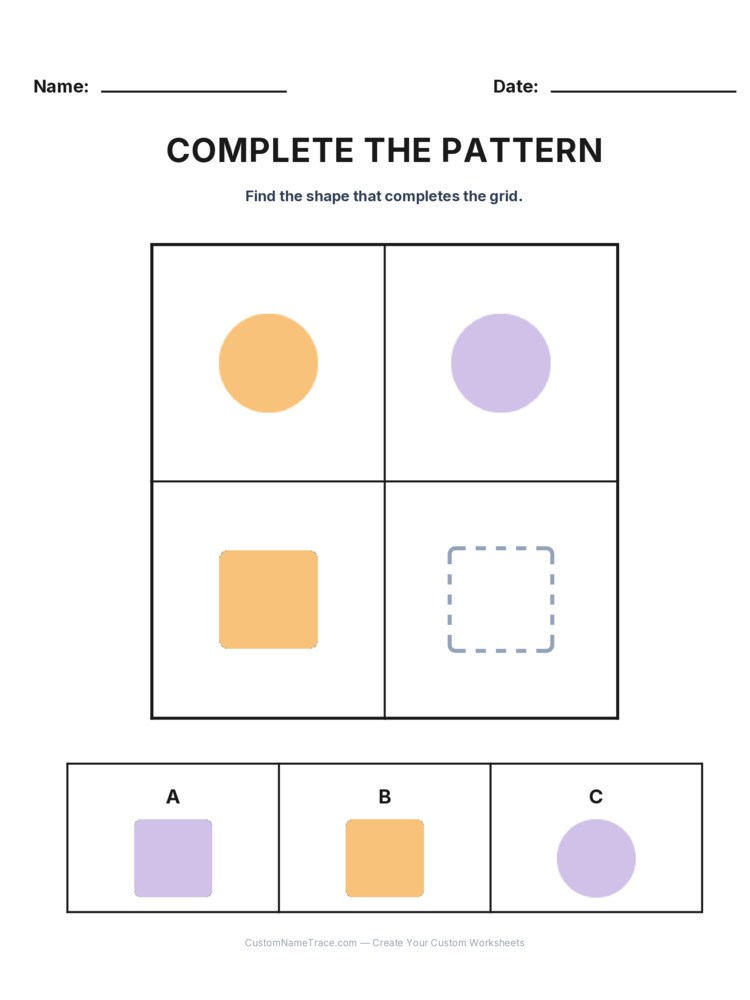
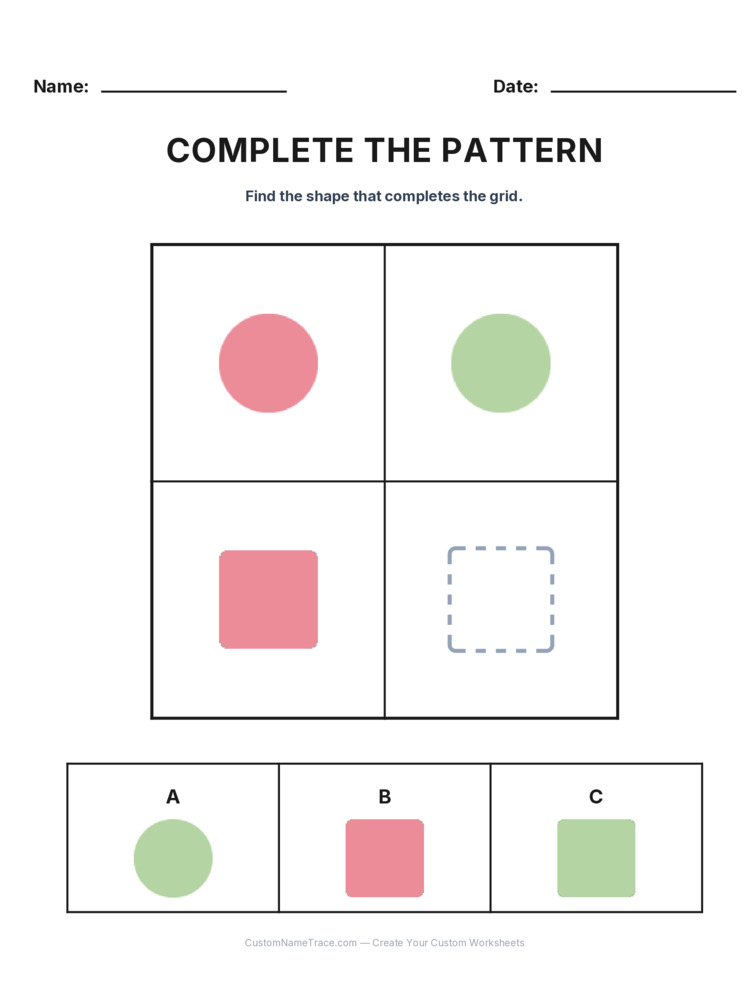
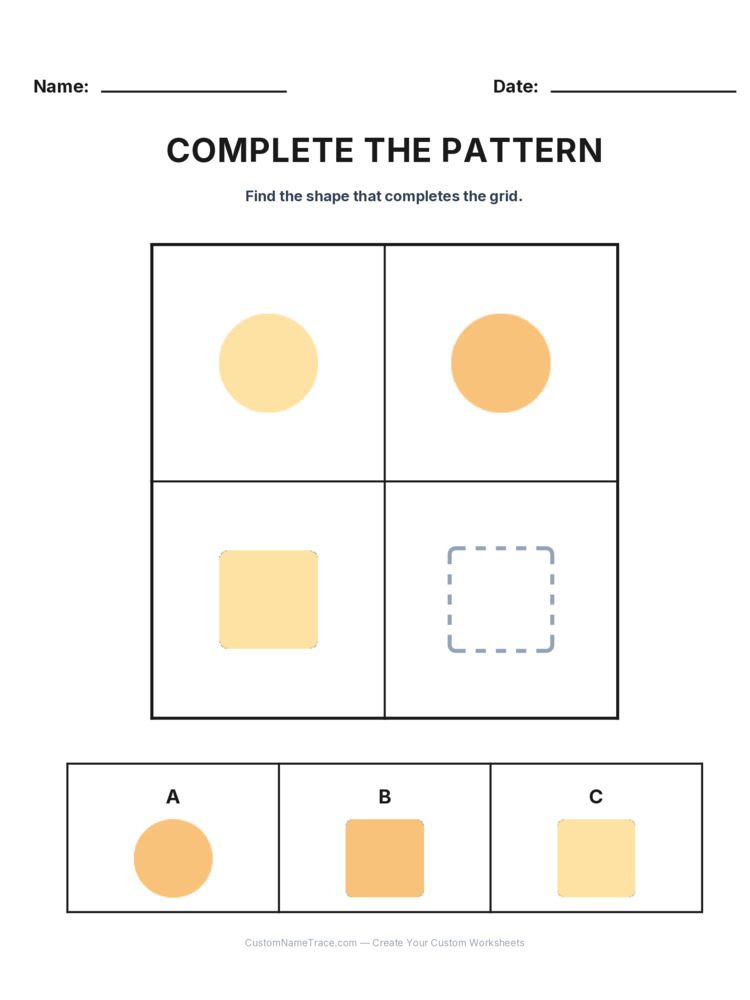
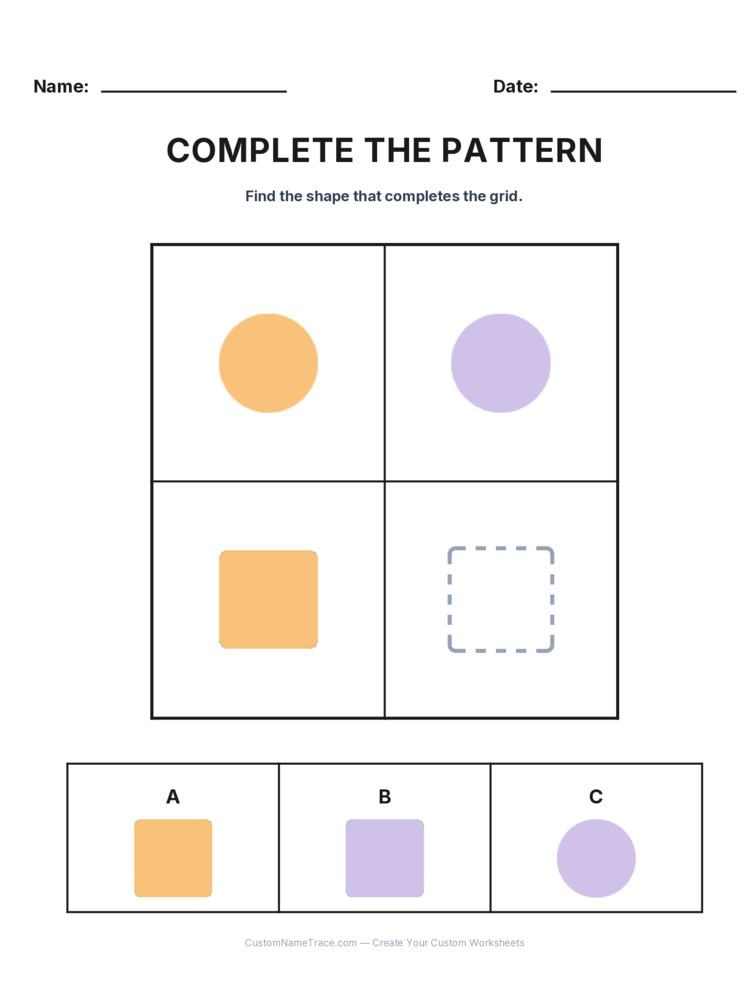
A small 2x2 grid is built from two categories at once — typically a shape and a color, arranged so every row shares one shape and every column shares one color. One cell is left blank, and the task is to work out what belongs there using both the row's rule and the column's rule together, then pick the correct answer from three lettered options. This is the first puzzle format on the site that genuinely can't be solved by comparing one picture to another — it requires holding two separate rules in mind and satisfying both at the same time.
Every logic puzzle earlier in this site's progression — Odd One Out, Size Sorting, Find and Cross Out — asks a child to apply exactly one rule at a time. Complete the Pattern is the first to demand two simultaneously, and that combination is a genuinely different cognitive task, not just a harder version of the same one: a child has to identify each rule separately, then find the single answer option that satisfies both, rather than checking a list of options against one condition.
Shape and color are chosen as the two categories here because both are instantly, unambiguously identifiable at a glance — there's no room for a child to argue about whether a triangle is really a triangle, the way there might be with a more subjective property. That precision keeps the puzzle's difficulty concentrated entirely in the two-rule reasoning itself, rather than adding a second, unrelated source of confusion about what the categories even mean, which would muddy exactly the skill this page is trying to isolate and build.
Teaching the grid concept, step by step
The most reliable approach is to name the row's rule and the column's rule out loud, separately, before looking at the answer options at all — "this row is all triangles, this column is all blue" — and only then check which lettered choice is both a triangle and blue. Skipping straight to comparing the three options against the grid, without first naming what's actually required, is the single most common source of wrong answers on this puzzle.
Drawing a blank 2x2 grid on a whiteboard and filling it in together with two simple, familiar categories — animals across the top, colors down the side — before ever showing the printed worksheet gives a child a chance to understand the row-and-column structure itself, separate from solving a specific puzzle. Once the grid concept (this row means this, this column means that) is solid, the actual worksheet becomes a matter of applying a structure they already understand rather than learning the structure and solving the puzzle at the same time.
Common mistakes, and why they happen
The two incorrect options are each built to satisfy exactly one of the two rules, not neither — one might match the row's shape but the wrong column color, and the other the right color but the wrong shape. That design forces genuine two-rule checking: an answer that "looks close" because it satisfies one condition is still wrong, and recognizing that a partial match isn't a real match is precisely the discipline this puzzle is built to teach.
A child who answers quickly and confidently but incorrectly has often locked onto just one of the two rules — usually whichever one is visually more obvious, like color — and treated it as the only requirement. Because a confidently wrong answer doesn't feel uncertain to the child giving it, this mistake is easy to miss without directly asking them to state both rules out loud afterward and check their answer against each one in turn.
If a child picks an option matching only one of the two rules, they've likely checked the grid against just one condition and stopped there. Ask them to check their chosen answer against both rules explicitly, one at a time, after they've picked it — "does it match the row? does it also match the column?" — rather than accepting the first option that seems to fit.
An answer that satisfies the row's rule but not the column's (or vice versa) is simply wrong, not partially right — there's no partial credit in a two-rule puzzle, since a real answer has to satisfy both conditions at once, and treating a one-rule match as "close enough" undercuts the exact discipline this worksheet is built to teach.
Extending this beyond the worksheet
Arranging real objects — buttons, blocks, small toys — into a physical 2x2 grid by two properties at once (color across the top, shape down the side) and leaving one spot empty for a child to fill lets them physically test candidate objects against both rules before committing, which is a more forgiving way to build the two-rule habit than committing to a printed answer immediately. Once that hands-on version feels comfortable, the printed worksheet tends to click faster.
For a child who's mastered the 2x2 version and wants more of a challenge before formal Grade 3 material, drawing a slightly larger 2x3 grid by hand — still just two categories, one extra column — on scratch paper is a natural, low-stakes way to stretch the same skill without needing a new worksheet. This isn't something the printed page itself asks for, but it's a genuinely appropriate extension for a child who's clearly ready for more, using nothing but a pencil and the same two-rule logic they've already built confidence with here.
Where this leads
A 2x2 grid is small enough for a child to reason through carefully, but it's structured exactly like the much larger constraint-grids used in classic logic puzzles and true Sudoku — cross-referencing a row's rule against a column's rule to determine one missing cell. Getting genuinely comfortable with that cross-referencing move at this small scale is what makes Grade 3's 4x4 Mini Sudoku approachable later, rather than an overwhelming jump from nothing.
Unlike Odd One Out or Size Sorting, where a fast, confident glance is often correct, this format genuinely punishes speed without verification — a rushed answer is more likely to satisfy only one rule than both. Building the habit of pausing to name both rules explicitly before answering, even once a child finds the puzzle easy, pays off directly when Grade 3's Venn Diagram Sort and Mini Sudoku raise the number of things to check at once even further.
A correct answer given without a clear explanation is worth gently probing rather than simply accepting — ask a child to point to the row and name its rule, then point to the column and name its rule, separately, after they've already answered. If they can do that cleanly, the reasoning is solid even if it happened quickly and silently; if they struggle to explain it, the correct answer may have come from a process of elimination among the three options rather than genuine two-rule reasoning, which is worth knowing before moving to a harder puzzle.
Three lettered options keep the puzzle focused on genuine two-rule verification rather than turning into a longer process-of-elimination exercise across many choices — with three options, a child has enough real alternatives that guessing isn't reliable, but not so many that checking every option against both rules becomes tedious rather than instructive. That balance is chosen deliberately to match what Grade 2 can reasonably work through in one sitting without the exercise dragging on past the point of genuine focus.
Every numbered variant uses a fresh combination of shapes and colors testing the identical two-rule reasoning, so a child who wants more practice at Grade 2's level always works through a genuinely new grid. Print at full size so the shapes and their colors stay clearly distinguishable — a shrunk or poorly printed page can make two similar colors harder to tell apart than the puzzle intends.