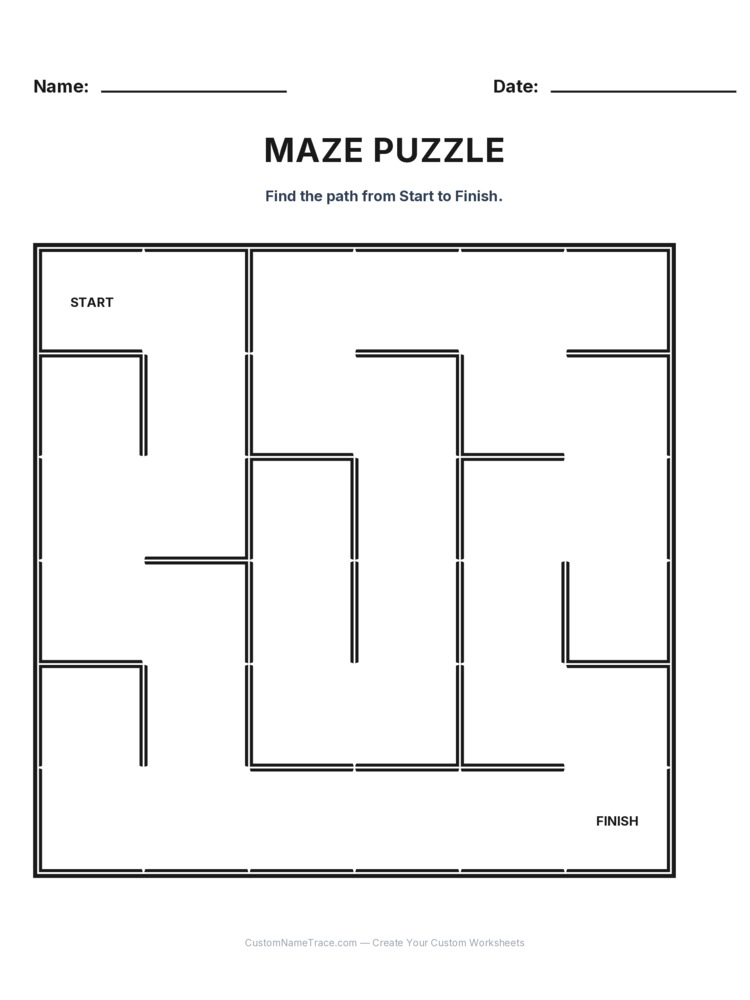
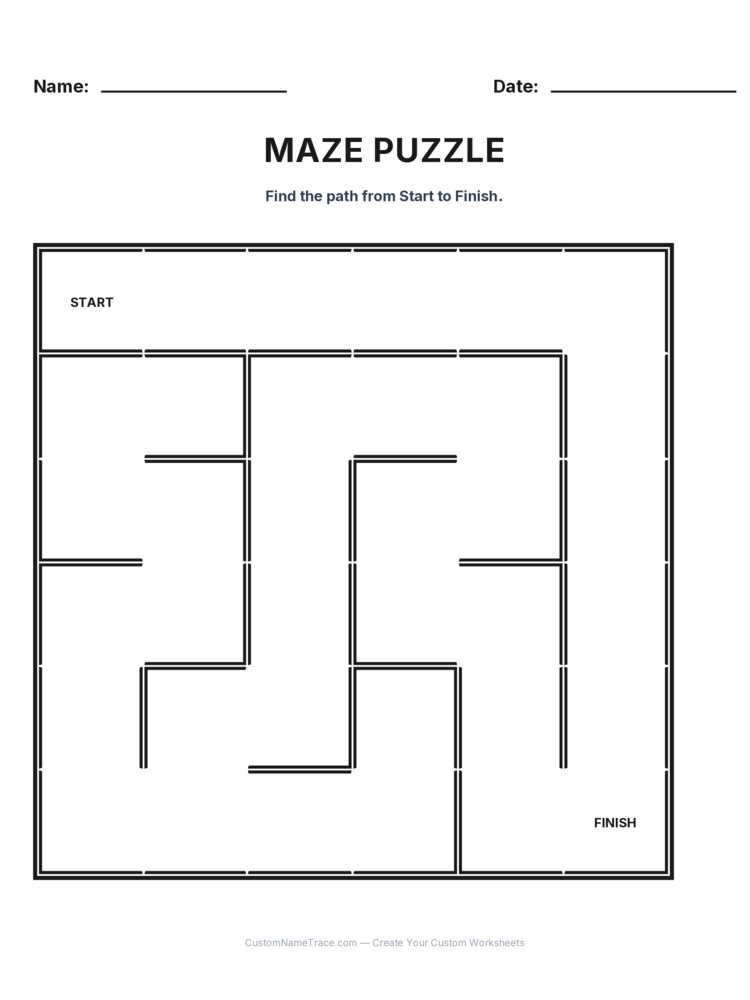
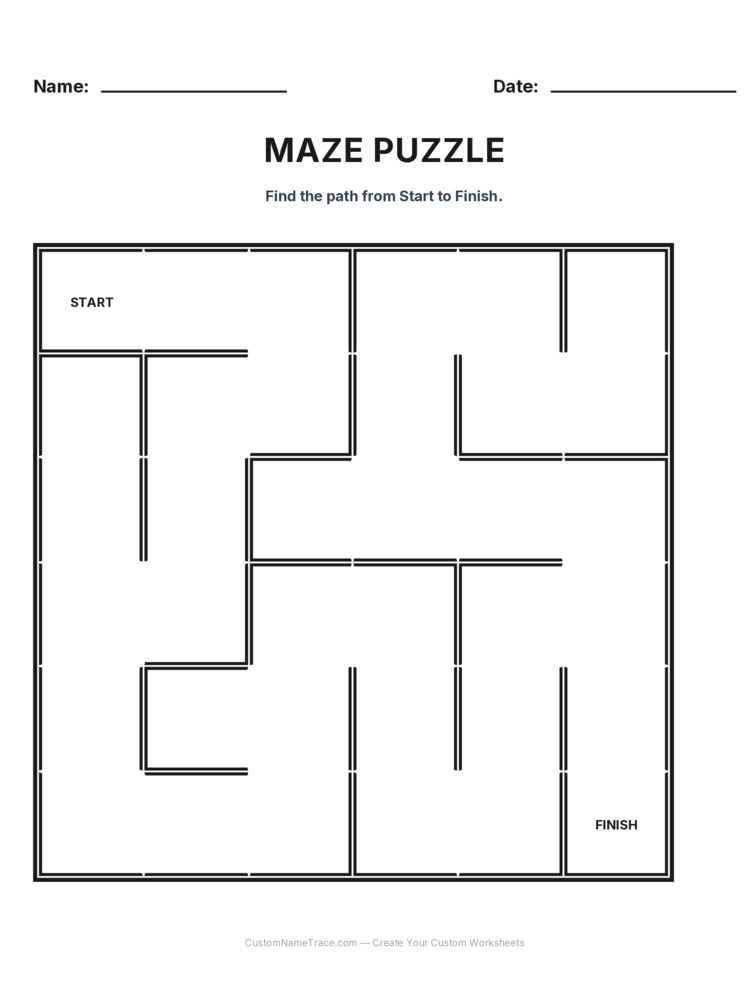
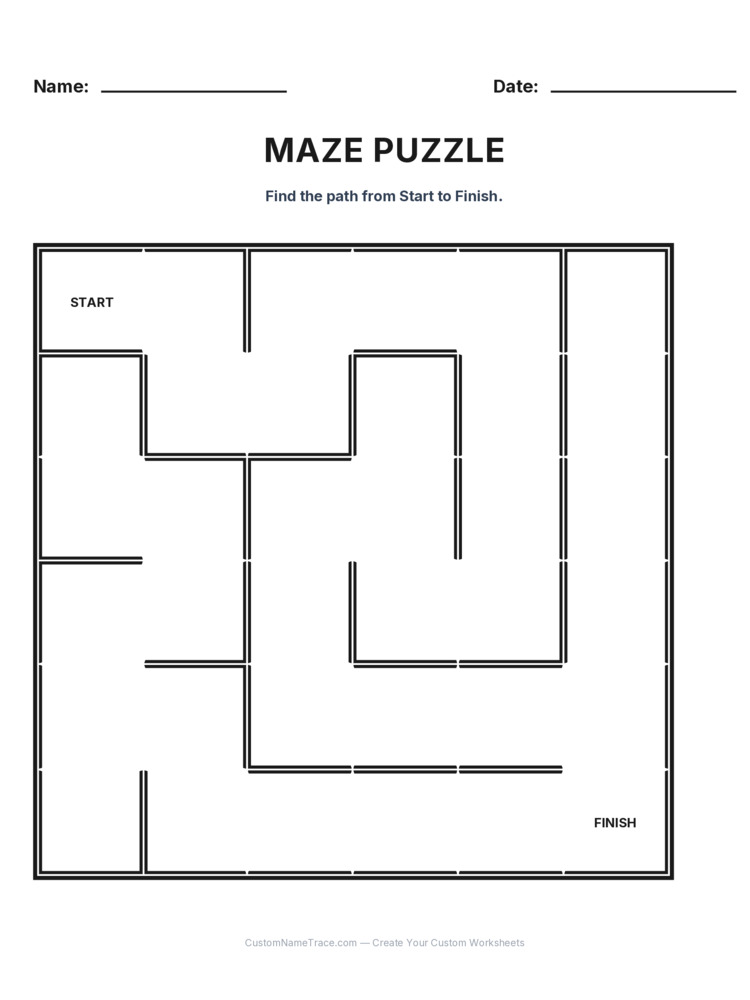
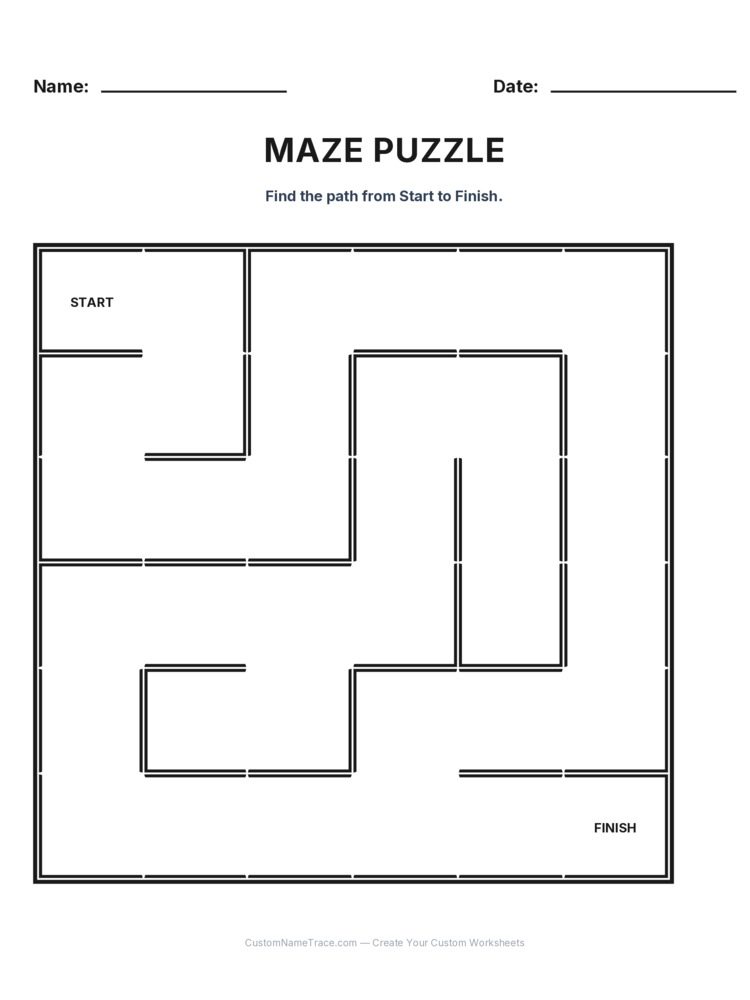
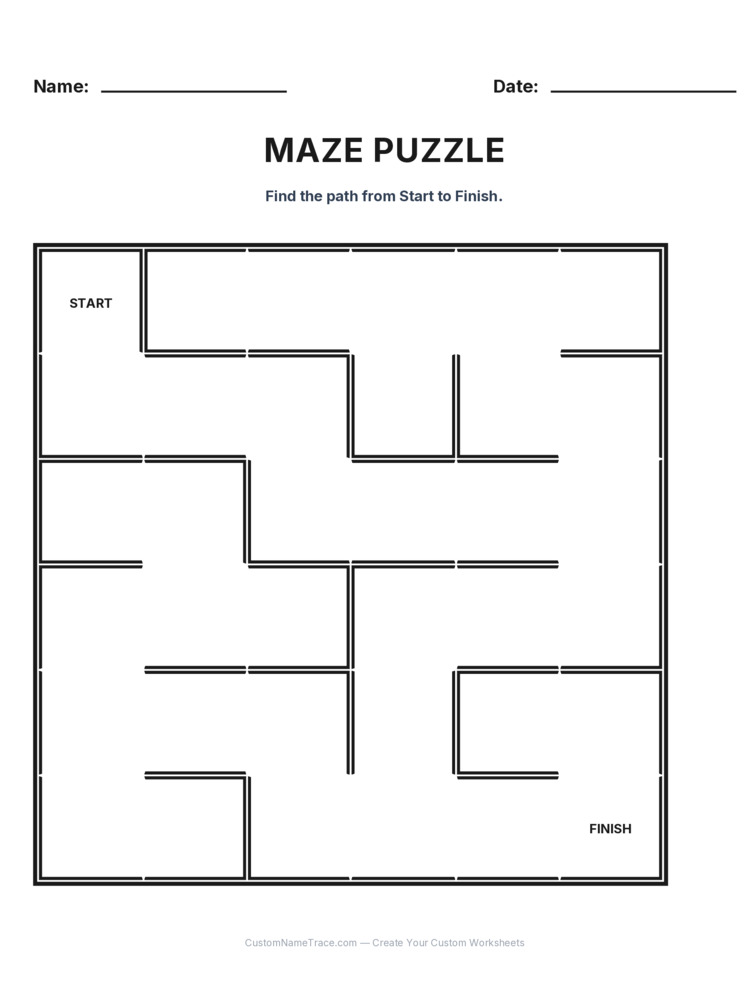
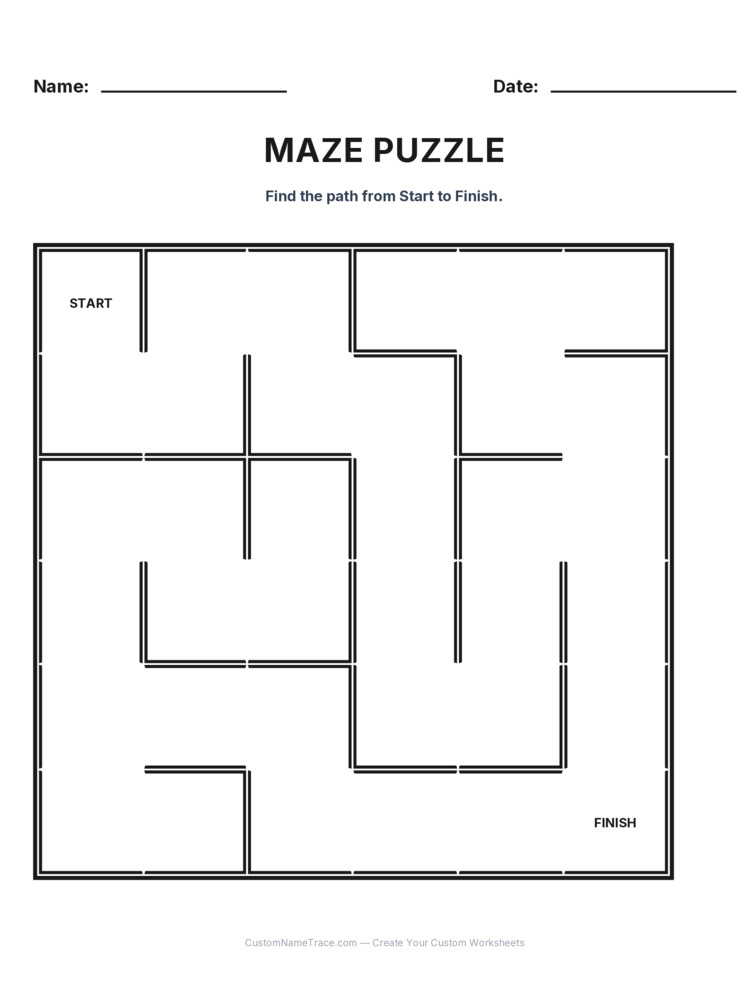
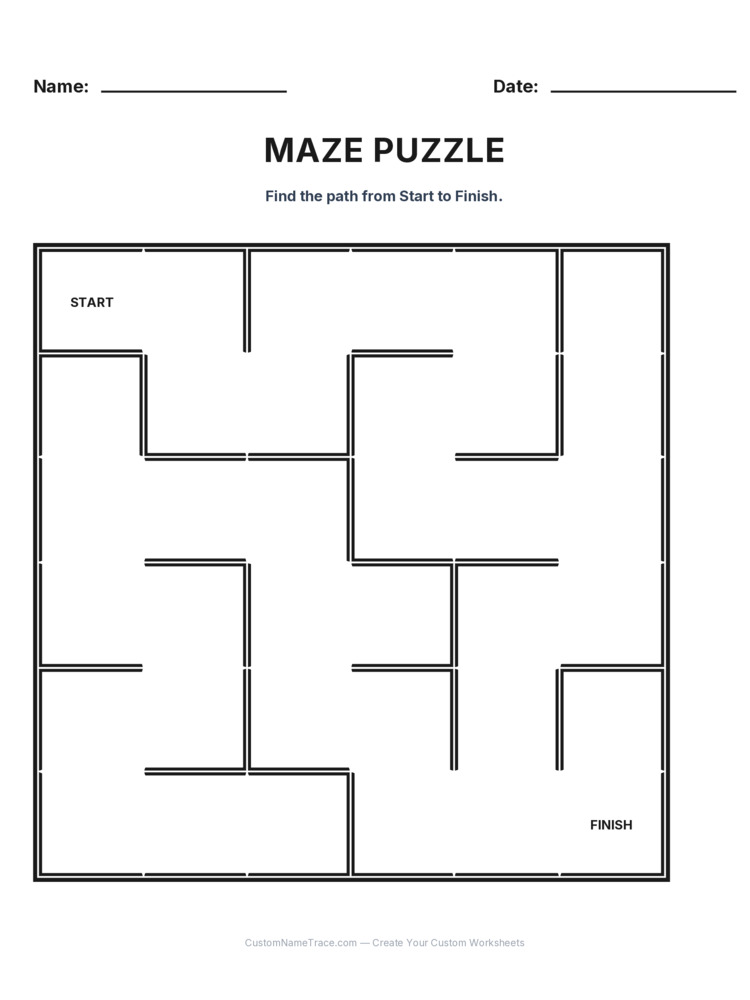
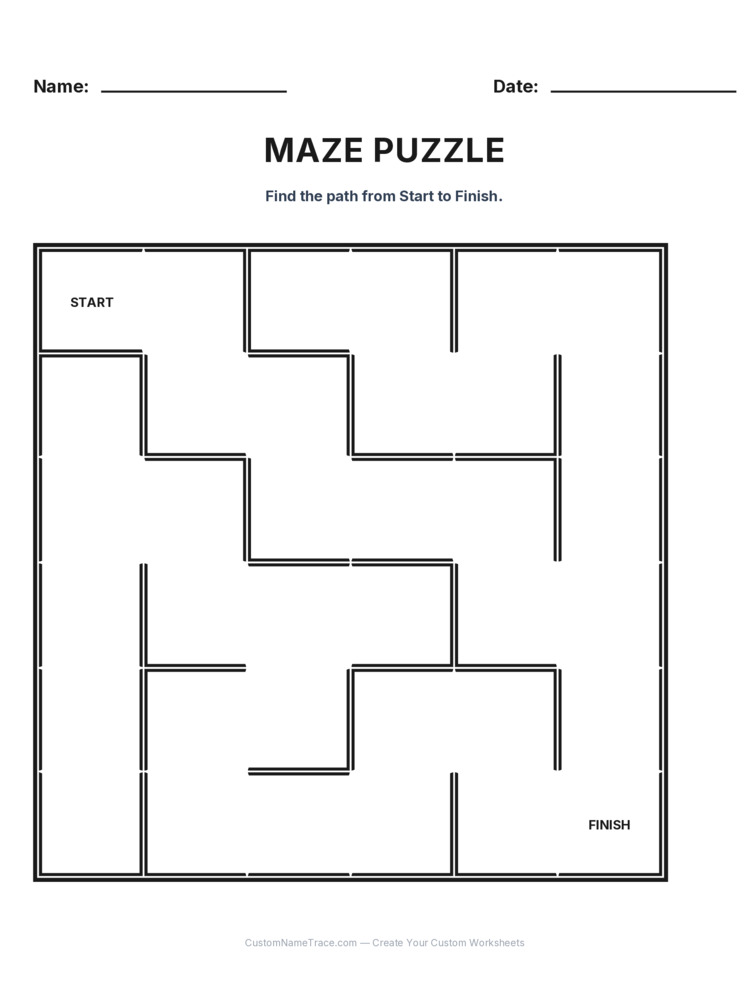
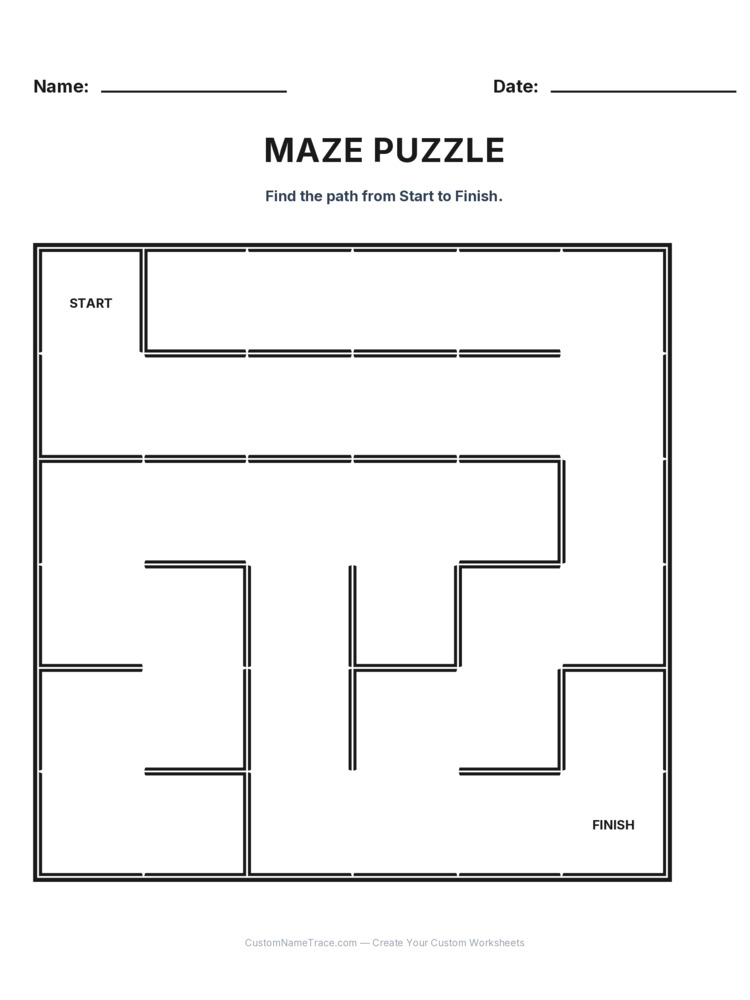
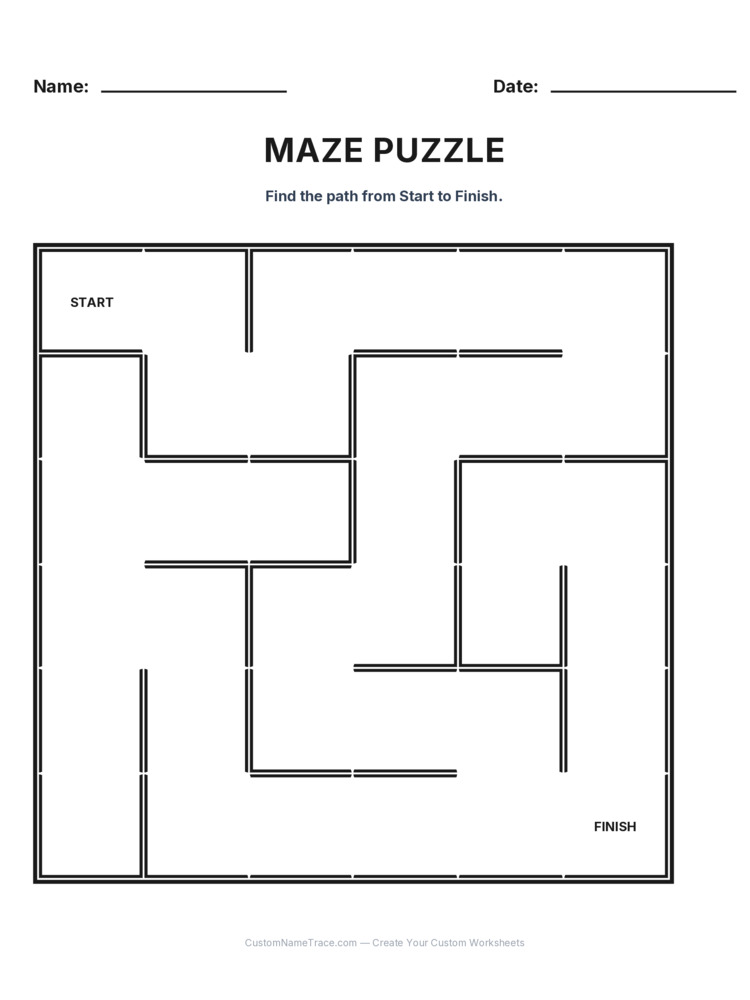
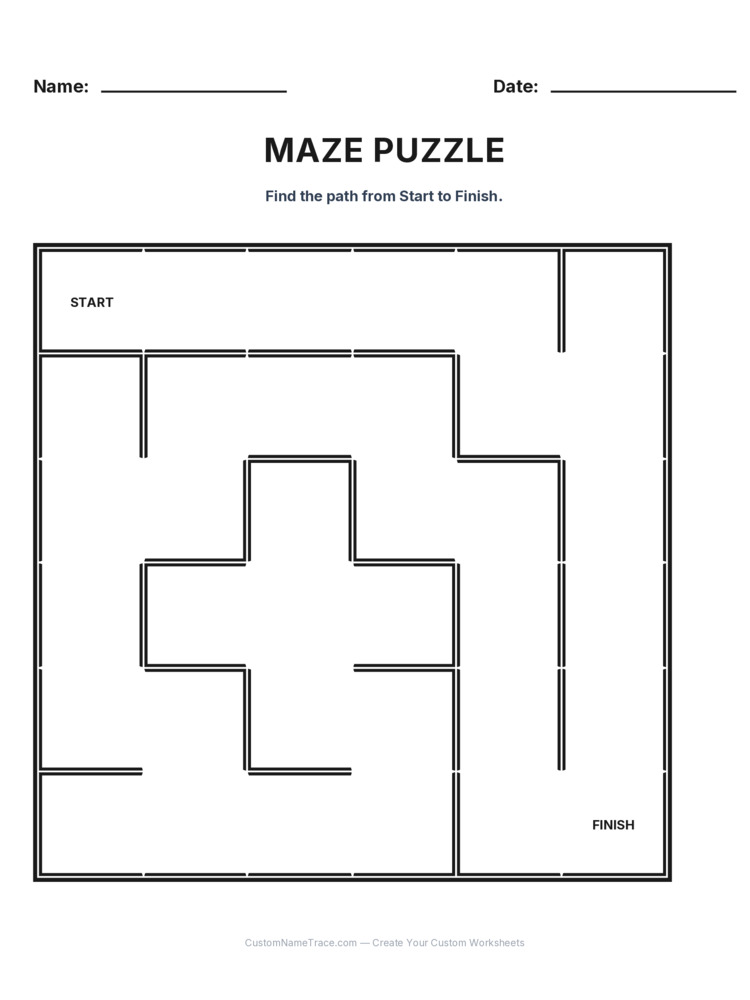
One guaranteed path
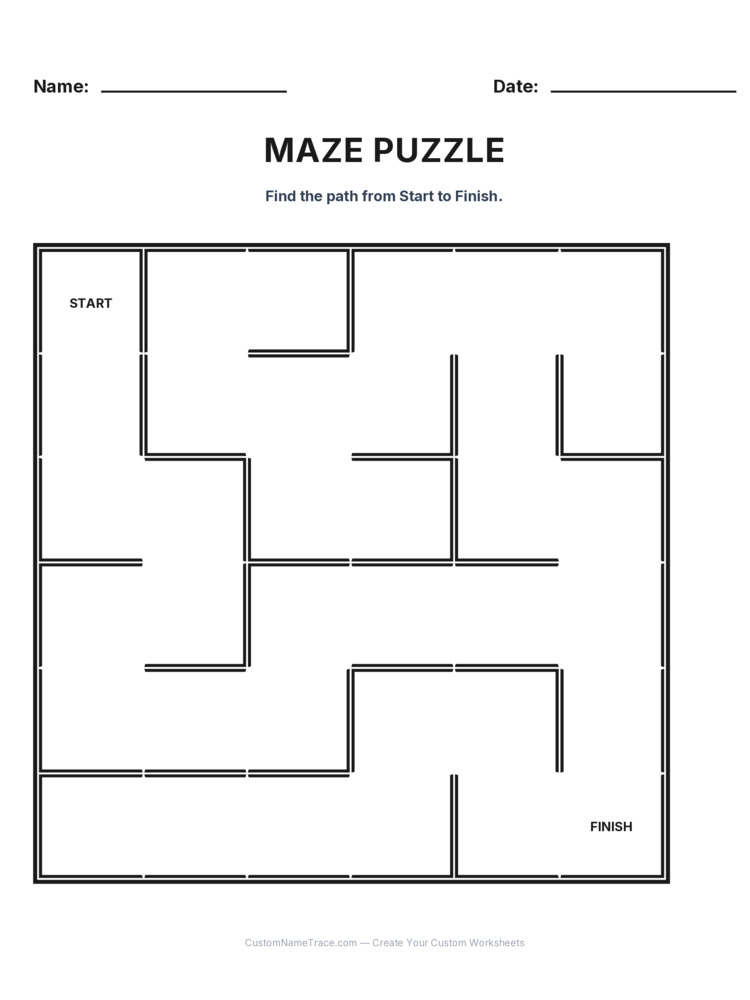
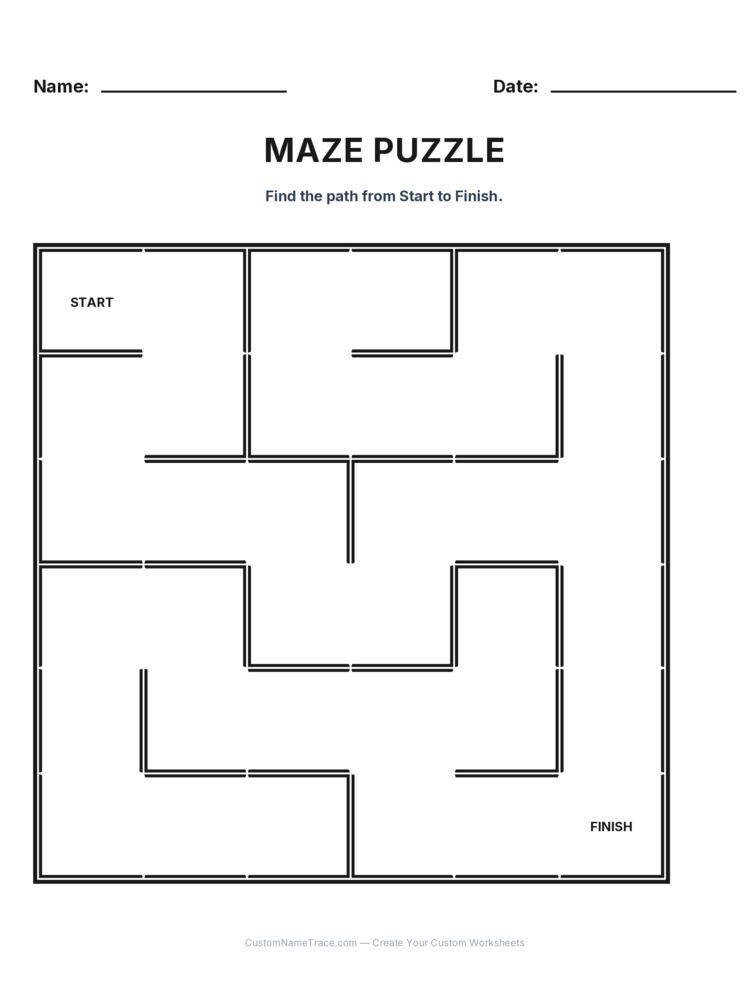
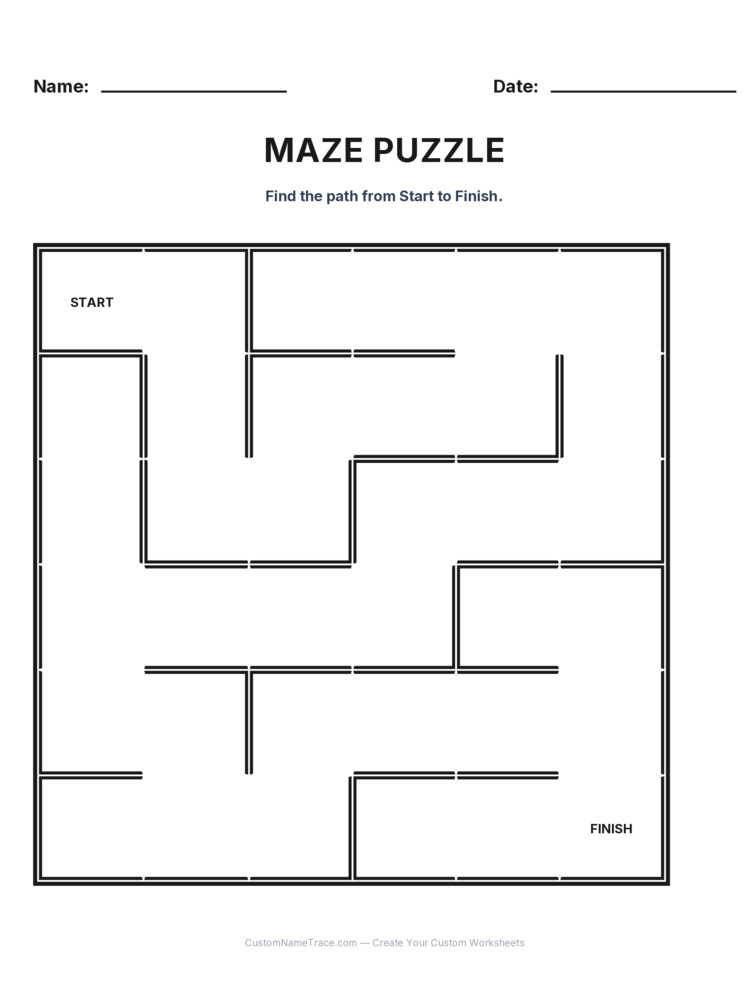
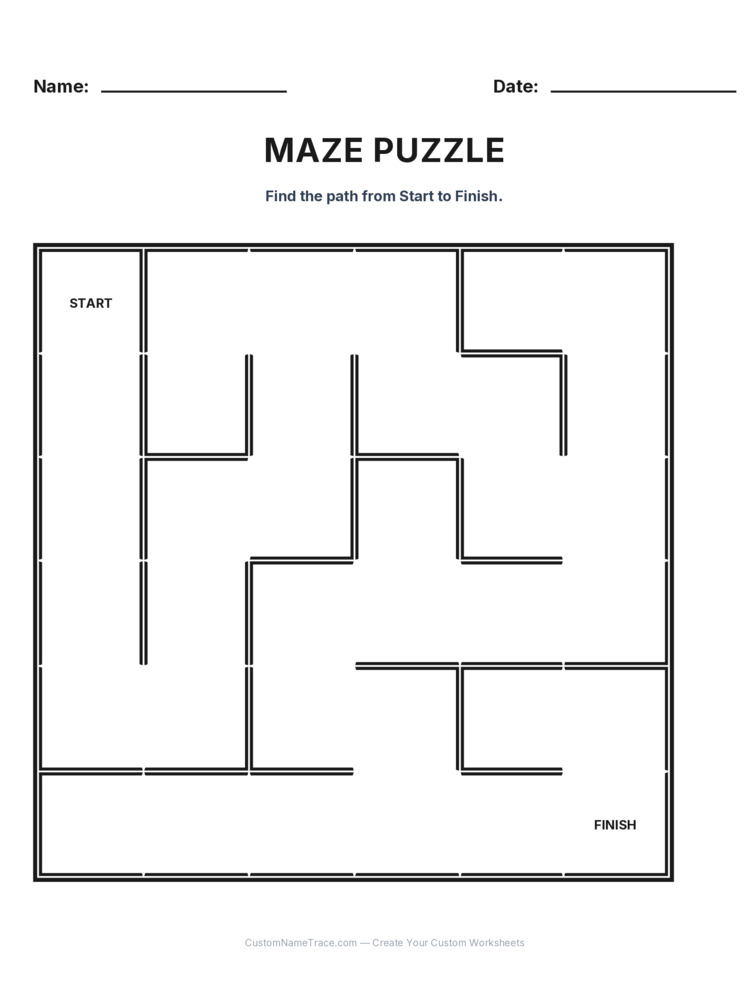
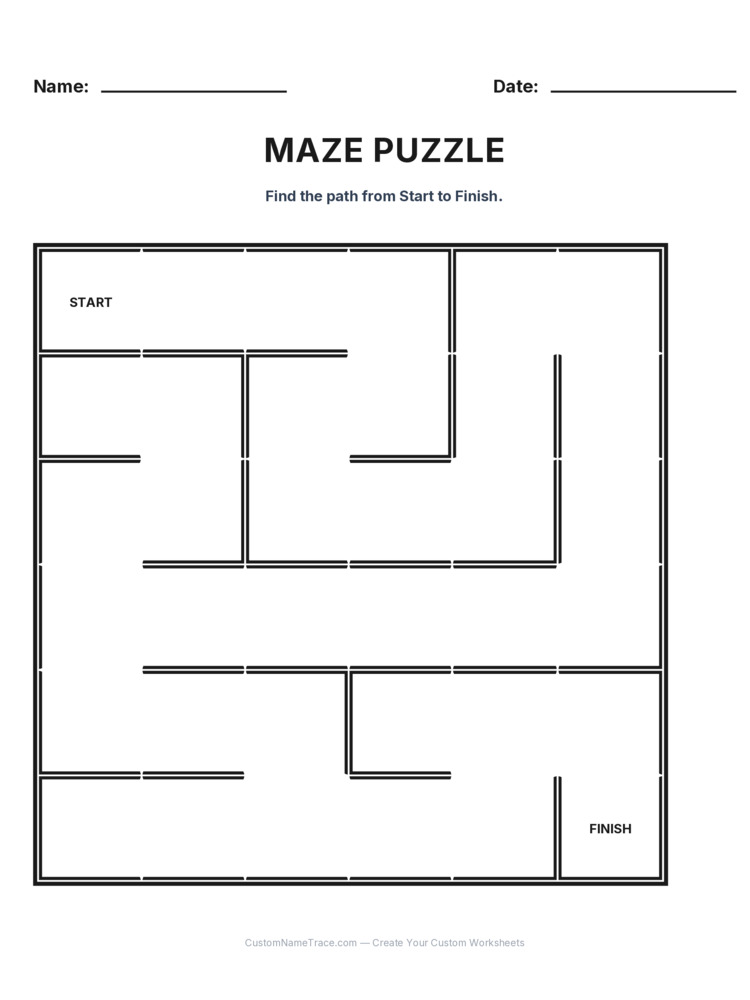
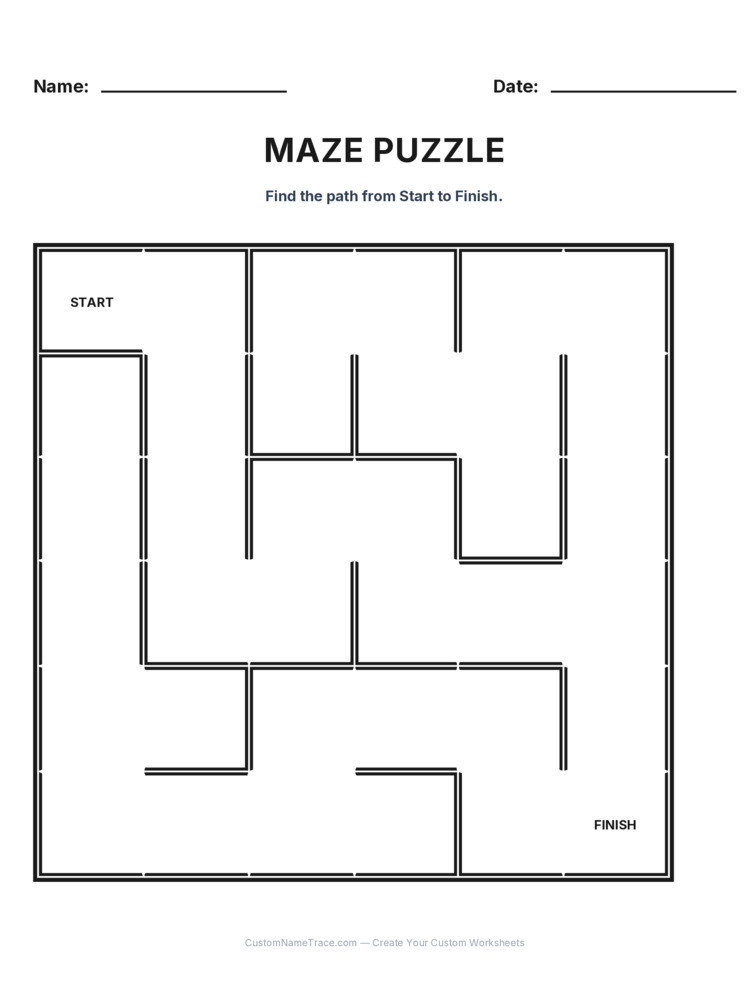
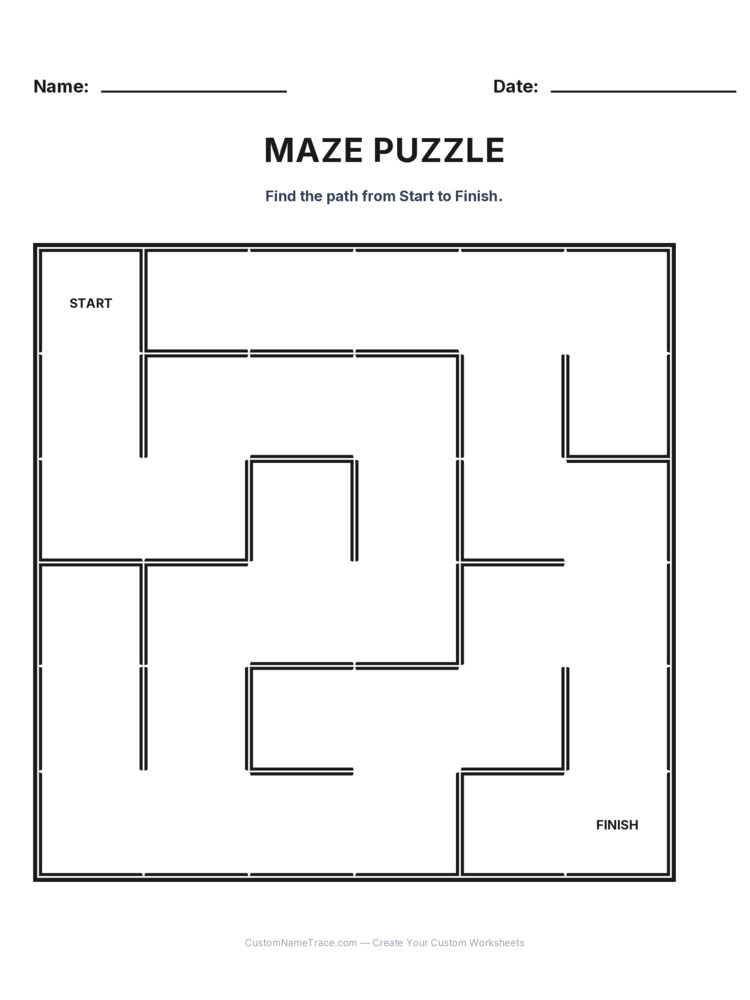
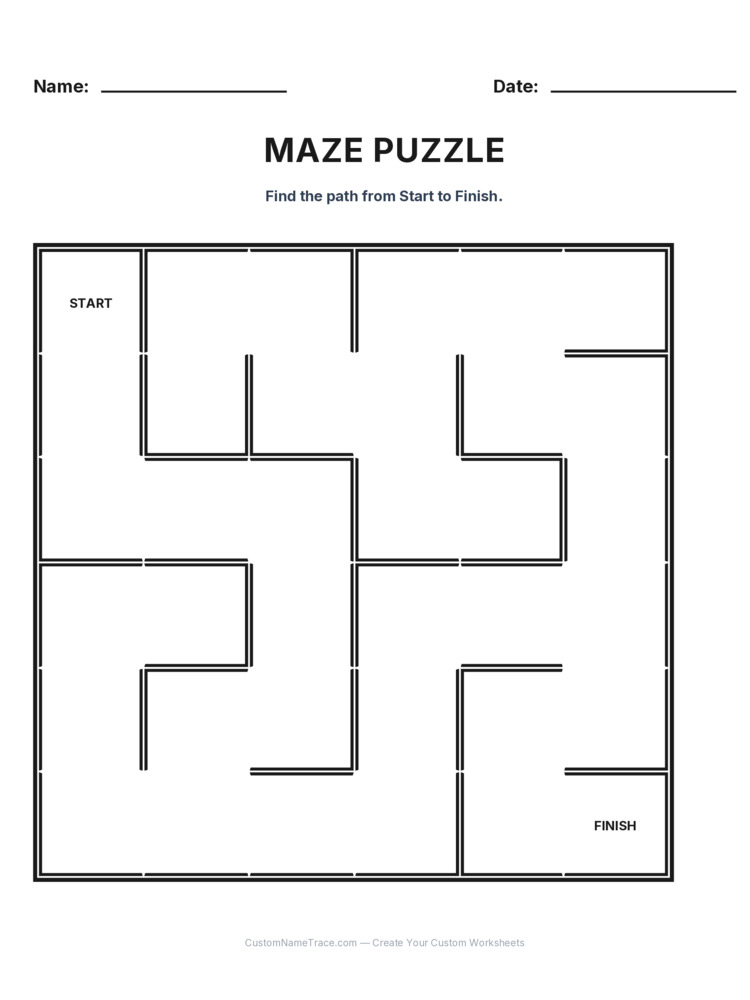
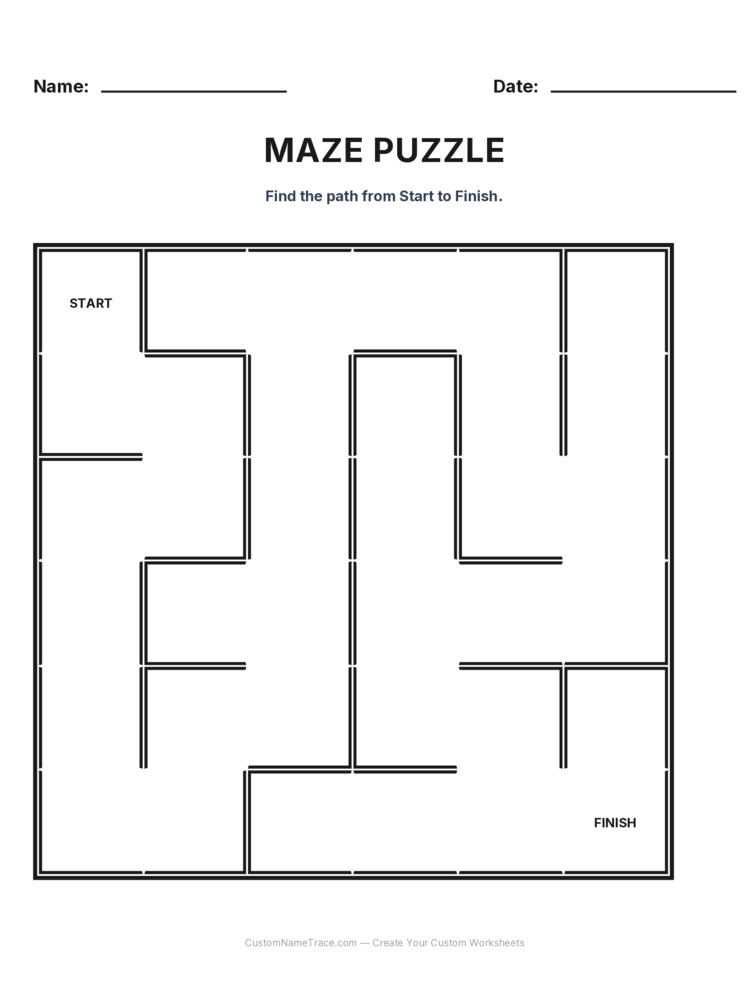
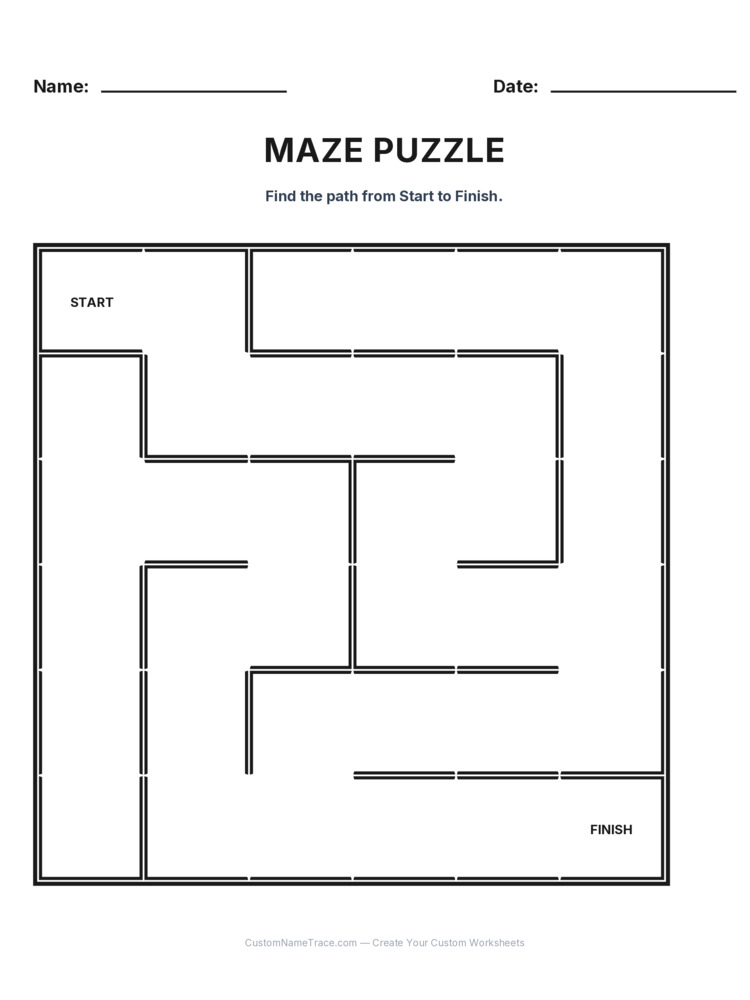
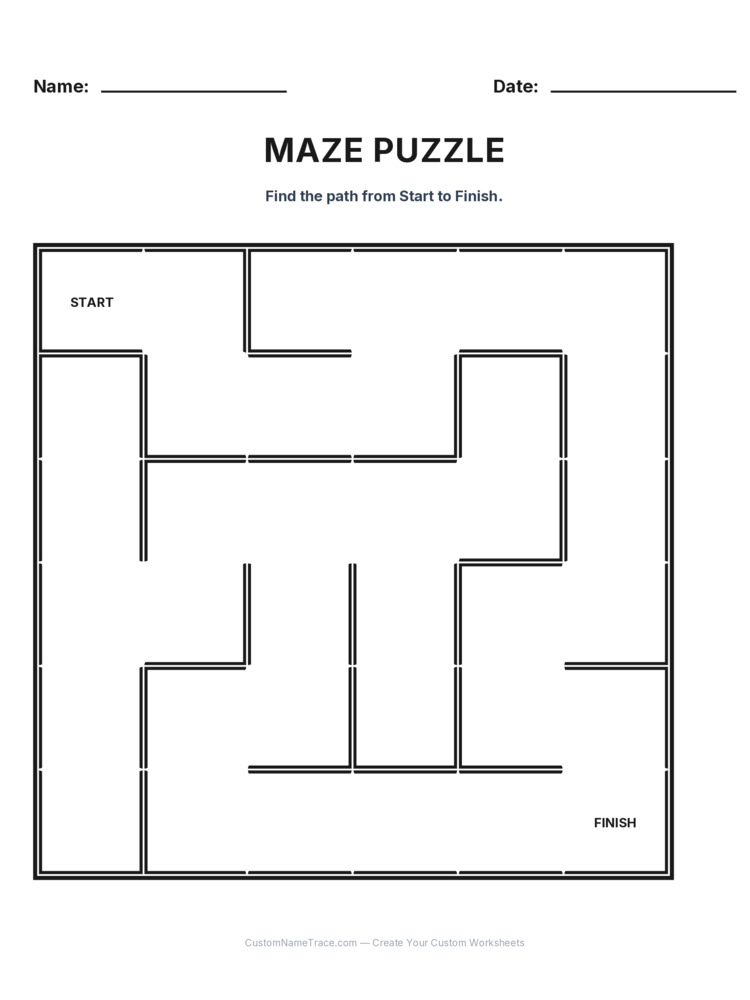
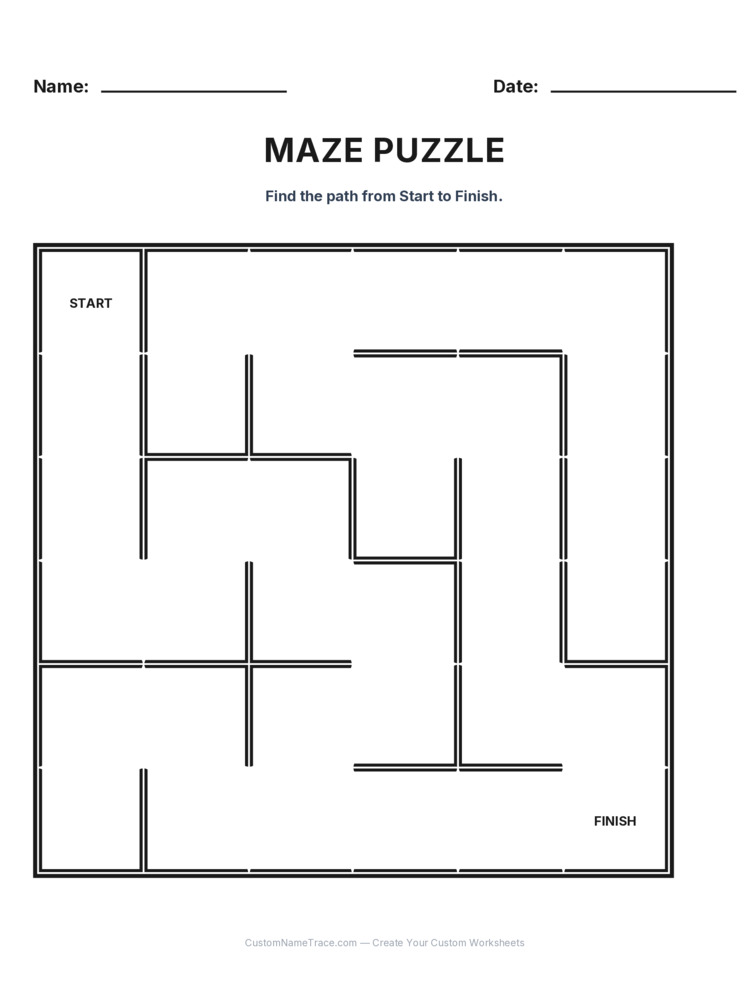
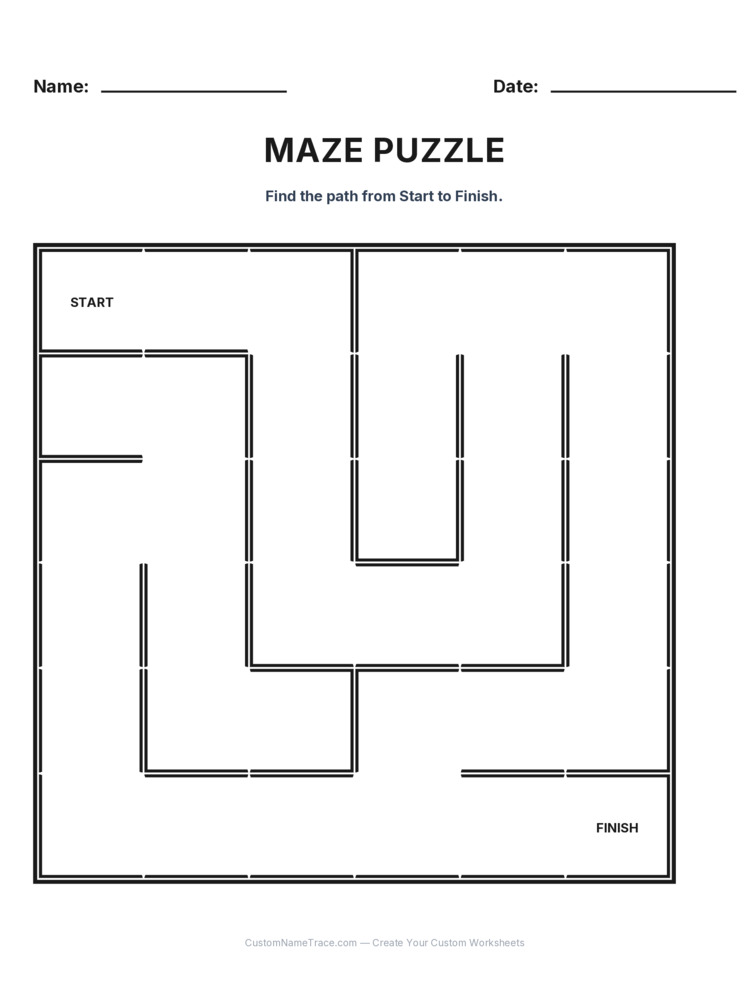
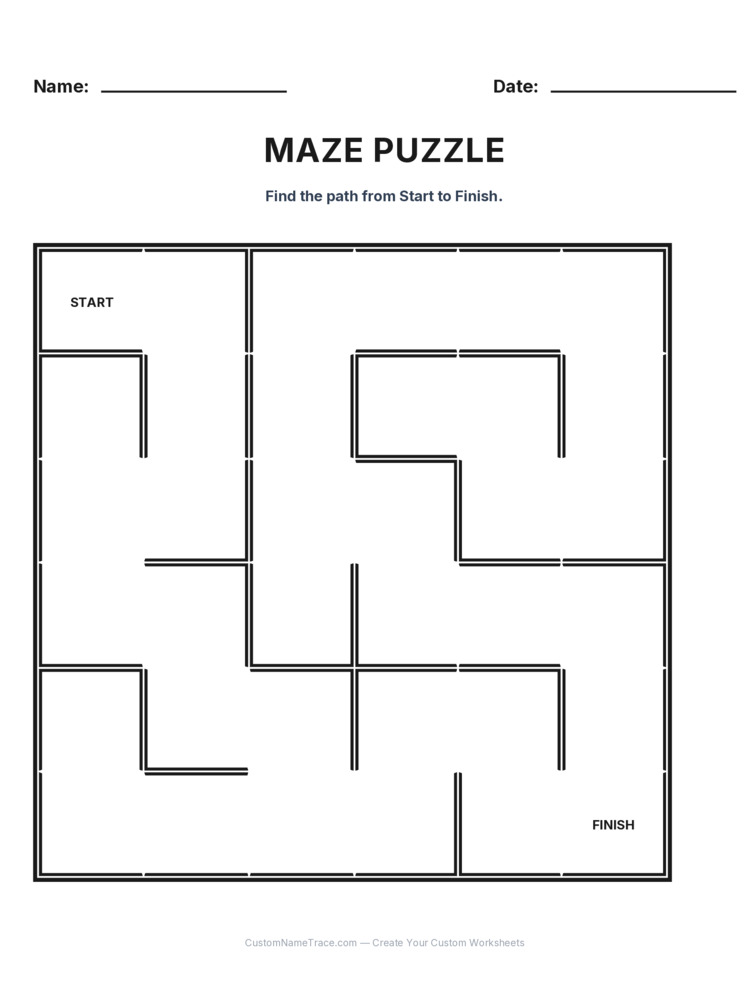
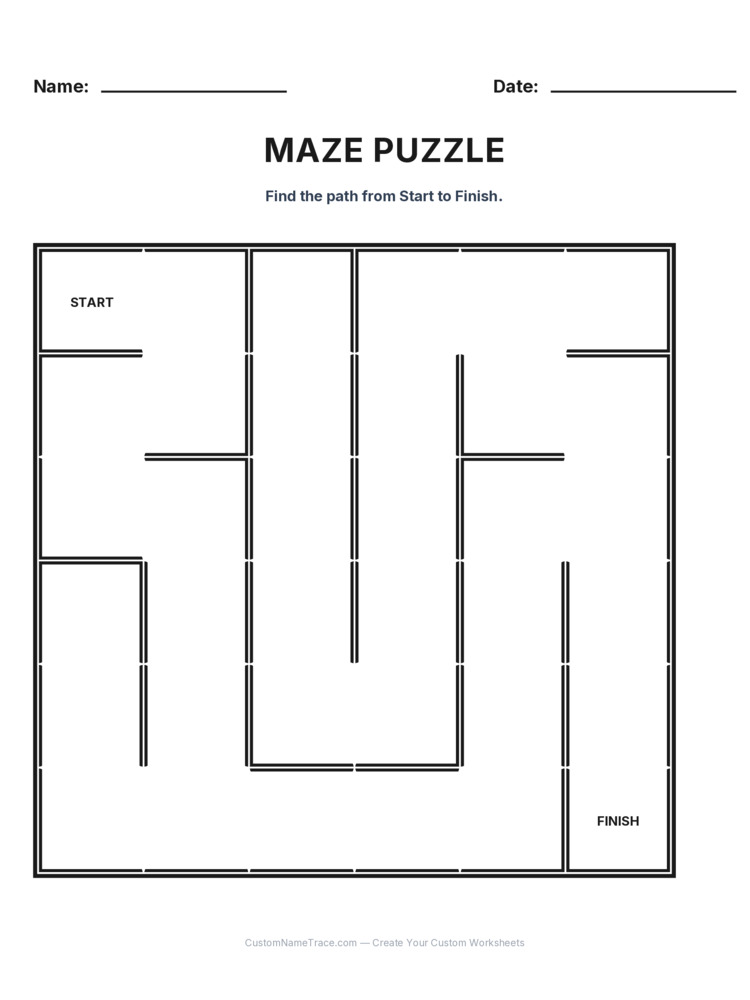
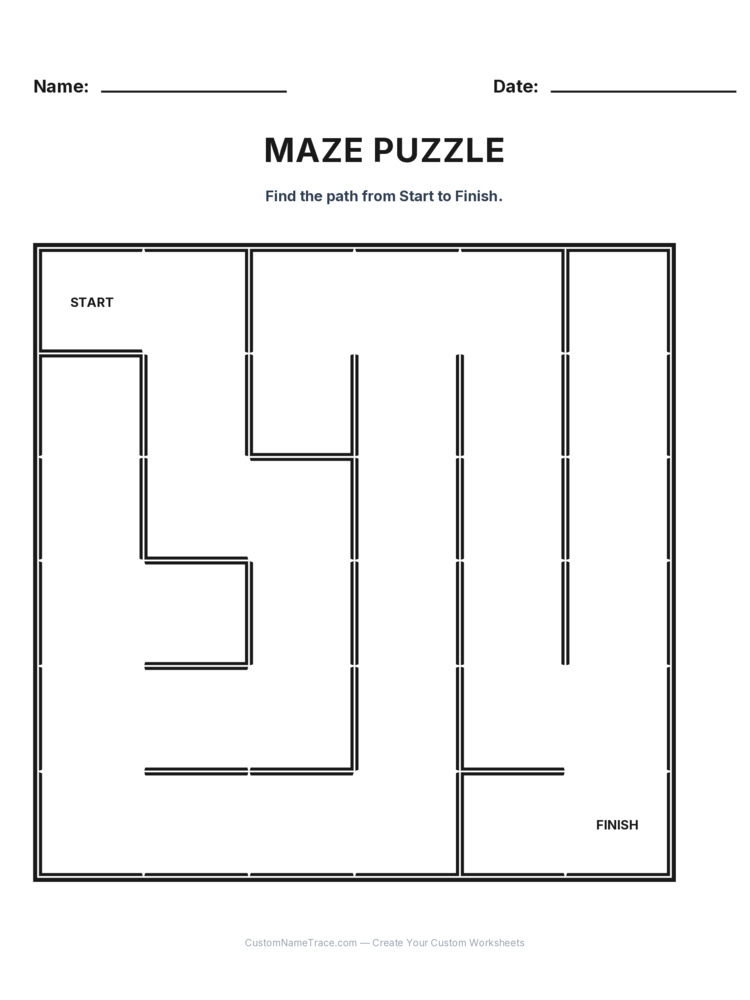
Every maze on this page is built by an algorithm that carves exactly one path from Start to Finish through the grid before any walls are drawn, rather than starting from a random wall layout and hoping a path happens to exist. That distinction matters more than it might seem: a hand-drawn or randomly generated maze can accidentally have no solution, or an unintended second solution, and either one quietly breaks the point of the exercise. Every maze here is guaranteed solvable, with exactly the walls needed to make the single carved path the genuine, findable answer.
Tracing a maze looks like a simple motor activity, but it's really a planning task wearing a fine-motor-practice disguise — a child has to look ahead before committing a pencil line, notice when a path is heading toward a dead end, and backtrack mentally (or on paper) rather than just following whichever opening looks closest. That look-ahead-before-committing habit is a genuine early form of planning, the same skill that later shows up in multi-step word problems and, much later, any kind of if-this-then-that reasoning.
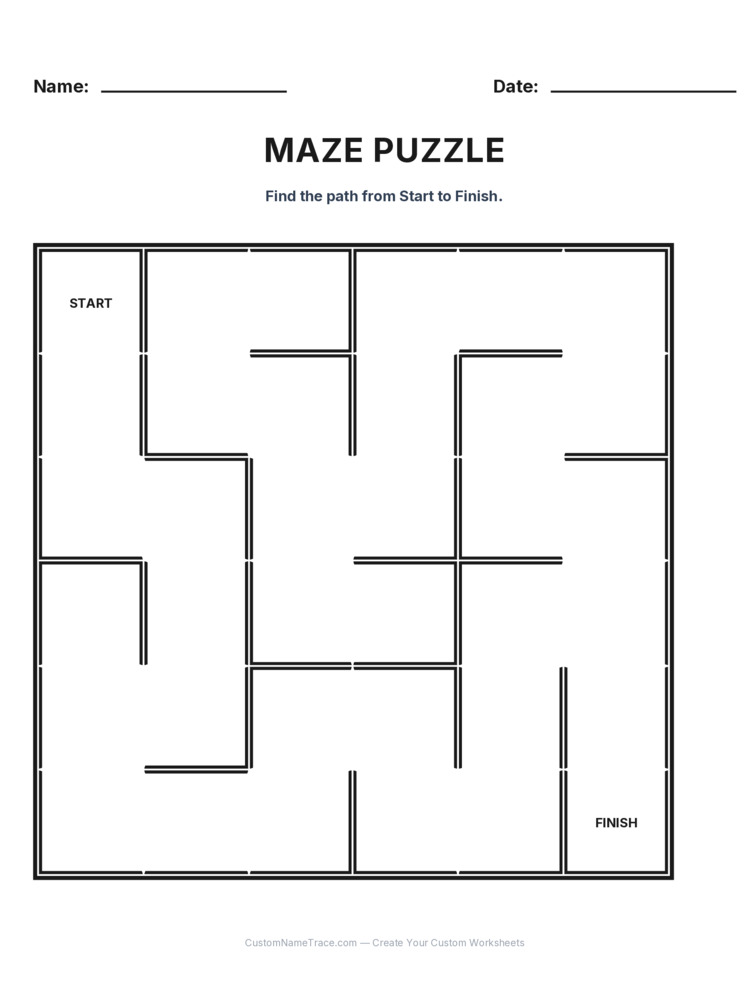
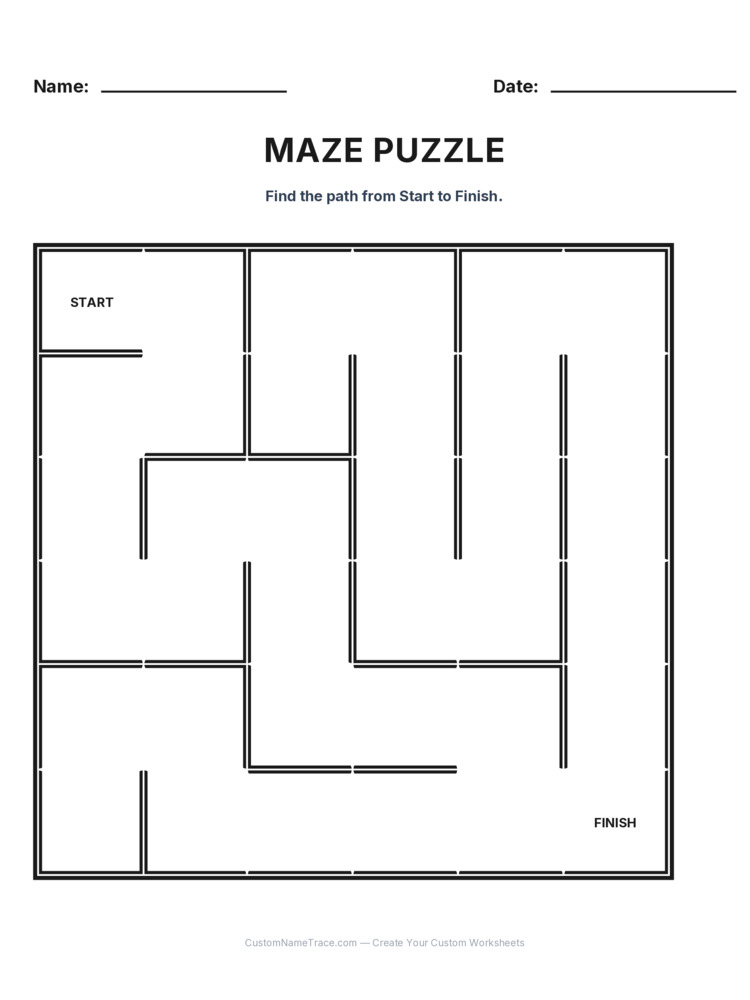
This maze uses a compact grid rather than a large, sprawling one. At the age this puzzle targets, a maze that's too large risks becoming a fine-motor endurance test (can the child keep a steady pencil line for a long stretch) rather than a reasoning test (can the child plan a path) — and it's the reasoning, not the endurance, that this section is built to practice. A smaller grid keeps the planning challenge front and center.
Helping a child who gets stuck
Rather than pointing out the correct turn directly, ask them to look one or two steps ahead before drawing the next segment of line — "before you draw, look at where that path goes next." Tracing with a finger first, then committing to pencil once a full path looks clear, builds the look-ahead habit far better than erasing and retrying after each wrong turn, which teaches trial-and-error rather than planning.
Frequent erasing on a maze usually means a child is drawing first and thinking second — committing to a direction before checking where it leads. Rather than discouraging erasing outright, try having them trace the intended path with a finger, all the way to Finish, before the pencil ever touches the page. Once a full finger-traced path is confirmed correct, converting it to pencil becomes a much lower-stakes copying step rather than a live decision-making one, and the erasing naturally drops off.
Mazes, pencil control, and direction
Because a maze also happens to be a genuine fine-motor exercise — following a narrow, winding path with a pencil takes real hand control — it pairs naturally with this site's name and letter tracing worksheets rather than standing apart from them. A child building pencil control through tracing practice gets a second, more playful form of that same control practice here, just applied to path-following instead of letterforms.
A maze traced slowly and deliberately, rather than dashed off quickly, also happens to be genuine pencil-control practice — the same steady grip and controlled line quality this site's tracing worksheets build elsewhere, just in service of a puzzle instead of a letterform, and worth pointing out to a child directly so the connection between the two kinds of practice on this site doesn't go unnoticed.
Narrating a maze path out loud while tracing it — "turn left, then go straight, then turn right" — builds direction vocabulary and spatial language a child will keep using well beyond this worksheet, from giving directions to following multi-step instructions in a classroom. This narration works equally well whether a child is solving the maze independently and explaining their path afterward, or working through it together with an adult from the very first turn.
Beyond the printed page
For a child who wants more maze practice without printing another page, tracing a finger-path through the same maze a second time, or narrating the turns out loud ("right, right, down, left") while tracing, reinforces the planning skill without any new material needed. This verbal narration version is also a good diagnostic — a child who can correctly describe the path out loud but still makes pencil errors is dealing with a motor-control issue, not a reasoning one, which points toward different practice (more tracing worksheets) rather than more mazes.
Because a maze has a single clear goal and a satisfying, visible finish line, it also works well as a low-pressure activity between more demanding tasks — unlike an open-ended drawing prompt, there's no risk of a child feeling stuck without knowing what "done" looks like. Keeping a maze or two on hand for transition moments (before a meal, between other worksheets) gives the planning practice a chance to happen in short, low-stakes bursts rather than only during dedicated study time.
A child who solves a maze quickly hasn't necessarily gotten nothing out of it — even an easy maze reinforces the underlying habit of checking ahead before committing to a path, and repeated quick successes build the confidence that makes a harder maze (or a genuinely harder puzzle format elsewhere on this site) feel approachable rather than intimidating. There's no need to hold a child back from easy wins in the name of difficulty; confidence built on solid ground transfers well.
Where this leads
The core skill — looking ahead, recognizing a dead end before fully committing to it, and backtracking when needed — is a concrete, physical version of the same reasoning Grade 3's Mini Sudoku and Cryptogram puzzles ask for in a more abstract form: try a step, check whether it leads somewhere valid, and revise if it doesn't. A child genuinely comfortable planning a maze path has already practiced the core move those much more abstract puzzles depend on.
Most worksheets a young child encounters move in one predictable direction — down a page, left to right along a line — but a maze genuinely branches, and choosing the wrong branch has a visible, immediate consequence: a dead end that has to be backed out of. That branching structure, with real consequences for a wrong choice and a clear way to recover from it, is a meaningfully different kind of practice from anything else in this site's Logic Worksheets section, and it's worth including specifically because nothing else here gives a child that particular experience of choosing, discovering a mistake, and correcting course.
Because every maze on this page is generated to guarantee exactly one solvable path regardless of difficulty, a teacher can hand different numbered variants to different students in the same class without worrying that one student received an unsolvable puzzle while another got an easy one — every variant is equally fair, just visually different. That consistency makes mazes a reliable choice for differentiated morning work: a child who needs more of a challenge and one who needs a gentler introduction can both be handed a maze from this same page, confident that both puzzles are genuinely, guaranteedly solvable rather than one being secretly harder due to a flawed layout.
For a child who feels behind on more academic-feeling worksheets, a maze offers a genuine reasoning challenge that doesn't read as "schoolwork" in the same way — it looks and feels like a game, which can make it a useful confidence-builder to work into a session alongside harder or less enjoyable practice. Success here still counts as real progress on real reasoning skills, even though it rarely feels like effort to the child solving it.
Print at full size so the path width stays comfortable for a young child's pencil control — a maze shrunk to fit a smaller page can make the corridors too narrow to trace cleanly, turning a reasoning challenge into a fine-motor frustration. Every numbered variant generates a fresh grid and path layout, so repeat practice always means a genuinely new maze.