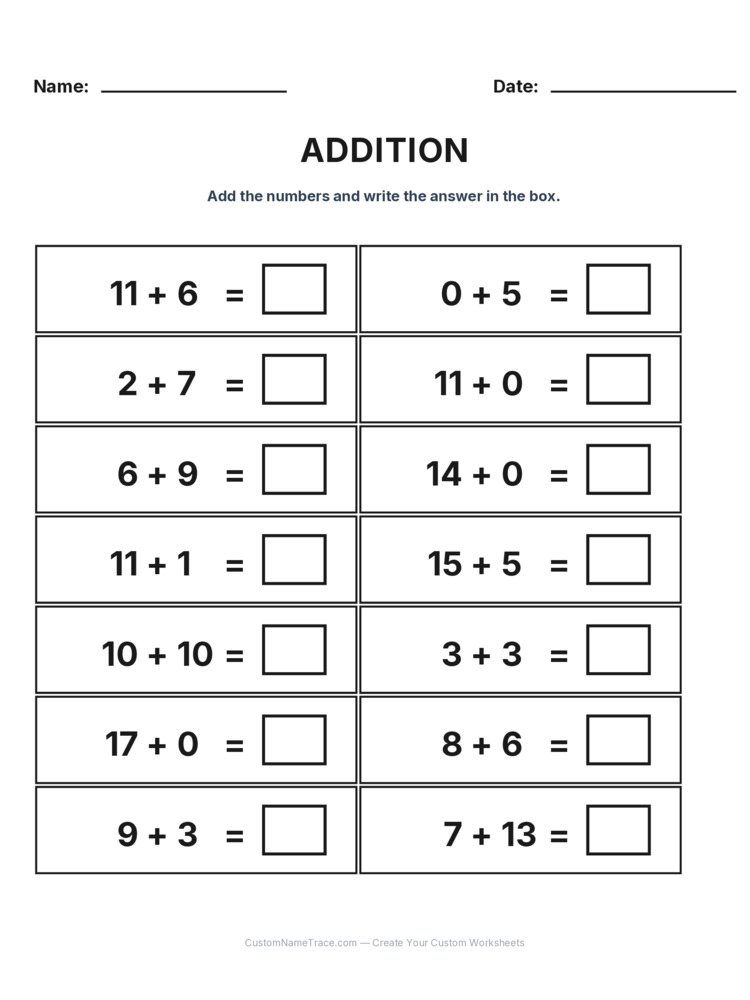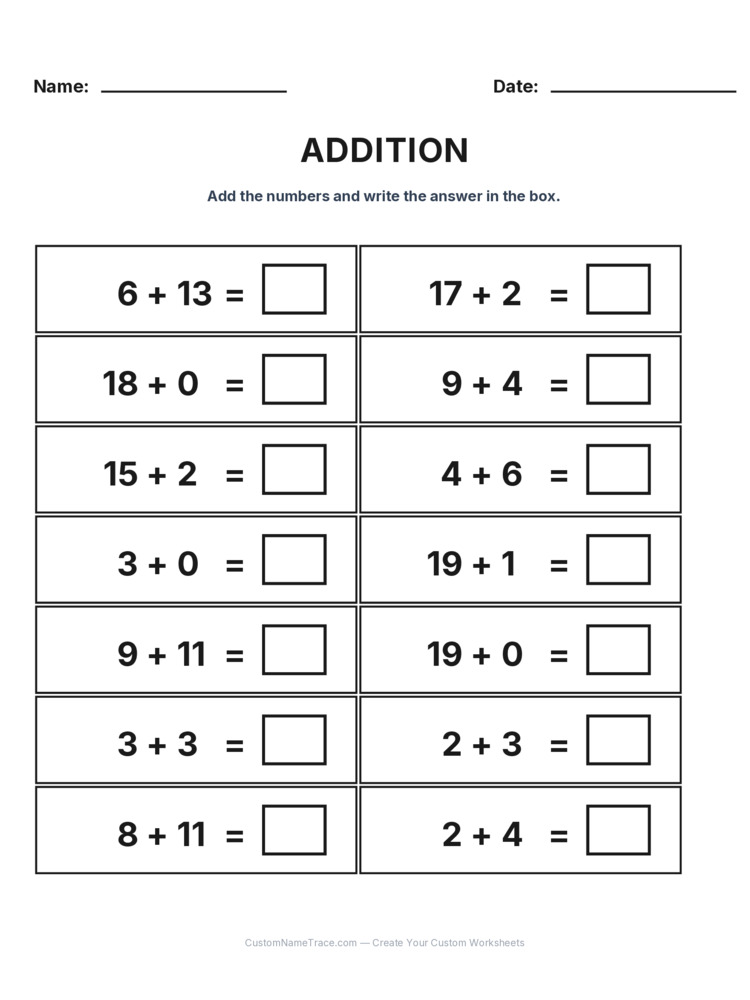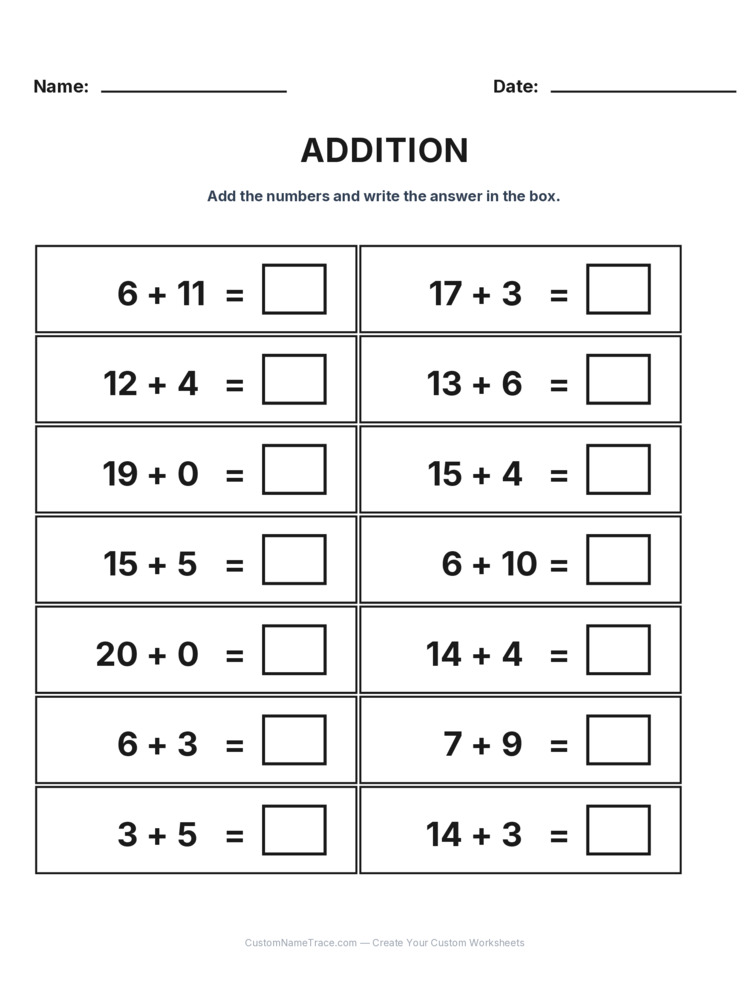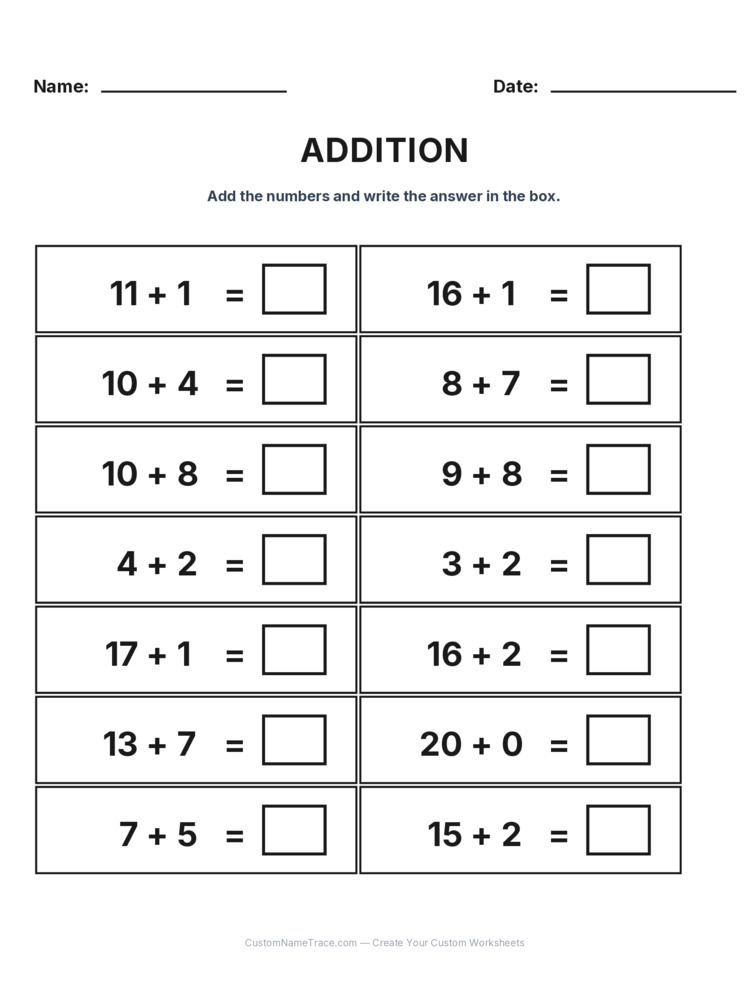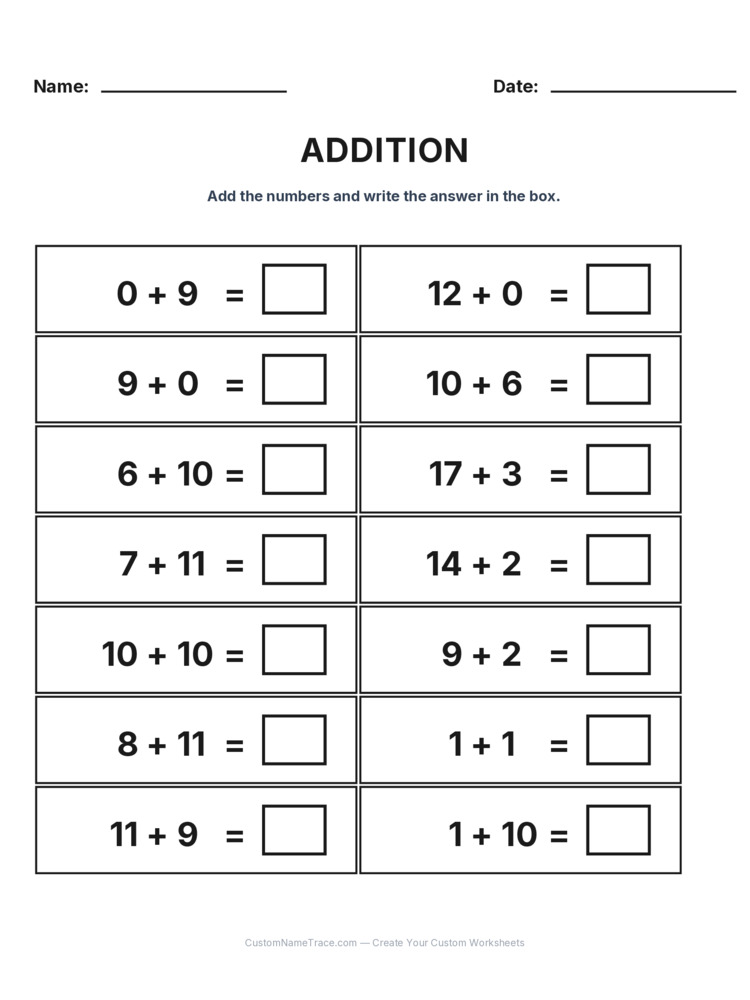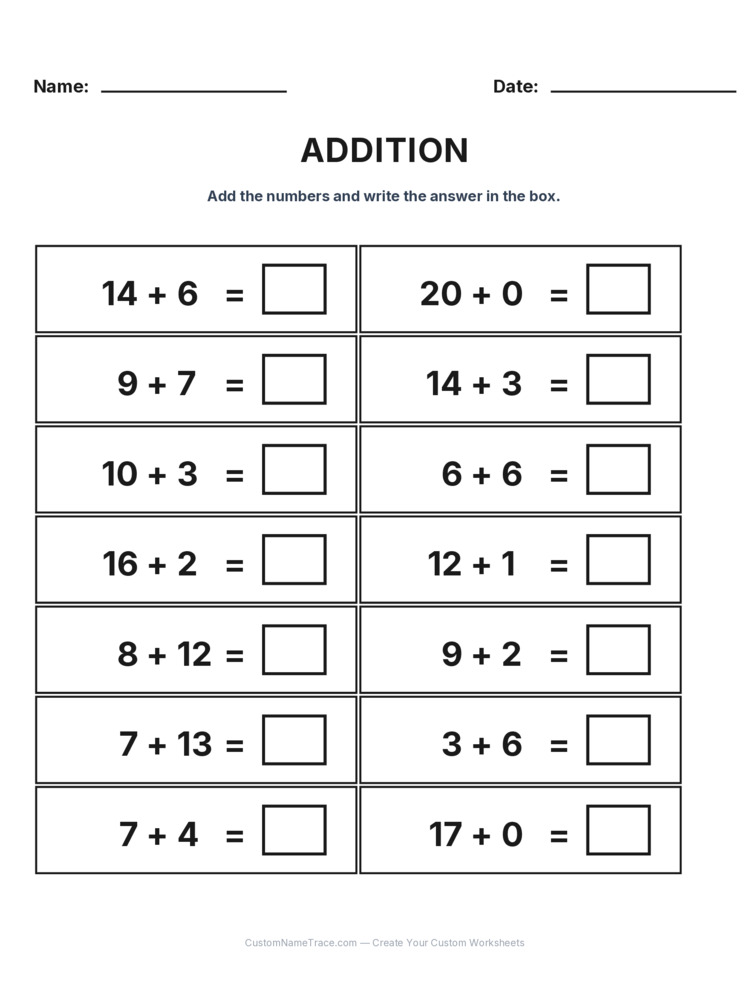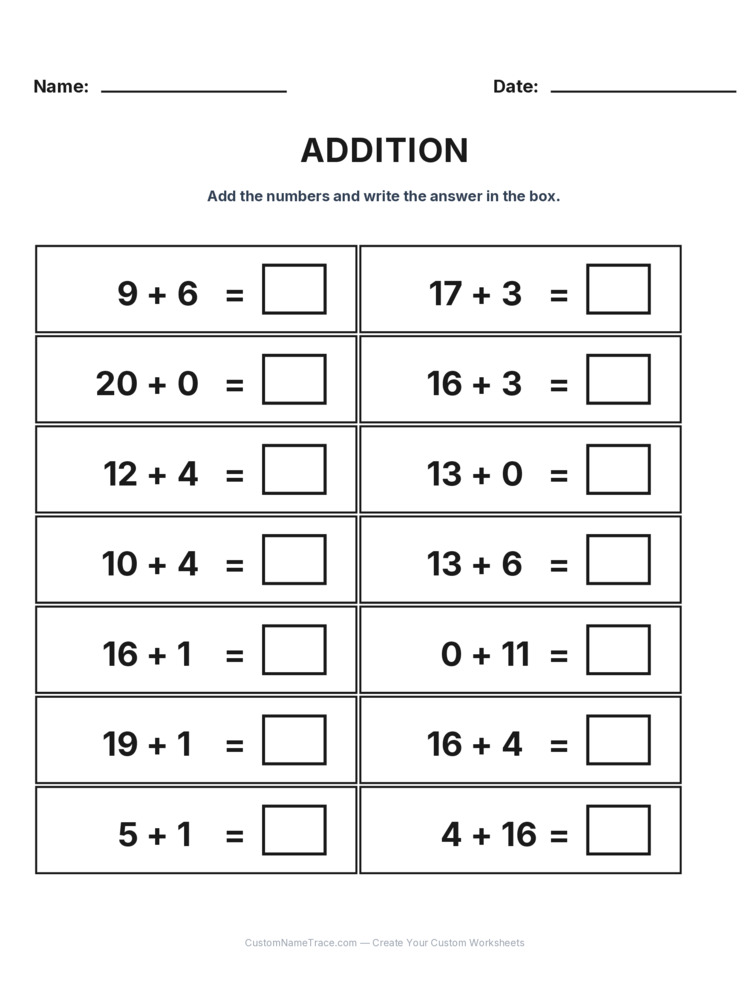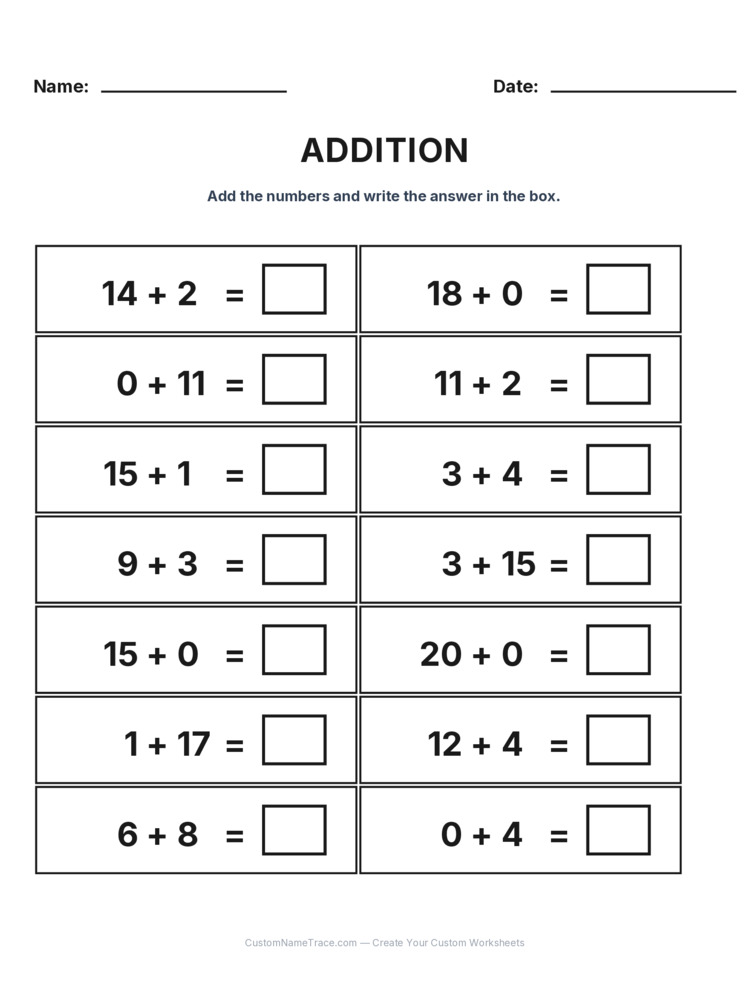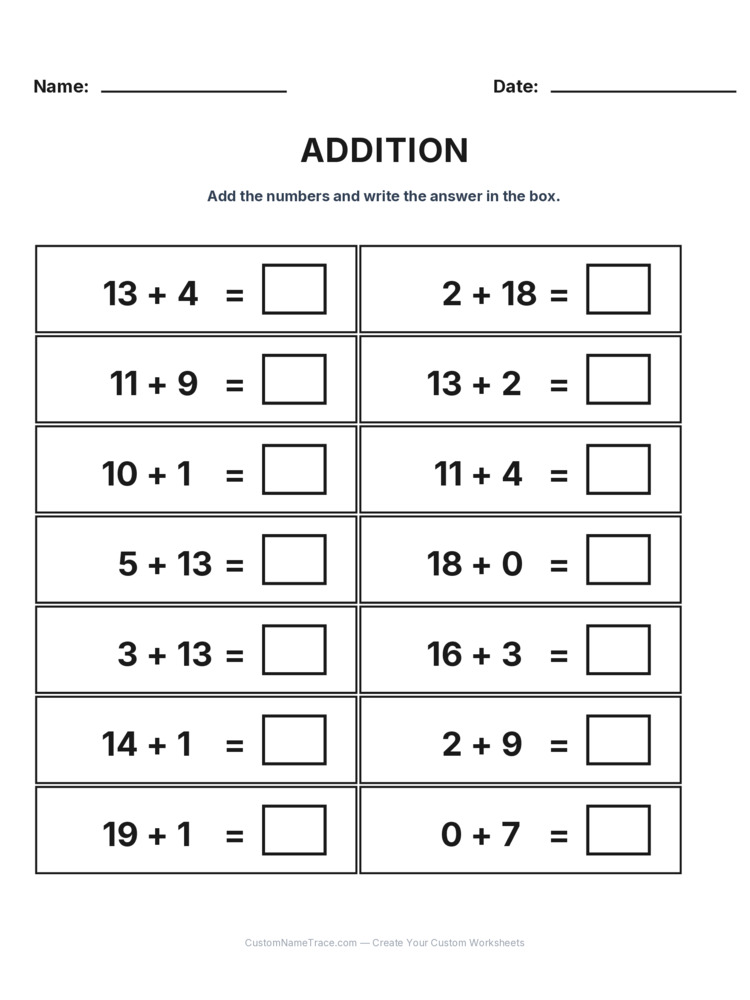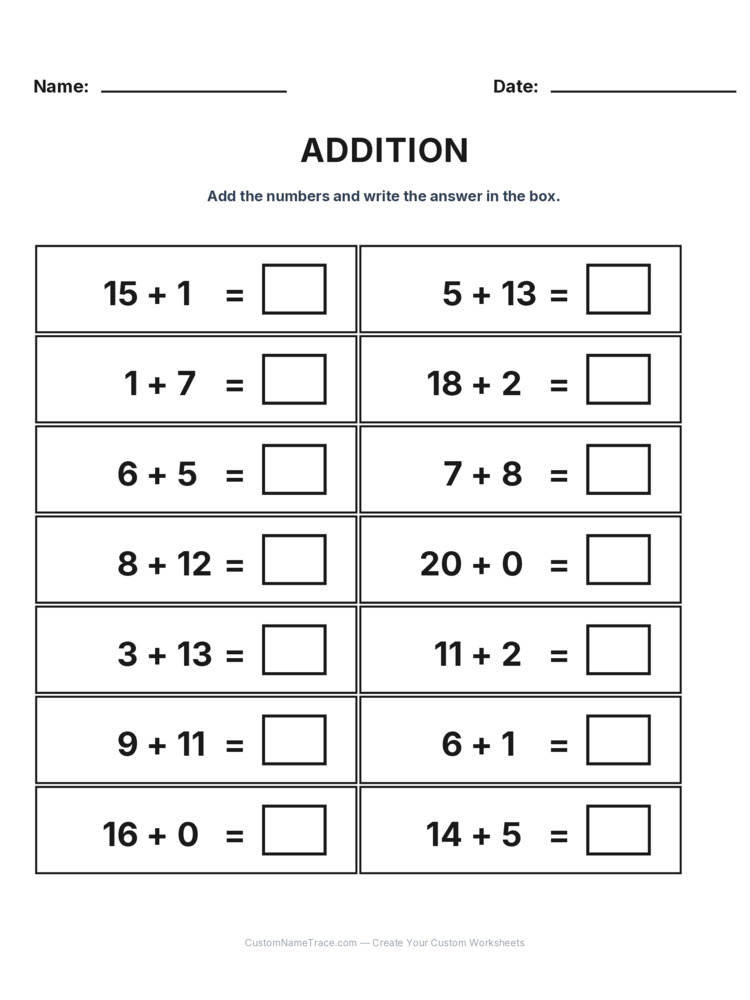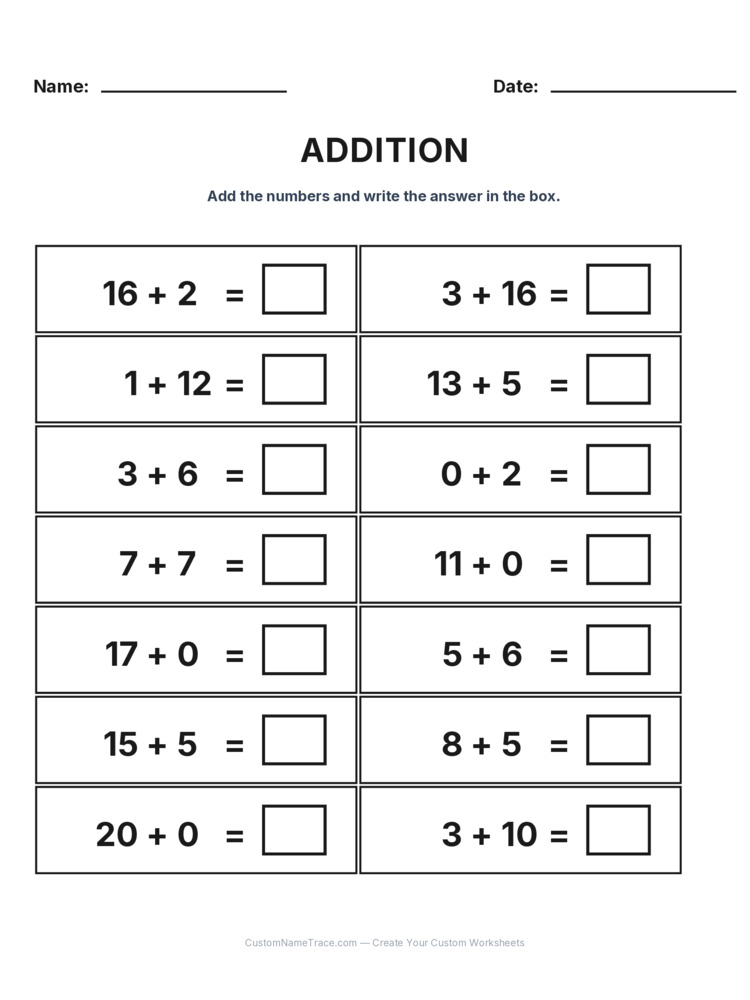
What this Within 20 worksheet is actually asking for
Every problem on this page tests Within 20 Addition at the range researched specifically for Grade 1 — not a generic difficulty setting, but a number range cross-checked against the Common Core K-5 progression and what established math curricula actually put in front of students at this stage. That matters more than it might seem: a worksheet with numbers too small doesn't build anything a child hasn't already mastered, and one with numbers too large forces guessing instead of genuine reasoning.
The Within 20 format specifically was chosen because it isolates one clear, well-defined piece of Addition — not a mixed grab-bag of problem types loosely labeled by grade level.
A strategy worth teaching before the first problem
Counting on fingers, drawing marks, or using scratch paper is a completely legitimate strategy for Within 20 at Grade 1, and it naturally becomes less necessary as fluency builds — there's no benefit to discouraging it before a child is genuinely ready to let it go. What matters more than the specific counting method is consistency: working through each problem the same careful way, rather than switching strategies mid-page, tends to build more reliable accuracy than rushing.
For a child new to Within 20 specifically, working through the first problem together, narrating the steps out loud, builds the underlying process explicitly rather than leaving it to be inferred from the page alone.
What a wrong answer on this page usually means
A single wrong answer here is rarely a sign Within 20 isn't understood at all — it's much more often a small, specific slip: a miscounted step, a misread number, a moment of rushing near the end of the page. Reviewing which specific problems went wrong, rather than treating the whole page as simply right or wrong, usually reveals a clear, fixable pattern worth targeting directly.
If wrong answers cluster around one particular number range or problem shape within Within 20, that's useful, specific information pointing at exactly what needs more focused practice, rather than a sign the entire skill needs to be relearned from scratch.
How this fits into Grade 1's broader math progression
Within 20 at Grade 1 doesn't exist in isolation — it's one scoped piece of a larger sequence this site organizes by grade specifically so a family or teacher can see exactly what comes before and after it. The hub page above lists every other skill available at Grade 1, making it straightforward to move to something easier or harder without guessing at what's appropriate.
This worksheet's number range and format stay deliberately consistent with this site's other Addition worksheets at Grade 1, so moving between related skills doesn't mean adjusting to an unpredictable difficulty jump each time.
Using this worksheet well
Short, frequent practice sessions build genuine fluency with Within 20 far more reliably than infrequent long ones — a handful of focused problems most days beats one long session once a week. Every numbered variant on the hub page above tests this identical Within 20 skill with a fresh set of numbers, so repeat practice never means solving the same problems twice.
Printing and downloading
This Within 20 worksheet downloads as a free, print-ready PDF in both Letter and A4 sizes, with no account required, and reprints identically every time. For a full set of practice pages at once, the bundle version for this grade combines ten worksheets into a single download.