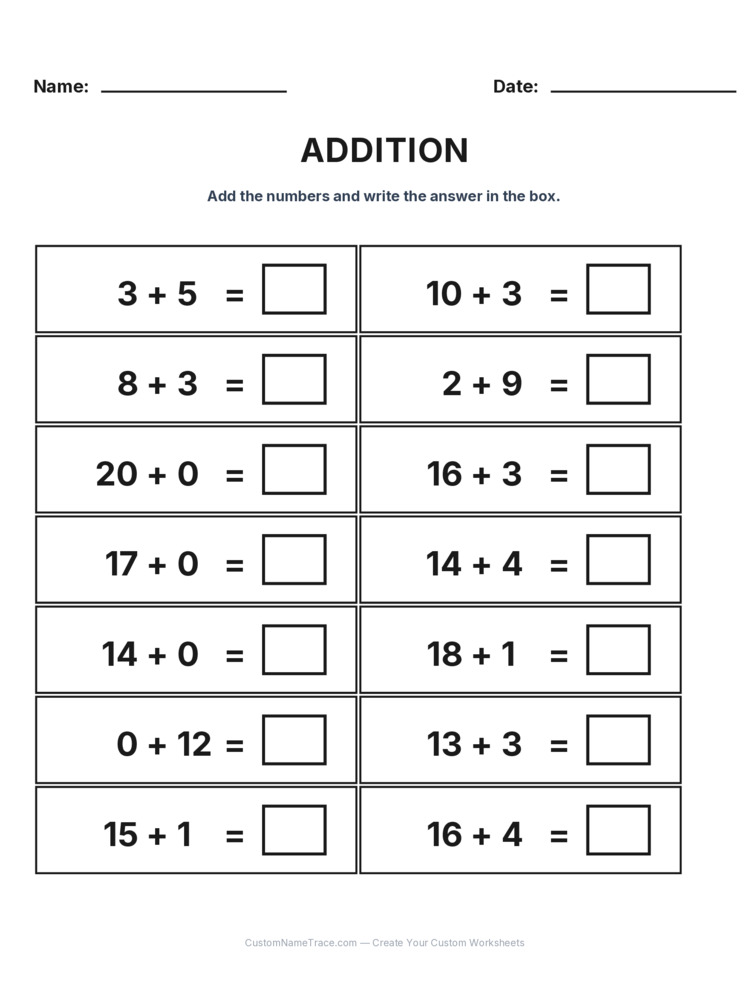
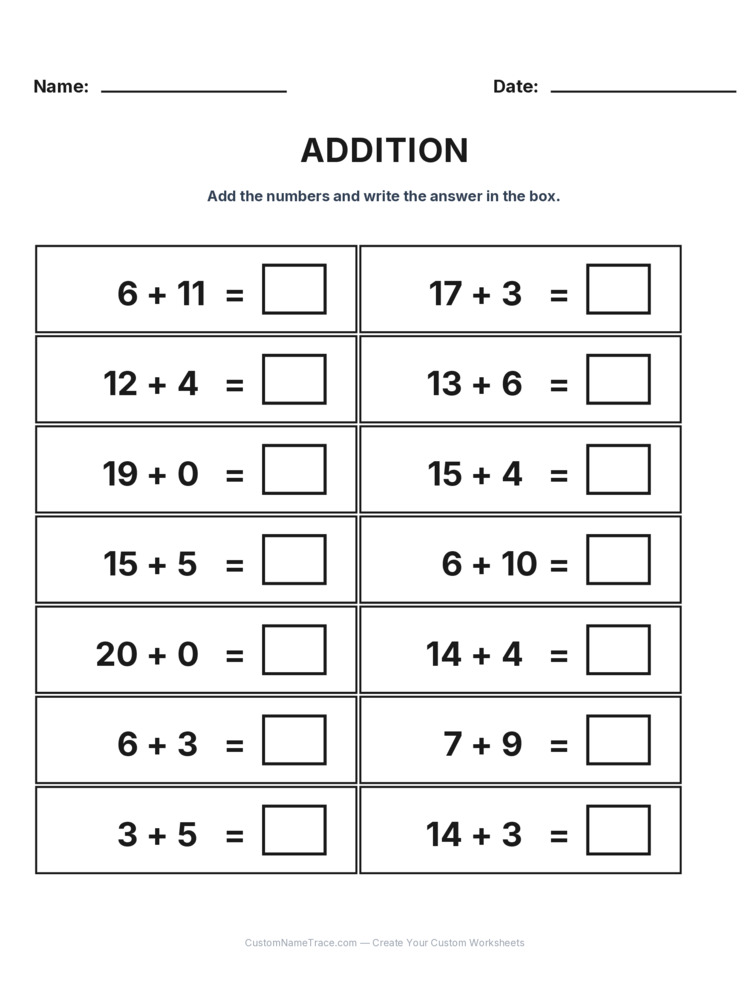
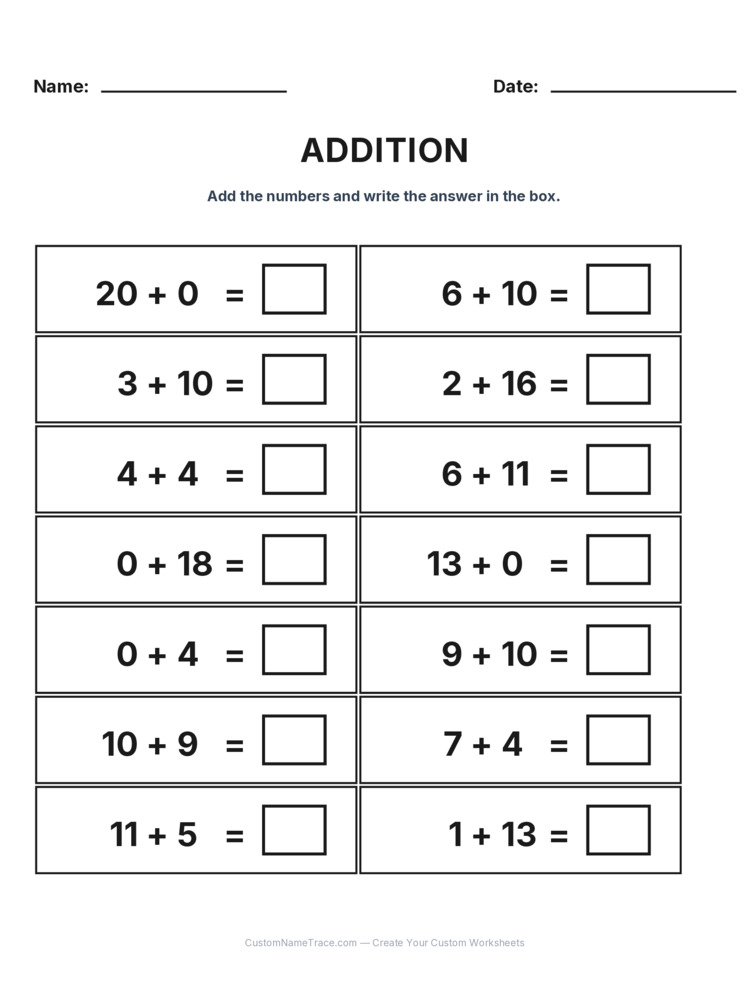
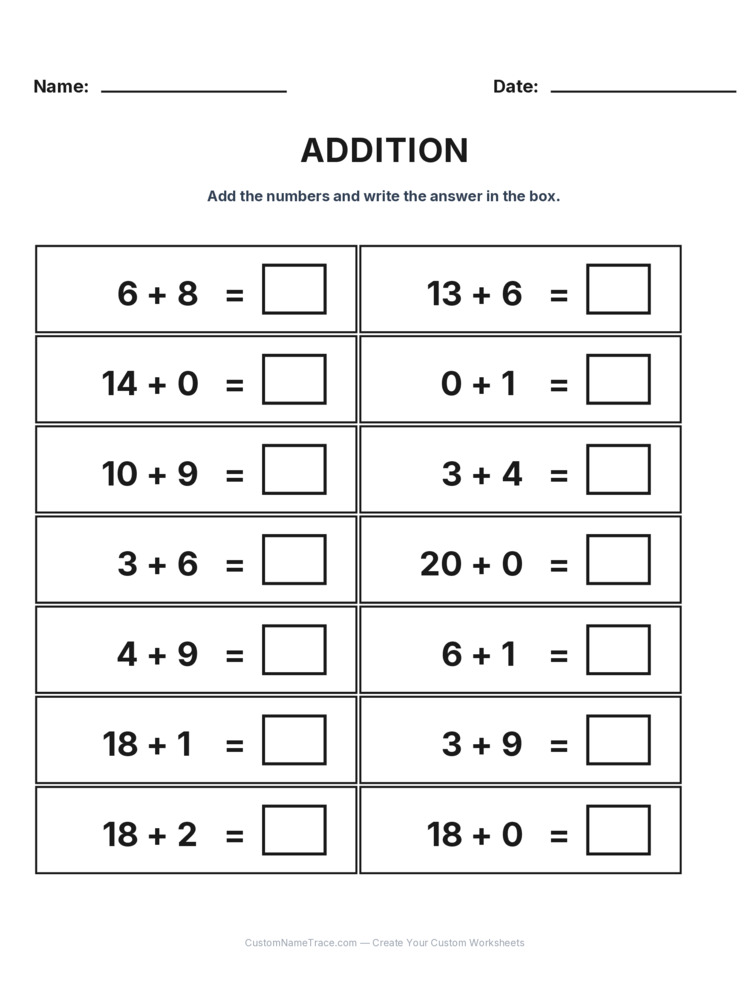
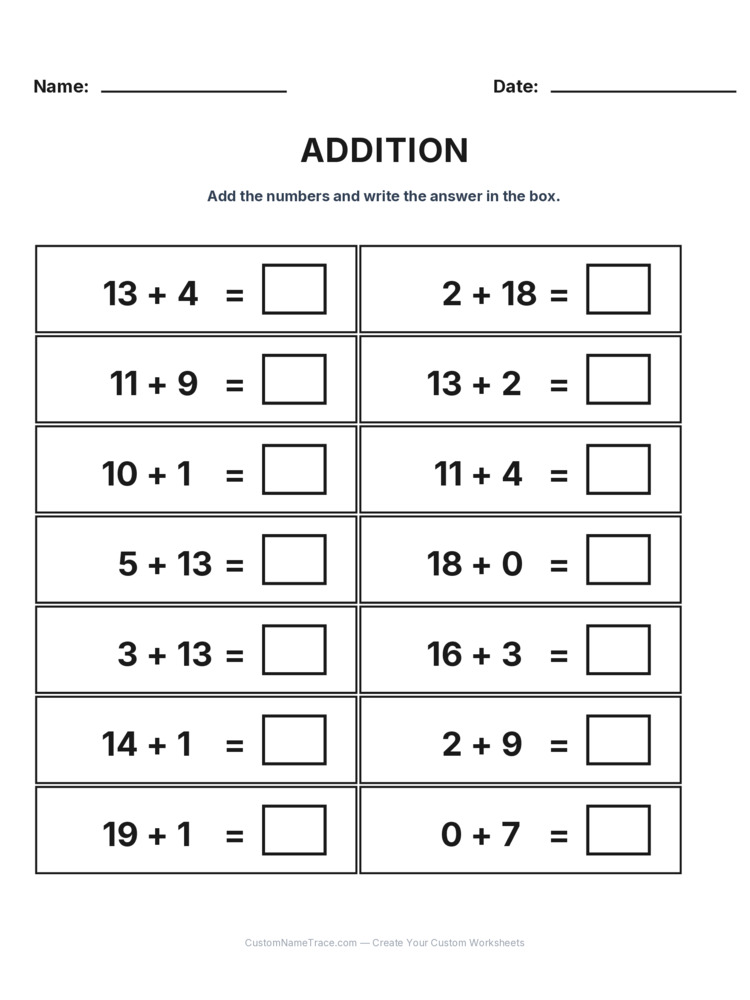
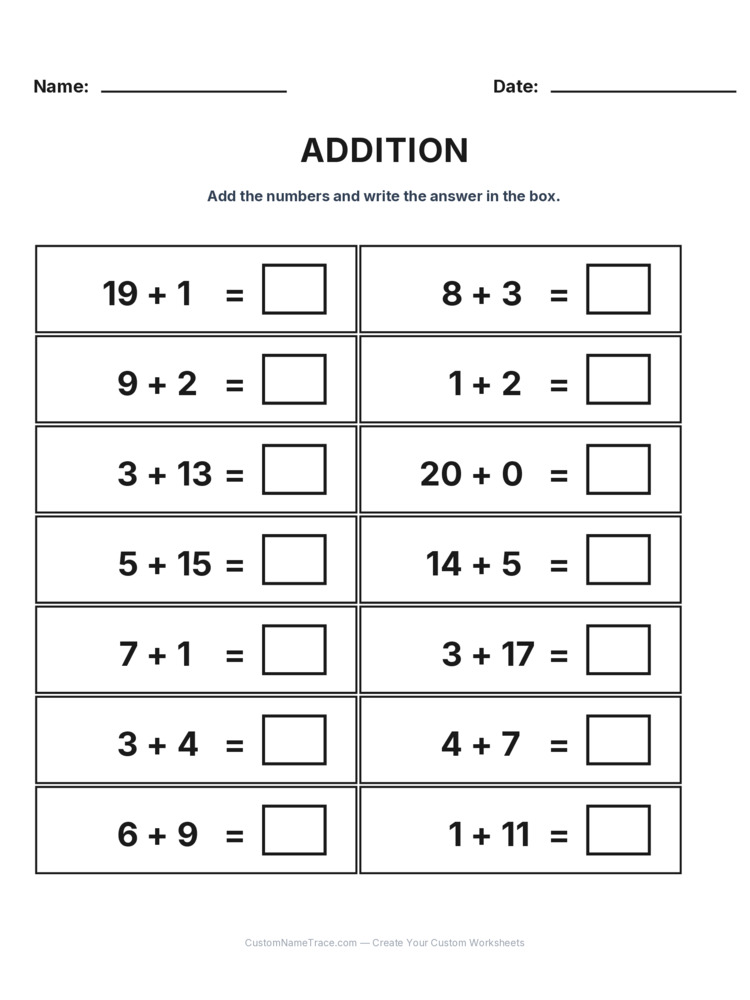
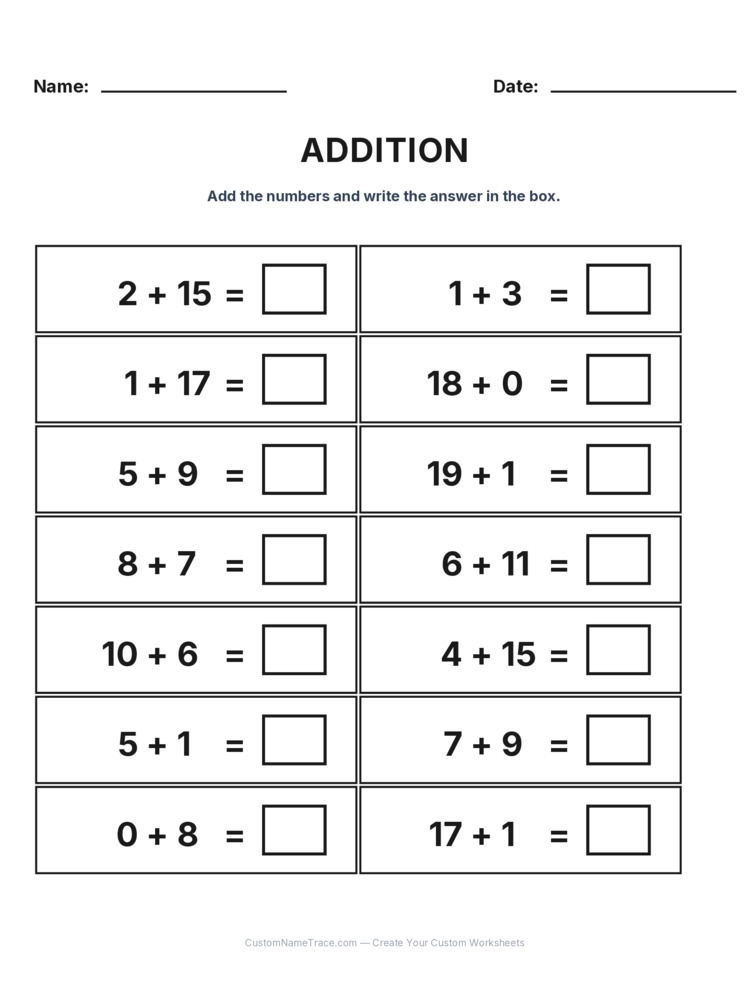
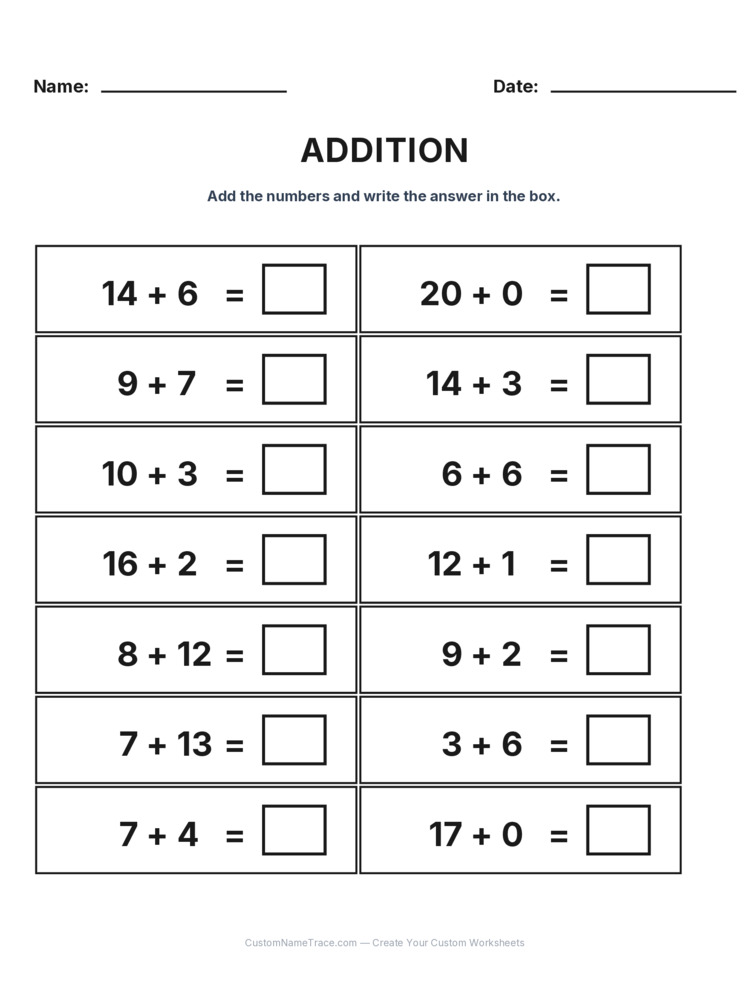
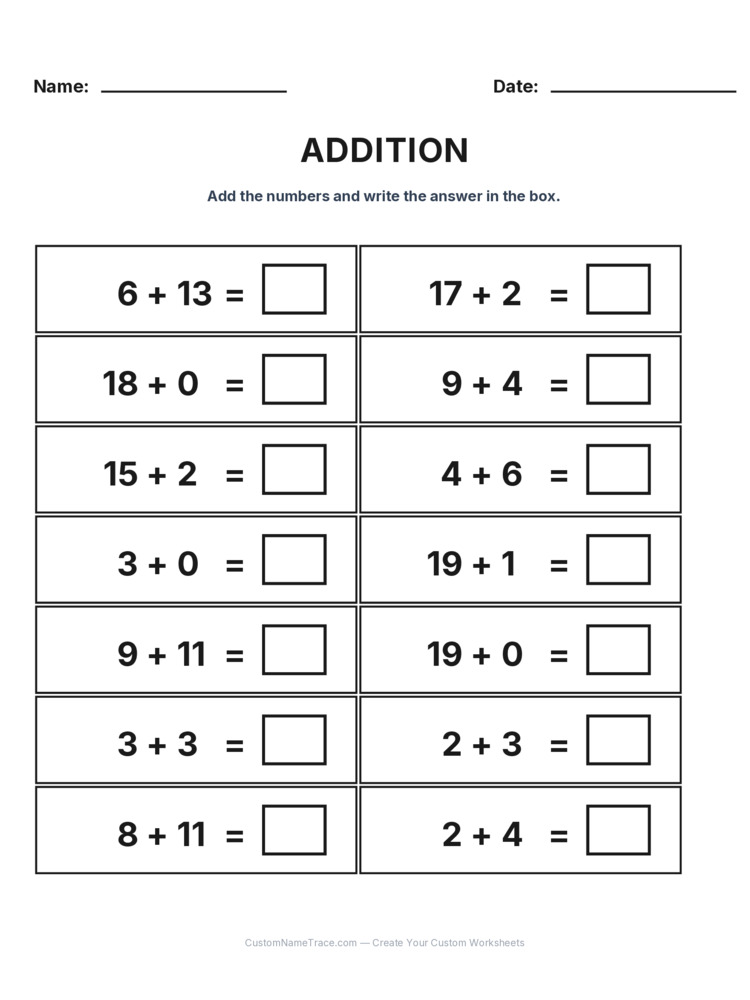
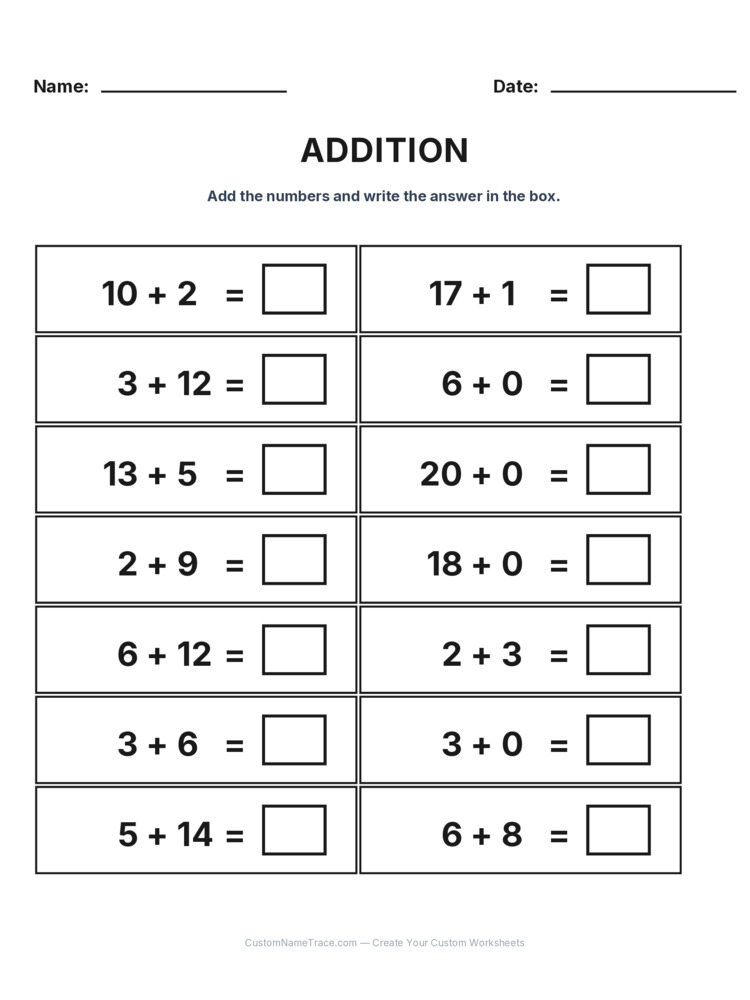
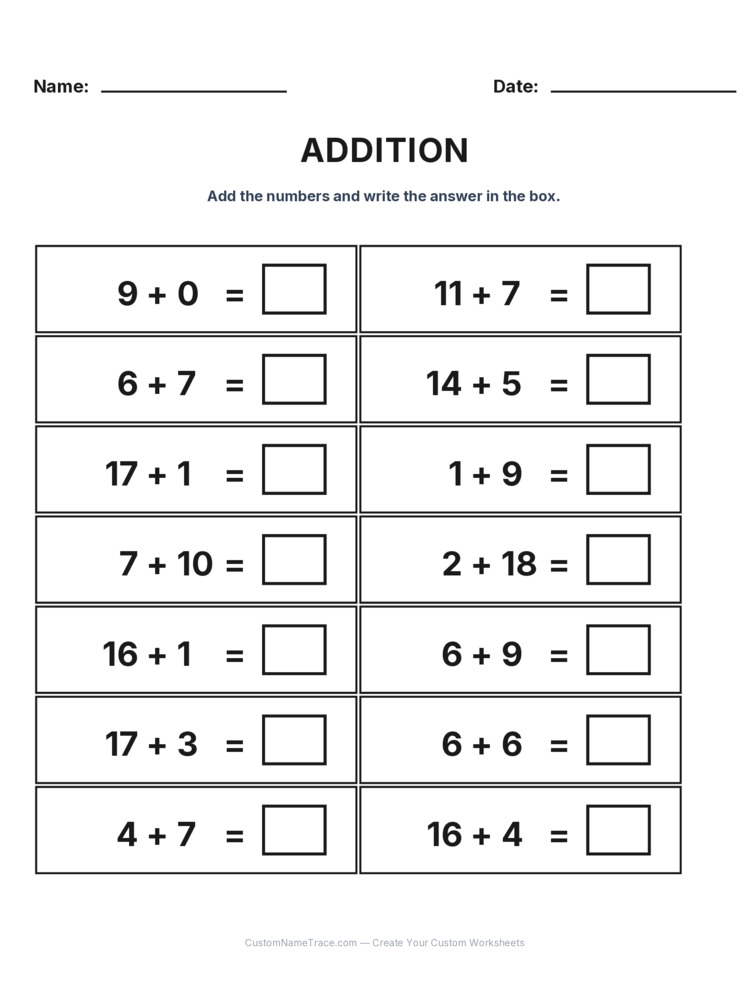
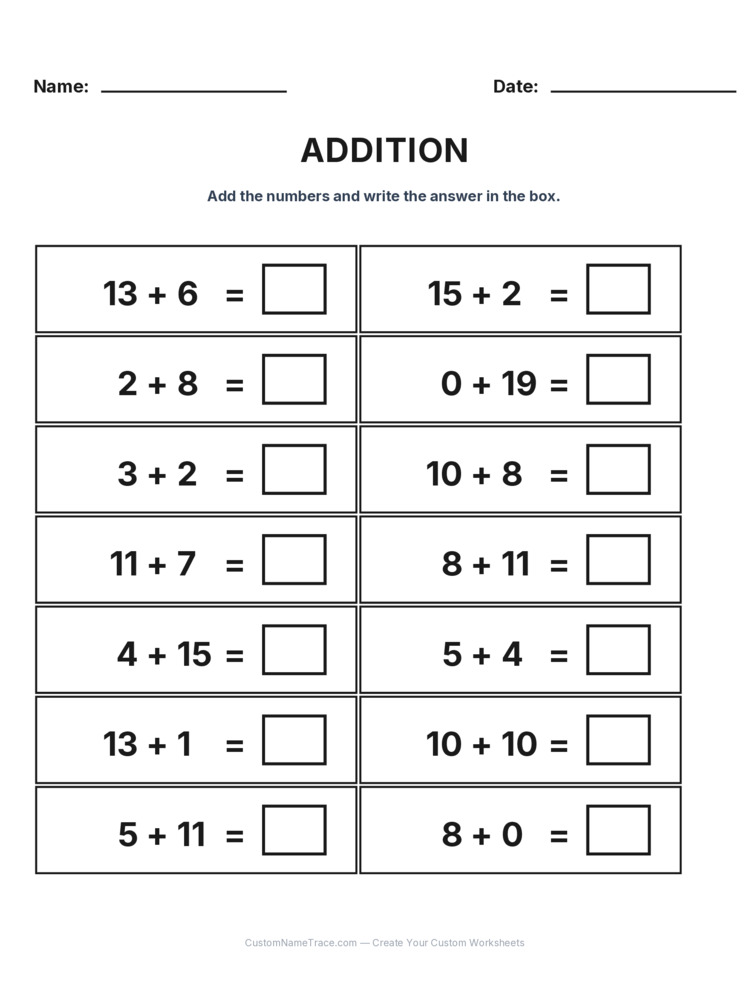
Why 20 is the next meaningful range after 10
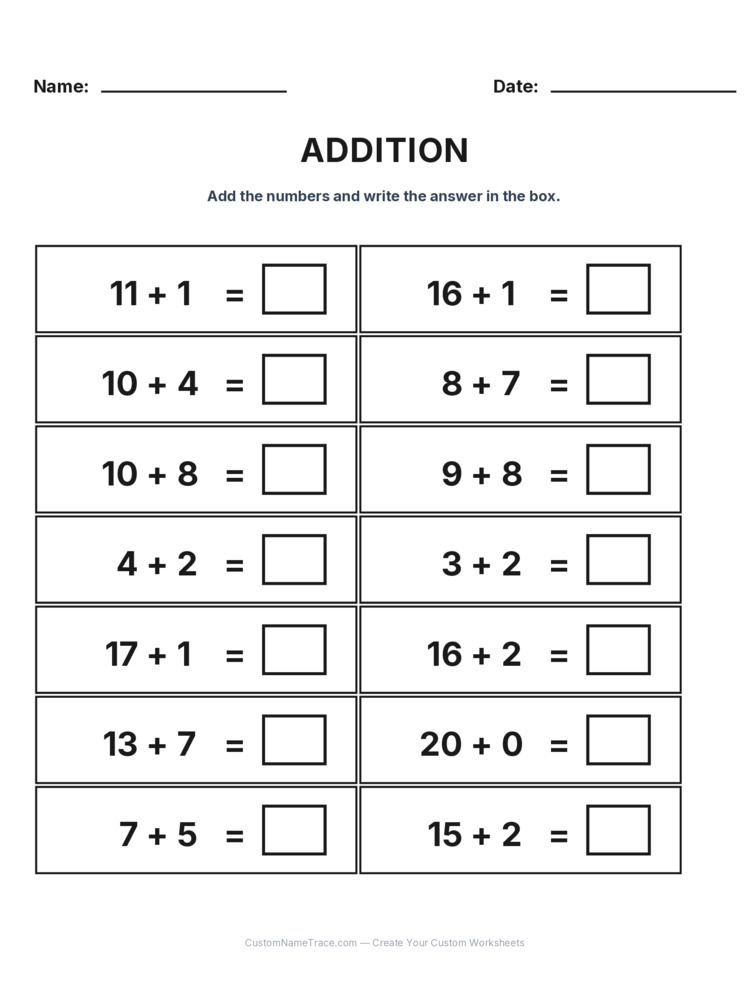
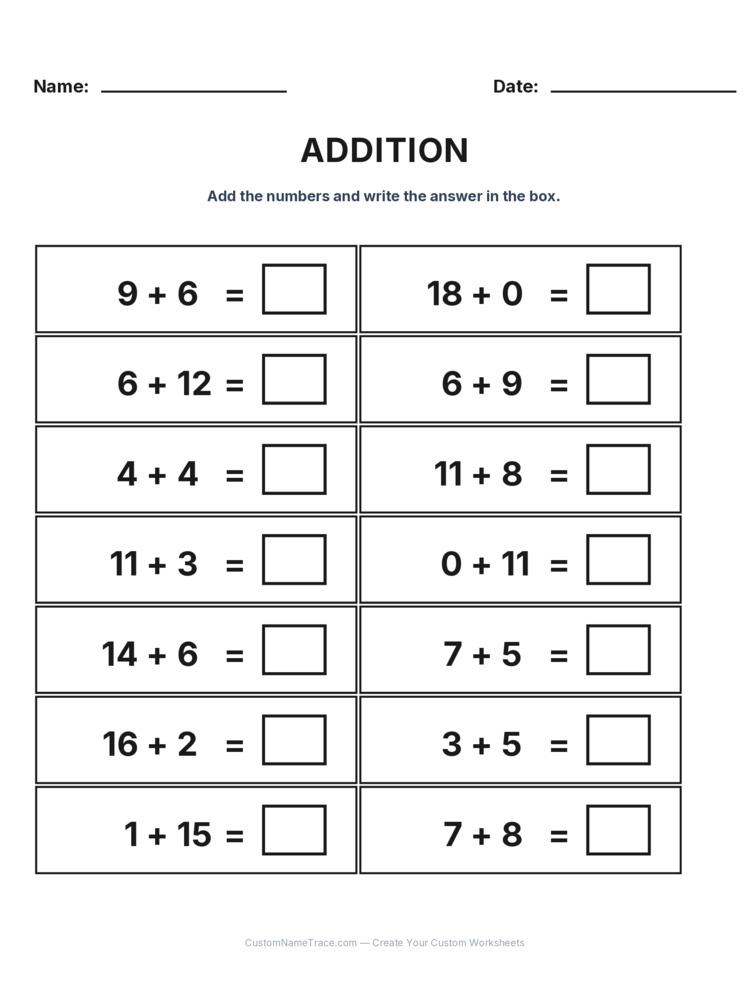
Once a child has solid command of facts within 10, extending to 20 is the natural next step — and it's a genuinely different challenge, not simply "the same thing with bigger numbers." Every problem within this range that crosses past 10 (like 8 + 7, or 15 − 8) requires a strategy beyond simple counting, since counting all the way from one becomes slow and error-prone once totals exceed what's easily tracked on fingers alone.
Problems that stay entirely below 10, or entirely above it without crossing the boundary, are noticeably easier for most children at Grade 1 than problems that cross straight through ten — 8 + 5 is harder than 8 + 1 not because the numbers are bigger overall, but specifically because the answer requires reasoning across that ten boundary rather than staying within one familiar chunk.
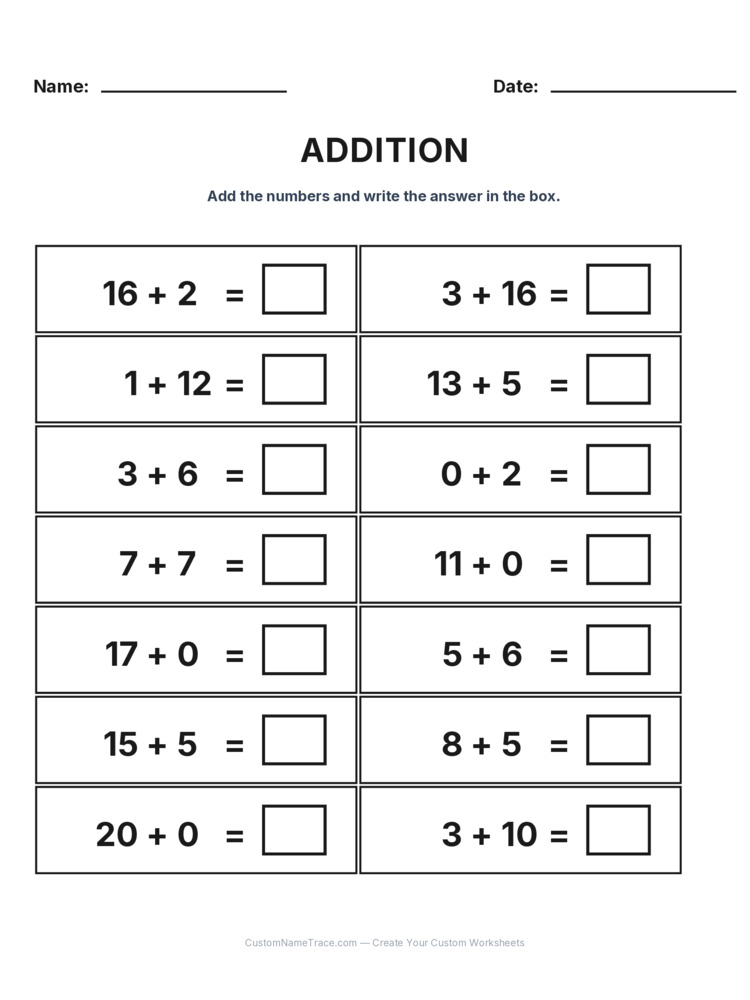
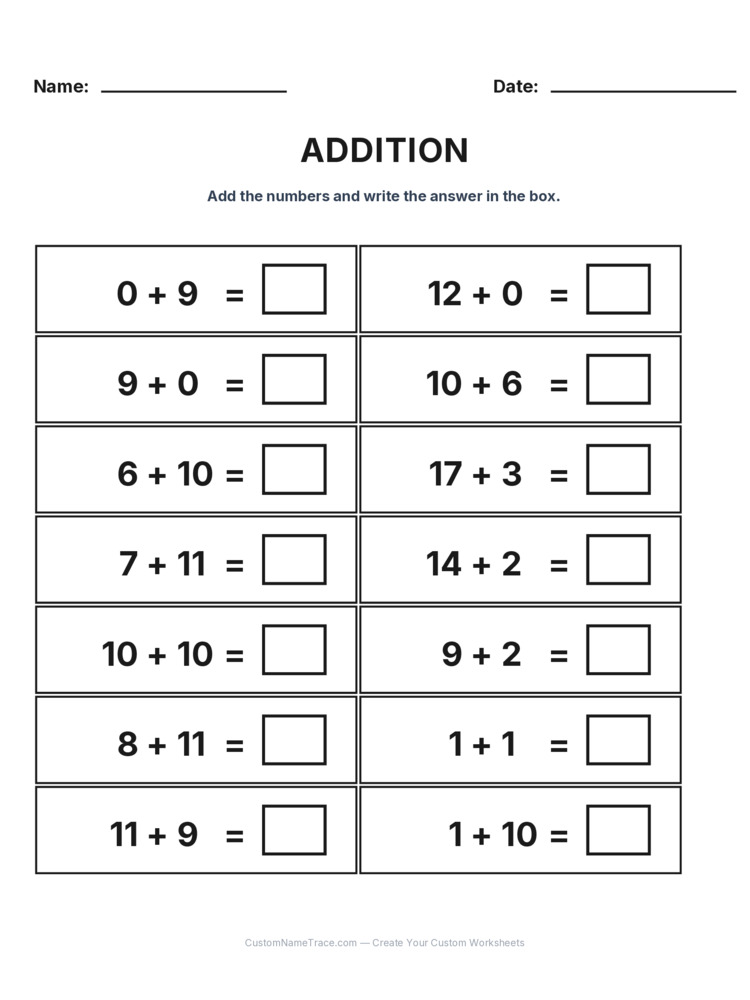
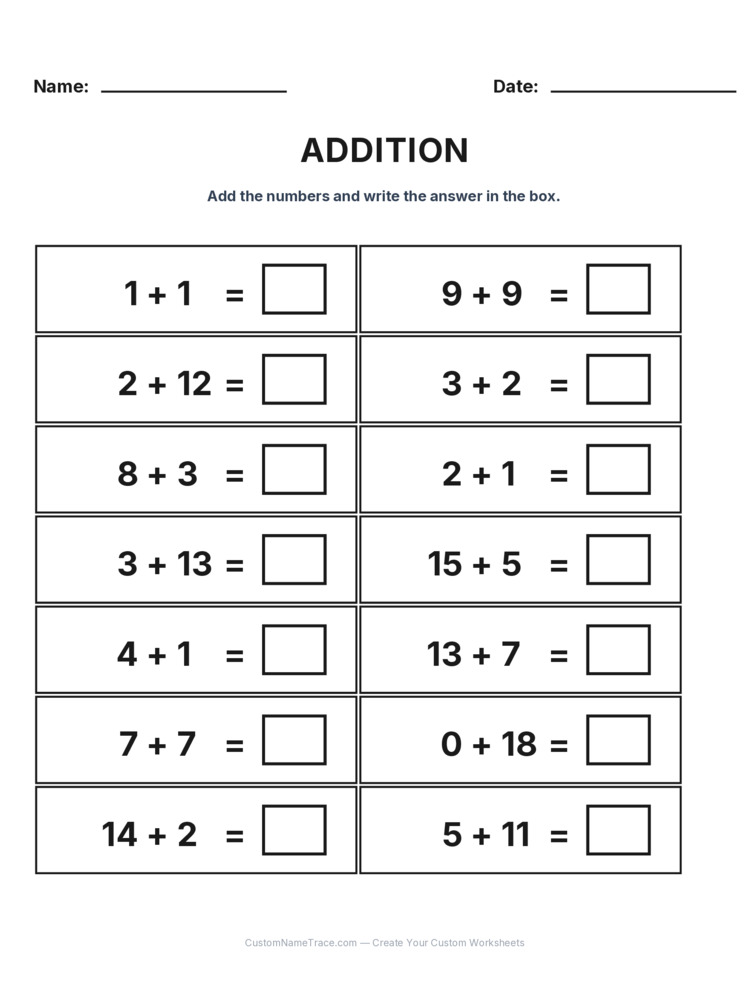
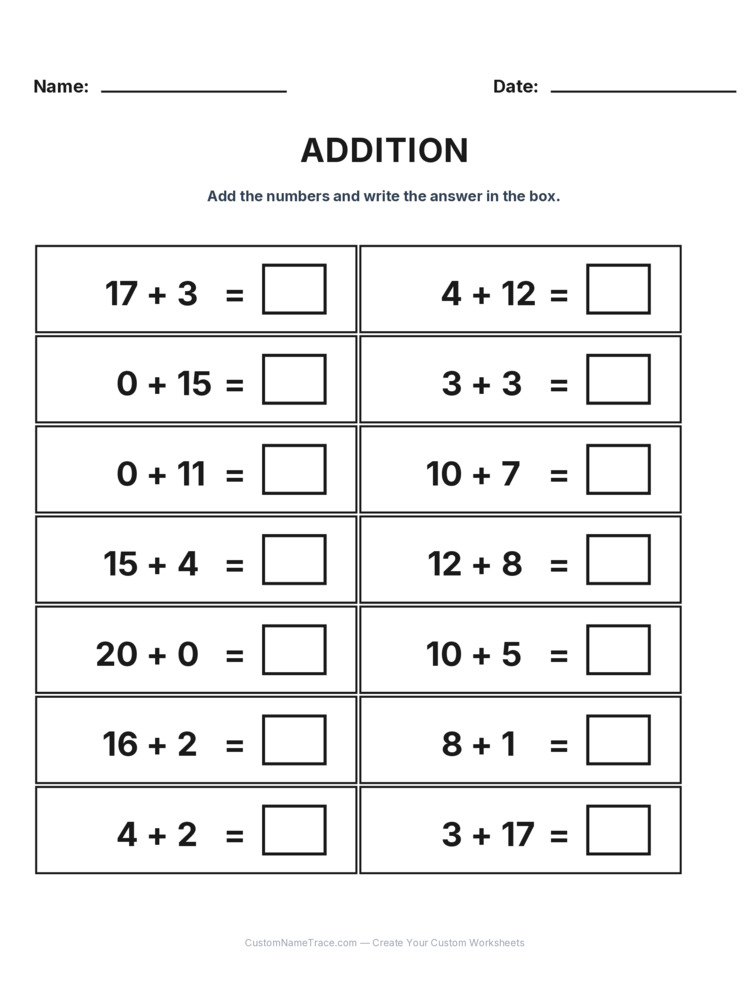
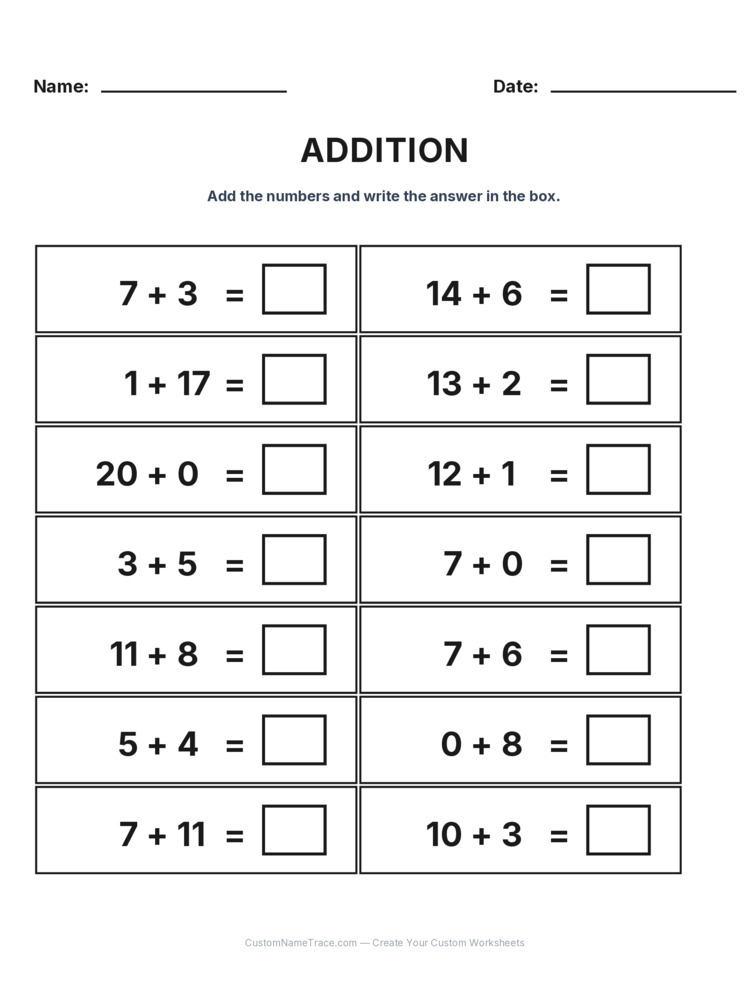
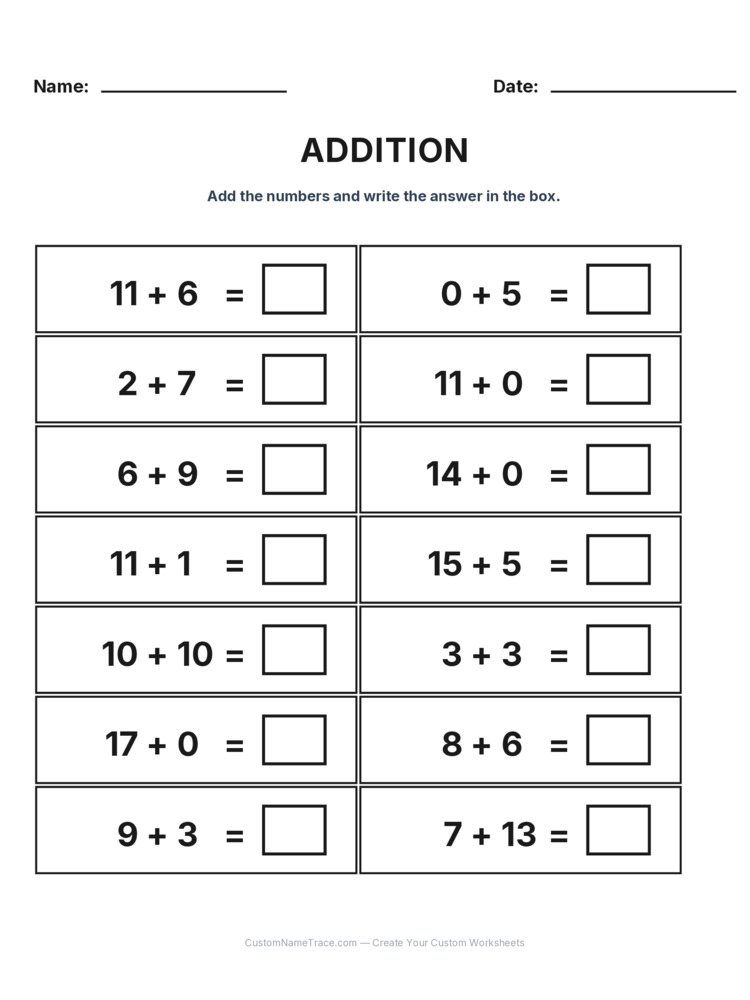
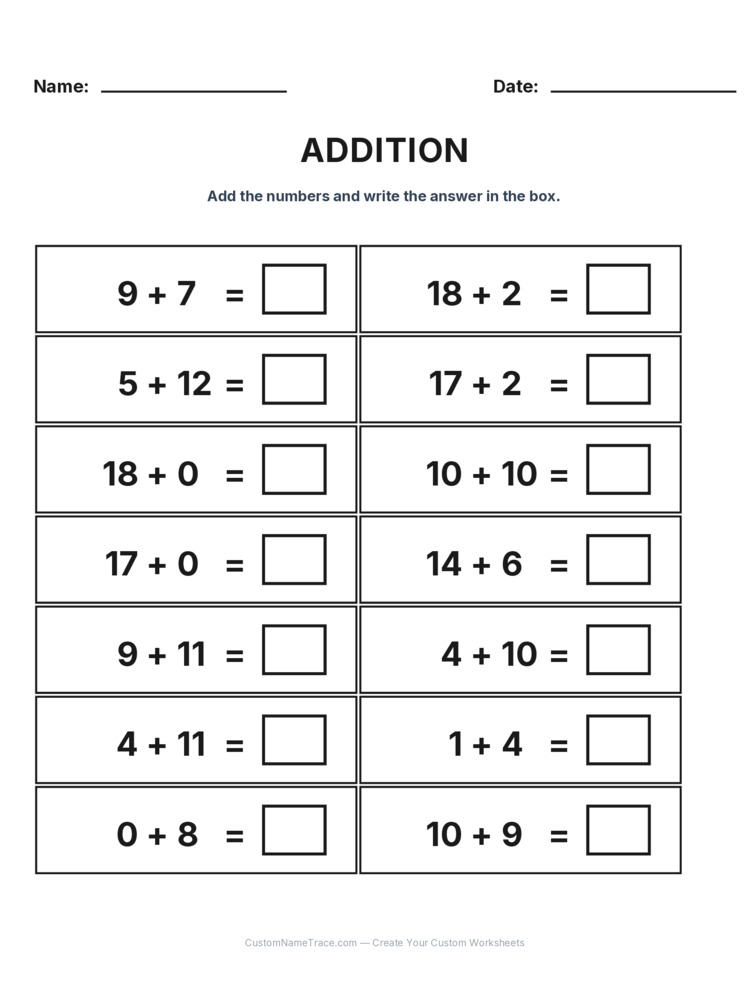
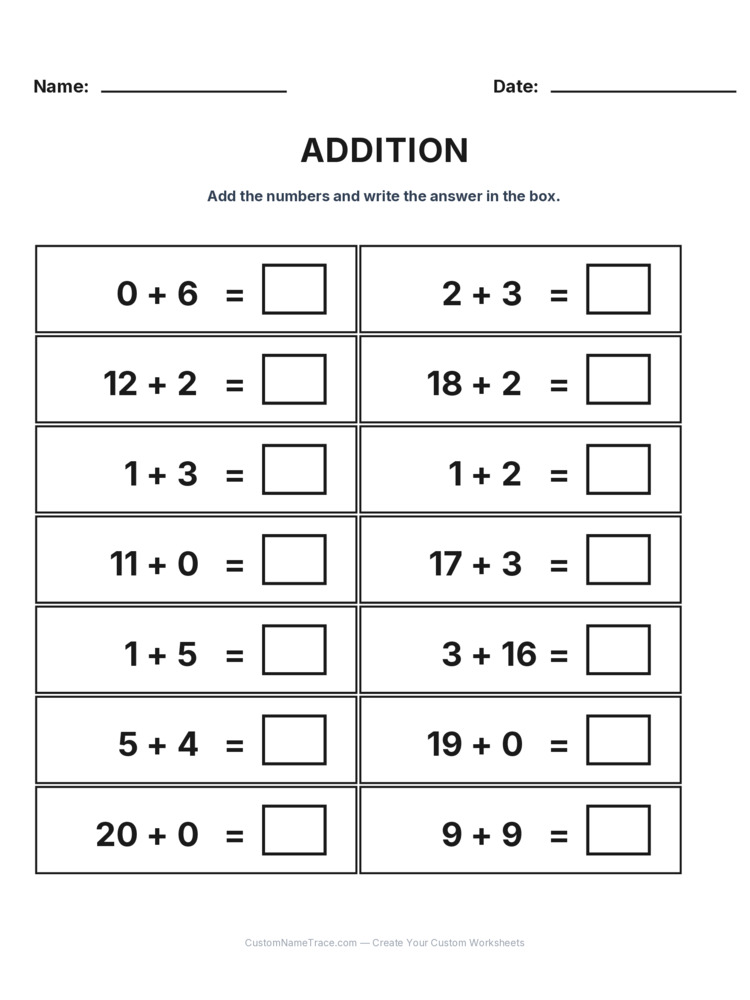
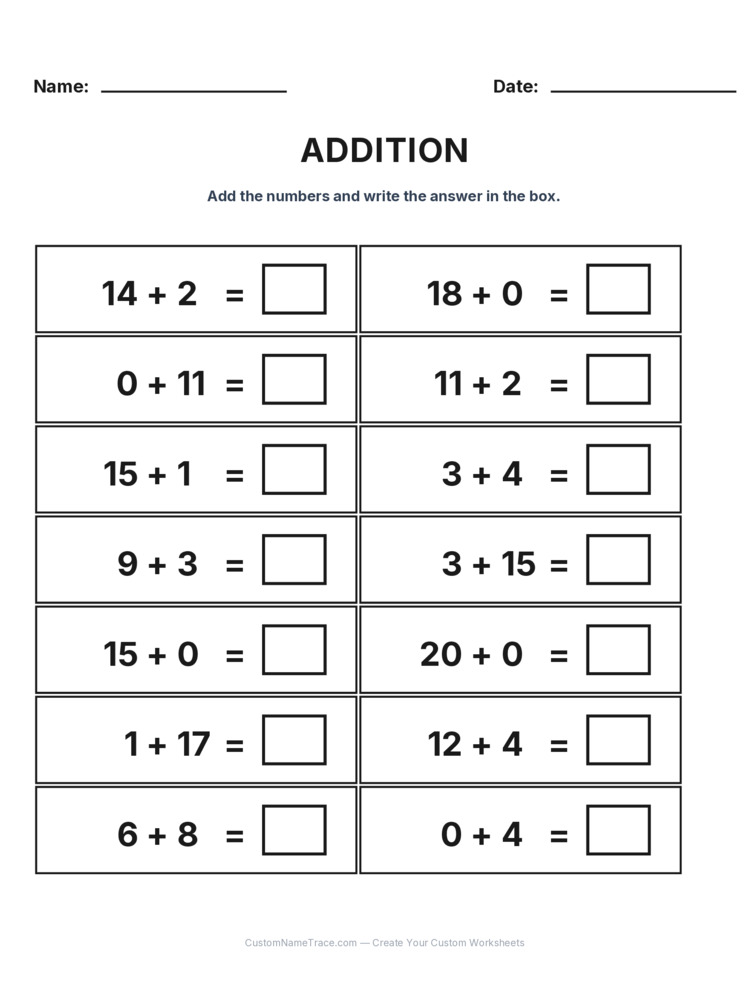
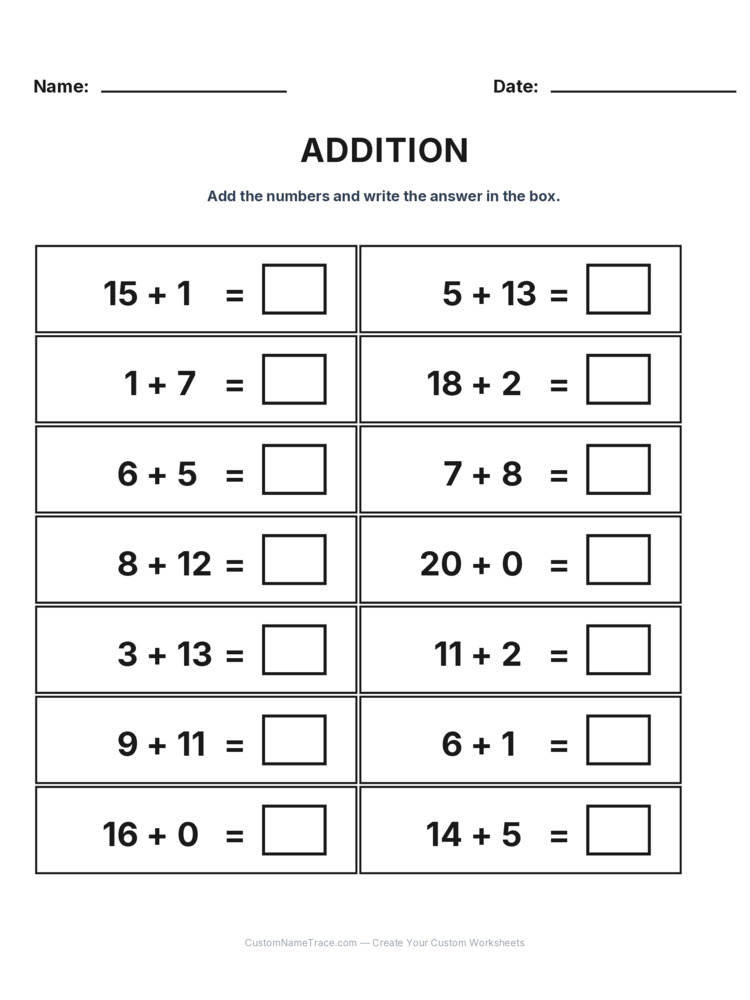
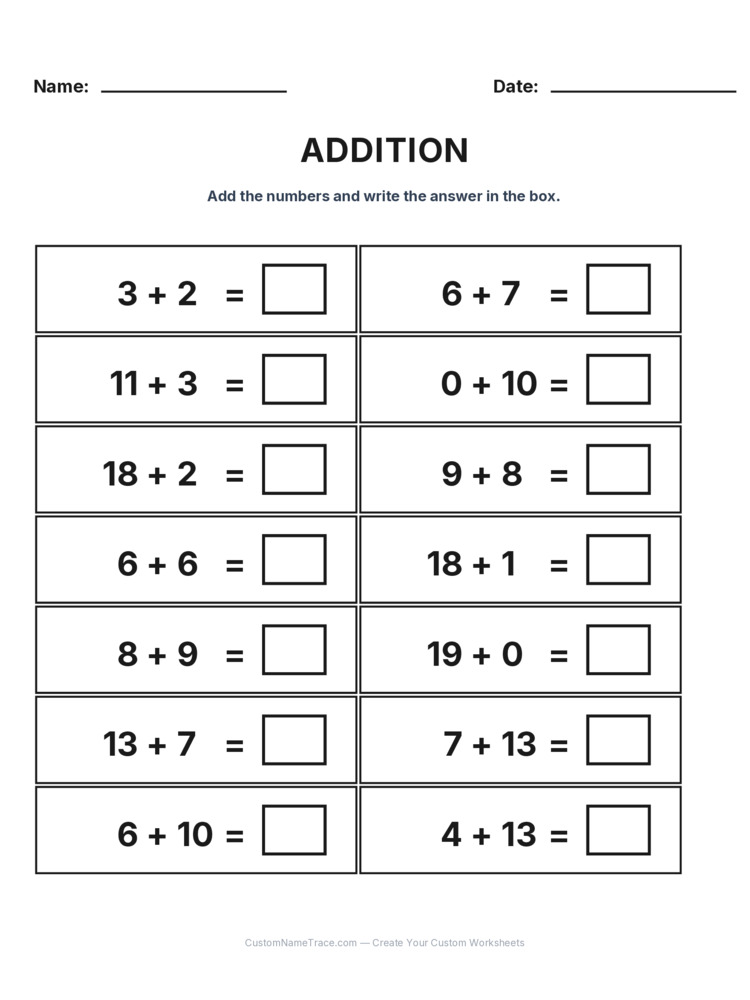
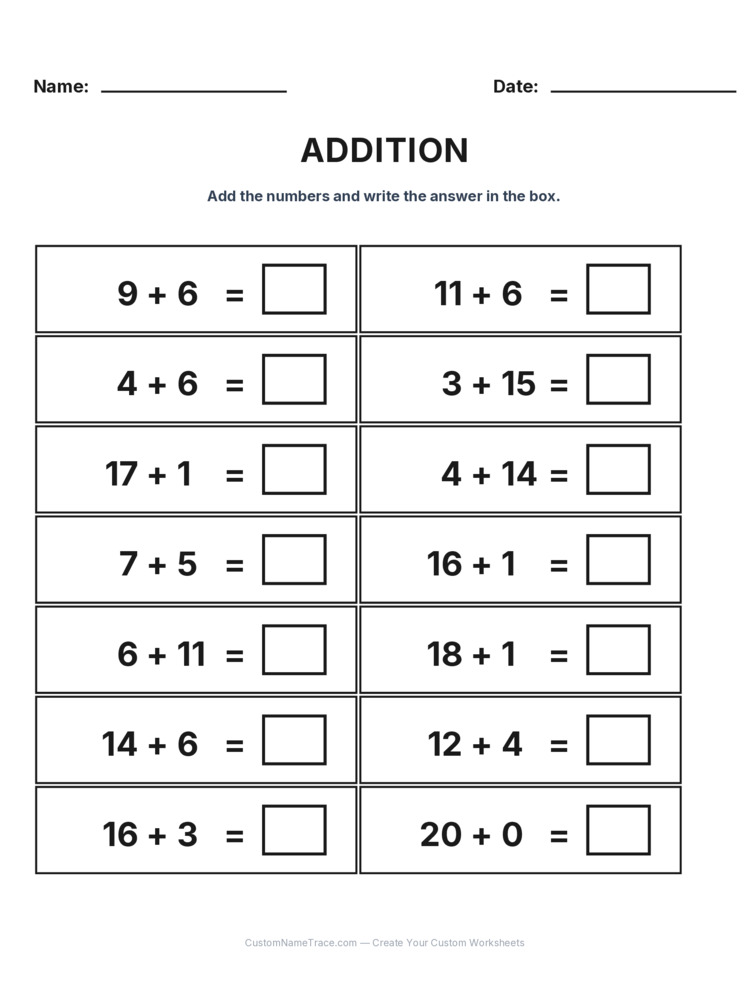
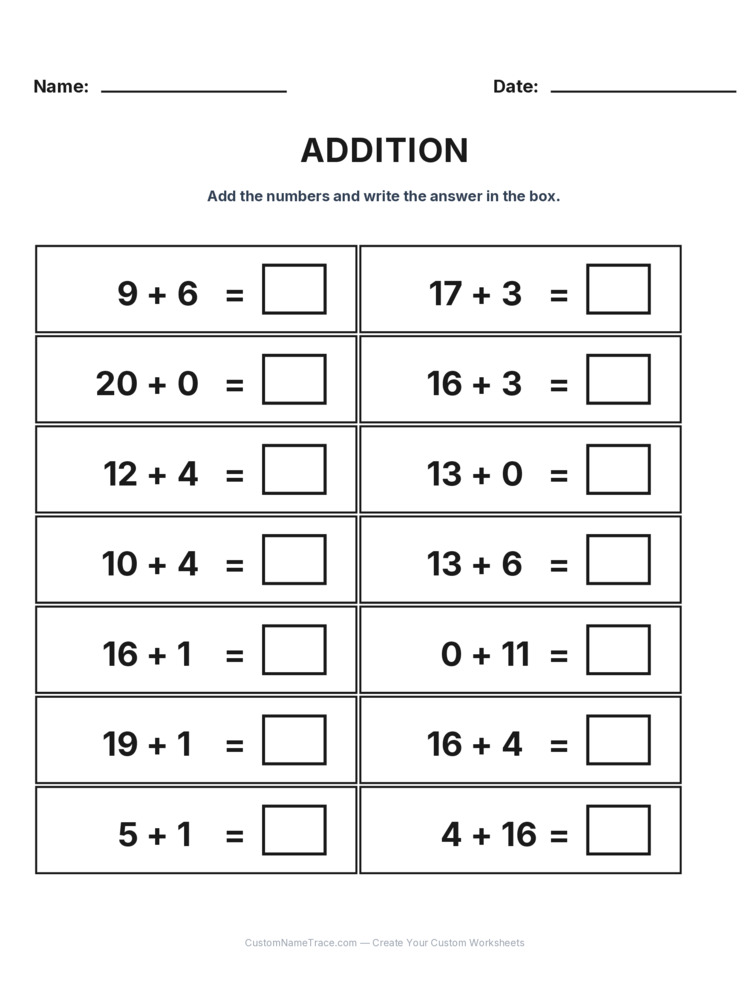
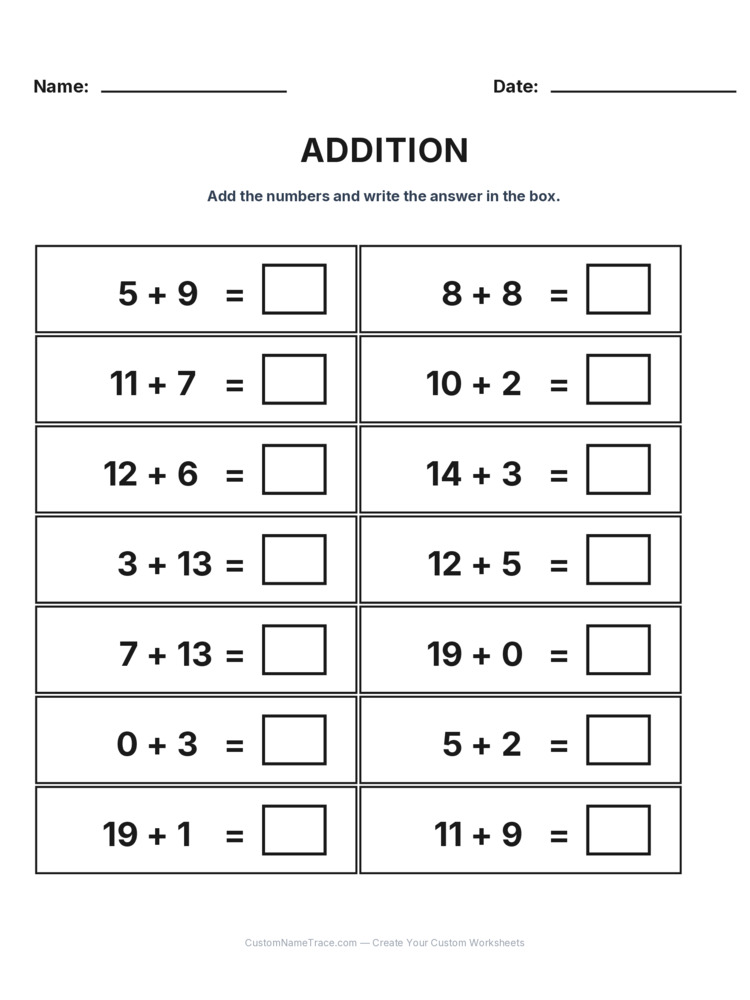
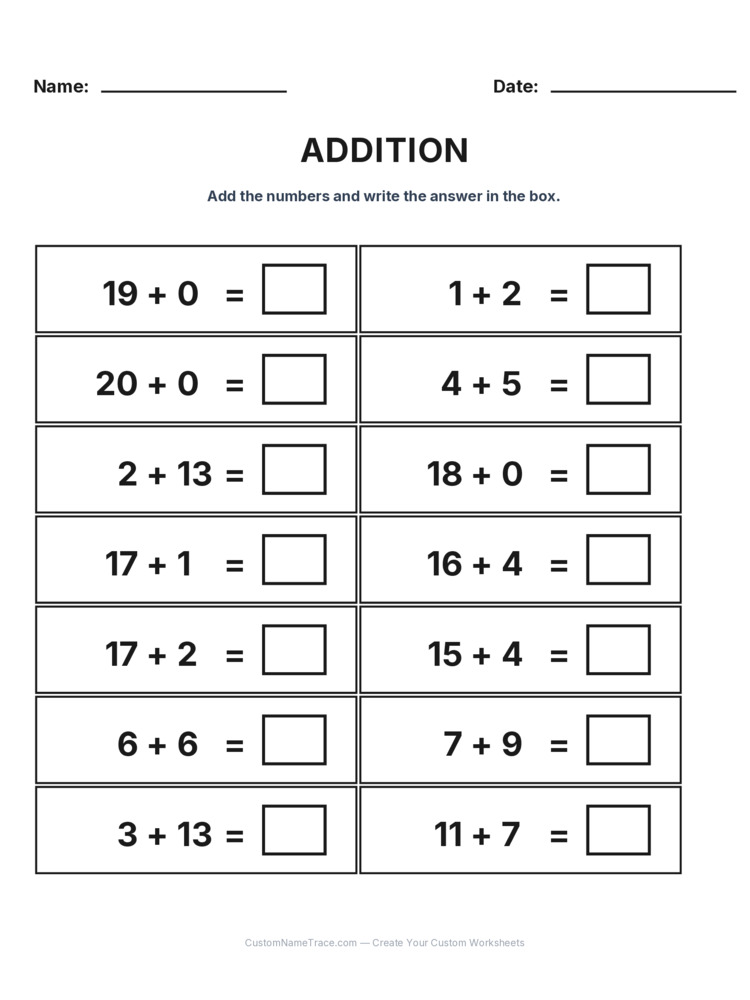
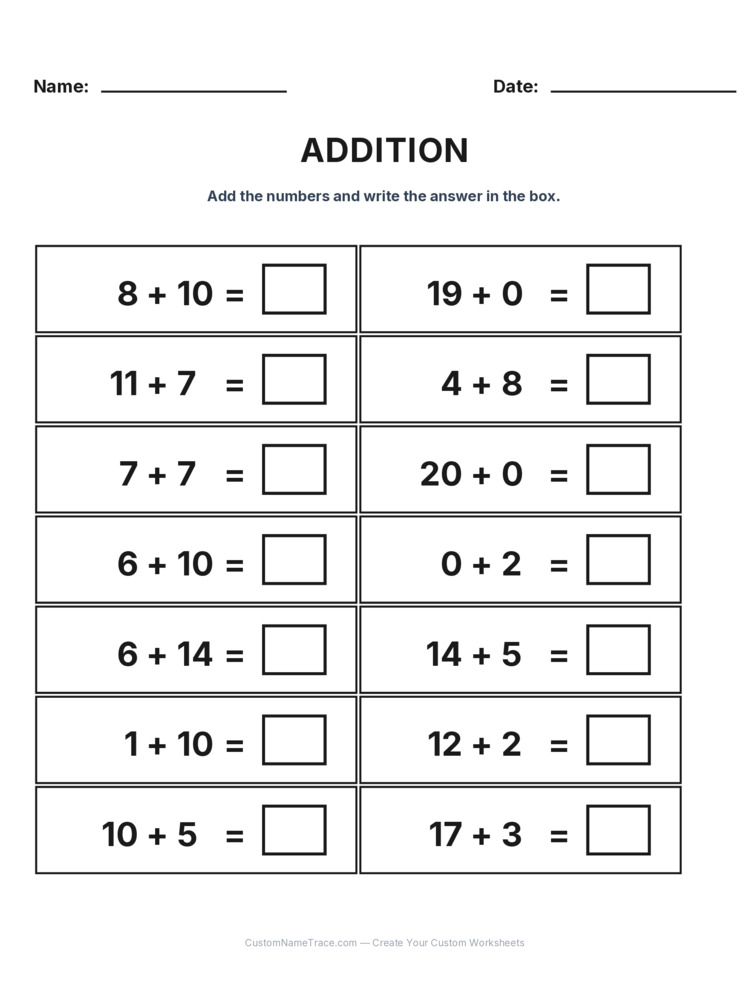
Every problem here stays in the simpler horizontal format rather than shifting to stacked columns, because numbers within 20 don't yet require the regrouping (carrying or borrowing) that justifies switching to a column layout — that shift comes at a later grade, once numbers grow large enough that a horizontal format becomes genuinely impractical to solve mentally.
The make-ten strategy, taught explicitly
For a problem like 8 + 5, breaking the 5 into 2 and 3 — using the 2 to bring 8 up to a full 10, then adding the remaining 3 — turns an unfamiliar cross-ten problem into two much more familiar, already-mastered steps. This strategy, often called "making ten," is one of the most valuable mental math tools a child learns at Grade 1, and it depends directly on the within-10 fluency this site's other Addition worksheet builds first.
A double ten-frame — two ten-frames side by side, one representing the first ten and a second for anything beyond it — makes the make-ten strategy visually concrete rather than purely mental. Filling the first frame completely before spilling into the second directly mirrors the mental strategy this worksheet is meant to build, and it's a useful bridge for a child who isn't yet solving these mentally with confidence.
Posing a problem out loud and asking a child to solve it mentally, explaining their strategy afterward, works well as a lower-stakes companion to the printed worksheet — it surfaces whether make-ten thinking is actually being used, or whether a child is still counting all the way through by ones, information a written answer alone doesn't reveal.
It's common for a child to independently stumble onto a version of the make-ten strategy, or a similar shortcut, before anyone explicitly teaches it — noticing on their own that 9 + 6 is "like 10 + 5" without being told the formal name for what they're doing. Recognizing and praising that self-discovered strategy by name, rather than only introducing the taught version, builds confidence that their own mathematical thinking is genuinely valid, not just a lesser substitute for the official method.
Common difficulty patterns
A miscount or slip on a cross-ten problem specifically, while non-cross-ten problems at the same range are answered correctly, is a clear, specific signal — the make-ten strategy (or an equivalent one) hasn't fully clicked yet, rather than a general weakness with Addition. Focused practice on cross-ten problems specifically, rather than broad review, closes that particular gap fastest.
Not every problem in this range crosses the ten boundary or feels equally hard — doubles, near-doubles, and problems that don't cross ten are typically solved quickly even by a child still building fluency with the harder cross-ten problems. Recognizing that uneven difficulty within the same worksheet is normal, not a sign of inconsistent understanding.
If progress on cross-ten problems seems to stall despite regular practice, briefly returning to within-10 Addition to confirm that earlier range is still genuinely solid is worth doing before assuming something is wrong with this worksheet specifically — a shaky foundation at 10 makes everything built on top of it at 20 harder than it needs to be for a child at Grade 1.
This worksheet is meant to follow, not replace, this site's within-10 Addition practice — a child who hasn't yet built solid within-10 fluency will find the cross-ten problems here considerably harder than necessary, since the make-ten strategy depends entirely on that earlier range already being comfortable and automatic.
Fingers, everyday counting, and real mental math
Counting aids remain a completely appropriate strategy at this range for a child who still needs them, even though 20 exceeds what ten fingers alone can represent directly — using both hands twice over, or small objects, works just as well. There's no need to rush a child toward purely mental strategies before they're genuinely ready.
Twenty comes up constantly outside worksheets — counting fingers and toes together, common classroom group sizes, everyday small quantities — and pointing out those real instances reinforces that this range is genuinely useful, not just an arbitrary worksheet boundary chosen for convenience.
The make-ten strategy this worksheet builds isn't just a school exercise — it's the exact same mental shortcut adults use constantly without noticing, rounding a price to a nearby ten before adjusting, or estimating a total quickly at a store. A child who genuinely masters this strategy here carries it forward as a lifelong mental math habit, well past this specific worksheet and this specific number range.
Where this leads
This site's Number Sense worksheets — Ten-Frame Count and Skip Counting in particular — build the underlying number sense this within-20 practice leans on directly. A child genuinely comfortable with ten-frames has already rehearsed exactly the make-ten thinking this worksheet's harder problems depend on.
Fluency within 20, especially with cross-ten problems, is the direct foundation for the multi-digit, regrouping-based Addition this site introduces at the next grade level — the same make-ten (and, for subtraction, make-ten-in-reverse) thinking scales up directly into the carrying and borrowing procedures used with larger numbers.
A child who solves both cross-ten and non-cross-ten problems accurately, using a consistent strategy (whether that's make-ten, counting, or memorized recall), has mastered this range — regardless of whether every answer comes instantly or still takes a few seconds of visible thought.
It's tempting to rush through within-20 practice quickly on the way to bigger, more impressive-looking numbers, but the make-ten reasoning built here is genuinely load-bearing for everything that follows — giving it real, unhurried attention now at Grade 1 is time well spent, not time that could be better used moving faster toward larger ranges.
Using this effectively
For a child new to this range, working through the first few cross-ten problems together, narrating the make-ten strategy step by step out loud, builds the strategy explicitly rather than expecting it to emerge on its own from repeated exposure alone.
Because this range introduces a genuinely new strategy rather than just bigger numbers, spaced practice — a little most days, rather than one long session — gives the make-ten idea repeated opportunities to solidify across multiple separate encounters, which tends to build more durable fluency than a single concentrated session.
Every numbered worksheet generates a fresh set of problems within this same range, deliberately including a genuine mix of cross-ten and non-cross-ten problems each time, so repeated practice always exercises the full range of difficulty rather than settling into one easier subset.
This range typically takes longer to feel fully comfortable than the within-10 range did, simply because it introduces a real strategy rather than just bigger numbers to count — patient, steady practice over several weeks is a completely normal timeline, not a sign anything is going more slowly than it should.
Print at full size so any accompanying counting aids or drawn marks a child adds have room to fit clearly on the page, and so the numbers themselves stay easy to read and write answers beside.
Every worksheet here downloads as a free, print-ready PDF correctly formatted for Letter and A4 paper, with no account required.