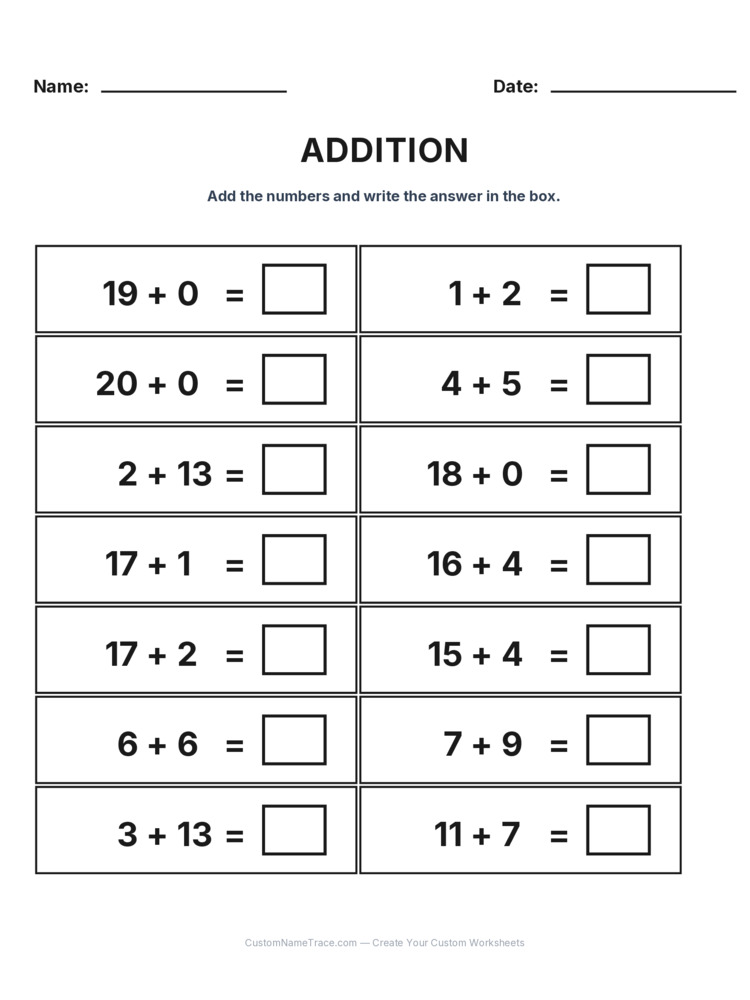
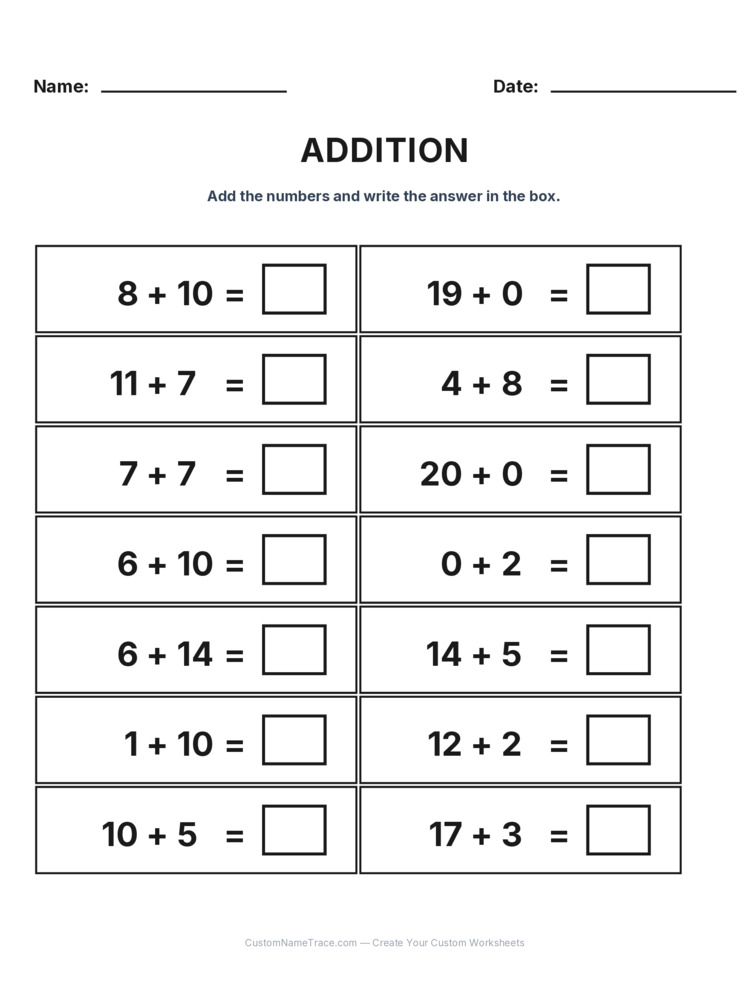
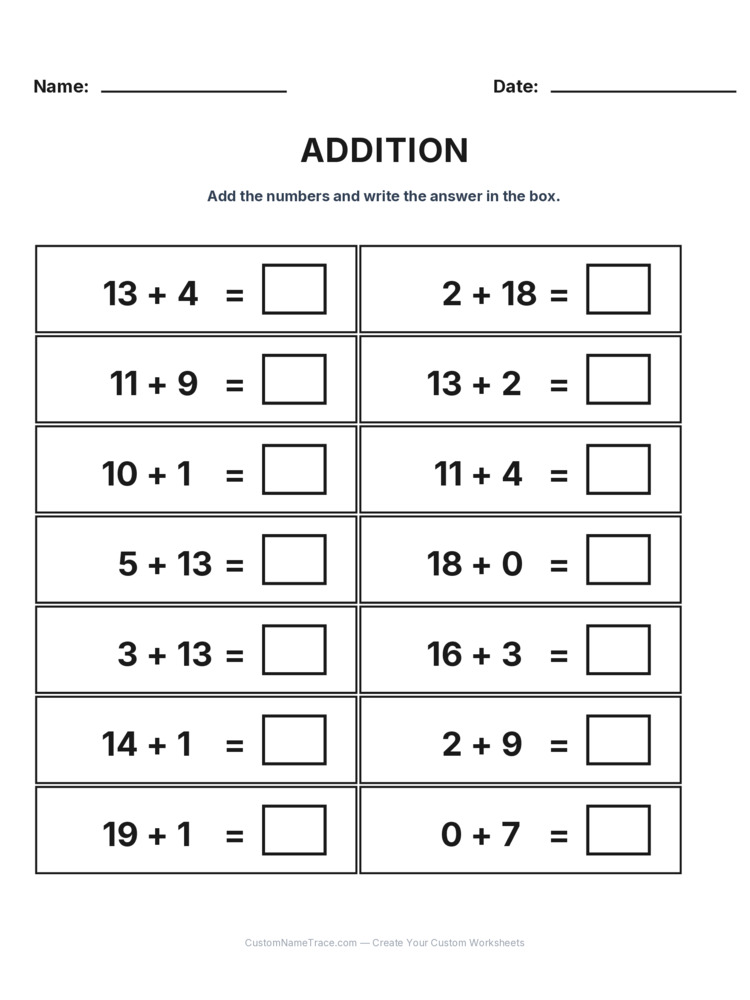
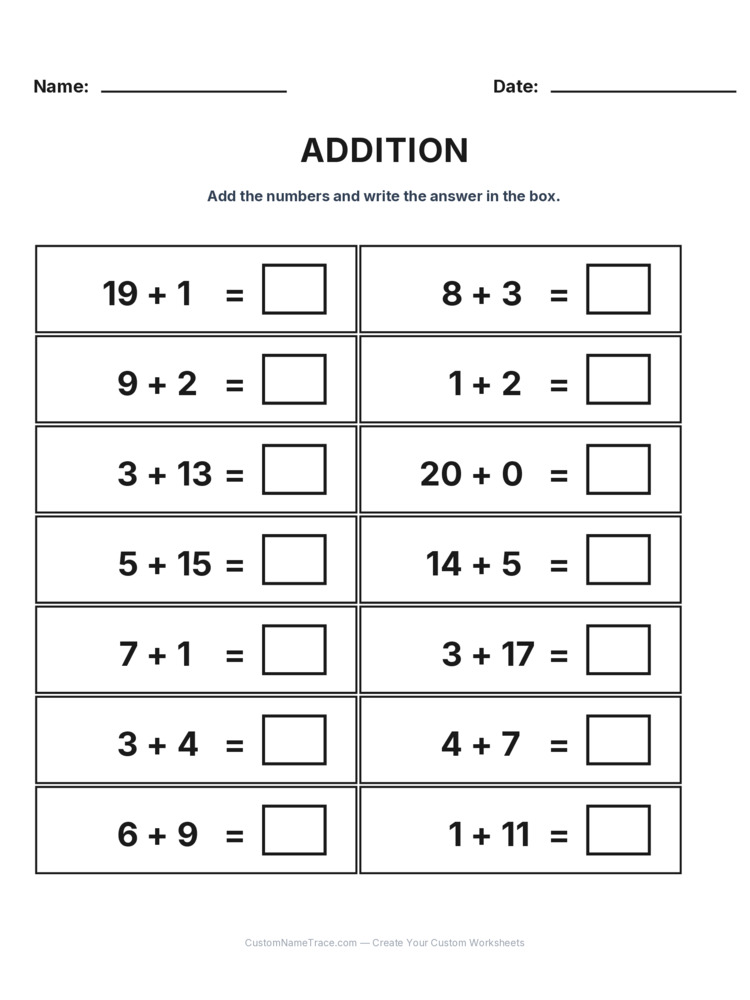
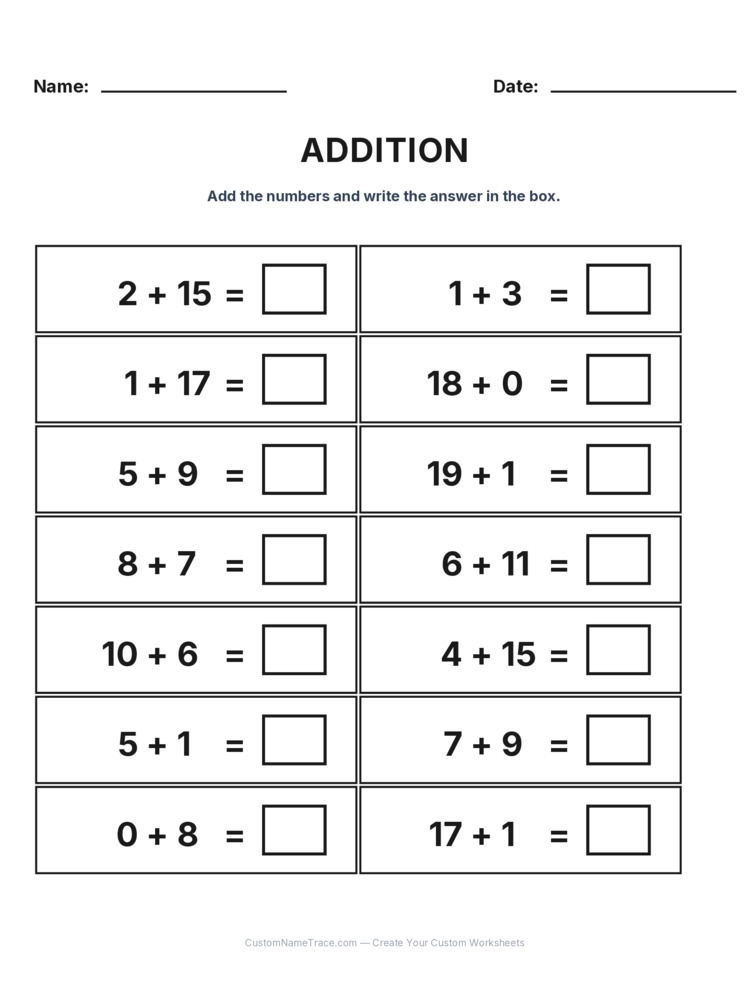
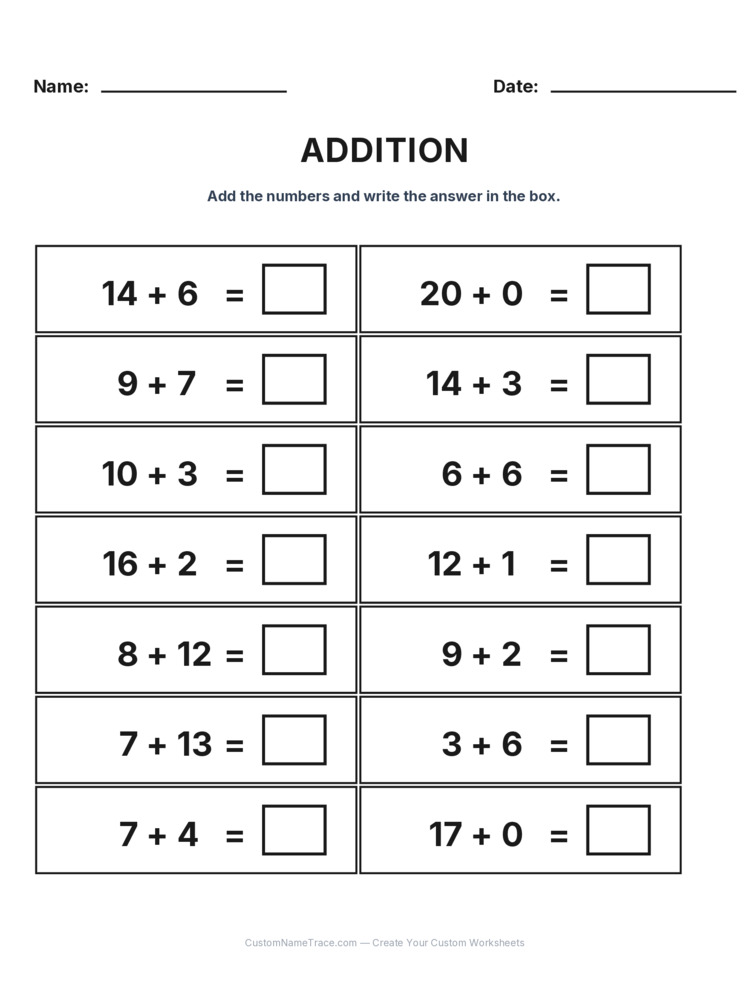
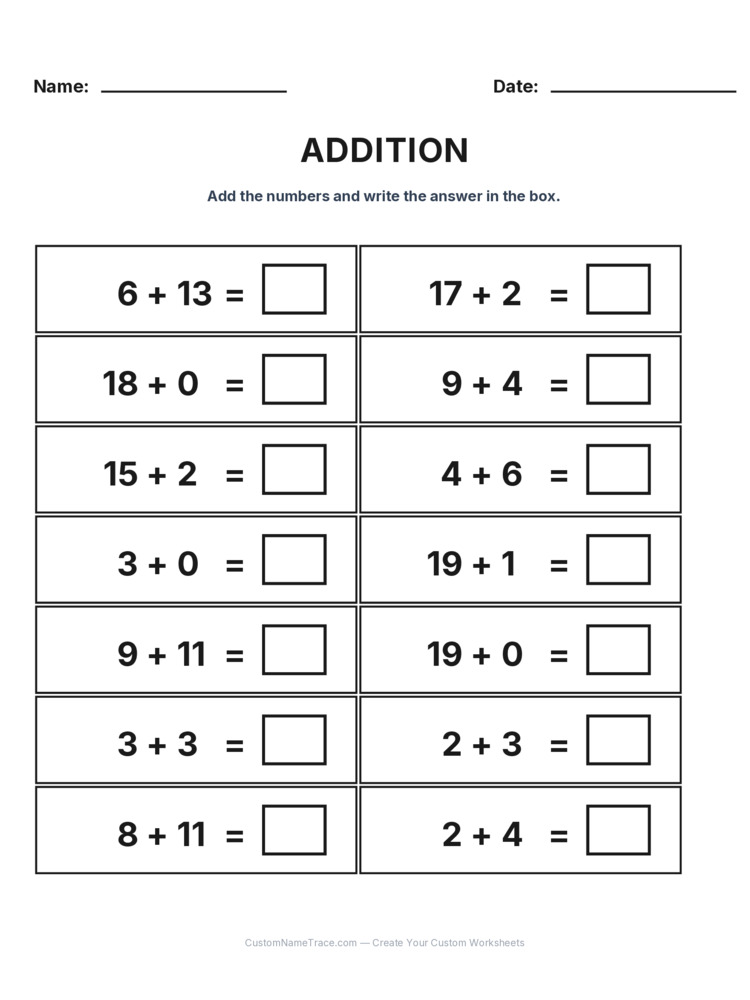
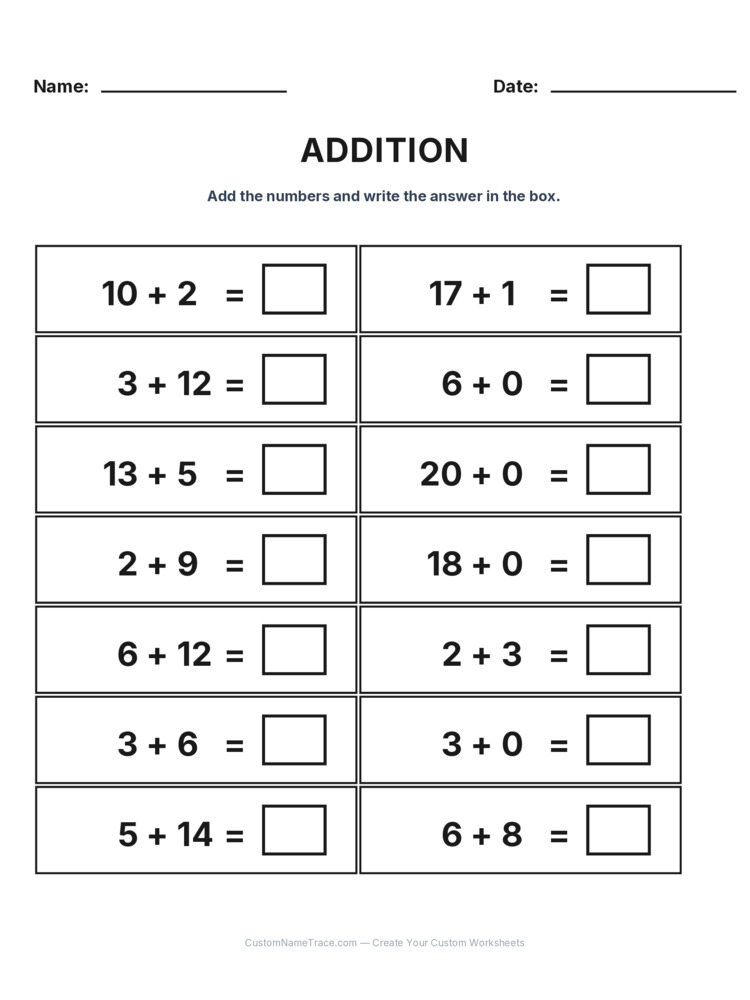
What addition looks like at Grade 1
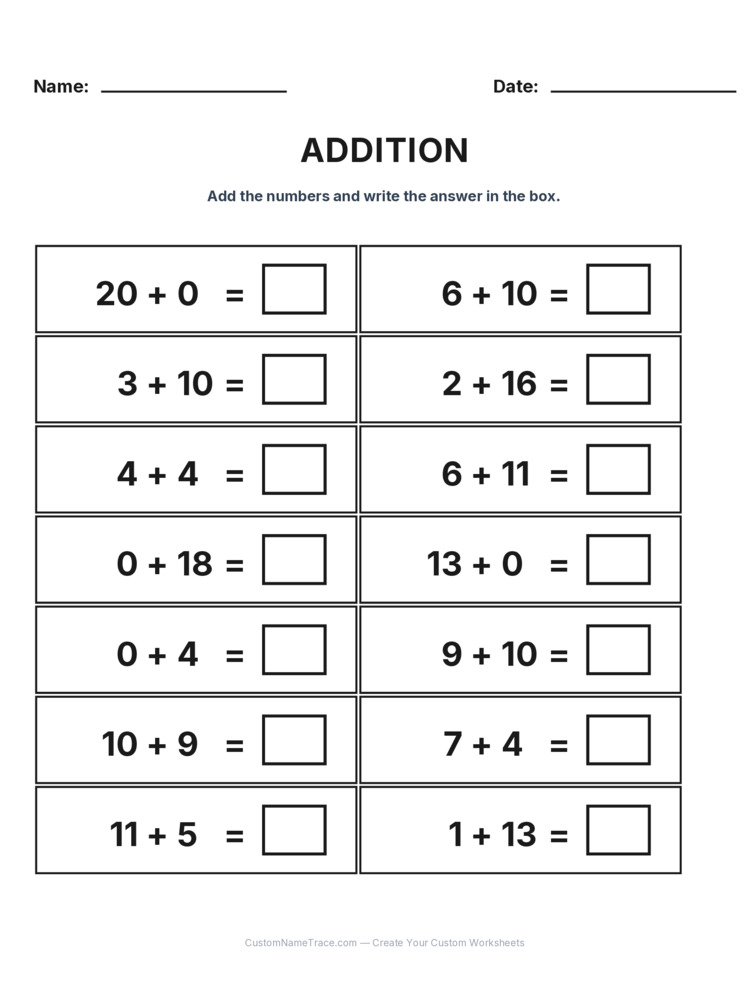
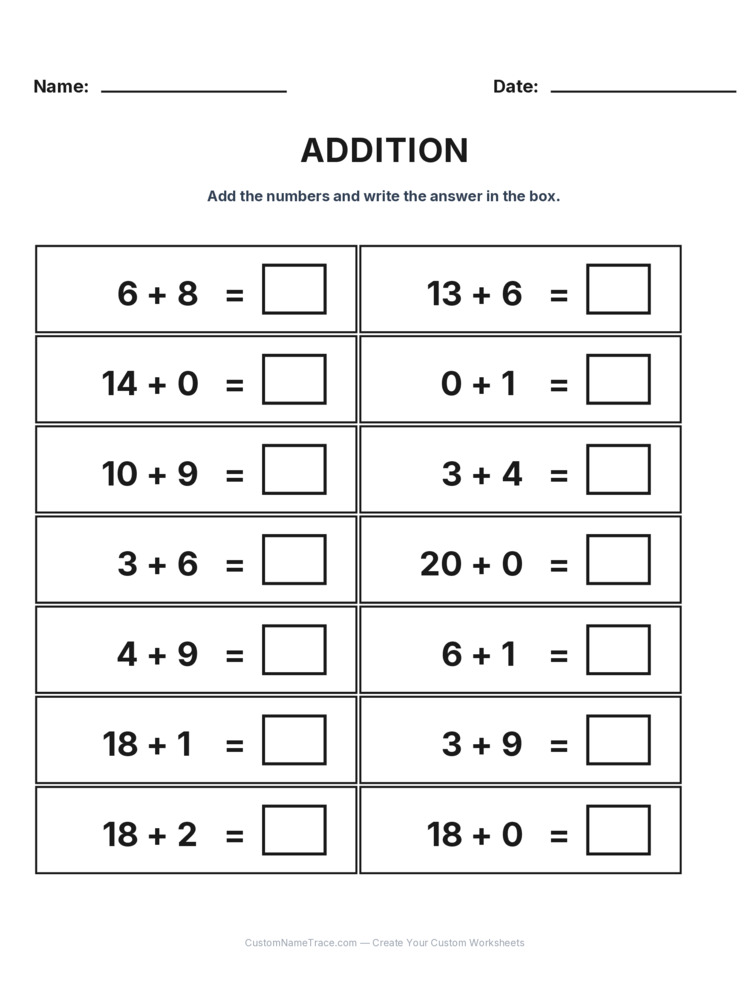
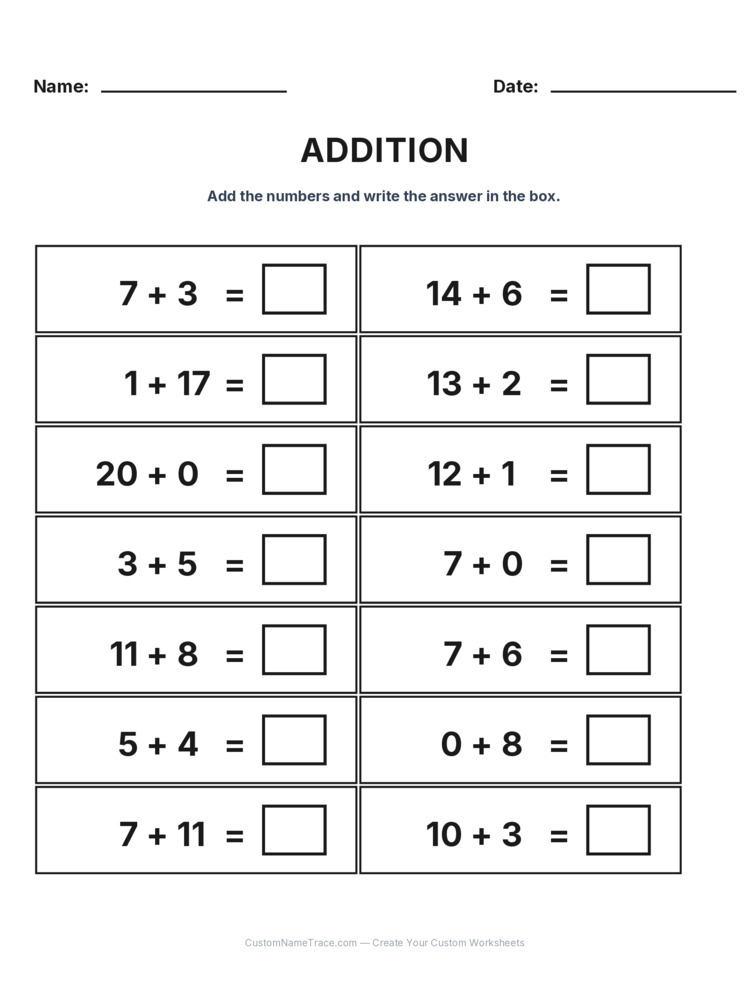
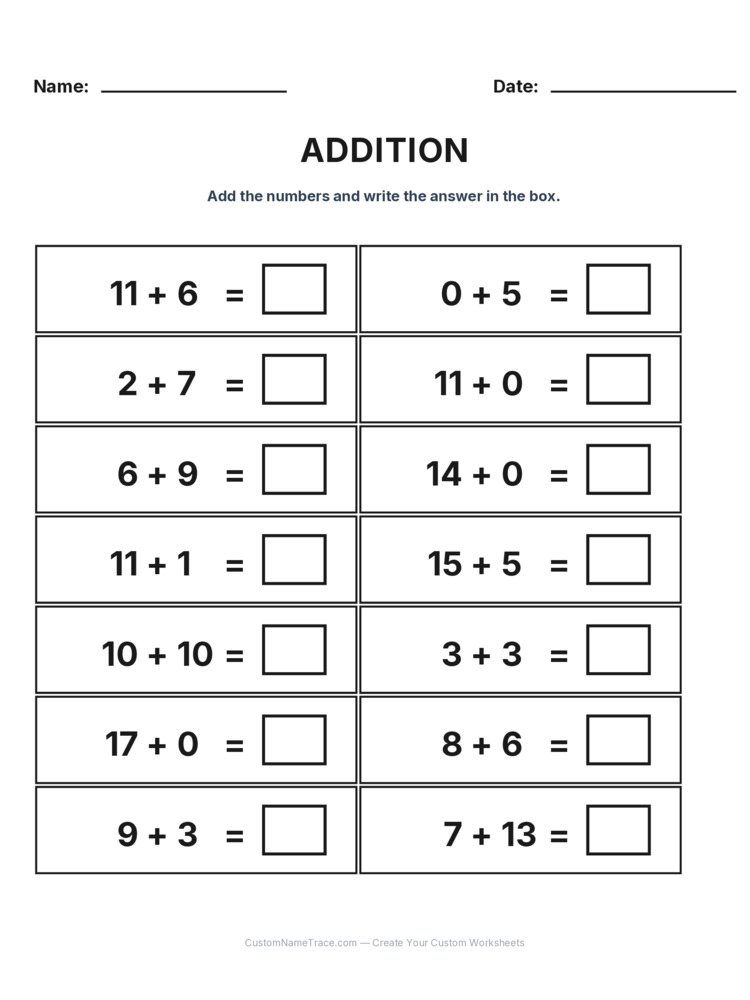
Addition is the first formal operation a child learns, and what it actually looks like on paper changes substantially across the grades covered on this site — from small single-digit sums solved by counting, up through multi-digit column addition that requires carrying. Every addition worksheet under Grade 1 is scoped to the number range and format genuinely appropriate for that stage, drawn from real curriculum progressions rather than an arbitrary difficulty label attached after the fact.
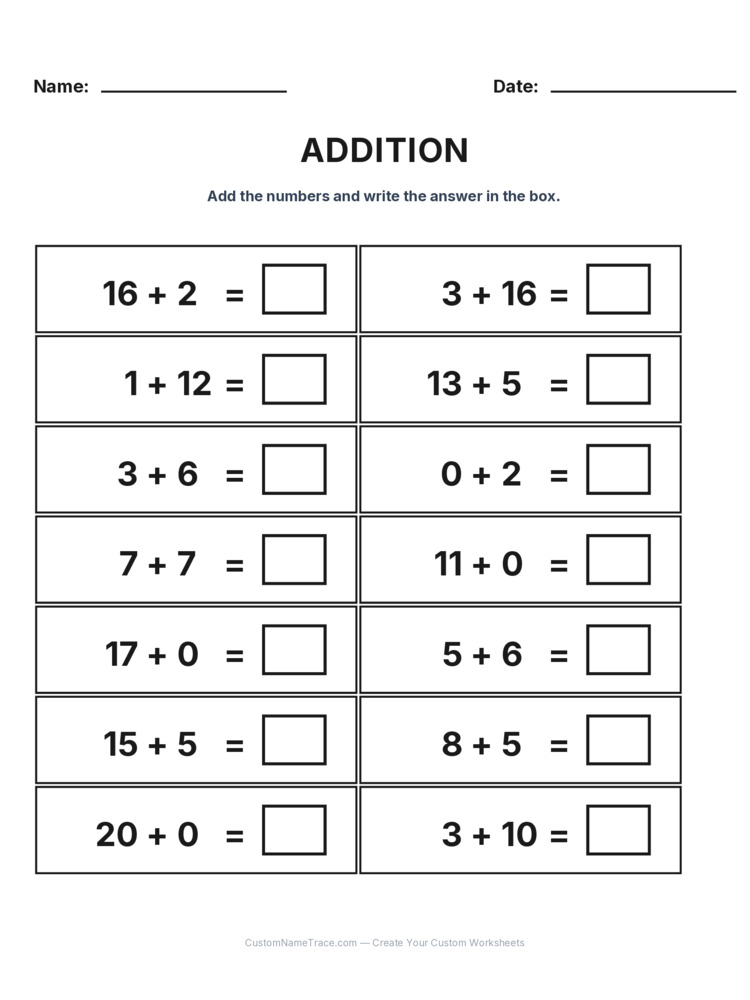
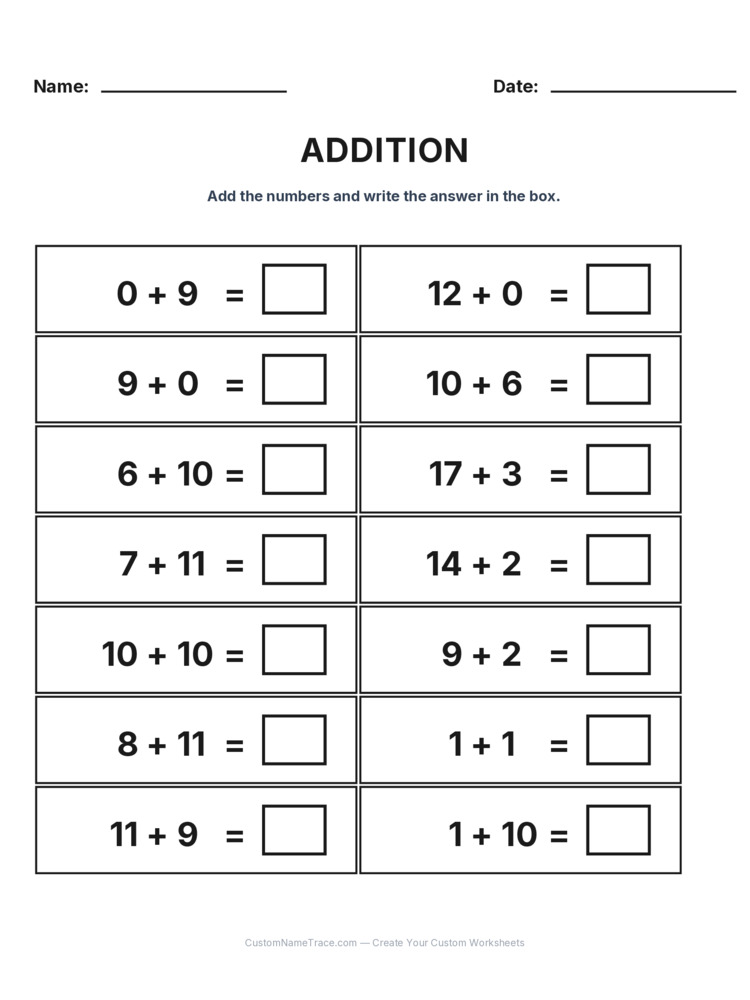
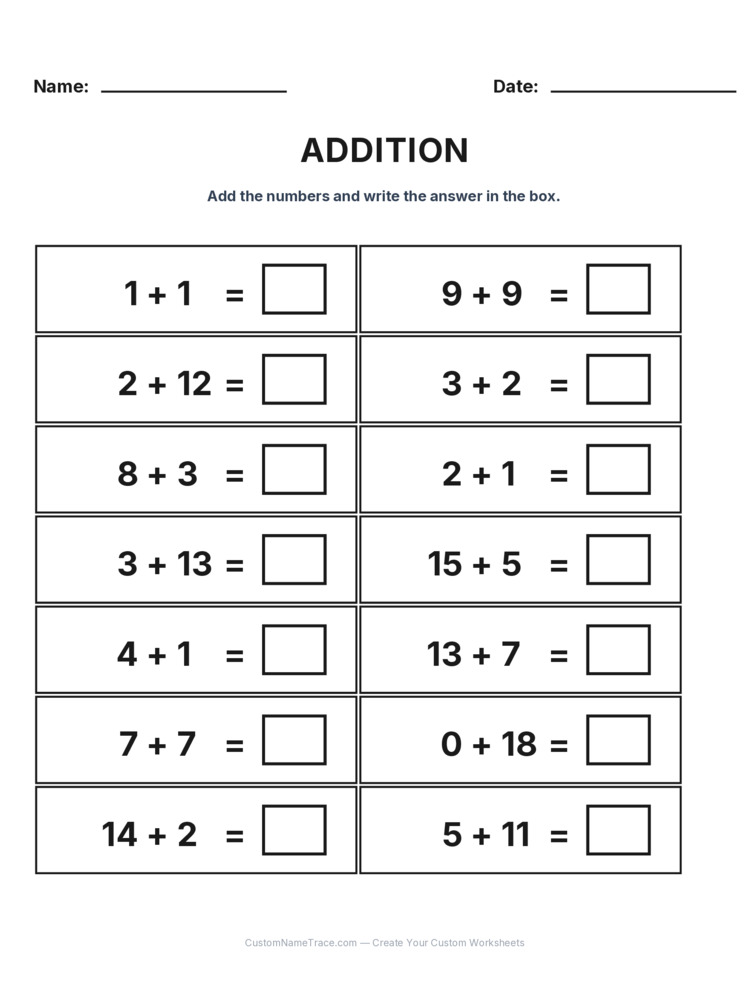
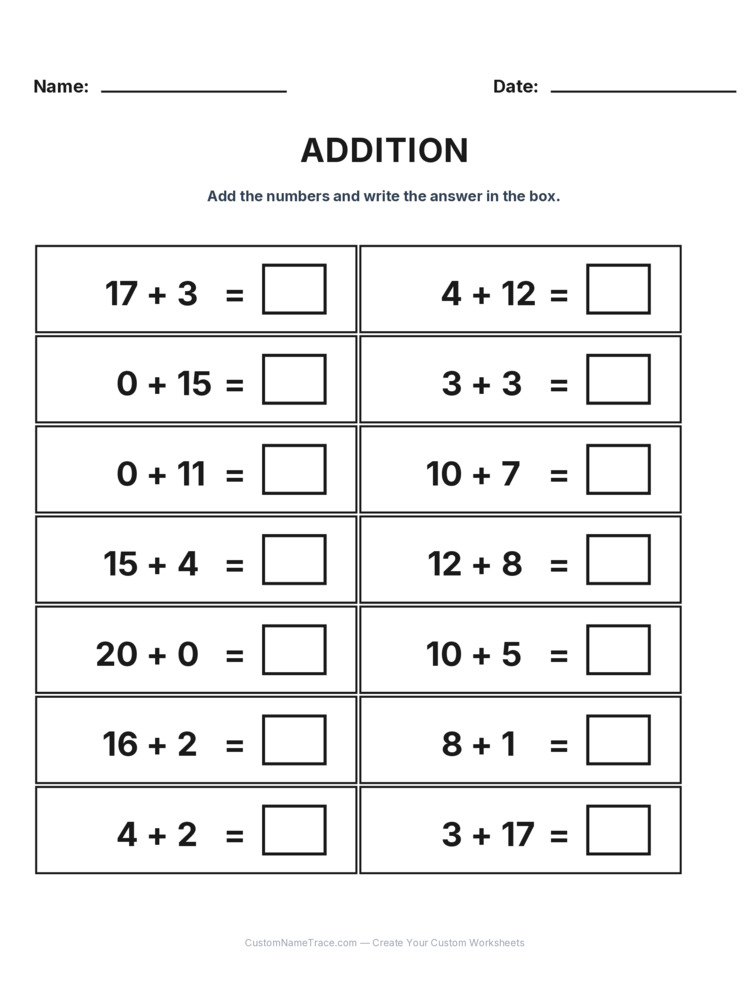
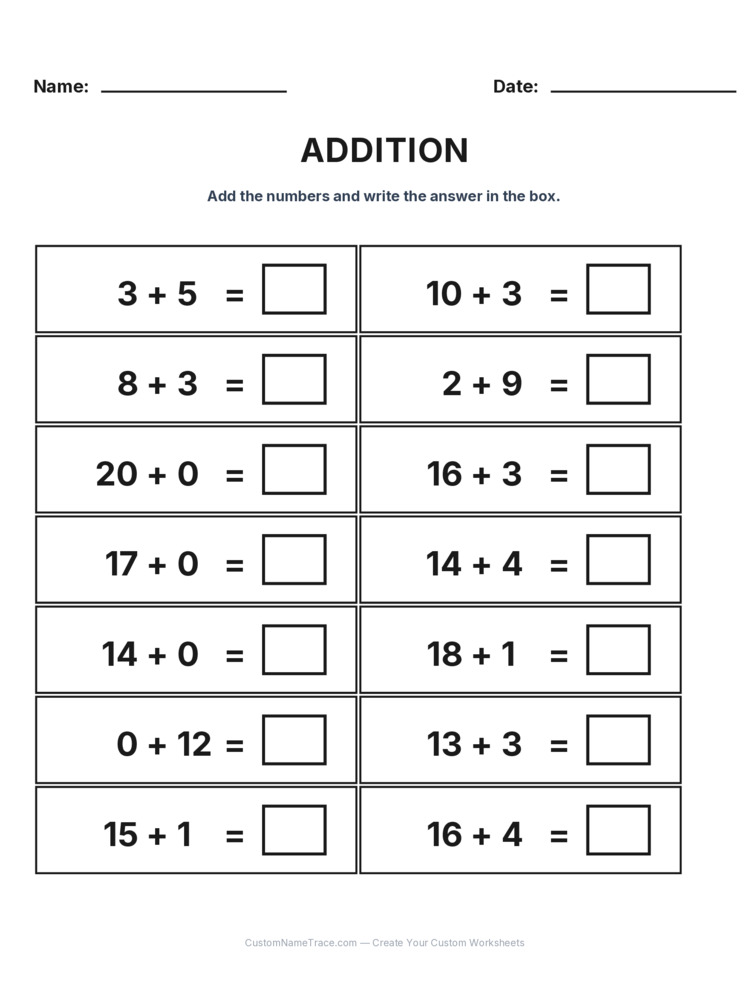
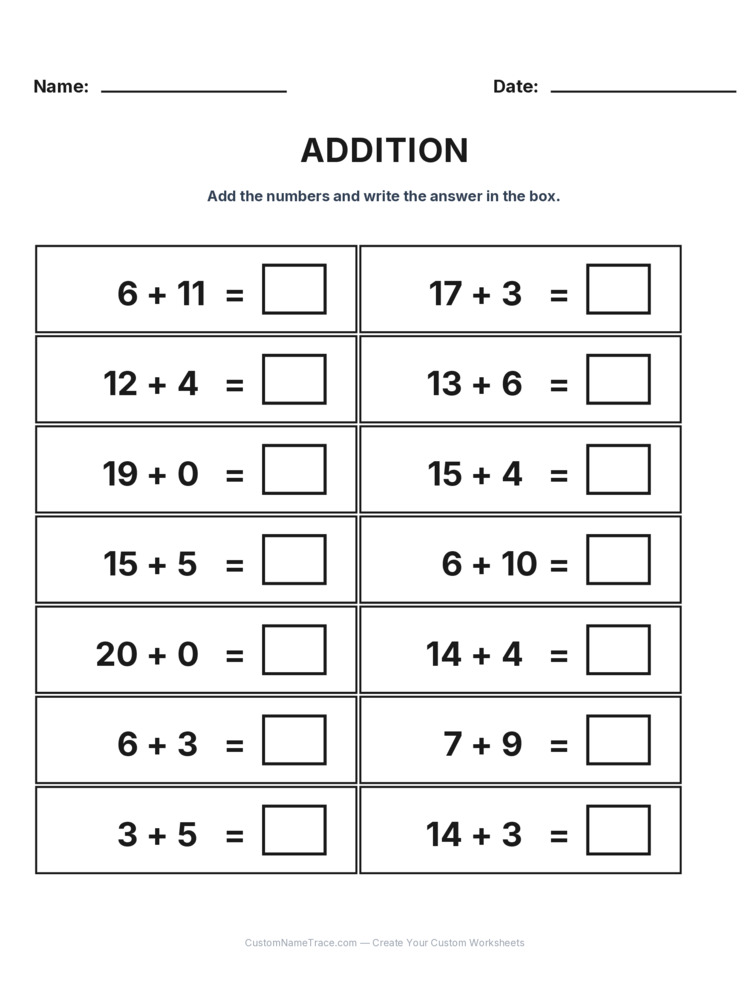
Earlier addition practice at this site is written horizontally — 4 + 3 = box — while later grades introduce vertical, stacked column addition, the format used once numbers get large enough that carrying between place values becomes necessary. That shift isn't just cosmetic: vertical format makes the place-value structure (ones under ones, tens under tens) visually explicit in a way horizontal format doesn't, which is exactly why it's introduced once carrying enters the picture rather than being used from the very start.
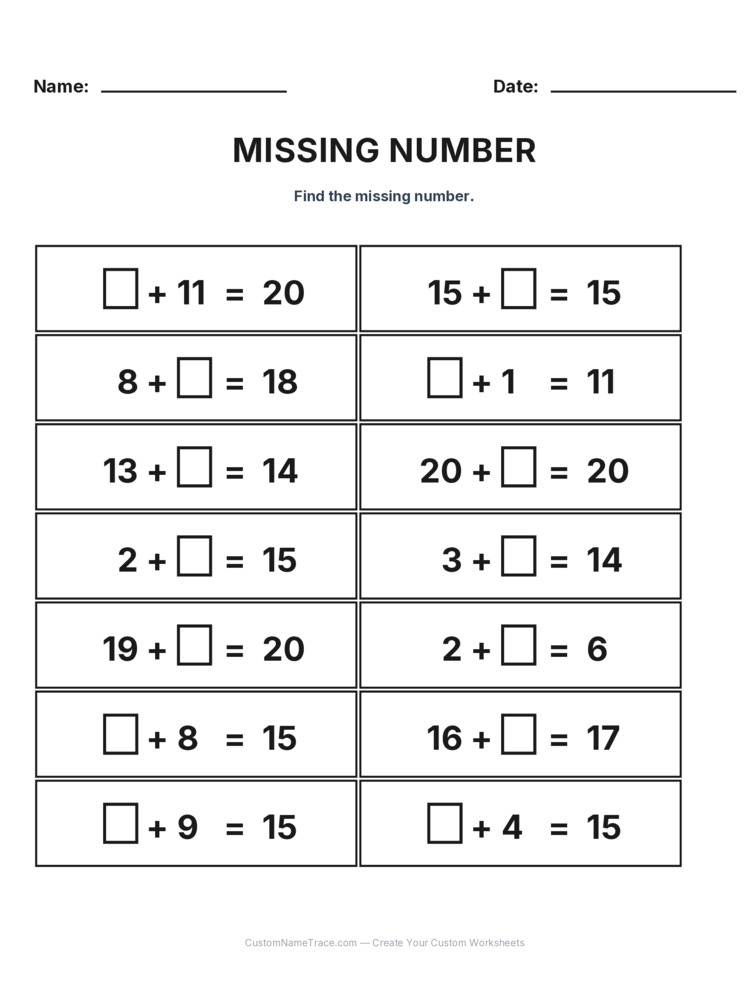
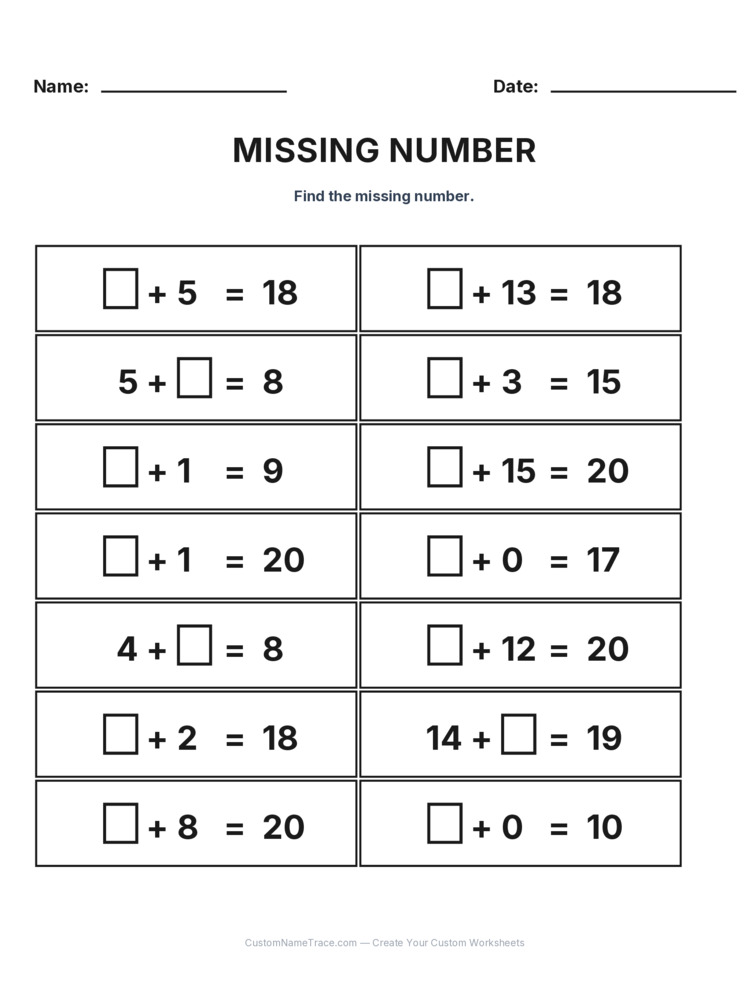
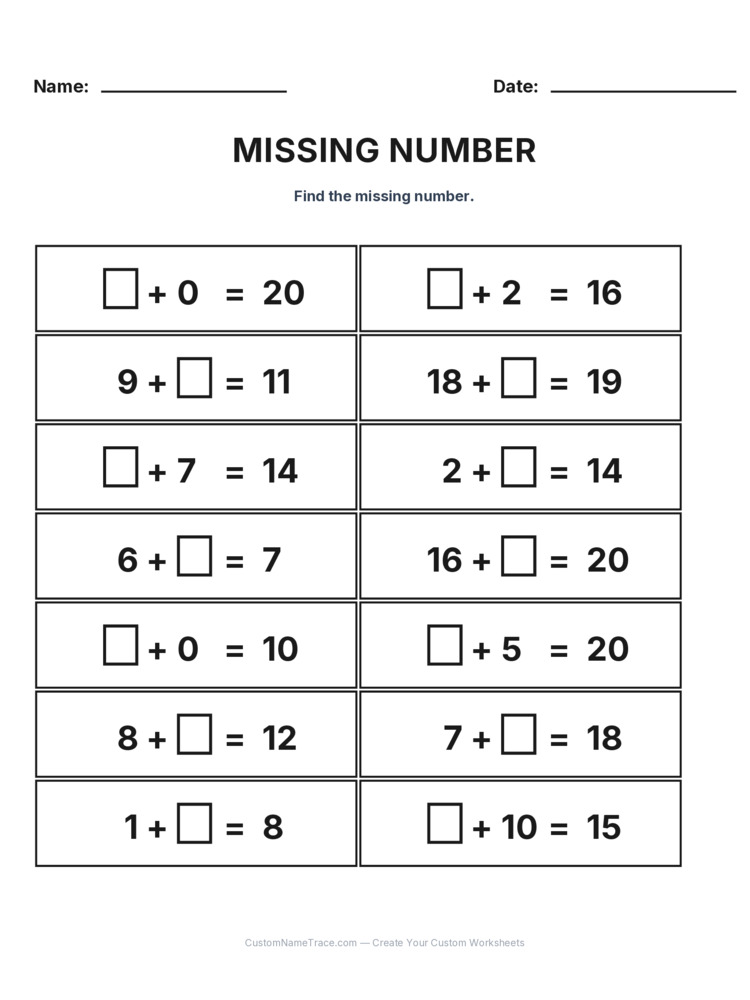
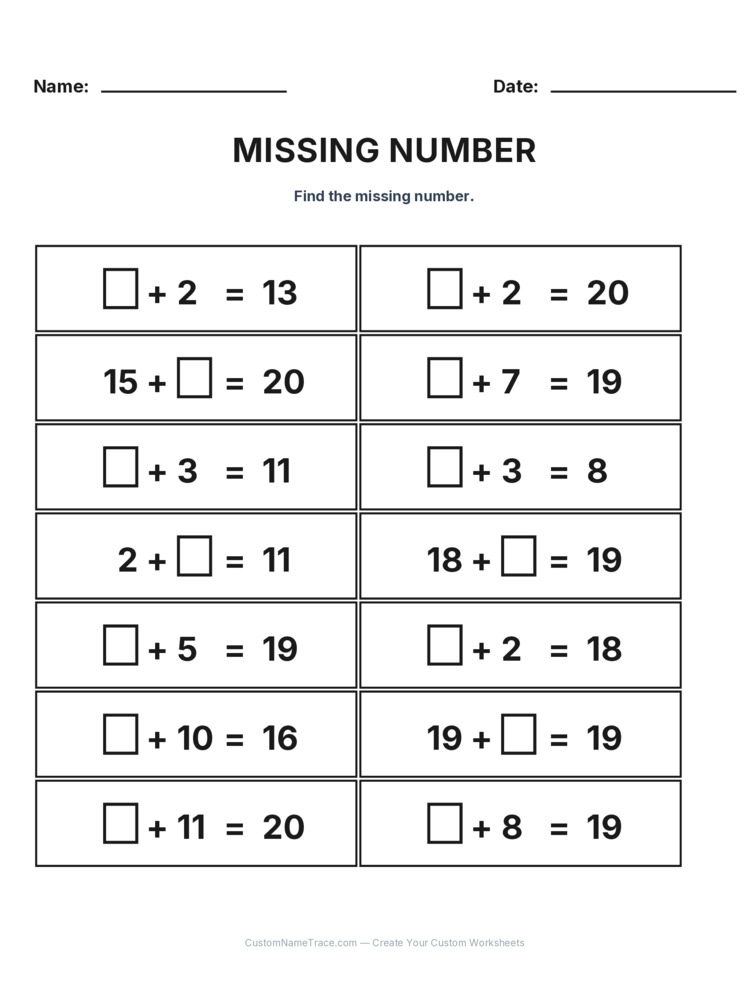
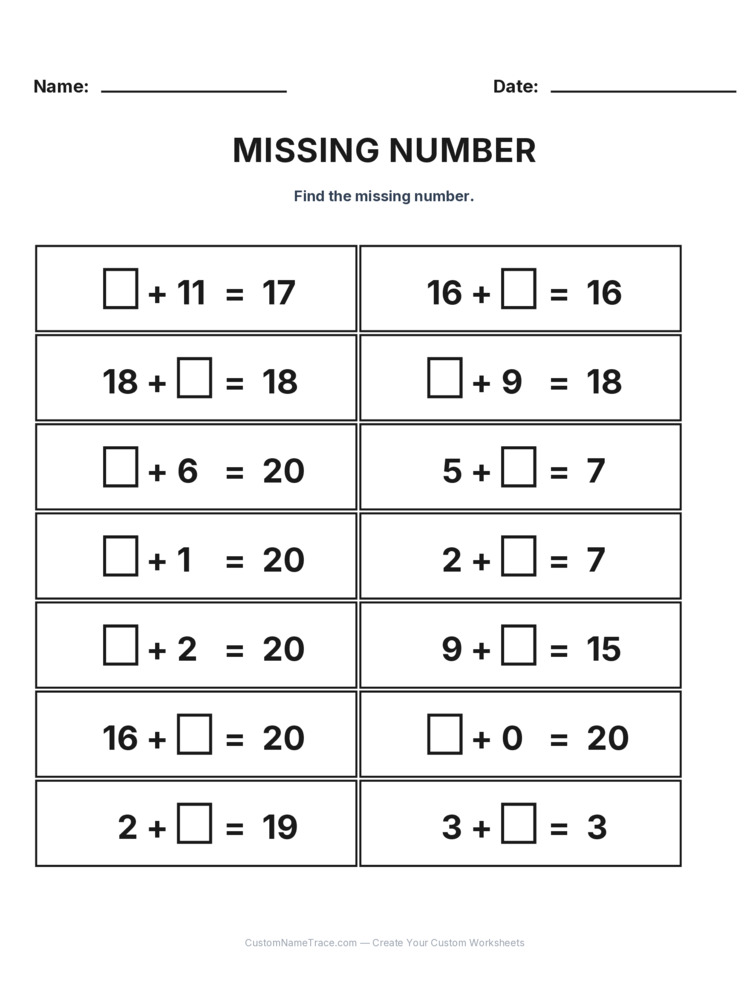
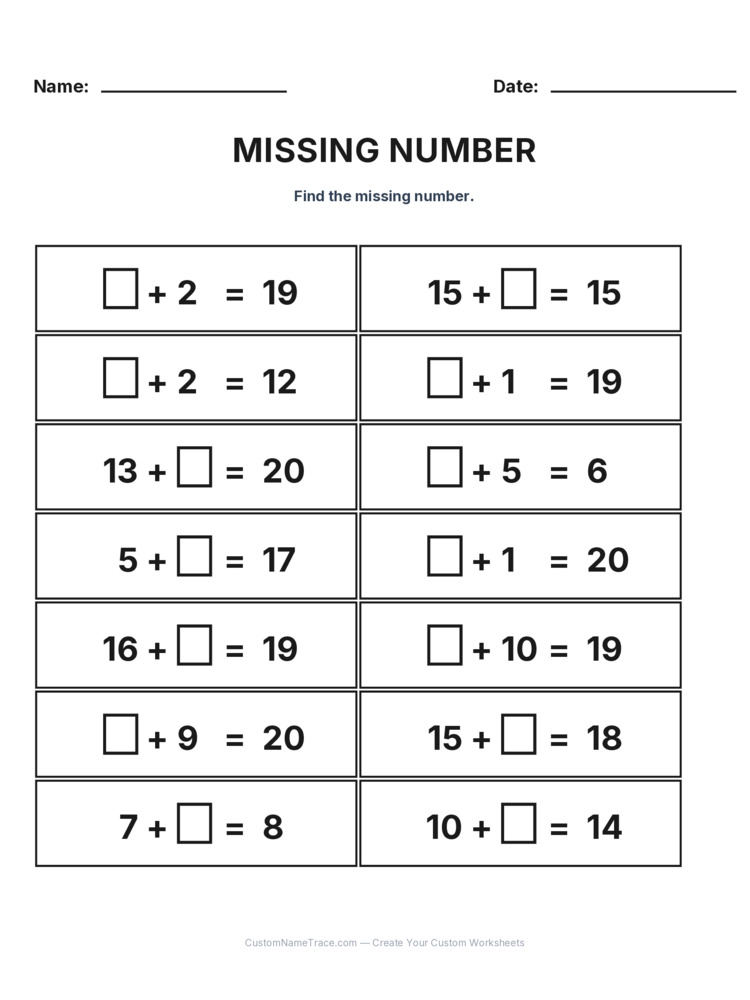
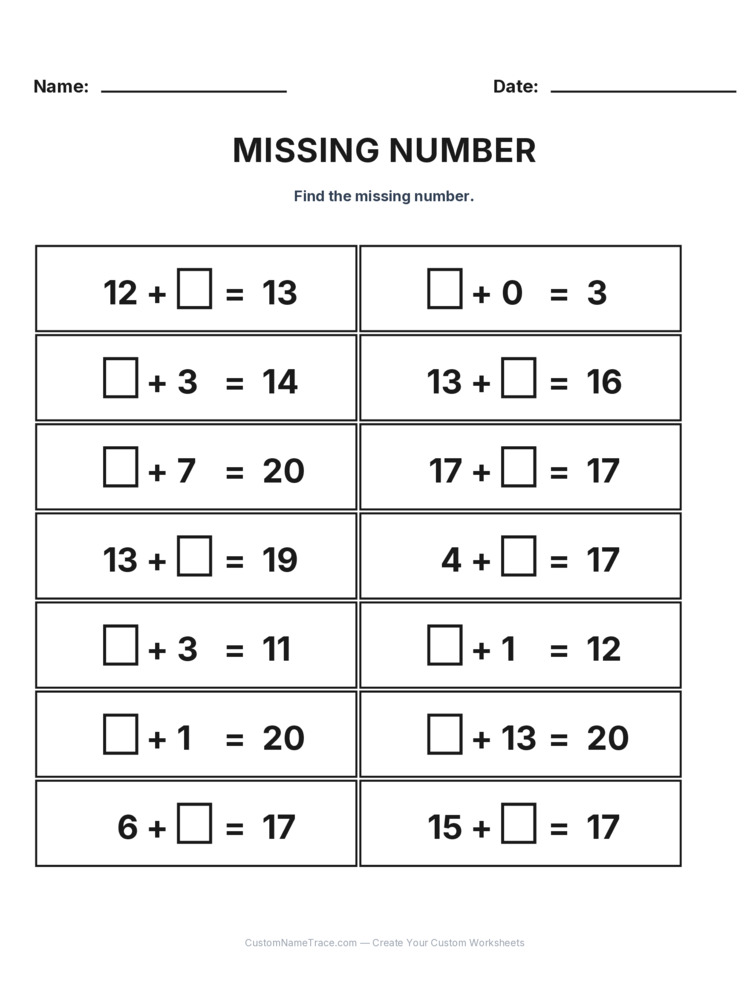
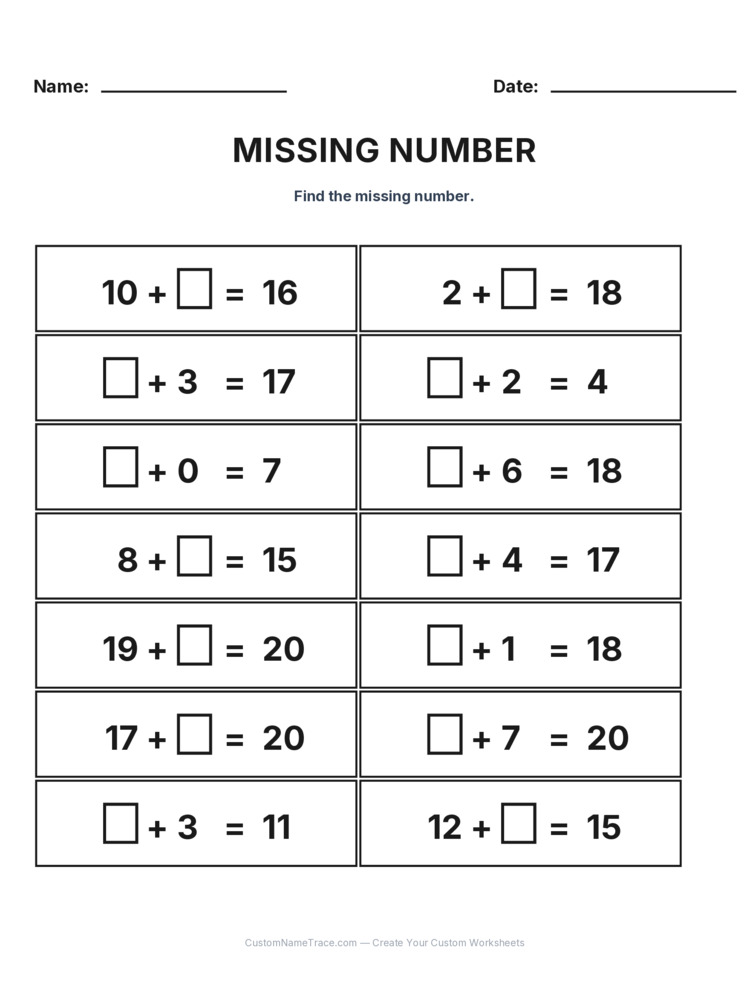
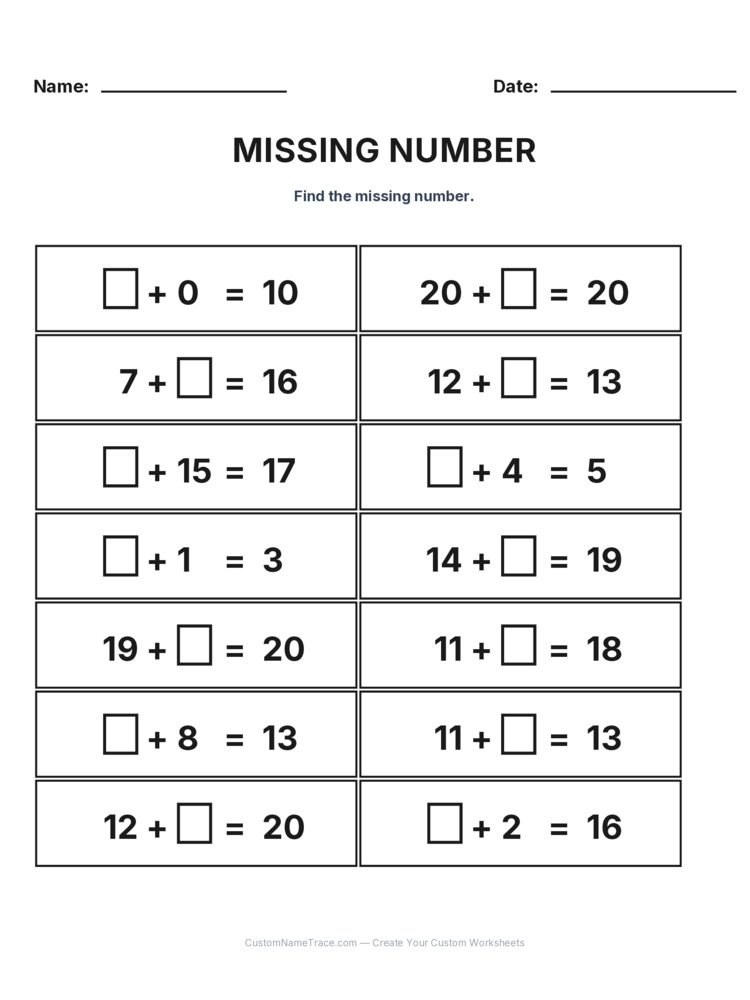
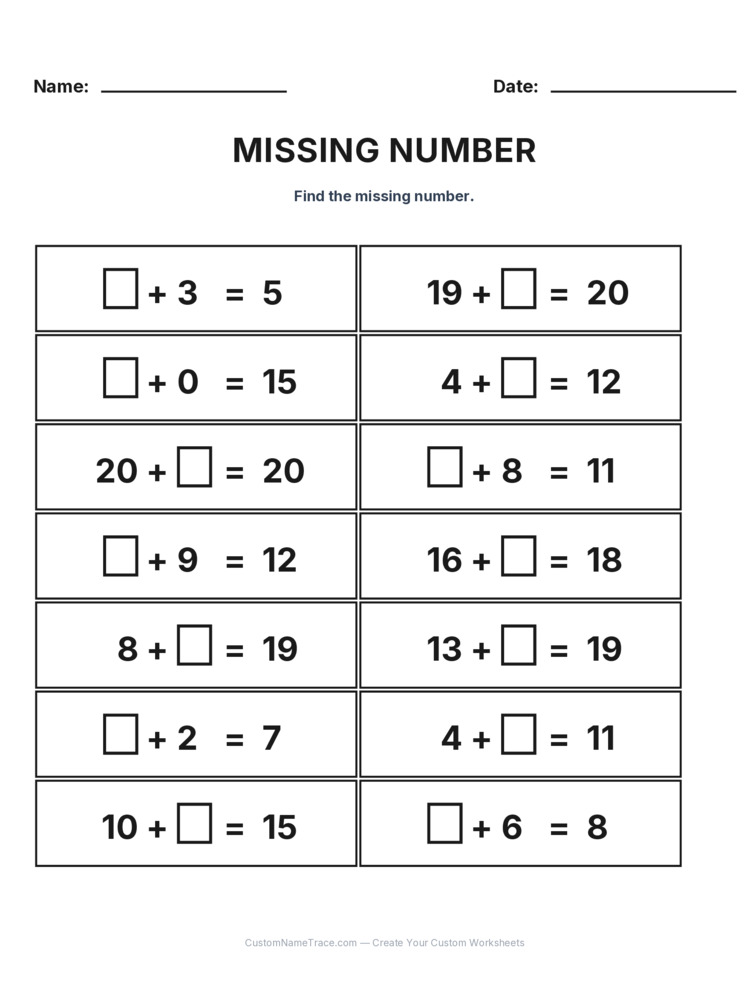
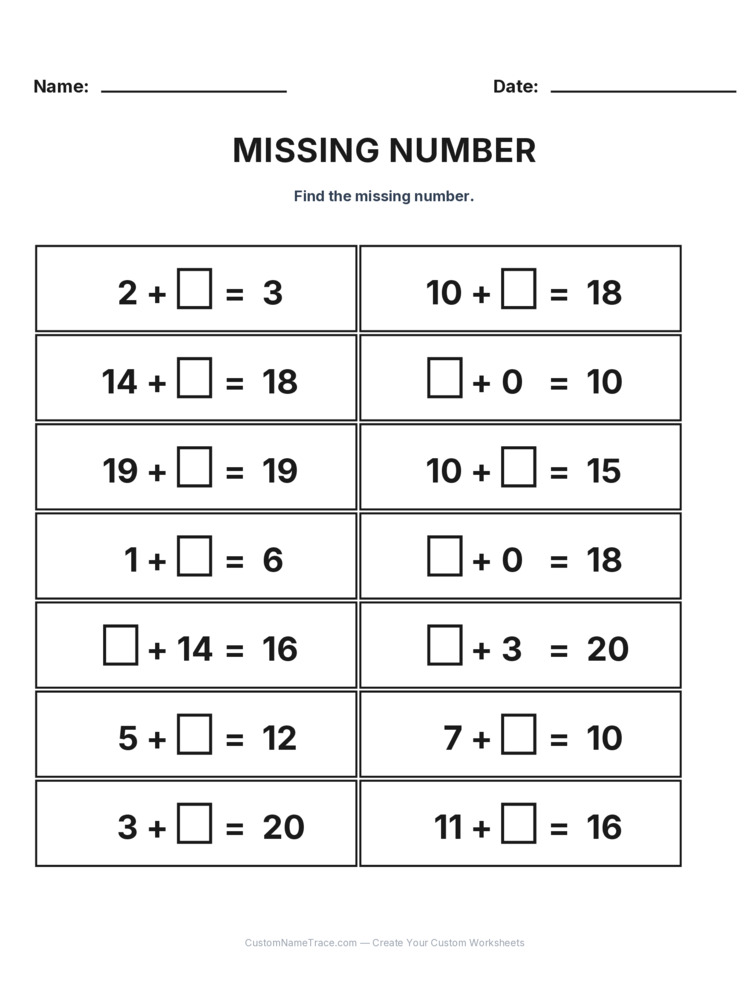
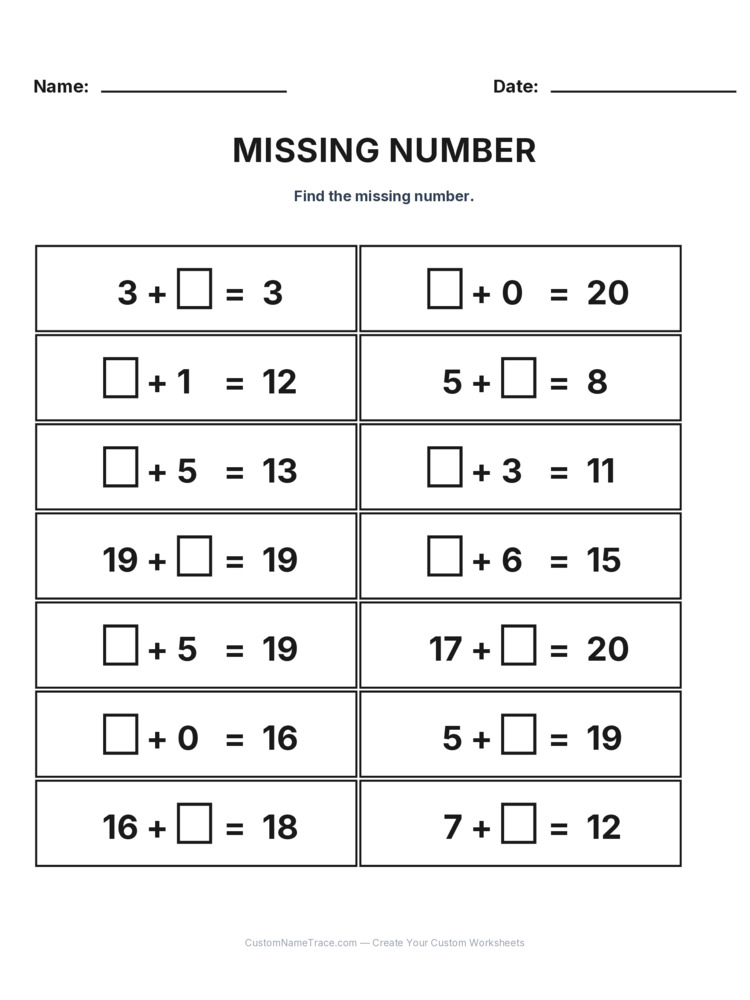
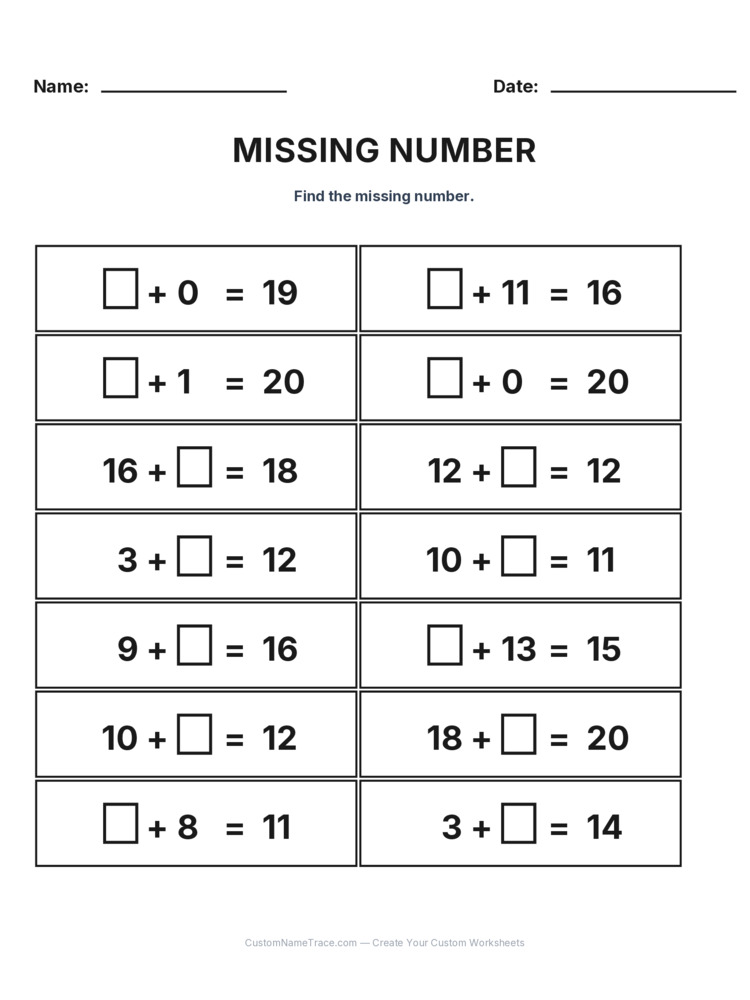
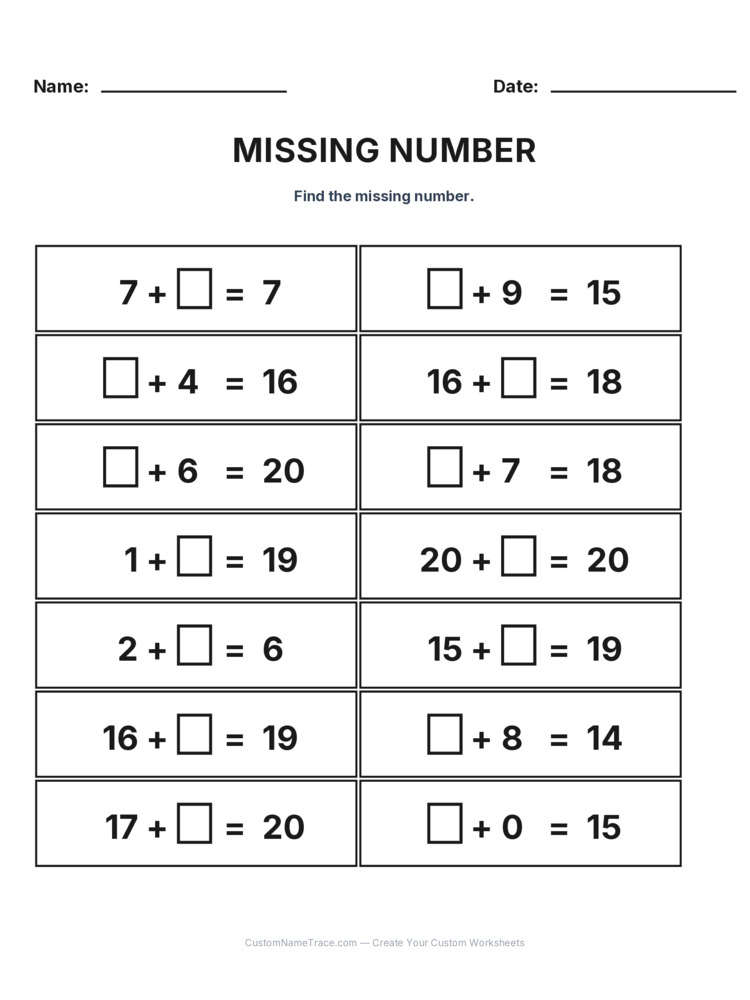
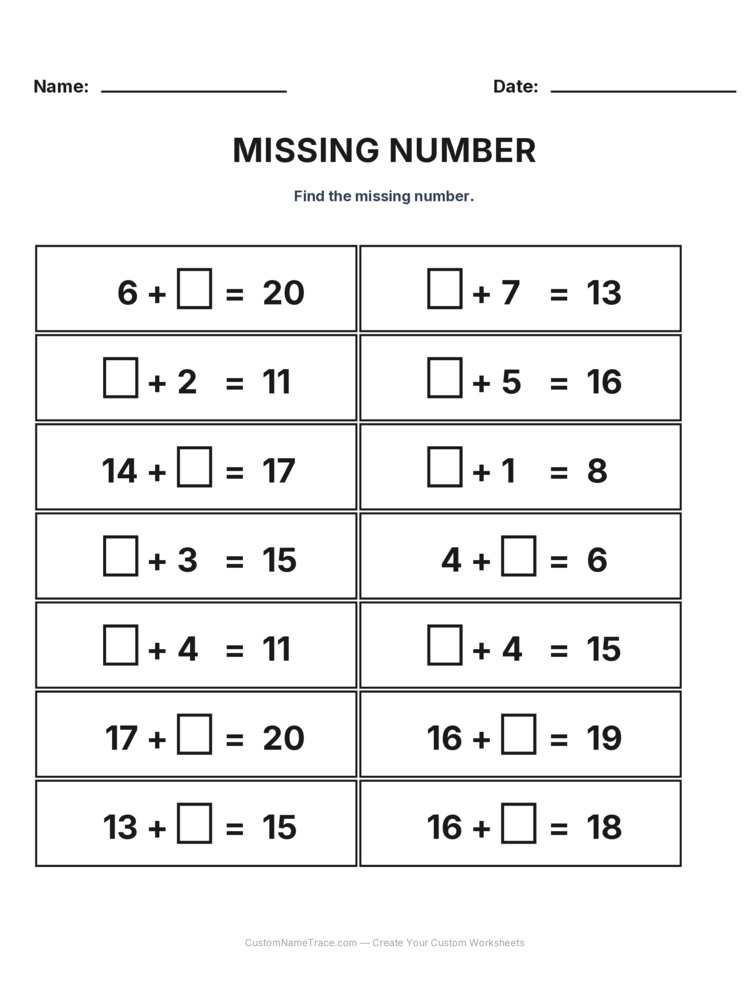
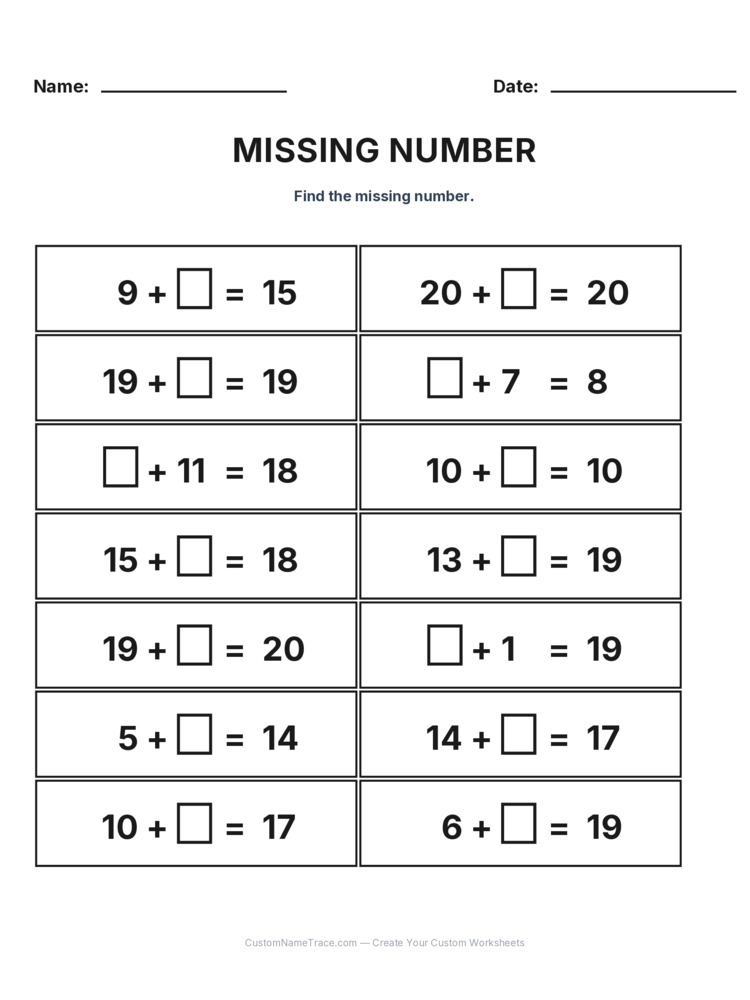
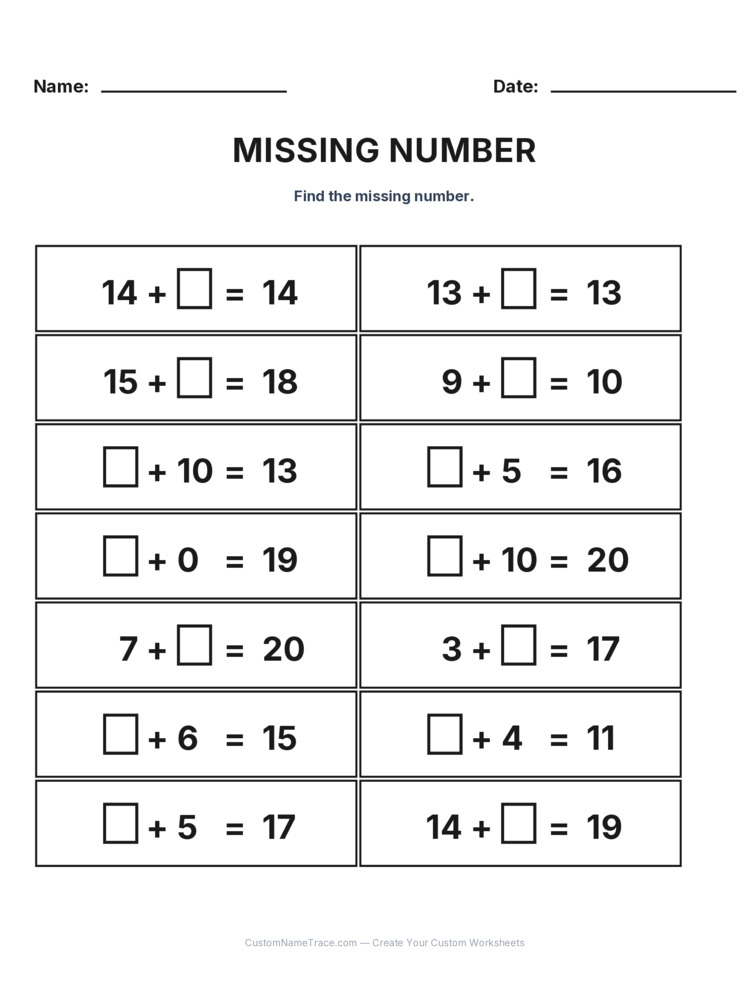
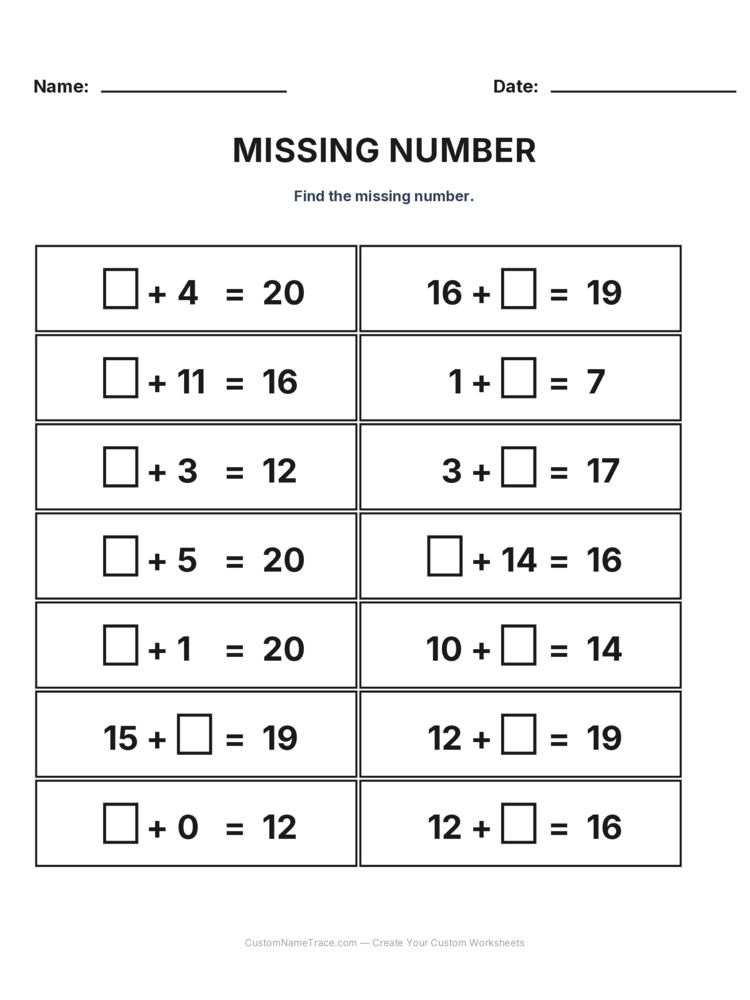
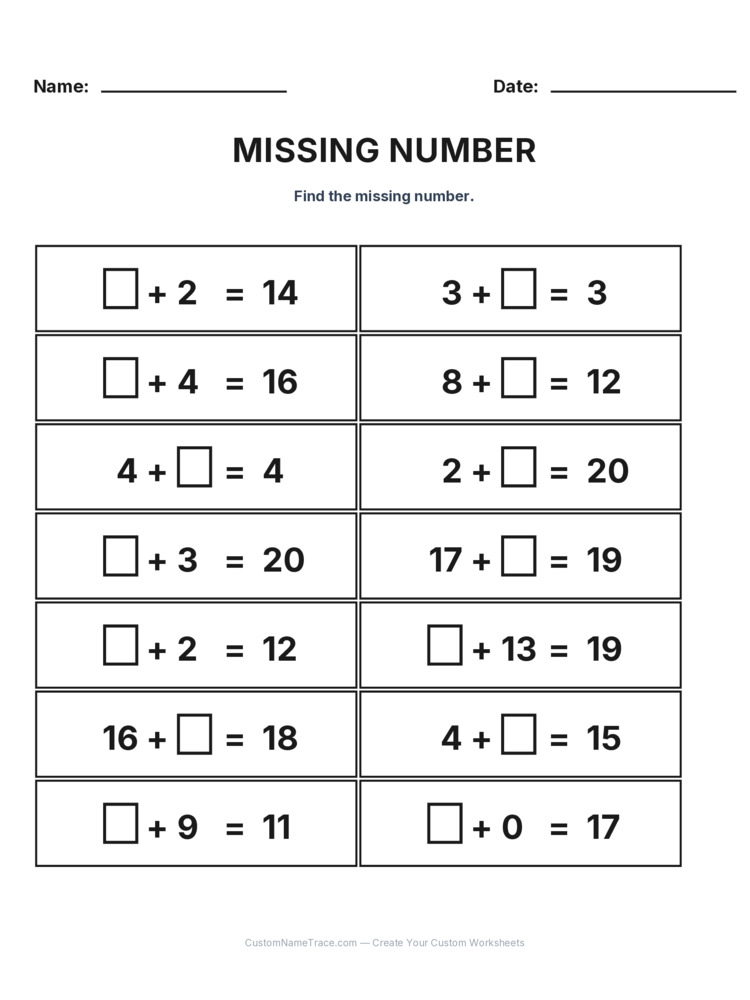
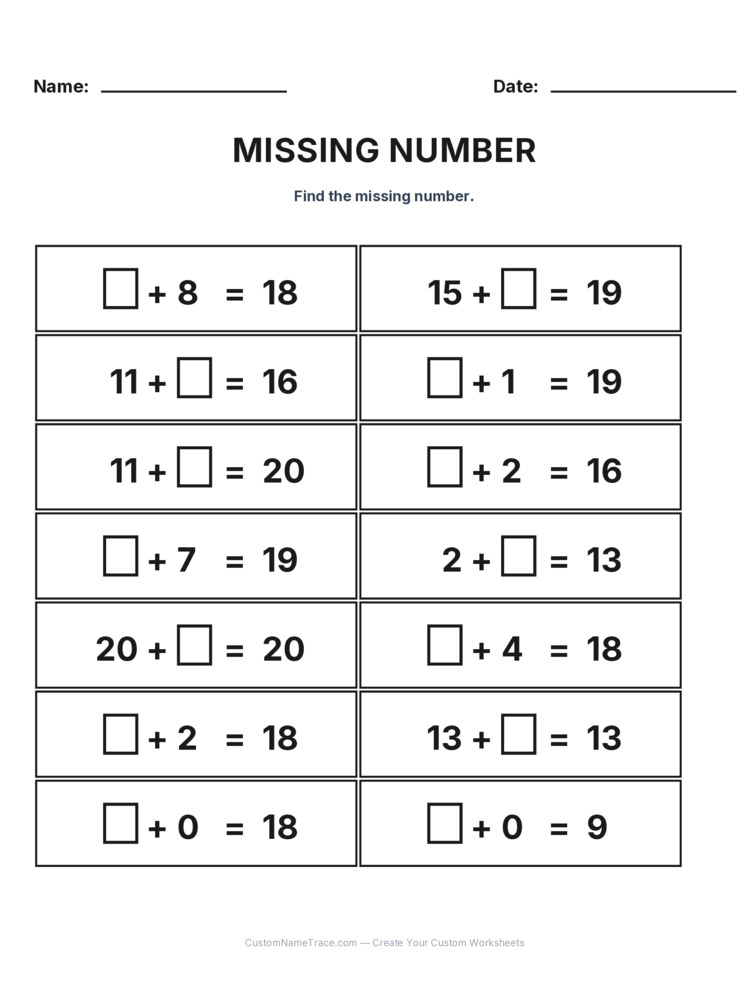
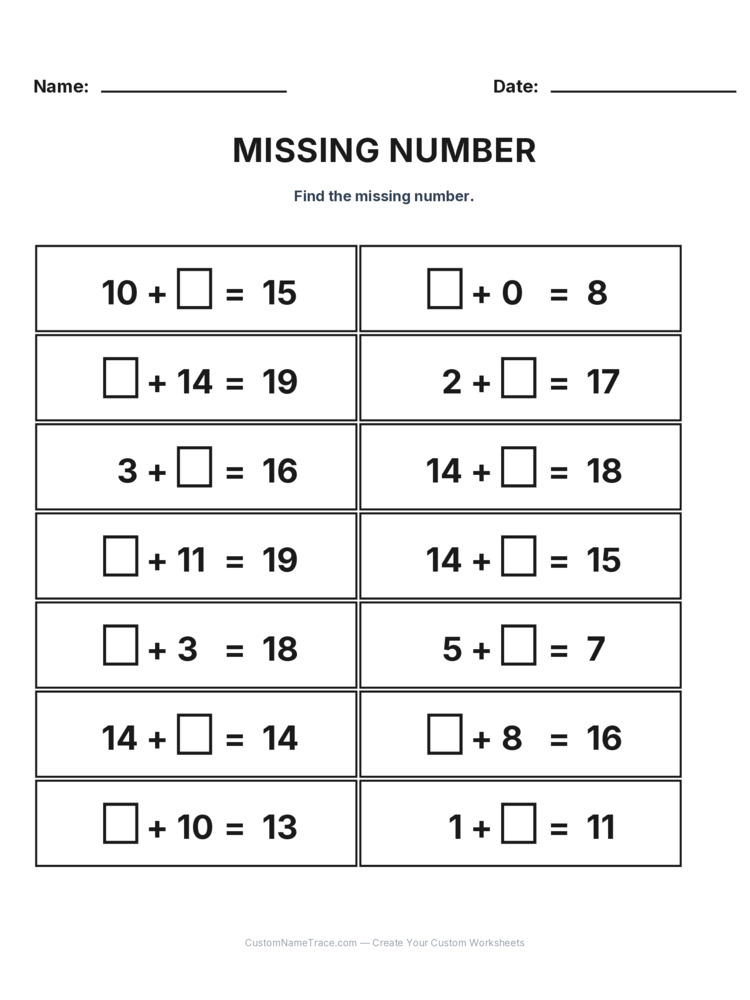
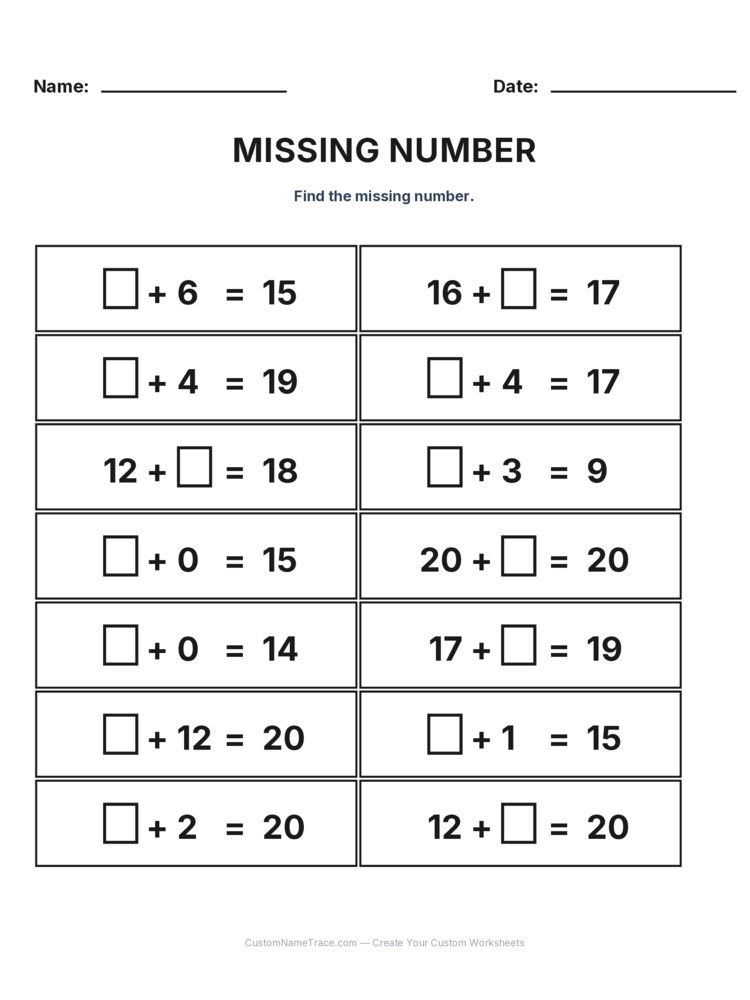
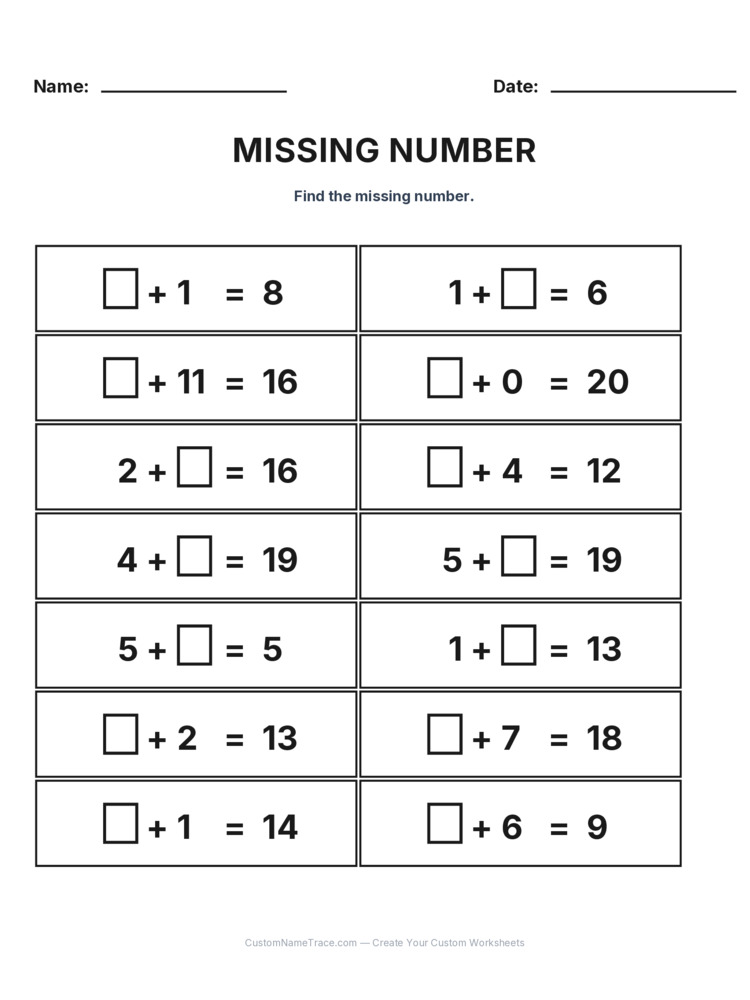
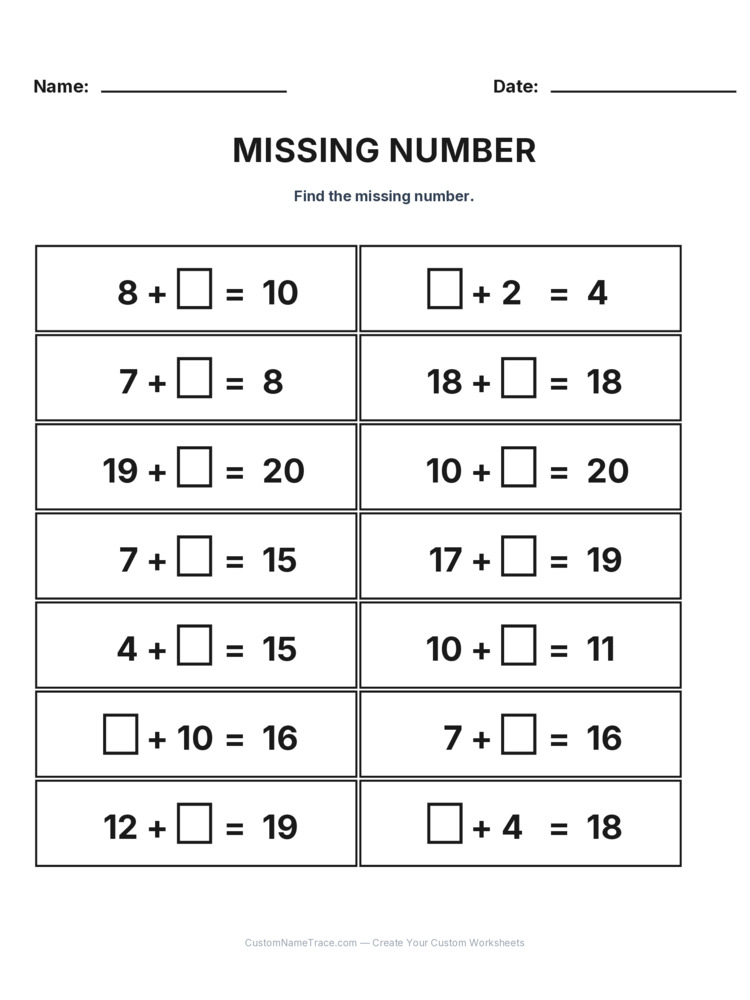
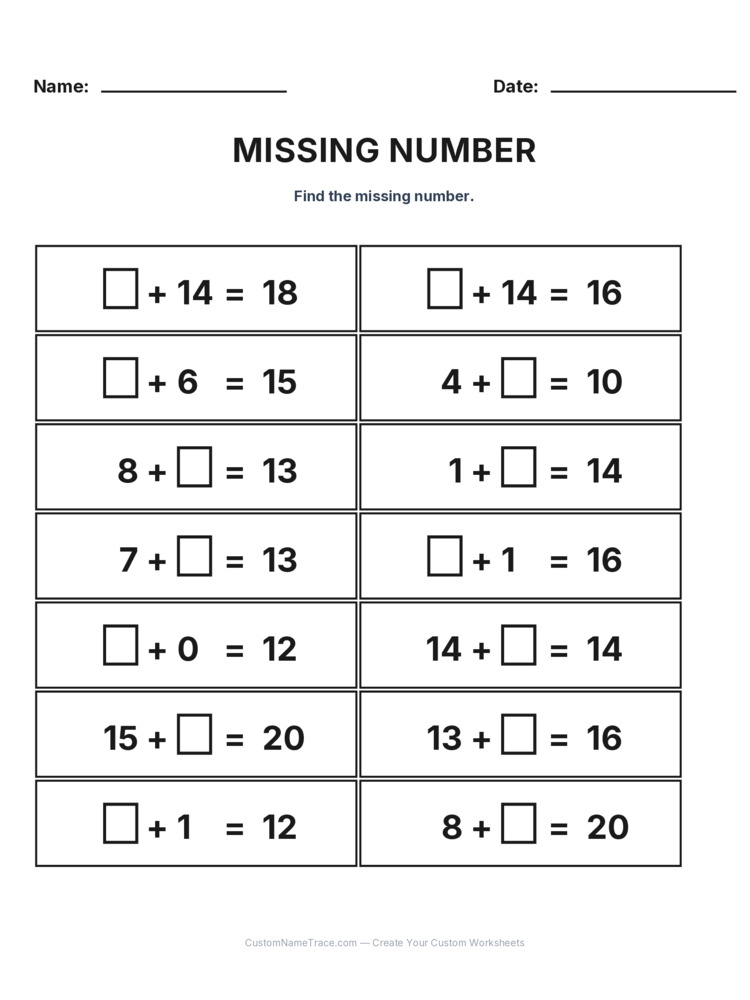
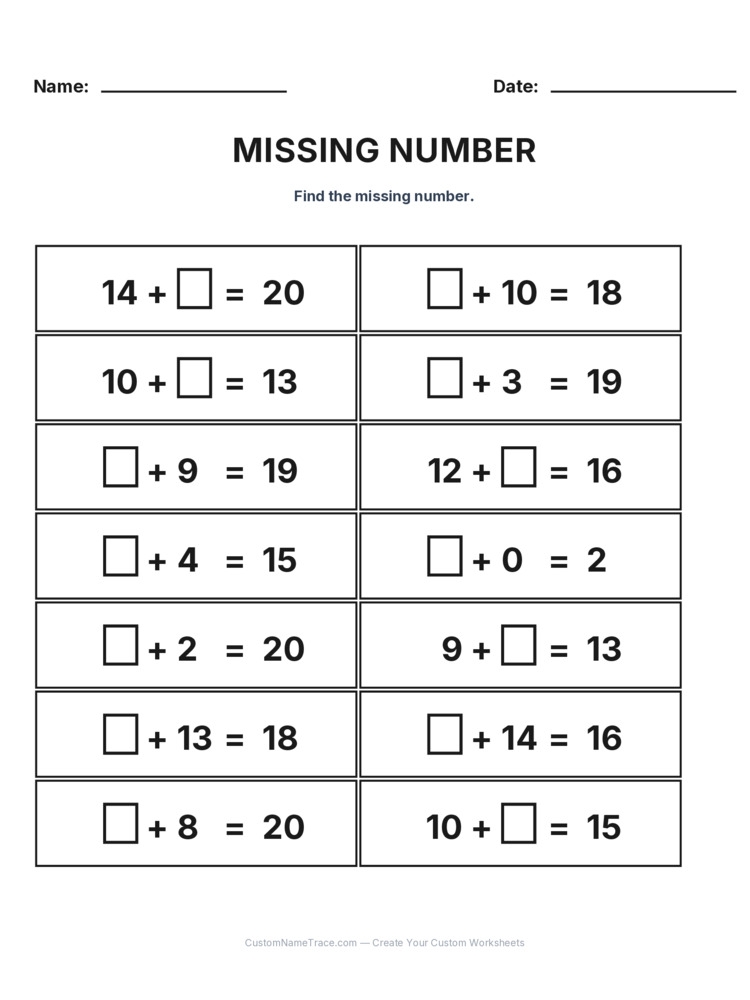
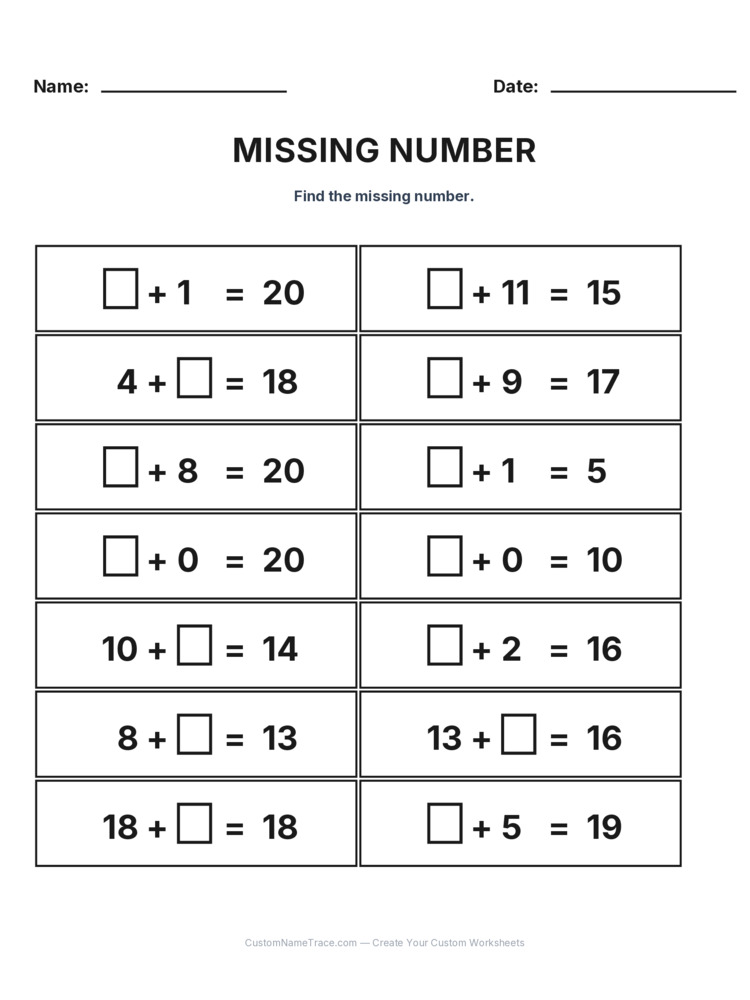
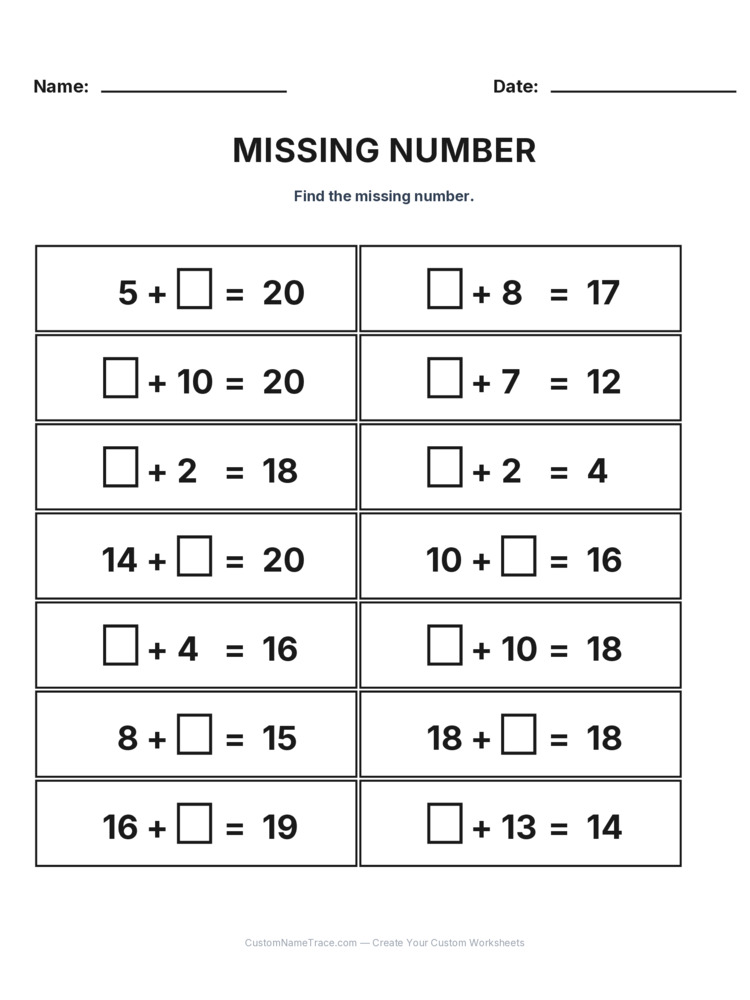
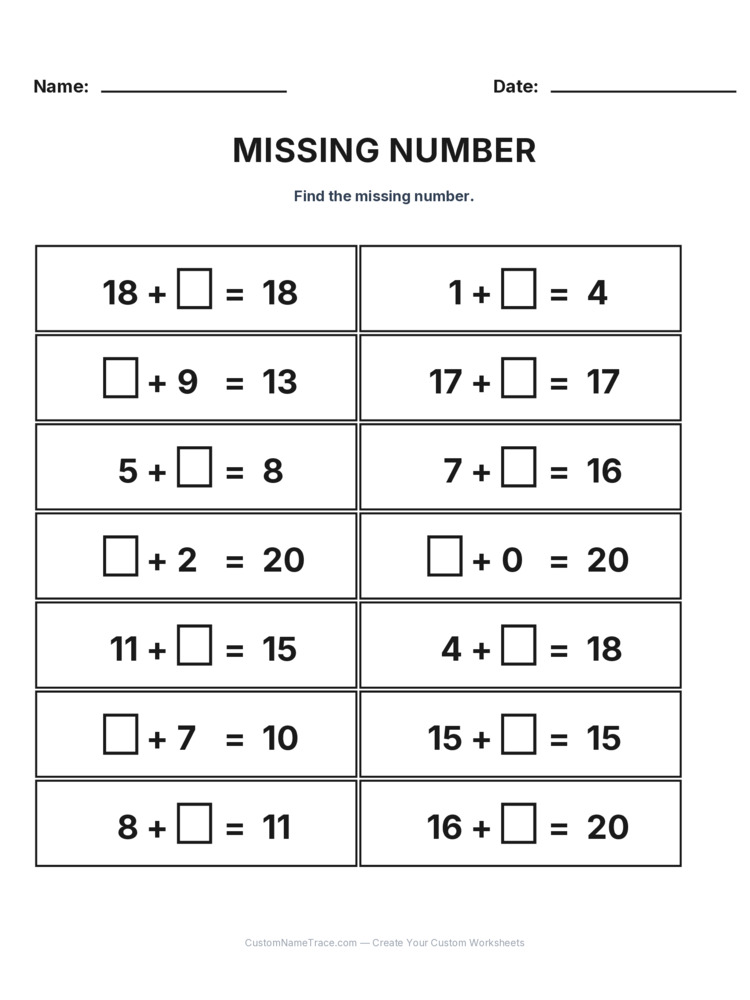
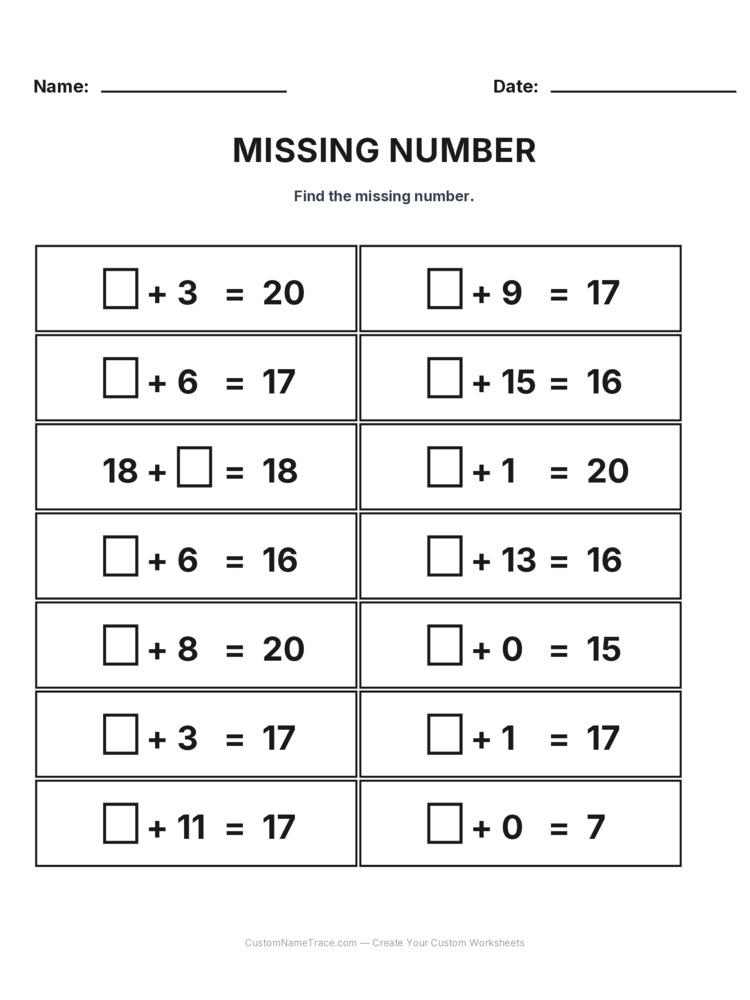
A problem like 7 + box = 12 asks for something genuinely different from 7 + 5 = box, even though both use the same numbers — it requires working backward from a known total to find what's missing, a skill that directly previews algebraic thinking well before algebra is formally introduced. This missing-number format appears specifically where Grade 1's curriculum calls for it, not mixed in randomly, since it asks for a meaningfully different kind of reasoning than a straightforward sum.
What Grade 1 specifically covers within addition
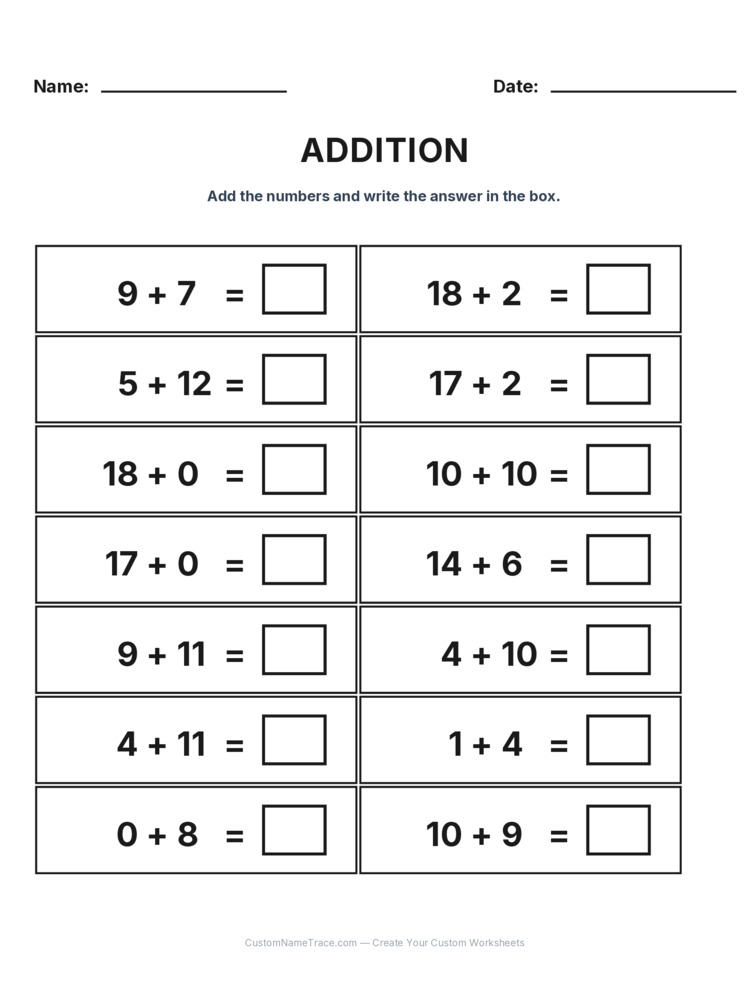
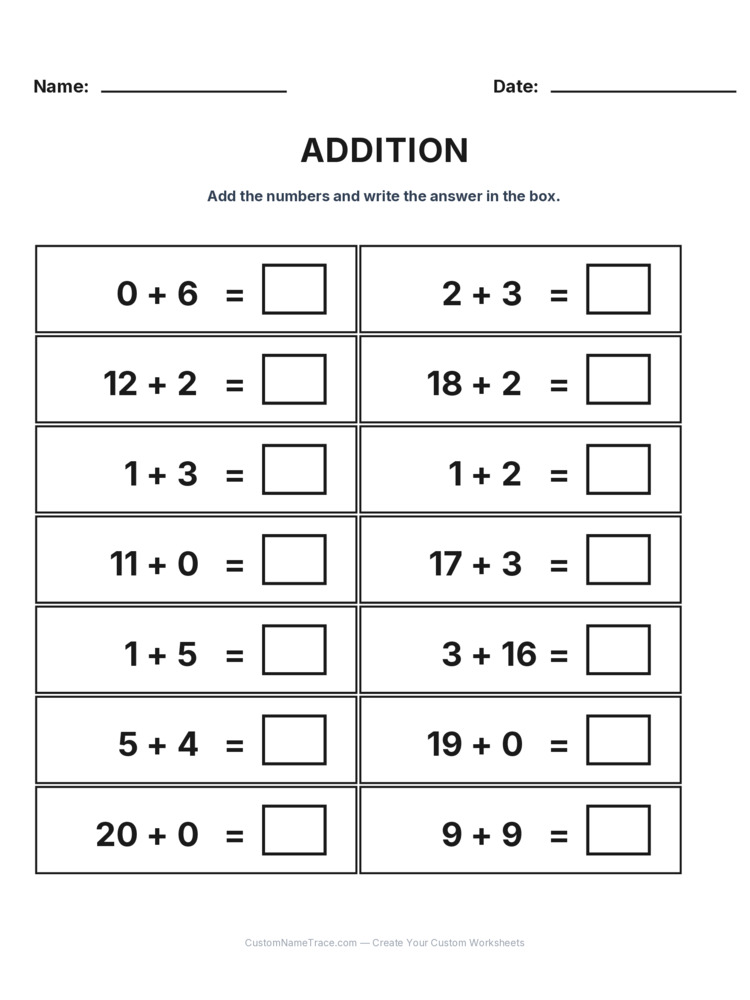
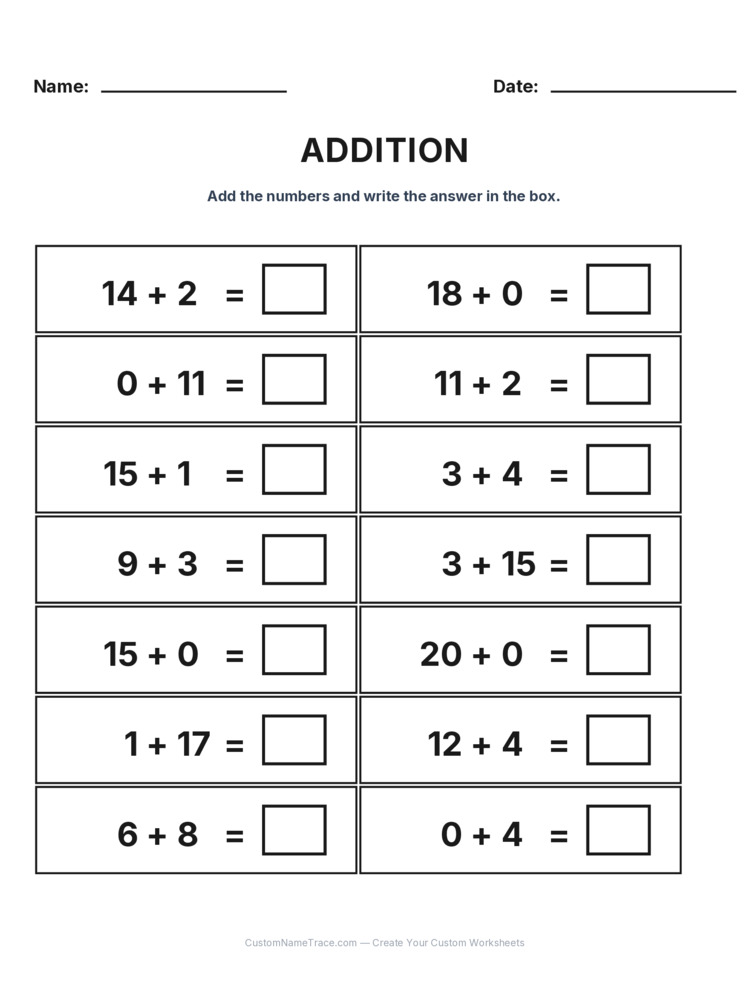
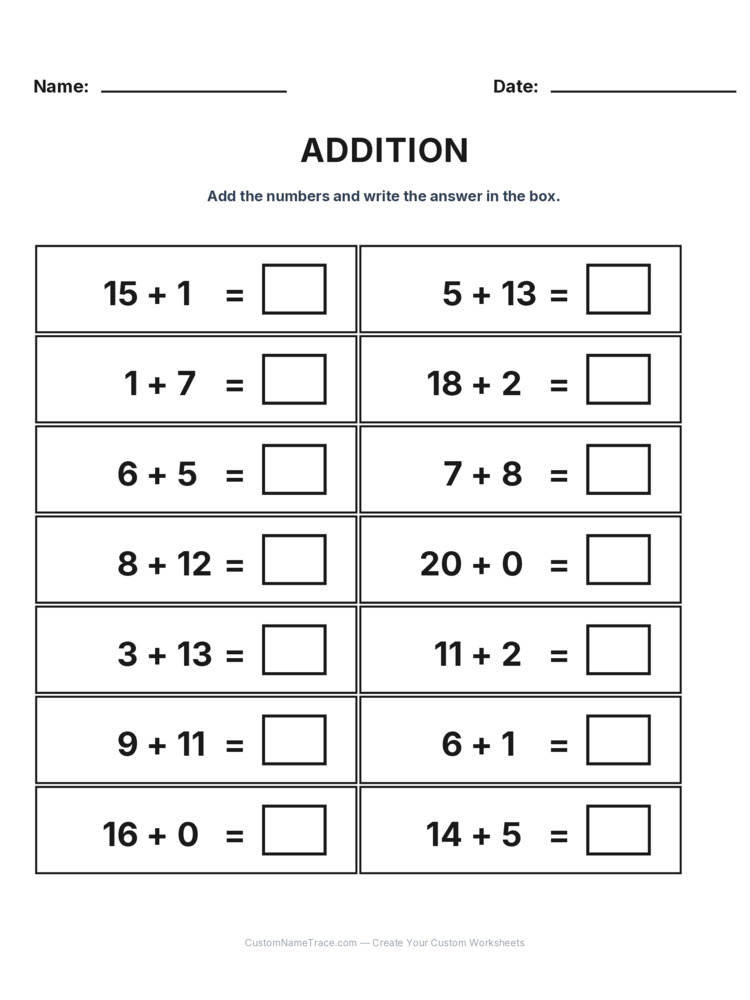
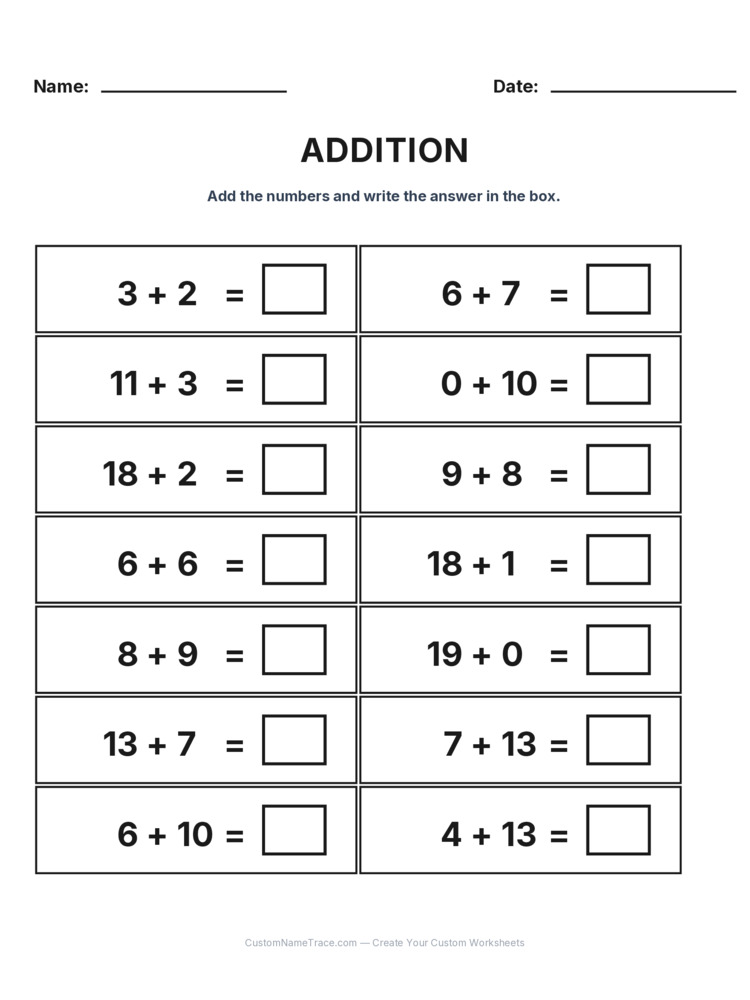
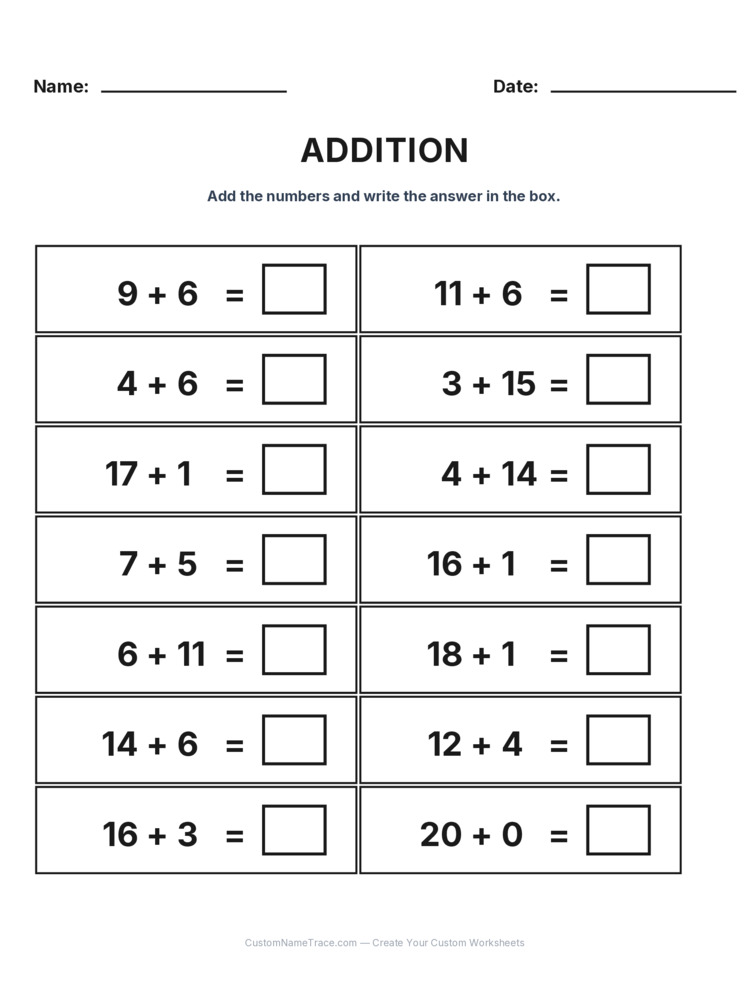
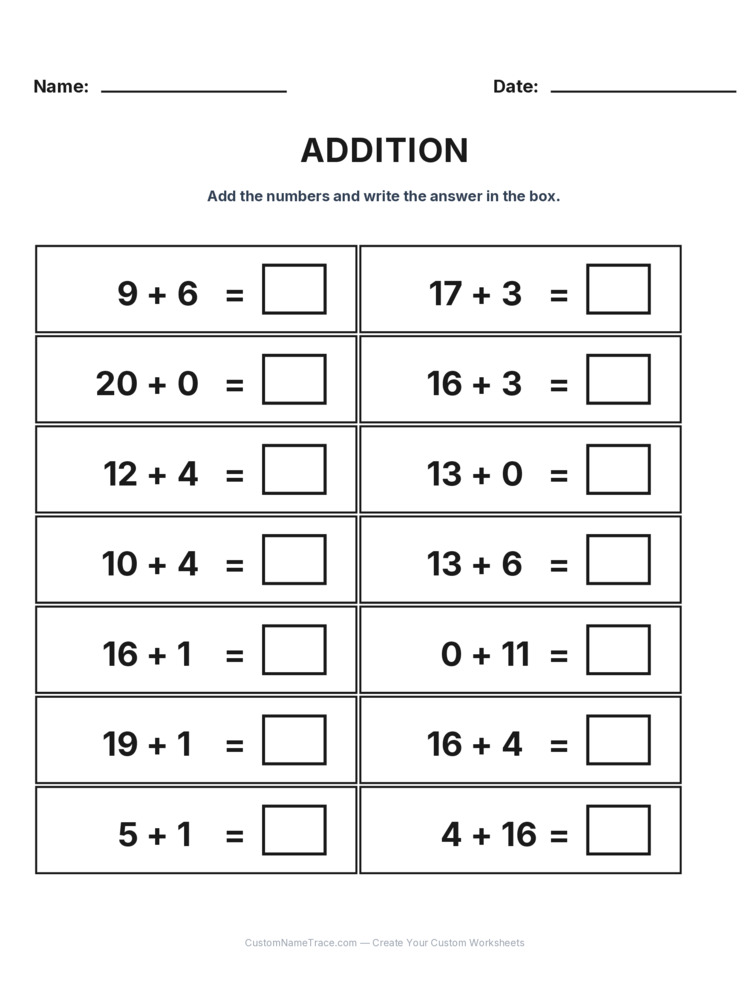
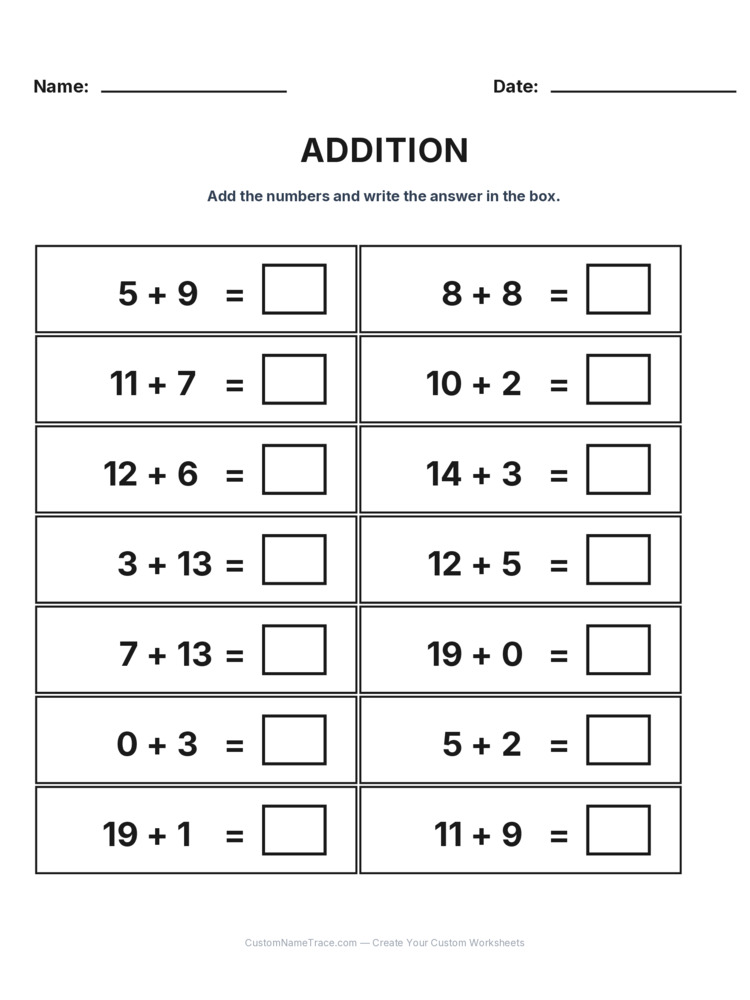
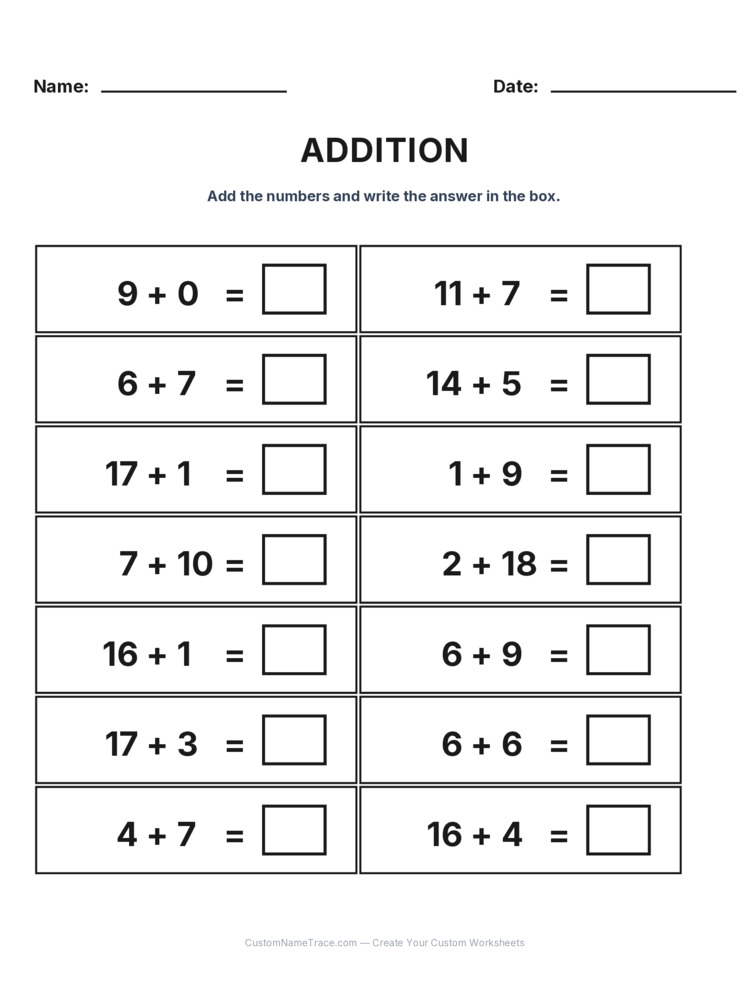
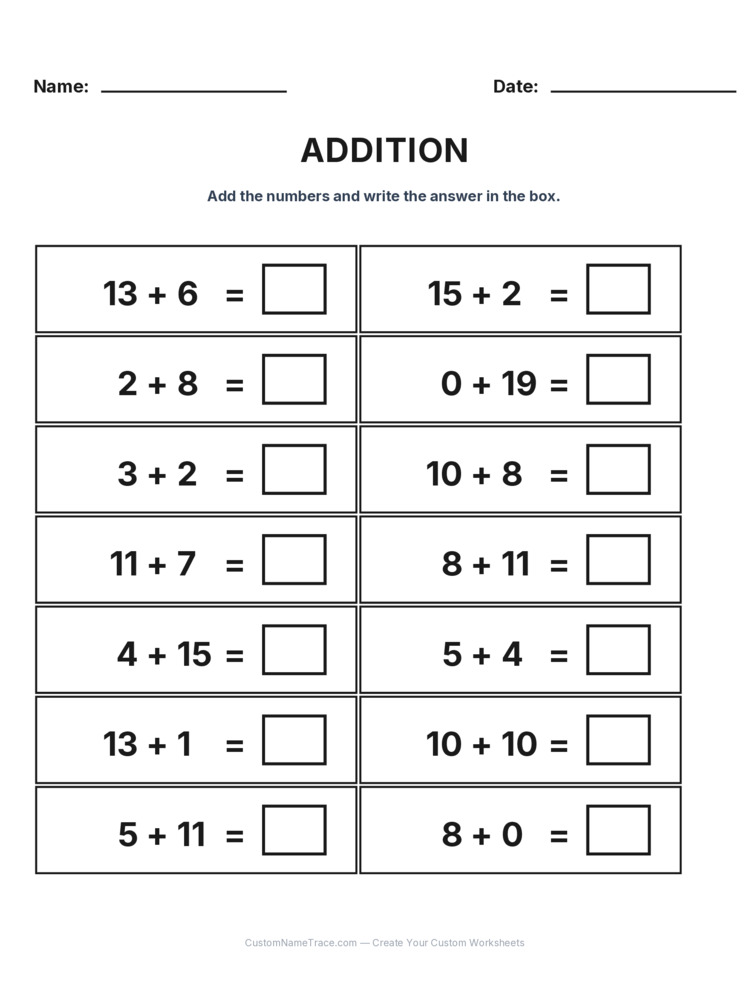
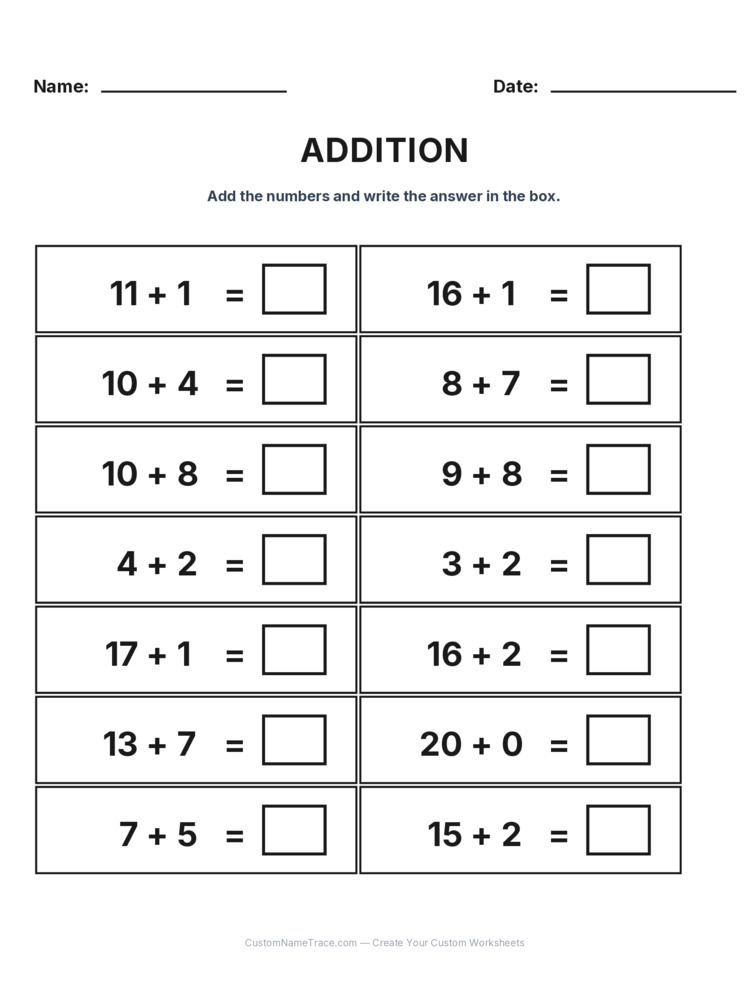
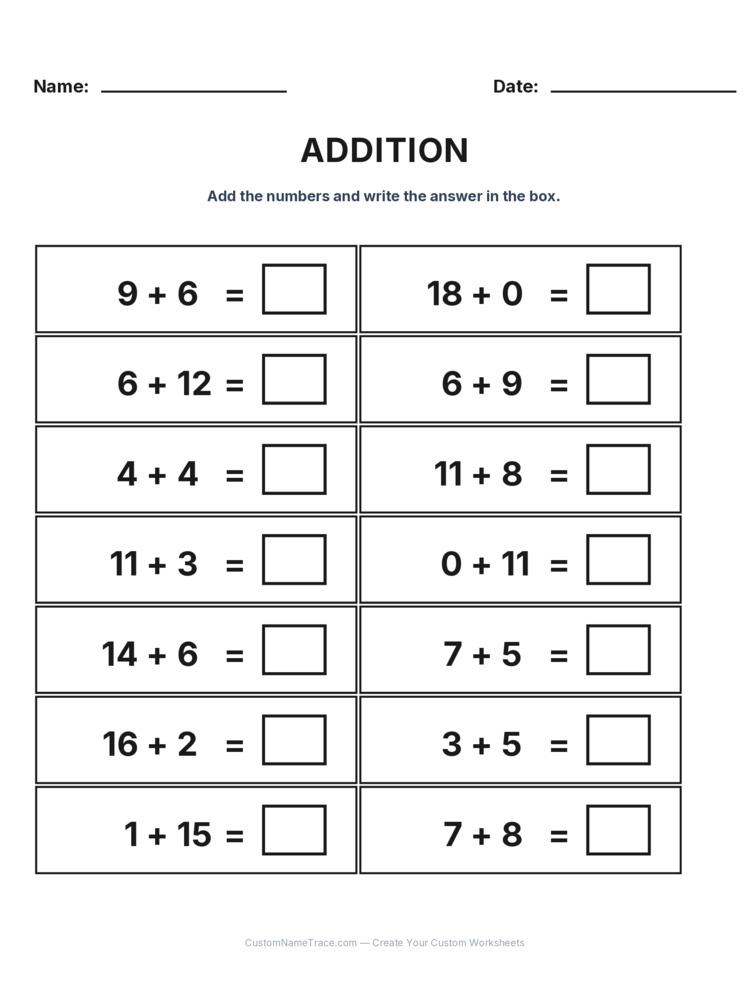
Grade 1 addition extends the range to within 20, still without regrouping (carrying) — the numbers get bigger, but the mechanics stay the same as Kindergarten. This range specifically covers what's often called "making ten" strategies, where a child learns to bridge past 10 (like turning 8+5 into 8+2+3) rather than only counting one by one.
Real addition strategy, not flashcard drilling
A child's earliest addition strategy is usually counting every object from one, then progresses to "counting on" from the larger number rather than starting over each time, and eventually to recognizing certain sums automatically without counting at all. Different worksheets under Grade 1 are built with exactly this progression in mind — early practice supports counting-based strategies, while later practice at the same grade nudges toward faster recall, without ever forcing a strategy a child isn't ready for yet.
Fluency with small addition facts matters because it frees up a child's attention for the harder parts of a multi-step problem later on — but drilling facts in isolation, disconnected from any real problem, tends to build shaky, quickly-forgotten memorization rather than durable fluency. Working through worksheets that present facts in a real, varied context, the way every addition page here does, tends to build fluency that holds up better over time than flashcard repetition alone.
Certain addition facts — doubles like 6 + 6, and near-doubles like 6 + 7 — are worth pointing out explicitly as a family, since recognizing a near-double ("that's just 6 + 6, plus one more") is a genuinely useful mental shortcut many children discover on their own but benefit from having named directly. Bringing this strategy up specifically when it applies, rather than leaving a child to stumble onto it, speeds up fluency meaningfully for exactly this common category of fact.
What mastery looks like, and word problems
A consistently wrong addition answer is rarely a sign a child doesn't understand what addition means — it's much more often a counting error, a miscopied number, or a specific, identifiable gap in one particular number combination. Reviewing a handful of a child's actual wrong answers, rather than just the final score, usually reveals a clear, fixable pattern (always struggling past a certain sum, or with one specific number) far more useful than a blanket "needs more addition practice" conclusion.
Mastery isn't the same as perfect speed — a child who solves Grade 1's addition range accurately, using a strategy that makes sense to them, even if it takes a few extra seconds per problem, has genuinely mastered the material. Speed tends to follow naturally from repeated, confident practice; chasing speed before accuracy and understanding are solid usually backfires, producing guessed answers rather than real fluency.
Once a child is solid with Grade 1's addition facts in isolation, the next real challenge is recognizing an addition situation described in words rather than symbols — "Maria had 4 apples and picked 3 more" is an addition problem the moment a child recognizes "more" as a joining word, not before. Reading a few simple word problems aloud together and asking "are we putting groups together, or taking away?" before attempting to solve builds that recognition deliberately rather than leaving it to chance.
Some worksheets at later grades introduce adding three numbers at once rather than always exactly two — 4 + 3 + 5, for instance — which is a genuinely different demand: it requires holding a running total in mind while continuing to add rather than solving one pair and stopping. Encouraging a child to add the first two numbers, write that partial sum down, and then add the third to it (rather than trying to add all three at once mentally) breaks the extra demand into two smaller, already-familiar steps.
Using this at home or in a classroom
Short, frequent sessions consistently outperform long, infrequent ones for building genuine addition fluency — ten focused minutes several times a week does more than one exhausted hour on a Sunday. Letting a child use their fingers, drawings, or physical objects to work through a problem is not a shortcut to discourage; it's a legitimate strategy at this stage, and the strategy naturally becomes less necessary as fluency builds on its own, without needing to be forced away before a child is ready.
Because every numbered worksheet within a given skill generates a fresh set of problems testing the identical range and format, a teacher can print different variants for different students working at the same level without any two papers being identical — useful for independent seatwork, morning routines, or simply avoiding the temptation to glance at a neighbor's page during practice time.
Arithmetic fluency, more than most school skills, depends on spaced repetition — encountering the same facts repeatedly over separate days builds more durable recall than the same total amount of practice compressed into one sitting. A short daily addition worksheet, even just five or six problems, tends to produce stronger long-term fluency than an occasional larger batch worked through once a week.
Noticing and naming small, specific improvements — "you solved that whole row without needing your fingers this time" — reinforces the exact behavior worth repeating far more effectively than a generic "good job" at the end of a worksheet, and it keeps a child's attention on genuine progress rather than only on whether every single answer was correct.
Where this connects
A worksheet with numbers too small doesn't challenge a child who's ready to move on; one with numbers too large forces a child to guess or give up rather than reason through the problem using strategies they've actually been taught. Matching the range to Grade 1 specifically — not a rounder, more convenient number chosen for simplicity — is the difference between a worksheet that reinforces confidence and one that quietly teaches a child that math worksheets are a source of frustration rather than a place to practice something they're capable of.
Addition doesn't stay isolated for long — by the time a child is comfortable adding within Grade 1's range, understanding that the same three numbers relate to a subtraction fact (8 + 5 = 13 means 13 − 5 = 8 just as directly) becomes a genuinely useful shortcut, not a separate fact to memorize from scratch. This site's own Subtraction worksheets at Grade 1 use the identical number ranges specifically so that relationship stays visible and usable rather than the two operations feeling unconnected.
This site's addition practice sits alongside its Number Sense section — Ten-Frames and Place Value in particular — since both directly support the counting and quantity-sense skills addition depends on. A child who's spent time with ten-frames has already built exactly the ten-as-anchor sense that makes Grade 1's addition problems feel more like recognizing a familiar quantity than calculating from nothing.
Every addition worksheet under Grade 1 downloads as a clean, print-ready PDF with no account or sign-up required, formatted correctly for both Letter and A4 paper automatically. Browse the specific skills below to find the exact range and format that matches where a child currently is.