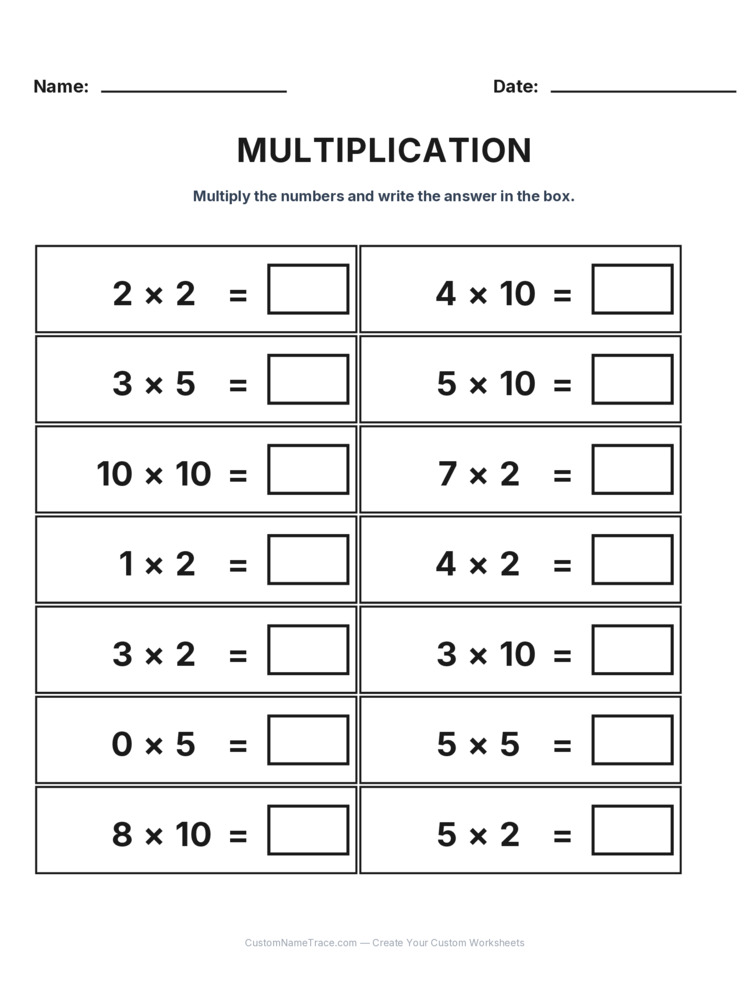
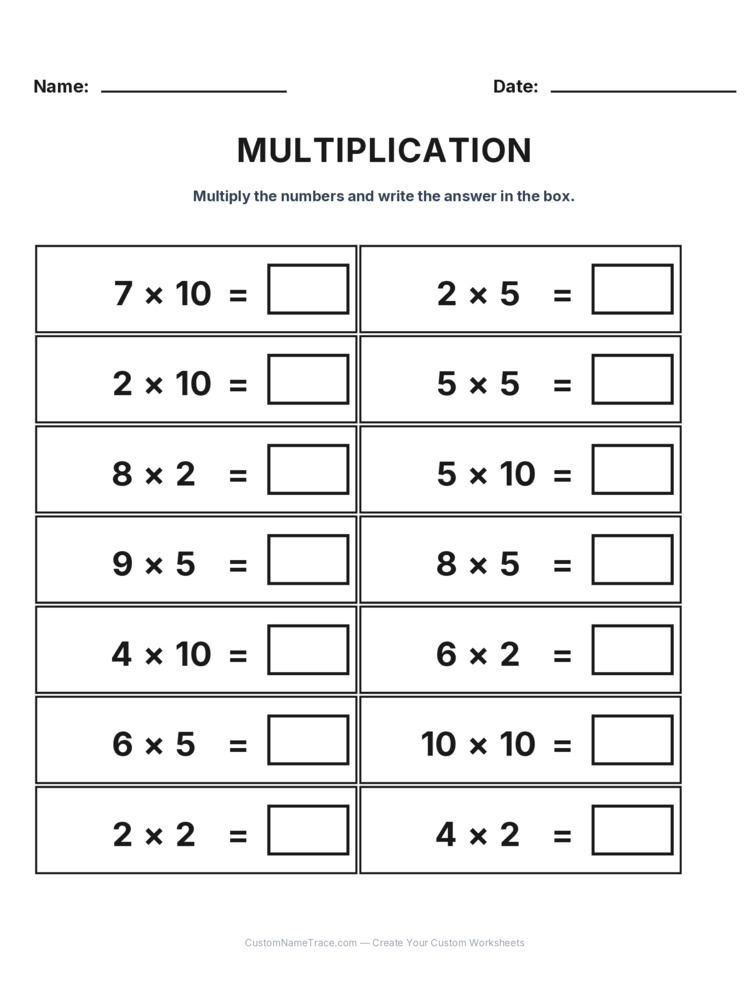
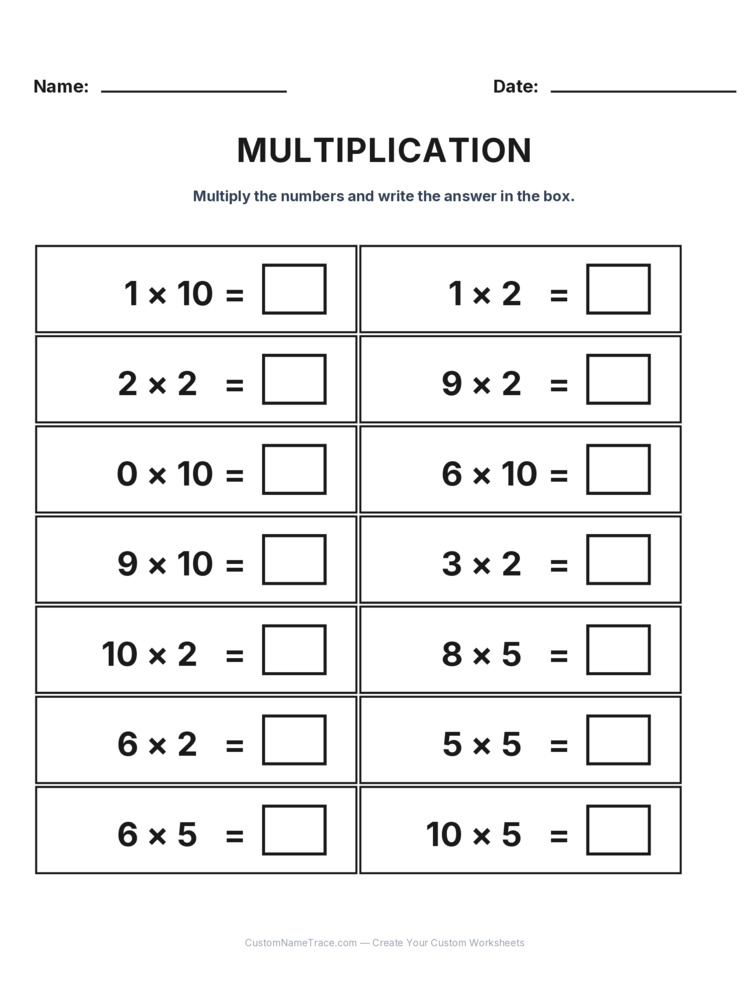
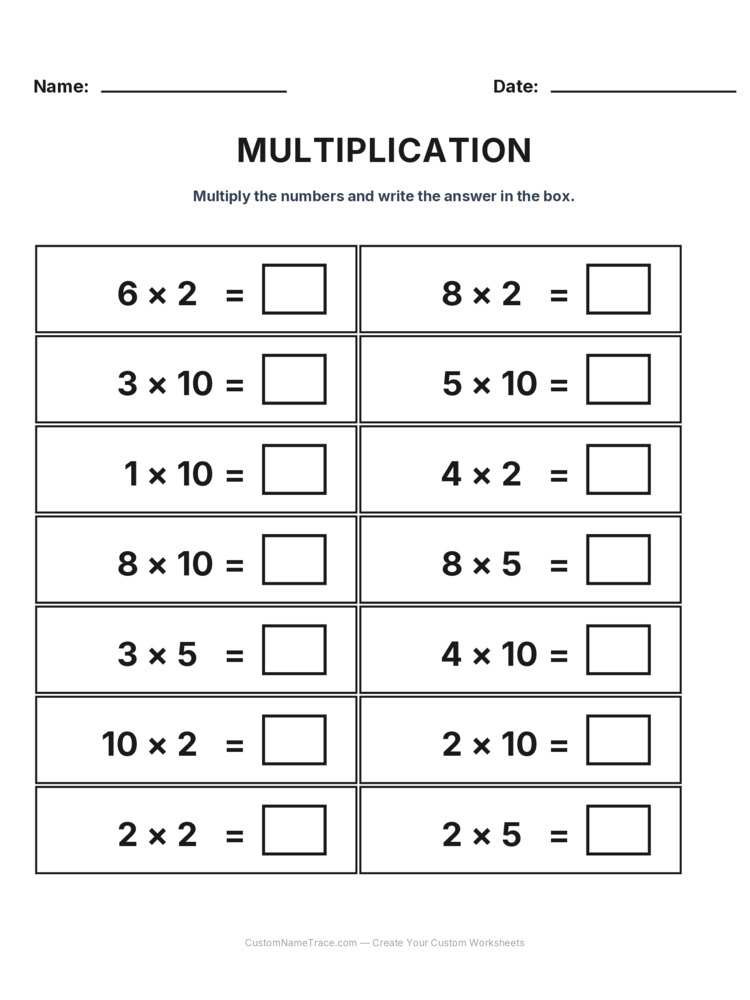
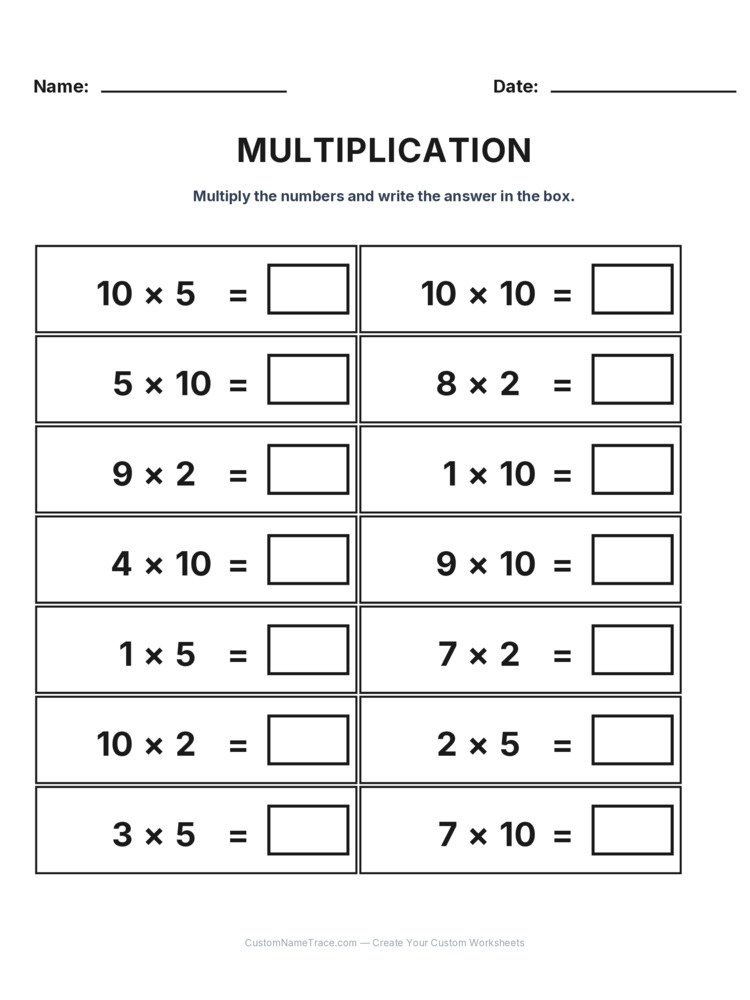
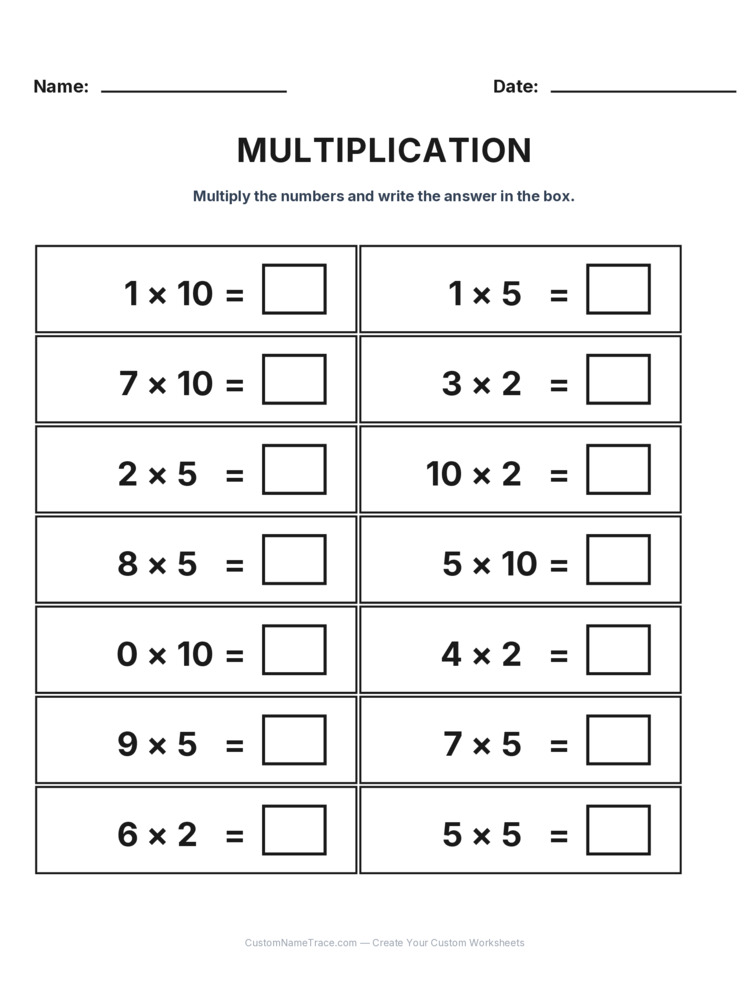
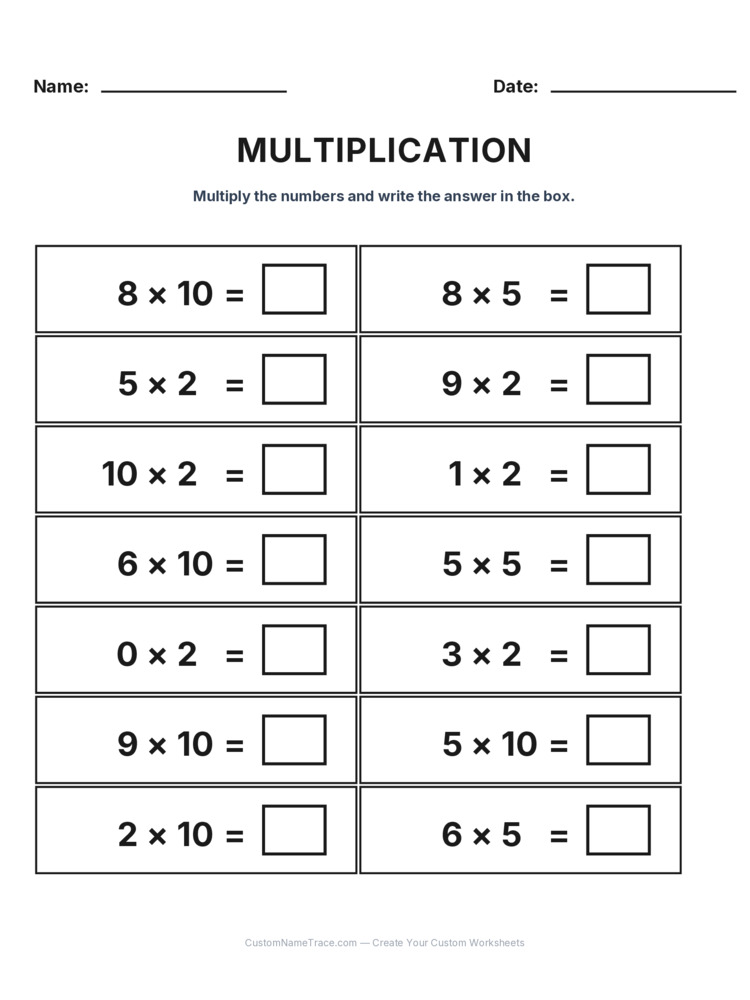
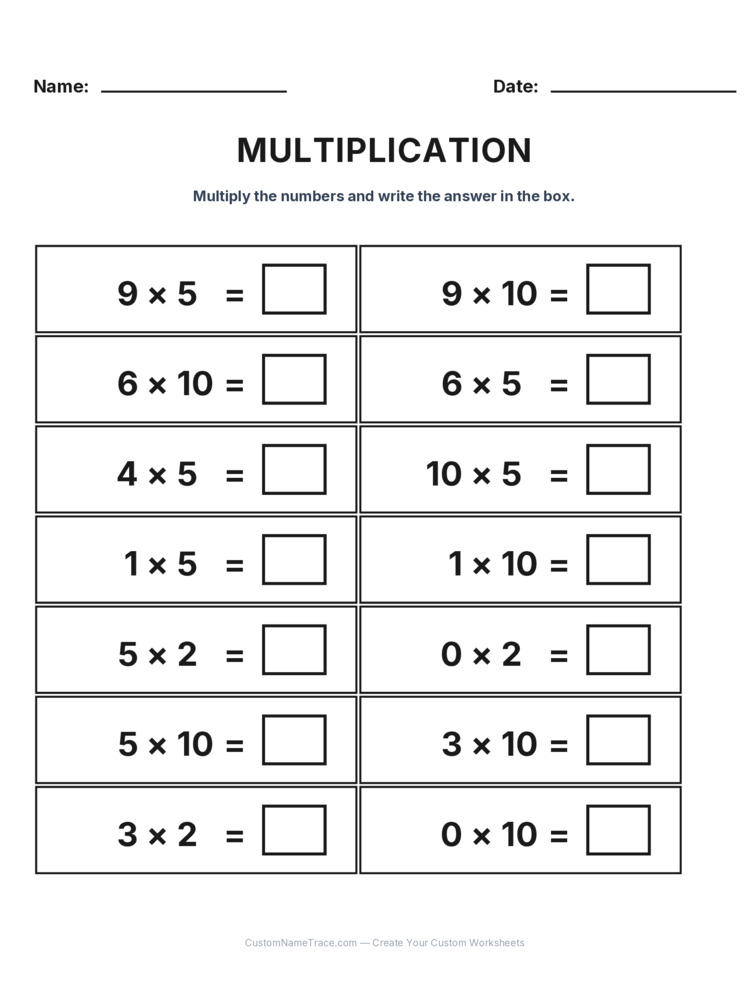
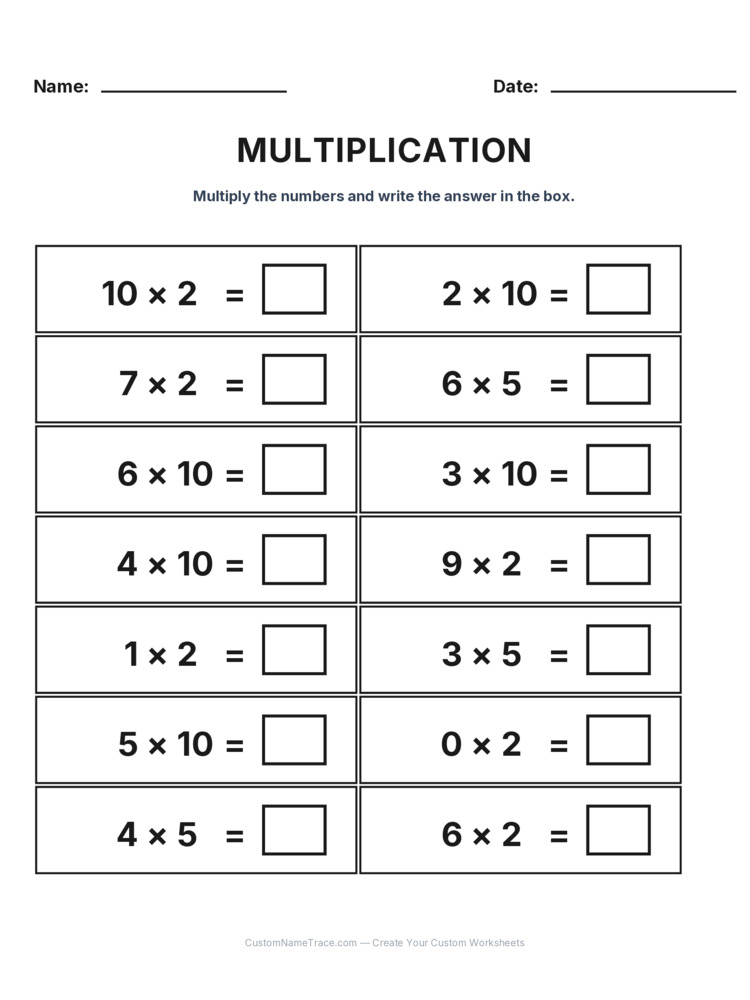
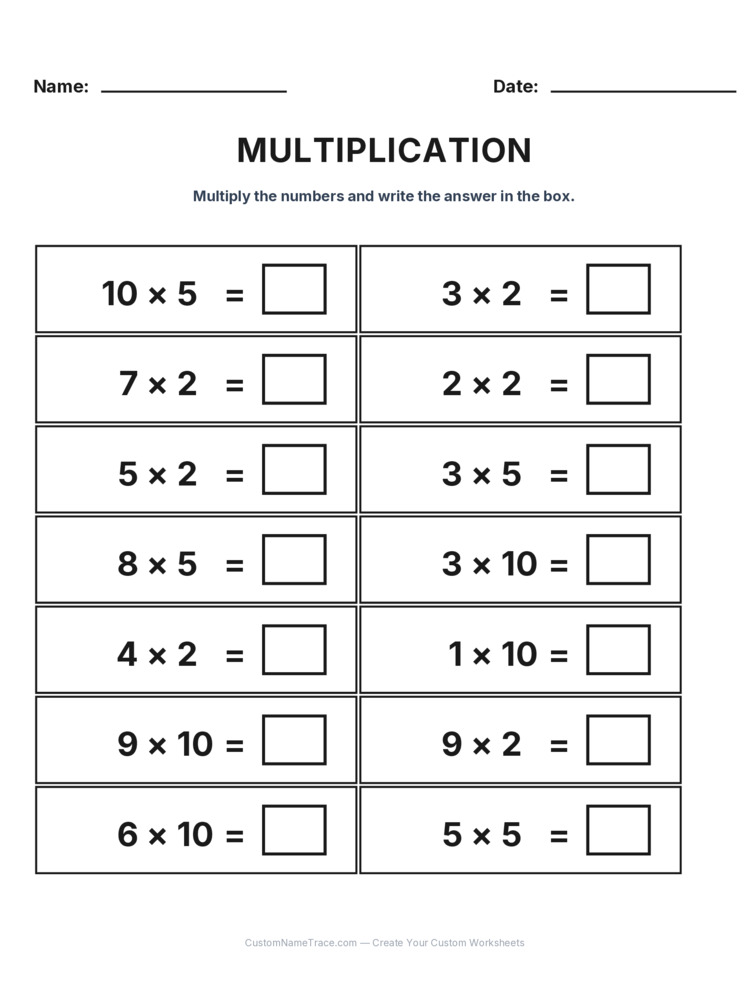
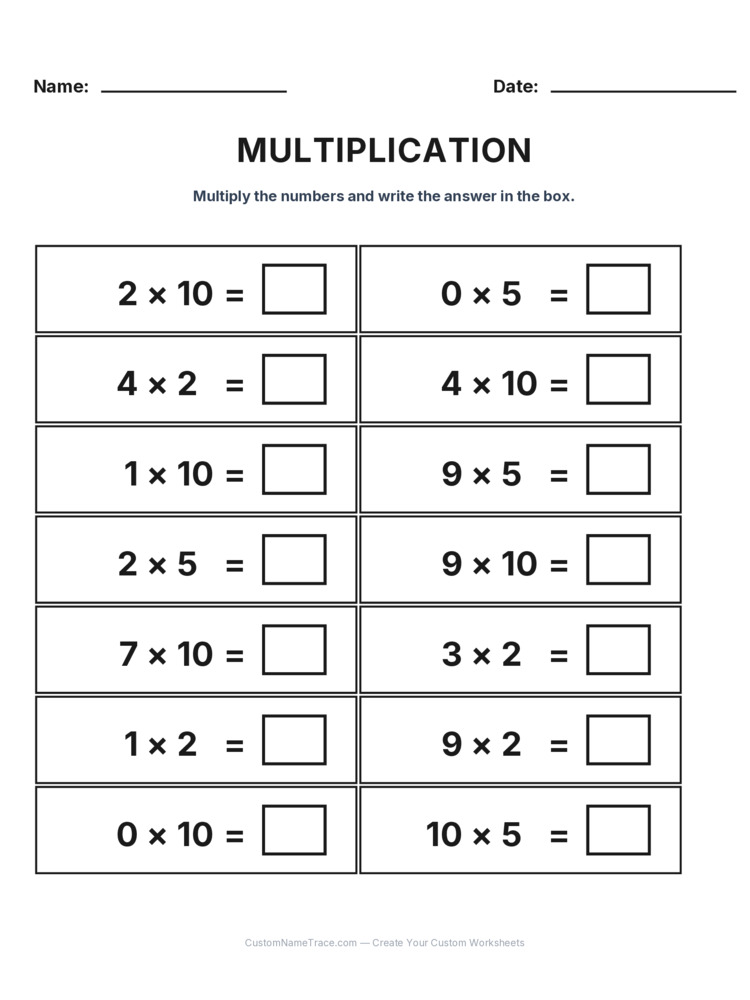
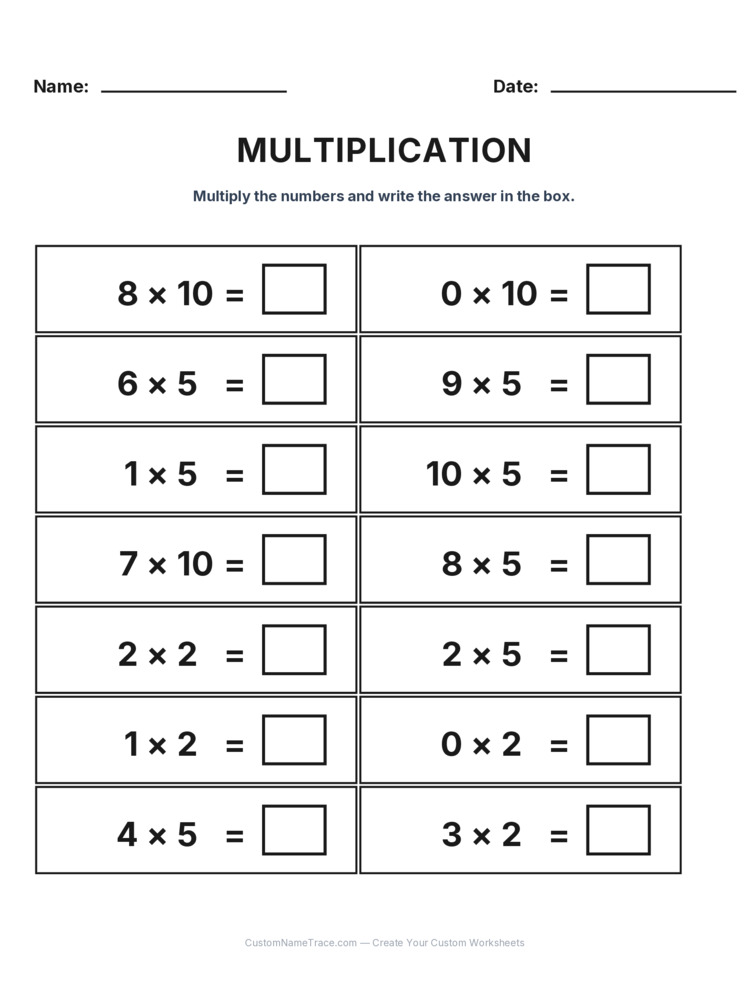
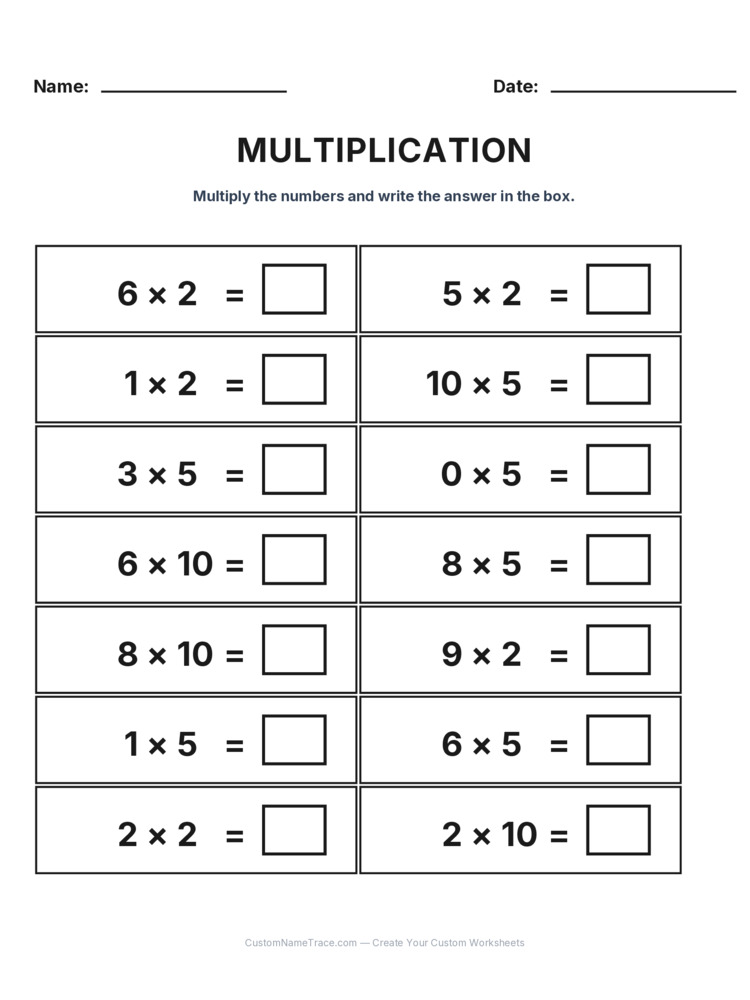
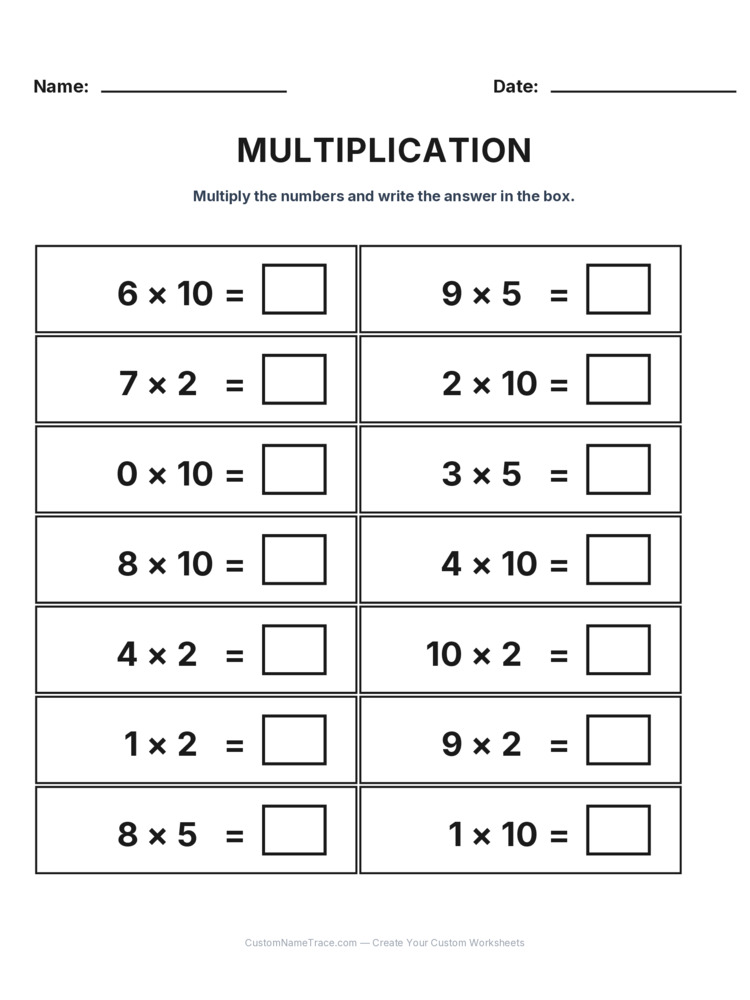
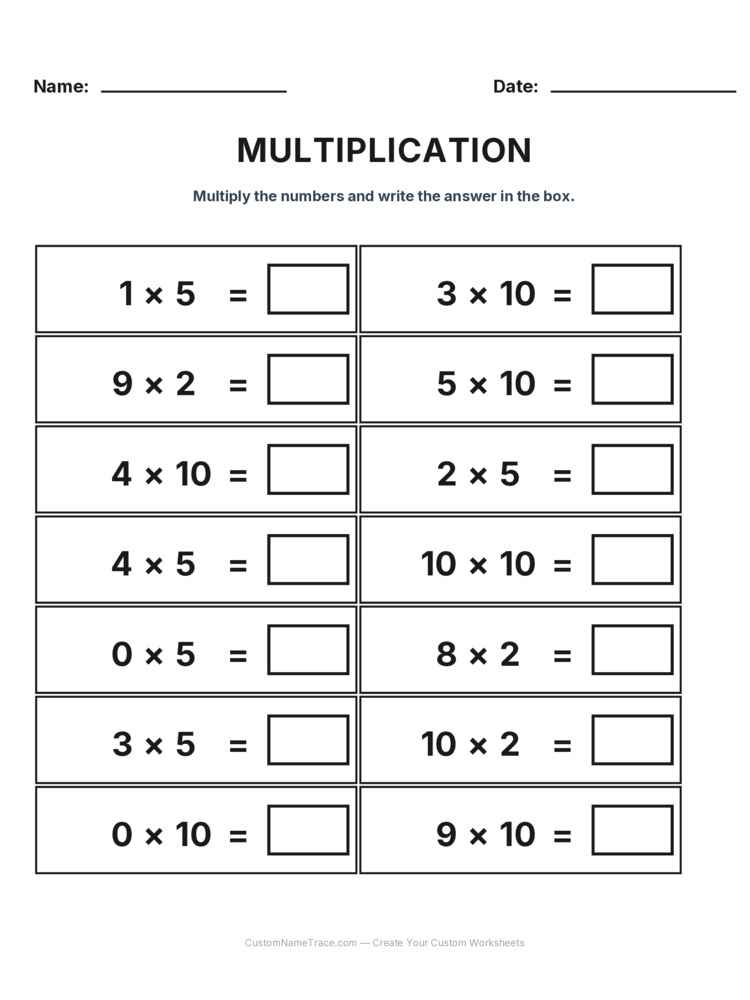
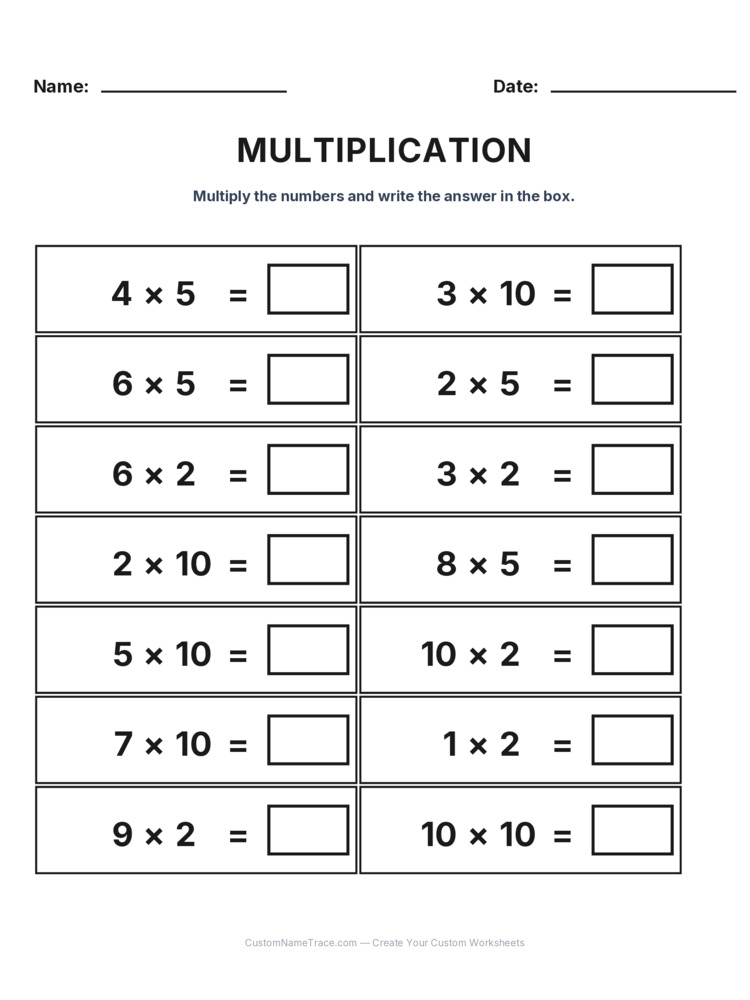
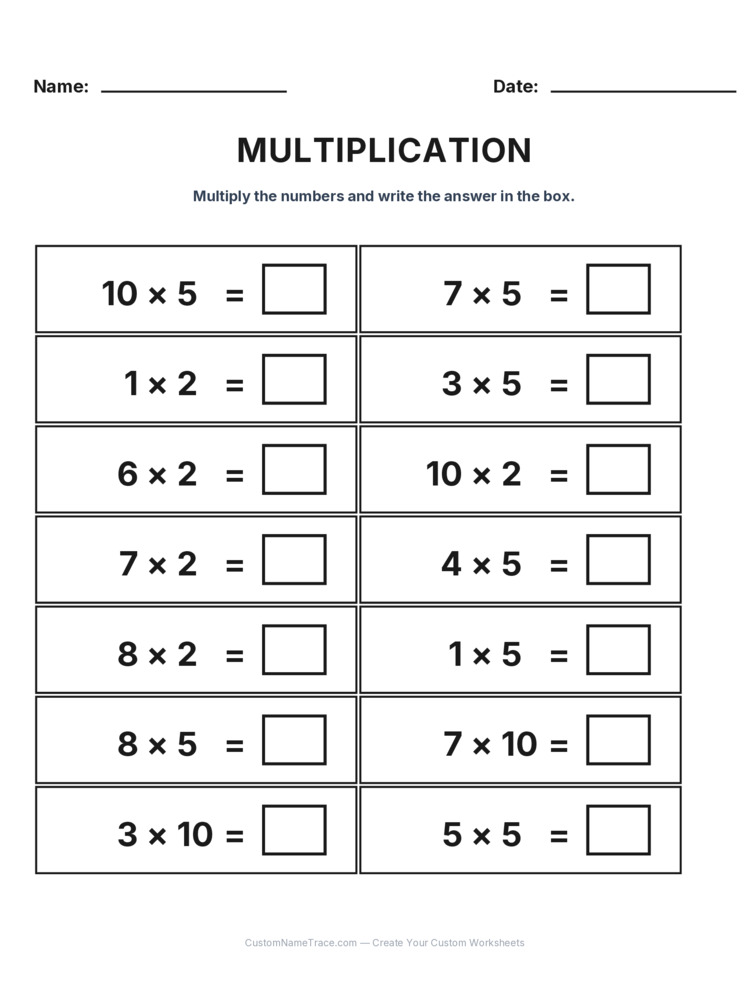
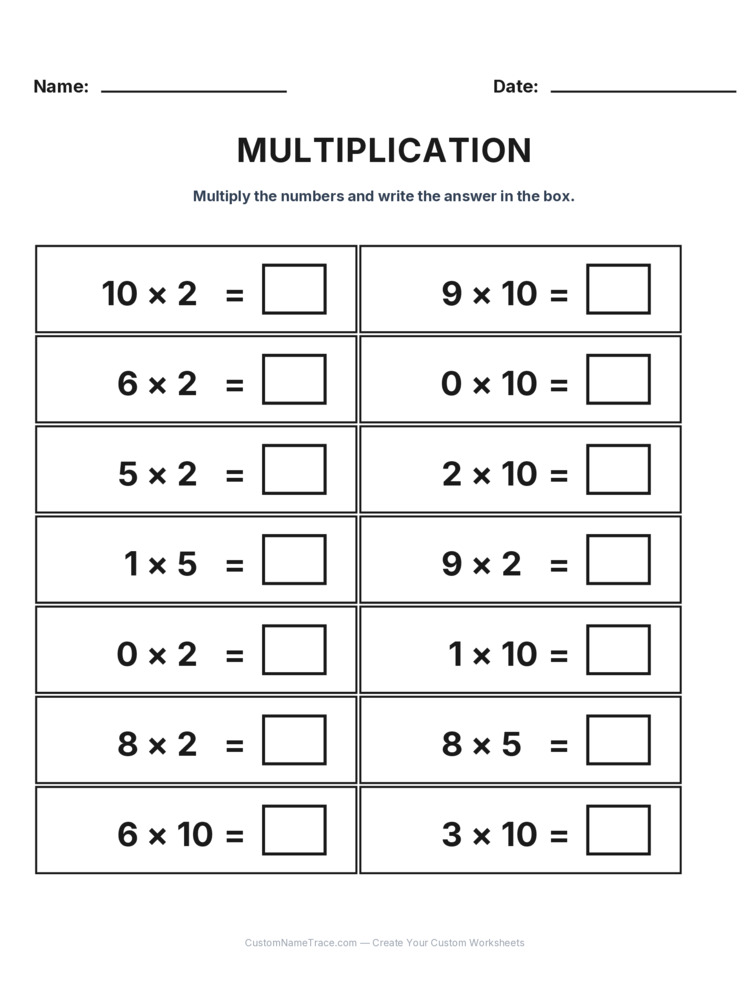
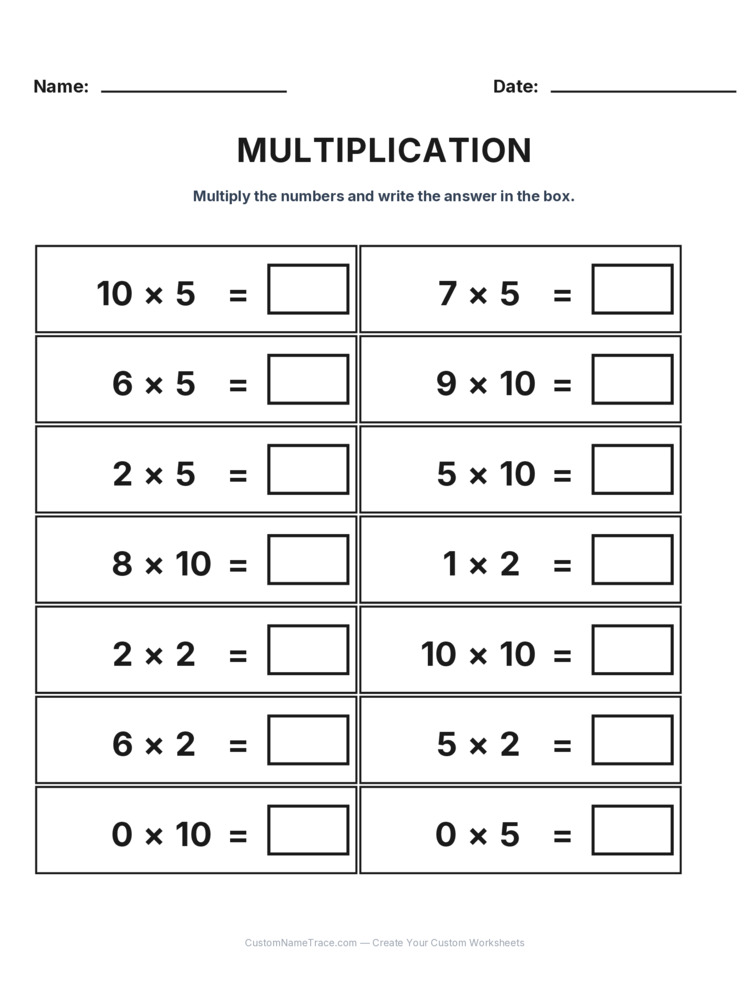
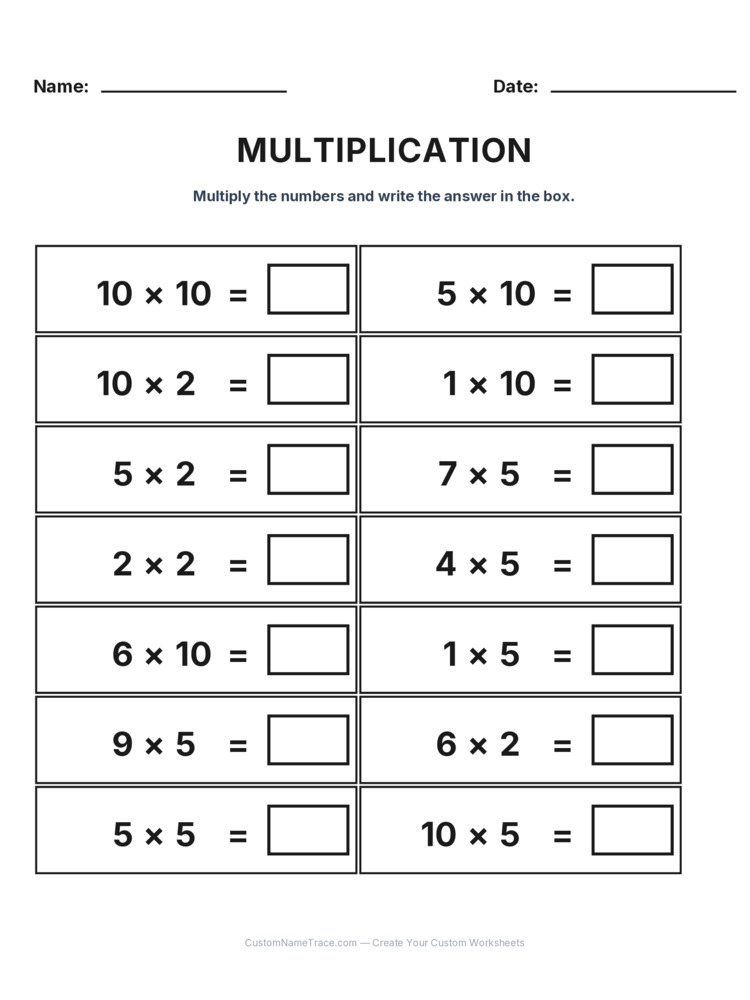
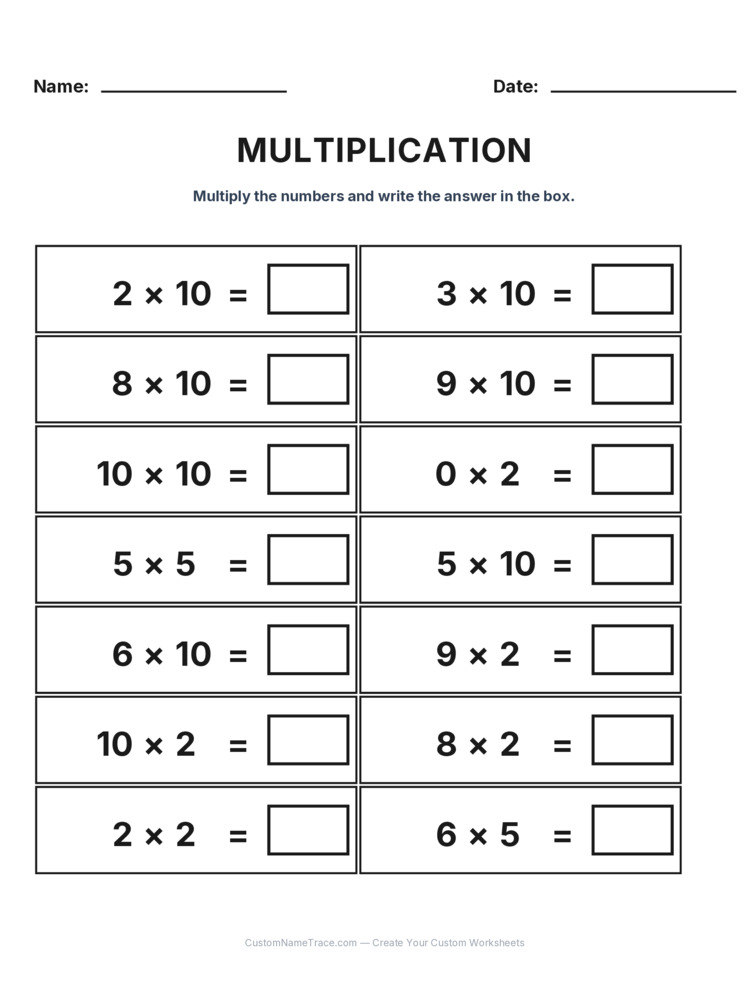
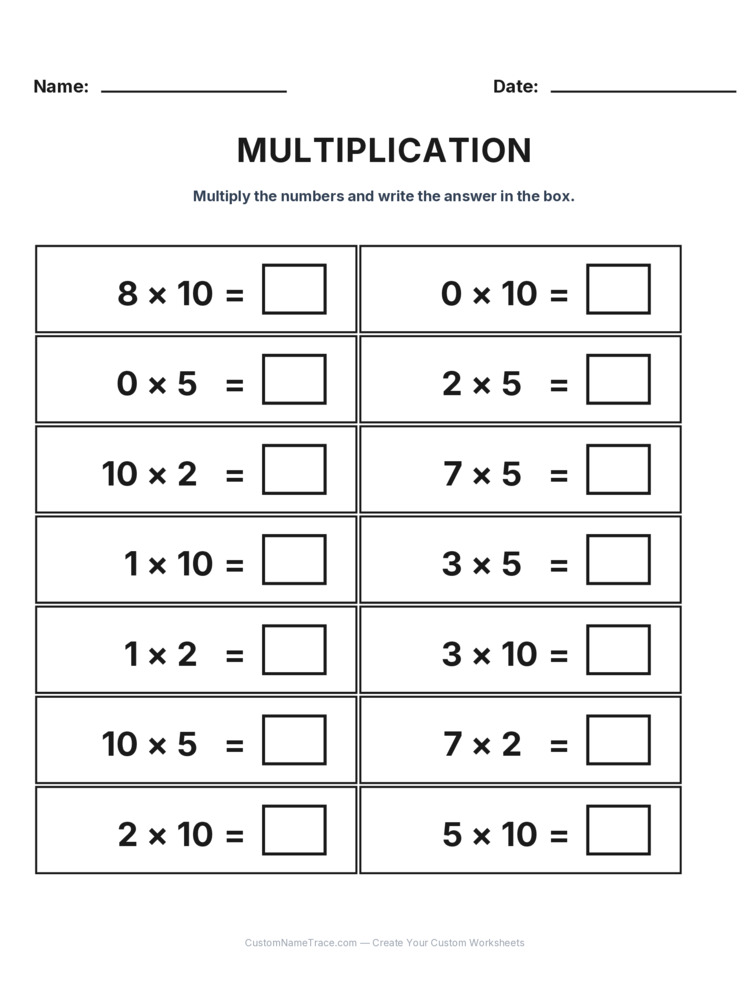
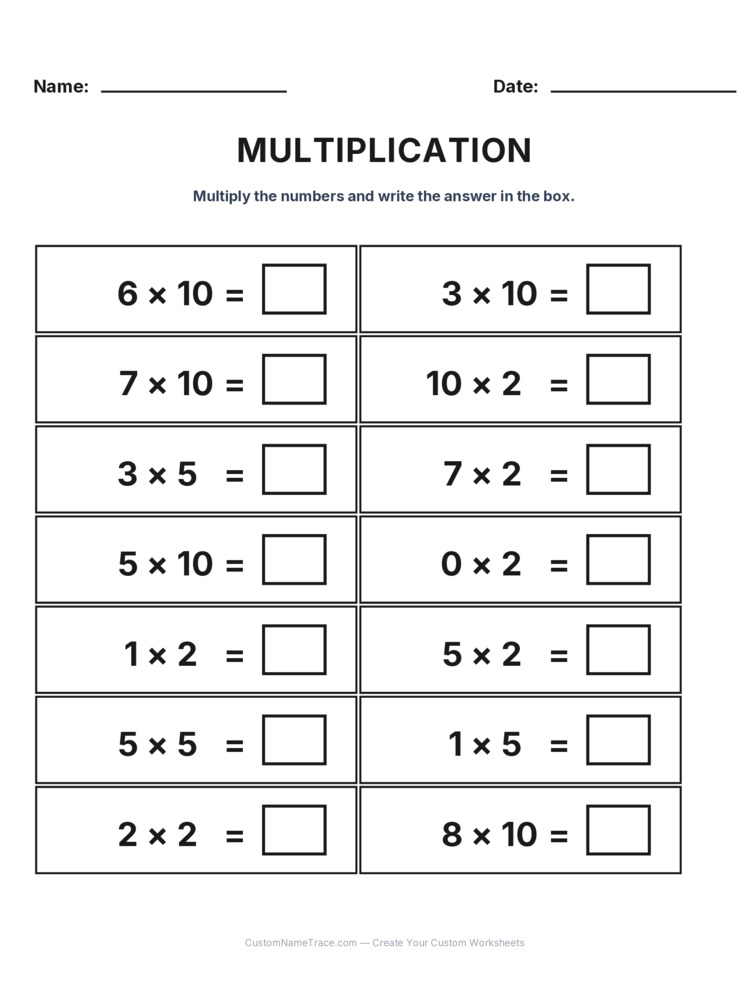
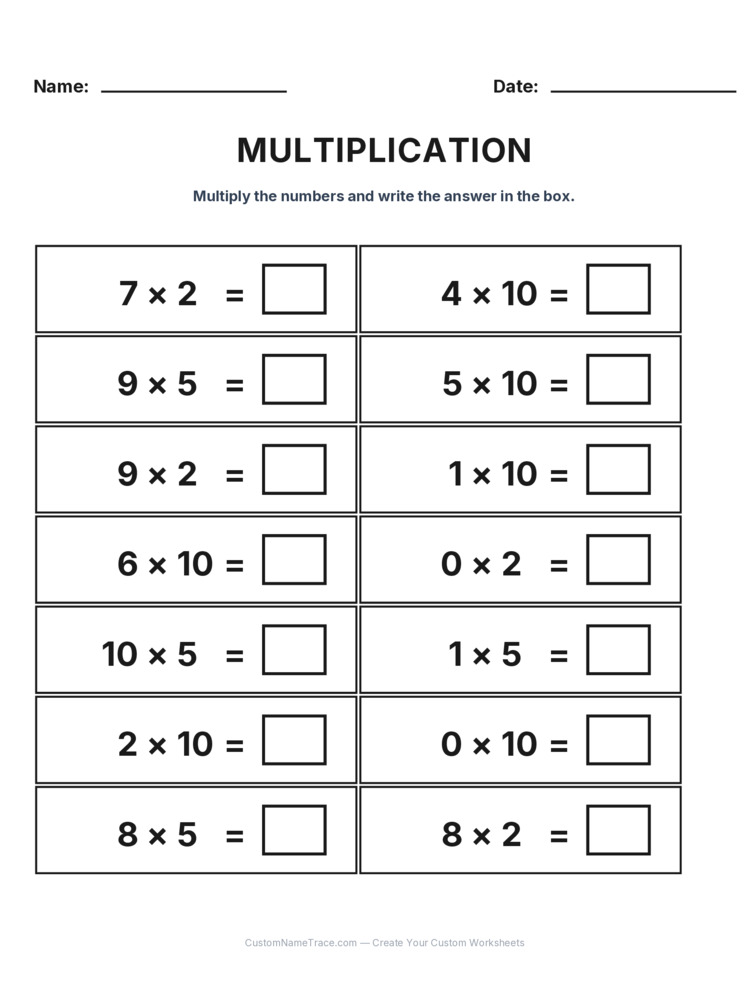
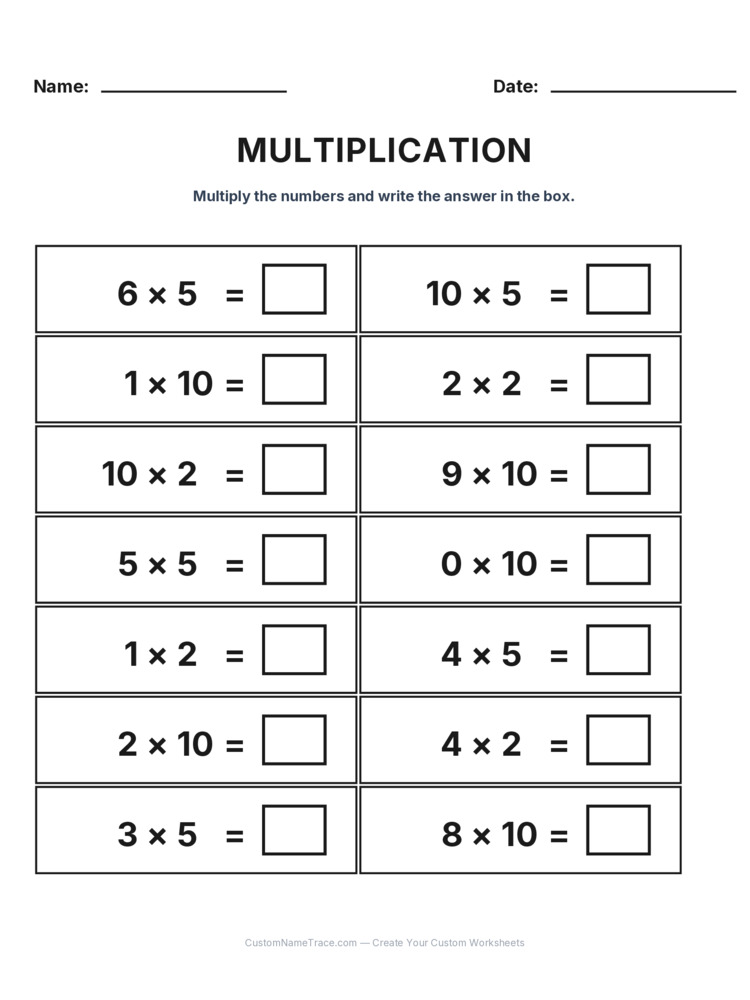
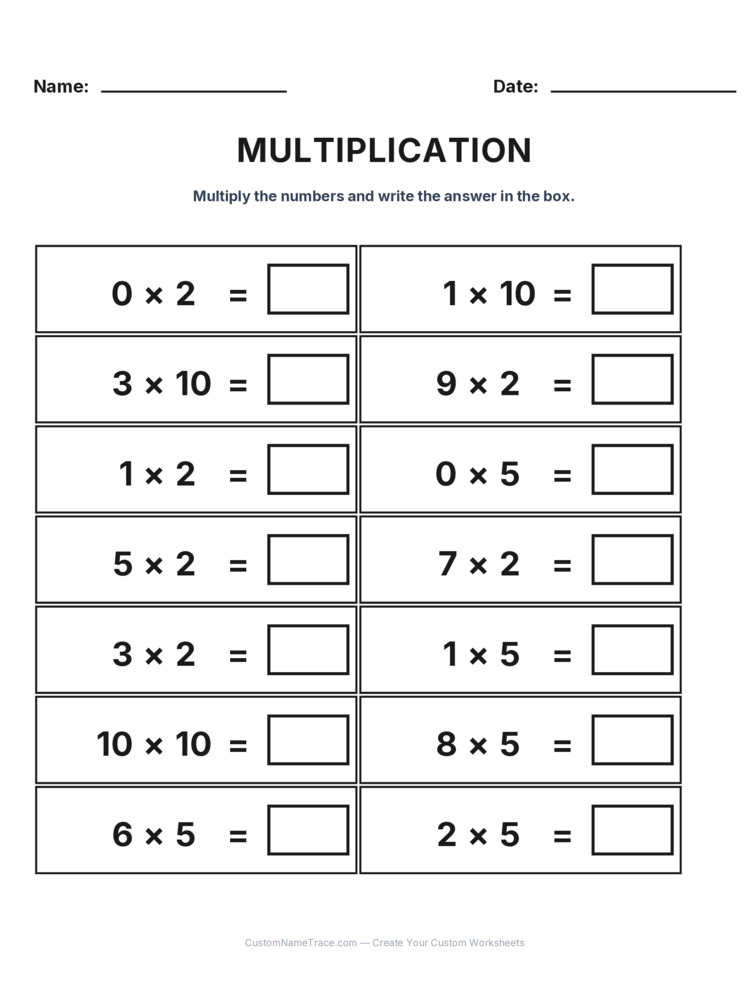
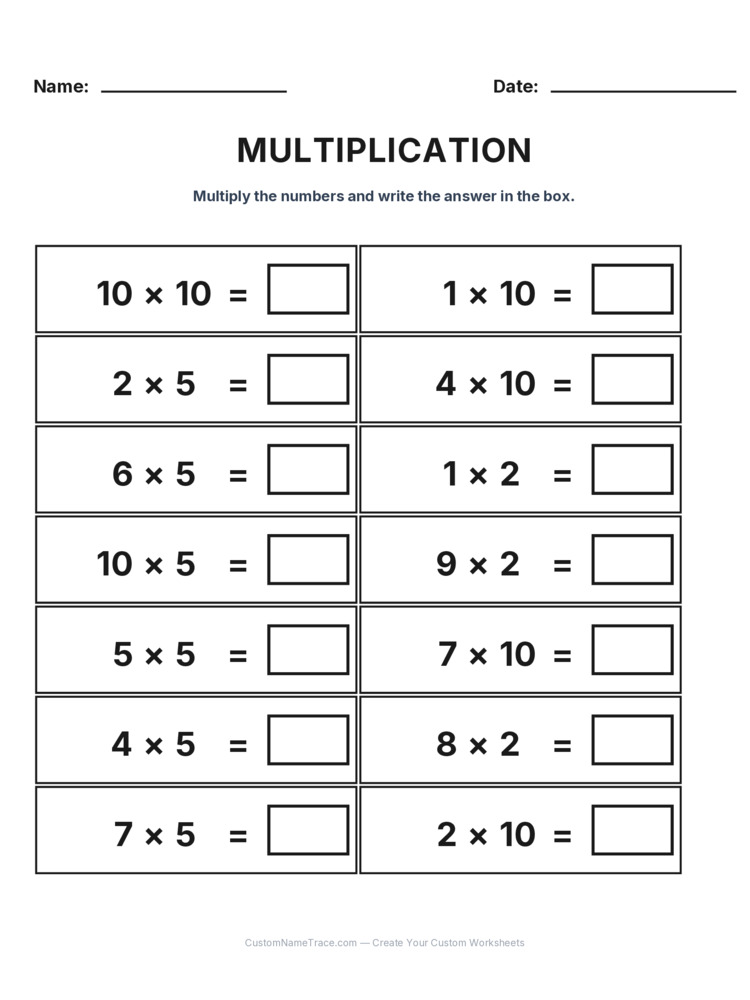
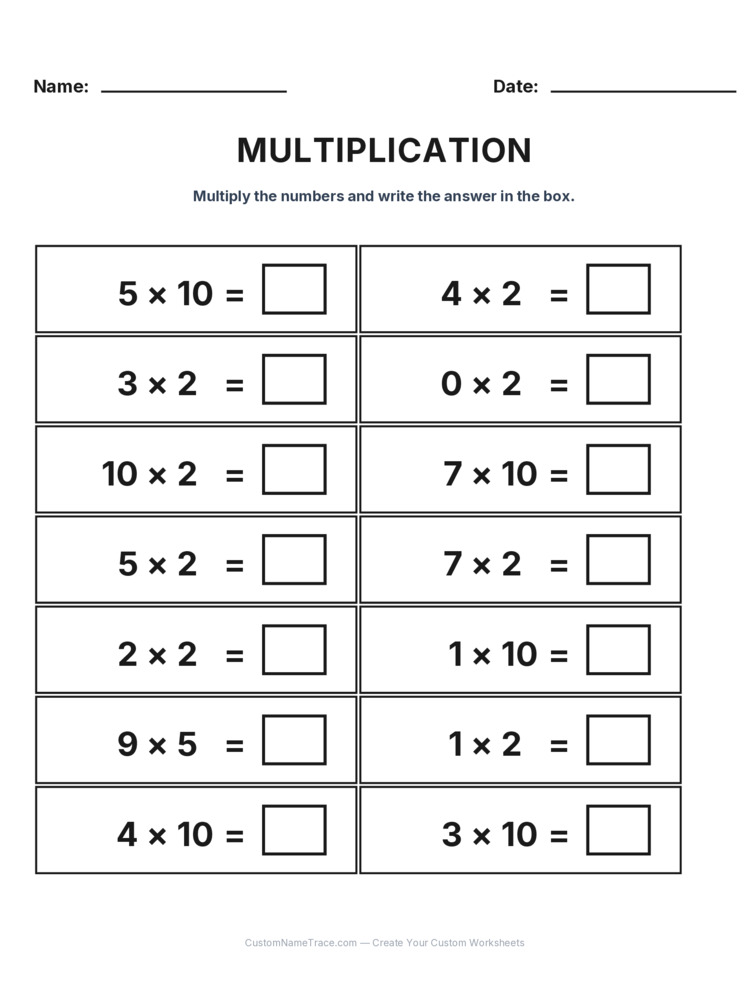
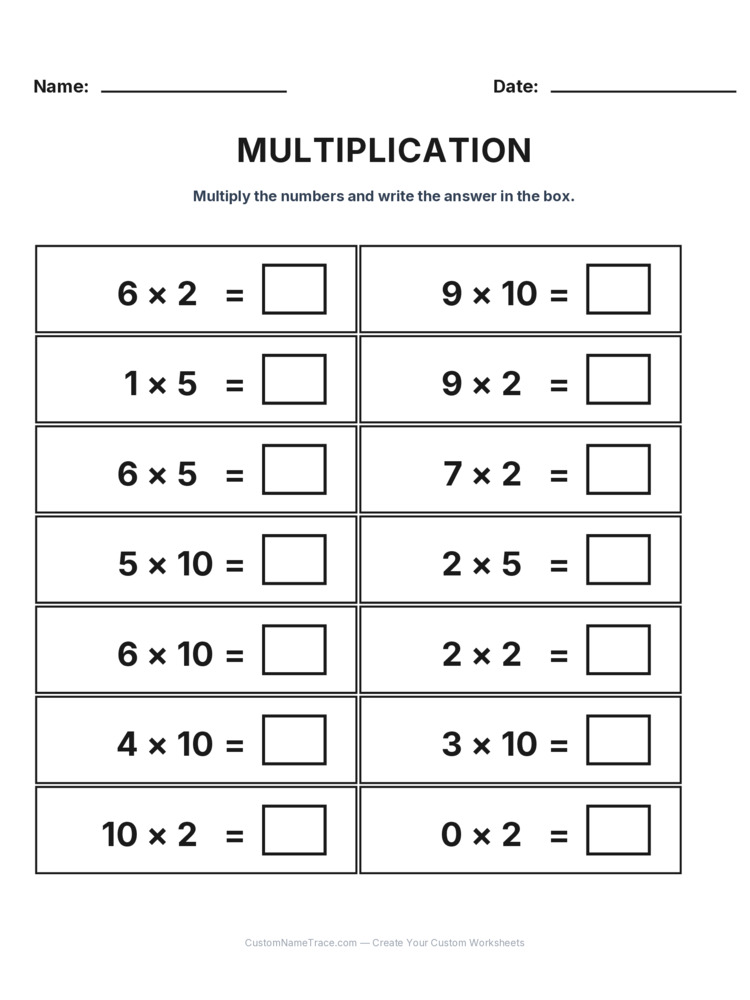
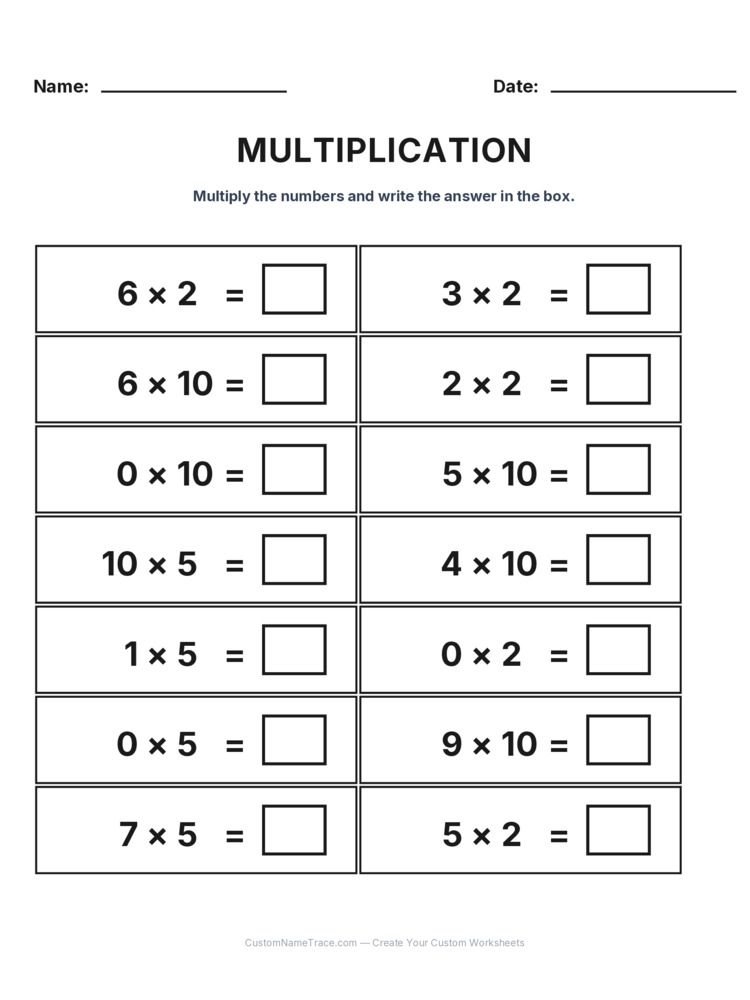
Why 2s, 5s, and 10s come first
Every fact on this worksheet uses 2, 5, or 10 as a factor or divisor, and that's not an arbitrary easier subset — these three numbers have the clearest, most visually countable patterns of any Multiplication facts, which makes them the natural entry point into Multiplication at Grade 2. Counting by 2s, 5s, and 10s is also exactly what this site's Skip Counting worksheets already practice, so a child arriving here with that skill already comfortable is, in a very real sense, already partway to fluent with these specific facts.
Starting with these three factors also means every fact here has an accessible backup strategy — skip counting by the given number — for a child who hasn't yet memorized a specific fact, which keeps this stage of learning genuinely low-frustration compared to jumping straight into the full range of facts without that fallback.
Multiplication and division, introduced side by side
Multiplication asks how many total items result from a number of equal groups; division asks the reverse — given a total, how many equal groups (or how large a group) results from splitting it a certain way. These two questions are directly, inseparably linked: knowing that 4 times 5 equals 20 means knowing that 20 divided by 5 equals 4, just viewed from the opposite direction, and this worksheet's facts are deliberately built using the same 2/5/10 range for both operations so that relationship stays visible and usable rather than each operation feeling like an unrelated new subject.
A child who's shaky on a specific division fact often unlocks it faster by asking the matching multiplication question in reverse — "what number times 5 equals 20?" — than by trying to reason through division directly, since multiplication facts at this range tend to solidify first.
Building genuine fluency, not just memorization
A child who reaches for skip counting to work out an unfamiliar fact — counting by 5 four times to reach 4 times 5 — is using a completely legitimate, mathematically sound strategy, not falling back on something lesser because memorized recall failed. That strategy naturally becomes less necessary as specific facts get reinforced through repeated practice, and there's no need to rush a child away from it before they're genuinely ready to recall facts directly.
Drawing the actual groups being combined or split — three groups of five dots, say — reconnects an abstract-feeling fact back to something concrete and countable whenever a specific fact is forgotten, which builds more durable understanding than simply supplying the correct answer.
What genuine mastery at Grade 2 looks like
Fluency with this 2/5/10 range means reliable, reasonably quick recall for most facts, with skip counting or reasoning from a related fact as a legitimate fallback for the rest — not necessarily instant recall on every single problem from day one. A child who's solid here has real, usable footing for the wider range of facts this site's other Grade 2 and later-grade Multiplication worksheets introduce next.
Every numbered variant presents these facts in a fresh, non-sequential order, specifically so a child can't glide through a page by anticipating what comes next from position alone — genuine recall, not pattern-following, is what's being tested and built.
Using this worksheet effectively
Short, frequent practice sessions build fact fluency far more reliably than infrequent long ones — a few minutes most days beats one long session once a week. For a fact that's consistently forgotten, drawing the actual groups it represents, or reasoning from the matching multiplication or division fact, rebuilds understanding more durably than simply repeating the correct answer until it's memorized by rote.
Every worksheet here downloads as a free, print-ready PDF with no account required, ready to use alongside skip counting, drawn groups, or a fact-family approach as needed.