Skip Counting
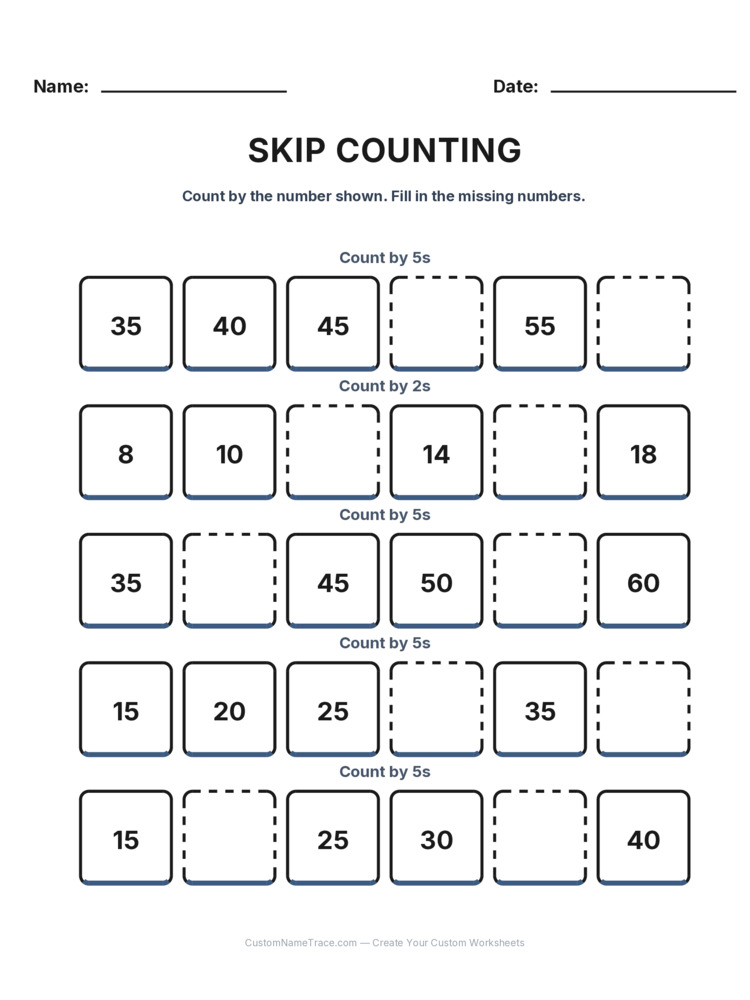
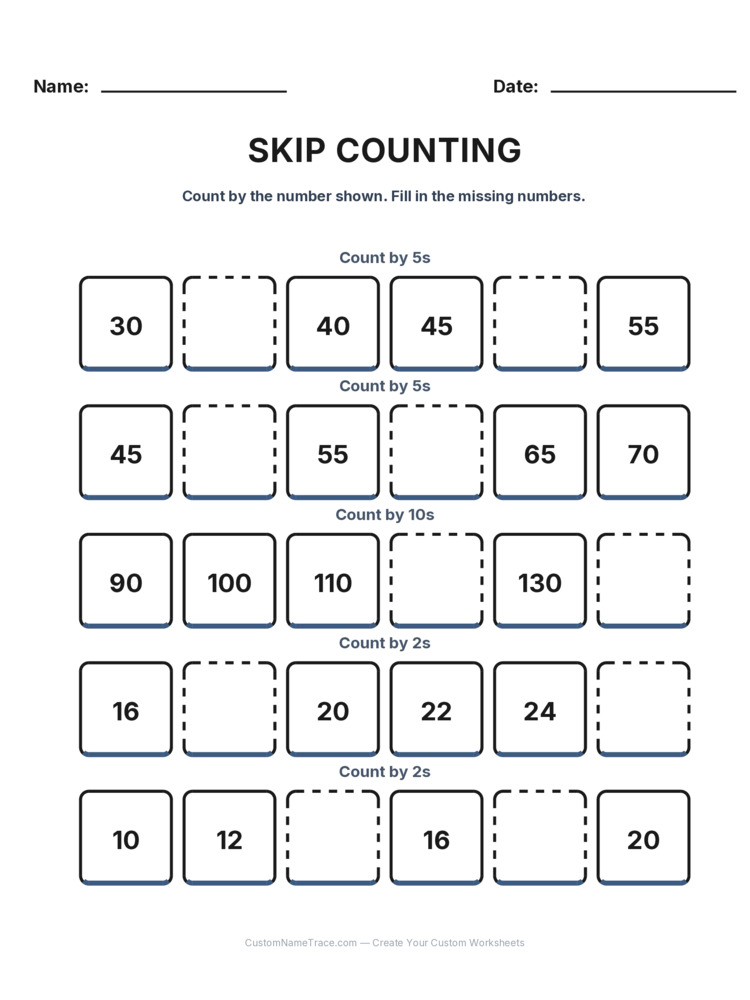
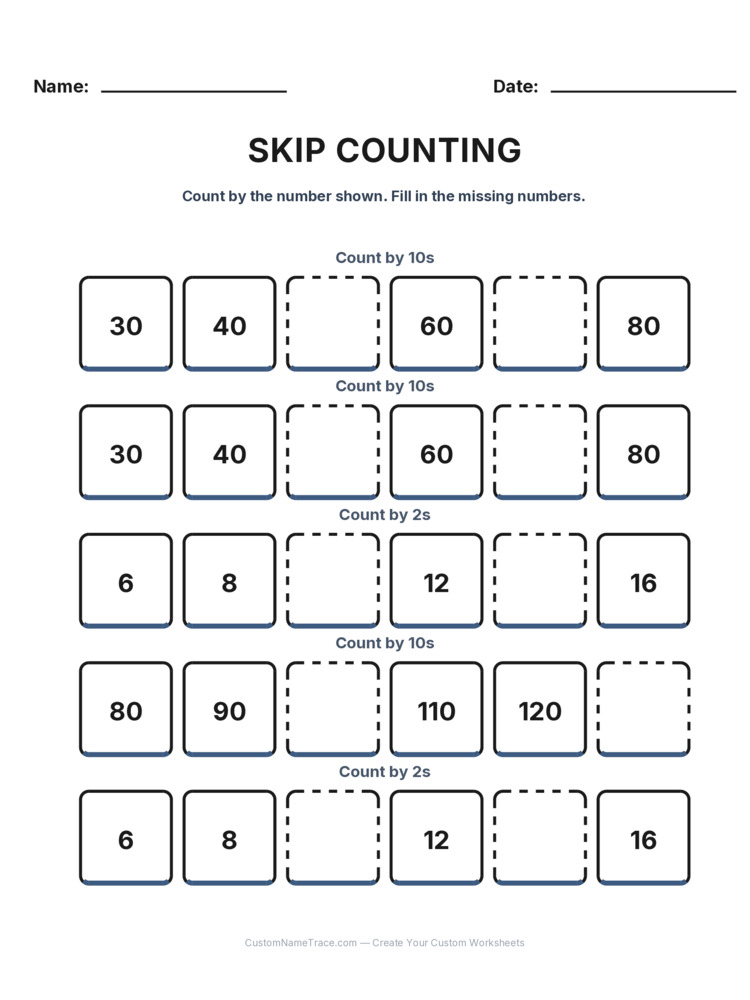
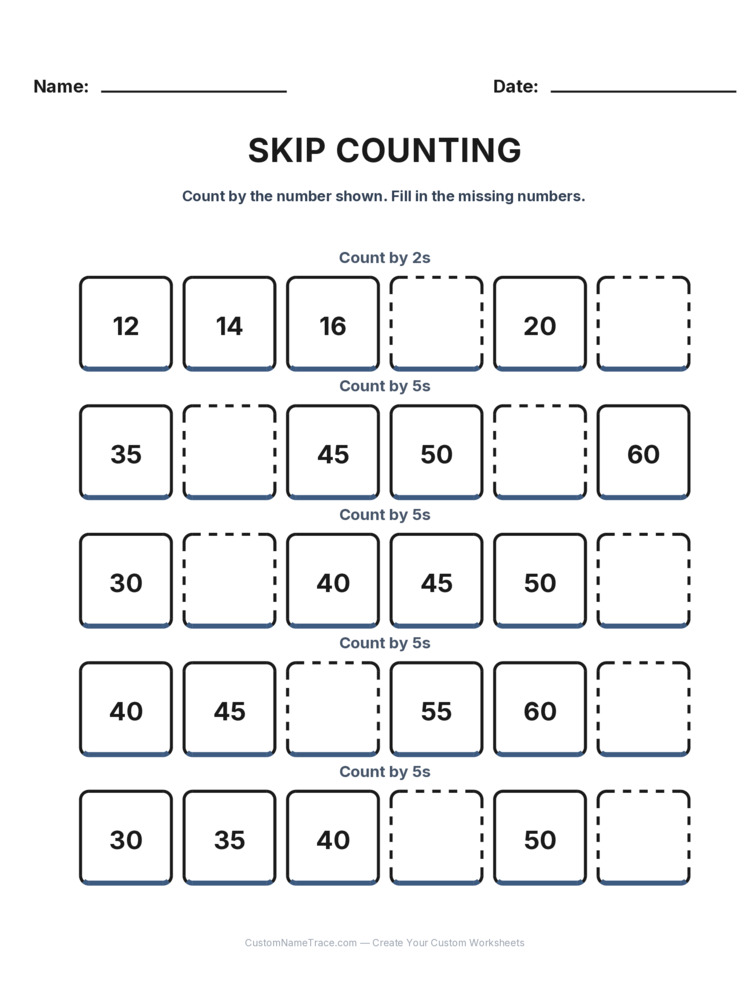
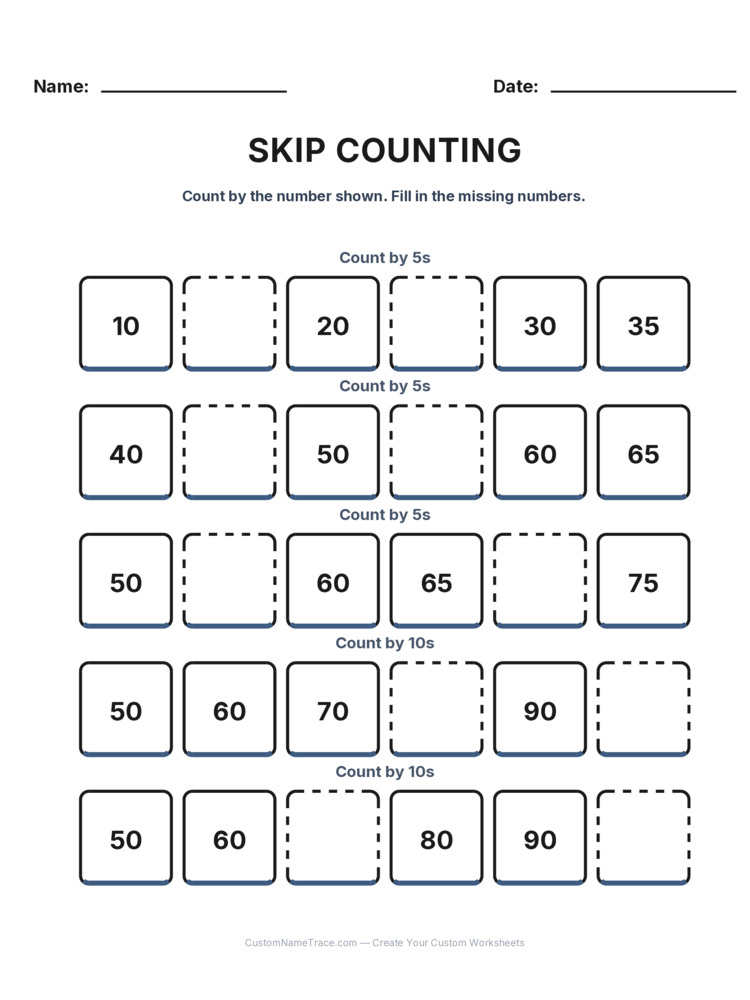
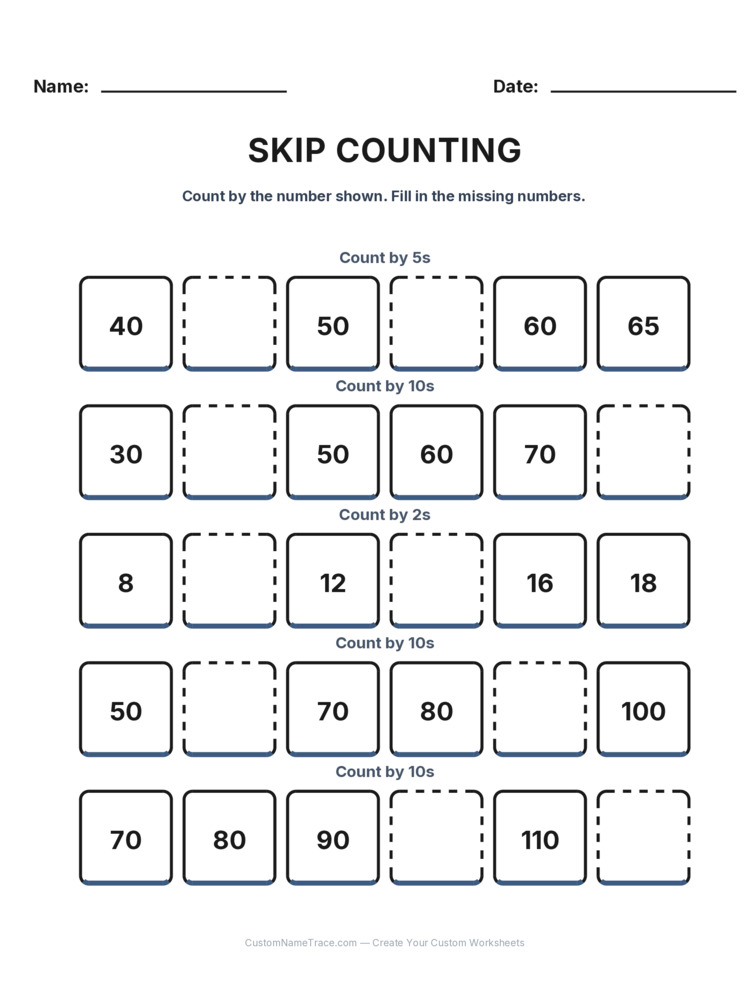
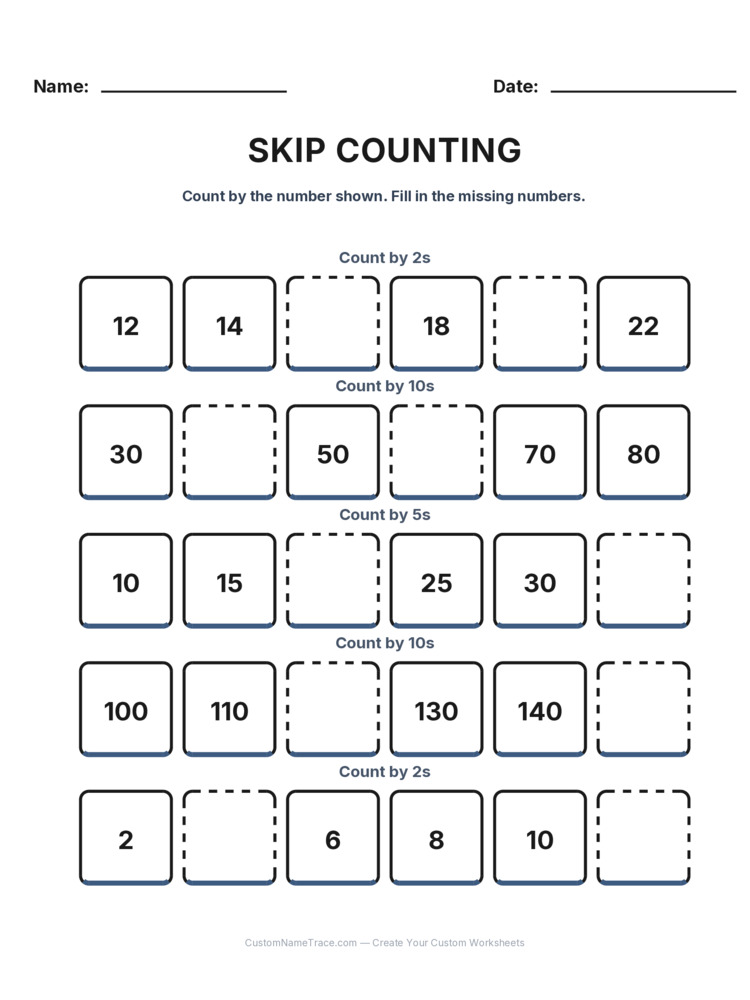
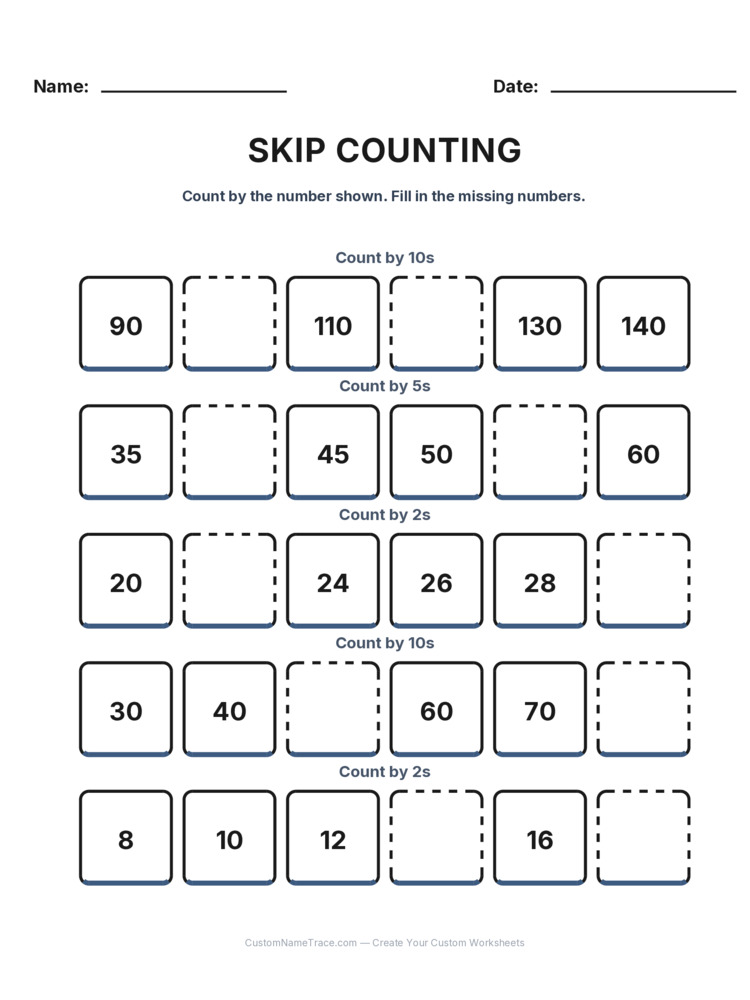
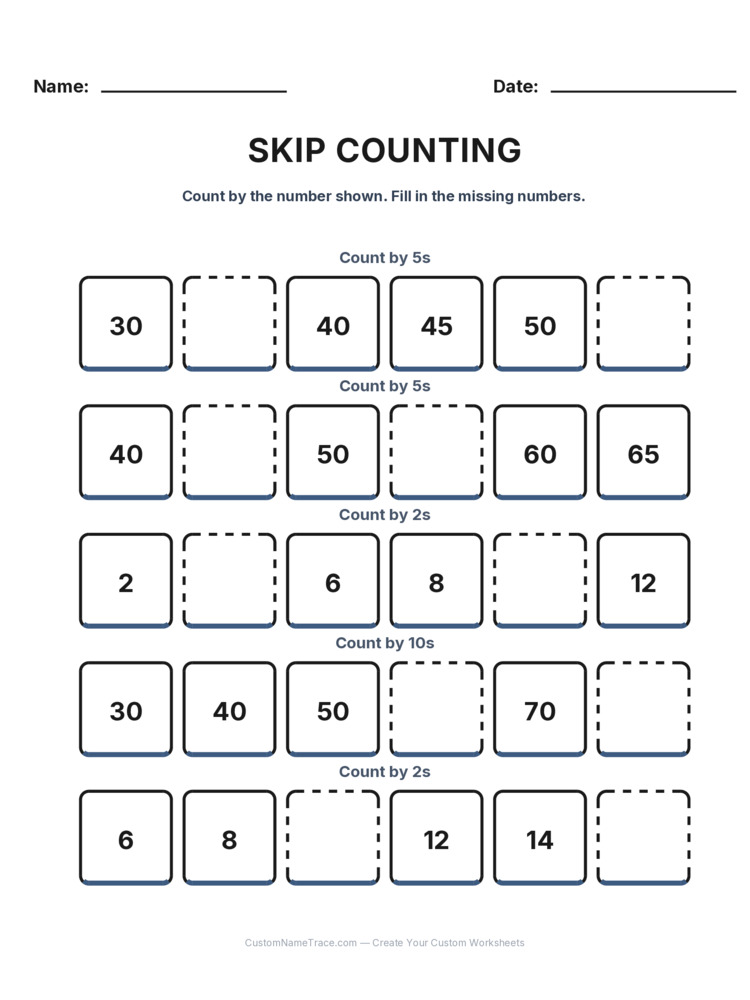
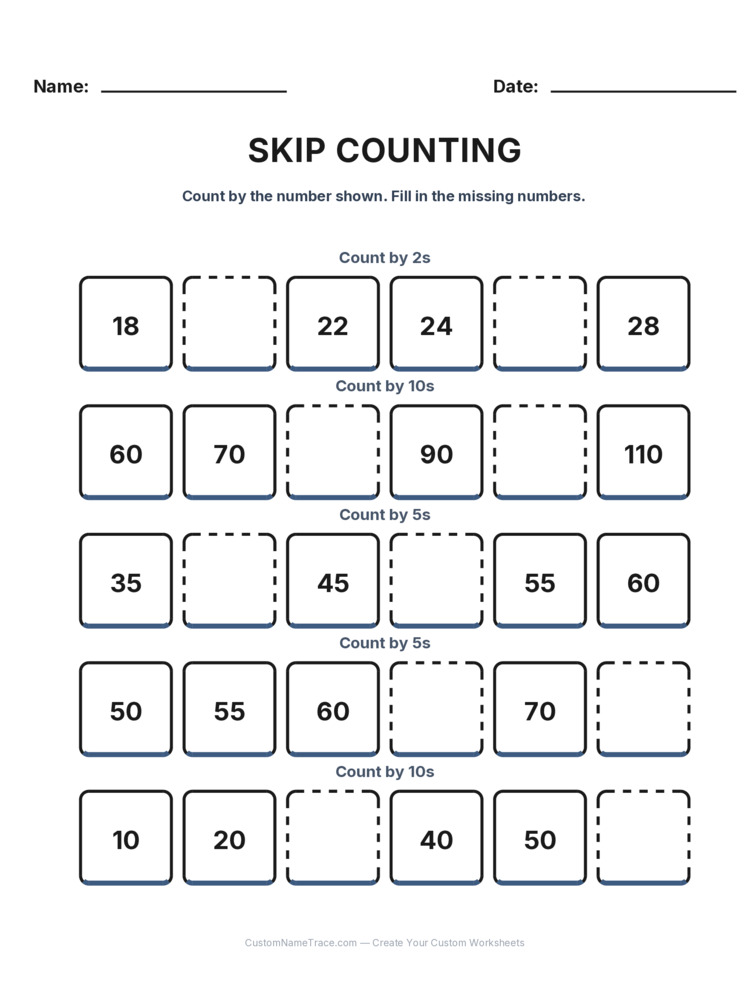
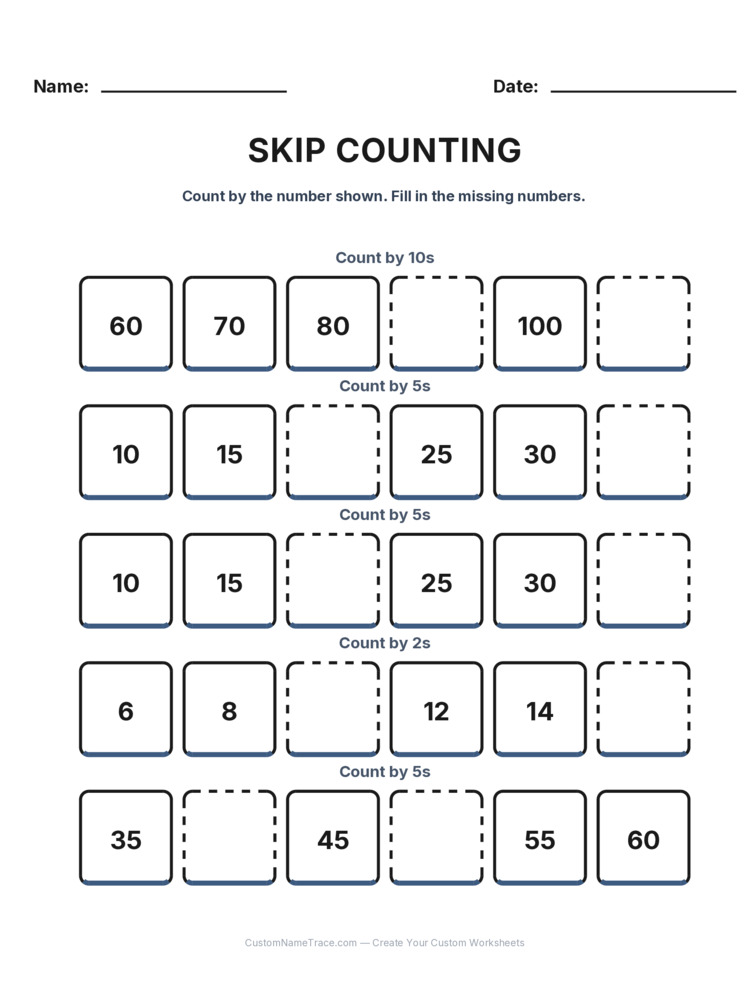
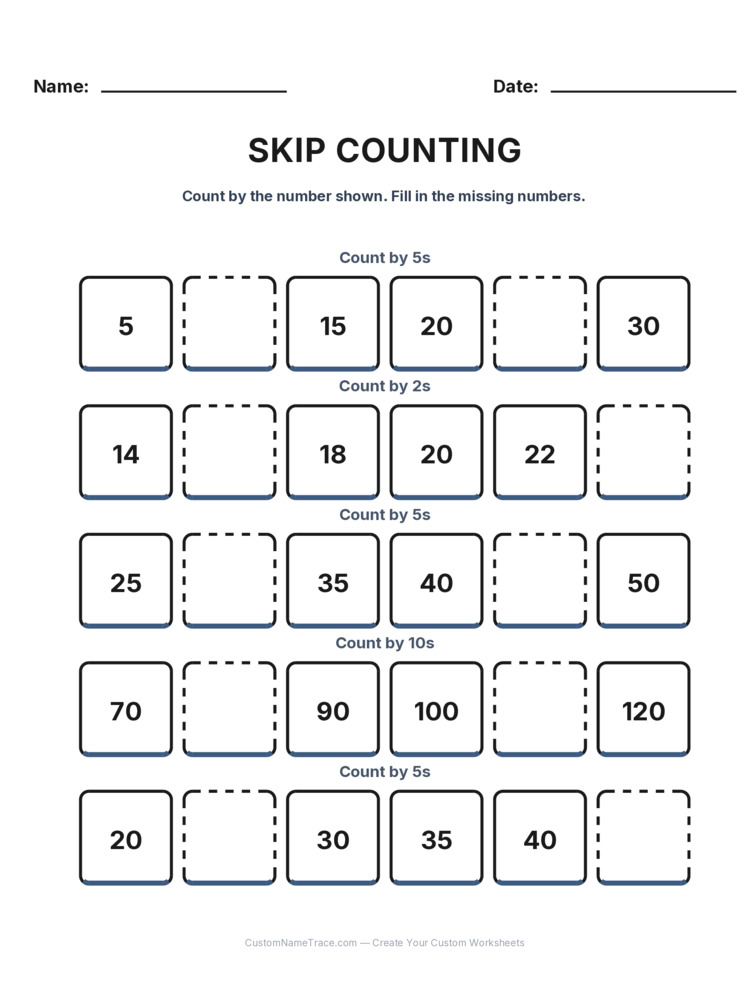
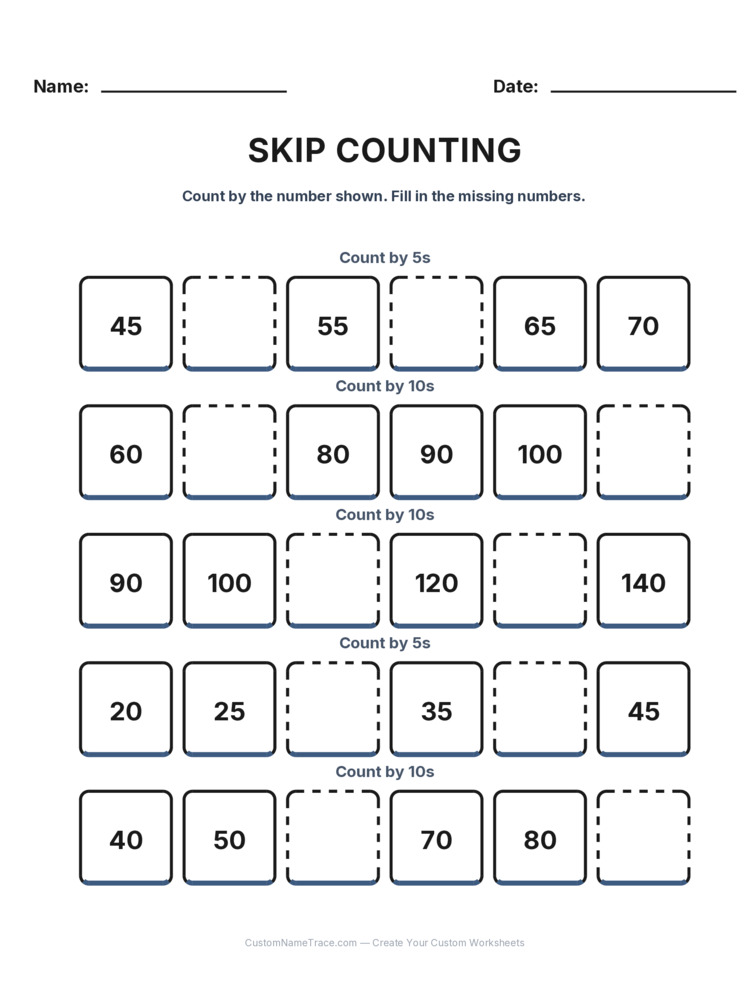
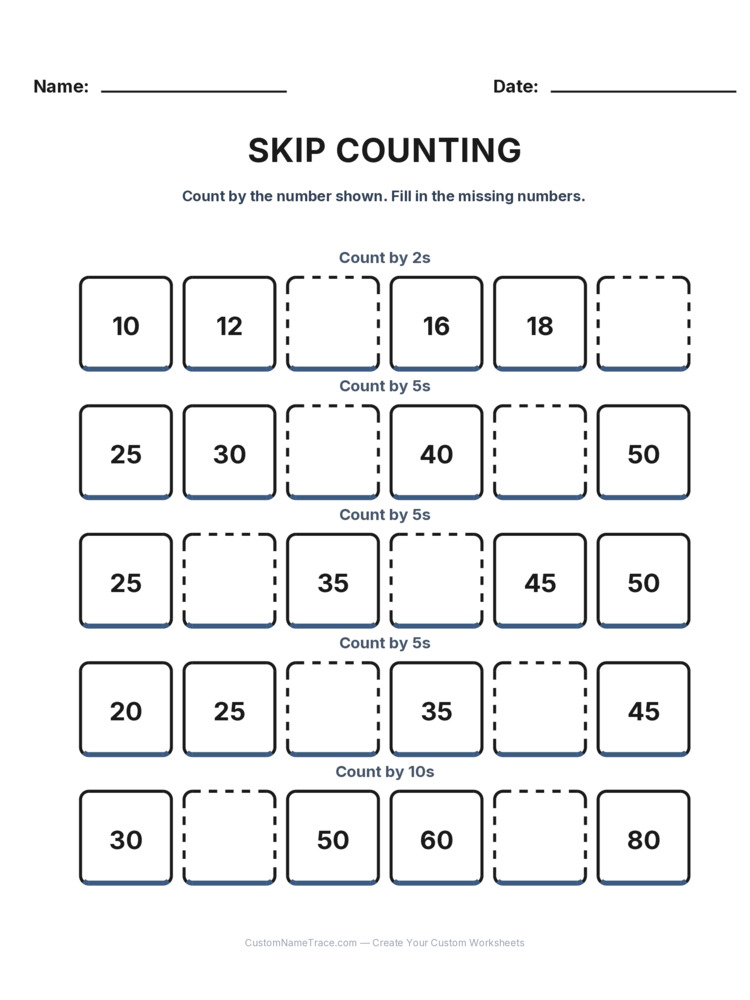
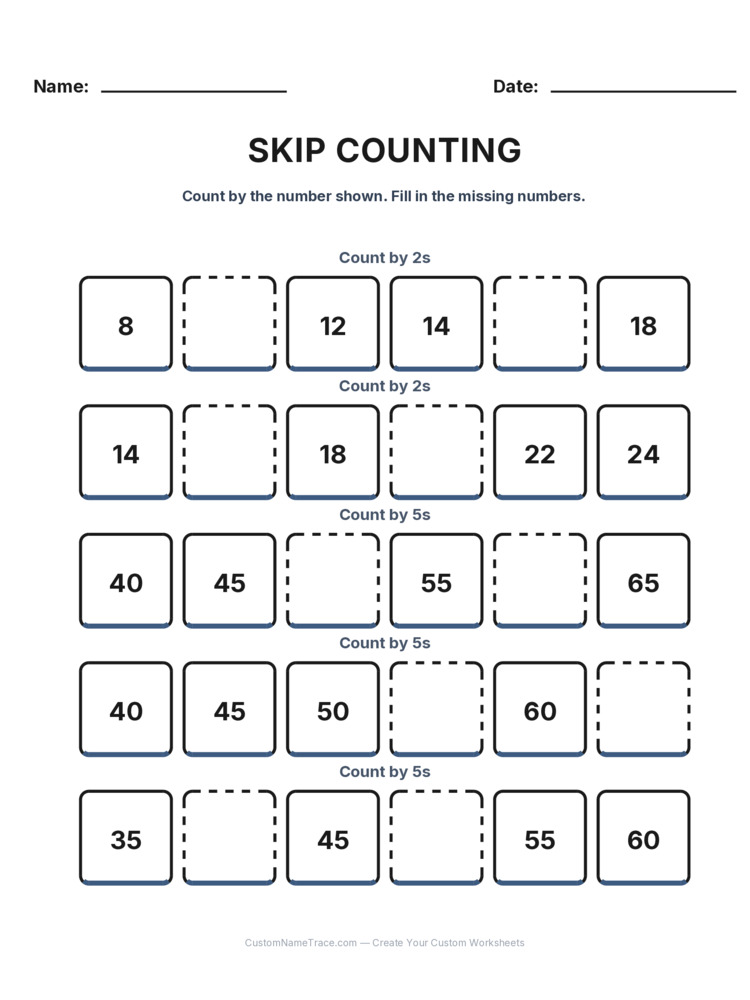
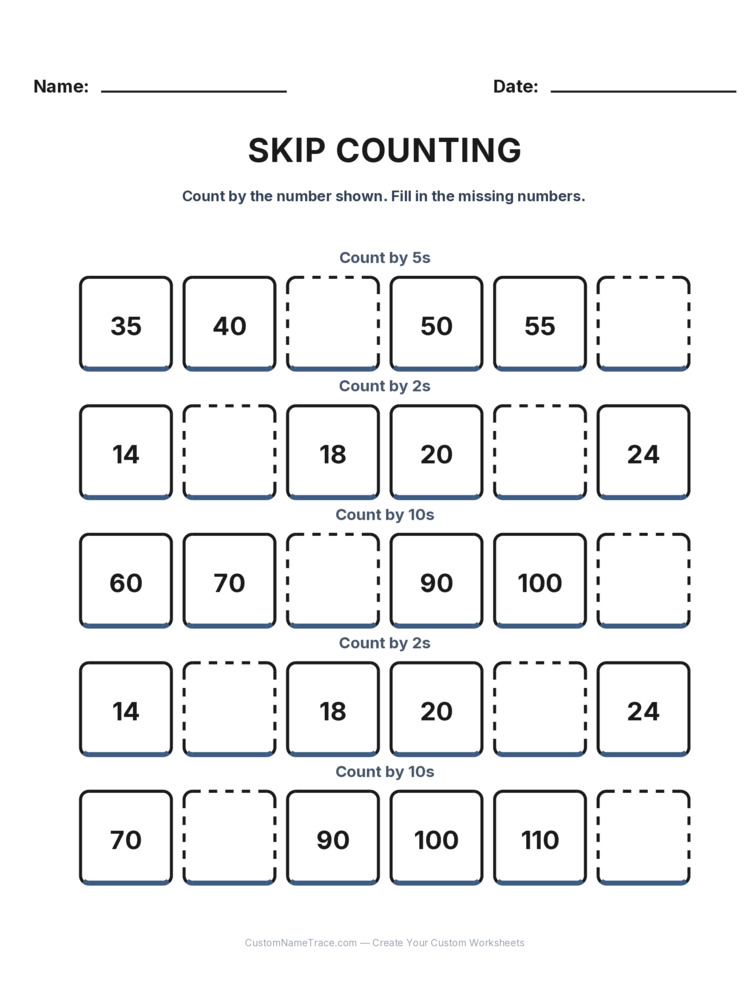
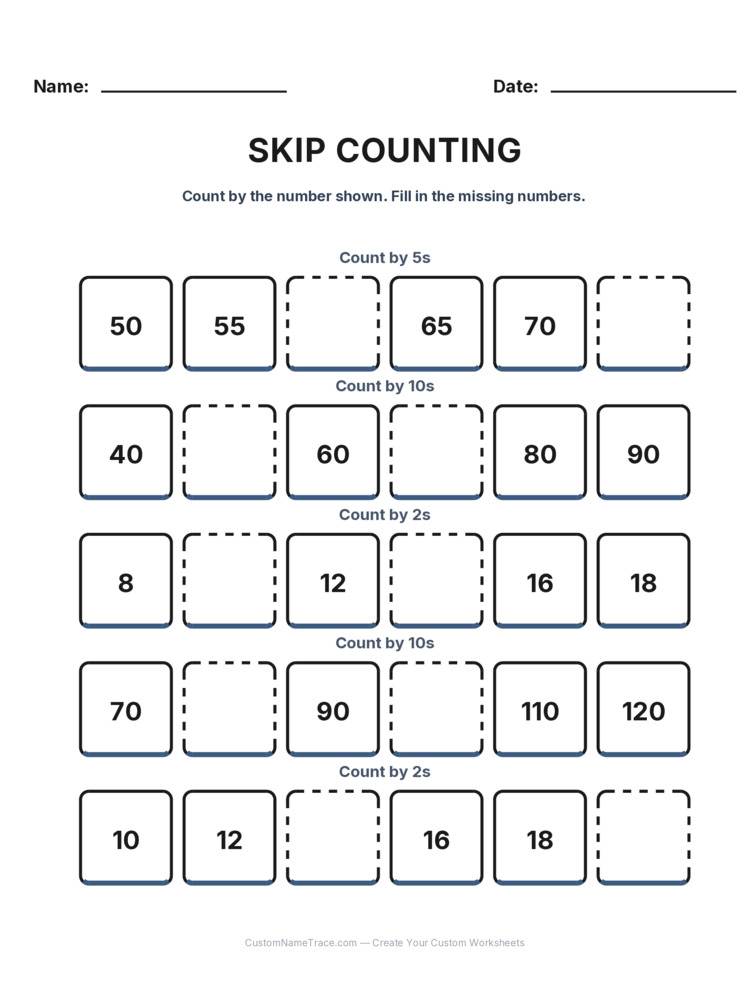
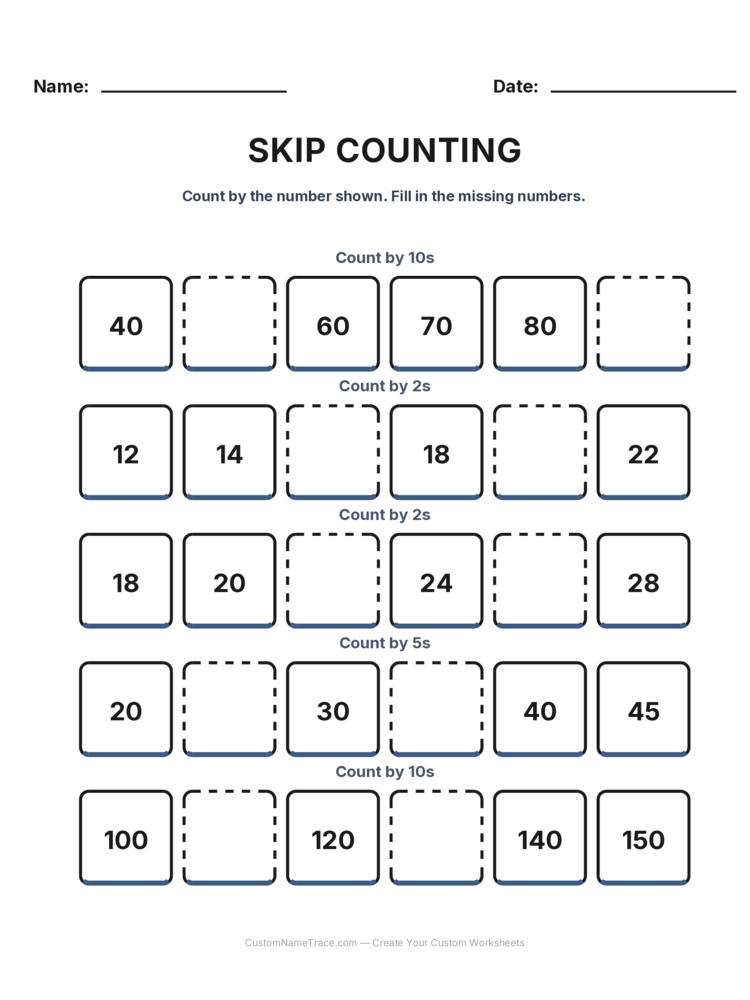
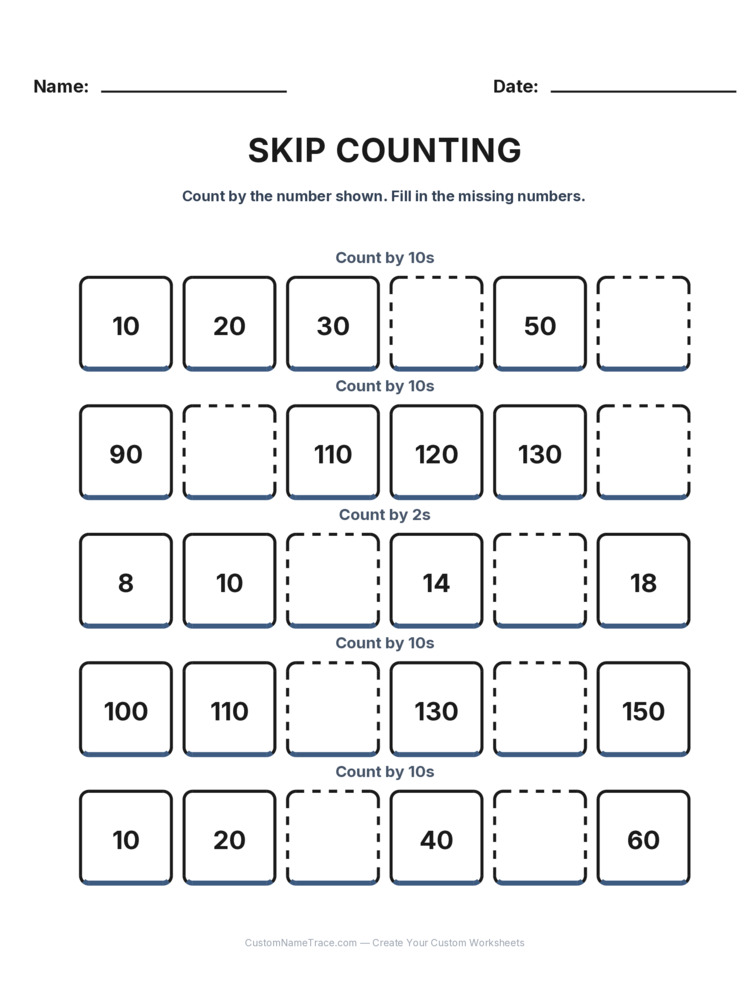
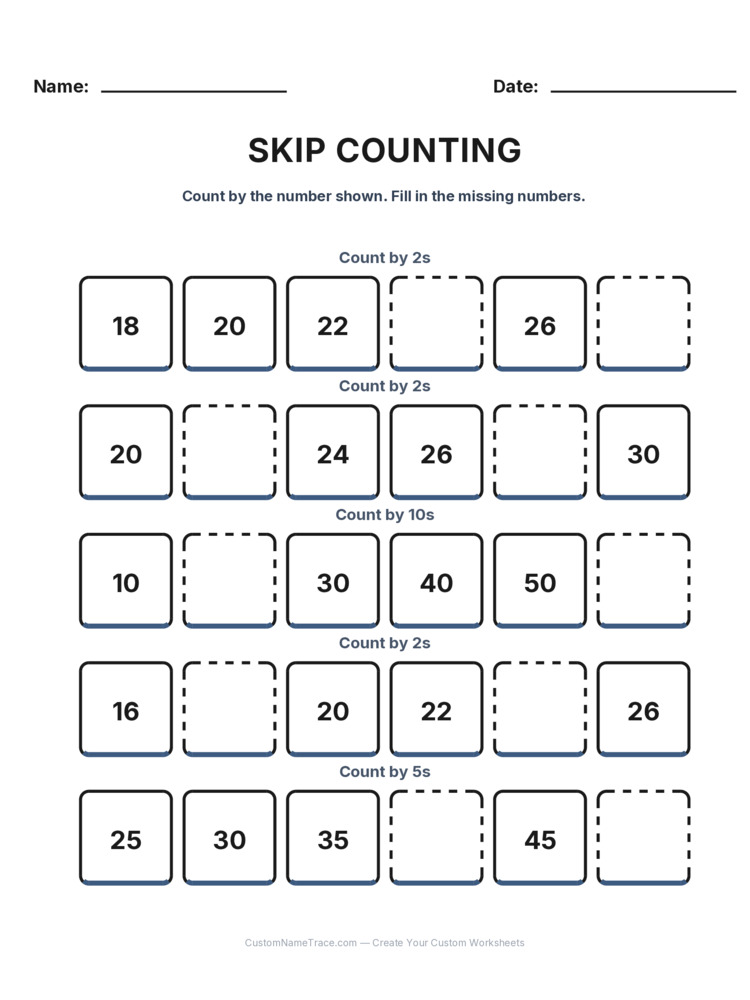
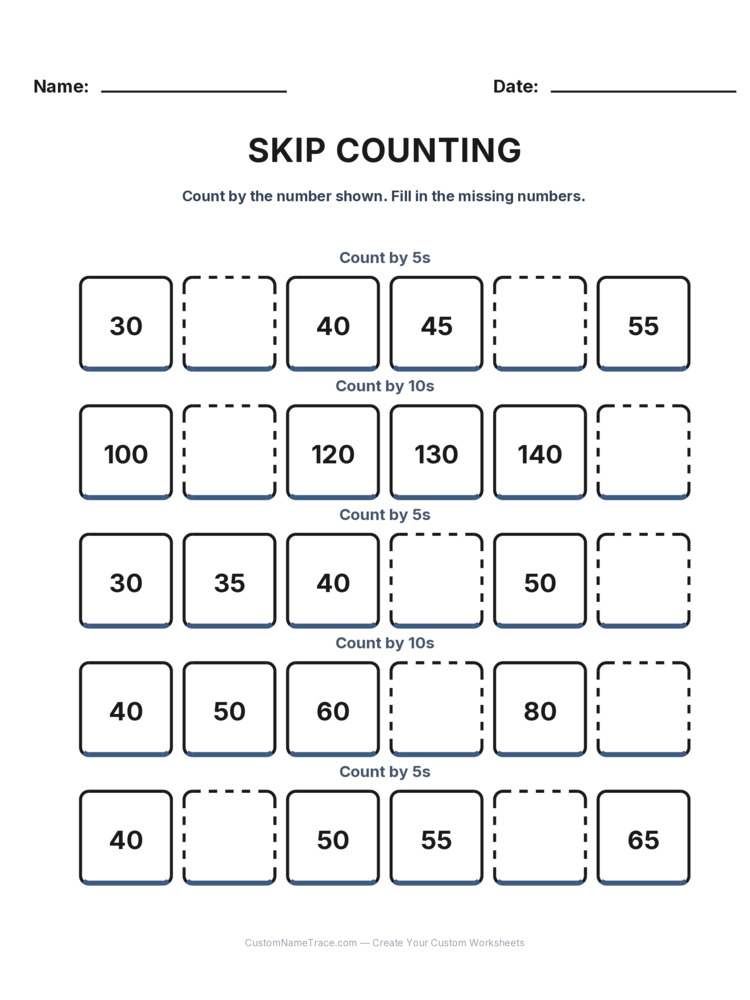
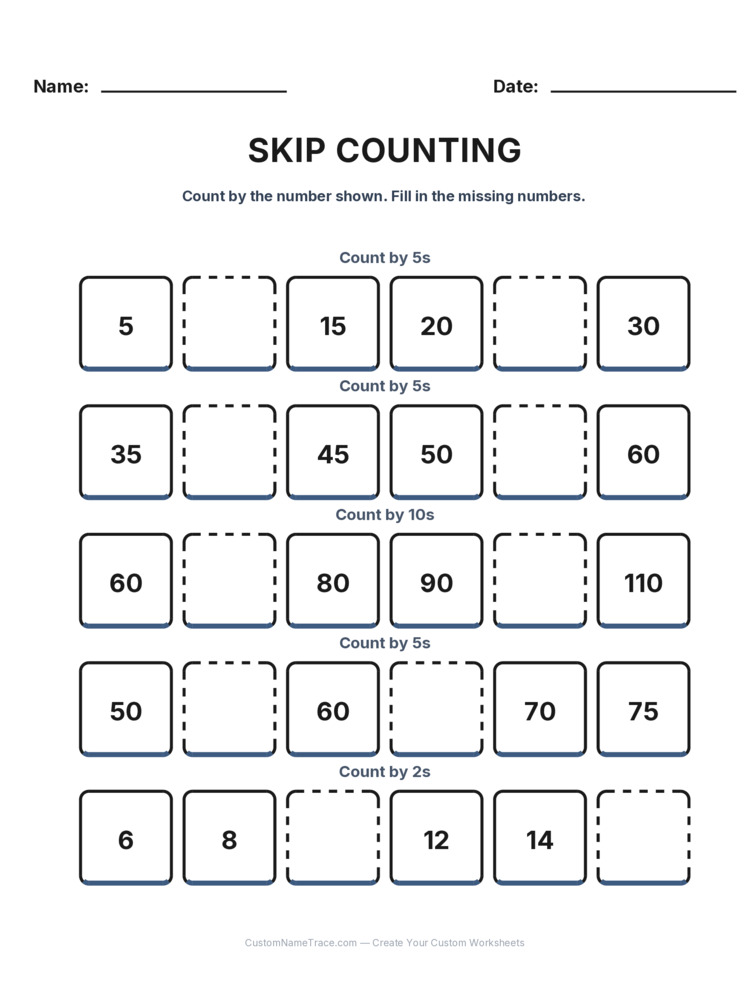
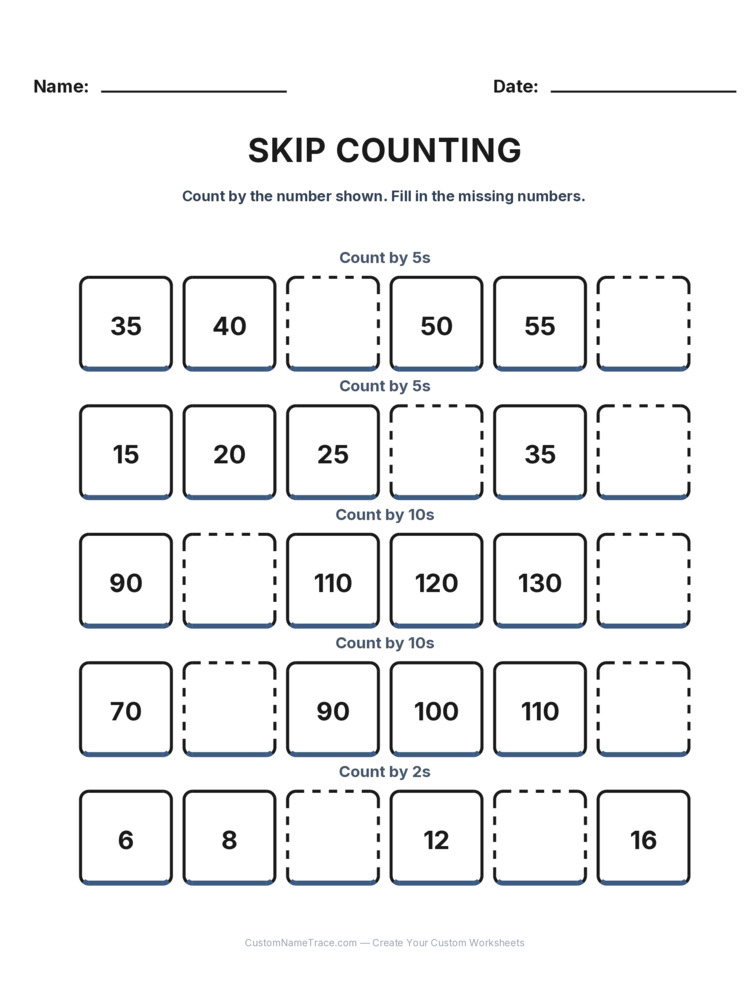
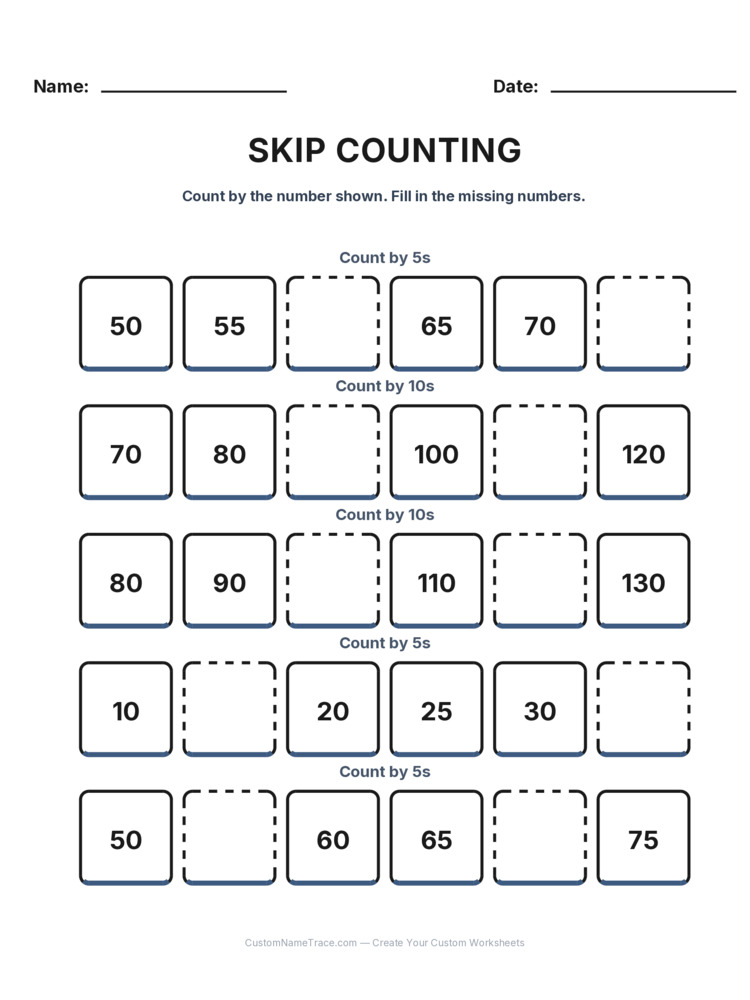
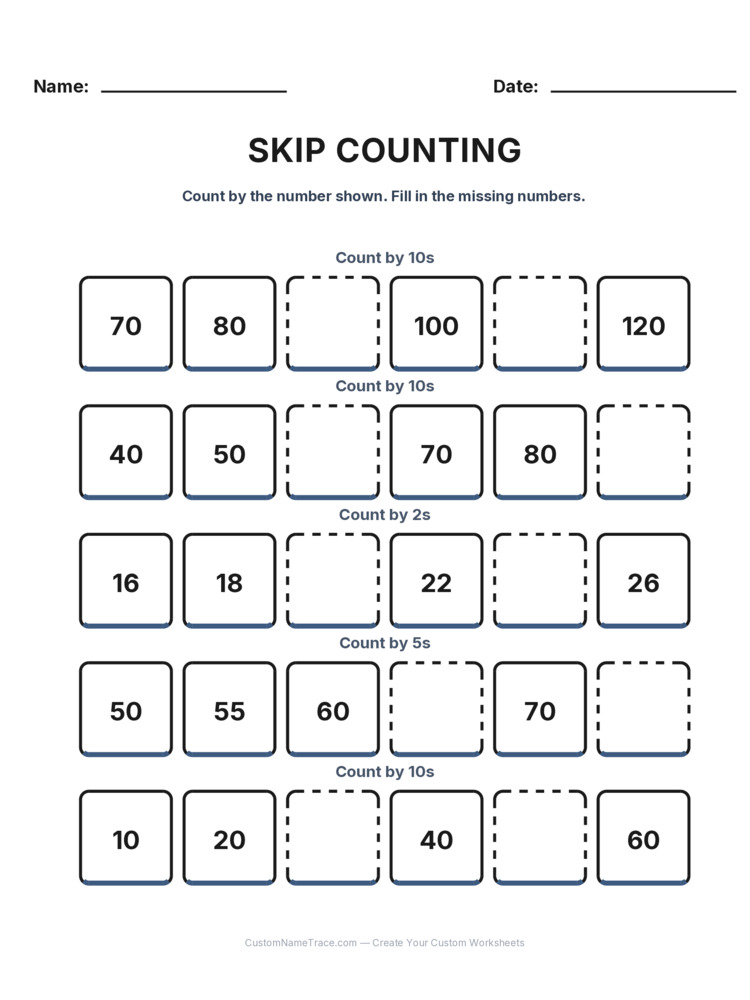
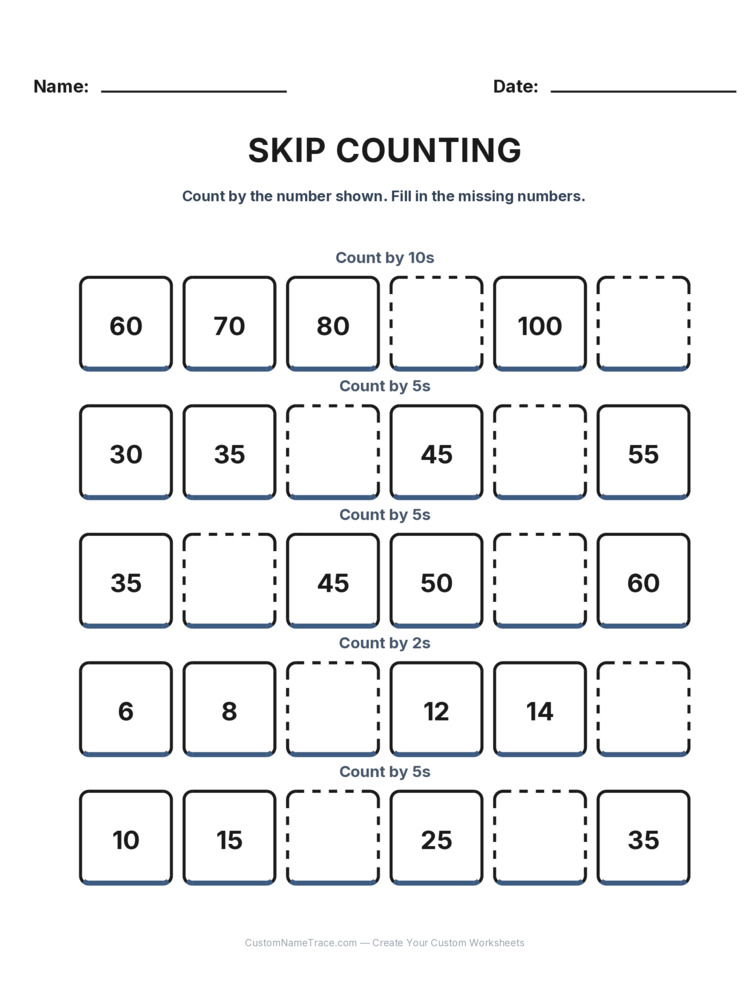
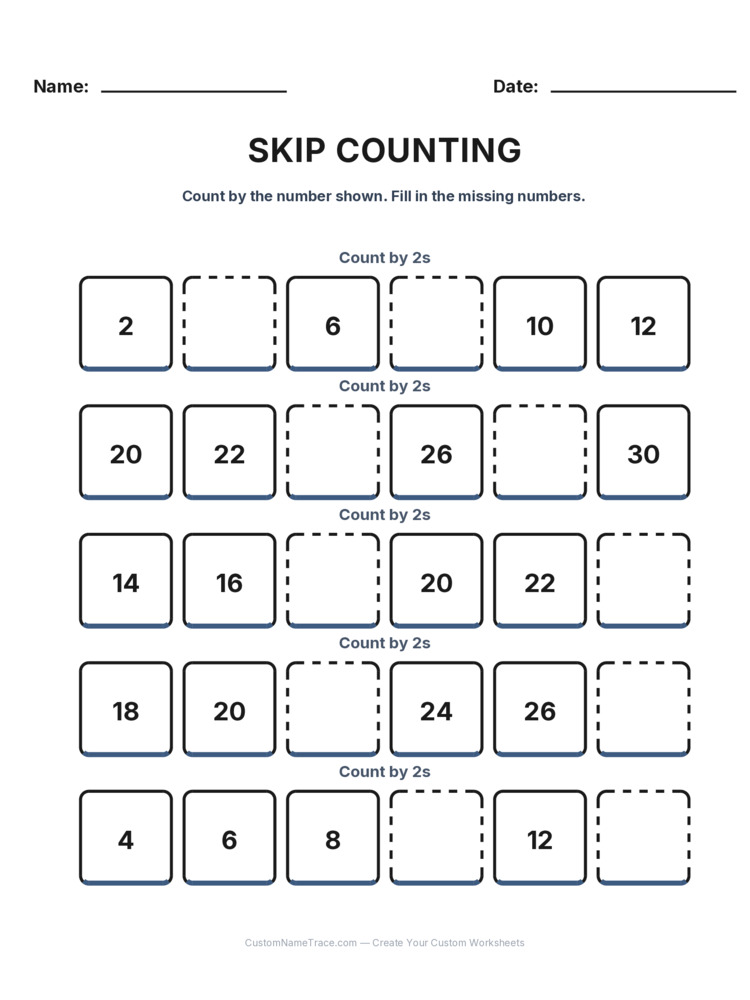
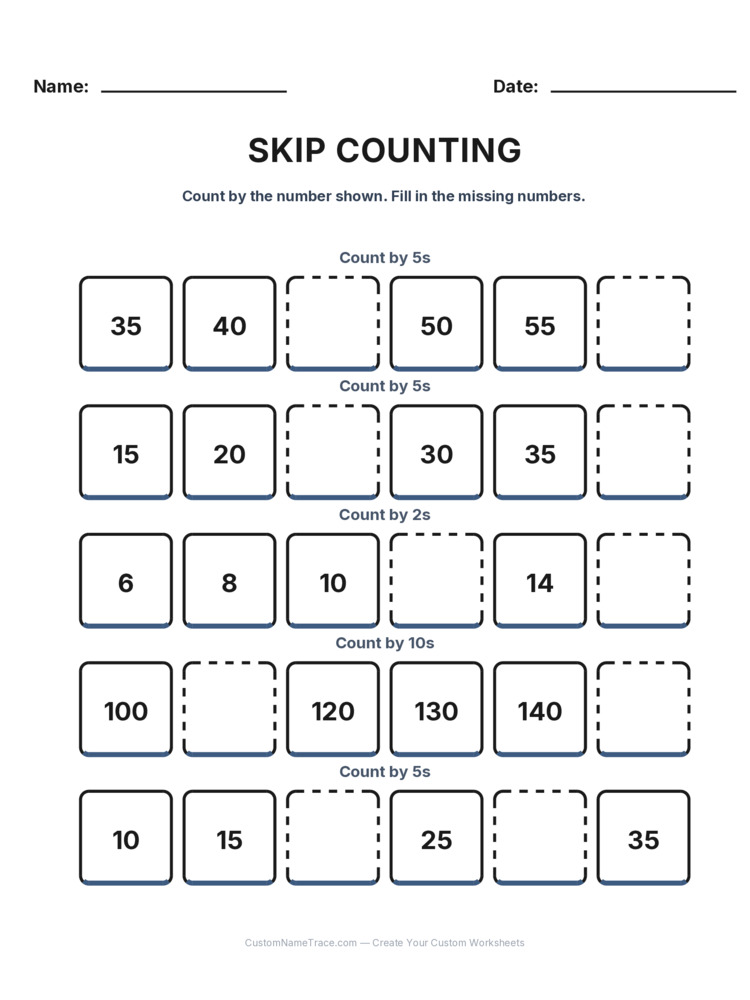
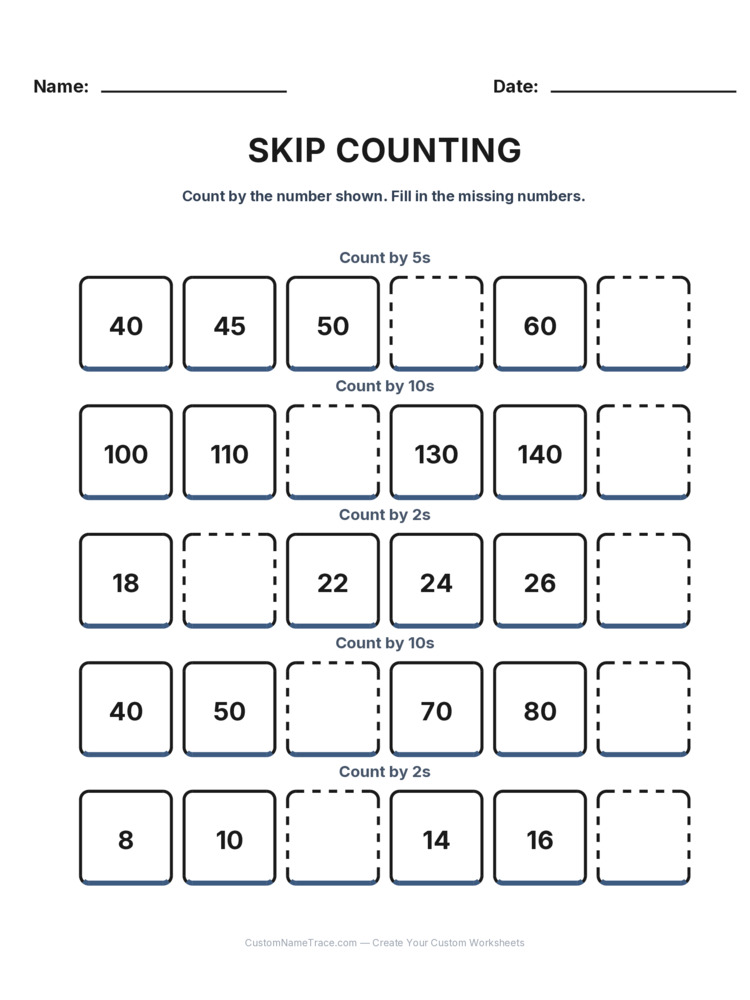
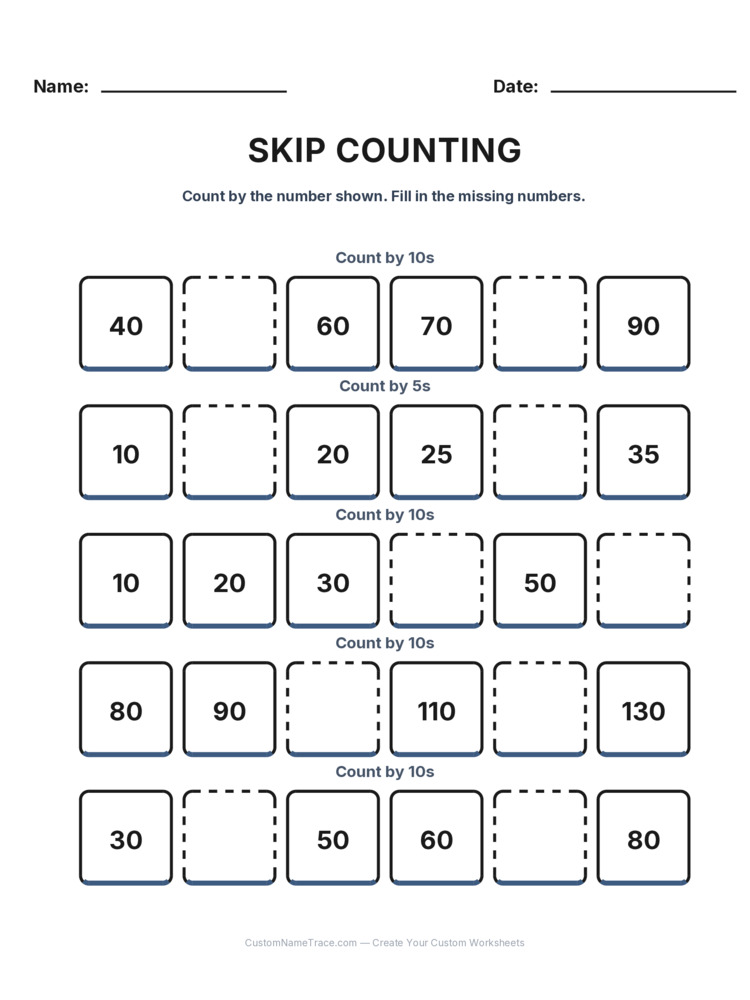
Five rows per page, each counting by 2s, 5s, or 10s, with two numbers in each row left blank. The step changes row to row specifically so a child has to actually check which pattern is running before filling in a gap, rather than falling into a habit of always adding the same amount regardless of what the row is actually doing.
Tens & Ones
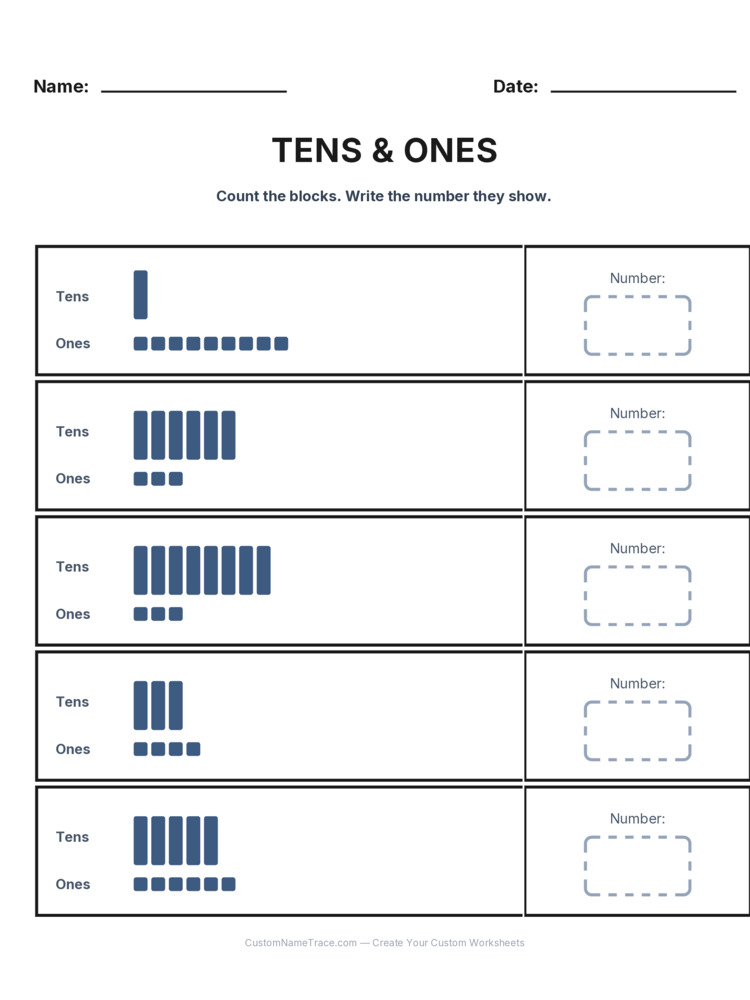
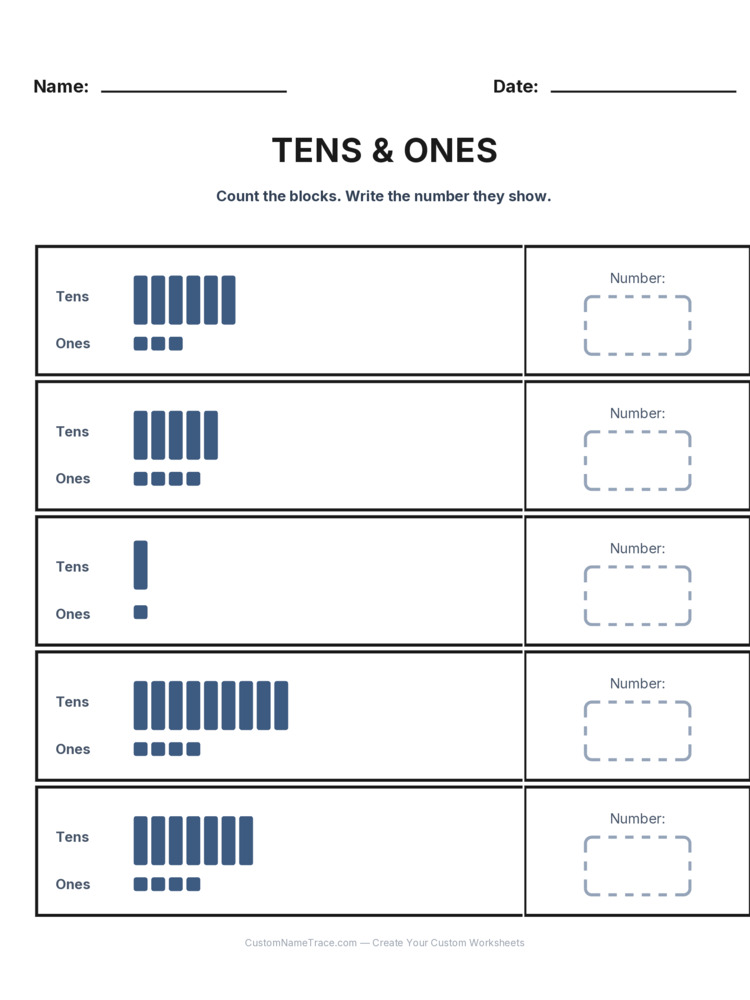
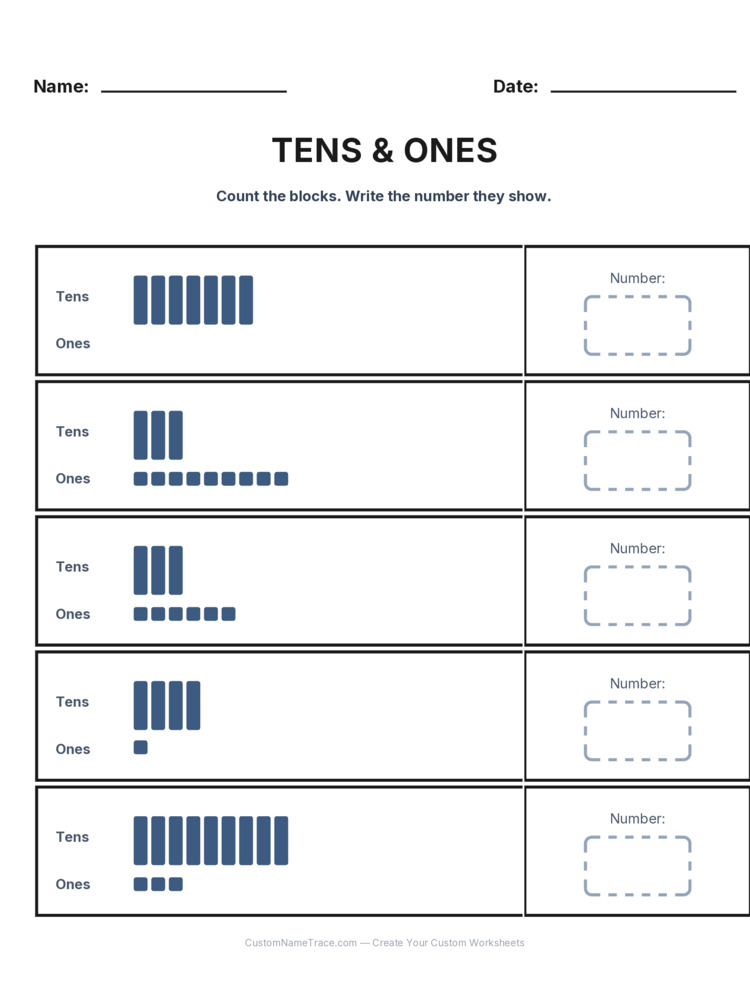
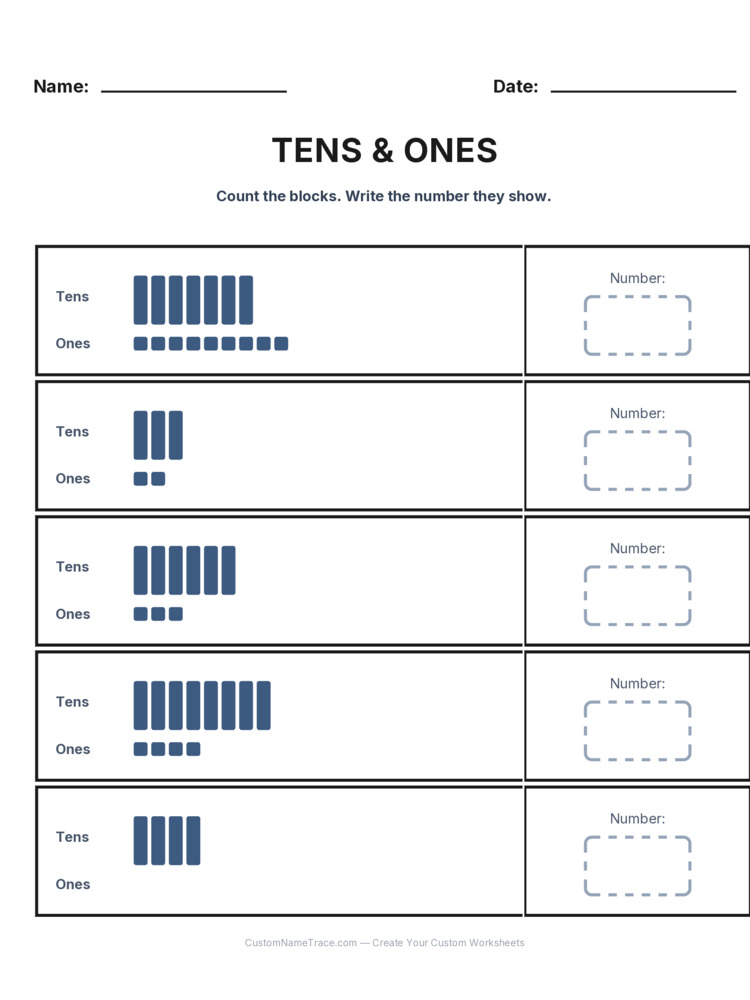
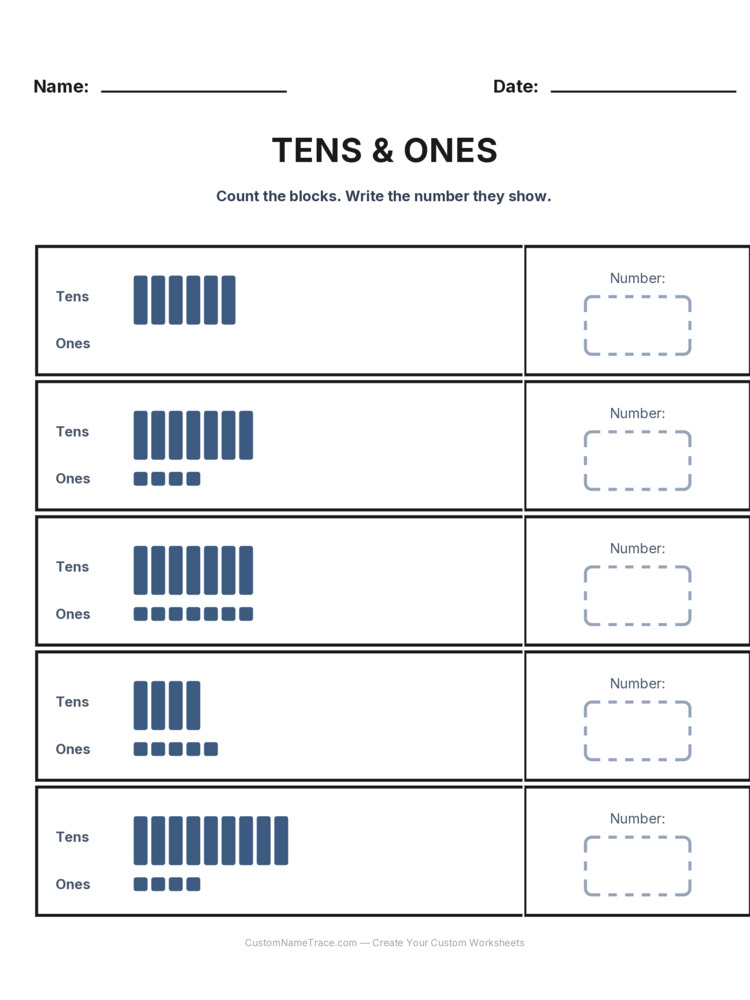
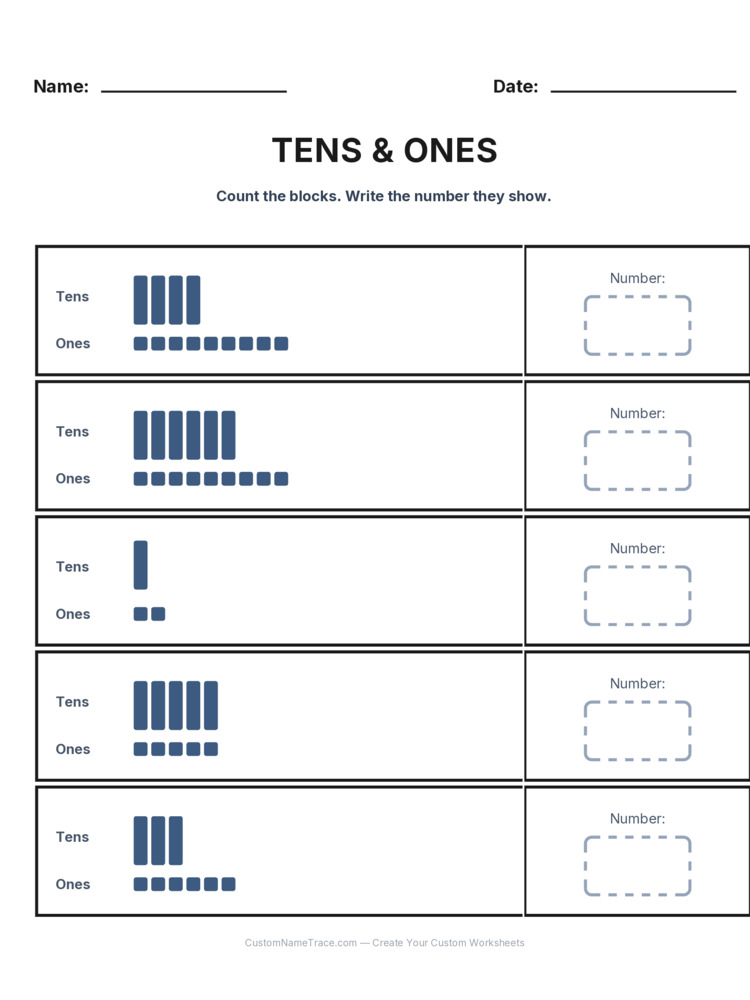
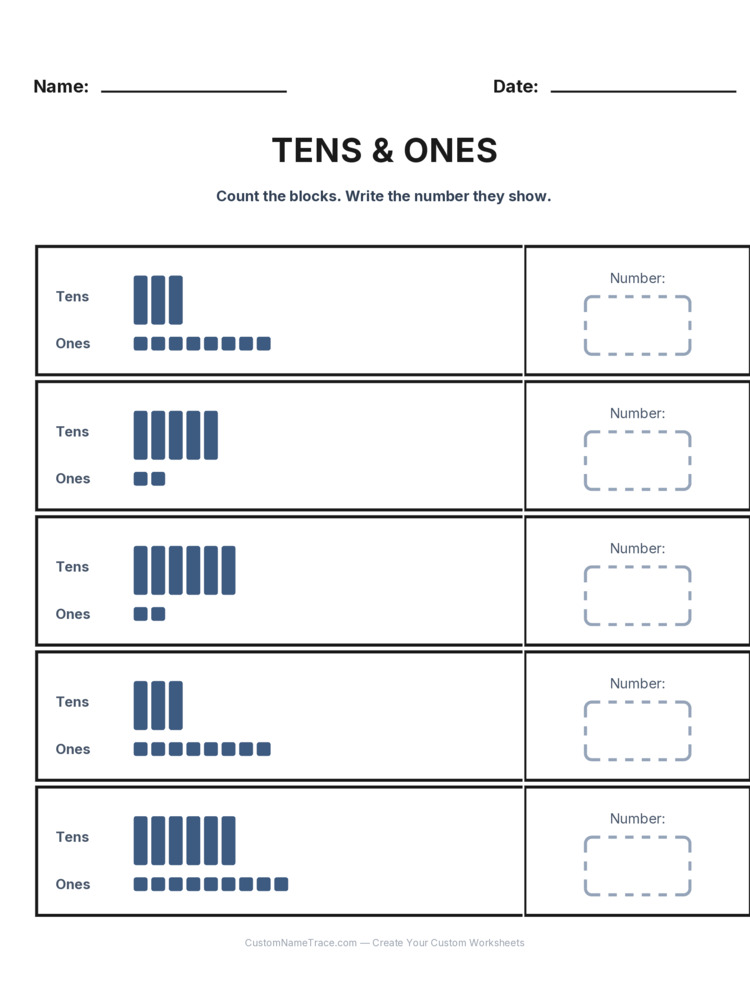
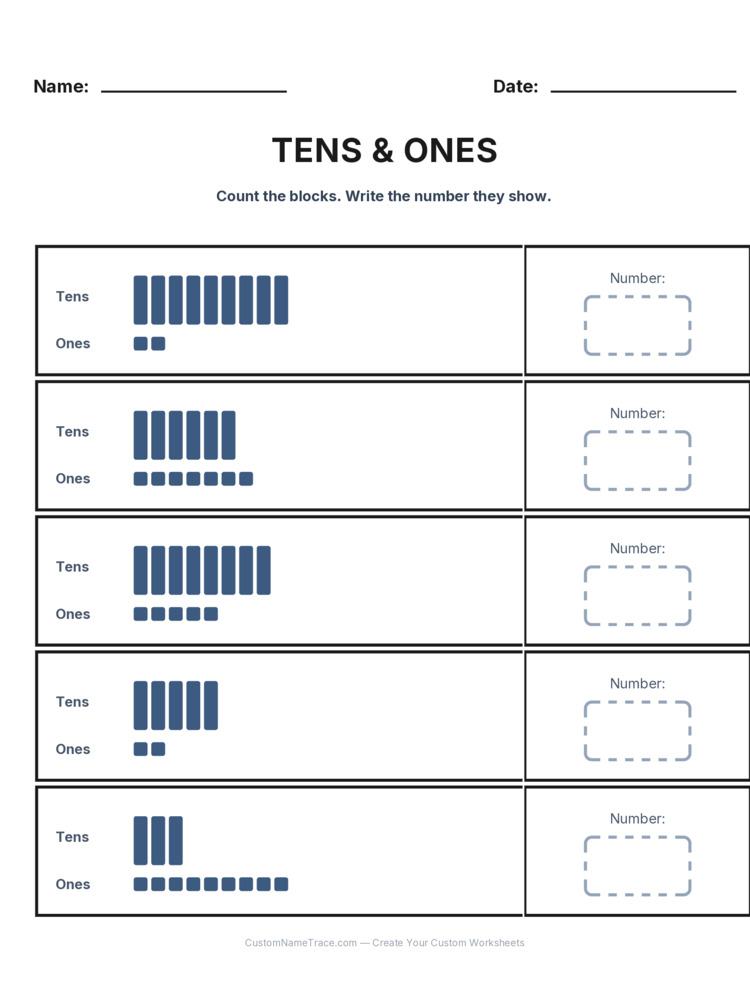
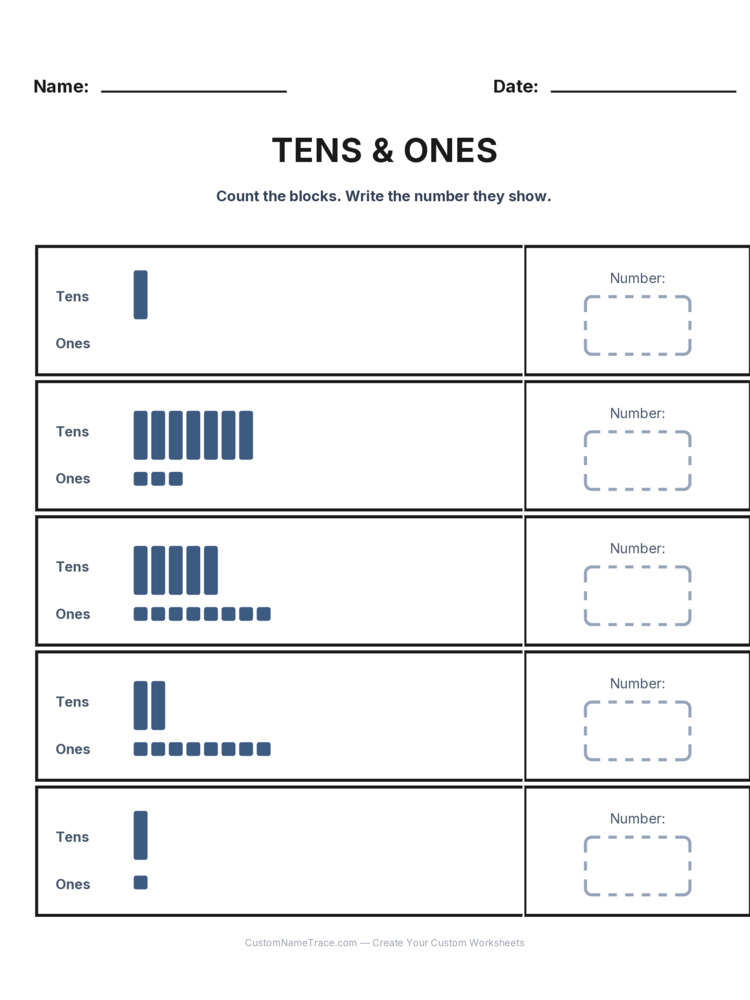
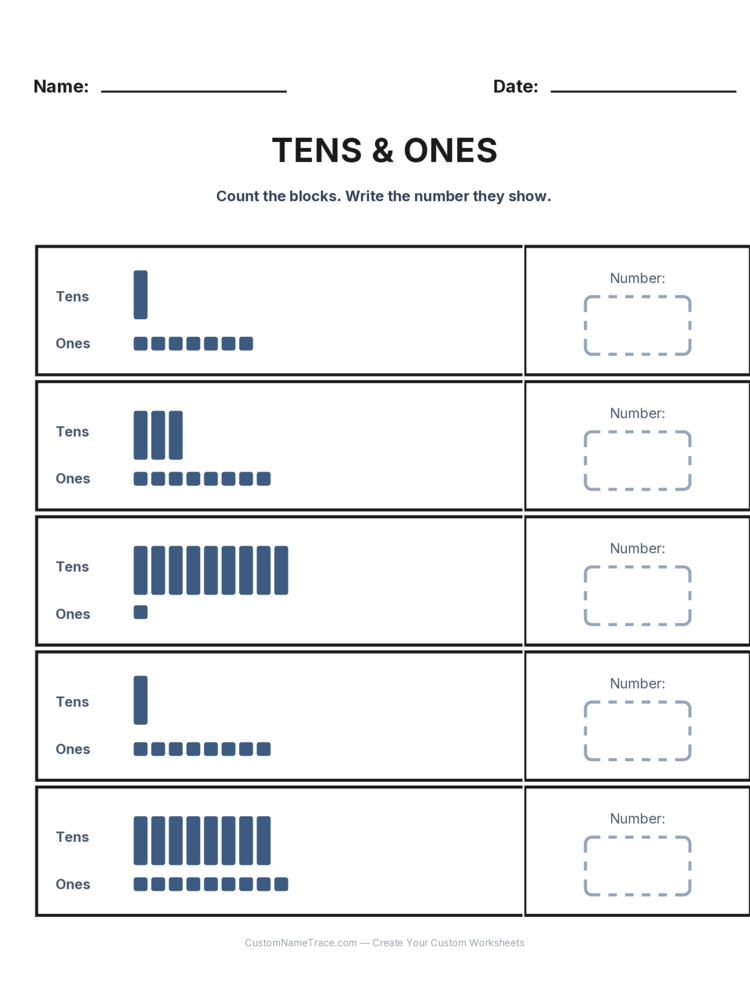
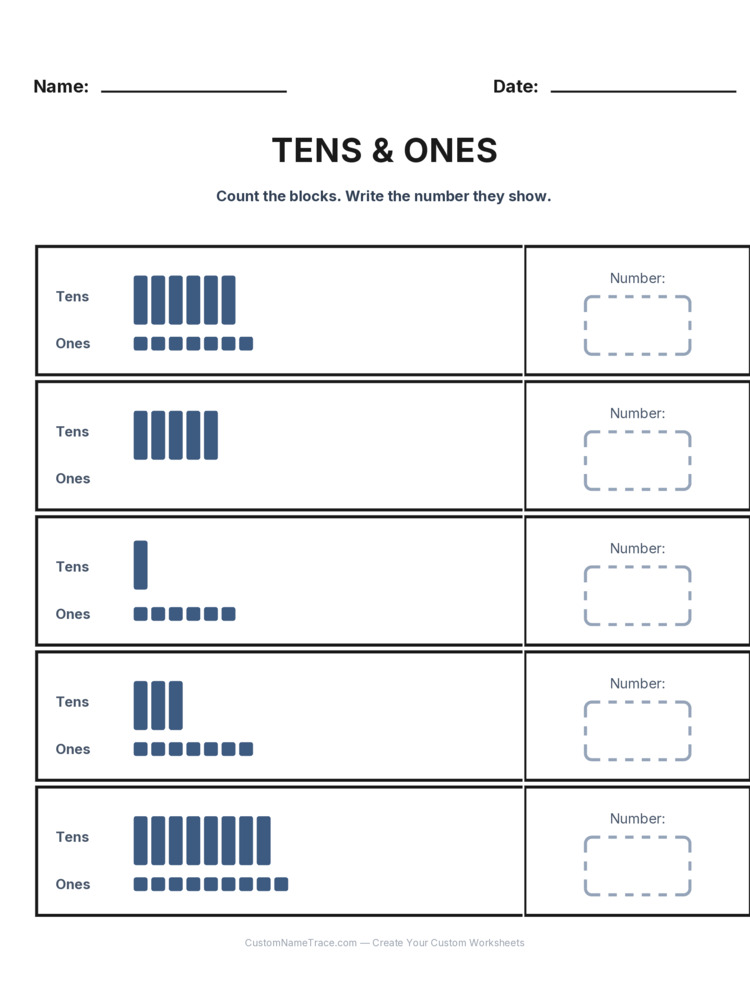
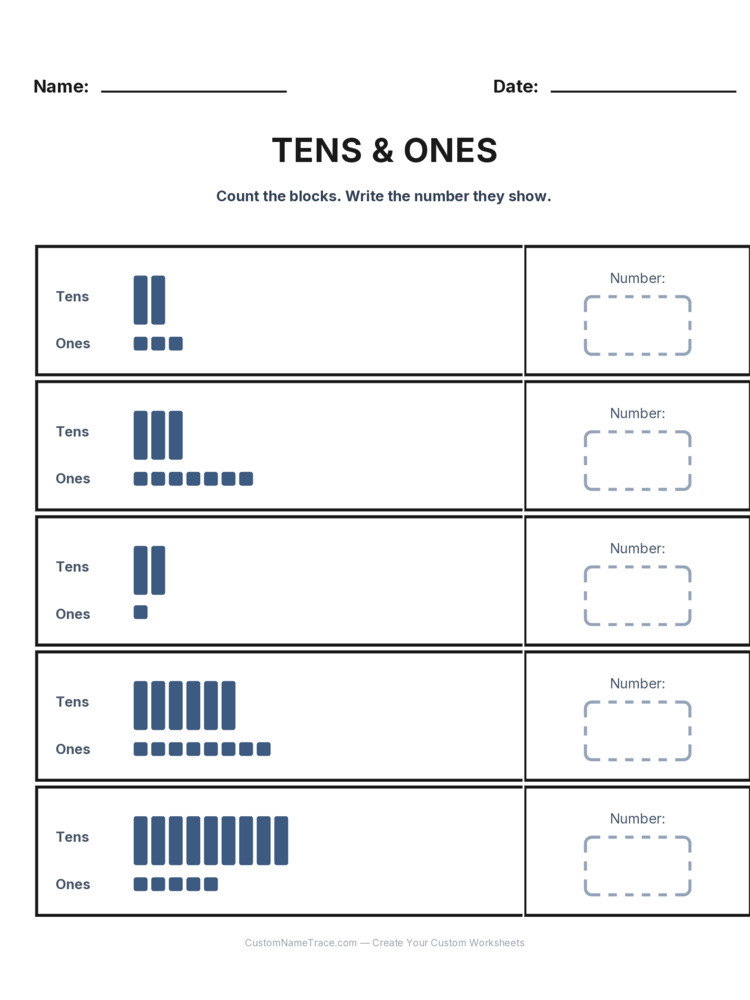
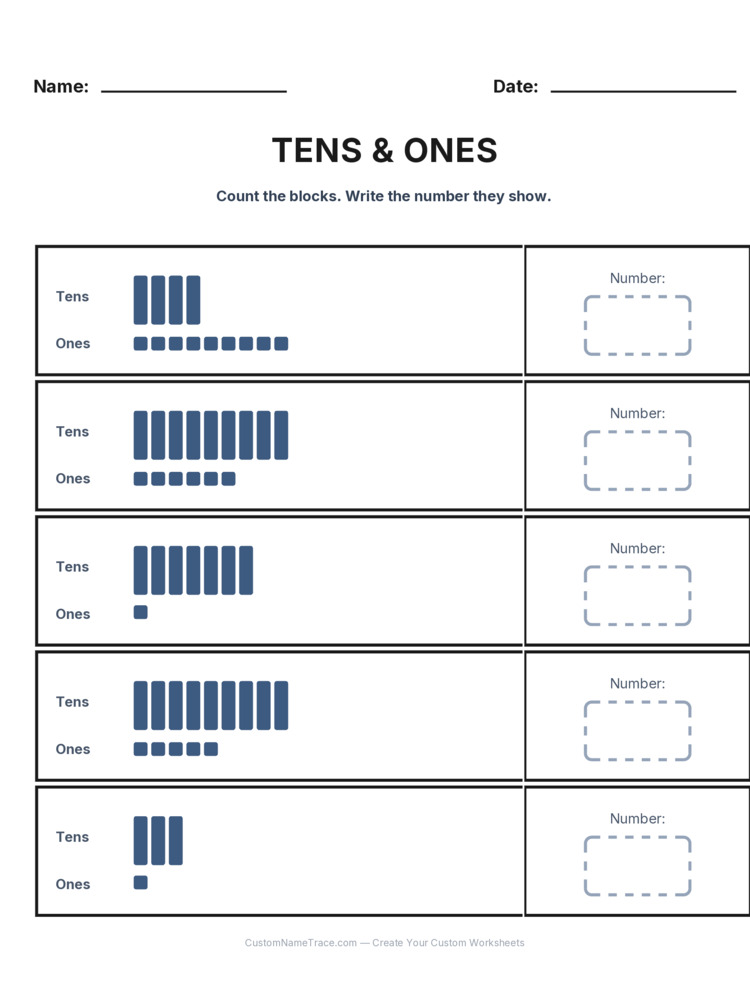
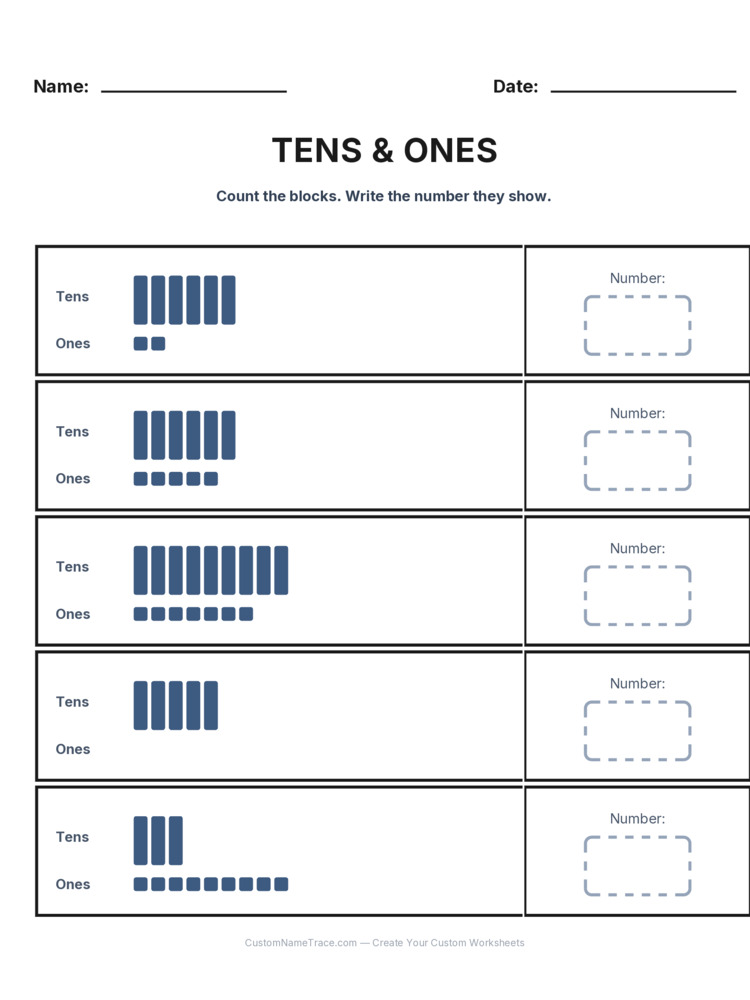
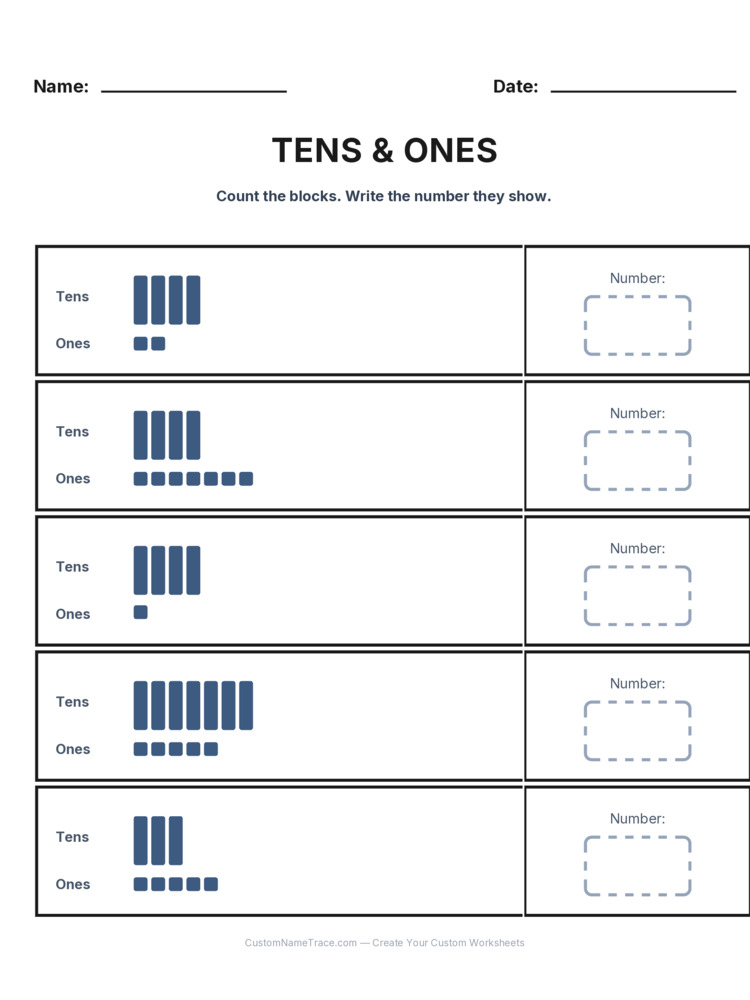
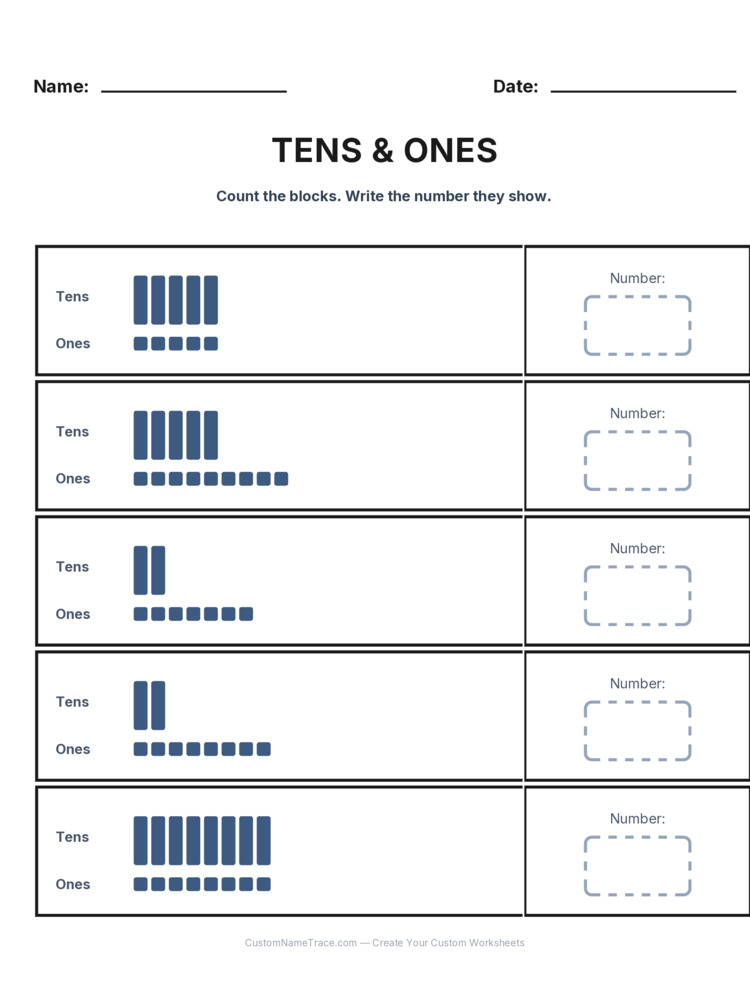
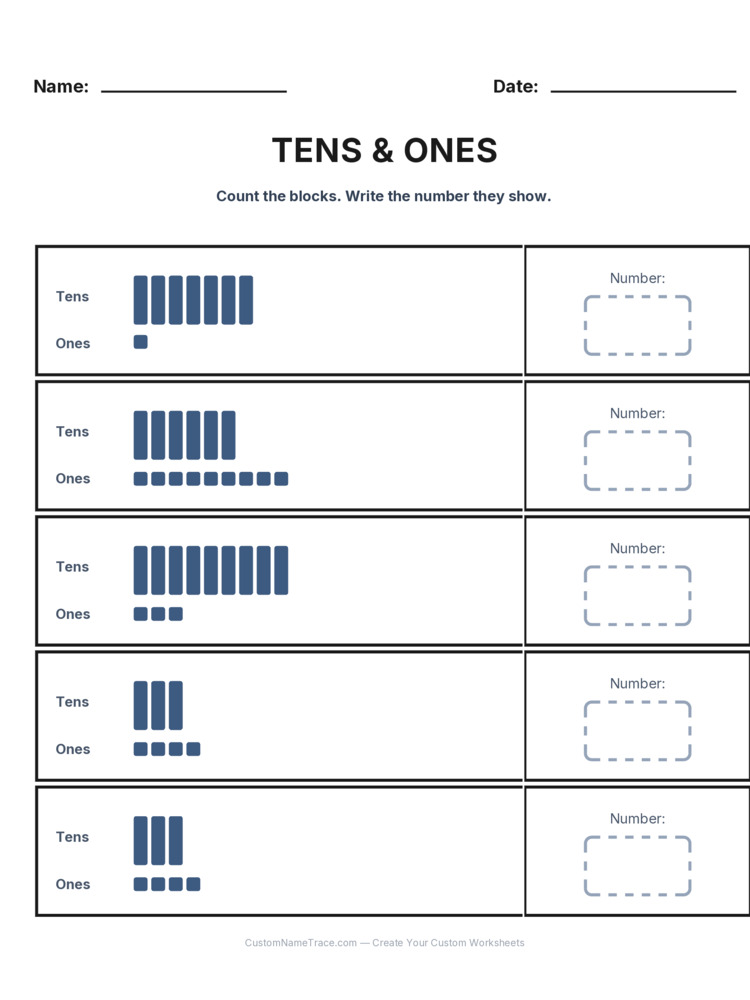
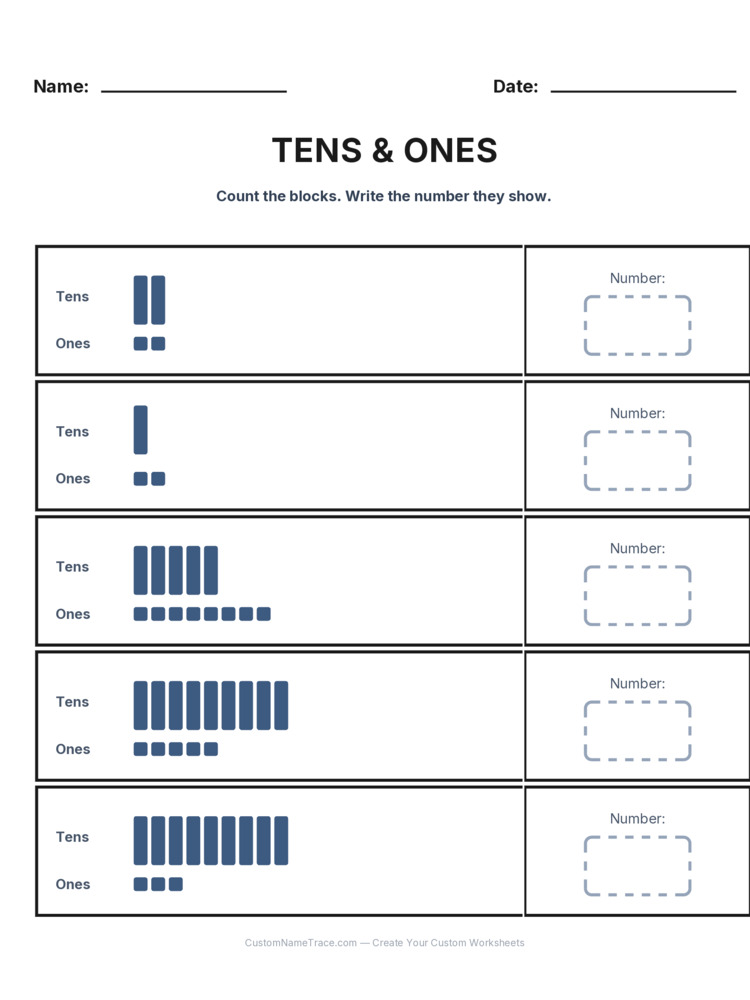
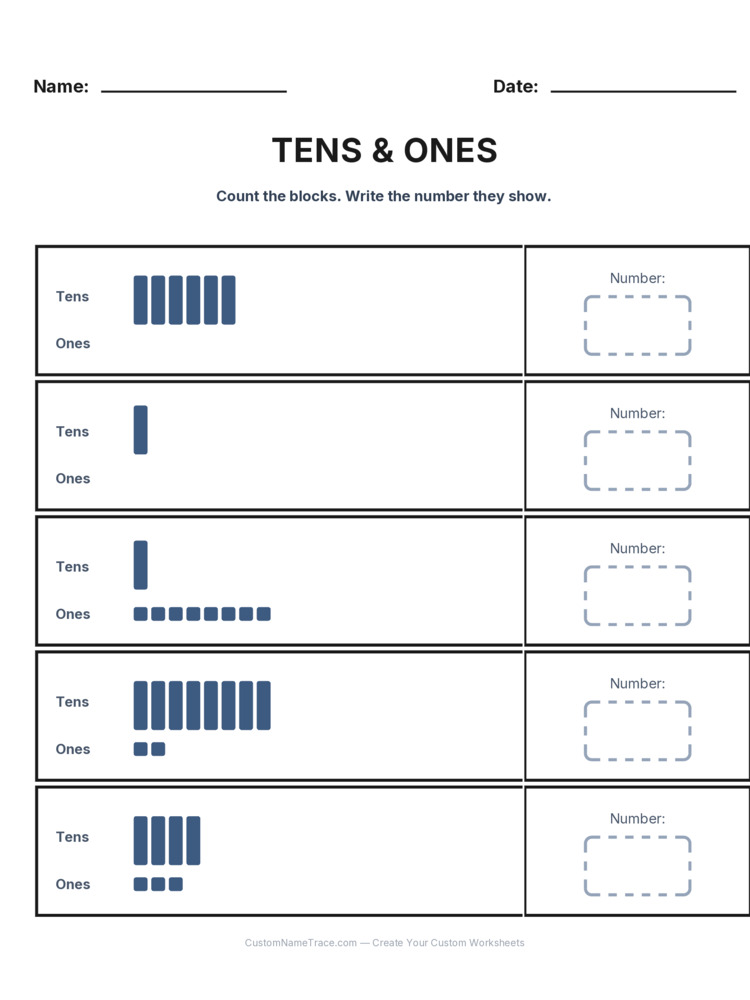
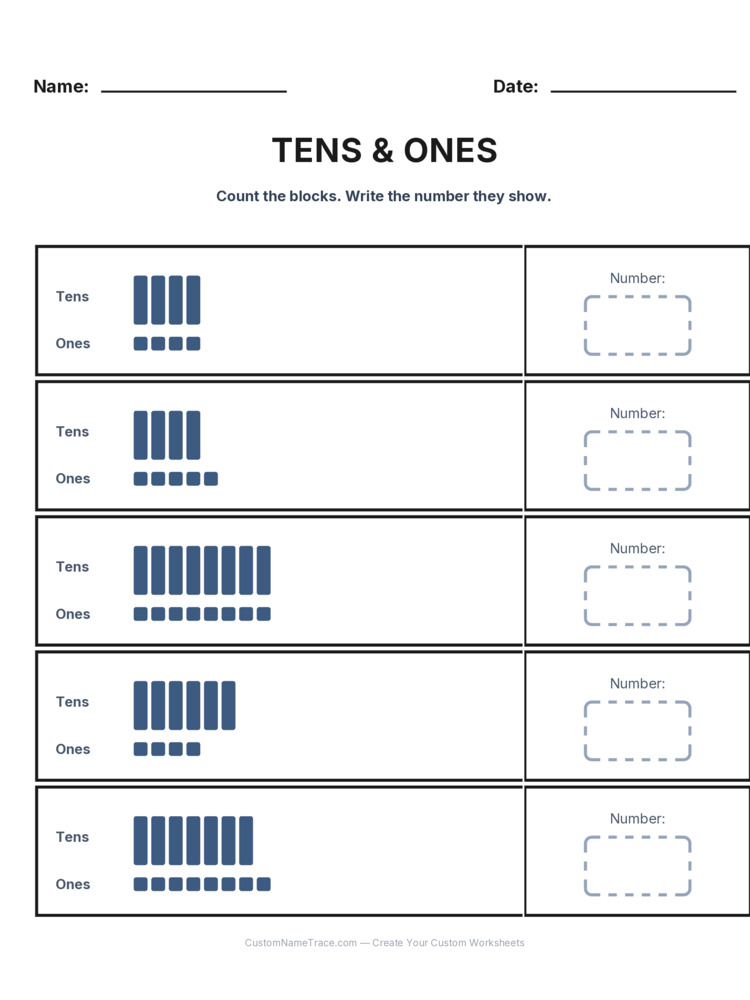
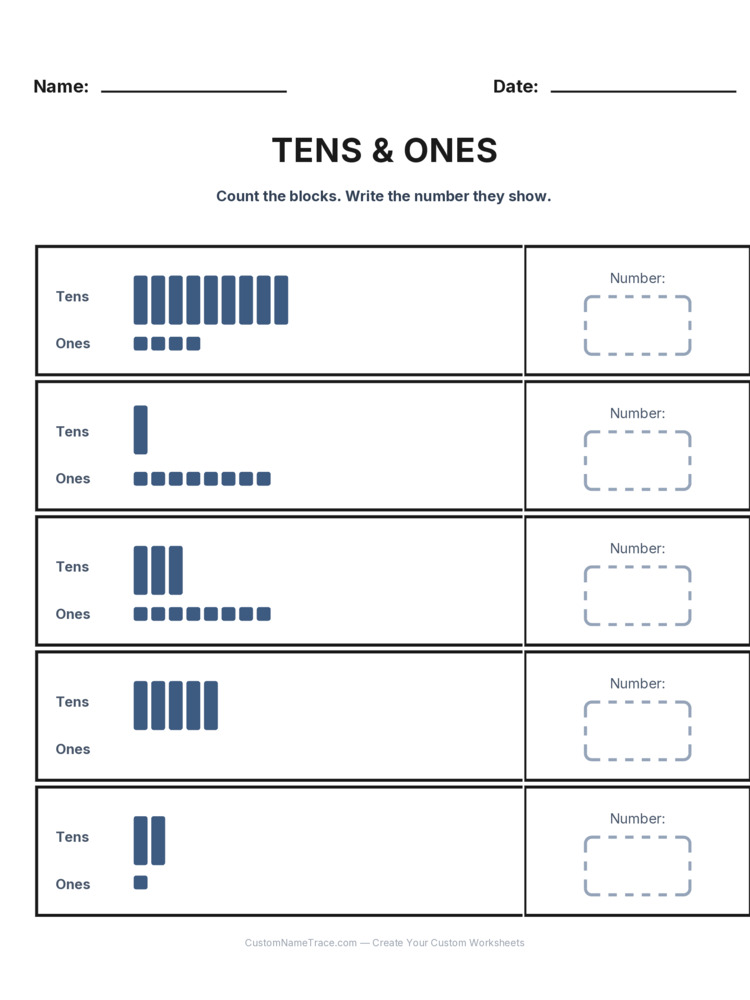
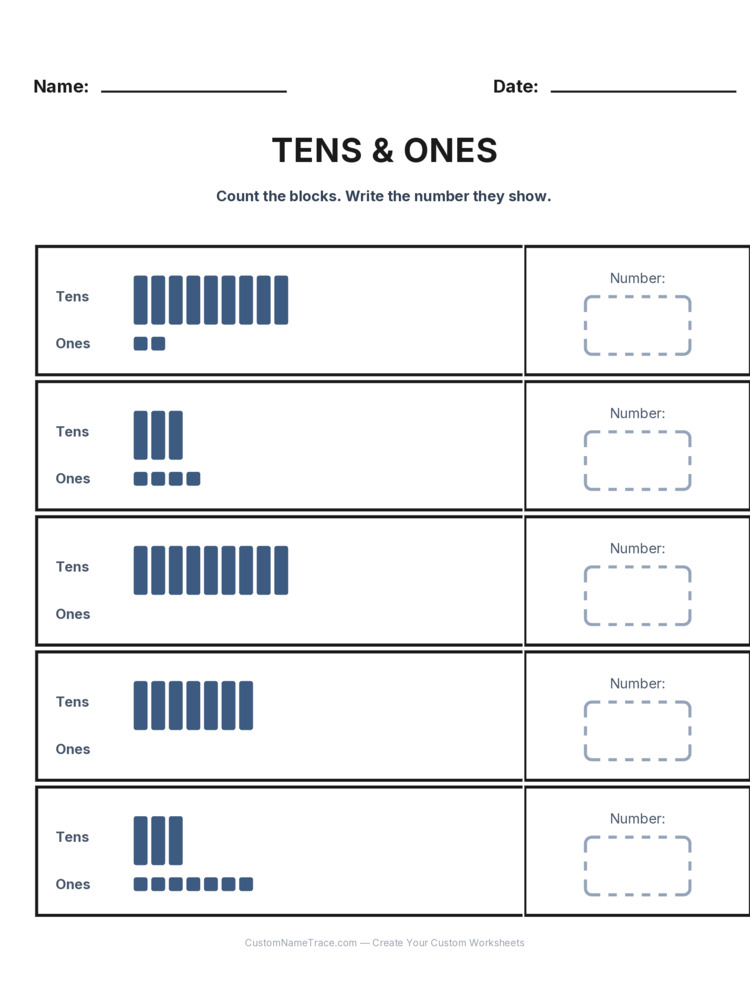
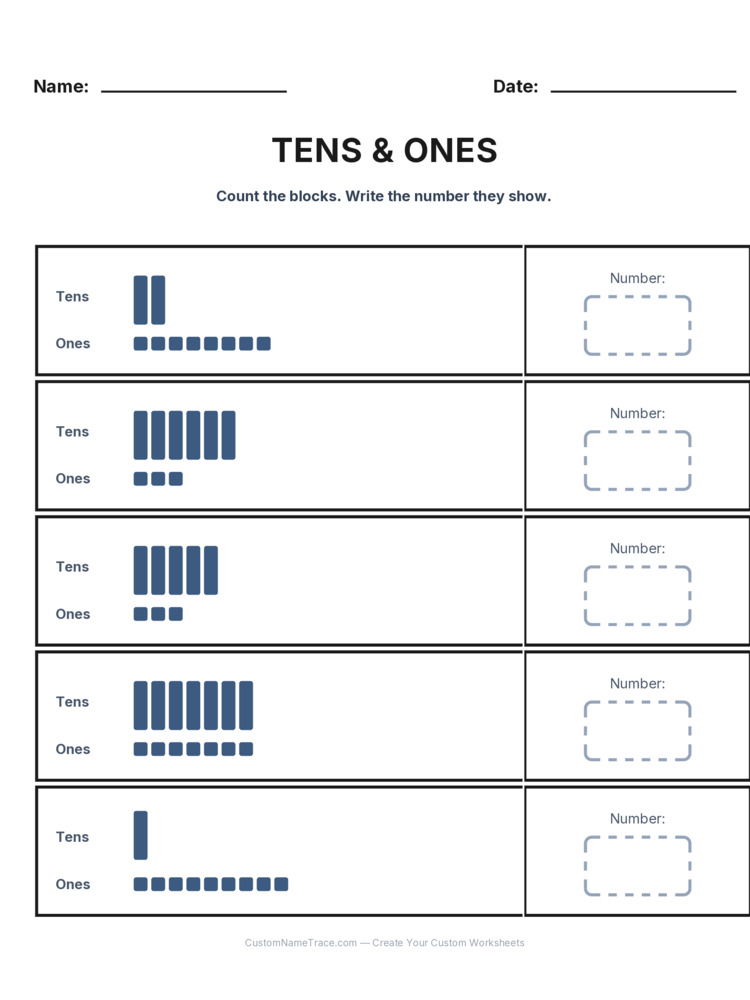
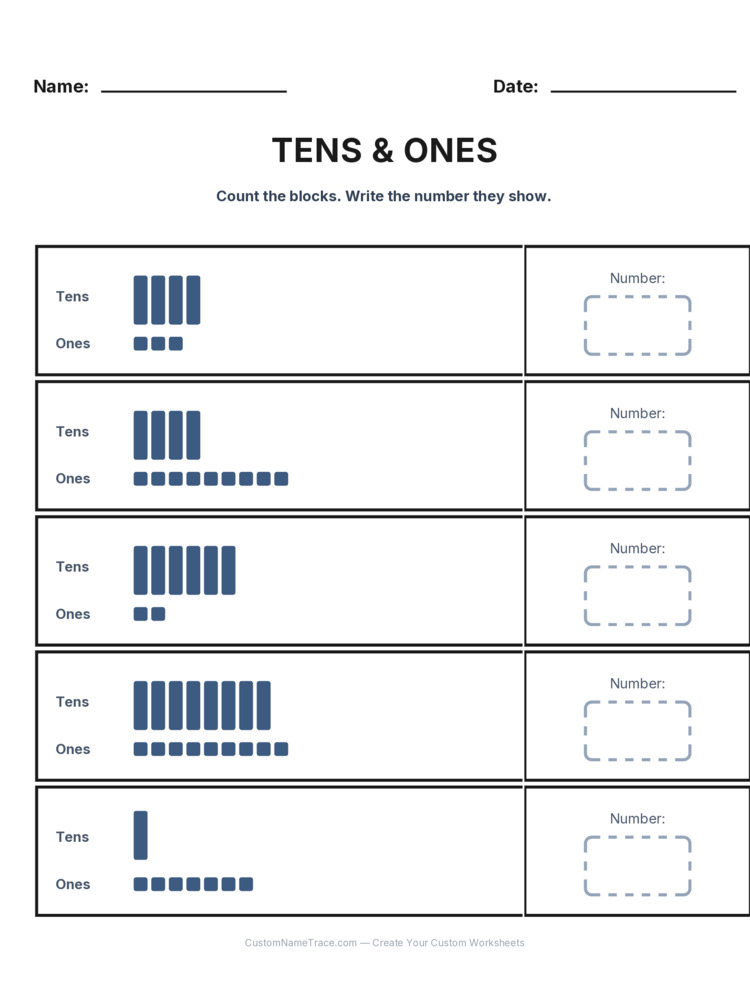
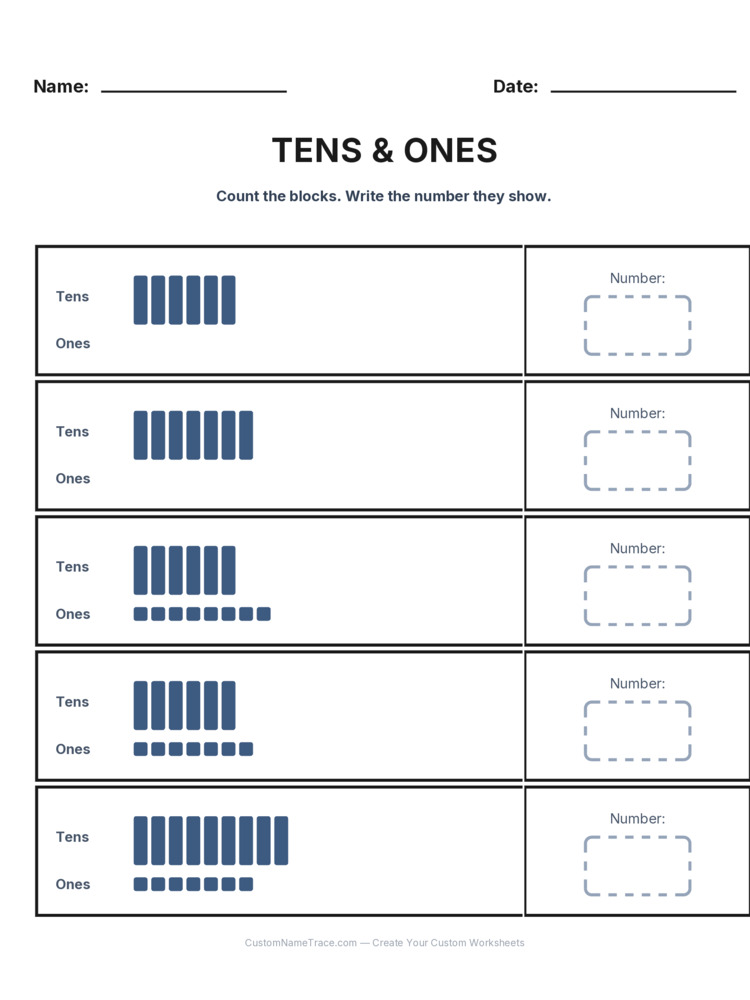
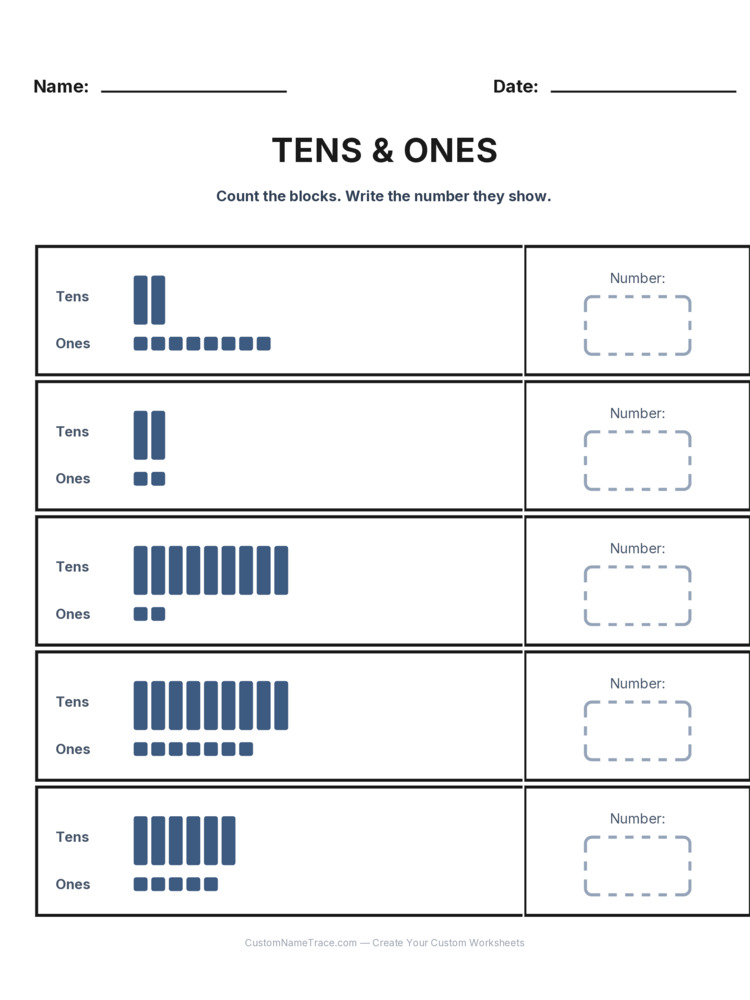
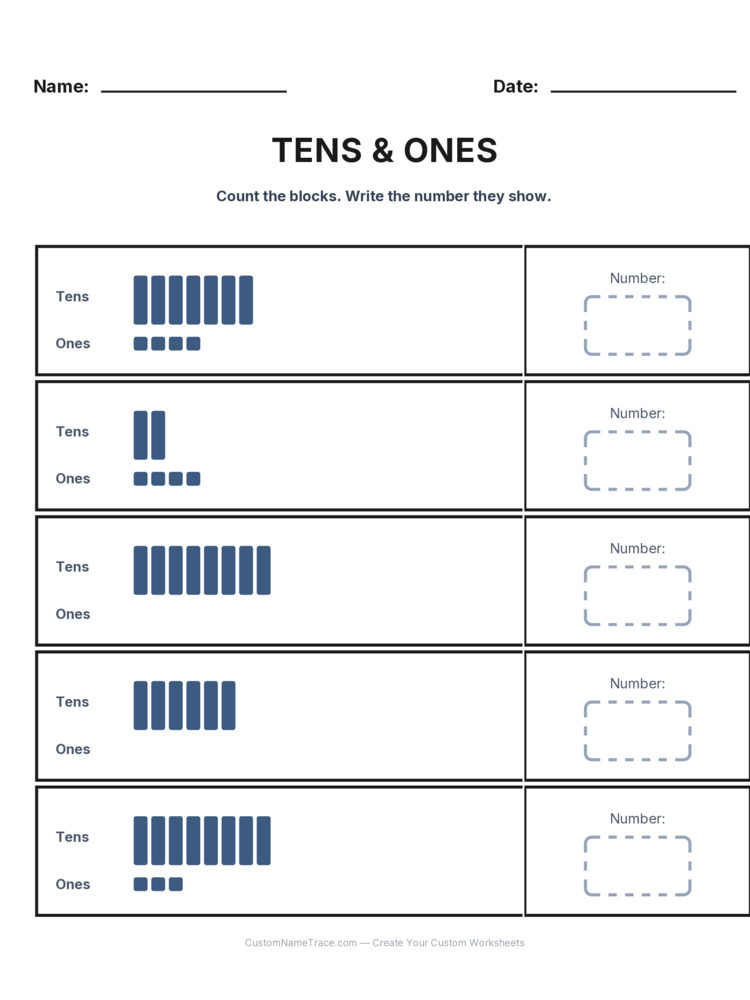
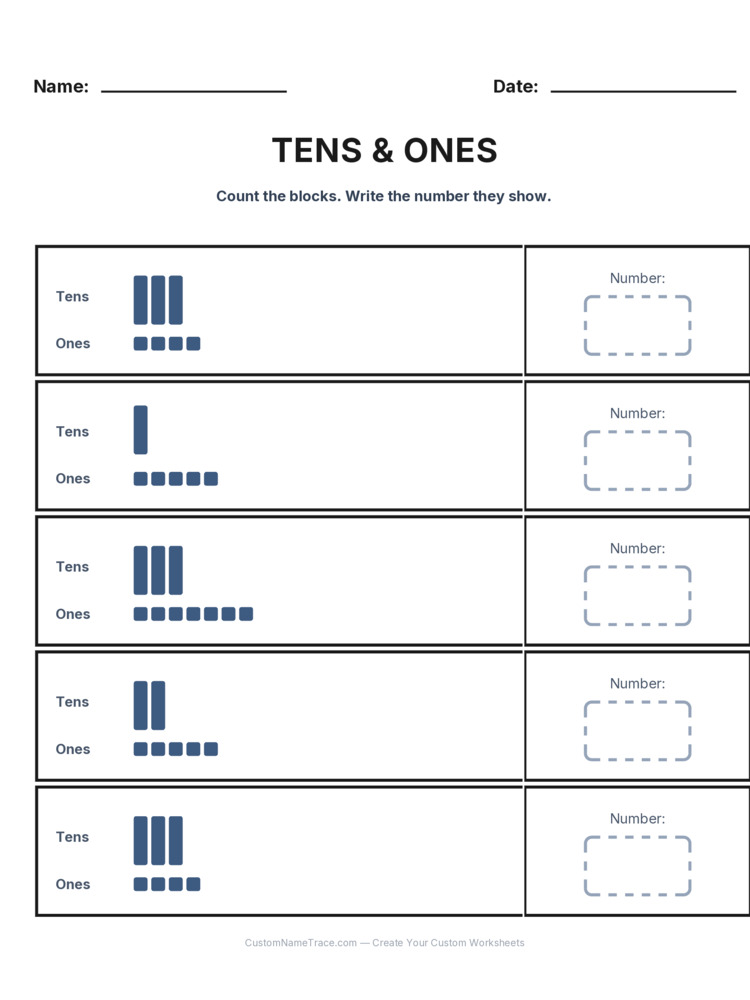
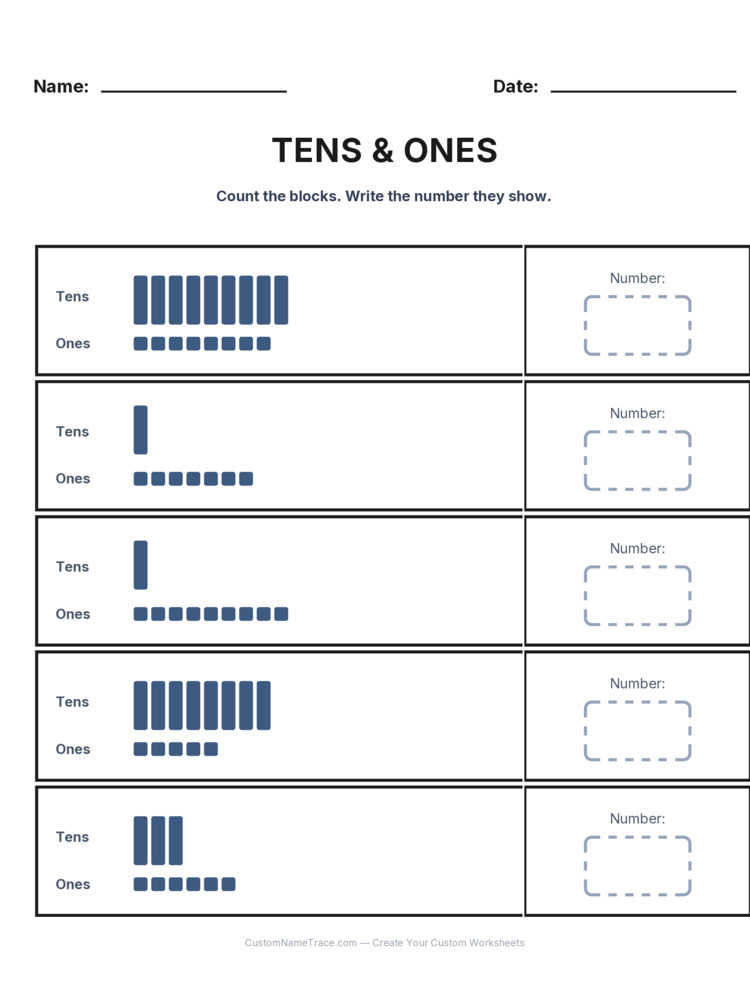
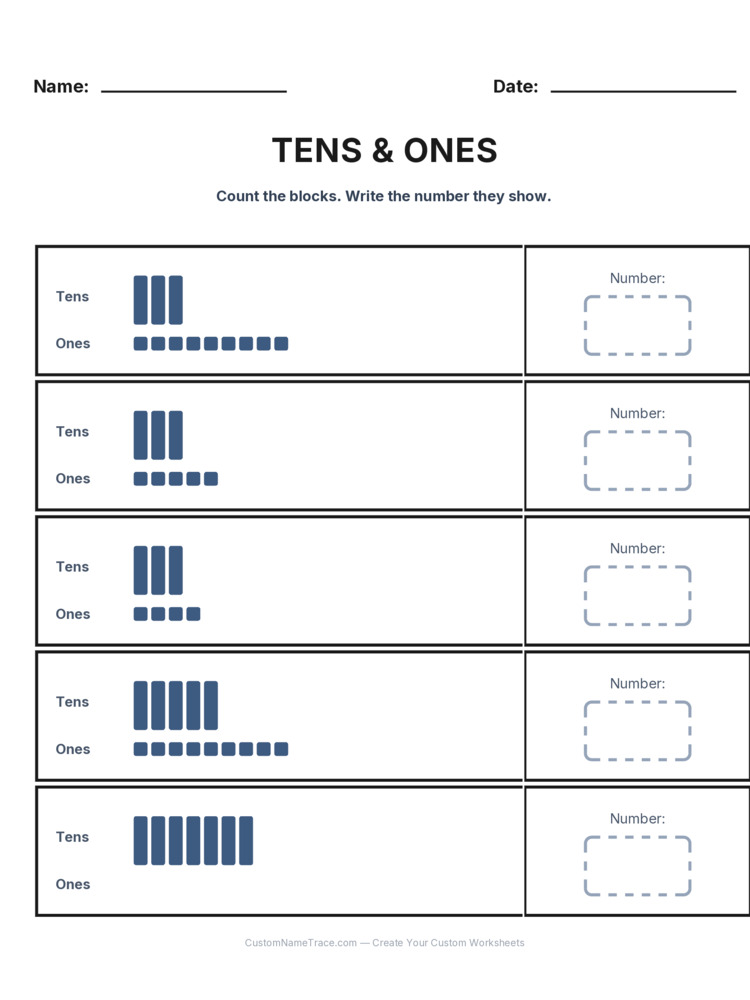
Five problems per page, each showing a 2-digit number as base-ten blocks — tall rods for tens, small cubes for ones — with a blank box for the child to write the actual number. This is the concrete version of a skill Grade 1's Math Worksheets assume: that "23" isn't just a shape to copy, it's 2 groups of ten and 3 more.
Why skip counting matters beyond counting itself
Counting by 2s, 5s, and 10s is the direct precursor to multiplication — a child who's fluent skip-counting by 5s already has the pattern that makes the 5-times-table make sense two years later, rather than a cold new fact to memorize.