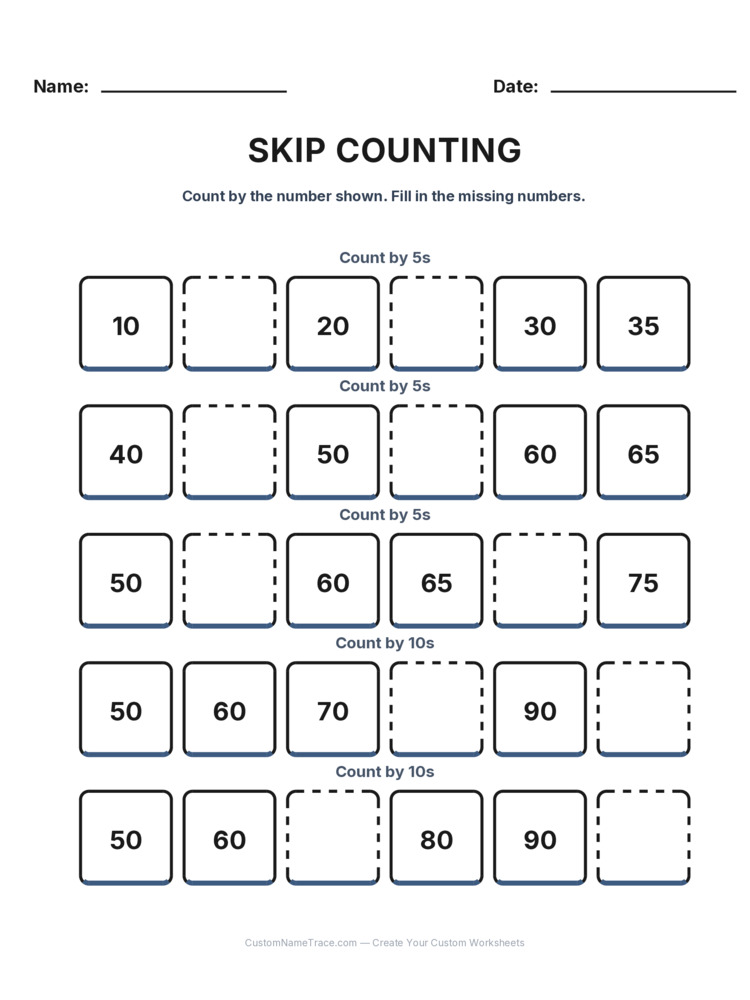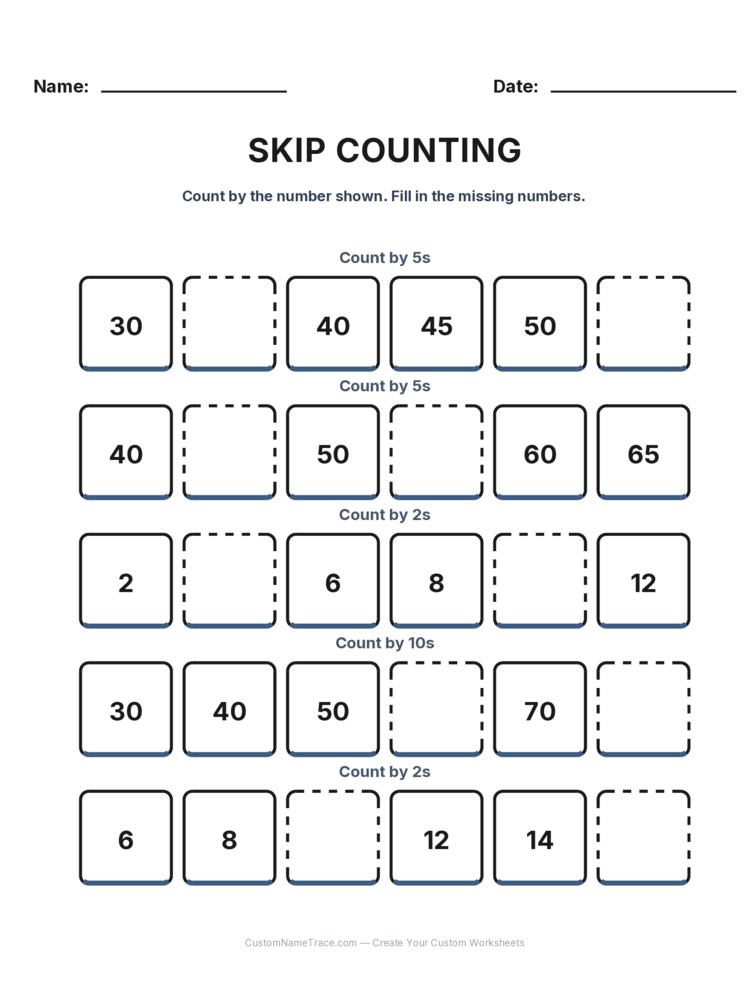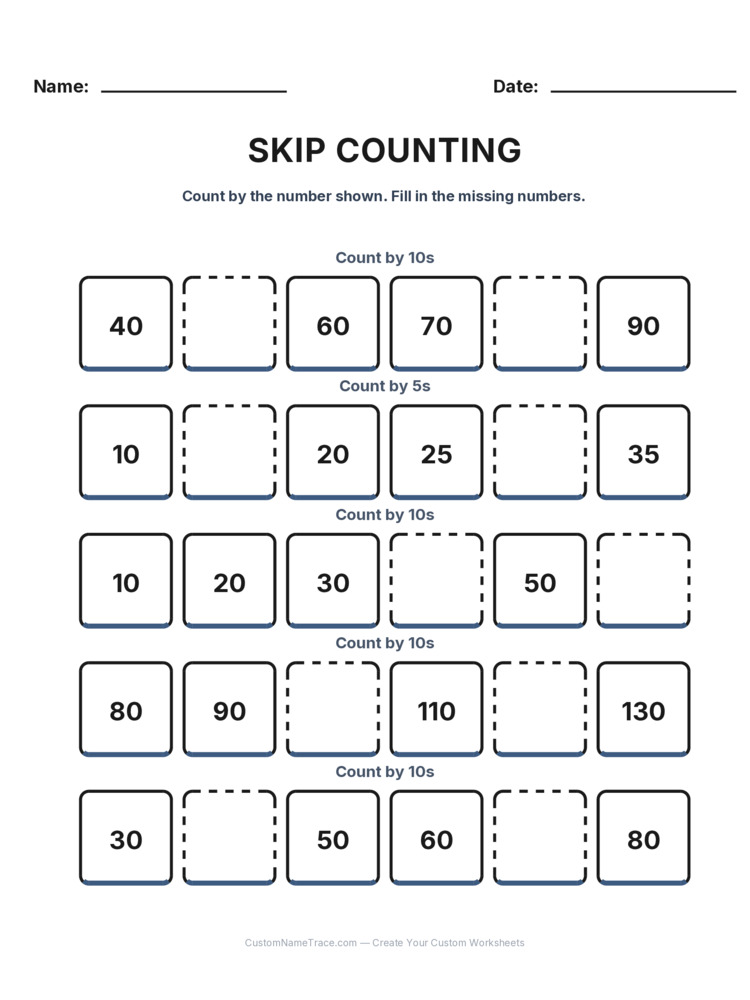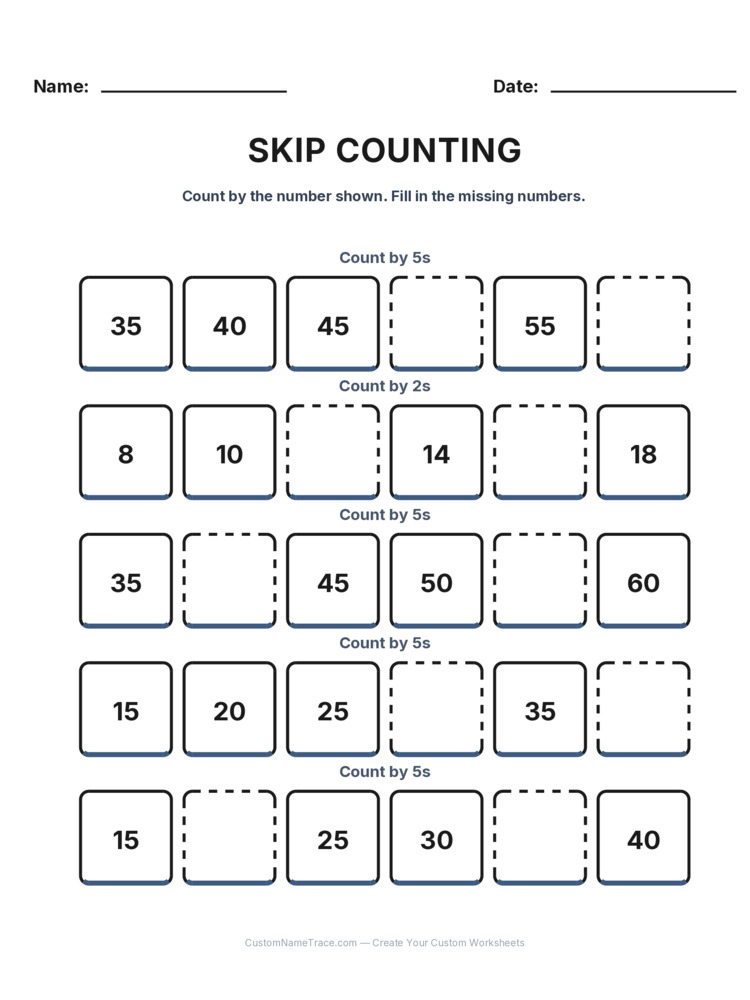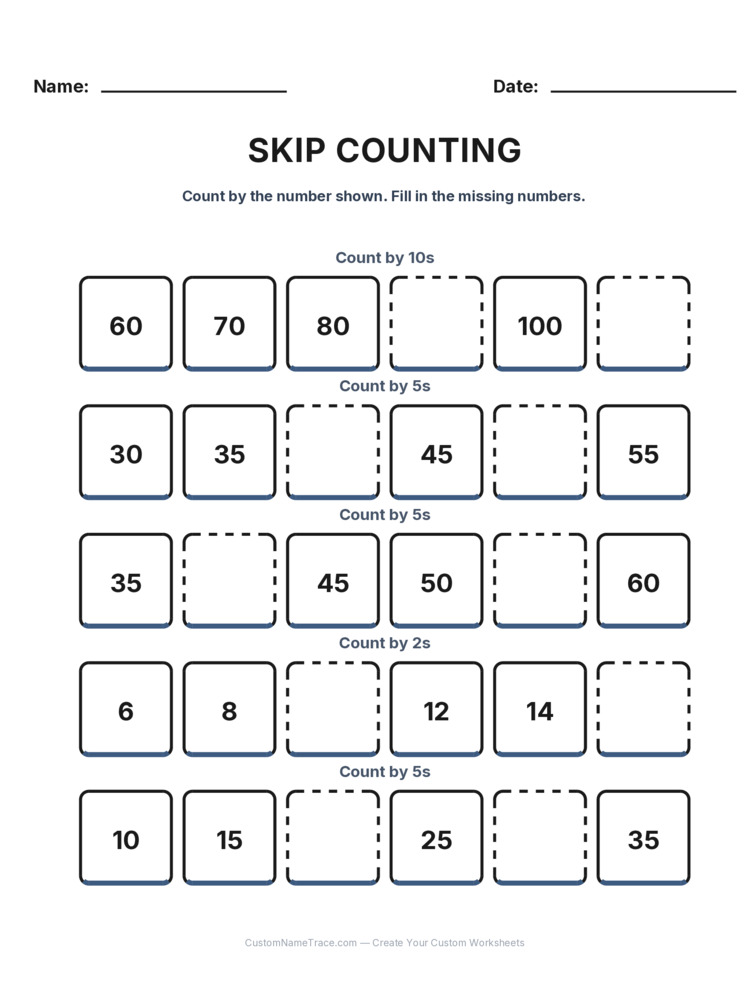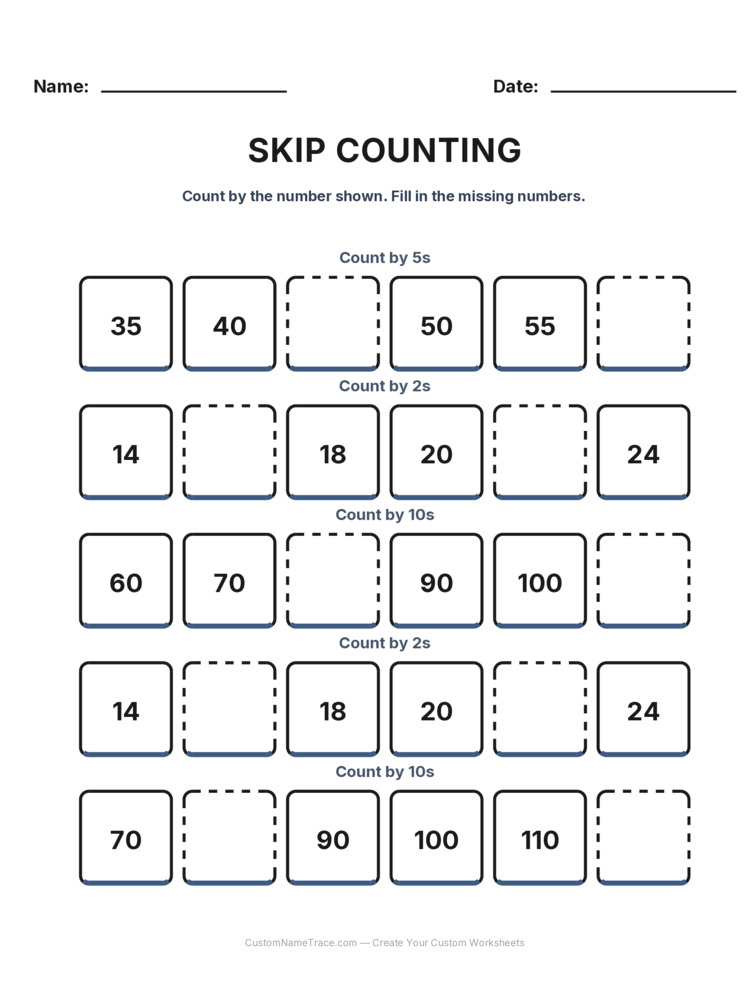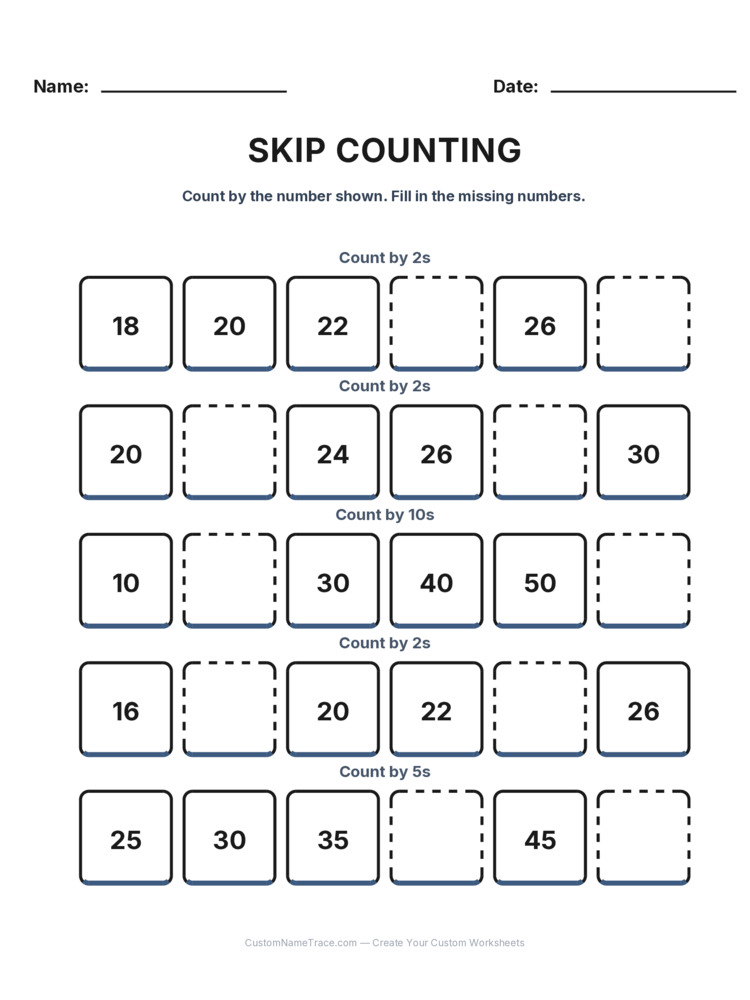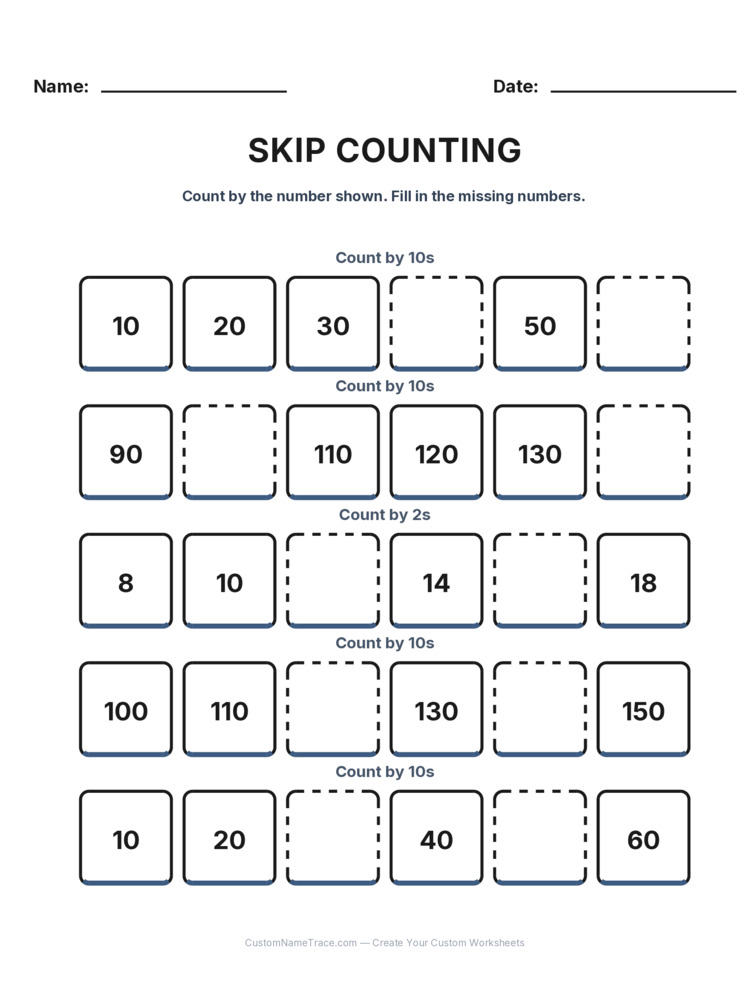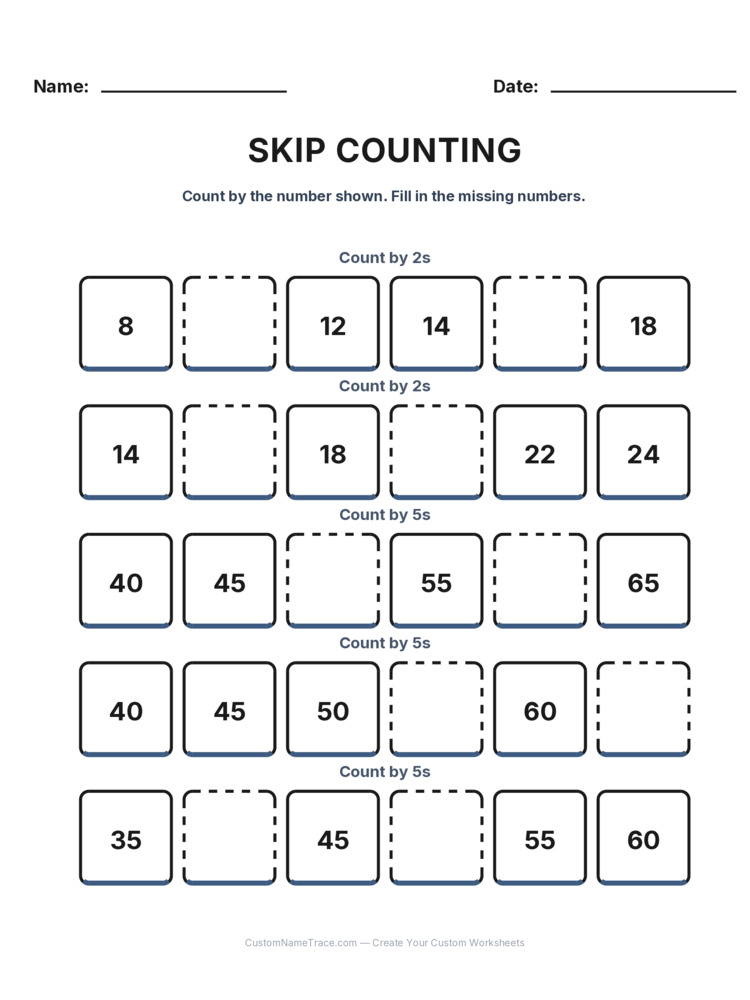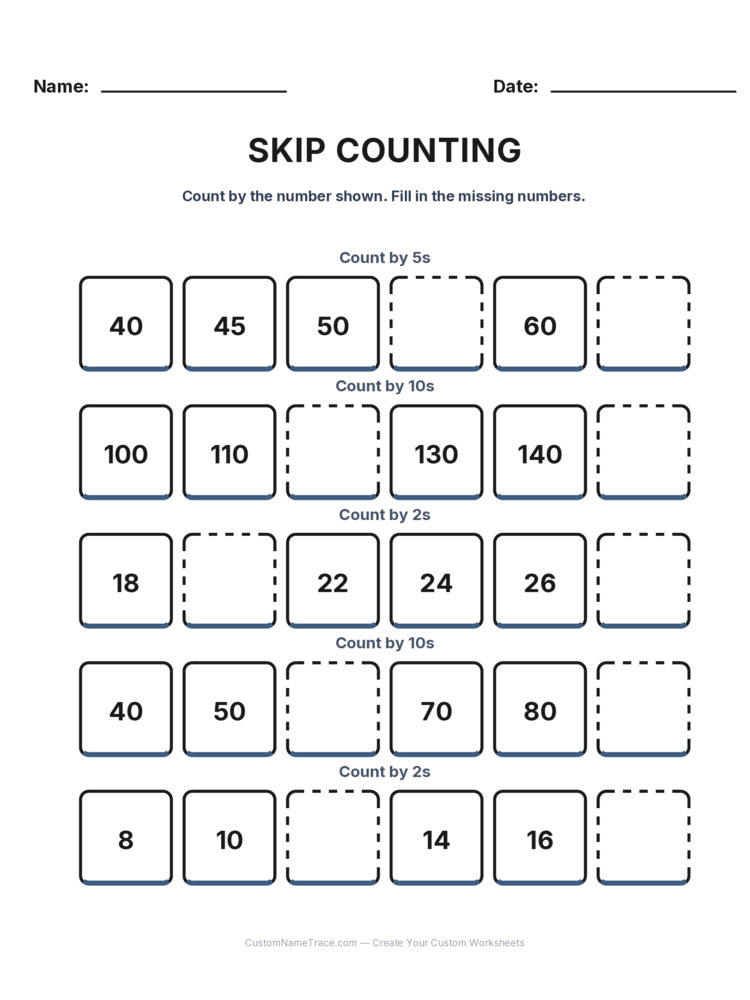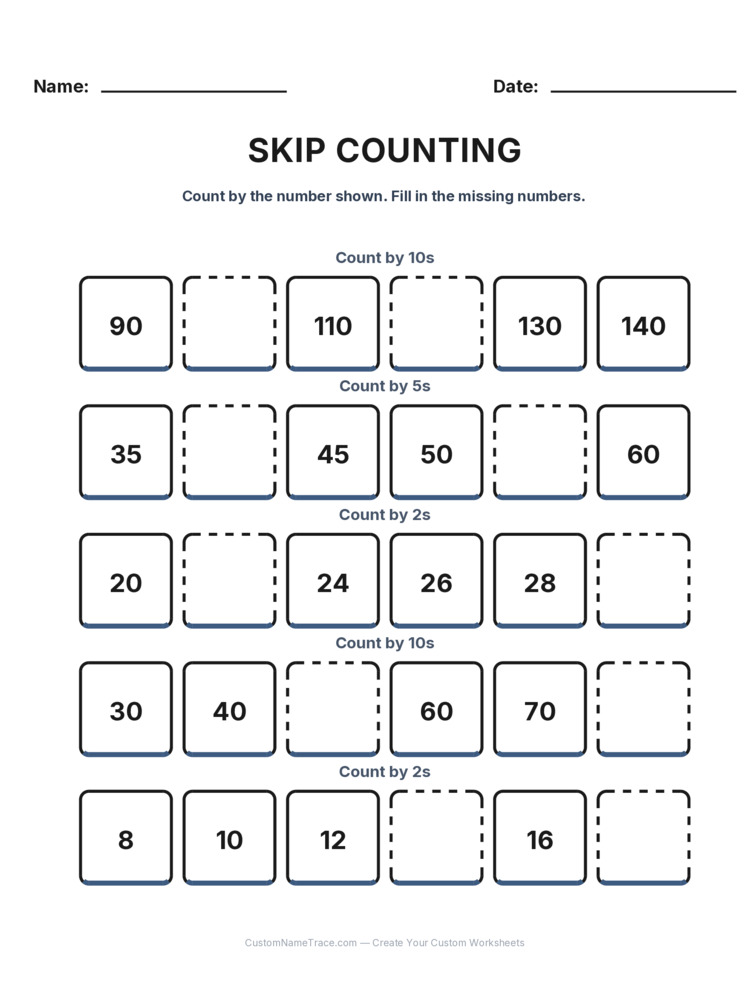
What Skip Counting is actually building
Skip Counting asks a child to work with a real, visible quantity — dots, blocks, or a similar countable object — rather than recall a memorized fact, which is the entire point of Number Sense as its own category separate from arithmetic drilling. A child who can instantly picture what a quantity actually looks like has an easier time with everything that follows in math, since later arithmetic depends on that underlying sense of quantity being solid, not just a string of memorized number facts.
Skip Counting at Grade 1 is scoped to what a child at this stage can reason through with real, countable visuals, matched against real curriculum progressions rather than a generic difficulty guess.
Why counting real objects matters more than it seems
A worksheet of bare digits tests whether a child already has a number-to-quantity connection; Skip Counting is built specifically to help form that connection in the first place, by asking a child to count something genuinely visible and countable rather than manipulate abstract symbols. That distinction is easy to overlook, since both kinds of worksheet can look similar at a glance, but the skill each one actually builds is meaningfully different.
Using this worksheet effectively
Counting slowly and pointing to each object individually while working through Skip Counting — rather than estimating or counting by eye alone — builds more durable number sense than rushing to a quick answer. If a count comes out wrong, having a child recount from the beginning, pointing to each item as they say its number, resolves the great majority of mistakes at this level immediately.
What genuine progress with Skip Counting looks like
Early attempts at Skip Counting typically involve counting every single item individually; real progress shows up gradually as a child starts recognizing familiar groupings at a glance instead — a skill called subitizing, one of the most durable number-sense abilities a child can build at this stage. That shift from counting to recognizing doesn't happen on a fixed schedule, and it's worth noticing and naming for a child once it starts happening.
How Skip Counting connects to the rest of this site
Skip Counting sits alongside this site's other Number Sense worksheets at Grade 1, and together they form the foundational layer underneath the Math Worksheets section — addition, subtraction, and everything beyond assumes a child already has some working sense of quantity, which is exactly what Skip Counting is built to establish.
Printing and downloading
This Skip Counting worksheet downloads as a free, print-ready PDF in both Letter and A4 sizes, with no account required, and every numbered variant on the hub page above tests the identical skill with a fresh layout.