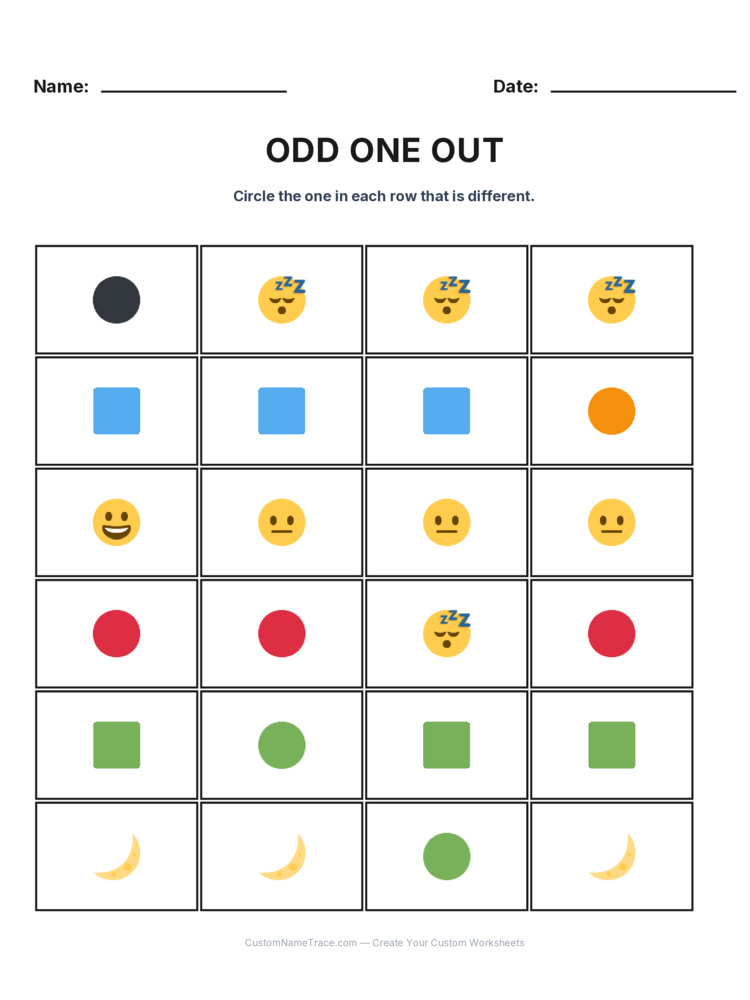
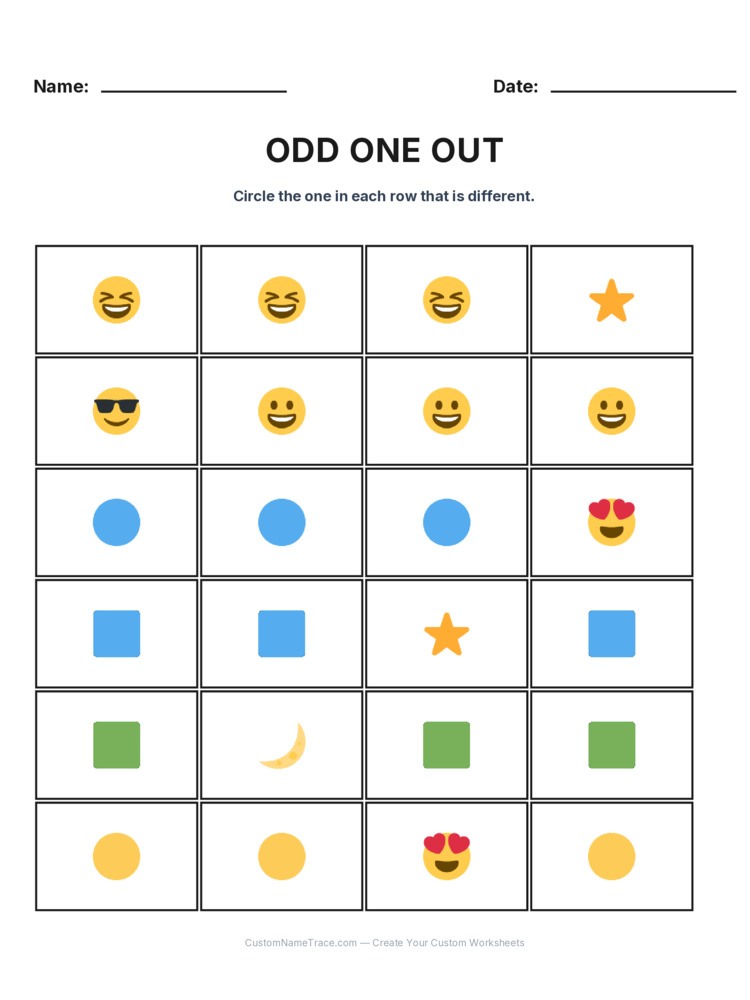
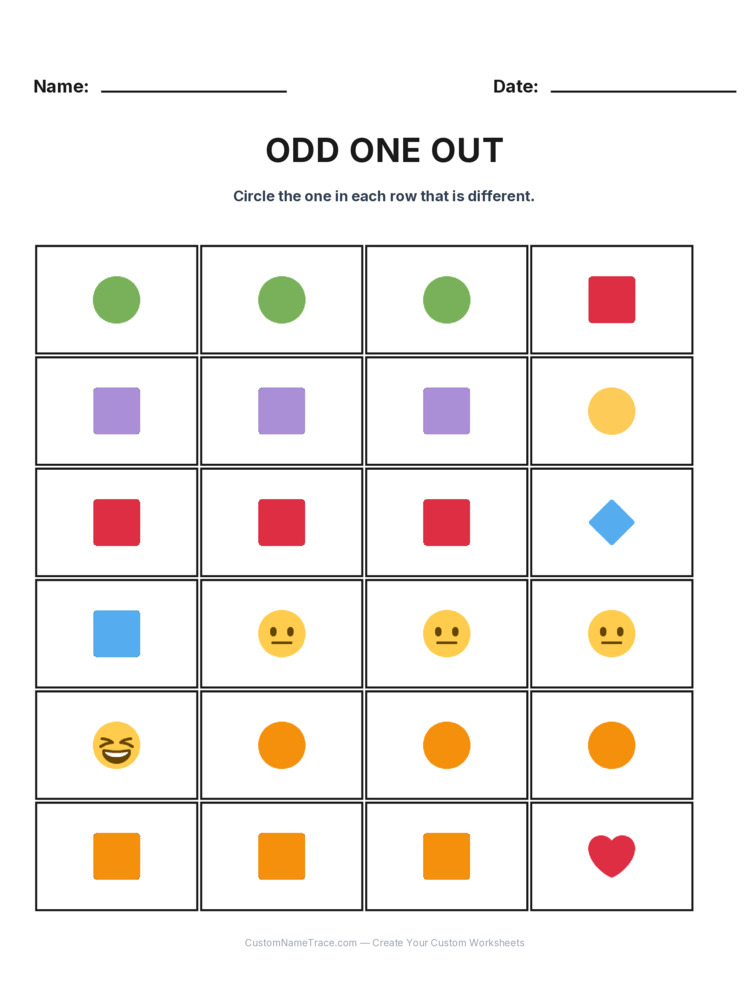
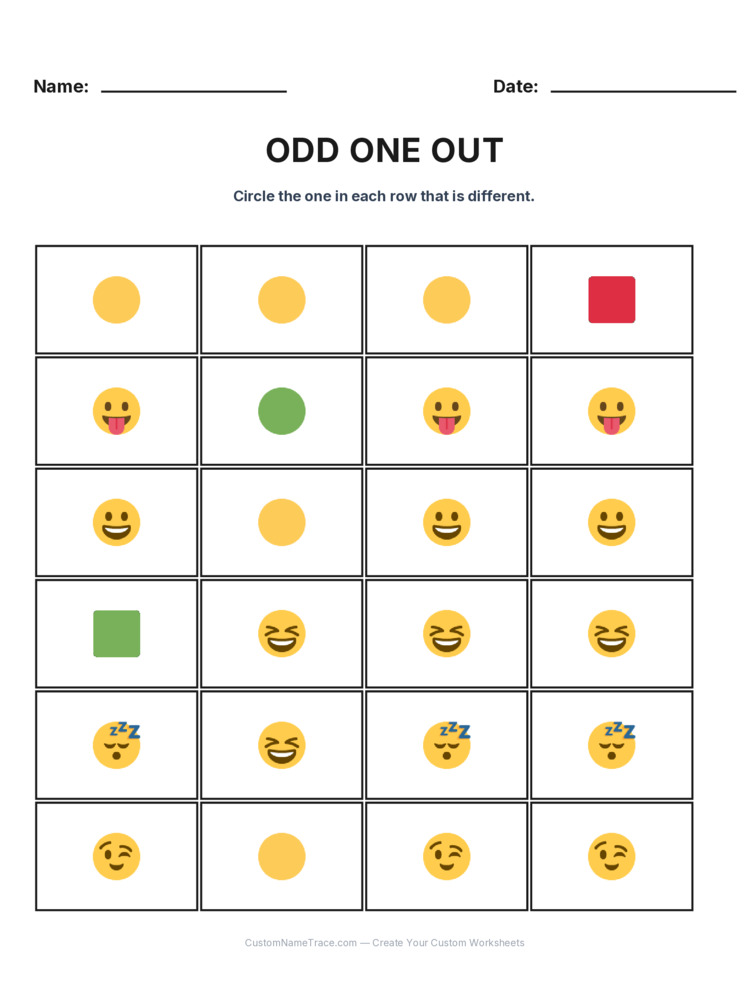
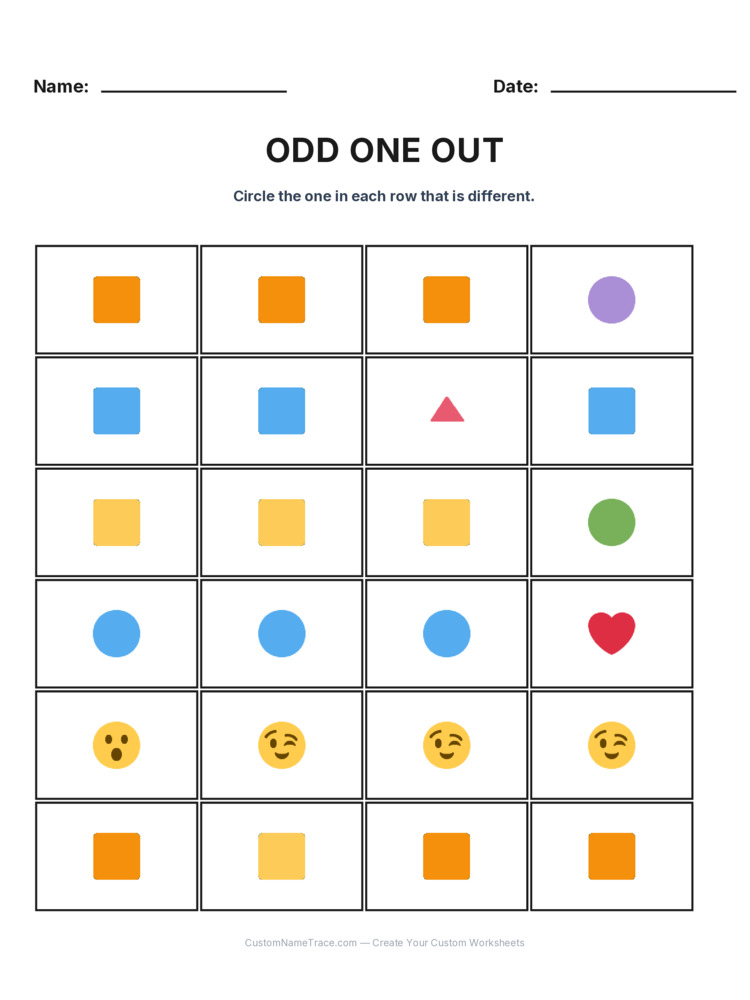
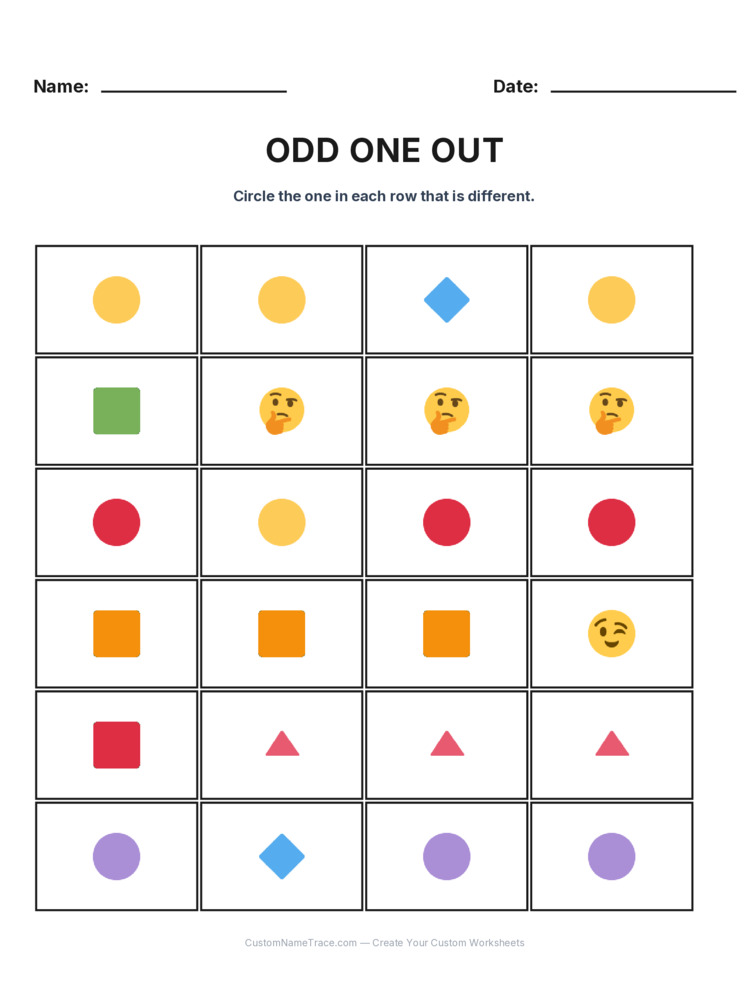
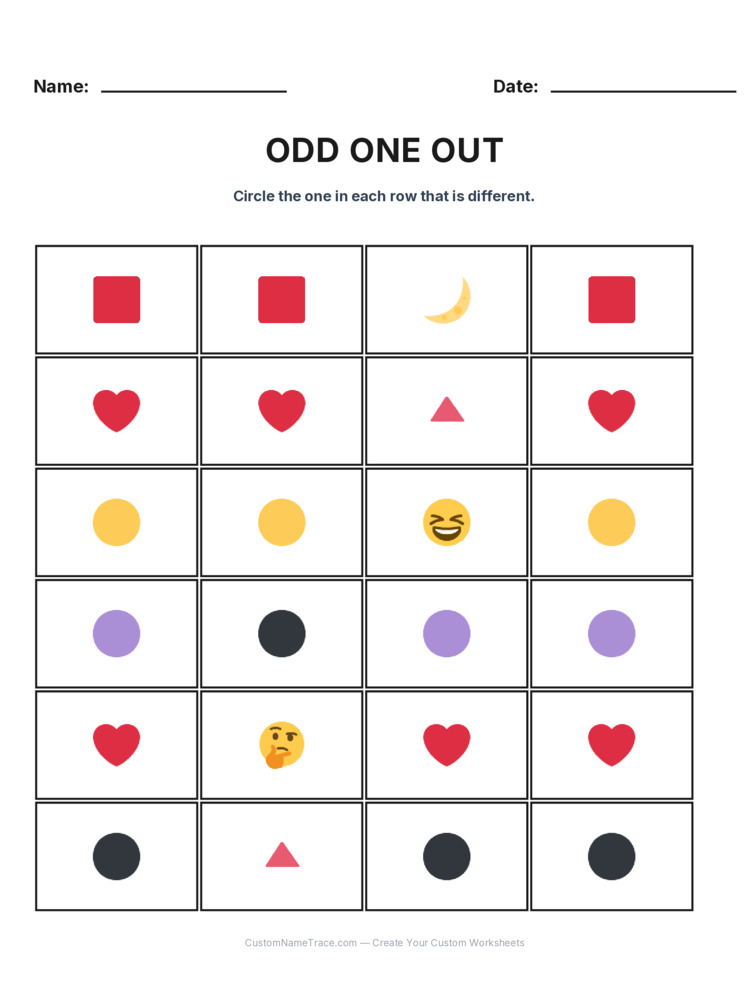
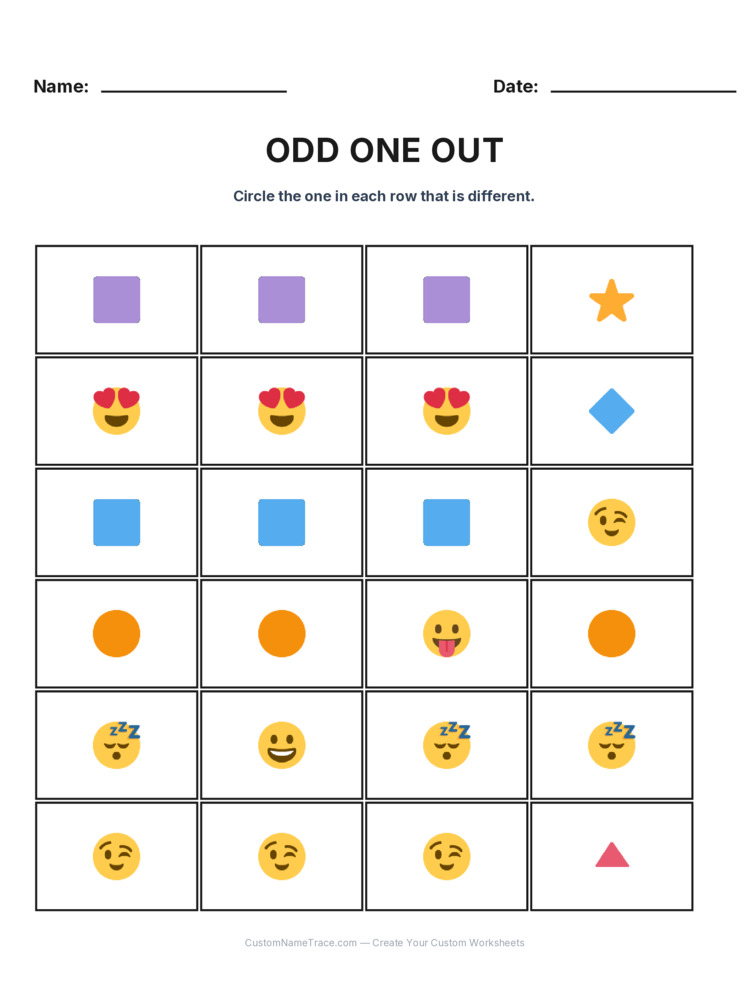
What Odd One Out actually trains
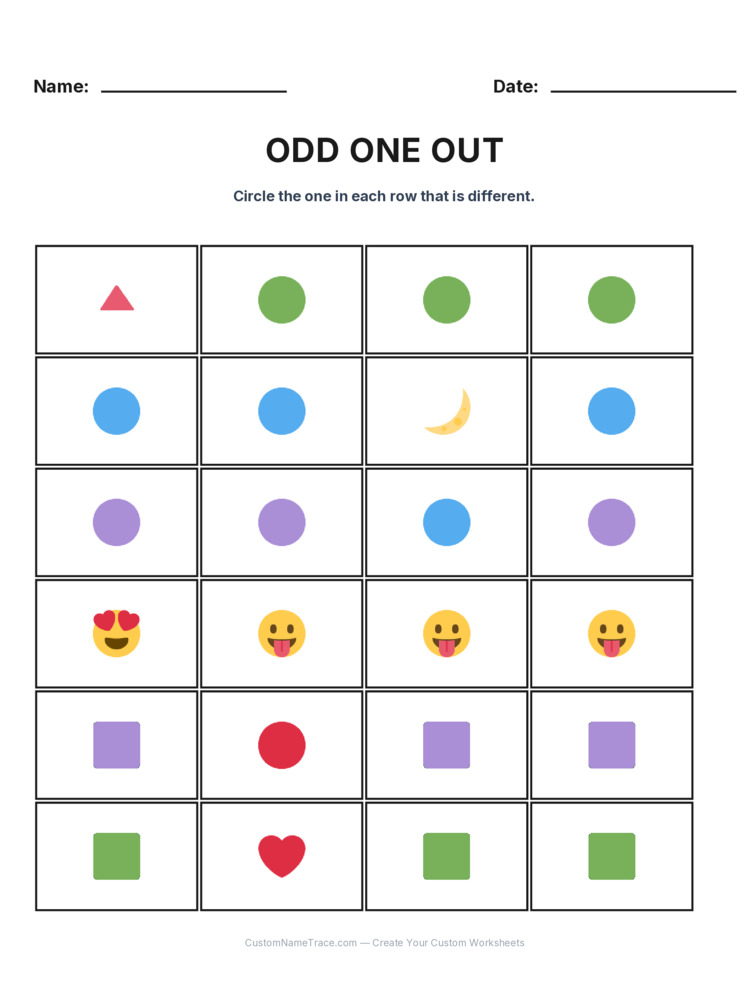
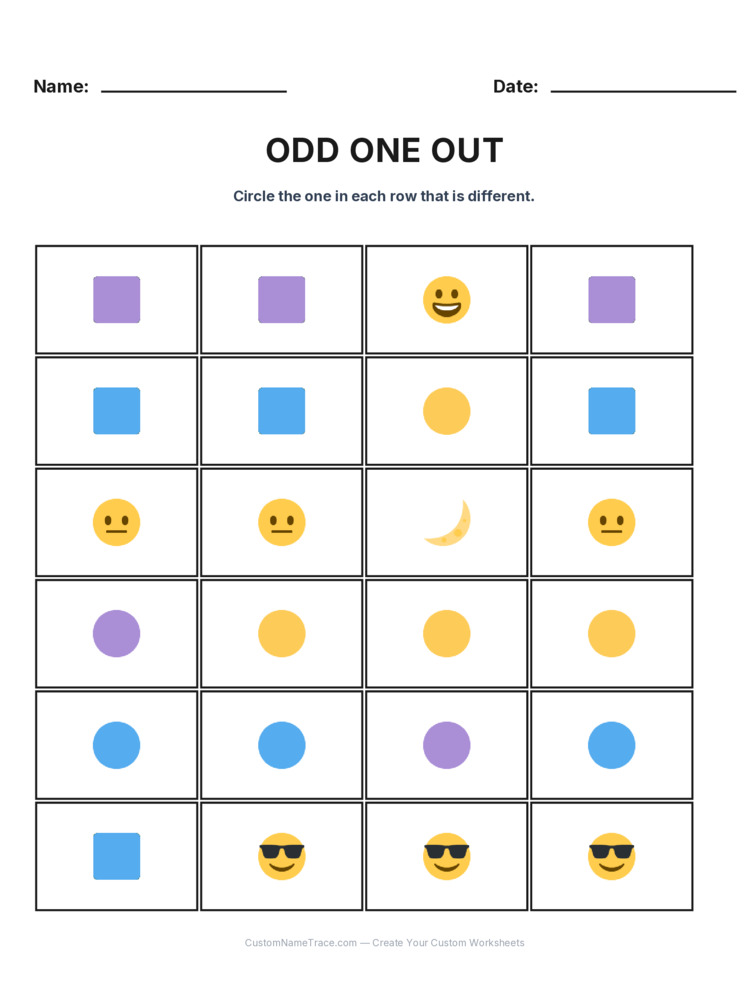
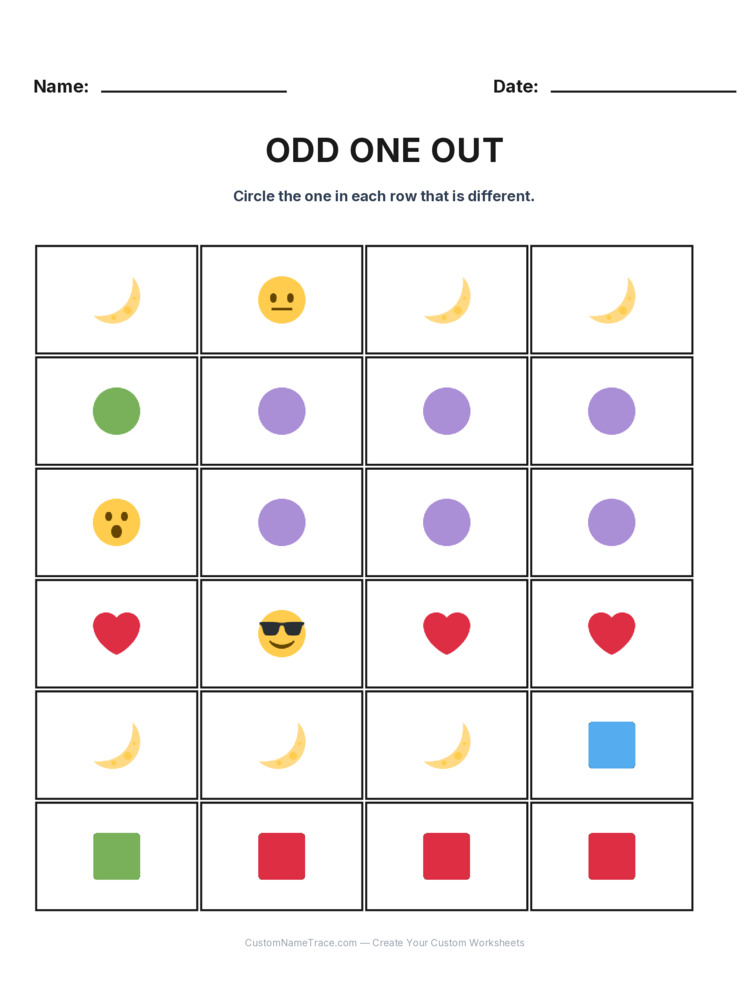
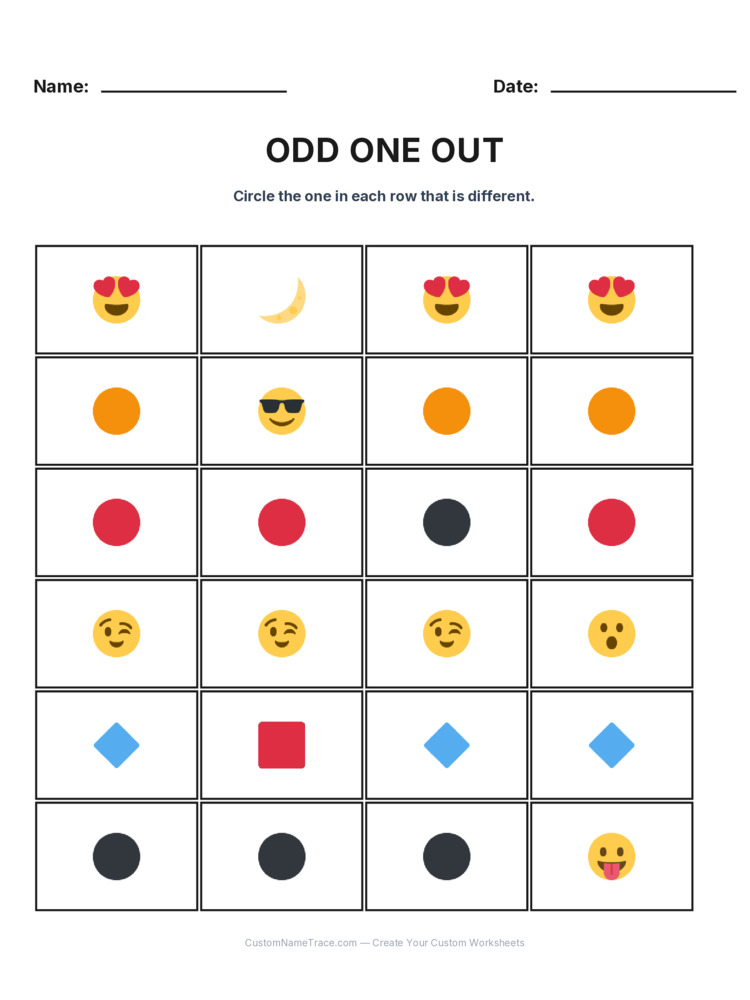
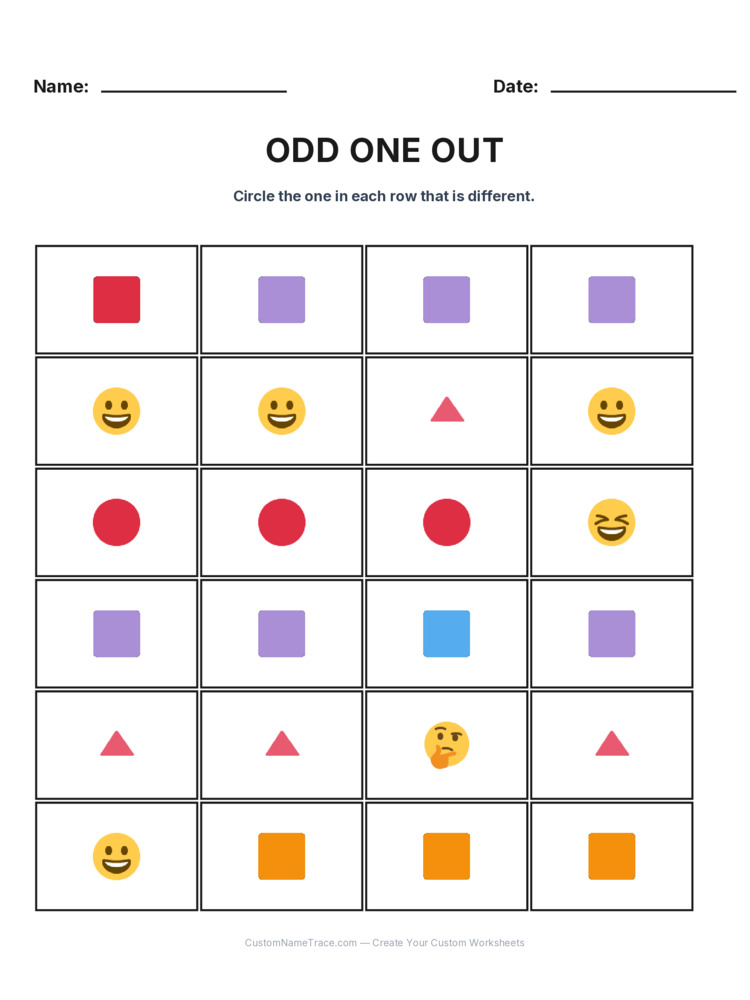
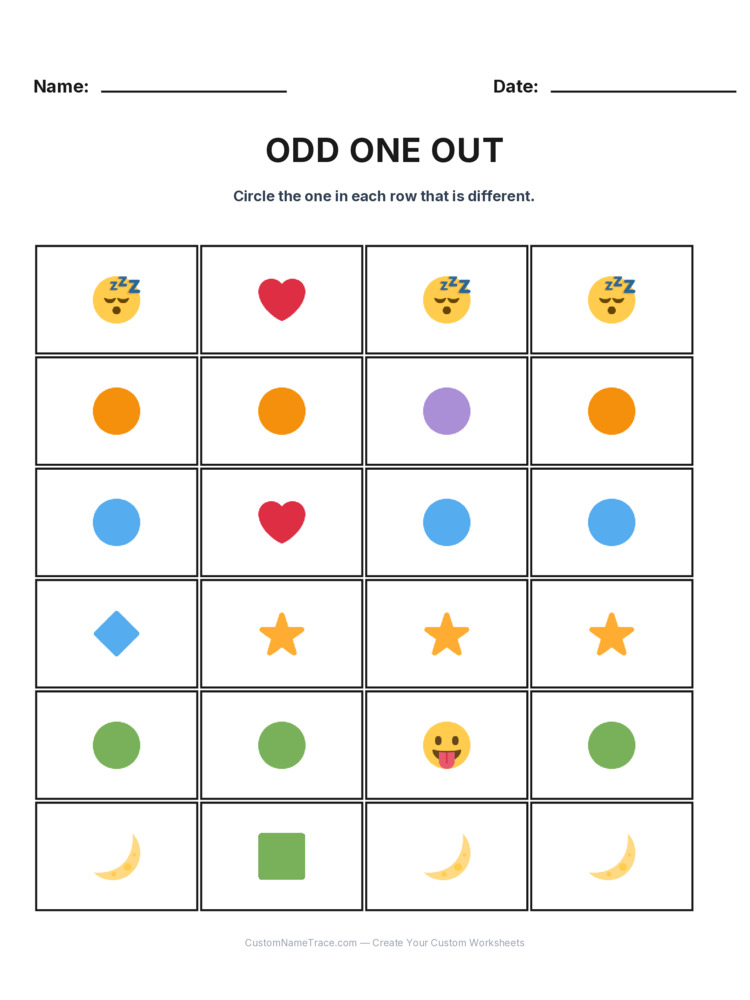
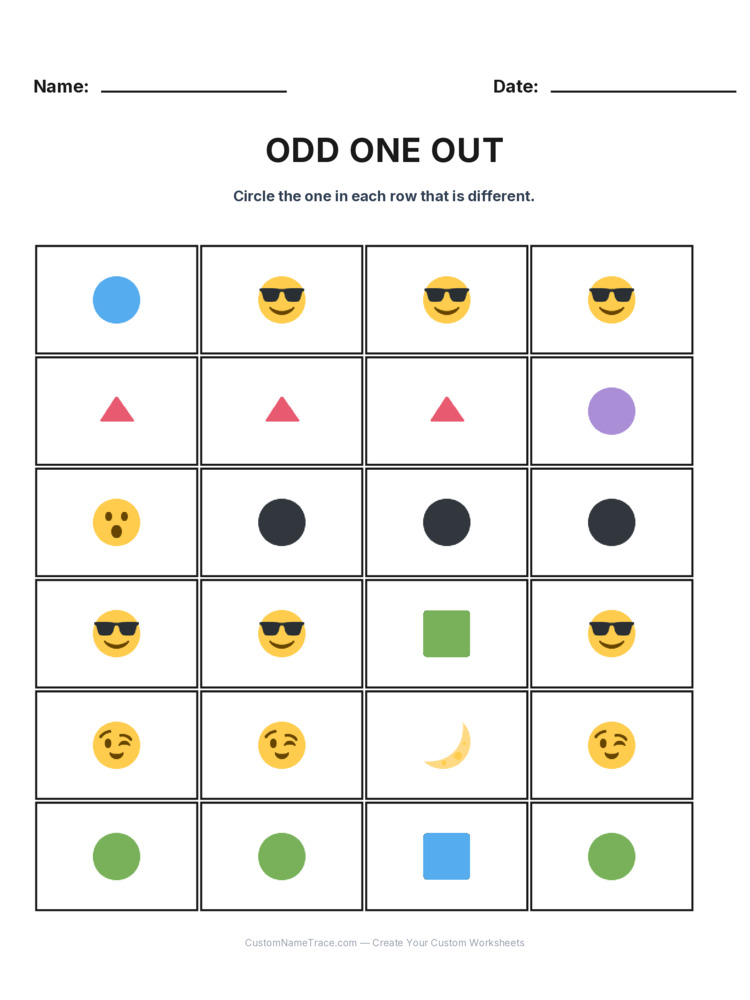
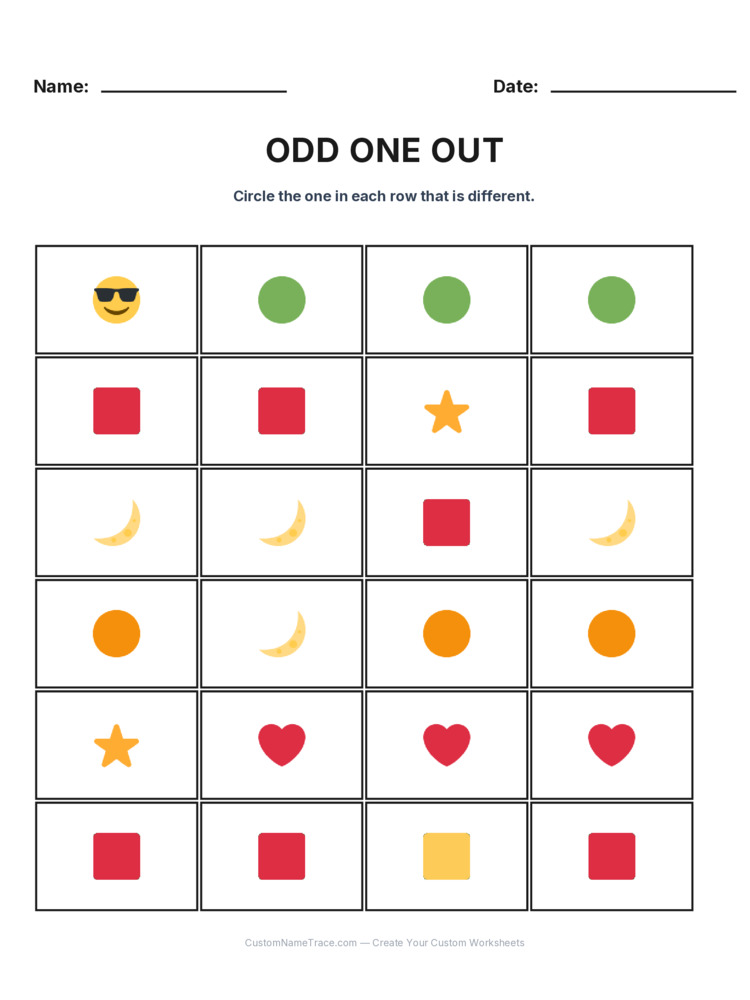
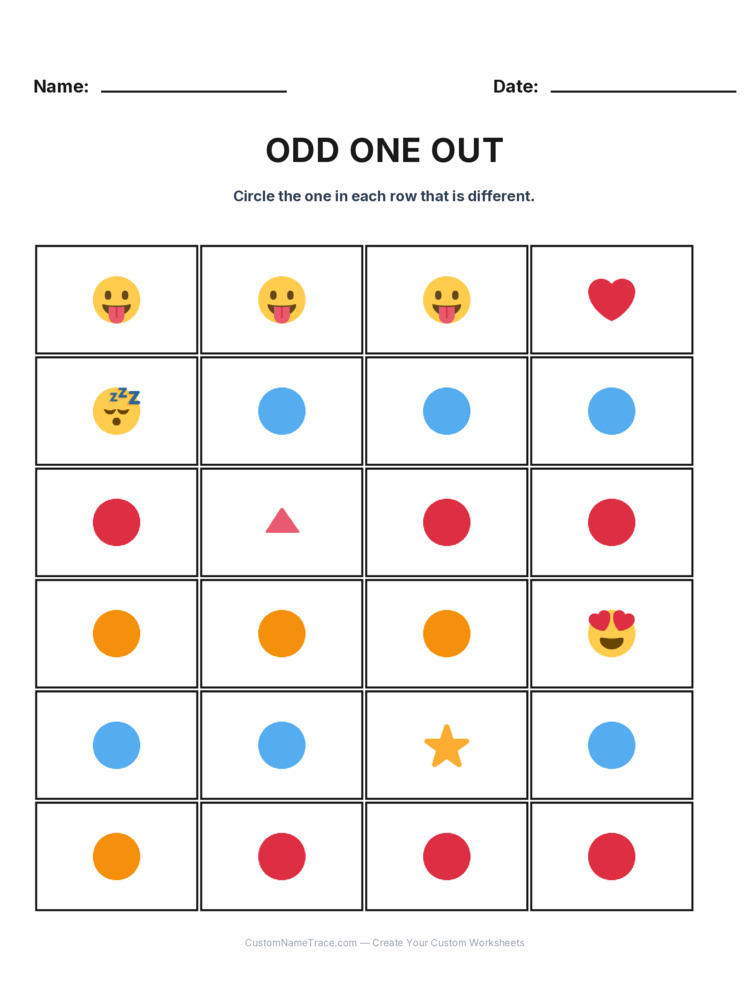
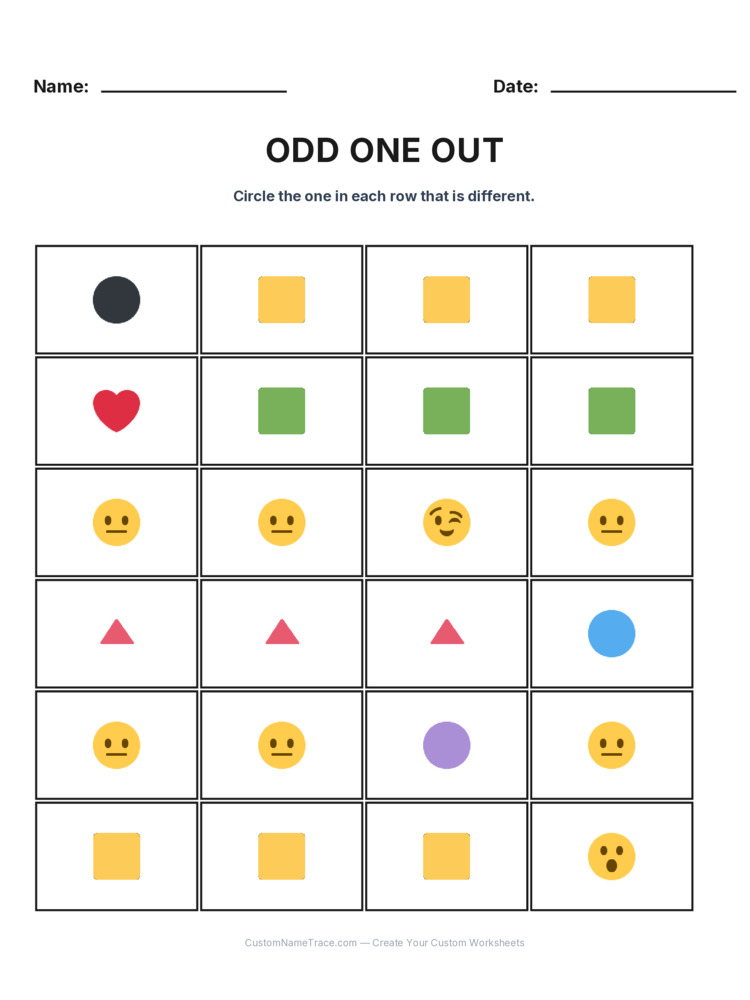
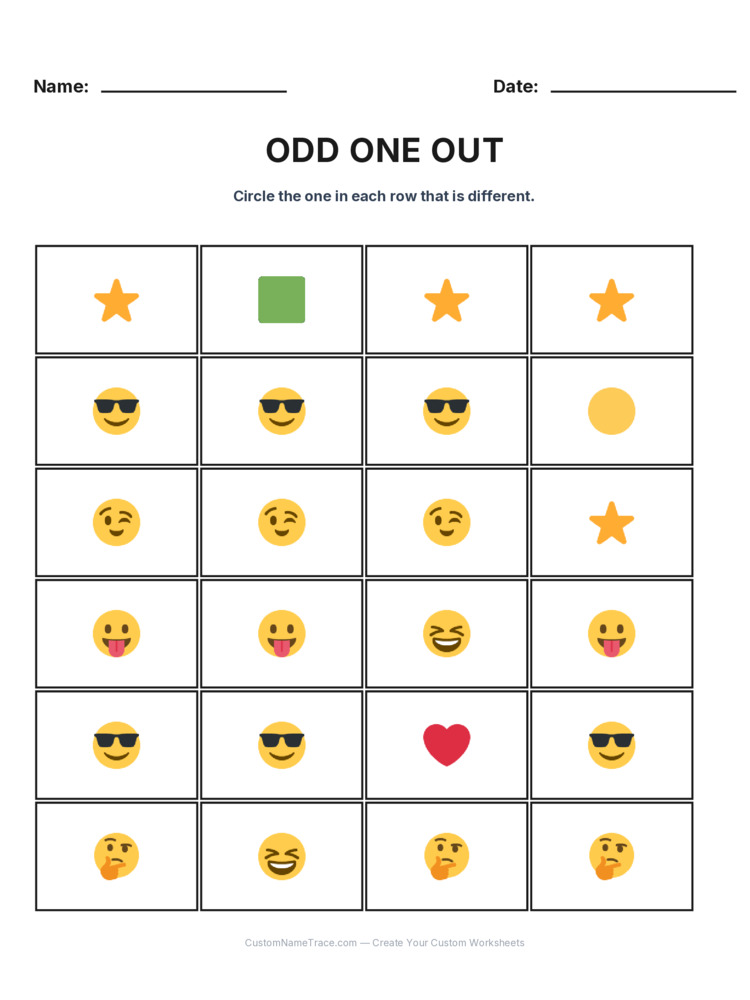
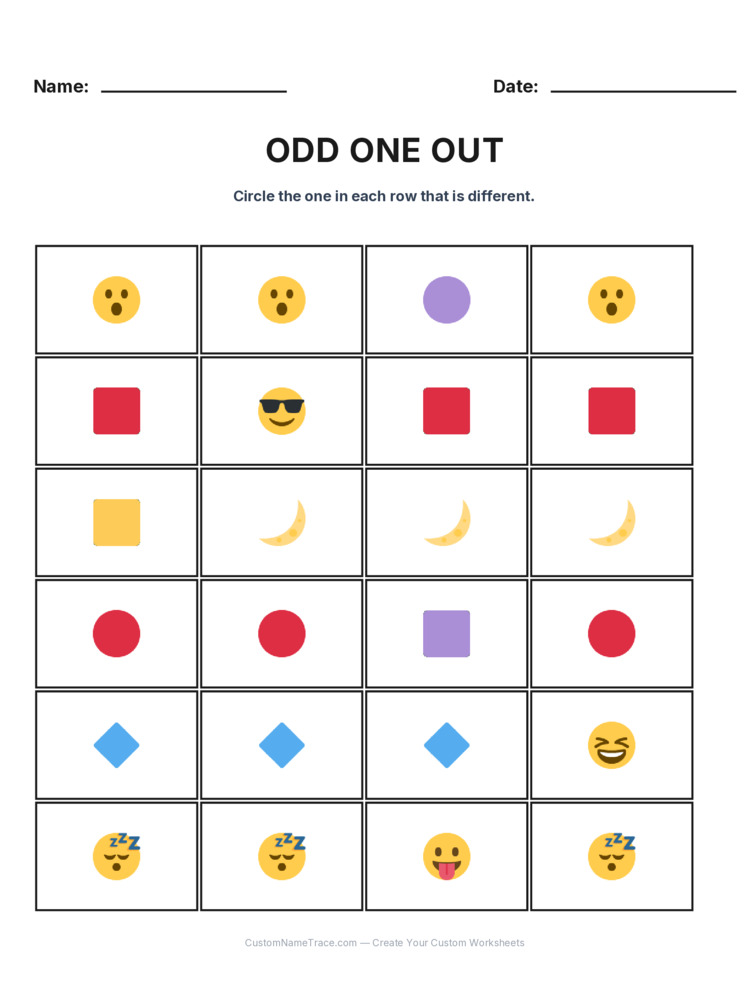
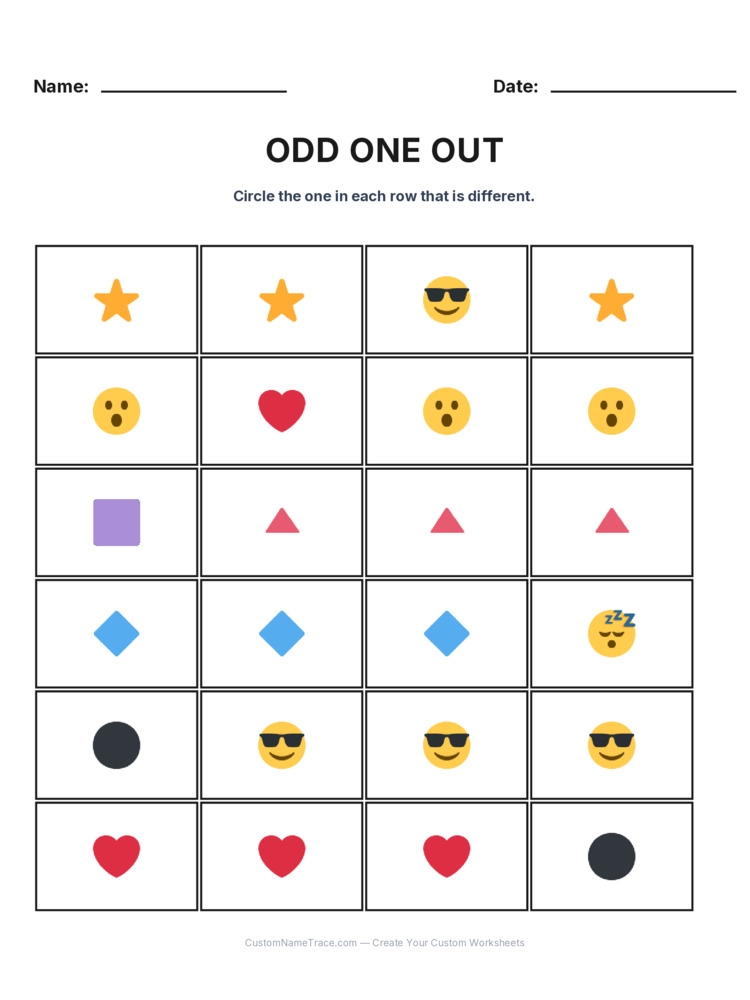
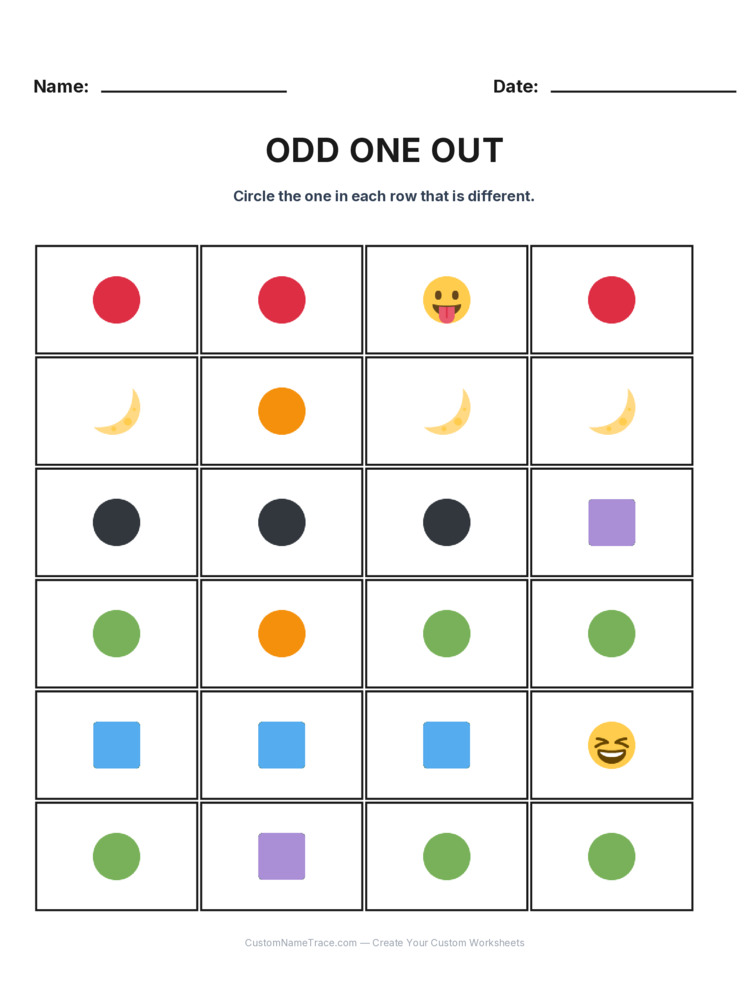
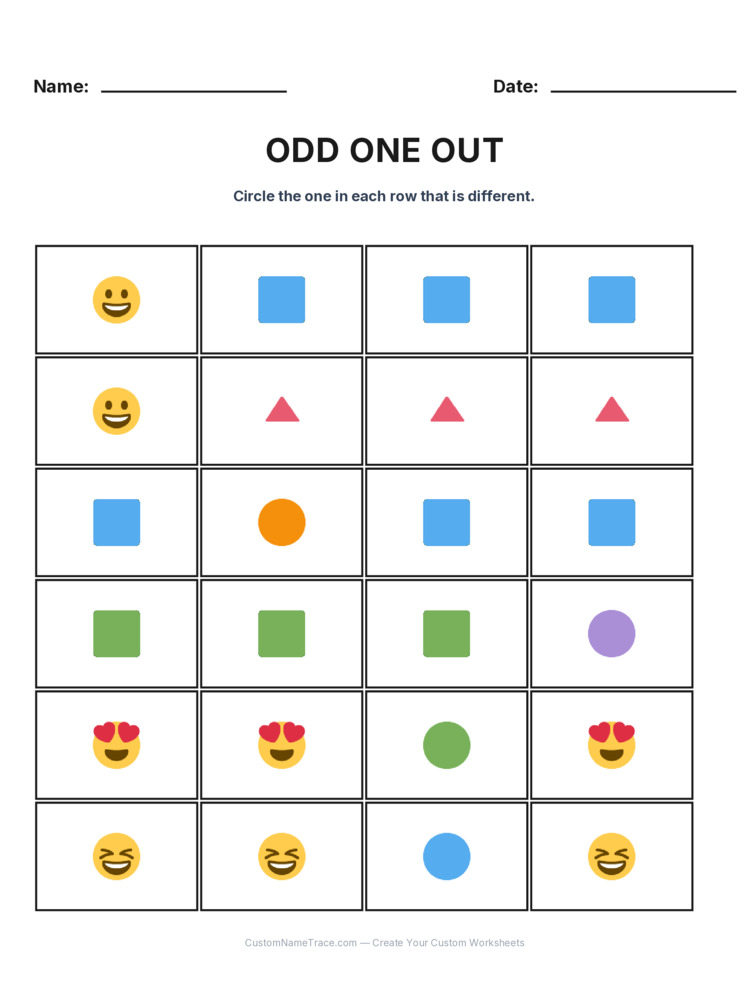
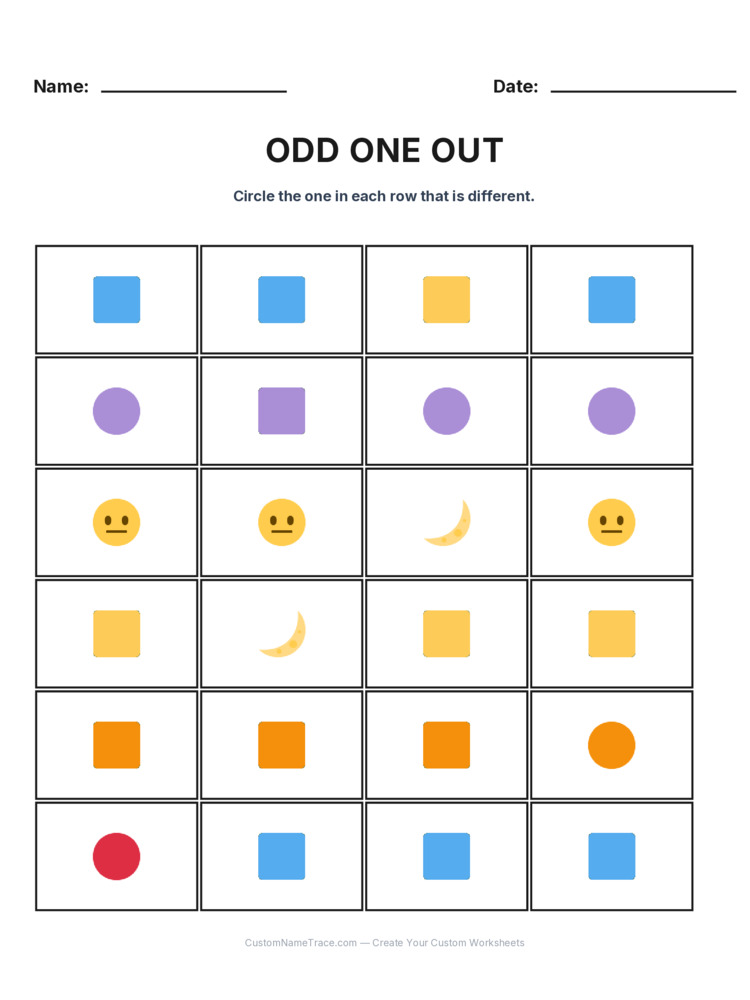
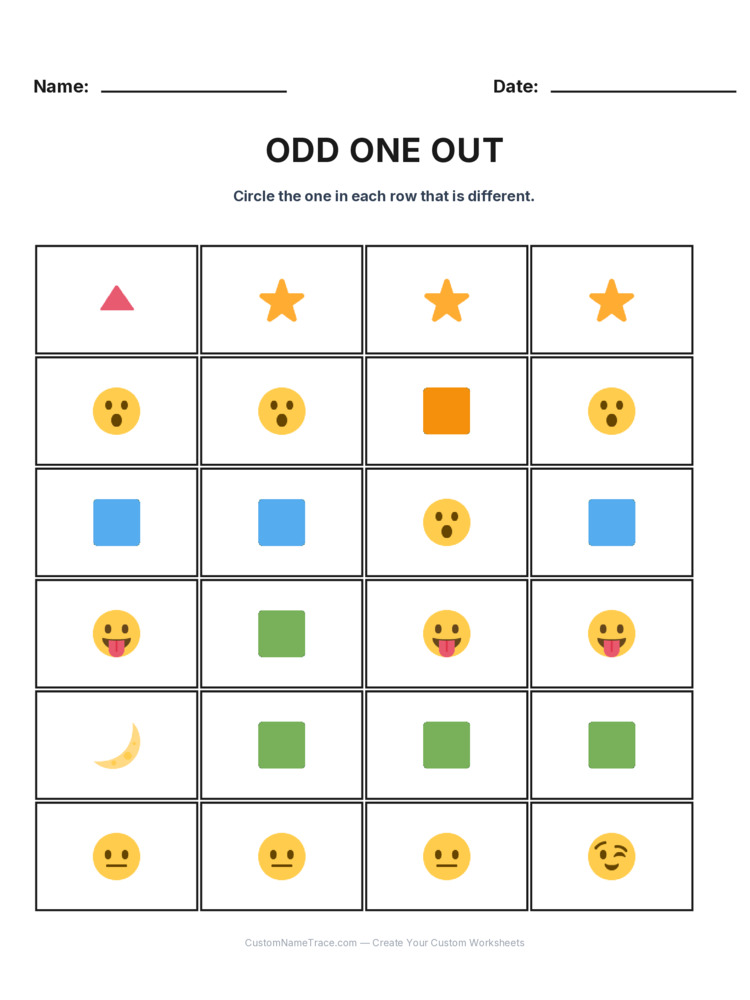
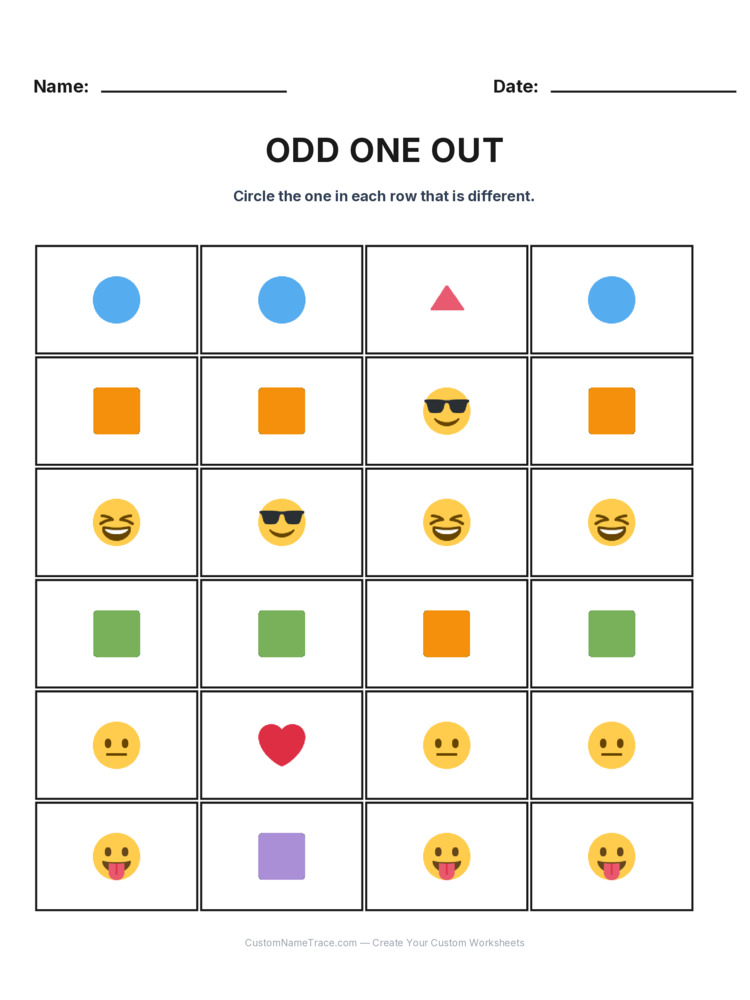
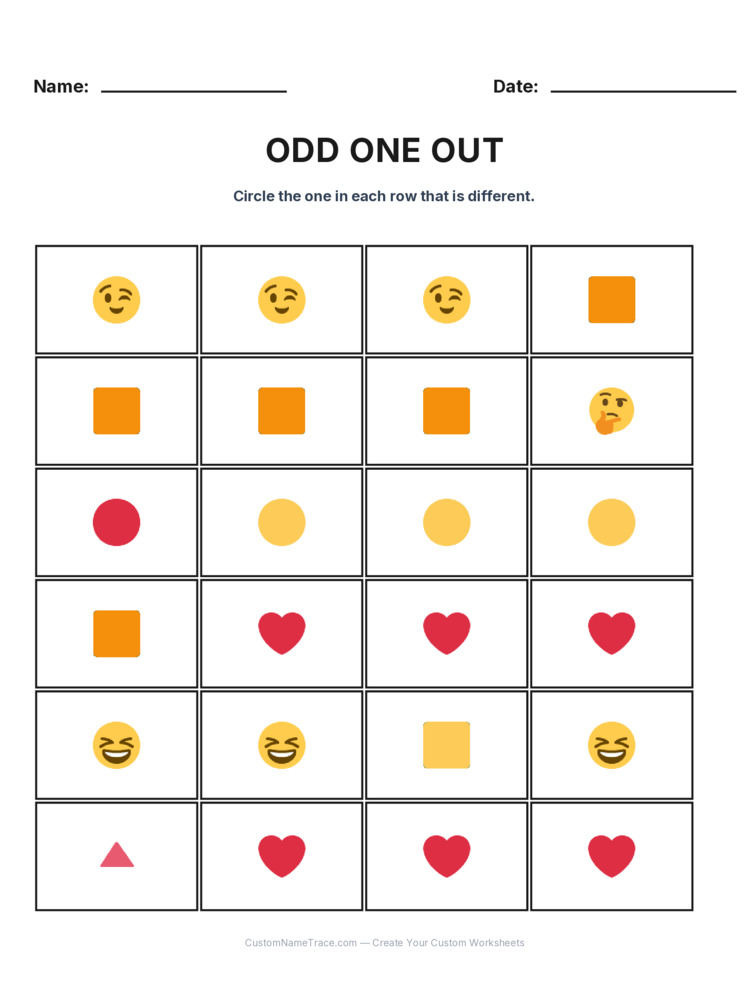
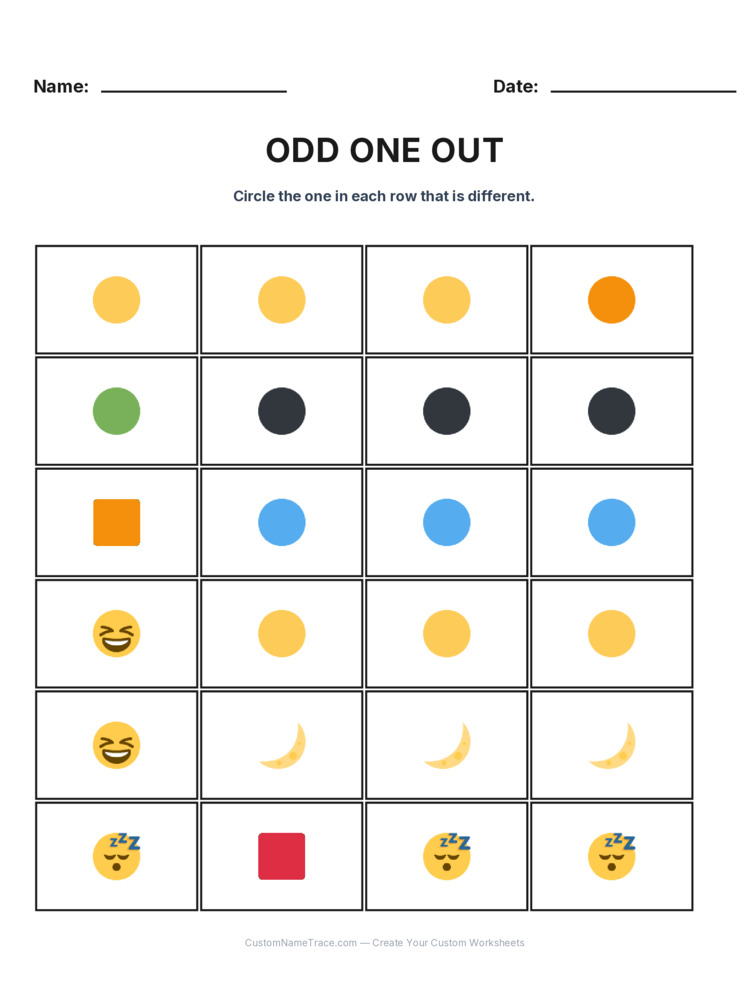
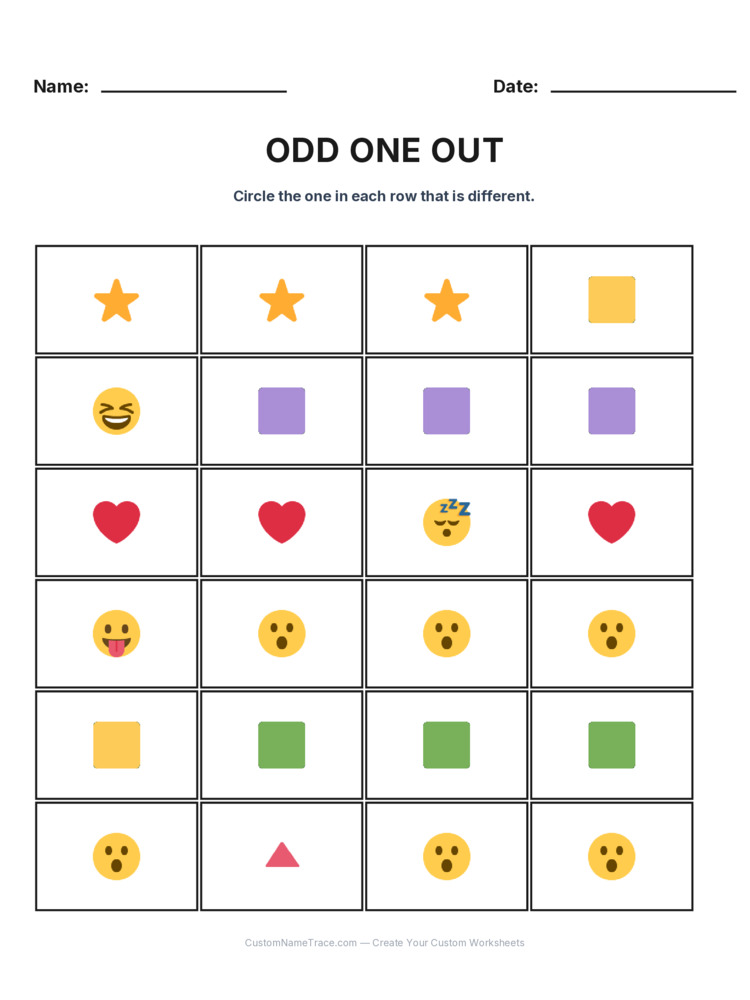
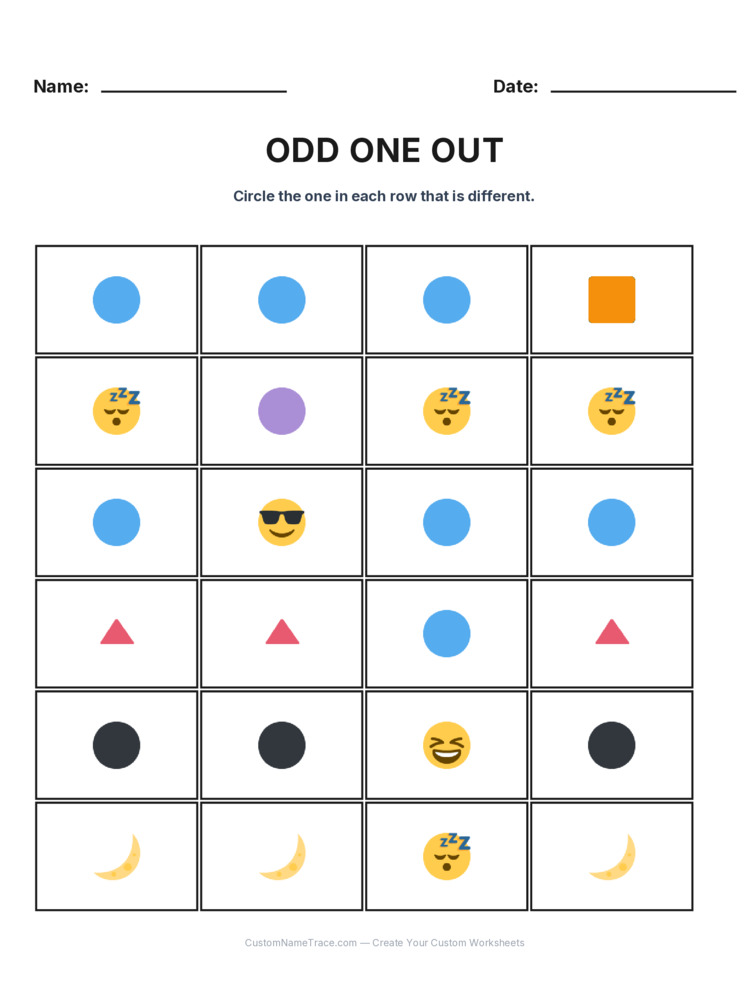
Each row on this worksheet shows four pictures — three identical, one different — and the task is to circle the one that doesn't belong. An adult glances at a row and sees the answer instantly, which makes it easy to underrate what's actually being built: the ability to hold three near-identical images in mind at once and compare all of them against each other, rather than reacting to the first thing that catches the eye. That's a visual-discrimination skill, not a knowledge skill, and it's one of the earliest building blocks of reading readiness — the same scanning-and-comparing move a child later uses to tell a lowercase 'b' from a 'd', or 'was' from 'saw'.
A worksheet where every "odd one" was simply a different color would let a child solve every row the same way without actually looking closely — glance for the color that stands out, circle it, move on. This set varies what makes the odd item different from row to row: sometimes it's size, sometimes orientation, sometimes a missing detail, sometimes shape. That variation is deliberate, and it forces a child to actually inspect each row on its own terms rather than pattern-matching one trick across the whole page.
Each worksheet holds six rows, not sixteen. At the age this puzzle targets, sustained visual attention is still developing, and a page that drags on past the point of genuine focus stops building the skill and starts building frustration — a child who's scanning on autopilot by row ten isn't practicing anything useful. Six focused rows, done carefully, teach more than twenty rushed ones; a child who finishes confidently can move straight to the next numbered variant rather than being handed one long page.
Teaching it for the first time, and what changes as a child gets faster
For a child who's never done one of these before, cover every row but the first and ask them to describe each of the four pictures out loud before circling anything — "tell me what's different about each one." That turns the puzzle from a silent visual task into a verbal one, which surfaces their reasoning (or catches a rushed guess) in a way a silently circled answer never does. Once they're doing that comparison automatically, let them work through the rest of the page on their own.
Early on, expect a child to physically point to and compare each of the four pictures in turn before circling an answer — that's the correct, careful process, not a sign of struggling. Speed comes later, once the scanning habit is automatic, and it shouldn't be rushed; a child pushed to answer quickly before the comparison habit is solid tends to start guessing instead, which undoes the actual point of the exercise. Let accuracy lead and let speed follow on its own.
What a wrong answer means, and building the habit into everyday life
A missed row on this puzzle is rarely a sign a child can't tell the pictures apart — it's almost always a sign they stopped scanning before checking every item in the row. The fix isn't to explain the specific answer; it's to ask them to look at the row again and name what's the same about the three that match before saying which one doesn't. That habit — confirm the pattern before naming the exception — is the actual transferable skill, more than any individual picture set.
The same skill this worksheet practices on paper works just as well away from it — at the grocery store, lining up three identical cans and one different one and asking a child to spot it; at the dinner table, three matching forks and one spoon; sorting laundry, matching socks into pairs, lining up toy cars by size. Narrating these everyday moments out loud ("you just did the odd-one-out game with your socks!") helps a child see this worksheet as one version of a skill they're already using constantly, spread naturally across an ordinary day instead of concentrated into six printed rows.
Where this leads next
Odd One Out is the simplest form of a comparison-and-classification skill that reappears, harder, throughout this site's Logic Worksheets — Grade 1's Find and Cross Out asks a child to apply a stated rule across a whole grid instead of picking one exception from four items, and Grade 3's Venn Diagram Sort asks them to check two rules against many items at once. A child who's genuinely comfortable with Odd One Out has the foundational scanning habit those later puzzles build on.
Both this puzzle and this level's Connect the Shadows ask a child to compare visual items carefully, but toward opposite conclusions — Odd One Out rewards finding the one thing that's different among several similar items, while Connect the Shadows rewards finding two things that genuinely match despite looking very different on the surface. Working both formats side by side exercises visual comparison from two complementary directions, building a more complete version of the underlying skill than repetition of just one would.
A child who consistently spots the odd item within a few seconds, across several different numbered variants, has likely mastered what this format teaches and is ready to move on. There's no fixed number of worksheets required — confidence and consistency across a handful of variants is a better signal than any particular count.
Using this at home or in a classroom
Odd One Out pairs naturally with this site's other Pre-K and Kindergarten picture puzzles — Size Sorting, Connect the Shadows, and Maze Puzzles — since all four ask a child to look carefully before answering rather than react on instinct. Rotating between a few different formats in a short session, rather than working through several variants of just one, keeps a young child's attention fresher.
For a teacher working with a small group, handing out different numbered variants to each student — all testing the identical skill with fresh pictures — lets everyone work at their own pace without comparing answers or copying a neighbor's page. A quick group discussion of one shared example afterward gives every child a chance to hear the reasoning explained out loud, even for a row they personally got right.
Every numbered worksheet uses a fresh set of pictures testing the identical skill, so repeat practice never means reusing the same page. Print at 100% scale, not "fit to page" — shrinking the page can make small differences between similar pictures harder to spot than the puzzle intends.